



Fine hair after 60 does not need rescuing. It needs a shape that stops it from lying flat like wet ribbon by lunchtime.
That is why short haircuts for women over 60 with fine hair work so well when they’re cut with a little nerve and a lot of restraint. Take off the drag at the ends, keep the perimeter clean, and suddenly the hair has more lift at the crown, more presence around the face, and less of that sagging, see-through edge that long fine hair can develop when it’s left to fend for itself.
The trick is not “more layers” in the lazy salon sense. Too many people hear layers and think movement, then end up with a soft, shredded cloud that looks thinner than before. Fine hair needs structure first. The movement comes second.
Why This Collection Earns Its Keep
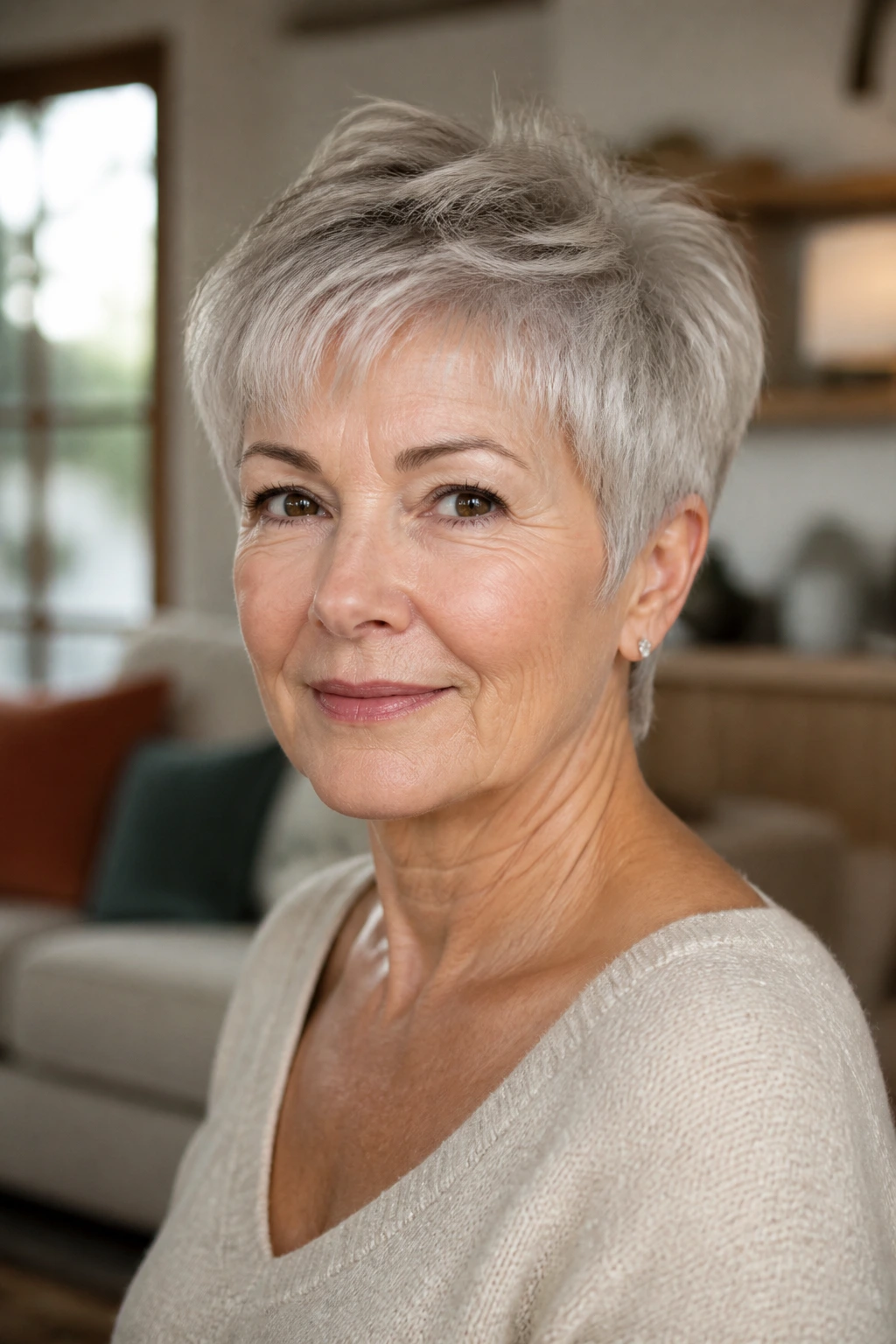
- The cuts are built for real density, not wishful thinking: Every style here uses blunt edges, crown lift, or controlled layering to make fine strands read fuller on the head.
- The shapes stay neat between appointments: A good short cut should look intentional at week six, not like it lost a fight with the weather.
- There’s room for different hair habits: Air-dry people, round-brush people, and “I’ll spend four minutes on it if I must” people all have options here.
- Glasses, cowlicks, and cowlicks’ cousins are accounted for: These styles don’t ignore the little annoyances that shape a real haircut.
- Gray, silver, and salt-and-pepper texture fit right in: A lot of these cuts look even better when the hair has a little extra shine and contrast.
- You won’t need heroic styling tools: A small brush, a decent dryer, and a light hand can do most of the work.
1. The Blunt Pixie With a Side-Swept Fringe for Fine Hair
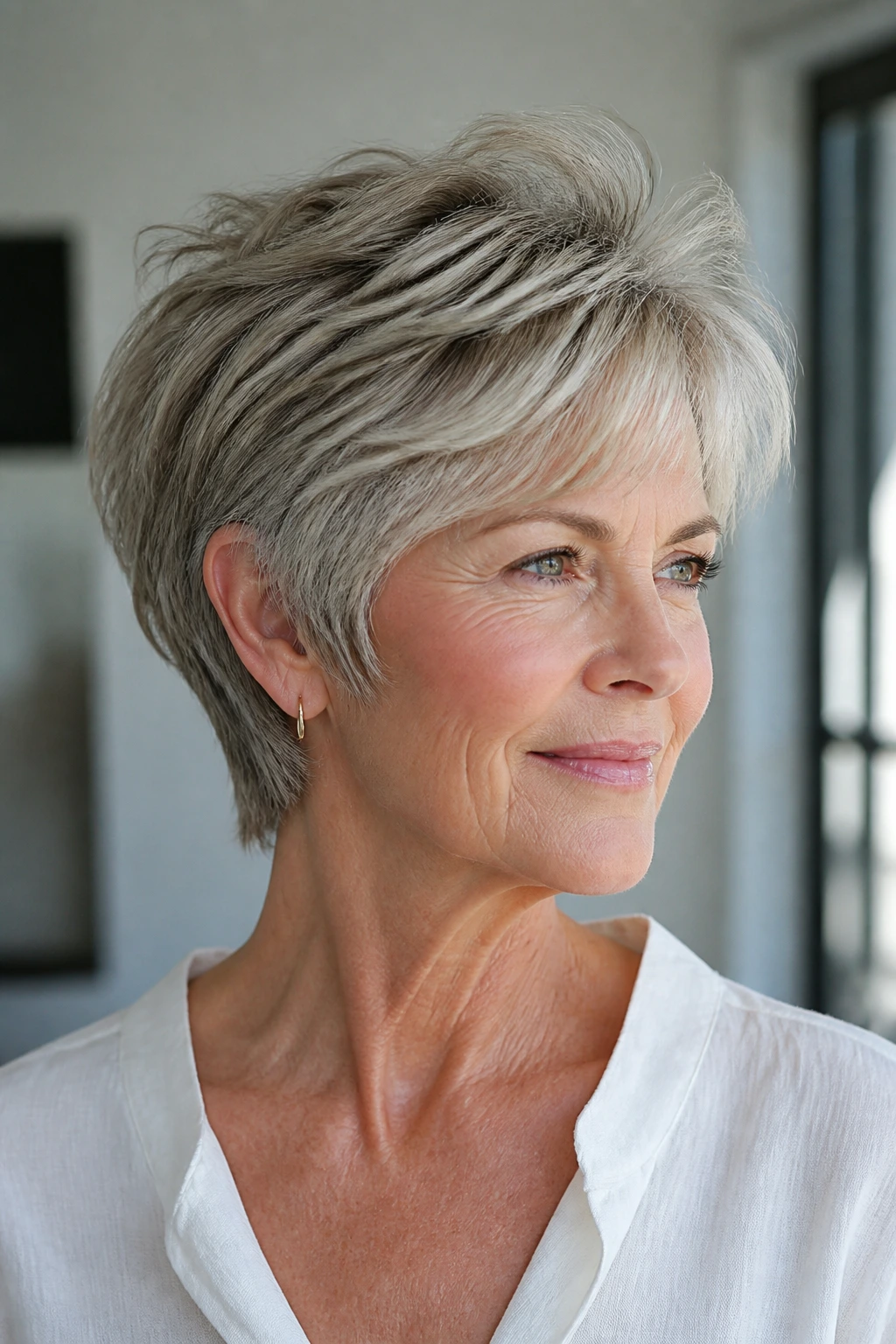
A blunt pixie is one of the best places to start when fine hair needs to look denser fast. Keep the back snug, let the top stay just long enough to bend with your fingers, and sweep the fringe softly across the forehead so the front doesn’t feel abrupt.
Why it works
The bluntness is doing the heavy lifting here. Fine hair tends to look wispy when the ends are over-texturized, so a clean perimeter gives the eye something solid to land on. You’re not trying to disguise the hair; you’re giving it a shape that reads as thicker than it really is.
The side-swept fringe also helps if your temples have lost a little fullness. It softens the front without eating up too much density, and it doesn’t need a big round-brush blowout to behave. A quick dry with a bit of lift at the root is enough.
Ask for this at the salon
- Keep the sides tight but not shaved.
- Leave the top around 2 to 3 inches.
- Cut the fringe long enough to sweep, not so long it falls into the eyes.
- Avoid heavy point-cutting through the ends.
A pixie like this has a nice truth to it. It looks polished without acting precious.
2. The Bixie With Crown Lift
A bixie sits between a bob and a pixie, which is exactly why it works so well on fine hair that wants a little more body but not a full crop. The back stays shorter, the top keeps enough length to create movement, and the crown gets just enough lift to stop the whole shape from hugging the head.
There’s a sweetness to this cut when it’s done right. It doesn’t scream for attention. It just sits there looking balanced.
Why it works for fine strands
The bixie gives you a bit of softness around the face without leaving the ends too long and limp. That matters because longish fine hair often collapses at the jaw and loses its edge. Here, the hair stays compact, so every strand has a job to do.
It also grows out gracefully, which is a big deal if you do not want to be in the salon every four weeks. The shape can slide from pixie toward bob without turning sloppy. That’s not nothing.
Styling note
A pea-sized amount of mousse at the root, then a quick blast with your dryer and fingers, usually does more here than any heavy styling cream ever will.
3. The Chin-Length Blunt Bob That Makes Fine Hair Look Denser
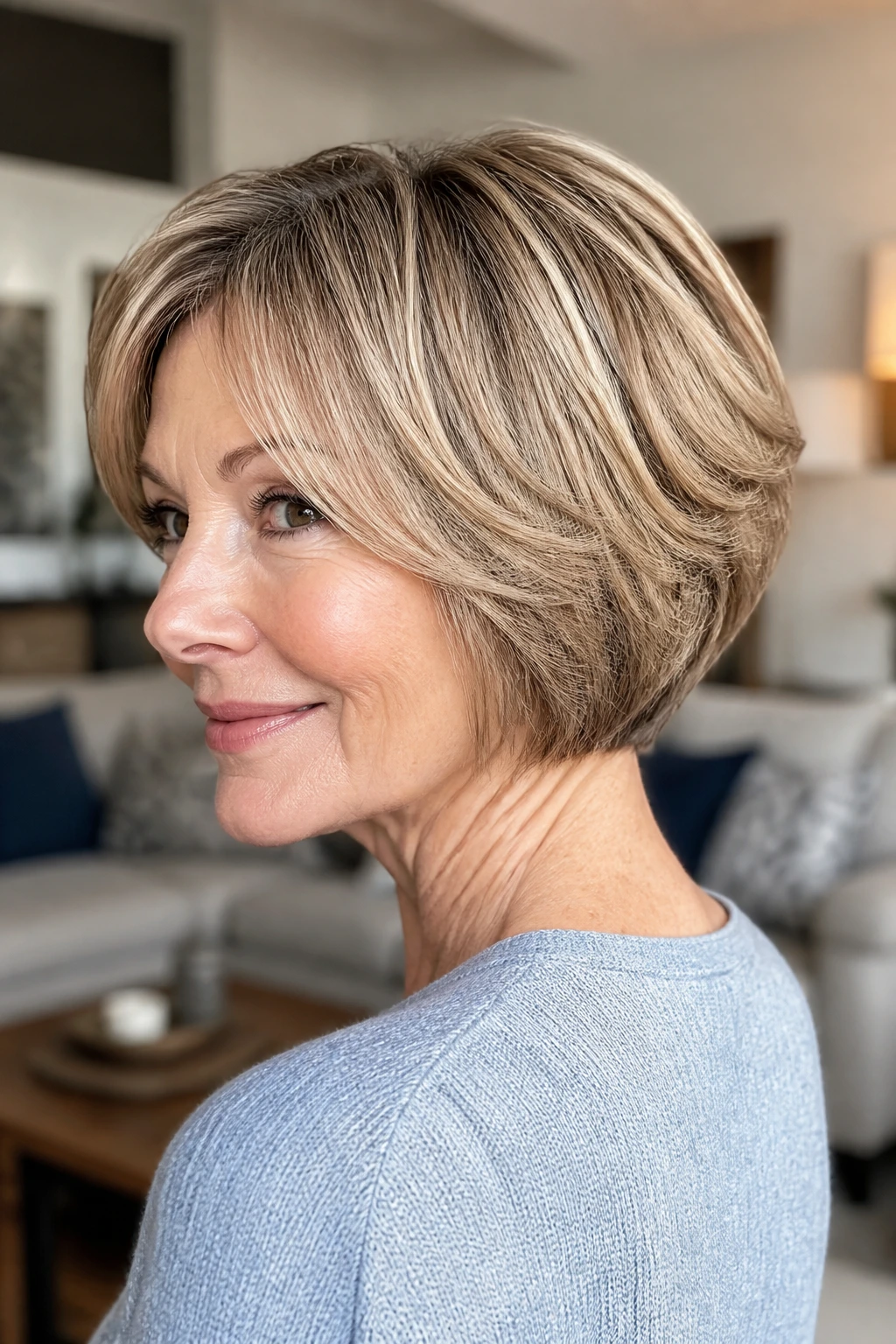
Can a bob that simple really make a difference? Yes. A chin-length blunt bob is one of those cuts that looks plain in the chair and then suddenly looks expensive in motion because the ends are all landing in one line.
That solid edge is the whole point. Fine hair often looks sparse when it’s sliced into too many layers, but a one-length bob stacks the visual weight at the perimeter. The result is hair that reads as fuller, even if the strand count hasn’t changed one bit.
What to watch for
Keep the line clean and resist the urge to shred the ends. If your hair is very straight, a slight underbend at the bottom keeps the bob from looking too hard. If it’s wavy, let the texture stay a little loose so the cut doesn’t puff out at the sides.
This one is especially good if you wear glasses. The chin line sits neatly below most frames and keeps the face open. It’s tidy in the best sense.
A useful salon phrase
Ask for “one-length through the perimeter, with only light interior shaping”. That sentence saves a lot of confusion.
4. The Tapered Crop With a Wispy Nape
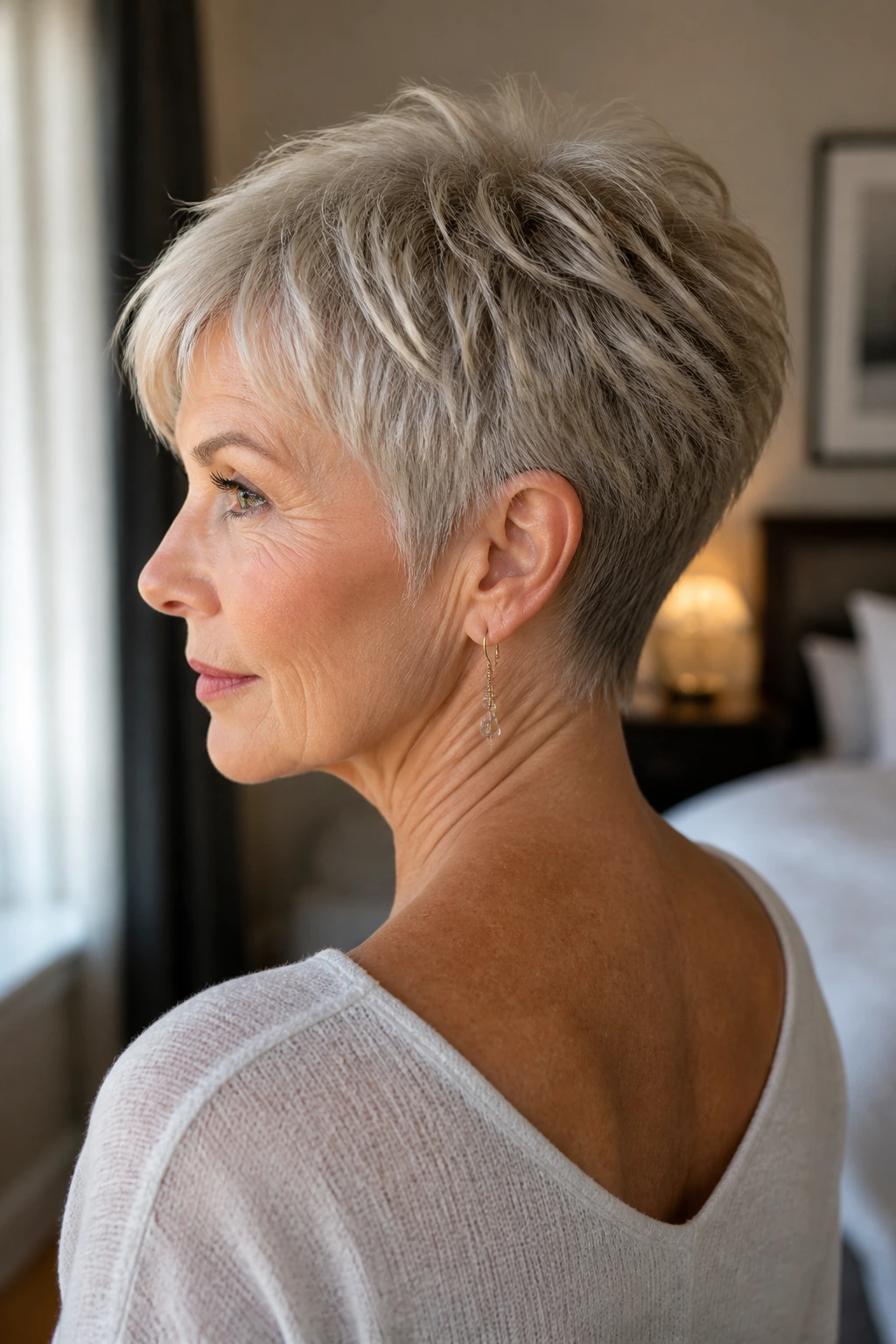
The tapered crop is the cut I’d hand to someone who wants short hair that still feels neat at the neckline. The nape stays tight and clean, the sides soften gradually, and the top has enough length to avoid that helmet look that can happen when a crop is cut too bluntly all over.
There’s a real practical bonus here: the back of the head looks orderly even on days when the rest of the hair has opinions. Fine hair often gets especially soft around the nape, and a taper keeps that area from puffing out or sticking to the neck.
Why it suits fine hair
A wispy nape gives a light finish without taking too much bulk from the rest of the cut. The top can be left slightly fuller so the silhouette still has a little shape. That balance is what makes the style feel sharp instead of sparse.
If your hairline is softer in back, this is a smart cut because it doesn’t ask the nape to carry too much weight. It just cleans it up and moves on.
Good to know
This is one of those cuts that looks best when the stylist trims the neckline often. Let it go too long and the taper loses its edge fast.
5. The Stacked Bob With Hidden Graduation
A stacked bob sounds obvious until you see a good one. Then it makes perfect sense. The back is cut with hidden graduation so it lifts off the head instead of hanging flat, while the front stays slightly longer and softer.
That hidden stacking is what gives fine hair a little architecture. You get volume where the head needs it most—at the crown and occipital area—without ending up with a hard, dated wedge. If the cut is done carefully, it looks modern and easy, not overworked.
Why it works
Fine hair likes a little internal support. Stacking creates that support by building layers underneath the top section, so the outer hair sits higher and fuller. The effect is subtle, but you can feel it when you run your fingers through the back.
This is especially good if your crown tends to collapse or your hair springs flat after a few hours. The stacked shape keeps the silhouette from sinking.
What to ask for
- Soft graduation, not a dramatic shelf.
- A clean neckline.
- Enough length in front to tuck behind the ears if you want.
Too much stack can make fine hair look like a puffy cap. Keep it gentle.
6. The French Bob With Airy Ends
The French bob has a little attitude, which is part of the fun. It usually sits around the jaw or just below it, often with a soft fringe or a piecey front, and the edges are light enough to move without losing their shape.
Fine hair can wear this cut beautifully because the overall length is short enough to keep the body up, while the airy finish prevents the bob from looking stiff. The trick is to keep the line clean and the interior layers minimal. Too much slicing would kill the charm.
A few practical details
A French bob looks best when the front pieces graze the cheekbones or jawline rather than hanging around in no-man’s-land. If the fringe is included, it should be light, not dense. Heavy bangs and fine hair do not always get along; they can separate in clumps and show scalp at the roots.
This cut is lovely on hair that has a slight bend. It does not need perfect smoothness. In fact, a little natural movement is part of the appeal.
My take
If you want a short cut that feels elegant without trying too hard, this is one of the nicest places to land.
7. The Layered Wedge That Builds Height
The wedge never really disappeared. It just got better at behaving.
A modern wedge keeps the back short, lets the crown rise a bit, and brings the sides forward enough to frame the face. On fine hair, that architecture is gold. The shape builds height where the eye wants it and keeps the ends from looking limp.
Why it still works
Older versions of the wedge could be severe. This one should not be. Softness around the edges matters, especially if your hair is fine and your face prefers a little movement near the cheeks. The idea is to use the head’s natural curve, not fight it.
The shorter back also helps if your hair tends to flip out at the nape. A clean wedge shape can tame that awkward bend and turn it into part of the silhouette.
Best for
- Flat crowns
- Straight to lightly wavy hair
- People who want visible shape from the side view
If you’ve been wearing your hair longer because you think short cuts feel harsh, this one can change your mind. It has structure, but it isn’t stiff.
8. The Ear-Skimming Crop With a Longer Top
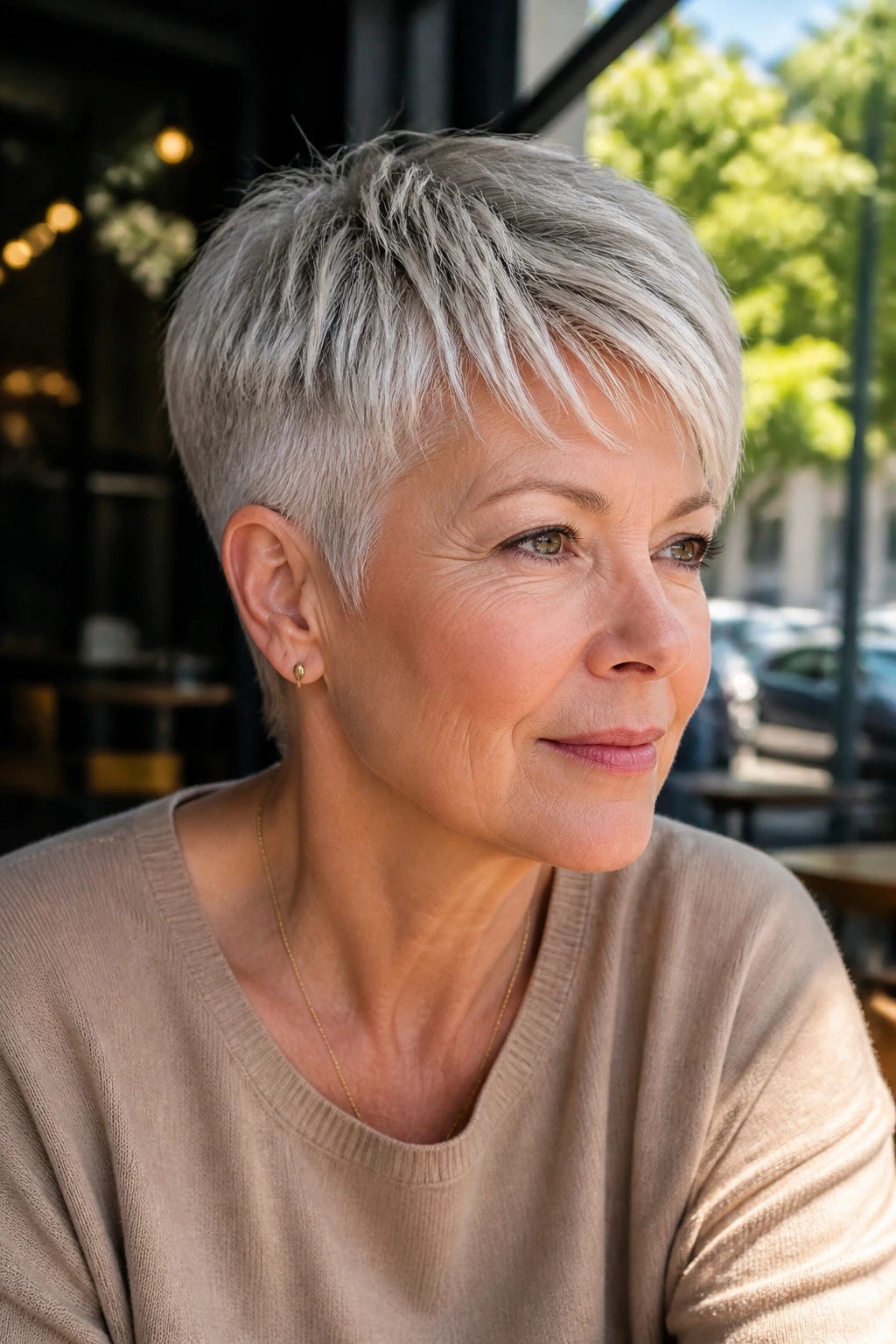
This is a confident little cut. The sides are trimmed close enough to open the face and the ears, while the top stays long enough to be finger-styled into a soft wave or slight lift.
It suits fine hair because the length is controlled, not lost. Hair that barely brushes the ear has less chance to droop, and the longer top gives you room to play without adding bulk all over the head.
Why it stands out
The crop looks especially good when the top is directed forward and slightly up. That keeps the silhouette from going too flat. A little sweep over the forehead can also soften a strong hairline or balance glasses.
This is not a high-maintenance cut in the dramatic sense. It does need shape, though. A quick trim around the ears keeps it crisp, and a dab of styling paste at the top can bring the whole thing to life in ten seconds flat.
One caution
Don’t let the top get too wispy. If you keep cutting and cutting texture into it, the style will lose the weight it needs to sit neatly.
9. The Asymmetrical Bob With a Deep Side Part
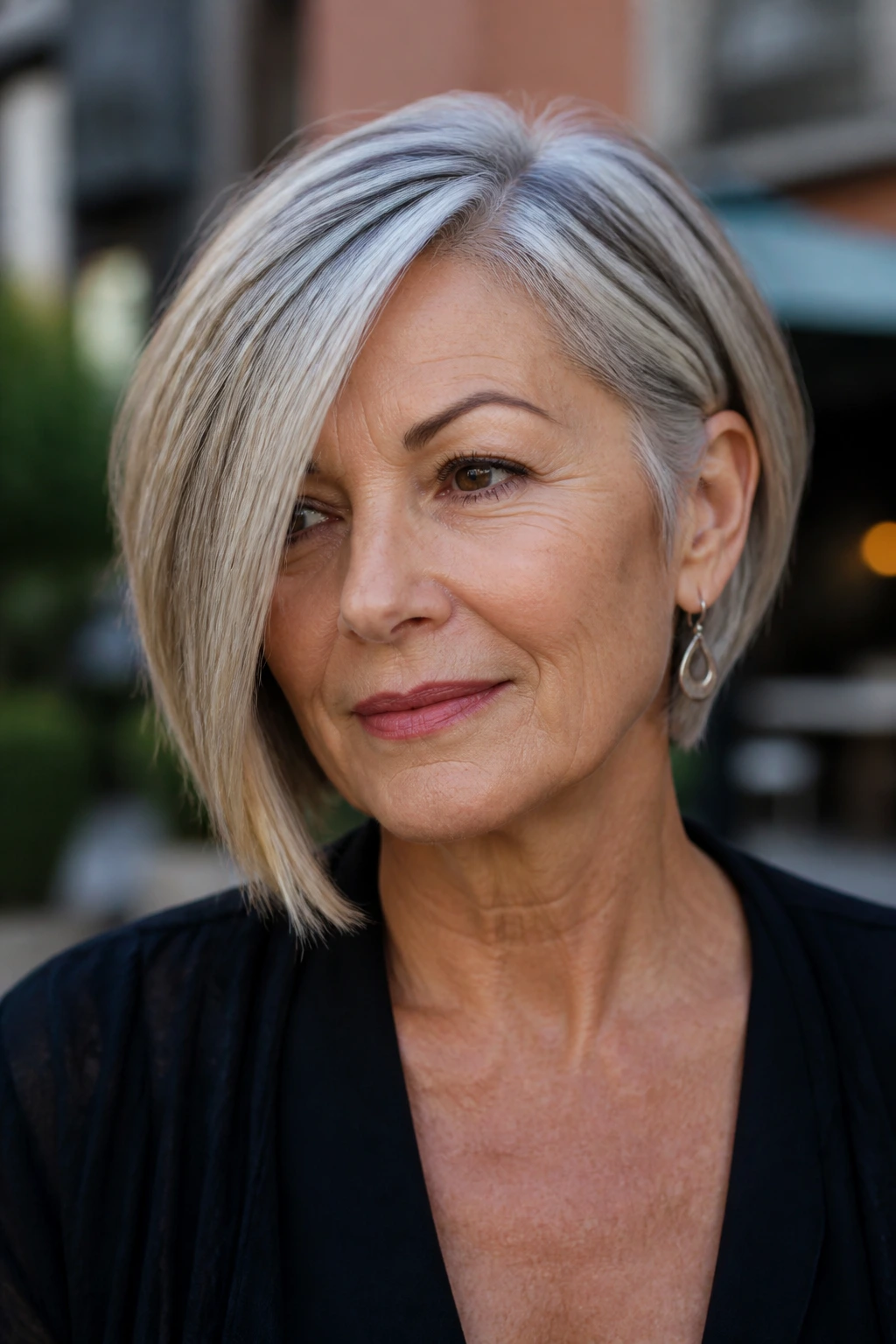
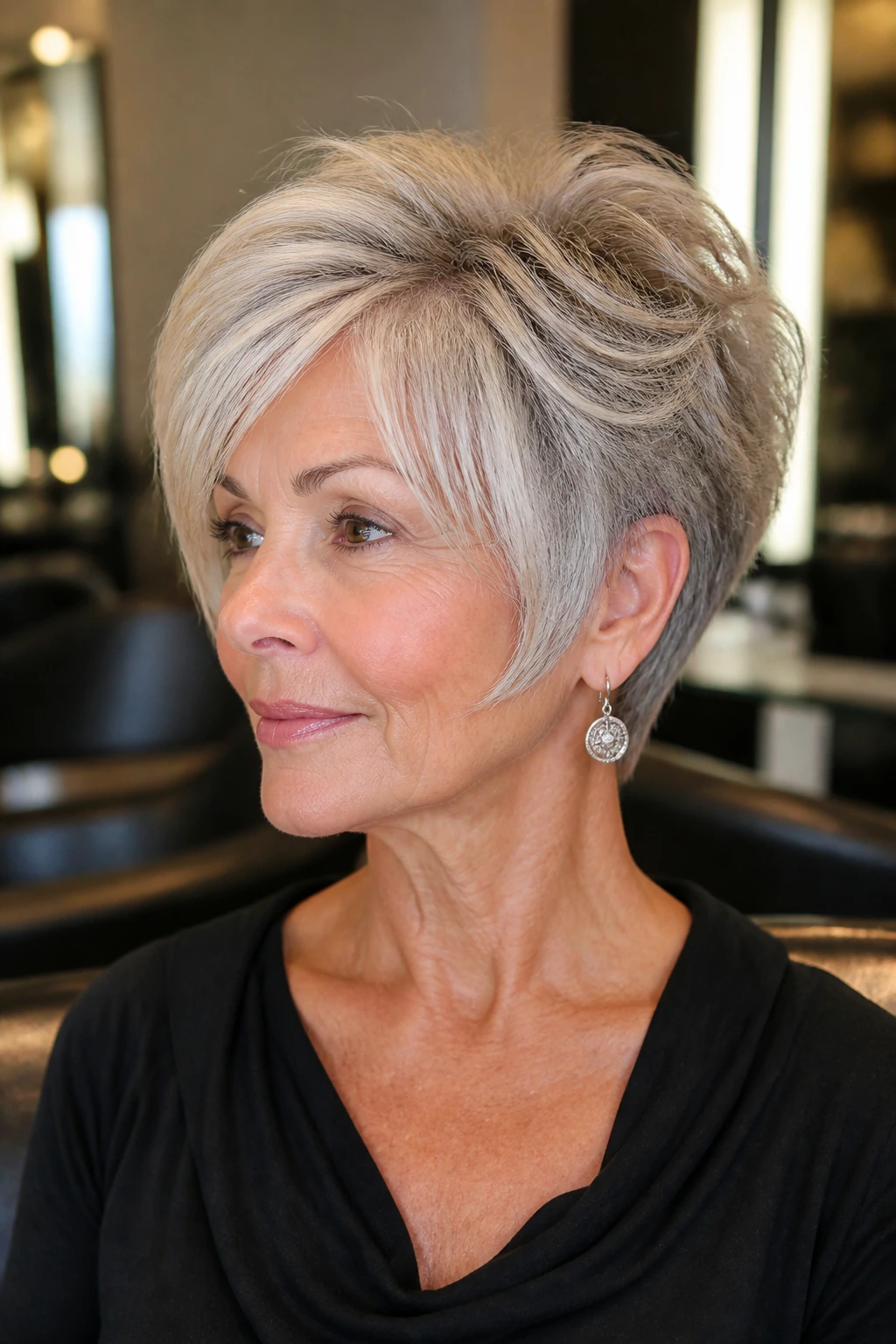
A deep side part can do more for fine hair than a whole drawer of products. When one side falls slightly longer than the other, the eye stops reading the cut as static and starts reading it as intentional.
The asymmetry gives the front more presence, especially if your hair is thin at the temples or one side lays flatter than the other. It also breaks up a wide face shape in a way that feels modern without becoming fussy.
Why it works
Fine hair often looks best when the cut gives the illusion of density without asking every strand to sit evenly. Asymmetry creates that illusion. One side becomes the feature, the other side supports it, and the whole style feels fuller because it has direction.
A deep side part also creates root lift where you need it most. If your crown tends to flatten by noon, moving the part off center can make the hair stand a little taller from the start.
Styling note
Dry the heavier side first. Then sweep the top over and pin it in the direction you want while it cools. That one habit can help the part stay put longer.
10. The Shaggy Bob With Curtain Bangs

A shaggy bob can work on fine hair, but only if it stays disciplined. That’s the line I keep coming back to. Too many shag cuts get shredded until there’s more air than hair left, and fine strands do not benefit from that kind of enthusiasm.
The better version keeps the bob length around the jaw or a touch below and uses curtain bangs to open the face. The layers should be soft and strategic, not chopped up for the sake of looking edgy.
What makes this one different
The curtain fringe gives a little movement at the front, which is useful if your forehead feels wide or your bangs have always split down the middle anyway. Meanwhile, the bob perimeter still provides enough weight to keep the ends from going see-through.
This cut works best when you style it with a small round brush or a quick bend from a flat iron. A tiny lift at the roots is plenty. You do not need a lot of product or a lot of faith.
Good for
Hair that has a little bend, a little grit, or a little stubbornness. In other words, real hair.
11. The Sleek Jawline Bob
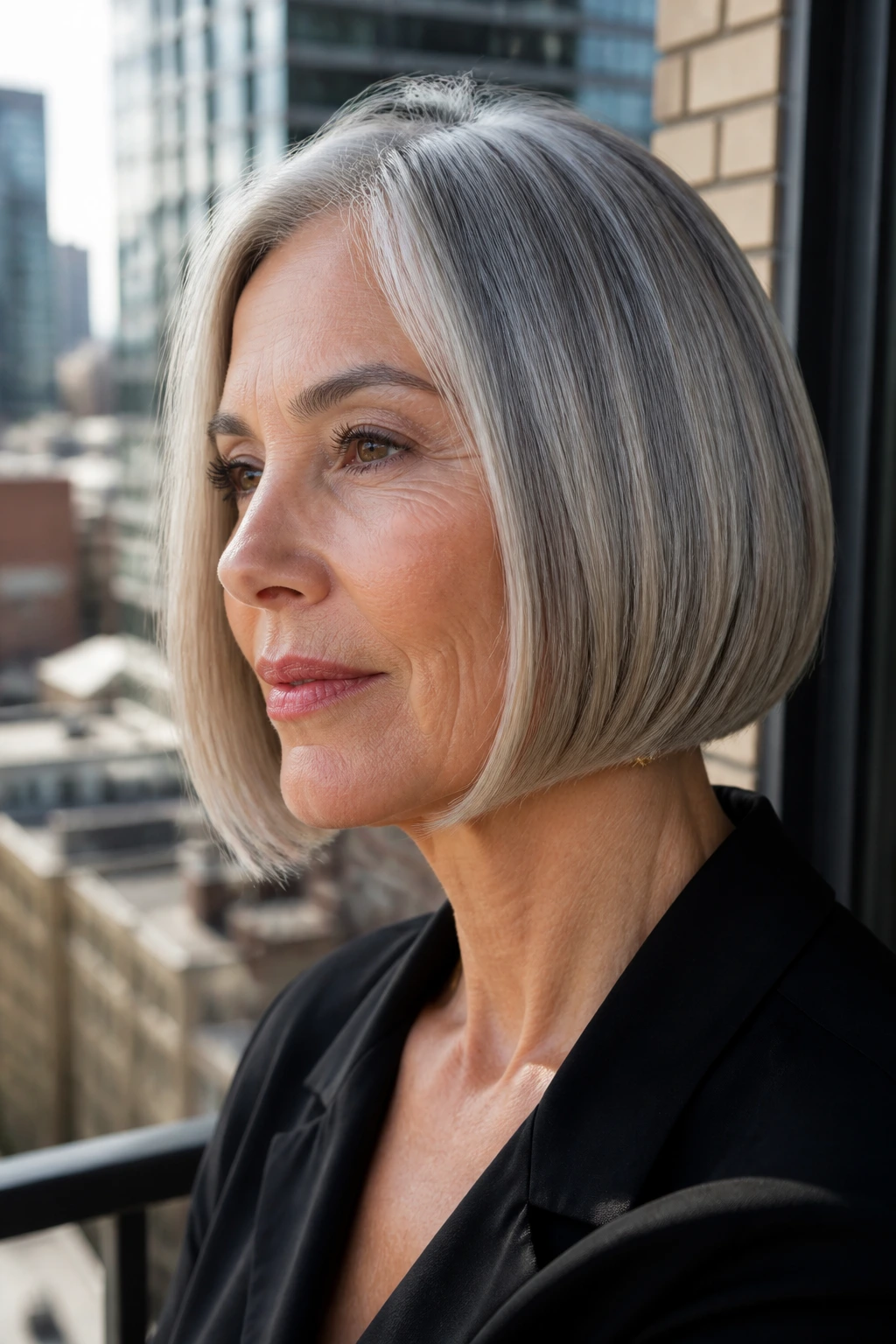
When hair is fine, a clean jawline bob can look sharper than a cut with twice the drama. The trick is the line. Keep it precise, keep the ends full, and let the hair hit right around the jaw so the face has a clear frame.
This cut suits straight hair especially well. It gives the eye a single, unbroken edge, which makes the hair seem more substantial. It also plays nicely with silver hair, where shine and geometry do a lot of quiet work.
Why it works
A jawline bob removes the dead space that often happens when fine hair hangs too long between the chin and shoulders. That middle zone is where the hair can start to look stringy. Cutting it shorter gives the strands a place to bunch together.
It’s also one of the easiest bobs to style well. You can wear it smooth, tuck one side behind the ear, or bend the ends just a touch under. It does not need a lot of convincing.
Be careful with
Razor cutting. On fine hair, that can blur the edge too much and make the bob look softer than it should. A crisp line is the point.
12. The Textured Pixie With Choppy Top Layers
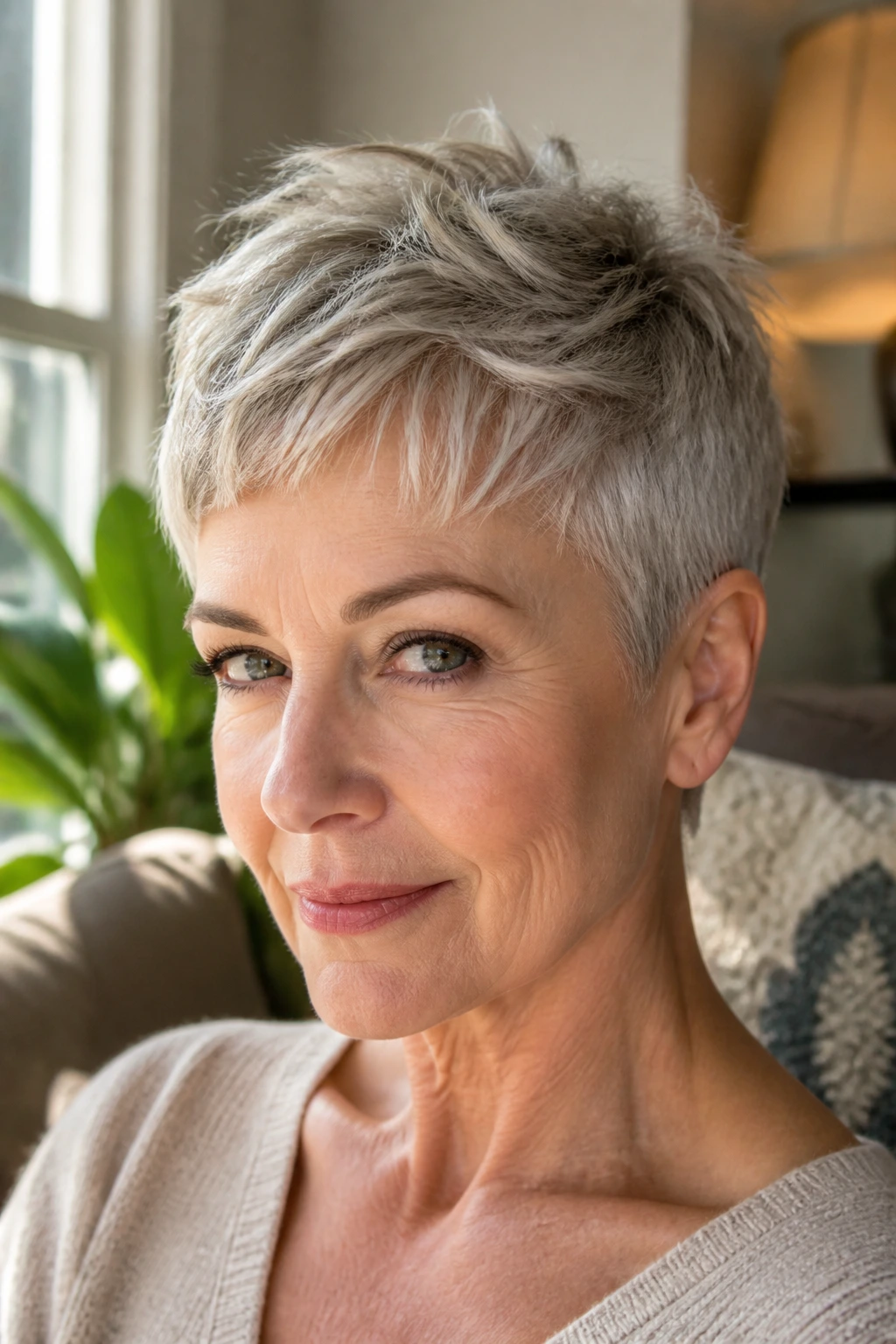
A textured pixie has a little more grit than the blunt pixie, but it still needs restraint. The top is cut with choppy layers to create separation, while the back and sides stay close enough to keep the shape compact.
This one is for hair that needs a little lift in the crown and a little movement through the top, especially if your natural part wants to lie down and stay there. The choppy layers make it possible to finger-style the hair into shape without a blowout.
Why it works on fine hair
The pieces are short enough to stack on each other, which gives the illusion of body. But because the cut is short, the layers are not long enough to collapse into straggly ends. That’s a useful distinction. You want texture, not fluff.
This cut looks especially good with a matte styling cream or a tiny bit of paste warmed in the fingertips and pushed through the top only. Keep product away from the roots unless you enjoy greasy disappointment.
Styling cue
If the top starts to look too separated, mist it lightly with water and scrunch it back into place. Fine hair responds quickly to a reset.
13. The Soft Crop With a Long Side Bang
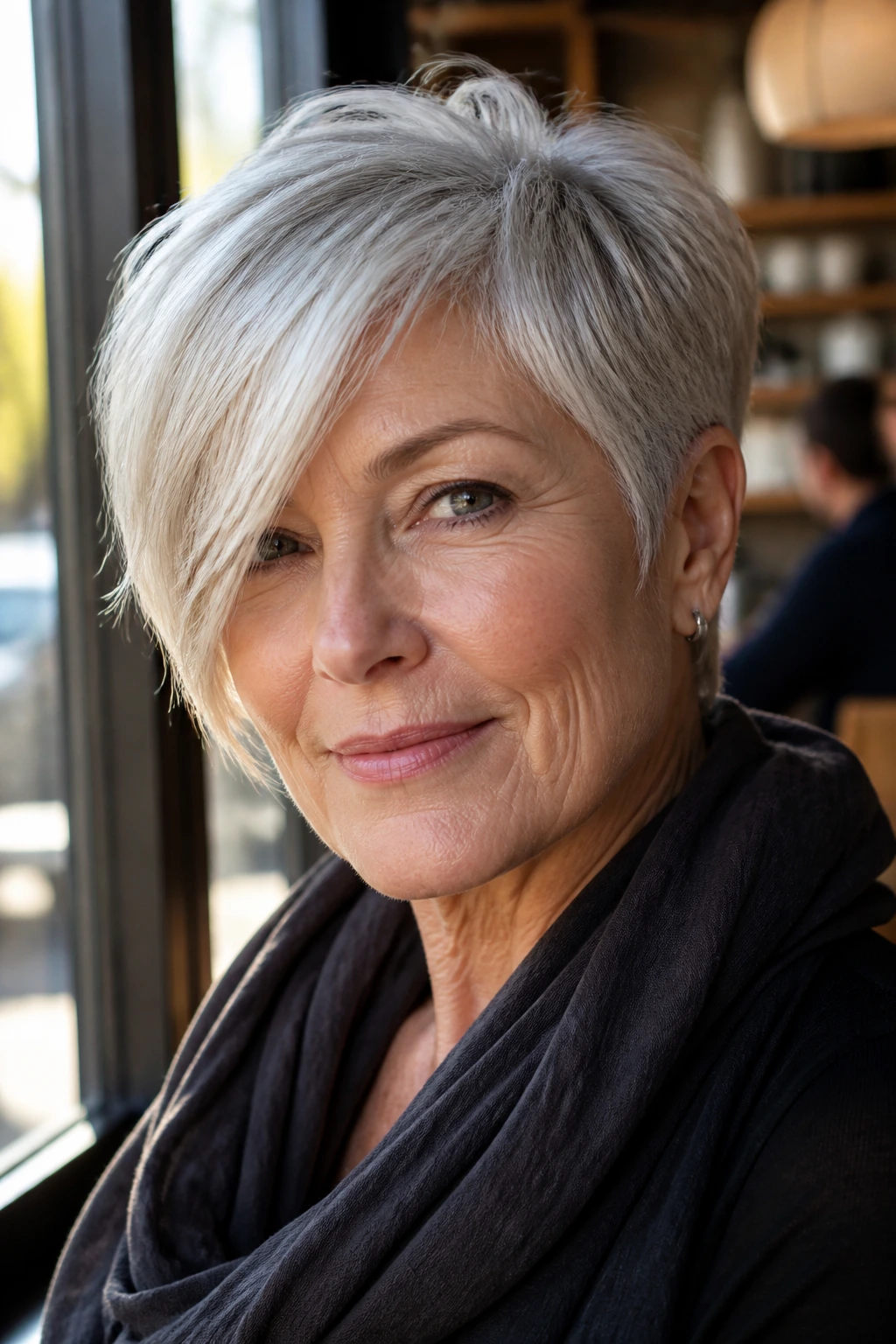
Some cuts are about softness at the edges, and this is one of them. The crop stays short overall, but the long side bang lets the front move into the cheekbone area or just over one eye, which is useful if you like a little coverage without a heavy fringe.
Fine hair can look lovely in this shape because the bang adds visual weight where the hairline might feel sparse. The rest of the cut stays neat and close, so the style does not drift into mullet territory. That line matters.
Why it works
The longer bang creates a diagonal, and diagonals are generous to fine hair. They pull the eye across the face and make the cut feel fuller. They also help if one temple is thinner than the other, which happens more often than people admit.
I like this cut for anyone who wears glasses or spends the day tucking hair behind one ear and pulling it back out again. It moves cleanly around the face without demanding a lot of styling precision.
Ask for this
A bang long enough to brush the cheekbone, plus short sides that don’t flare out near the ears.
14. The Neck-Grazing Bob With a Tucked Nape
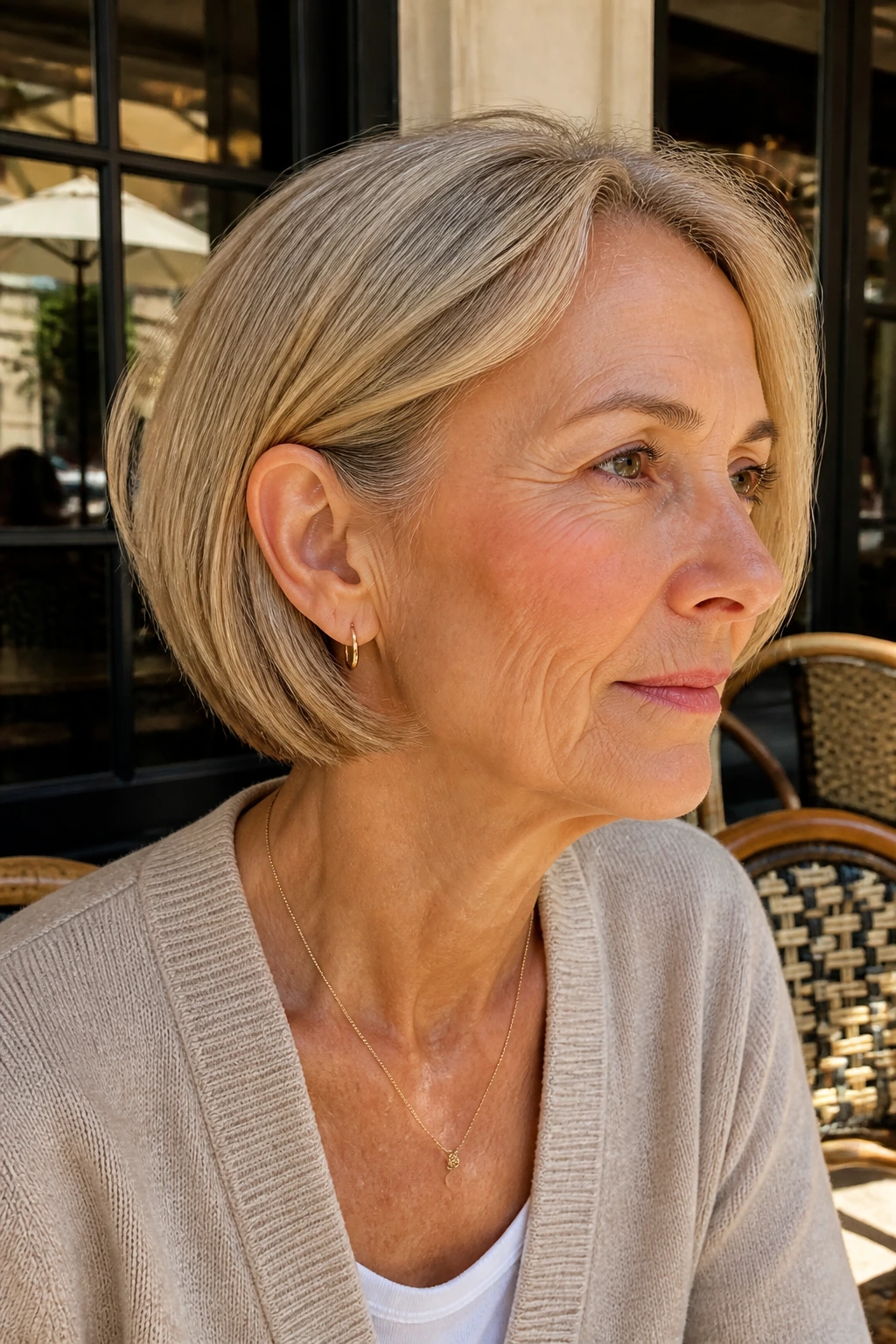
A neck-grazing bob gives you just a bit more length than a chin cut, which can be useful if you want to tuck the sides behind your ears or wear earrings without the hair competing with them. The nape should still be clean and close so the cut keeps its shape.
This is a nice compromise haircut. It’s short enough to stay light, but not so short that it feels exposed. Fine hair often benefits from that middle ground, especially when the ends are blunt and the front pieces sit a little longer.
Why it’s useful
The neckline stays tidy, which matters more than people think. If the nape gets bulky or fuzzy, the whole cut starts to feel old before it is actually old. A neat neckline keeps the silhouette from wobbling.
The length also gives you enough room for a slight underbend at the ends. That tiny bend can make the cut look fuller and more finished than a straight drop ever will.
Best for
People who want short hair but still like to tuck, brush, and move it around during the day. That little bit of flexibility is worth a lot.
15. The Modern Bowl-Inspired Crop
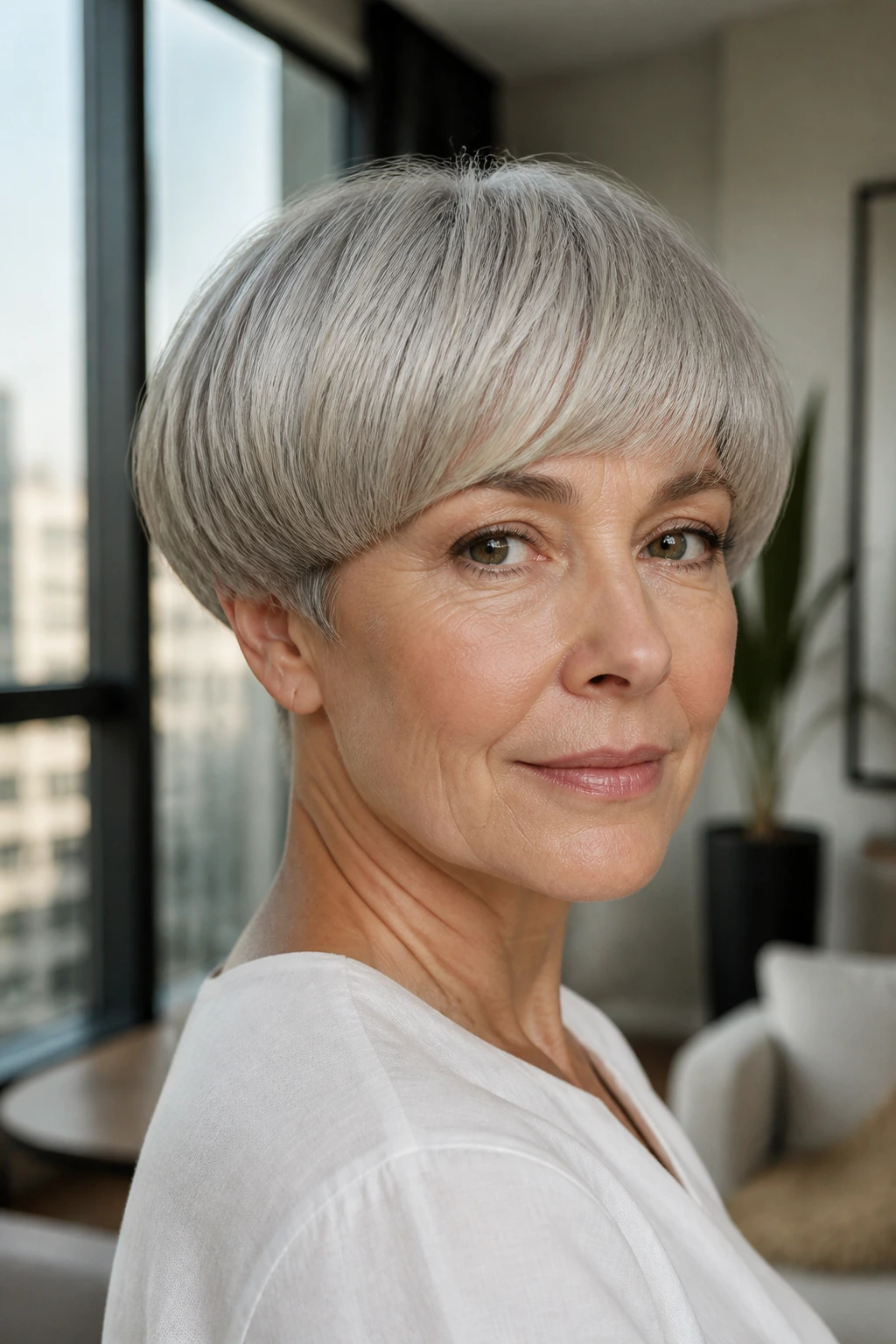
A bowl-inspired crop sounds risky until you see the modern version. The line is rounded, the edges are softened, and the top has enough lift to keep the style from looking like a helmet. It’s cleaner, cooler, and a lot more wearable than the old-school version.
Fine hair can actually be a good match here because the cut depends on shape rather than volume. You’re not chasing big body. You’re building a deliberate silhouette that lets the hair sit close to the head in the right places.
Why it works
The rounded form can make a narrow face look more balanced and give glasses a stronger frame. It also keeps the perimeter dense, which is helpful if your ends have become a bit see-through.
This cut needs confidence and a stylist who understands soft geometry. The wrong version can go too blunt and too heavy. The right version looks spare in the best way.
Small but important detail
The fringe should be soft enough to move. If it sits too stiffly across the forehead, the whole shape can feel boxy.
16. The Feathered Pageboy Bob
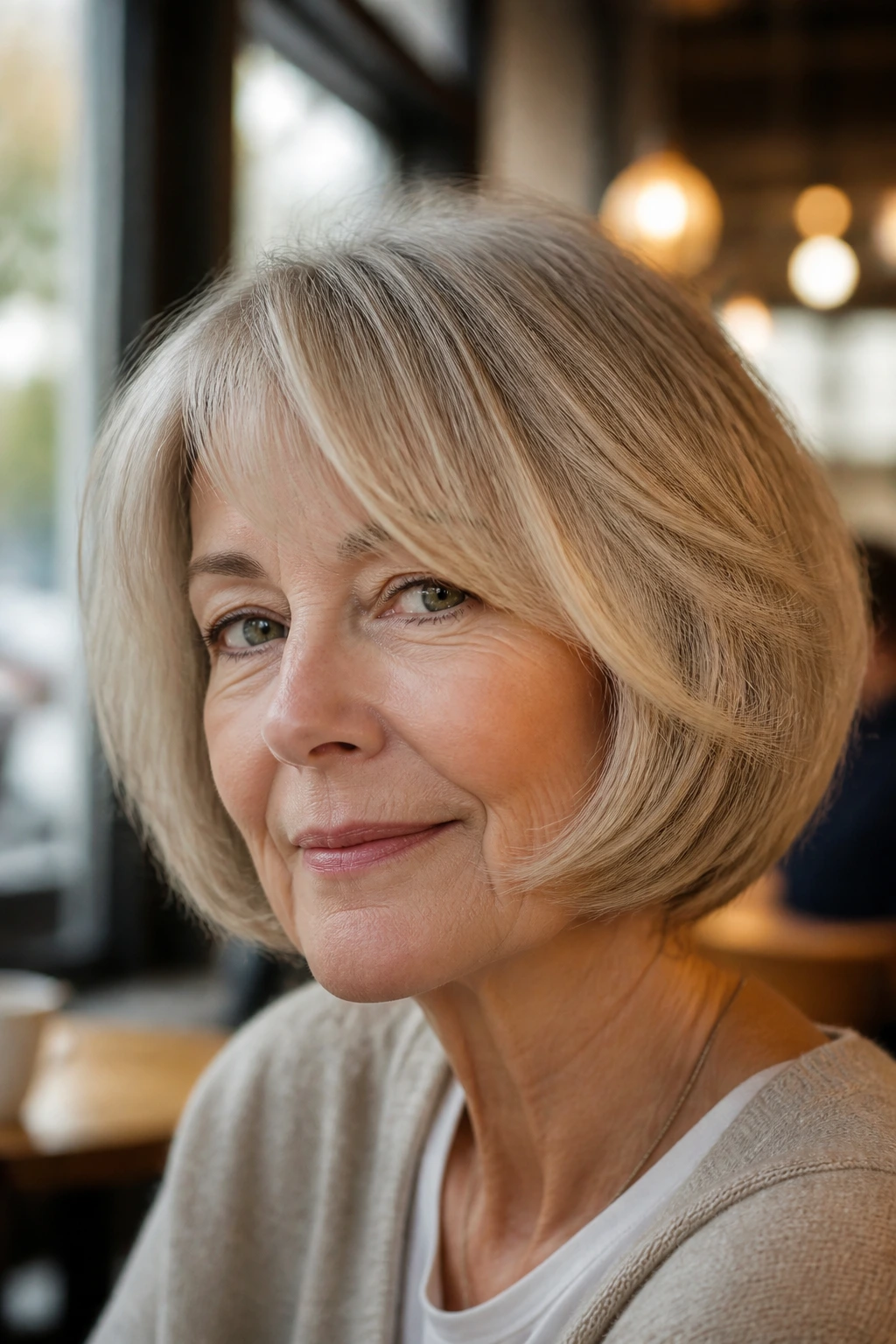
The pageboy is another cut people forget about until they see a good one. This version keeps the rounded curve but softens the ends with feathering so the bob doesn’t look old-fashioned or rigid.
For fine hair, that curved shape is useful because it creates fullness around the cheek and jaw. The hair appears to swing in a single clean contour, which is often more flattering to thinning ends than a lot of disconnected layers.
Why it works
The pageboy shape gives the hair direction. Instead of falling straight down and vanishing at the ends, it curves under and creates a visible edge. That edge is where the density lives.
It’s a nice choice if your hair is straight or only slightly wavy. Too much texture can blur the outline. A bit of smoothness keeps the pageboy recognizable and chic.
A real-world note
If your hair flips out at the ends, ask for the shape to be cut with that tendency in mind. Fighting the flip with more product is a losing game.
17. The Piecey Pixie With a Lifted Crown
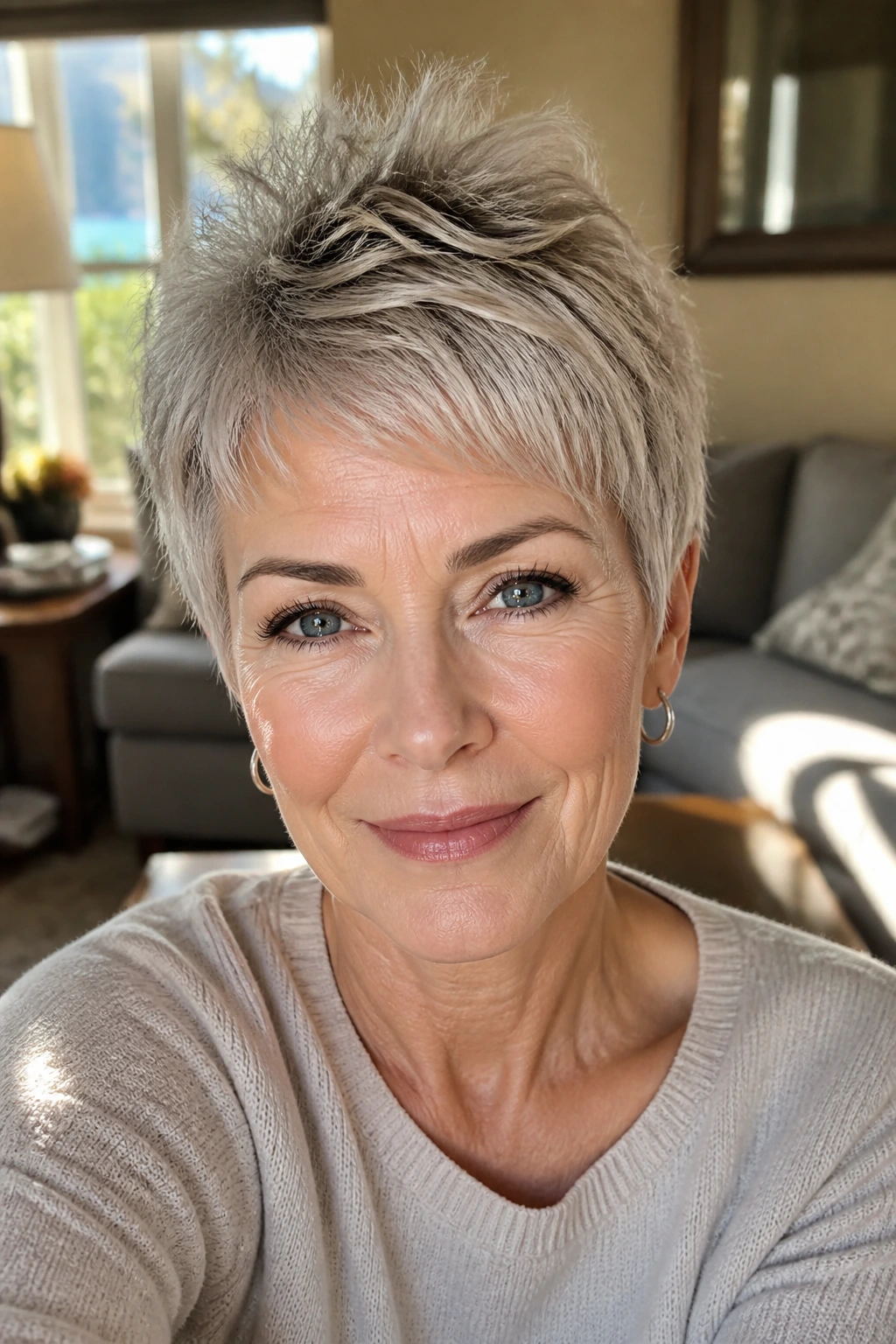
This one has energy. The sides stay short, the crown is lifted, and the top is cut into small, separated pieces that move instead of sitting in one helmet-like mass.
Fine hair can wear a piecey pixie well as long as the pieces are not too long. That’s the critical part. Once the pieces get flimsy, they start reading as sparse rather than textured. Short, lively, and slightly imperfect is the sweet spot.
Why it works
The lifted crown gives the hair a bit of height at the exact point where the head shape matters most. That helps the profile. The piecey finish keeps the cut from looking too formal, which is useful if you prefer something a little less polished and a little more lived-in.
This is a good option if your hair has a natural bend or if you like the idea of styling it with your hands and moving on. A little paste on the tips, a quick pinch at the crown, done.
Keep in mind
If your hair is very fine and very soft, skip heavy waxes. They flatten the lift before it has a chance to exist.
18. The Short Curly Bob for Fine Waves

A short curly bob is not about forcing fine waves into a shape they won’t hold. It’s about cutting enough length off so the wave pattern can actually show up. Fine waves often go limp when they’re too long, then suddenly spring alive once they’re shortened.
The best version sits around the jaw or just above the neck, with the ends left soft enough to move. A little shaping around the face can keep the wave from ballooning out at the sides.
Why it works
Waves need weight removed, but not all at once. If you over-layer fine wavy hair, the wave can separate into little frayed bits. If you keep the shape compact, the wave has something to gather into.
A diffuser helps, but only a little. Scrunching with a light mousse and stopping before the hair turns crunchy tends to give the best result. The goal is bend and body, not stiffness.
Good for
People who prefer to air-dry or who want a cut that looks decent even when the blow-dry is half-finished. This one forgives a lot.
19. The Undercut Nape Bob
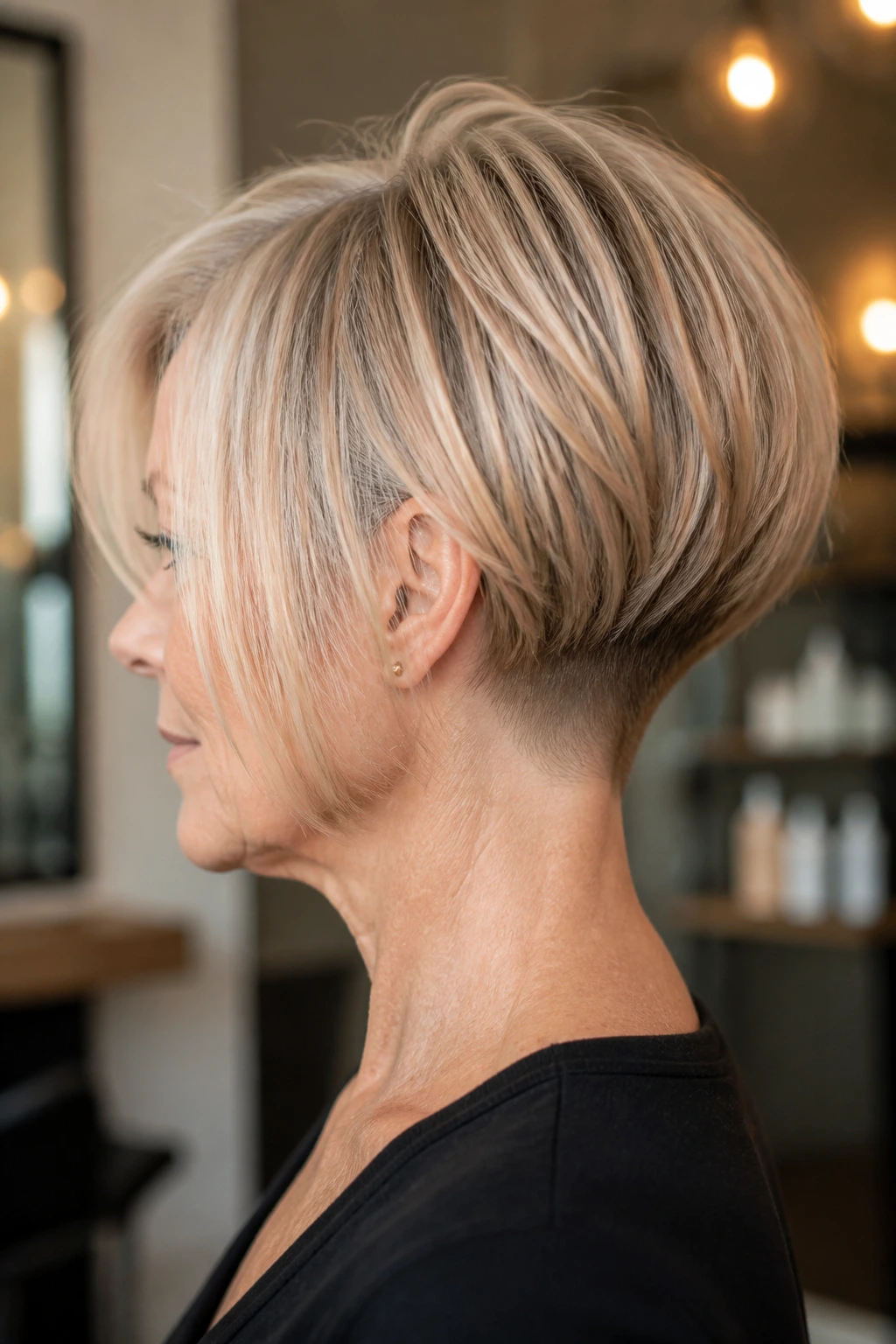
An undercut nape bob sounds sharper than it often looks. The idea is to remove a small amount of bulk underneath the back section so the top layers can sit higher and cleaner. The outer shape still reads as a bob, but the hidden undercut changes the way it falls.
Fine hair benefits from this because the neckline stays neat and the silhouette can feel lighter without thinning the visible perimeter too much. It’s a useful trick when the hair at the nape grows in dense but the top is fine and flat.
Why it works
The undercut stops the back from puffing out where the head curves. That alone can make the bob look more tailored. The rest of the cut can stay simple and blunt.
This is a strong choice if your hair tends to feel bulky in back while looking thin on top. It redistributes the shape instead of asking the same few strands to do everything.
One caution
Do not overdo the undercut. Too much removal underneath and the bob loses the weight that keeps it looking full.
20. The Side-Parted Bob With Contour Layers
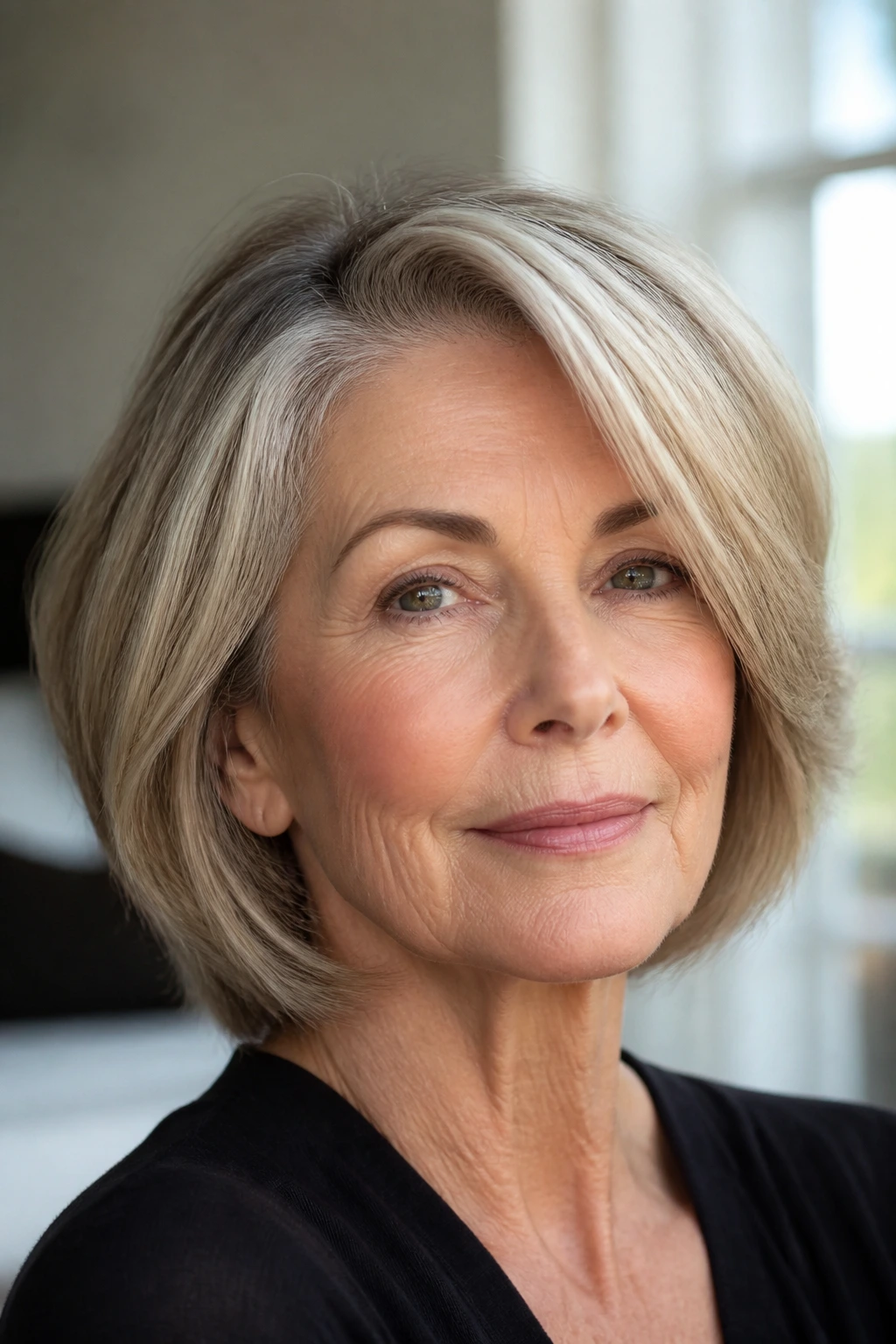
A side part can be a minor change on paper and a major change on the head. Pair it with soft contour layers around the face and you get a bob that lifts at the root and frames the features without making the hair look overdone.
This one is especially helpful if your center part exposes more scalp than you like. Shifting the part to one side gives the crown a different direction and creates the appearance of more body where the hair lifts off the scalp.
Why it works
Contour layers are not the same as all-over layering. They should live around the front and cheek area, where they soften the face, while the back keeps enough fullness to hold the bob’s shape. That balance matters on fine hair.
The side part adds height and a little drama, but not the theatrical kind. More the good, practical kind.
Best with
Hair that has a natural bend or a little resistance. It’s easier to persuade than hair that lies like a pancake, though even then a root-lift spray helps.
21. The Graduated Pixie Bob
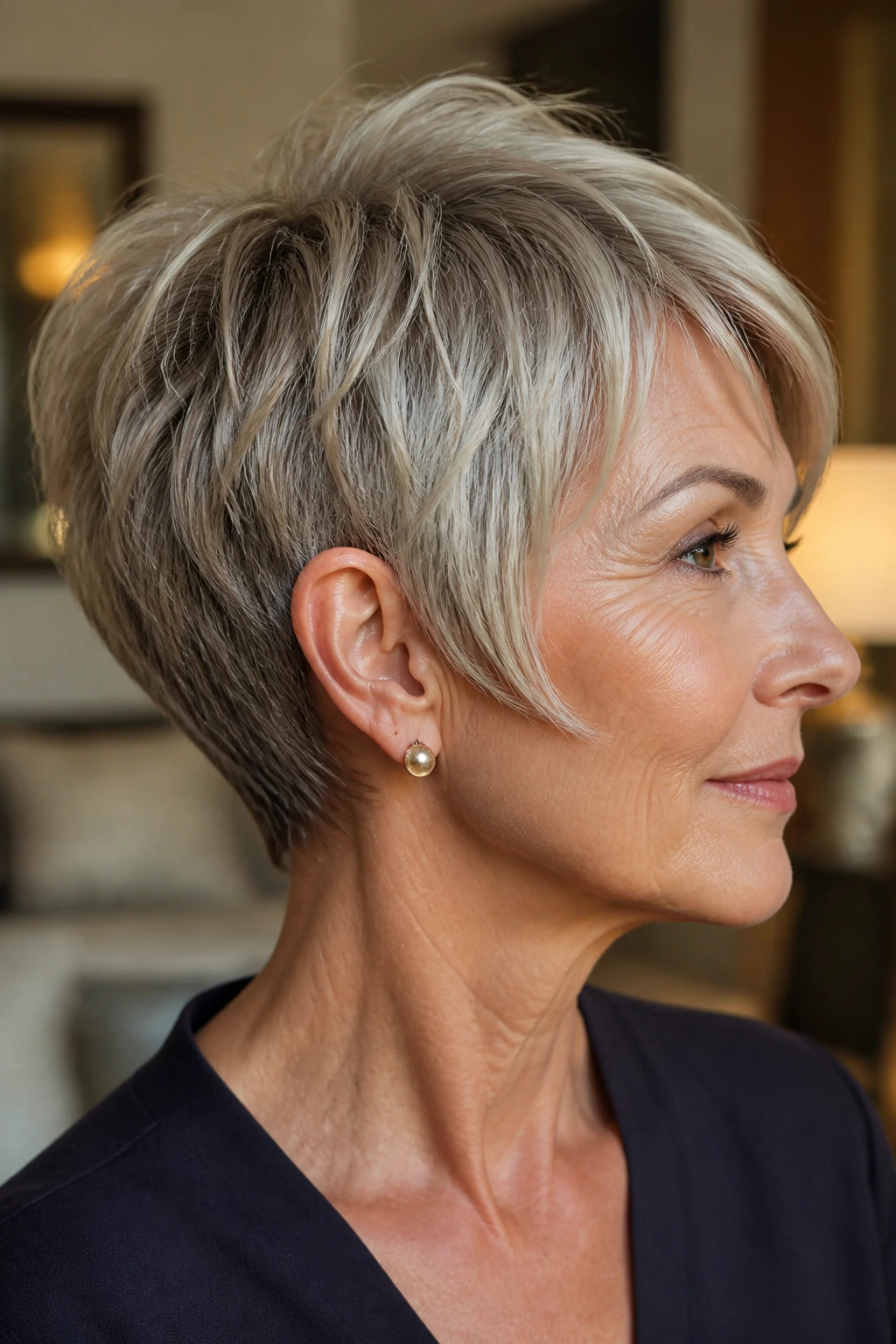
The pixie bob is for people who want to live somewhere between cropped and classic. The back is shorter and more compact, the front is a little longer, and the overall shape keeps enough softness to avoid a hard pixie edge.
On fine hair, that graduated structure is useful because it creates lift without needing tons of layers. The hair follows the head shape, then opens up toward the front so the face has a frame.
Why it works
Graduation creates a line that looks full from the side and back. If your hair tends to fall flat where the crown meets the occipital area, this cut gives that zone more support.
It also grows out neatly, which is a practical advantage people forget to mention. The shape remains recognizable longer than a very short crop with aggressive texture.
Salon note
Ask for soft graduation, not stacked bulk. Those are not the same thing, and the difference matters more on fine hair than on thick hair.
22. The Cropped Shag With Loose Movement
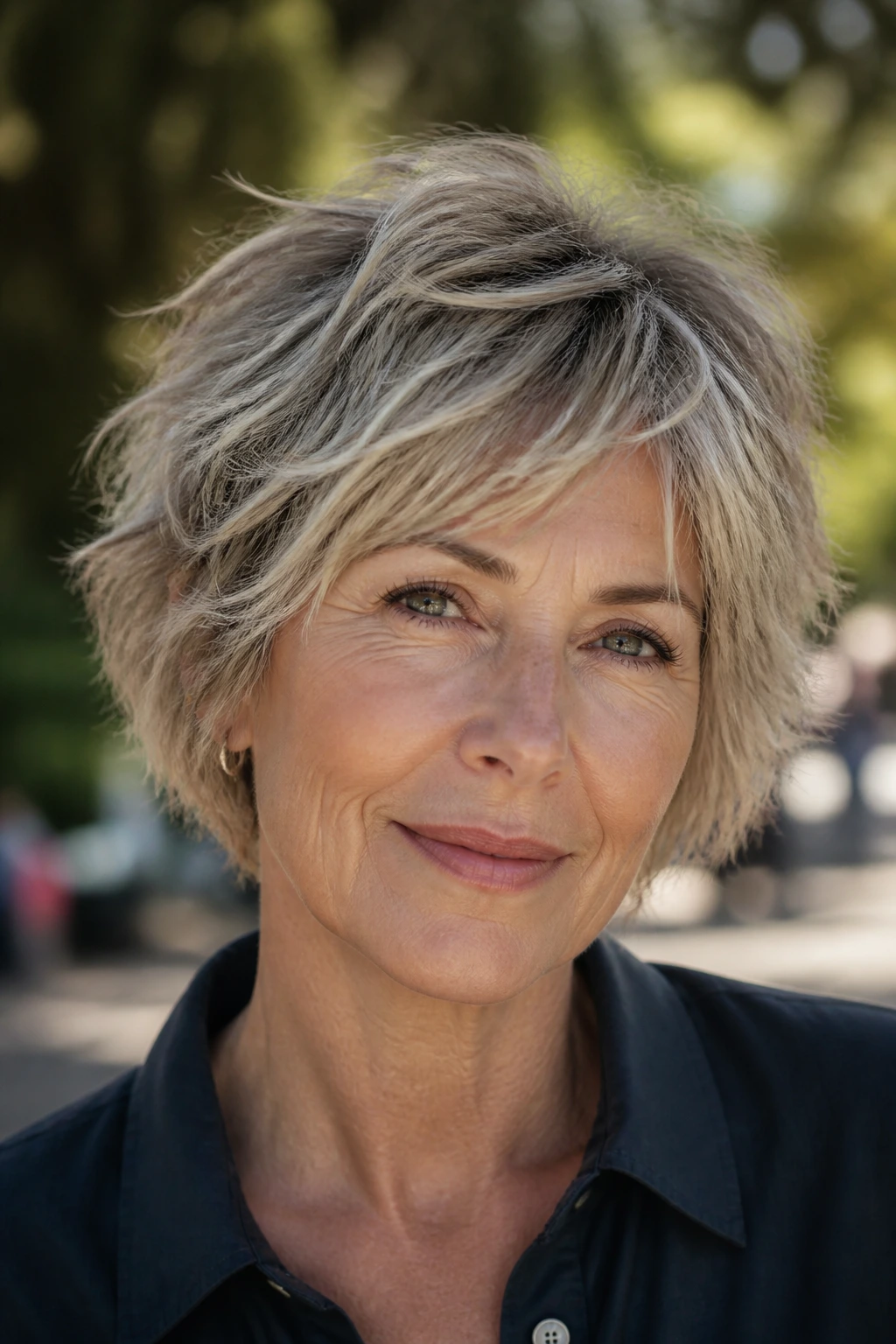
A cropped shag can be lovely on fine hair if it’s cut with discipline. That sounds contradictory, but it isn’t. You want movement, not debris. The ends should still have enough line to look deliberate, while the crown and front get soft layering for motion.
This version works well when hair is naturally a bit wavy or when you want a cut that does not look stiff on day two. It has a relaxed finish, but the shape still needs to be clear.
Why it works
Loose movement keeps the style from feeling too heavy around the jaw and neck. Fine hair can go limp in those zones fast, and a cropped shag removes that weight without turning the whole head into fluff.
Curtain bangs or a broken-up fringe can help, but keep them light. A shag on fine hair should suggest texture, not drown the hair in it.
My opinion
This is one of the easiest cuts to ruin by getting greedy with thinning shears. Less is more here. A lot more.
23. The Blunt Angled Bob With a Clean Perimeter

If I had to choose one cut that makes fine hair look immediately more intentional, this would be near the top. The angled bob stays shorter in the back and a little longer in the front, but the edge remains blunt and clean so the hairline looks dense.
That angle gives the face a bit of length, which can be useful if you want the cut to feel lighter around the jaw. It also keeps the bob from reading as boxy. There’s shape, but there’s motion too.
Why it works for fine hair over 60
Fine hair often looks best when the perimeter is strong. The angled bob gives you that strong line while still allowing a little softness through the front. It’s especially useful if your hair is straight or only mildly wavy, because the clean edge shows up clearly.
This is also one of the easier cuts to style well at home. A round brush can give the ends a quiet bend, or you can air-dry and let the angle do the talking.
The version I like
Keep the angle modest. A huge front-to-back gap can make fine hair look stringy at the long side. Subtle is usually smarter.
Why Short Shapes Give Fine Hair More Lift and Less Fuss
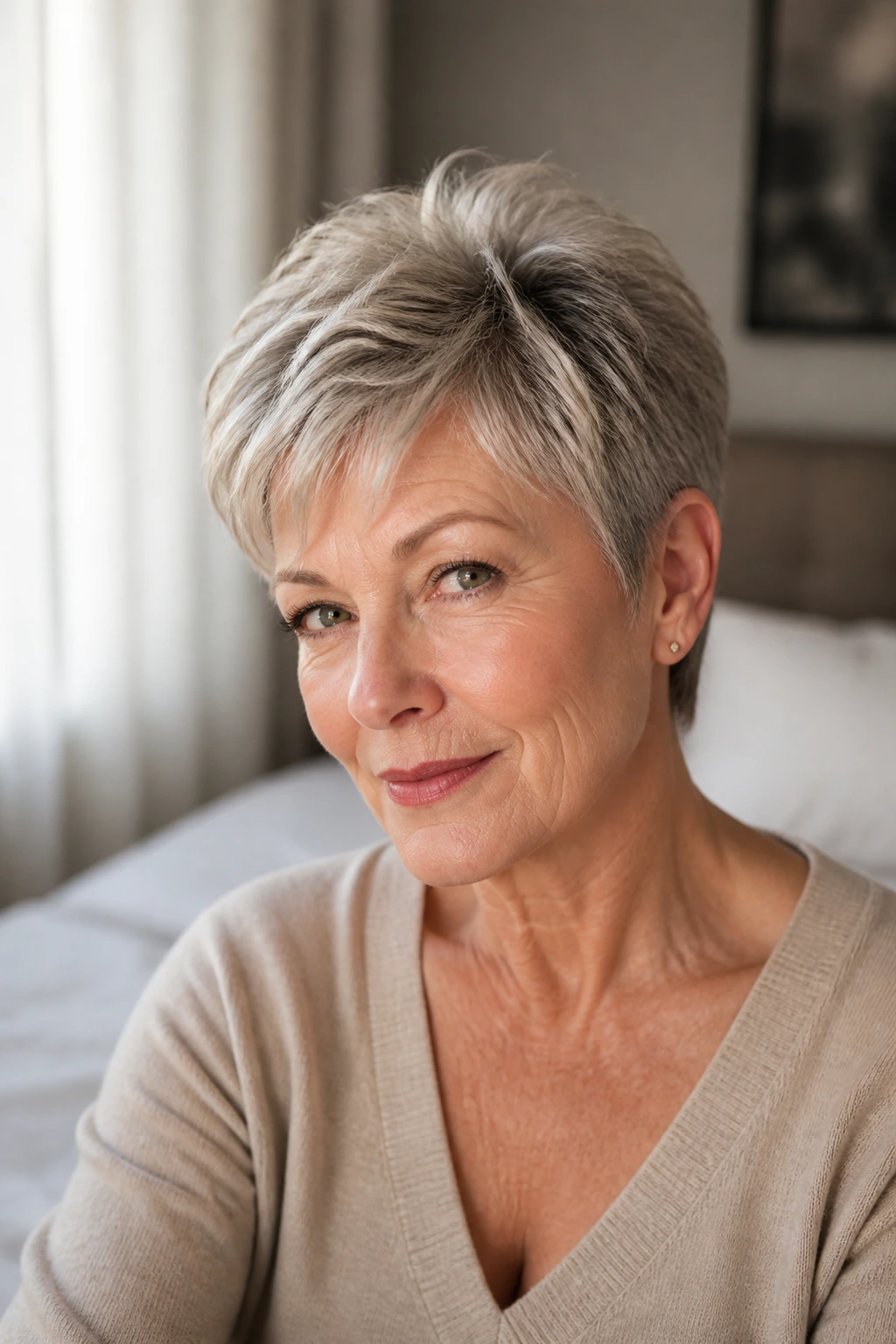
Fine hair has a way of telling the truth. If a cut is too long, the ends show it. If it’s over-layered, the see-through bits show that too. Short haircuts solve both problems by reducing the distance each strand has to travel before it falls flat.
That’s the mechanics of it, and it matters more than most salon conversations admit. A shorter cut takes pressure off the roots, keeps the perimeter denser, and lets the hair’s natural bend show up before gravity gets involved. A blunt line can make 20 strands look like 40. A good crown shape can make a flat profile look lifted without any theatrical teasing. Simple. Effective.
The other advantage is maintenance. Fine hair rarely benefits from being overhandled. If you can get the cut to do 70 percent of the styling, the morning routine gets calmer fast. That does not mean every short cut is easy, though. A pixie with bad proportions is worse than a longer cut with no shape. The haircut still has to be built for the hair in front of it.
What to Tell Your Stylist Before the First Snip
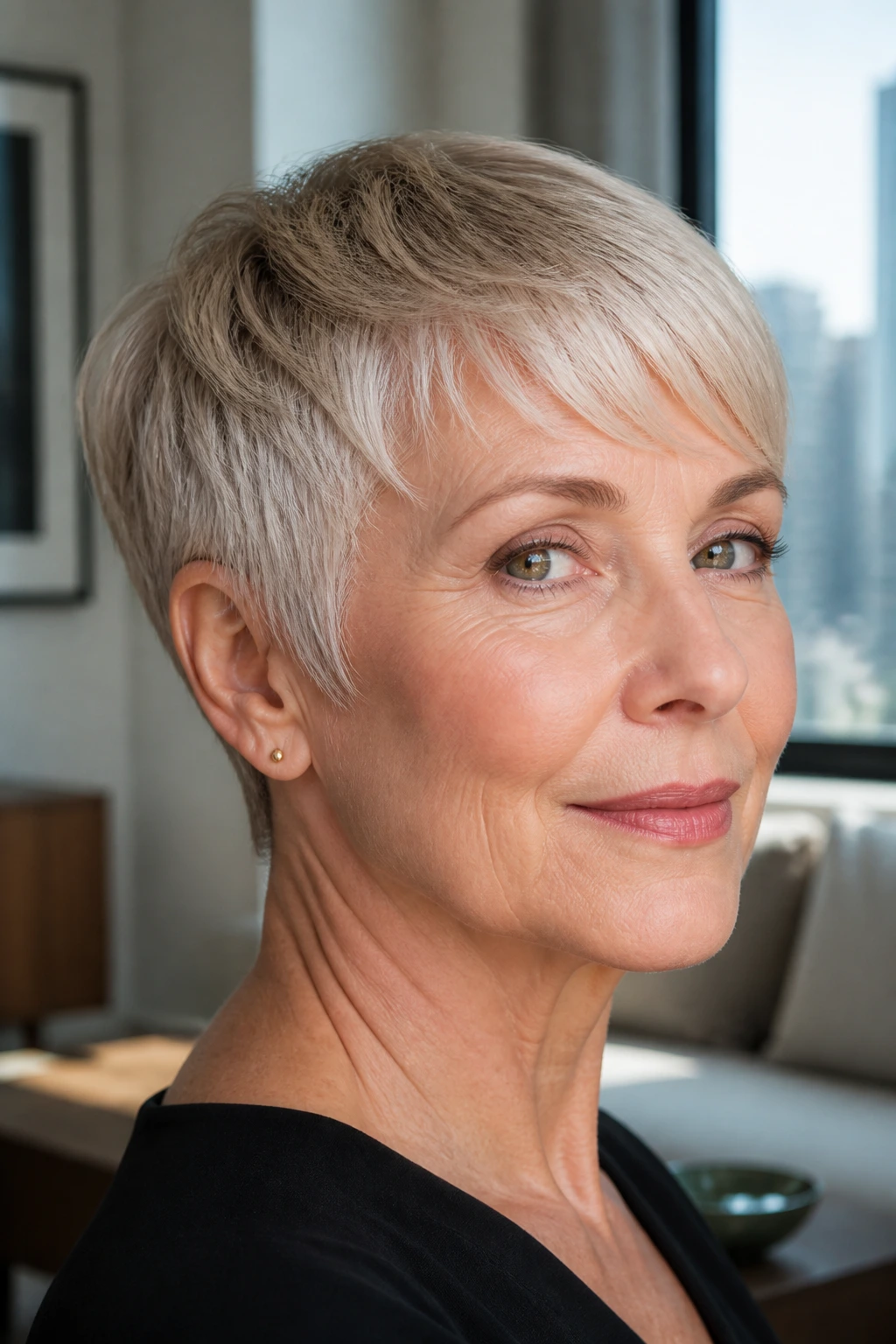
Bring more than one photo. One image from the front tells almost nothing about how a short cut behaves at the sides and back, and the back is often where a fine-hair haircut lives or dies. If possible, bring a front view, a side view, and a back view.
Then say what you actually do with your hair. Air-dry? Blow-dry for five minutes? Pull it back on busy days? Wear glasses? Those answers matter more than the face shape labels people love to toss around. A pixie that needs a round brush every morning is not the same thing as a pixie that can be finger-dried and left alone.
A useful script sounds like this: “My hair is fine, the crown goes flat, and I do not want the ends thinned out too much. I’d like the perimeter to stay full, with soft shaping only where it helps the face or the neckline.” That sentence tells the stylist what to protect, which is half the battle.
If you have cowlicks, mention them. If your hair sticks up at the nape, mention that too. Silent cowlicks are how people end up with a haircut that looks fine in the chair and strange in the mirror.
Essential Tools for Styling These Cuts at Home
- Blow dryer with a narrow nozzle: Directs airflow at the roots so fine hair lifts instead of scattering.
- Small round brush, about 1 to 1.5 inches: Best for bobs, bixies, and any cut that needs a bend at the ends.
- Vent brush or paddle brush: Useful for quick dry downs when you want shape without a lot of polish.
- Lightweight mousse: Adds grip at the root without turning the hair sticky or stiff.
- Root-lift spray: Especially handy on the crown and part line where fine hair collapses first.
- Heat protectant spray: Worth using any time you touch the hair with a dryer or iron.
- Tail comb: Helps move the part, lift sections, and keep the crown from lying too flat.
- Small flat iron or 3/4-inch curling iron: Good for bending the ends of bobs and smoothing a fringe.
- Texturizing spray: Use sparingly; a little adds separation, too much makes fine hair look dusty.
- Duckbill clips: Great for setting the crown while it cools, which matters more than people think.
How to Wear These Cuts So They Keep Their Shape

Shape: Start by deciding where the cut should carry the most weight. Pixies and crops need it near the top and front; bobs need it at the perimeter. If the ends are the fullest part, the hair reads denser right away.
Styling: Work with damp hair, not soaking hair. Fine strands get weighed down by too much water, and product behaves better on hair that’s been towel-blotted until it’s just damp. Blow-dry the roots first, because once they dry flat, it takes more effort to lift them later.
Accessories: Glasses, earrings, and clips all matter more with short hair. A side-swept fringe should clear the frames. A jaw-length bob should not crowd a strong earring. Tiny details like that change the whole mood of the cut.
Daily wear: Not every style needs a polished finish. A pixie can look better with a little finger separation. A blunt bob often looks best with one clean bend at the ends. The goal is not perfection. It’s shape that survives a normal day.
Small Changes That Make a Big Difference
Part Change: Move the part half an inch off center and watch what happens at the crown. Fine hair often needs that tiny shift more than it needs another styling product.
Root Direction: Dry the hair in the opposite direction of its natural fall for the first minute or two, then swing it back into place. That gives the root memory without turning the style into a puffed-up mess.
Product Choice: Mousse at the roots, cream only on the ends if needed. Heavy oils near the scalp are a fast route to collapse. Use them like seasoning, not sauce.
Finish Line: Stop styling once the cut has shape. Overworking fine hair makes it look tired. One more pass with the brush is often one too many.
Gray Hair Bonus: If your silver hair picks up yellow from hard water or the sun, a violet shampoo every week or two can keep the tone cleaner. Don’t leave it on too long, though. Fine hair can grab pigment fast.
Common Mistakes That Make Fine Hair Look Thinner
- Over-thinning the ends: The symptom is a wispy outline that separates when the wind hits it. The fix is a blunt or softly blunt perimeter with only light interior shaping.
- Keeping too much length out of habit: If the hair hangs below the jaw and loses body there, it will keep doing that. Trim higher and let the shape support the face instead of dragging it down.
- Using heavy cream at the roots: The crown goes flat within an hour, and the hair feels coated. Keep rich products on the ends only, if at all.
- Choosing bangs that are too dense: Heavy fringe on fine hair can split in awkward places and show scalp lines. A side sweep or airy fringe usually behaves better.
- Skipping trims for too long: Short hair grows out faster than people expect, especially around the nape and ears. Once the outline gets fuzzy, the whole cut looks tired.
- Texturizing every section: Fine hair does not need to be shredded from root to tip. Too much texture removes the very weight that gives the cut presence.
Variations and Adaptations to Try

For Straight Hair That Falls Flat: Choose a blunt bob, jawline bob, or pixie bob with a clean perimeter. Straight fine hair needs line more than it needs layers, and the cut should be built to keep the ends from floating apart.
For Wavy Hair That Wants a Bend: Try the French bob, shaggy bob, or cropped shag with soft curtain fringe. Let the wave live near the surface and keep the layers controlled so the cut does not puff out at the sides.
For Curly or Coily Texture: Go shorter than you think, but keep enough length for the curls to form. A curl-shaped crop or short bob with dry cutting can prevent the halo effect that happens when curl spring is ignored.
For Glasses Wearers: Look at side-swept fringes, soft crops, and chin-length bobs that stop below the frame. Anything that lands right on the hinge of the glasses tends to get annoying fast.
For Low-Maintenance Mornings: Pick a bixie, tapered crop, or ear-skimming cut. These shapes can be finger-styled in under five minutes and still look like someone meant to wear them that way.
For Silver Hair With a Little Coarseness: A blunt bob or modern bowl-inspired crop can be especially good. Coarser gray strands hold shape well, so a clean line often looks better than a lot of broken-up texture.
How to Keep the Cut Looking Fresh Between Salon Visits

Fine hair grows out in small, sneaky ways. The fringe gets a little long, the nape fuzzes out, and the shape that looked crisp two weeks ago starts to feel sleepy. That doesn’t mean the haircut failed. It means it needs maintenance on a shorter schedule than a long style would.
For pixies and crops, a trim every 4 to 6 weeks usually keeps the silhouette intact. Bobs can often go 6 to 8 weeks, depending on how fast your hair grows and how precise the edge is. If the cut depends on a blunt line, don’t stretch that appointment too far. The line is the cut.
A silk or satin pillowcase can help the top from getting roughed up overnight, and a quick mist of water in the morning can reset a fringe or part. If you sleep hard on one side, clip the front section loosely before bed so it doesn’t develop a permanent dent. That little trick saves a lot of morning frustration.
Dry shampoo can help, but don’t pile it on. Fine hair can go chalky fast. A small amount at the root, then a few minutes to let it settle, is enough most of the time.
Frequently Asked Questions
Which short haircut makes fine hair look the thickest?
A blunt bob or a blunt pixie usually gives the strongest illusion of density because the perimeter stays full. The cleaner the line, the more hair the eye thinks it sees.
Are layers good or bad for fine hair?
They’re useful when they’re controlled and dangerous when they’re used as a cure-all. On fine hair, too many layers can make the ends look see-through, so the better move is light internal shaping or face-framing only.
How short should I go if I want more volume?
Short enough that the weight stops pulling the roots down. For many people, that means somewhere between the jaw and the ears, depending on the cut and how flat the crown gets.
Can I wear bangs with fine hair?
Yes, but they need to be chosen carefully. Side-swept bangs, airy fringe, and curtain bangs usually behave better than heavy, blunt fringe that can separate and show scalp.
What if my crown is the flattest part?
Choose a cut with crown lift, hidden graduation, or a deep side part. Styling product helps, but the haircut itself has to give the crown somewhere to go.
How often should I get a trim?
Pixies and crops usually need one every 4 to 6 weeks. Bobs can stretch a little longer, but once the perimeter loses its line, fine hair looks thinner than it really is.
Can I air-dry these cuts?
Some of them, yes. The shorter crops, bobs with a little bend, and soft shag styles can air-dry well if the cut is shaped for it. Still, a tiny bit of root lift at the start makes a big difference.
What if my hair has a cowlick at the front or nape?
Tell your stylist before the cut starts. Cowlicks change how short hair sits, and a good cut should work with that growth pattern instead of fighting it every morning.
The Shape That Makes Sense in the Mirror
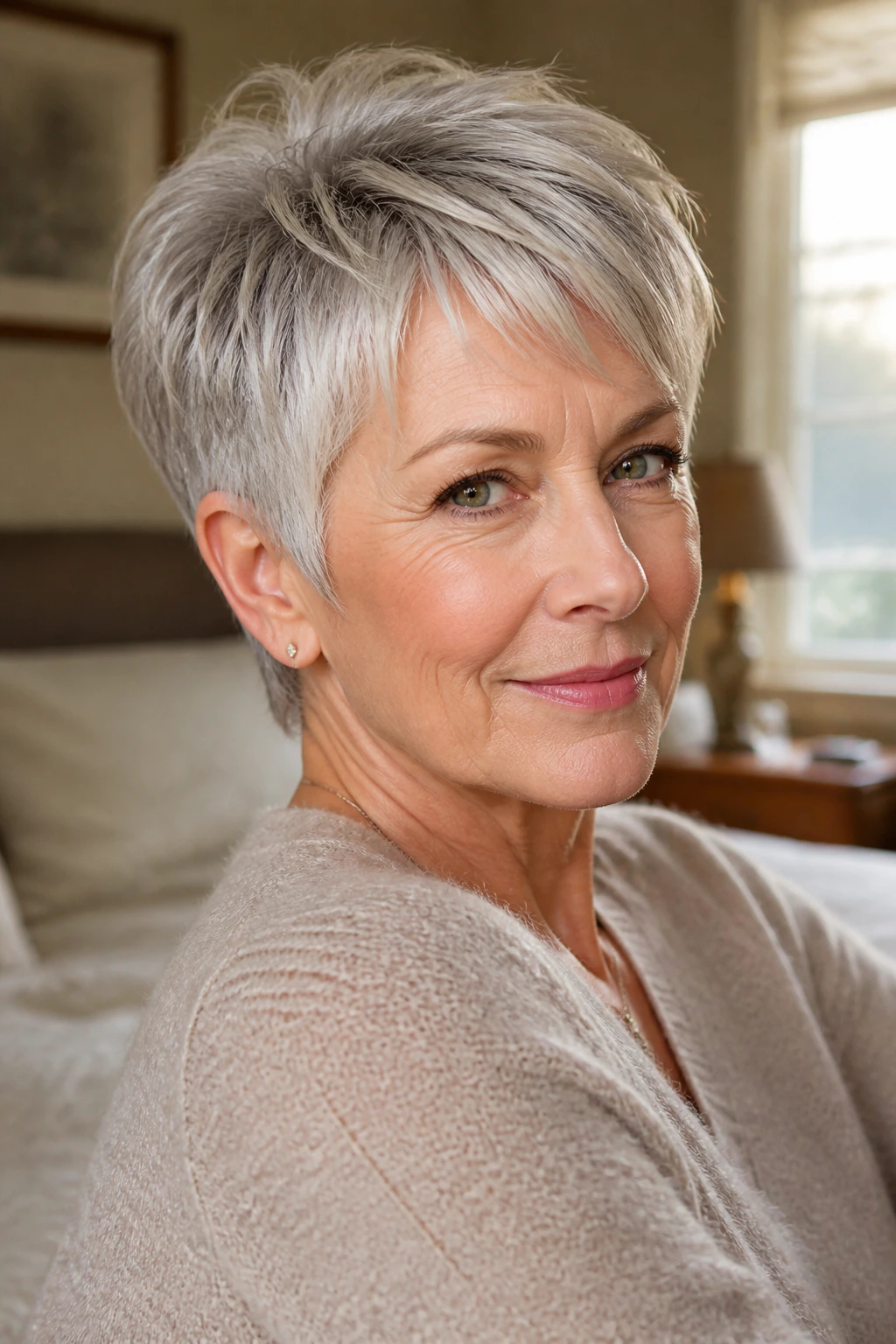
The best short cut for fine hair is not the one with the most layers or the most attitude. It’s the one that leaves enough hair where the eye wants fullness, trims away the parts that drag, and still fits your routine on a Tuesday morning when you’d rather be doing something else.
That’s the common thread through every cut above: keep the shape honest. A blunt bob if you want density. A pixie if you want lift. A bixie or cropped shag if you want something in between. The minute the haircut starts doing the work for you, the whole thing gets easier.
Bring a few photos, speak up about your crown and neckline, and be blunt about how much styling you’re willing to do. The right haircut will answer those questions before you even leave the chair.
