



The wrong haircut can make thin hair look tired before you’ve even touched a brush. The right one does something much more interesting: it changes the way your hair sits on your head, the way light hits the ends, and the way the crown holds itself by noon instead of collapsing by breakfast. That’s why volume-boosting cuts for thin hair matter so much. They do not create hair you don’t have. They make the hair you do have look denser, cleaner, and more deliberate.
And that difference is bigger than people think. Fine strands can be plenty of hair in count and still look flat if the cut removes too much weight in the wrong places. I’ve seen wispy ends rescue a shape; I’ve also seen a nice long cut get shredded into see-through layers that looked airy for one hour and then went limp. The trick is not “more layers.” The trick is shape.
Some of the best cuts for thin hair are almost stubborn about their outline. They keep a blunt edge, protect the perimeter, and add lift only where it changes the silhouette. Others use a small amount of graduation at the crown or a fringe that shifts the eye forward. The point is to work with the way thin hair behaves, not fight it with a thousand tiny snips.
Why Volume-Boosting Cuts for Thin Hair Work
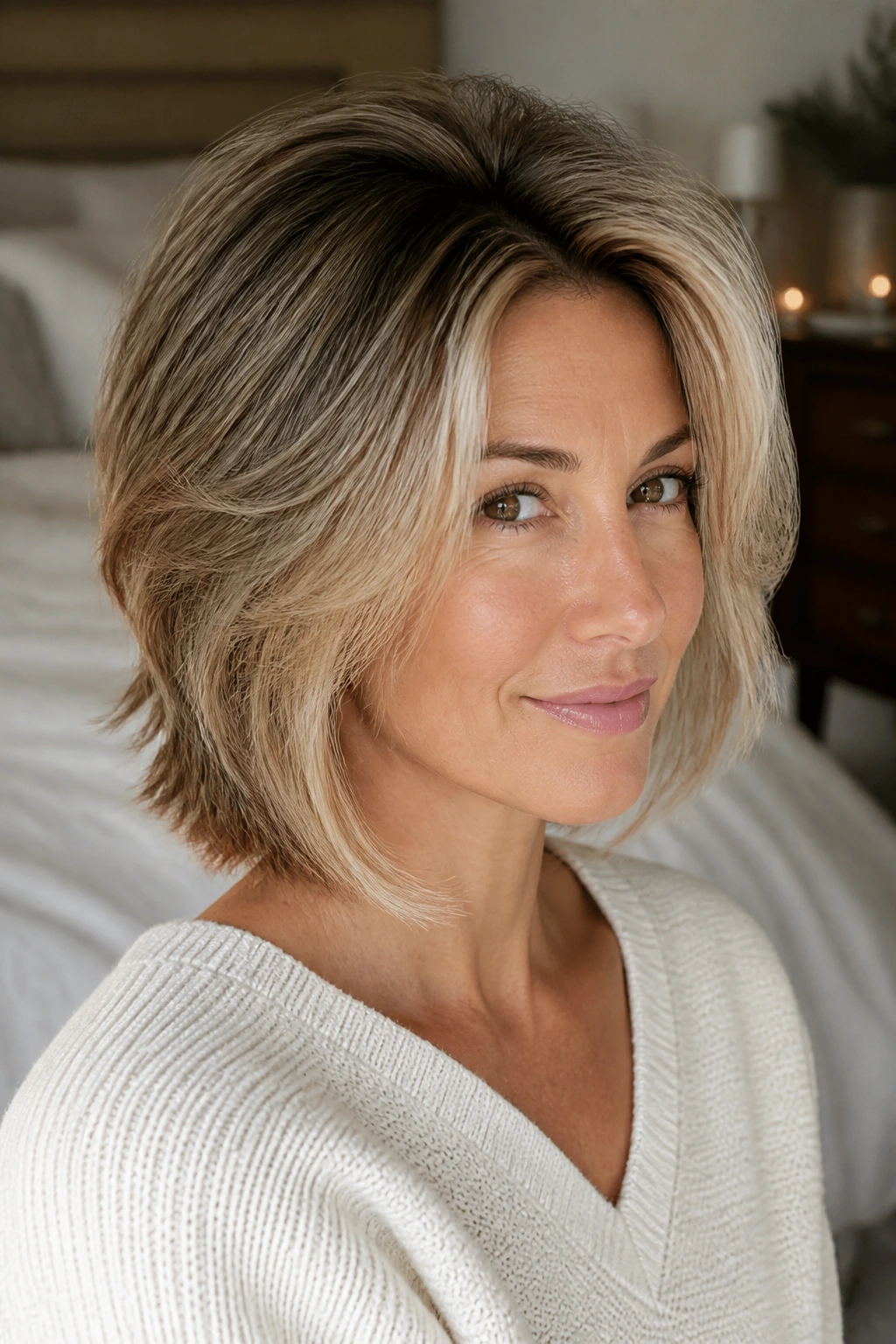
-
A strong perimeter looks fuller at a glance.
When the ends all stop in one clean line, the eye reads weight, even if the actual strand count is low. -
Crown lift matters more than most people think.
A little stacking or a smart part can make the top look lifted without turning the sides into a puffball. -
Shorter shapes often look denser.
Hair has less distance to fray, split, and separate, so a bob or pixie can read as thicker than a longer cut with the same density. -
The right fringe can fake bulk at the front.
Curtain bangs, side-swept fringe, and bottleneck bangs add visual mass where thinning often shows first. -
Less weight can mean more body.
If the length is dragging the roots down, removing a few inches often gives you more movement than another bottle of volume spray ever will. -
A good cut buys you time.
When the shape is right, thin hair still looks intentional on day two and day three. That’s the part people notice.
1. Blunt Chin-Length Bob
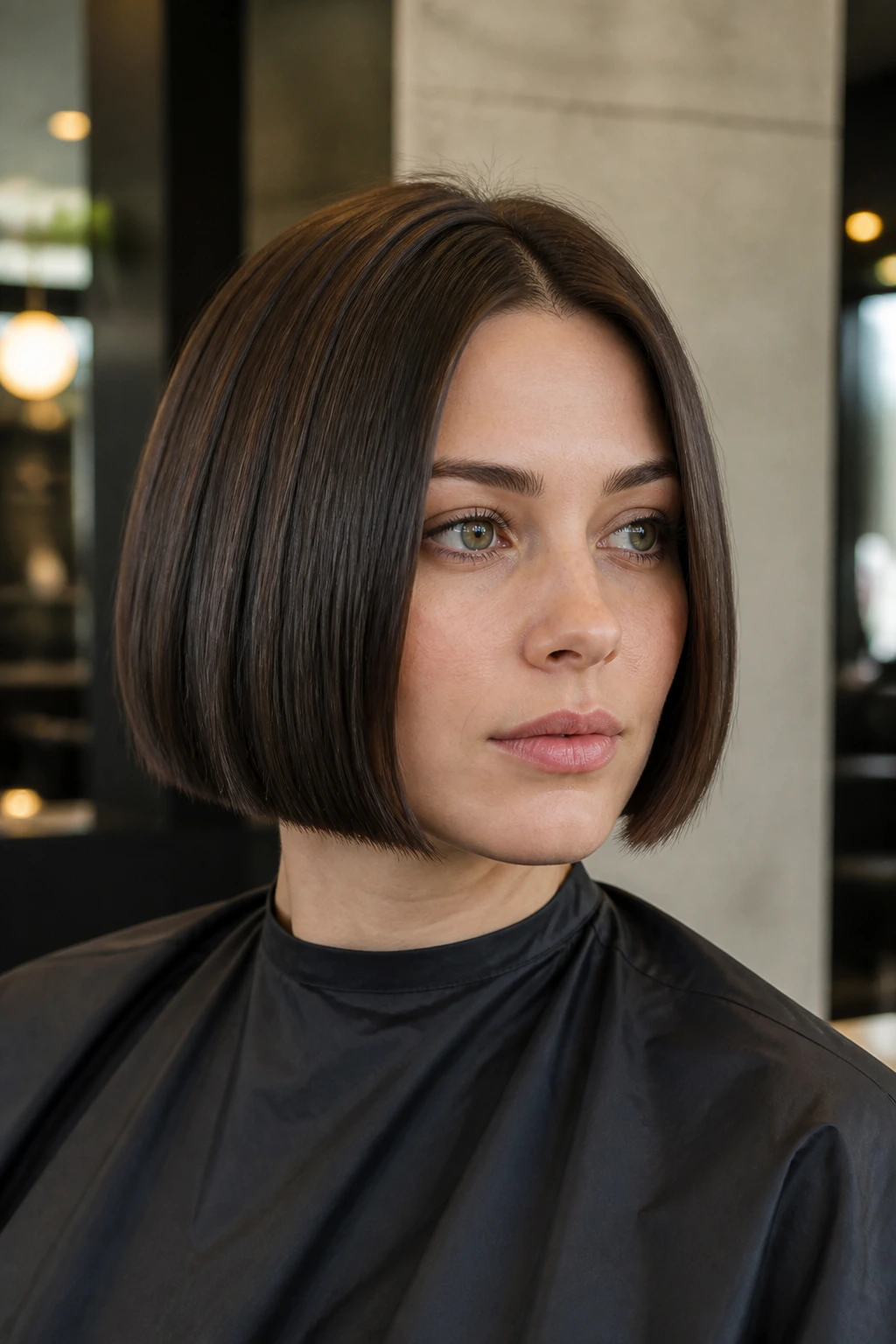
This is the cut I reach for first when someone says, “My hair looks see-through once it dries.” A blunt chin-length bob puts the ends in one strong line, right where the eye can catch it, and that line gives thin hair a denser read than a soft, broken edge ever will. It’s sharp without being severe, which is a nice little miracle.
The chin length is doing real work here. Anything that falls too far past the jaw can start to look stringy on fine hair, especially if the ends are sparse. Keep the perimeter blunt, keep layers minimal, and ask your stylist to leave a little weight in the bottom so the cut doesn’t float away from your face. A slight off-center part usually helps, too.
Why it works
The bob creates a compact shape, and compact shapes always look fuller. You’re not asking the hair to stretch itself across too much space.
Good to know
- Best on straight to slightly wavy hair.
- Needs a trim about every 6 to 8 weeks to stay crisp.
- Looks best when the ends are not thinned out.
2. French Bob With a Soft Fringe

Why does a short bob with fringe often look richer than longer hair? Because the density is concentrated where people look first: the eyes, cheeks, and mouth. A French bob sits near the jaw or just above it, and the soft fringe adds another layer of visual thickness across the forehead. It’s compact, and that matters.
I like this cut on fine hair that tends to split into two wisps around the face. The fringe should stay airy, not heavy. If your hairline is sparse, ask for a longer, piecey fringe that begins a little farther back rather than a blunt mini-bang. That keeps the front from looking too transparent.
How to wear it
A small round brush or a quick bend with a flat iron keeps the fringe from sticking straight down. If you air-dry, scrunch in a light mousse and let the bob settle where it wants to.
3. Italian Bob With a Tucked-Under Finish
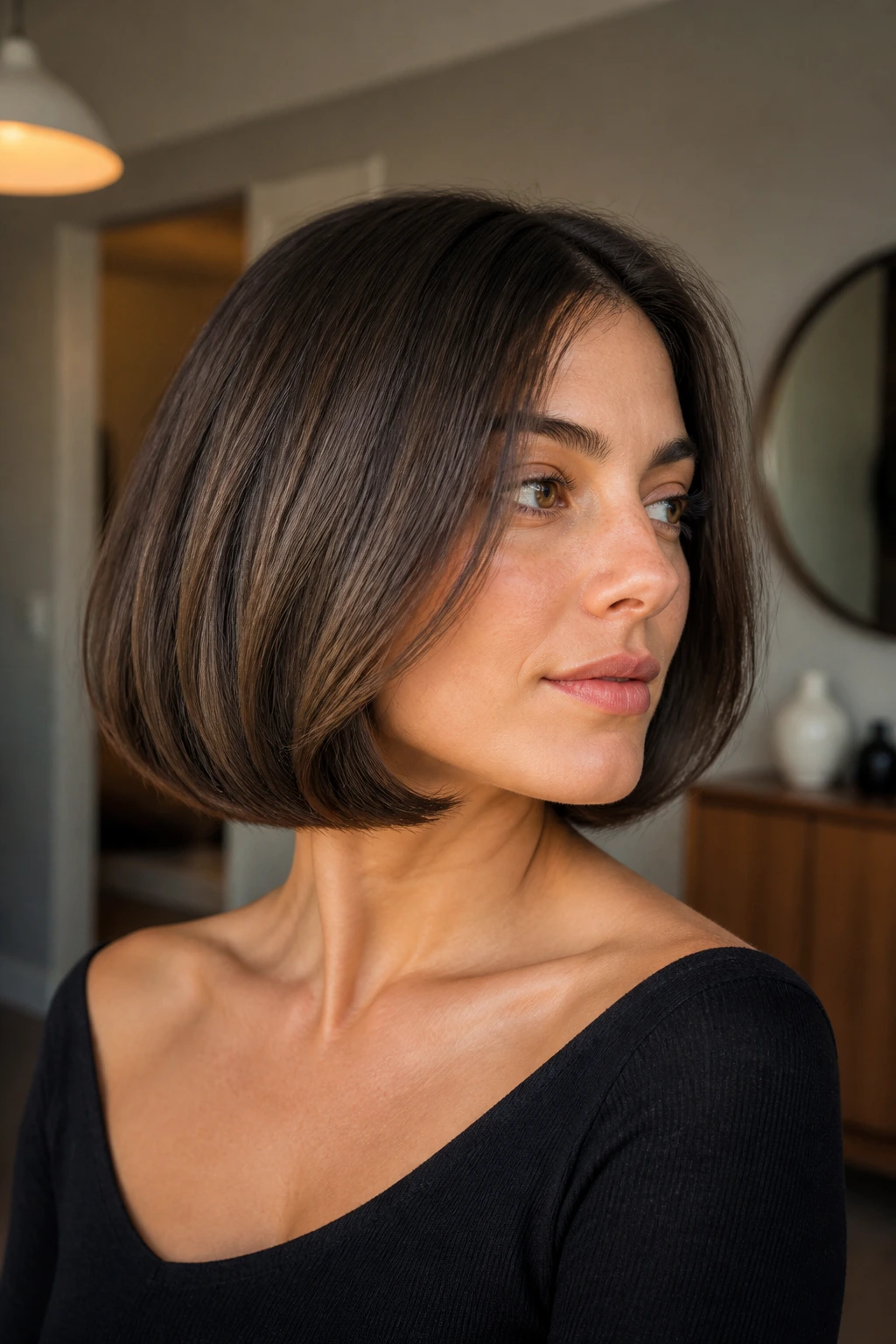
The Italian bob has one job: make the hem of the haircut look plush. That tucked-under finish turns the ends inward, which gives the illusion of a thicker line at the bottom. Thin hair loves this because the eye reads a solid curve, not a loose curtain.
This cut usually sits between the chin and collarbone, so it keeps enough length for movement without letting the ends go slack. Ask for soft internal shaping, not aggressive thinning. You want the perimeter to stay full, especially around the jaw. When I see this cut styled well, the whole head looks more expensive in the plainest possible way.
The styling part matters, but it does not need to be fussy. A brush dryer, a round brush, or even a quick pass with hot rollers at the ends can give you that tucked shape. A tiny off-center part often gives the crown a little lift, too.
4. Box Bob With Clean Edges
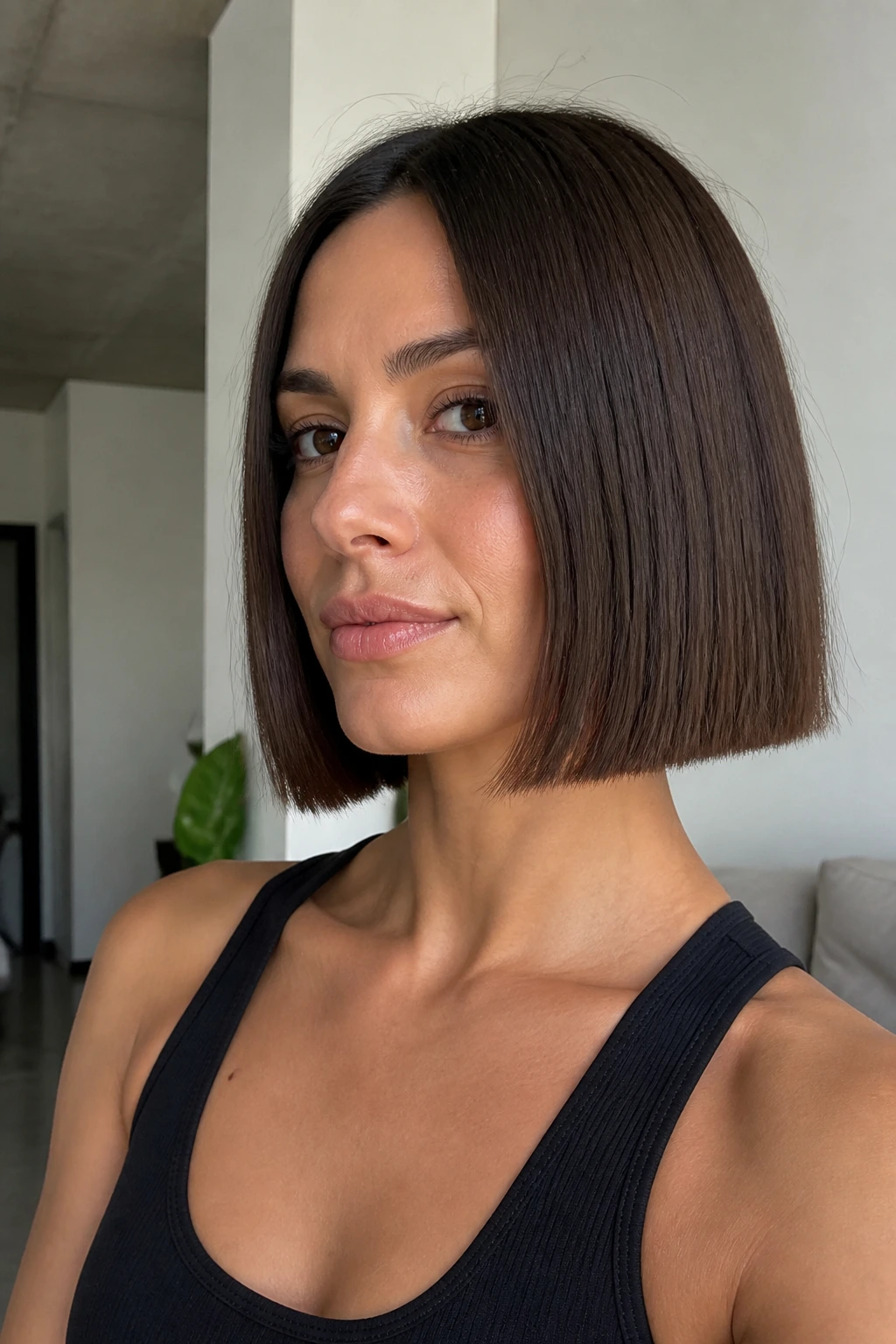
A box bob is blunt in the best sense. The silhouette is square, the ends are clean, and the hair falls as a solid block instead of feathering out into nothing. On thin hair, that geometric shape can be a lifesaver because it makes the density look deliberate.
I prefer this on straight or nearly straight hair. The cut looks strong when the bottom line is neat, and it loses that punch if someone gets enthusiastic with the thinning shears. If your face is very round, leave a touch more length in the front corners so the line doesn’t widen the cheeks. That one adjustment makes a big difference.
This is not a haircut that wants to be hidden behind texture spray. It wants a polished finish, maybe with a little bend at the ends and a clean part. Simple. Sharp. Honest.
5. A-Line Bob With a Slight Forward Angle
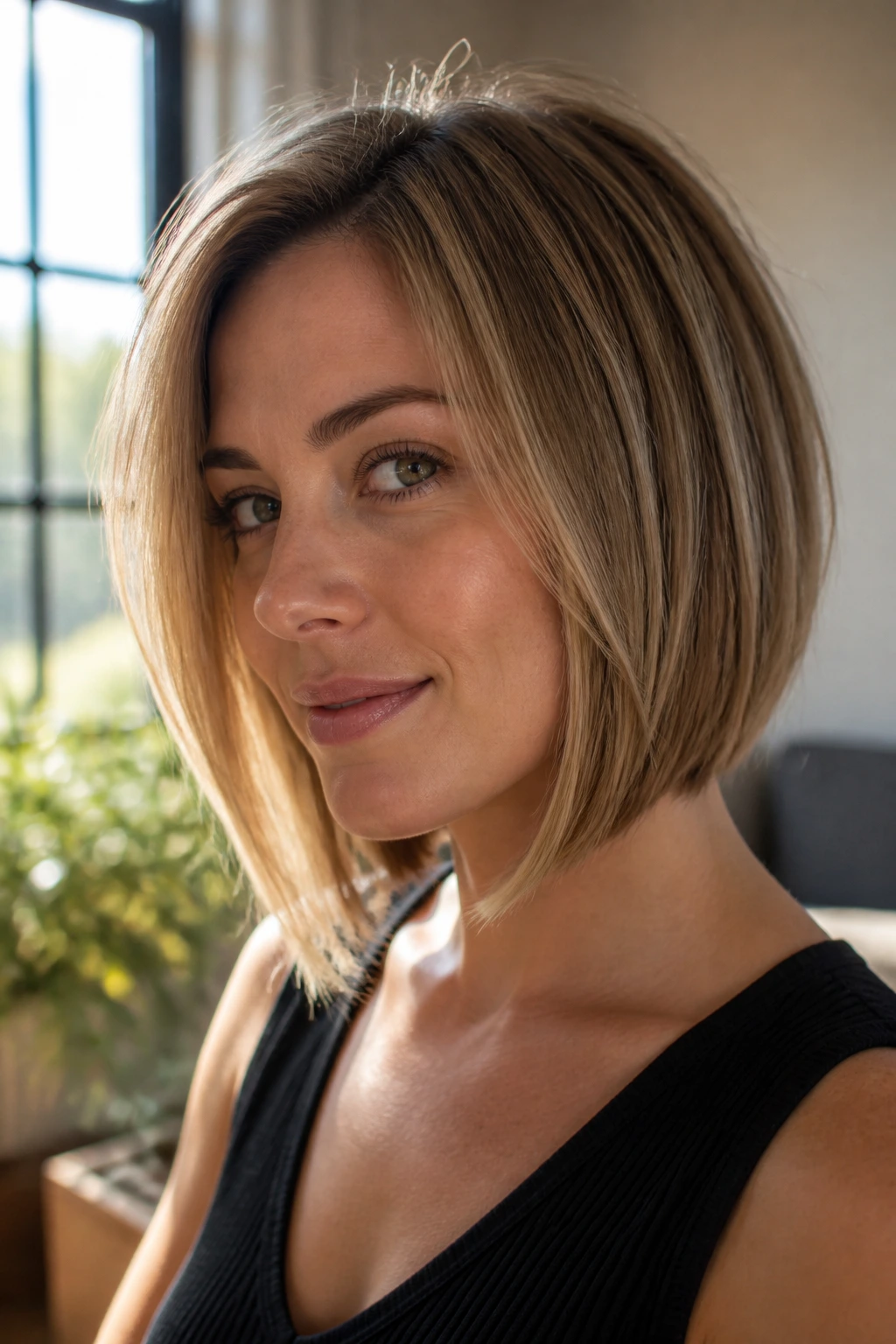
The A-line bob keeps the back a little shorter and lets the front drift forward, which gives fine hair some visual movement without breaking the perimeter apart. That forward angle is the reason it works. Your eye sees length in front, lift in back, and a shape that feels fuller than a plain one-length cut.
Keep the angle subtle. If the back gets too short, the crown can look hollow, especially under bright bathroom light. A soft A-line still gives you lift at the nape and keeps enough front length to frame the face. This is a good choice if your hair falls flat against the neck and refuses to keep any shape there.
A little root lift at the crown and a smooth undercurve at the ends are enough. You do not need a dramatic blowout every day. You need the haircut to do the heavy lifting first.
6. Inverted Bob That Lifts the Nape
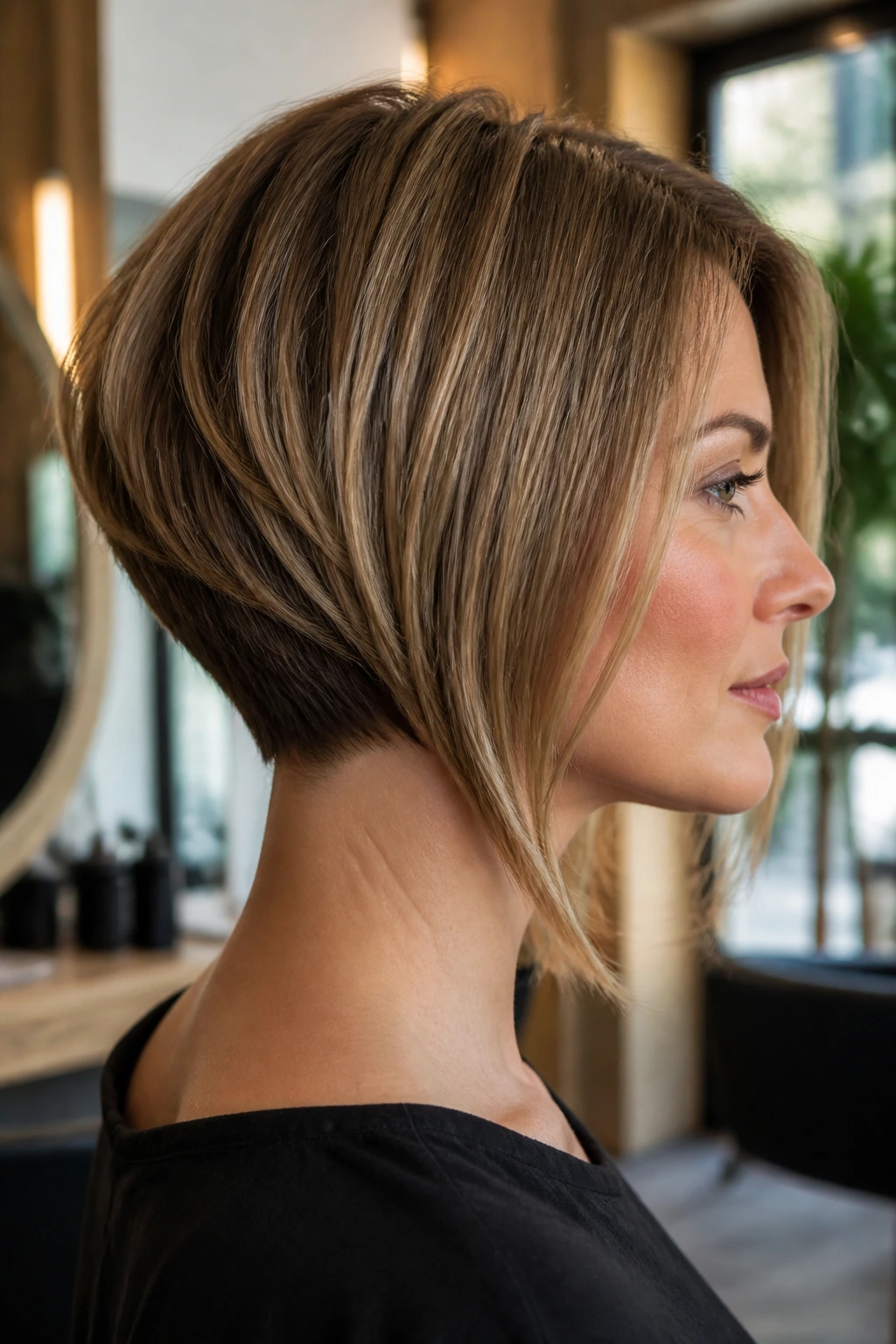
The inverted bob is one of those cuts that looks more engineered than it sounds. There’s a bit more stacking in the back and longer pieces in front, so the shape builds volume where thin hair usually gives up first. The nape looks lifted. The head looks more sculpted. That matters.
If your crown lies flat or your back-of-head shape disappears from the side, this cut can bring it back. The catch is restraint. Ask for a gentle graduation, not a hard wedge. Too much stacking exposes the scalp and makes the back look overly tight, which is the opposite of what you want.
I like this cut on straight hair that needs structure or on fine hair with a stubborn cowlick at the nape. It benefits from a quick round-brush blow-dry. A little root mousse at the crown can help, but the cut itself should already do most of the work.
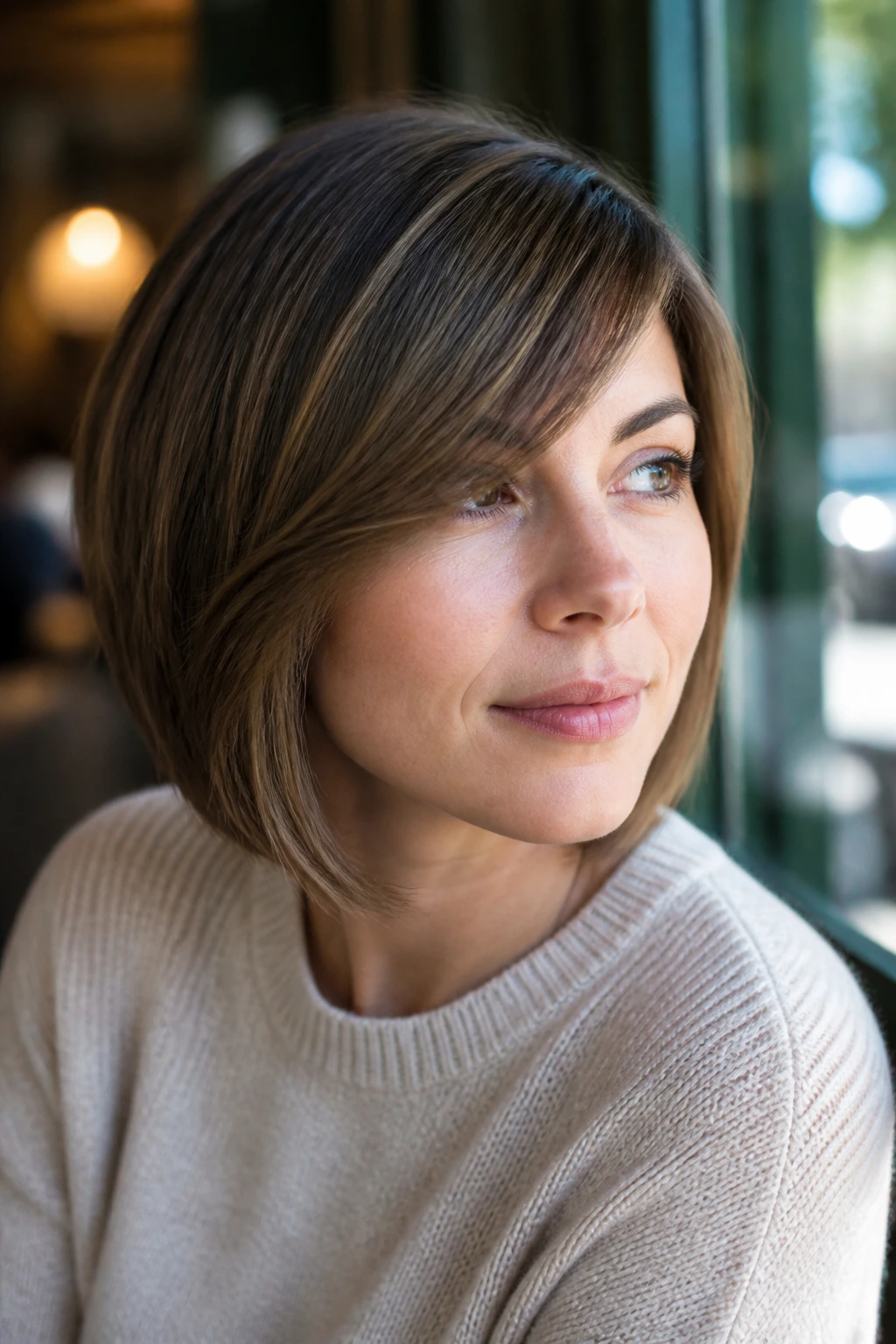
7. Jaw-Length Bob With a Side Part
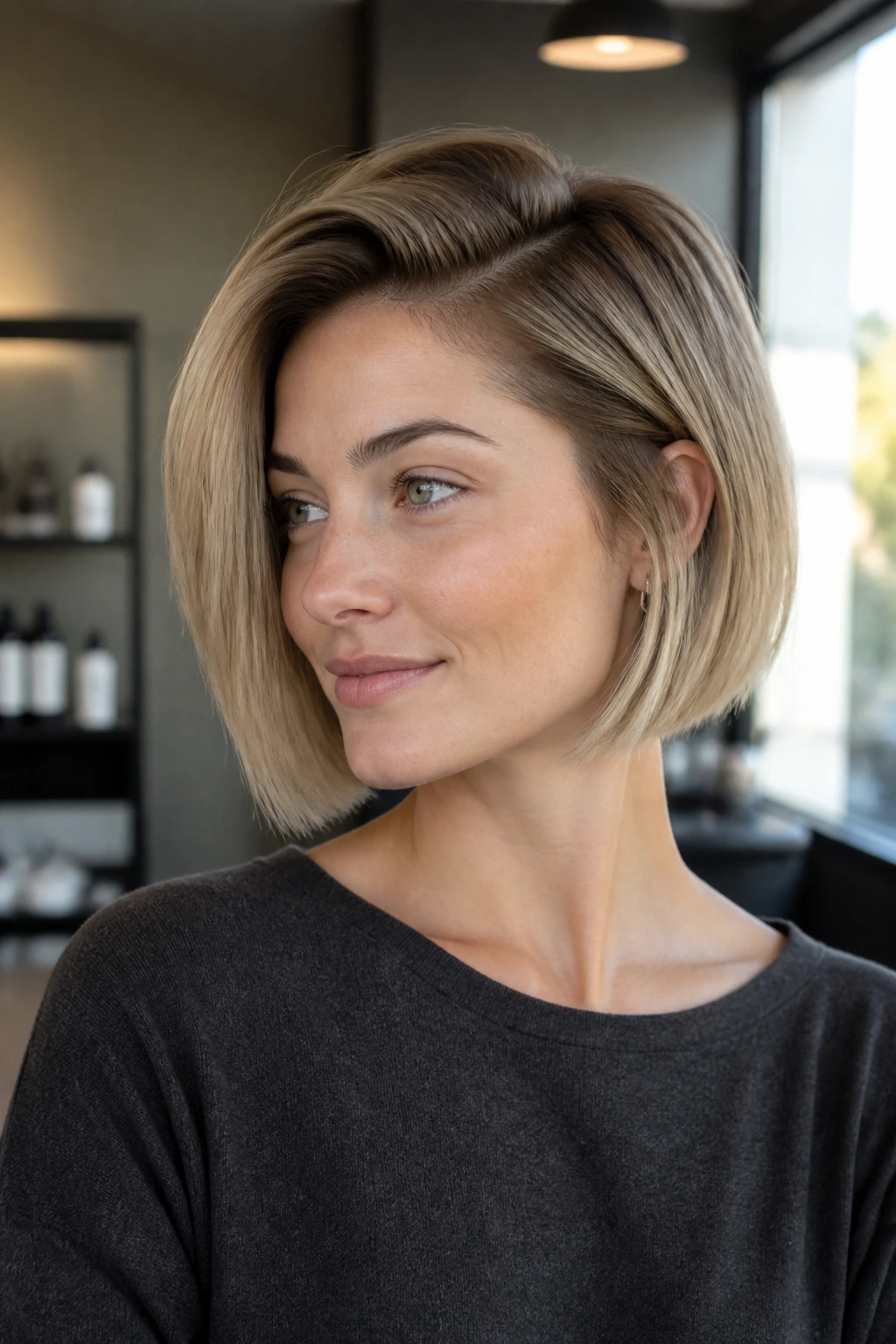
A side part does sneaky things for thin hair. It pushes more mass over one side of the scalp, creates lift at the roots, and breaks up a flat center line that can show too much scalp. Pair that with a jaw-length bob and you get a cut that feels fuller around the face without needing a pile of styling products.
This one works especially well if your hair naturally wants to fall to one side anyway. Don’t fight the hairline. Use it. A jaw-length finish keeps the ends thick looking, and the side part adds enough asymmetry to make the whole shape feel more alive. If your jaw is very angular, leave the front a touch longer so it doesn’t sit right on the widest point.
It’s a practical cut, not a delicate one. You can tuck one side behind the ear, flip it with your fingers, or set it with a quick blast of cool air at the roots.
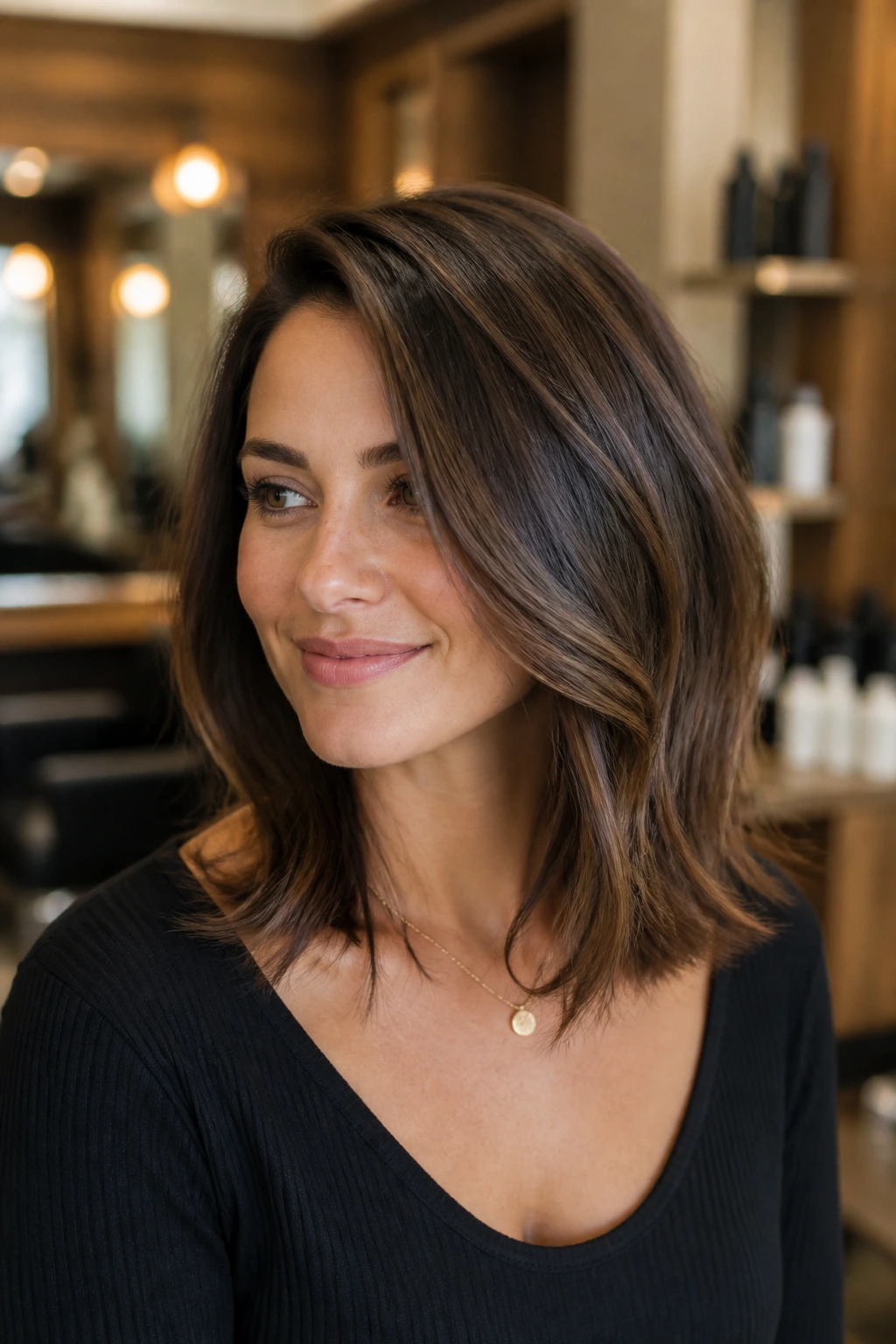
8. Collarbone Lob With Invisible Layers
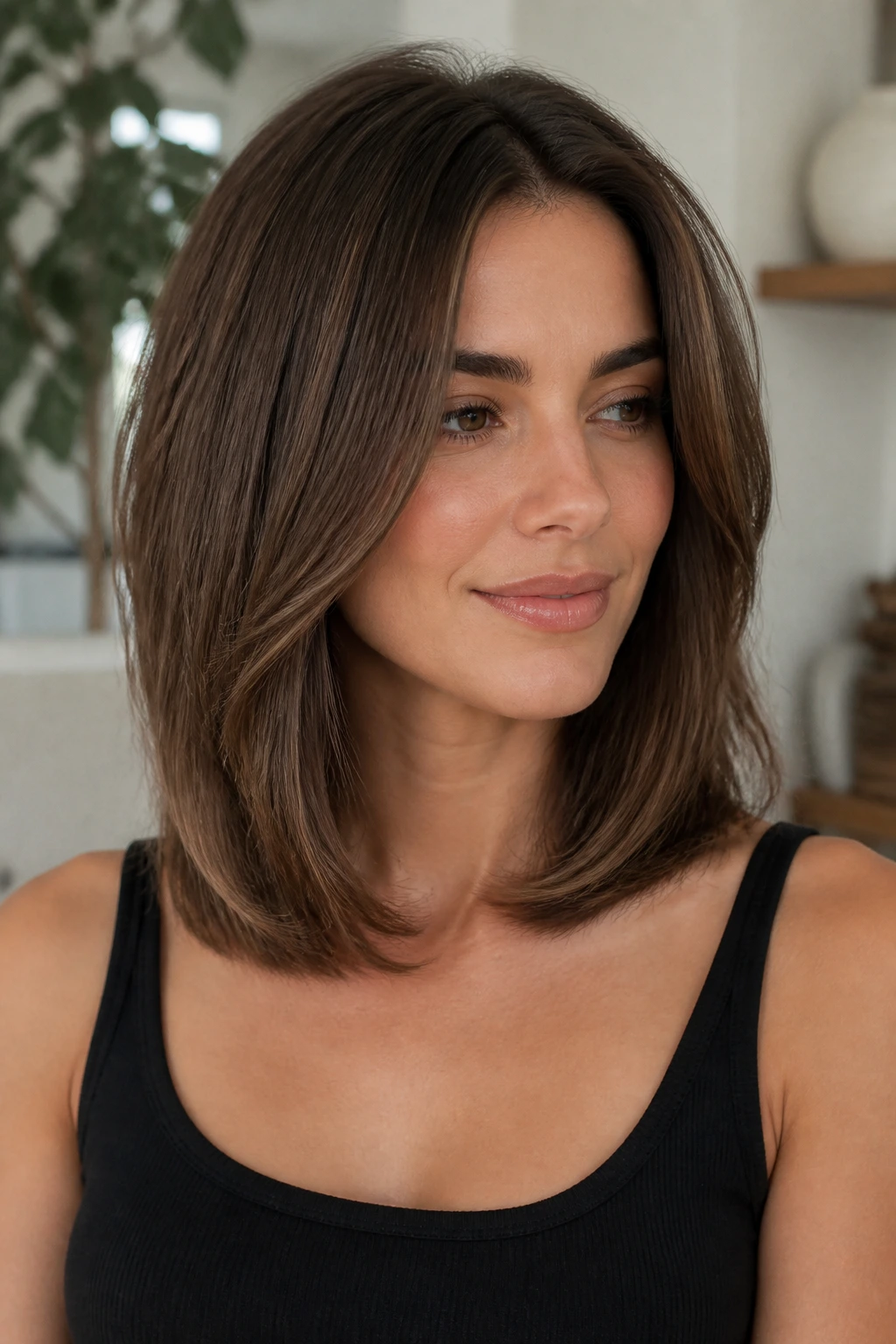
If you want to keep length, this is one of the smartest ways to do it. A collarbone lob sits long enough to feel like hair, not a chop, but short enough that thin strands don’t drag themselves into flatness. The invisible layers are tucked inside the shape, so the outside still reads as full.
That “invisible” part is the key. You get movement without shredding the perimeter into bits. Ask for long, low layers that begin below the chin or around the collarbone, not at the cheekbones. The front can still frame the face, but the bottom should remain solid and dense.
This cut loves a soft bend at the ends. A big curling iron, a round brush, or even a loose braid overnight can give it enough shape. What it does not love is over-thinning. Thin hair and aggressive layering are not friends.
9. Sleek Center-Part Lob
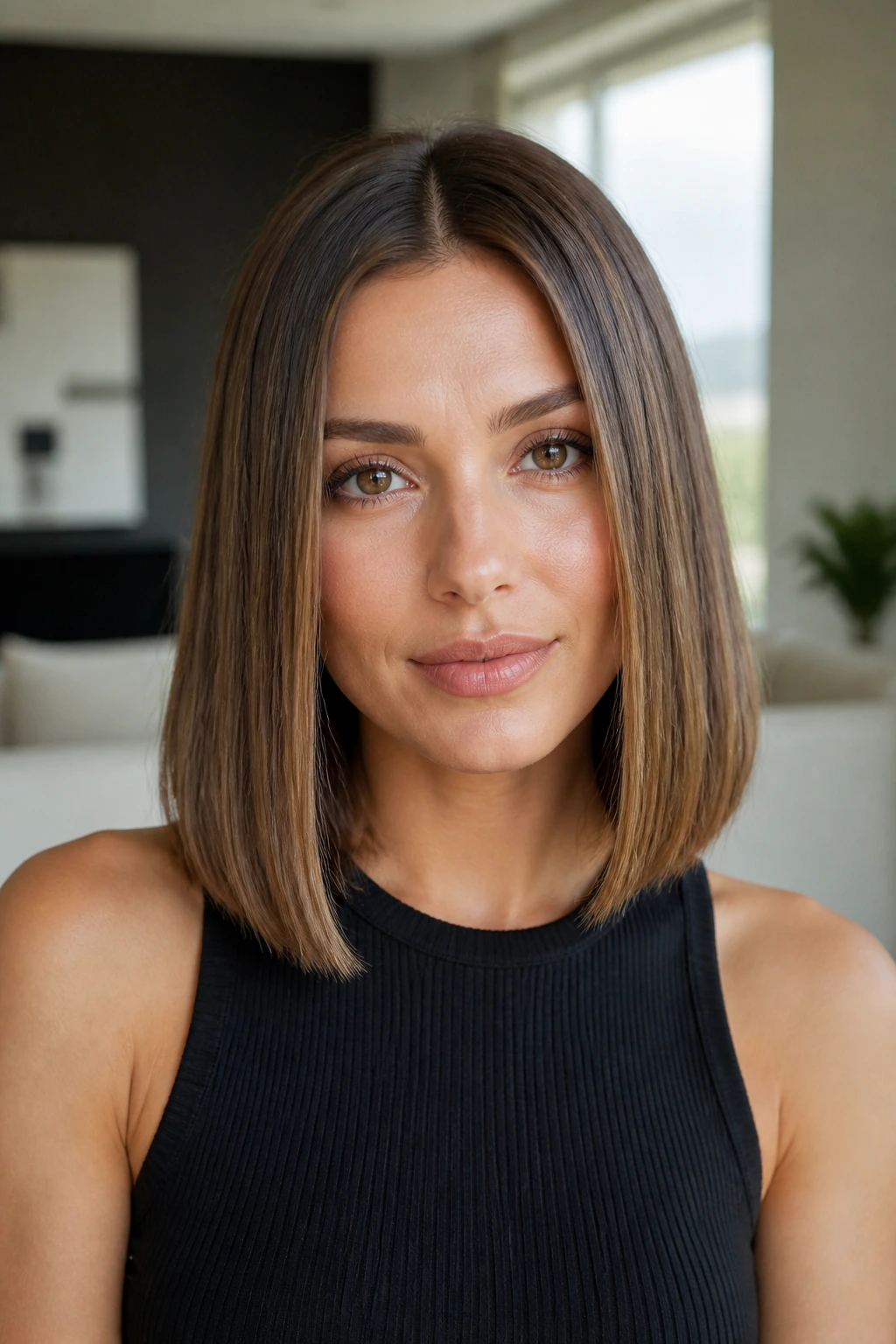
A center part can be tricky on fine hair, but it can also look clean and expensive when the cut is right. A sleek center-part lob works because the blunt line at the bottom keeps the hair from looking too wispy, while the even split creates balance across the face. It’s tidy in a way that thin hair often needs.
I would not choose this version for hair that has a very sparse crown or a strong cowlick right at the part. In that case, the scalp can show more than you want. But if your hairline is even and your strands are straight or lightly wavy, this shape has a neat, modern feel and enough weight to hold itself.
The trick is not to load the roots with heavy cream. Use a light mousse or root-lift spray, dry the roots first, and let the ends stay smooth. A center part looks sharp when the bottom edge is calm.
10. Rounded Bob With a Curved Edge
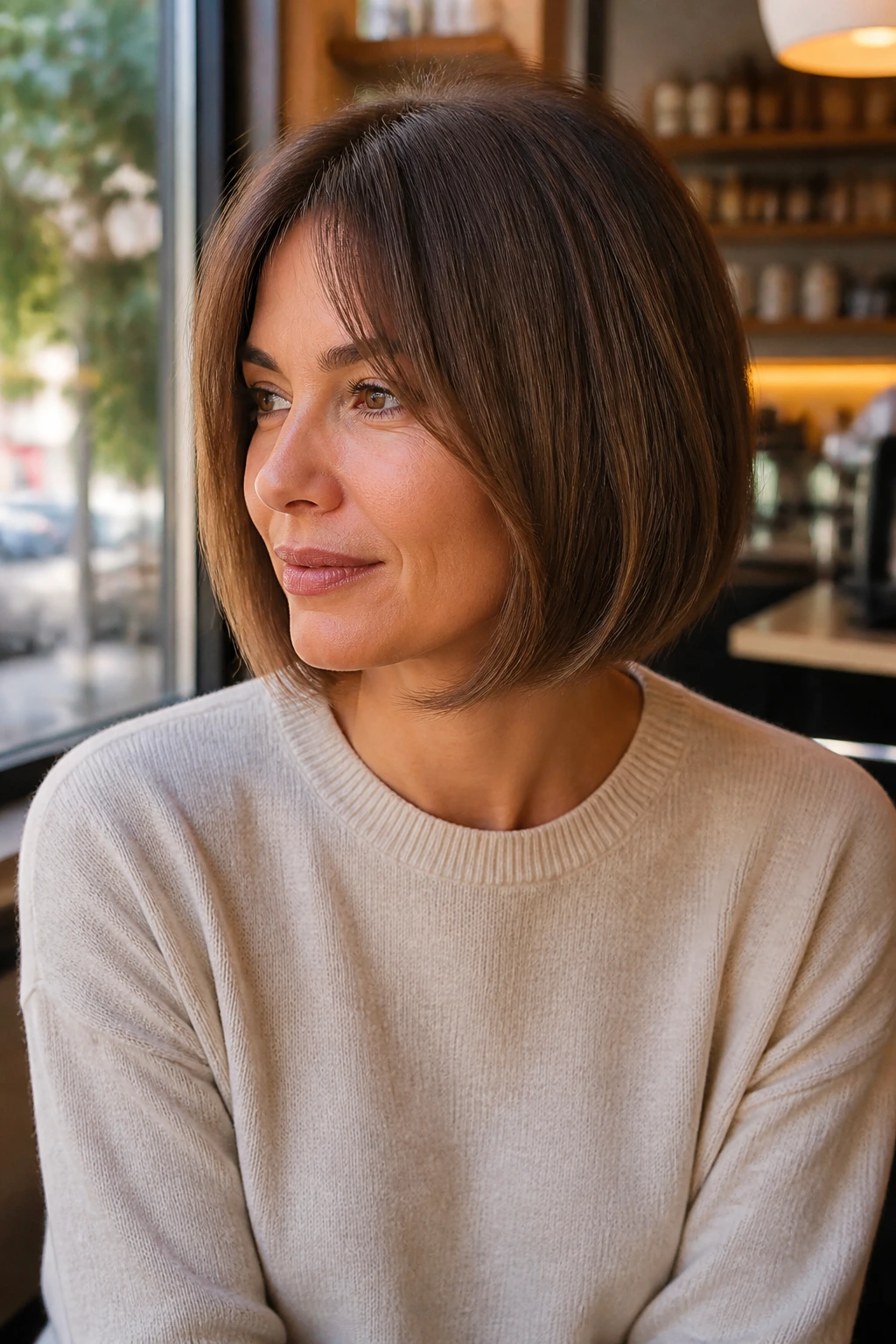
A rounded bob has a softer profile than a boxy one, and that curve can be kind to fine hair. The line bends gently around the jaw and cheekbones, which makes the hair read as fuller from the side. It’s a good middle ground if you want something polished but not severe.
This shape suits narrower faces especially well. The rounded edge fills out space without looking bulky, and the curve can soften a sharper chin. Ask your stylist to keep the perimeter clean while rounding just enough to avoid a hard shelf. Too much curve and it starts to feel dated; too little and you lose the volume effect.
A round brush helps, but the haircut itself should still look good if you skip the full blowout. That’s always the real test. A decent cut survives a rushed morning.
11. Graduated Crop With Crown Stacking
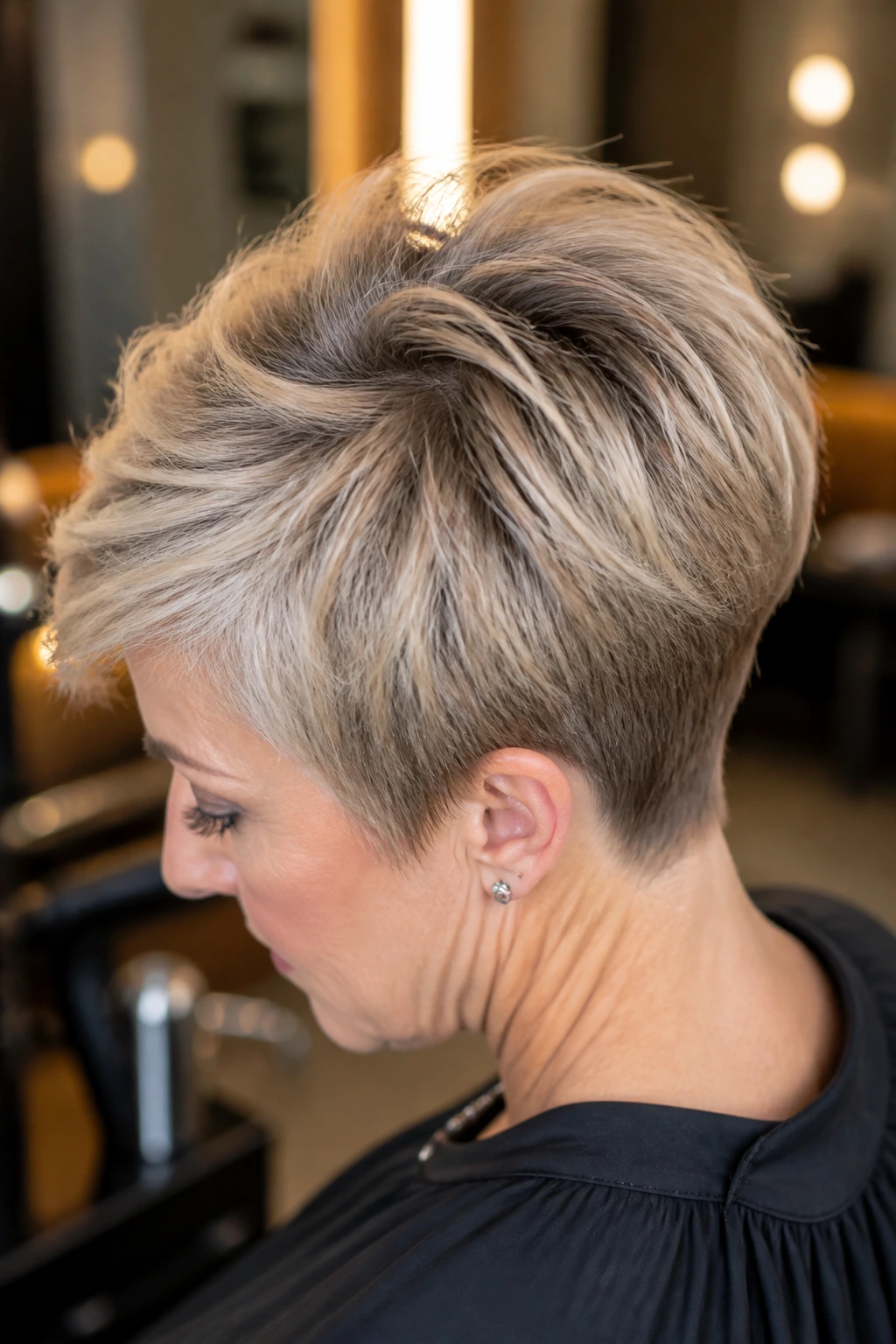
This is one of the strongest options for hair that goes limp at the top of the head. The graduated crop is shorter in the back, stacked at the crown, and a little longer on top, which makes the hair appear lifted instead of pasted down. On very fine strands, that lift can be the whole story.
The important part is balance. You want enough graduation to create body, but not so much that the scalp starts peeking through at the back. Ask for a soft stack and keep the top long enough to sweep or push forward. A side fringe can help if you want the front to feel less open.
I like this cut on straight hair, especially when it sits heavy around the nape but flat everywhere else. A root mousse and a quick blow-dry with the head tipped slightly forward usually wake it up fast. Short. Neat. Efficient.
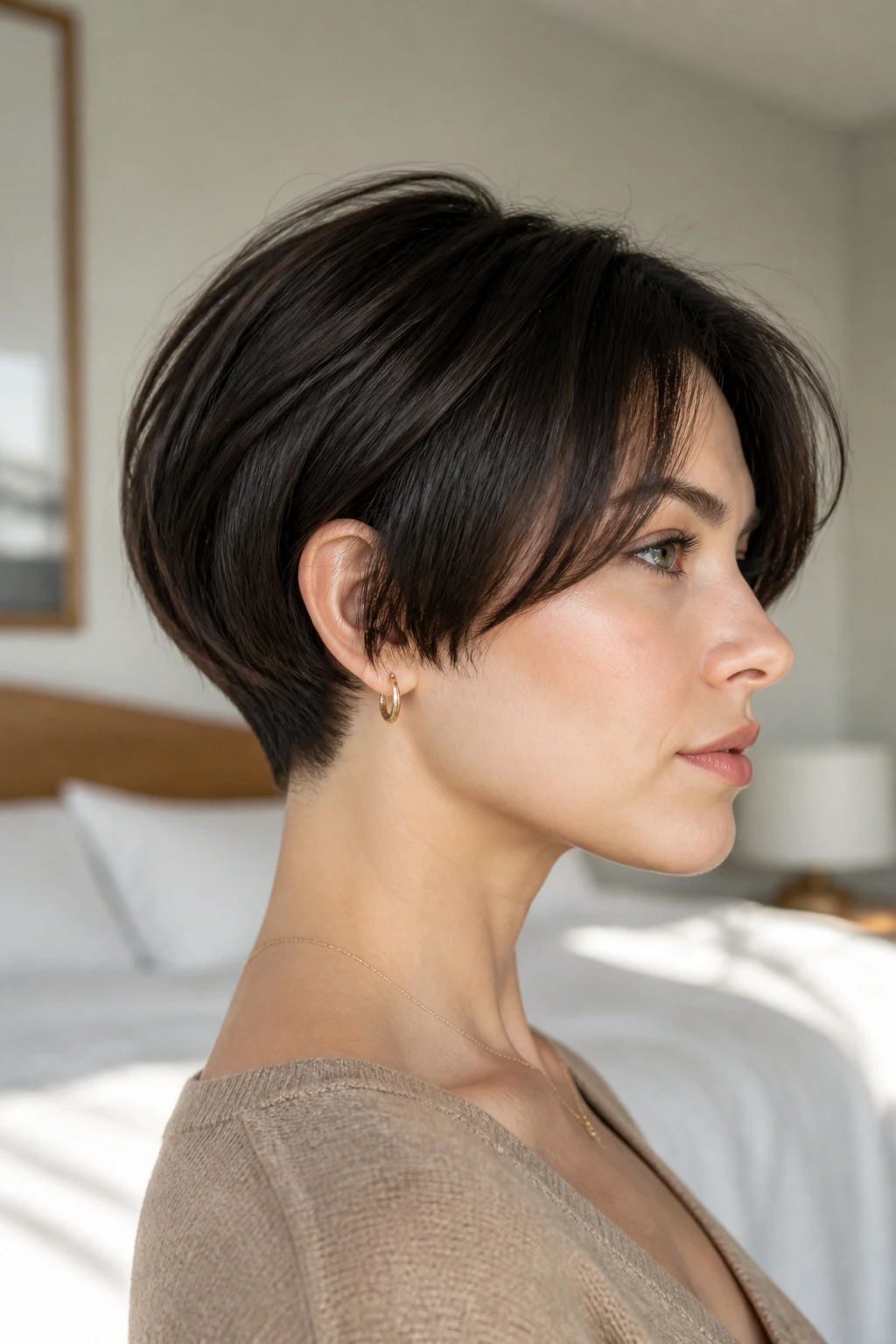
12. Pixie With Long Top Layers
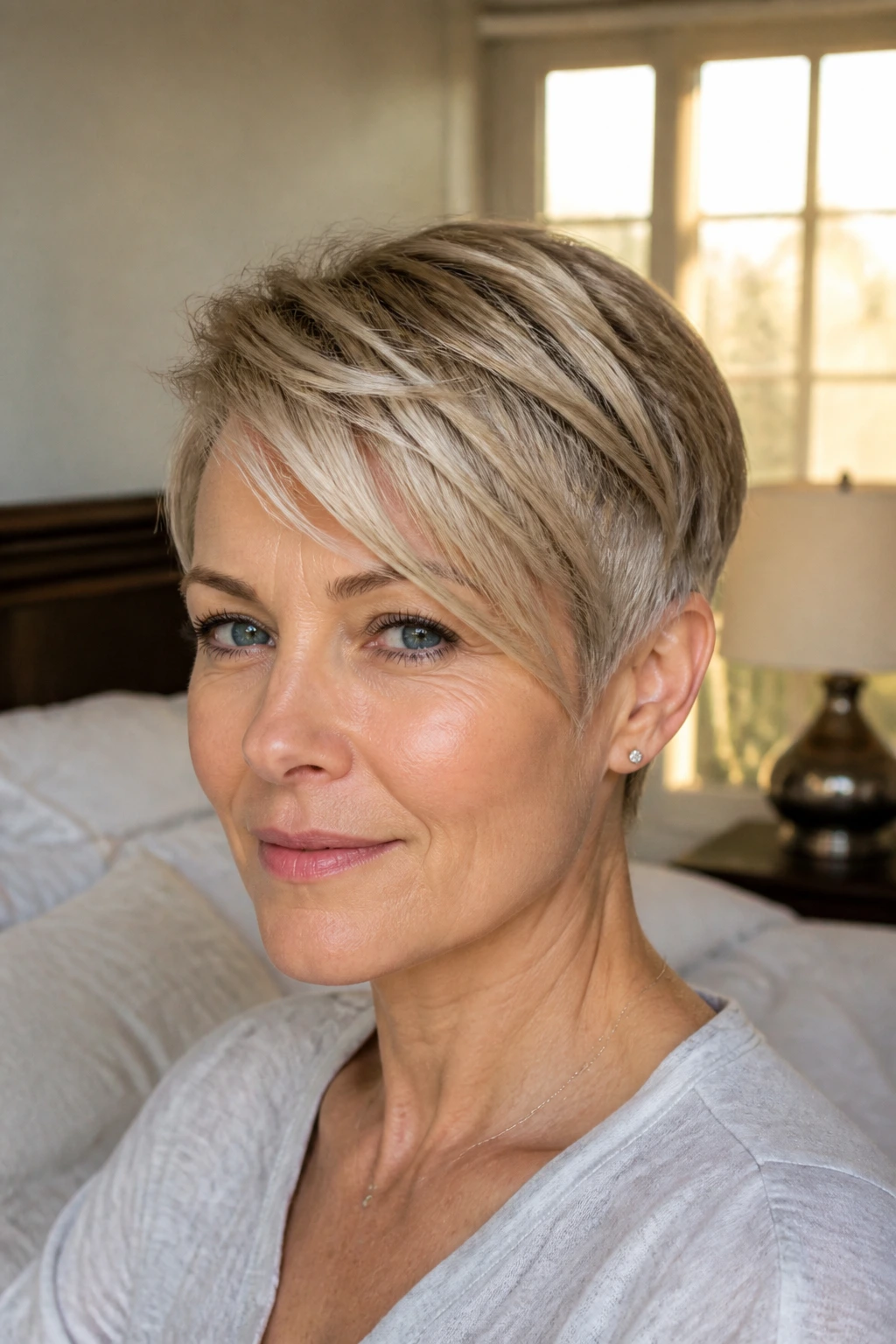
A pixie is not automatically too short for thin hair. In fact, a good one can make fine strands look thicker because the shape is compact and the top layers have room to move. The trick is to keep the top long enough to brush forward, lift, or part to one side.
Short sides help here. They remove dead weight and let the top look fuller, which is useful when density is low. Ask for controlled texture on the surface, not over-thinned ends that turn wispy under bright light. The top should still have some chunk to it.
This is the cut for someone who likes clean edges and low drama at the neckline. It does need trims fairly often, because a pixie loses its shape fast once the sides grow out. Still, when it’s fresh, the lift is hard to beat.
13. Bixie Cut With Soft Sideburns
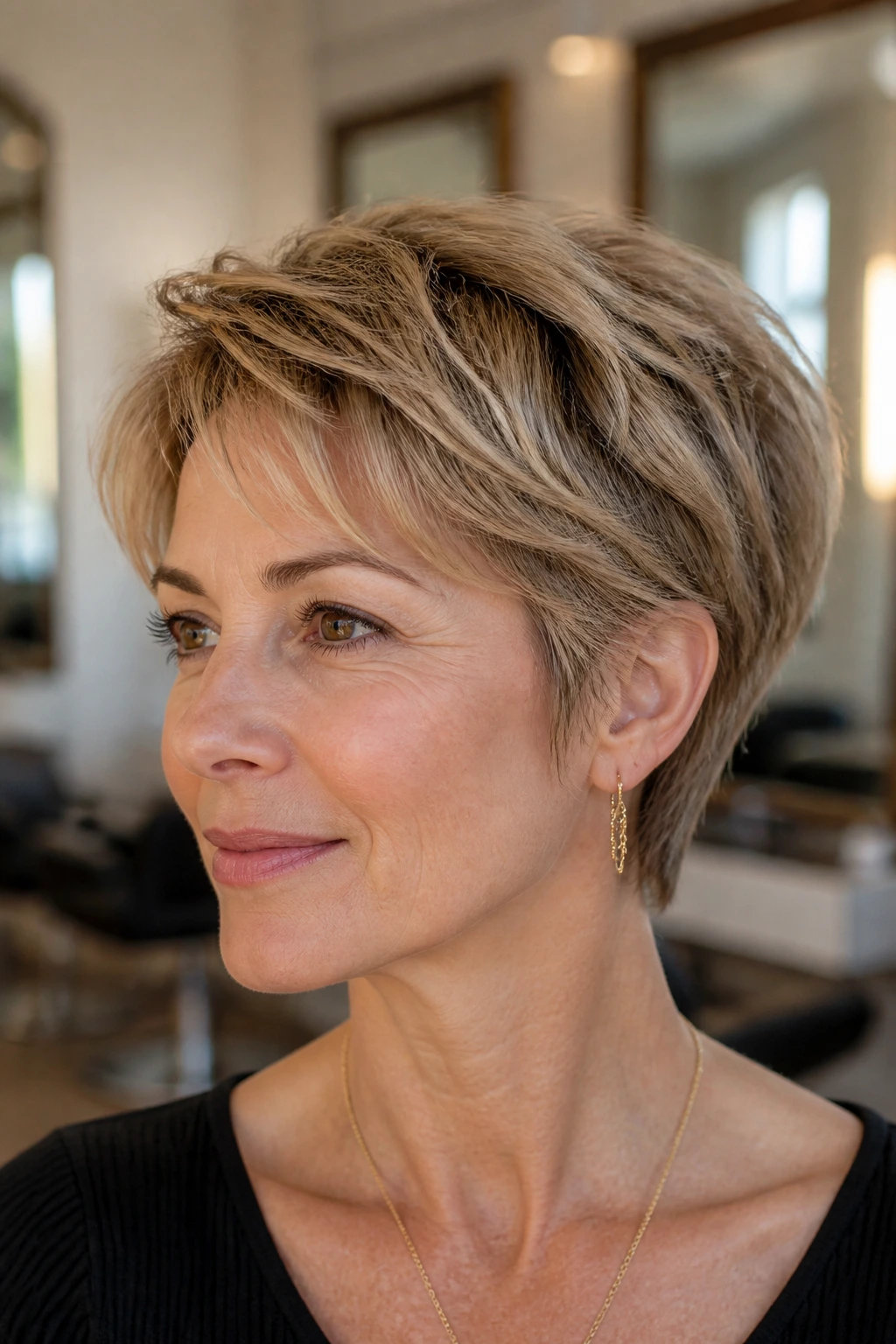
The bixie lives between a bob and a pixie, and that in-between length is exactly why it works on thin hair. You get enough hair around the face to create shape, but not so much length that everything droops. Soft sideburns keep the temples from looking bare, which is a surprisingly useful detail on finer hair.
This cut has a little less edge than a true pixie and a little more lift than a short bob. That makes it friendly for people who want volume but are nervous about going very short. Ask for the neckline to stay neat and the top to remain piecey rather than choppy. The shape should feel light, not shredded.
If your hair has a wave, this cut can look especially good with air-drying. The movement helps the sideburns and top pieces sit naturally. It’s one of those cuts that looks almost casual until you notice how much shape it’s actually carrying.
14. Long Pixie With a Swept Fringe

A long pixie is the cut for people who want the feeling of short hair without giving up the ability to tuck some length behind an ear. The swept fringe gives the front a little weight, which is useful because fine hair often loses density around the hairline first. That fringe can make the whole cut look thicker than it really is.
Keep the crown long enough to sweep, not spike. That’s where a lot of pixies go wrong. If the top is too short, you end up styling it every morning like a tiny sculpture. Leave enough length for the hair to lie in different directions and for the fringe to sit softly across the forehead.
I like a dab of lightweight cream or paste here, but only a dab. Too much product breaks the piecey texture and makes fine hair stick together in sad little ropes. Small amounts. Better shape.
15. Shaggy Lob With Internal Texture
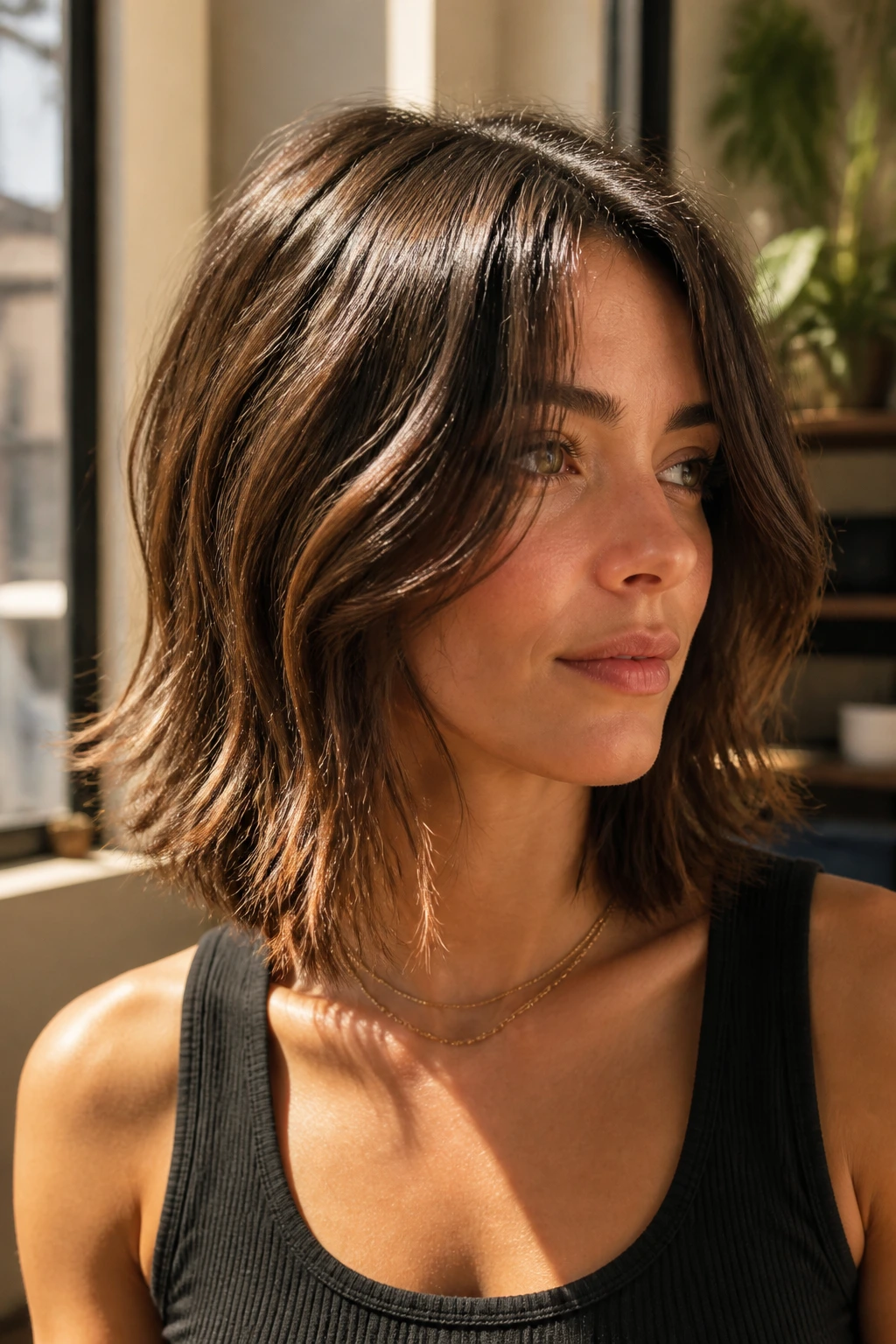
A shaggy lob can work on thin hair, but only if the texture is placed with some restraint. The best version keeps the outer line full while opening the inside just enough for movement. That gives you a little grit, a little lift, and none of the see-through ends that happen when a cut gets overtexturized.
This is a good fit for wavy hair or hair that falls flat when it’s all one length. The texture lets the hair bend around the face instead of hanging like a sheet. I’d still keep the longest pieces at the collarbone or a touch below it so the shape has weight. The bottom line matters.
Use a sea-salt spray sparingly if you like the lived-in look, but don’t flood the hair with it. Fine hair can get sticky fast. A light scrunch and a diffuser can be enough.
16. Modern Shag With Airy Ends
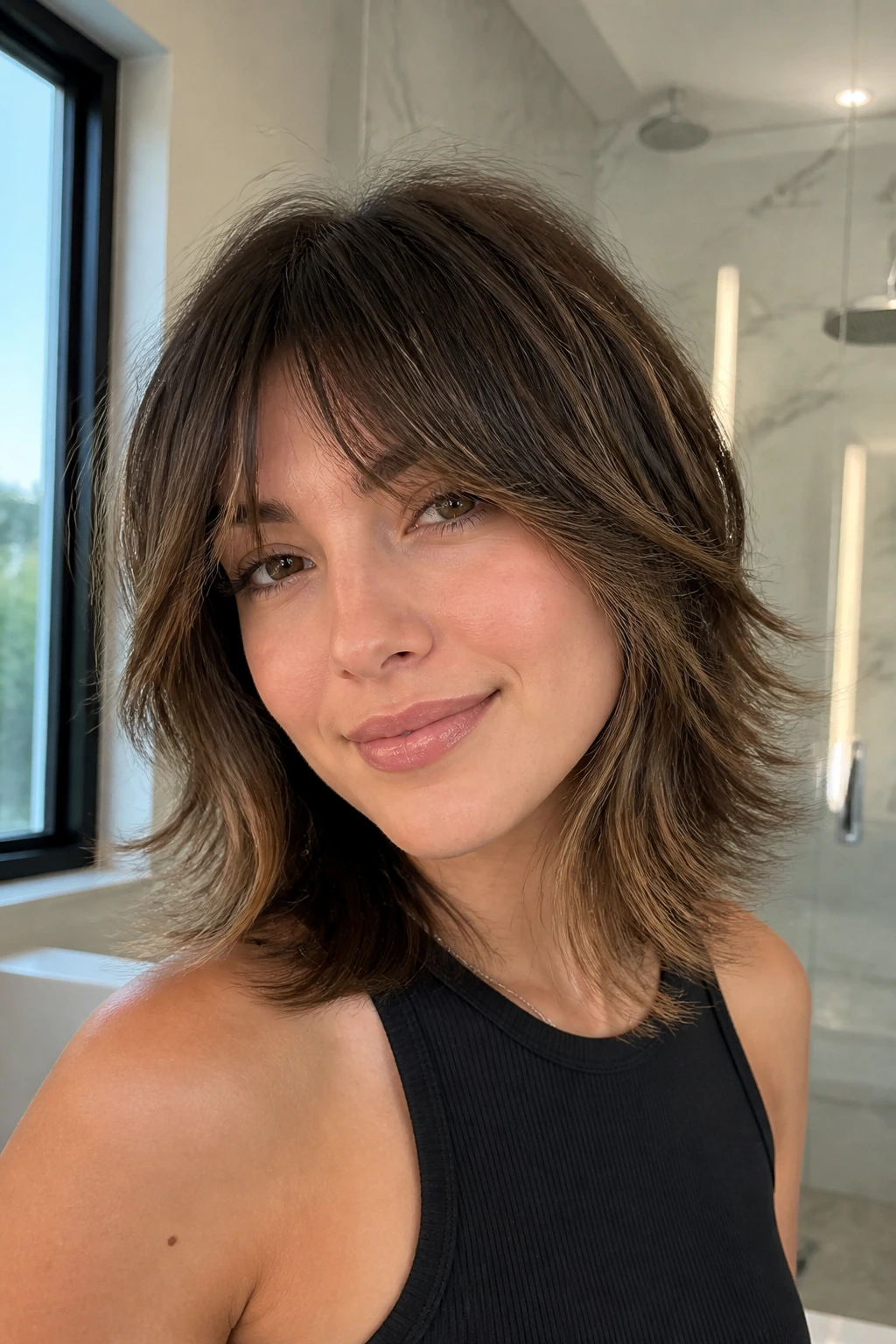
The modern shag gets a bad rap because people remember the over-layered versions that looked frayed by week two. A better shag for fine hair is softer. The layers are longer, the ends are airy but not shredded, and the crown gets enough movement to create lift without exposing the scalp.
This cut works best when the stylist knows exactly where to stop. That part matters. Too much removal and you’re left with wisps that don’t hold shape. Too little and the cut loses the shag effect entirely. The sweet spot is a cut that still has a blunt-enough bottom line but enough internal bend to keep it from collapsing.
I like this on fine hair with some natural wave. Diffusing or rough-drying with a little mousse gives the layers a lift that makes sense. If your hair is pin-straight and sparse, choose the softer side of this cut, not the most feathered version.
17. Wolf Cut Dialed Down for Fine Hair
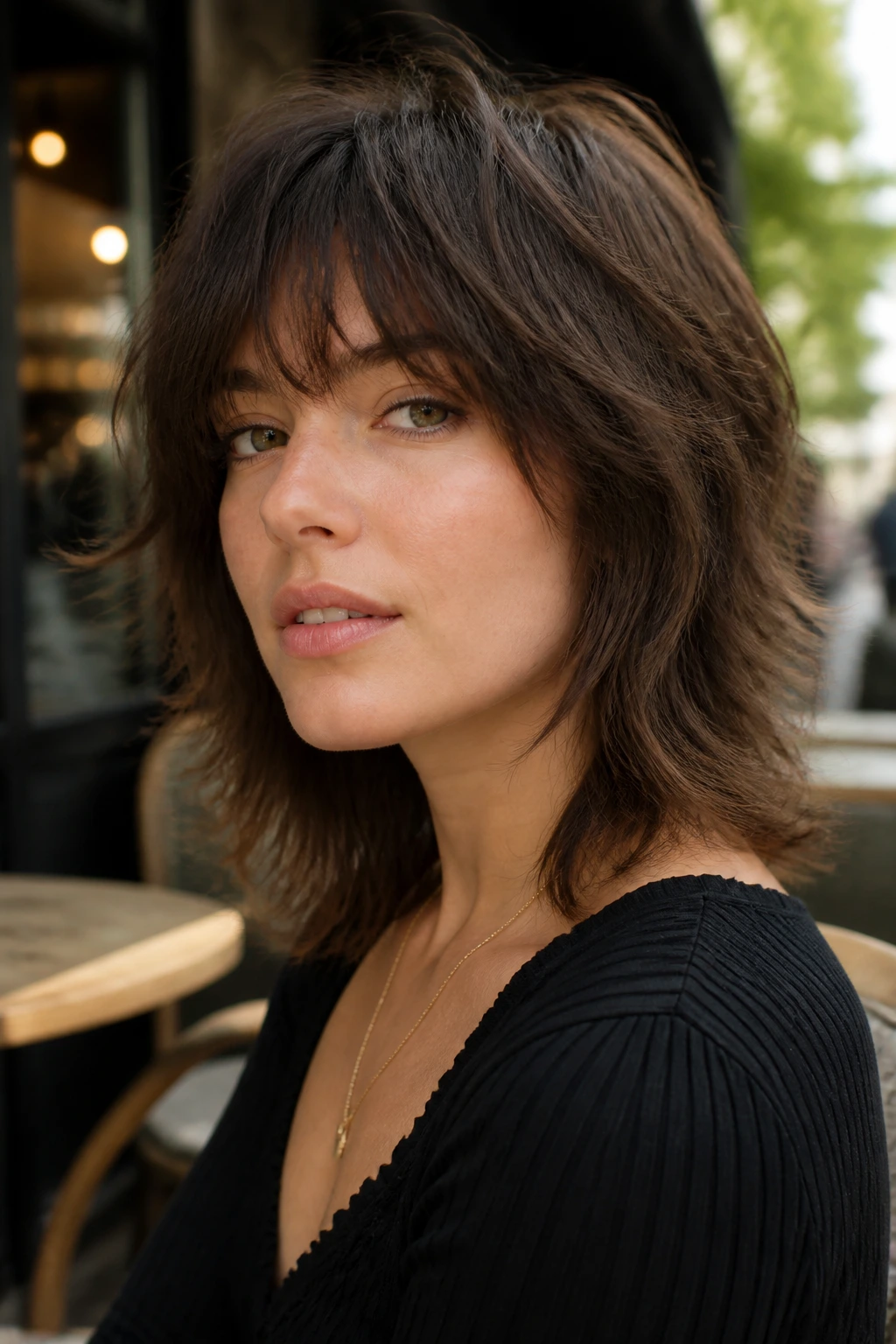
The wolf cut can be lovely on thin hair when it’s softened. The mistake is asking for the dramatic version with short layers everywhere and then wondering why the ends look hollow. A dialed-down wolf cut keeps the edges longer, the layers less aggressive, and the crown lifted just enough to create shape.
This cut suits hair that already has some texture or a little bend. Wavy strands handle the movement better than very straight ones. If your hair is ultra-fine, make sure the perimeter stays solid. You want attitude, not frizz-shaped emptiness.
I’d also be honest with your stylist about styling time. A wolf cut needs a bit of shaping to look intentional. It doesn’t need a salon finish every day, but it does look best when you rough-dry the crown and let the layers fall with purpose.
18. Mini Mullet With Feathered Ends
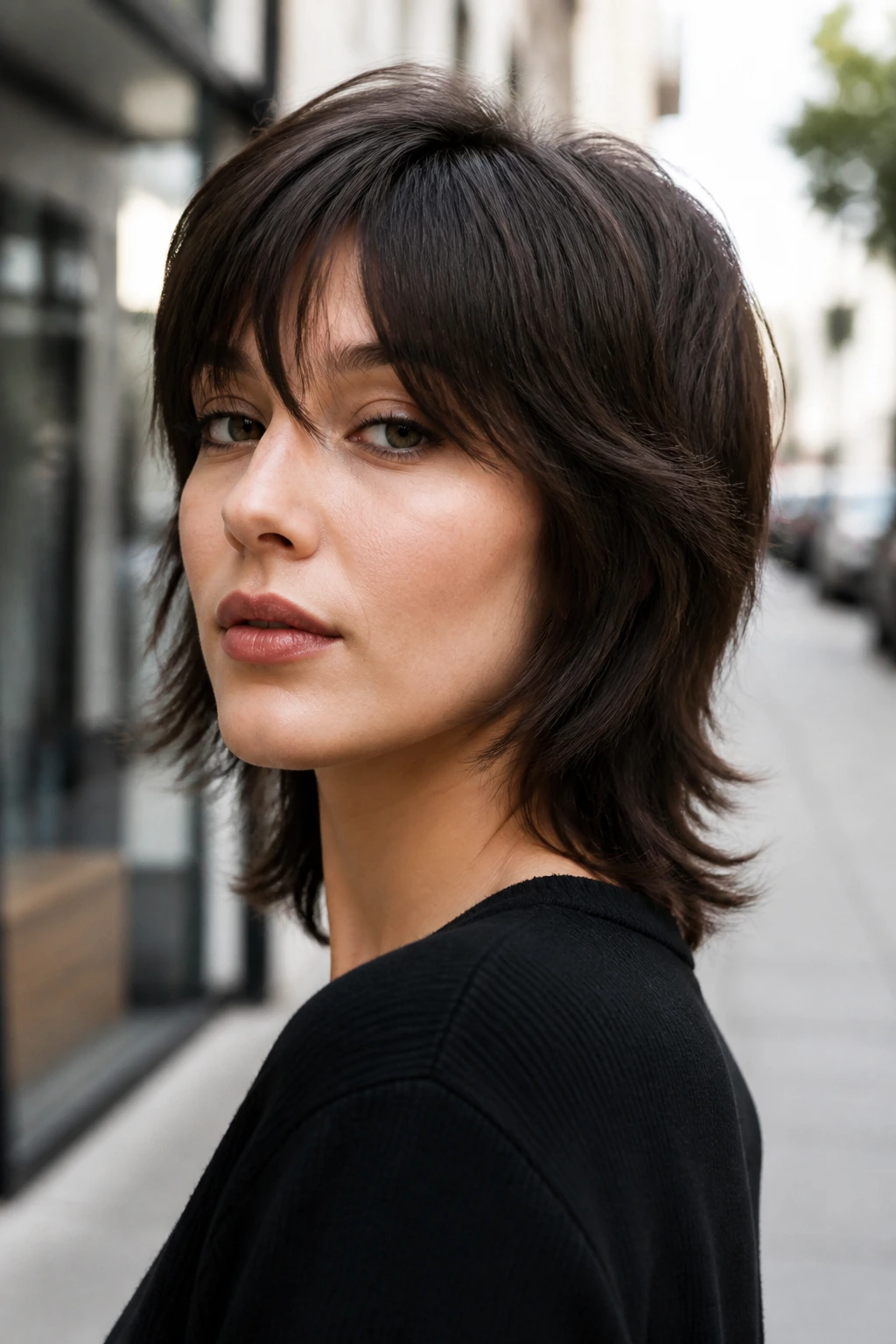
A mini mullet sounds more dramatic than it usually is. The modern version keeps the difference between top and back subtle, so the shape adds lift without looking costume-y. On thin hair, that extra length at the back can keep the nape from looking too exposed while the top gets a little height.
The feathering should stay light. Feathered ends help movement, but too much can make fine hair disappear at the bottom. Ask for a soft disconnect, not a sharp one. The cut should feel a little cool, a little undone, and still wearable.
This is one of those styles that rewards confidence. It does not hide in the background. If you want volume with a little edge, and you like hair that looks better when it’s not perfectly polished, this cut has a lot to offer.
19. Curtain Bang Lob

Curtain bangs are one of the easiest ways to add visual fullness to the front of fine hair. They split at the center and open at the cheeks, which creates a thicker-looking frame without dropping a heavy block of fringe over the forehead. Pair them with a lob and the whole cut gains shape.
The key is length. Curtain bangs on thin hair should usually start long enough to brush the cheekbones or just below them. Too short, and they can expose too much scalp at the part. Too heavy, and they stop looking airy. The right version feels soft and flexible.
A round brush or a quick roll at the front helps these bangs sit nicely. If you don’t want to heat style much, ask for a longer curtain shape that can be tucked away on lazy days. That flexibility is one reason people keep coming back to it.
20. Bottleneck Bang Bob

Bottleneck bangs are a smart middle ground between a full fringe and curtain bangs. They’re narrower at the center and open out toward the sides, which gives the forehead coverage without creating a blunt wall. On thin hair, that matters because a heavy fringe can swallow too much density.
I like this paired with a bob because the compact length keeps the overall shape from getting lost. The fringe adds mass where the eye lands first, while the bob holds a strong perimeter underneath. It’s tidy, but not stiff.
Ask for the sides to blend into the cheekbones rather than ending abruptly. That soft transition keeps the front from feeling chopped. If your hairline is especially sparse near the temples, this is a good way to hide that without needing a curtain fringe that goes too wide.
21. Side-Swept Fringe With a Chin-Grazing Cut
A side-swept fringe brings diagonal movement, and diagonal lines are a gift to thin hair. They move the eye upward and across the face instead of straight down a flat part. Add a chin-grazing cut and the hair suddenly looks more present.
This shape works well if one temple is thinner than the other or if your natural part is stubborn. The fringe can cover a sparse spot without looking like an obvious cover-up. It also softens the forehead in a way that makes the rest of the hair feel fuller. A chin-grazing finish keeps the body of the cut dense enough to match the fringe.
I especially like this on people who want something easy to tuck behind one ear. It keeps the look relaxed without losing the line. If you do heat style, a small round brush gives the fringe enough lift to avoid sticking straight to the skin.
22. Microbob With a Tucked Nape
The microbob is short, clean, and a little bold. Because it doesn’t have much length to stretch itself thin, it often looks denser than longer cuts on the same head of hair. That tucked nape helps too; it exposes the neck and keeps the focus on the stronger top line.
This is a good option if your hair is fine, straight, and not especially dense. The shorter length can make the whole shape feel fuller and sharper. Keep the edges precise. Any over-thinning here shows fast.
The microbob is also easier to wake up in the morning than people expect. A little mist of water, a brush through the roots, and a quick pass of heat can put it back in place. It’s a no-nonsense haircut, and that’s part of the appeal.
23. Shoulder-Length Blunt Cut With a Soft Bend

If you refuse to go shorter, keep the line blunt. A shoulder-length blunt cut can still make thin hair look full, but only if the ends stay thick enough to hold the shape. The soft bend at the very bottom stops the cut from looking rigid or flat.
This is the length where many fine-hair cuts go wrong. They land right on the shoulders, pick up friction, and flip out in ways that make the ends look even thinner. Ask for the cut to sit just above or just below the shoulder line, depending on how your hair behaves, so it doesn’t sit in that awkward zone.
I like this version for people who want length for updos or ponytails but still need the hair to look solid down. It’s one of the more forgiving long options, especially if you keep layers minimal and let the perimeter do the work.
24. Invisible-Layer Cut for Long Hair
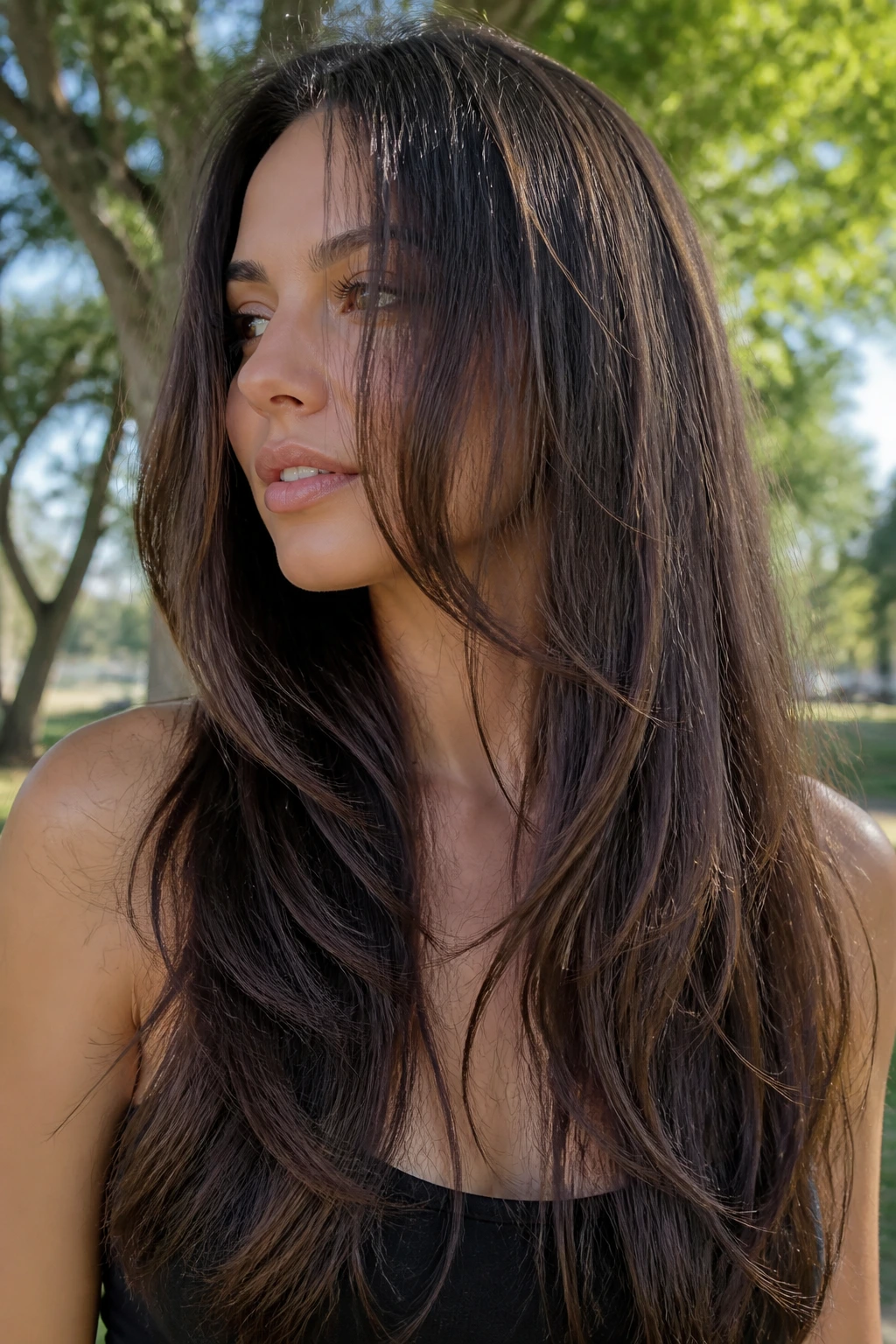
Long hair and thin hair can absolutely coexist, but the cut has to be careful. Invisible layers are the quiet answer: they remove a little bulk from the inside while leaving the outer shape intact. The result is movement without a see-through tail.
The most important thing here is where the layers start. If they begin too high, the hair can look stringy from the ears down. Keep them low and long, often below the chin or around the collarbone, so the density line stays strong. The outside should still look like one piece of hair, not a collection of detached strands.
This is a good option when you do not want to lose length but need more swing. It also works well if you wear your hair half up, because the hidden layers stop the whole style from feeling too heavy. The cut stays quiet. That’s the point.
25. U-Shape Cut With Face-Framing Pieces
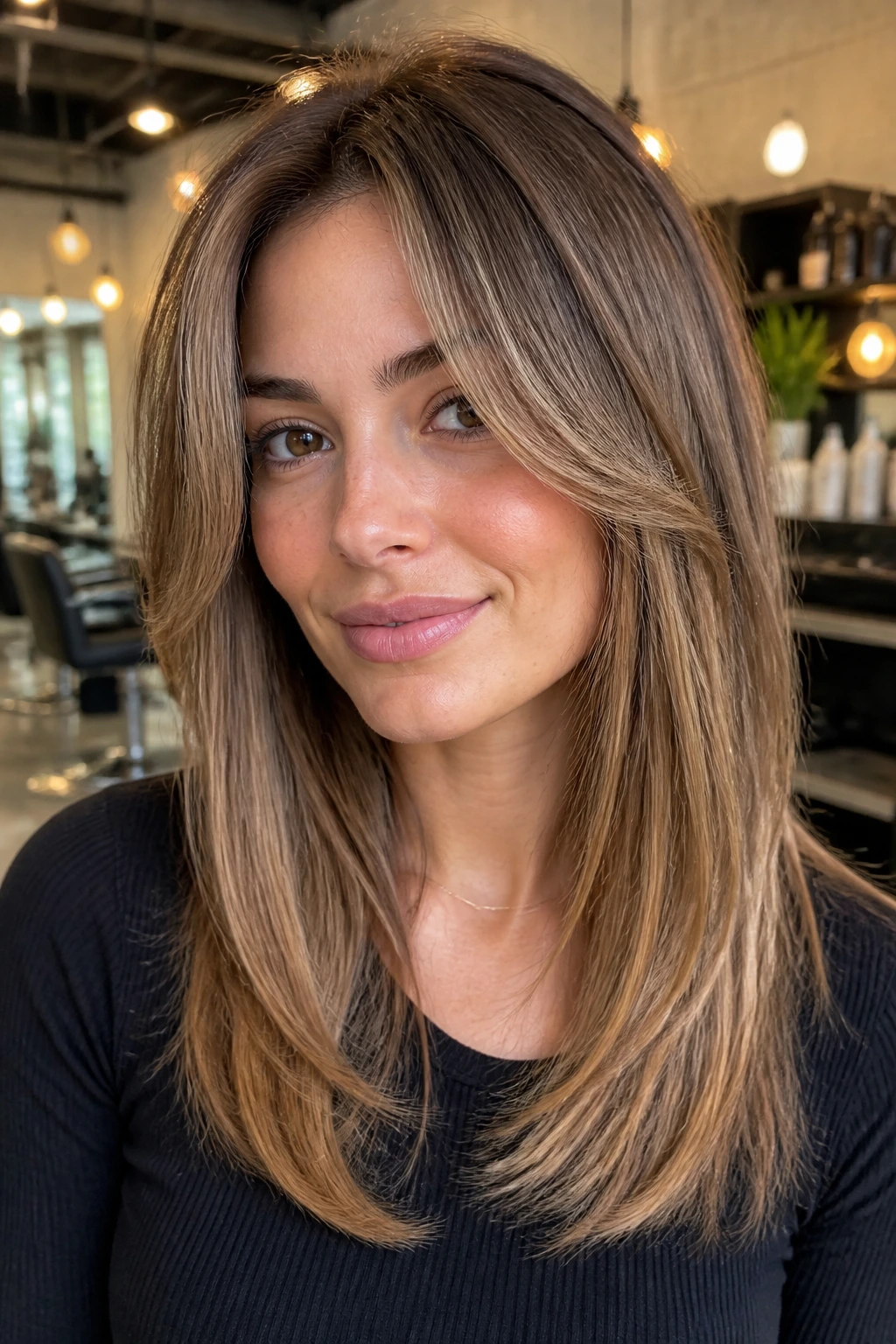
A U-shape is kinder to thin hair than a sharp V, because the back stays fuller and the ends don’t narrow into a skinny tail. The curve is subtle, but it changes the read of the entire cut. The hair feels softer, yet still dense.
The face-framing pieces should be chosen carefully. Start them low enough to add shape around the face without stealing too much density from the front. If they begin too high, you can get those thin, snippy pieces that look pretty in a salon mirror and tired by lunch.
I like this cut for medium to long lengths where the hair already has enough density to hold a curve. It’s a good “keep my length but make it look better” answer. The U shape gives the illusion of more volume at the bottom, which is exactly where thin hair tends to vanish.
26. Asymmetrical Bob for Extra Lift
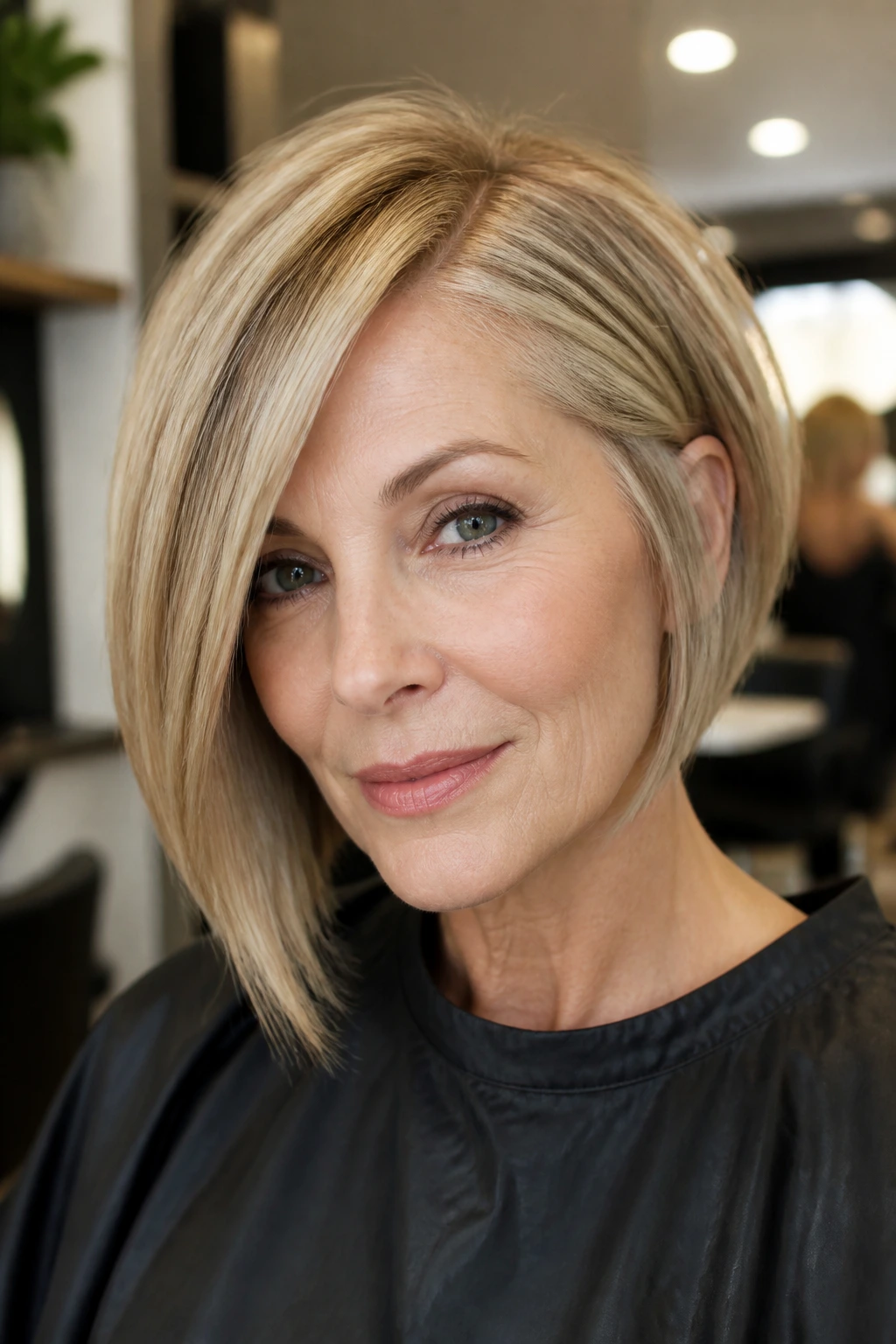
A subtle asymmetrical bob can make thin hair look more dynamic because the line is slightly off balance in a good way. One side sits a touch longer, which draws the eye across the face and breaks up the flatness that can happen with perfectly even ends. It’s a small change with a big visual payoff.
Keep the difference modest. Half an inch to an inch is usually enough. Too much asymmetry can start to look like a style decision rather than a volume decision, and that’s not always the goal. The power here is in the diagonal, not the drama.
This cut is especially nice if your part never behaves. The asymmetry gives you movement even when the roots are sleepy. A clean edge, a tidy neckline, and that slight imbalance can make thin hair look much more alive than a standard one-length bob.
27. Curly-Wavy Shape Cut for Thin Hair
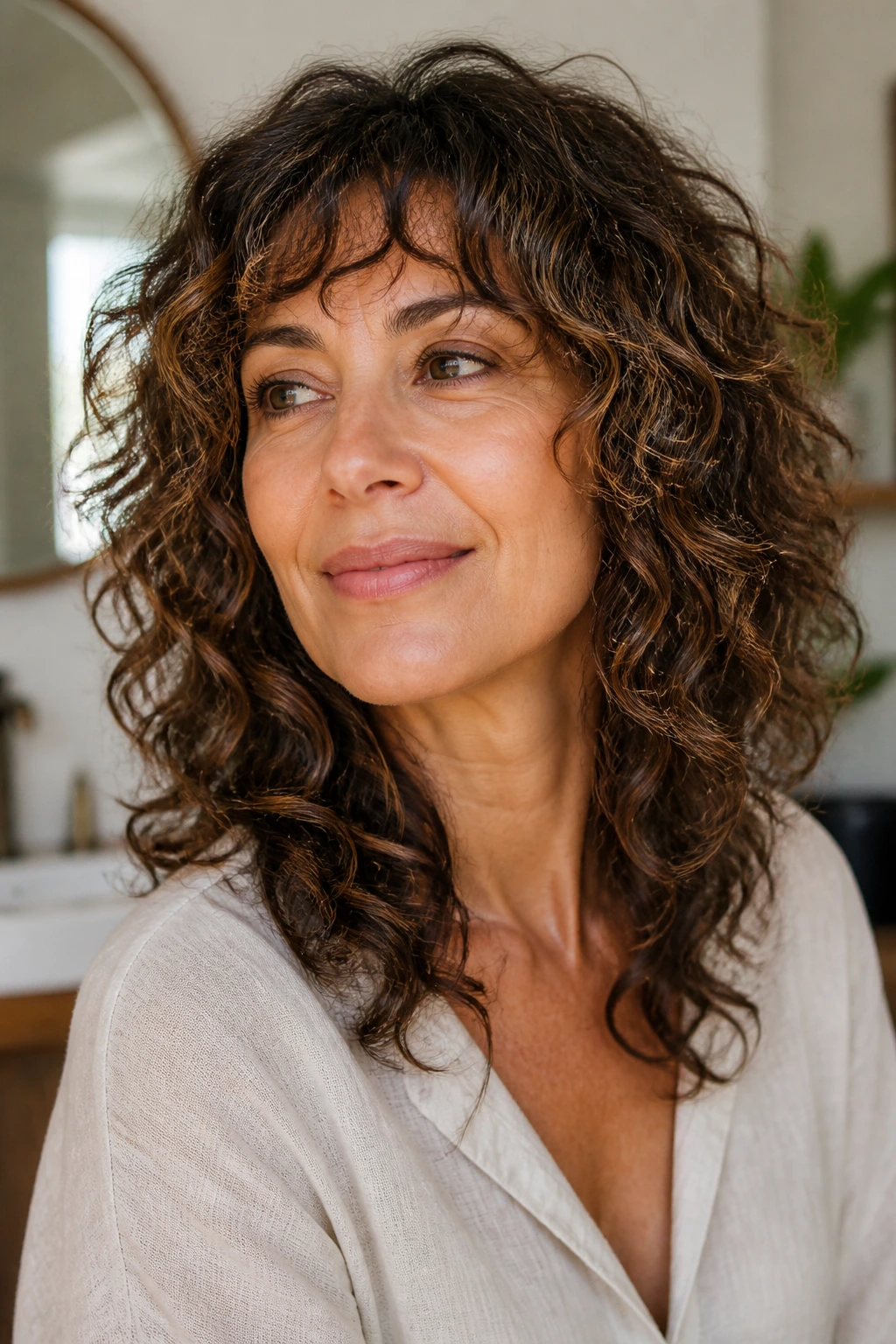
Thin curly or wavy hair needs a different kind of thinking. The goal is not to force it into a blunt, stiff shape that fights the texture. The goal is to let the curls clump, stack, and lift in a way that looks fuller without losing the ends.
A dry cut often works best here, because curls and waves shrink unpredictably when wet. Ask for a shaped perimeter and long layers that support the pattern instead of breaking it apart. Too much thinning is a problem on this hair type because it can create frizz and leave the ends looking see-through.
I like this cut when the hair has movement but still feels weak at the roots or sparse at the ends. A diffuser, a bit of curl cream, and a gentle scrunch can make the shape bloom. It’s volume from structure, not from puff.
Why the Right Cut Matters More Than the Right Product
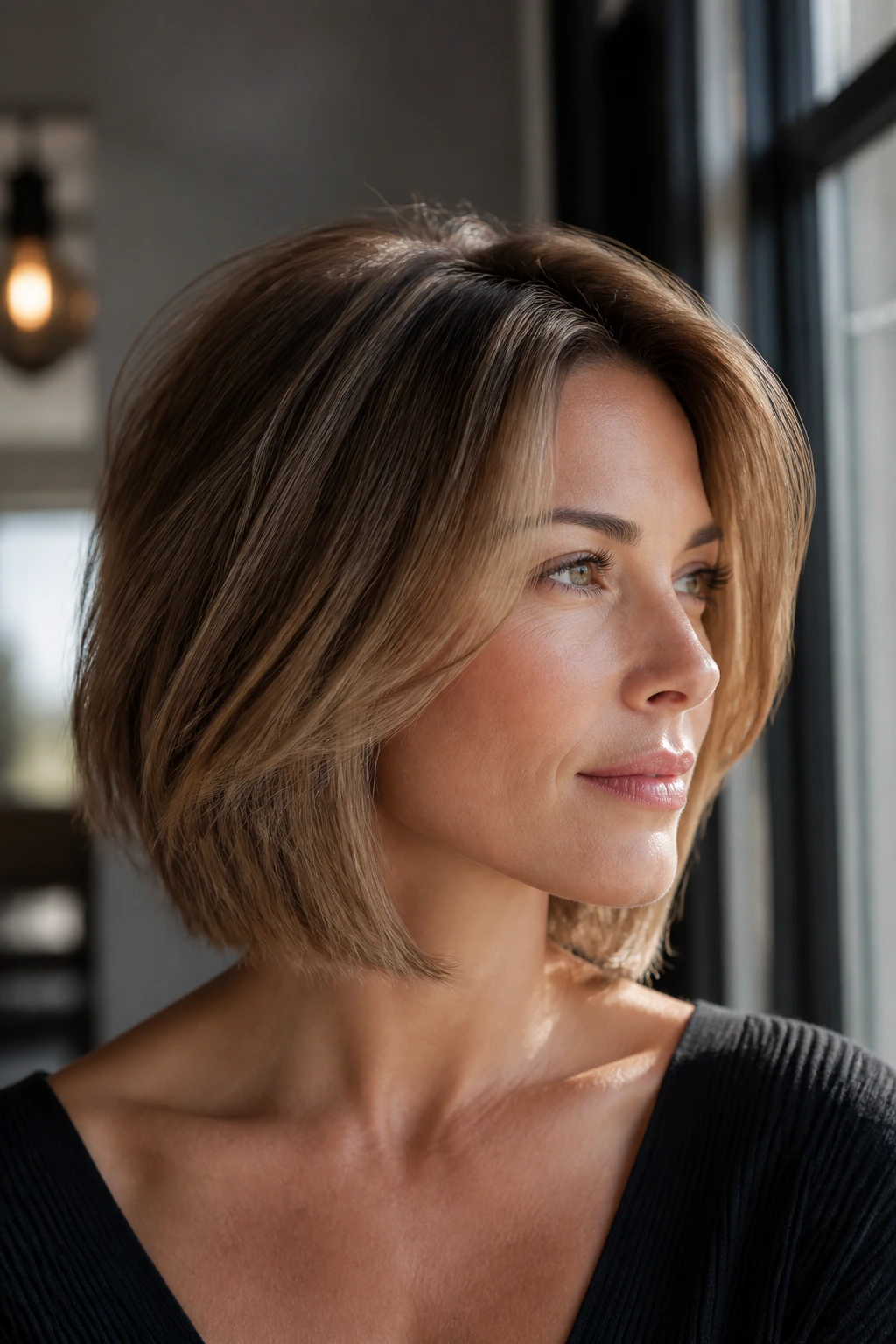
Products can help. They cannot fix a haircut that removes the wrong weight. That’s the blunt truth, and it’s why so many people keep buying volumizing sprays when the real problem is a bad shape. If the perimeter is wispy, the ends will still go see-through. If the crown has been over-thinned, no amount of root lift will make the scalp disappear.
A good cut changes the starting point. It sets the line, controls the drag, and decides where the eye lands. Fine hair usually needs help from those three things more than it needs another can of texturizer. Once the shape is right, product becomes a finishing move instead of a rescue mission.
There’s also a practical side to this. Hair that’s cut well is easier to style quickly and easier to refresh on day two. That means less heat, less tugging, and less chance of frying already delicate strands. A smart cut is not glamorous work, but it pays off every morning.
What to Tell Your Stylist Before the Shears Come Out
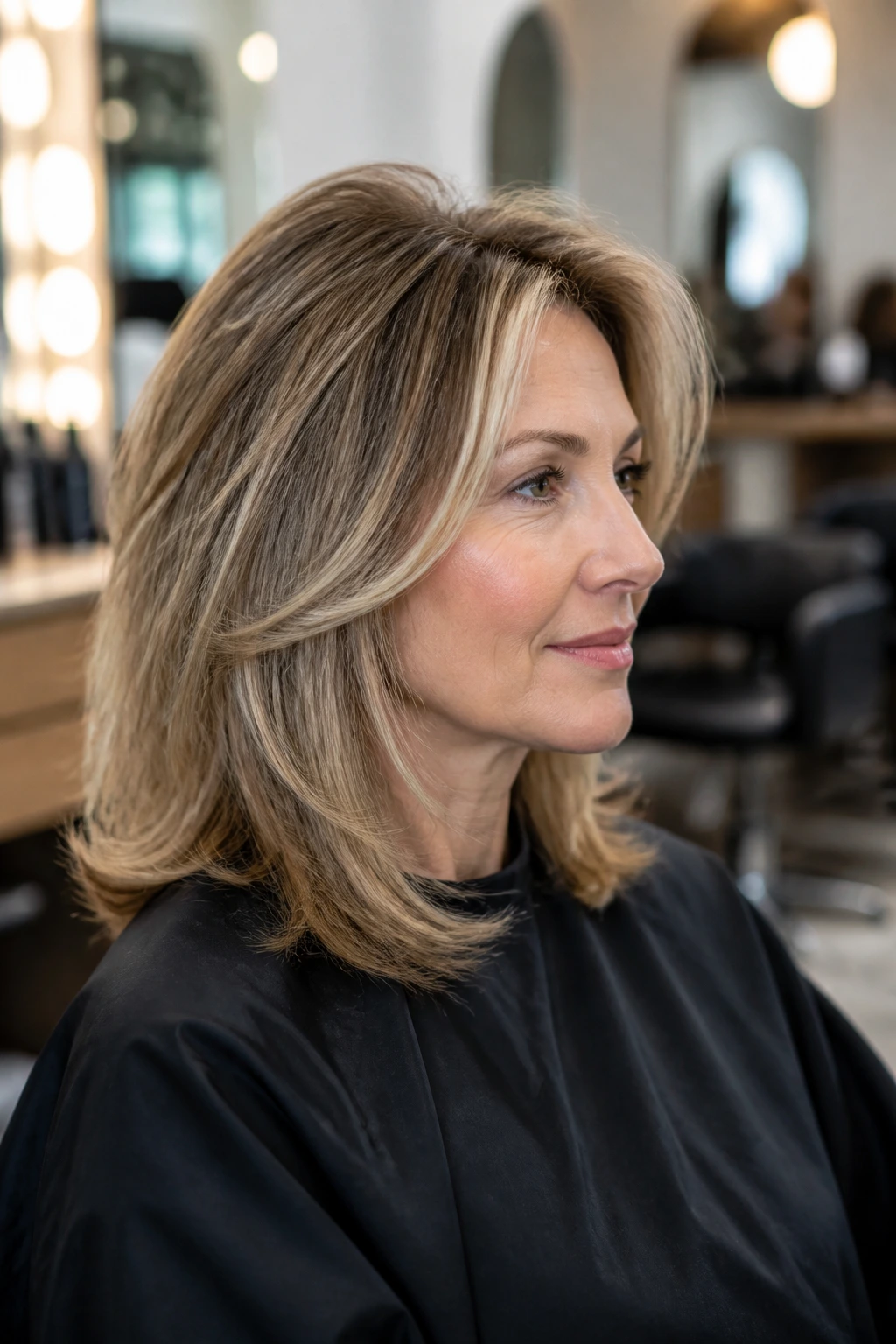
Bring photos, yes, but bring better information than that. A front photo alone can be misleading, because volume lives in the side profile, the crown, and the neckline just as much as it does in the front mirror shot. If you can, show a front view, a side view, and a back view of the cut you want. That keeps everyone honest.
Then say what your hair actually does. Tell them where it parts on its own, where cowlicks live, whether the crown goes flat, and whether the ends flip out around your shoulders. If you style with heat only twice a week, say so. If you air-dry and walk out the door, say that too. The cut has to match your real routine, not your best-case fantasy.
A few phrases help more than vague requests. Try: “Keep the perimeter full.” “I want crown lift without a lot of short layers.” “Please don’t thin the ends.” Those sentences are more useful than saying you want “more volume,” because volume can mean six different things in a salon chair.
Tools and Products That Help the Cut Hold Its Shape
-
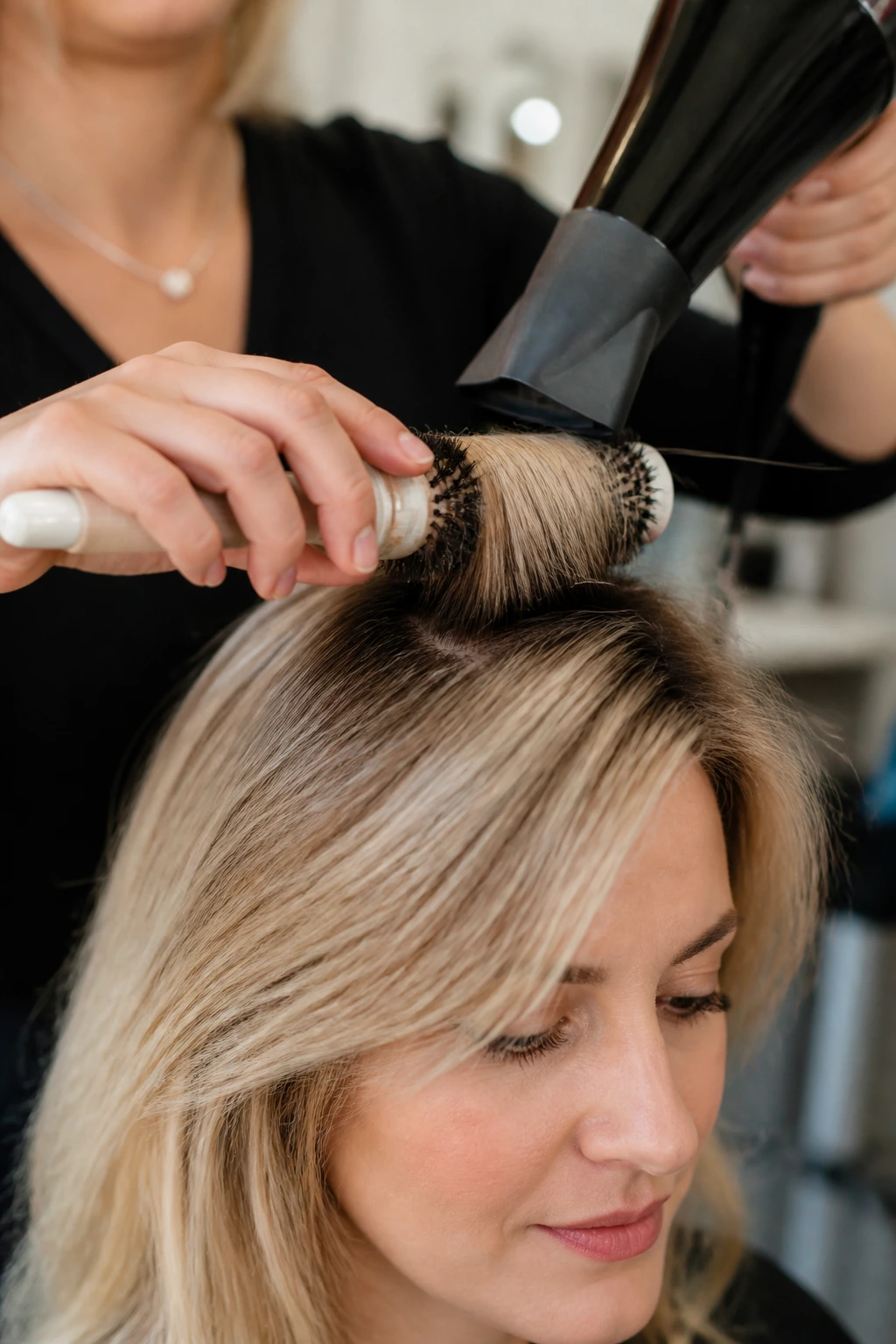
Small round brush, 1 to 1.25 inches:
Best for lifting roots on bobs, lobs, and fringe without turning the ends into a curl. -
Vent brush or blow-dry brush:
Useful when you want speed. It pushes air through fine hair fast, which helps avoid limp roots. -
Root-lift mousse:
A golf-ball size at the crown can help a flat cut keep its shape while drying. -
Lightweight volumizing spray:
Good for the root zone. Skip the heavy creams if your hair is prone to collapse. -
Dry shampoo:
Not just for grease. It gives a little grit to clean roots and helps the cut hold on day two. -
Velcro rollers:
Old-school, yes. Useful, yes. They add bend and lift at the crown while you finish makeup or get dressed. -
Fine-tooth tail comb:
Handy for clean parting and sectioning around bangs, especially when you’re chasing volume at the top. -
Section clips:
Small clips make blow-drying easier, which matters when you’re working a bob or layered crop. -
1-inch flat iron or curling iron:
Great for soft bends at the ends of a blunt cut. Use it lightly; thin hair does not need much. -
Microfiber towel:
Cuts down on rough friction after washing, which helps keep fine strands from frizzing out.
Keeping the Shape Full Between Appointments
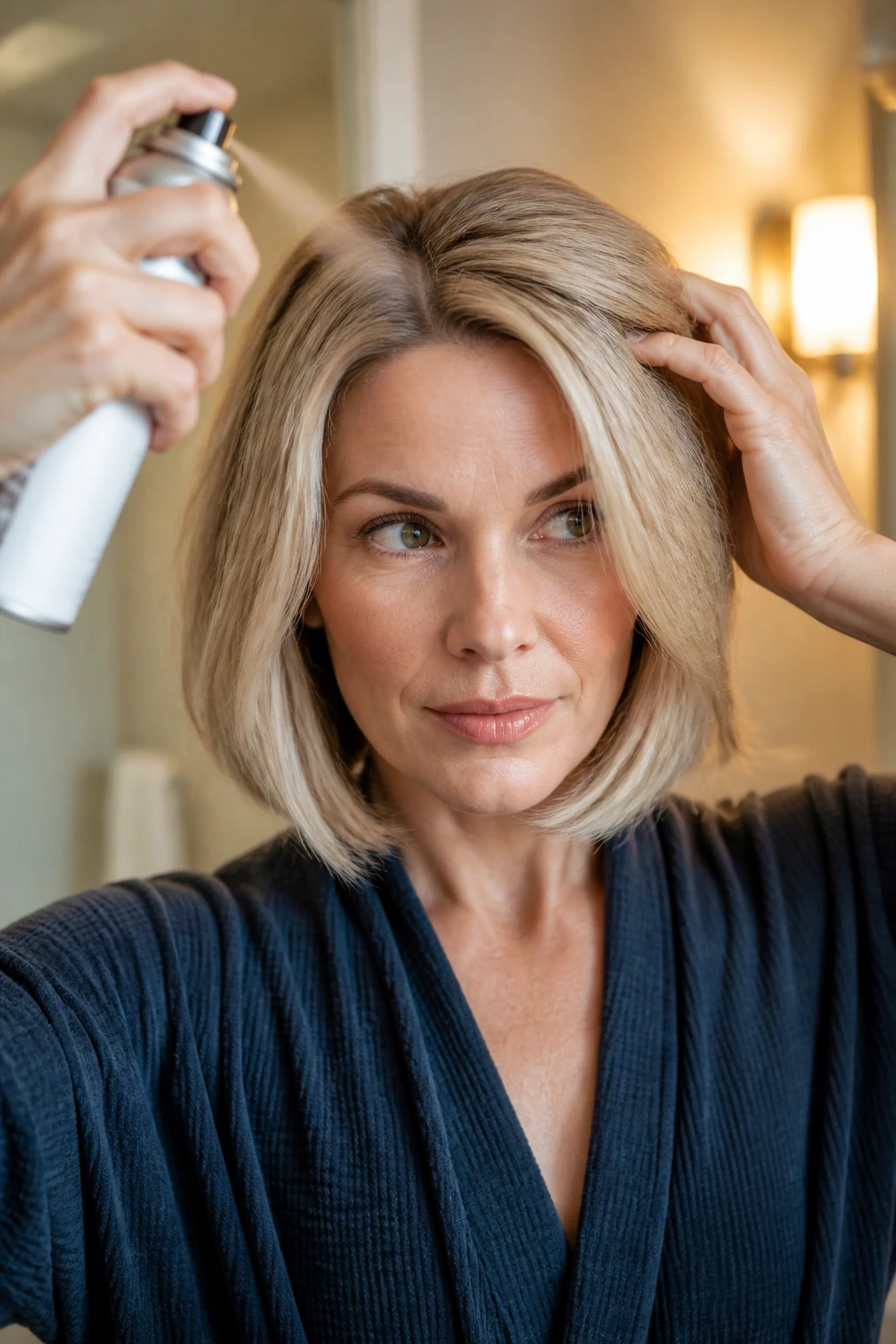
Thin hair shows grow-out faster than dense hair does, so maintenance matters. Pixies usually need a clean-up every 4 to 6 weeks. Bobs and microbobs tend to hold better for about 6 to 8 weeks. Long lobs and invisible-layer cuts can stretch to 8 to 10 weeks if the outline is still intact. Once the ends start to separate, the whole style reads thinner.
Wash day habits matter too. Heavy conditioner at the roots will flatten a good cut in record time, and fine hair usually needs less of it than people think. Keep conditioner from the scalp down through the mid-lengths and ends. Rinse well. Really well. Leftover product can make the roots sink.
On off days, dry shampoo at the root line and a quick refresh with a round brush or a few velcro rollers can bring back the shape. If you sleep on a silk pillowcase or loosely clip the hair up, you’ll get less friction around the perimeter. That’s useful because the perimeter is the part you’re trying hardest to protect.
Common Mistakes That Make Thin Hair Fall Flat
-
Over-layering the entire head:
The symptom is ends that look see-through by midday. The fix is to keep layers low and controlled, especially around the bottom edge. -
Thinning the ends with shears or a razor:
The hair may feel softer in the chair, but it often looks wispy once you walk outside. Ask for blunt or point-cut ends instead. -
Letting the cut sit at the worst length:
Shoulder-length hair that lands exactly on the shoulder can kick outward and expose thin spots. Either go a little above or a little below. -
Heavy bangs that eat the front density:
Full fringe can be too much if the hairline is sparse. Softer fringe, curtain bangs, or side-swept pieces usually do more with less. -
Ignoring the natural part and cowlicks:
A cut that fights your growth pattern will split open at the crown. Work with the part your hair already wants. -
Using too much oil or cream near the roots:
Fine hair gets weighed down fast. Save richer products for the ends, and keep the scalp light.
Ways to Adapt These Cuts for Different Faces and Textures
Round-Face Lift
Keep the front pieces a little longer and ask for a side part or off-center part. The diagonal line draws the eye down and gives the face more length. A chin-length or collarbone cut usually works well here.
Square-Jaw Softening
Rounded bobs, curtain bangs, and curved lobs soften a strong jaw without hiding it. I’d avoid a cut that stops exactly at the widest point of the face unless you like a very sharp effect. Soft edges help.
Ultra-Fine Rescue Version
If your strands are very fine and your density is low, go shorter and blunter. A microbob, French bob, or long pixie keeps the hair from collapsing into a thin curtain. The shorter shape does the visual heavy lifting.
Air-Dry Friendly Edit
Choose cuts with a strong perimeter and minimal interior texture. Blunt bobs, collarbone lobs, and soft shags work best when the styling plan is mostly mousse and fingers. You want a shape that still makes sense once the dryer is off.
Curly and Wavy Version
Ask for a dry cut or a curl-aware cut, with longer layers that support clumping. Fine curls can look fuller when the cut respects the pattern instead of fighting it. Too many short layers can turn them puffy on top and thin at the ends.
Grow-Out Friendly Version
If you hate frequent trims, choose a blunt lob, a U-shape, or an invisible-layer cut. These shapes hold together longer and don’t fall apart the moment the first inch grows in. That matters if you want a haircut with less maintenance built in.
Frequently Asked Questions
Should thin hair have layers at all?
Yes, but not the kind that chew up the whole shape. Fine hair usually does better with long, low layers or invisible layers that keep the perimeter full. Short, choppy layers tend to expose the scalp and make the ends look light in a bad way.
Is a bob better than long hair for thin hair?
Usually, yes, because a bob keeps the ends together in one denser-looking line. Long hair can still work if the cut is blunt or softly layered, but very long thin hair often looks stringy at the bottom. If density is low, shorter is usually smarter.
Do bangs make thin hair look thinner?
They can, if they’re too heavy or cut too short. Softer options like curtain bangs, bottleneck bangs, or a side-swept fringe often add shape without stealing too much density from the front. The bangs should match the amount of hair you actually have.
What if my hair is thin and curly?
Then shape matters even more, and a dry cut can be a better choice than a wet one. Fine curls can look fuller when the perimeter is shaped carefully and the layers are long enough to support the curl pattern. Short, aggressive layering can make the hair puff up in the wrong places.
How often should I trim a volume-boosting haircut?
Pixies and microbobs usually need a clean-up every 4 to 6 weeks. Bobs and lobs can often go 6 to 10 weeks, depending on how fast your hair grows and how crisp you want the shape to stay. Once the ends start looking soft and broken, the fullness starts to fade.
Can I keep my hair long and still make it look thicker?
Yes, but the cut has to protect the bottom edge. A blunt collarbone cut, invisible layers, or a U-shape can keep long hair from looking stringy. If the ends are wispy already, though, more length can make the problem louder.
What should I avoid if my crown is flat?
Avoid cuts that remove too much from the top and leave the sides heavy. You want lift at the crown, not a hollowed-out scalp line. A side part, a little graduation, or a fringe that draws the eye forward usually helps more than extra thinning.
Is razor cutting bad for thin hair?
Not always, but it can be risky. Razor cutting tends to soften the ends and can make fine hair fray if it’s used too much. On thin hair, I usually prefer scissors and controlled point cutting unless the stylist knows exactly why they’re reaching for a razor.
A Shape That Keeps Its Lift
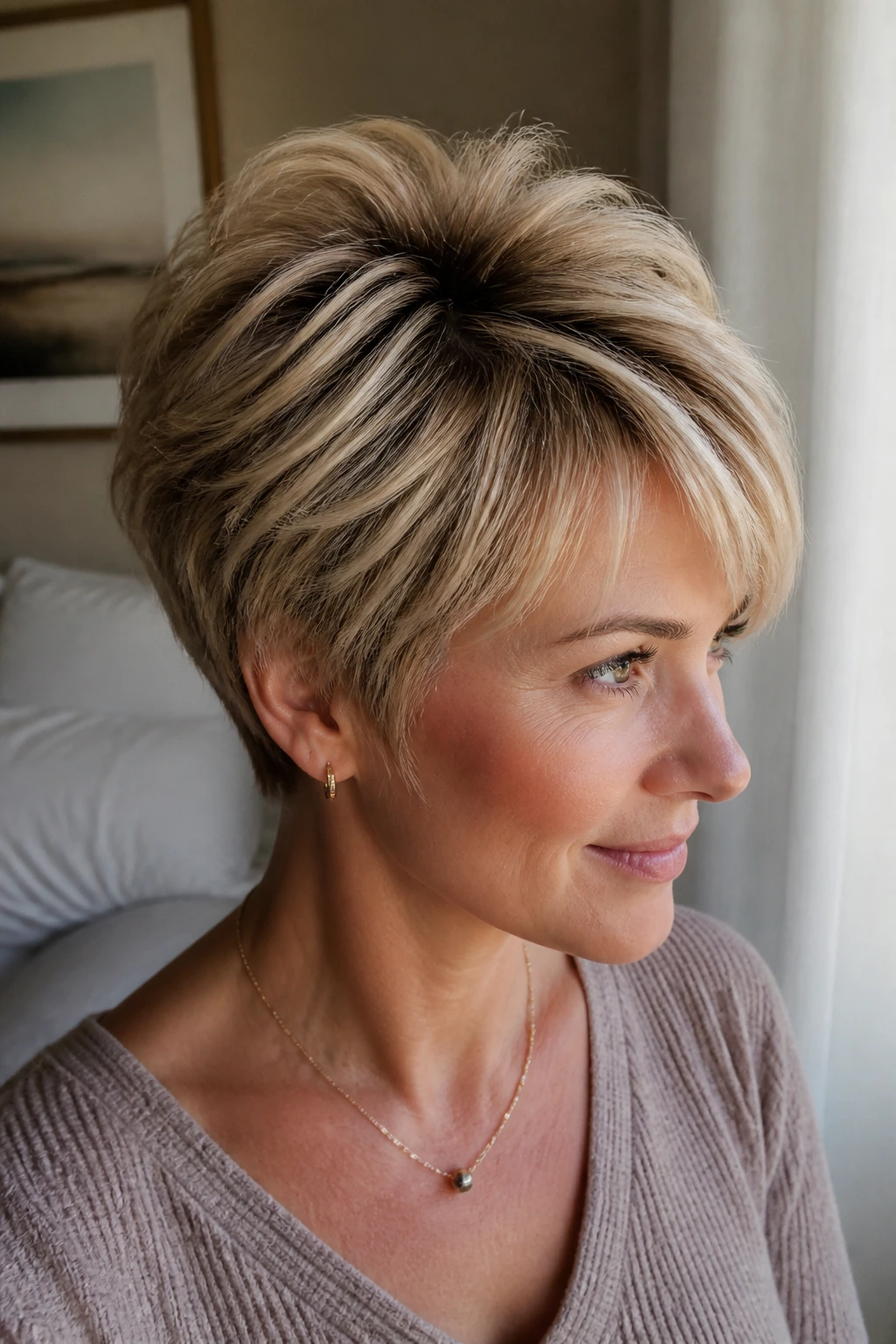
Thin hair does not need to be hidden. It needs a shape that respects what it is. That usually means a perimeter with some nerve, a crown with a bit of lift, and just enough movement to stop the whole thing from looking static. The best cuts on this list do that without forcing the hair into a style that only works in the salon mirror.
If you remember one thing, make it this: density is as much about shape as strand count. A blunt bob, a smart lob, a controlled crop, or a soft fringe can change the whole read of the hair before you buy a single styling product. That is why the cut matters first.
Bring photos. Bring honesty about your routine. Bring the kind of request that tells a stylist what to protect, not just what to remove. Thin hair can look fuller, cleaner, and far more expensive when the cut is doing its job from the start.
