



Fine hair after sixty doesn’t need to be hidden under length. It needs shape. And shape, for hair like this, usually comes from taking weight away, tightening the outline, and choosing a cut that gives the roots a little room to stand up.
The old advice to “just grow it longer” can backfire hard. Once the strands get finer, longer hair often slides flat against the head, splits at the ends, and starts looking tired by lunch. A short cut doesn’t promise magic. It does something better: it makes the hair look deliberate.
Some of the best short hairstyles for fine hair over 60 are not fussy at all — a smart pixie, a jaw-skimming bob, a feathered crop with a soft fringe. They work because they use the hair’s own texture instead of fighting it, and because a good stylist can place weight exactly where you want it. Not where gravity wants it.
Why These 24 Short Hairstyles for Fine Hair Over 60 Earn Their Keep
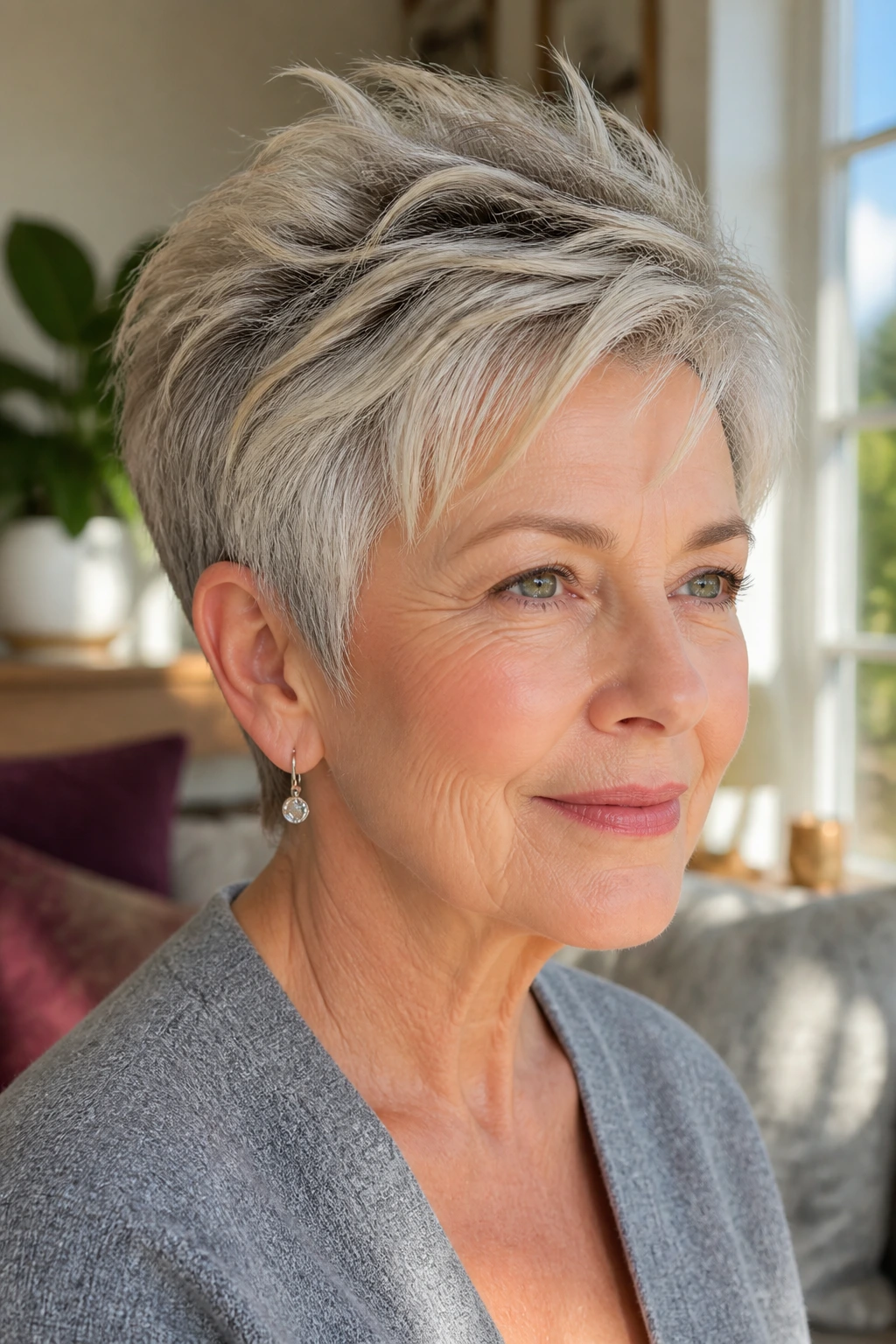
- Crown lift: Shorter shapes remove the drag that pulls fine hair flat, so the roots can sit higher for more of the day.
- Cleaner edges: A blunt or softly tapered perimeter makes the ends look denser, which matters more than extra length on delicate strands.
- Less styling wrestling: These cuts dry faster and need fewer round-brush acrobatics, which is a relief if your hair has become slippery, wiry, or both.
- Gray hair looks sharper: Silver and salt-and-pepper strands show movement beautifully in cropped shapes, especially when the cut has a little feathering or texture.
- Glasses-friendly options: Several of these styles keep bulk away from the temples and ears, so frames don’t fight your hair.
- Room for personal taste: Some of these are neat and polished, others have texture and edge. Fine hair does not have to look fragile, and it certainly does not have to look the same on everyone.
Fine Hair and Thin Hair Are Not the Same Problem
People mix these up all the time, and the difference matters. Fine hair means each strand is small in diameter. Thin hair means there may simply be fewer strands per square inch. You can have fine hair with plenty of density, or thin hair with a surprisingly full head of it. The haircut changes depending on which one you have.
That’s why the same blunt bob can look luxe on one person and limp on another. If the strands are fine, a compact shape can make the ends look thicker. If the density is also low, too many layers can expose the scalp and leave the top looking see-through. The trick is not “more layers.” It’s the right layers, in the right places.
Short cuts help because they change the physics. There’s less weight pulling from the bottom, less chance of split ends hanging out like little white flags, and less distance for the shape to fall apart. A chin-length bob can read fuller than a long style with twice the hair. That still surprises people.
And fine hair over 60 often has a second issue: it can be soft at the root but wiry on the ends, especially if you color it, heat-style it, or wear it up a lot. A short cut handles that contradiction better than a long one. It lets the healthy-looking part of the hair do the talking.
1. Soft Pixie with Crown Lift
A soft pixie is the one I’d recommend to someone who wants the most lift for the least daily fuss. The top stays a little longer — usually around 1.5 to 2.5 inches — while the sides and nape are kept close enough to reveal the shape of the head instead of hiding it under a blanket of hair.
What makes it work on fine hair is the crown. Ask for soft, pieced layers through the top, not a choppy helmet and not a feathered mess. The best version moves when you shake your head, but it doesn’t collapse into wisps by noon. A pea-sized dab of mousse or a root spray at the crown is usually enough.
This cut is especially good if your hairline has softened a little or if you want the cheekbones to show. It’s neat, but not severe. And that matters. Severe pixies can look harsh against fine hair; soft ones look intentional.
2. Tapered Bixie with Side Fringe
Why does the bixie keep showing up on real women instead of just photo boards? Because it sits in the middle where a lot of people actually live. It’s longer than a pixie, shorter than a bob, and that middle ground can be a sweet spot for fine hair that needs body without feeling exposed.
The side fringe is the useful part. Keep it light and angled so it brushes across the forehead rather than sitting in one heavy curtain. That diagonal line gives the eye somewhere to go, which can make the top look fuller than it is. If your hair tends to split down the middle, this style also gives you a cleaner side part to work with.
A bixie is kind to hair that wants movement but not a ton of styling. You can rough-dry it with your fingers, then touch the fringe with a small round brush for 30 seconds. That’s usually enough. No one needs to spend 25 minutes persuading a fringe to behave.
3. Chin-Length Bob with Airy Ends
A chin-length bob has one big advantage: it puts the visual weight right where the face begins. That makes the hair look denser, especially if the ends are kept blunt enough to read as a line rather than a scatter of see-through tips.
The word here is airy, not shaggy. Ask for the ends to be point-cut lightly, especially if the hair is very fine and the perimeter looks too blocky. The idea is to remove just enough bulk to let the hair turn under cleanly, not enough to make the hem look weak. If your stylist takes too much out of the bottom, the whole bob loses its little backbone.
This cut is also good when you want something you can tuck behind one ear without the shape falling apart. It pairs nicely with a side part and a blow-dry that bends the ends under just a touch. Simple. Clean. No drama.
4. Feathered Crop with Wispy Bangs
There’s a reason feathered crops come back around for fine hair. They break up the outline without shredding it. On a person with mature hair, that can be a lifesaver, because too much structure can feel stiff and too little can look sparse.
Wispy bangs help if your forehead feels a little more prominent than it used to, or if you just like a cut that softens the front of the face. Keep the fringe light, broken, and a little longer at the temples. Thick bangs are a trap on fine hair; they steal density from the rest of the cut.
A feathered crop works best when the crown has a bit of movement and the sides are not bulky. Think of it as light shaping, not aggressive layering. If the cut is done right, the hair should fall into place after a quick finger-dry and a touch of styling cream.
Best for people who want softness without fuss
This is one of those cuts that looks better on day two than people expect. A light mist of water, a dab of mousse, and a few scrunched pieces are usually enough to bring it back.
5. Layered Shaggy Bob
A shaggy bob can be a wonderful answer for fine hair, but only if the stylist knows where to stop. Too many layers and the ends go translucent. Too few, and the whole thing drops like wet tissue. The sweet spot is a bob that still has a shape at the bottom but carries some texture through the top and around the face.
This is the cut I like for hair that has a little wave and doesn’t want to be bullied into perfect symmetry. It gives you some lift at the crown, some softness around the jaw, and enough edge that the style doesn’t read as old-fashioned. That matters more than people admit.
What to ask for: a bob that sits between the jaw and the collarbone, with internal layers that are cut to encourage movement rather than frizz. If your ends are fragile, keep the perimeter a bit stronger so the shape doesn’t disappear on humid days.
6. Sleek Jawline Bob with Side Part
A blunt jawline bob does something sneaky: it makes the hair look heavier because your eye sees one clean edge instead of a ragged cloud of ends. On fine hair, that’s gold.
The side part is the piece that keeps it from feeling flat. Shift the part about an inch or two off center so one side gets a little lift at the root. That tiny change can make the top look fuller and keep the whole cut from clinging to the scalp. A center part on fine hair can be honest in a rude way. A side part is kinder.
This style suits people who like a neat, grown-up shape and don’t want to fuss with texture spray every morning. Blow-dry the roots first, then smooth the ends with a round brush or a flat brush if your hair is straight. If the line at the jaw is clean, the hair looks healthier than it may actually be. That’s the whole trick.
7. Curly Tapered Pixie
Curly fine hair needs a different kind of short cut. You don’t want to carve every curl into submission. You want to let the curls keep their spring while removing the bulk that drags the shape down.
A tapered pixie does that beautifully. The sides and nape stay close, but the top keeps enough length — usually around 2 to 4 inches, depending on curl size — for the curl pattern to show. If the top is cut too short, the curls can puff and lose definition. If it’s too long, they droop. Hair like this is picky, and the cut should respect that.
This style looks best with a diffuser, a little gel, and a hands-off finish. No brushing once it dries. Seriously. If you comb through it after styling, you’ll stretch out the curl and lose half the point.
8. French Bob with Piecey Fringe
A French bob has a little attitude, and fine hair can wear that attitude well. The length usually sits somewhere between lip and jawline, with ends that are blunt enough to feel full but soft enough to move. It’s the kind of cut that looks polished even when the styling is loose.
The piecey fringe is what keeps it from becoming boxy. Rather than a thick straight line, the bangs are broken into light sections that skim the forehead. That gives the face some shape without robbing the front of its density. If you have a cowlick at the front, this fringe can still work — just keep it longer and let it fall slightly to one side.
This one is especially good on straight or slightly wavy hair that likes to settle into a smooth shape. Air-dry it half the way, then finish with a brush or a flat iron just on the ends if needed. No need to make it precious.
9. Graduated Bob with Invisible Layers
A graduated bob is a quiet volume maker. Shorter in the back, longer toward the front, it stacks the hair in a way that gives the crown a little lift without screaming “layered haircut” from across the room. That’s useful if you want fullness but not a choppy look.
The best versions hide the layers inside the shape. You see the silhouette first, not the technique. That matters for fine hair because obvious layers can leave the ends wispy. Invisible layers keep the outline strong while giving the inside of the cut some room to breathe.
This cut asks for maintenance. Not much, but enough. Every 5 to 7 weeks, the back wants a clean-up so it doesn’t grow into a flat little shelf. If you’re willing to keep it shaped, it pays you back with a tidy crown and a nice swing at the front.
10. Long Pixie with Swept-Over Top
A long pixie is for someone who wants short hair without feeling like the hair has been taken all the way off the head. The top stays long enough to sweep over, the sides stay neat, and the whole thing gives you more styling choices than a tighter pixie.
This is one of the nicest cuts for fine hair that has a little directional problem at the front. If your part wants to split, or if one side always flops differently from the other, the swept-over top helps unify the shape. The front can be brushed forward, back, or slightly to the side depending on the day.
Use a light cream or mousse, not a heavy pomade. Fine hair gets slick fast. If the top starts looking greasy by lunchtime, the product is too rich. A long pixie should look touchable, not wet.
11. Asymmetrical Bob with Longer Front
A subtle asymmetry can make fine hair look more alive. Not dramatic. No one needs a haircut that announces itself from the next county. A gentle difference of an inch or so between one side and the other is enough to break up a flat outline and make the hair seem fuller.
The longer front pieces pull the eye forward and soften the jaw. That’s useful if the face has become a little narrower or if you want the style to feel less severe than a blunt bob. The trick is keeping the asymmetry believable. If the difference is too big, the cut starts to look like a decision instead of a style.
Ask for the ends to stay crisp. The shape matters more than extra texture here. A smooth asymmetrical bob can look sharper than a heavily layered one because the clean line gives the hair more visual weight.
12. Wedge Cut with Lift at the Back
The wedge still has a place, and fine hair is one of the places. The angled back gives you stacked lift where the head rounds, which can make the crown look fuller in profile. That’s a nice thing when the back of the head feels a little flat.
It’s not a cut for someone who wants softness everywhere. There’s structure here. But structure can be kind to fine hair when it prevents the ends from feathering out into nothing. If you’ve ever had a bob that looked great in front and limp from the side, a wedge can fix that.
The back has to be cut carefully. Too much stacking and it goes old-school in a hurry. Too little and you lose the whole point. The best wedge is sleek, slightly angled, and tidy at the nape. It should look like the haircut knows exactly what it’s doing.
13. Neck-Length Bob with Hidden Undercut
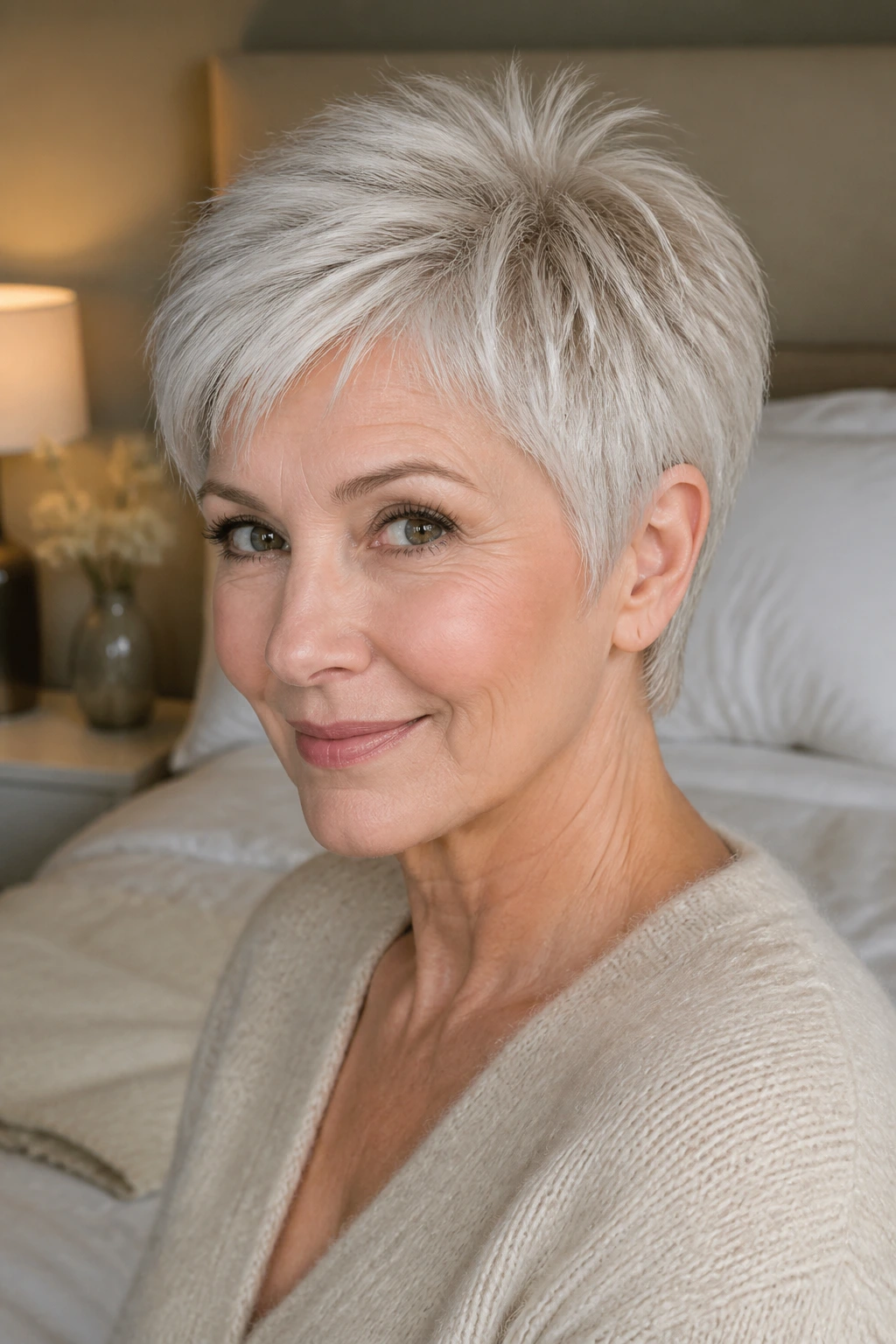
Here’s the thing about fine hair that is also dense: it can look bulky at the bottom while still being soft on top. That’s where a hidden undercut earns its keep. The surface hair stays at neck length, but the underlayer is removed just enough to stop the shape from puffing out like a triangle.
This cut is one of my favorites for people who want the look of a full bob without the weight. It works best when the stylist keeps the top line smooth and uses the undercut only where it’s needed. You do not want to see the undercut. You want to feel the difference when the hair falls.
It’s especially useful in warmer weather or for anyone who hates the feeling of thick hair at the nape. The top reads polished, the neck feels lighter, and the overall shape stays controlled. Quiet haircut. Strong results.
14. Shaggy Pixie-Bob Blend
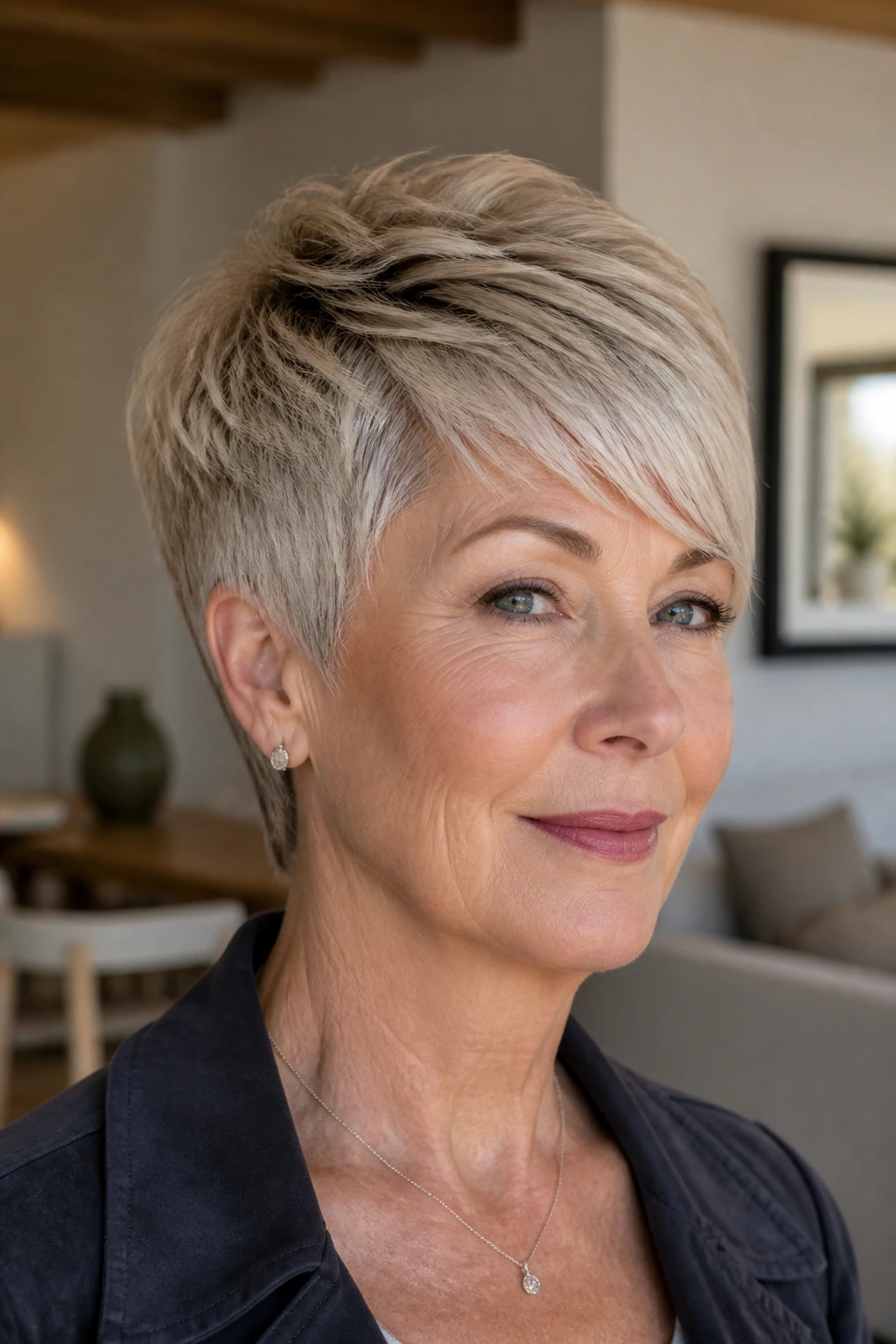
A pixie-bob blend sounds vague until you see it in a mirror. Then it makes sense. You get the shorter neckline and lifted crown of a pixie, but enough length around the ears and face to soften the transition. For fine hair, that middle zone can be a very good place to live.
The shaggy part should be used sparingly. Just enough choppiness to keep the cut from sitting like a block. Just enough looseness to stop the hair from looking too neat and thin. If the layers are too broken up, the style loses the outline that gives fine hair its visual heft.
This is a good cut for women who want to grow out a pixie without jumping straight to a bob. It makes the in-between stage look intentional instead of awkward. That’s worth a lot, honestly.
15. Blunt Micro-Bob
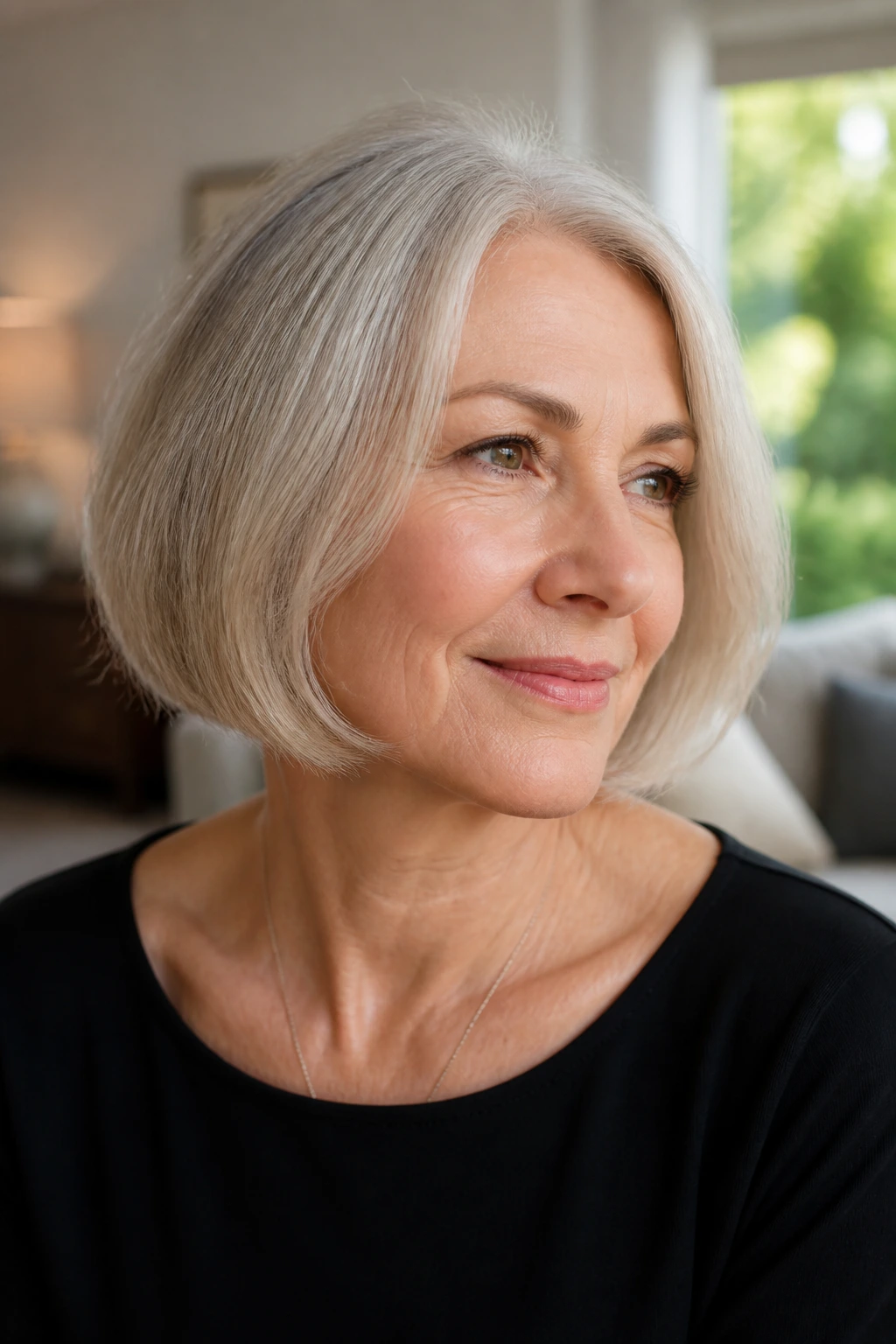
A blunt micro-bob is not shy, and that’s part of why it works. The hair sits short — often around the jaw or a touch above — with a hard, clean edge that gives the illusion of density. Fine hair loves a blunt line. It gets to pretend it has more substance than it does.
The beauty of this cut is how little it asks from the hair. Straighten the roots, brush the ends into place, and leave it alone. Overstyling is the enemy. A micro-bob looks best when it stays crisp and compact, not when it’s blown into a balloon.
If your hair is very fine, ask for the edge to be blunt but not bulky. A tiny bit of internal weight removal can help it fold under better. Too much layering and the magic disappears.
16. Side-Parted Crop with Tucked Sides

A side-parted crop has a neatness that can be almost cheeky on fine hair. The sides are kept close enough to tuck behind the ears, the part is shifted off center, and the top gets just enough length to keep the shape from looking clipped flat.
This is one of the better cuts for people who wear glasses. The hair stays out of the temple area, so the frames and the hairstyle aren’t constantly arguing with each other. That sounds small. It isn’t. When hair keeps sliding into the arms of your glasses, it can make a clean style look messy fast.
A touch of matte paste at the ends can help the crop stay separated without turning shiny or stiff. The goal is a tidy outline with a little movement around the top. Clean lines, soft lift. Nice combination.
17. Layered Chin Bob with Side-Swept Bangs
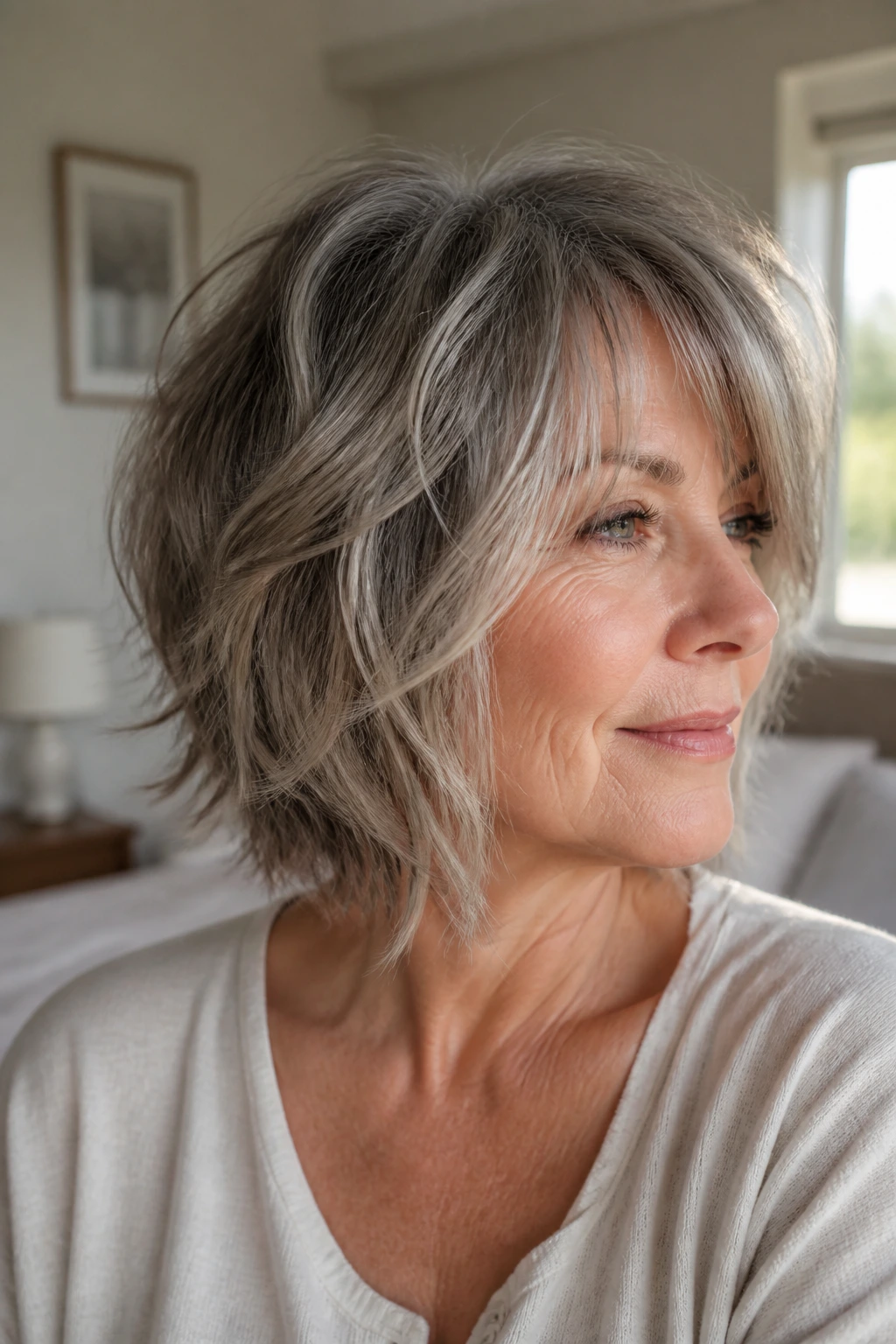
A chin bob with side-swept bangs gives fine hair a bit of front-heavy balance. The bangs pull attention upward and across the face, while the bob itself stays short enough to keep the ends looking full. If the face feels a little longer or the forehead needs softening, this is a very practical shape.
The layers should stay subtle. I mean subtle. Just enough movement through the lower half of the cut so the ends don’t sit like a helmet. The bangs are the main event here, not the layering. Keep them long enough to brush into the cheekbone area rather than cutting them right off at the brow.
This style works especially well if you like a side part but want the front to have more life than a straight bob gives you. It’s polished without being fussy, which is probably why it keeps showing up on women who are tired of hair that looks overworked.
18. Short Wolf Cut with Soft Movement
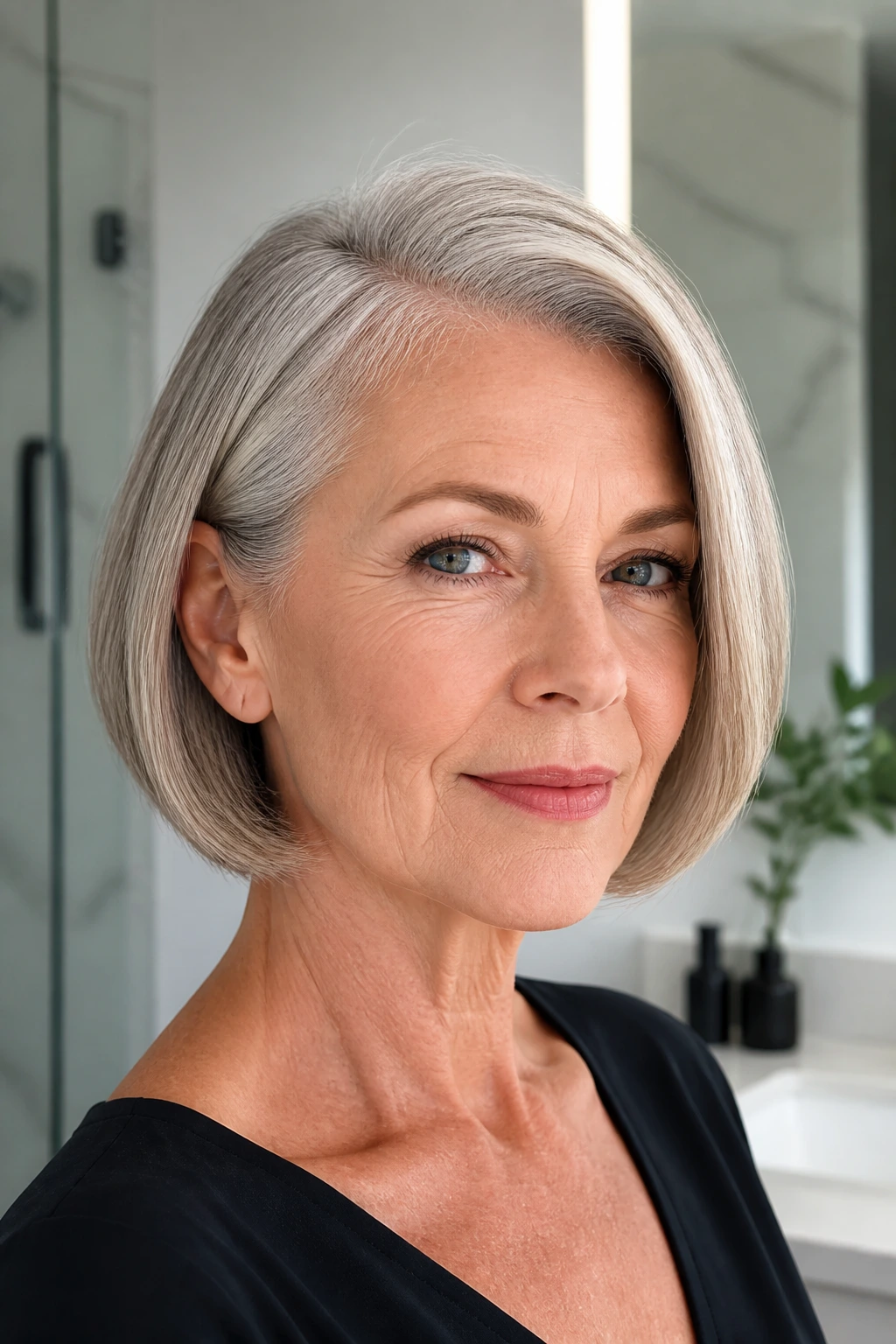
A short wolf cut can sound intimidating. In practice, it’s just a softer, shorter version of a shag with more attitude at the crown and more taper at the ends. For fine hair, the important part is “soft.” You don’t want a wild, stringy mess. You want movement that still has shape.
This cut is best on hair that already bends a little, even if it’s just at the ends. The shorter layers around the crown help create lift, while the longer bits around the face keep the style from ballooning. If the hair is very straight, this cut can still work, but it will need a bit more product and a little finger styling.
It’s a good choice if you like texture, dislike stiff bobs, and want the cut to feel a bit younger without trying too hard. A little edge goes a long way. A lot of edge can look like a costume.
19. Ear-Length Bob with Rounded Volume
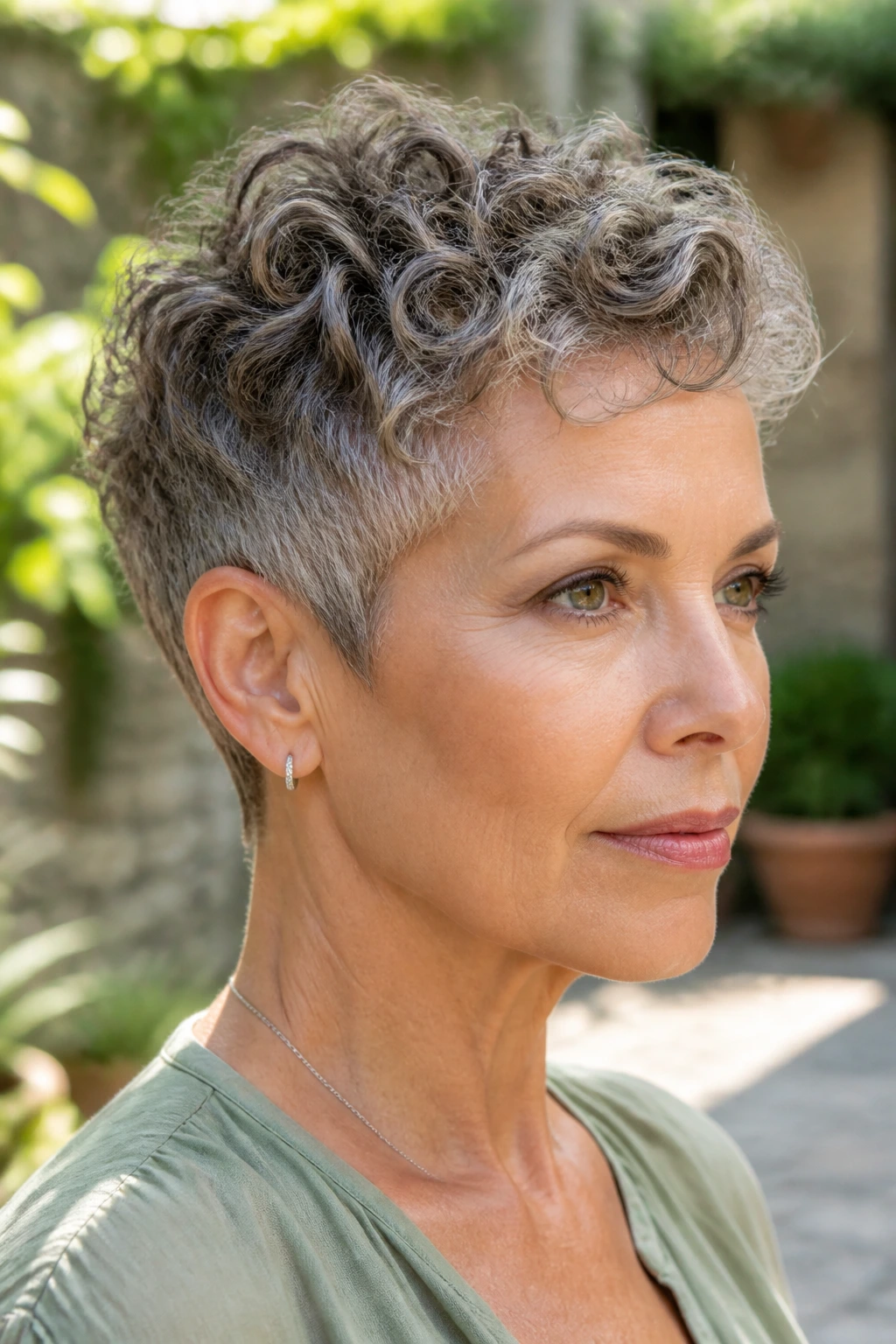
An ear-length bob is one of those cuts that looks small until you see it on. Then the shape makes sense. Because it stops higher on the head, it can create a rounded silhouette that gives fine hair a fuller look from the sides.
The rounded volume matters. Ask for the cut to curve gently under at the jaw and around the ears instead of hanging straight and flat. That curve makes the style look plush, not sparse. It also keeps the hair from sticking out awkwardly at the cheekbones, which can happen with very blunt short bobs.
This is a nice option if you have a narrow face or want more width through the middle. It also plays well with silver hair, which tends to show shape clearly when it’s cut into a clean outline. A tiny bit of root lift spray can help, but the cut does most of the work.
20. Feathered Crop for Salt-and-Pepper Hair
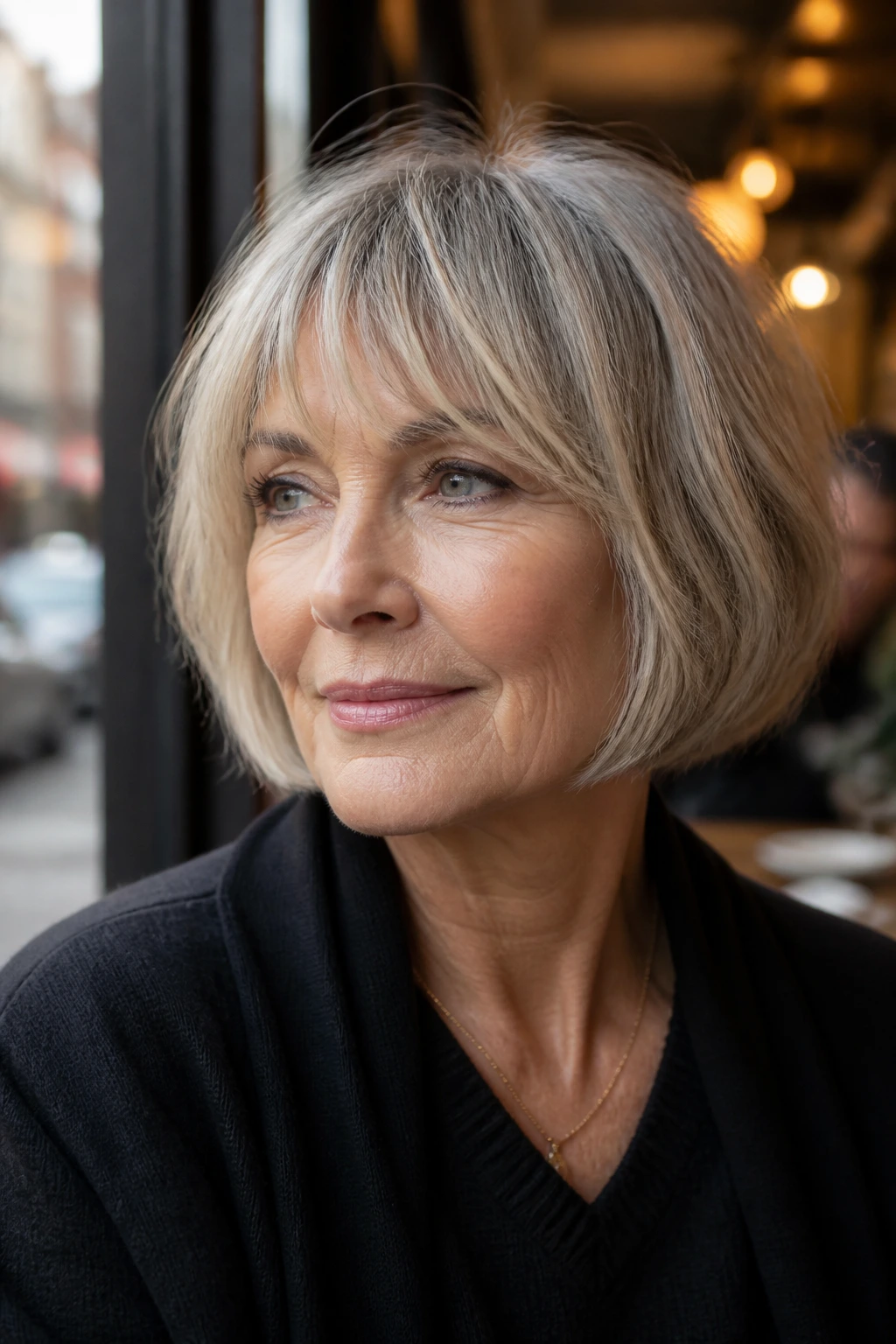
Salt-and-pepper hair deserves a cut that lets the color do something interesting. Feathering helps. It breaks up the surface just enough to show the silver strands against the darker ones without turning the whole head into a fuzzball.
This crop should stay light around the crown and temples, with the nape trimmed close so the shape feels tidy. The nice part is how forgiving the color is. Gray and dark strands together catch the eye differently in a feathered cut than they do in a blunt one, which gives the whole style a little motion even before you touch it.
If you’re letting the gray grow in, this is one of the easiest cuts to wear through that transition. The texture reads on purpose. A lot of people worry about looking “in-between” while the color changes. A feathered crop solves that problem faster than a long style does.
21. Tapered Crop with Glasses-Friendly Sides
Some haircuts fight glasses. This one does not. A tapered crop keeps the sides short enough to sit cleanly around the arms of the frames, while the top stays soft and slightly longer so the cut still has personality.
The important detail is the temple area. Ask the stylist to thin the bulk there just enough that the hair doesn’t keep flipping out into the frame. If your glasses sit high on the face, the sideburn length matters too. You want the cut to meet the frames, not bunch against them.
This style is useful if you wear your glasses all day and hate having to tuck hair back every ten minutes. It looks neat, but it’s not severe. And because the top remains a little longer, you still get movement where people can see it.
22. Soft Mullet with Face Framing
A soft mullet for mature fine hair is not the loud, rebellious version people picture from old photos. It’s gentler. Shorter around the crown, a touch longer in the nape, with face-framing pieces that keep the front from looking too severe.
Why does it work? Because the longer nape gives the cut movement, and the shorter top gives the roots a break from gravity. On fine hair, that combination can look fuller than a standard bob with the same length. It also gives you a little personality, which some people want more than polish.
The key is softness. The face frame should melt into the rest of the cut, not sit there like separate pieces. If you like texture, wear your hair with a little mousse and scrunching. If you want it neater, blow-dry the crown and let the ends stay loose. Both work.
23. Wash-and-Go Crop with Natural Texture
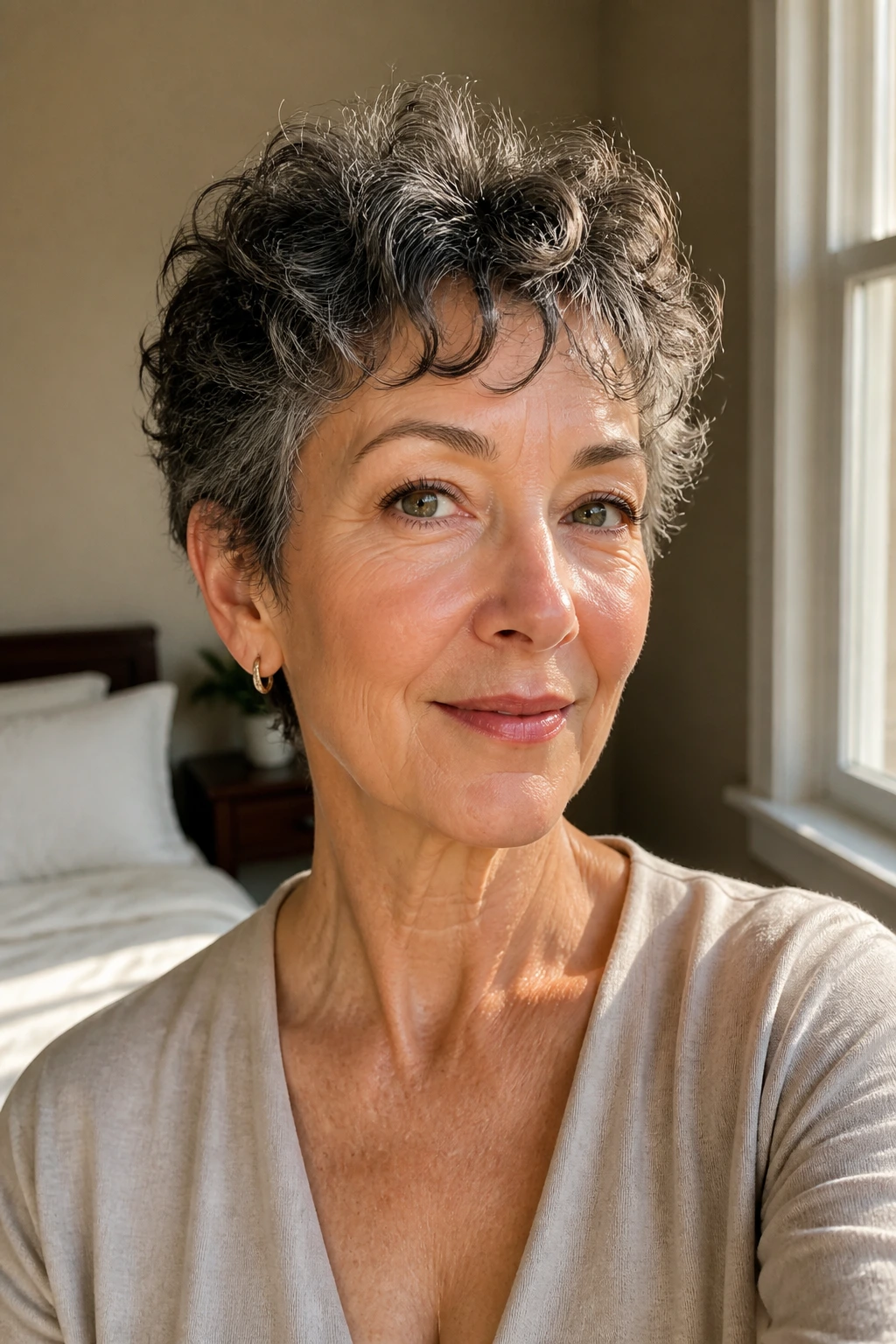
A wash-and-go crop is not lazy hair. It’s smart hair. The cut is designed around the direction your hair already wants to go, which means less time fighting cowlicks, less flattening at the crown, and fewer mornings spent trying to make a round brush do what your hands could have done in half the time.
The stylist has to cut this one with the hair dry, or at least partly dry, so the natural bend is visible. That’s the whole point. If you’ve ever had a cut that looked great in the salon and went rogue after the first wash, this is the antidote. The shape should live where your hair naturally lives.
This works beautifully for women with a little wave, a little bend, or just no patience for overstyling. Use a light cream, scrunch, and leave it alone. Some hair looks best when it’s not being managed into submission.
24. Rounded Pixie-Bob with Lift at the Crown
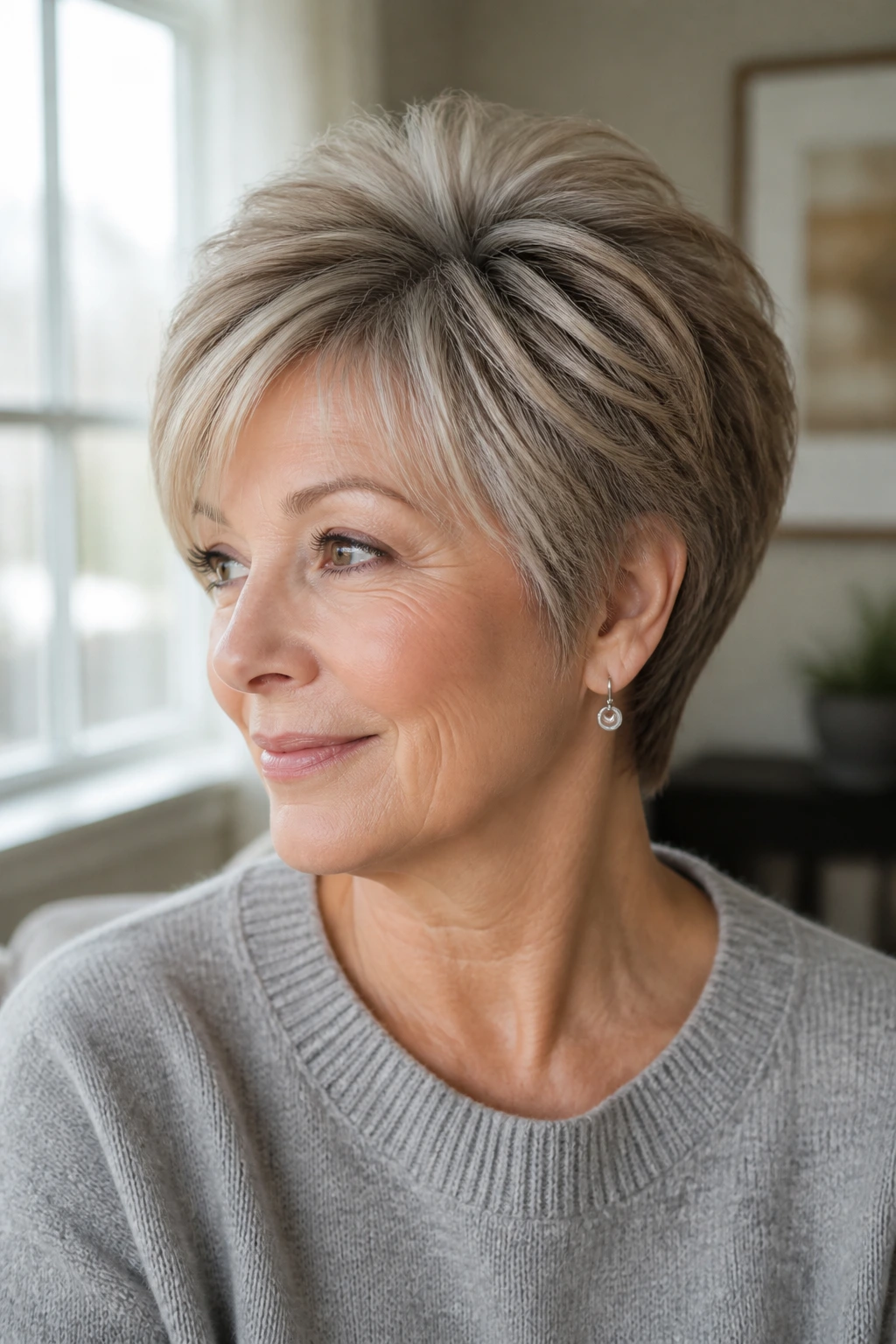
If you can’t decide between a pixie and a bob, this is the cut that splits the difference without looking indecisive. The crown is short enough to give lift, the sides stay rounded enough to soften the face, and the back doesn’t collapse into a flat line.
The rounded shape matters a lot for fine hair. Straight edges can make the style feel sharp in a way that shows every bit of sparseness. A curved outline lets the hair look fuller from all sides, especially when the top is lifted with a little mousse or root spray. It’s one of the easiest ways to make a short haircut feel polished without looking stiff.
This is a strong choice if you want movement but still want the hair to look finished. It is not a wash-and-forget style. But it also doesn’t ask for a lot. A good blow-dry at the roots, a quick pass with your fingers, and you’re done.
The Chair Talk That Gets the Cut Right
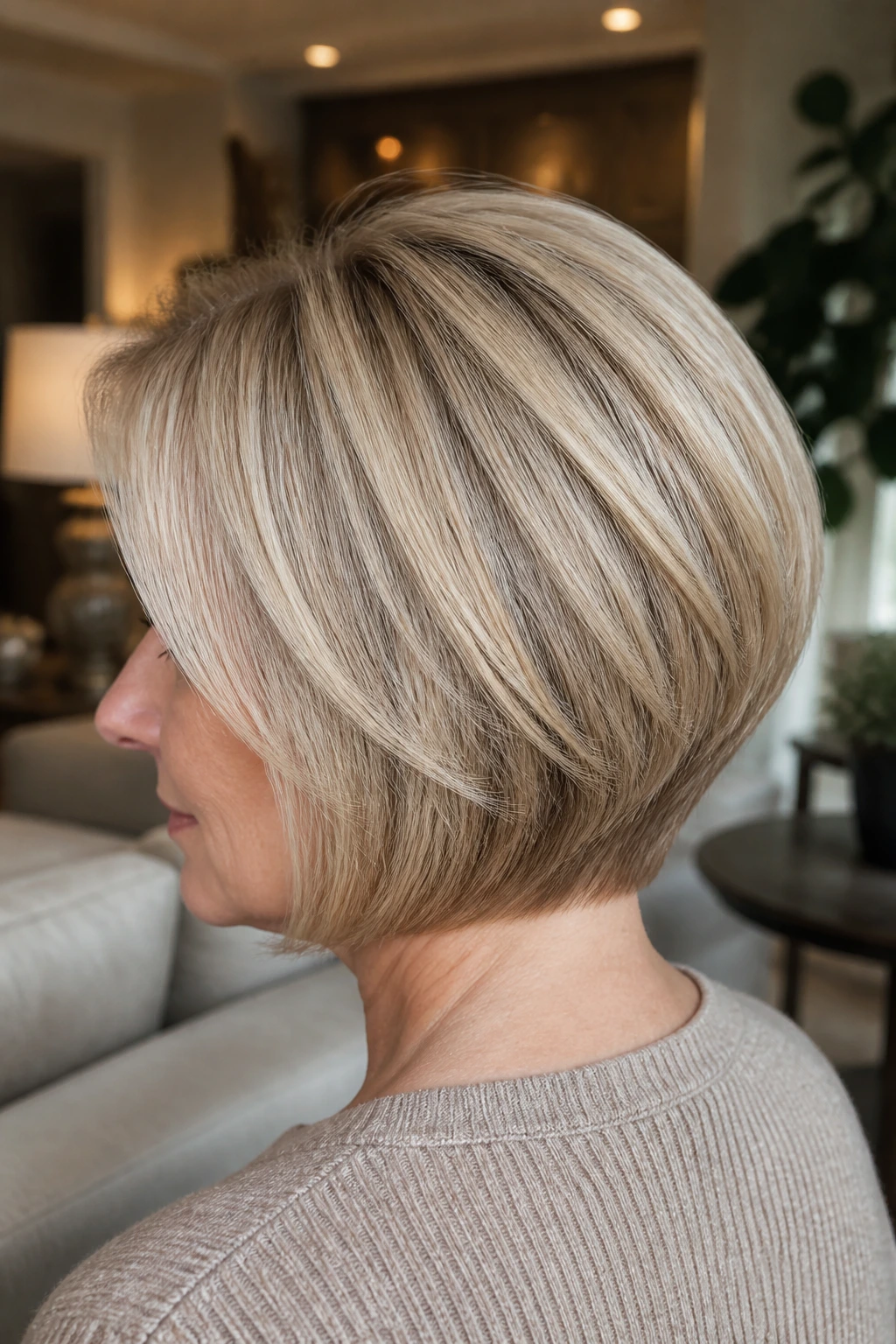
The quickest way to a disappointing haircut is walking in and saying “something shorter” while hoping the stylist reads your mind. Don’t do that. Fine hair over 60 needs specifics: where you want the weight, how much forehead you’re comfortable showing, whether you air-dry, and whether you want the nape exposed or covered.
Bring photos, yes, but bring the right ones. One photo should show the shape you like. Another should show the fringe, crown, or side view. Stylists can read that faster than a vague inspiration shot from a different hair type. And if your hair is naturally flat at the crown, say that out loud. Don’t pretend it isn’t true.
A few useful phrases actually do help:
- Keep the perimeter blunt if you want the ends to look denser.
- Remove weight inside, not at the ends if you need movement without see-through tips.
- Leave the top long enough to lift if the crown always falls flat.
- Cut the fringe light and broken if full bangs make the front feel heavy.
One more thing. Tell the stylist how long you’re willing to spend styling. A cut that needs a 20-minute round-brush session is not the same as a cut that air-dries into place. Those are different haircuts, even if they look similar in a photo.
Styling Tools That Make Short Fine Hair Behave
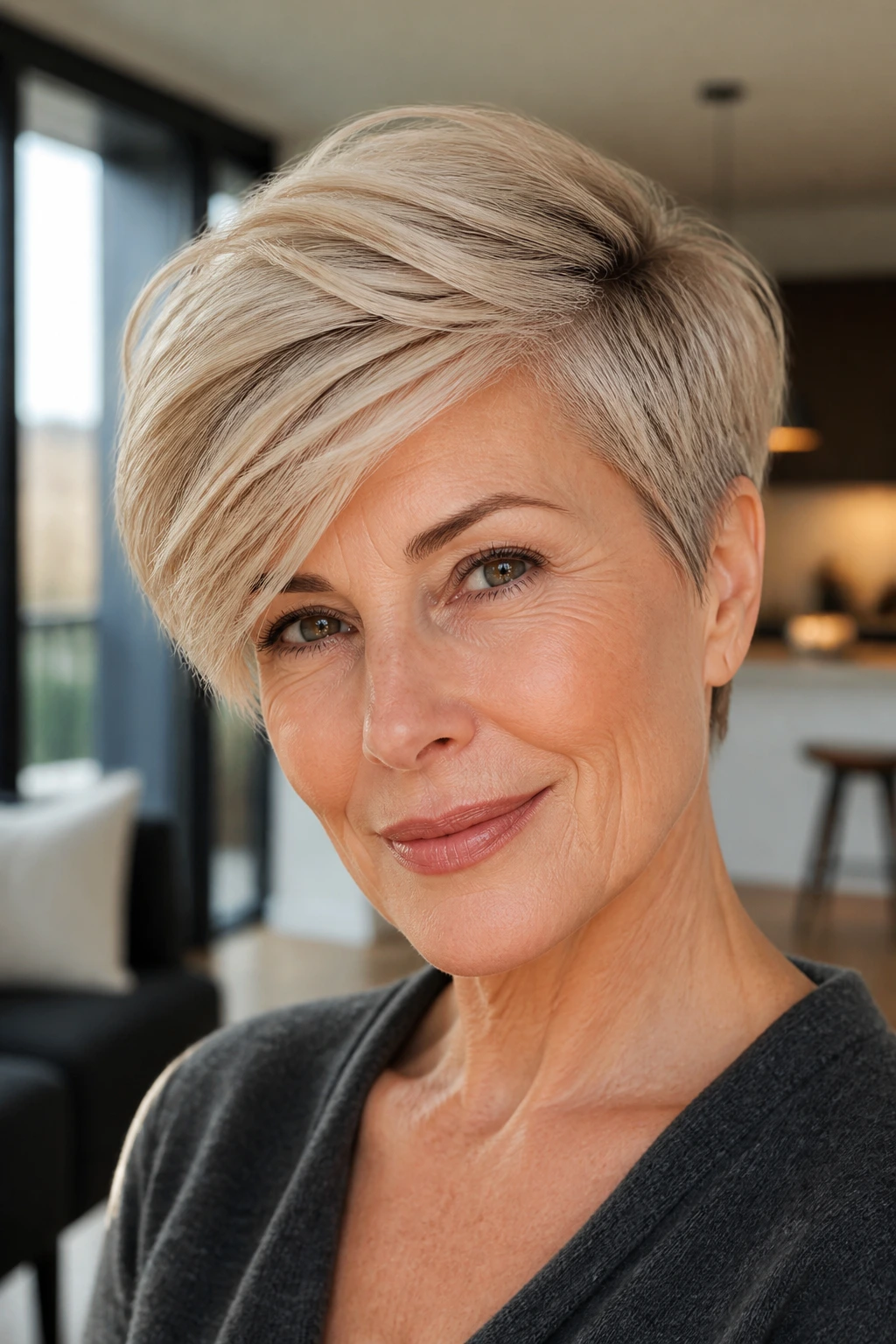
- Lightweight volumizing mousse: Adds grip at the roots without turning the hair stiff or sticky.
- Root-lift spray: Best sprayed on damp hair at the crown and part line; it gives short styles a little standing room.
- Blow dryer with a nozzle attachment: Directs airflow so the roots lift instead of blasting the cut flat.
- 1- to 1.25-inch round brush: Good for bob lengths and pixies with a little bend at the front.
- Vent brush: Useful when you want speed and don’t care about a super-smooth finish.
- Matte paste or soft styling cream: Better than heavy pomade for fine hair; use a pea-sized amount.
- Dry shampoo: A small amount at the roots can revive lift and soak up the oil that makes fine hair collapse.
- Texturizing spray: Gives short layers separation; don’t overdo it, or the cut starts to look dusty.
- Wide-tooth comb: Helpful for curls and waves; it keeps the shape from getting over-brushed.
- Satin pillowcase: Not a styling tool, exactly, but it keeps short fine hair from getting crushed overnight.
Keeping Short Cuts Fresh Between Appointments
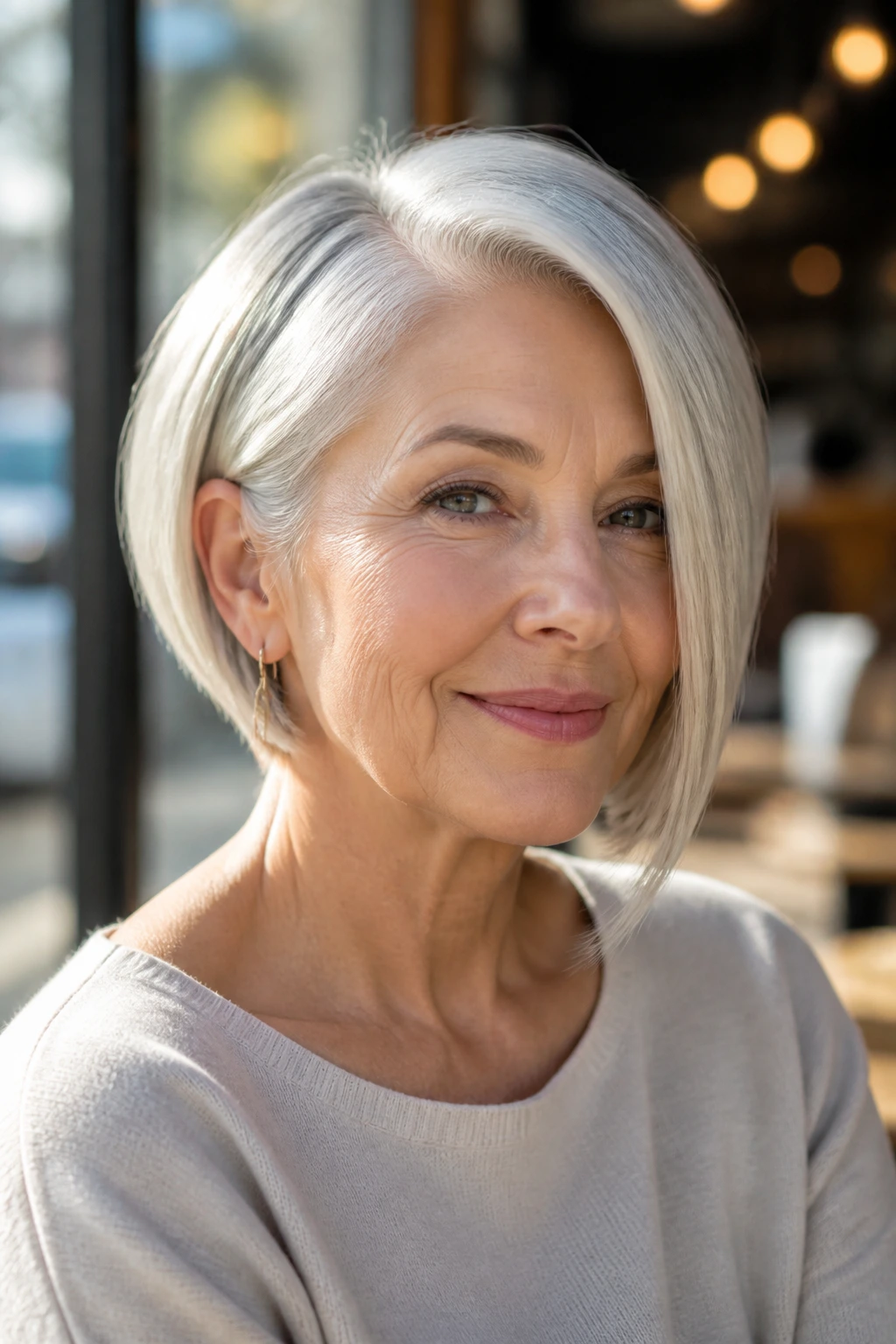
Short hair shows growth faster than long hair. That’s not a flaw. It’s just the deal. Most of these cuts look best with a trim every 4 to 7 weeks, depending on how quickly your hair grows and how crisp the shape is. A pixie with a tight nape needs attention sooner than a soft bob.
Between visits, keep the crown from going limp by using a light dry shampoo or a little root spray at the part. If you sleep with your hair smashed flat, a satin pillowcase helps more than most people expect. So does not going to bed with damp hair, which can leave the roots bent in ugly ways by morning.
For the bob shapes, a quick refresh with a round brush at the ends is usually enough. For pixies and crops, a dab of water on the fingertips and a touch of mousse or cream can wake the top back up. If the cut suddenly looks heavy, the hair probably needs a trim, not more product. That’s the part a lot of people try to style around. It usually doesn’t work.
Common Mistakes That Flatten Fine Hair

- Too many layers through the ends: The hair starts looking see-through at the bottom, especially in daylight. Ask for a stronger perimeter if you want the cut to read fuller.
- A center part that splits the crown: On fine hair, a dead-center part can expose the scalp and drain lift from the top. Shift it an inch or two off center.
- Heavy products everywhere: Creams, oils, and thick serums can make fine hair collapse fast. Use them on the ends only, and use less than you think.
- Letting the nape grow out too long: Once the neckline gets bulky, short cuts lose their shape and look fuzzy. Trim the nape before the whole haircut feels tired.
- Choosing a style that needs daily hot-tool work: If you never blow-dry, don’t pick a cut built for a full salon finish. Pick one that air-dries well.
- Bangs that are too thick: Heavy fringe steals density from the rest of the head and can make the top feel low. Keep bangs wispy, side-swept, or broken up.
Ways to Adapt These Cuts for Glasses, Waves, and Gray Texture
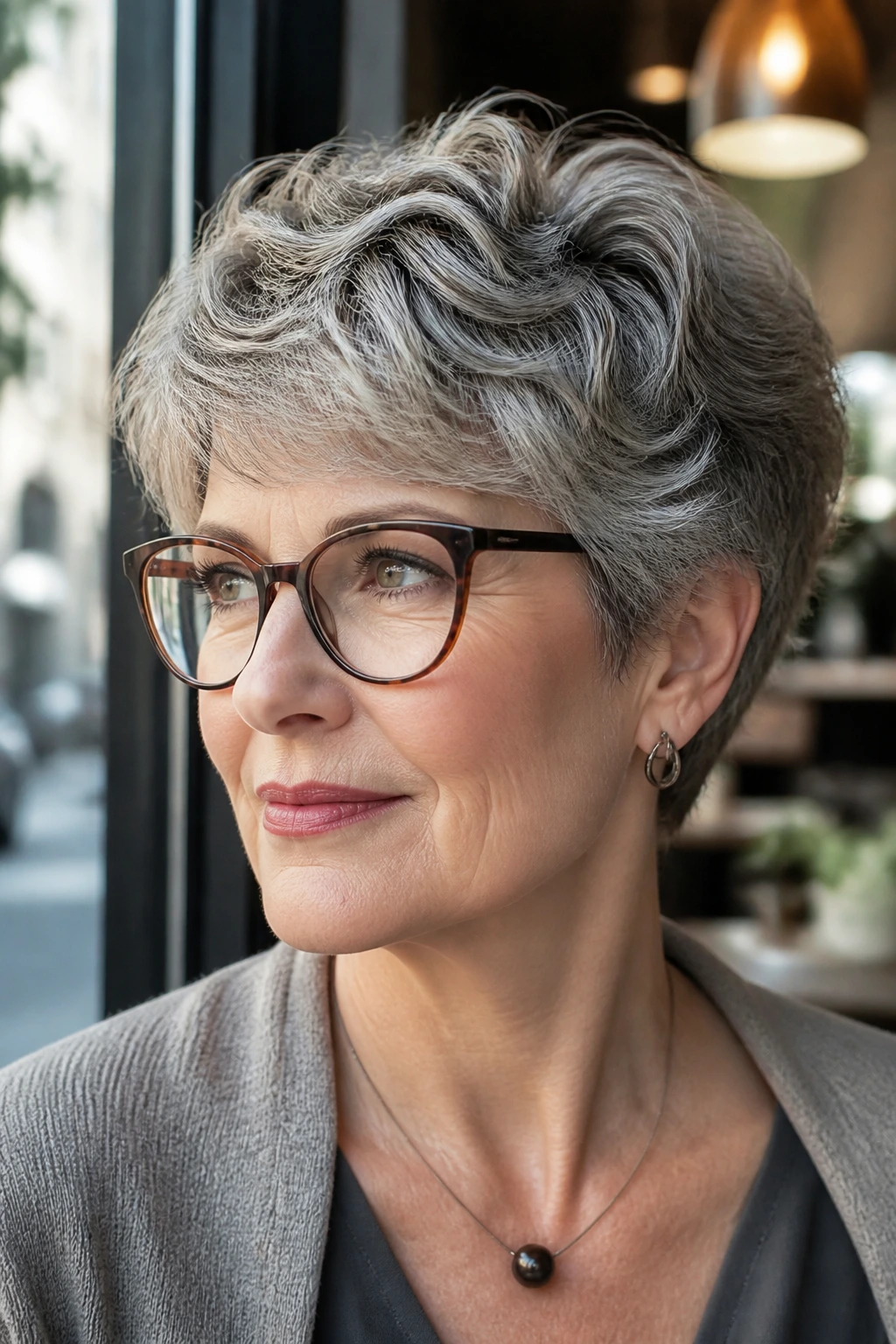
The Glasses-First Version: Keep the temple area shorter and the sideburns neat so the hair doesn’t rub against your frames all day. This works especially well with crops, bixies, and side-parted bobs.
The Air-Dry Version: Ask the stylist to cut the hair in its natural pattern, with soft layers that follow your wave or bend. That way the shape survives after washing instead of requiring a blowout to make sense.
The Gray-Glow Version: If your salt-and-pepper hair has gone bright silver in places, use feathering and clean edges to show off the contrast. A purple shampoo once or twice a week can keep yellow tones from muddying the shine, but don’t overuse it or the hair can feel dry.
The Curly Crown Version: Leave the top longer and keep the sides tighter. Fine curls need room up top, but too much bulk at the sides turns the shape wide instead of lifted.
The Softer Bob Version: If you like bobs but don’t want a hard line, choose rounded ends and subtle internal layering. It gives the hair movement without making the outline wispy.
Frequently Asked Questions
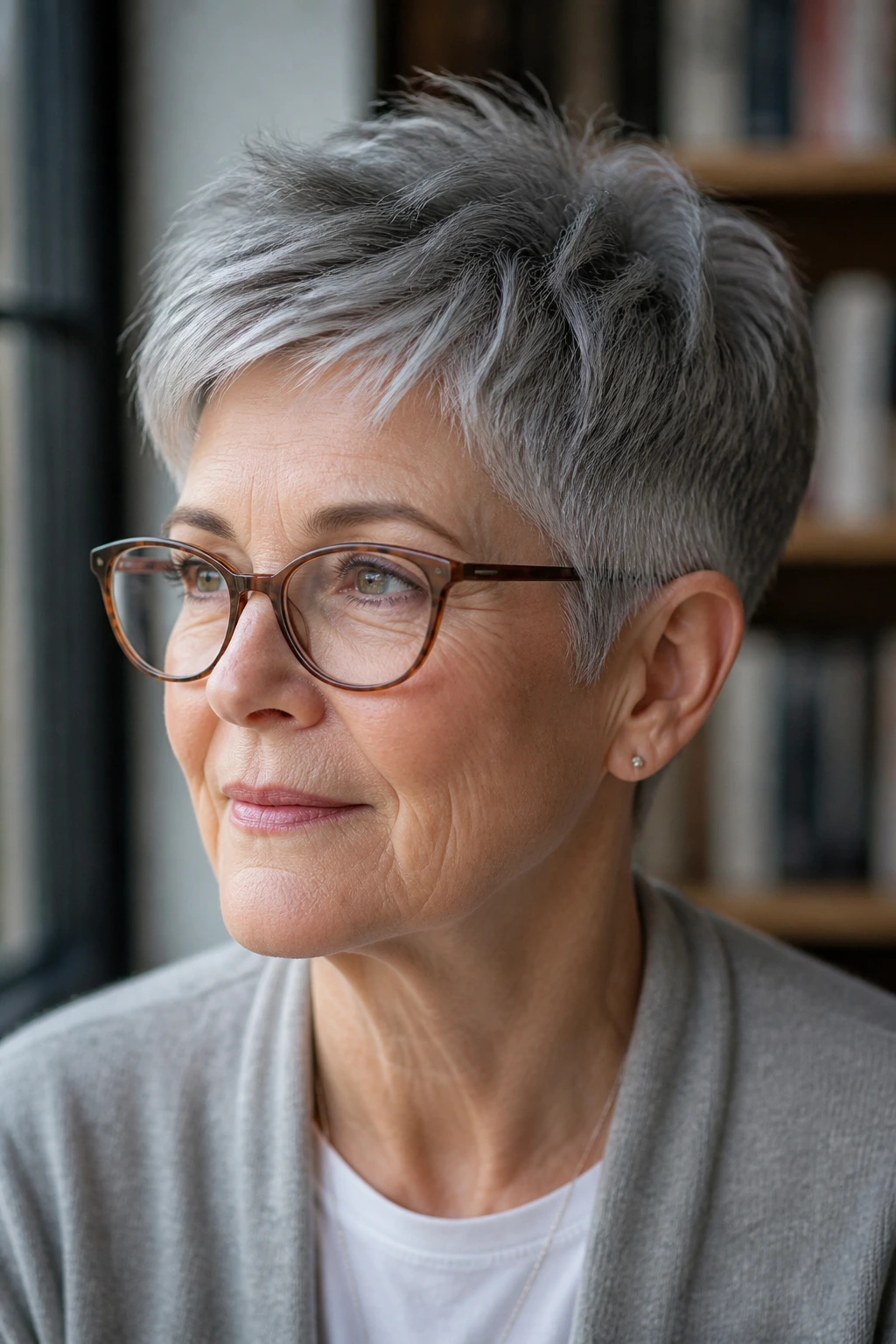
Which short hairstyle makes fine hair look fullest?
A blunt bob, a soft pixie with crown lift, or a graduated bob usually does the best job. The blunt edge helps the hair look denser, while the crown lift keeps the top from flattening by midday.
Is a pixie or bob better for fine hair over 60?
A pixie is better if you want the most lift with the least weight. A bob is better if you want a little more softness around the face and don’t want the neck fully exposed.
Should fine hair have layers?
Yes, but only the right kind. Fine hair does best with internal layers or soft movement near the crown; too many layers through the ends can make the hair look thin and broken apart.
How often should I trim short fine hair?
Every 4 to 7 weeks is the sweet spot for most short cuts. Pixies and crops lose shape faster, while bobs can sometimes go a little longer if the outline stays strong.
Can I wear bangs with fine hair?
Yes, if they’re light. Wispy bangs, side-swept fringe, or a broken fringe work much better than thick, heavy bangs, which can drain volume from the rest of the haircut.
What if my hair is pin-straight and falls flat?
Pick a cut with a blunt edge and a little crown structure, then use root-lift spray before blow-drying. A round brush at the top and a clean side part can make a bigger difference than a lot of product.
What if I have waves or curls that puff up?
Choose a tapered shape with controlled layers, not a heavily chopped one. Too much layering turns soft waves into frizz; a smarter cut lets the texture sit close to the head while still moving.
How do I keep the crown from collapsing?
Dry the roots first, lift them with your fingers or a brush, and stop touching them once they’re set. A tiny bit of dry shampoo at the part can also help the crown stay up longer than you’d expect.
A Shape That Still Moves Well
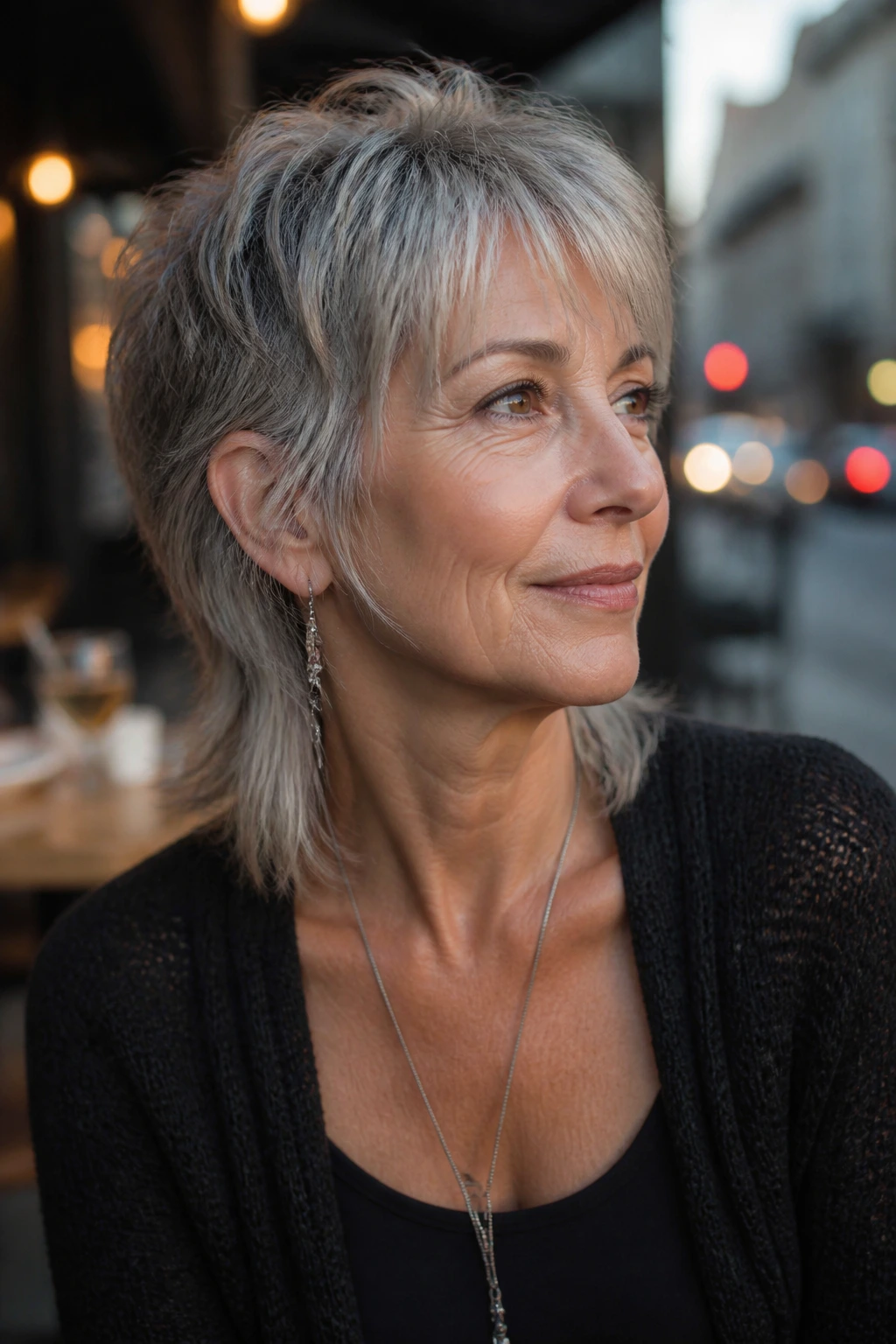
The best short hairstyles for fine hair over 60 do not fight the hair into something it isn’t. They give it a cleaner outline, a little lift at the crown, and enough softness around the face to keep the whole look friendly instead of severe.
That’s the part worth remembering. Short hair on fine strands works when the cut is doing the heavy lifting, not your arms, not a can of spray, and not your patience before breakfast.
Choose the shape that fits how you live, not the one that only looks good in a salon mirror for ten minutes. The right cut should still look like itself when you come back from the grocery store.
