



Fine hair doesn’t need more drama. It needs a cleaner outline. Short femme hairstyles for fine hair work because they give the eye a place to land: a blunt edge at the chin, a soft fringe across the forehead, a tapered nape that keeps the back from splitting into see-through ends by midafternoon.
And yes, fine hair is about strand diameter, not always about how much hair you have on your head. That distinction matters. A dense head of fine hair can still go flat if the cut is too long, too layered, or too heavily conditioned at the root, while a shorter shape can make the same hair look tighter, fuller, and far more intentional.
My bias is plain. The wrong haircut makes fine hair look apologetic. The right one gives it backbone. A curve at the cheekbone, a tucked ear line, a little lift at the crown — those small decisions often do more than another round of volumizing spray ever will.
Why These Cuts Earn Their Place on Fine Hair
-
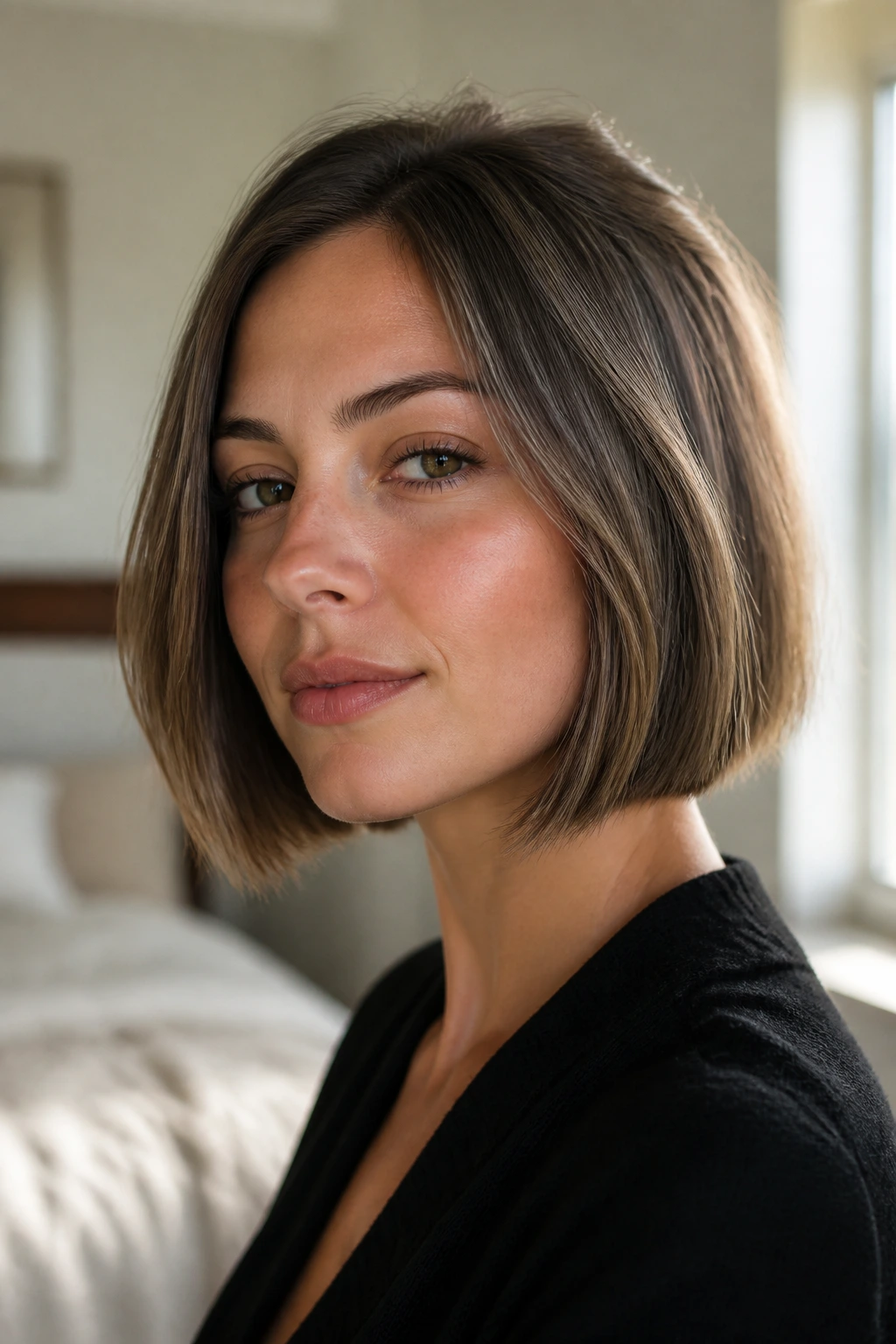
Blunt edges: A clean perimeter makes the ends read thicker because the hairs stop together instead of tapering off into a wispy tail.
-
Shorter lengths: The shorter the cut, the less room fine strands have to separate, which is why chin-length bobs and crops usually look denser than long layers.
-
Soft fronts: Side-swept bangs, curtain pieces, and cheekbone skims keep the cut feminine without sacrificing the strong shape fine hair needs.
-
Crowns that lift: A little height at the root changes the whole silhouette, especially when the back is kept neat and the top isn’t over-thinned.
-
Easy styling range: The same cut can look sleek, airy, or piecey depending on whether you use a round brush, mousse, or a small touch of wax.
1. Soft Side-Swept Pixie
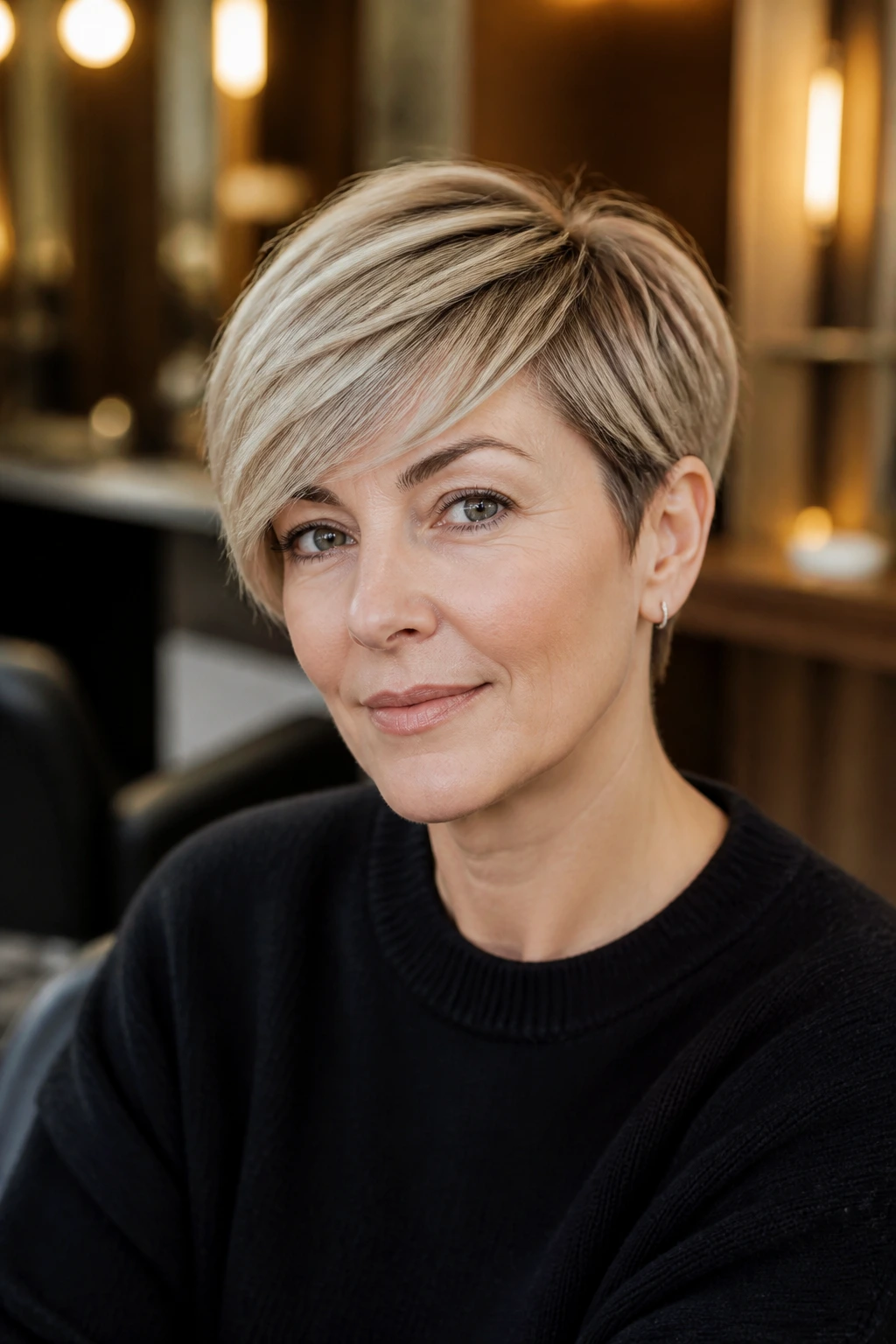
A soft side-swept pixie gives fine hair a face-framing point without making it look severe. The longer fringe brushes across the forehead, while the back stays short enough to keep the shape clean and tidy.
Why it works: The side sweep gives the eye one strong line to follow, and that matters when the hair itself is fine and light. The tapered nape keeps the back from puffing, which is where a lot of pixies go fuzzy fast.
What to ask for: Keep about 2 to 3 inches on top, taper the nape close, and leave a little extra length at the temples so the cut doesn’t feel harsh. Ask for point-cut ends, not heavy thinning shears through the crown.
Styling note: Blow-dry the fringe in the direction you want it to sit, then pinch a pea-size bit of wax through the ends only. Skip heavy cream here; it drags the front down.
2. Tapered Pixie With a Long Top
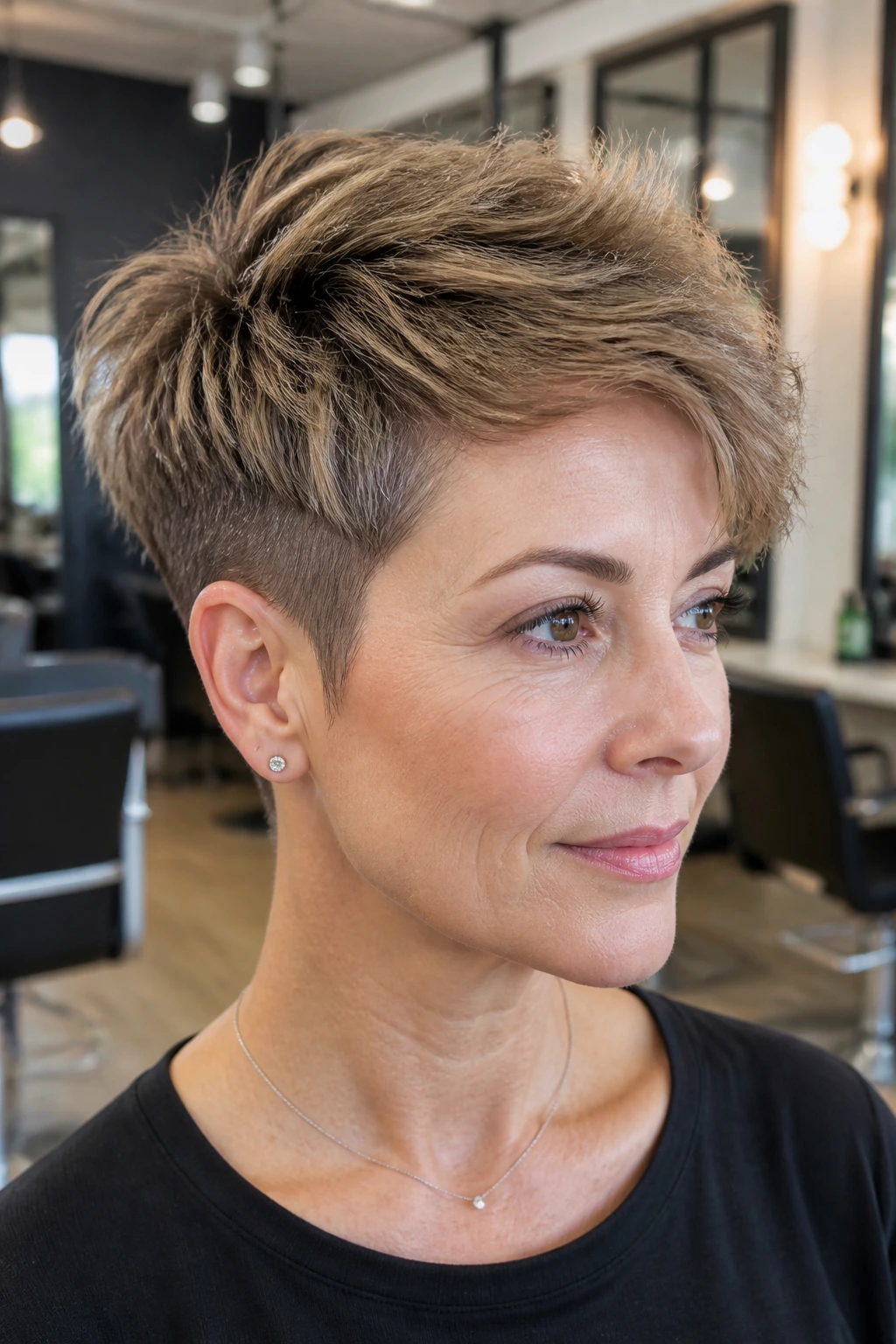
The long top is the whole point. With the sides tight and the crown left longer, this version gives fine hair room to move without losing the crisp outline that makes short cuts work.
Why it works: Fine hair usually collapses at the crown first, so keeping extra length up top gives you somewhere to build lift. The tapered sides make the head look neater, and the whole shape grows out less awkwardly than a blunt crop.
What to ask for: Short sides, a soft taper behind the ears, and 3 to 4 inches on the top if your hair is straight; a touch less if it bends easily. Ask the stylist to avoid over-texturizing the upper layers.
Styling note: Rough-dry the roots in the opposite direction of your part, then guide the top into place with fingers or a vent brush. Root spray at the crown beats a heavy mousse when you want movement instead of helmet hair.
3. Curved French Pixie
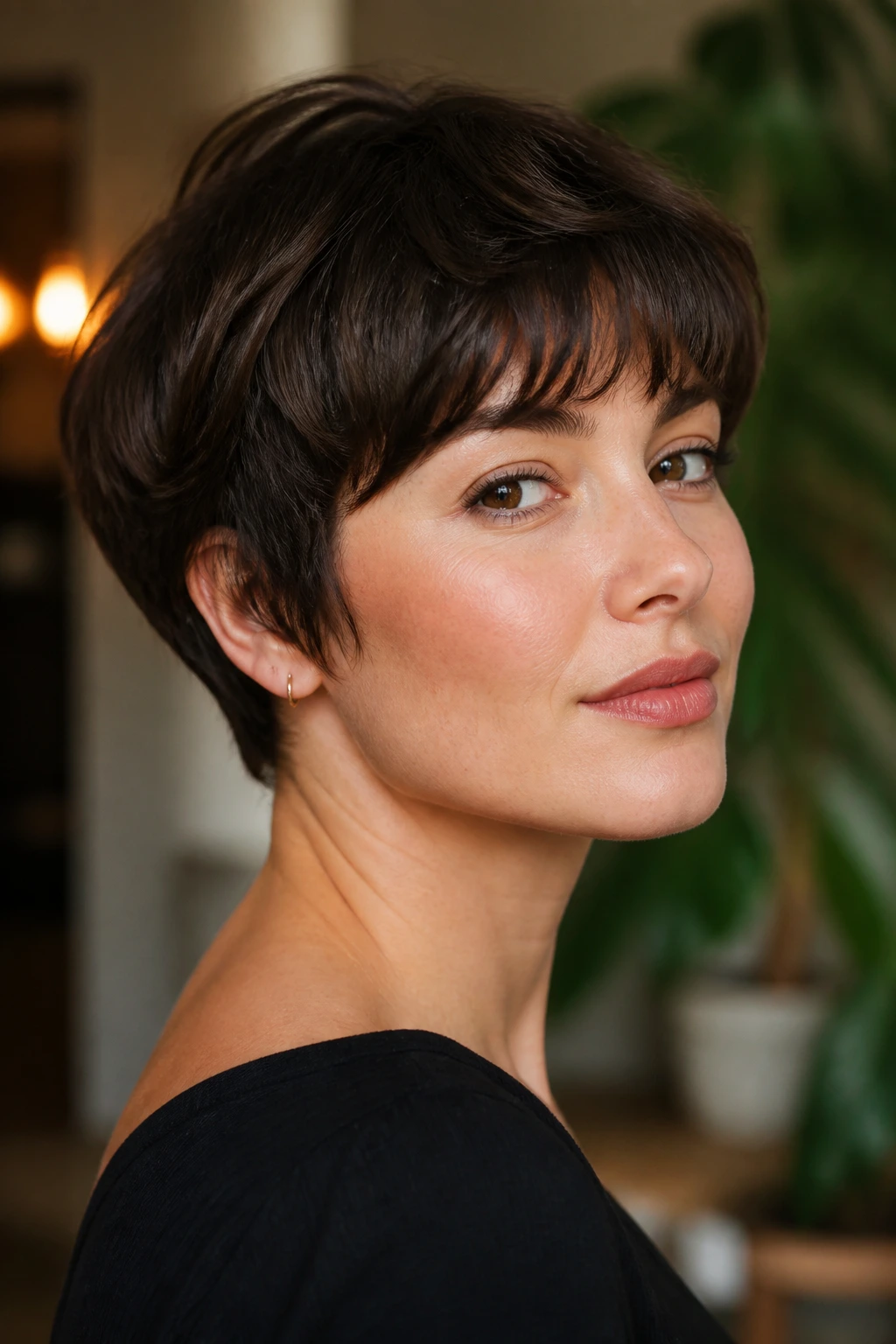
The French pixie feels softer than the word pixie suggests. Think curved fringe, cheekbone skim, and a nape that hugs the neck without looking shaved.
Why it works: The rounded outline gives fine hair a denser-looking edge, which is exactly what it needs. The fringe keeps attention on the eyes, not on the fact that the strands are delicate.
What to ask for: Ask for a rounded silhouette that follows the shape of your head instead of a choppy, disconnected cut. A little weight at the perimeter helps this one stay polished.
Styling note: Bend the fringe with a small round brush or just twist it with damp fingers. If your hair is pin-straight, a dusting of texture spray at the crown keeps the top from lying too flat.
4. Micro Bob
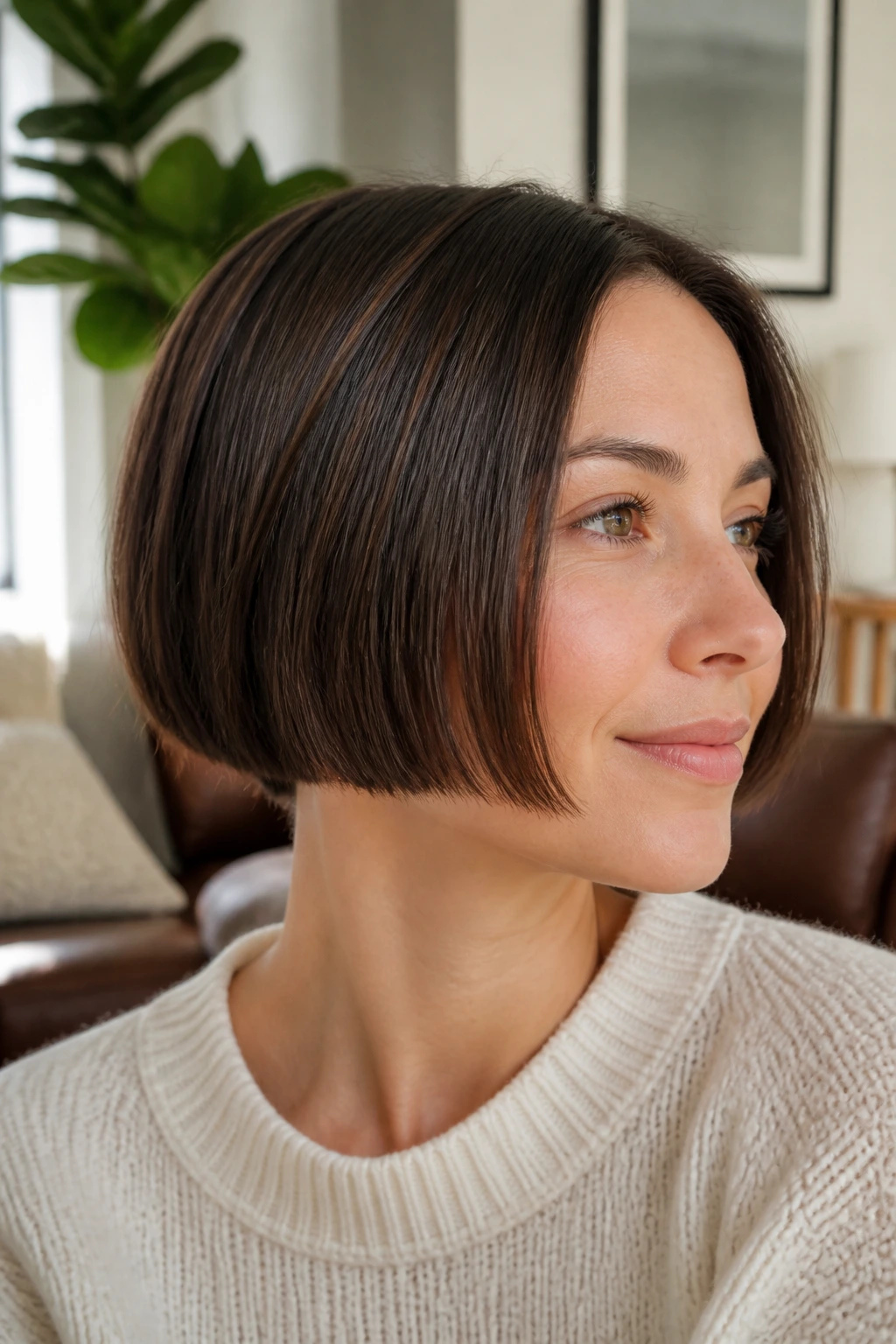
Micro bobs are tiny, but they do a lot. When the hem stops around the cheekbone or just below the ear, fine hair looks concentrated instead of stretched thin.
Why it works: The shorter edge stops the lower half from going transparent, which is the part of fine hair that usually looks tired first. A sharp line at this length can make the whole head look fuller in one glance.
What to ask for: Request a blunt perimeter with almost no layering through the bottom. If you want a tiny bit of softness, keep it at the front, not the ends.
Styling note: A flat brush and a quick underbend at the tips are enough most days. Use a light spray, not a cream, or the cut loses its little snap.
5. Chin-Length Blunt Bob
If you want the most obvious fullness trick in the book, this is it. A chin-length blunt bob puts every strand into the same visual line, and fine hair loves that.
Why it works: A blunt line creates the illusion of thicker density because the ends all stop together. Chin length also sits where the jaw turns, so the cut looks deliberate even when the hair is air-dried.
What to ask for: Keep the perimeter blunt and level, with minimal internal layers. If your hair kicks out at the ends, ask for a slight bevel under the chin rather than a hard straight line.
Styling note: A little heat protectant, a round brush, and a slight inward bend at the ends are enough. Keep the product count low; this cut needs clean movement, not buildup.
6. Jawline Bob With Tucked Ends
A jawline bob with tucked ends does a neat thing: it opens the neck while keeping the shape compact. Fine hair looks less strained when the cut sits right at the jaw instead of hanging below it.
Why it works: That jaw-level edge gives the face structure, and the tucked curve keeps the perimeter from looking blunt in a boxy way. Fine hair gets a fuller read because the line is short and visible.
What to ask for: Ask for a line that skims the jaw and softly turns under, with just enough length in front to tuck behind the ears. The back should stay tidy, not stacked high.
Styling note: Blow-dry with a medium round brush, turning the ends inward as you reach the jaw. A side part makes this one look more relaxed than a center part.
7. Rounded Bubble Bob
Rounded bobs can look almost plush when the styling is right. This version keeps the outline soft and curved, which gives fine hair a fuller silhouette without a lot of fuss.
Why it works: The rounded shape builds visual weight through the middle of the cut, where the eye naturally settles. Fine strands look more substantial when the sides and back follow one continuous curve.
What to ask for: Ask for subtle stacking in the back, then a rounded perimeter that doesn’t flare at the corners. Too much texturizing ruins the shape fast.
Styling note: Use a root-lift mousse at the crown, then direct the ends under with a round brush. If you have a cowlick near the nape, pin it flat while the hair cools.
8. Feathered Stacked Bob
Stacking the back sounds technical, but in practice it just means the neck line stays clean while the crown gets a little more support. Fine hair often needs that quiet boost.
Why it works: The stacked back creates internal structure, and the feathering on top prevents the cut from feeling heavy. That combo gives movement without making the perimeter thin.
What to ask for: Ask for a stacked nape with feathered top layers that stay soft, not shredded. The goal is lift, not a lot of visible chop.
Styling note: Blow-dry the back first with a nozzle attachment so the shape sets while it’s warm. A mist of flexible-hold spray at the crown helps the volume survive a long day.
9. A-Line Bob
An A-line bob gives you a little drama without asking for much length. The back stays shorter, the front stays longer, and fine hair gets a stronger shape from the angle alone.
Why it works: The angled front draws the eye forward, while the shorter back keeps the crown from collapsing. That shape also makes thin-looking ends less obvious because the front pieces carry the visual weight.
What to ask for: Ask for a gentle A-line, not a steep one. If the angle is too sharp, fine hair can start looking stringy at the front instead of sleek.
Styling note: Smooth the front sections with a brush, then let the shorter back sit a little fuller. A touch of root spray at the crown makes the angle read better.
10. Bixie Cut
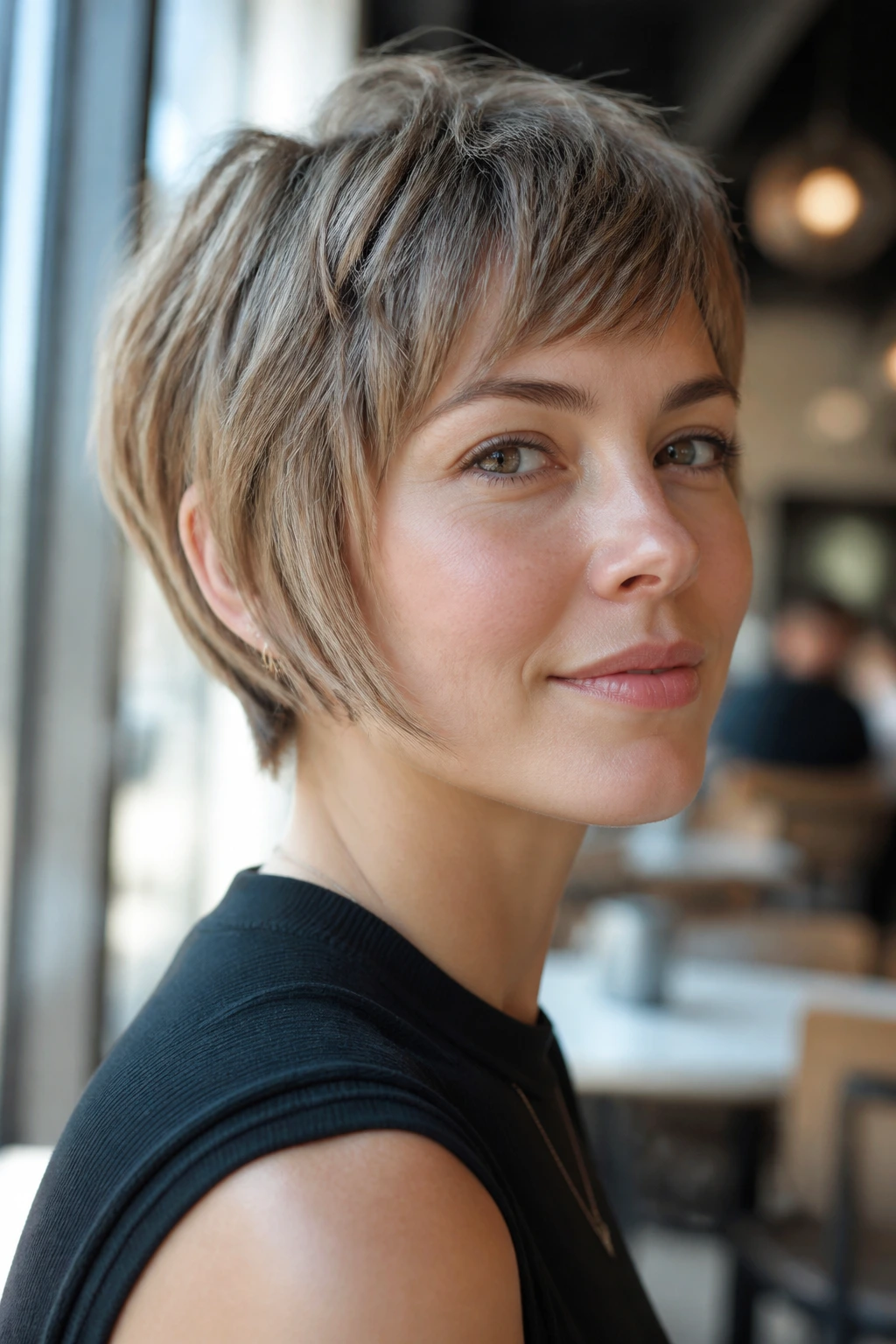
The bixie sits in that useful middle ground between a bob and a pixie. It’s short enough to feel fresh, but it keeps more length around the face than a classic crop.
Why it works: Fine hair often looks best when there’s a bit of extra top length and a compact side shape, and that’s exactly what the bixie does. The silhouette gives you movement without letting the ends drift into limp territory.
What to ask for: Ask for a pixie-style top with bob-length softness around the ears and cheekbones. The outline should stay rounded and light, not broken up into too many tiny layers.
Styling note: Finger-dry with a small amount of mousse, then press a little styling cream only into the ends. That keeps the cut piecey, not puffy.
11. Mixie Cut
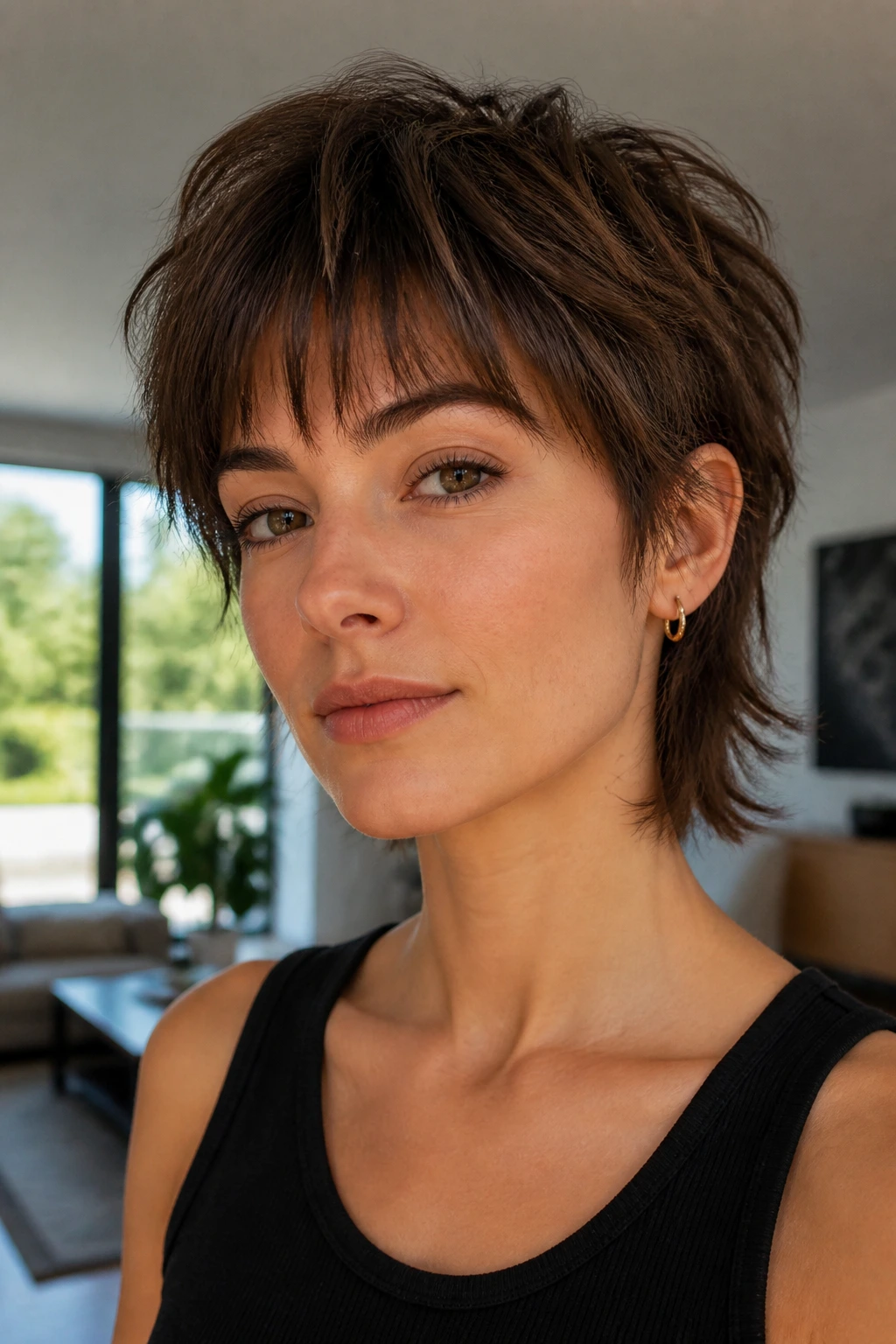
A mixie is the softer cousin of the mullet-pixie family. It gives you short sides, a little attitude through the back, and enough softness around the face to stay feminine.
Why it works: Fine hair likes the way the mixie separates into zones. The crown can lift, the nape can stay slim, and the fringe can carry softness without the whole shape going flat.
What to ask for: Ask for gentle length through the back, wispy side pieces, and a top that isn’t chopped too short. If the stylist starts carving too hard, the cut can tip from playful to ragged.
Styling note: This one likes mousse or a light curl cream more than wax. Let it dry with some texture, then pinch a few pieces into place only at the end.
12. Choppy Bob With Curtain Bangs
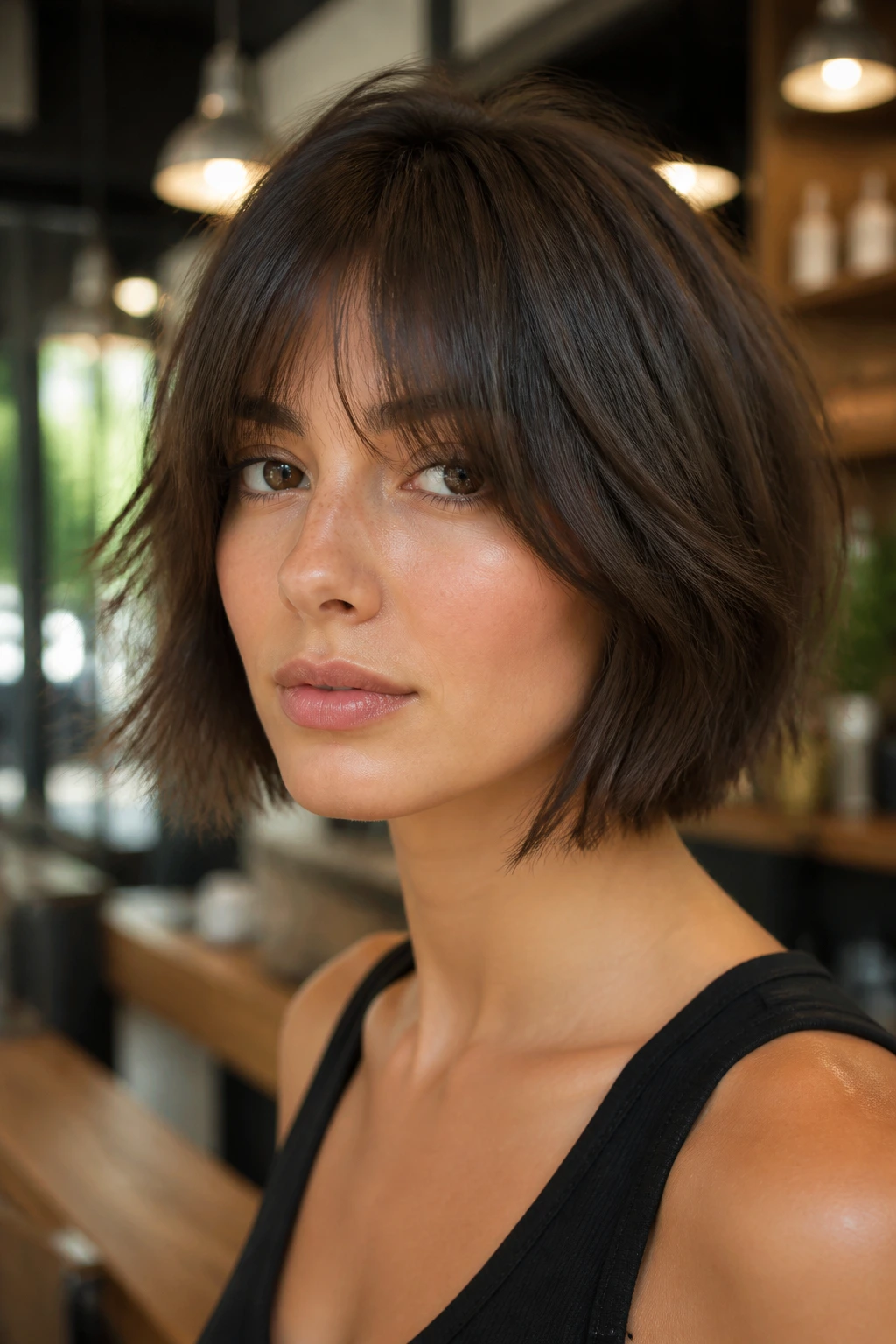
Curtain bangs can make fine hair feel much richer around the face, but the trick is not to overdo the choppiness. The bob should still hold a clear edge.
Why it works: The bangs add front weight, which helps balance fine strands that often disappear at the sides. The bob length keeps enough density at the hem, so the haircut doesn’t look over-layered.
What to ask for: Ask for curtain bangs that hit around the cheekbones and blend softly into a chin-length or jaw-length bob. Keep the perimeter mostly blunt.
Styling note: Wrap the bangs away from the face with a round brush, then let the ends fall loose. If you have a cowlick at the hairline, set the bangs while they’re still damp.
13. Ear-Grazing Crop With Soft Fringe
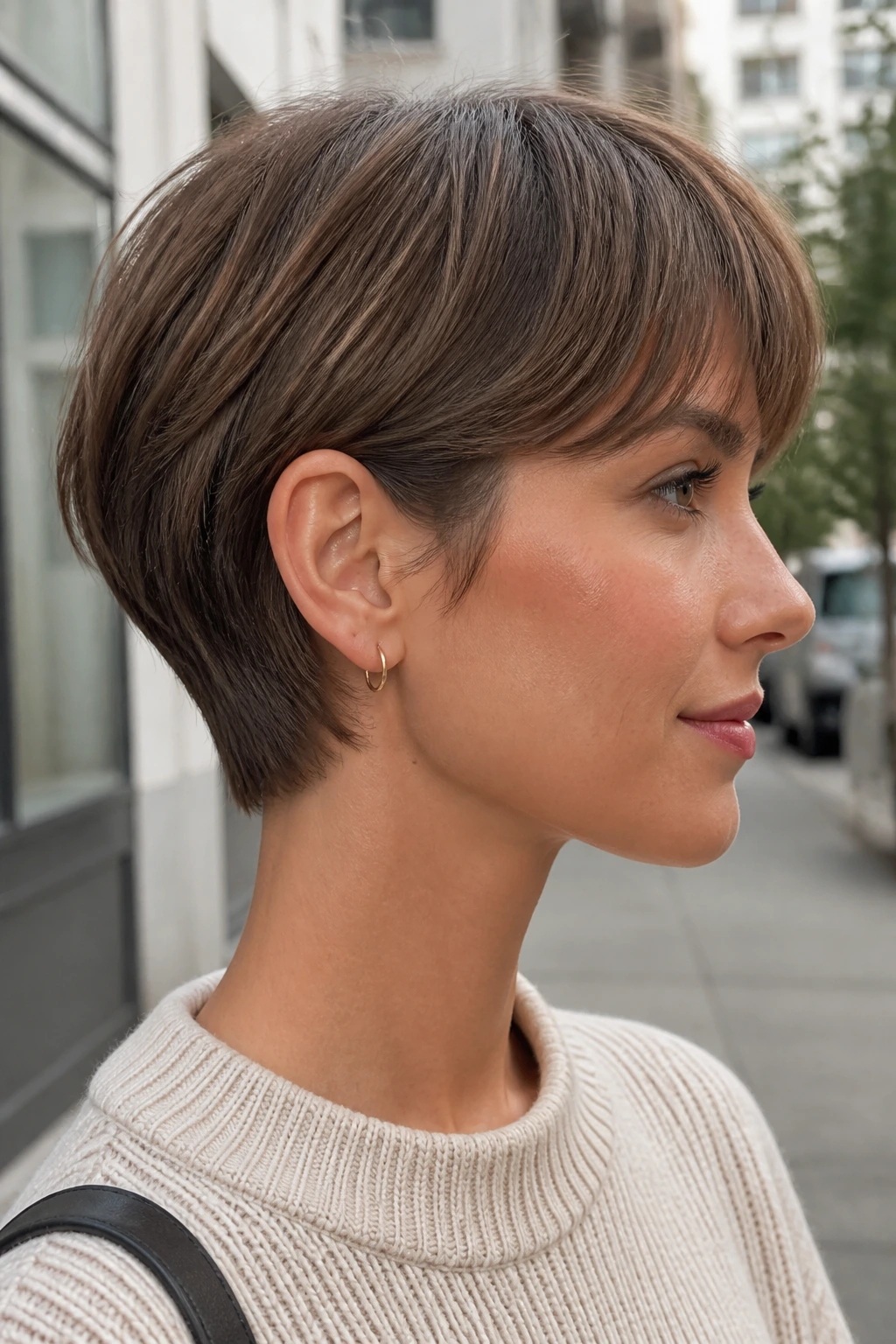
This cut does something very smart: it exposes the ear line and softens the forehead at the same time. That makes fine hair look neat without feeling hard.
Why it works: The eye reads the fringe first, then the clean edge around the ears. Fine hair benefits from that kind of direction because it keeps the style from looking scattered.
What to ask for: Ask for length that kisses the top of the ear, a light fringe, and a tapered back that doesn’t puff out. You want a clean shape with a little swing at the front.
Styling note: Lift the roots with a blow dryer or small brush, then smooth the fringe just enough to curve. It’s a short cut, not a flat one.
14. Wavy Italian Bob
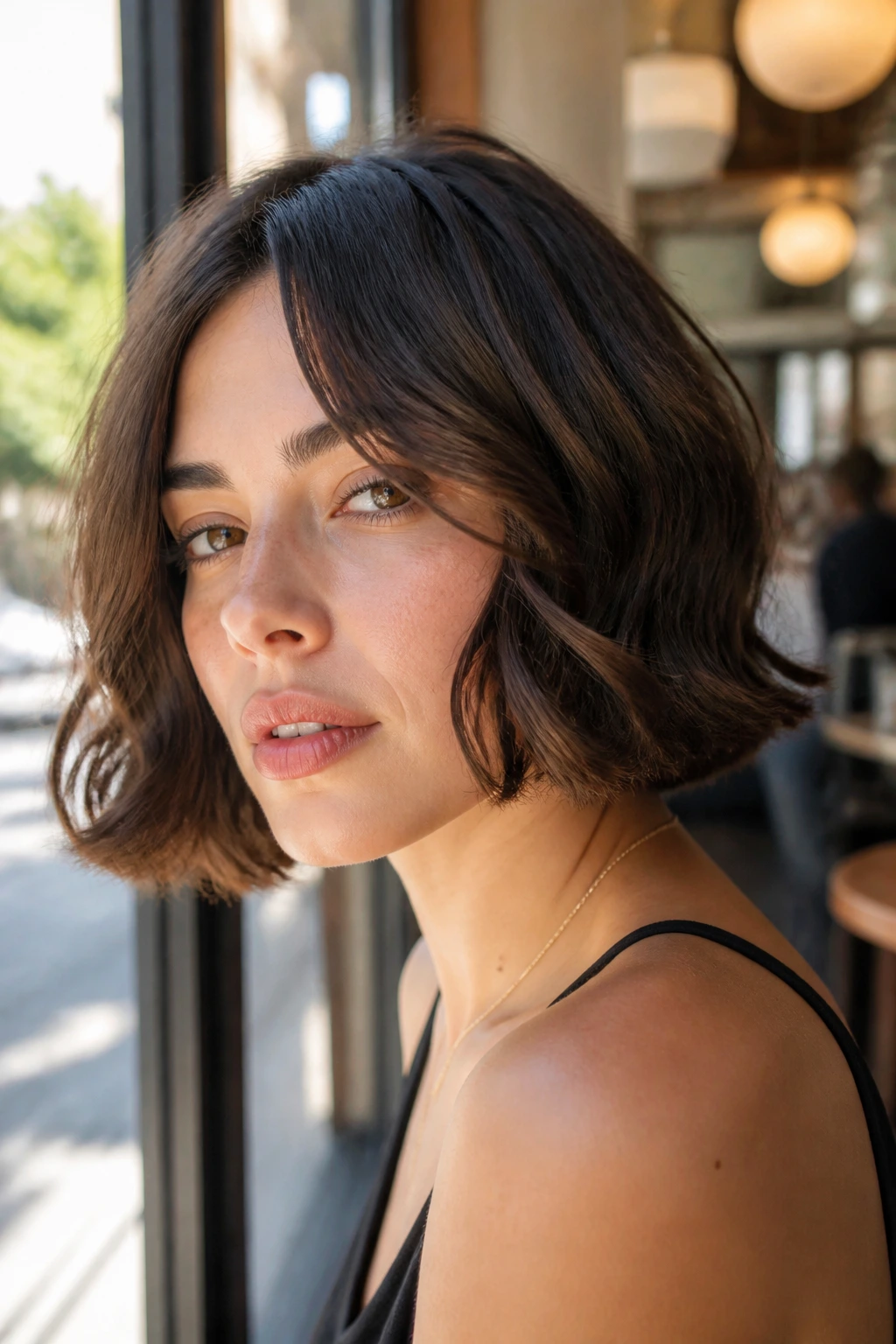
The Italian bob is polished, but it isn’t stiff. On fine hair, that little bend through the ends can be the difference between flat and full.
Why it works: Fine strands need visual bulk, and a rounded bob with soft wave gives that without having to build a lot of height at the crown. The hair looks expensive when the line stays clean and the bend sits low.
What to ask for: Ask for a blunt-ish bob around the jaw or just below it, with enough length to create a soft wave. You do not want the ends chopped to bits.
Styling note: Use a large round brush or a wide flat iron bend near the ends. The finish should look smooth with a little air around the cheeks.
15. Textured Shag Bob
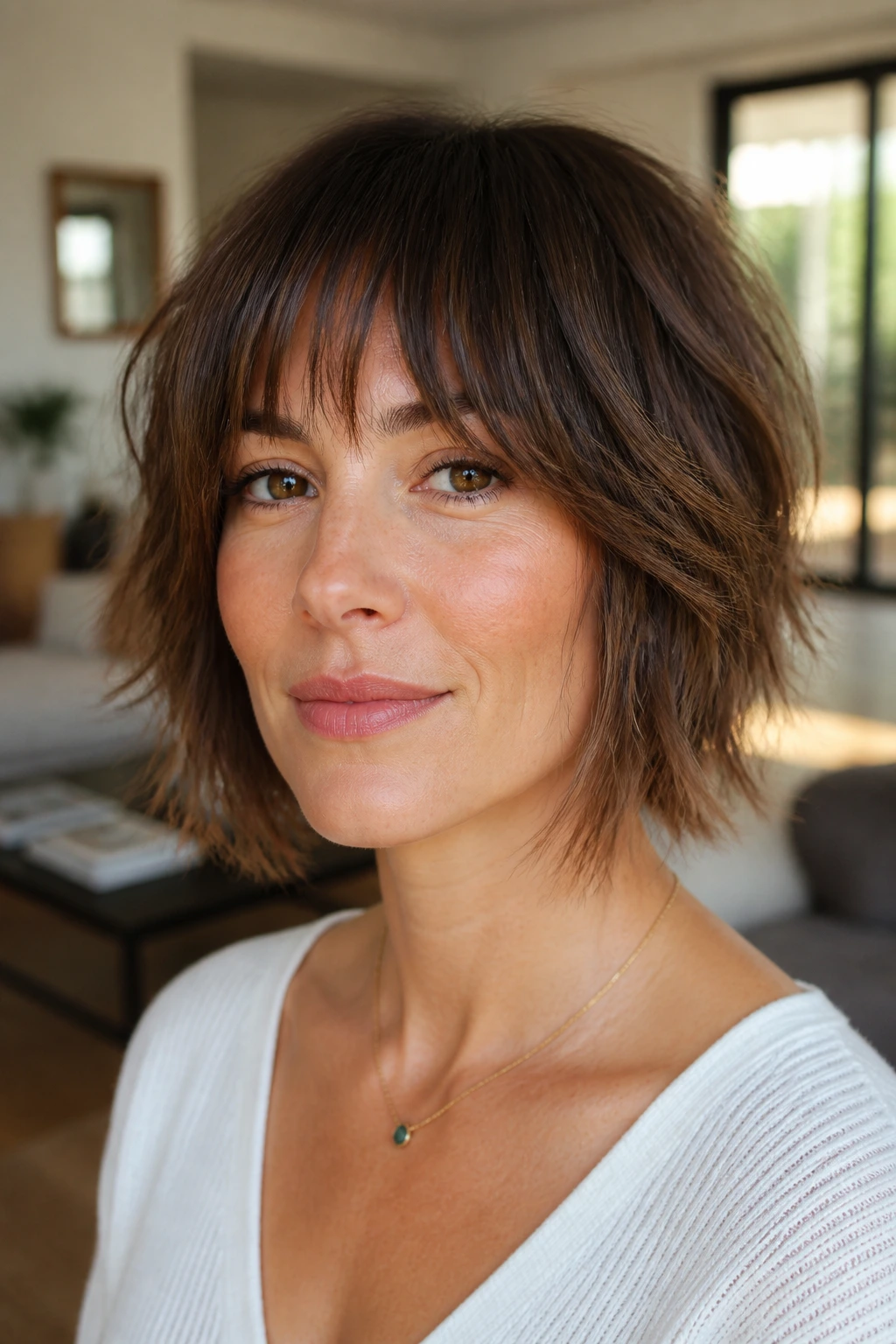
A shag bob works on fine hair only when the texture is controlled. Too much shredding, and the ends start looking see-through; the right amount, and the cut moves like it has a pulse.
Why it works: Fine hair likes movement near the top and a perimeter that still has weight. A shag bob gives you both, as long as the layers stay invisible enough to keep the outline strong.
What to ask for: Ask for soft internal layers, a little face framing, and a perimeter that stays honest. If the stylist goes too far with the razor, the shape can go stringy fast.
Styling note: Mousse and scrunching work well here, especially if you want an air-dried finish. A little texturizing spray at the roots can help, but keep it off the ends.
16. Soft Mullet for Fine Hair
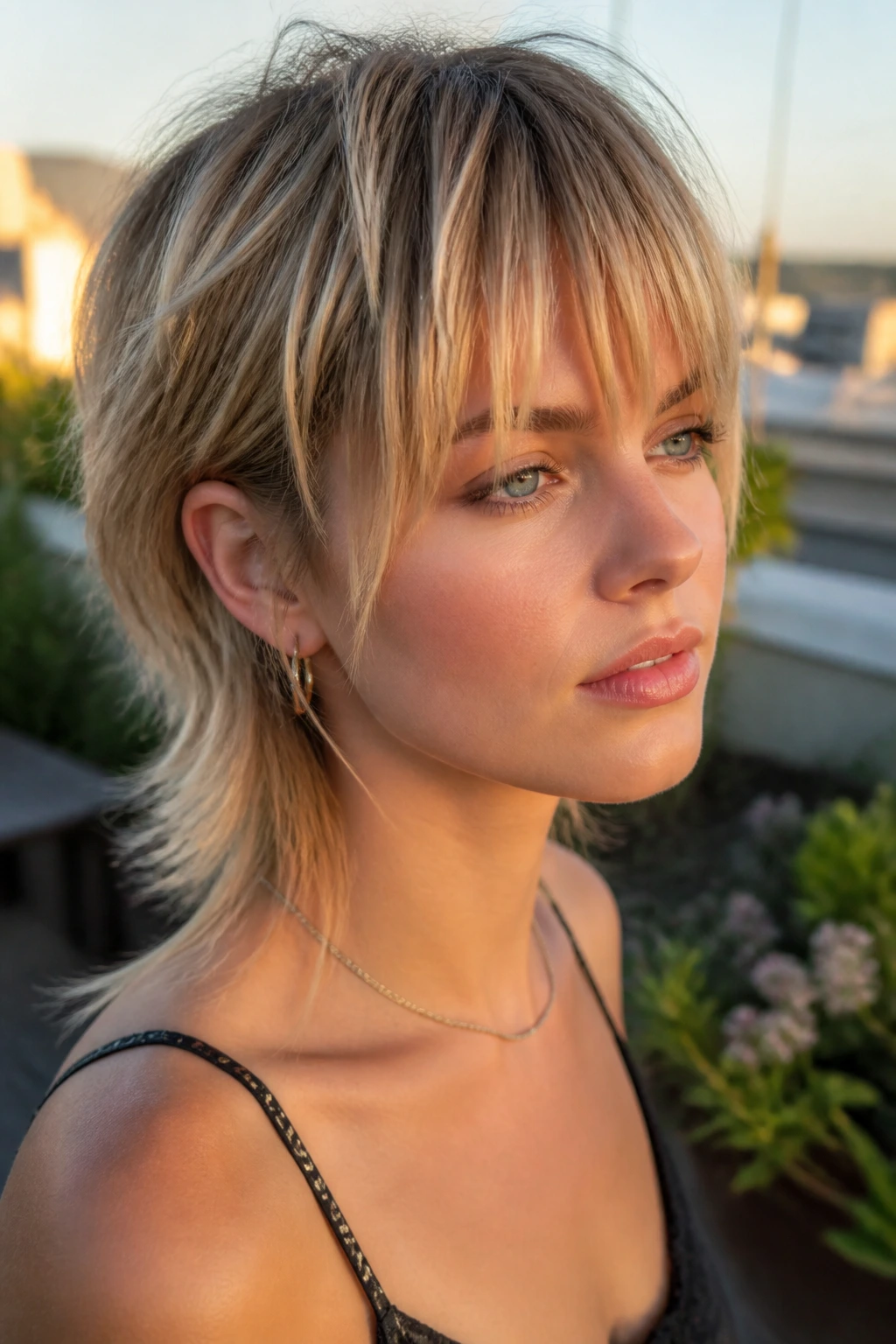
A soft mullet can sound like a risk, but on fine hair it often reads as airy and modern when the edges are rounded. The trick is to keep the contrast gentle.
Why it works: The shorter top creates lift, the soft back keeps a little movement, and the face pieces stop the style from feeling severe. Fine hair gets shape without needing bulk.
What to ask for: Ask for a subtle difference between the crown and the nape, not a sharp disconnect. The front should stay feathered and touchable.
Styling note: This cut likes a little mousse at the roots and a bend from fingers or a diffuser. Keep the finish soft; the point is movement, not a lot of obvious piece separation.
17. Posh Pixie With Long Side Bangs
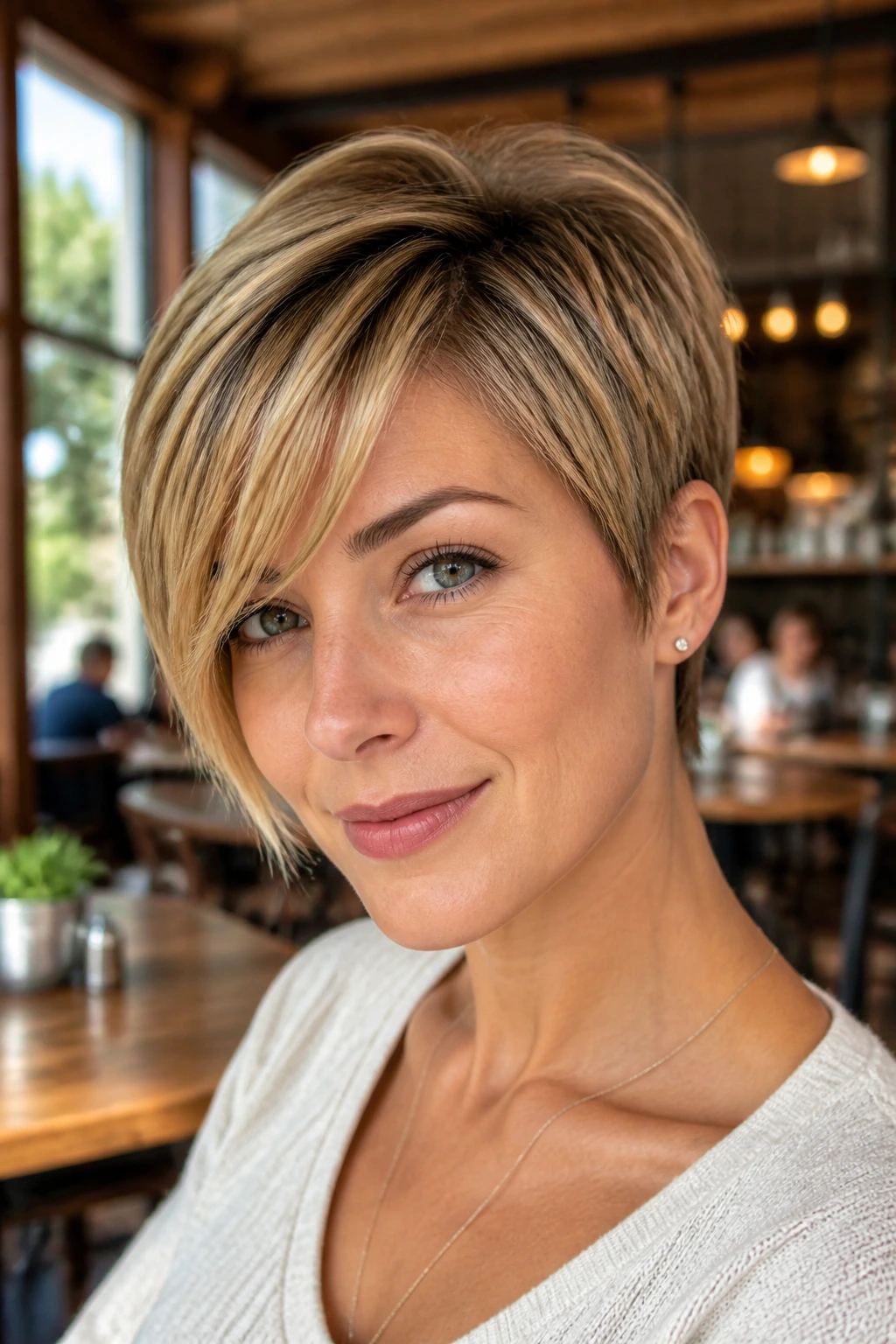
This is the pixie for someone who wants polish first and edge second. The long side bang gives the style a gentle sweep, and that one piece changes the whole mood.
Why it works: The bang adds a strong front line, which fine hair often needs more than a lot of layers. The short back keeps the shape lifted and clean around the neck.
What to ask for: Ask for long side bangs that can reach the cheekbone, a tight nape, and a softly tapered top. Avoid over-thinning the fringe or it will look airy in the wrong way.
Styling note: Blow-dry the bangs across the forehead with a round brush, then separate the ends with fingertips. A tiny bit of styling cream on the bang only is enough.
18. Sleek Glass Bob
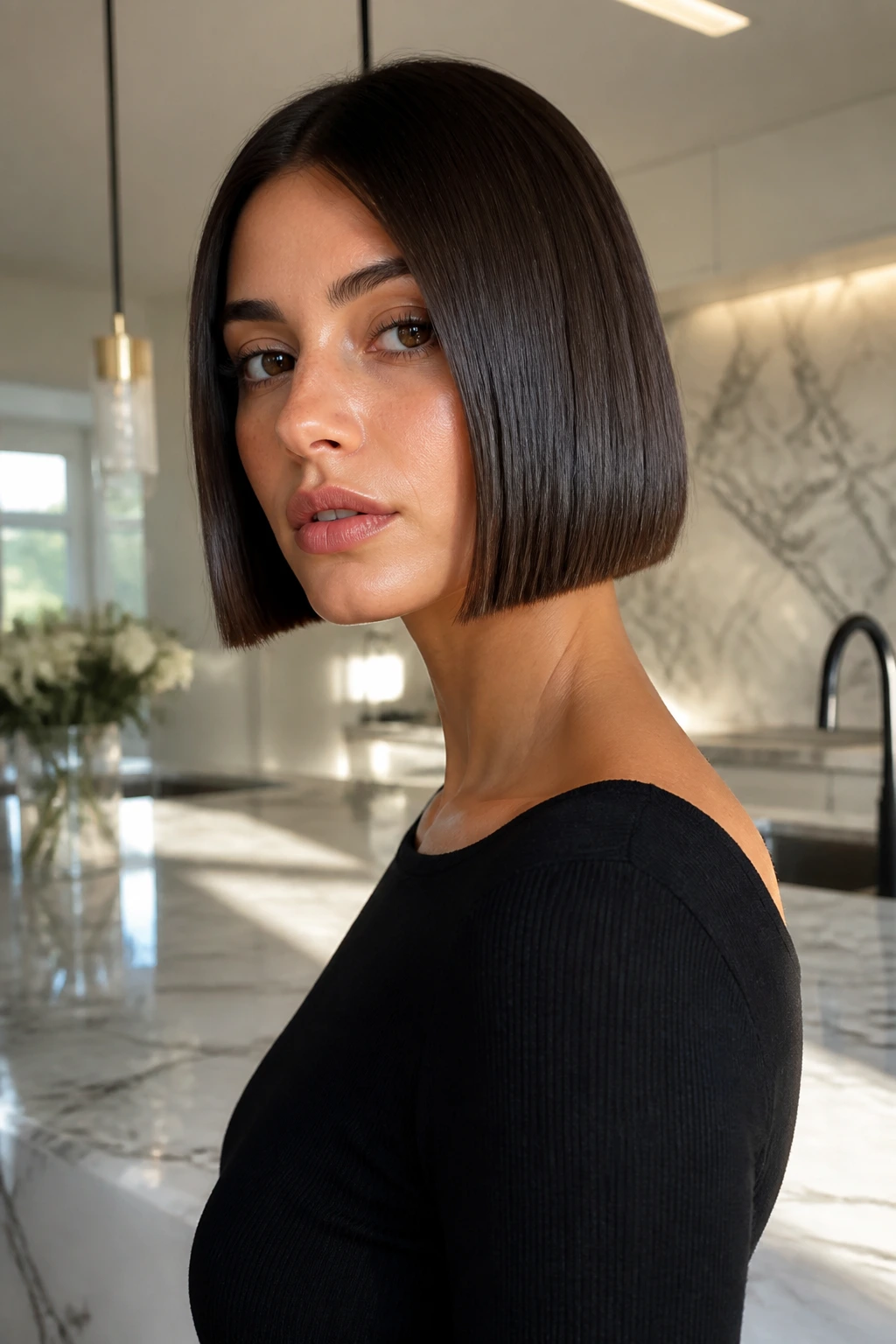
A sleek glass bob can look surprisingly rich on fine hair. When the line is blunt and the finish is smooth, the cut reads as dense even if the strands themselves are delicate.
Why it works: Shine helps the shape read cleanly, and a sharp perimeter keeps the hair from scattering. Fine hair often looks better sleek than over-layered, especially if the ends are in good condition.
What to ask for: Ask for a blunt bob with minimal layering and an edge that sits level at the jaw or chin. If your hair bends at the ends, ask for a slight inward curve.
Styling note: Heat protectant, a flat brush, and one pass of a flat iron if needed. Finish with a light serum on the mid-lengths only, not at the roots.
19. Tousled Bob With a Deep Side Part
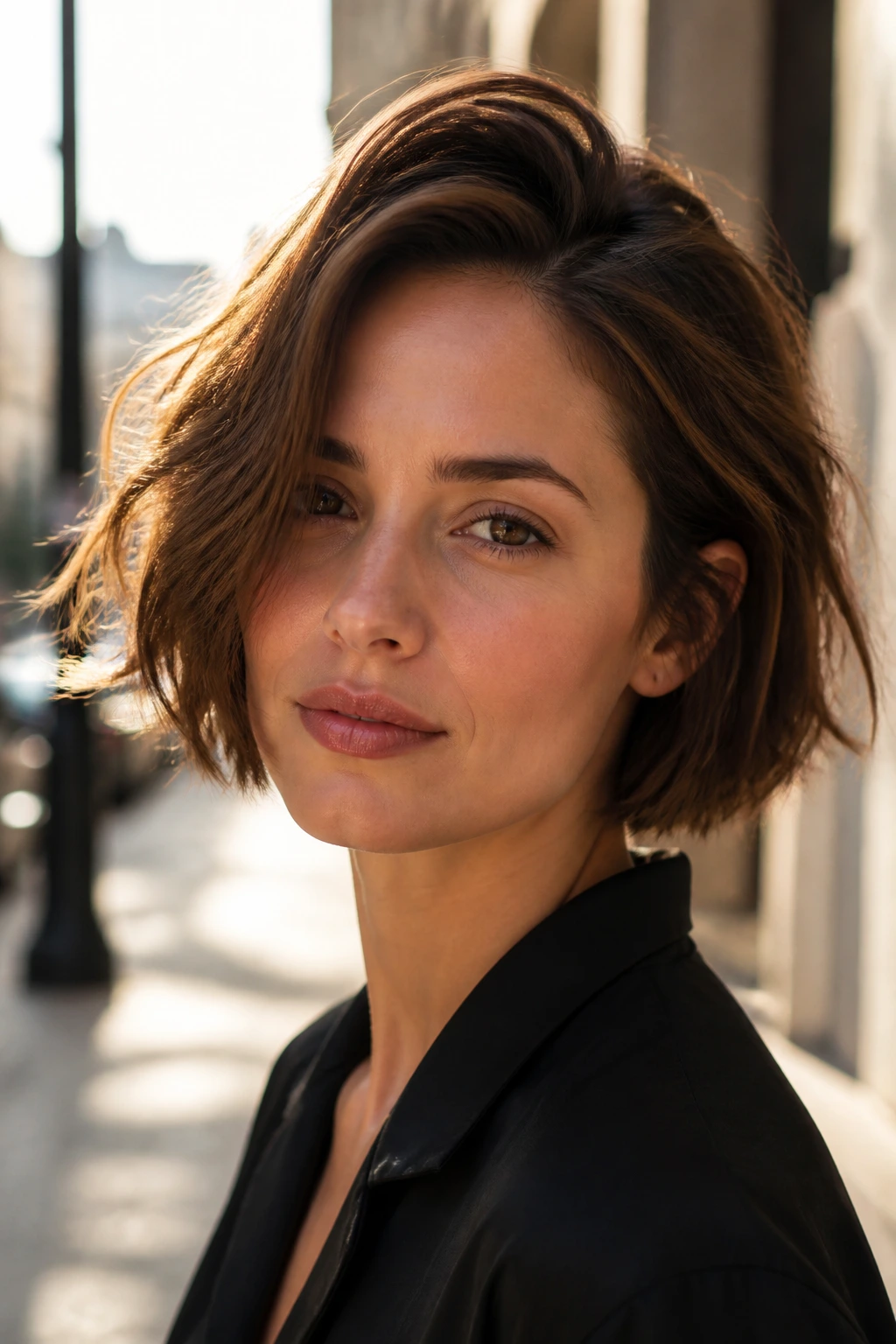
A deep side part does a lot of heavy lifting on fine hair. It gives the crown somewhere to rise, and the off-center shape keeps the bob from sitting too neatly.
Why it works: Asymmetry creates volume. Fine hair that lies flat down the middle often looks much fuller the second you move the part an inch or two to the side.
What to ask for: Ask for a bob that stays blunt at the bottom but can be worn with a deep side part. You want enough length at the front to tuck or sweep.
Styling note: Rough-dry the roots first, then set the part while the hair is still warm. A light texturizing spray at the crown helps the part hold without feeling crunchy.
20. Flipped-End Bob
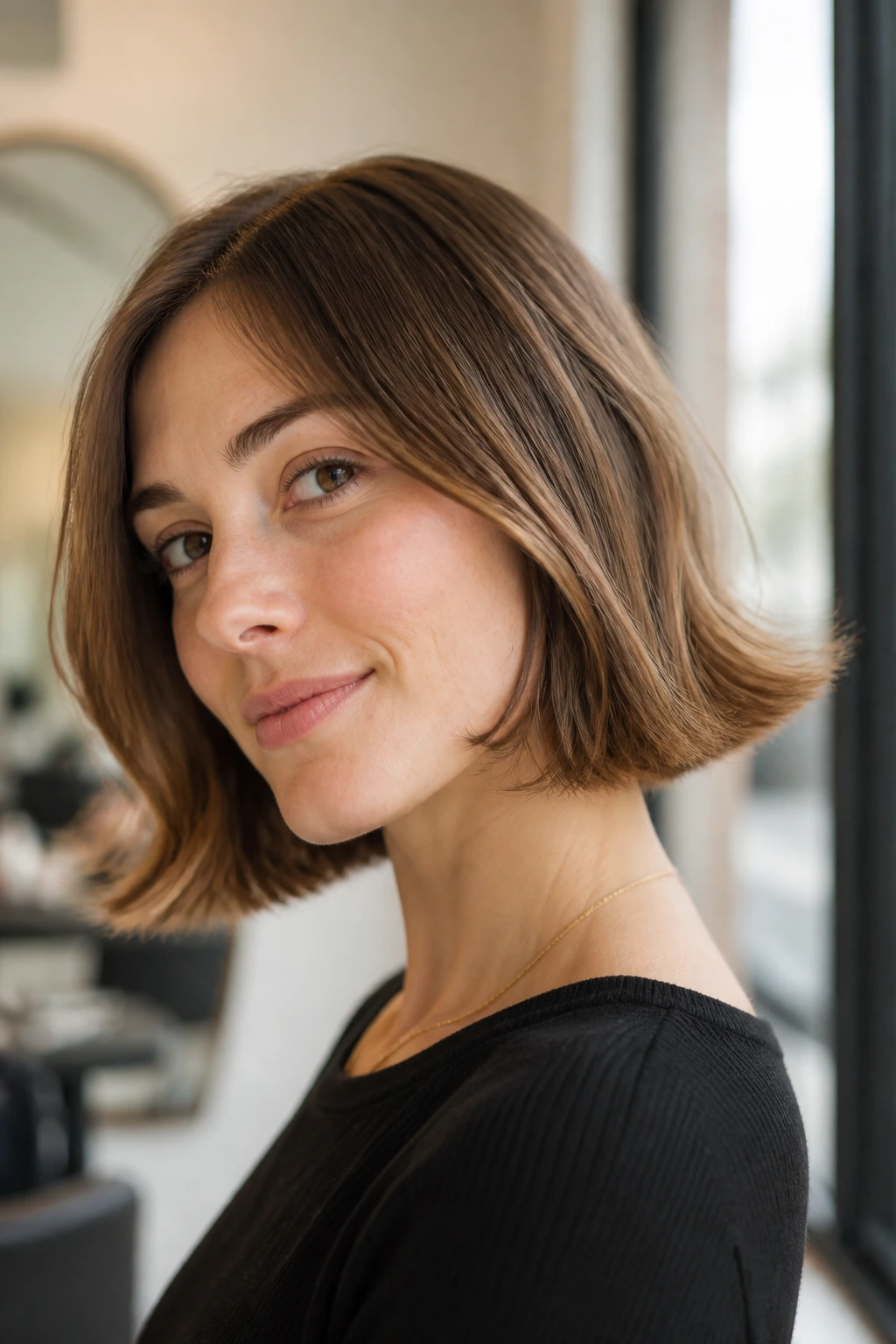
The flipped-end bob has a little swing, and that swing matters. Fine hair loves movement at the edge because it keeps the line from feeling too tidy or too flat.
Why it works: The flipped hem makes the ends visible, which creates the illusion of more hair. The shape also draws the eye outward, so the cut feels lively instead of heavy.
What to ask for: Keep the bob blunt enough to hold a flip, with a length that sits somewhere between jaw and neck. Too many layers will kill the bounce.
Styling note: Use a round brush or a flat iron to flick the ends out just a touch. A small amount of spray on the final shape keeps the flip from sagging.
21. Curly Short Bob
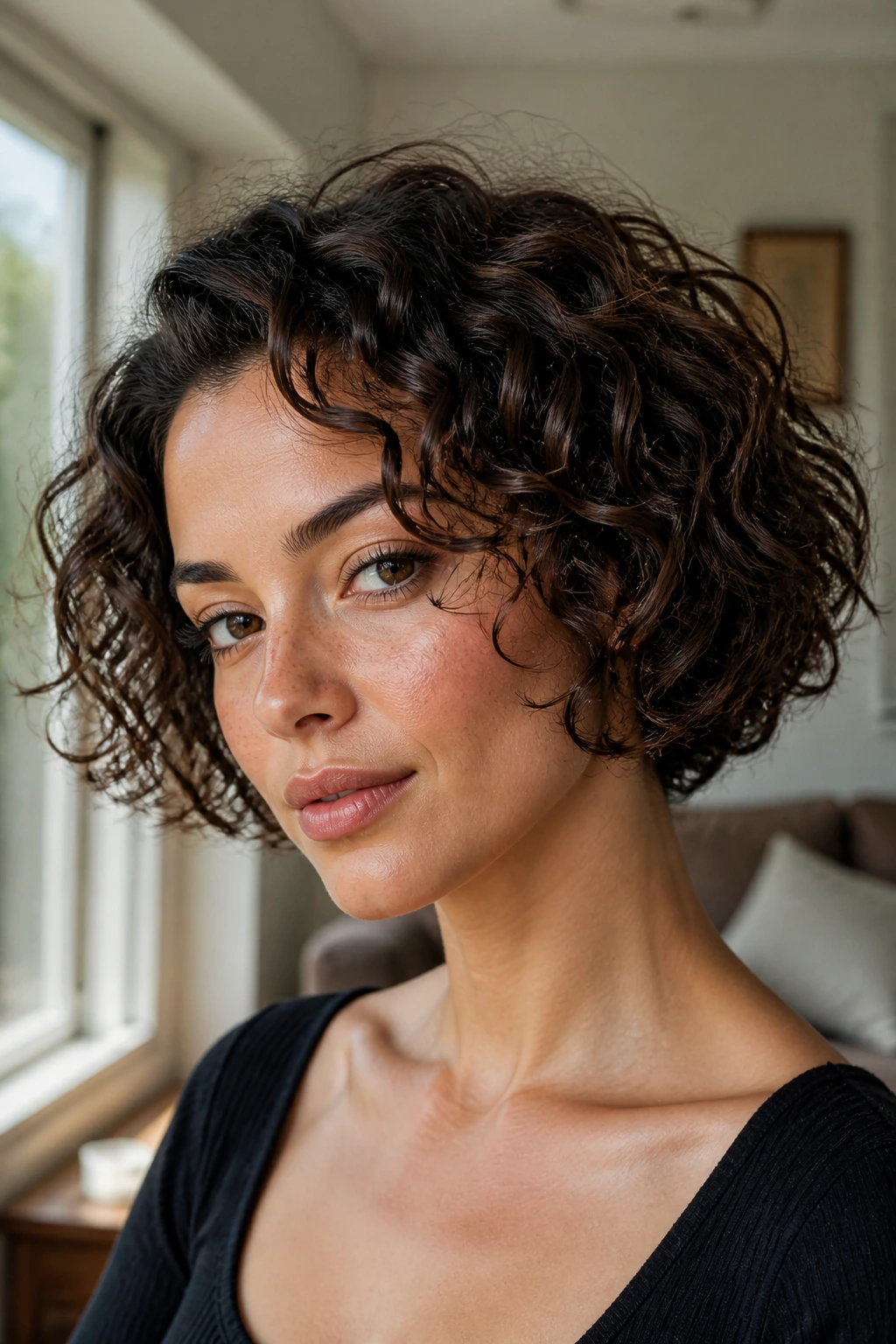
Curly fine hair can be dense, but it still needs careful shaping. A short bob lets the curl pattern take up space without hanging low and losing its spring.
Why it works: Shorter length keeps the curls from stretching out and looking sparse at the ends. The bob shape also gives the curl a clear boundary, which helps the hair read fuller.
What to ask for: Ask for a dry cut or curl-by-curl shaping around jaw length. The perimeter should stay visible; too many short pieces can create frizz instead of shape.
Styling note: Use gel or a light cream on soaking-wet hair, then diffuse gently or air-dry. Do not brush it once dry unless you want fluff in all the wrong places.
22. Neck-Length Soft Shag
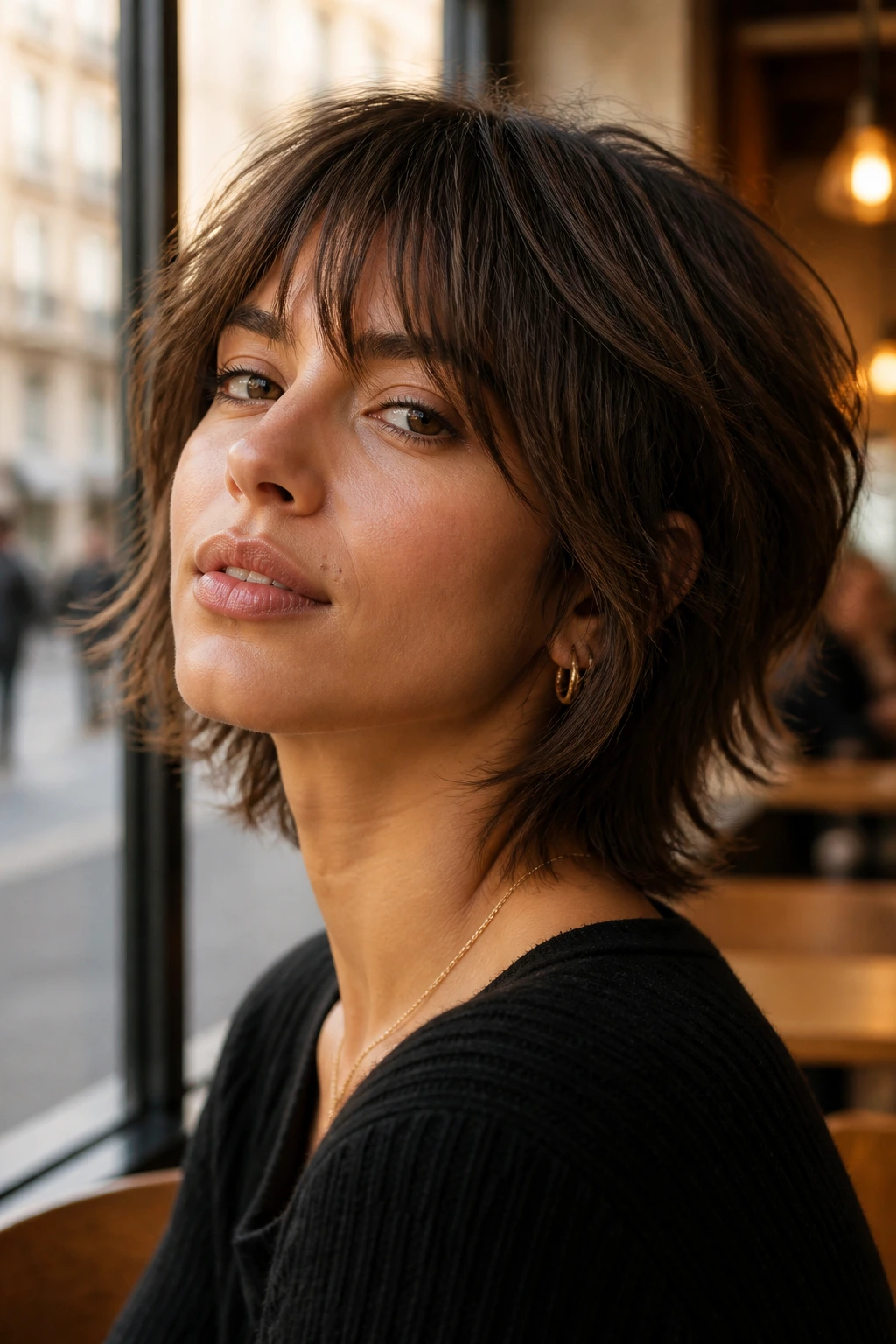
This cut sits in a sweet spot: short enough to stay light, long enough to swing. Fine hair gets some freedom here without losing the shape.
Why it works: The length at the neck gives the hair a little weight, while the soft layers prevent the style from going bulky. It’s a useful option if you want movement but not a strict bob.
What to ask for: Ask for soft crown layers, face framing, and a perimeter that still looks full. The shag should be gentle, not shredded.
Styling note: Mousse at the roots, then scrunch and let it dry with a little bend. A diffuser helps if your hair bends naturally; a round brush helps if it doesn’t.
23. Asymmetrical Bob
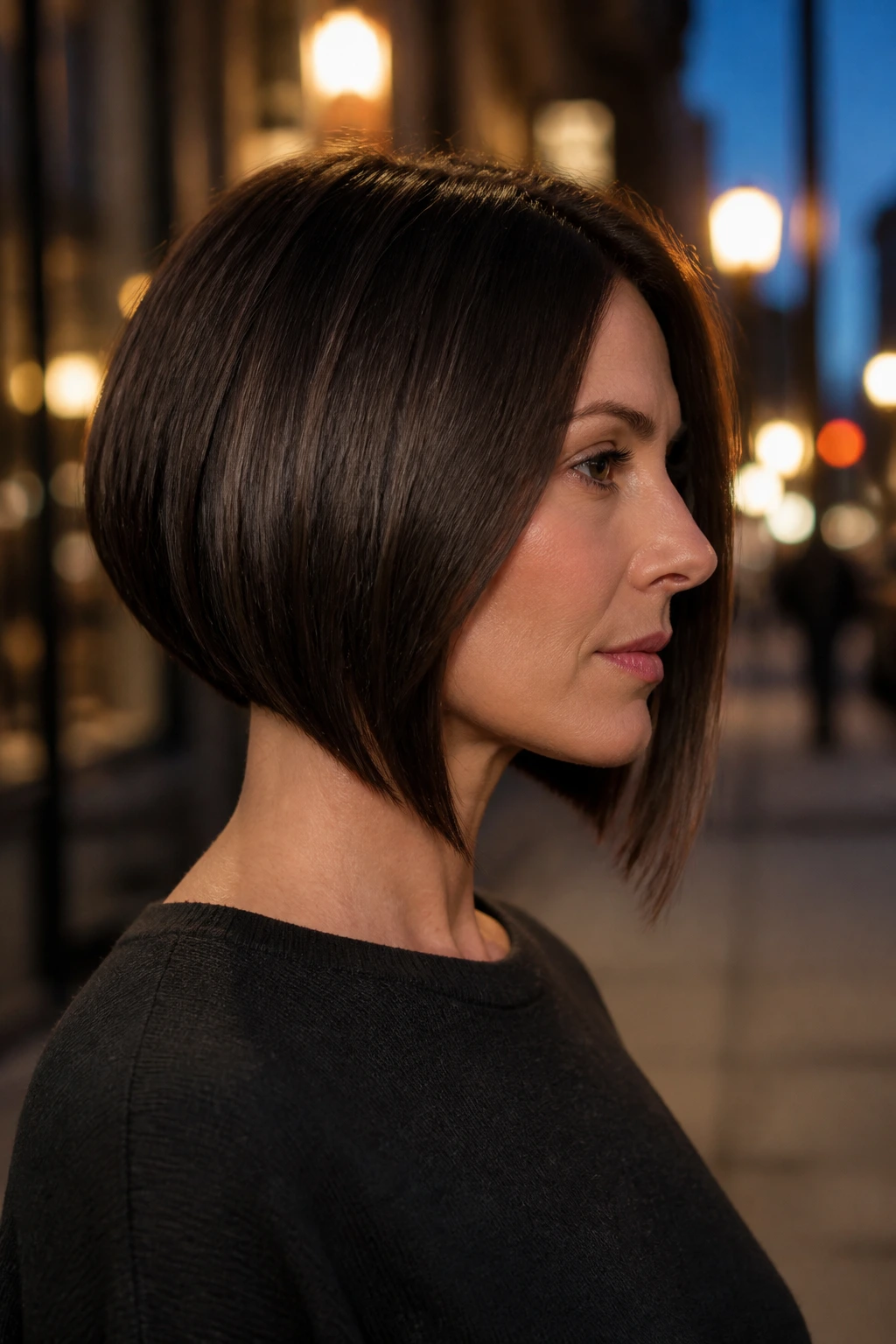
An asymmetrical bob is one of those cuts that makes fine hair look deliberate in a single glance. The slight imbalance gives the eye something to follow, and the shape stops the style from going limp.
Why it works: One side carrying a little more length can make the whole cut look sharper and denser. Fine hair often benefits from that visual tension because it creates interest without needing a lot of bulk.
What to ask for: Ask for a subtle asymmetry, not a dramatic one. A one-inch difference is enough to show the idea without making the haircut hard to wear.
Styling note: Smooth the longer side and tuck the shorter side back for a clean profile. A side part usually helps this cut look intentional.
24. Sculpted Crop With Micro Fringe
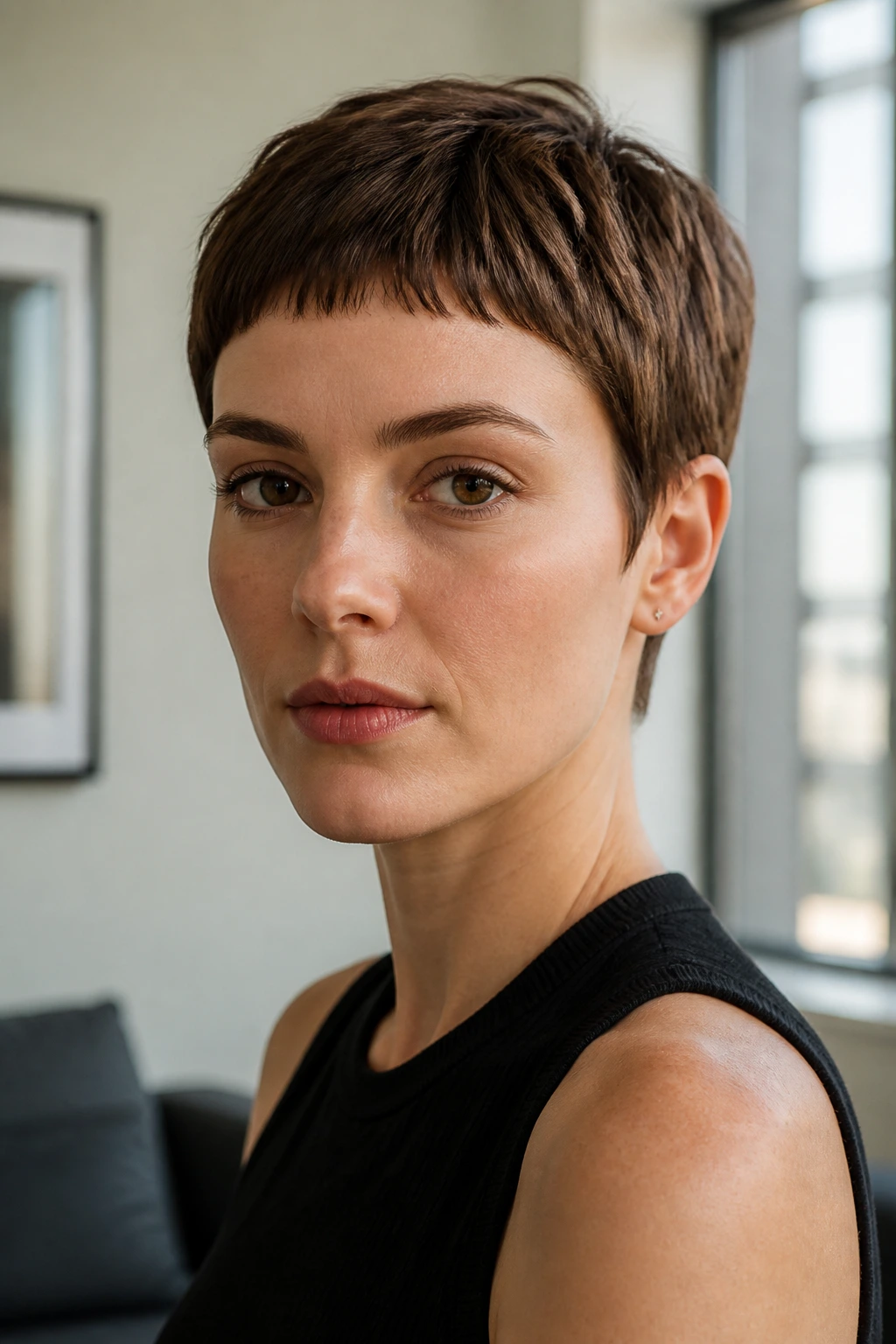
This is the cut for people who like strong shape and a little edge. The micro fringe gives the crop a crisp front line, and fine hair can actually look fuller when the silhouette is that clean.
Why it works: Short fringe draws attention to the eyes, while the cropped sides keep the outline compact. Fine hair does not have to be soft and airy to feel feminine; a controlled shape can do that job too.
What to ask for: Ask for a short micro fringe with a neat nape and enough crown length to avoid a flat dome. Keep the cut soft through the edges if you want it to grow out gracefully.
Styling note: A touch of wax or paste is enough. Too much product will make the fringe separate into little hard strands, and that ruins the sharpness.
25. Wedge Bob
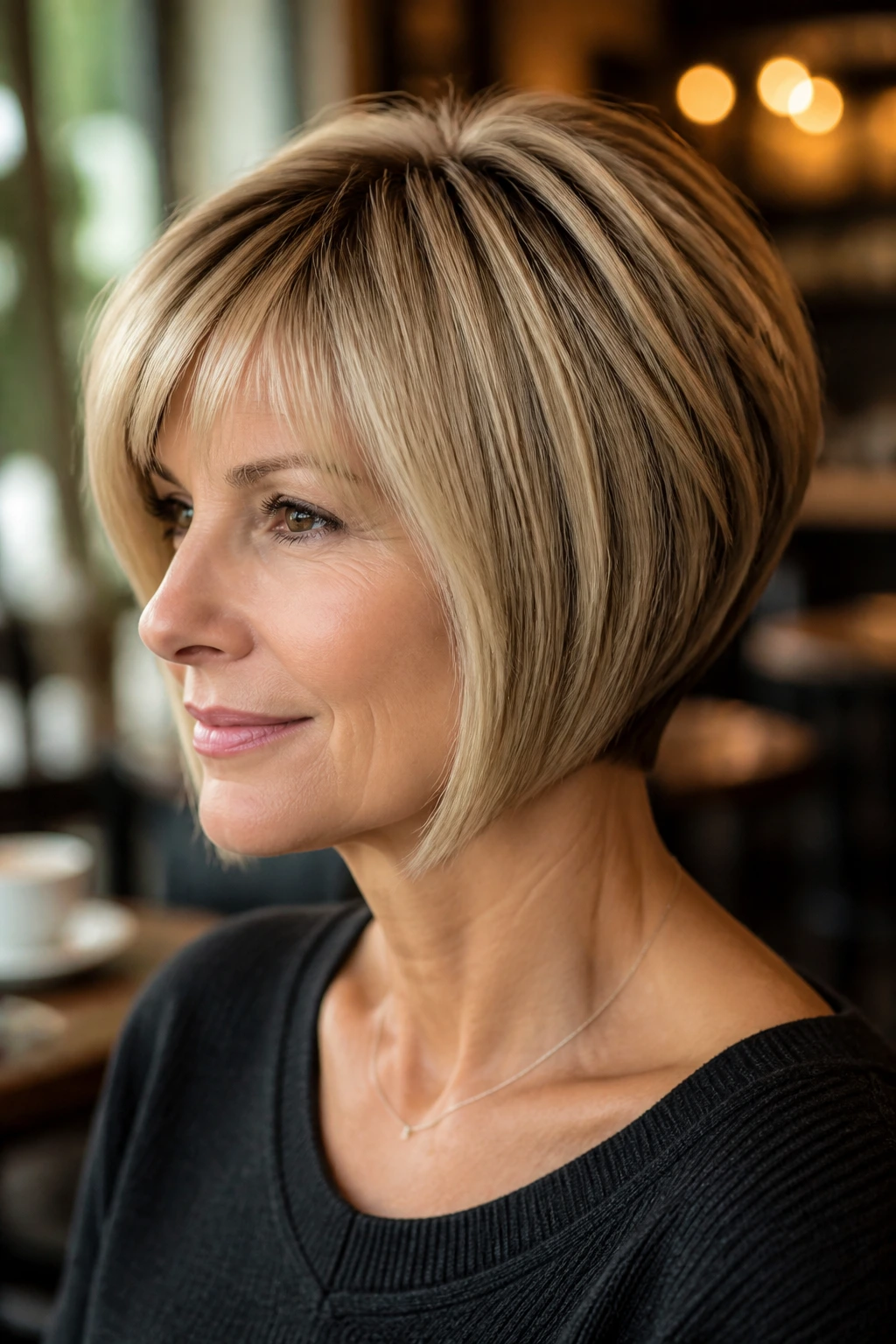
The wedge bob is one of the oldest volume tricks in the book, and it still earns its place. The stacked back gives the crown support, while the front stays clean and face-framing.
Why it works: Fine hair often needs internal structure more than surface fluff. A wedge builds that structure into the shape itself, so the cut holds better with less styling.
What to ask for: Ask for a graduated back, a blunt or softly curved perimeter, and enough length in front to keep the shape feminine. The back should not be over-layered.
Styling note: Blow-dry the nape first, then round-brush the top so the stack settles under. A little root spray at the crown helps keep the lift from dropping.
26. Layered Pageboy
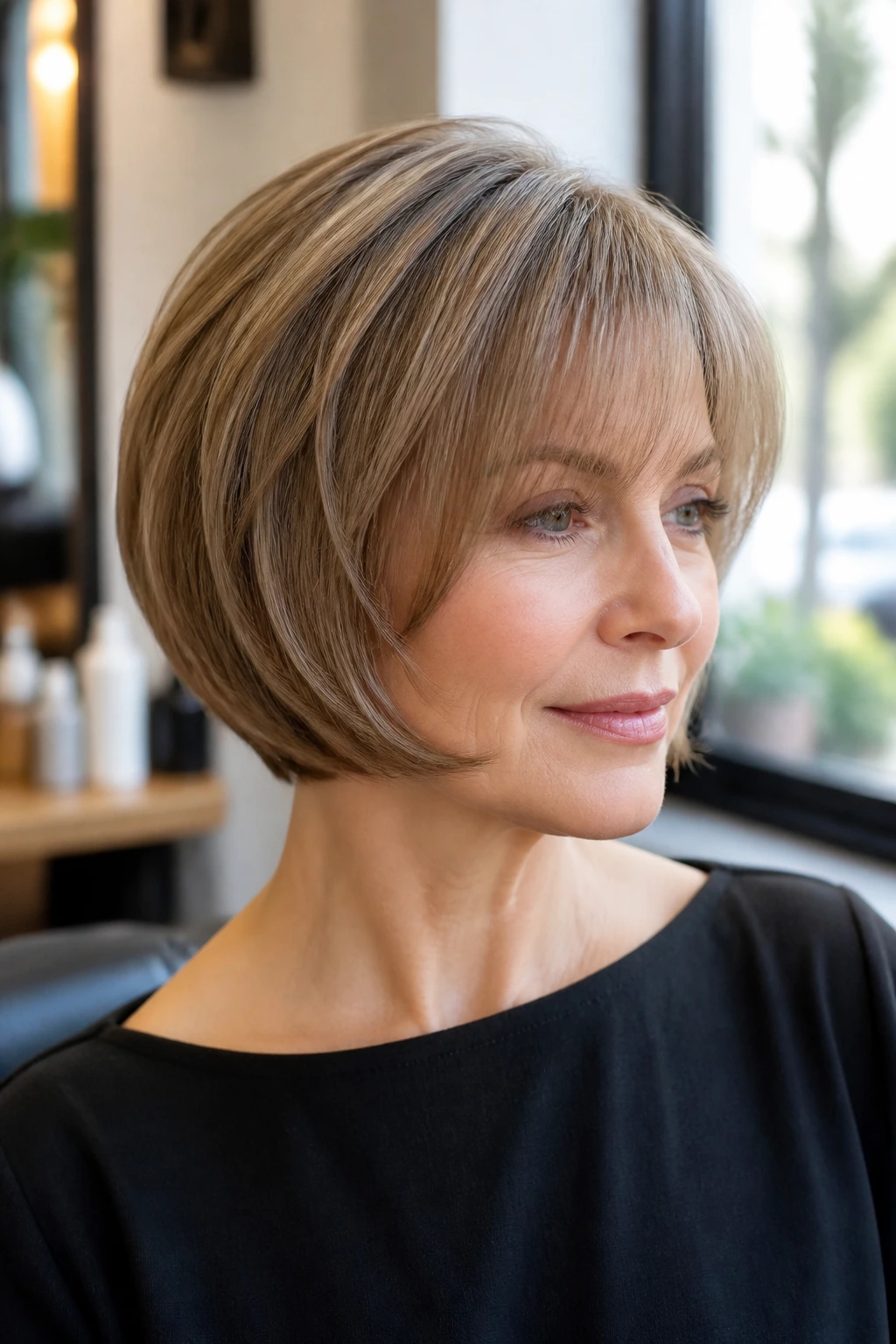
A pageboy can look modern when the curve is soft and the line is clean. On fine hair, the rounded underturn gives the illusion of thickness right where you want it.
Why it works: The pageboy holds together because the ends follow one curve. Fine hair likes that consistency; it doesn’t have to work as hard to look full.
What to ask for: Ask for a rounded bottom, subtle layering only where it helps the shape, and a fringe that blends rather than chops. Too much internal slicing will break the silhouette.
Styling note: Use a brush to curve the ends under while drying. If your hair prefers to flip out, set the shape with clips until it cools.
27. Rounded Pixie Bob
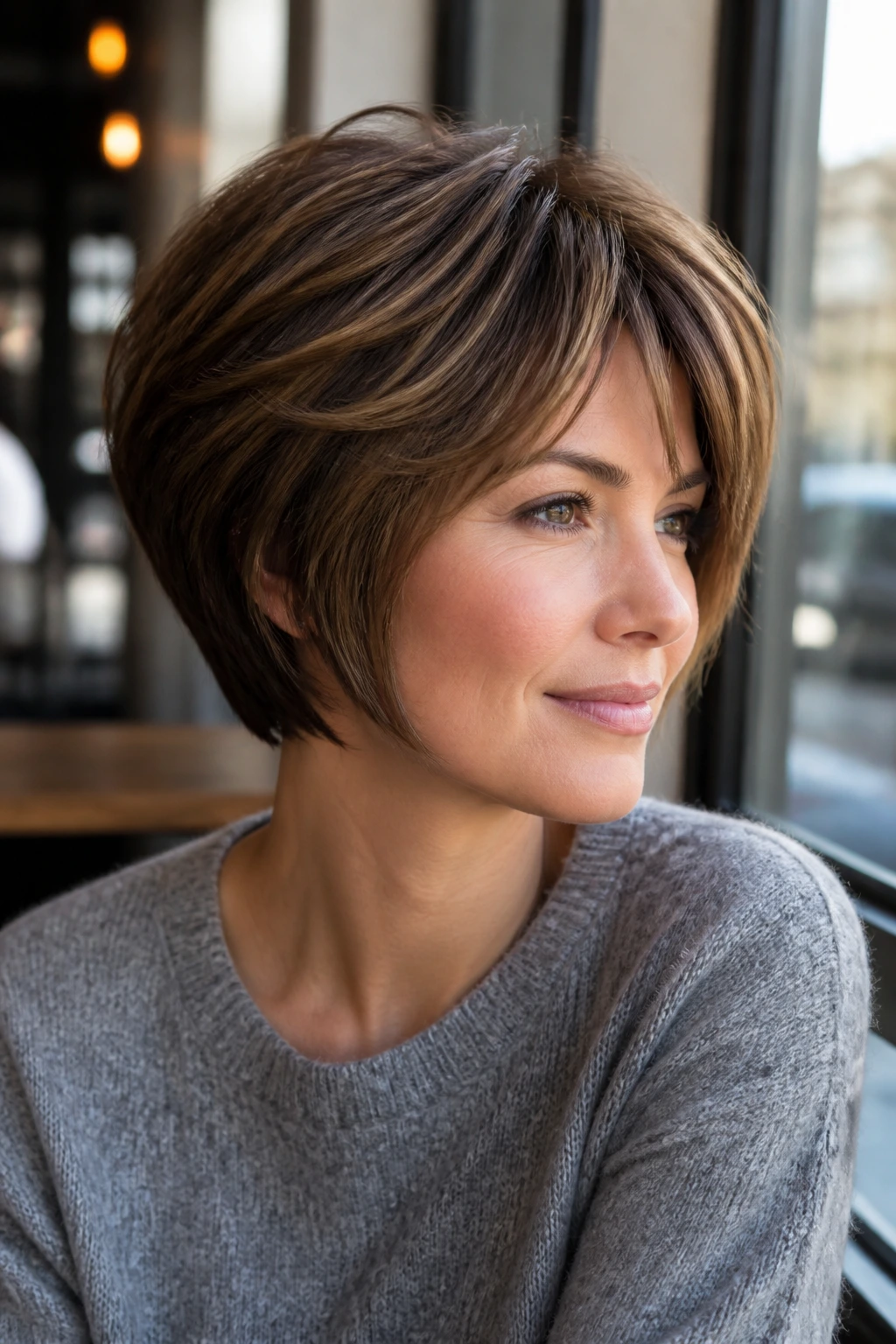
The pixie bob lives between two moods: short enough to stay light, long enough to soften the face. That balance is useful for fine hair because it keeps the cut from looking too sparse at the neck.
Why it works: The crown has a little extra room to lift, while the front carries enough length to frame the cheekbones. Fine strands get a fuller read when the top and front work together like that.
What to ask for: Ask for ear-skimming sides, a fuller crown, and a rounded outline that doesn’t break abruptly at the jaw. Keep the layers soft.
Styling note: A small roller or a round brush at the crown can make a big difference. The ends should curve, not stick out.
28. Choppy French Crop
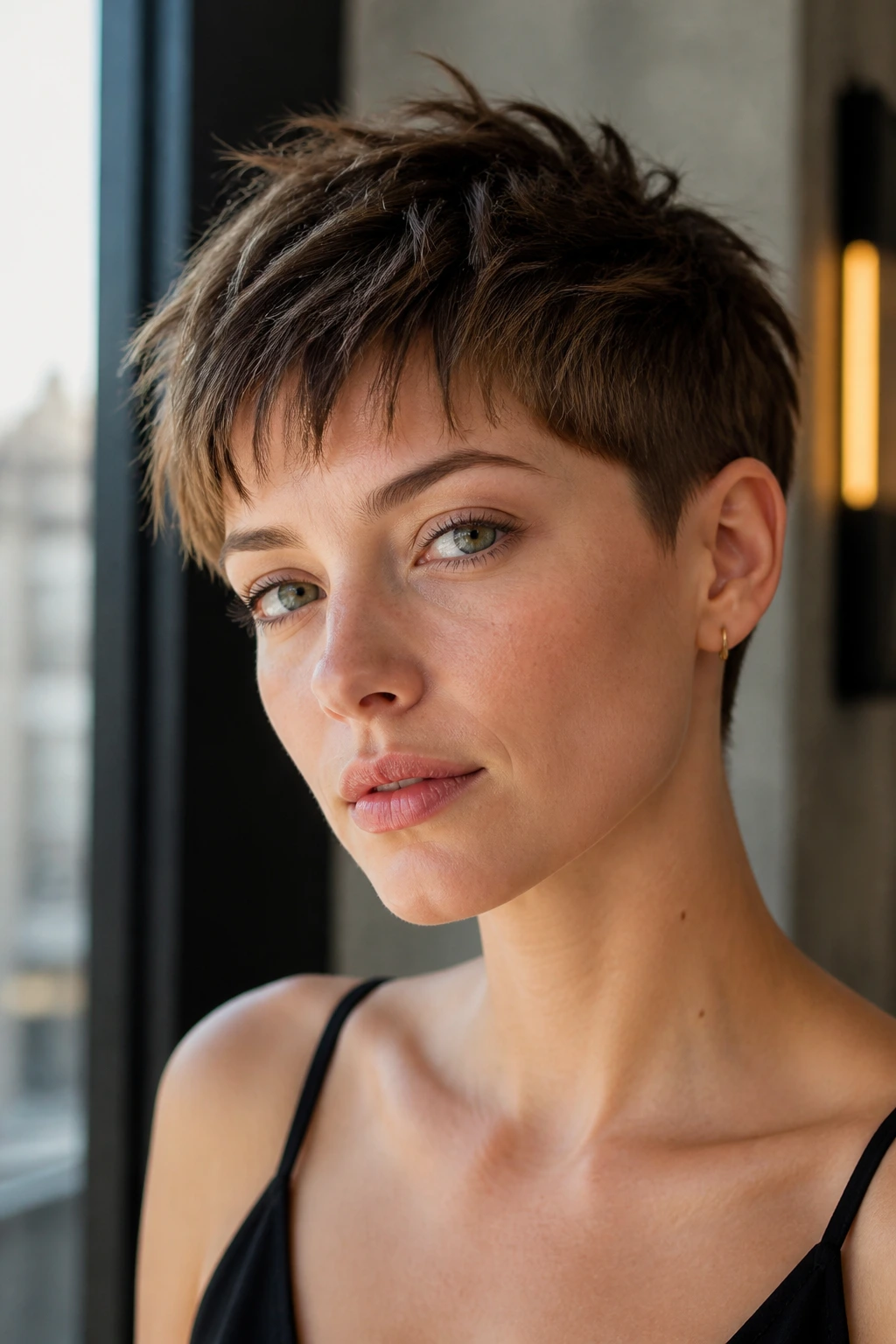
A choppy French crop is a little more playful than the soft pixie versions above. The trick is to keep the chop controlled so the cut still looks polished on fine hair.
Why it works: Short fringe and textured top pieces give fine hair some movement without dragging the length down. The shape feels modern because the edges are imperfect on purpose.
What to ask for: Ask for short, textured top pieces with a clean nape and a fringe that sits lightly on the forehead. The crop should stay soft around the temples.
Styling note: Matte paste gives this one its pointy, piecey finish. Use very little; if the product shows up before the haircut does, you’ve used too much.
29. Short Wolfish Shag
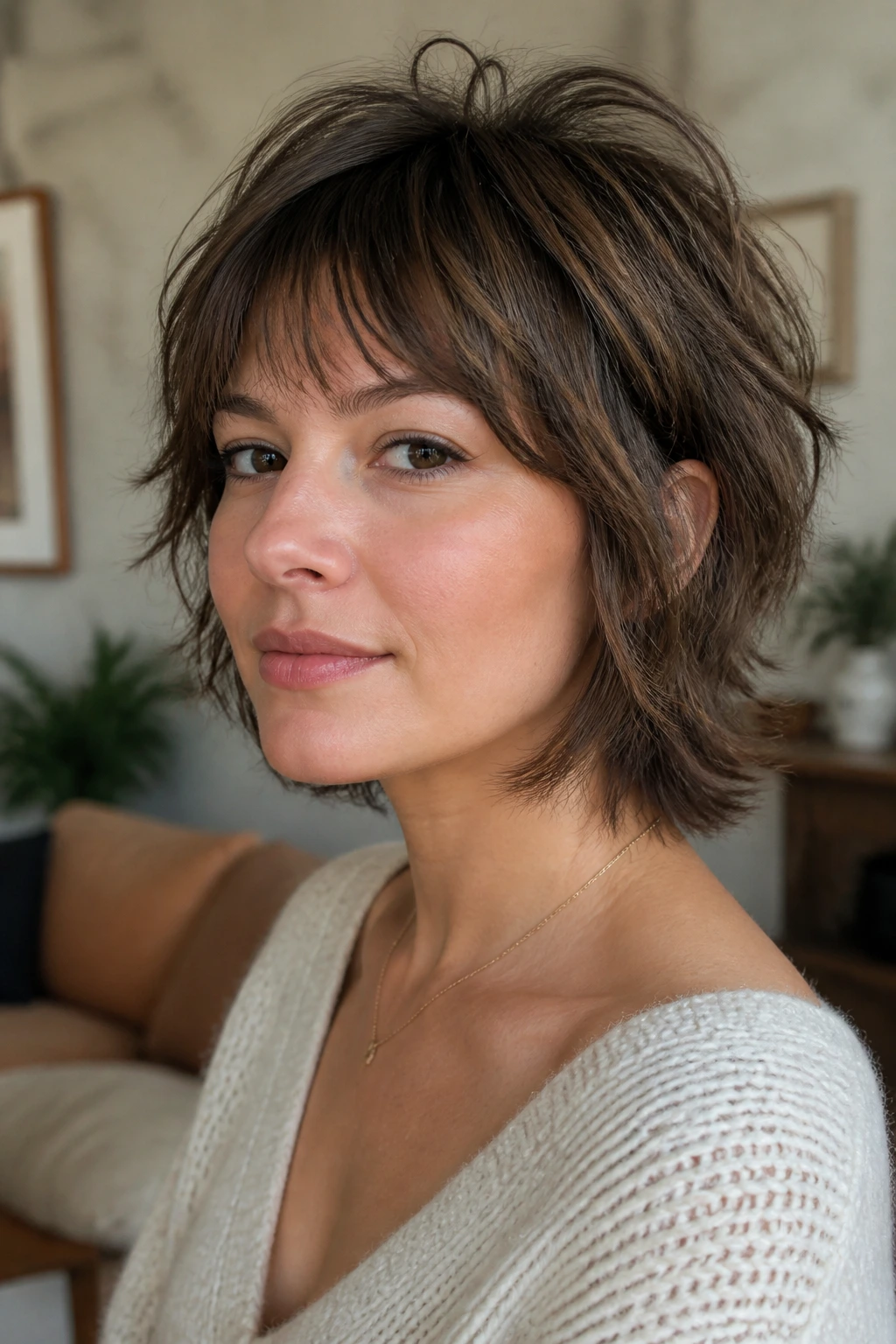
A short wolfish shag works when the layers are airy, not aggressive. Fine hair can wear this look beautifully if the shape stays compact and the crown gets some help.
Why it works: The wolf shape adds lift at the top and movement through the middle without making the ends too long. That keeps fine hair from trailing off into thinness.
What to ask for: Ask for a soft version of a shag with a little extra length at the back and face framing that starts high enough to matter. Keep the bottom line visible.
Styling note: This cut likes texture spray and a loose diffuser finish. If you air-dry it, scrunch once and then leave it alone.
30. Swoopy Crop With Side Fringe
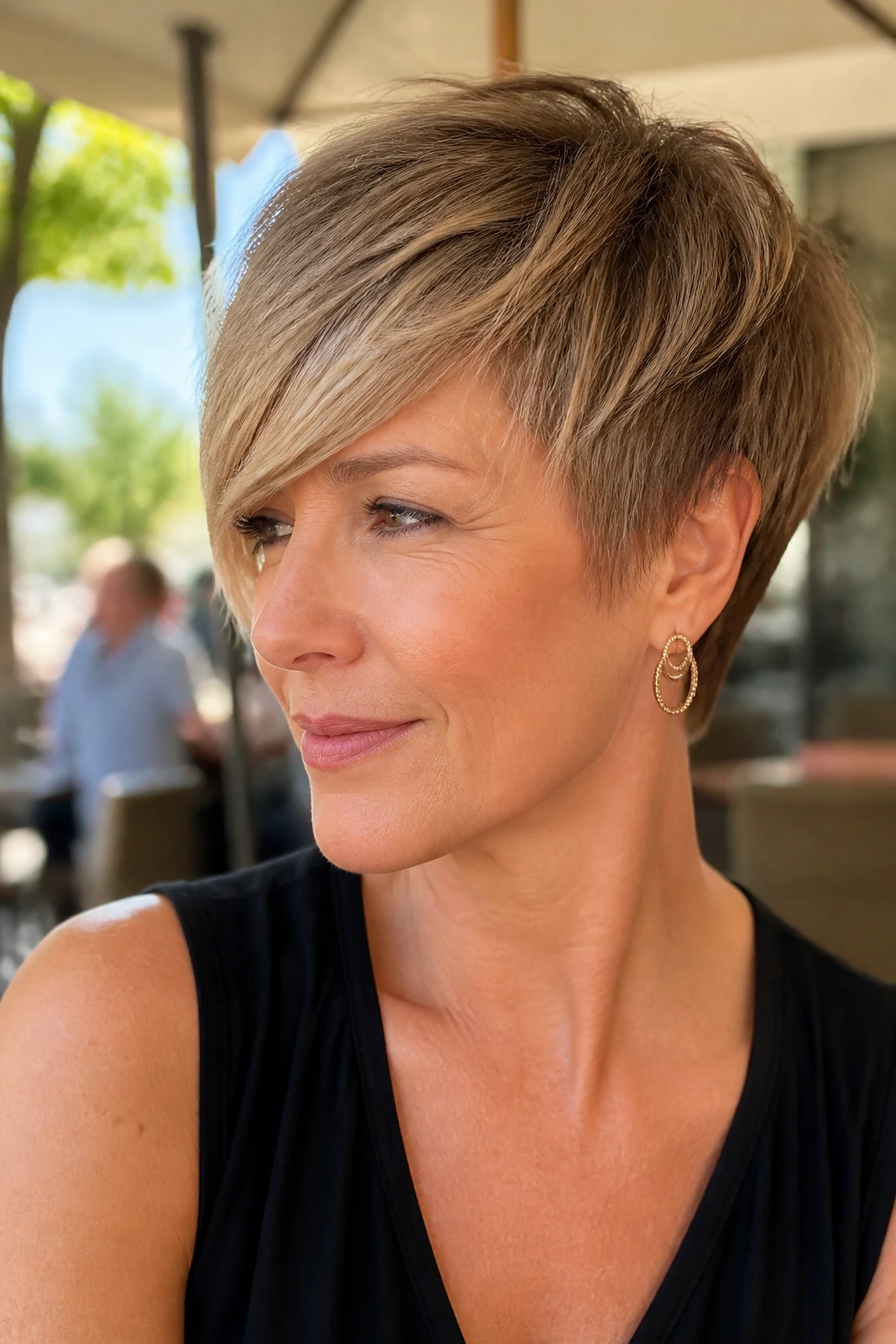
A side fringe can rescue a short crop that feels too severe. The sweep gives the haircut motion, and fine hair often needs that front movement more than it needs more layers.
Why it works: The fringe creates a soft diagonal line across the face, which makes the whole cut feel fuller. Short sides keep the outline neat, so the softness stays where it counts.
What to ask for: Ask for a side fringe that blends into the top and a cropped back that stays tidy. You want a shape that curves, not a heavy top that falls forward.
Styling note: Blow-dry the fringe across the forehead with a small brush, then let the rest sit piecey. If the front splits, wet only the fringe and reset it.
31. Tucked-Behind-Ear Bob
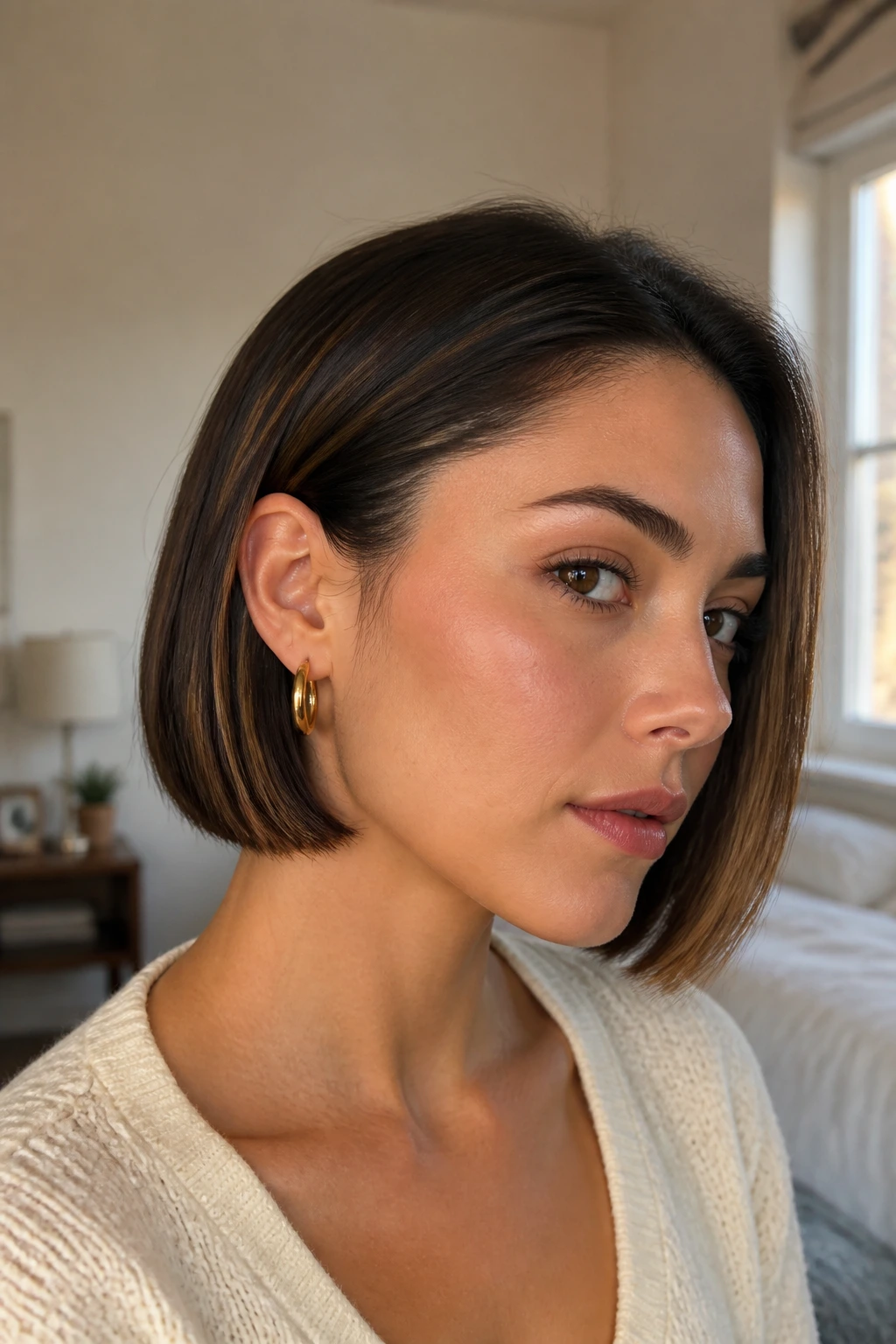
This one is quietly effective. The real shape shows up when the hair is tucked behind one ear and the cheekbone and jawline get to do some work.
Why it works: Fine hair often looks best when it has a clear perimeter and a little asymmetry. Tucking one side changes the silhouette without changing the cut itself.
What to ask for: Ask for a blunt bob with enough front length to tuck comfortably. Keep the ends full so the hair still looks dense when one side is pulled back.
Styling note: Smooth the hair with a brush, then tuck one side and leave the other loose. A little spray at the roots helps the tuck stay put without slipping.
32. Airy Undercut Pixie
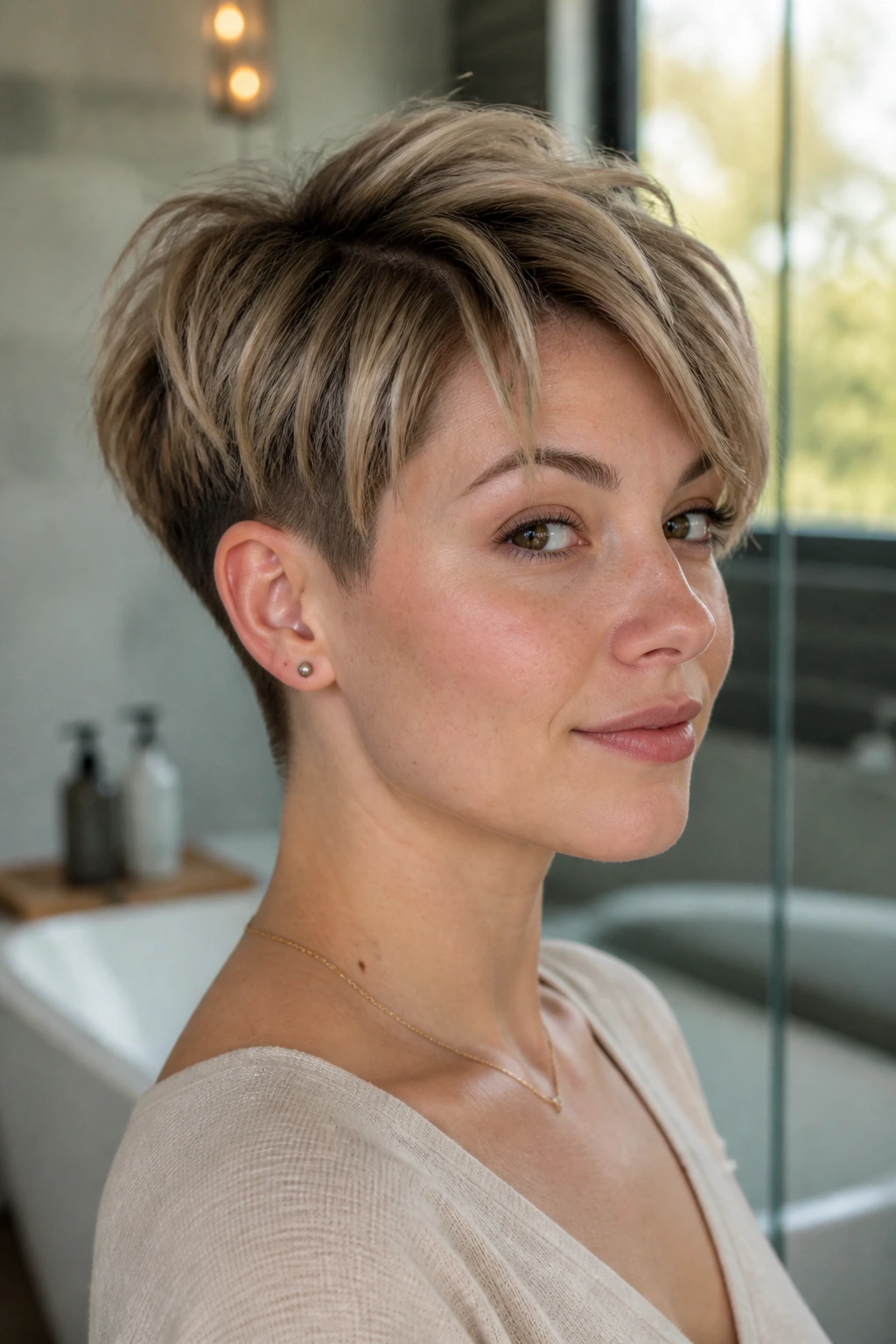
A hidden undercut can be a lifesaver when fine hair gets bulky at the nape or sides. It removes weight where you don’t want it and lets the top look fuller.
Why it works: The undercut clears out bulk under the top layer, so the hair above has more space to lift. Fine hair can look surprisingly plush when it’s not fighting too much volume underneath.
What to ask for: Ask for a conservative undercut if you want a softer grow-out, and keep the top long enough to sweep or ruffle. The shape should feel light, not harsh.
Styling note: This cut responds fast to root spray and finger drying. It is not the right choice if you want to skip salon visits for a long stretch.
33. Piecey Crop With Crown Lift
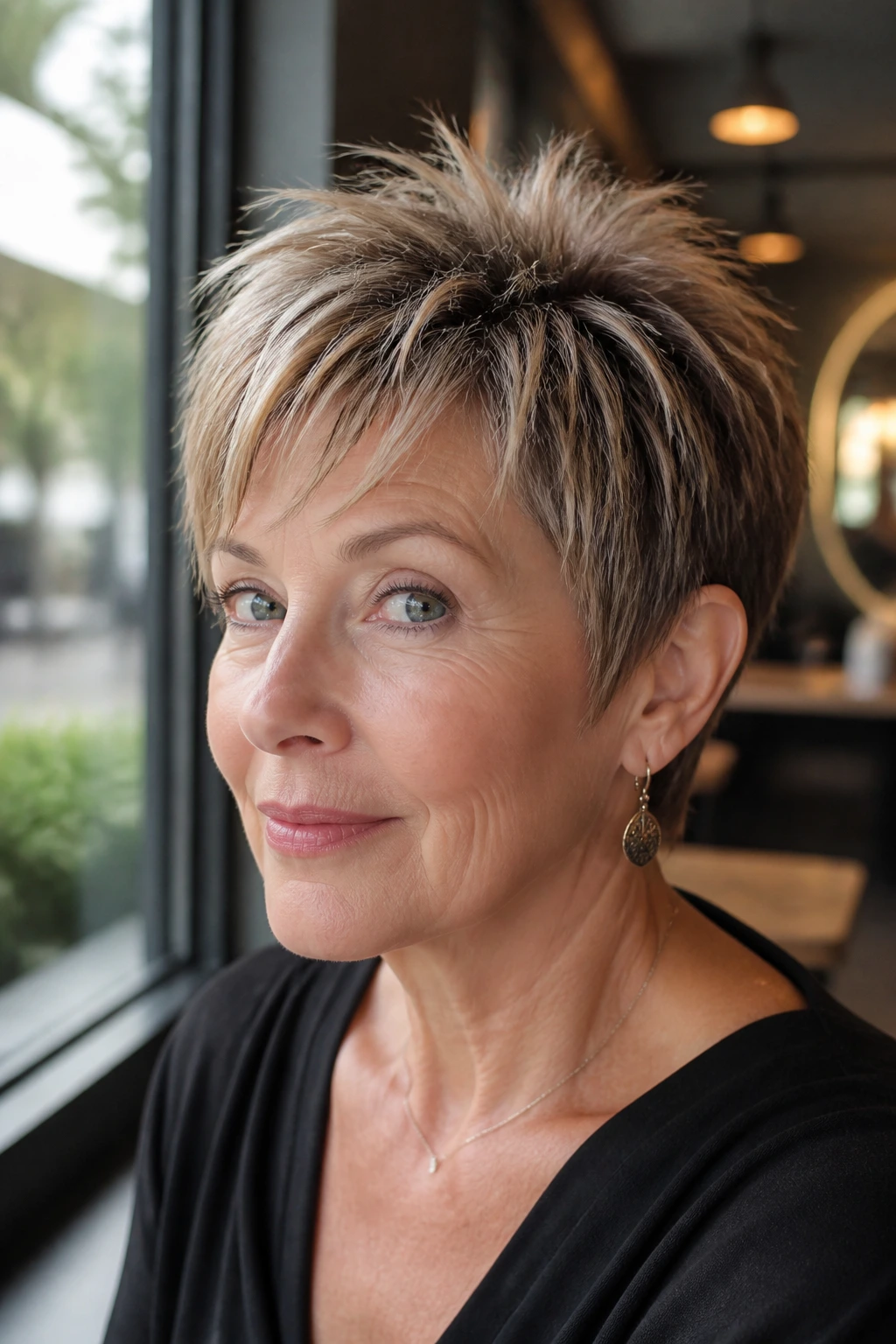
The crown lift is the whole story here. Everything else can stay simple if the top has enough height to keep fine hair from lying dead flat.
Why it works: A little vertical movement at the crown changes how the face reads, and that is where fine hair often loses its shape. Piecey ends keep the cut from looking too solid.
What to ask for: Ask for short sides, longer crown pieces, and a perimeter that stays clean. You want separation, not broken ends.
Styling note: Root powder or a tiny amount of mousse at the crown can help the lift hold. Press product into the roots, not the middle lengths.
34. Short Cut With Long Curtain Bangs
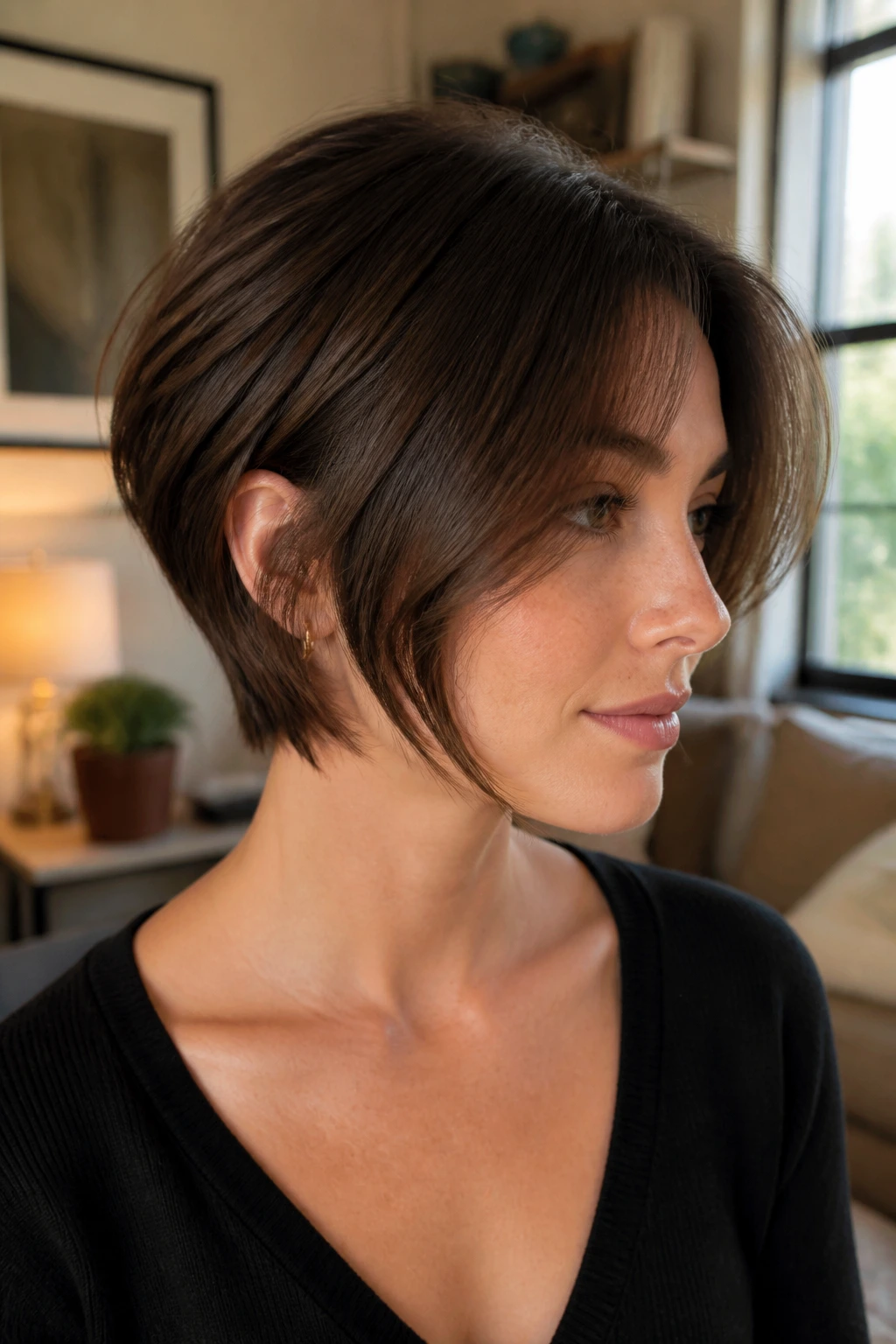
Curtain bangs can give a short cut the softness it needs without adding unnecessary length. They also make fine hair look fuller around the face, which is where people notice flatness first.
Why it works: The bangs create movement in front, while the shorter body keeps the rest of the hair from going limp. Fine hair benefits from that split job: front softness, compact back.
What to ask for: Ask for curtain bangs that reach the cheekbones and a short body that stays neat around the ears and nape. Keep the bangs thick enough to show, not wispy.
Styling note: Wrap each bang section away from the face with a brush, then let them fall open. If your hairline is stubborn, dry the bangs first before the rest.
35. Soft Bowl Cut
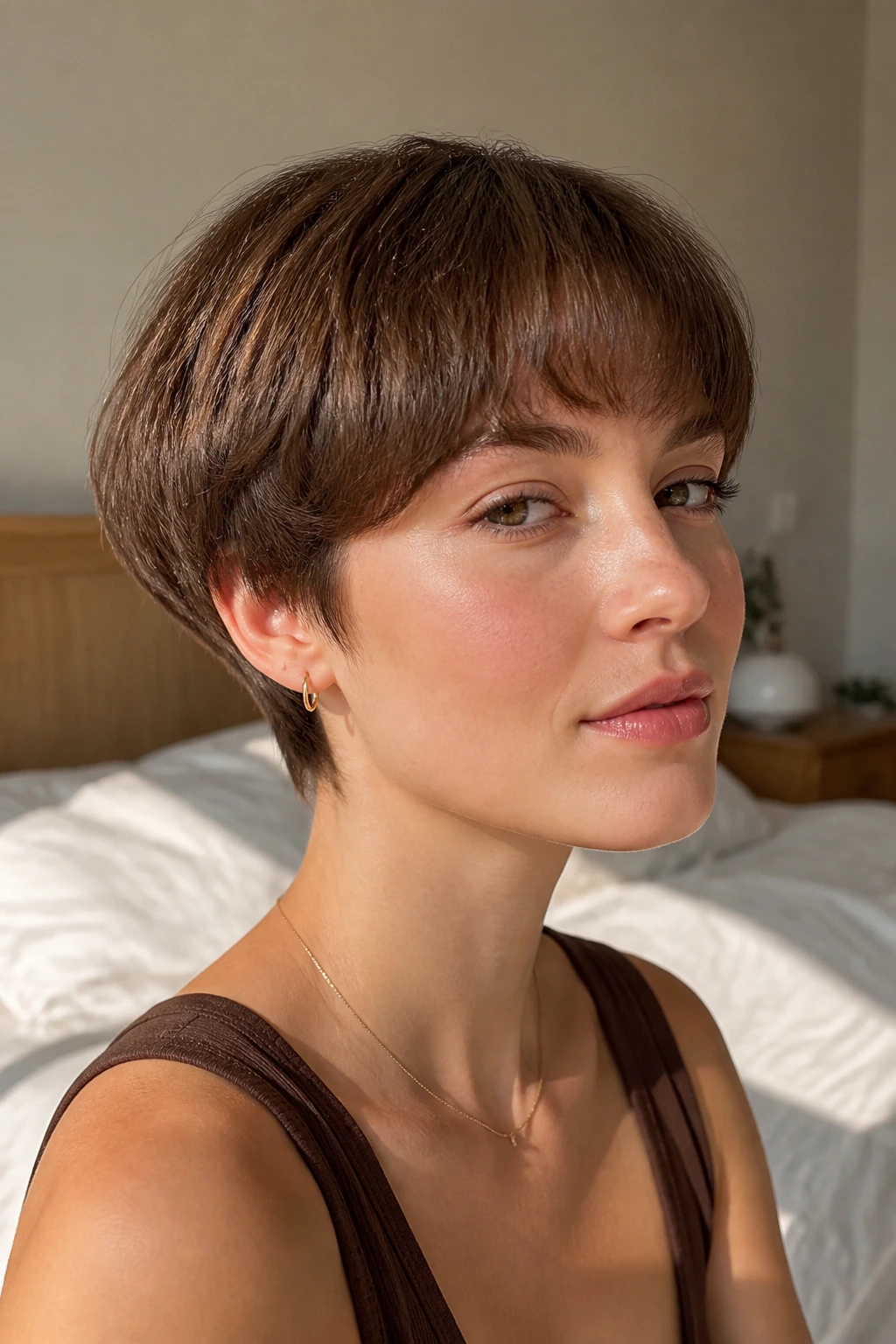
A soft bowl cut is not the blunt helmet some people picture. When it’s cut with a little air around the edges, it can be one of the best shapes for fine hair.
Why it works: The rounded outline makes the hair read fuller because the perimeter stays continuous. Fine hair often looks stronger in geometric shapes than in over-layered ones.
What to ask for: Ask for a softened bowl shape with textured edges and enough room around the ears and temples. The line should stay controlled, not severe.
Styling note: A smooth cream through the mid-lengths and a careful blow-dry are enough. If you want it to feel lighter, tuck one side behind the ear.
36. Mini Shag With Face Frame
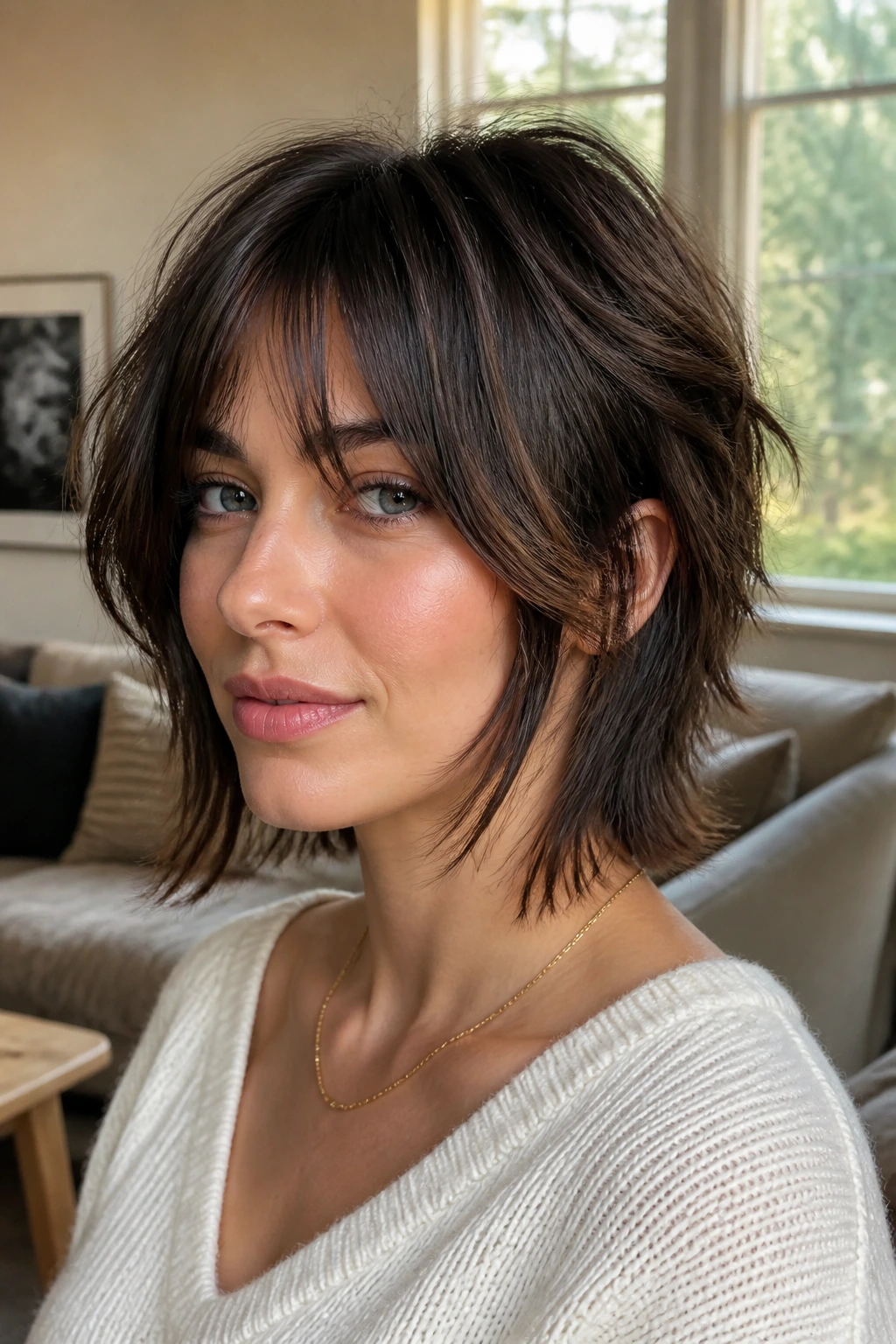
A mini shag is a good choice when you want movement but don’t want to lose the dense look at the bottom. The face frame keeps the softness where you can see it.
Why it works: Fine hair often needs a little lift near the crown and a little shape at the cheekbones. This cut gives both without tearing the perimeter apart.
What to ask for: Ask for soft face-framing pieces, light crown layers, and a bottom line that stays full. The cut should feel lived-in, not shredded.
Styling note: Mousse and finger twisting work well here, especially if your hair already has a slight bend. Keep the roots airy and the ends soft.
37. Feminine Crew Cut
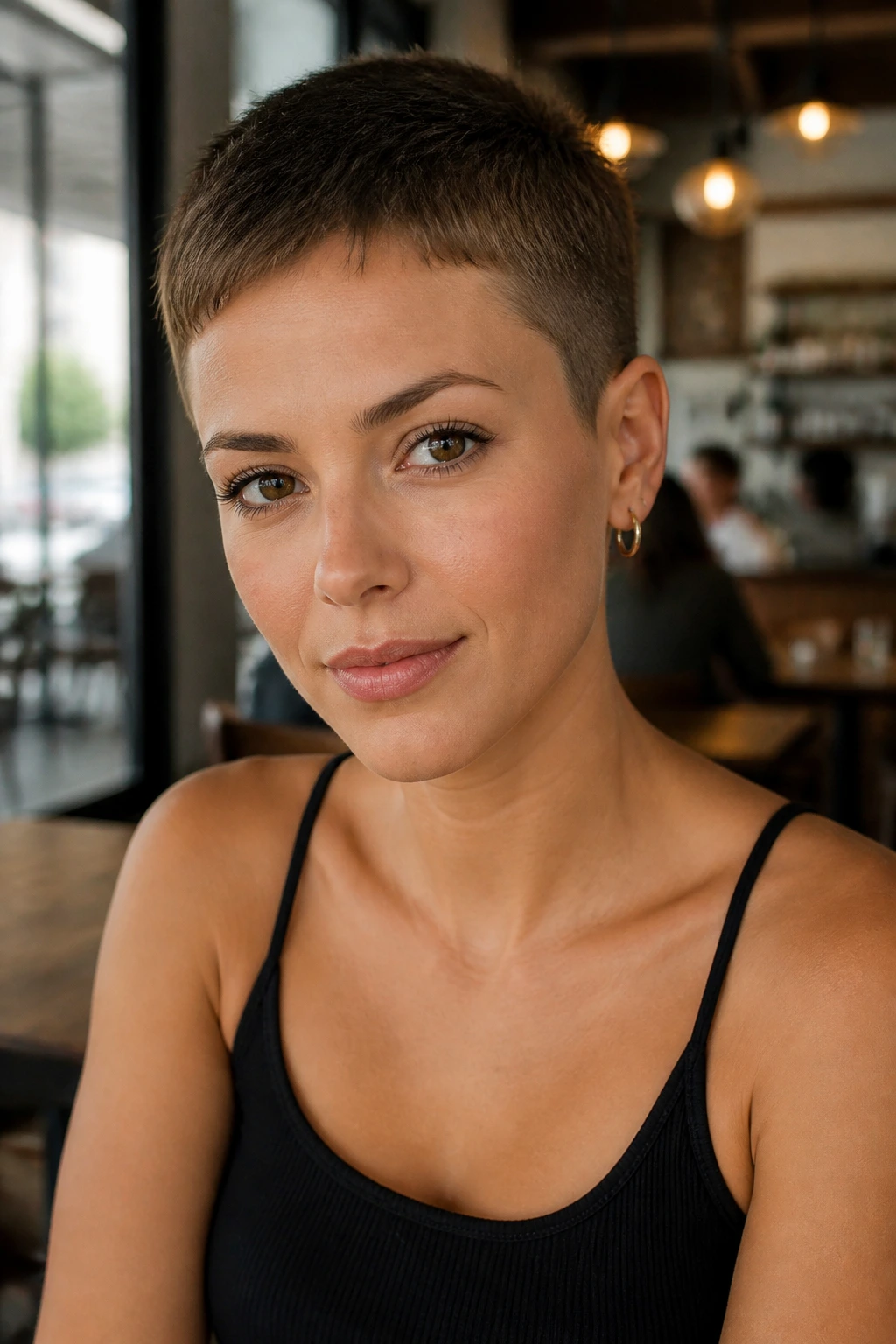
A feminine crew cut is for someone who wants almost no length but still wants softness in the shape. It’s short, yes, but it can be elegant when the top is just a little longer and the edges are clean.
Why it works: Fine hair often looks strongest when there is very little length to thin out. This cut puts the attention on bone structure, brows, and texture instead of on volume that isn’t there.
What to ask for: Ask for a soft top with tapered sides and a neat nape. You do not want a hard military line unless that is the look you are after.
Styling note: A fingertip touch of wax is usually enough. If you like it sleeker, brush the top in one direction and leave the sides close.
38. Grown-Out Pixie Bob
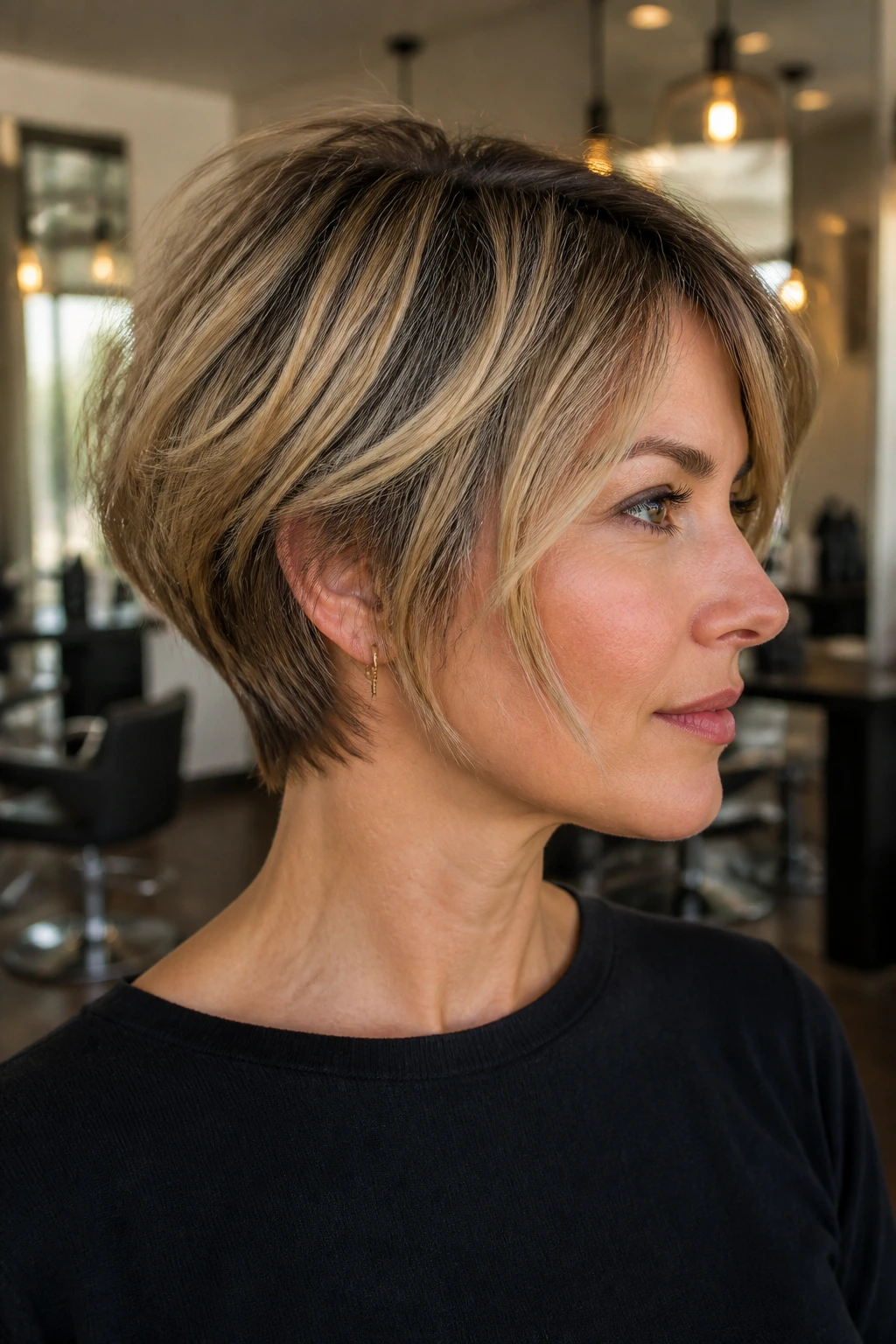
The grown-out pixie bob is one of the smartest transitional cuts for fine hair. It keeps the compact back of a pixie but gives the front enough length to read like a bob.
Why it works: The shape is forgiving. Fine hair can move from short to medium without hitting that awkward point where the ends look sparse and the crown looks overgrown.
What to ask for: Ask for a tapered neck, soft face-framing pieces, and a perimeter that can sit between jaw and ear. The point is to keep the shape balanced while it grows.
Styling note: A quick blow-dry at the roots and a little root spray are usually enough. If you want it to look fresher, tuck one side or sweep the front across the forehead.
Why Short Shapes Give Fine Hair More Body
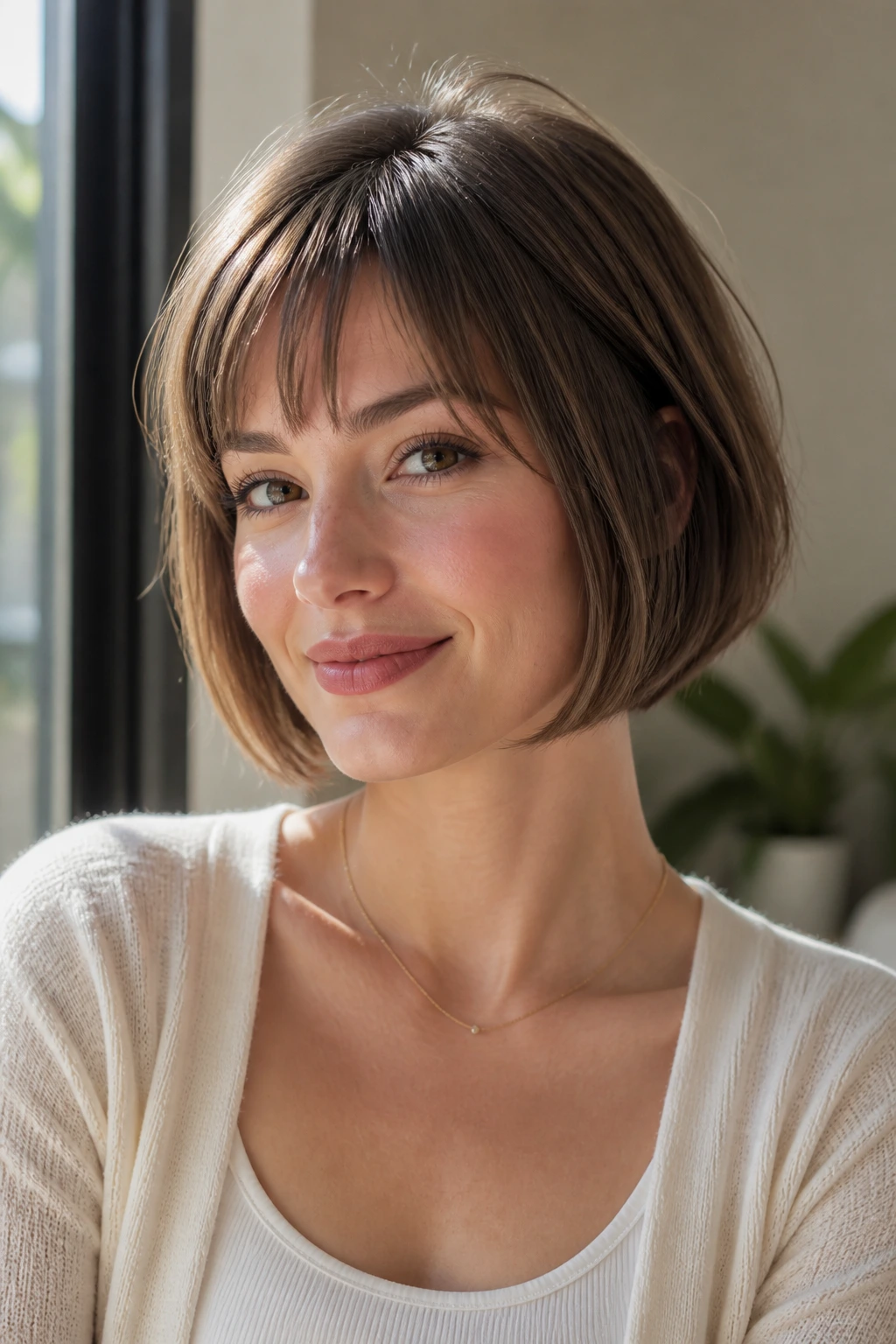
Short hair and fine hair tend to get along for a simple reason: the perimeter stays visible. Once the hair gets long enough to hang off the shoulders, the lower half often starts to separate, and separated strands look thinner no matter how much density you actually have.
Blunt edges carry more visual weight
A blunt hem is one of the oldest tricks in haircutting for a reason. When the ends stop together, the eye reads thickness faster. That’s why a chin-length bob can look denser than a layered cut that’s technically got more hair in it.
Crown lift matters more than extra length
A lot of fine-haired people chase volume at the wrong place. The real problem is often the crown, not the ends. A little lift at the root, a soft side part, or a top layer that isn’t sliced too thin does more for the silhouette than adding another inch of length ever will.
Softness is what keeps the cut femme
Short does not have to mean blunt in a harsh way. A curved bang, a tucked temple, a clean neck line, or a soft bend at the cheekbone can keep the cut gentle. The feminine part of these hairstyles comes from the shape, not from leaving everything long.
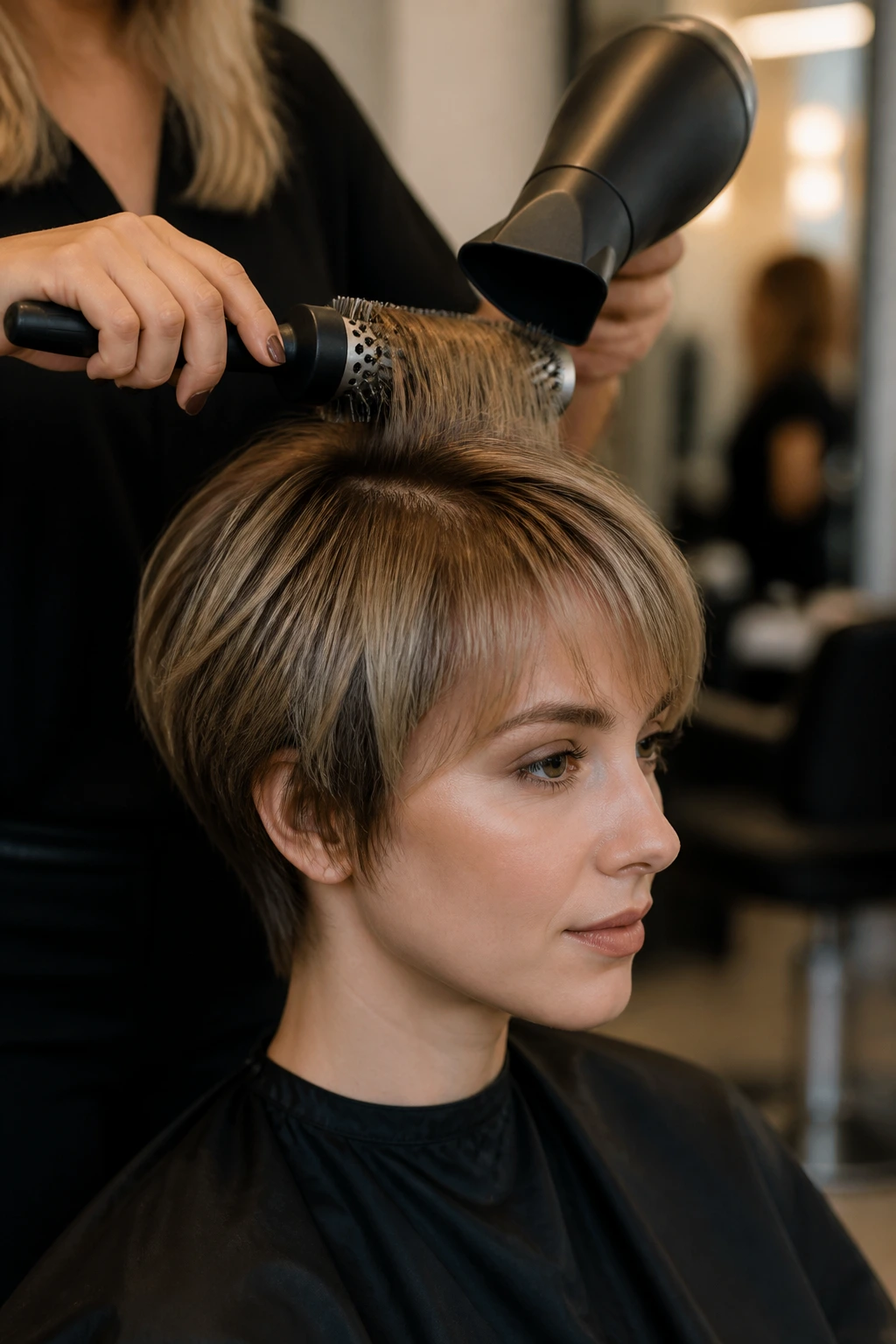
Tools That Make These Cuts Easier to Wear
-
1-inch round brush: Best for pixies, bobs, and fringe because it adds bend without making the ends flip too hard.
-
Vent brush: Good for rough-drying the roots fast; it keeps the crown from sticking to the scalp.
-
Blow dryer with a nozzle: The nozzle controls airflow, which matters when fine hair gets blown apart too fast.
-
Root-lift mousse: Use it at the scalp, not the ends, when you want the top to stay up for more than an hour.
-
Light texturizing spray: Helpful for piecey pixies and shaggy bobs; a little goes a long way.
-
Matte paste or soft wax: Best for crops and fringe when you want separation without greasy shine.
-
Heat protectant mist: Fine hair burns and frizzes fast, so this one is not optional if you use heat.
-
Mini flat iron: Useful for micro bobs, tucked bobs, and flipping ends under or out with control.
-
Duckbill clips: Great for setting a side part or letting fringe cool in the right direction.
-
Tail comb: Helps create a clean part and keeps styling from turning into a fuzzy middle.
How to Ask for the Right Shape at the Salon
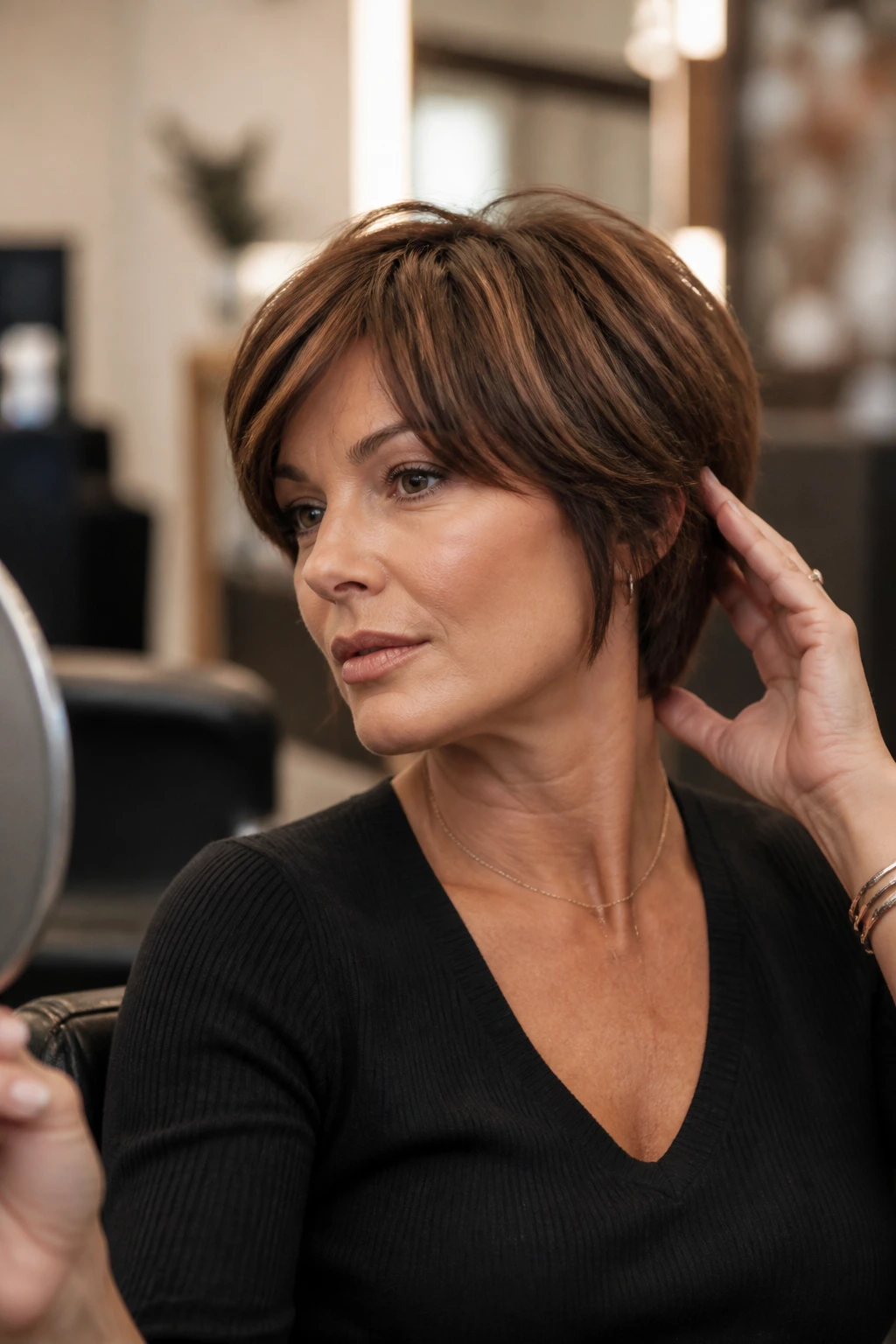
Haircuts for fine hair live or die on the words you use. Say “short and feminine” all you want, but the useful details are the ones a stylist can actually cut to: where you want the hem to sit, how much scalp you’re willing to show, and whether the ends should stay blunt or broken up.
Bring two photos, not twenty
One photo should show the silhouette you want. The other should show the fringe, crown, or nape detail. That keeps the conversation from sliding into vague territory where everyone nods and then cuts something different.
Use landmarks, not adjectives
Say chin, jaw, ear, cheekbone, nape, and eyebrow. Those words are better than “shorter,” “softer,” or “more volume.” A stylist can cut to a jawline. They cannot cut to a feeling.
Tell them what you hate
If your hair turns wispy at the bottom, say that. If the crown flattens by noon, say that too. If heavy thinning shears make your hair look see-through, mention it before the scissors come out. That one sentence can save you a month of regret.
How to Wear Them With Glasses, Earrings, and Necklines
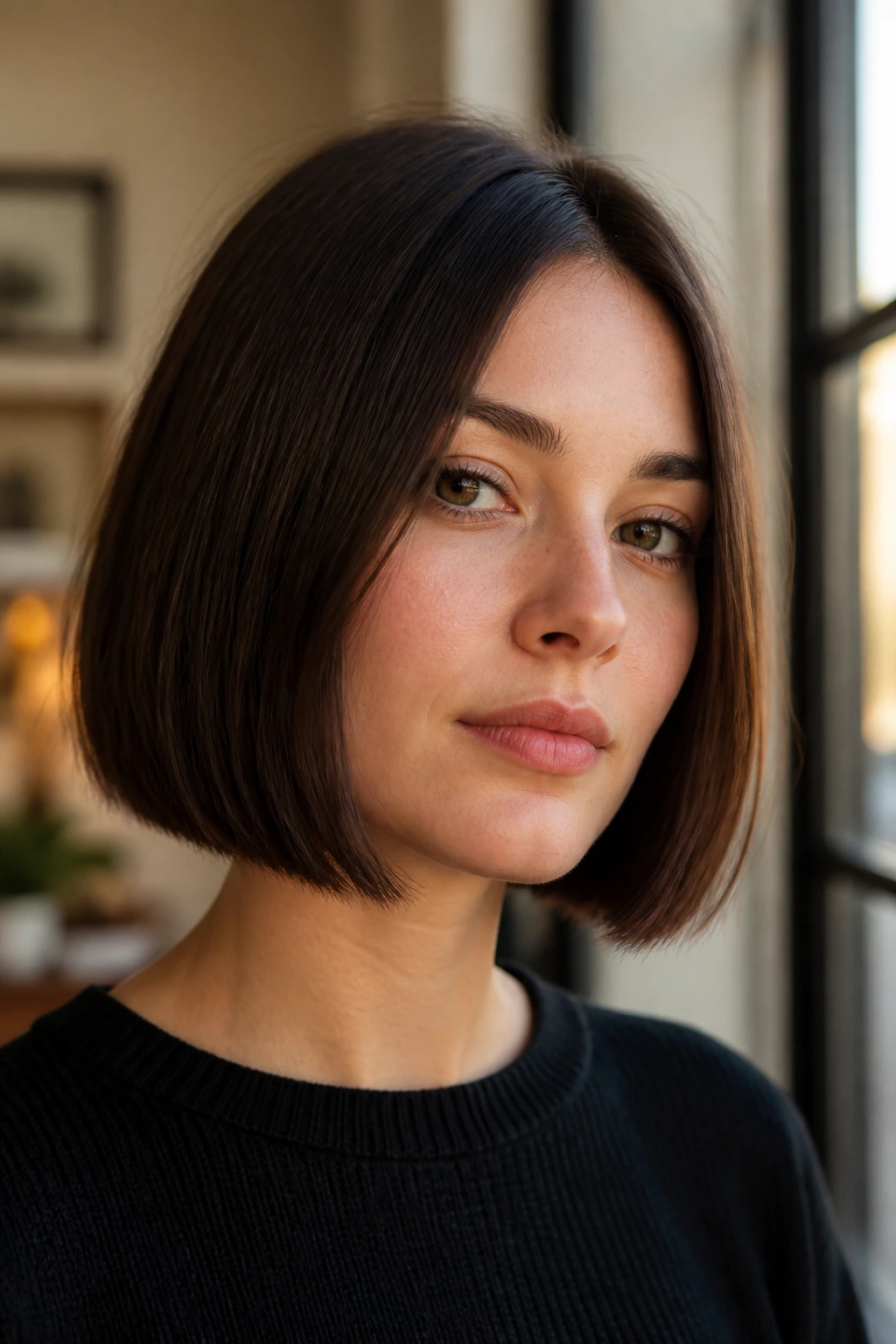
Presentation: The shape needs to read clearly in profile. Pixies look best when the crown has a little lift; bobs look best when the perimeter stays visible and the ends are not hidden by too much styling cream.
Accompaniments: Glasses, hoops, studs, turtlenecks, and collars all change the mood fast. Short cuts pair nicely with open necklines and earrings that don’t crowd the jaw, while a stronger bob can hold its own with a blazer or a higher collar.
Portions: Scale the length based on your face and how much styling you want to do. If you want less upkeep, keep the cut shorter and blunter. If you want more softness, leave a little extra at the fringe or temples instead of adding layers everywhere.
Product Pairing: Sleek bobs like a light serum and a flat brush. Crops usually want mousse or paste. Wavy versions need a diffuser or a scrunching cream that doesn’t disappear before lunch.
Small Styling Moves That Keep the Outline Fresh
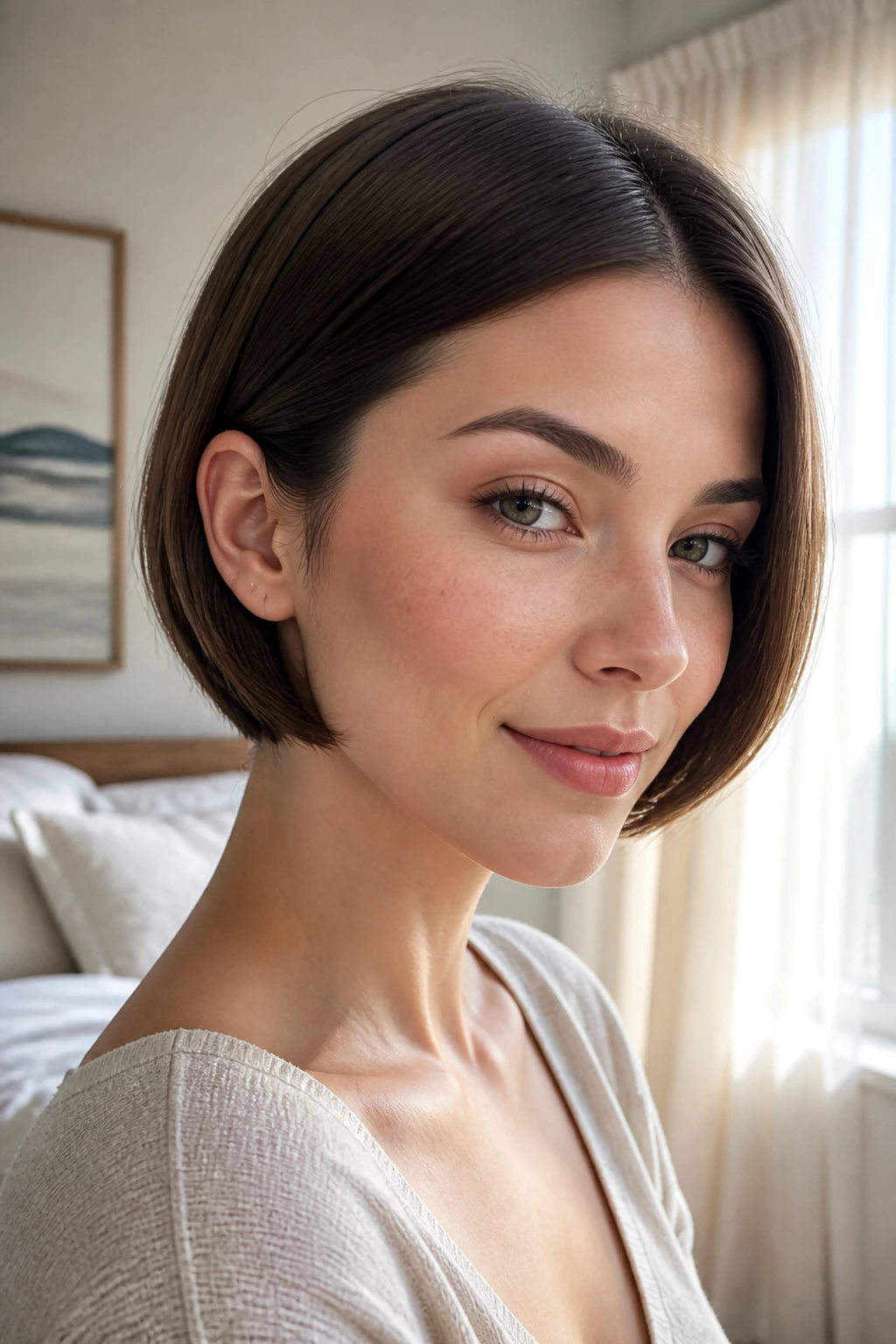
Root lift first. That matters more than almost anything else. If the roots are flat, the haircut reads flat, even if the ends are perfect.
Cool the shape before you touch it. Fine hair forgets its direction fast. A cool shot from the dryer, a clip at the fringe, or a few seconds set in a brush can make the cut last longer.
Use less product than you think. Fine hair hates overload. Start with a pea-size amount, then add only if you need it. You can always add more; you cannot pull oil back out once it’s there.
Change the part once in a while. A deep side part gives instant lift. A center part can be cleaner. Rotating between them keeps the crown from getting crushed into one habit.
Set the ends, not the whole head. A flick, bend, or tuck at the bottom is usually enough. Hair that is bent all over starts to feel overworked.
Where Fine Hair Usually Goes Flat
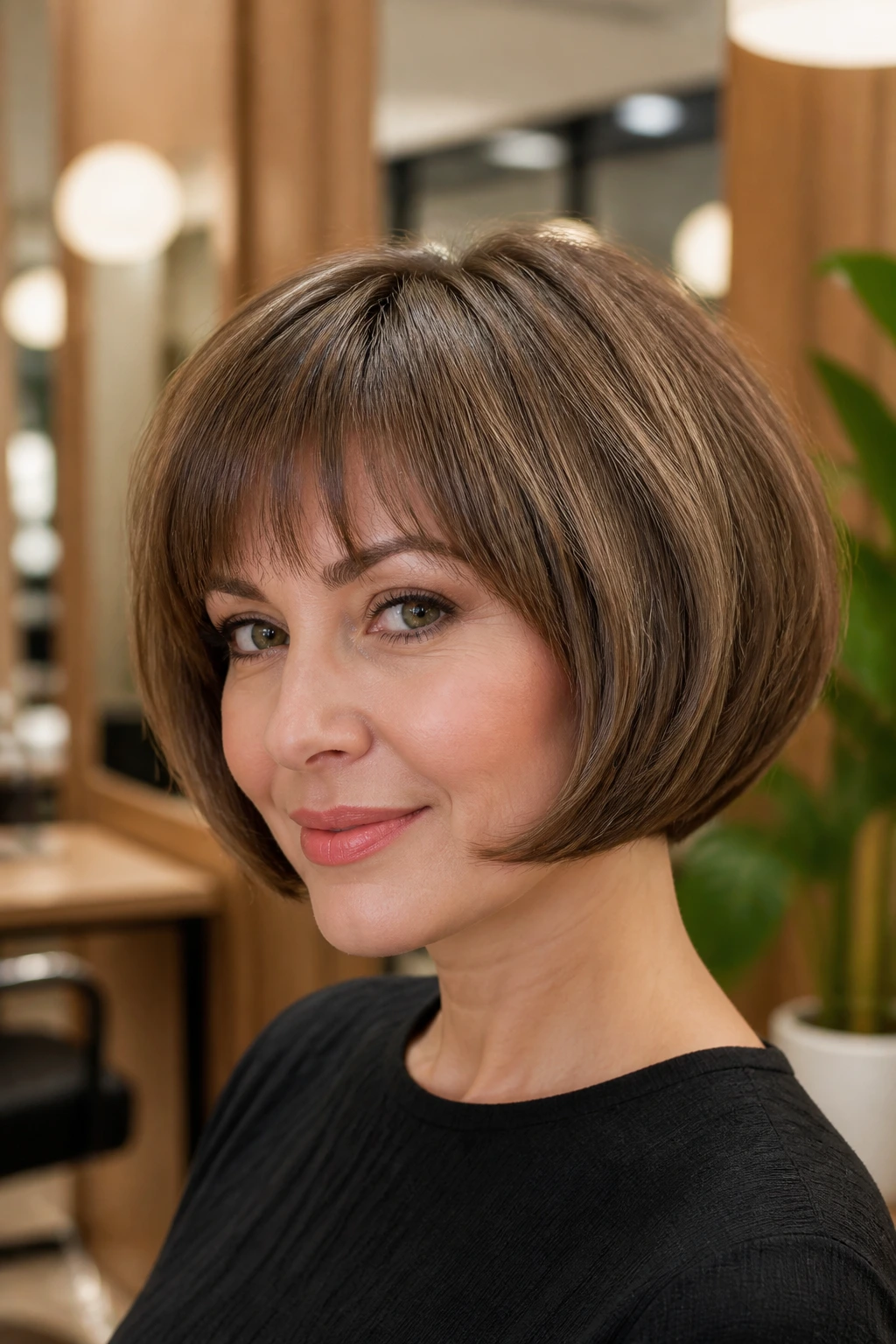
-
Over-thinned ends: The symptom is a see-through hem that hangs like thread. The fix is a stronger perimeter and less razor work.
-
Too much conditioner at the roots: The symptom is a slippery crown that falls by noon. The fix is to keep conditioner from the scalp down and rinse thoroughly.
-
The same part every day: The symptom is a dented scalp line and a flat crown. The fix is to move the part a little, even if only halfway an inch.
-
Layers that are too short: The symptom is puff at the top and nothing underneath. The fix is to keep the shortest layers controlled and the bottom line full.
-
Heavy oils and creams: The symptom is shine that turns to collapse. The fix is to use lighter styling products and keep oils to the mid-lengths only.
-
Waiting too long between trims: The symptom is a neat cut that turns into a droopy one. The fix is to trim before the shape starts to break, not after.
Tweaks, Soft Swaps, and Personal Variations
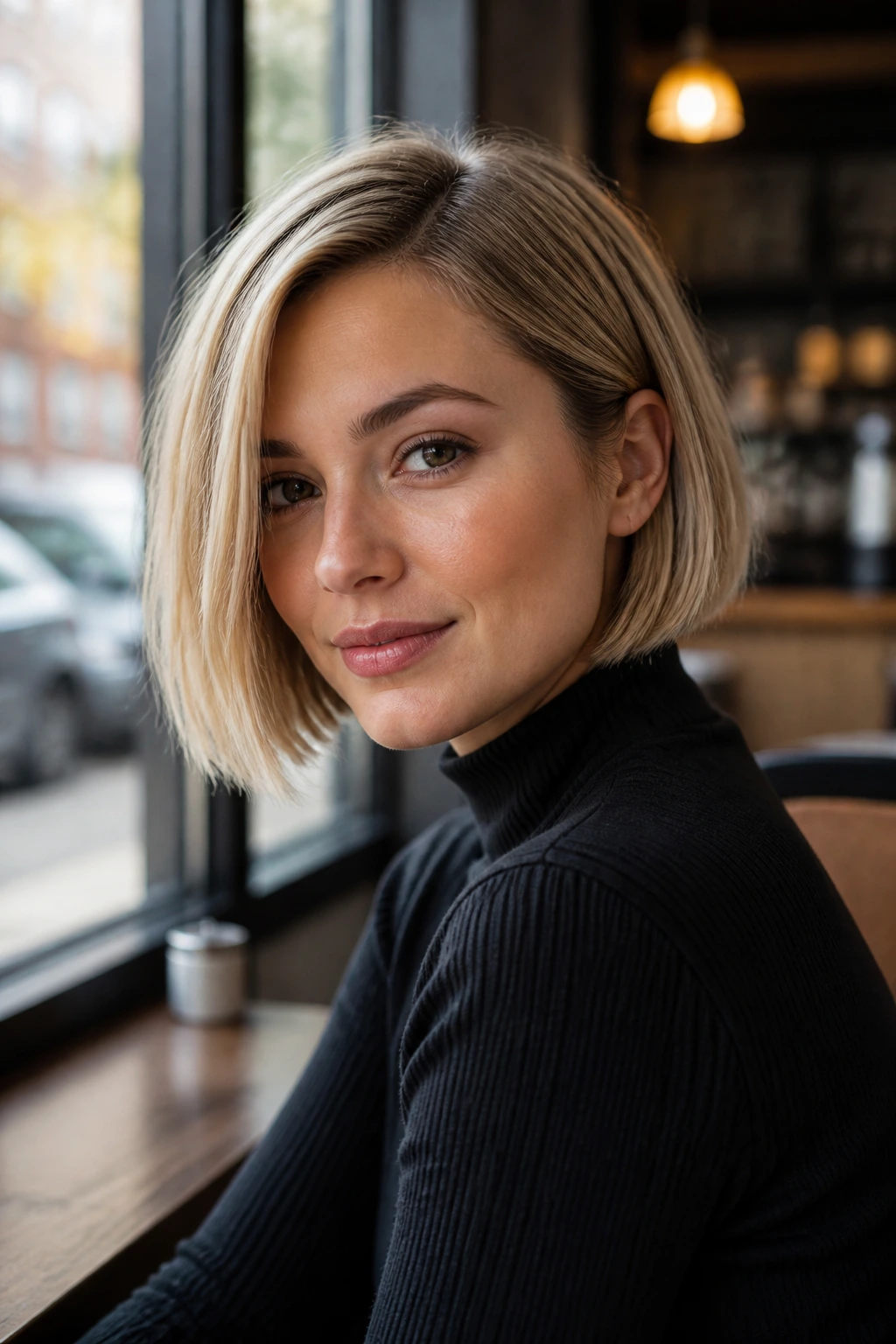
Sleek and polished: If you like cleaner hair, lean into blunt bobs, side parts, and a little serum at the ends. The shape should look controlled, not stiff.
Air-dried and soft: If you hate heat styling, choose a cut with a gentle perimeter and a little texture through the top. A small amount of mousse at the roots and a scrunch can do most of the work.
More lift at the crown: Ask for subtle stacking, a shorter top layer, or a root-directed blow-dry shape. That tiny adjustment can make a big difference on days when your hair wants to lie down and quit.
Curl-friendly adjustment: If your hair bends or curls, keep the perimeter strong and the layers soft. Dry-cut shaping or a curl-by-curl approach keeps the outline from breaking apart.
Low-maintenance grow-out: Leave the front a touch longer, keep the nape neat, and avoid severe disconnection. That gives you a cut that still looks purposeful at week six, not just week one.
Trim, Wash, and Grow-Out Notes
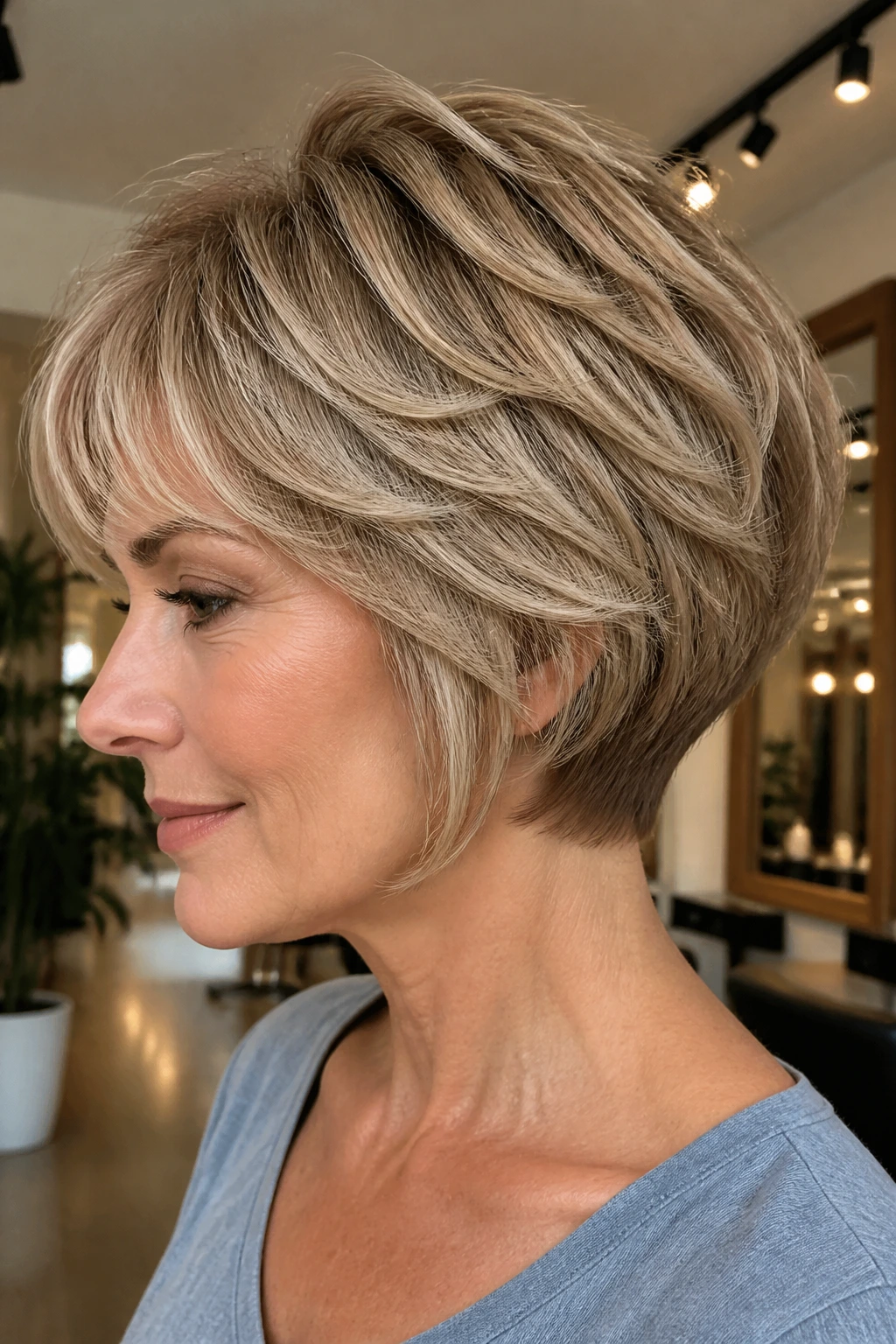
Pixies usually need a trim every 4 to 6 weeks if you want the shape to stay crisp. Bobs can go a little longer, often 6 to 8 weeks, but the moment the ends start losing their line, the haircut stops doing the main job.
Wash rhythm matters too. Fine hair tends to show product buildup faster, so a lightweight shampoo and a careful rinse help more than piling on masks and oils. If your roots get greasy quickly, dry shampoo belongs at the scalp, not through the ends where it only makes things dusty.
Grow-out is easier when the haircut was cut with a plan. Ask your stylist to keep the front slightly longer if you know you’ll want to stretch the time between trims. Sleep on a satin pillowcase if your hair frays easily, and don’t be afraid to mist the crown the next morning and re-dry it for 30 seconds. That little reset often saves a whole wash day.
Questions People Ask About Short Femme Haircuts
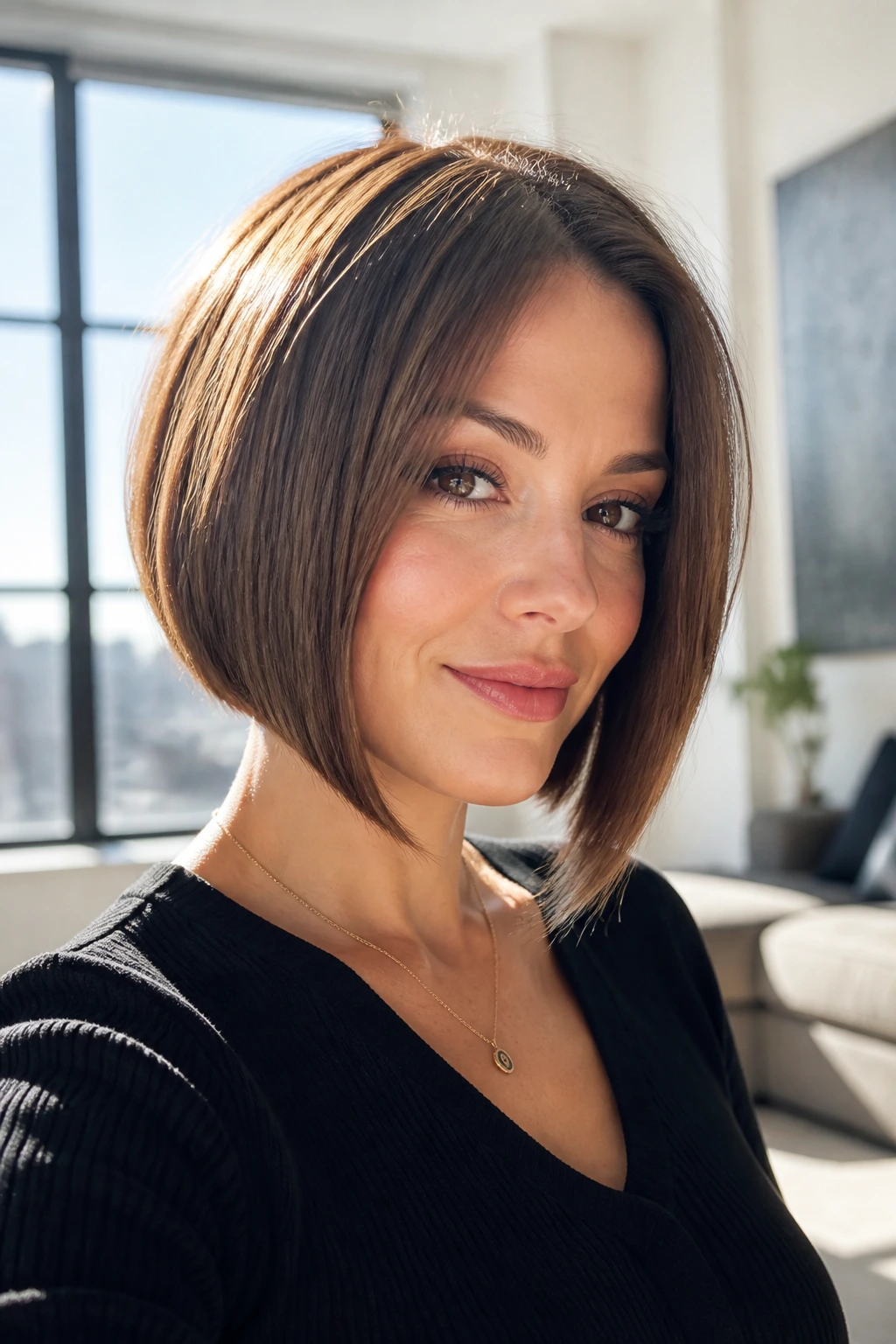
Will short hair make my fine hair look thinner?
Not if the line is cut well. Fine hair usually looks thinner when it’s long, layered too hard, or weighed down; a shorter blunt shape often reads fuller.
Can I still wear bangs with fine hair?
Yes, but keep them controlled. Side-swept, curtain, or soft fringe usually works better than a heavy straight bang that needs too much density.
What if my crown is very flat?
Ask for a cut with crown support: a little stack, a little top length, or a part that isn’t glued to the center. Then style the root first, not the ends.
Do layers help fine hair?
Only when they’re used with a purpose. Tiny layers everywhere can make the ends look threadbare, while soft internal layers can add movement without stealing weight.
How often should I trim a pixie or bob?
Pixies often need attention every 4 to 6 weeks. Bobs can usually last 6 to 8 weeks, depending on how blunt the line is and how fast your hair grows.
Can I keep a short cut feminine if I wear glasses?
Absolutely. Keep a little softness at the temples, a fringe that works with the frame, and enough length in front to balance the glasses instead of fighting them.
What if the cut looks puffy after styling?
That usually means the crown is over-dried or the layers are too short. Try a smaller brush, less product, and more focus on the roots instead of the whole head.
Is a bob or a pixie better for fine hair?
The better cut is the one that solves your main problem. If the ends look weak, go shorter and blunter. If you want more face framing and versatility, a bob or pixie bob usually gives you that middle ground.
The Right Shape Wins
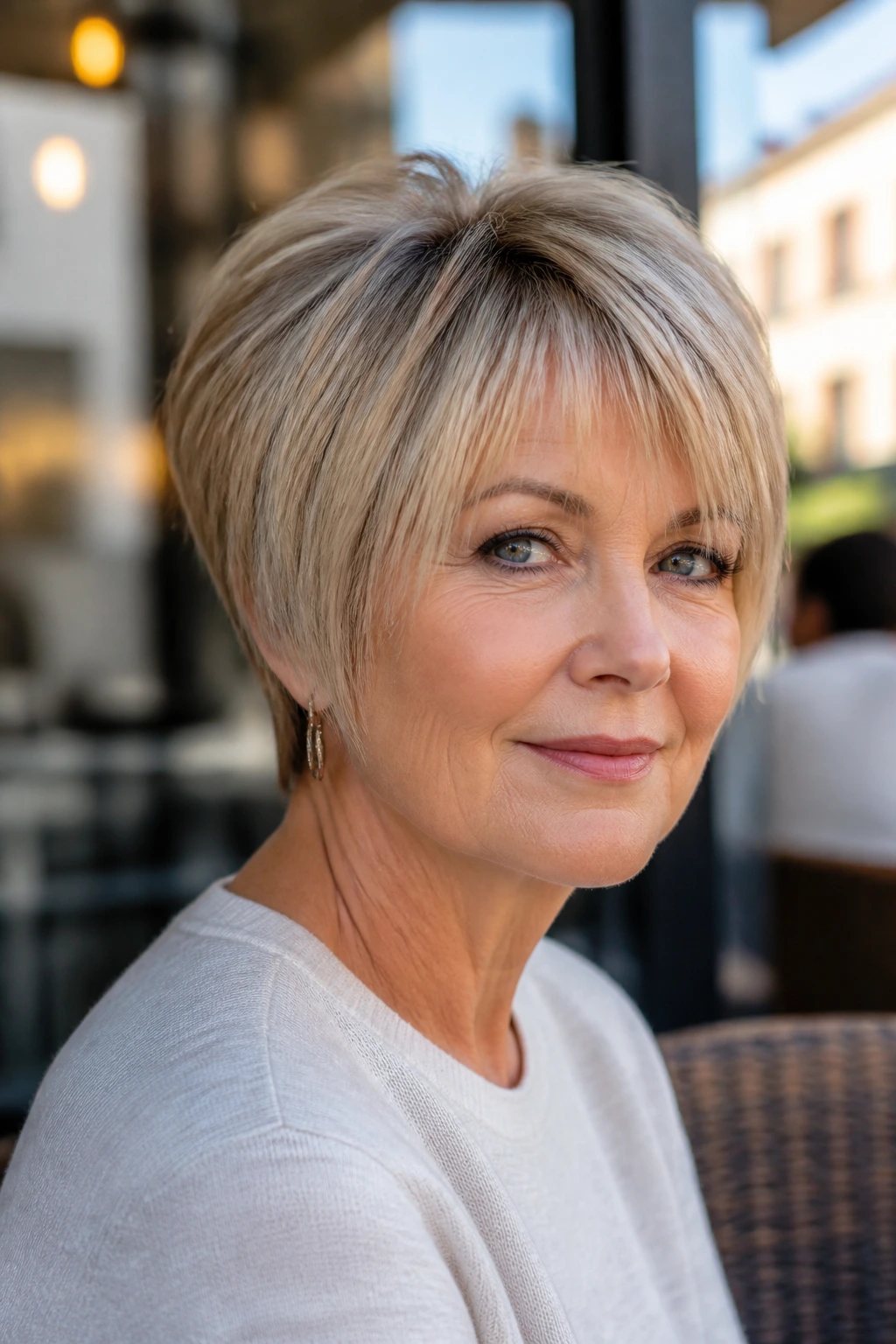
Short hair on fine strands works when the cut knows what it is. A strong line, a little crown lift, and a soft front can do more for your hair than trying to force volume everywhere at once. That’s the part people miss. They chase fluff, when what they really need is shape.
Pick the style that solves the thing that bugs you most — flat crown, see-through ends, or hair that hides your face — and build from there. Fine hair usually looks its best when the haircut does one job clearly and does not apologize for it.
