



Fine hair after 50 has a way of telling on every bad haircut. Leave it too long, and the ends start to look see-through. Over-layer it, and the crown goes soft by lunchtime. The right short hairstyle does the opposite: it gives the eye a clear line to follow, keeps the shape close to the head, and makes the whole cut look more deliberate.
That’s why short hairstyles for fine hair over 50 are such a smart move when they’re done with restraint. The best ones don’t try to create bulk where there isn’t any. They use clean edges, smart graduation, and just enough texture to keep the hair from lying flat like paper. A good pixie can lift the crown. A blunt bob can make the perimeter read thicker. A cropped shag can add movement without turning wispy.
There’s one detail that matters more than most people think: fine hair is not always thin hair. Some heads have a lot of delicate strands; others have fewer strands and less density overall. The haircut has to answer the real texture in front of you, not a photo that looked good under salon lights. That’s where the difference lives.
Why These 24 Cuts Earn Their Spot
- They keep the outline clean: Fine hair looks fuller when the perimeter has a clear line instead of shredded ends that fray after a week.
- They stop the crown from collapsing: Shorter shapes reduce the distance hair has to travel before gravity wins.
- They don’t demand a salon blowout every morning: Most of these cuts can be refreshed with a round brush, a little mousse, or even a quick finger-dry.
- They work with gray and silver strands: Mature hair often changes in texture, and a compact cut keeps those shifts from showing up as limpness.
- They leave room for personality: Side parts, fringe, nape tapering, and texture all change the mood without making the cut fussy.
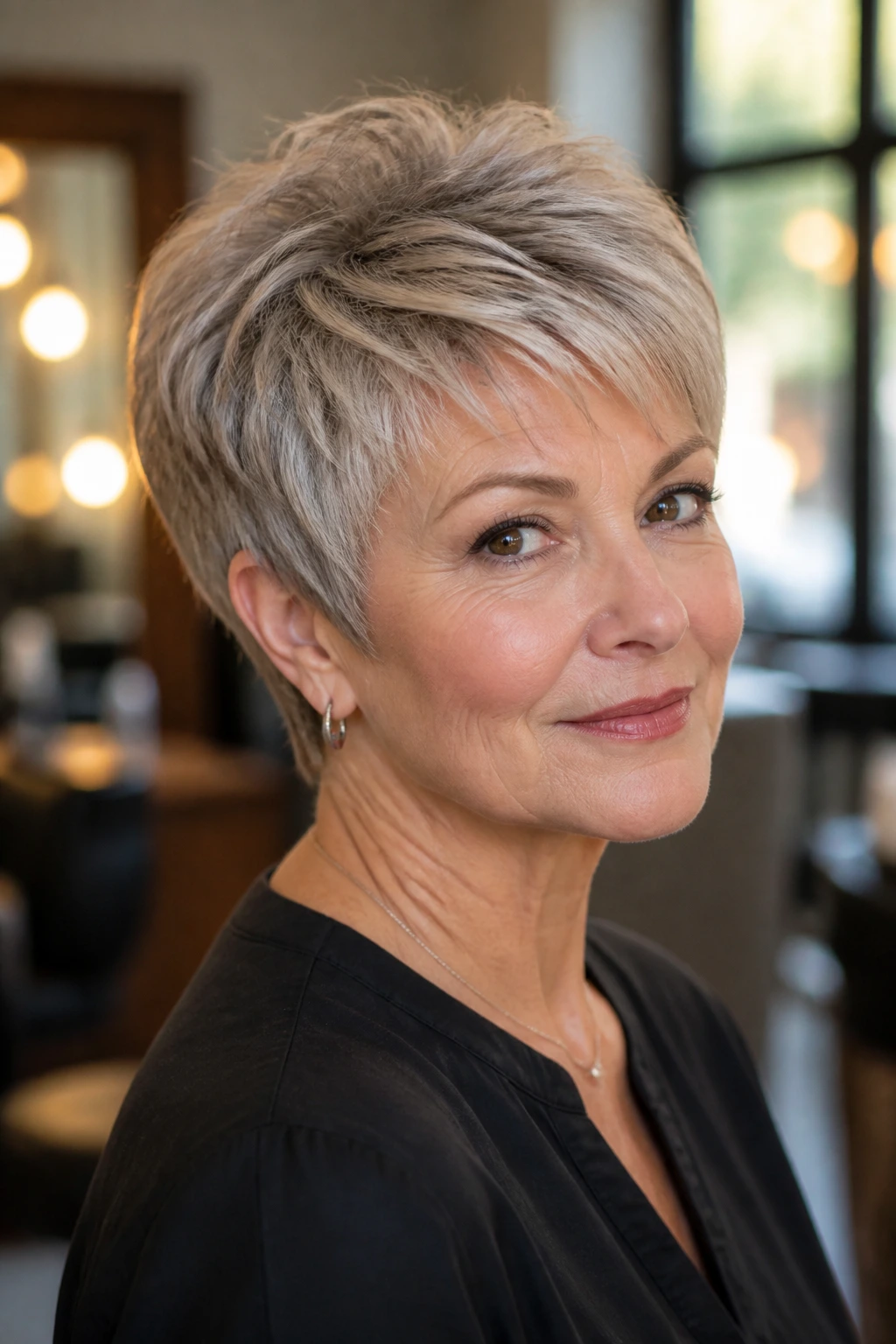
1. Soft Layered Pixie with Crown Lift
A pixie like this earns its keep by putting the volume where fine hair usually refuses to hold it: right at the crown. The sides stay neat and close, but the top has enough length—usually around 2 to 3 inches—to brush upward and slightly back. That extra inch on top matters. Without it, the style can collapse into a helmet. With it, the cut looks airy and intentional.
Why it works on fine hair
The trick is not “more layers.” It’s better layers. Ask for soft graduation through the crown and a tidy nape so the back doesn’t puff out while the top goes flat. A little root mousse and a round brush can build lift in under 10 minutes.
- Good for: straight or lightly wavy fine hair.
- Best detail: shorter sides, longer top, gently tapered neck.
- Watch for: over-thinning the ends. That’s how a pixie starts looking sparse.
Pro tip: If your cowlick sits high at the crown, keep the top a touch longer so it can be directed instead of fought.
2. Chin-Grazing French Bob with Airy Ends
A French bob at the chin is one of those cuts that looks simple until you notice how much work the shape is doing. The line sits low enough to frame the face, but not so low that fine hair drags itself flat. When the ends are lightly point-cut, the bob stays soft at the edge instead of turning blunt in a stiff, helmet-like way.
Fine hair likes this length because it gives the perimeter some presence. The line from chin to jaw reads fuller than a longer bob that slips past the collarbone and loses its edge. Add a side part or a soft off-center part, and the style gets a little lift without any teasing at all.
If your hair is straight, this cut is especially good with a quick bend under the ends. If it has a little wave, even better. The movement lands right where the eye wants it.
3. Tapered Crop with a Side-Swept Fringe
Want forehead coverage without dragging the whole cut down? This is the one. A tapered crop keeps the back and sides close, then lets the fringe sweep across the forehead in a soft diagonal that breaks up the face without hiding it. On fine hair, that fringe does a lot of heavy lifting.
How to ask for it
Tell your stylist you want the fringe long enough to tuck behind the ear if needed, but not so long that it separates into strings. Around 1.5 to 2 inches at the front is usually enough to start with, then the stylist can refine it dry.
- Fringe placement: slightly side-swept, not heavy and straight across.
- Best for: high foreheads, softer jawlines, glasses.
- Styling note: a quick blast of heat at the roots keeps the front from falling into your eyes.
The result is neat, not severe. And that matters. Fine hair over 50 usually looks better when it has shape with some air in it, not when every strand is pinned into place.
4. Stacked Bob with a Clean Nape
Here’s the cut for the woman who wants the back of her hair to do something useful. A stacked bob builds short, controlled layers through the nape so the shape lifts instead of hanging. Fine hair often needs that little wedge of support at the back; without it, the whole cut can read as flat from behind.
The front can stay softly curved around the jaw, which keeps the style feminine and easy to wear. The secret is the transition: the graduation in the back has to be smooth enough that the haircut doesn’t look blocky. Done well, it gives the illusion of density where fine hair usually looks thinnest.
This one also behaves nicely with a round brush and a few clips while it cools. That cooling time matters. A hot, freshly dried stack looks fuller if you let it set before you touch it.
5. Bixie with Piecey Texture
A bixie sits in the middle of a bob and a pixie, and that middle ground is useful when fine hair needs movement but not a hard crop. The length is short enough to keep the shape buoyant, yet long enough to keep a little softness around the ears and forehead. It’s a good cut for someone who wants short hair without the ultra-short feel of a classic pixie.
What gives it personality is the finish. Piecey texture keeps the strands separated in a controlled way, so the hair doesn’t fall into one flat sheet. A tiny bit of styling paste, worked only through the ends and the outer layer, is usually enough. Too much product and the whole thing collapses. Too little and it can go fuzzy.
This cut works especially well if your hair has some natural bend. Straight hair can wear it too, but it usually needs a quick pass with a small round brush or a flat iron bend at the ends.
6. Feathered Shaggy Bob
Can a shag work on fine hair? Yes, if the layers are handled with discipline. A feathered shaggy bob gives motion around the face and through the top, but it should still keep a solid base around the jaw or just above it. That base is what saves the cut from looking wispy.
The feathering should be soft, not sliced into pieces that leave gaps. Think of it as air between the strands, not holes in the shape. This style is at its best when the hair has a little natural wave, because the bend makes the layers read fuller. On stick-straight hair, a small round brush and a mist of texturizing spray help keep the shape visible.
This is the kind of cut that looks a little better on day two, once the product has settled and the pieces separate naturally. Not greasy. Just relaxed.
7. Swept-Back Quiff Pixie
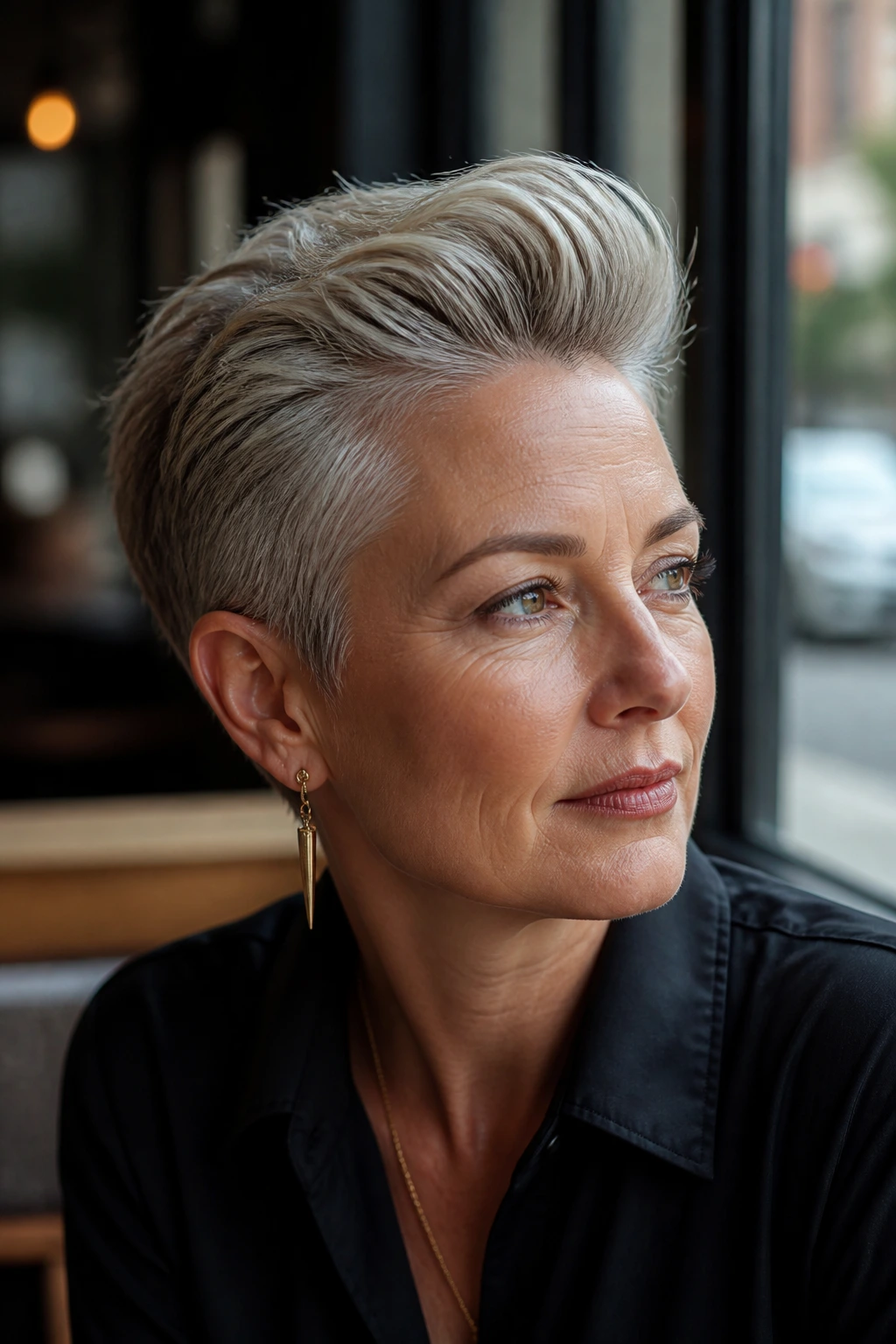
A swept-back quiff pixie is for the woman who wants a little edge without losing polish. The front is left long enough to push up and back, creating that lifted sweep at the hairline, while the sides stay close and clean. On fine hair, that front height can make the whole face look more open.
The style works best when the roots are dried with a nozzle attachment and lifted with the fingers or a small brush. A matte paste at the front gives hold without shine, which is useful if the strands are soft and won’t stay in place on their own. The key is to keep the quiff shaped, not spiky.
This cut can look especially good with bold earrings or a strong brow, because the hair stays out of the way and lets the face lead. Short. Sharp. Easy to live in.
8. Ear-Tucked Rounded Bob
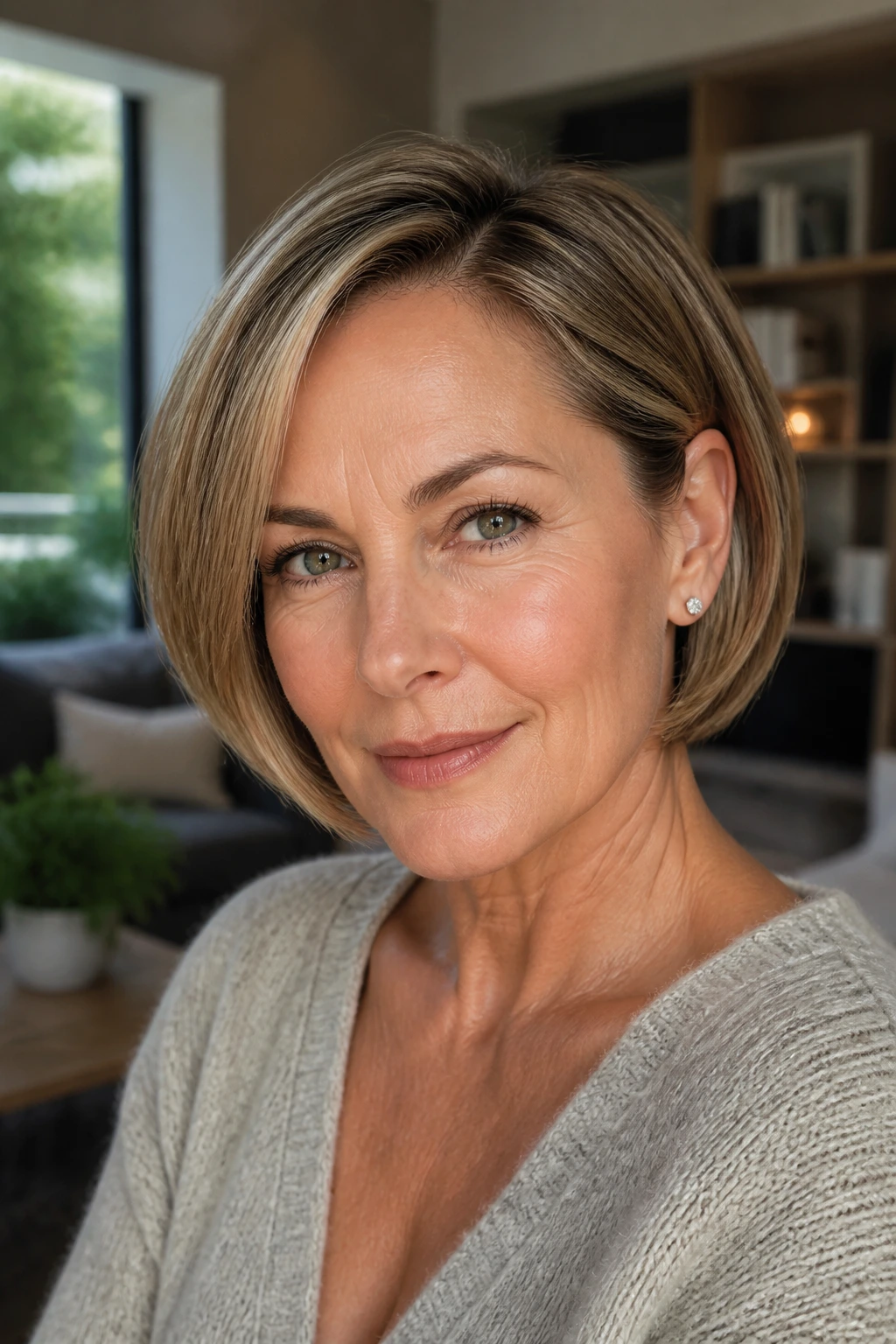
This is the neat, close cousin of the classic bob. The line curves around the face and sits around the chin or just below it, with enough softness to tuck one side behind the ear without breaking the silhouette. For fine hair, that rounded shape reads fuller than a long, stringy bob ever will.
When neatness matters
A rounded bob is useful when you want the haircut to look controlled even on a low-effort day. The perimeter carries the style. The inside can stay fairly simple, with only a little internal shaping to keep it from puffing out. That’s the part a lot of people miss. Too many layers and the curve disappears.
A side part makes this cut look less school-uniform and more modern. If your hairline is starting to change or your temples have thinned a bit, the tuck behind the ear can be a nice trick. It gives the face breathing room without stripping away the shape.
9. Crop with Micro-Layers
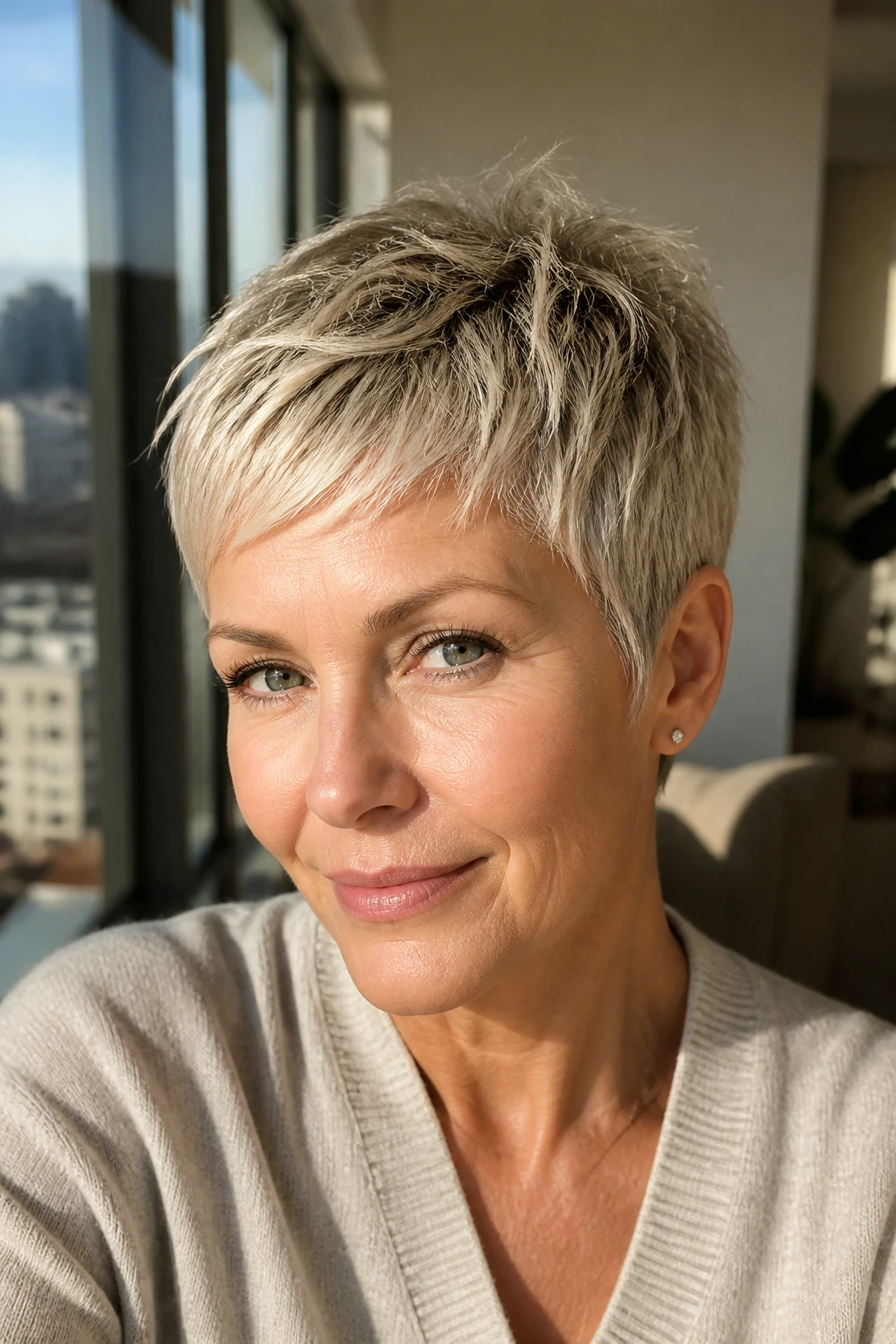
Micro-layers are the quiet answer to fine hair that needs movement but not obvious texture. Instead of carving big sections out of the cut, the stylist only softens the interior by tiny amounts. The result is subtle: the hair bends a little more easily, but the outer line stays intact.
That matters because the outer line is what makes fine hair look denser. If the perimeter is weak, no amount of product saves it. A crop with micro-layers keeps the edges crisp while giving the top just enough separation to avoid that dead-flat look some short cuts get after a day or two.
This cut is a good fit if you like the feel of short hair but don’t want it to look overly styled. It can be finger-dried, pushed to one side, or rough-dried with mousse. Simple. But not boring.
10. Asymmetrical Bob with a Long Front Piece
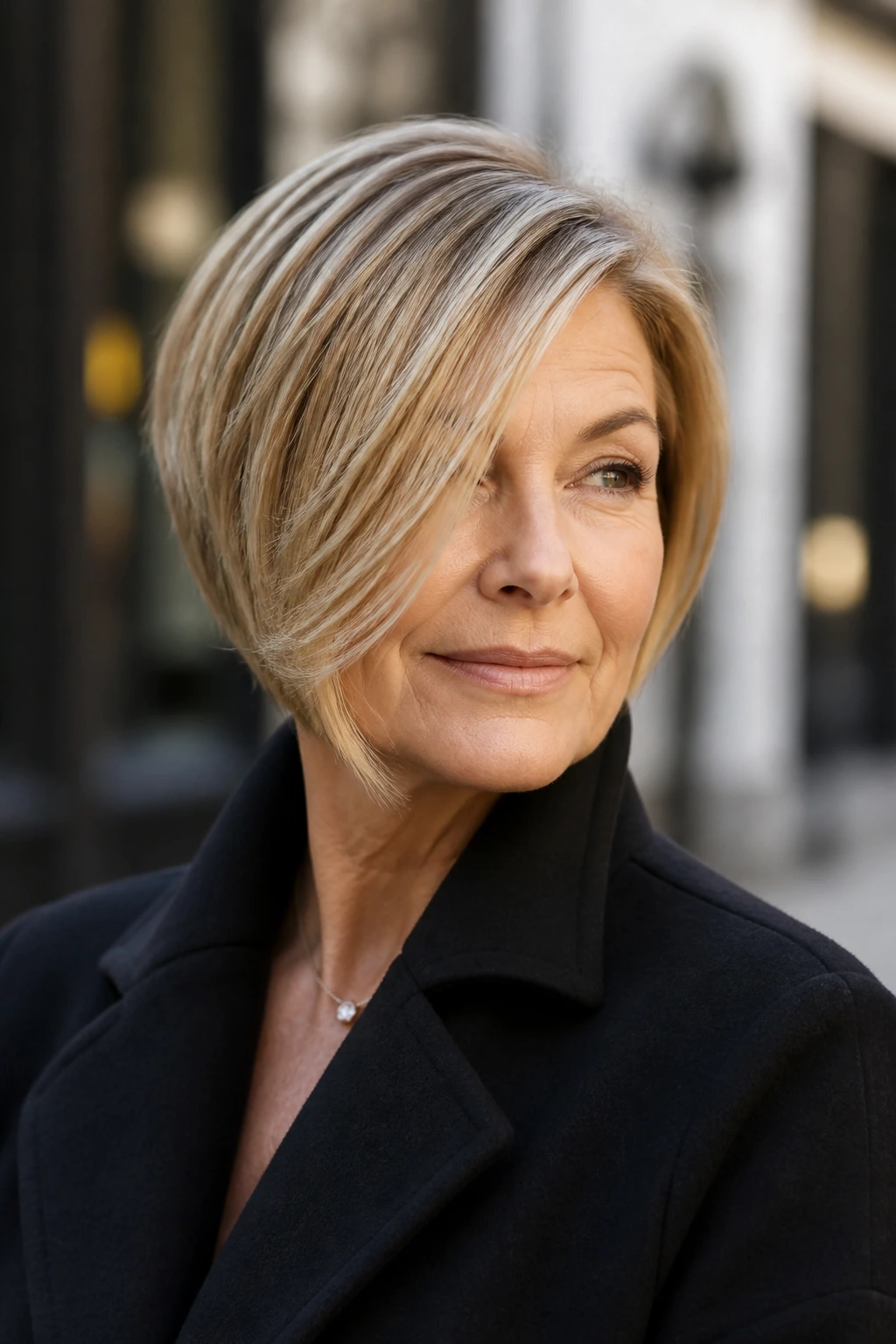
A little asymmetry goes a long way on fine hair. One side can dip a bit lower toward the cheekbone while the other stays tighter around the jaw, which gives the cut movement without stripping away the shape. The long front piece also draws the eye downward, which can be useful if you want to elongate a rounder face.
The longer front section should not be so long that it starts hanging like a curtain. Keep it light enough to tuck behind the ear or sweep across the cheek. If the front feels too heavy, the whole cut loses its point.
This style works best when the back is clean and the sides are kept sleek. It’s a little dramatic, yes, but it still feels wearable because the asymmetry lives in the outline, not in a pile of overworked layers.
11. Jaw-Length Cut with Curtain Bangs

What if you want softness around the face without losing too much density at the sides? Curtain bangs solve that problem fast. A jaw-length cut gives the hair a solid frame, and the bangs split open at the center or slightly off-center so the forehead doesn’t feel boxed in.
For fine hair, keep the curtain fringe light enough that it falls in a narrow fan rather than a thick curtain. That’s the difference between airy and heavy. The side pieces should blend into the cut around the cheekbones, not get disconnected from the rest of the shape.
This style is one of the easiest to wear with glasses, because the fringe can sit just above the frame line. It also grows out well, which is a gift if you dislike constant salon visits. The shape softens as it grows instead of falling apart.
12. Sleek Blunt Bob with Soft Ends
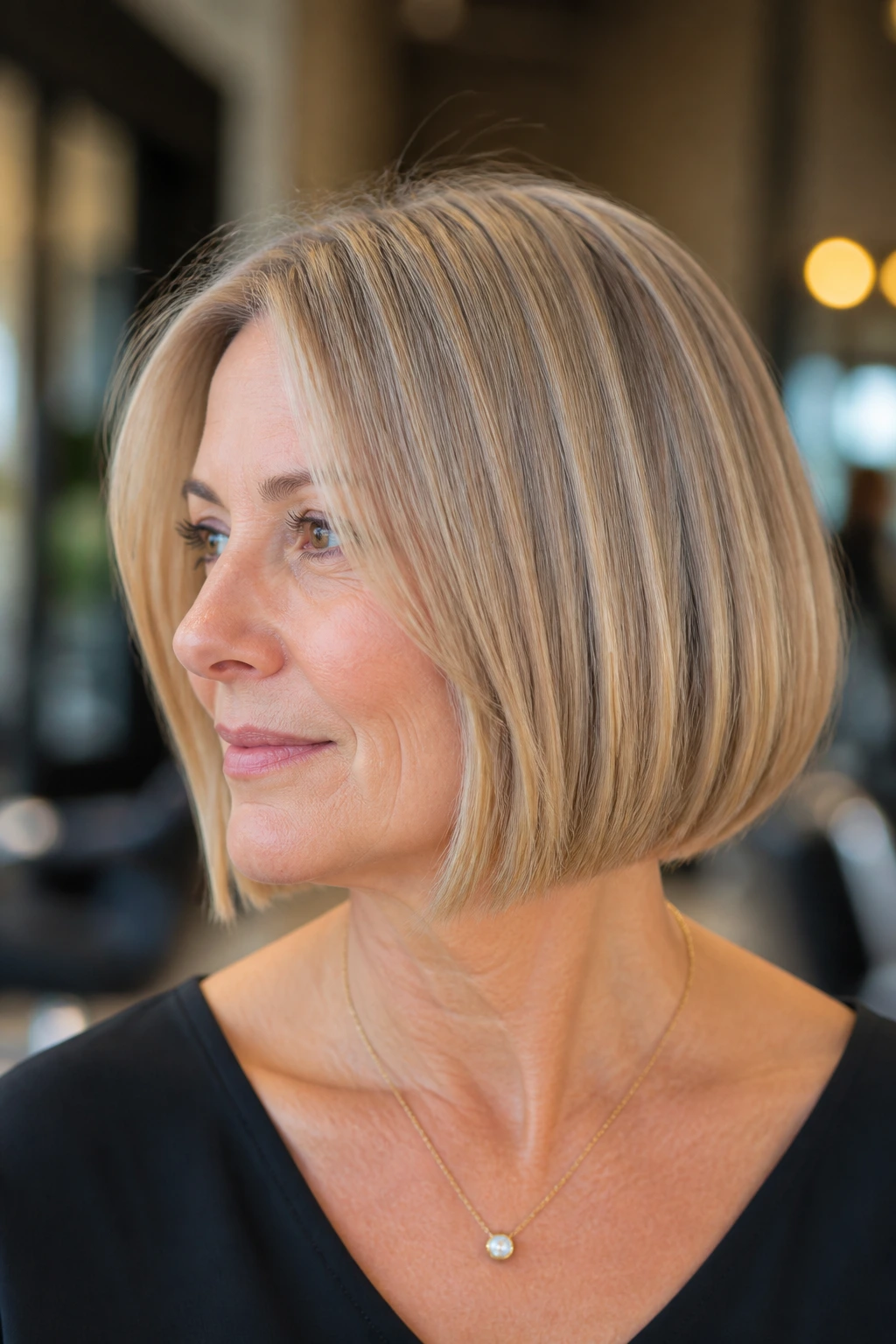
A blunt bob can be a fine-haired woman’s best friend if it’s cut with enough care. The blunt line makes the hair look thicker at the edge, which is exactly what you want when density is modest. But the ends should be softened just enough so the bob doesn’t look like a block cut with kitchen scissors.
That softness can come from a tiny bit of point cutting at the very perimeter, not from shaving away the line. Big difference. Too much texturizing destroys the whole point of a blunt bob. The edge is the feature.
This is a strong choice if you like a polished finish and don’t want to fuss with a lot of pieces falling forward. It also handles gray hair well, especially when the color is bright and the line is clean. Sharp. Calm. Very controlled.
13. Short Wedge Cut with Crown Shape
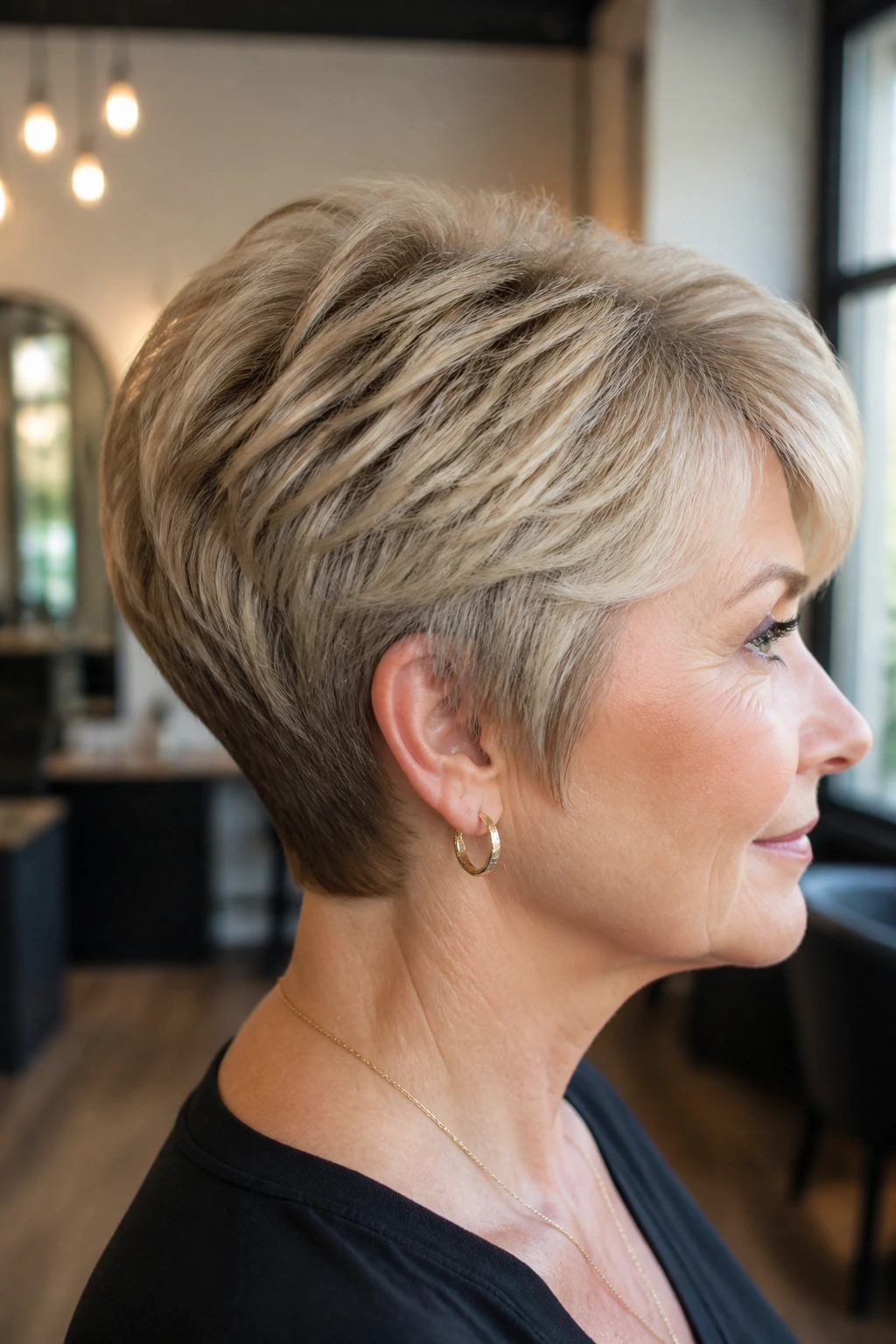
The wedge cut has a built-in advantage: it creates shape through the back and crown without relying on length. Fine hair can look surprisingly full in this cut because the layers are stacked in a way that props the silhouette up from the nape to the top of the head.
The crown is the part to watch. If the stylist leaves too much weight there, the wedge loses its lift. If they remove too much, it starts to look airy in the wrong way. The sweet spot is a smooth curve from the back of the head into the top, with enough fullness to keep the profile readable.
This style has a touch of vintage in it, but it doesn’t have to feel dated. A softer perimeter and a slightly longer fringe can keep it modern. And yes, it does a nice job of making the head shape look elegant without any extra effort.
14. Piecey Pixie-Bob Hybrid
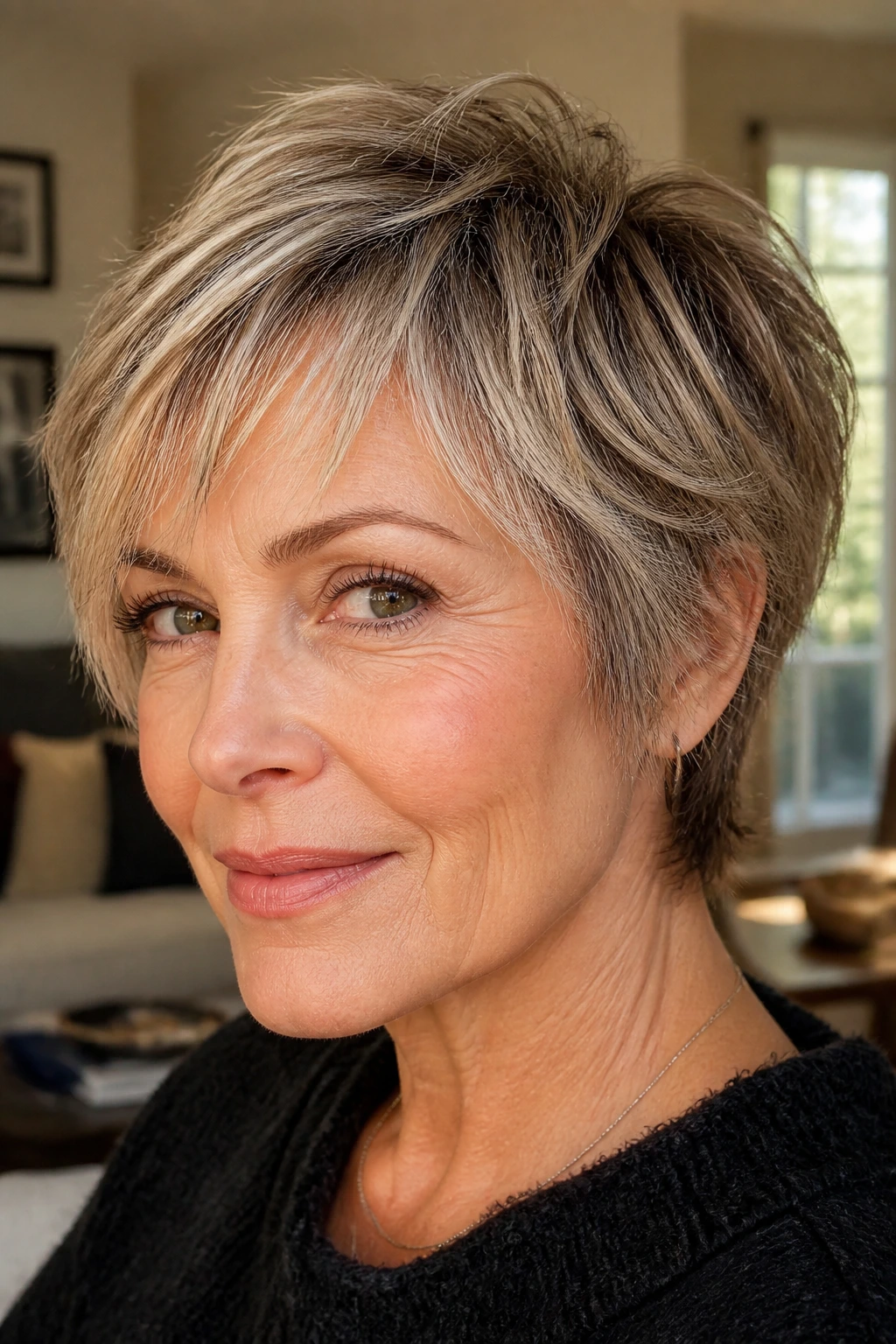
This is the cut for someone who can’t decide between short and shorter. A pixie-bob hybrid leaves a little more length around the ears and nape than a pure pixie, but it still sits well above the jaw. That extra length makes it easier to wear in a more relaxed way, especially if your fine hair needs a few days of mercy between washes.
The piecey finish matters here. Instead of one smooth cap of hair, the cut is broken into soft sections that can be pushed forward, tucked back, or separated with wax. Fine hair often benefits from that kind of flexible structure because it creates the sense of density without bulk.
Ask for the pieces around the face to be kept a touch longer than the rest. That keeps the hybrid from looking too severe and gives you room to style it in different directions.
15. Layered Crop with Wispy Bangs
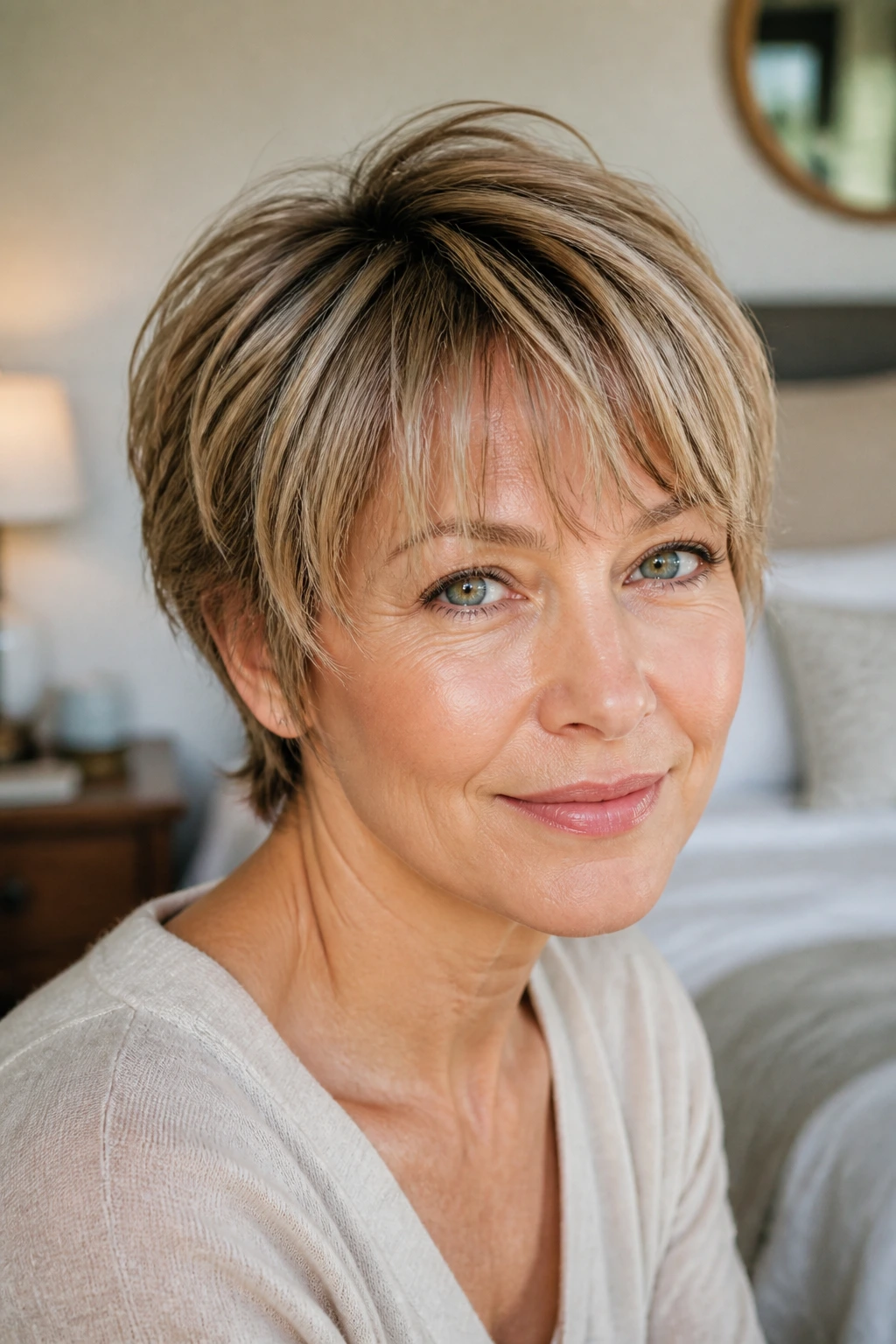
A layered crop with wispy bangs can soften a strong forehead or a sharp brow line without overpowering the face. The bangs should be light enough that they don’t form a heavy band across the front. Fine hair usually does better with a few broken pieces than with one thick fringe that wants to split apart.
The crop itself should stay close to the head, with layers that move but don’t leave gaps. That’s the balance. If the crop is too heavily layered, the ends can go transparent. If it’s too blunt, the style can feel blocky. Wispy bangs give it some air.
This is a nice choice if you want a cut that looks easy but still feels thought through. It’s one of those styles where a small side sweep or a tuck behind one ear changes the mood fast.
16. Side-Parted Bob with Built-In Volume
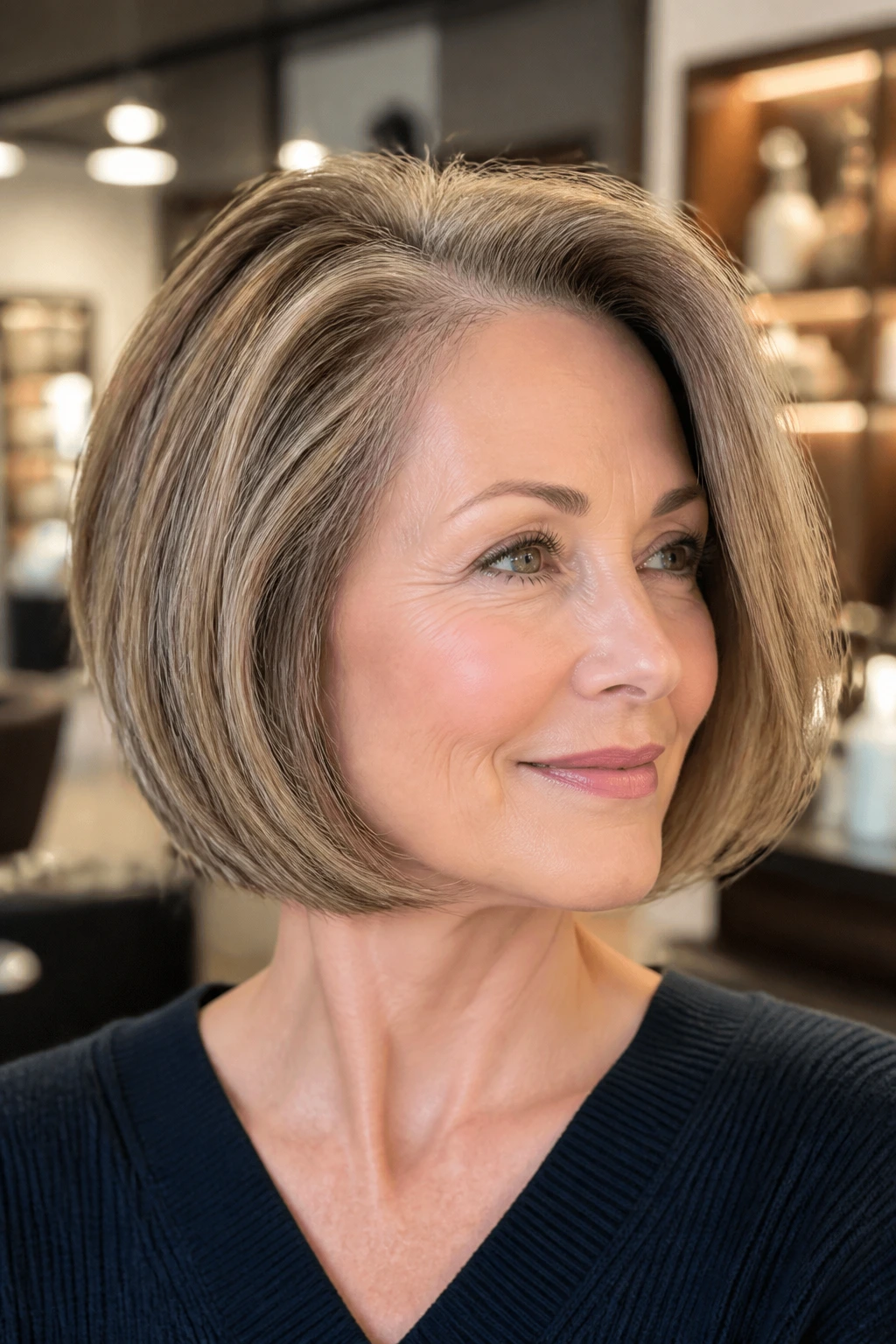
A side part can rescue fine hair faster than almost anything else. Shift the weight away from the center, and the root area gets a little natural lift right where you need it. Pair that with a bob that sits around the jaw or just below it, and the cut starts to look fuller without much styling at all.
The volume should come from the part and the shape, not from a heap of product. A clean blow-dry with a paddle brush at the sides and a small round brush at the roots can do more than an armful of mousse. That sounds obvious, but plenty of people overload the hair and end up flattening it under the weight.
This cut is especially useful if your hair tends to separate in the middle by noon. A deeper side part gives the style a built-in reset. Simple trick. Big payoff.
17. Curly Short Shag for Fine Waves
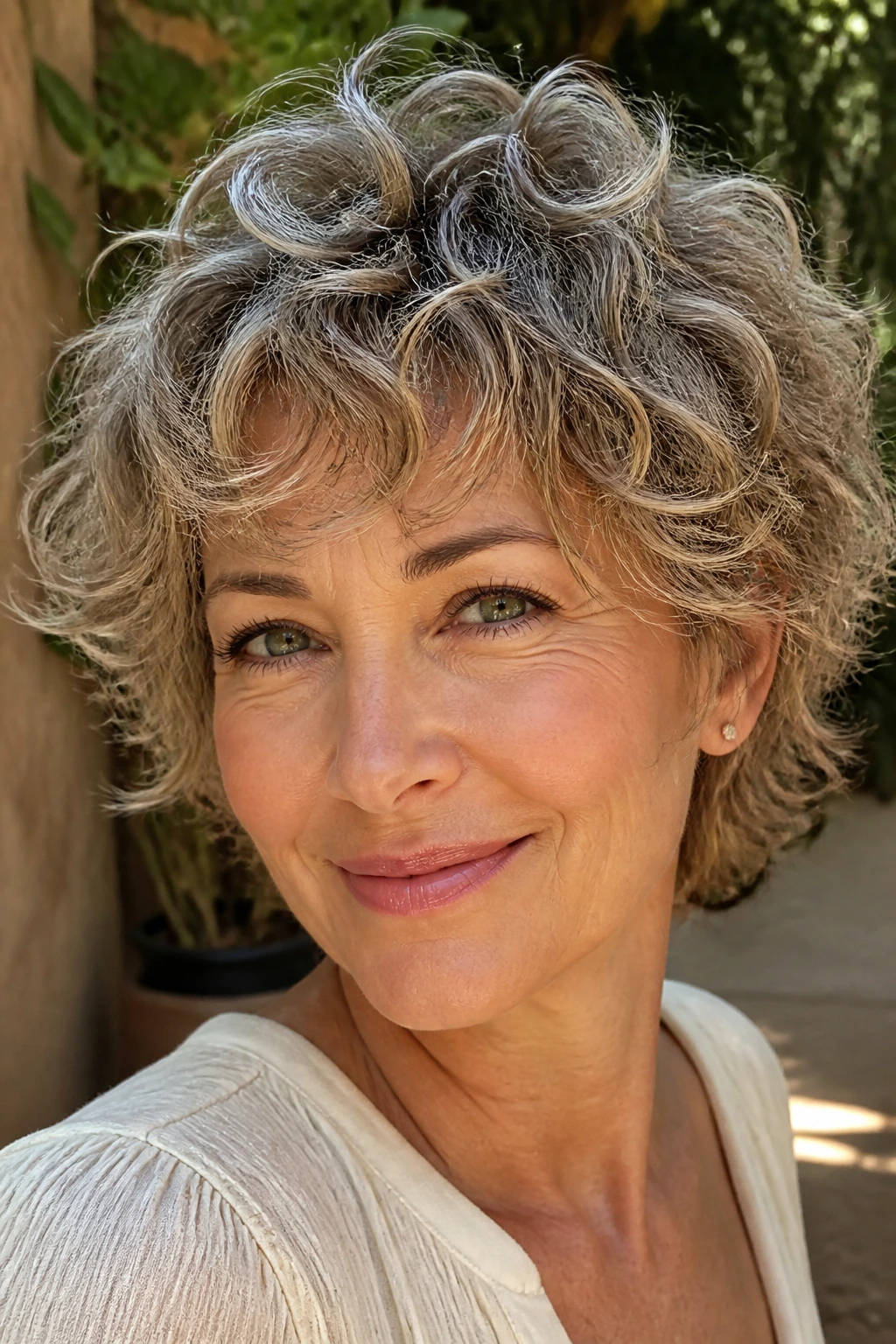
Can fine waves wear a shag without turning fluffy? Absolutely, if the layers are cut with the curl pattern in mind. A short shag for fine waves should keep enough length at the perimeter to hold the shape together while letting the top move freely. The goal is bounce, not puff.
How to keep the wave intact
Let the hair be cut dry or at least partially dry, because fine waves lie to you when they’re wet. What looks like a gentle bend can turn into a tighter curl, or vice versa. A good stylist will read the wave at its real level and place the layers where they’ll help the shape, not break it apart.
- Best styling move: scrunch with mousse, then diffuse on low heat.
- Avoid: rough towel drying. It roughs up the cuticle and makes fine strands frizz.
- Best finish: a light spray on the ends, not a creamy product at the roots.
This one has personality. It also has a little attitude, which is nice when so many fine-hair cuts can drift into tidy and forgettable.
18. Rounded Crop with Soft Taper
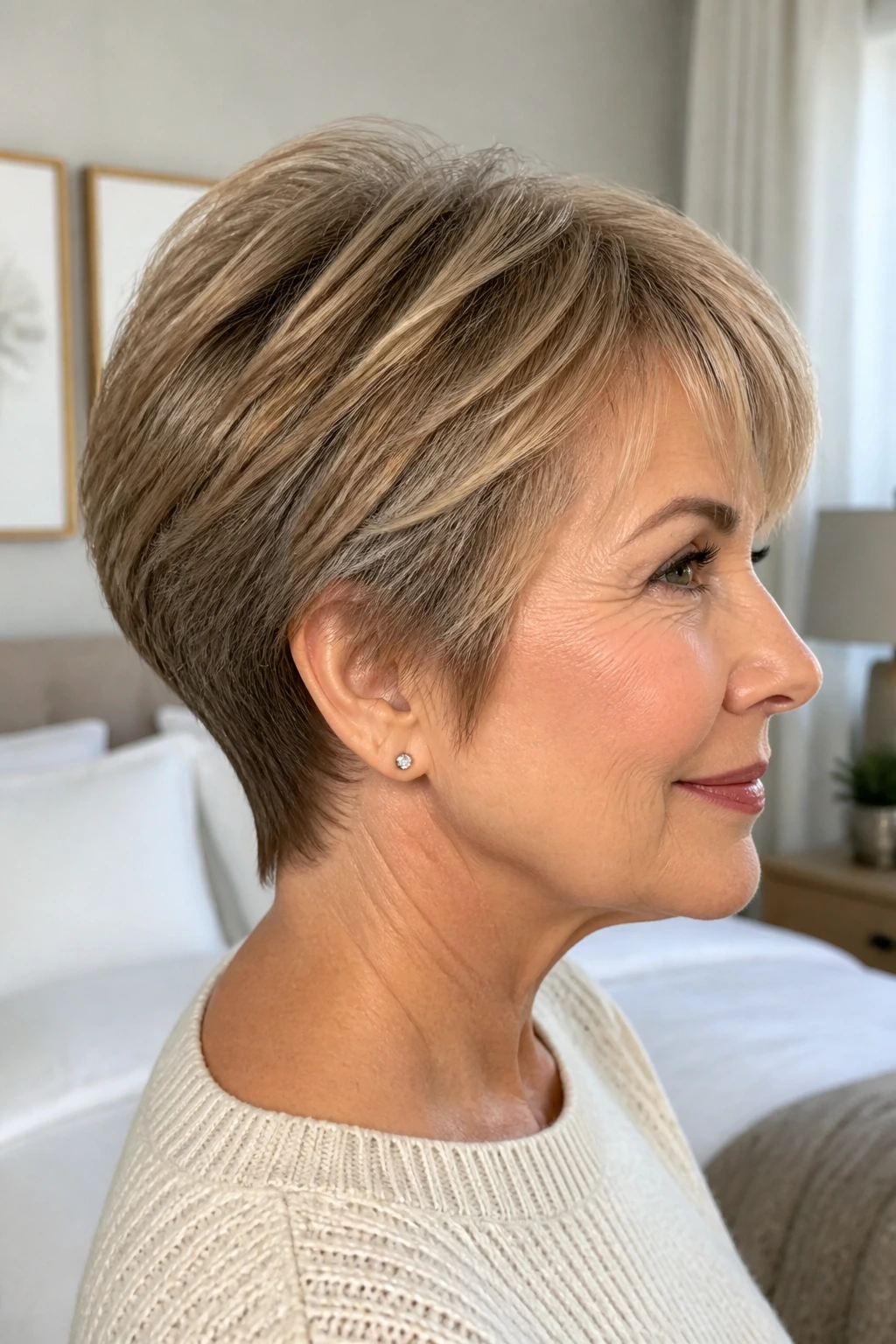
A rounded crop gives fine hair a more complete silhouette, especially when the top and sides are shaped into a soft dome rather than left to fall flat. The taper at the nape keeps the cut from feeling bulky at the neck, which is a common problem with short hair that has a lot of weight left in the wrong place.
What makes this version work is the smoothness. No harsh corners. No choppy ends. Just a compact shape that follows the head and keeps the eye moving. If you like a clean, polished look with almost no morning wrestling, this cut deserves a serious look.
It also plays nicely with silver hair, because the rounded outline lets the color read as intentional and bright rather than sparse. That matters more than people admit.
19. Grown-Out Pixie with a Neat Neckline
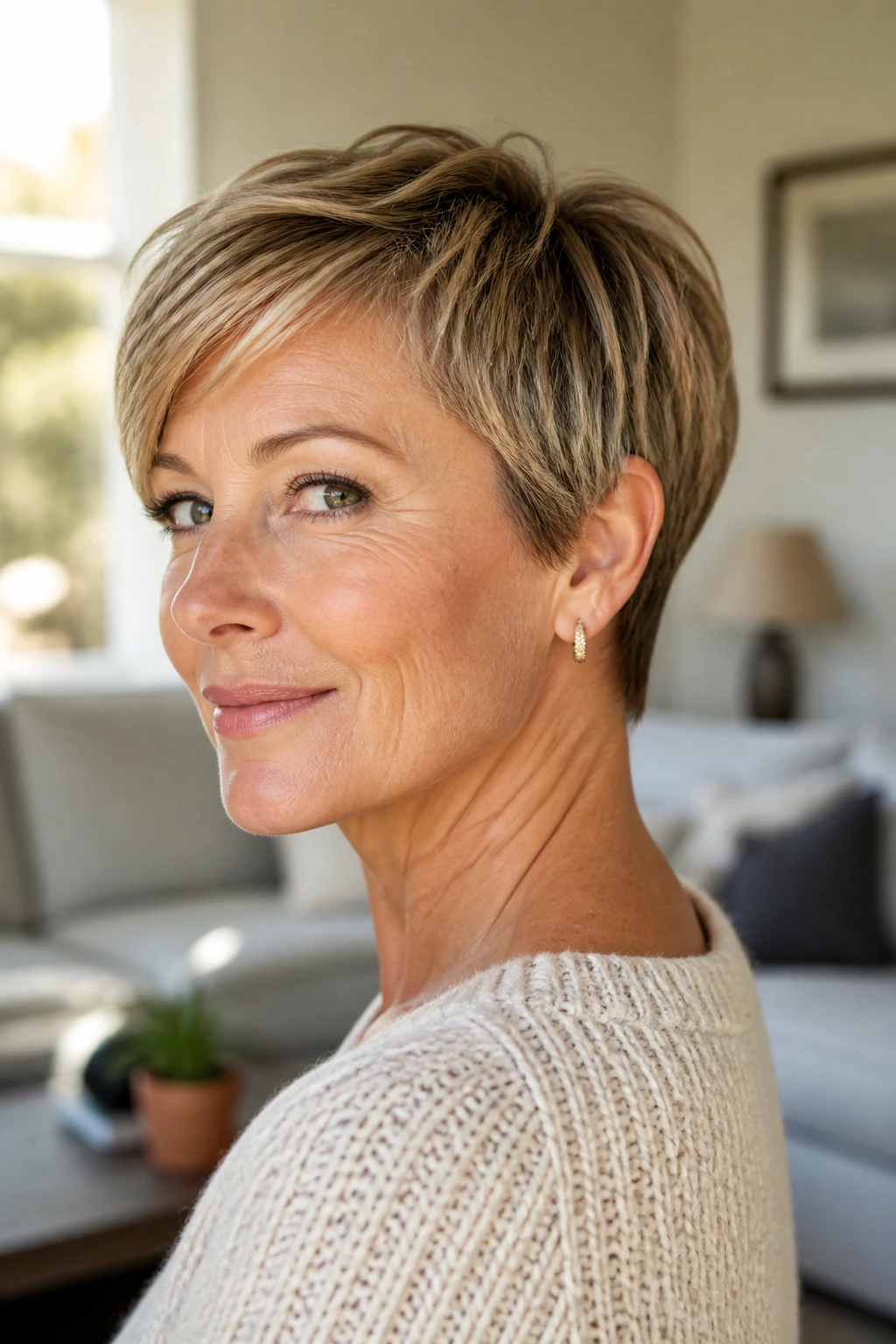
A grown-out pixie is a smart move if you want short hair but hate constant salon visits. The top is left long enough to sweep to one side or slightly forward, while the neckline stays tidy and trimmed close. That combination keeps the cut from looking accidental as it grows.
Fine hair likes this shape because the longer top gives it some styling options, but the neat neckline keeps the overall silhouette crisp. If the back gets shaggy, the whole thing starts looking loose in a bad way. The fix is simple: trim the nape before it gets fuzzy.
This is also a forgiving cut if you’re between styles. It can read polished with a quick blow-dry or more relaxed with a little paste and finger styling. That flexibility is the point.
20. Sculpted Bob with a Tucked Nape
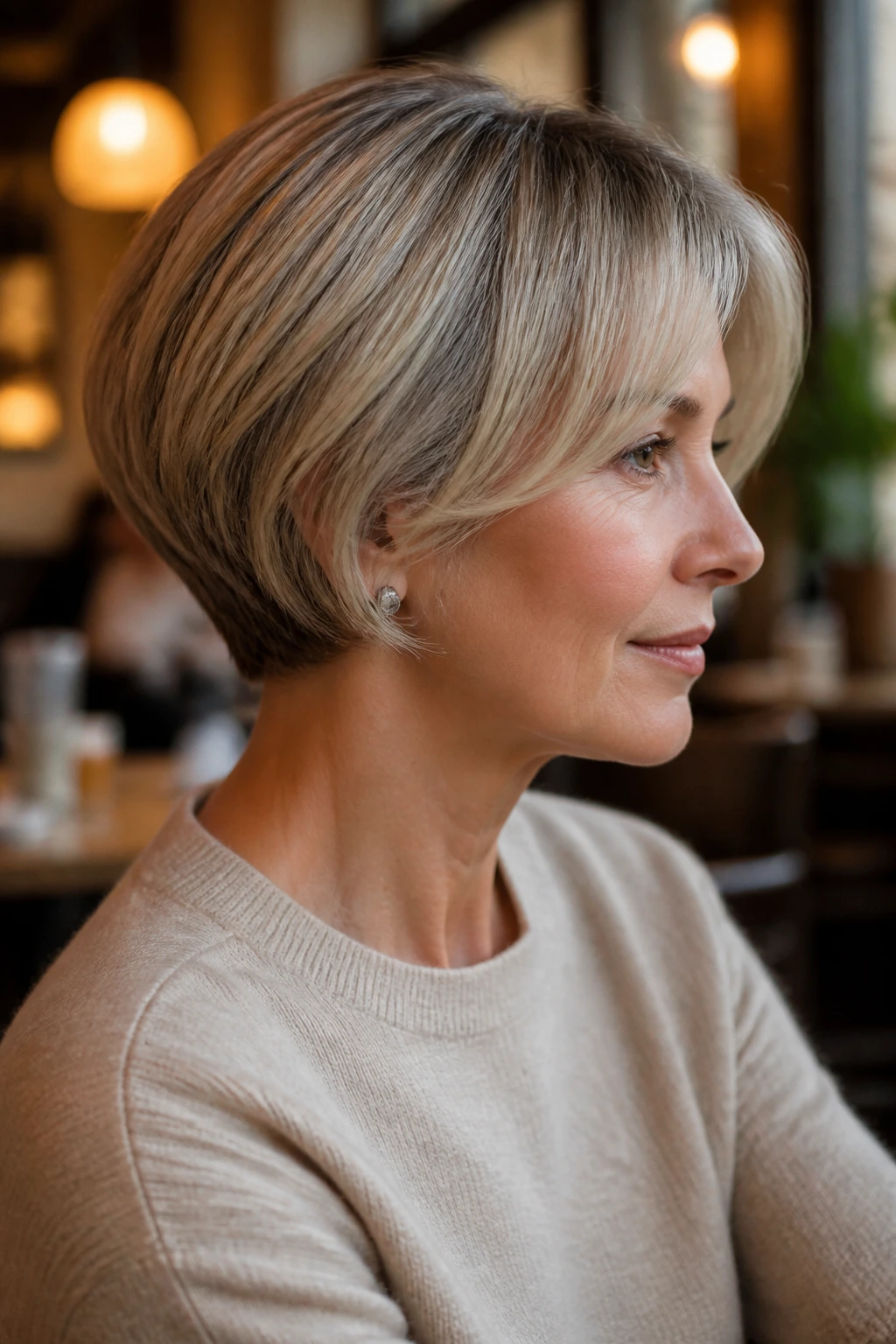
A sculpted bob is what happens when a bob gets a little more architecture. The nape sits tucked and close, while the sides and top are shaped to create a clean curve around the head. Fine hair benefits from that structure because it keeps the cut from slipping into a limp triangle.
The trick is to keep the top proportionate. If the crown gets too long, the bob starts sagging. If the nape is too short without enough support above it, the shape can look abrupt. The best version feels balanced from every angle, which is harder to achieve than it sounds.
This cut is a good one for women who like their hair to look neat even on a busy day. It does not need a lot of extra tricks. The silhouette does the work.
21. Shattered Bob with Razor Texture
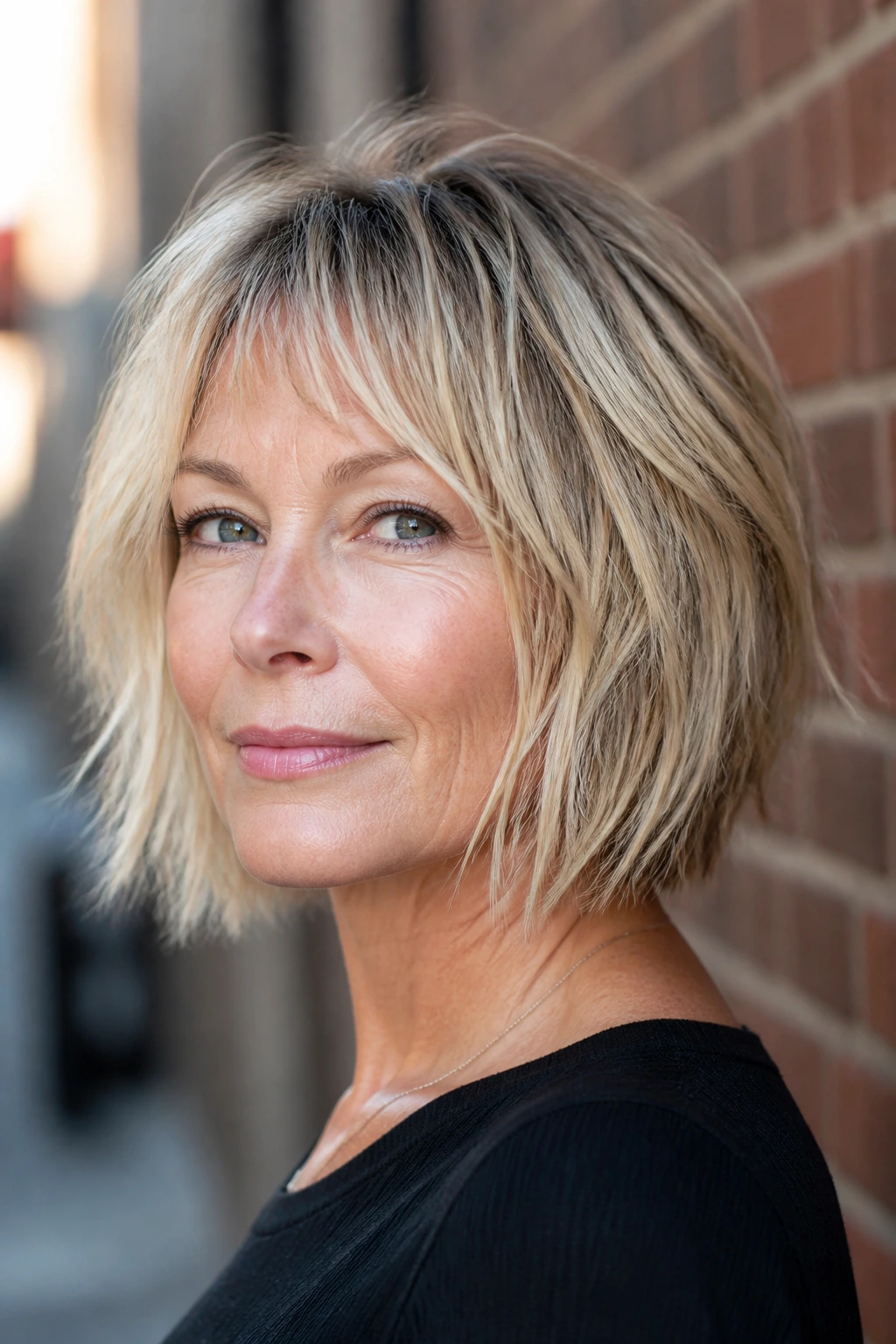
A shattered bob has a softer, broken edge than a blunt bob, but it still needs discipline. The “shattered” part comes from controlled texture near the ends, not from stripping the hair down until it looks thin. On fine hair, a razor can be useful in the right hands and a mess in the wrong ones.
The shape usually sits around the jaw or slightly above it, with the pieces falling in uneven but deliberate ways. That irregular finish can make fine hair look modern and a little undone, which is appealing if you don’t want a severe line. It also works well with a side part.
Do not let anyone carve huge chunks out of the perimeter. The whole point is to keep the edges lively while preserving the feel of thickness. It’s a fine line. Literally.
22. Modern Pageboy with a Soft Underline
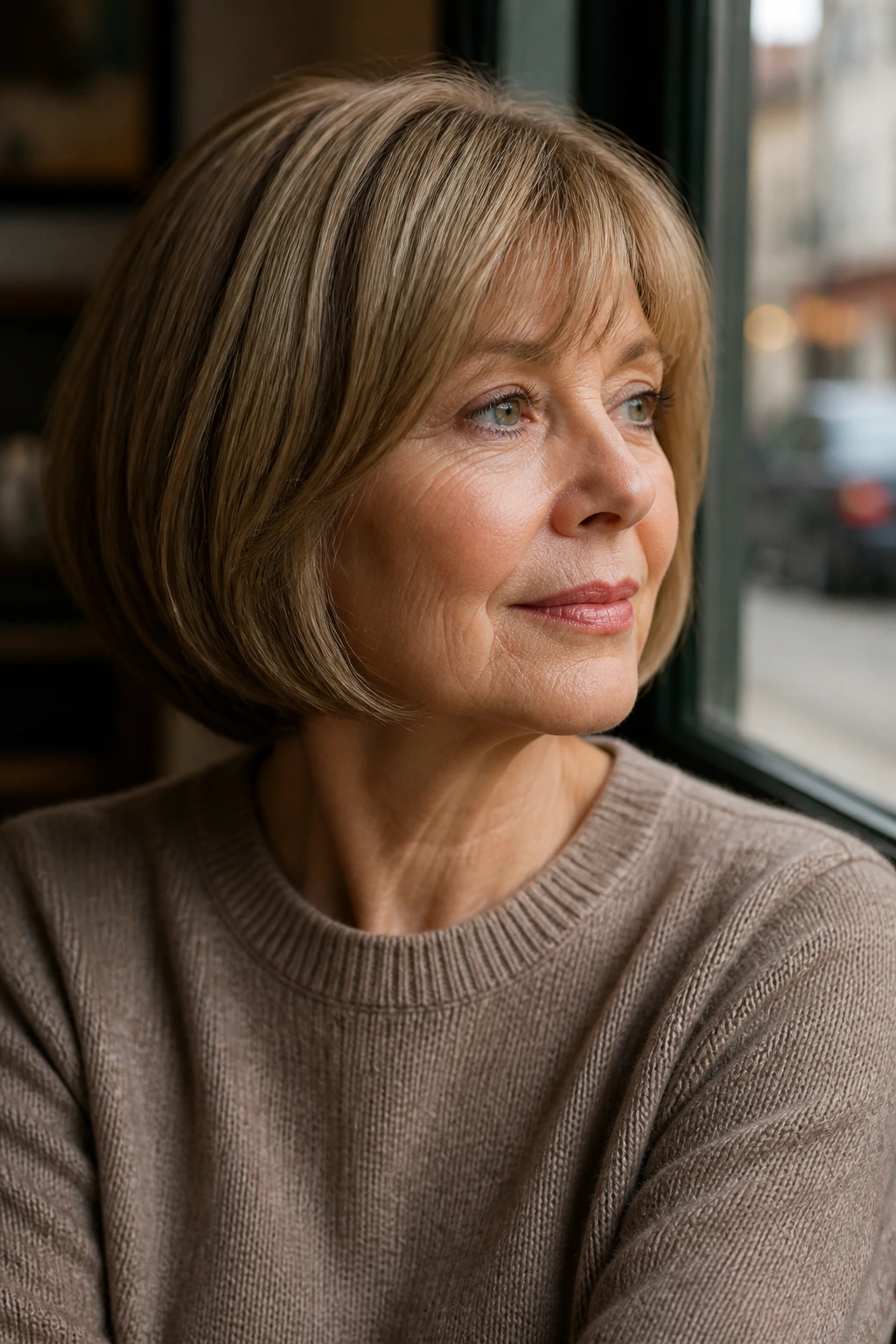
The old pageboy had a hard reputation. This version is softer and better behaved. The hair curves under at the ends, usually around the chin, with a rounded outline that follows the jaw without stiffening into a cap. For fine hair, that undercurve can make the cut seem fuller because the line is obvious.
A soft underline works especially well if your hair naturally flips under a little when it dries. Instead of fighting that, use it. Let the ends bend under with a brush or a quick pass of the blow-dryer, and keep the interior light enough that the shape doesn’t feel dense in the wrong place.
This is a nice option if you want something tidy and slightly retro without looking dated. There’s a reason the pageboy keeps coming back. The outline is just that useful.
23. Angled Bob with Lift at the Back
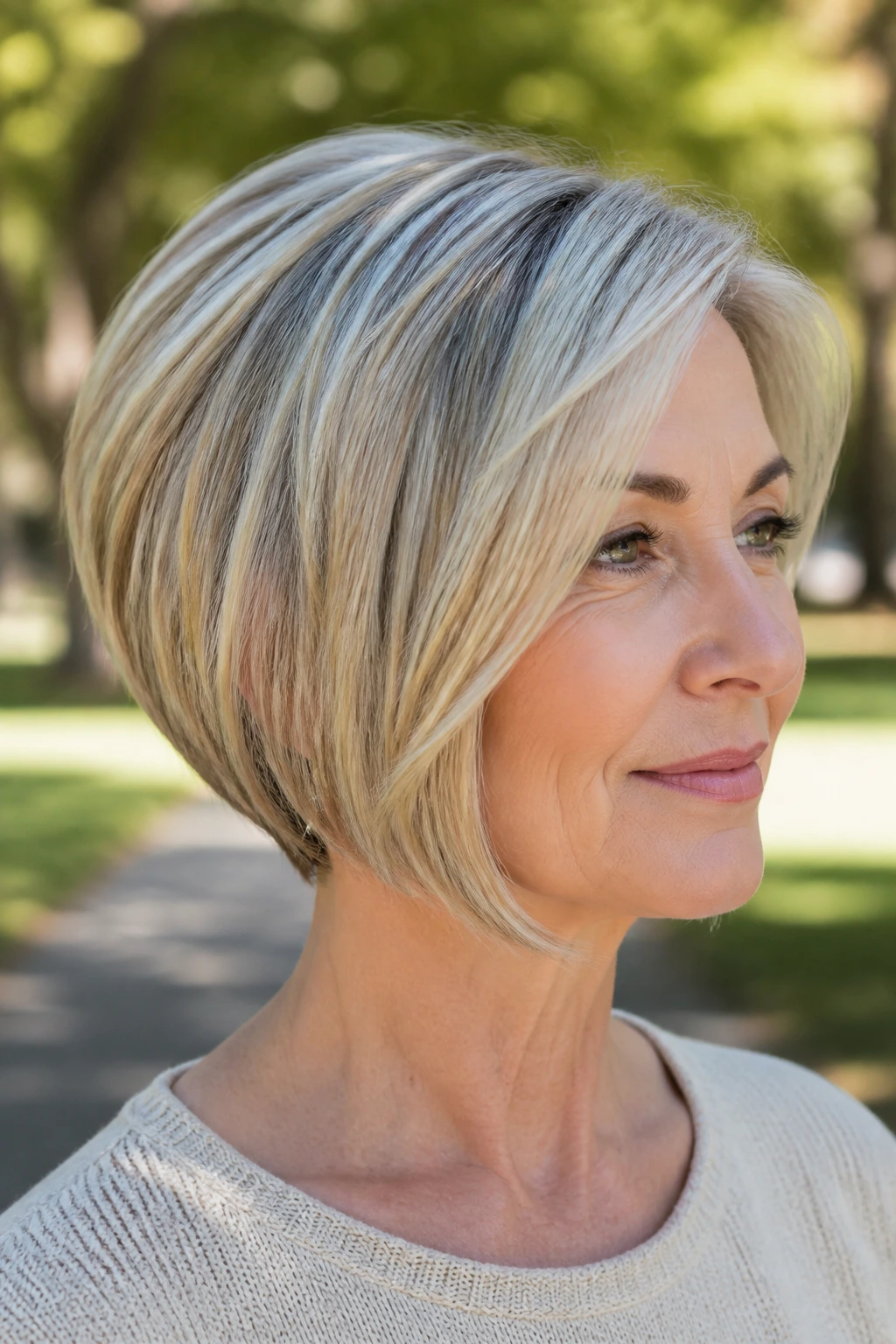
An angled bob gives fine hair a visual trick that works every time: shorter in the back, longer in the front. That contrast makes the crown and occipital area look fuller because the eye sees lift before it sees the length. It’s especially handy if the back of your hair has started to go soft.
The angle should be gentle, not dramatic. Too steep and the front starts to look disconnected from the rest of the cut. A soft slope from nape to cheekbone is enough to create movement without making the style feel sharp or stiff.
This cut often looks best when the front pieces skim the jaw and the back is tucked close. Clean, polished, and easy to recognize across a room.
24. Short Cut with a Long Side Fringe
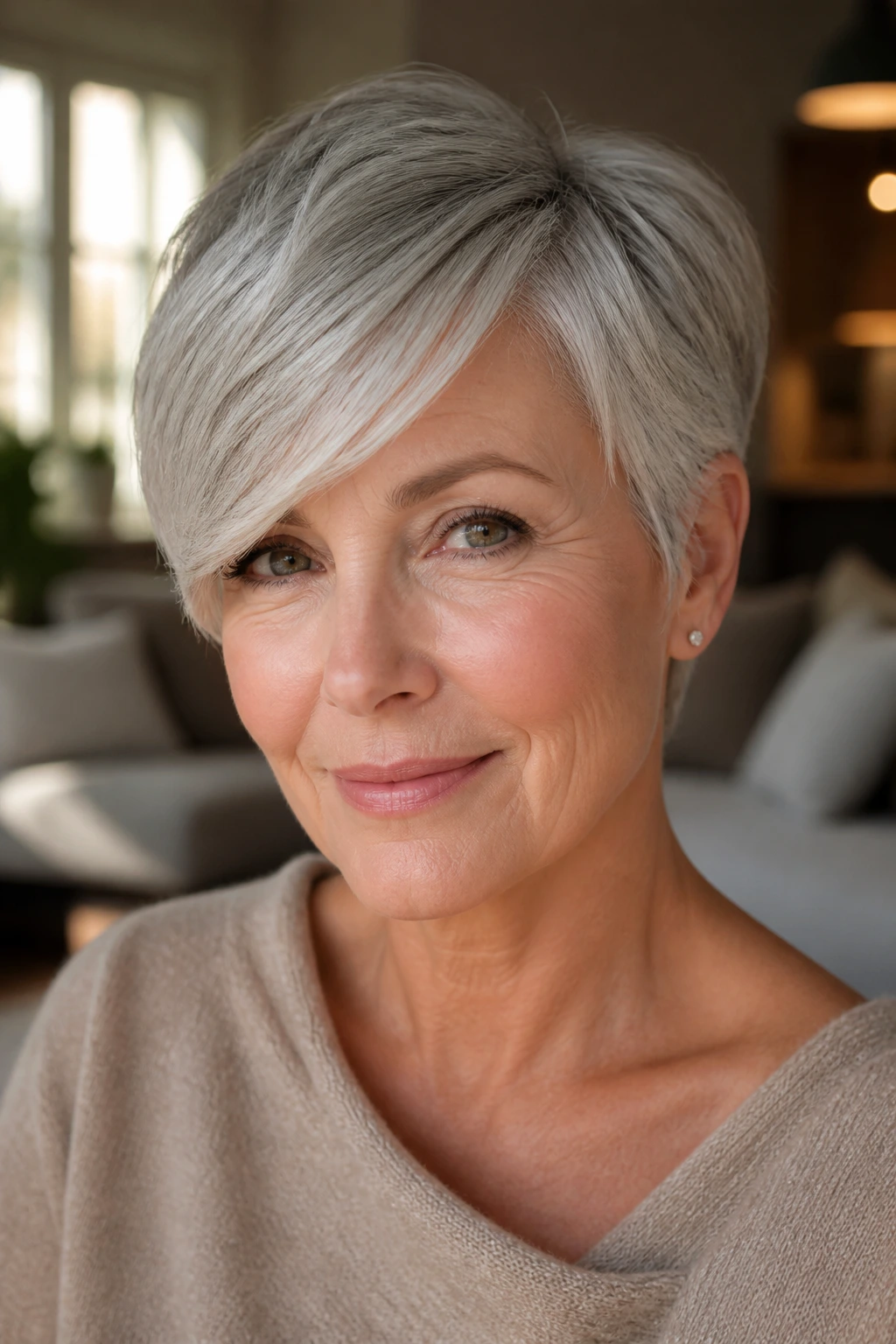
A long side fringe can rescue a short cut that needs a little softness around the face. It keeps the hair from feeling exposed at the hairline while still leaving the rest of the cut compact. For fine hair, that fringe also adds the sense of thickness where people notice it most: around the forehead and temple.
The length should be enough to sweep across the brow and tuck behind the ear if needed, but not so much that it swallows the front of the face. A good stylist will connect the fringe into the top layers so it doesn’t sit like a separate piece. That blend matters.
This style is a good fit if you like short hair but still want one feature to play up. It can be polished, casual, or a little moody depending on how you part it. That’s a useful range for one haircut.
What Makes Short Hair Look Fuller on Fine Strands
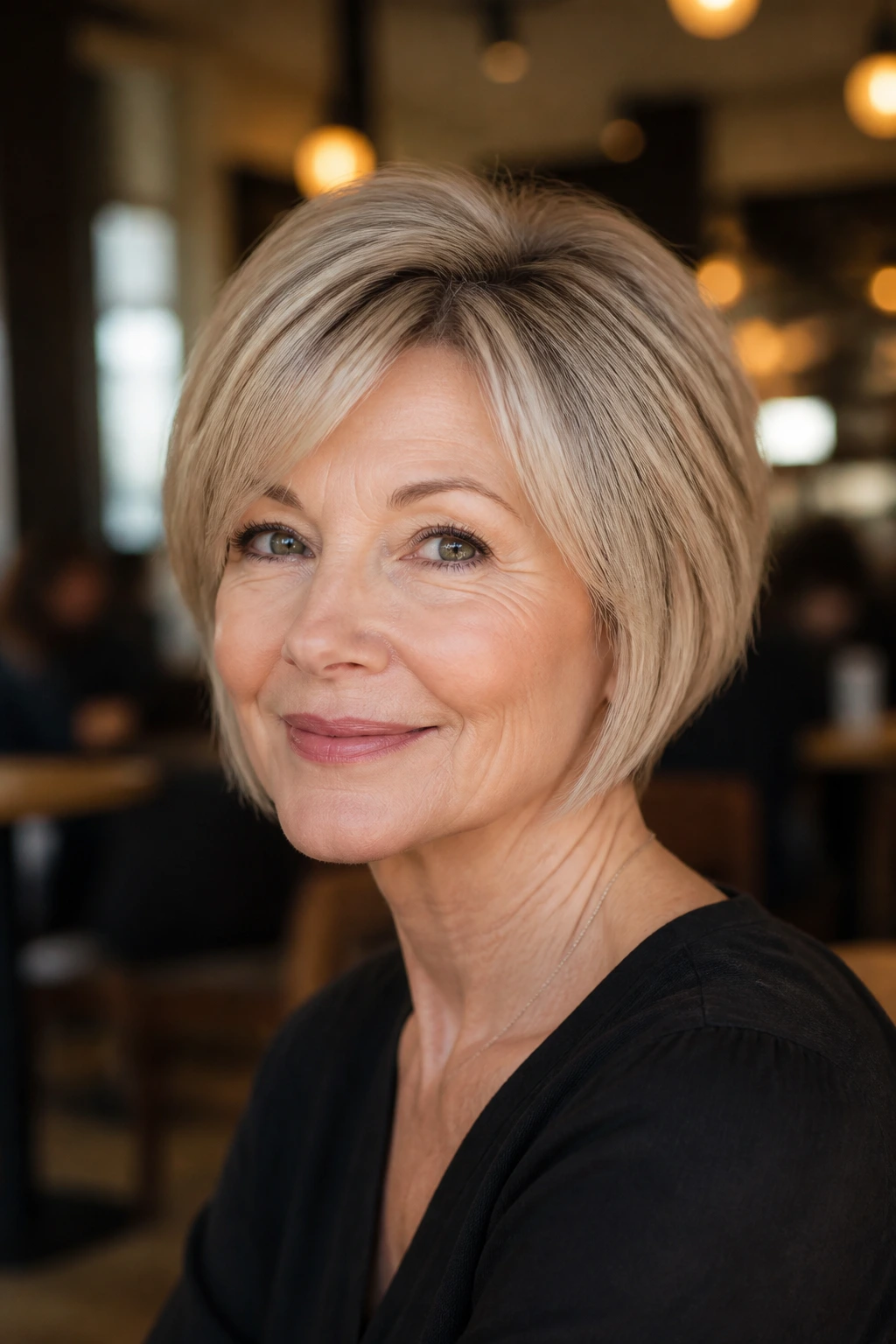
Short hair helps fine strands for one plain reason: it removes weight. When hair hangs too long, the ends spread out and the perimeter stops reading as dense. Once the length comes up, the hair can sit with more support from the roots down to the edge.
The other piece is shape. Fine hair needs a haircut that has a clear outline, whether that outline is a blunt bob, a tapered nape, or a pixie with controlled height. Without that line, the style turns soft in the wrong way and starts looking tired by the second day. Nobody wants that.
The best short hairstyles for fine hair over 50 also leave enough room for the hair to move. Hard, overcut layers can make the strands feel see-through. A balanced cut keeps some fullness at the perimeter and uses texture only where it earns its keep.
Essential Styling Tools for Fine Hair
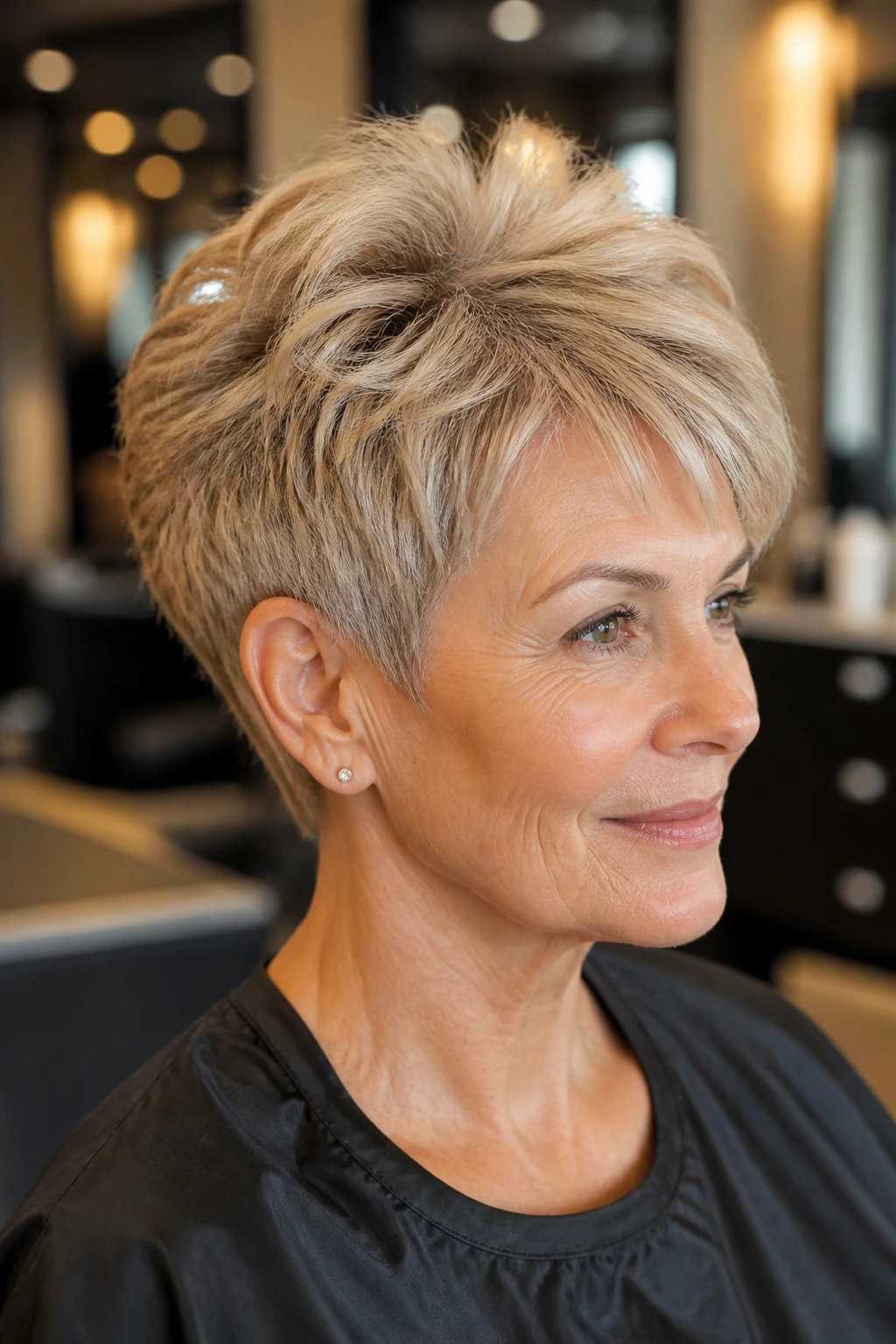
- Small round brush, 1 to 1.5 inches: Small enough to lift roots and shape a pixie or short bob without blowing the style wide open.
- Blow-dryer with a nozzle attachment: The nozzle focuses airflow so fine hair gets smoother and less frizzy.
- Volumizing mousse: A light foam gives root support without the greasy feel of heavy creams.
- Root-lift spray: Best sprayed at the crown and hairline before drying, where fine hair tends to collapse first.
- Texturizing spray: Useful for bixies, shags, and piecey finishes; use sparingly or the hair can get rough.
- Light styling paste or wax: Good for separating ends on pixies and short crops, but only a pea-sized amount.
- Dry shampoo: Helpful on day two or three when roots start to look tired and flat.
- Flat iron, optional: Handy for a quick bend on the ends of bobs, but not required for every style.
How to Choose the Right Cut, Part, and Product Weight
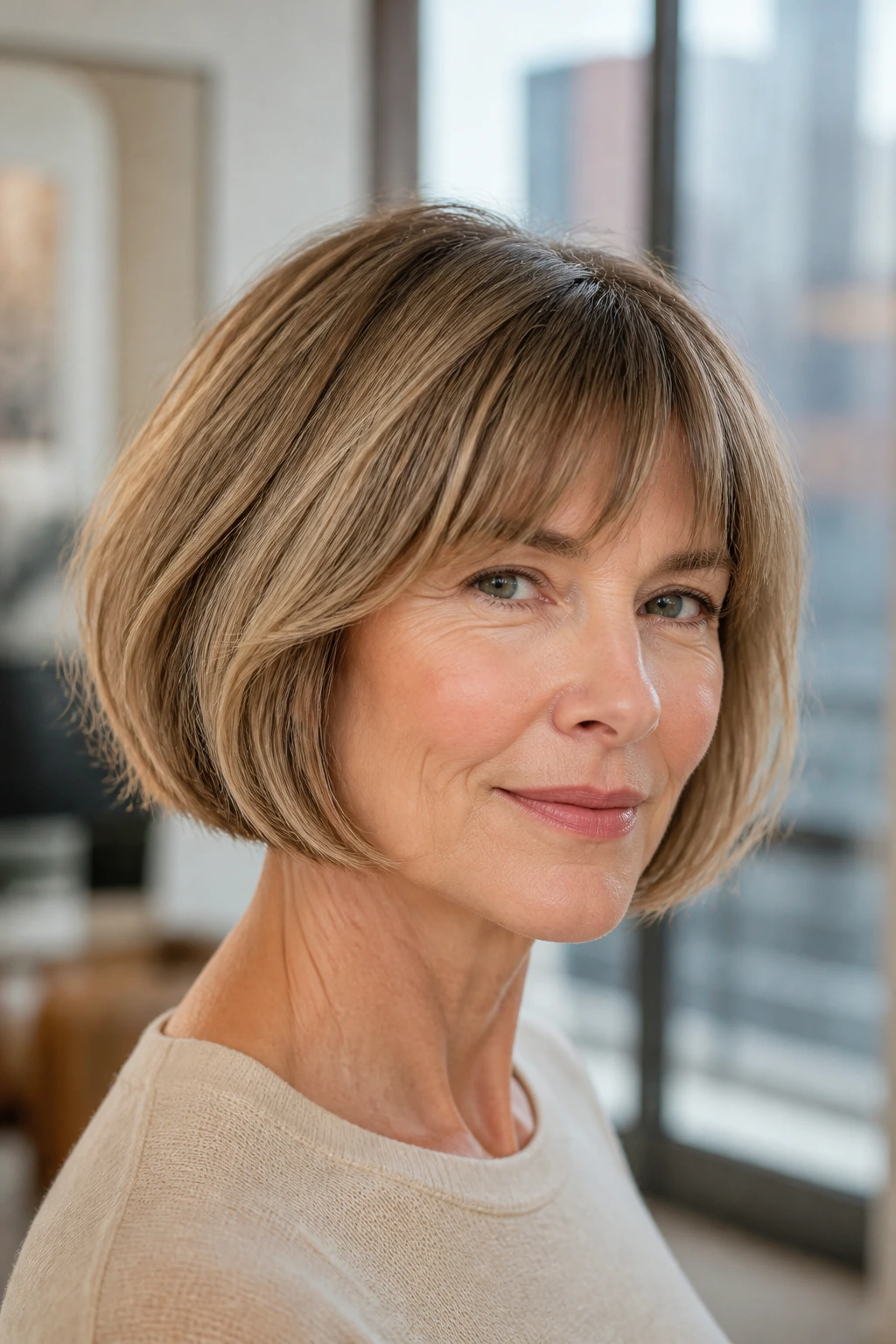
The smartest way to choose among short hairstyles for fine hair over 50 is to start with how your hair behaves on a bad day. Not your best day. The bad one. If the crown goes limp, you want a style that leaves enough length on top to lift. If the ends look see-through fast, you want a stronger perimeter, maybe a blunt bob or a softly stacked shape.
Bring photos, but bring the right kind. A picture of a haircut on thick, coarse hair will lie to you. Ask for photos of people with similar density, similar wave pattern, and similar front hairline if you can find them. That saves everyone time, and it keeps the result honest.
Product weight matters more than people think. Fine hair usually prefers foam, spray, and light paste over thick creams and heavy oils. A rich leave-in can be fine on the ends, but if it gets near the roots, the cut can collapse in an hour. Ask your stylist to show you where to place the product, because “use less” is not enough direction when you’re standing in the bathroom with a round brush and a clock ticking.
One more thing: ask whether the cut should be refined dry, at least around the fringe and crown. Fine hair often shrinks or separates after it dries, and that’s when bad choices show up.
How to Wear These Cuts Day to Day
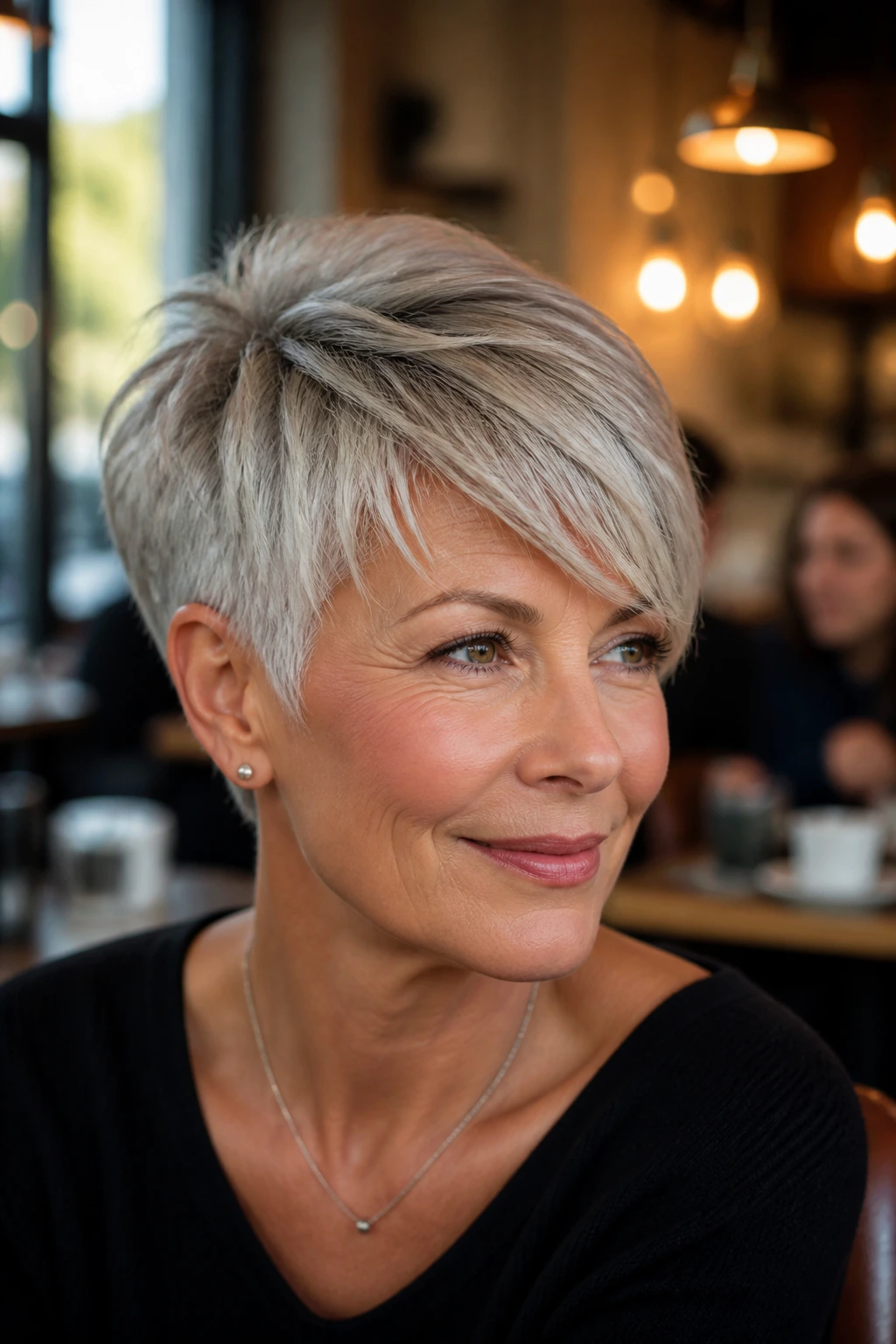
Shape: Put the most visible lift where the eye lands first—usually the crown, the front hairline, or the cheekbone line. A short cut with all its height in the wrong place can feel busy, while a cut with quiet support at the roots reads fuller.
Accessories: Glasses, earrings, and collars matter more with short hair because they sit right next to the cut. A side-swept fringe softens frames. A tucked bob shows off earrings. A neat nape keeps turtlenecks from making the back look bulky.
Routine: Some of these styles need five minutes and a hand mirror. Others need a brush, a dryer, and a little patience. If you know you will not spend time shaping the front, choose a cut that falls into place on its own—rounded bob, French bob, soft pixie. If you like a little styling ritual, the quiff pixie and the bixie will give you more room to play.
Best moments: Clean bobs read polished at work. Piecey crops look relaxed on weekends. A sharper asymmetrical bob or swept-back pixie can feel dressed up with almost no extra effort. That’s the beauty of short hair done well: the same cut can look different just by changing where you part it.
Extra Lift, Texture, and Shine Without the Heaviness
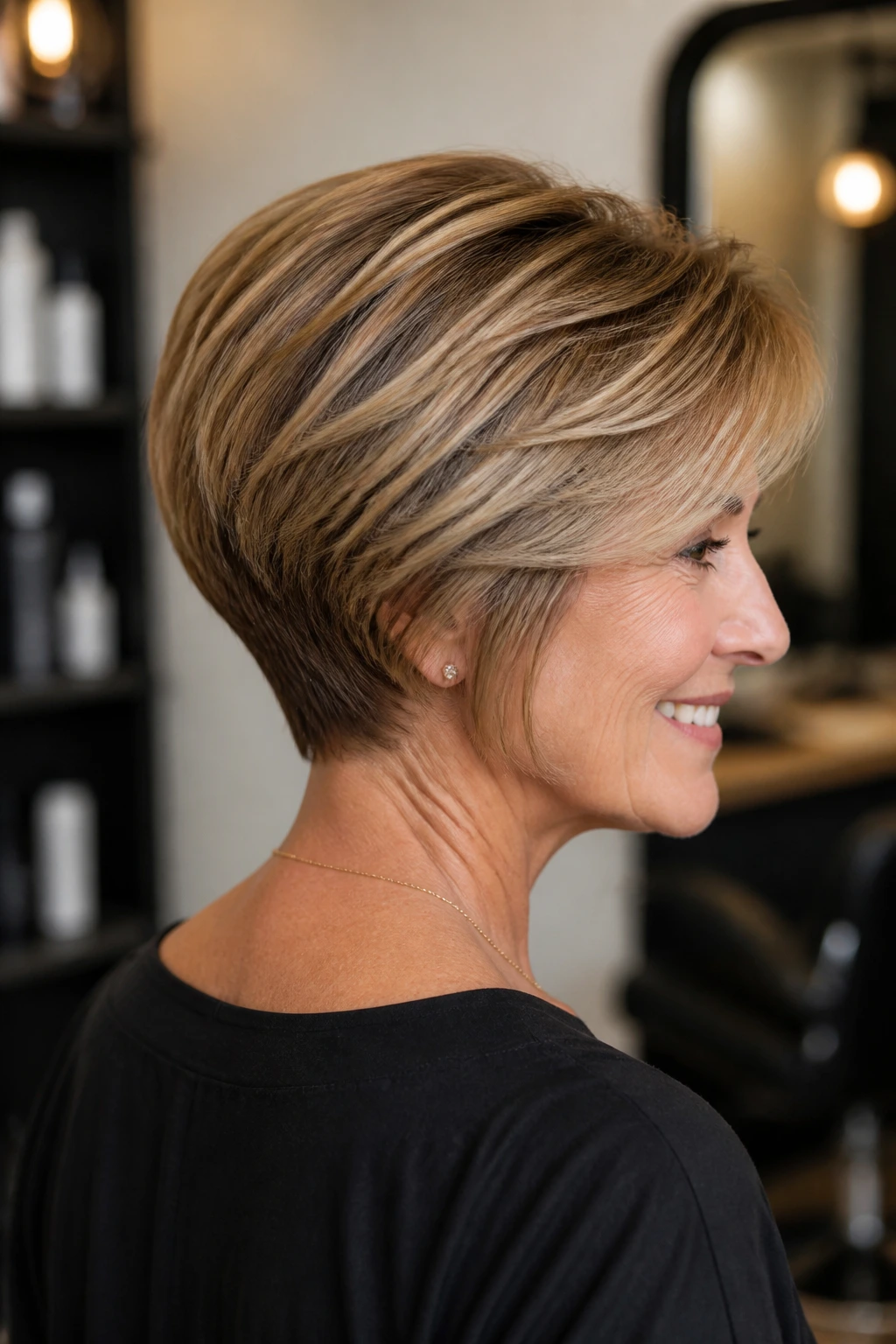
Root Lift: Work mousse or root spray into damp roots, then lift the crown with the brush and aim the dryer upward for the first pass. Stop before the hair is bone-dry. Let it cool in the lifted shape. That cooling moment is where the hold settles.
Piecey Finish: If the cut needs separation, use a pea-sized bit of paste on dry hair and touch the ends only. Don’t rake it through the roots. Fine hair can go from “styled” to “dirty” in one bad swipe.
Color Contrast: Subtle highlights around the crown and face can make short hair read fuller because the eye picks up movement across the surface. On gray or silver hair, a little lowlight near the nape can stop the back from disappearing into the neck.
Soft Shine: Skip the glossy serum at the roots. Use it only on the ends if the cut looks dry. Fine hair looks best with a light sheen, not an oily finish that makes the shape slide.
Common Mistakes That Make Fine Hair Look Thinner
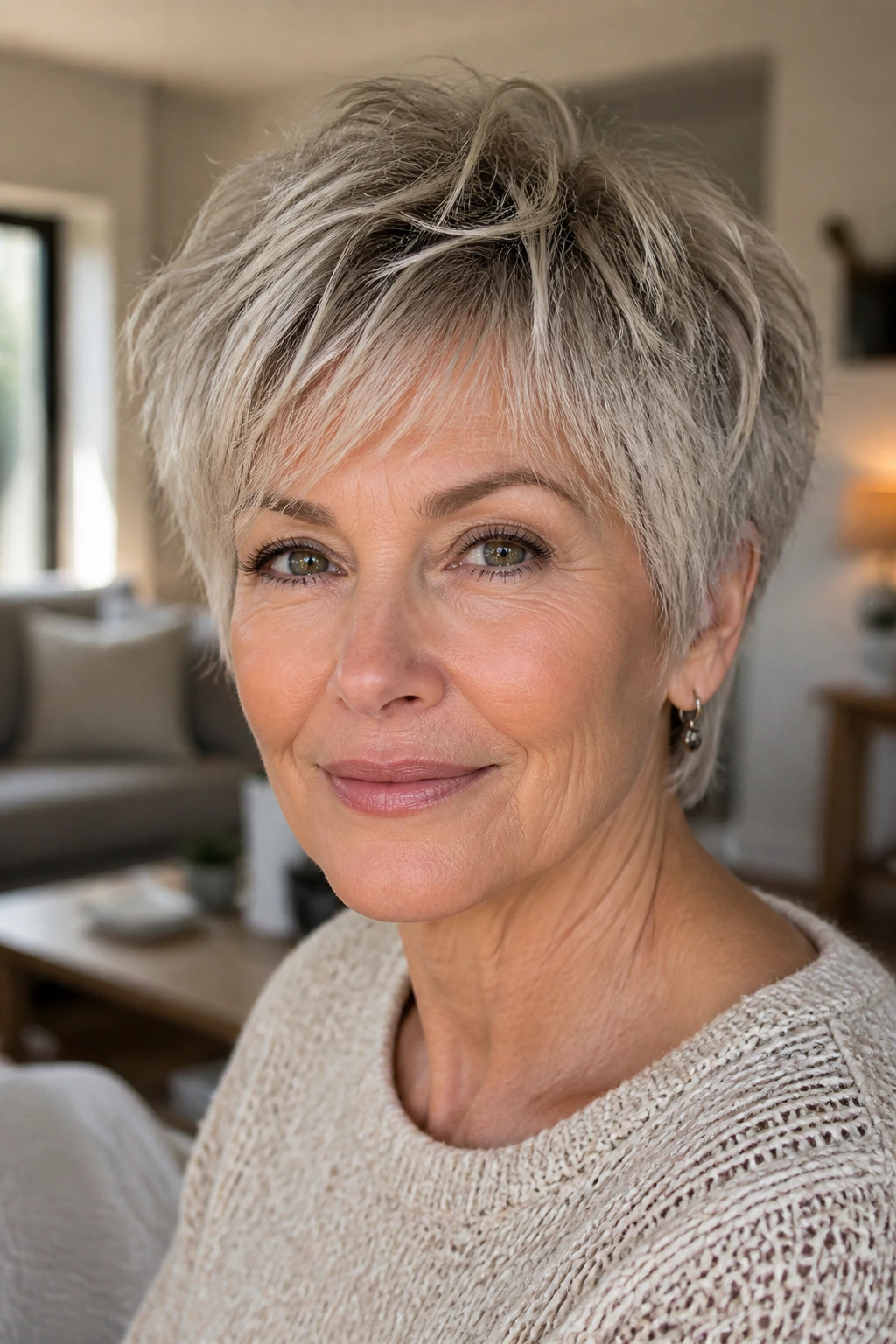
- Over-layering the crown: If the top is shredded too much, the hair loses its body and the scalp shows through faster. The fix is a cleaner top with layers that stay inside the shape.
- Using heavy conditioner near the scalp: Fine hair does not need rich conditioner at the roots. Keep the conditioner from the ears down and rinse well.
- Choosing a cut that only works after a salon blowout: If the style looks perfect only with 30 minutes of round-brush work, it may not fit real life. Ask for a version that still has shape on air-dry days.
- Skipping trims too long: Short cuts lose their line faster than longer ones. Once the nape grows out and the perimeter softens, the hair can look stringy even if it’s healthy.
- Razor-cutting too aggressively: Some razor texture helps, but too much creates gaps and frizz in fine strands. The result is airy in the wrong way.
- Parting the hair the same way forever: A dead-center part can flatten the crown. An off-center part usually gives a little lift right away.
Variations and Adaptations to Try
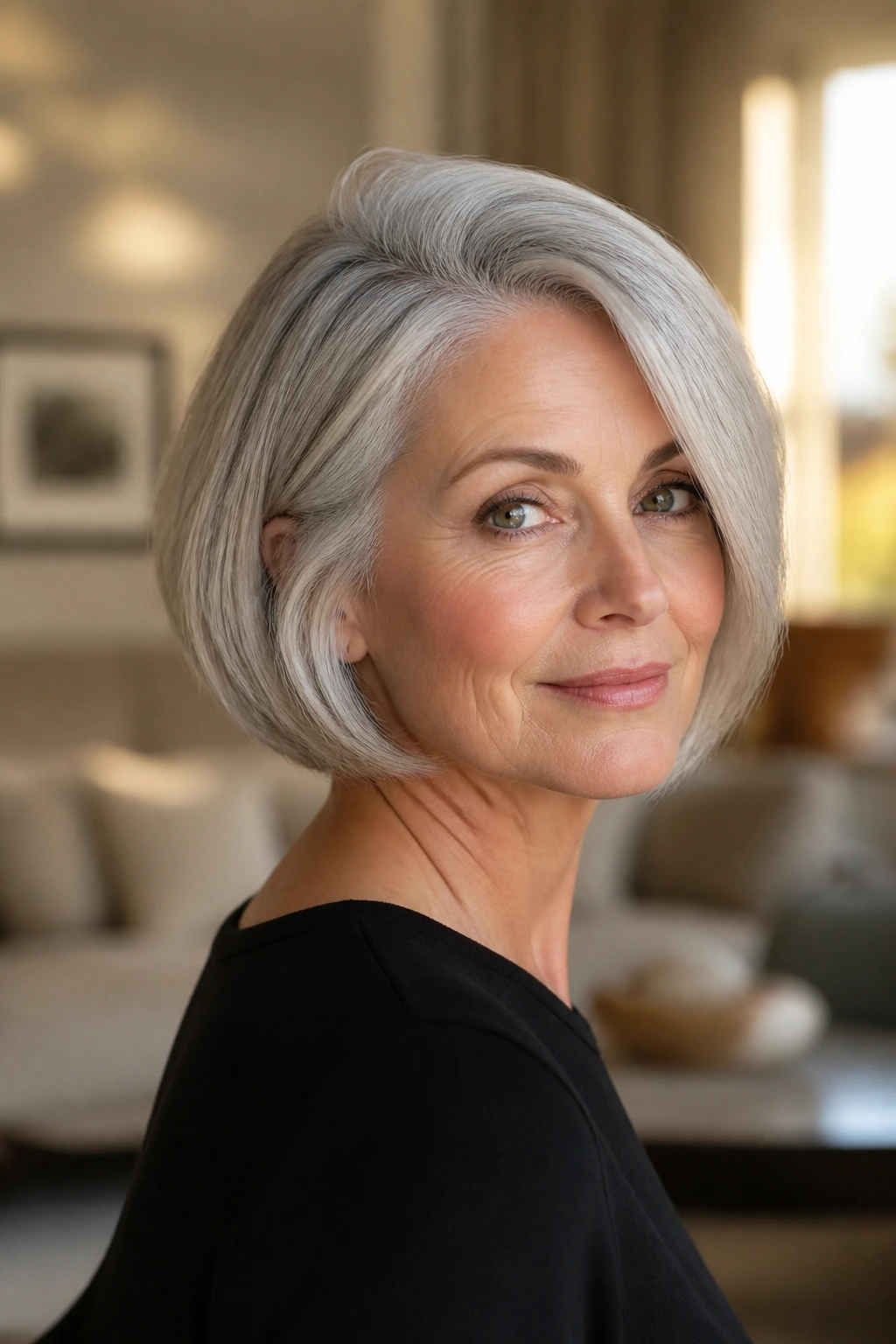
Silver-Soft Version: Keep the cut simple and let the natural silver show through with a clean line and a side part. A touch of cool lowlight near the interior can stop the color from looking washed out.
Air-Dry Friendly Version: Choose a bob or crop with fewer interior layers and use a lightweight foam instead of cream. Scrunch lightly, then leave the hair alone while it dries. Fine hair often looks better when it is not overhandled.
Glasses-Friendly Fringe: Ask for a fringe that stops just above the frames or sweeps aside cleanly. This keeps the front from competing with your glasses while still giving the cut a soft edge.
Wavy-Texture Version: Add soft layers where the wave bends naturally and use a diffuser on low heat. The cut should follow the wave pattern, not fight it.
Low-Maintenance Grow-Out Version: Keep the nape and sideburns tidy, but leave the top and front long enough to tuck or sweep back. This buys you a little extra time between trims without letting the shape disappear.
Edgier Evening Version: Deepen the side part, smooth one side close, and lift the other side with a bit of paste. Same haircut. Different mood.
Keeping a Short Cut Fresh Between Salon Visits
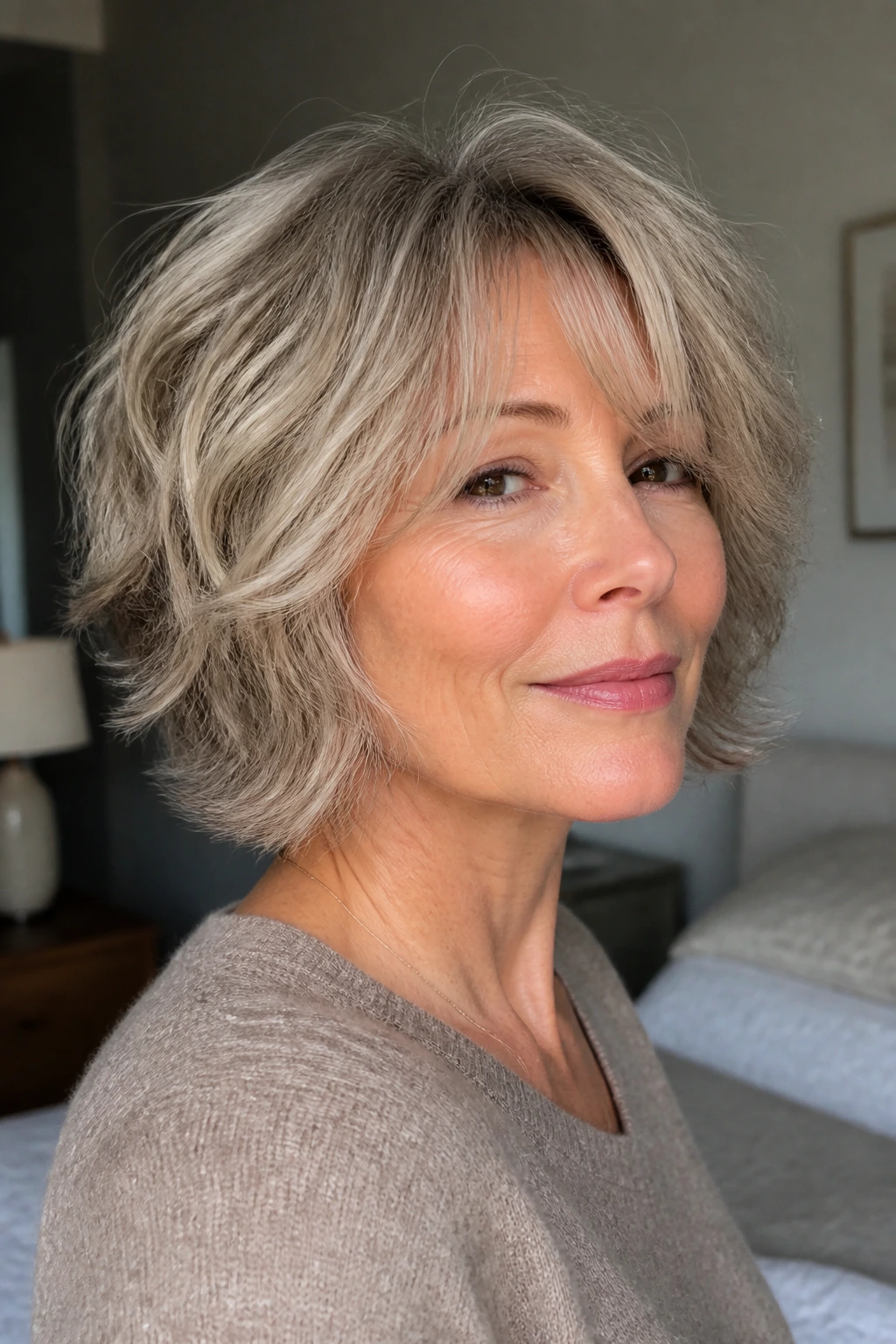
Short cuts on fine hair need more regular trimming than people expect, because the silhouette is everything. Pixies and crops often look best with a trim every 4 to 6 weeks. Bobs can usually stretch to 6 or 8 weeks if the line stays clean. Once the nape grows fuzzy or the fringe starts splitting in two, the cut stops reading as intentional.
At home, dry shampoo is your friend, but use it at the roots only and brush it through after a minute or two. That gives you a little lift without coating the length. If you wash often, keep conditioner light and put it only on the lower half of the hair. That one habit does more for fine hair than a drawer full of fancy products.
Sleeping on a satin or silk pillowcase helps the cut stay smoother, especially around the fringe and crown. A rough cotton pillowcase can flatten short hair in one night. In the morning, a quick mist of water at the roots, followed by a blow-dry for 30 to 60 seconds, often resets the shape better than re-wetting the whole head.
If your hair is gray, white, or silver, a clarifying wash every couple of weeks can help remove product buildup that makes the hair look dull and limp. Use it sparingly, though. Too much stripping leaves fine hair feeling squeaky in the wrong way.
Frequently Asked Questions About Short Hairstyles for Fine Hair Over 50
Which short haircut makes fine hair look the thickest?
A blunt bob or a softly stacked bob usually gives the strongest illusion of density because the perimeter stays solid. If you like very short hair, a pixie with a fuller top can also work well, as long as the crown is not over-thinned.
Are layers good for fine hair after 50?
Some layers help, but too many layers can make the hair look sparse. Fine hair usually does best with controlled layering inside the shape, not big choppy sections that remove the outer line.
Should I avoid bangs if my hair is fine?
Not necessarily. Wispy bangs, side-swept fringe, and curtain bangs can all work if they’re kept light and connected to the rest of the cut. Heavy blunt bangs are harder to manage because they can separate and show scalp faster.
What if my hair is fine and also wavy?
Pick a cut that follows the wave instead of forcing it straight. A short shag, bixie, or softly layered bob can work well if the layers are placed where the wave naturally bends.
How often should I trim a short fine-hair cut?
Most pixies need trimming every 4 to 6 weeks. Bobs can stretch a little longer, but once the edges soften and lose their line, the haircut starts looking thinner than it really is.
Can I wear a short style if my hairline has changed?
Yes, and a lot of women do. Side-swept fringe, a deeper side part, and a shape that keeps some softness around the temples can make the hairline look more balanced without hiding it.
What should I ask my stylist for at the salon?
Ask for a cut that keeps a clean perimeter, avoids over-thinning, and takes your natural growth pattern into account. If your hair is fine at the crown, say so directly. That’s the area that usually needs the most care.
Do these cuts need heat styling every day?
No. Some do better with a quick round-brush pass, but plenty of them can air-dry with mousse and a little hand shaping. The clean bob, the rounded crop, and the grown-out pixie are especially forgiving.
The Shape That Holds
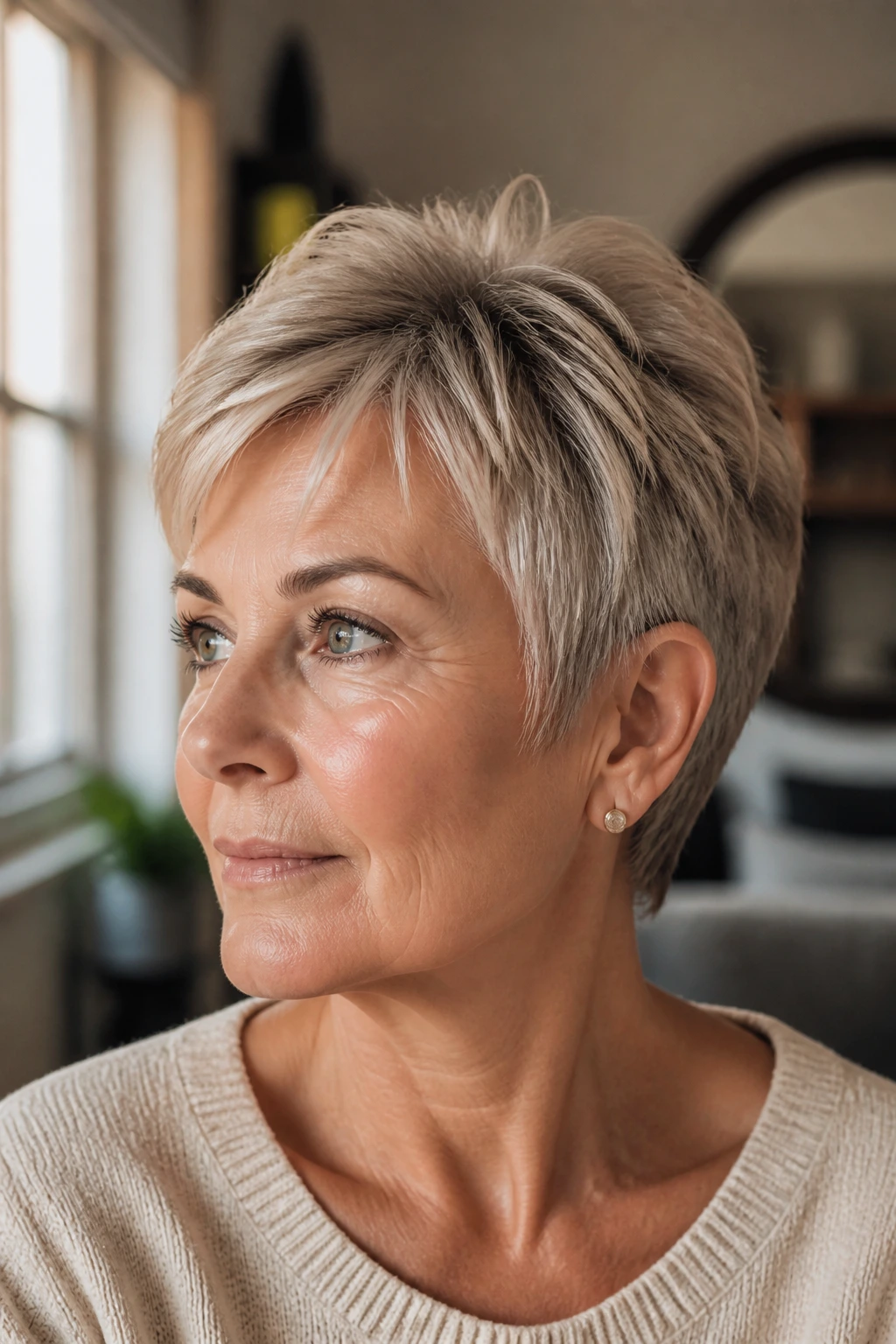
Fine hair over 50 does not need to be hidden or overworked. It needs a haircut that respects the way it naturally falls and then nudges it into a better shape. That usually means less bulk, more line, and a smarter balance between softness and structure.
The cuts that last are the ones that keep their perimeter clean and their crown supported. A good short style will still look like your hair when you leave the salon chair. It will just look more awake.
Pick the version that matches your real routine, not the one that only behaves on a good hair day. Once the shape is right, the rest gets easier.
