



Some trendy hairstyles for little boys look sharp only until the first hood comes off. The useful ones are different. They keep a clean shape, survive a day of running around, and don’t need half a bathroom shelf to behave.
That matters more than parents usually get told. Little boys’ hair grows fast, swirls at the crown, flops over at the front, and changes personality after a nap. A cut that looks tidy in the barber chair can turn into a fuzzy triangle by Thursday if the sides are too bulky or the fringe sits in the wrong place. A soft taper grows out cleaner than a harsh skin fade. A textured top hides a bad cowlick better than a smooth, flat finish. Small details. Big difference.
The 23 looks below lean into that reality. These are boys haircuts and kids hairstyles that still make sense when the hair is damp, dry, flattened by a car seat, or puffed up by static. Some are short and clean. Some keep a little movement. Some are better for curls, some for straight hair, and some for the child who wants to look cool without spending ten minutes in front of the mirror.
Why These Little Boys Hairstyles Work So Well
-
They grow out with grace: A low taper, a crop, or a soft fringe keeps its shape longer than a blunt, overbuilt cut, which means fewer “it looks messy already” mornings.
-
They respect real hair texture: Straight hair, wavy hair, curls, and coils all fall differently, and these styles work with that instead of fighting it.
-
They don’t need much product: Most of these cuts look best with a pea-sized dab of matte cream, curl lotion, or nothing at all.
-
They make barber visits easier: “Short on the sides, textured on top” is easier to explain than a vague “make it trendy.”
-
They survive school, sleep, and play: A haircut that still looks decent after recess is doing its job.
1. Textured French Crop
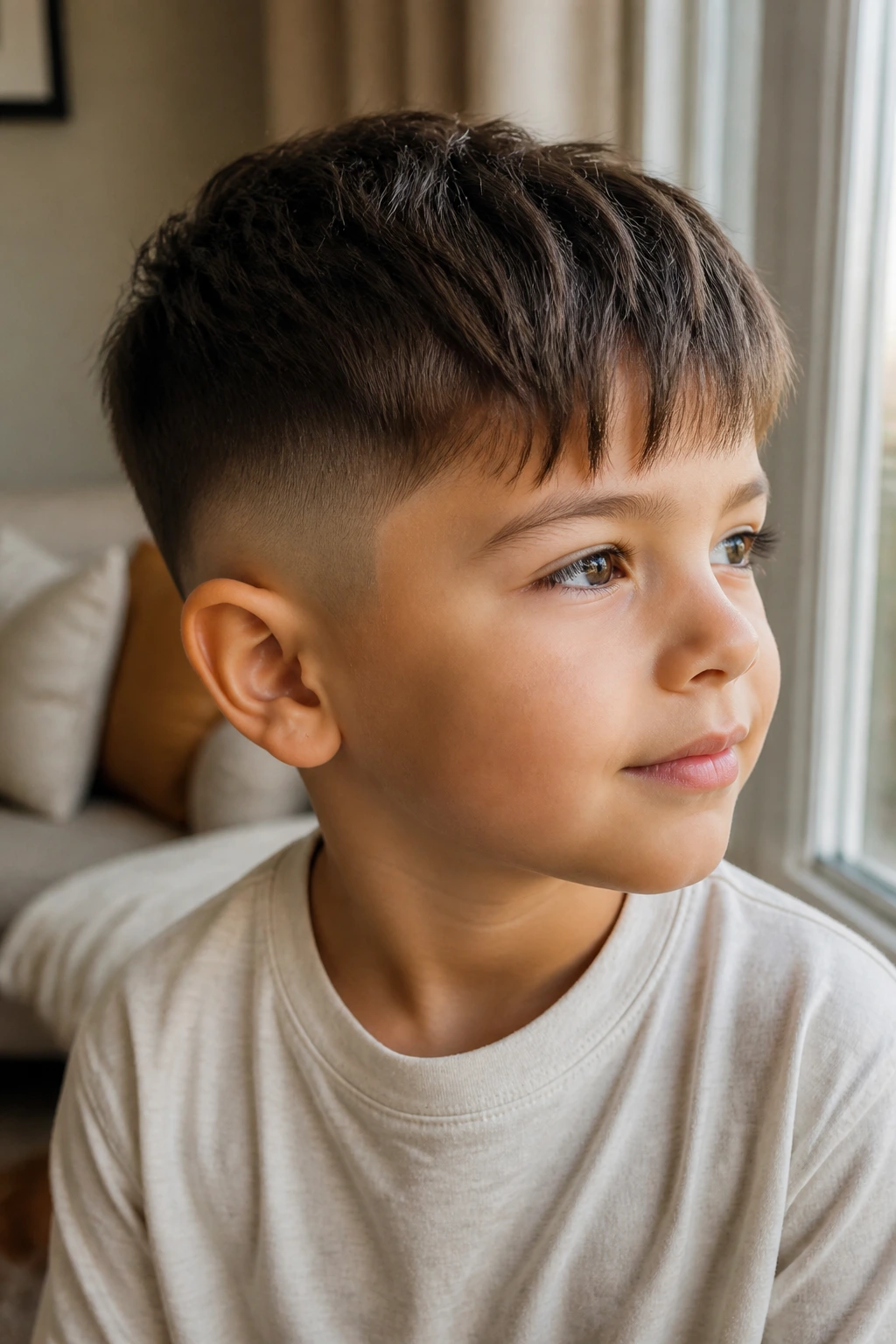
This is the cut I reach for when I want the front to look intentional even after a long day of climbing, sliding, and face-first pillow time. The French crop keeps the sides neat and leaves enough texture on top to stop the hair from collapsing into one flat sheet.
Why It Works
The shape sits forward, so the fringe does a lot of the visual work. That’s useful on little boys with straight or slightly wavy hair, because the front can be styled in about five seconds with damp fingers and a tiny bit of matte paste. Keep the top around 1 to 2 inches, and ask for point cutting so the ends look broken up instead of blocky.
A low taper around the ears and neckline keeps the grow-out tidy. If the barber leaves the fringe just above the eyebrows, the cut still looks deliberate when it softens.
Best for: straight, fine, or wavy hair.
Ask for: short tapered sides, textured top, and a blunt-ish fringe that’s softened with scissors.
Upkeep: every 3 to 4 weeks.
Pro tip: skip shiny gel. A pea-sized bit of matte cream is enough.
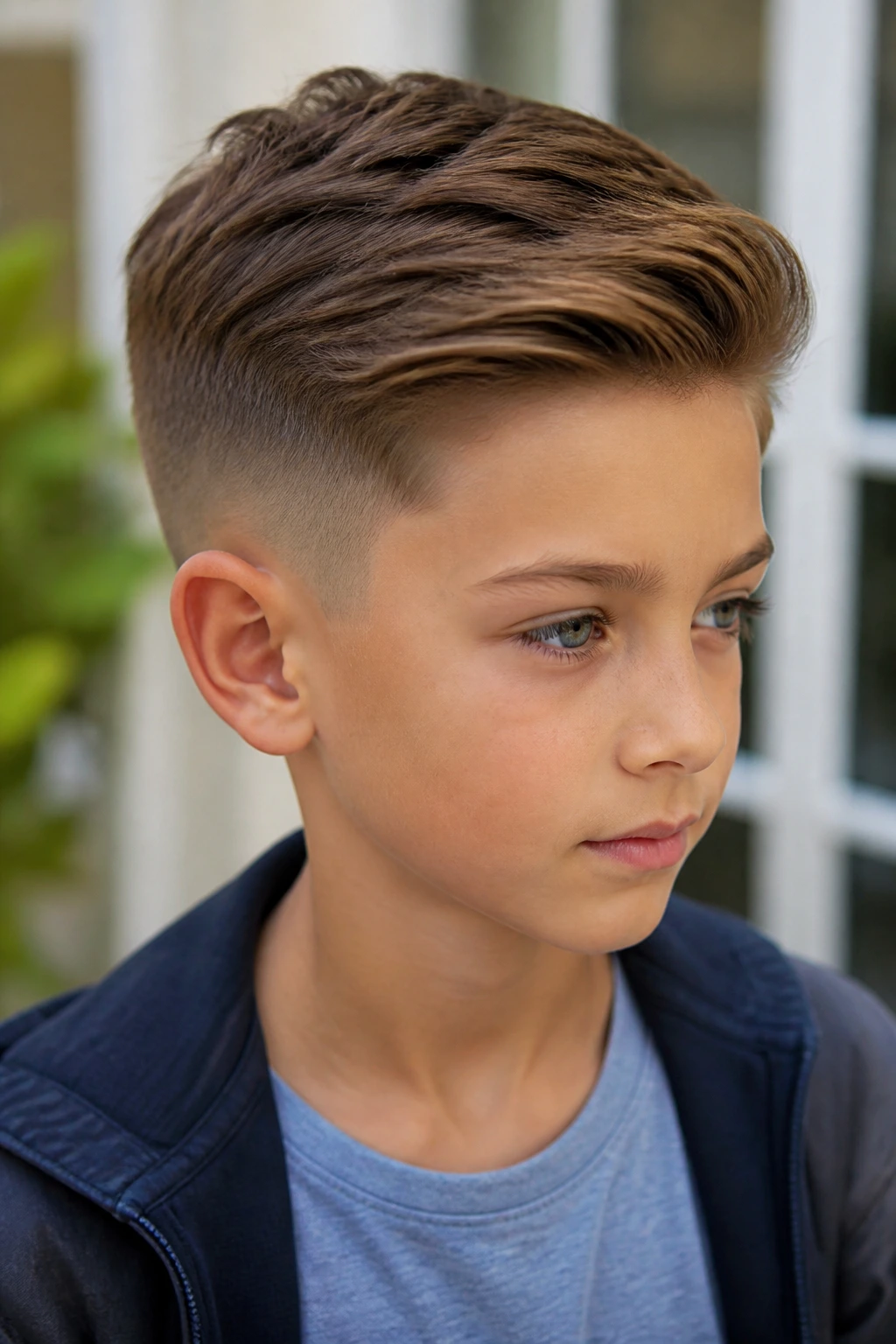
2. Low Taper Fade with Side Sweep
A low taper fade with a side sweep is one of those boys’ haircuts that looks neat without trying too hard. The sides stay close at the bottom, but the taper doesn’t climb up the head so aggressively that the style starts shouting at you.
The top can stay 2 to 4 inches long, with enough length to sweep gently to one side. That little bend in the front is what makes the cut feel modern instead of school-photo stiff. I like this one for kids whose hair grows fast at the neck and around the ears, because the fade keeps the outline clean while the top gets a little messy and still looks fine.
If the hair is thick, ask for light texture on top. If it’s fine, a soft blow-dry and a touch of cream will keep it from falling flat by lunchtime.
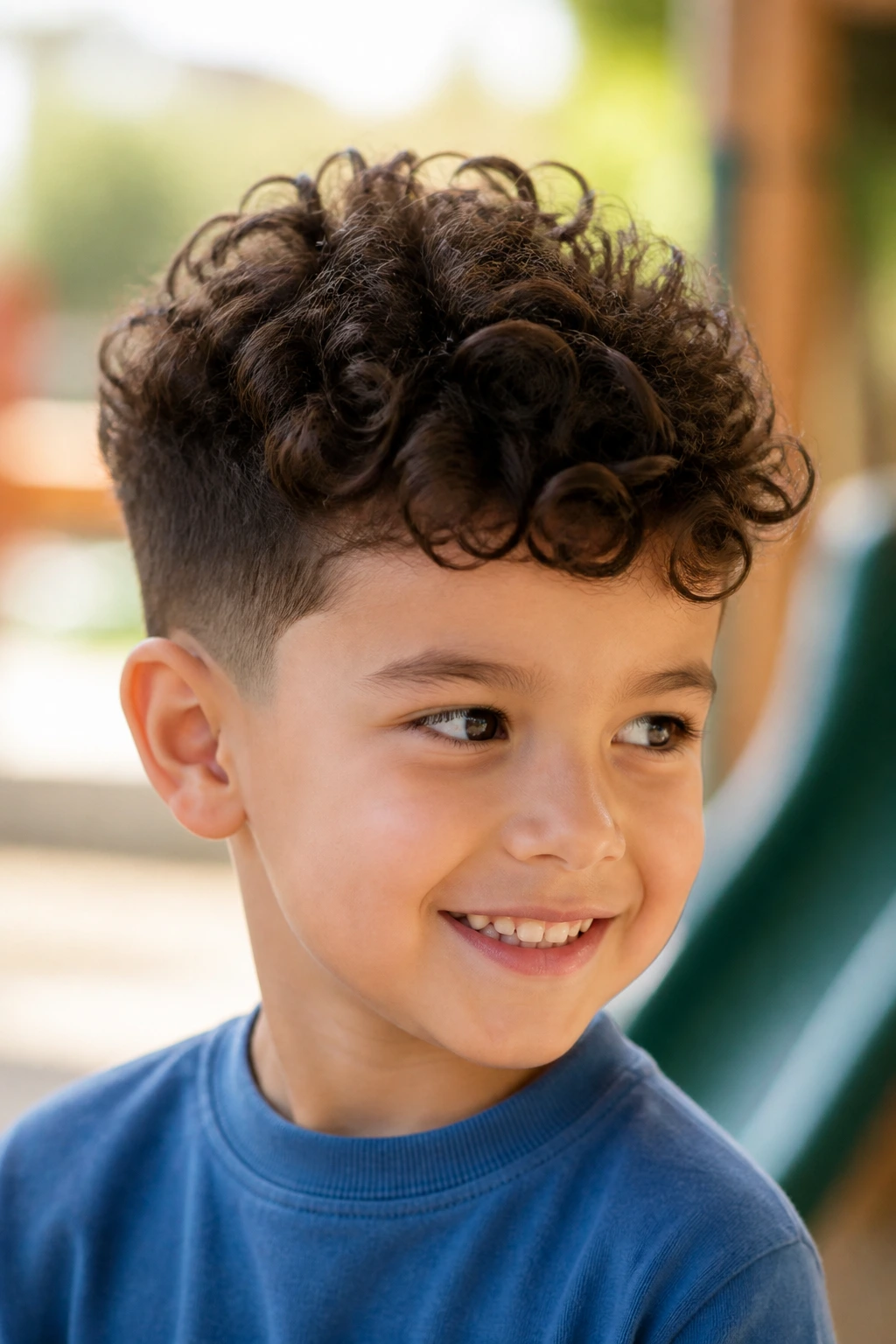
3. Curly Top with Tapered Sides
Why do curls look sharper when the sides are clean? Because the eye gets a clear outline first, then the texture on top has room to breathe.
How to Wear It
Leave the curls longer on top — usually 3 to 5 inches, depending on spring and shrinkage — and taper the sides down low so the shape doesn’t turn into a mushroom. The barber should cut curls with their natural pattern in mind, not force them flat while wet and call it done. That’s how you get a top that balloons in the wrong places.
Use a curl cream or leave-in conditioner on damp hair, then scrunch and let it dry. If you have a child with a strong cowlick, this cut is forgiving because the curls have movement built in.
- Best for curl patterns that need space.
- Good for boys who hate a comb.
- Looks best when the top is shaped, not chopped flat.
4. Classic Crew Cut
On mornings when a child wants five more minutes and no comb anywhere near his head, the crew cut is the clean escape route. It’s short, simple, and still looks like a haircut rather than an accident.
The trick is not making it too blunt. Keep the top just a touch longer than the sides — think scissor-short or a guard or two up — and taper the neckline so it doesn’t end in a hard shelf. That tiny bit of shape keeps the crew cut from looking military in a way that can feel too severe for younger kids.
I like this one for active boys, summer heat, and anyone who lives in baseball caps. It washes fast, dries fast, and grows out without getting dramatic. If a parent wants the least amount of fuss with the cleanest outline, this is still one of the smartest choices.
Look for: a soft taper at the back, not a square edge.
Works well with: straight, thick, or slightly wavy hair.
Reality check: it won’t hide a messy crown, so ask the barber to watch the swirl.
5. Mini Faux Hawk
A mini faux hawk works when you want a little attitude without turning the haircut into a costume. The center line stays a bit longer, the sides get trimmed short, and the middle is shaped into a low ridge instead of a tall spike.
That ridge is the whole point. Keep it modest. If the top stands straight up like a cone, the cut starts looking fussy by Tuesday. A little movement is better. The best version is soft at the front and slightly more defined through the middle, with the sides tapered low enough to make the shape obvious.
This style suits boys who like a bit of energy in their haircut and can sit through a quick styling pass in the morning. A dab of matte paste between the palms, then a gentle push upward with fingertips, is plenty. No crunchy gel. No helmet hair.
6. High and Tight
The high and tight says one thing immediately: less hair, less trouble. It’s the haircut for kids who hate sitting still and parents who want a clean shape that doesn’t need daily negotiation.
This cut keeps the sides very short and leaves a compact top that’s usually clipped or scissor-cut to a short length. The important part is balance. If the sides go too high, the head shape becomes the whole story, which can be a little harsh on smaller kids. A lower version is softer and often easier to live with.
Best When
A high and tight works best on straight or thick hair and on boys who are always in motion. It also pairs nicely with helmets, hoodies, and sports gear because there isn’t much bulk to flatten.
Ask for a short taper or fade on the sides, but keep the top long enough to avoid scalp-showing at every angle. Simple. Clean. Very little nonsense.
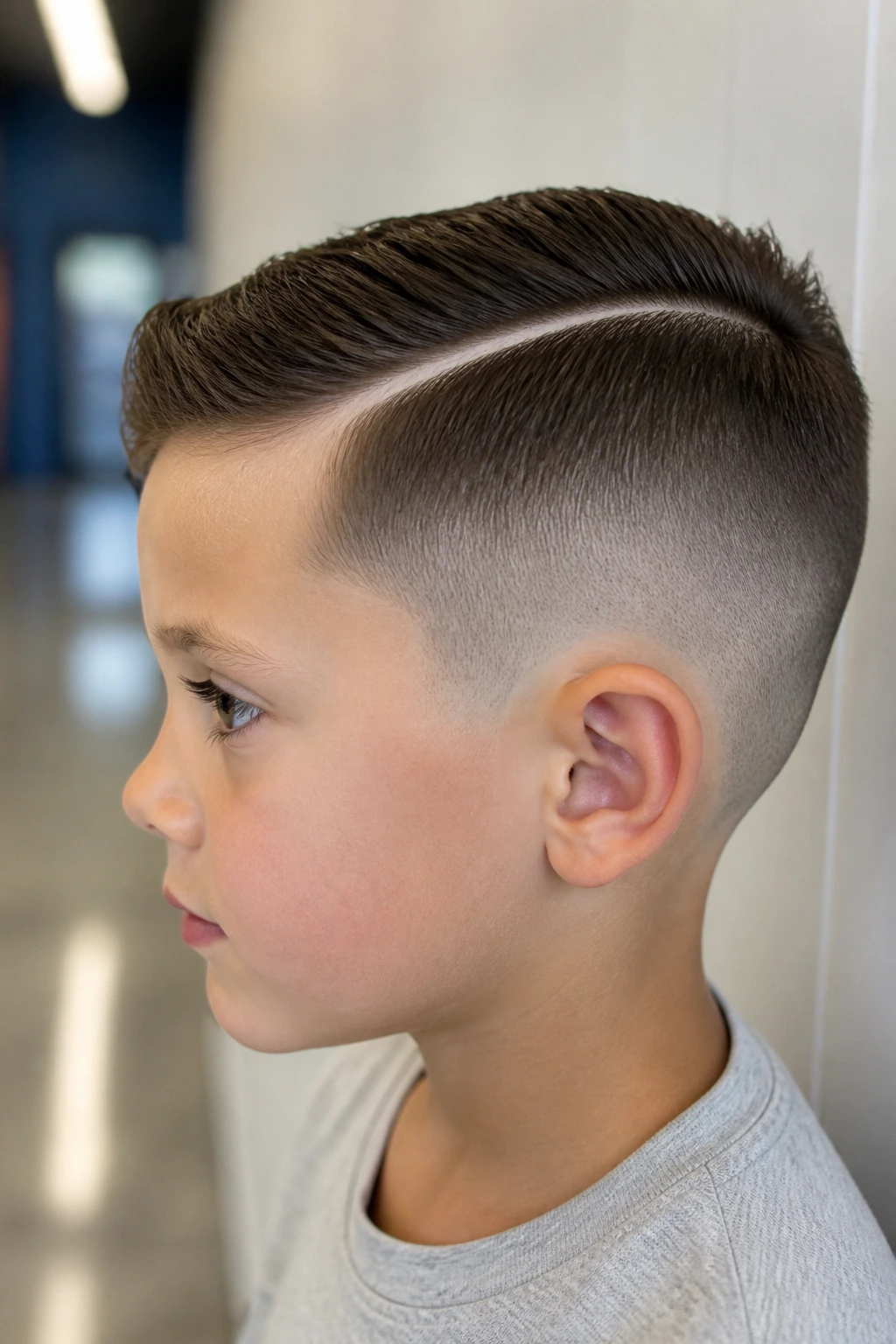
7. Side Part with Hard Part
A side part with a hard part looks neat because it gives the hair a clear direction. The shaved line makes the part easy to find, and that matters on mornings when hair refuses to cooperate and nobody has time for a debate.
The top should stay long enough to comb over naturally — usually 2 to 4 inches — and the sides need enough taper to keep the contrast clean. If the boy has thick straight hair, the hard part adds shape without needing much styling. If the hair is fine or has a stubborn swirl, a soft part may look better than a shaved line.
What I like here is the orderliness. It looks polished, but not stiff if the top is textured a little. A light cream and a side comb are enough. Keep the part line clean between visits, though, because once it fuzzes out, the whole style loses its edge.
8. Messy Mop Top
The messy mop top works because it doesn’t fight the hair’s natural tendency to fall forward. Instead of pinning every strand into place, it lets the top stay soft, choppy, and a little bit shaggy in a controlled way.
That makes it especially good for thick hair and wavy textures. The fringe can skim the eyebrows, the sides can touch the ears without swallowing them, and the back can stay loose enough to move. It should look lived-in, not neglected. There’s a difference, and it’s not subtle.
Use scissors more than clippers here. Ask for texture through the ends so the hair doesn’t turn into a solid block when it grows out. A quick shake of the head should still leave the cut looking intentional.
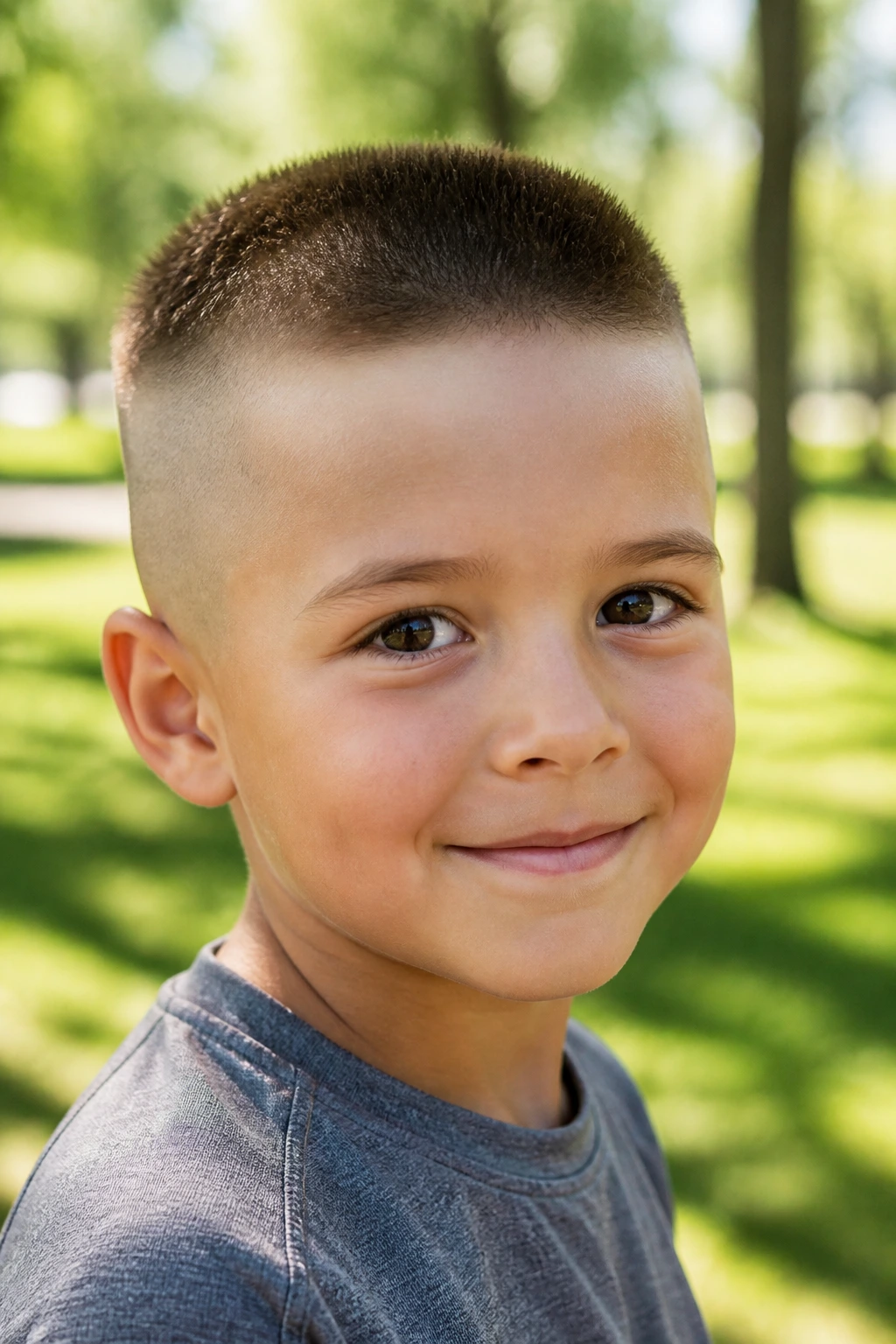
9. Buzz Cut with Skin Fade
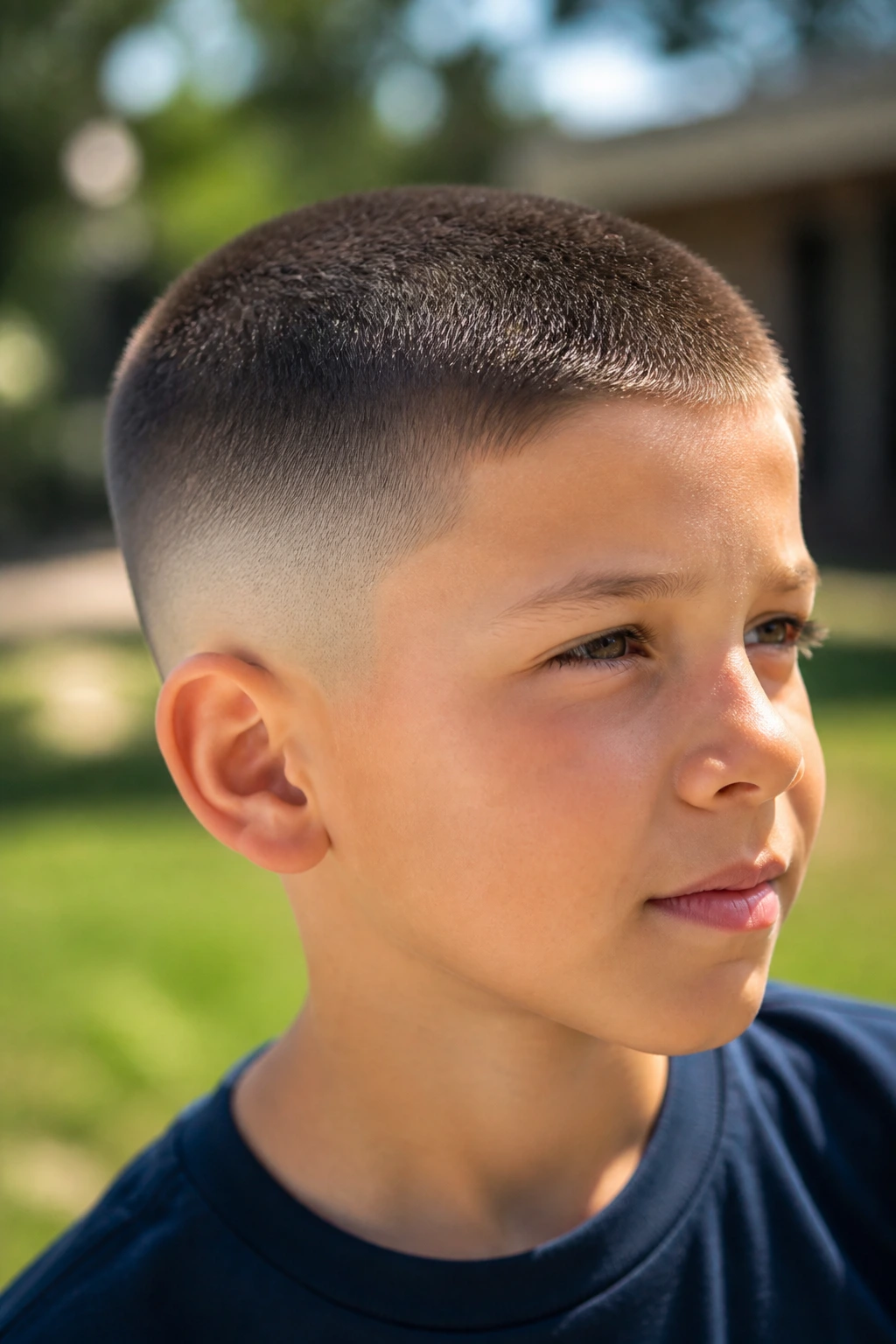
A buzz cut only looks ordinary until the fade is crisp. Then it starts reading as a real style, not just a shortcut.
Keep the top at a #1, #2, or #3 guard, depending on how short you want it, and blend the sides down into a clean skin fade or a softer taper. The higher the fade, the sharper the look — and also the faster it can start to feel severe on a young child. A lower fade is easier to live with and grows out more gently.
This is a good choice for hot weather, sports-heavy schedules, or kids who pull at their hair when it gets in their face. It’s also one of the few cuts that barely needs styling. Wash, dry, done.
Watch the head shape: very short hair shows every bump and ridge, so don’t go too high unless you know that’s the look you want.
10. Curly Shag

What happens when the curl wants to expand instead of lie down? You give it room.
The Shape That Matters
A curly shag keeps length through the top and layers through the sides so the hair can spring instead of puff into a lump. The layers should feel broken up and airy, not chopped into random bits. That’s what keeps the curls from building too much width around the cheeks.
This cut is especially good when a child has ringlets, springy curls, or a mix of curl sizes. A leave-in conditioner or curl cream on damp hair is usually enough. Use fingers, not a brush, if the curls tangle easily.
The fringe can sit soft across the forehead or split a little in the middle. Either way, the cut should feel relaxed. If it looks overworked, it’s probably too short somewhere.
11. Brush-Up with Low Fade
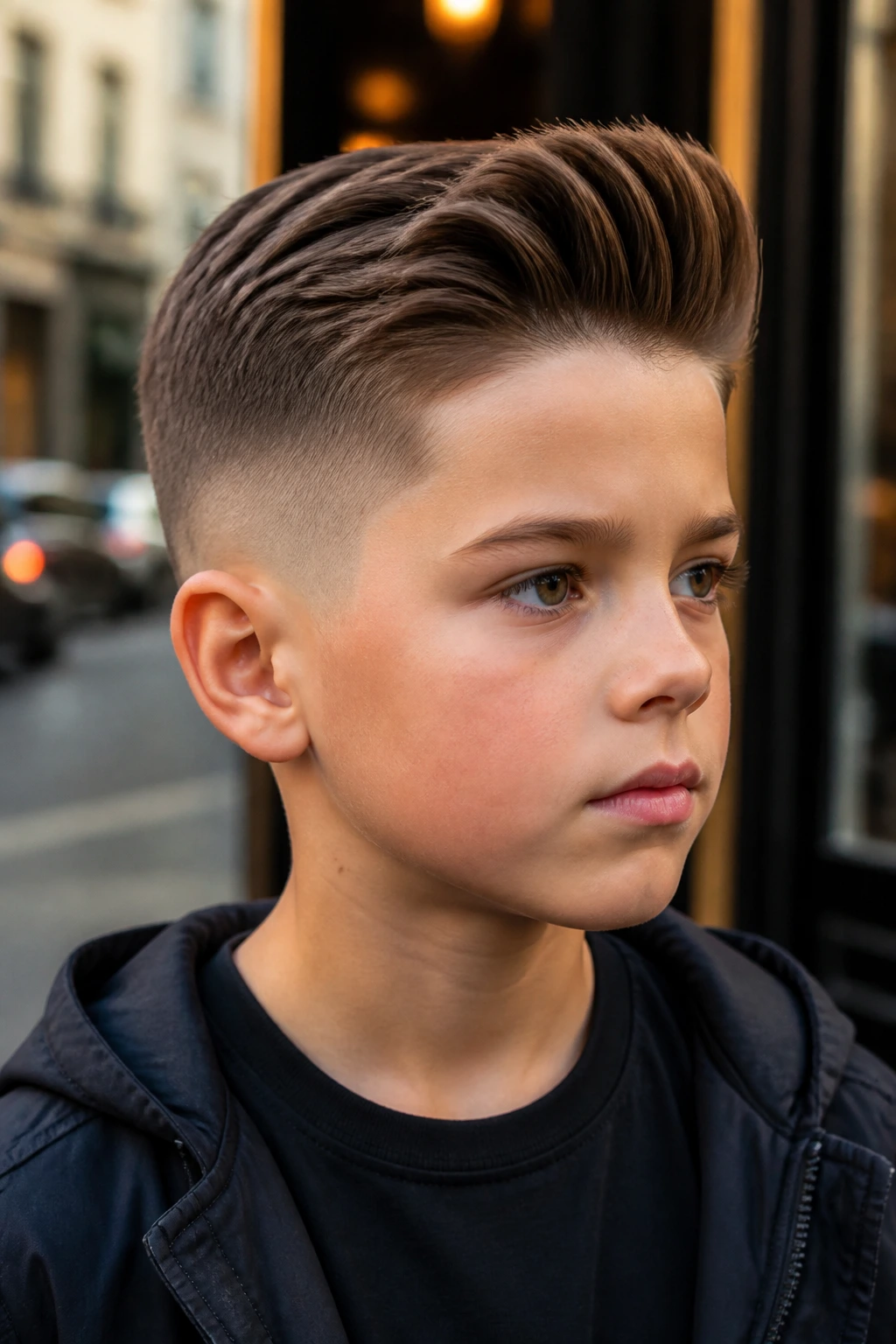
The brush-up lives in that sweet spot between flat and spiky. It gives the top some lift, but it doesn’t make the hair look like it’s reaching for the ceiling.
Keep the top around 2 to 3 inches and use a low fade so the sides stay tidy. The hair gets brushed up and slightly back, then held with a matte product that won’t shine like plastic. This works well on fine or medium hair that needs a little help standing up.
- Best for: boys who want height without a hard pompadour.
- Styling: damp hair, quick blow-dry, then fingers or a vent brush.
- Product: lightweight cream or paste, not sticky gel.
- Trim timing: every 3 to 4 weeks if you want the shape to stay crisp.
There’s a nice balance here. Clean, but not rigid.
12. Undercut with Long Fringe
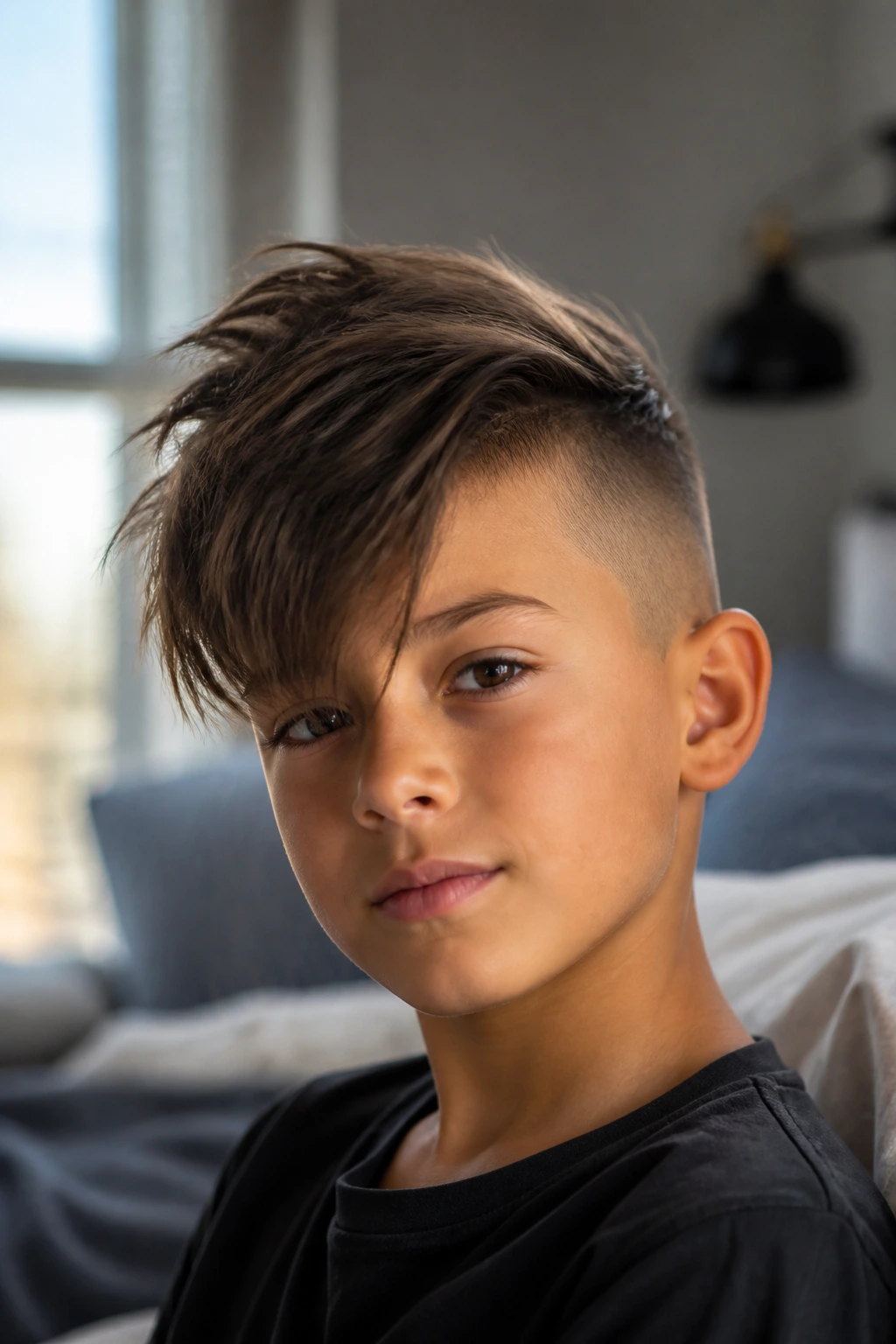
An undercut with a long fringe has a very specific personality. The sides are short and tight, while the front falls long enough to sweep over the forehead or angle across it.
The cut works because of contrast. Short underneath, longer above. That contrast is what gives it style, but it also means the fringe has to be shaped on purpose. If the front is left too heavy, the whole cut starts drooping into the eyes. If it’s too short, the undercut loses the point.
This is a better fit for boys who like longer hair on top and don’t mind a quick finger-style in the morning. It’s not the easiest grow-out cut on the list, but when it’s fresh, it looks sharp in a very modern way. Just keep an eye on the front as it grows. That’s where it goes wrong first.
13. Comb Over Taper
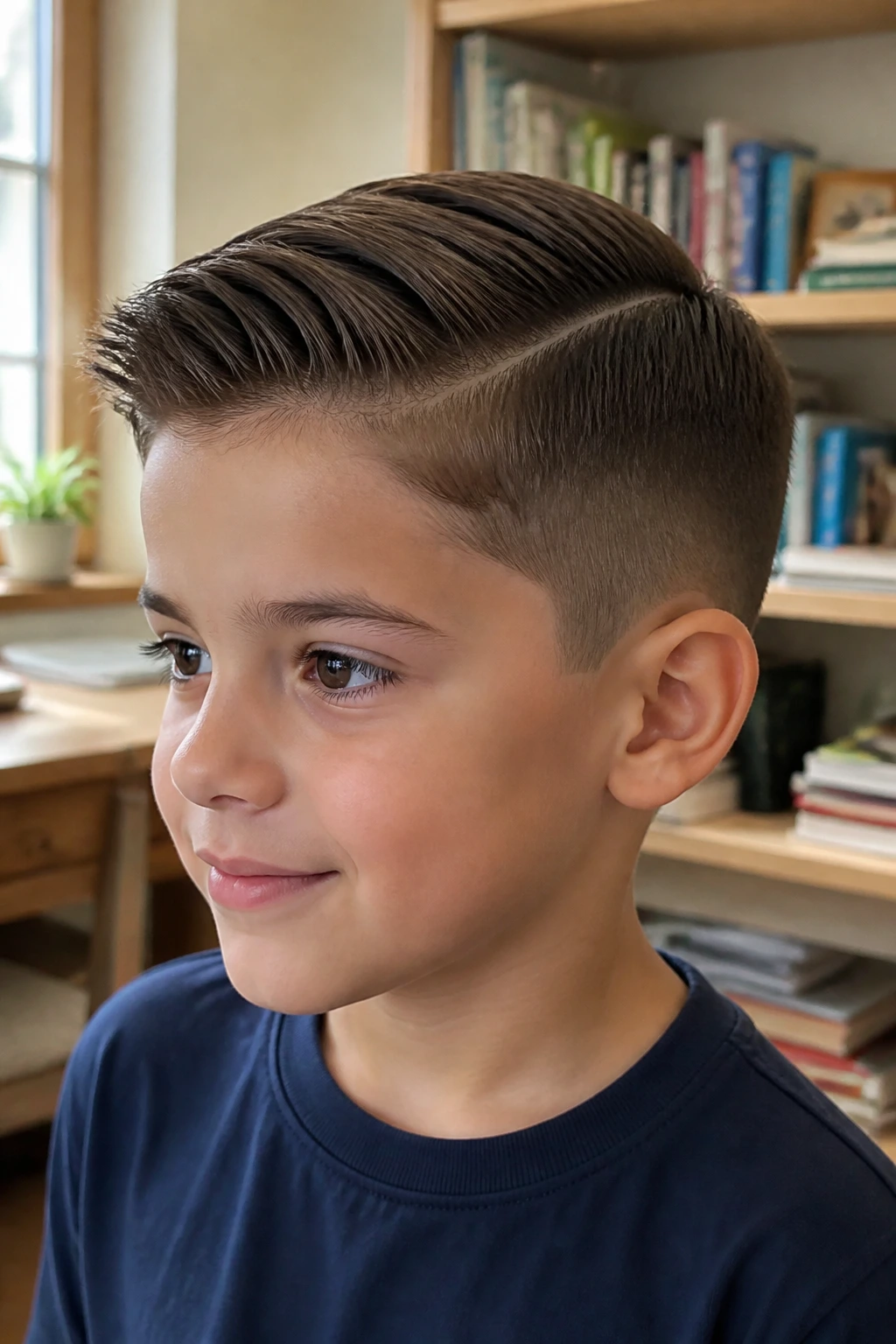
A comb over can look too grown-up if it’s slicked tight and plastered down. A good little-boy version is softer than that. It keeps the part visible, but the top still has some movement.
The taper around the ears and neckline keeps the cut clean, while the longer top gives enough material to comb across naturally. This is a strong choice for thick straight hair because the hair already wants to sit in a smooth sheet. The trick is breaking that sheet up with a little texture so it doesn’t feel stiff.
I like this style for family photos, school events, and boys who want to look neat without looking overdone. A small brush, a side part, and a dab of cream usually do the job. Keep the shine low. That’s the whole point.
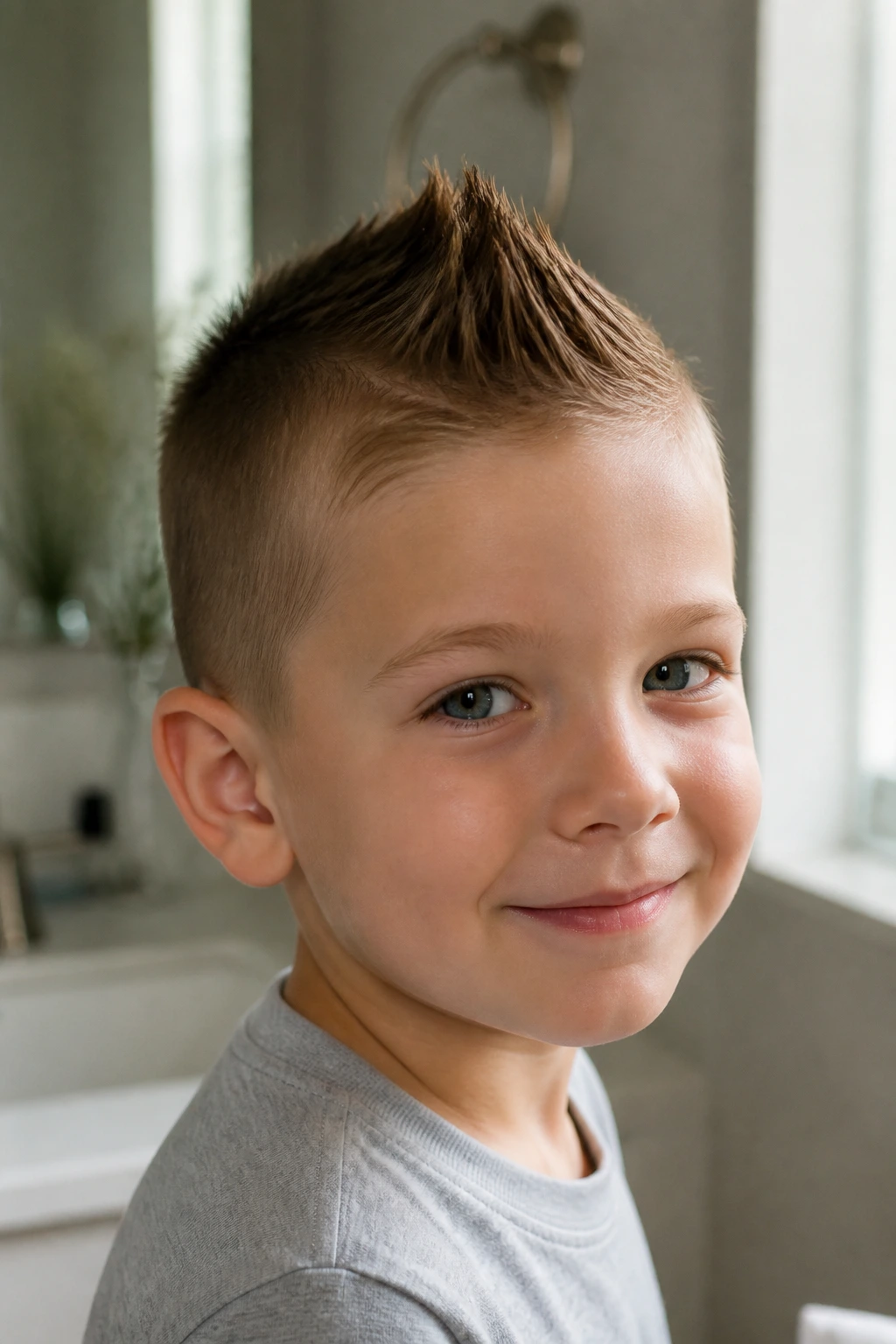
14. Spiky Texture Cut
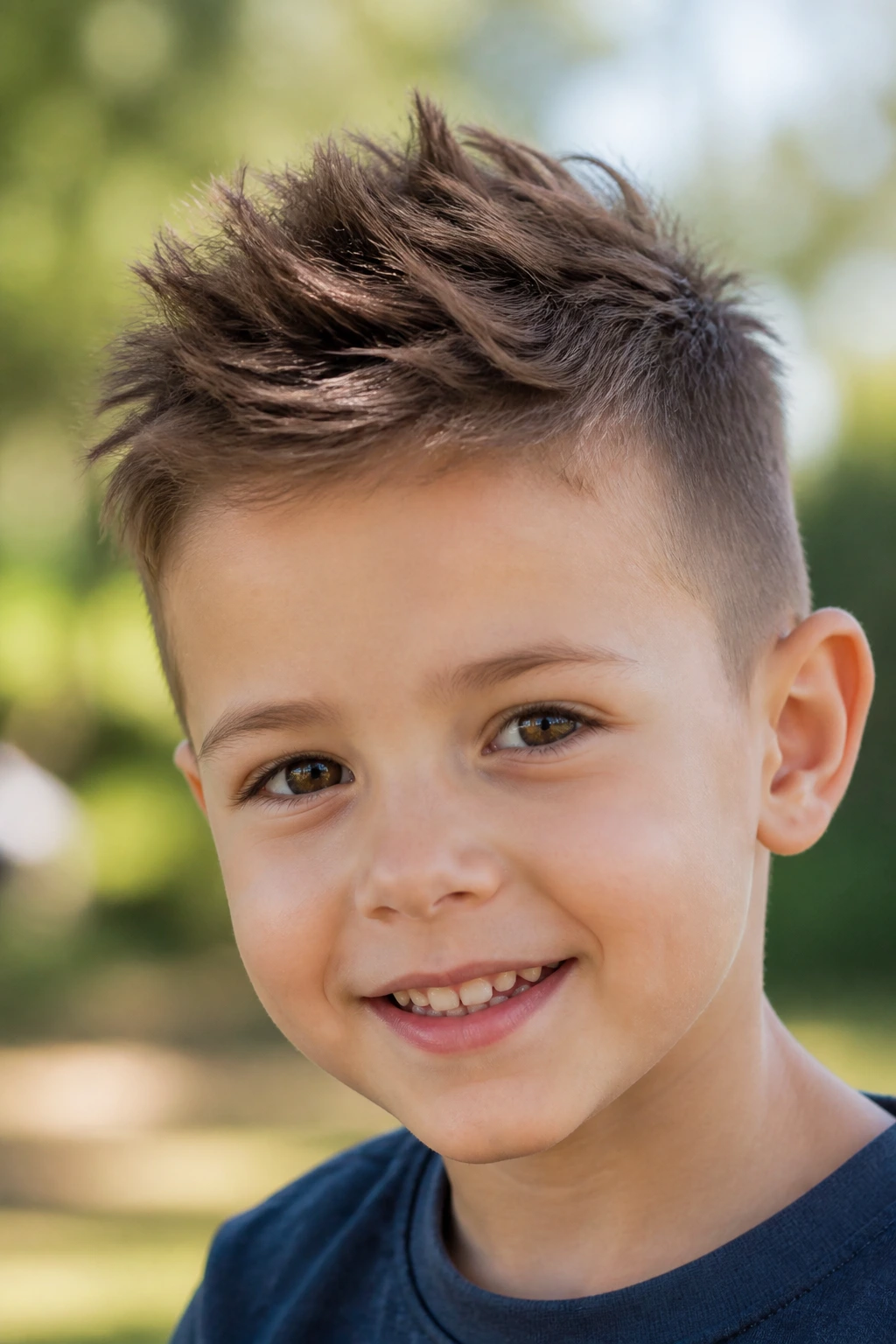
Spiky hair is still around because it works when the spikes are small and messy, not tall and crunchy. The best version looks like the hair is moving, not glued in place.
Ask for short-to-medium length on top with tapered sides and a lot of texture through the ends. Then style with fingertips, not a comb. The goal is to pinch little sections up and out, leaving gaps between them so the style has air.
A matte product is the right call here. Shiny gel turns the hair into one solid helmet, and that’s the fastest way to make the cut look dated. Keep the spikes low and uneven. That’s what makes them look modern instead of frozen.
15. Afro Taper Fade
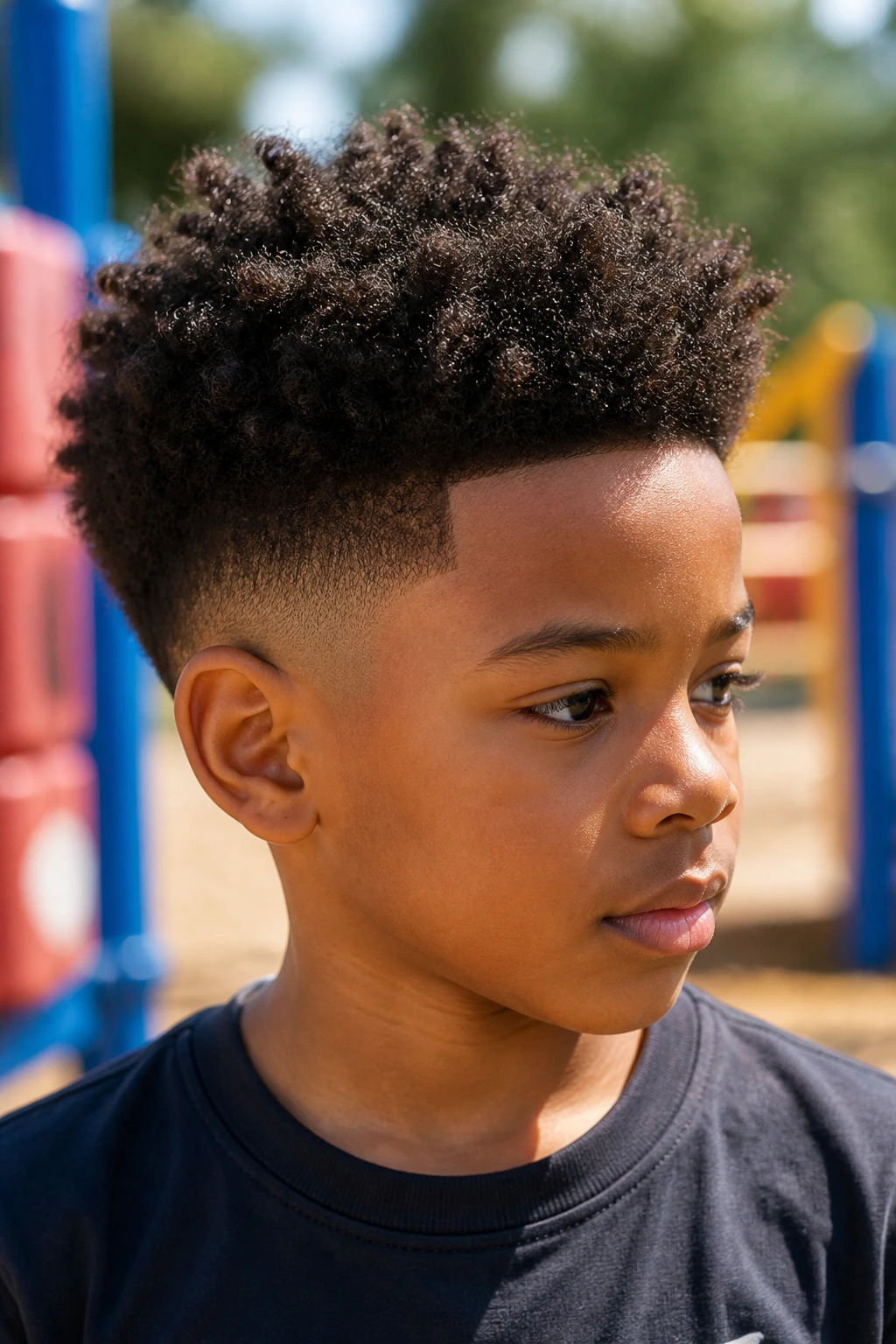
This is one of the cleanest ways to frame coils and tight curls without chopping off the shape that makes them interesting. The taper fade keeps the sides and neckline sharp, while the top stays full and textured.
What to Ask the Barber
Ask for a taper, not a blunt shrink-wrap job around the head. If the barber is shaping a line-up, it should be sharp but not pushed so far back that the hairline looks unnaturally thin. A soft edge usually grows out kinder on younger boys.
Moisture matters here more than shine. A leave-in conditioner or light curl moisturizer helps the texture sit nicely instead of drying into a rough halo. Avoid thinning shears across the whole head. That can weaken the curl pattern and leave the shape patchy.
This style looks best when it respects the hair’s volume instead of flattening it. That’s the point. Let the texture be the feature.
16. Long Layers with Center Part
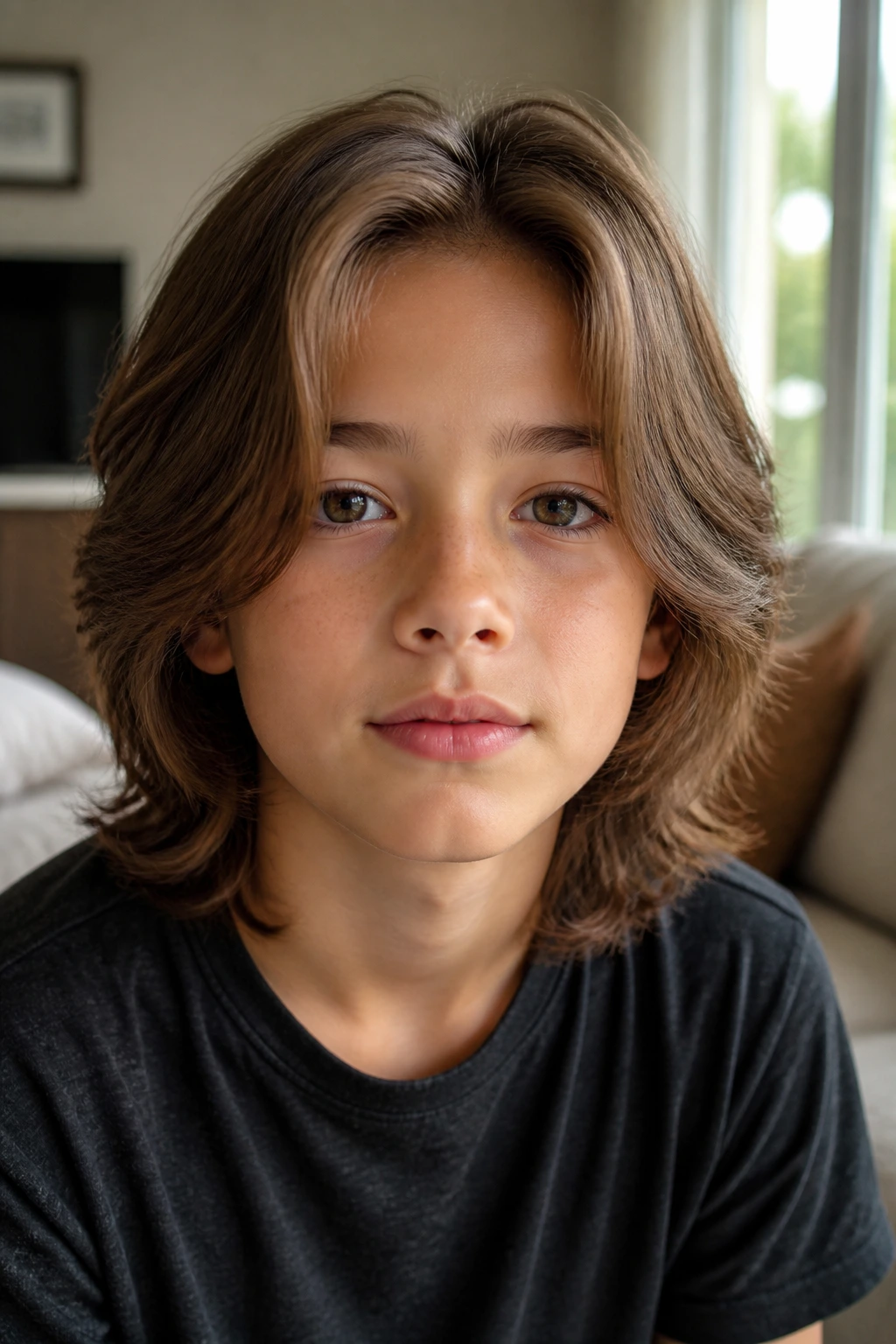
Some boys don’t want short hair, full stop. Long layers with a center part gives them a shape that feels relaxed without becoming wild.
The layers keep the hair from hanging in one heavy curtain. The part can sit in the middle or drift a little off-center if the crown prefers that. What matters is movement around the face and enough shaping through the ends so the hair doesn’t form a triangle when it dries.
This cut needs a bit more care than the short styles, mostly because tangles show up faster. A leave-in spray and a wide-tooth comb help. I’d also ask for regular dusting trims so the ends stay healthy. If you skip those, the style can look stringy fast.
17. Modern Bowl Cut

The old bowl cut got a bad reputation for a reason. It was too blunt, too even, and usually too stubborn. The modern version fixes that by adding texture, softer edges, and cleaner sides.
The fringe still gives that rounded frame, but the line shouldn’t be rigid all the way around. A little taper near the ears and a bit of movement at the ends make the cut feel current instead of costume-like. Thick straight hair tends to suit this shape best, because the hair can hold the round outline without collapsing.
This is one of those haircuts that looks best when the barber cuts it with some restraint. Don’t let the whole head get chopped into a perfect helmet. That’s the old version, and nobody needs it.
18. Brushed-Forward Fringe

A brushed-forward fringe is a smart answer for boys who have a high forehead, a stubborn front cowlick, or hair that naturally wants to fall toward the face anyway.
The front is cut into a choppy, forward-moving fringe, while the sides stay tapered and tidy. That forward motion gives the haircut a cool, easy shape. It also helps hide a front swirl that refuses to part cleanly.
Keep the fringe soft, though. If it’s packed too heavy, it will sit like a curtain and lose the movement that makes the cut work. A quick pass with the fingers after a mist of water is usually enough. The whole point is to look like the hair landed there on purpose.
19. Mini Top Knot
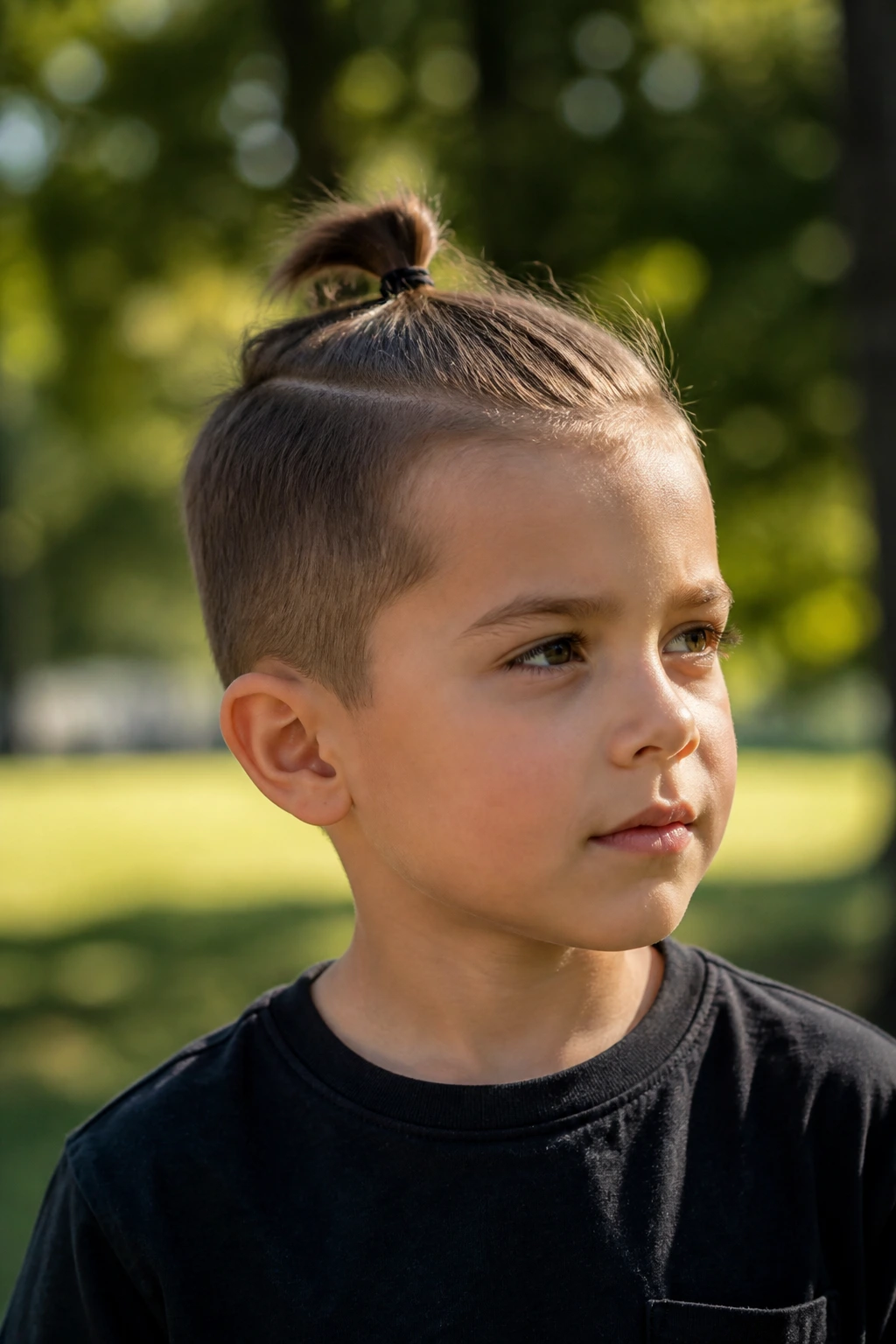
Can a top knot work on a little boy without looking like a joke? Yes — if the hair is long enough, the knot is small, and the sides stay neat.
The best version keeps the top long enough to gather comfortably, usually 6 inches or more, while the sides are tapered or trimmed close enough to stop the style from spreading outward. A loose tie is better than a tight one. Young scalps don’t love constant pulling.
This cut suits boys who like longer hair and can handle a brush-through before bed. It is not the right pick for every child, and that’s fine. If the knot has to be yanked tight to hold, the hair isn’t long enough yet. Wait. The style will look better when the length is real, not forced.
20. Drop Fade with Crop
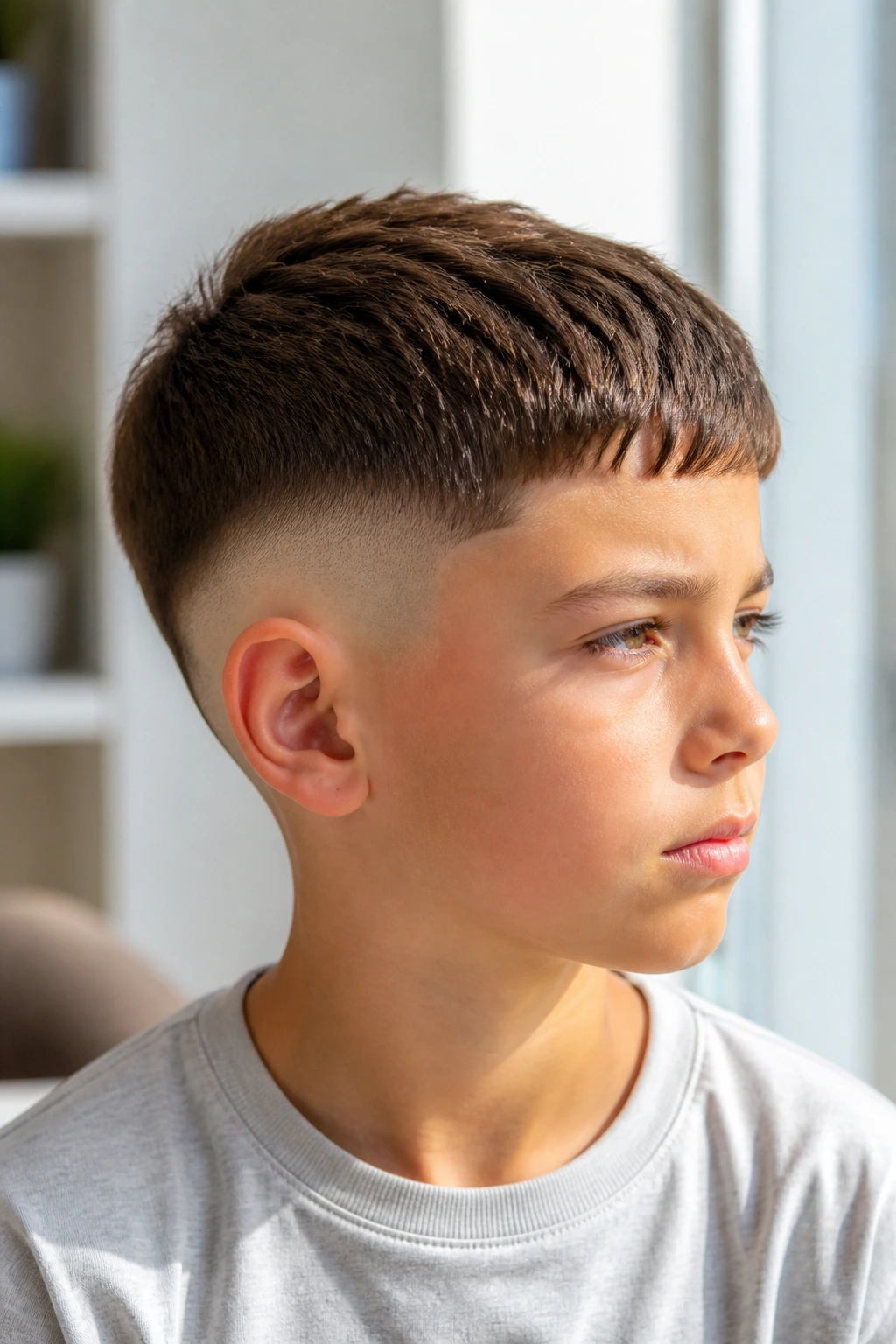
The drop fade follows the shape of the head as it curves behind the ear, which is why this cut tends to look tailored even when the top is short and simple. It gives the haircut a softer outline than a straight, boxy fade.
Pair that fade with a cropped textured top and the result is tidy without feeling severe. It works especially well on boys with round or square face shapes because the curved fade line adds some shape around the sides. The top can stay short enough to manage with almost no styling.
This is one of the cuts that quietly looks more expensive than it is. Not because it’s fancy. Because the silhouette is clean.
21. Waves with Line-Up
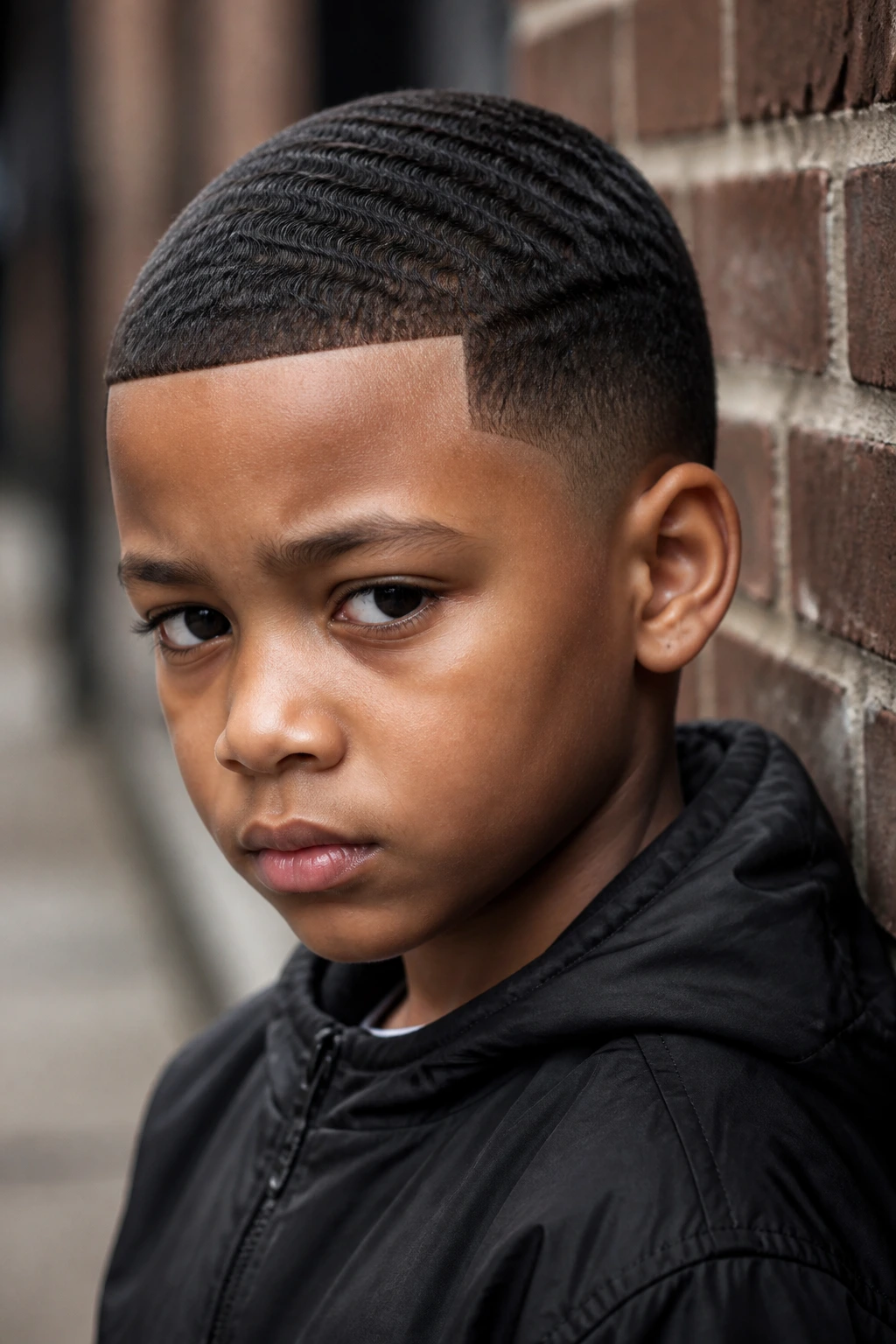
Short, coarse hair that forms waves has its own logic, and the right cut respects that. The line-up gives the hair a sharp border, while the waves bring texture and movement across the top.
- Best for: short, coarse, or tightly patterned hair.
- Barber ask: keep the edges neat without pushing the hairline too far back.
- At-home care: brush in a consistent pattern and use a light moisturizer.
- Timing: a fresh edge-up every 2 to 3 weeks keeps the shape crisp.
A wave brush does the heavy lifting here, and a small amount of product helps the pattern settle. Keep it light. Too much grease makes the hair look heavy and can clog the scalp. The best waves look smooth, not slick.
22. Soft Mullet
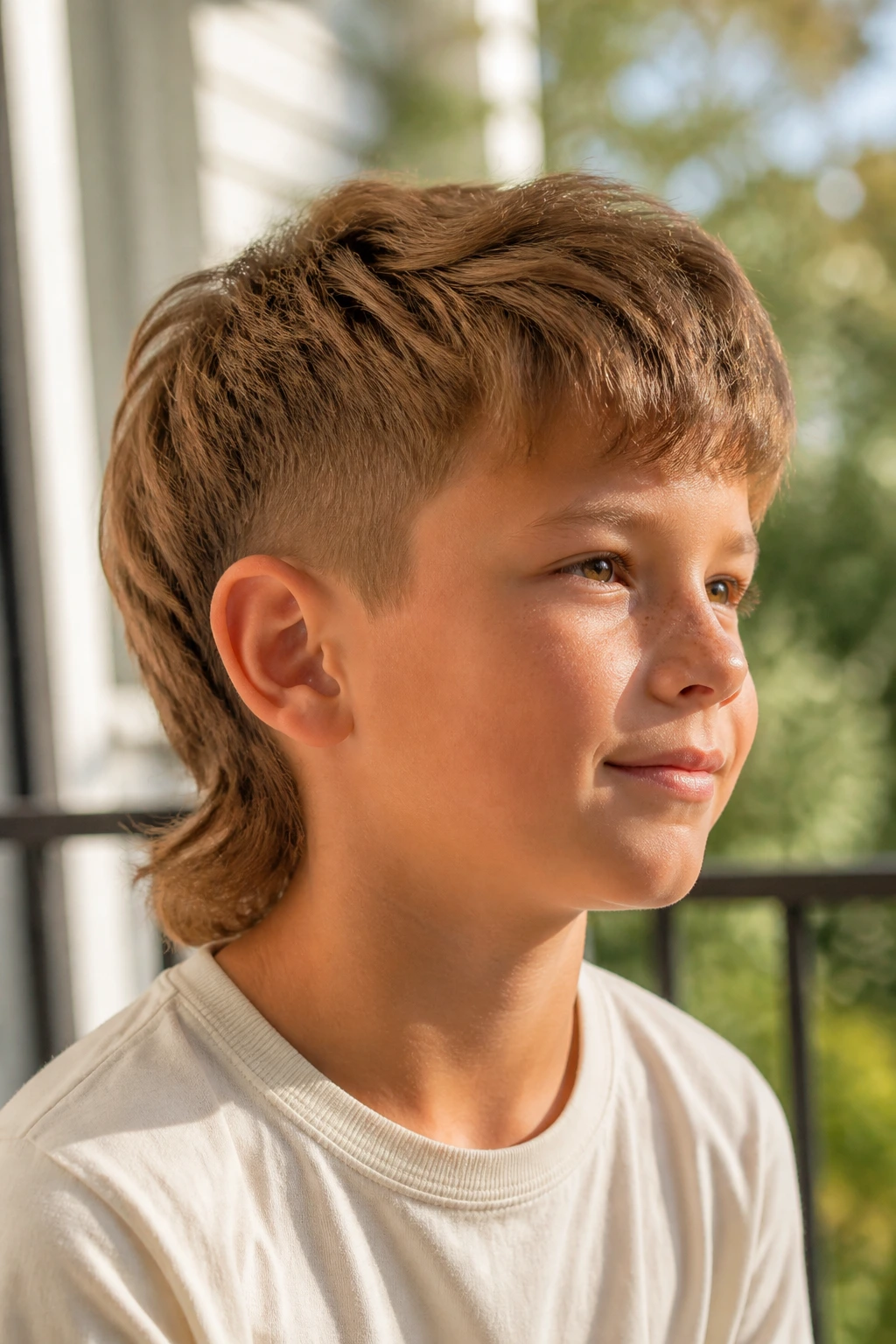
A soft mullet works because it keeps length where kids like movement and trims the sides enough to stop the cut from looking like a throwback costume. It’s playful, but it needs a careful hand.
The modern version is cleaner around the ears and more textured through the top and back. The tail in the back should feel deliberate, not dramatic. That’s the line. If it gets too long or too disconnected, the style stops looking trendy and starts looking accidental.
This cut makes sense for boys with straight or wavy hair who like a little length and don’t want everything clipped short. I’d keep the front and sides soft, then let the back hang just enough to show the shape. Not huge. Just enough.
23. Side-Swept Pompadour
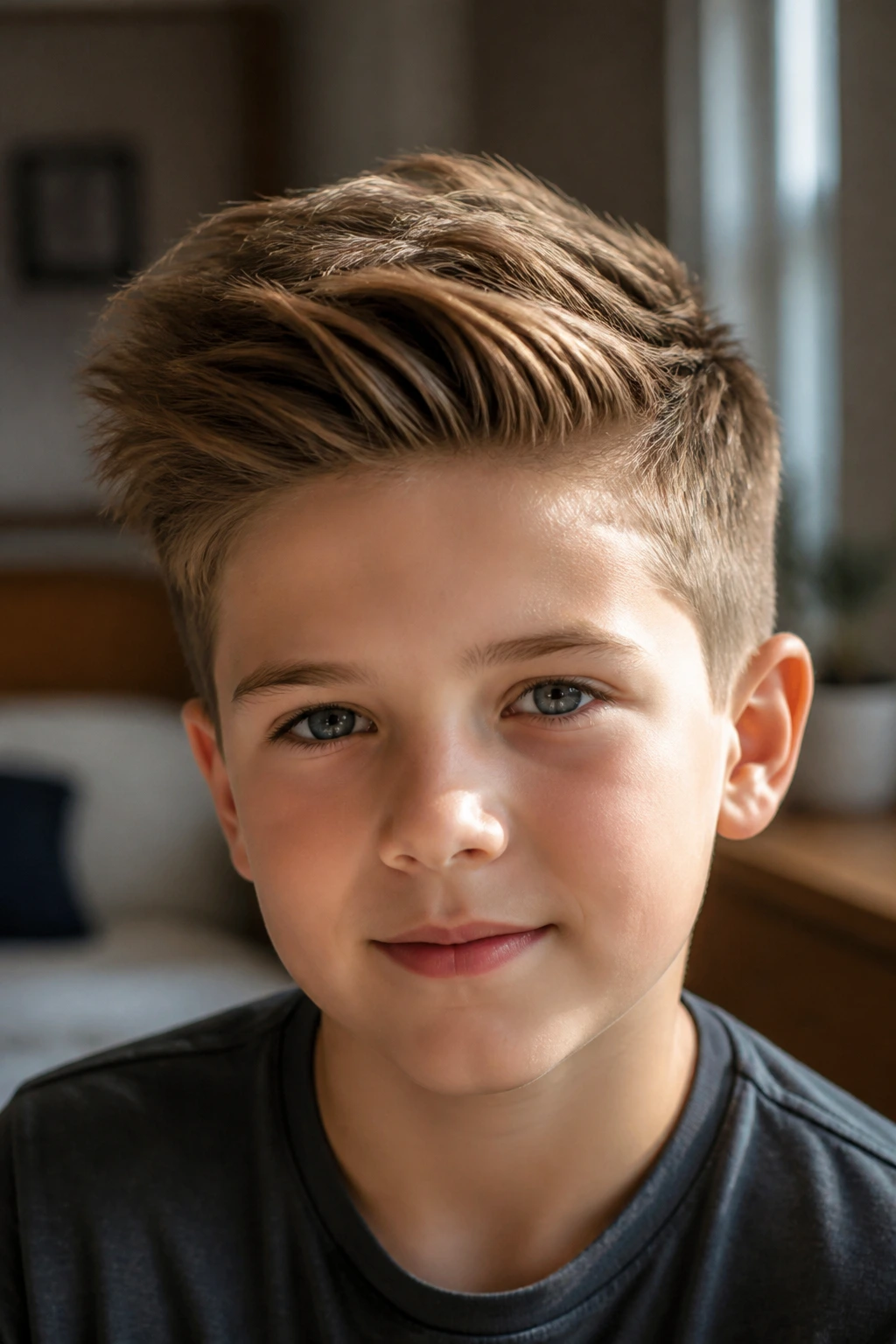
A little boy’s pompadour should not look like it needs hairspray from a movie set. It should look lifted, clean, and touchable.
The top stays long enough to brush up and to the side, while the sides stay tapered so the volume has somewhere to go. This cut works best on thick straight or wavy hair, because the hair can hold that gentle lift without collapsing instantly. A blow-dryer helps, but only for a minute or two. You’re not building a sculpture.
A matte cream gives the shape a soft finish, which is much better than a glossy shell. I like this one for dressier moments, but it still works on a regular day if the height stays modest. Too tall, and it becomes a hassle. Just enough lift, and it looks smart.
Why These Little Boys Haircuts Hold Shape Between Trims
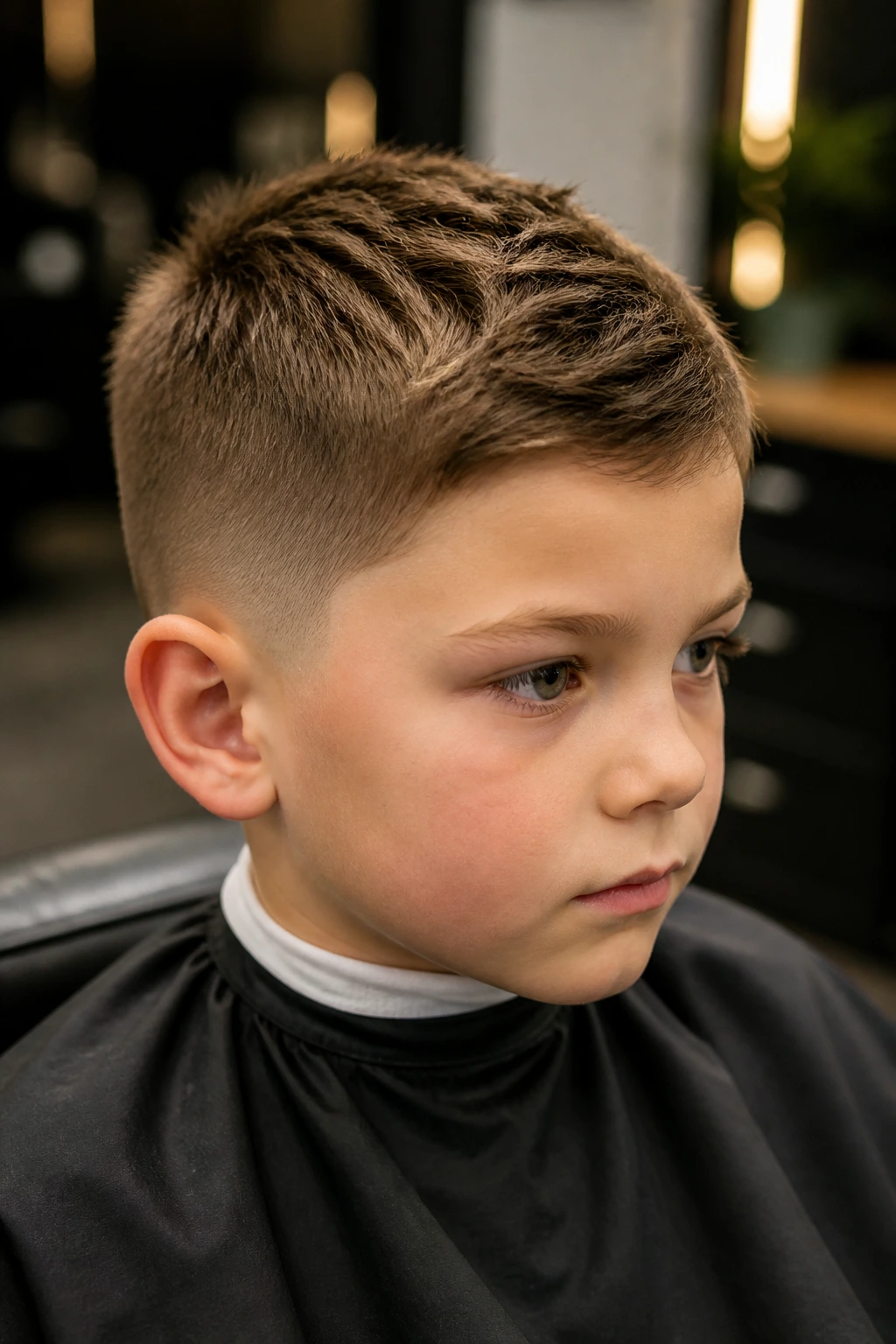
A good boys’ haircut has geometry on its side. Shorter sides keep the outline from blowing up around the ears, while texture on top gives the hair somewhere to move when it grows. That’s why crops, tapers, crew cuts, and soft fades show up so often in barber chairs. They aren’t the flashiest options. They’re the ones that keep behaving after two weeks of recess, sweat, and sleep.
The crown matters more than most parents expect. A strong swirl there can split a fringe, kick up a top, or push a side part off balance. If a style keeps fighting that swirl, it will need constant fixing. A cut that works with the crown — a messy mop, a curly top, a brushed-forward fringe — saves a lot of fuss.
Texture also beats polish on children’s hair. A soft, broken-up finish gives the cut room to breathe. A stiff, shellacked finish usually looks older than the child and wears out fast. That’s the real trick: choose a shape that still looks like a haircut when the styling fades.
Essential Tools for At-Home Touch-Ups
-
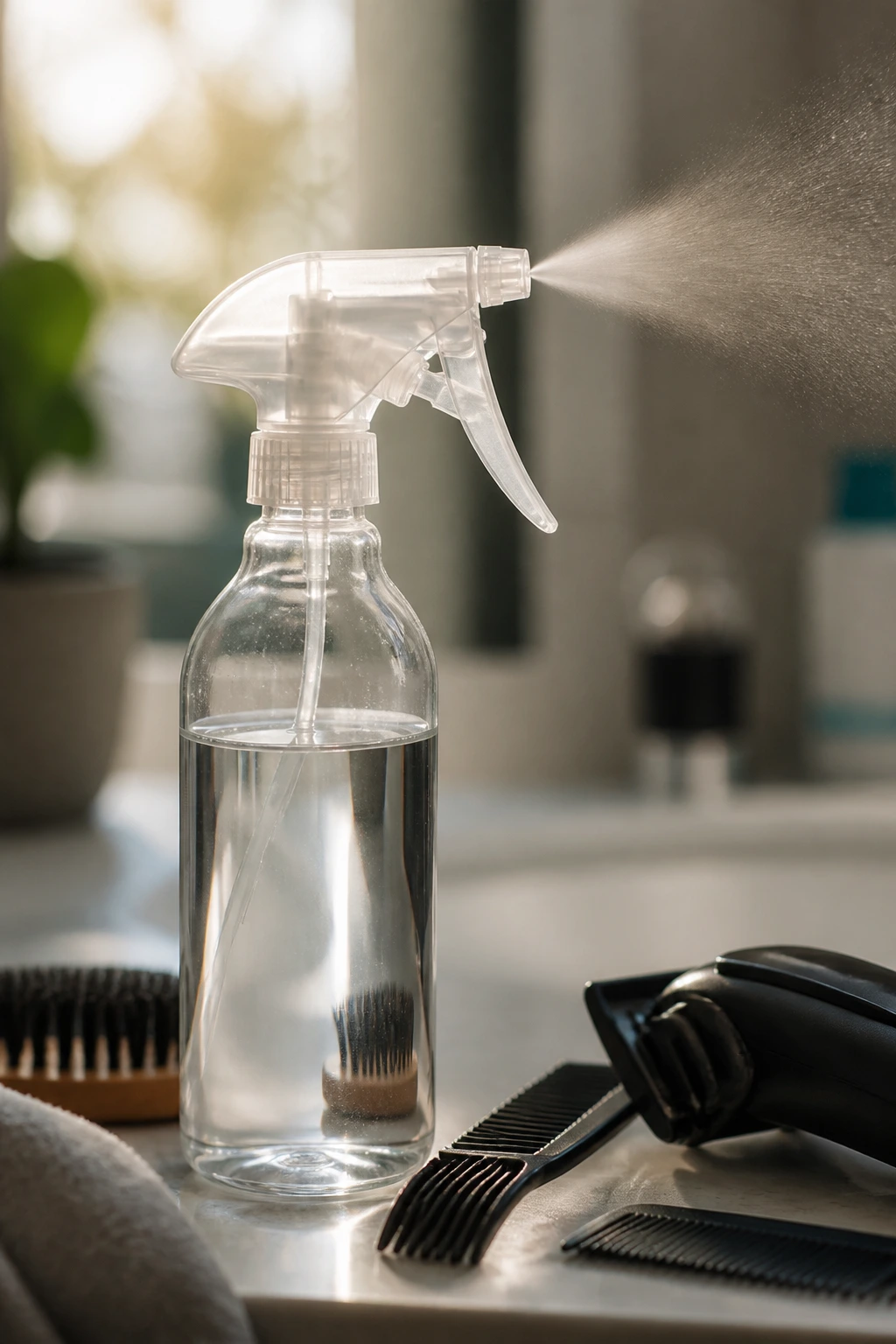
Spray bottle with water: A few misting sprays wake up bedhead and make combing easier without soaking the hair.
-
Fine-tooth comb: Useful for clean parts, side sweeps, and neatening the front before school.
-
Wide-tooth comb: Better for curls, long layers, and any hair that tangles if you stare at it too hard.
-
Soft-bristle brush: Good for smoothing short cuts, wave patterns, and brushed-up styles.
-
Lightweight clippers with guards: Handy for neckline cleanups between barber visits; a trimmer alone is often enough for little touch-ups.
-
Small trimmer or edger: Optional, but it keeps the neckline and around-the-ear area from getting fuzzy fast.
-
Matte paste or styling cream: Choose one light product that matches the child’s hair type instead of buying five jars you never finish.
-
Leave-in conditioner or curl cream: Worth it for curly, coily, or long hair that dries out and frizzes.
-
Hair dryer with a cool setting: Helpful for brush-ups, pompadours, and controlled fringe; the cool shot keeps hair from puffing too much.
-
Barber cape or towel: Makes at-home trimming less messy and keeps hair off the shirt and neck.
Smart Shopping and Product Tips for Boys’ Haircuts
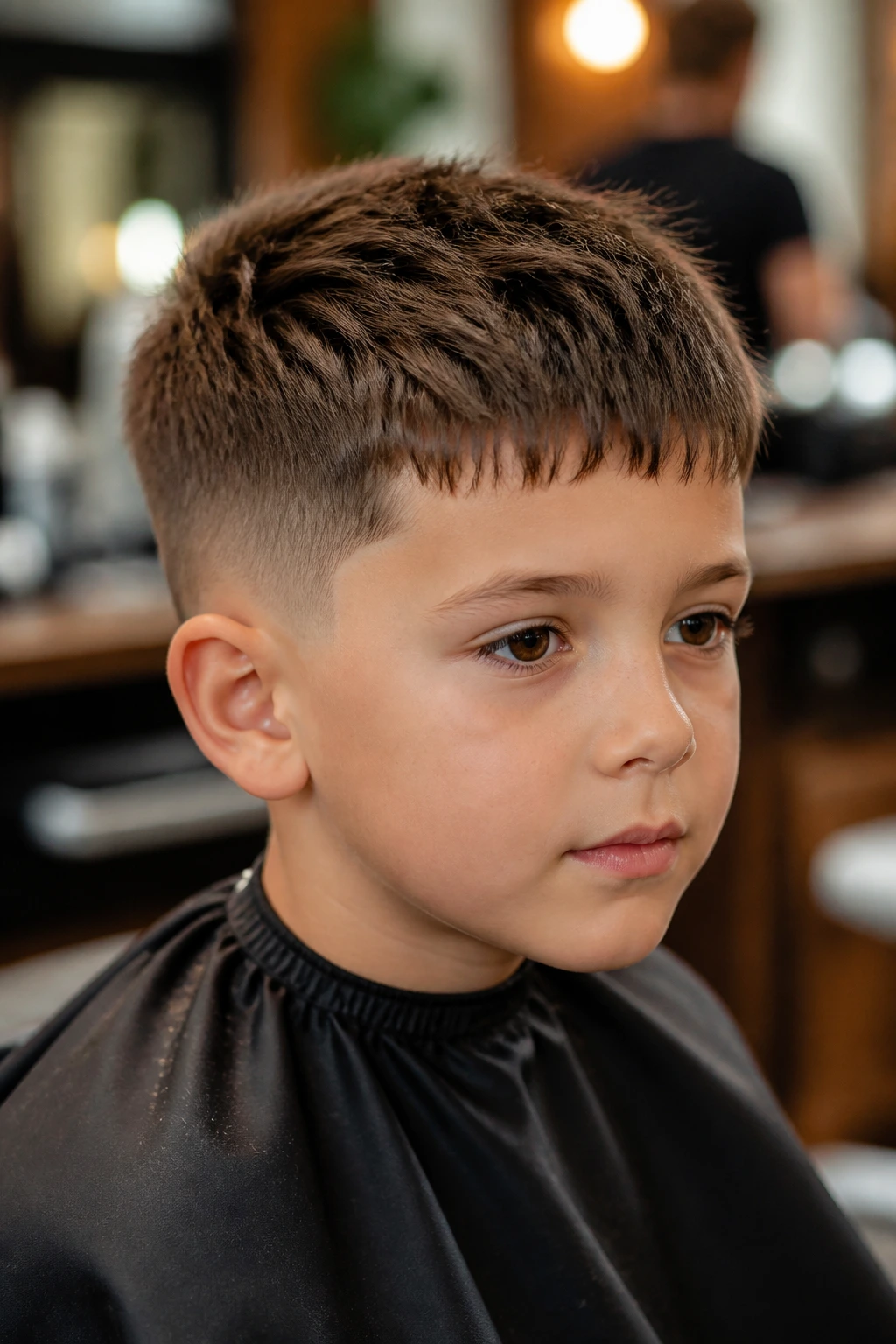
The biggest mistake in kids’ hair products is buying adult styling goop and hoping it behaves better on smaller heads. It usually doesn’t. Heavy pomades, thick waxes, and shiny gels can make the hair feel sticky, look greasy, or irritate a sensitive scalp. For most little boys, a light matte cream, a small amount of paste, or a curl-friendly leave-in is enough.
Match the product to the hair, not the trend. Fine hair usually needs something light and airy, like a cream or mousse, because heavy product will drag it flat. Thick straight hair can handle a firmer paste. Curly hair usually wants moisture first and hold second, which is why curl cream tends to work better than stiff gel. If the scalp gets dry or itchy, look for low-fragrance, alcohol-free options.
When you shop for clippers or trimmers, don’t get distracted by gadget talk. What matters is whether the guards are clear, the blade stays steady, and the tool feels light enough to hold for a few minutes without wrist strain. If you plan to clean up necklines at home, a small trimmer is often more useful than a full set of noisy clippers.
Bring reference photos to the barber, but bring good ones. A front shot is nice. A side shot is better. A back view is the one people forget, and that’s where many boys’ cuts fall apart. Also, look for a photo with similar hair texture. A curly crop on straight hair will not land the same way, and a thick comb over on fine hair can be a letdown.
How to Wear These Cuts on Busy Mornings
Morning Routine: Start with a damp spray bottle, not a full wash. For crops, side parts, brush-ups, and pompadours, a quick mist is enough to reset the shape. Work the hair with fingers first, then a comb if the style needs a cleaner line.
Playground Proof: Choose cuts that can handle hats, helmets, and hoodie hoods without losing their shape completely. Low tapers, crew cuts, buzz fades, and textured crops bounce back the fastest. If your child spends more time upside down than still, that matters.
Photo Day: Side parts, comb overs, side-swept pompadours, and tidy taper fades photograph well because they create a clear outline around the face. Keep the product light so the hair still looks like hair and not lacquered plastic.
When It Grows Out: Some styles stay decent for six weeks. Others don’t. Curls, shags, soft mullets, and low tapers are kinder during the grow-out phase. Hard parts, high skin fades, and very short fringe cuts need more frequent cleanups or they start to look ragged.
Extra Tips for Texture, Cowlicks, and Shine
Texture Boost: A pea-sized dab of matte paste rubbed between the hands and worked through dry hair gives crops, faux hawks, and brush-ups the separation they need. Use less than you think. If the hair turns stiff, you’ve used too much.
Cowlick Control: Wet the stubborn spot, comb it in the direction you want, then hit it with the dryer for 15 to 20 seconds while the shape cools. That little burst usually does more than product ever will.
Shine Level: Keep the shine low for school-day cuts. Matte finishes tend to look cleaner on little boys because they read as hair, not styling experiment. Save glossy products for special occasions, and even then, use a tiny amount.
Make-It-Yours: Change one thing at a time — fade height, fringe length, or the amount of texture on top. If you change all three, you lose the shape that made the cut work in the first place.
Night-Before Prep, Wash Days, and Trim Timing

Before the Barber Visit: Wash the hair the day before or the morning of, depending on the style and your barber’s preference. Clean hair shows the natural growth pattern, the crown swirl, and the hairline better than product-heavy hair. That helps the cut land correctly.
Between Washes: Most little boys don’t need daily shampoo unless they’ve been swimming, sweating hard, or getting into actual dirt. Short styles can handle more frequent washing than long curls, which often do better with gentle cleansing a few times a week and conditioner in between. If the hair feels squeaky and brittle after washing, the shampoo is probably too strong.
Trim Timing: Buzz cuts and skin fades usually need attention every 2 to 3 weeks if you want the line crisp. Crops, crew cuts, and low tapers can stretch to 3 or 4 weeks. Longer layered styles, shags, and soft mullets often hold their shape for 5 to 8 weeks, though the fringe may need a quick trim sooner.
Product Storage: Keep creams and leave-ins tightly capped and away from hot bathroom windows. Heat changes texture, and half-dried product is a nuisance nobody needs at 7 a.m. If you use clippers at home, brush the blades after every cleanup and oil them when the manufacturer says to. A quiet tool is usually a happier tool.
Variations and Adaptations to Try
The Low-Fuss School-Day Set: Crew cut, textured crop, low taper fade, and buzz fade all belong here. These are the cuts that survive backpacks, playgrounds, and rushed mornings without a lot of hand-fixing.
The Curly-First Version: Curly top, curly shag, afro taper fade, and brushed-forward fringe all work when the hair has movement of its own. Keep the sides neat, keep the moisture up, and let the texture do the talking.
The Fine-Hair Volume Trick: Brush-up with low fade, side part, and side-swept pompadour give fine hair a little lift and direction. The key is using a light product and not burying the hair under too much weight.
The Grow-Out-Friendly Shape: Messy mop top, soft mullet, long layers, and modern bowl cut handle longer gaps between trims. These styles look better when they’re a touch undone, which is useful when life gets busy.
The Sensitive-Scalp Option: Soft taper versions, crew cuts, and low fades are easier on kids who dislike tight edges around the ears or neck. Skip the razor-close finish and ask for a softer blend.
The Dress-Up Finish: Side part with hard part, comb over taper, and side-swept pompadour all clean up nicely for weddings, photos, and formal events. A little water, a small comb, and a pea-sized dab of product are usually enough.
Common Mistakes That Make Boys’ Haircuts Look Off
-
Going too short the first time: If the haircut is cut down to the skin or clipped too close everywhere, there’s no room to adjust when the child hates it. Start a bit longer, then shorten next visit if needed.
-
Ignoring the crown swirl: A cowlick at the back or front can split a fringe, kick up the top, or flatten a side part. Ask the barber to cut with the swirl in mind, not against it.
-
Using adult product amounts: A dime-sized blob on a little boy’s head is usually too much. Start with a pea-sized amount and add only if the hair still falls flat.
-
Choosing the wrong fade height: A high skin fade looks sharp on some heads and too harsh on others. If you want a cut that grows out softly, ask for a low or mid taper instead.
-
Skipping regular trims: Even good styles lose their shape once the neckline fuzzes up and the ears get buried. A quick cleanup keeps the haircut looking deliberate.
Frequently Asked Questions
Which haircut is easiest to maintain for little boys?
Crew cuts, buzz cuts, low taper fades, and textured crops are the least demanding. They dry fast, need little to no product, and still look decent when the morning gets messy.
What haircut works best for curly hair?
Curly tops, curly shags, and afro taper fades are usually the strongest choices. They leave enough length for the curl pattern to show instead of cutting it down into frizz.
How often should a little boy get a haircut?
Short fades and buzz cuts often need a trim every 2 to 3 weeks if you want them crisp. Longer styles can go 4 to 8 weeks, depending on how fast the fringe and neckline grow.
Should I bring a photo to the barber?
Yes, and bring one that shows the front and the side. A good photo with a similar hair texture saves a lot of guesswork and helps the barber match the real shape, not just the general vibe.
What if my child has a stubborn cowlick?
Pick a cut that works with it instead of trying to erase it. Textured crops, brushed-forward fringes, curls, and soft side parts usually handle cowlicks better than very smooth styles.
Are fades hard to keep up?
A skin fade needs more upkeep than a taper, plain and simple. If you don’t want frequent visits, ask for a low taper fade or a softer blend so the haircut doesn’t fall apart as quickly.
Can I style these cuts without gel?
Absolutely. A spray bottle, fingers, a comb, and a small amount of matte cream are enough for most of these styles. Gel tends to make little boys’ hair look stiff and can be a pain to wash out.
Which style grows out the best?
Soft mullets, messy mop tops, curly shags, and low taper crops tend to age the least badly. They’re built to look a little relaxed, so a few extra weeks don’t ruin the shape.
The Cuts That Grow Out Well

The best haircut for a little boy is rarely the flashiest one on the page. It’s the one that still looks like a haircut after recess, after a nap, and after somebody has pulled a hoodie over it three times in one afternoon.
That usually means a shape with clean sides, some texture on top, and enough softness around the fringe or neckline to survive real life. Pick the cut that respects the way his hair already moves. The mornings get easier, the barber visits make more sense, and the haircut keeps doing its job long after the chair spin is over.
