



A toddler haircut has a very short leash. It has to survive nap hair, car-seat friction, hat hair, playground sweat, and the little swirl at the crown that seems to wake up the second the cape goes on.
That’s why short boys haircuts for toddlers keep winning: they dry fast, grow out with less drama, and don’t ask a small child to sit still for a sculpted masterpiece. The best versions aren’t flashy. They’re the cuts that respect the actual hair on the child’s head — straight, wispy, thick, curly, stubborn at the front, or standing up in the back like it has opinions.
And that’s the real trick. Some short cuts make the eyes stop falling into the fringe. Some stop the neckline from turning into a warm, itchy mess. A few buy you an extra week before the next trim, which, in toddler life, feels like a small miracle.
Why These Cuts Earn Their Keep
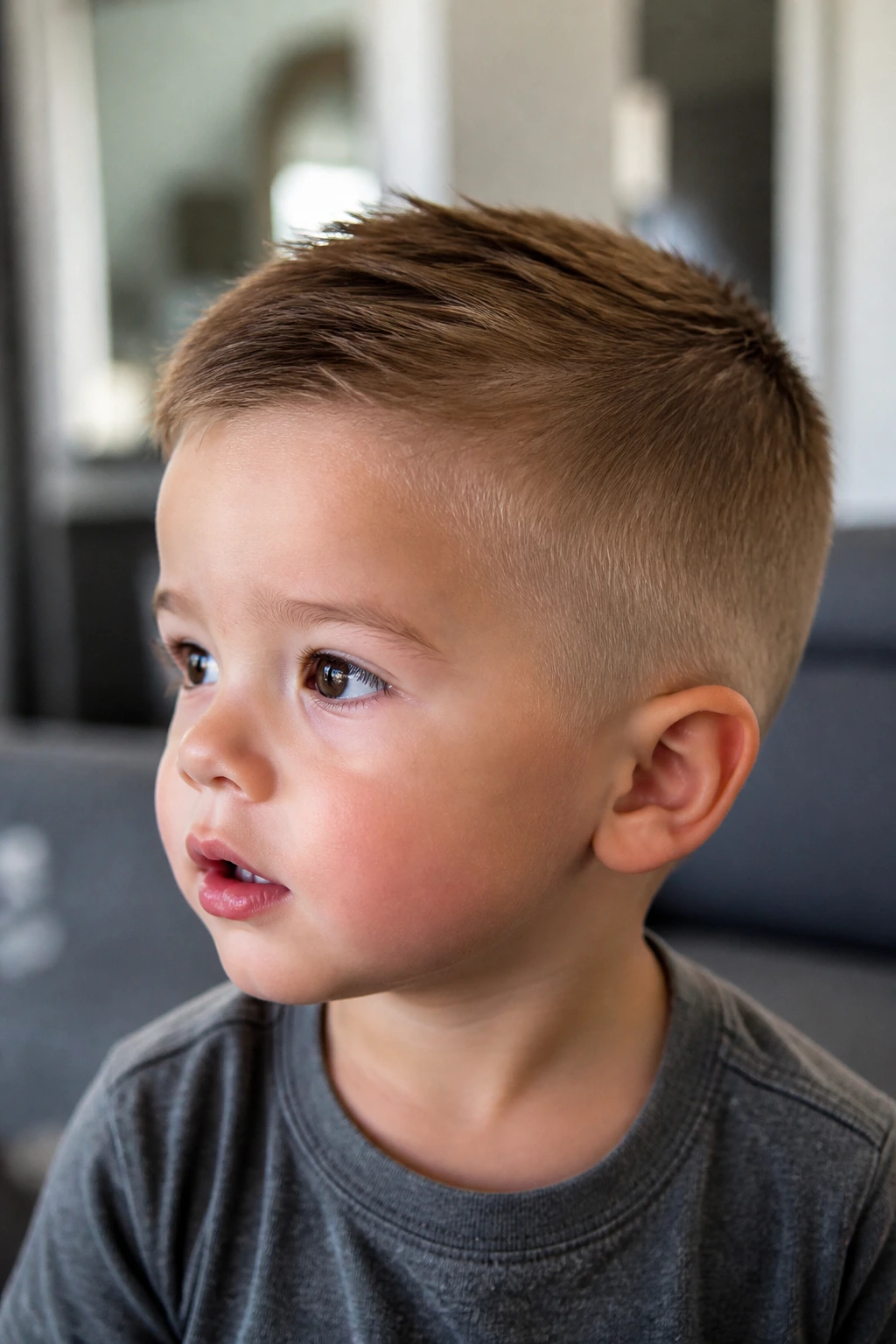
Fast cleanup: Most of these cuts dry in minutes and look presentable after a towel rub, which matters when bath time ends with a half-dressed escape attempt.
More forgiving grow-out: A soft taper or short crop keeps its shape longer than a blunt, heavy cut that suddenly looks fuzzy after ten days.
Built for real hair patterns: Cowlicks, whorls, thick crowns, and fine wisps all behave better when the top stays under about 2 inches.
Less chair drama: Shorter sides mean less time with clippers around the ears and neckline, which is a big deal if the child is done after six minutes.
Still leaves room for personality: A side part, mini quiff, or short fade can look tidy without making the haircut feel fussy or too grown-up.
1. Buzz Cut with Soft Line-Up
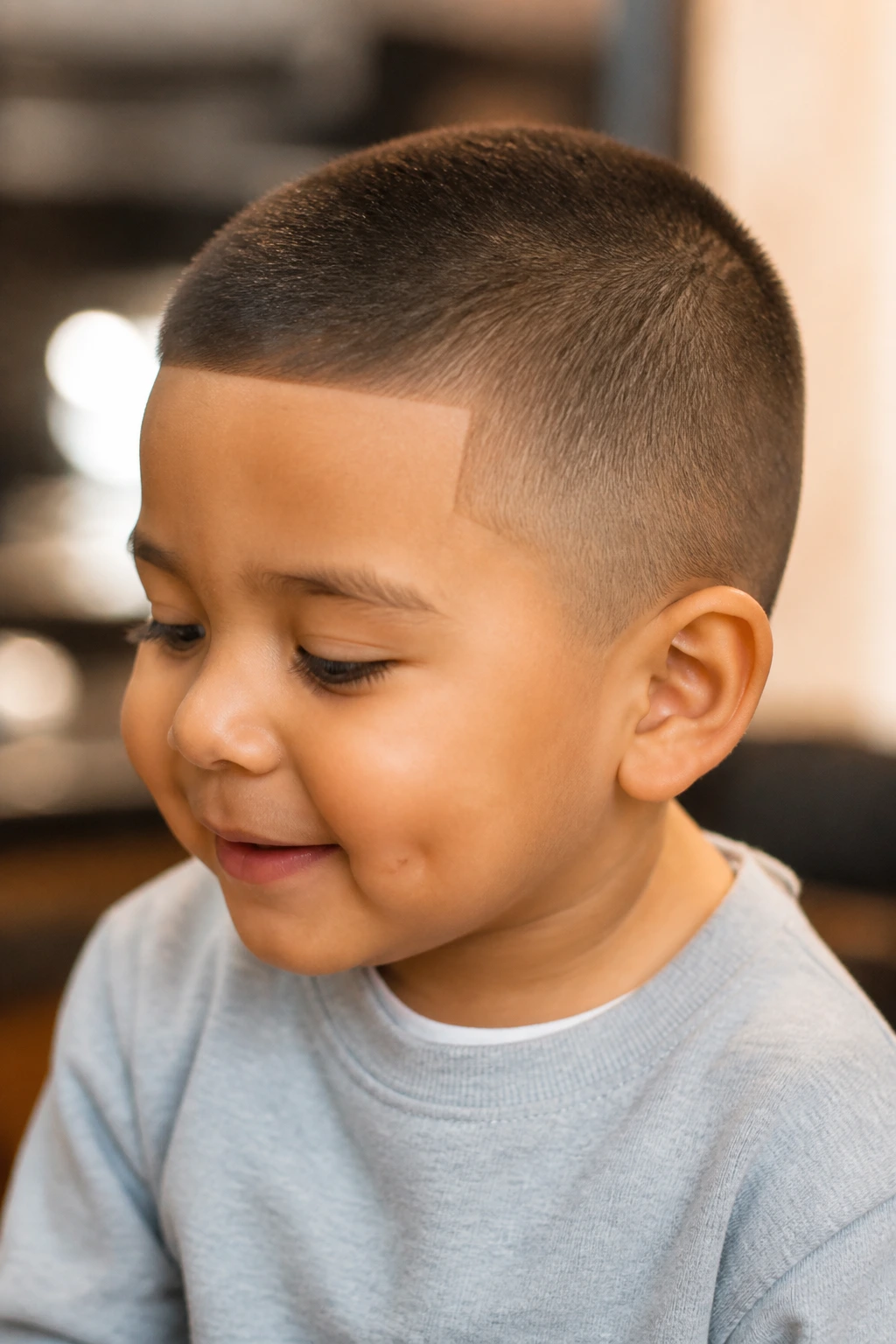
A buzz cut is the closest thing to a reset button. It’s blunt, clean, and honest, and on a toddler it can be a lifesaver when the hair is dense or the child treats grooming like a personal insult. I prefer a soft line-up here instead of a razor-sharp edge; it keeps the cut neat without boxing in a small hairline.
Ask for a #2 guard on top and a slightly shorter taper at the sides and back. If the crown swirl stands up hard, leave the top a touch longer so the haircut lies down instead of bristling up the second the cape comes off.
Best for: thick straight hair, active kids, and parents who want the quickest possible cleanup.
Watch out for: taking it so short that every uneven patch on the scalp shows through.
2. Crew Cut with Tapered Sides
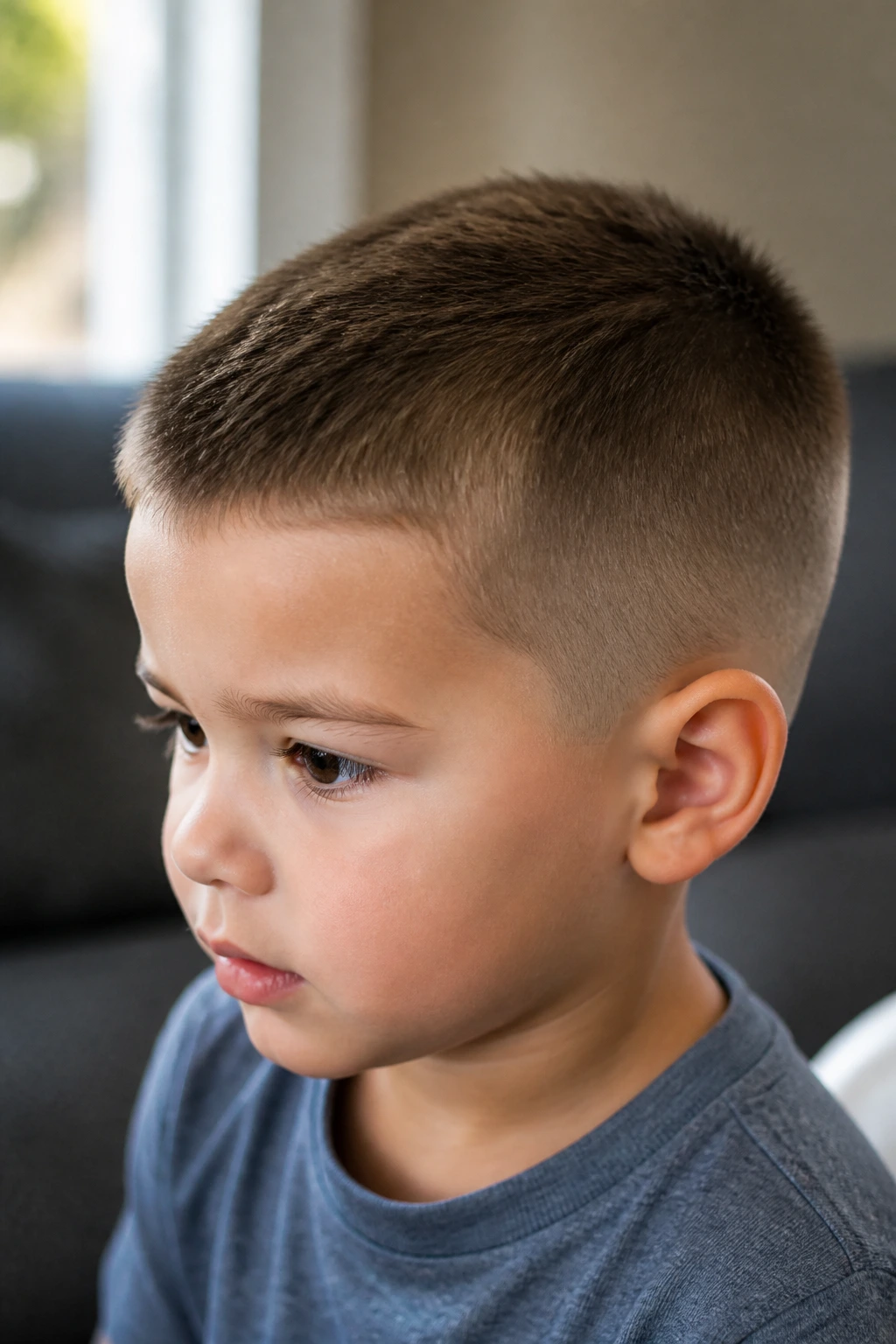
Can a toddler wear a crew cut without looking like he’s headed to drill practice? Absolutely, if the top stays soft. The cut works because it leaves enough length on top to sit naturally, while the taper around the ears keeps the outline neat.
Keep the top around 1 to 1¼ inches and ask for a gradual taper rather than a blunt fade. That little extra softness buys you a cleaner grow-out, and it helps if the hair flips up at the back after a nap.
This is one of those cuts that looks tidy on day one and still looks fine three weeks later. That matters more than people admit.
3. French Crop
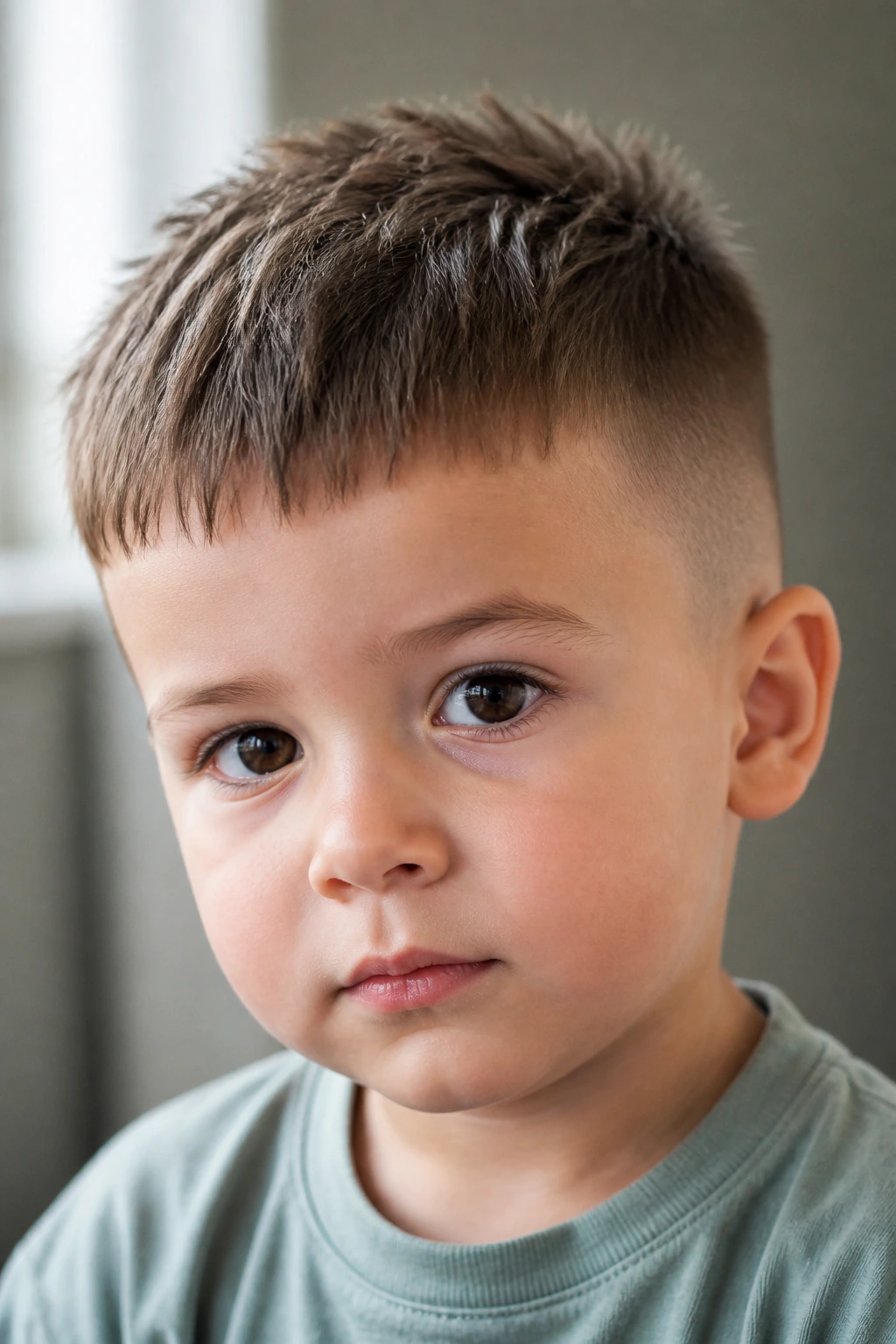
A French crop handles forehead business without making a toddler look overly styled. The fringe sits forward, which is useful if the hairline is high, the front cowlick pushes up, or the child keeps touching the front of the hair all day.
Keep the top around 1 to 1½ inches and the fringe a little shorter, then ask for texture through the ends. If the barber leaves the front too blunt, it can fall into a shelf. Soft texture keeps it from looking like a helmet.
I like this cut on straight hair and slightly wavy hair. It has shape, but it doesn’t demand much from the child.
4. Caesar Cut
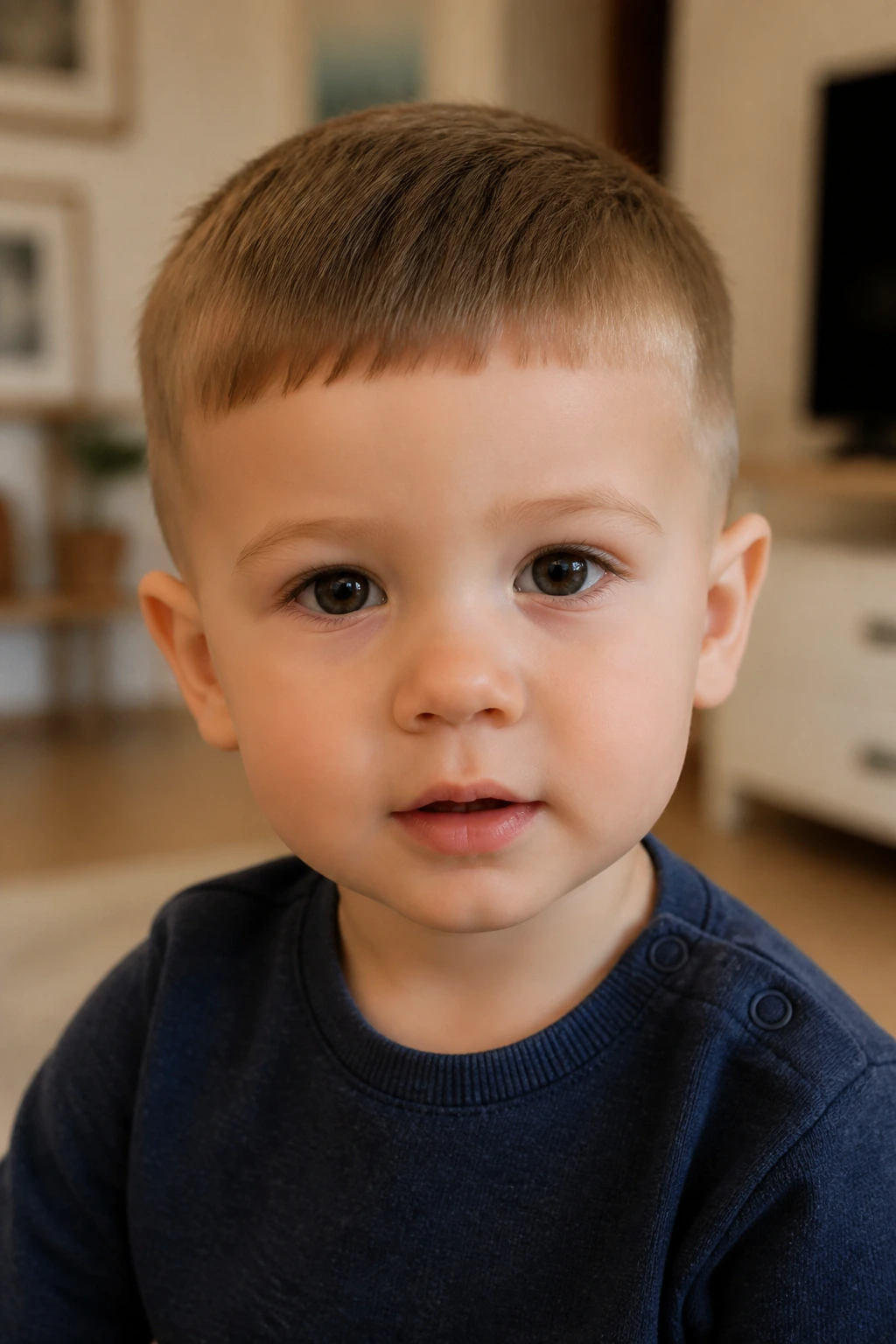
The Caesar is the crop with a sharper front edge. Short fringe. Short top. Short sides. No arguments. It works especially well when you want the hair out of the eyes but don’t want a long sweep falling across the forehead every ten minutes.
Ask for the fringe to sit around ½ to ¾ inch and keep the top close to that length. On toddlers, I’d soften the edge just a little; a hard, boxy Caesar can look stiff on a small head.
This one is a strong fix for straight hair that wants to stick out in every direction. It also handles a high forehead or uneven front growth nicely.
5. Textured Crop
What makes a textured crop useful is simple: it hides the fact that toddler hair rarely lies still. The top is cut short and choppy, then broken up with point cutting so it doesn’t form one flat sheet across the head.
Keep the top around 1½ inches and let the ends stay piecey. This is the cut I’d choose if the hair is fine and goes limp, or if it’s thick and wants to puff out in a solid block. The texture gives the haircut air.
No heavy product is needed. A little water and finger-combing are usually enough.
6. Ivy League Cut
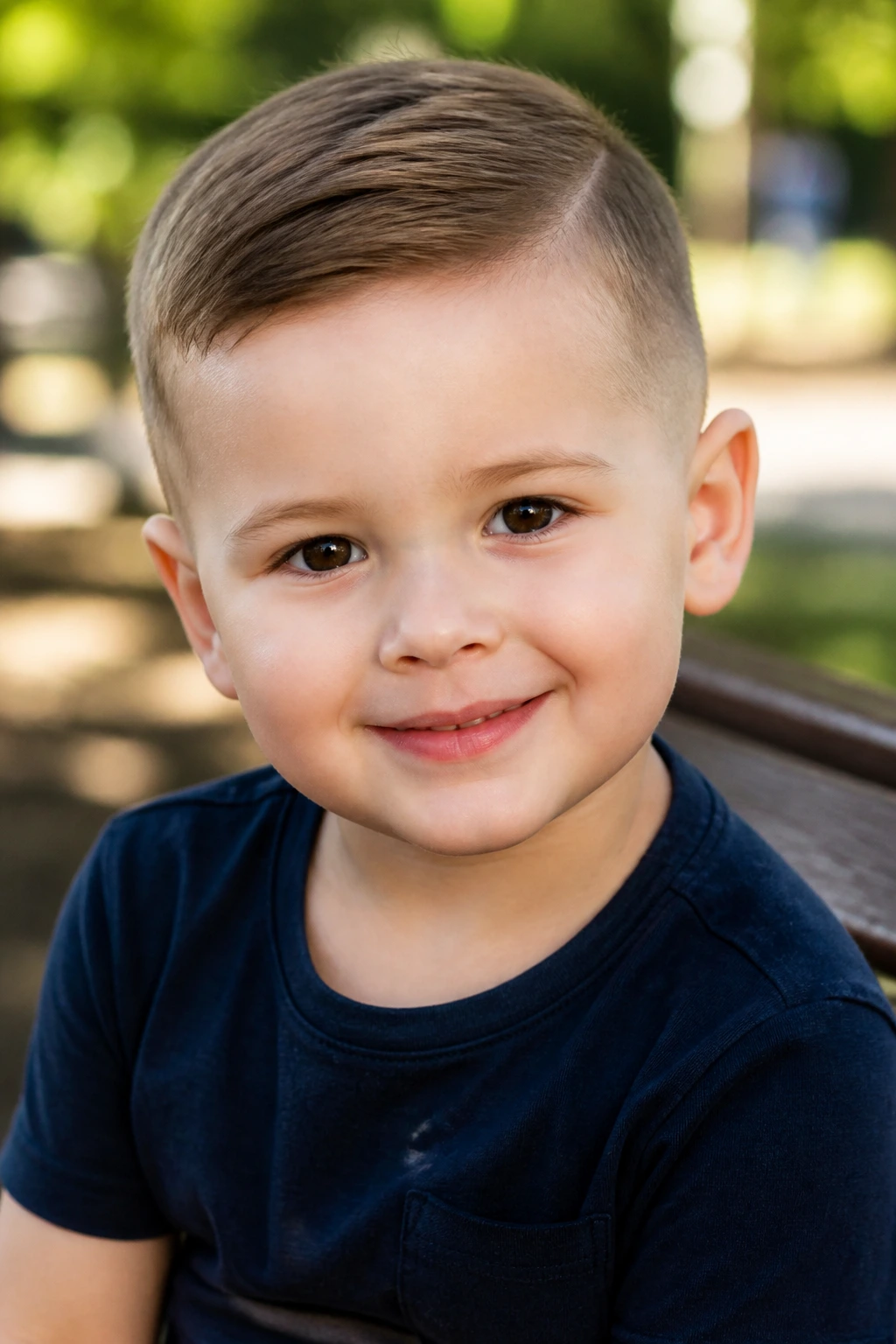
The Ivy League is what happens when a crew cut decides to clean up for pictures. The top stays short, but there’s enough length to create a real side part instead of a fake one traced in with product.
Keep the top around 1½ to 2 inches and taper the sides softly. On toddlers, I like the part to feel implied rather than carved; a hard part line can be more maintenance than it’s worth.
This cut is especially good if the child has straight or slightly wavy hair and you want something that reads polished without getting stiff. It’s one of the better short boys haircuts for toddlers when you want neat and not too severe.
7. Classic Side Part
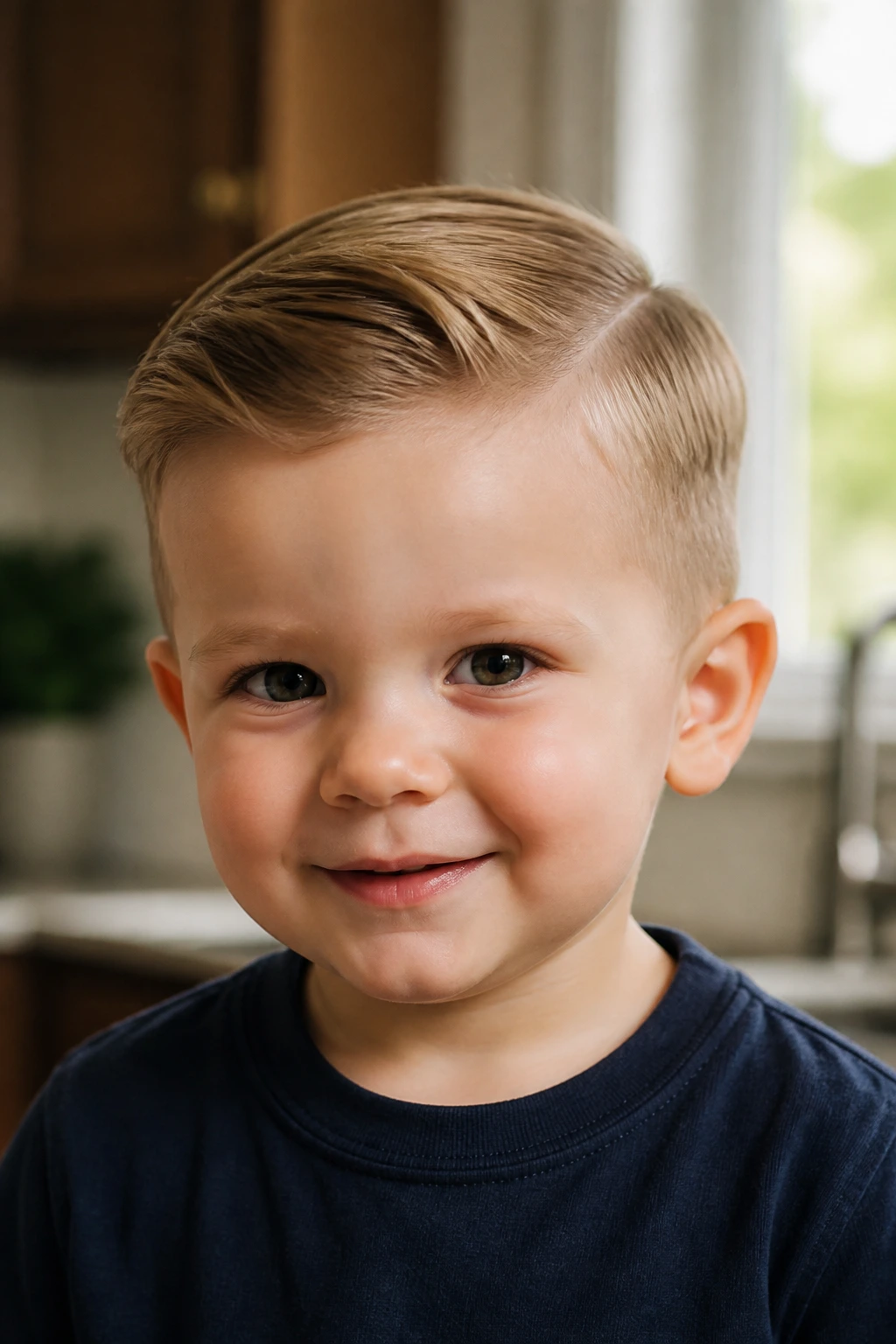
Can a side part look natural on a toddler? Yes — if you keep it relaxed. The old-fashioned, sharply combed version can feel too formal, but a soft side part gives the head shape and keeps hair from falling straight into the face.
Ask for about 1½ inches on top with a gentle taper at the sides, then set the part where the hair already wants to separate. That last part matters. Forcing a part against the grain is how you get a puffball by lunchtime.
I like this cut on straight hair and finer hair. It gives structure without needing a lot of styling time.
8. Low Taper Fade with Short Top
A low taper fade is the quiet version of a fade. It stays low around the ears and neckline, so the transition looks clean without turning the whole haircut into a high-contrast statement.
Keep the top around 1 to 1½ inches and taper only the lower edge. That keeps the cut wearable for everyday life, not just the day the barber finishes it. A low taper also grows out better than a fade that starts halfway up the head.
This is one of my favorite options for parents who want the haircut to look intentional but not overworked. It’s tidy, and it stays that way for a little while.
9. High and Tight
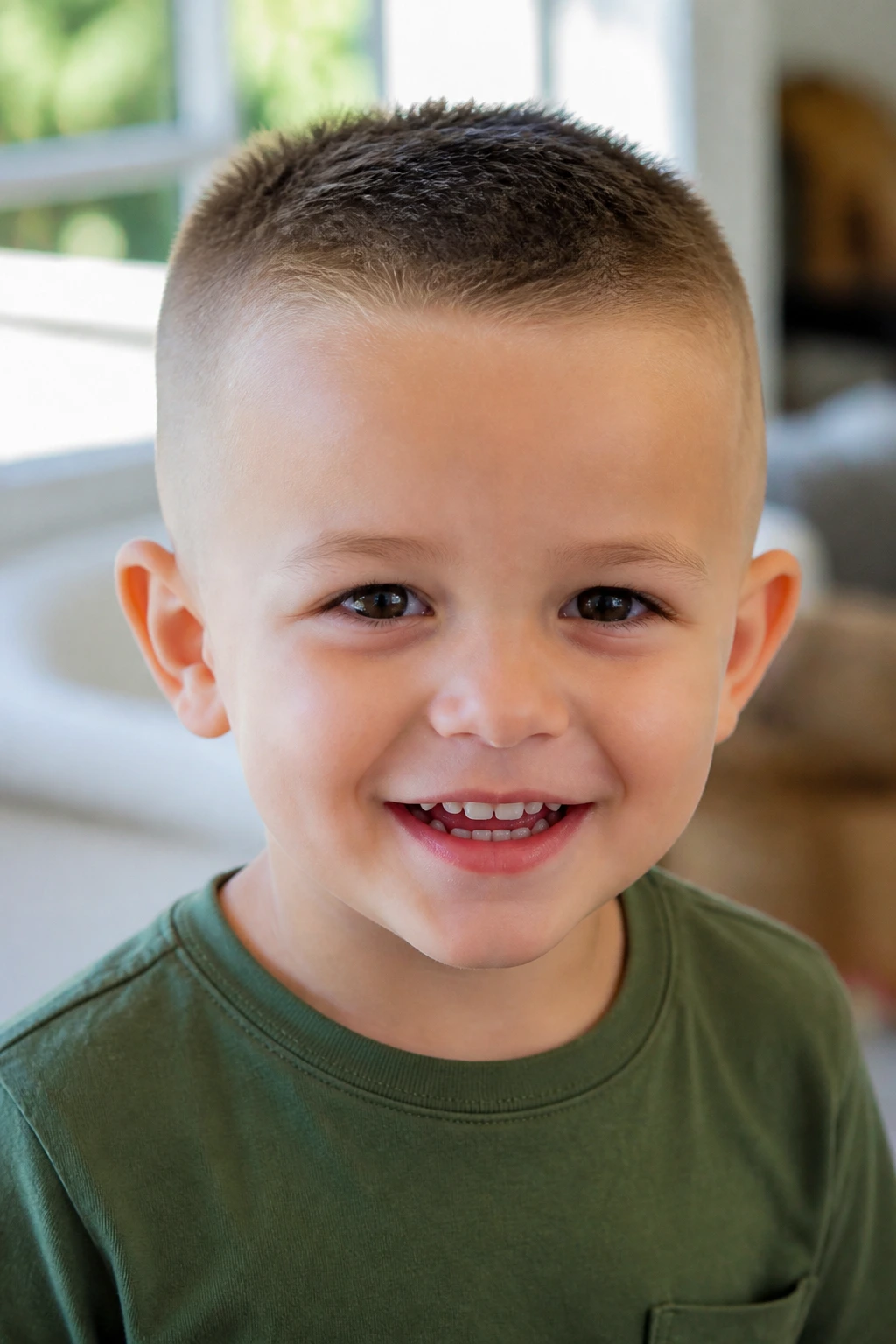
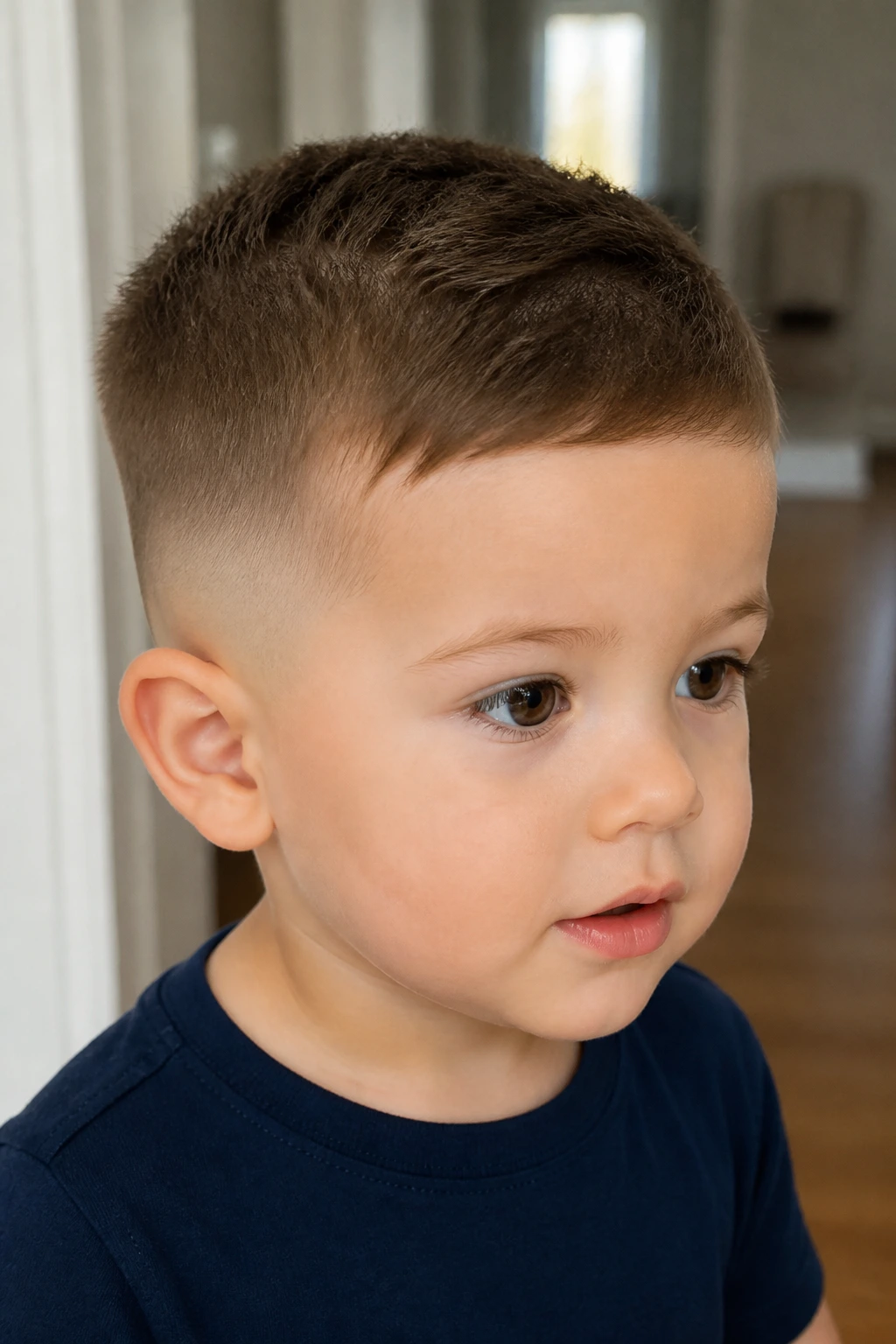
The high and tight is lean, blunt, and very short on the sides. It’s the cut that says, “Nothing extra here,” which can be a blessing if the hair is thick and the child runs hot.
On toddlers, I’d keep the top a little softer than the military version — maybe ¾ to 1 inch — so it doesn’t look severe against a small face. The contrast is the point, but the haircut should still feel friendly, not clipped down to the bone.
It’s a good match for coarse or dense hair that balloons out quickly. If the child hates hair touching the ears, this one removes the issue fast.
10. Short Comb Over
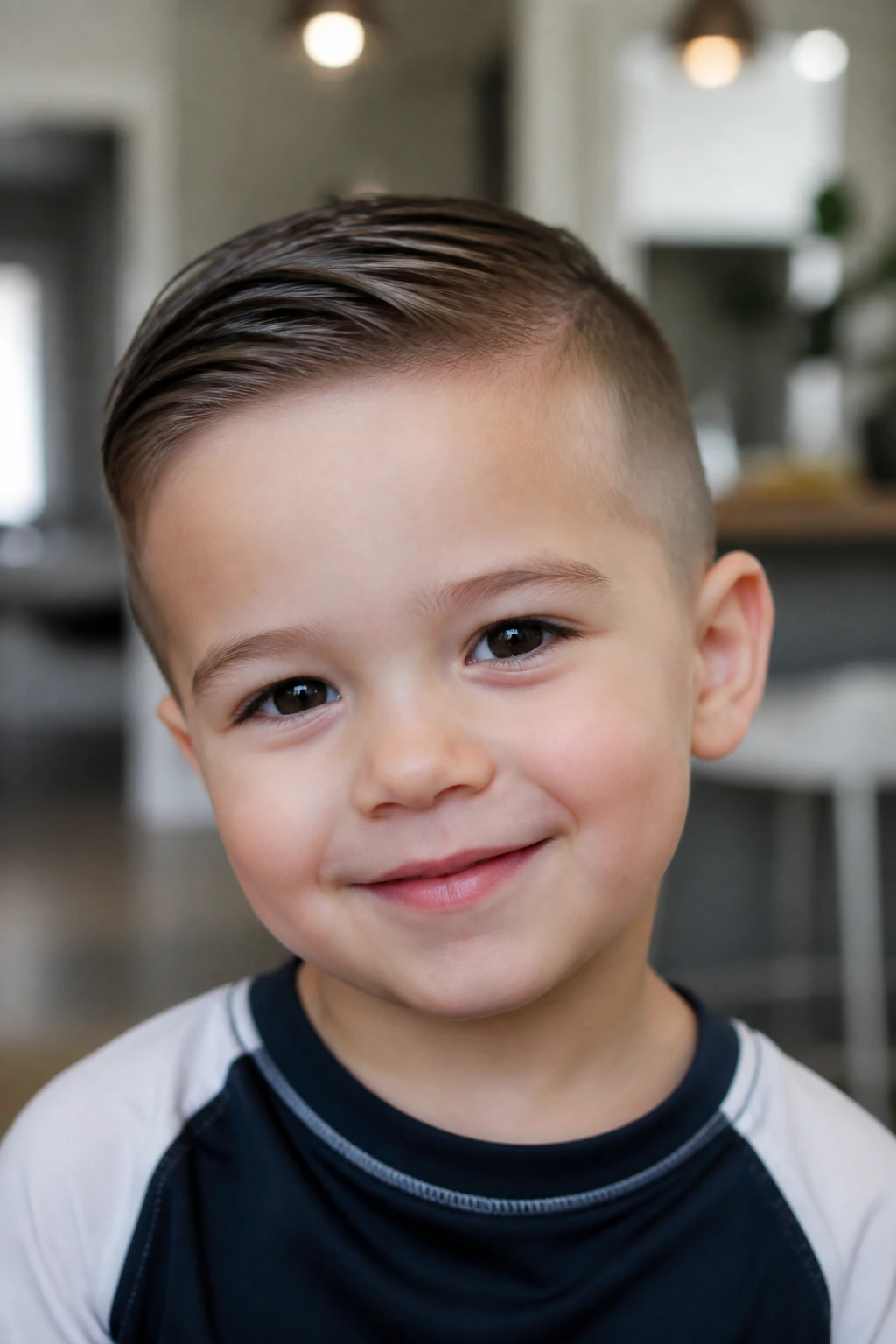
A short comb over only works when the hair actually wants to move sideways a bit. That’s the whole game. If the hair naturally leans one way, you can use it; if it fights every direction, this cut will be a daily argument.
Keep the top around 1½ to 2 inches and the sides tight with a taper, not a hard disconnect. Then comb or finger-brush the top over while it’s damp. The result should look soft, not like a tiny corporate presentation.
This is a good pick for straight or slightly wavy hair, especially if you want a cut that can swing neat on picture day and casual after recess.
11. Mini Faux Hawk
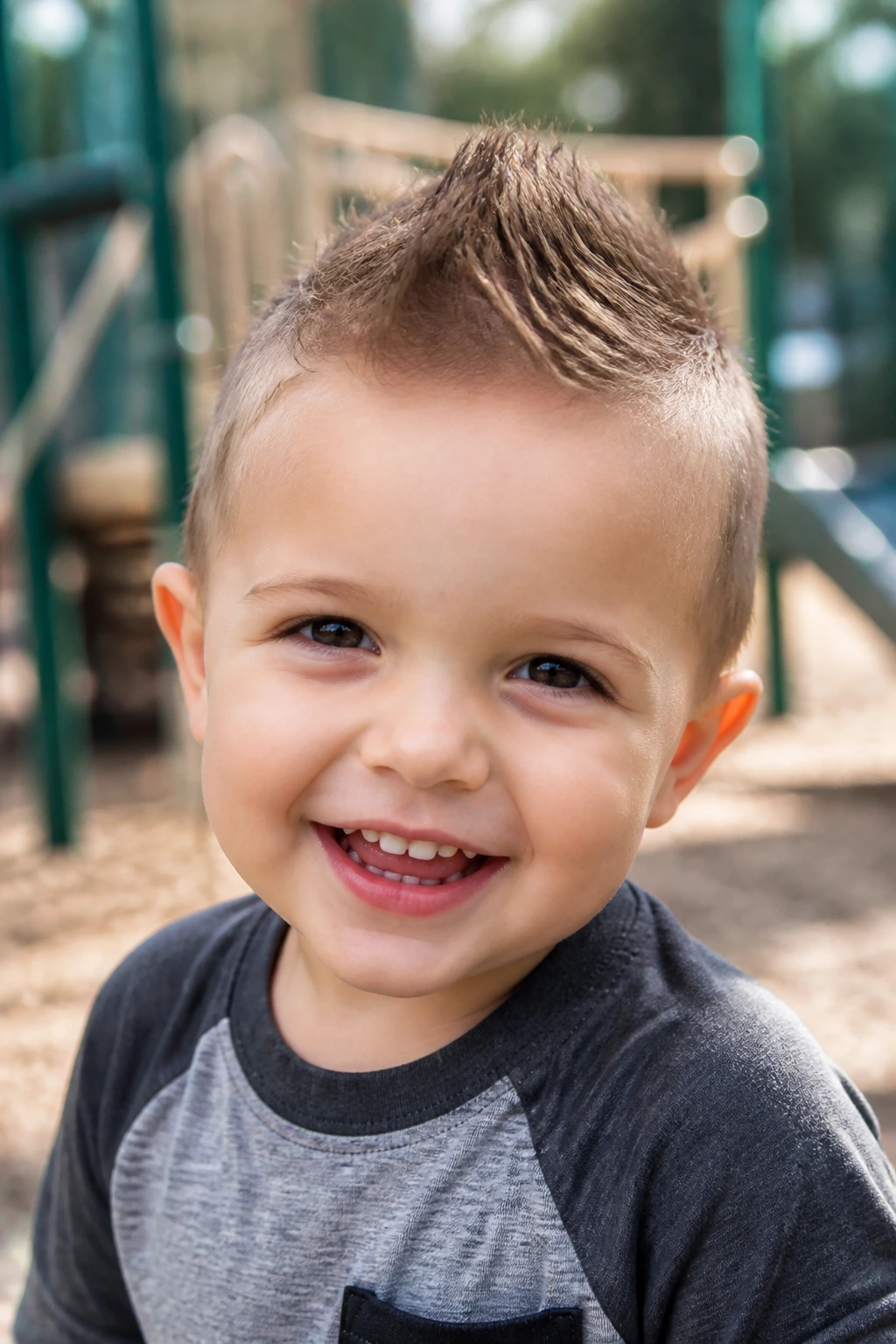
A mini faux hawk is the playful cousin in the lineup. The center strip stays a little longer, but it should still sit low enough that the cut feels like a haircut, not a costume.
I’d keep the middle around 1½ to 2 inches and shorten the sides gradually rather than shaving them down too hard. Too much contrast makes the style harder to live with, and toddlers do not usually need drama at the temples.
This one suits lively kids with straight or thick hair. It has personality without requiring a lot of styling, which is the only reason I’d recommend it.
12. Skin Fade with Natural Top
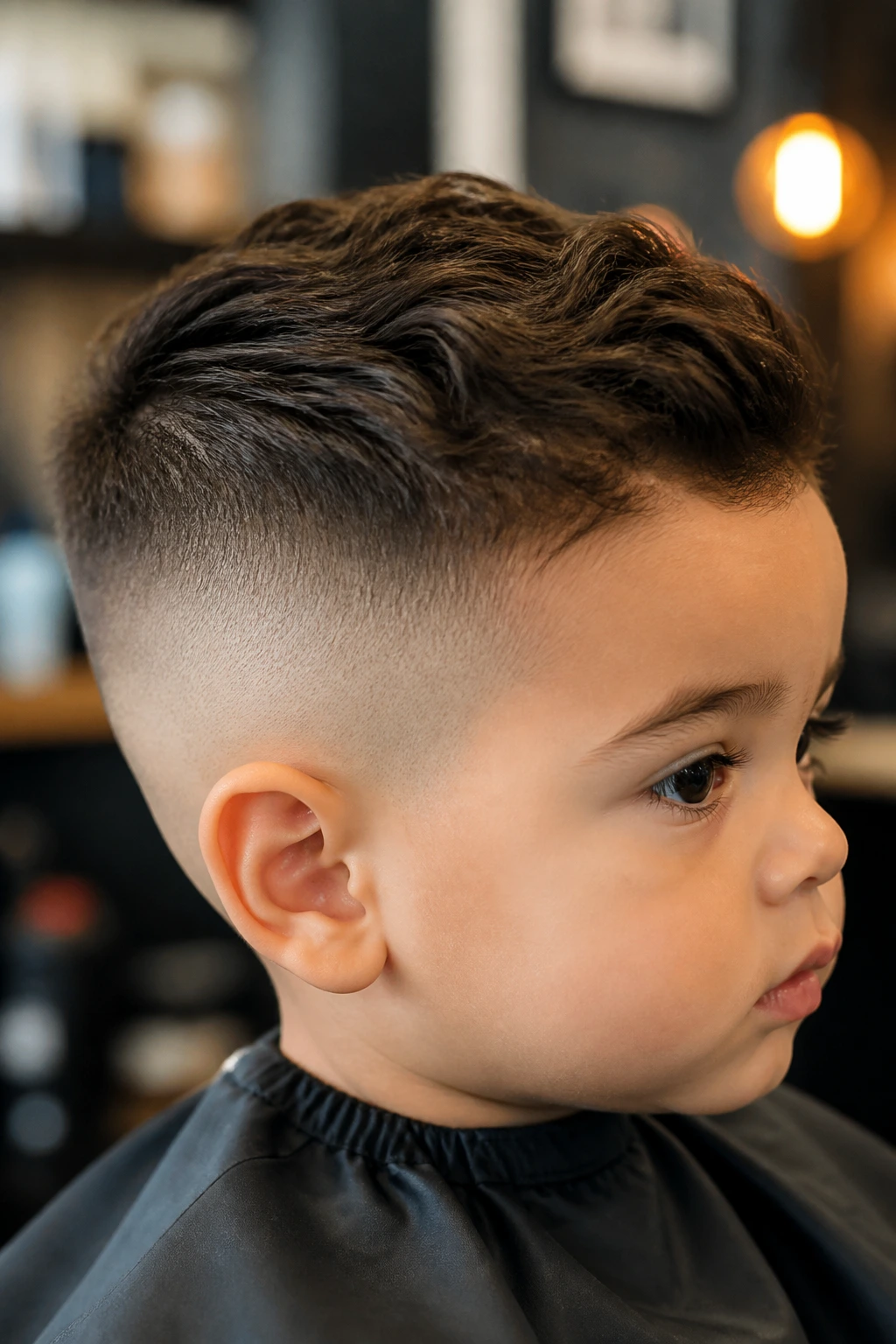
A skin fade can look sharp on a toddler, but it’s the most high-maintenance cut in this list. The clean fade against a natural top gives strong contrast, which is great if you like crisp lines and don’t mind frequent touch-ups.
Keep the top around 1 to 1½ inches so it doesn’t sit too heavy over the fade. And be honest about upkeep: once the sides grow in even a little, the whole shape shifts. That’s fine if you visit the barber often. It’s less fine if you want a month between cuts.
I’d choose this for thicker hair and parents who like a sharper finish. I wouldn’t choose it for a child with a very soft hairline or for anyone who hates regular trims.
13. Temple Fade with Brushed-Forward Top
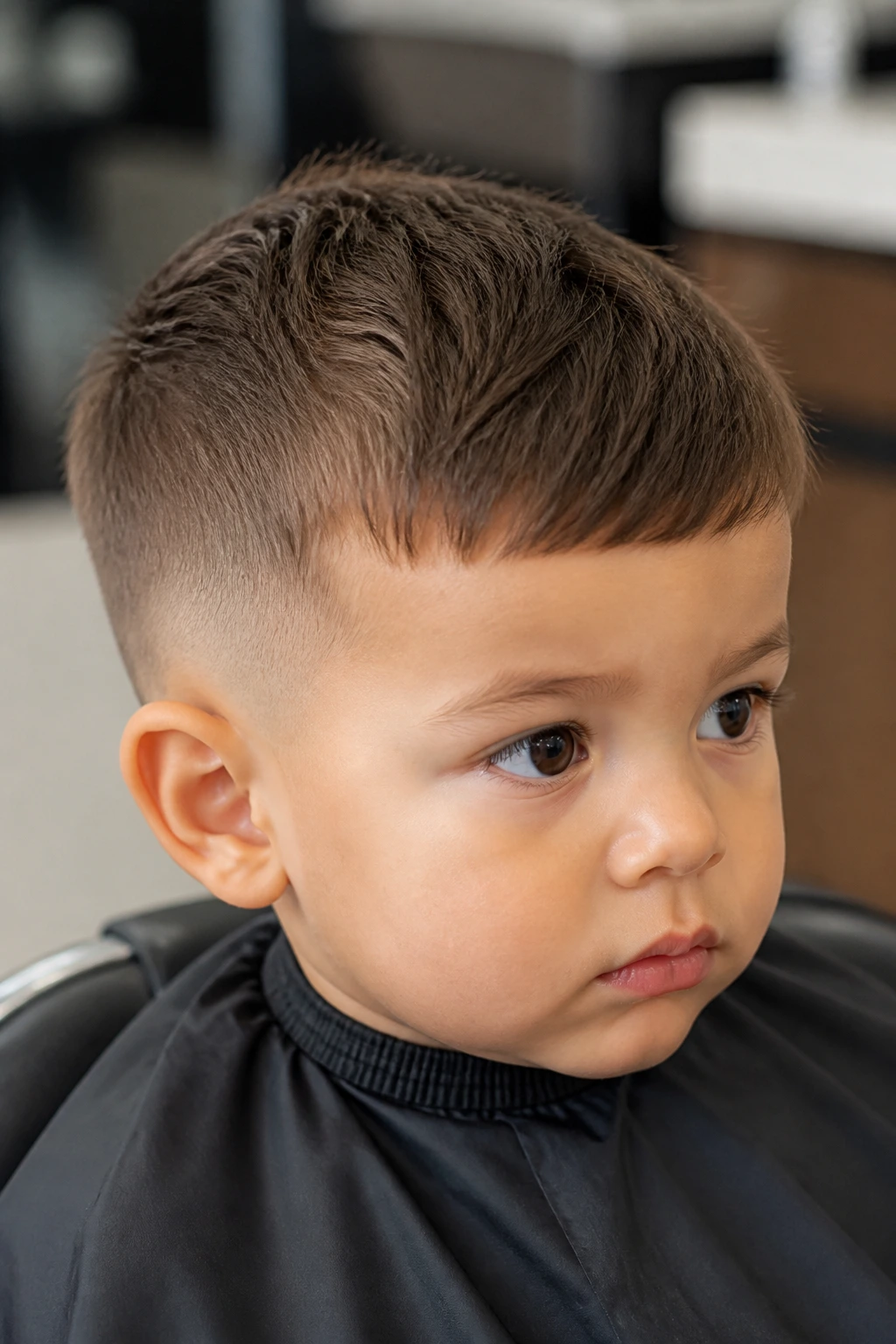
A temple fade is a neat compromise. It cleans up the temples and sideburn area without turning the whole side of the head into a fade story. On toddlers, that restraint is useful.
Brush the top forward and keep it around 1 to 1¼ inches so the front falls naturally. This is a strong option if the child has a front cowlick that keeps pushing the fringe up and away from the forehead.
Barber note: ask for the fade to stay low around the temples, with the neckline kept soft.
That one detail keeps the cut from looking too sharp for a small head.
14. Curly Top with Taper
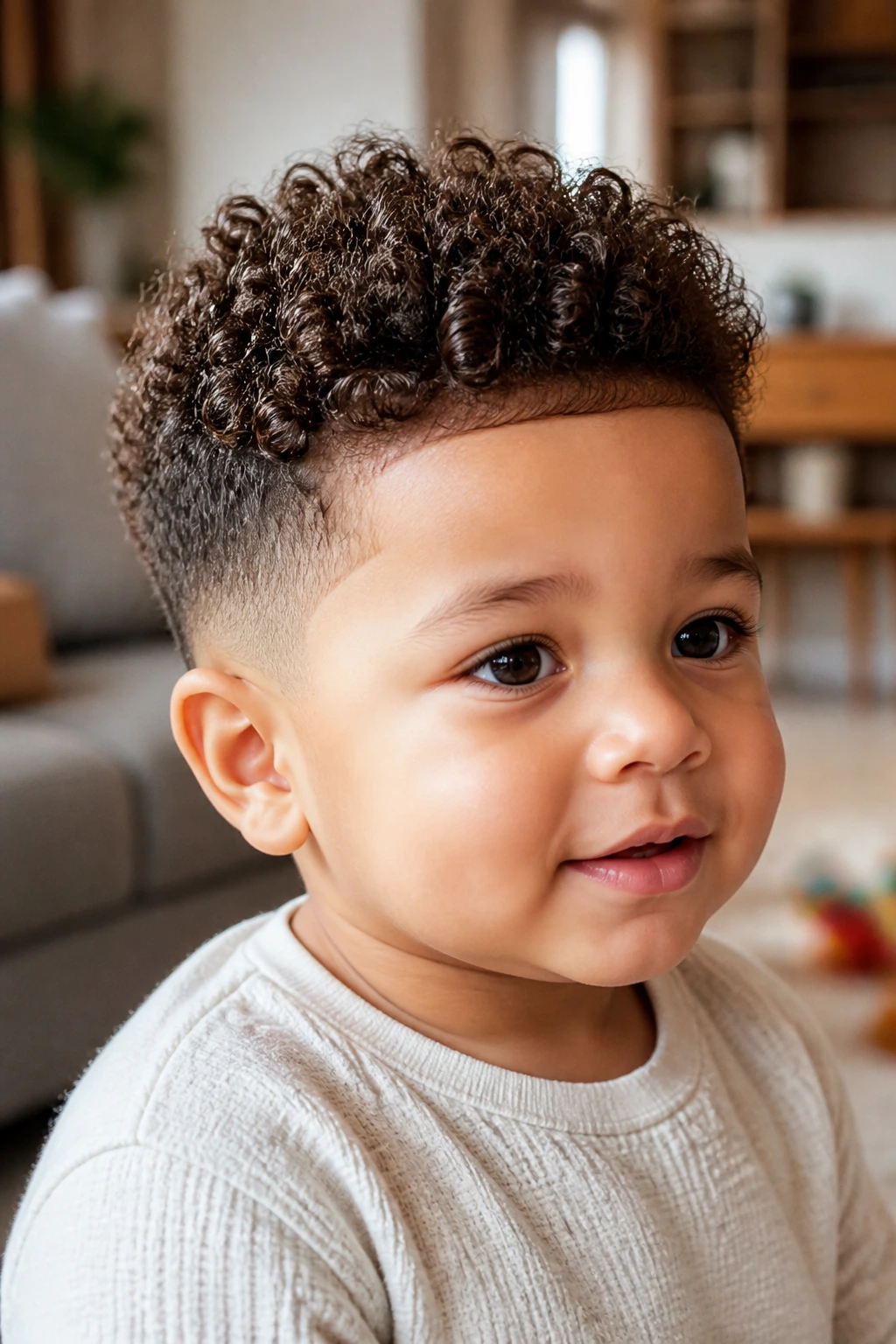
Curly hair should not be flattened into submission just because the child is small. A curly top with a taper keeps the curl pattern visible on top while cleaning up the sides so the shape stays controlled.
Leave the curls around 1½ to 2½ inches, depending on how tight they spring, and taper the sides gently. Cut curl by curl if the barber can; curly hair shrinks, and if it’s cut too short when wet, it can bounce up higher than expected.
This cut looks best when the curls are allowed to do the actual work. Do not smother them with too much product. A little leave-in or a dab of cream is usually enough.
15. Wavy Crop
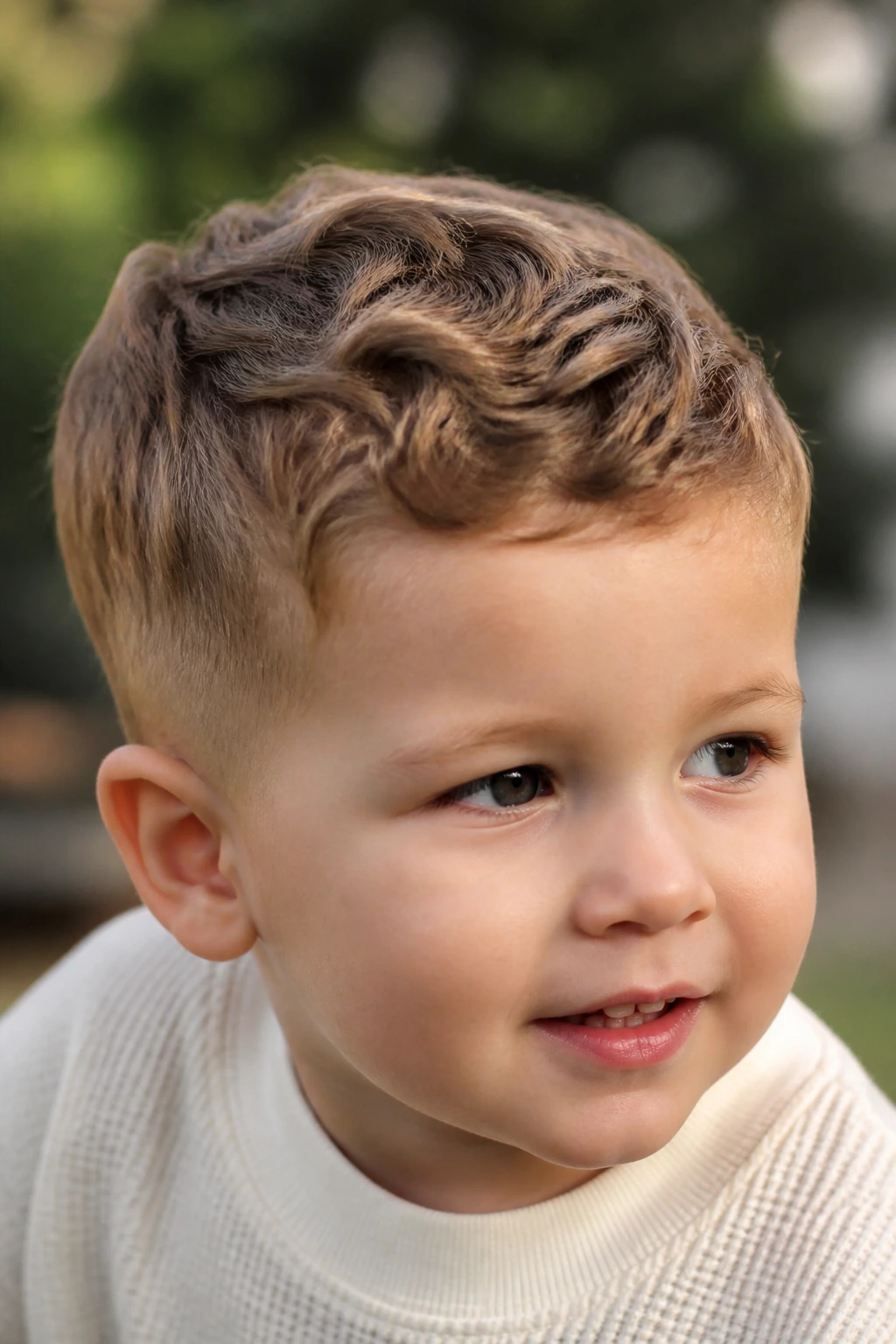
Wavy hair has its own rhythm, and this cut respects it. The top stays short enough to avoid a floppy curtain, but long enough for the waves to show movement instead of turning into a flat buzz.
Keep the top around 1 to 1½ inches and let the shape stay loose. I like this cut finger-styled rather than combed, because a comb can over-neaten waves and make them look forced.
It’s a good everyday haircut for toddlers who have soft bends in the hair and don’t need a sharp shape. The grow-out is kind, too. That matters.
16. Disconnected Undercut
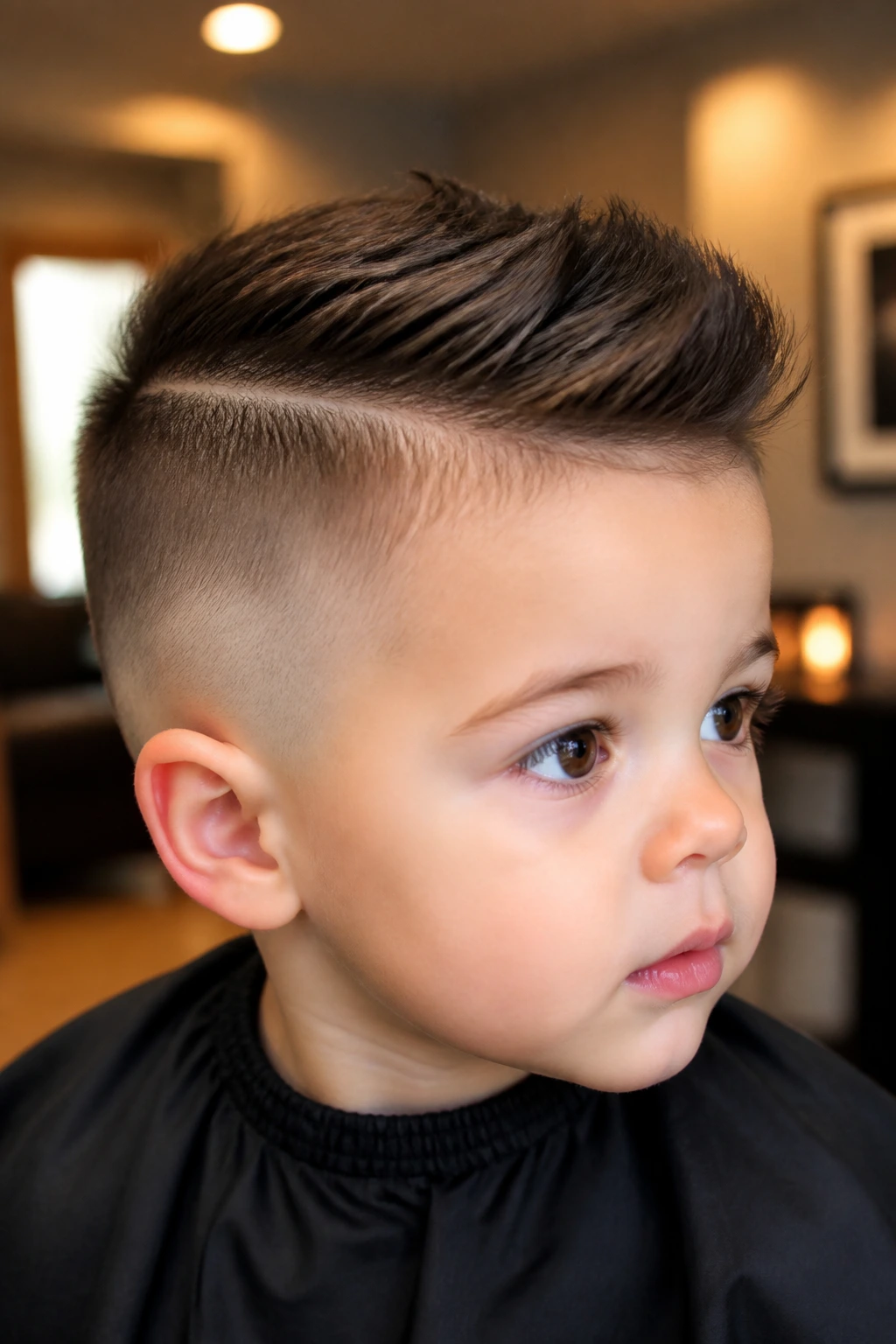
A disconnected undercut makes a statement, even on a little head. The sides are cut much shorter than the top, and there’s no gentle blend between them. That contrast is the whole point.
On toddlers, I’d keep the top modest — about 2 inches — so the style doesn’t tip into costume territory. If the top gets too long, the cut stops feeling neat and starts feeling like it needs styling every morning.
This is best for straight or wavy hair and for parents who don’t mind upkeep. If you want the haircut to hold shape as it grows, this is not the best candidate.
17. Short Quiff
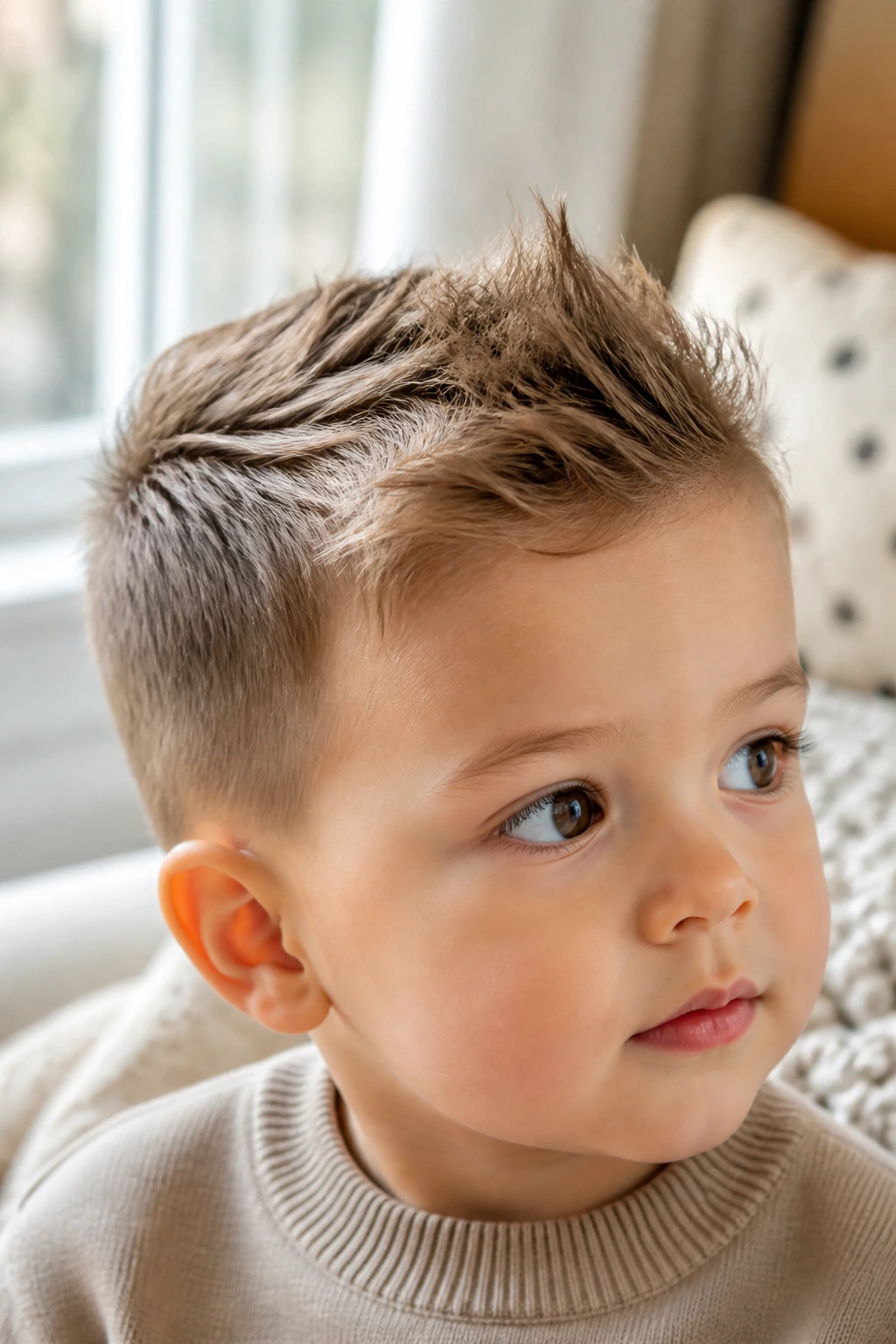
A short quiff gives the front a little lift without turning the hair into a tall wave. It’s a nice middle ground when you want some shape but still need the cut to behave after sleep, hats, and playground time.
Keep the front around 1½ to 2 inches and let the crown fall a bit shorter. That front-to-back difference creates the lift. On toddlers, I like the quiff kept low and soft; a big, slicked-up version is more effort than the child is likely to tolerate.
This works well on straight hair with a bit of body. A light mist of water is usually enough to reset it.
18. Brush Cut
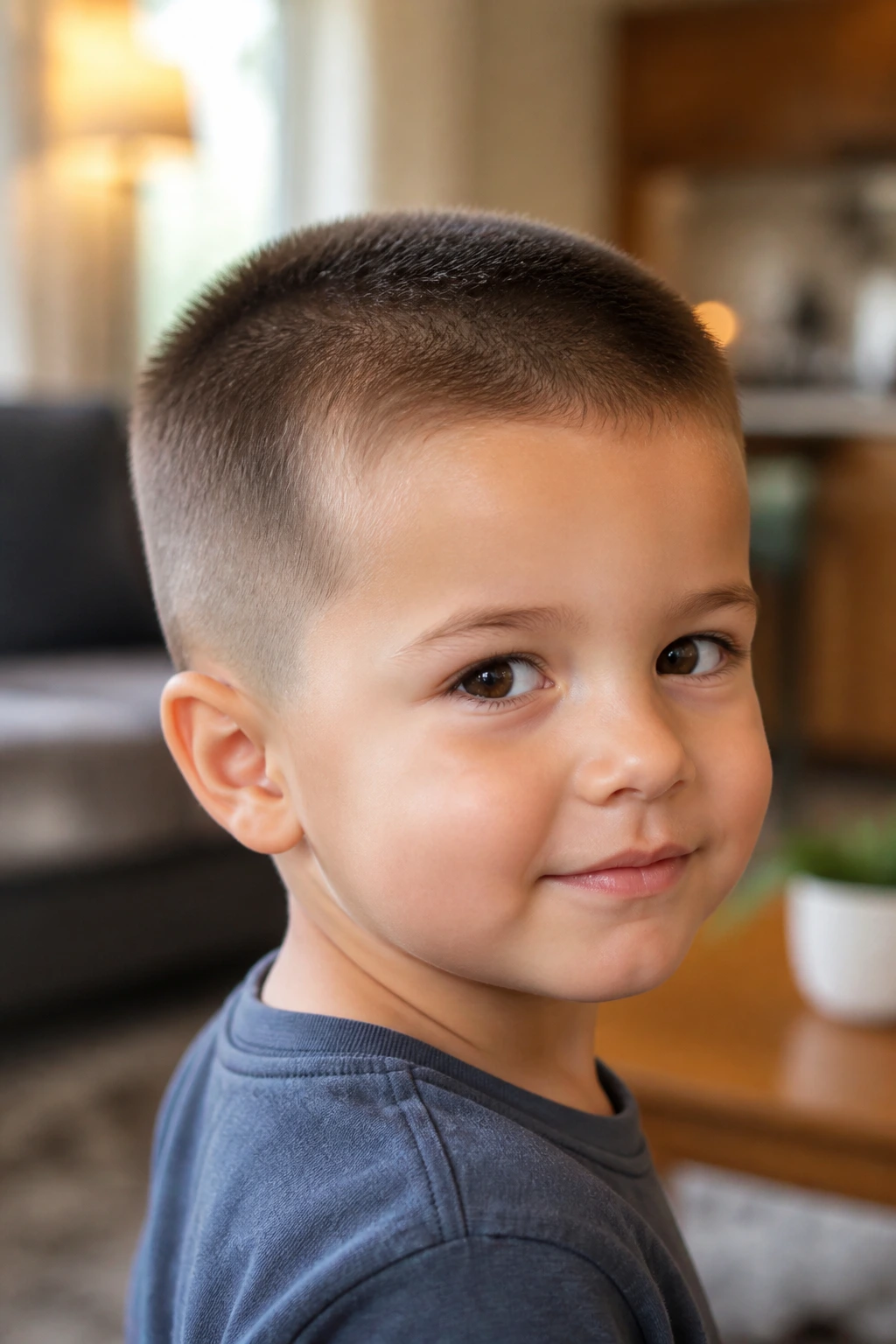
The brush cut is what happens when hair is clipped just long enough to stand up a little. It’s not as close as a buzz, which makes it a nice option if you want low effort without going all the way down.
Think #3 or #4 on top, with the sides blended neatly. The hair should feel short and bristly, not spiky. This is a useful choice when the scalp gets hot fast or the child rubs the sides of the head a lot.
It also hides mild cowlicks better than a tighter cut. There’s enough length to settle them down, but not enough length to start a fight.
19. Flat Top Mini
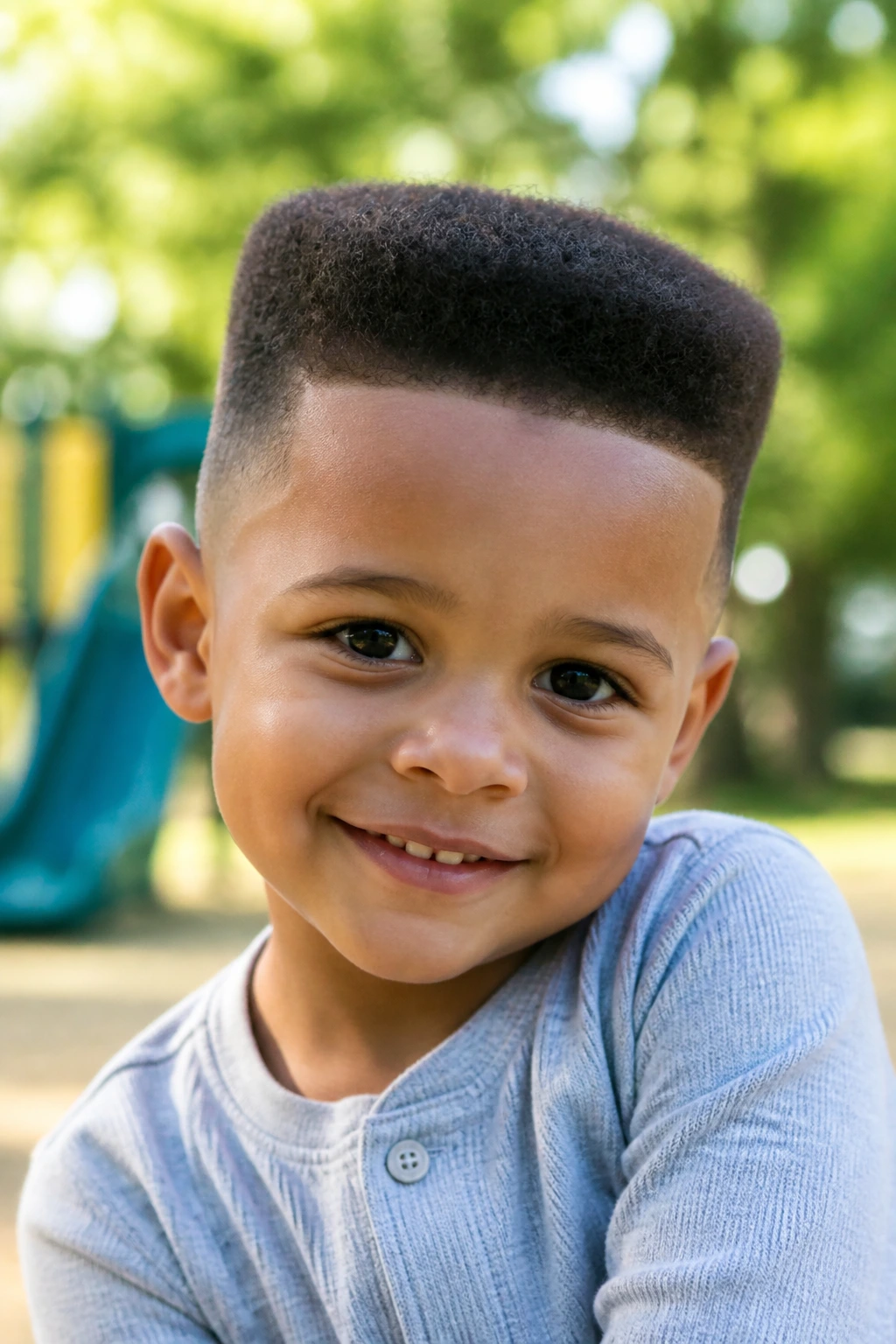
A mini flat top is bold in shape but short in length. The top is kept boxy and level, while the sides stay much tighter. On the right head shape, it looks crisp and playful.
This cut works best with thick, straight hair that can hold a little structure. Ask for the top to stay around 1 to 1½ inches and keep the corners softened so it doesn’t look rigid. A harsh flat top on a toddler can read too sharp; a softer one keeps the fun without the stiffness.
It’s a style with a bit of attitude. If that sounds like your child, you’ll know it quickly.
20. Short Mop Top with Taper
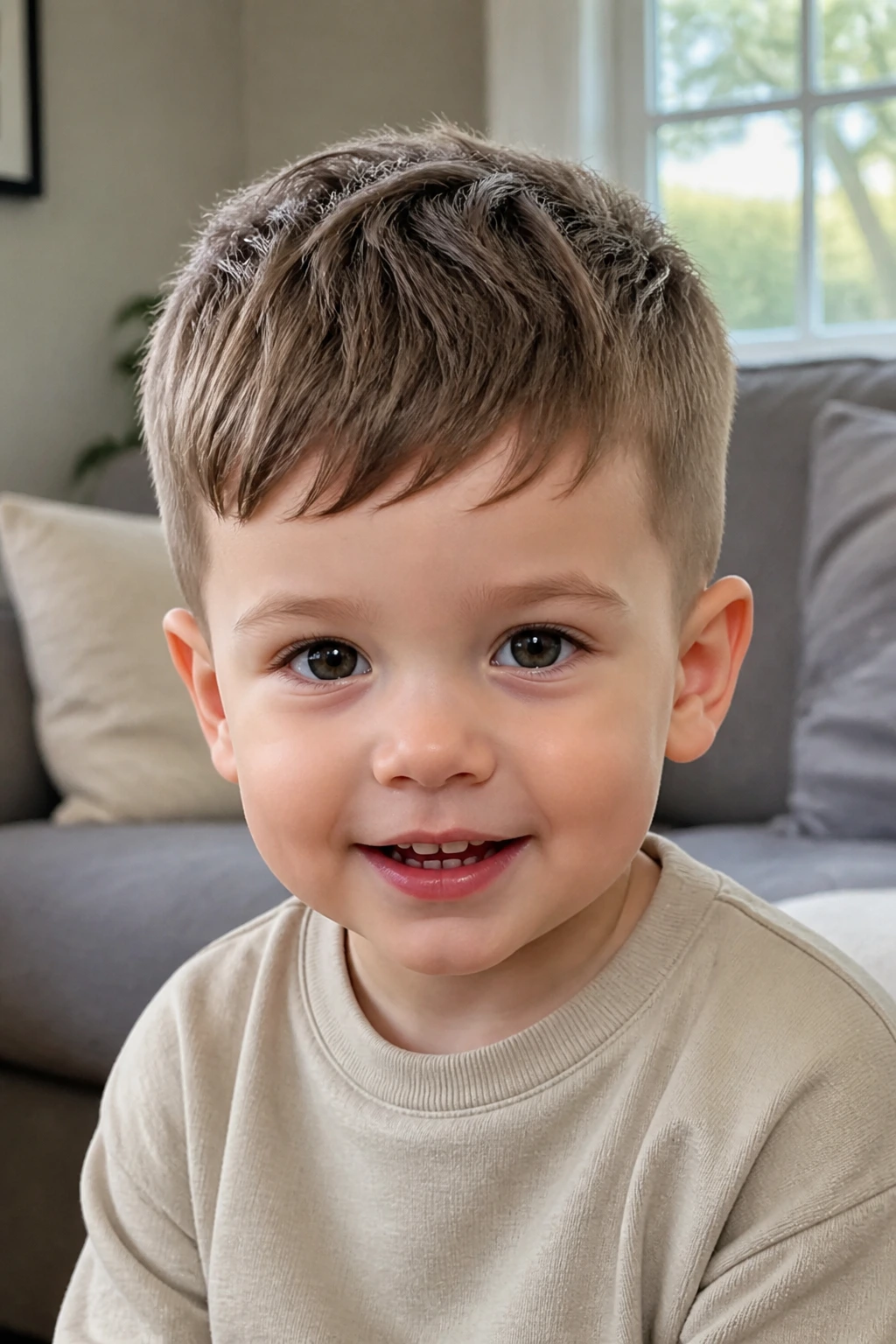
The short mop top is for hair that wants to fall forward but doesn’t need to cover the whole forehead. It has a rounder shape, a little fringe, and enough softness to keep it from looking overdone.
Keep the fringe around 1 inch and taper the sides so the outline stays clean. This cut can be a nice answer for fine hair that needs more presence at the front. It also helps when the child’s hair grows in unevenly — the shape disguises little gaps better than a stricter cut.
I’d keep the texture loose and airy. A heavy mop top can turn into a lump. Nobody wants that.
21. Bowl Cut with Soft Edges
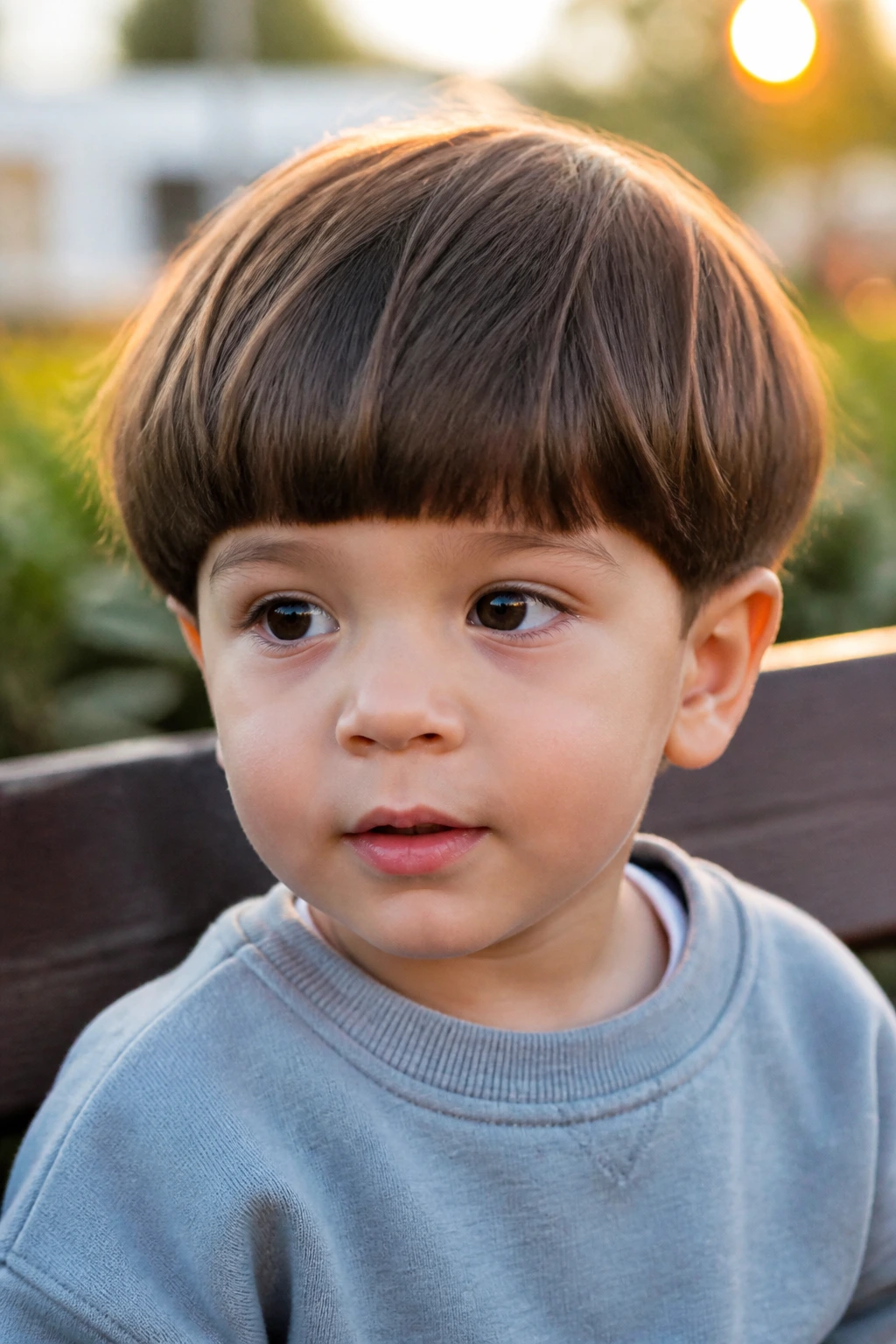
A modern bowl cut is not the blunt, bowl-on-the-head version people remember from old school photos. The soft-edged version uses rounded shape, gentle blending, and a more natural neckline so it feels current instead of stiff.
Leave the top and sides around 1½ to 2 inches, then soften the perimeter, especially near the ears. This works well when the hair naturally falls forward and the child has a strong, even growth pattern.
The important part is the edge work. A softened bowl shape can look polished. A hard one can look like it was measured with a cup.
22. Toddler Shag Crop
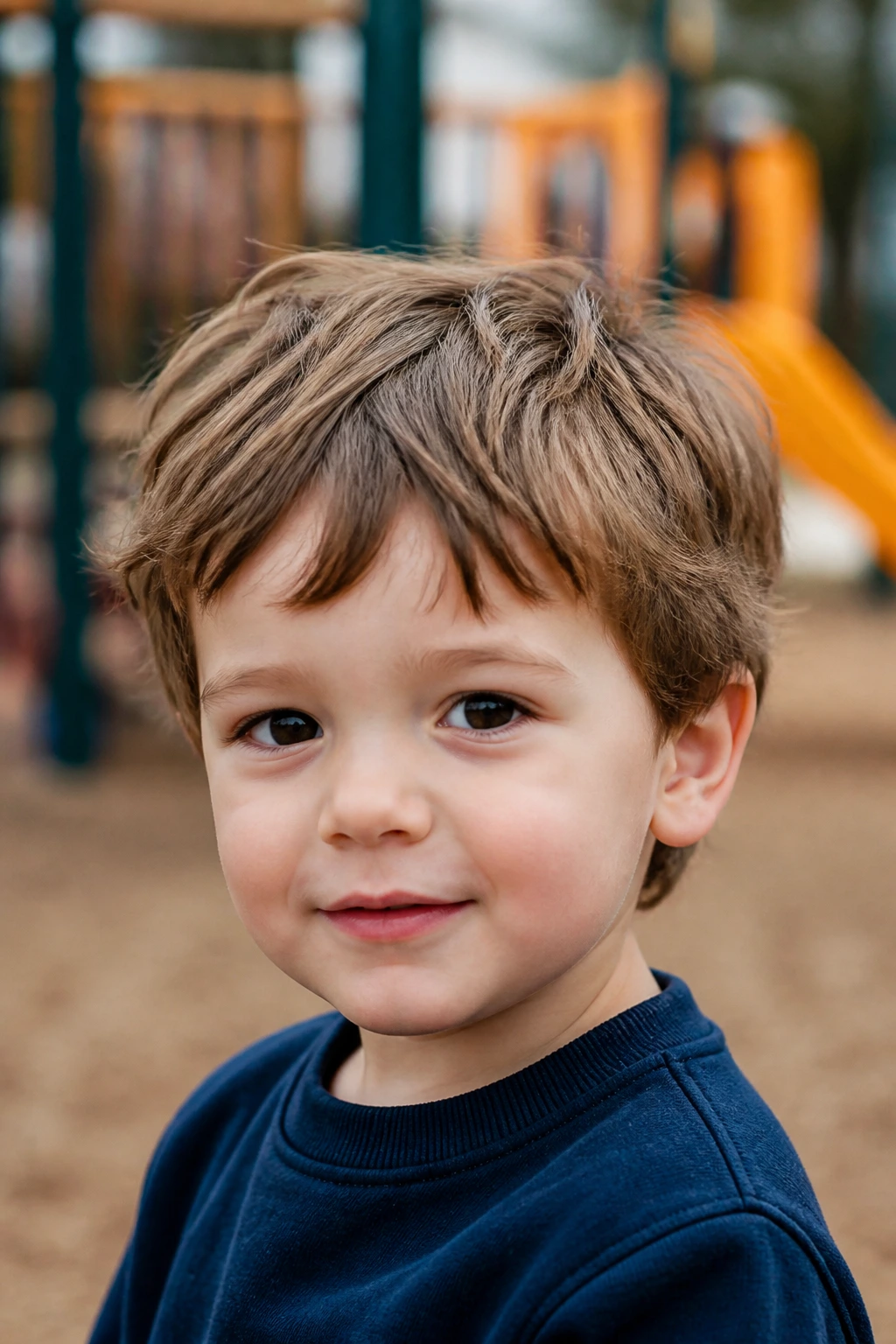
A shag crop gives you layers without letting the hair get truly long. It’s a good answer for wavy or fine hair that looks flat when clipped too close.
Keep the top and fringe layered around 1 to 2 inches, and let the sides stay a little broken up rather than perfectly even. That unevenness is the point. The hair moves, which means it keeps looking alive instead of helmet-flat.
This is one of the better cuts if you want a relaxed look that still reads intentional. It’s slightly messier than the rest of the list, but that’s exactly why it works.
23. Burst Fade with Curls
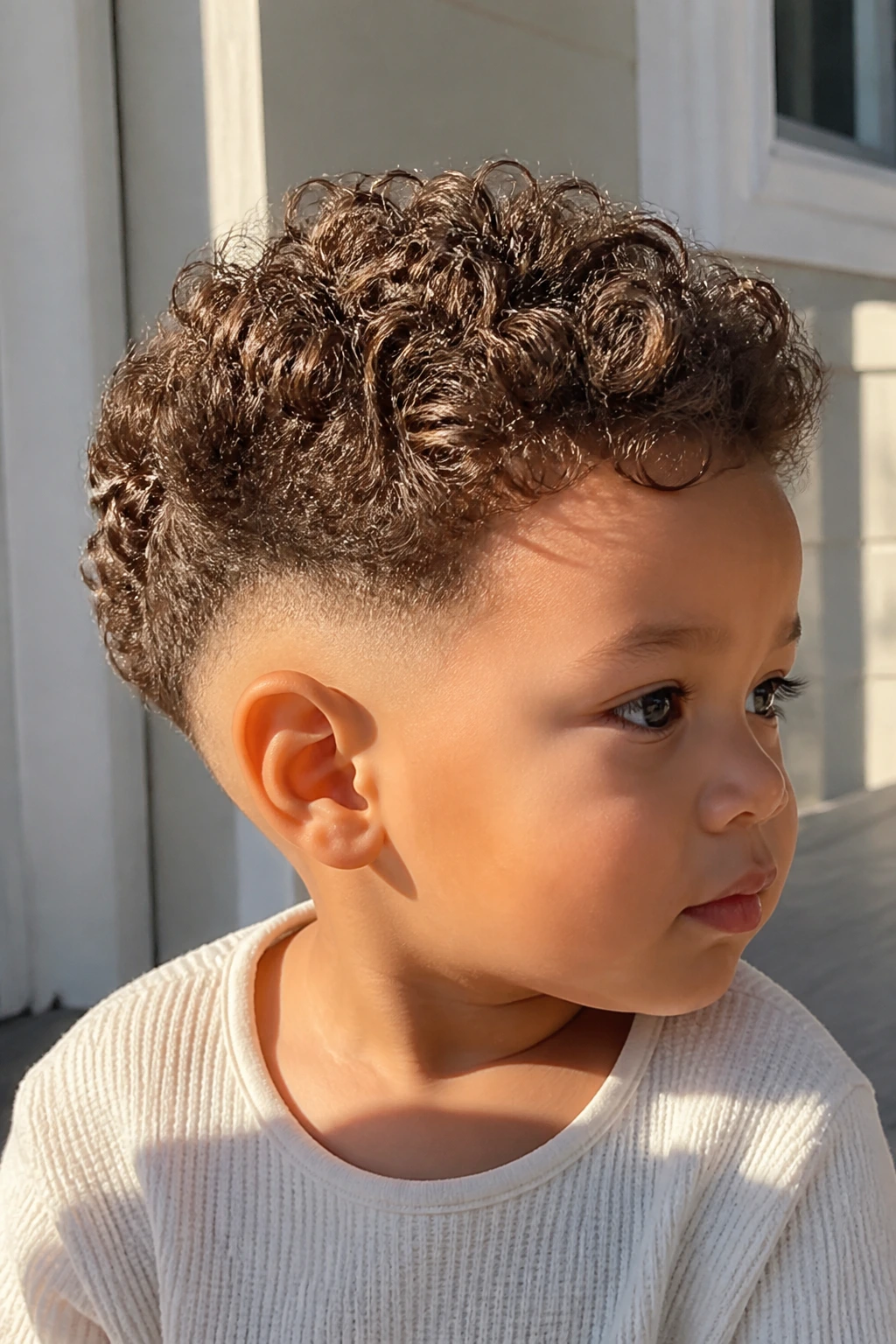
A burst fade curves around the ear and leaves the curl mass on top intact. The shape is lively, and on curly toddlers it gives structure without flattening the texture that makes the hair interesting in the first place.
Keep the curls around 1½ to 2 inches so they spring without exploding outward. The fade should stay close around the ear and soften into the back. If the fade rises too high, the head can look overexposed. That’s not the goal.
This cut feels a little more styled than a simple taper, but it still behaves well if the curls are left alone after the shower.
24. Drop Fade with Texture
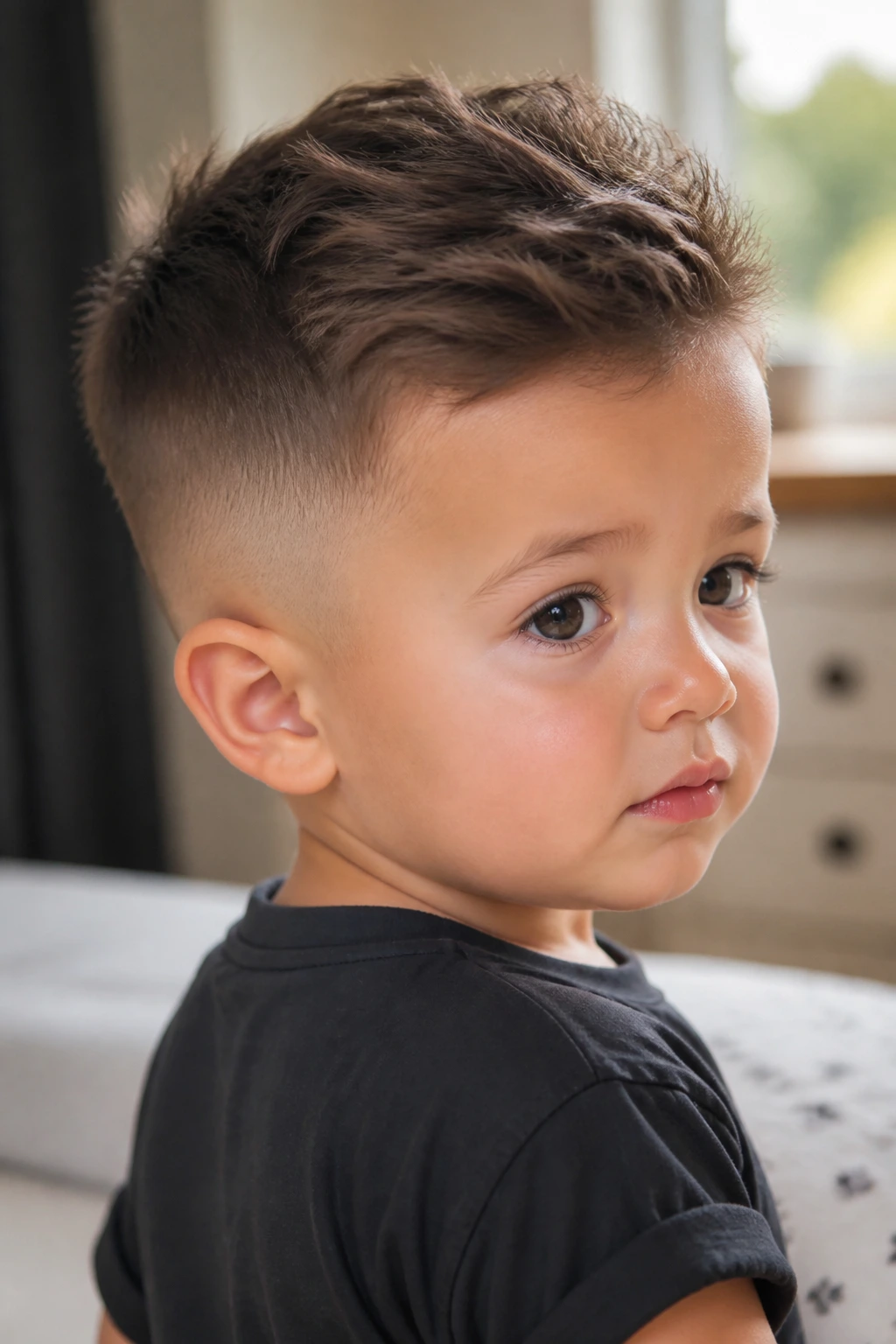
A drop fade dips lower behind the ear and follows the head shape, which makes it one of the more flattering fades for round or oval toddler faces. It avoids the straight, shelf-like line some fades create.
Keep the top textured around 1½ inches and let the fade drop low at the back. The result is tidy without being stiff. It also lets the haircut keep a nice curve when the child turns his head, which is one of those tiny details that makes a cut look more finished.
I like this one when a standard fade feels too boxy. It’s a small change, but it changes the whole profile.
25. Hard Part with Short Top
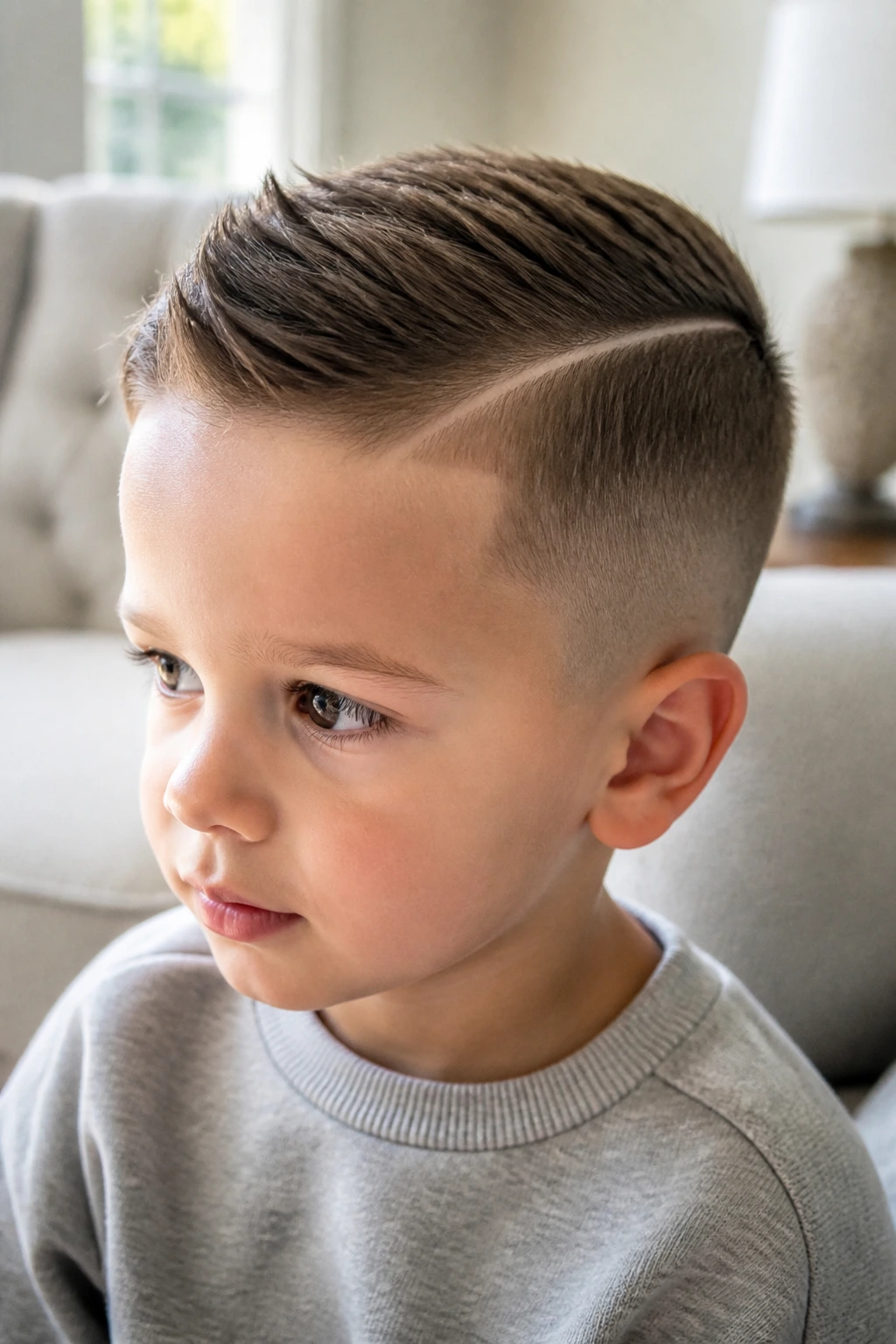
A hard part gives the haircut a clear directional line, and toddlers with straight hair can wear it well if the rest of the cut stays short and soft. The part line is the statement; the top doesn’t need to do much more than sit neatly.
Keep the top around 1½ inches and ask for the part to be clean but not exaggerated. Too much contrast turns the cut rigid. A smaller, softer line is easier to live with and grows out less awkwardly.
This is a good pick for families who like order. It does need maintenance, though. If you can’t keep it trimmed, the line loses its point.
26. Spiky Crop
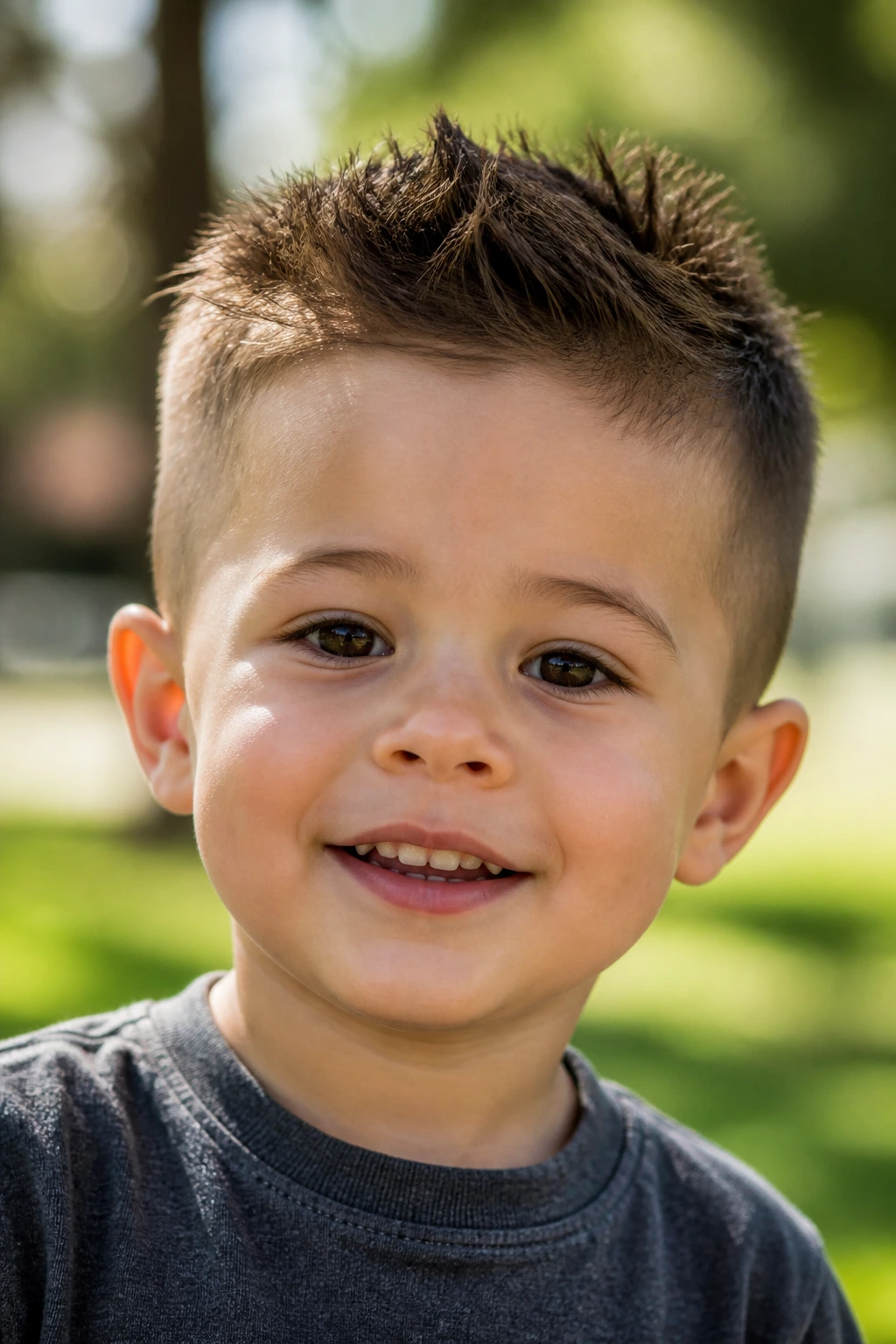
A spiky crop is short enough to stay toddler-friendly but just long enough at the top to stand up in small pieces. It gives the hair some energy without needing a lot of product.
Keep the top around 1 inch and use a tiny dab of lightweight cream, not a fistful of gel. The goal is touchable spikes, not crunchy ones. On fine hair, this cut can create the impression of thickness. On thick hair, it keeps bulk under control.
I’d choose it when you want a little movement and the child enjoys hair that can be roughed up with one hand.
27. Scissor Cut with Ear Taper
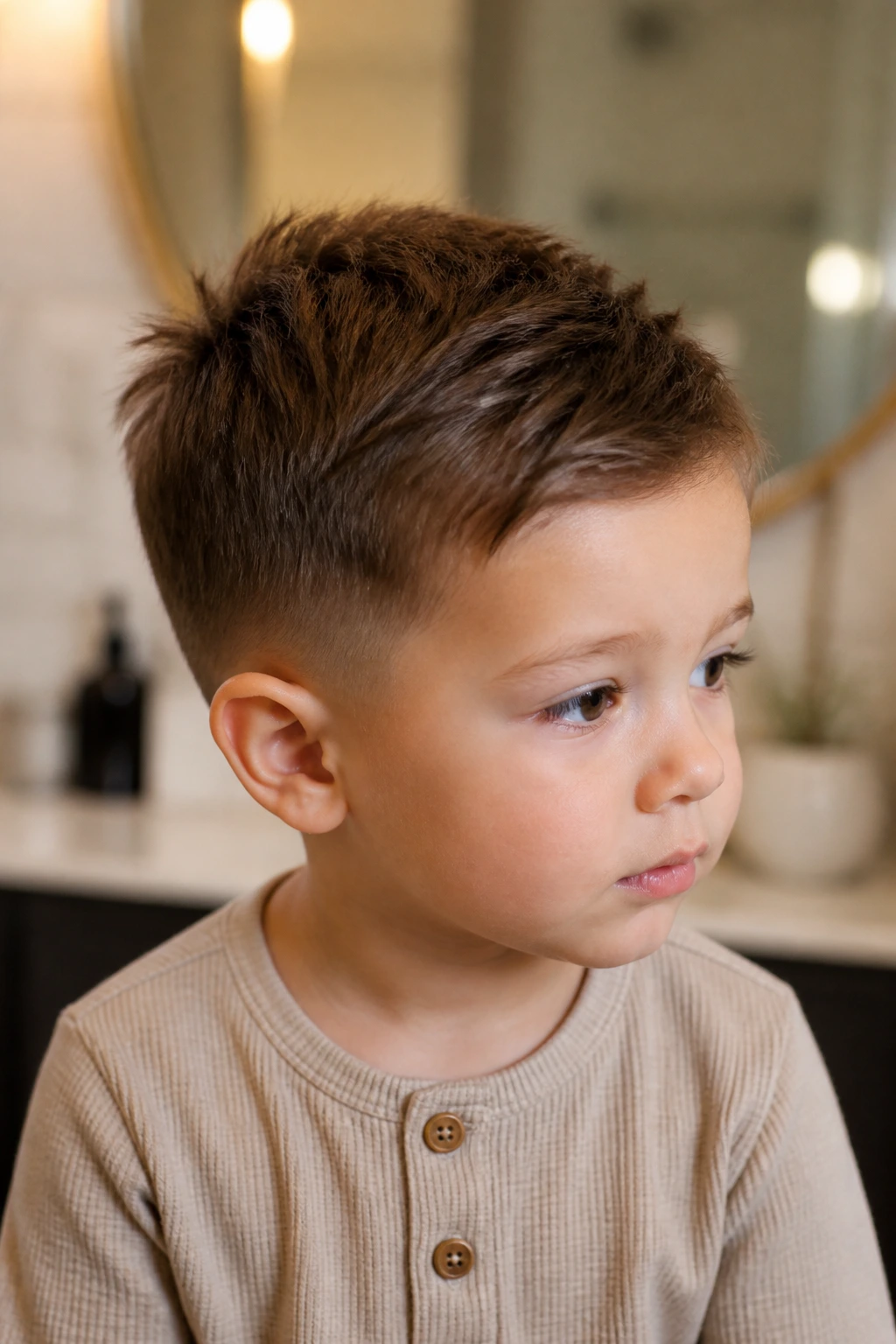
A scissor-heavy cut is the quiet choice. It keeps the shape natural, softens the ears and neckline, and avoids the sharp feel some clipper cuts have on sensitive scalps.
Leave the top around 1½ to 2 inches and taper the ears with scissors first, then blend gently at the nape. This works well if the toddler flinches at clippers or if the hairline is delicate and you don’t want a hard outline.
It also grows out beautifully. The shape blurs in a good way, which means you can wait a little longer before the next cut.
28. Forward Fringe with Fade
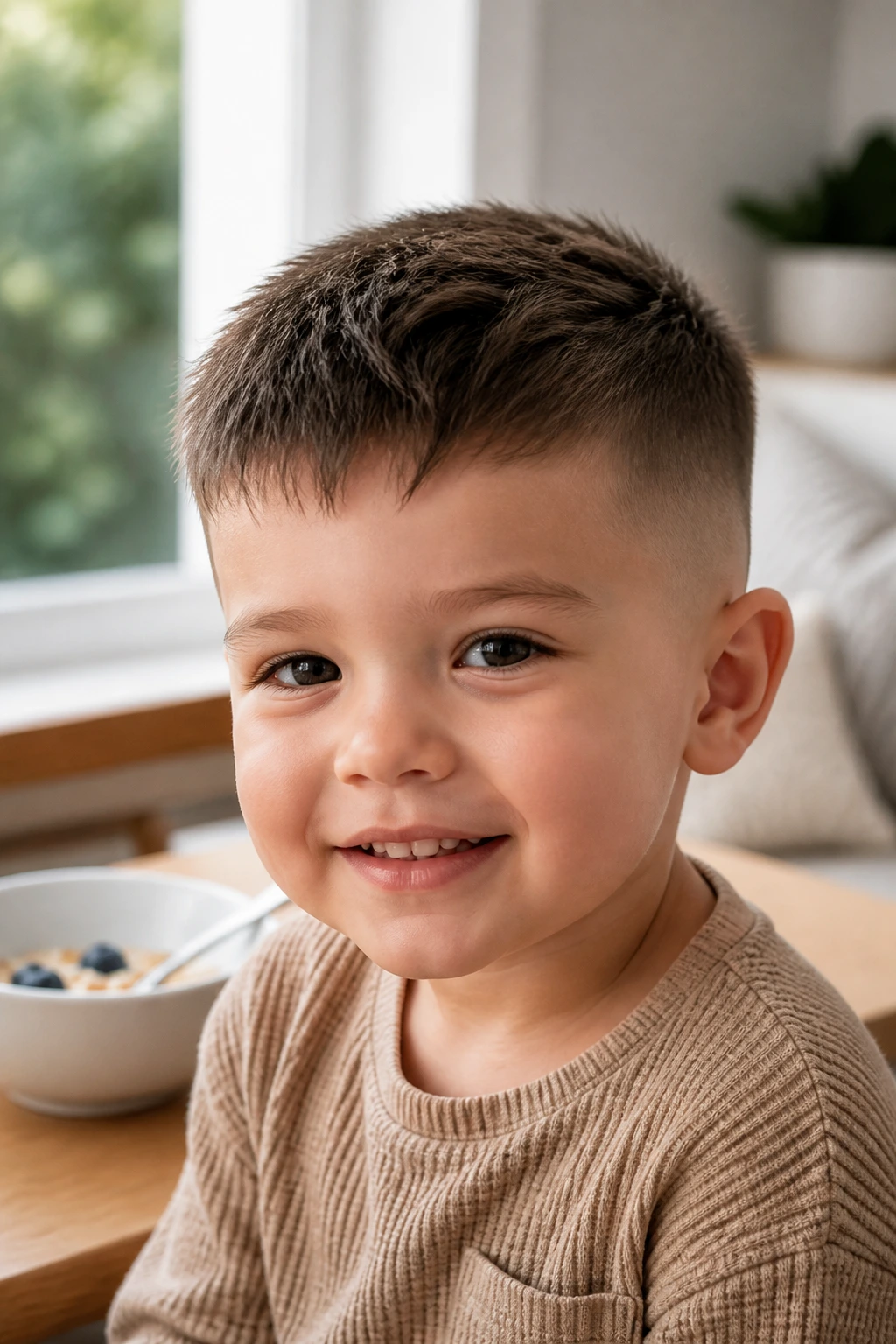
If the fringe keeps falling into the eyes, push it forward on purpose. That sounds obvious, but a lot of cuts fight the hair instead of working with it. A forward fringe with a fade uses that front movement and keeps the sides tight so the forehead stays clear.
Keep the fringe around 1 inch and let the fade sit low or mid-low. The top should lie forward rather than up. This is especially useful on straight hair with a stubborn front swirl.
The cut looks casual and tidy at the same time. That’s a rare combination, and toddlers wear it well.
29. Mini Mohawk Fade
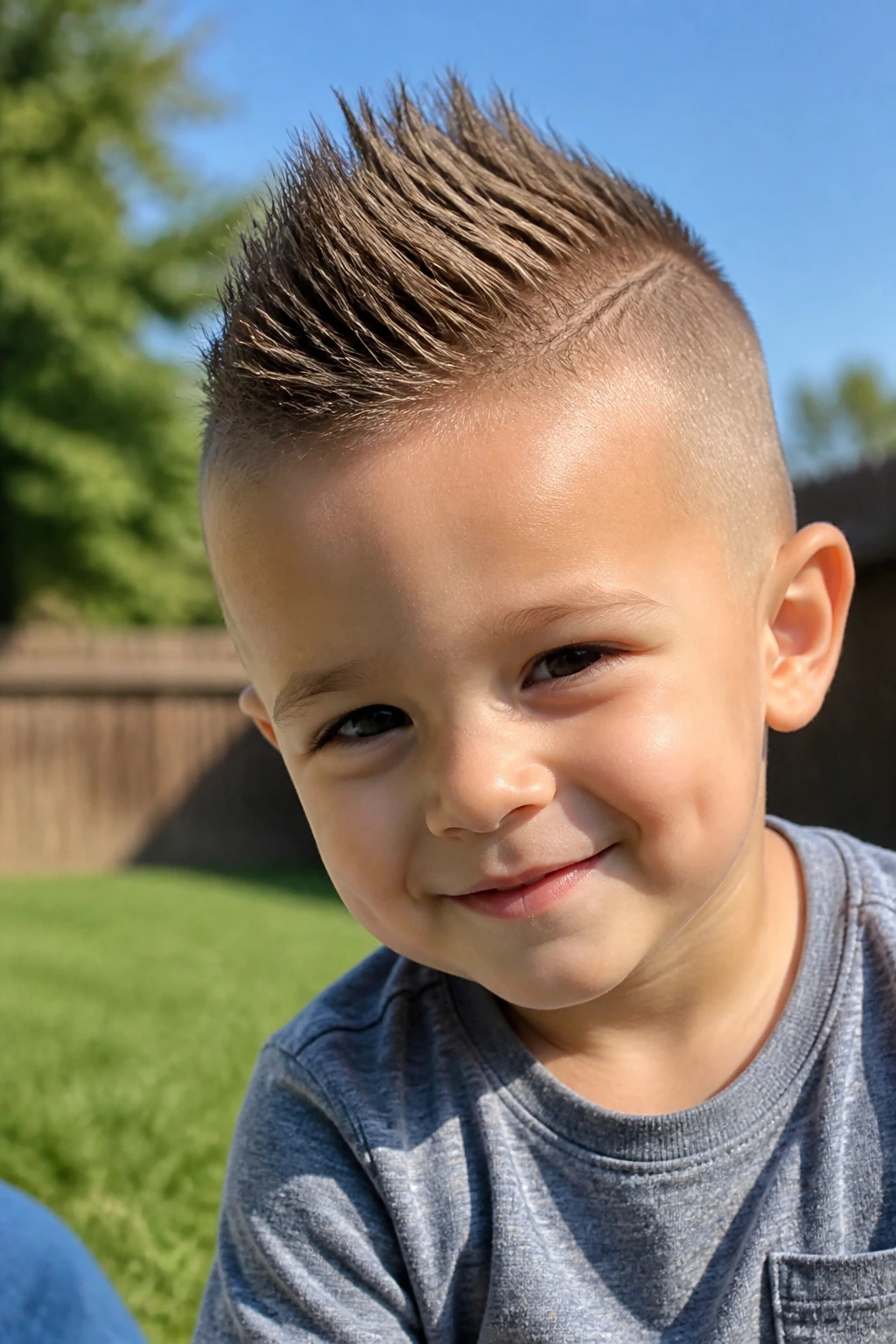
A mini mohawk fade has attitude, but it’s gentler than the name sounds. The strip on top stays a little longer, while the sides fade down close enough to give the shape definition.
Keep the center around 1½ to 2 inches and avoid making the ridge too tall. On a toddler, the best version is low and broad, not sharp and skinny. That makes it feel playful without becoming a styling project.
This one is for kids whose hair naturally lifts in the middle or for parents who want a little edge without sacrificing practicality.
30. Short Afro Taper
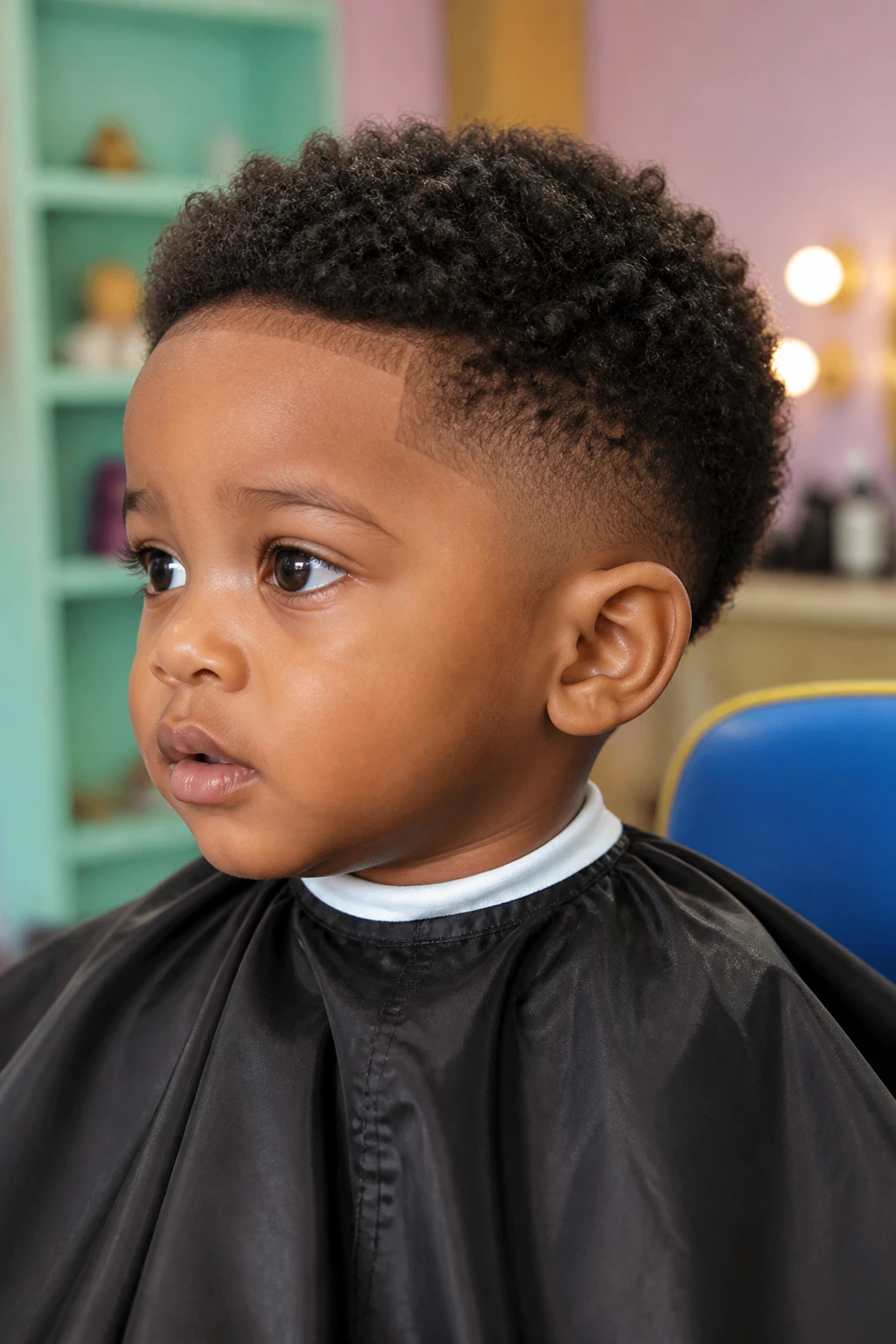
A short afro taper is one of the cleanest ways to let coils and curls stay themselves. The shape follows the natural roundness, while the taper at the sides and neckline keeps the outline sharp enough to feel finished.
Leave enough length on top — usually 1 to 2 inches, depending on shrinkage — and shape the perimeter with care. Moisture matters here. Dry coily hair can look uneven when it really isn’t.
This cut is honest, tidy, and low-fuss once you understand the shrink factor. Cut for the coil, not for the wet comb.
31. Coiled High Top with Clean Sides
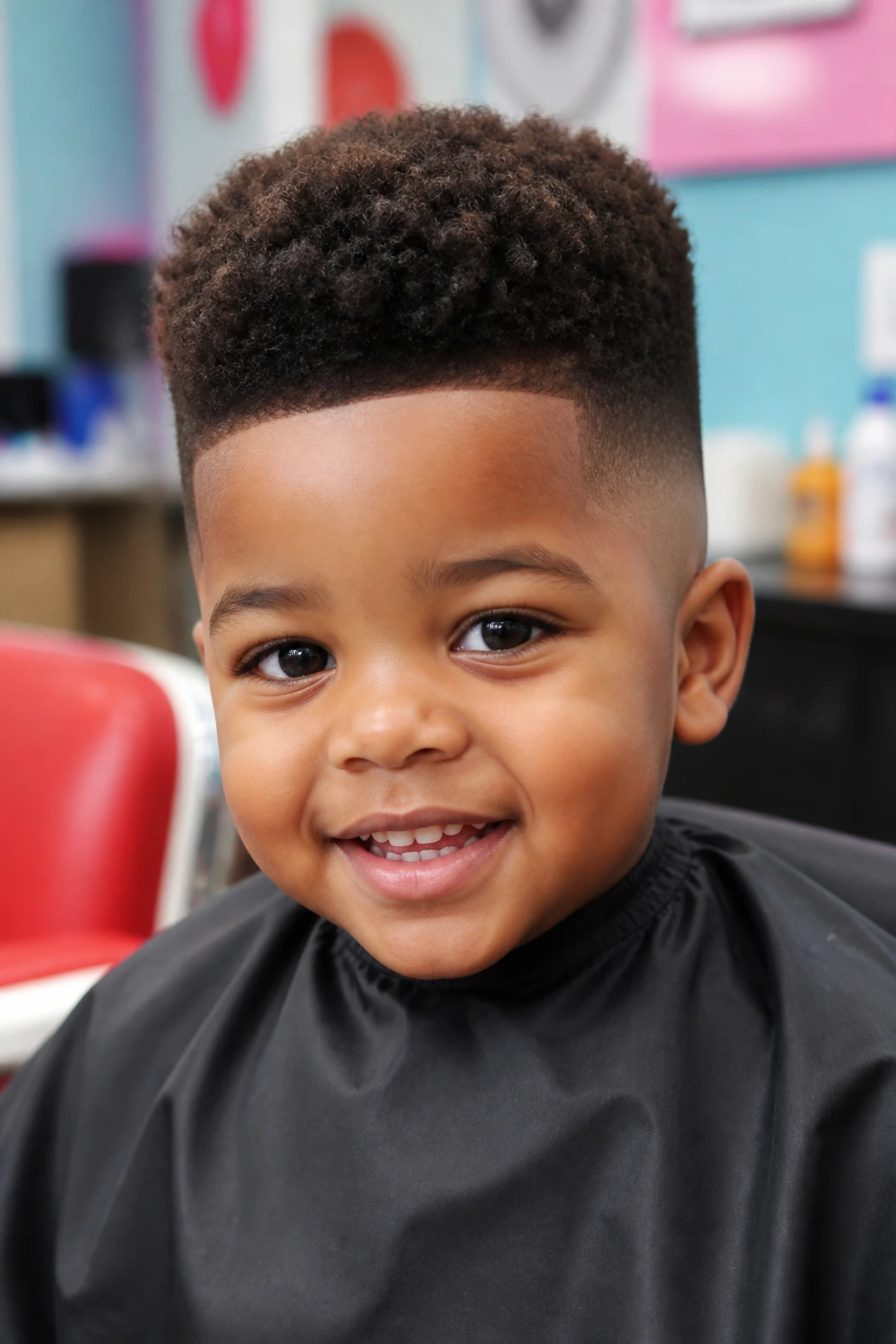
A coiled high top has more height than the short afro taper, but it still belongs in the short-hair conversation if the sides stay tight. The shape is bold, tidy, and surprisingly easy to maintain once the length is set.
Keep the top around 2 inches and the sides cleanly tapered. The top should look even from every angle, not lopsided. If the coils spring unevenly, a barber who knows how to shape curly hair can make the cut look much better than a straight clipper pass ever would.
It’s a strong choice for dense coils and parents who like a clear silhouette.
32. Tapered Caesar Fade
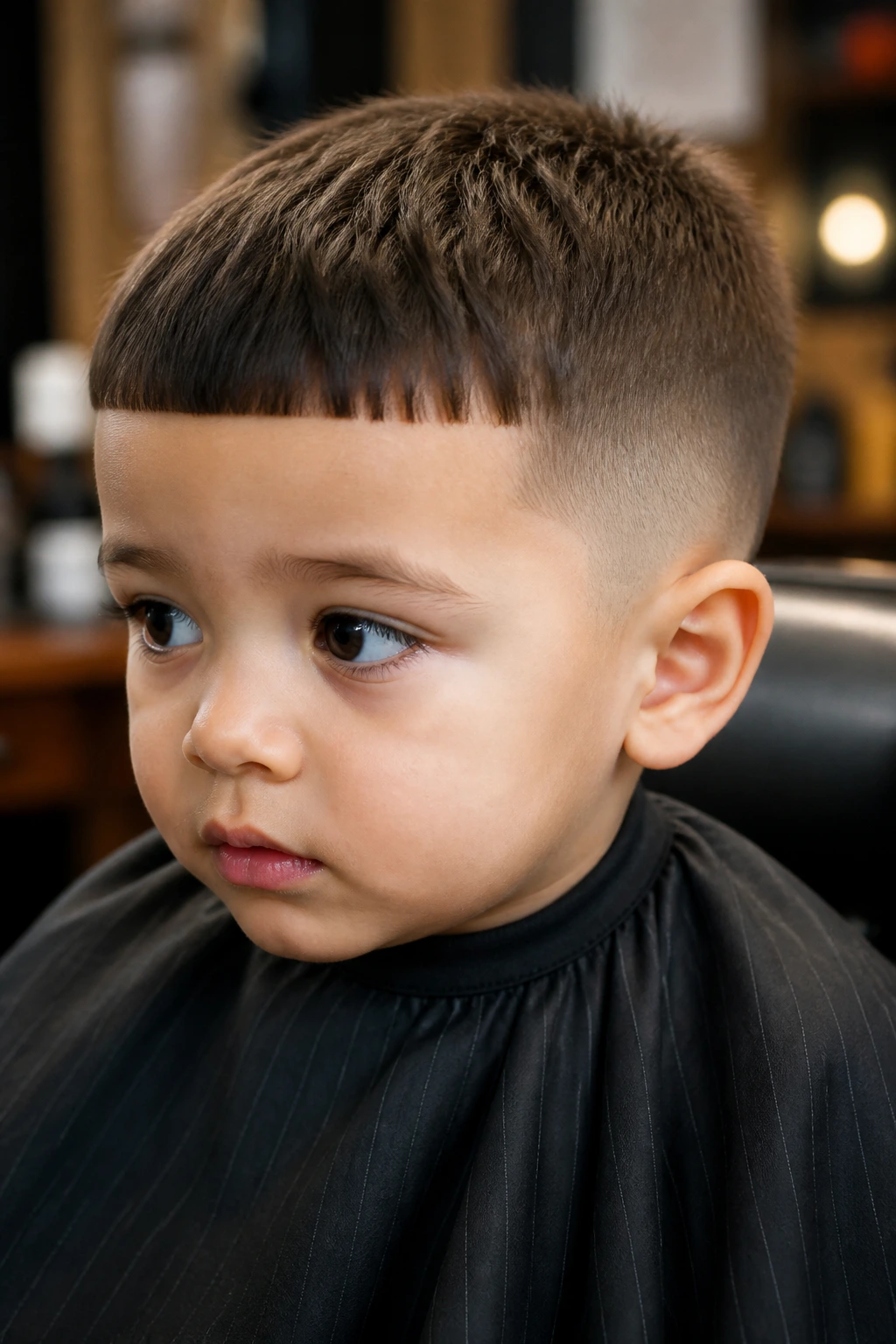
This is the Caesar with a little extra polish. The short forward fringe stays in place, but the fade around the sides and nape gives the cut more edge than the plain version.
Keep the fringe around ¾ inch and taper the fade low enough that the front stays the main feature. It’s neat, direct, and good for toddlers whose hair falls forward by default. The fade helps the shape stay tight without the haircut feeling severe.
I’d choose this when you want the practicality of a Caesar and the cleaner outline of a fade. It’s one of the easiest short styles to keep looking deliberate.
33. Longish Top with Close Sides
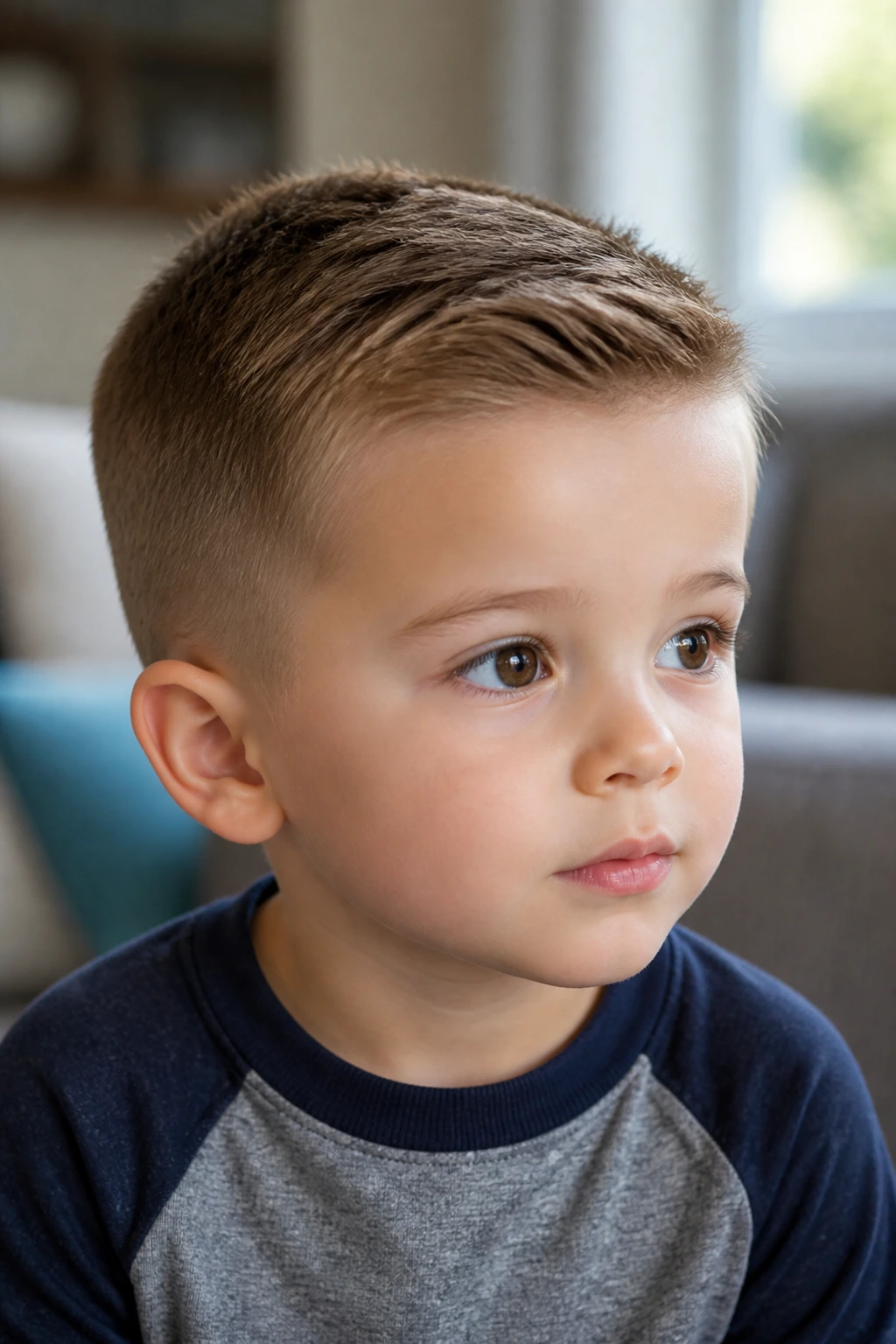
This is the flexible option. The top stays just long enough to brush forward, to the side, or slightly up, while the sides stay close so the whole haircut doesn’t get bulky.
Keep the top around 2 inches and the sides at a low taper or short guard. The flexibility is what makes it useful: if the child’s hair changes with humidity or sleep, you still have a few styling choices. That’s not true of every short cut.
It’s a smart pick for parents who want room to adjust without committing to a more styled look every single morning.
34. Crew Cut with Hairline Texture
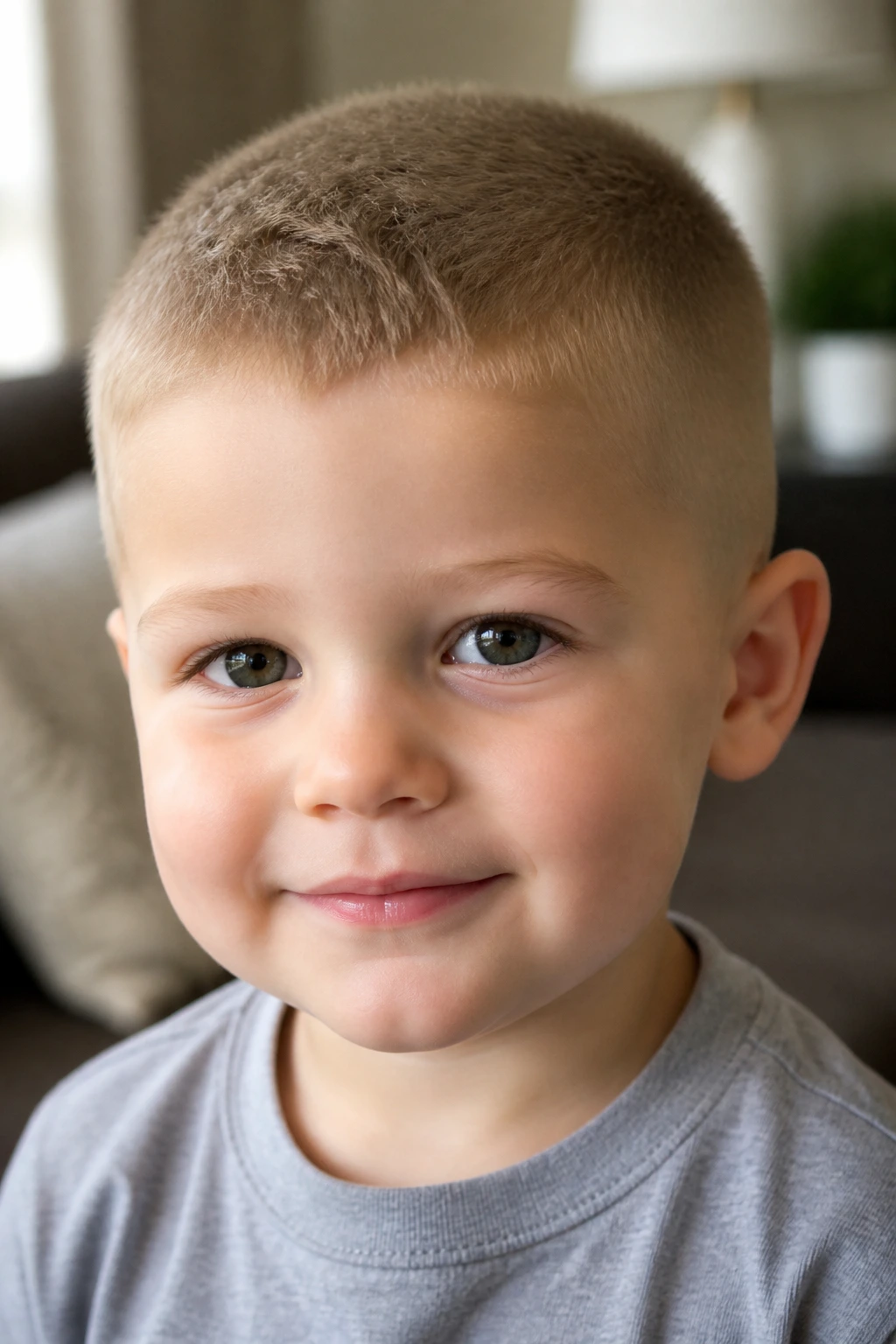
This version of the crew cut is about the front edge. Instead of a blunt, blocky hairline, the front gets feathered texture so the cut looks lighter and less helmet-like.
Keep the top around 1 inch and let the front be slightly broken up. That works especially well for fine hair or for hairlines that look too straight when clipped too neatly. The shape is still short and tidy; it just feels a little softer at the edges.
I like this one when a standard crew cut looks too stiff on a small head. The texture takes the edge off in a good way.
35. Gentle Pompadour
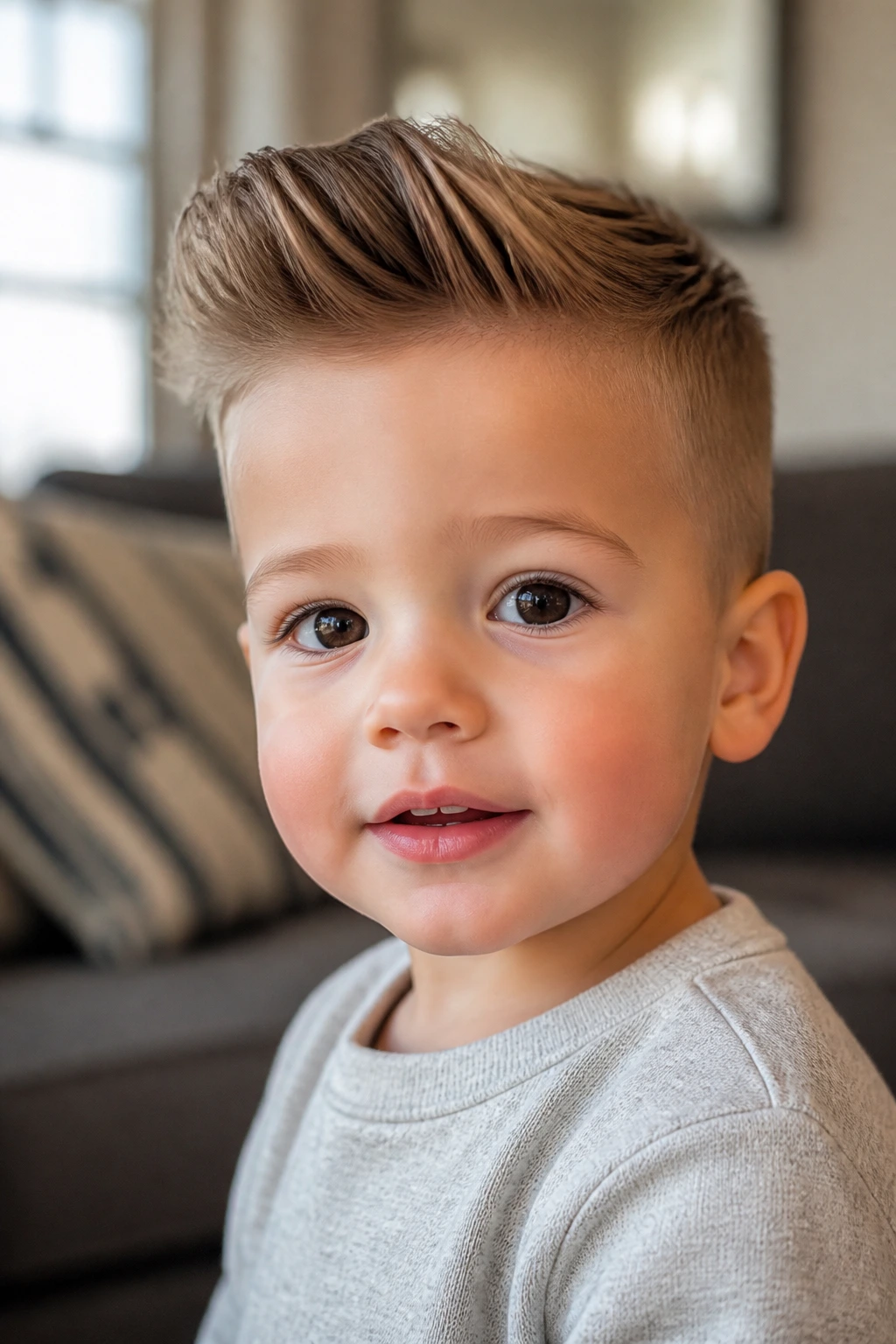
A toddler pompadour should be gentle. No towering front, no bottle of gel, no stiff shell. Just a little lift at the front and a smooth transition back into the top.
Keep the front around 2 inches and the crown a little shorter. Finger-style it with a damp hand, then let it dry on its own. If the hair is thick enough, this shape can look polished without making the child look overstyled.
This is a nice choice for photos or family events, but I’d keep it low enough that the child can forget about it five minutes later. That’s the point.
36. Ivy Crop with Taper
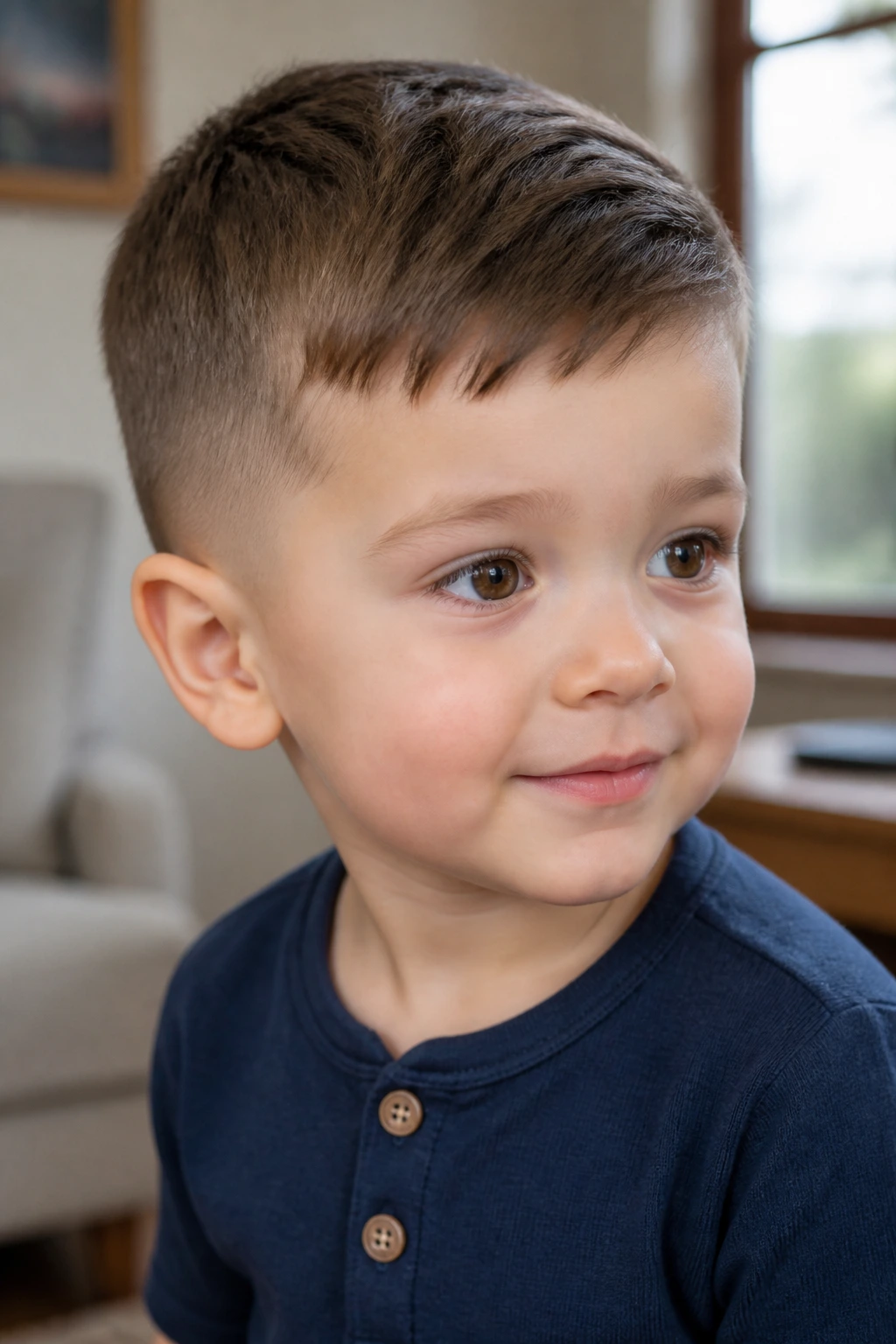
An ivy crop splits the difference between the Ivy League and the French crop. You get enough top length for a side-leaning shape, but the front stays shorter and more casual than a formal comb-over.
Leave the top around 1½ to 2 inches and taper the sides softly. It’s a useful cut if you want something neat but not stiff, and if the child’s hair can’t decide whether it wants to part or fall forward.
This one feels especially good on straight or slightly wavy hair. It’s tidy without being precious.
37. Messy French Crop
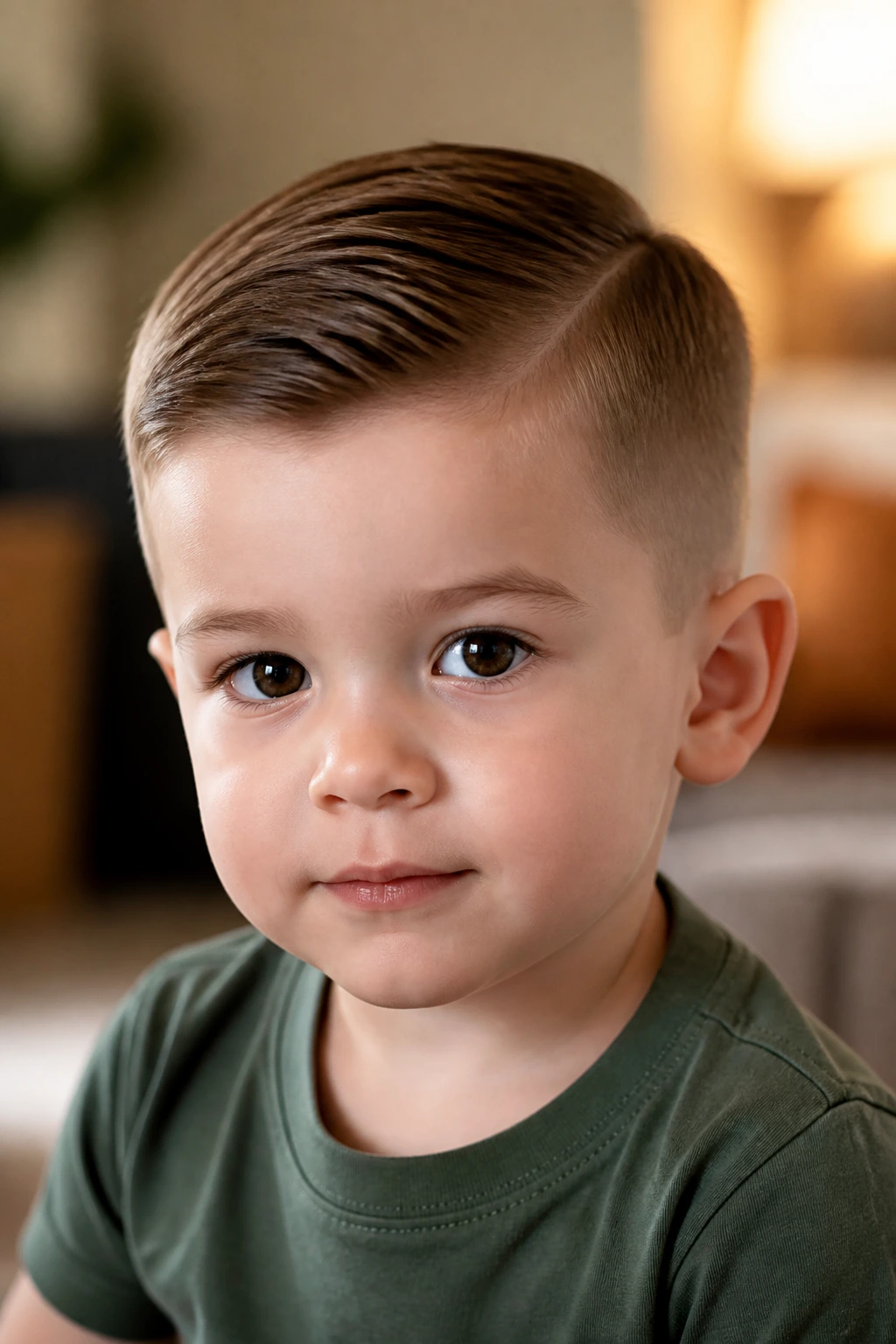
A messy French crop keeps the same forward fringe idea, but with more texture and less polish. That looseness is the appeal. It looks like hair, not a project.
Keep the fringe short, around 1 inch, and use point cutting to break up the top. A little imperfection helps here. If the hairline is uneven or the front grows in a little differently from the rest, this style hides it instead of calling attention to it.
It’s one of the easiest cuts to live with because it doesn’t need to be perfect to look right.
38. Clean Cut with Rounded Neckline
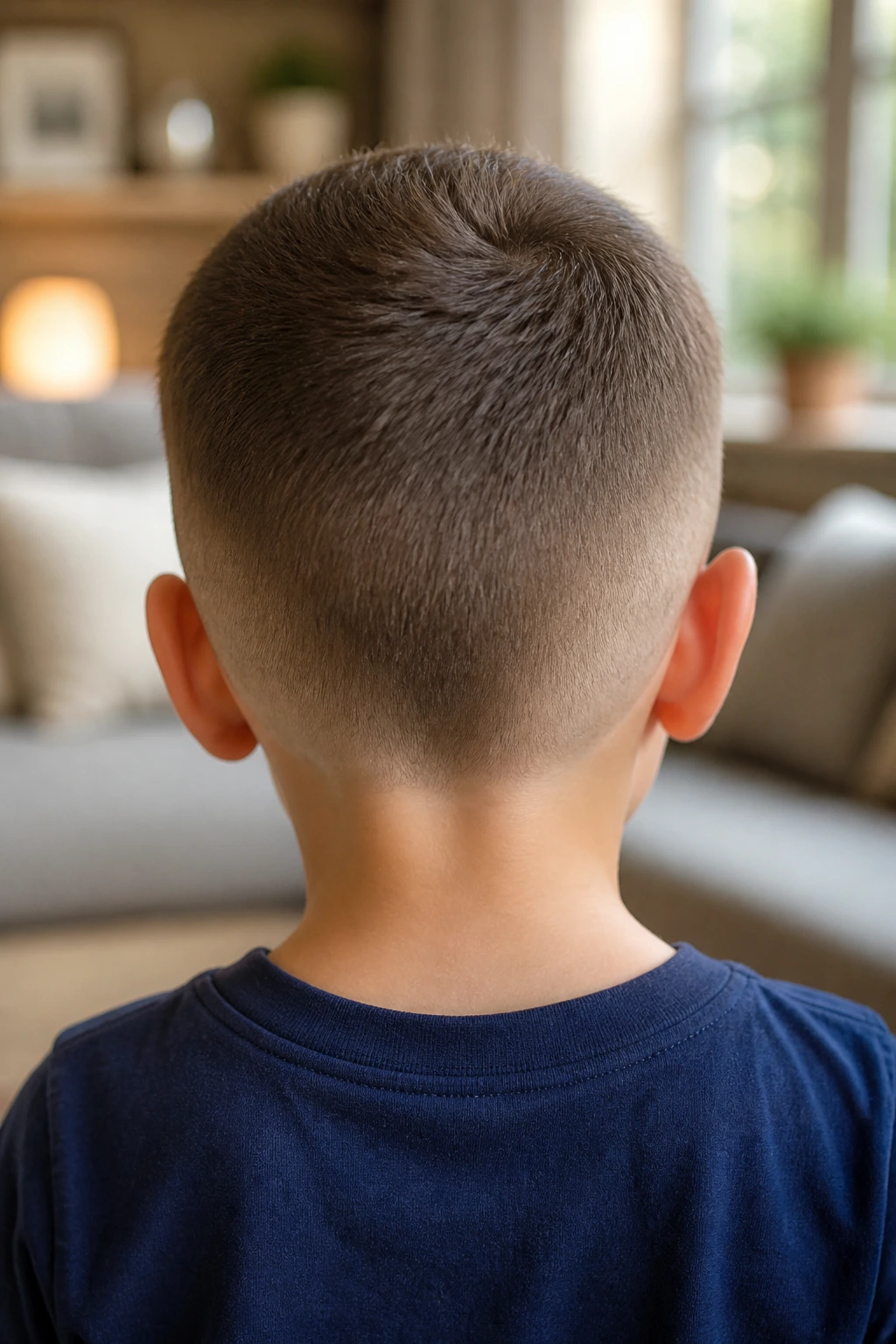
A clean cut with a rounded neckline is the quiet finish of the whole list. The top stays short, the sides are neat, and the neckline curves softly instead of ending in a hard square. That small detail changes the haircut more than people expect.
Keep the top around 1 inch if you want a true short cut, or a little longer if you prefer more softness. The rounded neckline makes the grow-out look smoother, which is useful if appointments tend to drift.
This is the version I’d choose for a child who looks best in simple lines and soft edges. No fuss. Just clean shape.
Why Short Cuts Still Work After the Barber Cape Comes Off
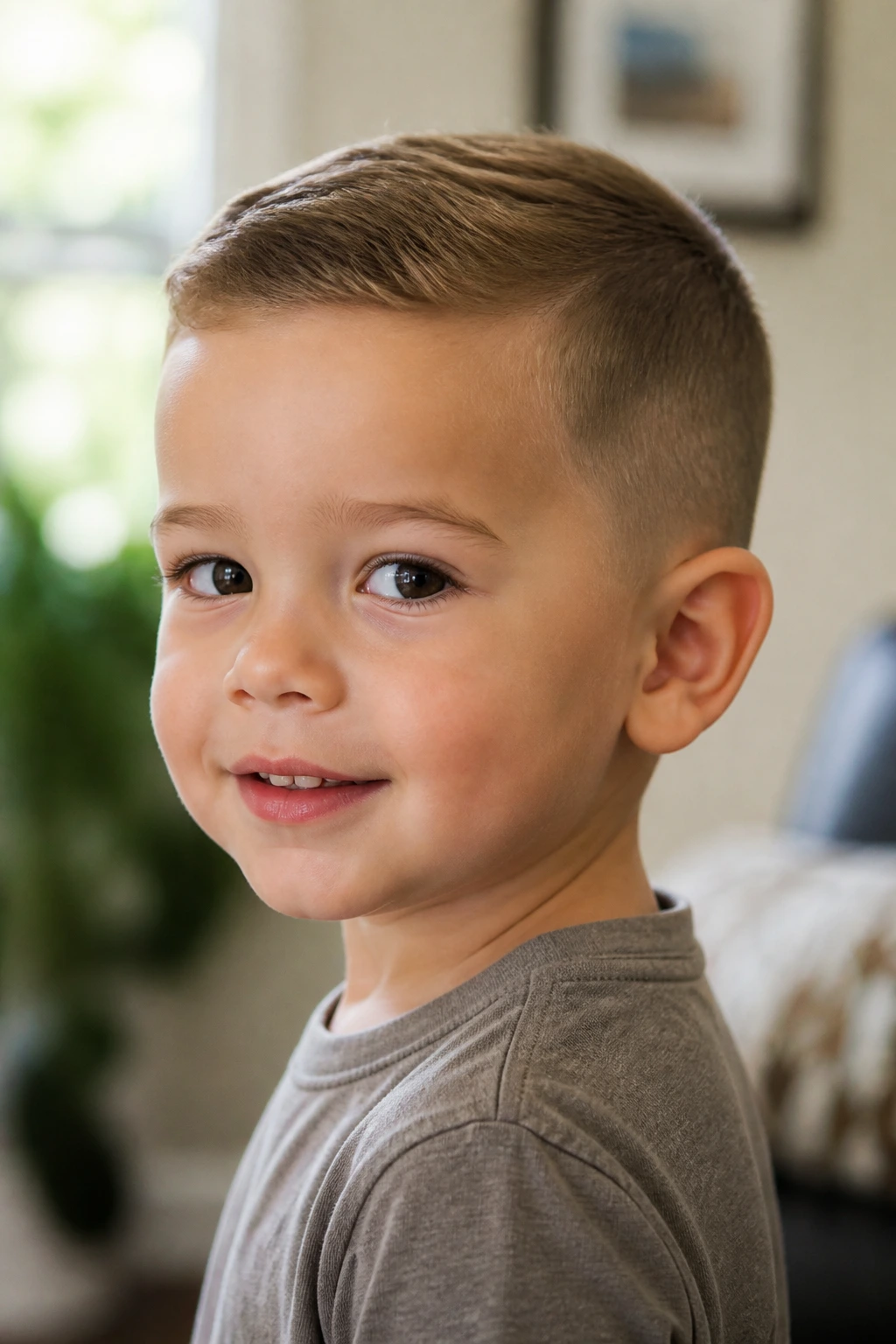
A short toddler cut earns its place when it makes the week easier to live through. The hair dries faster, the neck itches less, and the shape usually survives a nap better than anything longer and fancier. That’s the practical edge nobody talks about enough.
The other quiet advantage is grow-out. A soft taper or short crop often looks fine when it starts to blur, while a harder style — a skin fade, a razor part, a boxy top — can go from fresh to awkward in a blink. I’m not against sharp cuts. I just think toddlers wear the softer versions better, because their hair changes fast and their patience does not.
If you’re picking between two styles, choose the one that suits the hair you actually have, not the photo you saved. That one decision saves a lot of squirming later.
Essential Tools for Home Trims and Barber Visits
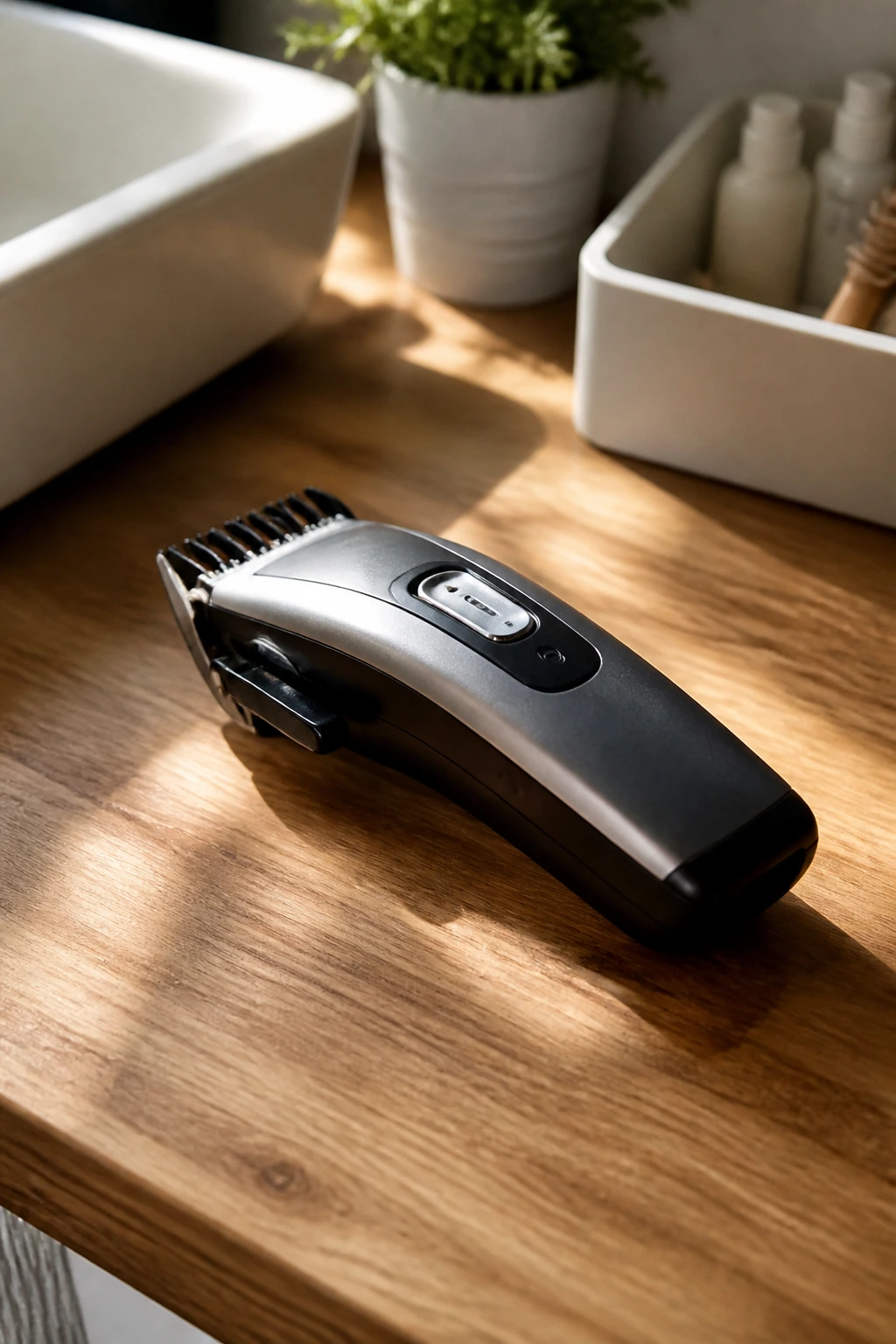
- Clippers with guards #0.5 to #4: These cover most short boys haircuts for toddlers without making you guess at length.
- Detail trimmer: Useful for around the ears and neckline, especially if you want a tidy finish.
- Rounded-tip scissors: Safer for softening fringe, ears, and the top if you cut a little at home.
- Wide-tooth comb and fine-tooth comb: The wide comb handles curls and tangles; the fine comb helps when you’re checking the part or edge.
- Spray bottle with water: Damp hair shows shape better than dry, static hair.
- Barber cape or towel: Keeps loose hair off the neck, which toddlers notice immediately.
- Neck duster: Handy for brushing off the itchy bits after a trim.
- Small styling cream or leave-in: Optional, but useful for crops, quiffs, and waves.
- Hand mirror: Helps check the back without turning the child into a full inspection.
- Chair booster or stable stool: Good for at-home cuts so the child sits high enough to see what’s happening.
How to Choose the Right Cut for Straight, Wavy, Curly, and Coily Hair
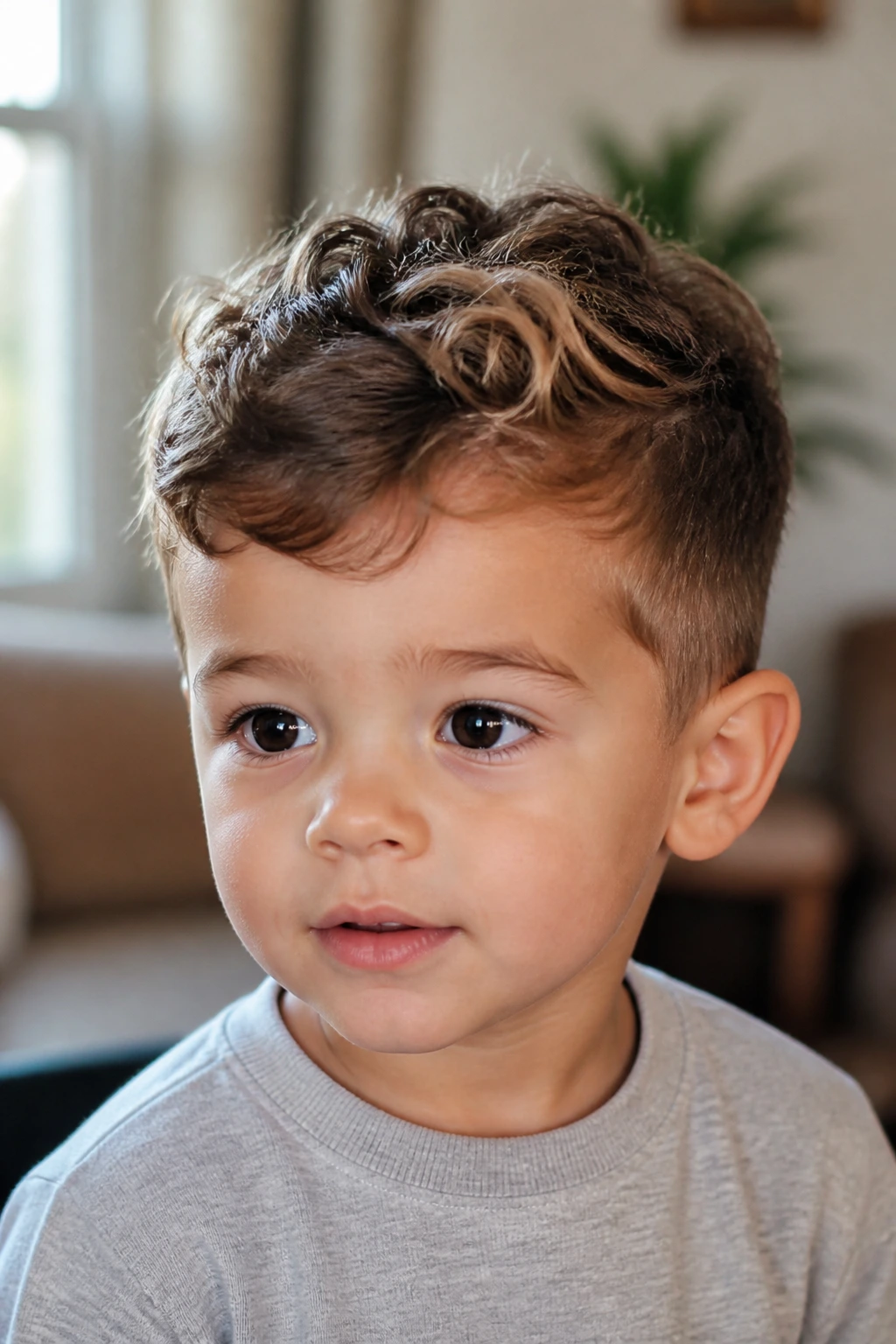
Straight hair shows every line you cut into it, which is why crops, crew cuts, side parts, and short comb overs usually behave well. They give shape without depending on a lot of texture. If the front sticks up, lean toward a French crop, Caesar, or forward fringe instead of fighting it into a side part that won’t stay.
Wavy hair likes cuts that leave a little movement on top. The wavy crop, ivy crop, short quiff, and longish top with close sides all make sense because they let the bend show without turning into a mop. Wavy hair can look great when it’s short — you just need enough room for the wave to exist.
Curly and coily hair need the most respect. A curly top with taper, short afro taper, burst fade, or coiled high top works because the shape is built around shrinkage. Cut for the curl pattern, not the wet length, and don’t take so much off the top that the whole silhouette collapses.
Cowlicks and swirl patterns change the picture again. If the crown kicks up, a brush cut, Caesar, forward fringe, or soft crop usually behaves better than a cut that expects everything to lie flat. The cut should follow the growth pattern, not punish it.
How to Wear These Cuts Without Overstyling
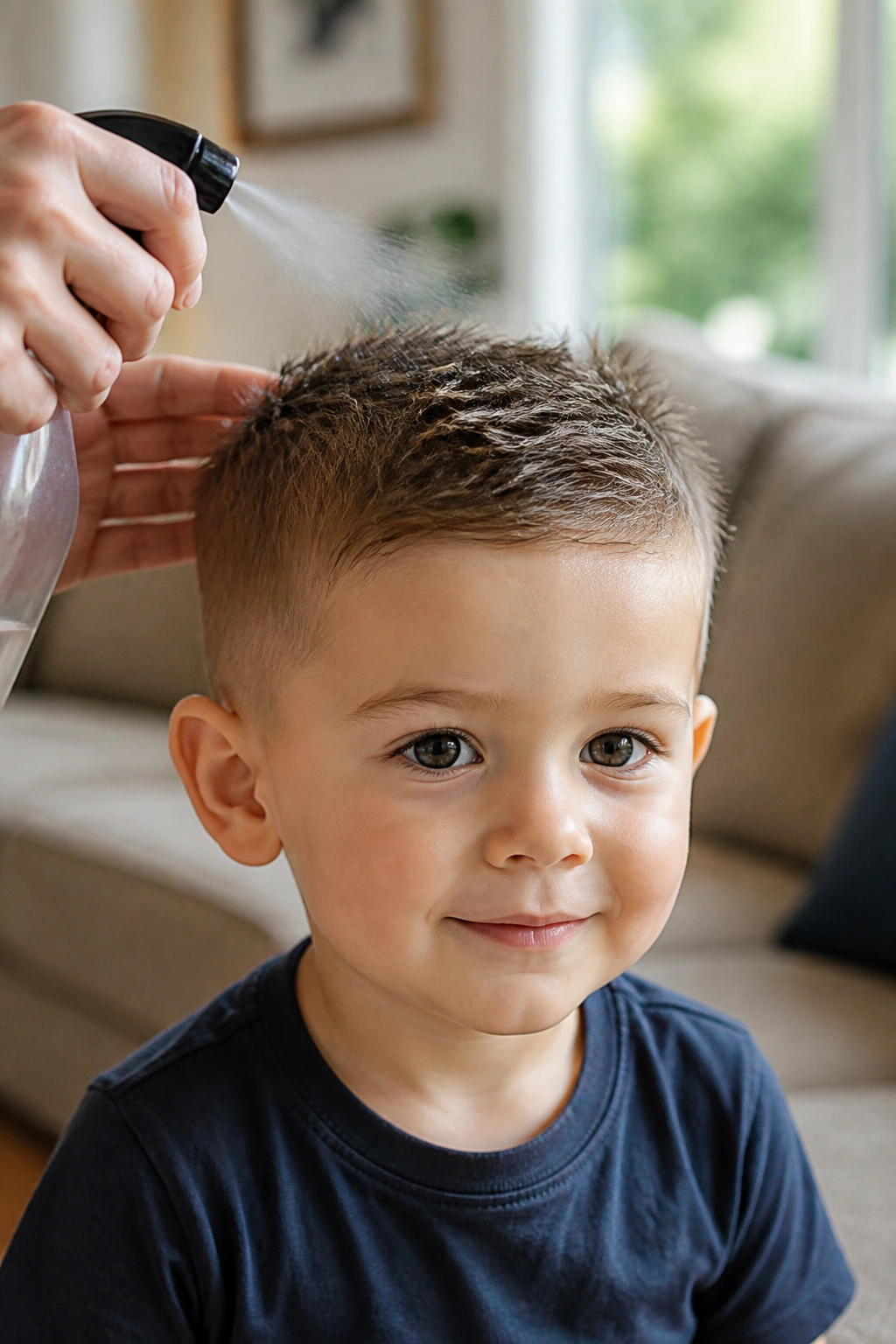
Presentation: Keep the outline soft around the ears and nape so the haircut still looks finished three weeks later. A quick mist of water and a finger-comb through the top is often enough.
Best Matches: Crewneck tees, polos, and soft-collar shirts all pair cleanly with these cuts. For sharper styles like the Ivy League or hard part, a neat neckline on the shirt helps the whole look read crisp.
Trim Window: Buzz cuts can stretch longer; fades usually need freshening sooner. A scissor-heavy crop can often go a bit longer before it starts looking shaggy.
Photo-Day Note: Less product wins. A pea-sized dab of lightweight cream, warmed in the hands first, is enough for most short styles. If the hair is stiff after the bath, you’ve used too much.
Small Tweaks That Make a Bigger Difference
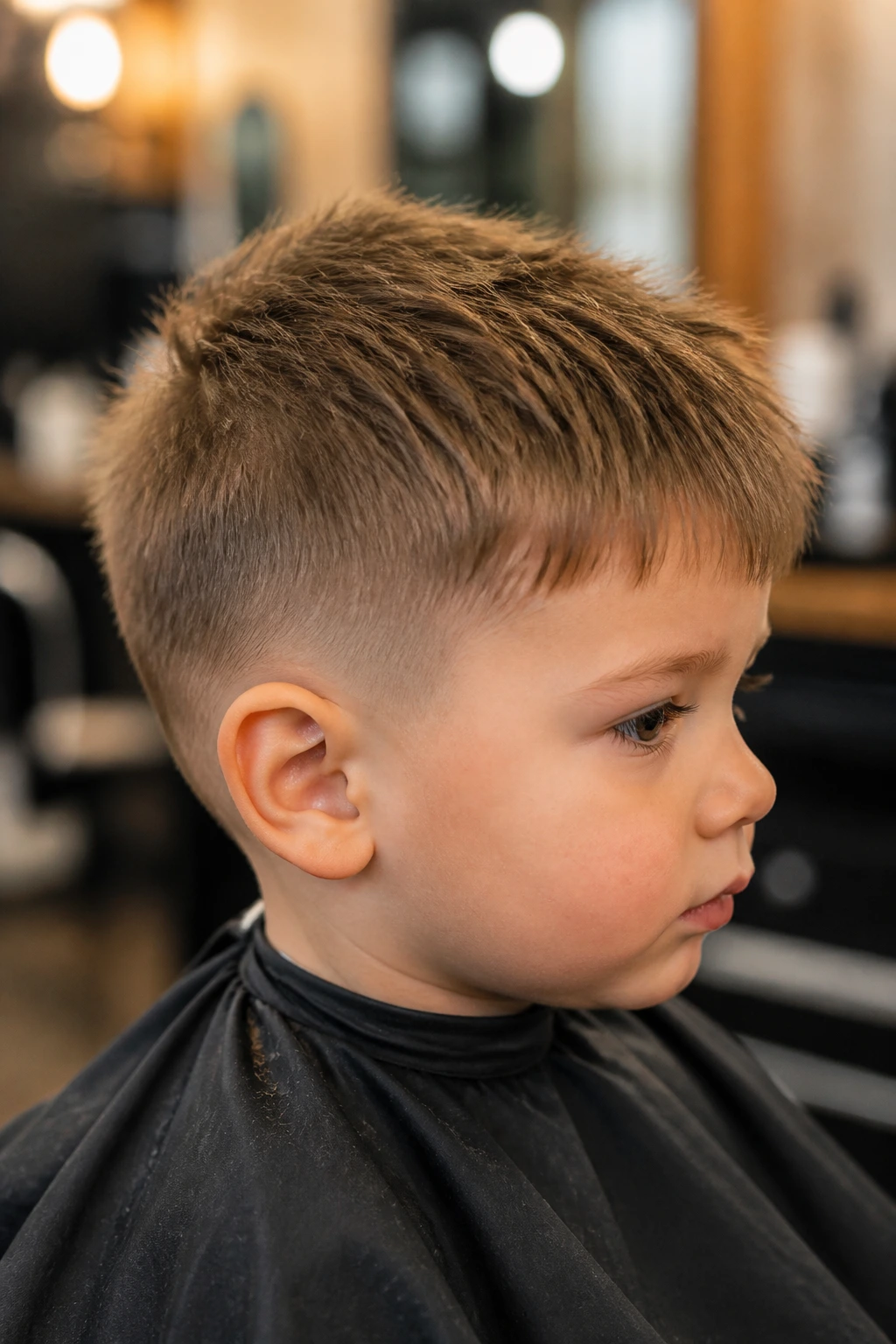
Texture Boost: If the top looks flat, a barber can point-cut the ends so the hair breaks up instead of sitting in one sheet. That tiny change is what keeps a crop from looking heavy.
Sensory-Smart Prep: For kids who hate the clippers near the ears, ask the barber to start with scissors around the fringe and neckline. Settling the child first matters more than finishing perfectly fast.
Shape Control: Leave the top a little longer than you think if the crown swirl is strong. One extra half-inch can stop the back from sticking out like a little flag.
Make-It-Yours: A soft line-up, tiny part, or gentle taper is enough personality for most toddlers. You do not need to stack three styling tricks on one small head.
Common Mistakes That Make Toddler Cuts Harder to Live With
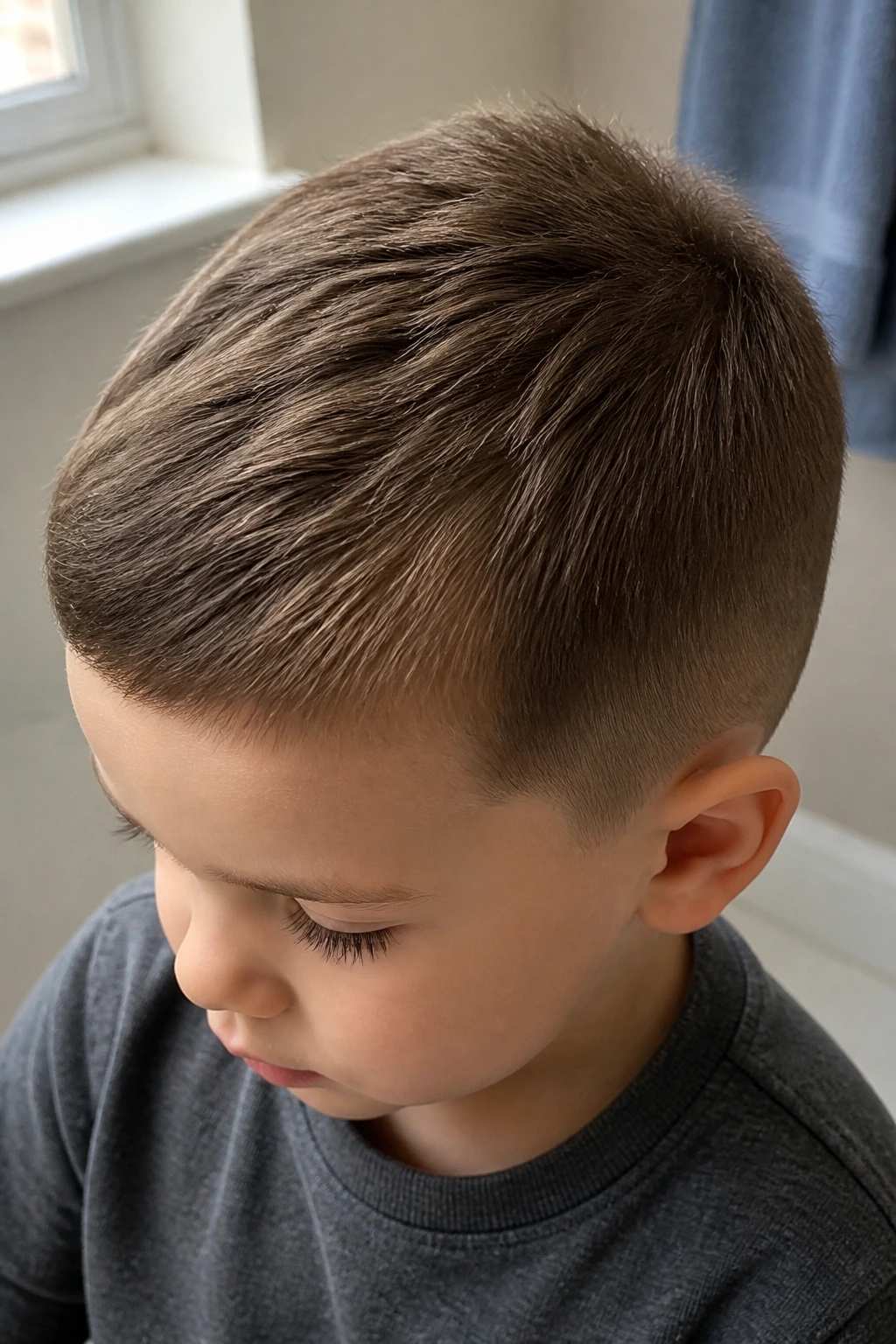
Going too short on the first cut.
That usually shows up as a haircut that looks clean on day one and odd by day four because the hairline is too exposed. Start one guard longer than your first instinct, then shorten next time if you still want more. Hair grows back, but toddler patience does not.
Ignoring the crown swirl.
If the back keeps kicking up, the cut was fighting the growth pattern. Leave a little more length there, or ask the barber to adapt the shape instead of forcing the same length everywhere.
Choosing a style that needs daily styling.
A mini pompadour or hard part can look sharp, but if you need gel every morning, the cut may be wrong for your life. The fix is simple: choose a shape that sits right with water and fingers.
Making the fade too high.
A fade that climbs too far up the head can make a toddler look top-heavy. Keep it lower unless you truly want that contrast.
Using too much product.
A small dab of cream is enough for most short cuts. Heavy gel makes short hair crunchy and attracts every loose strand in the room.
Variations and Adaptations to Try
The Sensory-Safe Cut:
Use scissors around the ears and neckline, then a longer guard on the sides. This keeps the experience calmer for toddlers who hate clipper buzz near the skin.
The Curl Keeper:
Leave curls or coils longer on top and taper the edges lightly. The whole point is to preserve spring, not press it flat.
The Fine-Hair Fix:
Choose a French crop, textured crop, or short crew cut with feathered ends. These shapes make thin hair look fuller without asking it to do tricks it can’t do.
The Photo-Day Cut:
Go with an Ivy League, side part, or gentle pompadour. Keep the shape tidy, but leave enough length to brush into place without a fight.
The Play-Ready Buzz:
A buzz cut, brush cut, or high and tight keeps maintenance low and the neckline cool. This is the easiest route for children who live outside and come home dusty.
The Grow-Out-Friendly Version:
Choose tapers instead of skin fades, and soft edges instead of hard lines. The haircut will still look decent when the next appointment runs a little late.
Keeping the Shape Between Trims
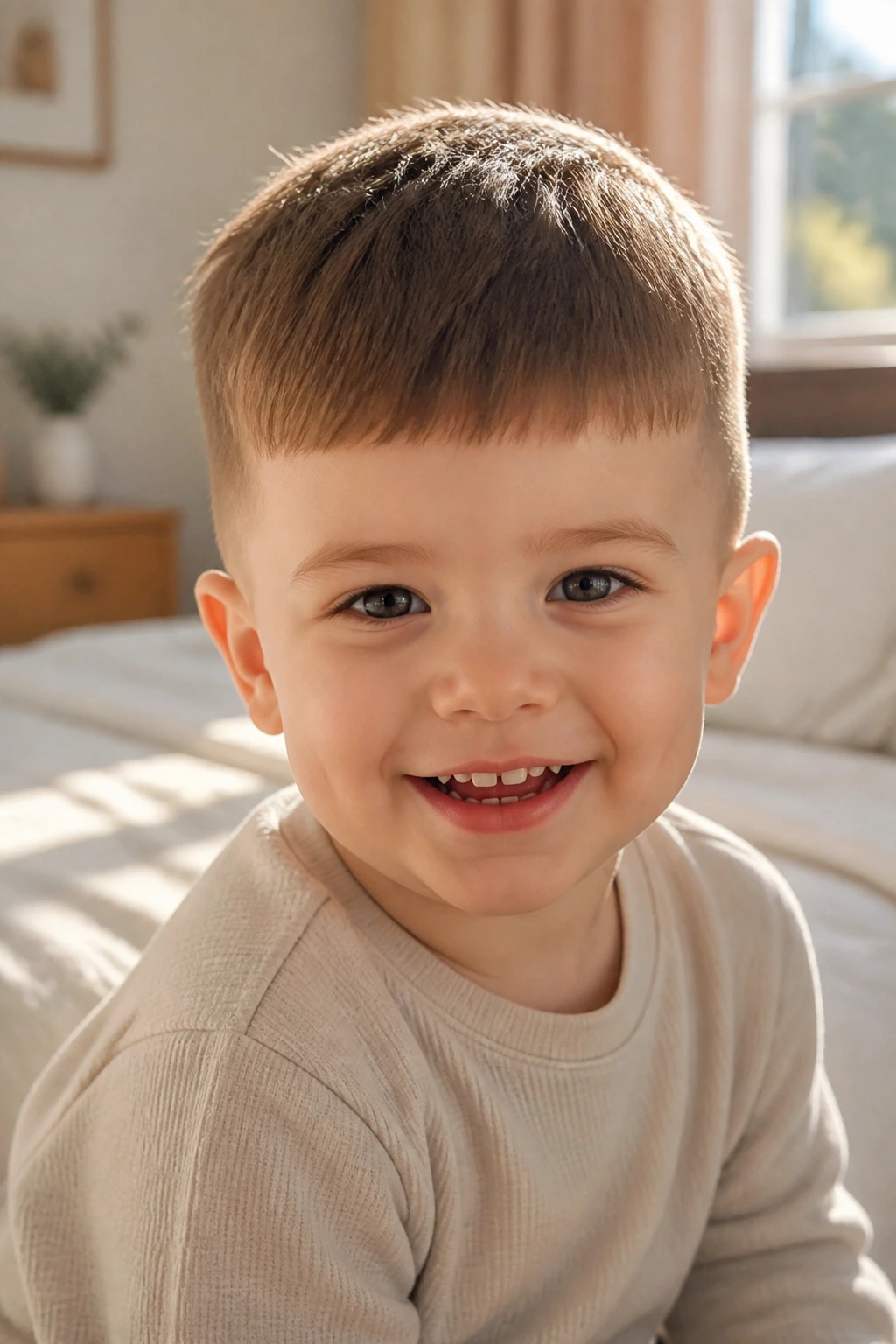
Most short toddler haircuts look best for 3 to 4 weeks before the edges start to soften in a way that changes the shape. Fades often need attention sooner, while scissor-heavy cuts can stretch a bit longer. If the neckline is rounded rather than squared, the grow-out tends to look calmer.
For washing, a gentle shampoo a few times a week is enough for most kids unless they’re sweating hard or getting sand in the hair daily. After the bath, towel-dry first, then use damp fingers to reset the top. That’s usually better than combing the life out of it.
If you use product, wash it out by bedtime. Short hair can get stiff fast, and product left in overnight tends to make the next morning messier, not cleaner. For home trimmers and clippers, oil the blades after use and brush off the hair before storing them away; dull blades tug, and toddlers notice that right away.
Frequently Asked Questions
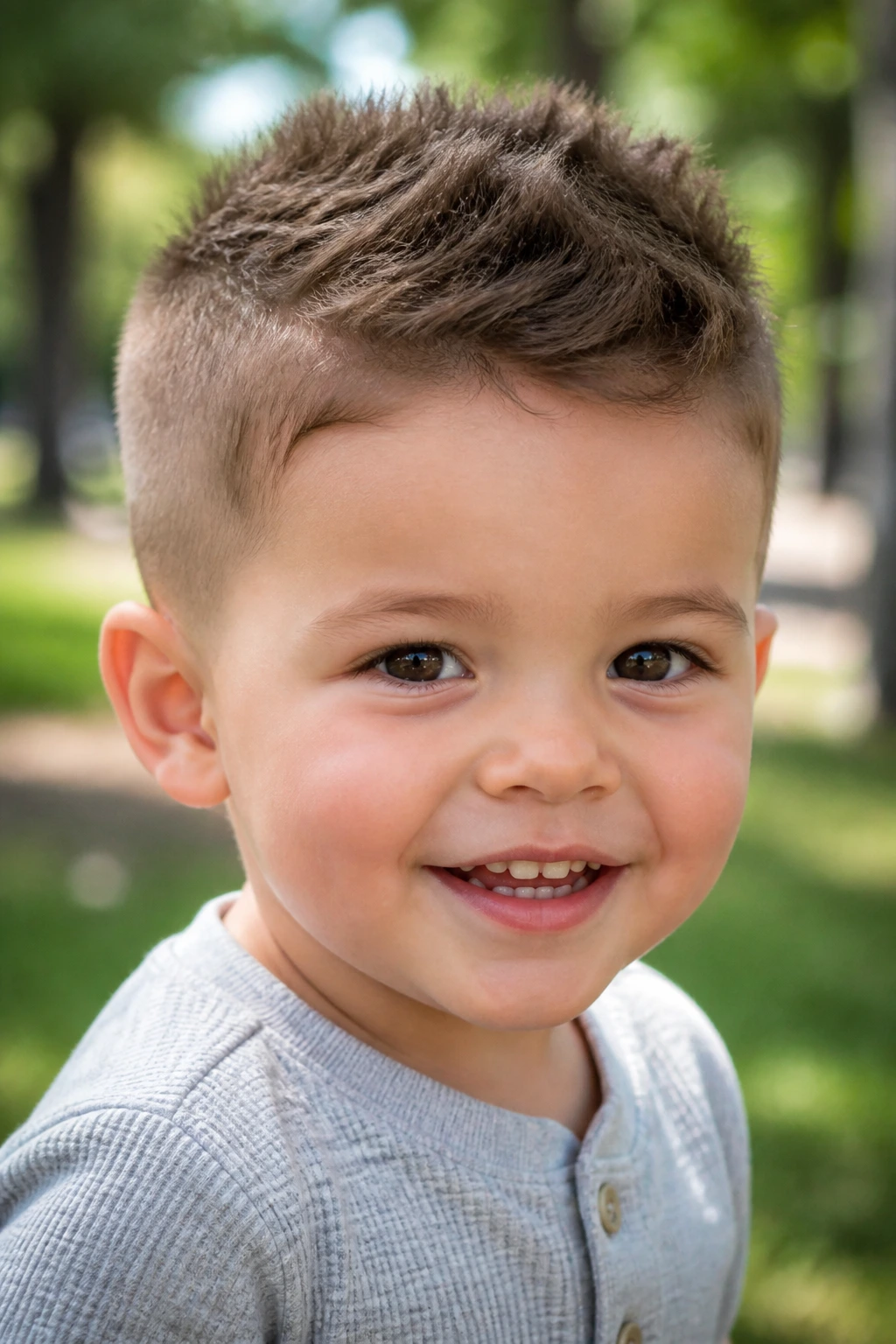
What short boys haircut lasts the longest on a toddler?
A buzz cut, crew cut, brush cut, or soft taper usually grows out the cleanest. Styles with hard parts, skin fades, or sharp disconnected lines need more frequent touch-ups because the shape changes faster.
Can toddlers wear fades?
Yes, but I’d keep the fade low and soft unless you’re happy to maintain it. High skin fades look sharp on day one and can turn patchy or bulky faster than parents expect.
What if my toddler hates clippers?
Ask for a scissor cut with an ear taper, or start with scissors around the face and neckline before bringing in clippers. The first minute matters a lot with younger kids.
Which cut works best for curly hair?
A curly top with taper, burst fade, or short afro taper usually keeps the curl pattern intact. The main mistake is cutting curls too short when wet and then wondering why they spring up higher later.
How short is too short for a toddler?
Short is fine. Too short is when the haircut starts to show every bump, swirl, and uneven patch on the scalp in a way that looks harsh. If you’re unsure, go one guard longer first.
Can I cut toddler hair at home?
Yes, if you keep the shape simple. Buzz cuts, brush cuts, and soft tapers are the easiest home jobs; anything with a fade or hard part is easier to mess up without a steady setup.
How do I tell the barber what I want?
Bring one clear reference and say what matters most: length on top, how short the sides should be, and whether you want a soft or sharp neckline. Barbers can work with vague style names, but they work better with measurements.
What if the crown sticks up after the cut?
That usually means the top got cut too short against a strong swirl. Leave more length at the crown next time, and ask the barber to follow the growth pattern instead of clipping everything evenly.
Is a side part too grown-up for a toddler?
Not if it’s short and soft. A relaxed side part reads neat, not formal, when the top stays under about 2 inches and the product stays light.
Do short cuts work better for school or daycare?
Usually, yes. They stay out of the eyes, dry fast after baths, and handle hats and sweat better than longer styles that need daily fixing.
The Cut That Grows Out Best
The smartest toddler haircut is the one that still looks decent after a nap, a snack, and a full day of touching. That’s why the best short boys haircuts for toddlers tend to be the ones with soft edges, manageable length, and enough structure to survive ordinary chaos.
If you pick the cut around the hair you actually have — not the one you wish were there — the whole process gets easier. Straight hair wants different things from curls. Cowlicks need different handling than flat crowns. A good barber notices that in the first minute, and a good parent asks for it out loud.
Keep the shape simple, the lines soft when needed, and the product light. The result is a haircut that looks like it belongs on the child, not on a model who never climbed a slide in his life.
