



A kid’s haircut has one job before it has anything else: it has to survive recess. If the hair falls into the eyes during reading time, sticks to the back of the neck after lunch, or turns into a puffball the second a hoodie comes off, nobody is happy. That’s why bob haircuts for kids keep showing up again and again. They sit in that sweet spot between tidy and playful, with enough shape to look intentional and enough movement to avoid looking stiff.
The tricky part is that “bob” is not one haircut. It’s a whole family of cuts, and the best one depends on hair texture, face shape, cowlicks, and how much brushing your child will actually tolerate on a Tuesday morning. A blunt bob on straight hair looks crisp and graphic. The same length on curls can turn into a springy little halo if the cut is handled wrong. And bangs? Lovely, when they’re chosen on purpose. A nuisance, when they’re chopped in as an afterthought.
The good news is that once you know the shapes that work, the rest gets easier fast. Short, chin-grazing, layered, angled, curly, ribboned, tucked, clipped, messy, school-friendly—there’s a version of the bob for almost every kid who wants hair that feels lighter but still has personality. Some cuts need a slick brush and a center part. Others practically style themselves after a bath. All of them are about balance, and the good ones make that balance look effortless even when the morning routine is anything but.
Why This Collection Feels So Wearable
-
Easy morning reset: Most bobs fall back into shape after a quick brush, which matters when a child is half-awake and already looking for socks.
-
Less tangling at the ends: A clean bob removes some of the drag and knotting that happens with longer lengths, especially around car-seat straps and hoodie zippers.
-
Works with different textures: Straight hair, waves, curls, and coily patterns can all wear a bob well when the cut respects shrinkage and density.
-
Room for personality: Bangs, side parts, clips, ribbons, and little flips at the ends change the mood without changing the whole haircut.
-
Trim-friendly growth: A bob can be grown out in stages instead of jumping from “short” to “long” all at once, which makes the awkward phase more manageable.
-
Photo-day neatness: A good bob frames the face cleanly, so it tends to look polished in school pictures without a lot of coaxing.
1. Chin-Length Classic Bob
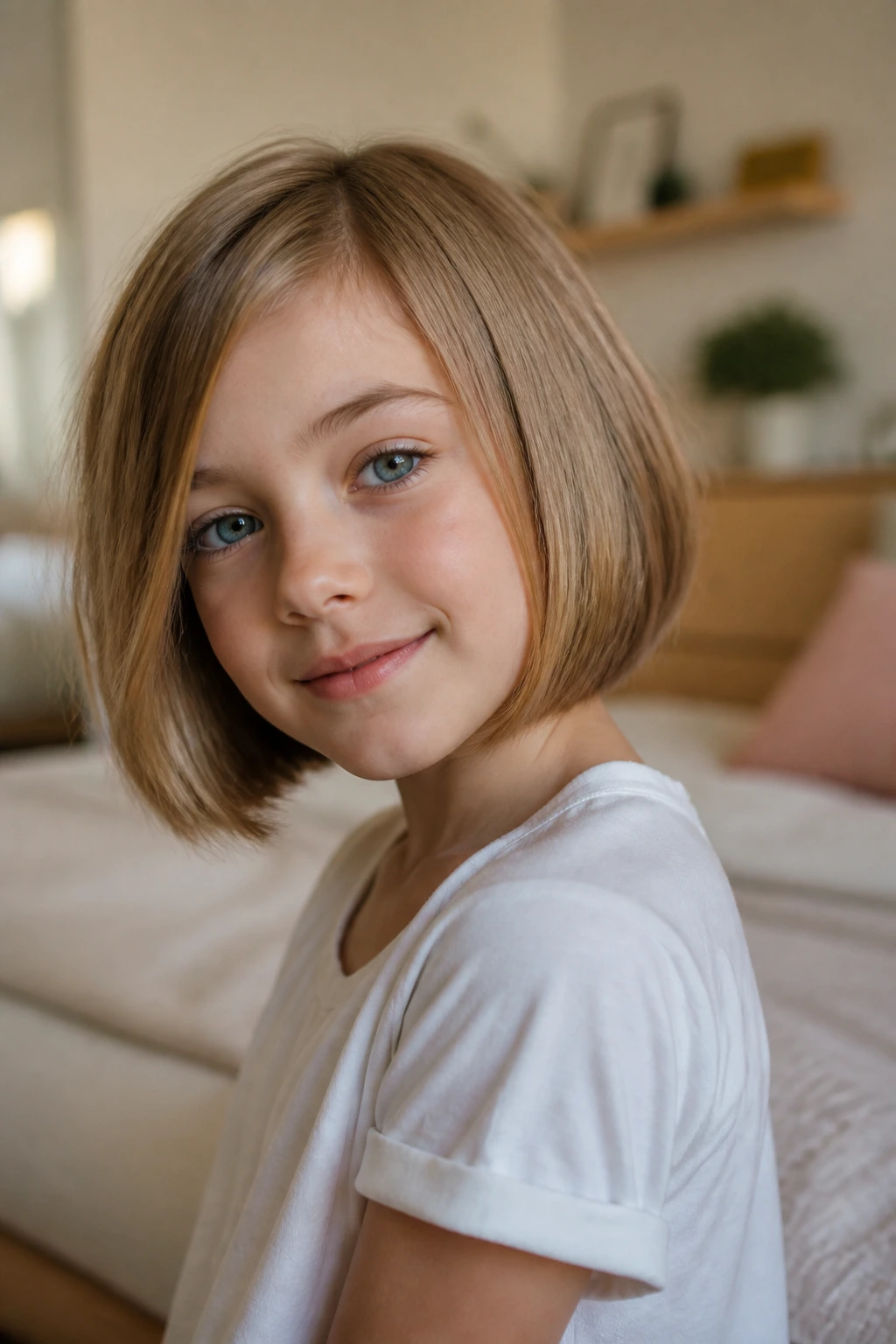
This is the bob most people picture first: clean, even, and sitting right around the chin. On kids, that length has a nice practical edge because it clears the shoulders but still feels soft around the face. It’s the cut I reach for when the goal is tidy without going too short.
Why it works:
The chin line gives the haircut a little swing, and that swing keeps it from looking boxy. Straight hair falls into place fast; slightly wavy hair gets a gentle bend at the ends that looks natural, not fussy.
Best for:
Kids who wear the same haircut to school, sports, and family dinners. It stays neat with a center part or a side part, so there’s not much daily decision-making.
Watch out for:
If the hairline at the nape grows fast, the shape can look shaggy sooner than you’d like. A trim every 6 to 8 weeks keeps the line clean.
2. Blunt Box Bob
A blunt box bob is all about straight edges and a strong line at the bottom. It has a little more attitude than the classic chin bob, which is part of the fun. On very straight hair, it looks sharp in the nicest way.
The reason this cut stands out is the lack of layering. That means the hair lands with more weight, so the ends look fuller and the shape reads clearly from a distance. If a child has fine hair that tends to look wispy, this blunt finish can make the whole cut feel denser.
How to wear it:
Keep the part simple and let the line do the work. A middle part gives it a modern feel; a side part softens it a bit.
Best for:
Straight or lightly wavy hair that holds a clean edge.
3. Soft Layered Bob
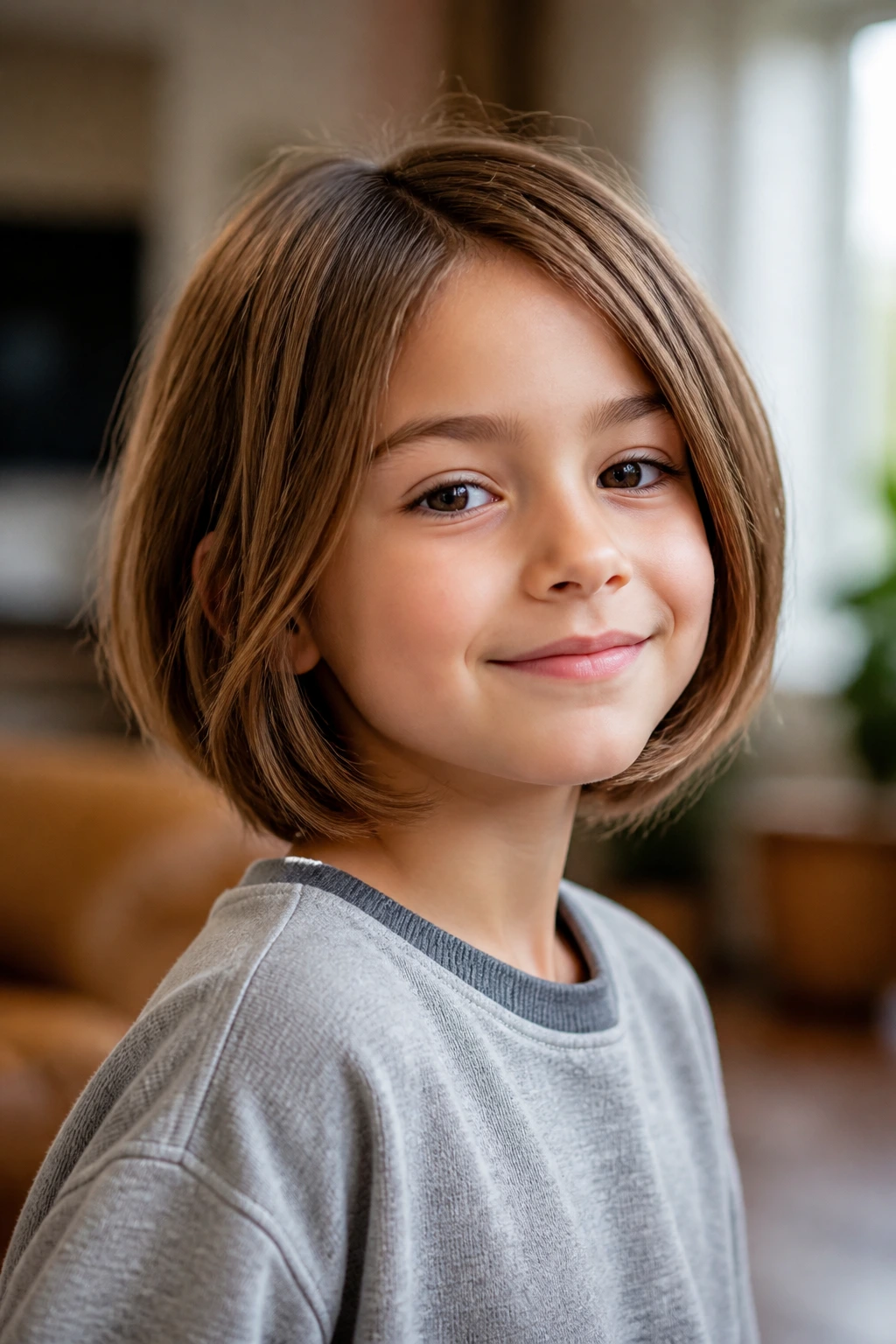
If the blunt bob is a crisp pencil line, the soft layered bob is a watercolor wash. The ends are still bob-length, but the interior has movement, which keeps thick or slightly bulky hair from sitting like a helmet. I prefer this one for kids who hate the feeling of “too much hair” around the jaw.
Why it feels lighter
Short layers remove some weight without making the cut choppy. That matters on kids with a lot of hair, because the shape can otherwise swell out around the cheeks and ears.
A soft layered bob is also forgiving. If a child flips their head, skips a brush, or sleeps on one side, the cut still looks intentional instead of messy.
4. A-Line Bob
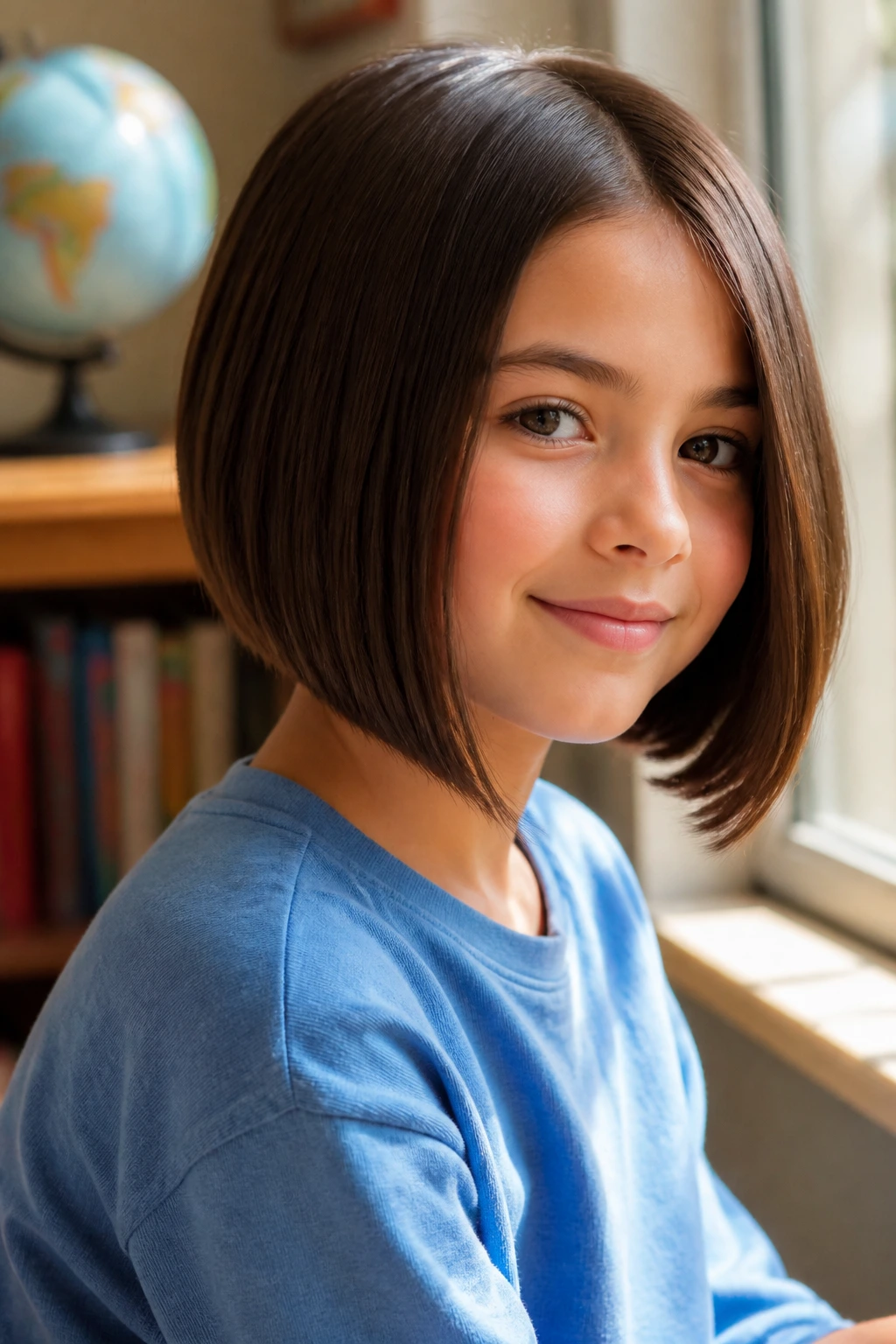
The A-line bob is shorter in the back and gradually longer toward the front. It has a neat angle that makes the face look a little longer and the neck look cleaner. Kids who like a more styled look without a lot of styling usually wear this one well.
There’s a practical perk here, too. The front pieces can tuck behind the ears or sweep forward, which gives you some flexibility when a child wants hair out of the way but not clipped back. On straight hair, the angle shows clearly. On wavy hair, it softens into something a little looser.
5. French Bob with Short Fringe
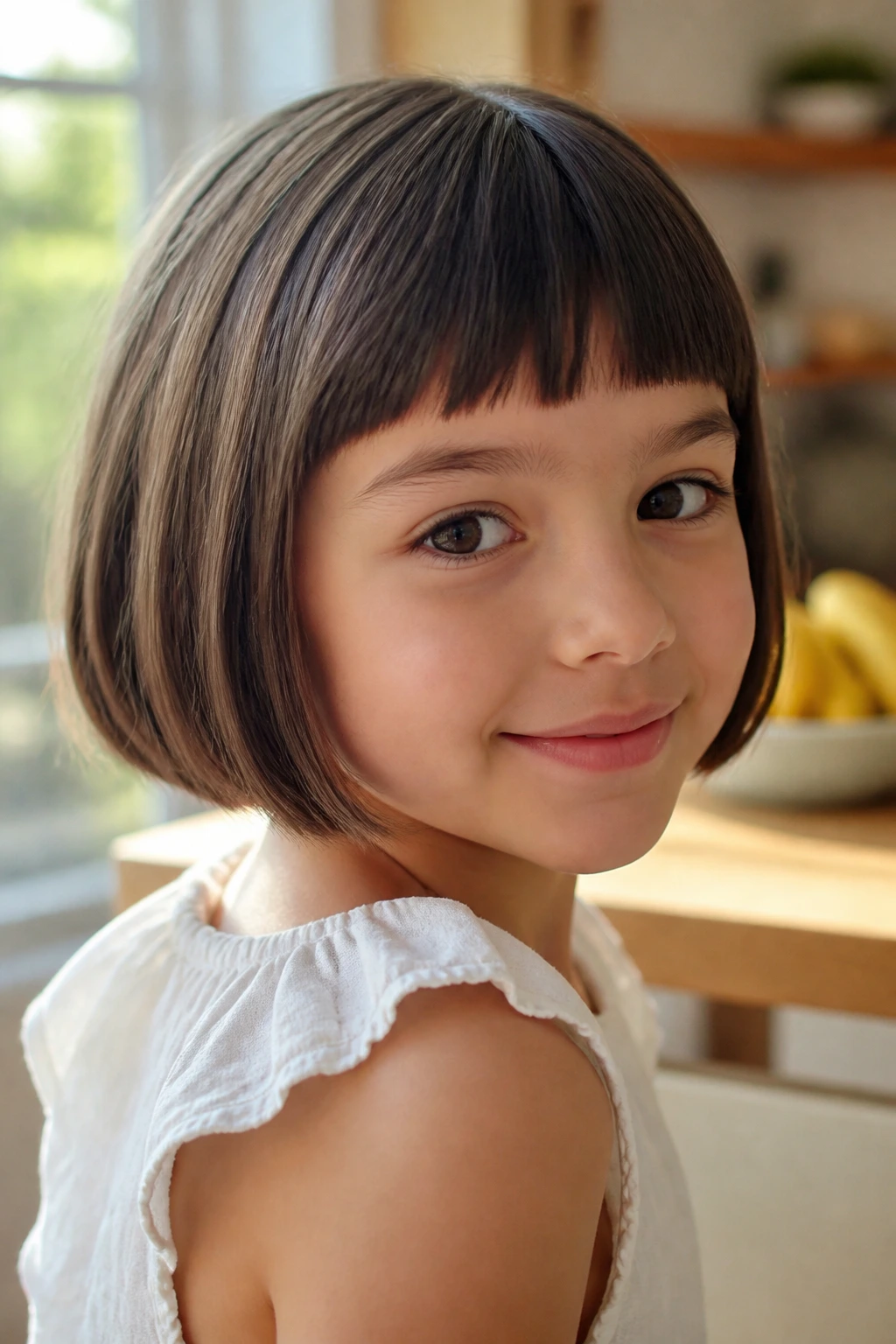
This one has a small, neat fringe and a bob that sits near the jaw. It looks charming without trying too hard, and it has a definite personality. The short bangs draw attention to the eyes, which can be lovely on kids with expressive faces.
The catch is maintenance. Short fringe needs regular trimming, and it needs a parent or stylist who won’t panic if the bangs spring up when dry. I like this cut when a child enjoys having hair “done” and doesn’t mind a quick comb-through each morning.
Best for:
Straight or softly wavy hair with a calm forehead swirl.
Avoid if:
Your child hates bangs touching the brows, even for a second.
6. Curly Bob
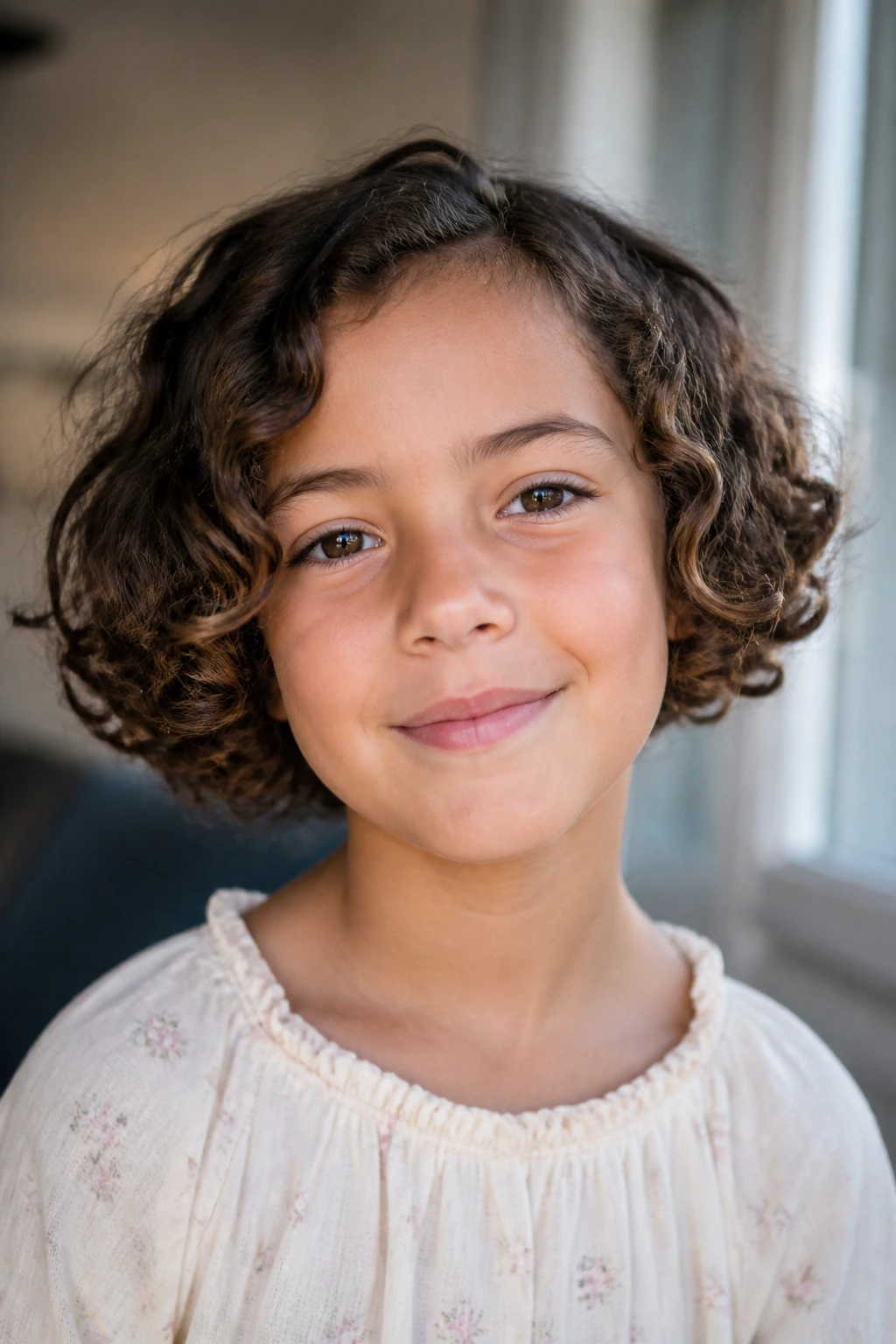
A curly bob should never be cut as if the curls are straightened in the chair. That’s where so many bad bobs go wrong. Curls need room to spring, and the shape should respect the way the hair shrinks as it dries.
A good curly bob sits in a rounded silhouette, usually somewhere between jaw and shoulder, depending on the curl pattern. The cut should feel bouncy when the hair is dry and refreshed with a little water or leave-in. If the curls are tight, leaving a bit of extra length keeps the shape from climbing too high.
What makes it work
- Dry or mostly dry cutting helps the length land where you expect.
- Soft layers stop the bottom from puffing out too wide.
- Lightweight cream beats heavy oil for most kids’ curls.
7. Wavy Bob
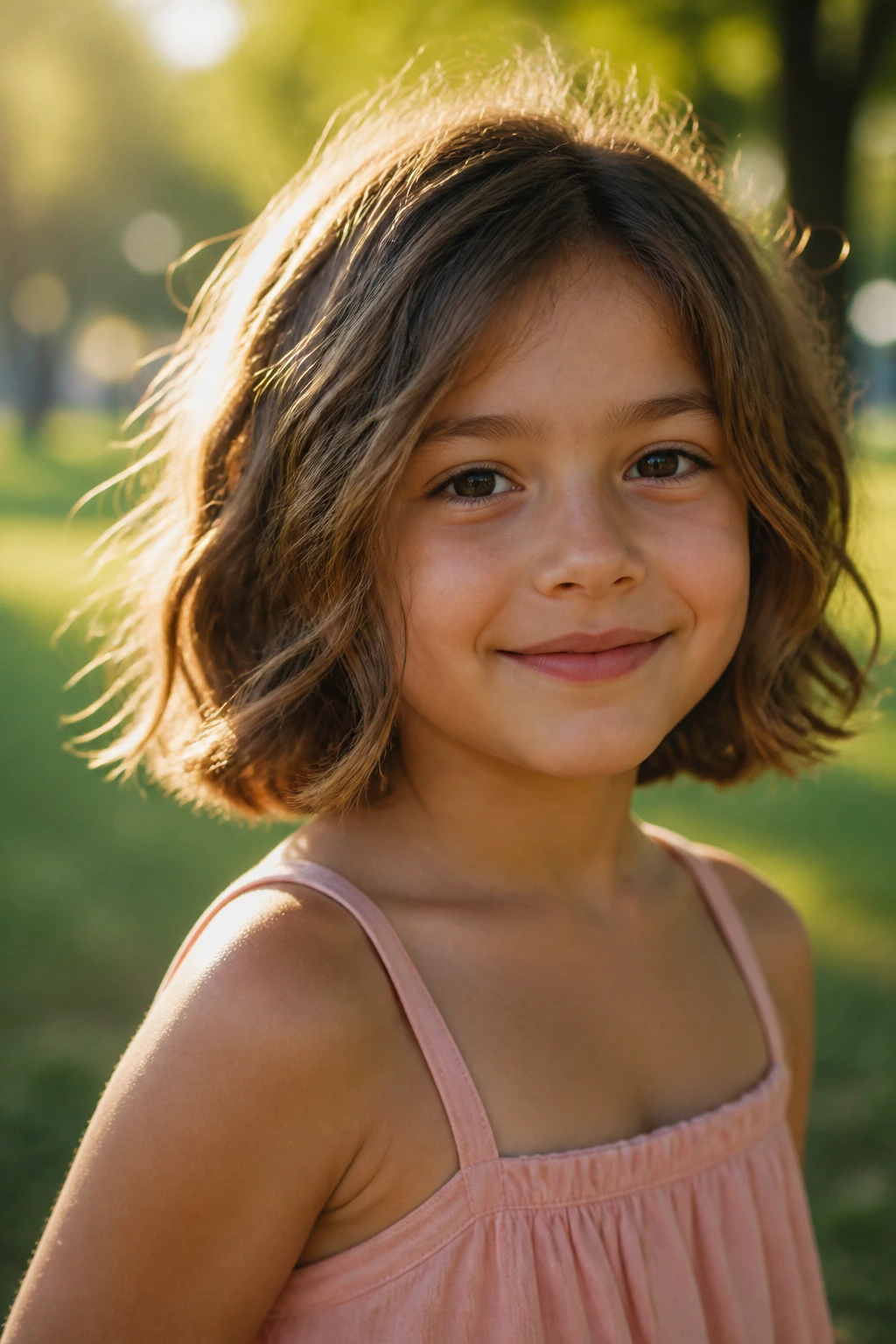
Wavy hair and bobs get along fast. The natural bend gives the cut movement, and the length usually falls in a way that looks casual even when it’s freshly cut. A wavy bob is the haircut version of rolling out of bed and still looking put together.
I like this cut because it doesn’t fight the texture. It follows it. The ends can flip out a little, curve under, or dry with a broken, beachy shape, and none of that feels wrong. If the wave is loose, the bob can sit just below the chin. If the wave is stronger, it often looks best a little longer so the shape doesn’t bounce up too much.
8. Mini Bob
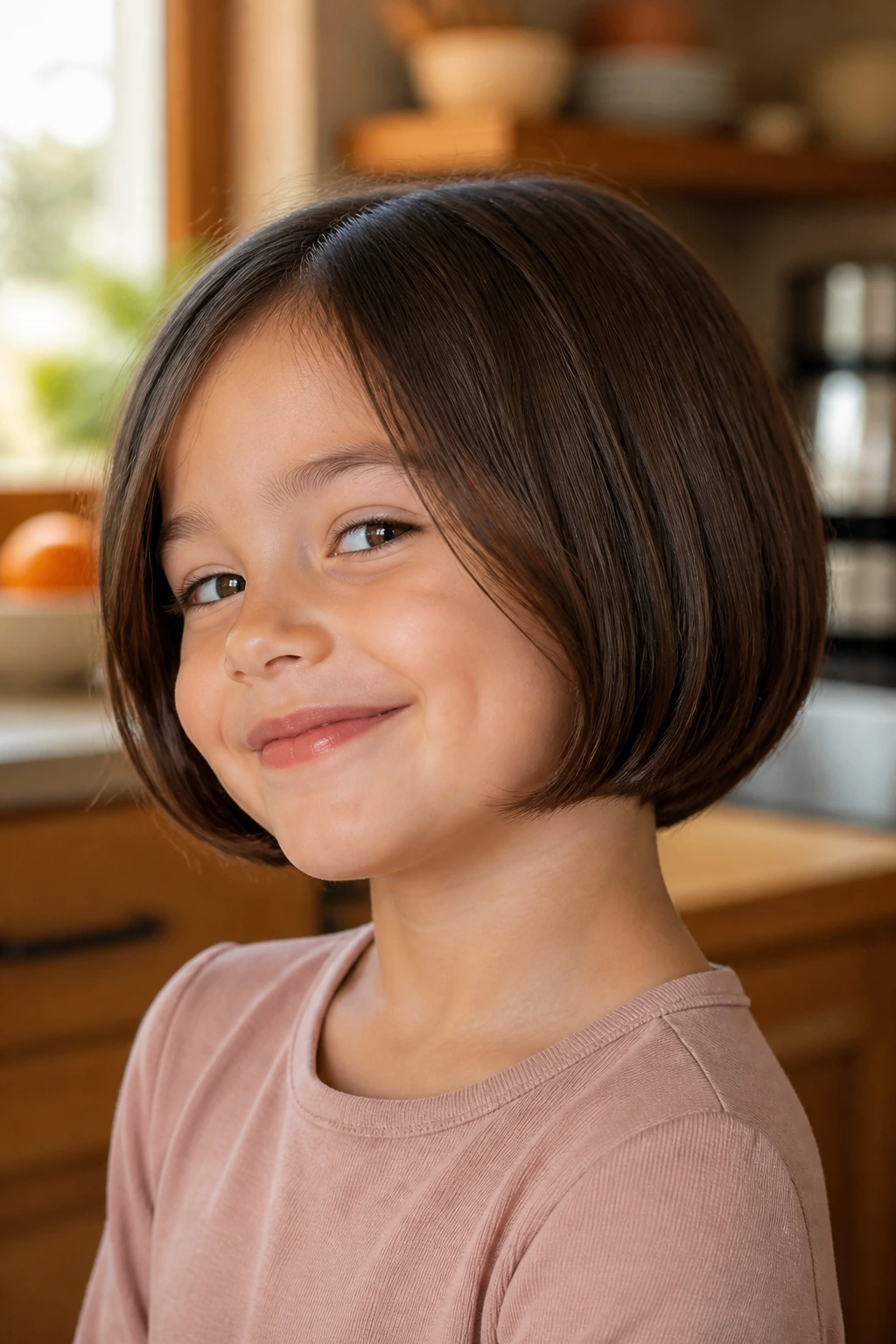
The mini bob is short, neat, and unapologetically close to the face. It lands above the chin or just at it, which gives it a crisp outline and a slightly cheeky look. Kids who hate hair brushing their shoulders tend to appreciate this one more than adults do.
This is one of those cuts where proportion matters. On a child with a small face, the mini bob can look very tidy and cute. On a child with thicker hair, you may need a touch of internal layering so the ends don’t sit too heavy.
Best for:
Straight hair, low fuss, and a parent who likes quick drying time.
9. Shoulder-Grazing Lob
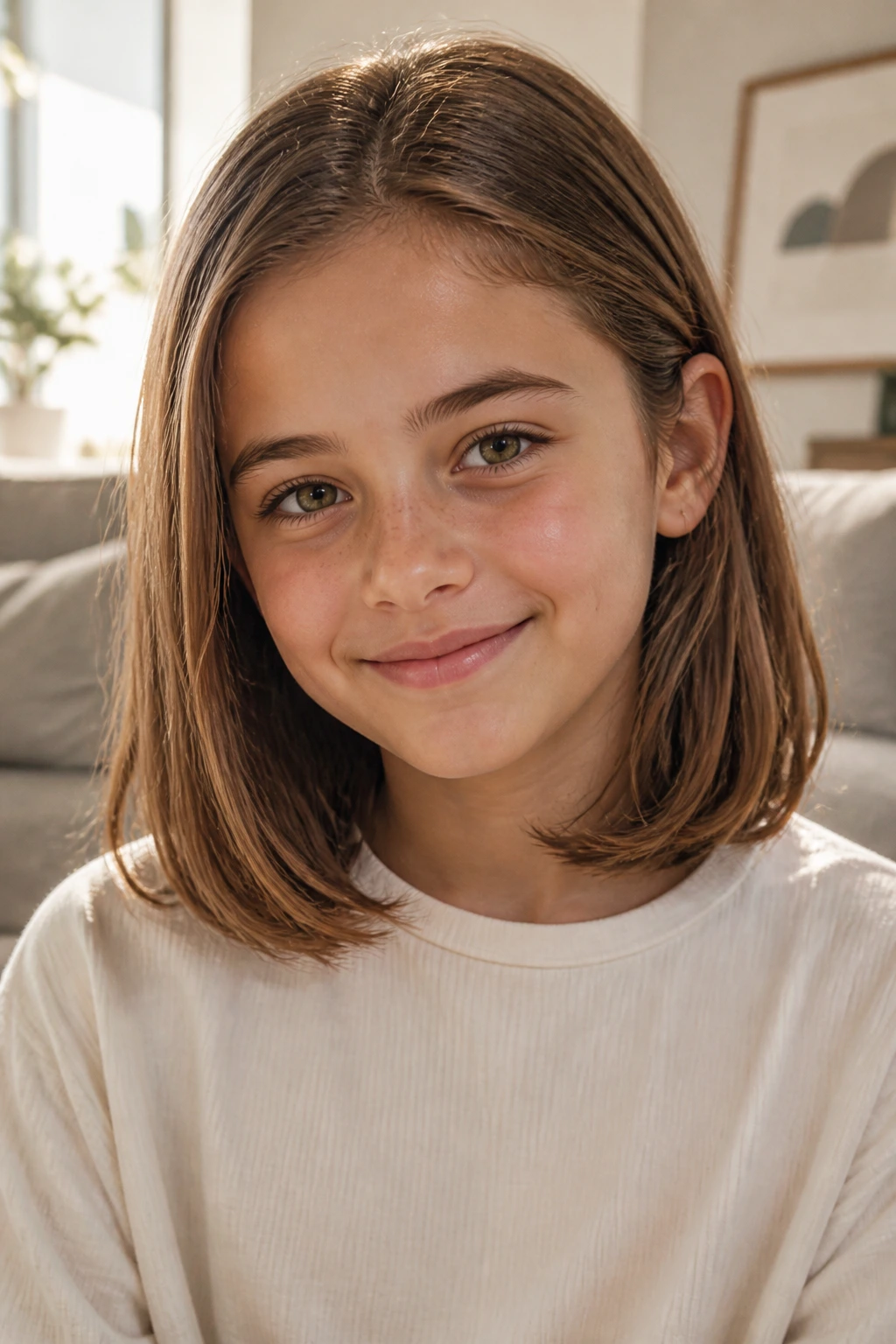
Technically, this is the long version of a bob, but it earns a place here because a lot of kids do better with a little extra length around the shoulders. The lob gives you enough hair to tuck, clip, braid, or tie back, while still keeping the overall shape neat and manageable.
If your child is growing out a shorter cut, this is the safe landing zone. It doesn’t look awkward the way some in-between lengths can. The line stays clean, and there’s enough movement to keep it from feeling heavy.
A side part makes it softer. A center part makes it read a little more polished. Either way, the lob buys you time between trims.
10. Side-Swept Fringe Bob
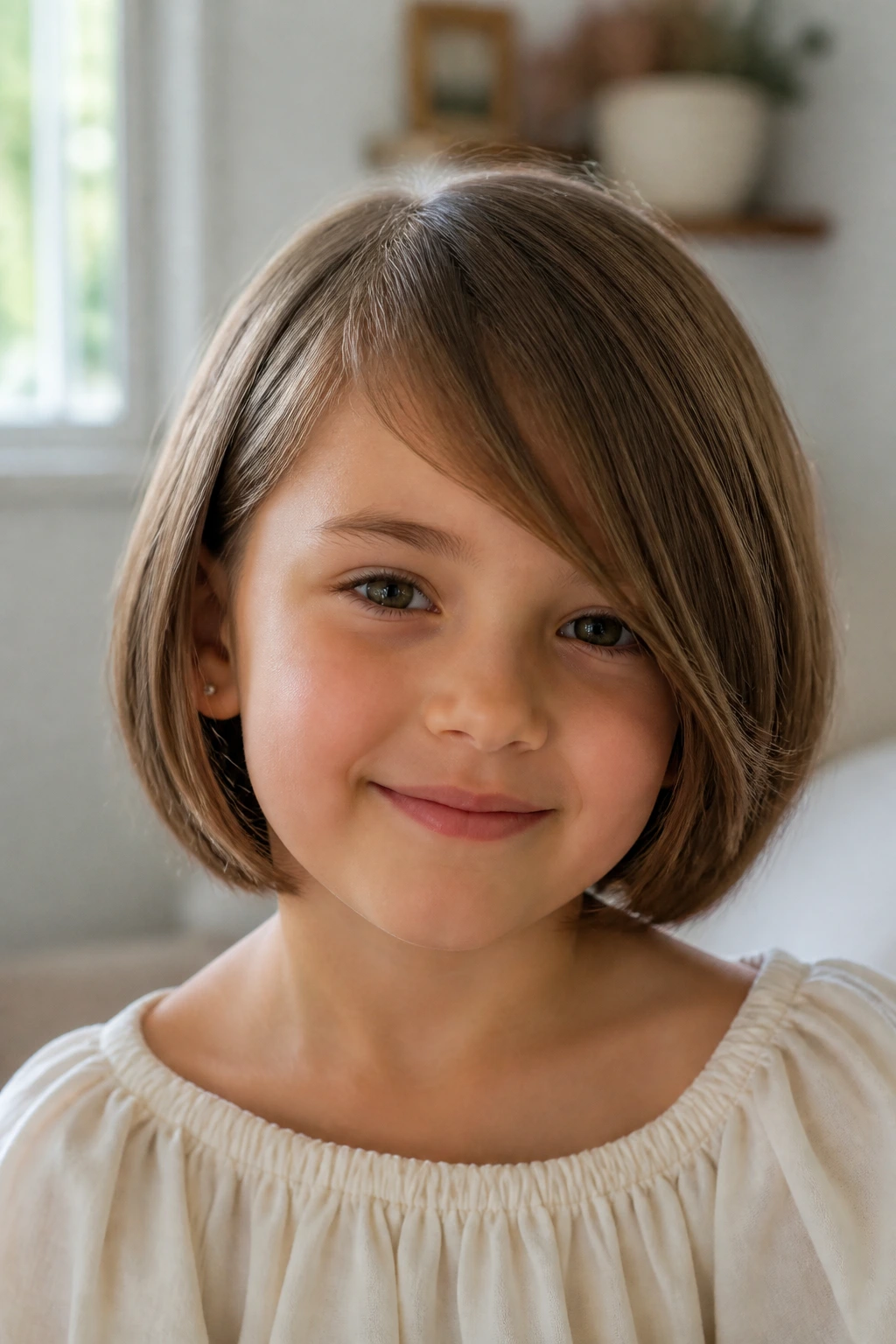
A side-swept fringe can change the whole mood of a bob. Instead of a straight line across the forehead, the hair falls diagonally and leaves the face a little more open. That’s useful for kids who want some forehead coverage but not a full bang commitment.
This is one of my favorite choices for active kids. The fringe can grow out a little without looking messy, and it’s easier to tuck or clip if needed. It also plays nicely with straight and wavy textures, which makes it a flexible option when you’re not sure how the hair will behave after a few weeks.
11. Curtain Bang Bob
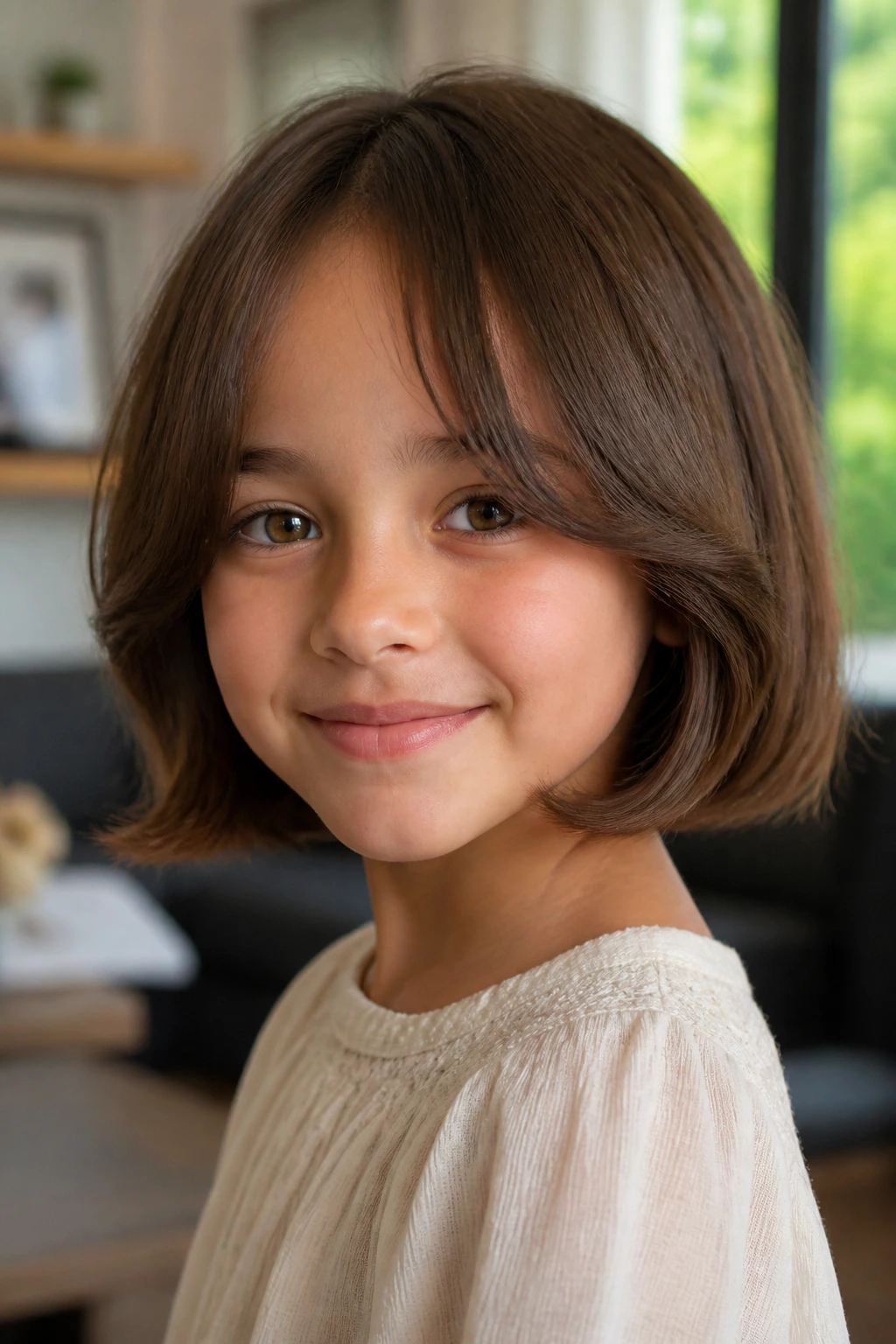
Curtain bangs split softly down the middle and frame the face on both sides. Paired with a bob, they give the haircut a relaxed, airy feel that works especially well when the hair has a bend or a wave. The style has movement built in.
The nice thing about curtain bangs is that they’re easier to grow out than blunt fringe. They can blend into the sides of the bob if a child gets tired of having hair near the forehead. That alone makes them less stressful for parents.
When it shines
- Hair that parts easily near the center
- Kids who like a softer face frame
- Bobs that need a little shape around the eyes and cheeks
12. Shaggy Textured Bob
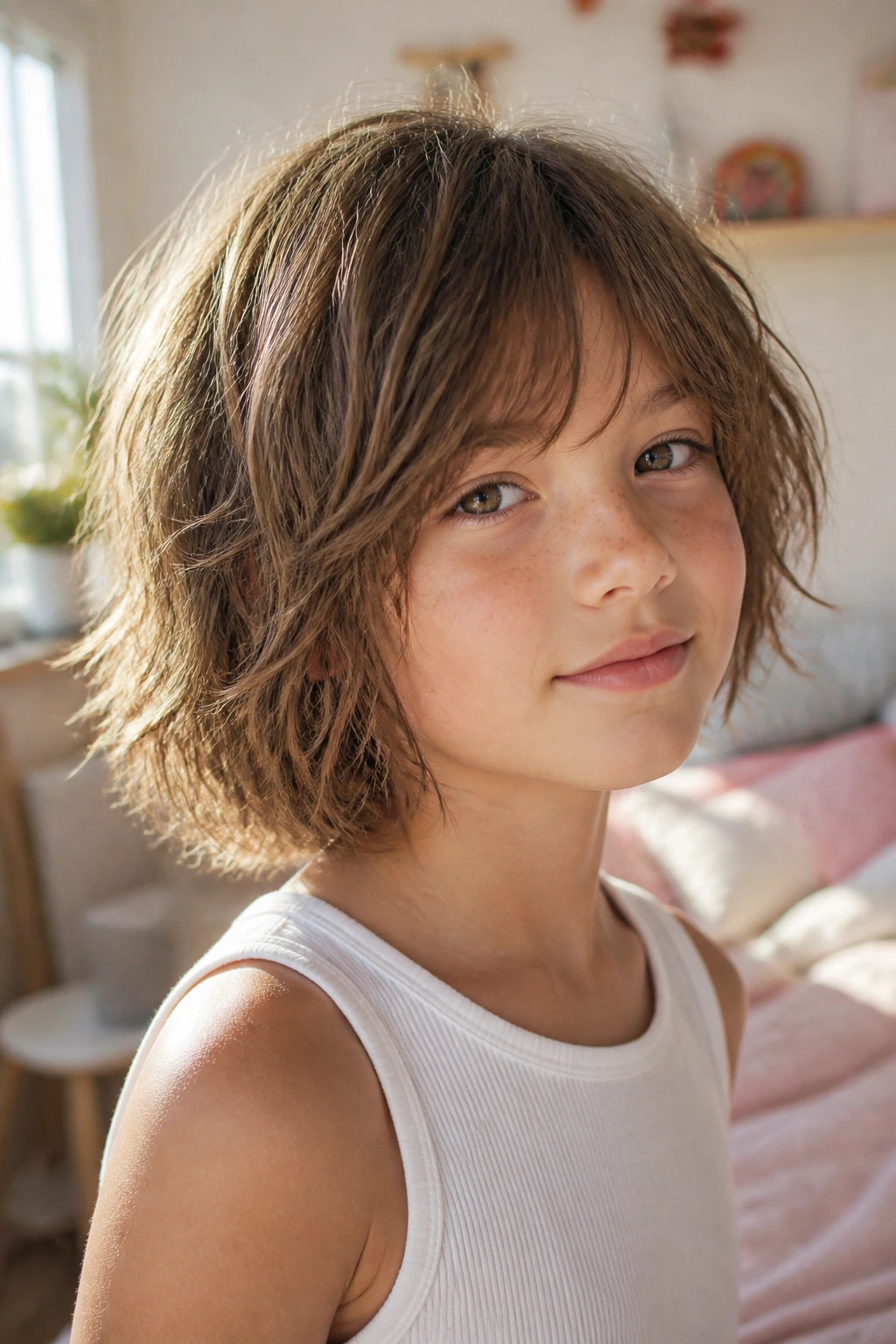
The shaggy textured bob has a little edge to it. The ends are broken up, the surface looks airy, and the whole cut feels like it was made for children who don’t sit still long enough for a perfectly smooth blowout. Which is most of them.
This bob is good at hiding the fact that hair was slept on, tossed around, or forgotten for one brush cycle. It looks better a little undone. Not sloppy—just lived in. On thick hair, the texture keeps the shape from ballooning. On finer hair, a light texturizing finish can keep it from going flat.
13. Rounded Bob
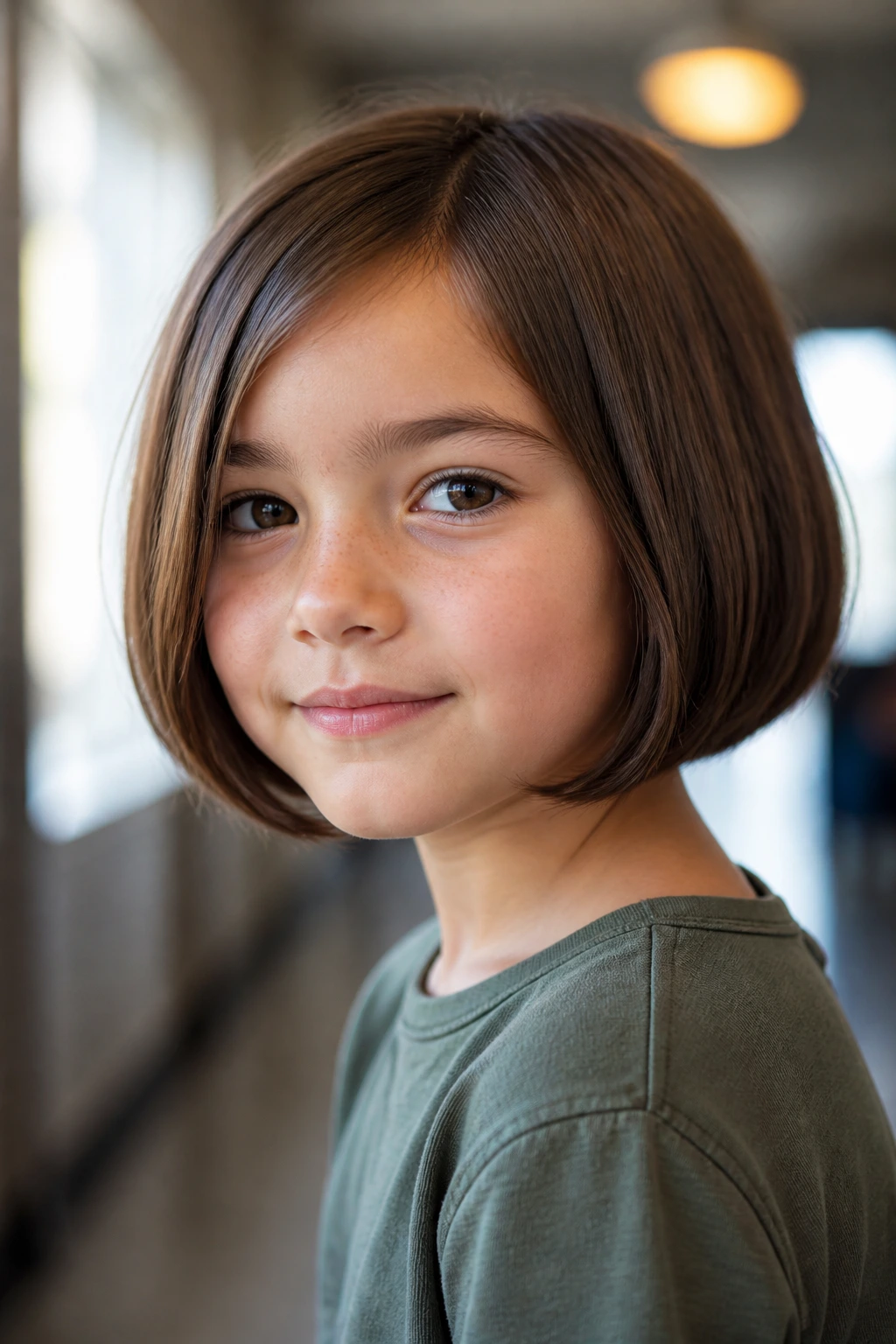
A rounded bob curves inward toward the chin and cheeks, creating a soft dome shape rather than a straight edge. It’s a lovely cut when you want the haircut to feel gentle and polished instead of sharp. The curve can be subtle or more obvious, depending on the child’s hair density.
This shape works especially well when the hair is naturally straight or only lightly wavy. It gives a very neat outline, which is one reason it looks good in school photos. If the hair is very thick, the stylist usually needs to remove a little interior weight so the curve doesn’t puff out.
14. Inverted Bob
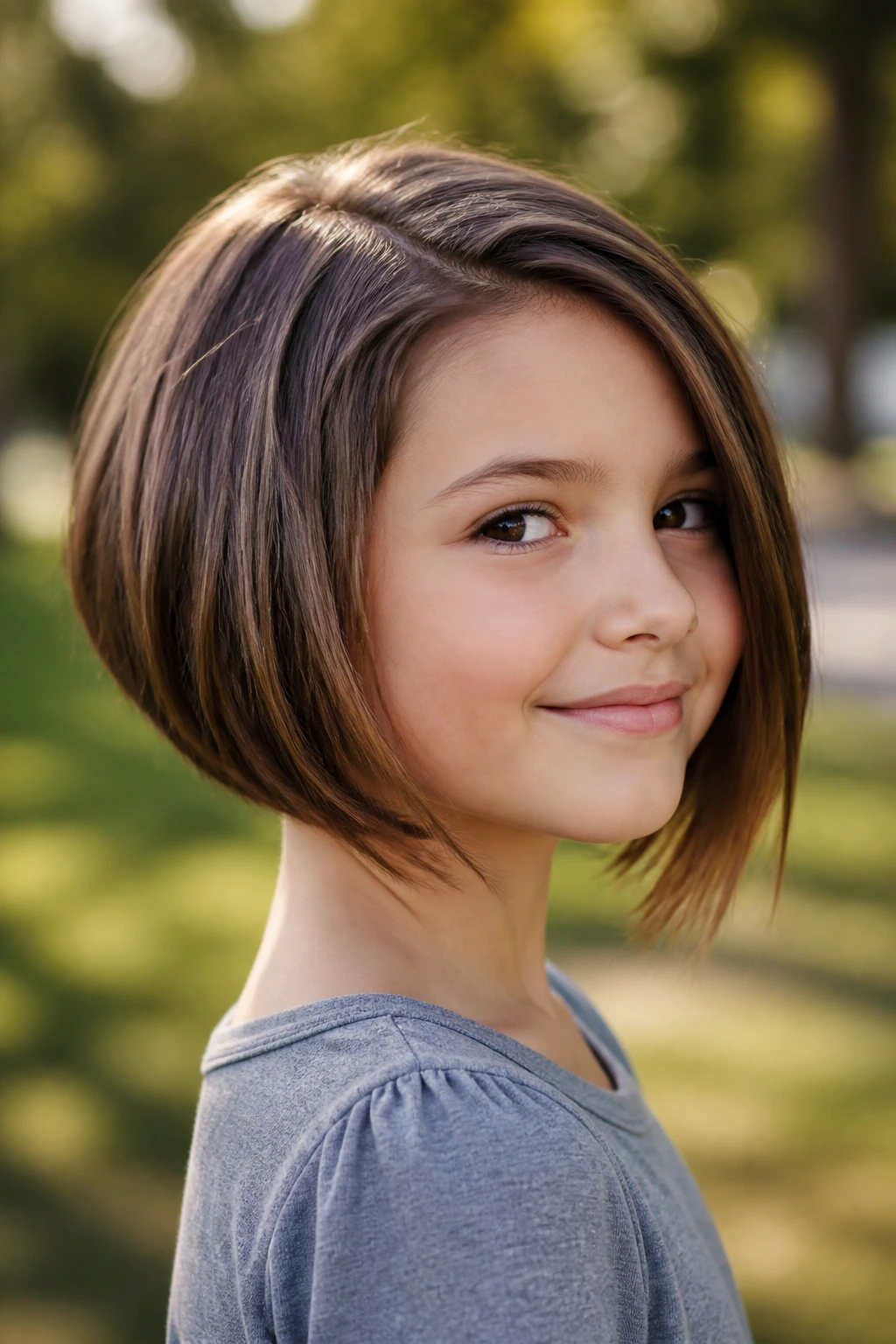
An inverted bob has more lift in the back and a longer front that sweeps toward the collarbone or jaw. It’s a sharper, more styled version of the bob family, and it gives a kid’s haircut a bit of motion even when the hair is just hanging naturally.
The shape is useful when a child has a strong jawline or wants the face framed a little more dramatically. It also helps with thick hair because the shorter back removes bulk at the nape, where the heat and knots tend to build up anyway. I’d call this one polished with a little edge.
15. Tucked-Front Angled Bob
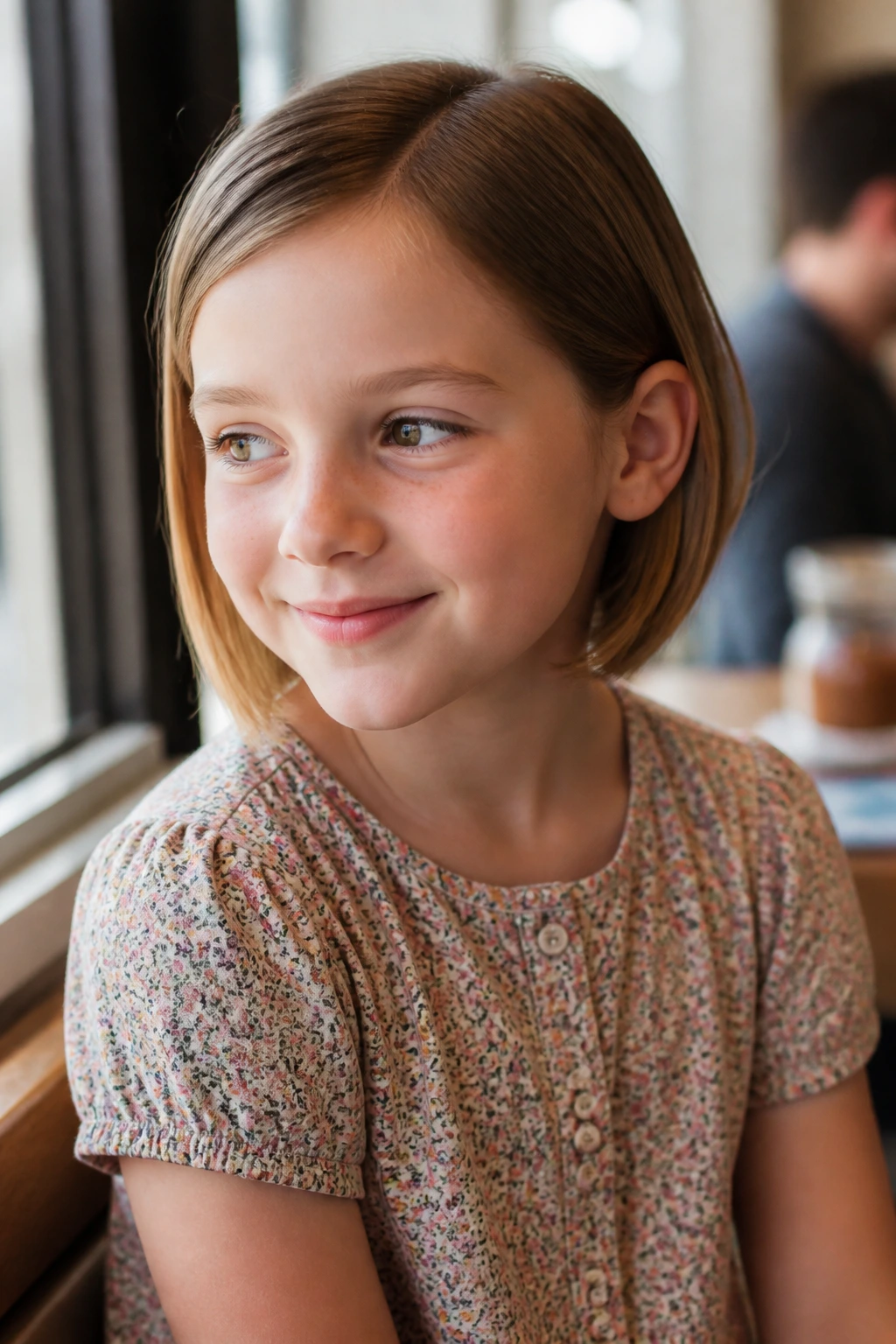
This cut is made for the kid who keeps tucking hair behind the ears all day anyway. The front pieces are left a touch longer, while the rest of the bob follows a gentle angle. It creates a clean line when the hair is worn down, but it still behaves when the front gets pushed back.
The advantage is versatility. If the child wants a neater look, the pieces tuck in. If they want more shape around the face, the longer front does that too. It’s one of the more forgiving bob shapes, and forgiveness matters with children’s hair.
16. Ear-Length Bob
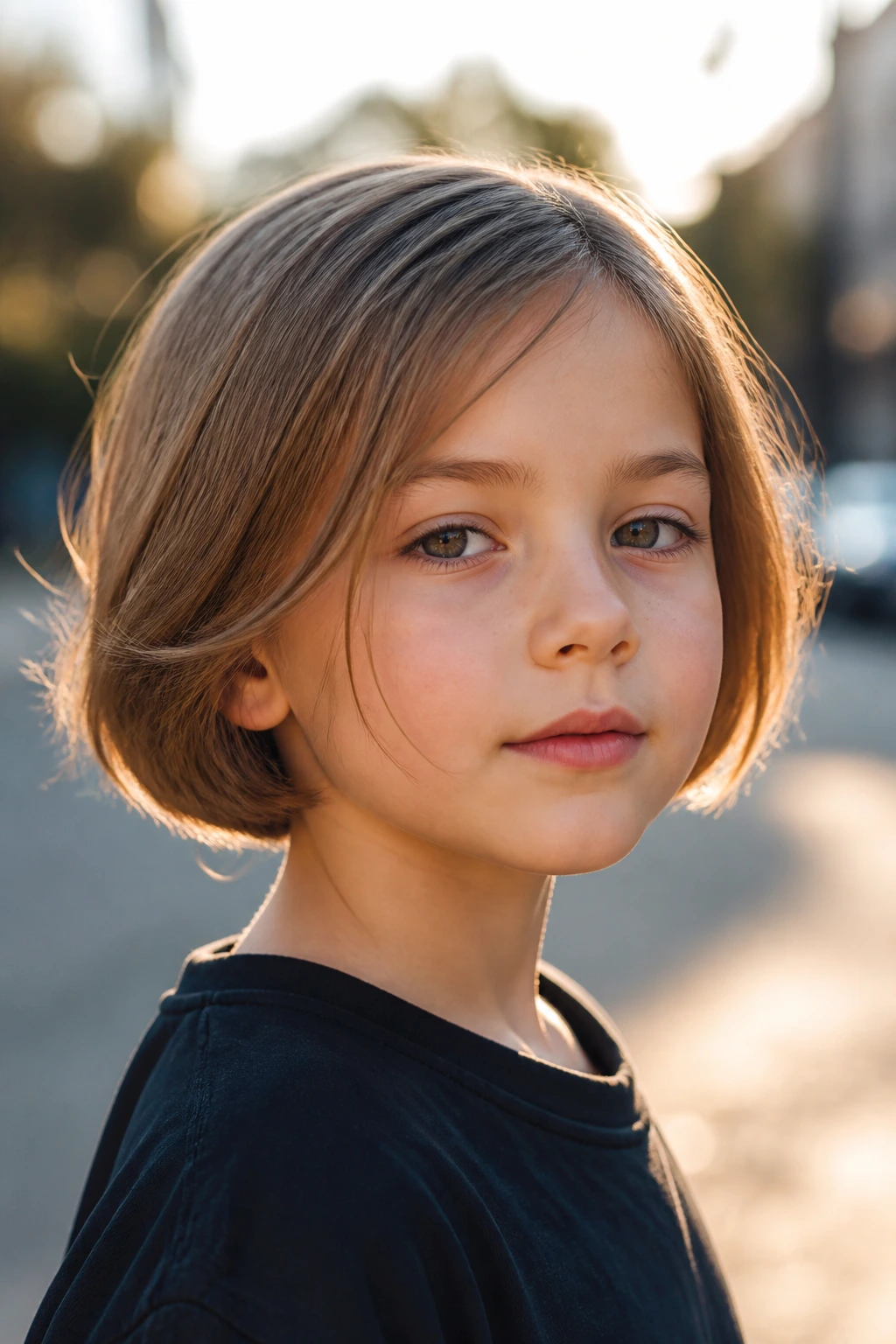
Ear-length bobs are short, crisp, and a little bold. They clear the neck almost entirely and sit high enough to show the jawline. On straight hair, the shape looks graphic. On wavy hair, it comes out softer and more playful.
This cut suits kids who dislike anything brushing the collar. It dries fast, tangles less, and tends to stay cleaner at the ends because it’s not dragging against sweatshirts or backpacks. The downside is that it grows out quickly visually, so trims matter more here than with a longer bob.
17. Fine-Hair Bob
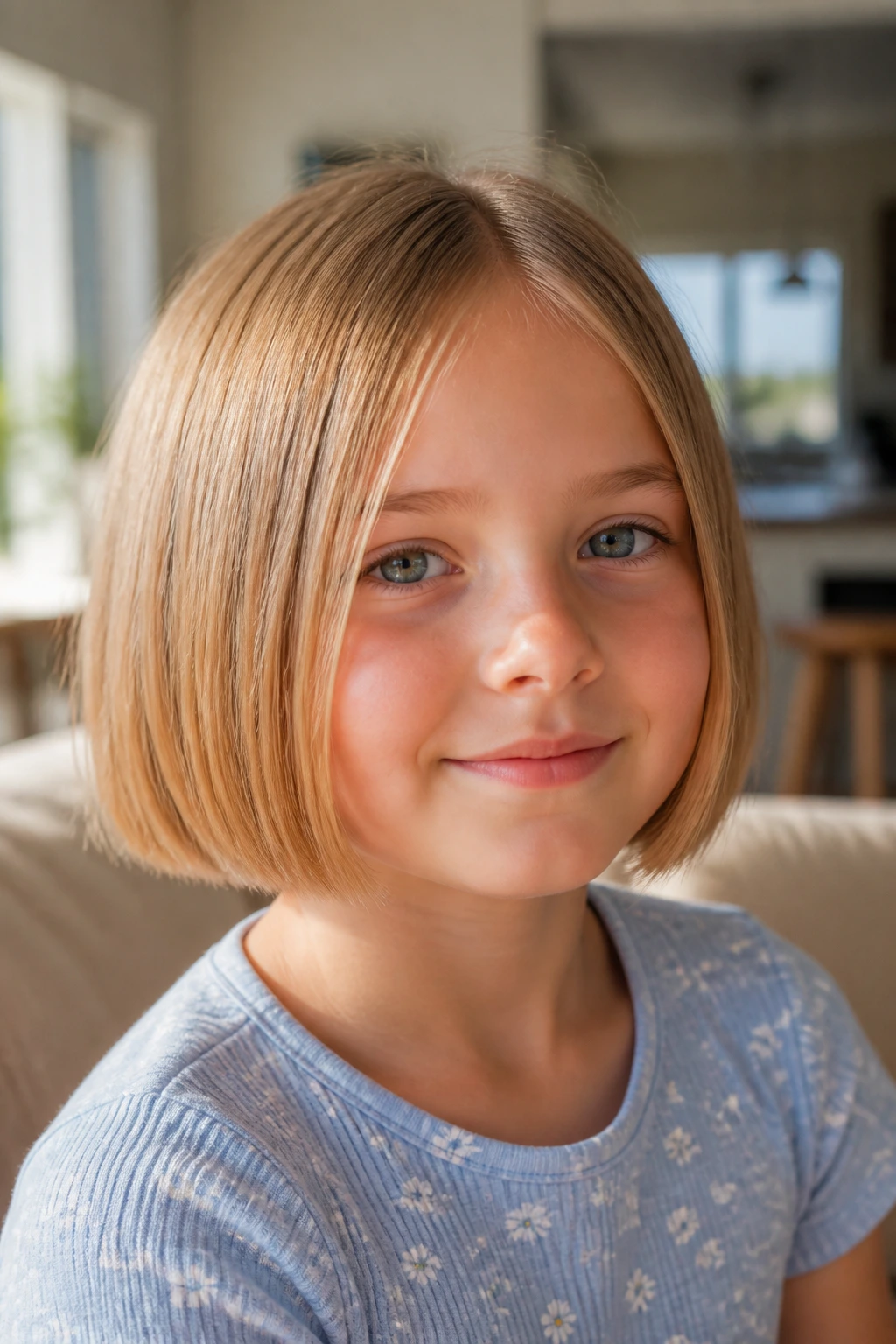
Fine hair needs a bob with some backbone. A good fine-hair bob keeps the ends blunt or nearly blunt so the perimeter looks full instead of see-through. Too many layers here can make the hair look thin at the bottom, which is exactly what you don’t want.
I usually prefer a one-length or lightly graduated shape for fine hair. A root-lifting spray at the crown and a quick blow-dry with a round brush can add enough body to keep the shape from collapsing by lunchtime. The cut should do most of the work; the styling should only nudge it.
18. Thick-Hair Bob
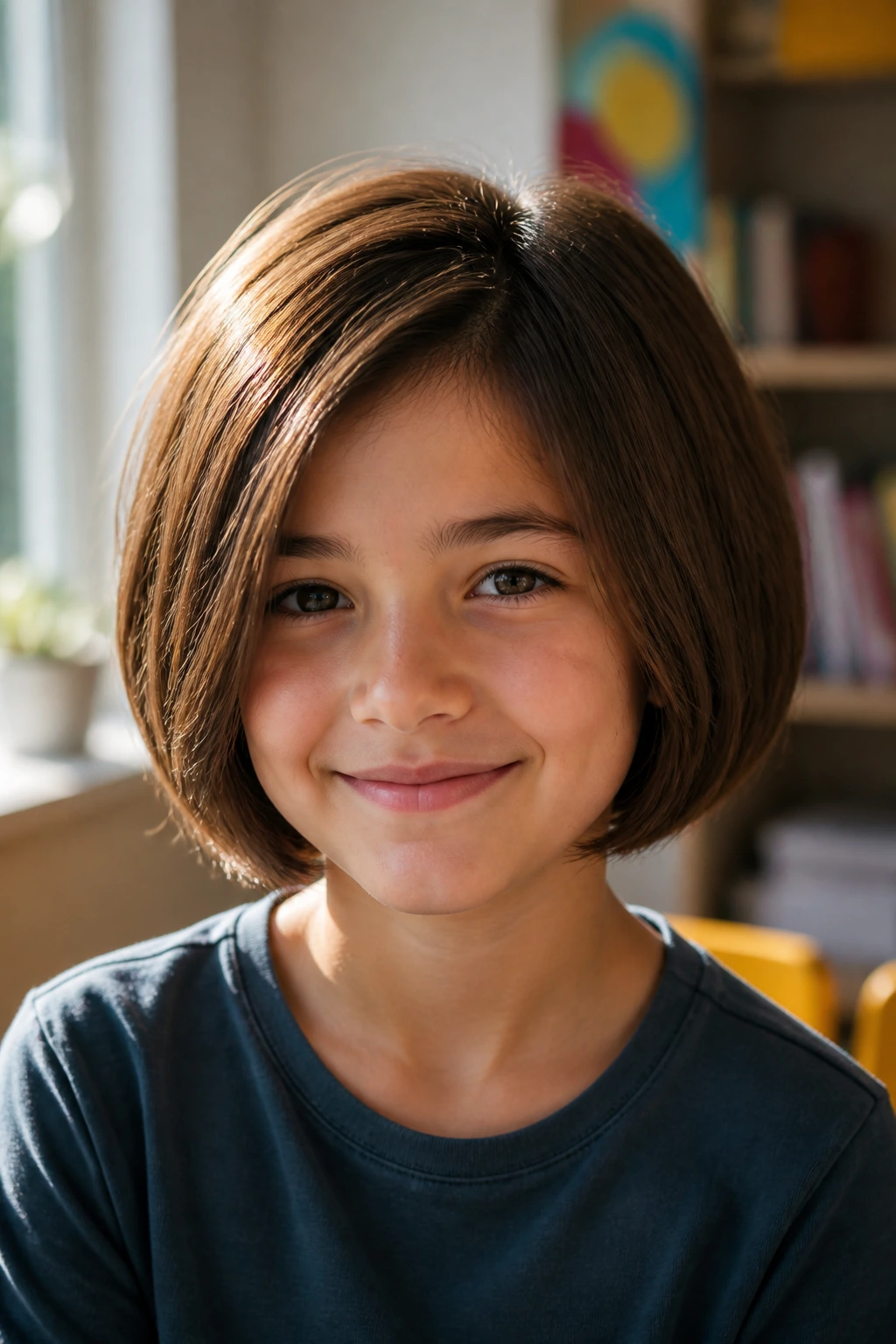
Thick hair is happiest when the bob removes some weight without wrecking the line. If the bulk sits at the bottom, the haircut can look square in a way that feels heavy on a small face. A little internal layering or point-cutting can solve that without turning the style choppy.
The main trick is balance. Short enough to feel lighter, long enough to keep the outline controlled. Thick hair can make a bob look rich and full, which is lovely, but only if the edges are handled cleanly. Otherwise the haircut starts wearing the child instead of the other way around.
19. Natural Curls Bob
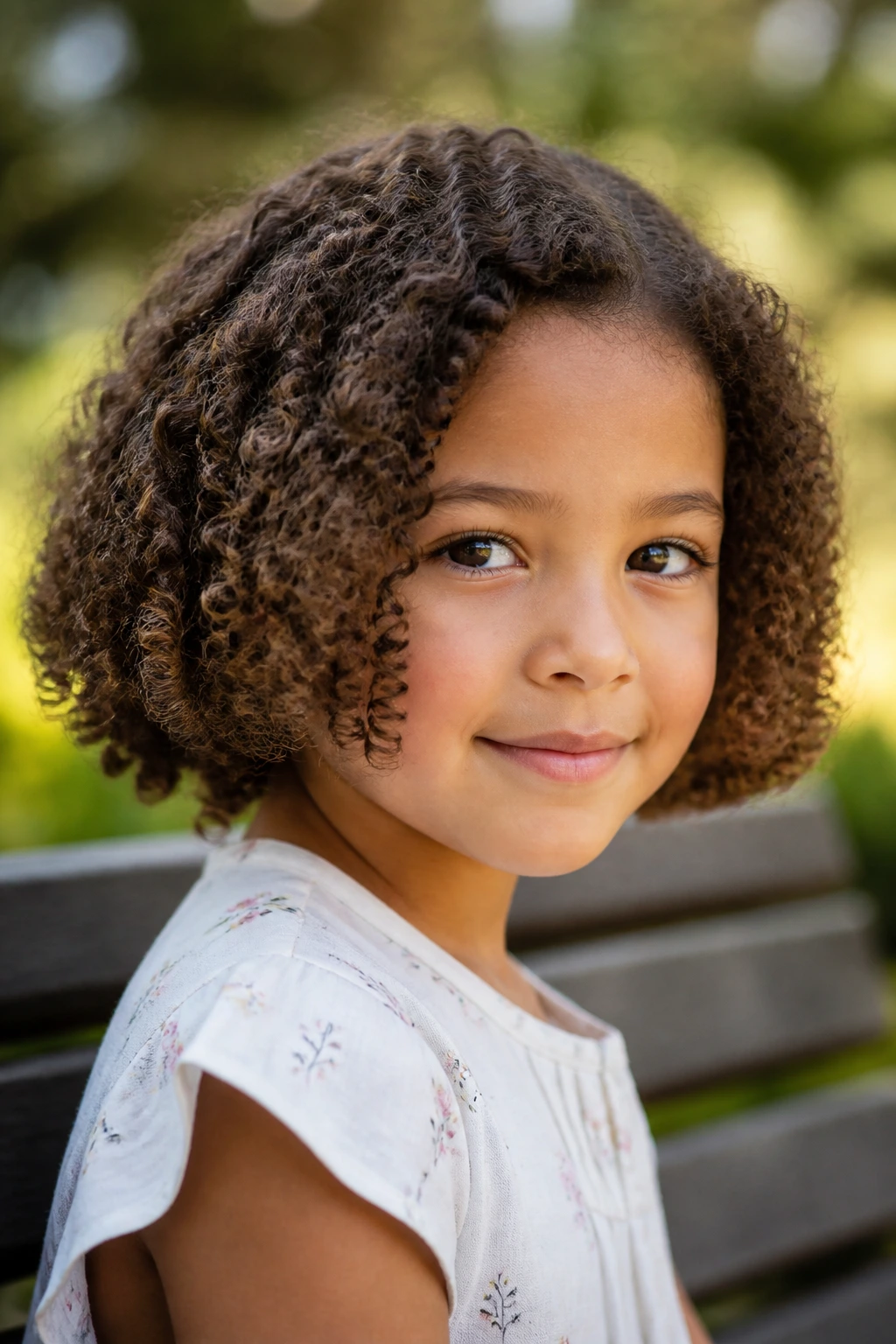
A natural curls bob is a different animal from the straight-hair version. The length has to account for shrinkage, the shape has to match the curl pattern, and the cut should be made with the curl’s own behavior in mind. If the curls are springy, the bob may end up several inches shorter once dry.
That doesn’t mean you avoid it. It means you respect it. A good curls bob gives the child a defined shape that springs around the cheeks or jaw instead of expanding outward into a triangle. Moisture matters here. So does not overbrushing once the curls are set.
20. Wispy Bang Bob
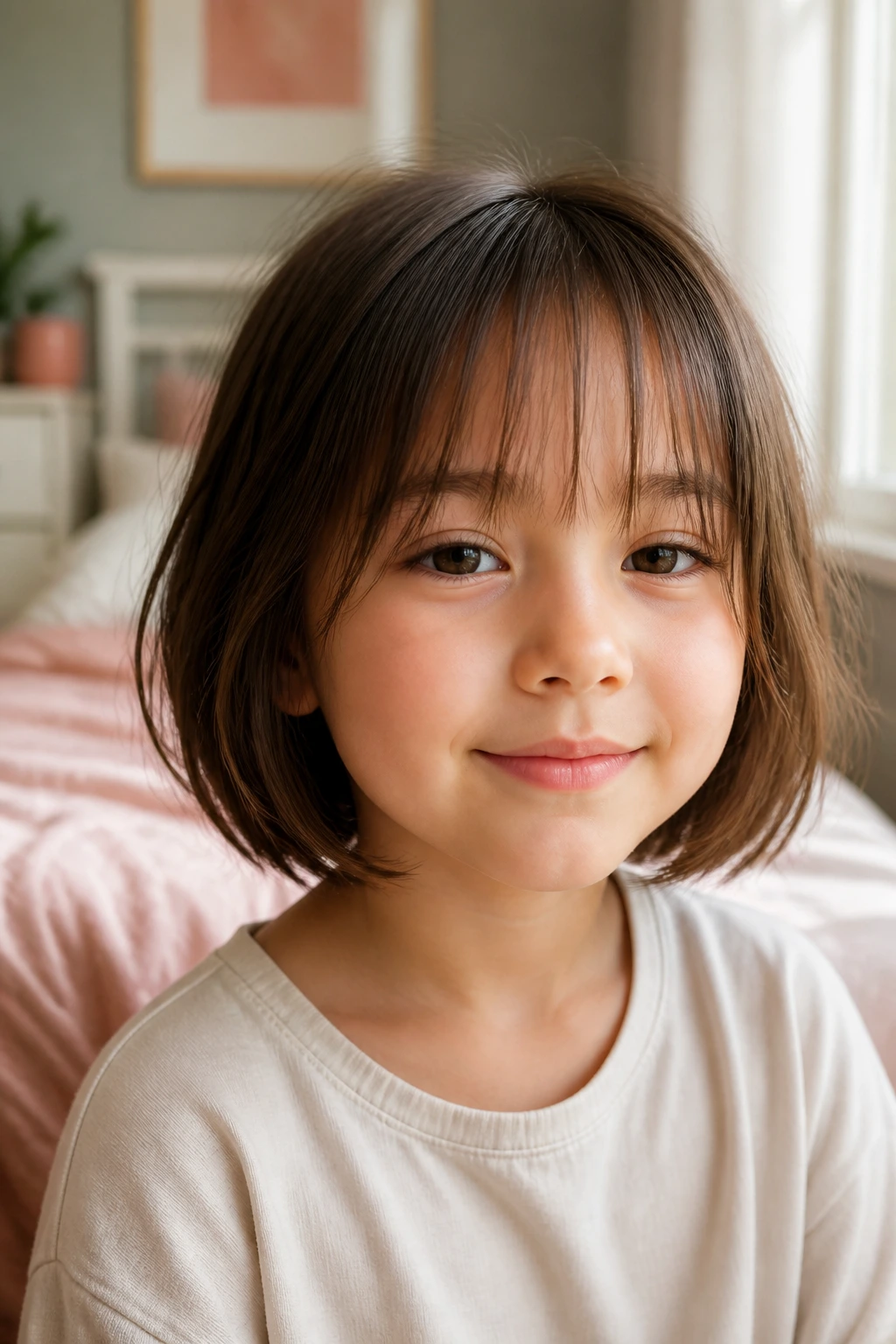
Wispy bangs are softer, lighter, and less demanding than blunt fringe. They skim the forehead in pieces instead of making a hard line, which gives the whole bob a sweeter, more relaxed feel. If a child wants bangs but not the feeling of “my forehead is covered,” this is the middle ground.
This cut works well when the hair around the face is fine or medium in density. The bangs blend easily, and if they grow a little, they still look intentional. I like this one for kids who change their minds often, because the fringe can be clipped aside on the days they’re over it.
21. Middle-Part Bob
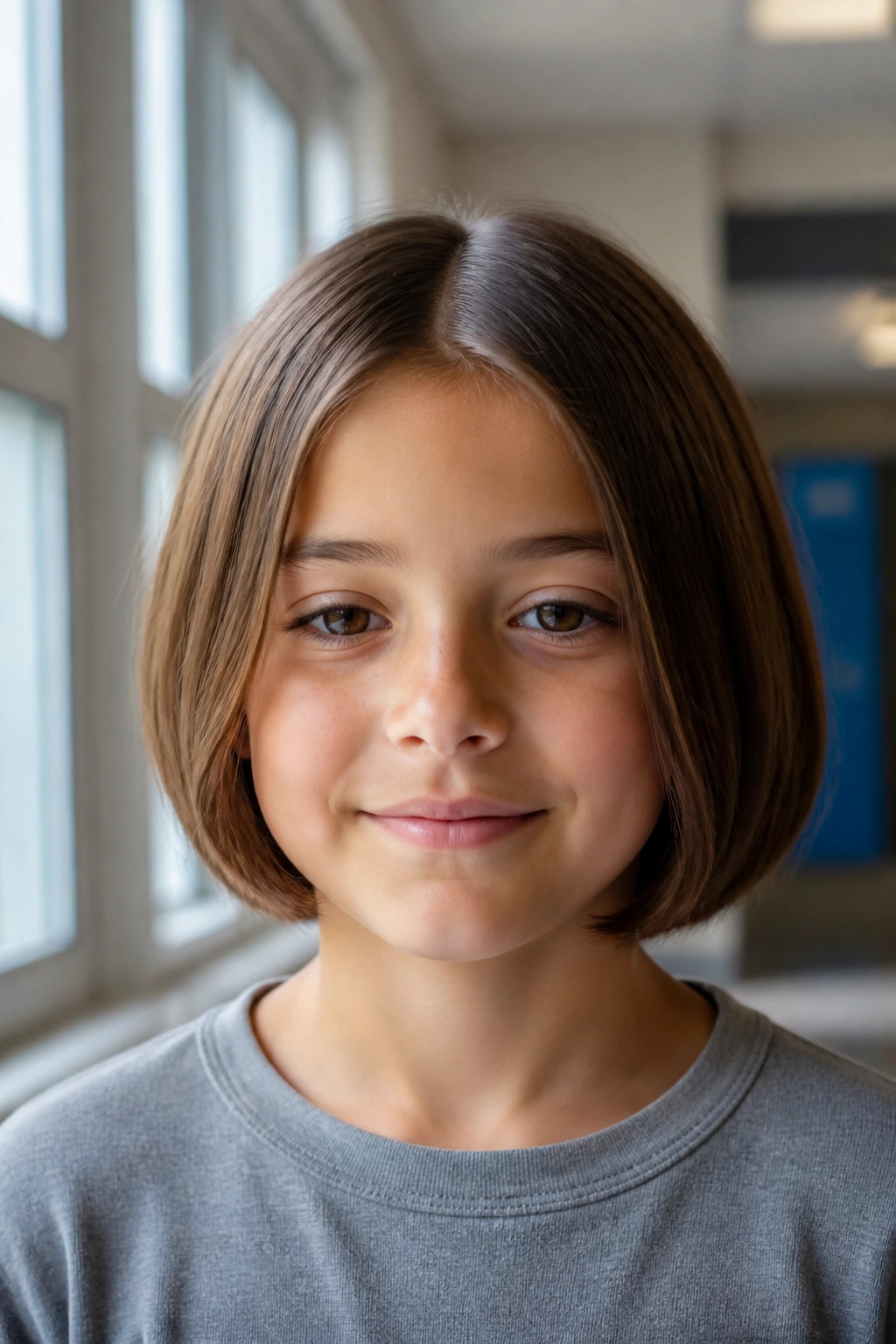
A middle-part bob has a clean, balanced look that can make the face seem longer and the haircut feel more modern. It tends to work best when the hair falls evenly on both sides, which is why straight and softly wavy textures wear it so easily.
The middle part also helps keep the haircut symmetrical, which is useful if one side tends to kick out more than the other. On kids with a strong center cowlick, though, you may need to work with the natural growth pattern instead of fighting it. A forced part on a stubborn crown is a losing battle.
22. Side-Part Bob
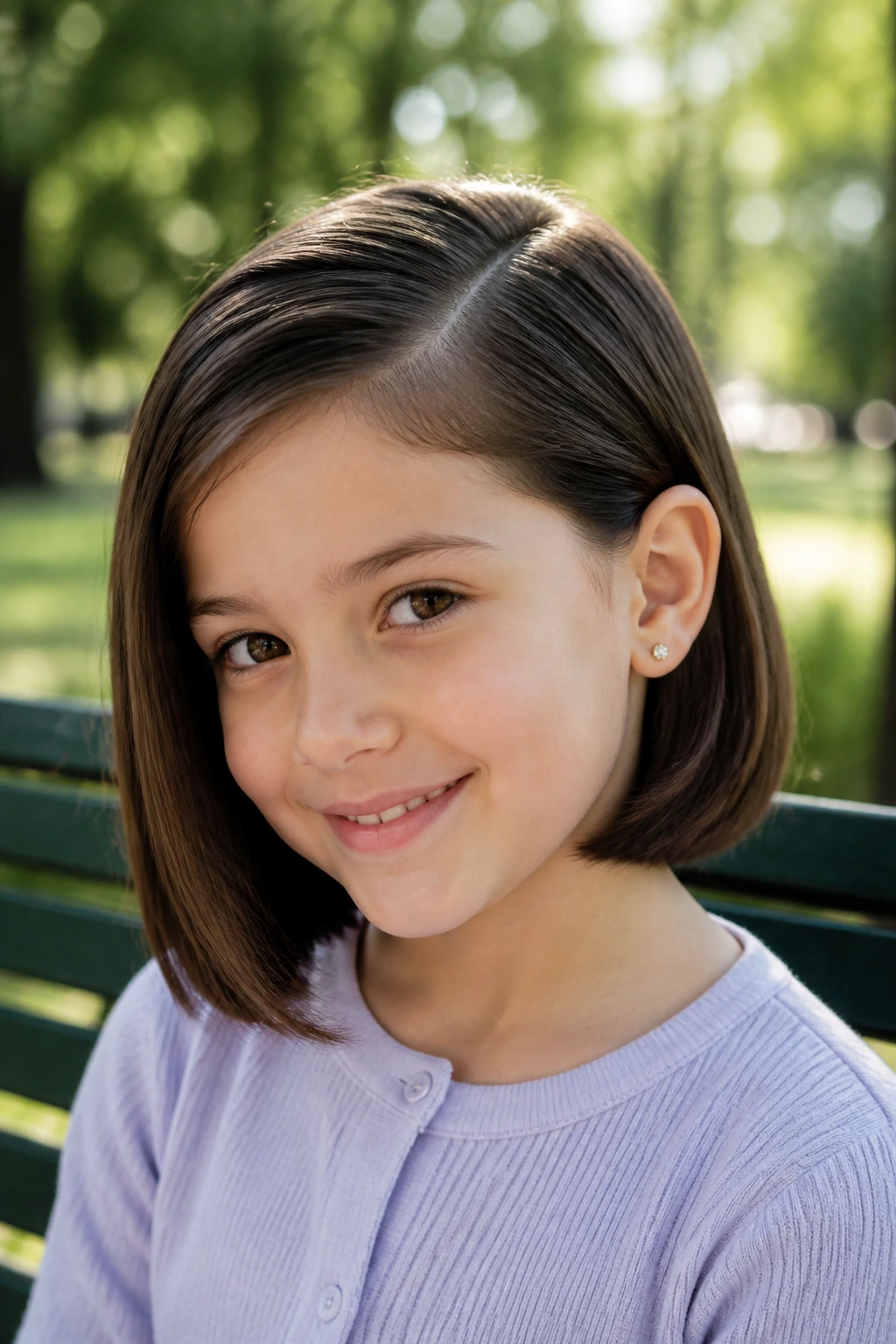
A side-part bob is the easygoing cousin of the center part. It softens the face, gives a little lift at the roots, and can make a bob feel more casual or more dressed up depending on how sharply the part is drawn.
Kids with a natural side swirl often wear this better than a center part because the hair settles where it wants to go. That means less morning arguing with a comb. A deeper side part can even add a bit of drama on picture day, which is a useful trick if the haircut itself is quite simple.
23. Clip-Friendly Bob
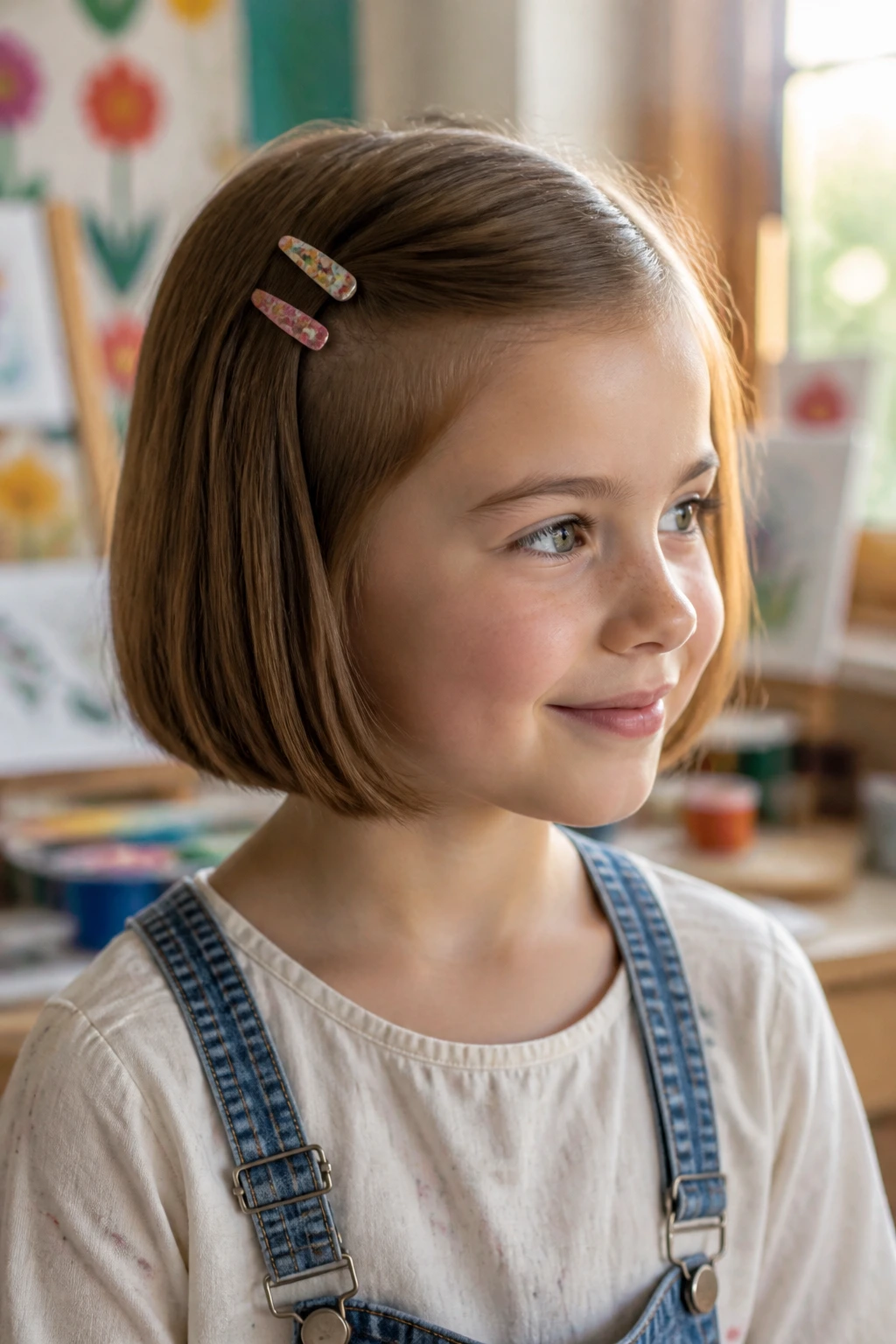
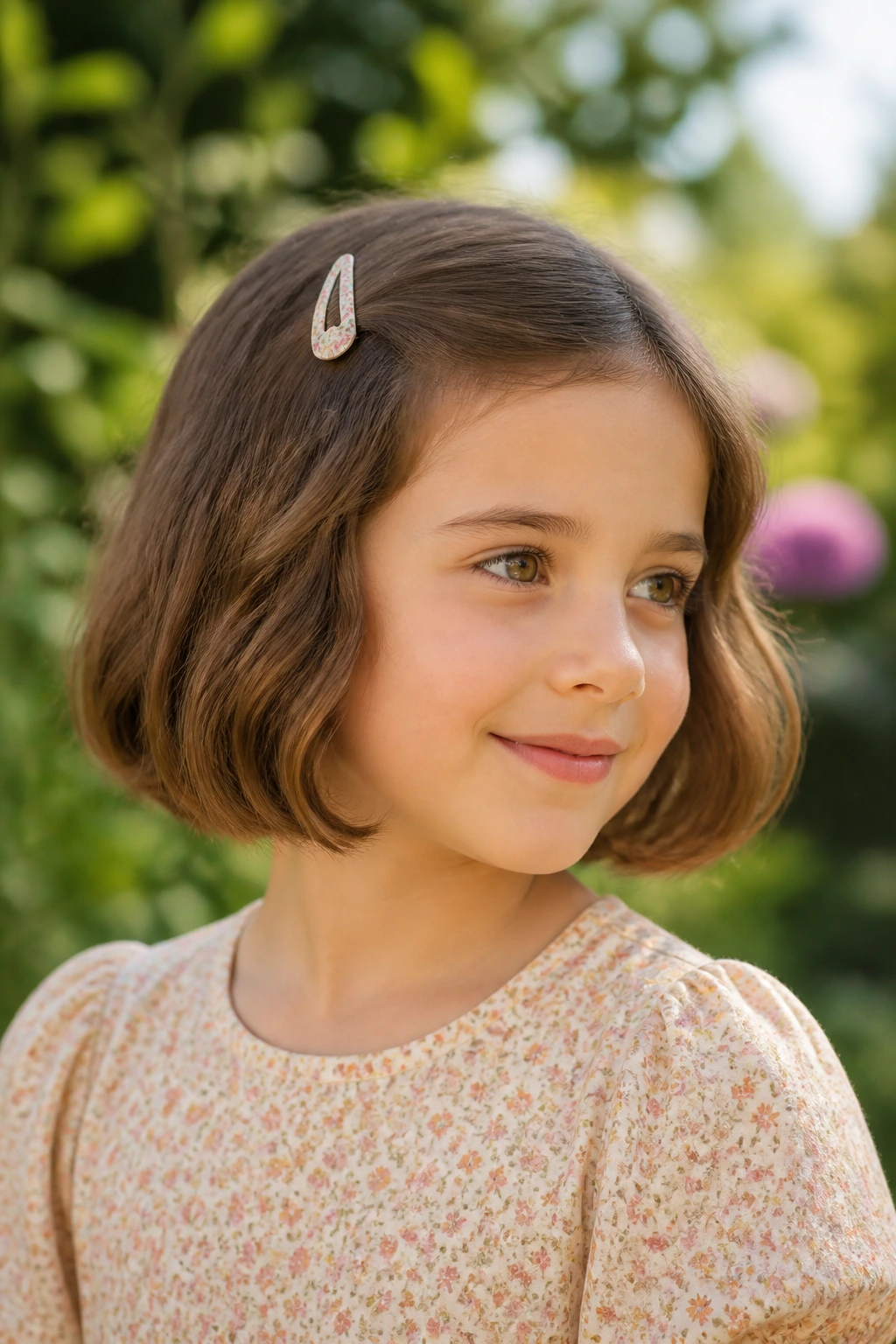
Some haircuts fight accessories. This one welcomes them. A clip-friendly bob leaves enough length at the sides and front to pin back one or both sides without breaking the shape. That matters for kids who need their hair out of the face during art class, reading, or sports.
I like this style because it gives you options on bad-hair mornings. A plain bob can still look neat, but one that works with barrettes, snap clips, and tiny side clasps earns its keep. If the child likes choosing accessories, this cut becomes more than a haircut. It becomes a little styling playground.
24. Sporty No-Fuss Bob
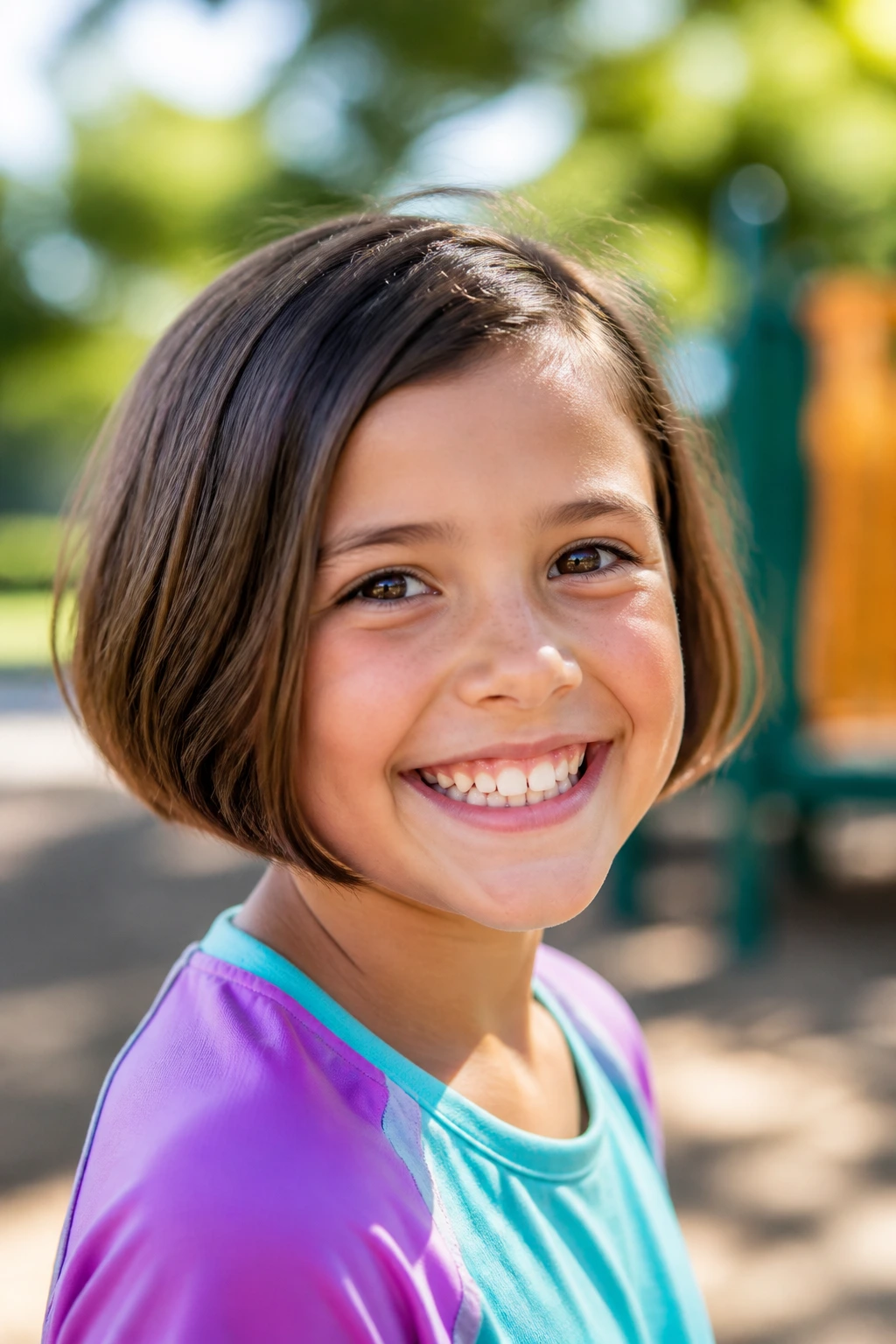
The sporty bob is about staying out of the way. It sits short enough to avoid constant fussing, yet long enough to keep the outline soft around the face. This is the haircut for kids who run, climb, tumble, and forget they have hair until it lands in their mouth.
A small amount of leave-in spray and a quick finger-comb are often enough. I’d keep the layers light and the edges clean so the haircut doesn’t need a lot of styling to look finished. It’s practical, and that’s not a boring thing. It’s a useful thing.
25. Grow-Out Bob
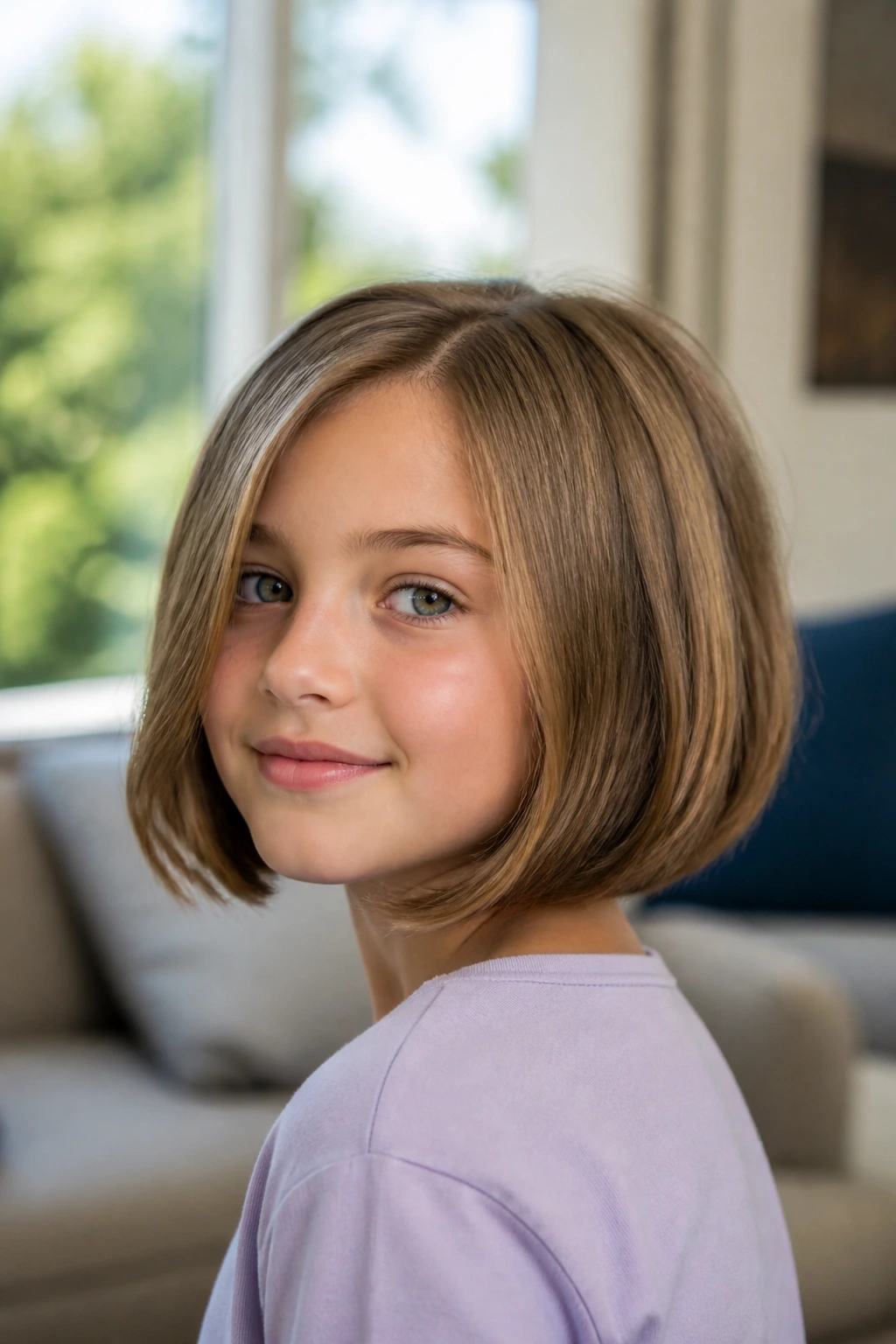
The grow-out bob is the peace treaty between “cut it short” and “I want it longer.” It starts as a bob and is shaped with growth in mind, so the haircut can stretch out for weeks without turning into a fuzzy middle phase. That’s harder than it sounds.
The front is usually left a little longer, and the internal shape avoids harsh shelves that expose every inch of new growth. If you know your child gets tired of frequent salon visits, this is one of the smartest ways to keep things tidy without a strict trim schedule.
26. Bubble Bob
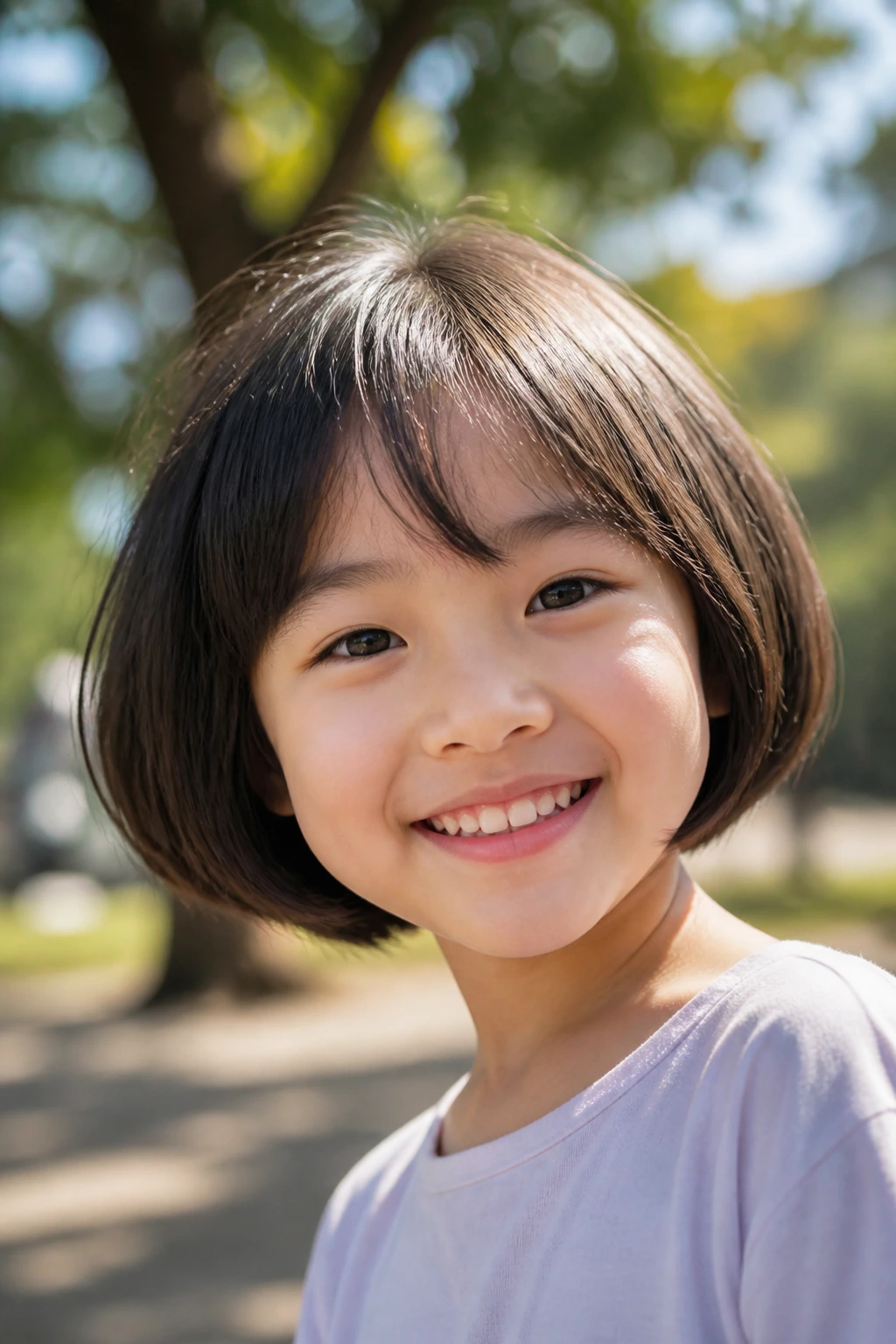
The bubble bob has a rounded outline and a little more fullness through the sides. It feels youthful and slightly playful, which is why it tends to look charming on kids who wear big smiles and not much else. The shape is soft, but not shapeless.
This cut works best when the ends are curved under or naturally settle into a round line. It can be especially nice for hair that needs a touch more body around the jaw. If the hair is too layered, the bubble effect disappears. Keep the shape whole, and let the curve do its job.
27. Tapered Nape Bob
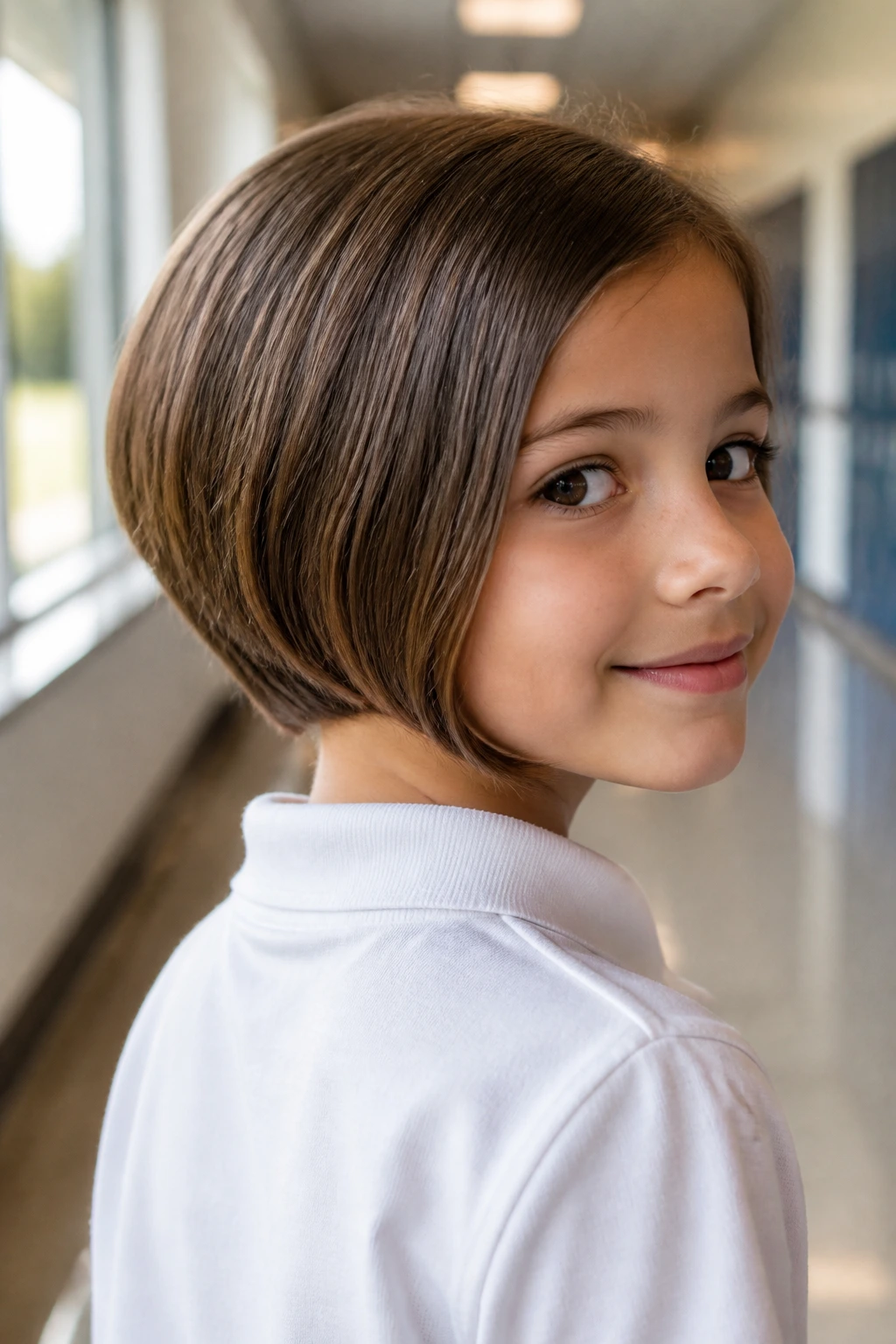
A tapered nape bob cleans up the back of the neck beautifully. The hair gradually narrows at the nape, which keeps the cut neat under sweaters, collars, and hoodies. Parents tend to love this one for the same reason stylists do: it holds shape well between trims.
It’s a strong choice for thick hair or hair that puffs at the back after drying. The taper removes that heavy shelf you sometimes see in children’s bobs. If the front is left slightly longer, the cut still feels soft around the face, so it doesn’t end up severe.
28. Face-Framing Bob
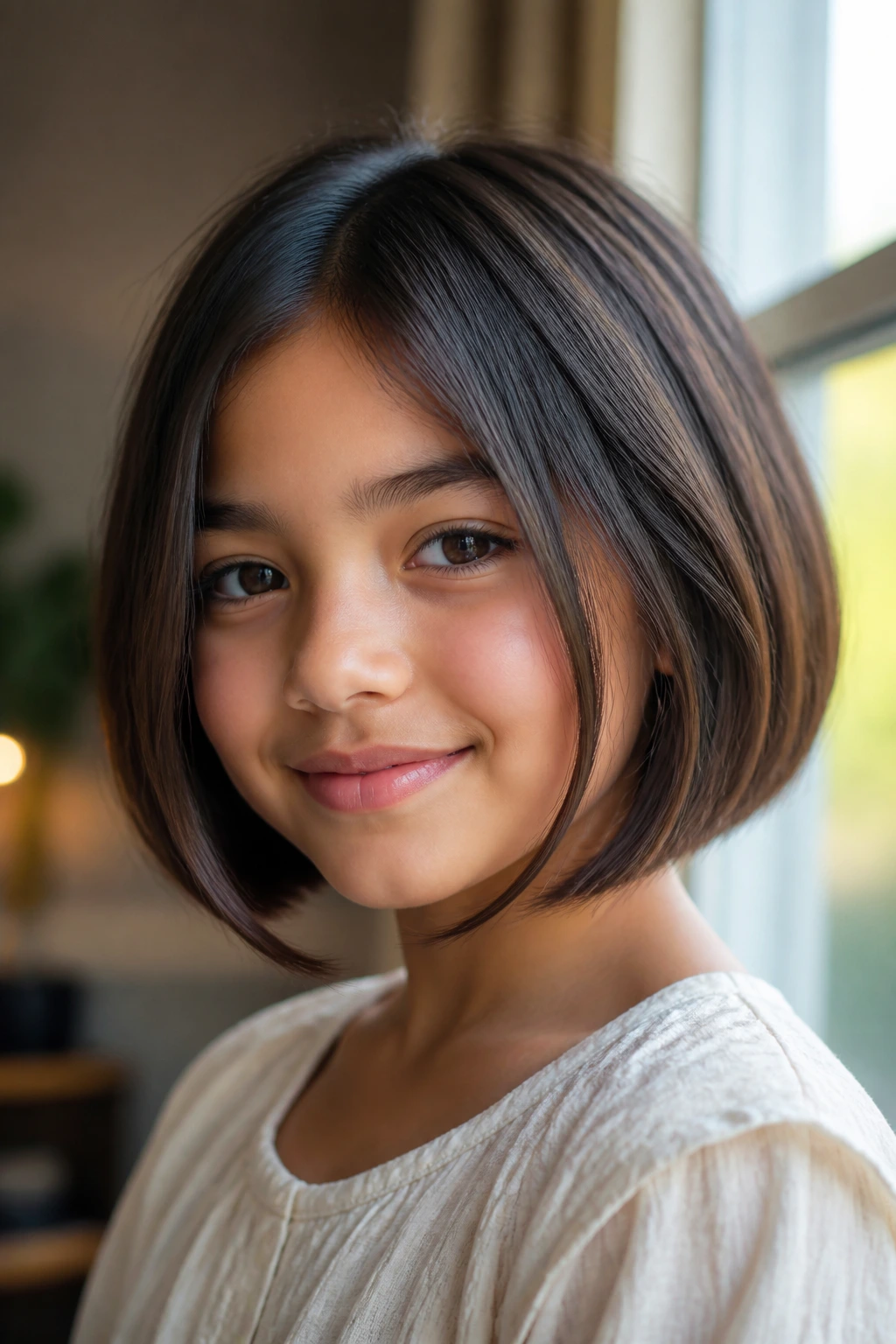
A face-framing bob has a few longer pieces in front that soften the jaw and cheek line. The rest of the haircut may be blunt or lightly layered, but those front pieces are the part that gives the style its easy, flattering shape.
This is the bob I’d recommend when a child wants hair that “moves” a little. The front pieces can tuck, swing, or sit forward depending on the day. It’s also useful when a child has stronger features and you want the haircut to soften them instead of sitting hard against the face.
29. Flip-End Bob
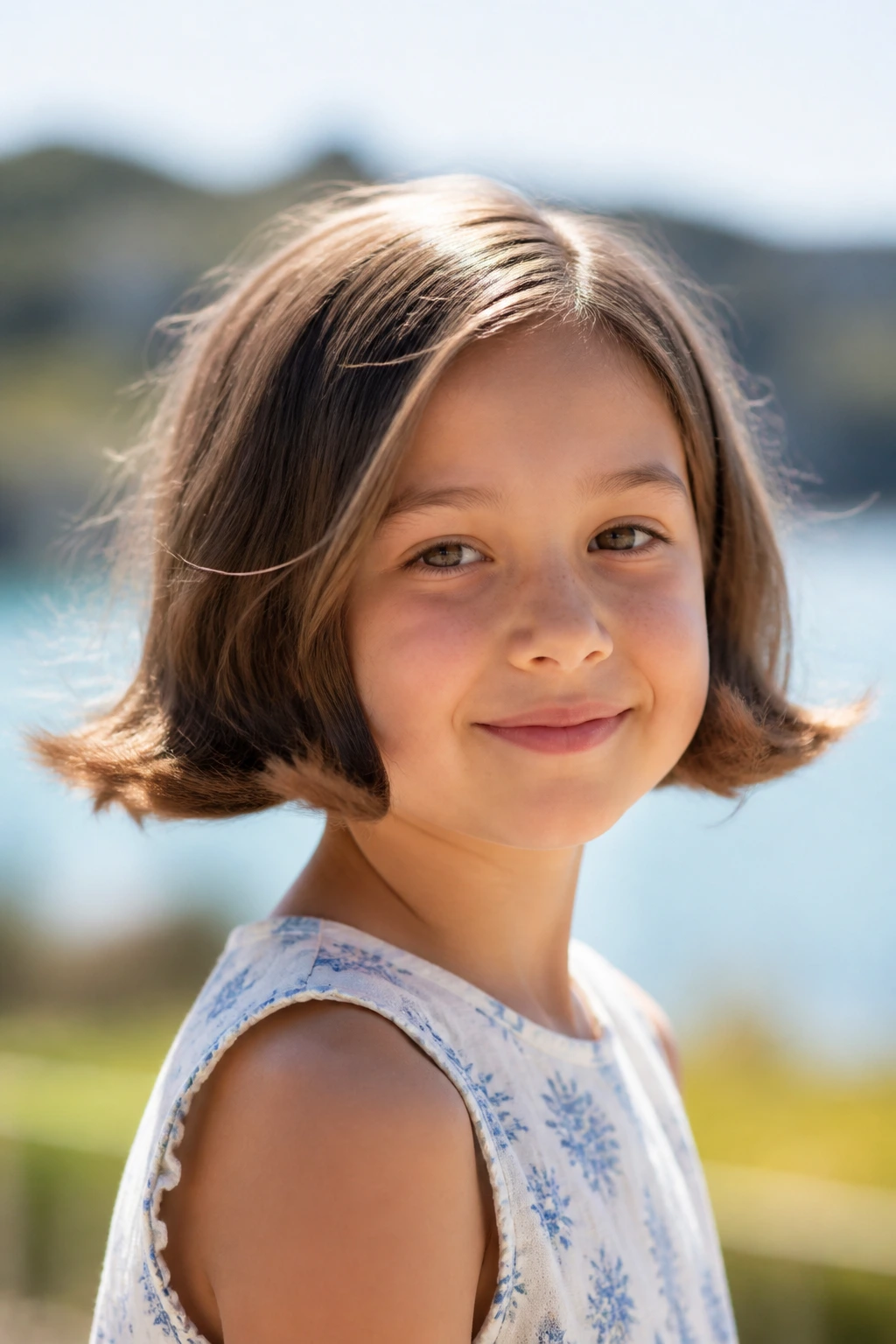
Flip ends add a little bounce at the bottom of the cut. The hair can turn outward with a blow-dryer or flick naturally if it has a slight bend. On kids, that tiny bit of movement makes a bob feel lively instead of strict.
The cut should not be so layered that the flip looks uneven. You want the ends to catch shape, not fray. A round brush and a quick pass of warm air are usually enough to coax the ends into place. No drama. No twenty-minute styling battle.
30. Air-Dried Messy Bob
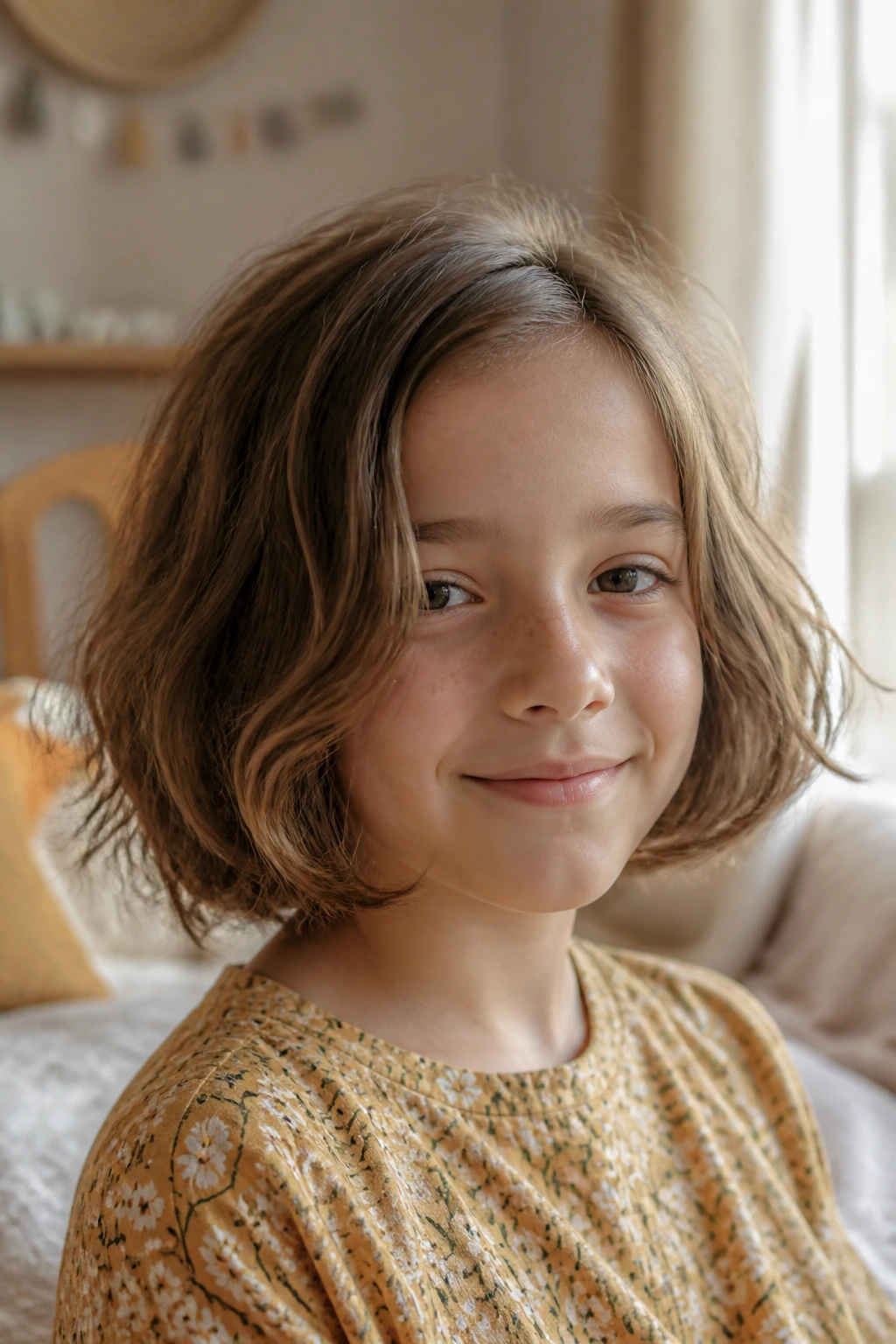
Some bobs are meant to be blown smooth. This one isn’t. The air-dried messy bob works with texture, using natural waves, bends, and little bends at the ends to create a relaxed shape that looks easy because it is easy.
A small amount of leave-in conditioner or foam can help keep the surface from puffing out too much. After that, hands off. The child moves, the hair falls where it falls, and the haircut still makes sense. That’s a huge win on busy days.
31. Braided-Accent Bob
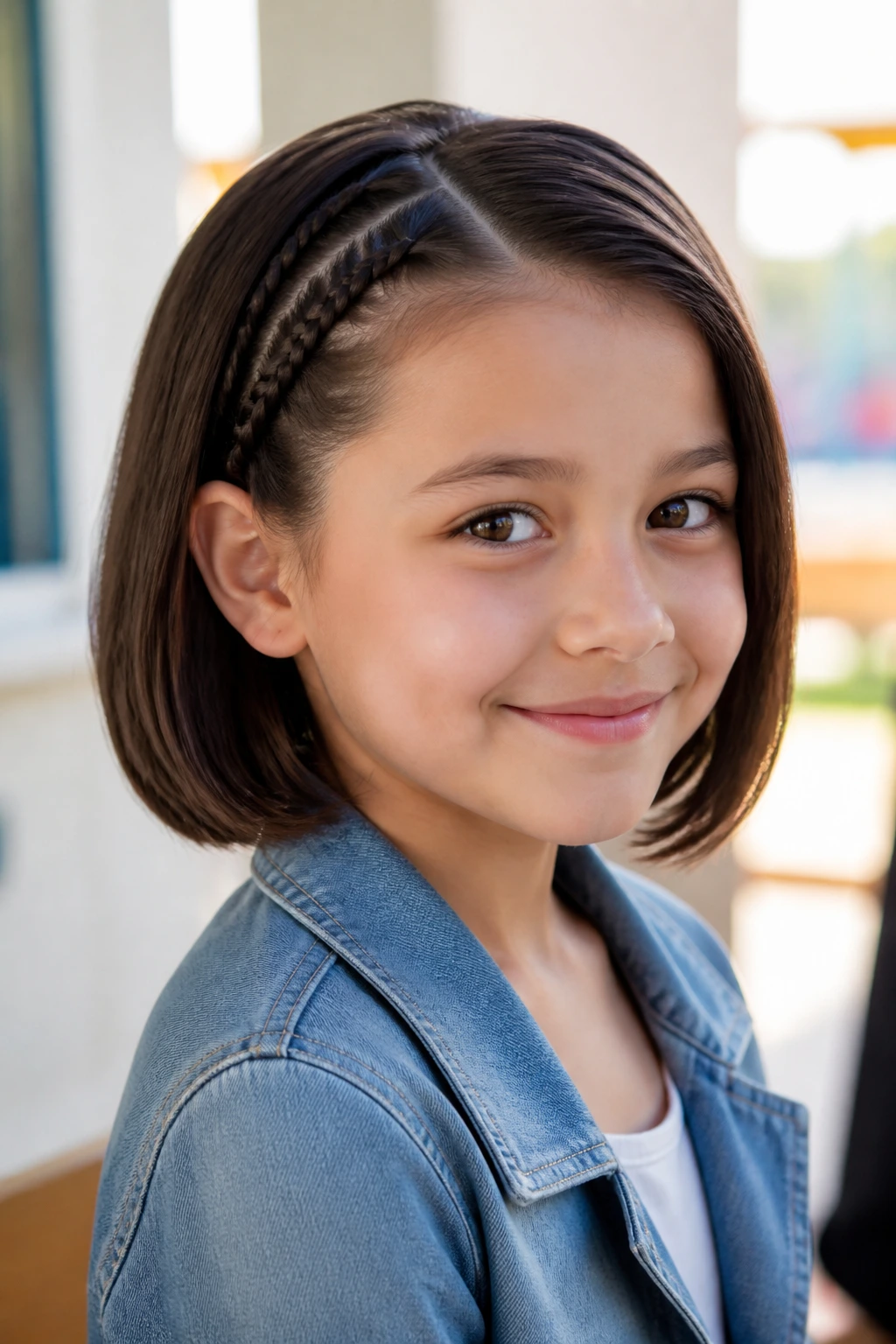
A braided-accent bob gives you styling variety even when the hair is short. Tiny side braids, a half-braid across the front, or a small braid pinned back can turn a plain bob into something more dressed up without needing long lengths.
This works best on bobs that leave a little room around the temple and front sections. You do not need much length to get the effect. Even a narrow braid can change the look enough for a concert, holiday outfit, or school event. It’s a nice reminder that short hair can still play.
32. Ribbon Bob
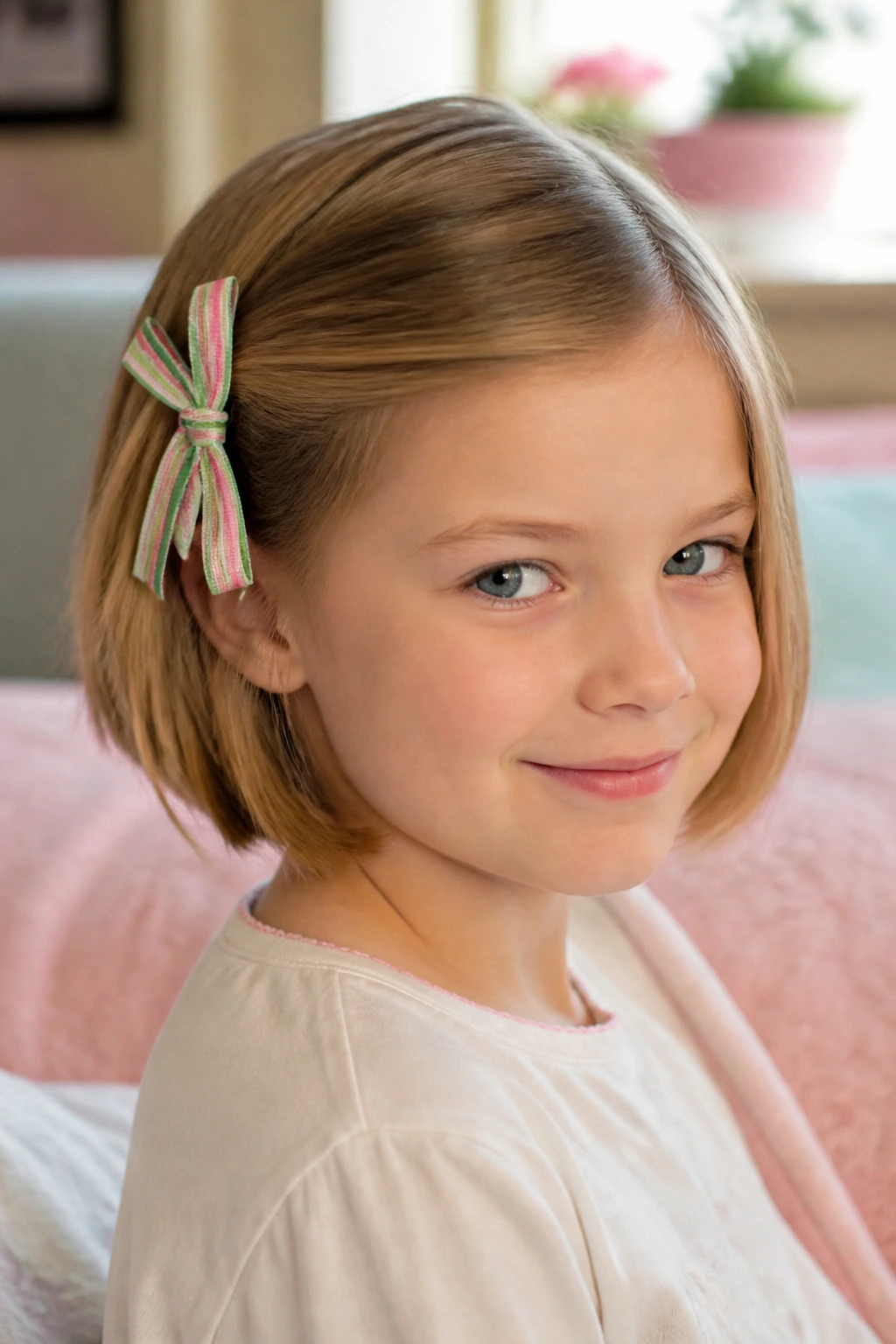
A ribbon bob is simple, sweet, and very child-friendly. The cut itself can be any bob shape, but the styling gets its personality from a ribbon, bow, or soft tie that sits at the side, behind the ear, or near a half-up twist. It’s a small detail, but it changes everything.
This is a good pick for kids who like accessories more than hair products. The ribbon adds color and polish without heat, spray, or fuss. I’d choose a slightly longer bob here so there’s enough hair to anchor the accessory without it slipping by lunchtime.
33. Photo-Day Bob
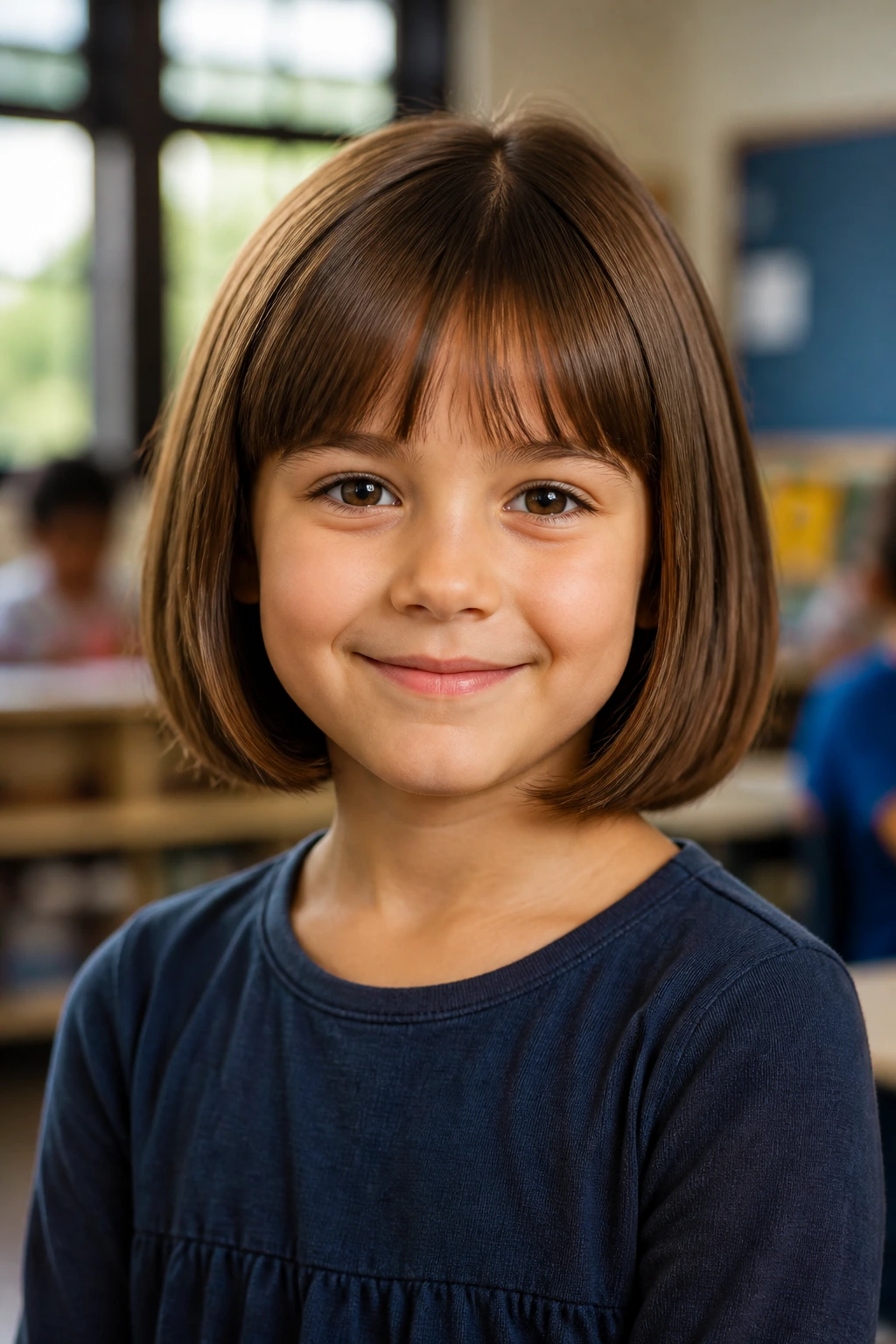
This is the bob that behaves under bright lights. It’s neat, balanced, and cut with enough structure that it holds up when a child is sitting still, smiling awkwardly, and trying not to blink. In other words, school-photo logic.
The photo-day bob is usually a classic shape with clean edges, a controlled fringe if there is one, and enough length to tuck one side if needed. It looks best when the hair is freshly brushed and the crown is not overly flattened. Nothing fussy. Just tidy, even, and ready for a close-up.
What Makes Bob Haircuts Work So Well on Kids’ Hair

Bob haircuts earn their keep because they reduce drag without stripping away shape. That sounds small, but it changes the whole day. Hair that sits around the jaw instead of brushing the shoulders tends to tangle less, takes less time to dry, and doesn’t get trapped quite as often in zippers, backpack straps, and the sticky corner of a lunchbox napkin.
There’s also a visual reason they work. Kids’ faces are small and expressive, and a bob frames that expression instead of hiding it. A sharp line at the chin gives straight hair a neat finish. A rounded bob softens fuller cheeks. A layered version can keep thick hair from swallowing the face. You’re not just cutting hair shorter. You’re changing how the hair sits around the child’s features.
The best part is that a bob can be adjusted without a dramatic commitment. If a child likes their hair tucked behind the ears, leave a little room at the front. If they hate feeling hair on the neck, raise the back slightly. If curls shrink, cut with that in mind. A good bob is less about copying a photo and more about reading the hair that’s actually on the head.
One thing I’d push back on: do not pick a bob just because it looks tidy in a picture. Pictures don’t show cowlicks, school hats, sweaty playgrounds, or a child who yanks clips out after five minutes. The bob that wins is the one that fits the hair’s behavior in daily life.
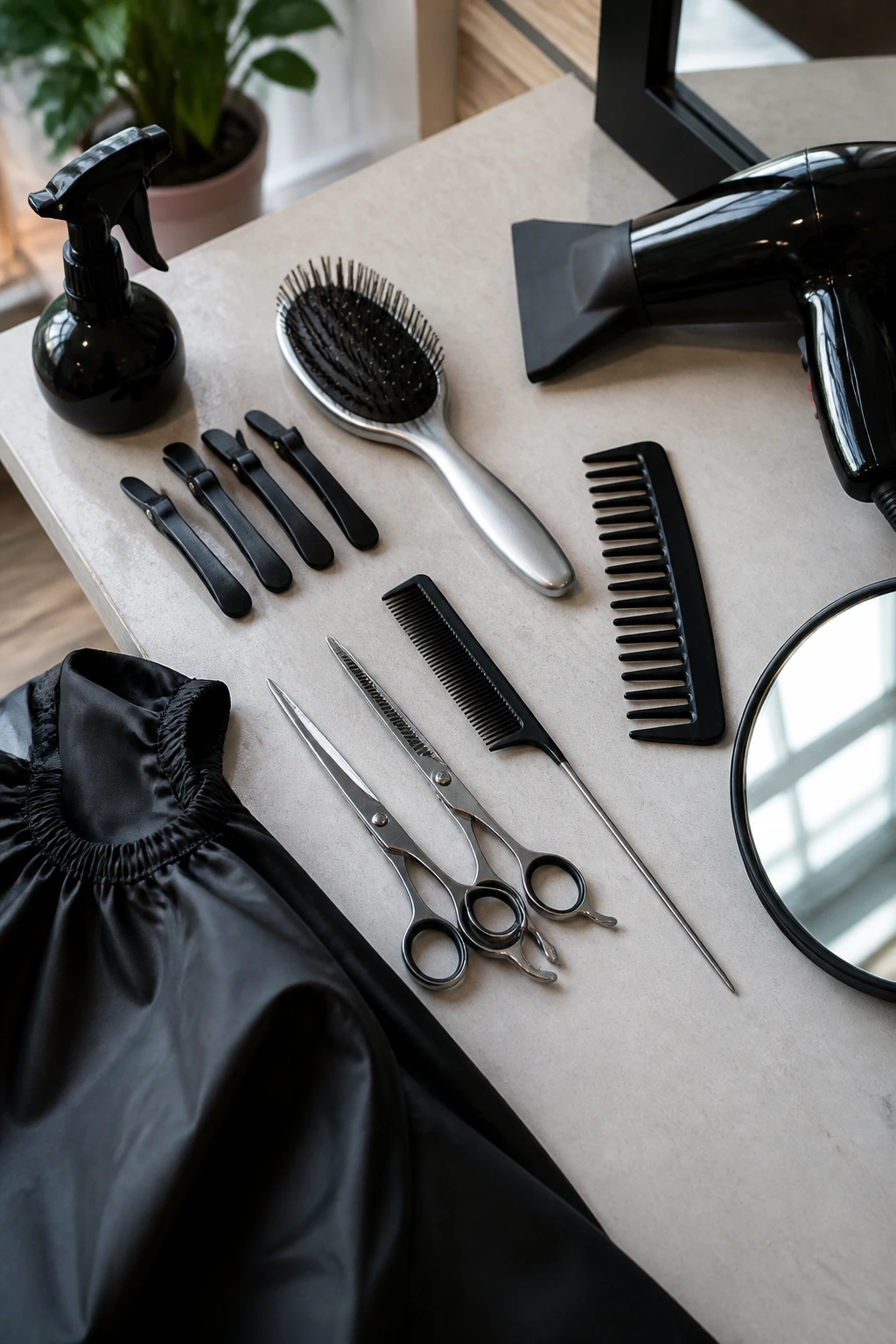
Essential Tools for Kid-Friendly Bob Cuts
-
Sharp haircutting scissors: Blunt craft scissors chew the ends and leave a ragged line; proper shears make the shape look clean.
-
Rat-tail comb: Useful for sectioning, smoothing parts, and checking where the hair naturally wants to fall.
-
Detangling brush: A flexible brush with soft bristles helps move through knots without a fight.
-
Water spray bottle: Hair cuts more evenly when it’s damp, especially on straight and slightly wavy textures.
-
Sectioning clips: These keep the top and sides separated so you can see the line you’re cutting.
-
Hair cape or towel: Tiny hair clippings fall everywhere; a cape keeps them off clothes and out of collars.
-
Blow dryer with nozzle: Helpful for smoothing a blunt bob or turning the ends under with a brush.
-
Wide-tooth comb: Better for curls and waves when you don’t want to stretch the pattern too hard.
-
Small mirror: Handy for checking the back and making sure the line at the nape is even.
-
Leave-in conditioner or light detangler: Not a cutting tool, but it makes combing easier and lowers the drama before styling.
Smart Salon and At-Home Cutting Notes from the Chair
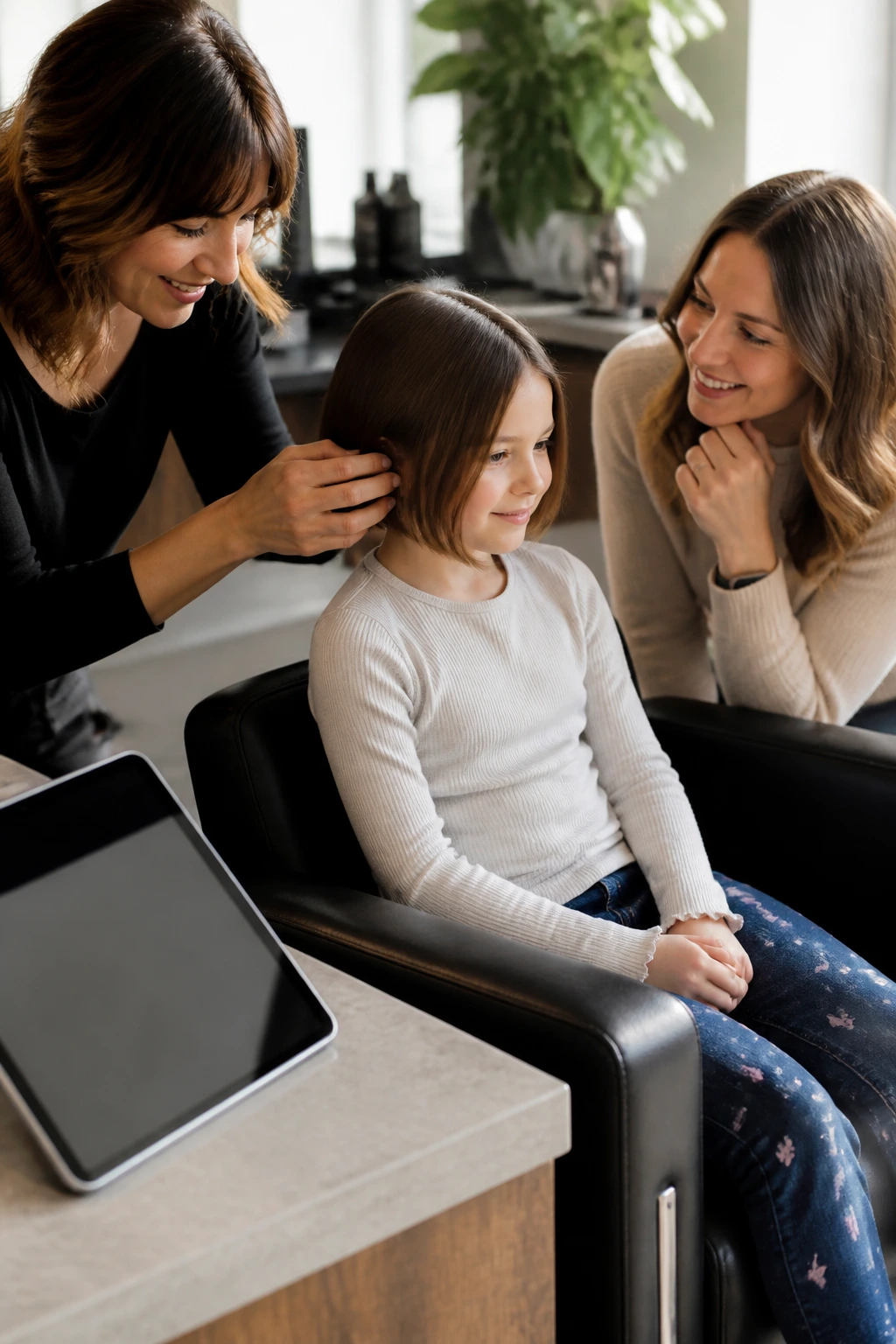
The easiest mistake with a kid’s bob is cutting it too short because wet hair looks longer than it is. That happens all the time. Hair springs up when it dries, and curls can shrink far more than straight hair. If you’re unsure, leave a little extra length the first time and trim again later. Hair can always be shortened. It cannot be stitched back on.
Another useful habit: check the hair dry before you call it finished. The nape, the front pieces, and the area around the ears often land differently once the hair loses moisture. A bob that looks balanced at the sink can suddenly tilt after ten minutes in the air. That dry check is worth the trouble.
Cowlicks deserve respect. A stubborn swirl at the crown or near the front hairline can flip a bob in odd directions if the cut ignores it. Work with the swirl, not against it. Sometimes that means leaving one side a touch longer. Sometimes it means changing the part. Sometimes it means choosing a more textured shape instead of a razor-straight line.
And yes, the child should get a say. Not the final engineering decision—that belongs to the hair—but a say. If they hate bangs brushing the forehead, don’t force fringe. If they keep tucking hair behind the ear, shape the front to support that habit. The most successful kids’ haircuts are the ones the child will actually wear without a daily negotiation.
How to Style a Bob for School, Play, and Special Days
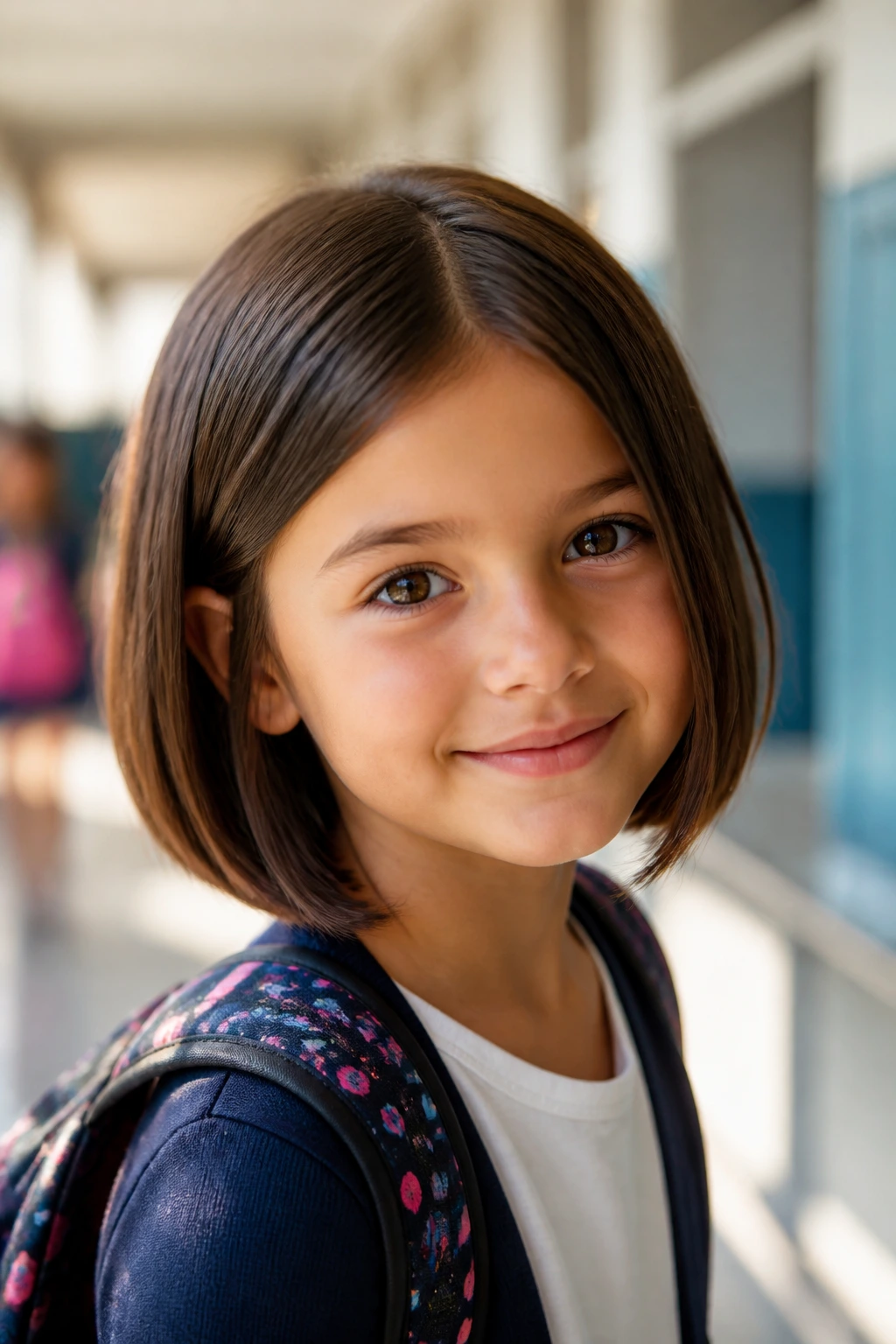
School mornings:
A quick detangle, a center or side part, and a small mist of leave-in spray usually does the trick. For straight hair, a brush and a tiny bit of smoothing cream at the ends are often enough. For waves and curls, scrunch lightly with wet hands and leave some texture alone.
Playtime:
Keep it simple. A clip on one side, a headband, or two tiny braids near the front can clear the face without flattening the haircut. Heavy gels and sticky waxes are overkill for most kids; they attract dirt and make hair feel odd by lunchtime.
Special days:
A bob can look polished with a tucked side, a neat barrette, or a ribbon tied just above the ear. If the haircut has a clean blunt edge, a quick blow-dry with the ends turned in gives the whole style a finished look. If it’s textured, let the texture stay and add the accessory instead.
When the hair won’t cooperate:
Don’t fight the shape for twenty minutes. Pull one side back, change the part, or add a clip and move on. Kids’ hair rarely needs a big rescue; it usually needs a small adjustment.
Additional Tips and Small Personalization Moves
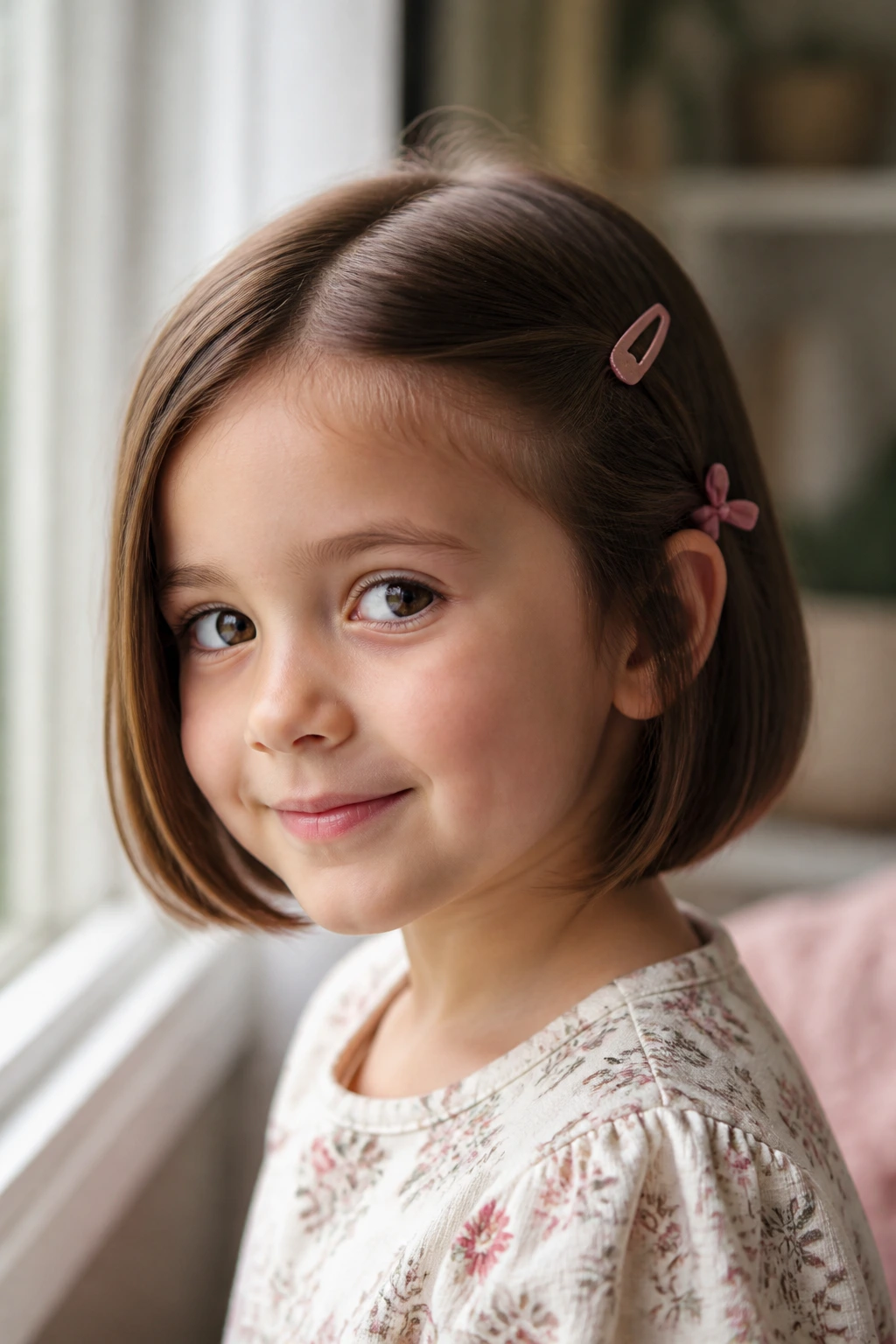
Texture Boost:
A pea-sized amount of mousse at the roots can give a straight bob more lift, while a light curl cream helps curls hold a rounded outline. Go easy. Kids’ hair gets weighed down fast.
Parting Trick:
If the bob keeps falling into the same flat shape, shift the part by half an inch. That tiny move changes volume at the crown and can fix a stubborn bend on one side.
Accessory Swap:
Use a clip with a flat back if the child leans on car seats or nap mats. Bulky barrettes look cute for five minutes and then start poking.
Frizz Fix:
A dab of smoothing cream rubbed between damp palms and pressed only onto the surface can calm fuzz without making the haircut greasy. Skip the roots unless the hair is very dry.
Make-It-Their-Own:
For a child who likes a bolder look, add a sharper line or a strong fringe. For a child who wants something softer, keep the perimeter clean but round the corners around the cheeks and jaw.
Common Mistakes That Make a Bob Harder to Wear
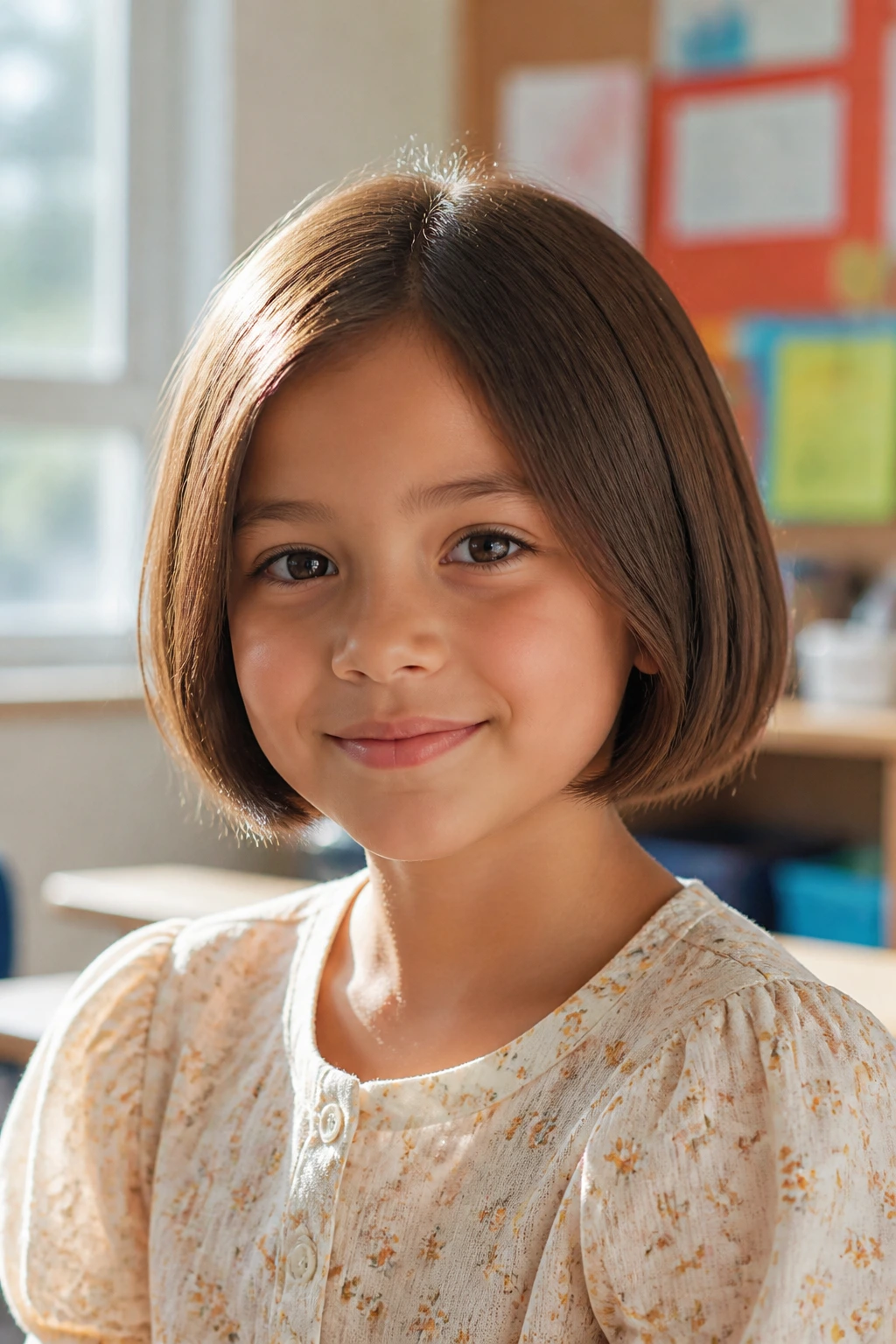
Cutting it too short the first time:
The hair may look longer when it’s wet, but it springs up after drying. If the first cut lands above where you wanted it, the child may end up with weeks of growing-out math. Leave extra length and refine later.
Ignoring shrinkage on curls and waves:
A curl bob that looks jaw-length in the chair can end up at cheekbone height once dry. The fix is simple: cut with the texture dry enough to read its true shape, and leave room for bounce.
Chopping in bangs without a plan:
Bang trims are not a casual afterthought. If the hairline has a strong swirl or the child hates forehead touch, fringe becomes a daily annoyance. Start with longer face-framing pieces if you’re unsure.
Using too many layers on fine hair:
Fine hair can lose its shape fast if the ends are thinned out too much. The bob starts looking stringy instead of full. Keep the outline stronger and let the styling create movement.
Skipping the nape check:
The back of the neck can look neat from the side and uneven from behind. Always check the line in a mirror, especially on short bobs, because that’s where the shape either feels finished or looks homemade.
Variations and Adaptations to Try
The Wash-and-Go Bob
This version keeps layers soft and the line simple, so the hair can dry with minimal help. It’s a good fit for families who want fewer styling steps and don’t care whether every strand sits perfectly flat.
The Curls-First Bob
Designed for textured hair, this adaptation uses curl pattern and shrinkage as the starting point. It usually looks better than a straightened cut because the shape lands where the curls actually live.
The Clip-Ready Bob
Leave enough length at the front and sides for barrettes, snap clips, and tiny braids. This one is practical for kids who need options during school or activities.
The Grow-Out Bob
Keep the front slightly longer and avoid harsh shelves in the layers. That way the haircut can stretch for weeks without turning into a lopsided mess.
The Photo-Day Bob
A cleaner perimeter, a controlled part, and soft face-framing pieces make this version look neat for school portraits, recitals, and family events. It’s a tidy haircut with a little polish.
Keeping the Shape Between Trims
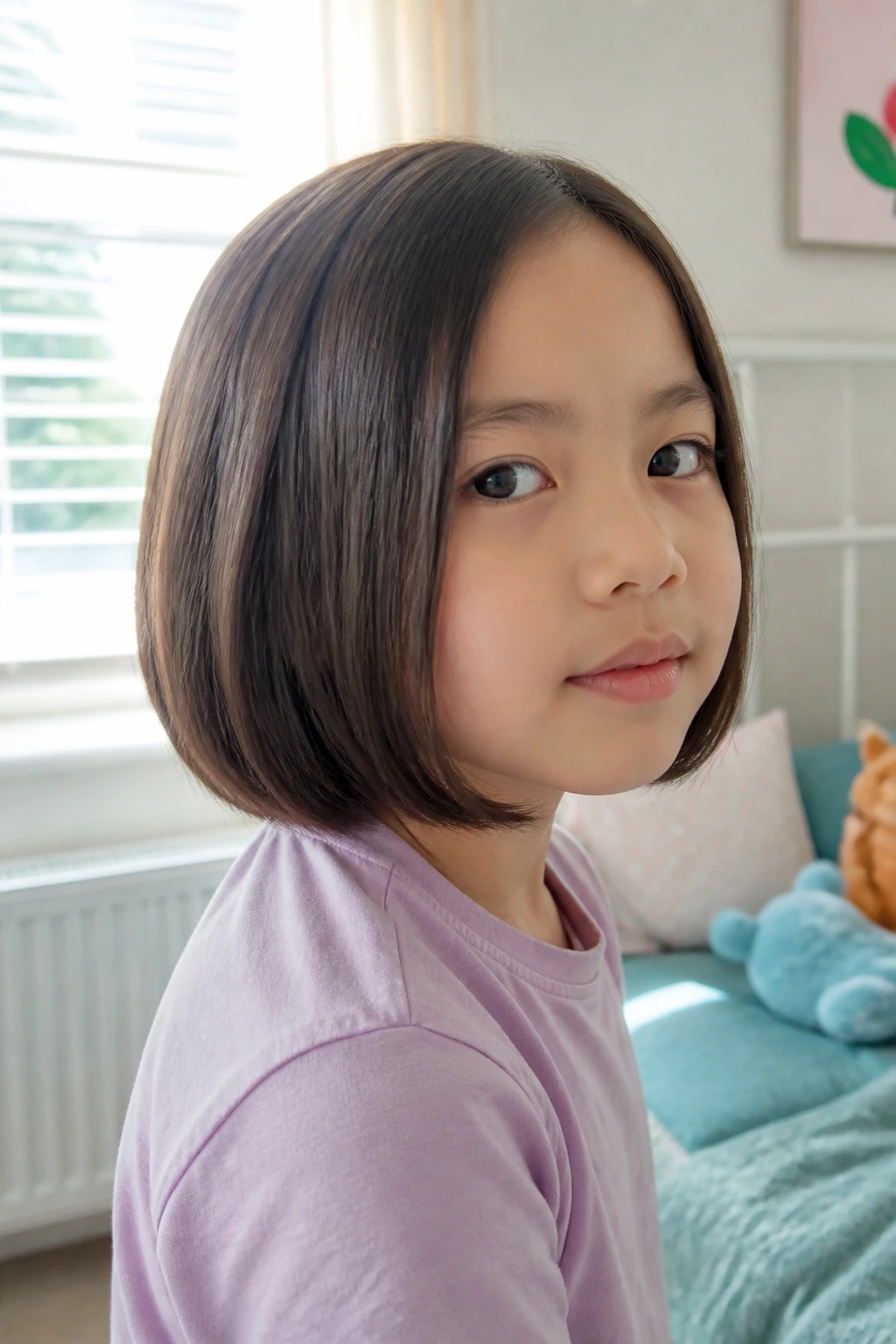
A bob looks sharp when the ends stay even, so trim timing matters. Most kids do well with a trim every 6 to 8 weeks, though short ear-length bobs may need a touch-up sooner if the line starts to blur. Longer lobs can stretch a bit more, especially if the haircut was shaped with growth in mind.
Wash days should match the hair’s actual needs, not some rigid schedule. Fine or straight hair may need more frequent washing if the roots get oily. Curly and coily hair often do better with less shampoo and more leave-in moisture. If the hair feels rough at the ends, a tiny amount of conditioner or detangler is usually enough to smooth it back down.
At bedtime, a loose braid, a soft scrunchie, or even a silk pillowcase can keep the bob from tangling overnight. That matters more than people think. A haircut that starts the morning already snarled becomes a patience test before school has even begun.
If the child swims, sweats, or wears helmets, rinse the hair afterward when you can. Chlorine, salt, and dried sweat can rough up the ends and make the bob look older than it is. A quick rinse and a little conditioner often fix more than a fancy product does.
Questions Parents Usually Ask About Kids’ Bobs
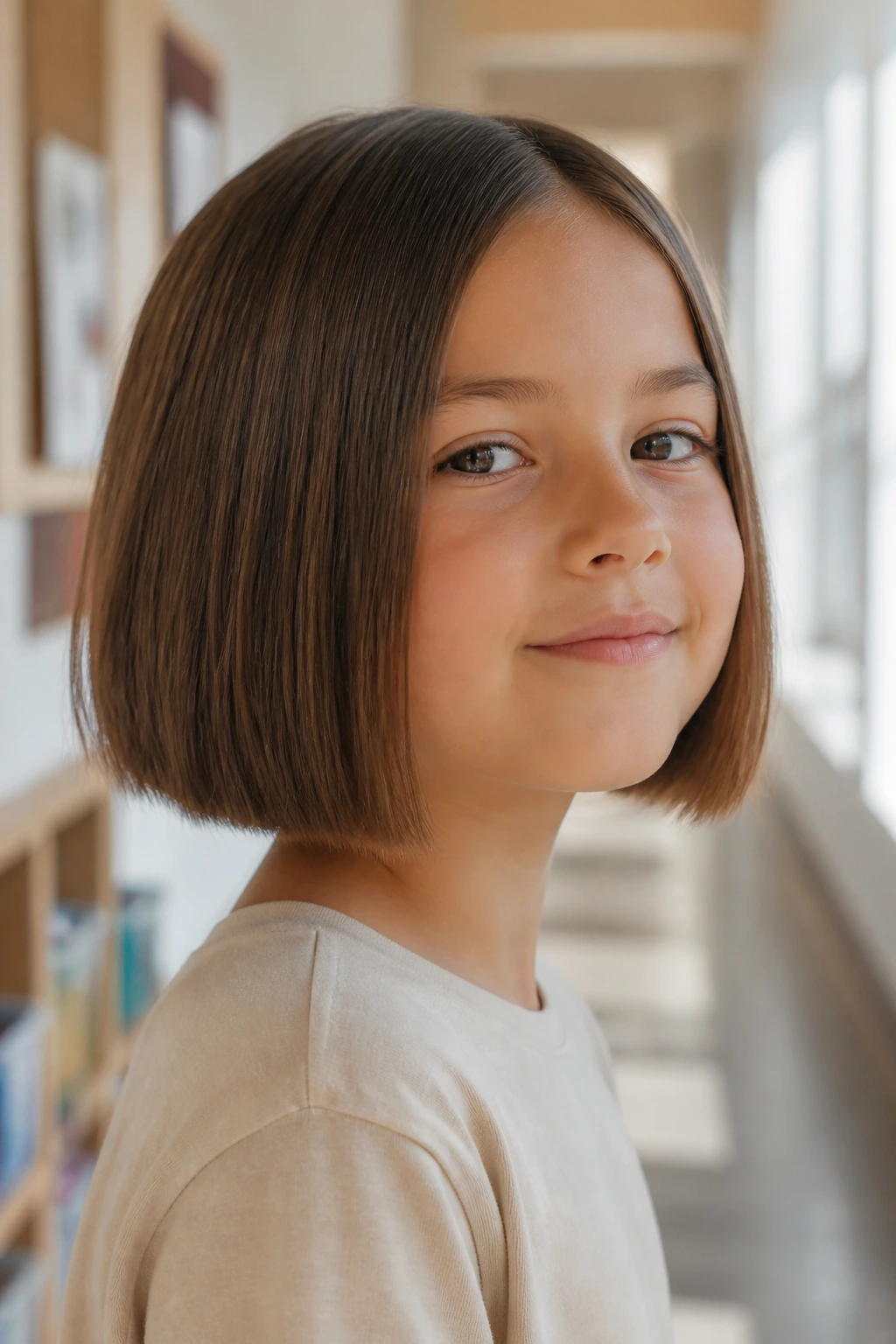
What bob length is easiest for busy mornings?
A chin-length bob or a shoulder-grazing lob is usually easiest. Both keep enough shape to look neat without demanding much styling, and they’re forgiving if the hair is slept on.
Are bobs good for curly hair?
Yes, but the cut has to respect curl shrinkage. A dry or curl-aware cut keeps the bob from ending up too short and helps the silhouette stay round instead of puffing outward.
How often should a kid with a bob get a trim?
Most need a trim every 6 to 8 weeks. Shorter shapes and blunt lines need more frequent cleanup, while longer bobs can often wait a little longer before the line starts to slip.
Can a bob work if my child has a stubborn cowlick?
It can, but the part and length may need to be adjusted. A strong cowlick usually behaves better with a slightly softer, less severe shape than a razor-straight cut.
Do bangs make a bob harder to manage?
They can, especially if the hairline grows fast or the child hates hair on the forehead. Side-swept or curtain bangs are easier to live with than a short blunt fringe.
What if my child wants to grow out a bob later?
Choose a grow-out shape now. Leave the front a little longer and avoid heavy stacking in the back, and the haircut will move into a lob much more gracefully.
Is a bob okay for sports and active play?
Absolutely. A bob often works better than longer hair because it tangles less and takes less effort to tuck behind the ears or clip back.
Can I cut a bob at home?
You can trim edges and maintain a shape at home if you have proper scissors and a steady setup, but a full bob is harder to balance than it looks. If precision matters to you, a stylist is the safer call.
A Cut That Holds Its Shape
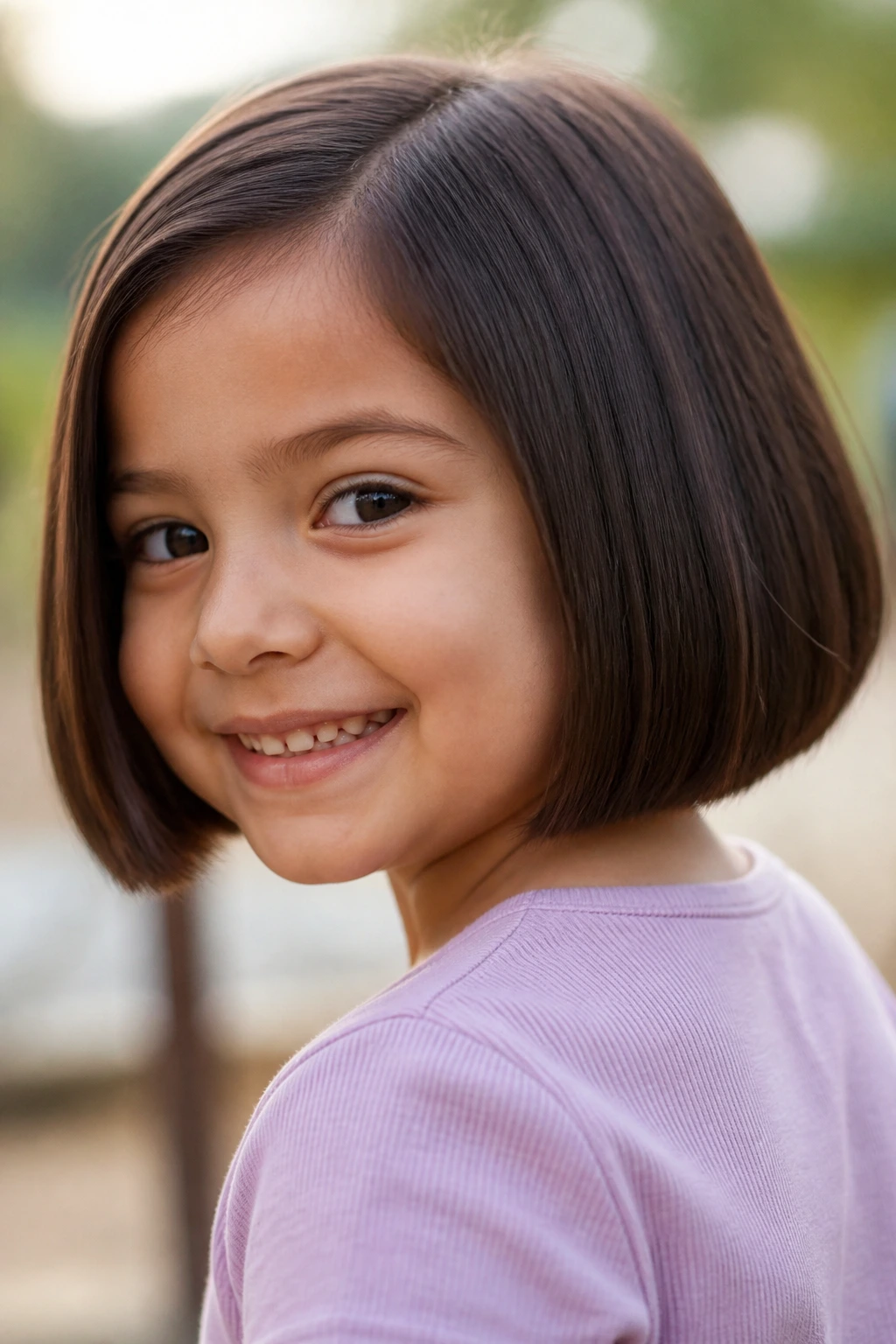
The best kids’ bobs do not try too hard. They sit neatly, move a little, and still look like themselves after a backpack strap, a nap, or a full day of running around. That’s the real appeal here: the haircut gives structure without turning a child into a tiny museum exhibit.
Pick the version that respects the hair’s texture, the child’s habits, and the amount of brushing you’re actually willing to do. Short, long, blunt, curly, clipped, or softly layered—once the shape matches the person wearing it, the bob stops being a trend and starts being a useful haircut. And useful haircuts, honestly, are the ones that get worn the most.
