



Some braid styles are lovely in the mirror and a disaster by lunch. The ones worth keeping around are the ones that survive backpack straps, recess, nap time, and a child who forgets she’s wearing them until she sees herself in a shop window. The best braid hairstyles for little girls do three things at once: they stay neat, they feel comfortable, and they don’t turn styling time into a wrestling match.
That comfort piece matters more than people think. A braid can look tidy and still be too tight at the temples, too heavy at the crown, or too fussy for a child who wants out the door fast. I’m a fan of styles that let the scalp breathe, keep the hairline calm, and hide the elastic work behind a clean finish. Pretty is fine. Pretty and wearable is better.
There’s also a practical truth that gets missed in a lot of hairstyle roundups: the same braid won’t work on every head. Fine hair needs smaller sections so it doesn’t slip. Thick curls need enough moisture to keep the parts from frizzing up in an hour. Shorter hair usually does better with accents, puffs, and half-up shapes than with a style that asks the whole head to behave like one long rope. Once you start thinking that way, the options get a lot more useful.
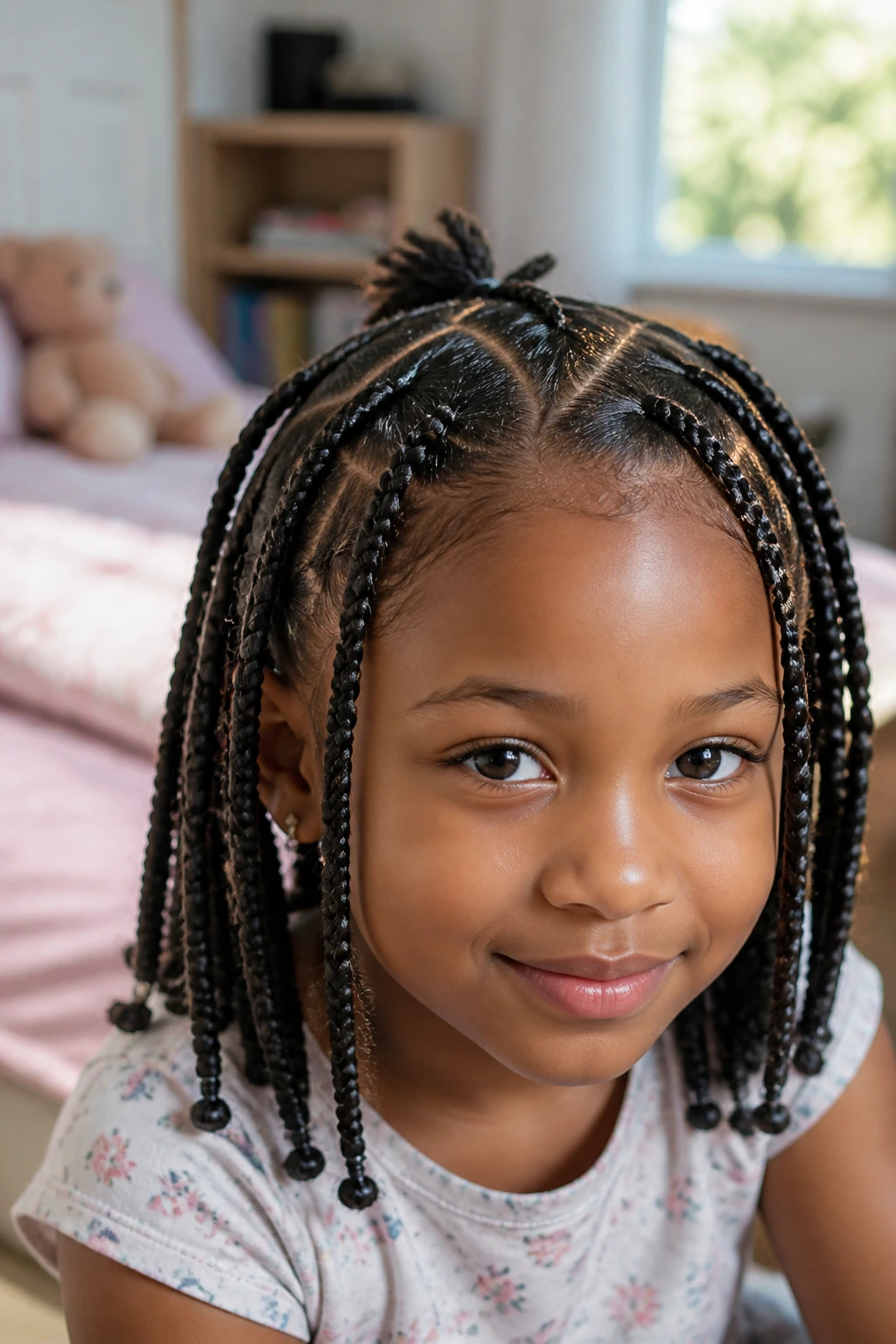
Why These Braids Earn a Spot in the Weekly Rotation
-
Fast options: Styles like twin Dutch pigtails and a side French braid can be done in under 15 minutes once the hair is detangled and parted cleanly.
-
Comfort first: The best braids leave the hairline flat and calm; if a child reaches up to scratch the temples right after styling, the tension is too high.
-
Longer wear: Cornrow rows, box braids, and feed-in styles can stay presentable for days when the parts are set well and the child sleeps on satin or silk.
-
Short-hair friendly: Accent braids, braided puffs, and half-up styles give shape to shorter hair without forcing it into a style it cannot hold.
-
Photo-ready without fuss: Crown braids, halo braids, and ribbon-woven plaits do a lot of the visual work on their own, so you don’t have to pile on accessories.
-
Playground proof: Styles that tuck ends away — buns, wraps, ponytails, and close braids — tend to survive running, climbing, and the general chaos of a real kid’s day.
1. Classic French Braid
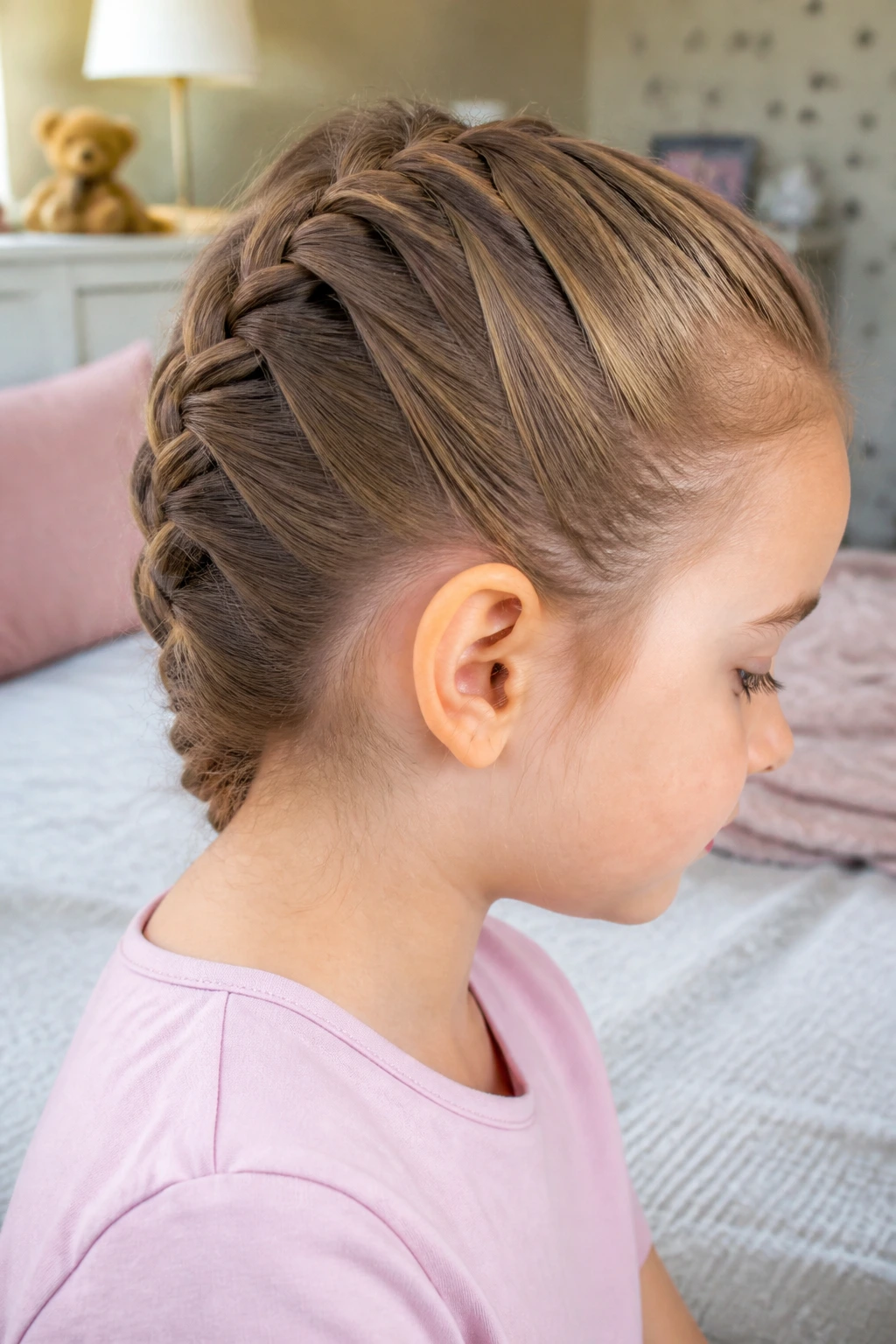
The classic French braid is the haircut equivalent of a white T-shirt that fits well. Clean, dependable, and better than people give it credit for. It sits flat against the head, gathers loose layers, and keeps the back neat without asking for a dozen clips. On shoulder-length hair and beyond, it’s one of the easiest ways to make a child look polished without making the style feel stiff.
Why it works
A French braid pulls new sections into the braid as you move down the head, which helps it stay anchored instead of slipping apart. That matters on fine hair, especially around the crown where shorter layers like to escape. Keep the braid slightly loose at the start and a little firmer near the nape. Too tight at the hairline is where the whole thing goes wrong.
Quick notes
- Best for medium to long hair
- Works well on straight, wavy, or lightly textured hair
- Usually takes 10 to 20 minutes
- Needs a good detangler and a tail comb for the cleanest part
Tiny tip: Mist the hair lightly before you start. Not wet. Just damp enough that the flyaways lie down and the braid grabs evenly.
2. Sleek Dutch Braid
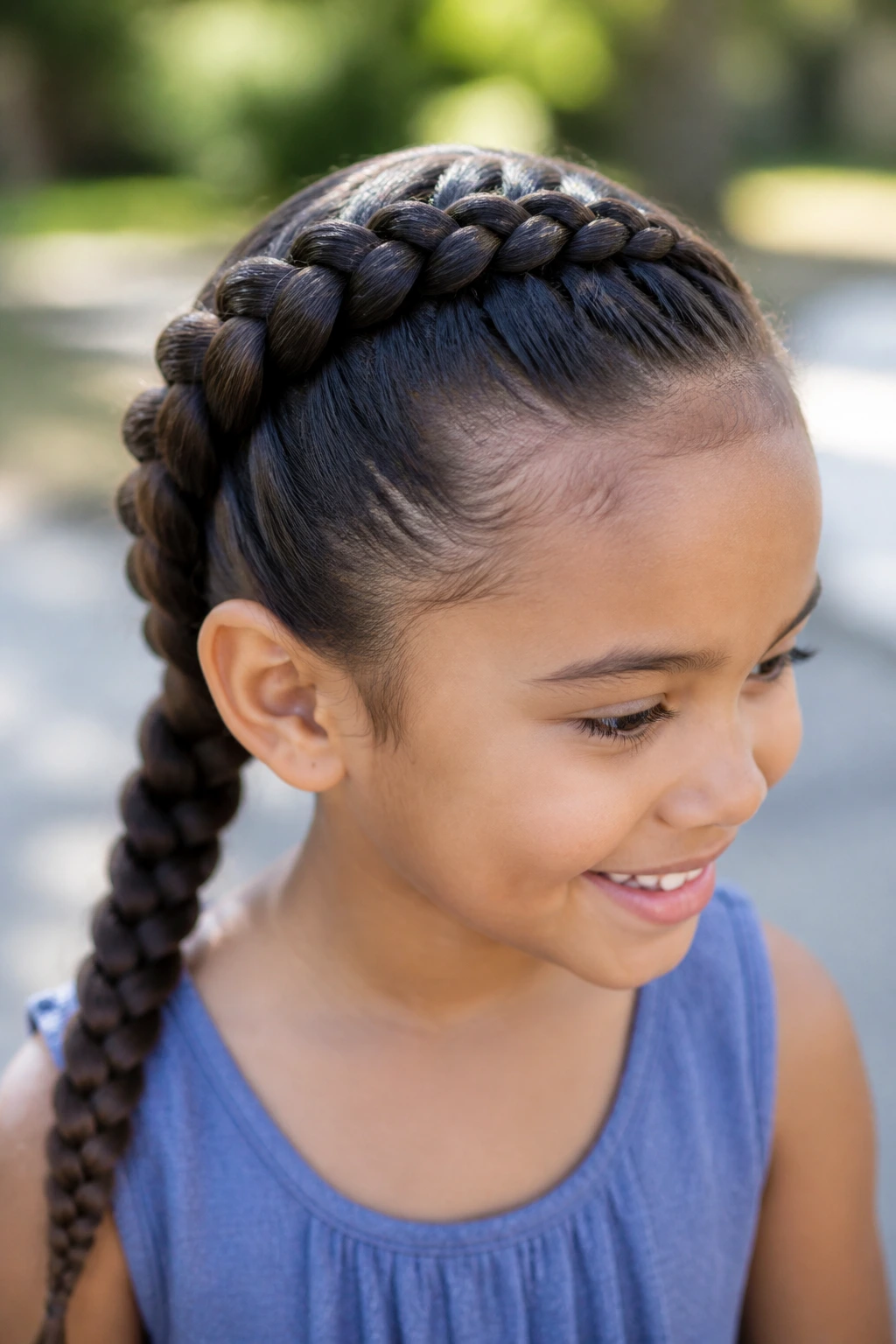
A Dutch braid is the French braid’s louder cousin. Instead of weaving the sections over, you cross them under, which makes the braid stand up with a raised, rope-like look. On little girls, that extra height gives the braid a little more presence without needing ribbons or clips.
It’s a smart pick for thick hair because the braid pattern stays visible even when the hair has a lot of texture. If the scalp is tender, though, keep the tension gentle. The braid should sit snugly, not tug at the sides of the head. A neat Dutch braid can look sharp at the part and still feel comfortable by afternoon.
3. Twin Dutch Pigtails
Why do two Dutch braids look so charming? Because they balance the face and keep the hair evenly controlled on both sides, which is very useful when you are dealing with a child who twists, leans, and wriggles through the process. This is one of the easiest braid hairstyles for little girls who need a style that can handle active play.
The trick is symmetry. Part the hair straight down the middle, clip one side away, and braid each section with the same tension and section size. If one braid is tighter than the other, you’ll see it immediately at the nape. Keep the ends tied low or tuck them into small elastics so they don’t whip around during the day.
Best for
- School days
- Sports practice
- Thick or medium-density hair
- Kids who like a sporty look
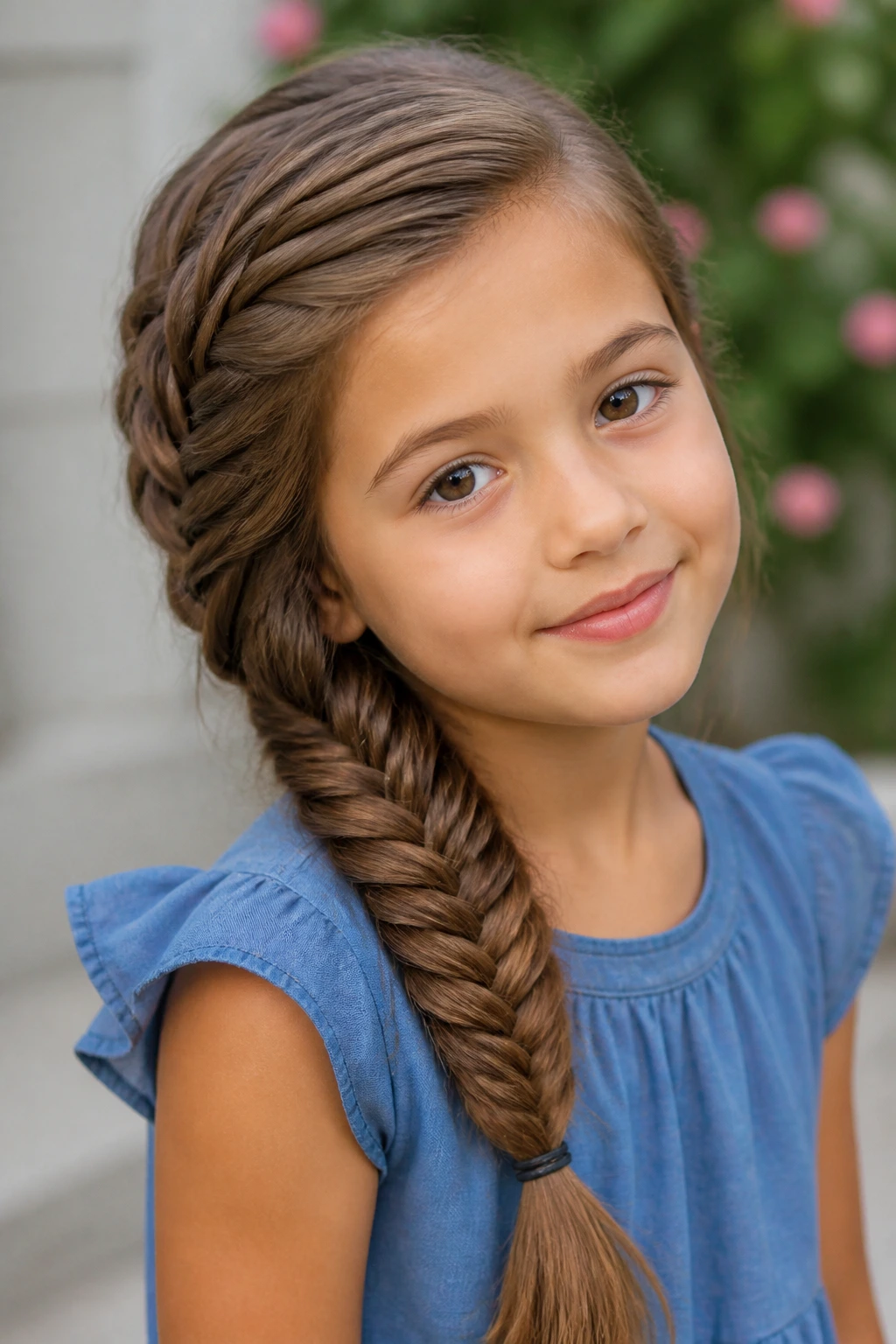
4. Fishtail Side Sweep
A fishtail braid looks fancier than it is. That’s one reason I like it. The pattern is made by taking tiny pieces from the outside and crossing them into the opposite side, and the result has that woven, feathered texture kids tend to love once they see it up close.
This style works especially well swept over one shoulder. The side placement keeps the braid visible from the front and gives you a little softness around the face. It does take patience, because tiny sections are the whole point. If the hair is very silky, a small bit of styling cream will help the strands stay put while you work.
Watch for
- Very slippery hair
- Sections that are too large
- Pulling too hard at the ends, which makes the braid look chunky in the wrong way
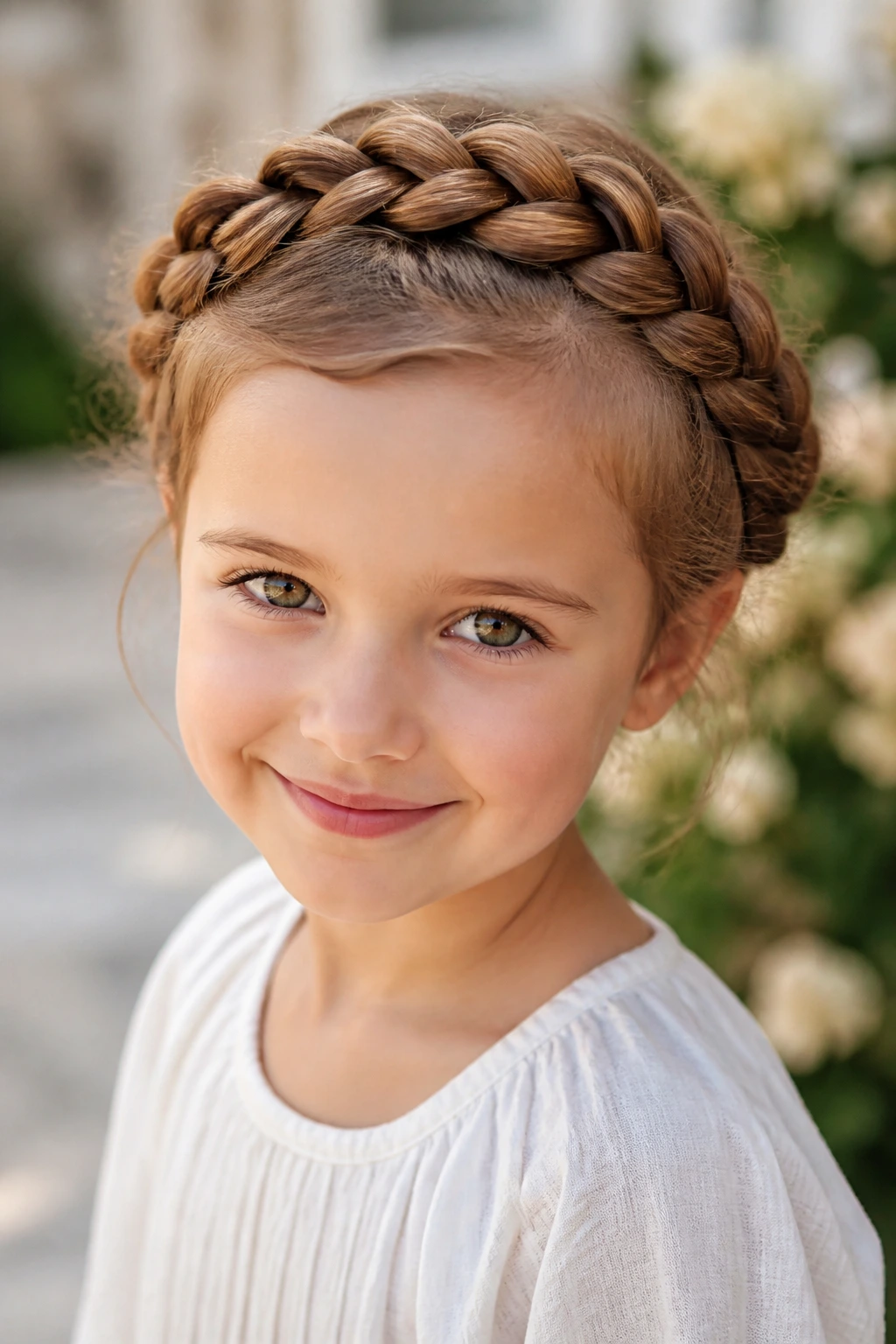
5. Crown Braid Halo
The crown braid halo has a quiet kind of drama. It wraps around the head like a built-in headband, and that makes it ideal for dressier days when you want the hair off the face but don’t want a hard, stiff updo. On a little girl, it reads as sweet without looking overworked.
This style shines when the braid is pinned flat and the ends are tucked carefully behind the ear or under the opposite side of the braid. A few loose wisps are fine. A halo braid that’s too perfect can look rigid, and kids usually look better when the style has a little softness around the temples.
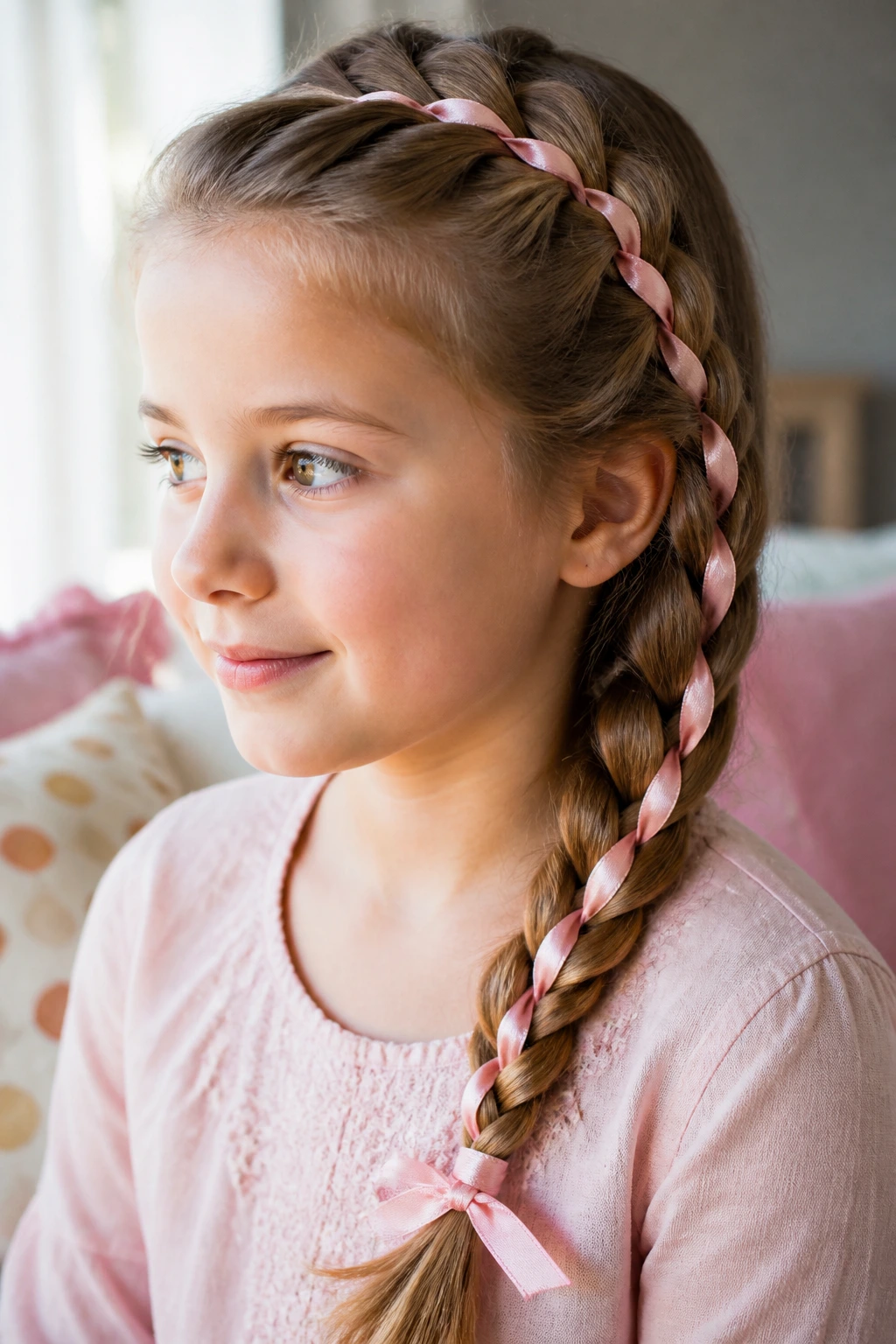
6. Ribbon-Woven Side Braid
A ribbon-woven braid does one smart thing: it turns a simple braid into a color story. One thin ribbon threaded alongside the hair adds contrast immediately, and you can match it to a dress, a holiday outfit, or a school color without changing the braid pattern itself.
I like this style for kids who want something special but don’t want a huge style sitting on their head. Keep the ribbon narrow and smooth so it doesn’t bulk up the braid. Satin ribbon slides nicely; stiff craft ribbon doesn’t. If the ribbon frays at the ends, fold the tips under before you start weaving.
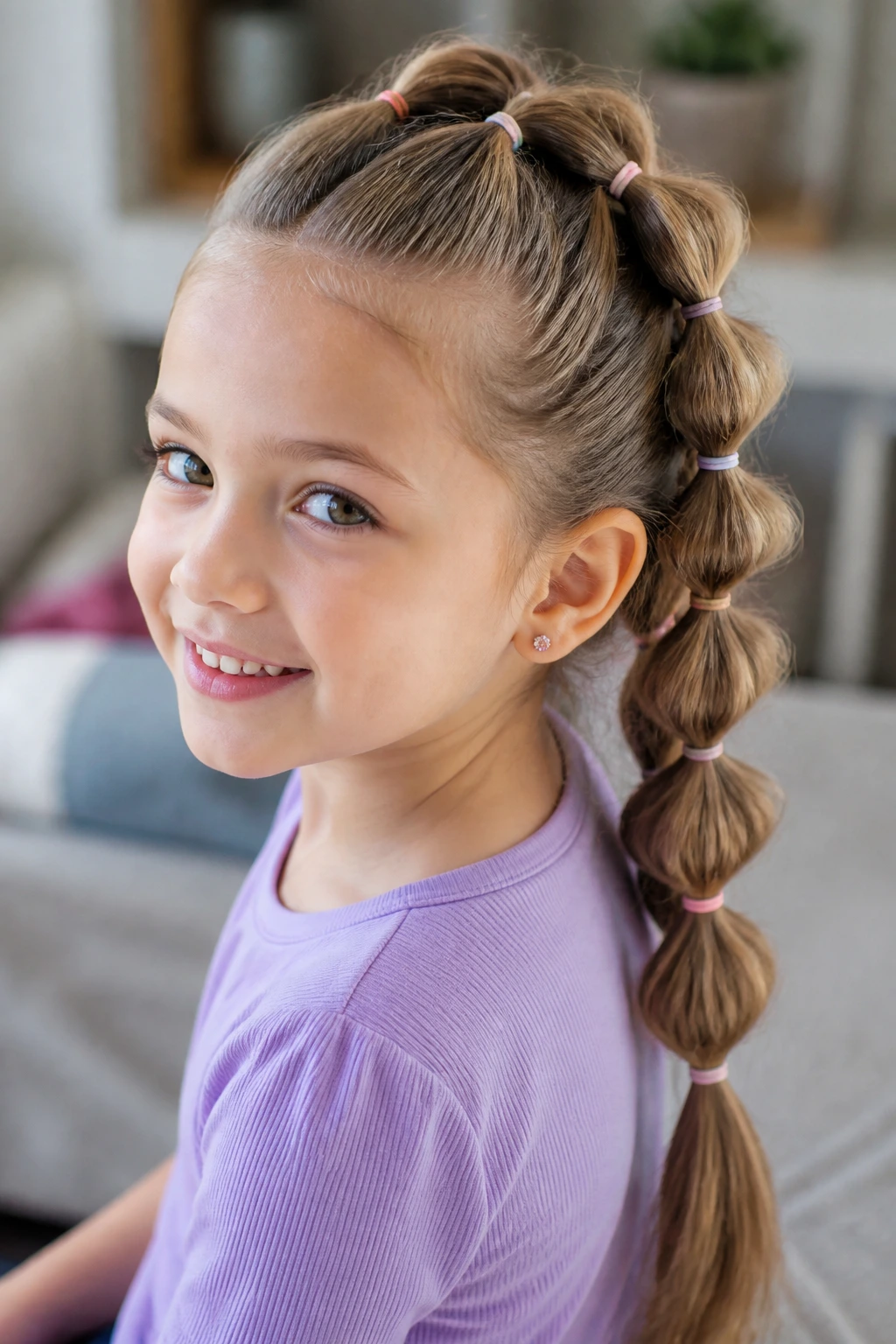
7. Pull-Through Pony Braid
This one looks far more complicated than it is. The pull-through braid uses a row of small elastics down a ponytail, then you split and loop sections to create that full, braid-like shape. On layered hair, it can be a lifesaver because the style depends more on the elastic structure than on perfect length.
It’s especially useful when a child’s hair is not quite long enough for a full traditional braid but you still want volume and shape. Use small snag-free elastics every 1½ to 2 inches, and keep the segments even. If the ponytail starts to look lopsided halfway down, pause and fix it. The whole style depends on those little sections lining up.
H3: Why it works
The pull-through braid gives the illusion of a thick braid without requiring three long sections. It also sits well on fine hair that tends to collapse in a traditional plait.
- Quick to build once the ponytail is set
- Great for layered hair
- Easy to dress up with a bow at the end
- Best when the elastics match the hair color
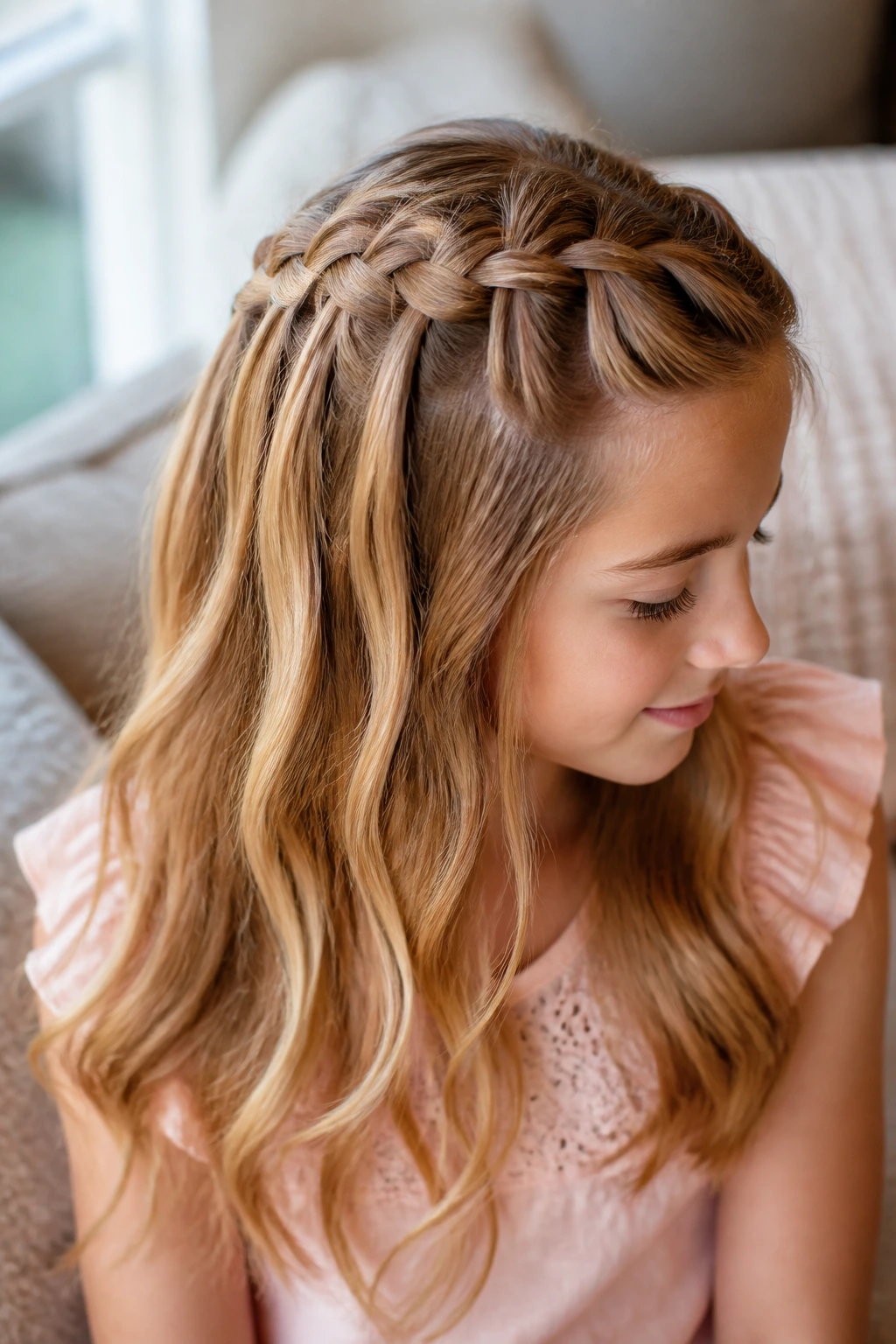
8. Waterfall Half-Up Braid
A waterfall braid is one of those styles that looks delicate because it leaves some strands flowing down from the braid as you go. The effect is pretty without being heavy. I like it for kids with shoulder-length or longer hair who want something softer than a full braid but more structured than loose hair.
The braid works best on hair that has a little grip — not freshly oiled, not glass-smooth. If the hair is too slippery, the dropped strands slide out before you can pin the next section. A touch of texturizing spray or leave-in on the mid-lengths can help. Keep the crown sections neat, because the top half of the style is what people notice first.
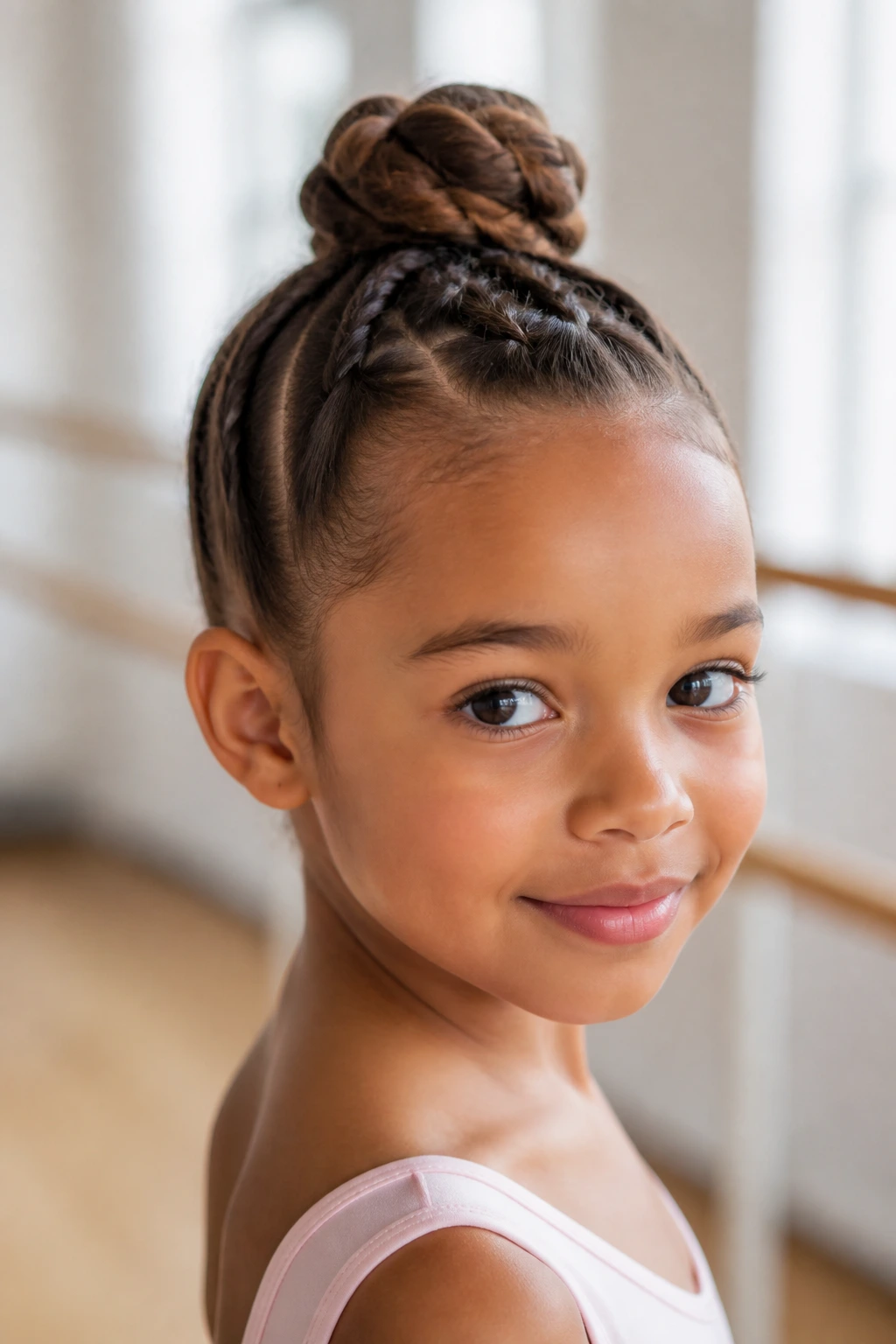
9. Braided Top Knot
A braided top knot is what happens when you want the neck clear and the style out of the way. Braid the hair into a high ponytail or braid the ponytail itself, then twist it into a knot at the crown. It’s practical, tidy, and strong enough for a child who doesn’t sit still long.
This style is especially useful on warm days or for dance class, when loose ends just get in the way. Keep the knot low enough that it doesn’t poke the child in the head when she leans back, and use a soft scrunchie under the braid if the hair is fine. A hard elastic at the base can make the knot feel bulky.
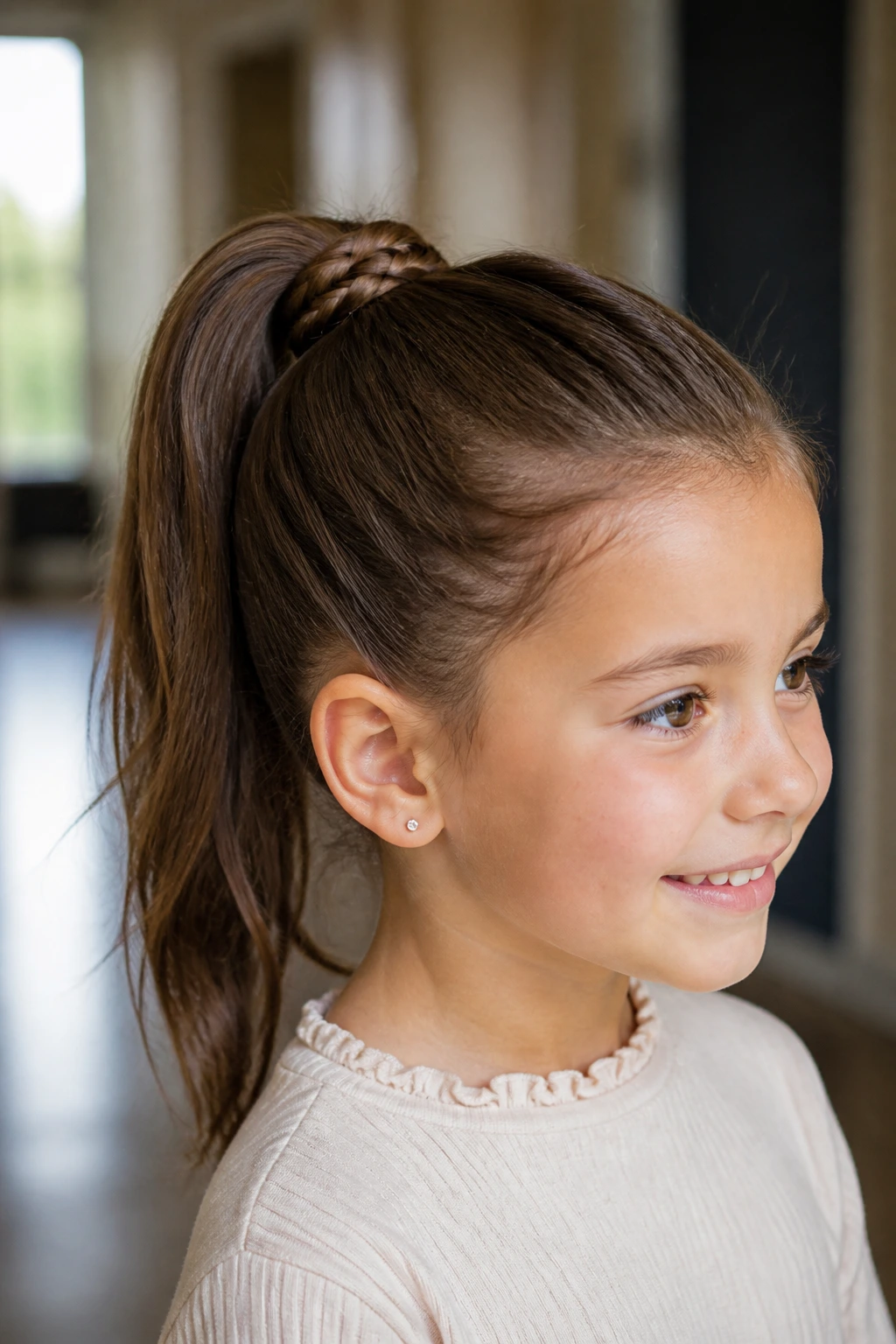
10. Braided Ponytail Wrap
The braided ponytail wrap is one of my favorite “looks polished with almost no drama” styles. After the ponytail is secured, a small braid wraps around the base to hide the elastic, which immediately makes the whole style look cleaner. It’s a neat finish for school portraits, birthday parties, or any day you want the ponytail to look intentional.
This braid works well on straight or wavy hair, but it also helps tame thicker textures because the wrapped base keeps the ponytail from looking unfinished. Use one small braid from a hidden section near the nape, then pin it under the ponytail with a bobby pin. The wrap should sit snugly, not twist around loosely by lunchtime.
Quick details
- Best with a mid-height or high ponytail
- Hides plain elastics nicely
- Works with bows, ribbons, or a small clip
- Faster than a full updo
11. Cornrow Rows Into a Bun
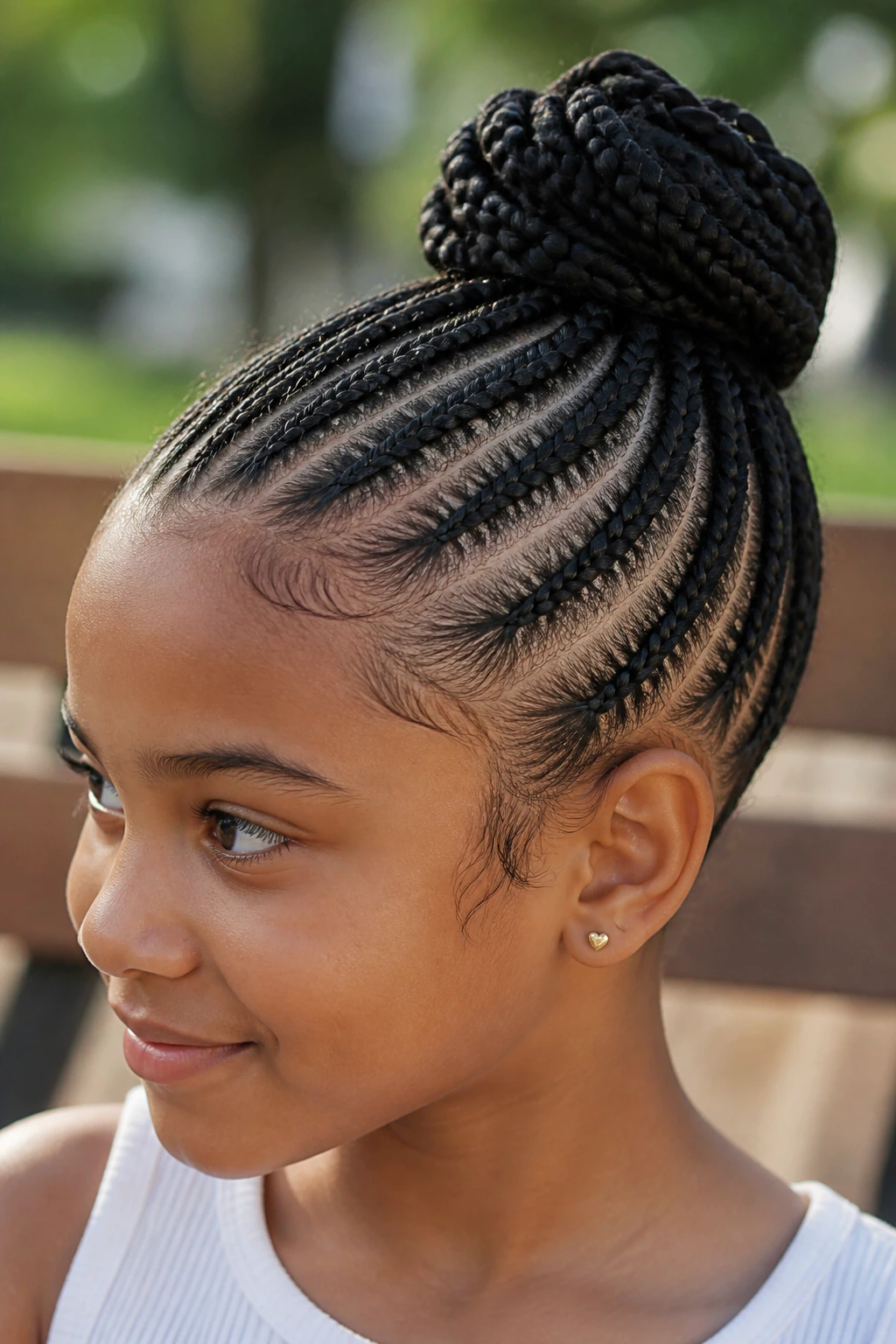
Cornrow rows leading into a bun are a strong choice when you want the style to stay put and the parting to stay neat. The rows lie close to the scalp, which keeps the hair controlled, and the bun gathers the ends into one clean point. On coily or tightly textured hair, this style can hold well for days when done gently.
The parting matters more than people expect. Crisp, even rows make the whole style look tidy, while uneven spacing makes the bun feel off balance. Use a light leave-in and a rat-tail comb, but do not press so hard that the scalp looks shiny or irritated. That’s the wrong kind of clean.
12. Beaded Box Braids
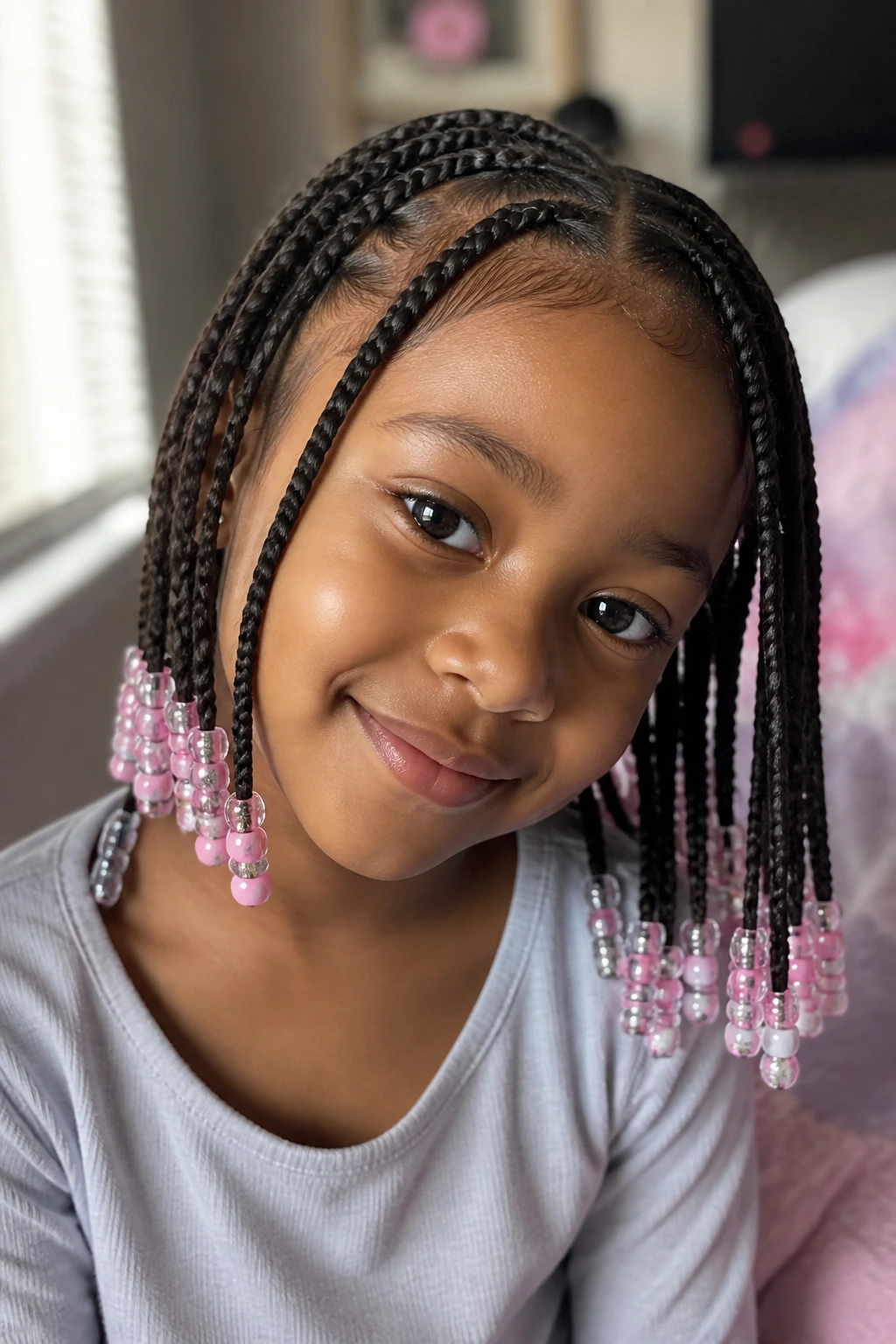
Beaded box braids bring movement and sound to the hairstyle, and kids usually notice that part right away. The beads click softly and swing at the ends, which makes the style feel playful. For little girls, though, the key is keeping the beads lightweight. Heavy beads drag on small sections and can make the scalp sore by the end of the day.
The braid base should be neat and the bead placement balanced. Too many beads on one side makes the hair pull unevenly. If the child is very young or sensitive, use a few beads near the ends rather than loading the whole braid. That keeps the style cute without making it heavy.
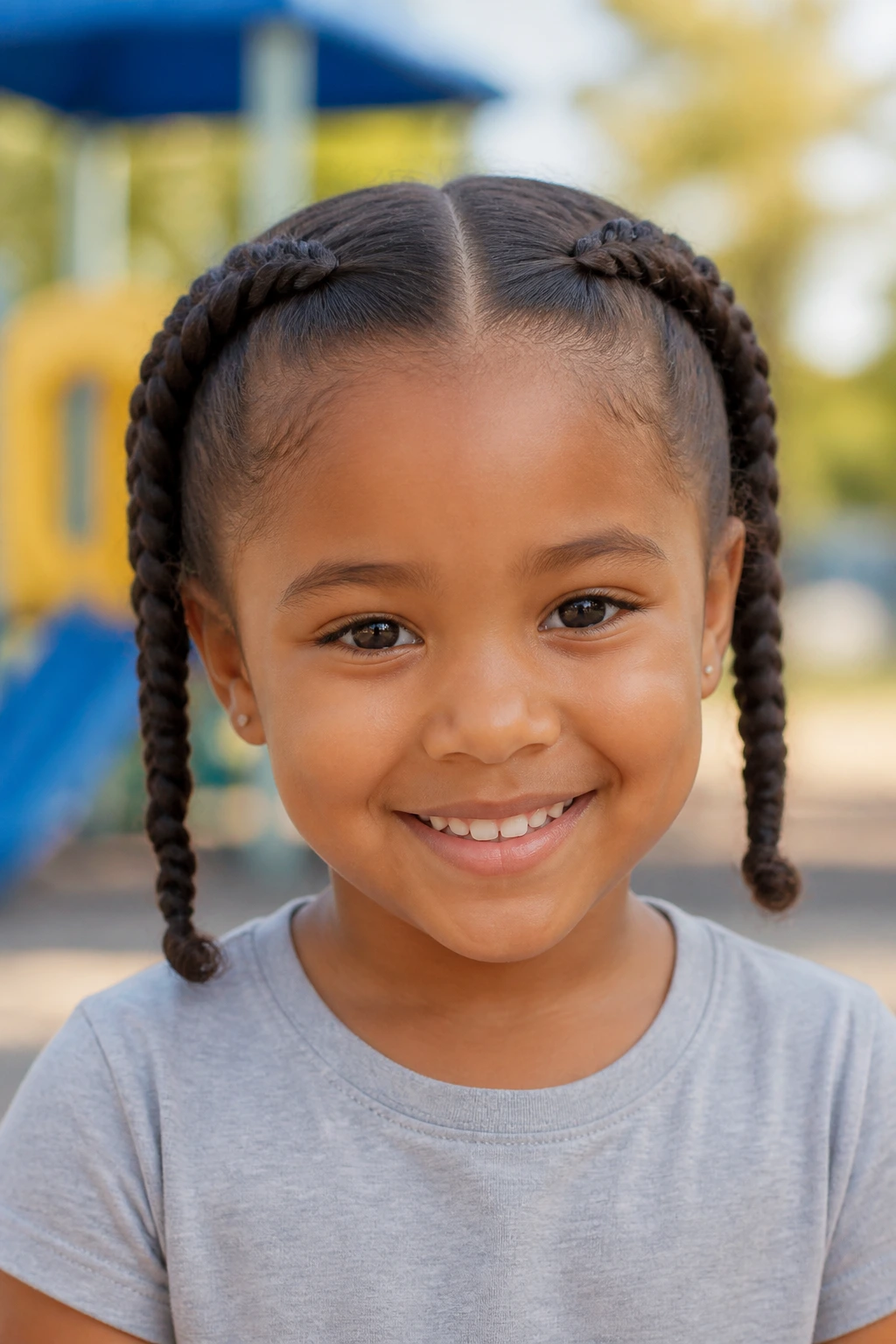
13. Rope-Twist Pigtails
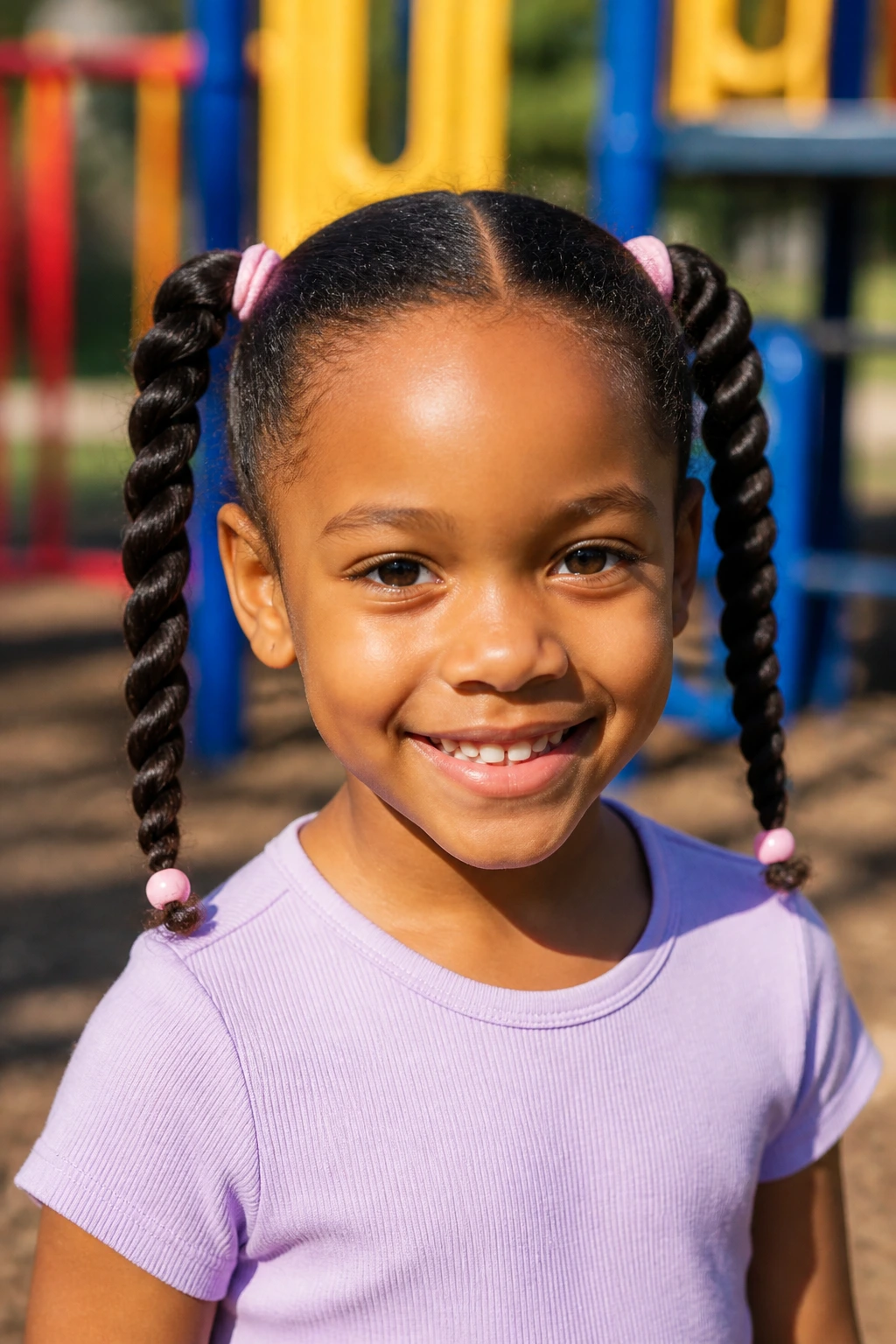
Rope twists are the quick answer when a child wants pigtails and you want a little more interest than plain elastics. You split each section into two strands, twist them in one direction, then wrap them around each other in the opposite direction. Simple. Fast. Clean.
This style suits younger kids because it’s easier to do than a full three-strand braid, and it often stays neater on shorter hair. The most common mistake is twisting both strands in the same direction, which makes the rope fall apart. Keep one hand steady at the base while you twist, or the whole section starts unraveling before you reach the end.
H3: How to wear it
- Great for preschool and early school years
- Works well with bows at the base
- Good on short to medium hair
- Faster than most braids, which matters on busy mornings
14. Four-Strand Showcase Braid
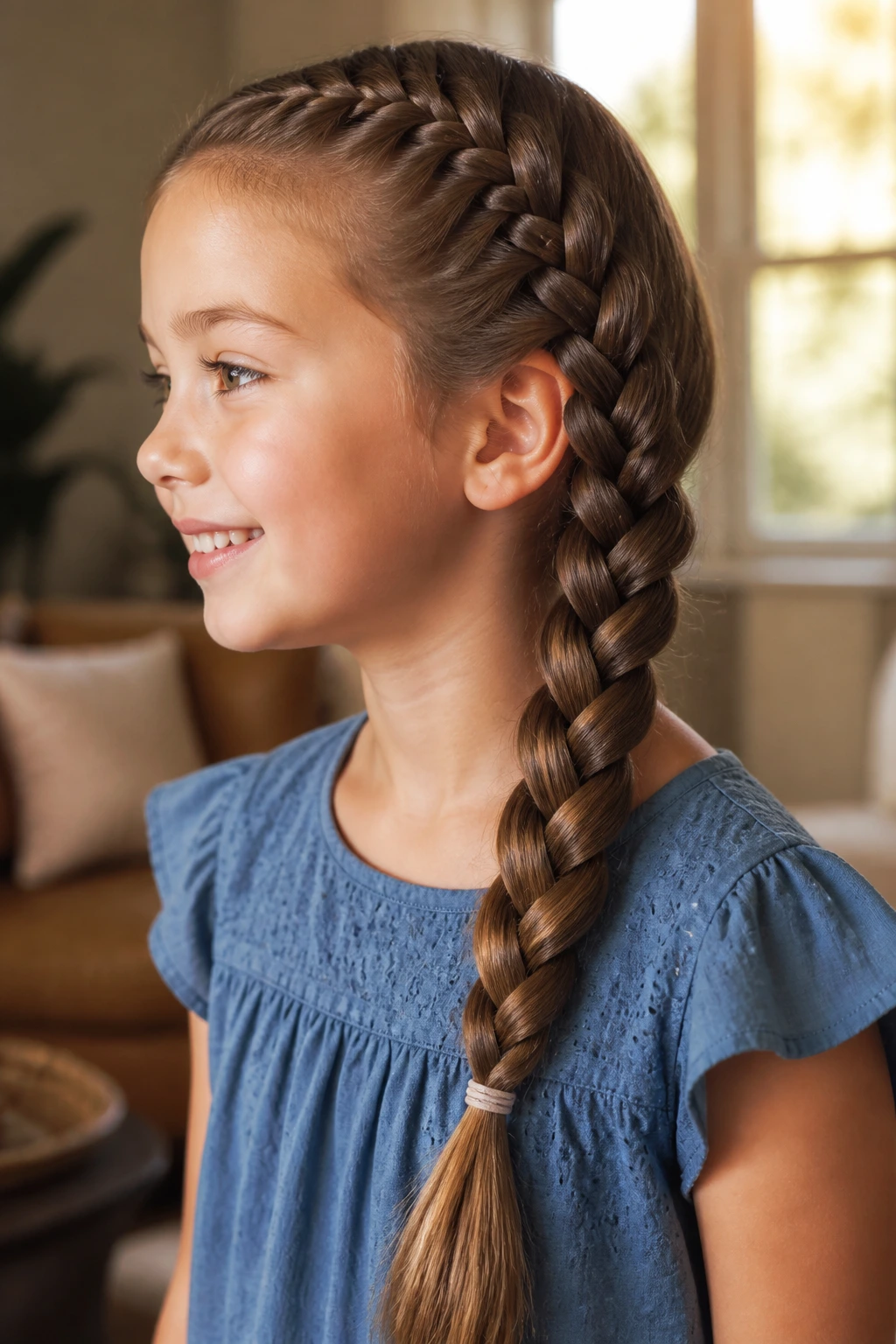
If a regular braid feels a little too ordinary, a four-strand braid has enough texture to make people look twice. It creates a flatter, more woven pattern than a standard plait, and the extra strand gives the style a slightly fuller finish. That makes it a nice choice for special occasions or when you want to stretch your braiding skills a bit.
The trick is keeping the strands organized. Once the braid starts, the pieces can tangle fast if you rush. Clip the strands apart before you begin if you need to, because mixing them up halfway down the head is annoying and very easy to do. On thick hair, this braid looks especially good because the pattern shows up well.
15. Milkmaid Braids
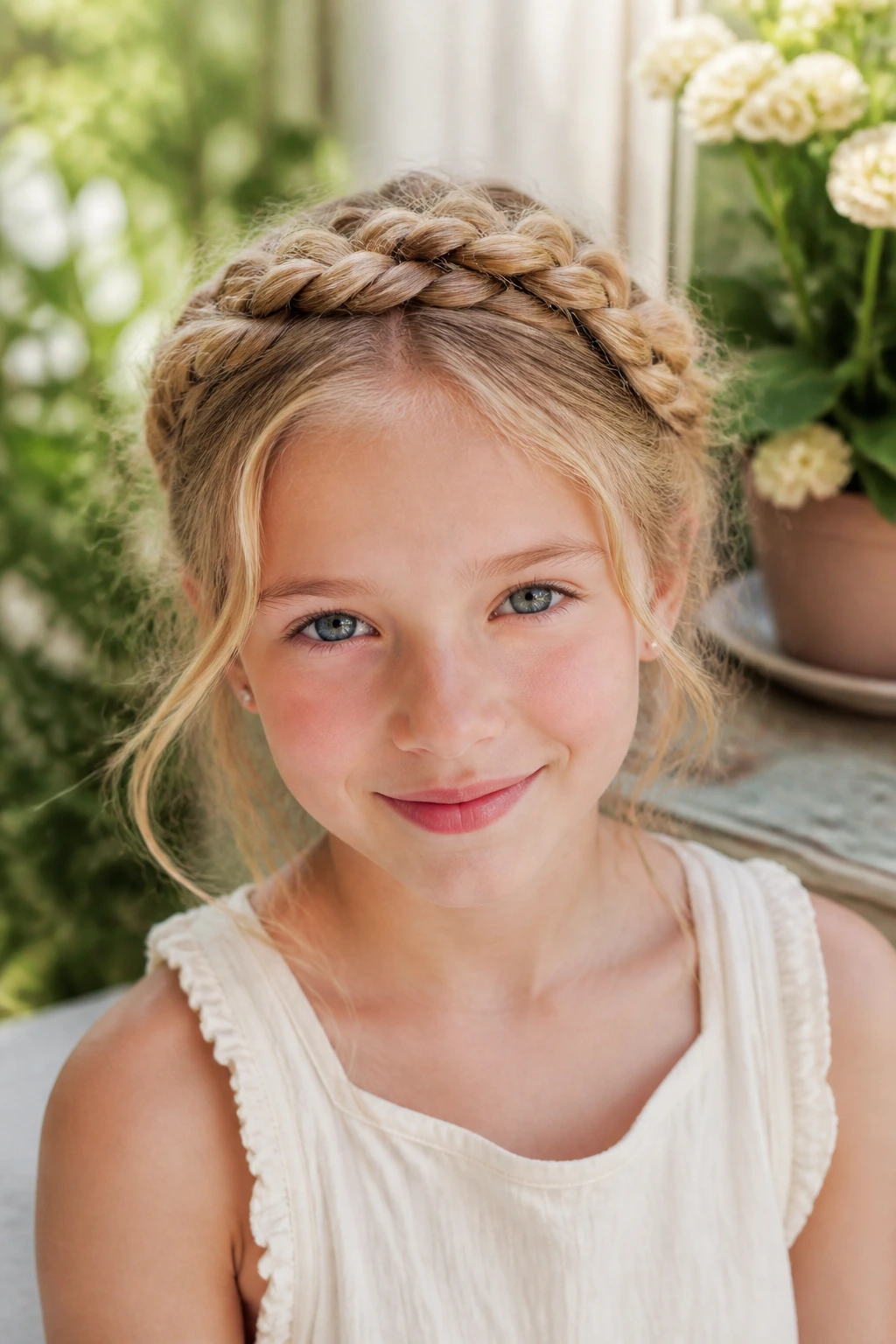
Milkmaid braids sit across the top of the head in two braids that are pinned or wrapped like a soft crown. I like this style because it keeps the ends tucked away and still leaves the face open. It has an old-fashioned charm, but on a child it reads more sweet than formal.
It works best on medium to long hair, since you need enough length to cross the braids over the crown. Keep the braids slightly loose before pinning so they don’t sit too flat. A few tiny pieces around the ears can stay loose if the child’s hair is layered; that keeps the style from looking severe.
16. Braided Space Buns
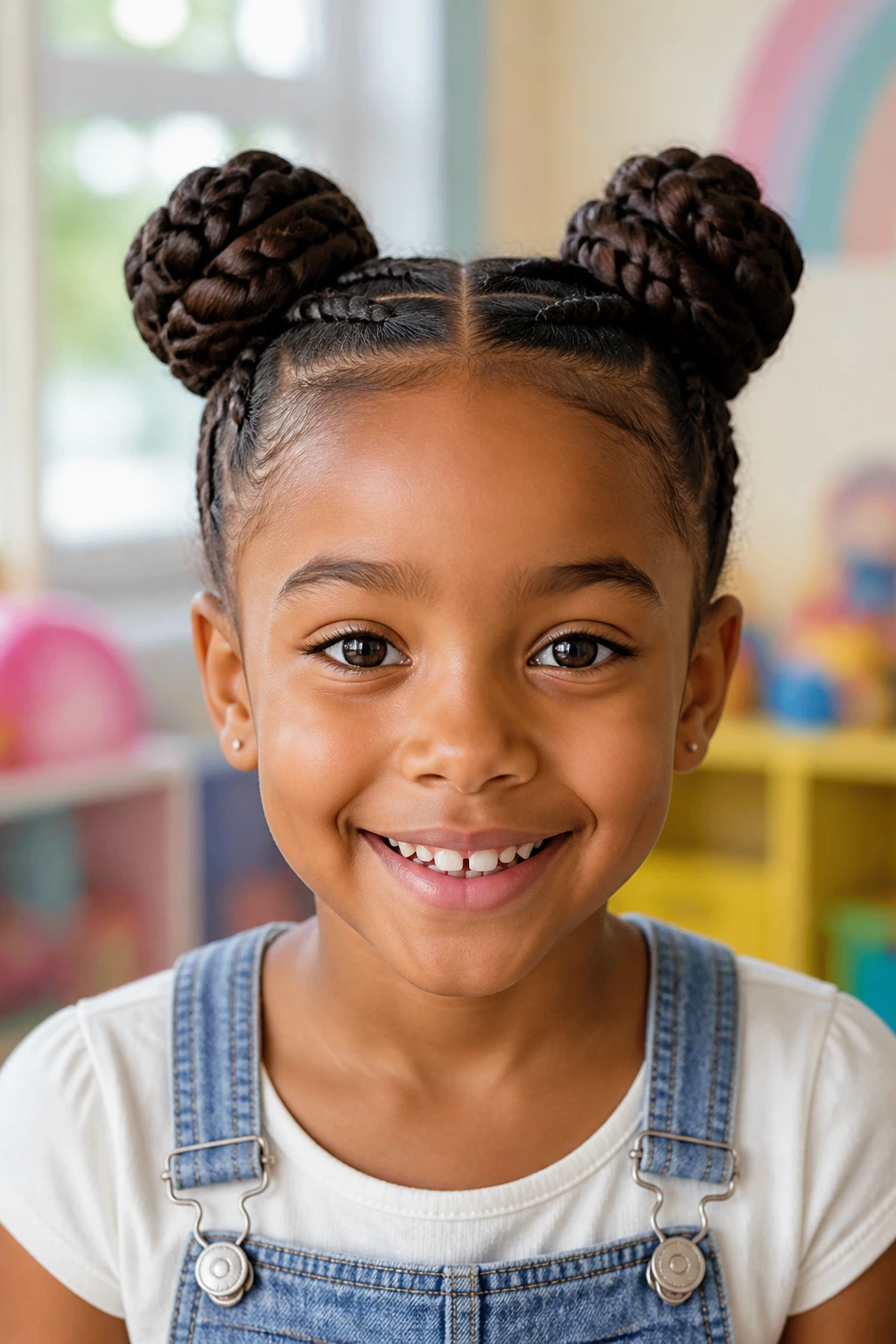
Braided space buns are for the child who likes a little fun in the mirror. Two braids rise into buns on either side of the head, and the shape gives the whole style a lively, balanced look. It’s playful without being messy, which is a nice line to walk.
The style works well when the hair is parted cleanly down the center and the buns are placed at the same height. If one bun sits higher than the other, the imbalance shows right away. Keep the braids tucked securely into the buns with pins or small elastics. Loose ends make the buns wobble.
17. Heart-Pattern Parting Braids
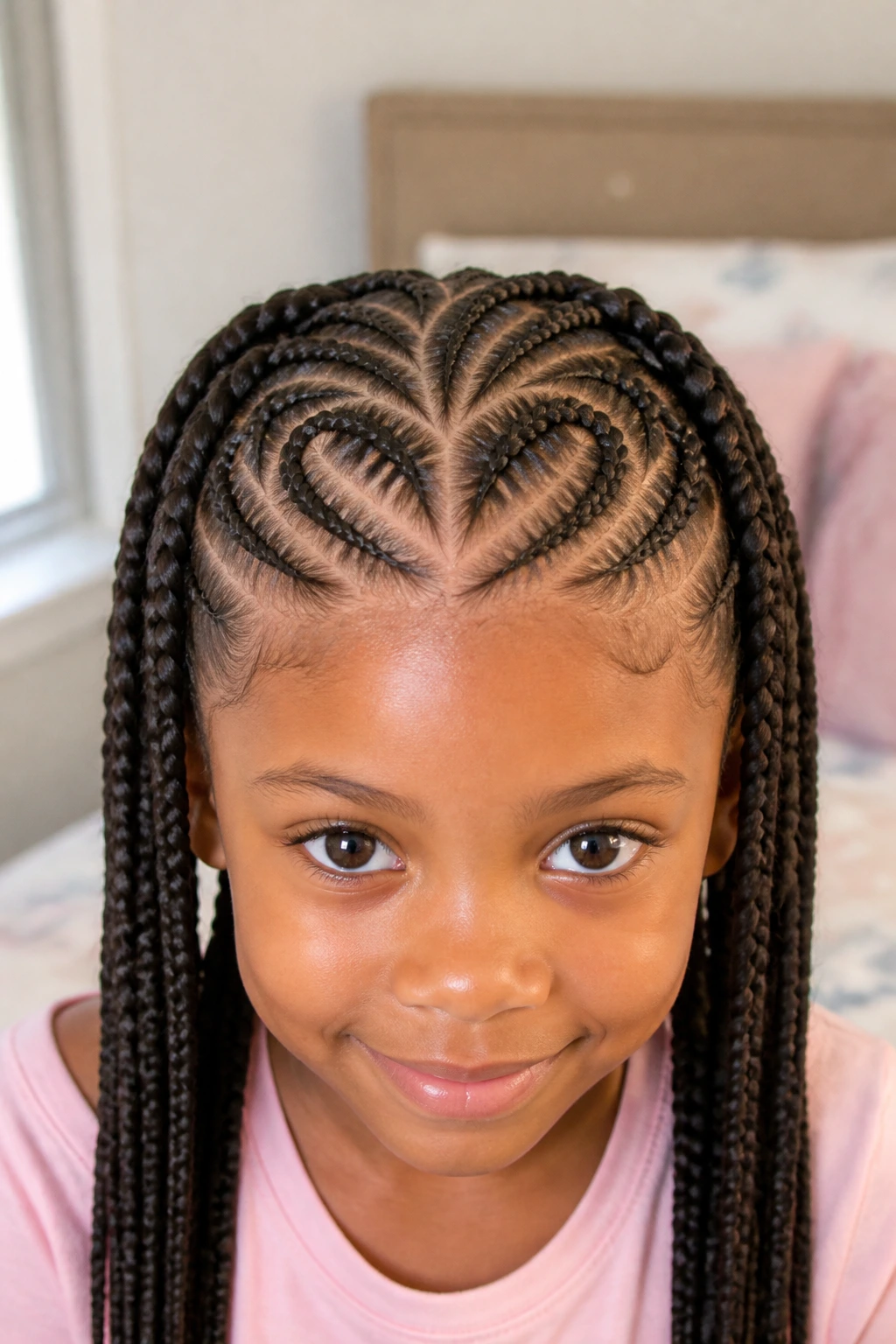
Sometimes the braid itself is not the main event. The parting is. Heart-pattern braids use the sectioning to create the shape first, then the braids follow the design. It is a bit more time-consuming, but the result has a built-in charm that doesn’t need much help from accessories.
This style works best when the scalp is well detangled and the parting comb is sharp enough to make clean lines. Smudged parting turns a heart into a blob. I’d save this one for a child who can sit still for a few extra minutes, because the design is what makes it special.
Key details
- Best on medium to long hair
- Needs precise parting
- Looks best with simple elastics so the pattern shows
- A little hair cream helps the parts stay crisp
18. Ladder Braid Accent
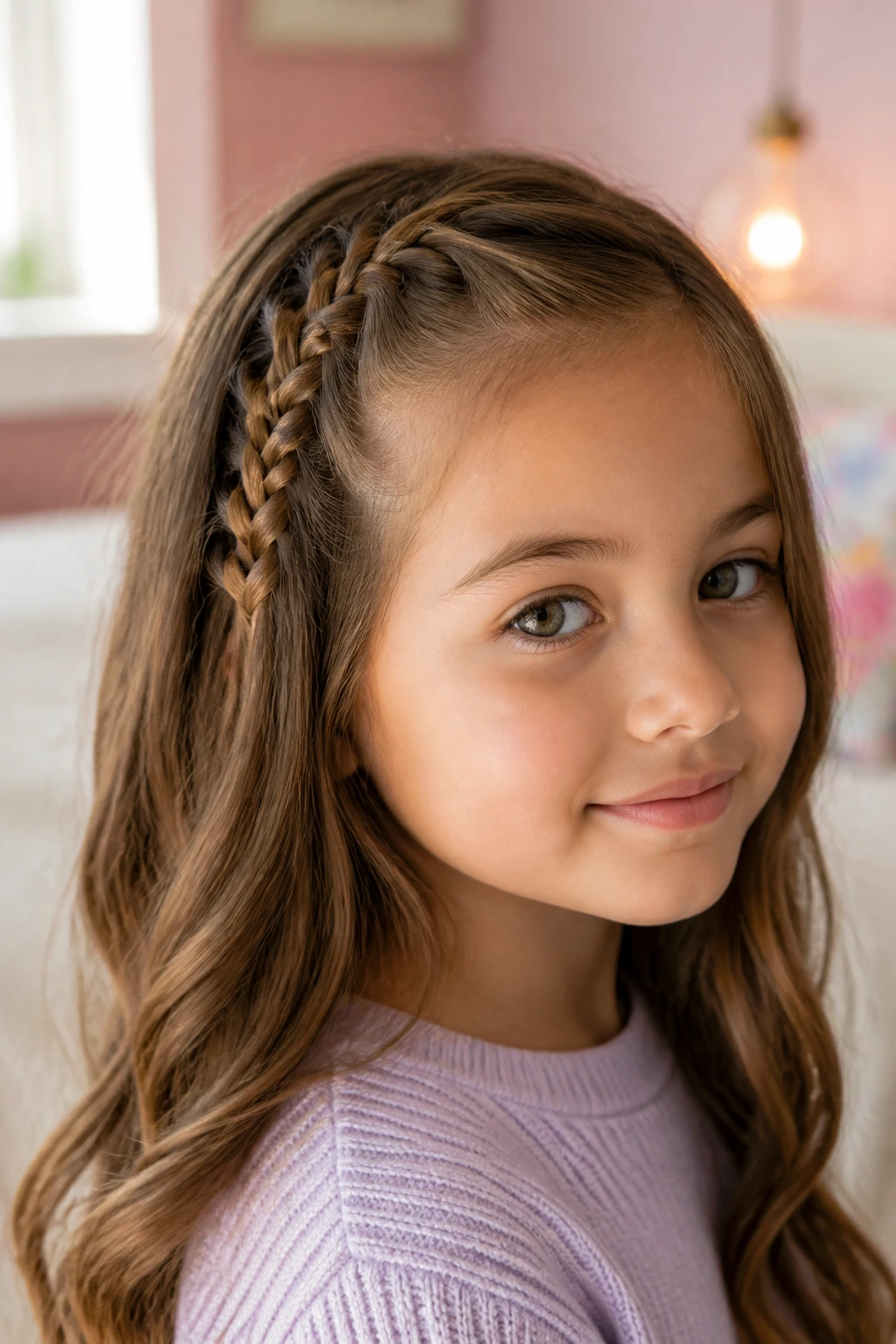
A ladder braid gives you a pretty side detail without asking for a full head of braids. It works by weaving one braid across or under another section so the shape looks layered, almost like little rungs. On a child, it adds visual interest fast.
The style is best used as an accent on one side or across the top half of the head. Too much ladder braiding can make the style busy. The sweet spot is a single clean accent that sits against loose hair or a ponytail. If the hair is layered, pin the ends carefully so the braid does not unravel at the loose edges.
19. Zigzag Part Braids
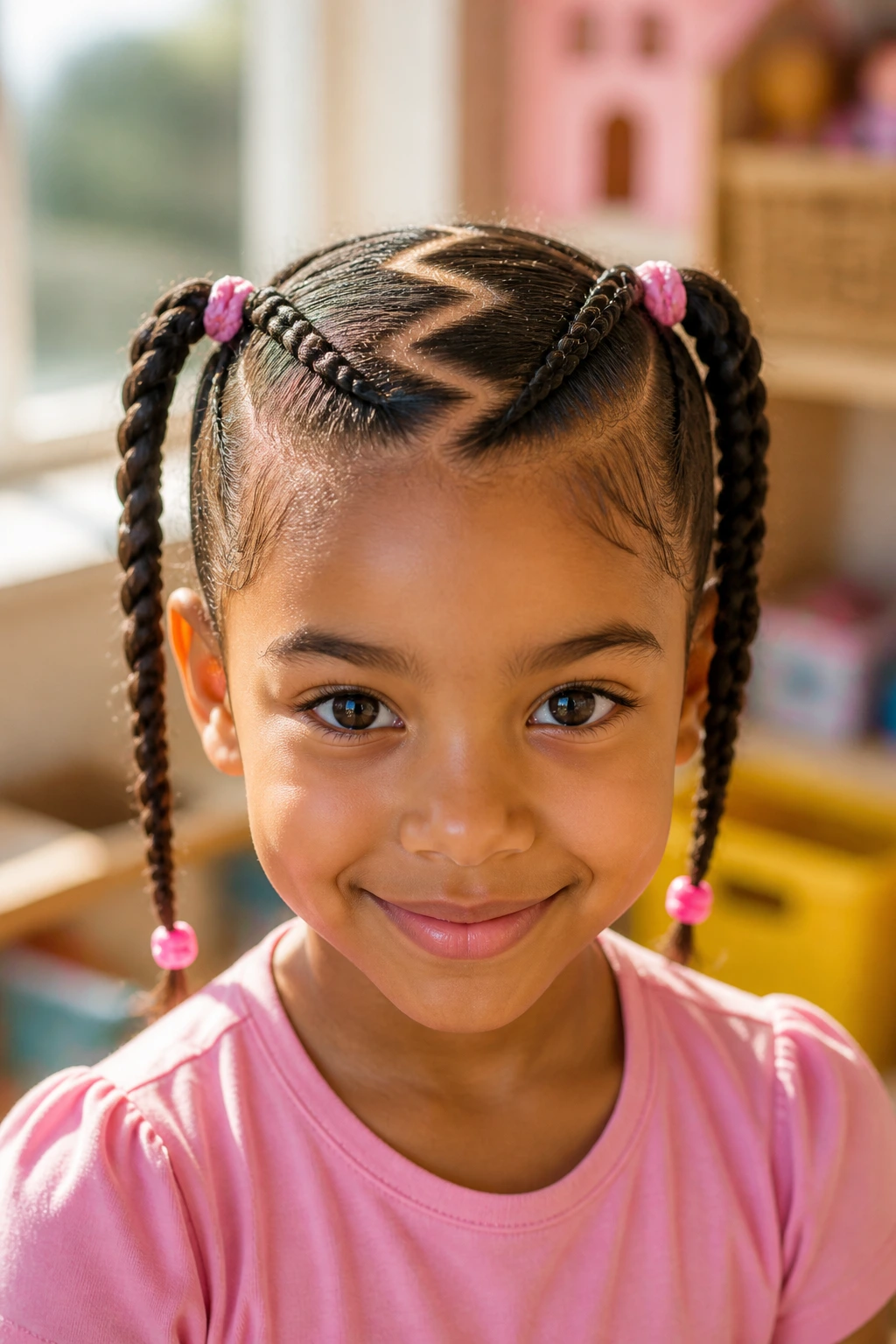
A zigzag part is one of those details that changes a hairstyle without adding much work. Instead of a straight center part, the comb traces a zigzag line, then the hair gets braided or twisted from there. The effect is lively and a little unexpected, which kids tend to enjoy.
It works well with pigtails, cornrows, or simple braids, and it’s especially handy when you want the style to feel playful but not overloaded with accessories. The parts need to be clean for the zigzag to read clearly. If the lines wobble, the whole thing looks accidental. Take your time with the parting. That’s the style.
20. Side Cornrow With Puff
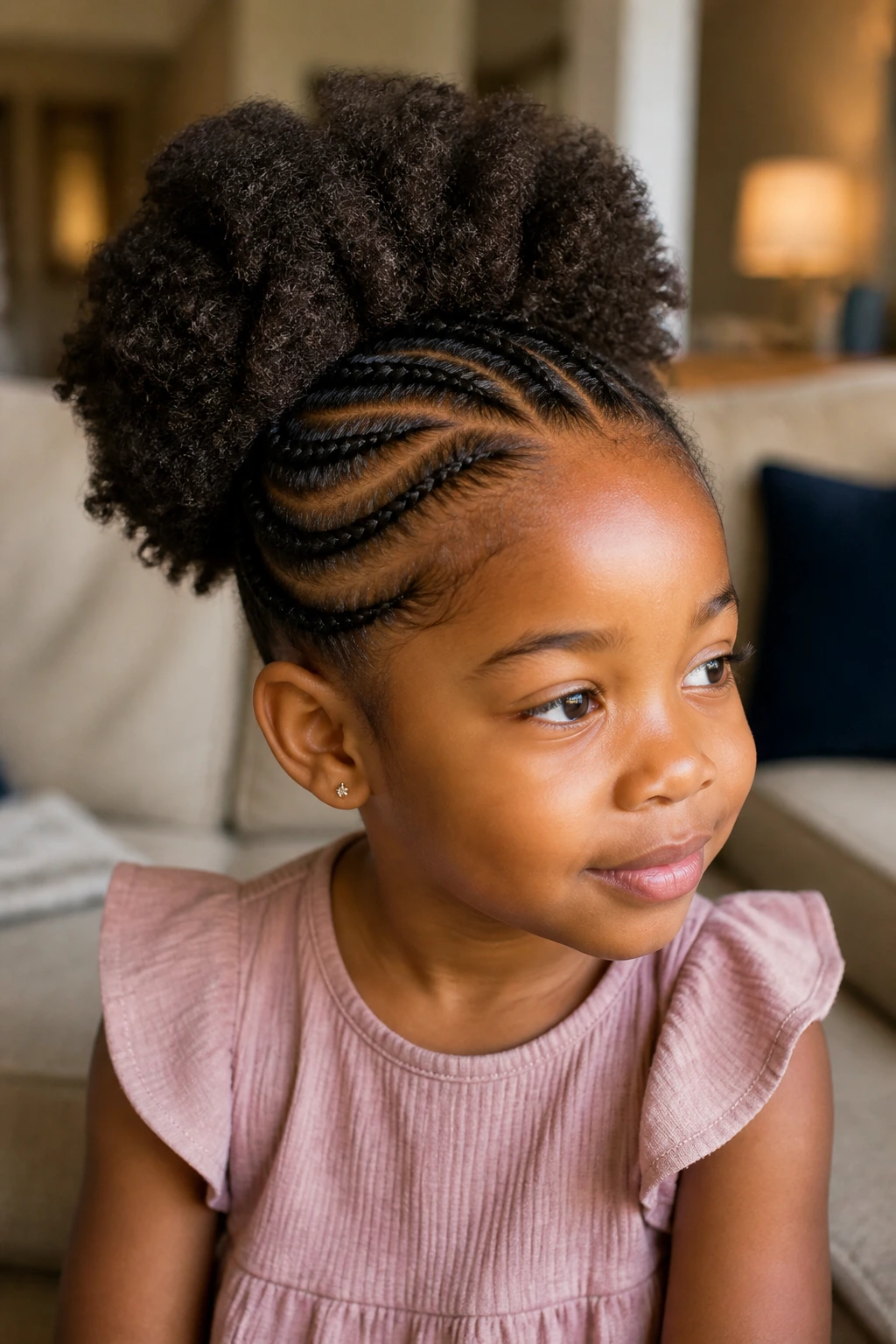
A side cornrow feeding into a puff is a smart mix of neat and soft. The braid keeps one side smooth and controlled, while the puff gives the style lift and texture. On short natural hair, this can be one of the nicest ways to get shape without forcing a long braid that won’t stay.
The cornrow should start clean at the hairline and curve gently toward the puff. Don’t pull it so tight that the child starts rubbing her scalp. The puff itself can be fluffed with a bit of leave-in or water, then shaped with fingers rather than a brush. That keeps the texture from looking flattened.
21. French Braid Into a Low Bun
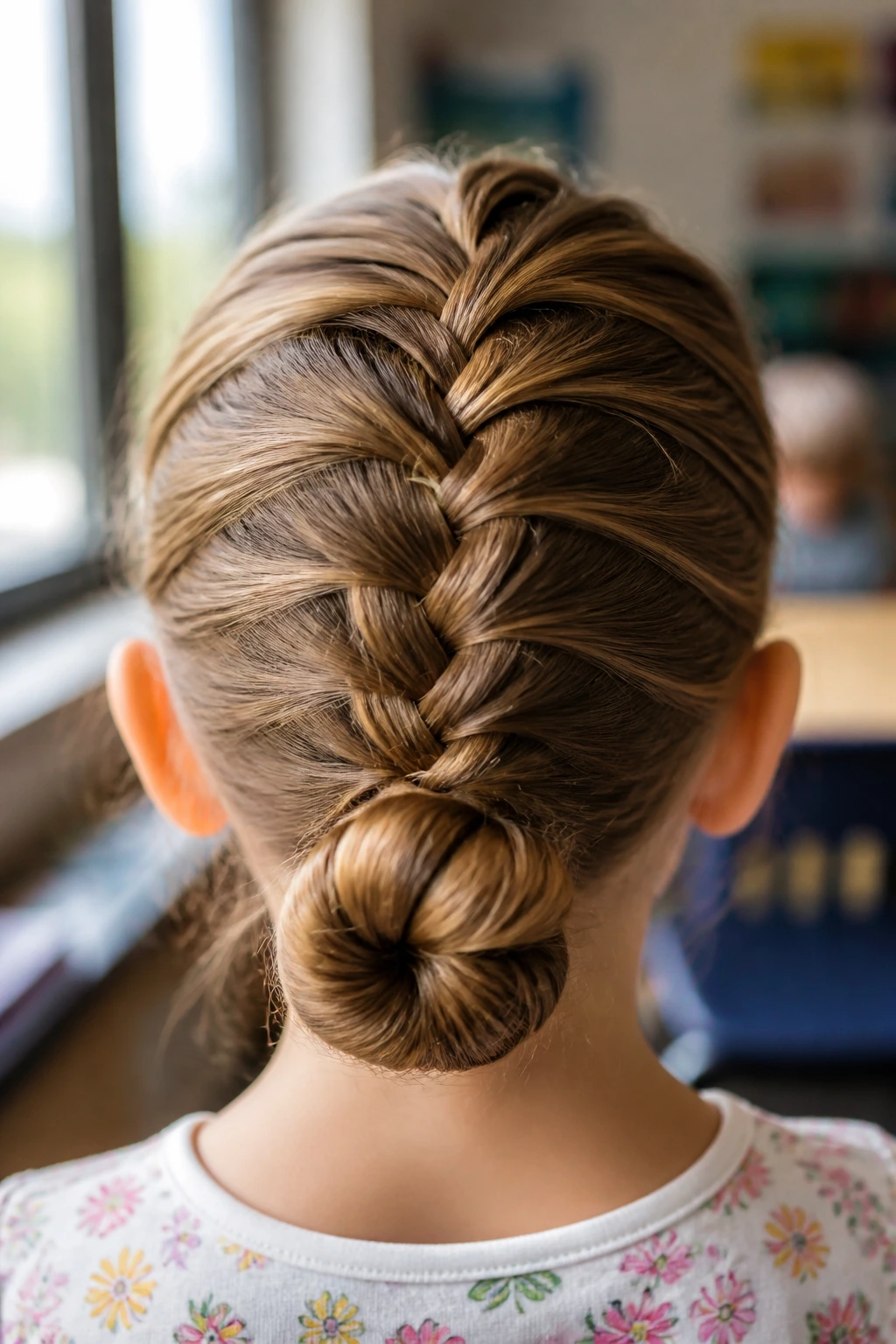
This style is tidy in the best way. The French braid controls the head from the crown down, then the braid tucks into a low bun at the nape. It’s a good pick for school pictures, family events, or any day when the hair needs to stay out of the way but still look finished.
I like how the low bun changes the mood of the braid. Alone, the braid feels casual. Wrapped into the bun, it turns more polished. Keep the bun flat enough that it does not press into the back of the neck. A bun that sticks out too far gets bumped all day.
22. Twist-and-Braid Pigtails
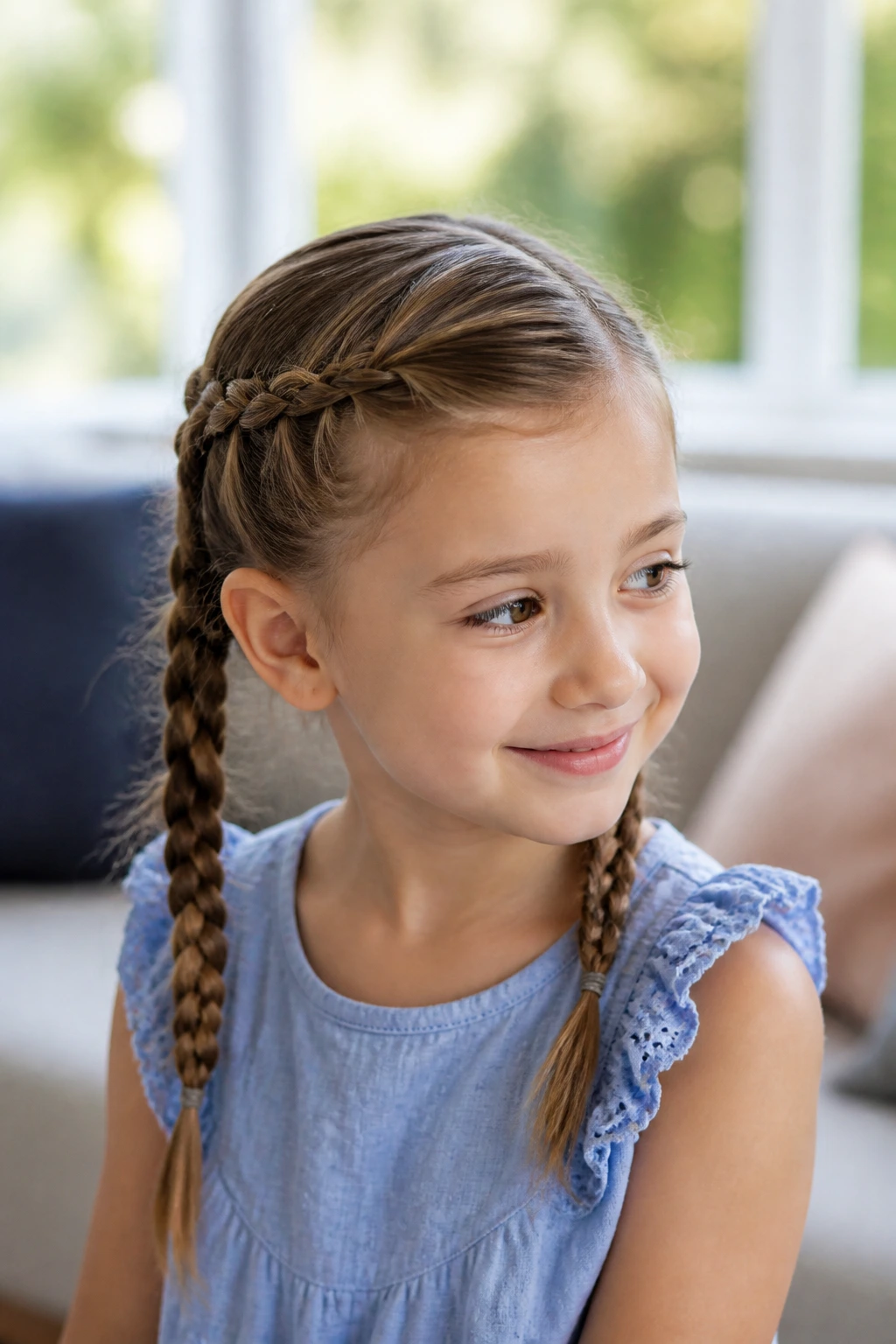
Twist-and-braid pigtails are useful when you want the hair controlled but not locked into a single braid pattern from top to bottom. Start with a twist near the front, then finish each side with a braid. The mix of textures keeps the style from looking too stiff.
This works well on mixed textures and on kids who have enough length for a braid but not enough patience for a very long styling session. The front twist should lie flat so the style doesn’t puff up by noon. If the hairline is fragile or tender, keep the twist loose and anchor it with gentle elastics only.
Best for
- Medium-length hair
- Kids who want movement around the face
- Days when you need a compromise between loose hair and a full braid
- Parents who want a style that does not take forever
23. Braided Mohawk
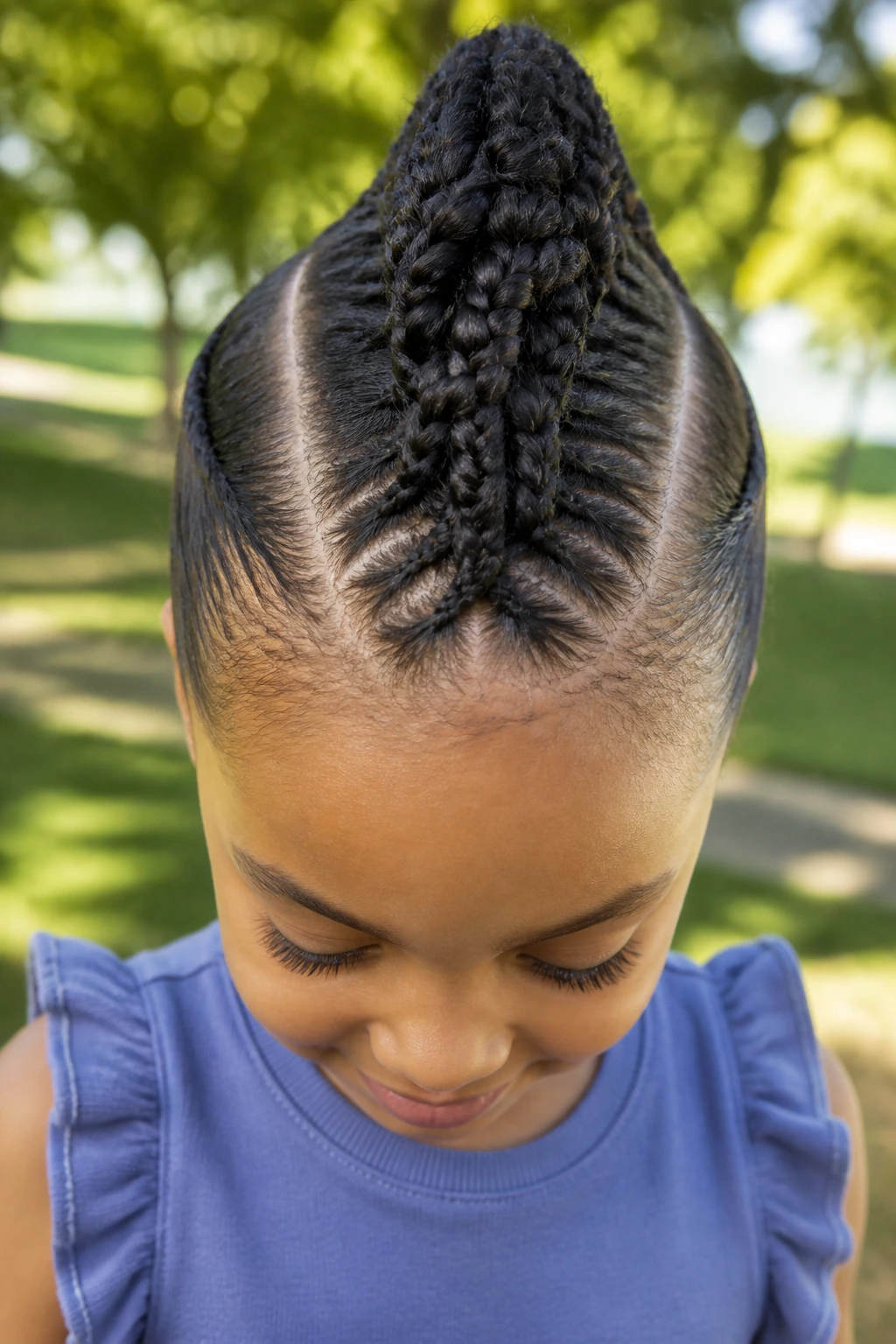
The braided mohawk has more edge than most kids’ braid styles, but in a child-friendly way it can still look sweet and practical. The braid runs down the center, while the sides are slicked, puffed, or braided back. It keeps the focus in one strip down the head, which makes the style easy to read and easy to photograph.
The center section needs to be neat, or the whole look loses shape. If the child has a sensitive scalp, keep the side tension soft. The mohawk shape looks best when the top braid has a little lift, so don’t flatten it too hard with gel. You want structure, not helmet hair.
24. Feed-In Ponytail Braids
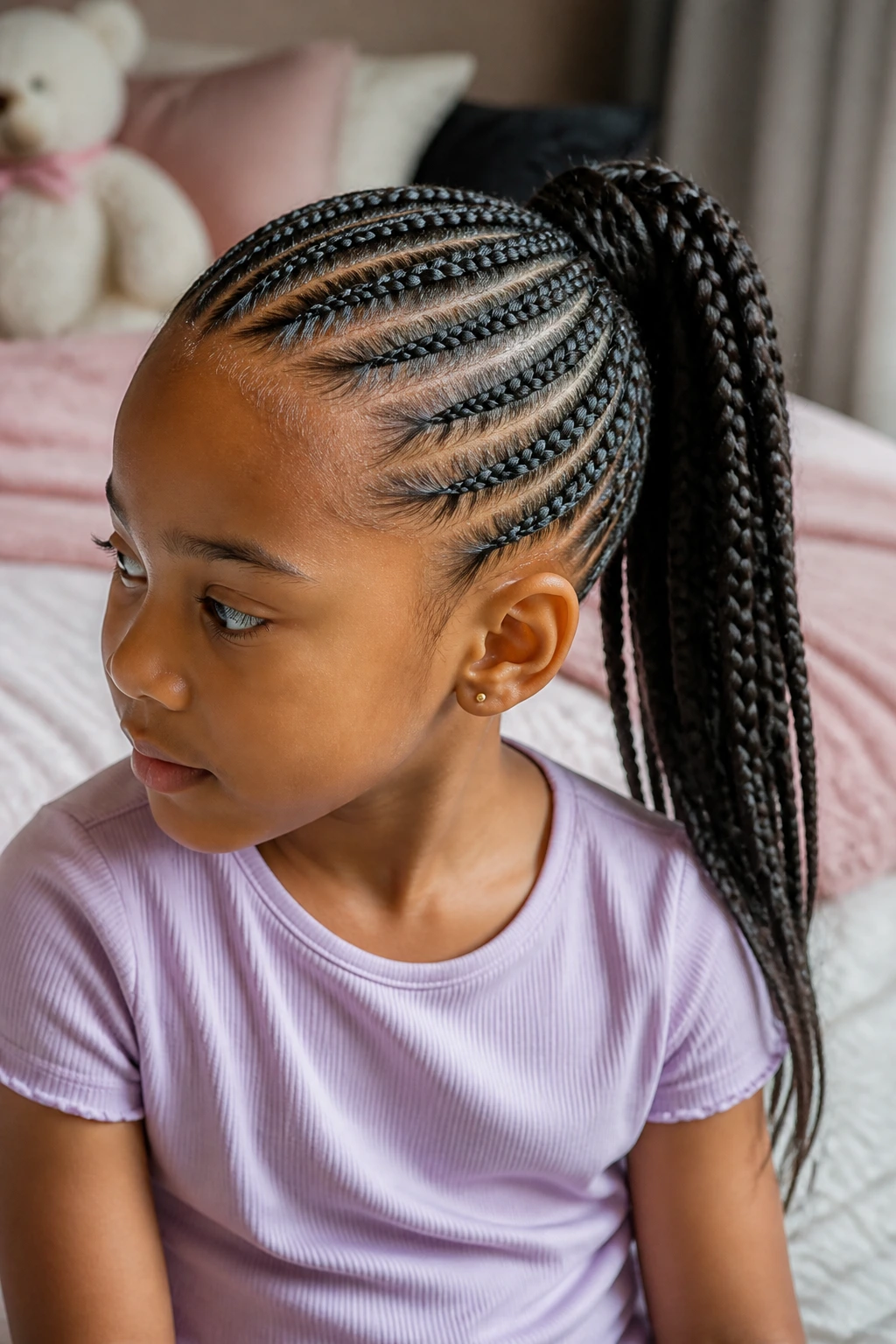
Feed-in braids are a sleek way to build a ponytail with a smoother start and a tapered finish. Hair — or light added braiding hair, if you choose to use it — gets fed in gradually so the braid grows from small to full instead of starting bulky at the scalp. That makes the look clean and elegant.
For little girls, I prefer a lighter version. Heavy extensions can be a lot for a small head. Keep the added hair minimal, soft, and age-appropriate. The parting should be neat, but the scalp should not look stretched. If the child keeps touching the front, the braid is too tight.
Quick facts
- Best for thicker hair or hair that can hold a sleek braid
- Can last several days with proper nighttime care
- Looks good in a high or mid ponytail
- Needs gentle handling at the hairline
25. Triangle-Part Box Braids
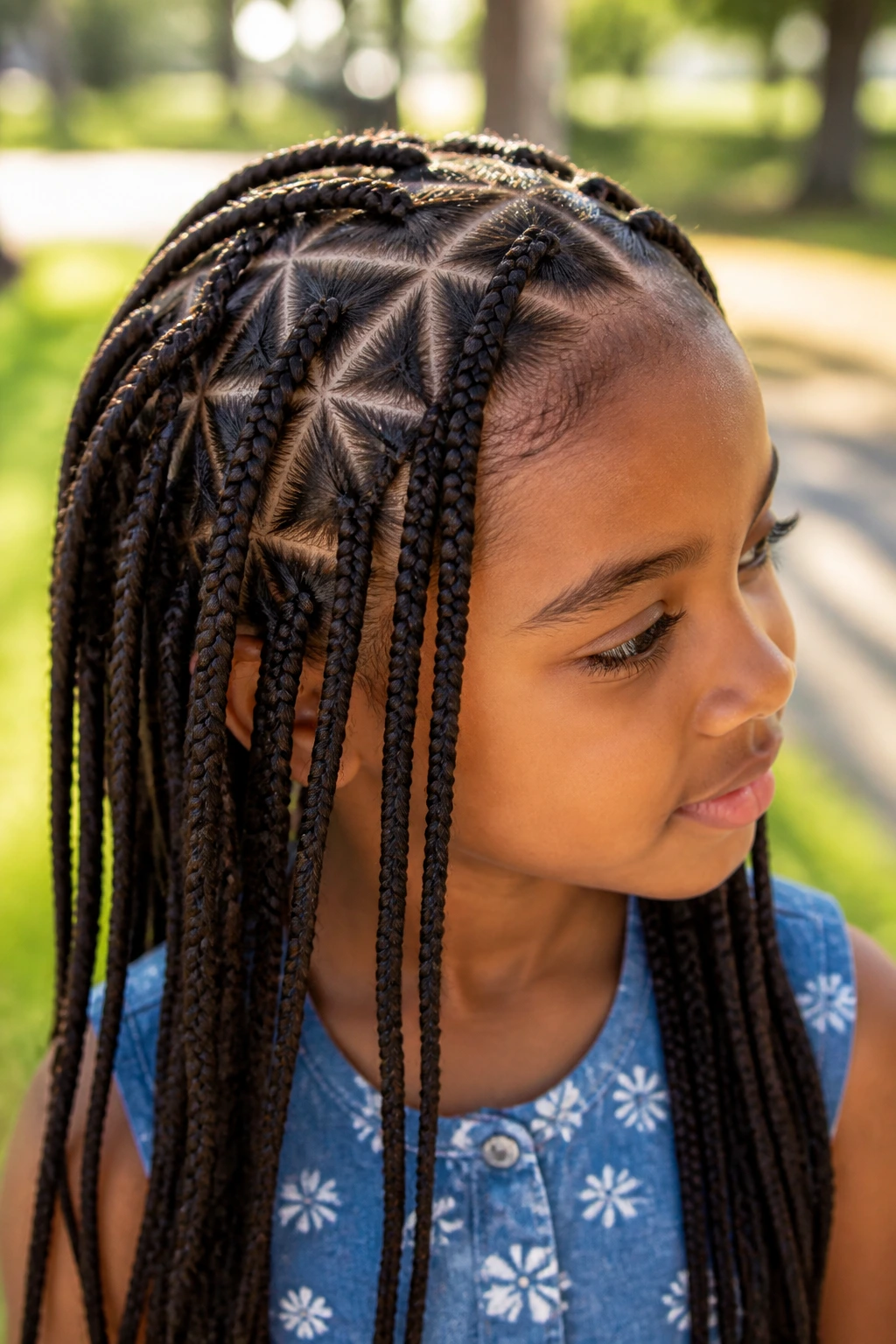
Triangle parts change the whole feel of box braids. Instead of simple squares, the sections are parted into triangles, which gives the scalp pattern a little extra character. It’s a small detail, but it changes the finished look enough that the style feels more interesting even before you notice the braids themselves.
This is a good option when you want a protective style that still has a bit of visual rhythm. Clean parting is everything here. If the triangles are uneven, the lines show immediately. Box braids like this should also be kept lightweight. A child does not need a heavy head of braids to get a neat result.
26. Half-Up Accent Braids With Curls
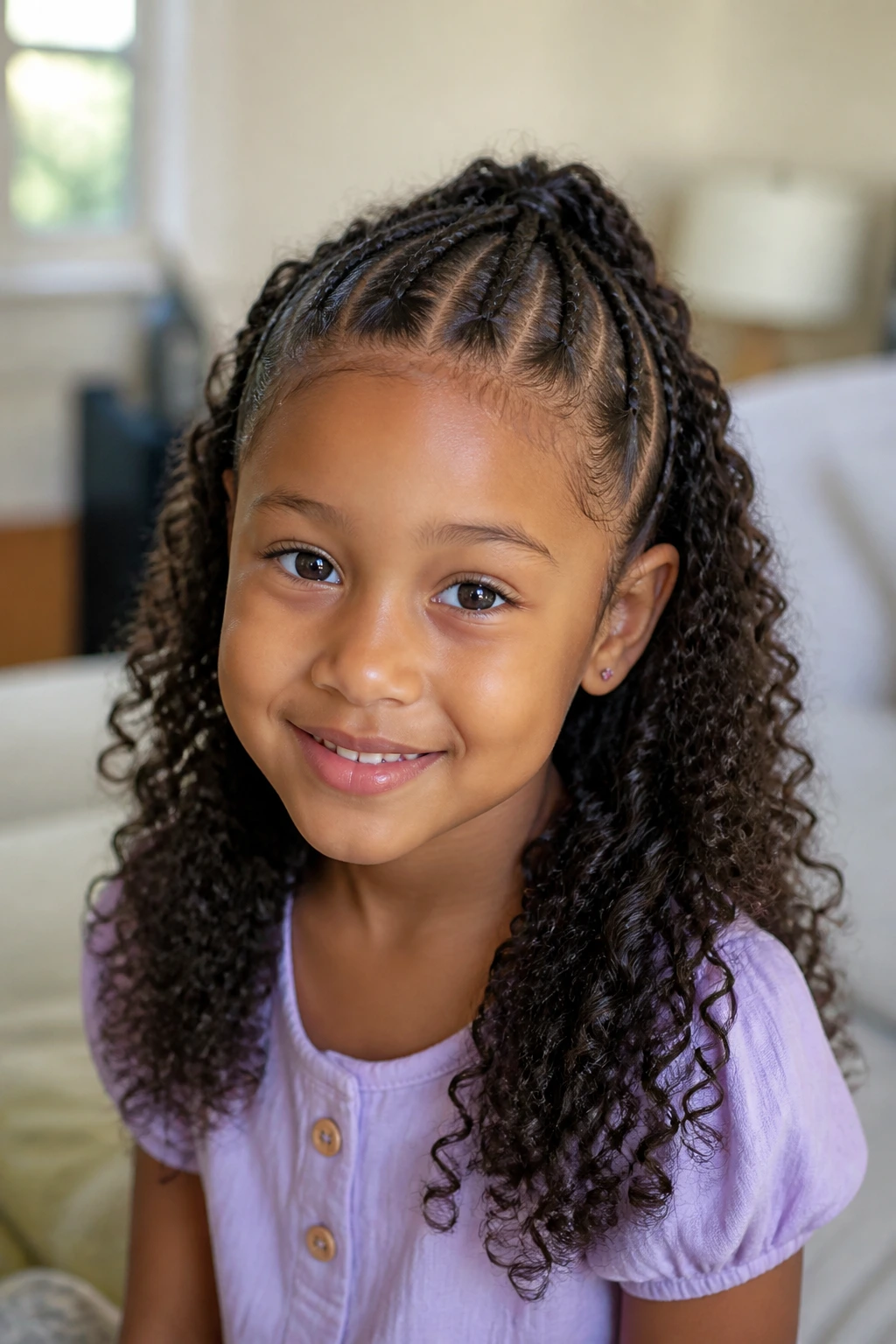
Half-up accent braids with curls are a nice middle ground between structured and loose. The top section gets braided back in small pieces, then the rest of the hair stays curly or wavy underneath. It gives shape to the front without pinning every strand away from the face.
I like this style for medium-length hair because it lets the curls keep their bounce. A little braid at the crown also helps the style look finished, which is useful when the lower half of the hair is doing its own thing. If the curls are dry, add a light cream or leave-in before braiding so the top doesn’t puff up around the parts.
27. Side Fishtail Into a Low Pony
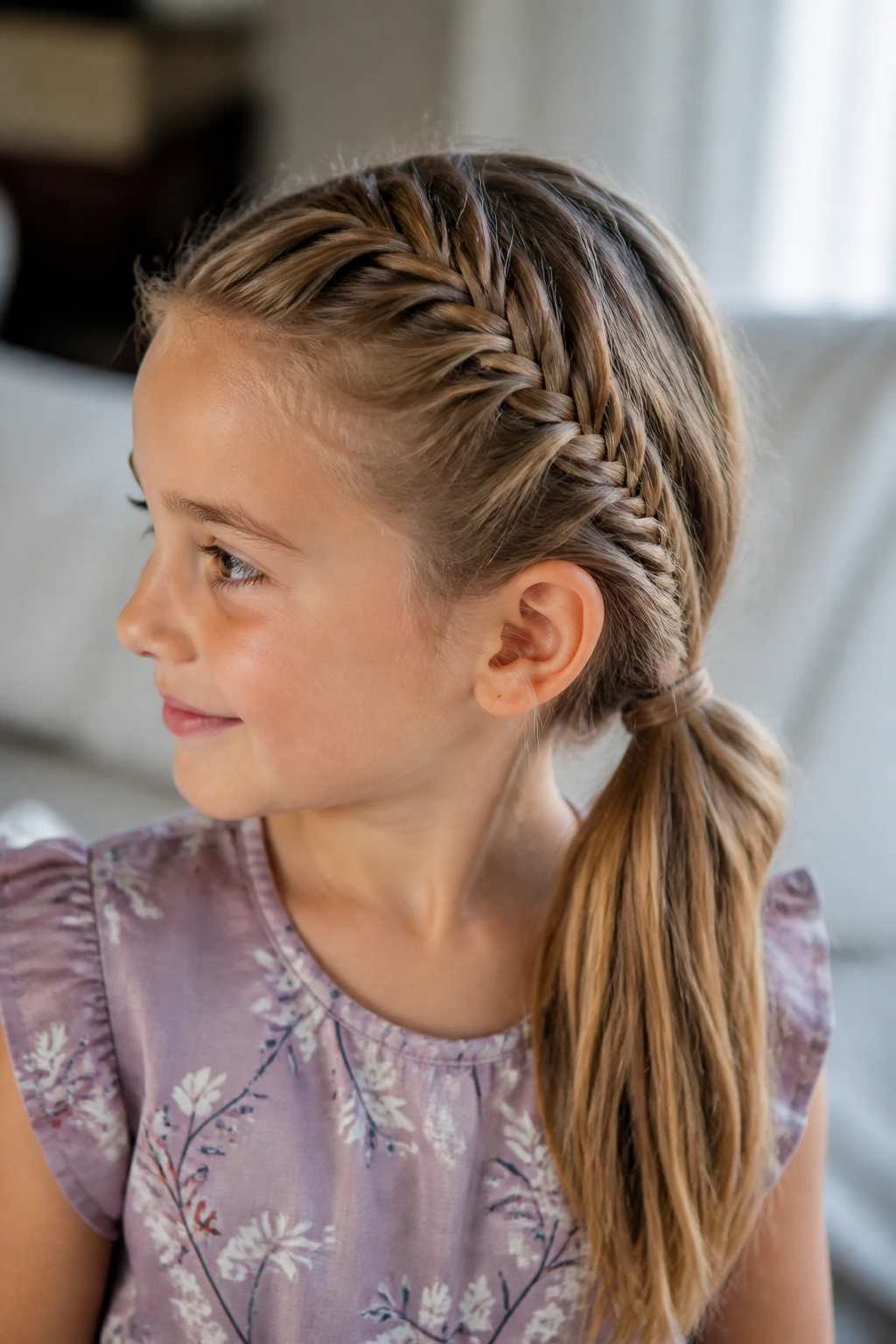
This one is less formal than a crown braid and less plain than a standard ponytail. The fishtail starts off to one side, then drops into a low pony at the nape or just behind the ear. It gives movement without too much fuss.
The side placement makes it especially useful for kids who don’t want hair sitting in their eyes but still want some softness around the face. Keep the fishtail a little loose at the edges so it doesn’t look over-tight. A small elastic at the transition point from braid to pony keeps the shape from collapsing.
28. Braided Bun With a Scarf
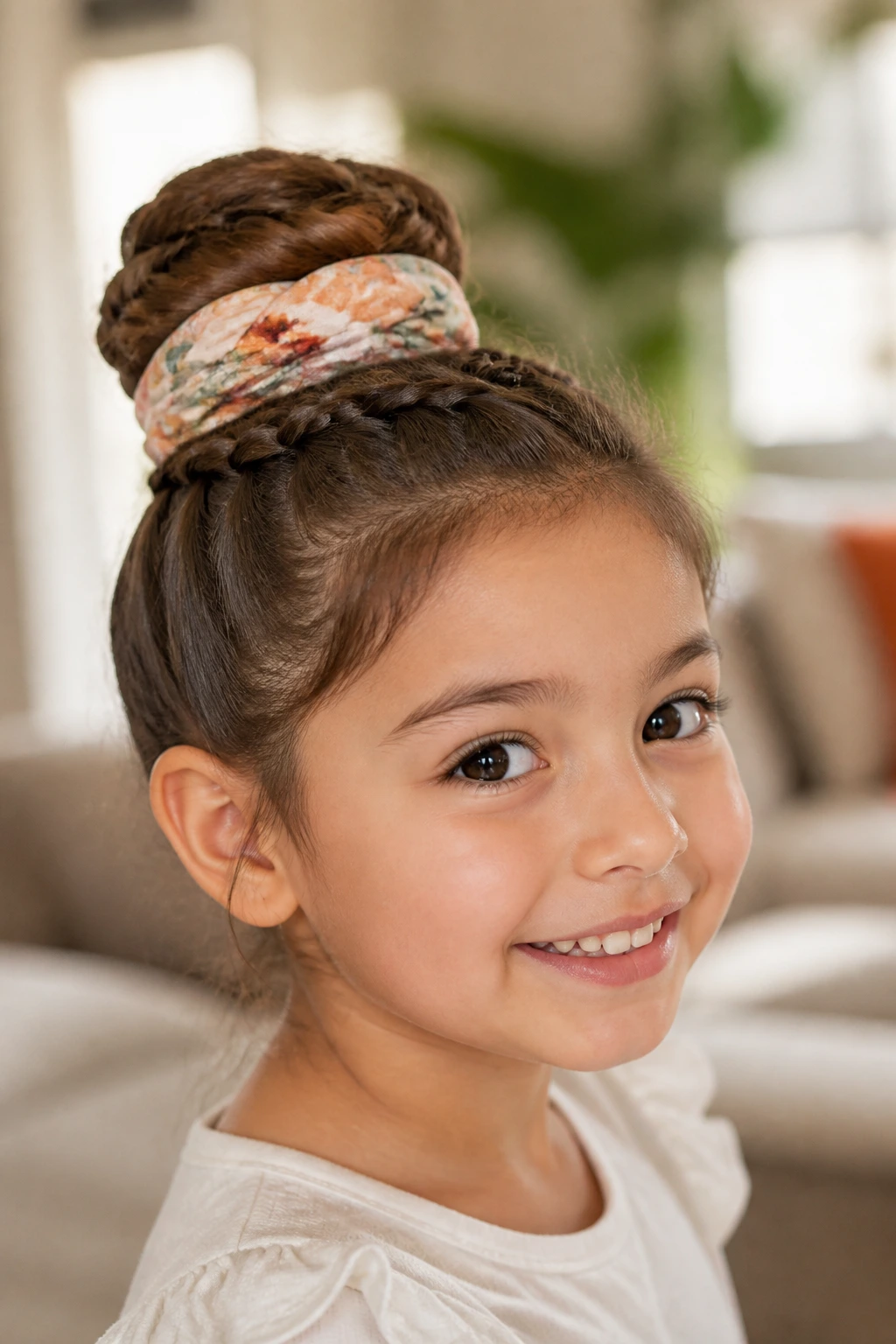
A scarf can turn a bun into something with real personality. The braid feeds into a bun, and then a scarf or narrow wrap goes around the base. That tiny fabric detail adds color, ties the outfit together, and can help hold the bun in place if the scarf is tied well.
The best version keeps the scarf lightweight and soft. Stiff fabric can dig into the bun or slip around all day. Cotton or satin works nicely. If you want the bun to stay centered, pin it before tying the scarf. Otherwise the wrap can tug the bun sideways.
H3: When to use it
- Family events
- Dress-up days
- Hair that needs a little visual interest
- Styles that need a color accent without extra clips
29. Double Halo Braids
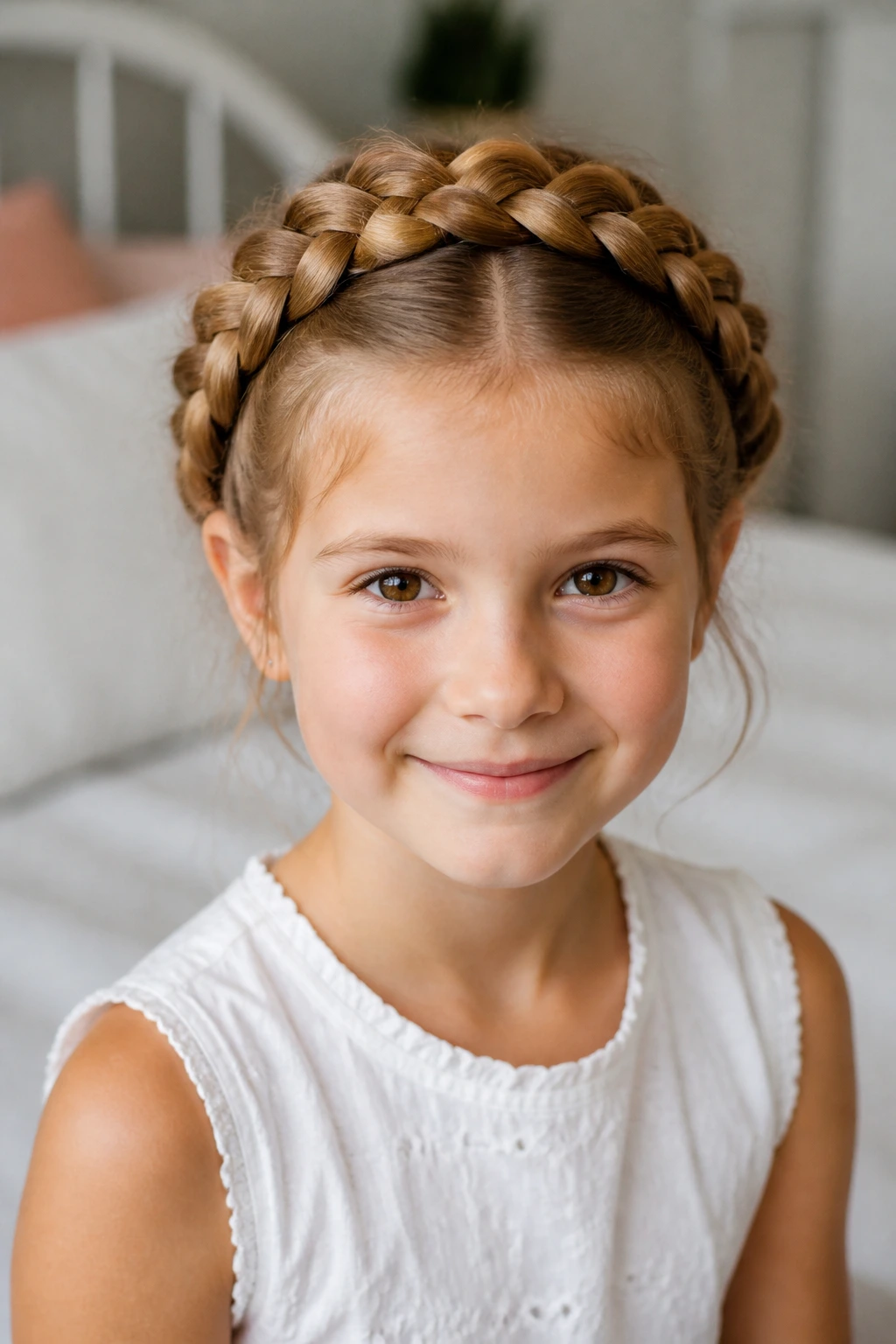
Double halo braids are like a crown braid with a little more structure. Two braids wrap around the head and meet or overlap in a way that frames the face from both sides. The result is soft, balanced, and very tidy.
This style works well when you want the whole front section controlled but don’t want the hair pinned flat and severe. It suits medium to long hair best, and it takes a careful hand at the back where the braids meet. If the ends stick out at the nape, tuck them under with pins instead of leaving them to poke up.
30. Tiny Accent Braids Into a Puff
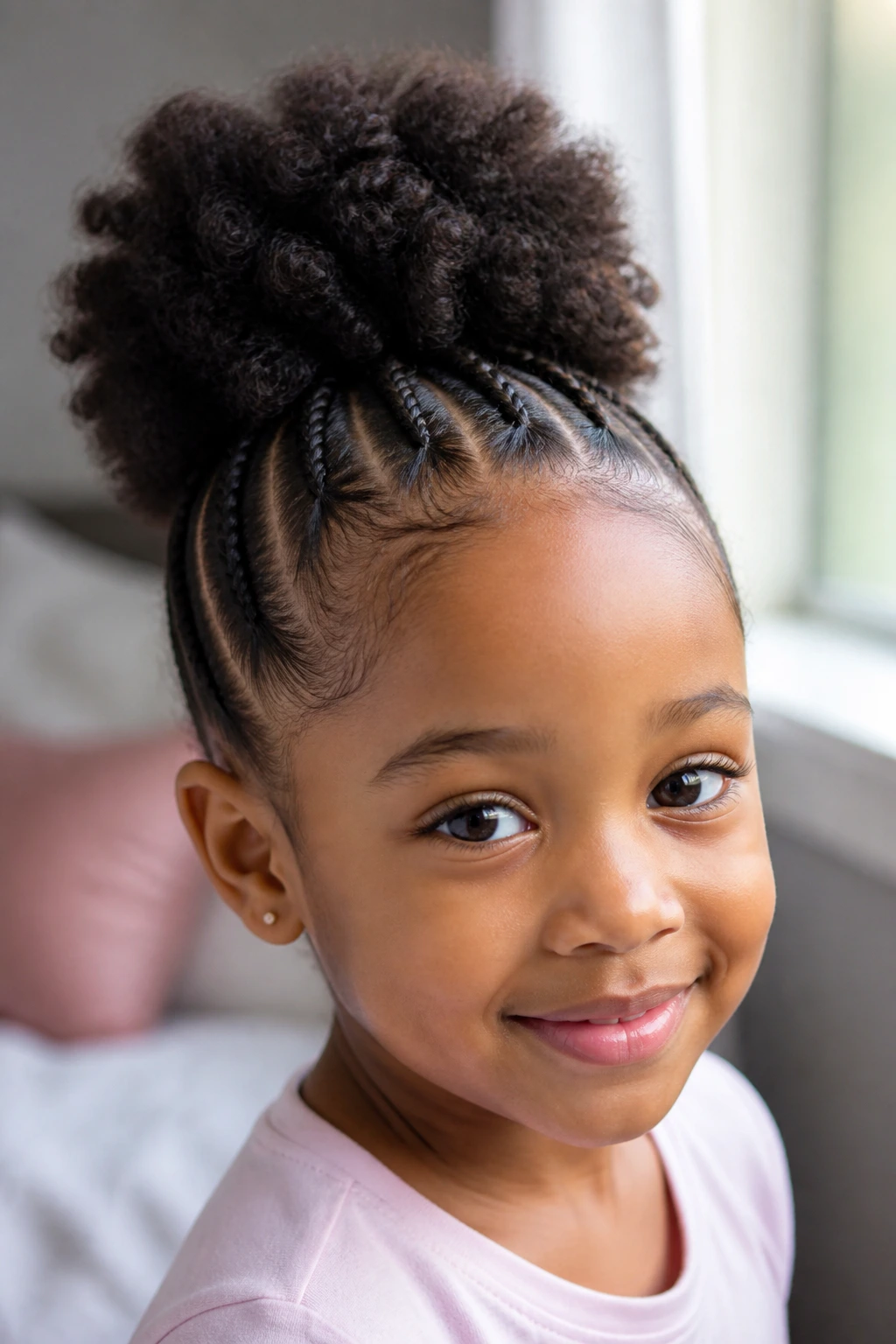
Tiny accent braids feeding into a puff are a smart choice for short to medium natural hair. The small braids give the front and sides some structure, and the puff keeps the back full and lively. It is one of the most practical braid hairstyles for little girls with curls that need room to breathe.
The accent braids should be small, neat, and not pulled too tightly along the hairline. Then the puff can be shaped with fingers so it stays soft and round. If the hair starts frizzing fast, a little leave-in conditioner on the braids and a satin bonnet overnight help a lot. This style looks nicest when it still has movement.
How to Choose a Style That Holds Up Past Lunch
A braid can look perfect at 8 a.m. and miserable by 1 p.m. if it fights the child’s hair type. That’s why the best choice is not always the fanciest one. Fine hair usually needs smaller sections, more grip, and fewer heavy add-ons. Thick hair can handle bigger shapes, but it also needs enough moisture to keep the parts from turning fuzzy after one hour in the sun.
Shorter hair behaves better with accents, puffs, and half-up styles than with long plaits that depend on length you don’t have. Curly or coily hair often looks best when the braid pattern respects the texture instead of flattening it. And if a child complains that a style feels “pokey” or “tight” at the edges, trust that complaint. Kids are often more honest than adults about the parts that hurt.
Practical tip
If you’re torn between two styles, pick the one that uses the fewest tight anchor points. Comfortable braids get worn. Painful ones get touched, scratched, and half-undone before you make it to the car.
The Small Tool Kit That Makes Braiding Easier
You do not need a salon drawer full of gear, but a few specific tools make a huge difference.
- Rat-tail comb: The pointed handle gives you clean parts, especially for French braids, zigzags, and triangle sections.
- Detangling brush: Use this before braiding so you are not fighting knots as you go.
- Spray bottle: A light mist helps hair cooperate without soaking it.
- Leave-in conditioner: Good for smoothness and slip, especially on textured hair that frizzes fast.
- Snag-free elastics: Small, soft elastics hold braids and ponytails without ripping at the ends.
- Duckbill or sectioning clips: These keep the rest of the hair out of the way while you work.
- Edge brush or soft toothbrush: Handy for smoothing little flyaways; use lightly.
- Bobby pins: Better for tucking ends and securing buns than forcing hair into one giant elastic.
- Satin bonnet or pillowcase: Not a styling tool, exactly, but it matters the next morning.
- Light ribbon or scarf: Optional, but useful when a style needs color or a softer finish.
Smart Product Picks for Cleaner Parts and Happier Hair
The products that help braids are usually the boring ones. That’s a compliment. A water-based leave-in that spreads easily, a gentle detangler, and a styling cream with enough slip are more useful than sticky products that sit on top of the hair and flake later. If the hair is very fine, use less product than you think you need. Too much cream can make a braid sag.
For textured hair, a little moisture before braiding helps the sections stay clean and keeps the finished style from puffing up before lunch. I like to add product to the lengths first, then work whatever is left on my hands near the roots. That keeps the scalp from getting greasy. Heavy pomades can make parts look shiny, but they also attract lint and dust. Not worth it.
Lightweight accessories matter too. Small elastics, soft ribbons, and hollow beads are easier on young heads than chunky decorations. If the child has fine hair, avoid heavy clips near the front. They slide, slip, and make the style feel dragged down.
How to Wear Them Without a Midday Rescue Mission
A braid style is only as good as the way it’s finished. The hairline should look smooth, but not stretched. The ends should be secure, but not so bound up that the child can feel every elastic. If you want the style to last, start with a clean part, braid with even tension, and finish with an accessory that matches the shape instead of fighting it.
Morning rush: Choose styles with a single anchoring point — a French braid, side braid, pony wrap, or braided puff — when you need the hair done quickly.
Longer wear: Pick cornrows, box braids, or feed-in styles when you want the style to hold for several days and the child can handle a longer styling session.
Photo day: Go for crown braids, halo braids, ribbon details, or heart-part styles when the outfit needs the hair to do some of the work.
Comfort check: After styling, look at the hairline and ask the child to move her head side to side. If the style pinches, rides up, or leaves bright red lines, redo it before the day starts.
Little Fixes That Make Braids Look Better
Flavor Enhancement: A tiny bit of leave-in conditioner on the mid-lengths before braiding gives the hair a smoother finish and helps the braid hold its shape. Use a light hand. You want control, not shine that looks oily by noon.
Customization: Ribbons, mini bows, beads, and scarf wraps can change the mood of the same braid without changing the braid itself. A plain French braid feels different with a velvet bow than it does with a bright ribbon.
Serving Suggestions: Pair simple braids with one strong accessory instead of five small ones. A neat braid and one good bow look better than a crowded head of clips.
Make-It-Yours: For a child who hates hair touching the neck, turn the style into a bun or ponytail. For a child who loves movement, leave the ends loose or add curls at the bottom.
The Mistakes That Make Braids Hurt, Puff, or Fall Apart
The biggest mistake is pulling too tight at the hairline. That red, shiny strip along the temples is not a sign of a job well done. It’s a warning. Repeated tension can stress the hairline over time, so if the child complains, back off and loosen the braid. Hair should sit, not grip the scalp like a clamp.
Another common problem is skipping detangling. Braiding over knots makes the sections bulky and uneven, and little knots often pop free later anyway. Start with a brush or wide-tooth comb and work gently from the ends upward. That little bit of patience saves a lot of tugging.
Accessory overload causes trouble too. Heavy beads, thick clips, and bulky elastics can make a style feel nice for five minutes and annoying for the rest of the day. Keep decorations light, especially on fine hair.
Frizz at the crown usually means the hair was too dry before braiding, or the part was not set cleanly. A light mist and a touch of leave-in fix most of that. No need to drown the hair in product.
Easy Swaps and Adaptations to Try
Short-Hair Switch: If the hair is not long enough for a full braid, use half-up accents, side braids, or puffs. The style stays neat without fighting the length.
Curly-Hair Version: Keep the braid sections smaller and leave a little softness at the edges so the style works with the curl pattern instead of flattening it.
Ribbon-Free Option: If your child hates accessories, let the braid pattern do the work. A clean part and a tidy finish are enough on their own.
Protective-Style Approach: For longer-lasting braids, cornrows, box braids, and feed-in styles can hold well when done gently and maintained overnight with a satin bonnet.
Playground-Ready Swap: Turn any braid into a bun or ponytail if loose ends get in the way. The braid still gives structure, but the finish is less likely to snag on jackets or swings.
Keeping Braids Neat Overnight and Between Washes
Braids last longer when they are protected at night. A satin bonnet is the easiest fix, and a satin pillowcase works if your child won’t keep a bonnet on. Both reduce friction, which means fewer fuzzy parts in the morning. If a style has beads or ribbons, lay the hair flat before bed so the decorations do not twist into odd angles.
A quick refresh is usually enough the next morning. Smooth the part with clean fingers, mist the lengths lightly if they look dry, and redo any loose elastics. Do not soak the braid unless you’re washing the whole style. Too much water can make the braid swell and puff.
For styles meant to last several days, check the hairline daily. If the front starts to lift or the child says it feels sore, it’s time to loosen or redo the style. Braids are meant to save time, not create a week of complaints.
Frequently Asked Questions
How tight should a braid be on a little girl’s hair?
Tight enough to stay together, not tight enough to pull the eyes or temples. If the scalp looks shiny or the child keeps scratching right after you finish, the braid is too firm and should be redone looser.
What braid styles work best for short hair?
Half-up braids, side braids, accent braids, braided puffs, and rope twists usually work best when the hair is too short for a long plait. They give shape without depending on extra length.
Can you braid damp hair?
Yes, lightly damp hair often braids more cleanly, especially if it frizzes fast. Just don’t braid soaking-wet hair and send the child off to school; that can stay damp too long and feel uncomfortable.
How do you keep braids from getting frizzy so fast?
Start with detangled hair, use a light leave-in, keep the parts neat, and protect the style overnight with satin. Heavy products do not solve frizz; they usually make the hair dusty or limp.
What if my child won’t sit still long enough?
Choose faster styles like twin pigtails, a side braid, rope twists, or a pull-through pony braid. If the style takes too long, the tension usually gets worse as you rush, and that’s when tears start.
Can braids be worn for several days?
Yes, many braided styles can last a few days if the hair is protected at night and the scalp stays comfortable. The key is to refresh the edges and stop before the style becomes tight or itchy.
Are beads safe for fine hair?
They can be, but keep them light and use only a few. Heavy beads pull on small sections and can make the style uncomfortable by the end of the day.
What should I do if the braid keeps slipping out?
The hair may need more grip. A touch more detangler, smaller sections, or a slightly tighter finish at the start usually helps. Fine, slippery hair often does better with a Dutch braid or a pull-through style than with a loose classic plait.
Braids That Keep Up With Real Kids
The best braid styles do not just look sweet in the first five minutes. They hold their shape, respect the child’s scalp, and still look decent after a nap, a playground run, and a snack break that somehow turns into a hair-tugging session. That is the real test.
Start with the styles that match the hair you actually have in front of you. Some days that means a clean French braid. Other days it means a puff, a halo, or a quick pair of rope twists because everybody needs to get out the door and nobody has the patience for perfection.
Once you find the braid that fits her hair texture, her comfort level, and her schedule, the whole routine gets easier. And that’s the part worth keeping.
