



Short hair and an undercut can do something most cuts can’t: they make the shape look intentional the second you walk out of the chair. The best undercut styles for short hair don’t need a lot of length to make a point. A clean nape, clipped sides, and a top that sits just a little longer can turn a plain crop into something with actual structure.
What matters most is the balance. Too much length on top and the whole thing starts to read like a grown-out bob. Too little, and the cut loses that satisfying contrast between tight sides and a top that still has movement. The sweet spot is usually smaller than people expect — often two to four inches on top, sometimes less if the hair is dense or curly, sometimes more if you want a slicked-back finish.
I like short undercuts because they’re honest haircuts. They show the crown, the hairline, the nape, and every cowlick hiding under there. That can be annoying for about five minutes, then it becomes the appeal. Once the shape is right, you stop fighting your hair and start using it.
Why These 23 Cuts Keep Short Hair Sharp
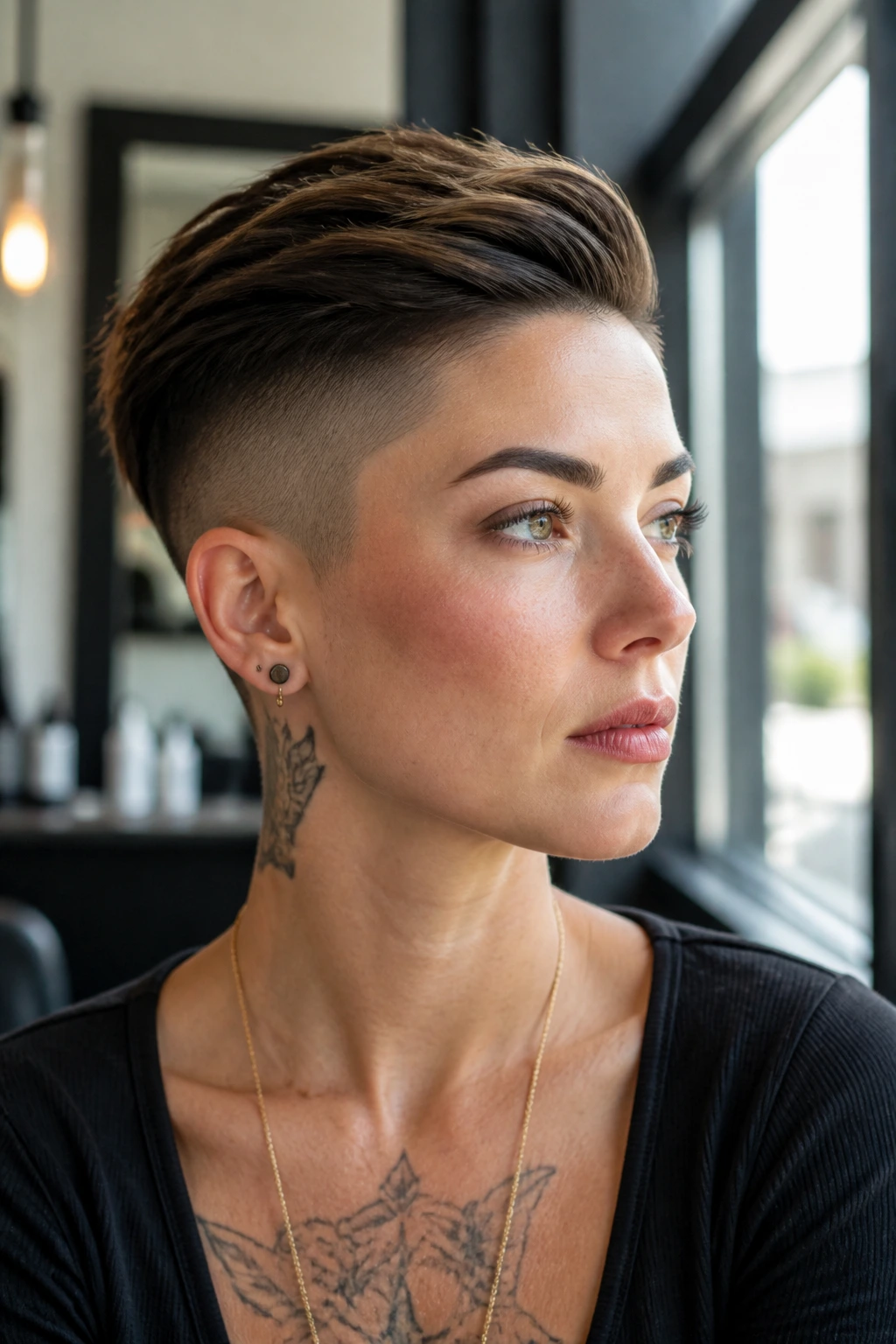
- The sides do the heavy lifting: Shaved or clipped panels remove bulk where short hair usually puffs out first, especially around the ears and temple.
- The top stays easier to style: A two- to four-inch top needs less product and less time than a longer layered cut that keeps falling into your eyes.
- The silhouette stays readable: Even when the top gets a little messy, the undercut keeps the outline clean enough to look deliberate.
- They work with a lot of textures: Straight hair gets edge, waves get direction, curls get shape, and thick hair gets relief.
- They grow out with options: A good undercut can become a bob, pixie, crop, or shag without forcing you into one awkward in-between stage.
- You can make it soft or sharp: The same basic cut can read polished, punky, airy, or hidden under the surface depending on the fade and top length.
1. Pixie Undercut
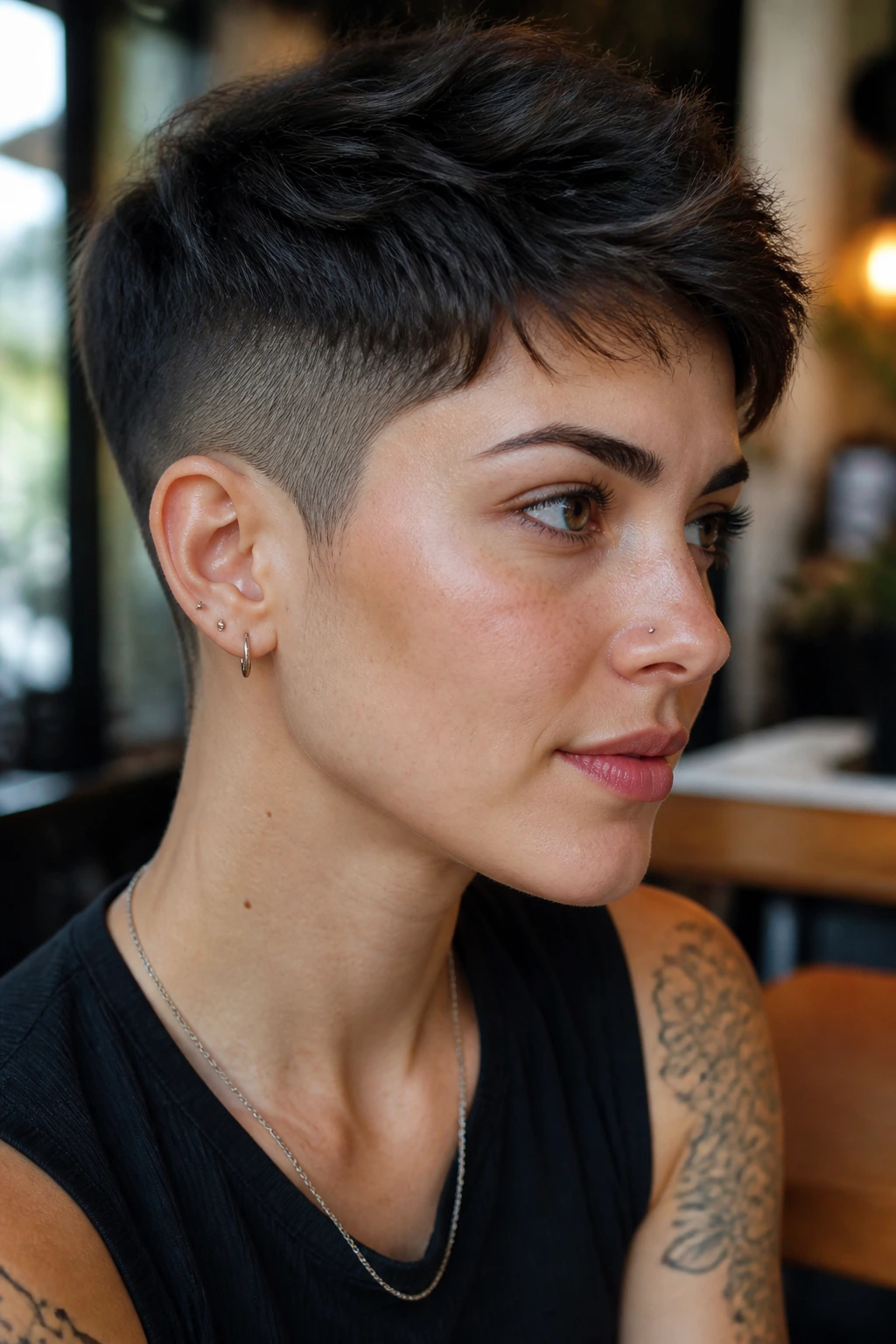
A pixie with an undercut is the haircut equivalent of clearing clutter off a table. The shape snaps into focus fast, and the neck no longer balloons out behind the ears. If your hair is dense or tends to flip at the nape, this is one of the cleanest fixes.
Why it works
The top stays short enough to style with your fingers, but the undercut removes the weight that usually makes a pixie feel bulky by week two. I’d ask for the nape and lower sides clipped tight with a #1 or #2 guard, then leave 1.5 to 3 inches on top for movement.
- Best for: thick straight hair, fine hair that needs lift, and anyone who hates a puffy neckline.
- Ask for: soft blending above the undercut if you want a gentler grow-out.
- Style with: matte paste, a pea-sized amount, worked through dry hair.
Tip: Keep the back slightly softer if you wear glasses. A hard line right behind the arm of the frame can look busy fast.
2. Side-Swept Crop
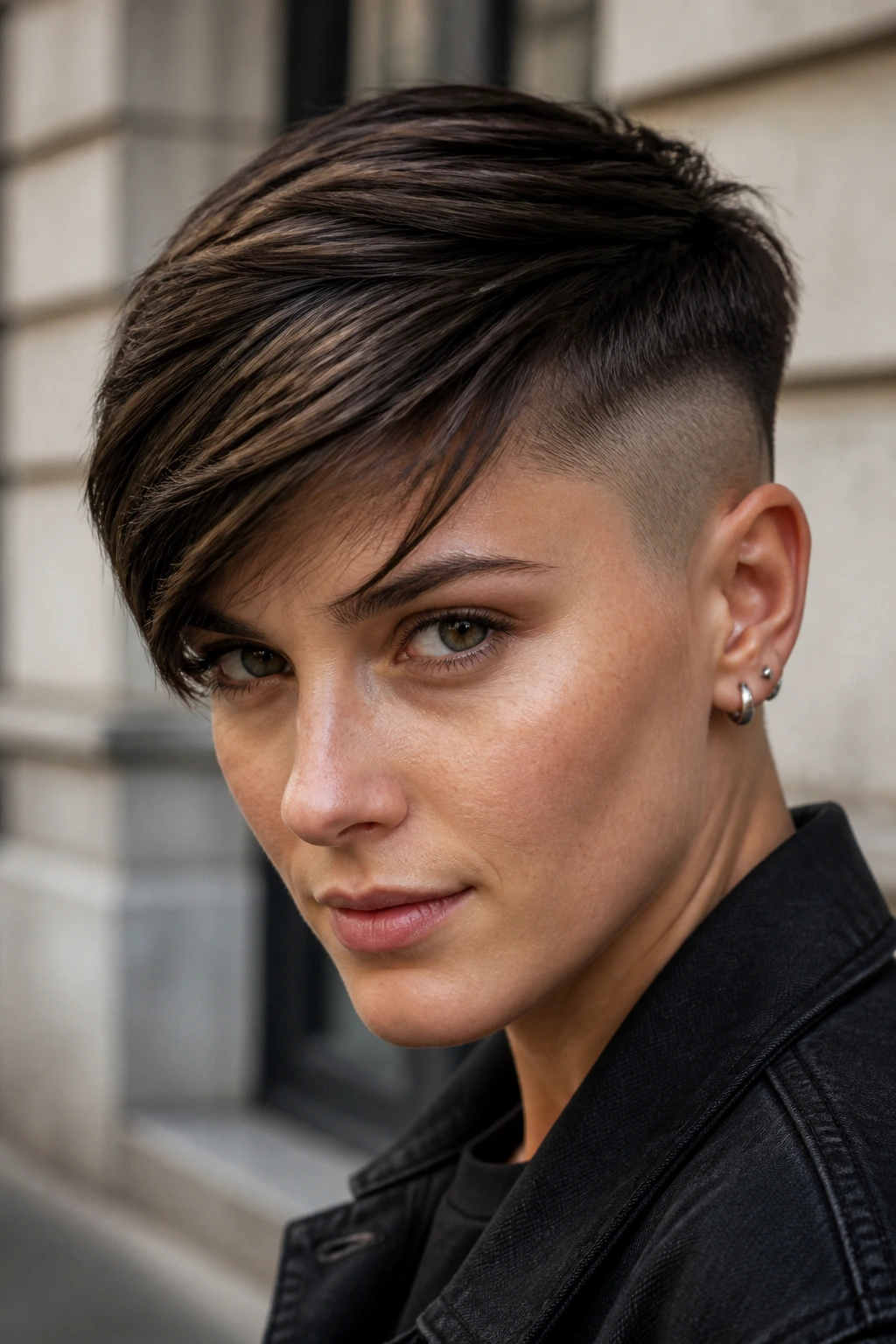
This one has more attitude than people expect. The crop is short, but the longer front panel sweeps across one side like it has somewhere to be, and the shaved or clipped side makes that front piece look even cleaner.
The trick is contrast. A side-swept crop needs enough length in the fringe to move — usually about 2.5 to 4 inches — while the side underneath stays tight. On fine hair, that contrast gives the top more visual weight. On thick hair, it keeps the whole cut from mushrooming.
Wear it with a deep side part when you want polish, or rough it up with your fingers when you want it to look less controlled. I prefer this cut without too much shine. A soft matte cream keeps the fringe from falling flat against the forehead.
3. Curly Top Undercut
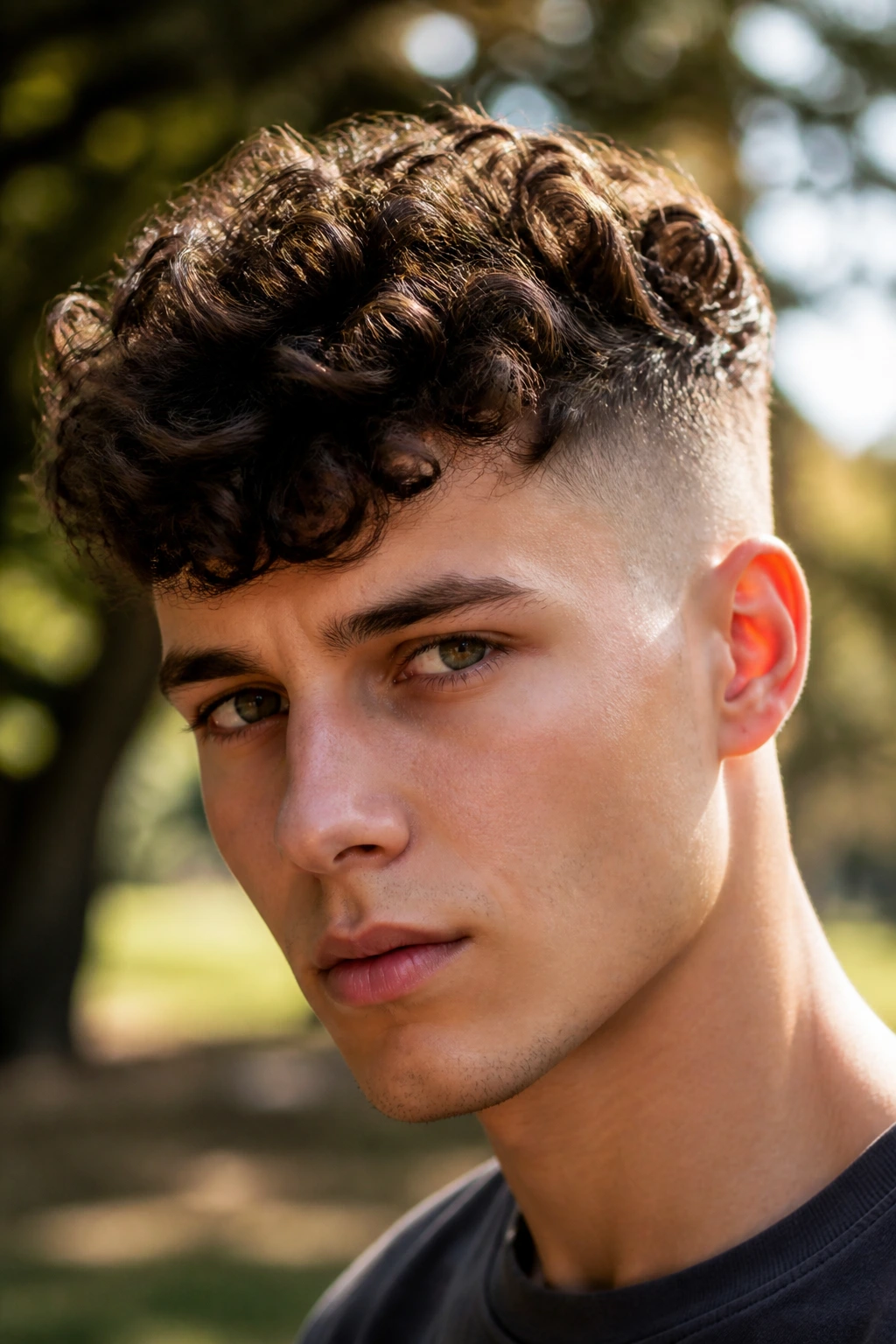
Why does this look so clean on curls? Because curls need boundaries. Without one, the shape can puff sideways at ear level and widen out like a triangle. The undercut keeps the base compact so the curl pattern can do the talking up top.
Leave enough length for the curl to spring — usually 3 to 5 inches on top, depending on your pattern — and clip the sides close enough that the top has room to lift. The contrast is the point. If the undercut is too soft, the curls can blur into the sides and lose that crisp shape.
How to style it
Use a light curl cream on damp hair, scrunch it once or twice, then diffuse on low heat or let it air-dry if you’ve got time. Once it’s dry, break up any helmet-y patches with a drop of oil on your palms.
4. Disconnected Bob Undercut
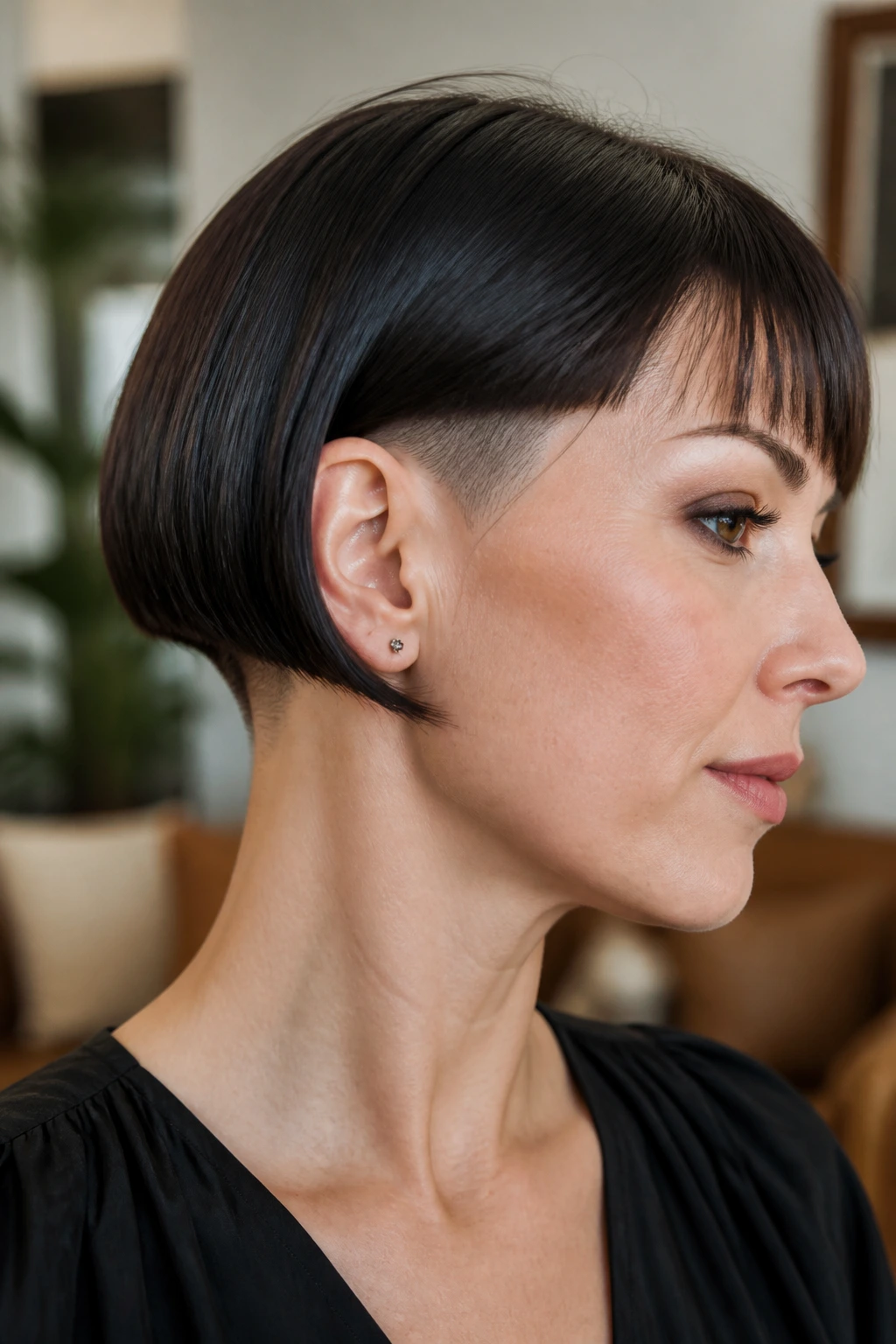
Picture a bob that stops pretending to be safe. The top layer sits blunt and tidy, while the underneath is clipped short enough that the whole cut floats instead of hanging. It’s the kind of shape that looks expensive even when you did almost nothing to it.
The disconnect matters here. You want a visible difference between the outer bob and the underlayer; otherwise it just turns into a layered bob with extra steps. Ask for the bob to sit at the jaw or just below it, then keep the undercut tucked under the occipital area and around the nape.
- Best for: thick hair, straight hair, and anyone who wants a bob without the triangle.
- Wear it with: a center part for a cool, blunt look, or tucked behind one ear for more shape.
- Watch for: too much thinning on the ends; that can make the bob look wispy instead of solid.
Tip: If your hair grows fast, this cut shows regrowth sooner than a classic bob. Plan on cleanup appointments before the bulk comes back.
5. Mohawk-Inspired Short Undercut
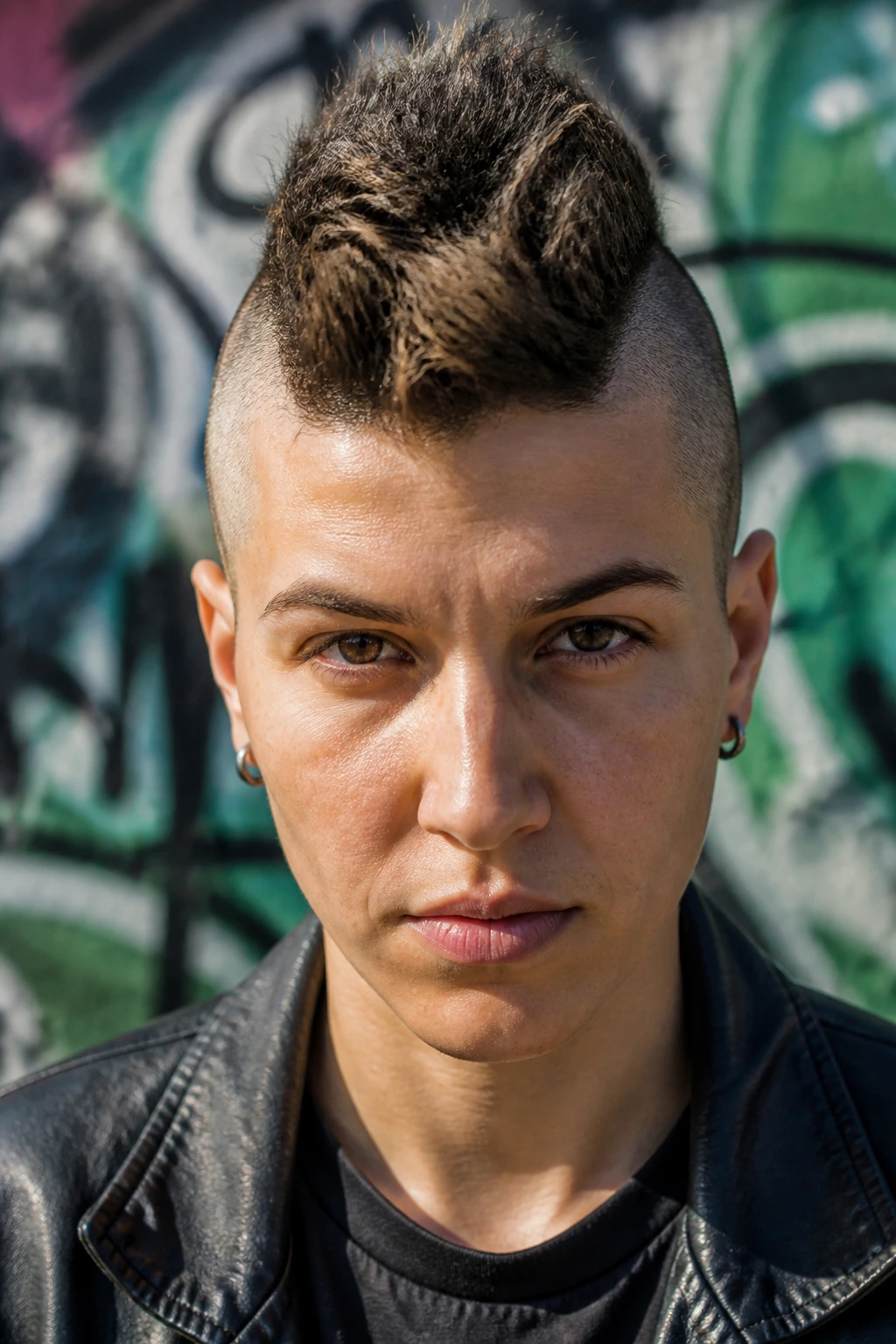
Not a full mohawk. That’s the point. A short mohawk-inspired undercut keeps a strip of length from front to crown while the sides are taken down tight, so the cut reads bold without needing six inches of standing height.
The best versions keep the strip textured rather than spiky. Think 2.5 to 4 inches on top, clipped sides, and a little width left through the crown so it doesn’t look like a narrow strip of hair pasted to the scalp. A narrow strip can be severe in a bad way. A slightly wider strip looks deliberate.
This cut works especially well if your hair is thick or has a natural bend. The sides remove the bulk, and the top can be pushed up with a matte clay or left loose and piecey. It’s one of those styles that looks like it took effort even when the routine is five minutes.
6. Asymmetrical Undercut
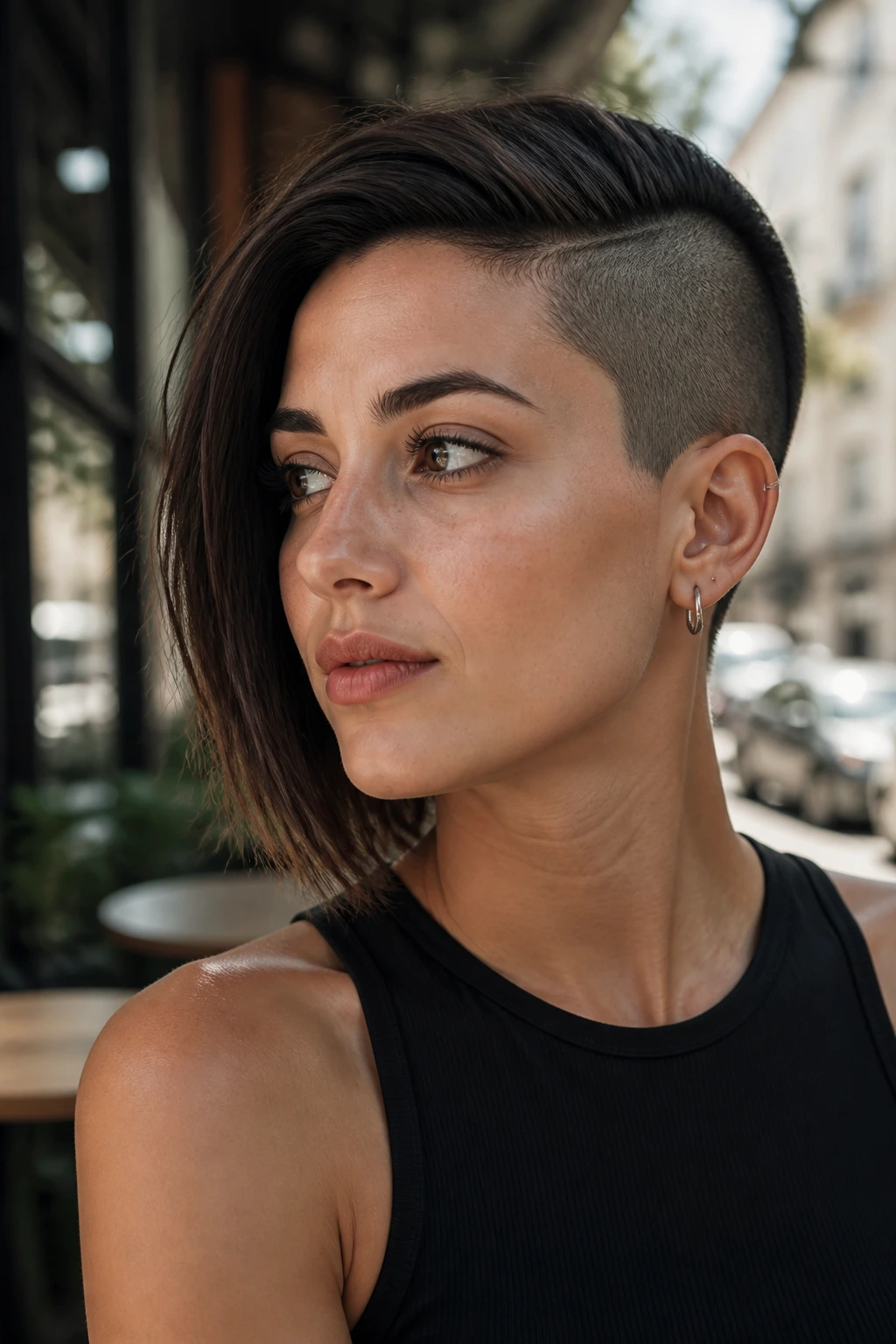
Unlike a symmetrical bob or crop, this cut gets its personality from the imbalance. One side sits longer, the other side is cropped tighter or shaved lower, and the whole shape leans a little on purpose. That lean is what makes it interesting.
It’s a smart choice if your face feels too round for a straight-across silhouette. The longer side can skim the jaw or cheekbone and pull the eye downward, while the shorter side keeps the neckline from getting heavy. Ask your stylist to keep the longer side textured, not blunt like a ruler edge, unless you want a sharper, more graphic finish.
This one likes a side part and a light styling cream. Too much product makes the asymmetry look stiff. A little movement keeps the contrast from feeling costume-y.
7. Tapered Nape Undercut
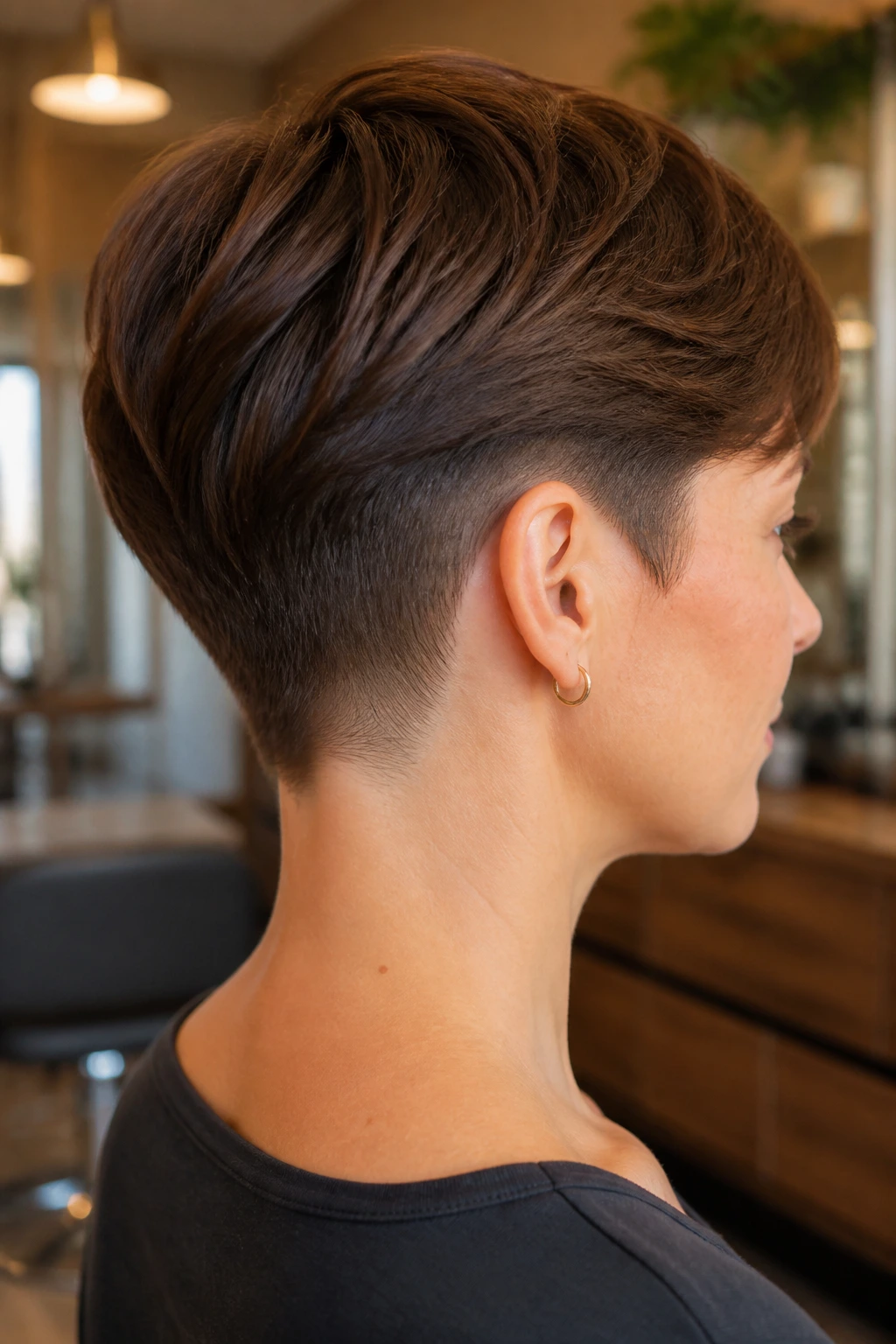
The nape tells on a haircut fast. If it’s bulky, the whole style starts to look late. A tapered nape undercut keeps the back neat without shouting about it, which is exactly why I like it for people who want the shape clean but not severe.
The cut is soft around the neckline and behind the ears, with the shortest length tucked underneath and a gradual taper up into the main shape. It’s a good middle ground if you’re not ready for a hard disconnect. You still get relief from bulk, but the grow-out is kinder and the haircut reads less aggressive.
- Best for: office settings, fine hair, and anyone who wants the undercut hidden most of the time.
- Ask for: a soft taper around the ears, not a skin fade.
- Style with: a light cream or leave-in if the hair flips at the collar.
Tip: If your hair grows weird at the nape, this version forgives that better than a razor-sharp line.
8. Fringe-Forward Undercut
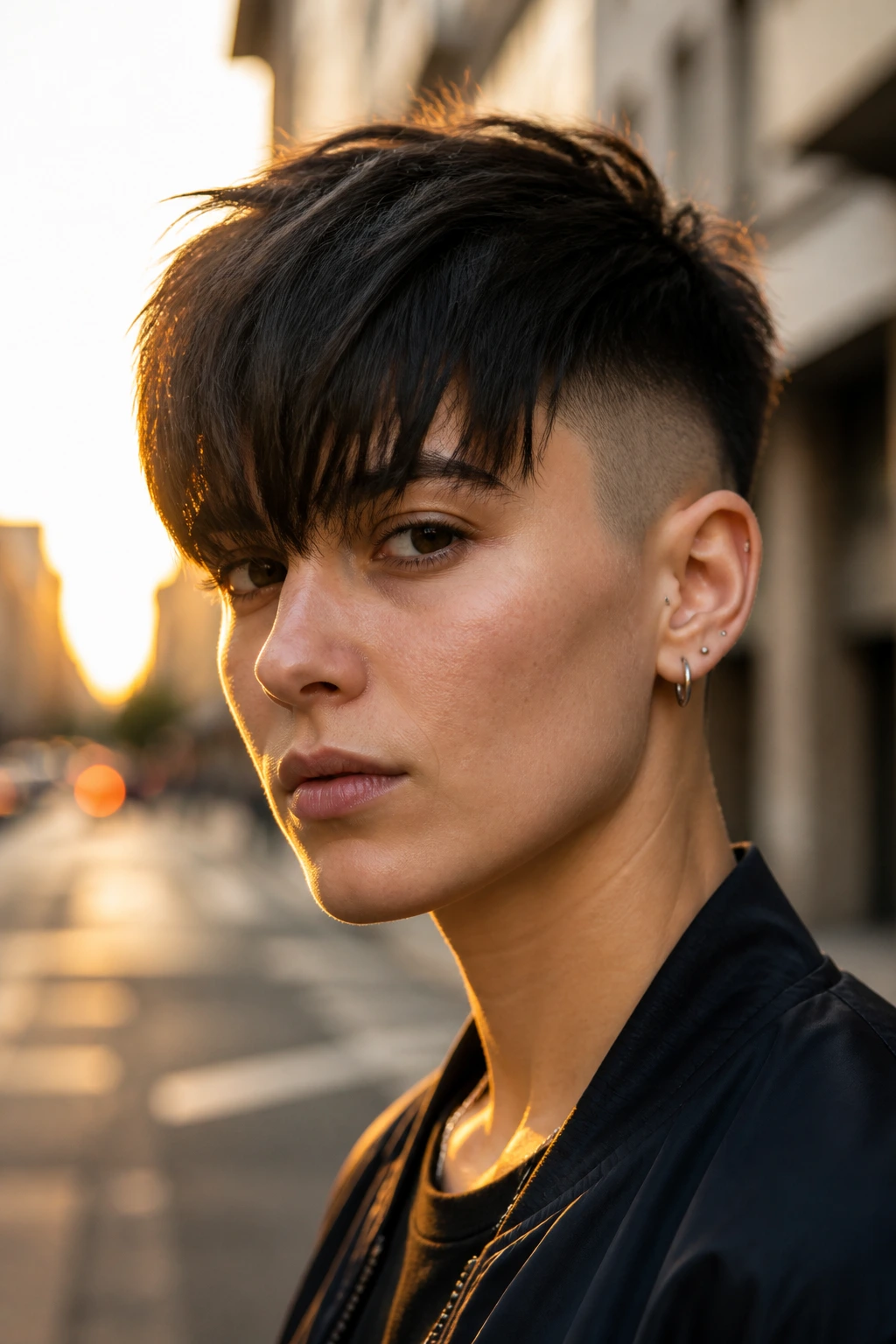
Can short hair still feel dramatic without losing length everywhere else? Absolutely. A fringe-forward undercut keeps the front heavy and the sides stripped back, which makes the face look framed instead of exposed.
This style works best when the fringe has enough weight to sit across the forehead — usually 2 to 4 inches — while the underside is clipped tight enough that the front panel doesn’t puff out. Straight hair tends to give the cleanest version, but wavy hair can look better because the fringe breaks up more naturally.
If the forehead is your favorite feature, this cut is a nice way to keep the attention there. If you want less forehead, go a touch longer and let the fringe hit right below the brow instead of stopping high. Small difference. Big change.
9. Buzzed Side Part
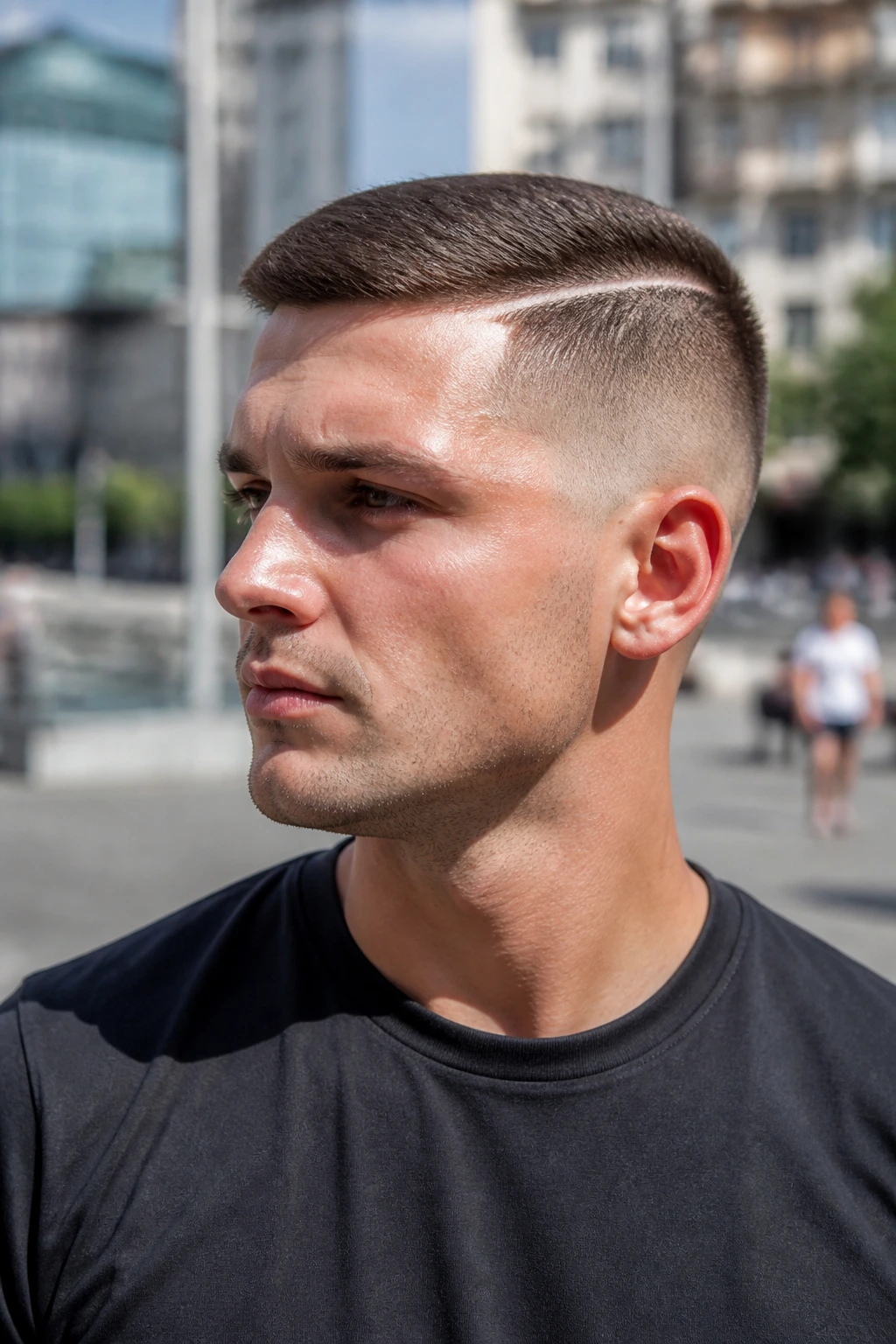
I like this one because it refuses to pretend. You get a very short top, a visible side part, and sides buzzed tight enough that the whole shape reads crisp from across the room. There’s no fluffy middle ground here.
The part works because the length contrast is so clear. Even with only an inch or so on top, the clipped side gives your eye a place to land. It’s a good cut for straight hair and for anyone who wants low fuss without looking unfinished.
- Best for: sharp jawlines, short beards, and people who like a clean outline.
- Styling move: comb the top over while damp, then let it dry before adding a touch of paste.
- Cut note: keep the transition around the parietal ridge neat so the top doesn’t look like it’s floating.
Tip: If your crown swirls hard, don’t fight it with heavy gel. Light cream or paste lets the part breathe.
10. Slicked-Back Crop
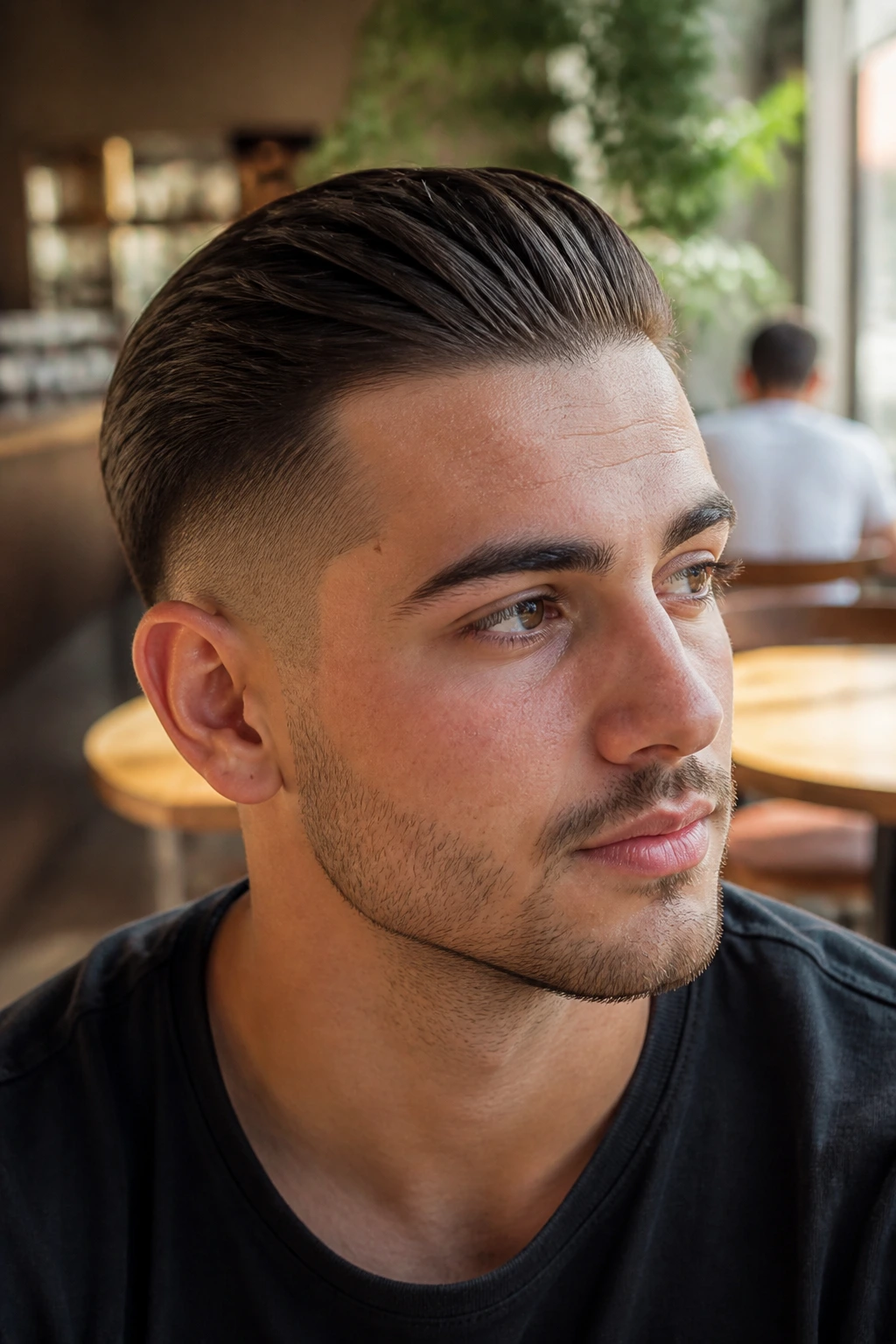
A slicked-back crop on short hair is a little tougher than people expect. Good. It should be. The point is not a glossy helmet. The point is a compact, controlled shape with the top brushed back just enough to show the undercut at the sides.
Leave the top around 2 to 3 inches so it can move backward without collapsing. Too short and the style spikes up. Too long and it starts looking like a mini pompadour. The sides should be tight enough that the slicked-back shape looks intentional, not accidental.
A light pomade or cream gives the cleanest finish, especially if your hair is fine and tends to split apart. If your hair is thick, use less product than you think. Seriously. A pea-sized amount can be enough when the sides are already doing the visual work.
11. Textured French Crop Undercut
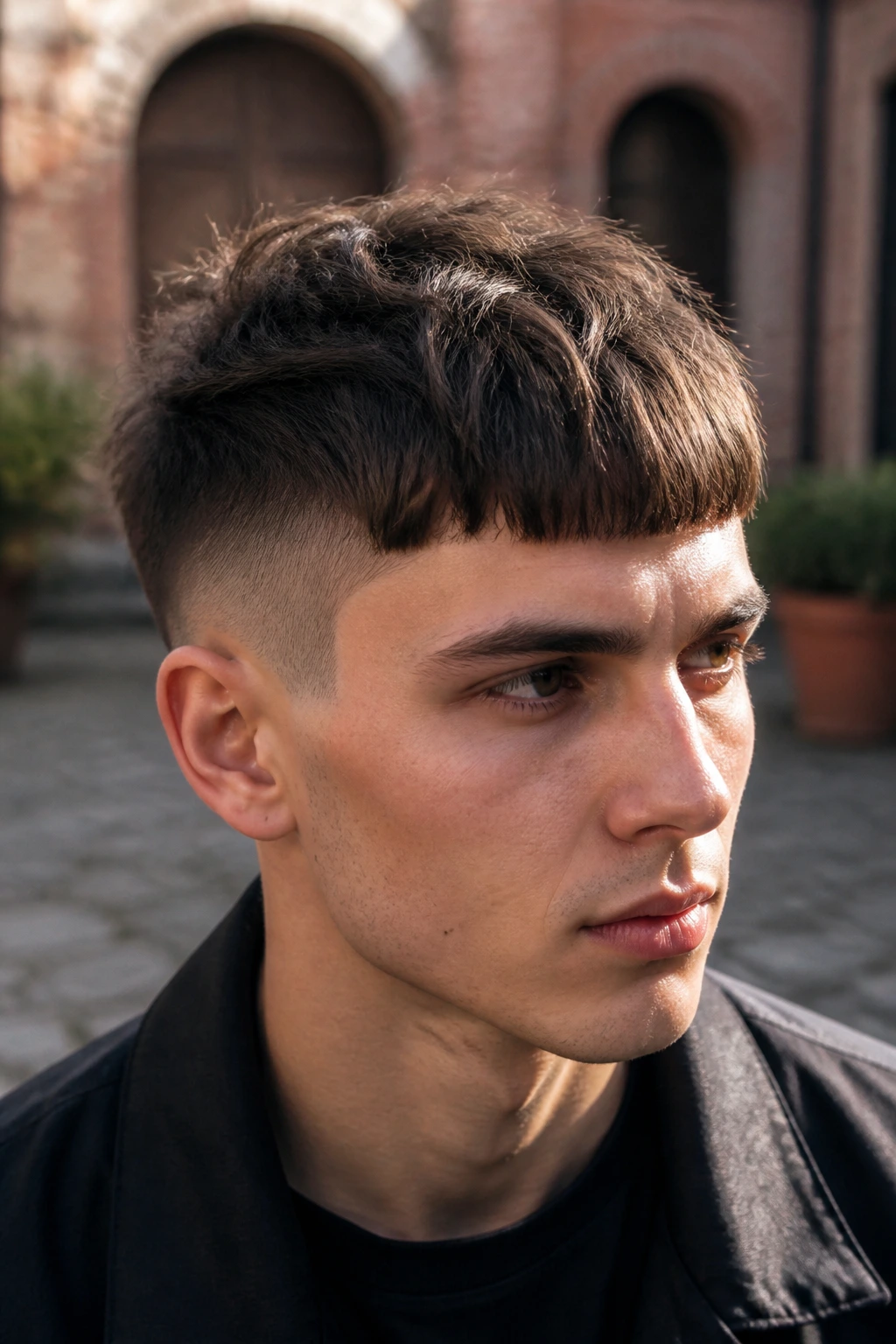
The French crop has a blunt fringe, a choppy top, and just enough structure to look like you meant it. Add an undercut and the whole thing gets cleaner around the ears, which helps the fringe stay the star instead of the sides stealing attention.
This is one of my favorites for straight hair because the fringe line stays readable. It also works for people who don’t want to spend time shaping the front every morning. A little texture paste, a bit of finger raking, and you’re done. No brush ballet required.
Keep the fringe slightly irregular if your face is long; a perfectly straight line can exaggerate length. A soft, piecey edge tends to look better in real life than in a studio photo. The hair moves, after all.
12. Wavy Undercut Pixie
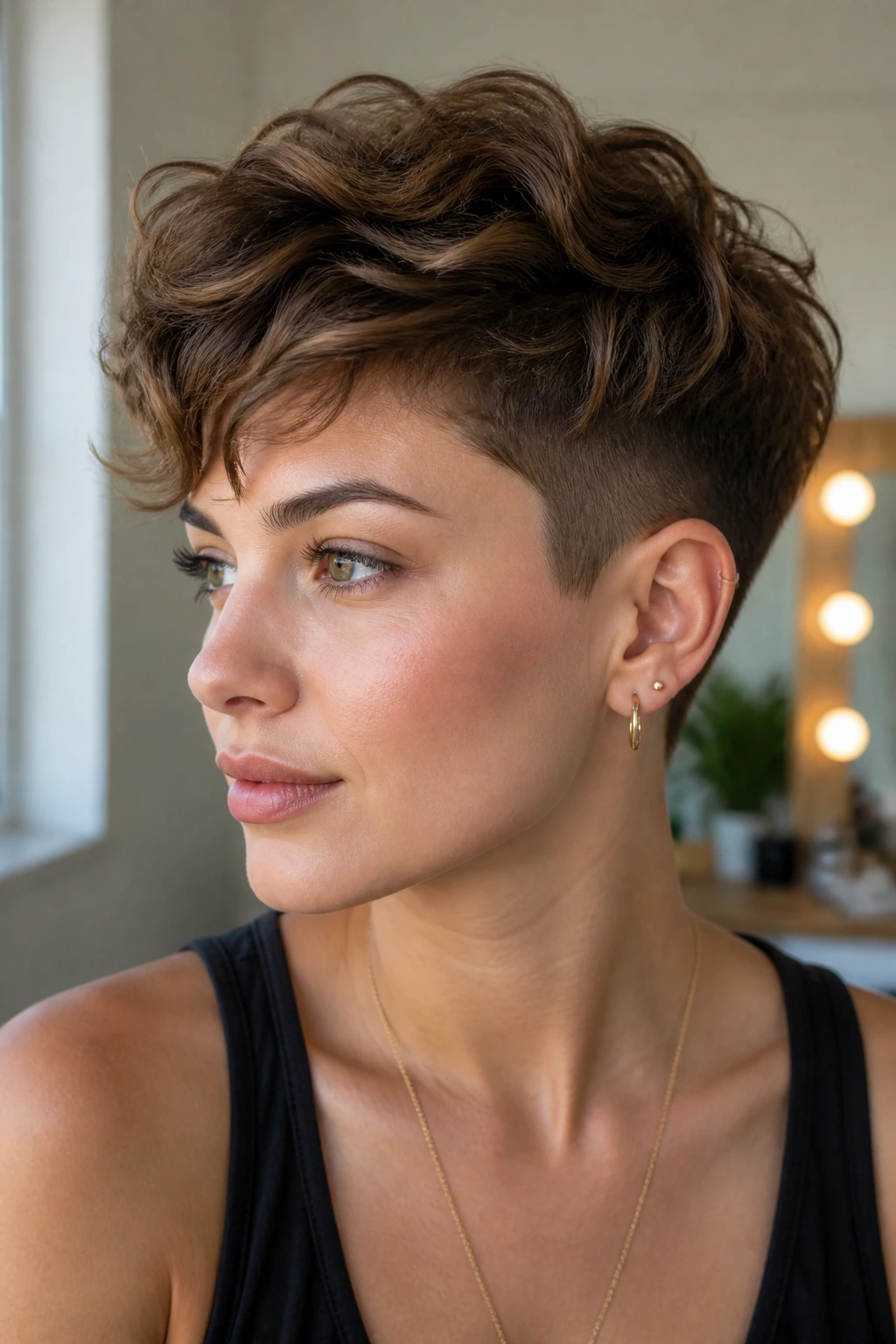
A wavy pixie with an undercut gives you softness on top and control underneath, and that’s a very useful mix. The waves create lift around the crown, but the clipped base keeps the shape from spreading sideways when the day gets humid or the hair gets touched too much.
Unlike a blunt pixie, this version needs a little length left in the front and crown — enough for waves to bend, not just sit flat. If your natural texture leans loose and bendy, ask for longer layers through the top and a hidden undercut under the heavier sections.
A salt spray on damp hair followed by a rough blow-dry is usually enough. If you skip the blow-dryer completely, the waves can fall into your forehead in a way that looks accidental. One minute with warm air often changes the whole cut.
13. High Fade Undercut Crop
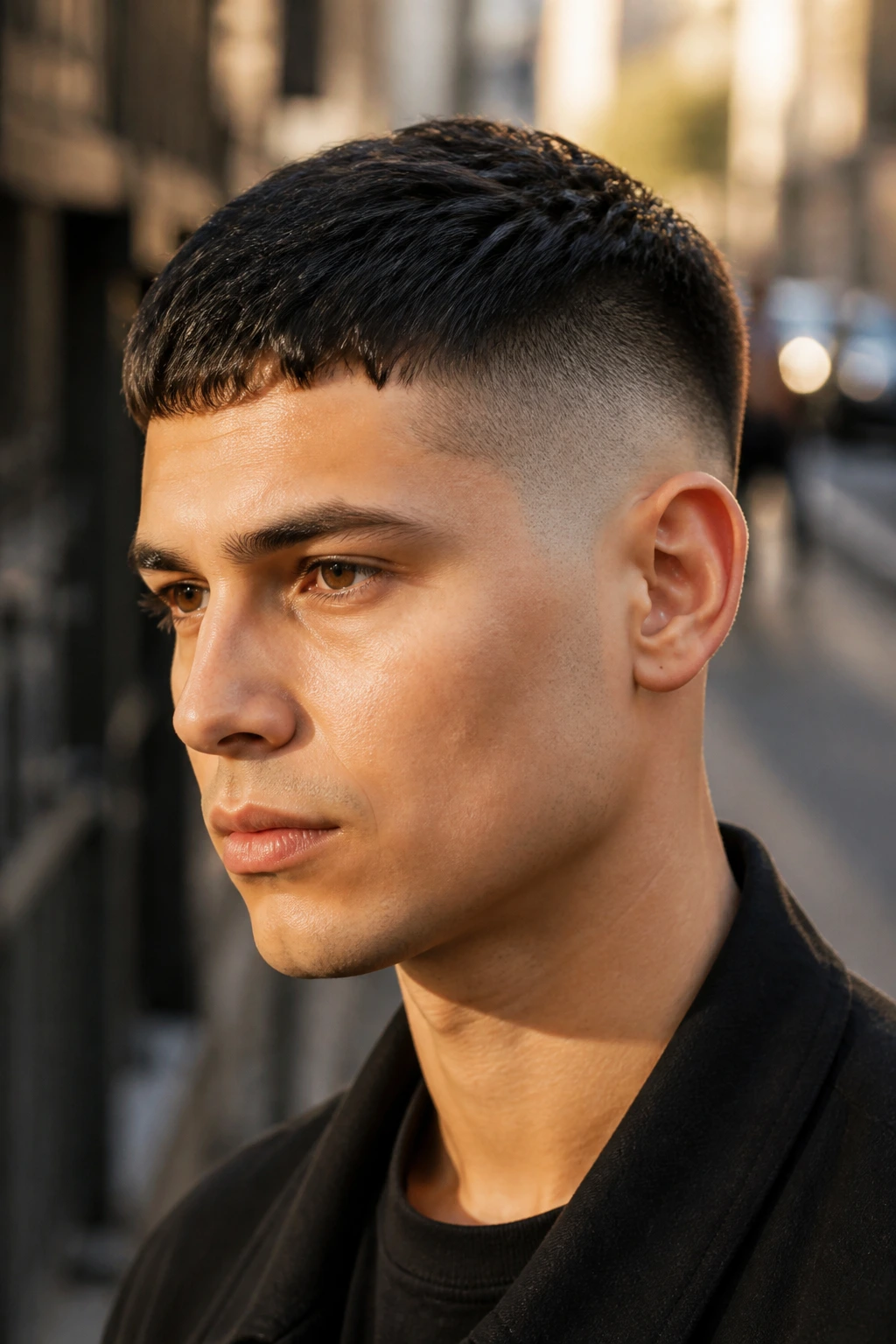
This one leans sharper than the softer undercut styles. A high fade removes a lot of weight fast, starting well above the ear, so the crop on top reads even more deliberate. It’s clean. It’s blunt. It doesn’t apologize.
Why it stands out
The high fade makes the top look fuller because there’s almost no side bulk competing with it. That contrast is useful for fine hair, but it also keeps thick hair from ballooning around the temples. If your hairline is strong, the fade frames it nicely. If it isn’t, the high fade can expose more than you want — so ask for a softer fade if your temples recede.
What to ask for
- A crop on top at 1.5 to 3 inches
- A high fade that starts cleanly above the temple
- A textured finish instead of a blunt helmet line
Tip: High fades need quicker maintenance than softer tapers. If you like your hair to look fresh, schedule cleanup before the sides start to shade back in.
14. Undercut Bixie
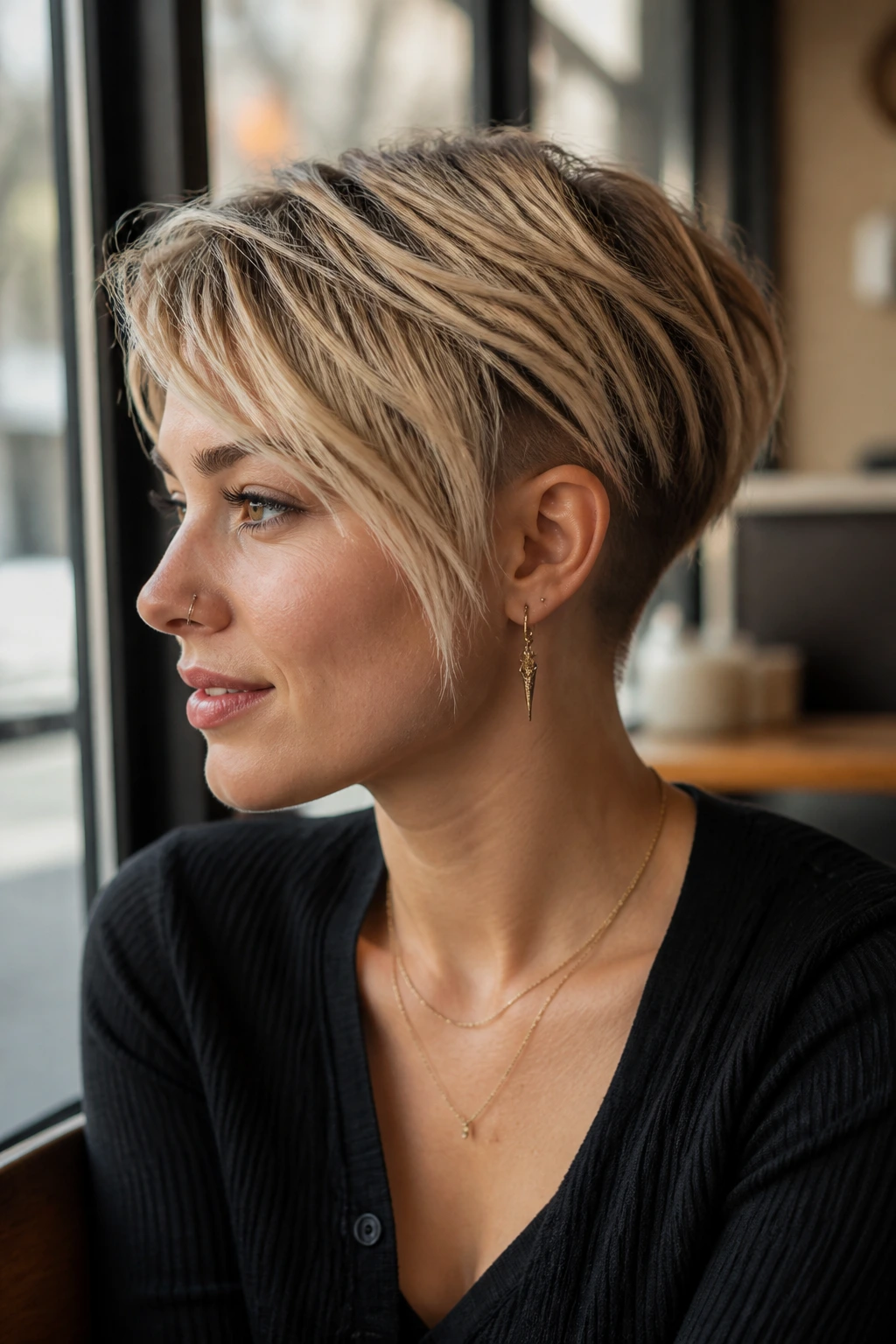
A bixie lives between a bob and a pixie, which sounds vague until you see it. Then it makes perfect sense. The cut keeps a little bob length around the face while borrowing the cropped back and airy top of a pixie, and the undercut trims away the heavy parts underneath.
That hidden cleanup matters. Without it, the bixie can get boxy fast, especially on dense hair. With it, the top stays feathered and the outline stays light. It’s one of the better choices if you want short hair but not a fully cropped look.
Ask your stylist to leave a little length around the cheekbones and to thin the bulk under the crown, not at the ends. That keeps the shape plush instead of wispy. I’d style it with a soft cream rather than a hard wax.
15. Shaggy Undercut
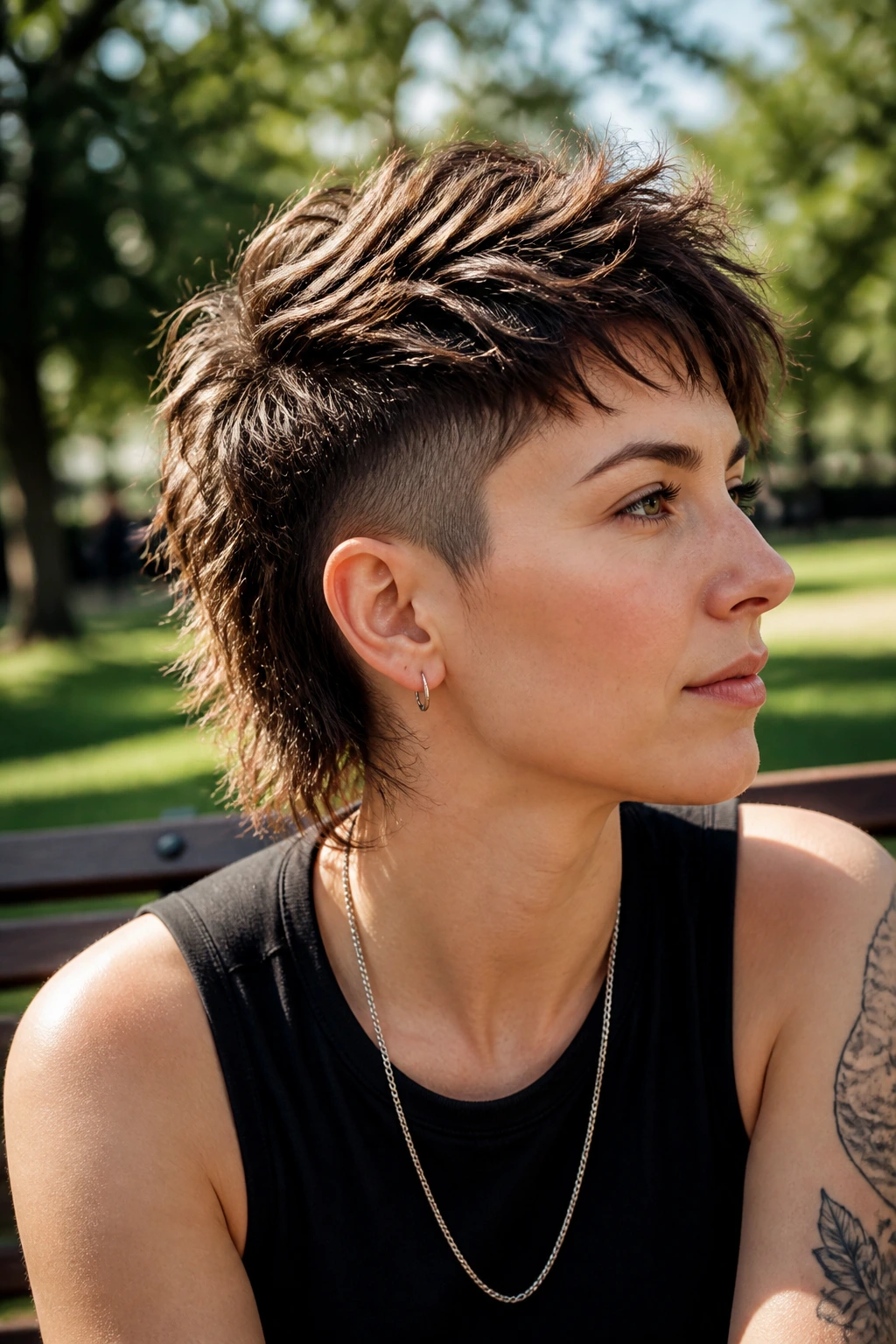
A shaggy undercut is messy on purpose, but it still needs a plan. The undercut takes weight off the bottom layers so the shaggy pieces on top can move without the whole head becoming a triangle. That’s the real trick.
This cut works best when the top has choppy layers and the ends are point-cut rather than blunt. The vibe should be loose, not stringy. If your hair is naturally wavy or slightly rough in texture, this is where it behaves well. Straight hair can wear it too, but it needs a bit of product and some hand movement to keep the layers separated.
- Best for: second-day hair, lived-in texture, and people who hate perfect lines.
- Ask for: an undercut that removes bulk under the crown and behind the ears.
- Style with: a texturizing spray at the roots and a tiny bit of paste at the ends.
Tip: Don’t overbrush this cut. A brush flattens the shag faster than almost anything else.
16. Mini Afro Undercut
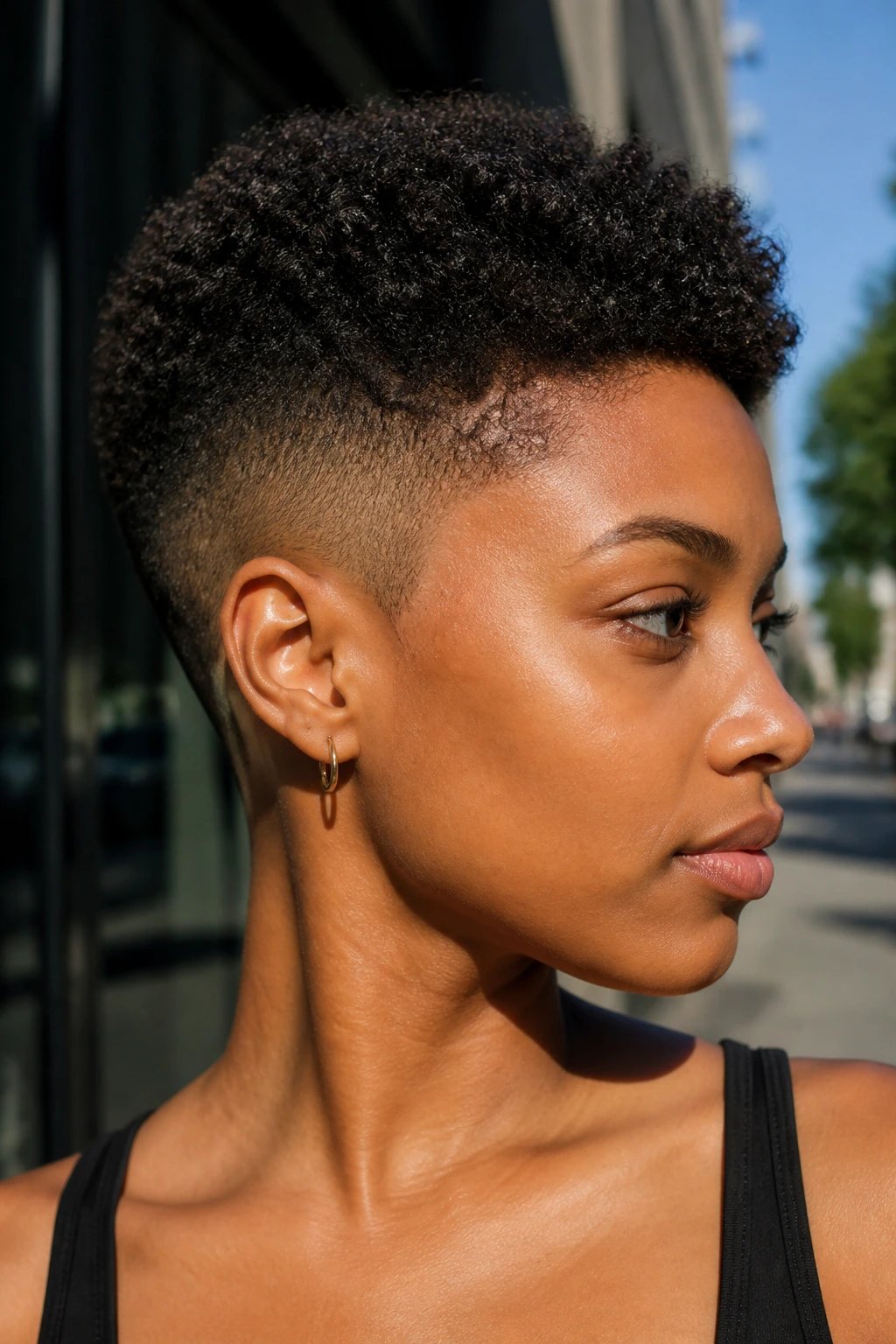
A mini afro with an undercut is all about keeping the round shape clean. The hair stays shaped and full on top, while the sides and nape are tapered or clipped low so the outline doesn’t expand wider than you want. It’s a smart cut when density is part of the problem and part of the charm.
Where the shape matters
Ask for the top to keep enough length to preserve curl pattern, then reduce bulk around the edges with a careful taper. A harsh undercut can make the silhouette feel chopped off. A soft taper keeps the shape full and balanced.
What helps it sit right
Leave the crown slightly longer than the sides. That gives the cut a dome instead of a box. A leave-in conditioner and a little curl butter can help, but don’t cake the hair with product — short coils can get greasy-looking fast when overloaded.
17. Sleek Ear-Tucked Bob
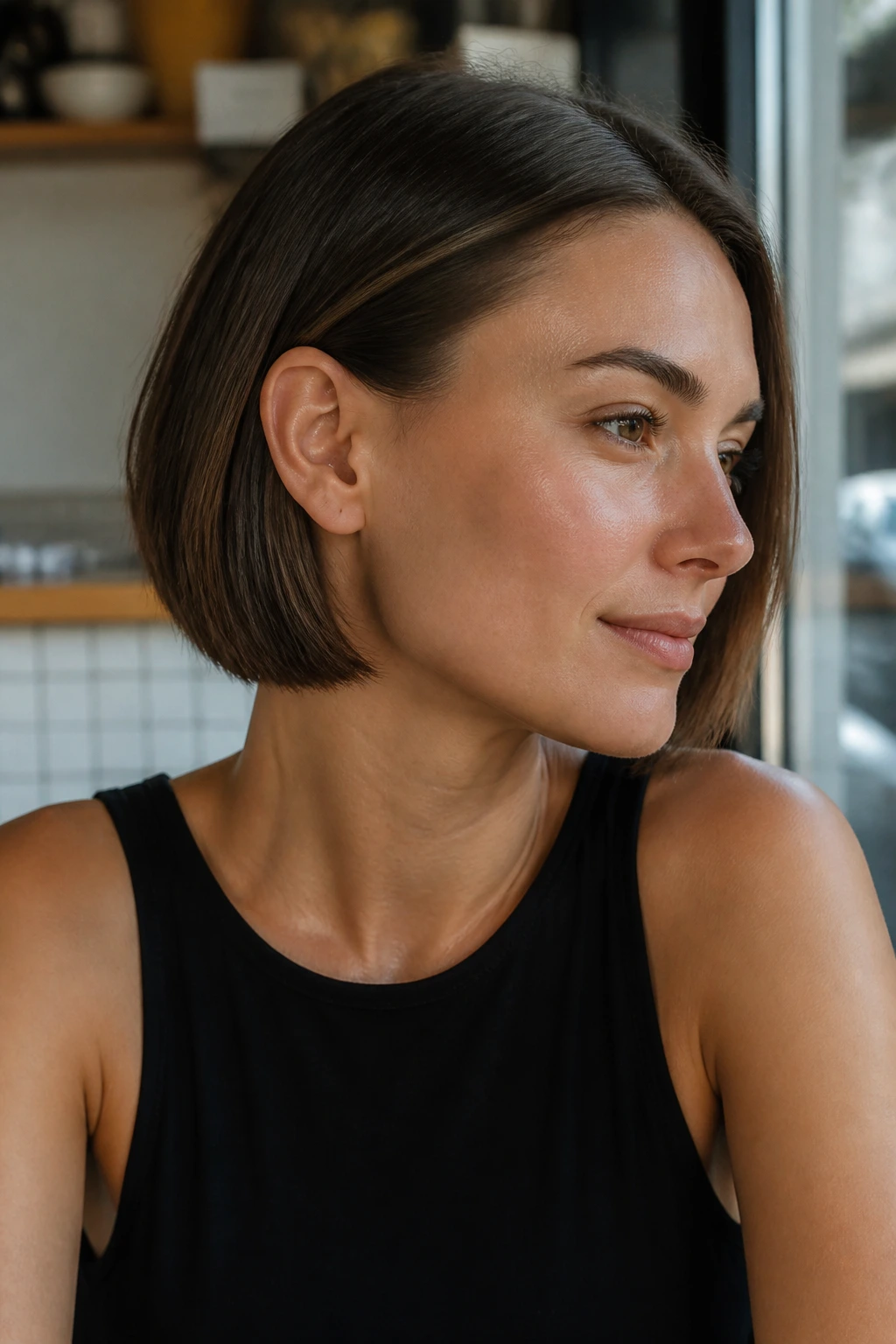
This is the haircut for people who love a bob but hate side bulk. The undercut sits quietly under the surface so the outer bob can tuck behind the ear without puffing out like a triangle. It looks neat, and that neatness is the whole appeal.
Compared with a classic blunt bob, this version gives you a slimmer side profile and less weight under the jaw. The front can stay chin-length or a touch longer, while the hidden undercut keeps the rear from sticking out. I like this one on straight hair especially, because the line stays clean even after a long day.
If your hair flips under at the jaw, ask for a little more length at the front than you think you need. A bob that’s too short in front can end up curling inward and looking cramped.
18. Spiky Crop
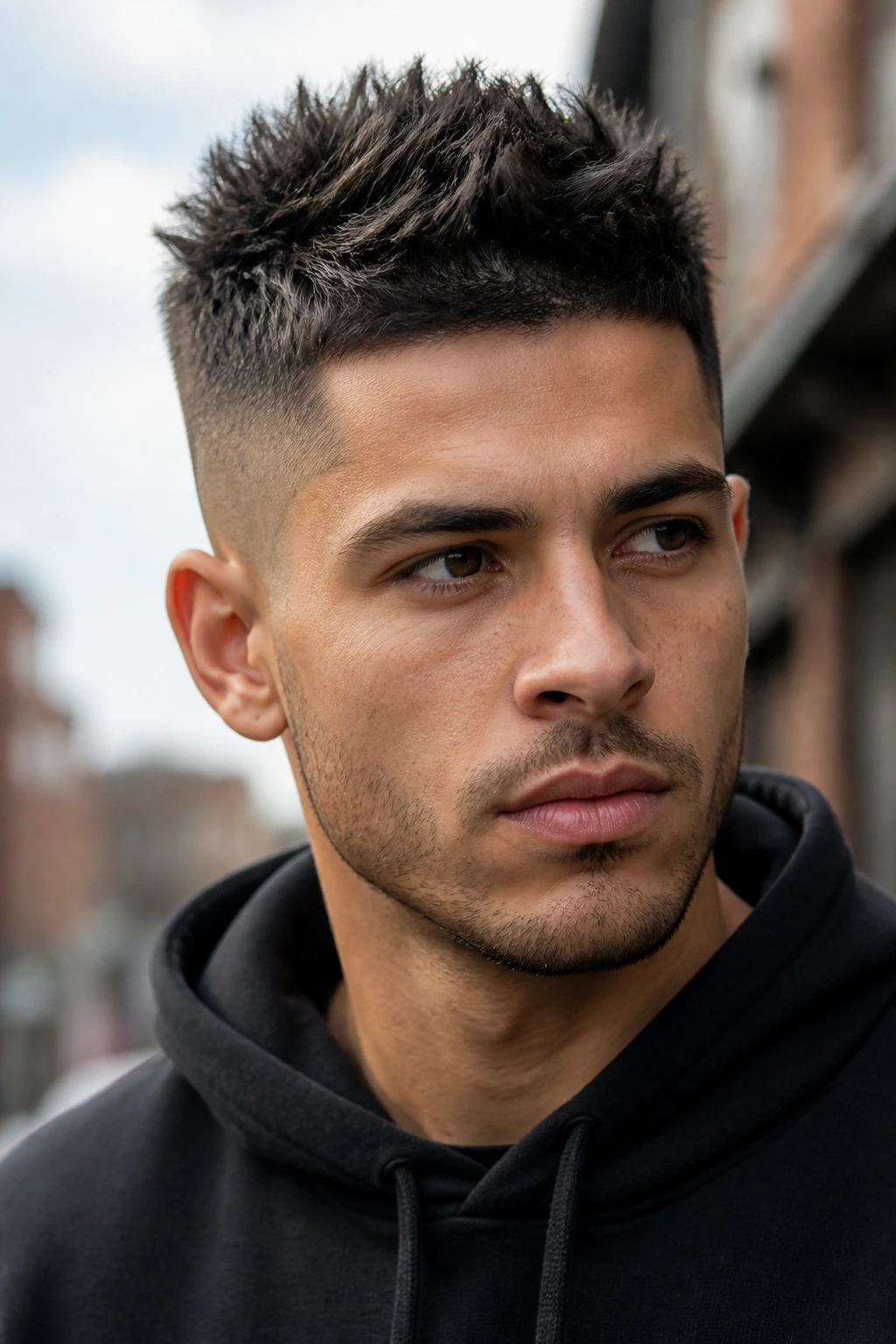
Spiky short hair can go wrong fast. Too much gel and it looks wet in a bad way. Too little structure and it slumps by lunchtime. The undercut solves half that problem by taking the bulk out of the sides so the top can stand up without fighting the rest of the haircut.
Leave the top around 1 to 2 inches and keep the sides clipped close enough that the silhouette stays compact. Then use a matte paste or a light styling clay, warm it in your palms, and pinch the top upward in small sections. Don’t comb it into submission. That kills the point.
- Best for: short straight hair that loses shape quickly.
- Works well with: a quick blow-dry in the opposite direction first.
- Avoid: shiny gels unless you want the spikes to clump together.
Tip: If the spikes start leaning forward, your top is probably too heavy. Trim a little off the front, not the sides.
19. Long-On-Top Undercut
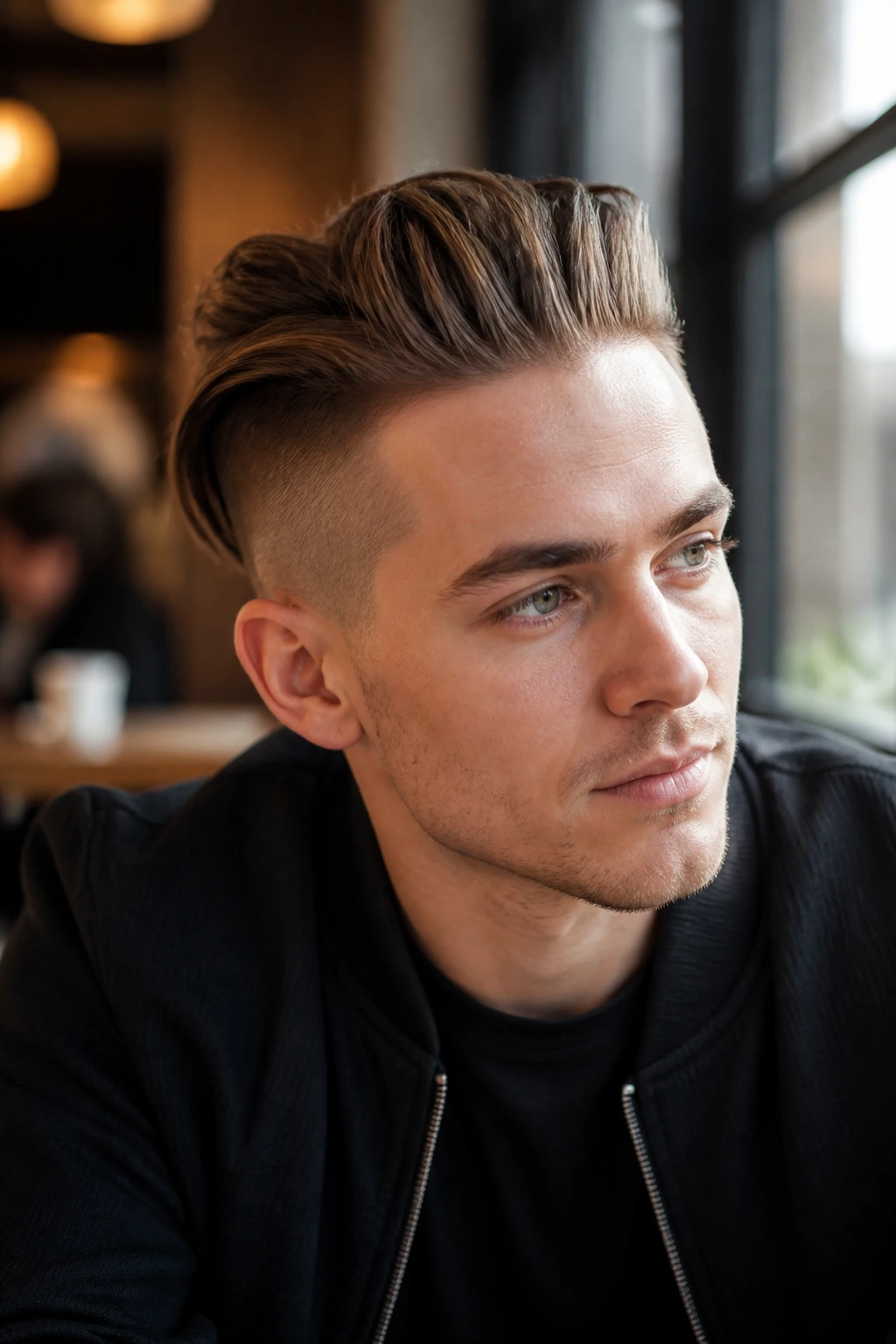
Can short hair still have real styling range? Yes, if the top is long enough to move. A long-on-top undercut keeps the sides and back clipped tight while leaving 3 to 5 inches up top so you can tuck, sweep, curl, or push it back depending on the day.
That extra length gives you options. The same haircut can look soft and side-swept one morning, then sharper and brushed back another. The underside stays clean, so the top doesn’t spread outward as it grows. This is a good place to be if you like change but don’t want to commit to a full grow-out between haircuts.
How to use it
A round brush gives more lift. Fingers give a looser finish. If the hair is fine, a root-lifting spray before blow-drying helps the top stay off the scalp instead of collapsing into it.
20. Soft-Matte Undercut
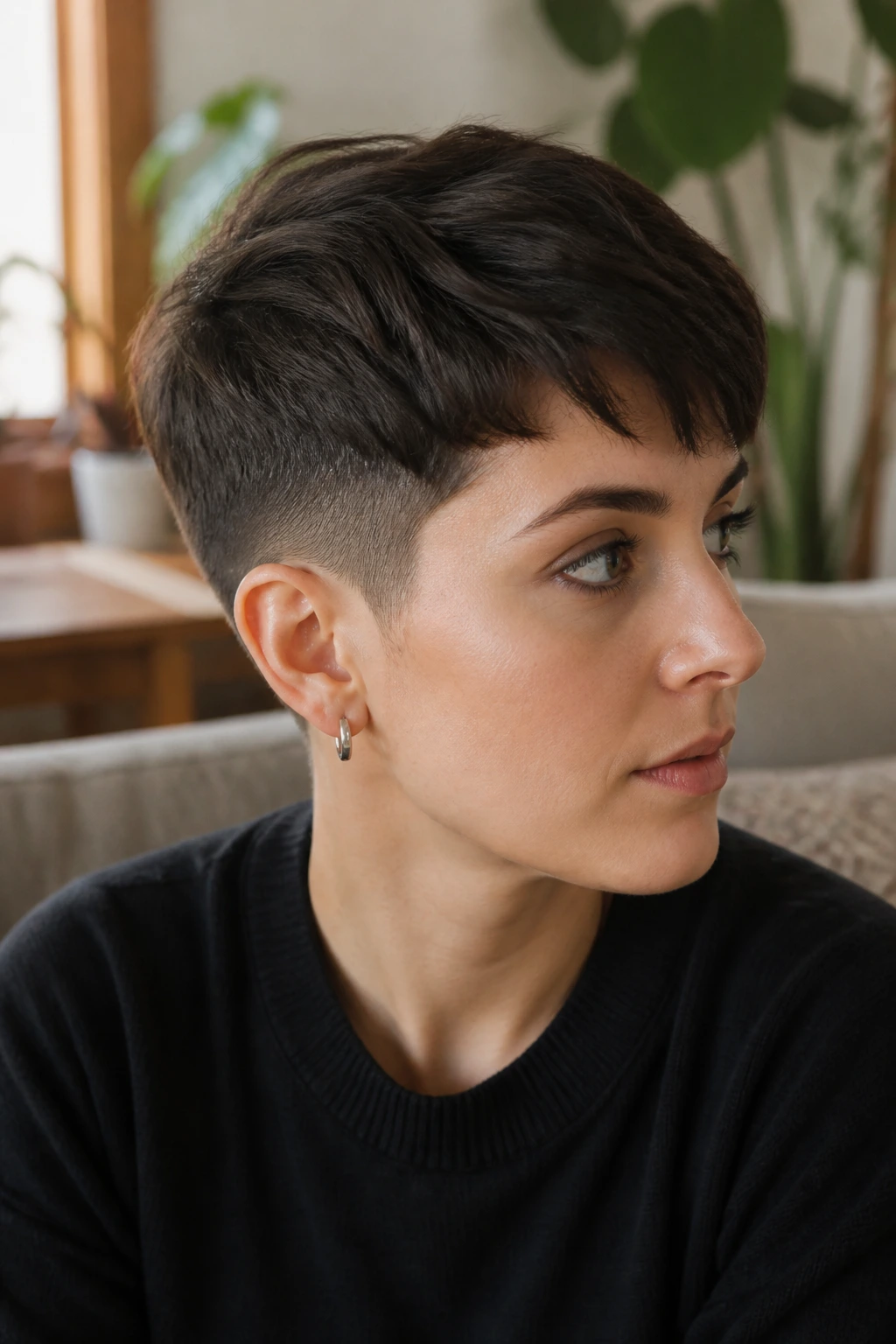
A soft-matte undercut is the quiet version of the whole family. The shape is still clipped underneath, but the top is finished with a low-shine product and the edges are blended enough that the cut reads polished instead of severe. It’s one of the easiest ways to wear short hair with an undercut if you don’t want the haircut to shout first and talk later.
This style depends on restraint. Use a small amount of matte cream, not a heavy wax. Keep the sides close, but ask for a smoother transition around the temple and nape so the look doesn’t hard-stop. It works well for straight or slightly wavy hair, especially when you want the outline neat for work and still a little loose at night.
I’d call this the most wearable option in the bunch. Not the flashiest. The one you can forget about until somebody asks where you got your hair cut.
21. Side Undercut with Curls
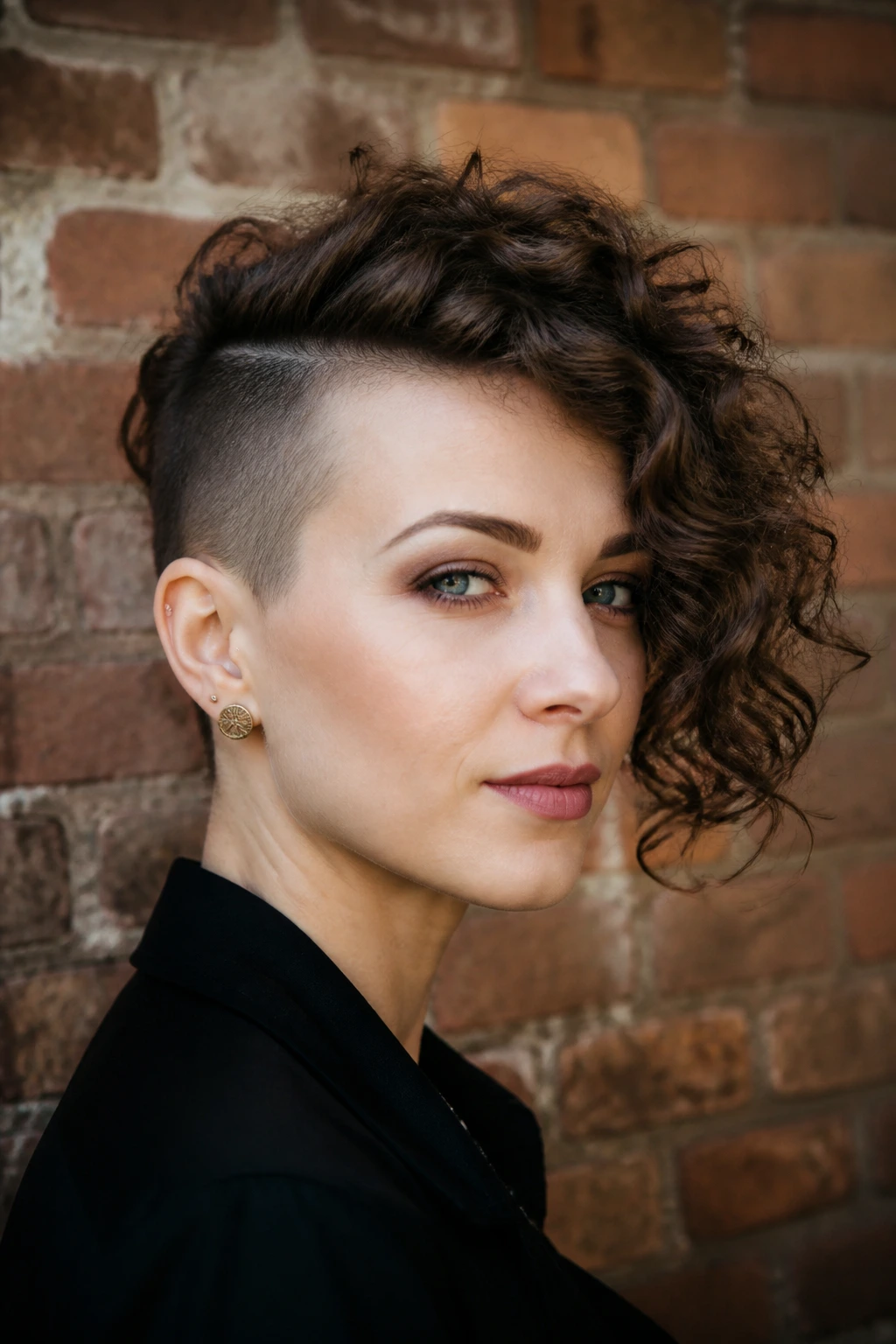
Curls don’t have to sit evenly on both sides to look balanced. A side undercut with curls lets one side keep a fuller curtain of texture while the other side stays clipped or tightly tapered, which gives the whole style a little swing without letting it blow out sideways.
The longer curly side should have enough room to spring — usually 3 to 4 inches — and the shorter side should be neat enough that the curl mass doesn’t spill over it. This works especially well if one side of your hair grows heavier than the other. Some heads do that. No point pretending otherwise.
- Best for: looser curls, mixed textures, and anyone who wants asymmetry without a hard graphic line.
- Styling move: shape the curls with leave-in and a wide-tooth comb, then let them settle.
- Good barber note: keep the clipped side below the parietal ridge so the curl panel can sit cleanly above it.
Tip: If the curls collapse by noon, you probably need less product, not more.
22. Graphic Design Undercut
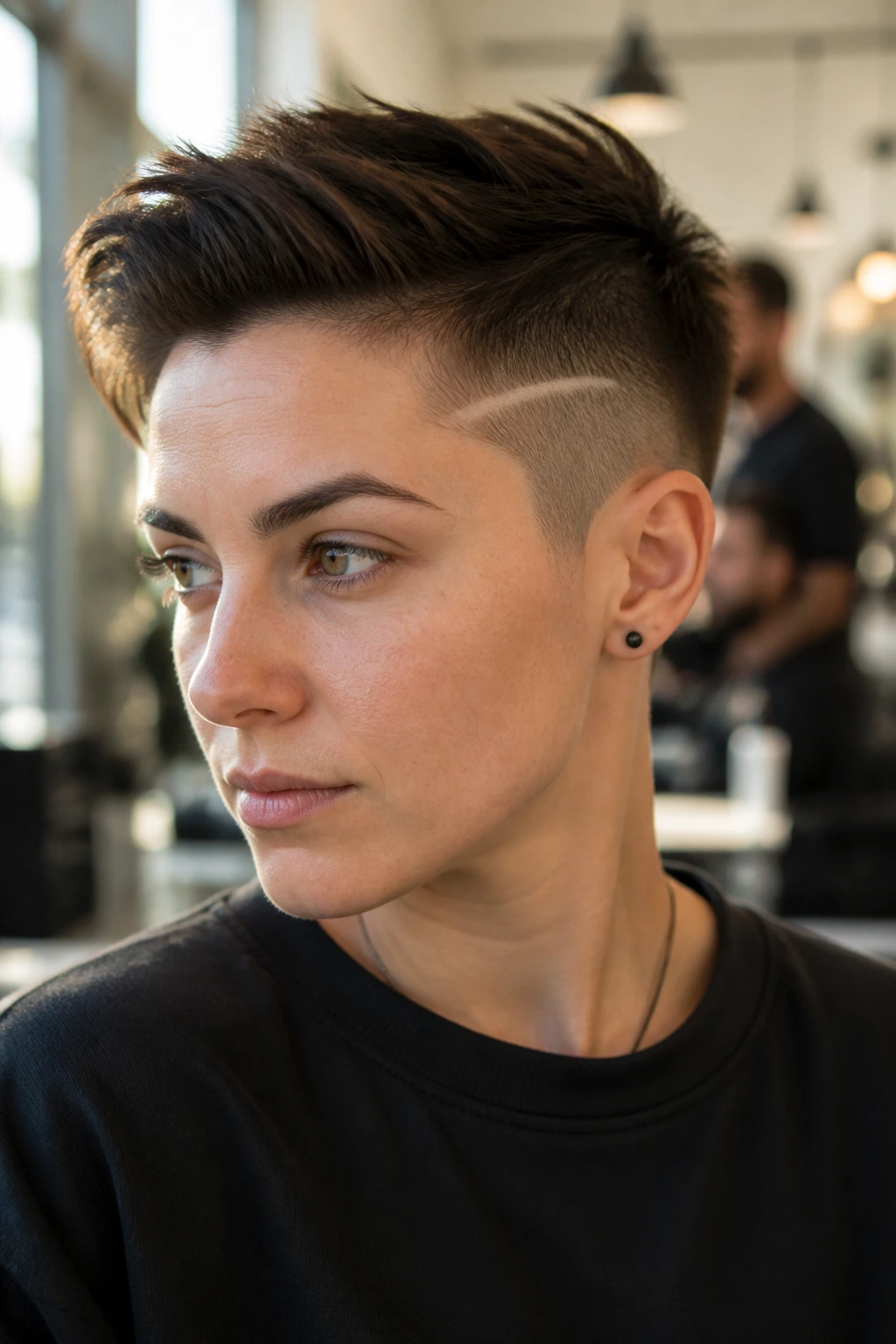
Some cuts whisper. This one draws on the side of the head. A graphic design undercut uses a shaved line, diagonal slit, or small pattern near the temple or nape to turn a short haircut into something sharper without needing more length.
The key is not to overload the design. One clean line placed where the hair already wants to part can look deliberate. Three lines, stars, and swirls can tip into costume territory unless the rest of the haircut is very simple. I prefer one mark, maybe two. Enough to notice. Not enough to fight with your outfit.
This style works best when the top stays restrained — a crop, pixie, or short bob that lets the design be the punctuation. If you want the graphic element to stay visible, plan for regular cleanup because the line softens as soon as the sides start growing back.
23. Low-Maintenance Grow-Out Undercut
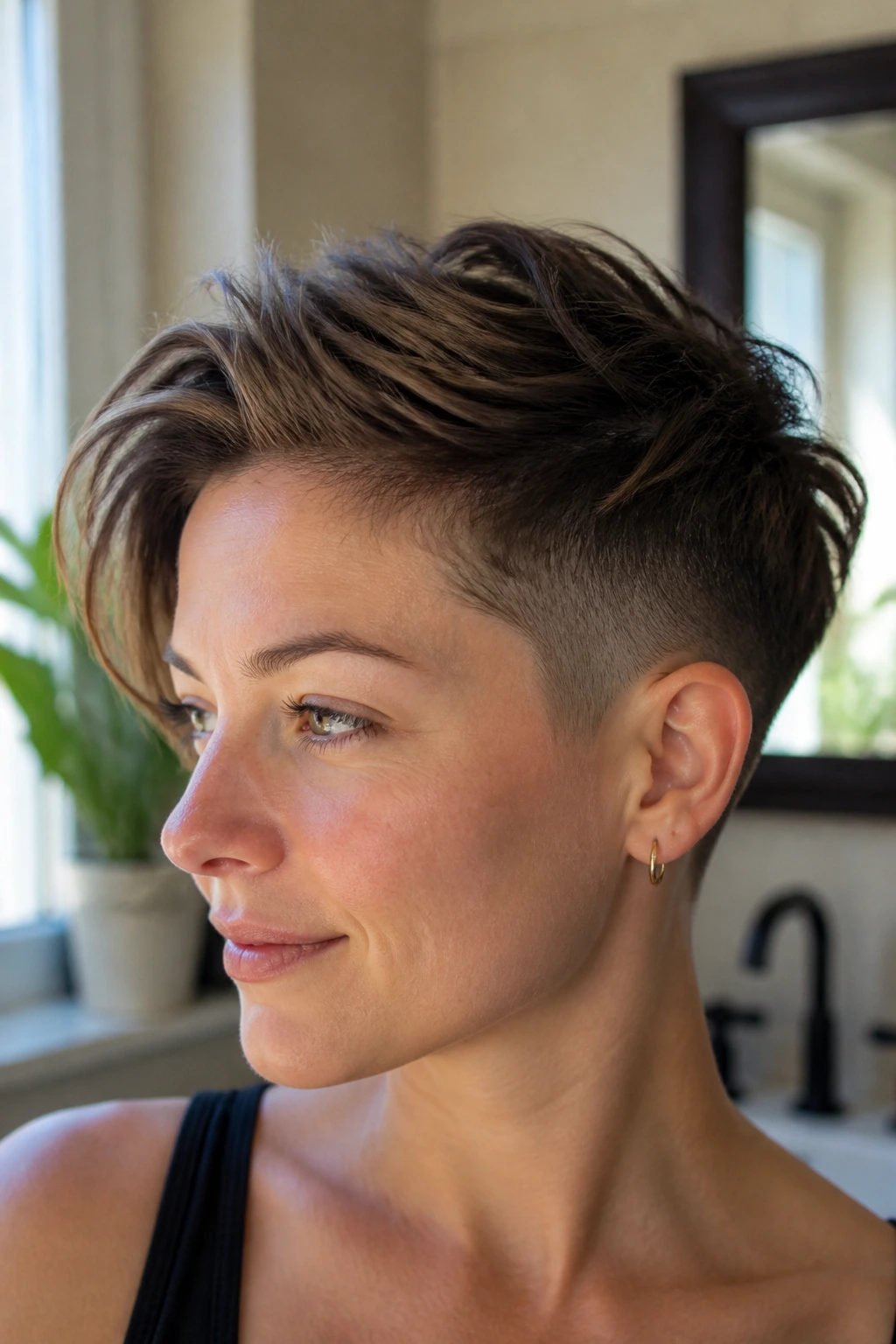
This is the one I’d recommend if you know you’ll get bored or busy. A low-maintenance grow-out undercut keeps the sides tapered rather than brutally shaved, and the top stays layered enough to settle into a bob or shag as it lengthens. The haircut looks good on day one and still has a shape when it’s grown out by an inch or two.
The difference is in the edges. Ask for softer blending at the nape and around the ears, plus a top that’s not too short to begin with. That gives you room to skip one appointment without the whole shape falling apart. It also means the cut can migrate into a different style instead of becoming an accident.
If you like options, start here. It’s the least fussy version of the undercut idea, and it buys you time.
Why Short Hair and Undercuts Keep Their Shape So Well
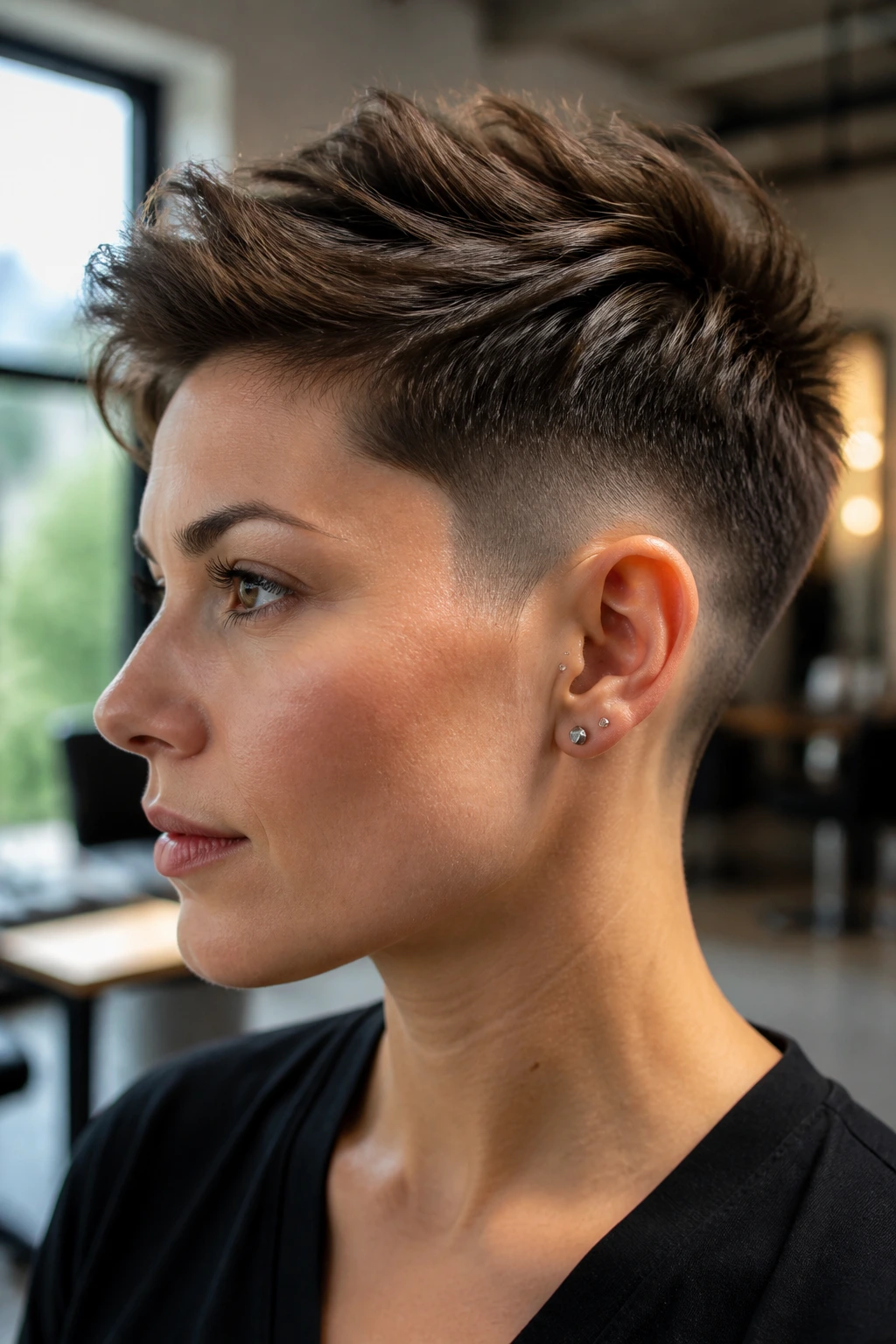
Short hair shows the haircut. That’s the whole deal, and it’s why undercut styles for short hair hold attention better than longer cuts that can hide sloppy work in a curtain of length. When the perimeter is short, the nape and temple shape matter more, so the result feels crisp even when the top is a little piecey.
The other reason is weight distribution. Hair doesn’t sit evenly on the head; it gathers at the crown, bulks up behind the ears, and flips at the neckline if you let it. Removing length underneath changes how the whole head sits. You’re not just “making it shorter.” You’re changing the way gravity works on the cut.
That’s also why the best versions are not always the most dramatic. A soft taper can be smarter than a full buzz if you want movement. A hard disconnect can be perfect if the top is thick and the sides need to disappear. The haircut should solve the problem in front of you, not win a photo shoot.
How to Read Your Hairline, Crown, and Nape Before the Cut
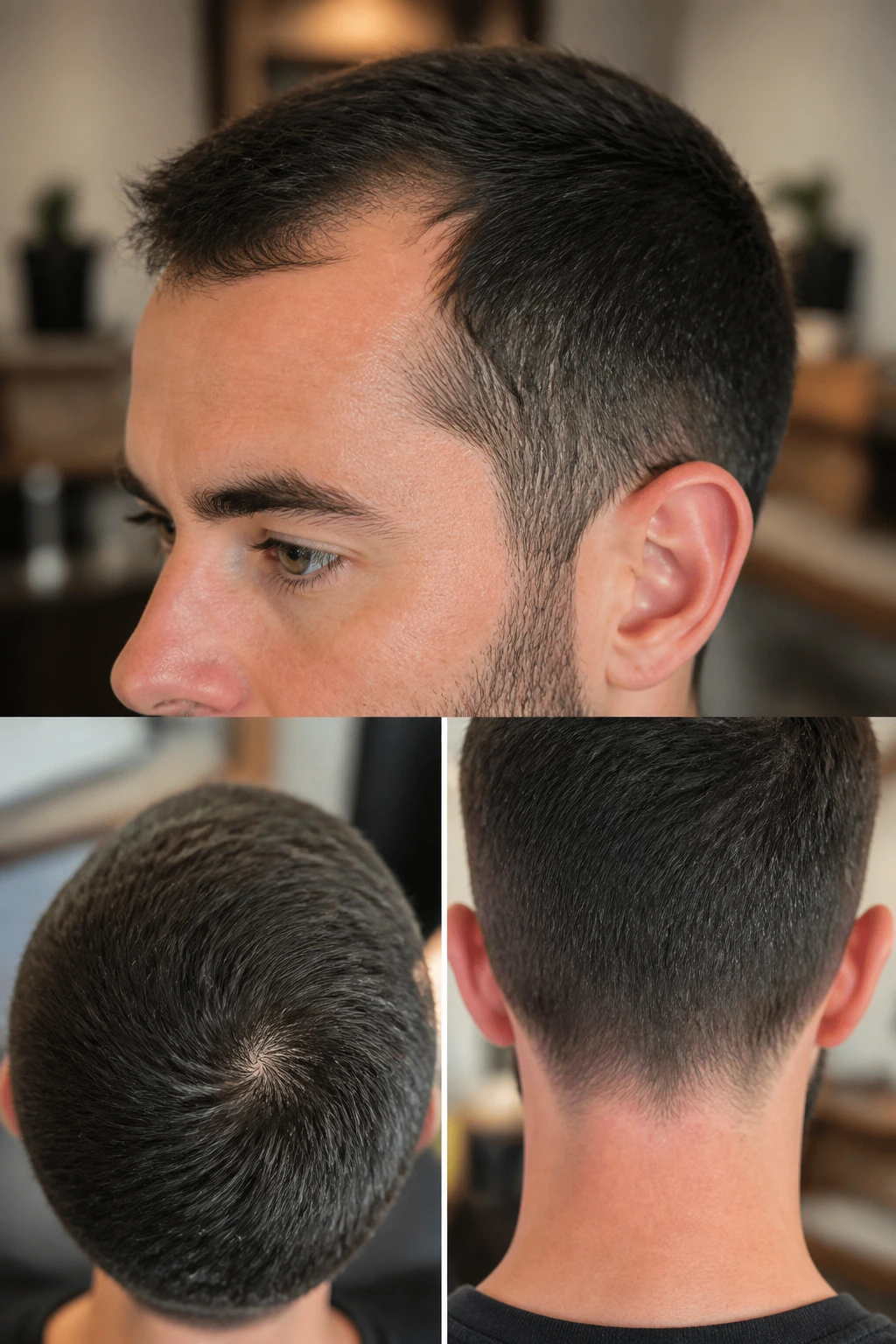
Your hairline is not a template. Good stylists look at the crown swirl, the recession at the temples, the direction the nape grows, and the density at the sides before they take a clipper to anything. You should do the same, even if only in a bathroom mirror with the hair wet and parted how it usually falls.
A strong cowlick at the crown means the top needs enough length to weigh down or work with the bend. A low nape growth pattern means a shorter undercut can look sharp for about ten days and then show every line as it grows. Thick side growth usually needs a little more removal behind the ears than people expect.
What to notice in the mirror
- Where the hair splits at the crown.
- Which side flips outward first.
- Whether the nape curls up or lies flat.
- How much bulk sits over the ears when the hair is dry.
One sentence is enough to remember: the cut should follow the hair’s habit, not fight it.
How to Match the Cut to Your Texture and Face Shape
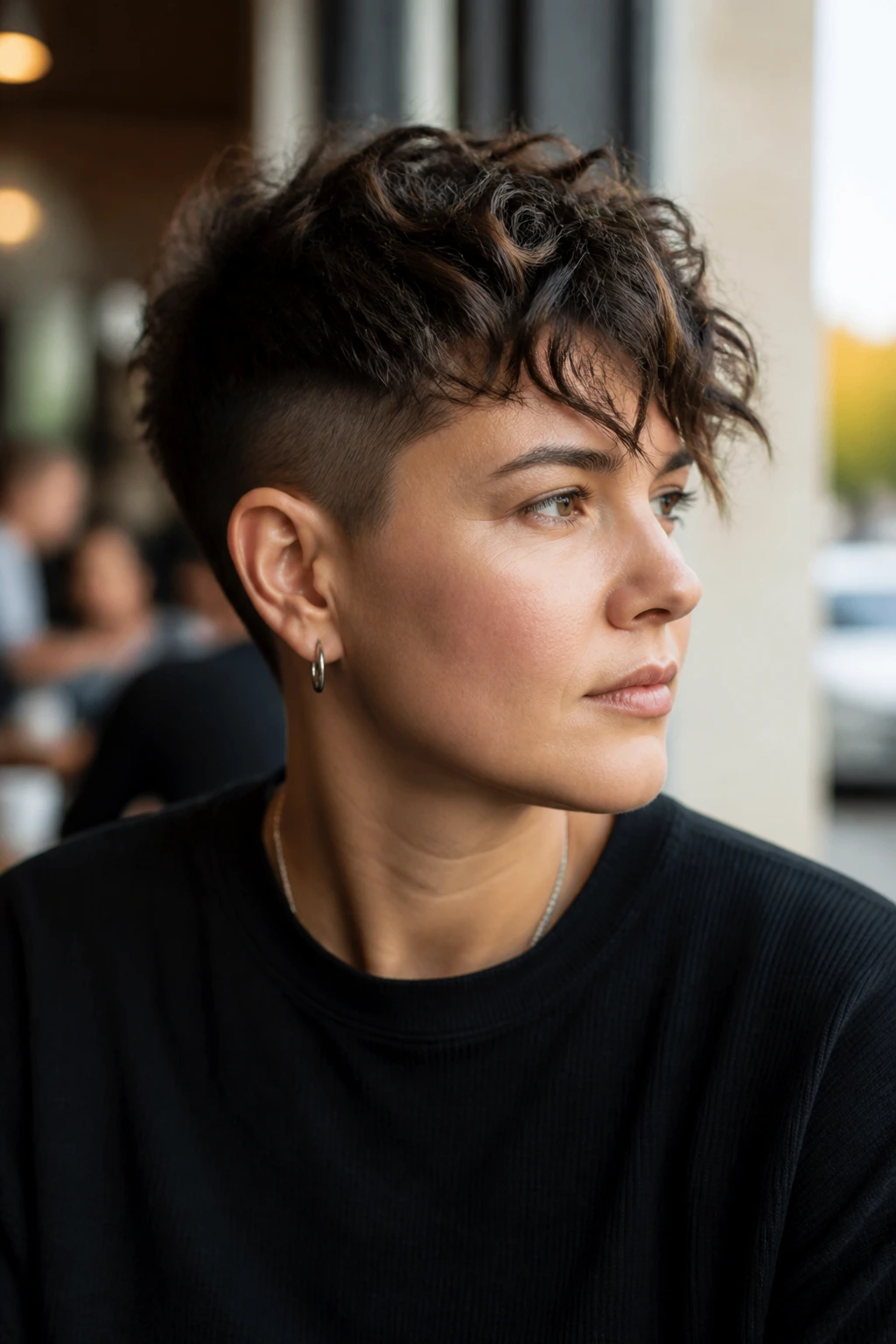
Fine hair, thick hair, curls, waves, straight hair — they all want different things from an undercut. Fine hair usually benefits from less visible shaving and more movement on top, because too much contrast can make the scalp show too much. Thick hair can take a harder undercut and still look balanced because there’s enough density left above it.
Face shape matters less than most salon lore suggests, but it isn’t imaginary. Rounder faces usually look stronger with a little extra height on top or with a side-swept front. Longer faces often do better with fringe, texture, or a bob line that stops around the jaw. If your features are angular, a sharper undercut can look clean instead of harsh.
Straight hair likes precision. Wavy and curly hair like room. If you know those two facts, half the decision is already made.
Essential Tools for Styling and Clean-Up
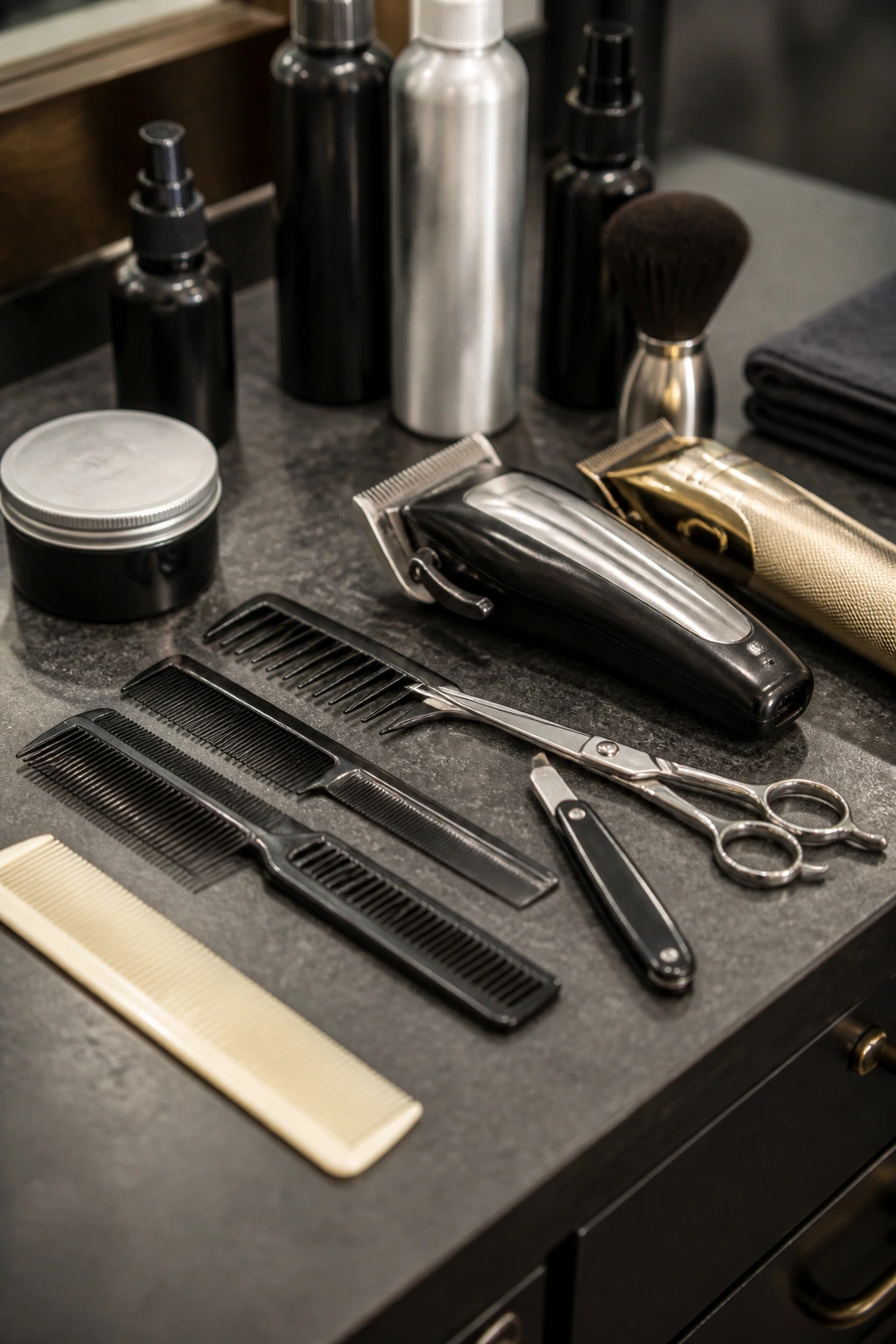
- Blow dryer with a concentrator nozzle: Helps direct the top where you want it instead of letting it dry flat against the scalp.
- Small vent brush or round brush: Good for lifting the crown or smoothing a side-swept fringe.
- Tail comb: Useful for clean parts, sectioning, and nudging a slicked-back crop into place.
- Matte paste or clay: Best for texture-heavy crops, spiky cuts, and short styles that need grip without shine.
- Light cream or leave-in: Better for curls, waves, and softer undercuts that should move instead of stiffening.
- Hand mirror: Non-negotiable for checking the nape and around the ears between appointments.
- Trimmer with a guard: Handy if you know how to clean a neckline safely; if you don’t, leave it alone.
- Texture spray or salt spray: Gives short tops a little grit before finger styling.
How to Ask for the Right Fade, Taper, or Disconnect
Bring photos, yes, but bring the right ones. One front view rarely explains the back, and a back view rarely shows how high the undercut starts. A better set has a front angle, a side angle, and one clear shot of the neckline. That saves a lot of guessing.
Say the length out loud. “Leave the top about 3 inches,” is more useful than “keep it long.” “Clip the sides with a #1 and blend softly above the ear,” tells the barber more than “make it faded.” If you want a disconnected cut, say that directly, because some stylists will soften the line unless you ask for the gap on purpose.
Helpful words to use
- Taper: softer and more gradual around the ears and nape.
- Fade: tighter, shorter transition, often starting lower or higher depending on the look.
- Disconnect: a clear step between top and sides.
- Scissor over comb: a good sign if you want a softer hand on the top and side blend.
- Textured finish: shorter, piecey, less blunt at the top.
Styling Products That Match Short Undercut Hair
The product should fit the cut, not force the cut into something it isn’t. Matte clay gives short crops grip and separation. Cream gives softer pixies and bixies a little bend. Pomade works when you want shine and a combed shape, though too much of it can make short hair collapse into a flat helmet.
For curls, a leave-in conditioner or curl cream is usually the first layer, not the last one. If you’re blow-drying, use a heat protectant and keep the nozzle pointed where you want the hair to move. A light hairspray can lock in fringe or a slicked-back top, but the second you use so much that the hair feels crunchy, you’ve gone too far.
Quick product logic
- Matte paste: Crops, spiky cuts, textured looks.
- Cream: Wavy, shaggy, soft undercuts.
- Pomade: Slicked-back styles, side parts, polished finishes.
- Salt spray: Root lift and light separation.
- Hairspray: Last step, not the main event.
Small Styling Moves That Change the Whole Look
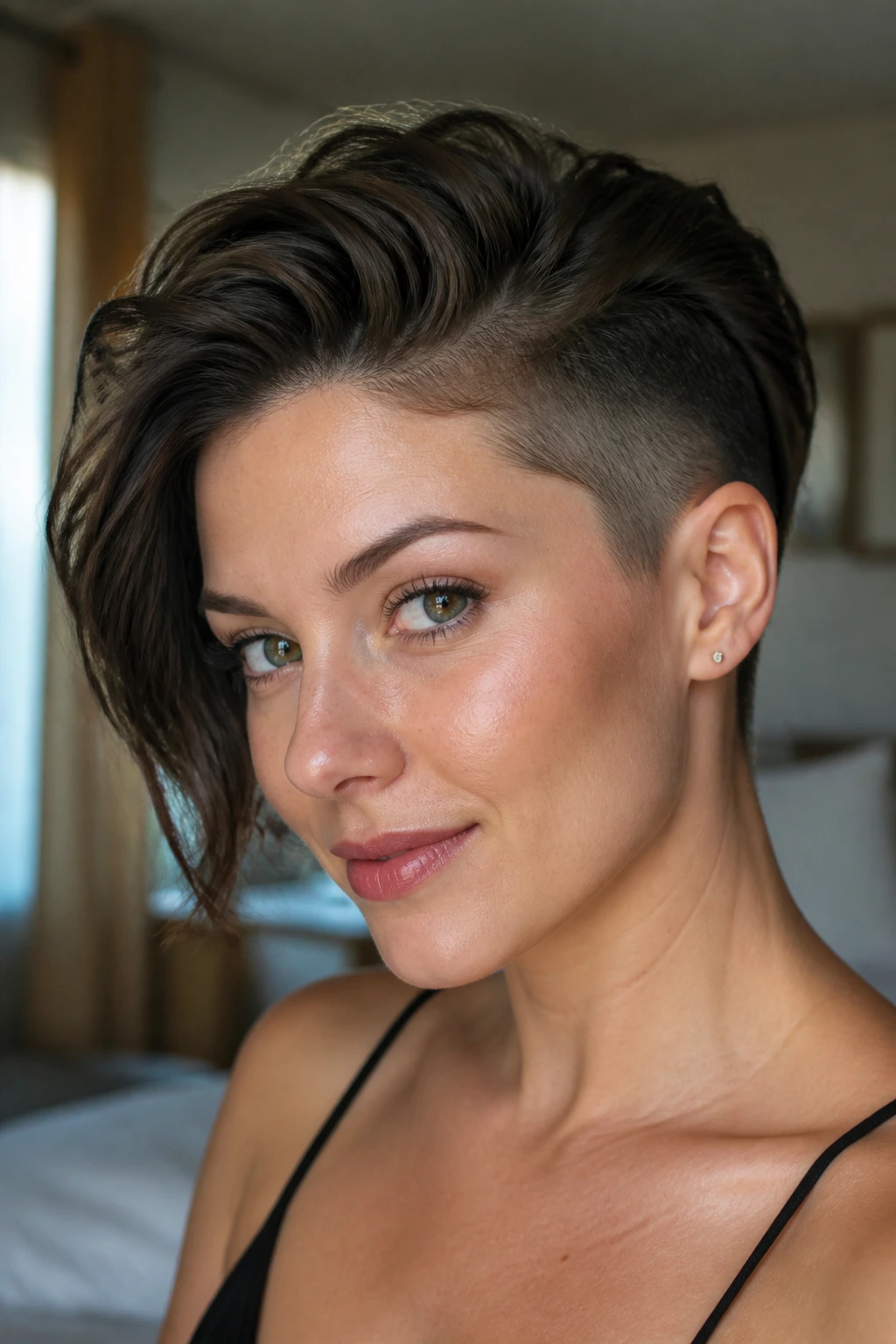
Texture Boost: A quick blast of a blow dryer at the roots changes more than a second layer of product. Heat lifts the top away from the scalp and keeps the undercut visible instead of buried.
Softer Edge: Tuck one side behind the ear and leave the other side loose. That tiny asymmetry makes a bob, bixie, or crop feel less stiff without any actual cutting.
Quick Reset: Dampen the front with your hands, re-part it, and dry the fringe in the opposite direction for ten seconds. That usually fixes a short style that’s started leaning the wrong way by midday.
Make-It-Yours: Add one detail, not five. A cleaner part, a touch of shine, a small shaved line, a deeper side sweep — pick one move and let it do the work.
Keep the Lines Sharp Between Appointments
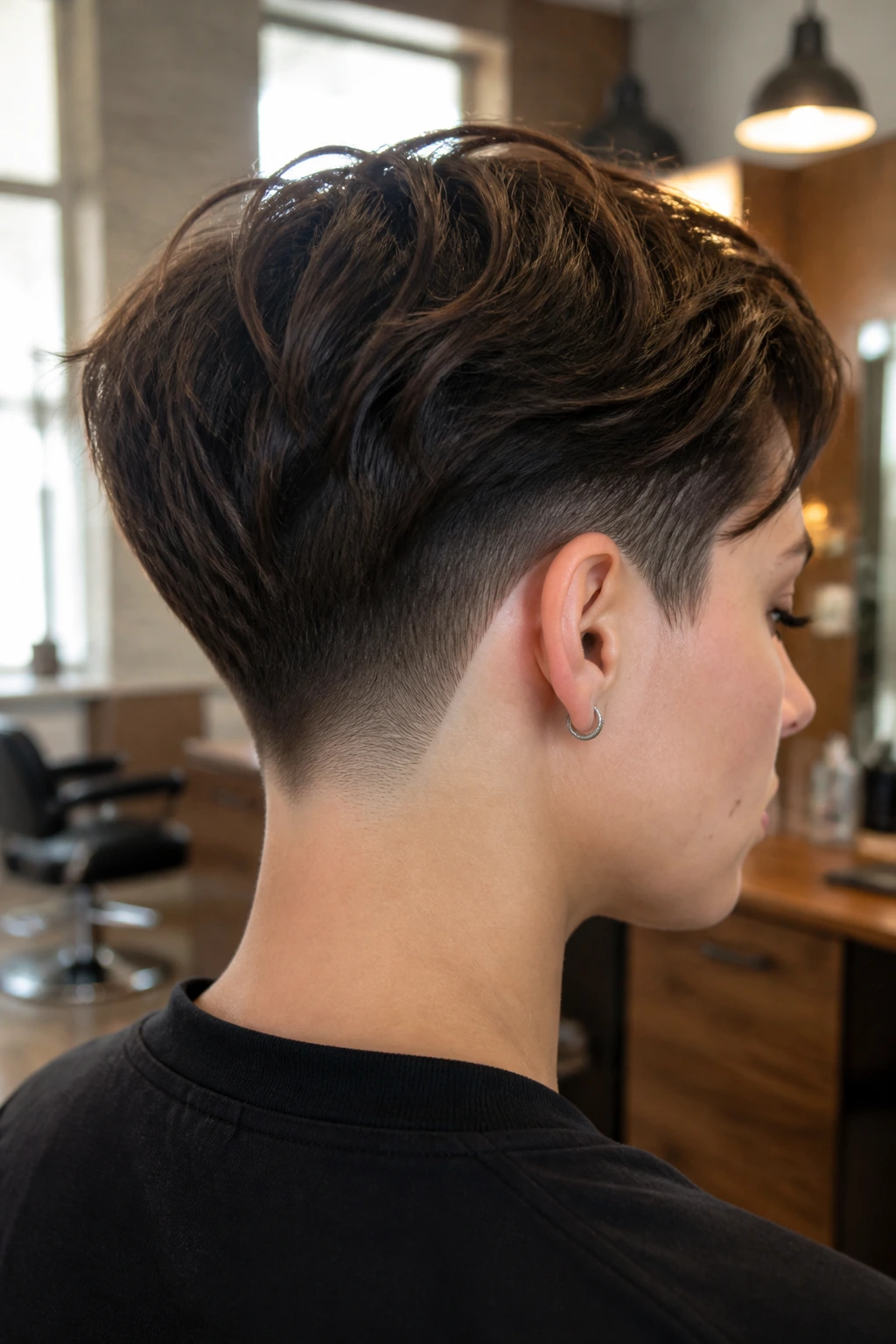
Short undercuts show regrowth quickly. Around the ears and nape, even a half-inch of growth changes the silhouette. Most people do well with cleanup every 2 to 3 weeks if they want the fade or taper to stay visible. If the top is short and textured, a full reshape every 4 to 6 weeks usually keeps the whole cut honest.
At home, trim only the obvious stray bits if you already know how your clippers behave. The temptation to “fix” the whole back yourself is where a lot of good cuts get wrecked. You can tidy the neckline, but don’t chase the fade higher and higher every time. That’s how the shape ends up too tight.
If you wear a disconnected or graphic undercut, the maintenance window is shorter. Those edges lose their punch fast. Softer taper versions give you more breathing room.
Common Mistakes That Flatten the Shape
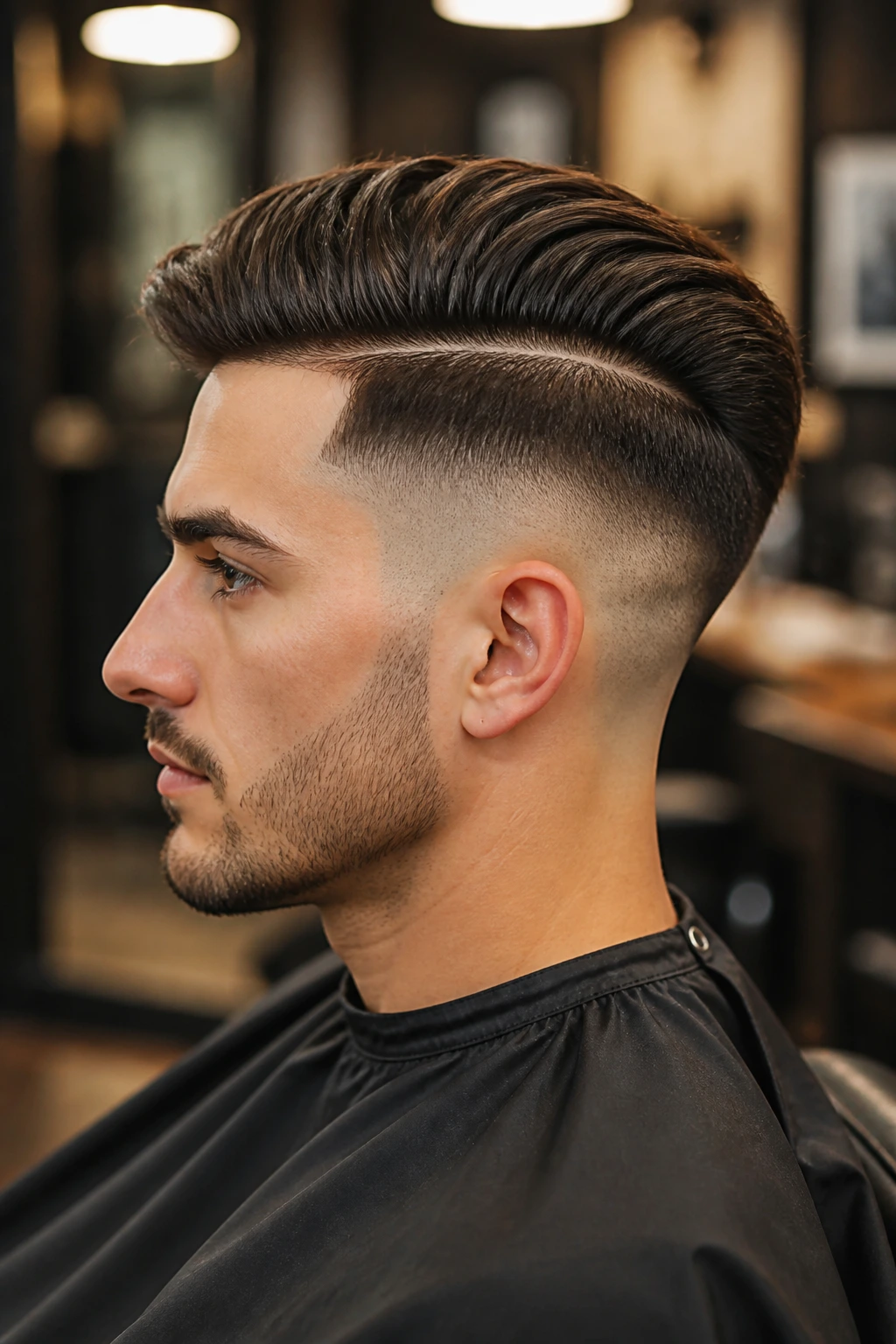
The first mistake is making the top too short before the undercut has room to matter. If the top barely clears the scalp, the cut loses contrast and starts reading like a buzz with opinions. Leave enough length for movement.
The second is over-thinning thick or curly hair. When the bulk gets removed in the wrong places, the shape can frizz outward or drop into strange gaps. The fix is to remove weight underneath and keep the surface shape intact.
Third, people often ask for a hard fade where a soft taper would suit the hairline better. On a low nape or a cowlick-heavy crown, a brutal fade can show every uneven corner as it grows. Softer blending usually behaves better.
Fourth, too much product makes short hair look wet and tired by lunch. Use less than you think, then add more only if the hair is still slipping around.
Variations and Adaptations to Try
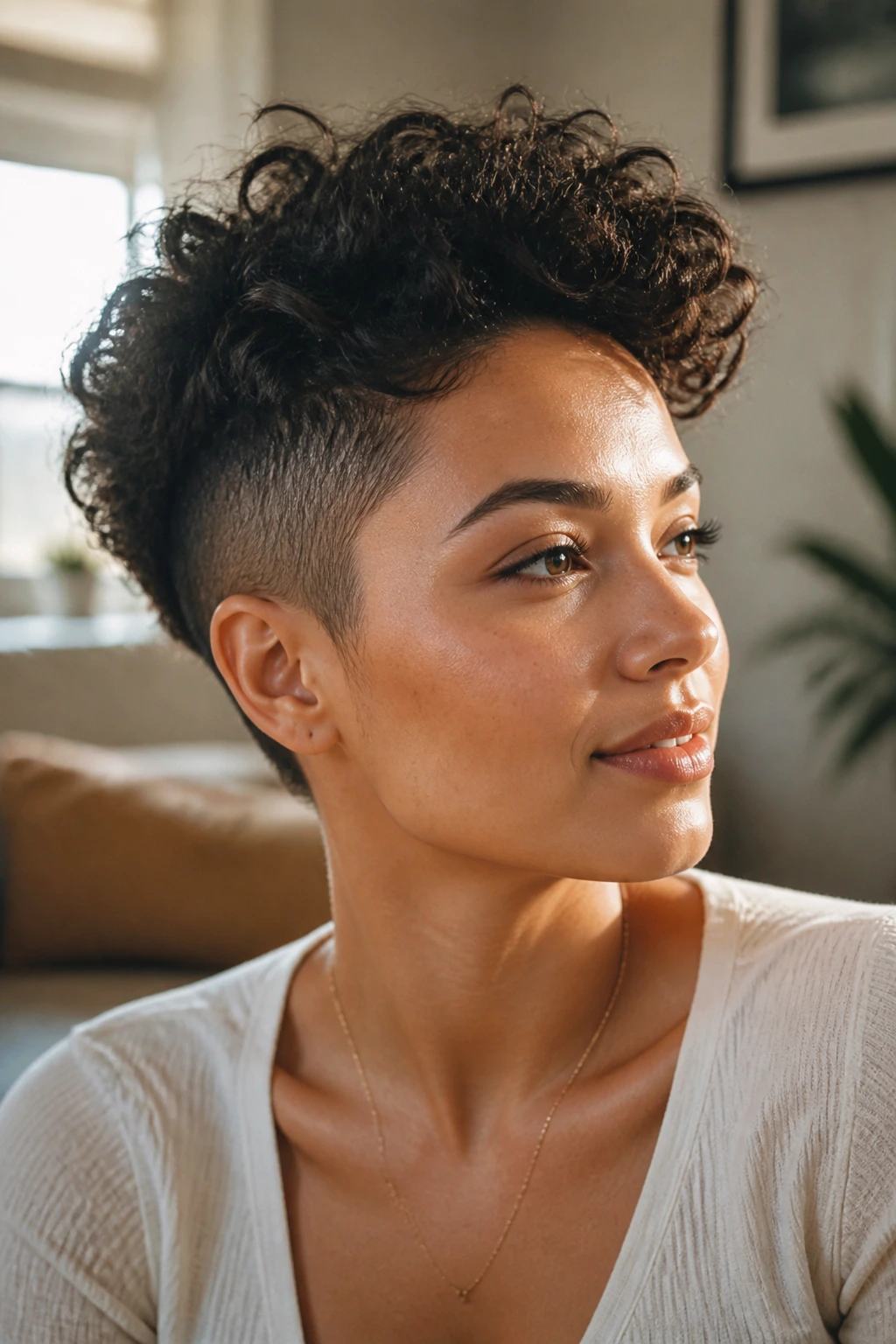
Soft Office Version: Keep the undercut hidden under a scissor-cut top and ask for a taper around the ears instead of a sharp shave. It reads neat, not severe, and it grows out without drama.
Curly-Focused Version: Leave the top longer and let the curls define the silhouette while the sides stay tight underneath. This keeps the curl pattern visible and cuts the side bulk that makes curls look wider than they are.
Fine-Hair Version: Use a lighter fade and a shorter, textured top so the hair looks fuller without relying on heavy product. A hard disconnect can make fine hair seem thinner than it is, so keep the transition softer.
Graphic Edge Version: Add one shaved line or temple detail to a simple crop or bob. One mark is enough; the haircut does the rest.
Grow-Out Version: Start with a tapered undercut, not a full skin-bald side. That gives you a cleaner transition when the haircut starts getting longer and buys you a few extra weeks between appointments.
Frequently Asked Questions
How short should the sides be for an undercut on short hair?
Most short undercuts sit somewhere between a #1 and #3 guard on the sides, depending on how much contrast you want. If you want a softer look, a longer taper around the ears and nape can do the job without exposing too much scalp.
Will an undercut work on curly hair?
Yes, and often better than people expect. The undercut removes the side bulk that makes curls spread outward, which helps the top keep its shape instead of turning into a triangle.
What if my hair is fine and flat?
Keep the top textured and don’t overdo the undercut. Fine hair usually looks better with a little lift at the crown and a softer blend, because too much shaving can make the scalp show through.
Can I style these cuts without heat?
Some can, especially shaggy and curly versions. Others — like slicked-back crops or side-swept styles — usually sit better if you give them at least a little blow-dryer help first.
How do I keep a graphic undercut from disappearing?
Plan on more frequent touch-ups, because shaved designs soften as soon as the hair starts growing. Even a small line needs regular cleanup if you want it to stay visible.
Is an undercut too edgy for work?
Not if you choose the right version. A hidden nape undercut, soft taper, or sleek bob with clipped underneath sections can look polished and quiet from the front.
What should I bring to my stylist besides a photo?
Say how much time you want to spend styling it, how often you’re willing to come back for cleanup, and whether you prefer matte, soft, or glossy finish. Those three answers change the cut more than most people realize.
What happens if I hate the grow-out?
That usually means the undercut was cut too high or too blunt for your routine. The fix on the next visit is a softer taper and more length left in the transition zone so the regrowth blends instead of shouting.
The Shape That Sticks
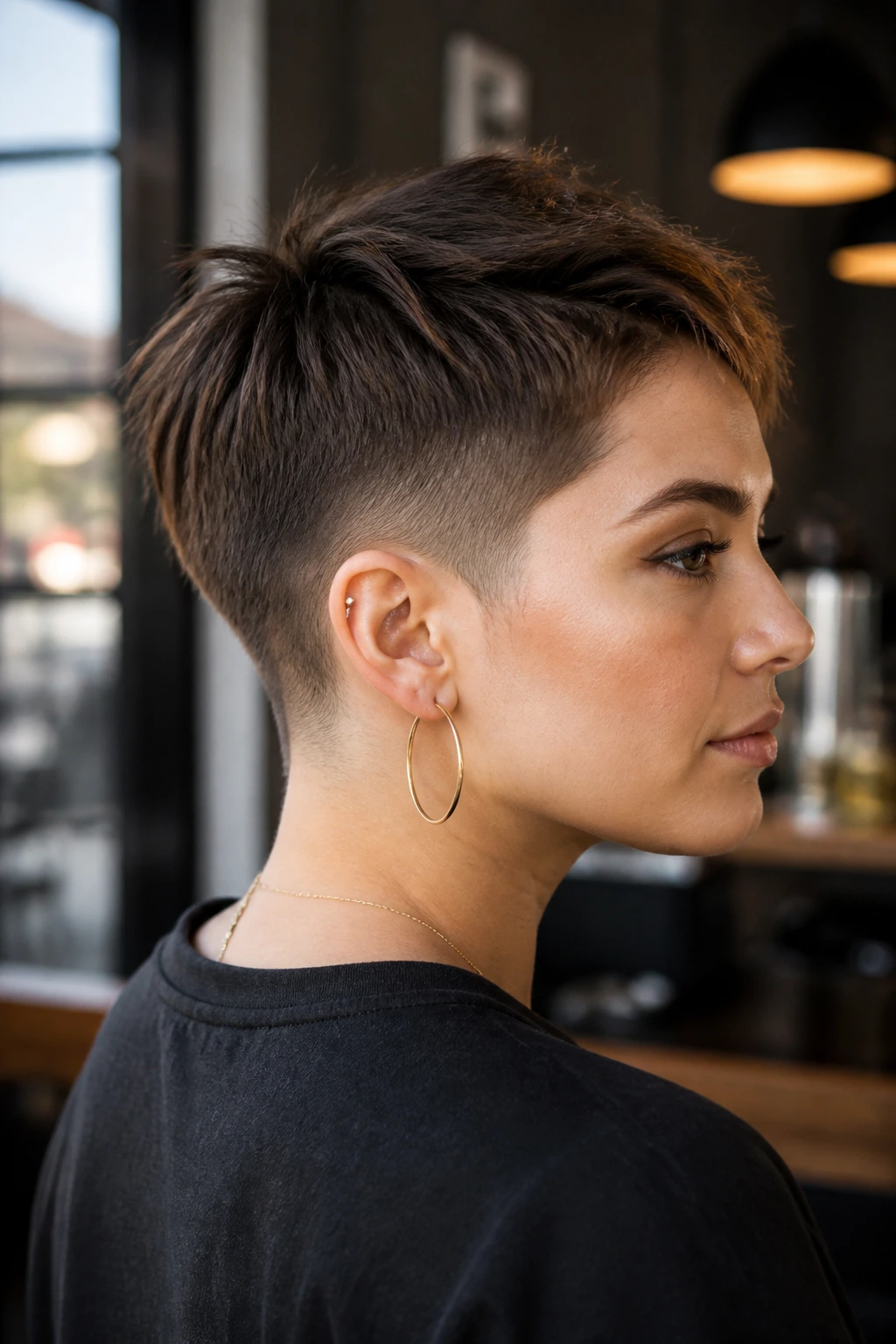
Short undercuts work because they respect the head under the hair. That sounds obvious, but plenty of cuts ignore it. The better versions use the crown, the nape, the part, and the hair’s natural bend to make a shape that still looks deliberate when it’s lived in for a few weeks.
The nice part is how flexible the idea is. You can go sharp, soft, graphic, curly, polished, or shaggy without leaving the basic undercut structure behind. Pick the version that fits your texture and your patience for upkeep, then let the haircut do what it’s good at: staying readable.
If you bring a clear photo, a realistic maintenance plan, and a little honesty about how your hair actually behaves, these undercut styles for short hair stop being inspiration pictures and start becoming usable haircuts.
