



A short haircut can look polished from the front and heavy from the back.
The best undercut styles for women with short hair solve that mismatch by taking out weight where it hides anyway — at the nape, behind the ear, under a bob, or in a narrow side panel that changes the whole silhouette. A good undercut doesn’t need to scream. Sometimes it just makes the rest of the haircut fall the way it should.
My favorite versions are the ones that give you options. A hidden nape panel can disappear under a pixie. A clean temple shave can make glasses sit better. A narrow V at the neckline can look neat when your hair is up and vanish when it’s down. One millimeter too high, though, and the shape changes fast. Very fast.
That’s the real game here: not just shaving hair off, but deciding what you want the cut to do once it grows, moves, and hits a collar. The styles below cover the quiet, the bold, and the in-between.
Why These Undercuts Work So Well on Short Hair
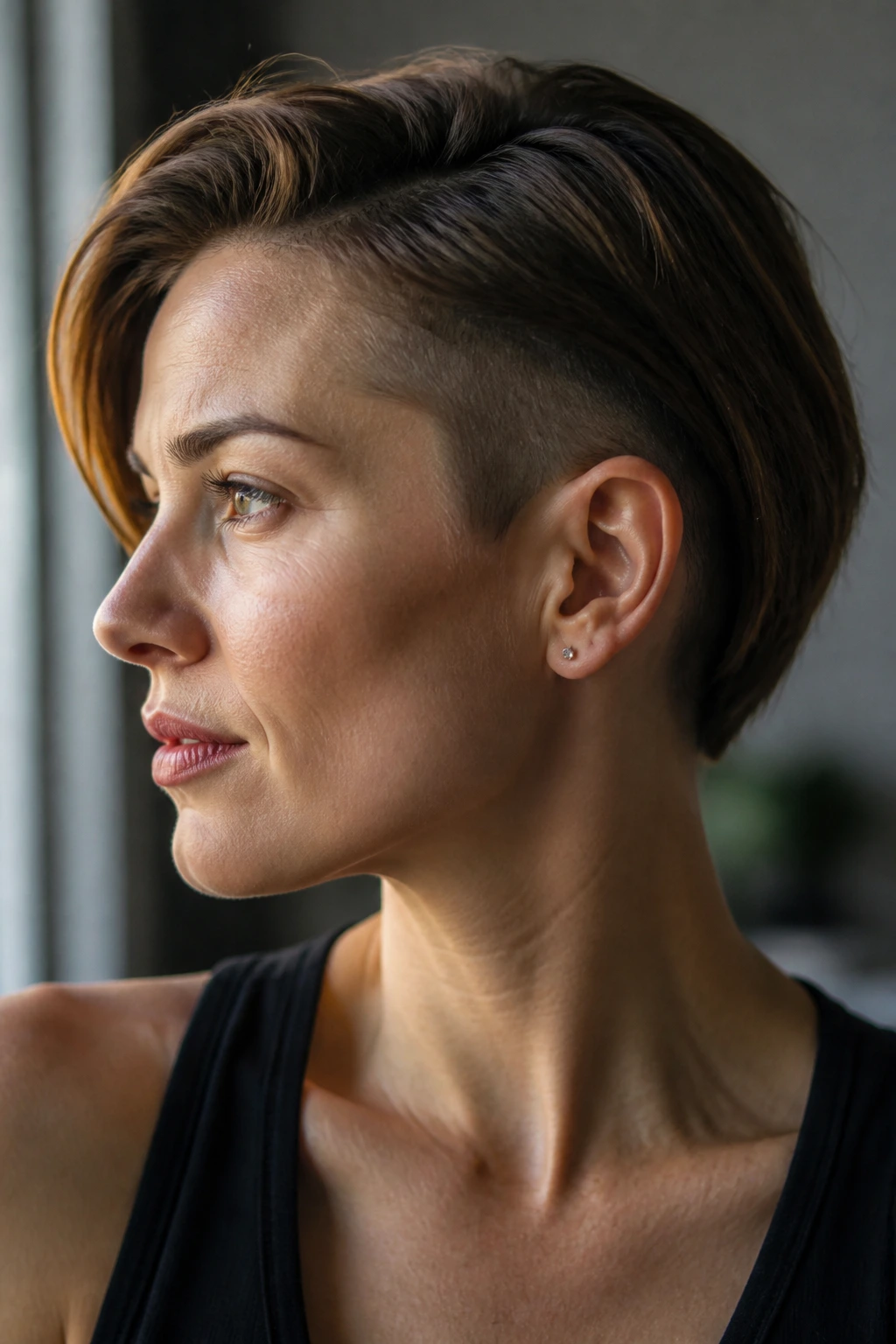
-
They remove bulk where short hair fights itself: Thick or coarse hair often puffs at the nape and around the ears, and a clipped panel fixes that without sacrificing length on top.
-
They change the silhouette with almost no extra styling time: A side shave or hidden back panel can make a pixie sit flatter and cleaner after air-drying, which is half the battle on short cuts.
-
They let you hide or show the shape on purpose: A deep side part, a tuck behind the ear, or a quick clip at the crown can reveal the undercut or keep it tucked away.
-
They work for more than one hair texture: Straight hair shows the line sharply, curls hide it under volume, and wavy hair sits somewhere between the two — which is handy if you want softness instead of a hard edge.
-
They give short hair a sharper outline around the neck and ears: That tiny gap of clipped hair changes how the whole cut reads in profile, especially when you wear collars, earrings, or glasses.
1. Hidden Nape Undercut for Women With Short Hair
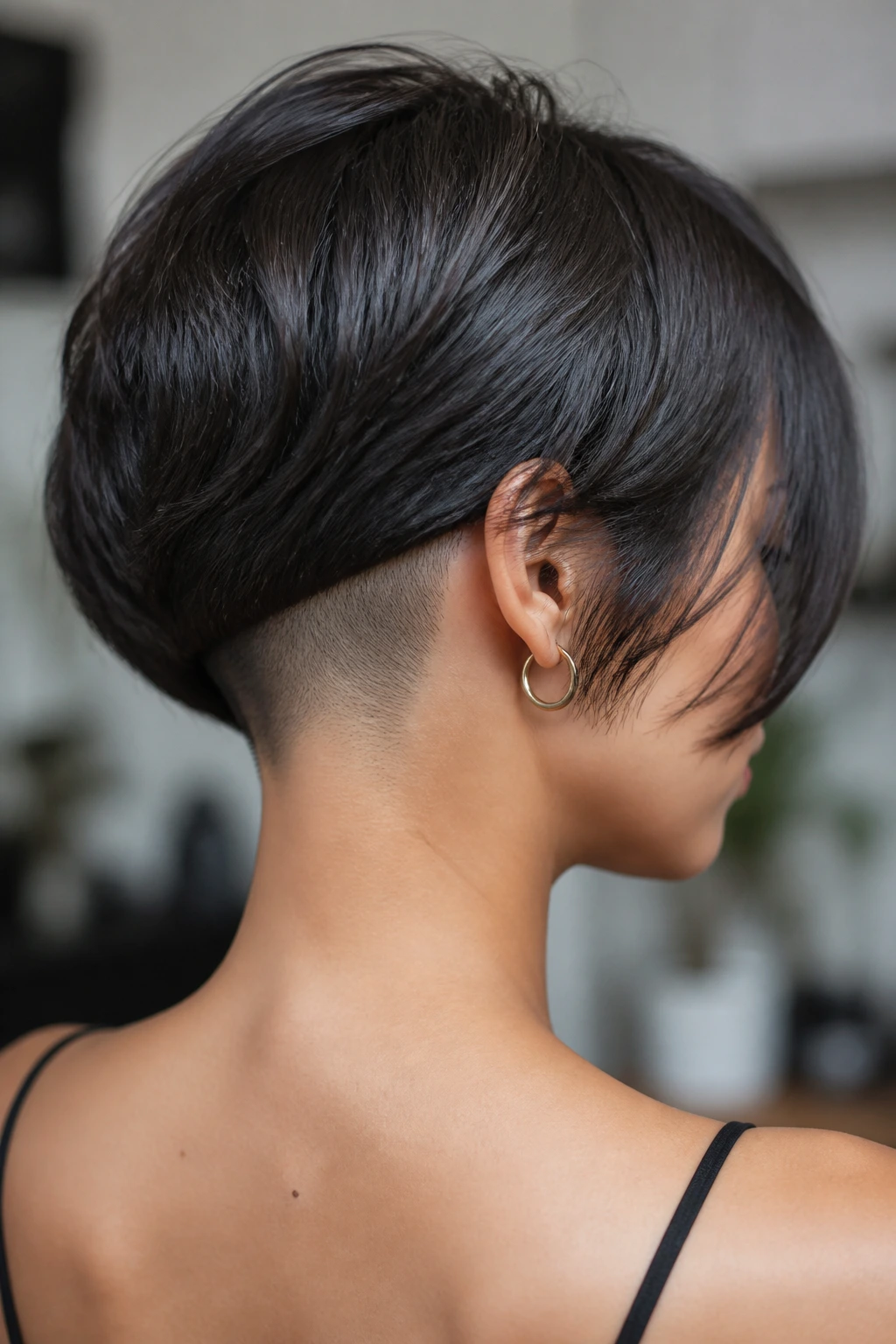
This is the quiet one. A narrow strip at the nape gets clipped close enough to remove weight, but the top layer still falls over it, so the cut looks clean from the side and disappears from the front. If you like your hair to look neat without looking obviously shaved, this is the place to start.
It works especially well when the back of a pixie kicks out against sweaters or when a short bob keeps swelling at the collar line. Ask for the panel to stay low, below the widest part of the head, and keep it narrow enough that the upper layer can cover it when the hair is dry. A hidden undercut that’s too high stops being hidden. Fast.
Why it earns its keep
A nape panel can take a dense short cut from bulky to tidy without changing the shape you already like. The effect is subtle when your hair is worn down, then instantly clearer when you tuck it behind the ear or pin it up.
Best if you want:
- Less puff at the collar: Short hair that flares out against jackets or scarves benefits from the weight removal.
- A workplace-safe option: The panel can stay completely out of sight unless you choose to show it.
- A cleaner grow-out: Because the shave sits low, the regrowth line is easier to manage than a high side shave.
Keep the top layer long enough to cover the panel when your hair is dry, not only when it’s wet. Wet hair lies, and it lies beautifully.
2. Temple Undercut That Makes a Side Part Pop
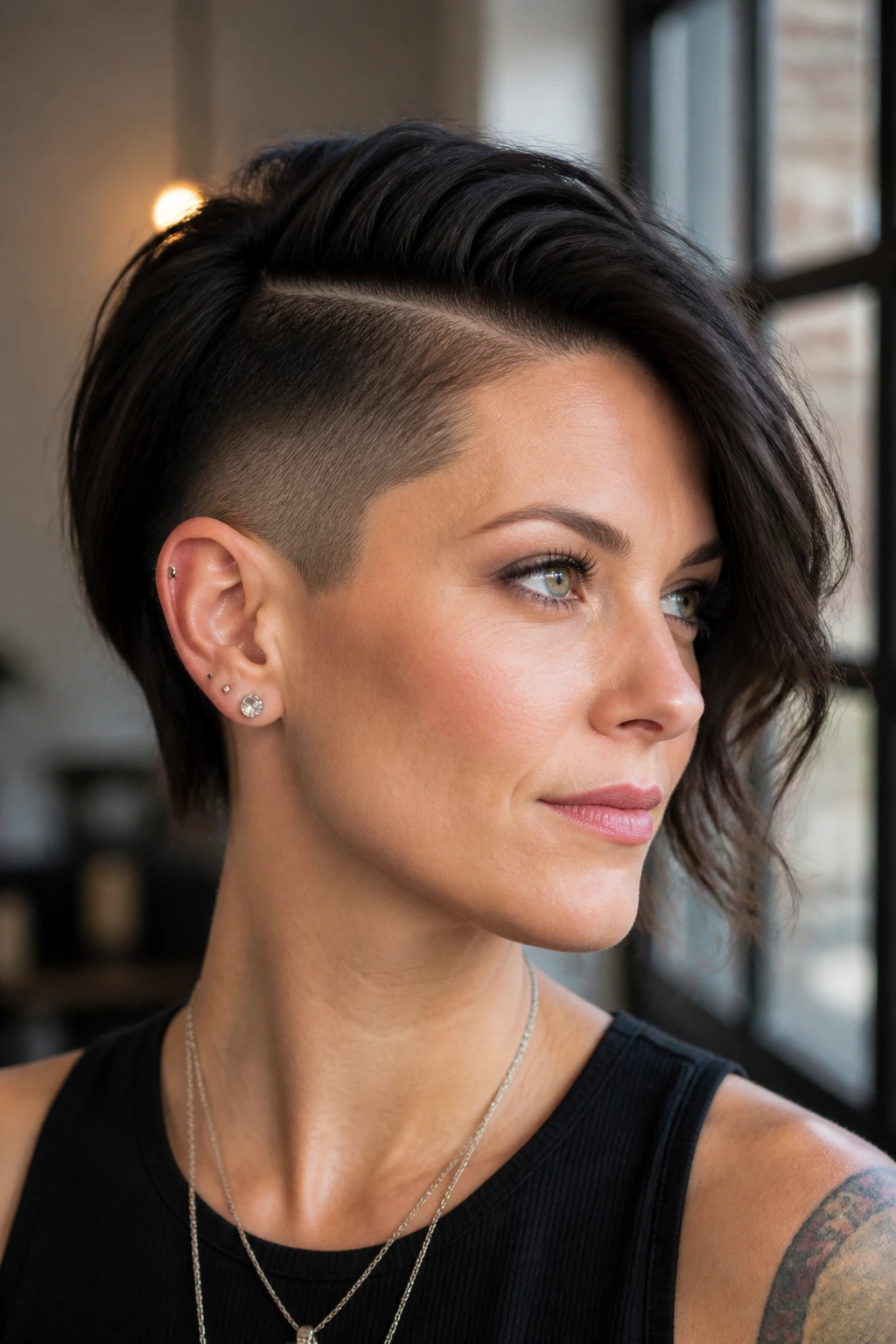
A temple undercut changes the face-framing line in a way a layered crop cannot. The hair around the temples sits flatter, the side part looks intentional instead of accidental, and glasses stop snagging on bulky side pieces every time you pull them on.
I like this version on short hair because it gives you edge without stealing too much softness from the haircut. Keep the shaved area tucked just behind the hairline and not too far up toward the crown. If the shave creeps higher than you meant, the face starts to look narrower than it should, and that’s not always flattering.
The real trick is the part. A shallow side part gives a gentle sweep over the shaved area; a deeper part makes the contrast sharper and a little more graphic. Both work. The choice is yours.
3. Asymmetrical Pixie Undercut with a Long Sweep
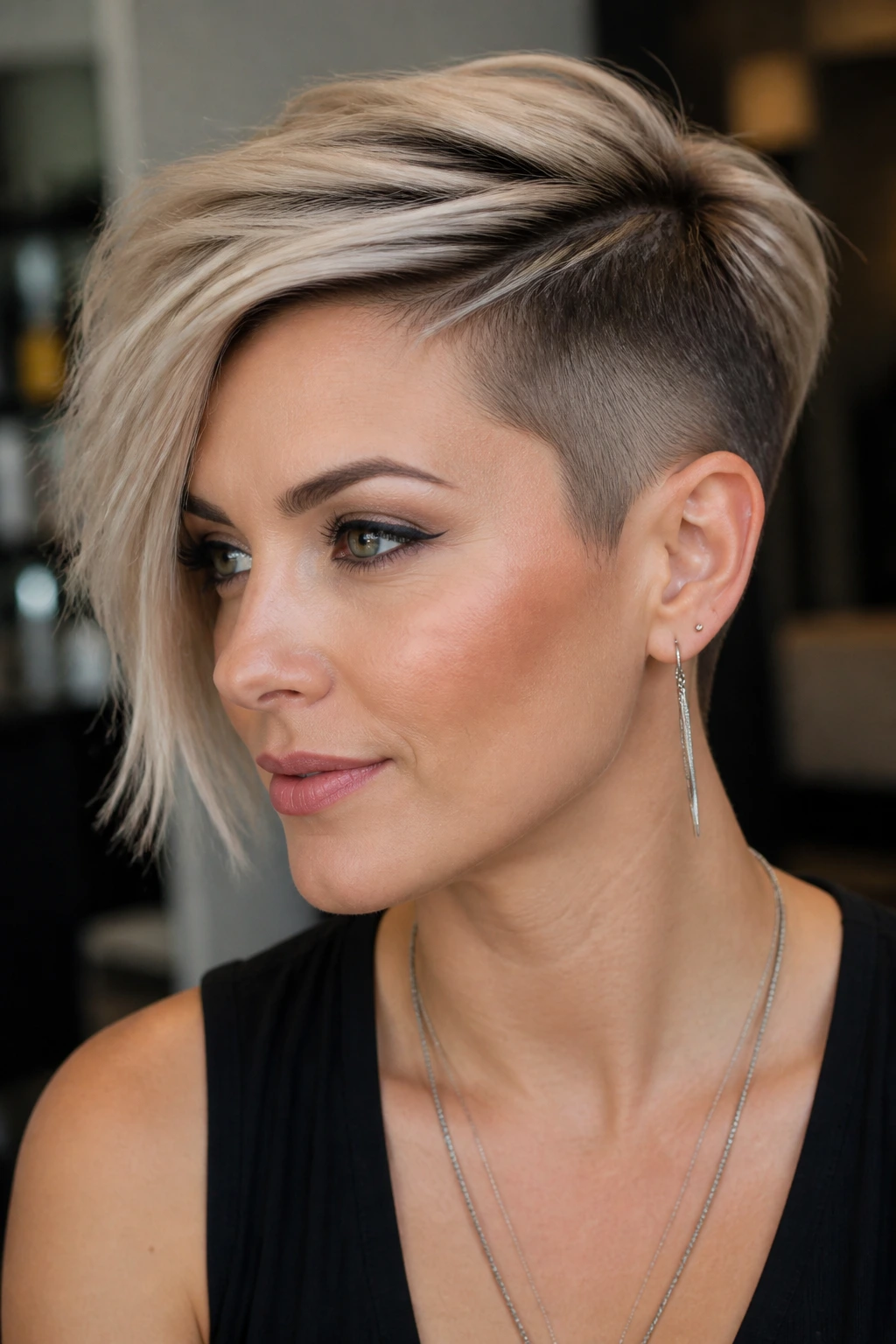
What if one side did all the work? That’s the charm of an asymmetrical pixie undercut: one side stays longer and heavier, while the opposite side gets clipped close, so the haircut has motion even before you touch it with product.
This style is especially good if you like a cut that looks styled with almost no effort. The long sweep can fall across the forehead, tuck behind one ear, or lift at the crown with a little matte paste. On the short side, the undercut keeps the shape from ballooning out. On the long side, the length softens the edge so the whole thing doesn’t feel too severe.
How to wear it
- For a softer day: Blow-dry the long side forward and down with your fingers, then bend the ends with a pea-sized amount of cream.
- For a sharper finish: Use a little paste at the roots and direct the top away from the shaved side with the dryer nozzle.
- For a tucked look: Tuck the long side behind one ear and let the contrast do the talking.
A strong asymmetrical pixie only works when the longer side has enough weight to look deliberate. Too thin, and it turns wispy. Too long, and the shave gets lost.
4. Curly Crown Undercut That Keeps Volume Up Top
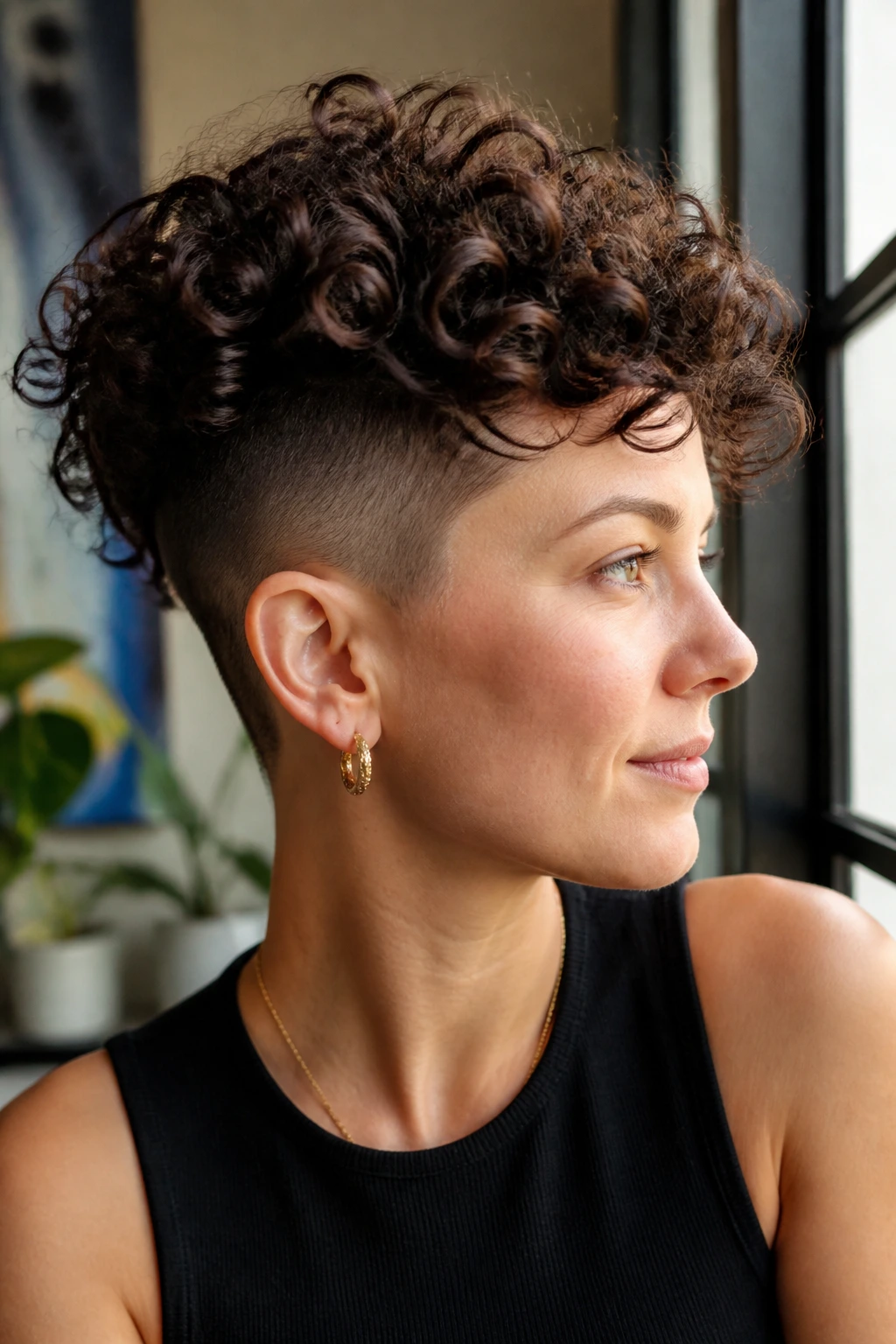
Curls can turn a short haircut into a little helmet if the bottom layers are carrying too much weight. A crown-focused undercut fixes that by removing bulk underneath the curl pattern so the ringlets sit higher and breathe a little.
The good part is that the shaved section usually hides under the curl canopy. The better part is that the curls stop fighting the shape of the head. If you’ve ever watched a curly bob puff outward at the sides while the nape feels heavy, you already know why this cut exists.
Keep the undercut lower than you think. Curly hair shrinks, and a shave that looks modest on wet hair can show more skin once the curls spring up and dry. If your curl pattern is loose, a wide panel under the crown can work. If your curls are tight, keep the panel narrower and let the texture do the covering.
5. Disconnected Bob with a Clean Back Panel
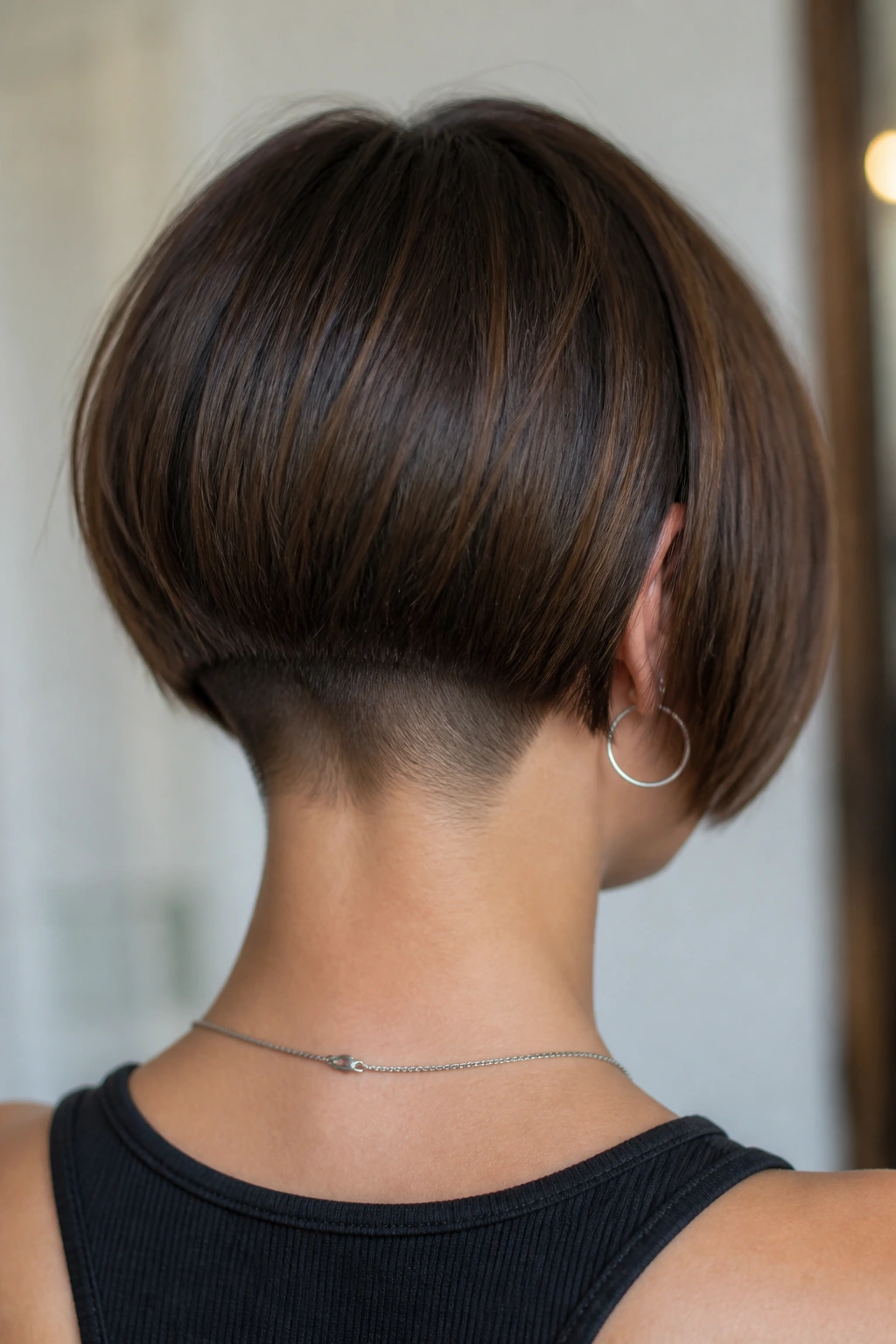
A bob with an undercut under the back section is the haircut equivalent of clearing clutter off a desk. The outline stays familiar, but the mass disappears, and suddenly the bob stops sitting like a block.
This is one of my favorite undercut styles for women with short hair because it solves a very specific problem: the shelf effect. Thick hair in a blunt bob can kick outward at the ends and look boxy. Remove some interior weight under the back, and the line drops closer to the neck. Not flatter. Just cleaner.
It’s also a good choice if you wear scarves, collars, or structured jackets. The undercut keeps the back from rubbing into fabric and puffing out at the first sign of friction. That sounds small. It isn’t.
6. Soft Tapered Undercut for Fine Hair
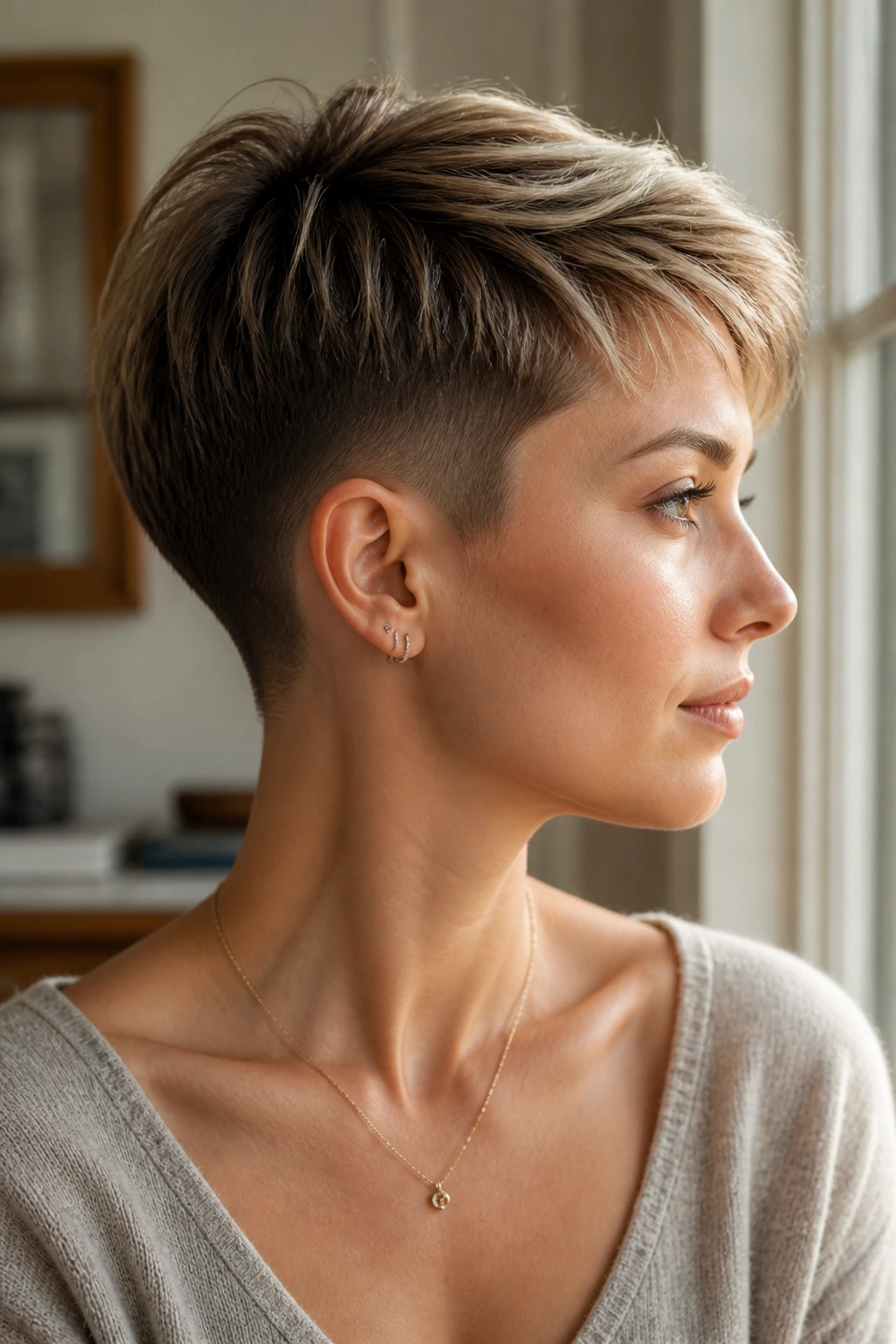
Fine hair can wear an undercut, but it needs a lighter hand. A soft tapered version removes just enough weight to lift the shape without stripping the hair so much that the top starts looking see-through.
I prefer this to a skin-close shave when the hair is thin. A soft taper, often done with a #3 or #4 guard rather than a close buzz, keeps a tiny bit of texture underneath. That matters. The haircut still feels airy, but the scalp doesn’t show through in a harsh block, and the grow-out is kinder.
Where the taper should stay soft
- At the nape: Keep the shortest section low so the top layer can fall over it.
- Behind the ear: Leave a little length if your hairline is sparse there.
- On top: Don’t over-thin the upper layers. Fine hair needs density on display, not less of it.
If you’ve got fine hair and want a shorter cut without the helmet look, this is the smarter move.
7. Buzzed Sides and a Long Fringe
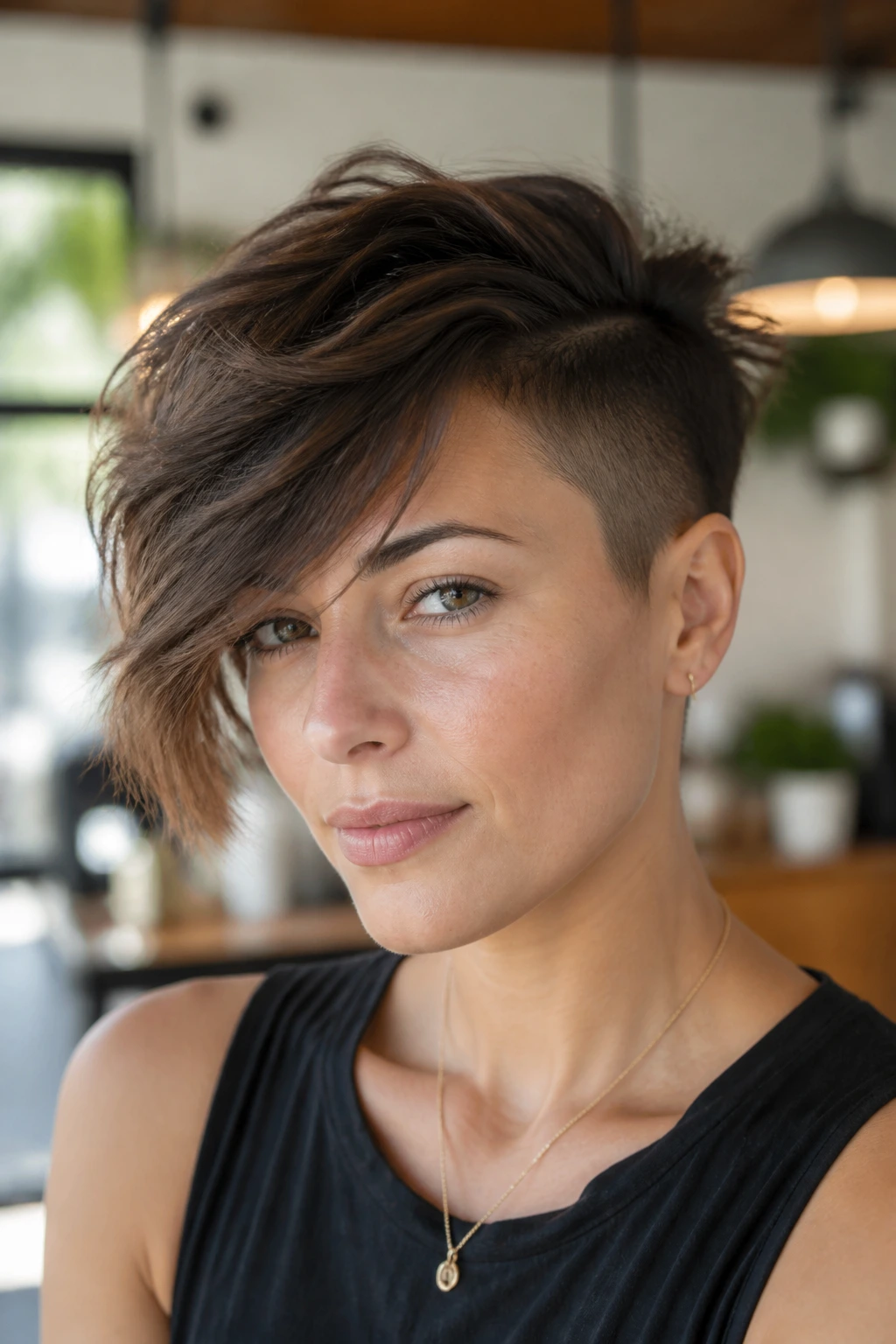
Sometimes the cleanest answer is to make the sides almost disappear and let the fringe do the talking.
Buzzed sides with a long fringe give you that sharp contrast: short and close at the temples, more length falling through the front, and a clear line between the two. It’s a strong look, but it doesn’t have to be punky. A softly textured fringe can make it feel sleek, while a blunt, piecey fringe makes it more graphic.
Here’s the part I like best: the fringe can change the mood of the haircut without touching the shaved sides. Push it forward and messy, and the whole cut feels relaxed. Blow it smooth and side-swept, and it reads polished. Same haircut. Different attitude.
- Fringe length: Usually somewhere in the 3- to 5-inch range gives enough movement to work with.
- Side length: A #1 or #2 guard gives you a visible buzz; a #3 feels softer.
- Styling: Keep a small round brush or a flat brush nearby if you want the fringe to sit cleanly across the forehead.
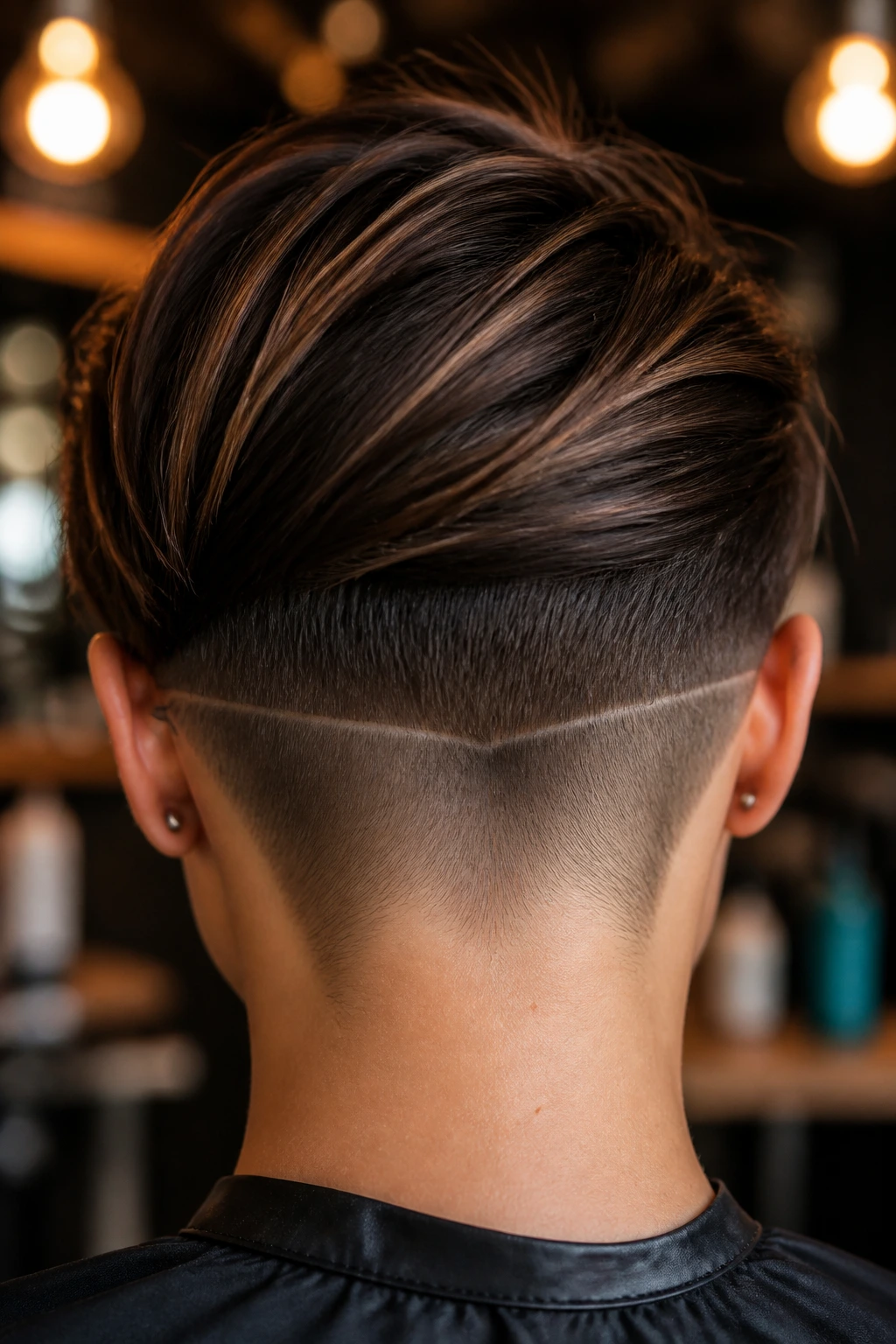
8. V-Shaped Nape Undercut with a Sharp Neckline
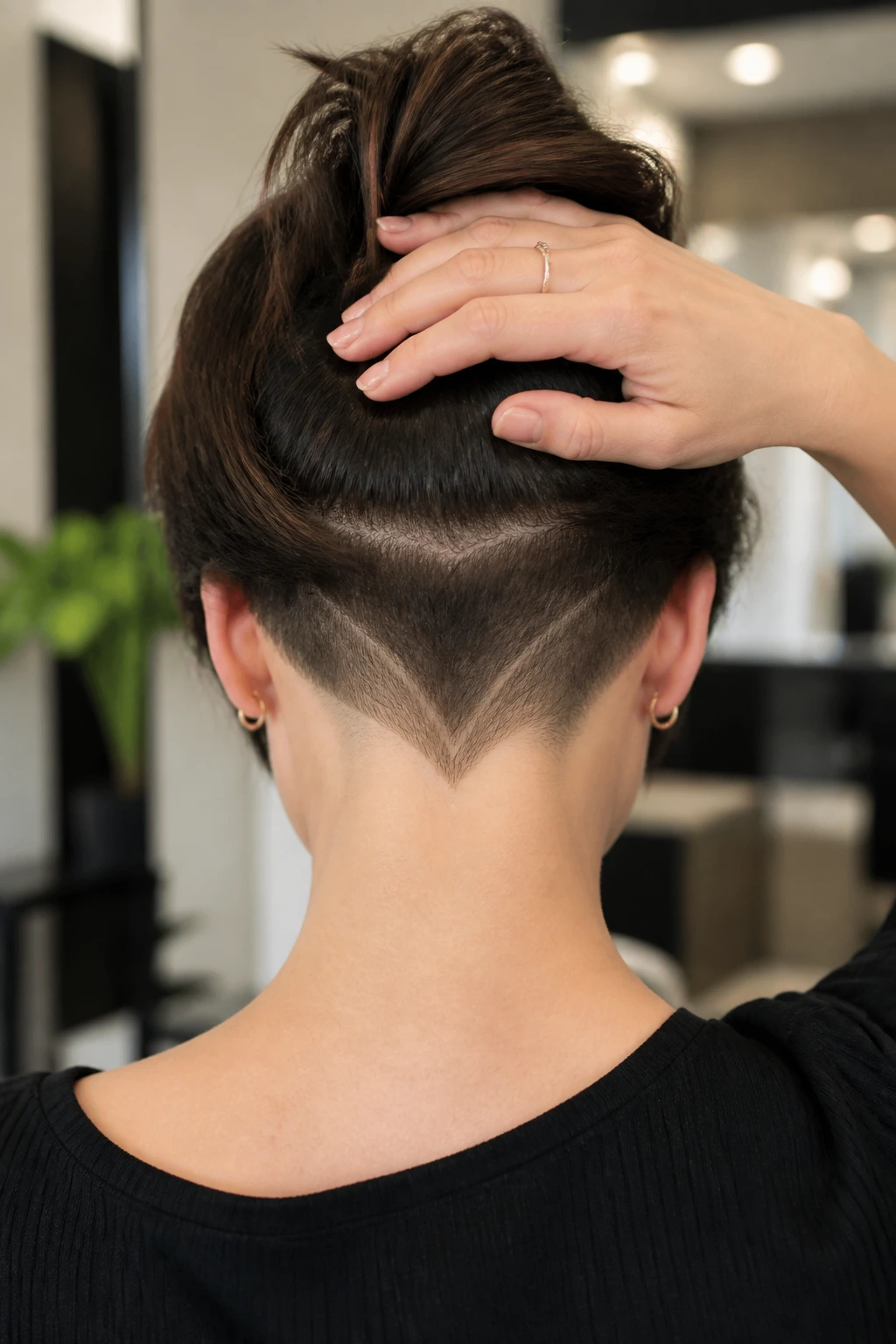
A V-shaped nape undercut looks tiny on paper and striking in motion. The point drops into the base of the neck, so when you wear your hair up or let a cropped bob lift off the shoulders, the shape peeks out in a neat little triangle.
This style works because it gives the back of the haircut a focal point. Instead of a straight line that disappears, you get a neckline that feels intentional. The V doesn’t need to be dramatic. In fact, the best ones are narrow enough to look elegant rather than ornamental.
If your hair grows fast at the nape, the V can start to blur after a couple of weeks, which is part of the appeal if you like a shape that softens over time. If you want it crisp, you’ll need a tidy-up sooner. No way around that. Sharp lines ask for attention.
9. Short Shag with a Hidden Side Shave
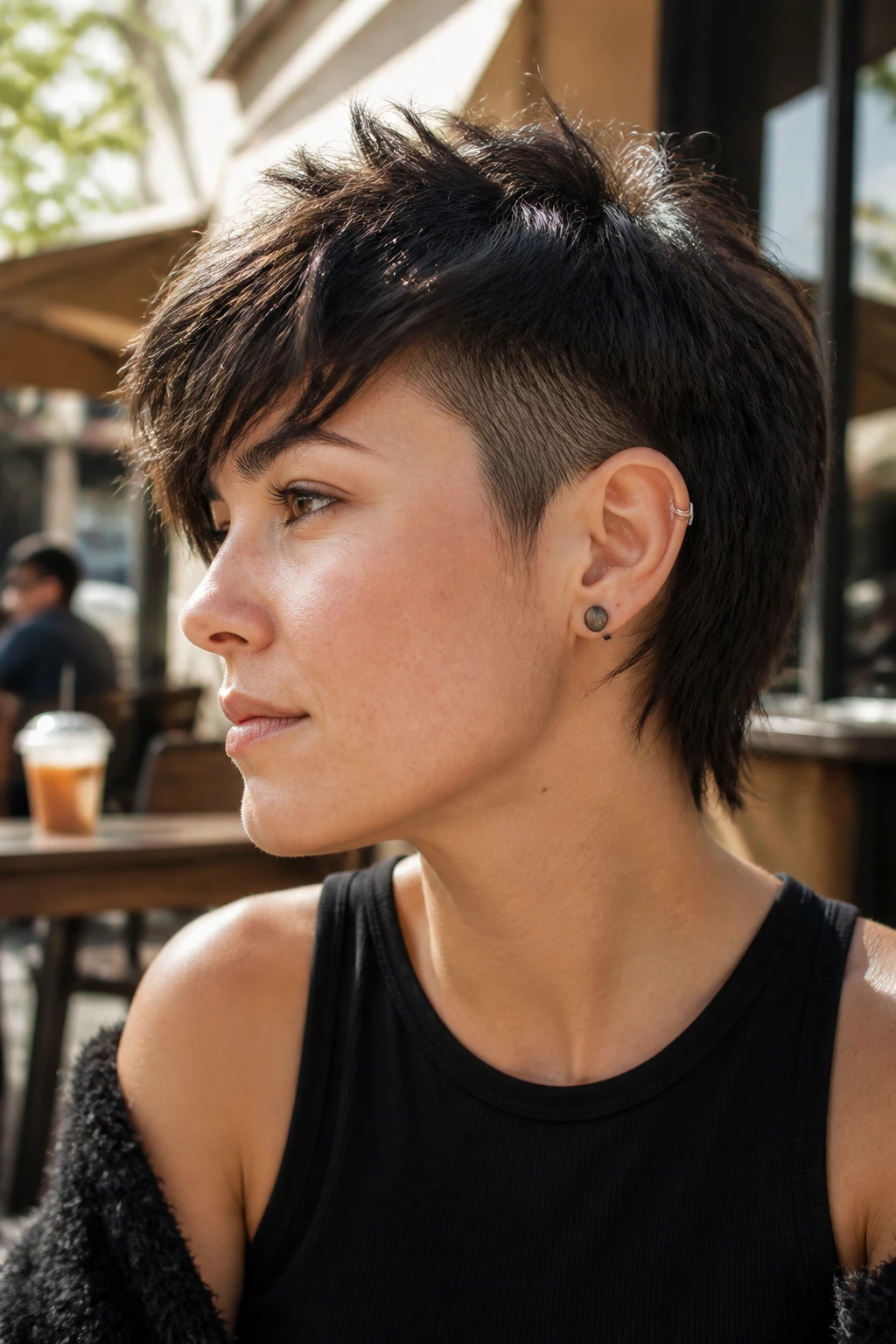
A shag on short hair can go fluffy in a hurry if the sides and back are carrying too much bulk. Slip a hidden side shave underneath the layers, and the whole cut suddenly moves better. It stops looking like “a lot of hair happened here” and starts looking airy.
Why this version works
The shag already brings texture through choppy ends and broken-up layers. The undercut removes the weight the layers can’t handle on their own, so the shape stays lighter around the ears and crown. That matters most if your hair is thick enough to sit out from the head instead of hugging it.
The shave stays out of sight until you tuck one side behind the ear or use a clip. That makes this one a nice compromise if you like a bit of edge but do not want your haircut announcing itself in every room.
A shag with a hidden side shave is also forgiving during grow-out, which I can’t say about every undercut. The layers blur the line for you.
10. Faux Hawk Pixie with Tapered Sides
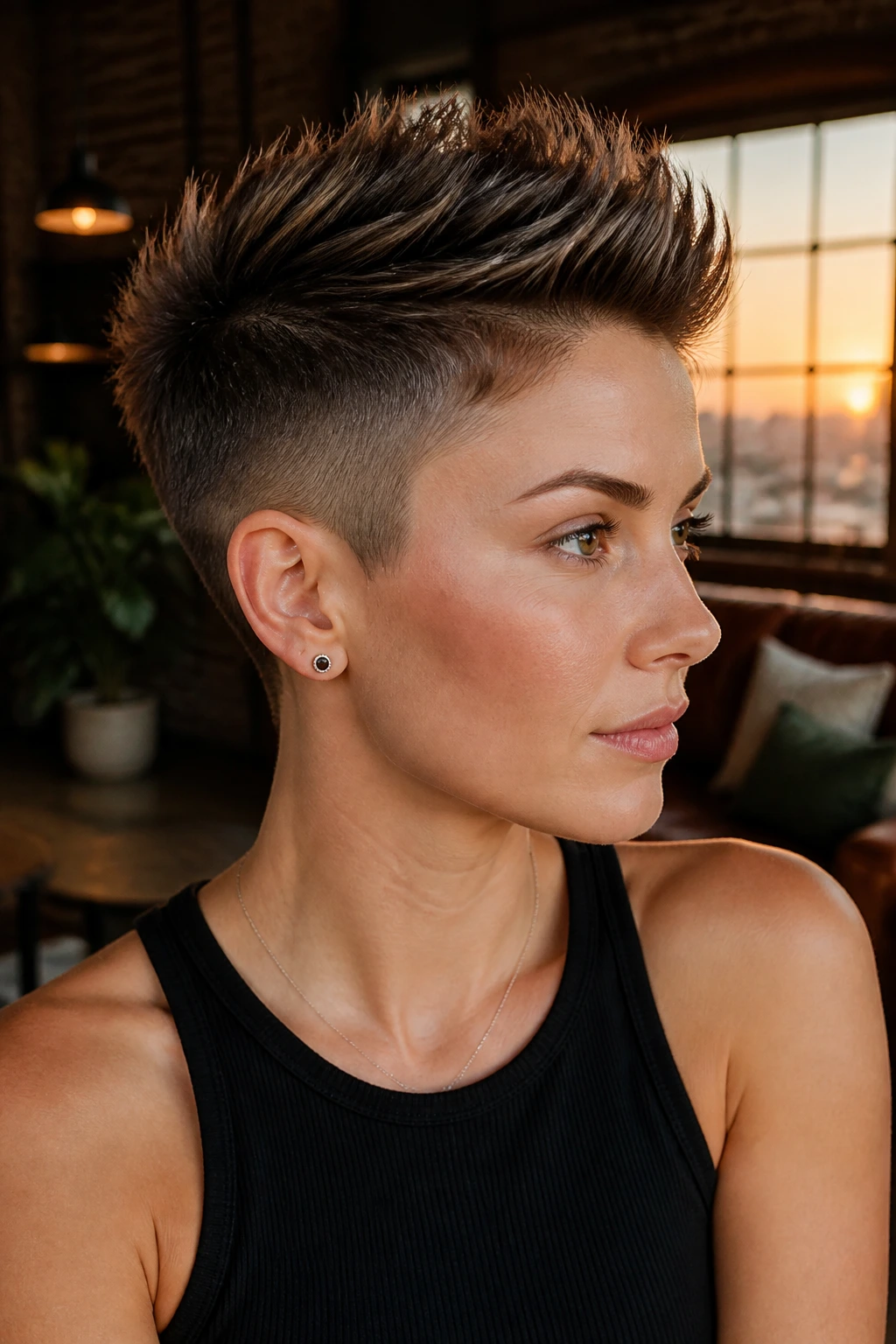
If you want short hair to look purposefully cut instead of merely short, this is the one. A faux hawk pixie keeps the center strip a little longer and tighter at the sides, so the eye goes straight up the head and the crown gets lift for free.
It’s not as wild as a full mohawk, and that’s the point. The sides can be tapered rather than fully buzzed, which softens the contrast while still keeping the profile sharp. You get height, movement, and a little attitude without having to commit to a full-on shaved panel.
A small amount of root-lifting product makes a real difference here. Work it through damp hair, blow-dry the center strip upward, then pinch the ends with your fingers instead of combing them flat. The cut wants direction, not obedience.
11. Etched Nape Undercut with a Single Line Design
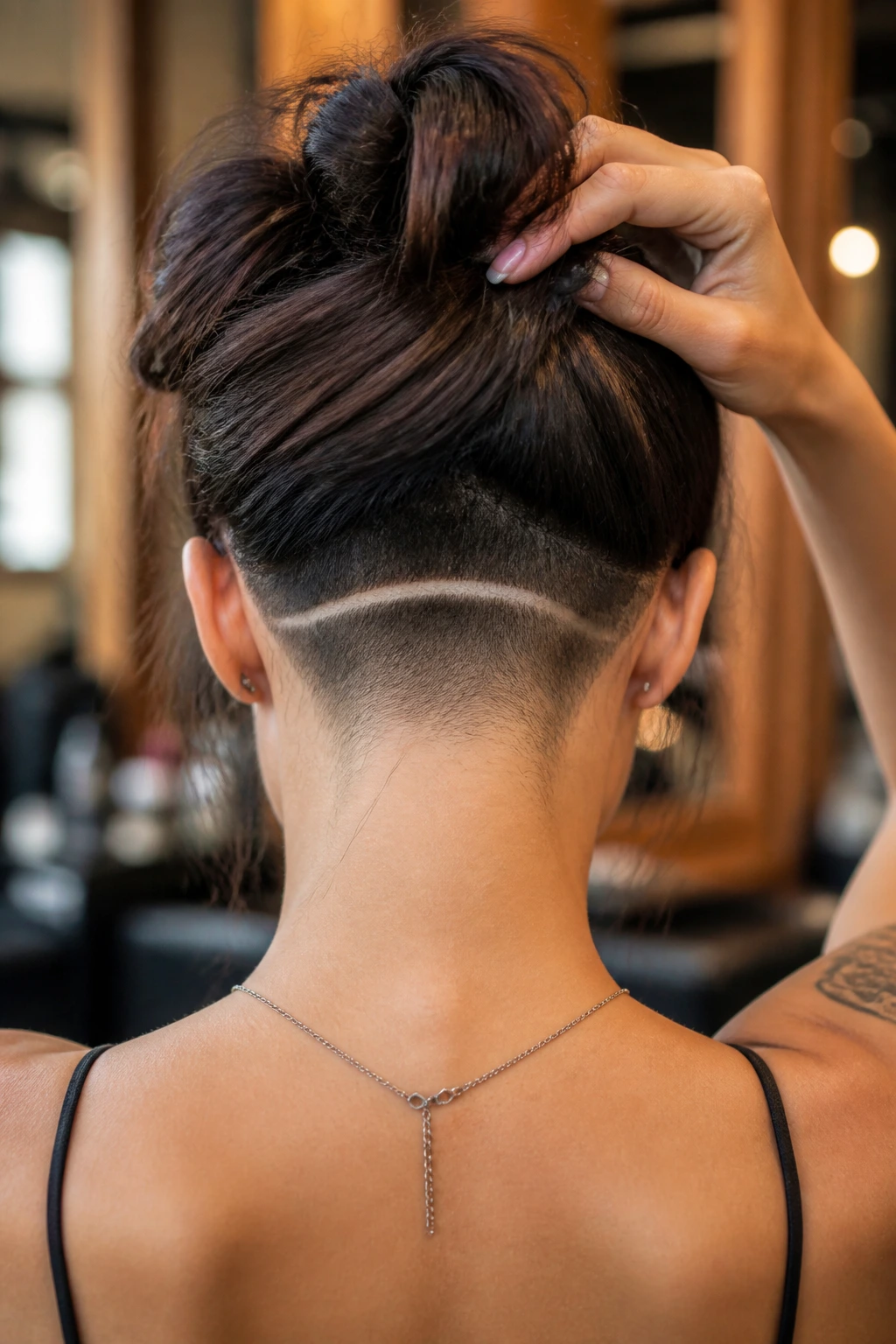
A tiny etched line at the nape can turn a basic undercut into something with a little swagger. It doesn’t need to be a full pattern. One crisp line, a crescent, a chevron, or a narrow V is usually enough.
This style is best when the rest of the haircut stays simple. Short hair already has enough going on once the shape is right; a small design at the nape works like a signature. The line shows when you wear your hair up or when a gust of wind lifts the back. Then it disappears again. That little reveal is the charm.
Design ideas that stay readable
- Single line: Clean and easy to maintain.
- Chevron: A sharper option if you want a more graphic look.
- Crescent curve: Softer and better if your haircut already has rounded lines.
- Tiny double line: Good if you want something visible without going full pattern.
Keep in mind that etched work grows fuzzy faster than a plain shave. Two weeks can make a crisp line look softened, and if you like it very clean, plan on frequent touch-ups.
12. Ear-Hugging Side Undercut for Glasses and Short Hair
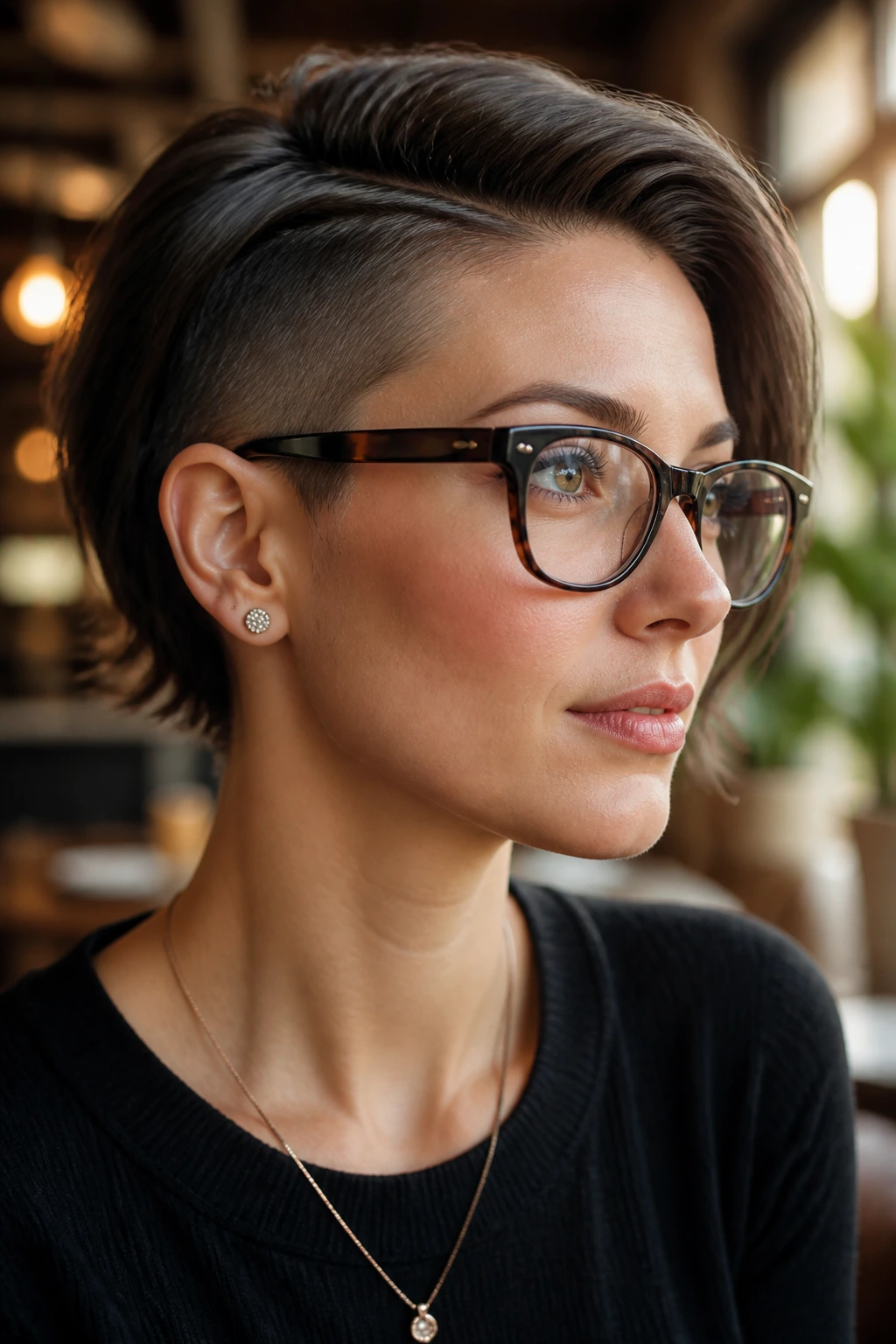
The skin around the ear is where short hair can start to fight your life, especially if you wear glasses. Hair bulks up around the arm of the frame, tucks awkwardly, and suddenly you’re adjusting the same side all day. An ear-hugging side undercut solves that.
I like this version because it doesn’t have to be loud to be useful. The clipped area stays tucked just around the ear curve, enough to clear the frame, enough to keep earrings visible, and narrow enough that the top layer can sweep over it if you want a softer day. It’s a practical cut that still looks considered.
If your hair is thick, this can be a relief. If it’s fine, keep the shaved area closer to the ear than the temple so the top doesn’t look stripped of fullness. That narrow placement is the difference between “clean” and “too much.”
13. Color-Peek Undercut That Hides a Bright Panel
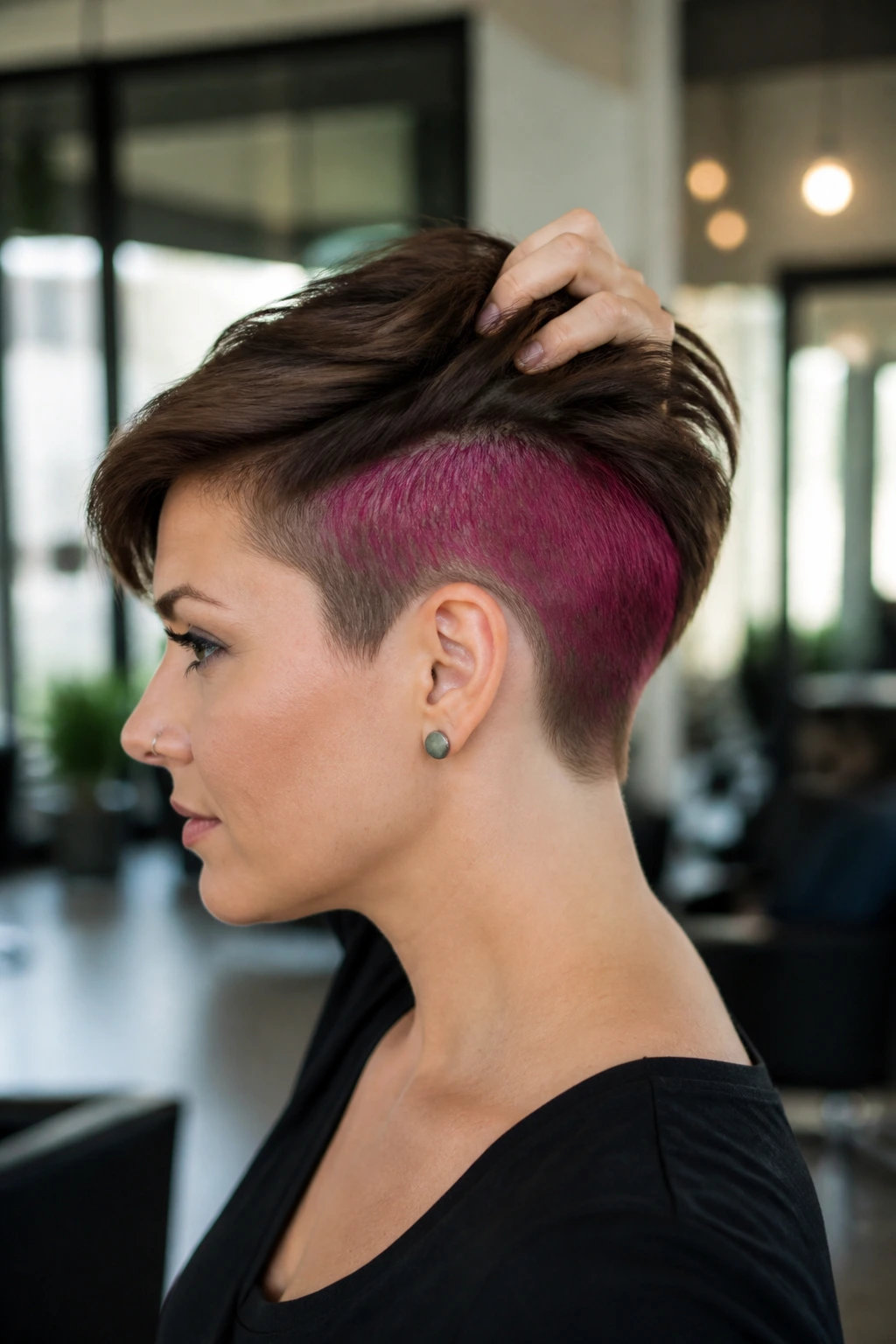
A colored undercut is for the people who like a surprise hiding under the haircut. The top layer stays natural, dark, or neutral; the panel underneath gets a brighter color, a softer pastel, or a darker shade that makes the contrast read in shadow.
This works best on short hair because the reveal is controlled. You see the color when the hair moves, when it’s pinned up, or when the side lifts away from the scalp. It’s not loud all the time. That’s the fun of it. The color becomes a private detail rather than a full-time commitment.
If you’re considering bleach, be honest about upkeep. A small panel still needs toner and attention because it’s exposed near the scalp, and regrowth shows faster on a shaved surface. A semi-permanent color on a pre-lightened panel is easier to live with if you want something temporary or less demanding.
14. Rounded Crop with a Clean Undercut
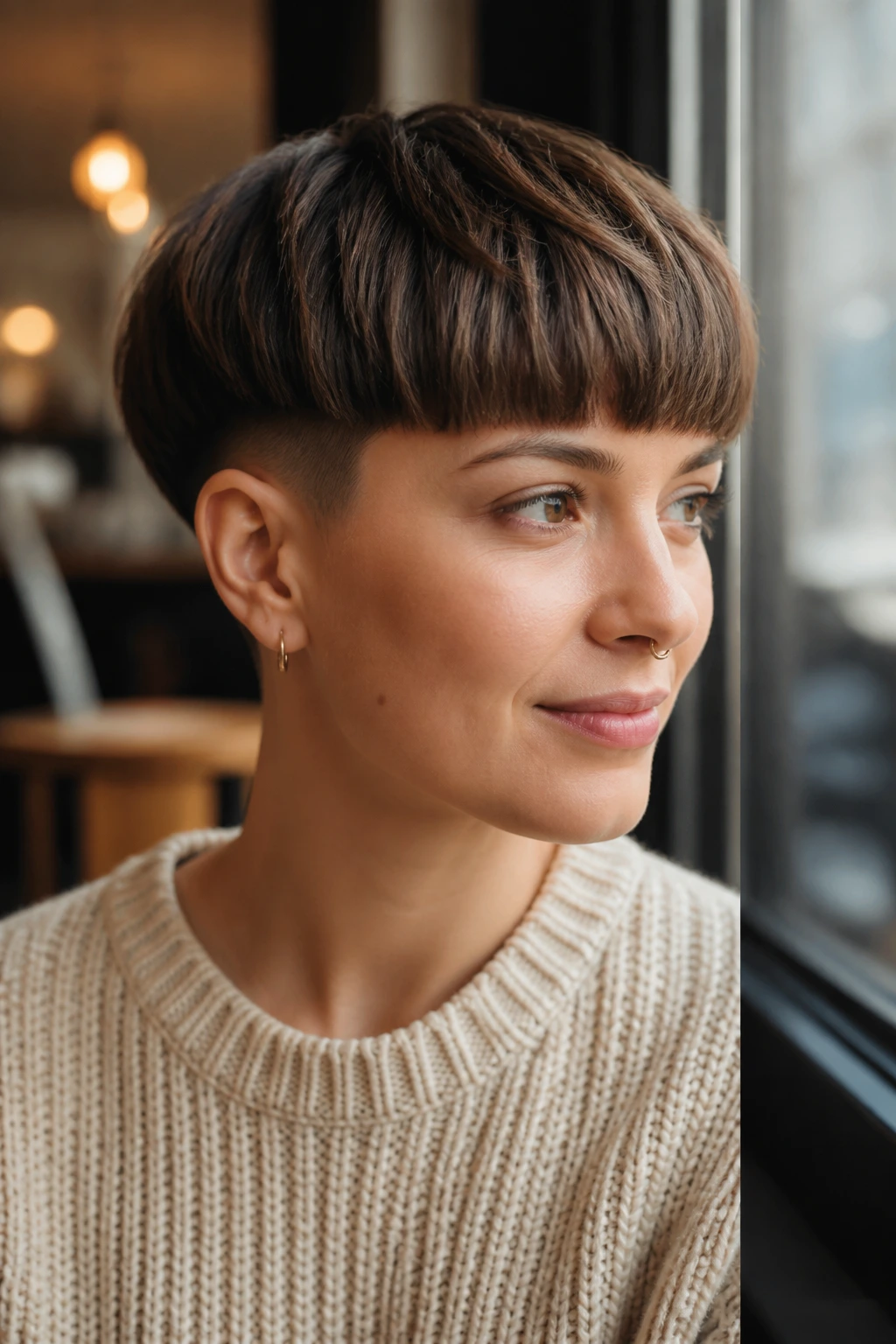
A bowl-ish crop can work. Really. The trick is removing enough weight underneath so the rounded shape sits close instead of puffing into a helmet.
This is the version for someone who likes a strong line but not a hard edge everywhere. The top can stay softly curved, almost mushroom-like in outline, while the undercut clears the bulk at the nape and behind the ears. The cut feels modern because it has control. Without the undercut, the same shape can turn heavy fast.
The line around the forehead or cheekbone can stay blunt, feathered, or slightly broken up depending on how severe you want the shape to feel. I prefer a little softness on top and a cleaner underside. That contrast keeps the cut wearable.
15. Tapered Crop for Fine Hair That Needs Lift
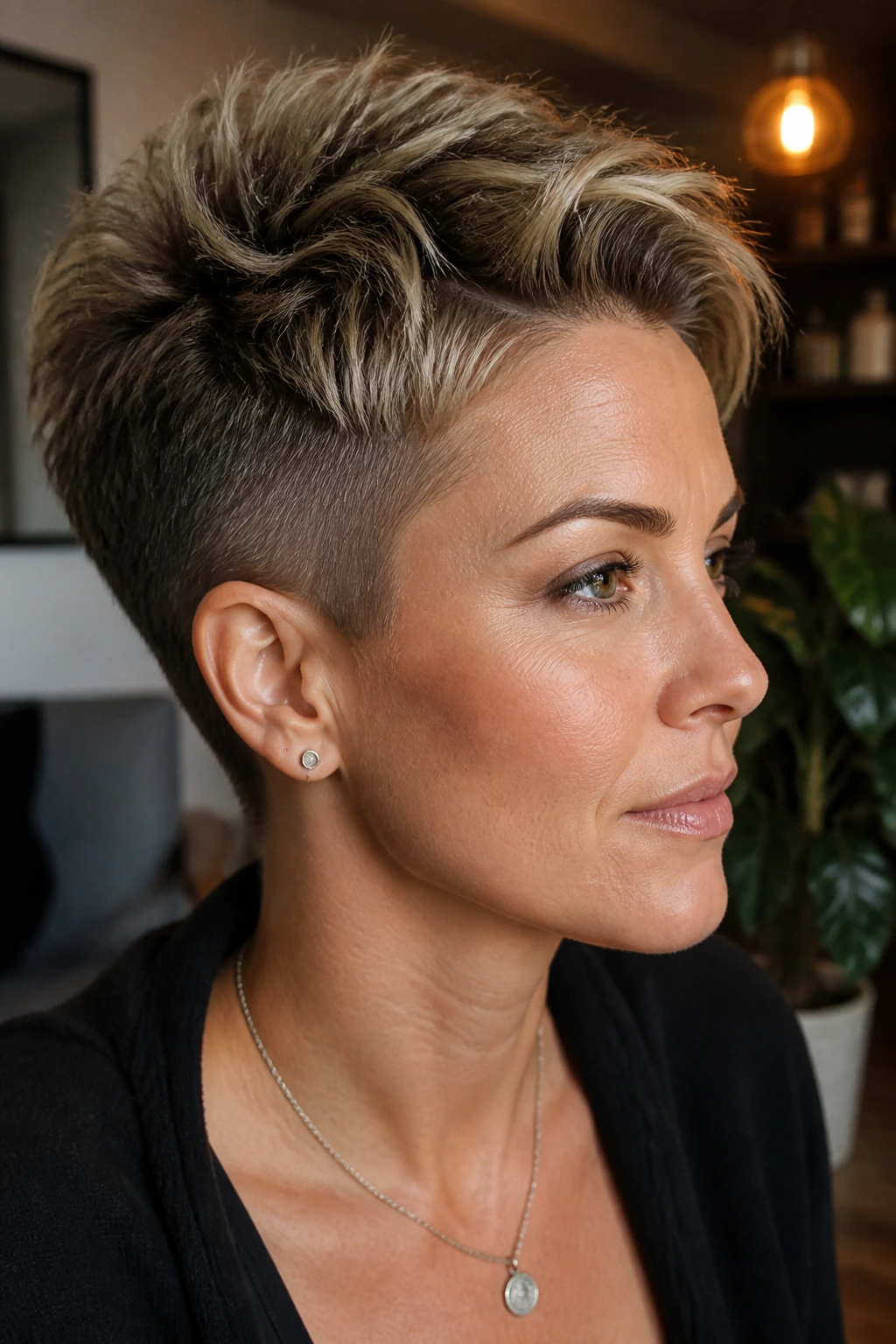
Fine hair that sits flat at the crown usually needs a smarter cut, not more product. A tapered crop with an undercut under the ridge of the head gives the top a little lift while taking away the drag that pulls short hair down.
The useful part is restraint. Keep the top dense. Don’t over-texturize it to the point where the scalp shows through. Remove weight only below the widest point of the head, and leave enough length around the crown that the hair can bend forward and up instead of collapsing. It sounds fussy. It isn’t, once you see the shape.
What to ask for
- A softer taper instead of a skin shave: Better for fine hair and easier to grow out.
- No heavy thinning on top: That’s where a lot of people go wrong.
- A bit of length at the crown: Enough to hold shape, not enough to puff.
If your hair gets greasy at the roots by the end of the day, this shape also helps because the shorter underside dries faster and keeps the silhouette lighter.
16. High-Contrast Side Shave with a Slick Finish
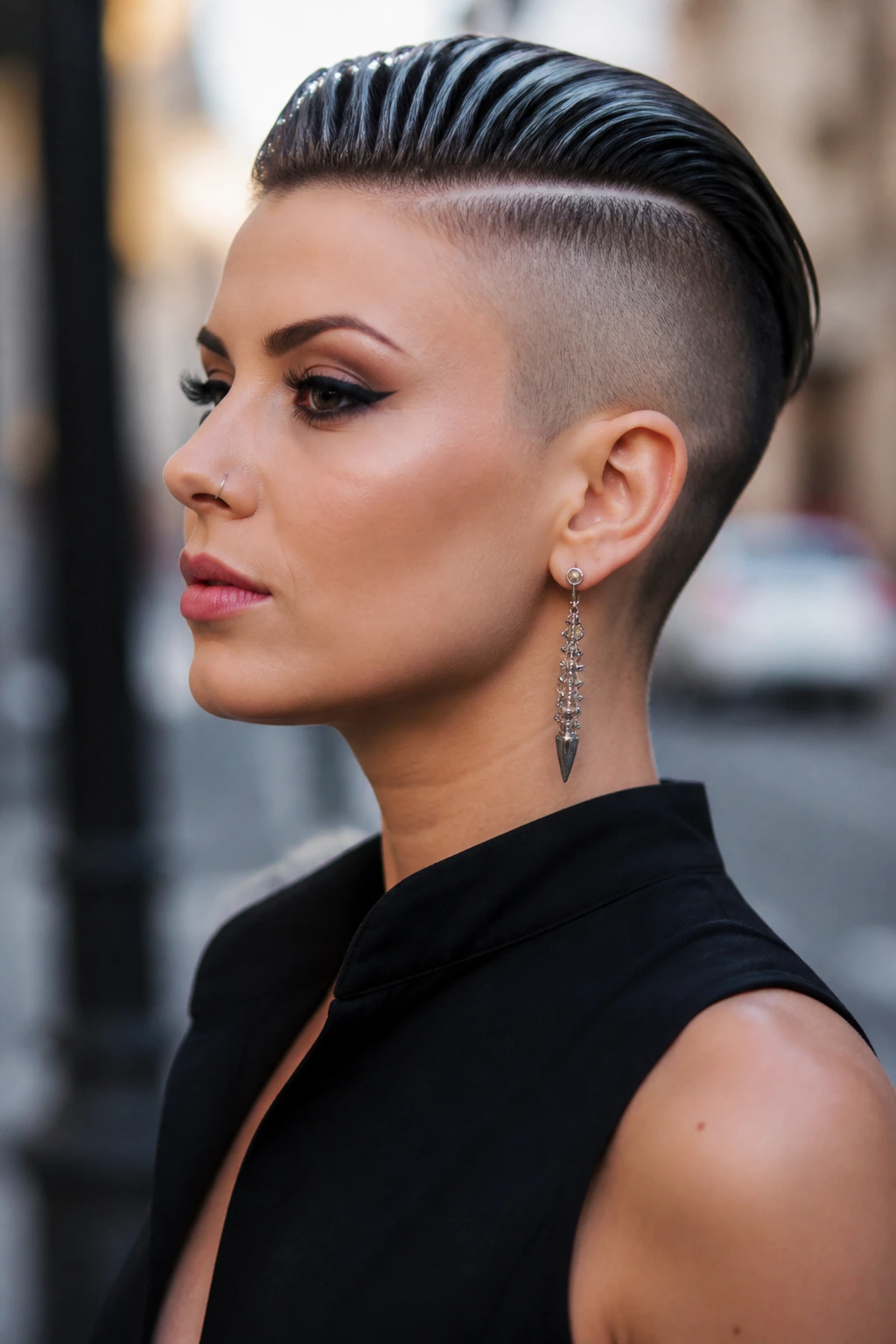
This is the sharp one. One side is shaved close, the top is combed or brushed sleek, and the part line becomes a real feature instead of a vague suggestion.
I like this style on short hair because it makes the haircut look deliberate in a single step. A deep side part plus a smooth finish turns the shaved side into negative space, which is a fancy way of saying the empty area matters as much as the hair. The scalp shows a little. The contrast does the work.
The style asks for a little product, but not a sticky helmet. Use a small amount of gel or pomade on damp hair, brush it flat with a fine comb, then finish the ends with a touch of shine cream if needed. If the top starts to separate too much, you’ve used too much. Happens all the time.
17. Micro-Pattern Undercut for a Tiny Detail You Can Choose When to Show
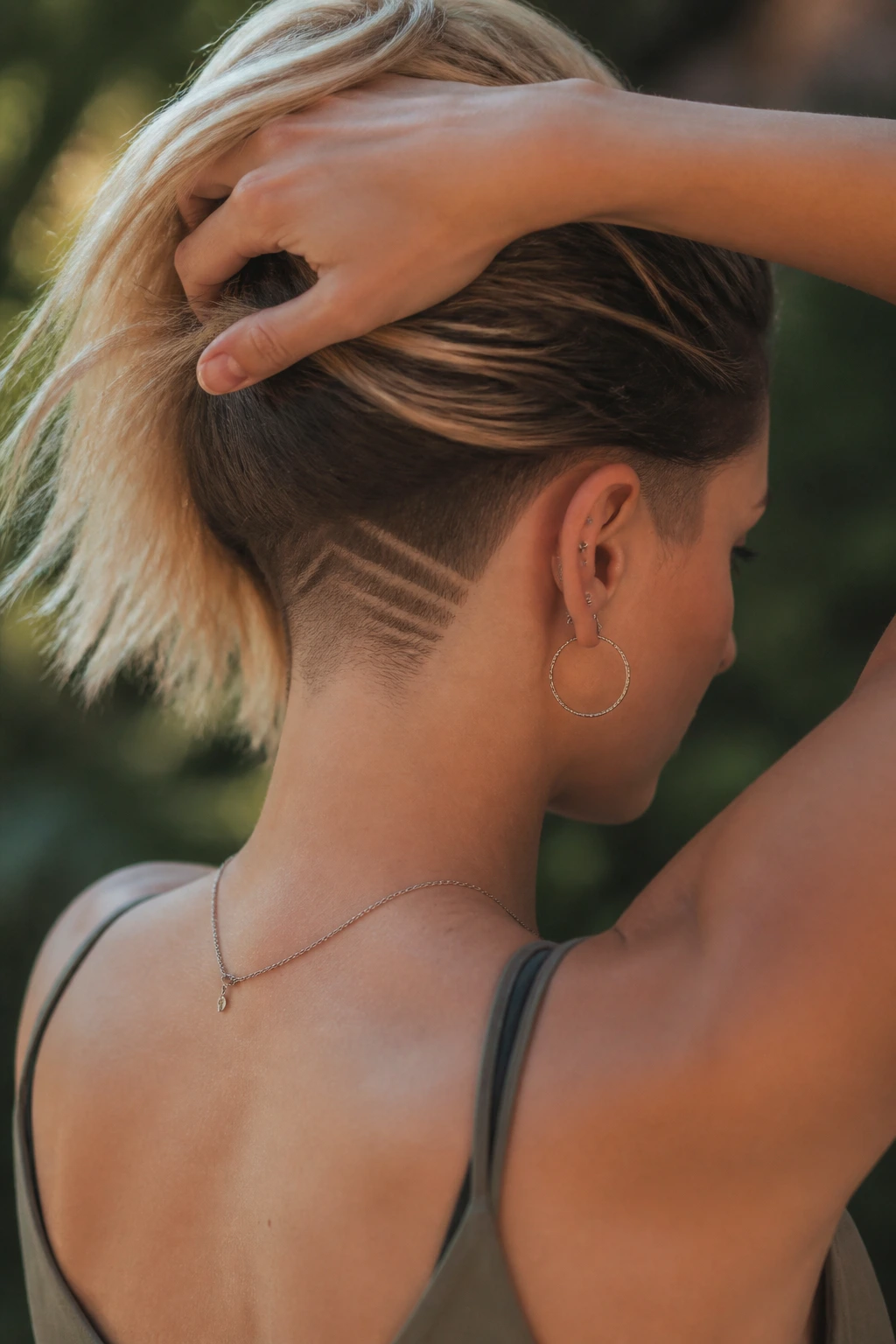
A micro-pattern undercut is for the person who wants the thrill of a design without turning the whole haircut into a billboard. Tiny diagonal lines, dots, a small chevron, or a clipped curve at the nape gives the cut a private edge that only shows in certain movements.
What I like here is the flexibility. The pattern can sit behind a bob, under a pixie, or at one side of the neckline, and it doesn’t need to be huge to count. A small pattern feels especially good on short hair because the reveal is quick — lift the top layer, and there it is. Put the hair down, and it vanishes again.
This is one of the styles that benefits from regular maintenance if you want the detail to stay crisp. The lines soften fast once regrowth starts. If you prefer less upkeep, keep the pattern small and the blades a touch longer. The idea is to make it feel like a secret, not a chore.
How to Choose the Right Undercut Line for Your Hair Density and Grow-Out Tolerance
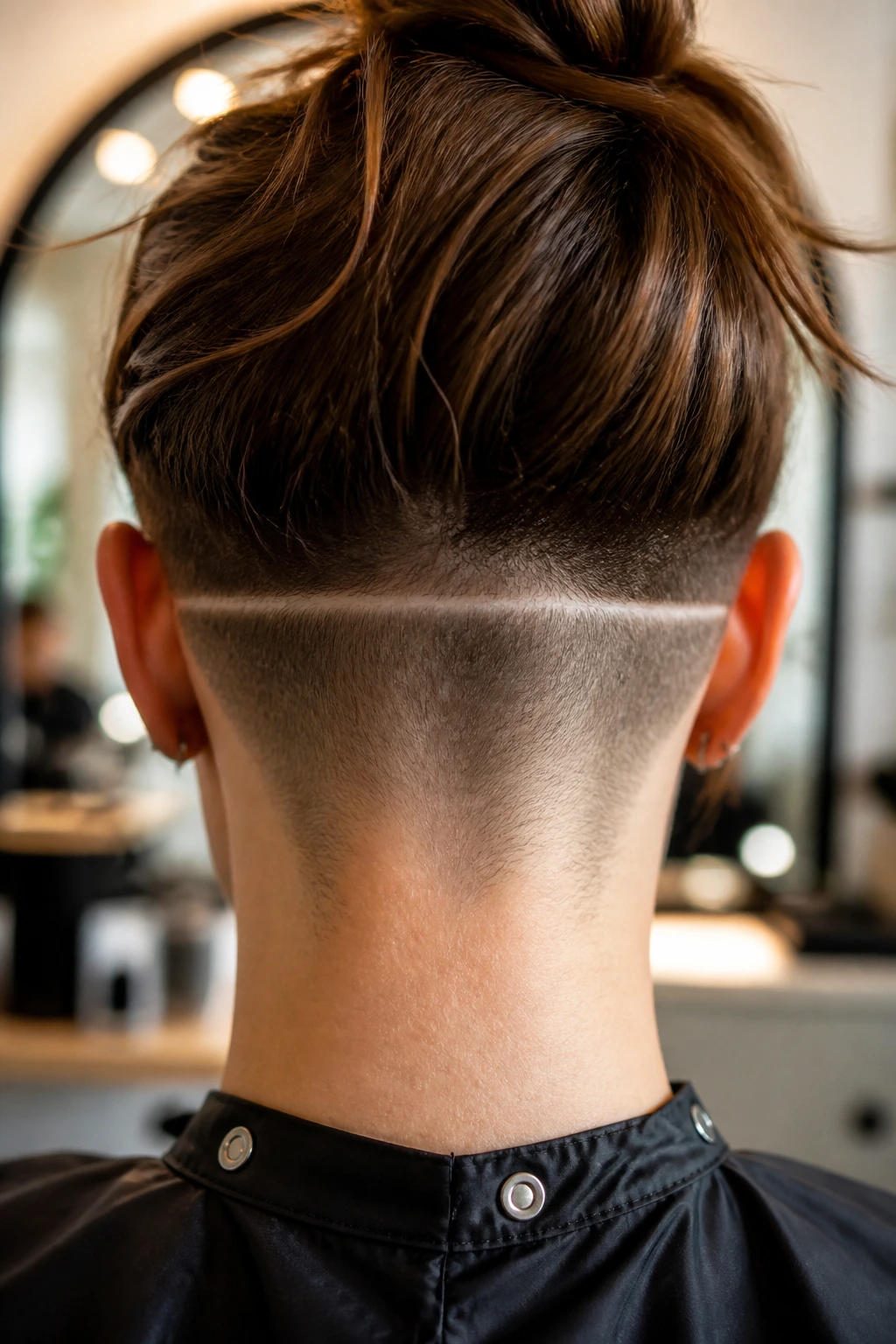
The smartest undercut is not the sharpest one. It’s the one that fits your hair’s thickness, your hairline, and how much regrowth you’re willing to see before the shape starts bugging you.
If your hair is thick
Go for a nape panel, a hidden side shave, or a disconnected bob with the weight taken out under the back. Thick hair usually benefits most from a wider clipped area because a tiny shave won’t change enough to matter. If the bulk is serious, be honest about it and remove a bit more.
If your hair is fine
Keep the panel smaller and softer. A #3 or #4 guard, or a gentle taper instead of a skin-close shave, helps the haircut stay full. Fine hair can look sparse fast if too much gets removed near the temples or crown.
If your hair is curly or wavy
Account for shrinkage. Curly hair covers a hidden undercut better than straight hair, but it also hides a poorly placed one until it starts growing back in odd directions. Start lower than you think, and do not cut too high into the shape that the curls need for balance.
If you hate obvious grow-out
Stay low on the nape, under the occipital curve, or choose an ear-hugging side panel. Those areas soften the easiest. High side shaves and etched designs ask for more upkeep than most people expect.
How to Ask a Stylist for the Cut Without Getting a Surprise
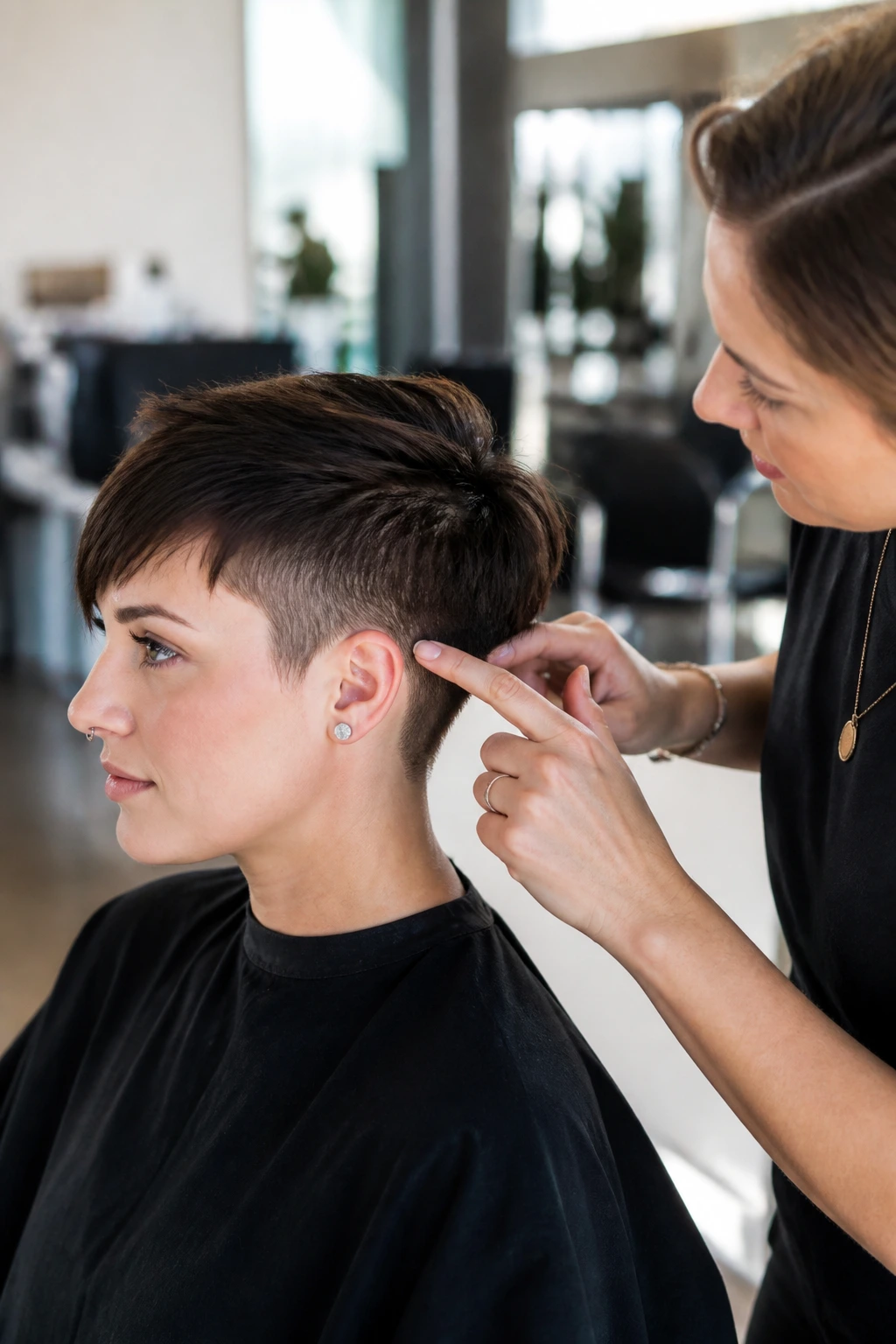
Bring pictures, yes, but bring the right pictures. One front view, one side view, and one back view tell your stylist far more than a single saved photo from the internet. Haircuts are three-dimensional things, and undercuts change most when you move.
Say where you want the shortest area to start. Point to the spot on your own head if you need to. “Below the widest point” is useful. “Just around the ear” is useful. “A low nape panel I can hide with my top layer” is useful. Vague requests like “something edgy but not too much” can mean almost anything, and stylists have all heard that one before.
Ask whether the cut should be blended or disconnected. Blended means the short area fades into the top. Disconnected means the line stays visible. Those are not the same haircut, and the difference matters more than most people think.
You should also ask about the grow-out plan before the first clipper pass. If the answer is “I’ll use a #2 guard here and leave the top long enough to cover it,” you’re on the right track. If no one mentions how the cut will soften over time, ask again.
Tools That Make Daily Styling Easier
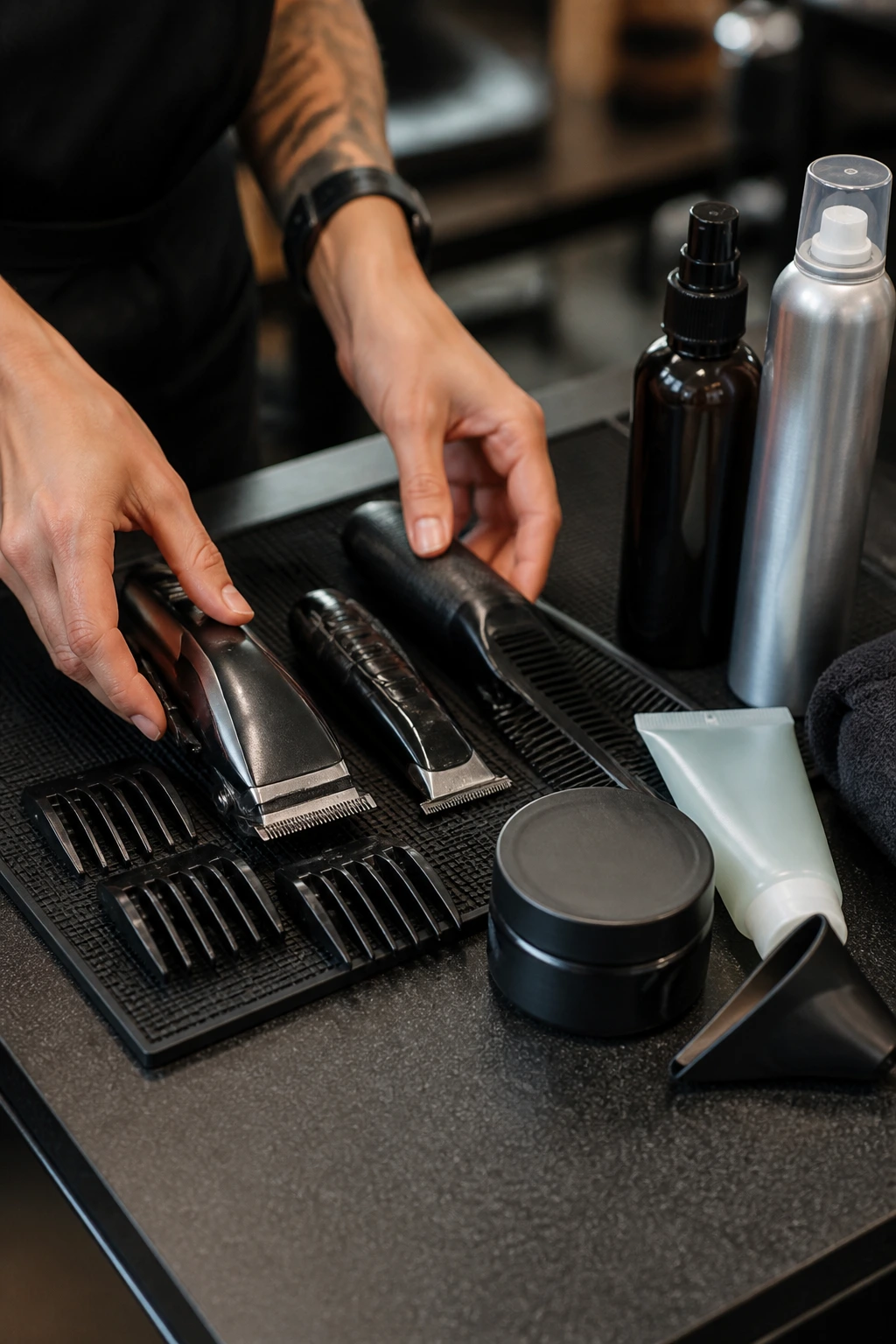
- Clipper with guard sizes #1 to #4: Useful if you want to maintain a nape panel or tidy a hidden side shave at home.
- Detail trimmer: Best for cleaning the edge around the ear and neckline without overcutting.
- Hand mirror: Necessary if you ever check the back of your own head. No substitute.
- Fine-tooth comb: Helps define parts and smooth the top when you want a slicker finish.
- Matte paste or clay: Gives short hair separation without making the shaved area greasy.
- Light gel or pomade: Better for slick side shaves, deep parts, or polished looks.
- Blow dryer with nozzle attachment: Helps direct the top layer over the undercut instead of letting it collapse.
- Heat protectant spray: Use it if you’re shaping the top with heat; short hair burns just as fast as long hair.
- Dry shampoo: Handy on day two if roots flatten and you want a little lift back at the crown.
How to Wear the Cut on Normal Days Without Overstyling It
Short undercuts look best when the styling matches the cut instead of fighting it. The goal is not to make every day look editorial. The goal is to make the shape show up with the least drama.
Air-dried texture
Use a pea-sized amount of matte paste or cream on damp ends, then push the top layer into place with your fingers. Leave the shaved section alone. If you coat it in product, it starts looking shiny in the wrong way and picks up lint faster than you’d expect.
Sleek and polished
Brush the top in the direction you want it to fall, then use the dryer on a low or medium setting with a nozzle. A side shave looks sharpest when the part is crisp and the top sits flat. Keep the product light. A slick finish should look controlled, not wet from ten feet away.
Pinned or tucked
A small clip, a tuck behind one ear, or a side sweep can show the undercut on purpose. That matters more than it sounds. An undercut looks intentional when the reveal is part of the styling, not a surprise from wind or humidity.
Common Mistakes That Make Short Undercuts Look Off
-
Cutting the panel too high: If the shave sits above the widest part of the head, the top layer may not cover it. The fix is simple: keep the short area lower and narrower, especially on hidden styles.
-
Thinning the top too much: Short hair already has less length to work with. If the top gets over-texturized, the scalp shows and the haircut starts looking scraggly. Leave enough density for the shape to hold.
-
Ignoring the hairline and cowlicks: A nape swirl can push hair up, and a temple cowlick can make one side stick out no matter how clean the cut is. Work with the growth pattern instead of pretending it isn’t there.
-
Forgetting the grow-out phase: A crisp shave gets fuzzy fast. If you want the line to stay neat, book regular cleanups or choose a softer taper from the start.
-
Using too much product on the shaved area: Product builds up on short stubble and makes the scalp look dull or greasy. Use less than you think, then add only if needed.
Variations That Change the Mood Without Recutting Everything
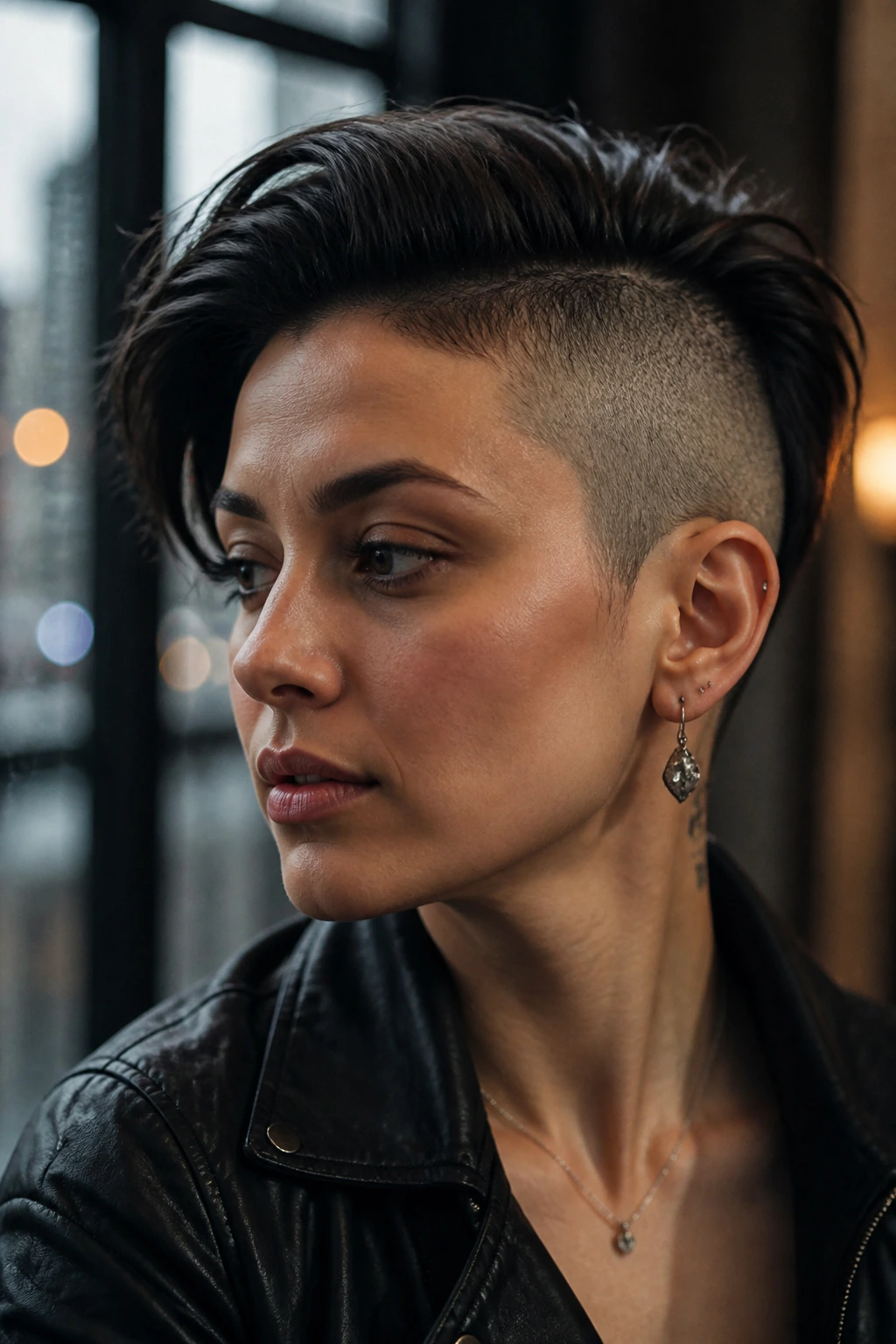
Office-Quiet Hidden Panel: Keep the shave low at the nape and let the top layer cover it completely. It gives you the clean shape without a visible line, which is handy if you need the haircut to stay understated in most settings.
Curve-Around Temple Sweep: Shift the undercut to one side and leave the rest of the crop soft around the face. This version works well with glasses and side parts because the sweep creates a clean path instead of fighting the frame.
Curly Halo Shape: Keep more length around the crown and remove bulk only underneath. The curls get the room they need, and the cut still stops swelling at the back.
Graphic Night-Out Slice: Raise the contrast with a higher side shave and a slick finish. This one shows best when the part is sharp and the top is brushed smooth, so the negative space becomes part of the design.
Grow-Out Saver: Choose a taper instead of a skin-close shave. It softens the line, makes regrowth less annoying, and buys you time if you’re not sure you want to keep the cut long term.
Keeping the Shape Sharp Between Cuts
A short undercut grows out in public. You can ignore it for a while, but eventually the line fuzzes, the neck softens, and the whole thing starts looking more accidental than styled. If you want the cut to stay clean, maintenance matters.
For most hidden nape or side undercuts, a tidy-up every 2 to 4 weeks keeps the line looking intentional. A skin-close design or etched pattern may need attention even sooner, especially if you like the edge crisp. The more visible the contrast, the faster the regrowth shows. That’s just how short hair behaves.
Wash product out of the shaved area with a gentle shampoo if you use paste or pomade often. The scalp there is exposed more than the rest of the head, and buildup shows quickly. If the skin gets irritated, back off the heavy product for a few days and switch to a lighter finish.
If you’re growing the cut out, let the undercut soften while trimming the top every 6 to 8 weeks so the shape doesn’t turn into a shelf. The top should keep enough movement to cover the shorter section as it catches up. That’s the whole trick.
Frequently Asked Questions
Will an undercut make my short hair look thinner?
Not if it’s placed well. A hidden nape panel or a soft taper usually makes short hair look fuller because it removes bulk underneath instead of thinning the visible top layer.
Can I hide an undercut for work or formal events?
Yes, if the panel is low enough and the top layer is long enough to cover it. A nape undercut or a narrow side shave is much easier to hide than a high buzzed side.
What should I ask for if I want a soft version, not a full shave?
Ask for a taper or a longer guard, usually something in the #3 to #4 range, depending on the clippers your stylist uses. Tell them you want the line to soften as it grows out instead of showing a hard edge right away.
Does this work on curly hair?
Absolutely, and curly hair often benefits the most. The undercut helps the curl pattern sit higher and stops the bottom layers from puffing into a rounded block.
How often do I need to maintain a visible undercut?
Most visible shaves look freshest with a cleanup every 2 to 3 weeks. Hidden panels can stretch a little longer, but the line still softens faster than most people expect.
What if the cut feels too high once I get home?
Don’t panic. Use a deep side part, tuck the top layer over the area, and give it a week or two before deciding how you feel. Hair settles differently after washing and drying outside the salon chair.
Can I do a small undercut at home?
A basic nape cleanup with a guarded clipper is possible if you’re steady and have good light, but a first pass should usually be done by someone who can see the head shape from all angles. The back of your own head is a terrible place to improvise.
What’s the difference between an undercut and a fade on short hair?
A fade blends the short area into the longer hair with a gradual transition. An undercut usually keeps the short area more clearly separated, which is why it can look sharper and more graphic.
A Short Cut That Leaves Room to Change
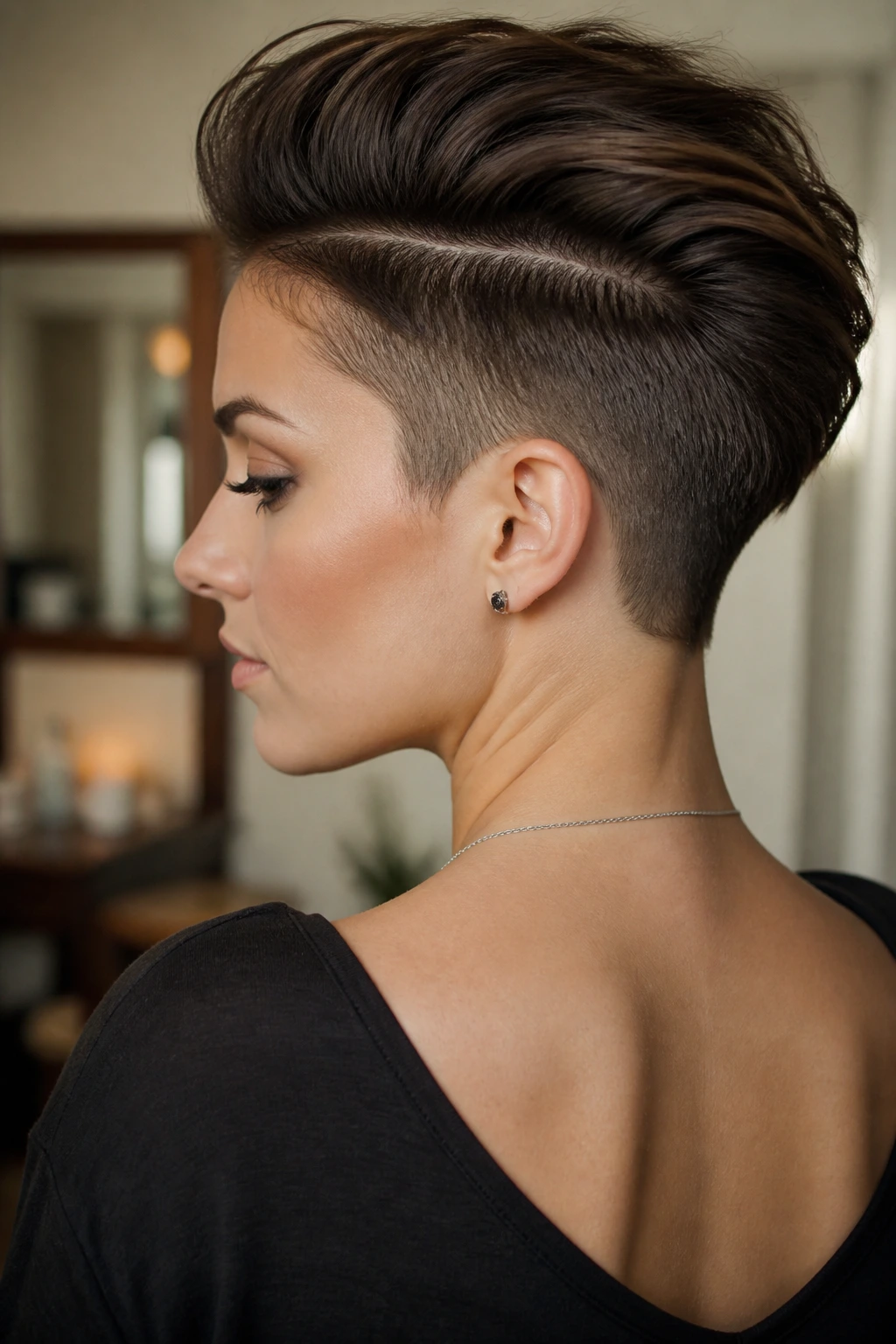
The best part of an undercut on short hair is that it doesn’t trap you in one look. A hidden nape panel can stay private, a temple shave can peek out around glasses, and a narrow design can show for one night and soften by the next week.
The shape matters more than the drama. If you get the placement right, the cut will do a lot of work before you even touch a product. And if you want to change the mood later, you can usually do it with a part, a tuck, or a little more length on top — no full reset required.
