



Curly hair gives the wolf cut its best shape. At medium length, the layers can kick out at the crown, fold through the cheekbones, and still keep enough weight at the ends to avoid that puffed-out triangle shape nobody asked for.
That’s why medium wolf cuts for curly hair land so well when they’re done with some restraint. Too short, and the curls can spring into a helmet. Too long, and the whole thing drifts back toward a basic layered cut that doesn’t have much edge. Medium length sits in the middle with a little attitude and a lot of movement.
The real trick is choosing the right version for your curl pattern, density, and face shape. Some wolf cuts want a curtain fringe. Some need a softer perimeter. Some can handle a choppier, more mullet-leaning finish, while others look better if the layers stay hidden and the outline stays rounded. That’s where the good stuff lives — in the details, not the trend label.
Why Medium Wolf Cuts Work So Well on Curly Hair
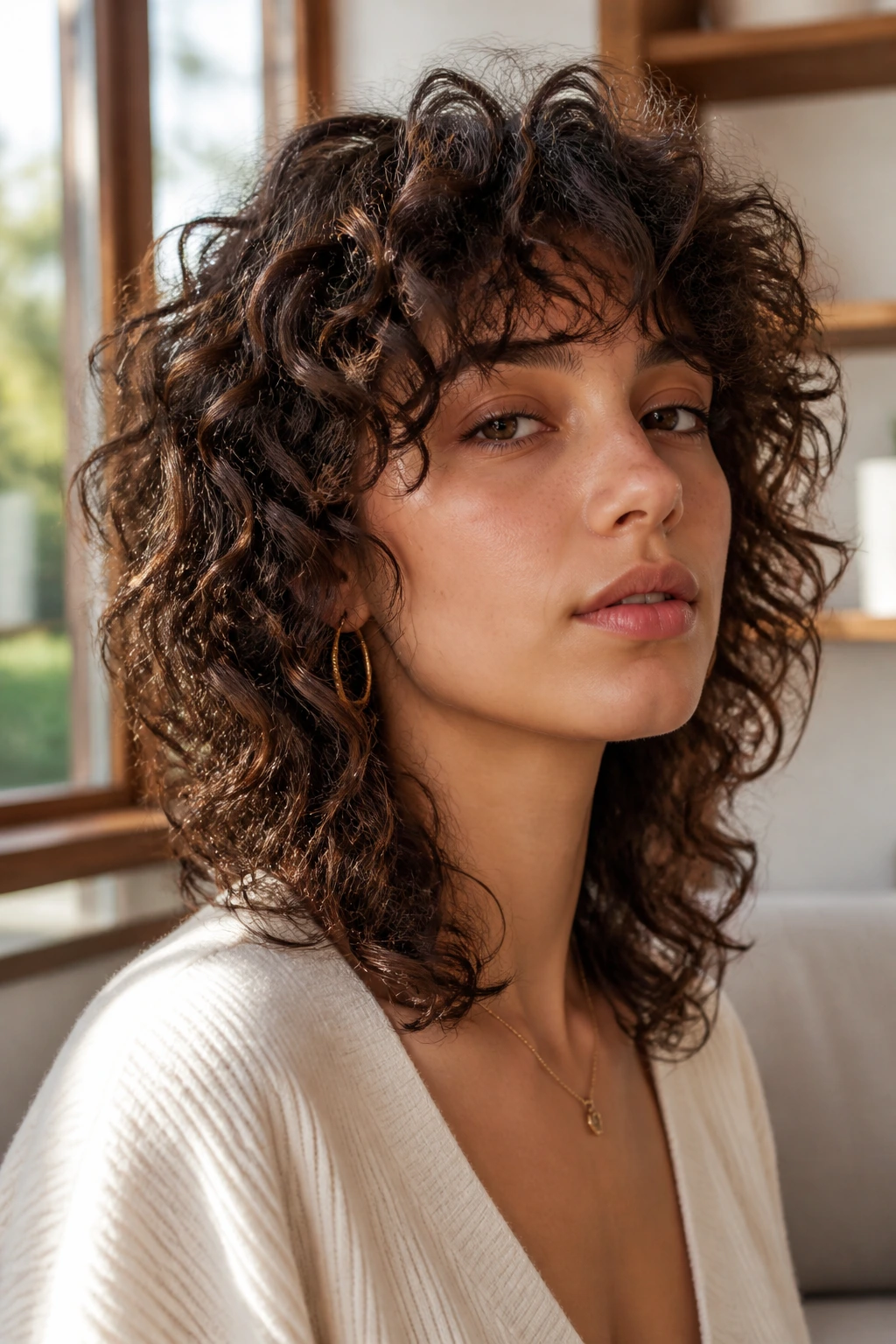
-
Shrinkage Works With the Shape: Medium length gives curls room to spring up without collapsing the whole silhouette into a puffball, especially if your hair shrinks 20 to 40 percent when it dries.
-
The Crown Stays Lively: Shorter layers at the top give lift where curly hair often goes flat first, so the cut keeps a little height instead of turning boxy.
-
The Ends Don’t Get Lost: A shoulder-skimming perimeter keeps enough weight at the bottom to anchor the shape, which is the part a lot of badly cut curly styles forget.
-
Bangs Become Easier to Wear: Curtain bangs, bottleneck fringes, and soft face-framing pieces all work better when the rest of the cut has medium-length balance behind them.
-
It Survives Grow-Out Better: A medium wolf cut can stretch a few weeks longer between trims because the layers soften as they grow, instead of looking blunt and obvious.
-
It Fits More Curl Types Than People Think: Loose waves, springy ringlets, and tighter coils can all wear a wolf cut — the difference is where the weight gets removed and how hard the fringe is pushed.
1. Rounded Collarbone Wolf Cut
This is the easiest way to wear the look without feeling like you signed up for a dramatic makeover. The shape lands around the collarbone, so the curls keep enough weight to hang together, but the top gets shorter layers that stop the whole style from sitting flat against the head.
It works especially well on curls that balloon at the sides. Ask for a rounded perimeter, not a sharp shelf, and keep the face-framing pieces long enough to graze the mouth or chin when dry. That small detail matters. A lot.
2. Curly Curtain Fringe Wolf
Want bangs without a fight? Start here. A curtain fringe softens the front of the cut, breaks up a wide forehead, and gives the wolf shape a little sweep without locking you into a hard fringe line.
The center should sit shorter than the sides, but not so short that it curls into a tiny spring above your brow. I like this one best on 3A to 3C curls because the pieces separate easily after diffusing. If your hair shrinks a lot, cut the fringe longer than you think and let the curls travel upward on their own.
3. Chin-Frame Lift Wolf
If your curls turn into a triangle by lunch, this is the fix. The shorter face-framing pieces land near the chin and quietly pull attention upward, while the rest of the cut keeps medium-length weight through the body.
This version makes the jawline look sharper without feeling severe. It also works beautifully when you wear one side tucked behind the ear and let the other side fall forward. A small thing, but it changes the whole read of the cut.
4. Crown-Heavy Volume Wolf
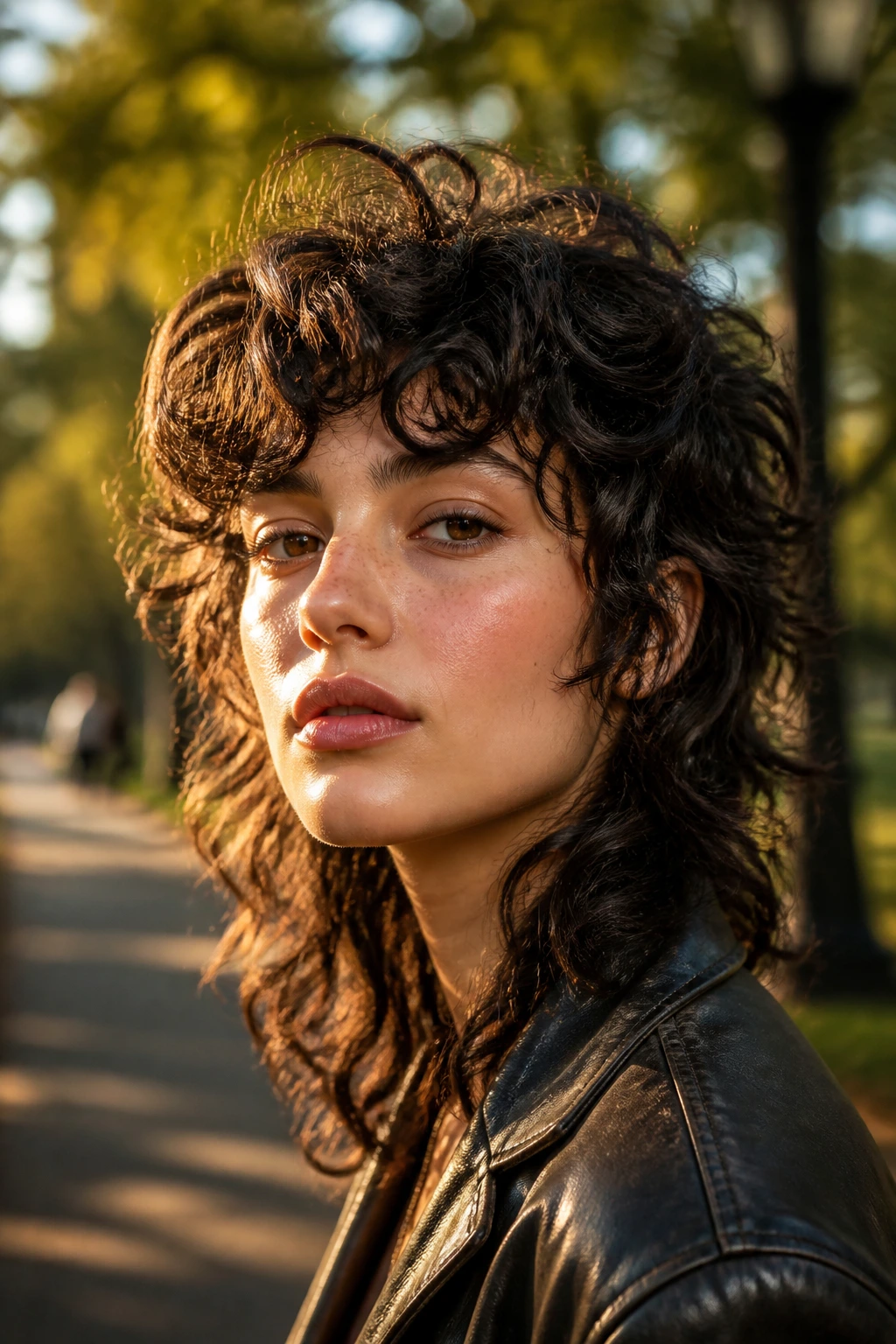
Unlike a full shag, this version keeps the crown piecey and lifted while leaving the perimeter softer. That balance is the point. You get movement at the top without stripping the sides so hard that your curls puff into a mushroom.
Dense hair loves this shape. Ask your stylist to remove bulk through the interior rather than hacking away at the outside line. Then use a root clip at the front while your hair dries. It keeps the lift without forcing the curls into a stiff shape.
5. Bottleneck Fringe Balance Wolf
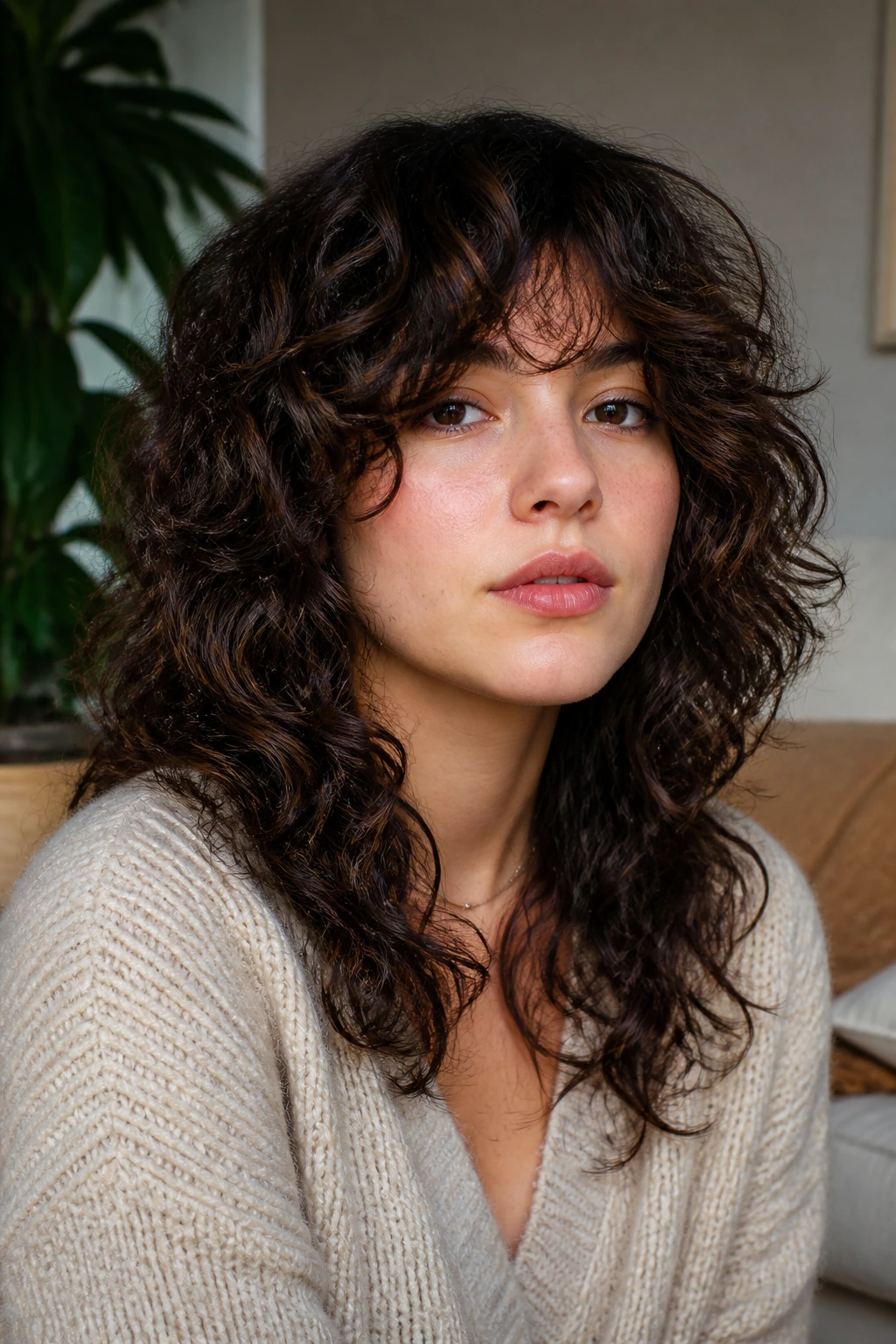
A bottleneck fringe narrows in the center and opens out at the edges, which makes it a neat fit for curly wolf cuts. It gives the front shape, but it doesn’t shout for attention the way a blunt bang does.
This one is especially good if your curls gather in chunky clumps. The fringe can be trimmed a little longer in the middle so it doesn’t pogo up on you after diffusing. It’s a smart compromise. Soft, but not boring.
6. Deep Side-Part Cascade Wolf
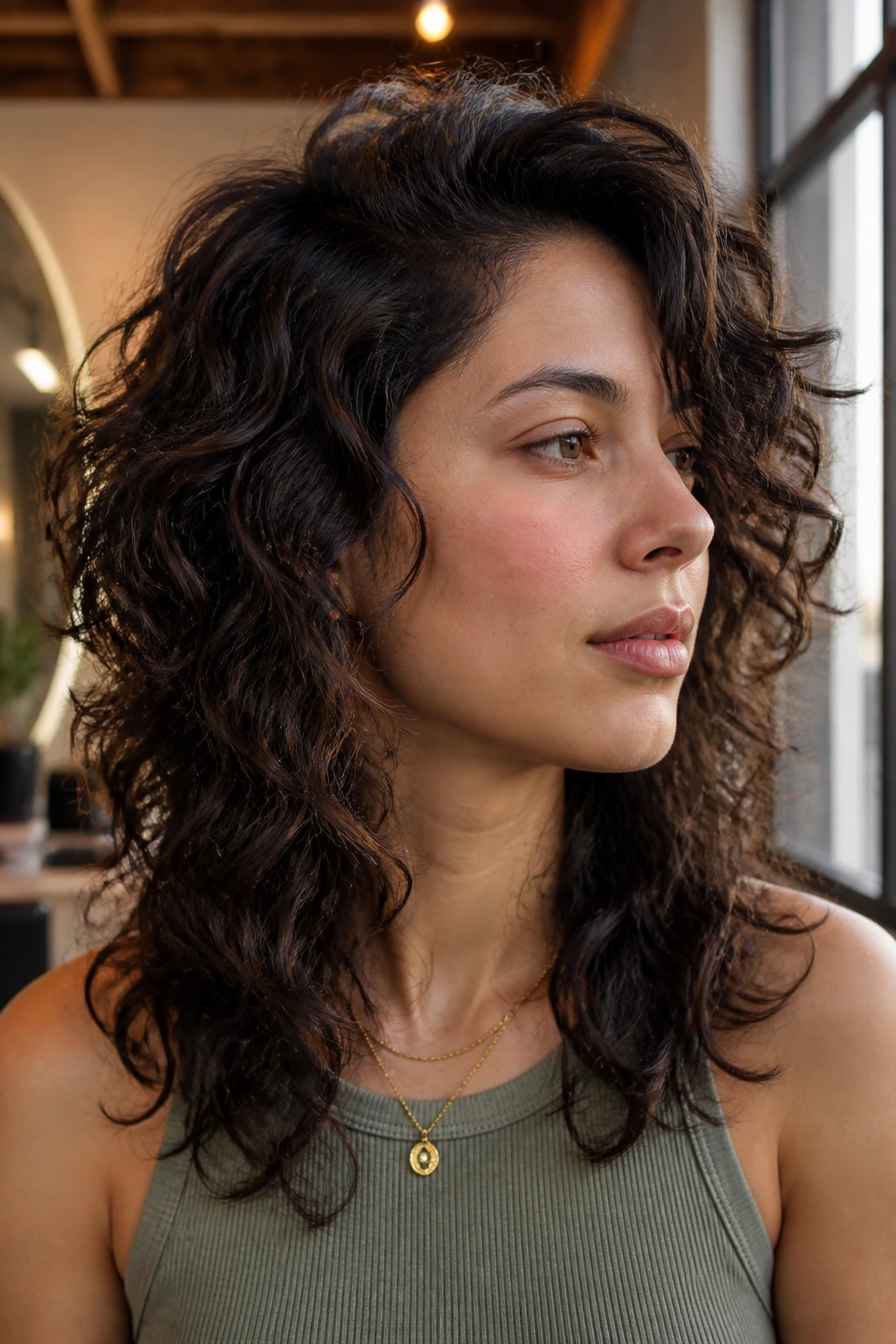
A deep side part changes the whole mood. One side gets a little more lift, the other side falls with a long sweep, and suddenly the cut looks less symmetrical and more deliberate. Curly hair does this well because the part line creates a built-in bend.
If your roots go flat fast, this is one of the better fixes. A side part lifts the crown without needing a ton of product, and the longer front section helps balance round faces or wide cheekbones. It’s the sort of shape that looks polished even when your curls aren’t behaving.
7. Shaggy Mullet Edge Wolf
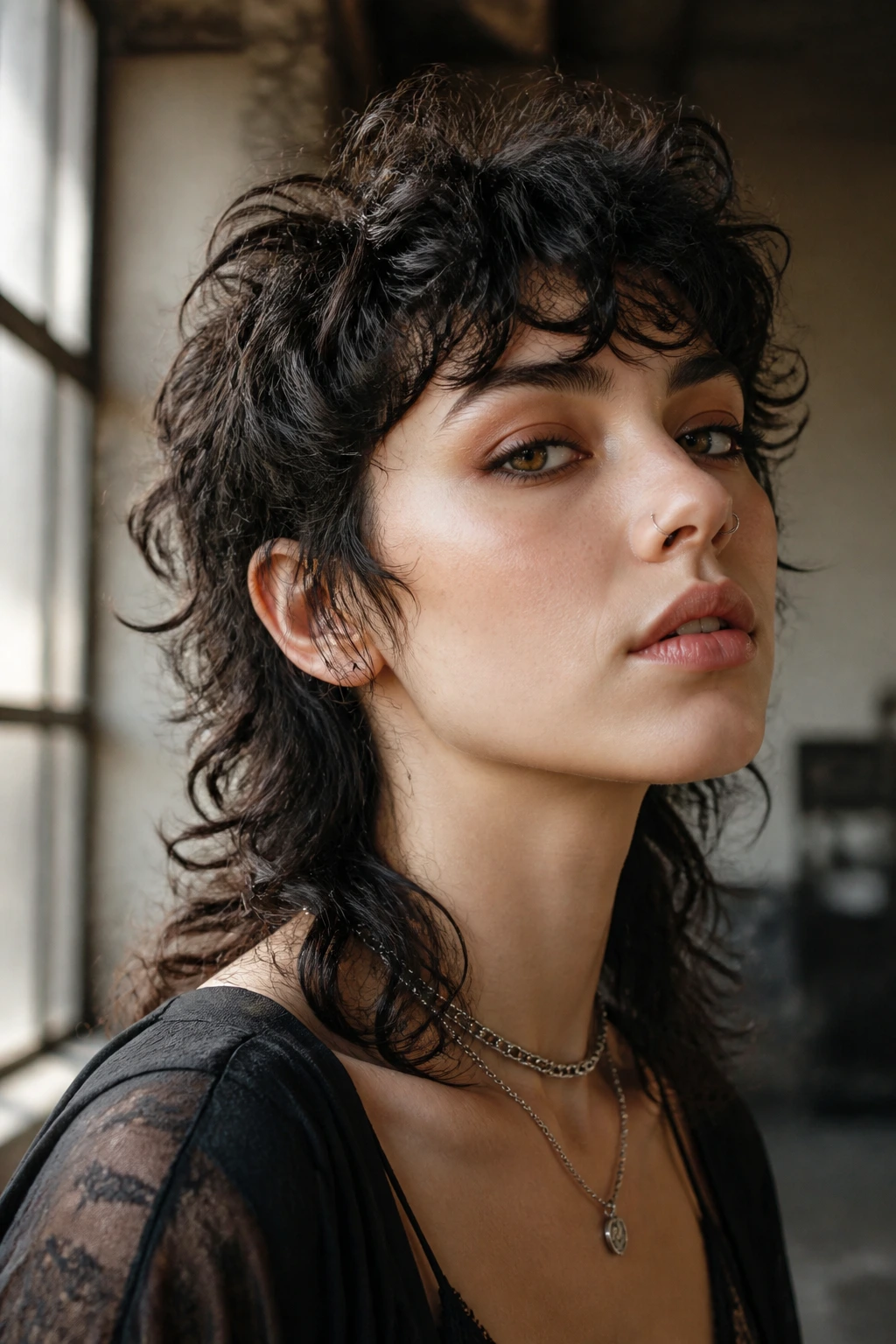
This is the bolder cousin in the family. The crown sits shorter, the back keeps a little extra attitude, and the whole cut leans into that wolf-cut overlap with a tiny bit of mullet energy.
It’s not subtle. That’s the point. If you like the idea of a cut that looks a little punk and a little playful, this is the one. Ask for softer blending at the nape if you want to keep it wearable, because curly texture can make a hard disconnect look harsher than you meant.
8. Feathered Perimeter Wolf

A feathered perimeter keeps the ends soft instead of chunky. That matters on curly hair, because a blunt bottom line can make the whole cut feel heavy even when the layers are technically there.
This shape is useful if you want movement but not a lot of obvious chop marks. The stylist should point-cut or softly texturize the ends, not shred them. It’s quieter than some of the more dramatic wolf cuts, which is exactly why it works on days when you want your hair to look styled without screaming about it.
9. Micro-Fringe Drama Wolf

Tiny bangs and curls are a risky pair, and I mean that in a good way. When they work, they work hard. A micro-fringe puts the focus straight on the eyes and gives the medium wolf cut a sharper, more editorial finish.
The catch is shrinkage. Always. If your curls bounce upward a lot, the fringe needs to be left longer than a straight-haired client would need. Keep the rest of the cut medium and rounded so the bangs have some softness around them. Otherwise the front can look detached, which is a fast way to make the whole thing feel accidental.
10. Tapered Nape Clean-Up Wolf
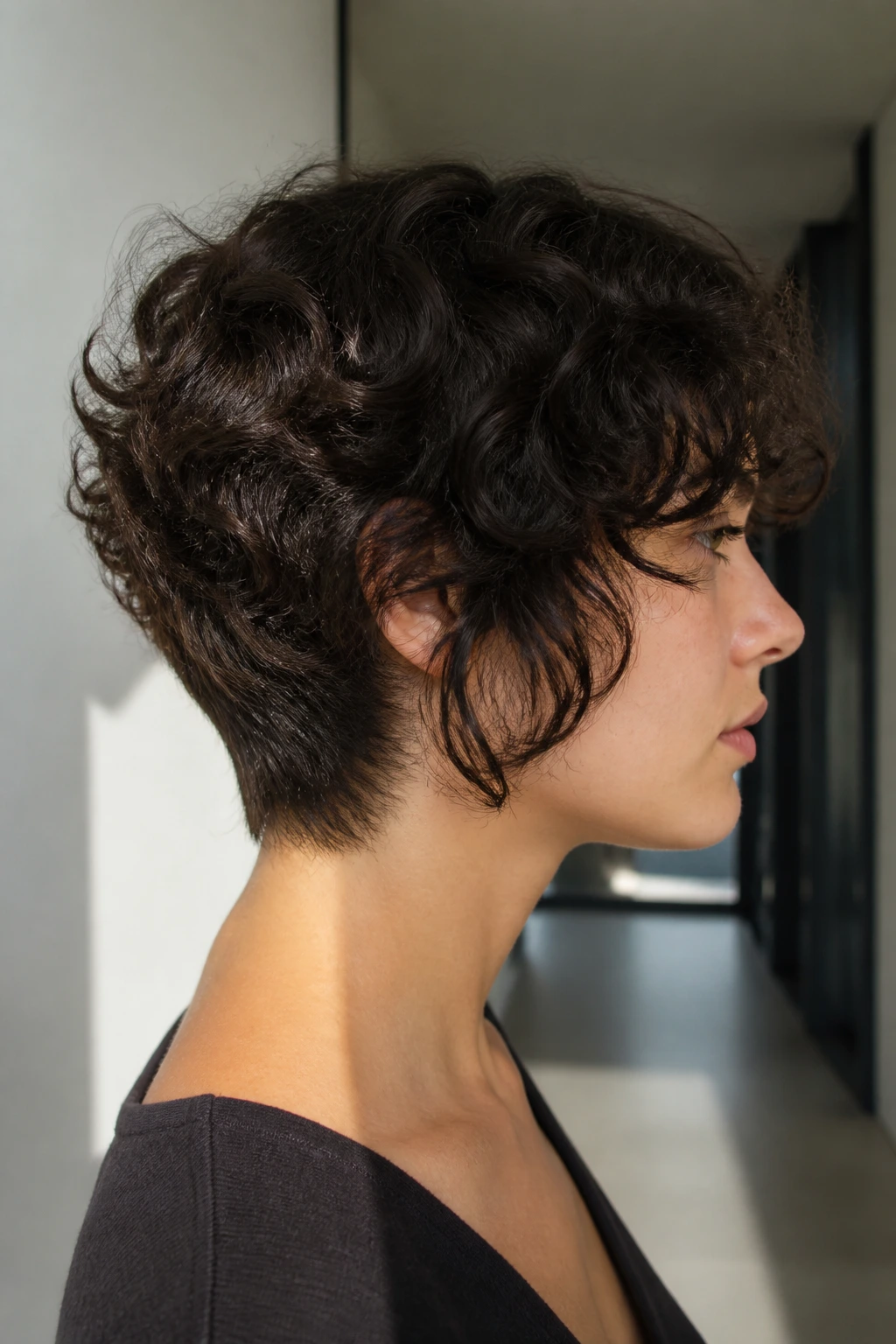
A tapered nape makes the back of the cut sit cleaner against the neck. That’s useful if your curls collect weight there and start to feel bulky under collars, jackets, or scarves.
This version works well when the front stays a little fuller and the back gets gradually tighter toward the neck. It’s neat without becoming severe. If you like your hair to move but not overwhelm your shoulders, this is one of the better places to land.
11. Hidden Internal Layers Wolf

Not every wolf cut needs to announce itself from across the room. Internal layers give the shape without putting choppy steps all over the outside of the hair. That makes this a good pick for people who want the texture and lift, but not a super obvious shag line.
Dense curls especially benefit from this approach. You remove weight where it’s causing puff, not where it helps the silhouette. The outside still looks soft and connected, which means the cut plays nicely with a blazer, a hoodie, or anything else that would make a louder version feel too much.
12. Minimal-Layer Curly Wolf
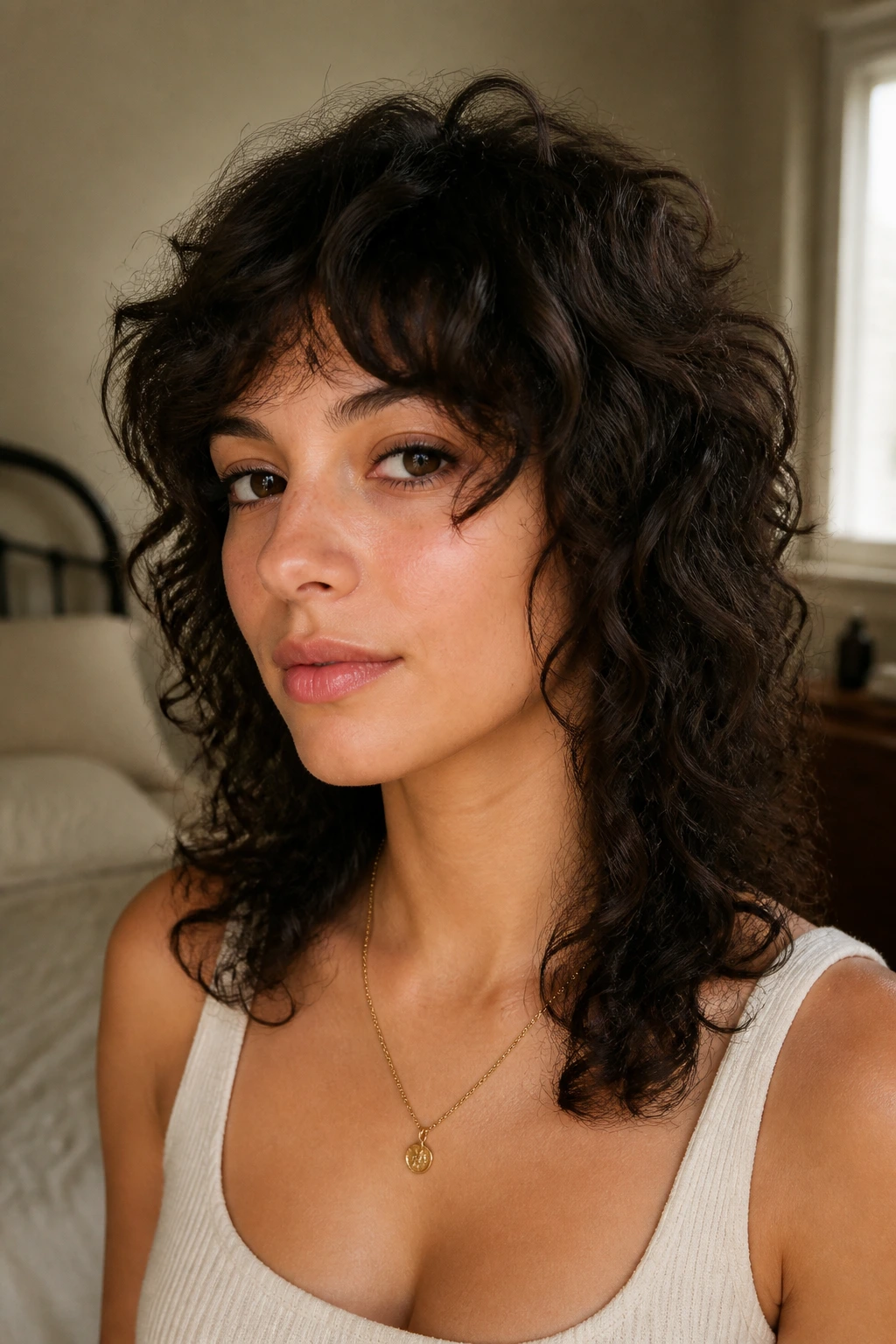
If you’re nervous about going too short or too shaggy, keep the layering subtle. A minimal-layer wolf cut keeps the overall outline intact and just lifts enough at the crown and around the face to suggest the shape.
Loose waves wear this version well, but so do curls that dislike too much thinning. It’s the closest thing to a polite wolf cut. Not shy. Just less chaotic than the sharper versions, which can be a relief if you want movement without a ton of maintenance.
13. Root-Lift Wolf
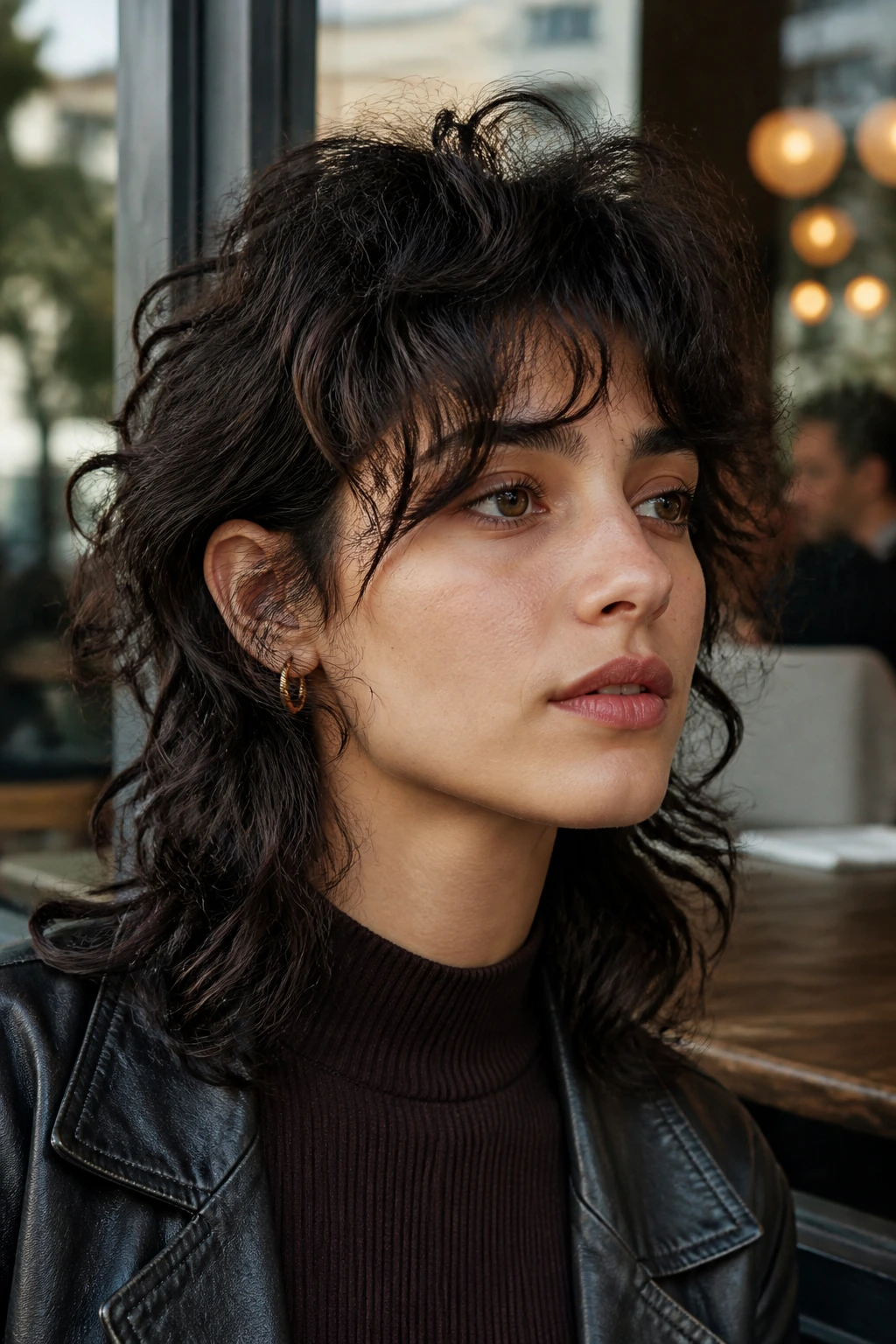
This one is built for flat roots. Shorter top layers, a little root-setting product, and a diffuser make the crown stand up instead of folding in on itself. Medium length is useful here because it gives the lift something to balance against.
Ask for the top to stay light, but not sparse. Too much removal and the curl pattern loses its spring. I like this cut for people who wear their hair off the face a lot, because the shape stays visible even when the front pieces are pinned back or tucked behind the ears.
14. Airy Halo Wolf

A halo shape rounds the silhouette around the head instead of letting the sides flare out. That’s a real win for coily or dense curls that like to expand outward the minute they dry.
The perimeter should feel soft and even, with the layers concentrating near the crown and upper sides. It’s a lovely cut if you hate the hard edge that some wolf cuts can create. Think of it as the gentler version of the trend. Still textured. Just less jagged.
15. Brushed-Out Glam Wolf
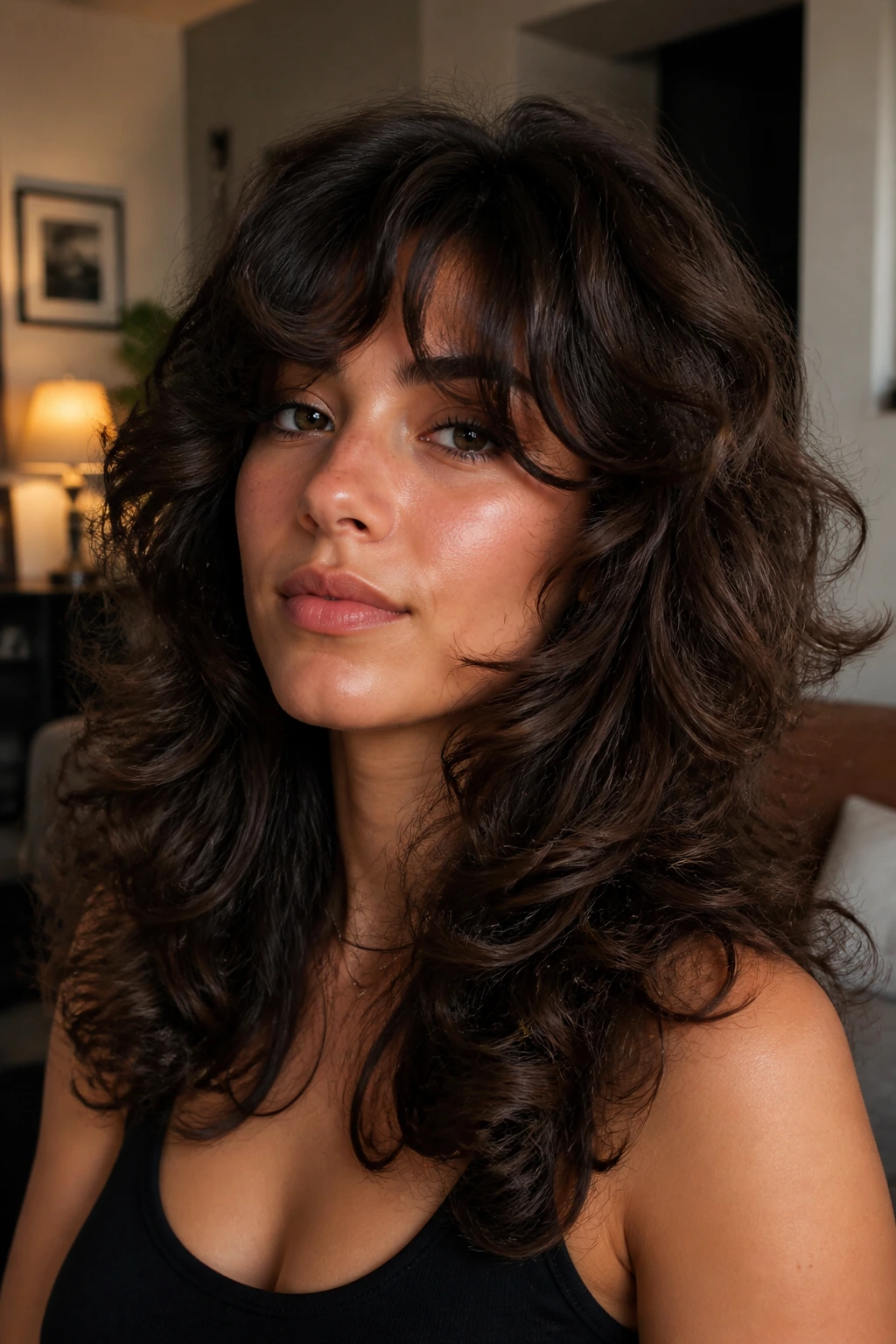
Brushed-out curls are a different mood entirely. The cut still needs the wolf structure underneath, but the styling turns the curls into a softer wave with more loft and less ringlet definition.
This version is for people who like old-school volume and don’t mind a little frizz. It looks especially good when the face-framing pieces are left long enough to sweep across the cheekbones. The shape becomes almost cinematic. Big hair, but organized.
16. Defined Ringlet Wolf
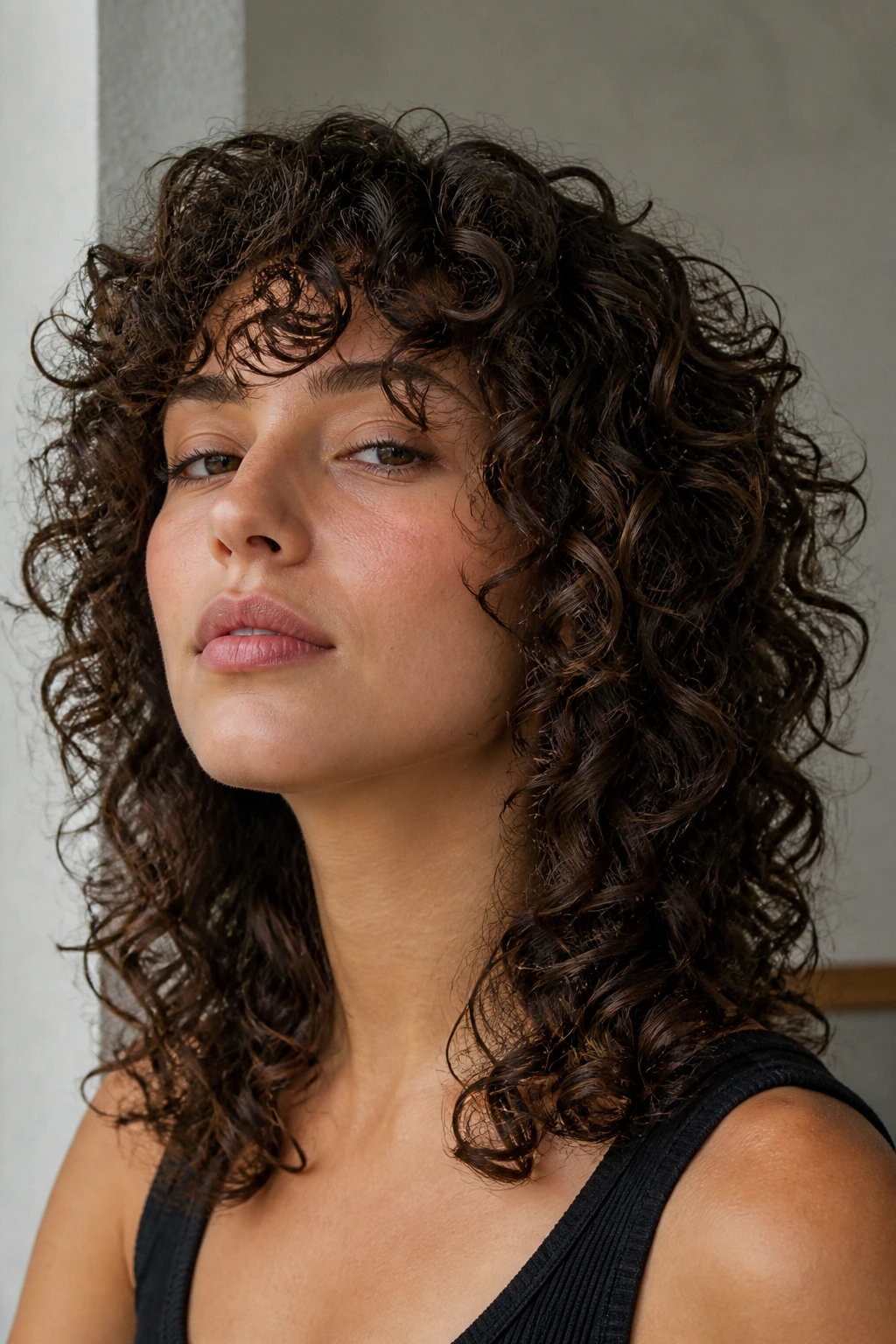
Do you want the curl clumps to stay intact? Then this is the one. The layers should support definition, not break it apart, which means the cut needs to be cleaner and less shredded at the ends.
This version works best when you style with a gel or mousse that sets a cast. Once the hair dries, scrunch out the crunch and leave the ringlets grouped. The result is cleaner than a lot of wolf cuts, and honestly, cleaner is often better when the curl pattern itself is already doing the interesting work.
17. Loose-Wave Wolf
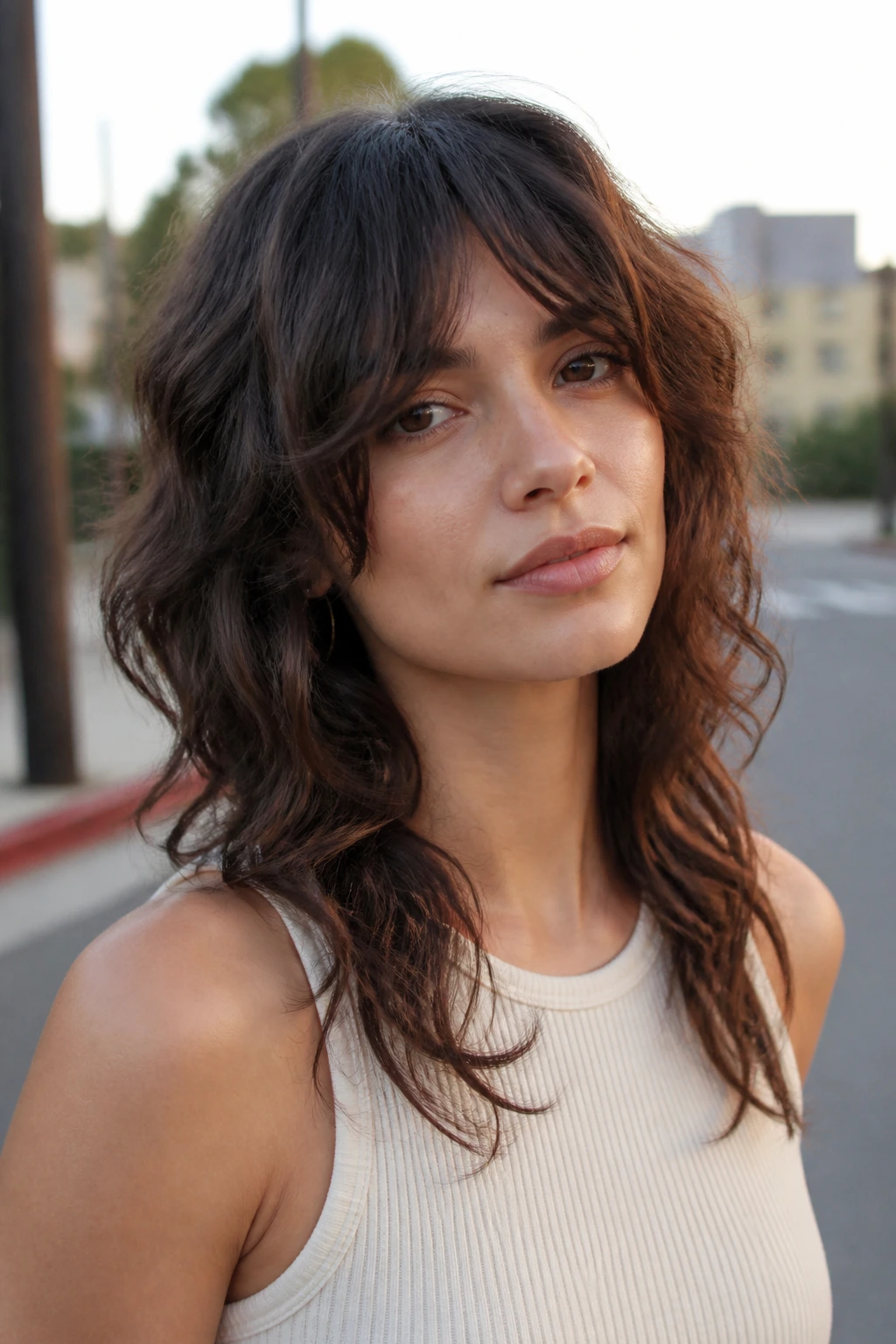
Loose curls and waves don’t need a ton of drama to look good. A soft wolf cut with longer layers and a medium perimeter gives the movement some direction without making the hair feel over-chopped.
This version is a nice bridge for someone who likes shaggy texture but doesn’t want to go fully mullet. The front pieces can skim the cheekbones, the back can stay shoulder length, and the whole cut still reads as easy. That matters. Some wolf cuts look amazing in photos and a little hostile in real life. This one doesn’t.
18. Bulk-Buster Wolf

Thick curly hair can hide a haircut under sheer mass. The bulk-buster version fixes that by taking weight out from the inside while keeping the outside line long enough to stay controlled.
The key is restraint with the thinning. You want carved-out interior space, not frayed ends or see-through patches. Ask for a dry cut if possible, because dense curls lie to you when wet. They always do. This shape gives the hair room to move without ballooning at the sides.
19. Fine-Hair Lift Wolf

Fine curly hair needs a gentler hand. Too many layers, and the cut can go wispy fast. Too little, and it falls flat. This version keeps the layers longer and more deliberate so the curls still look full.
It’s a smart choice if your hair loses body after day one. Ask for lift mostly at the crown and around the face, not heavy thinning through the bottom. A little mousse at the roots helps, but the cut has to do the real work. Product can’t rescue a bad shape.
20. Rounded Coily Wolf
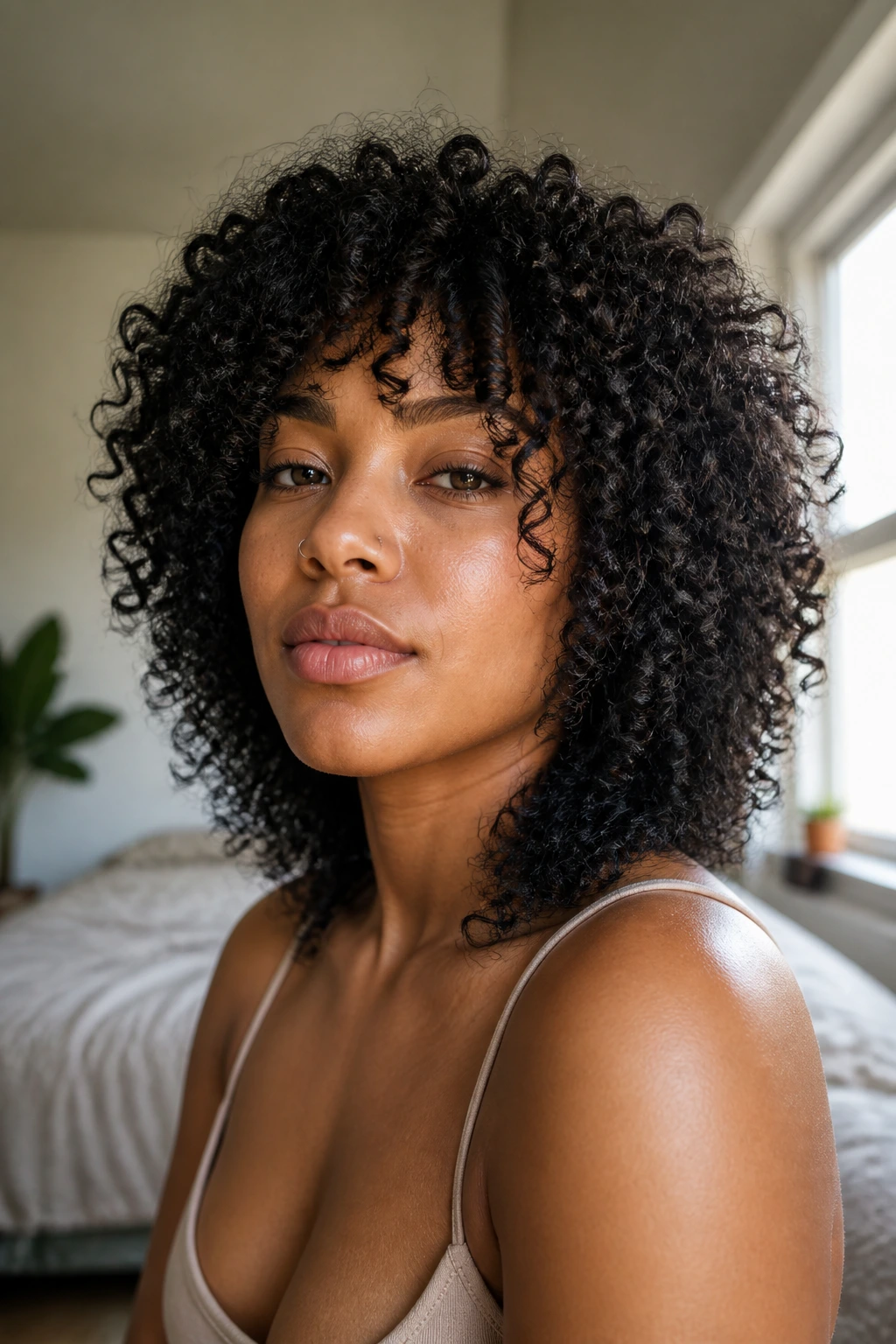
Coils look best when the perimeter stays rounded and the layers respect the shrinkage. That’s why this version keeps the outline soft and circular instead of pushing into sharp angles that fight the curl pattern.
The face frame should stay a bit longer than you think, especially if your hair contracts a lot when dry. That keeps the top from getting too short and lets the shape breathe. It’s a strong option for 4A and 4B curls that want movement without losing fullness.
21. Asymmetrical Swing Wolf
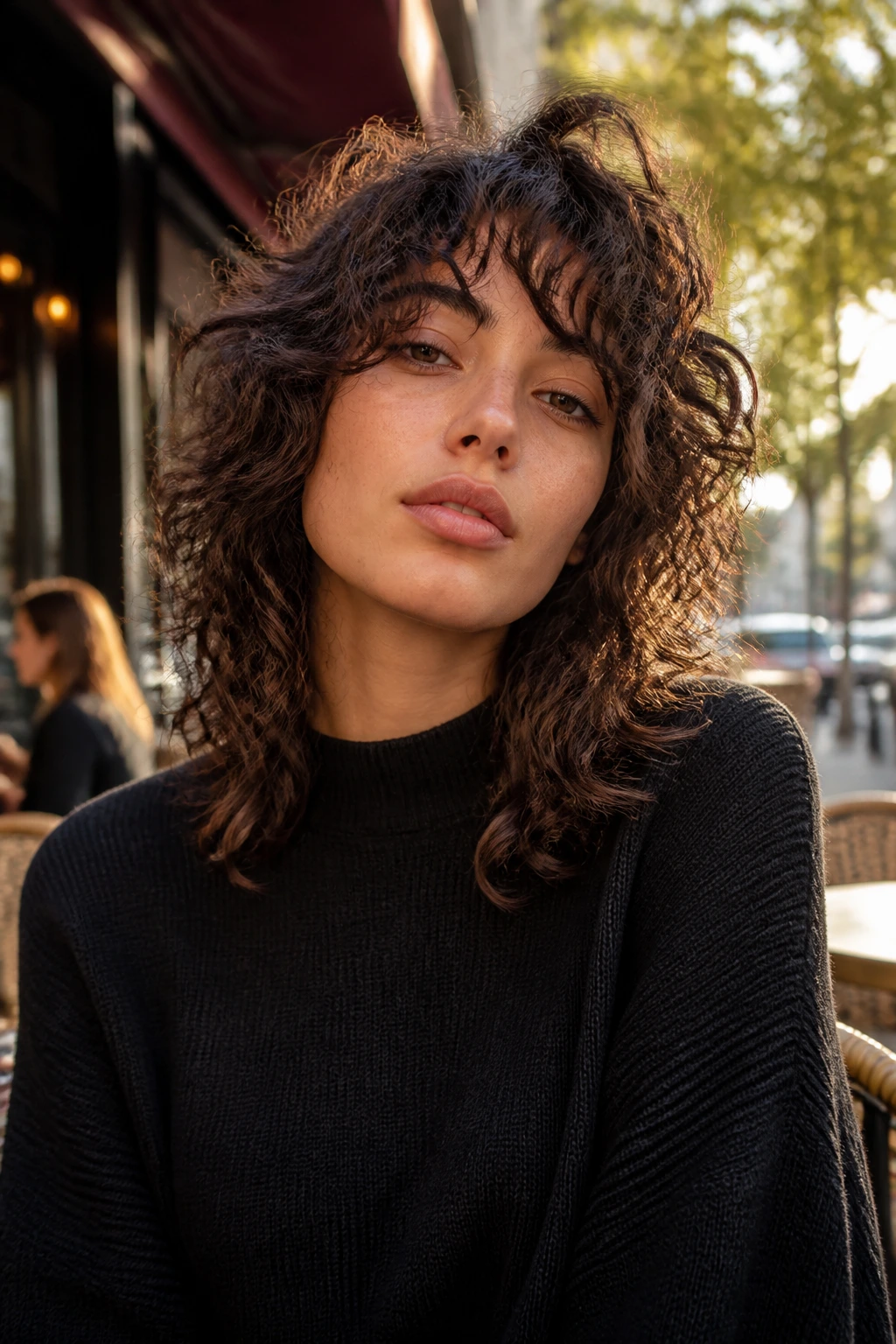
A little asymmetry goes a long way. One side sits a touch longer, the part leans deeper, and the whole haircut gets a sense of motion before you even style it. Curly hair exaggerates the difference in a good way.
This shape is best if you want edge without a full mullet moment. It gives you a bit of drama around the face while keeping the rest of the cut medium and wearable. I’d choose this if you like hair that looks deliberately imperfect. It’s a good kind of uneven.
22. Seventies Flip Wolf
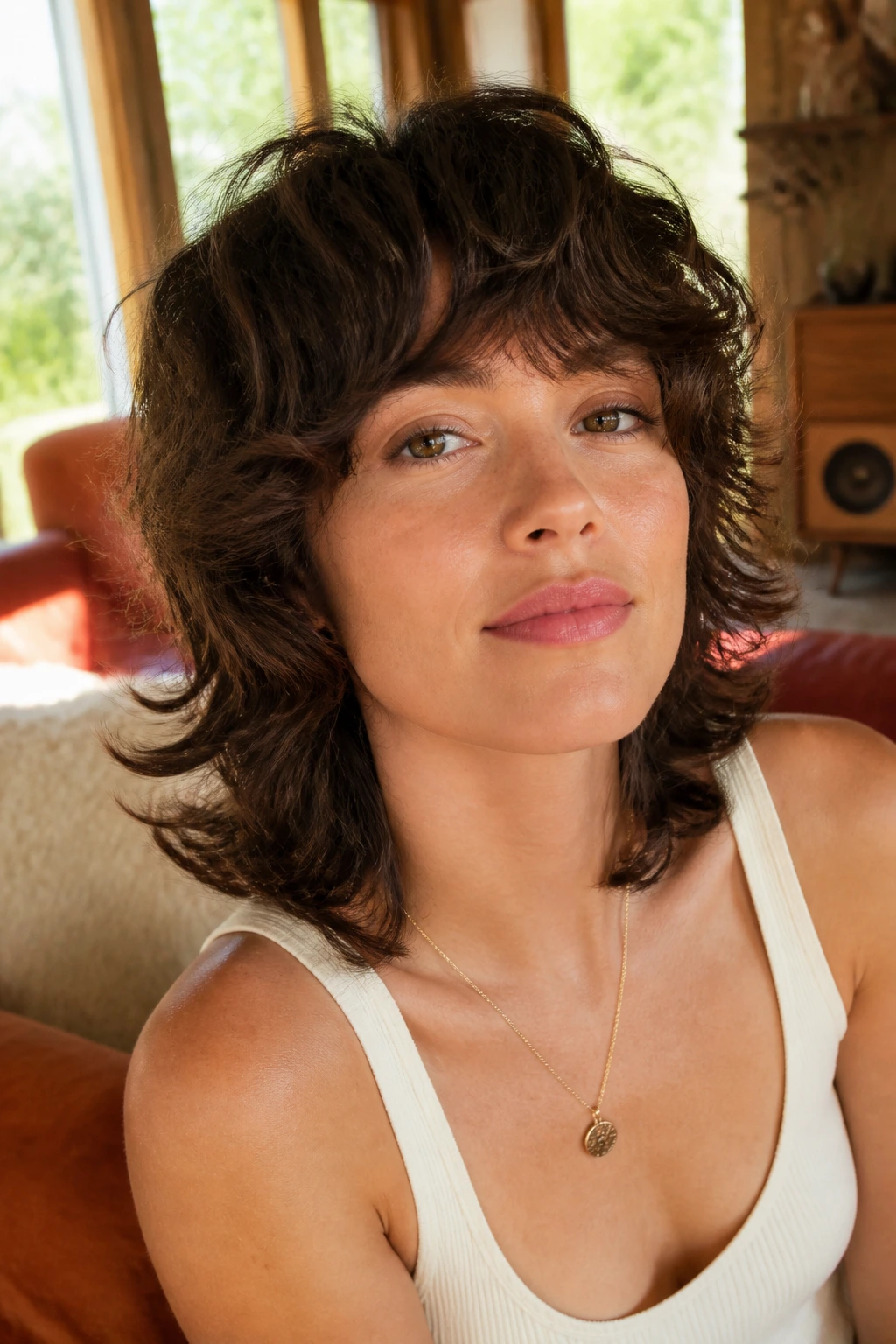
There’s something especially satisfying about a curly wolf cut that flicks outward at the ends. The shape nods to seventies hair without turning into costume, and medium length keeps the flip visible instead of mushy.
To make this version work, the outer layers need to be soft enough to bend, not so heavy that they just hang. The fringe should be airy, not blunt. It’s one of those cuts that looks better when it moves, which means it benefits from a little shaking out after drying. Don’t overthink it.
23. Soft Romantic Fringe Wolf
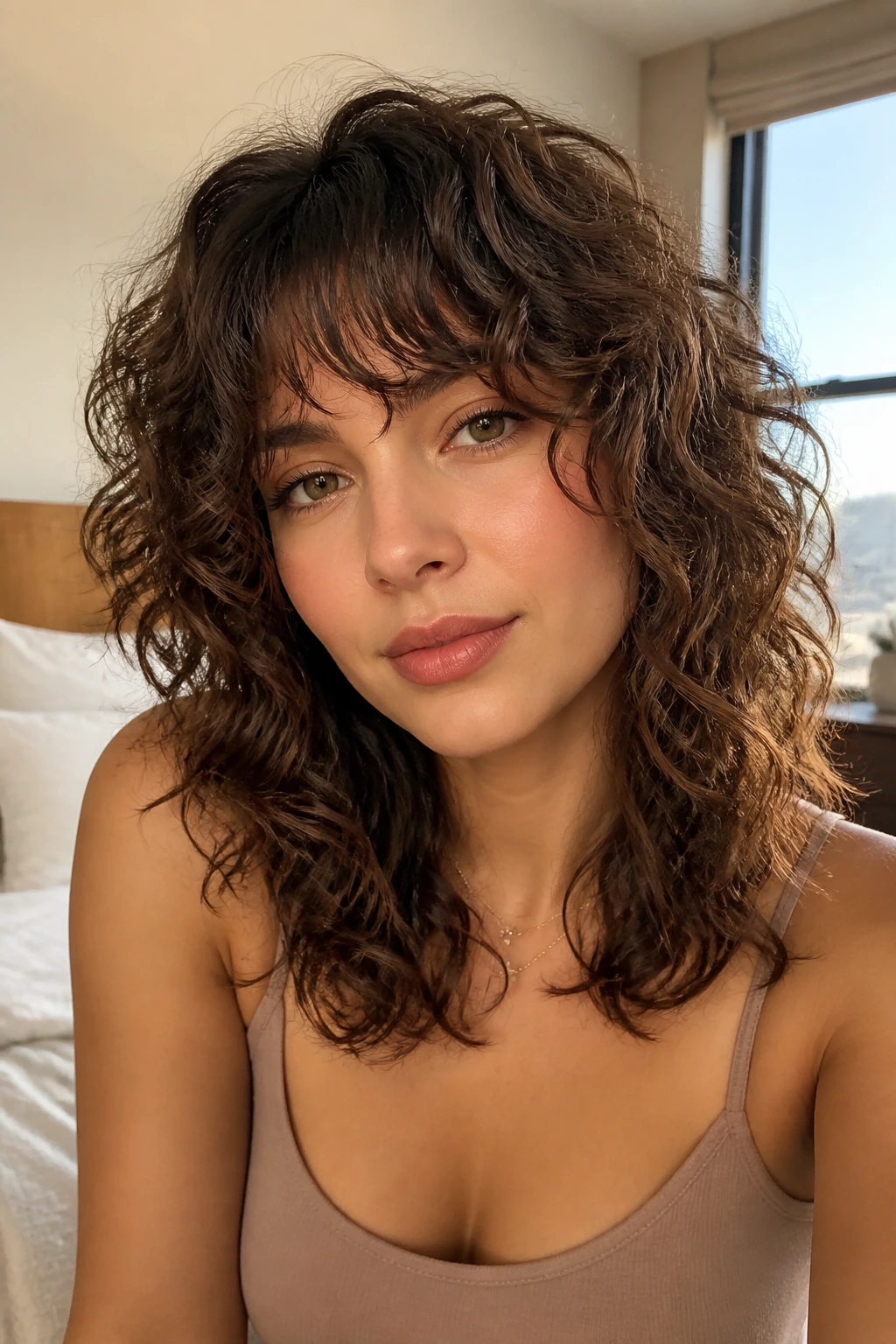
This is the gentle, face-softening version. The fringe blends into the front layers instead of sitting there like a separate haircut, which helps the wolf shape feel less severe.
It suits people who want the outline of a wolf cut but not the harder edges. The front pieces can fall just below the eyebrows or cheekbones, depending on curl spring, and the rest of the cut stays medium and loose. It’s softer than a curtain bang version, and that softness is the whole appeal.
24. Razor-Soft Texture Wolf
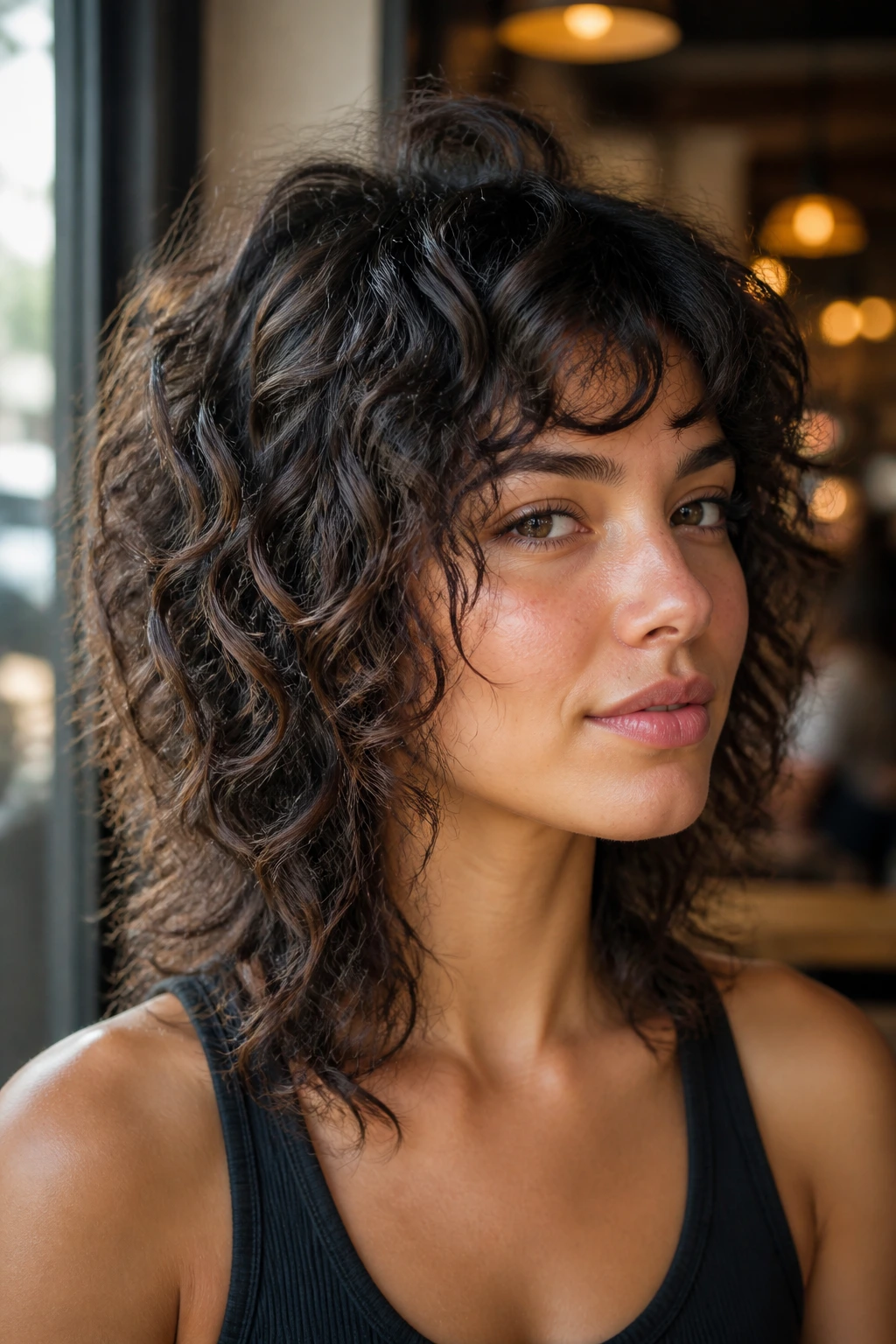
A razor can create gorgeous airiness in curly hair — or it can wreck the ends if the stylist gets too eager. This version only works with someone who knows how to use the tool on textured hair.
When it’s done well, the ends feel light and feathery instead of chunky. That makes the layers move in a way scissors sometimes can’t match. I’d choose this on dense curls, not fragile ones. If your hair already frays easily, a softer scissor cut is the safer move.
25. Air-Dry Friendly Wolf

Not everybody wants to diffuse. Fair enough. This version is built so the curl pattern can dry on its own and still keep the wolf shape intact.
The layers should be clean enough to organize the curl clumps, but not so aggressive that air-drying leaves gaps. A little leave-in, a little mousse, and a patient hands-off dry are usually enough. If you hate spending ten minutes with a diffuser, this one earns its keep fast.
26. Invisible-Bang Wolf
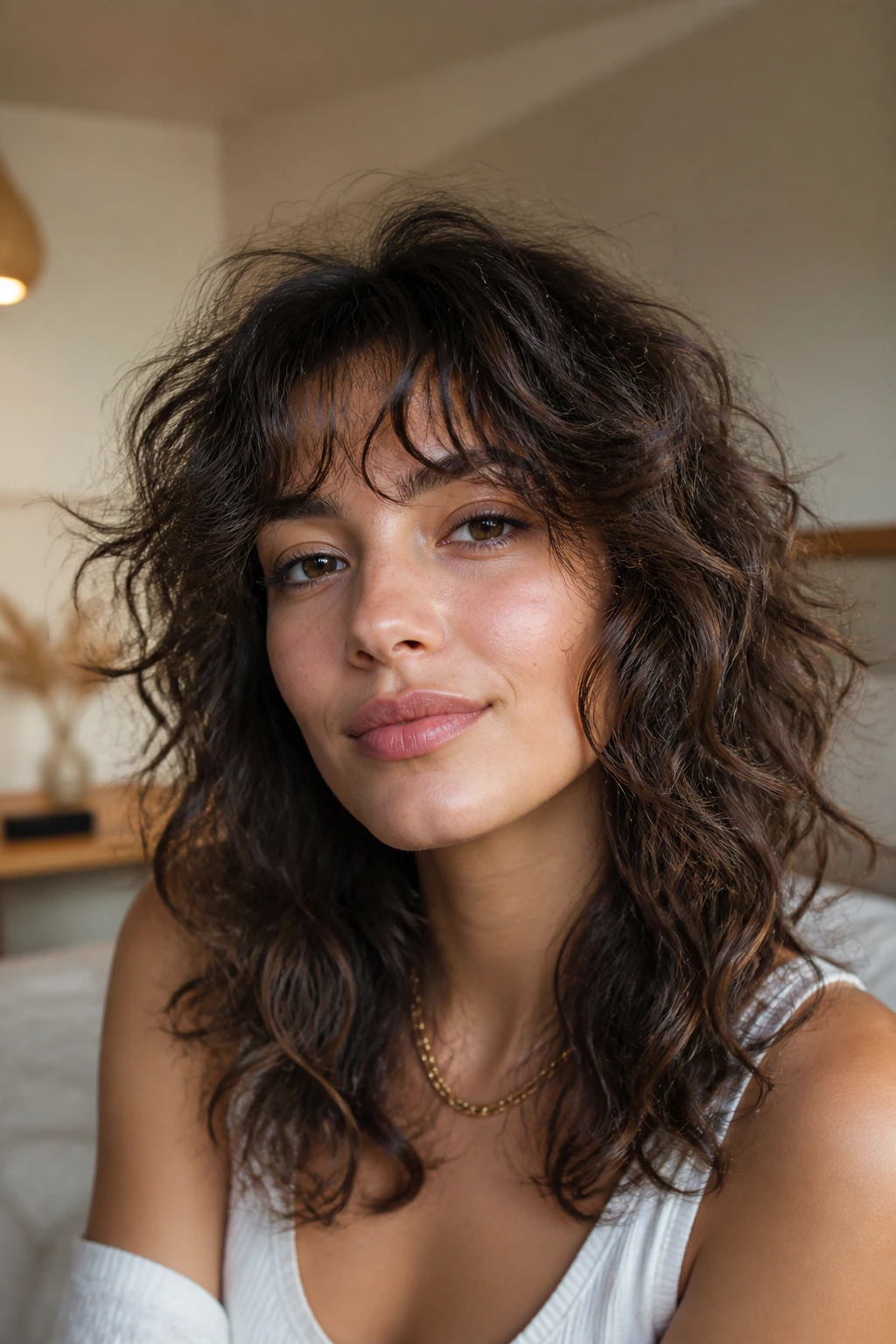
Invisible bangs are the sneaky version of fringe. They’re there, but they melt into the front layers so the cut never looks like it has a hard bang line.
That makes this a good option for people who want face framing without the upkeep of true bangs. The shortest pieces should sit near the cheekbones or lip line when dry, then disappear into the rest of the cut. It’s a smart middle ground. Fringe energy, minus the commitment.
27. Collarbone Kick Wolf

This cut has a little outward flick at the ends, which gives the medium length some shape right where it can otherwise go limp. The collarbone becomes the visual anchor, and the curls kick out around it instead of hanging flat.
It looks especially good with a center or slight off-center part. The front pieces can be a touch longer to frame the jaw, while the body of the cut keeps its bounce. If your hair needs movement but not a lot of layer drama, this is a neat way to get it.
28. Face-Framing Halo Wolf

A halo frame around the face can make the whole cut feel lighter, even when the back stays fuller. This version is useful if you want the cheekbones to show up more clearly without cutting the whole head short.
The pieces should start somewhere between the chin and collarbone, depending on shrinkage. Keep the crown layers gentle and the perimeter round. The result is flattering in that old-fashioned, practical sense — the hair does the work for your face instead of the other way around.
29. Grow-Out Friendly Wolf

Some cuts look great for two weeks and then start muttering at you in the mirror. This one doesn’t. The layers stay long enough to soften as they grow, so the shape keeps making sense even when the salon visit gets pushed back.
That makes it a smart pick for people who don’t want a strict maintenance schedule. Ask for low-contrast layers and a perimeter that isn’t too chopped up. The haircut will evolve, not collapse. That matters more than people admit.
30. Side-Swept Fringe Wolf
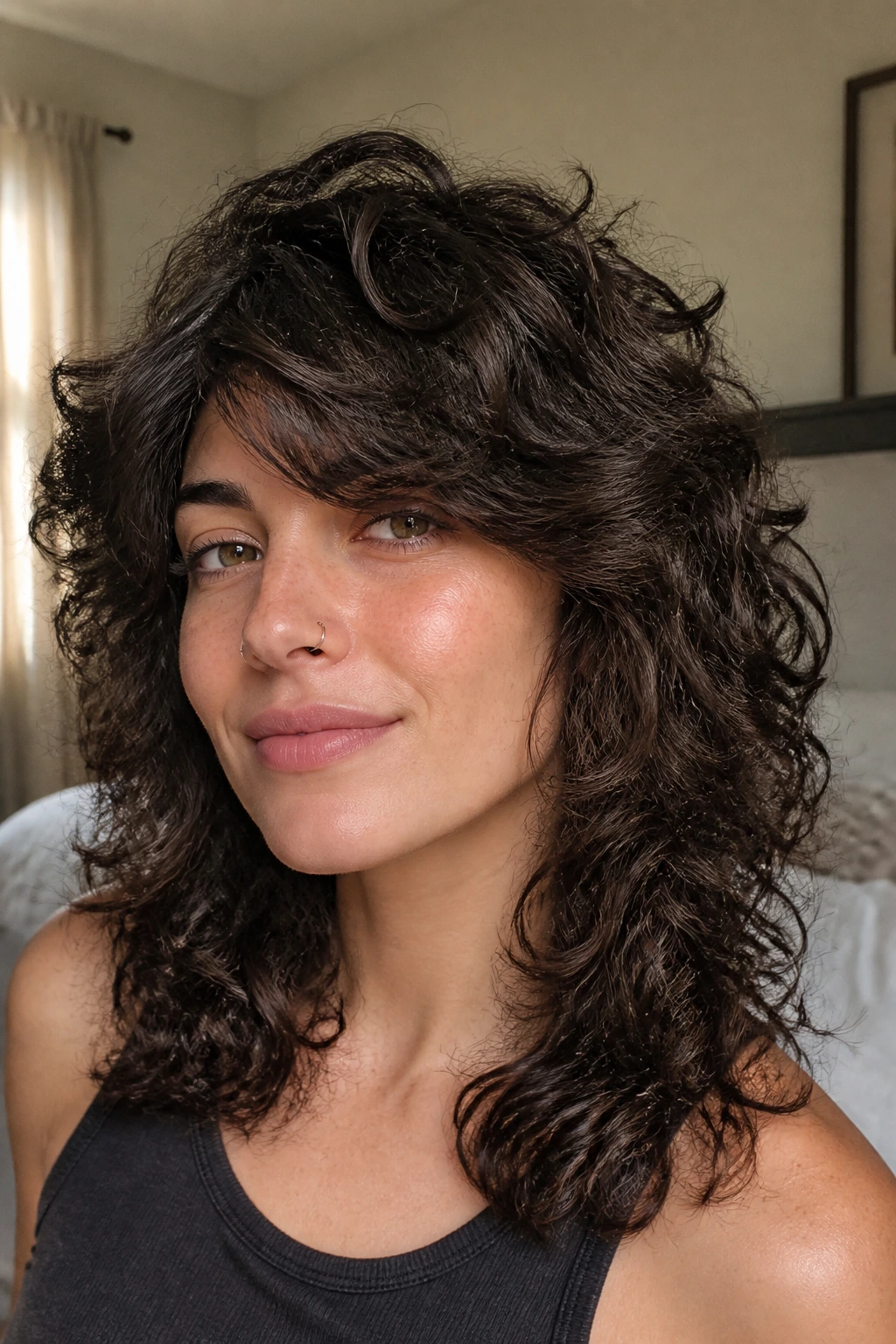
A side-swept fringe gives curly hair a softer entry point into bangs. It also helps balance a strong jawline or a wide forehead without forcing the front into a straight line.
The side sweep works best when the fringe is cut with the curl pattern in mind, not against it. Keep it long enough to move across the brow rather than stop above it. This version has a relaxed feel that suits medium-length curls nicely because the fringe and layers have space to meet in the middle.
31. Piecey Texture Wolf

Piecey texture is for people who want to see every curl clump and layer. The haircut should support separation, not hide it, so the ends feel lively instead of soft and blended into nothing.
This version likes a little gel and a little scrunching. If the definition holds, the cut looks intentional even on a humid day. I’d choose it when the curl pattern itself has personality and you want the haircut to stop fighting that. Let the pieces be pieces.
32. Soft-Edge Wolf

This is the least aggressive version of the whole bunch. The layers are there, but the edges stay soft, so the haircut reads more wearable and less punk.
It’s a good choice if your office is conservative, your curl pattern is delicate, or you just don’t want to see a lot of choppiness in the mirror. The point is movement, not shock value. Sometimes that’s the smarter call. Especially if you want the cut to work with every outfit, not just the ones with boots.
33. Long-Front Wolf
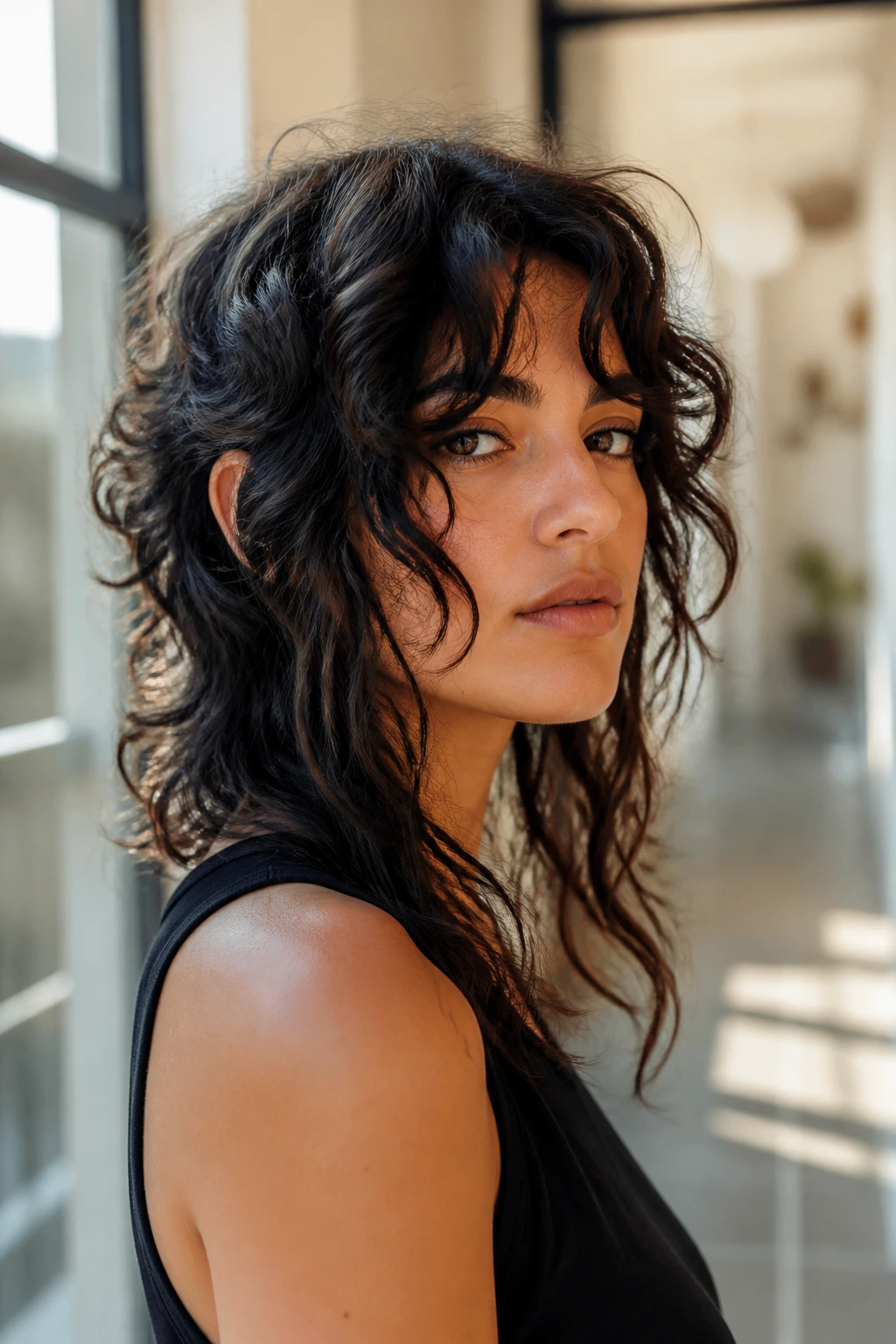
A long-front wolf cut stretches the front pieces farther down the face while keeping the medium-length body in the back. That little difference changes the entire feel of the haircut. It elongates the face, softens the jaw, and adds movement where the eye lands first.
This one is useful if you like a dramatic front but don’t want the back to get too mullet-heavy. Ask for the front to be measured on dry curls, not stretched straight. That’s the part people get wrong. The curls have a mind of their own, and the front should be cut with that in mind.
Why Medium Length Keeps the Shape Balanced Instead of Bulky
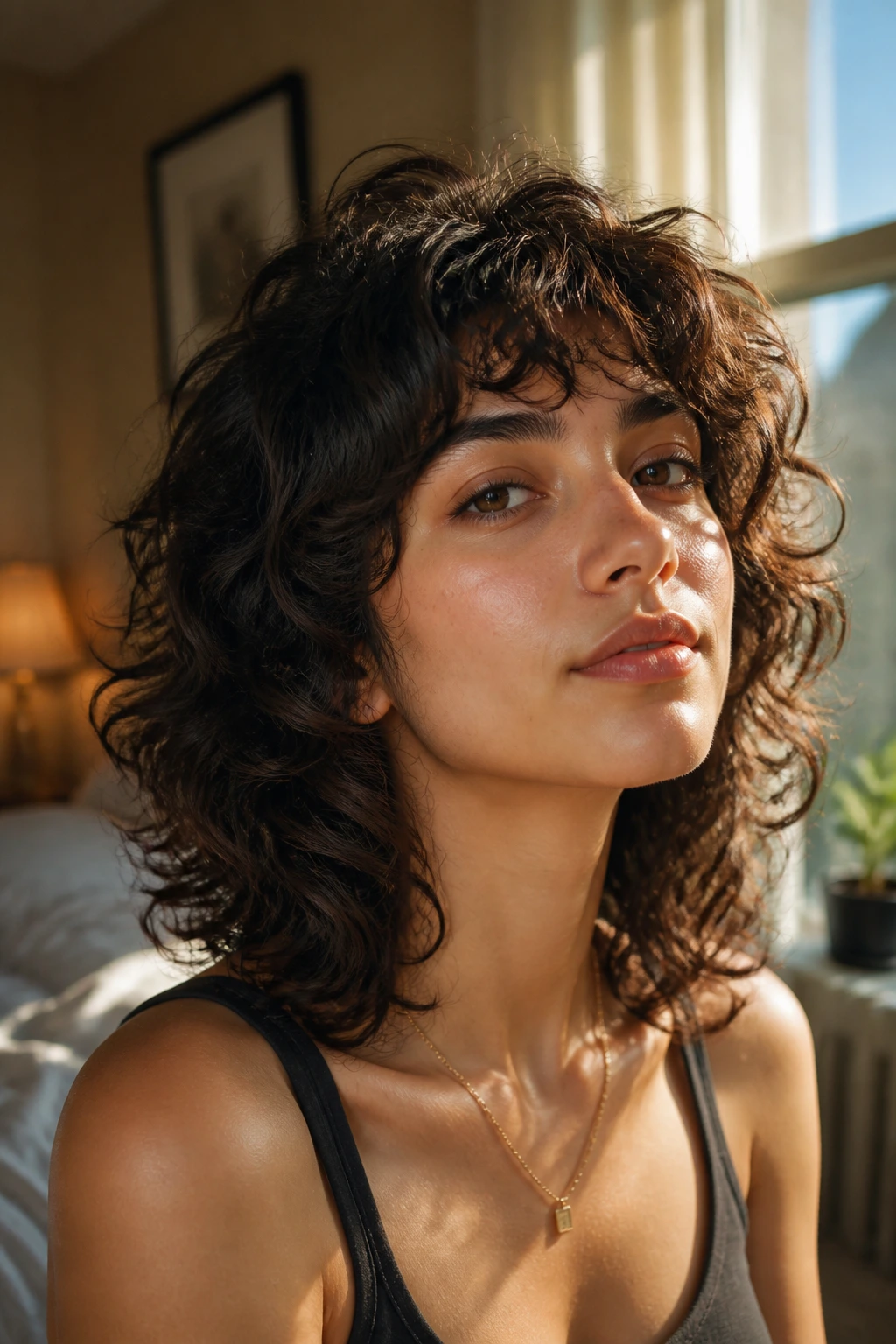
Medium length is the sweet spot because curly hair needs both direction and weight. Too short, and the cut springs outward before it has a chance to fall into a shape. Too long, and the layers lose their voice under the mass.
The medium wolf cut keeps the crown light enough to lift, while the perimeter still has enough length to hold the silhouette together. That matters more than people think. The silhouette is the haircut. The curls are the furniture inside it.
A blunt curly cut can look good for about five minutes after styling, then it starts building width in the wrong places. Medium wolf cuts solve that by carving shape into the top and front while leaving some gravity at the bottom. The result is movement that doesn’t feel random.
How to Ask for the Right Medium Wolf Cut at the Salon
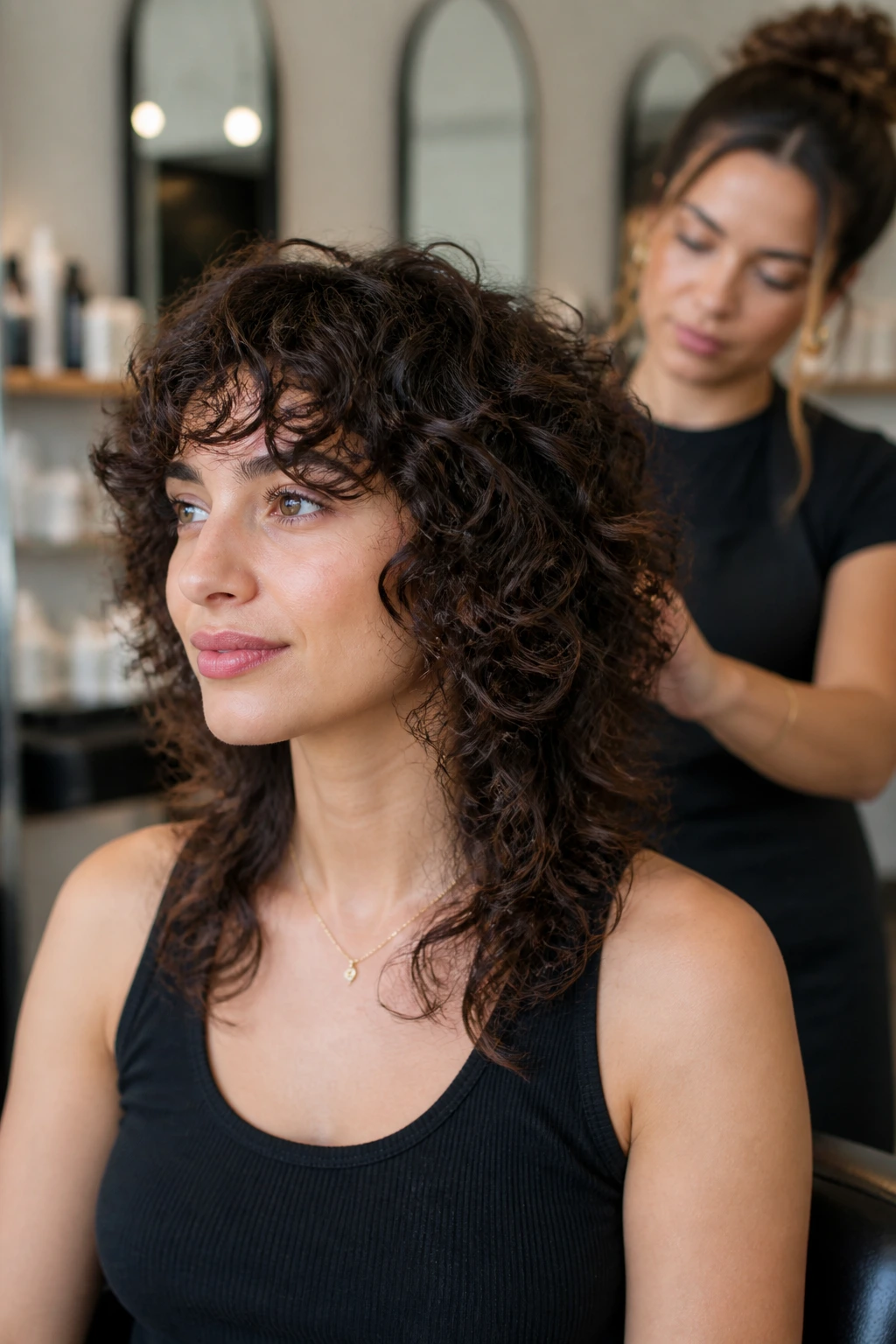
Bring pictures, sure, but bring the right pictures. One photo for the overall shape, one for the fringe, and one that shows a back view if you can find it. A single front-facing image never tells the whole story, and curly hair is too sneaky for that.
Say where your curls shrink. Say how much density you have. Say whether you want the cut to lean shaggy, rounded, or a little mullet-forward. If you’re not sure, say that too. Stylists can work with uncertainty if you give them useful facts. They can’t read your mind, and they shouldn’t have to.
What to Tell Your Stylist
-
“I want the layers to work with my shrinkage.” That tells them the cut should be checked dry or mostly dry.
-
“Keep the perimeter medium, not razor-short.” That stops the bottom from getting too sparse.
-
“I want the front to frame my face, not sit like a separate bang line.” Good wording for curtain or invisible fringe.
-
“Please don’t over-thin the ends.” Curly hair can go frizzy fast when the scissors get too enthusiastic.
One more thing. If your stylist reaches for thinning shears around the crown, ask what problem they’re solving. Sometimes the answer is good. Sometimes it’s lazy. There’s a difference.
Which Curl Patterns and Densities Change the Outcome
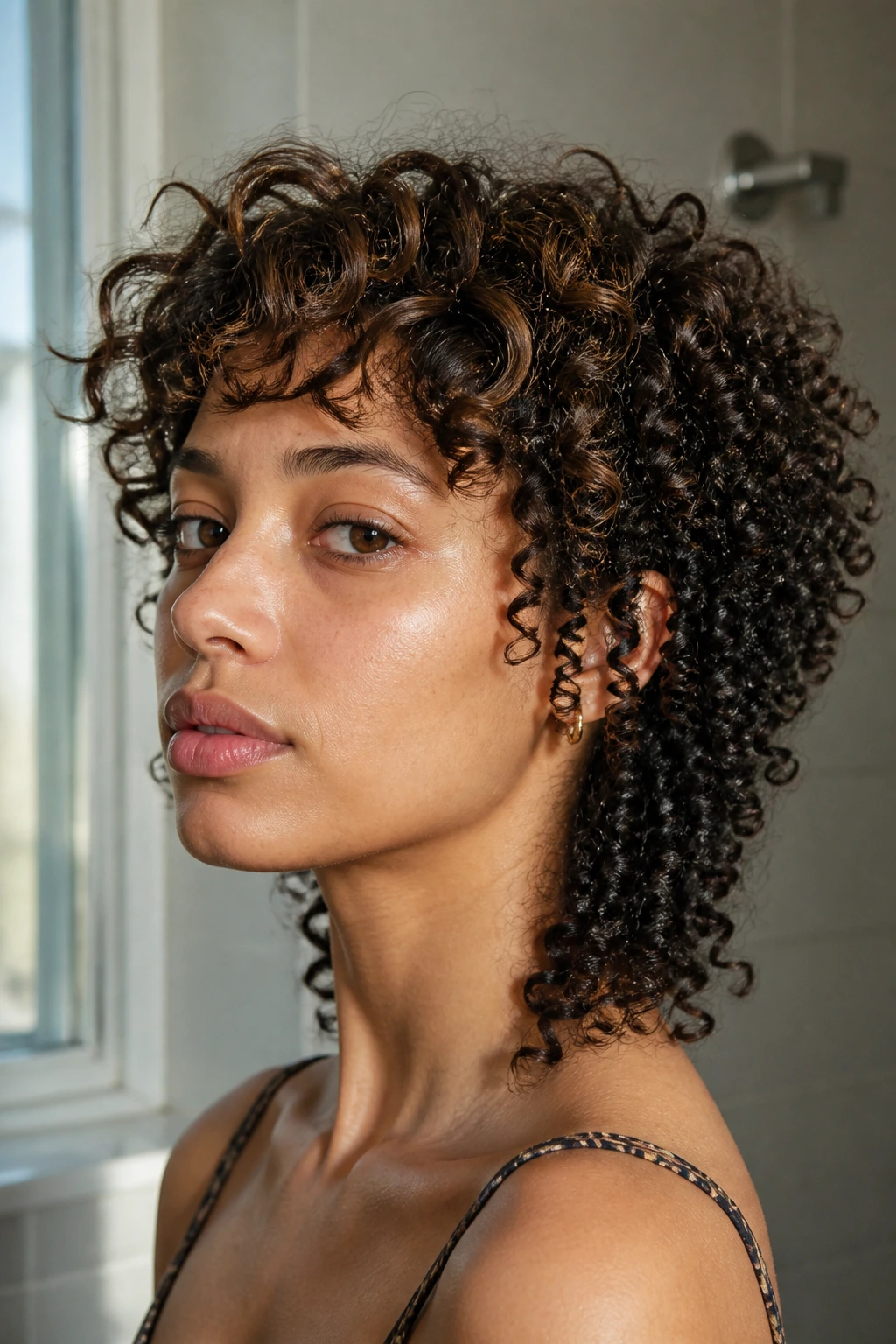
Loose waves and medium curls usually get the most obvious wolf-cut silhouette because the layers show up without a lot of shrinkage hiding them. 2C to 3B hair tends to take well to curtain fringe, side parts, and softer shags because the pieces move apart on their own.
Tighter curls and coils need more respect for shape and weight. The outline should stay rounder, the fringe should stay longer, and the layers should be carved in with shrinkage in mind. Otherwise the top can get too short and the cut starts sitting on the head like a cap.
Dense hair usually needs internal debulking. Fine hair usually needs restraint. That’s the part people miss. The same haircut name can mean two completely different approaches depending on how much hair is sitting under the scissors.
A Quick Curl-Type Matchup
-
2C to 3A: Loose wolf cuts, side parts, long curtain bangs, and brushed-out texture work especially well.
-
3B to 3C: Rounded shags, crown lift, and face-framing layers usually give the best balance.
-
4A to 4C: The perimeter should stay round, the layers should be longer, and the shape should follow the curl’s natural spring.
The Tools and Products That Make the Layers Behave
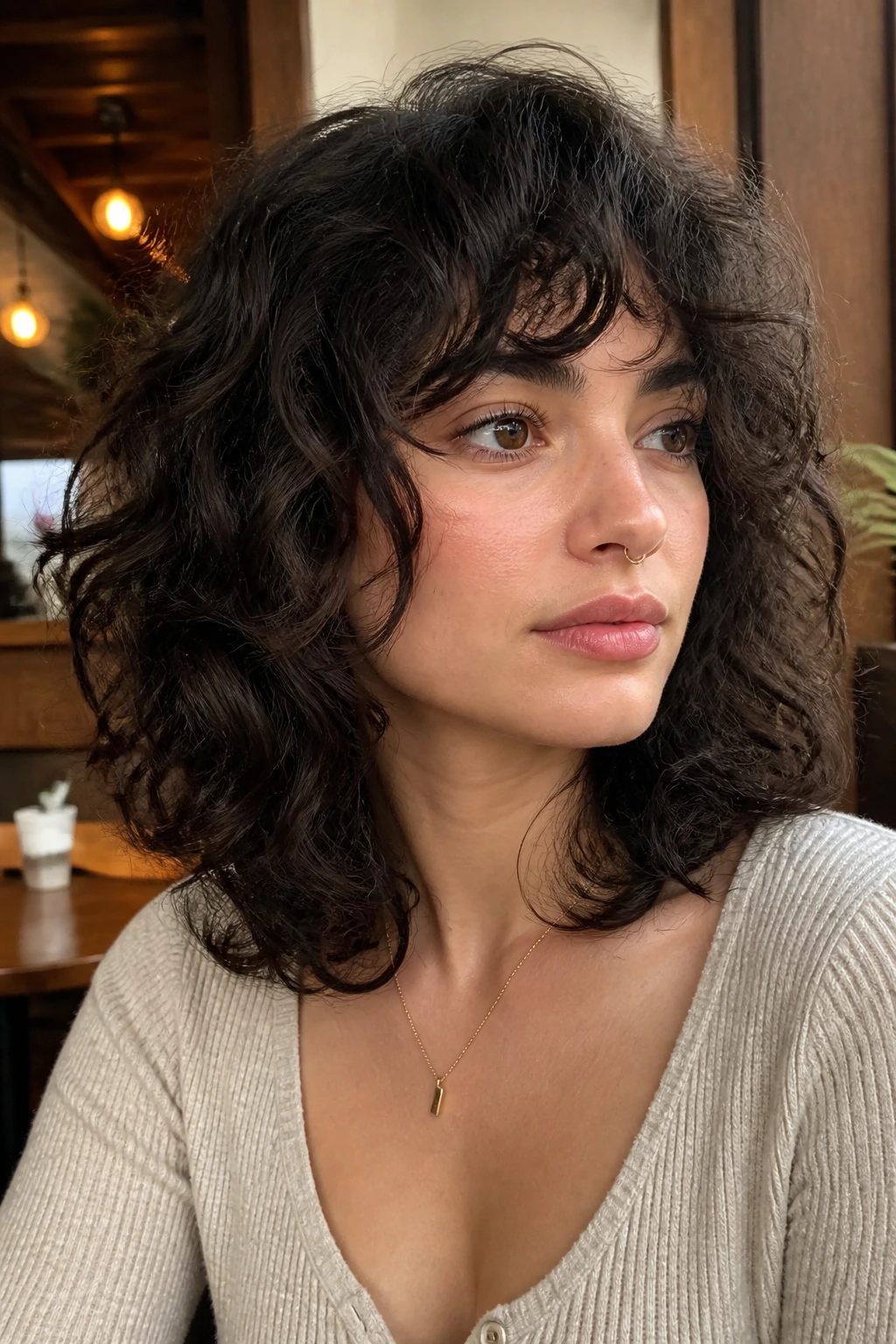
You do not need a mountain of products. You need the right ones in the right order.
-
Diffuser attachment: Helps set the crown without blasting the curls apart.
-
Wide-tooth comb: Good for distributing conditioner in the shower without ripping through clumps.
-
Microfiber towel or T-shirt: Cuts down on rough frizz when you squeeze out water.
-
Leave-in conditioner: Gives the mid-lengths some slip, especially if your layers are thirsty.
-
Curl cream: Useful for softer definition on looser curls or waves.
-
Mousse: Best when you want lift at the root and a lighter finish.
-
Gel: Helps hold the shape on days when humidity is going to be rude.
-
Duckbill or root clips: A small thing, but they can keep the crown lifted while hair dries.
-
Spray bottle: Handy for refreshing the front pieces without soaking the whole head.
Pick two styling products, not seven. That’s usually enough. The cut should do most of the work anyway.
How to Style, Diffuse, and Refresh the Cut
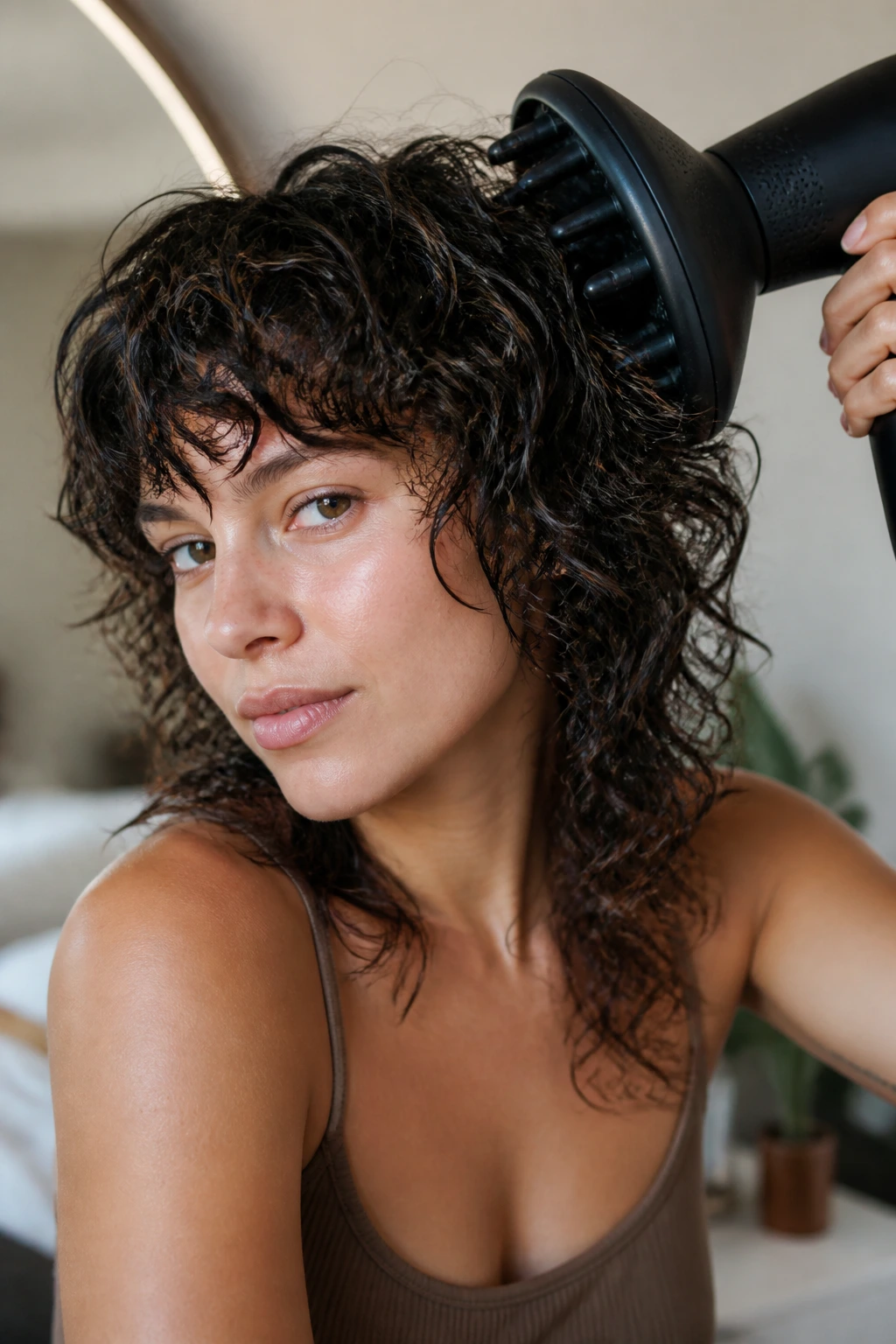
The styling routine matters because curly wolf cuts look great when the layers are organized, and a mess when everything gets handled too much. Start on soaking-wet hair, not damp hair. Put your leave-in or curl cream through the mid-lengths first, then add mousse or gel where you want shape and hold.
Scrunch upward. Gentle, not frantic. Then either air-dry or diffuse in sections, moving the dryer around instead of camping on one spot. If the crown tends to sag, clip the roots at the front for the first ten minutes of drying. Small fix. Big difference.
Day One
Let the hair set fully before touching it. If you break the cast too soon, the layers puff up and you lose the clean separation that makes the cut work.
Day Two
Mist the front pieces, smooth a pea-sized amount of leave-in or cream between your hands, and coax the curls back into shape. Don’t soak the whole head unless you want to restart wash day.
When the Crown Collapses
Flip the part, mist the roots lightly, and use a diffuser on low heat for a few minutes. If that still fails, the cut probably needs a little more crown support next time.
Common Mistakes That Flatten a Wolf Cut
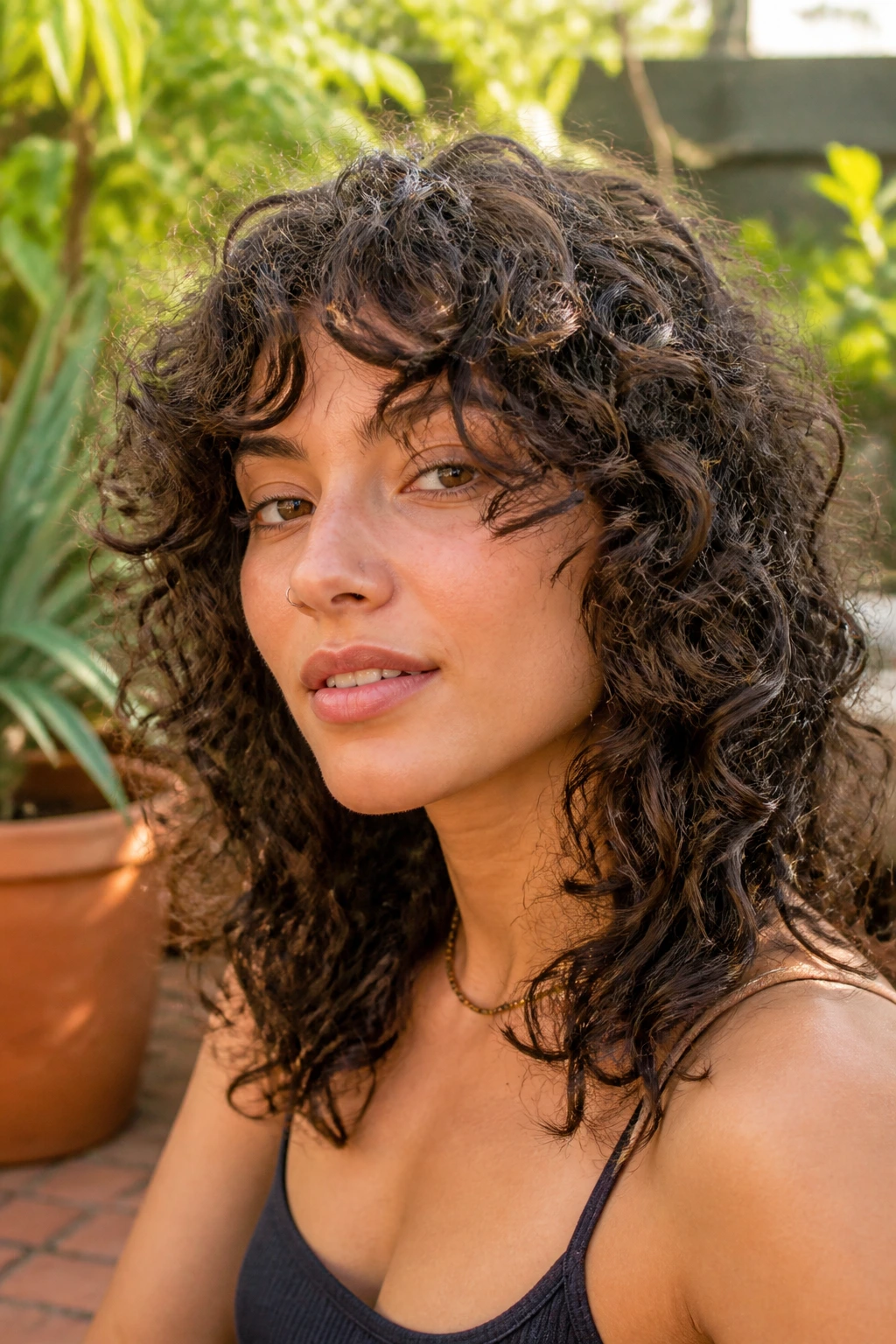
The most common mistake is cutting curly hair too short while it’s still stretched or wet. The curl bounces up later, and suddenly the fringe is floating above the brow or the crown is sitting too high. The fix is simple: account for shrinkage and check the shape dry.
Another one is over-thinning the ends. Curly hair does not love being aggressively shredded. It turns fuzzy, loses clump structure, and can look thin even when there’s plenty of hair left. Ask for internal weight removal instead of a lot of texture cutting at the perimeter.
The third problem is forgetting the balance between top and bottom. If the crown is too short and the length is too long, the cut gets top-heavy. If the sides are too light, the silhouette goes wide. A medium wolf cut only works when the weight is distributed on purpose.
-
Too-short bangs: They spring up higher than expected. Leave them longer and refine later.
-
Too much thinning shear work: The ends fray. Use softer scissor work instead.
-
Ignoring the dry shape: Wet curls lie. Always check the haircut when it’s dry enough to tell the truth.
Smart Variations and Adjustments to Try
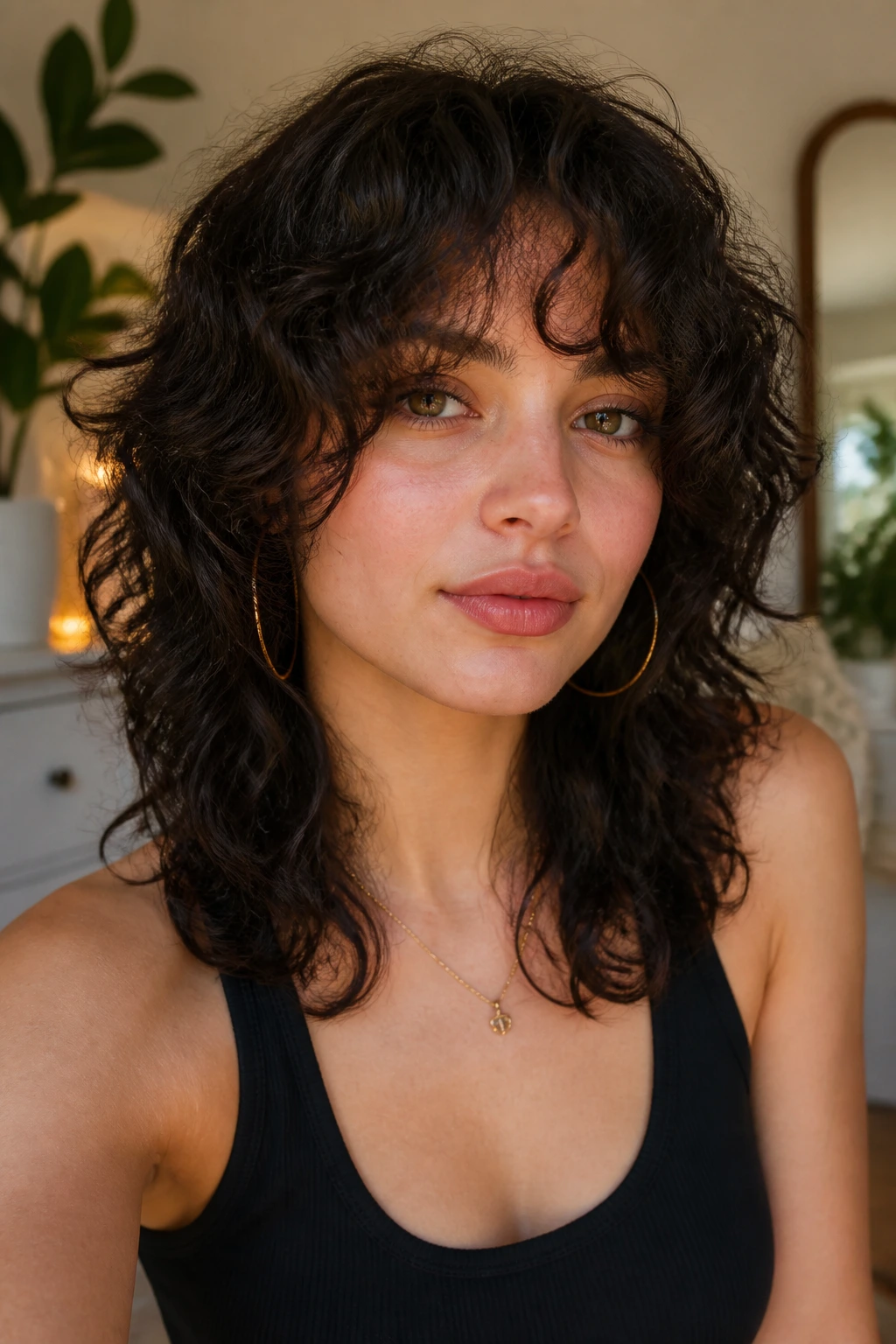
The Soft Reset: If you’re new to wolf cuts, ask for a softer version with low-contrast layers and a rounded perimeter. It gives you the movement without a big visual shock.
The Fringe-First Version: This leans into curtain bangs, bottleneck bangs, or invisible fringe. Good if you want the face-framing effect more than the mullet edge.
The Bulk-Buster: Built for thick, dense curls that need interior weight removal. Keep the outside line intact so the cut stays full, not puffy.
The Halo Round-Up: Best for coily or very springy textures. The shape stays circular, the layers stay long enough to respect shrinkage, and the result feels softer.
The Punkier Edge: Shorter crown, a little more nape length, and a sharper attitude. If your wardrobe has boots, leather, or loud earrings, this one makes sense fast.
How to Keep the Shape Sharp as It Grows Out
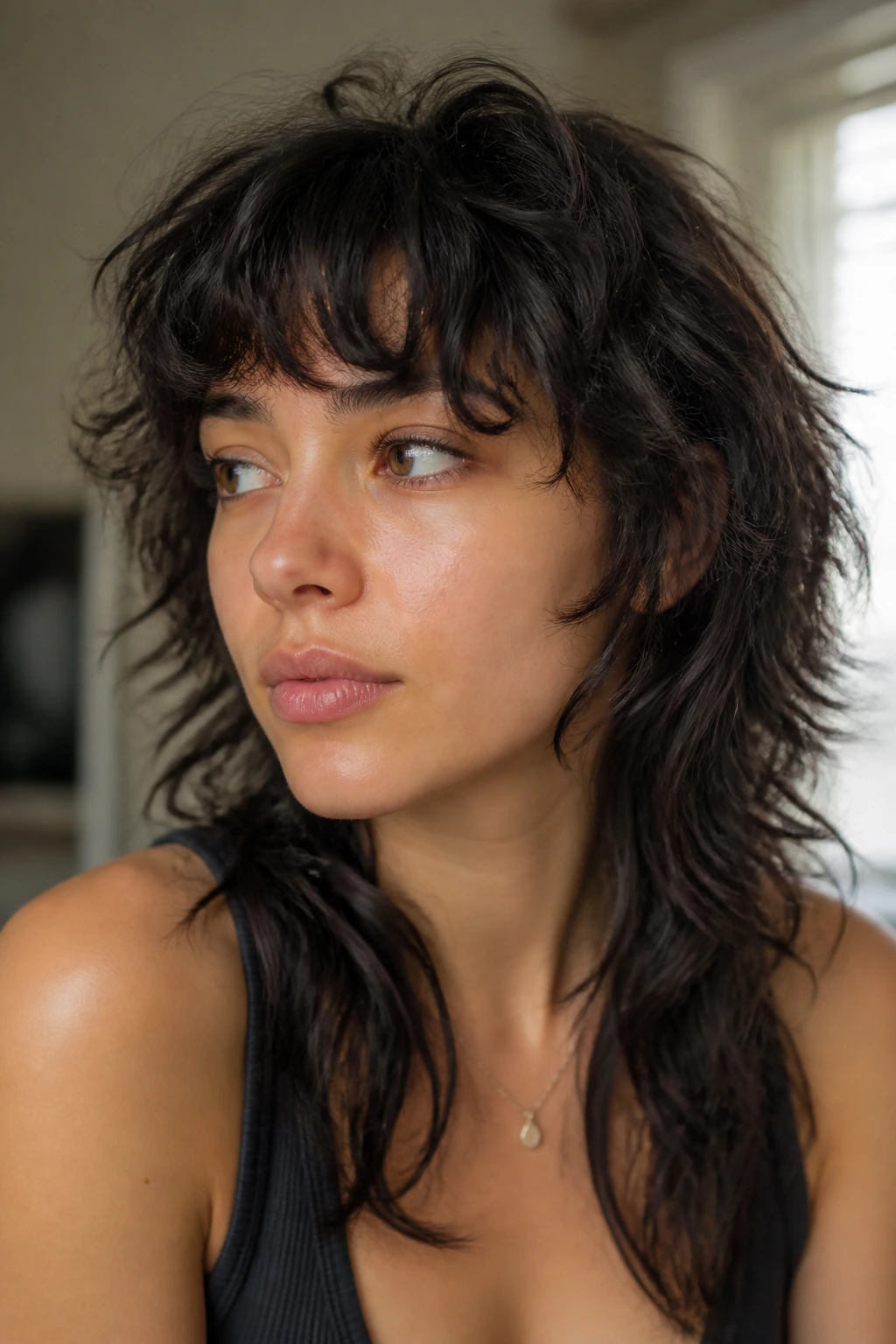
Medium wolf cuts age well if you keep the fringe and crown in check. A trim every 8 to 12 weeks is usually enough to stop the shape from turning into a vague layered mop. If you wear bangs, those may need a tiny clean-up between full cuts.
Sleep matters more than people admit. A satin pillowcase or bonnet keeps the curls from getting crushed flat at the crown. In the morning, a light mist of water and a little leave-in is usually enough to wake up the front pieces. If the layers start to lose their edge, that usually means the perimeter is too long or the crown has started to drop. That’s when you nudge the salon appointment forward.
Frequently Asked Questions
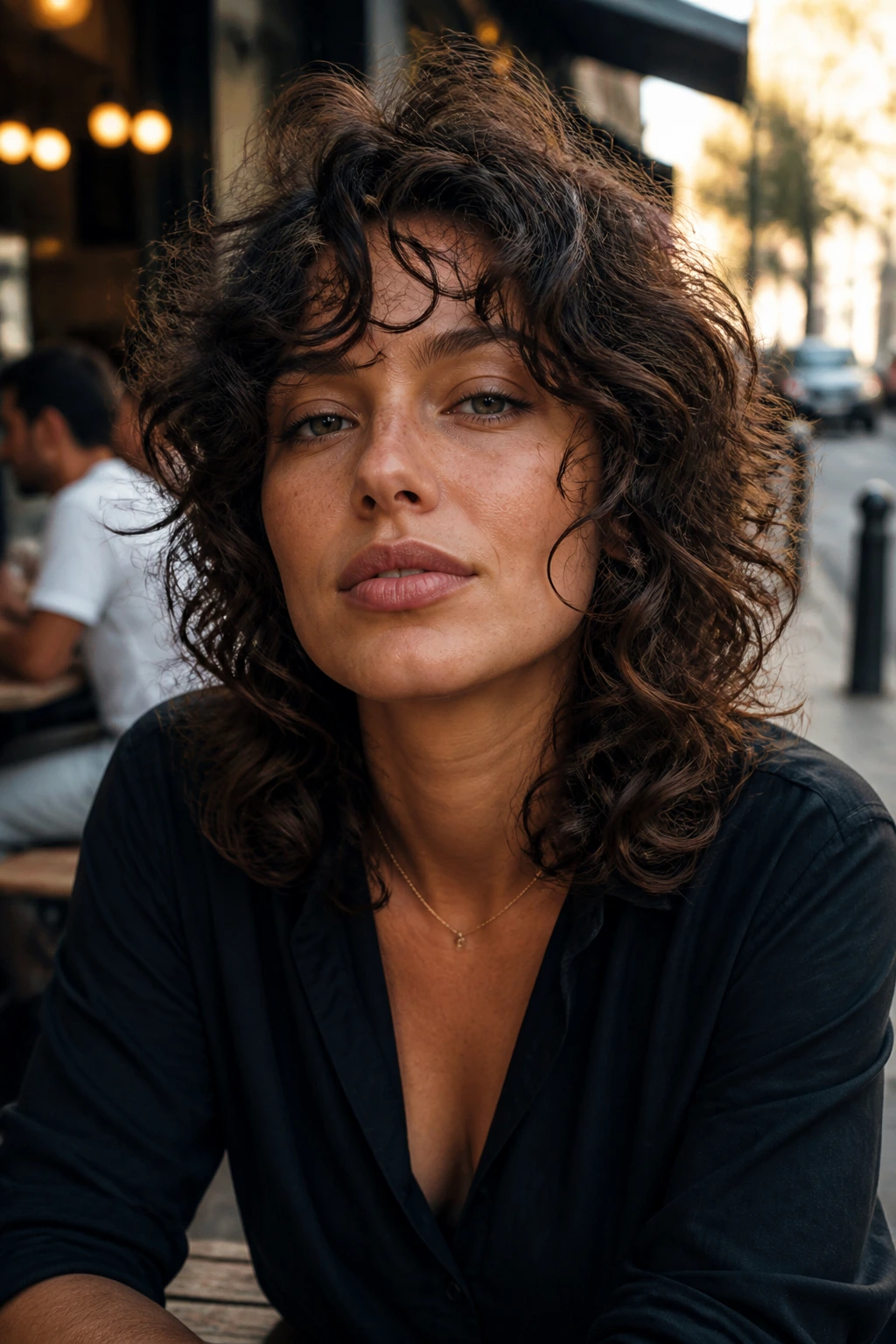
Is a medium wolf cut good for curly hair?
Yes, especially when the stylist keeps shrinkage and density in mind. The medium length gives curls enough weight to stay shaped while the layers add lift and movement where curly hair often gets heavy.
Should a curly wolf cut be done dry or wet?
Dry or mostly dry is safer for most curly heads because it shows the true spring of the curl. Some stylists do a hybrid approach — rough shaping wet, then refining dry — which can work well if they know curly hair.
What face shapes suit a curly wolf cut?
Almost all of them can work, but the shape changes. Round faces usually benefit from height at the crown and longer front pieces, while square faces often look softer with curtain fringe or rounded face-framing layers.
Will this cut work on fine curly hair?
Yes, but the layers need to stay longer and lighter. Fine curls can look sparse fast if the hair gets over-thinned, so the goal is movement without stripping away too much density.
How often do I need a trim?
Most medium wolf cuts stay tidy with trims every 8 to 12 weeks. If you have bangs or a sharp fringe, you may want a small cleanup sooner so the front doesn’t start hiding your eyes.
Can I wear curtain bangs with a wolf cut?
Absolutely. Curtain bangs are one of the best companions to this cut because they echo the layered shape without forcing the front into a hard line. Just keep shrinkage in mind and cut them a little longer than you expect to need.
What if my curls shrink a lot?
Tell your stylist how much length you lose after drying and diffusing. That one detail changes everything. The front pieces, fringe, and top layers may need to be left longer so the finished cut lands where you want it.
How do I stop my wolf cut from turning triangle-shaped?
Keep the crown layers active and remove weight from the interior, not just the ends. Also, make sure the perimeter is round or softly tapered instead of blunt and wide.
The Shape That Keeps Its Bite
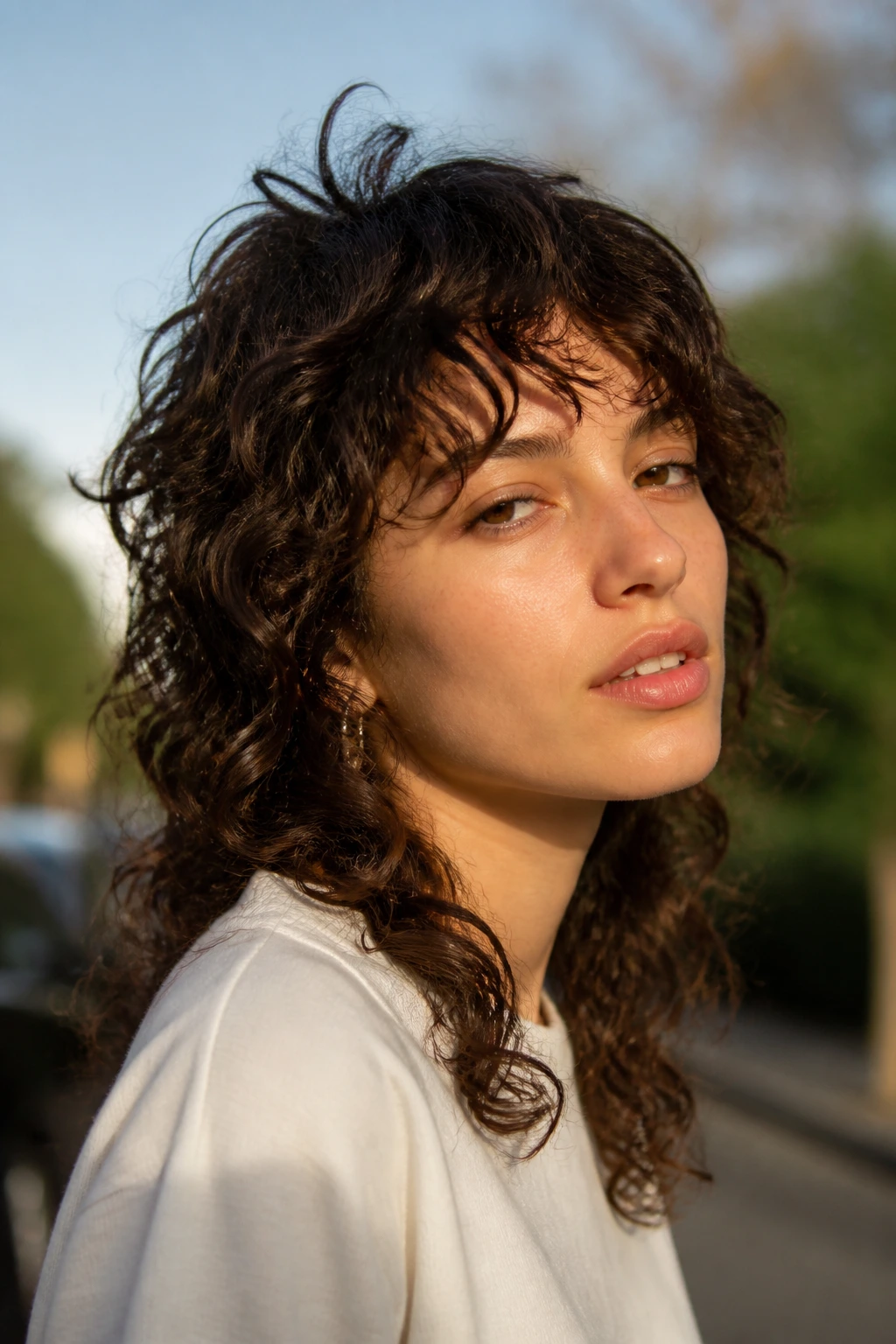
A good curly wolf cut should look a little better on day two than you expected. That’s the test. If the layers keep their lift, the fringe still makes sense, and the ends don’t balloon into a stubborn triangle, the haircut is doing its job.
Medium length gives the style room to breathe. Short enough to feel intentional. Long enough to stay wearable. That balance is why the best versions don’t look like a trend snapshot — they look like hair with a plan.
If you’re thinking about trying one, start softer rather than choppier. You can always push the shape bolder on the next trim.
