



Undercut styles for long hair solve a problem that shows up the minute your length gets real: the hair looks rich and glossy, but it also traps heat, builds bulk at the nape, and turns a simple ponytail into something that feels twice as heavy as it should. A good undercut fixes that without asking you to give up the part everyone loves — the swing, the braid length, the dramatic sweep over one shoulder.
The best versions are not all loud. Some are nearly invisible until you lift your hair, clip it up, or tuck one side behind your ear. Others are blunt and unmistakable, with a hard shave line that makes the long top read sharper and cleaner. The difference is placement. A temple cleanout behaves nothing like a nape shave, and a side panel cut has a different personality again when it’s hit with a blow dryer or pulled into a knot.
That matters more than people admit. Long hair can carry a lot of shape, and a small change underneath can change the whole silhouette above it. Remove bulk in the wrong place and you get a shelf. Remove it in the right place and the hair suddenly moves better, sits flatter, and feels lighter on your neck. Same length. Different life.
Why These 27 Undercut Looks Deserve a Spot on Long Hair
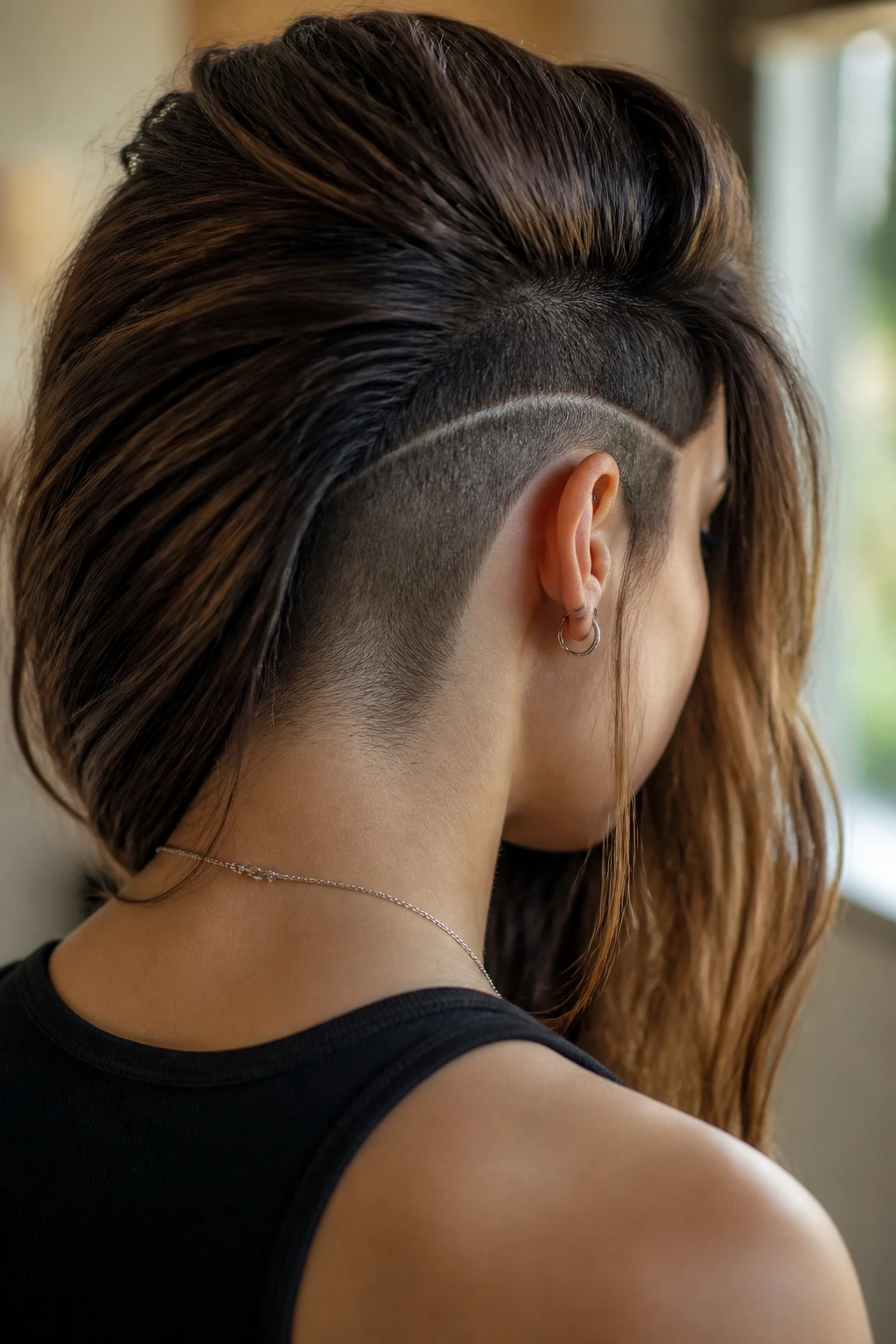
-
Length stays, bulk leaves: The top layer remains long enough for braids, buns, and loose waves, while the shaved section clears out the part that usually feels hot and heavy.
-
You control the reveal: Some of these cuts hide completely under loose hair; others only show when you tuck, twist, or tie your hair up.
-
Texture changes the game: Thick straight hair, loose waves, tight curls, and coils all need the undercut placed in a different spot if you want the shape to sit right.
-
The grow-out is part of the plan: A low nape shave and a full side panel do not age the same way, so knowing the maintenance up front saves you from surprise awkwardness.
-
They make updos cleaner: Buns sit closer to the head, braids lie flatter, and ponytails stop ballooning at the base when the underlayer is trimmed back.
-
There’s a version for almost every mood: You can go soft and hidden, or make the shave line the star of the whole haircut. No need to choose one lane forever.
1. Hidden Nape Undercut
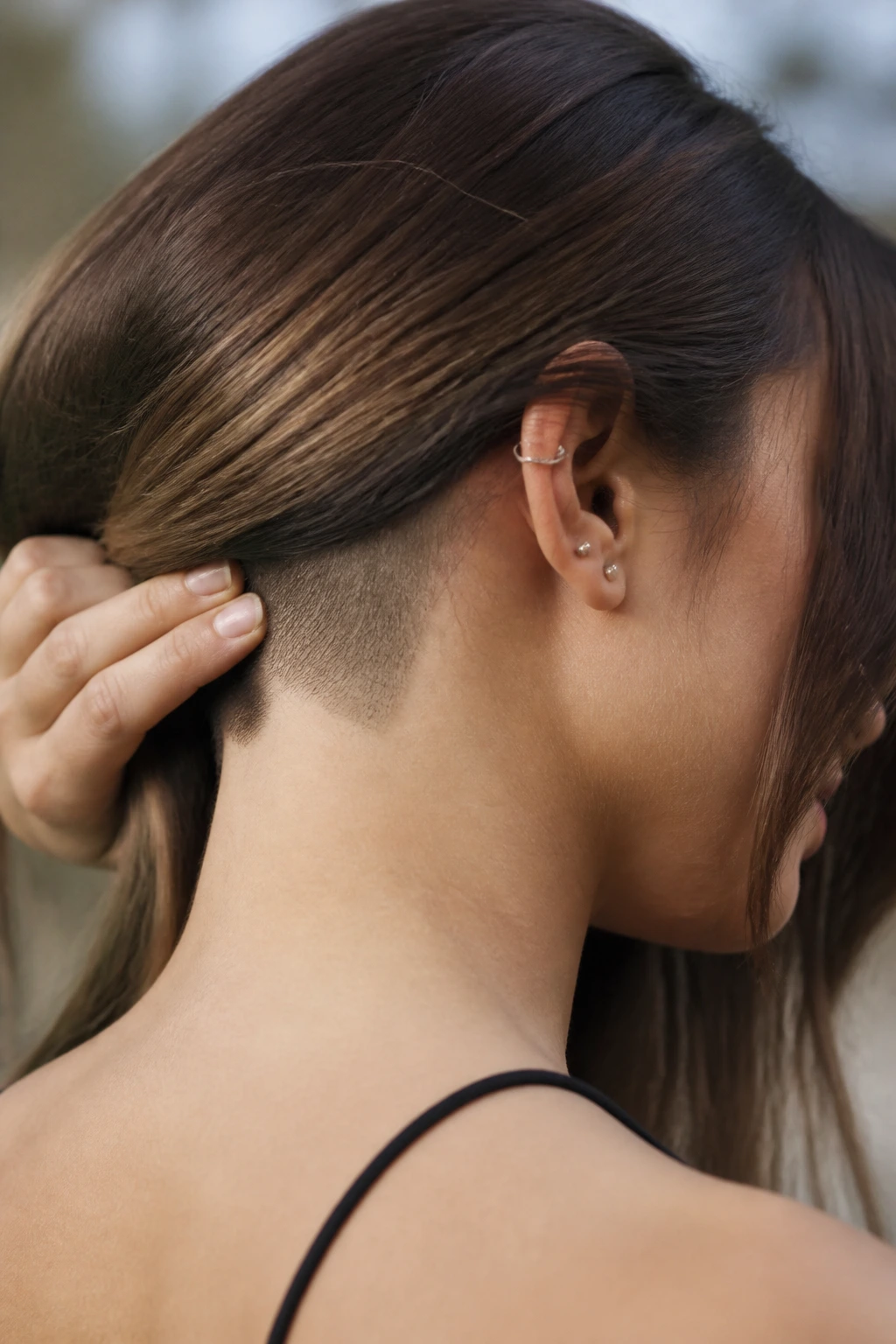
The hidden nape undercut is the one I recommend to people who want the relief without the drama. From the front, it looks like ordinary long hair. From the back, especially when you clip it up, there’s a neat shaved section just above the neckline that takes weight out of the exact spot that tends to collect heat and sweat.
Why It Disappears So Well
The trick is placement. Keep the shave low enough that the top layers cover it when your hair is down, and it stays quiet until you want it to show. Ask for a #1 or #2 guard if you like a crisp feel, or a soft scissor-over-comb blend if you want the line to blur a little.
A hidden nape cut is especially good if you wear jackets, scarves, or headphones all day. The hair stops bunching up under collars, and that alone can make the style feel less fussy.
2. Temple Peek Undercut
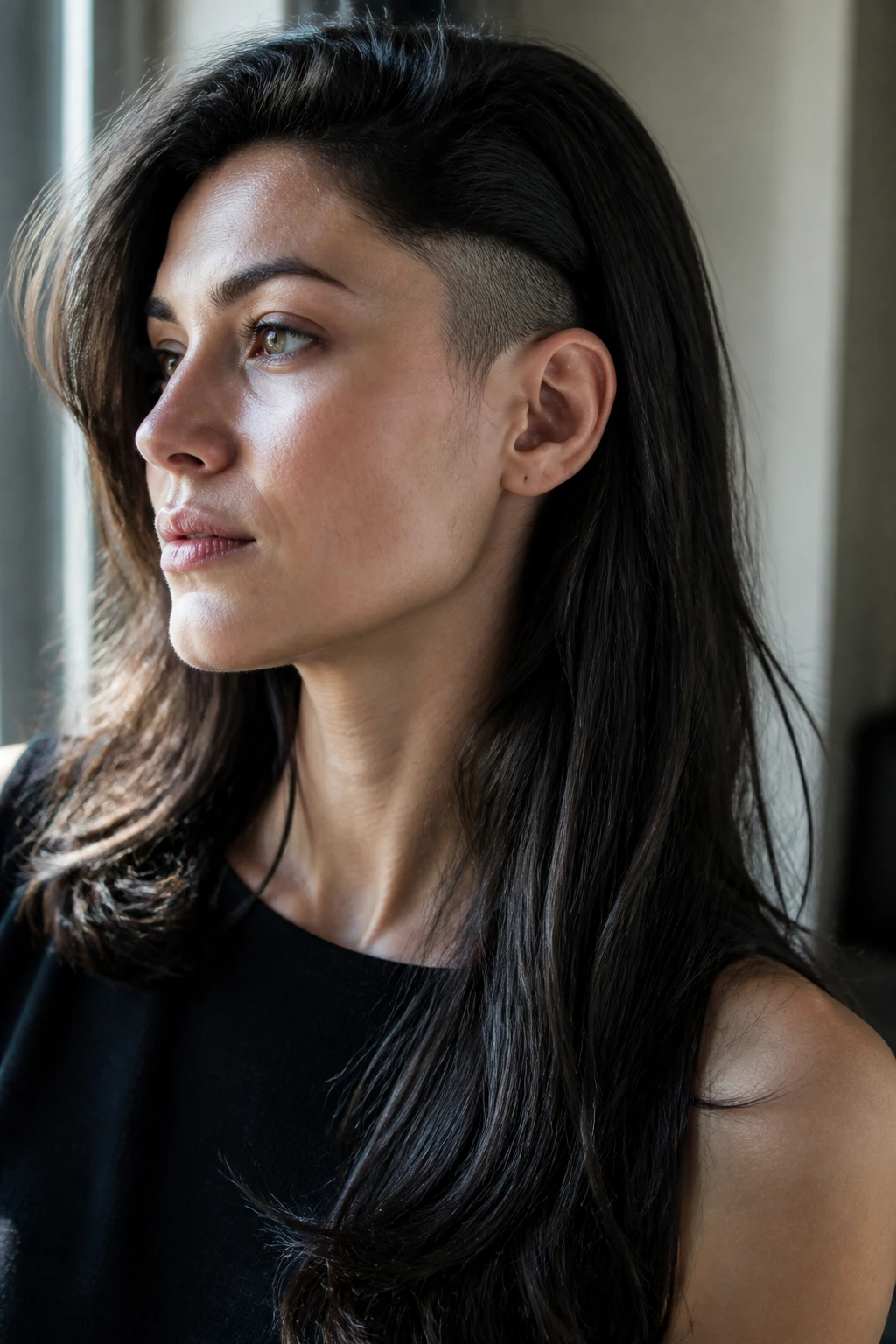
A temple peek undercut gives you a flash of edge right where your hair parts and moves. The shaved area sits near the temple, so you get a clean reveal when you tuck one side behind your ear or brush the front section back. It’s a small placement with a big visual payoff.
This one likes side parts, face-framing layers, and straight to wavy hair that can lie over the shave without fighting it. If you want the look to read softer, keep the temple zone narrow — think a strip, not a whole chunk. If you want more contrast, widen it just enough to catch the eye when your hair shifts.
It’s also a very good “first undercut” option. Not timid. Just smart.
3. Deep Side-Panel Undercut
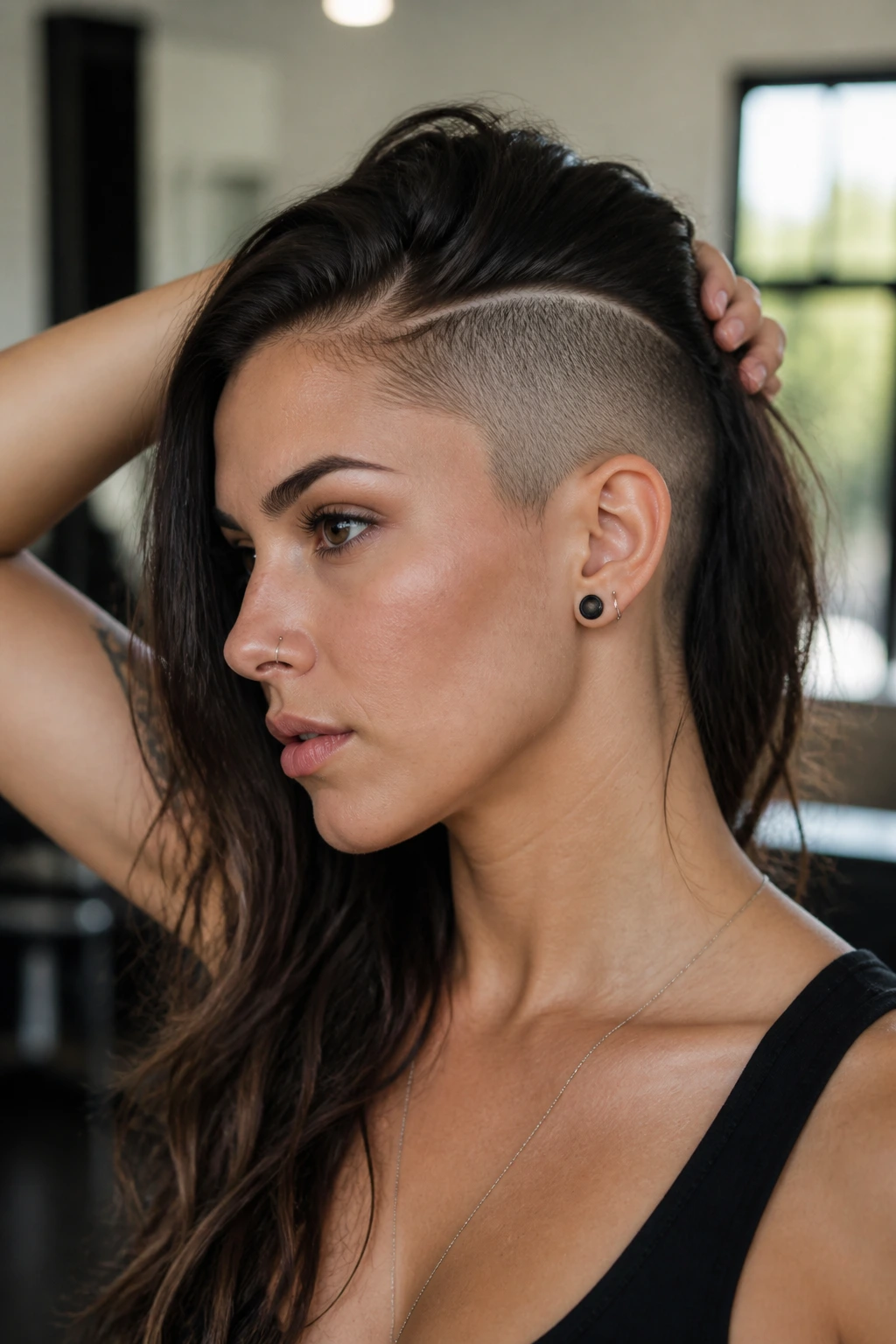
A deep side-panel undercut is for people who want the shape to feel deliberate, not hidden. The shave runs higher and farther back than a temple peek, usually under the outer layer from the front side of the head toward the ear and nape. With the hair down, you still keep length, but the side loses that dense, helmet-like bulk that thick hair can build.
Best Face Shapes and Hair Types
This cut flatters long faces, oval faces, and anyone whose hair sits too heavy on one side. It’s especially good on thick straight hair, which can look flat at the crown and dense at the edge at the same time. The panel takes out the heavy underside so the long top actually swings.
Ask for a clear line if you want a strong silhouette, or a softer transition if you don’t want the undercut to shout from across the room.
4. Disconnected Layer Fall
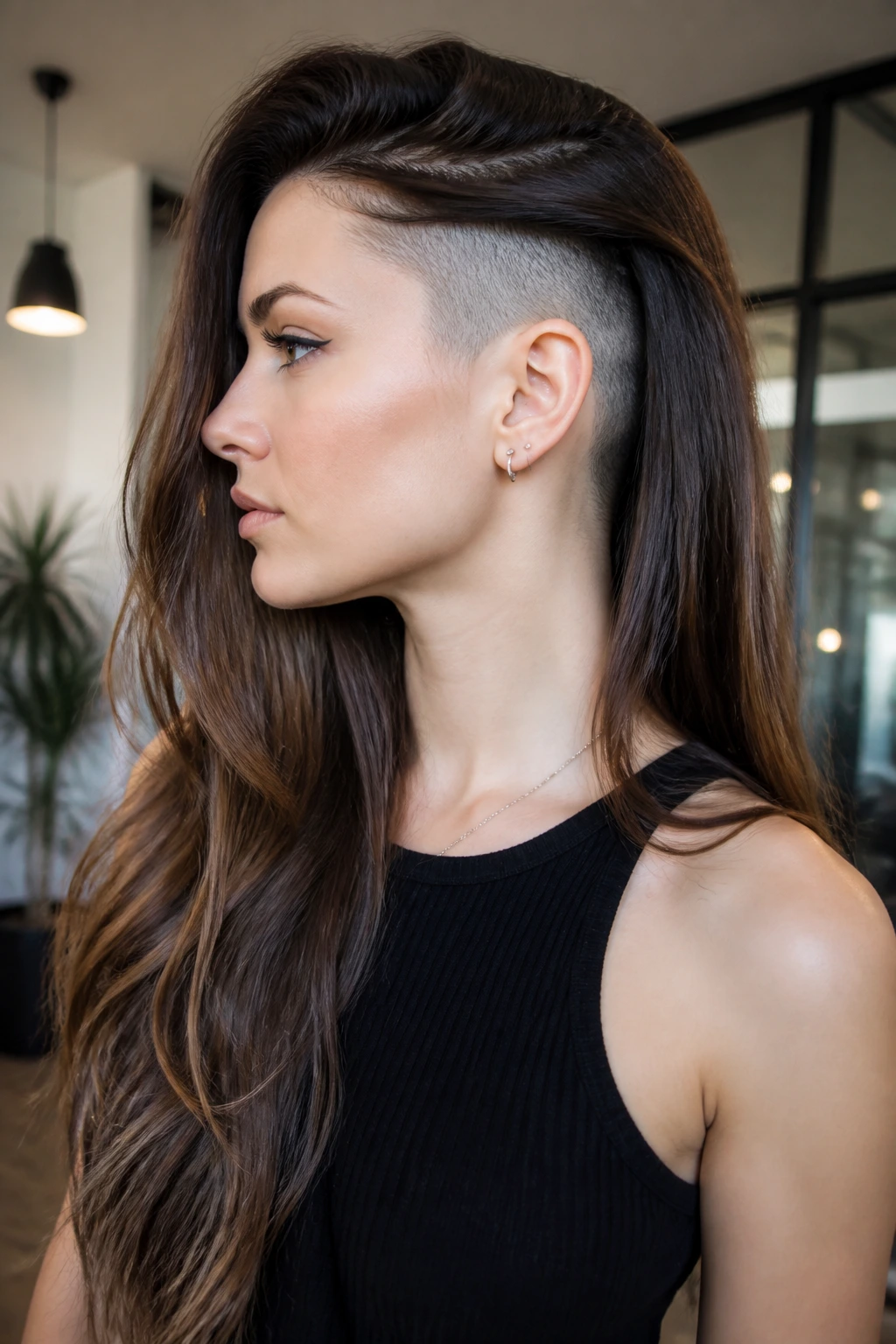
The disconnected layer fall is all about contrast. The long top layers drop over a shorter underlayer with a clear break in length, so the haircut has a sharper profile and a little attitude. It’s the kind of undercut that looks expensive when the line is clean and the lengths are chosen well.
This cut works beautifully on long straight hair and on blown-out waves, where the difference between the top and bottom layers can be seen without the top looking thin. If your stylist takes the undercut too high, though, the whole thing can turn into a shelf. Keep the removed section underneath the visible layer, not halfway up the side of the head.
A blunt finish suits this cut. Feathering everywhere muddies the point.
5. Curly Halo Relief Cut
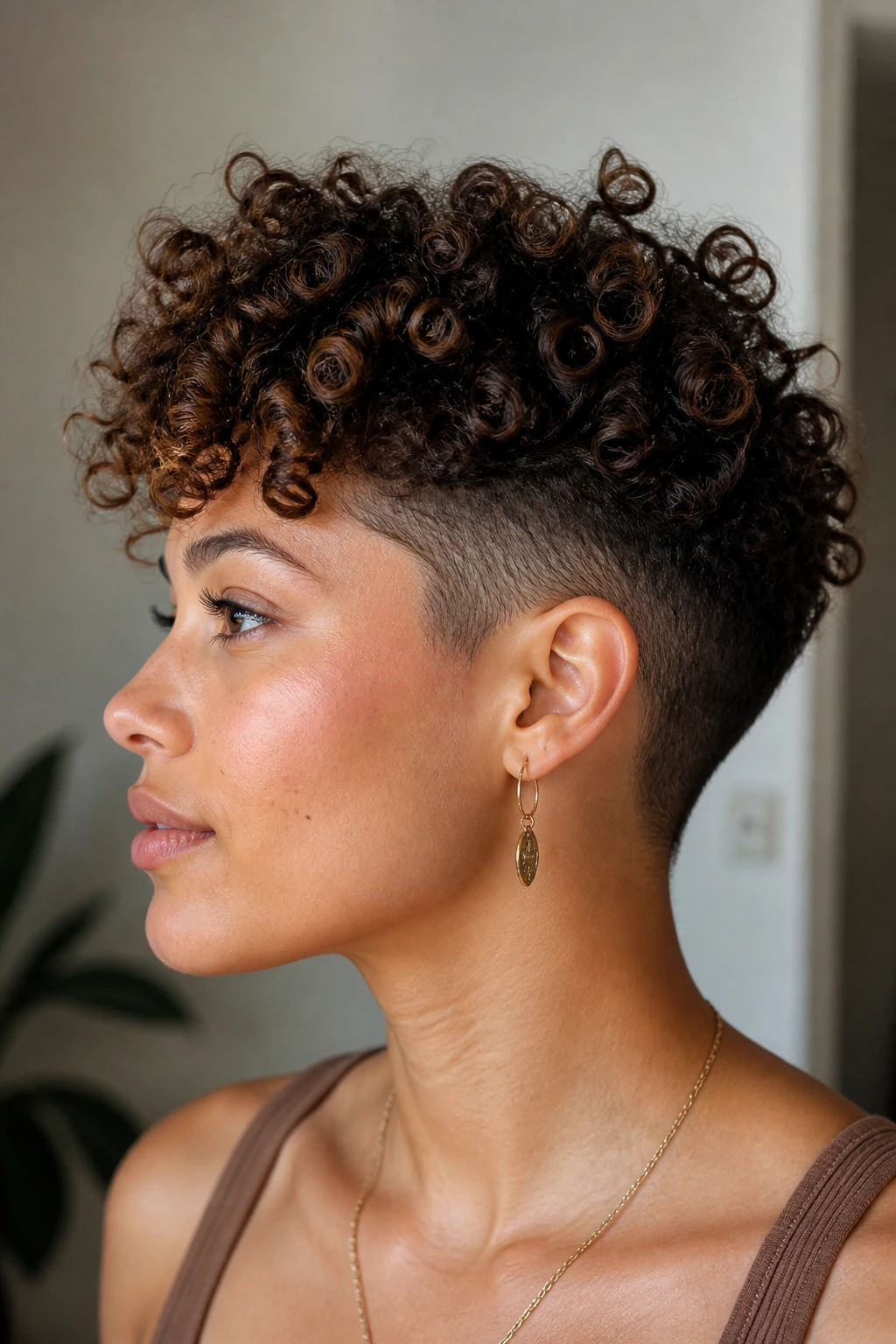
Curly hair and undercuts have a special relationship. The curls want room to spring, but too much bulk at the base turns the shape into a rounded triangle. A curly halo relief cut removes hair under the crown and around the lower sides so the curl pattern can sit up instead of stacking on itself.
The good version of this cut keeps the silhouette rounder and lighter without chopping off the curl length you’ve been growing. It’s especially helpful if your curls puff at the neck or if your ponytail feels too wide at the base. Ask for the undercut lower than you would on straight hair, because curls shrink and expand in a way that can hide more than you expect.
A diffuser helps here. So does patience. Curly undercuts look best when the curl pattern itself gets to do the talking.
6. Faux Hawk Sweep
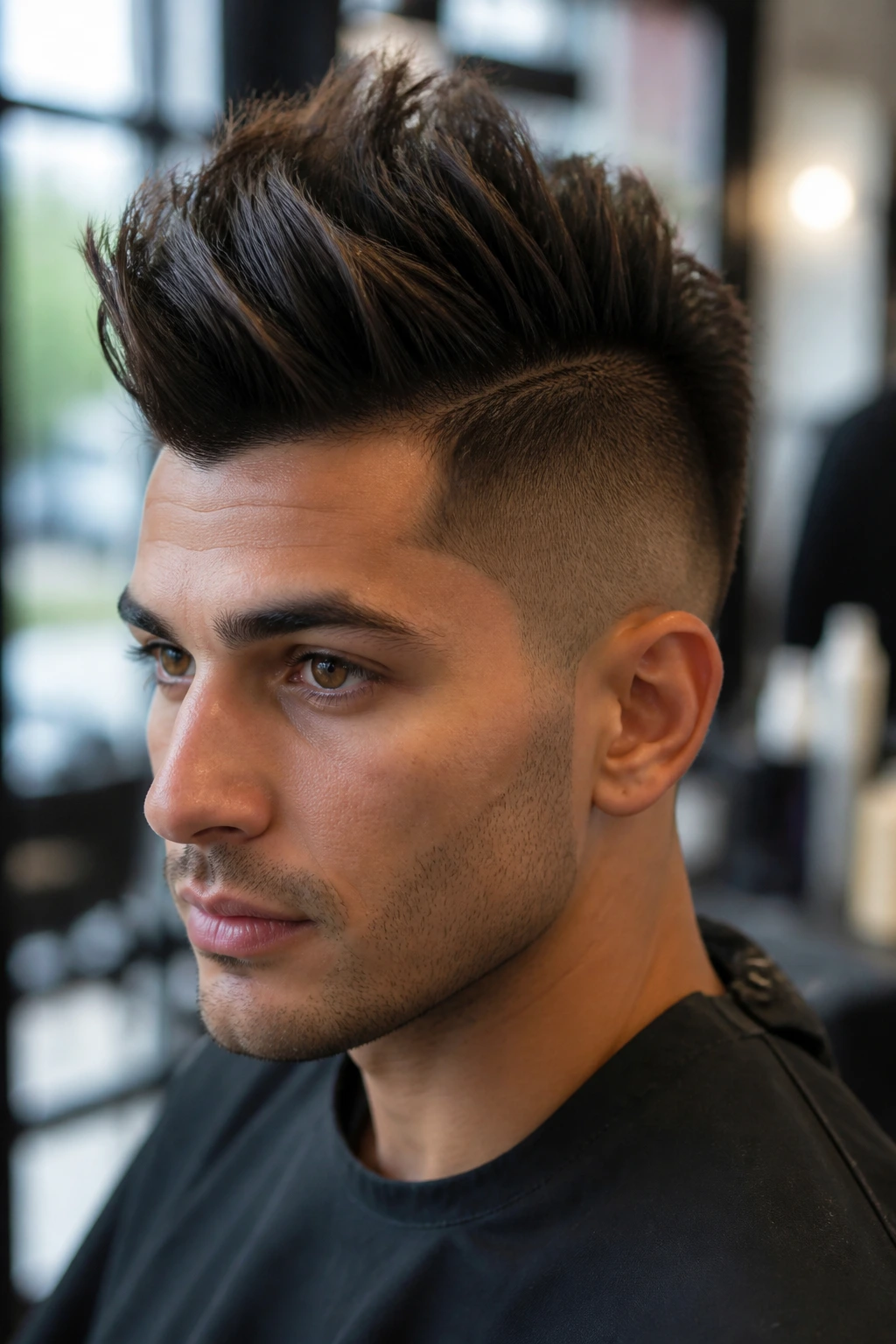
A faux hawk sweep is the loud one in the room. The sides are cut short or shaved down, while the long center strip stays long enough to brush upward, backward, or into a loose ridge. It gives long hair some height and a little bite without forcing you into a full mohawk.
This style reads best when the top has texture. A touch of matte paste or a light cream through the roots is usually enough; you do not want the top looking stiff or crunchy. The beauty of the cut is that it can be styled tame for work and then pushed up later with one hand and a blow dryer.
If your hair is very fine, keep the strip a bit narrower. Too wide, and the shape loses its point.
7. Ponytail Reveal Undercut
This one is clever. Down, it looks like normal long hair. Pull it into a ponytail or bun, and the undercut suddenly appears at the nape or lower side where the hair has been lifted away. That reveal is the whole point, and it’s why this cut appeals to people who want a hidden edge more than an all-day statement.
It’s also one of the easiest undercuts to live with. The long hair still does all the soft, feminine, or polished work you want from the front, while the shaved section quietly removes bulk at the base. If you exercise, wear your hair up often, or get sick of the weight on your neck, this cut earns its keep fast.
The only real rule: keep the undercut low enough to stay hidden when the ponytail comes down.
8. Braided Crown Undercut
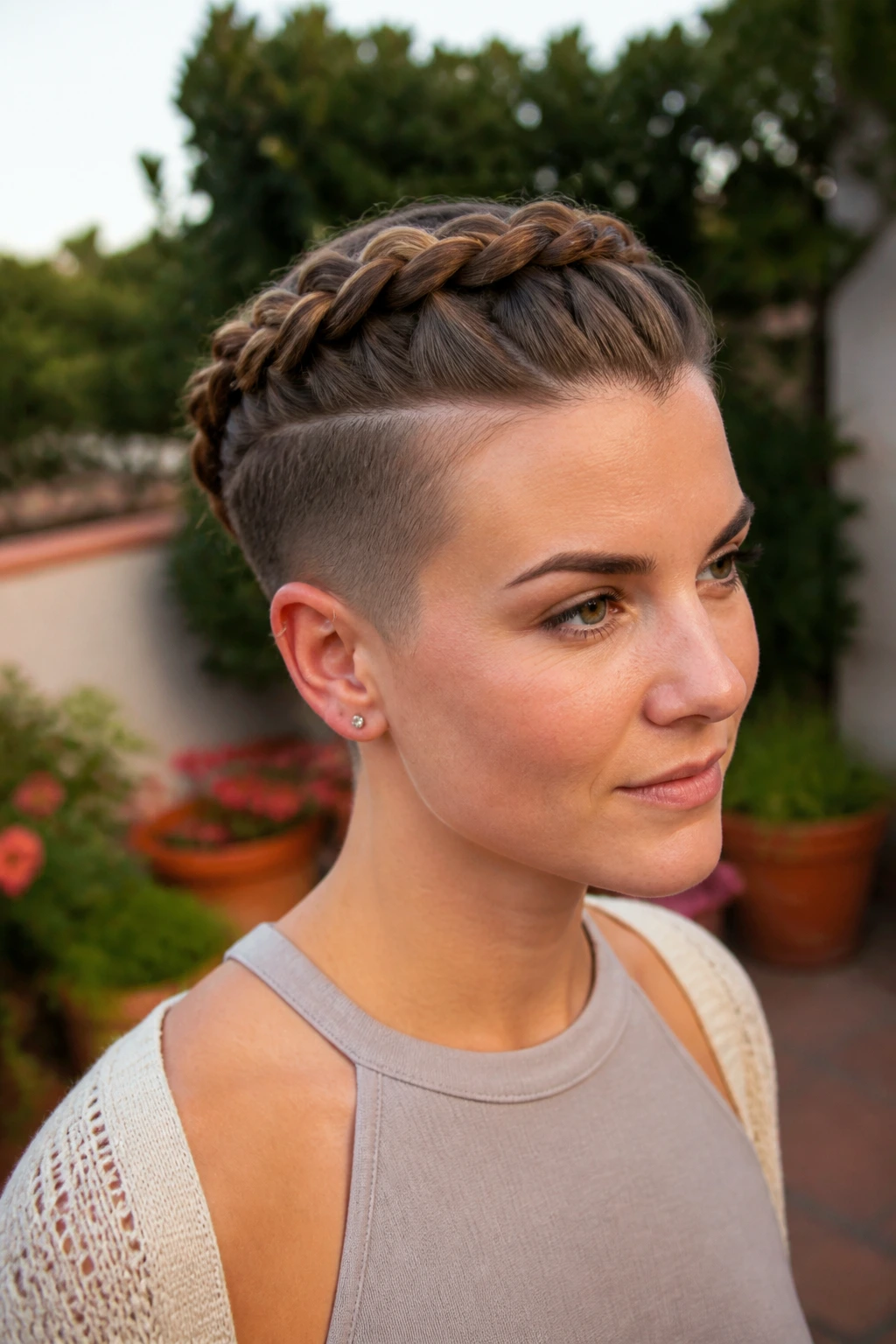
Braids lie differently when there’s less hair packed underneath them. A braided crown undercut clears the lower side or nape so the braid sits flatter, tighter, and less bulky across the head. That makes the braid look neater and can save you from the thick, lumpy base that long hair sometimes creates.
How It Helps the Braid Sit Better
The undercut does not change the braid itself. It changes what the braid rests on. That matters. A French braid or crown braid can look twice as polished when the shaved area removes the fluff underneath.
This style is smart for very thick hair, but it also helps long hair that’s fine at the ends and heavy at the roots. The braid gets a cleaner line, and the scalp does not feel crowded under the weave.
9. V-Notch Nape Undercut
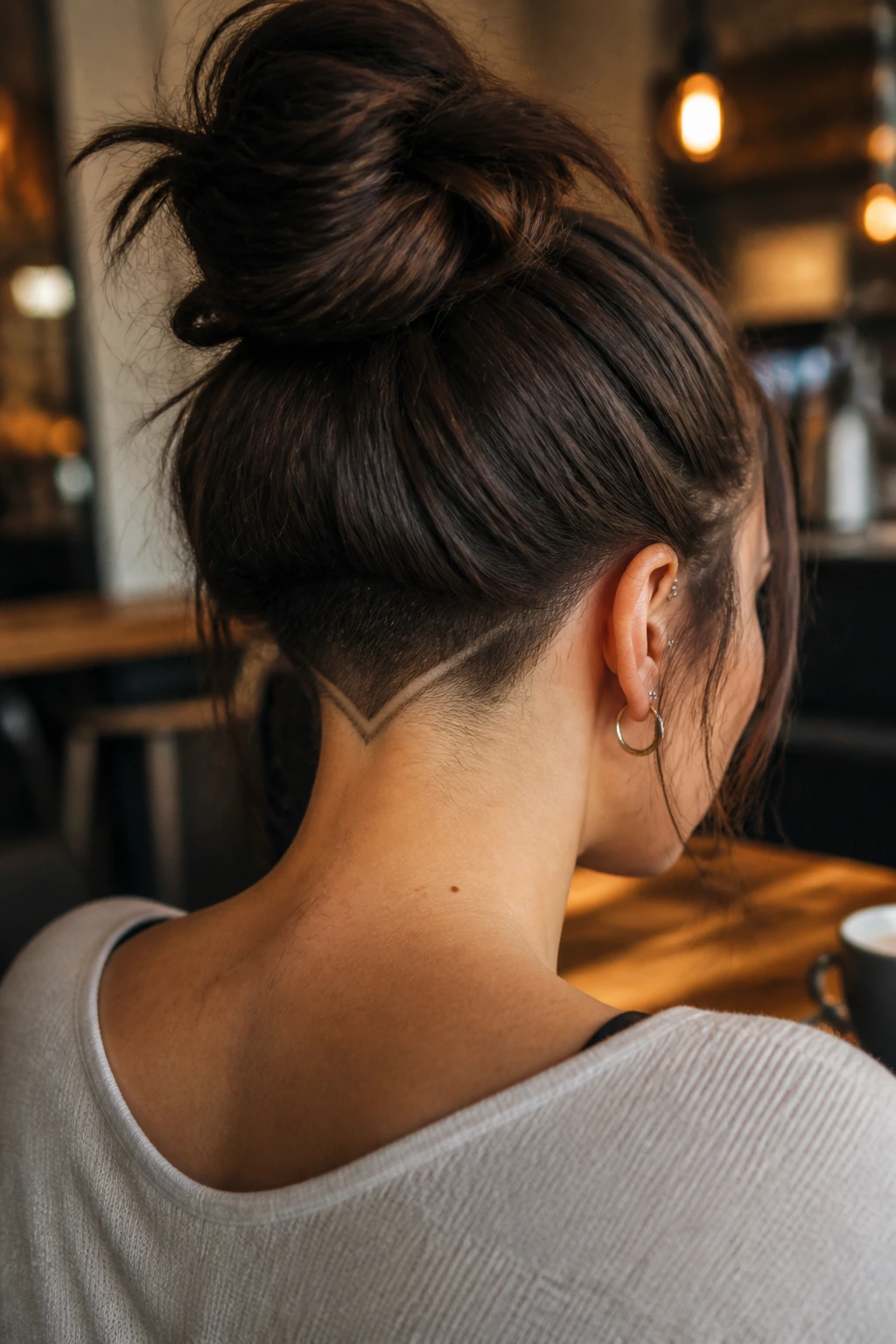
The V-notch nape undercut is one of those details people only notice when your hair is tied up, and then they can’t stop looking. The shave forms a pointed V at the neckline instead of a straight block, which gives low ponytails and buns a cleaner, more finished outline.
It’s a neat choice if you like the back of your haircut to have shape. The point can sit above the collar, so it doesn’t disappear into clothing the way a straight nape line sometimes does. Ask your stylist to keep the V shallow if you want subtlety; go deeper if you want the shape to read more clearly in a low bun.
A little edge. Not a lot. That’s the charm.
10. Half-Side Shave Statement
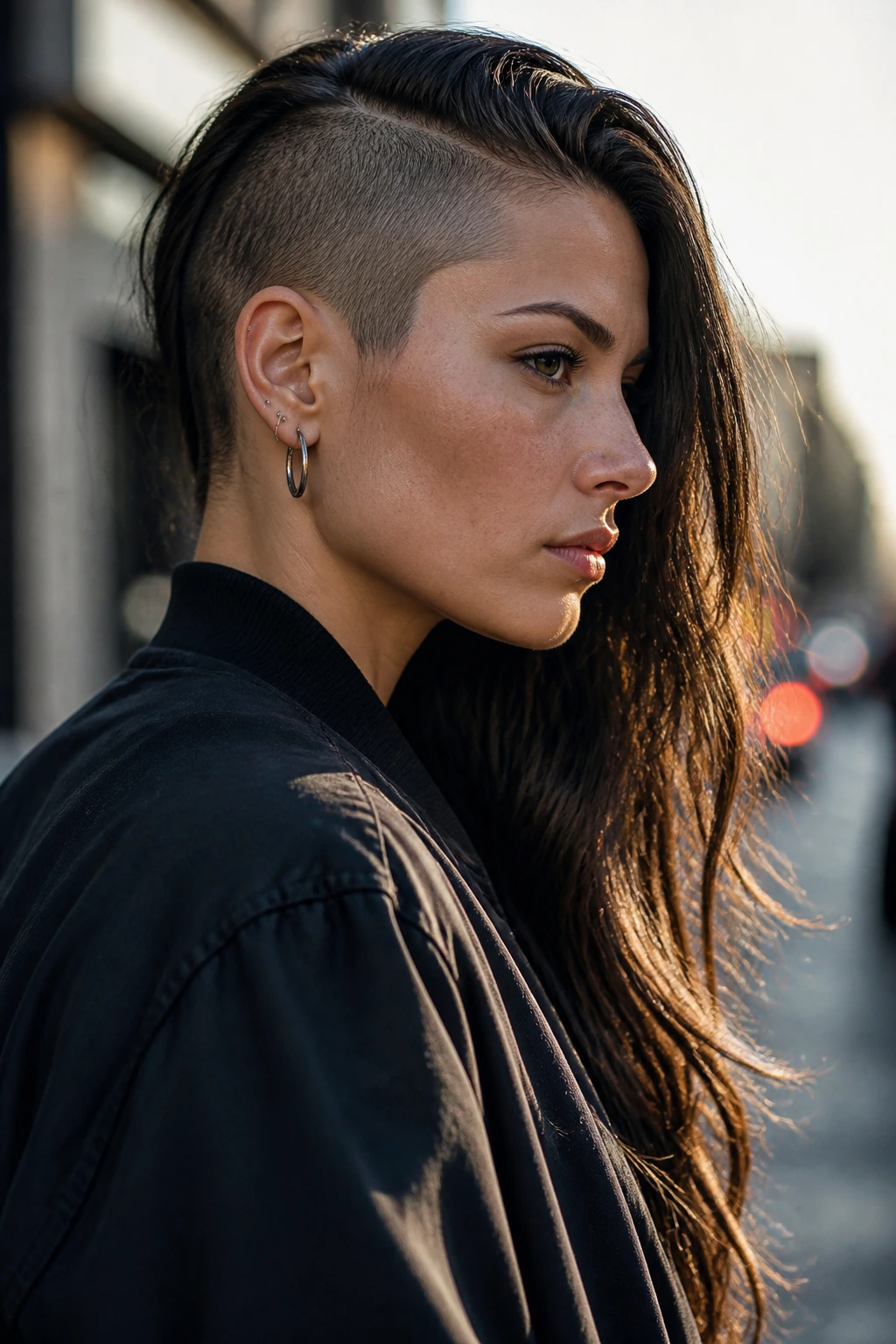
A half-side shave statement is exactly what it sounds like: one side goes short, the other stays long. The contrast is the whole haircut. When your hair swings over, the long side creates softness; when it moves back, the shaved side shows up and changes the mood immediately.
This cut works best if you want your hair to do two jobs at once. It can look polished from one angle and sharp from another, which is more versatile than people assume. If you wear side-swept bangs or a deep side part, the cut has even more personality.
Who Should Try It
- People who like asymmetry and do not mind being noticed.
- Thick-haired clients who want real weight removed, not just texturizing.
- Anyone who changes between loose hair and tied-up styles often.
11. Twin Side Panels
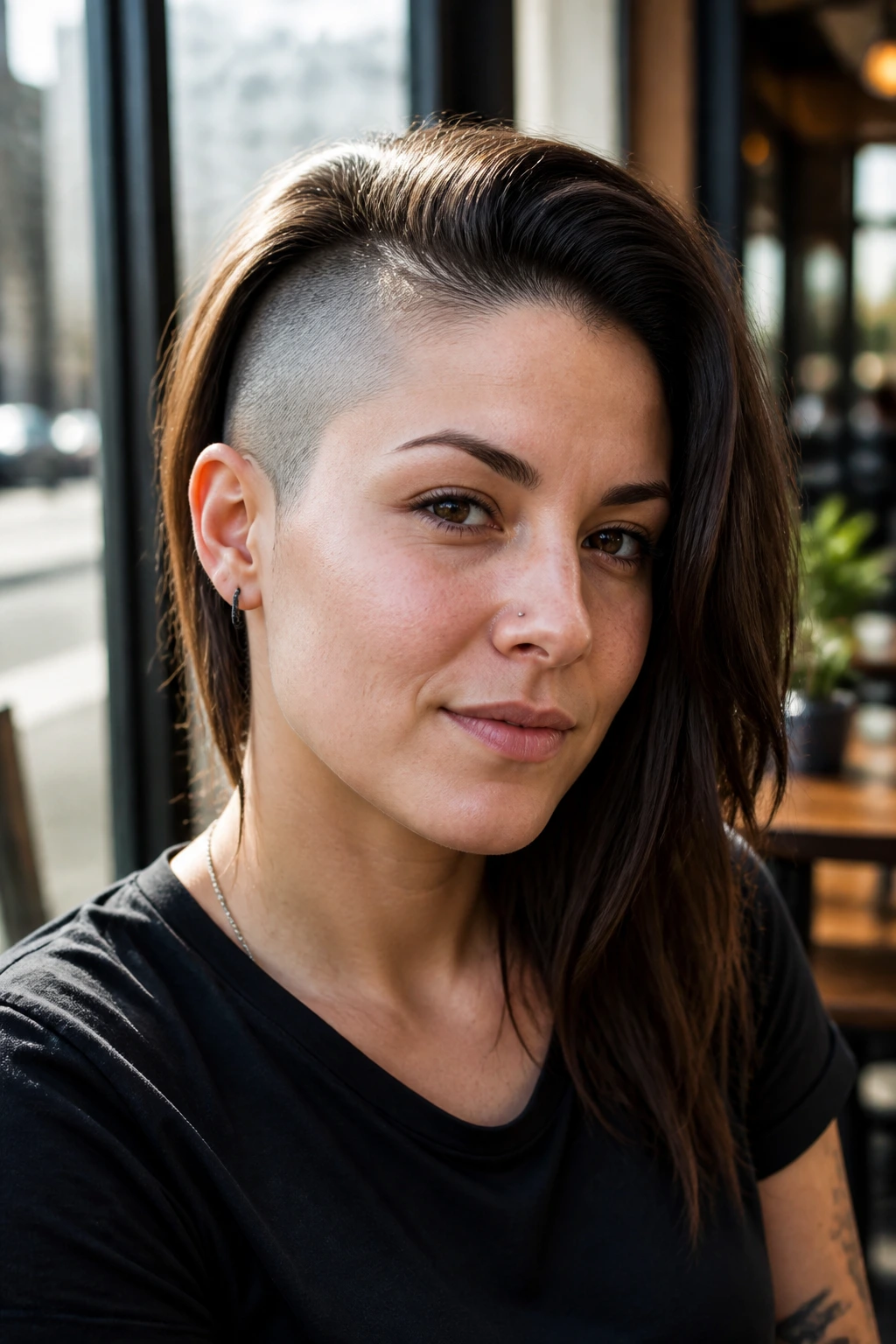
Twin side panels remove bulk on both sides without turning the haircut into a full side shave. From the outside, the hair still looks long and balanced. Underneath, though, the sides are cleaner, cooler, and easier to tuck behind the ears.
This is a practical cut for thick hair that swells at the temples or feels too heavy around the face. It also makes long hair sit better under hats and headphones. Because both sides are treated the same, the look stays symmetrical, which helps if you want edge without obvious asymmetry.
The grow-out is easier than a one-sided statement shave. That matters more than people think.
12. Wolf Cut Under-Shave

The wolf cut already likes movement, rough texture, and a little mess. Add an under-shave, and you remove the puffy base that can make the style look too wide. The result is a shaggy long shape with more lift and less helmet.
This works especially well on wavy and curly hair that tends to spread outward instead of falling down. The undercut lets the layers stack in a looser, more chaotic way, which is the whole point of a wolf cut anyway. Keep the top layers feathered, not overblended, or the haircut loses its bite.
It’s a good reminder that an undercut does not always mean sleek. Sometimes it means messy in the right place.
13. Center-Part Curtain Undercut
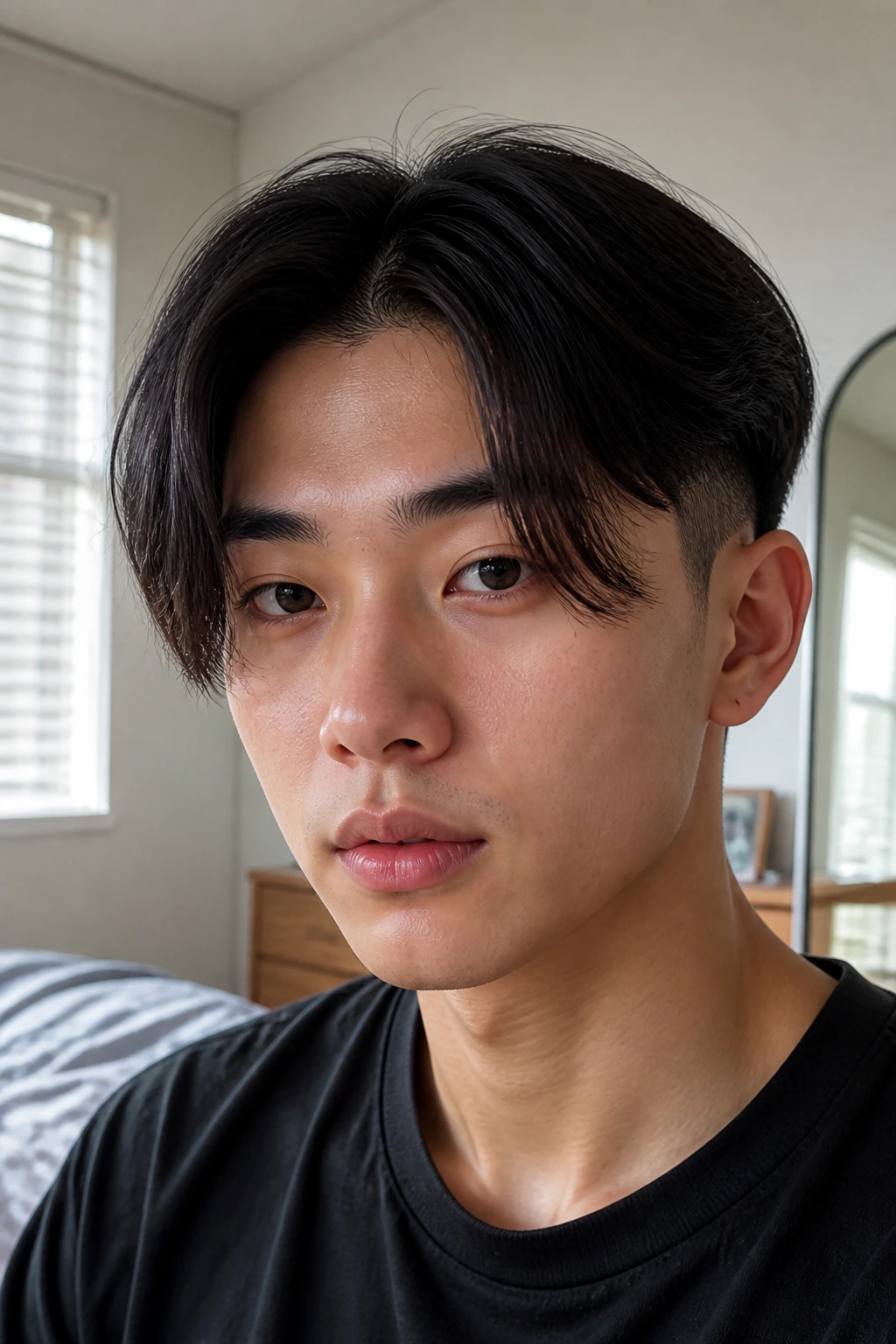
A center-part curtain undercut gives you a soft front with a hidden cleanout underneath. The hair falls on both sides of the face, but the lower section is shaved or closely clipped so the whole cut sits lighter. When the curtain pieces move, the undercut doesn’t show much — unless you hook the hair back or lift the top.
Why It Feels So Easy to Wear
The center part keeps the look calm. The undercut keeps the bulk down. That combination is why this one works for people who want long hair that doesn’t feel like a hair tent around the neck.
It’s especially handy on straight hair that can go flat at the roots. A little root lift and a light bend through the face-framing pieces are enough. You do not need a ton of product. Just enough to keep the front from collapsing.
14. Long Fringe Shadow Undercut
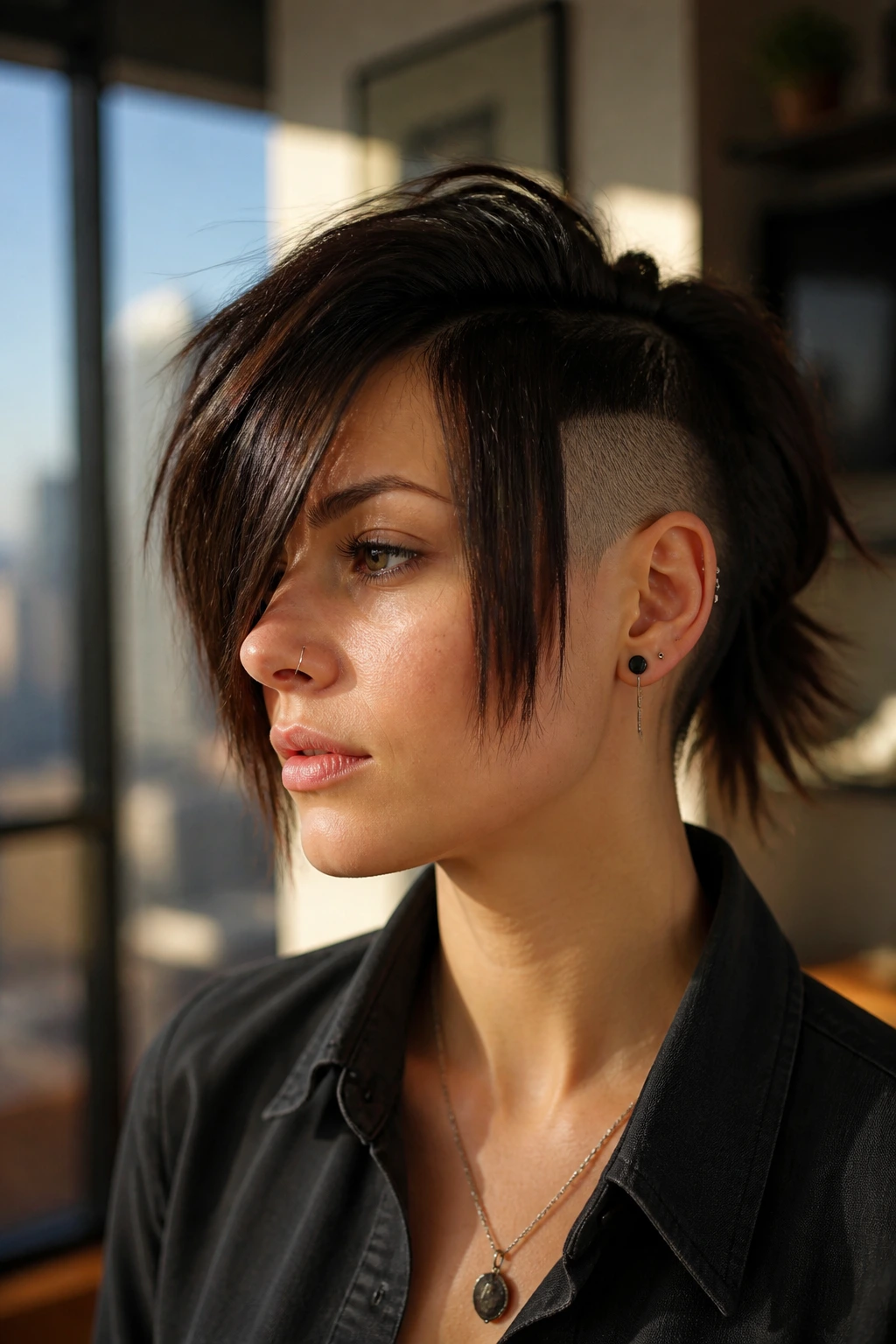
A long fringe shadow undercut is built around contrast you can hide. The fringe drops forward and covers the temples, while the undercut sits under it like a shadow line. From a distance, the haircut reads soft and layered; up close, you see the sharper shape underneath.
This is a useful pick if you want an undercut but still like the feeling of hair around your face. Long fringe softens the look, which makes the shave feel less severe. If your hairline is a little uneven or your temples are strong, the fringe balances that out nicely.
The cut needs a fringe that actually hits your cheekbones or jaw. Too short, and the illusion disappears.
15. Asymmetrical Curtain Fall
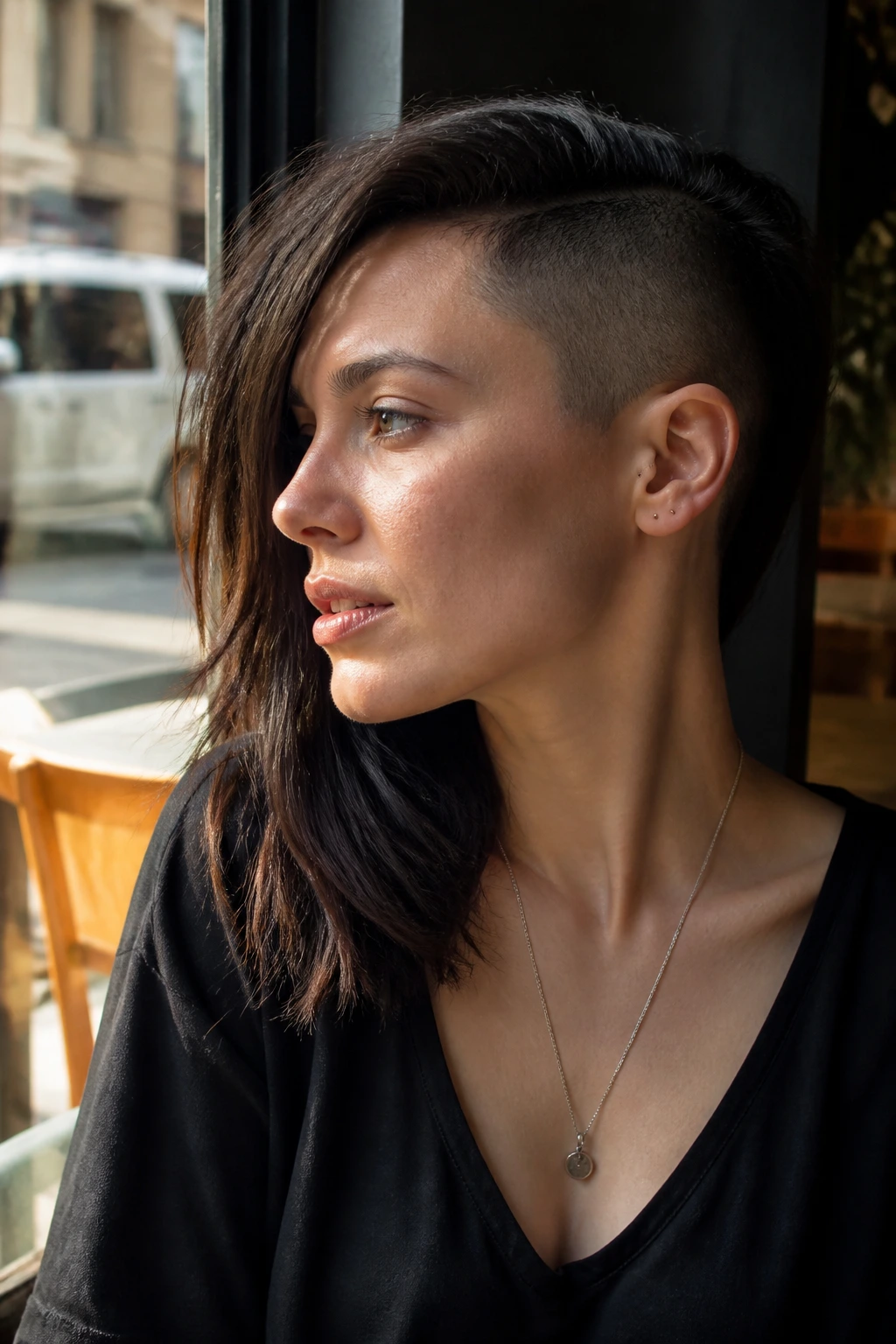
Asymmetrical curtain fall is the undercut for people who like one side to lead and the other to follow. The hair is kept longer on one side, with a shorter undercut lurking underneath the opposite side. The silhouette tilts, and that tilt gives the style a very specific kind of motion when you turn your head.
It’s a smart way to wear long hair without looking static. The asymmetry can be subtle or dramatic depending on how far you push the length difference. A side part makes it even better, but a center part can work if you keep the longer side very full.
No need to overstyle it. The haircut already does the work.
16. Crescent Ear-Curve Undercut
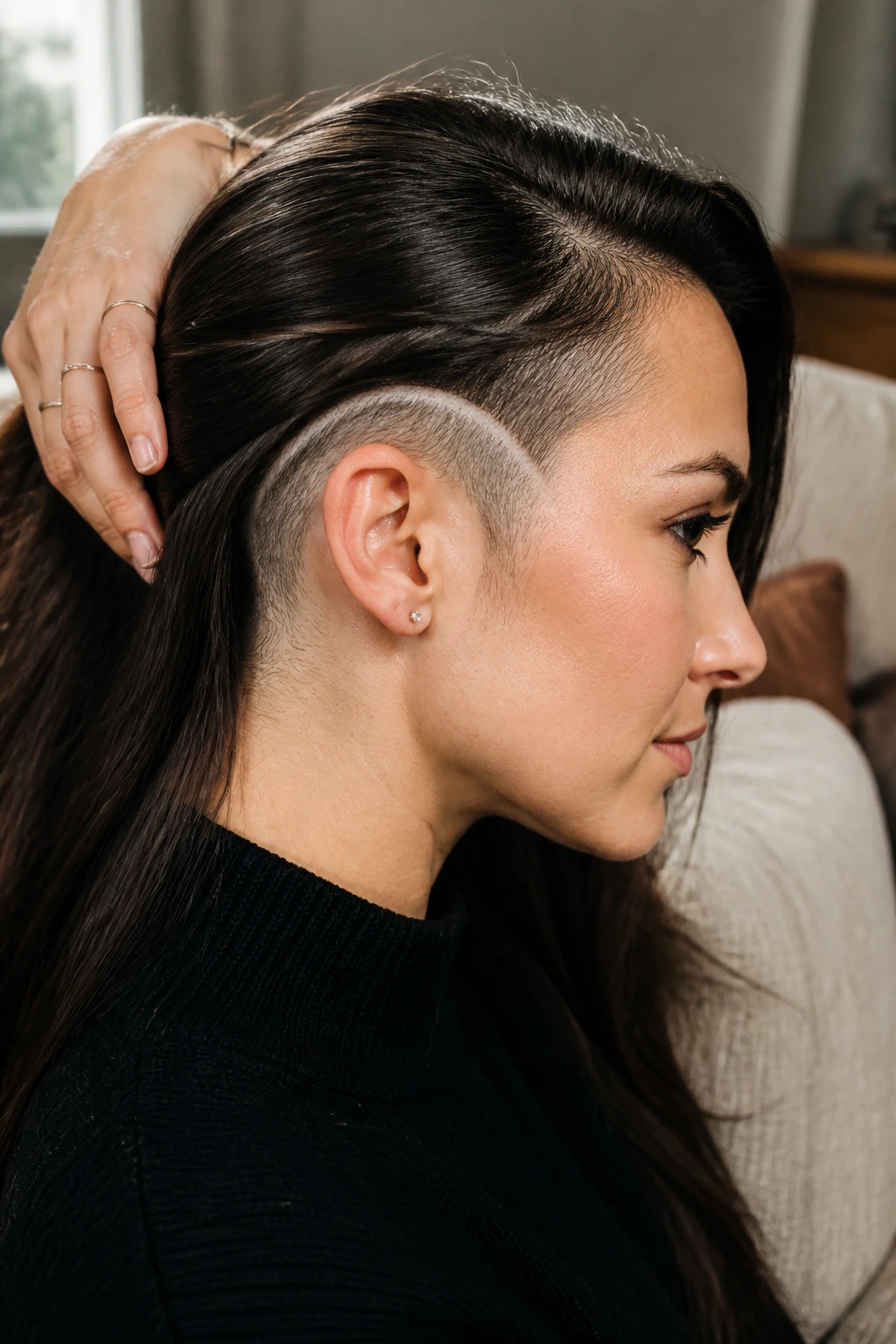
The crescent ear-curve undercut traces a soft arc around the ear instead of cutting a blunt panel. That curved line feels cleaner and less harsh than a rectangular shave, especially if you wear glasses or tuck your hair behind your ears often. It’s one of the better choices when you want a visible undercut that still looks neat in everyday life.
This style suits people whose hair tends to puff at the side of the head. Removing a crescent of bulk there changes how the hair falls around the cheek and jaw. The shape is gentle, but the effect is not.
Ask for the curve to follow your ear line rather than fighting it. That one detail makes the cut look intentional.
17. Low Fade Long Length
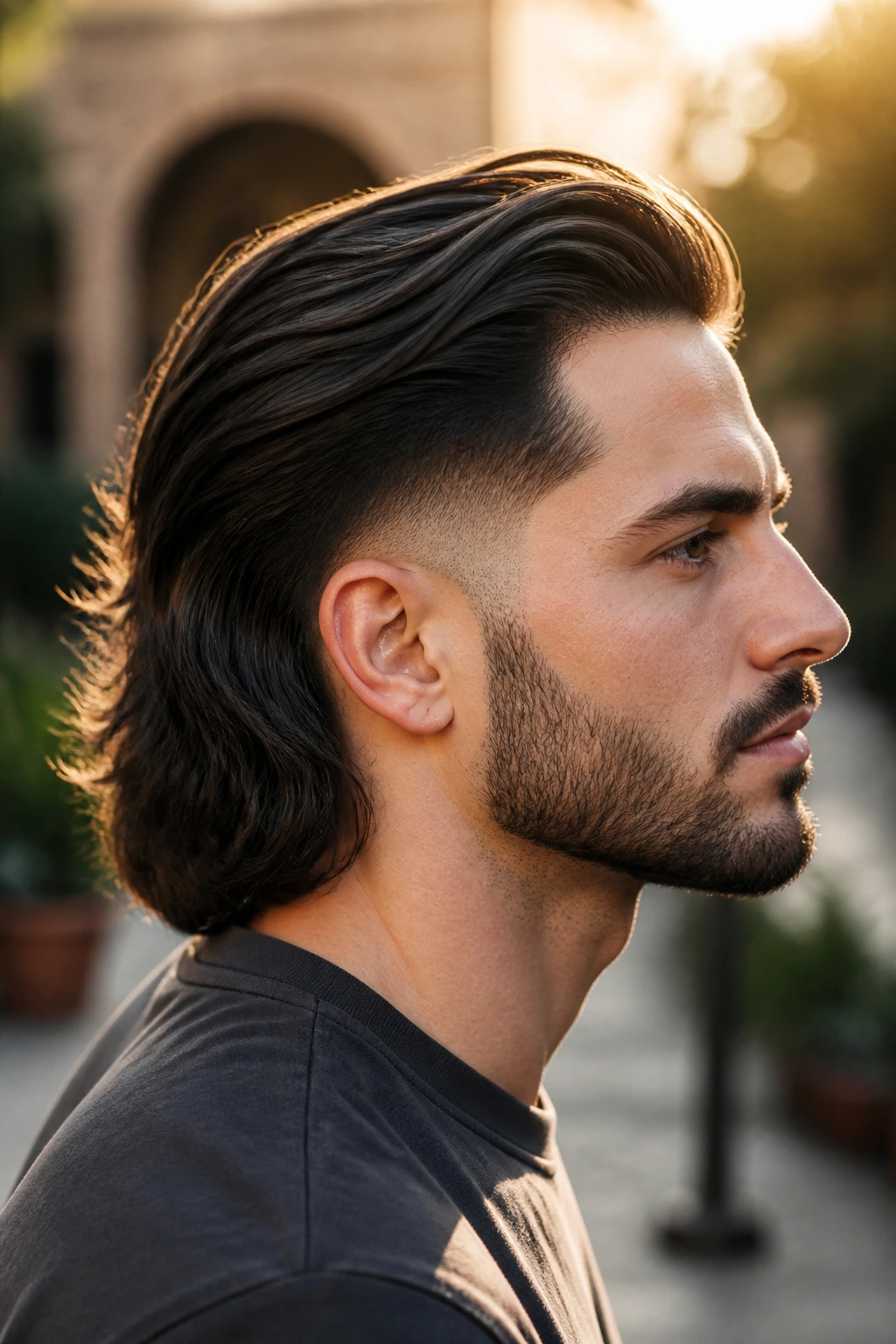
A low fade under long hair softens the edge between shaved and unshaved sections. Instead of a hard jump, the hair melts from very short to longer, which keeps the cut looking blended even as it grows. It’s a good option if you like some undercut energy but don’t want a sharp shelf.
Why a Low Fade Ages Better
A low fade gives you a longer runway between salon visits. The line doesn’t go from crisp to awkward as fast as a full, blunt panel does. For people who are busy or inconsistent about touch-ups, that matters.
It also pairs well with long waves and layered cuts because the transition is gentler. If you tend to wear your hair down most days, this is one of the least demanding undercut styles for long hair.
18. Internal Weight-Removal Cut
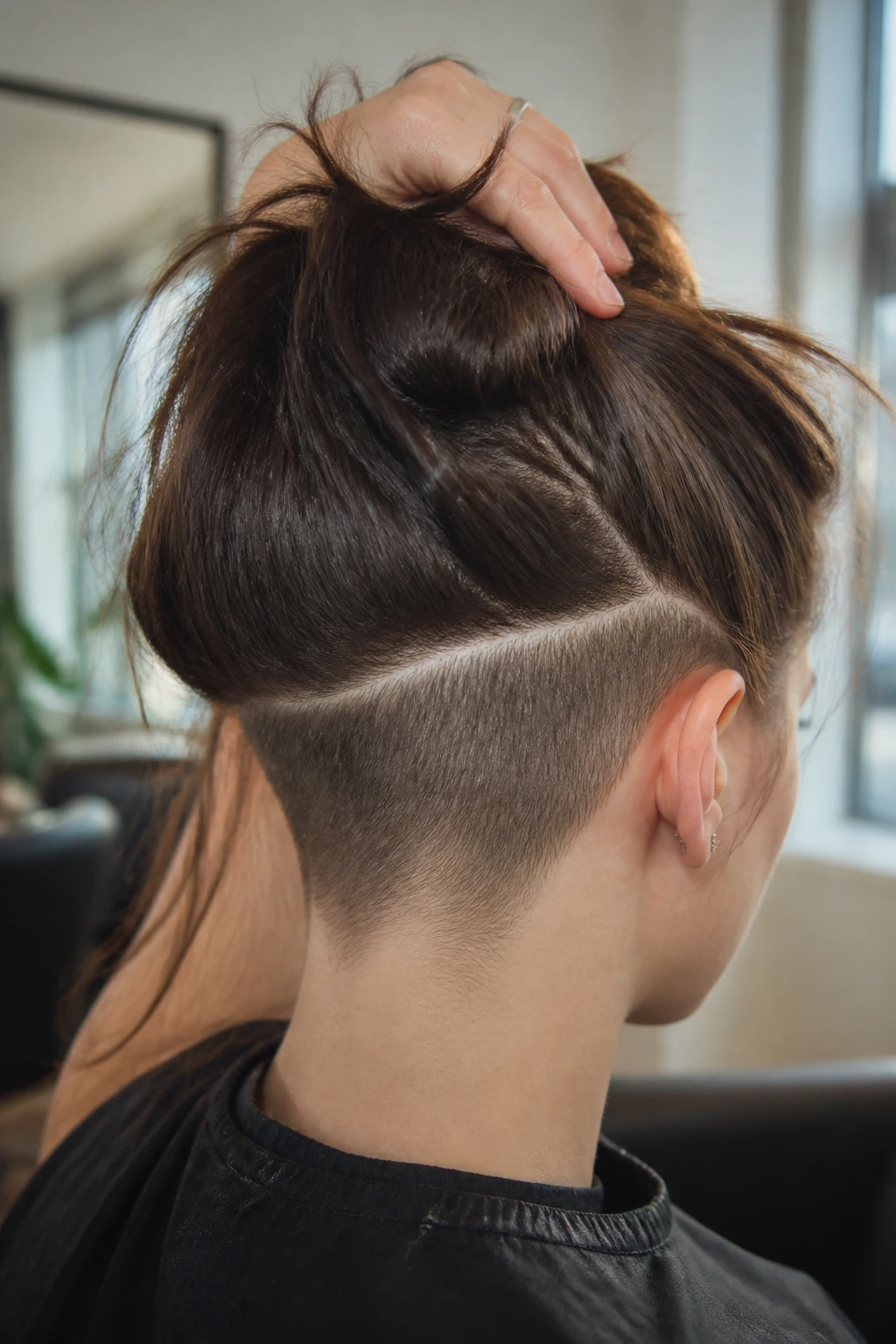
This is the cut for people who say, “I want less hair, but I do not want it to look shaved.” The internal weight-removal cut removes bulk from underneath the top layers, usually around the nape and lower sides, while leaving the outside shape looking almost untouched. It’s the hidden mechanics of the haircut doing the heavy lifting.
The payoff shows up when you move. Hair dries faster, buns feel lighter, and thick lengths stop pushing outward at the base. If your hair has a lot of density but not much obvious wave, this can be more useful than a flashy side shave.
It’s subtle. Also underrated.
19. Thick-Hair Crown Relief
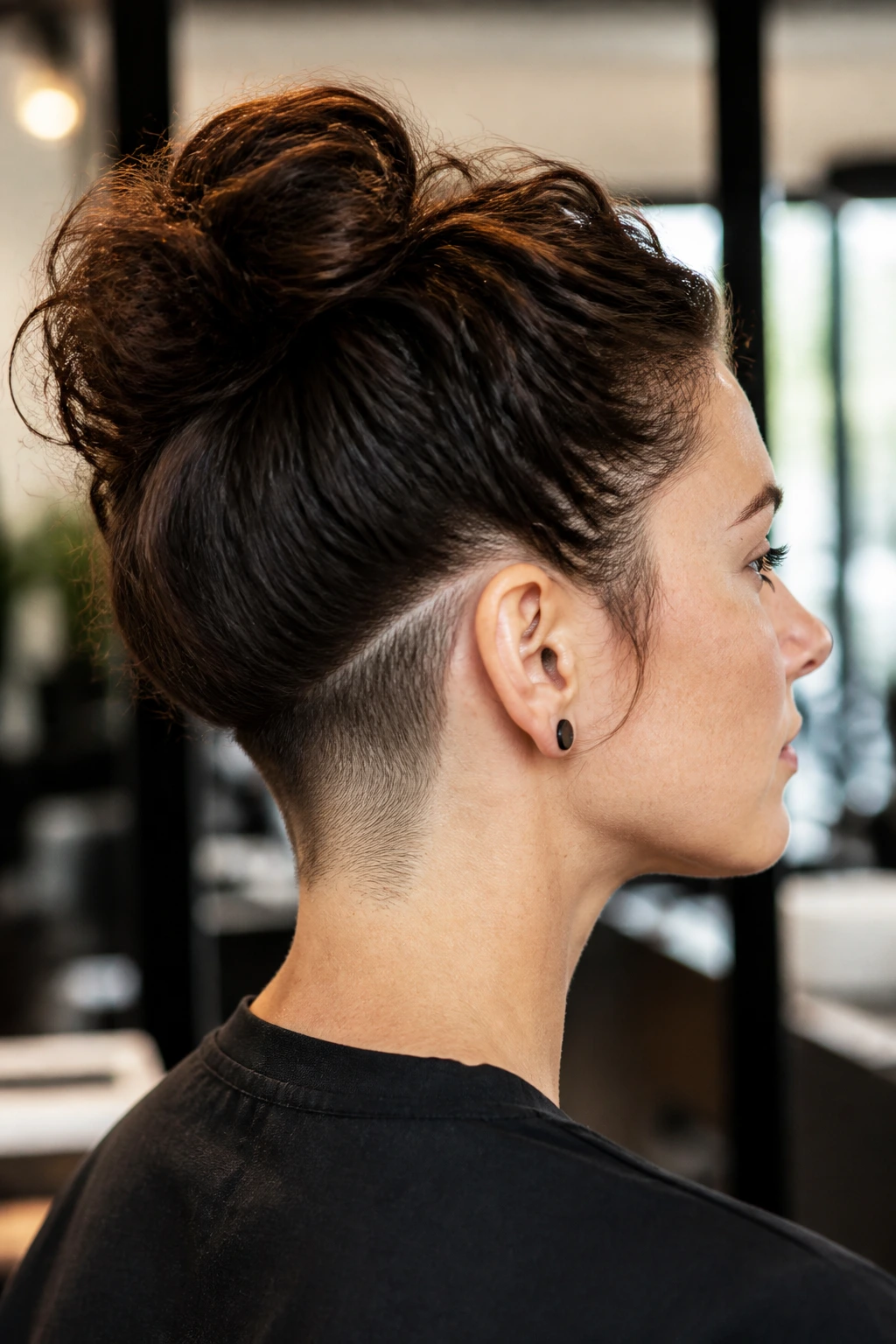
When hair is very dense, the problem is often the crown and upper back of the head, not just the neck. A thick-hair crown relief undercut removes some of that upper bulk so the hairstyle drops with a cleaner line instead of sitting like a padded cap. The difference can be dramatic in long straight hair that refuses to lie down.
This cut needs a careful hand. Go too high, and you lose the shape you wanted to keep. Stay too low, and the bulk remains exactly where it bothers you most. The right placement depends on where your hair starts to swell when it dries.
A stylist who knows how your hair grows will make or break this one.
20. Peekaboo Color Undercut
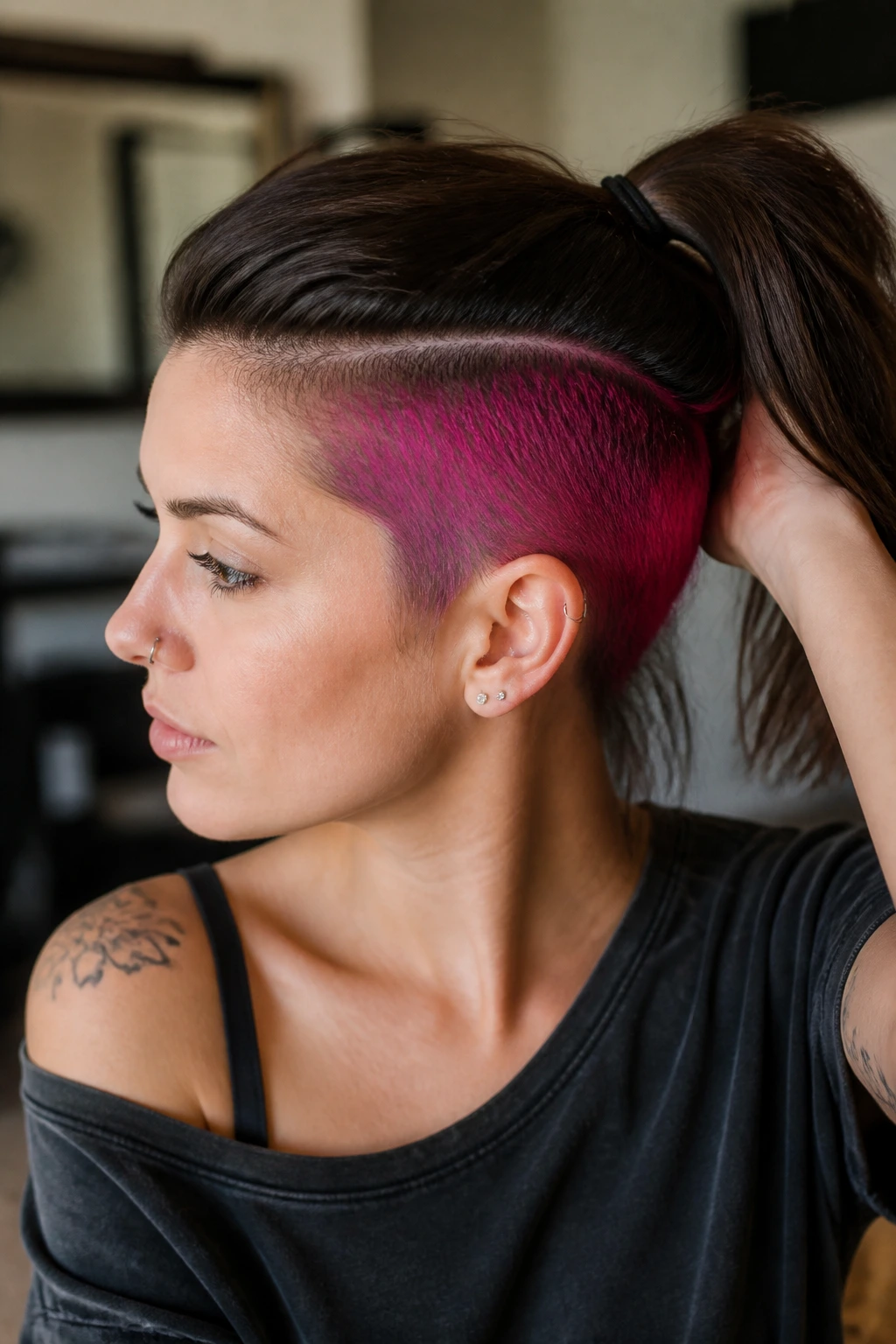
A peekaboo color undercut pairs shaved hair with a hidden bright shade — copper, plum, teal, silver, whatever suits your life. The shaved zone becomes a color reveal, and the long top hides or flashes it depending on how you wear your hair. It’s one of the easiest ways to make an undercut feel personal.
This cut is fun because it changes over the day. Down, it can be discreet. In a ponytail or half-up knot, the color suddenly shows through and changes the whole read of the haircut. If you want the color to stay sharp, keep the undercut clean and refreshed before the regrowth gets fuzzy.
A dark base with a lighter underlayer is a classic move for a reason. It works.
21. Scalp-Art Frame Cut
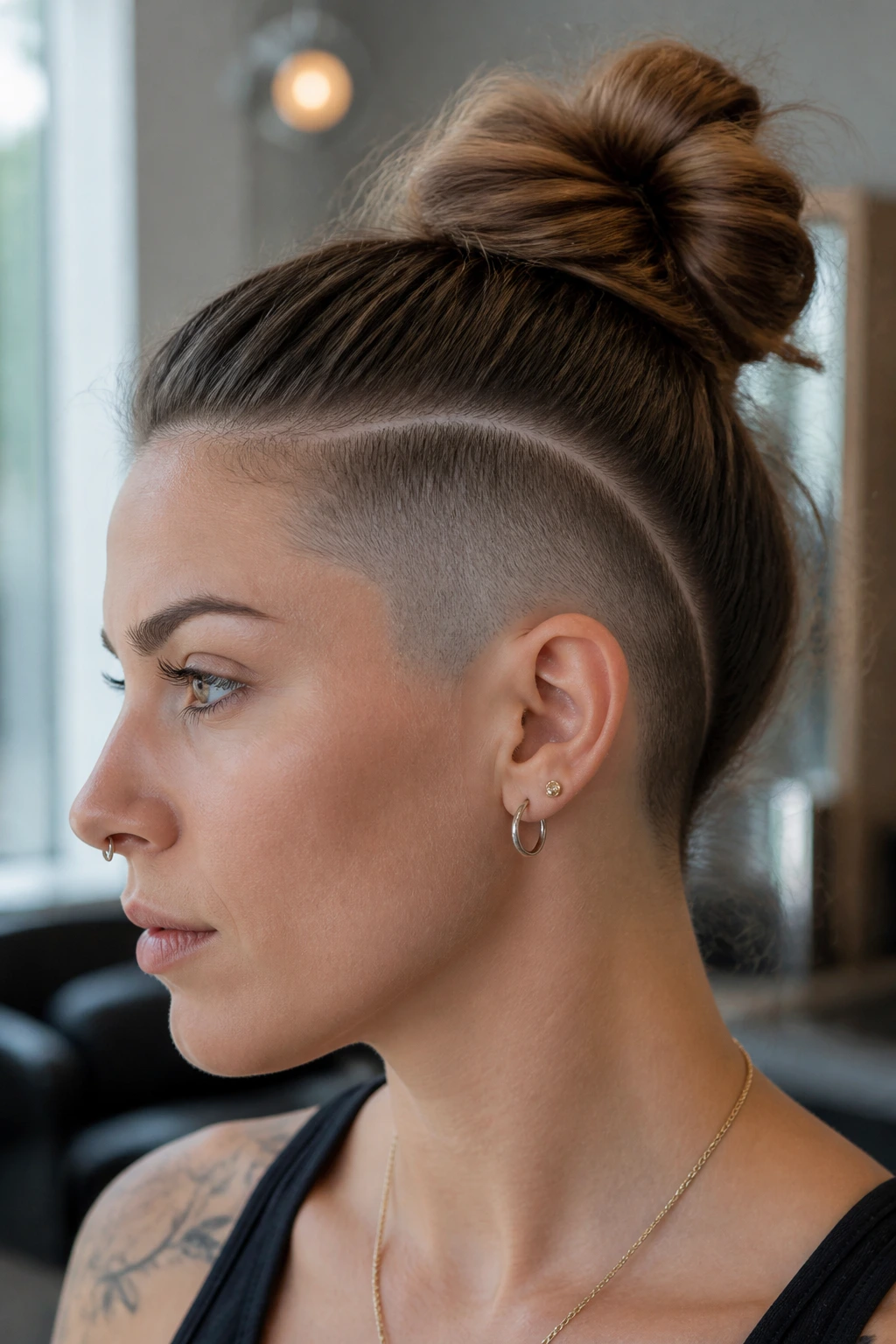
A scalp-art frame cut uses the undercut zone like a border. The shaved area can frame a small line design, a diagonal slash, or a geometric pattern that shows up when your hair is tied back. It’s not for someone who wants quiet. It is for someone who likes the haircut to feel a little graphic.
The long hair above should stay soft and fluid so the contrast has room to breathe. Too much texture on top can compete with the pattern underneath. Keep the lines crisp, and let the art sit where it can be revealed, not constantly exposed.
This style ages fastest if you love sharp edges. The linework wants regular touch-ups.
22. Long Mohawk Strip
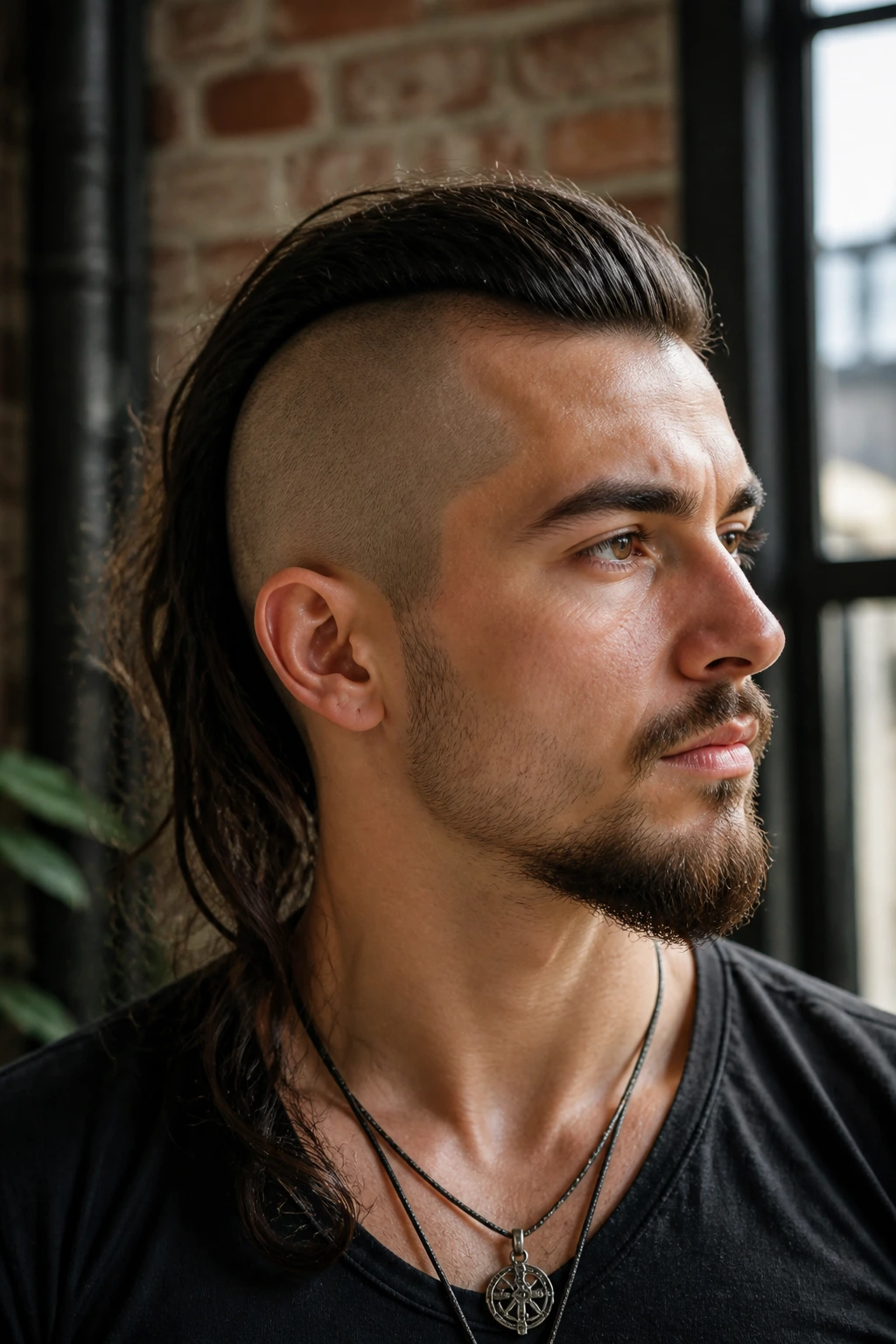
A long mohawk strip leaves a central band of length while the sides are cut much shorter or shaved. On long hair, that center strip can still be worn down, braided, or swept back, which keeps the look more flexible than a strict punk mohawk. It’s the most dramatic option in the bunch, and there’s no pretending otherwise.
This cut is strongest when the center section has enough density to stand on its own. If your hair is fine, keep the strip narrow and the side shave closer to the head. If your hair is thick, the center band can be broader and still keep its shape.
It’s bold, but not one-note. That’s why it lasts.
23. Half-Up Topknot Undercut
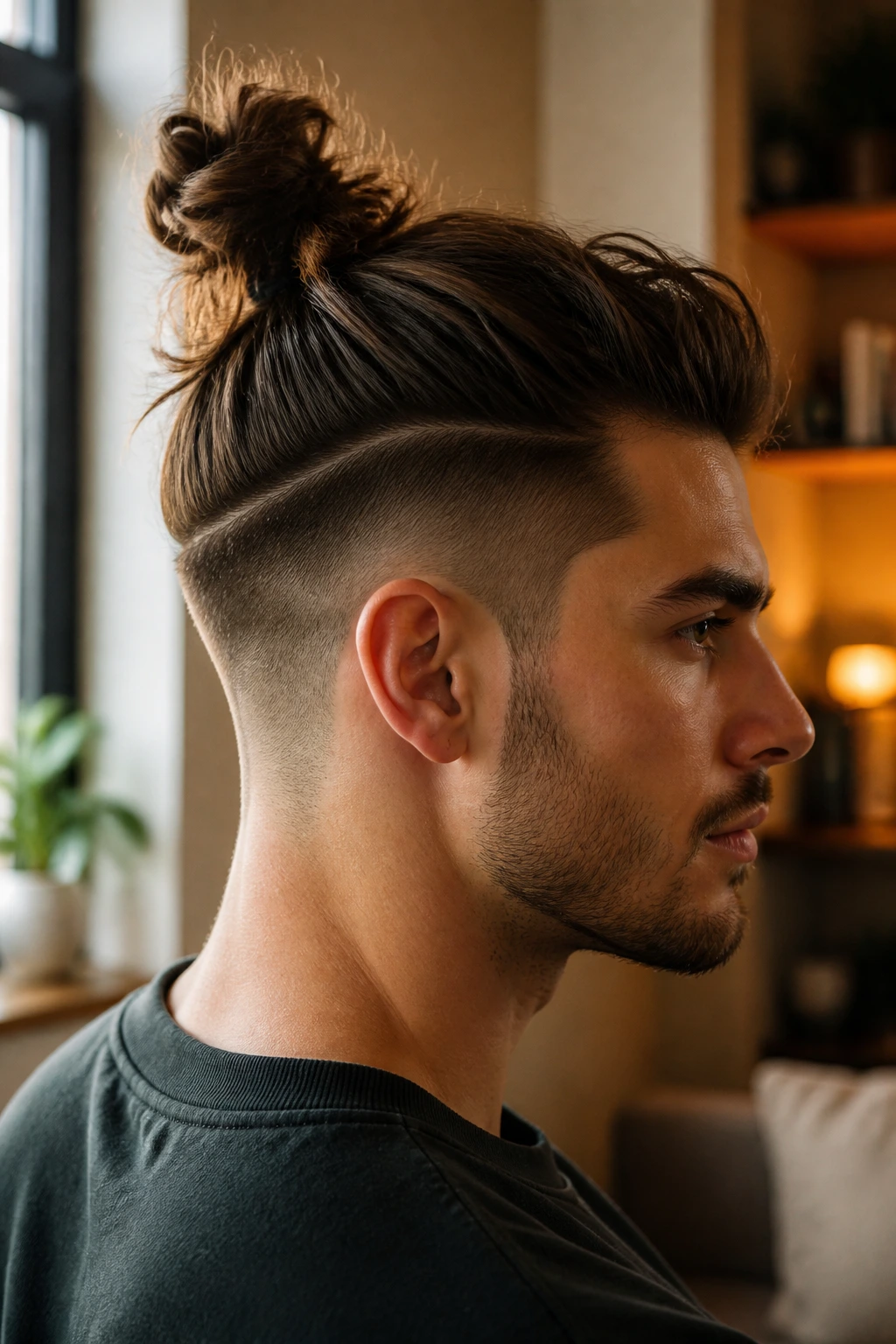
A half-up topknot undercut is designed for the way a lot of people actually wear long hair: half down, half up, then tossed into a knot when the day gets busy. The shaved nape and side zones keep the knot from ballooning and make the back of the style look cleaner when the top section is lifted.
Why It Looks Better Tied Up
Long hair gathered into a knot can expose every inch of bulk at the base. The undercut solves that. It removes the heavy stuff underneath, so the half-up style sits closer to the head and feels less like a lump.
If you live in claw clips, this is a strong candidate. It keeps the clip sitting flatter, and the neck feels cooler too.
24. Braid-Pattern Undercut
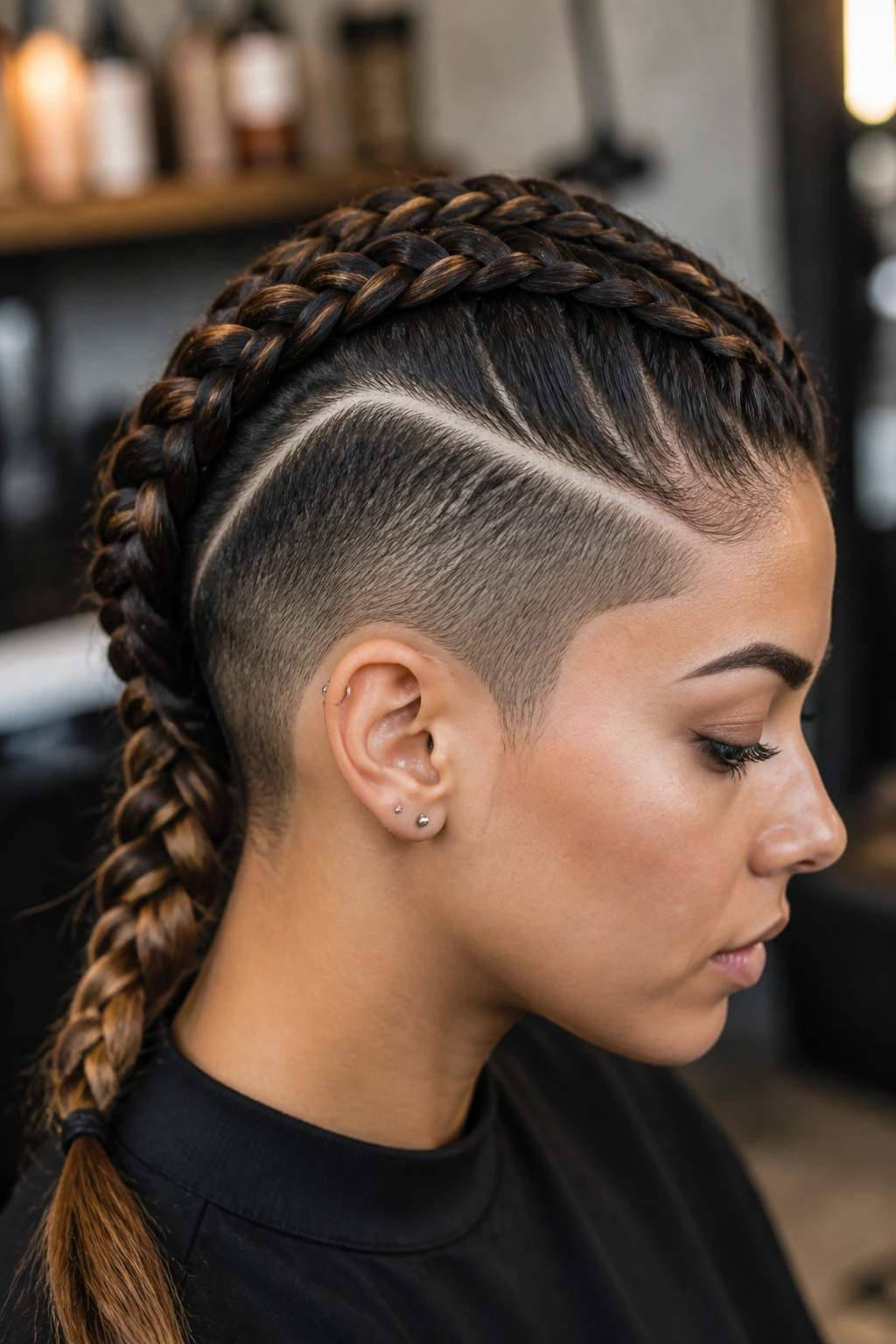
A braid-pattern undercut creates a shaved path that braids can sit over or beside. Instead of adding thickness underneath the plait, the shaved section lightens the base and makes the braid line read cleaner. It’s a nice choice for Dutch braids, boxer braids, and long side braids that you want to lie close to the scalp.
The cut can be hidden or shown, depending on how wide the braid path is. Some people use it for a subtle peek. Others make the shaved track part of the braid’s visual rhythm. Either way, the braid gains definition.
This one is especially good if your hair always feels too bulky for intricate braiding. Less hair under the braid means less fighting with it.
25. Discreet Office Under-Shave
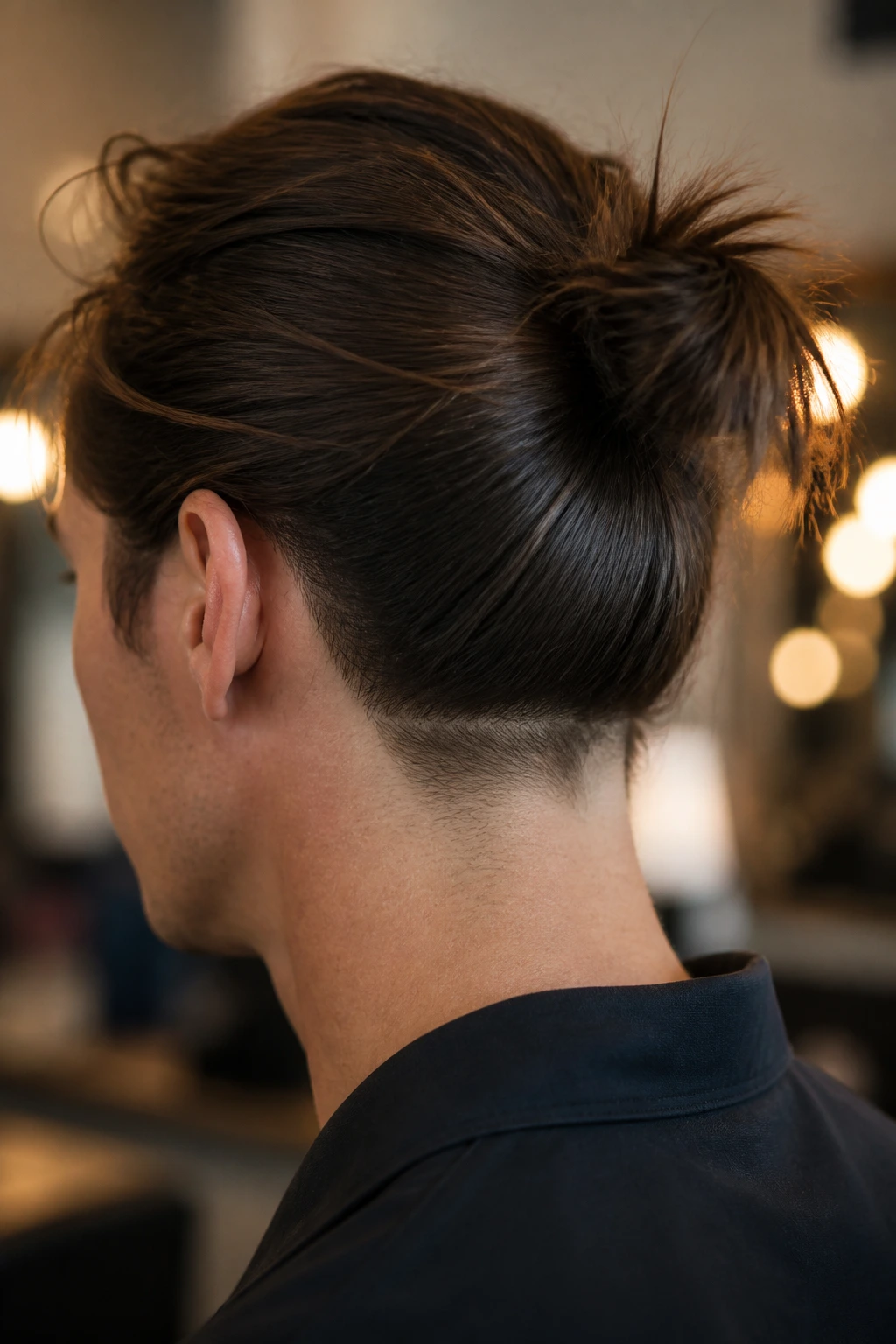
A discreet office under-shave is about keeping the edge where the rules won’t see it. The undercut sits low, narrow, and hidden beneath the top lengths, so the haircut looks polished in meetings and still feels lighter when you’re in a bun or low ponytail. It’s the haircut version of a secret you’re happy to keep.
This is a strong option if you want long hair to feel less hot and heavy without changing how it presents in conservative settings. Keep the clipper work tidy and low. A soft blend is usually easier to live with than a harsh line if you want the haircut to read discreet.
It’s practical. Also a little sly.
26. Full Side Shave
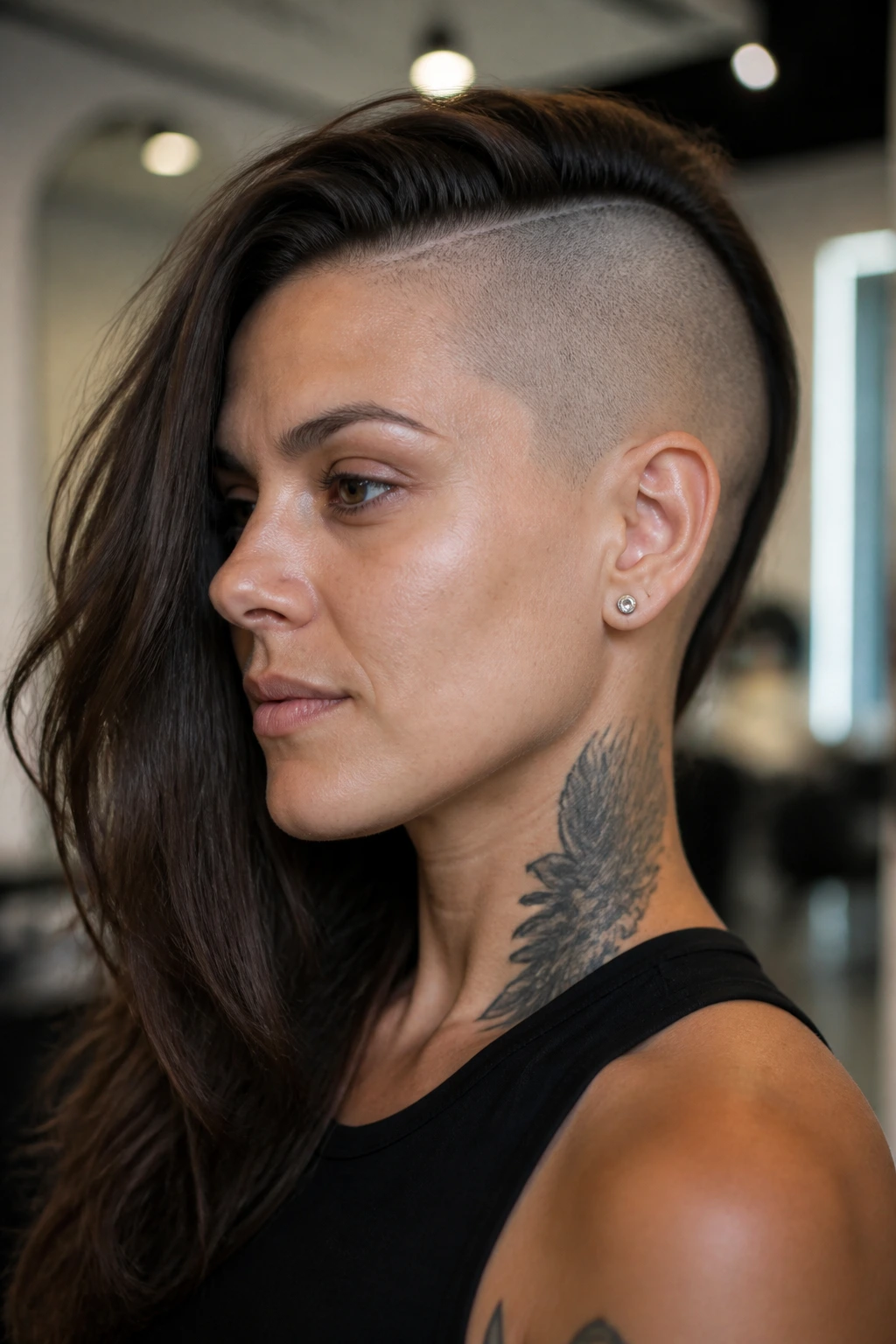
A full side shave is the loudest, cleanest contrast in long-hair undercuts. One entire side is shaved short, and the length on the opposite side gives the style its shape and balance. When the hair is worn down, the long side drapes over the head like a curtain; when it’s tucked or swept back, the shave takes over the room.
When This Cut Makes Sense
Choose this one if you want a haircut that changes your silhouette, not just your maintenance routine. It’s strongest on people who like asymmetry, strong jawlines, or a look that can handle a little visual tension. It also suits thick hair because the weight difference becomes part of the appeal.
The grow-out is more noticeable here than in a hidden nape cut. That’s the tradeoff. If you want edge without much commitment, this is not the quiet choice.
27. Soft Grow-Out Undercut
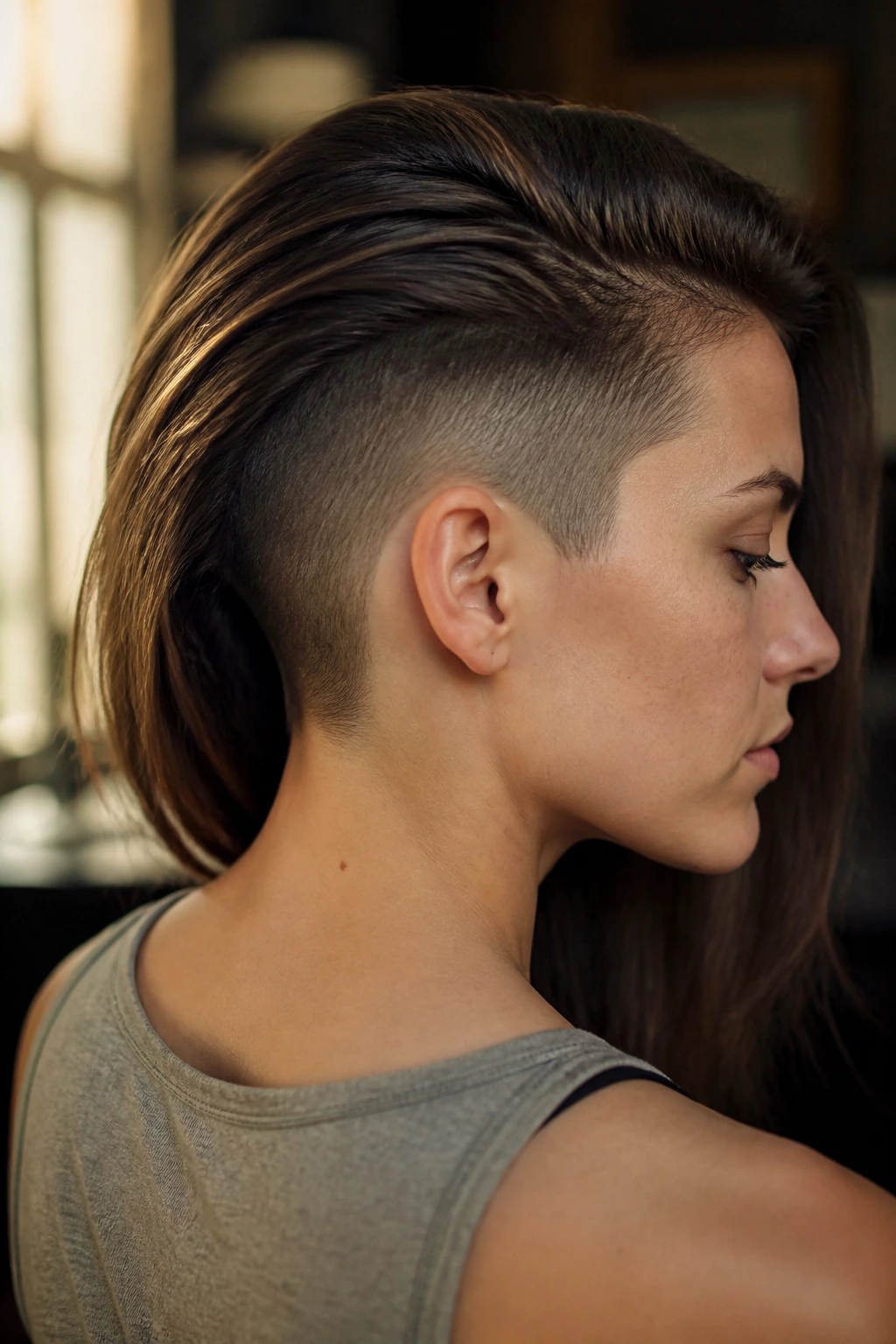
A soft grow-out undercut is the most forgiving entry in the list. The shave is kept low and blended enough that, when it starts to grow, it turns into a subtle underlayer instead of a harsh shelf. For anyone who loves the idea of an undercut but worries about the awkward in-between stage, this is the sane option.
It’s also the one I’d suggest to people who are undecided. You get the cooling effect, some bulk removal, and a cleaner ponytail without locking yourself into a severe shape. Ask for a lower placement, a softer transition, and enough top length to cover the zone when you need to.
That’s not timid. It’s practical.
What Makes a Long-Hair Undercut Change the Whole Shape
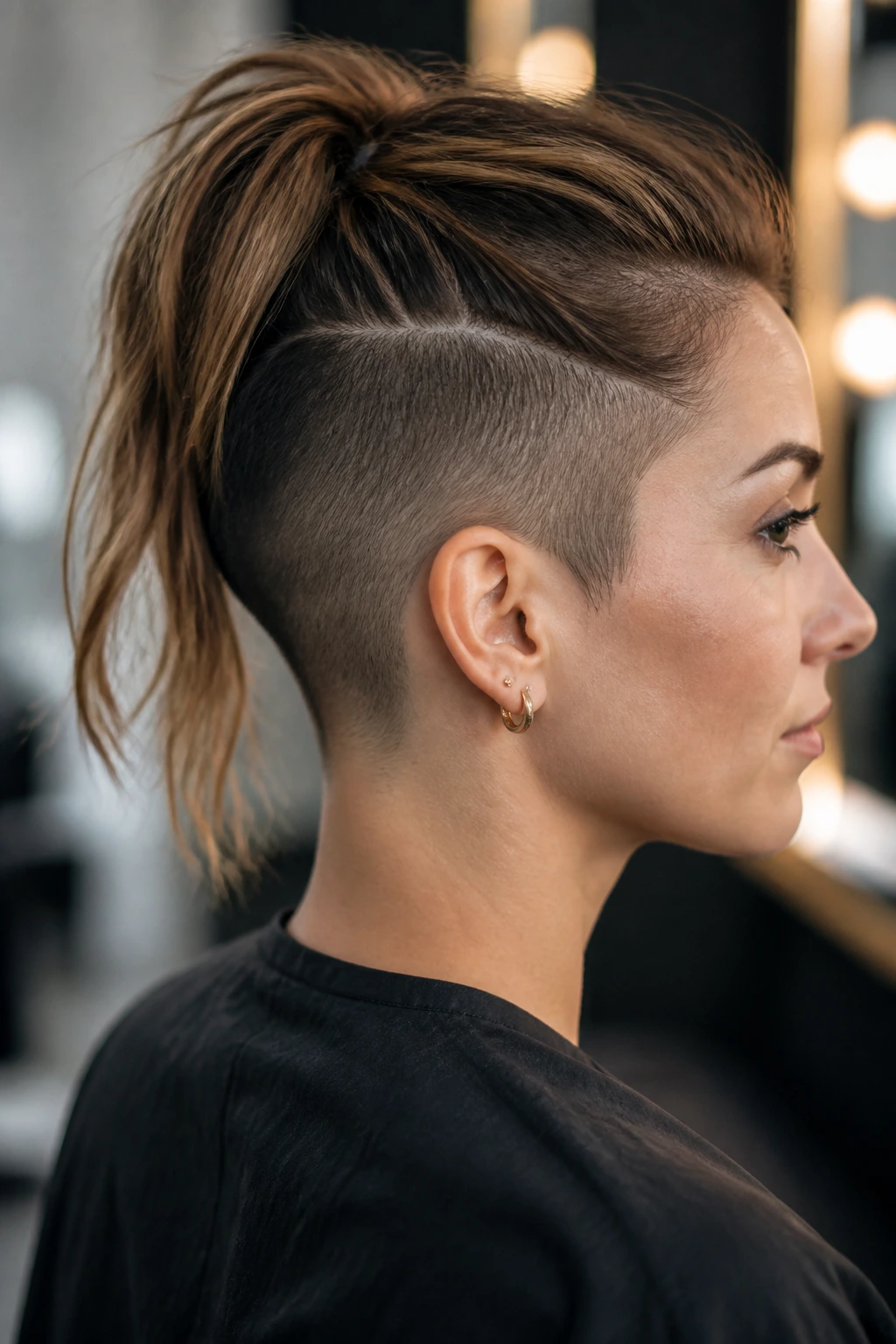
Long hair carries its own architecture. The top layer drops, the lower layer pushes, and the base can either sit neatly or puff out like it has opinions. An undercut changes that balance by removing weight from the places that do the most work — the nape, the side panels, the crown, or the area under a braid.
The effect is bigger than the amount of hair removed suggests. A half-inch of clippered hair at the nape can change how a ponytail sits against your back. A side-panel shave can make one side tuck closer to the jaw. A hidden underlayer can let curls spring instead of stacking into a block. It is a small haircut with a disproportionate impact, which is why people either get obsessed with it or swear they’ll never go back.
Placement is the whole game. Too high, and the haircut starts reading severe. Too low, and the hair still feels heavy. The sweet spot depends on where your hair gathers when it’s wet, where it fluffs when it’s dry, and how often you wear it up.
Essential Tools for the Chair and Home
-
Tail comb: Needed for clean sectioning so the shaved zone lands exactly where you planned it, not one inch off.
-
Sectioning clips: They keep the long top pinned away while the underlayer is cut, which matters more on thick hair than people think.
-
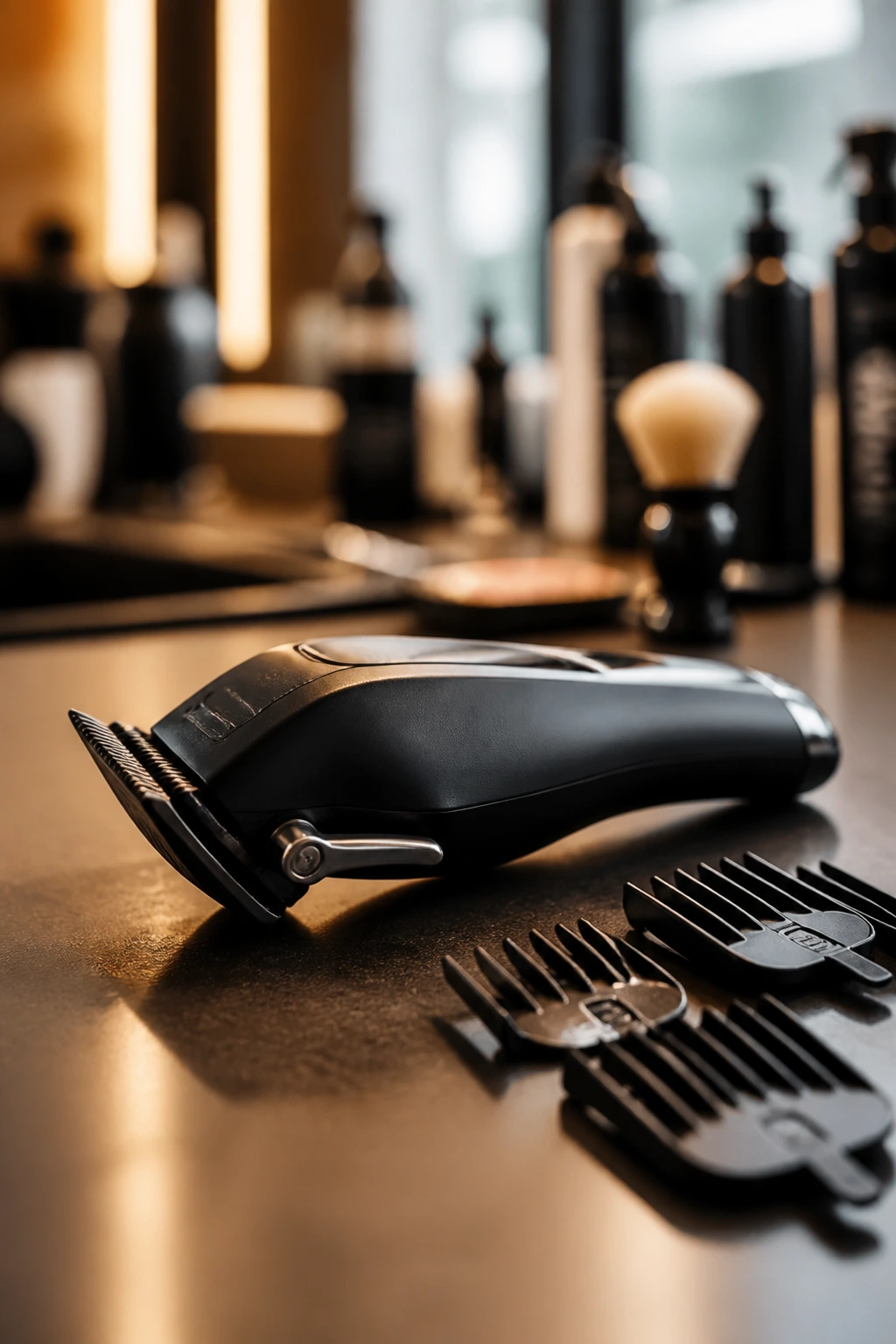
Clippers with guards: A #1, #2, or #3 guard gives you a clean undercut without going all the way to skin if you want a softer grow-out.
-
Detail trimmer: Useful for edging the neckline, side panels, or a sharp nape line between touch-ups.
-
Hand mirror: Helps you check the back and sides at home, especially after ponytails and braids reveal the undercut.
-
Cape or old towel: Hair splinters are annoyingly itchy. Cover up.
-
Blow dryer with a nozzle: Great for directing the top layers over the undercut or lifting the crown when you want it shown.
-
Round brush or paddle brush: Choose based on your texture; the round brush helps shape, the paddle brush helps smooth.
-
Texturizing cream or matte paste: Best for faux hawks, side sweeps, and any style that needs the top to hold a shape.
-
Dry shampoo: Handy for long hair with hidden undercuts, since the roots often need refreshment before the shaved area does.
What to Tell Your Stylist Before the Clippers Come Out
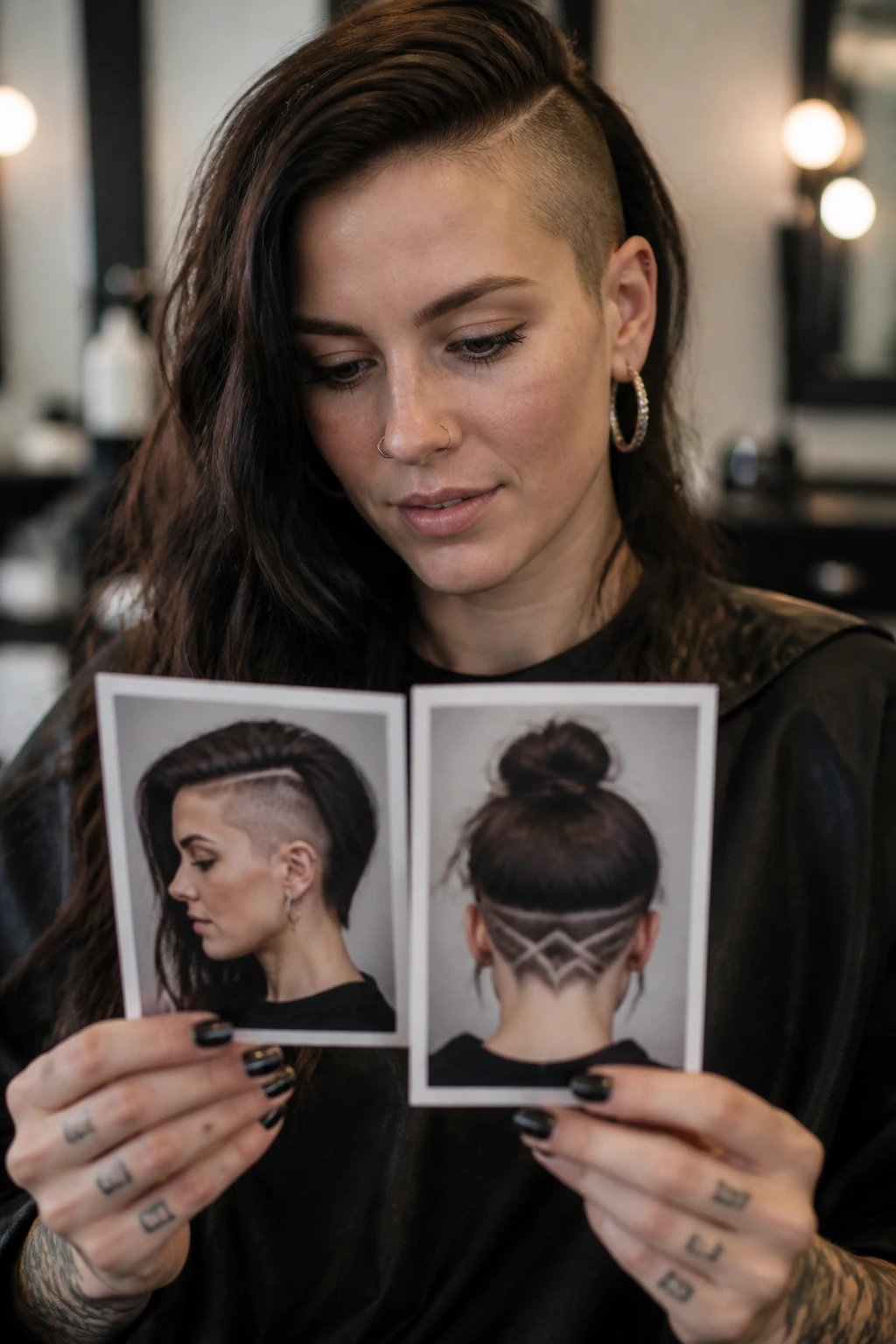
Bring more than one photo. One front view is not enough, because undercuts live in the side and back angles. Show a photo of how you wear your hair most days — down, half-up, ponytail, braid, whatever is actually real for you — and then show a second image of the undercut shape you want from the back or side.
Be specific about the placement. Say nape, temple, side panel, underlayer, or crown instead of waving at the head and hoping for telepathy. If you want a hidden cut, say so. If you want a hard line, say that too. If you do not, the stylist may soften it out of caution.
Also mention your hair’s habits. Cowlicks at the neckline, a swirl behind one ear, a stubborn part line — those little quirks matter. They can push the shave higher or lower than the photo if no one accounts for them.
How to Wear the Cut Day to Day
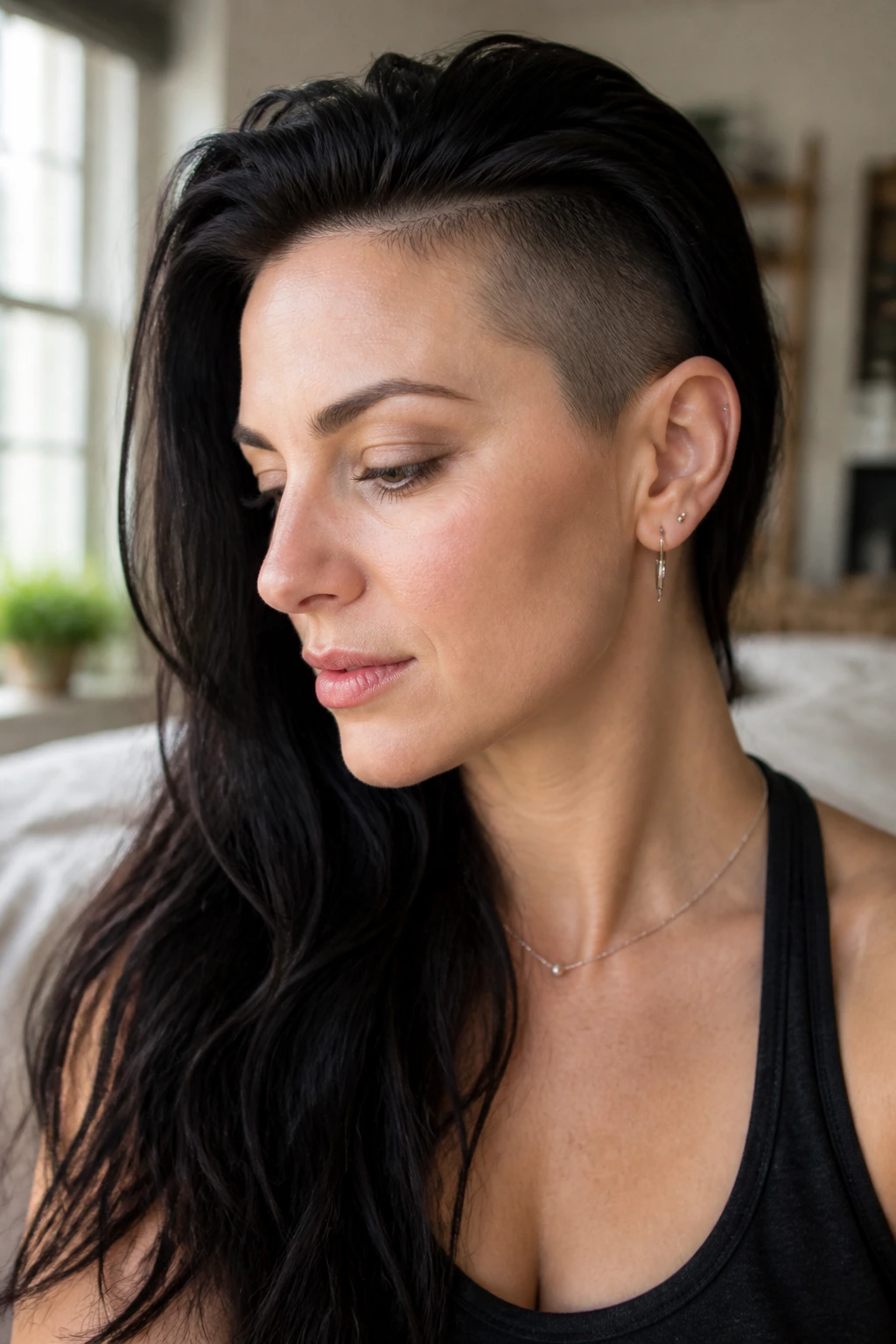
Loose and down: Hidden nape, internal weight-removal, and office-friendly under-shaves usually disappear best when the top is brushed smooth or left in soft waves. A light cream on the ends keeps the long hair from puffing out over the shaved zone.
Half-up and clipped back: This is where ponytail reveal cuts, V-notches, and crescent shapes earn their keep. Use a small elastic or clip to keep the top section tight enough that the undercut actually shows.
Braids and buns: Braided crown, braid-pattern, and ponytail reveal styles benefit from a little root control at the front and a flatter base at the back. A touch of gel at the hairline keeps everything neat without making the whole head crunchy.
Statement days: Side shaves, faux hawks, and full side shaves need a little lift at the crown and some direction through the top lengths. That’s the moment for a blow dryer, a brush, and a product with hold.
Smart Tips for Better Results and Less Regret
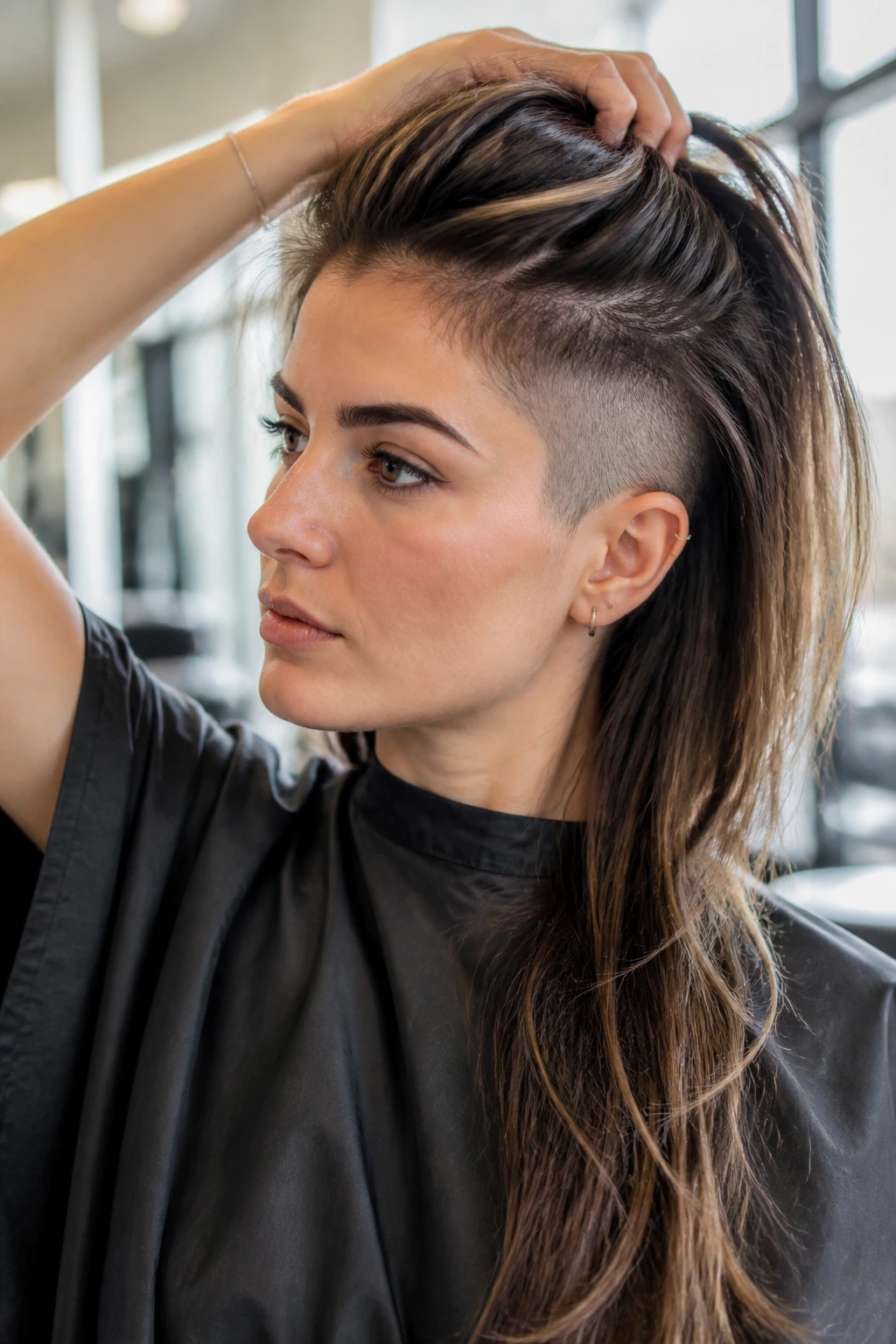
Placement first: Decide whether you want the undercut to disappear, peek, or dominate. The same clipper length can look subtle on the nape and fierce on the side panel.
Keep the top long enough to cover it: If you love wearing your hair down, the top section needs to fall past the shaved zone. Shorten that too far and the undercut stops being hidden.
Match the cut to your texture: Curly hair usually needs a lower, wider undercut to prevent the triangle shape. Straight hair can handle harder lines and sharper contrast. Thick hair benefits from more removal. Fine hair needs restraint.
Plan the styling routine before the cut: A side shave that only looks good with a full blowout may annoy you after the third day. Pick something you can actually maintain on a busy morning.
Common Mistakes That Make the Shape Look Off
-
Putting the shave too high too soon: The cut starts reading more like a half-shaved head than a hidden undercut. Ask for a lower starting point first; you can always go higher later.
-
Ignoring cowlicks and swirl patterns: Hair at the nape and behind the ears has a memory. If the shave cuts against the way your hair grows, the top can kick out and expose the line in a clumsy way.
-
Over-thinning fine hair: Fine long hair needs shape, not too much removal. If the undercut is too wide or the top gets texturized too hard, the ends can start looking wispy and tired.
-
Choosing a fade when you wanted a hidden cut: A fade gives you a soft gradient, but it also shows more as it grows. If you want the haircut to disappear, ask for a clean hidden underlayer instead.
-
Forgetting about updos: A style that looks subtle down can become very loud in a bun. If you wear your hair up often, test the reveal with a clip or elastic before the scissors come out.
Variations and Adaptations to Try
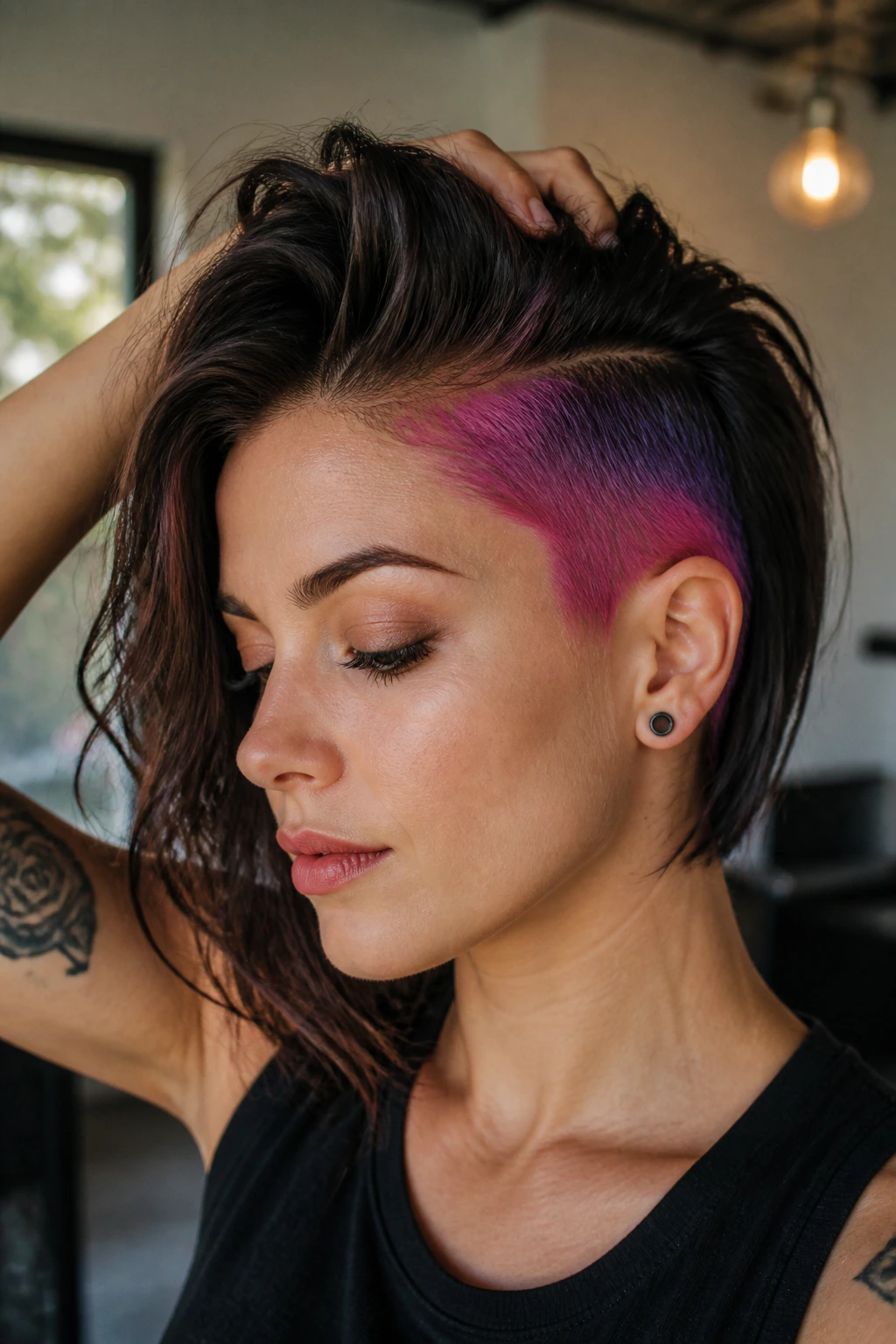
Soft Office Version: Keep the shave low at the nape or underlayer and ask for a soft blend. It reads as clean grooming rather than a statement, especially when the top hair is worn down.
Curly Volume Version: Place the undercut lower and a little wider under the curl mass so the shape doesn’t balloon at the sides. This version is about keeping the curls round, not shrinking them.
Thick-Hair Relief Version: Use a deeper side panel, internal underlayer, or crown relief cut to remove the chunkiest part of the hair. Thick hair responds well when the bulk is taken from underneath rather than the visible outline.
Color-Peek Version: Add a bleach lift or a strong tint to the shaved zone. The color only shows when the hair moves, so you get surprise without having to broadcast it every minute.
Low-Maintenance Grow-Out Version: Ask for a lower guard and a softer edge. It grows into the surrounding hair with less weirdness, which is the whole reason people stick with it.
High-Contrast Version: Go for a full side shave, deep side panel, or mohawk strip. These cuts lean into the visual split between long and short, and they look best when you want the haircut to lead the outfit.
Maintenance, Grow-Out, and Touch-Up Timing
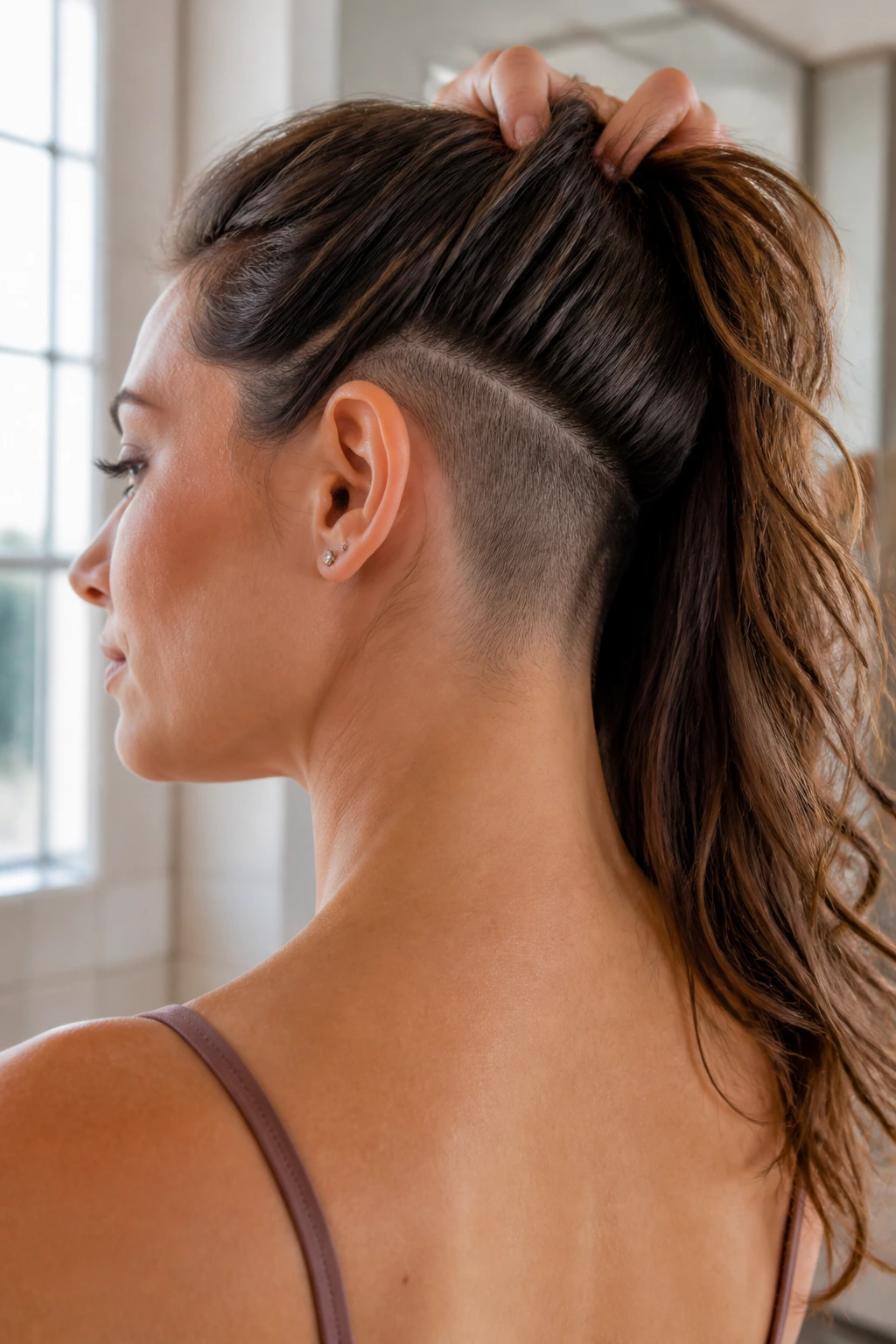
A hidden nape undercut usually needs a tidy-up every 3 to 5 weeks if you want it to stay crisp. A side panel or full side shave can need attention a little sooner, especially if you like the contrast sharp. If you prefer a softer, fuzzier edge, you can stretch the visits longer and let the regrowth soften the line on purpose.
Hair grows about half an inch a month, give or take. That means a very short undercut starts to show its shape again fast, especially around the neckline where every millimeter feels obvious. If you want the style to hold its shape, plan on trimming the visible edges before they start to feel shaggy.
At home, a handheld mirror and a trimmer can clean up the neckline between salon visits, but only if you’re careful. Stay within the original shave zone. Do not chase a fresh line higher and higher just because the regrowth annoys you. That is how a neat undercut turns into a much larger haircut than you bargained for.
Frequently Asked Questions
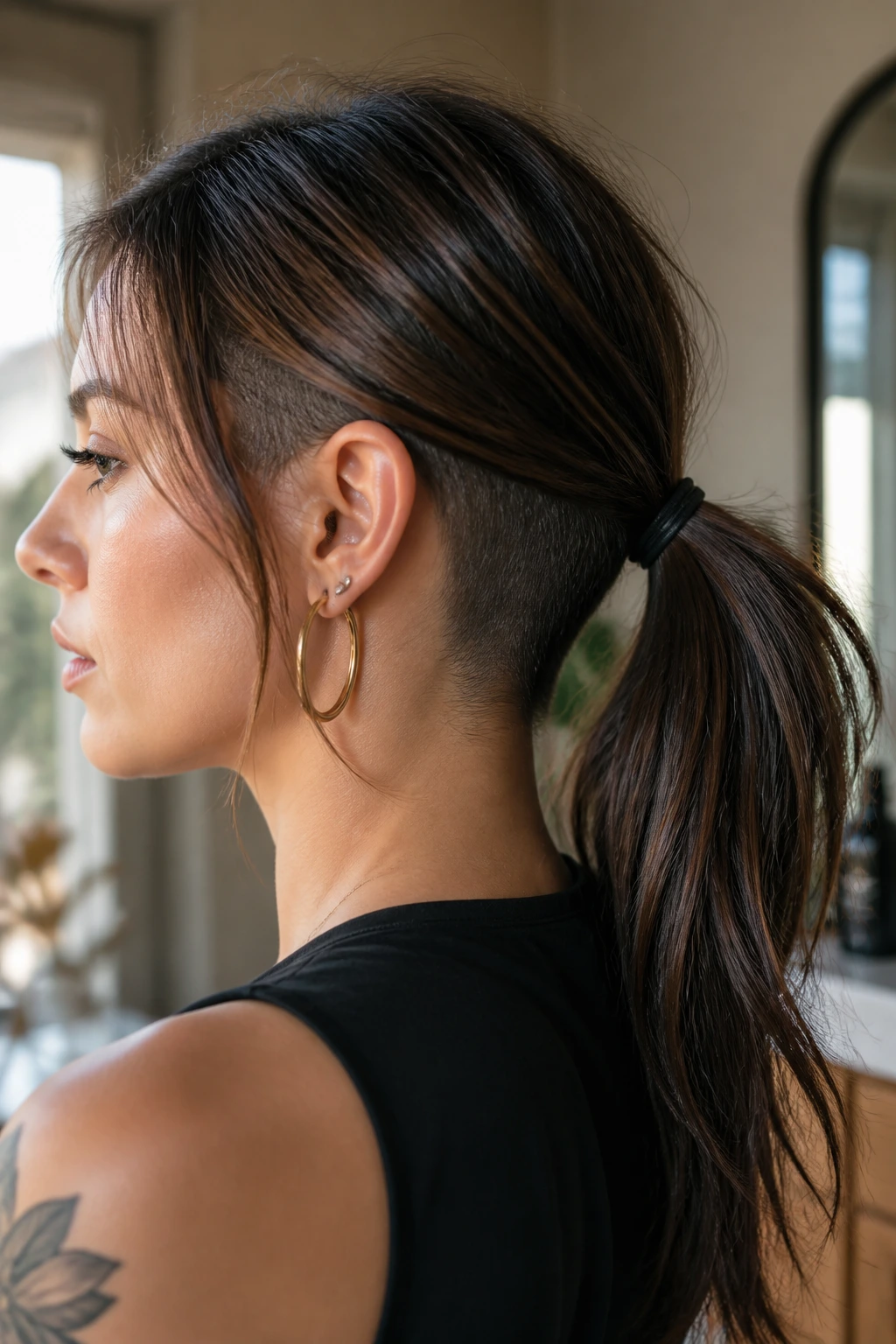
How short should an undercut be on long hair?
Most people land somewhere between a #1 and #3 guard if they want the area clearly shorter but not bare. Skin-close looks sharper, but it also shows regrowth fastest and can feel more exposed if you wear your hair up a lot.
Will an undercut make my long hair look thinner?
Only if it’s placed badly or cut too wide on fine hair. A well-placed undercut removes bulk underneath, so the visible hair often looks fuller because it falls better and stops puffing out at the base.
Can curly hair pull off an undercut?
Yes, and it often benefits from one. Curly hair can swell at the sides or neck, and taking out some of that lower density helps the curl shape sit rounder and lighter instead of boxy.
How do I hide an undercut at work or in formal settings?
Keep the shave low, stay under the top layers, and avoid taking it too far up the sides. A loose blow-dry, a center part, or face-framing pieces can cover the area when you want it quiet.
What if my hair has a strong cowlick at the nape?
Tell the stylist before they cut. Cowlicks can make the top layer kick out and reveal the undercut sooner than expected, so the placement may need to follow the growth pattern instead of a perfect straight line.
Can I grow out an undercut without a weird shelf?
You can, but the best grow-out starts with a soft edge. Let the undercut grow until it can be blended into the surrounding layers, then have it shaped rather than shaved farther up.
Is a fade the same thing as an undercut?
Not really. A fade blends gradually from short to long, while an undercut usually creates a more obvious separation. The two can overlap, but they do not behave the same when the hair grows out.
Which undercut works best for thick hair?
Deep side panels, internal weight removal, and crown relief cuts tend to help thick hair most. They take out the bulk where it collects instead of just thinning the ends, which can leave thick hair looking ragged.
Keeping the Length, Losing the Bulk
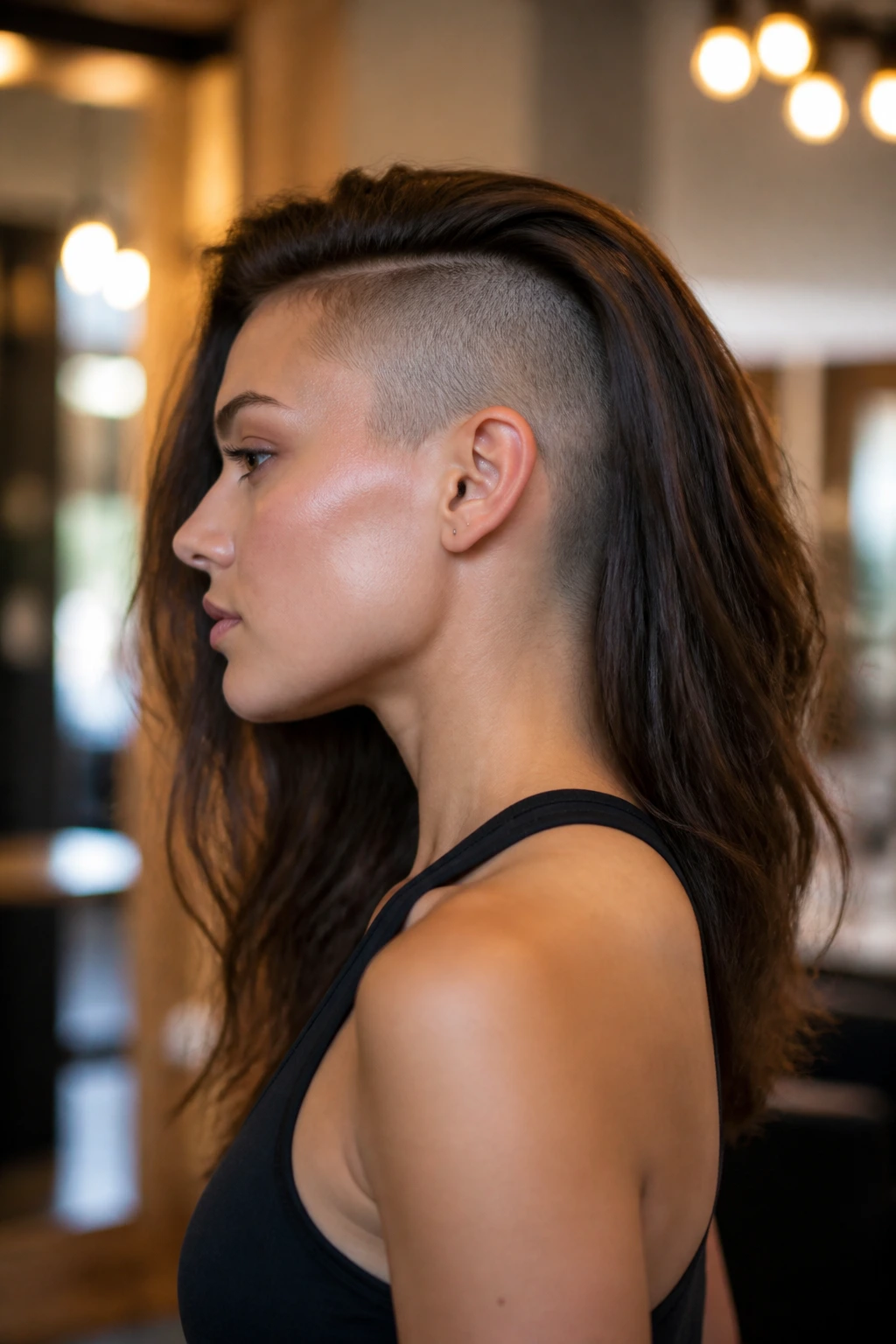
The smartest long-hair undercuts do not fight the length. They change what the length has to carry. That is the real trick, and it’s why these cuts stay interesting long after the first dramatic trim wears off.
Pick the part of your hair that bothers you most — the heat at the nape, the thickness behind the ears, the weight in a ponytail, the puff at the crown — and place the shave there. When the cut solves an actual problem, it stops feeling like a stunt and starts feeling like your hair finally makes sense.
