



Short hair can make bangs behave in two very different ways: crisp and clever, or flat and fussy. The best piecey bangs for short hair sit right on that edge where the fringe looks broken apart on purpose, not accidentally hacked into little strands. That’s the sweet spot.
The reason it matters is simple. Short hair shows everything. A heavy bang line on a bob or pixie doesn’t have extra length to hide behind, so every blunt edge, every cowlick, every ounce of product becomes part of the picture. When the fringe is cut with internal gaps and a softer taper, the whole haircut gets air under it. The face looks less boxed in. The cut moves when you turn your head.
A lot of people ask for “something piecey” and end up with bangs that are too thin in the middle and too bulky at the temples. That’s not the same thing. The real trick is balance: enough density to read as a fringe, enough separation to let the front feel light, and enough length variation that the ends don’t sit like a shelf. Once you start seeing that difference, the whole world of short fringe opens up.
Why These Fringe Shapes Work So Well
- Short hair needs a lighter front edge: When the haircut stops at the jaw or above, a broken-up fringe keeps the front from turning into a solid wall.
- Piecey ends fight the helmet effect: A few tapered strands around the brows and temples make a bob or pixie look cut, not cap-like.
- Most of these styles are easy to redirect: Side-swept, center-split, and curved shapes can all be pushed around with a quick blow-dry and a fingertip.
- They give you control over the face shape: You can open the forehead, soften a strong jaw, or stretch the face vertically without changing the whole haircut.
- They work with the hair you actually have: Cowlicks, bends, and second-day texture are not enemies here; with the right cut, they help the fringe look lived-in instead of stiff.
1. Choppy French Bob with Brow-Skimming Bangs
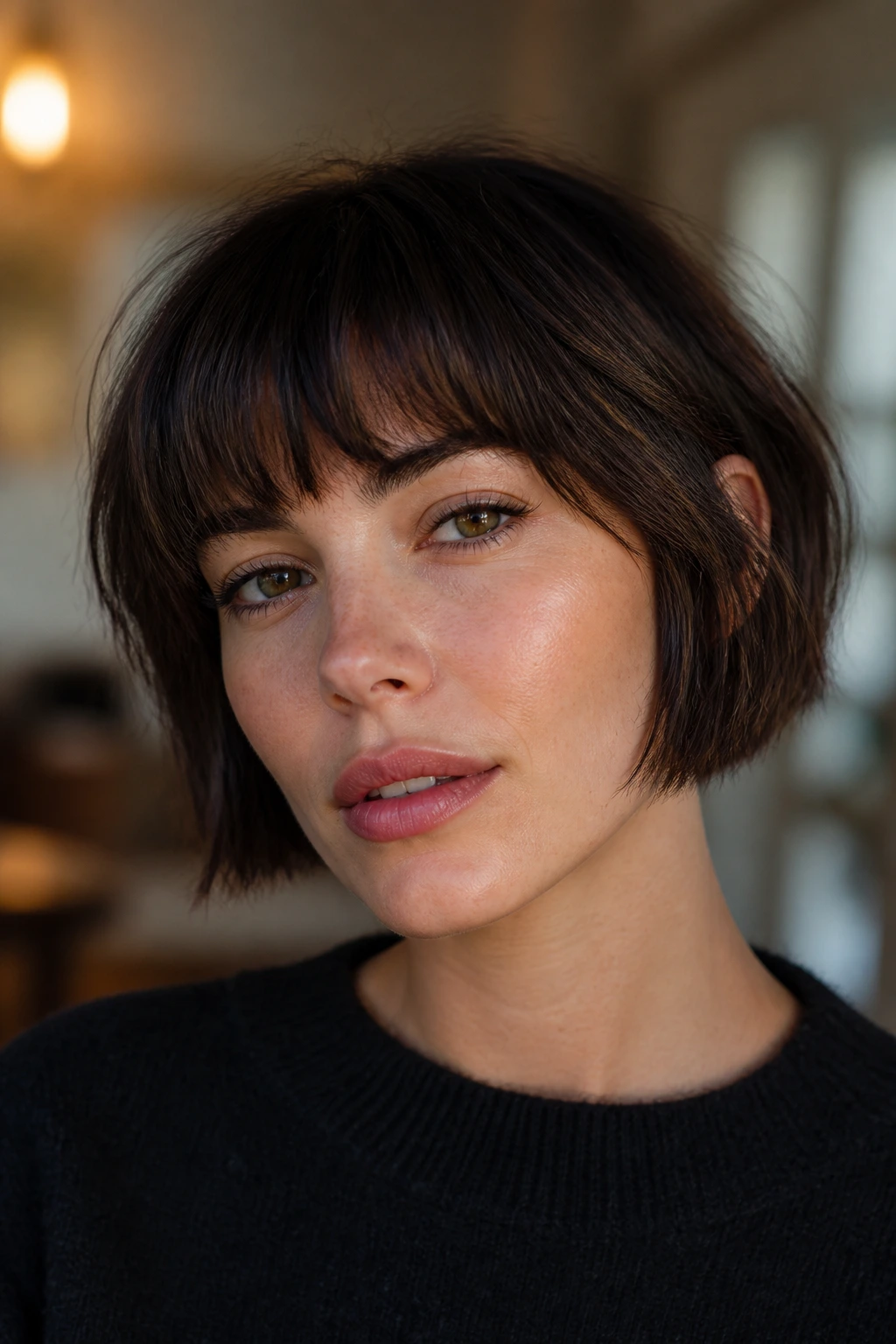
A French bob gets sharper the second the fringe is broken into little notches instead of one clean line. That tiny bit of irregularity keeps the front from feeling boxed in, which matters a lot when the haircut sits right at the jaw.
I like this version when the bob itself is clean and the bangs are the messy part. Ask for the center to land just at the brows, then let the corners soften toward the temples. A small round brush and a quick pinch of matte paste are usually enough. If the bangs are too polished, the whole thing loses its charm fast.
What makes it work
- The jaw-length perimeter gives the fringe something to frame.
- The point-cut edges keep the bangs from reading like one flat strip.
- The shape looks especially good when the hair has a little bend rather than pin-straight stiffness.
One detail matters more than people expect: the temple corners should be slightly longer than the center. That small difference makes the cut feel casual instead of severe.
2. Pixie Crop with Sliced Micro Fringe
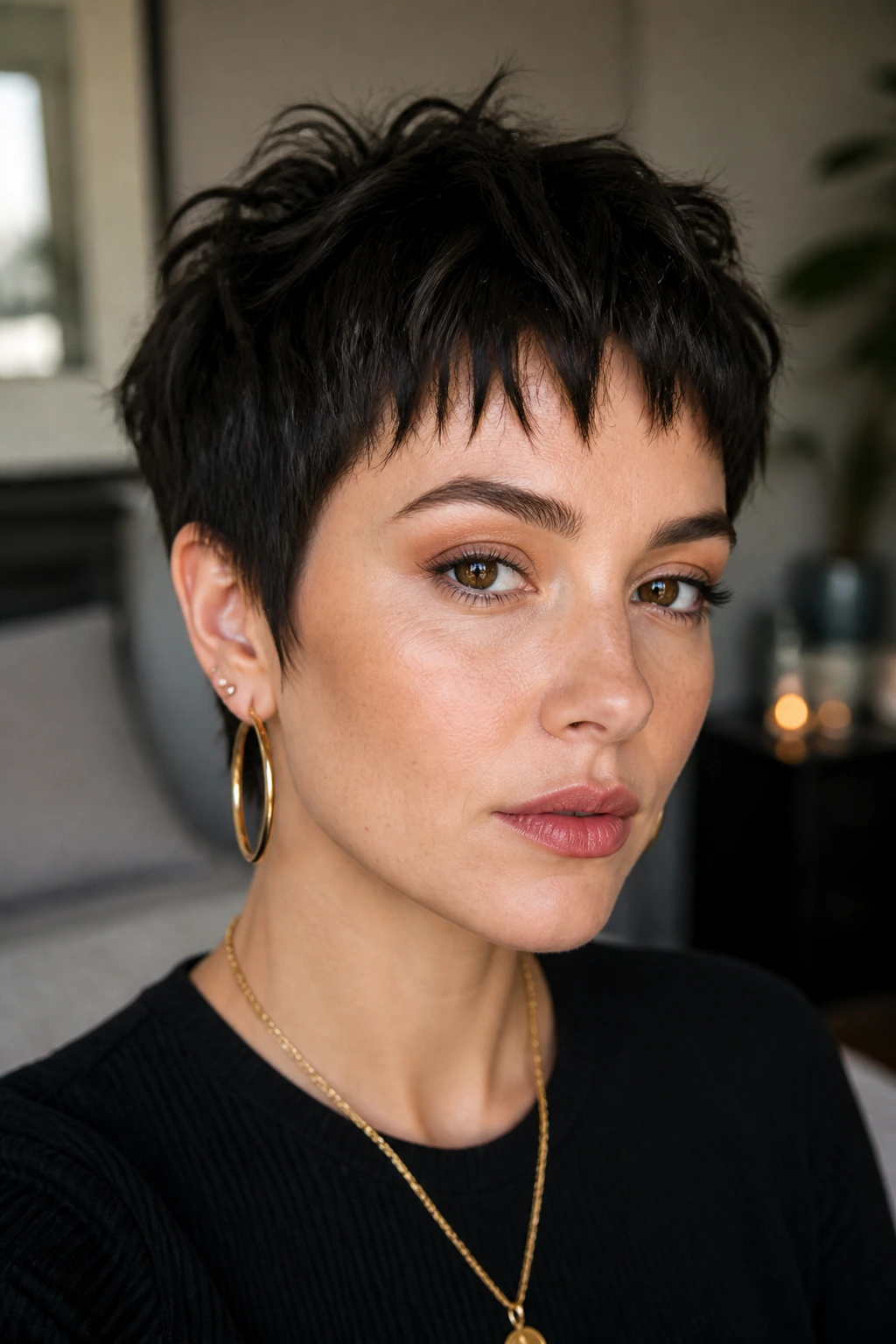
A sliced micro fringe on a pixie is a tiny haircut with a loud opinion. It puts the eyes in charge, which is exactly why it looks so clean when it works. The trick is keeping the top long enough to bend; if the fringe stands up like bristles, the whole thing turns cartoonish.
This version suits straight or lightly wavy hair that holds a bend without puffing out. Ask for short, separated pieces across the center, then longer bits at the edges so the fringe doesn’t stop abruptly. I’d keep the product light here. A grain-of-rice amount of wax is enough. More than that, and the little pieces fuse together.
The best part is how little it takes to style. Finger-dry the top forward, sweep it side to side with the dryer, then let it cool before touching it again. That pause matters. It sets the separation.
3. Chin-Length Bob with Side-Swept Piecey Bangs

Need a fringe that won’t fight glasses or a stubborn part? This is the safe bet that doesn’t look safe. A diagonal bang lets the center stay light while the longer edge slides into the temple, which is useful when the haircut ends at the chin and needs softness up front.
What I like most here is the way it eases into the rest of the bob. The bang doesn’t stop like a curtain; it melts into the front layers. Ask for the shortest point to skim the brow and the longest point to sit near the cheekbone. That gives you enough movement to tuck one side behind the ear without the cut losing shape.
A mini flat iron helps if your hair bends unevenly at the front. One soft flick away from the face is enough. No need to curl it. That usually looks dated in a hurry.
4. Wavy Lob with Bottleneck Bangs
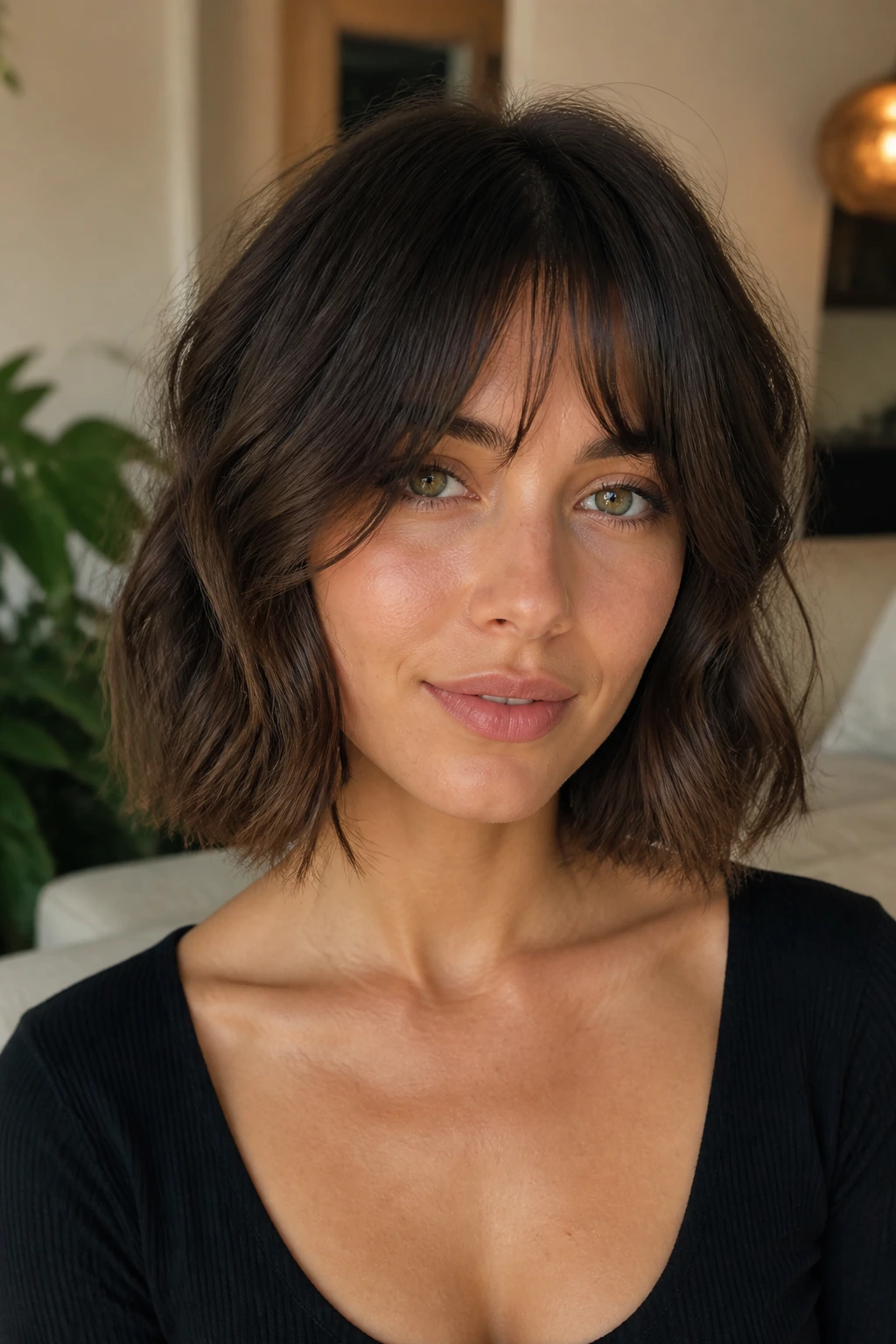
Bottleneck bangs on a wavy lob work because the center stays narrow and the outer pieces open out just enough to meet the cheekbones. The shape has a little built-in direction, which keeps short hair from looking too blunt around the forehead.
This is one of the easiest piecey bang styles to live with if your hair already has some movement. The waves do half the styling for you. The bang can air-dry with a little mousse scrunched at the roots, then the ends can be separated with fingertips once everything is nearly dry. Do not over-brush it. That’s the fastest way to turn a soft shape into a puffy one.
If you wear your hair with a slight off-center part, this fringe usually settles even better. The center can stay soft and the side pieces will take care of the cheekbone line.
5. Rounded Bob with Arched Razor Fringe

A rounded bob can look a little too tidy unless the front has some break in it. An arched razor fringe fixes that by softening the line while still following the curve of the face. The result is neat, but not stiff.
This shape lands nicely on straight hair that tends to hang in one sheet. The razor or point-cut finish gives the ends that feathered, separated look without making the bangs too thin. I’d ask for the shortest part to hover just below the brows, then let the sides lengthen enough to brush the outer corners of the eyes.
One thing to watch: if the fringe gets too much product, the curve disappears and the pieces clump. A light mist of flexible-hold spray is better than a heavy cream here. The cut already does the work.
6. Short Shag with Split Curtain Pieces

Short shags love bangs that know how to divide and move. A split curtain fringe gives the cut some breathing room at the center and keeps the front from becoming one thick block across the face.
Why it stays flattering
- The middle break opens the forehead just enough.
- The longer outer pieces connect the fringe to the cheek and jaw.
- The shag layers underneath keep the whole style from feeling too precious.
This version is especially good if you air-dry a lot. A little curl cream or soft mousse at the roots, then a finger-comb through the center, usually sets the pieces in place. Once the hair is dry, resist the urge to keep touching it. That’s when the separation starts to look stringy instead of intentional.
7. Tapered Pixie with Baby Bangs

Baby bangs on a tapered pixie are not subtle, and that’s half the fun. They make the eyes and brows the center of the cut, while the tapered sides keep the whole style from feeling top-heavy. If you want a fringe that looks deliberate from across the room, this is it.
The important part is the taper. Without softer edges near the temples, baby bangs can feel harsh fast. Ask for the center to sit well above the brows—usually about half an inch, sometimes a touch more depending on your hairline—then let the sides lengthen as they blend into the short sides.
Styling is fast, but maintenance is real. This shape looks best when the front is trimmed often and the ends are kept crisp. If you let it grow too long, the whole point disappears.
8. Bixie with Feathered Side Fringe
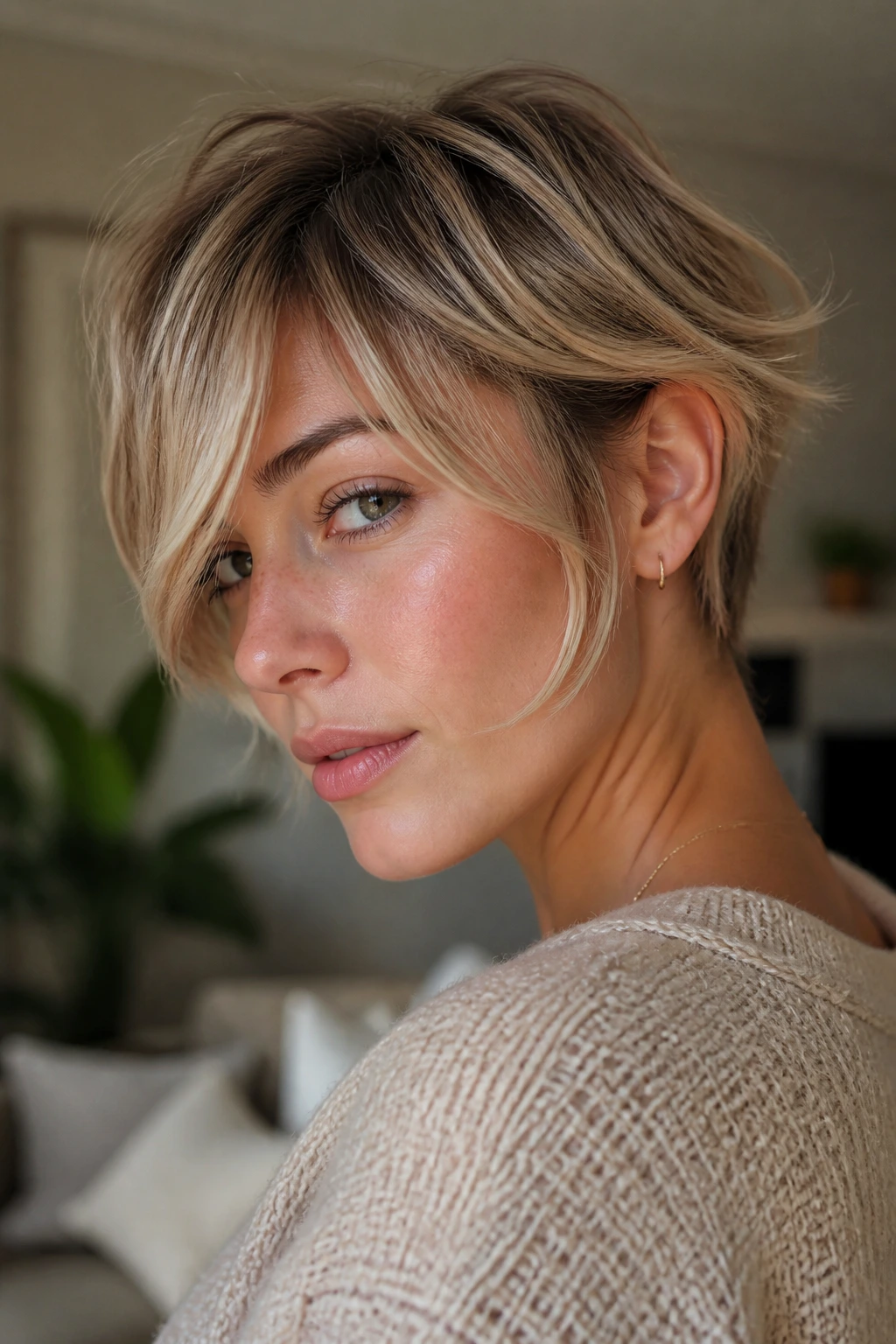
A bixie already lives between a bob and a pixie, so a feathered side fringe feels like a natural fit. It softens the front without taking over, which is useful when you want movement but not a full bang line.
The shape works because the fringe slides into the rest of the cut instead of sitting on top of it. Ask for the longer pieces to skim the cheekbone and the shorter ones to break just above the brow. I like this cut on people who tuck one side behind the ear a lot. The fringe stays visible, but it doesn’t fall into your eyes every ten minutes.
A small round brush can give the side sweep a little bend, but you can also dry it with fingers and a bit of root lift. Either way, keep the product airy. Heavy cream makes the feathering collapse.
9. Classic Bob with Eyebrow-Grazing Fringe

A classic bob can look almost too polished until the fringe gets a few broken edges. Eyebrow-grazing bangs keep the cut crisp, but the piecey finish stops the front from becoming severe. It’s one of those styles that looks simple from a distance and fussy only if the lines are too clean.
This is a good pick if you like a haircut that can swing between neat and slightly undone. Push the bangs forward with the dryer, then separate the ends with your fingers while they cool. That cooling step is the quiet part most people skip, and it matters.
Best for
- Straight or slightly bendy hair.
- Anyone who wears a clean center or slight side part.
- People who want short hair that still shows some forehead.
The sweet spot here is a fringe that barely kisses the brows. Too short and it starts feeling edgy in a way that limits the rest of the style.
10. Wolf Cut Crop with Broken Fringe
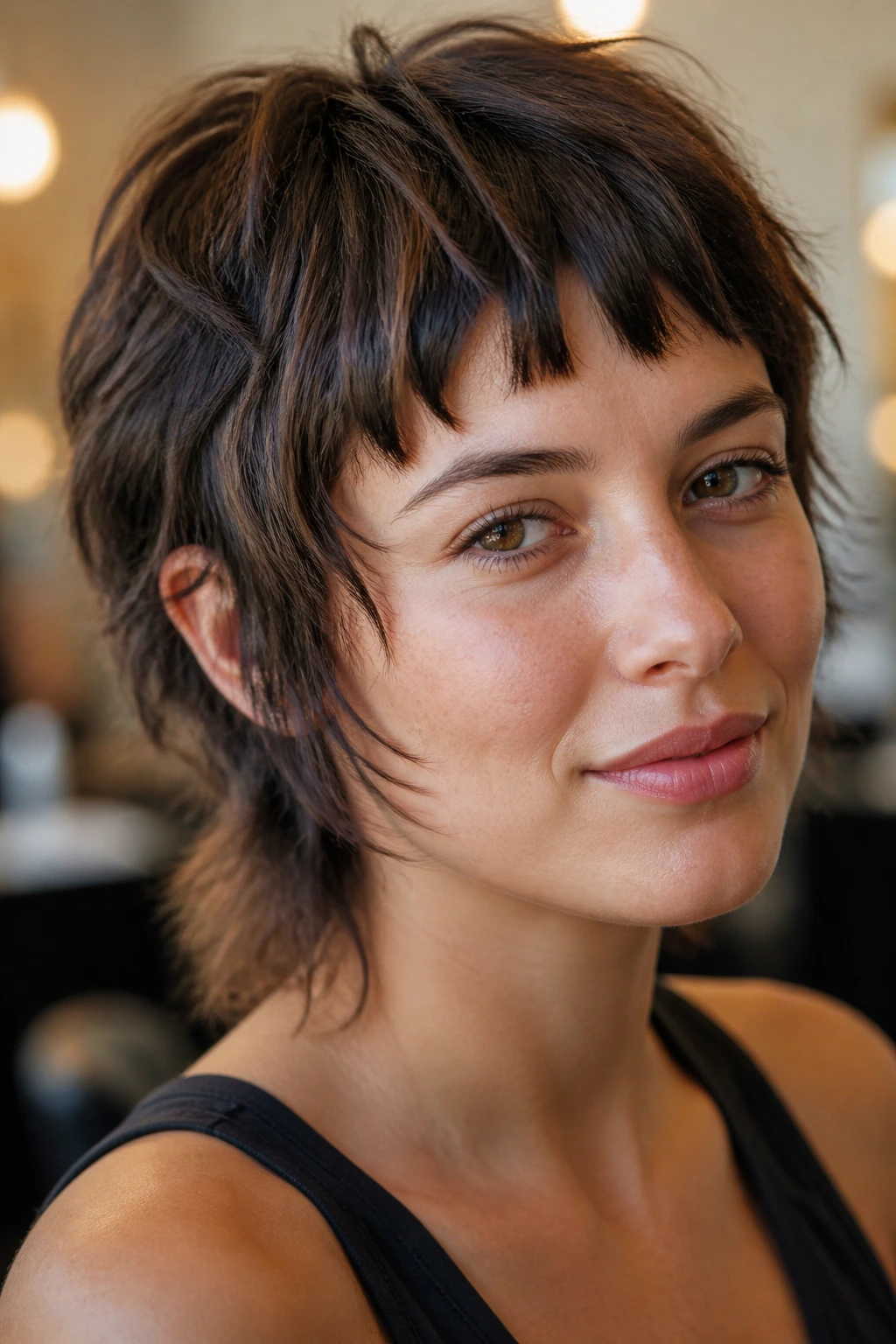
A short wolf cut needs a fringe that doesn’t act like it belongs to a different haircut. Broken bangs solve that. They echo the shaggy layers through the crown and keep the front from looking too tidy compared with the rest of the cut.
This style likes movement. If your hair has some natural wave, the fringe will fall into place faster than you think. Dry it forward first, then sweep it left and right with your brush so the root doesn’t set in one direction. That little zigzag at the start gives the bangs a softer, piecey finish once they settle.
The best version is not heavily thinned. You want visible strands, not see-through fringe. There’s a difference, and it’s a big one.
11. Chin-Length Crop with Crescent Bangs

Crescent bangs curve in a soft arc, which makes a chin-length crop feel rounded and a little more face-hugging. They are a nice option when you want the front to look designed without getting boxy at the brow line.
The curve should be gentle. If the middle is too short and the corners are too long, the shape turns dramatic in a way that can overpower short hair. Ask for the center to sit near the brows and the outer pieces to taper down toward the cheekbones. That keeps the fringe open and airy.
This one looks best when the ends are slightly separated with a lightweight texture spray. Don’t overdo the shine. A soft matte finish keeps the crescent shape readable.
12. Wispy Bangs for Fine Short Hair
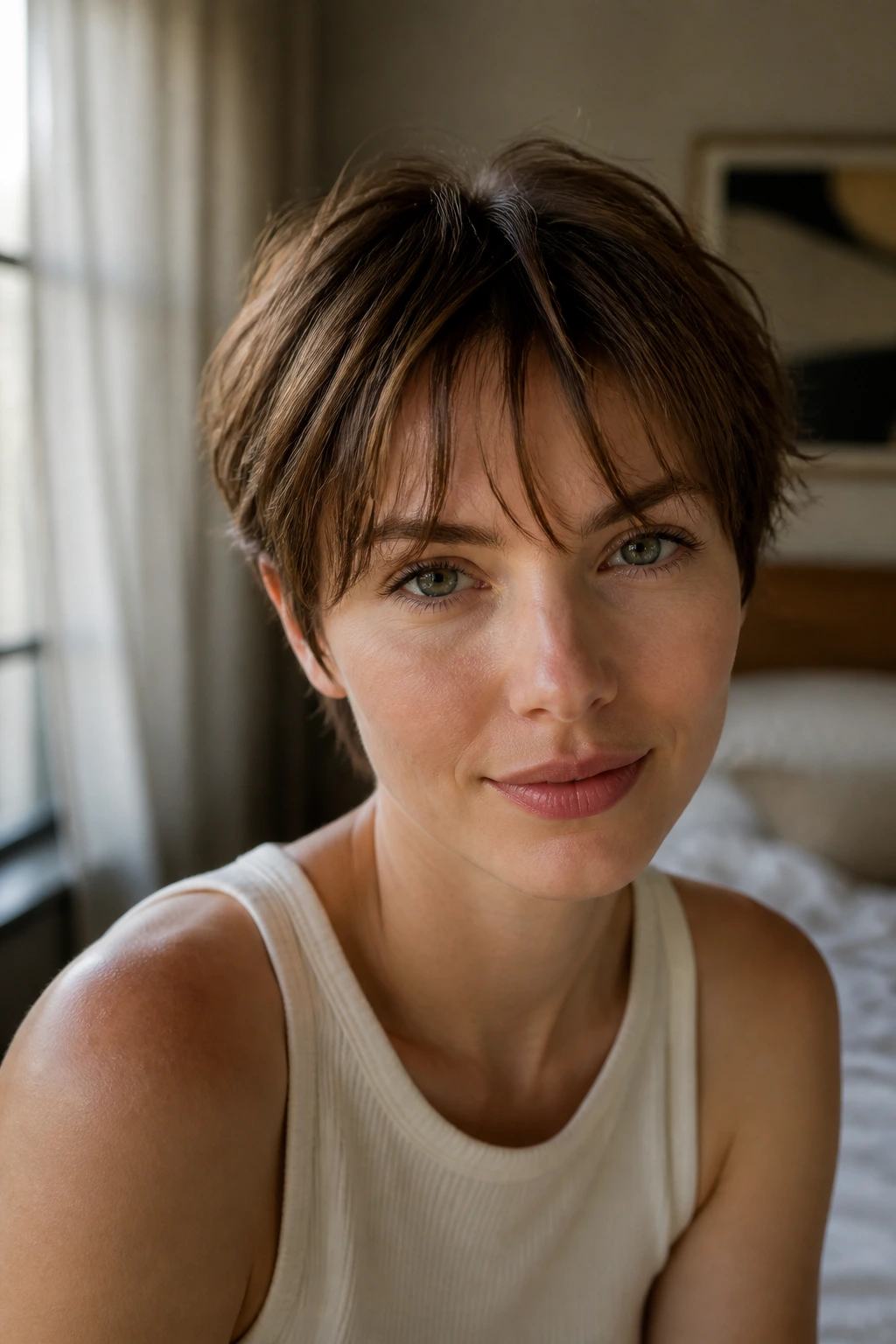
Fine hair needs bangs that understand how little weight they can carry. Wispy bangs do that by using a narrow section and leaving space between the strands, so the fringe can read as soft instead of sparse.
The cut should be light at the center and even lighter at the sides. What you do not want is a bang section that’s too wide, because fine hair spreads out fast and ends up looking thinner than it is. A little root lift spray at the base helps the bangs stand up just enough to show the pieces.
I’d keep the styling simple. Blow-dry the fringe in the direction it naturally wants to go, then pinch the ends once they’ve cooled. That second step keeps the movement intact. If you keep combing through it, the wispy part disappears.
13. Choppy Bangs for Thick Short Hair
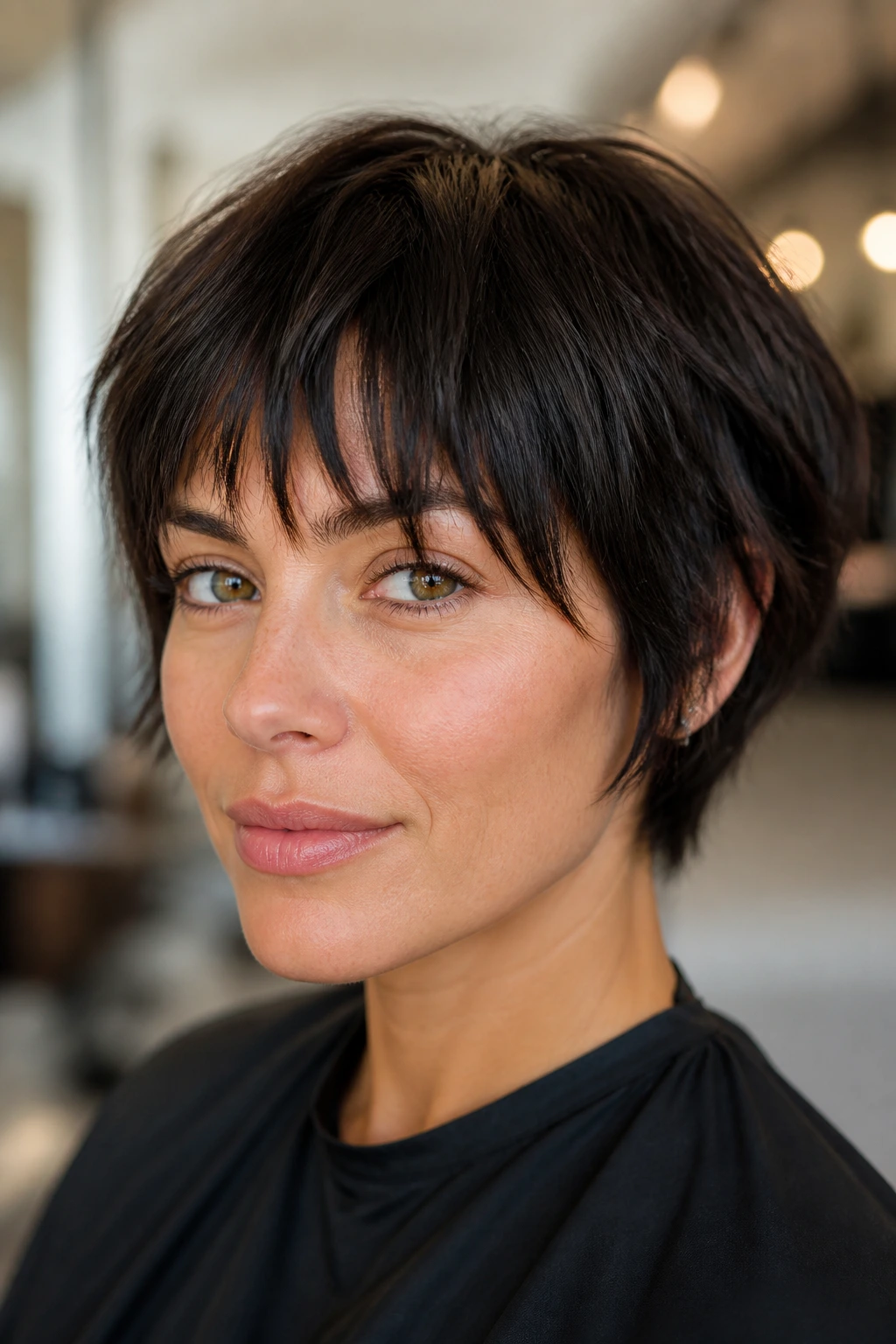
Thick hair can make short bangs look dense in a hurry, so the cut has to remove weight without destroying the line. Choppy bangs are built for that. They break the front into visible pieces while keeping enough body that the fringe doesn’t float away.
The key is internal removal, not aggressive thinning. Thinning shears can leave thick hair frizzy at the edge, and that frizz is ugly in a bang. Point cutting works better because it chips the line without shredding it. Ask for the center to hold a little more weight than the corners so the fringe still reads as bangs and not loose layers.
A bit of smoothing cream at the very ends helps, but only on the tips. If you put product near the roots, thick hair can go helmet-heavy fast.
14. Curly Piecey Bangs for Short Curls
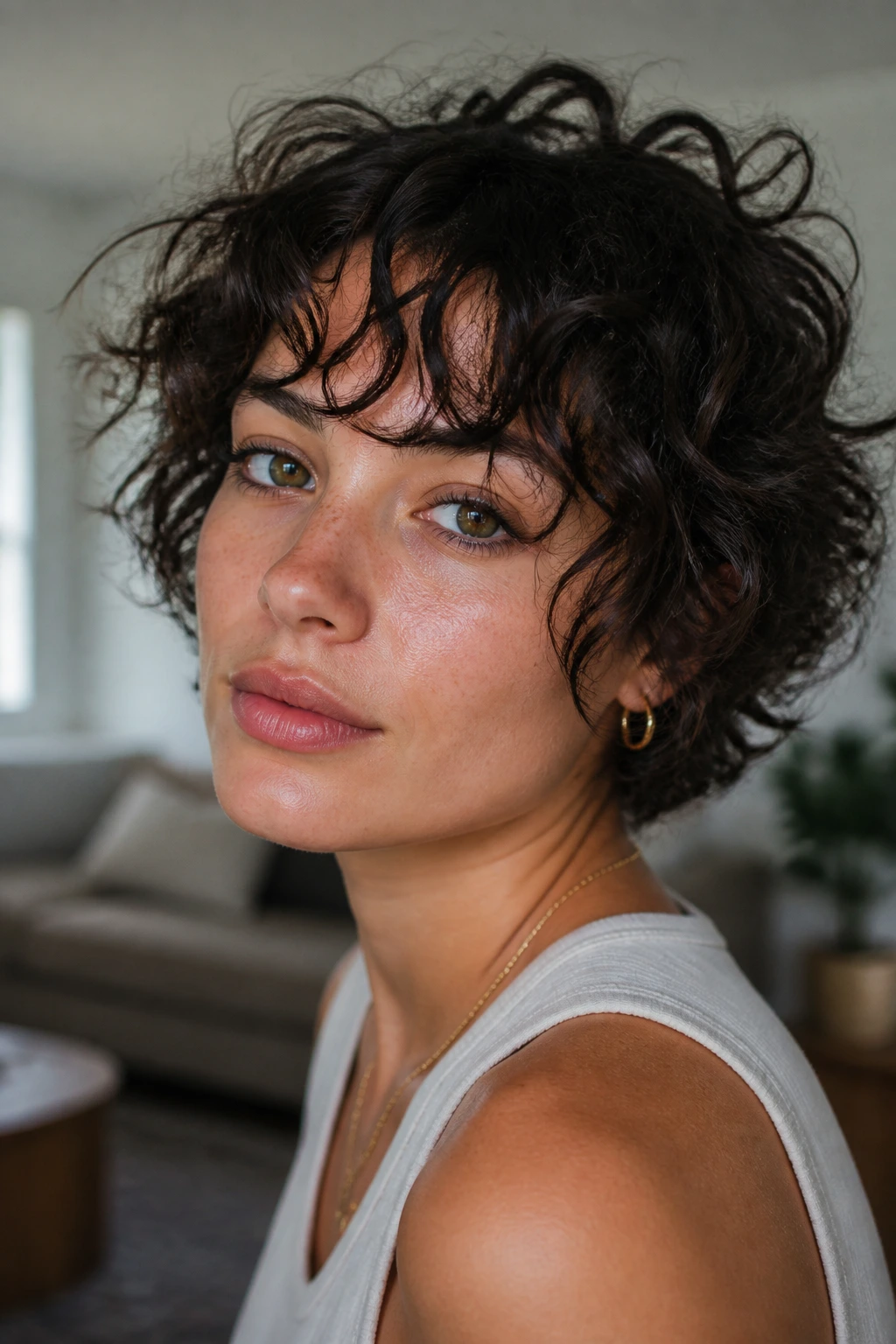
Curly bangs need a different kind of honesty. If you cut them wet and too straight, they spring up in a way you did not ask for. Cutting dry in the curl pattern gives you a better read on where each piece wants to land.
The best curly piecey fringe falls in little ribbons, not one heavy curl block. That means leaving enough length for shrinkage and encouraging the pieces to separate with a curl cream or light mousse. A diffuser on low heat helps, but finger shaping matters even more. Pull the strands apart only after they’re mostly dry.
This style is a good reminder that “piecey” does not mean “straight.” Curls can look soft and separated without losing their shape. In fact, they often look better that way.
15. Sliced Bangs for Straight Short Hair

Straight short hair can make a fringe look too perfect, which sounds nice until it starts feeling flat. Sliced bangs solve that by creating thin, controlled sections that fall with a little edge and a little air between them.
This shape works especially well on blunt bobs and clean pixies because the contrast is clean. The cut should have a soft point at the center and slightly longer sides that can tuck or bend. I like a narrow flat iron for this look. One quick pass, then a slight bend at the ends, is enough. Any more heat and the fringe starts to look pressed.
If your hair tends to separate on its own, this is a gift. Use it. If it stays too smooth, a touch of texturizing spray at the root line gives the bang some bite.
16. Textured Pixie with Deep Side-Part Fringe
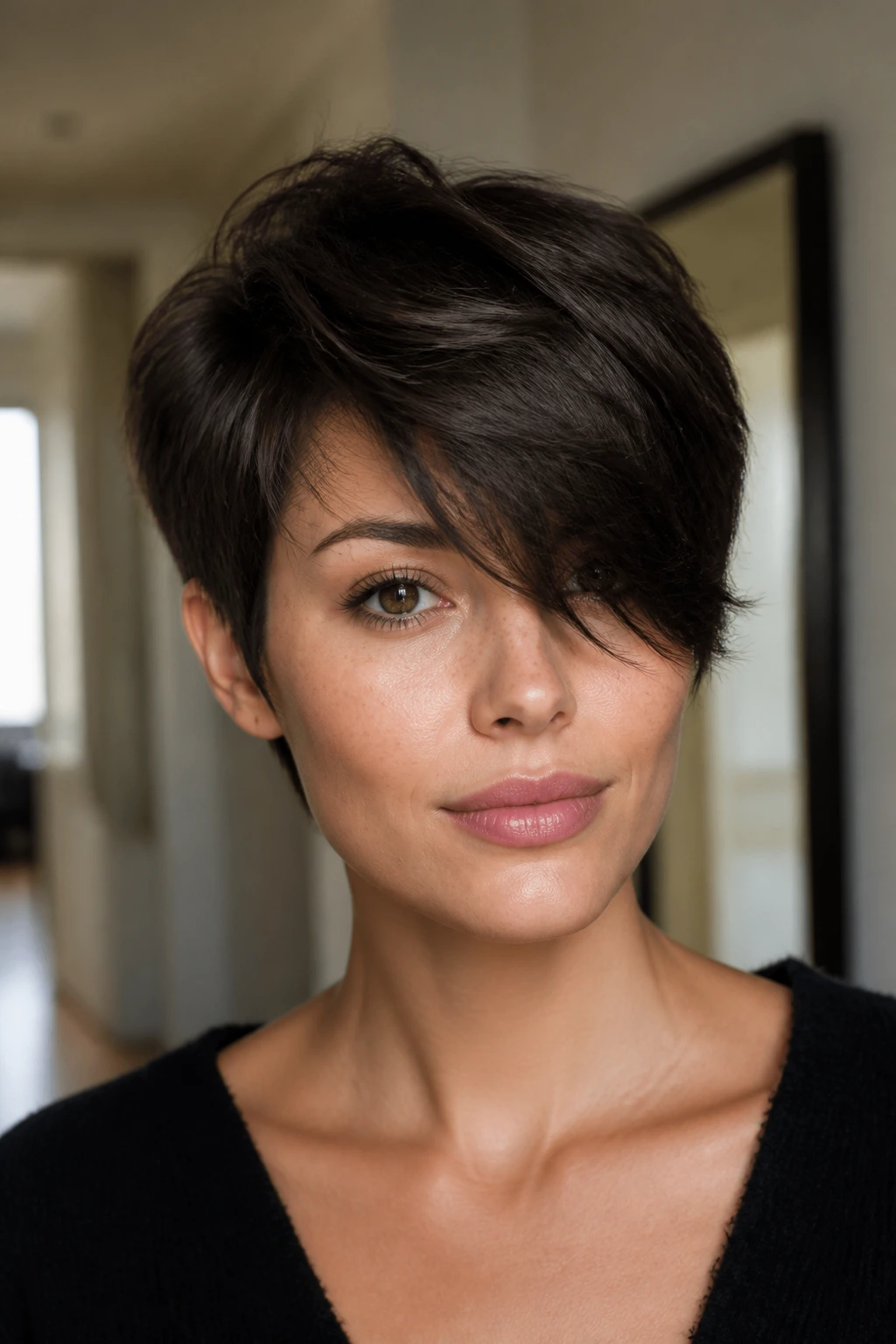
A deep side part changes everything on a textured pixie. Instead of a straight-across bang, you get a fringe that sweeps across one eye and opens the other side of the face. It’s one of the easiest ways to make short hair feel deliberate without making it severe.
The side-part version is useful when the crown likes to collapse or when a center bang fights a cowlick. The longer side of the fringe can skim the brow, while the shorter side lifts away from the forehead. That asymmetry is the whole point. It gives the eye somewhere to go.
I’d style this with a little root clip while the hair cools. Just lift the part side for a minute or two. That tiny pause keeps the fringe from falling flat by lunch.
17. Undercut Crop with Disconnected Fringe
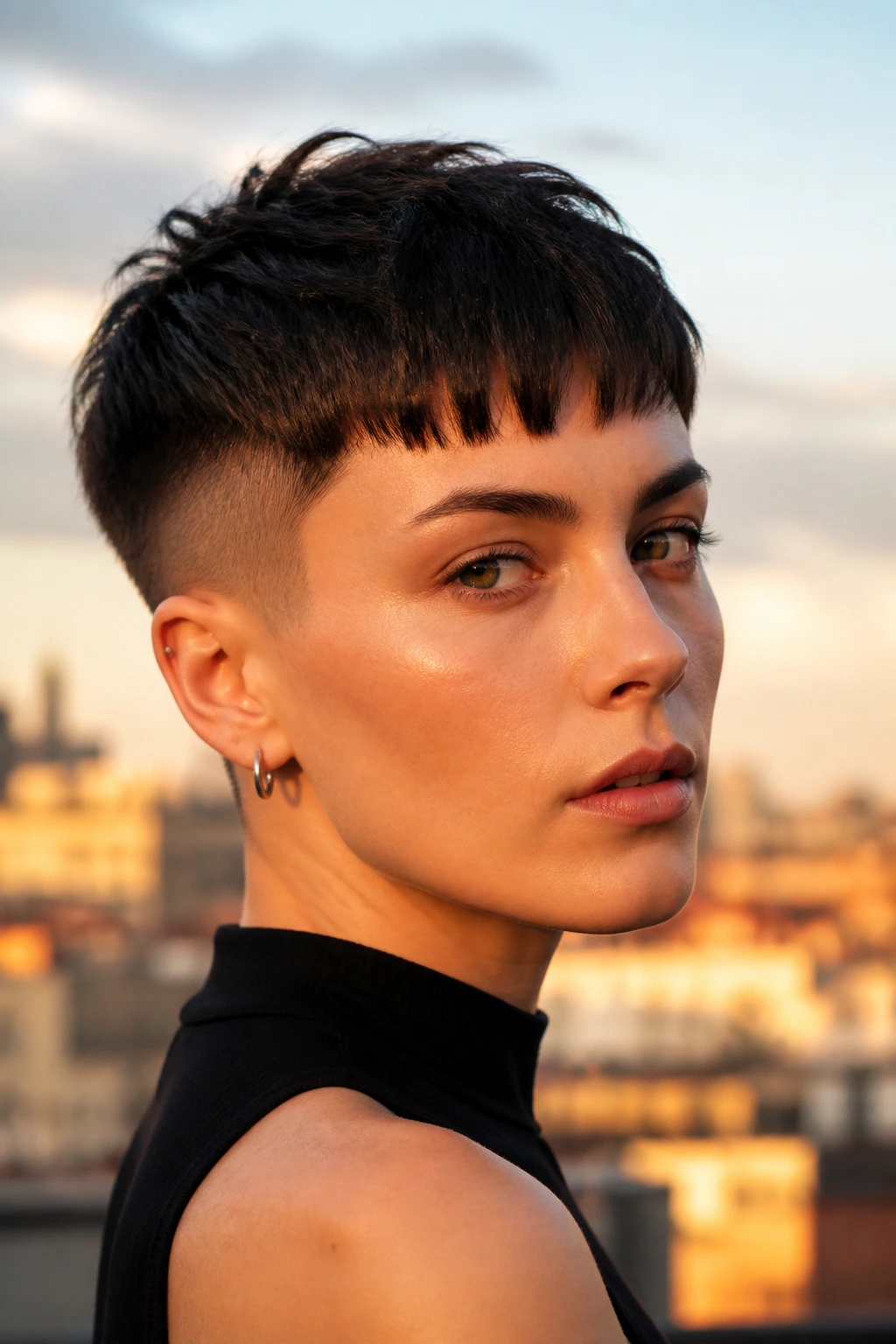
An undercut crop can swallow a heavy fringe if the front isn’t handled carefully. Disconnected bangs fix that by keeping the top piecey and letting the sides stay lean underneath. The contrast looks sharp, not bulky.
This is a strong choice if you like your hair to feel a little architectural. The fringe can be longer in the center and broken into narrow strands at the ends, which keeps it from sitting like a heavy curtain over the undercut. When the sides are cut tight, the front has room to sit properly. No puffing. No helmet.
This style needs a trim schedule you can count on. If the fringe starts growing into the side cut, the shape gets muddy fast. That’s one haircut where a clean edge matters.
18. Bob with Glasses-Friendly Piecey Bangs

Glasses can make a fringe either look finished or feel crowded. The right piecey bang stops just above the frame or lands softly at the top edge, so the hair and the glasses don’t argue over the same space.
The best version leaves a little air over the lenses. If the bangs touch the glasses every time you blink, they will get oily and annoying fast. Ask for a fringe that breaks apart at the center and stays a touch longer at the corners. That keeps the line visible even when the glasses are on.
Small details that help
- Keep the middle slightly narrower so the frames don’t disappear under too much hair.
- Let the temple pieces stay longer so they can slip behind the arms of the glasses.
- Avoid heavy wax near the lens line; it only collects smudges.
This is one of those styles that gets better after you wear it for a day. The hair settles around the frames instead of fighting them.
19. Bixie with Long Piecey Fringe

A longer fringe on a bixie gives you more room to play. It can be swept aside, tucked back, or let fall forward depending on the day, which makes it a very forgiving cut when you don’t want to fuss every morning.
The fringe should graze the cheekbone or sit just a touch above it. That length keeps the short haircut from feeling choppy in the wrong places. A little bend at the ends helps a lot, especially if the bixie itself has some texture through the crown and nape.
What I like most is the flexibility. You can wear it with a clean part for something tidy, or push it forward and separate the ends for a softer, more lived-in look. The cut does not lock you into one mood.
20. Short Bob with Retro Flip Bangs
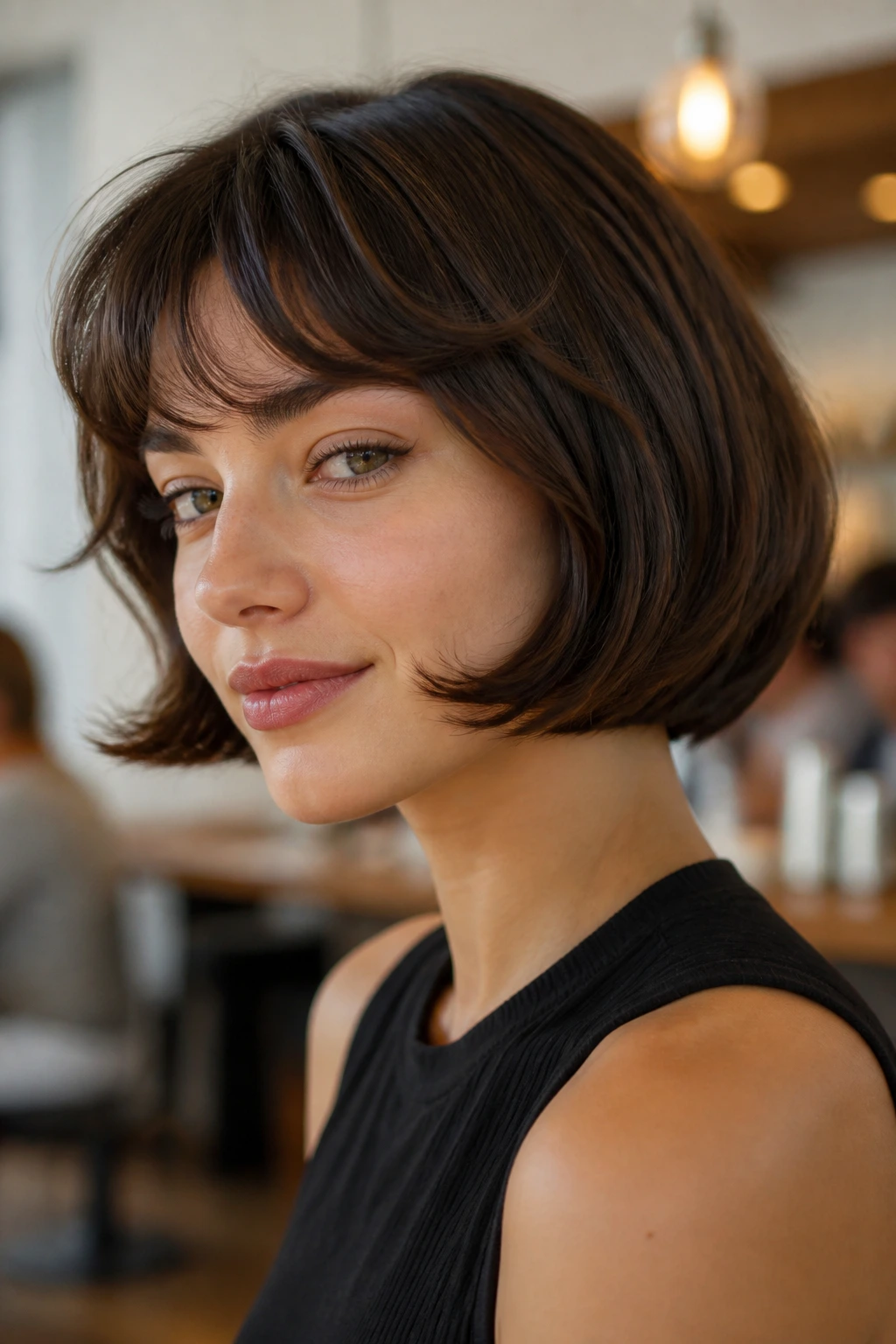
Retro flip bangs bring a little swing to a short bob. The ends turn away from the face instead of hanging straight down, which gives the front a polished shape with a small bit of drama.
This style works best when the fringe is cut with enough length to bend, not so short that it sticks straight up. A small round brush is the tool here. Roll the ends under slightly at the roots, then flick the tips away from the face as the hair cools. That little outward turn is what gives the fringe its shape.
It’s a nice pick if you like a bob that feels tidy but not severe. The flip keeps the haircut from sitting too flat against the forehead. And yes, a tiny bit of spray helps. Not a helmet of it. Just enough to keep the curve in place.
21. Micro Fringe with Soft Edges

Micro fringe gets a bad reputation when it looks too hard. Soft edges fix that. They keep the short line visible while taking the sting out of the cut, which matters if you want the look to feel wearable and not costume-like.
The corners should be slightly longer than the center so the fringe relaxes into the temples. That tiny taper softens the front without losing the cropped shape. It’s especially good on straight hair that holds a line cleanly. If you have very curly hair, you can still wear it, but the cut needs to respect the shrinkage.
This one should be trimmed often. A micro fringe loses its shape faster than longer bangs, and when it grows even a quarter inch, the whole mood shifts.
22. Short Lob with Face-Framing Bangs
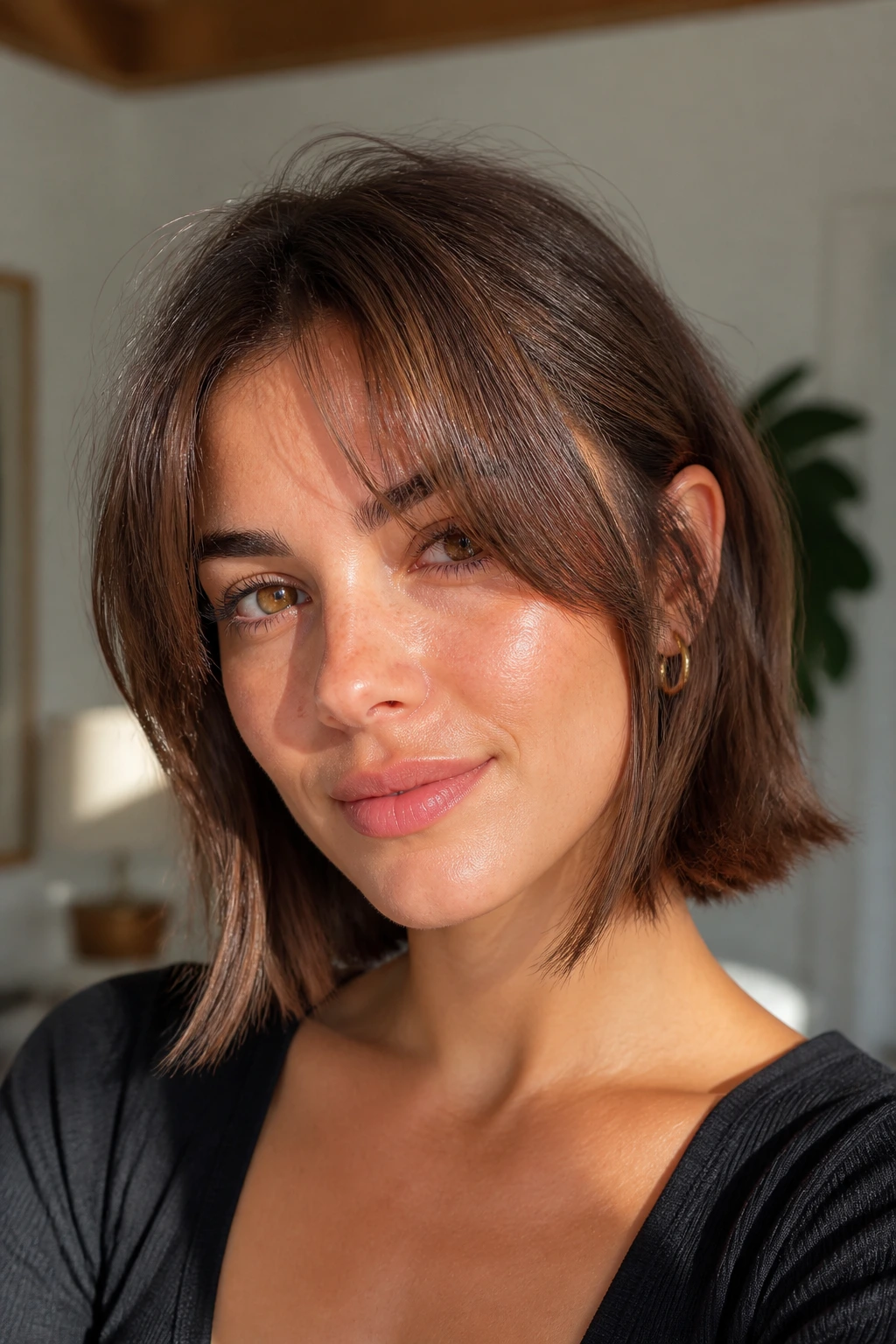
A short lob gives you just enough length to make the bang section feel connected to the rest of the haircut. Face-framing bangs take advantage of that by blending the front pieces into the first layers around the jaw and cheek.
This is a smart move if you want bangs but do not want a heavy fringe across the forehead. The center can stay light while the sides taper down into the front length. That makes the cut feel softer, especially if your hair is thick or a little wavy.
I’d style it by directing the bang area forward first, then sweeping the outer bits toward the face with a round brush. The goal is not volume for its own sake. It is movement that lands where the haircut needs it.
23. Shaggy Crop with Air-Dried Fringe
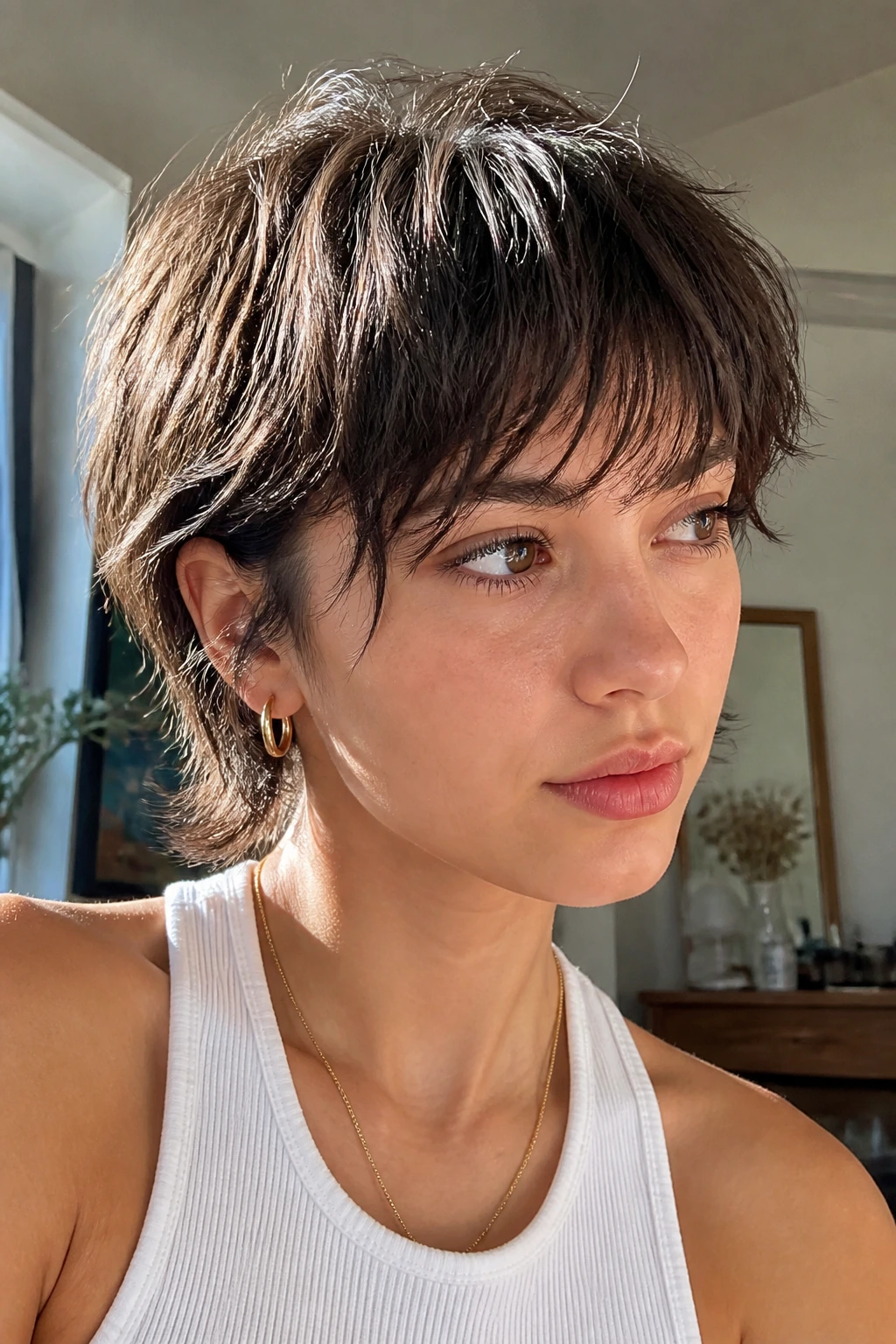
Some fringes only look better when you stop trying so hard. An air-dried fringe on a shaggy crop is one of them. The bend in the hair does the styling work, and the uneven layers keep the front from turning too neat.
This style likes a light mousse or curl cream worked through damp bangs, then finger separation while the hair dries. Don’t brush it out once it starts to set. That usually ruins the piecey finish. If a few strands fall out of place, leave them. The point is not a perfect line.
It’s a very forgiving shape for people who would rather spend two minutes on their bangs than ten. Just make sure the cut itself has enough texture. Air-drying can’t rescue a blunt, heavy fringe.
24. Cowlick-Friendly Side-Swept Bangs

Cowlicks are the reason some fringes split down the middle no matter how hard you fight them. A side-swept, piecey bang works with that growth pattern instead of against it. The shortest point sits off center, so the hair has somewhere to fall.
That off-center cut matters more than people think. If you force a cowlick into a dead-center bang, it usually wins by noon. Ask for a longer section on the stubborn side and a soft diagonal across the forehead. The result looks intentional, not compromised.
What helps
- Blow-dry the bang in the opposite direction first, then back into place.
- Let it cool while clipped or brushed sideways.
- Use a flexible spray, not a heavy paste.
The cut should feel like it has room to move. That’s what keeps the cowlick from punching through the fringe.
25. Square Face with Soft Piecey Bangs

A square face usually looks best with bangs that soften the angles rather than echo them. Soft piecey bangs do that by breaking up the line and avoiding a hard straight edge across the brow.
The best version has a slight curve and longer temple pieces. That keeps the fringe from drawing a sharp box around the face. You want the front to blur the corners a little, not emphasize them. A center that lands just at the brows and edges that slide downward usually do the trick.
This is one of those cuts where less density can help a lot. Too much bulk up front makes the forehead feel heavier, and the jaw can start to look even stronger. The broken-up fringe gives the face some air.
26. Round Face with Lengthening Fringe
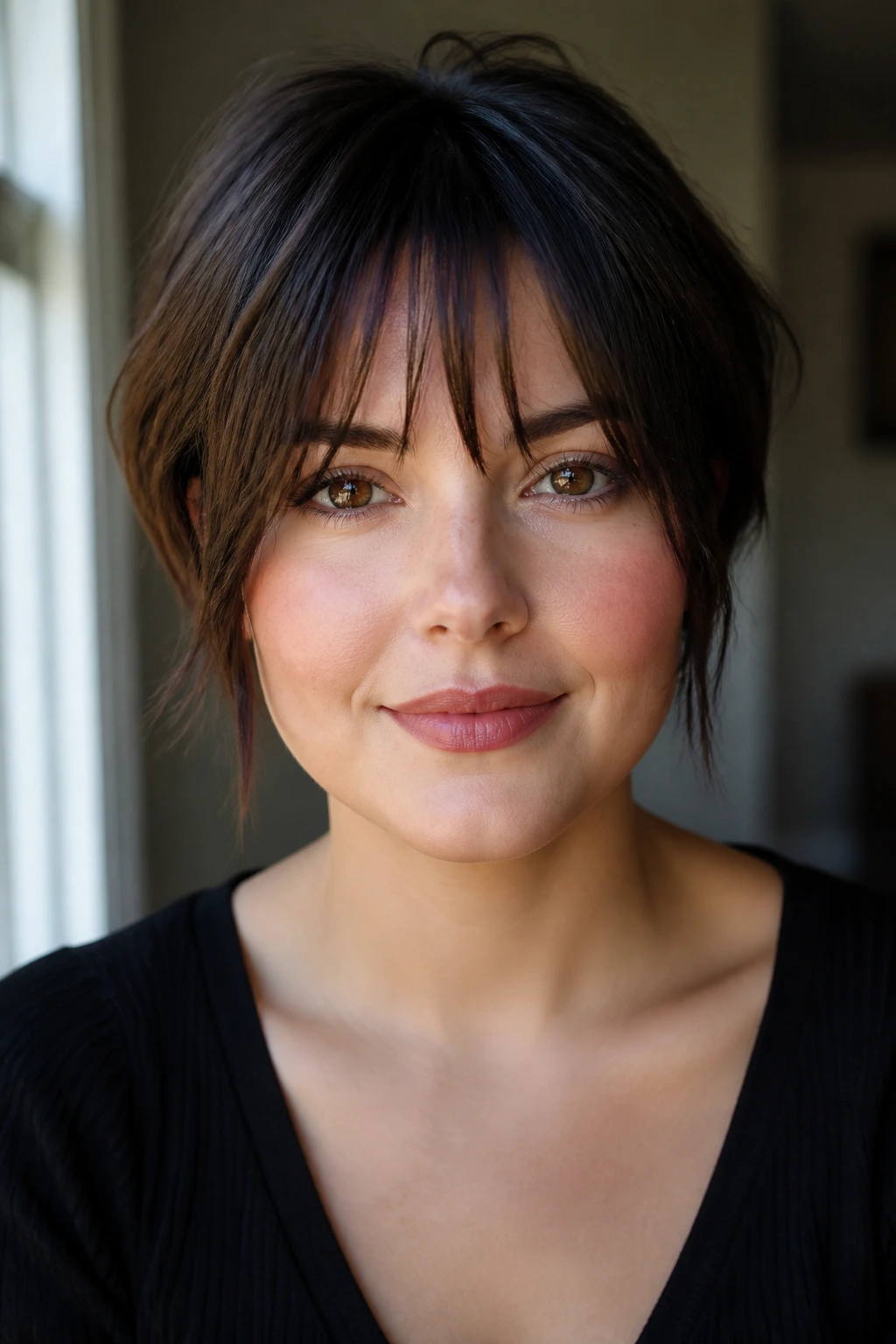
A round face often benefits from a fringe that pulls the eye upward and down at the same time. A lengthening piecey bang does that with a deeper center gap and longer sides that taper toward the cheekbones.
The center should not be too short. If it sits above the brows and stays too full, it can widen the face instead of balancing it. Let the middle skim the brow line and keep the sides longer. That vertical movement is the part that matters.
I’d keep the styling off the face a little, not pinned flat to the forehead. A bit of lift at the root and a looser separation through the ends makes the whole cut feel lighter. The effect is subtle, but you notice it right away.
27. Heart-Shaped Face with Balanced Fringe

Heart-shaped faces usually need a fringe that keeps the forehead from taking over the haircut. Balanced piecey bangs do that by giving the center a touch more weight and letting the sides soften gradually toward the temples.
This is not the place for ultra-thin bangs that disappear. You want enough density in the middle to anchor the face, then a slow taper so the fringe merges into the sides. A soft curve works better than a hard line. It feels kinder to the shape.
If your hair is straight, a little bend at the ends will keep the fringe from looking clipped on. If it’s wavy, even better. The natural movement helps the bangs sit with the rest of the cut instead of floating above it.
28. Grow-Out Fringe for the In-Between Stage
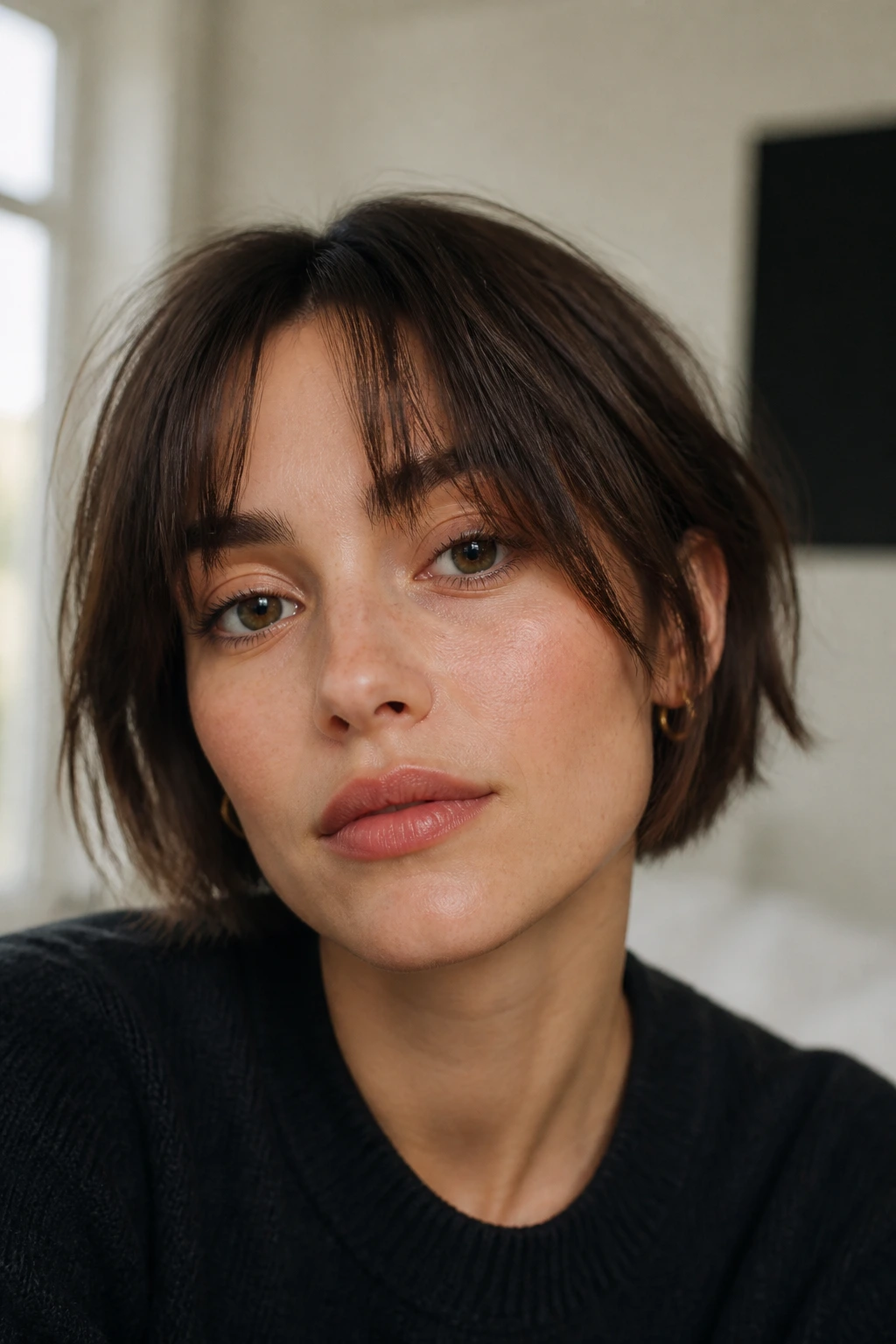
The awkward grow-out stage is easier when the fringe was cut with a plan. A soft grow-out piecey bang starts with slightly longer corners, enough separation in the center, and no harsh line that forces you to trim too often.
This is the style I’d choose if you want bangs but not a permanent appointment every three weeks. The fringe can be swept aside, tucked behind the ear, or clipped into a side part as it gets longer. When the center starts reaching the lashes, the shape still works because the outer pieces already have room to move.
The best grow-out bangs do not fight the rest of the haircut. They ride with it. That makes the in-between stage look deliberate instead of like you are waiting for something to happen.
Why Short Hair Changes the Way Bangs Move
Short hair changes the rules because there is less length to absorb weight. A fringe on a pixie or bob sits closer to the face, dries faster, and shows every cut line faster too. That means the little decisions matter more: where the center lands, how wide the bang section is, and how much taper lives at the temples.
A blunt fringe can work on short hair, but it has to be perfect to look good. A piecey fringe gives you some slack. The broken ends and soft gaps keep the front from becoming a solid shelf, especially on cuts that already have a shape around the ears or jaw. That is why point cutting and razor work show up so often in this topic. They are not trendy extras. They are how you keep the front from overpowering the rest.
Short hair also makes styling mistakes louder. Too much wax turns bangs into little ropes. Too much mousse swells the root and pushes the fringe forward. Too much brushing destroys the separation and leaves the front flat by lunch. When the haircut is short, less product usually looks more expensive. Not because “less is more” is some cute slogan, but because the front needs movement, not armor.
The Tools That Keep the Fringe Light
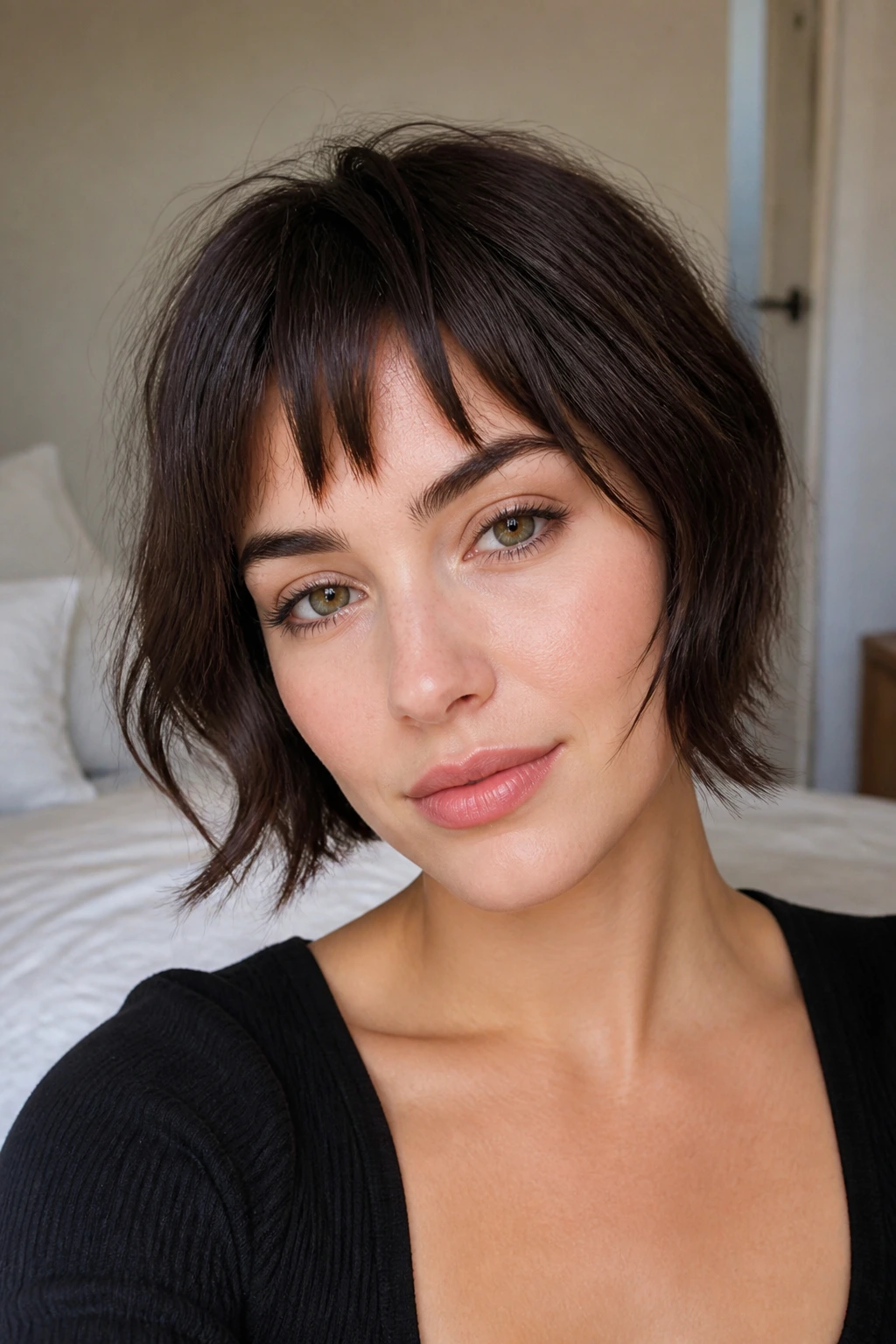
You do not need a drawer full of gadgets, but a few specific tools make piecey bangs much easier to live with.
- Small round brush, 1 to 1.25 inches: The smaller barrel gives you control over short lengths without sending the fringe into a giant curl.
- Blow dryer with a concentrator nozzle: The nozzle aims heat at the roots instead of blasting the whole bang section apart.
- Narrow flat iron: Useful for a quick bend on straight short hair or a soft flip at the ends.
- Texturizing spray with a dry finish: Helps separate strands without making them sticky.
- Lightweight wax or pomade: Best for the ends only, and only in a tiny amount.
- Root-lift mousse: Good for fine hair or flat crowns that drag the fringe down.
- Duckbill clips: Handy for setting the bangs while they cool in the direction you want.
- Fine-tooth comb: Great for setting the part and keeping the bang section neat before heat goes in.
I’d skip anything too heavy or glossy unless your hair is very dry. Short fringe shows product buildup fast, and the front of the haircut gets greasy long before the rest of the head does.
What to Ask Your Stylist for in the Chair

“Piecey” means different things to different people, which is why a vague request can go sideways fast. The better version is to describe the length, the density, and where you want the fringe to sit when it’s dry.
Say things like: “Keep the center at brow level and let the corners taper longer.” Or: “I want separation, but I do not want see-through bangs.” That second line matters. Lots of people think they want piecey fringe when they actually want a soft but solid bang line. Those are not the same haircut.
Bring photos, but bring the right kind of photos. A picture of a fringe on someone with a different texture can mislead the stylist. If your hair is thick and the reference is fine, or your hair is straight and the reference is curly, the final shape will not behave the same. Show photos that match your hairline and your density more than your face alone.
One more thing: tell the stylist how you wear your hair on ordinary days. If you live in a side part, say that. If a cowlick pushes the front left, say that. The cut should work with your actual morning routine, not with the version of you who owns a round brush and twenty spare minutes.
How to Wear Piecey Bangs With the Rest of Your Short Cut
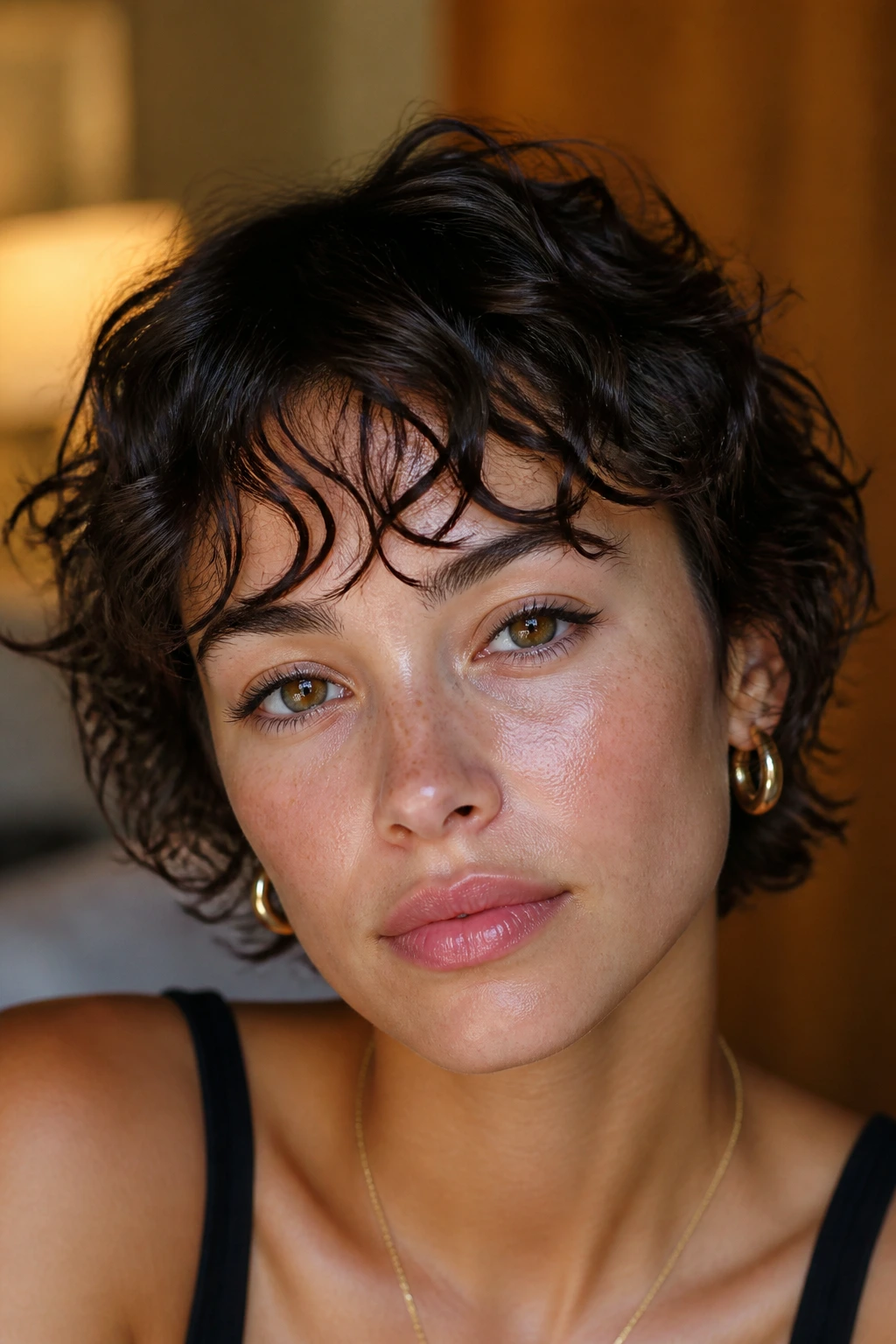
Presentation: Let the fringe sit where the cut has room for it. On a bob, that usually means brushing the center near the brows and letting the corners skim the temples. On a pixie, a slightly longer front can keep the look from turning severe.
Accompaniments: Small hoops, slim glasses, clean collars, and tucked shirts all play nicely with a piecey fringe because they keep the upper half of the look from getting crowded. Heavy scarves and bulky necklines can swallow a very short bang, so length matters more there.
Portions: The bang section should feel narrow enough to look deliberate, but wide enough to read as fringe, not random face-framing bits. If the section reaches too far into the temples, short hair starts to feel heavy in front.
Finish: A matte, airy finish gives the fringe a torn, lived-in look. A little shine on the ends can help straight hair, but too much gloss makes the pieces stick together and kills the separation.
Styling Tricks That Keep the Ends Soft
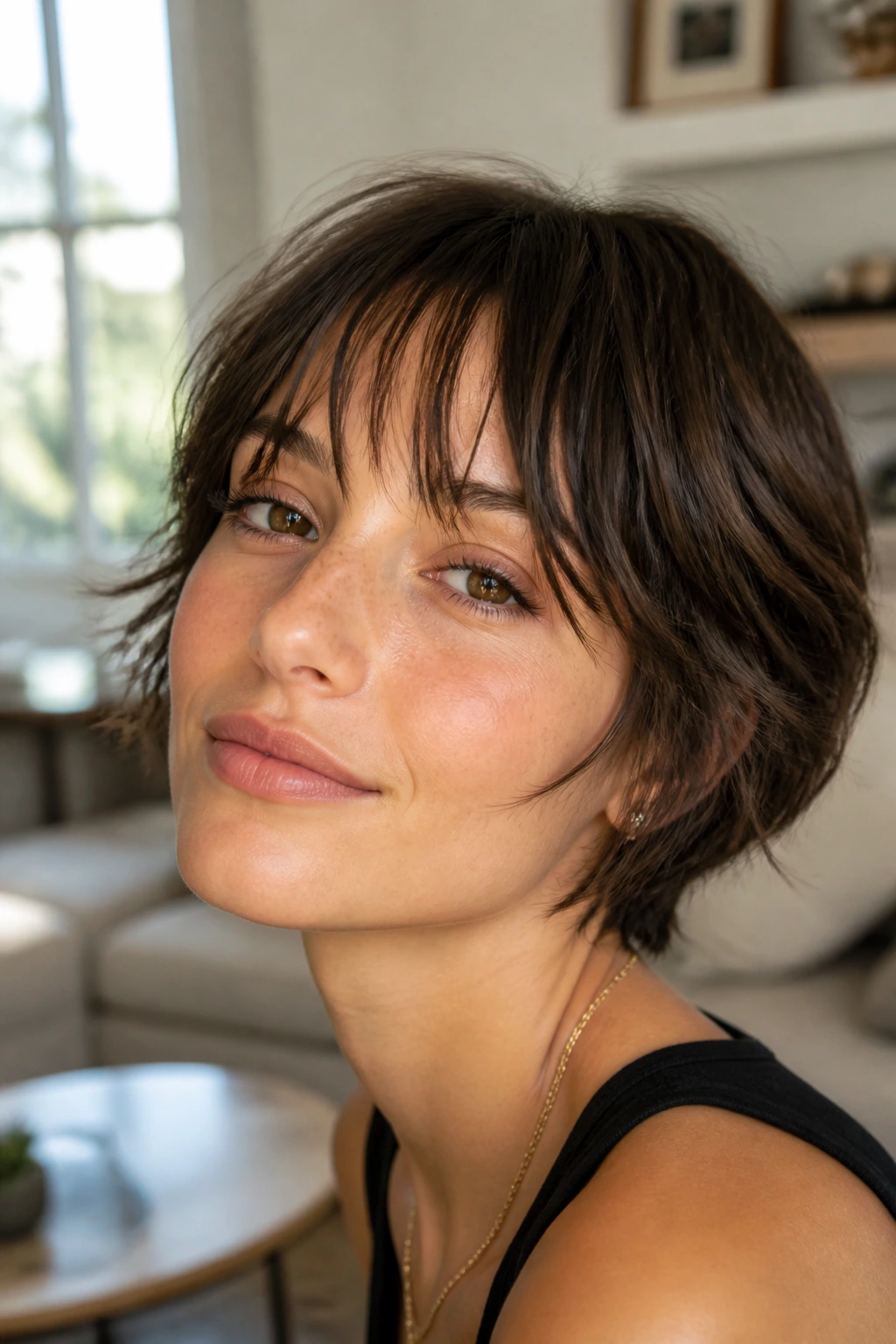
Dry the roots first
The front of the hair sets faster than the rest, so the bangs should be the first thing you touch with the dryer. Aim the airflow from side to side at the root line, then direct it downward only when the shape starts to settle. That little change in direction keeps the bang from drying into one solid ridge.
Let it cool before you pinch it
Cooling is half the styling. If you keep moving the hair while it is hot, the strands never lock into their shape. Once the fringe is about 90 percent dry, stop. Let it sit for a minute, then pinch the ends apart with dry fingers or a tiny amount of wax.
Use less product than feels sensible
Short fringe can take almost no product before it looks greasy. Start with a tiny amount, work it into the fingertips, and touch only the ends. If you need more control, add a second tiny pass. One large blob is how bangs turn into ropes.
Fix the part, not the whole head
If the fringe keeps splitting in the wrong place, the answer is often the root line, not more spray. Mist the front lightly with water, comb it into the correct direction, clip it for a minute, and let it settle. That works better than fighting the bangs with repeated heat.
Keeping the Bangs Fresh Between Washes
Short bangs pick up oil faster than the rest of the haircut because they sit right on the forehead. You can slow that down, but you cannot ignore it. The front usually needs more attention than the crown, and that is normal.
For day-to-day upkeep, a quick blast of dry shampoo at the roots works better than spraying the ends. The goal is lift, not grit. If the fringe gets a little sweaty or limp, mist the front lightly with water, reshape it with your fingers, and give it 30 to 60 seconds of heat from the dryer. That is often enough to bring the shape back.
I also like trimming the bangs at a slightly different rhythm than the rest of the haircut. Micro fringe may need a tidy-up every 2 to 3 weeks. Eyebrow-grazing bangs usually last 4 to 6 weeks before they start falling into the eyes. Longer grow-out fringes can stretch closer to 6 to 8 weeks if the corners are soft and the cut was planned well.
At night, a loose clip or a gentle sweep to the side can keep the front from getting crushed. A satin pillowcase helps, too. Not because it’s magical, but because it creates less friction, which means fewer bent pieces and less morning reset.
Variations and Adaptations to Try
The Air-Dry Fringe: This version leans into natural bend and a little mess. It works best on waves and curls that look better when they’re not brushed flat. Use a light mousse, scrunch the front, and leave the separator work to your fingers after the hair is mostly dry.
The Glossy Blowout Fringe: Straight hair can wear piecey bangs without losing polish. A small round brush, a narrow flat iron, and a touch of serum on the very ends give you a smoother finish with enough separation to keep the fringe from looking stiff.
The Cowlick-Calmed Sweep: If your growth pattern keeps kicking the bangs sideways, cut the fringe off center and longer on the stubborn side. Dry the front in the opposite direction first, then sweep it back into place. That gives the cowlick less room to win.
The Curly Ribbon Fringe: Short curls look best when the bang section is cut dry and shaped into separate ribbons. The pieces should be long enough to spring, not so short that they balloon above the brow line. This is a strong choice when you want texture without the puff.
The Grow-Out Sweep: If you know you’ll want to move on from bangs later, let the corners start longer from day one. That way the fringe can slide into the rest of the haircut as it grows, instead of hanging in a stubborn straight line that only looks right on trim day.
Common Mistakes That Flatten the Front
One of the easiest mistakes is making the bang section too wide. The fringe starts to swallow the whole forehead, and short hair suddenly feels heavier than it should. Keep the section narrower than you think you need; the temples can be longer, but the center should stay focused.
Another problem is using too much product. Wax, pomade, and heavy cream can be useful, but only in tiny amounts. If the bangs stick together in greasy little ropes, the fix is to wash the front or reset with water, then come back with a smaller amount of product.
Ignoring the hairline is a big one. A cowlick or a strong part can push the fringe into a split that looks accidental. Work with the direction the hair wants to move, not against it. If you have a stubborn front, a deeper side part or a slightly longer corner usually behaves better.
Skipping trims too long creates a different issue. The fringe starts falling over the eyes, but the shape no longer reads as purposefully piecey. It just looks overdue. A little maintenance keeps the front crisp. That is the whole deal.
Finally, people often over-blend the sides. When the bang corners disappear too far into the haircut, the front loses its shape. You want a soft connection, not no connection at all.
Frequently Asked Questions
Do piecey bangs work on every short haircut?
Not every cut, no, but they work on more shapes than people expect. Bobs, pixies, bixies, shags, and short lobs all take them well if the bang section is matched to the haircut’s density and line.
How often do piecey bangs need trimming?
Shorter fringe needs more frequent cleanups. Micro bangs may need attention every 2 to 3 weeks, while eyebrow-grazing or longer piecey bangs can usually go 4 to 6 weeks before they start losing their shape.
Can I air-dry piecey bangs?
Yes, if your hair already has some bend or curl. Fine, straight hair usually needs at least a little root help from a dryer, but wavy and curly hair can air-dry well with a light mousse and finger separation.
What if my bangs separate too much and look stringy?
That usually means too much product or not enough density in the cut. Wash or dampen the fringe, then use less wax and ask for a slightly fuller center next time.
Are piecey bangs good with glasses?
They can be excellent with glasses if the length is planned around the frame. Keep the fringe a touch above the top edge or longer at the temples so it doesn’t sit right on the lenses.
What should I do if I have a strong cowlick?
Cut the fringe off center and do not force it into a dead-straight line. Dry it in the opposite direction first, clip it for a minute, then let it settle where the cowlick is least aggressive.
Can curly hair wear piecey bangs without losing shape?
Absolutely. The cut just needs to be done with shrinkage in mind, usually dry or near-dry. Curly fringe looks best when the pieces are long enough to form ribbons instead of bouncing up into a tiny shelf.
How do I grow out piecey bangs without hating the in-between stage?
Let the corners grow first and keep the center soft rather than blunt. That way the fringe can slide into the rest of the haircut as it lengthens, and you can tuck it or sweep it aside on the harder days.
A Fringe That Grows With You
Piecey bangs on short hair work because they leave room for movement. That sounds small, but it changes the whole haircut. A little gap between strands keeps the front from turning stiff, and a thoughtful taper at the temples makes the shape feel finished instead of forced.
The best versions are not the ones with the most product or the sharpest line. They’re the ones that know where to stop. When the cut is light at the center, soft at the corners, and matched to the way your hair actually falls, the fringe starts doing the quiet work that makes short hair look intentional. That is the real win.
