



A short mullet can be one of the smartest haircuts for older women, but only when the layers are cut with restraint and the nape is kept tidy. The best versions don’t shout. They lift the crown, skim the cheekbones, and leave enough length in back to make the shape feel deliberate instead of accidental.
That’s the part people miss. A modern short mullet isn’t about copying a loud retro photo from a music video. It’s about balance: a little softness around the face, a little energy at the top, and a back section that moves when you turn your head. On hair that has gone finer, drier, grayer, or just a bit more stubborn over the years, that shape can do a lot of useful work without asking you to fight it every morning.
And yes, it can look polished. It can look clean with glasses, flattering with silver hair, and surprisingly good on hair that refuses to stay flat on the crown. The trick is knowing which version suits your texture, how much edge you actually want, and where to stop before the cut turns sharp in the wrong way. That’s where the good ones start.
Why These 24 Cuts Work So Well
-
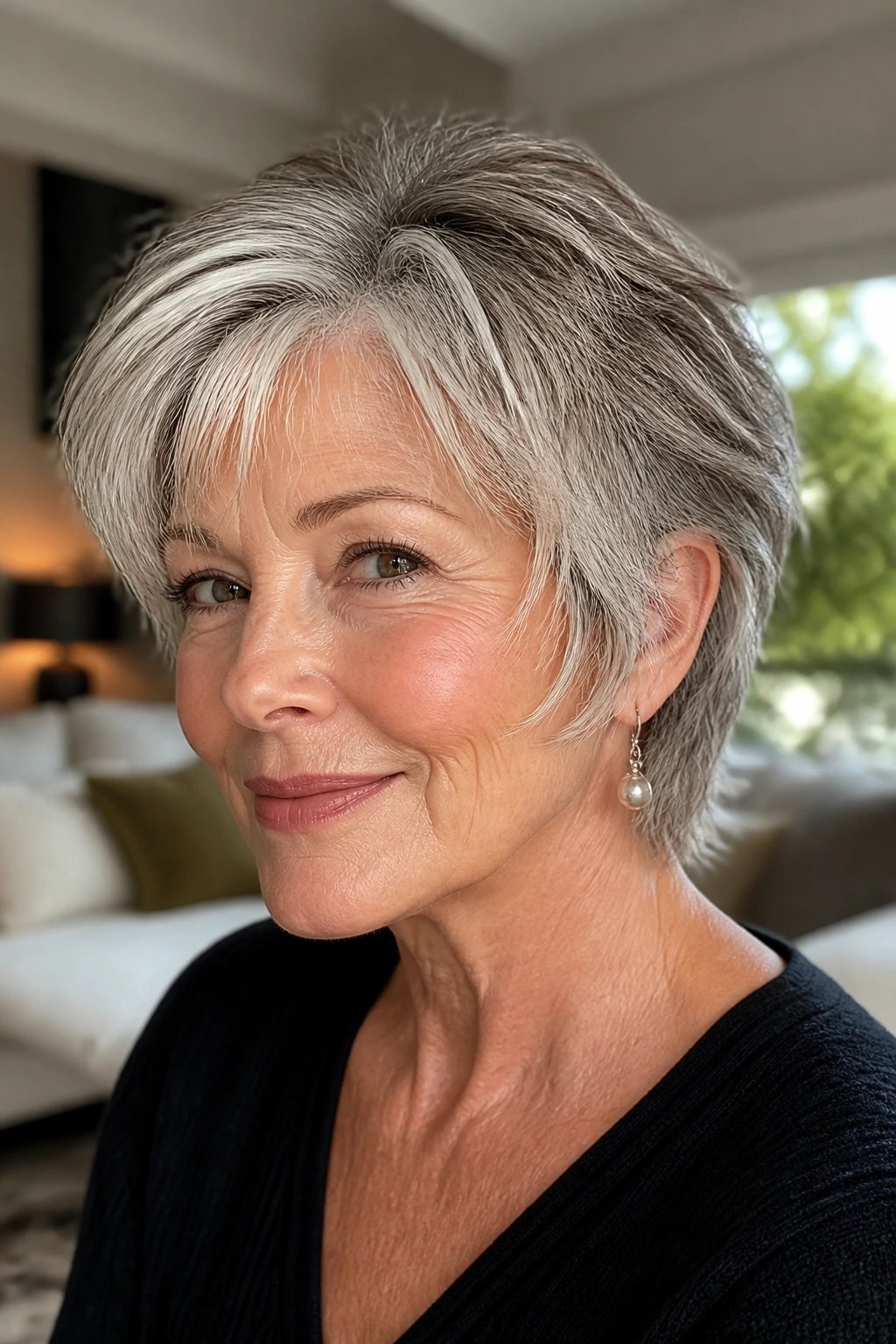
Soft around the face: The better short mullet cuts keep the front pieces feathered and mobile, so the face gets framed instead of boxed in by one blunt line.
-
Kind to changing texture: Hair that has become finer, coarser, or a little wiry in the wrong places usually behaves better when weight is removed in the right spots and not everywhere at once.
-
Easy to personalize: A half-inch at the fringe, a slightly longer nape, or a tighter taper around the ears changes the whole mood of the haircut.
-
Friendly to gray and silver hair: Shorter layers let bright or coarse strands bend instead of puffing out, which matters when the hair has more texture than it used to.
-
Grows out with fewer awkward stages: These cuts usually slide into a shag, bixie, or cropped bob instead of hitting that lumpy, in-between phase that makes you reach for a clip every morning.
What Makes a Short Mullet Feel Soft Instead of Severe
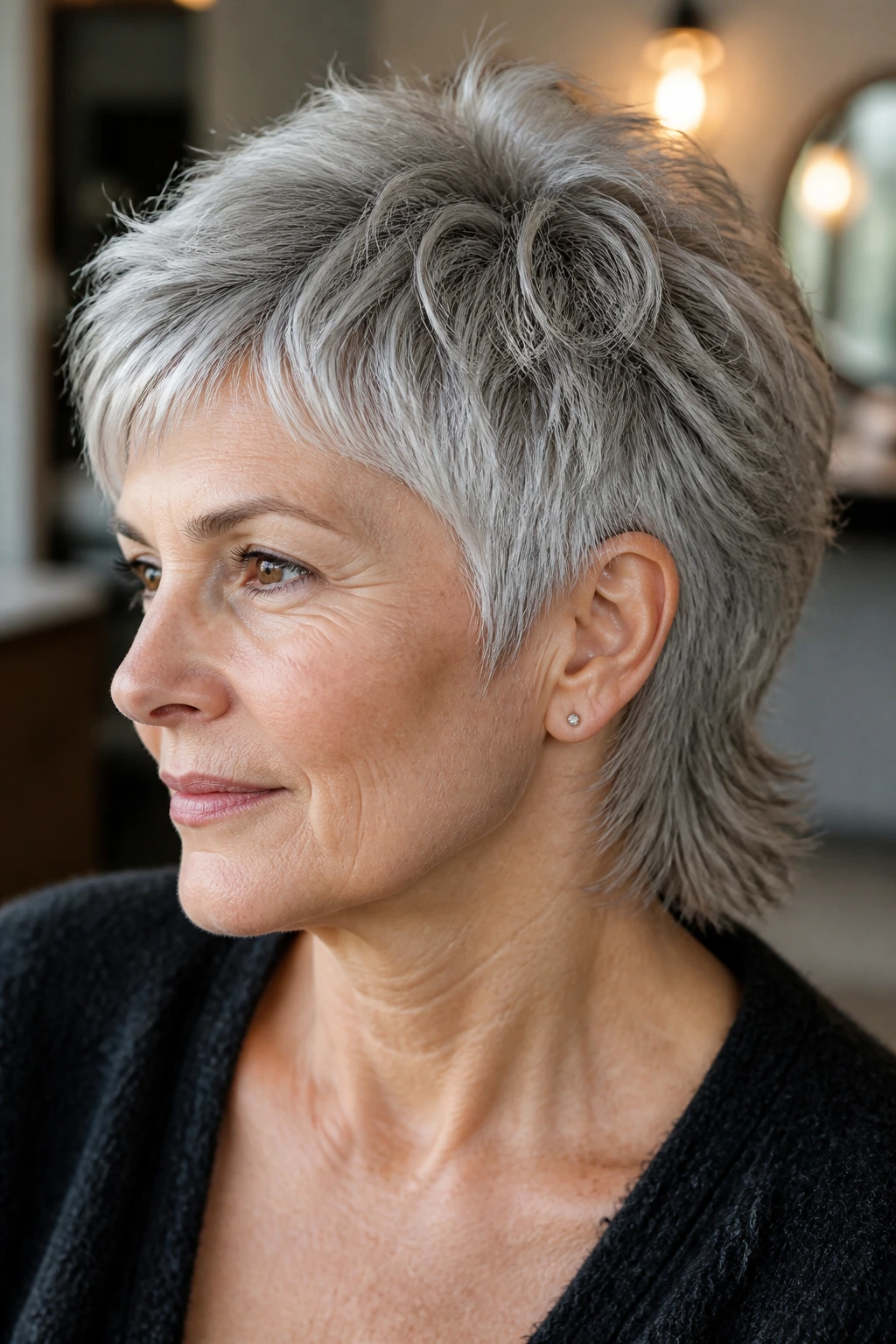
A good short mullet on older women usually lives or dies by one thing: the transition. If the crown is too short, the shape can collapse. If the back is too blunt, the whole cut starts looking boxy. If the sides are too long, you lose the point of the style entirely and end up with a shaggy haircut that forgot its job.
The modern answer is restraint. A lot of the best versions use a short top, tapered sides, and a nape that is kept light with point cutting or razor work. That soft finish matters. It lets the haircut move when you turn your head, and it keeps gray or highlighted hair from sitting in one stiff sheet.
Older hair often has two personalities at once. The crown may go flat faster, while the ends around the jaw and neckline can be wiry, dry, or oddly bulky. A short mullet uses that split to its advantage. It keeps lift where you need lift and removes drag where drag makes the haircut feel dated.
I also like these cuts for women who wear glasses. The ear area matters more than people think. If that zone is left too dense, the frames and the hair start fighting each other. A clean taper around the temples and ears fixes that fast.
The Shape to Ask For
Tell your stylist you want soft layers, a light nape, and a controlled top. That phrase is worth more than asking for “a mullet,” because it gives room for finesse. The difference between chic and costume is usually two inches of hair and one bad blunt line.
1. Soft Feathered Mullet
This is the one I’d point to first if someone says they want a short mullet cut for older women but doesn’t want anything severe. The top stays airy, the side layers skim the cheekbones, and the back is feathered enough to move without looking wispy in a sad way. On gray or silver hair, the softness keeps the cut from turning stiff around the edges.
Why It Works
Feathering is doing the heavy lifting here. Instead of one hard shelf between the crown and the nape, the layers melt into each other, which keeps the whole shape readable and easy on the eye. Ask for layers that begin around the upper ear and a nape that tapers in small steps, not one dramatic drop.
Quick Details
- Best on fine to medium hair that needs a little lift.
- Keep the fringe at brow to cheekbone length so it doesn’t overpower the face.
- Ask for a softly textured nape, not a blunt neck line.
- Blow-dry with a small round brush to get a bit of bend through the ends.
My honest tip: if your hair is naturally straight and stubborn, a tiny bit of mousse at the roots will help this cut keep its shape past lunchtime.
2. Pixie Mullet with a Tapered Neck
A tapered neck changes everything. Instead of leaving the back to hang heavy, this version clears out the neckline and lets the top keep a little attitude. The result feels cleaner than a classic shag and less fussy than a full bob, which is exactly why it works so well on women who want short hair without the helmet effect.
The cut lands best when the top is kept a touch longer than the sides, then compressed neatly through the nape with scissors or a soft clipper taper. That gives you a tidy outline from behind, but still enough movement at the crown that the haircut never looks flat from the front.
If your neck hair grows fast or tends to puff out after a few weeks, this is one of the easier shapes to live with. It also plays well with earrings. That sounds like a small detail, but it matters.
3. Curly Silver Mullet
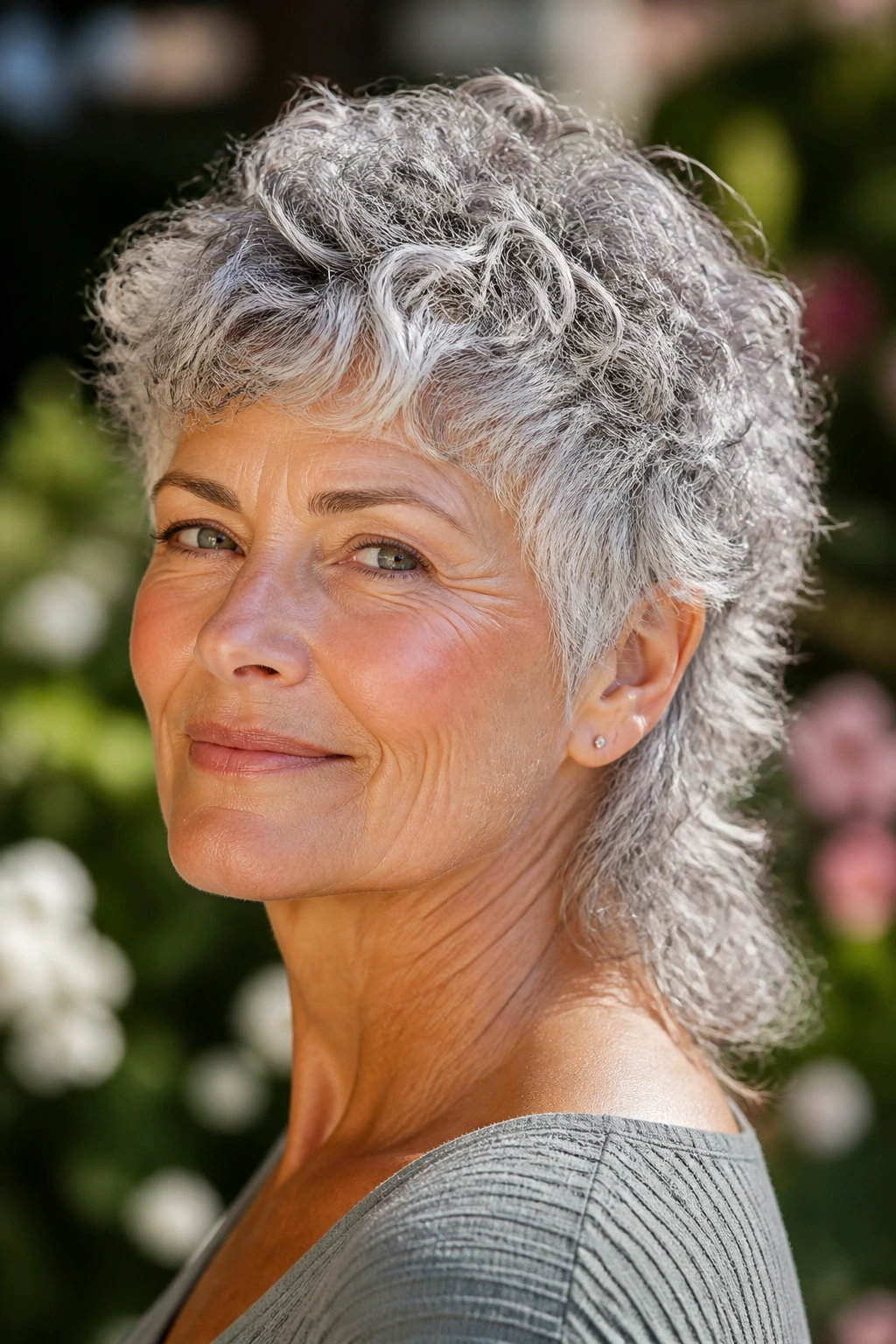
Why does a curly short mullet work so well on silver hair? Because curls need room to spring, and silver strands love a cut that doesn’t fight their texture. This version keeps the top and crown slightly shorter so the curls can lift, while the back holds enough length to show off the pattern without turning into a triangle.
How to Wear It
- Ask for the cut to be shaped on dry or mostly dry curls so the curl pattern isn’t guessed at.
- Keep the sides soft and layered around the temple area.
- Use a lightweight cream rather than a heavy butter if your silver hair gets dry but fine.
- Diffuse on low heat and stop before the curls get crunchy.
The cut is especially flattering if you want the silver tone to do some visual work on its own. Those bright pieces catch light around the face, and the cropped back keeps the silhouette neat. It’s one of the few short mullet cuts that can look both easy and deliberate without much product.
4. Choppy Crop Mullet
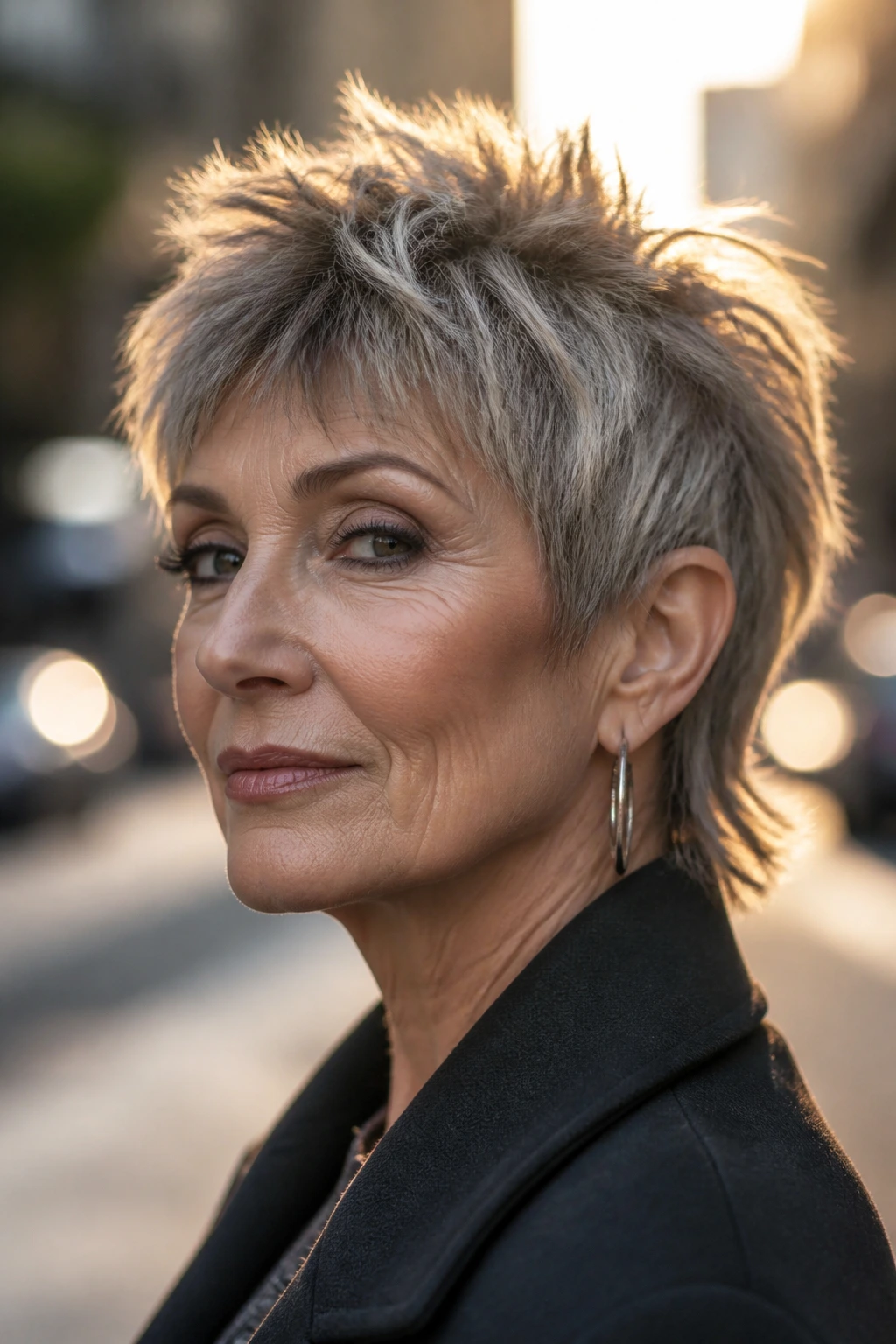
A choppy crop mullet has more bite than the feathered versions, and that’s the point. The edges are broken up, the crown is textured, and the back is short enough to keep the shape tight. If your hair is thick and tends to balloon, this cut can take out the bulk without sanding off all the personality.
The best way to wear it is with separation. You want the pieces to move in little groups, not fall into one smooth sheet. That means a bit of paste or texturizing spray on the ends, then a quick scrunch or finger rake through the top.
This cut is for women who want short hair that doesn’t feel precious. It has a little grit in it. Not enough to look messy, just enough to keep thick hair honest.
5. Shaggy Layered Mullet
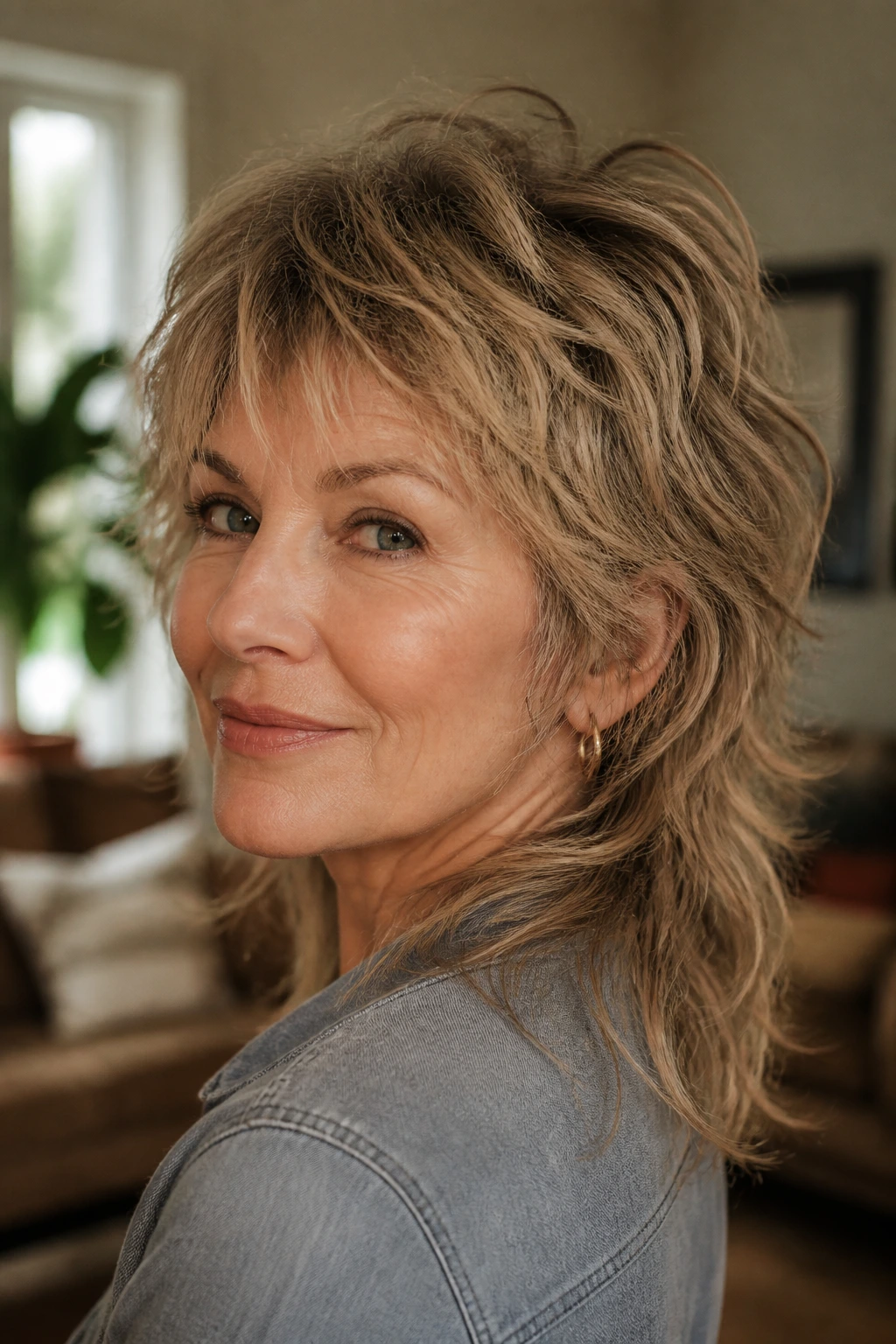
Some women want the mullet shape, but they want it to feel like a shag that took a sharper turn. That’s this cut. The layers are longer, the crown still gets lift, and the back has enough length to swing, but the overall effect is looser and less graphic than a sharper mullet.
The reason it flatters older women is simple: it softens the jaw and moves around the face instead of sitting in one fixed line. If your hair has waves that show up in odd places, this shape can make them look intentional.
A little leave-in cream through the ends helps here, especially if your hair is dry from coloring. Too much, though, and you lose the separation. The cut wants air, not grease.
6. Sleek Modern Mullet
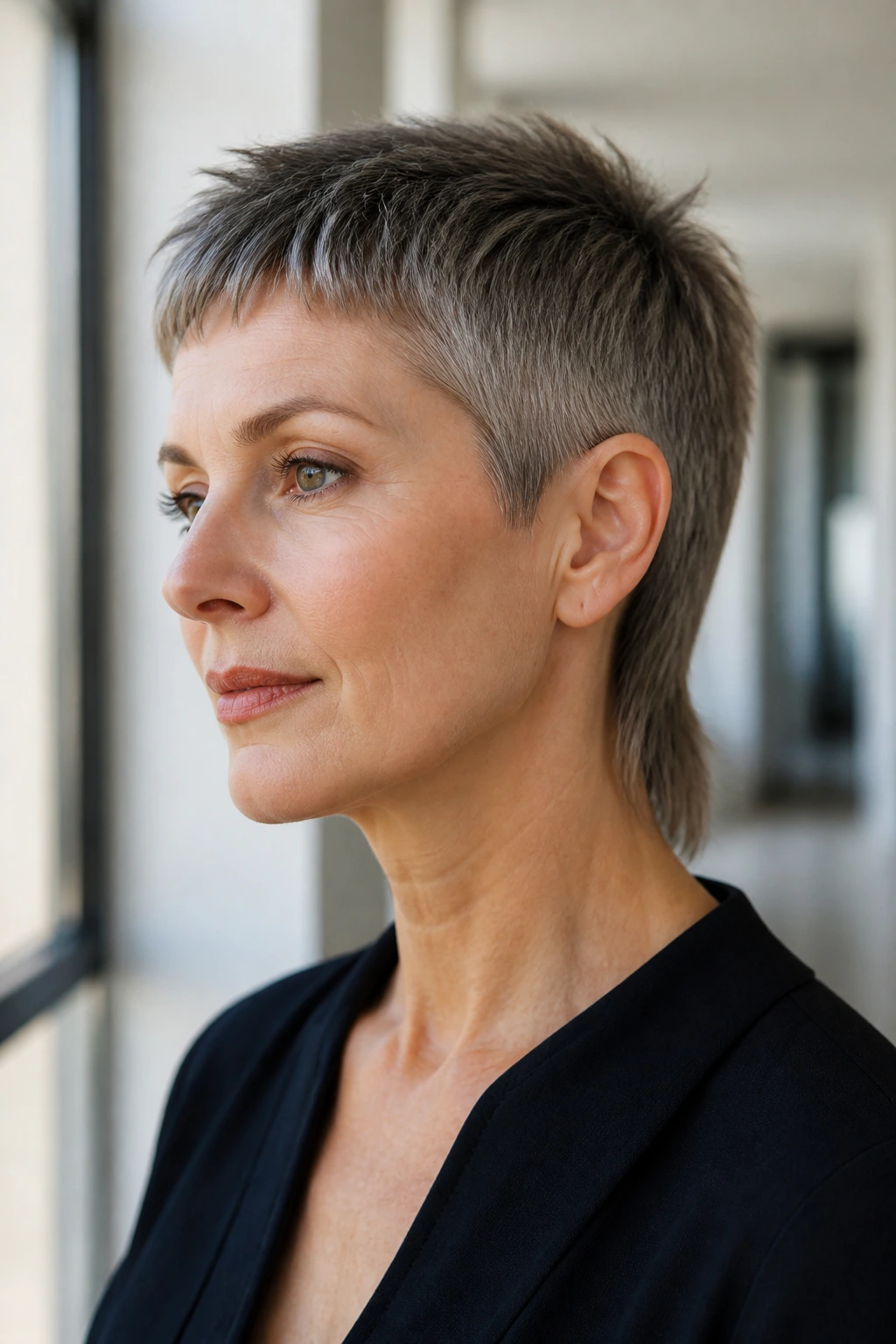
Unlike the rougher versions, a sleek modern mullet leans on clean lines and careful tapering. The top is short but controlled, the sides are tucked close, and the back stays narrow enough that the shape reads polished rather than punk. On straight hair, that can be a very good thing.
What sets this version apart is the silhouette. It’s more precise, more deliberate, and a lot easier to pair with structured clothes or a sharper lip color. If you’ve been wearing a neat bob and want something with a little more movement without losing order, this is the bridge.
Best for women who don’t want a lot of styling clutter. One pass with a blow dryer, a dab of smoothing cream at the ends, and you’re done. Easy. Clean. No drama.
7. Micro Mullet with Long Fringe
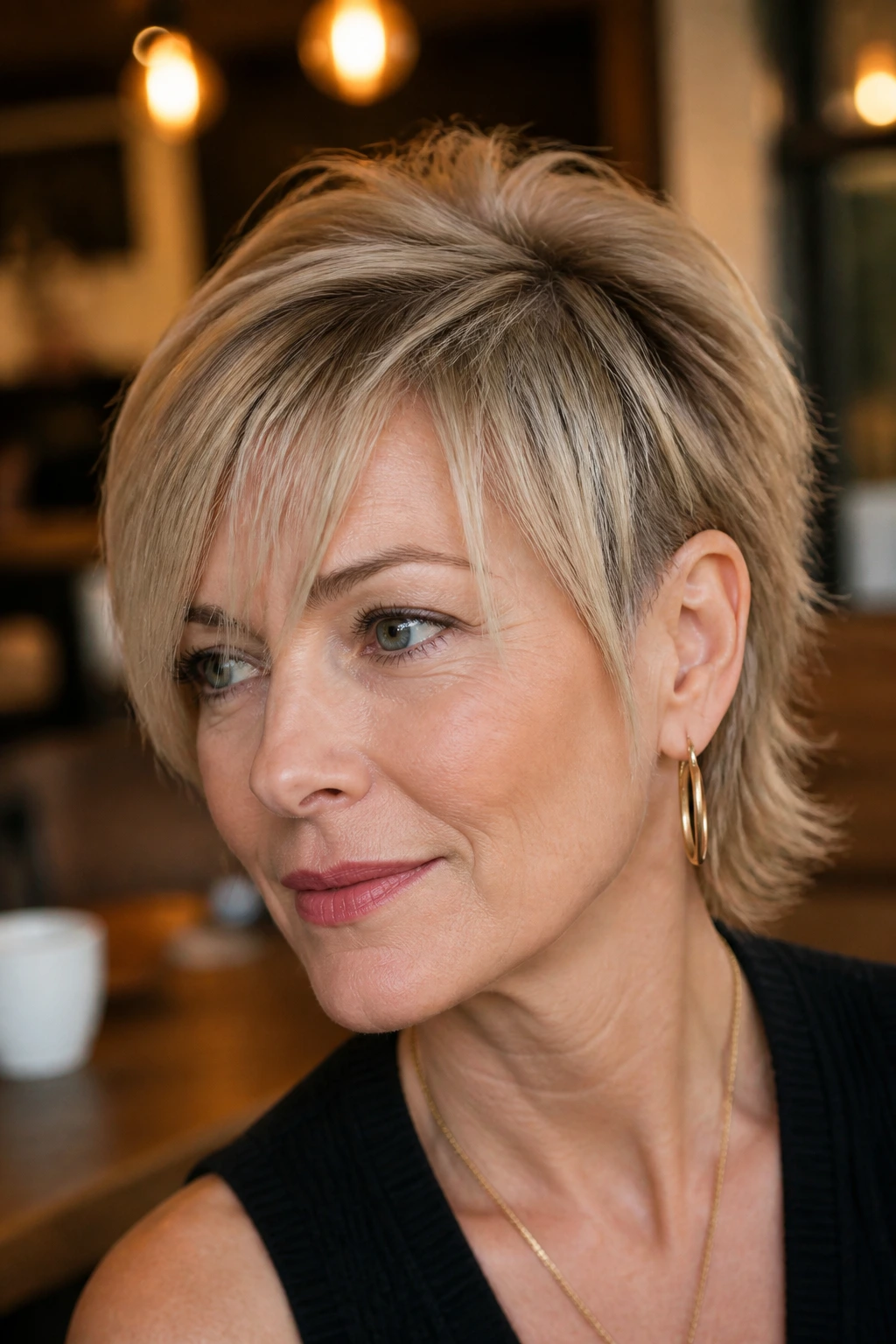
This one has personality, but it doesn’t have to be loud. The back stays short, the crown is clipped close enough to show lift, and the fringe stays longer so the front carries most of the softness. If your forehead is a feature you like to soften, or if your eyes are the part of your face you want to bring forward, this shape does the job fast.
Why It Works
The long fringe gives you control. You can part it slightly off-center, let it fall forward, or sweep it aside when you want the face open. The short back keeps the haircut from turning into a shag, and that contrast gives the shape its edge.
What to Tell Your Stylist
- Keep the fringe at brow to lash length.
- Ask for short, piecey crown layers.
- Leave enough length at the sides to soften the temples.
- Avoid a blunt line across the fringe. That’s where the cut can start looking too hard.
This is one of the better short mullet cuts for women who like a little fashion energy without committing to a very dramatic back.
8. Wavy French Mullet

A wavy French mullet feels less chopped and more brushed out. The layers are gentle, the fringe is soft, and the back keeps enough length to move with the wave pattern instead of against it. If your hair bends naturally but never quite curls, this cut can make that in-between texture look expensive without trying too hard.
The charm here is in the looseness. You don’t want a lot of sculpted product. You want the kind of air-dried bend that looks like you walked out of the salon and immediately forgot about your hair, which—rarely, but not never—really is the goal.
This works well on women who dislike a heavy styling routine. A little sea salt spray, a twist of a few damp sections, and some finger scrunching is usually enough.
9. Textured Razor-Cut Mullet
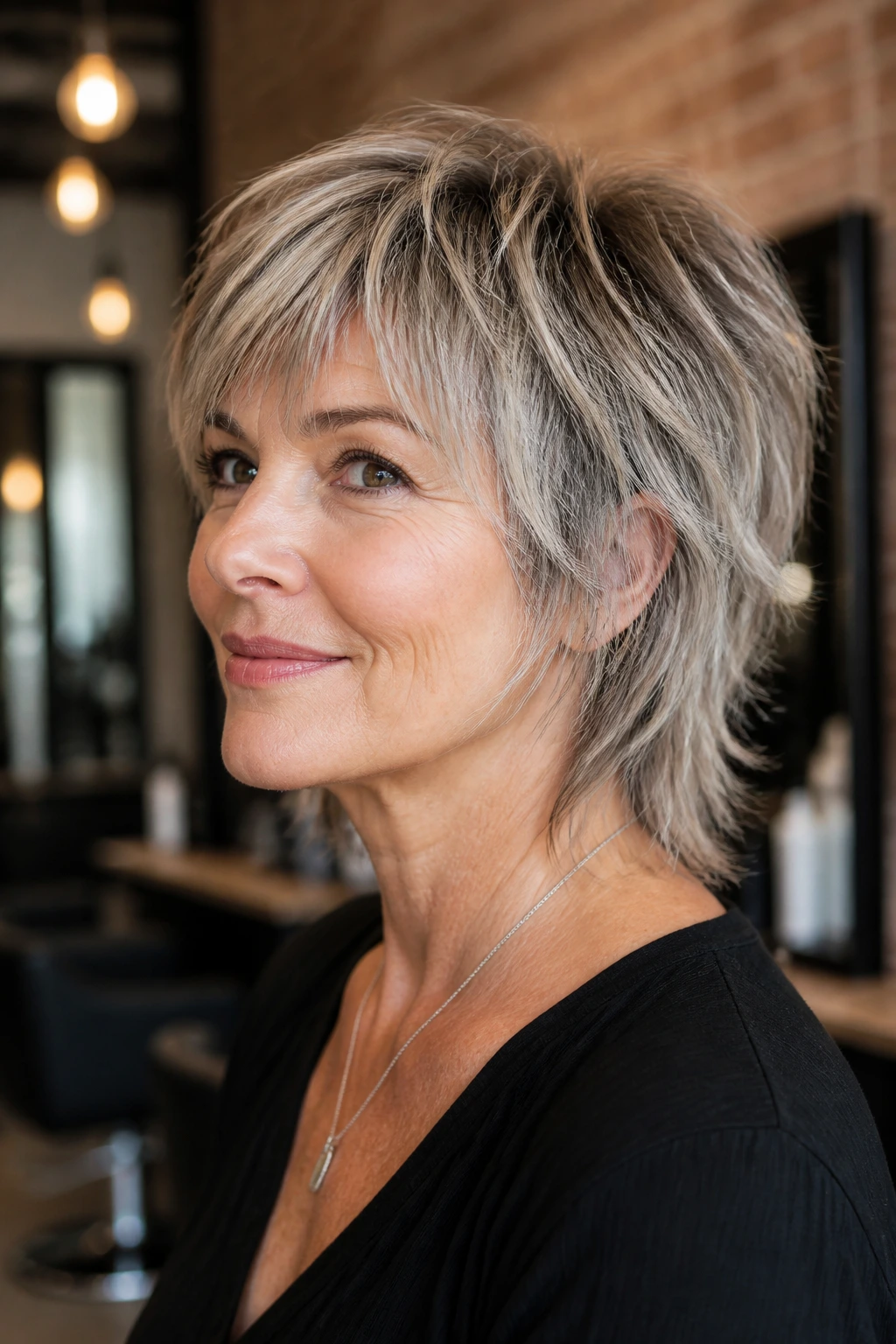
A razor-cut mullet removes weight in a way scissors sometimes can’t. That makes it useful for dense hair that goes puffier every time humidity enters the room. The ends are slightly torn up, the outline is soft, and the shape keeps moving instead of sitting like a block.
Razor work can go wrong if the hair is already fragile, so this one is best when the hair is thick, healthy, or resistant to shape. Ask for texture at the ends, not all the way up the shaft, or the cut can get too airy and start falling apart.
I like this cut best when it’s styled with a small amount of matte paste. The paste shows off the separation at the ends and keeps the texture from turning fuzzy. Fuzzy is not the goal.
10. Tucked-Behind-Ear Mullet
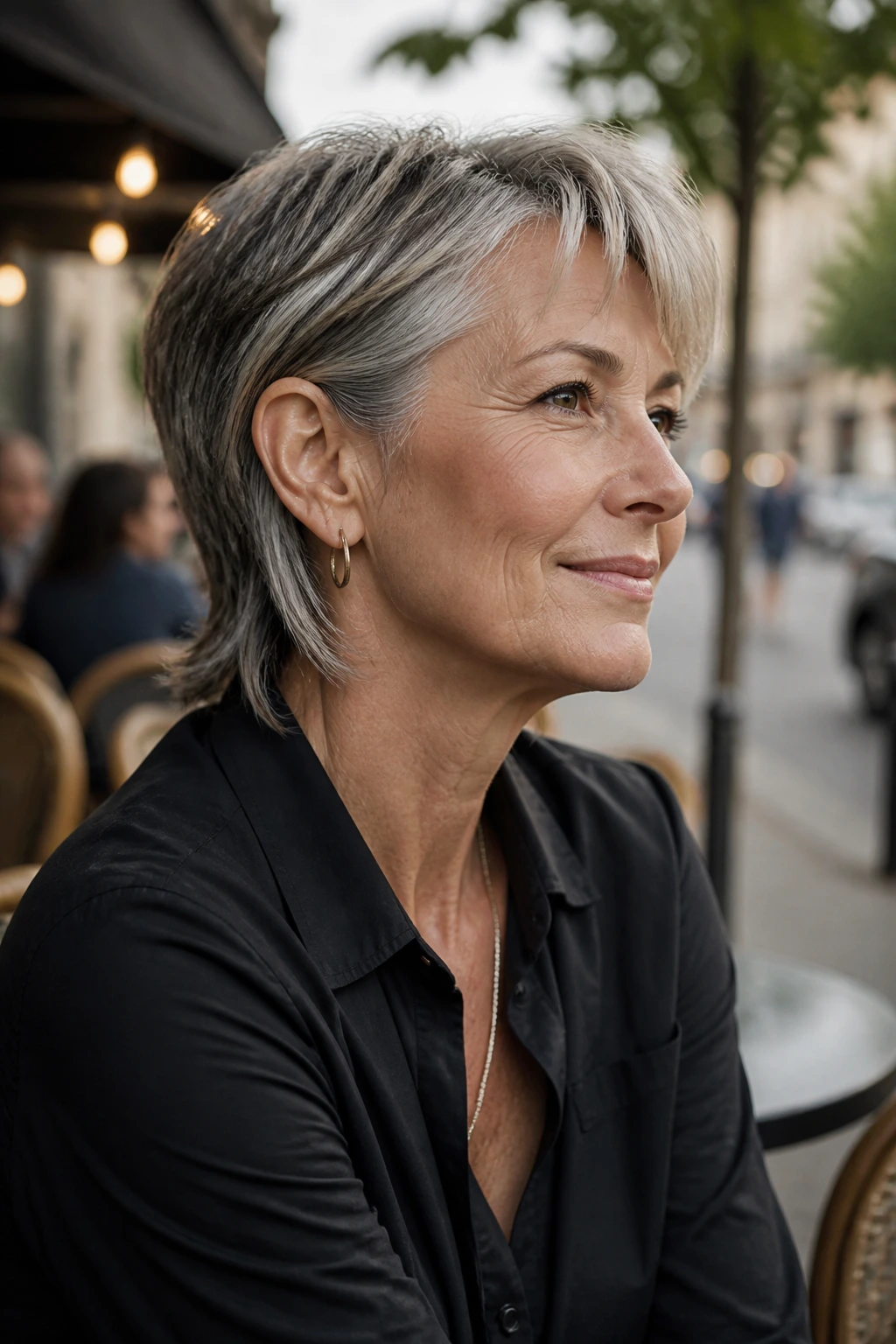
A tucked-behind-ear mullet is one of those cuts that looks modest in the mirror and sharper in motion. The sides are kept neat enough to slip behind the ears, which is useful for glasses wearers and anyone who wants the face open without losing the mullet shape in back.
The key is keeping the temple area light. If there’s too much bulk near the ears, the tuck becomes awkward and the frames get crowded. If the top is too short, the style loses presence. So the sweet spot lives in the middle: short enough to tuck, long enough to show line.
This cut works in a real-life way, not a fantasy-photo way. It behaves at the office, at lunch, and after a windy walk. That’s worth something.
11. Layered Bixie Mullet
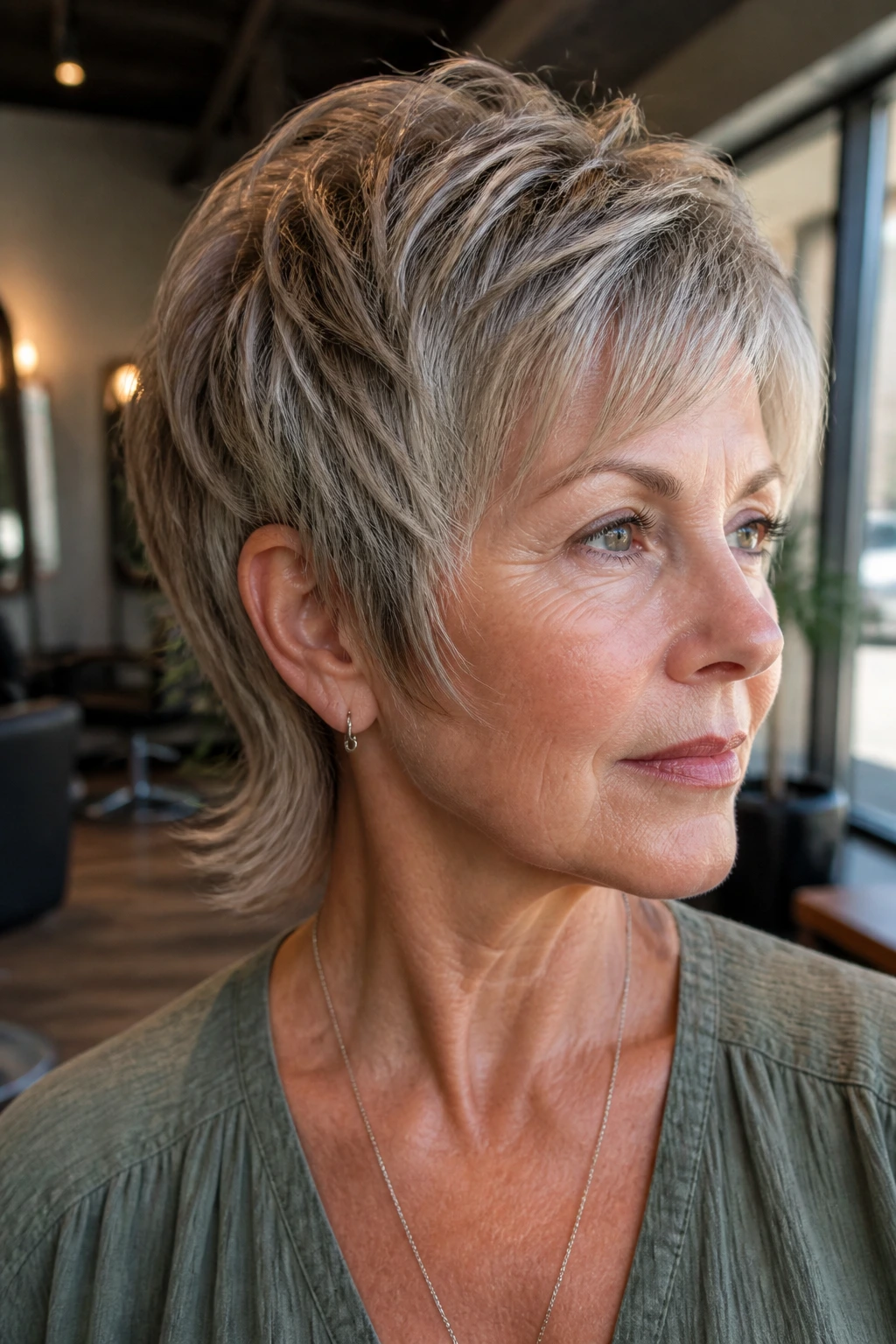
This is the cut for anyone hovering between a bob, a pixie, and something with a little extra shape in the back. The bixie mullet keeps the front and sides short, then lets the nape stretch just enough to suggest a mullet without making the contrast too sharp.
What I like most is the softness around the ears. That area matters a lot on mature faces, especially if the jawline has softened a bit or the cheek area is the part you want to flatter. The short pieces around the face keep the whole style light.
If you’re nervous about mullets, start here. It gives you the shape without the swagger.
12. Platinum Crop Mullet
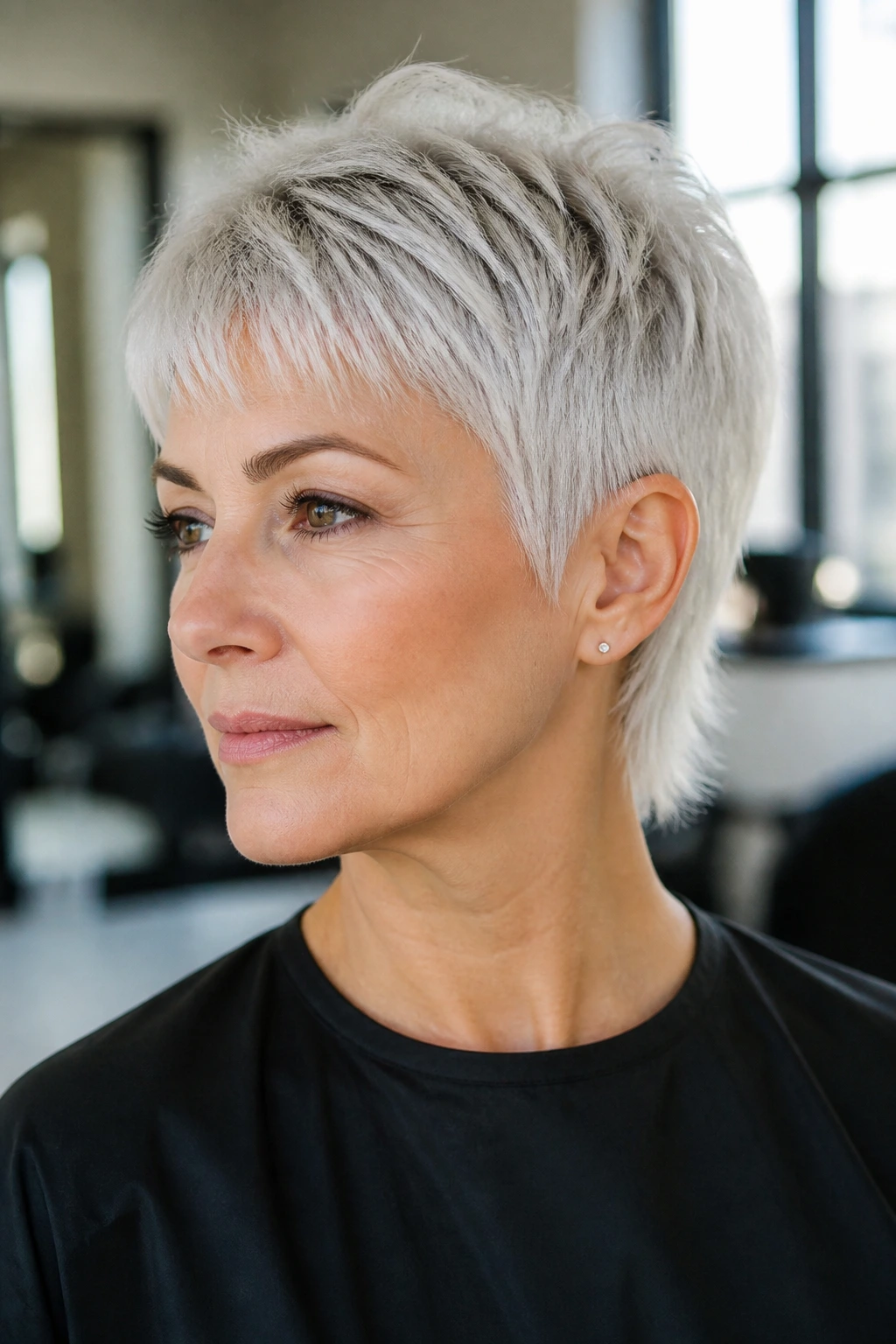
Color changes the way a haircut reads, and platinum or bright silver can make a short mullet feel cleaner and more architectural. The lighter tone shows off texture, which means the cut does not have to work as hard to create interest. Even a simple layered shape looks sharper when every piece of hair is visible.
That said, the style needs balance. If the cut is too choppy, platinum can make it look brittle. Keep the layers controlled, the ends feathered, and the fringe soft so the color looks intentional instead of overprocessed.
This version suits women who like a crisp finish and don’t mind maintaining tone. A purple shampoo once every week or two can keep the brass down if the hair is bleached or lifted, but don’t overdo it. Dry hair and too much pigment are not friends.
13. Side-Swept Fringe Mullet
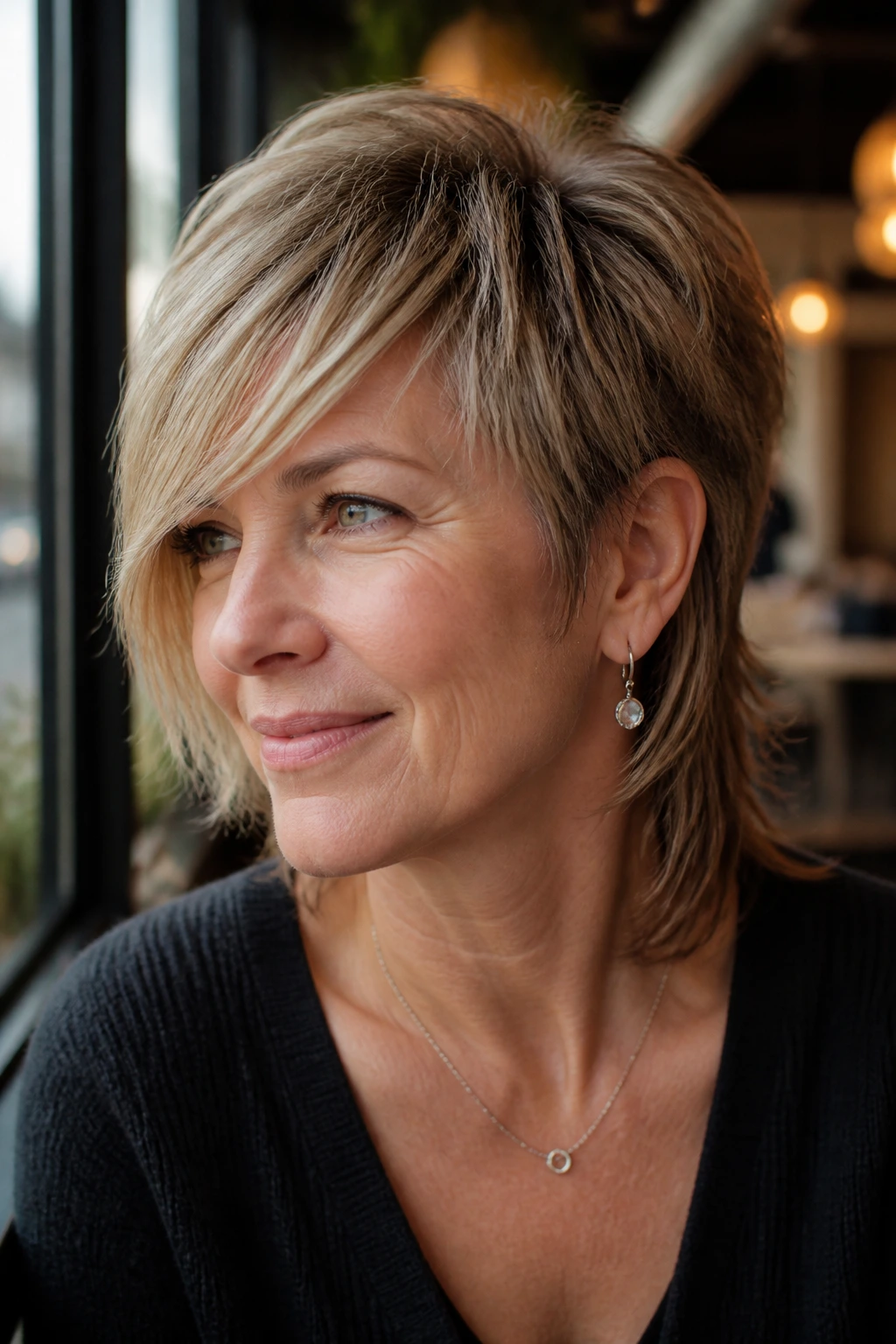
A side-swept fringe is one of the easiest ways to make a short mullet feel gentle around the face. It softens the forehead, drapes over one side of the brow, and gives the haircut a bit of glide instead of a straight-on stare. That matters if you prefer hair that feels flattering in motion rather than editorial and sharp.
The cut works especially well when the fringe starts a little deeper than a standard bang line. That gives the hair room to fall naturally instead of splitting in awkward places. Ask for a diagonal shape that can be pushed off either direction, because rigidity is the enemy here.
It’s a smart option for women who want to hide a little forehead, break up a broad face, or simply avoid straight-across bangs that need constant maintenance.
14. Feathered Neck-Length Mullet

If you don’t want the back too short, this version gives you a little more neck coverage while keeping the shape unmistakably mullet-like. The nape brushes the collar, the crown is still shorter, and the face-framing stays feathered rather than heavy. It feels relaxed in a way that a severe cut never does.
This is a good fit for women whose necks are a feature they like to soften, or for anyone who prefers a shape that can be pinned or tucked on hotter days. A small flip at the ends keeps the silhouette from collapsing.
It’s also forgiving during grow-out. That extra length buys you time between trims. Nice little bonus.
15. Asymmetrical Mullet Cut
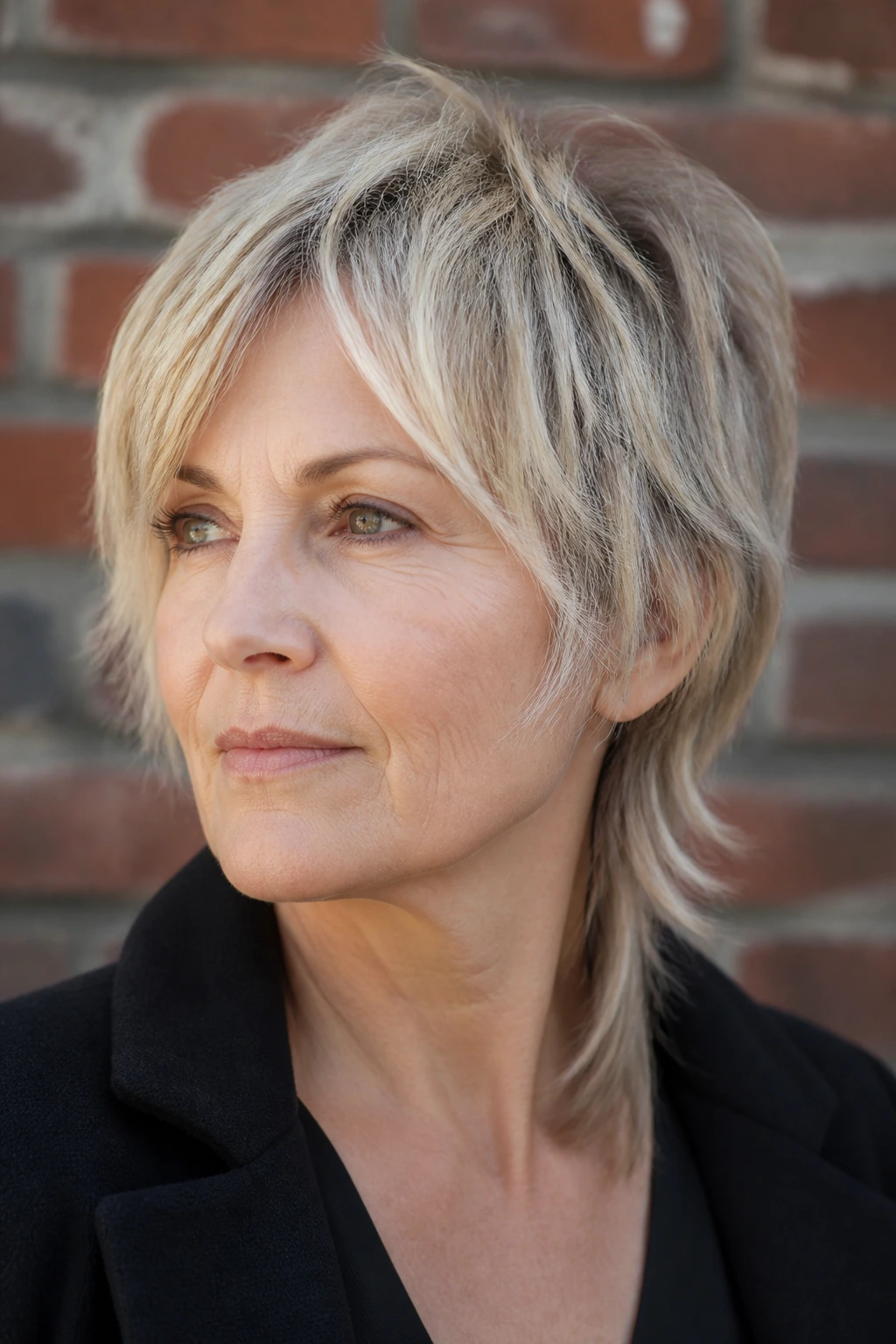
An asymmetrical mullet cut works because it keeps the eye moving. One side might sit a touch longer, the fringe may fall differently on each side, or the back may be cut with a slight angle rather than a straight line. The result feels modern without shouting.
This is a cut for women who like shape and don’t mind a little design in it. The asymmetry should be subtle, not theatrical. Too much difference between the sides can make the haircut feel fussy or hard to style, and that’s the wrong kind of attention.
Ask for one side to be left a little fuller around the cheek while the other side opens more toward the ear. That tiny imbalance can make the whole face look more alive.
16. Salt-and-Pepper Soft Mullet
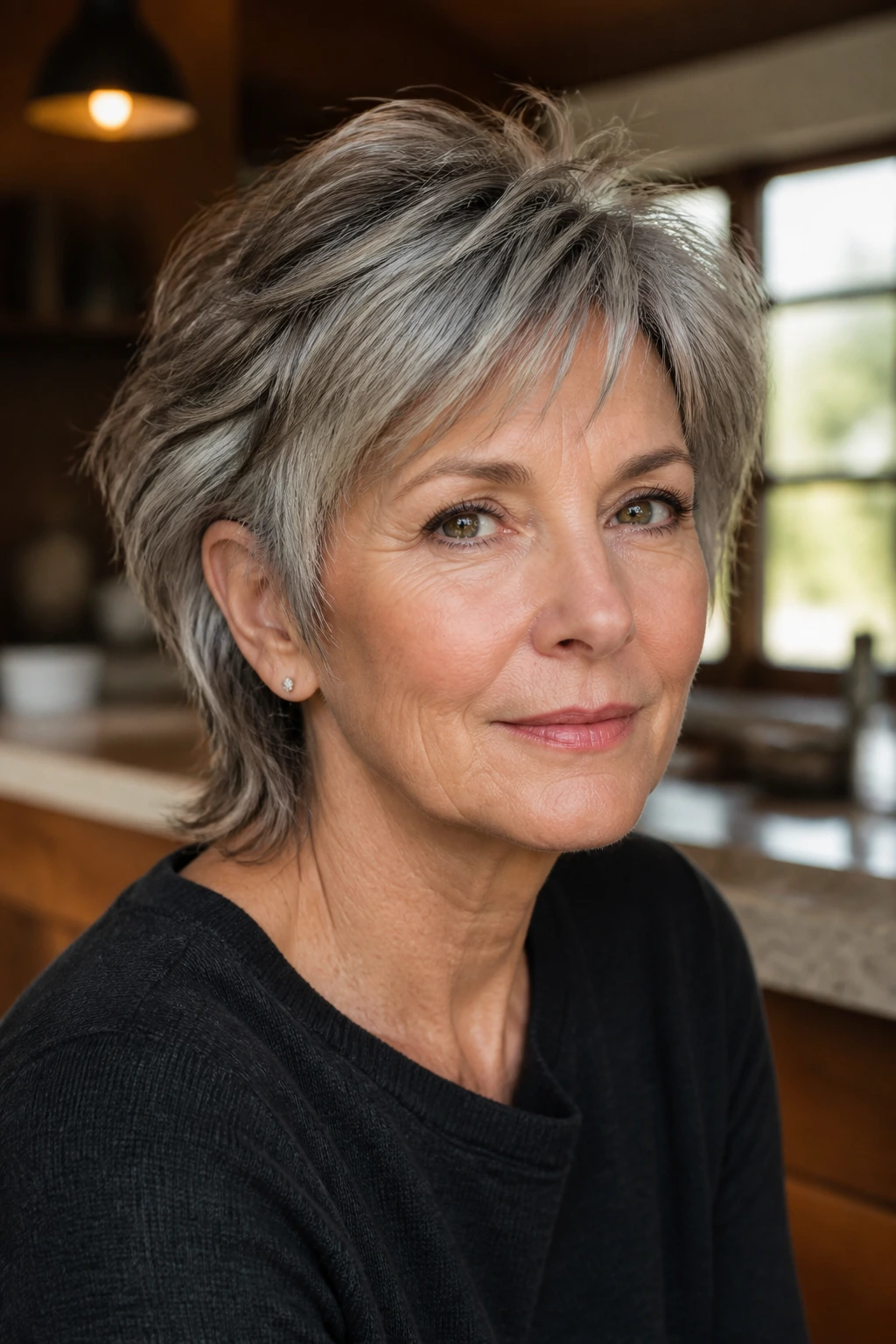
Salt-and-pepper hair has a built-in pattern that many people try too hard to hide. I think it’s smarter to let it show. A soft mullet shape gives those mixed tones a place to move, and the layered top keeps the darker and lighter strands from stacking into one flat block.
The important part is softness. The more aggressive the cut, the more likely the silver pieces are to look wiry. A gentle taper through the sides and a feathered nape keep the tone looking dimensional instead of frizzy.
This version is one of the easiest to wear if you’re tired of color maintenance and want the haircut itself to carry the style. It doesn’t need to be perfect. It just needs to be shaped well.
17. Tousled Air-Dry Mullet

A tousled air-dry mullet is for the woman who wants to wash, squeeze out water, and leave the house without a wrestling match. The layers are cut to fall into place with minimal heat, and the ends are textured enough that the style settles with a little bend instead of going limp.
How It Behaves
- The crown gets enough lift to avoid a flat helmet shape.
- The sides stay light so they don’t puff.
- The back has just enough length to show the mullet shape after air-drying.
- A small dab of cream on damp hair helps reduce halo frizz.
This cut is especially useful if your hair has turned a little drier or less cooperative over time. Air-dry styles can look either fresh or sloppy; this one lands closer to fresh when the layers are cut properly.
18. Rounded Face-Framing Mullet

A rounded face-framing mullet softens fuller cheeks and wider foreheads by curving the front pieces around the face instead of dropping them straight down. That roundness helps the haircut feel friendlier and less severe, which is useful when you want shape without hard angles.
The trick is to keep the top lifted and the perimeter light. If the side pieces grow too heavy, the curve starts to drag the whole cut downward. If your face tends to go round in straight blunt cuts, this shape can add a little vertical movement.
I’d recommend it for women who like softer lines, especially if they wear soft knitwear or round-neck tops a lot. It sits well with that kind of wardrobe.
19. Piecey Volume Mullet
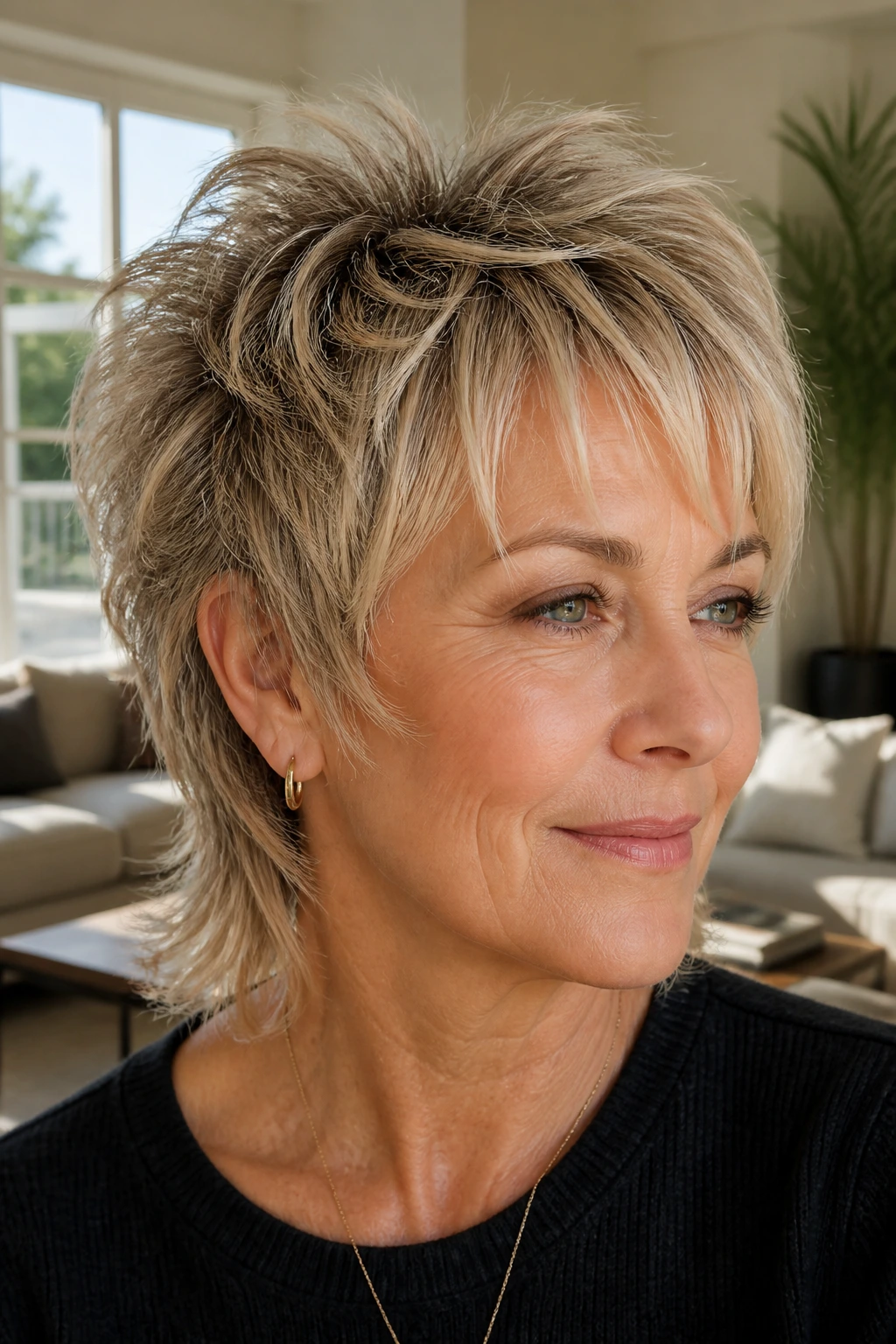
If your crown goes flat by midday, this cut is worth a hard look. The top is built for lift, the pieces are separated rather than blended into one smooth mass, and the back stays short enough to keep the outline lively. It’s not puffy. It’s lifted.
That difference matters. Volume at the crown gives the face a little more open space, which older women often appreciate because it stops the haircut from dragging downward. A root spray or lightweight mousse can help, but the haircut itself should be doing most of the work.
This version looks best when the ends are slightly separated with fingers, not brushed into submission. Brush too much and you lose the whole point.
20. Curly Crown Mullet

A curly crown mullet puts the texture exactly where it reads best: on top. The crown gets room to spring upward, the sides are kept a touch shorter, and the back stays soft enough to support the curve. On naturally curly hair, that can be a very flattering structure.
The reason it works is scale. Curls need space, and a short cut that respects that space will look fuller and more intentional than one that chops curls off indiscriminately. If your curls have a tight spiral, ask the stylist to preserve length where the curl needs weight and take bulk out only where it’s actually crowding the head.
This cut is one of my favorites for women who want a little personality without spending half the morning diffusing and fussing.
21. Chin-Grazing Mullet
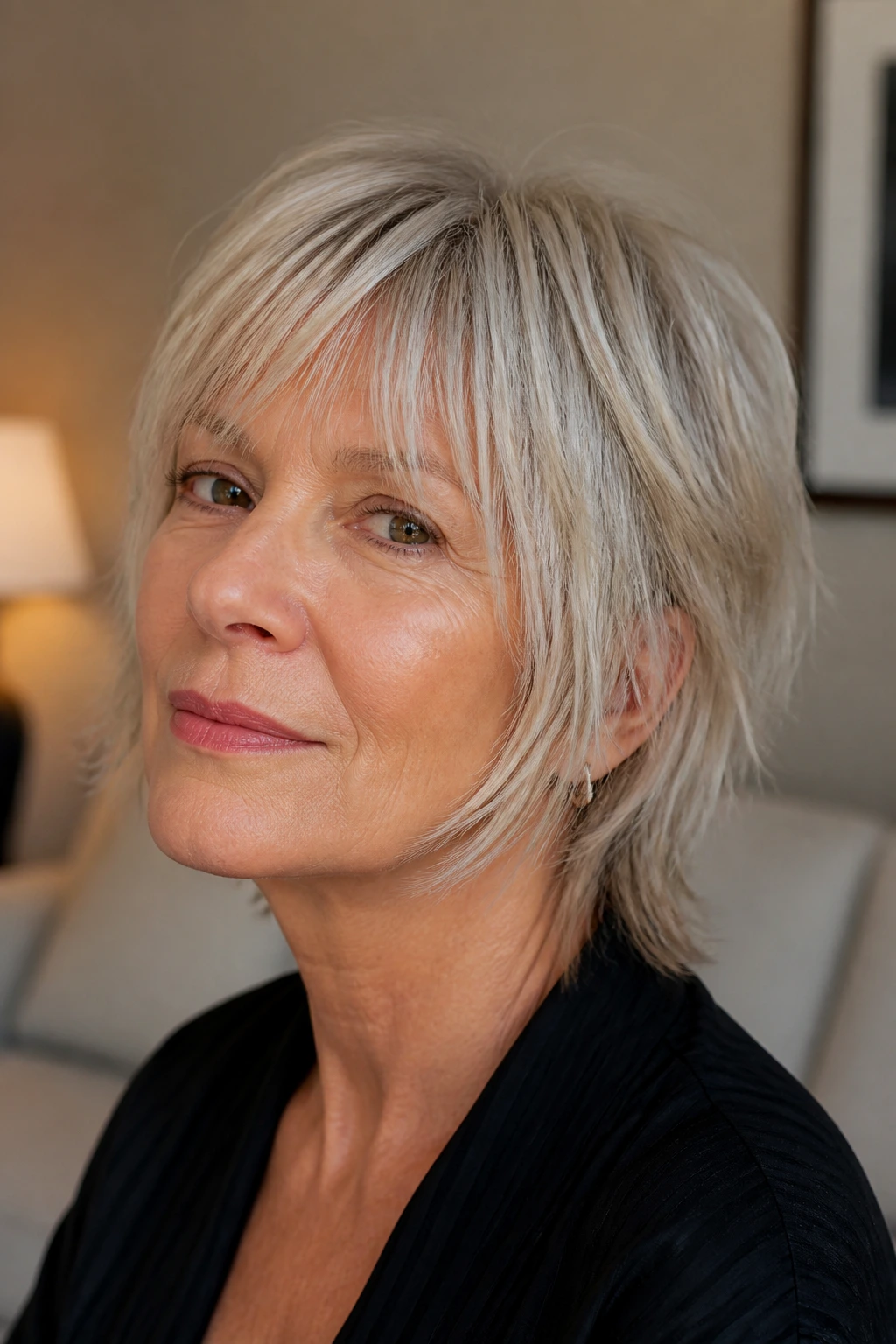
The chin-grazing version gives you a little more front length, which can be useful if you’re not ready to go very short around the face. The back still stays cropped enough to keep the mullet identity, but the front pieces can skim the chin and soften the jawline.
That extra front length gives the cut a calmer feel. It’s less punchy, more elegant. If your jaw has gotten softer over time, or if you simply prefer your hair to sit close to the face, this is a nice compromise.
It also grows out gracefully. A few extra weeks and you’re edging toward a shaggy bob with character, which is not a bad place to land.
22. Long-Top Short-Back Mullet
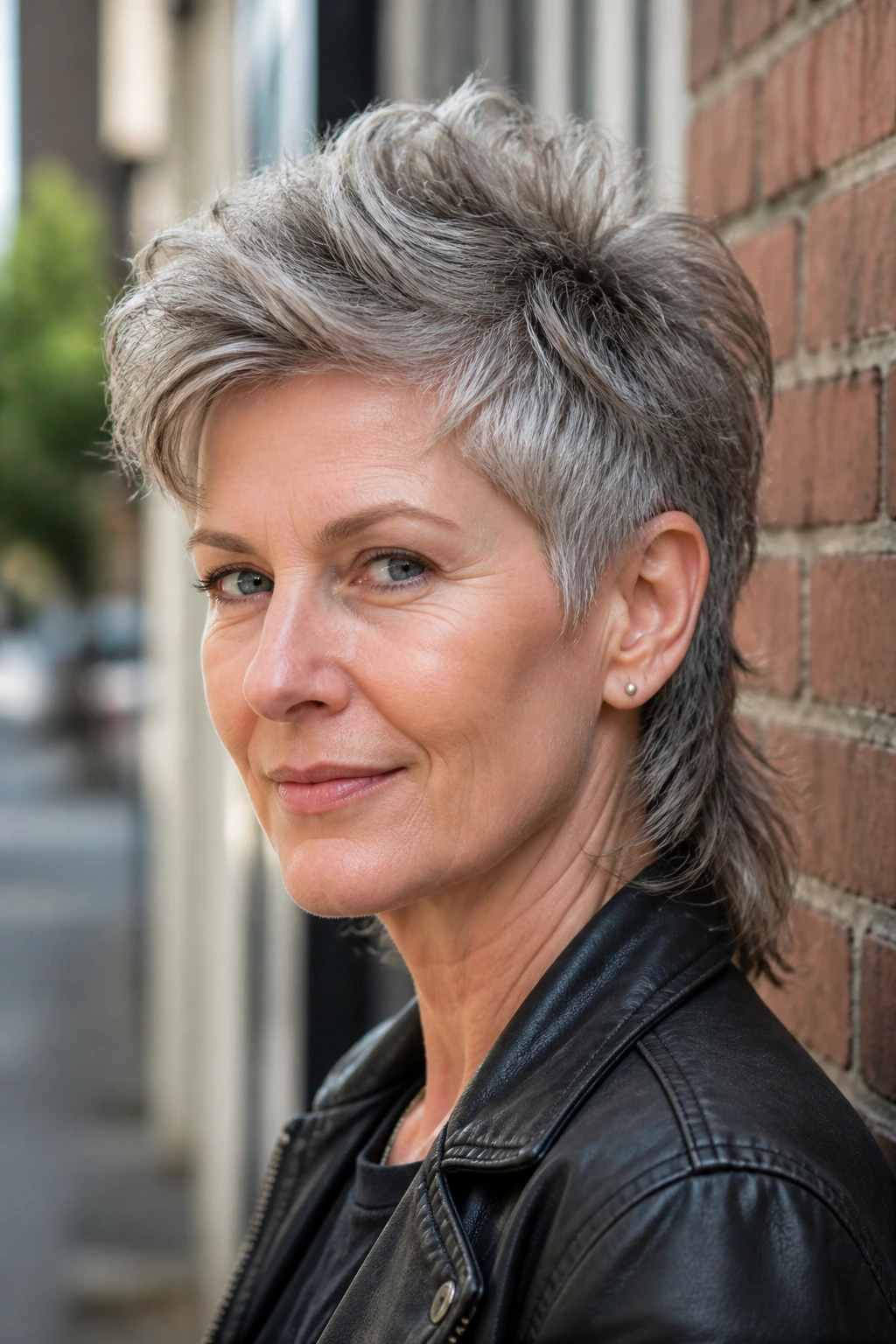
This is the classic shape, but trimmed down and made gentler. The top keeps more length than the sides, the back drops shorter, and the contrast between the two is enough to show the mullet silhouette without turning it harsh. It’s the version people usually mean when they say “I want something with edge.”
The difference between this and a severe retro mullet is the blending. You want the top to connect to the back, not jump away from it. That connection keeps the cut wearable on everyday faces, not just in a mood board.
If you want a haircut that says you have an opinion but still want to get into a car and leave the driveway without a fuss, this is a strong candidate.
23. Wispy Fringe Mullet
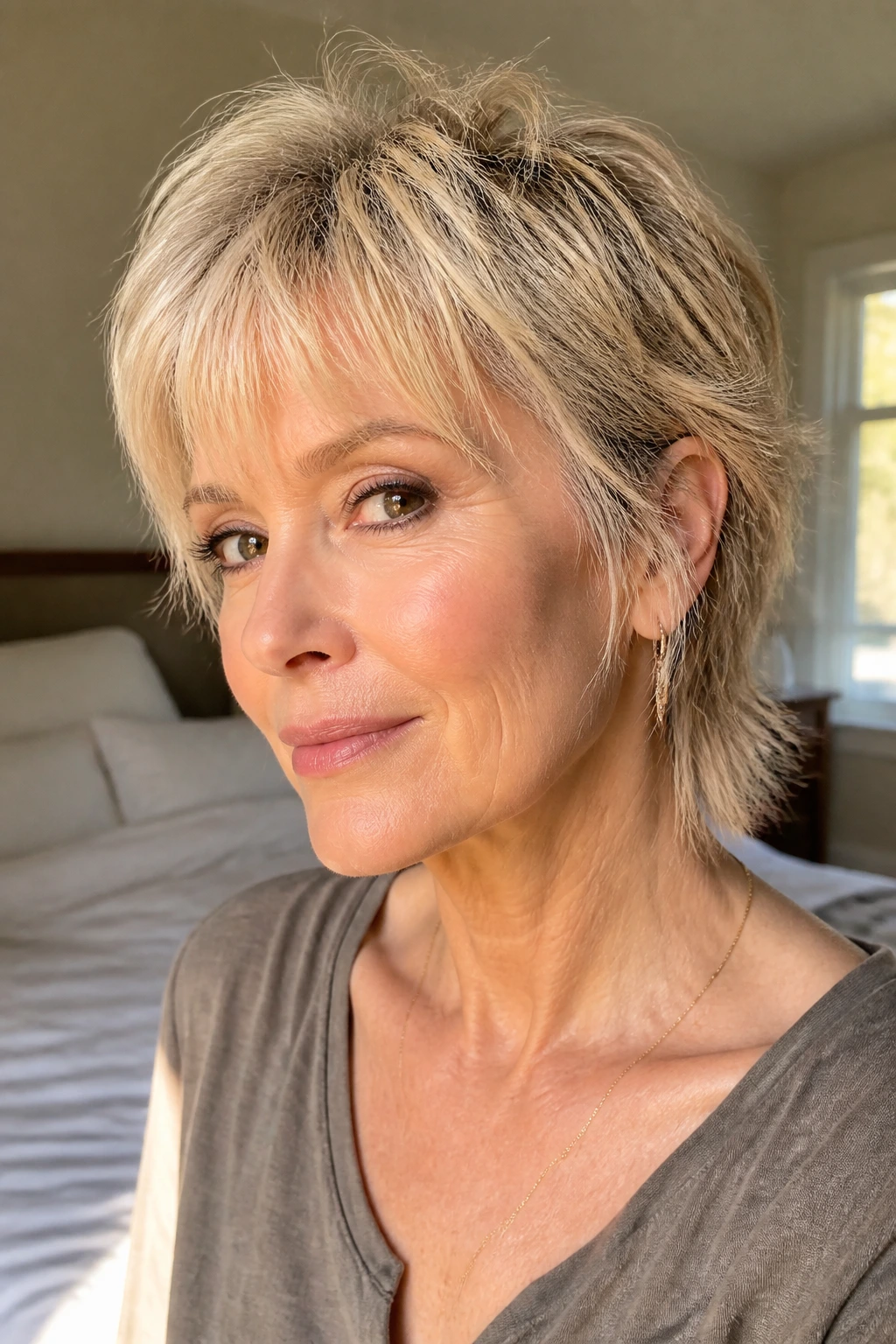
A wispy fringe takes the weight off the forehead and gives the haircut a lighter front edge. The back stays short, the sides stay broken up, and the fringe falls in fine pieces that soften lines rather than cover the face in one heavy sheet.
This works beautifully when the hair around the temples has thinned a little. A softer fringe can disguise that shift without pretending it isn’t there. And because the fringe is wispy, it doesn’t scream for daily blow-drying.
The only real danger is over-thinning. You want wispy, not see-through. There’s a difference, and the second one usually looks tired.
24. Elegant Tapered Mullet
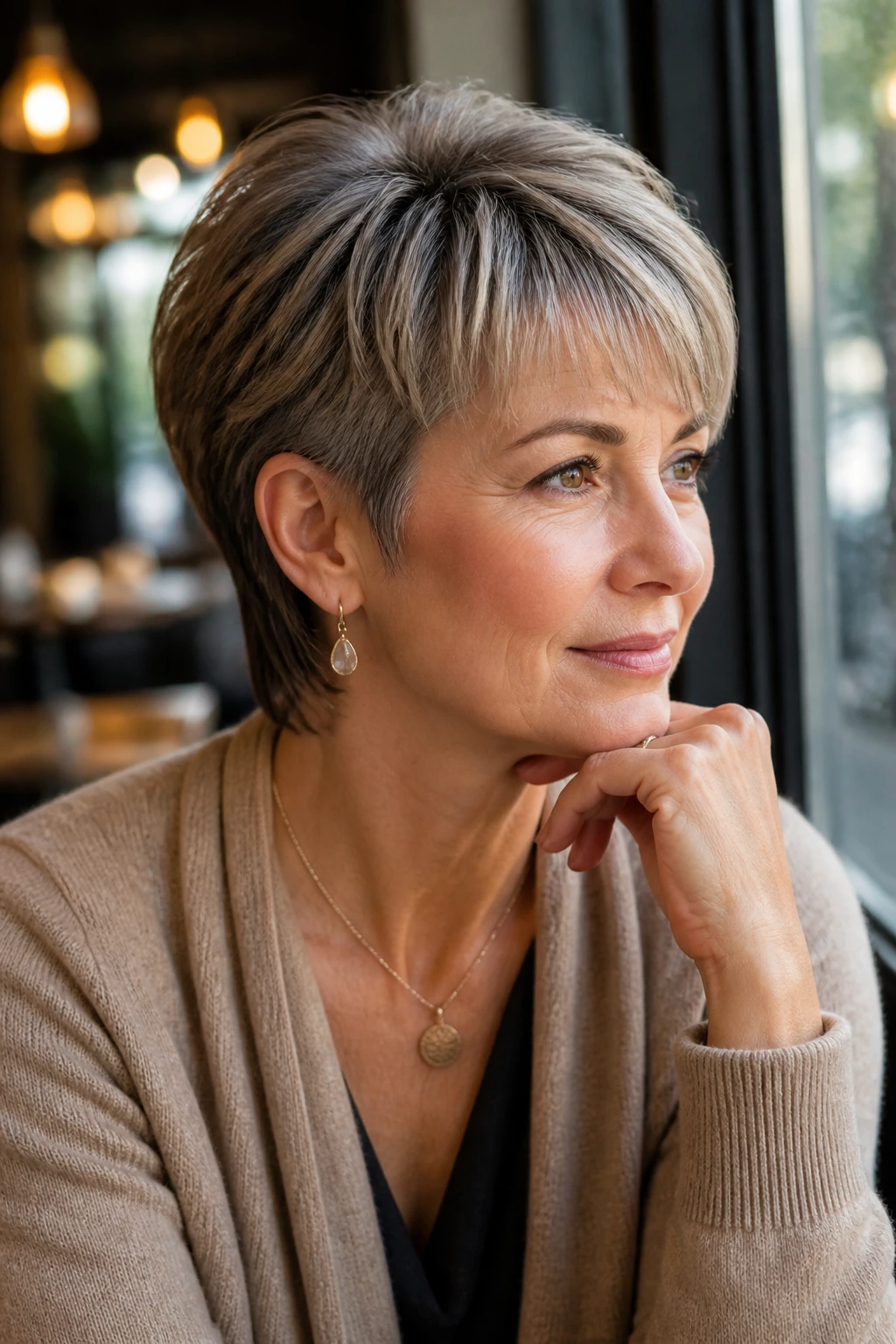
An elegant tapered mullet is the closest thing to a dressed-up version of the cut. The silhouette is lean, the sides are cleaned up, and the nape is tapered so neatly that the back reads almost tailored. It’s the kind of short mullet that can sit beside a blazer without feeling out of place.
What makes it elegant is control. The top is still lifted, but not wild. The fringe is soft, but not floppy. The back is short, but not chopped. Every piece seems to know its job.
If you want one short mullet cut that can move from errands to dinner without changing your whole routine, this is the one I’d put near the top of the list.
How to Choose the Right Short Mullet for Your Hair Texture and Face Shape
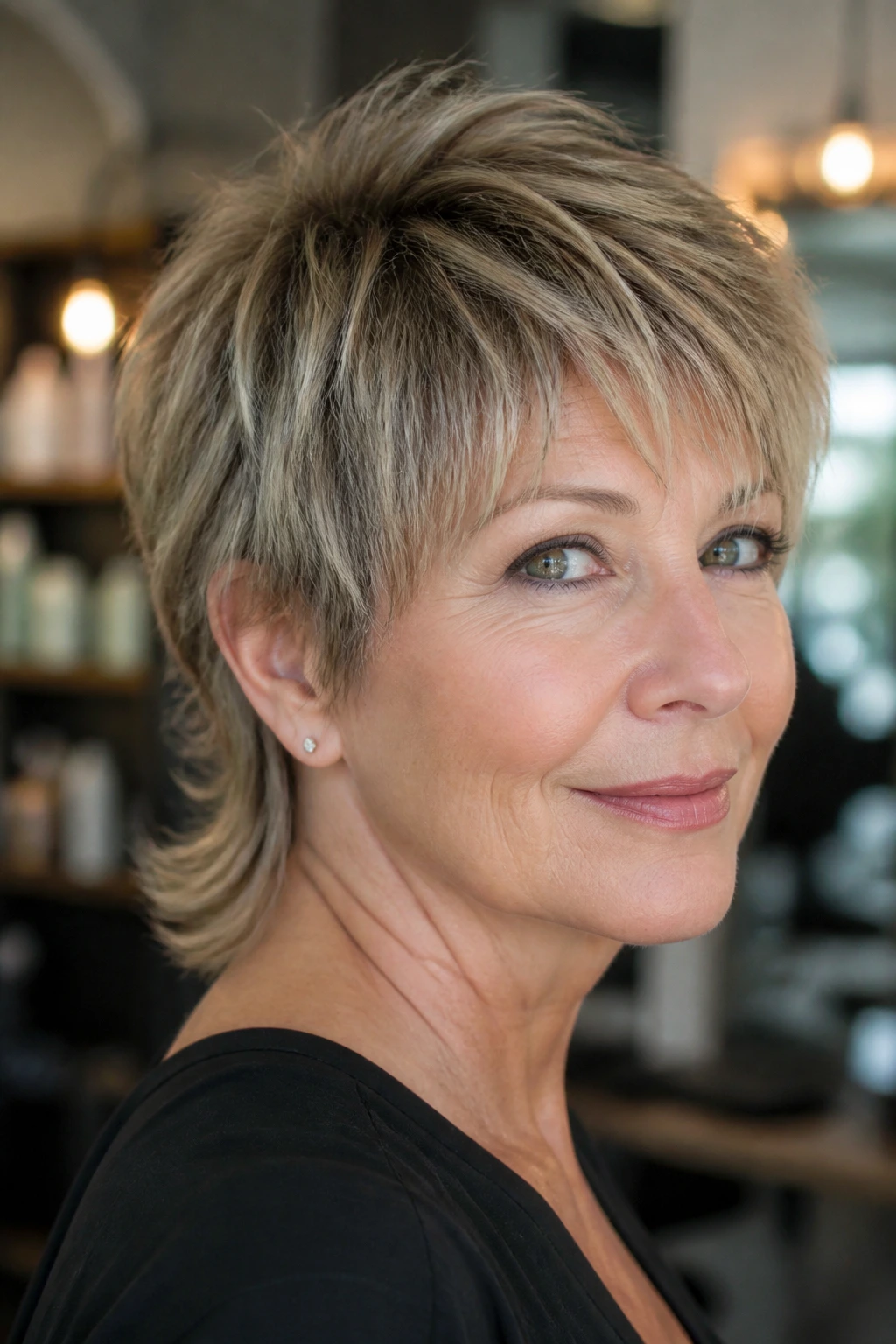
The best short mullet cuts for older women start with hair texture, not wishful thinking. Fine hair usually needs a little more crown lift and a cleaner perimeter so it doesn’t collapse. Thick hair needs weight removed through the nape and interior, or the shape starts looking bulky by the ears. Curly hair wants room to expand; straight hair usually wants texture at the ends so the style doesn’t feel too rigid.
Face shape matters, but not in the stiff, rulebook way people love to repeat. A round face often looks better with a little height at the crown and side pieces that fall diagonally instead of straight across. A longer face can take a softer fringe and a slightly fuller side area. Square jaws usually like feathering around the cheek and temple. No surprise there.
A quick salon cheat sheet
- Fine hair: ask for soft layering and a lightly tapered nape.
- Thick hair: ask to remove weight from the inside, not just the surface.
- Curly hair: cut with the curl pattern in mind, not against it.
- Glasses: keep the temple area clean so the frames don’t compete with the hair.
- Low-maintenance lifestyle: choose a version with a gentler nape and softer fringe.
If you’re unsure, bring three photos: one from the front, one from the side, and one from the back. The back view matters more than people think. That’s where a mullet either reads polished or falls apart.
Essential Tools for Styling and Salon Visits
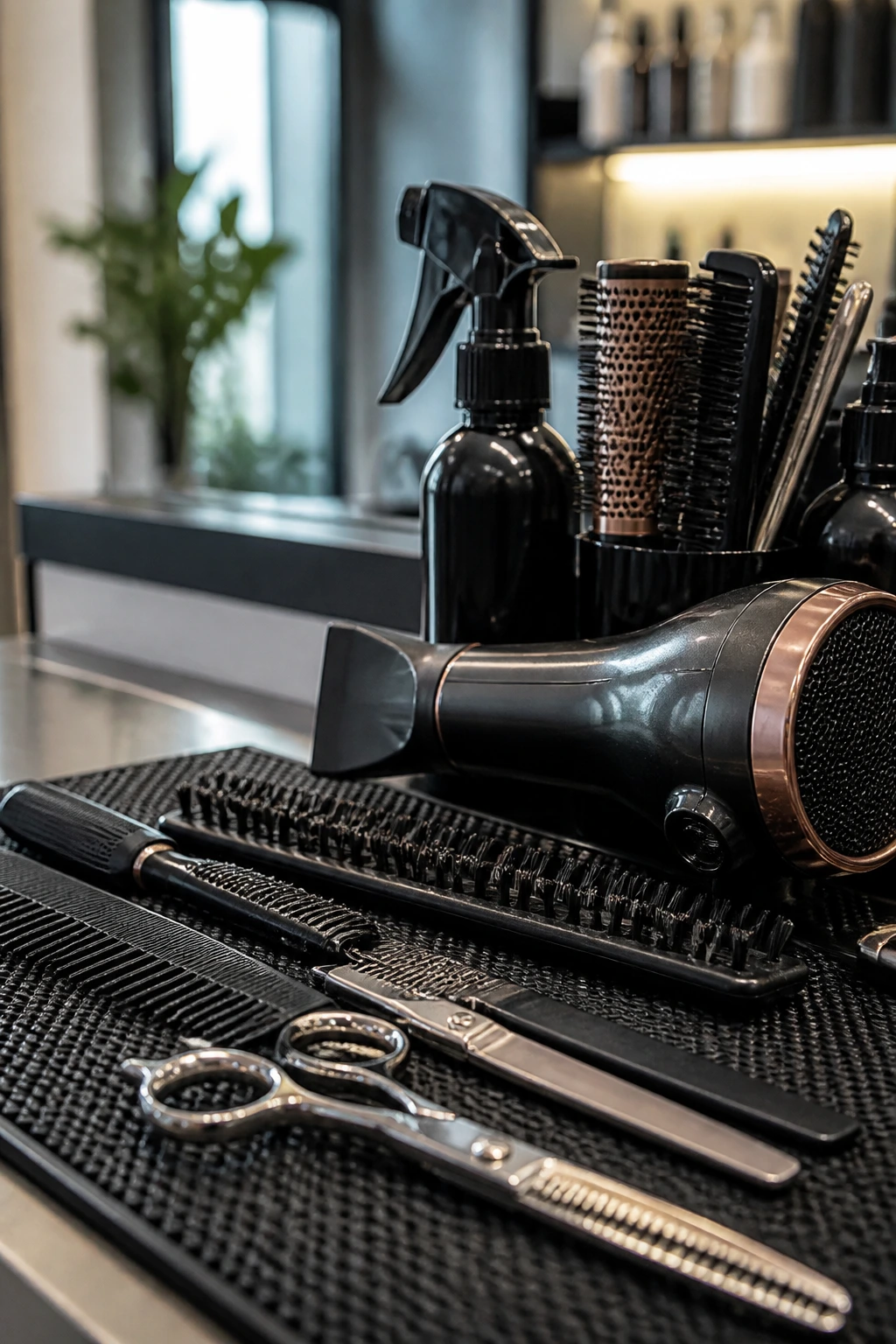
- Sharp haircutting shears: A clean cut matters more on short hair because blunt damage shows fast around the ears and nape.
- Texturizing spray: Useful for showing piecey separation on choppy or layered versions.
- Light mousse or root lift spray: Helps fine hair keep a little crown height without feeling sticky.
- Round brush, 1 to 1½ inches: Handy for soft bend at the front and a little curve through the layers.
- Blow dryer with nozzle attachment: The nozzle gives you direction, which matters if the crown wants to fall flat.
- Diffuser: Worth having for curly or wavy versions so the shape dries with less frizz.
- Wide-tooth comb: Better than yanking through damp layers with a small brush.
- Light wax or paste: Good for defining ends on piecey cuts; use a pea-sized amount.
A stylist can do the cut with professional tools, but these are the home pieces that keep the shape alive between trims.
How to Style and Refresh a Short Mullet at Home
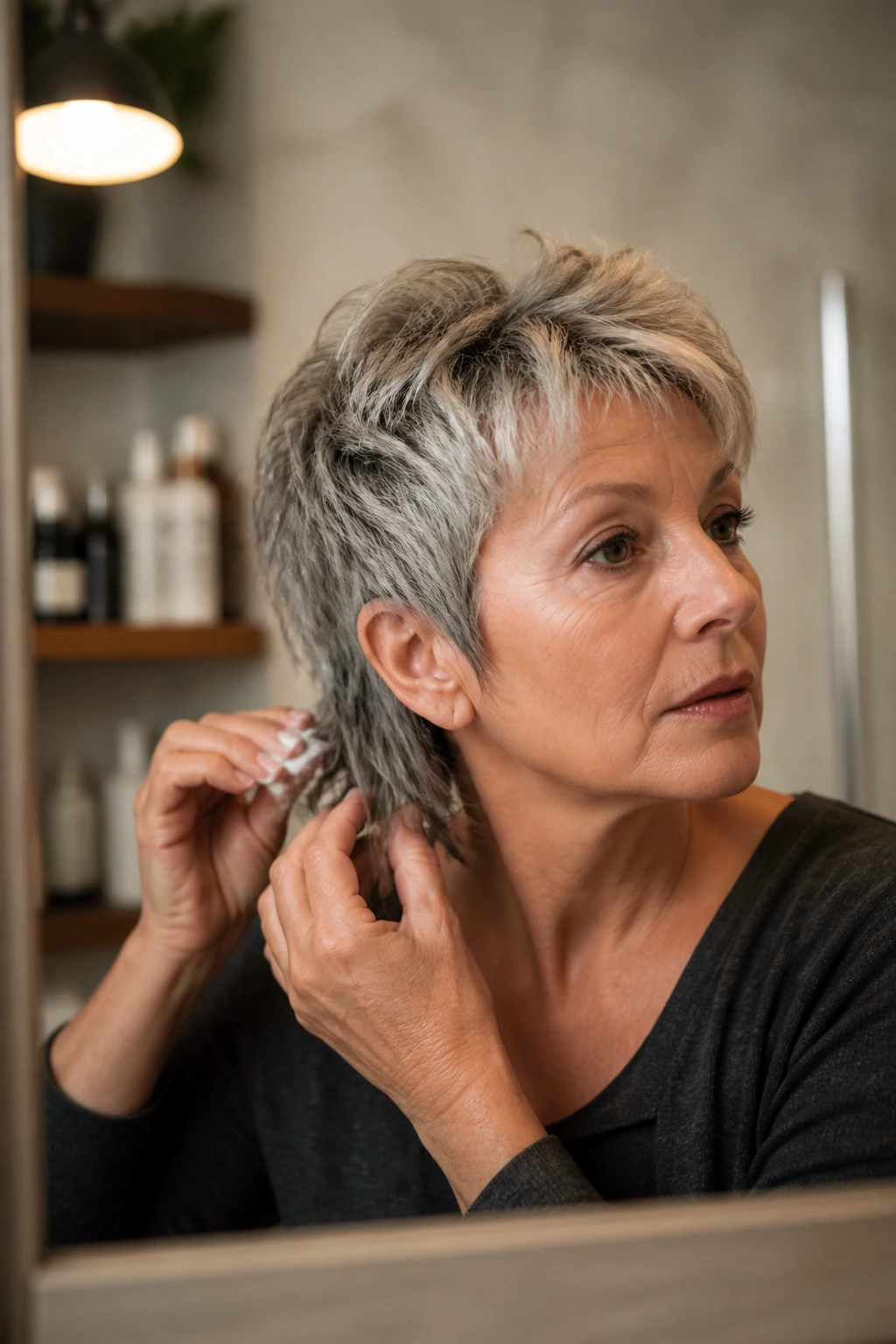
Volume: Start with a root-lift spray or a small amount of mousse on damp hair, then blow-dry the crown in the opposite direction it naturally falls for the first minute or two. That little reset gives you height where the cut needs it most. If you skip this, a short mullet can sink into the head by noon.
Texture: On choppy, shaggy, or piecey versions, rub a pea-sized amount of matte paste between your fingers and press it lightly into the ends. Don’t smear it through the whole head. The goal is separation, not a helmet.
Fringe: Side-swept or wispy bangs usually need less effort than people expect. Dry them first, or at least partly first, so they don’t dry bent in the wrong direction. A quick pass with a small round brush is usually enough.
Second-day reset: Mist the hair with water, scrunch the layers back into place, and wake the crown with a little dry shampoo at the roots. A short mullet often looks better on day two than day one because the pieces loosen up and stop trying so hard.
Heat or no heat: If you like air-drying, choose a version with a softer layer pattern and use a lightweight cream. If you prefer polish, a blow dryer plus round brush will give the cut more lift at the crown and a neater edge through the nape.
One thing I’d avoid: heavy oils all over the ends. They flatten the movement and make the haircut look older than it is.
Common Mistakes That Make the Cut Age the Wrong Way
-
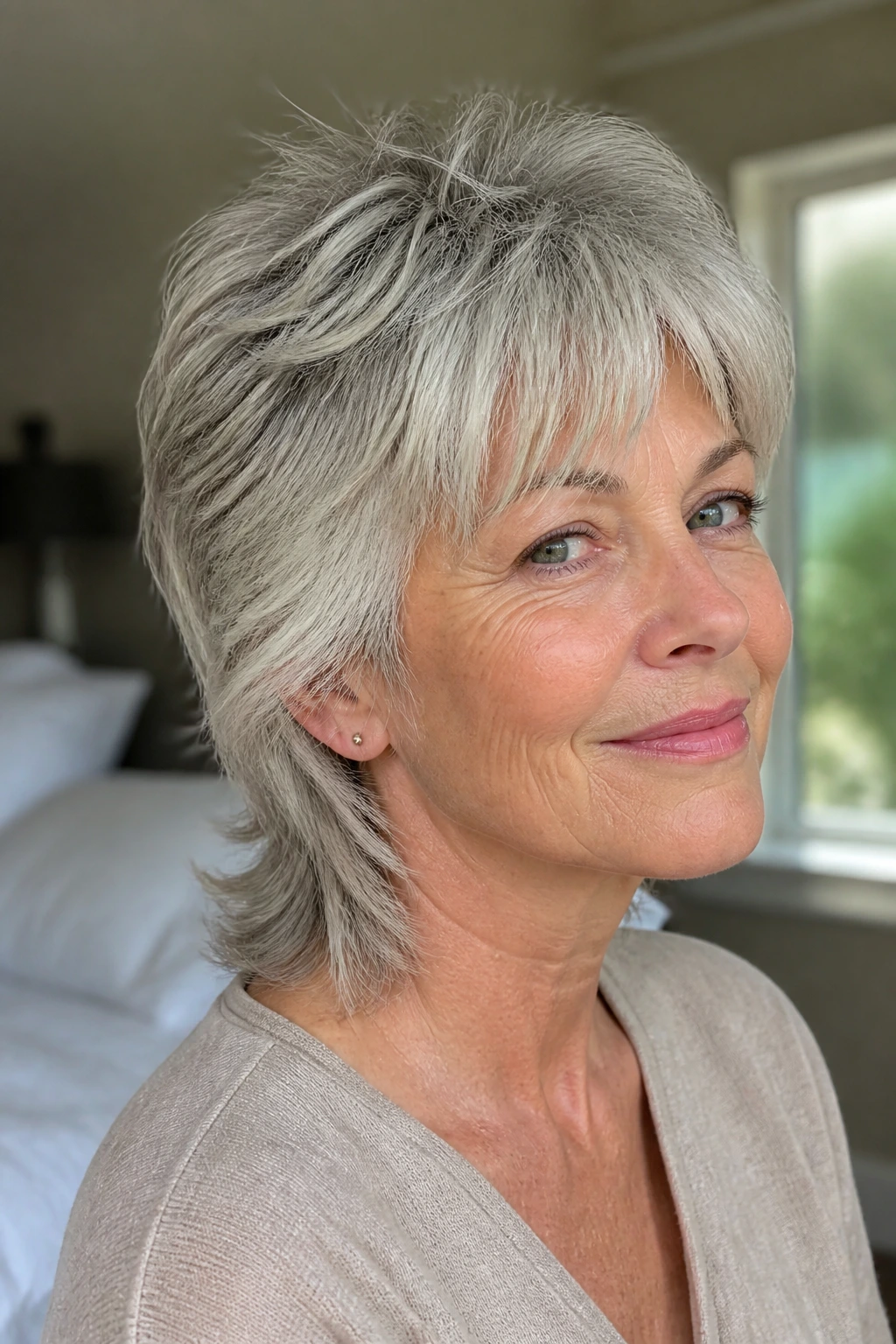
Leaving the back too heavy. The symptom is a blunt, triangular shape that sits on the neck instead of moving with it. Ask for tapering and point cutting through the nape so the outline stays light.
-
Over-thinning fine hair. If the ends start looking stringy, the cut has gone too far. Fine hair needs shape, not scalp exposure; keep the texture work focused near the surface and the perimeter.
-
Keeping the sides too long. A mullet with heavy side panels can drag the face down and hide the lift at the crown. The fix is simple: shorten the temple and ear area enough that the eye can travel cleanly from front to back.
-
Ignoring the fringe. Bangs that are too blunt or too dense can overpower the face, especially on mature features. Softer, slightly broken fringe lines usually read better and grow out with less drama.
-
Styling everything flat. A short mullet needs a little movement at the top or it becomes a strange, low-energy shape. Even a small amount of root lift changes the whole haircut.
-
Cutting it too disconnected. Sharp disconnection can look edgy in photos and awkward at breakfast. If you want wearable, ask for blending through the transition zones.
Variations and Alternatives to Try
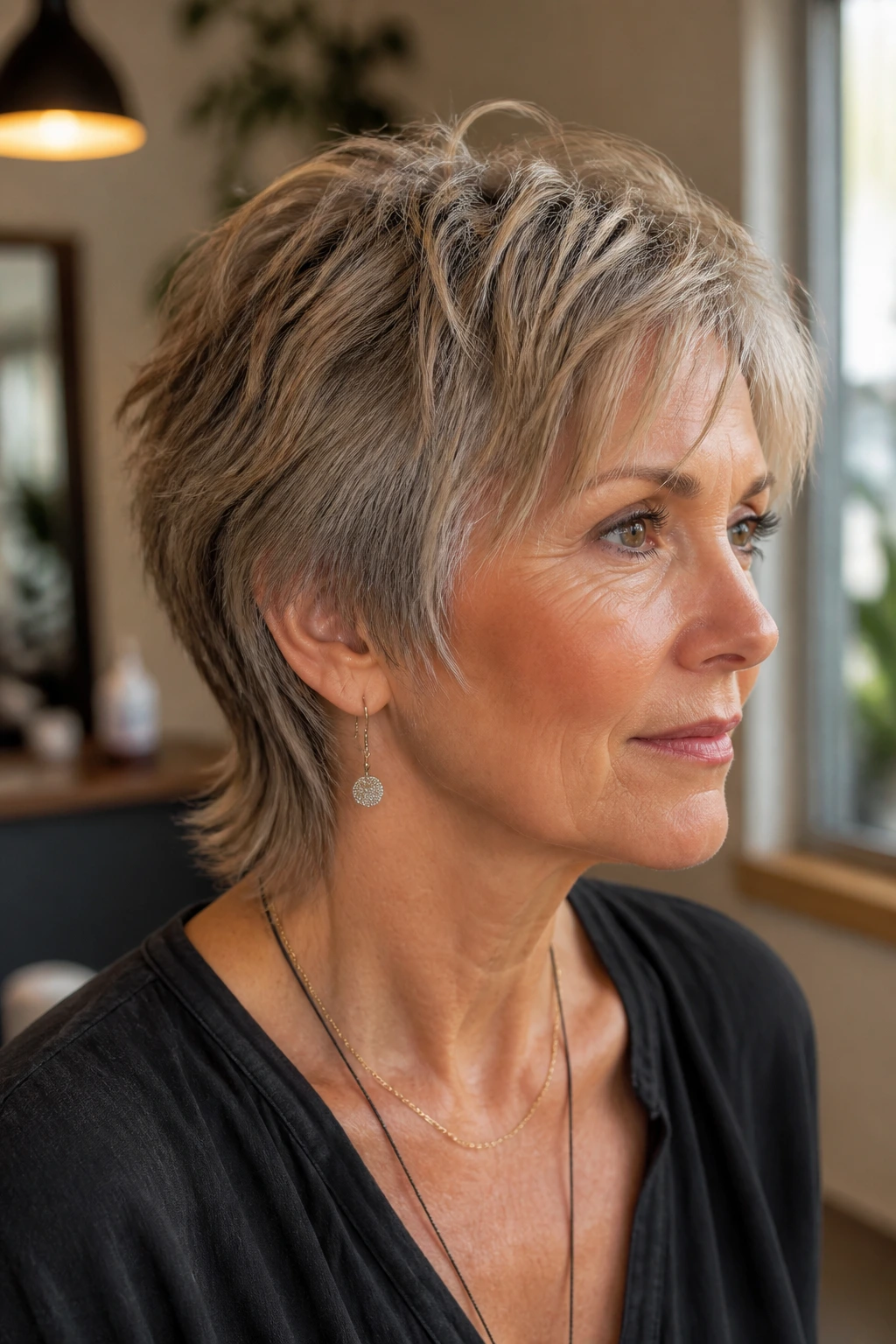
The Soft Shag Detour: If you like the idea of a mullet but want less contrast between front and back, ask for a soft shag with a slightly shorter nape. It keeps the movement but blurs the silhouette. Good choice if you’re nervous about a full mullet label.
The Glasses-Friendly Crop: Keep the temple area tidy, shorten the sides around the ear, and let the fringe sweep rather than sit heavy. This keeps the frames from disappearing into the hair. It also helps the face stay open.
The Curly Halo Version: Let the crown stay fuller and let the curls form a halo around the top, with a shorter back to keep the shape lifted. This suits women whose curls get flatter at the sides but still have energy up top.
The Bob-to-Mullet Bridge: Start with a chin-length or jaw-length bob and add shorter crown layers plus a tapered nape. This is the safest route if you want to test the silhouette without jumping into a more obvious shape.
The Silver Spotlight Cut: Designed for women who want their natural gray or silver to lead the look, this version keeps the shape simple and the layering soft. The haircut frames the color instead of competing with it.
Maintenance, Trimming, and Grow-Out Strategy
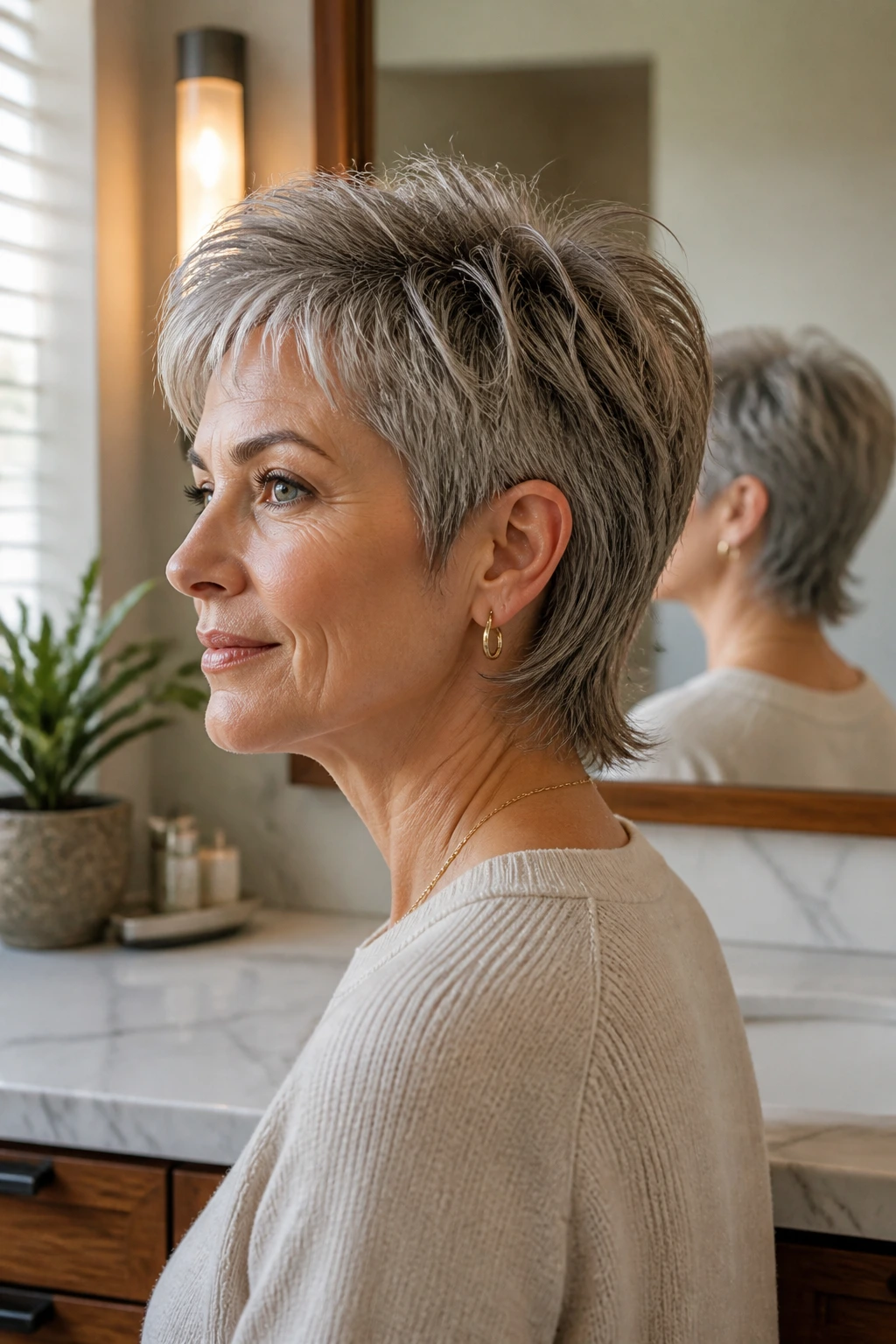
Short mullet cuts keep their shape best with trims every 4 to 6 weeks if the outline is tight and cropped, or every 6 to 8 weeks if the cut is softer and more blended. If you wait much longer, the nape tends to bulk up first, and the whole silhouette starts losing its clean line. That’s the place where people suddenly feel like the haircut has turned into “just hair.”
Color changes the maintenance picture. Gray blends, silver glosses, and highlights often need a tone refresh every 4 to 8 weeks depending on how strong the brass is and how often you wash. If you heat-style often, keep a heat protectant in the routine and don’t crank the dryer to the highest setting. Dry hair shows every mistake faster.
Night care helps more than people admit. A satin pillowcase reduces snagging around the fringe and nape, and a quick finger-comb in the morning usually beats aggressive brushing. If your hair bends funny at the back, dampen only that section and reset it with a little cream or spray before you touch the rest of the head.
When to Grow It Out
If you decide you’re done with the mullet shape, don’t panic. Let the nape fill in, keep the fringe soft, and nudge the sides toward a shaggy bob or bixie. That grow-out path is much kinder than trying to force all the pieces into one blunt cut overnight.
Frequently Asked Questions
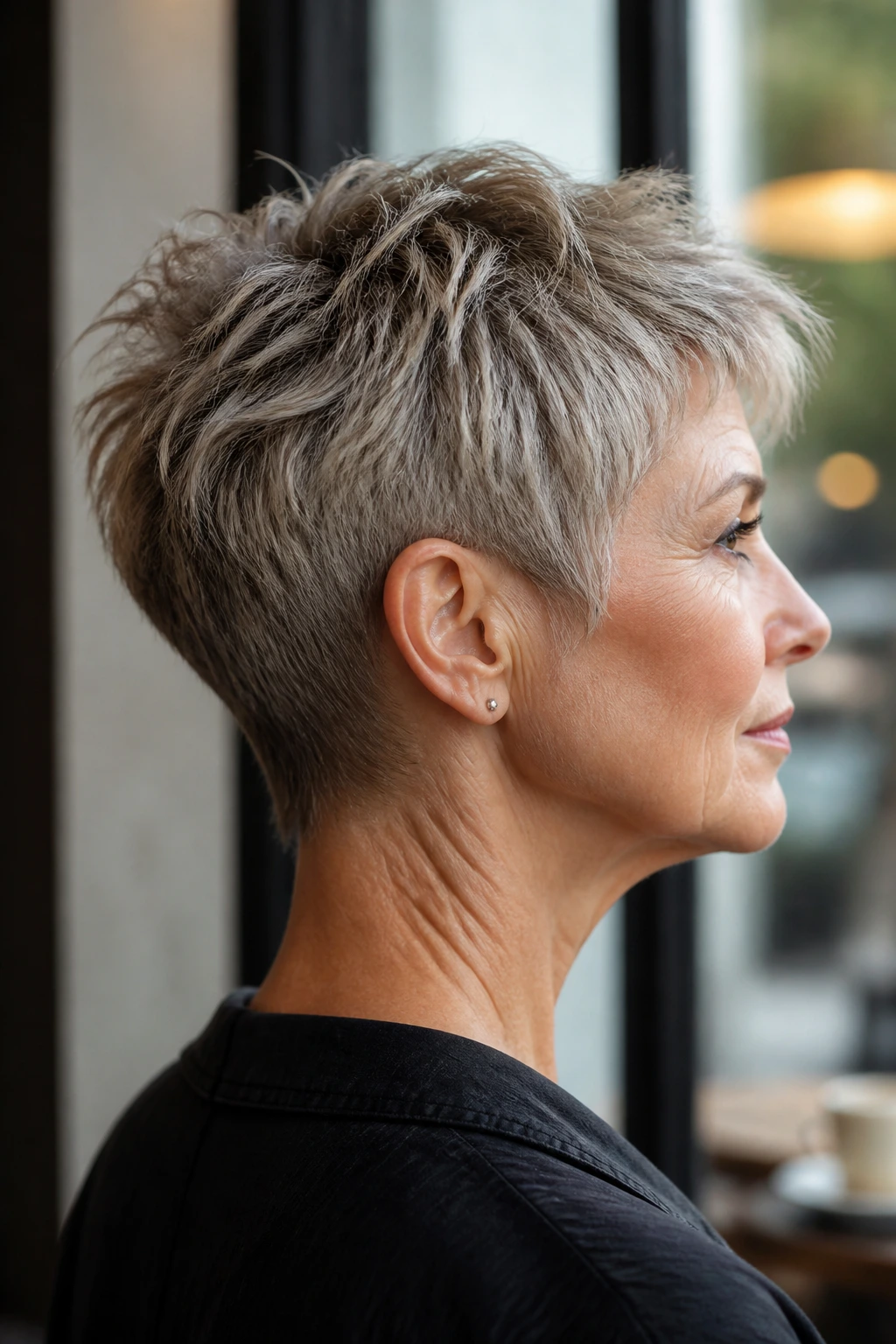
Will a short mullet make me look older?
Not if the cut is blended well and the fringe suits your face. The styles that age poorly are usually the ones with a harsh nape line or too much volume in the wrong place. Soft layering, clean sides, and a bit of crown lift usually read fresh instead of fussy.
Is a short mullet good for fine hair?
Yes, if the cut is built with restraint. Fine hair usually needs a little height at the crown and enough length in the top layers to avoid collapse. Too much thinning is the problem, not the mullet shape itself.
Can women with curly hair wear a short mullet?
Absolutely, and curly hair often gives the shape more life than straight hair does. The key is cutting with the curl pattern in mind and leaving enough room for the curls to spring at the crown and back. Dry cutting or cutting mostly dry can help.
How do I ask for a soft mullet instead of a retro one?
Use plain language: say you want soft layers, a tapered nape, and a gentle transition between the top and back. If you can, show pictures of cuts that are feathered rather than sharply disconnected. The wording matters more than saying the word “mullet.”
What if I hate the back once it’s cut?
That’s why the best versions don’t go too dramatic in the first place. If the back feels too short, let it grow for a few weeks and keep the sides and fringe clean so the shape settles into a shaggy crop faster. Tiny trims can help it look intentional during the grow-out.
Does this haircut work with glasses?
Yes, and some of the best versions are great with frames. Keep the temples and ear area lighter so the glasses don’t get buried. A side-swept fringe usually works better than a thick straight bang when you wear glasses every day.
How often will I need to style it?
Short answer: less than a precision bob, more than a wash-and-go buzz. Most versions need a quick root lift or finger-shaping after washing, then a light refresh on day two. The more texture the cut has, the less time you’ll spend forcing it into place.
Can I grow it into a bob later?
Yes, and that’s one reason the cut is less risky than people think. A soft mullet can move into a shaggy bob, bixie, or layered crop if you let the nape fill in gradually. Ask your stylist to keep the transition smooth if you know you’ll want a longer style later.
The Shape That Keeps Working
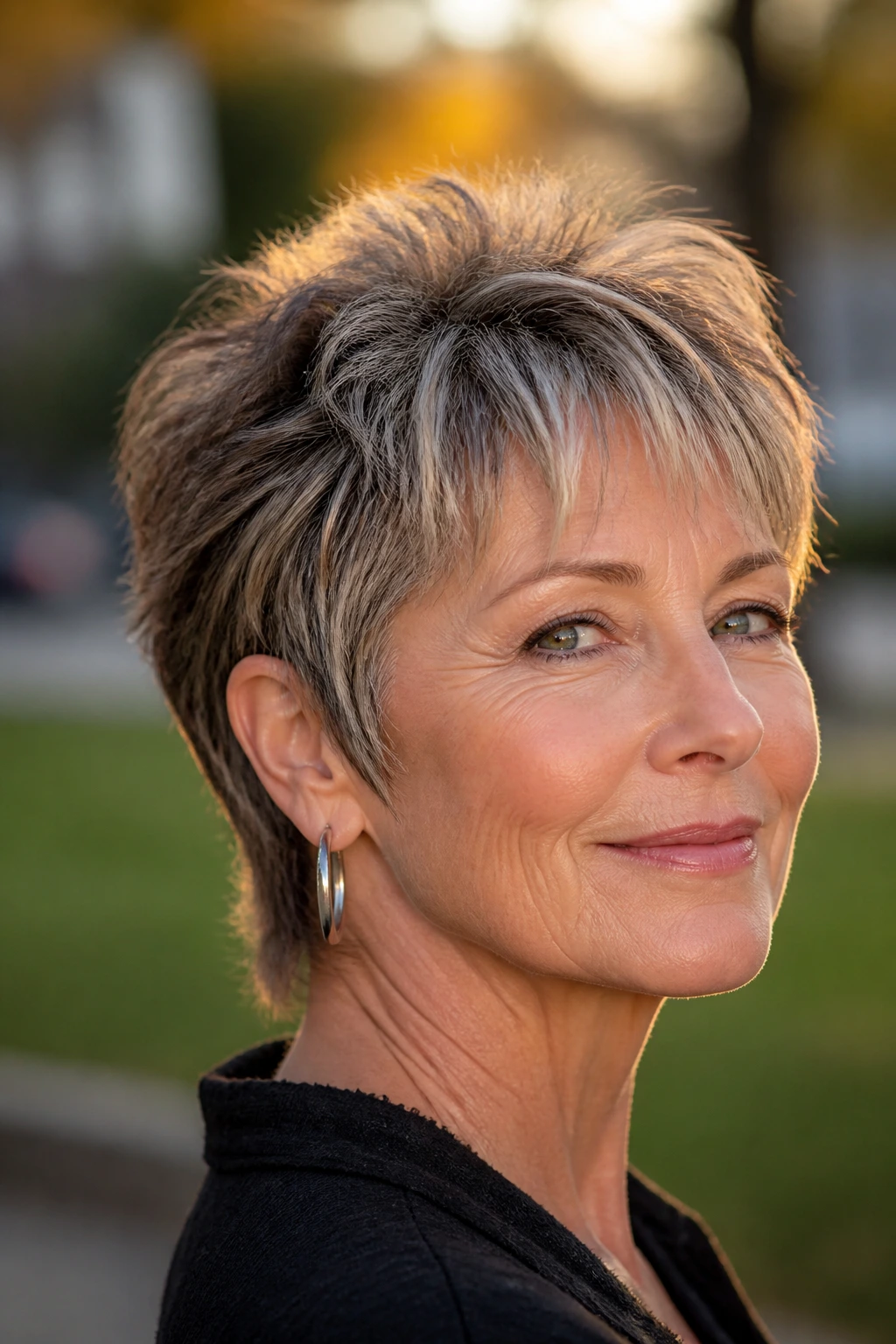
The best short mullet cuts for older women have one thing in common: they respect the hair you actually have. They don’t demand perfect thickness, perfect symmetry, or a lot of morning effort. They give the crown some lift, the face some softness, and the neck a cleaner outline than a lot of safer cuts ever manage.
That’s why this haircut family keeps hanging around. It’s practical when you want it practical, and it has enough shape to feel interesting when you want a little more edge. Pick the version that matches your texture, keep the nape tidy, and the rest tends to fall into place faster than people expect.
