



Thick hair can make a pixie shag mullet look expensive or look like you got clipped by a lawn mower. There isn’t much middle ground. The difference lives in the layers: cut enough weight out of the interior, leave enough length at the nape, and suddenly the whole shape moves instead of sitting there like a block.
That is why pixie shag mullet haircuts for thick hair work so well when they’re cut with a real plan. The crown gets lift, the sides lose bulk, and the back keeps just enough length to stop the cut from collapsing into a puff. On dense hair, that balance matters more than people think. A blunt crop can turn boxy fast; a good shag mullet keeps the outline intentional.
I keep coming back to this family of cuts because it has range. It can be soft, punky, polished, shaggy, and strange in the best way. One version sits neatly with a blazer. Another looks like you woke up with excellent taste and a minor attitude problem. The trick is knowing which layers to keep, which corners to soften, and how much neck you want to show.
Why This Collection Works on Thick Hair
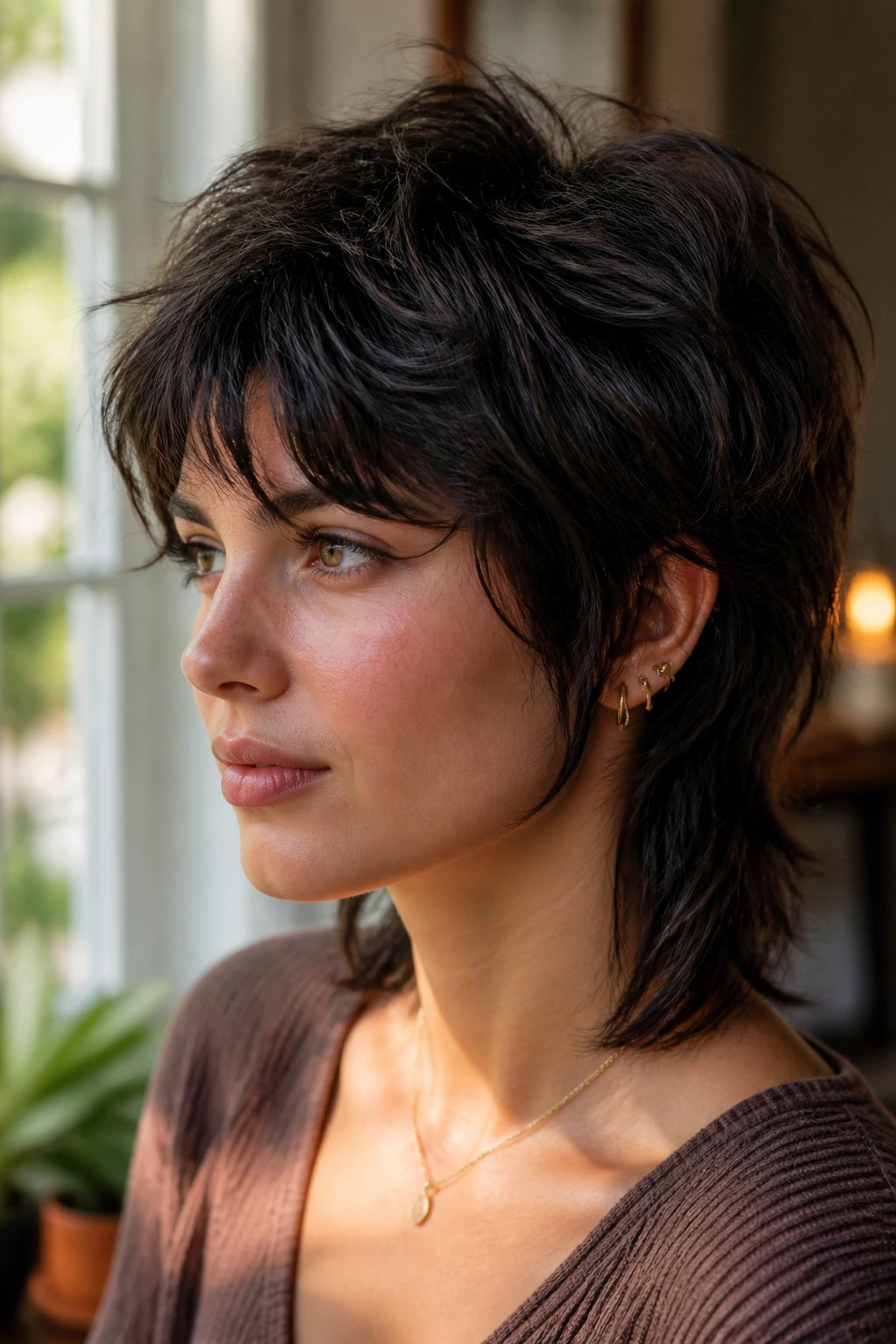
Built for bulk removal: Thick hair needs the interior cut, not just the ends dusted off, or the silhouette goes wide and heavy.
Better crown shape: These cuts give the top room to lift without making the sides explode outward.
Flexible styling: You can wear the same base cut sleek, piecey, fluffy, or nearly air-dried depending on the finish you choose.
Grow-out friendly: The mullet tail and shag layers keep the shape from turning into a hard helmet after a few weeks.
Easy to personalize: Fringe length, temple softness, and nape length change the mood fast, which is half the fun here.
Works with texture: Straight, wavy, and curly thick hair all benefit from different versions of the same shape, as long as the weight is handled properly.
1. Crown-Lifted Feathered Pixie Shag Mullet
A feathered crown is the secret weapon here. The top stays light and lifted, while the back drops into a narrow tail that keeps the haircut from feeling too short or too severe. On thick hair, this shape stops the top from ballooning and gives the whole cut a soft, moving outline.
Why It Works on Dense Hair
The stylist should remove weight through the crown with feathering, not blunt chopping. That keeps the top from sitting flat while also stopping the sides from flaring out around the ears. I like this version when the hair has natural body but tends to build up too much width at the temples.
Ask for a slightly tapered nape, soft sideburns, and crown layers that can be pushed forward or swept back. That gives you room to change the styling mood without changing the cut.
Styling Notes
A light mousse at the roots and a quick blow-dry with a small round brush is enough to bring the shape up. Finish with a mist of texture spray, not a heavy paste. Heavy product kills the feathering, and that’s the whole point.
2. Razor-Edged Wolfie Pixie Mullet
This one has bite. The razor work breaks up thick strands so the ends look airy instead of chunky, and the mullet back stays narrow enough to keep the silhouette sharp. It has a slightly undone feel that reads deliberate, not sloppy.
A razor-edged cut works best when the hair is dense but not too coarse. If your strands are very strong and springy, the stylist may need to balance razor work with scissors so the ends don’t fray. That balance matters. Too much razor, and the cut can puff.
Wear it with a rough-dried finish and a little paste worked through the ends. I’d skip glossy serums here. They tend to make this shape look more like a flattened mushroom than a shag.
3. Curtain Fringe Shag Mullet
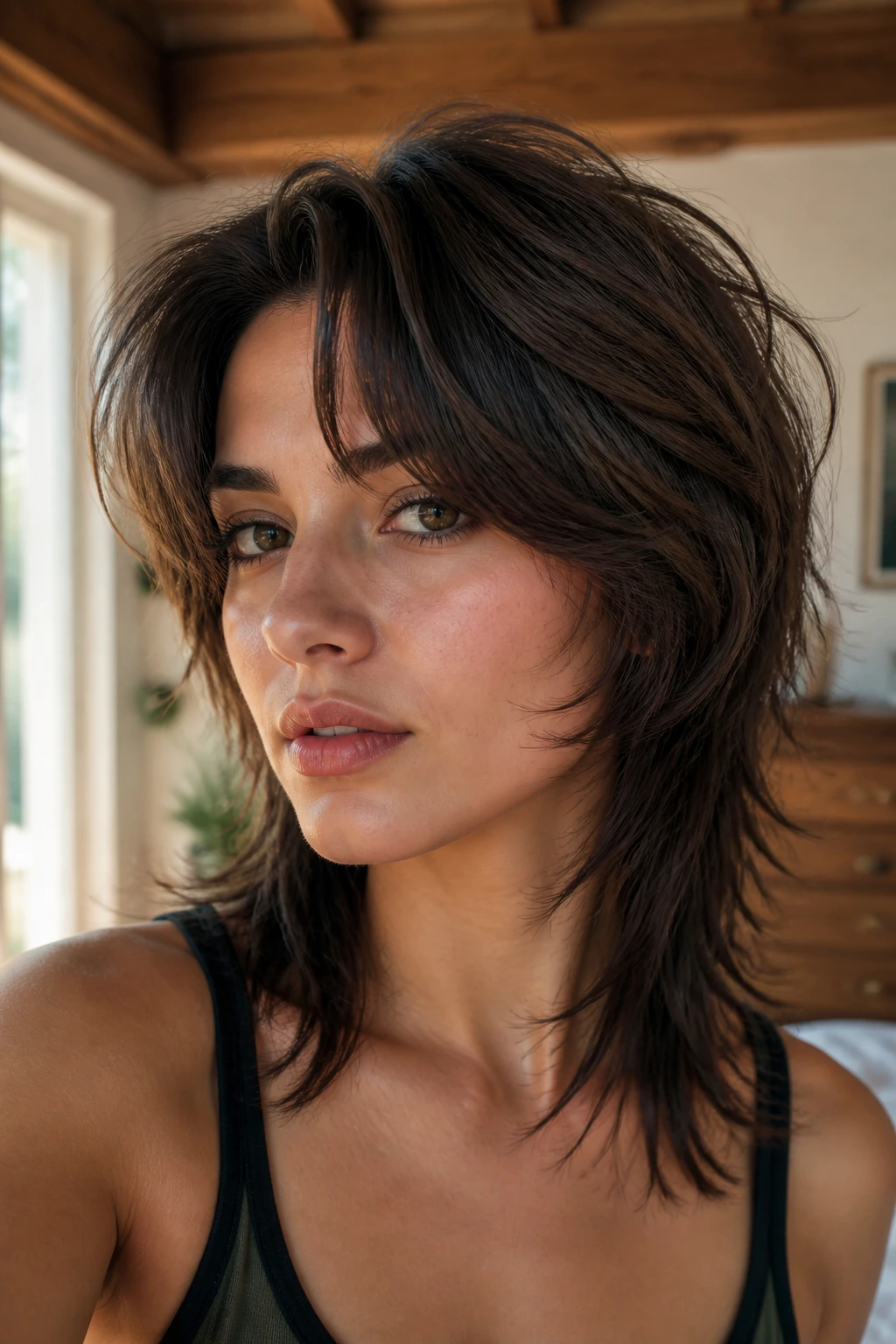
Why does a curtain fringe help so much on thick hair? Because it opens the face without dumping all the weight into one heavy bang line. The fringe splits softly in the middle, the sides fall away, and the cut keeps moving instead of forming one dense curtain across the forehead.
This version is especially good if your hair grows fast or if you hate the feeling of a straight-across fringe fighting your eyebrows. The curtain shape gives you a little room to breathe. It also makes the pixie shag mullet feel less extreme, which is useful if you want edge but not drama every morning.
How to Wear It
Blow-dry the fringe from side to side with a small brush so it bends instead of sitting flat. Keep the rest air-dried or loosely diffused. A touch of dry texture spray at the roots keeps the front lifted and prevents the bangs from joining forces with the rest of the hair.
4. Micro-Bang Pixie Mullet
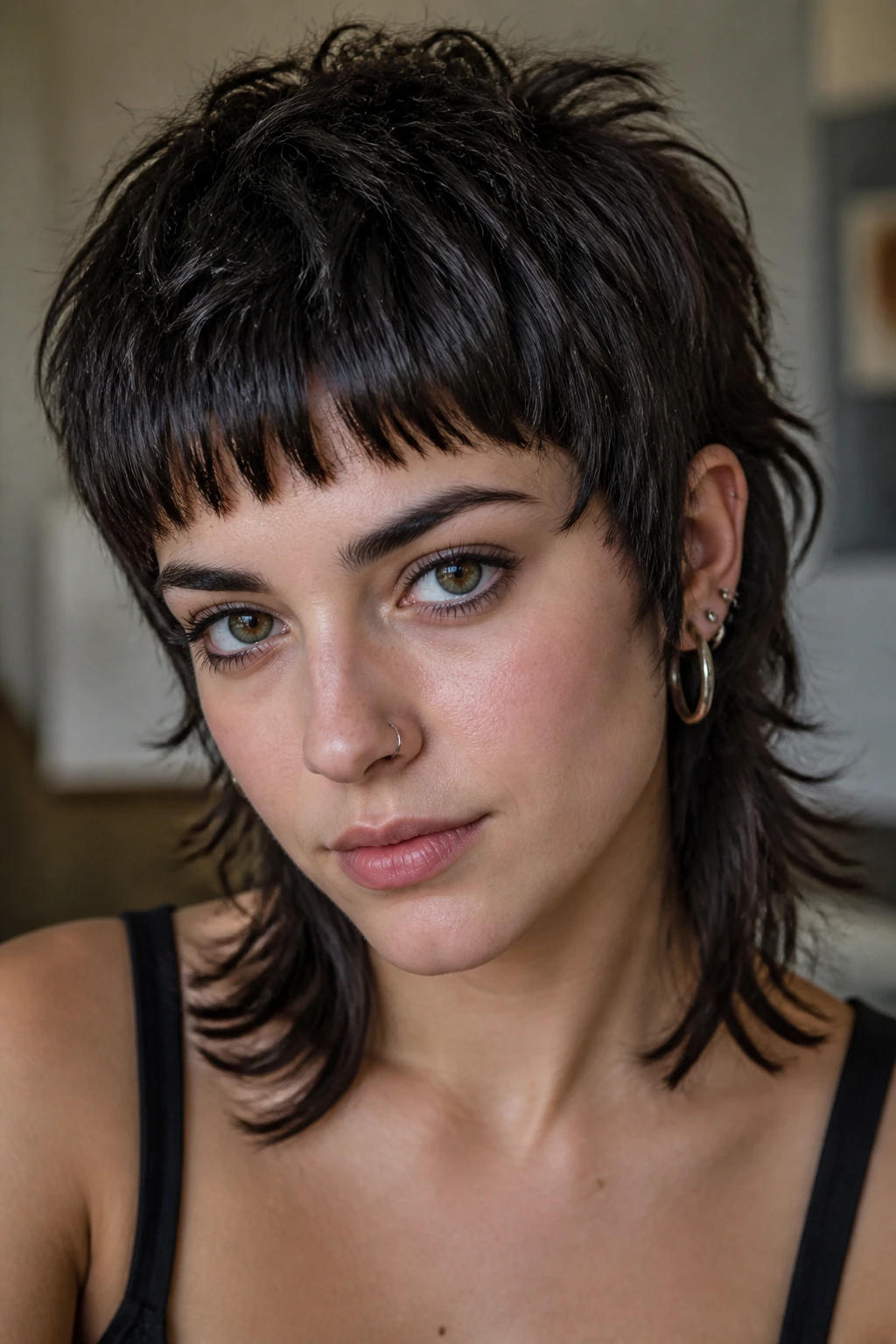
A short fringe on thick hair is a bold move, and I like it only when the texture is handled cleanly. The reason it works is simple: the micro-bang takes weight off the face and puts the focus on the eyes and cheekbones. The back stays shaggy and a little wild, which keeps the whole thing from looking too neat.
This cut can get heavy fast if the fringe is cut too thick. That’s the trap. Ask for a narrow, slightly piecey bang line rather than a solid block. A little irregularity makes it look cooler and also keeps it from puffing up as it dries.
Best on people who don’t mind frequent fringe trims. Every two to three weeks may be enough if you want that tiny, sharp bang to stay above the brows.
5. Tapered Nape Shag with Full Crown
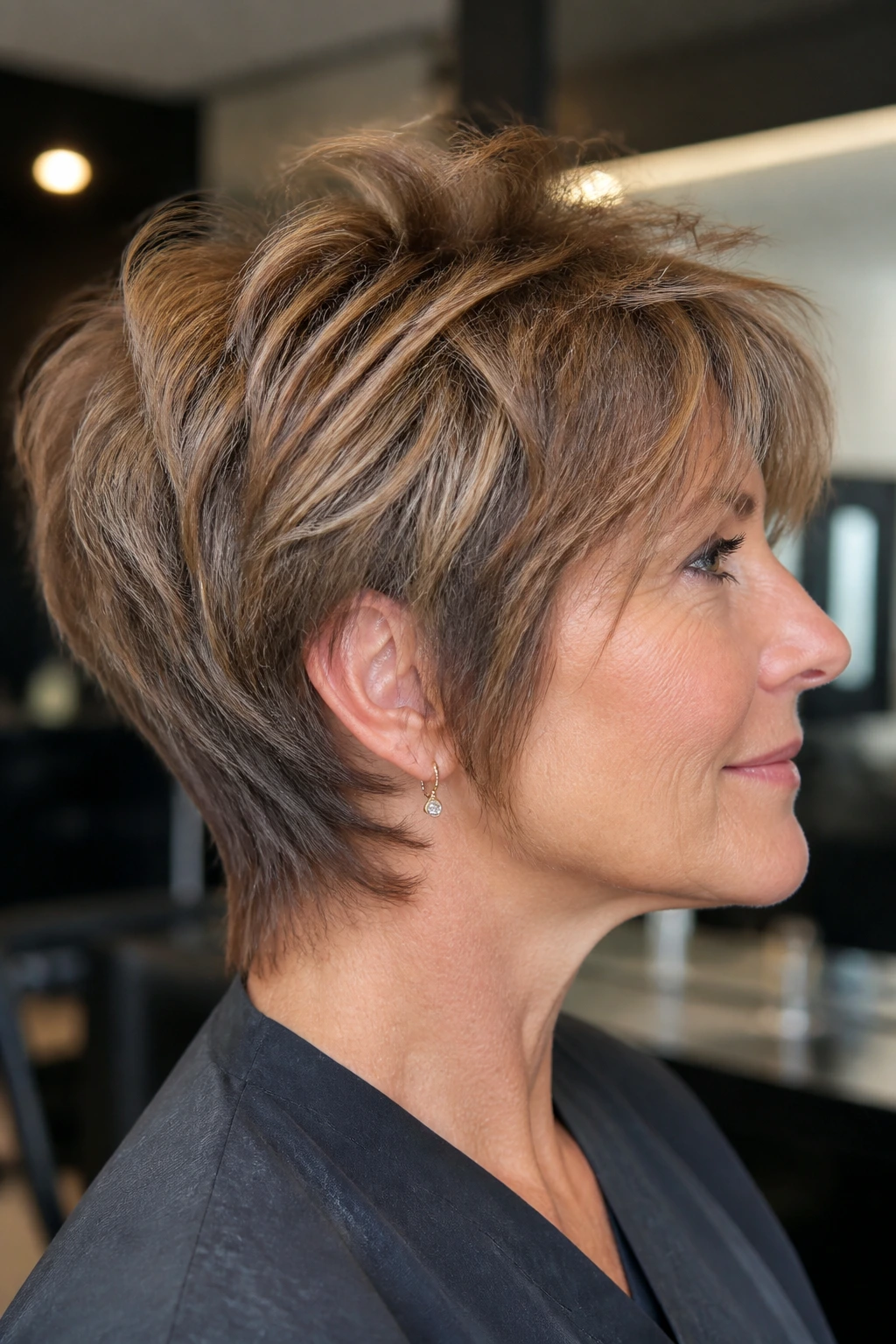
If you love volume on top but hate width around the neck, this is the one to watch. The crown gets the length and lift it needs, while the nape is tapered down close enough to show off the neck and jawline. Thick hair often looks best when it is allowed to stack upward instead of outward.
The cleanest versions of this cut have internal layers hidden under the surface. That means the outside still reads soft, but the interior isn’t carrying all the weight. It’s a neat trick, and it keeps the shape from going helmet-shaped by the third week.
A low-hold cream and a quick finger-dry are enough on many hair types here. Let the back settle naturally, then pinch the crown up with your fingers so the top doesn’t collapse.
6. Choppy French-Girl Pixie Shag Mullet
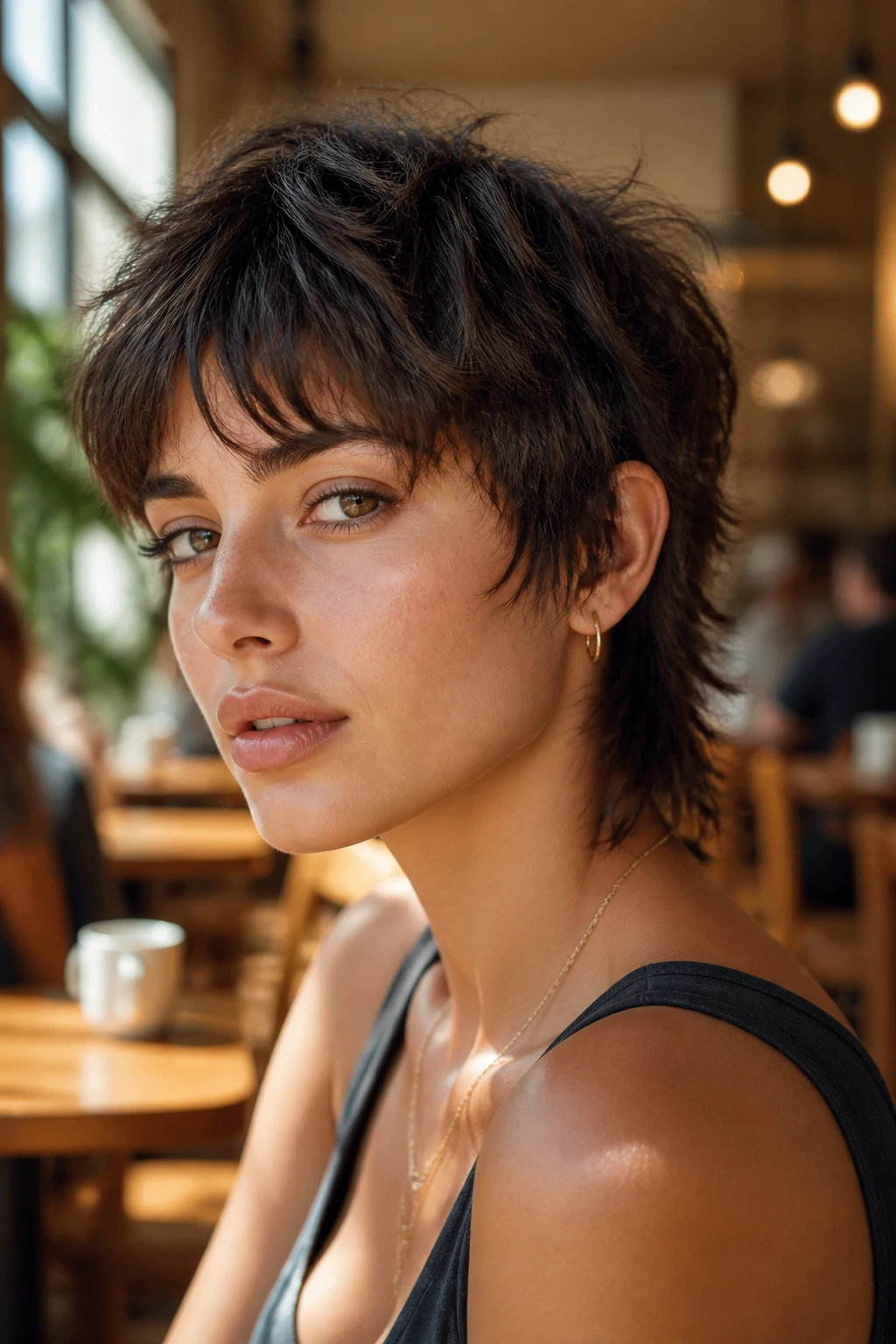
This cut is all about nonchalance, but it needs technical discipline underneath. The layers are short and broken, yet the outline stays soft around the ears and at the nape. Thick hair can wear this beautifully because the internal texture keeps the body from looking too dense.
The trick is to avoid over-perfecting it. If every strand sits in place, the charm disappears. A few uneven ends are part of the design, not a mistake. That is what gives the cut its relaxed, lived-in feel.
I’d pair this with a side part or a slightly off-center fringe if your hair tends to fall flat at the front. It keeps the whole shape from reading too symmetrical, which thick hair can do if it’s cut too cleanly.
7. Side-Swept Pixie Mullet with Long Temples
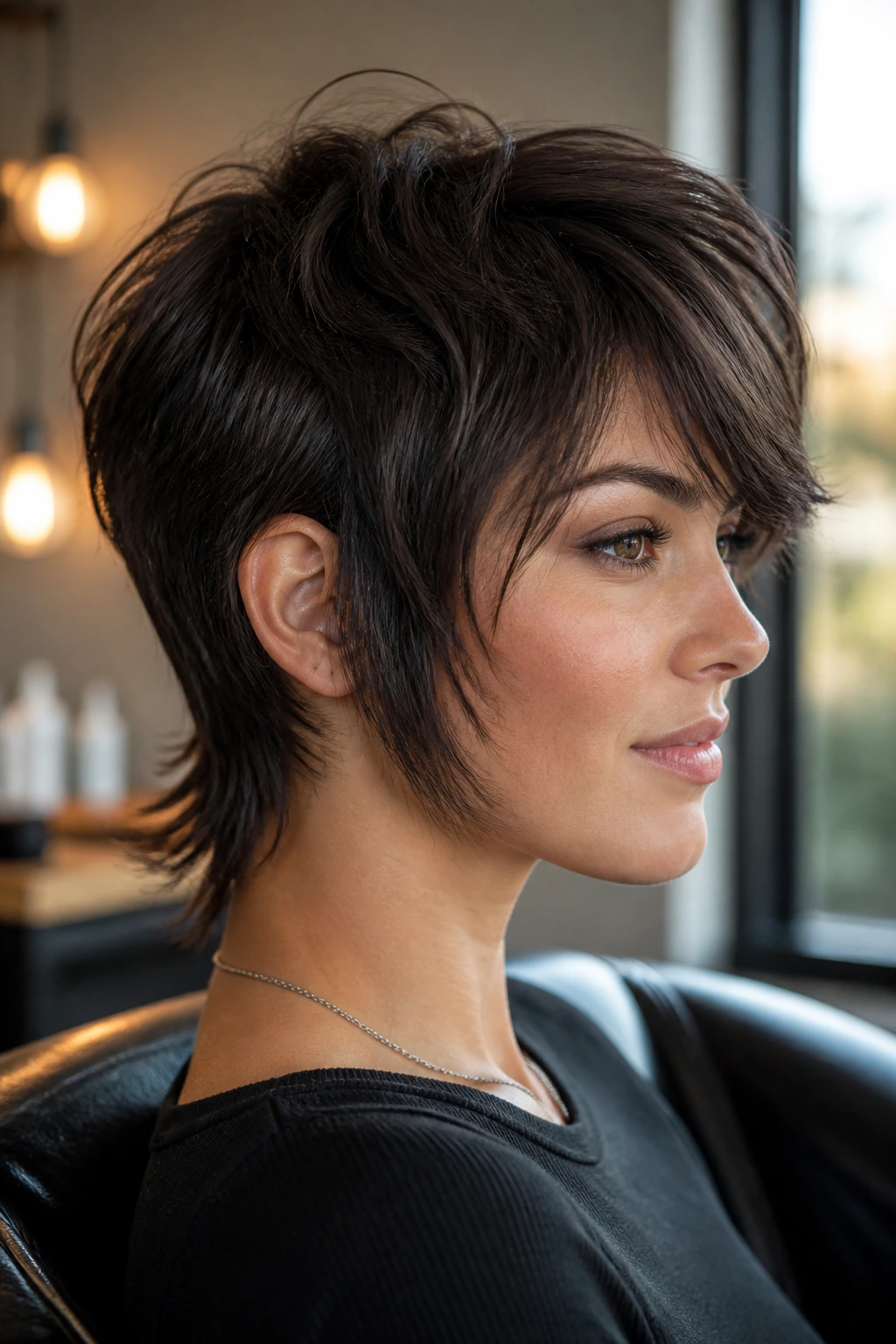
A long temple section changes everything. It softens the transition between the short top and the longer back, which matters when your hair has enough density to make hard edges look bulky. This version is flattering if you like your ears partly covered but not hidden.
The side-swept front gives the haircut a little grace. Without it, thick hair can make a pixie mullet look abrupt. With it, the cut feels shaped instead of merely shortened.
Salon Ask
Ask your stylist to keep the temple area a bit longer than the crown corners. That little extra length lets the front move when you tuck it behind the ear or push it across the forehead. It also helps the cut grow out in a cleaner way.
8. Curly-Top Shag Mullet Crop
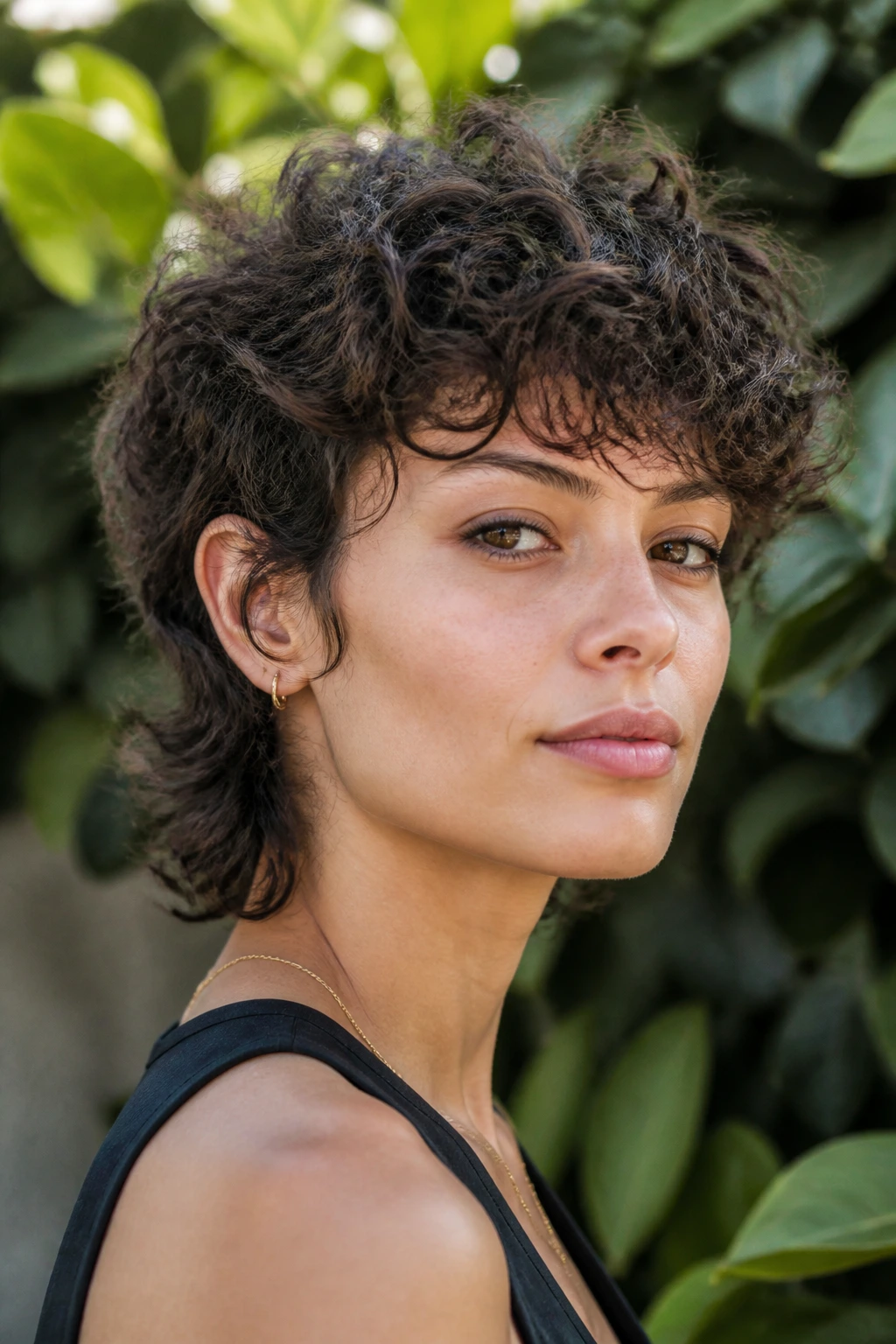
Curly thick hair and a pixie shag mullet can be a brilliant match if the layers are cut to respect the curl pattern. The top gets rounded height, the back keeps a playful tail, and the sides stay light enough that the curls don’t stack into a triangle.
This one should not be cut like straight hair. That’s the mistake. Curl needs room to spring up, and the stylist has to account for shrinkage. If the layers are cut too short while wet, you can end up with a much shorter shape than you planned.
Use a diffuser, low heat, and a curl cream that holds without coating every strand in shine. You want defined curls, not wet-looking curls. There’s a difference, and it shows fast on thick hair.
9. Undercut Pixie Shag Mullet
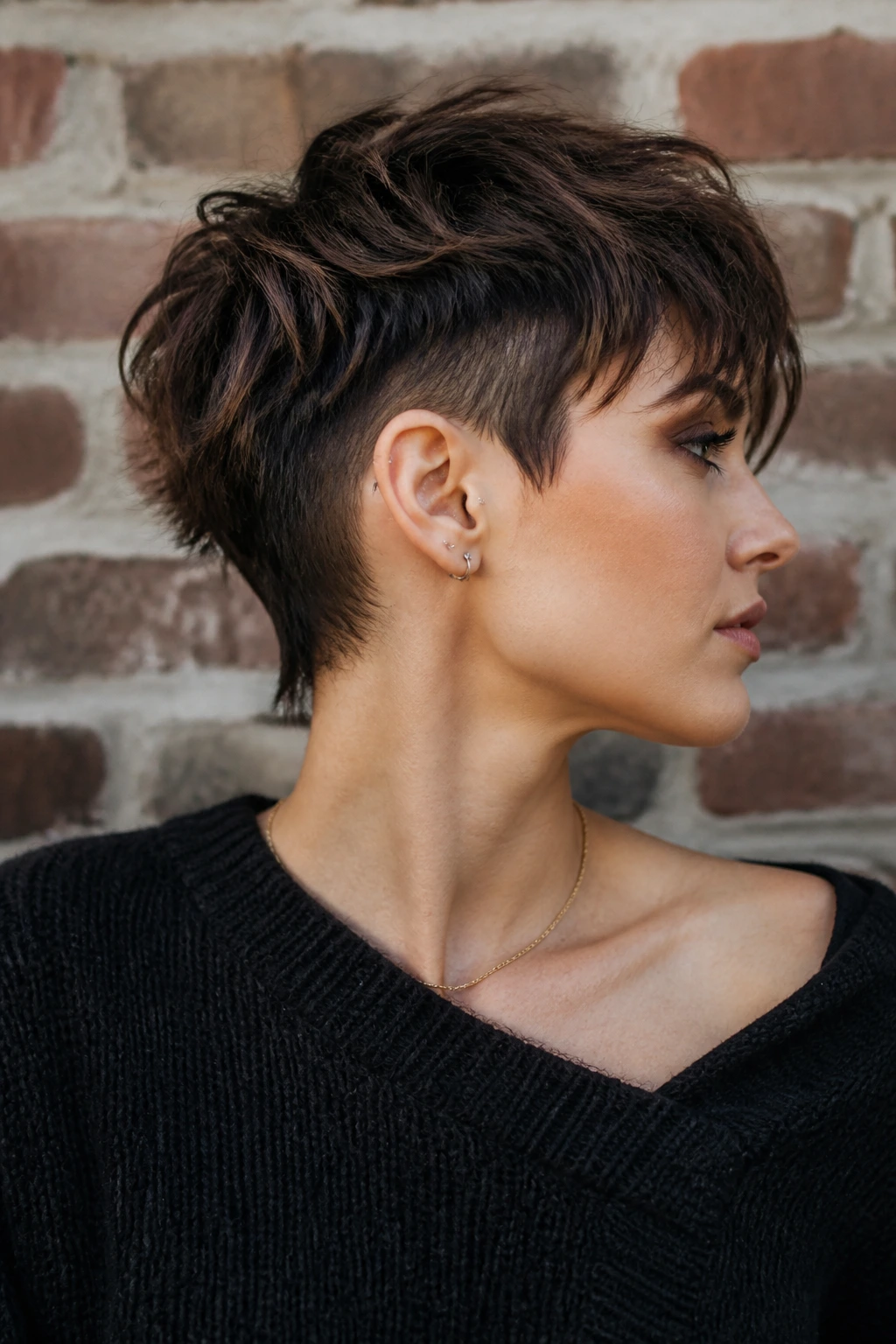
Here’s the blunt truth: if your thick hair is outrageously dense, an undercut can save the whole haircut. Removing weight at the nape or around the lower sides gives the top room to live. Without that hidden relief, some pixie shag mullets can feel like too much hair trying to occupy too little space.
This version has a little edge, sure, but the practical payoff is bigger than the style point. It dries faster. It sits flatter under hoods and scarves. And it lets the top layers move instead of sitting on top of a hard base.
Wear the top messy or brushed forward. Either works. The undercut is the part nobody sees until you put your hair up, and that secret is part of the appeal.
10. Bixie Mullet with Airy Layers
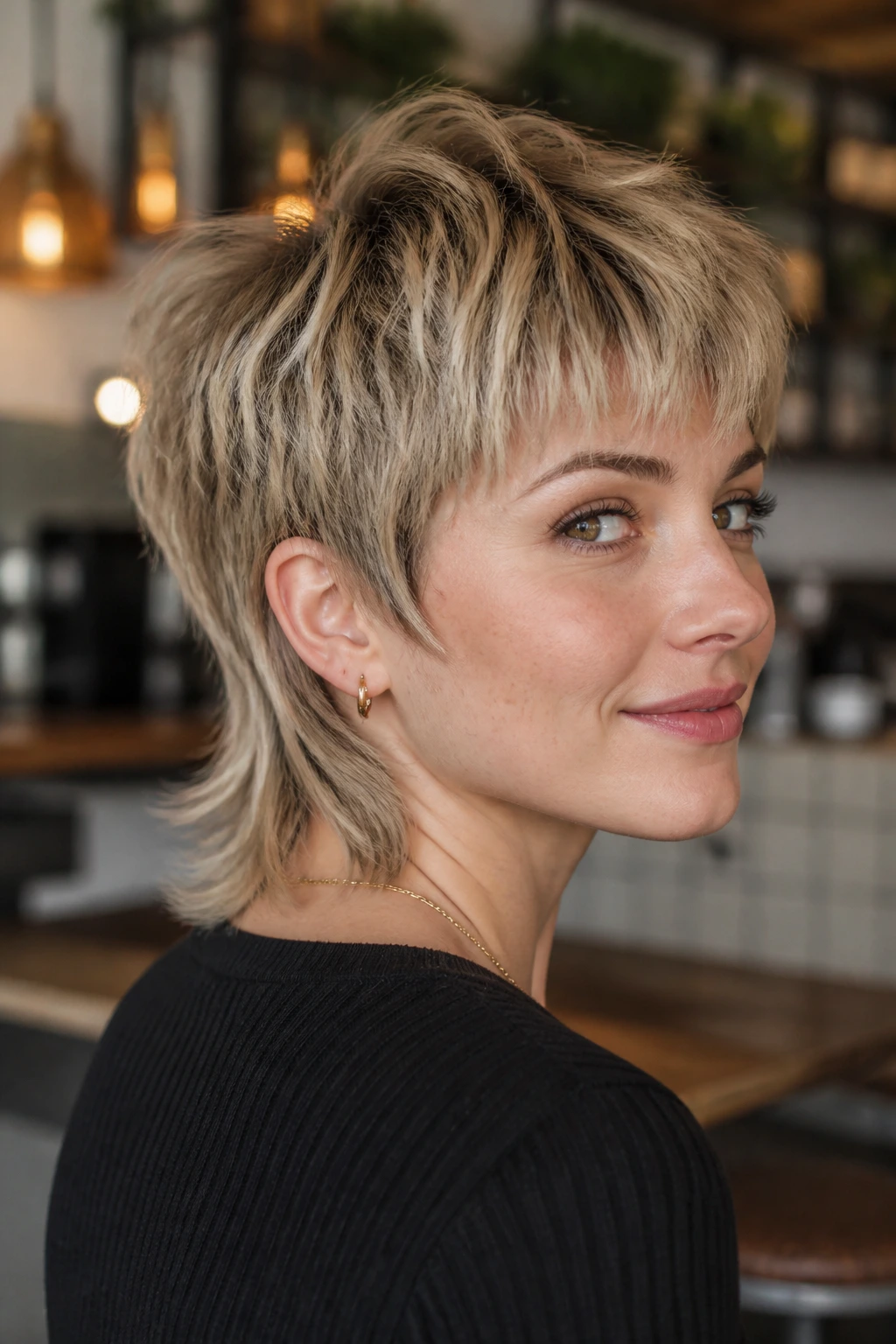
Think of this as the middle ground between a bixie and a shag mullet. The top is still short enough to feel light, but there’s enough length around the crown and back to keep the shape from reading like a standard crop. On thick hair, that extra movement makes a big difference.
The airy layers are what keep it from turning heavy. Instead of one solid mass, you get soft separation and a bit of swing at the ends. It feels polished without being stiff.
This cut is a smart pick if you want short hair but not a severe pixie. It also plays well with glasses because the front can be shaped to sit above or beside the frames instead of fighting them.
11. Mushroom-to-Mullet Pixie Hybrid
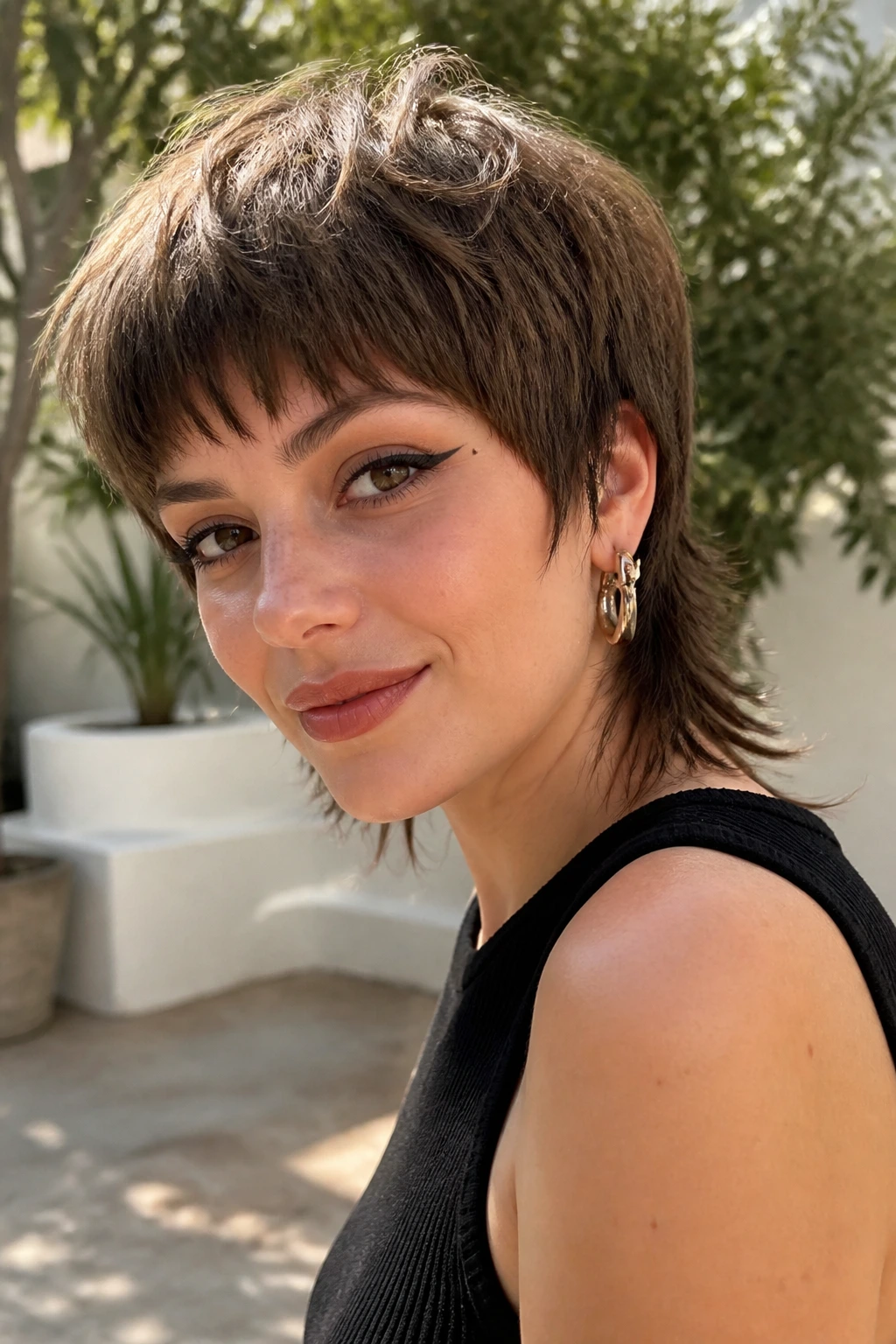
A mushroom shape can go wrong fast on thick hair. Too much roundness and it looks like a bowl. But if you break up the perimeter and let the back lengthen, the same idea turns into something much sharper.
That’s the charm of this hybrid. It starts rounded around the head, then relaxes into a shaggy tail at the nape. The layers prevent the top from becoming too heavy, while the back keeps the cut from feeling too tidy.
I like this one on people who want a softer silhouette but still want the mullet attitude hiding underneath. It’s a good bridge cut if you’re nervous about going straight into a choppy, punkier shape.
12. Overgrown Crop Shag with Tail
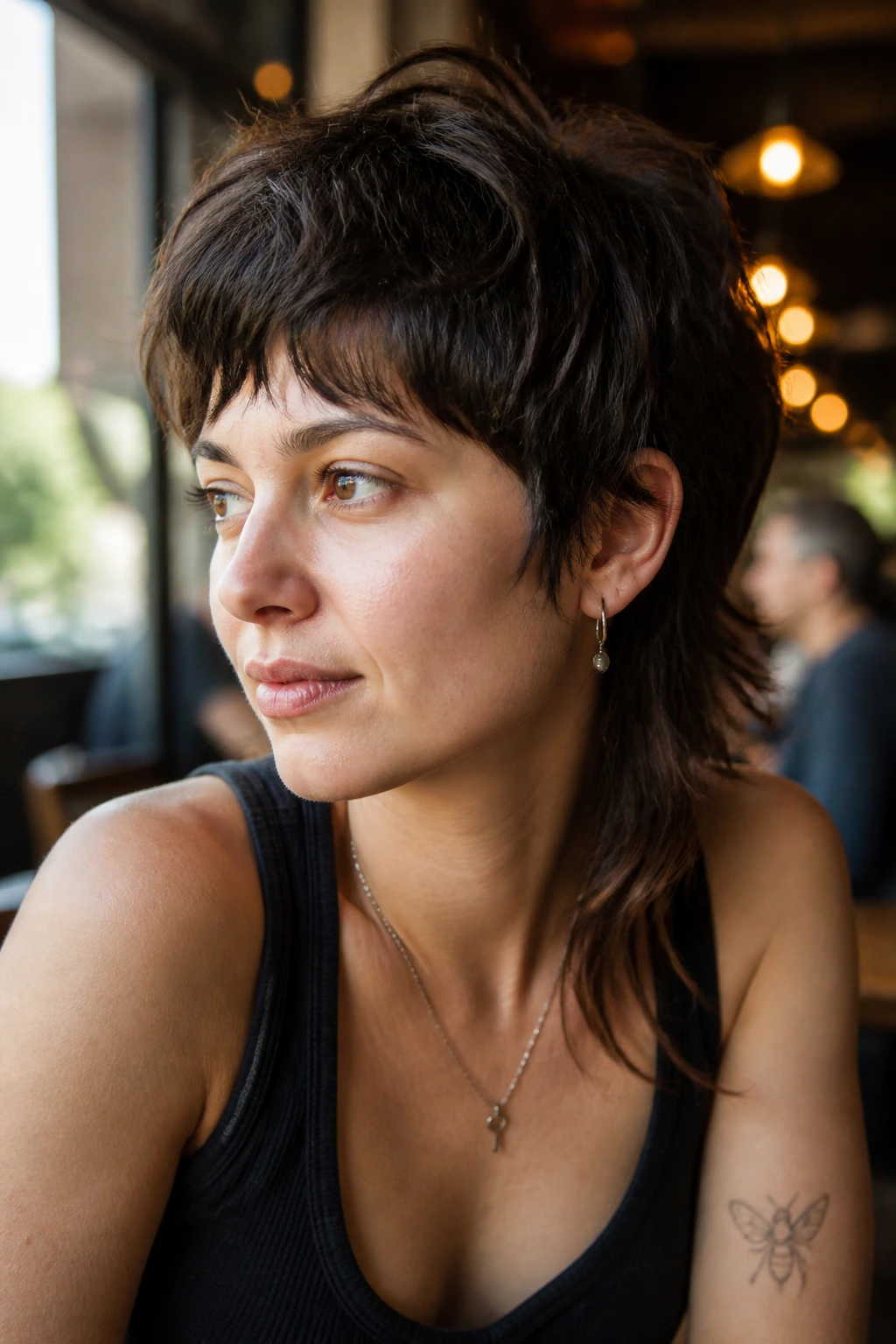
This cut has that “I meant to do this” energy that people either get or don’t. The front and sides look like a grown-out crop, but the back is kept intentionally longer, which gives the haircut its mullet signal. Thick hair makes this shape look fuller in a good way, as long as the top is broken up enough.
The appeal here is balance. You get the easy shortness around the ears and temples, but you avoid the total flatness that a true crop can have on dense hair. The tail gives the eye somewhere to go.
It’s also a nice choice if you want a haircut that can look tidy at the office and messy by dinner with two different styling products. Not every cut can do that without looking confused. This one can.
13. Asymmetrical Pixie Shag Mullet
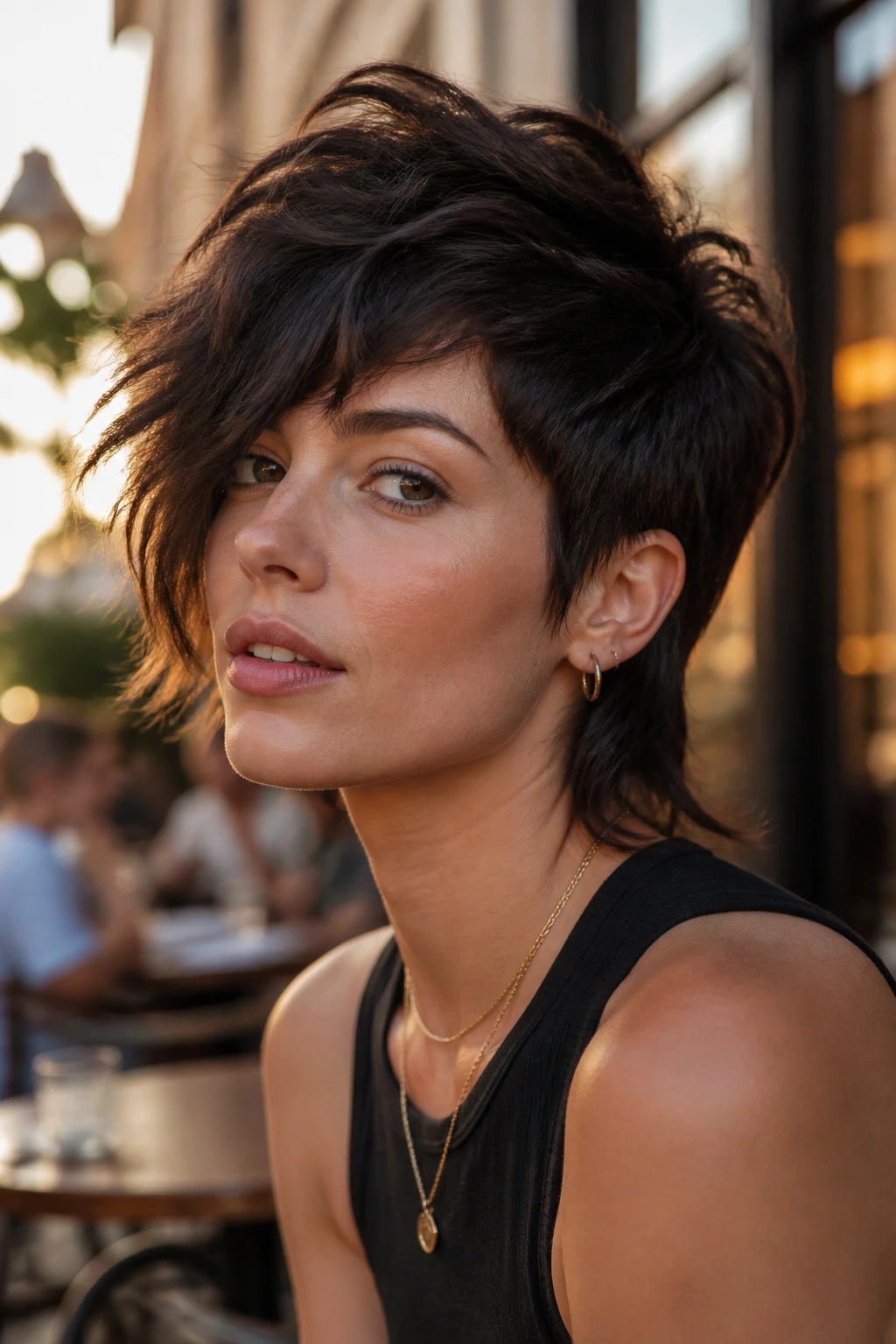
One side a little longer. That’s all it takes to change the mood. Asymmetry helps thick hair by breaking up the visual weight, so the cut doesn’t feel too symmetric or bulky. It can also soften a strong jaw or balance a face that needs a little tilt.
The key is to keep the asymmetry believable, not theatrical. A small length difference at the front or around one temple is enough. If the contrast gets too dramatic, thick hair can make the shorter side look extra short and the longer side look heavy.
This is one of those cuts that looks best when it moves. Turn your head, tuck one side back, let the longer side skim the cheek. Static photos miss the point a little.
14. Bowl-to-Wolf Cut Pixie
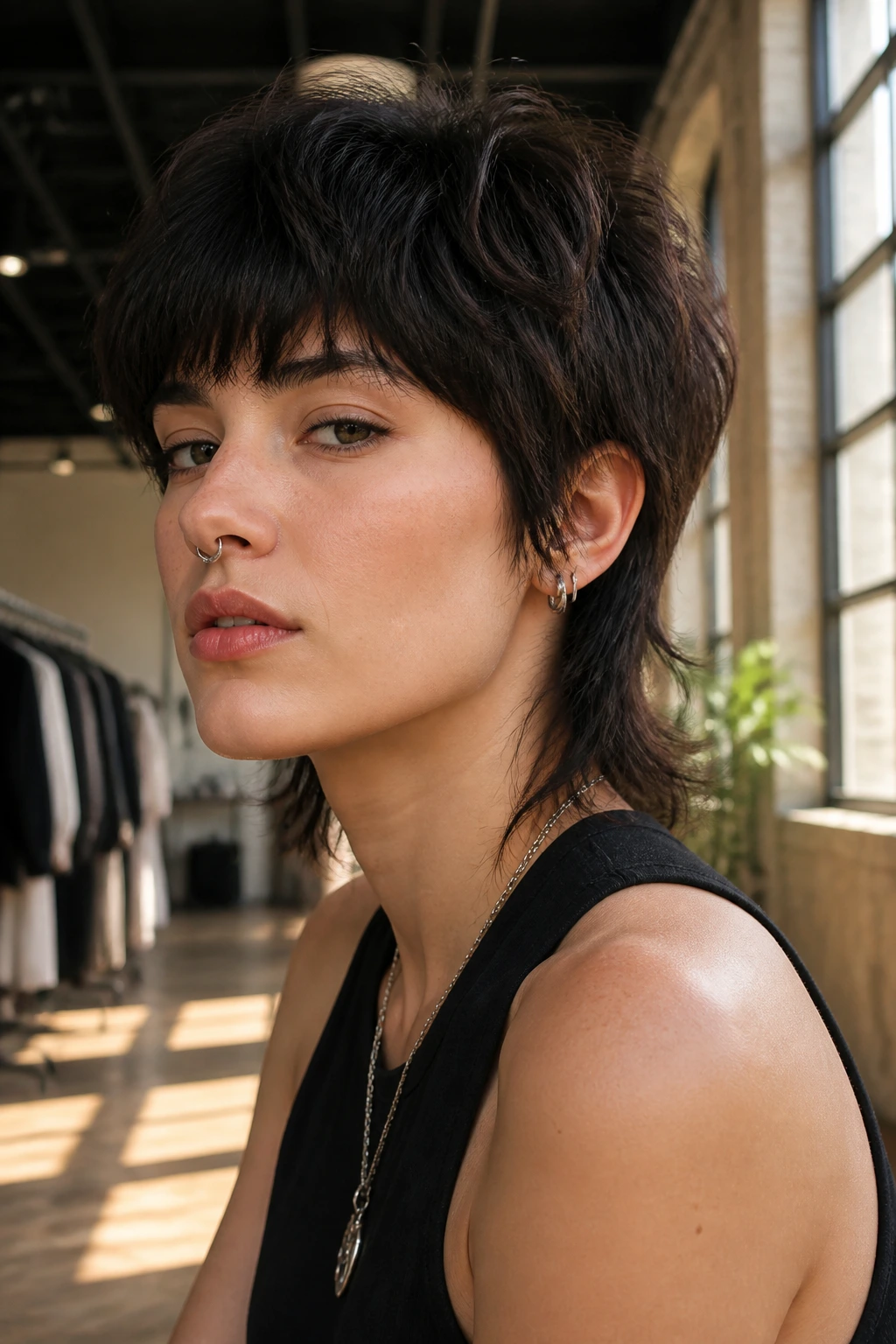
A soft bowl outline, then a shaggy breakup through the back. That’s the basic idea, and it works because thick hair naturally likes to hold shape. Instead of fighting that trait, this cut redirects it.
The top stays rounded enough to frame the head. Then the shag layers and longer back pieces break the line so it doesn’t become one heavy dome. It’s a clever shape for thick hair because the structure reads on purpose, not accidental.
Who It Suits
If you like a bit of retro shape but want a modern edge, this cut lands in a nice place. It also flatters thick hair that has some straightness to it, because the rounded top is easier to maintain than a fully broken, spiky finish.
15. Layered Pixie Shag with Long Sideburns
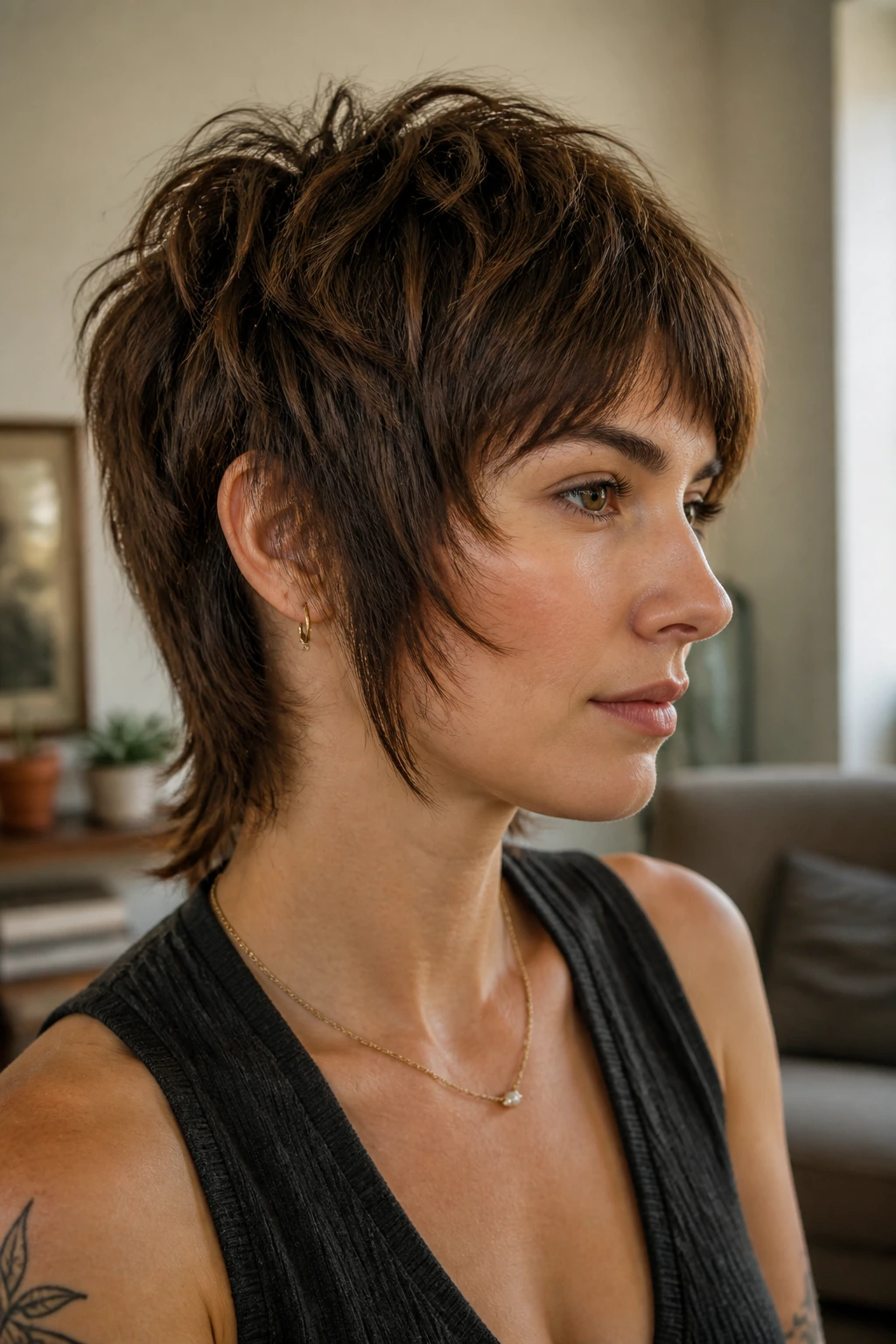
Long sideburns do more than soften the face. They also create a better transition point between the short top and the longer back. On thick hair, that middle ground matters because the haircut can otherwise jump from short to full in a way that feels abrupt.
This version has a gentler, almost romantic shape. The sideburns skim the jaw, the crown has texture, and the back keeps a little length without taking over. It’s a strong choice if you want movement and softness more than drama.
I’d avoid heavy product here. A touch of styling cream is enough. Too much paste and the sideburns lose that wispy edge that makes the whole thing work.
16. Glam Rock Pixie Mullet
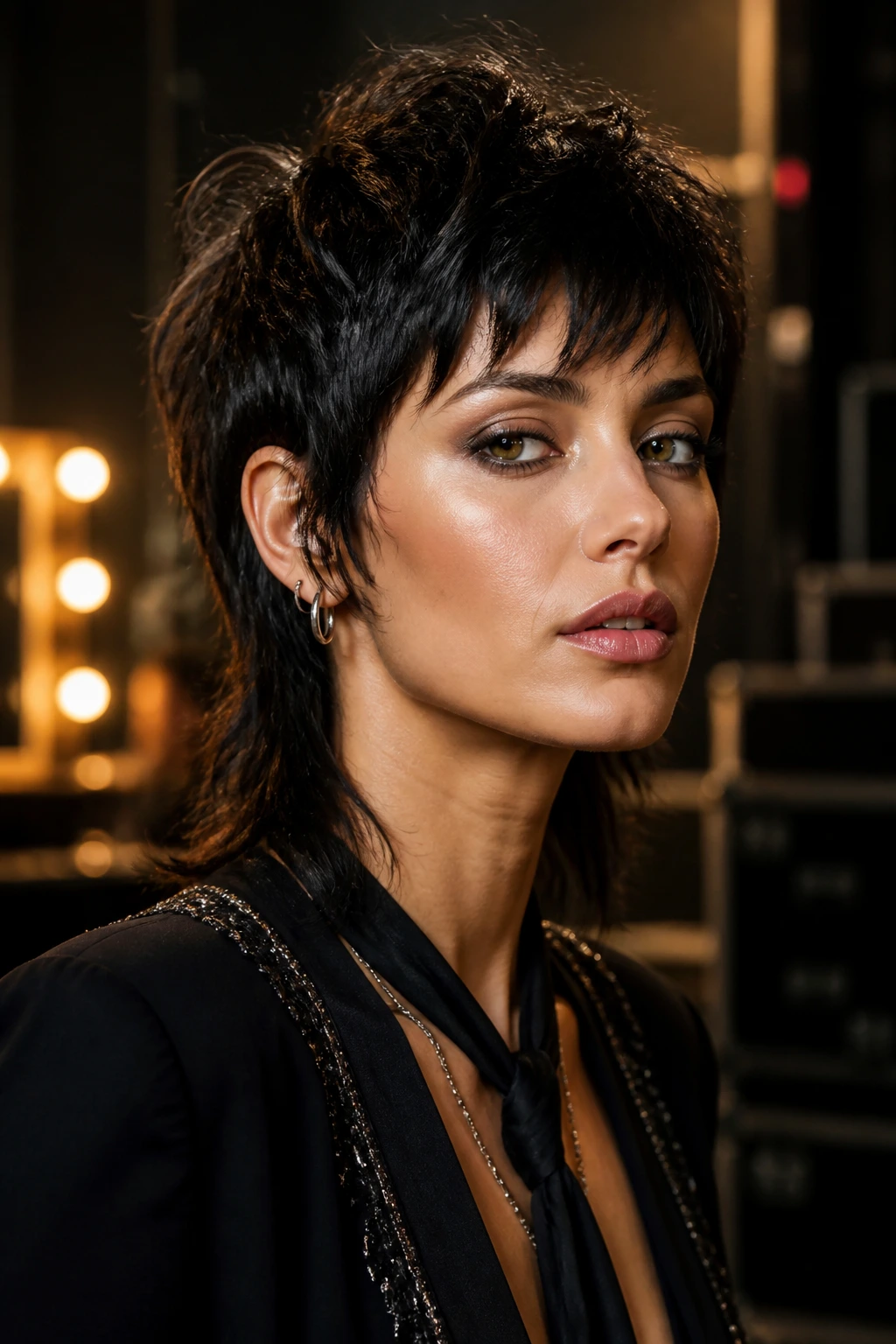
A little attitude helps this cut. Glam rock means texture, lift, shine in the right places, and a silhouette that feels slightly rebellious even when the clothes are plain. Thick hair helps because it can hold a shape with presence instead of drooping by noon.
The top should be tousled, not fluffy. The back can sit a little longer and piecey, almost like a mini mullet with a stage-light finish. I like this version for people who want something bold but not punk in a noisy way.
Styling Note
A small round brush at the crown and a light wax on the ends give this cut its personality. The roots need lift; the ends need separation. If you only do one of those, the haircut loses the point.
17. Rounded Soft-Shag Pixie Mullet
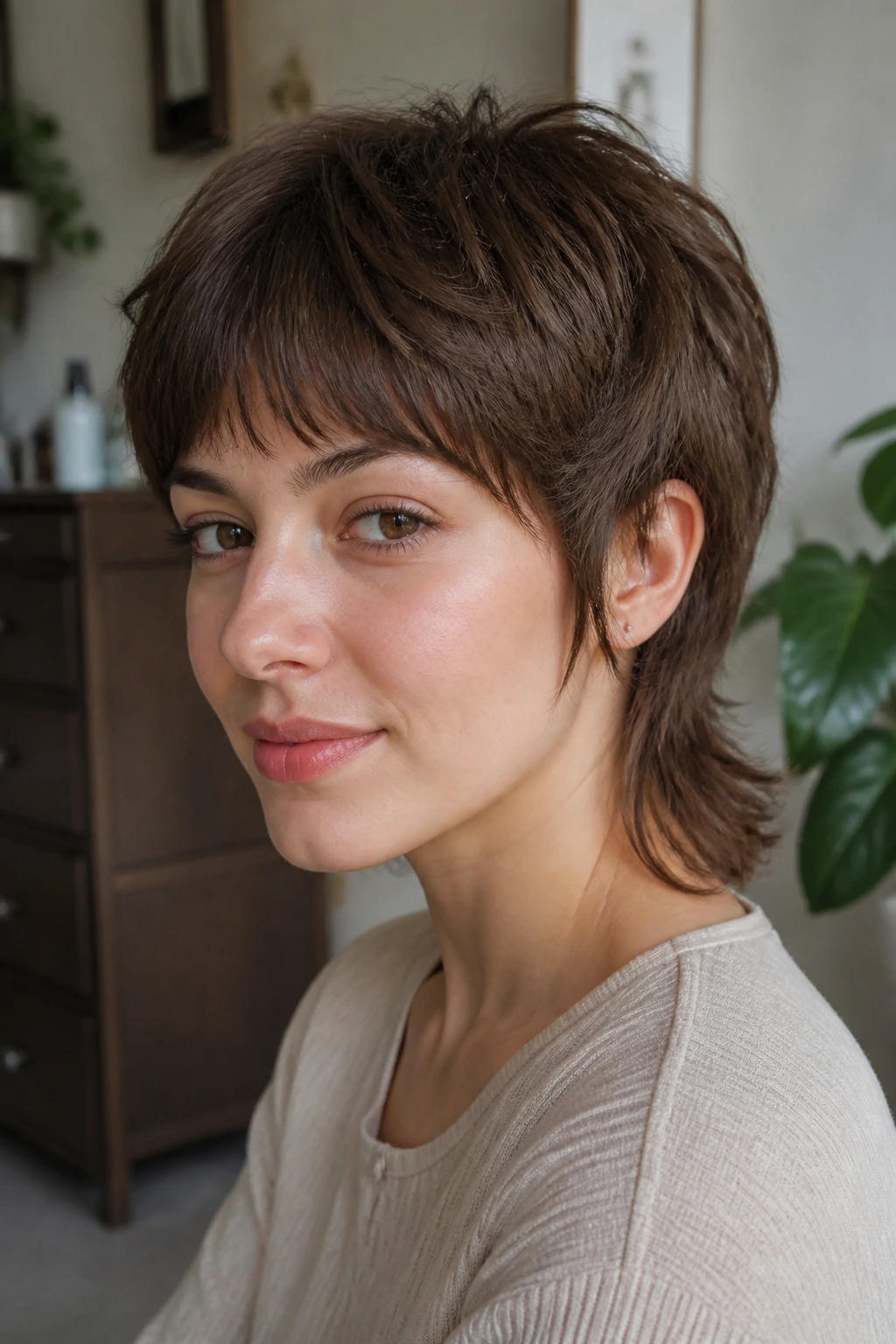
This is the calm one. The edges are soft, the crown is rounded, and the back falls in a gentle tail instead of a sharp point. Thick hair often behaves better when it’s shaped into a soft curve rather than chopped into hard corners.
The cut is useful if you want movement but not a visibly edgy finish. It still counts as a pixie shag mullet, but it reads smoother and easier to wear with everyday clothes. Some days that’s the better choice.
A soft side part can help the front settle without exposing too much forehead. Good if your hairline or cowlick fights a center part.
18. Spiky Crop Mullet with Heavy Fringe
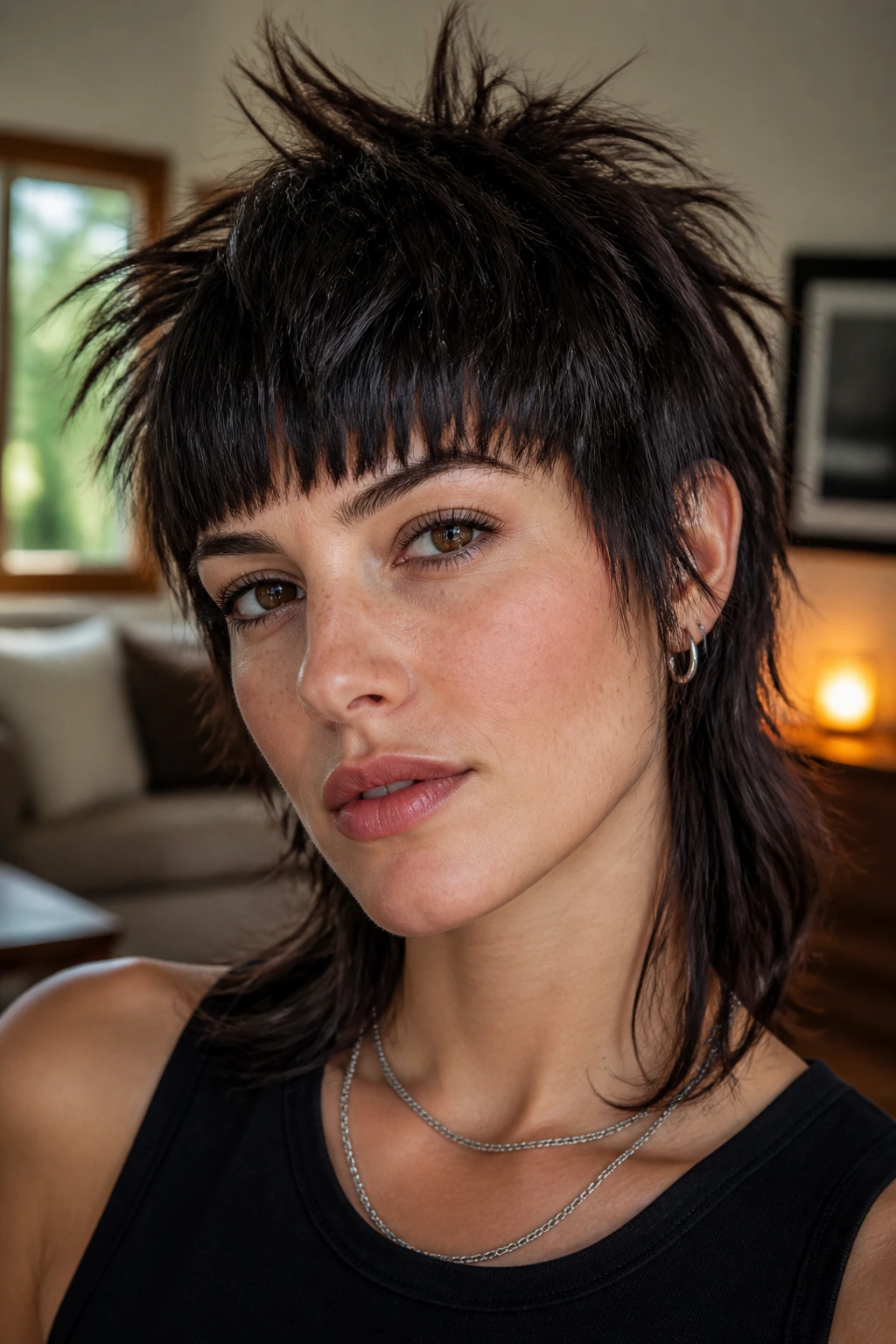
This one has a bit of bite in the front. A heavy fringe grounds the cut, while the back keeps enough length to stop it from becoming a basic crop. Thick hair gives the fringe presence, which is useful if you want the front to carry the shape.
The spiky part should be selective, not all over. A few lifted pieces at the crown and around the fringe are enough. If every strand gets stiff, the cut stops looking modern and starts looking try-hard.
This is one of the sharper options in the list. It suits thick hair that tends to lie flat at the roots, because the extra density gives the spikes something to stand up with.
19. Neck-Hugging Shag Mullet for Thick Waves
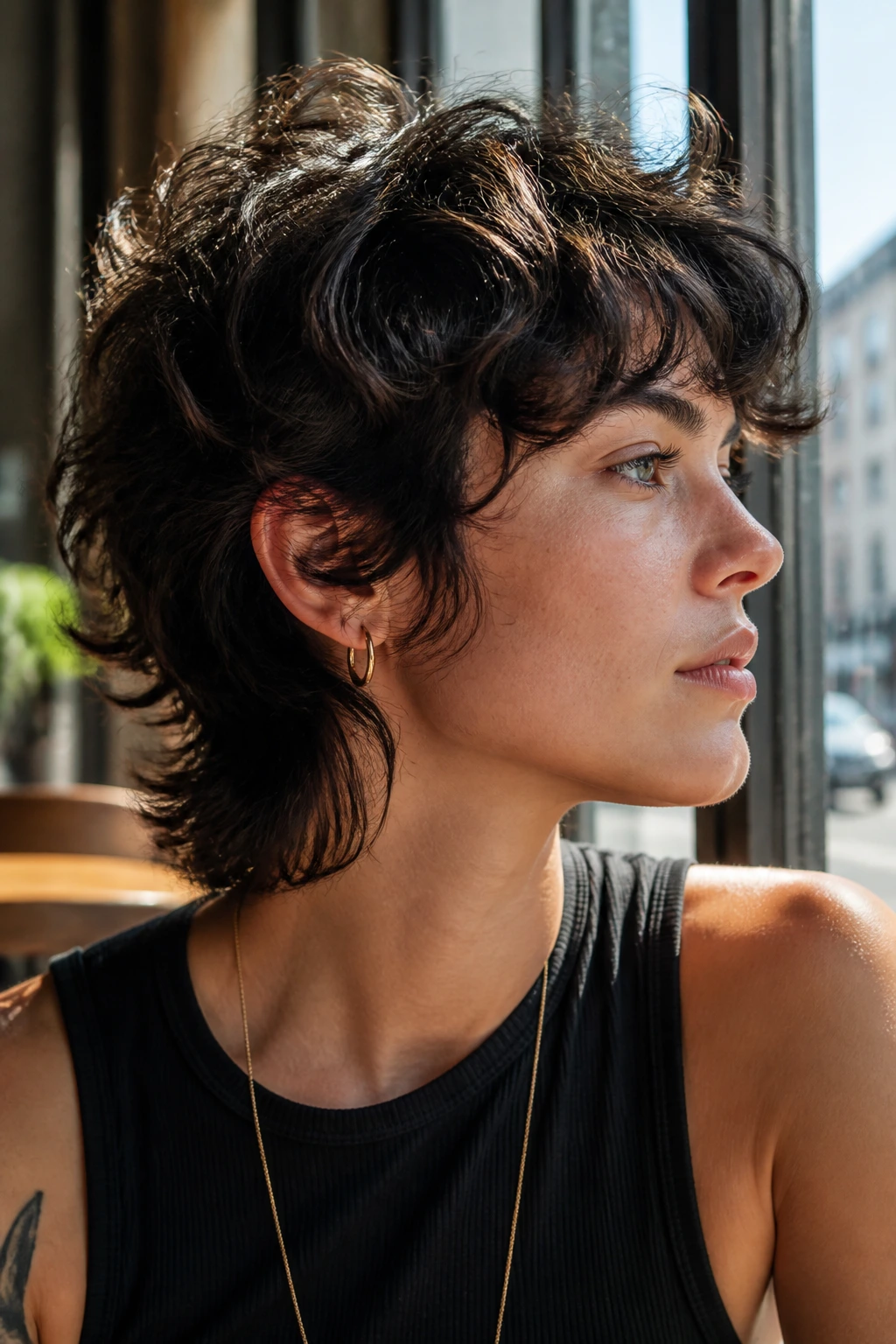
A neck-hugging back section is underrated. It keeps the mullet part close and neat, which helps thick wavy hair stay controlled instead of puffing out behind the head. The waves can still move, but the line stays closer to the neck.
This cut is especially good if your hair expands when it dries. A tighter nape keeps the whole shape from growing wider than you planned. The top can stay shaggy and light while the back stays contained.
Best Way to Wear It
Let the waves dry with a little curl cream, then break them up with your fingers once they’re fully dry. Do not rake too hard while they’re wet. Thick waves can go from soft to frizzy in about thirty seconds if you bully them.
20. Edgy Pixie Mullet with Razor Face Framing
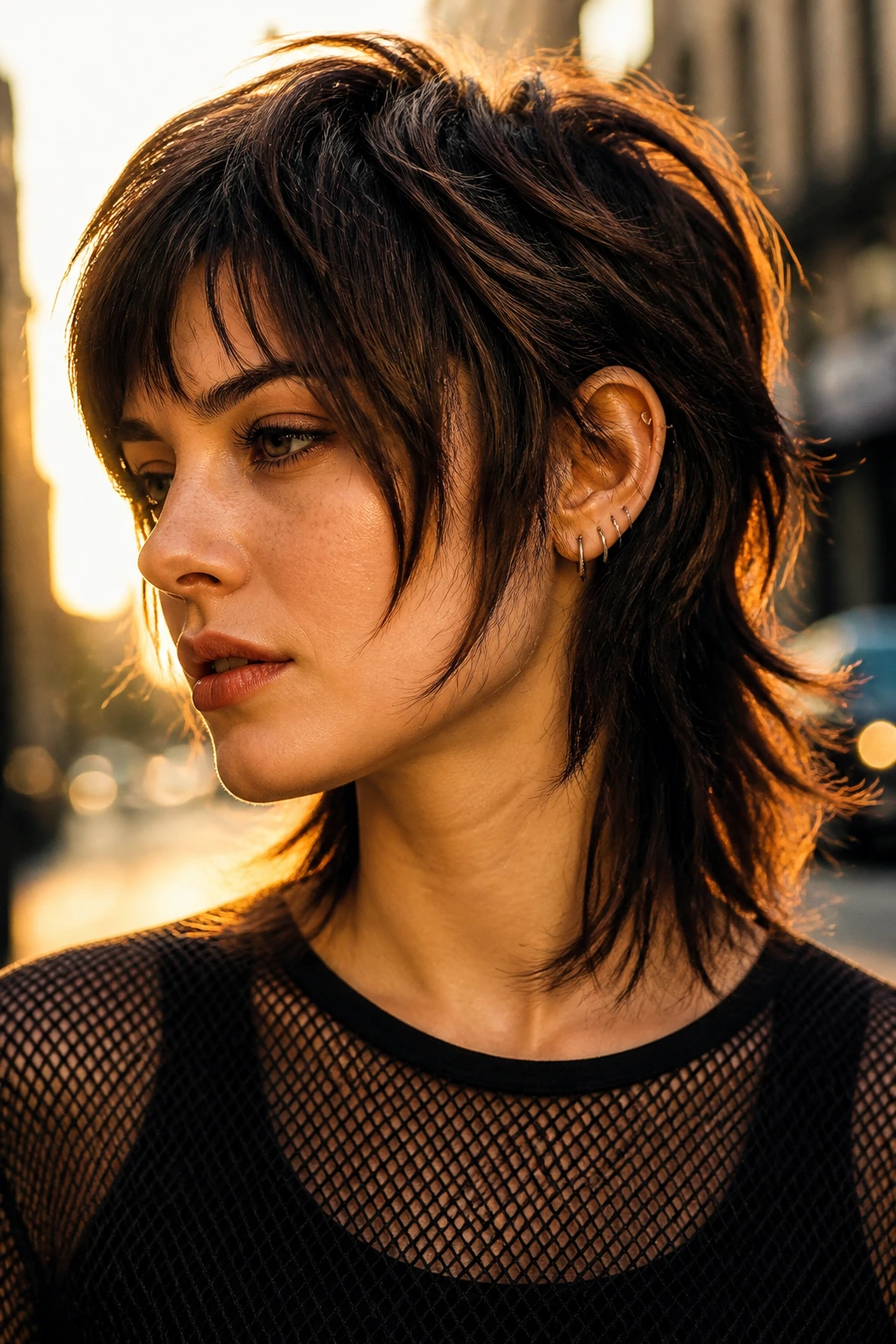
A razor-framed front changes the face immediately. It makes thick hair look lighter around the cheeks and jaw, where bulk usually shows first. The back stays longer and choppy, so the whole haircut has that nice push-pull between neat and unruly.
This version is for people who want the mullet element to read clearly. The front is broken, the sides are mobile, and the back carries a little swagger. It’s not precious. That’s part of the appeal.
If you wear your hair tucked behind the ears a lot, this is a strong pick. The face-framing pieces keep the cut alive even when the rest is pinned back or slightly messy.
Why Thick Hair Changes the Shape
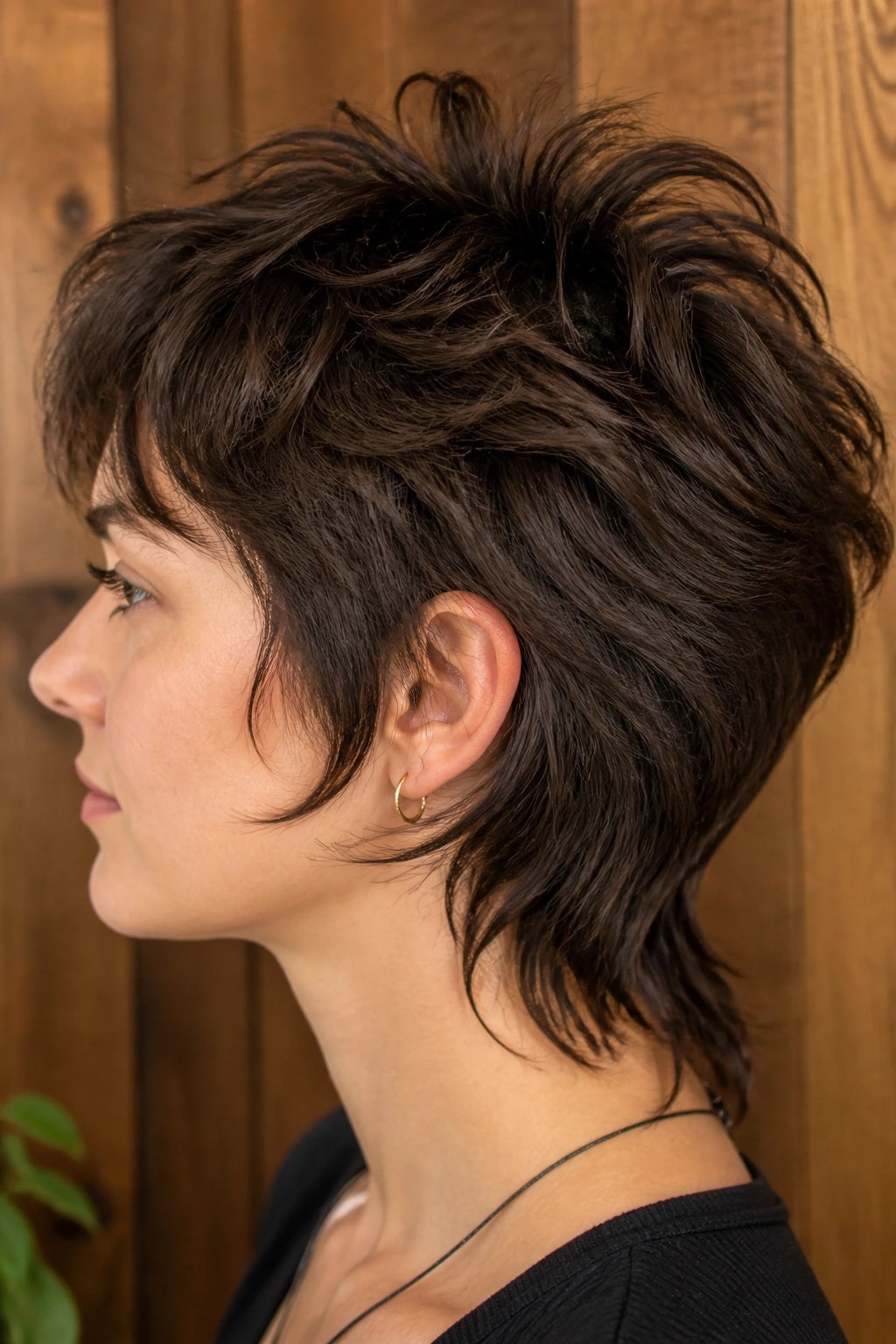
Thick hair does not behave like fine hair with more of it. That’s the mistake people make when they ask for short shaggy cuts and then wonder why the result feels bulky. Density changes the weight, and weight changes the silhouette.
A pixie shag mullet on thick hair needs internal removal. Not just a little snip at the ends. The stylist has to think about the crown, the temple area, the occipital ridge, and the nape as separate zones. That’s how you keep the cut from puffing out in the wrong places.
Dry cutting can help here, especially if the hair has wave or curl. You can see where it sits, where it springs, and where it needs more relief. Wet hair lies. Thick hair lies a lot.
Essential Tools for Styling These Cuts
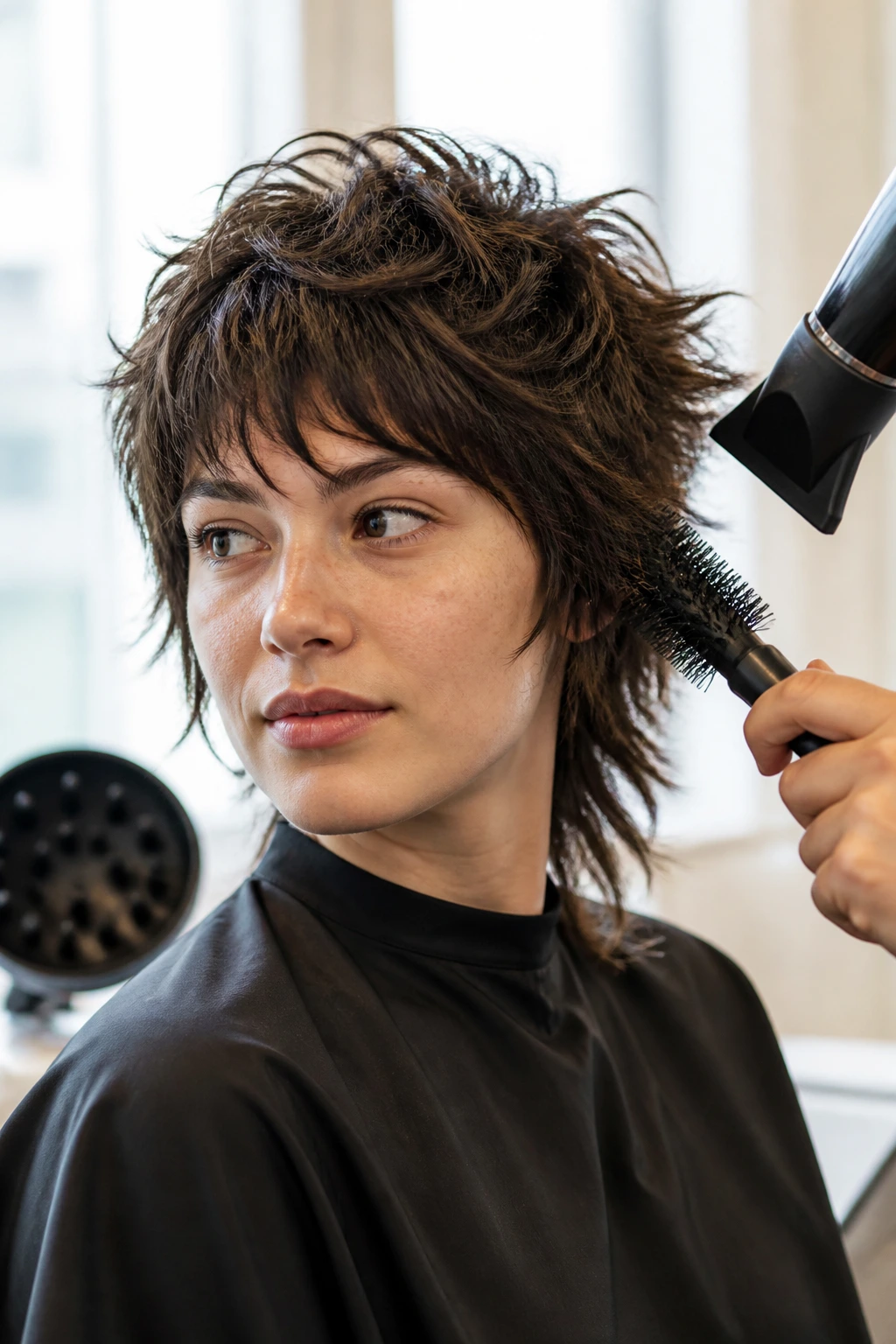
- Blow dryer with a nozzle: Gives you root direction without blasting the cut apart.
- Small round brush or vent brush: Useful for lifting the crown and curving the fringe.
- Diffuser: A must if your thick hair has wave or curl and you want the layers to stay defined.
- Light mousse: Adds structure without the heavy feel that thick hair hates.
- Texture spray: Good for piecey ends and second-day shape.
- Matte paste or light pomade: Best for separating the front and taming random ends.
- Heat protectant: If you use a dryer, brush, or flat iron, this is not optional.
- Sectioning clips: Helpful when you’re styling the crown and fringe separately.
- Wide-tooth comb: Better than a brush when your hair is wet and fragile.
How to Style the Shape Without Flattening the Crown
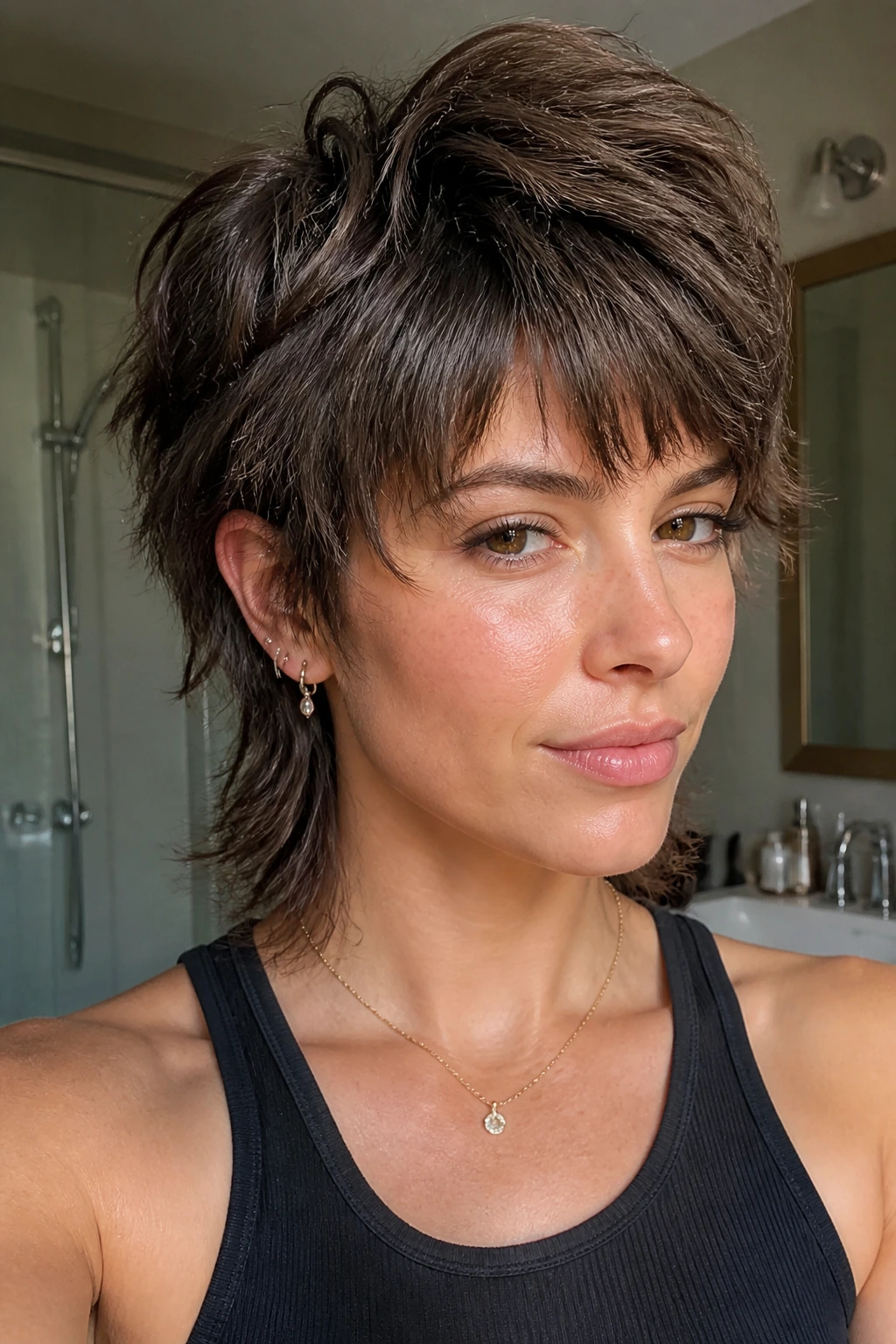
The crown is the whole story with these cuts. If it goes flat, the haircut loses its energy. If it gets too blown out, the shape looks like a helmet that’s trying to escape.
Root Lift: Put mousse at the roots while the hair is damp, then rough-dry the top in the opposite direction of how you want it to sit. That sounds odd, but it works. You’re teaching the roots to stand up before you decide where they’ll fall.
Fringe Control: Dry the front first if you wear bangs. Thick bangs trap moisture and fall weird if you leave them for last. A small brush and a side-to-side motion will keep them from splitting in strange places.
Finish Choice: Pick one finish and stick to it. Airy, piecey, or smooth. Mixing all three usually looks messy in the wrong way. Thick hair gives you enough texture already.
Product Amount: Use less than you think. A pea-sized amount of paste can be plenty for short thick hair, and too much product makes the layers clump. That’s especially ugly around the crown.
What to Avoid When You Ask for This Cut
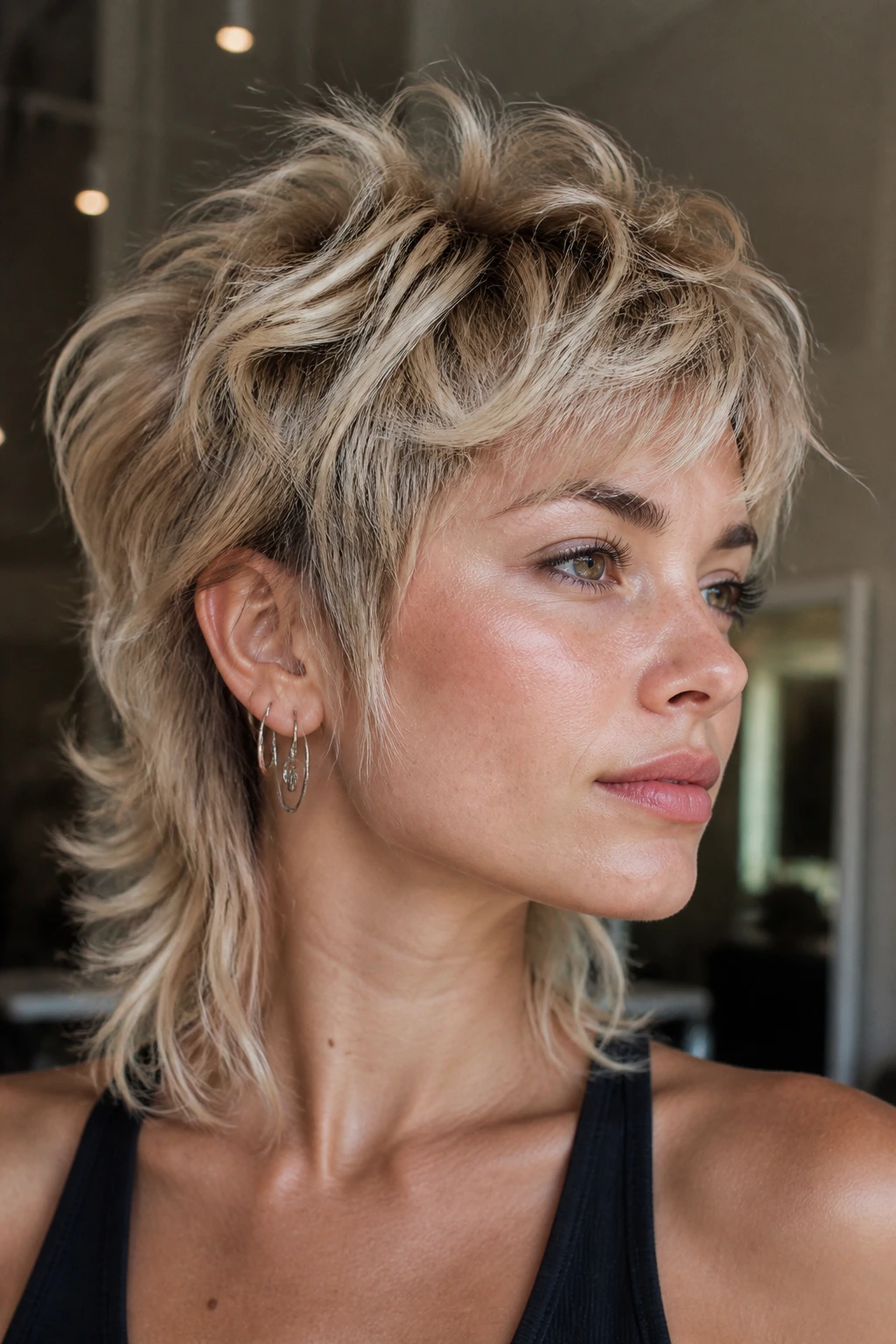
The most common mistake is asking for “something shaggy” and leaving it there. That phrase is too loose. Thick hair needs the stylist to know where the bulk lives, where you want movement, and how short you really mean around the ears and nape.
Another problem: over-thinning with a razor or thinning shears. You can absolutely remove too much. Then the top gets fuzzy, the ends split, and the haircut starts looking dry instead of textured. A little internal reduction is useful. Overdoing it is a mess.
Heavy creams are a trap too. They make thick short hair collapse. You may like the shine at first, but the cut loses its layers once the product weighs it down. Use lighter creams or matte finish products unless your hair is very coarse and truly needs a bit more control.
Finally, don’t ignore your cowlicks. Thick hair with a strong crown swirl or a stubborn nape swirl can kick the whole shape off line. If your stylist doesn’t map those growth patterns before cutting, the haircut will fight you every morning.
Variations and Alternatives to Try
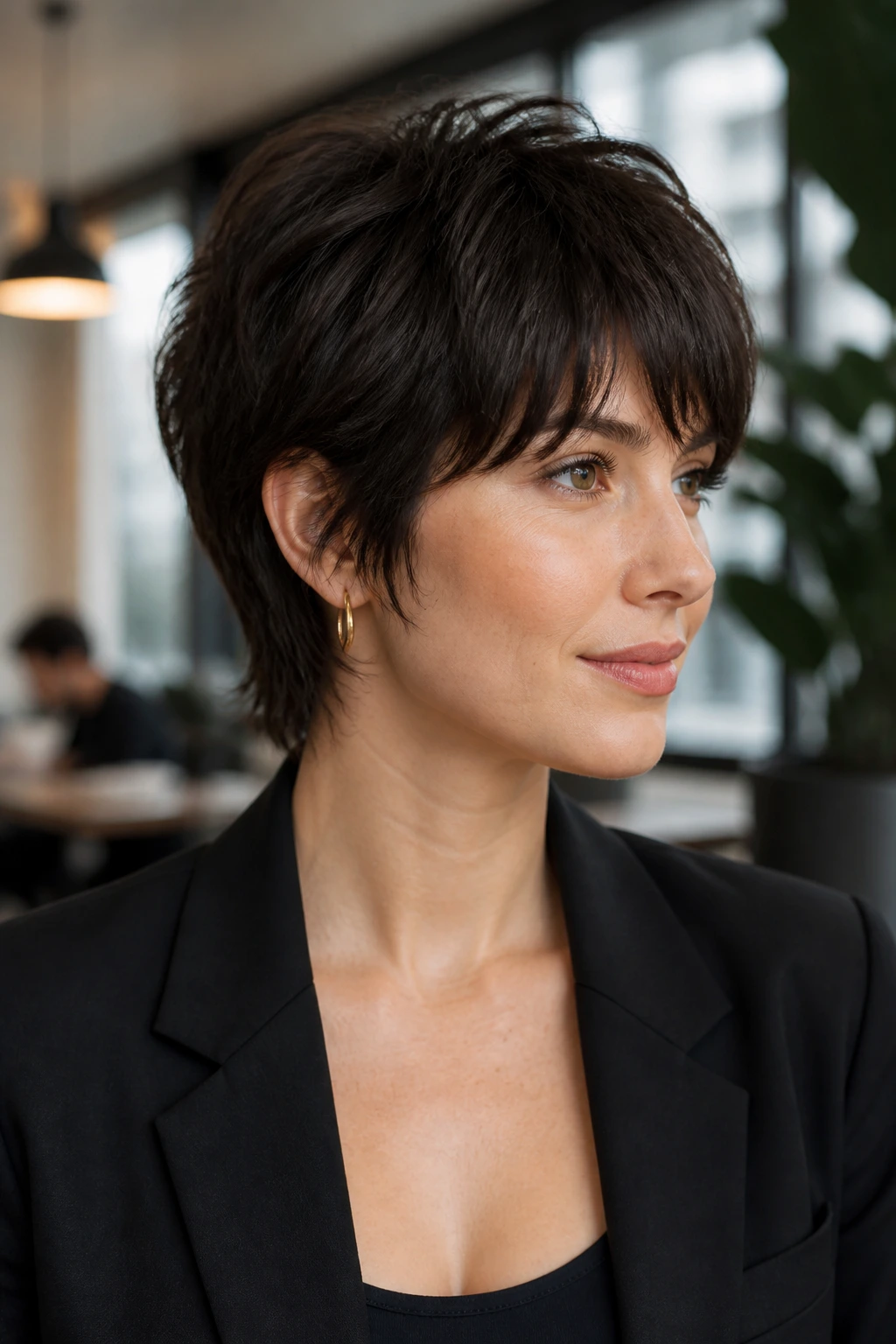
Softer Office Version: Keep the fringe longer, the nape tapered but not too exposed, and the crown layers feathered instead of choppy. This version reads tidy with a blazer and still has enough edge to feel current.
Punk-Forward Version: Go shorter on the sides, sharper through the crown, and more obvious with the tail in back. A touch of matte paste and a rough finish make it feel bolder without needing bright color.
Curly Cloud Version: Let the top stay rounded and let the curls sit a little looser through the back. This works best when the stylist cuts for shrinkage and avoids over-snipping the fringe.
Grown-Out Bixie Version: Keep more length around the ears and upper nape so the cut can soften as it grows. This is a smart choice if you hate frequent salon visits but still want the shag-mullet shape.
Glasses-Friendly Version: Add a side-swept fringe or longer temple pieces so the frame arms do not compete with the haircut. That little adjustment makes the whole look calmer and more balanced.
Maintenance and Grow-Out Advice
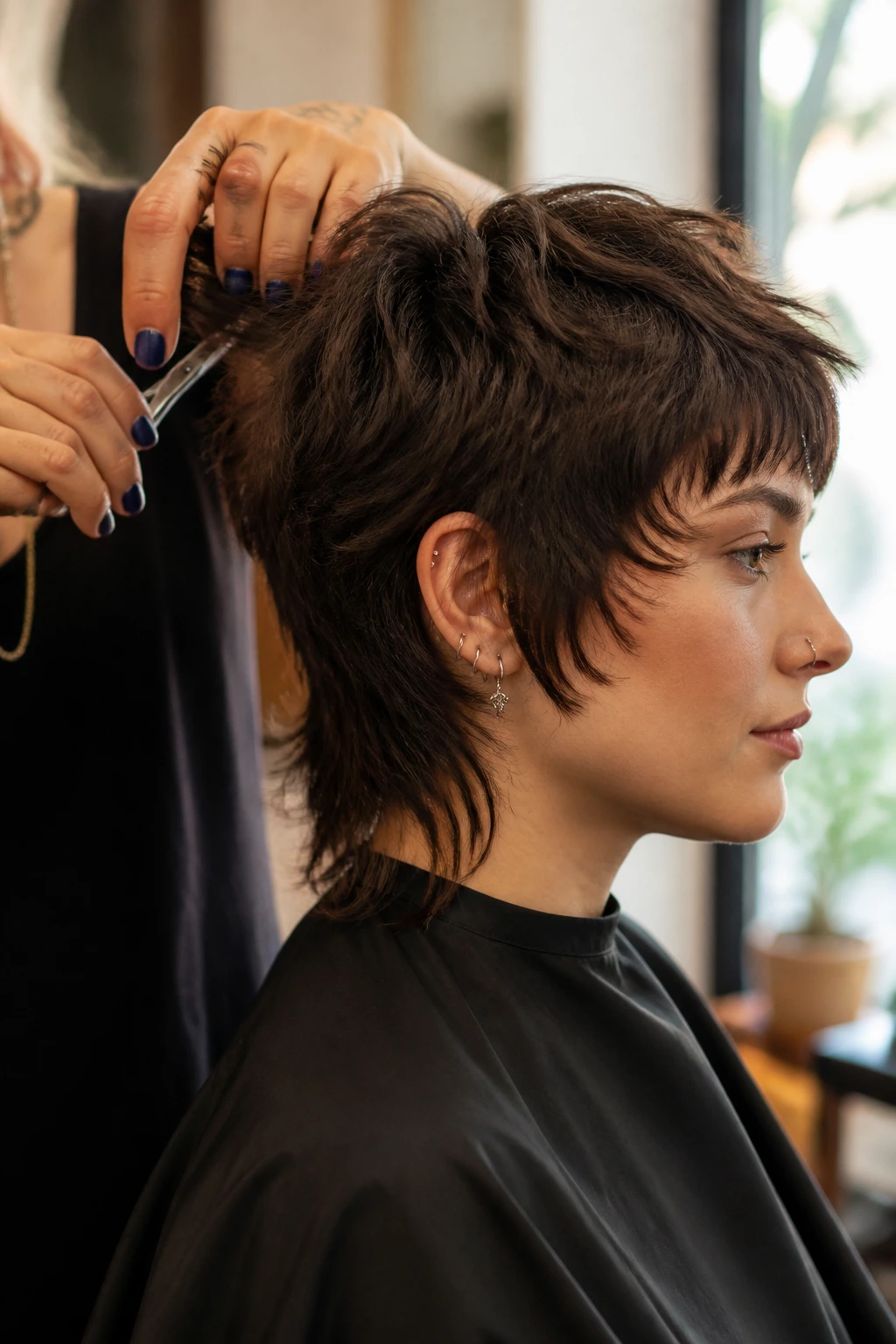
Thick hair can hold a shape longer than fine hair, but these cuts still need regular trimming if you want the mullet-shag balance to stay clean. For most of them, four to six weeks is the sweet spot. If you like the grow-out phase and want a softer, messier look, you can stretch that a little, but the neckline will start to lose definition.
The fringe usually needs attention before the rest of the haircut. That’s normal. A quick fringe trim between full cuts can keep the shape readable without changing the whole style. If you wear a micro-bang, expect to trim more often. Short bangs are needy. That’s the price.
At home, thick hair does best when it is not overloaded with product. Wash when the roots feel coated or the crown stops lifting properly. Sleep on a silk or satin pillowcase if you can, because short layered cuts get bent out of shape fast when the hair rubs against rough cotton all night.
If the haircut starts feeling too triangular, don’t panic. Ask for a small cleanup through the interior and the nape, not a full reshaping. That usually solves the problem without losing the part you liked.
Frequently Asked Questions
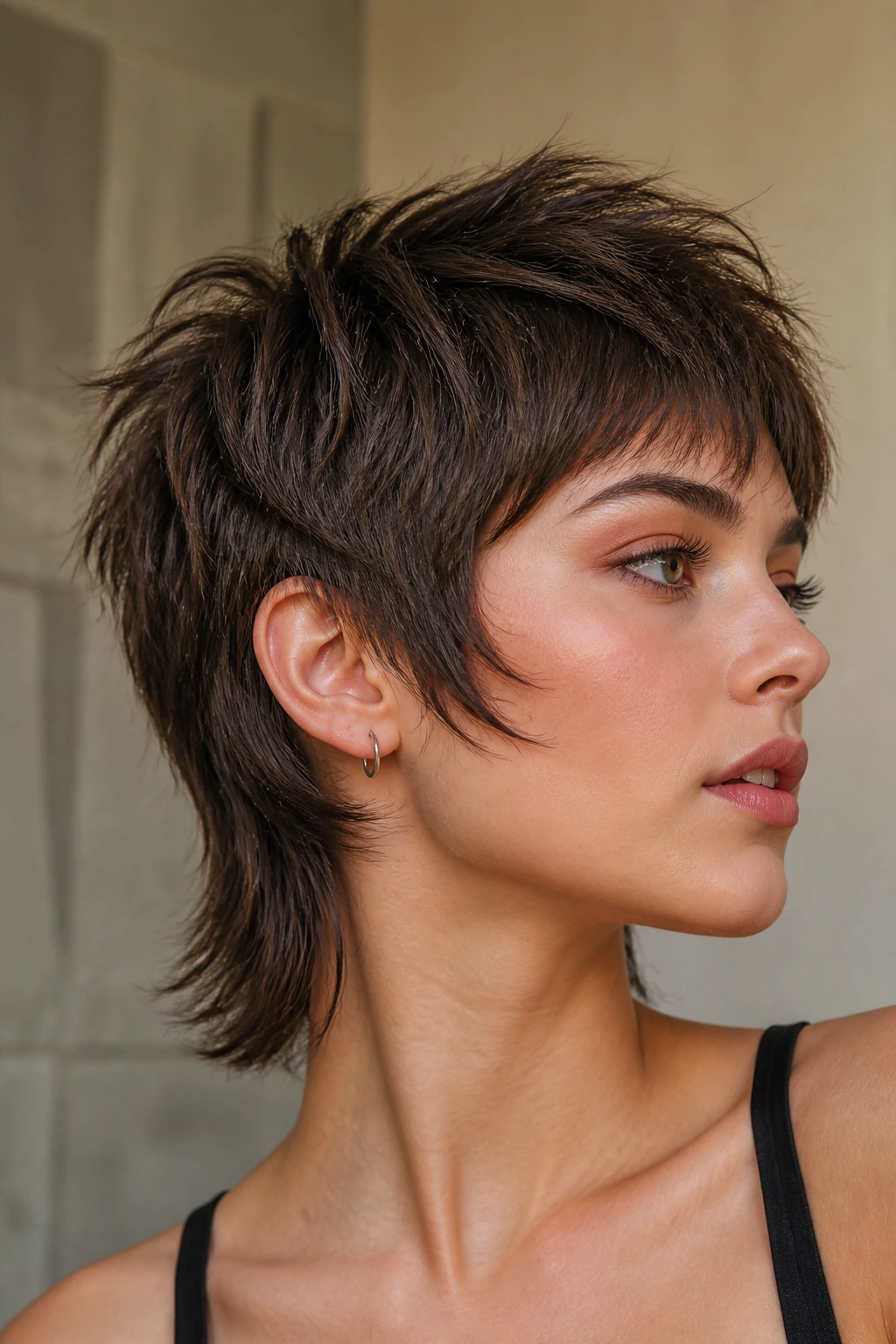
Will a pixie shag mullet make thick hair look too big?
It can, if the cut is too blunt or the layers are too shallow. The fix is internal weight removal at the crown, temples, and nape so the shape moves inward instead of out to the sides.
Is this cut better for straight, wavy, or curly thick hair?
All three can work, but the cutting method changes. Straight thick hair likes feathering and razor work, wavy hair likes soft layer placement, and curly hair needs shrinkage accounted for so the final shape does not end up too short.
How do I ask my stylist for this without getting something too extreme?
Say you want a short shag with a mullet back, softer sides, and reduced bulk in the interior. Bring photos that show the fringe, the neckline, and the amount of ear exposure you want. One reference photo is not enough; show the front and the back if you can.
Can I wear this haircut with glasses?
Yes, and some versions look better with glasses than without them. Side-swept fringes, long temple pieces, and a softer crown usually keep the frames from competing with the cut.
What if my thick hair gets poofy after styling?
You probably need less product, more root direction, or a better cut through the interior. Poof usually means the shape is sitting on top of too much weight instead of through it. A quick mist of water, a little mousse, and a short re-dry can bring it back.
How often should I trim it?
Most versions need a cleanup every four to six weeks. If you keep the fringe short or the nape sharply tapered, you may want a touch-up sooner so the cut does not lose its shape.
Can this grow out nicely if I change my mind?
Yes, and that’s one reason people like it. The shag layers soften the line as it grows, and the mullet tail gives the cut a place to go instead of turning into a square block.
Do thinning shears help on thick hair?
Sometimes, but they need to be used with restraint. A small amount of debulking can help the shape move; too much can leave the ends fuzzy and weak. I’d trust dry cutting or point cutting first, thinning shears second.
The Shape That Does the Work
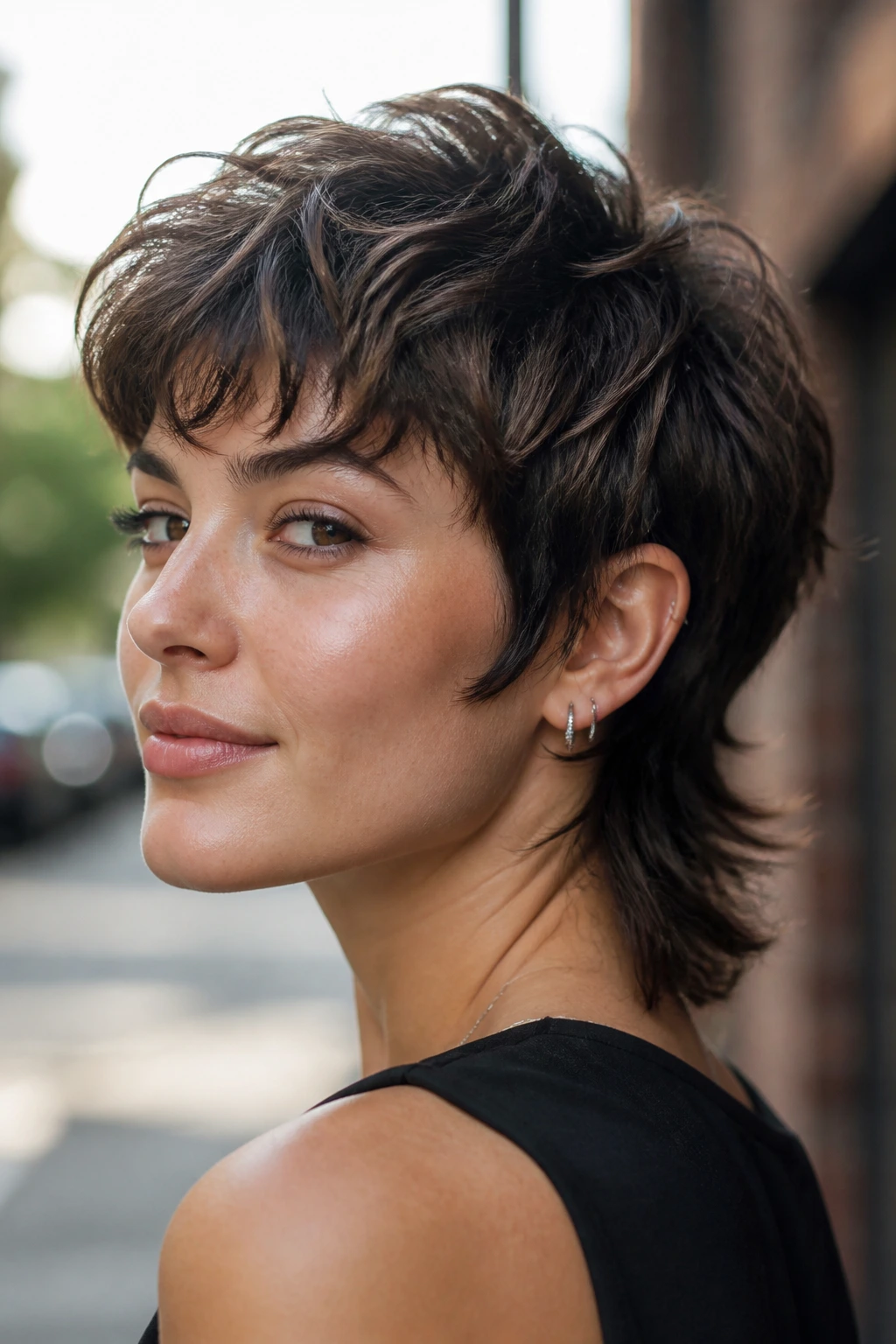
Thick hair needs a haircut that knows how to carry weight, not hide it. That is why these pixie shag mullet shapes feel so satisfying when they’re done well. They let the crown rise, the sides breathe, and the nape stay interesting instead of heavy.
The best version for you is the one that matches your texture and your patience. If you want low maintenance, lean soft and grow-out friendly. If you want edge, keep the fringe sharper and the back more obvious. Either way, the cut should feel like it has movement before you even touch it.
Get the layers right and thick hair stops fighting the style. That’s the good part. The haircut starts doing the work for you.
