



A good mullet haircut for women over 60 does not try to look like a dare. It looks like movement.
The shape is the trick. Shorter through the crown, a little length left at the nape, and soft pieces around the face can lift hair that has started to flatten, split, or behave like it has its own opinions. Gray hair often grows a bit wirier; fine hair can go limp at the roots; thick hair can turn into a triangular block if the layers are wrong. A mullet, when it’s cut with restraint, gives those problems somewhere to go.
I’ve always thought the modern version works best when it is softened, not sharpened. Skip the cartoonish contrast. Keep the edges feathered. Let the front pieces brush the cheekbones, the ears, or the jawline. That small amount of shape does more for posture, neck length, and daily styling than a heavy all-one-length cut ever will.
Why These 24 Cuts Deserve a Closer Look
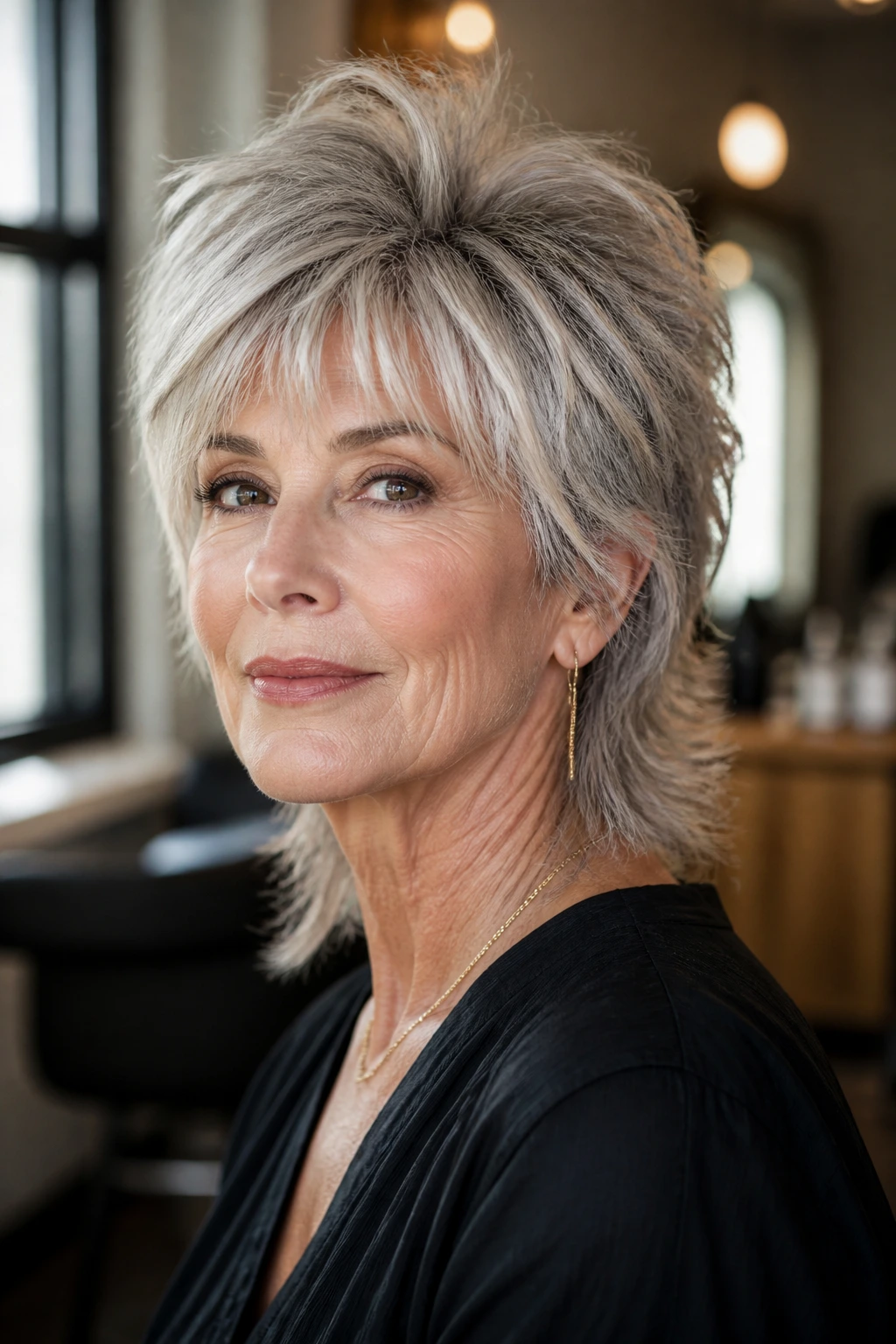
- Lift Without Teasing: Shorter crown layers create built-in height, so fine or flat hair gets shape without a pile of sticky product.
- Kind to Gray Texture: Silver strands can be coarse or a little springy, and a layered cut keeps them from forming one blunt, helmet-like line.
- Easier Grow-Out: A mullet can soften for weeks and still look intentional, which matters if you do not want to live at the salon.
- Works With Glasses: Face-framing pieces can stop above or below the frame line, so your hair and glasses do not fight for the same space.
- Flexible Styling: A round brush, diffuser, or a dab of cream is enough for most versions; you do not need a daily blowout ritual.
- Plays Well With Texture: Straight, wavy, and curly hair all get different benefits from the same basic shape, which is why this cut has more range than people give it credit for.
1. Feathered Silver Mullet With Crown Lift
A feathered silver mullet is one of my favorite versions for straight or lightly wavy hair, because it uses movement instead of sheer length to make the head shape look balanced. The crown is cut to rise a little at the roots, while the back stays soft and brushed, not shaggy in a bad way.
Why it works on mature hair
The feathering keeps silver strands from looking heavy at the ends. If your hair tends to sit flat against the scalp, this version gives the top some air without demanding a lot of styling time.
What to ask for
- Shorter, feathered layers at the crown
- Soft face-framing pieces that hit around the cheekbone
- A tapered nape that stays neat as it grows
A light mousse at the roots and a medium round brush are enough. If your hair is fine, keep the layers soft instead of over-thinned; once fine hair loses too much weight, it starts to look wispy in the wrong way.
2. Soft Shag Mullet With Cheekbone Layers
This is the version for someone who wants the mullet shape without the hard edges. The front pieces sweep back from the cheekbones, and the whole cut feels more like a shag with a tail than a punk cut from a poster.
It’s a smart choice if your hair has a little natural bend. The layers catch the curve of the wave, so the style does half the work for you. On a good day, it dries with that loose, lived-in shape that never looks overdone.
How to wear it
A leave-in spray and a diffuser or air-dry cream will keep the ends from puffing out. If your face is fuller through the cheeks, ask for the shortest pieces to begin lower, around the jawline, so the cut doesn’t add width where you don’t want it.
A few quick notes:
- Best on hair that already has some texture
- Nice with side-swept glasses-friendly fringe
- Easier to maintain than a stricter layered cut
3. Curly Mullet With Rounded Nape
Curly hair and a mullet can be a very good pair, but only if the shape is cut for curl, not against it. The back should follow the curl pattern instead of fighting it, and the nape needs enough room so the curls don’t spring into a ball.
Ask for the cut to be done dry or mostly dry if your curls are tight or unpredictable. That gives the stylist a better read on how much bounce is hiding in each section. The rounded nape helps the back feel deliberate instead of bulky.
How to tell if this one is right for you
If your curls shrink a lot when dry, this cut can save you from the triangle effect. It leaves room at the back while the crown stays lifted, which means the whole style keeps its shape after washing.
Use a curl cream with a small amount of gel. Not a ton. Too much product can weigh the crown down, and the crown is the whole point here.
4. Pixie-Mullet Hybrid With Tapered Sides
Think of this as the bridge between a pixie and a mullet. The sides stay short and tidy, the top has enough length to sweep back or forward, and the nape gets just enough tail to keep the shape interesting.
This is a sharp choice for women who want less hair around the ears and neck but do not want a plain crop. It shows off earrings. It also keeps the profile neat, which is handy if your hair grows fast and you dislike frequent salon visits.
A good fit if you want
- Less bulk at the temples
- Easy styling with wax or paste
- A cut that looks clean even after three or four weeks
Use a pea-sized amount of matte paste and finger-style the top. If you try to brush this one flat, it loses its personality fast. The shape lives in the little piece-y lift at the crown.
5. Shoulder-Length Mullet With Long Framing Pieces
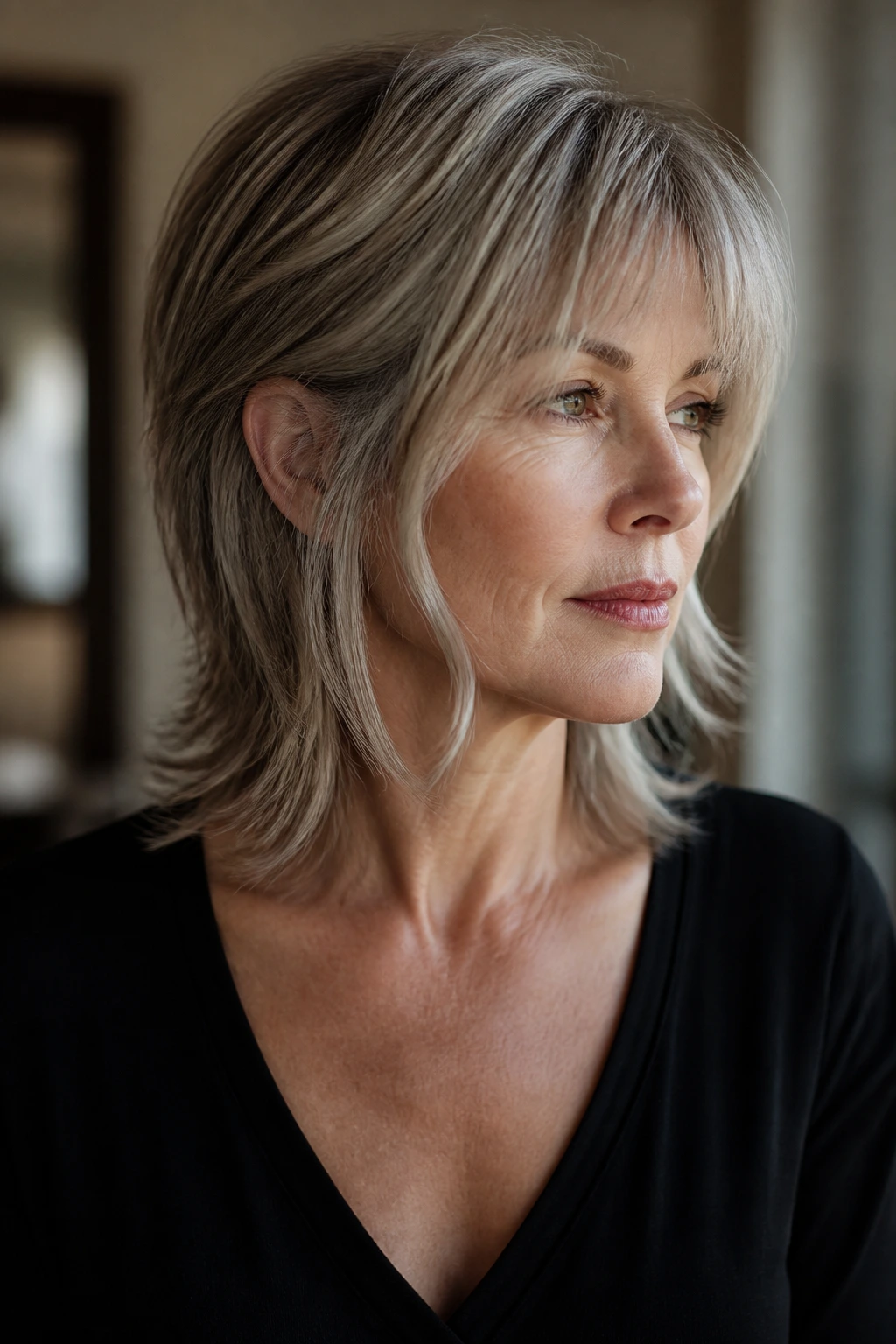
Some women want the mullet idea without giving up length. Fair enough. This version keeps the back around the shoulders or just below, then uses long front pieces to soften the line near the jaw and collarbone.
It has a calmer feel than the cropped versions. On straighter hair, it creates a subtle swing when you walk. On wavy hair, it lands somewhere between a layered lob and a soft rock-and-roll cut.
Why it can be a smart compromise
You get movement, but you keep enough length to pull it back, tuck it behind the ears, or wear it with a scarf. That matters if you like variety and do not want one haircut to lock you into one mood.
A light blowout with a paddle brush keeps the length smooth. If the back starts to feel heavy, ask for soft interior layers rather than taking off a lot of visible length.
6. Tapered Nape Mullet With Clean Edges
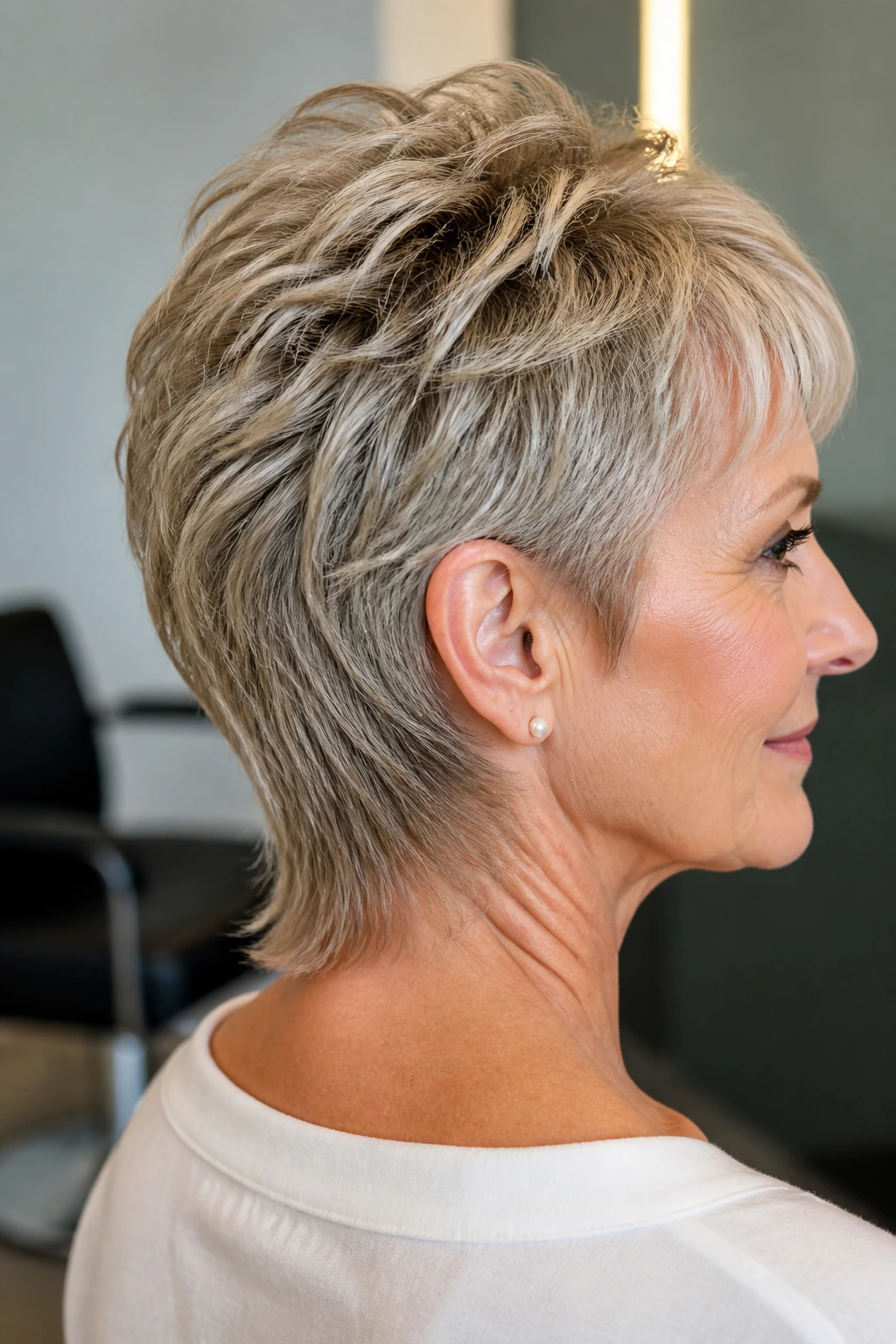
This one is for anyone who wants the back to look neat, not wild. The nape is tapered close to the neck, while the top and sides keep enough length to build shape and softness.
It’s especially good if your hair grows out in a fuzzy line at the neckline. A clean taper keeps the cut looking fresh between appointments, even when the rest of the style has relaxed a bit.
If you wear collared shirts or jackets often, this is the mullet that sits well under them. It does not pile up under the collar. It just slips under and keeps moving.
Ask for
- A close, clean nape taper
- Soft graduation through the crown
- No blunt shelf at the back
Use a small brush and dry the neck area first. Once that part is smooth, the rest of the style tends to behave better. Funny how that works.
7. Side-Swept Fringe Mullet With Soft Volume
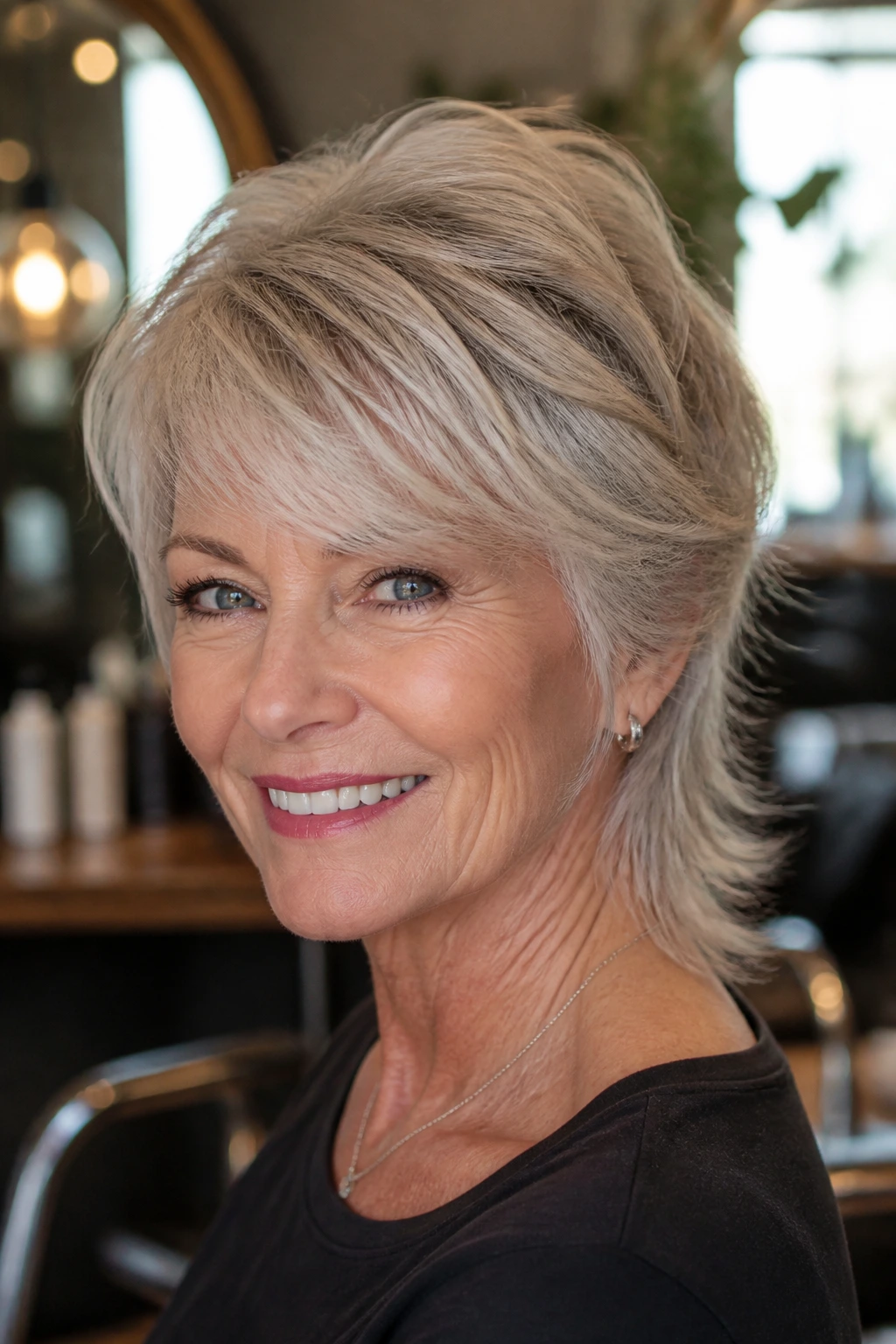
Side-swept fringe changes the whole attitude of a mullet. It softens the forehead, works nicely with glasses, and keeps the cut from feeling too stripped down around the face.
The volume should sit a little behind the fringe, not right on top of it. That makes the front look airy instead of puffy. If your hair grows in a cowlick at the hairline, a side-swept shape is easier to train than a straight-across bang.
How to style it
Blow-dry the fringe from side to side with a round brush, then finish by directing it the way you want it to fall. A little bend at the ends is enough. You do not need a hard curl.
This cut tends to work well on oval, heart, and longer face shapes. The fringe pulls the eye across the face, while the mullet shape keeps the back from looking flat or heavy.
8. Wavy Salt-and-Pepper Mullet With Airy Ends
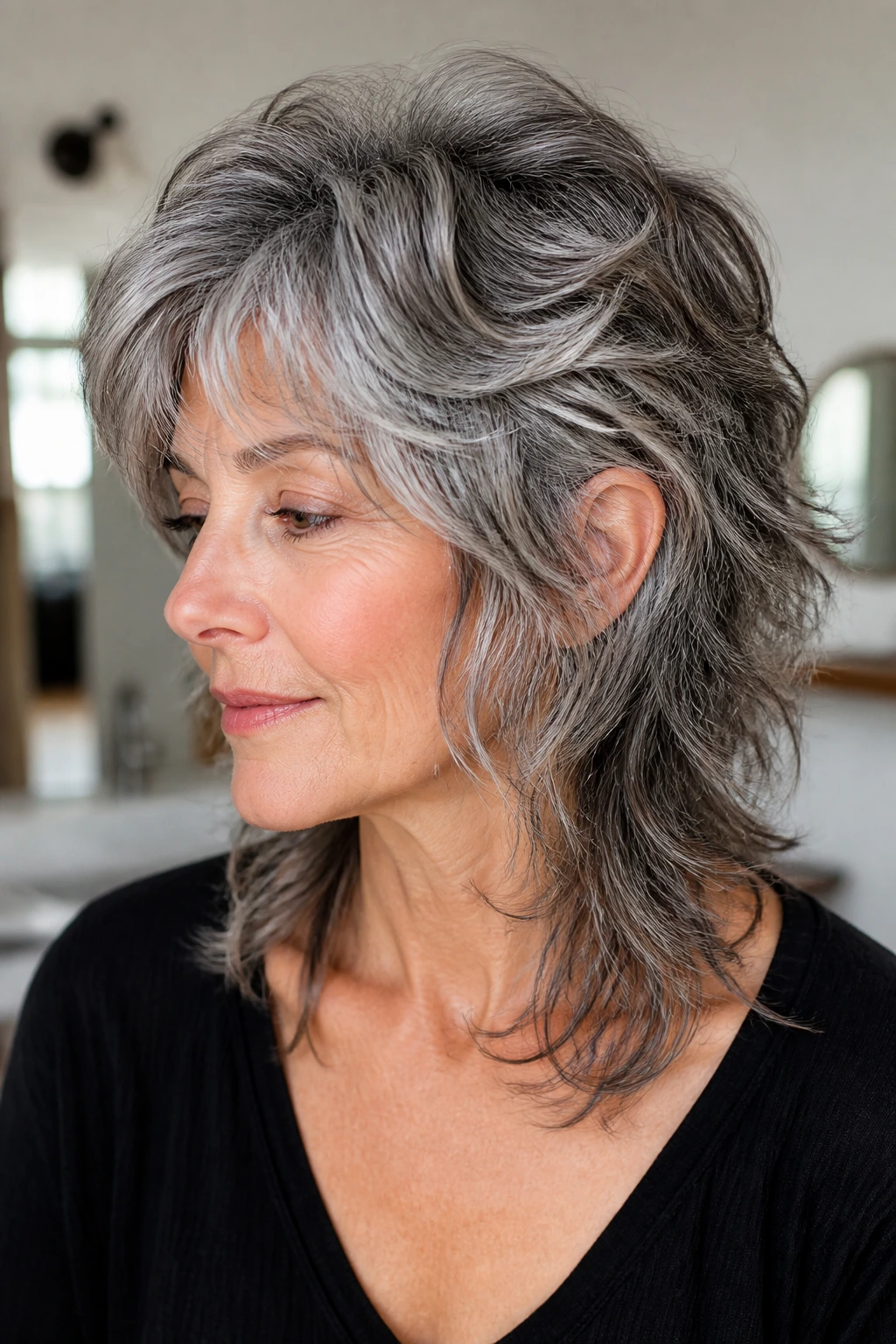
Wavy salt-and-pepper hair has a kind of natural depth that a blunt cut can waste. The airy ends in this version let the darker strands and silver strands mingle instead of sitting in one thick block.
There’s an easy grace to this cut. It feels lighter than a shoulder-length shag, but it still has enough length to tuck behind one ear or let fall over the collar. If your waves get a bit frizzy in humidity, the airy ends help the style move instead of balloon.
Best for
- Hair with loose wave rather than tight curl
- People who like texture more than polish
- Anyone who wants a cut that looks good on day two
A light cream through the mids and ends is usually enough. Skip heavy oils near the crown unless your hair is very coarse. They can drag the top down, and the top needs lift to keep the shape alive.
9. Long Layered Mullet With A Gentle Tail

This is the version for women who want length in the back but do not want a flat curtain of hair. The layers start higher than they do in a traditional long cut, then drift into a gentle tail that keeps the shape visible.
It’s a good way to keep a favorite length while restoring some movement around the shoulders. Long hair after 60 can look lovely, but when it gets too one-note, it can also look tired. This cut fixes that without a dramatic chop.
What makes it different
The front and crown have enough internal layering to stop the whole style from dragging downward. The back still reads as long, which is useful if that length matters to you for styling, warmth, or simply habit.
Use a large round brush only at the top and leave the lower length softer. That contrast between lifted crown and freer ends is what gives the haircut its shape.
10. Choppy Razor Mullet For Straight Hair
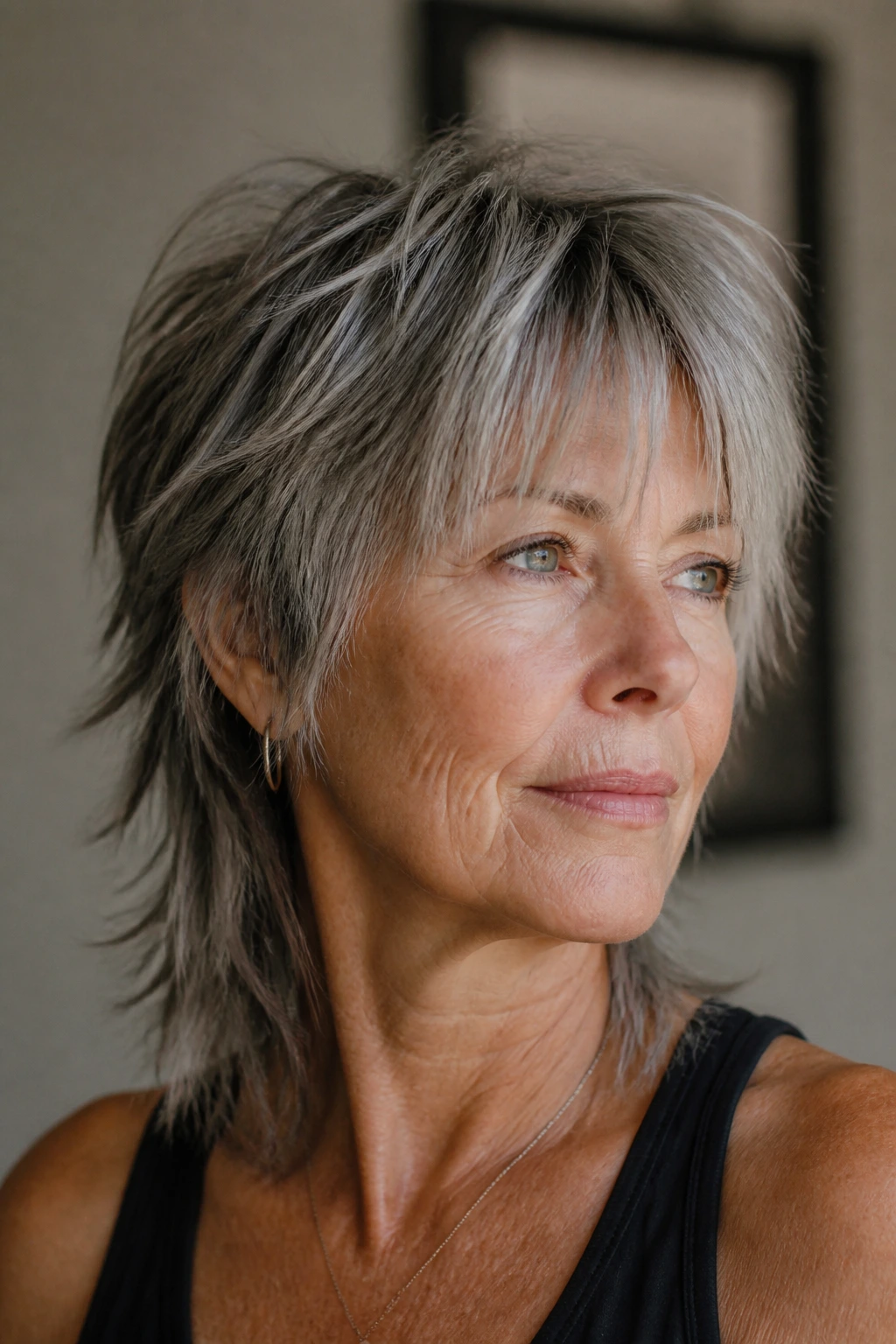
Straight hair can look severe with the wrong mullet, but razor-cut choppiness gives it a little edge and a lot of movement. The ends are textured, not sliced bluntly, so the shape breaks up light in a better way.
I like this version for hair that falls flat within an hour of styling. The uneven ends keep the cut from lying like a sheet. You get movement even when you barely touch it.
What to watch for
Razor cutting is useful, but it can be overdone. If your hair is fine, too much razor work can leave the ends frayed. Ask for controlled texture, not shredded pieces.
A styling balm or light wax works better than a creamy leave-in here. The cut needs definition at the ends, especially if your hair is naturally straight and glossy.
11. Rounded Volume Mullet With A Lush Crown
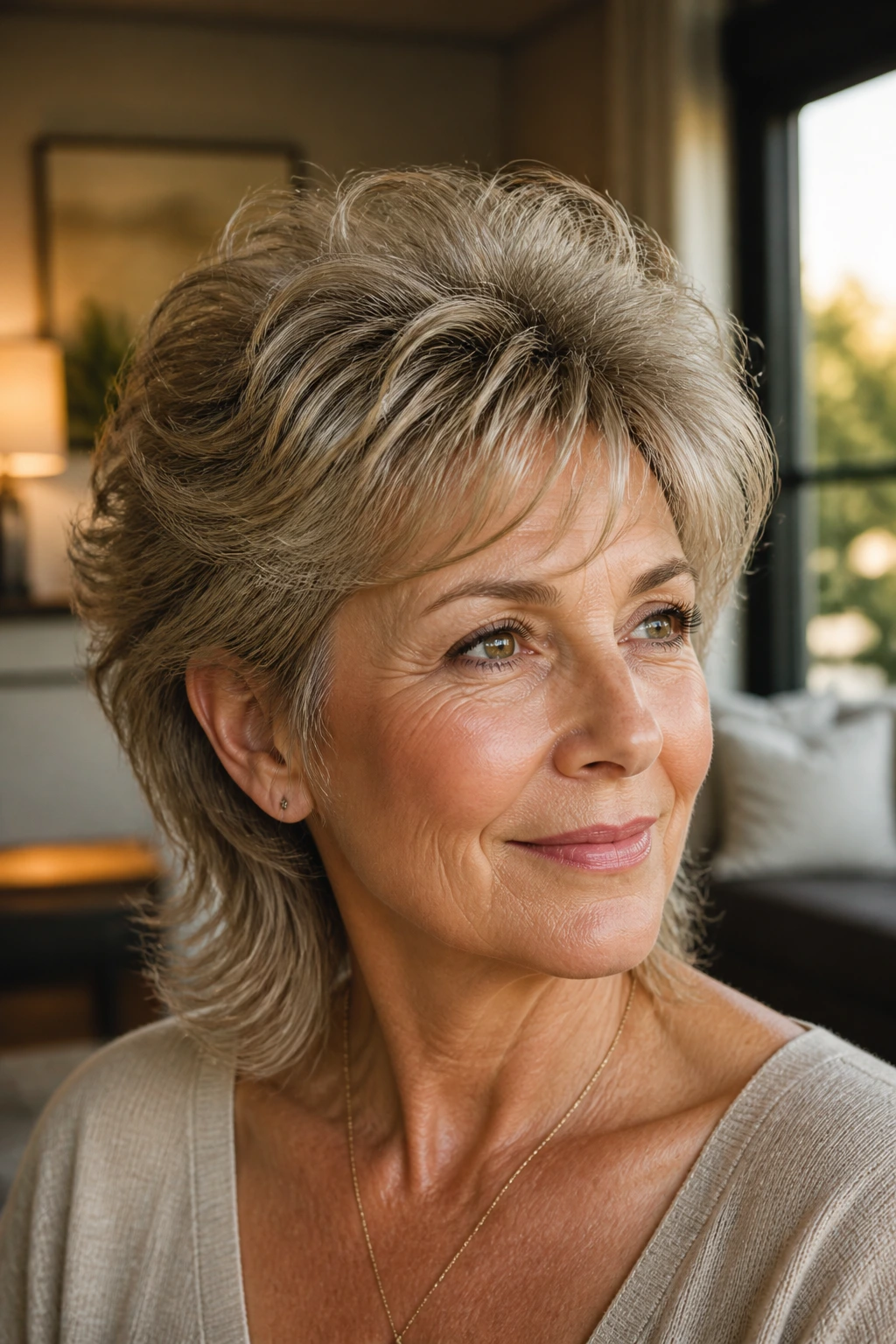
This one leans into fullness. The crown is shaped rounder, the sides are softly blended, and the back stays long enough to keep the silhouette from collapsing.
It’s a smart choice for women whose hair has gotten flatter at the top over the years. The rounded crown restores balance to the profile. Not cartoon volume. Just enough lift to keep the head shape from looking heavy.
Why it flatters
A rounded top makes the face look a little more open. It also softens stronger features, which is useful if you want a cut that feels gentle rather than graphic.
If you blow-dry this style, lift the roots first and smooth the outer layer last. That order matters. If you smooth first, you tend to crush the volume before it has a chance to set.
12. Wash-and-Go Curly Mullet With A Full Shape
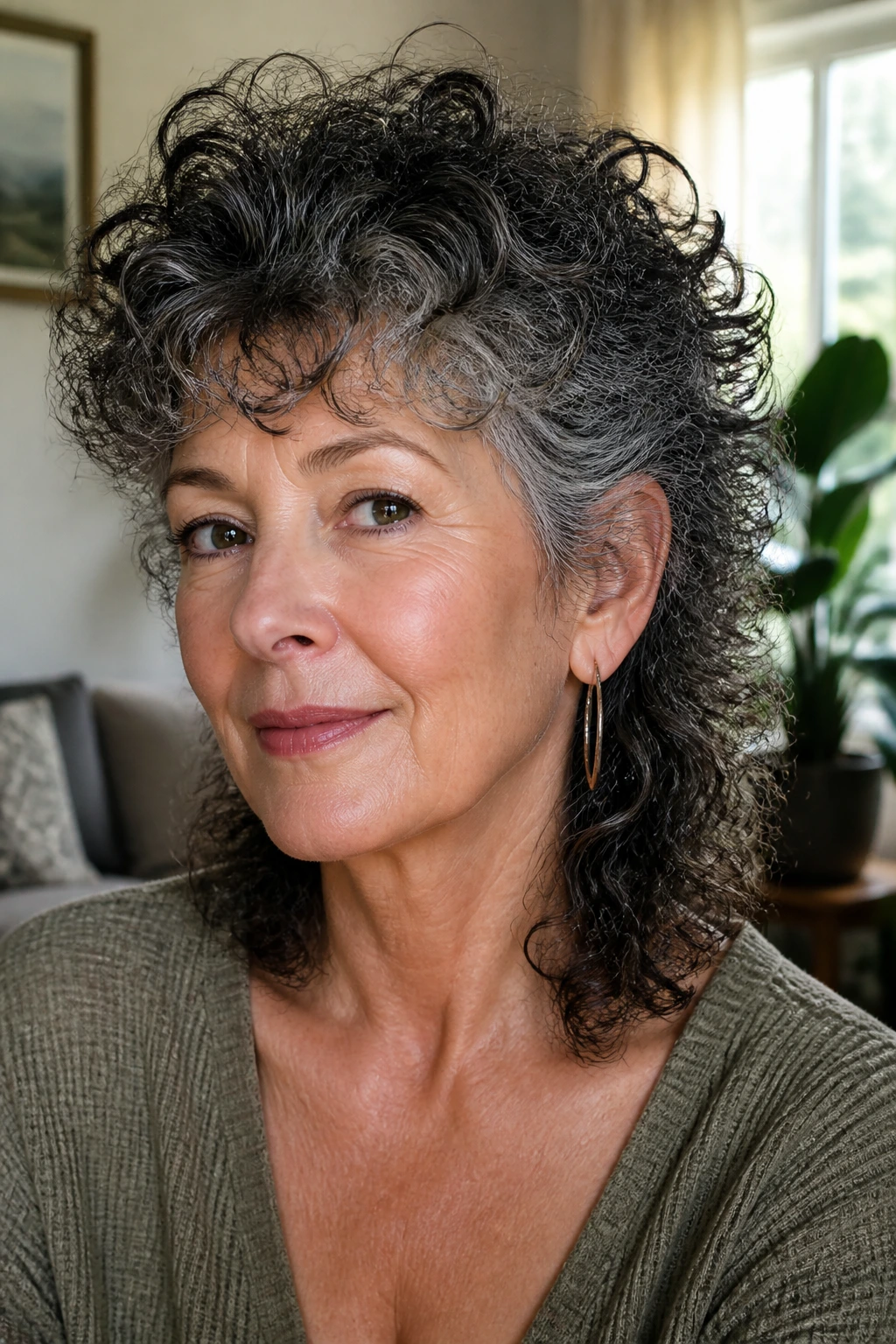
This is the low-fuss curly version for people who want shape without a lot of hand work. The cut keeps enough length in the back for curl definition, while the top is shortened enough to avoid a helmet effect.
The secret is balance. Too short on top, and the curls spring up too high. Too long in the back, and the curl pattern disappears into bulk. The sweet spot gives you a full silhouette that still has air around it.
A curl foam and diffuser are enough for many heads of curls. If the ends get fuzzy, add a tiny bit of cream after the hair is dry, not before. That keeps the definition cleaner.
13. Sleek Silver Mullet With Polished Ends
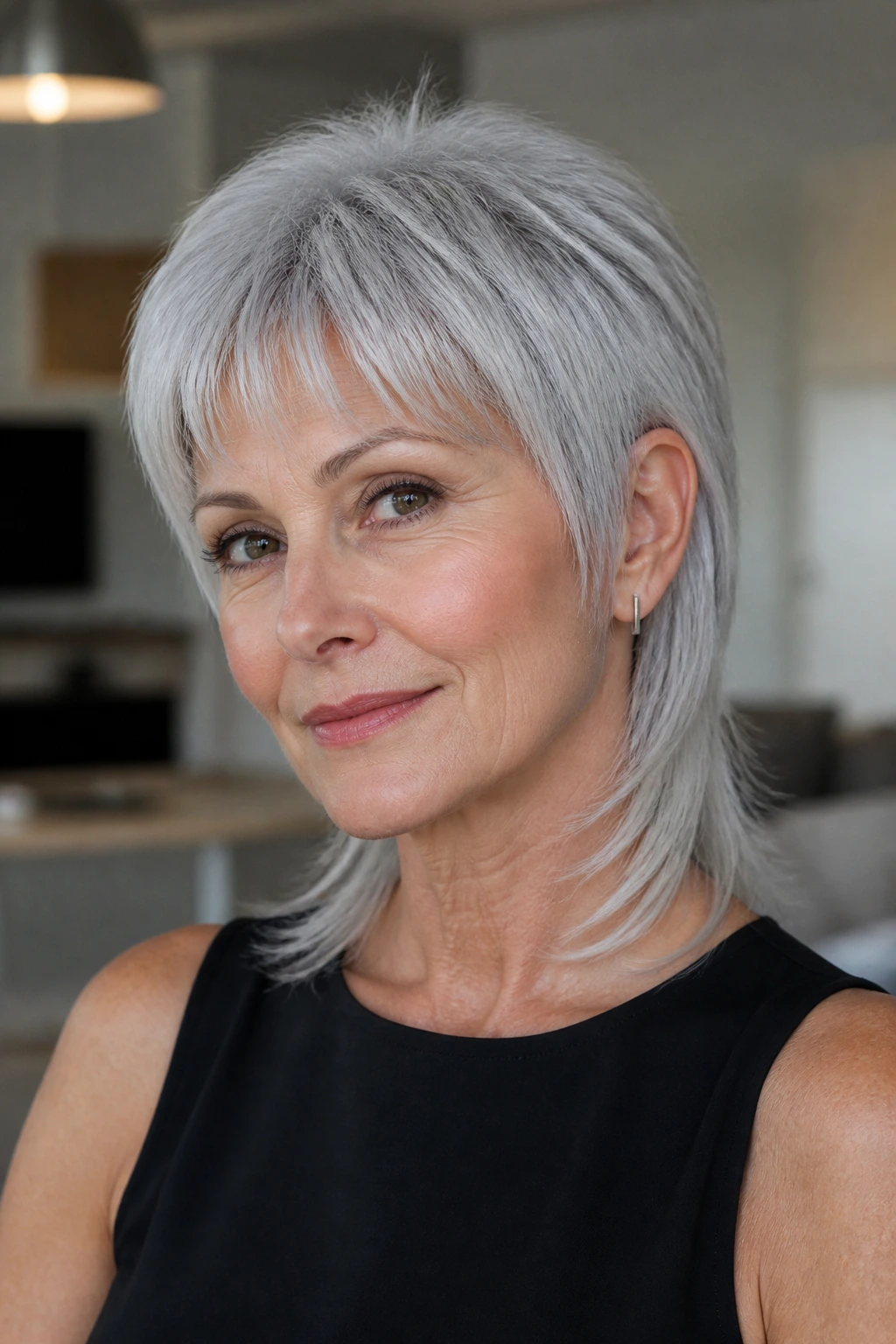
Not every mullet has to be messy. A sleek silver version can look sharp, elegant, and quite intentional if the lines are clean and the ends are polished.
This cut depends on a smooth surface. The crown is still shorter, the nape still has length, but the transition is softer and more tailored. Think less shag, more sculpted line with movement.
How to wear it
Use a smoothing cream and a flat brush or paddle brush blow-dry. If you like a little bend, put one pass of a flat iron through only the front pieces. Leave the ends soft instead of pin-straight; too much polish can make the cut lose its shape.
This one suits women who already like a neat wardrobe and want the haircut to follow that same clean line.
14. Cropped Mullet With A Bixie Feel
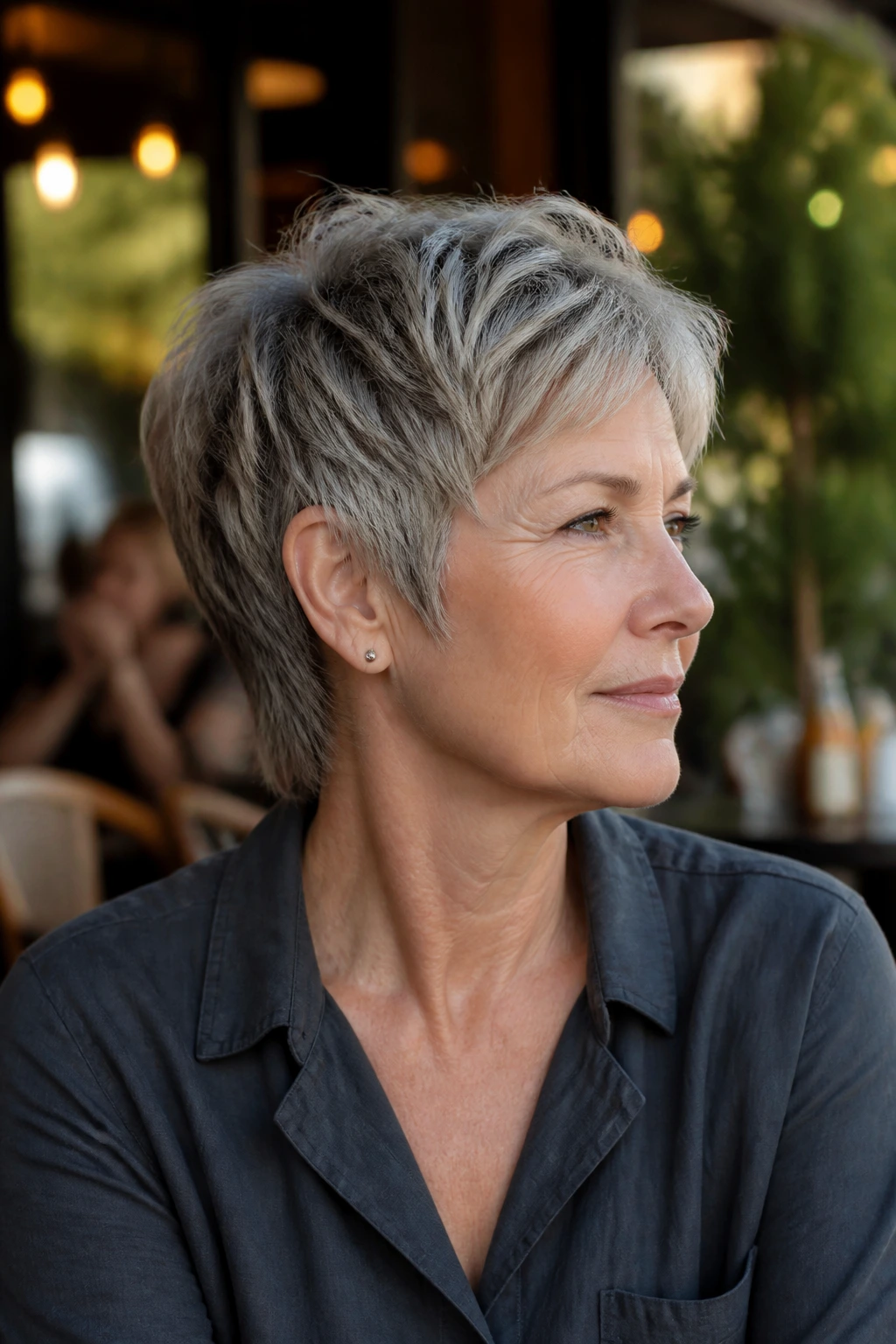
A bixie-mullet sits between a pixie and a bob, and it has a little more attitude than either one on its own. The back is short enough to stay easy, while the front and crown keep just enough length to make the shape read as a mullet.
It’s a nice option if your hair is thinning at the crown and you want a cut that creates the illusion of density. The short back keeps things light around the neck, and the longer top gives you something to work with in the morning.
A small round brush or just fingers and paste can set it fast. If you have a strong swirl at the crown, this shape can actually help it instead of fighting it.
15. Feathered Bang Mullet With Face-Softening Motion
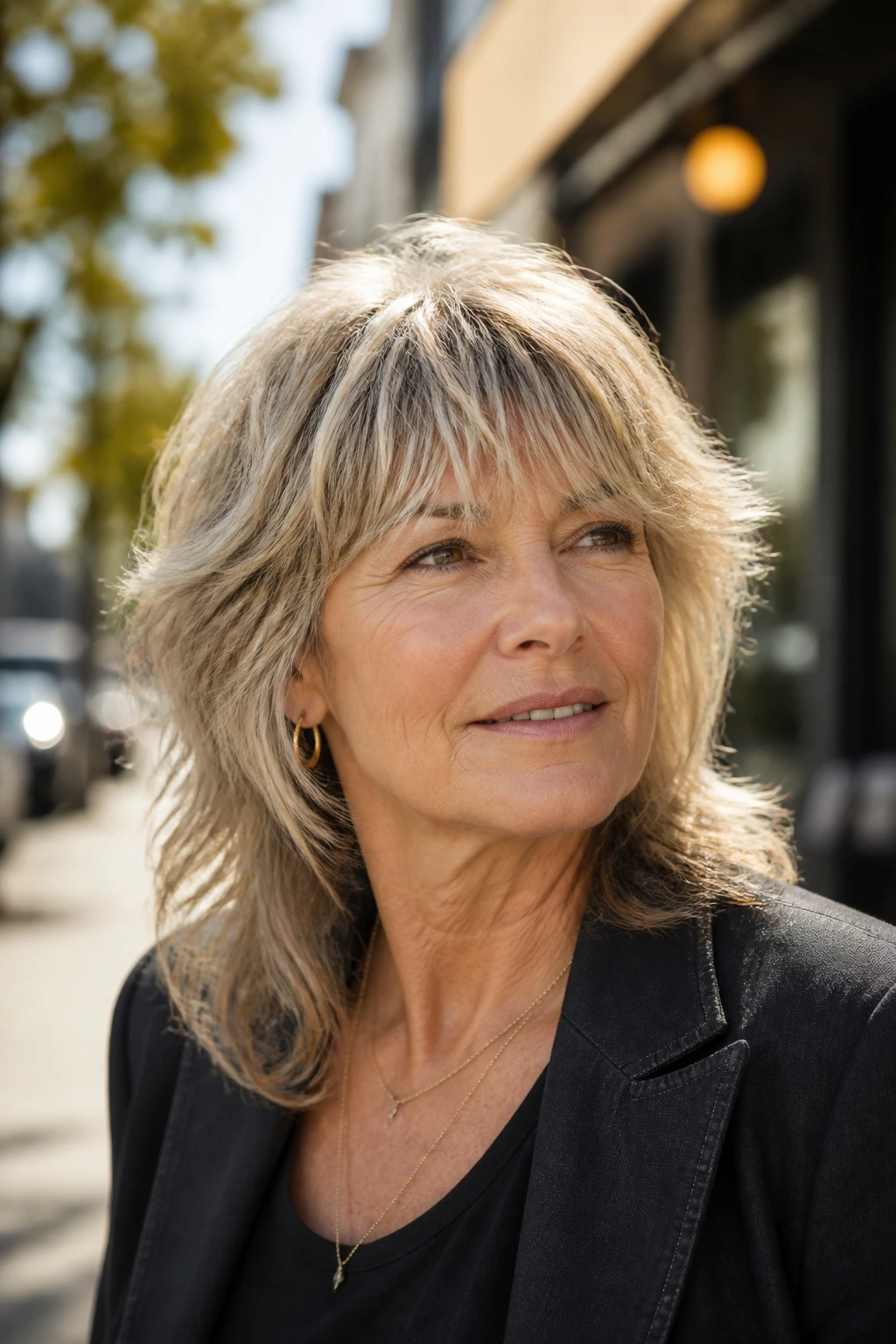
Feathered bangs can make a mullet feel softer and more youthful without trying too hard. The fringe lands in wispy pieces instead of one blunt wall, so the forehead stays open and the face doesn’t get boxed in.
This is especially nice if you want to draw attention to the eyes. The bang pieces should move enough that they do not sit like a curtain. That little flutter at the front keeps the whole cut from looking stiff.
A useful detail
Ask for the bangs to be cut longer than you think you need. Feathered fringe shrinks upward once it dries, and too-short bangs can take over the whole haircut.
It pairs well with low makeup and simple earrings. The haircut already does enough talking.
16. Overgrown Elegant Mullet With A Soft Back
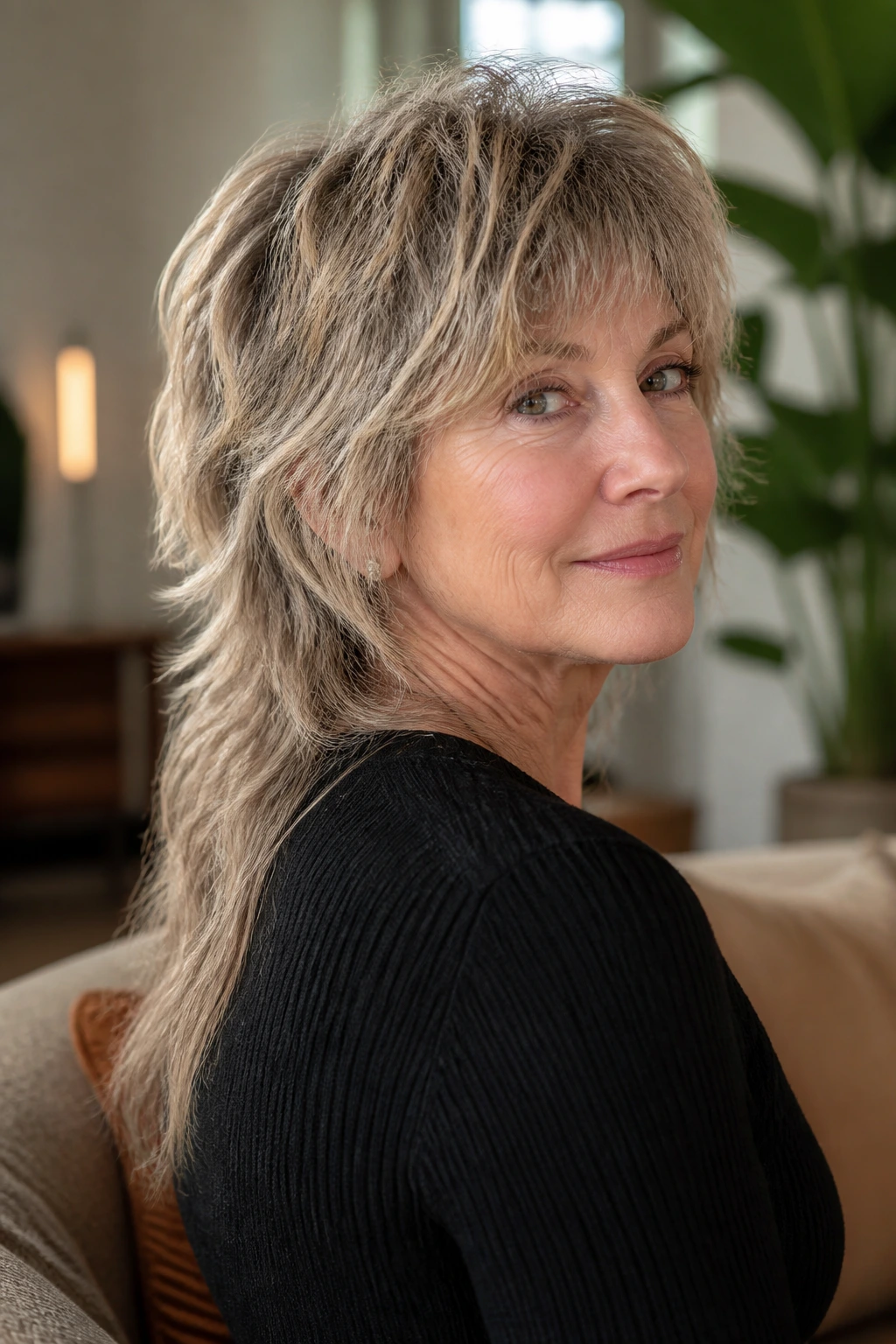
This is the mullet for someone who wants the idea more than the statement. The back is left a touch longer and softer, the layers are blended, and the whole shape feels almost like a polished shag with a trailing edge.
It looks especially good when the hair has natural thickness. The length gives the cut some drape, while the layers stop it from becoming one solid block. If you want a shape that can go three or four weeks without panic, this is a strong pick.
You do not need to sharpen every line here. A bit of softness is the point. That makes it easier to wear with cardigans, scarves, or higher necklines without the haircut feeling fussy.
17. Thick-Hair Sculpted Mullet With Weight Removal
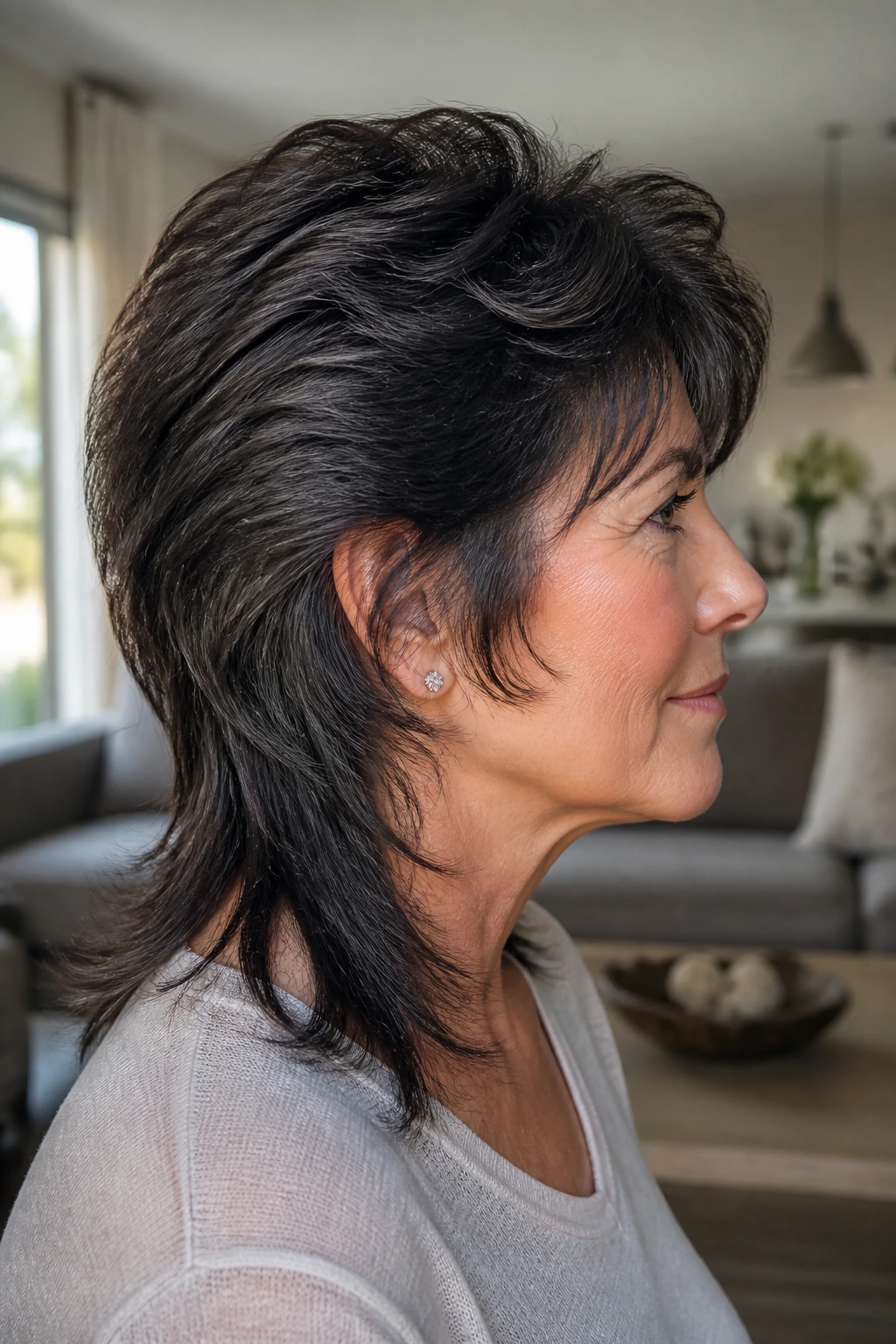
Thick hair can carry a mullet beautifully, but only if the weight is removed in the right places. Otherwise, the back grows into a heavy triangle and the top gets crushed.
This sculpted version trims bulk from the interior and keeps the outline controlled. The result is shape, not puff. If your hair holds volume naturally, you can push the crown a little higher and let the back swing instead of sit.
What makes the difference
Ask for internal layering and precise sectioning rather than just “take some weight out.” Those words matter. Too much thinning can create frizz and holes, and thick hair usually needs strategy more than it needs aggression.
A blow-dryer with a nozzle helps here. Direct the air down the hair shaft on the outer layer so the cut holds a cleaner outline.
18. Fine-Hair Airy Mullet With Micro Layers
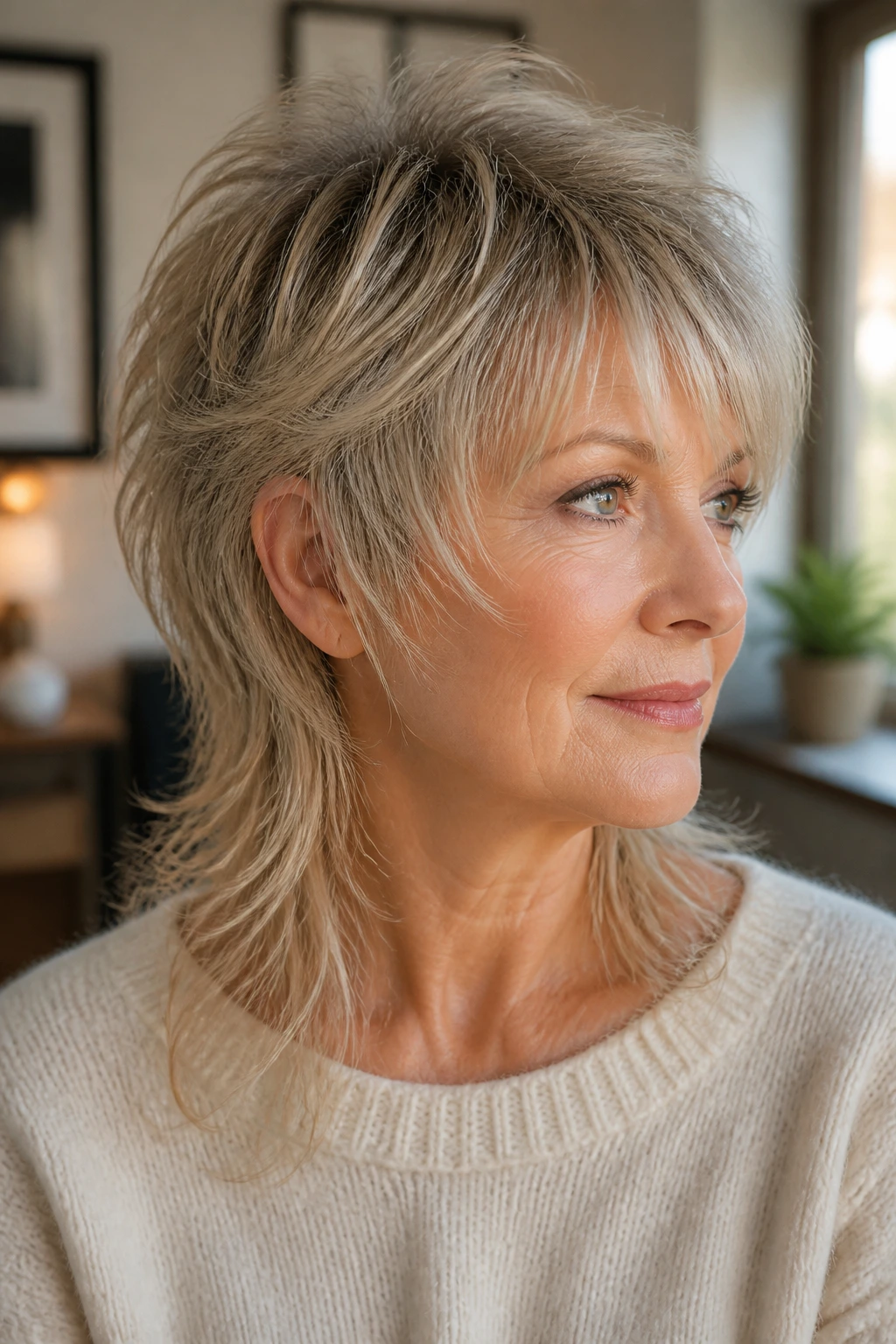
Fine hair needs a different touch. Heavy layers can make it collapse, which is why this airy version uses small, careful layers rather than big chunks of texture.
The crown gets a little lift, the back stays feather-light, and the ends are left soft so they do not look sparse. It’s a clever shape for hair that goes flat after lunch. The trick is to keep enough length to create the illusion of fullness.
Best when you want
- Movement without obvious choppiness
- A cut that doesn’t need a lot of product
- A shape that keeps working as it grows
A root spray and a quick rough-dry can do more than a heavy mousse. Fine hair usually prefers less product and more direction. A little goes a long way.
19. Silver Wolf Mullet With A Softer Edge
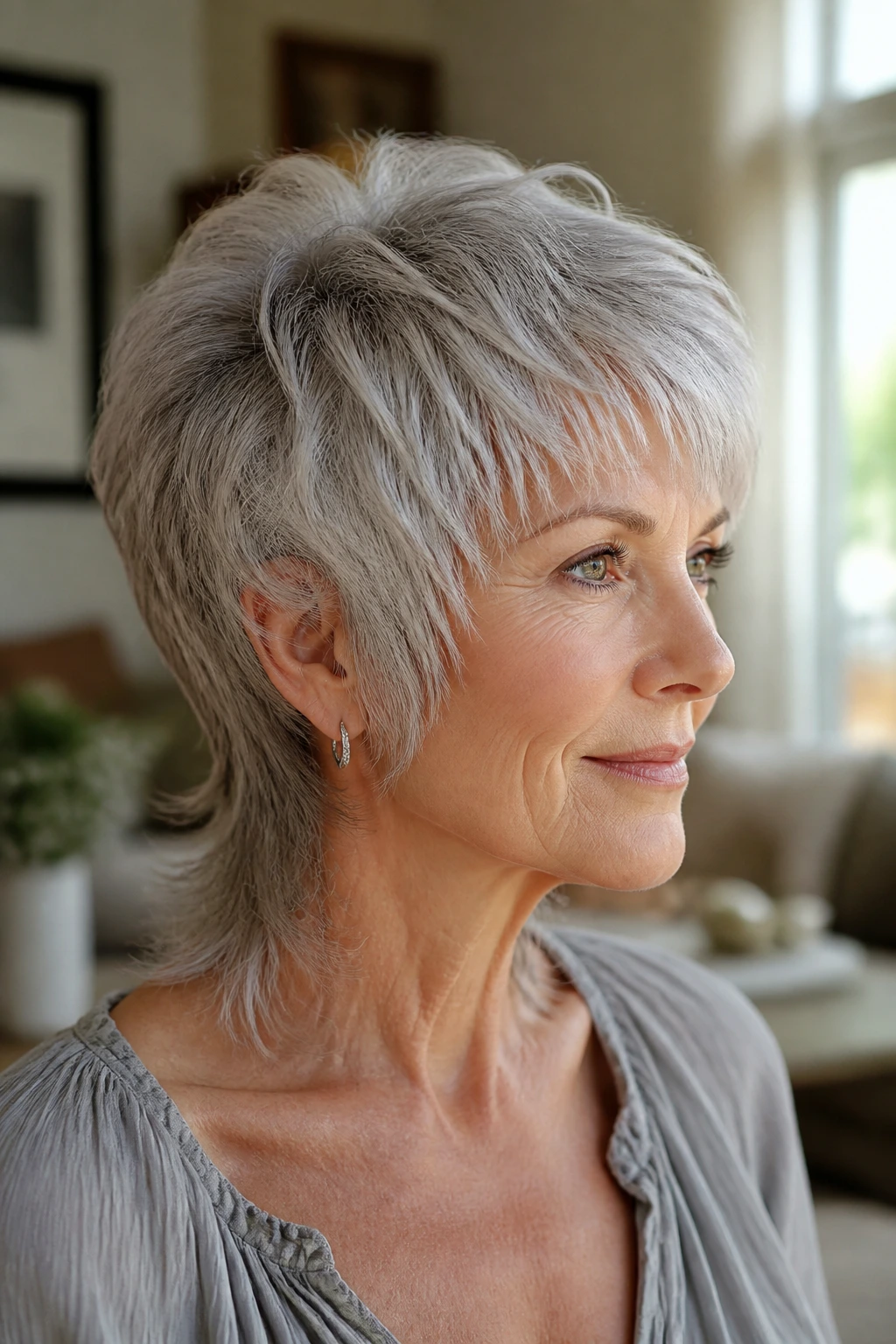
The wolf-mullet hybrid has a sharper edge than some of the softer cuts, but it can still be wearable after 60 if the finish is feathered and the layers are not too high. The silver color helps, too. It adds brightness that keeps the cut from reading harsh.
This version suits women who like a little attitude in their haircut. The crown is textured, the sides are shorter, and the back drops in a loose tail. The key is keeping the edges touchable, not ragged.
If you have dense hair and want shape that shows from the side, this is one to ask about. But be honest with your stylist about styling habits. A wolfier cut needs a bit more daily touch than a soft shag does.
20. Asymmetrical Mullet With One-Side Sweep
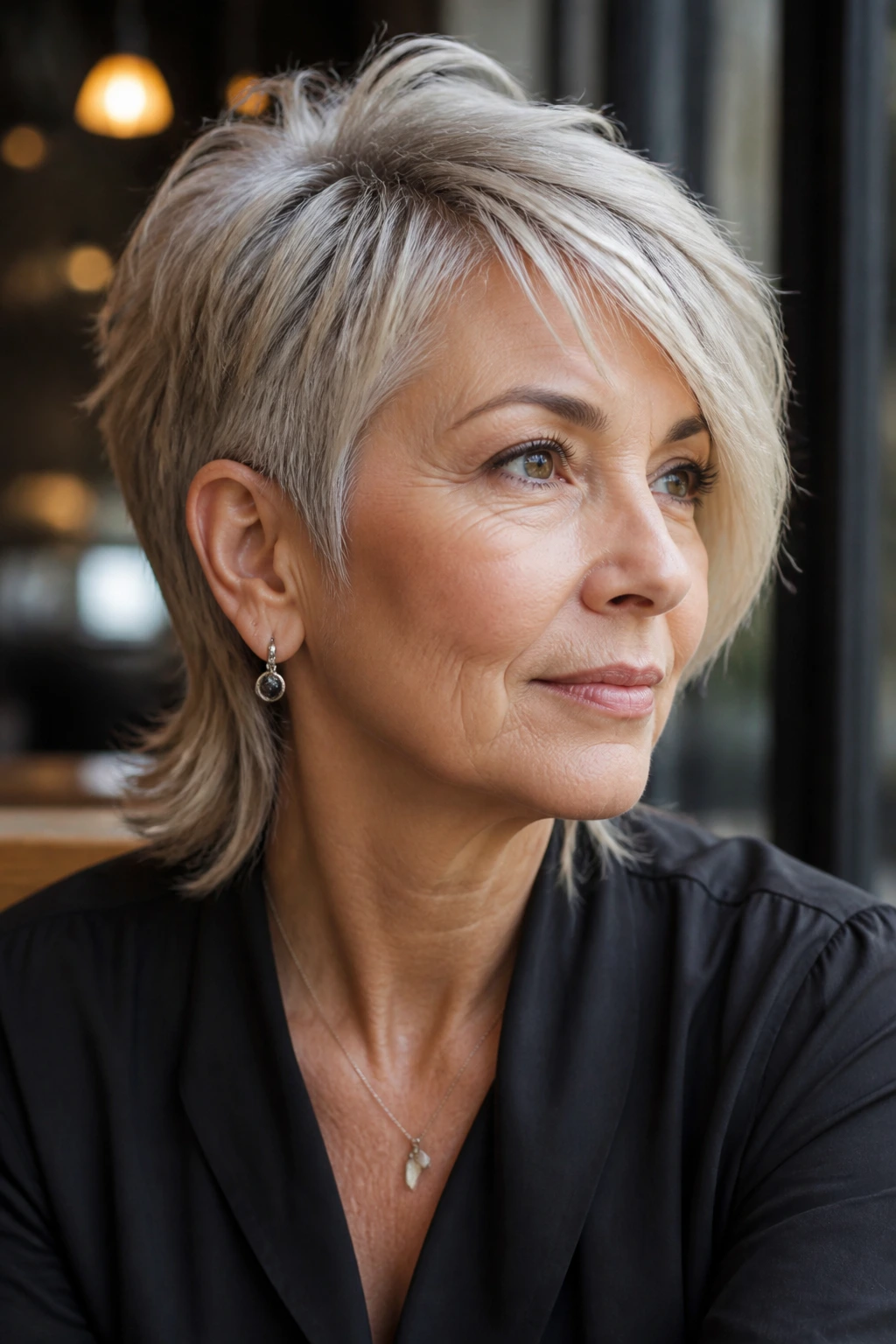
An asymmetrical mullet brings a little drama without needing a lot of length. One side is kept a bit fuller or longer, and the sweep across the forehead makes the cut feel tailored rather than random.
It’s a strong option if your face is slightly asymmetrical already, because the haircut can even that out in a flattering way. It also works nicely with a deep side part, which gives instant lift at the crown.
A good match for
- Straight or wavy hair
- Women who like a side part
- Anyone who wants the cut to feel a little sharper
Use a flat iron only on the longer front side if you want extra polish. The back can stay more relaxed. That contrast is what gives the shape its bite.
21. Soft Undercut Mullet With Hidden Edge
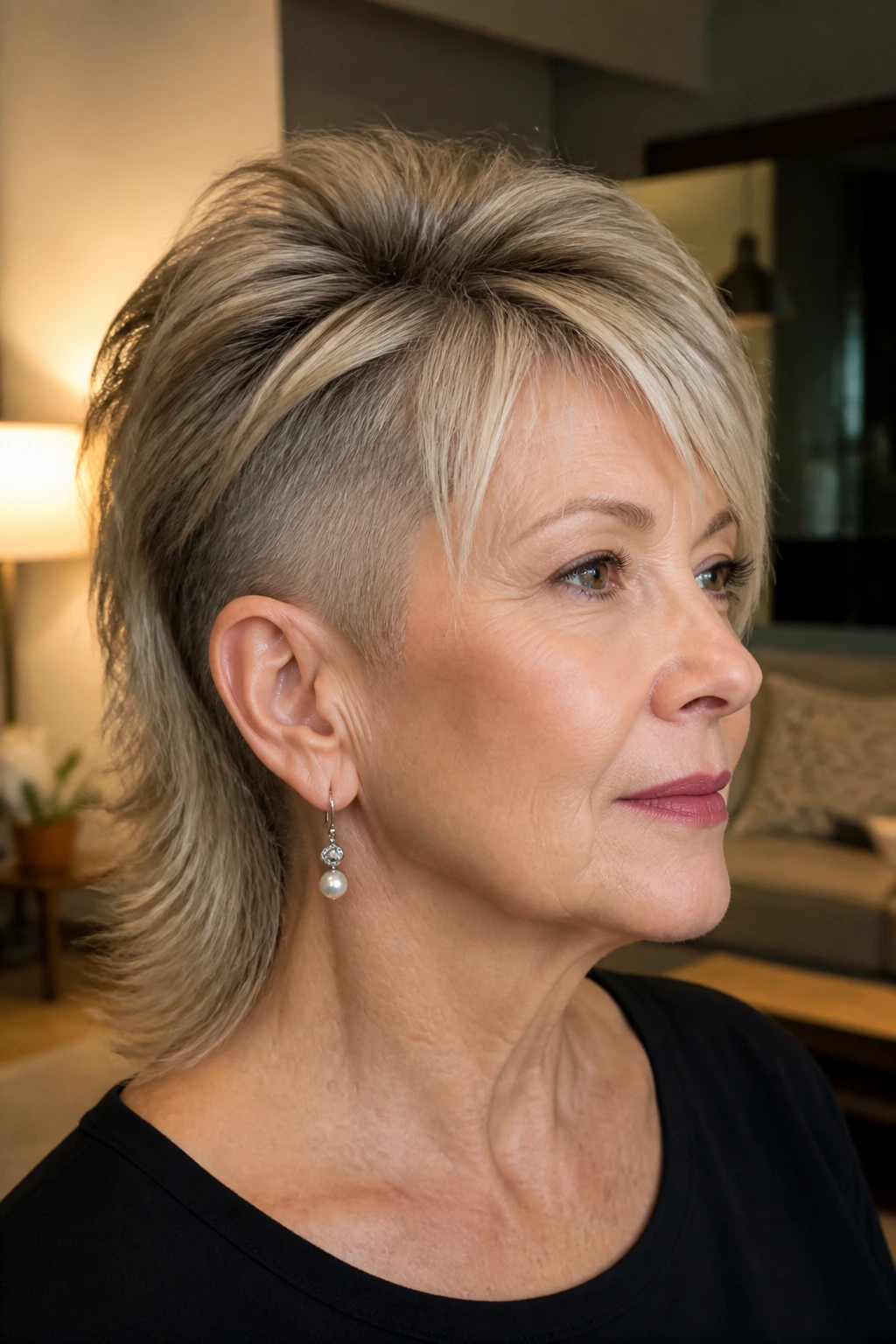
The undercut does not have to shout. In this version, it hides under the outer layers and removes bulk around the nape and lower sides, which makes the top and front sit better.
This is especially useful if your hair is thick at the neckline or if you get too warm with full-length hair touching your neck. The hidden edge keeps the look neat while still letting the surface hair move normally.
Why it’s worth considering
You get less puff under scarves and collars. You also get a shape that dries faster. If you like the idea of a mullet but worry about maintenance, a soft undercut can make the whole thing easier to live with.
Ask that the undercut stay subtle. You want relief, not an exposed stripe unless you want that on purpose.
22. Glam Blowout Mullet With Lifted Crown
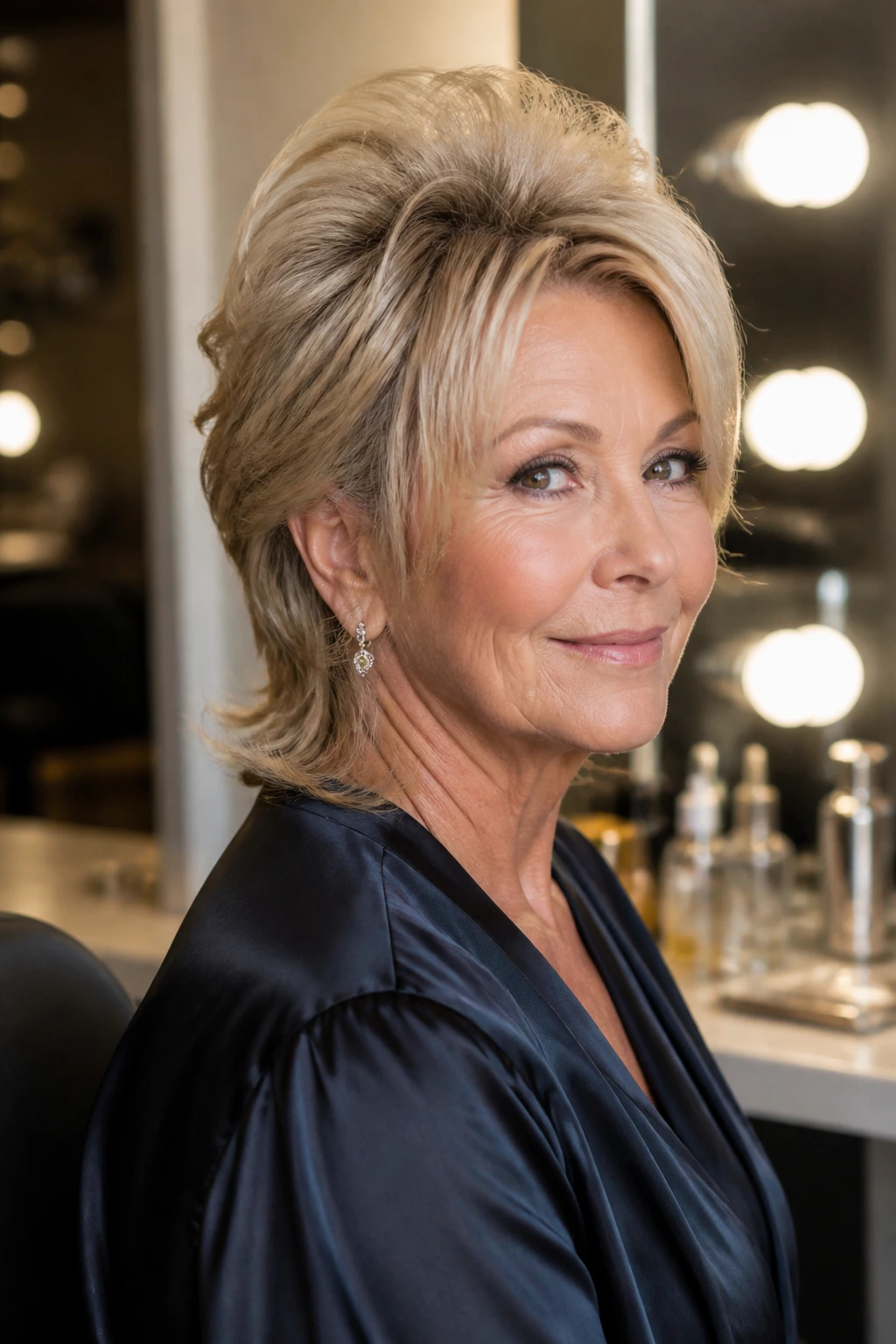
This is the dressier side of the family. The crown is blown out for height, the front pieces curve away from the face, and the back has a soft, glossy finish that moves when you walk.
It works beautifully for events, dinners, or any day when you want the haircut to look deliberate. The shape is still a mullet, but the styling gives it polish. Think big brush, controlled lift, and soft ends—not stiff pageant hair.
A root-lifting spray and a medium round brush are the key tools here. If the ends start to curl under too much, loosen them with your fingers while they are still warm. That keeps the style from getting too neat.
23. Natural Gray Halo Mullet With Curved Layers
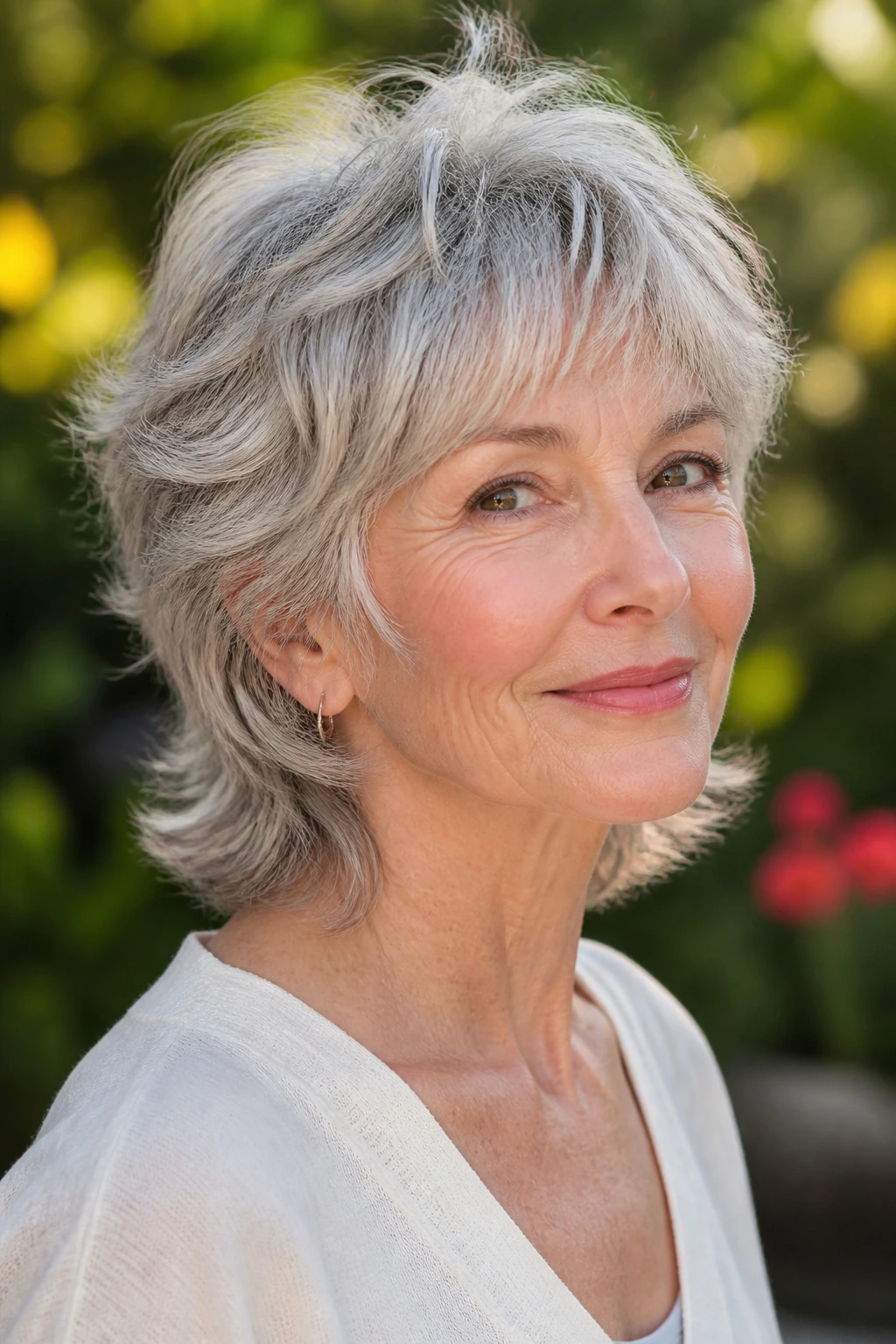
Gray hair often has a halo of texture around the head, and this cut uses that natural movement instead of flattening it. The layers curve around the head shape, then trail into a softer back that feels airy rather than chopped.
I like this one for women who want their gray to look intentional, not managed into submission. The curved layers let the silver catch the light in motion, and the whole cut feels lighter around the ears and neckline.
How to shape it
Use a soft brush, dry the crown first, and let the curve around the sides set with your hands. The hair should feel flexible, not frozen. If it stiffens up, you have used too much product.
This is one of the easiest cuts to wear with simple makeup and a strong lipstick. The hair gives the face enough structure on its own.
24. Low-Maintenance Grow-Out Mullet With Easy Shape
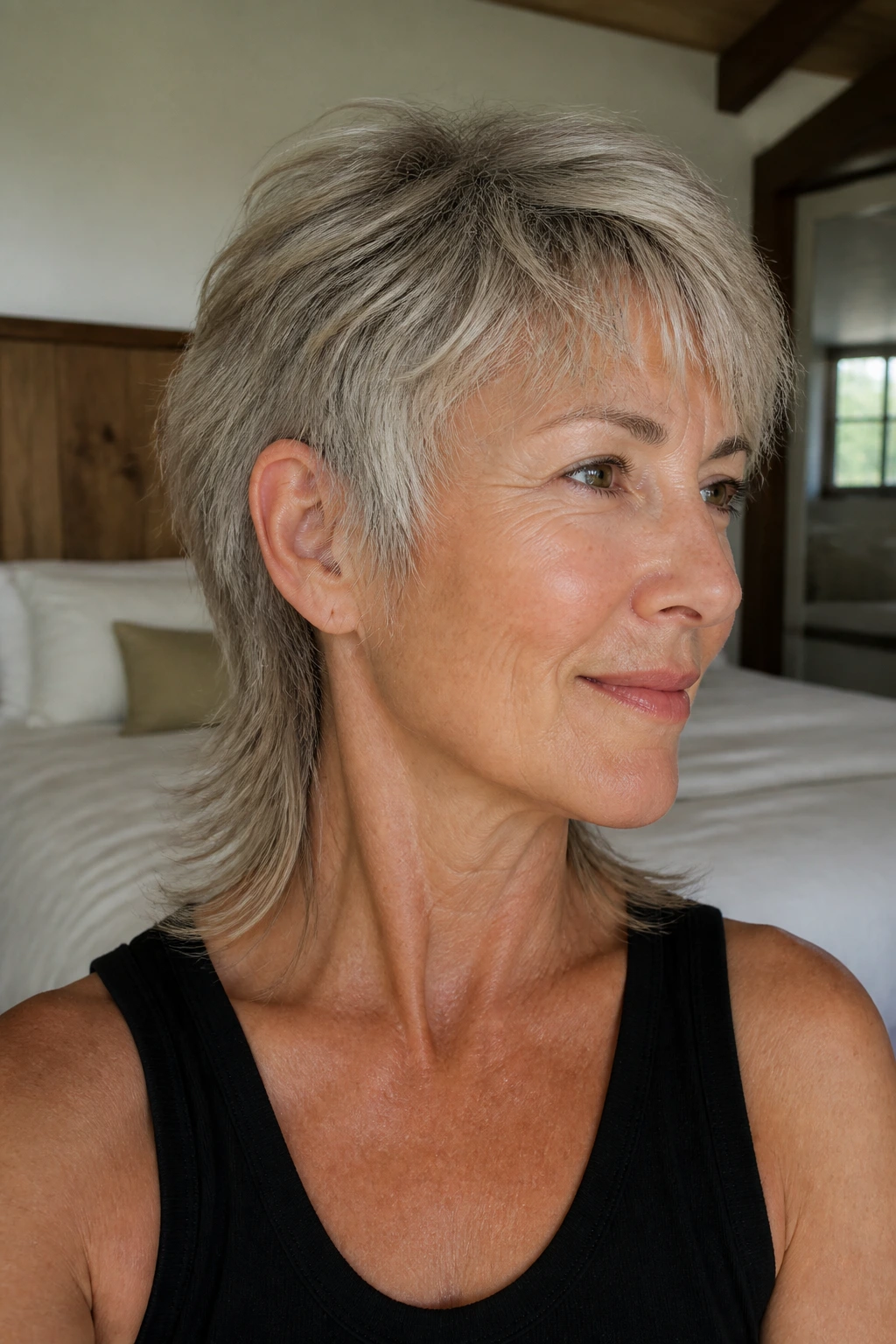
This is the practical one, and I mean that kindly. A haircut that still looks good when you miss an appointment is worth its weight in gold.
The layers are blended so the shape softens instead of turning messy. The back keeps enough length to stay recognizable as it grows, and the front pieces can slide into a side sweep, a tuck-behind-the-ear move, or a loose fringe depending on your mood that day.
If you do not want to fight your hair every morning, this is probably the strongest final option. It is the mullet version that forgives real life—rain, humidity, sleep, all of it. Not glamorous, maybe. Useful, absolutely.
Why the Mullet Shape Works So Well After 60
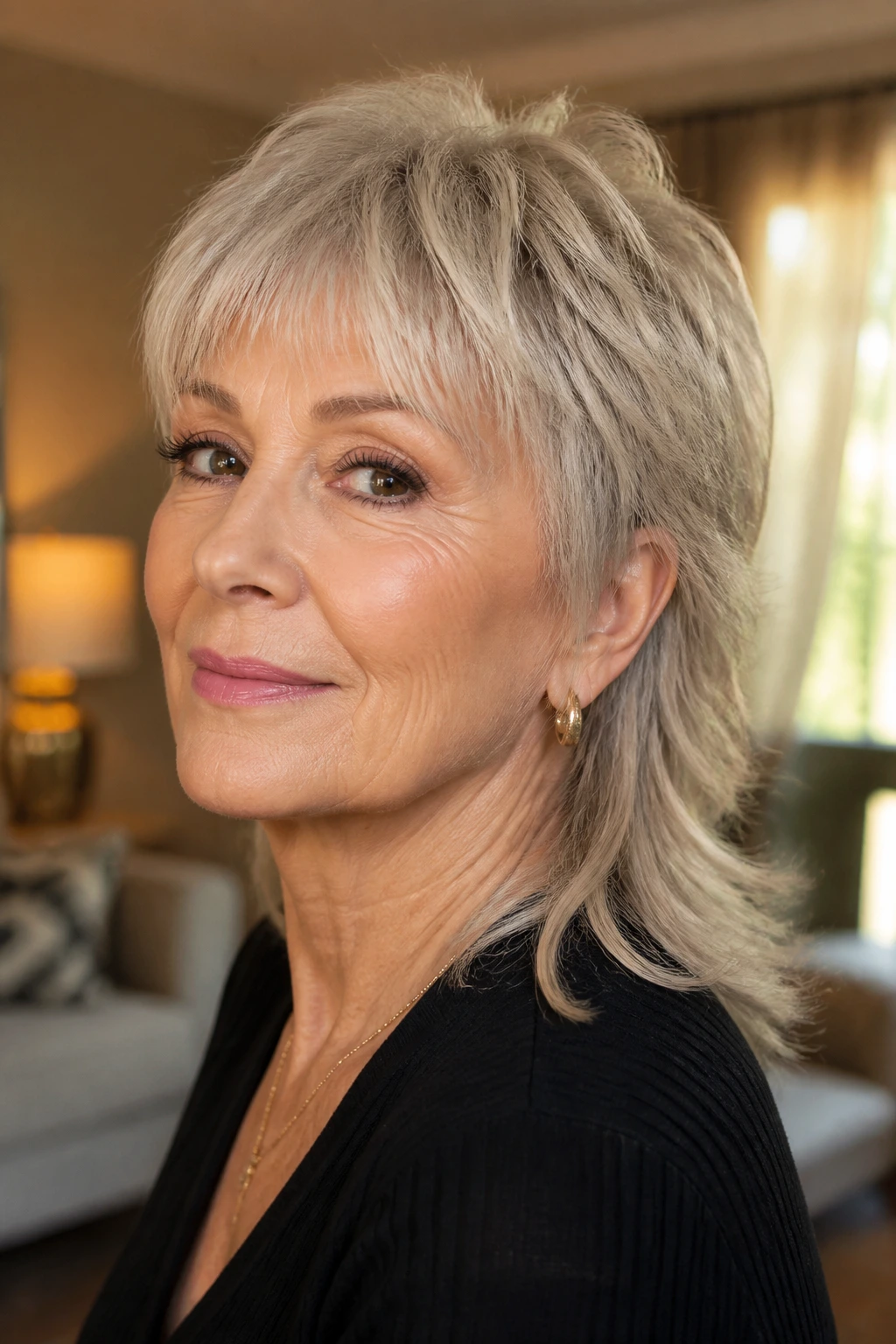
The best thing about a mullet on mature hair is that it answers two problems at once: weight and lift. Hair often gets less dense at the crown while the ends still carry too much bulk, and that mismatch is where many older cuts start to look tired. A mullet redistributes the eye line. Shorter through the top, longer in the back, softer around the face. Simple idea. Big payoff.
Gray and silver hair can be gorgeous, but it also tends to show blunt edges faster than dyed hair does. A layered cut gives those strands movement, which helps the color look dimensional instead of flat. That matters whether your hair is pure white, salt-and-pepper, or still carrying some darker strands near the nape.
There’s another thing people forget: necklines change the way a haircut reads. A soft mullet keeps the nape neat while still giving you some swing at the collar. If you wear scarves, jackets, or glasses, that little bit of length can keep the style from disappearing into your clothes.
Essential Tools for These Haircuts
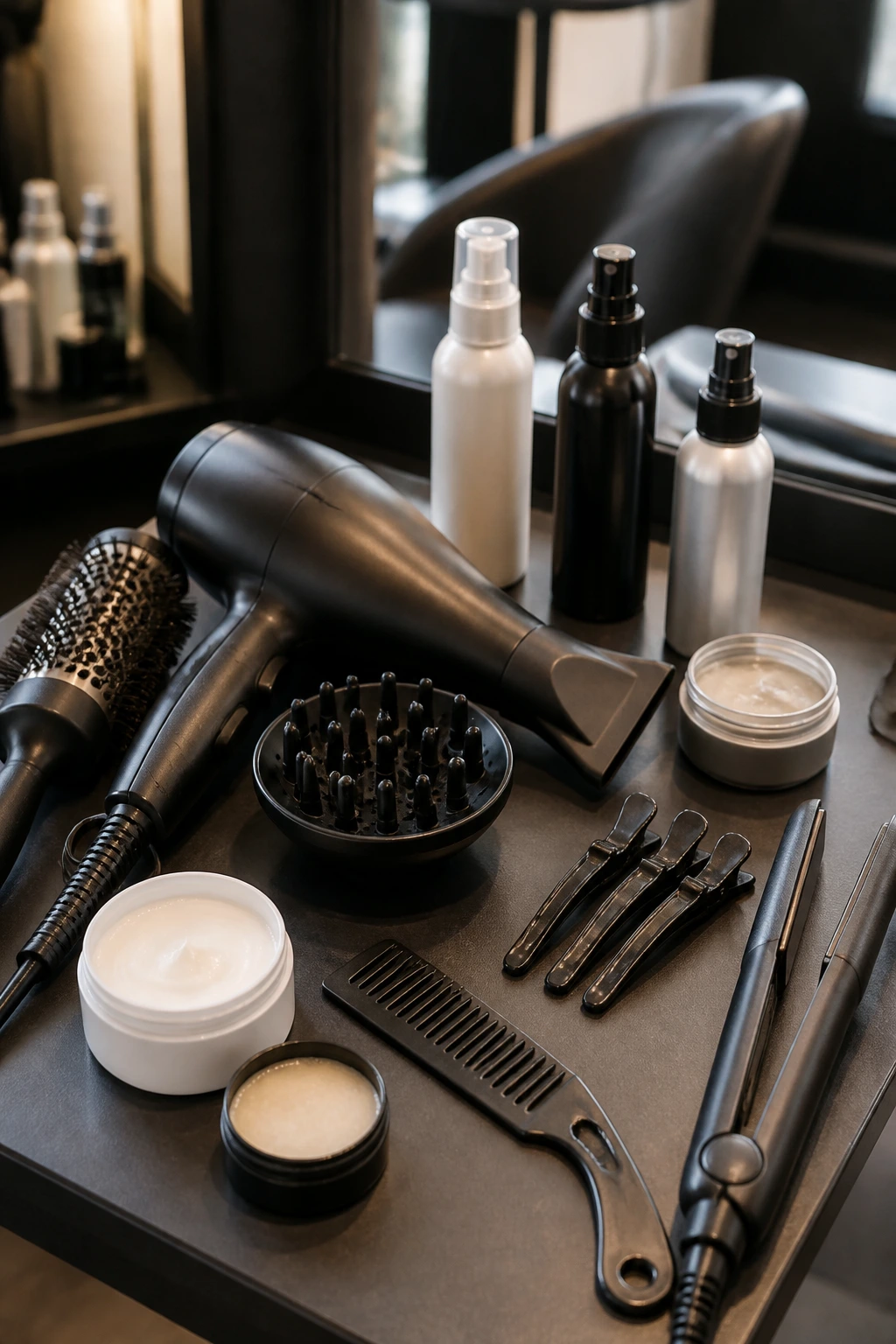
- Blow dryer with a nozzle attachment: Directs air where you want it, which helps keep the crown lifted and the ends smoother.
- 1 to 1.5-inch round brush: Ideal for shaping the front pieces and adding bend without overcurling them.
- Diffuser: Best for curly or wavy versions that need definition without frizz.
- Light mousse or root lift spray: Gives fine or flat hair some memory at the roots.
- Texturizing spray: Useful for choppy, shaggy, and wolfier versions that need separation.
- Light styling cream: Good for softer cuts that need control without stiffness.
- Matte paste or light wax: Handy for pixie-mullet hybrids and short, piecey tops.
- Wide-tooth comb: Easier on waves and curls than a brush.
- Sectioning clips: Keep the crown and nape separate while you dry or style.
- Small flat iron: Optional, but useful for smoothing face-framing pieces or nudging a bend into the front.
What to Tell Your Stylist Before the First Snip
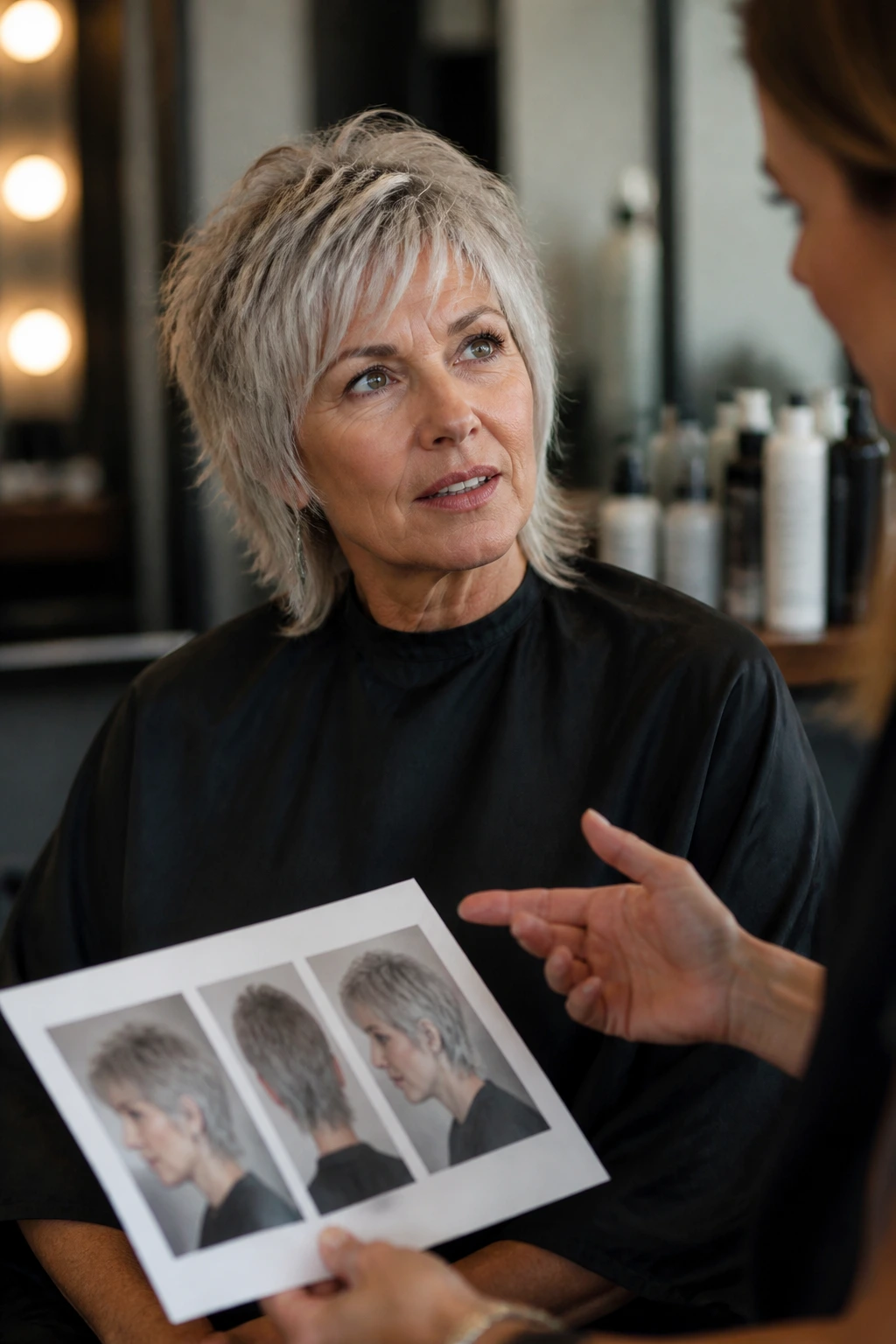
A good photo helps, but a good conversation helps more. Bring two or three pictures that show the same haircut from different angles if you can. One front shot tells almost nothing about a mullet. The back and the side matter as much as the fringe.
Say what you want the haircut to do, not just what you want it to look like. Do you want lift at the crown? Less bulk at the nape? A fringe that works with glasses? Softer edges around the jaw? Those answers steer the cut in the right direction faster than vague words like “edgy” or “modern.”
Ask these questions
- How much length will stay at the nape?
- Will you point-cut or blunt-cut the ends?
- Can the top stay soft enough to air-dry?
- Should this be cut dry if my hair is curly or wavy?
- How often will it need a trim to keep the shape?
If your hair is fine, ask for slightly less texture than the photo shows. If it’s thick, ask where the weight will come out, because that is the part that decides whether the haircut swings or swells.
How to Wear These Cuts With Glasses, Earrings, and Necklines

Glasses: Keep the side pieces either a touch above the frame arm or gently brushing just past it. Hair that lands right on the hinge tends to look messy by noon. Side-swept fringe and cheekbone layers are usually the easiest pairings.
Earrings: Shorter or tapered versions show off studs, hoops, and drop earrings well, but the best match depends on the back length. If the nape is clean and the crown has lift, even a very simple earring can look deliberate because the haircut is doing part of the framing.
Necklines: Higher necklines pair nicely with a taper at the nape so the hair does not bunch up. Open collars and V-necks let the back length swing more freely. I like a softer, shoulder-length mullet with shirts, and a cleaner cropped version with jackets.
Everyday styling: Don’t overthink it. A touch of cream or paste, a quick blow-dry at the roots, and a small bend around the face is often enough. The cut should do more than the product does.
Additional Styling Tips and Finishers
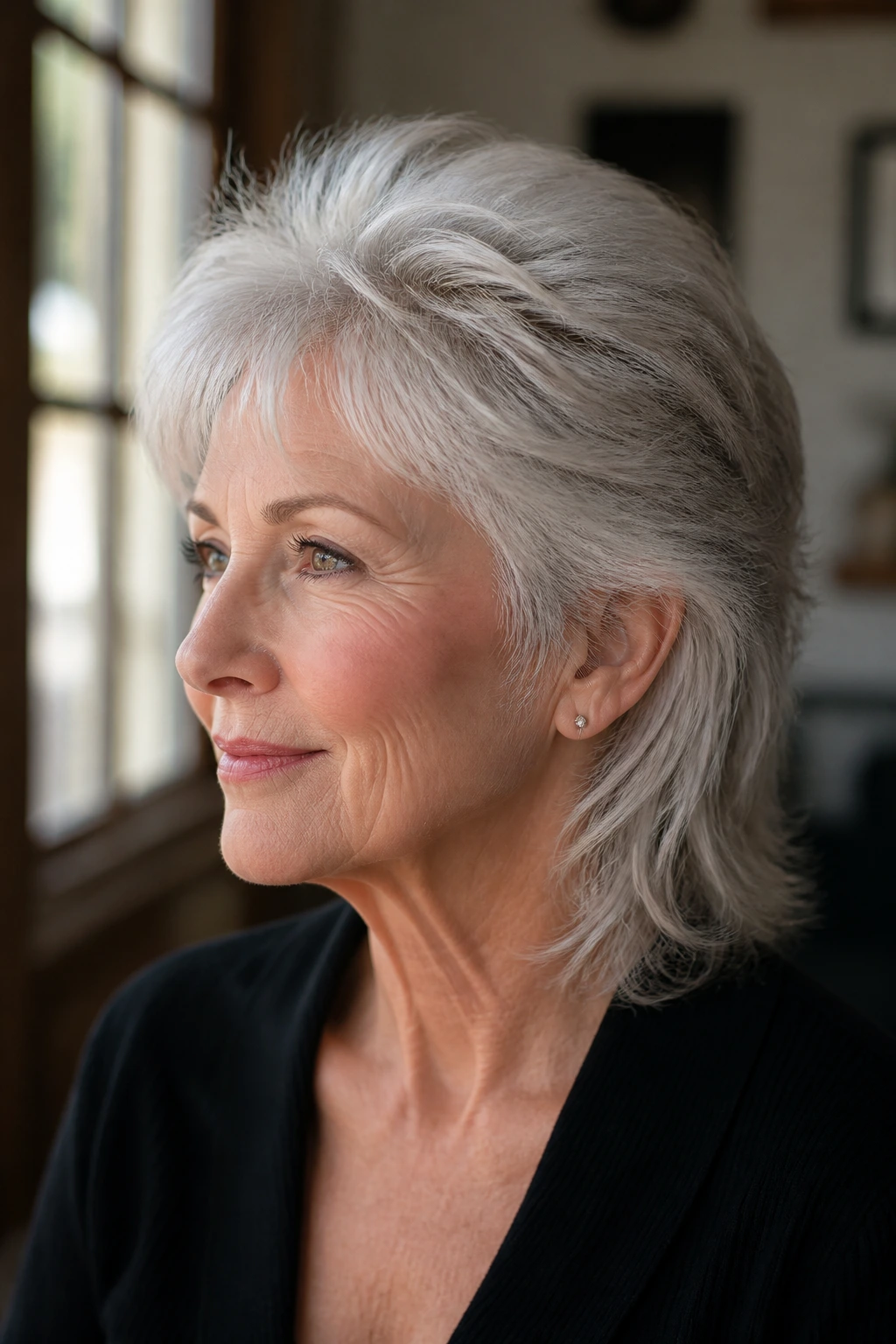
Root Lift: If the crown goes flat, clip the roots at the top while the hair is warm from the dryer. Five minutes can change the whole silhouette. I prefer this to piling on dry shampoo, which can turn silver hair chalky if you overdo it.
Texture: For wavy and curly versions, scrunch in product while the hair is damp and then stop touching it. Too much finger-combing breaks the shape and makes the ends frizzy. Hands off. Seriously.
Polish: On sleeker versions, tuck one side behind the ear and let the front pieces fall forward on the other side. That tiny asymmetry gives the haircut a grown-up finish without making it stiff.
Make-It-Yours: If you like a softer look, ask for longer fringe and gentler graduation. If you want more edge, keep the sides a little shorter and the crown more piecey. One haircut can tilt in either direction, and that’s part of the appeal.
Trim Schedule, Washing, and Day-Two Care
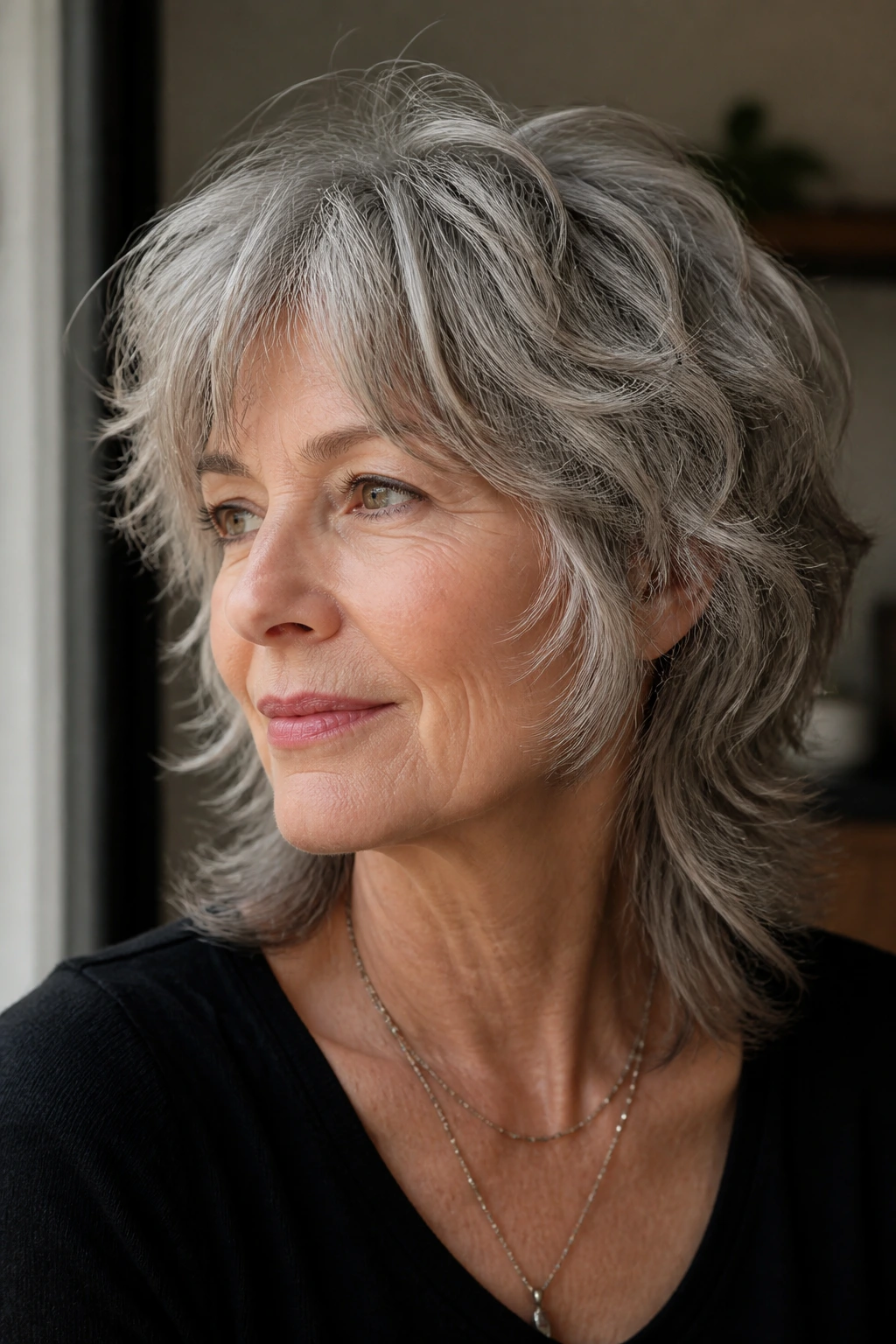
Most mullet haircuts hold their shape best with trims every 5 to 8 weeks, depending on how fast your hair grows and how sharp you want the outline to stay. If you prefer a softer, overgrown look, you can stretch that a little farther, but the nape is usually the first part that starts to feel shapeless.
Washing rhythm depends on texture. Fine straight hair often needs more frequent washing because the crown shows oil faster. Curly and wavy versions can go longer, especially if you refresh the ends with a bit of water and leave-in cream. Use shampoo where the scalp actually gets oily; don’t scrub the ends to death.
Day two is where a good mullet proves itself. A quick mist of water, a touch of styling cream, and a little lift at the roots can bring the shape back without a full redo. If the front pieces have gone limp, a round brush or one pass of a flat iron on just the face-framing sections is usually enough.
Variations and Adaptations to Try
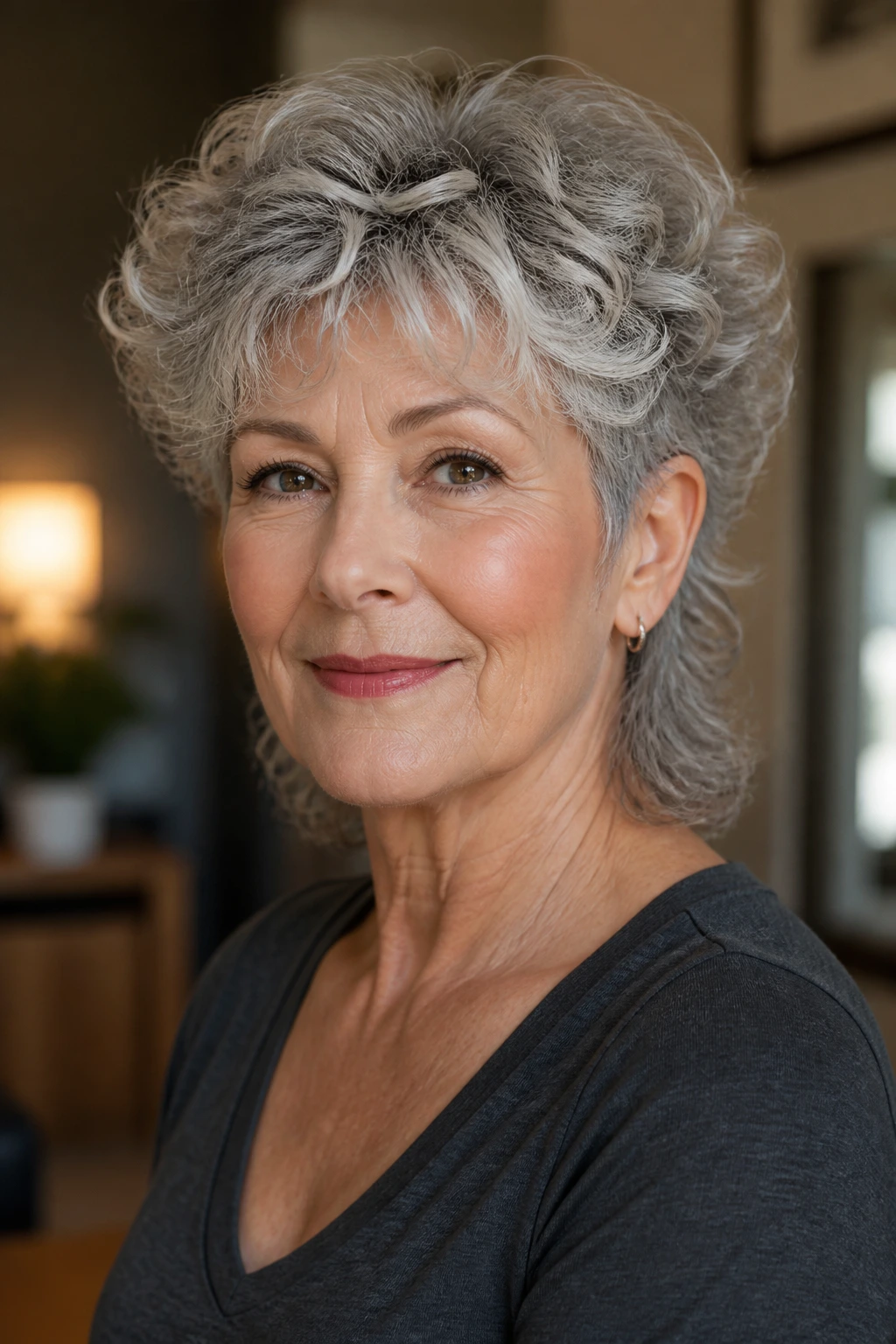
The Softer Shag: Keep the back only slightly longer than the sides and let the layers blur together. This works if you want mullet movement without a visible tail.
The Curly Halo: Build more width around the crown and let the curls fall into a rounded outline. It suits naturally curly hair that needs space rather than control.
The Sleek Silver Sweep: Smooth the top and front, keep the nape controlled, and leave just enough length for a clean swing. Good for straight gray hair that already has shine.
The Bixie-Mullet Bridge: Shorten the back and sides while keeping enough top length to brush back or forward. This is a gentle landing spot if you’re growing out a pixie.
The Long Grow-Out: Let the back drift past the shoulders and use soft layers to keep it from becoming heavy. This is the best option when you want the shape, but not much maintenance.
Common Mistakes to Avoid
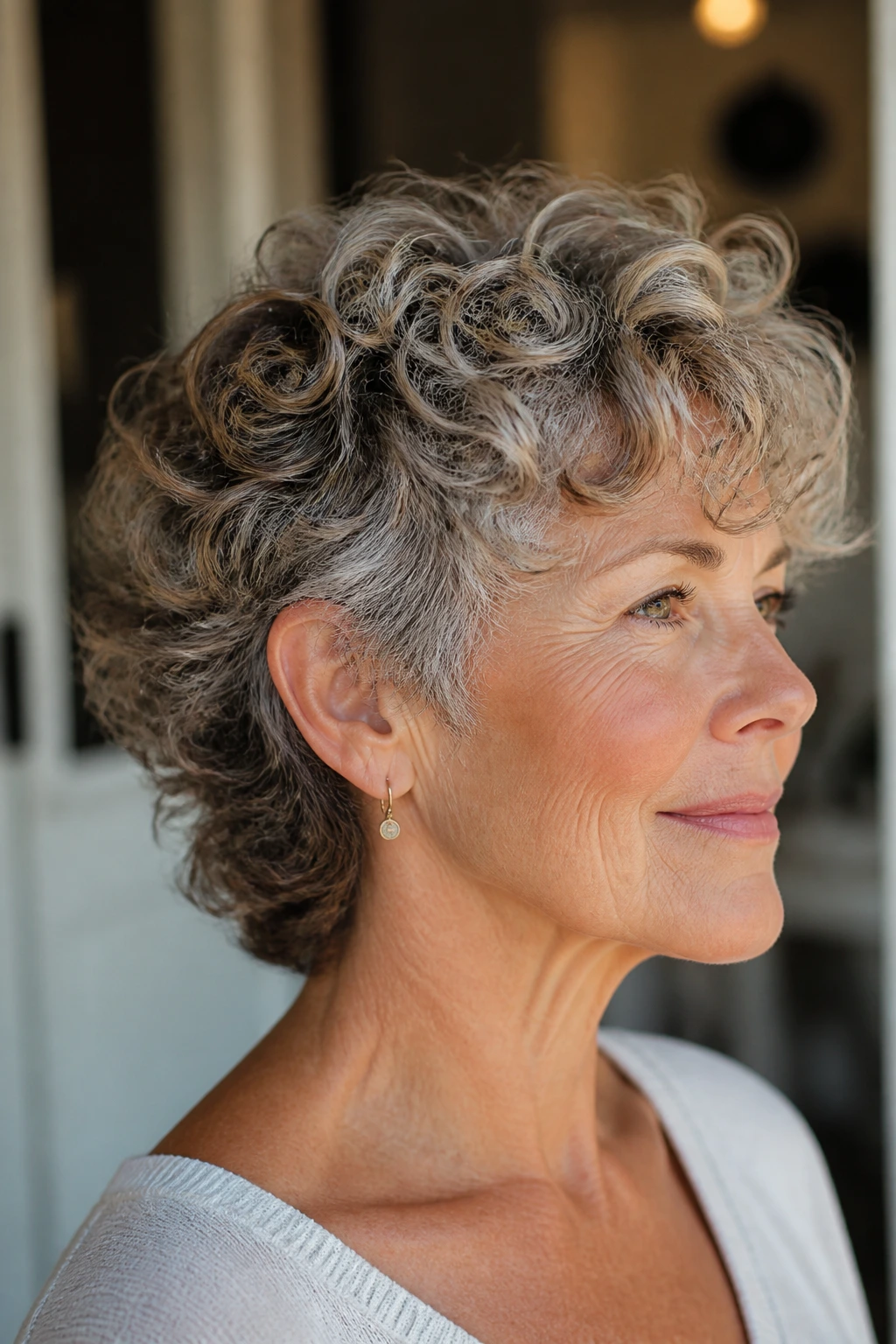
- Making the back too long too soon: The cut stops looking intentional and starts looking like you forgot to finish it. Keep the length controlled until you know how your hair sits.
- Over-thinning fine hair: Fine strands can lose all structure if the stylist removes too much weight. Ask for shape, not scalp exposure.
- Cutting the fringe too short: Bangs shrink upward, especially on wavy or curly hair. Longer is safer; you can shorten later.
- Ignoring the crown: A flat top kills the whole style. If the crown needs lift, say so before the scissors come out.
- Copying a dramatic photo without matching the texture: A choppy wolf-mullet on thick hair will not behave the same way on fine, straight hair. The shape needs to fit your strand type, not the other way around.
- Using too much product: Heavy wax or thick cream can weigh the top down and turn silver hair dull. Start small. You can always add more.
Frequently Asked Questions
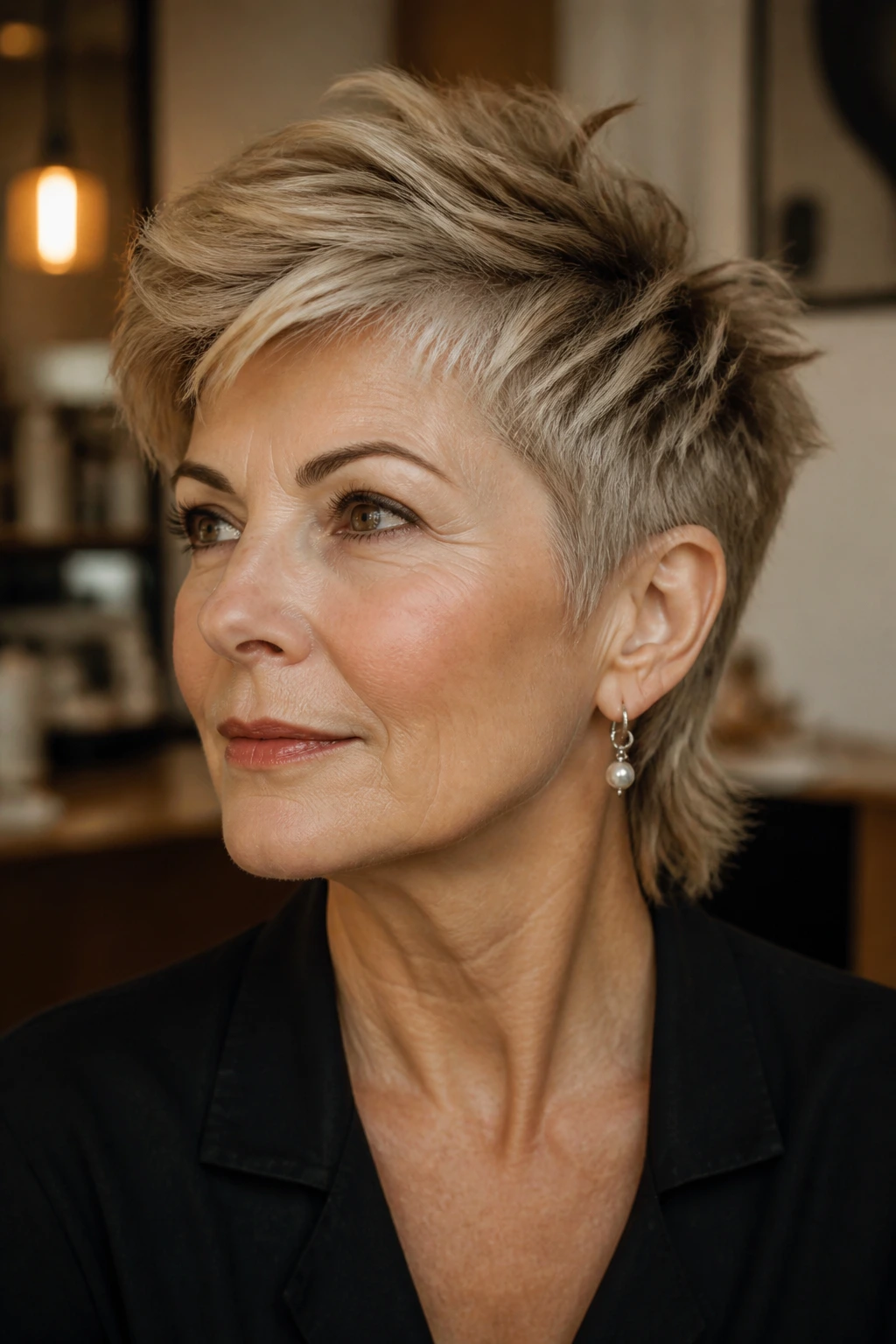
Will a mullet haircut make my face look wider?
It can, if the sides are too full at the cheek line. The fix is to keep the shortest pieces either above or below the widest part of your face and let the fringe or side layers guide the eye vertically.
Is a mullet a good choice for fine hair?
Yes, if the layering is gentle and the crown is kept light. Fine hair usually needs lift more than it needs length, so a soft mullet can create the look of more body without a heavy blowout.
How often should I trim it?
Plan on about every 5 to 8 weeks if you want the shape to stay crisp. Softer grow-out versions can go a bit longer, but the nape is usually the first place to need attention.
Can curly hair wear a mullet without looking bulky?
Absolutely, but the cut has to be done for curl pattern and shrinkage. Ask for the shape to be cut dry or nearly dry, and make sure the back has enough space to move.
What if I want something softer than a punk-style mullet?
Ask for feathering, longer fringe, and blended transitions at the sides. Once the hard disconnect disappears, the haircut reads more like a shaggy layered cut with a tail.
Does gray hair need special styling with this cut?
Not special, but usually lighter. Gray hair can go dry faster, so a small amount of leave-in cream or soft mousse is usually enough. Heavy oils can flatten the crown and mute the shine.
Can I wear this haircut with glasses?
Yes, and some versions look better with glasses than with bare faces. Side-swept fringe and cheekbone layers usually help the most, because they leave room around the frame arms.
What if I hate the back when it grows out?
That’s the easiest problem to fix. A quick cleanup at the nape and a little shaping around the crown can bring the whole cut back into line without changing the length much.
A Shape That Keeps Its Swing
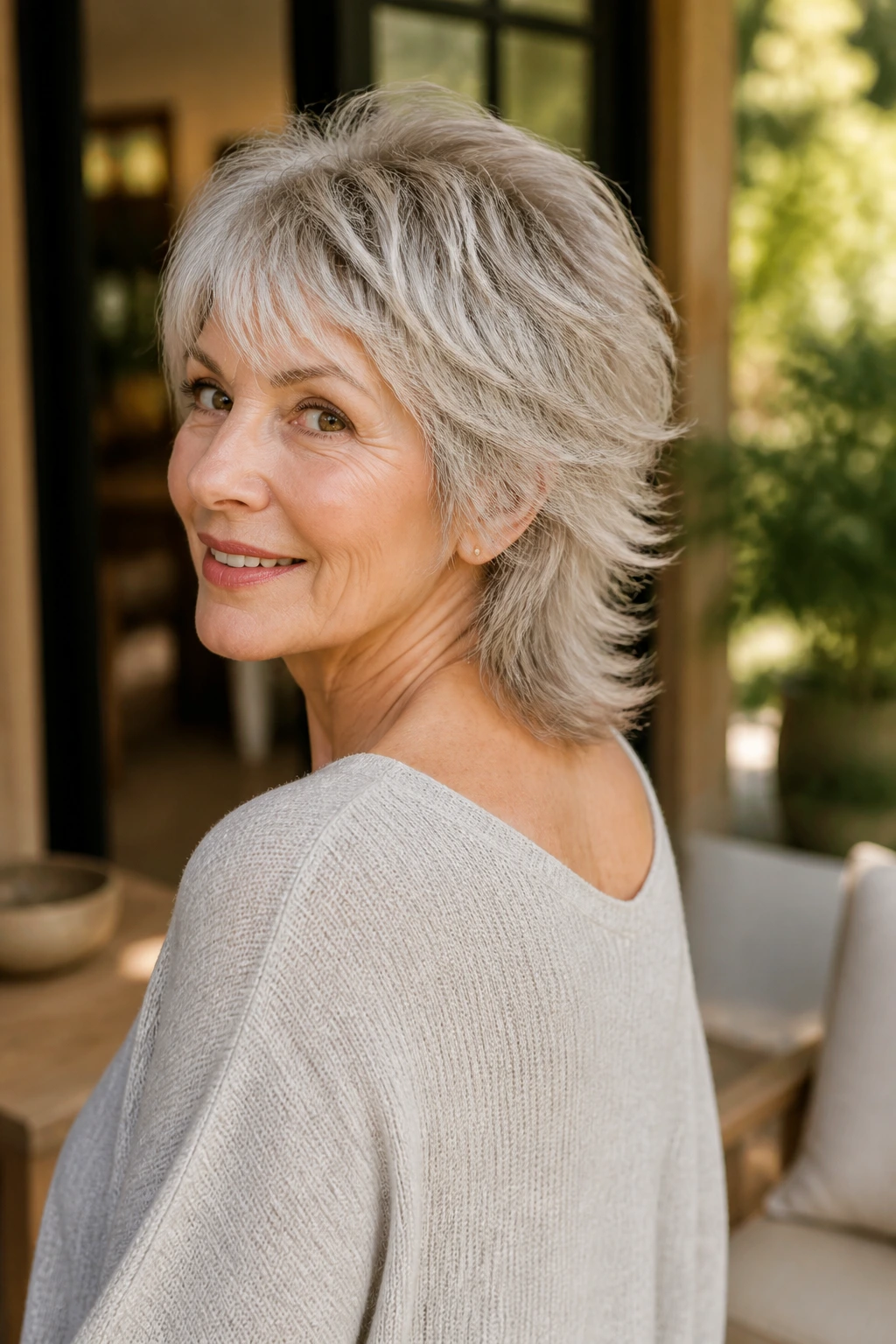
A good mullet on a woman over 60 is not about trying to look younger. It is about giving the hair a shape that makes sense for the way it grows, falls, and behaves now. That may be the softest version on the list, or the sharpest, or the one that barely looks like a mullet at all until you see the back.
The smartest thing about this cut is its range. You can wear it airy, neat, curly, polished, or a little edgy, and the bones of the style still hold up. If your hair has started asking for more lift, more movement, or less weight at the wrong places, this is a cut worth taking seriously.
And once you find the version that fits, it has a nice habit of making the rest of the day easier.
