



Medium length straight hair gets mislabeled as the quiet haircut in the room. It isn’t. Shoulder-grazing strands can take a clean center part, a tucked ear, a low knot, a claw clip, a braid, a bubble ponytail, and still look tidy by the end of the day instead of frayed and sad.
Straight hair shows shape fast. That’s the annoying part when a part is crooked or the crown goes flat. It’s also the reason these styles look so crisp when they work. Every line is visible. Every pin matters. Every end has a job.
The sweet spot is the length itself. Medium hair is long enough to twist and anchor, short enough that buns don’t sag like they’ve lost the will to live, and light enough that a single accessory can change the whole mood. You don’t need to fight the hair. You just need to point it in a better direction.
Why This Collection Works on Medium Length Straight Hair
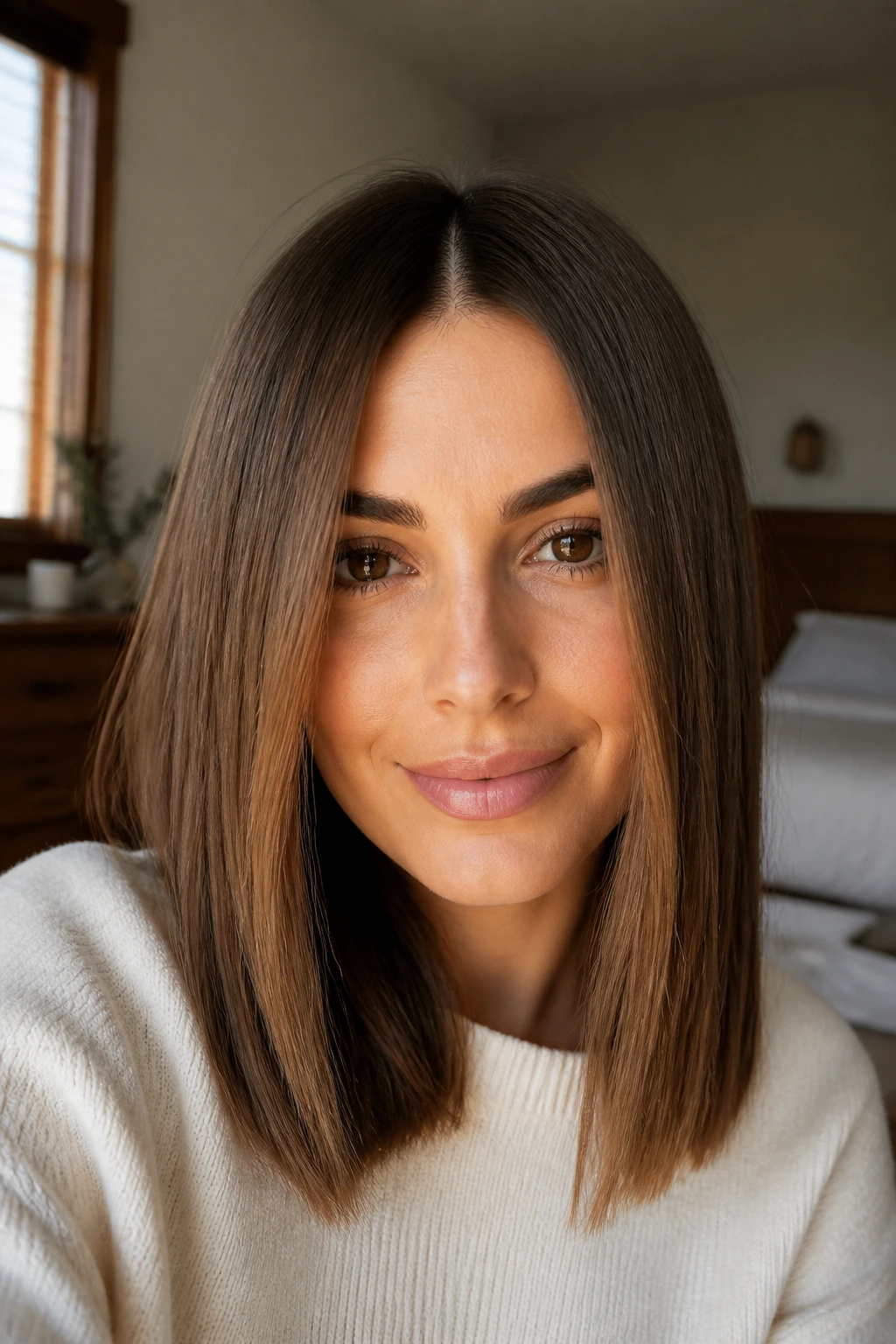
- Clean lines show up fast: Straight strands make center parts, tucked sections, and blunt ends look intentional with very little effort.
- The length actually holds shape: Shoulder-grazing hair can stay in a low bun or ponytail without dragging the style down the way longer hair often does.
- Small changes matter: One barrette, one deep part, or one bend at the ends can make the whole shape feel different.
- Day-one and day-two hair both help: Freshly washed hair is sleek; second-day hair gives braids, clips, and ponytails a little more grip.
- Accessories don’t fight the cut: Claw clips, barrettes, scarves, and pins sit more neatly on medium straight hair than they do on very long, heavy lengths.
- Heat is optional in a lot of cases: A brush, a comb, and a few pins can do more than a full styling session if the cut is already cooperating.
1. Center-Part Blunt Lob
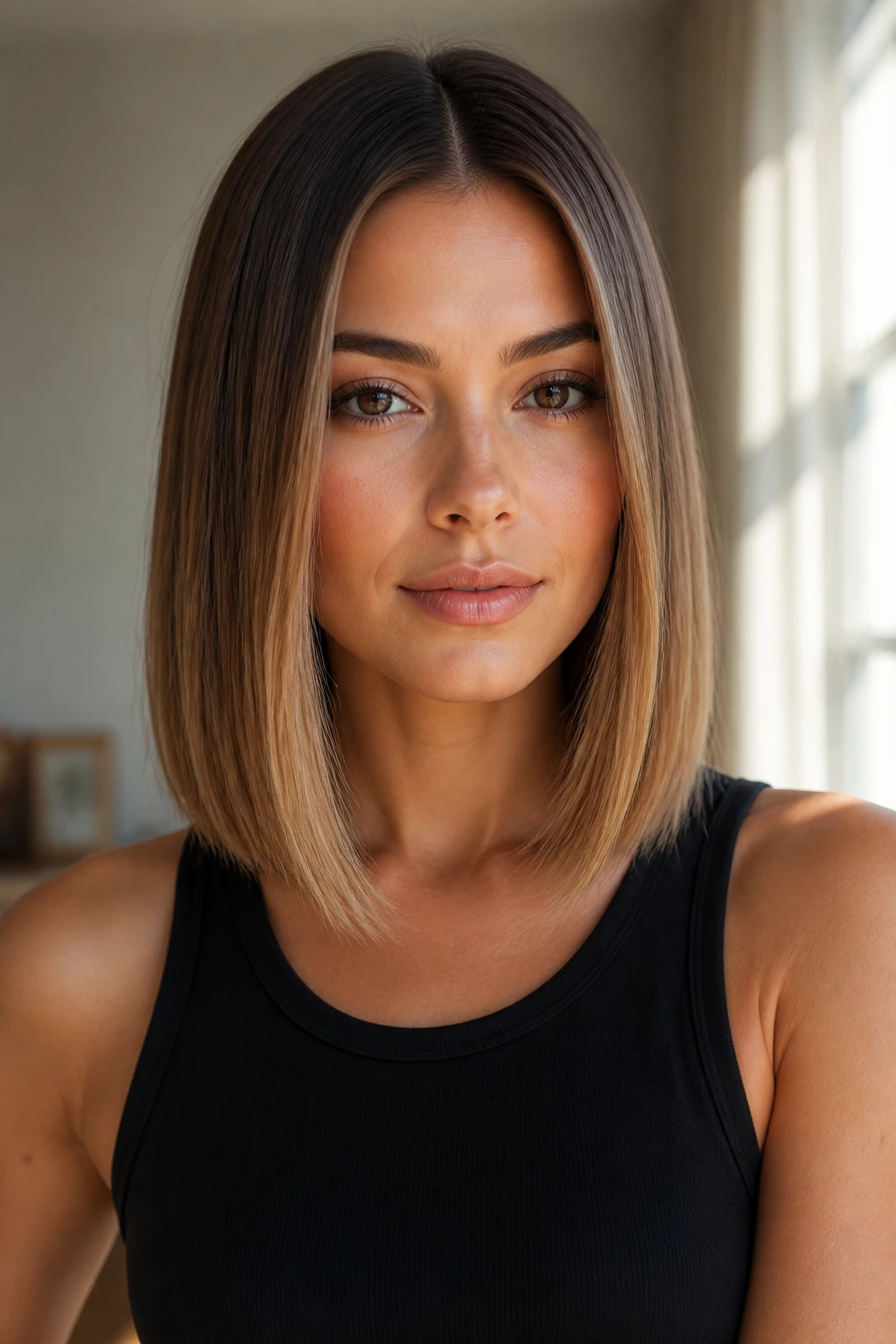
A blunt lob with a center part is the haircut that makes straight hair look sharpened with a ruler. Collarbone length is the sweet spot here. The ends sit cleanly, the middle part draws a straight line through the face, and the whole thing feels deliberate even when you only used a brush and a drop of serum.
Why it works
Straight hair loves a blunt edge because there’s nowhere for the cut to hide. If the line is even, it looks expensive in the simplest sense of the word: the shape is clear, the ends are tidy, and the hair doesn’t have to be “done up” to look finished. A flat iron pass on the bottom inch is usually enough.
If you want a little softness, ask for the very front pieces to graze the collarbone while the back sits a touch shorter. That keeps the line from looking boxy. One side tucked behind the ear changes the whole mood fast.
- Keep the part razor-straight with a tail comb.
- Use a pea-sized smoothing cream only on mid-lengths and ends.
- Tuck one side behind the ear when you want the face to open up.
Best move: flat iron only the last 1–1½ inches if your ends flip in a way you do not like.
2. Tucked-Behind-the-Ears Lob
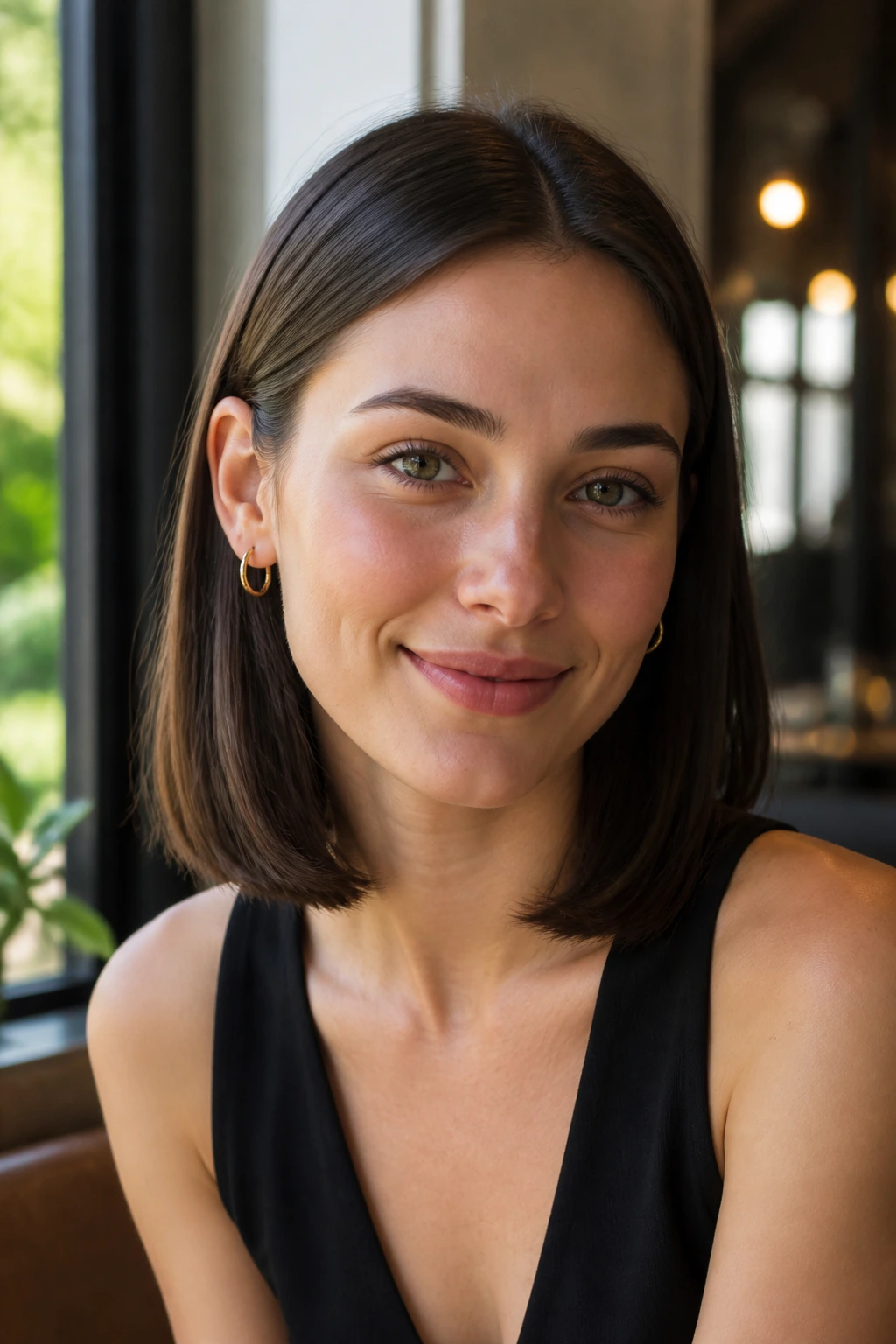
Want a style that makes medium length straight hair look cleaner without adding a single extra tool? Tuck both sides behind the ears and let the cut do the talking. It’s simple, but not plain. The ears create a frame, the cheekbones pop a little more, and earrings get to do some work for once.
The trick is keeping the tuck relaxed. If you yank the front sections too tight, the style looks severe and the hairline starts to pull. Leave a tiny bit of softness at the temples, then secure the tucked sections with a bobby pin hidden under the top layer if your hair slips.
If you wear glasses, this look plays nicely with the arms of the frame. If you don’t, it still gives the face a lifted shape without needing volume spray.
Use it when…
- You want your hair off your face but don’t want a full updo.
- You need a 30-second fix for slightly sleepy hair.
- You’re wearing earrings that deserve to be seen.
3. Sleek Low Ponytail
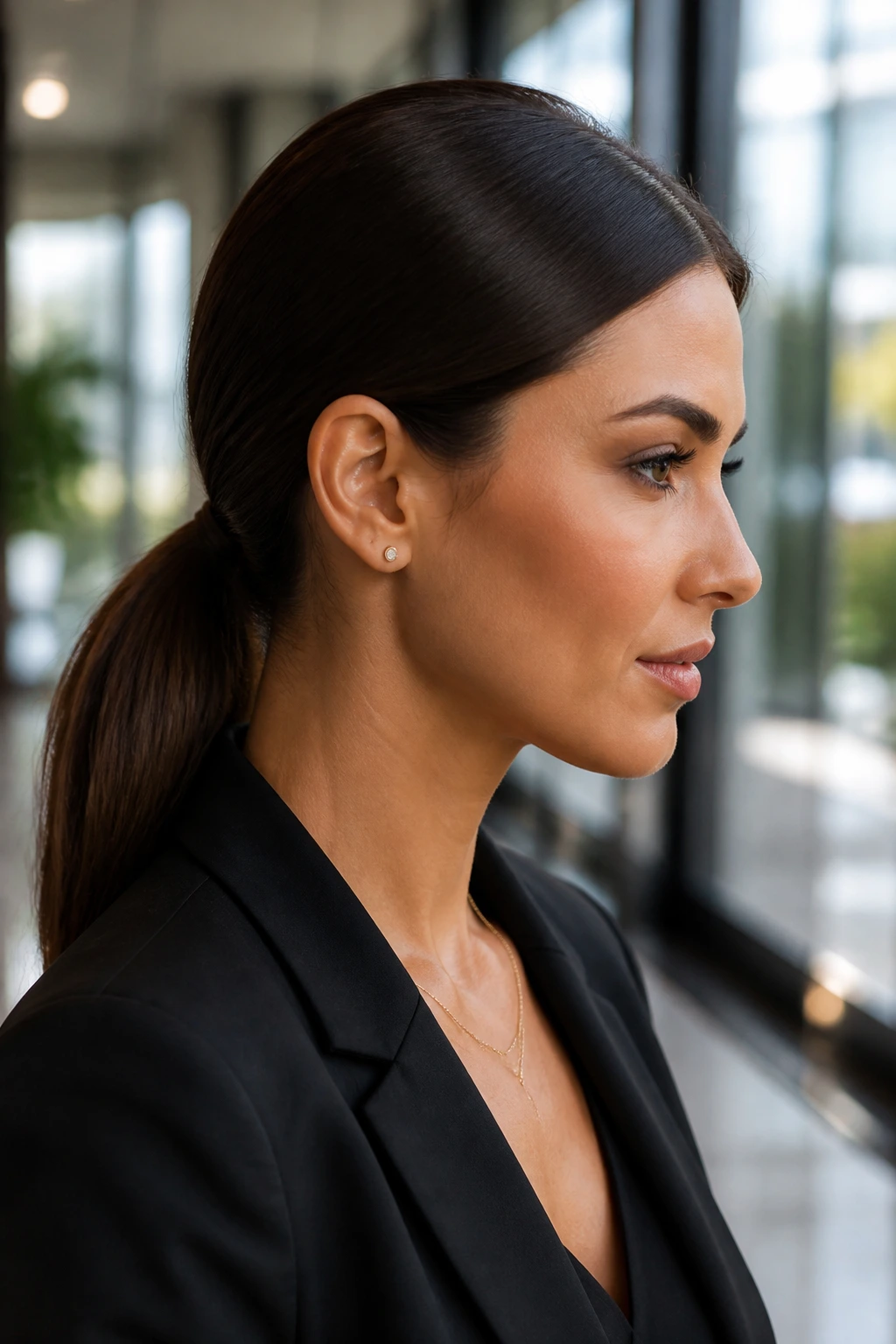
A low ponytail on medium straight hair sits where it should instead of flopping halfway down your back. That’s the whole appeal. The length is enough to swing, but not so much that the ponytail feels heavy or messy by noon. Keep it low and close to the nape, and it reads polished without looking stiff.
Start with a fine-tooth comb and a touch of gel or styling cream at the hairline. Gather the hair with your hands first, then comb the surface smooth before tightening the elastic. If you want the ponytail to look more finished, wrap a thin strand around the base and pin it underneath. That little move matters.
The smartest version of this style is not perfect. It has a clean crown, a straight tail, and ends that aren’t crunchy. That’s enough.
Good for: office days, dinners, interviews, and any time you want to look put together without wrestling the hair for 20 minutes.
4. Bubble Ponytail
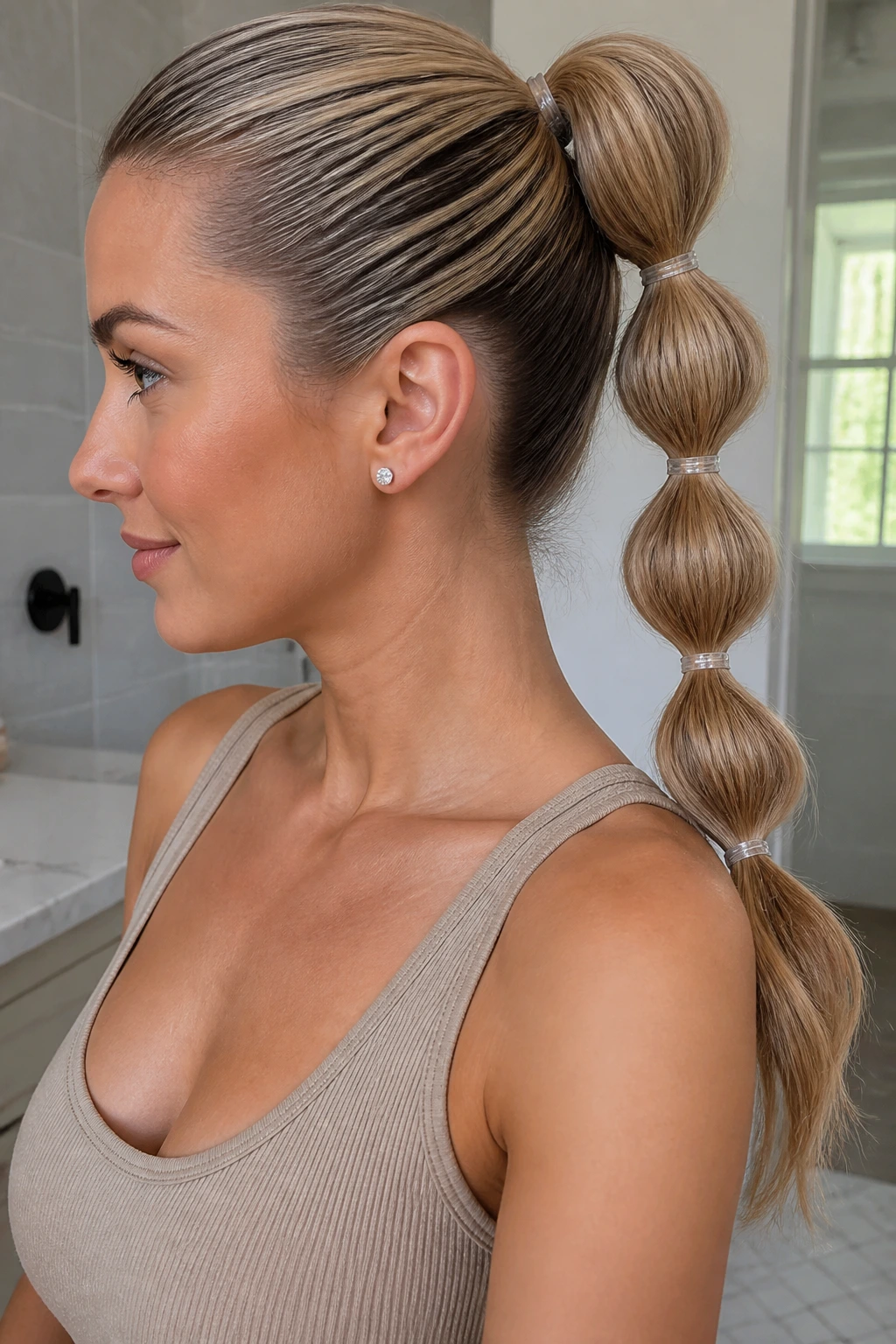
Bubble ponytails can look a little costume-y when they’re done too big, but medium straight hair makes them easier to control. The length is just right for 2- to 3-inch sections, which means the bubbles stay visible instead of sagging into one sad lump at the bottom.
Pull the hair into a ponytail first. Then add clear elastics every few inches down the tail, gently tugging each section outward until it rounds into a bubble. If your hair is fine, puff the bubbles a little with your fingers. If it’s thick, keep the spacing a bit tighter so the shape stays clean.
The whole style works because straight hair shows the rhythm of the sections. The line is the point. Don’t over-fluff it.
Quick note
- Fine hair: use texturizing spray before you start.
- Thick hair: place the elastics a touch farther apart.
- Shorter medium hair: make the first bubble larger and the rest smaller toward the end.
5. Half-Up Twist
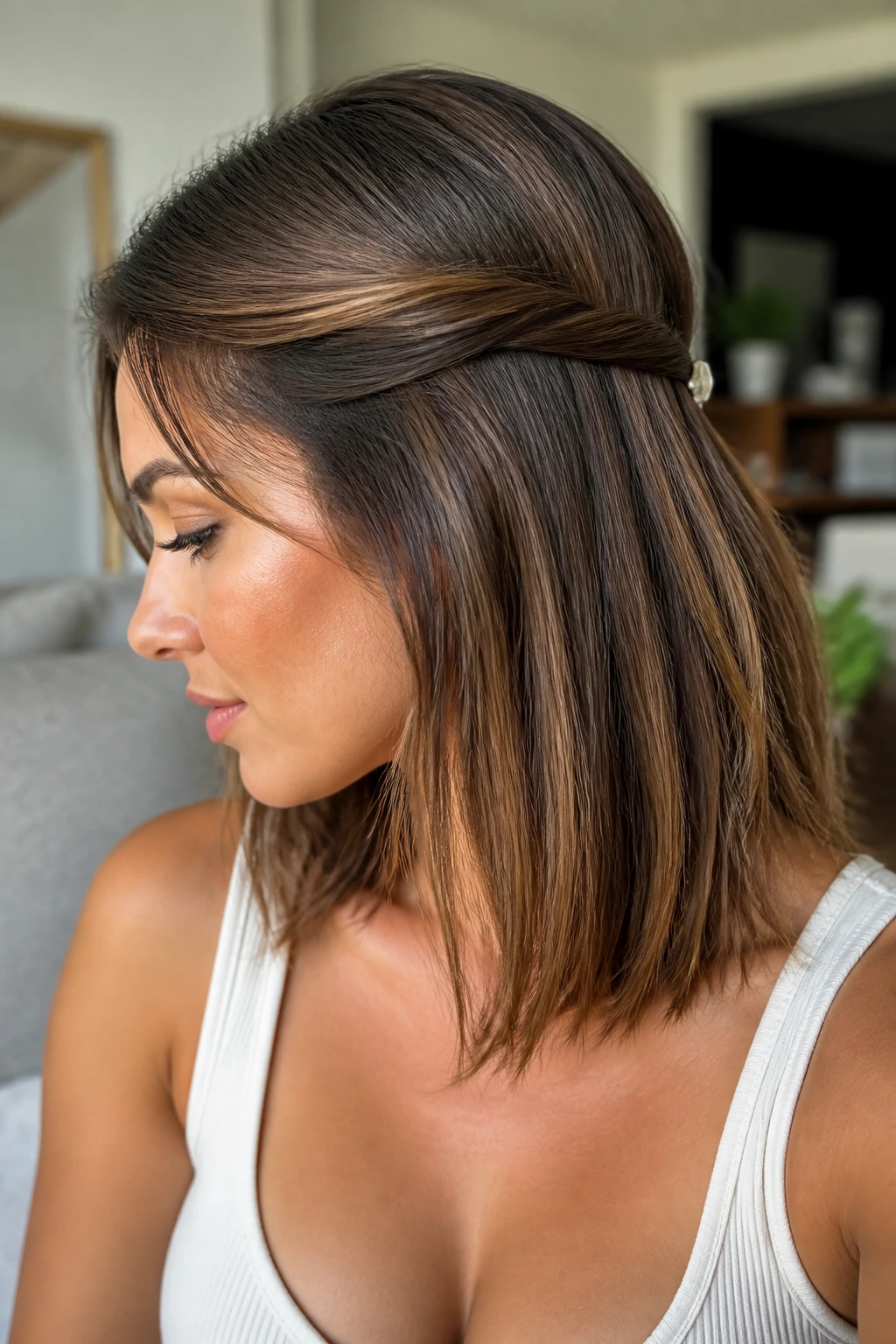
A half-up twist is the kind of style that looks more complicated than it is. Take the two front sections, twist them back toward the crown, and pin them together with a bobby pin or a small clip. The bottom half stays down and straight, which gives you movement without losing the clean shape of the hair.
This is one of the better choices for medium straight hair that feels too flat to wear fully down but too neat to hide in a full ponytail. The top gets a little lift. The rest stays calm.
A small detail makes the difference: twist the sections slightly upward before pinning so the crown doesn’t collapse. If your hair is slippery, mist the front pieces with dry shampoo first. That gives the pins something to hold.
6. Claw Clip French Twist
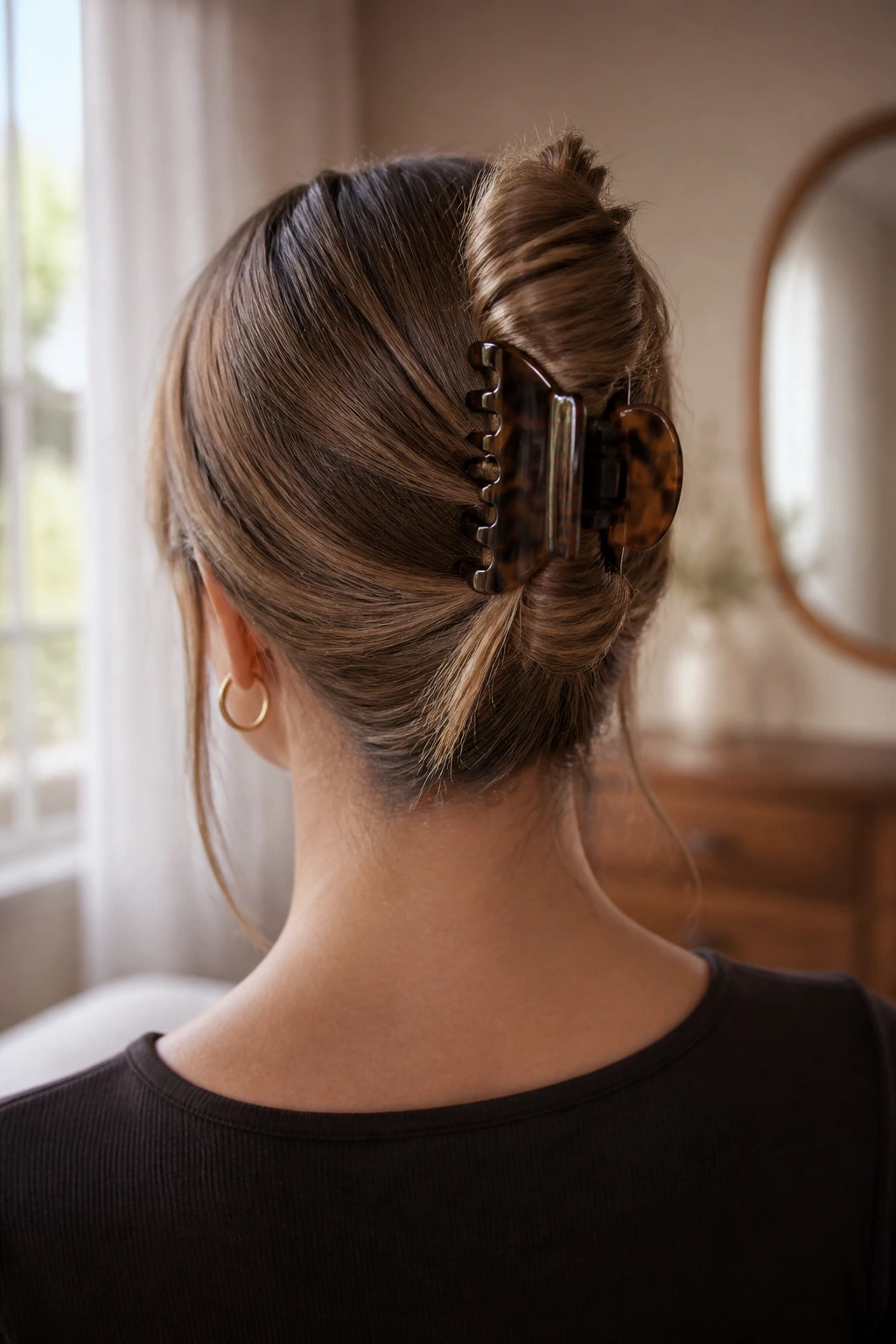
A claw clip French twist is one of those styles that turns medium straight hair into something elegant with almost no drama. Twist the hair upward from the nape, fold the ends in, and clip the roll in place so a bit of the length stays tucked and a bit may peek out. On medium hair, that shape holds better than you’d expect.
The trick is clip size. Too small, and the twist slides. Too big, and the clip eats the whole head. A medium-to-large claw clip with teeth that actually grip is the sweet spot. If the hair is freshly washed and extra slippery, rough up the surface with dry shampoo before you twist.
This style looks especially good when the front is kept smooth and the twist is a little loose at the crown. Tight enough to hold. Not helmet-tight.
7. Deep Side Part
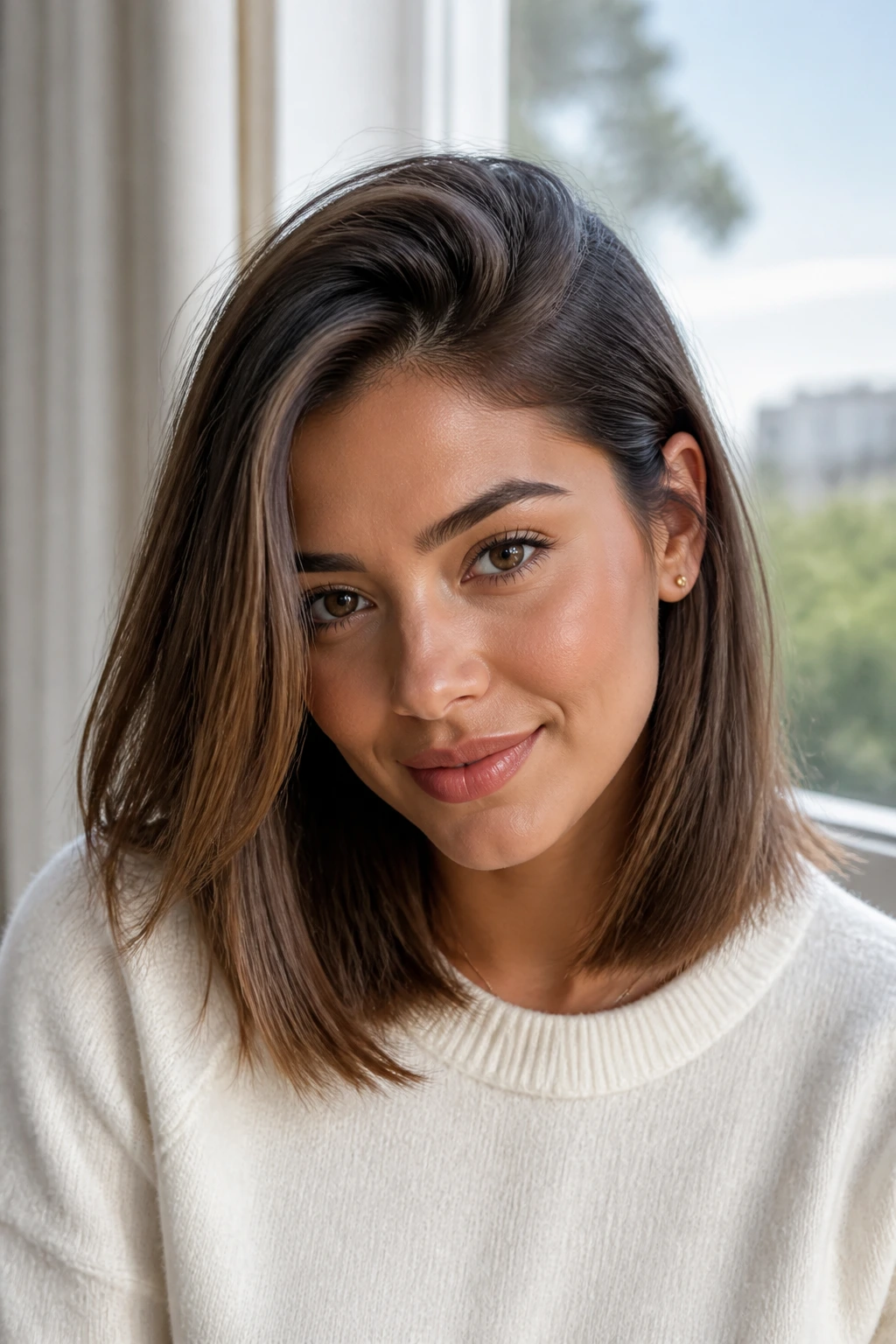
A deep side part can wake up medium length straight hair faster than a full round of hot tools. Move the part over just enough to create a taller side at the crown, and the whole head gets a little lift. That’s the point. It’s a simple shape change, but straight hair takes it seriously.
This works especially well when one side of your hair tends to fall flat no matter what you do. Flip the heavier section over, then tuck the lighter side behind the ear. If you want more hold, clip the root for 5 to 10 minutes while the hair cools after a blow-dry.
The best side part is not an inch from the ear. It’s just far enough off center to feel intentional without starting a full vintage wave situation.
8. Soft Curtain Bend
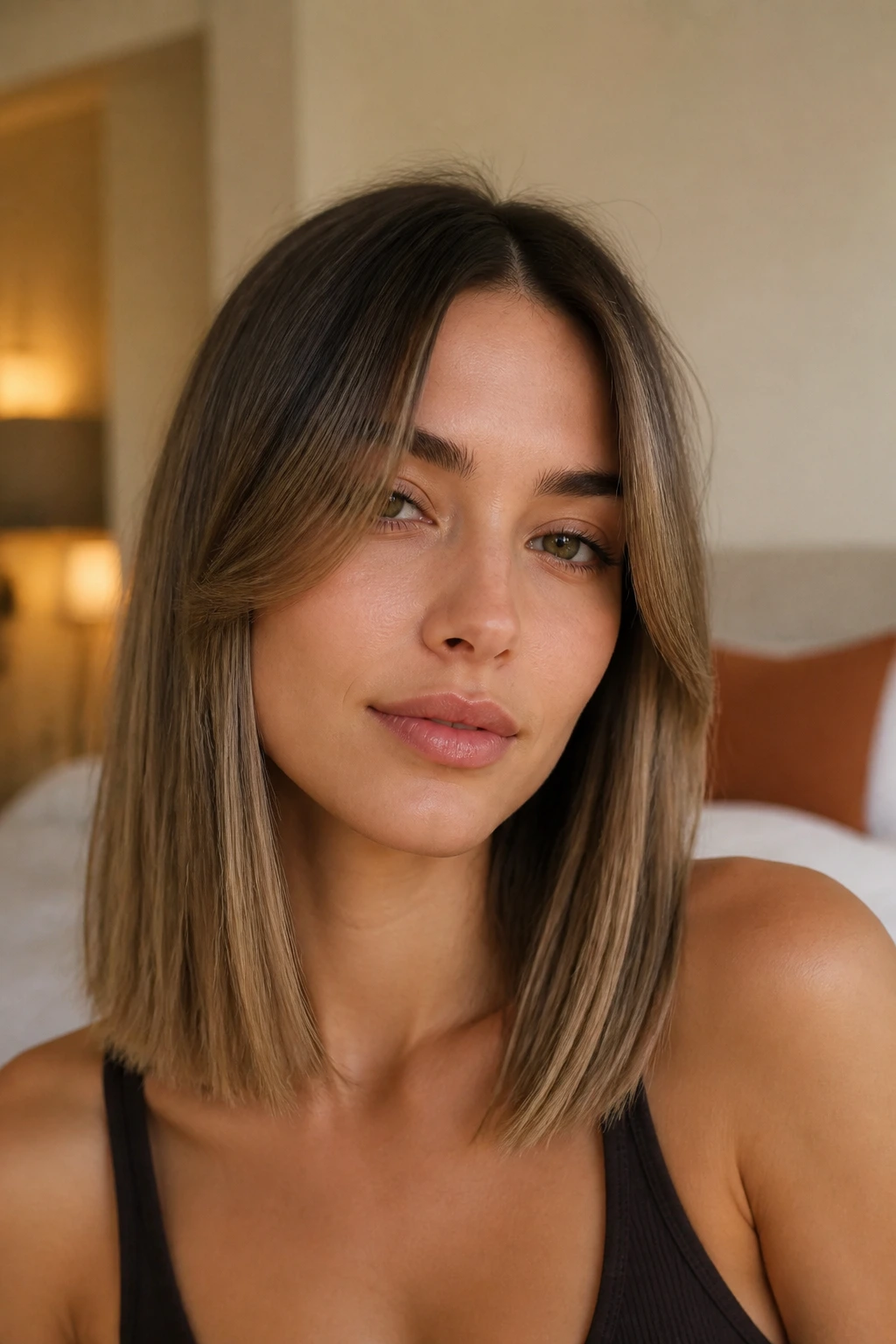
There’s a reason a slight bend around the face keeps showing up in good straight-hair styling. It softens the edges without taking away the clean line of the length. On medium hair, that matters because you still get to see the shape of the cut.
Use a 1-inch flat iron or a round brush to bend just the front sections away from the face, then leave the rest straight. The bend should start around the cheekbone and skim down toward the jaw. If you turn the ends too much, the whole look loses that sharp, straight-hair finish.
This style is useful when you want movement near the face but don’t want to curl the entire head. It looks especially good with a center part, because the two front pieces act like a frame instead of a wave set.
9. Polished Low Bun
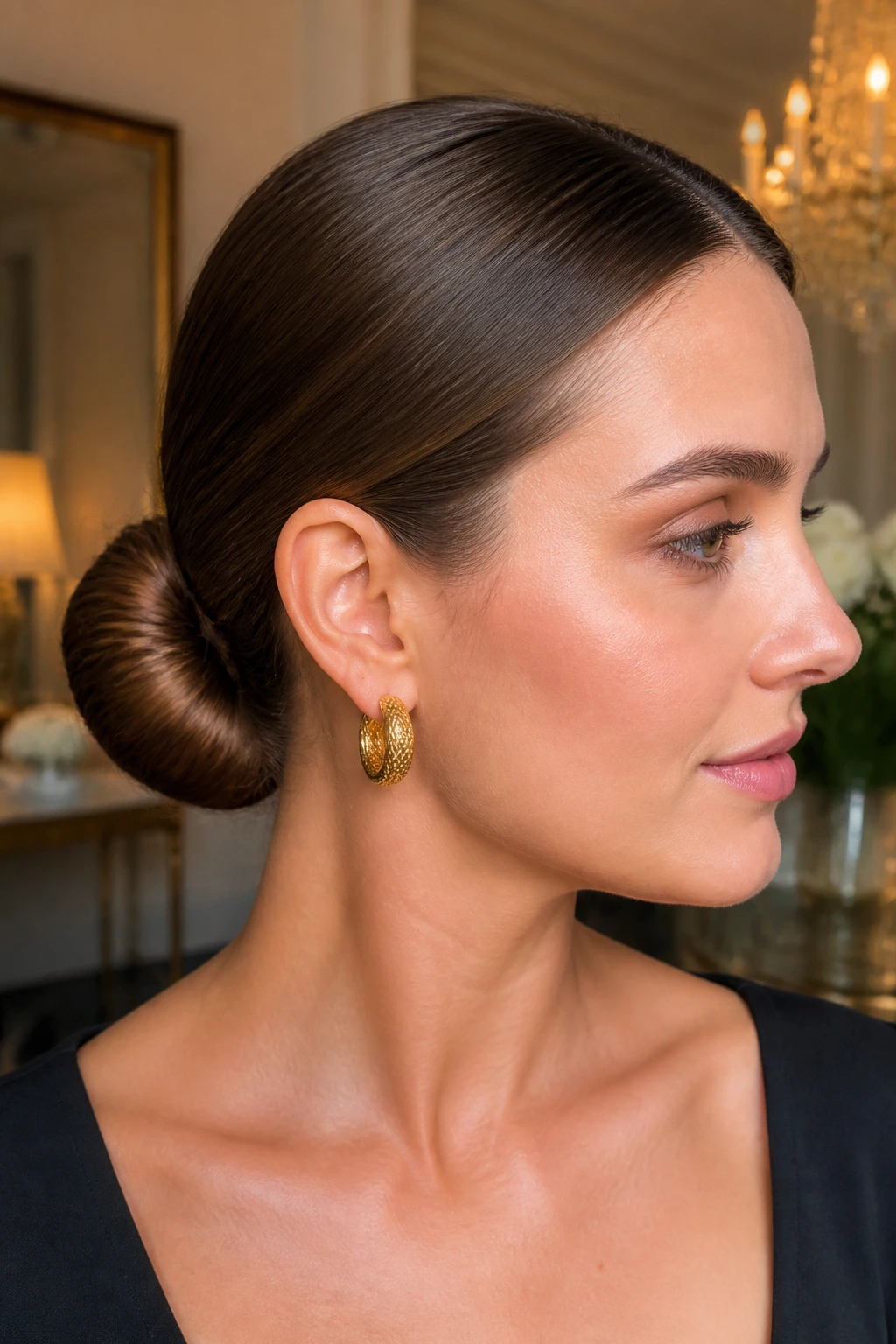
Not every bun needs to look loose and airy. A polished low bun on medium straight hair has a sharper edge, and that’s what makes it appealing. The crown stays smooth, the bun sits at the nape, and the overall shape feels clean enough for dressier clothes without requiring a salon finish.
Gather the hair low, twist it once or twice, and coil it into a compact knot. Secure it with pins in an X pattern so the bun doesn’t drift sideways. If your hair is shoulder length, you may have shorter ends that refuse to stay hidden. Pin them flat first, then smooth the outer shell over them.
A side part makes this style feel a little more formal. A center part makes it cooler and more minimal. Both work.
10. Braided Crown Half-Up
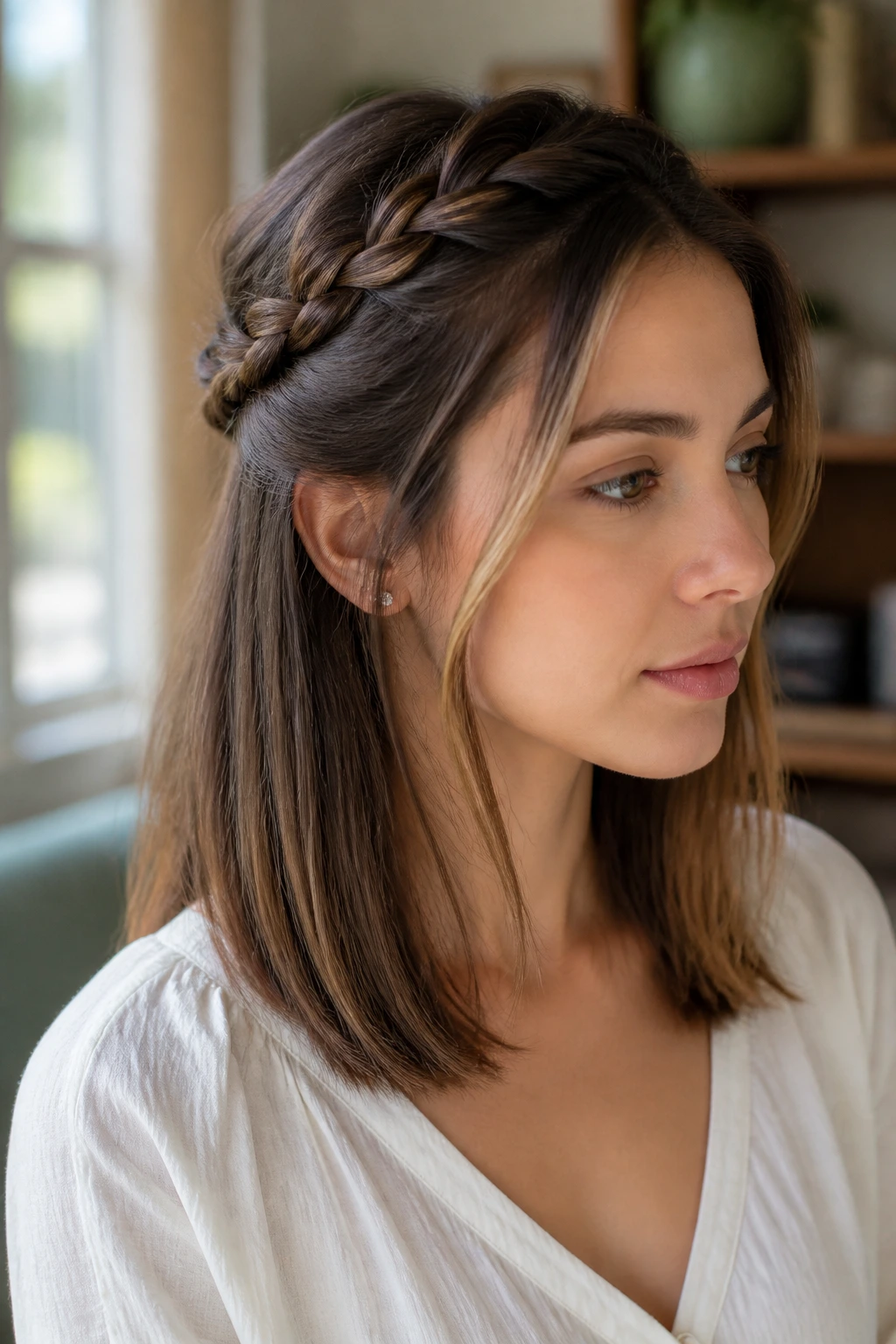
A braided crown half-up style gives straight hair texture without making the whole head look busy. Braid the front sections or the temples back toward the crown, then join them with pins or a slim elastic. The lower half stays down, so the medium length still reads clearly.
This works because straight hair can look a touch blank when it’s worn loose all the time. A braid gives the eye something to follow. The hairline gets control, and the rest of the length gets to stay straight and calm.
If your hair is especially slick, start with dry shampoo or texturizing spray at the front sections before braiding. You want grip, not frizz. And keep the braids snug enough that they don’t unravel halfway through the day.
Small detail that helps
Make the braid sections a little wider than you think you need. Thin braids disappear into straight hair fast.
11. Rope-Braid Low Ponytail
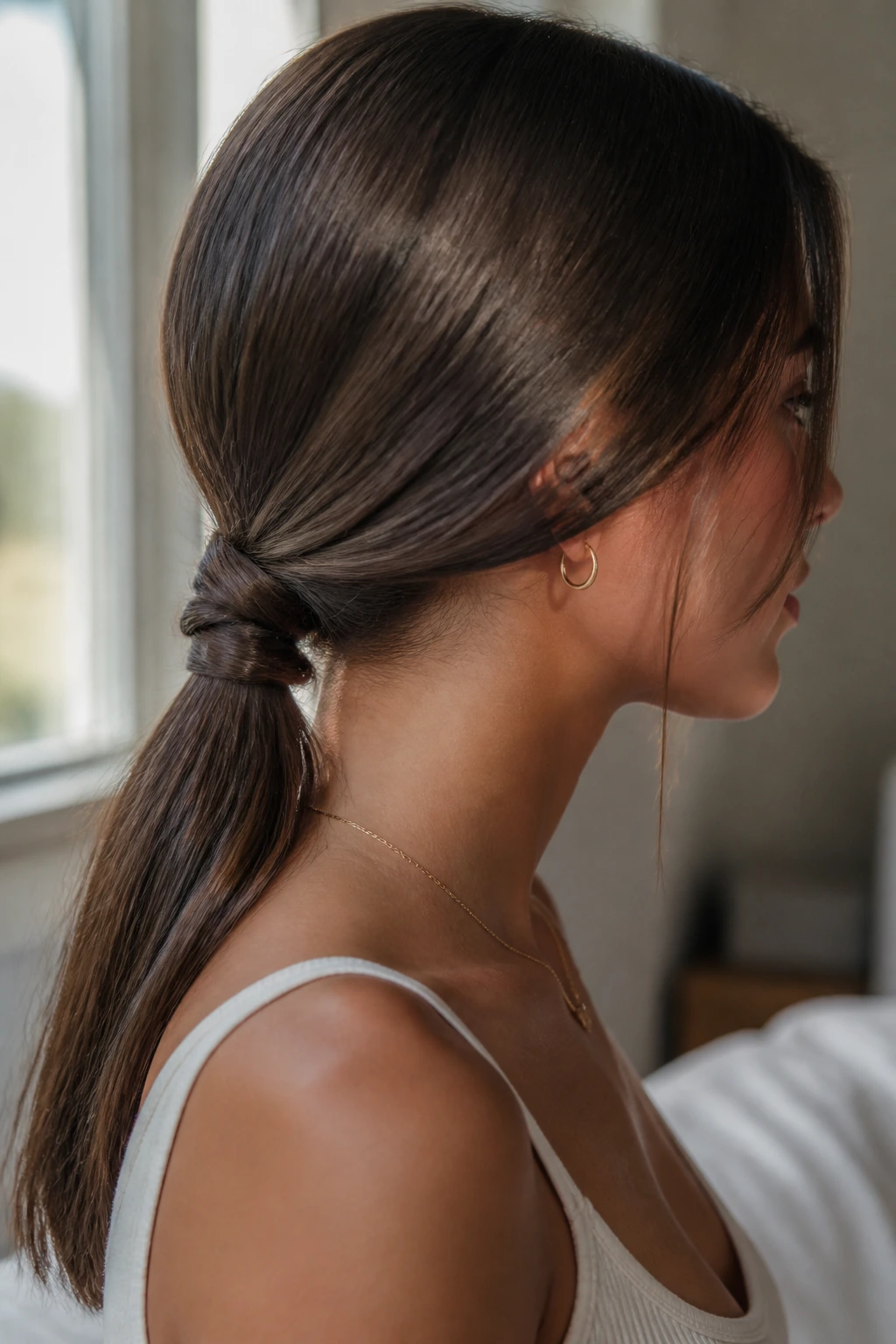
Why does a rope braid work so well on medium straight hair? Because it keeps the lines clean. Two strands twisted in the same direction, then wrapped around each other in the opposite direction, create a rope effect that reads neat instead of bulky. The result is more sculpted than a loose three-strand braid.
Start with a low ponytail. Split the tail into two pieces, twist each piece the same way, then wrap them around each other the other way. That opposing motion is what keeps the braid from unraveling. Finish with a small elastic at the end.
This style is one of my favorites for hair that slips out of traditional braids. It’s faster. It holds its shape better. And on medium straight hair, it doesn’t get swallowed by length the way it often does on long hair.
12. Slicked-Back Wet Look
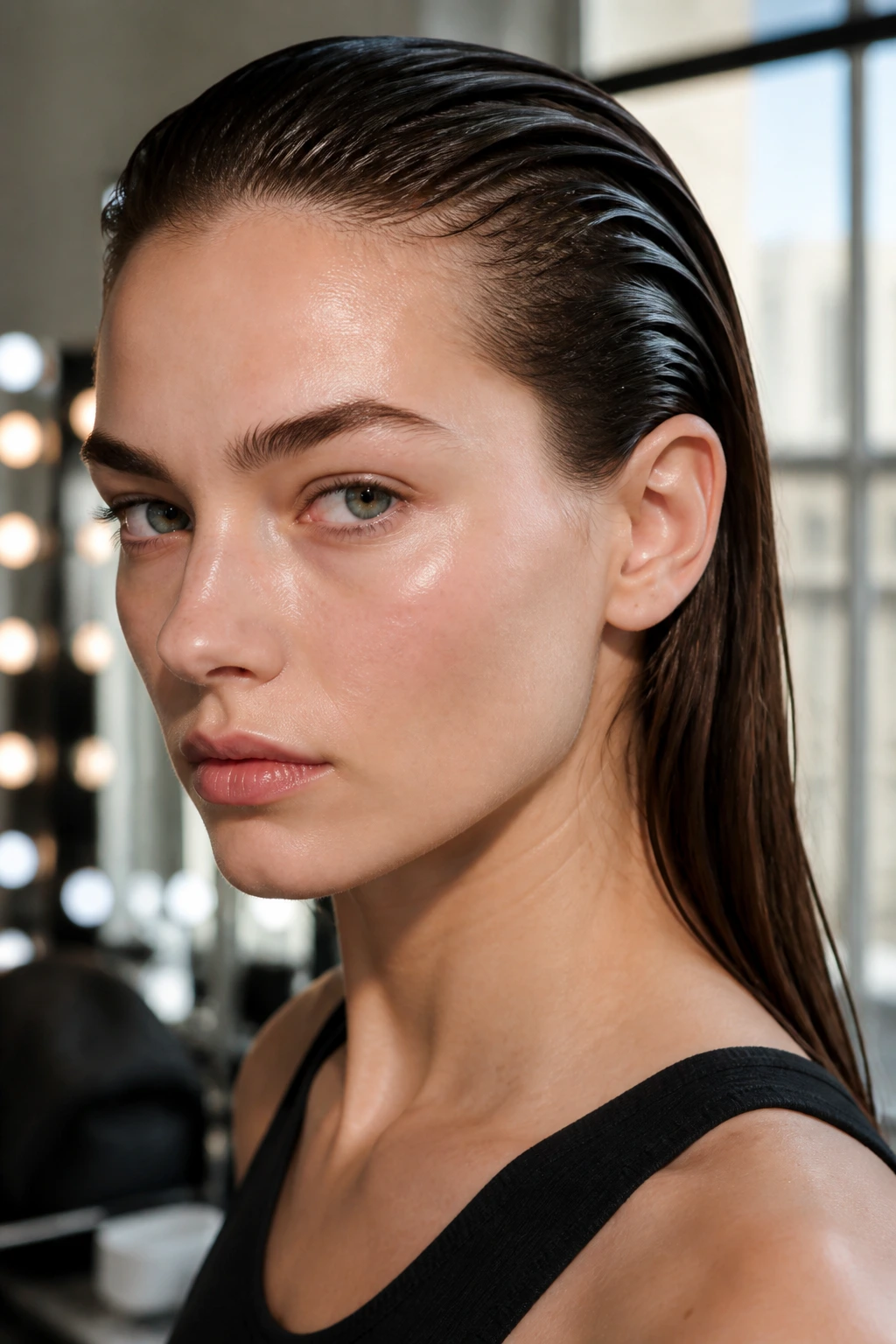
The slicked-back wet look is one of the rare styles that actually makes sense on straight hair, especially at medium length. The texture is already cooperative, so you’re not fighting the grain. Coat damp hair with gel, comb it back with a fine-tooth comb, and let the surface stay glossy and controlled.
The catch is product amount. Too much gel and the hair looks greasy instead of sleek. Too little and the style falls apart in the first hour. Start with a small amount, spread it through the hands, then apply from the hairline back. You can leave the ends loose or tuck them into a low knot if you want a stricter shape.
This is a strong look, not a casual one. It works when you want the hair to feel crisp and architectural.
13. Statement Barrettes
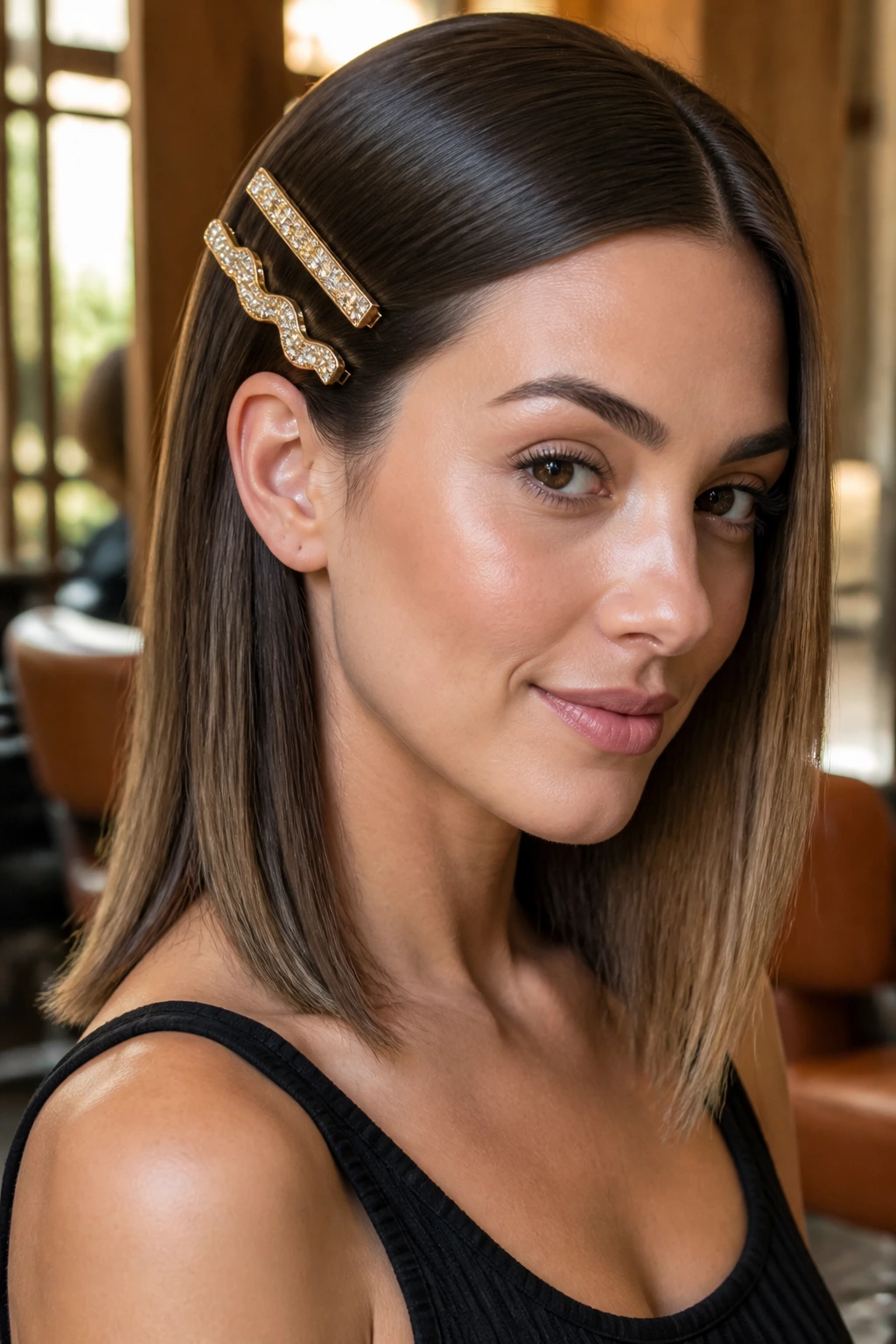
A good barrette can save a flat-hair day without pretending it’s anything more than a good barrette. Slide one or two statement clips on one side, usually just above the ear or a little behind the temple, and the style changes immediately. Straight hair gives the hardware a clean backdrop, so the accessory gets to do the heavy lifting.
The best placement is not random. If the clip sits too low, it looks like an afterthought. Too high, and it fights the part. Angle it slightly upward and let the rest of the hair fall naturally. If one clip isn’t enough to hold the section, use a second hidden bobby pin first, then the barrette on top.
Best versions of this look
- Matte metal: for a cleaner, sharper finish.
- Tortoiseshell: for warmth against very dark or very light hair.
- Slim enamel clips: when you want the style to stay light.
14. Tail-Through Top Knot
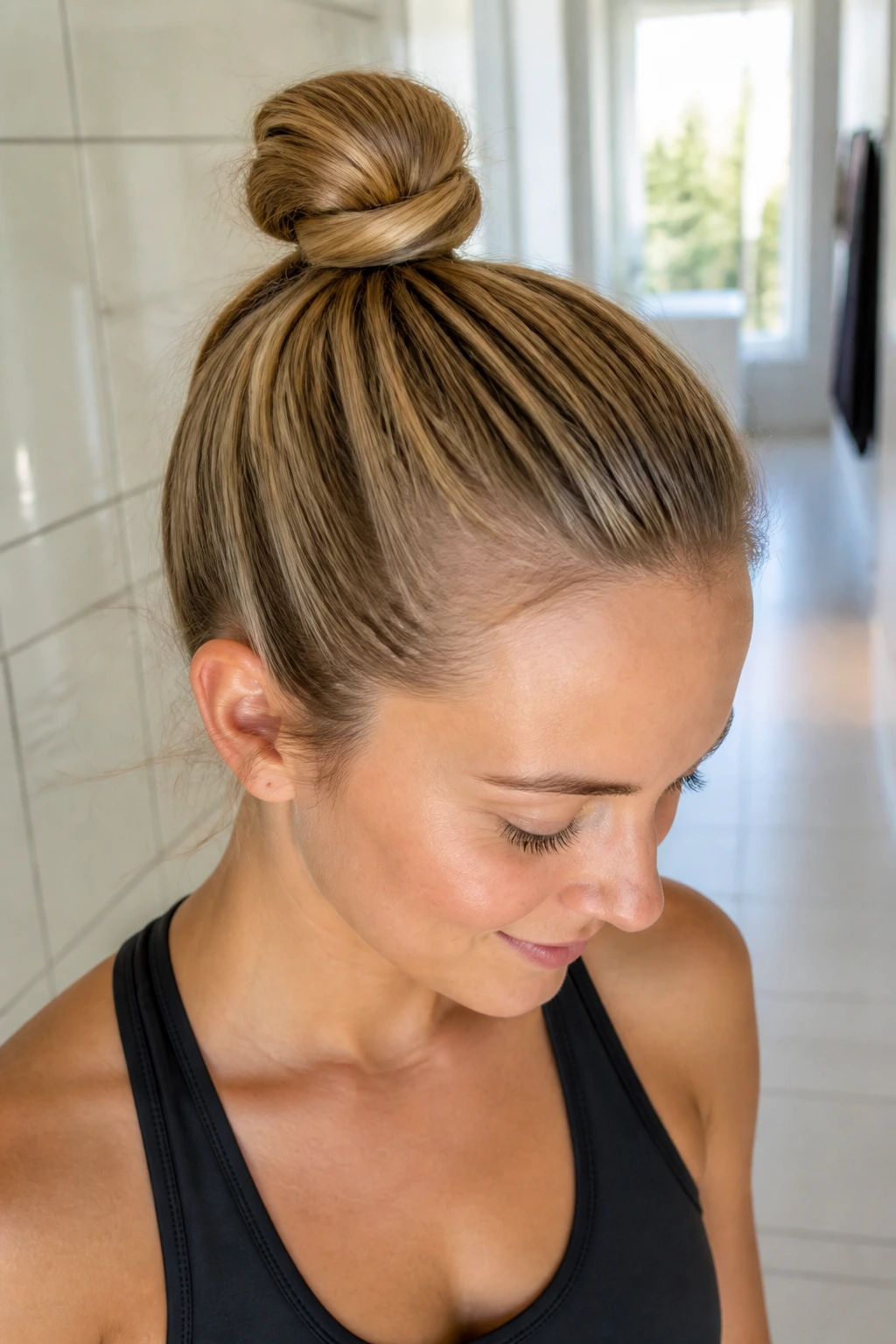
A tail-through top knot sits somewhere between tidy and relaxed, which is why medium straight hair handles it well. Pull the hair into a high ponytail, loop the tail halfway through the elastic one more time, and let the ends fall forward or back in a compact fold. It’s a knot with shape, not a puffball.
Because straight hair can go flat fast at the crown, don’t squeeze the ponytail base too hard. Leave a little lift at the roots before you tighten the elastic. If the ends are too long to sit neatly, tuck them under the knot and pin them from underneath.
This style is good for workouts, errands, or the kind of day where you need your hair off your neck but still want the look to read clean from the front.
15. Scarf-Wrapped Ponytail
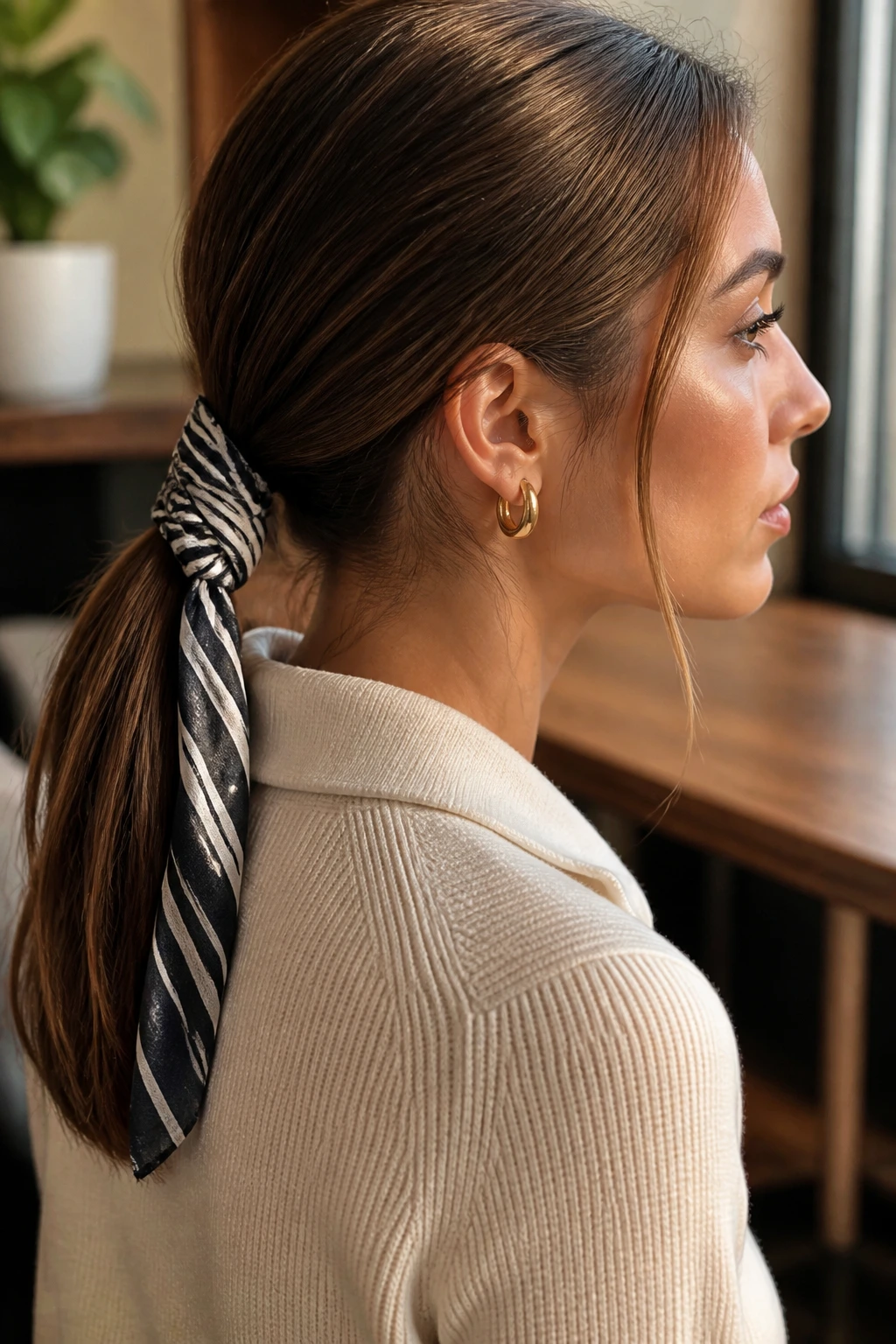
A scarf-wrapped ponytail is one of the easiest ways to make medium straight hair feel styled instead of merely contained. Tie the hair back low or mid-height, then wrap a narrow silk scarf around the base or weave it around the elastic. The tail stays straight and sleek, while the scarf breaks up the line just enough to make the style feel intentional.
Keep the scarf narrow. Wide scarves can swallow medium hair and make the ponytail look smaller than it is. Silk or satin behaves better than stiff cotton because it drapes instead of bunching. If the hair itself is very smooth, wrap the scarf a little tighter at the base so it doesn’t slide.
This is a nice fix for a plain black elastic. It gives the whole shape a face.
16. Mini Buns with Straight Ends
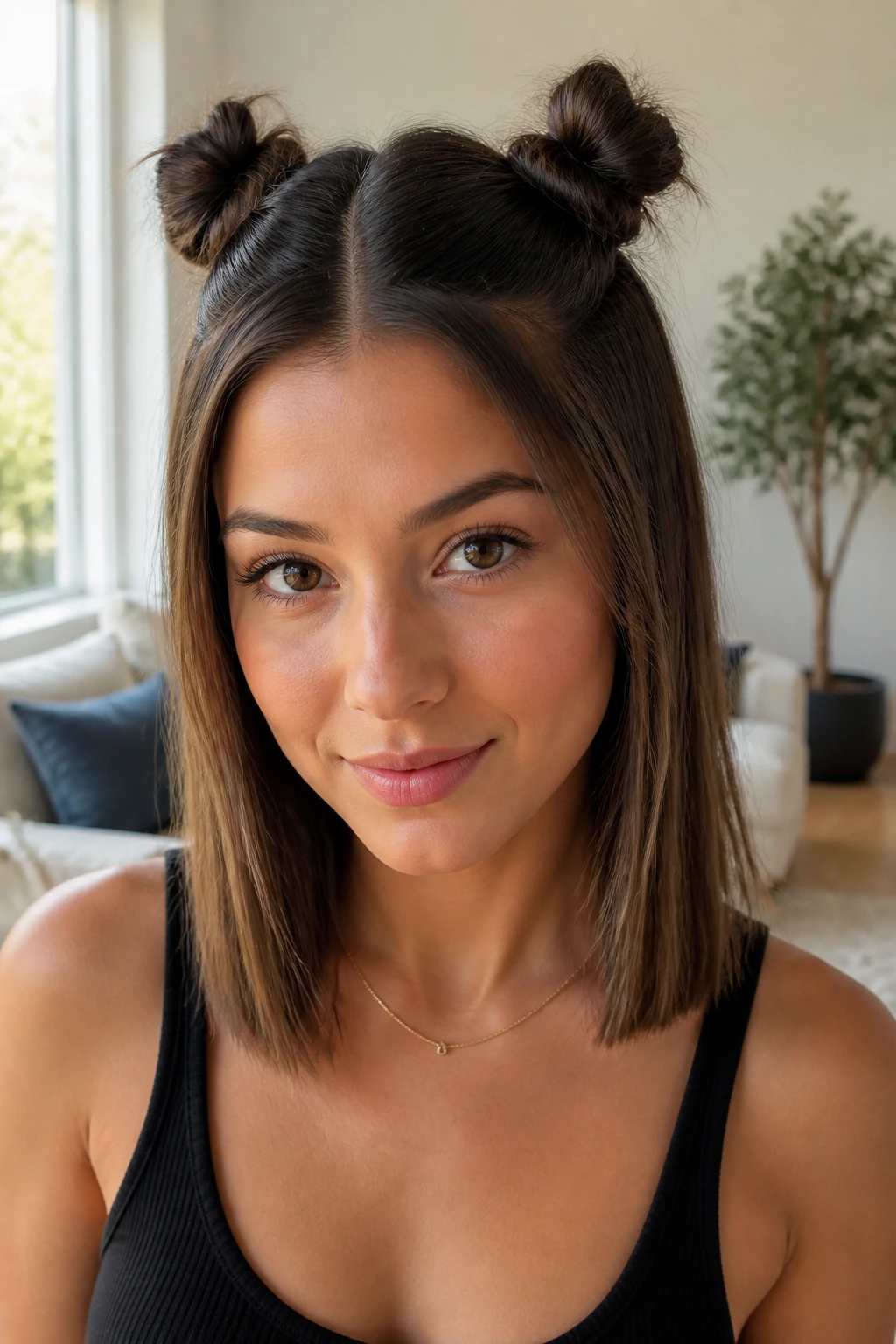
Two mini buns can look playful, but on medium straight hair they also read neat when you keep the proportions small. Split the hair into two sections, create compact buns high or mid-height, and leave the lower lengths straight if you want contrast. That mix of structure and straightness keeps the style from feeling too costume-like.
The key is size. Tiny buns work better than big ones on medium hair because they don’t drag the rest of the length upward. If you’re doing half-up mini buns, let the bottom layers stay sleek and loose. If you’re doing full twin buns, anchor them close to the scalp so they don’t topple outward.
A center part makes the look cleaner. A soft zigzag part makes it more playful. Either way, this is a strong choice when you want the hair to feel a little less serious.
17. Low Knot with Face-Framing Pieces
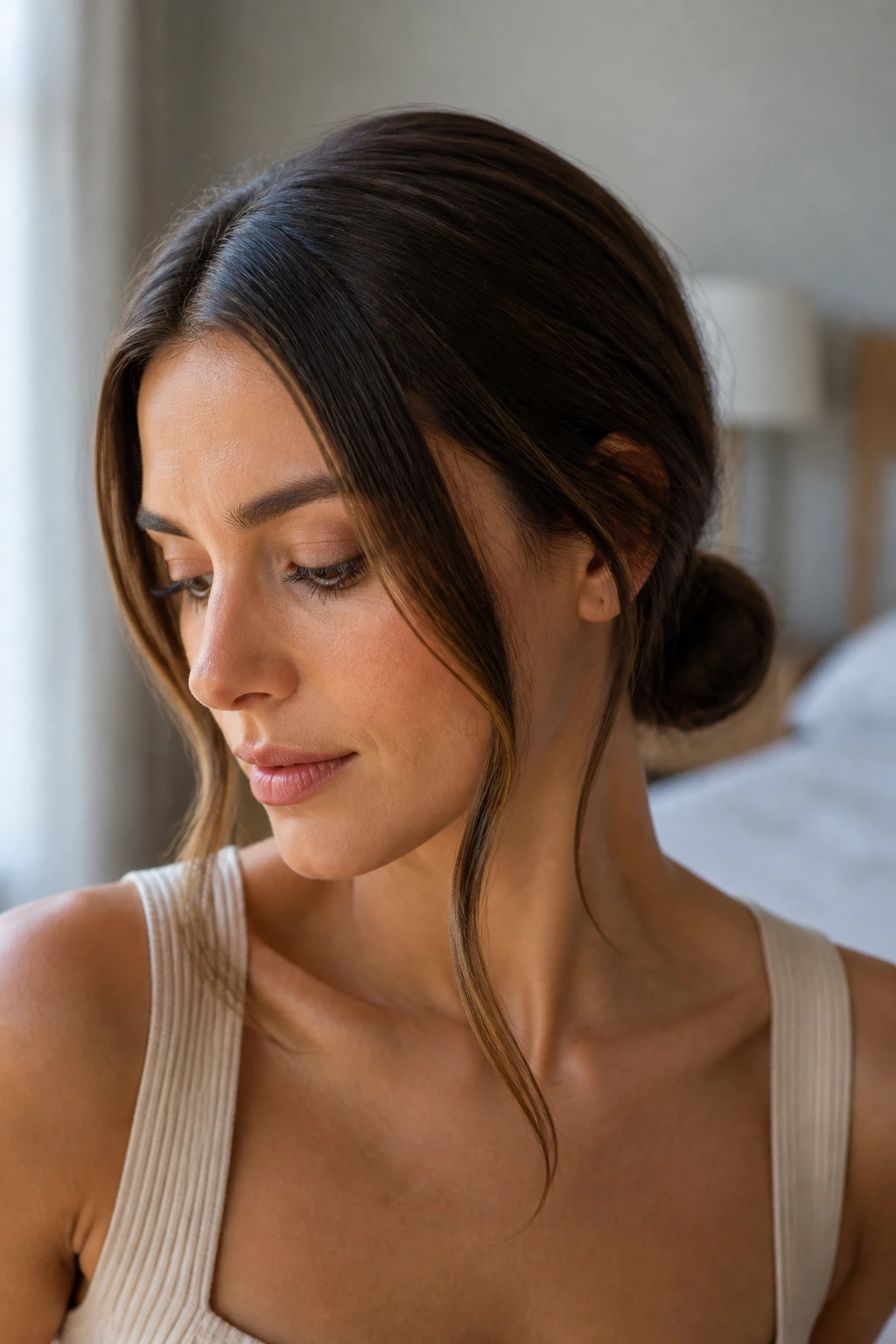
A low knot with two face-framing pieces has a softer outline than a fully pulled-back bun. The knot sits at the nape, while the front pieces stay out and straight or slightly bent toward the jaw. On medium straight hair, those side pieces fall like ribbons, which is half the charm.
Keep the knot compact and the face pieces deliberate. If they’re too short, they can look accidental. If they’re too long, give the ends a tiny bend with a flat iron so they don’t just hang there. The contrast between the tight knot and the loose front pieces is what makes the style work.
Tiny detail worth using
Cross two bobby pins over the knot instead of hiding them all. It gives the shape a little visual edge and helps keep the bun from rotating.
18. Straight Lob with Invisible Layers
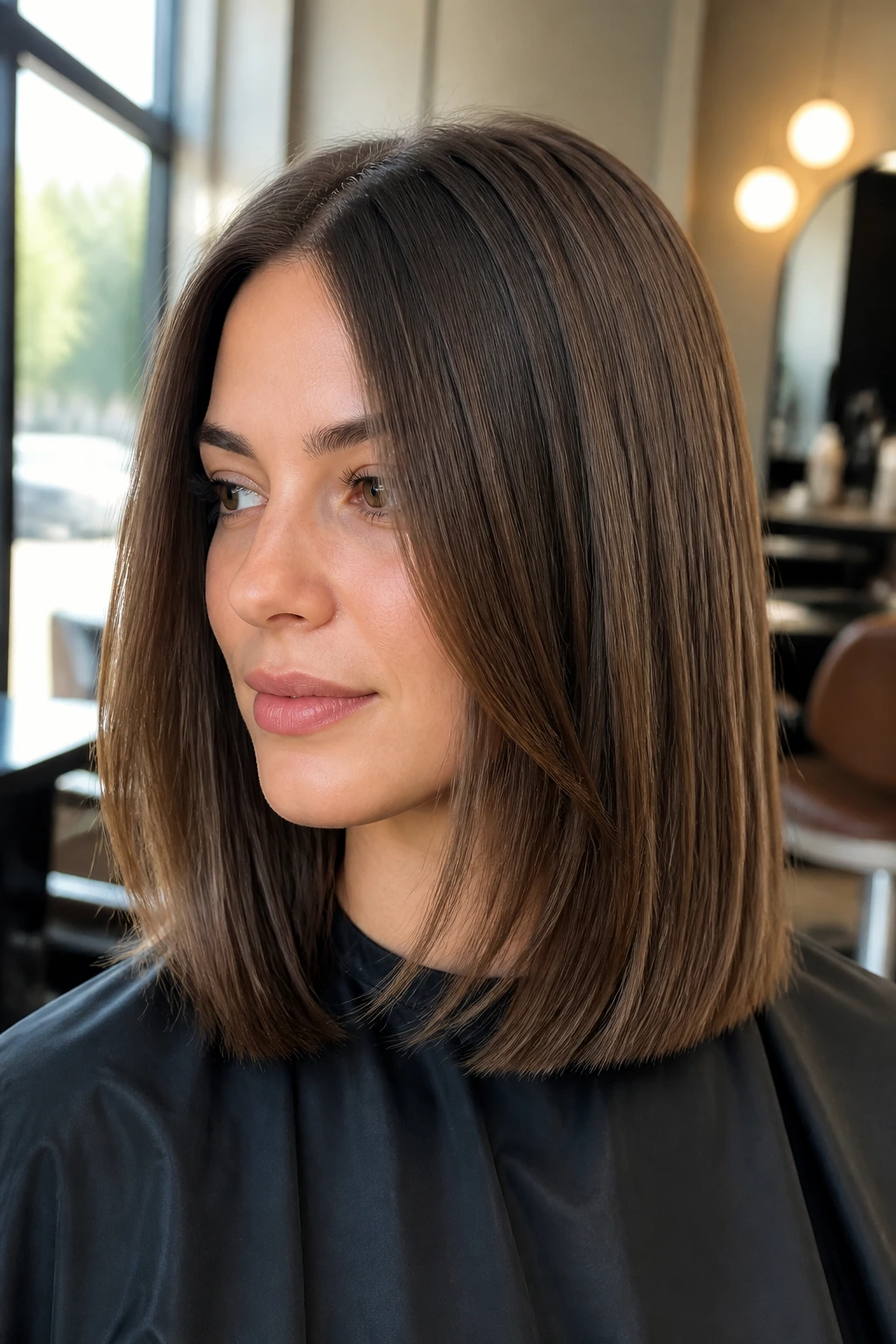
If your medium straight hair tends to hang like one heavy curtain, invisible layers are worth paying attention to. They’re cut inside the shape, not around the outline, so the outer line still looks blunt and clean while the interior has enough movement to keep the hair from feeling boxy.
This is one of the few styles on the list that starts in the chair, not at the mirror. The payoff is obvious when you wear the hair down: it swings a little better, tucks behind the ear more easily, and holds a bend at the front without turning stringy. A center part or a soft side part both work.
Straight hair with hidden layers is not “fussy.” It just has more shape than a single heavy sheet of length.
19. Twisted Half-Up Knot
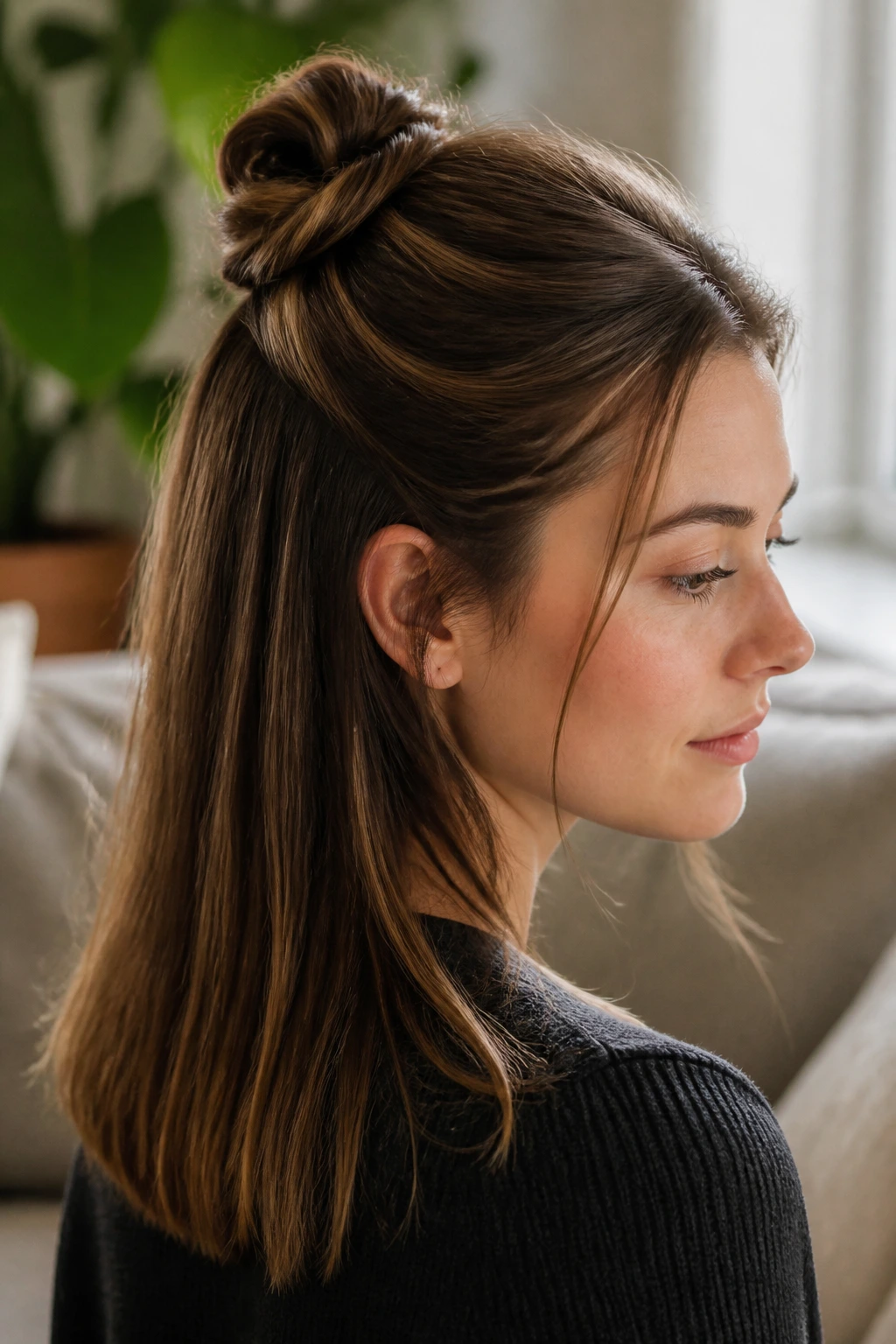
A twisted half-up knot takes the same idea as the half-up twist and makes it a little more casual. Twist two side sections back, tie them together once or twice, and pin the knot flat so it sits close to the crown. The lower half stays free and straight, which keeps the style light.
This one works well when the hair has already been worn down for a while and needs a reset that doesn’t feel like a full styling session. A small knot is enough. You don’t need a full crown twist unless you want it.
If your hair is very fine, tease the underside of the knot just a touch before pinning. Not much. Enough to give the pins something to bite into. The goal is grip, not fuzz.
20. Minimalist Barrette Sweep
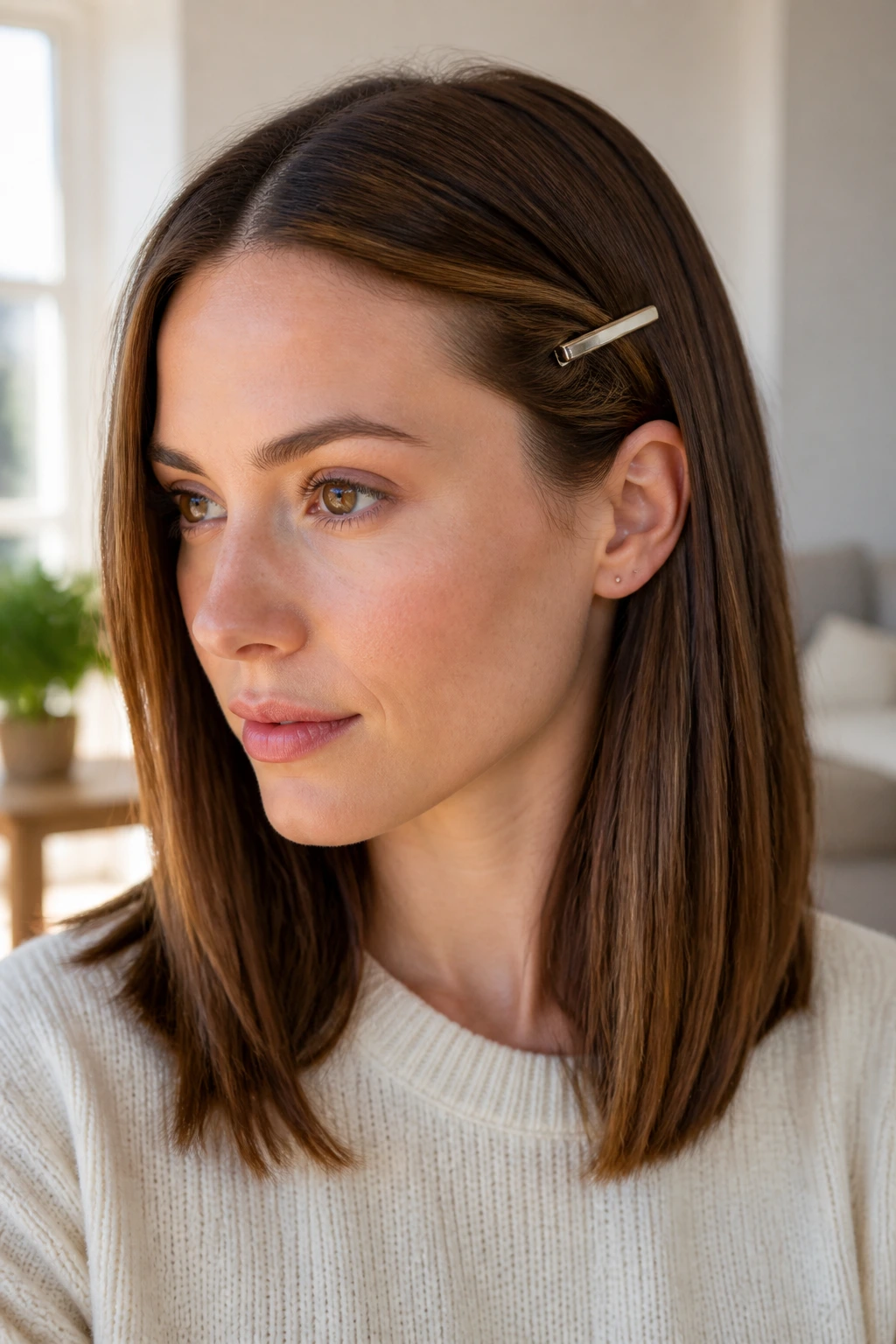
A minimalist barrette sweep is the hair equivalent of a clean white shirt. Sweep one side back, clip it with a single slim barrette, and let the rest of the hair fall straight. There’s no extra shape to explain. The simplicity is the point.
This style is strongest when the part is slightly off center or when one side naturally falls forward more than the other. Instead of fighting that, pin it back and leave the longer side down. The result feels deliberate because the asymmetry is obvious.
If you want the look to stay crisp, choose a barrette with a smooth clasp that won’t snag the outer layer. Straight hair shows snagging fast, and it does not forgive a bad clip.
21. Soft Outward Flip Ends
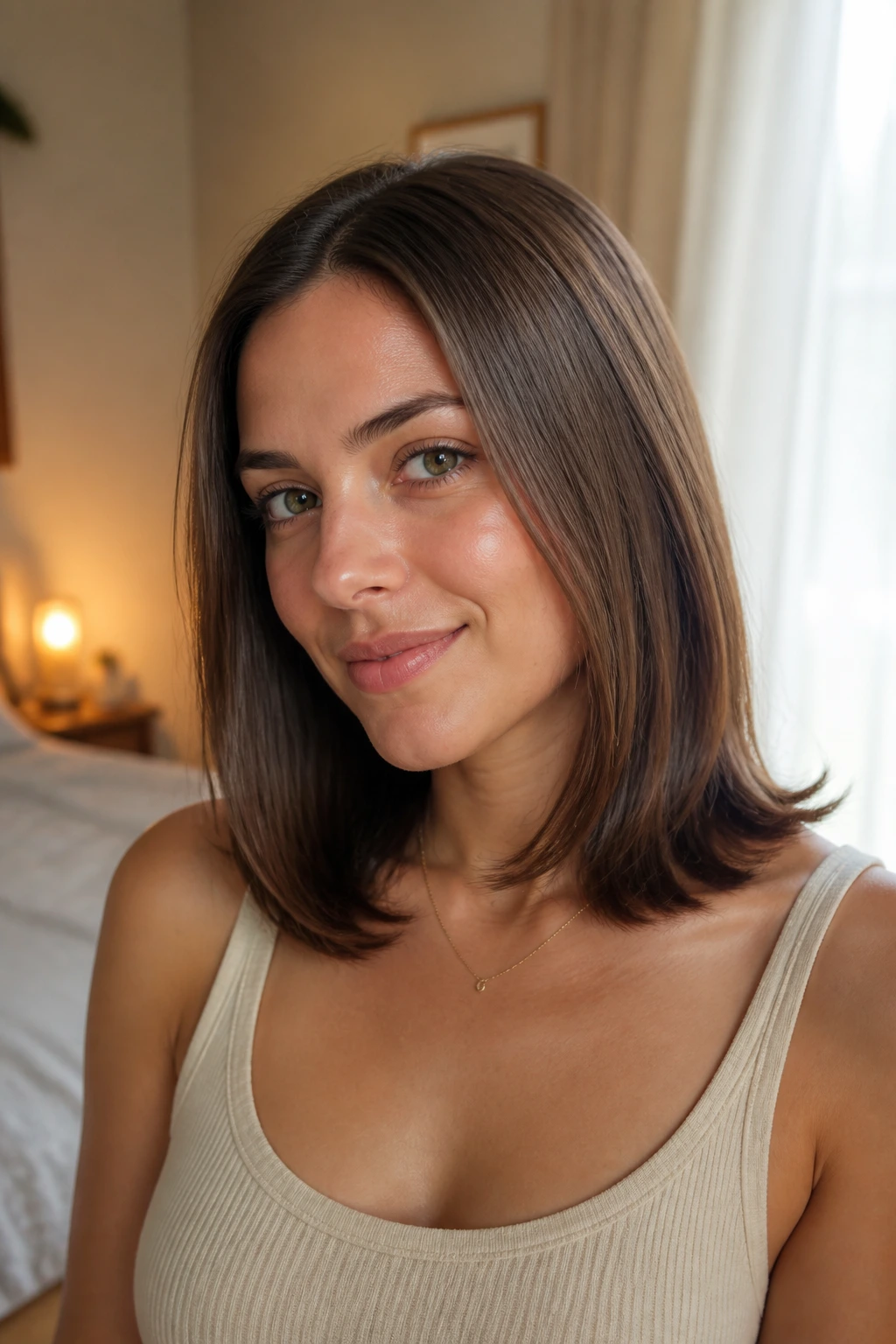
Why do outward-flipped ends change straight medium hair so much? Because they break the straight line just enough to keep the style from looking too severe. A half-inch flip outward at the ends adds movement, but the hair still reads straight from a distance.
Use a flat iron or a round brush and turn only the last inch outward. Keep the curve soft. If the flip starts too high, the whole look turns retro fast. If you want the hair less sharp, flip inward instead and keep the movement tucked under.
This is a useful trick when the cut itself is blunt but you want a little motion around the shoulders. It’s also a good fix for ends that naturally kick out in one direction anyway. You might as well make them look intentional.
22. French Braid into a Straight Tail
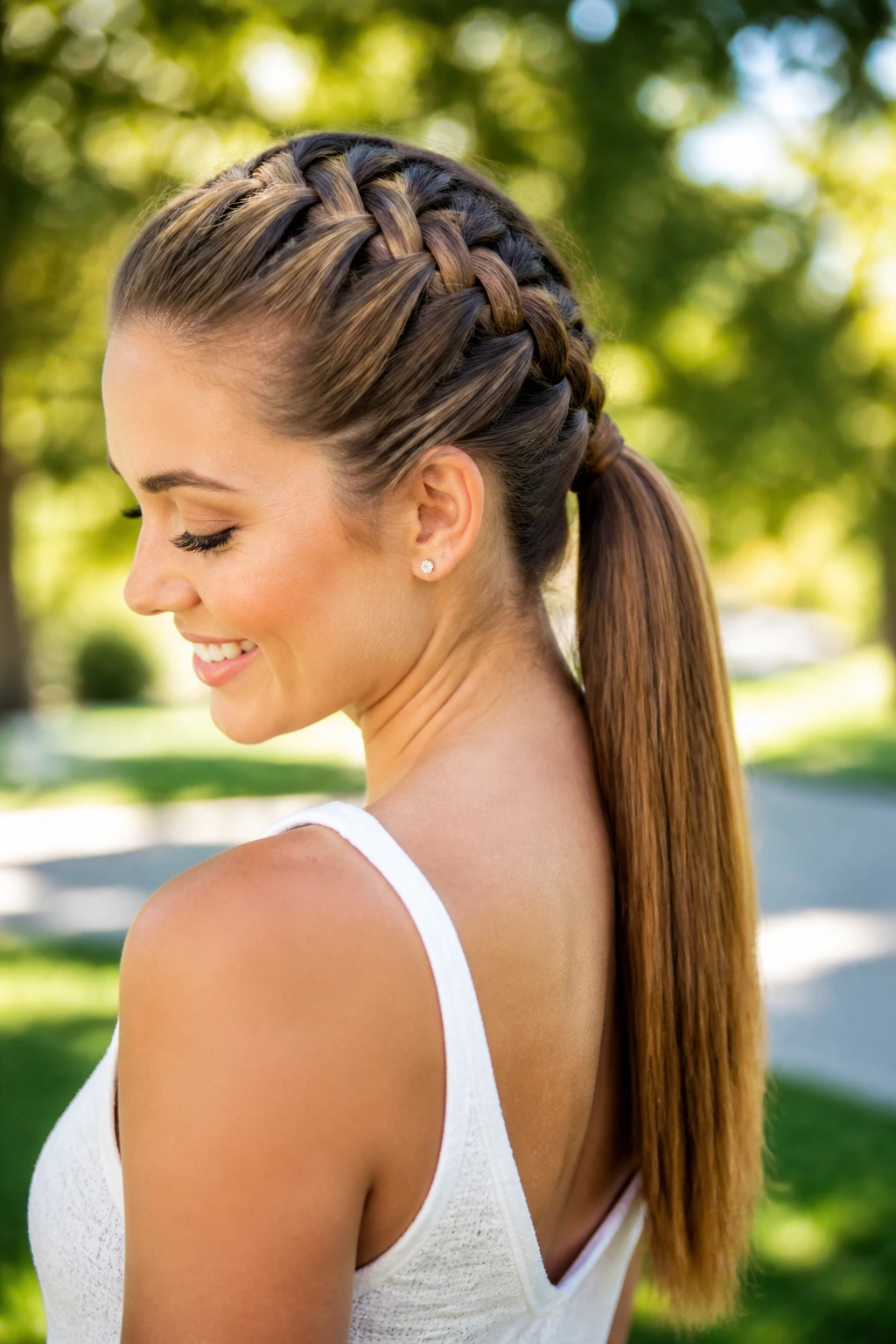
A French braid that ends in straight hair gives you the best of both worlds: grip at the scalp and clean length below. Start braiding from the front hairline back for 2 to 3 inches, then stop and let the remaining hair fall straight in a tail. The top stays secure. The rest keeps its sleek line.
This style is useful on days when the front pieces keep drifting into your face. The braid holds them down without hiding the whole length. On medium straight hair, the transition from braid to tail looks especially clean because the hair does not puff up as much at the switch point.
Pro detail
Use the braid to catch day-old texture near the roots. It grips better than clean hair and makes the lower tail look even smoother by contrast.
23. Low Bubble Bun
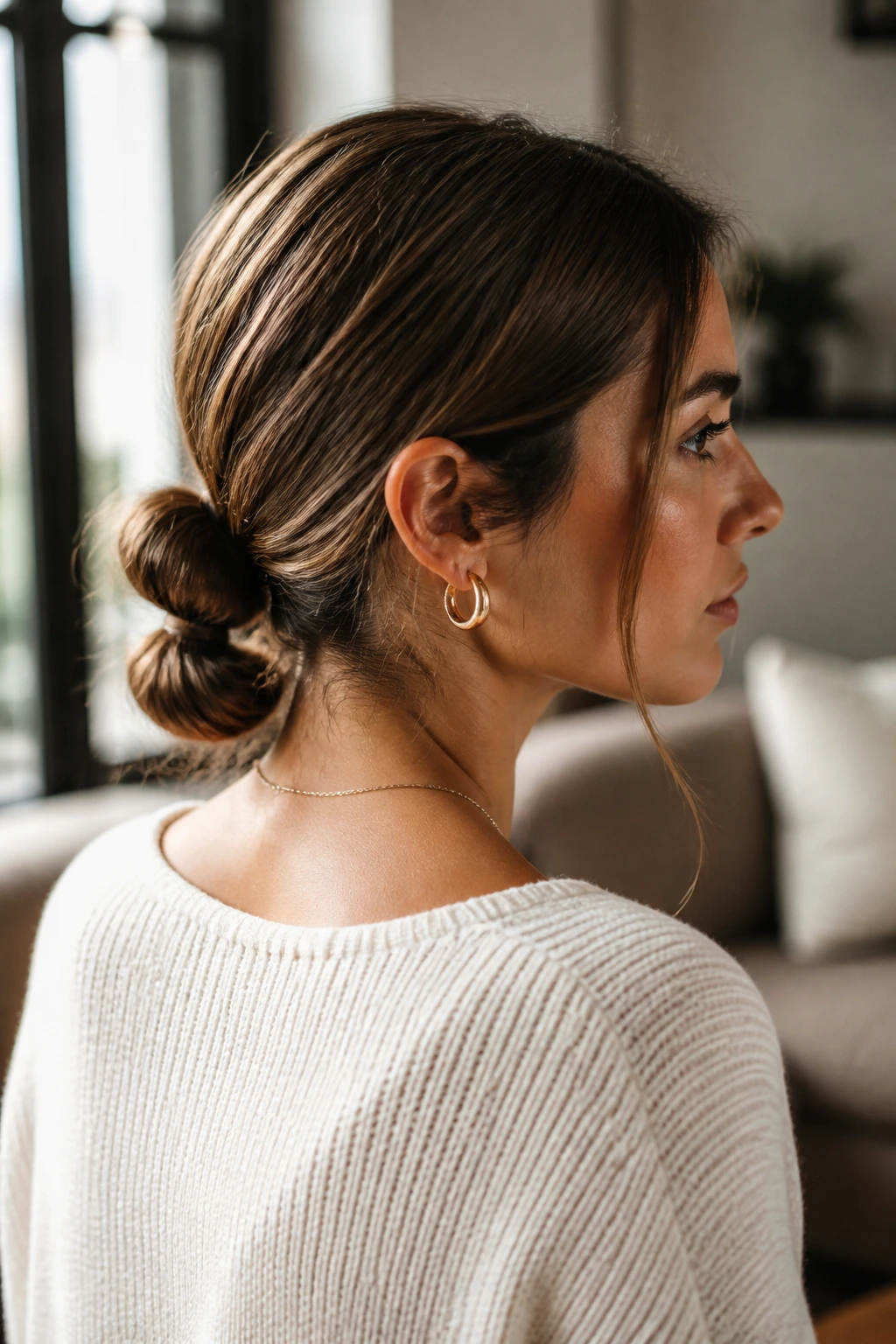
A low bubble bun sounds fussy, but it’s actually a tidy way to build shape into straight hair. Start with a low ponytail, add a few elastics down the tail, then fold the bubble sections upward and pin them close to the nape. The result is part bun, part structured knot.
This works because medium straight hair can lose its shape in a standard bun if the tail is too slick. The bubbles give the hair some body to hold onto. Keep the sections small and the bun compact, or it starts to look like a stretched-out ponytail pretending to be a knot.
This one is especially good when you want something a little different without going fully decorative.
24. Offset Part with Crown Lift
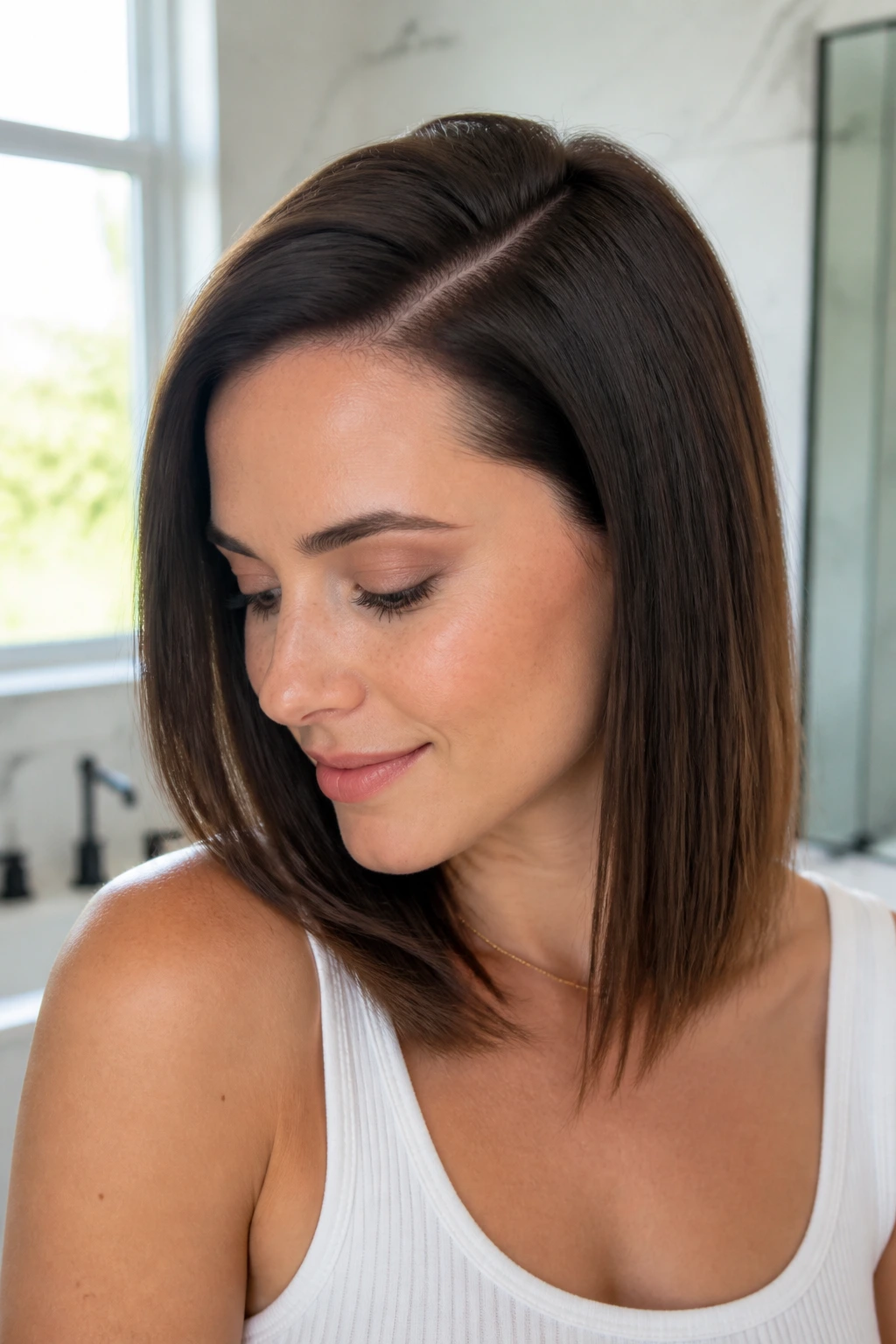
A slightly off-center part can do more for straight hair than a full styling session. Move the part just enough to one side that the crown gets a touch of lift, then keep the rest smooth. It’s not dramatic. It just wakes the hair up.
Use a root clip or a little heat at the crown if the top lies too flat. The key is not to overdo the shift. A deep side part can feel theatrical; an offset part feels easy. That makes it useful for workdays, lunches, and any time you want the face to look a little softer without changing the whole style.
If one side naturally falls flatter, let that be the tucked side and keep the fuller side loose. Straight hair looks better when it follows its own habits instead of fighting every strand.
25. Temple Pins
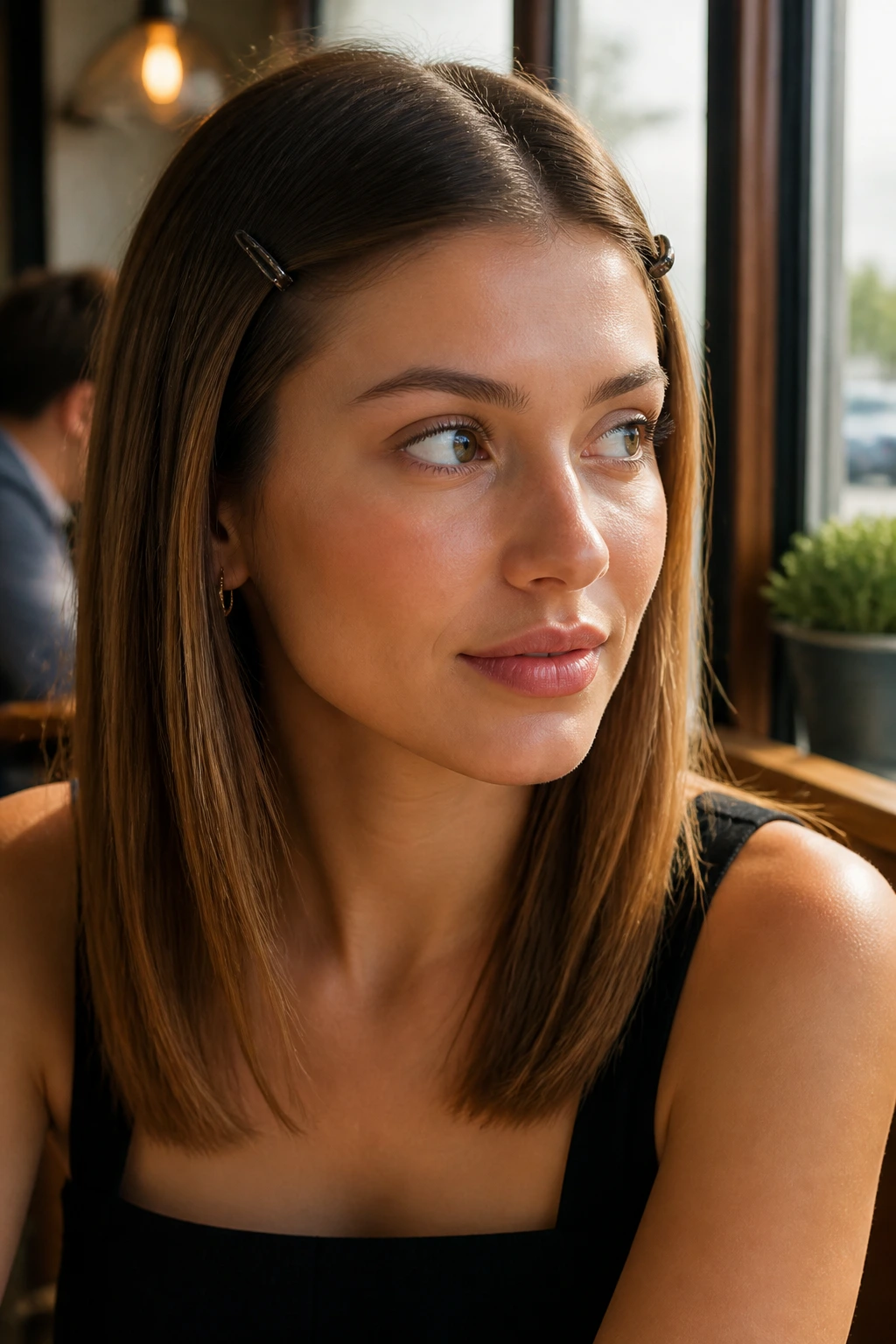
Two pins. That’s the whole mood. Temple pins are what you do when medium straight hair is clean, down, and refusing to be complicated. Pull a small section from each temple, pin it back near the ears, and leave the rest of the length free.
The style works because it solves the practical problem of hair falling into your face without asking for a full updo. It also puts a tiny visual pause near the eyes, which helps the hair look arranged. Cross the pins for security if the hair is slippery. Stack them vertically if you want something cleaner.
This is one of the fastest fixes on the list, and honestly, one of the most useful.
26. Wrapped-Base High Ponytail
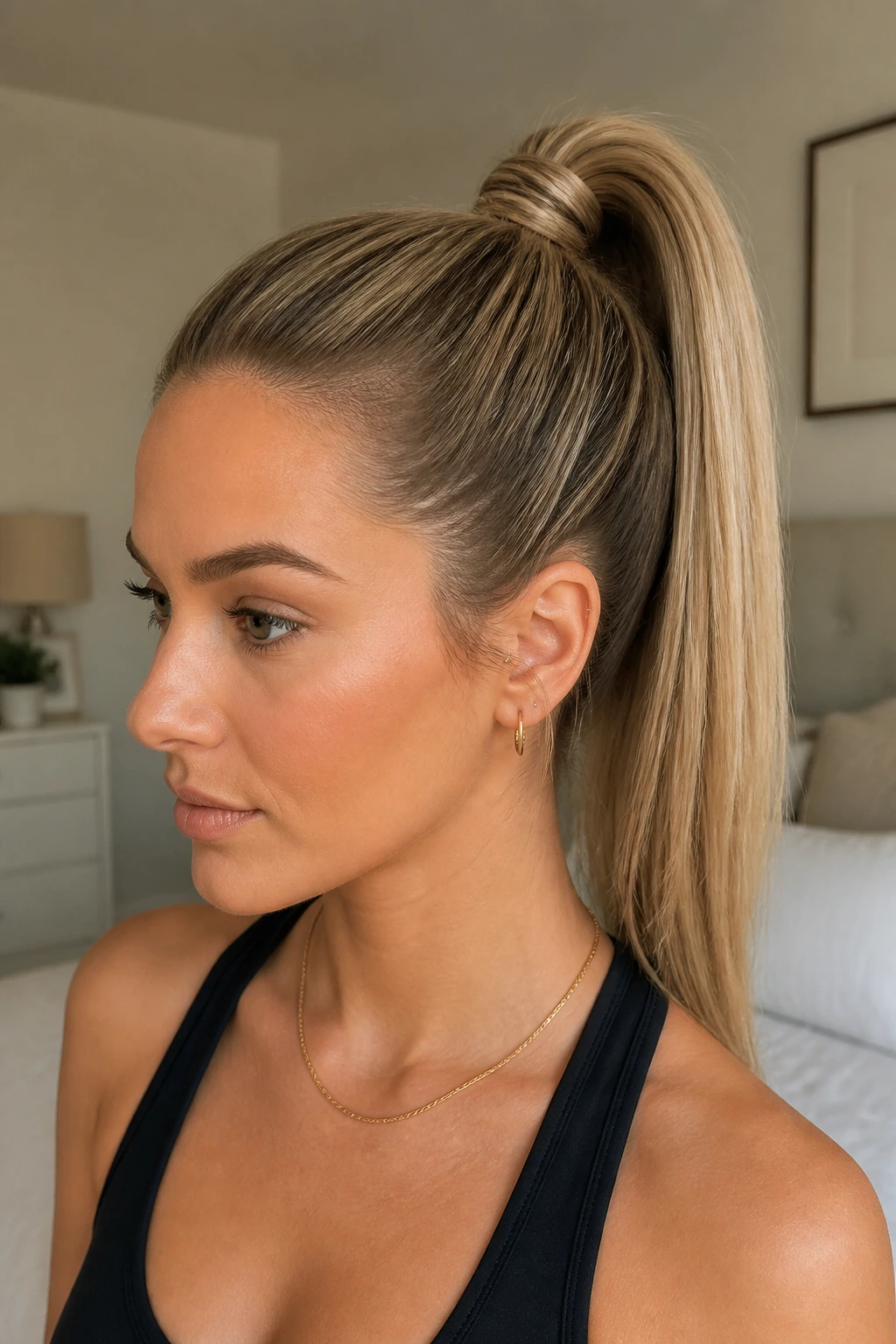
A wrapped-base high ponytail makes medium straight hair look longer and sharper at the same time. Pull the hair up high, smooth the crown, then wrap a small strand around the elastic so the base disappears. The tail falls straight, which keeps the style from looking messy.
This one works because the height changes the proportion. Straight hair can sometimes sit heavy when it’s low, but a high pony pulls the eye upward and gives the face a cleaner frame. If your hair is on the thinner side, tease the ponytail lightly underneath before wrapping it. If it’s thick, focus on smoothing the top instead.
You do not need a giant, cheerleader-style tail for this to work. A clean one is better.
27. Sleek Space Buns
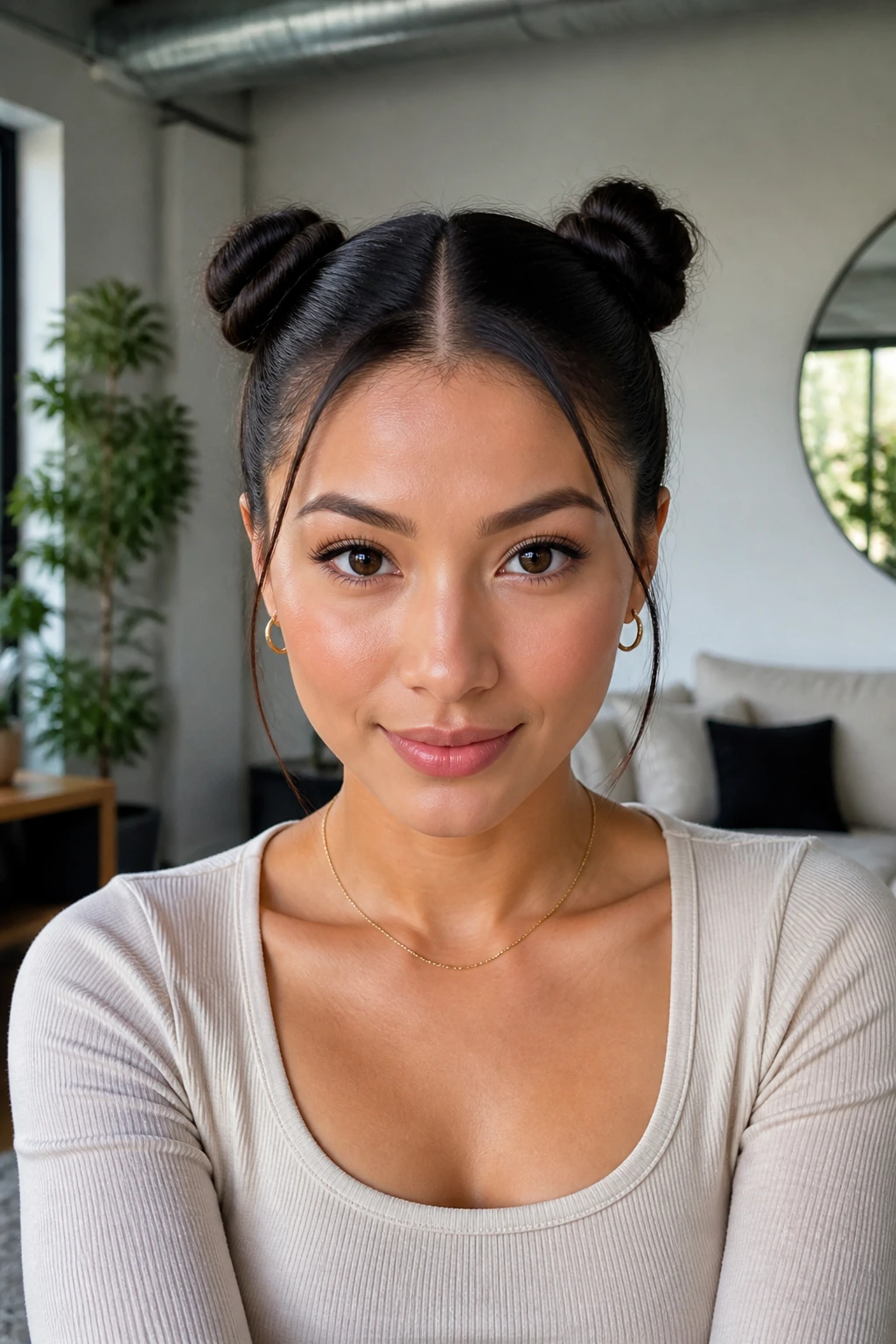
Sleek space buns on medium straight hair are more wearable than people assume. The trick is keeping the buns small and the parts clean. Split the hair evenly, make two tight buns high or mid-head, and smooth the center part so the whole style reads balanced.
Because the length is medium, oversized buns can end up pulling the sides awkwardly. Small buns solve that. They sit neatly and keep enough tail tucked in to look finished. If you want the look to feel less playful, keep the parts razor-clean and the buns close to the head. If you want it looser, let a few ends peek out.
This is one of the few styles here that can feel both polished and a little mischievous. That’s a good combination.
28. Glass Hair Center Part
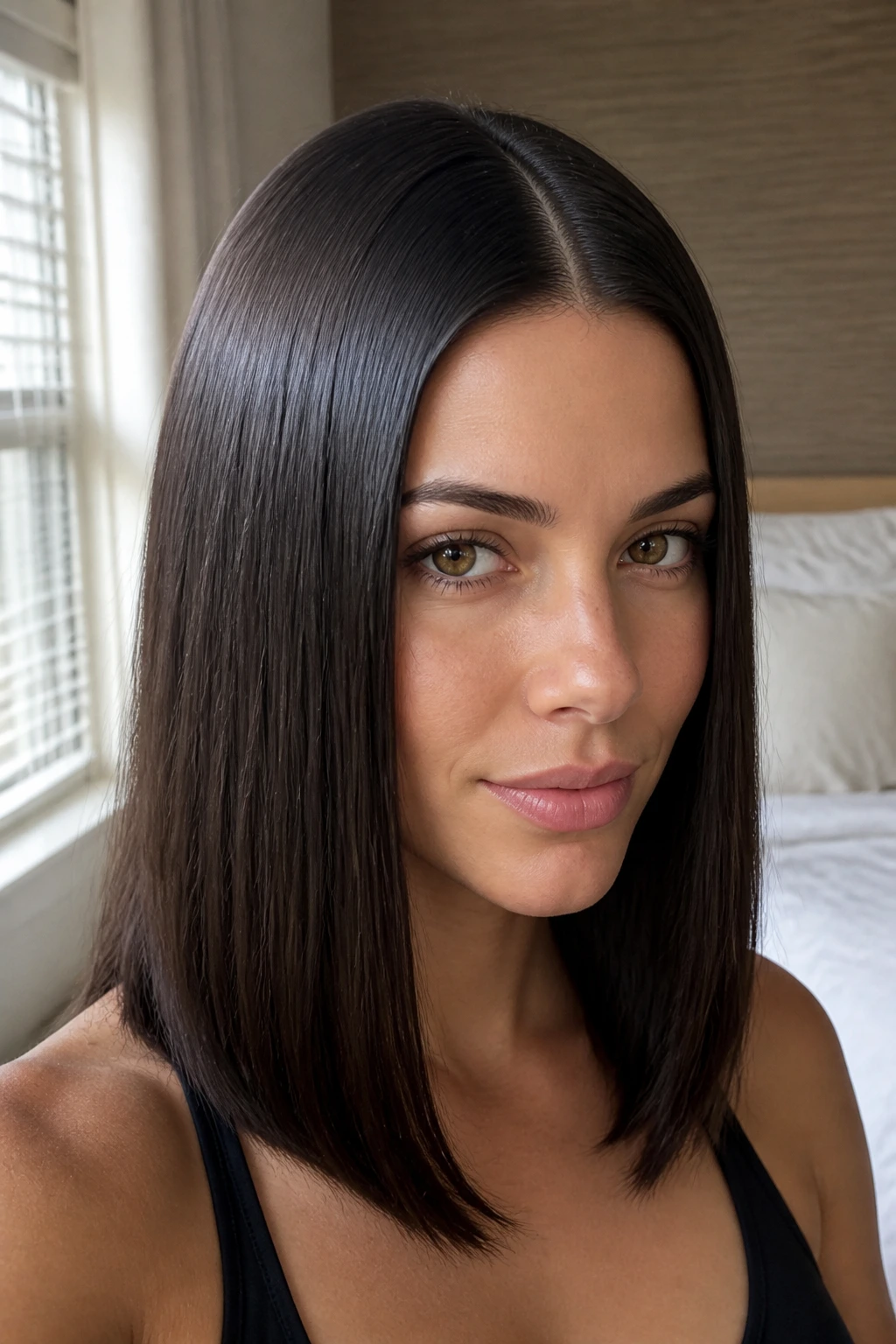
Glass hair is not about piling on product until the head shines under airport lights. It’s about a smooth, aligned surface, a clean center part, and ends that sit in the same direction. On medium straight hair, that finish looks sharp because the length is short enough to stay controlled.
Start with a proper trim. Split ends ruin the whole effect. Then brush the hair straight while it’s almost dry, finish with a small amount of serum on the last few inches, and keep the top as smooth as you can without flattening it into the scalp. The center part should be straight enough that you can see the line from a few feet away.
This is the style that looks simplest and usually takes the most discipline. The reward is the cleanest possible version of straight hair.
How to Keep Straight Hair from Slipping Out of the Style
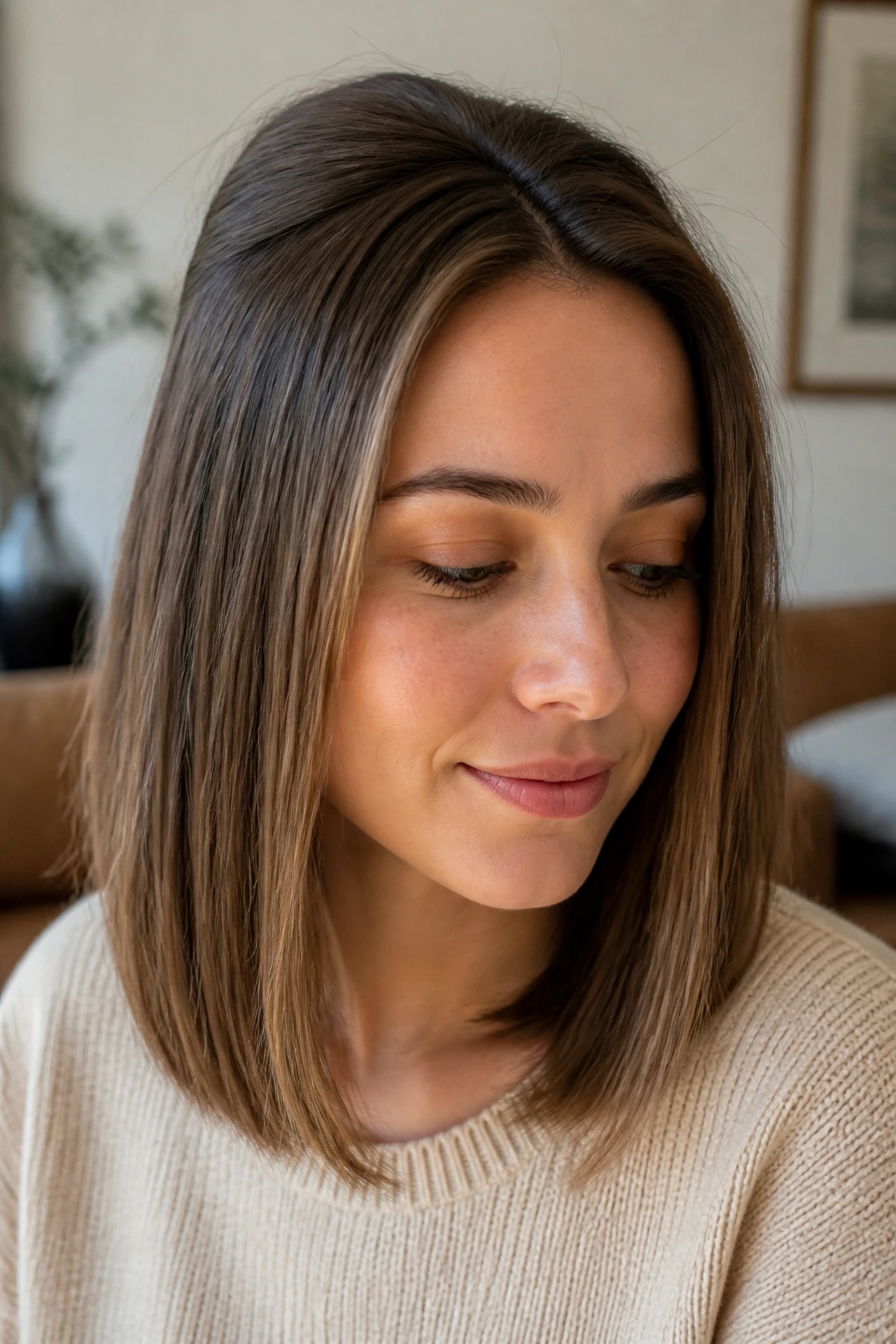
Straight hair loves to escape clips, elastics, and pins when the surface is too smooth. The fix is not more force. It’s a little texture in the right places. A mist of dry shampoo at the roots or a light texturizing spray through the mid-lengths gives pins something to catch on without turning the hair rough.
Root lift first: If you want a ponytail, bun, or half-up style to hold, start by creating a bit of lift at the crown. Even 5 minutes with a root clip while the hair cools can stop the style from sinking by lunchtime.
Anchor points matter: Pins work best when they cross in an X shape or sit in layers, not when they just poke in randomly. On straight hair, a single pin can slide out fast. Two crossed pins usually behave better.
Stop over-smoothing the ends: A lot of people spend all their effort on the crown and leave the last 2 inches limp or frayed. That’s backwards. Straight hair looks best when the ends are brushed, aligned, and lightly sealed with serum.
Use the right amount of product: A pea-sized amount of cream or serum is enough for many of these styles. More than that, and the hair starts looking greasy instead of sleek. Keep heavy products away from the roots unless you want the flat look on purpose.
Essential Tools for These Hairstyles
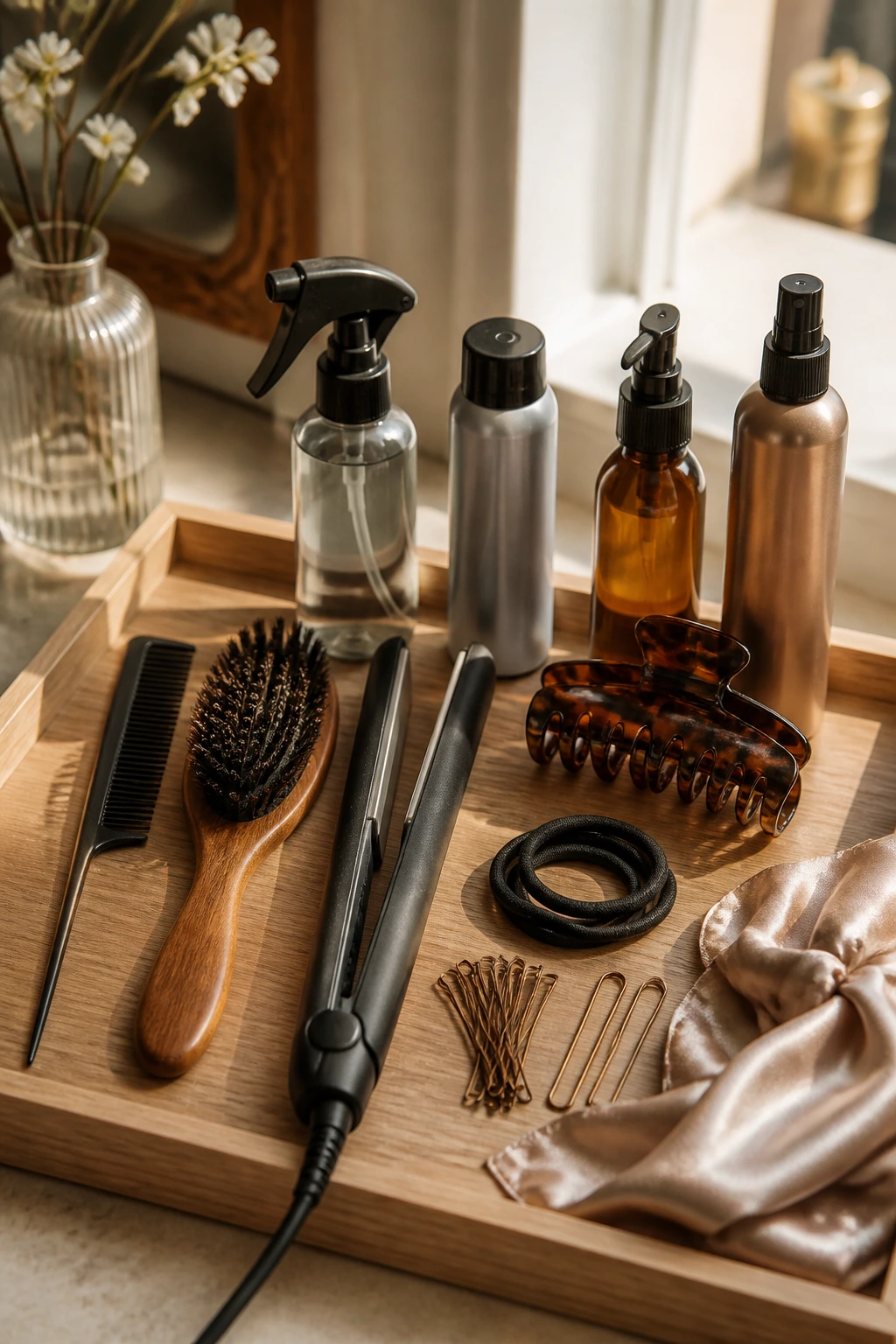
- Tail comb: Useful for clean center parts, side parts, and sectioning without tearing at the hairline.
- Boar-bristle brush or smoothing brush: Helps flatten the outer layer without making the hair look puffed up.
- 1-inch flat iron: Good for straightening the ends, bending face-framing pieces, and flipping the last inch outward.
- Medium-to-large claw clip: Holds twists and French twist shapes much better than small clips.
- Snag-free elastics: Clear or fabric-covered versions leave fewer dents in straight hair.
- Bobby pins: Get the ones with a little grip; smooth pins slide out of straight hair too quickly.
- U-pins: Handy for low buns and knots when you want a flatter finish.
- Texturizing spray: Adds just enough grip for braids, twists, and clips.
- Dry shampoo: Helps roots hold shape and gives a little bite to slippery sections.
- Smoothing serum: Best for ends; keep it light and avoid the scalp.
- Finishing spray: Useful when you need a style to survive wind, humidity, or a long commute.
- Silk scarf or ribbon: Gives a ponytail more visual shape and hides a plain elastic.
Smart Product and Accessory Picks
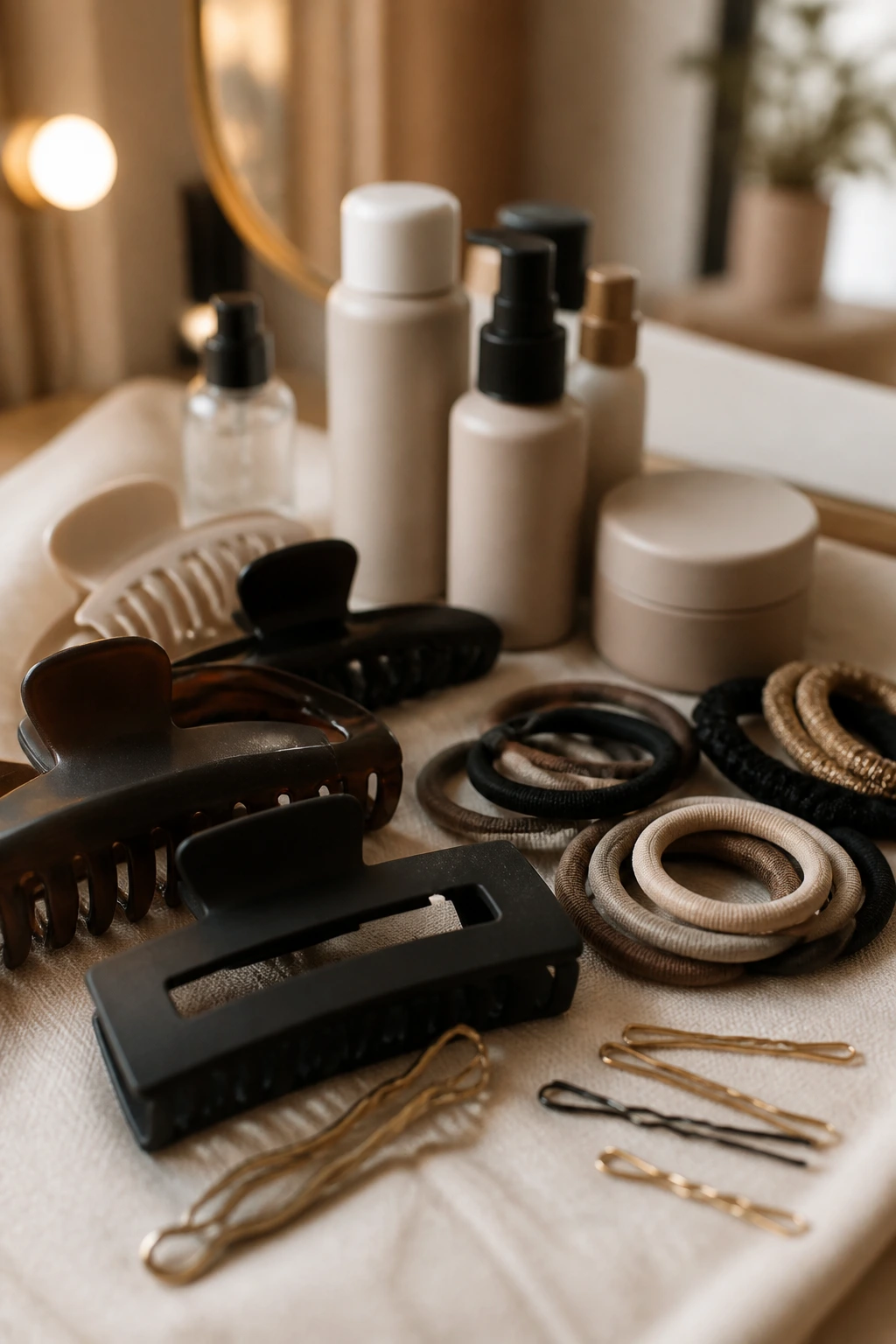
For fine hair: Use lightweight spray products instead of thick creams. Fine straight hair gets weighed down fast, and a heavy serum near the crown will flatten the style before you leave the house. A dry texture spray at the roots does more for hold than another layer of shine.
For thick hair: Choose clips and elastics that can actually close around the amount of hair you have. A small claw clip snapping at the seam is useless. Look for wider teeth, stronger springs, and pins that don’t bend on first contact.
For slippery hair: Matte accessories are your friend. A glossy barrette may look pretty in the package, but if it slides off the back of your head in 20 minutes, it was a bad buy. Textured pins, fabric elastics, and clips with deeper teeth hold better.
For straight hair that frizzes at the ends: Keep smoothing products on the bottom third only. The roots need lift, not oil. A tiny amount rubbed between the palms and pressed over the last 2 inches is usually enough.
Easy Tweaks That Change the Mood
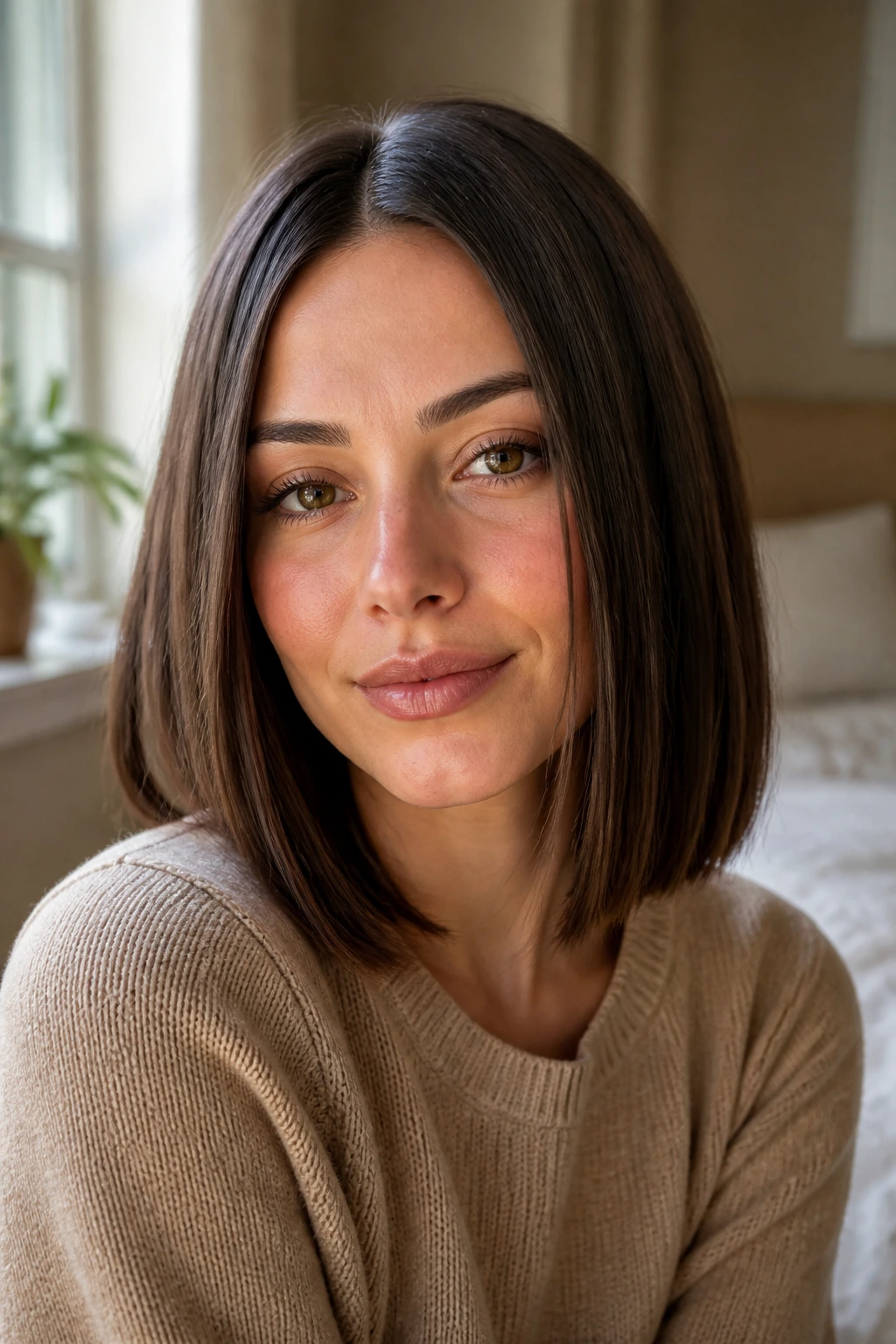
The Office-Polished Switch: Swap a loose accessory for a clean barrette, keep the part straight, and smooth the crown with a boar-bristle brush. The whole style gets sharper without changing the base shape.
The Weekend-Softening Move: Loosen one side near the temple, bend the front pieces away from the face, and leave a few ends out of the bun or twist. The shape turns calmer and a little more casual.
The Night-Out Shift: Add a scarf, metallic clip, or glossy finish serum. Straight hair loves accessories with clear lines, so one shiny piece can do more than a pile of extra styling.
The No-Heat Version: Start from air-dried hair, use dry shampoo at the roots, and build a braid, twist, or clip style instead of reaching for a flat iron. The shape stays natural, and the hair gets a break.
The Sharp Finish: Keep every section smooth, every part exact, and every end aligned. This is the version to reach for when you want straight hair to look almost architectural.
How to Keep These Styles Looking Good on Day Two
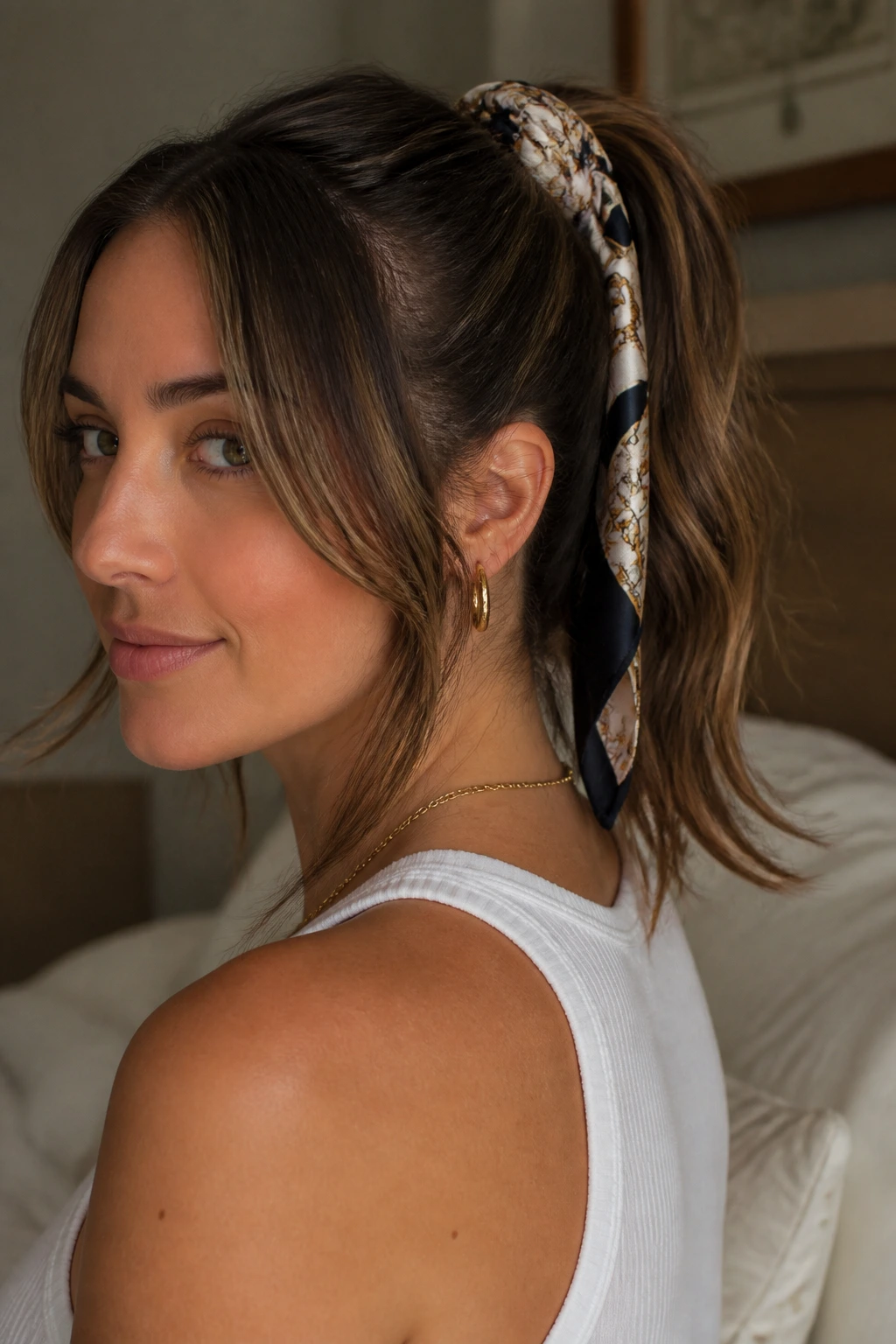
Straight hair usually shows sleep lines fast, so overnight care matters. If you want to wear a ponytail, braid, or twist again the next day, secure it loosely with a silk scrunchie or wrap it in a silk scarf before bed. A tight elastic at night leaves a dent that can be annoying to smooth out in the morning.
For loose styles, sleep with the hair in one soft braid or in a low twist at the nape. That keeps the ends from tangling without creating too much wave. If the roots are oily in the morning, a small hit of dry shampoo at the crown works better than trying to rewash the whole head.
If a bun or clip style needs a reset, take it down, brush the hair out from ends to roots, mist the front lightly with water or styling spray, and restyle only the top section. You do not need to start over from scratch. Straight medium hair is usually cooperative once you remove the sleep crease.
Common Mistakes to Avoid
Using too much serum at the roots: The hair looks slick for ten minutes and then collapses. Keep shine products on the ends, where they smooth frizz without killing lift.
Choosing clips that are too small: If the clip has to fight the whole head of hair, it will fail. Medium straight hair still needs the right size, especially for twists and French clips.
Pulling the part too hard: A part that’s scraped into place can show scalp in an unflattering strip and make the style feel severe. A clean part is good. A strained one is not.
Ignoring the ends: Straight hair announces split ends loudly. If the bottom looks ragged, the whole style looks tired, even when the roots are fine. Trim it, or at least seal it lightly.
Over-fluffing bubble styles: A bubble ponytail should have shape, not cartoon volume. Pull each section just enough to round it out, then stop. If the bubbles start collapsing into each other, the spacing is too tight.
Pinning into clean hair with no grip: A bobby pin in silky, product-coated hair slides out fast. Add texture first, or cross the pin with another one.
Frequently Asked Questions
Which styles work best for fine medium straight hair?
Low ponytails, temple pins, soft half-up twists, and minimalist barrettes usually hold up best. They don’t need much hair to look finished, and they won’t drag the roots flat the way heavier buns can.
Can these hairstyles work without heat?
Yes. Claw clips, braid styles, low knots, ponytails, and pinned-back sections all work well on air-dried hair. Heat helps with glassy finishes and flipped ends, but it isn’t required for most of the list.
How do I keep straight hair from slipping out of clips?
Use a little dry shampoo or texturizing spray at the section before you clip it, then place the clip on hair that has some grip. If the style is a twist, pin it first and clip it second.
What if my medium hair flips out at the ends?
Use it on purpose. A soft outward flip can look clean and intentional. If you want the ends straight instead, a quick pass with a flat iron on just the last inch usually fixes it.
Which styles hide greasy roots the best?
Deep side parts, slicked-back looks, low buns, and claw clip French twists all do a good job of moving attention away from the crown. Dry shampoo at the roots first makes the shape last longer.
Are layered cuts harder to style straight?
Not harder, just different. Layers can give you more movement and make clipped styles less bulky, but they also need a bit more smoothing at the ends so the shape doesn’t look uneven.
How do I make medium straight hair look fuller without curling it?
Shift the part, lift the roots with a clip while the hair cools, and keep the ends polished. A slightly off-center part and a little bend near the face can add more shape than a full wave set.
What’s the fastest style when I’m in a rush?
Temple pins, a minimalist barrette sweep, or a low ponytail with a wrapped base. Those three take under a few minutes and still look deliberate.
Styles Worth Keeping in Rotation
Medium length straight hair doesn’t need to be rescued. It needs a better plan. Once you stop treating it like hair that has to be fixed and start treating it like hair that can be shaped, the options open up fast.
The strongest looks here all share the same trait: clean structure somewhere and softness somewhere else. A blunt lob with a center part. A low bun with a loose face frame. A ponytail with a scarf or a wrapped base. Straight hair likes contrast. Give it one clear line, one small bend, or one well-placed pin, and it starts doing something interesting on its own.
