



Straight hair on a short cut leaves nowhere to hide, which is exactly why straight hairstyles for women with short hair can look so sharp. A blunt line shows every millimeter of the perimeter; a crooked part changes the balance; even a tiny bend at the cheek can soften or harden the whole mood. That’s the appeal. Short hair gets stripped down to shape, and shape is where the interesting stuff lives.
A bob can read polished one day and relaxed the next. A pixie can feel crisp with a deep side part or softer with a flat-ironed fringe and a tucked ear. If your hair has a habit of puffing, bending, or flipping at the ends, the trick is not fighting every strand at once. It’s choosing the line that works with the cut you actually have.
What makes these styles worth attention is how much they show. The angle of an A-line bob. The edge of a chin-length crop. The clean taper at the neck on a short pixie. Straight styling makes all of that visible, and when the cut is good, the result has a clarity that wavy hair can’t quite mimic.
Why These Short Straight Styles Work So Well
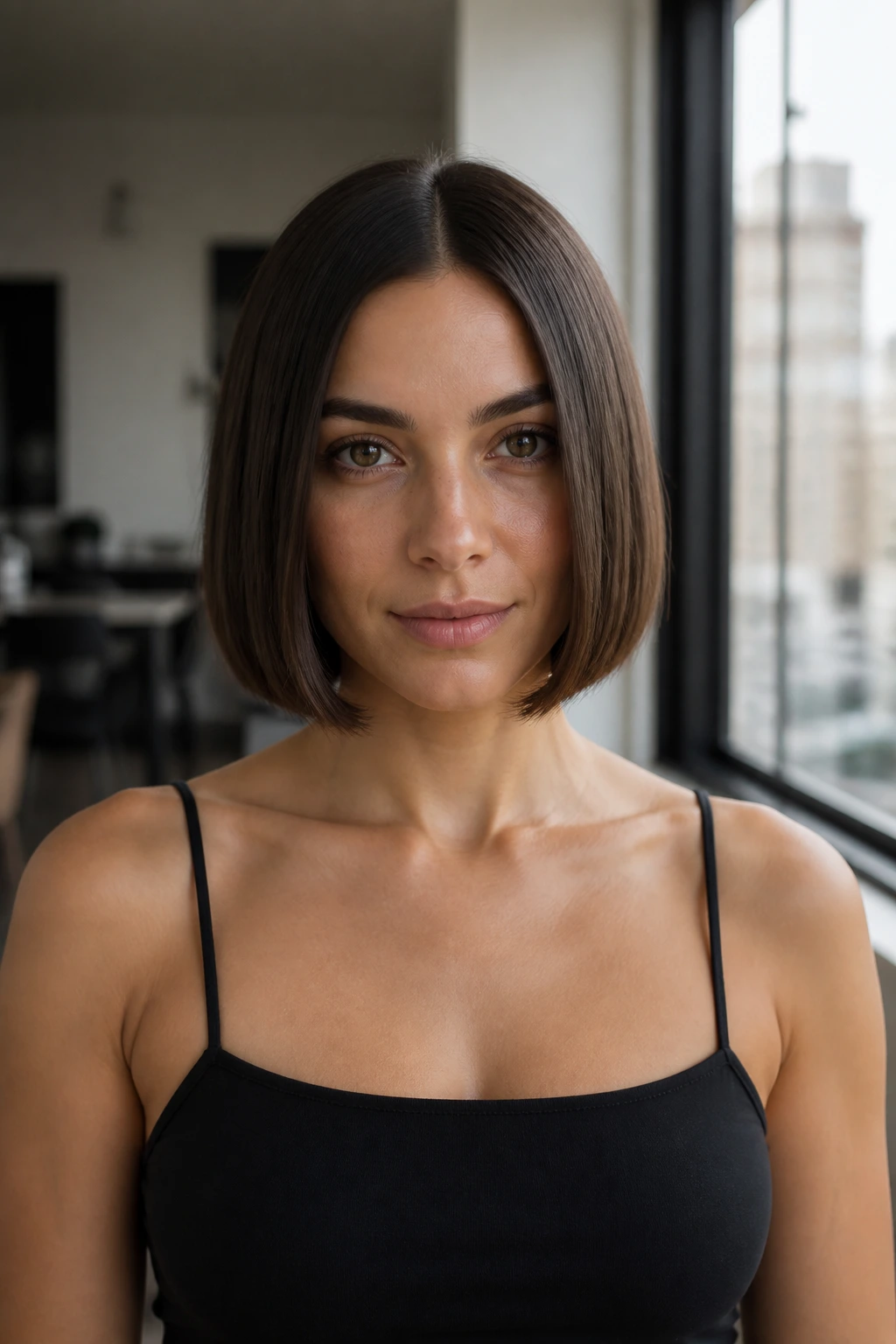
- The perimeter does the talking: On short hair, a blunt edge or a clean angle is visible immediately, so the shape looks intentional instead of fuzzy.
- Part changes matter fast: Shifting the part an inch can move volume, open up the face, and make the same cut feel softer or sharper.
- Short hair is faster to reset: A quick pass with a flat iron or a blow-dryer brush can touch up the top layer in minutes, not half an hour.
- Accessories finally show up: Earrings, clips, headbands, and pins have room to breathe when the hair sits above the shoulders.
- Second-day hair can help: A little root oil can make a sleek style settle better, as long as you keep it off the ends.
1. Sleek Center-Part Bob
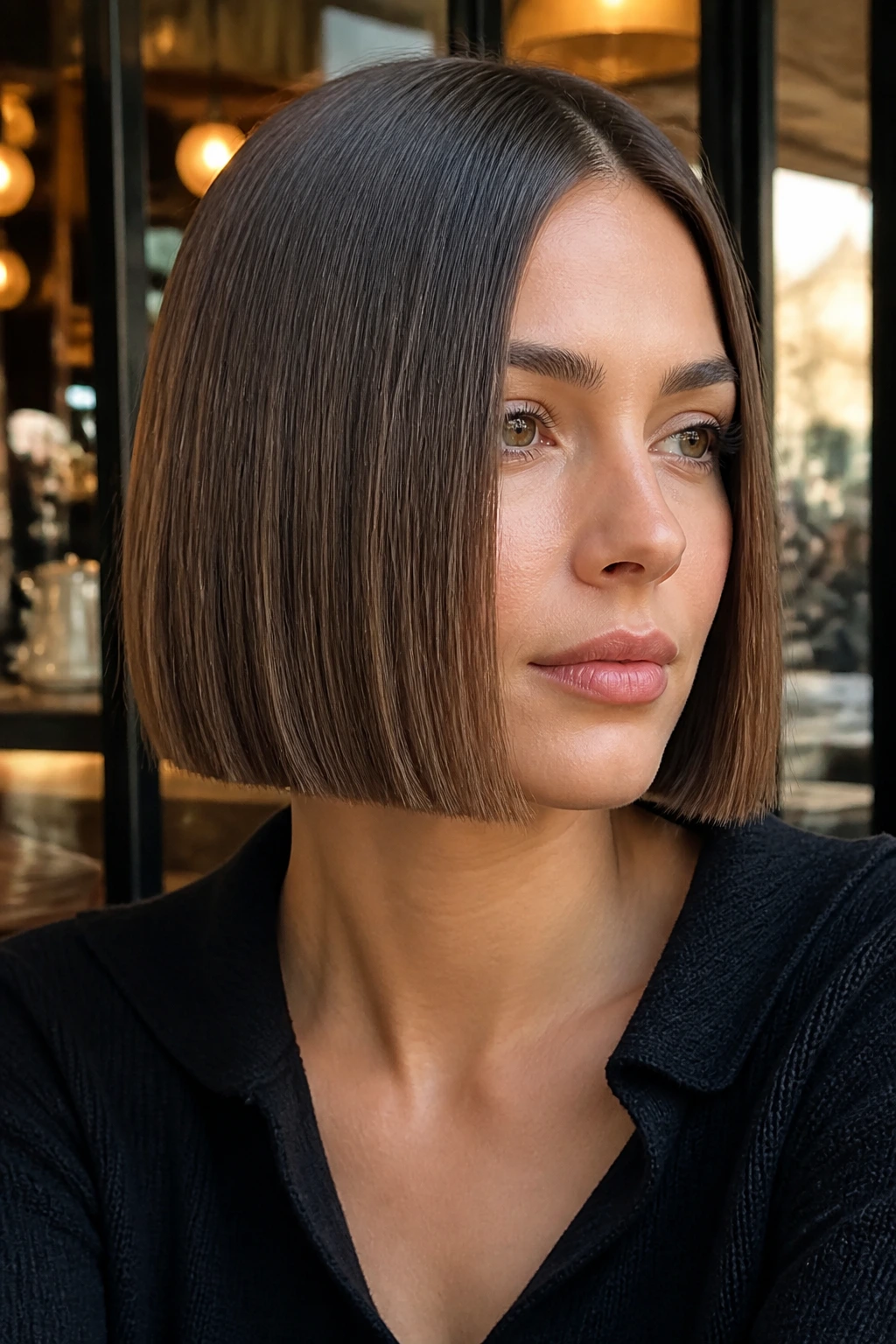
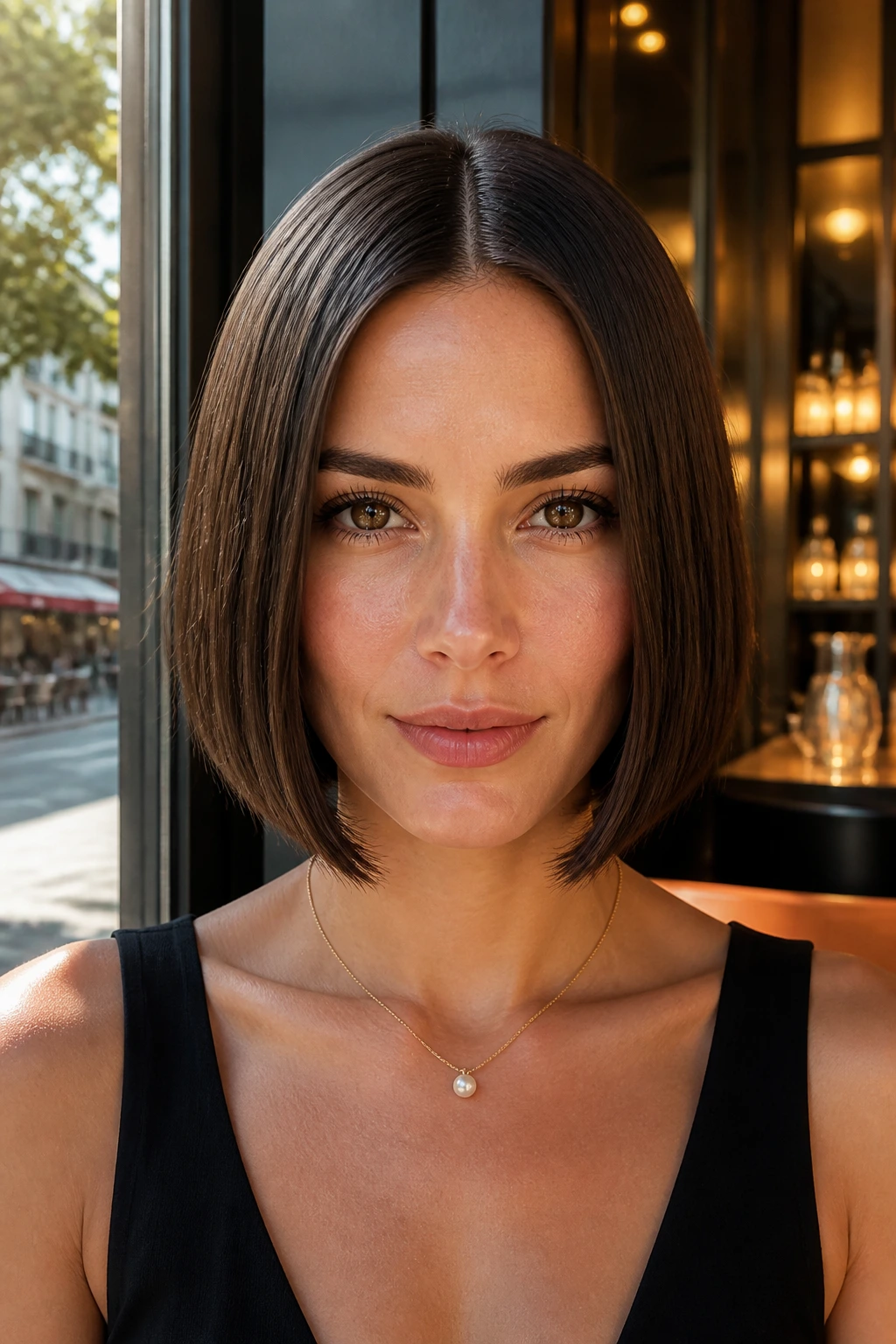
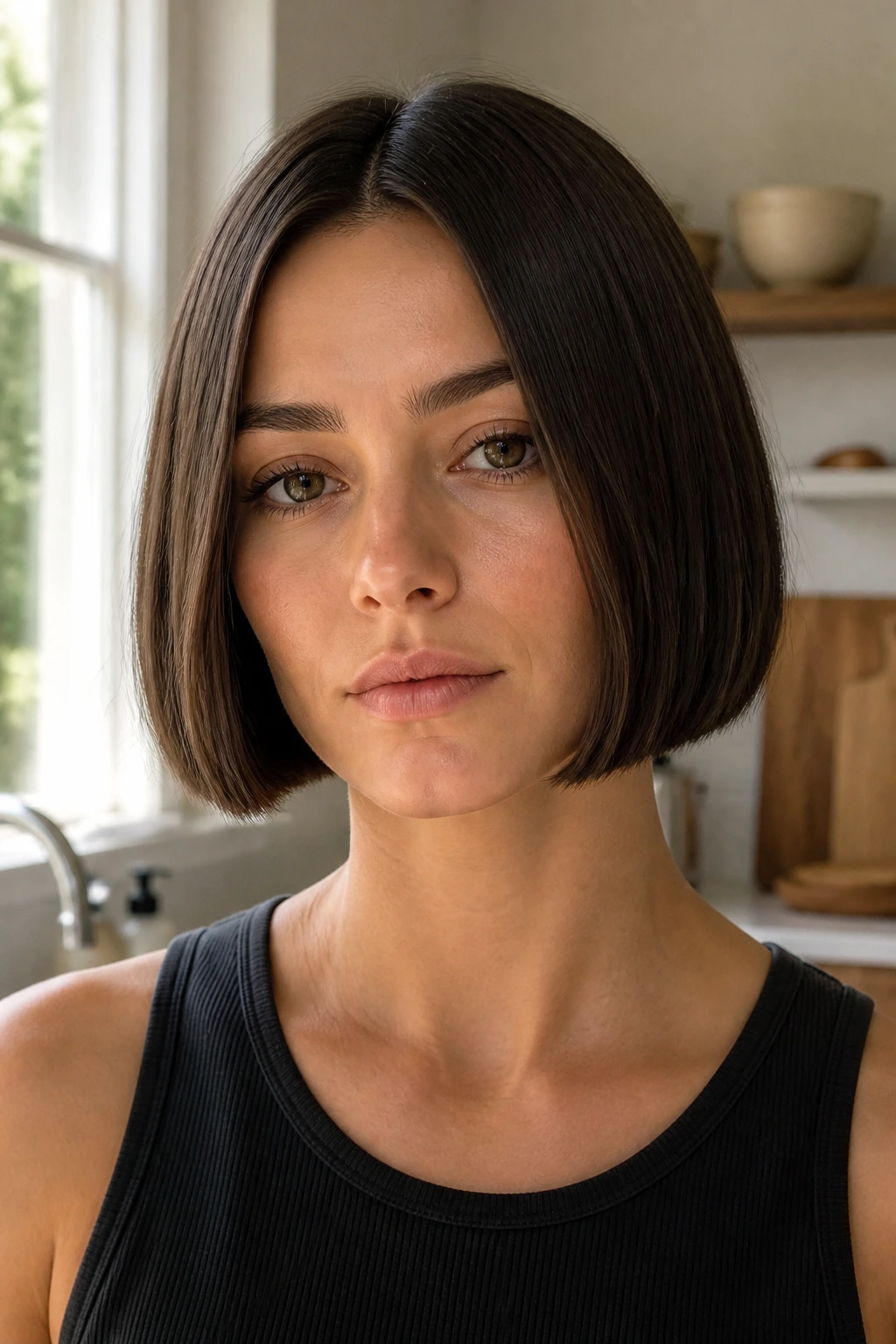
A center-part bob is the cleanest place to start if you want short hair that looks deliberate from every angle. When the ends sit just below the jaw and the finish is smooth, the whole cut reads like a line drawn with a ruler. I like this look best when the ends are tucked under by a whisper, not curled into a roll.
It works because the middle part forces the eye to notice symmetry. That’s a gift if your bob is precisely cut and a problem if the shape is uneven, so this style rewards a good trim. Run a flat iron over dry hair in small sections, keep the plates moving, and finish with a pea-sized drop of serum through the last inch only.
A center-part bob looks especially good with minimal makeup and small hoops. It does not need much else. If the roots go flat, lift them with a root spray before drying, then keep the rest smooth and close.
2. Deep Side-Part Pixie
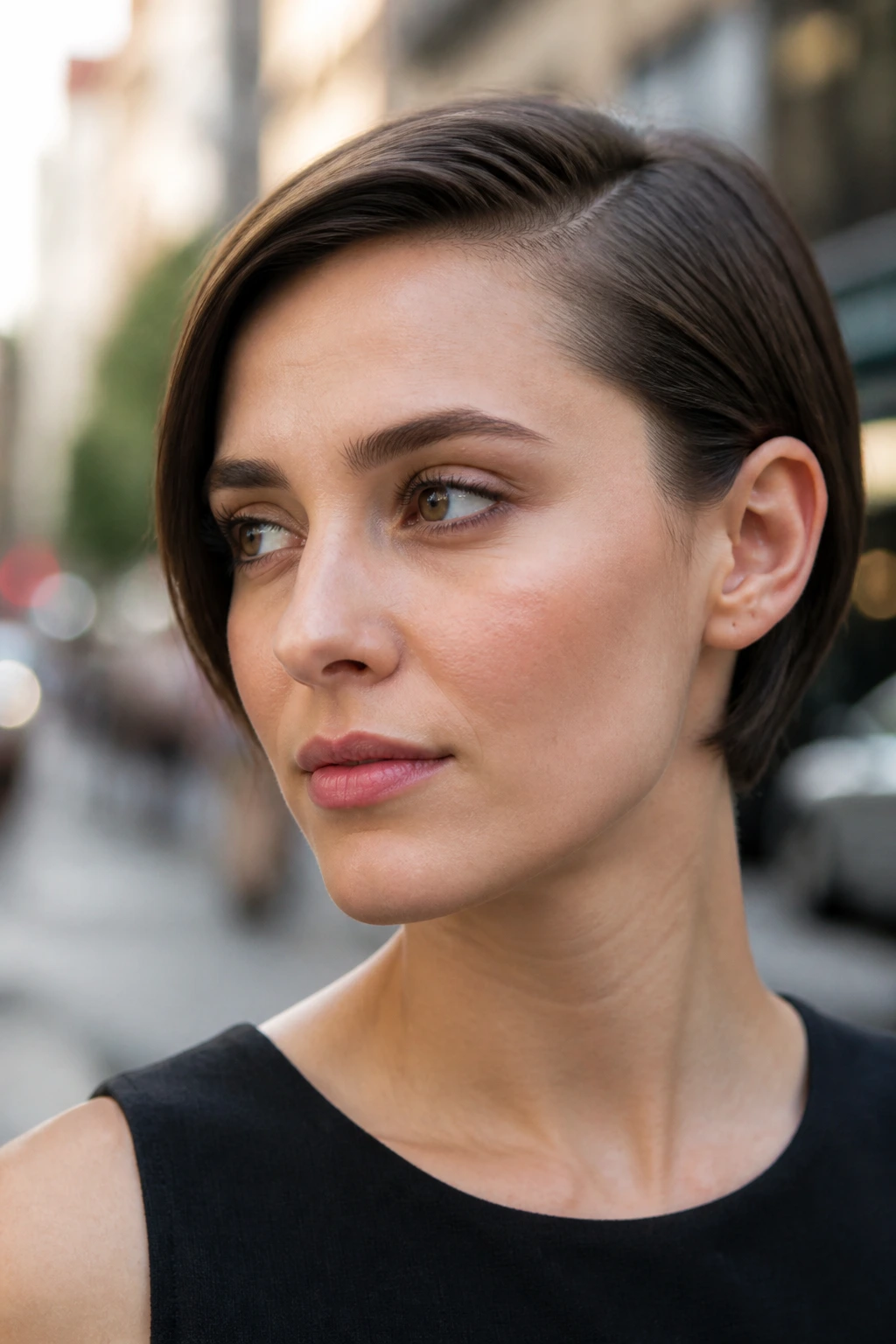
A deep side part can turn a plain pixie into something that feels sharp and a little dramatic. The extra weight on one side creates lift at the crown, which is useful if your hair lies flat or your face needs a bit more angle. The shorter side should stay neat near the temple; the longer side can sweep across the forehead without swallowing it.
This one is strong on fine hair because the part itself adds instant shape. Blow-dry the roots in the opposite direction first, then flip them back once they’re half dry. That tiny maneuver gives you lift without needing a mountain of mousse.
I like this cut when the top has enough length to move, but the sides are clipped or tapered close. It keeps the style from looking helmet-like. A soft hold hairspray keeps the sweep in place without freezing it.
3. Blunt Chin-Length Bob
A blunt chin-length bob is not shy. The straight edge lands right where the jaw wants attention, and that makes the whole haircut look expensive even when the styling is plain. It is the kind of cut that asks for a clean finish and gives back a lot in return.
Thicker hair loves this shape because the weight helps the line hang straight. Fine hair can wear it too, but the cut needs to be precise or it starts to look thin at the bottom. Dry it with a paddle brush, then run a flat iron once through the mid-lengths and ends to smooth any puffing.
What makes it work
- The blunt edge makes the perimeter look fuller.
- Chin length pulls the eye upward to the face.
- The style stays neat with a simple center or side part.
This is one of those cuts that needs regular trims. Every six to eight weeks keeps the line crisp, and that crispness is the whole point.
4. Tucked-Behind-the-Ear Crop
Tucking short hair behind the ear sounds small. It isn’t. On a straight crop or a short bob, that move opens the face, shows the cheekbone, and makes the haircut feel cleaner without changing the cut itself. I reach for this when a style needs a quick reset and I do not want to start over.
The trick is to keep the tucked side smooth at the temple and lightly polished at the ends. A wax stick or a tiny bit of edge balm helps keep the front from popping loose, which is especially useful if your hair has little cowlicks near the hairline. The tucked side should look deliberate, not like you were fighting the hair all morning.
This style works well with earrings because the ear suddenly becomes part of the look. It also helps if your short hair grows out unevenly between trims. Tuck one side, leave the other loose, and the whole cut feels more composed.
5. Slicked-Back Wet-Look Pixie
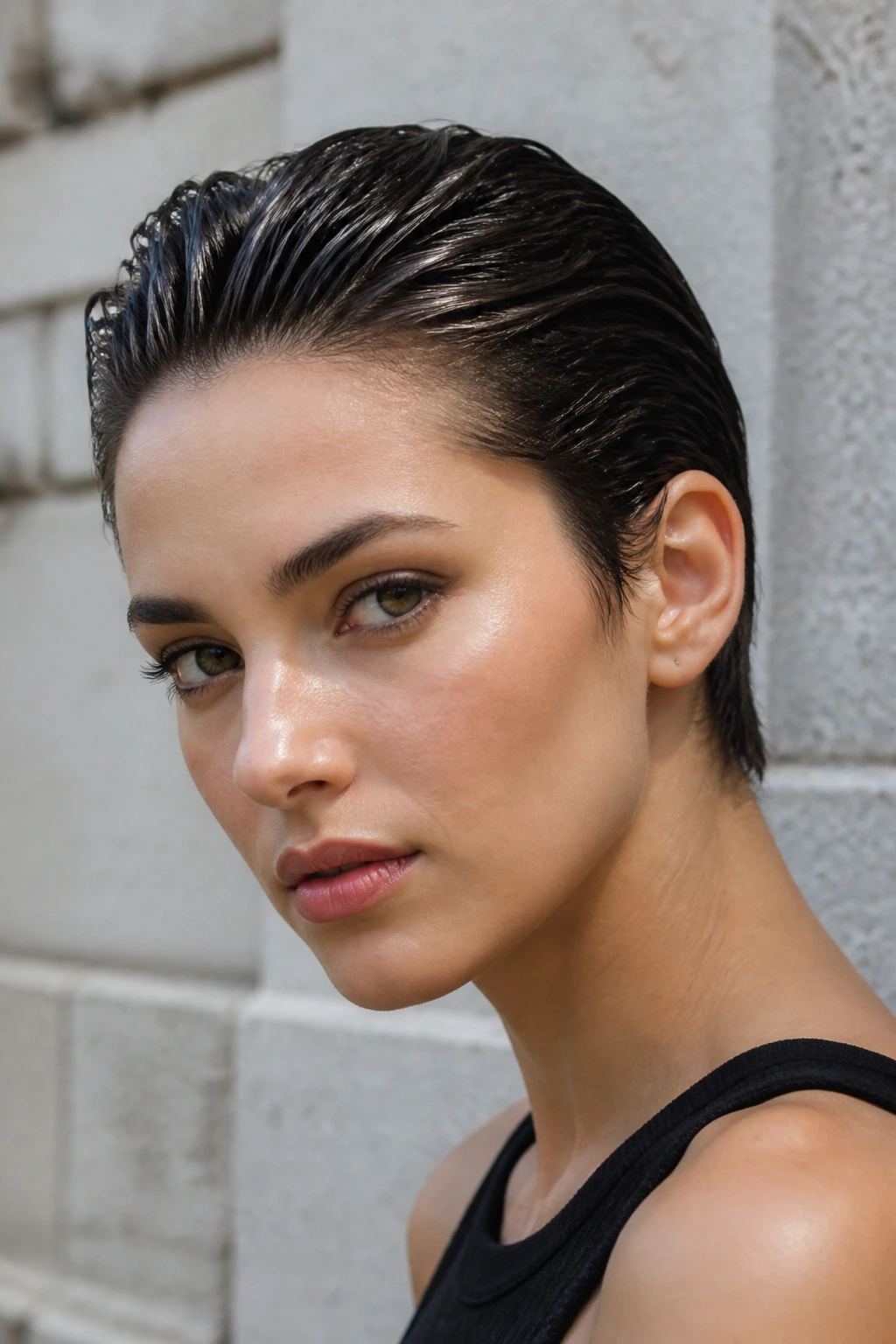
Wet-look hair is not greasy hair. That distinction matters. On a short pixie, a slicked-back finish can look polished and a little fierce, especially when the hair is shiny at the crown and neat at the nape. It works best when the haircut itself is clean through the back and sides.
Start on damp hair with a strong-hold gel or styling cream, then comb it back from the forehead and temple. Keep the front flatter than you think you need; once the hair dries, it rises a touch. If you want a bit of piecey definition, break the front lightly with your fingertips before the gel sets.
This style is useful on hot days, on humid days, and anytime you want short hair to stay off the face. The downside is simple: it shows every uneven patch. That is why the product application has to be smooth from the start.
6. Feathered Side-Swept Pixie
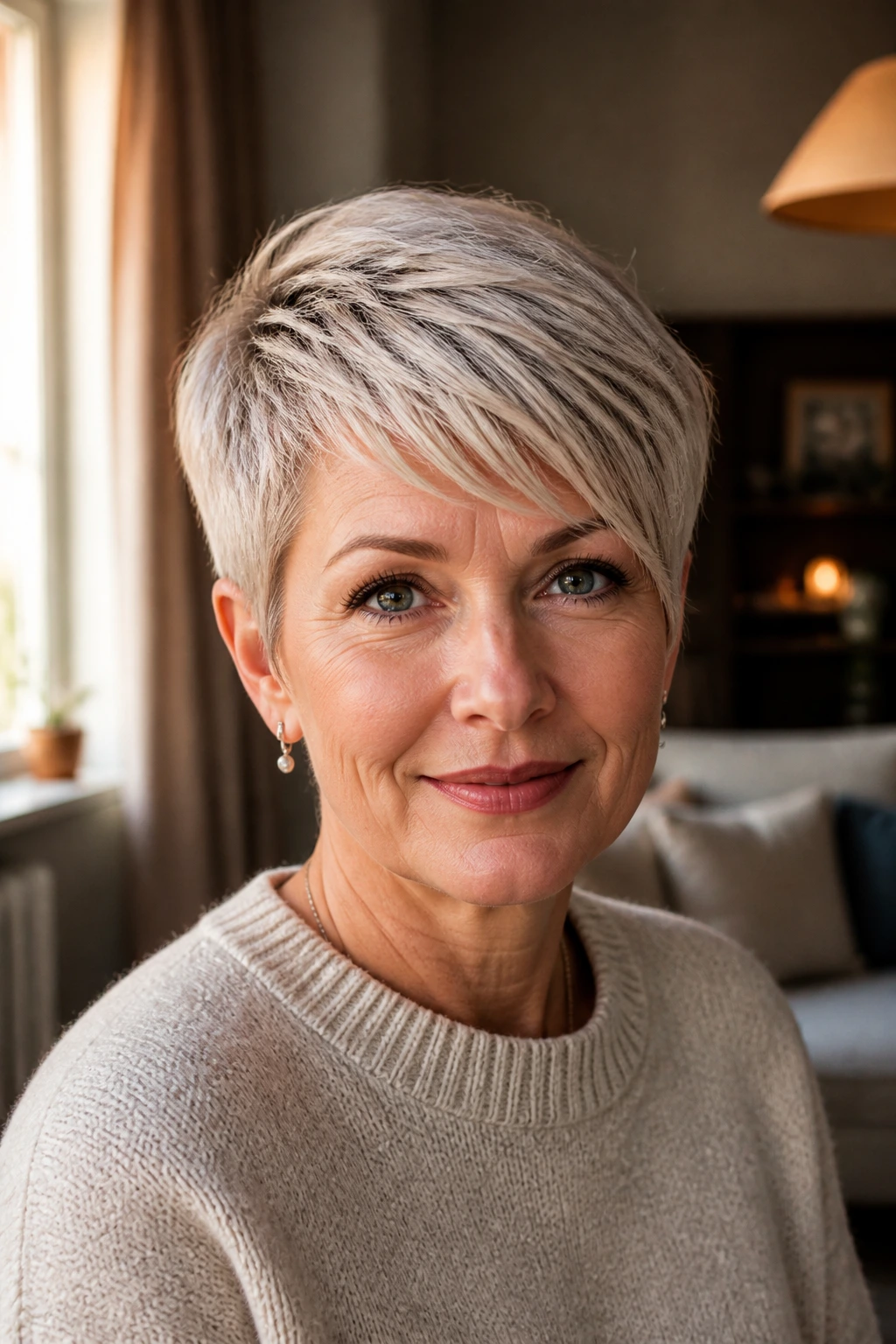
A feathered pixie with a side-swept front softens the face without losing the neatness that straight hair gives you. The difference is in the fringe. Instead of lying flat and blunt, the front pieces are brushed diagonally across the forehead and separated just enough to look light.
This cut is smart for strong cheekbones, sharper jaws, or anyone who wants a little movement around the eyes. A round brush can give the fringe a gentle bend while keeping the rest of the pixie smooth. I’d avoid heavy oils here; they drag the feathering down and make it sit like one solid sheet.
The nice thing about this style is that it grows out gracefully. Even when the fringe gets longer, it still has a side-swept shape. That buys you time between cuts, which is no small thing with short hair.
7. Straight A-Line Bob
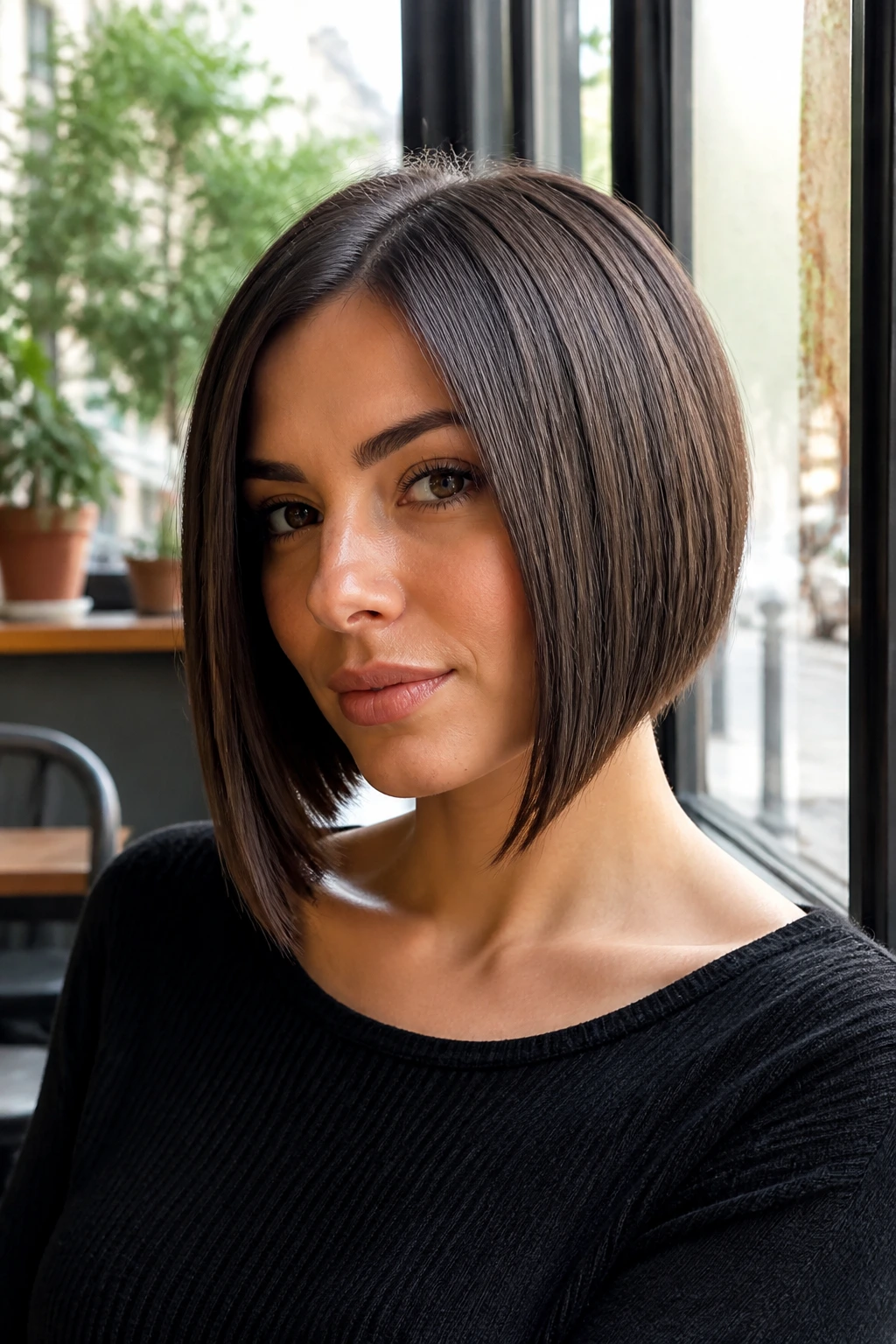
An A-line bob gives you angle without extra fuss. The back sits slightly shorter, the front hangs a little longer, and straight styling makes that slope visible instead of hiding it in movement. If you like a haircut that feels engineered, this is one of the better choices.
The angle works because it pulls the eye forward and down. That can be flattering on round or square faces, since it creates a bit of length near the cheeks. Keep the front pieces smooth and let the back stay close to the neck; if the back puffs out, the whole effect turns bulky.
I prefer a precise blow-dry on this cut, then one light pass with a flat iron near the ends. No need to chase glassy perfection. You want the line to be readable, not stiff.
8. Jaw-Length One-Length Bob
A one-length bob that stops at the jaw is blunt in the best way. There’s no hidden layering to distract from the shape, so the haircut looks tidy and full even when the styling is minimal. Straight hair makes that even clearer.
This is a smart pick for thick hair because the weight helps the ends sit down. If your hair is fine, the cut has to be dead even or the bottom starts looking wispy. I’d keep the part simple and the finish smooth, then use a flat brush to direct the ends inward just enough to avoid a flared shape.
The beauty of this cut is how little it needs. Clean conditioner, heat protectant, a careful blow-dry, and a little shine on the tips. That’s it. Anything heavier tends to work against the line.
9. Mini Lob With Soft Ends
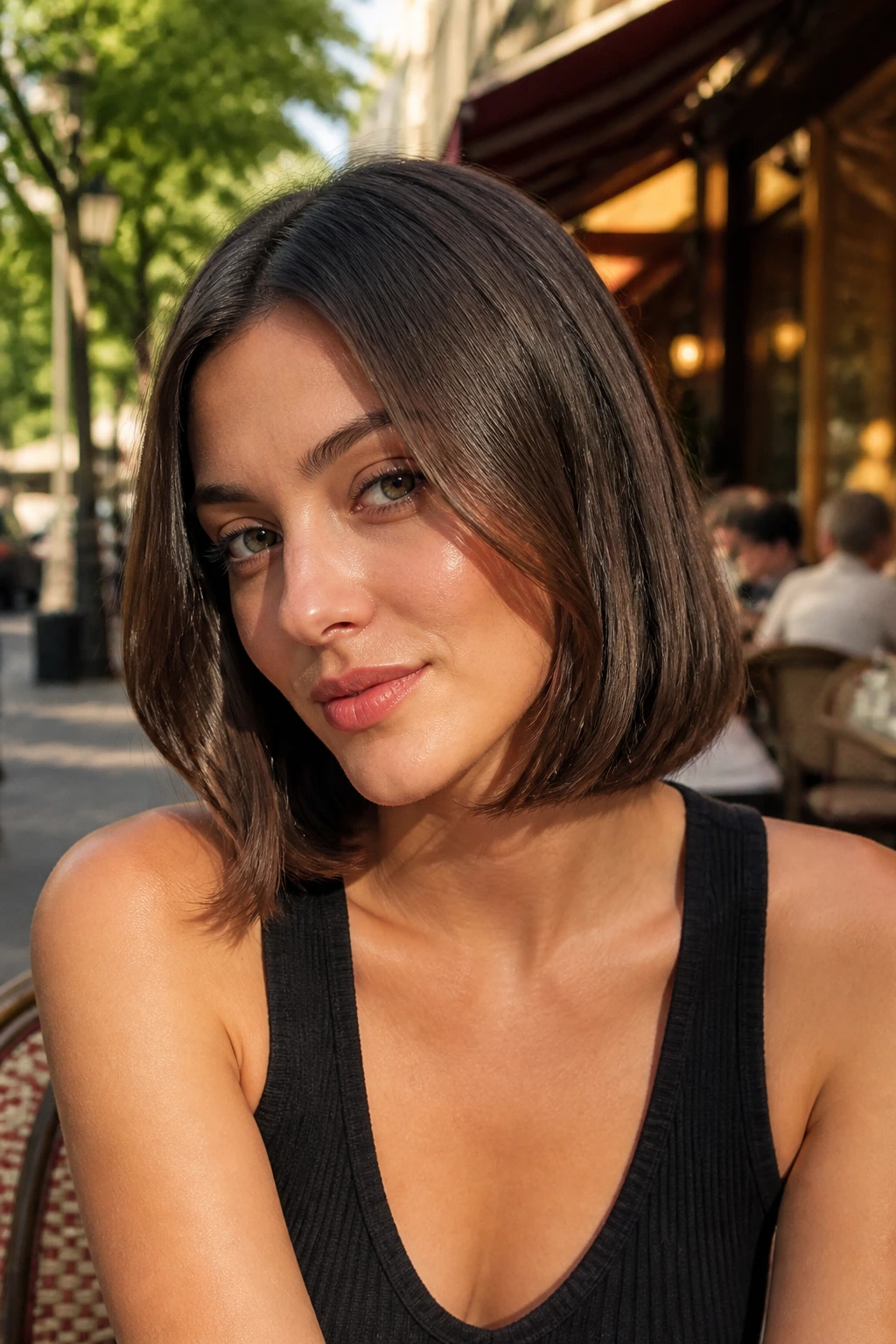
A mini lob is the longer edge of short hair, and that gives you a little more room to play. When the ends are kept soft and straight, the style lands somewhere between bob and bob-grown-out, which can be useful if you want movement without losing the short feel. It’s especially good if you’re growing out a pixie or a shorter bob.
The soft ends matter. Keep them sleek, but let them rest rather than tuck hard under. A flat iron can give the outer inch a very subtle bend, which keeps the shape from feeling blocky. If your hair is thick, ask for internal weight removal rather than aggressive layering; too many layers here turn the ends ragged.
This cut pairs well with a middle part or a low side part. It is also one of the easiest short styles to pin back or tuck for a change of mood.
10. Micro Fringe and Sleek Crop
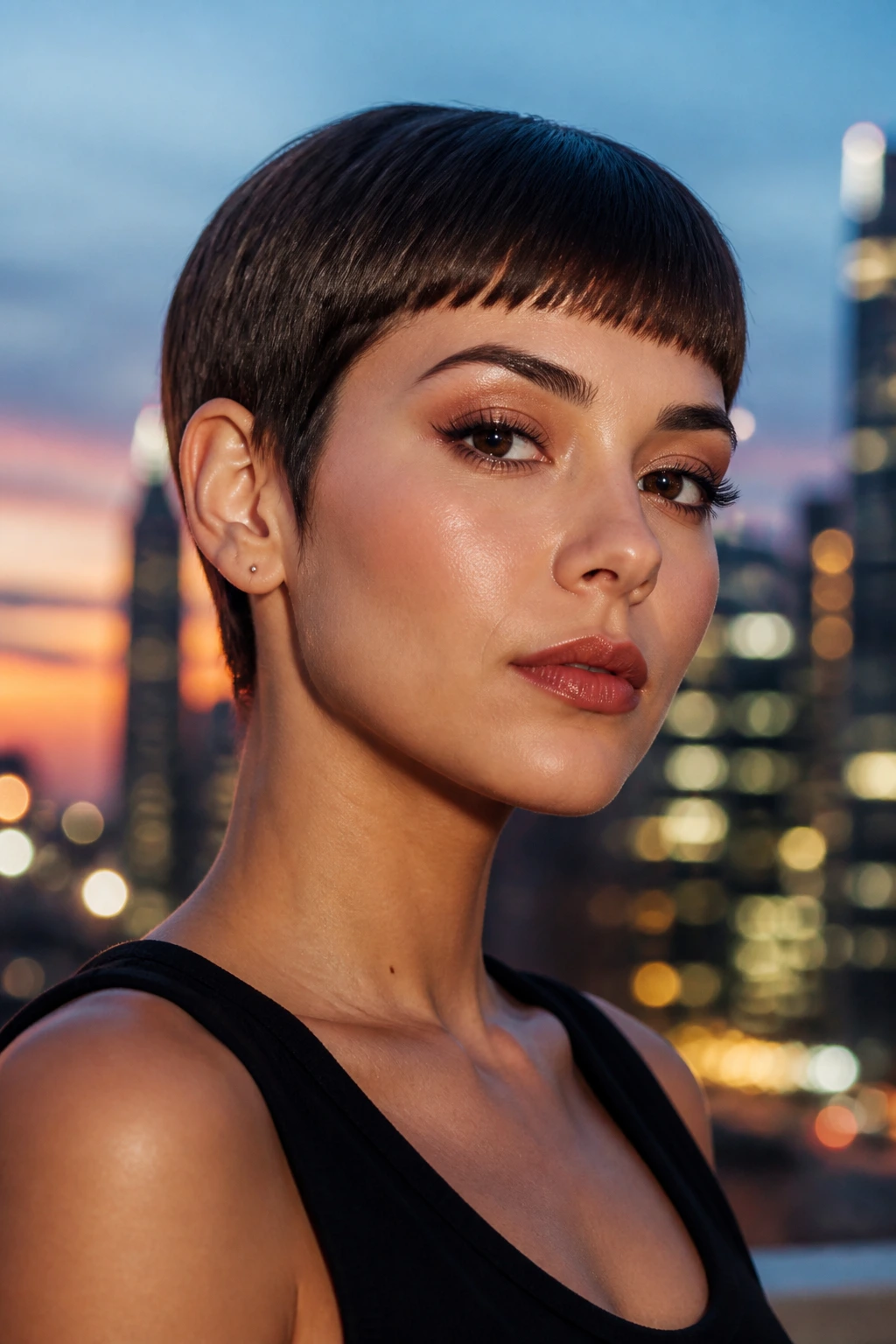
A micro fringe changes short straight hair fast. The little strip of bangs across the forehead gives the whole cut a graphic edge, and that edge looks strongest when the rest of the hair stays smooth and close to the head. If you like bold shapes, this one has real personality.
The fringe needs more attention than the rest. Keep it clean, dry it first, and use a narrow flat iron or a tiny round brush to keep the line neat. The crop around it can stay simple. If the fringe gets oily, the style collapses into something messy instead of sharp.
This is not a low-maintenance choice. It does reward a precise trim, and the payoff is immediate. The face looks framed, the eyes stand out, and the haircut feels deliberate from the first glance.
11. Angled Bob With Face-Framing Sides
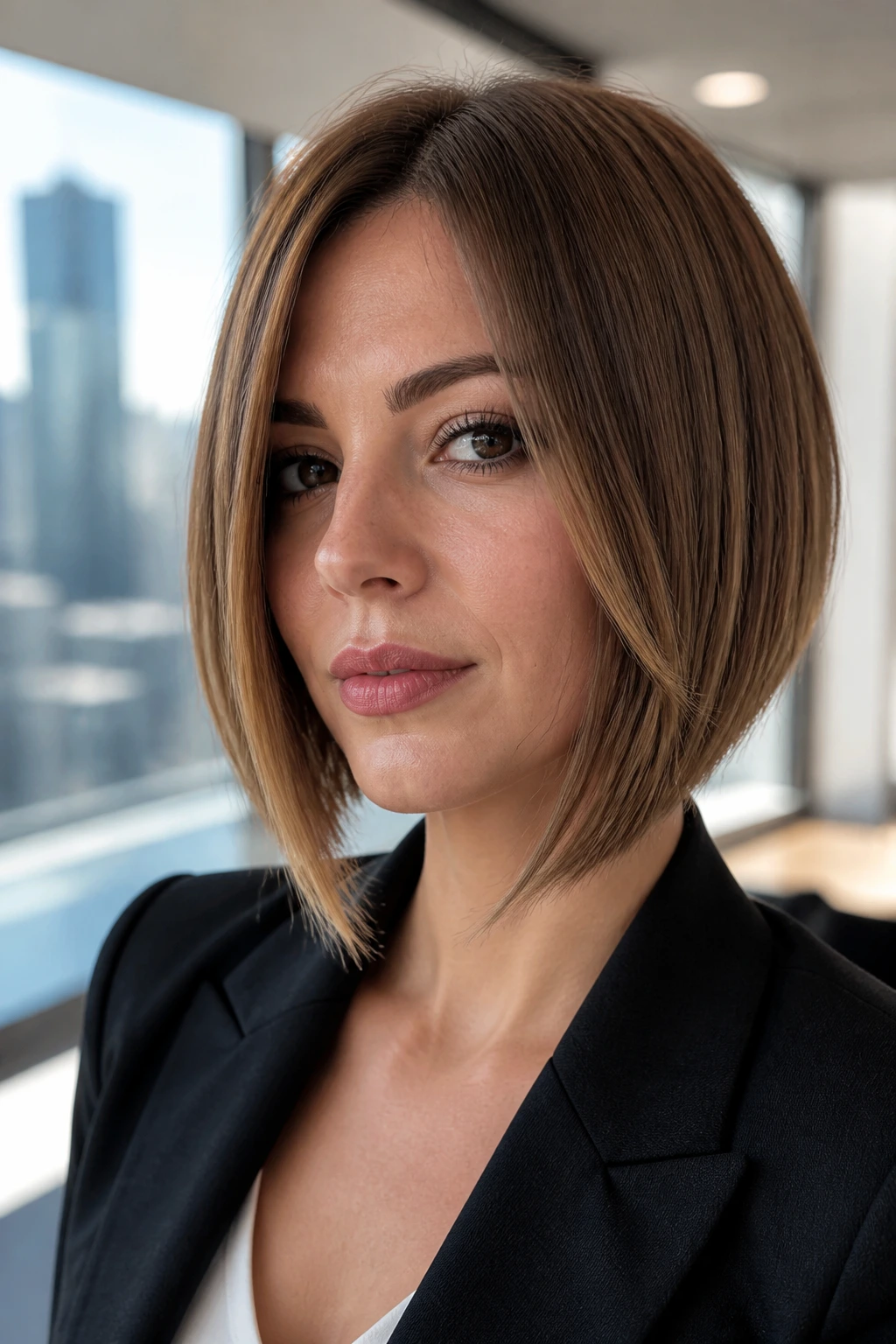
A face-framing angled bob is the softer cousin of the classic A-line. The front pieces sit a little longer, and that length can be brushed inward or left to skim the cheek. Straight styling makes those front angles do the work without relying on texture.
I like this version when the face needs a little length or when a blunt bob feels too strict. The longer front pieces draw the eye down, while the back stays neat and lifted off the neck. Use a round brush only at the ends if you want a hint of curve; otherwise, a paddle brush and flat iron will keep the line cleaner.
This style is kind to busy mornings. Once the cut is right, it doesn’t need much coaxing. A center part makes it sleek; a side part shifts the mood without changing the haircut itself.
12. Half-Tucked Lob
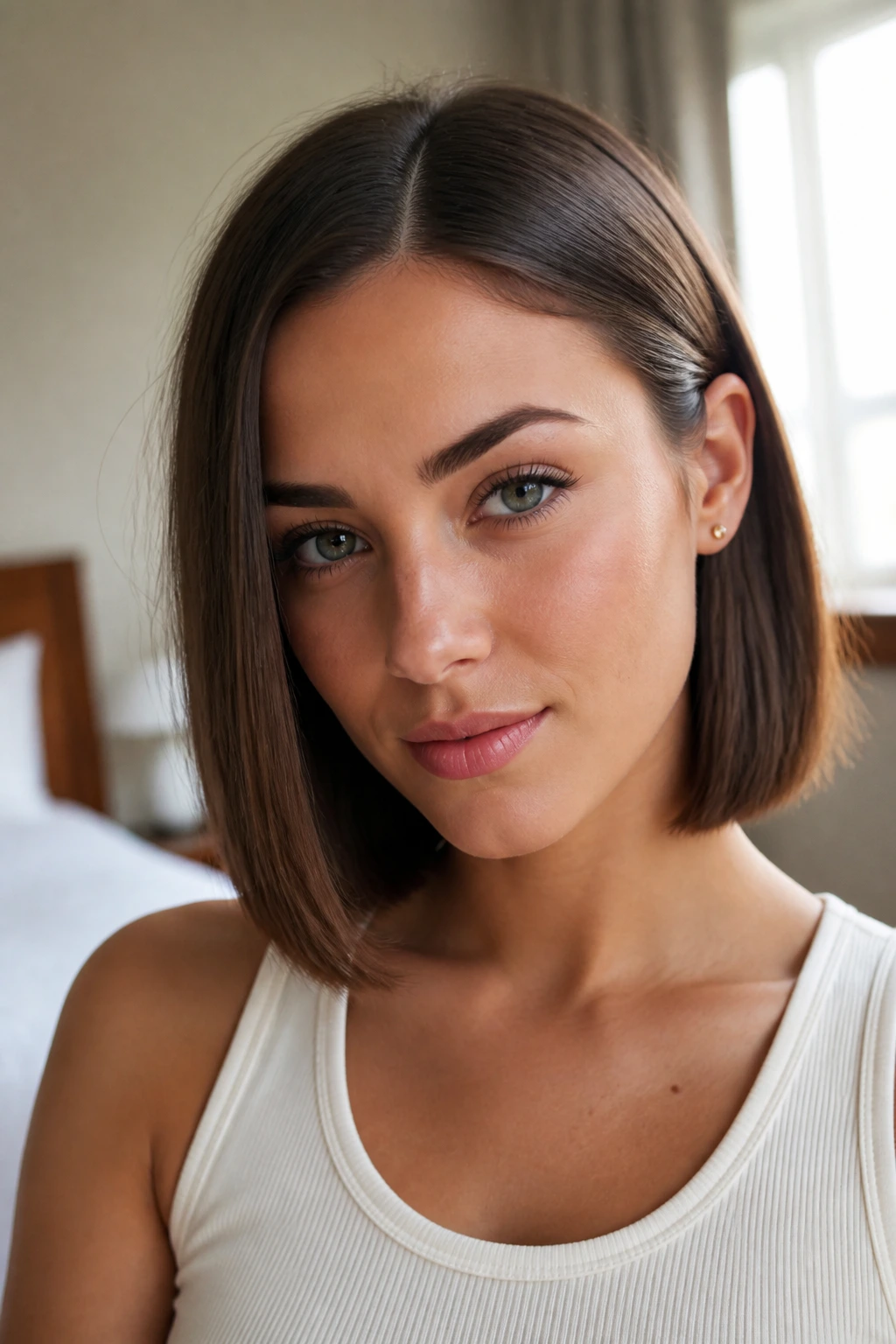
The half-tucked lob is one of those little styling tricks that looks more complicated than it is. One side goes neatly behind the ear. The other stays forward, usually grazing the cheekbone or collarbone. On straight hair, that asymmetry feels crisp instead of casual.
The style works because the contrast creates movement without waves. It’s useful on days when you want to keep hair out of one eye but do not want a full updo. A light mist of shine spray helps the tucked side stay neat, and a pin hidden under the hair can keep the ear side from slipping free.
I like this with a clean middle part or a slightly off-center part. It reads polished but not stiff. And it’s one of the fastest ways to make a straightforward lob feel styled.
13. Flat-Ironed Shag With Straight Layers
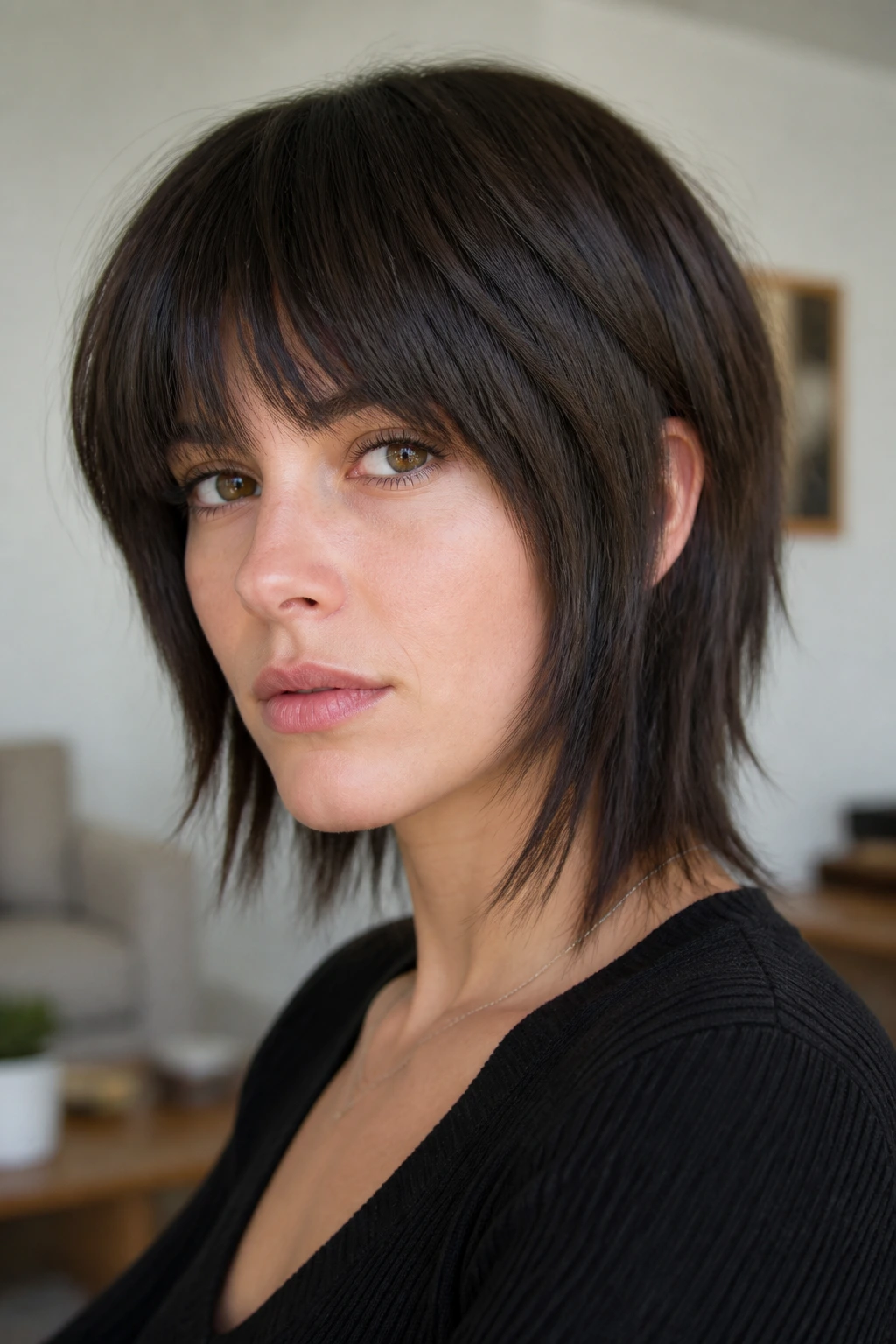
A shag cut does not have to be messy. Straightened, the layers show up in a much cleaner way, and that can be a good thing if you want movement without curls or beach waves. The shape is still layered; the vibe is just tidier.
This is a smart cut for hair that feels heavy at the bottom. The layers remove weight, but when you flat iron them straight, they fall in clean steps rather than flipping all over the place. Keep the top smooth and the ends piecey, not fried-looking. A heat protectant with a little slip matters here because layered ends can get dry fast.
The result is not blunt, and that’s the point. It gives short hair a little swing while staying inside the straight-hair lane. If you want a bit of edge without going full razor-cut, this is a good middle road.
14. Ear-Curve Bob
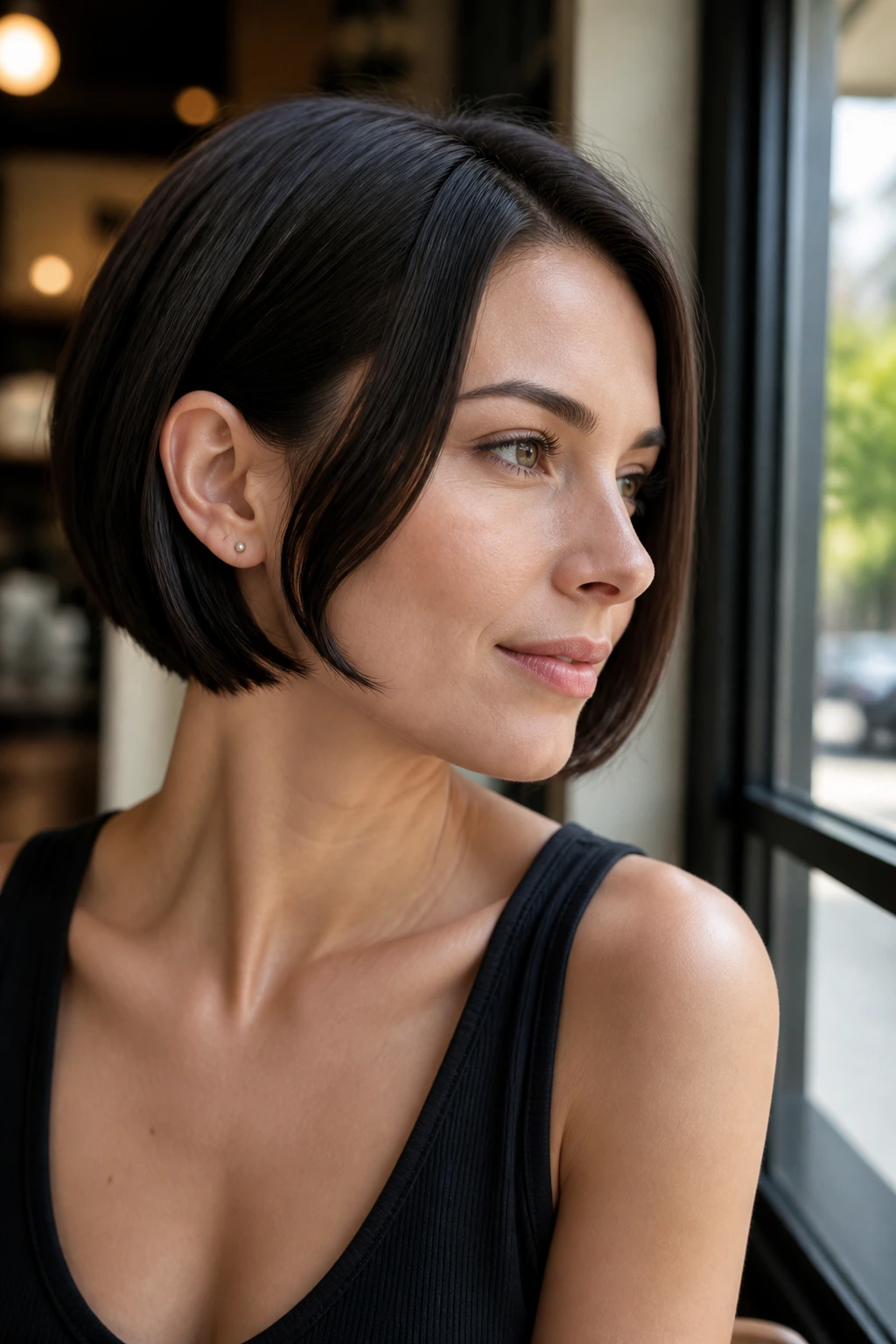
An ear-curve bob sits in that nice space between blunt and tucked. The front pieces curve gently around the ear line, which makes the haircut look tailored instead of boxy. Straight styling keeps the curve visible without adding fluff.
This style is especially useful if your jawline is strong and you do not want the hair to sit hard against it. The curve softens the edge, but the cut still feels clean. Use a paddle brush to guide the hair forward while drying, then use the flat iron only where the pieces need a little bend.
It’s a small thing, that curve. But small things matter in short hair. A quarter-inch of direction at the ends can change the whole silhouette.
15. Glass-Hair Chin Bob
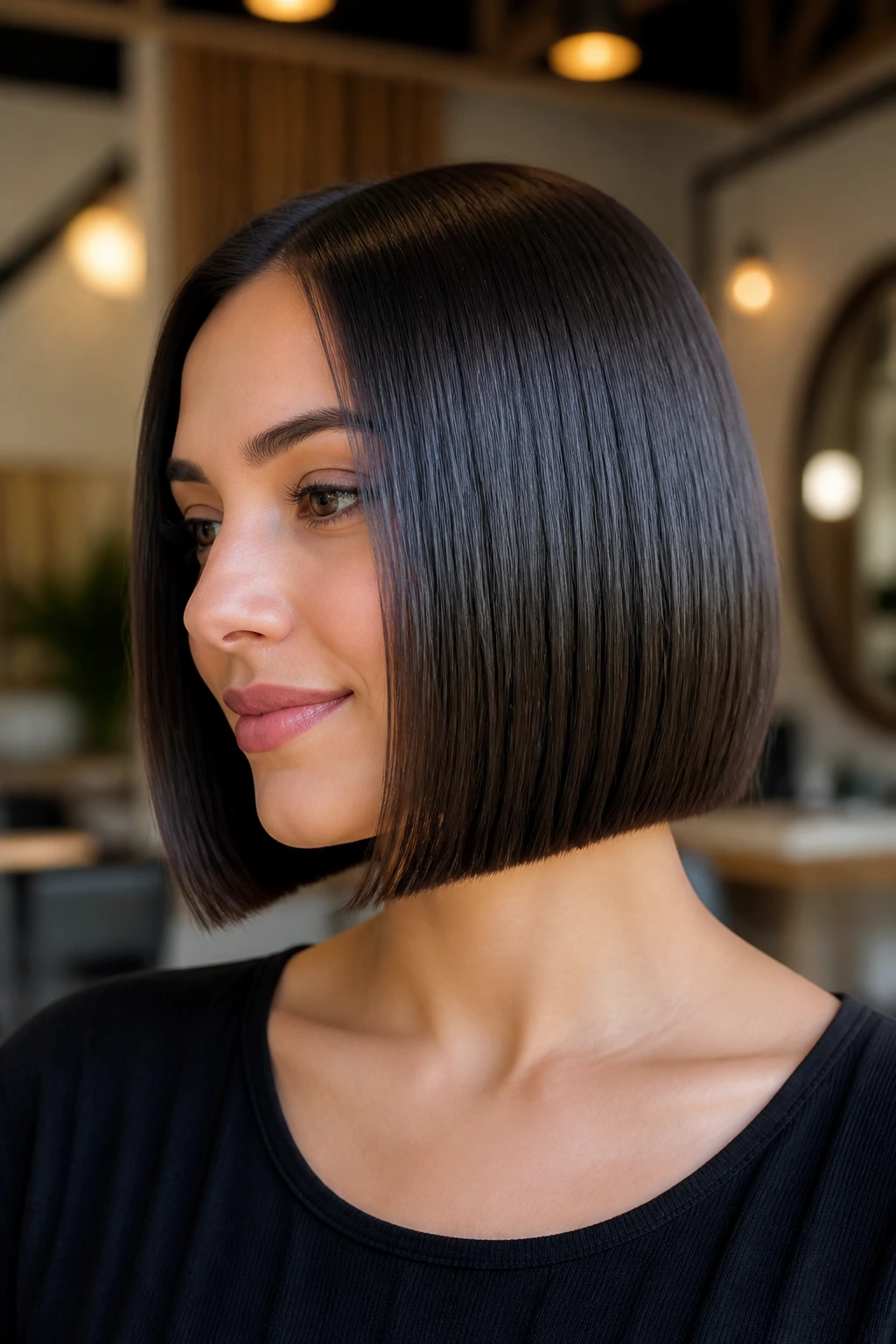
Glass hair is all about shine and control. On a chin-length bob, that mirror finish makes the cut look precise and a little luxurious, even if the actual styling takes only ten minutes. It works best when the hair is healthy enough to handle heat and the cut line is already solid.
To get there, dry the hair smooth first, then pass a flat iron through tiny sections and let each one cool before touching it. Finish with a lightweight shine serum, not a thick oil, or the look slips into oily. The front should be flat enough to reflect light, but not so slick that the scalp shows in a harsh way.
This is one of my favorites for evenings because it looks clean under indoor light. It also photographs in a way that makes the sharpness of short hair obvious. Not soft. Not fussy. Just polished.
16. Side-Parted French Bob

The French bob has a little attitude built in, and the side part gives it a softer lean. When the hair is straight and the ends sit around the jaw, the shape feels easy but controlled. There’s usually a small bend at the ends, nothing dramatic, which keeps it from reading severe.
This cut suits people who want short hair without the hard edge of a blunt center part. It plays nicely with a fringe, though it does not need one. A side part shifts the weight and creates a little lift near the crown, which helps if the top tends to fall flat.
I like this style with a matte lip and a clean neckline. It has that neat, slightly undone quality that comes from a good cut more than a lot of styling. The hair does not need to be perfect. It needs to sit well.
17. Sleek Undercut Pixie
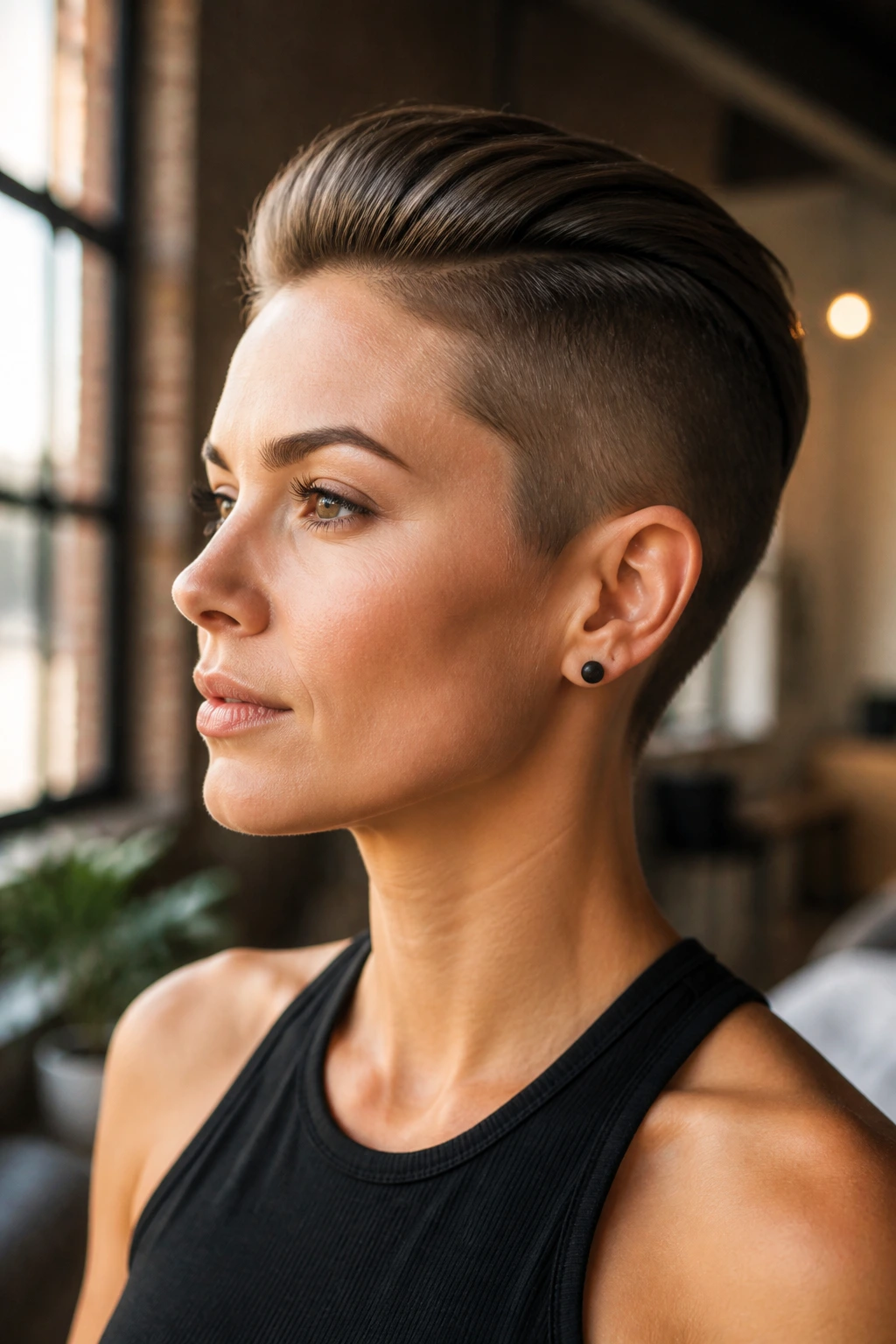
An undercut pixie solves one of the more annoying short-hair problems: too much bulk around the sides and back. When the lower sections are clipped close, the longer top can lie smooth without puffing outward. Straight styling makes the contrast obvious.
This cut is especially useful for dense or coarse hair. The top can be brushed forward, swept sideways, or smoothed back depending on your mood, and the undercut keeps the shape from getting boxy. Use a small amount of pomade or paste on the top only. Too much product near the scalp will flatten everything into a slick lump.
The undercut also buys comfort. Less hair on the neck. Less drying time. Less fighting the shape every morning. That’s a pretty decent trade.
18. Straight Bob With Curtain Bangs
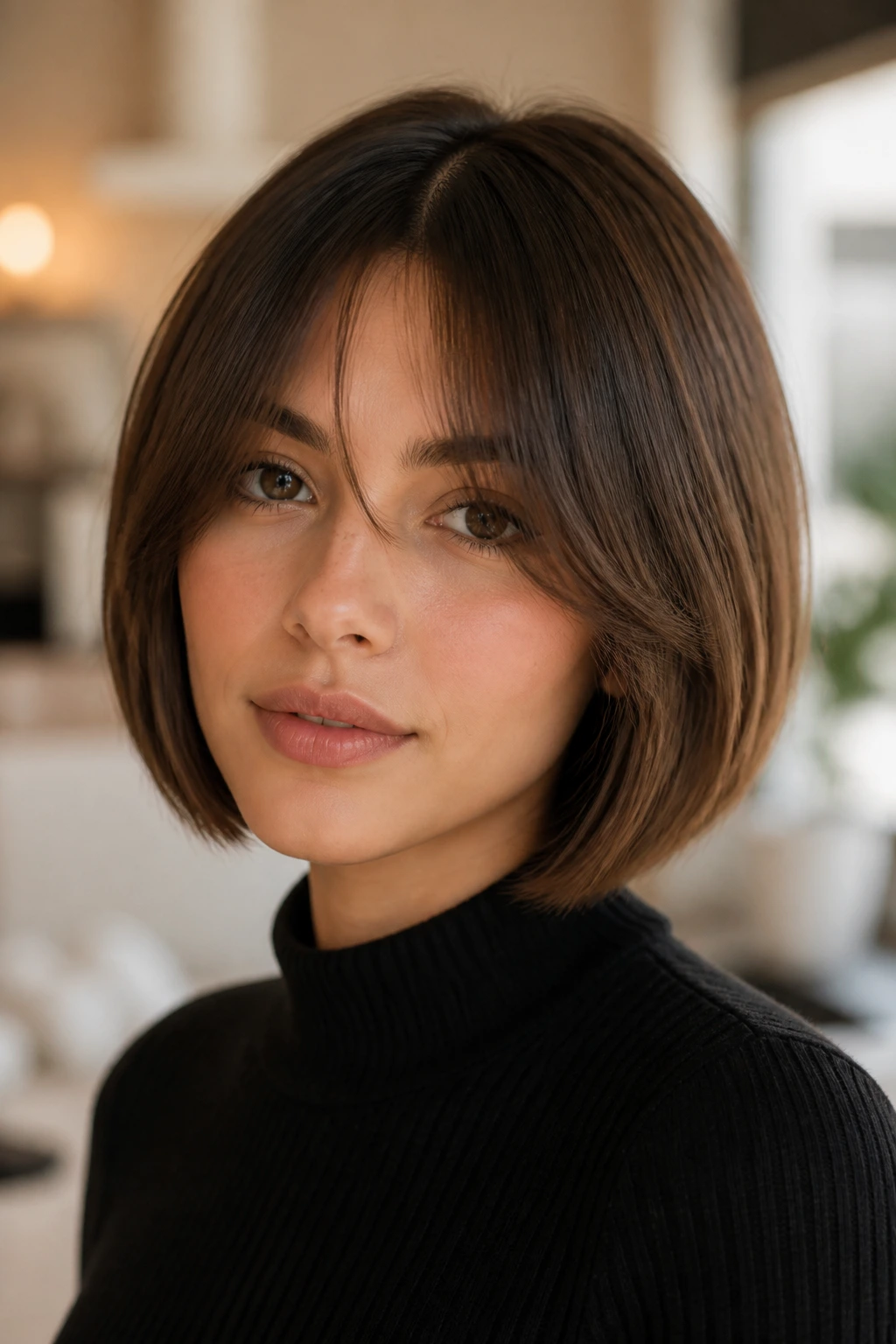
Curtain bangs on a short bob soften the forehead without hiding the face. Straight styling keeps the bangs airy, parted in the middle or slightly off-center, while the bob underneath stays neat and simple. It’s a good answer if a full fringe feels too committed.
The bangs need a little extra care because they set the tone for the whole haircut. Dry them first, then use a round brush or flat brush to keep the bend gentle around the cheekbones. The bob itself can stay smooth and close. That contrast between a soft front and a clean body is what makes the style work.
This look is friendly to a lot of face shapes. It softens the line around the brow, frames glasses well, and keeps short hair from feeling severe. The key is not over-styling the fringe. Too much bend and it loses the lightness.
19. Tapered Neck Crop
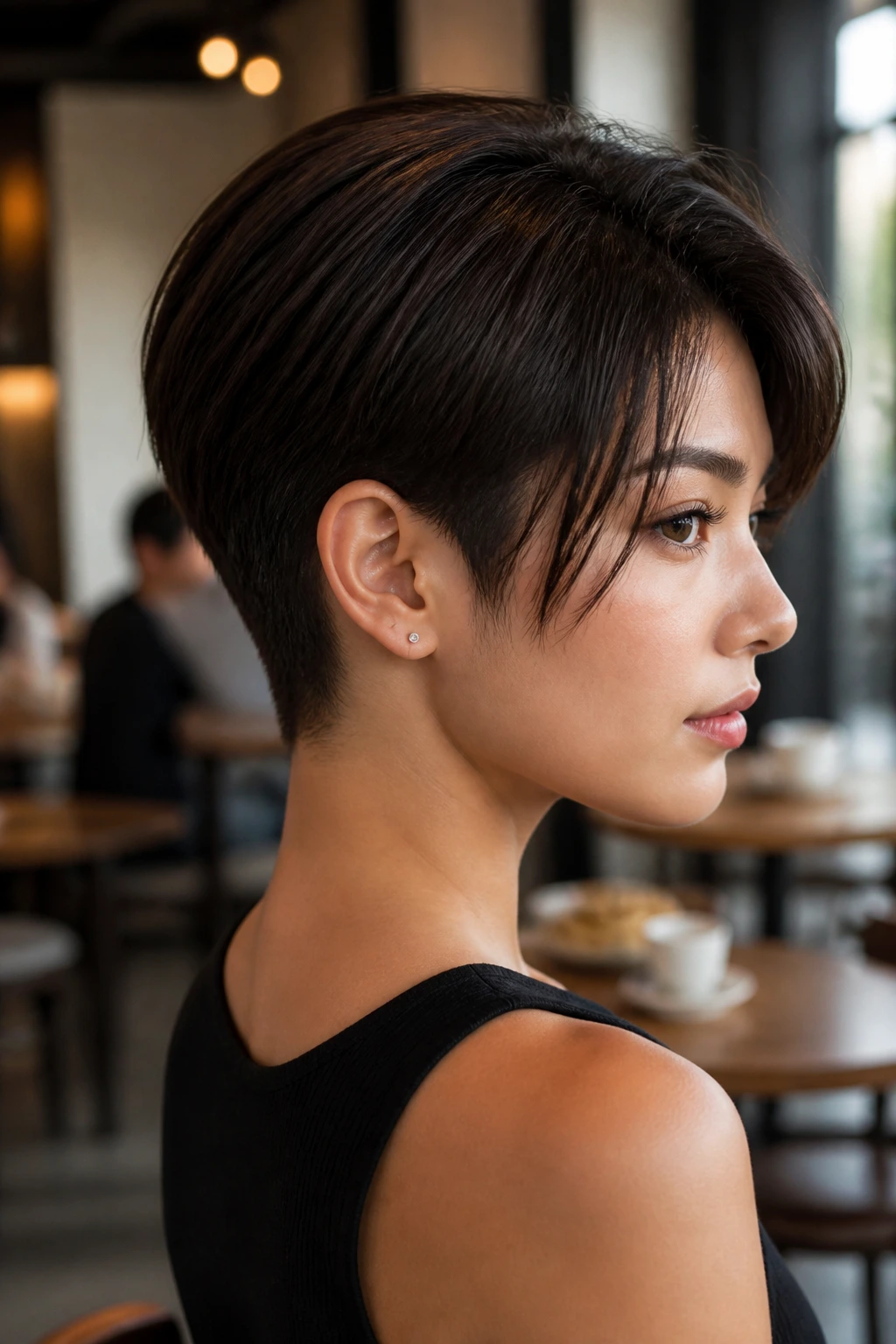
A tapered neck crop is one of the neatest straight styles you can wear on short hair. The nape gets shorter and cleaner, while the top keeps enough length to lie smooth. From the back, the shape looks tidy. From the front, it still has softness where it counts.
This cut is useful if you want short hair that feels precise with little daily effort. The taper keeps the neck cool and reduces bulk, which makes the whole style easier to smooth down. A comb, a blow-dryer nozzle, and a small amount of styling cream are enough most days.
I’d call this a practical cut with a sharp finish. It is not flashy. It is smart. That matters more than people admit.
20. Razor-Edged Short Bob
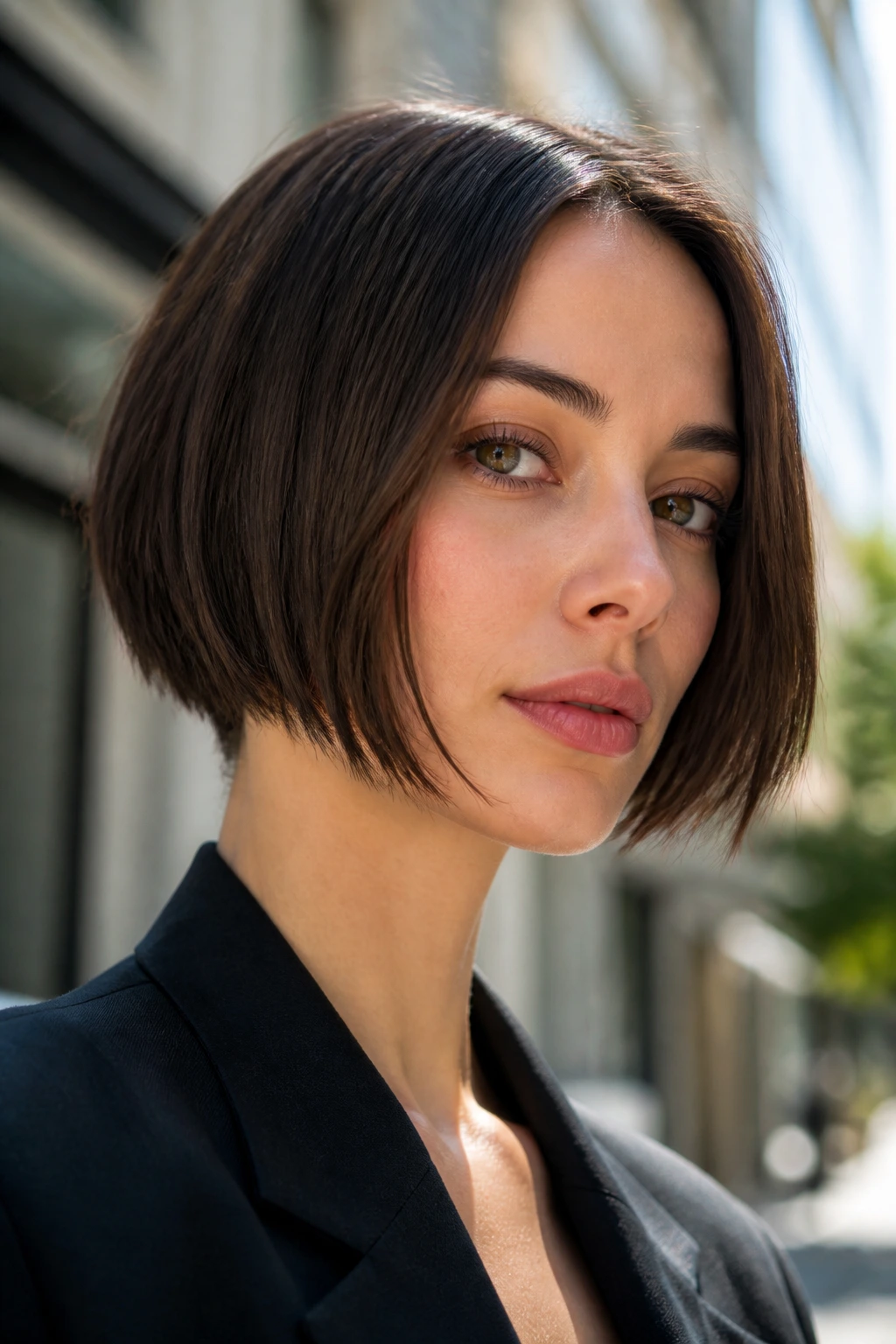
A razor-cut bob has softer ends than a blunt one, which means the straight finish reads a little lighter and less blocky. The movement is subtle, but you can see it most clearly when the hair is smoothed flat. The ends separate in a finer way instead of sitting like one heavy shelf.
This style works well on thicker hair that needs some removal of bulk. It also suits anyone who wants a short bob that doesn’t look too hard around the face. The catch is that razor-cut ends can dry out faster, so conditioning matters. Keep the product on the mid-lengths and ends, and avoid piling heavy cream near the scalp.
The result feels modern without trying too hard. Not blunt. Not fluffy. Somewhere in between, which is often the sweet spot for short straight hair.
21. Side-Swept Fringe Lob

A side-swept fringe lob pulls the eye diagonally, which is useful if you want to soften a long forehead or balance a rounder face. The fringe should sit smooth, not curled into a wave, and the rest of the lob can stay straight and close to the neckline. The contrast gives the haircut shape.
This is the kind of style that looks easy after the cut is done right. The fringe does the framing; the lob carries the length. A flat iron on the front pieces and a paddle brush through the ends are usually enough. If the fringe is too heavy, it will drag over the eye and lose the shape that makes it interesting.
I like this style because it is readable from a distance. You can tell at a glance where the part sits and how the front is moving. That kind of clarity suits straight hair.
22. Polished Blowout Pixie
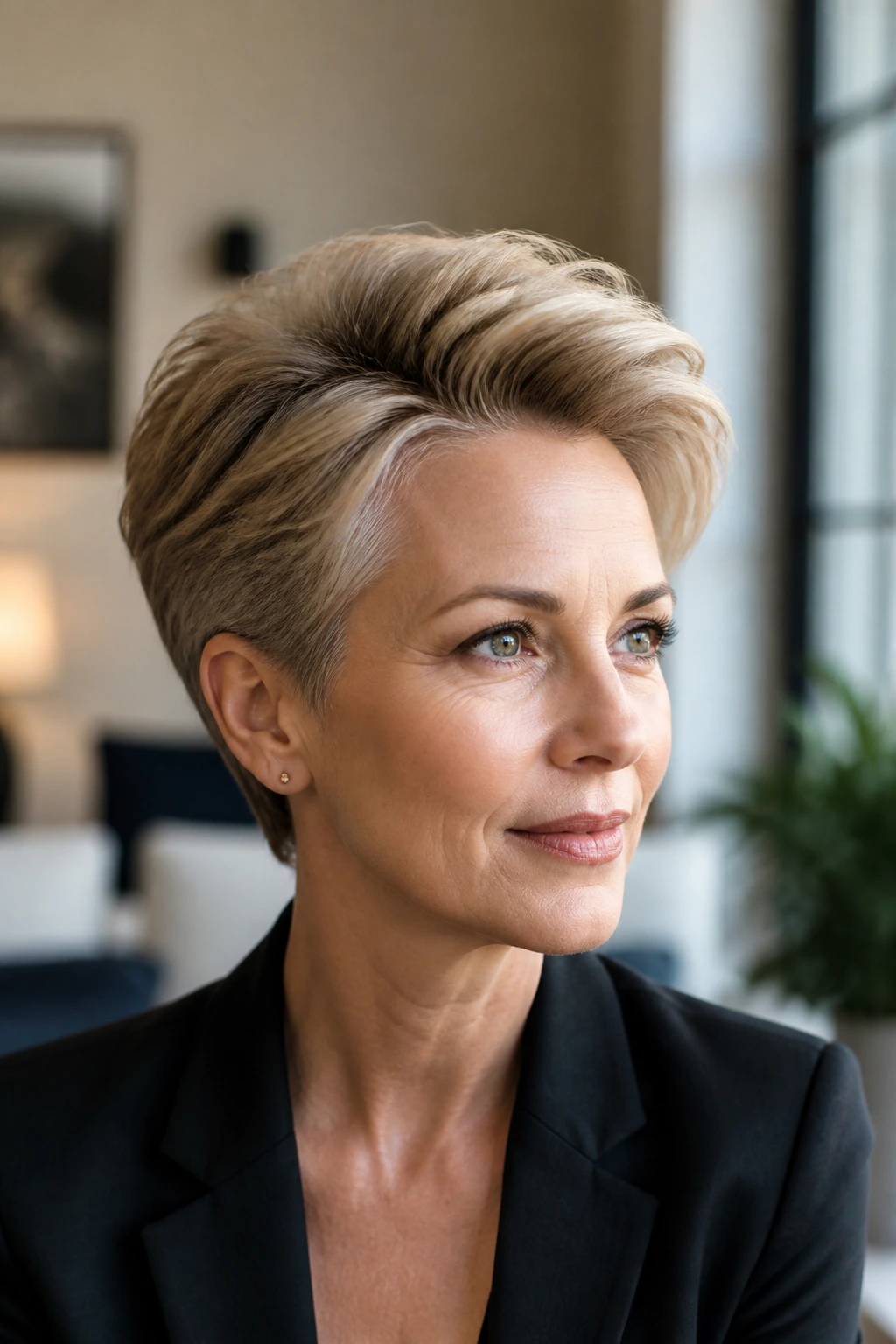
A polished blowout pixie keeps the hair straight but lets the crown have a little lift. The top sits smooth and slightly rounded, while the sides remain controlled. It is a more dressed-up version of a plain pixie, and it works beautifully when you want short hair to feel finished.
The key is tension while drying. Use a small brush to pull the top section up and forward, then cool it in place. That gives height without a stiff helmet effect. The sides can stay flatter and neater, which keeps the style from getting too fluffy.
This one is useful for dinners, events, or any day when a standard pixie feels too plain. It gives the cut some shape without needing waves or curls. A little shine spray at the end finishes the look.
23. Short Collarbone Lob
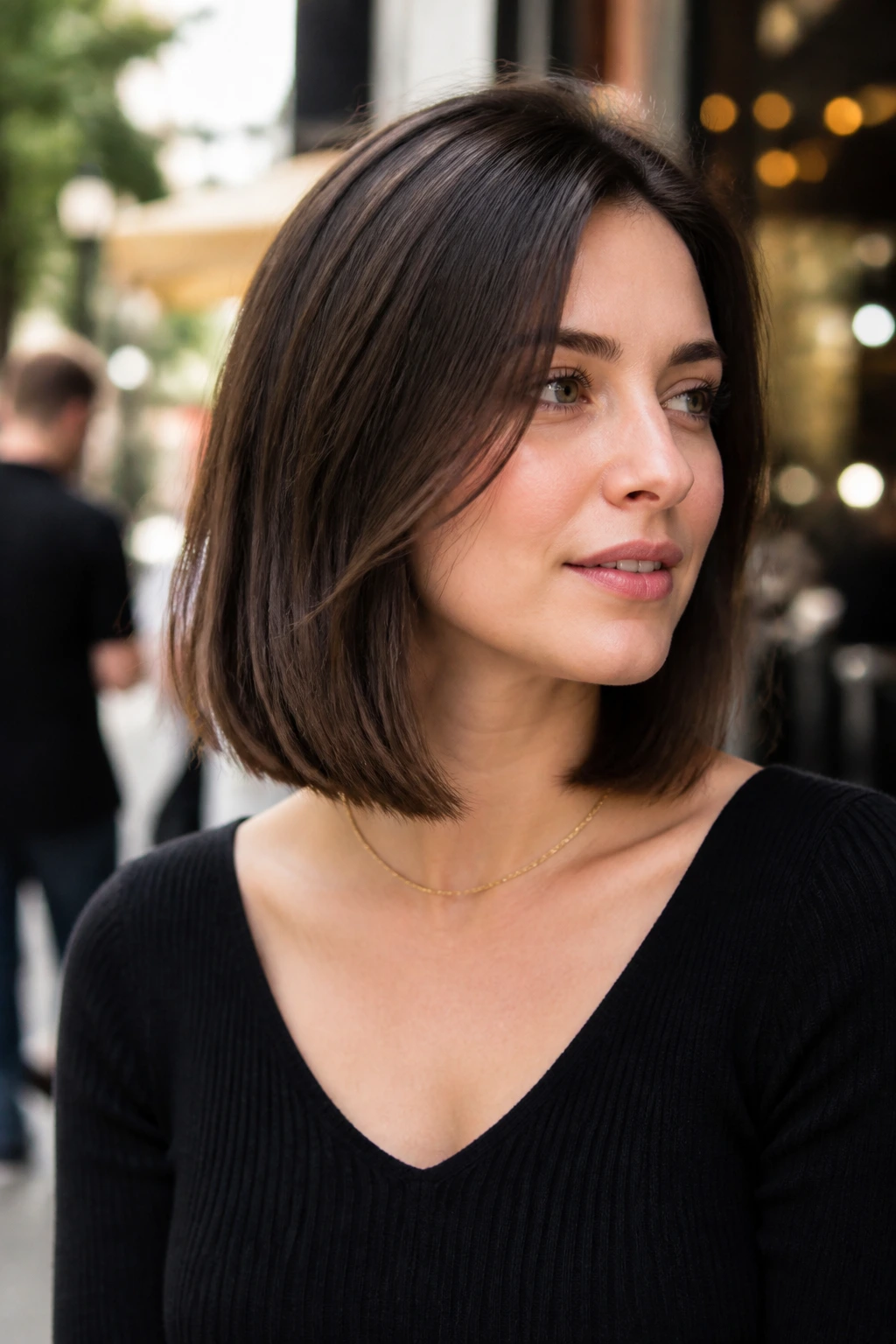
A short collarbone lob sits at the longer end of short hair, which gives you room to bend the ends or wear it poker-straight. The extra length makes it forgiving, but the cut still feels light and manageable. If you are growing out a bob, this is a nice landing place.
Straight styling here should be smooth, not limp. Keep a bit of lift at the roots and let the ends sit clean near the collarbone. If the hair is fine, use a root spray before drying. If it is thick, take smaller sections so the iron can glide without leaving dents.
This style works because it can go polished or casual with almost no change. A middle part looks sleek. A side part changes the mood. The haircut does the heavy lifting, which is always a good sign.
24. Sleek Pin-Tucked Bob
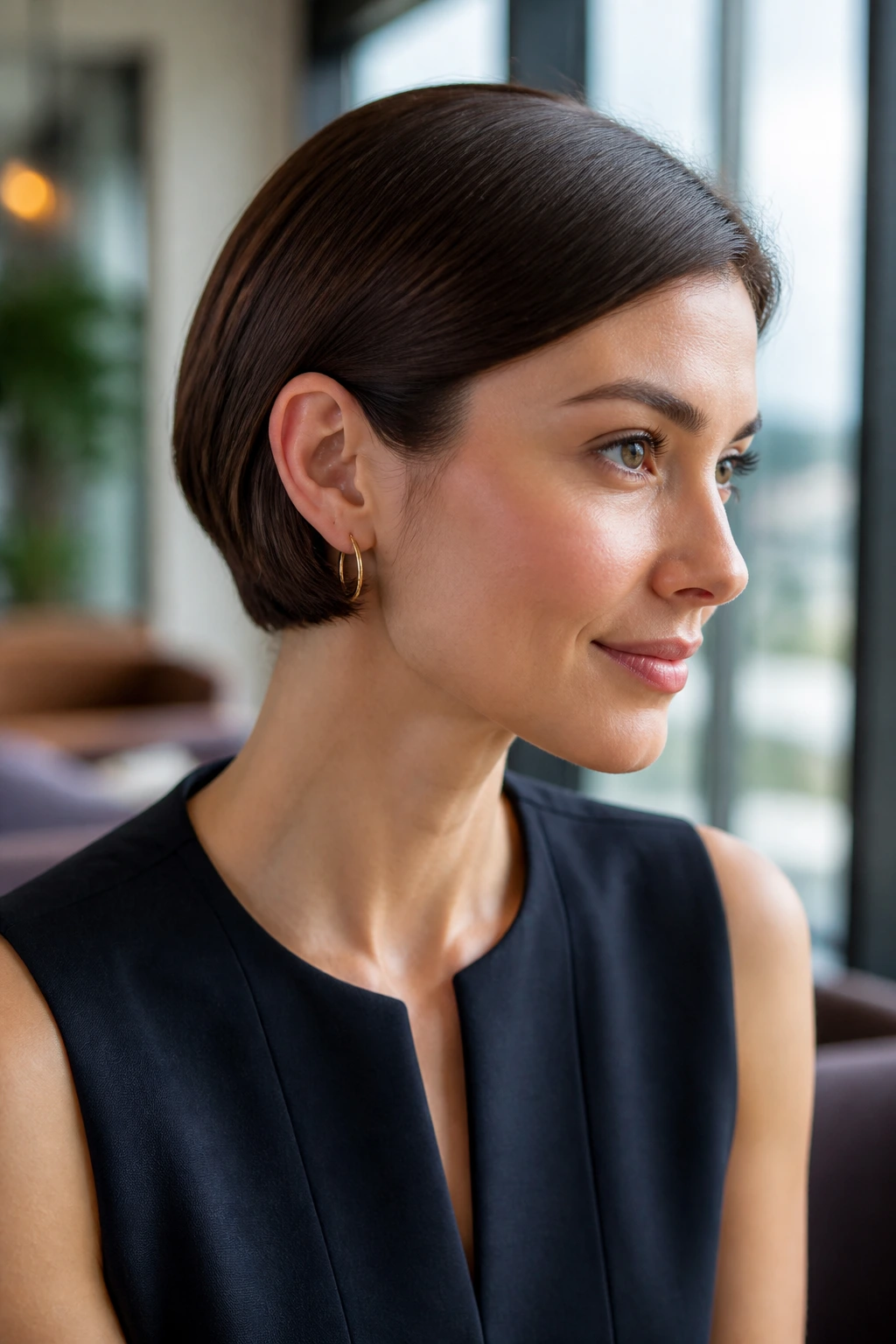
A pin-tucked bob is tidy in the best possible way. The hair is smoothed straight, then pinned low or tucked cleanly so the edges stay controlled and the shape looks intentional. It is a small styling move, but on short hair it makes a big difference.
I like this look when a bob has to stay off the face without becoming a full updo. The pins should disappear under the hair, not sit on top like an afterthought. A strong bobby pin matched to your hair color helps, and a touch of shine spray keeps the tucked sections from looking dry or static.
It’s a practical style that still feels polished. Good for work. Good for dinner. Good for the days when your hair needs to behave, and you want it to do that quietly.
Why Straight Short Hair Feels So Crisp
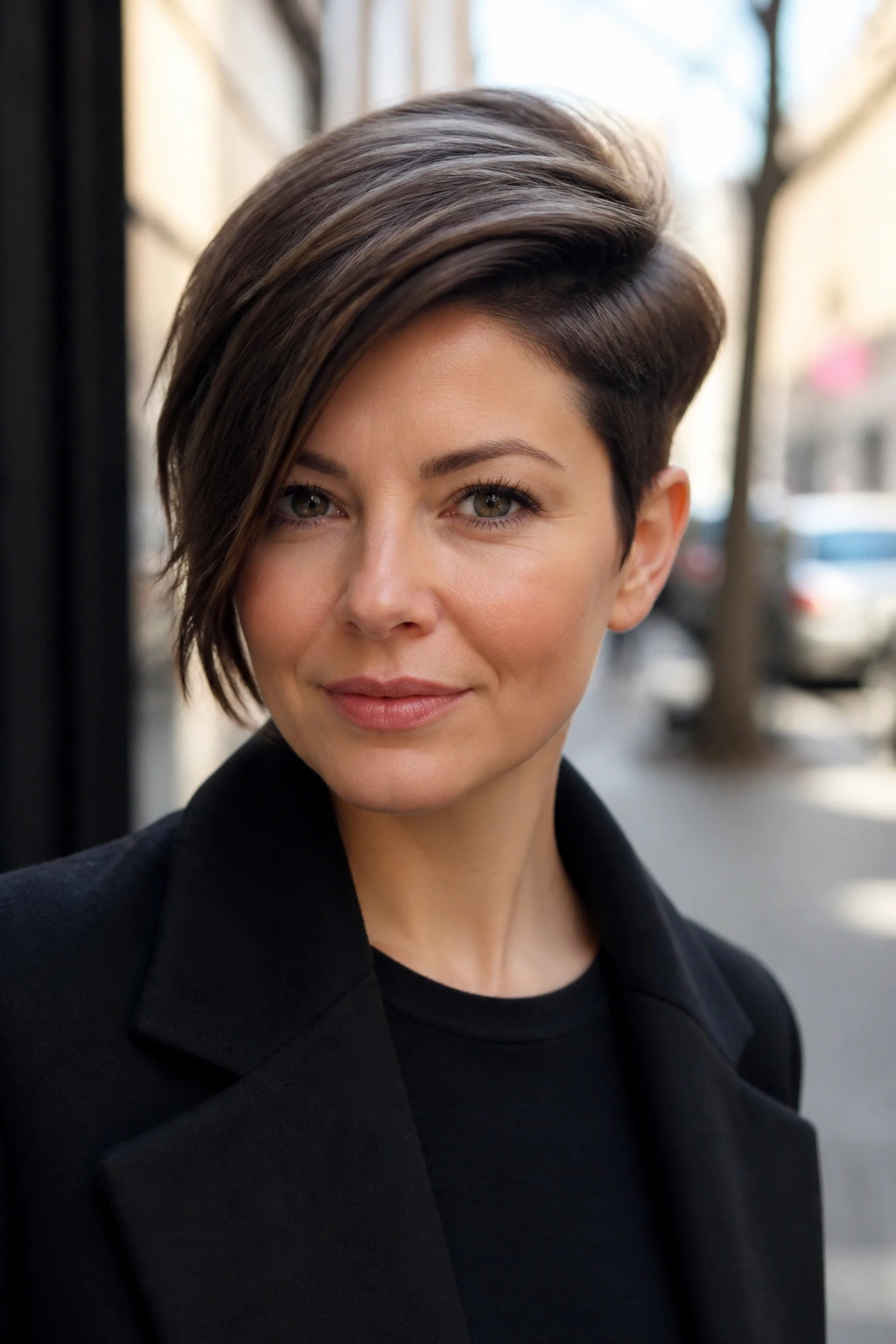
Short hair and straight styling have a strange little advantage: the shape is obvious, so the haircut gets to do more of the work. A clean bob line, a tapered neck, a side-swept fringe — each one reads almost immediately. That’s why sloppy cutting shows up fast, but so does a good cut. There’s nowhere to hide the geometry.
The other reason these styles hold attention is the scale. A change that would barely register on long hair can change the whole head here. Move the part. Tuck one side. Flatten the crown by half an inch. Suddenly the style feels different. That makes short straight hair a bit unforgiving, sure, but also very responsive, which is the better trade.
I’m partial to short styles that look intentional even when they’re simple. The more the cut is doing, the less the styling has to do. That’s the sweet spot.
Essential Tools for a Smooth, Short Finish
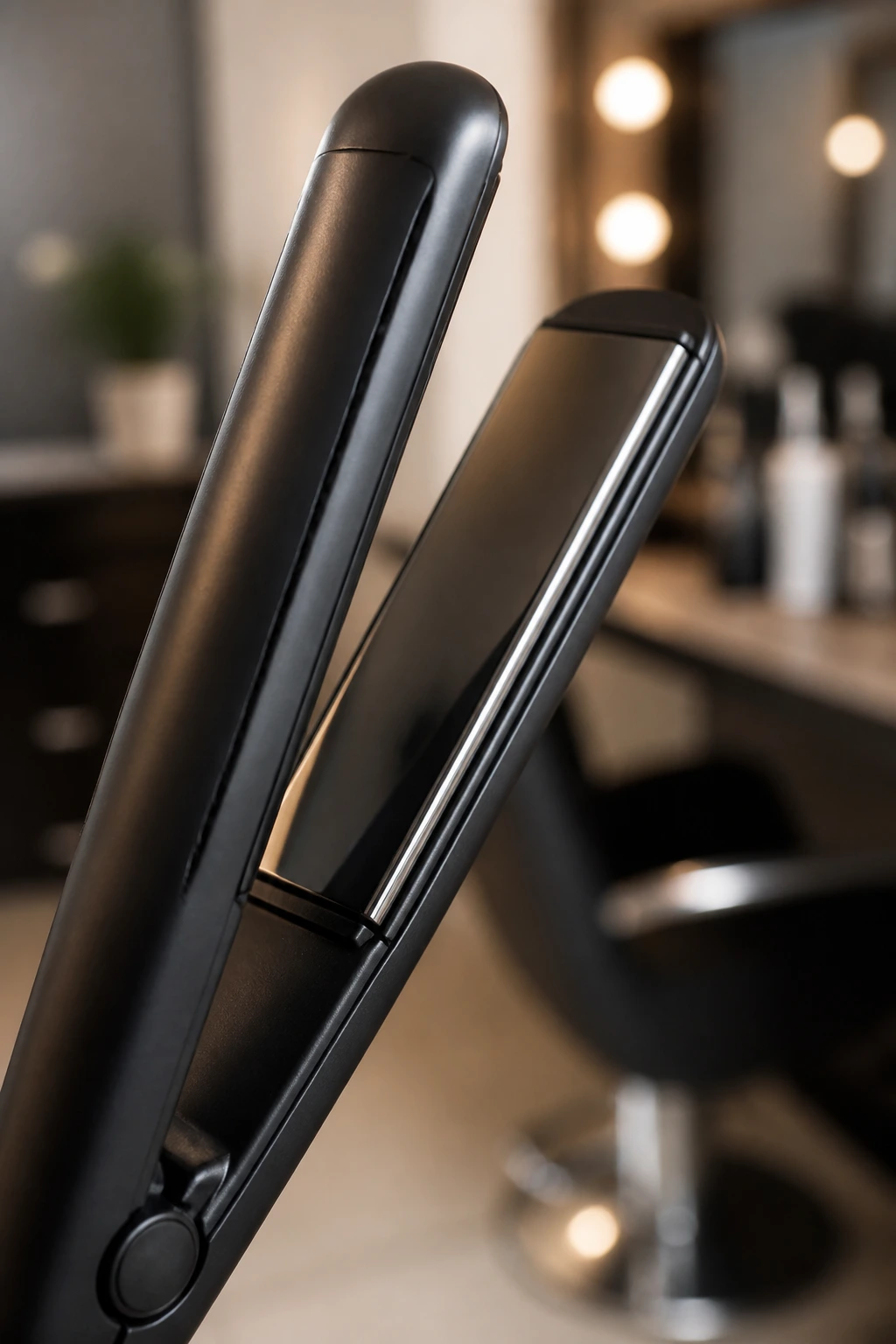
- Flat iron with 1/2- to 1-inch plates: Narrow plates are easier around ears, fringes, and the nape.
- Blow dryer with a nozzle attachment: The nozzle directs airflow and keeps the cuticle lying flatter.
- Heat protectant spray: Look for one that protects up to 400°F to 450°F so the hair can handle repeated passes.
- Paddle brush: Best for smoothing bobs and lobs without adding too much curve.
- Boar-bristle brush: Good for finishing a sleek top layer and encouraging shine.
- Fine-tooth comb: Handy for razor-straight parts, wet looks, and slicked-back styles.
- Sectioning clips: Short hair still needs sections, especially around the crown and nape.
- Wax stick or edge balm: Useful for flyaways, ear tucks, and pin-tucked looks.
- Lightweight serum: A pea-sized amount keeps ends smooth without collapsing volume.
- Flexible-hold hairspray: Keeps the style in place without making short hair feel crunchy.
Smart Product Shopping for Straight Hairstyles for Women With Short Hair
Short straight styles ask for restraint. Heavy creams and thick oils can make a pixie look greasy in ten minutes, and they can drag the roots flat on a bob before you’ve left the mirror. I look for products that say heat protection, smoothing, lightweight shine, or flexible hold. Those words matter because short hair does not need much help to start looking weighed down.
If your hair is fine, focus on sprays and foams rather than dense creams. A root-lifting spray at the crown can keep a bob from clinging to the scalp, and a small amount of serum on the ends adds polish without collapse. If your hair is thick or coarse, choose a smoothing cream with good slip and a flat iron that gets hot enough to move through the hair in one or two passes, not six.
Humidity changes the shopping list. A humidity-resistant serum or anti-frizz spray helps the cut keep its line when the weather gets sticky. If your hair is color-treated, lean toward gentler heat tools and thermal protectants with nourishing ingredients so the ends do not dry out. Short straight hair looks its best when the products disappear into the finish. You should see the shape first.
How to Wear These Looks From Daylight to Evening
Everyday: A center-part bob, a tucked crop, or a short collarbone lob works when you want the hair to sit clean without too much fuss. These are the styles that still look neat after a jacket collar rubs against them or after you’ve tucked on sunglasses twice.
Desk-to-dinner: A deep side-part pixie, French bob, or side-swept fringe lob moves well from day into evening because the part and the fringe already give the style some shape. A quick touch of serum on the ends and a fresh ear tuck can make the haircut feel newly done.
Dressier moments: A glass-hair bob, a wet-look pixie, or a pin-tucked bob feels more deliberate under indoor lights. These styles like shine spray, a sharp part, and earrings that don’t fight for attention.
Wind, heat, or humidity: An undercut pixie, slicked-back pixie, or tapered neck crop stays close to the head and resists a lot of the usual puffing. When the weather is rough, less loose movement is often the smarter choice.
Small Tweaks That Change the Finish
Gloss boost: After the hair cools, smooth a pea-sized drop of serum over the final inch of the ends. That keeps the line looking clean without making the roots heavy.
Volume control: If the crown is collapsing, dry the roots in the opposite direction for the first few minutes, then flip the hair back once it’s half dry. That small detour gives lift without making the style puffy.
Edge softening: One flat-iron pass on the front pieces can be enough to create a slight inward bend around the cheek or jaw. Don’t keep chasing the bend; too much heat makes the end look brittle.
Make-it-yours: Swap a center part for a deep side part, or tuck one side behind the ear and leave the other side loose. On short hair, that single change can make the same cut read softer, sharper, or more playful.
Keeping Short Straight Hair Fresh Between Washes
Short straight hair often looks best on day one, then starts revealing the oil line at the roots on day two. That does not mean you need to wash constantly. It means you need a better maintenance rhythm. A satin pillowcase helps keep the shape from getting roughed up overnight, and a loose clip at the crown can keep the ends from kinking while you sleep.
Dry shampoo belongs at the roots, not through the lengths. Spray it from about 6 to 8 inches away, let it sit for a minute, then massage lightly with the fingertips. If you pile it onto the ends, the hair starts looking chalky. That is one of those small mistakes that ruins an otherwise clean style.
Trims matter more on short hair than people expect. Pixies usually need attention every 4 to 6 weeks. Bobs tend to hold their line for 6 to 8 weeks. Bangs or micro fringes can need a clean-up even sooner, sometimes every 2 to 3 weeks if you want the shape to stay sharp. If you stretch the trims too far, the style does not just grow. It loses the whole point.
Different Straight-Hair Directions to Try
Fine-Hair Lift Finish: Keep the cut light, use root spray before drying, and skip heavy oils near the scalp. A bob or pixie with a little lift at the crown will look fuller than the same cut flattened straight down.
Thick-Hair Control Finish: Ask for a shape that removes bulk at the nape and beneath the top layer. Thick hair can wear blunt or angled styles beautifully, but it needs a cut that lets the iron or brush move through without fighting the density.
Curly-Hair Straight Day: Dry the hair to about 80 percent first with tension from the brush, then smooth the last part with a flat iron. That reduces heat passes and keeps the ends from looking scorched.
Low-Heat Air-Dried Finish: Use a smoothing cream on damp hair, comb it into the direction of the part, and let the hair dry with minimal handling. The result is a softer straight look that sits somewhere between sleek and natural.
Sharp Editorial Finish: Choose a blunt bob, a micro fringe, or a glassy pixie and keep the finish high-shine and exact. This is the direction to take when you want the cut to look graphic rather than relaxed.
Common Mistakes That Flatten Short Straight Hair
- Using too much oil at the root: The hair starts looking stringy before you leave the house. Keep shine products on the ends only, then add more only if the hair still looks dry.
- Flattening the crown into the scalp: A short cut can lose all shape if the top is pressed too close. Lift the roots while drying, then smooth the lengths separately.
- Using a wide flat iron on tiny sections: This creates dents and awkward bends around the ears and fringe. Narrow plates are easier to control on short hair.
- Skipping trims for too long: A bob that has lost its perimeter stops looking sleek and starts looking grown-out. The line is the whole story here.
- Chasing glass hair on damaged ends: If the ends are dry and split, more heat will not fix them. A trim and a lighter hand with product work better than trying to iron the damage into submission.
- Ignoring the part: A stale part can make a nice cut look off-balance. Move it a half-inch left or right before you blame the haircut.
Questions About Straight Hairstyles for Women With Short Hair
Which short haircut is easiest to style straight every day?
A one-length bob or a chin-length blunt bob is usually the easiest because the perimeter does the work. You smooth the line, add a little shine, and you are done.
Can I wear short straight hair without a flat iron?
Yes. A good blow-dry with a paddle brush or boar-bristle brush can get you close, especially on hair that already leans straight. The iron is mainly for refining the front pieces and taming stubborn ends.
Why do the ends flip out on my short bob?
Usually the cut is either hitting a spot that wants to bend outward or the ends are getting too much heat in the wrong direction. Dry the hair with the brush pointing the ends inward, then use one controlled flat-iron pass to settle them.
Does straight short hair work on fine hair?
It does, but the product choices matter. Fine hair needs lightweight volume at the roots and very little cream through the ends or the style sinks fast.
How often should a short straight style be trimmed?
Most bobs look their best every 6 to 8 weeks. Pixies usually need cleaner shape sooner, often 4 to 6 weeks, because the outline changes fast.
What part looks best with short straight hair?
A center part gives symmetry, while a deep side part adds height and softness. If the face is rounder, a side part often creates a longer line; if the face is long, a center part can keep the balance cleaner.
How do I keep short straight hair smooth in humidity?
Start with heat protectant and a smoothing product, then finish with a humidity-resistant spray. Keep the ends sealed but not overloaded, because too much product can puff in the heat.
Can I switch between straight and textured styles with the same cut?
Usually, yes. A bob, lob, or pixie with clean internal structure can take straight styling one day and a rougher, air-dried finish another day. The best cuts give you options without forcing one mood.
The Cut Does the Heavy Lifting
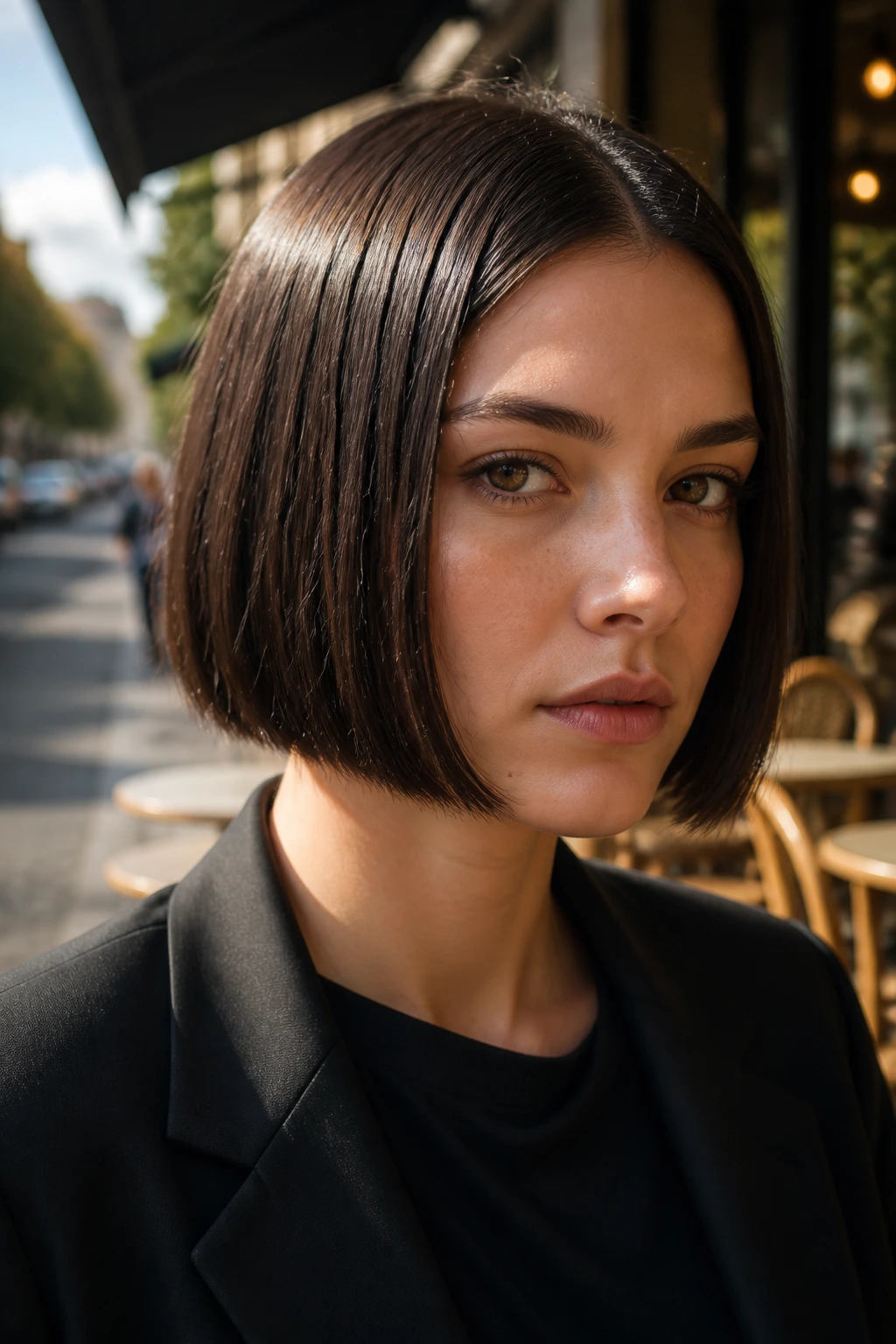
Short straight hair looks at its best when the cut is doing the work and the styling is only refining it. That is the real pattern running through these looks. Clean lines. Controlled ends. A part that belongs there. Once those pieces are in place, the style stops feeling fussy and starts feeling composed.
If you’re deciding where to begin, start with the cut you’re already closest to maintaining. A blunt bob wants precision. A pixie wants regular trims. A lob gives you a little breathing room. Pick the one that suits your routine, then keep the finish simple enough that the shape stays visible.
The best short straight hair has a kind of confidence to it — not loud, not overworked, just clean. And that is a useful thing to have on a busy morning, because the hair says what it needs to say without asking for much back.
