



Short hair doesn’t need curls, bends, or a cloud of volume to look finished. In fact, straight hairstyles for short hair usually look sharper when the line is clean and the ends do the talking. A chin-length bob with a flat, glassy surface reads one way; the same cut with a wispy, uneven finish reads another. Tiny changes matter more when the hair is short. You can see every part, every tuck, every blunt edge.
That’s the part people miss. Short straight hair is not “less hair to work with.” It’s more visible structure. A middle part changes the mood. A tucked ear changes the shape of the face. A one-inch shift in length can make a bob look airy, severe, soft, or architectural. And yes, a little frizz at the crown shows fast, which is why the prep matters more here than it does on longer styles.
The good news is that short straight styles are not limited to one look. They can be sleek, neat, grungy, polished, playful, retro, or almost severe in the best possible way. Some of the best versions look like they took serious effort. A few only need a brush, a light serum, and two careful passes with a flat iron. The shape does most of the work. Keep reading, because the range is wider than most people expect.
Why Straight Short Hair Keeps Its Shape So Well
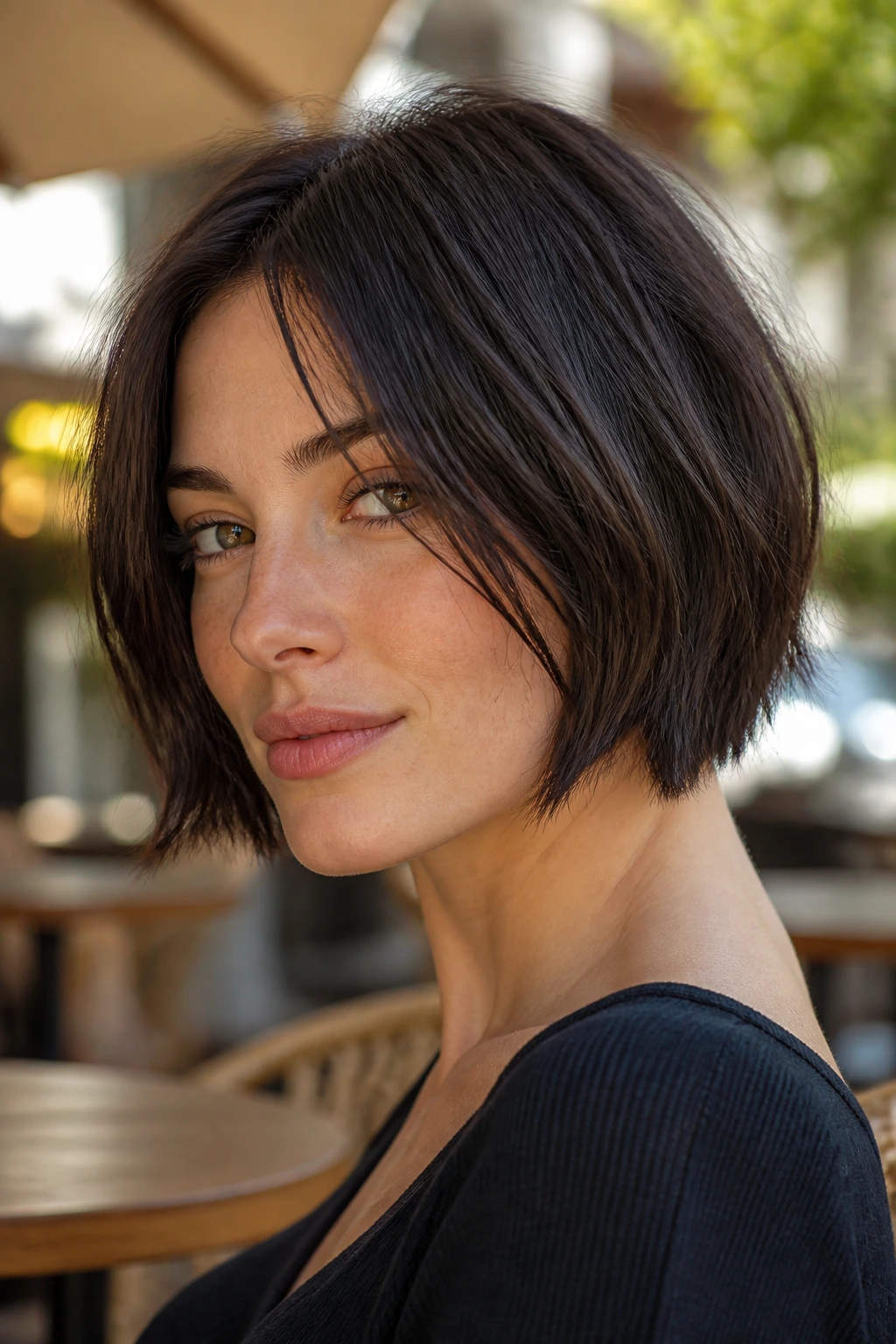
- The cut line does the heavy lifting: Short hair shows the perimeter first, so a blunt bob or tidy crop can look denser and cleaner than longer straight hair ever does.
- The style changes fast: A center part, side part, or ear tuck can make the same haircut feel formal, casual, or sharp enough for evening plans.
- Fine hair gets a lift from structure: Blunt ends and compact silhouettes make fine strands read fuller at the edge, especially around the jaw.
- Short lengths dry in a hurry: That means less time spent fighting bends, cowlicks, and uneven air-dry marks.
- Small styling changes matter more: A slight bend at the ends, a little root lift, or a straighter fringe can change the whole face shape.
1. Glassy Center-Part Bob
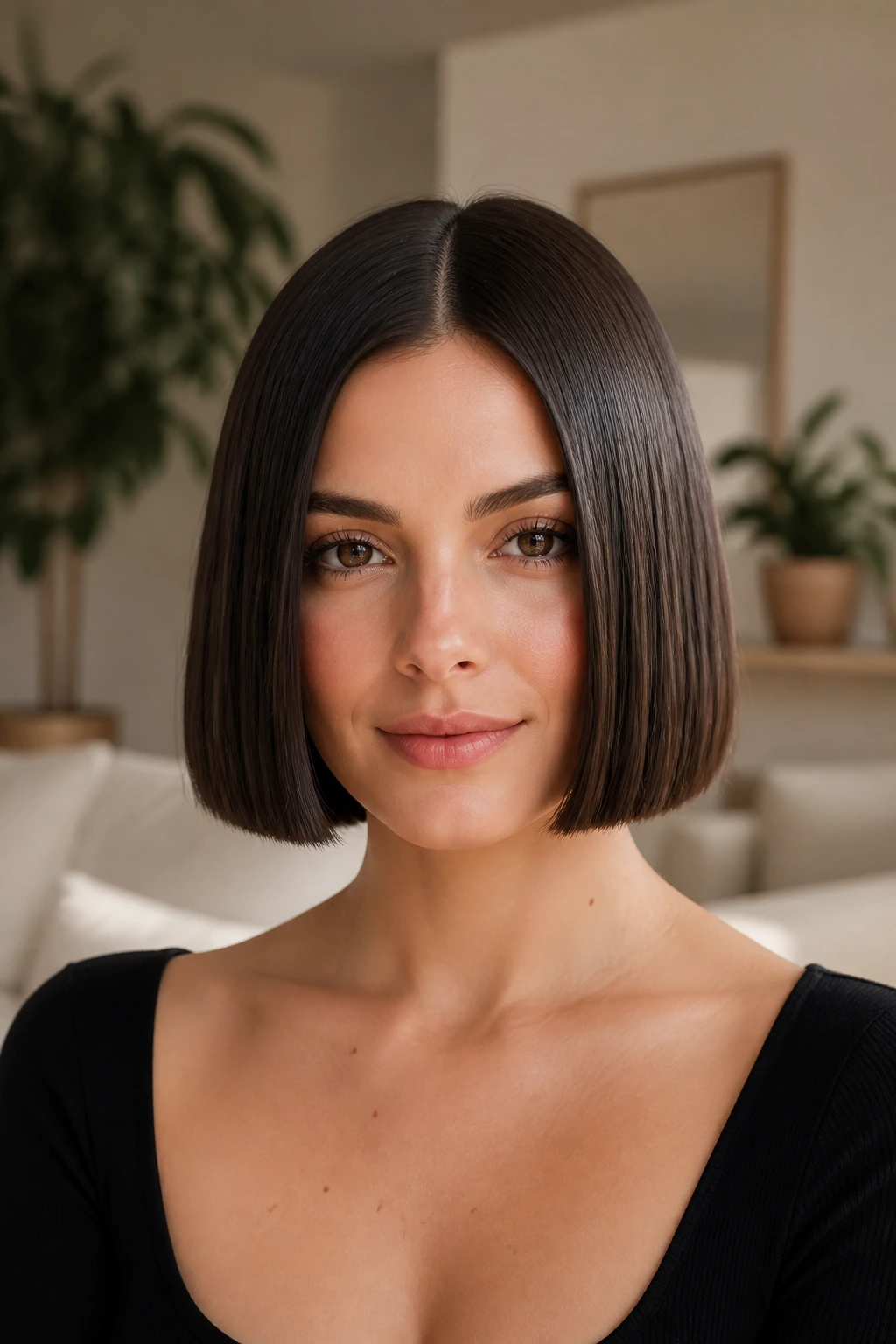
A glassy center-part bob is the one I reach for when I want short hair to look deliberate from every angle. The line sits at the jaw or a hair below it, the middle part keeps the shape symmetrical, and the finish is smooth enough that you can see the shine before you see the cut. It’s crisp. Almost spare. That’s the point.
Why It Works
Straight hair and a center part are a strong pair on short lengths because they show off the outline of the haircut instead of hiding it. When the ends are blunt and the interior is smoothed flat, the bob looks fuller at the bottom and neater through the sides. If your hair is fine, this style can give you the look of more thickness without piling on products.
A light heat protectant, a paddle brush, and one slow pass with a flat iron are usually enough. I like a narrow sectioning pattern here—about 1 to 1½ inches wide—so the finish stays polished without getting puffy at the root. If your hair flips at the ends, keep the iron parallel to the floor and barely turn your wrist inward.
Best for: oval, heart, and square faces.
Watch for: a center part that sits too far back; that can flatten the crown and drag the whole look down.
2. Blunt Micro Bob With Sharp Ends
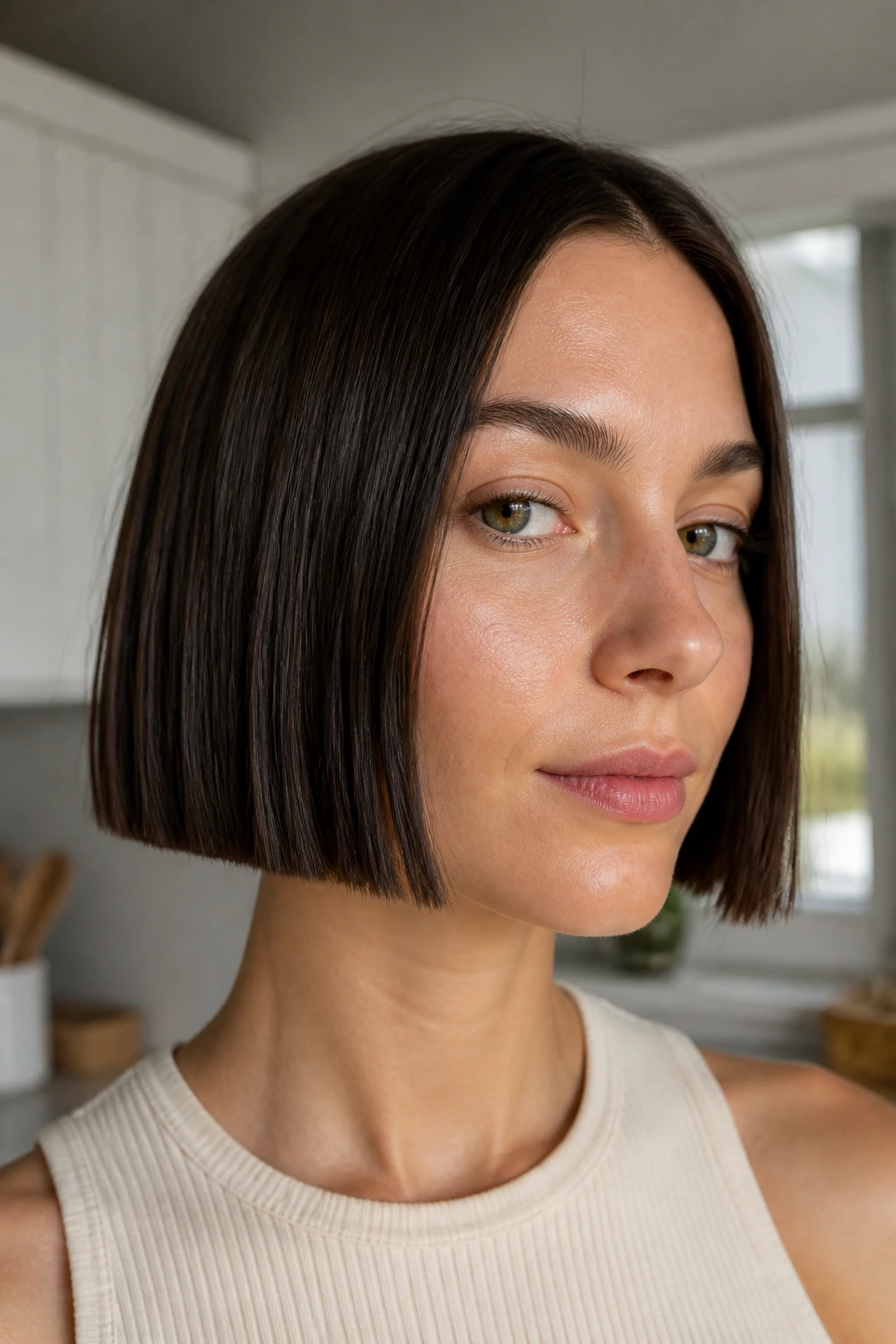
This is the cut that makes short hair look expensive without trying too hard. A micro bob usually lands between the cheekbone and jawline, and when the ends are cut blunt, the shape looks dense and tidy. There’s no shaggy business here. No soft escape hatch. Just a neat edge and a confident line.
The trick is restraint. If you over-style a micro bob, it starts to look stiff. If you under-style it, the perimeter loses its point and the whole thing can feel like it’s slipping apart. I’d keep the finish smooth, then add the tiniest bit of separation on the very ends with a pea-sized drop of serum warmed between your palms.
This style is a gift for finer hair because the eye lands on the compact shape instead of the amount of hair itself. It’s also good if your face benefits from a crisp frame near the jaw. The shorter the bob, the more important the neckline becomes—keep the back tidy and you get that neat, sculpted look that turns heads for the right reasons.
3. Tucked-Behind-Ear Side Part
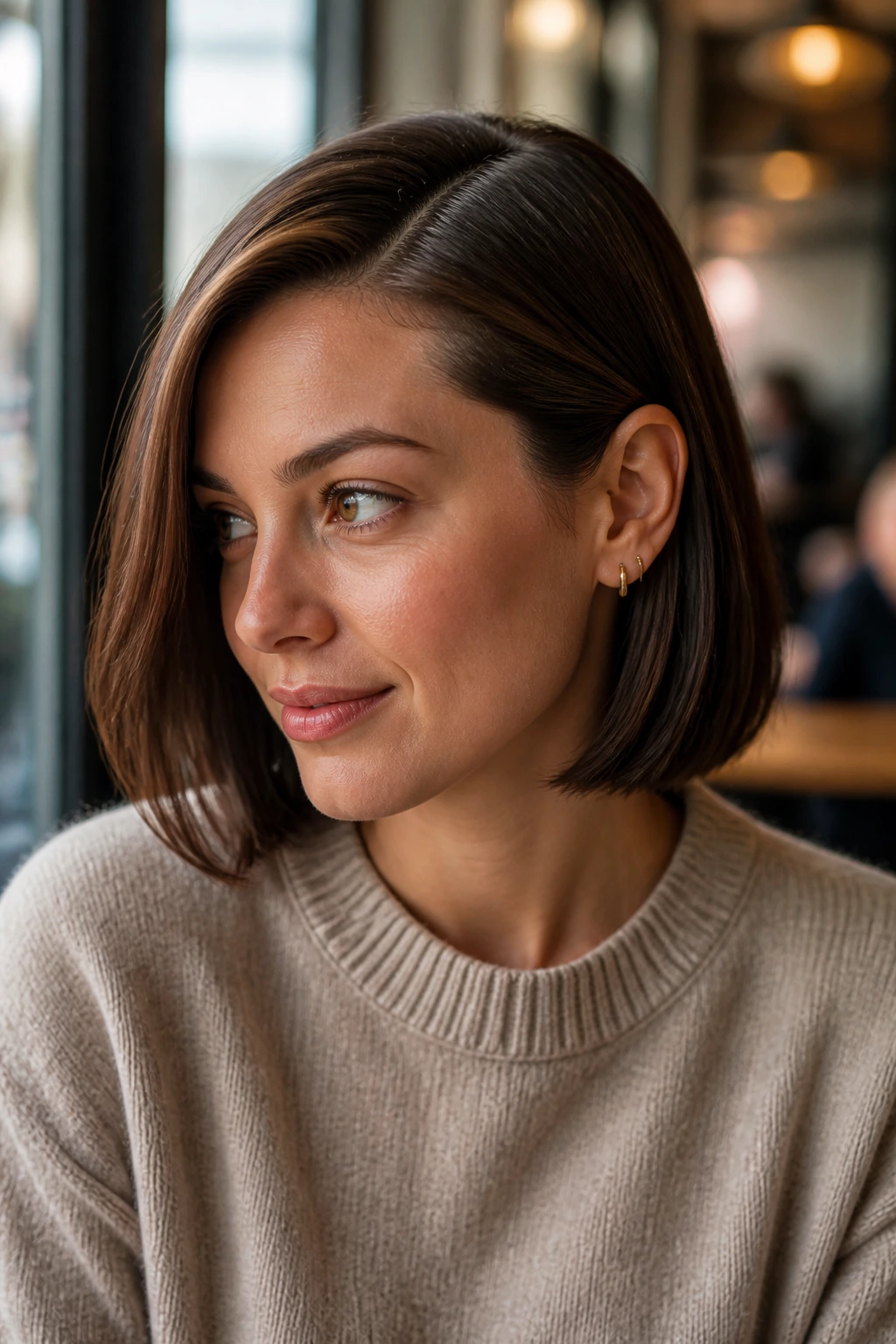
Why does a tucked-behind-ear side part work so well on short straight hair? Because it creates an asymmetry you can feel without making the style fussy. One side opens the face. The other side keeps a little weight near the cheek or jaw. It’s a small move, but on short hair it changes the whole read.
This look is best on a bob or a long pixie that has enough length to stay behind the ear without springing loose. I prefer a deep side part with one side tucked and the other side left slightly fuller. That contrast keeps the style from looking too flat. If you want a little control, use a flat clip or a single bobby pin under the hair, hidden just behind the ear.
Wear It Like This
- Tuck the heavier side cleanly behind one ear.
- Leave the opposite side smooth and close to the face.
- Add a tiny bend at the front pieces if the hair wants to collapse.
- Finish with a light spray, not a heavy mist.
This one works especially well on days when you want clean lines but not a severe, center-part look.
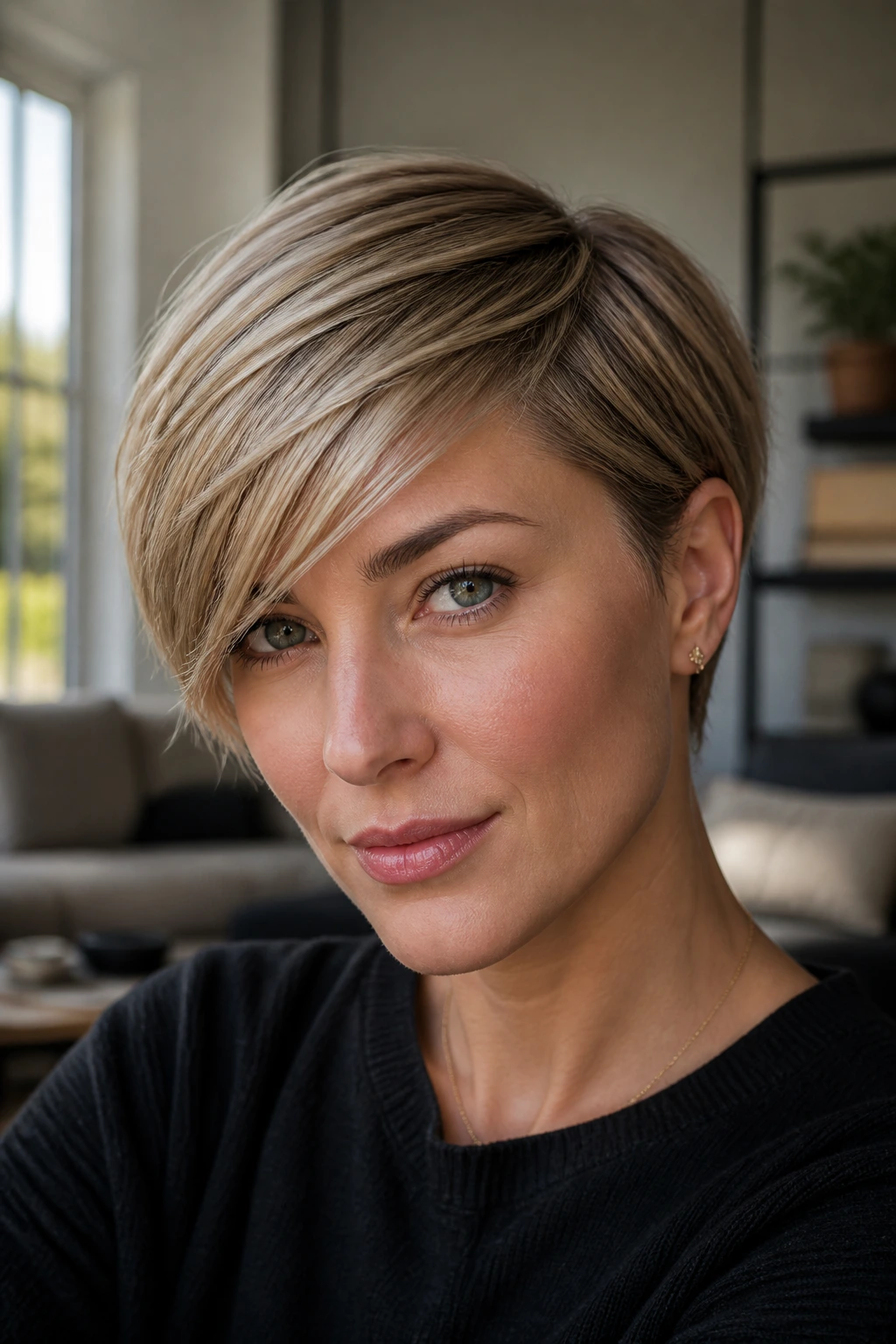
4. Sleek Pixie With Longer Top Layers
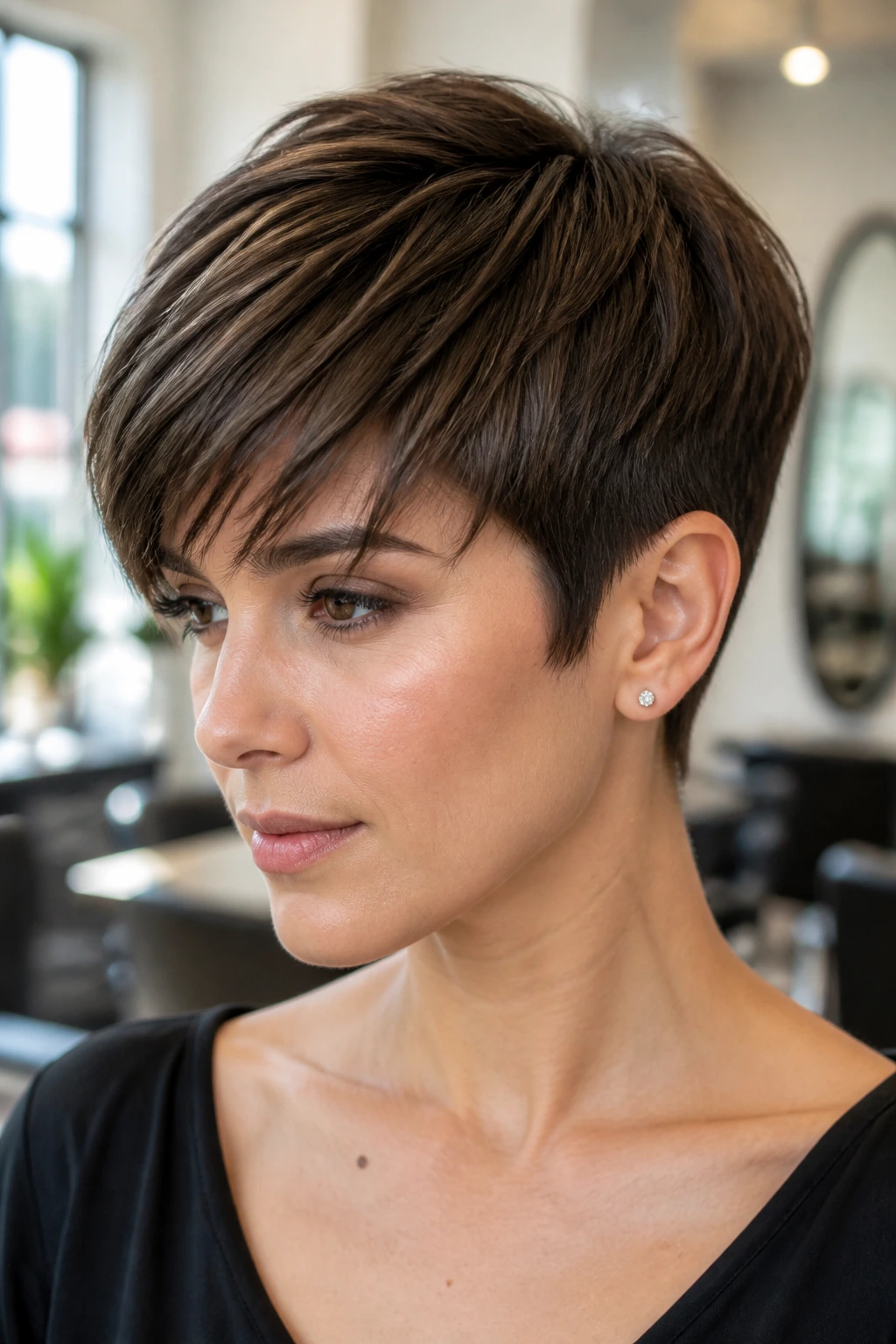
A pixie cut gets a lot more range when the top stays a touch longer. The sides can be tight, the nape can be neat, and the top layers can be brushed forward or diagonally across the forehead. On straight hair, that longer top section gives you movement without giving up the clean outline.
What I like here is the control. You can comb it flat for a sharper look, then push a bit of lift into the crown if the shape feels too compact. A small round brush or a narrow brush works better than a giant one, because short hair needs precision, not volume everywhere.
This style is a good choice if you want short hair but don’t want the cut to disappear into the head. The longer top gives the eye a place to land. It also plays nicely with strong brows, glasses, and angular collars. Keep the sides tidy, and the top will do enough work on its own.
5. Choppy Straight Bob With Piecey Ends
A choppy straight bob is for anyone who wants short hair to look a little less polished and a little more lived-in. The line is still straight, but the ends are lightly textured so they move in separate little pieces instead of one heavy block. It’s not shaggy. It’s not messy. It’s the in-between zone where the cut looks relaxed on purpose.
The best version keeps the overall length at the chin or just above it, then uses subtle point cutting inside the perimeter. That gives the bob some air. A tiny bit of paste on the very ends can bring out the separation, but use less than you think—too much product collapses the shape and makes the hair look greasy by lunch.
This is a strong pick if your hair is naturally straight but tends to fall too flat. The texture at the edge gives the cut a bit of personality. And unlike a blunt bob, this one softens quickly when you run your fingers through it, which makes it useful if you don’t want to babysit your hair all day.
6. French Bob With Micro Fringe
A French bob with a micro fringe has a personality all its own. The cut usually sits around the mouth or jaw, and the fringe lands high enough to show the brows. On straight hair, that combo feels graphic in the best sense. There’s a little retro energy, but it doesn’t need to look costume-y.
The fringe is the part to respect. Too thick, and it overwhelms the face. Too sparse, and it looks unfinished. I like a short fringe that stays feather-light at the edges so it doesn’t box in the forehead. The rest of the bob should be clean and blunt, with enough curve at the ends to keep the shape from feeling harsh.
If your face is longer, this style can shorten it visually. If your hairline has cowlicks, though, you’ll need to work with them, not against them. A quick blow-dry from side to side at the fringe line often settles the hairs better than blasting them straight down.
7. Side-Swept Crop
This is the haircut version of a good side profile. A side-swept crop gives straight short hair a directional line, which matters more than people think. Hair brushed diagonally across the forehead can soften a strong jaw, skim a higher forehead, or make a short cut feel less boxy.
The shape works best when the top has enough length to lie across the head without popping up. Keep the sides neater, and let the front travel a little farther. A small amount of cream at the roots helps the hair stay in one direction, especially if your part likes to wander.
I reach for this look when a client wants short hair but doesn’t want the face fully exposed. It has movement without requiring much styling effort. If your hair is very fine, keep the product light. If it’s thick, dry the top in the direction you want before it cools—that one step can save you from fighting the style later.
8. Sleek Lob That Skims the Collarbone
A lob is not the shortest haircut on the list, but it earns its place because it behaves like short hair while giving you a little more length to work with. On straight strands, a collarbone-skimming lob can look lean, smooth, and easy to shape. It’s the style I’d hand to someone who wants to grow out a bob without losing the clean outline.
The best version sits just above or at the collarbone, with ends that are either blunt or only slightly beveled inward. Anything too layered starts to flip in odd directions. A flat iron pass, followed by a brush-through while the hair is still warm, usually keeps the surface calm. If your ends brush your coat collars, though, expect more static and more bounce.
This cut is forgiving. It gives you a little more time between trims than a chin-length bob, and it can be tucked, clipped, or parted in different ways depending on the day. That flexibility is the whole appeal.
9. Chin-Length Curve-In Bob
A chin-length bob that curves in at the ends has a softer feel than the blunt versions, but it still reads clean and straight. The key is the shape at the bottom: the hair turns inward just enough to frame the jaw rather than hang beside it. That small curve can be flattering on narrower faces and can keep a short cut from looking boxy.
How to Get the Bend Right
- Blow-dry with a small round brush or a paddle brush plus a quick inward wrist turn.
- Aim the air from roots to ends so the cuticle lies flat.
- Stop the bend an inch before the actual ends if you want it to look light.
- Keep the line even from side to side; wonky curves show fast on short hair.
This style works when you want polish without a hard edge. It’s neat for work, but it doesn’t feel severe. If your hair naturally kicks outward at the nape, use a brief pass with the flat iron just on the lower inch. No need to iron the entire head into submission.
10. Baby Bang Crop
Baby bangs change the whole mood of a short straight cut. They make the forehead part of the design instead of hiding it, and that gives the style a sharper, more graphic feel. Paired with a cropped bob or a short layered shape, they look bold without needing extra volume anywhere else.
The fringe needs precision. I’d keep the bangs soft at the edges, not blocky, unless you want a very hard line. The rest of the hair should stay calm and smooth so the fringe remains the focus. If both the bangs and the sides are fighting for attention, the cut loses its shape fast.
This is a strong choice for someone with a smaller face, a strong brow line, or a taste for styles that look a little editorial. It can also be a clever fix if you want short hair but don’t love a high forehead. Just be aware that bangs this short expose every swirl in the front hairline. If you’ve got stubborn cowlicks, work them down while the hair is damp.
11. Asymmetrical Straight Bob
An asymmetrical bob is one of those cuts that looks like it took much more effort than it did. One side sits a little longer, the other side a little shorter, and the difference creates motion even when the hair is pin-straight. It’s still tidy. It just has a twist.
What makes this style useful is how it changes face shape. The longer side can skim the jaw or neck, while the shorter side opens the face and keeps the style from feeling heavy. If your hair is thick, asymmetry helps break up the weight. If it’s fine, the uneven line gives the eye somewhere to go.
I’d keep the rest of the styling clean—no messy curls, no exaggerated flips. The haircut itself is the statement. A center part can make the asymmetry feel sharper, while a side part softens it. Same cut. Different attitude.
12. Deep Side Part With Tapered Back
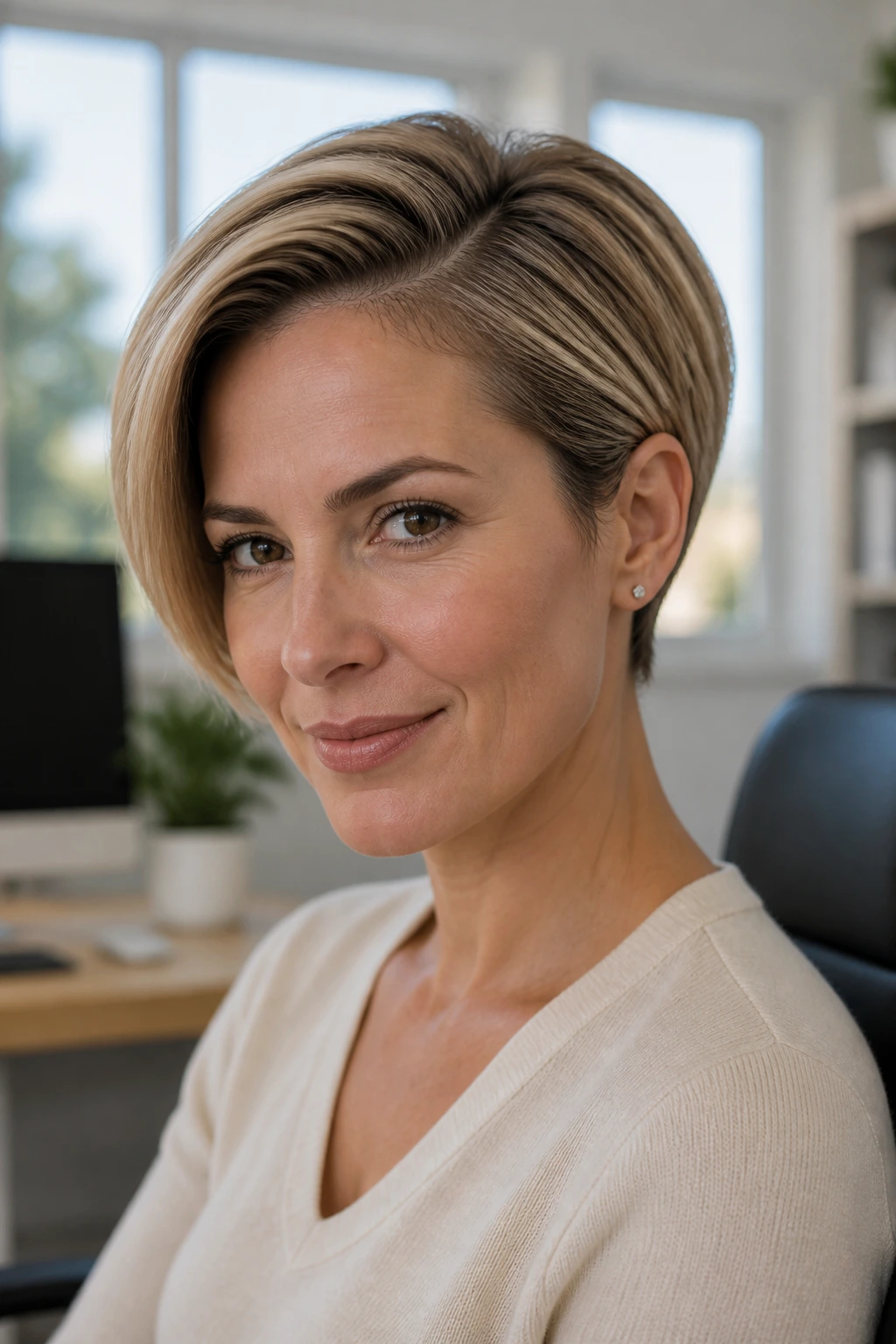
This cut is all about contrast. A deep side part gives height on one side, while the tapered back keeps the neckline slim and tidy. On short straight hair, that combination can make the head shape look more balanced, especially if the crown tends to lie flat or the nape gets bulky.
The tapered back matters more than people think. If the back is too heavy, the style starts to widen at the neck and lose its clean shape. Keep the back neat and close, then let the front build a little more presence. That’s what gives the cut its clean, almost tailored feel.
This style works beautifully with a pair of small hoops, a strong brow, or a collared shirt. It’s one of those looks that feels finished even when the rest of the outfit is basic. The haircut does enough talking on its own.
13. Slicked-Back Crop
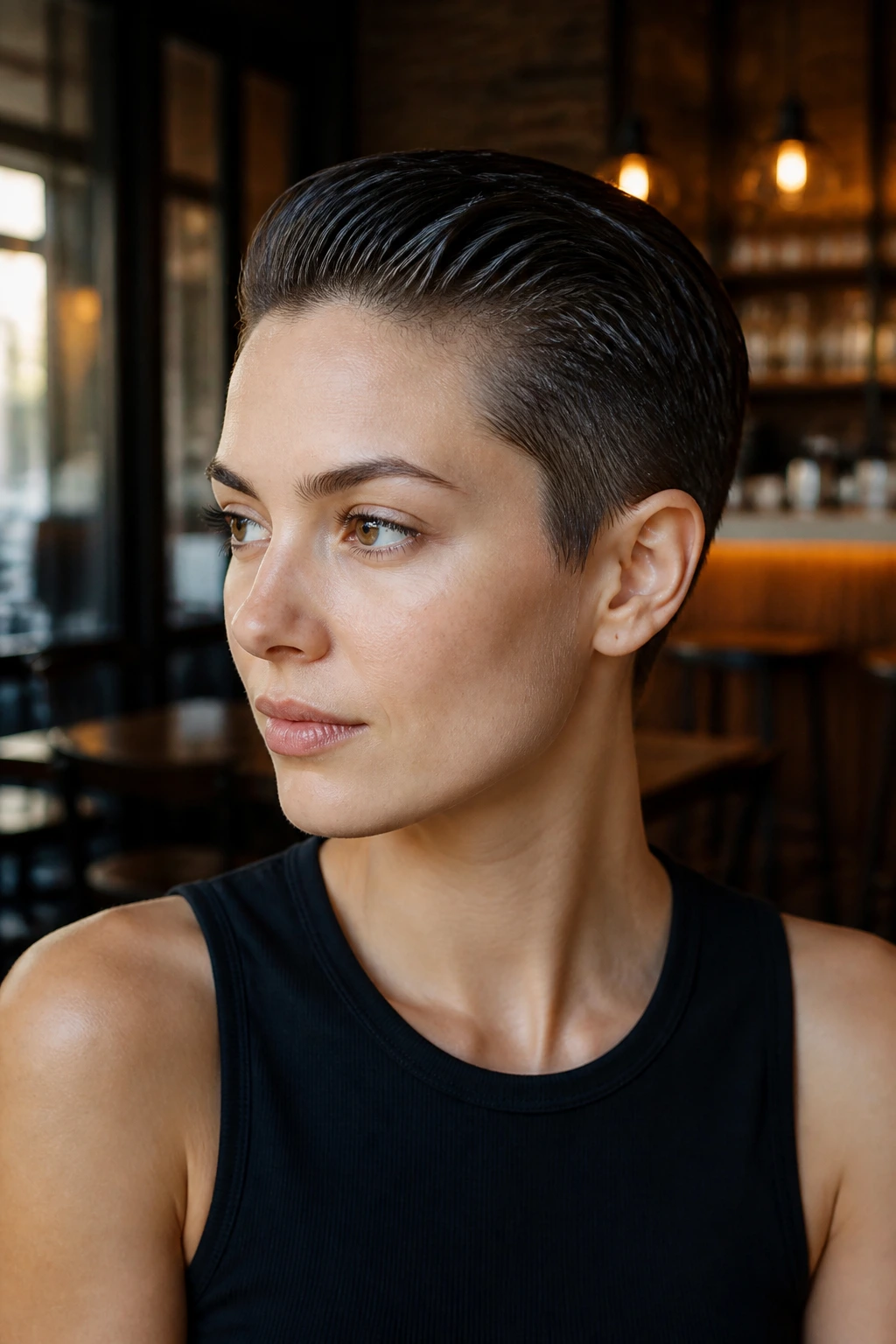
A slicked-back crop is not subtle, and that’s exactly why it works. The hair is brushed straight back or slightly back and over, with enough product to hold the surface close to the head. On short hair, this creates a smooth, almost wet line that makes the face look open and the jaw look clearer.
Use a light gel or styling cream, not a sticky fistful of product. You want control, not a shell. Comb the hair back while it’s damp, then let it settle before touching it again. If you keep fussing after it starts to set, the surface will break and the shine will turn patchy.
This is a good option when you want a short straight style that feels cleaner than a bob and sharper than a pixie. It can also save second-day hair when the roots are slightly oily anyway. Honestly, that’s half the charm.
14. Face-Framing Straight Pieces
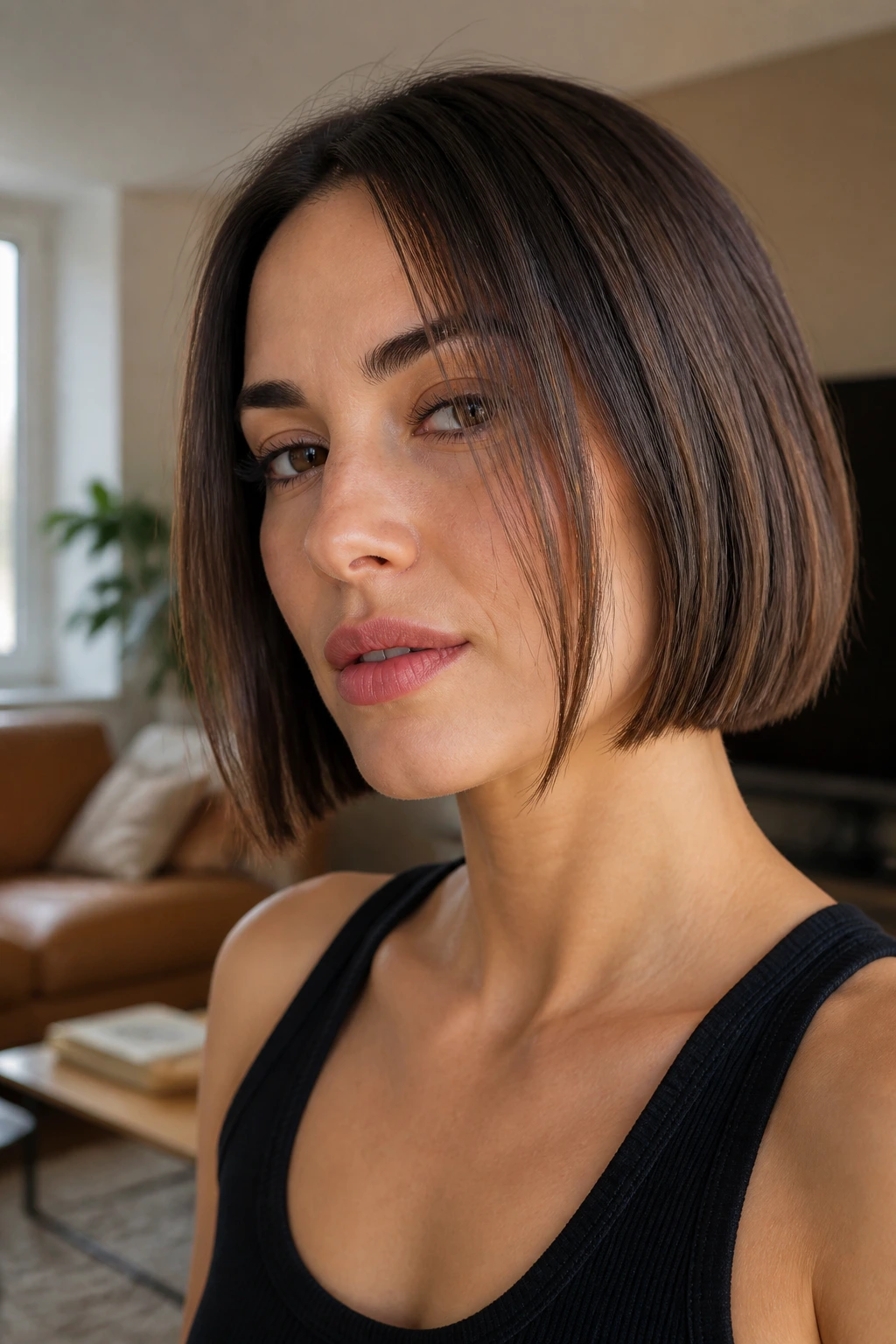
Face-framing pieces are the quiet workhorse of short straight hair. They sit around the cheekbones or jaw and soften the front of the cut without changing the whole shape. On a short bob or crop, those front pieces can make the style feel lighter and less blocky.
The trick is placement. Too short, and the pieces look choppy in a way you may not want. Too long, and they stop framing anything. I like them just long enough to brush the curve of the cheek or hit the top of the jaw. Straight hair lets those lines show clearly, which is useful if you want a small correction without a major haircut change.
What Makes It Different
- It softens the front without losing the blunt perimeter.
- It can balance a strong jaw or a broad forehead.
- It grows out gracefully if you’re between cuts.
- It works on both fine and thick hair, provided the pieces are matched to the density.
This is one of the easiest ways to change a short cut without touching the overall length.
15. Blunt Bob With Hidden Internal Layers
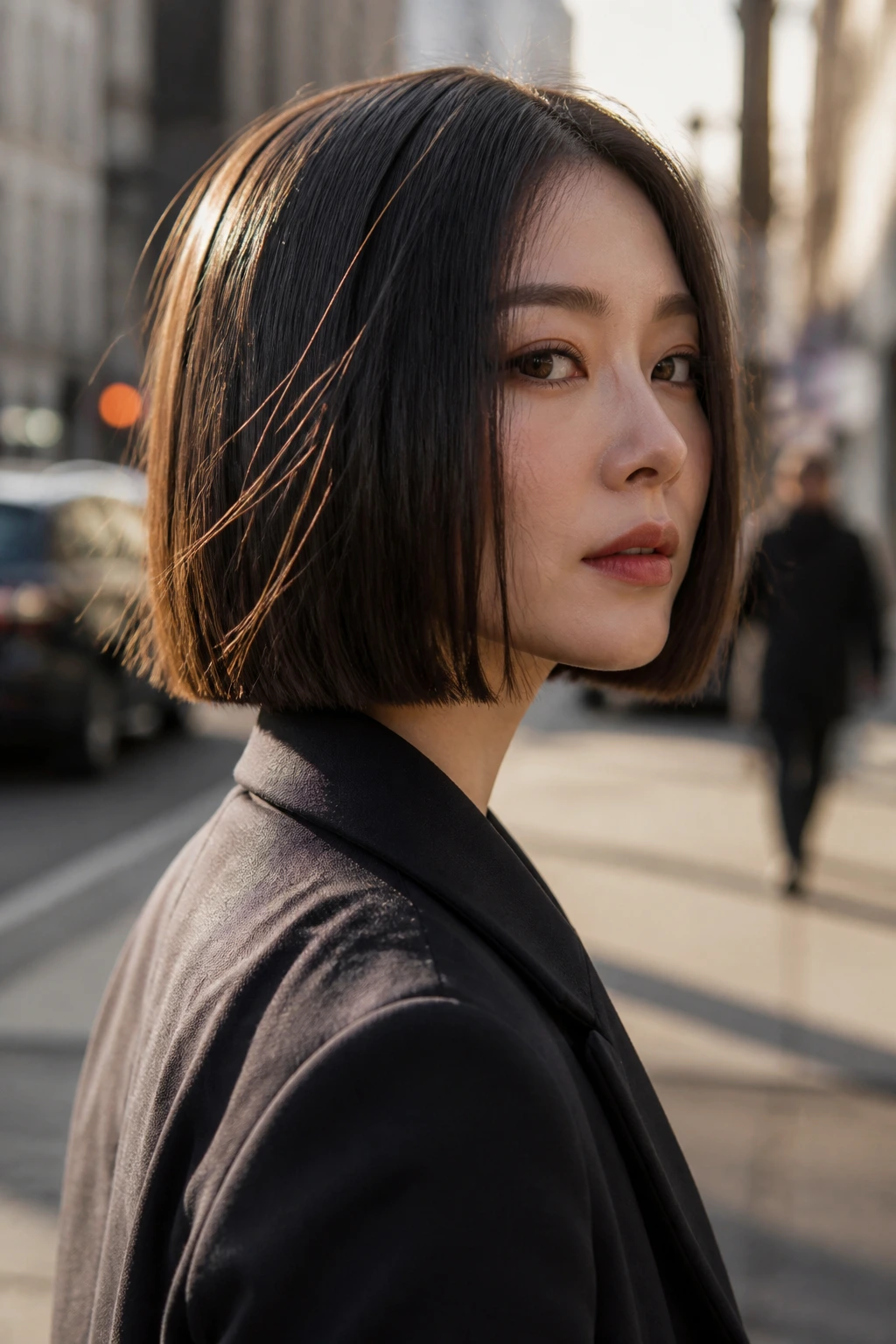
A blunt bob with hidden internal layers gives you the clean outside line people love, but it sneaks in a little movement underneath. That means the outer edge still looks sharp, while the inside of the cut has enough air to stop it from feeling like a helmet. Smart move. Very smart.
This style is particularly good for thick hair that tends to pile up at the bottom. Internal layers remove some of that weight without breaking the perimeter. On straight hair, the effect is subtle but useful—you get a bob that sits better, flips less, and feels easier to wear on humid or windy days.
The danger is over-layering. If the inside gets too thinned out, the bottom line starts to go stringy. That’s the moment to stop. The whole point is to preserve the blunt shape while making the haircut easier to manage.
16. Glossed Wet-Look Sweep
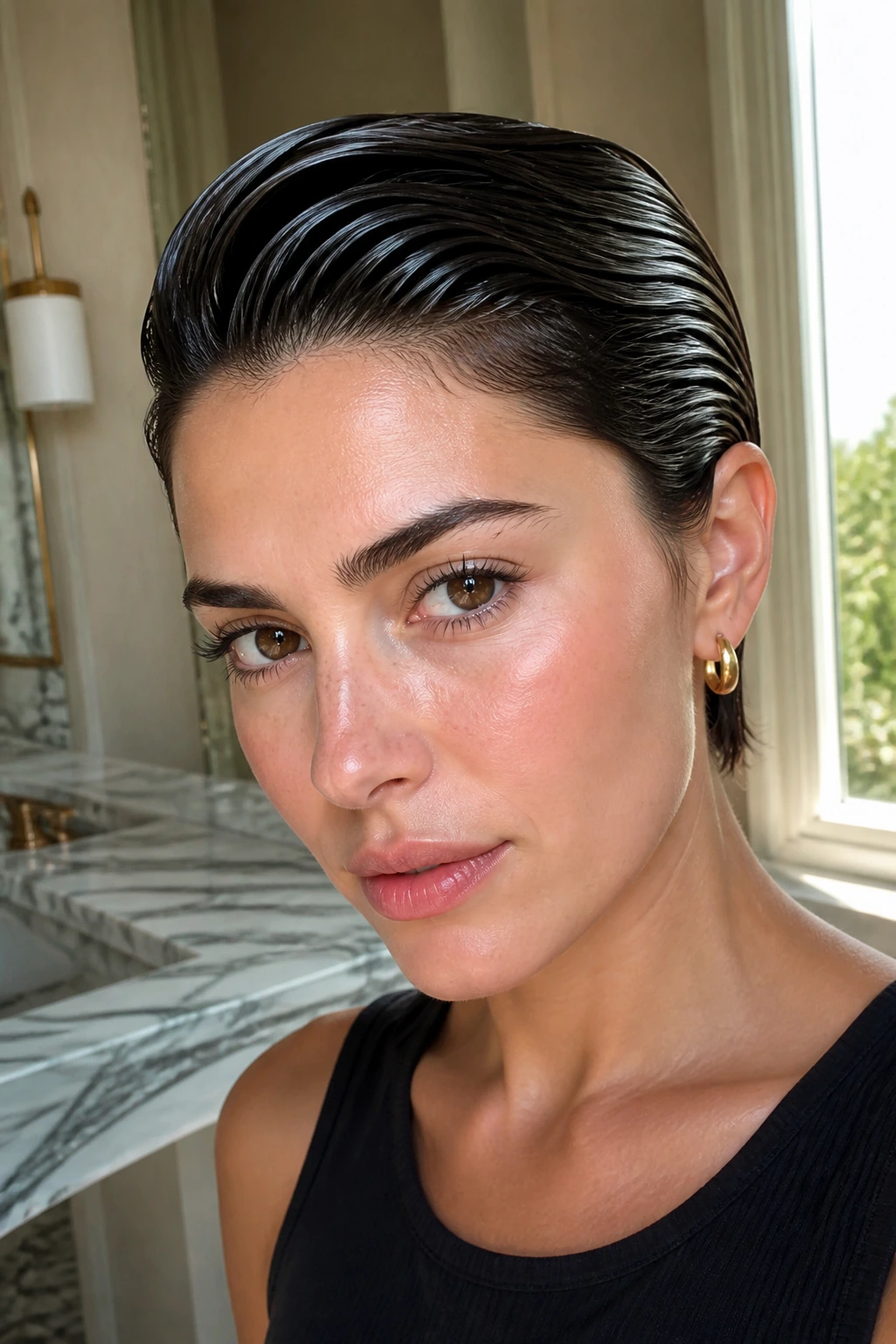
A glossed wet-look sweep is the polished cousin of the slicked-back crop. Instead of brushing everything straight back, you direct the hair in one sweep across the head and keep the surface shiny and controlled. It’s dramatic, but in a restrained way. The straightness matters here because the clean texture keeps the look from becoming messy.
Use a gel-cream or lightweight styling gel on damp hair, then comb the front section diagonally back and over. The back can stay close to the scalp, while the front keeps a little direction and shine. If you want the style to feel modern rather than theatrical, keep the edges clean and the part intentional.
This is one of those styles that looks better when the hair is short. Long hair can make the wet effect drag. Short hair holds it close and neat, which is where the style gets its shape.
17. Minimal Half-Tuck Style
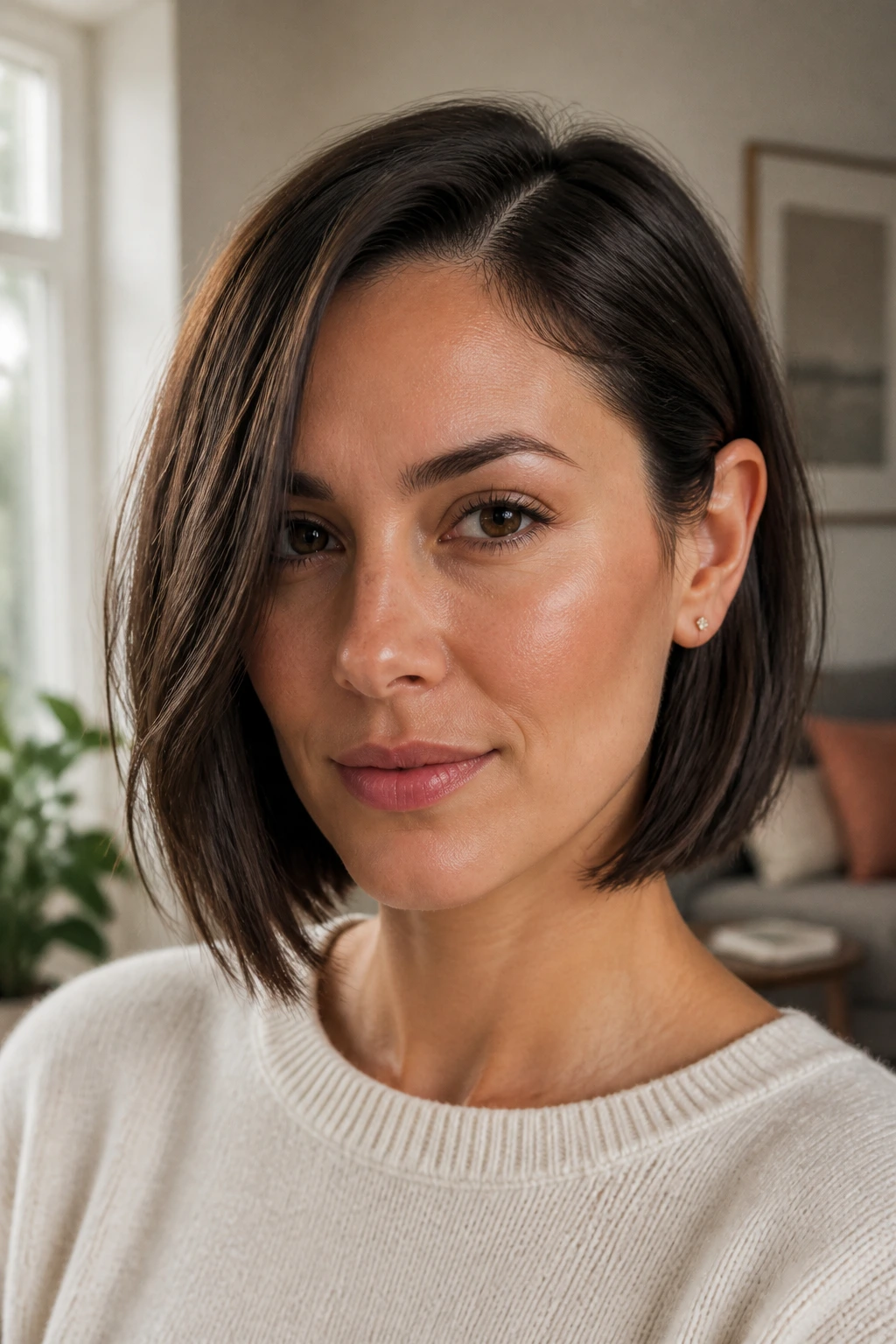
A half-tuck sounds almost too simple, which is why it works so well. Take one side of a straight bob or crop and tuck a small section behind the ear, then leave the rest loose and smooth. That tiny change creates an asymmetry that looks thoughtful, not fussy.
The style needs a cut with enough length around the face to stay put for more than five minutes. A tucked section that keeps slipping out is annoying, and short hair has no patience for it. If the front layers are too short, pin them discreetly under the hair or behind the ear with a tiny flat clip.
This look is especially useful when you want a short straight hairstyle that reads relaxed but still neat. It’s not formal. It isn’t lazy either. That middle ground is often the sweet spot.
18. Shag-Inspired Straight Crop
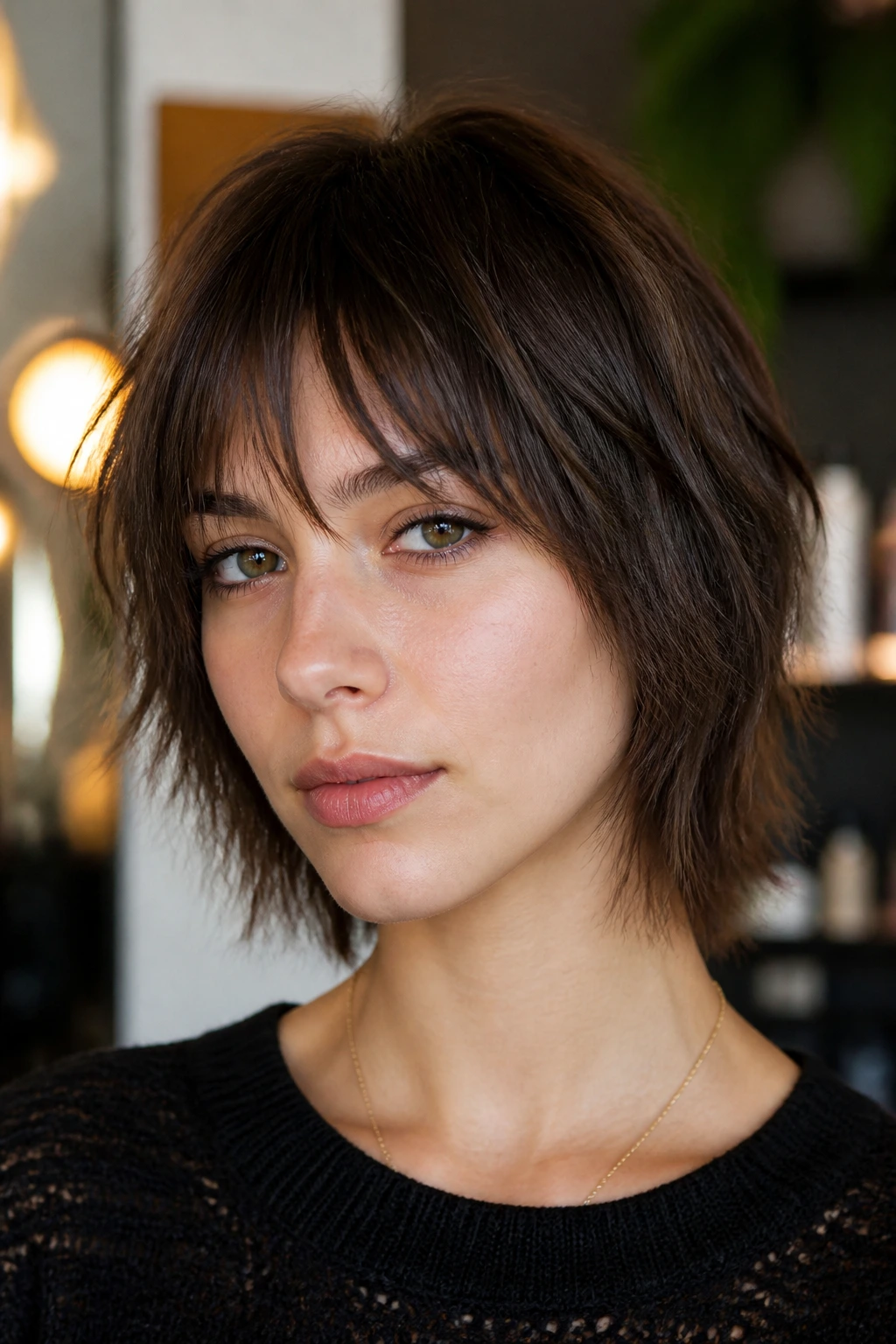
A shag-inspired crop on straight hair uses shape, not curl, to keep things interesting. The layers are light and deliberate, with a little movement at the crown and around the face. Because the hair is straight, the texture reads as piecey and sharp instead of fluffy or messy.
This cut is best when the layers are visible but not overdone. You still want enough weight at the outline so the style doesn’t vanish. A little texture spray at the roots can keep the layers from lying too close to the head, but avoid overloading the ends. That’s where the whole cut can start to look dry.
The appeal here is contrast. The outline stays compact, while the interior layers give the cut a more relaxed shape. If a blunt bob feels too strict, this is the version that loosens it up without giving up the short length.
19. Polished Bob With a Soft Flip-Under
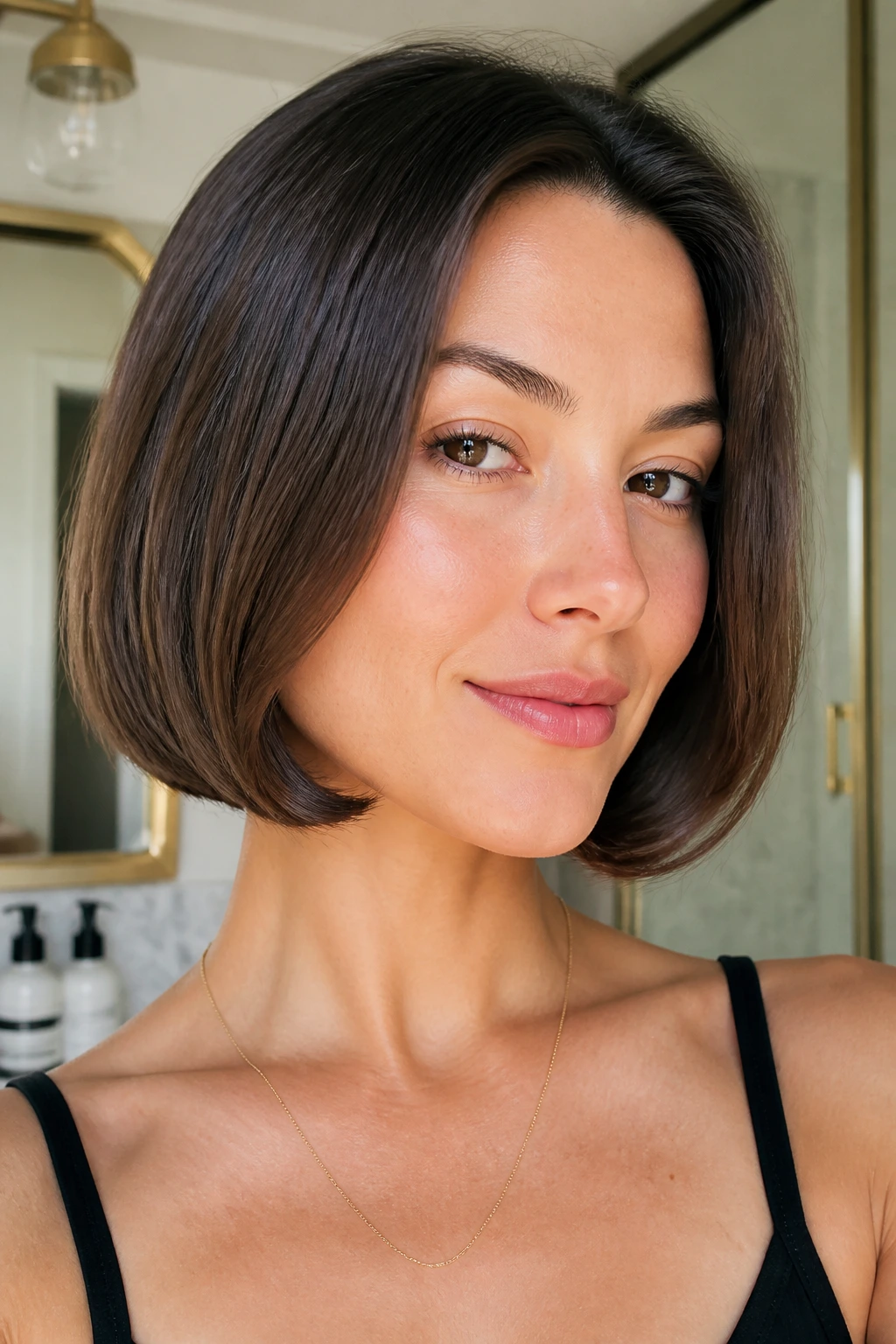
A polished bob with a soft flip-under is one of the easiest short straight styles to live with. The ends turn inward just enough to round the shape, but not so much that the cut looks curled. It’s clean, everyday hair with a slight lift at the edge.
What I like about this style is that it hides a few sins. If your hair has a little natural wave, the inward bend can help it settle. If the ends are dry, the rounded finish keeps them from looking too blunt. And if you want the style to feel a little gentler than a boxy bob, this does the job without changing the whole cut.
A round brush or a quick bend with the flat iron is enough. Keep the root area smooth, then put the motion only at the bottom inch or so. That’s the part that matters.
Straight Hair That Still Has Movement
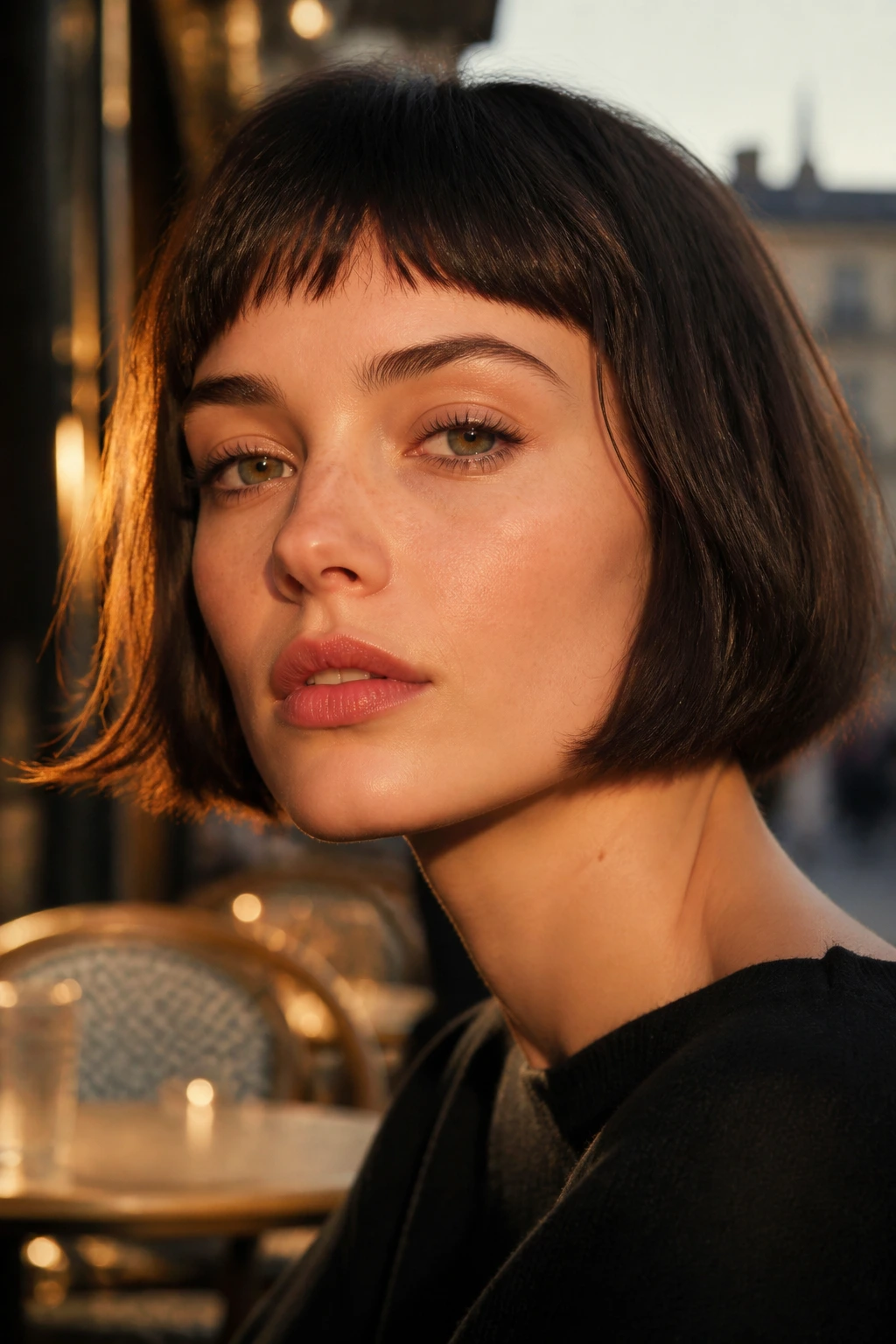
A lot of people hear “straight” and picture flat. That’s lazy thinking. On short hair, straightness can show tiny shifts in shape better than waves can. A blunt edge makes the jawline look stronger. A tucked side changes the balance of the whole face. A slight bend under the ends can soften the cut without wrecking the line.
The real trick is to decide where you want the eye to go. Short straight hair can point upward at the crown, inward at the jaw, across the forehead, or cleanly down the neck. Once you choose that direction, the style starts making sense. Before that, it’s just hair and product and a lot of annoying mirror checks.
If you ever wondered why some short cuts look expensive and others look like they were rushed, it usually comes down to line. Not length. Line.
Tools That Make Short Straight Styles Easier to Wear
- Flat iron with 0.5- to 1-inch plates: Narrow plates are easier to control on short lengths and around the nape.
- Paddle brush: Good for smoothing bobs and lobs without creating too much bend.
- Small round brush: Best for inward curves, crown lift, and face-framing control.
- Fine-tooth comb: Helps with clean parts, slicked-back looks, and wet finishes.
- Heat protectant spray or cream: Keep it light so the hair stays smooth, not coated.
- Light serum or finishing oil: One or two drops tame the ends without flattening the whole style.
- Duckbill clips: Useful for sectioning short hair, especially if the layers are uneven.
- Boar-bristle brush: Handy for smoothing the top layer and pressing flyaways down.
- Microfiber towel or T-shirt: Cuts down on rough towel friction when the hair is damp.
Smart Tips for a Smoother Finish

Short straight hair looks best when the prep is calm and the styling is precise. Don’t rough-dry it until the roots swell into every direction, then hope a flat iron will save the day. That’s how you end up overworking the ends. Start with towel-dried hair, rough-dry the roots until they’re about 80% dry, then shape the cut with the brush or iron.
Use less product than you think. A dime-sized amount of cream is a lot on short hair. Same with oil. If the hair starts clumping or losing its swing, you’ve gone too far. I’d rather add one extra pass with a brush than bury the whole style under styling cream.
Trim rhythm matters. Short straight cuts usually need sharper trims than long cuts because the silhouette is what sells the look. Once the ends start to feather out or turn uneven, the whole haircut loses its clean line.
Pay attention to the nape. That little strip at the back of the neck can make or break a short style. If it puffs out, the whole cut looks busier than it should.
Common Mistakes That Flatten the Shape or Create Frizz
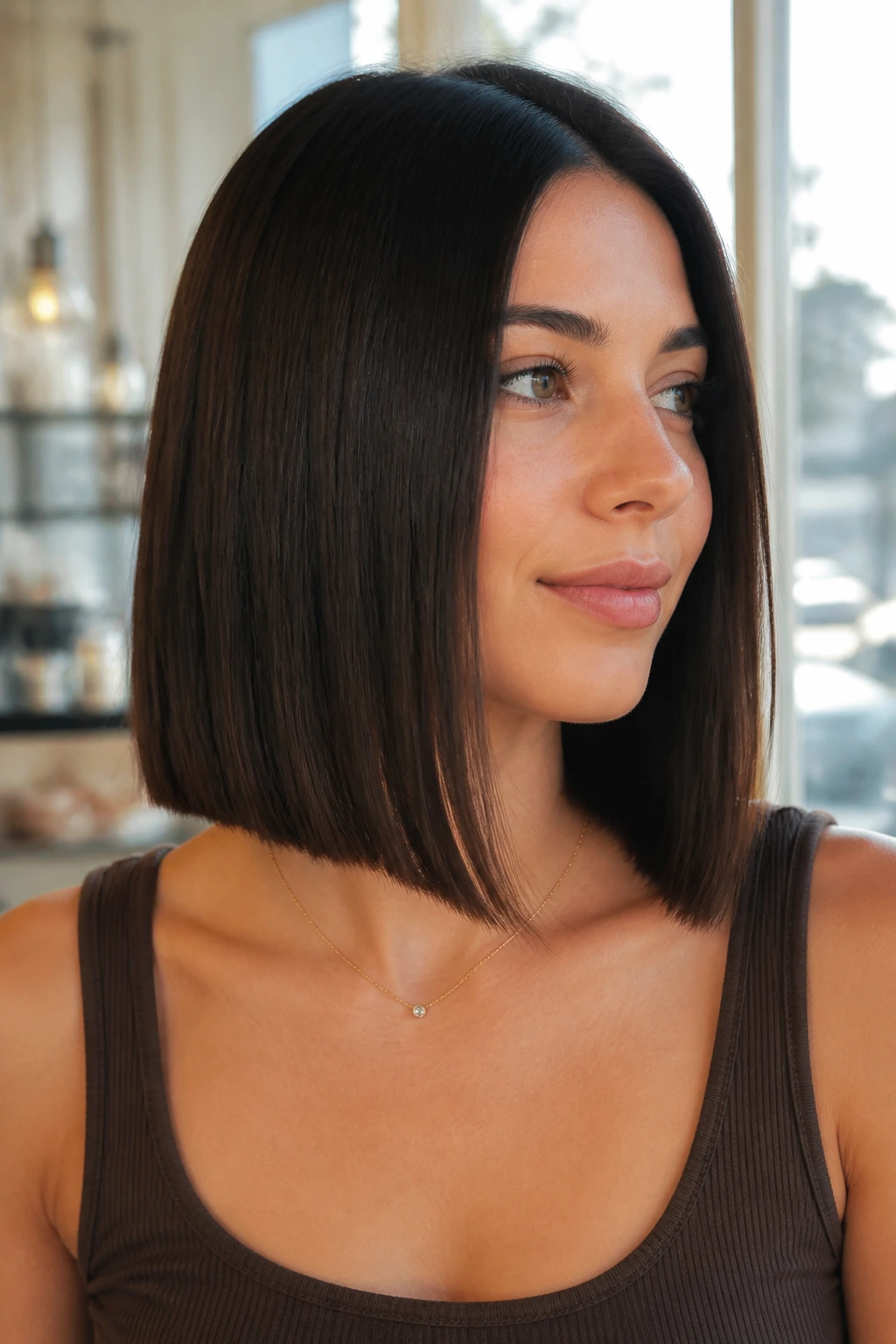
The first mistake is using too much heat and too many passes. Short hair doesn’t need the same iron-down treatment people use on long lengths. If the hair starts to feel brittle or squeaky, stop. Two careful passes are usually enough, and a heat protectant should be there before the iron ever touches the hair.
Another common problem is loading the roots with oil or serum. That makes short hair collapse at the crown and look greasy near the scalp. The fix is simple: keep shine products on the last inch or two, not the root area.
Ignoring the cut’s natural growth pattern is the mistake that causes the most frustration. Cowlicks at the front, a bend at the nape, or a part that refuses to stay put will not vanish because you want them to. Work with them. Shift the part a half inch, dry the hair in the direction it wants to go, or ask for a cut that respects the whorl instead of fighting it.
The last one is skipping trims for too long. A blunt bob that’s grown out past its sweet spot stops looking sharp and starts looking unfinished. On short hair, a little length can change the whole balance.
Easy Variations for Different Hair Textures and Moods
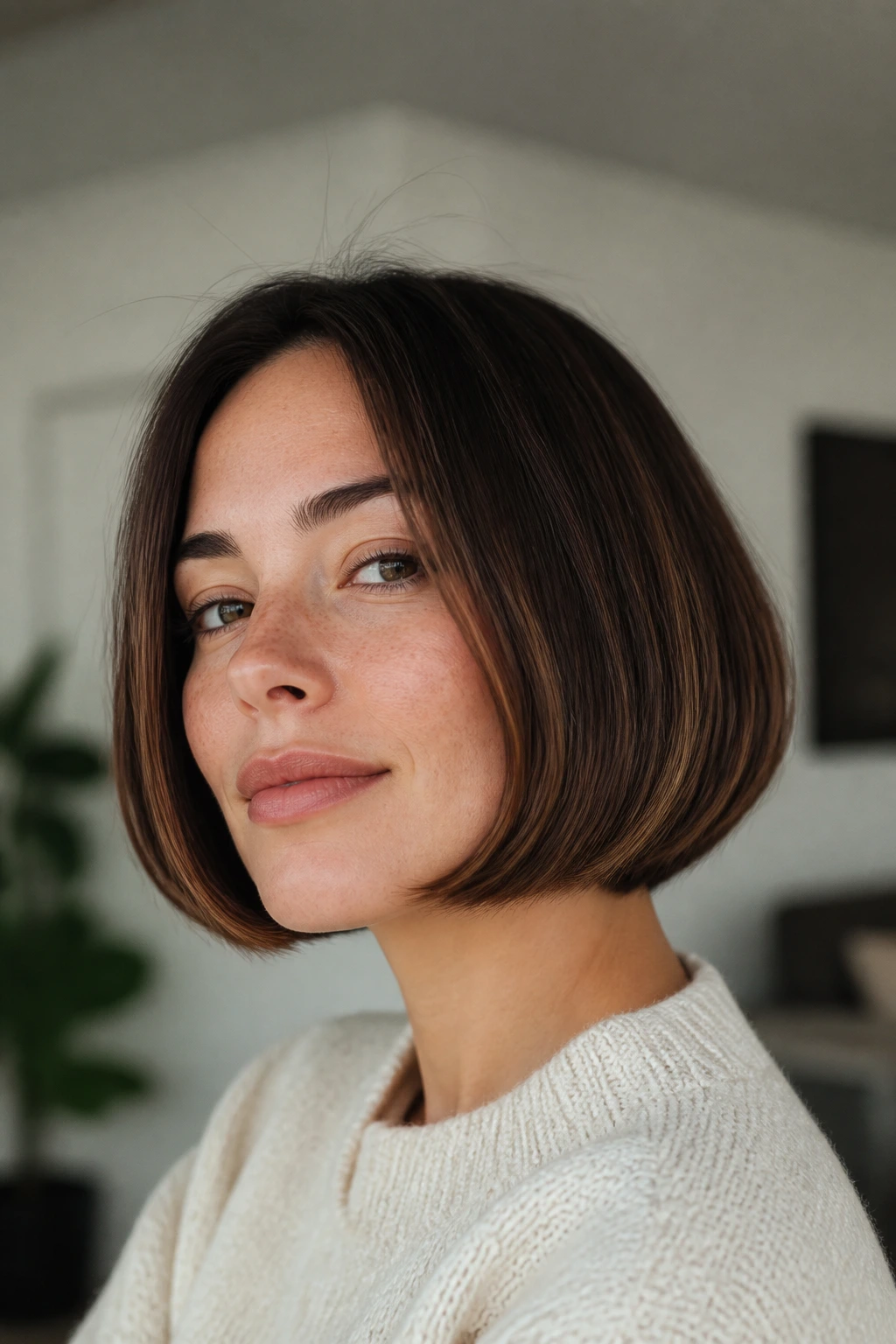
Soft-Focus Fine Hair: Keep the outline blunt, add almost no layers, and use a tiny amount of root spray at the crown. Fine hair loves a solid line because it makes the ends look denser.
Thick-Hair Control Mode: Ask for internal thinning only where the bulk sits, not all over. Thick straight hair can look heavy fast if the perimeter is too wide, so the haircut needs some release underneath.
Low-Heat Everyday Version: Air-dry until the hair is about 70% dry, then smooth only the top and face-framing pieces with a brush. This keeps the style from feeling overdone while still cleaning up the line.
Sharp Night-Out Version: Choose a deep side part, tuck one side behind the ear, and add a bit more shine at the ends. The same cut suddenly feels much more dressed up.
Soft Retro Version: Curve the ends inward and leave a short fringe or front piece grazing the cheekbones. It keeps the cut from reading too severe, especially on square or long faces.
How to Keep Short Straight Hair Looking Fresh Between Washes
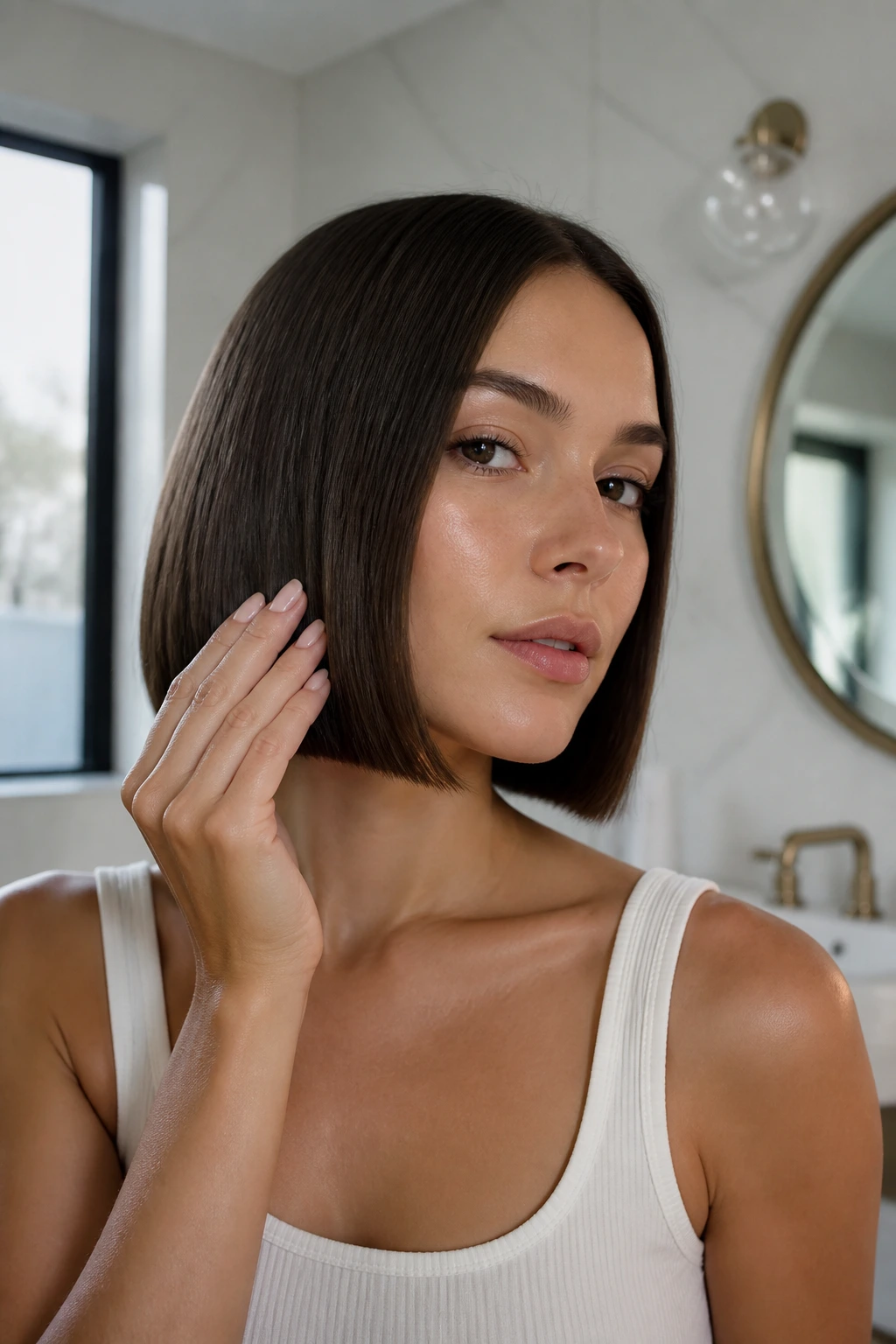
Short hair usually tells on you faster than long hair. The roots show sooner, the part can collapse, and the ends lose their neat line if you sleep on them wrong. I’d rather refresh a short style in two minutes than rewash it every time it looks a little sleepy.
Use a light dry shampoo at the roots only, then wait a minute before brushing it through. If the cut is very sleek, use your fingers instead of a brush so you don’t pull the product onto the ends. A silk pillowcase helps more than people expect, especially on blunt bobs and pixies that fray at the nape.
For trims, a good rhythm is every 4 to 6 weeks for very short cuts and every 6 to 8 weeks for bobs and lobs. That isn’t a vanity rule. It’s about keeping the outline clean. Once the ends fray or the perimeter slips, straight short hair loses the whole point of being short in the first place.
If the style starts to kick at the edges, spot-smooth only the problem area with a flat iron set on a moderate heat. Don’t re-straighten the whole head unless you actually need to. That’s how short hair gets dry and tired-looking.
Frequently Asked Questions
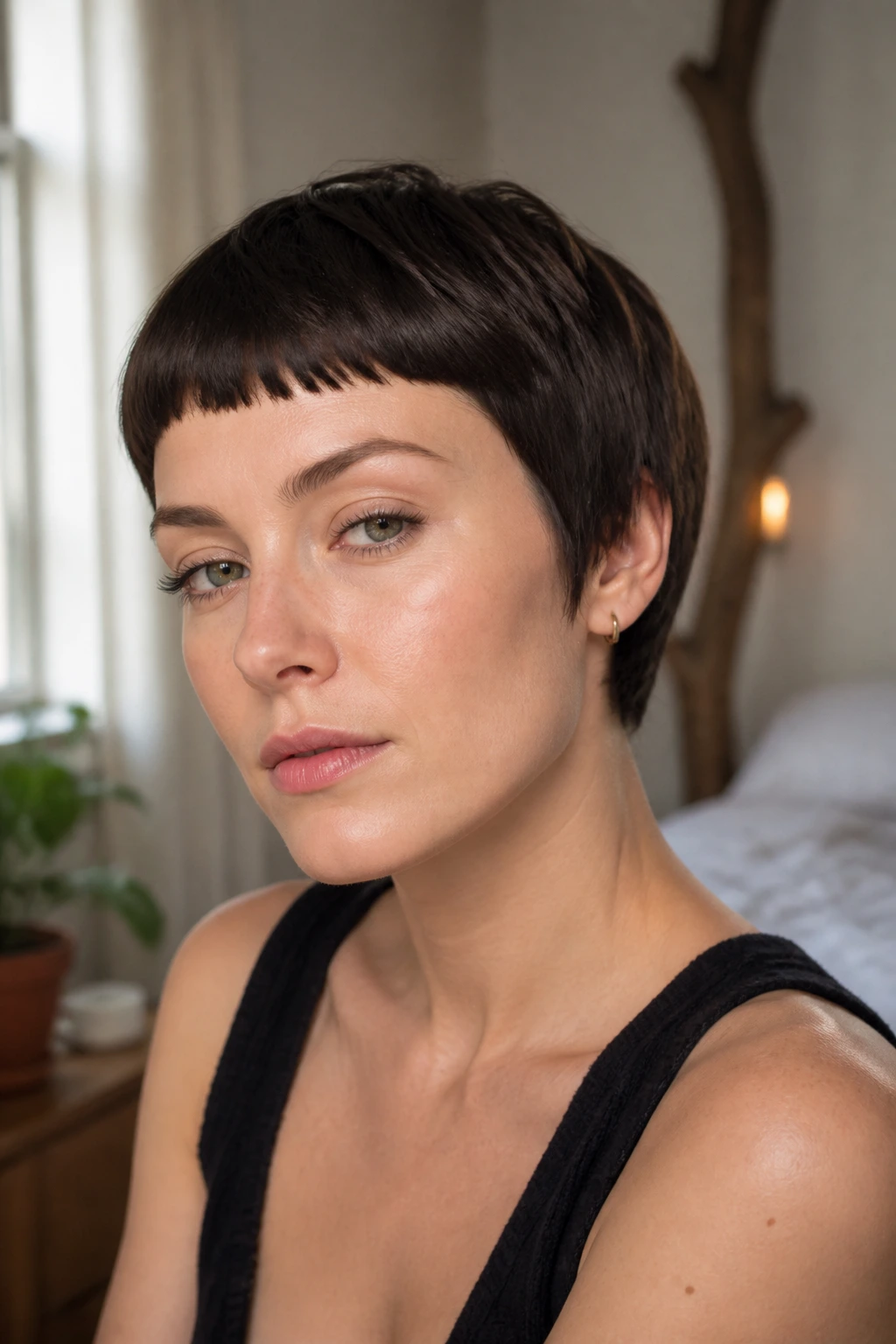
What short haircut looks best with straight hair?
A blunt bob, micro bob, or sleek pixie usually shows straight hair at its cleanest. The common thread is a solid shape at the edge, because short straight hair looks best when the line is crisp enough to stand on its own.
Can straight hairstyles for short hair work on fine hair?
Yes, and they often work better than longer styles because the blunt line makes fine hair look denser at the ends. The important part is keeping the cut compact and avoiding too much layering through the perimeter.
How do I keep my short straight hair from flipping out at the ends?
Use a small round brush or a flat iron to turn the ends inward while the hair is still warm. If the flip is stubborn, the haircut may need a cleaner perimeter or a little more weight removed from the inside, not more product.
Do I need a flat iron for every short straight style?
No. A blow-dry brush, paddle brush, or even a comb-and-dry routine can handle plenty of these looks. A flat iron just gives more precision when you want a glassy finish or a sharp edge.
What if my short hair has cowlicks at the front?
Work with the growth pattern instead of fighting it head-on. Dry the area in the direction it wants to go, then shift the part slightly if needed. A tiny part change can behave better than a whole lot of heat.
Can I make a pixie look straight without it going flat?
Yes. Keep the sides neat, leave a bit more length on top, and use a light styling cream or spray at the root rather than heavy oil. The goal is control with a little lift, not a helmet finish.
Which of these styles is easiest to maintain?
A soft bob with a blunt edge or a sleek lob is usually the least demanding. They grow out more gracefully than a micro fringe or a sharply asymmetrical cut, which need regular cleanup to keep their shape.
What should I ask my stylist for if I want one of these looks?
Bring a photo and say whether you want blunt, soft, tucked, or textured. Those words matter more than trend names. If you can point to where you want the ends to land—jaw, cheekbone, ear, collarbone—you’ll get much closer to the result you actually want.
A Sharp Finish

Short straight hair works because it doesn’t hide behind extra movement. The line is the style. The part is the style. Even the tiny gap where the hair tucks behind the ear becomes part of the design. That’s what gives these cuts their punch.
If you’ve been treating short hair like it needs help, stop doing that. Give it shape, keep the surface smooth, and let the outline do the heavy lifting. A good straight cut on short hair can look cleaner, cooler, and more intentional than a style with ten times the effort.
Pick one shape, get the perimeter right, and then leave a little room for the hair to move. That’s where the style starts to feel like yours.
