



Long straight hair can look like silk on a good day and a curtain on a bad one. The difference is rarely the haircut alone. Straight hairstyles for long hair live or die on tiny details: where the part sits, how the ends are finished, whether the crown has a little lift, and whether the hairline looks deliberate or accidentally limp.
That’s why long, smooth hair is such a funny thing to style. It gives you shine, length, and clean lines for free, but it also exposes every uneven section, every flyaway, every elastic that sits too high or too tight. There’s nowhere to hide. Which is exactly why the best styles for this hair type are the ones that use that length on purpose instead of stuffing it into a generic ponytail and calling it a day.
The 32 styles below lean into that strength. Some are polished and minimal. Some use braids, clips, ribbons, and tucked sections to break up all that length. Some are the kind of styles you can put together before your coffee cools. Others need a flat iron, a tail comb, and five calm minutes you probably won’t get unless you take them. Either way, the goal is the same: make the length do something interesting.
Why This Collection Feels Different for Long, Straight Hair
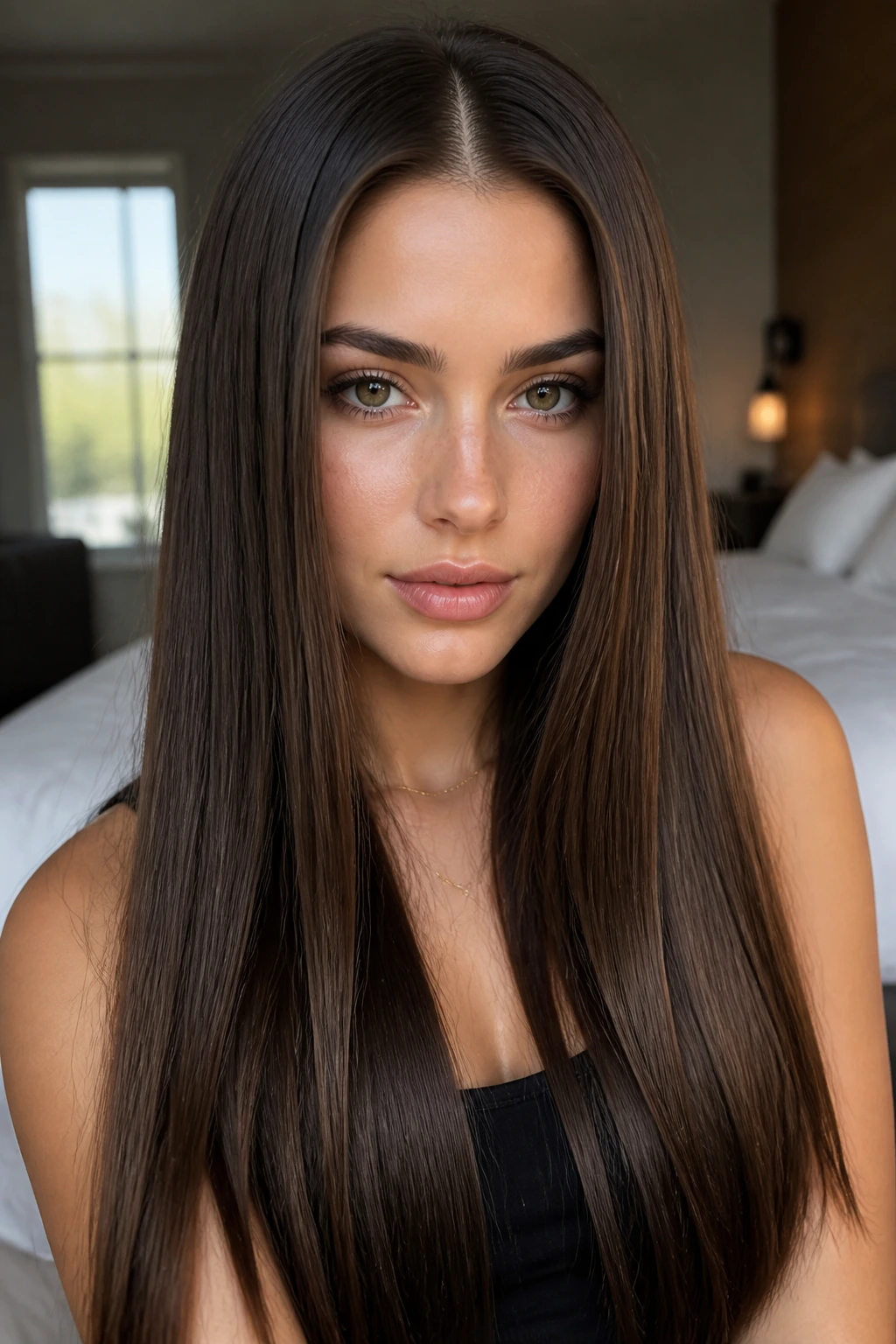
Length gets used, not hidden.
A lot of hairstyle roundups treat long hair like extra baggage. These styles do the opposite: they let the length become the point, whether that means a low ribbon ponytail, a rope braid over one shoulder, or a blunt sheet of hair that looks sharp because the ends are clean.
The styles work with sleek texture instead of fighting it.
Straight hair is not trying to be curly hair’s cousin. It behaves differently. These looks lean on smoothness, shine, and line, so you’re not constantly trying to rough it up into something it isn’t.
There’s a real range of effort.
Some of these take two minutes and a hair tie. Others need a flat iron, a few bobby pins, and a mirror that doesn’t lie. That range matters, because not every day should ask the same thing from your hair.
Accessories actually earn their keep here.
Long straight hair can swallow a tiny clip or make a big ribbon look odd. The styles below show where a barrette, scarf, or elastic wraps the look rather than decorating it after the fact.
Flatness gets handled head-on.
The biggest issue with long straight hair is usually not frizz. It’s sag. These styles add shape at the crown, at the nape, or through the middle so the hair doesn’t just hang there like wet laundry.
You can wear these to work, dinner, or a lazy Sunday.
That sounds obvious, but it matters. A style that survives a desk chair, a coat collar, and a car ride has earned its place.
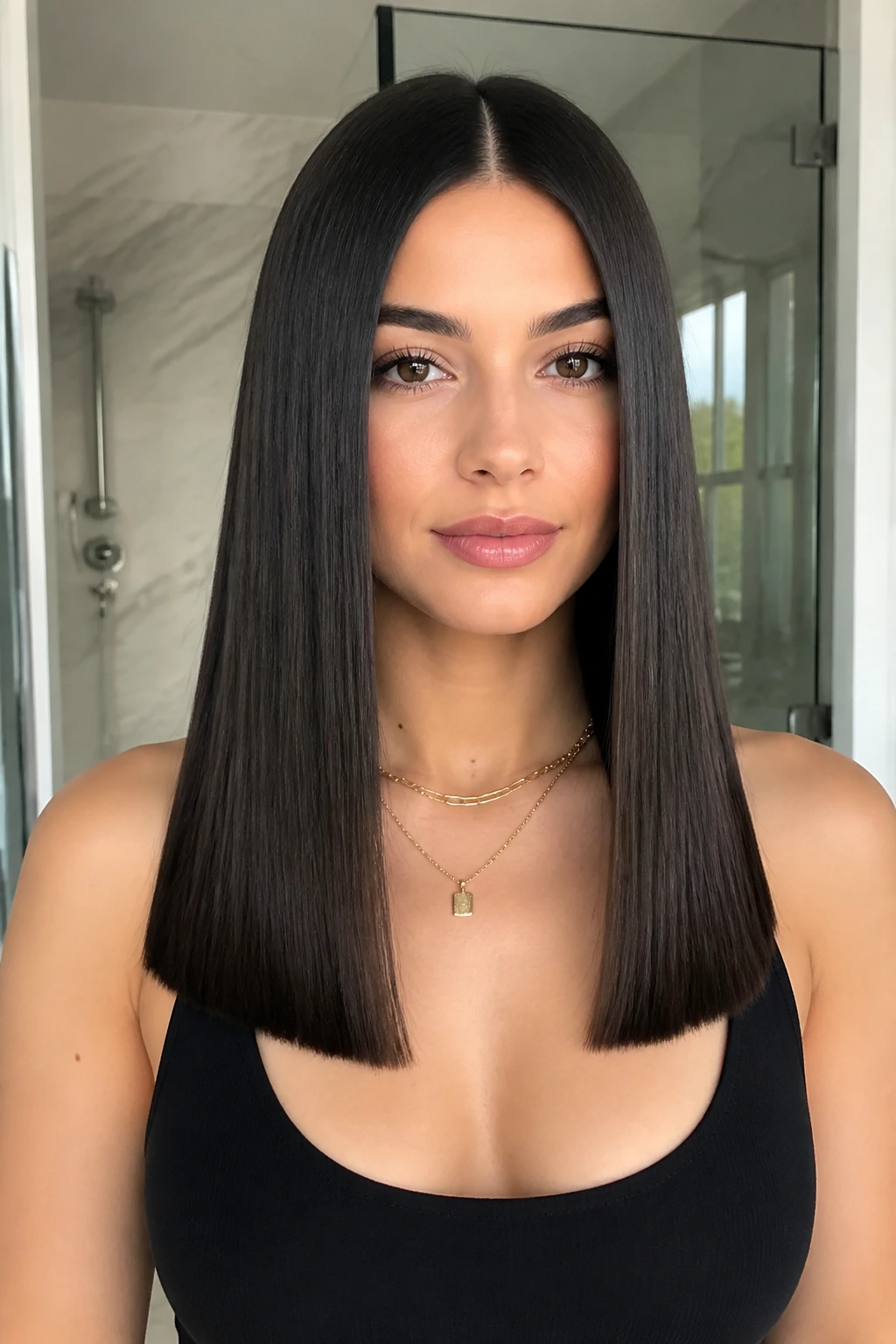
1. Glass-Line Center Part
A dead-center part on long, straight hair can look almost severe in the best way. It draws a clean line from forehead to crown and lets the length fall like two matching panels. If your ends are blunt or just slightly beveled, the whole effect looks crisp and intentional rather than flat.
Why it works
This style is less about styling and more about discipline. You need smooth roots, a tail comb, and a little patience while you line everything up. Once the part is exact, the hair does most of the work for you.
A tiny bit of lightweight serum on the last few inches keeps the ends from splitting into frizz, but don’t drag it up near the scalp. That’s how the whole thing starts to look greasy by noon.
For the cleanest finish, tuck the hair behind both ears for a minute, then let it fall naturally. The bend the ears create is subtle, and that small interruption keeps the lengths from looking too boxy.
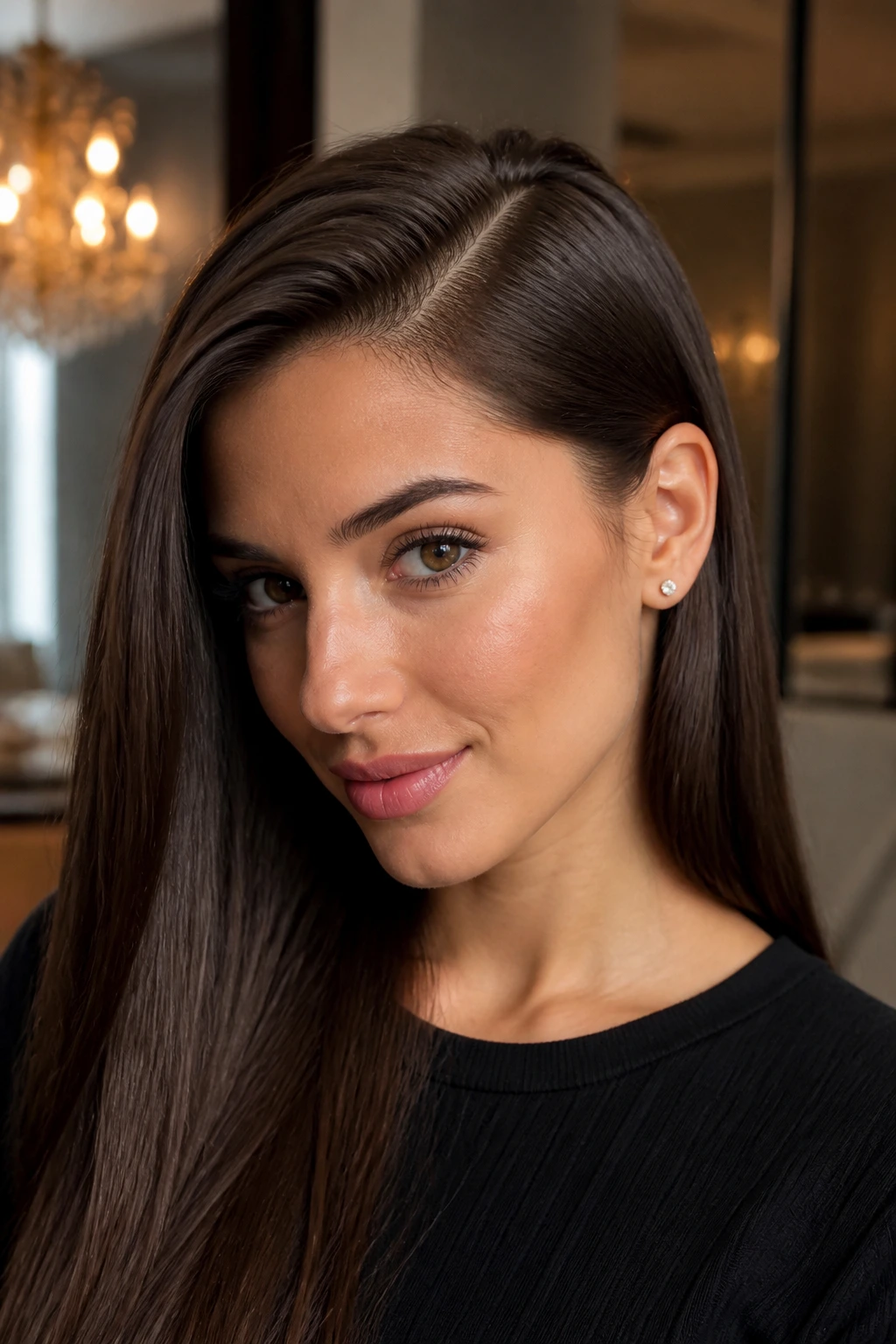
2. Deep Side Part and Ear Tuck
This is the style you reach for when you want a little more drama without touching a curling iron. A deep side part shifts the weight of long straight hair to one side, and the ear tuck on the heavier side gives the face a sharper frame. It’s simple. It works.
What makes it different
The part should sit well past the arch of one eyebrow, not halfway between center and side. That extra shift changes the whole mood of the hair and creates lift at the crown, which long straight lengths often need badly.
On thicker hair, keep one side tucked behind the ear and leave the other side loose so the shape doesn’t turn into a curtain. On finer hair, mist the roots with a light root spray before parting. That gives the hair a little grip so the line doesn’t collapse.
A small gold hoop or a plain stud can be enough here. The ear tuck is the accessory. Everything else is backup.
3. Blunt Ends and Pin-Straight Finish
Some styles whisper. This one speaks in a clean, clipped tone. Blunt ends on long straight hair make the length look heavier and more expensive-looking because the eye follows a hard line instead of a wispy finish.
You need a fresh trim for this to work. Not a dramatic chop. Just ends that sit evenly, especially if your hair tends to thin out near the bottom. A flat iron pass with a fine-tooth comb in front of it can sharpen the look, but don’t overdo the heat or the hair will start to puff at the ends.
Best for:
- Hair that naturally falls straight or only has a slight bend
- People who like a polished, sharp outline
- Days when you want the cut, not the accessories, to do the talking
If your ends are dry, use one drop of serum per side. Two if your hair is very dense. More than that, and the style starts to look slick in the wrong way.
4. Face-Framing Layers With a Soft Bend
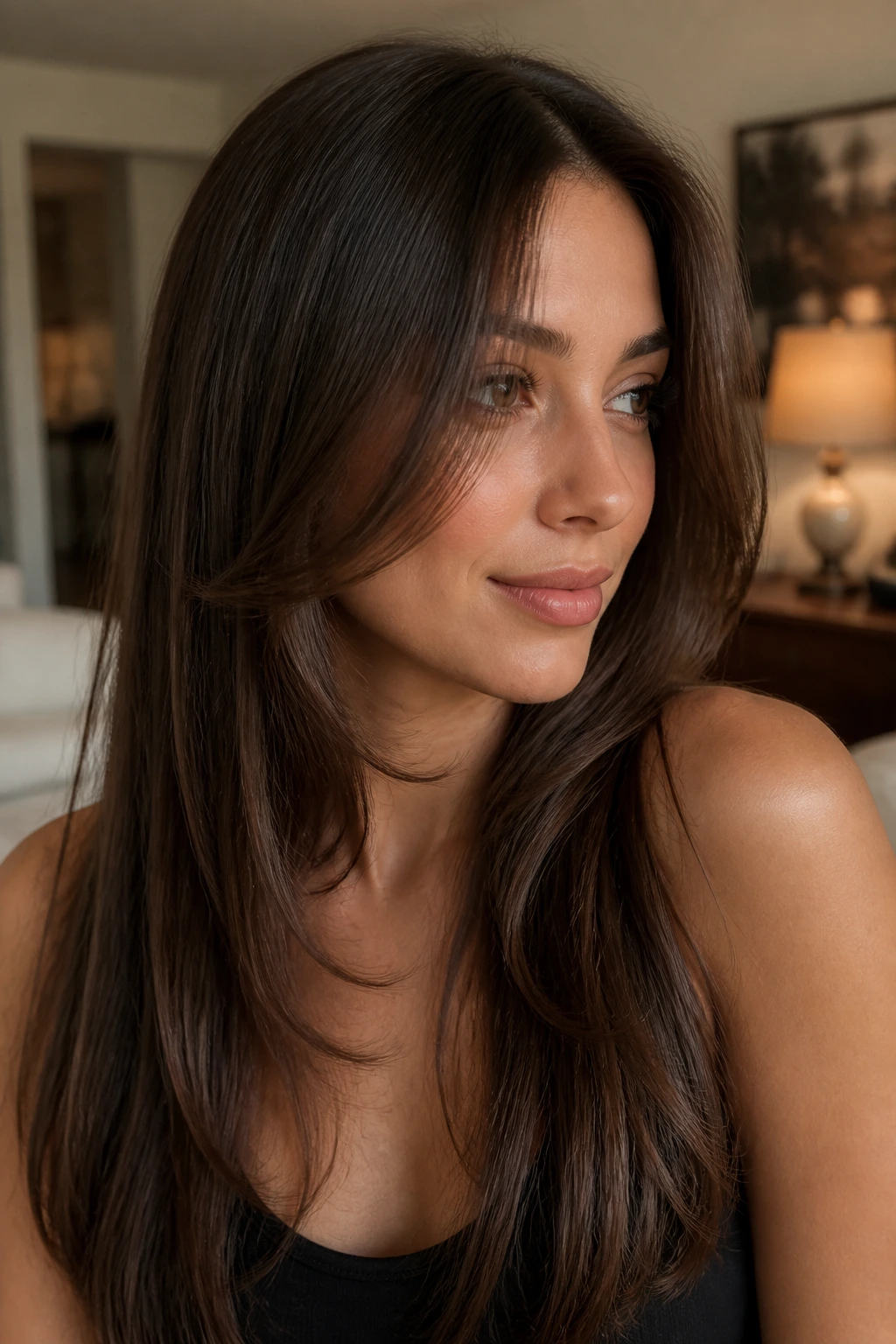
A long, straight cut can sometimes feel a little too solid. Face-framing layers fix that fast. They create movement near the cheeks and jaw without asking the rest of the hair to curl, wave, or pretend it’s something else.
The best version of this style has a barely-there bend through the front sections, usually made with a round brush while blow-drying or a quick pass of a flat iron curved outward at the ends. Nothing springy. Nothing fluffy. Just enough softness to keep the line from looking severe.
If your hair is very long, these layers matter even more because they stop the whole style from dragging down the face. They make the hair feel lighter without sacrificing length, which is a rare and useful thing.
5. Curtain Bangs With Long Lengths

Curtain bangs and long straight hair have a built-in truce. The bangs give the front of the style a little shape, and the length keeps the whole look from feeling too chopped up. When they’re cut well, the bangs sit like a soft frame and the rest of the hair stays smooth and calm.
The trick is keeping the bangs from separating into little strings. A round brush, a medium heat setting, and a quick roll away from the face usually do the job. If your hair is fine, skip heavy oil near the front. It closes the bangs down fast.
This style is a good answer to “I want change, but not a whole new haircut.” Which is fair. Not everyone wants to commit to layers everywhere.
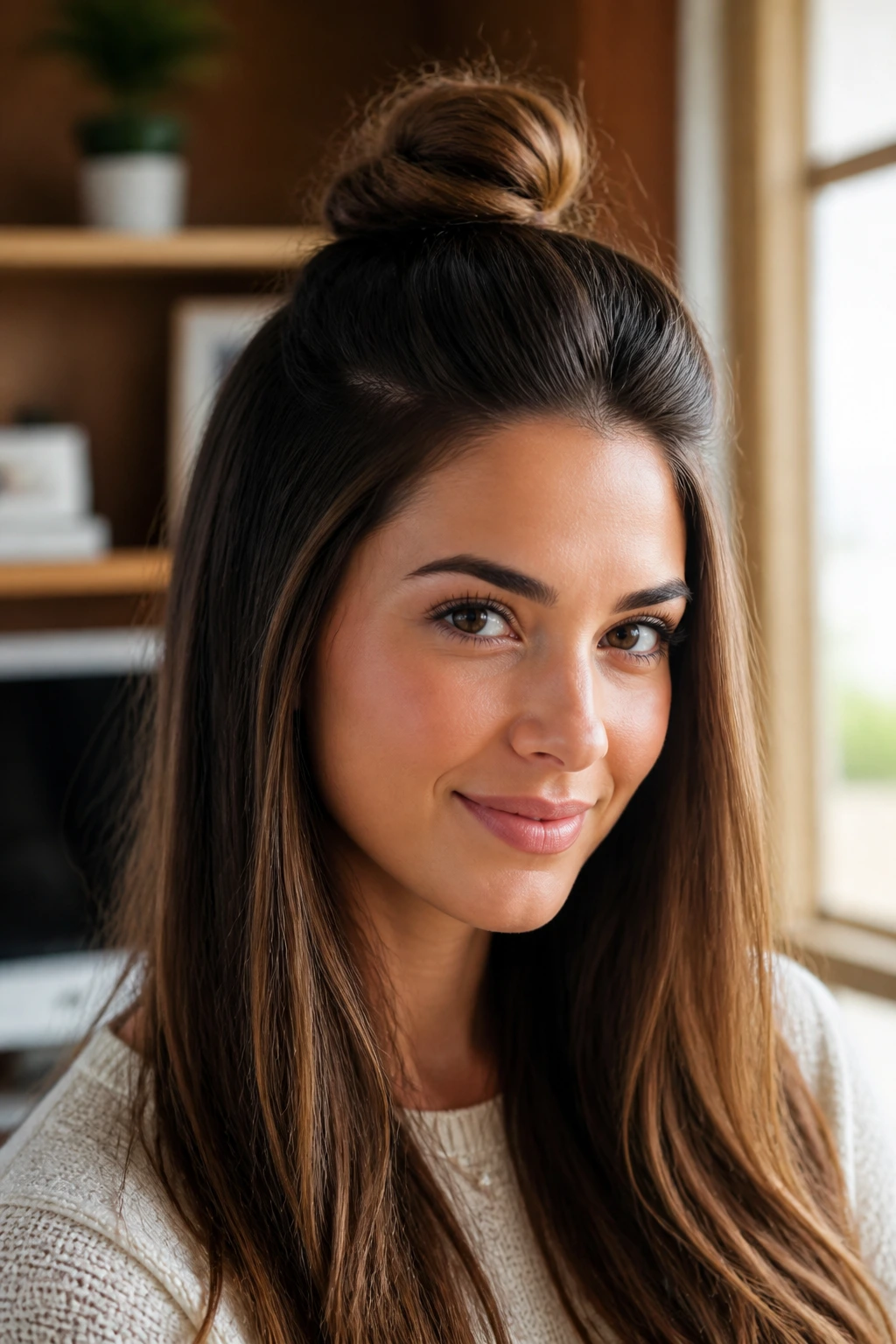
6. Half-Up Crown Knot
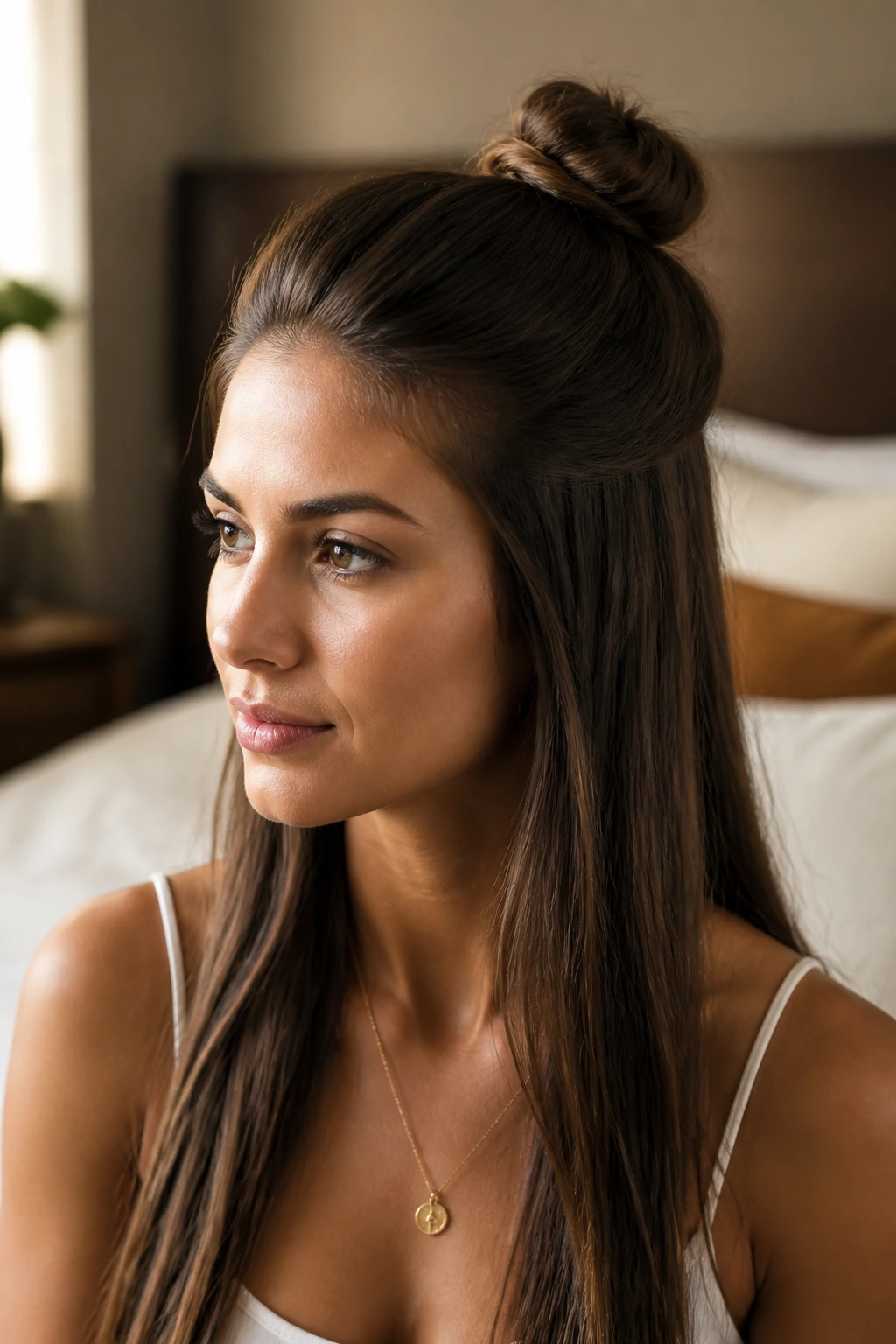
A half-up crown knot gives long straight hair a bit of structure at the top while keeping the length visible. That matters more than people think. If all your hair stays down all the time, the style can start to feel repetitive by lunch.
Gather the top section from temple to temple, twist it once or twice, and pin it into a compact knot right at the crown. The knot should sit flat enough to stay put but high enough to lift the face. Too low and it looks accidental. Too high and it turns into a top knot’s awkward cousin.
This one is nice on hair that’s freshly smoothed because the contrast between the sleek lower half and the little knot on top is the whole point.
7. Half-Up Clip Twist
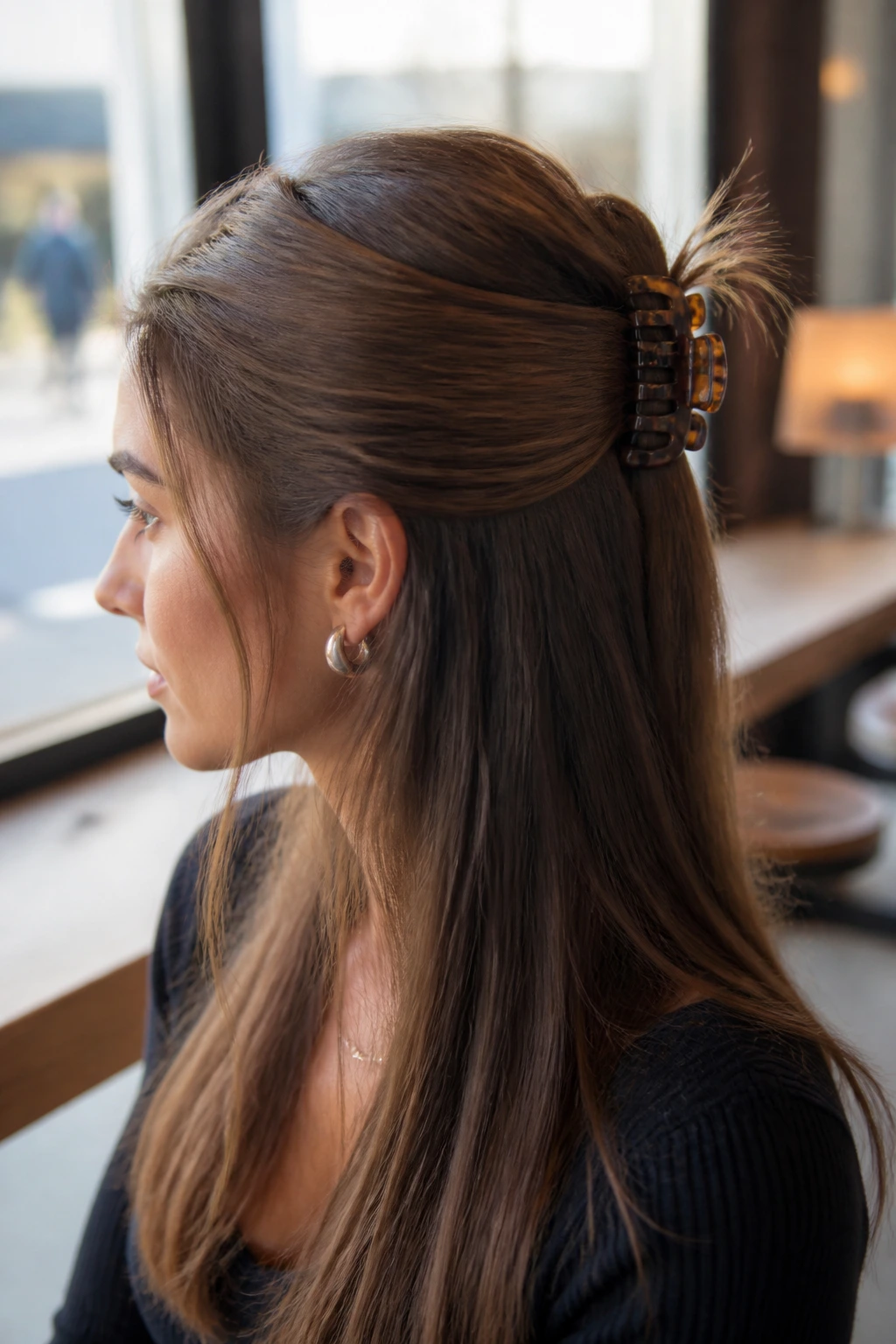
A big claw clip can do real work on long straight hair if you use it like a shape, not a decoration. The half-up clip twist pulls some height into the crown, keeps hair off the shoulders, and leaves the rest hanging in a clean sheet.
Twist the top half once, fold it upward, and clamp the clip over the fold. Let the ends poke out slightly. That little bit of looseness keeps the style from looking overbuilt. If your hair is very long, choose a clip with strong teeth and a wide back. Tiny clips slide. They always do.
This is one of those five-second styles that still looks like you made a decision.
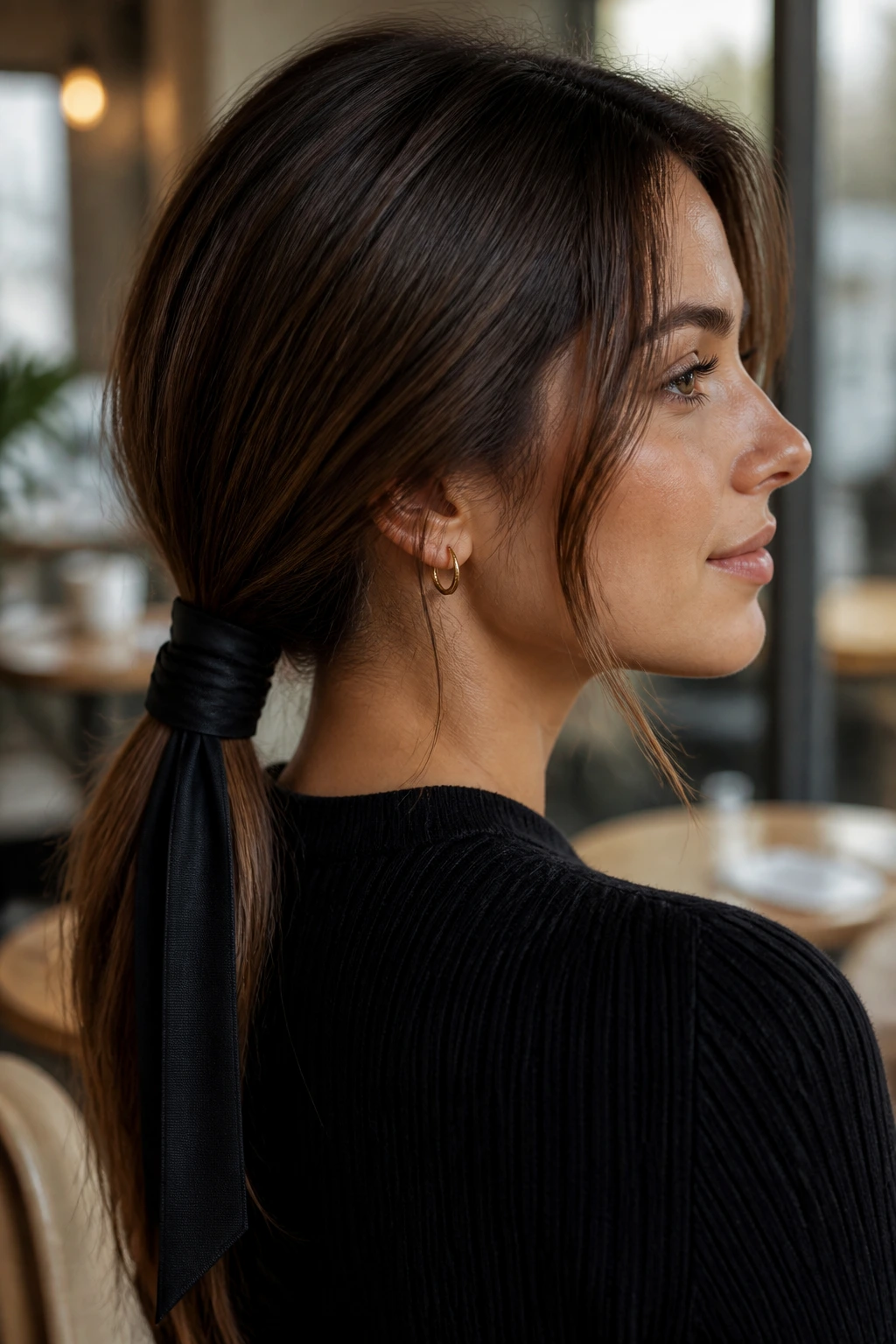
8. Low Wrapped Ponytail
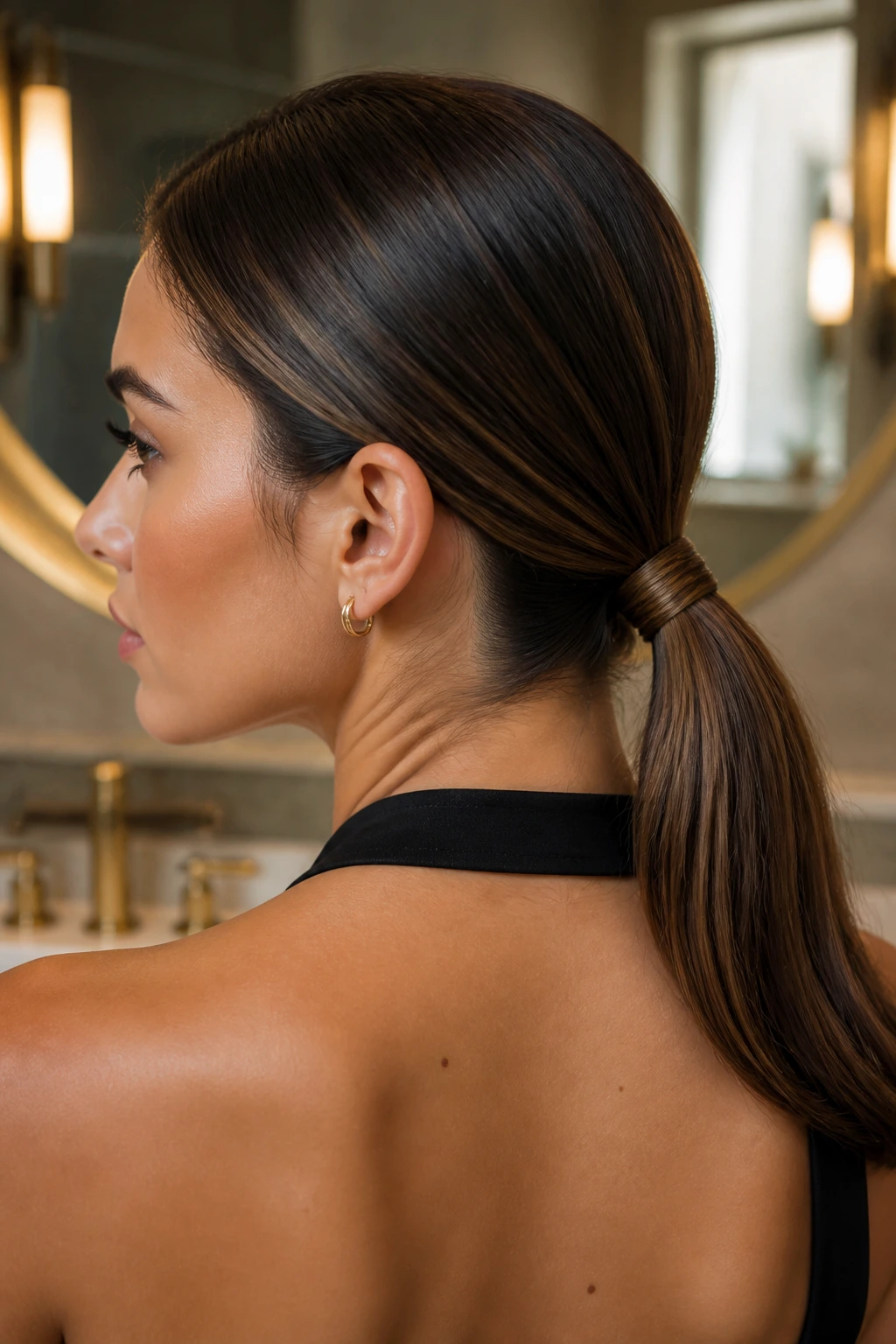
A low wrapped ponytail is the sleek answer to “I need my hair up, but I’m not in the mood for a gym ponytail.” Smooth the hair back with a brush, tie it low at the nape, and wrap a small section of hair around the elastic until the band disappears.
The wrapped section matters. It turns a basic ponytail into a finished style, especially on long straight hair where the length already reads as elegant and you don’t want a visible black elastic breaking the line. Secure the wrap with a bobby pin tucked underneath the ponytail, not on top where it shows.
If your hair is very dense, use two elastics stacked one over the other before wrapping. One elastic can stretch and sag under the weight by mid-afternoon.
9. Ribbon-Tied Ponytail
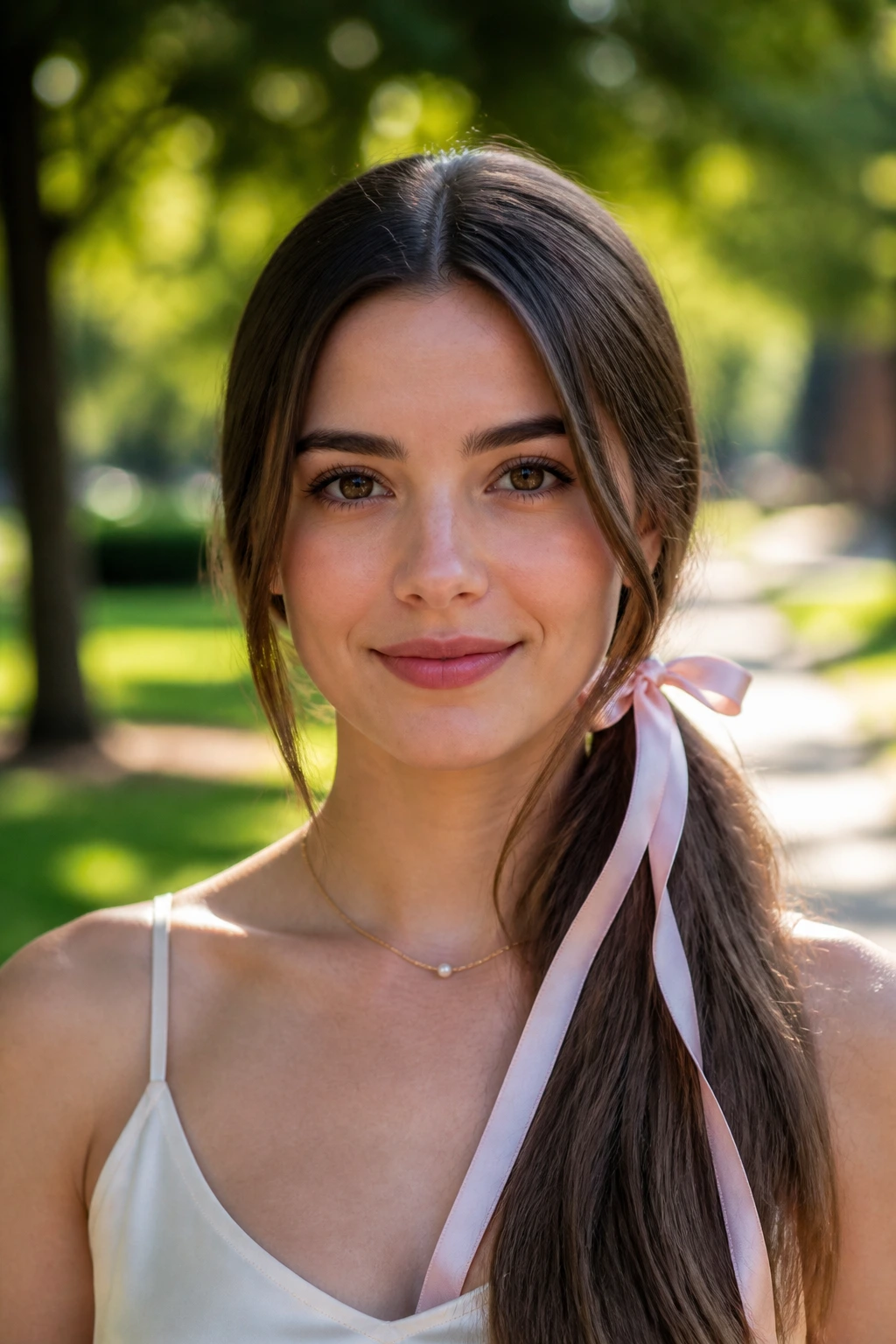
A ribbon-tied ponytail softens all that straight length without messing with the sleekness. The ribbon sits at the base and gives the whole style a little movement, especially if it trails down the back of the hair.
Choose a ribbon that has some body. Satin works if you want shine, but grosgrain holds its shape better and doesn’t twist as much. Tie it over a low ponytail or a mid-height ponytail, depending on how formal you want the look to feel.
This is one of my favorite options for long hair because it looks deliberate even when the rest of the style is almost bare. No teasing. No elaborate braiding. Just a clean tie and a long line.
10. Bubble Ponytail
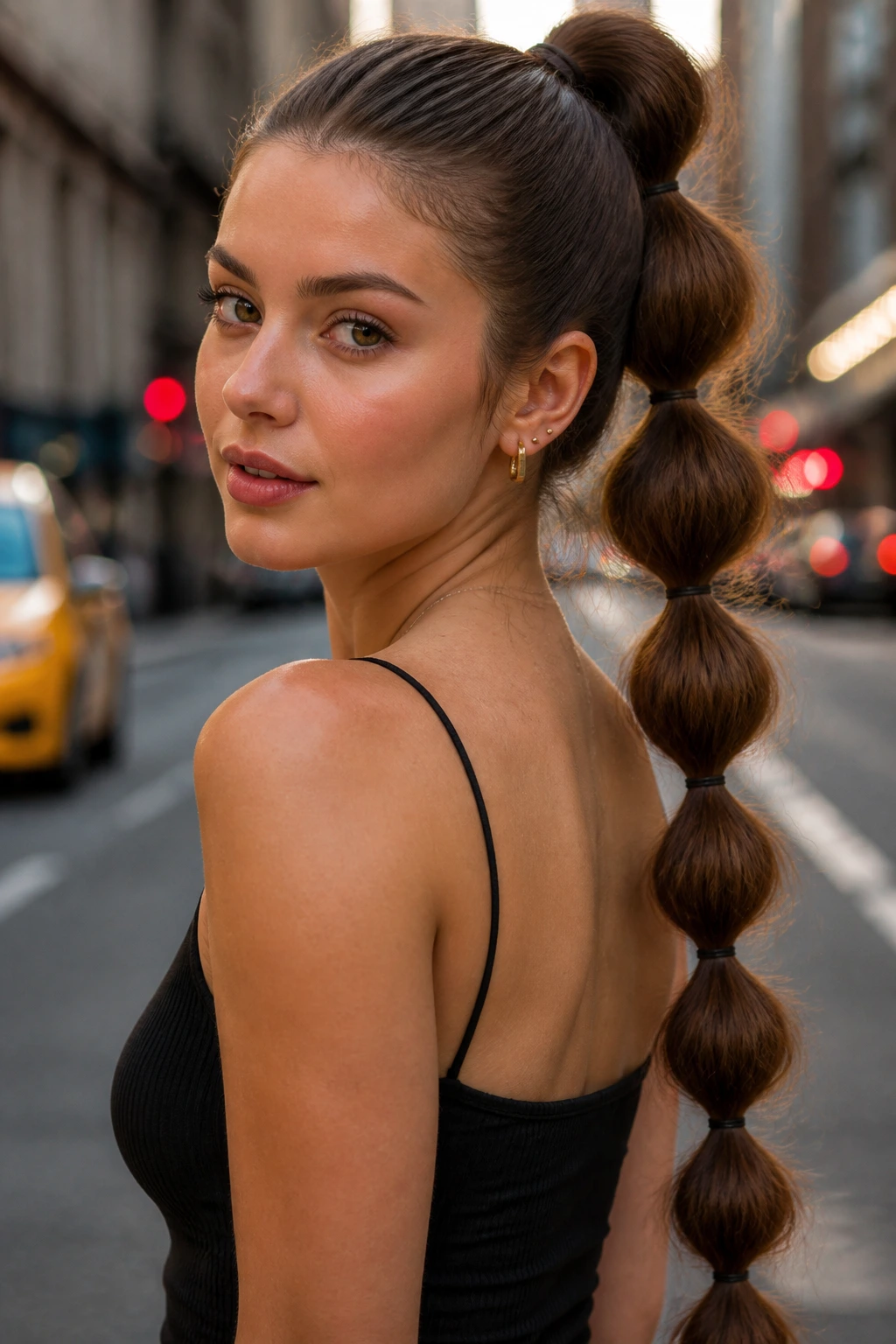
Bubble ponytails are made for long straight hair because the length shows off every section. Instead of one long tail, you create a series of rounded segments down the ponytail with small clear elastics spaced evenly apart.
Pull gently on each section after you tie it off so it puffs into a bubble. Not too much. You want shape, not a stretched-out mess. If your hair is very silky, a little texturizing spray through the pony before you start gives the elastics something to hold.
Quick setup
- Start with a low or mid ponytail
- Add clear elastics every 2 to 3 inches
- Tug each section outward with two fingers
- Mist the finished style lightly so it stays lifted
It’s playful, but not childish. That’s a useful line to have.
11. Braided Ponytail
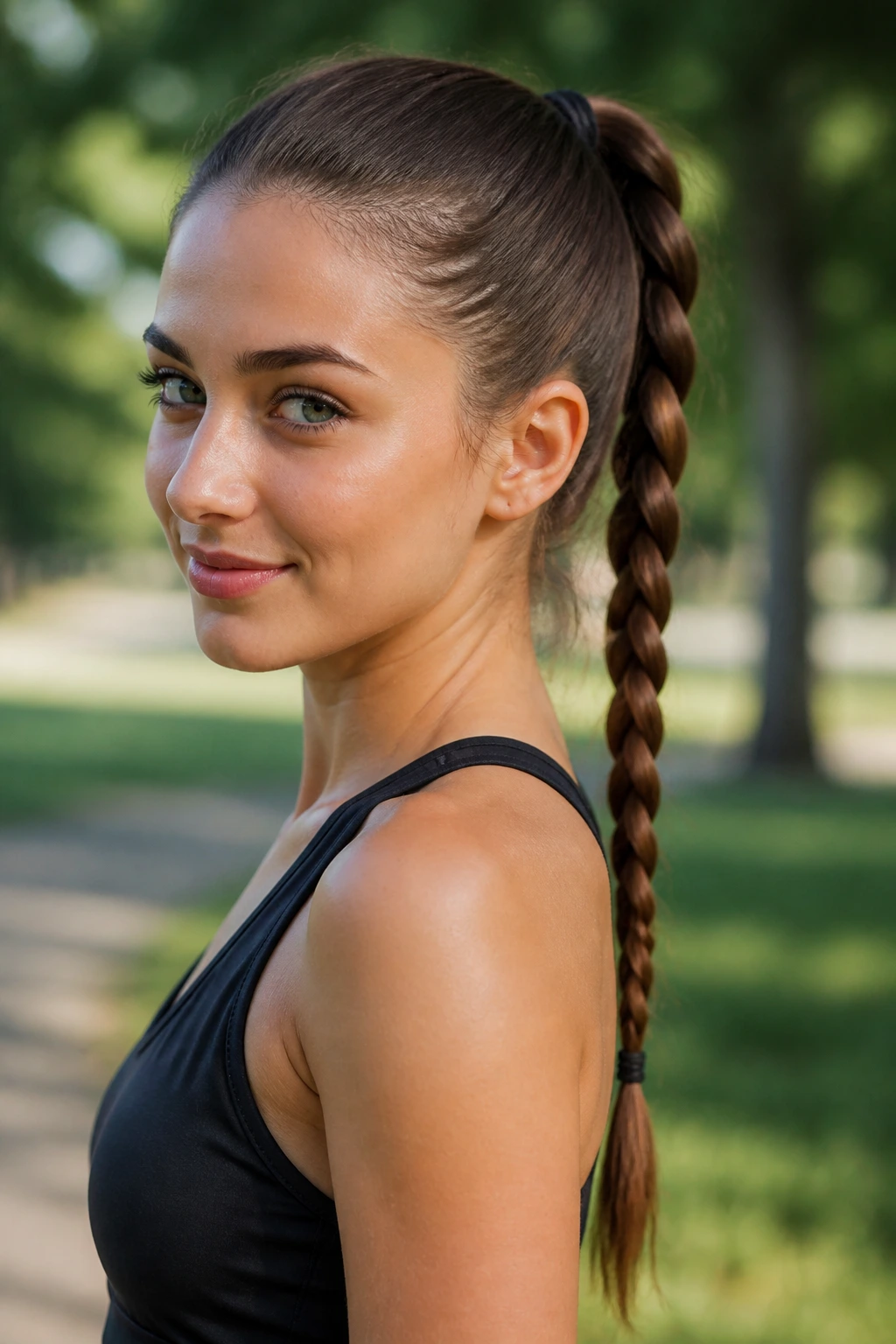
A braided ponytail solves a classic problem: long straight hair can look too plain when it’s just tied back. Braiding the ponytail adds texture, keeps the tail from tangling, and makes the whole shape look more finished.
Tie the ponytail first, then braid the loose length all the way down and secure it with a tiny elastic. If your hair is layered, smooth a little styling cream over the shorter pieces before you start so they stay inside the braid instead of poking out. That’s the part people forget.
This style is especially good when you’re active or sitting under a coat collar all day. The braid keeps the length from turning into a knot by dinner.
12. Rope Braid Over One Shoulder
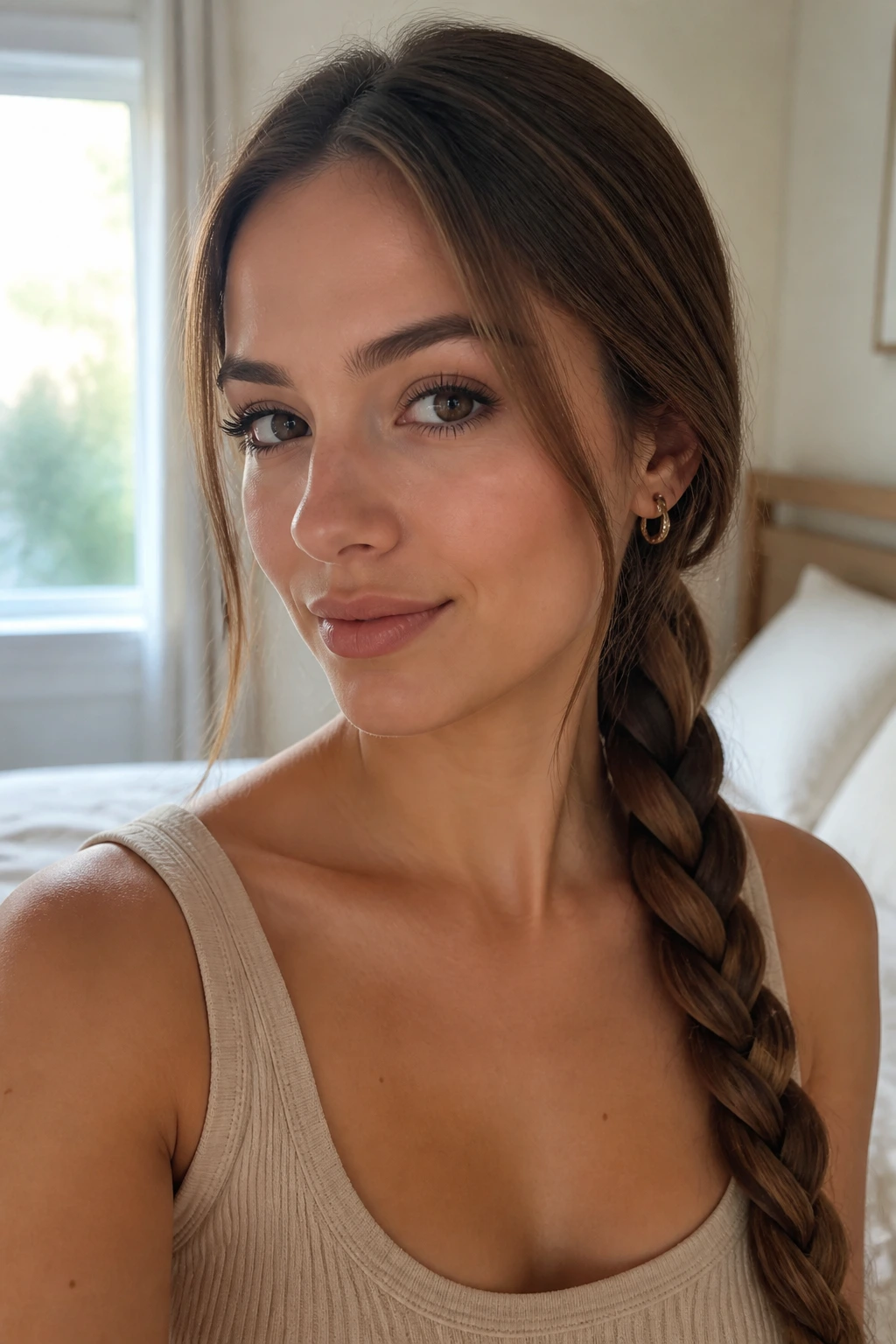
A rope braid looks polished fast, and it has a nice twist — literally — that suits very smooth hair. Split the ponytail into two sections, twist each one in the same direction, then wrap them around each other in the opposite direction. The shape stays tighter than a standard braid and sits nicely over one shoulder.
The key is tension. Keep it even all the way down so the braid doesn’t loosen in the middle and tighten at the end. On super-slippery hair, a tiny bit of mousse at the lengths before you twist can make the braid hold better.
This is one of those styles that looks more complicated than it is. Which is often the best kind.
13. Classic Side Braid

A side braid on long straight hair can be almost stubborn in how useful it is. It keeps the length contained, moves the weight to one shoulder, and gives you a shape that feels softer than a ponytail but less fussy than an updo.
Pull the braid low and slightly forward rather than clamping it right against the neck. That small shift makes the style sit better and keeps the braid visible. If your ends are thin, stop the braid a little higher and let the last few inches hang loose. It looks intentional, not unfinished.
A side braid works well on second-day hair because the extra grip helps the sections stay put. First-day slippery hair needs more product. A little more, not a lot more.
14. Fishtail Side Braid
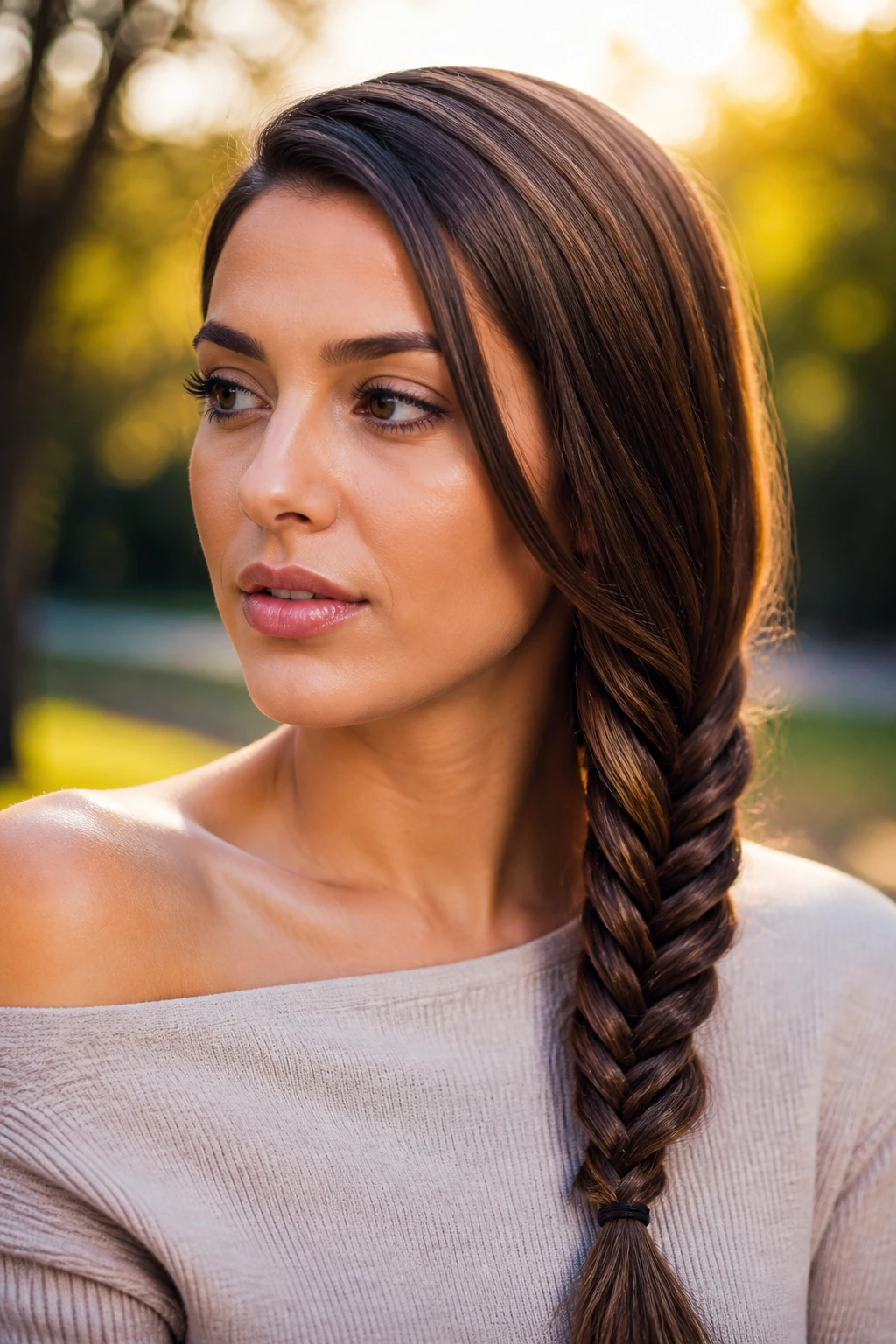
Fishtails are gorgeous on long straight hair because the detail shows up better when the strands are smooth. The braid looks intricate, but the technique is just tiny sections crossed over one another. Slow is better than messy here.
Start the braid on one side and keep the tension steady. If you pull too hard, the fishtail loses its neat pattern and turns into a frayed rope. After securing it, gently widen the braid from both sides with your fingertips. That gives it fullness without destroying the structure.
This is one of the few styles where long hair feels like an advantage every inch of the way. The braid gets more interesting as it gets longer.
15. Crown Braid Halo
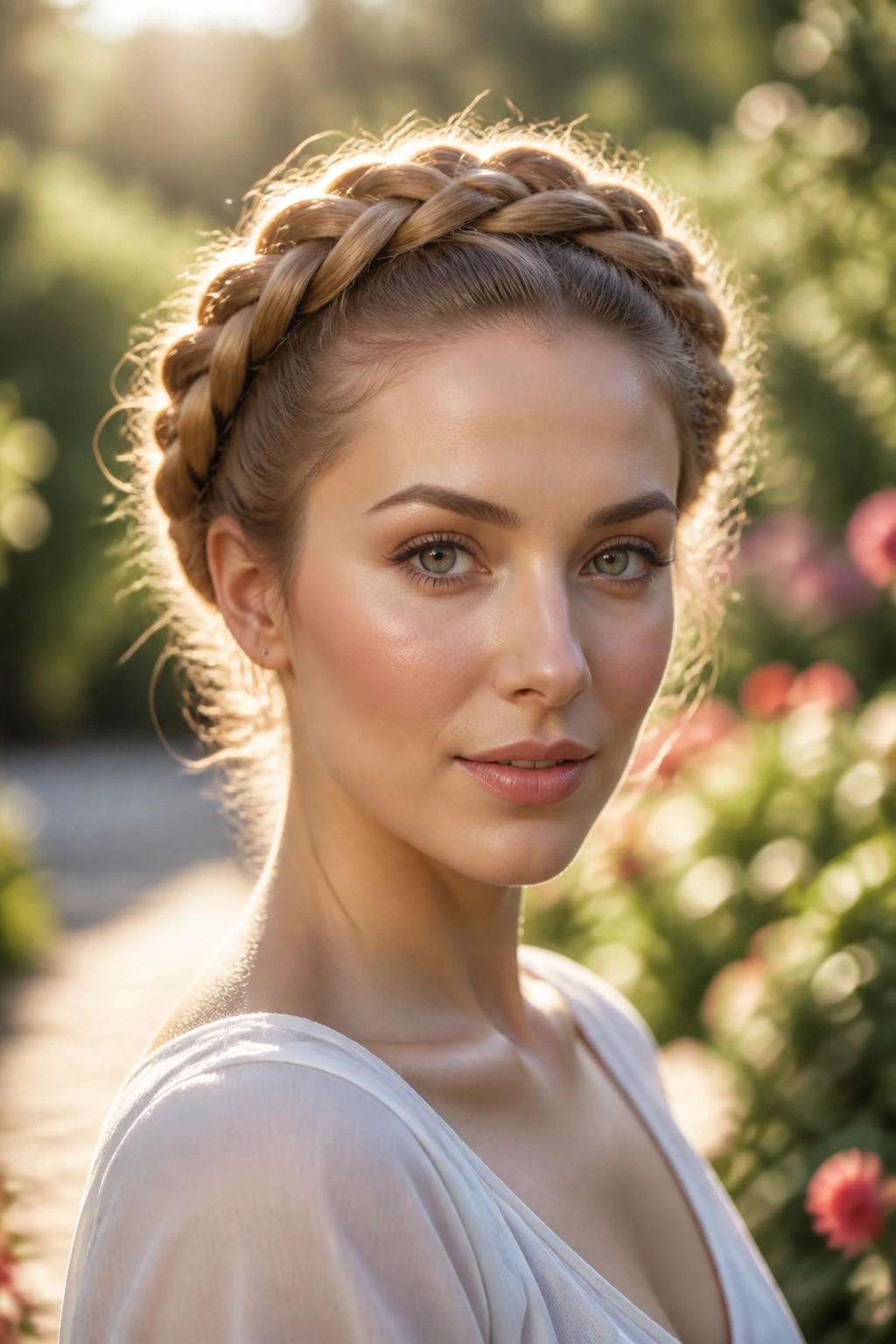
A crown braid keeps the face open and uses the length in a way that feels almost architectural. The braid wraps around the head like a halo, which sounds soft, but the style itself depends on pretty firm control.
The easiest version starts with two braids created from each side of the head, then pinned across the top to meet in the back. Use bobby pins that match your hair color and hide the pinches under the braid itself. If your hair is thick, flatten the braid slightly with your palms before pinning so it doesn’t sit too high off the head.
It’s a little more work than the other styles here. Worth it. Especially when you want long hair off your face without losing that long silhouette.
16. Half Crown Braid
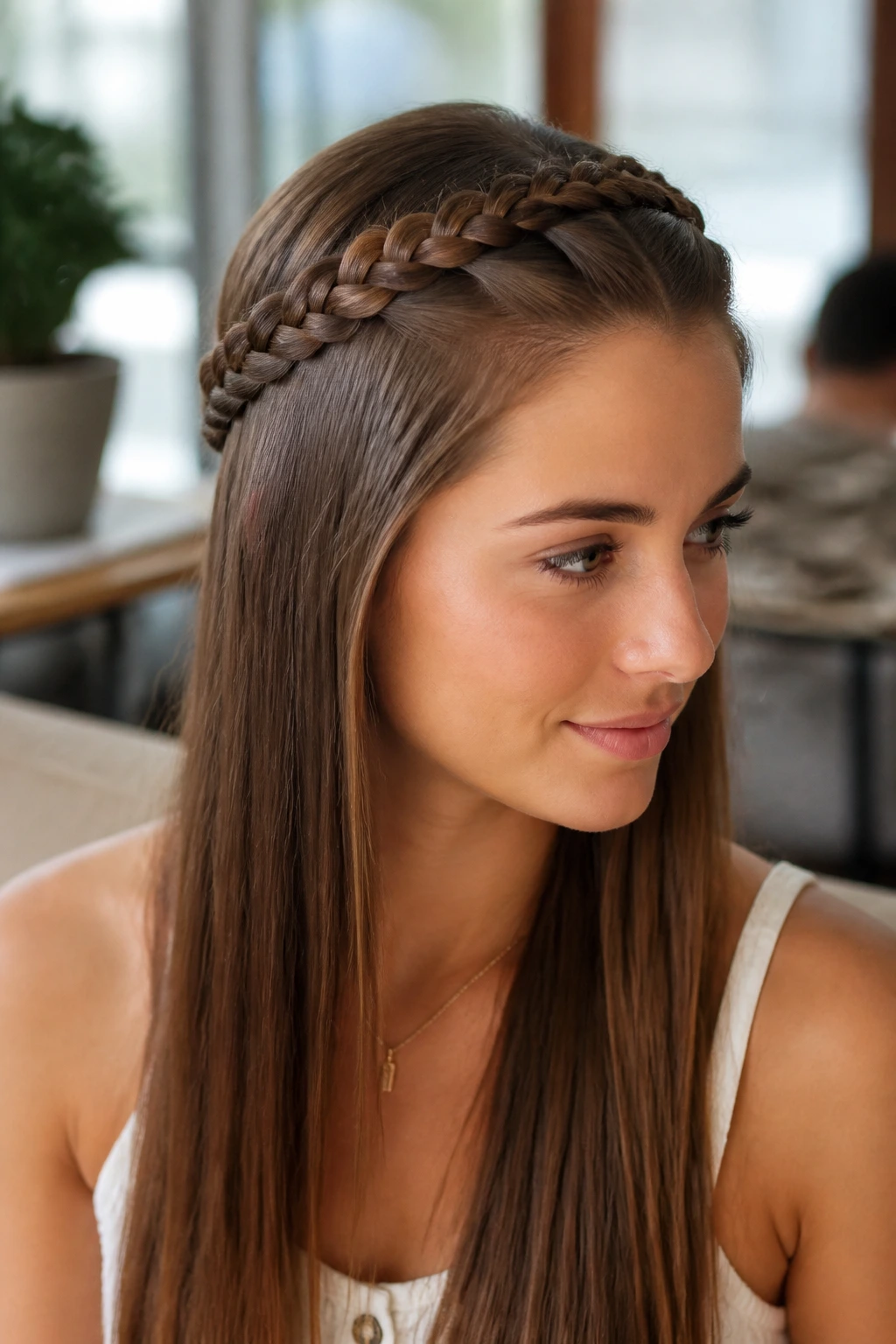
This one keeps the braid where it matters most: around the hairline and crown, not all the way around the head. The result is softer than a full halo braid and easier to wear with long straight lengths flowing below it.
Braid each side from the temple back, then pin them together at the crown or just behind it. Leave the rest of the hair straight and loose. That contrast — braided top, smooth bottom — is what makes it feel fresh. If you braid too loosely, the whole thing slides. Too tightly, and you lose the softness.
This is a good “I want effort, but not too much” style. You know the type.
17. Claw-Clip Twist
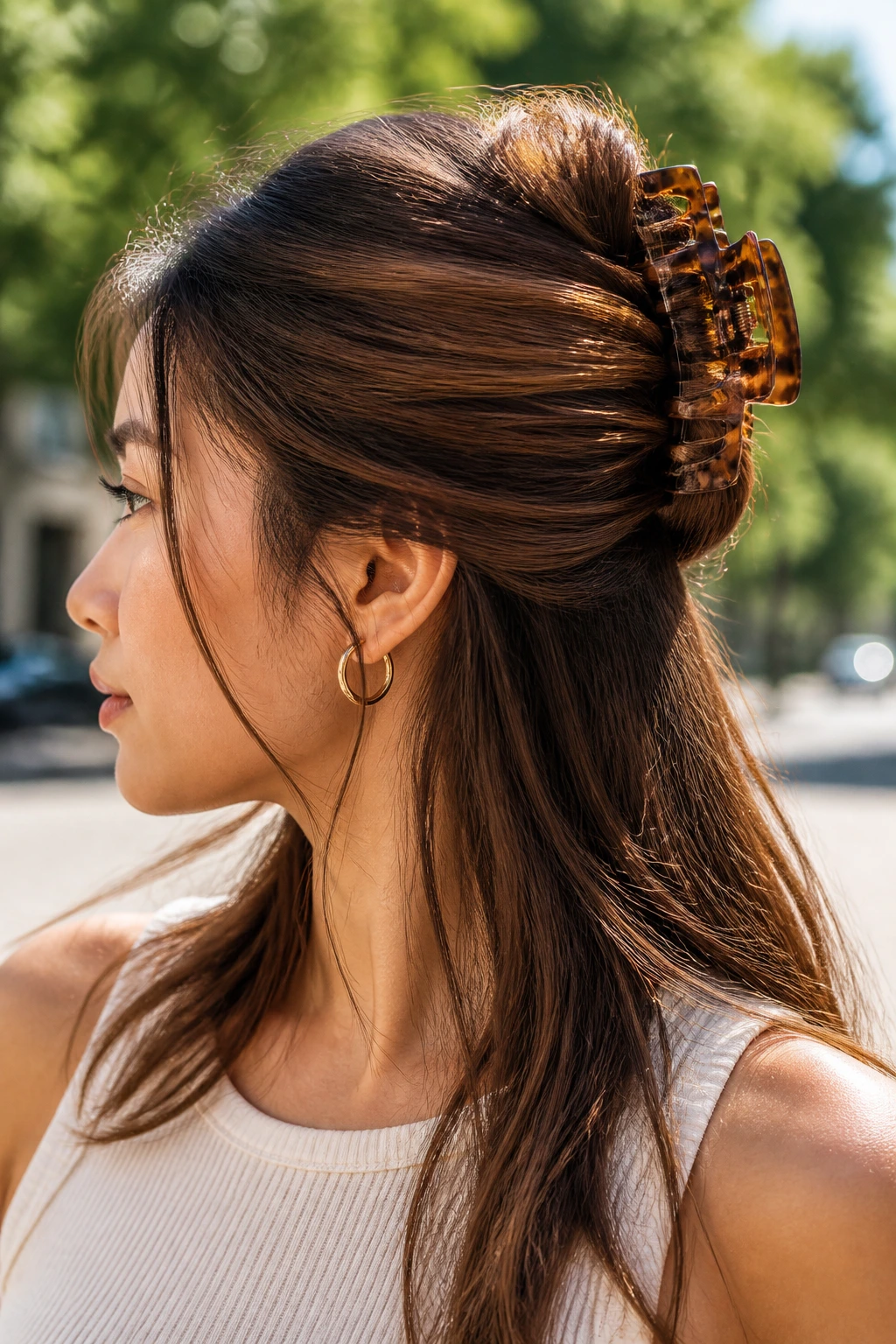
A claw-clip twist is practically built for long straight hair. Twist the lengths upward, fold them once, and clamp the clip where the fold feels stable. A large clip with real grip is the whole game. Decorative clips that can’t hold weight are a waste of time.
The hair at the crown should stay smooth, while the lower ends can spill out a little for a casual finish. That little spill is what keeps the style from feeling too stiff. If your hair is very heavy, twist the length more tightly before folding it up, then let the clip catch the center of the twist rather than the ends.
Fast. Useful. Not boring.
18. Low Chignon
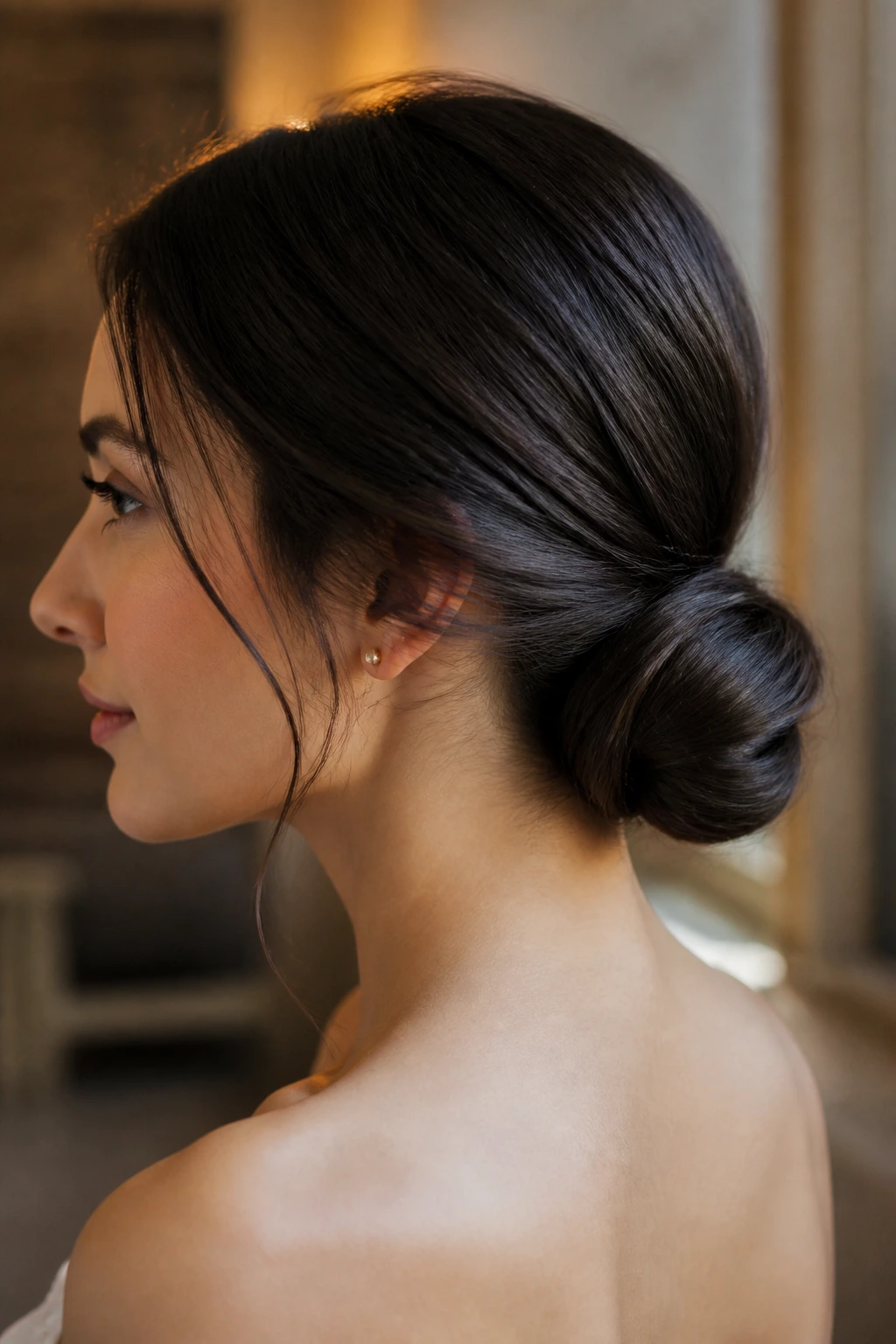
A low chignon on long straight hair has a neat, tucked quality that reads more formal than a ponytail but less severe than a hard bun. Wrap the length into a compact coil at the nape and pin it flat against the head. The smoother the base, the better the whole thing looks.
If your hair is slippery, braid the ponytail first and then wrap the braid into the bun. That gives the chignon some grip and keeps the pinning simpler. Straight hair that’s freshly washed can be tricky here because it wants to slide apart. A day-old texture helps.
This style is especially good when you want the ends hidden. Some days that’s the point.
19. Twisted Knot With Loose Ends
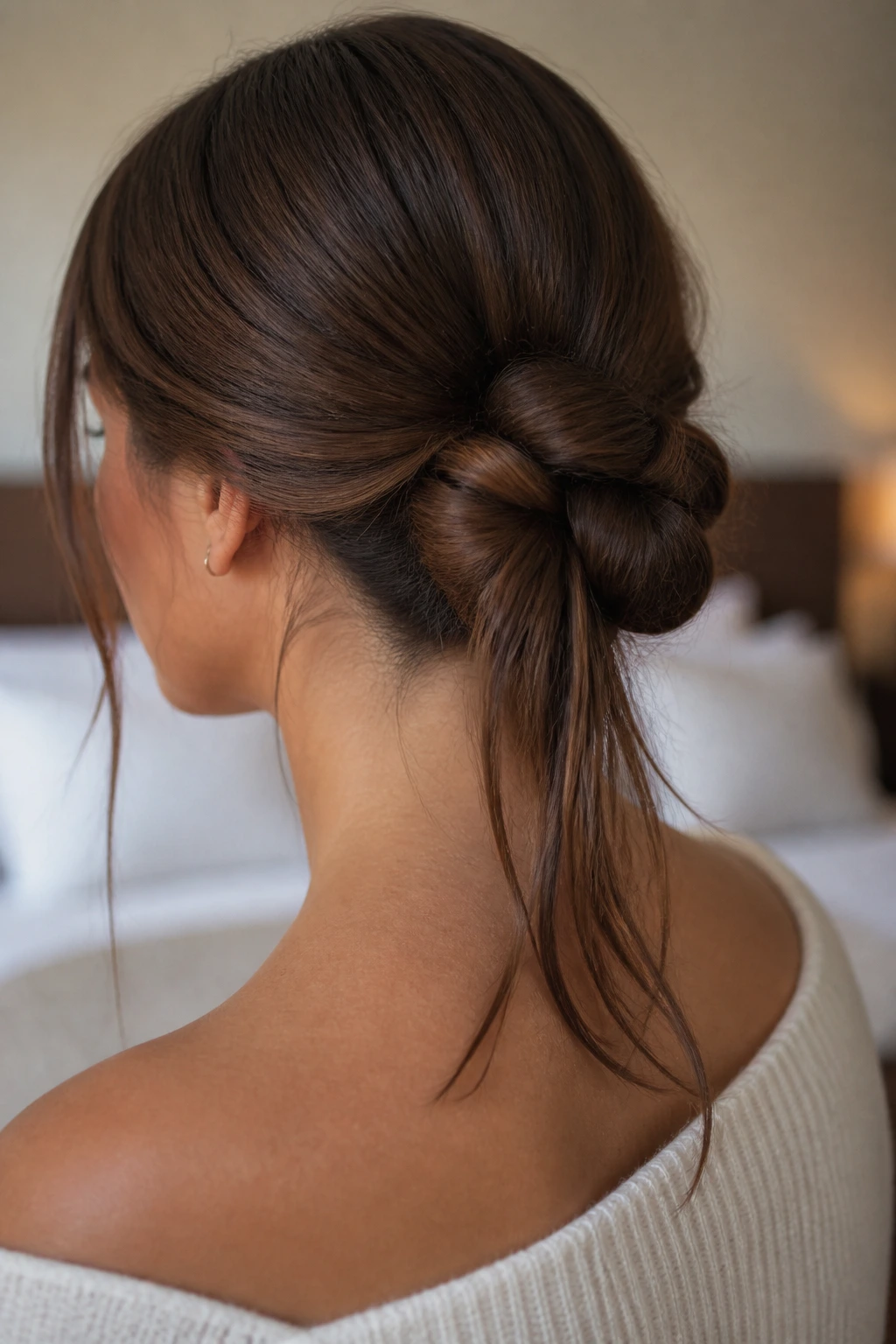
Not every updo has to be fully contained. A twisted knot with a few loose ends gives long straight hair a more relaxed shape while still keeping most of it up and away from the neck.
Gather the hair low, twist it until it begins to coil, then knot it once and pin the center. Leave the last few inches out so they fall straight or barely curved. That visible tail softens the style and keeps it from looking too severe. If the loose ends are too frayed, run a flat iron over just that section before you pin the knot.
This is one of those styles that looks better when it isn’t perfect. A little looseness is the point.
20. Barrette Stack
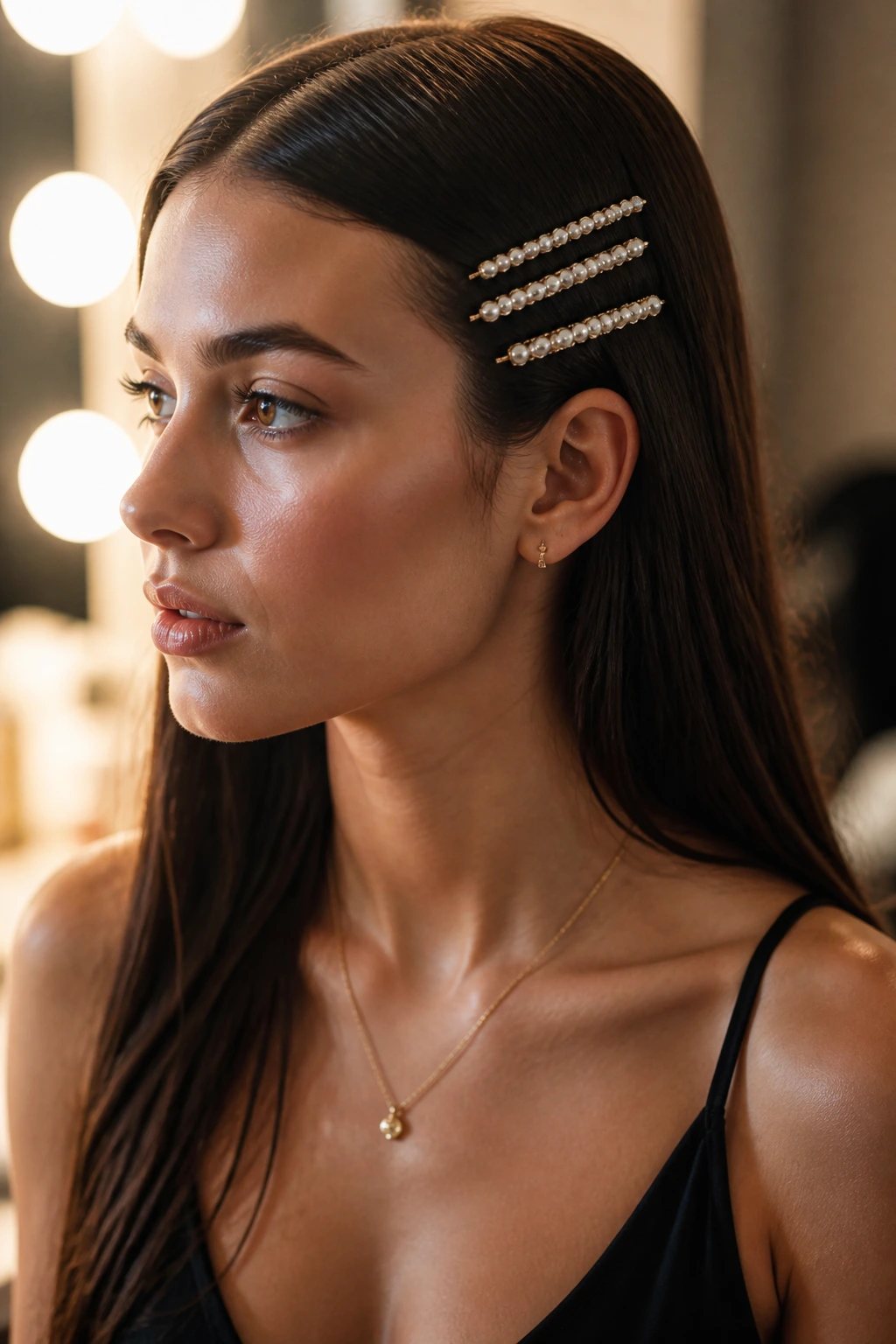
A barrette stack is a smart way to break up long straight hair without hiding it. Clip two or three barrettes in a row along one side, or angle them up from the ear toward the crown. The line of the clips becomes the style.
Keep the rest of the hair sleek and straight. That contrast matters. If the hair is already puffy or textured, the stack can get lost. You want the barrettes to stand out against a smooth surface.
Different clip sizes create different moods. Tiny metal clips feel sharp and minimal. Chunky resin barrettes feel more playful. Either way, the placement should look intentional, not like you grabbed whatever was in the drawer.
21. Satin Scarf Ponytail
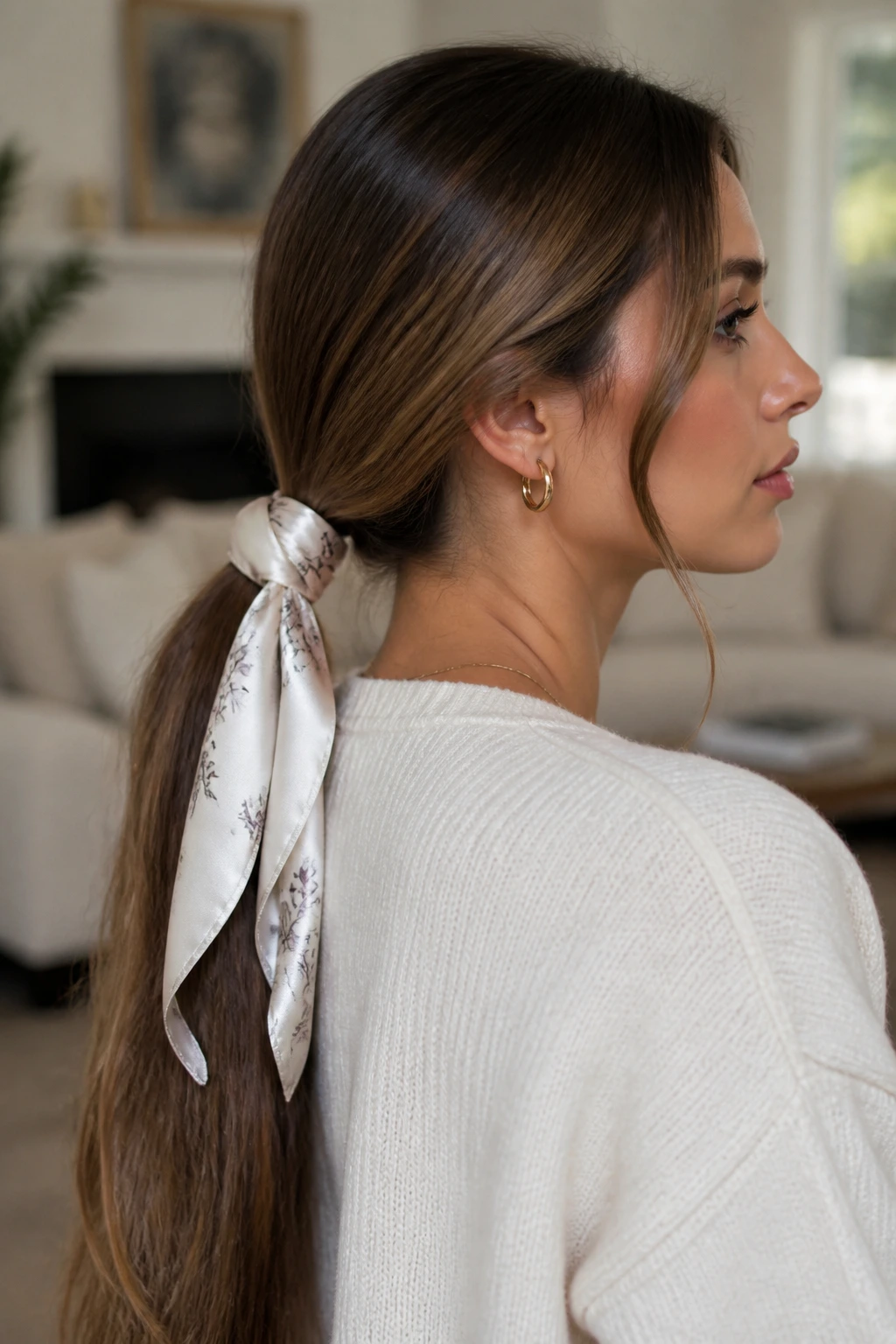
A satin scarf gives a long straight ponytail some movement at the base and a little softness through the tail. Tie the scarf around the elastic, let the ends hang, and keep the pony itself smooth and low.
This style works best when the scarf coordinates with the hair rather than fighting it. Dark hair loves jewel tones. Light hair can handle cream, black, or a muted print. Very busy prints can overwhelm the clean line of the hair, so I’d keep the pattern controlled.
A scarf ponytail is also forgiving on second-day hair, which is a bonus. The scarf covers the base, so if the roots aren’t perfect, nobody needs to know.
22. Ribbon-Woven Braid
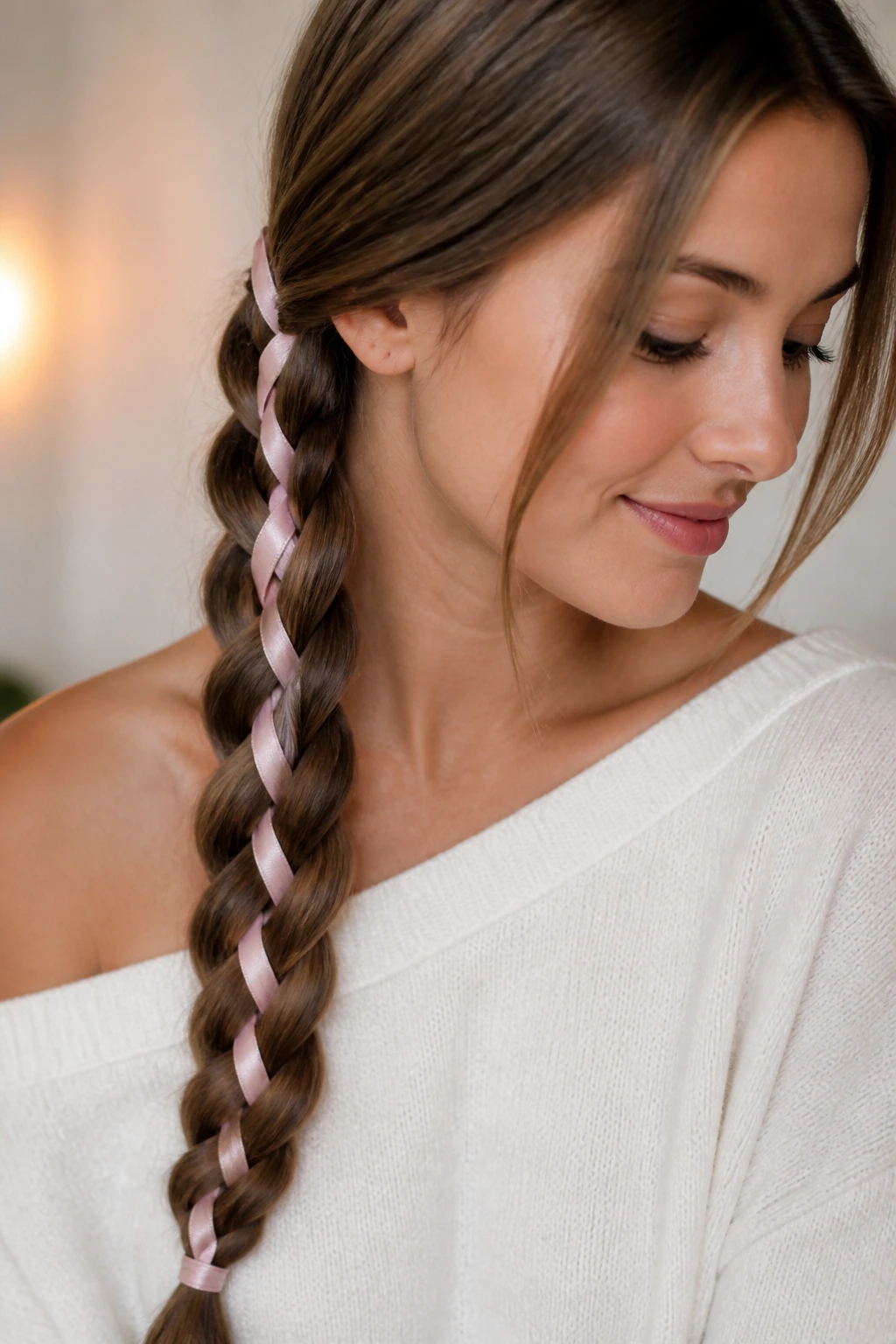
If a regular braid feels too plain, thread a ribbon through it. A slim ribbon woven into the three strands turns long straight hair into something more detailed without requiring a complicated technique.
Start with a ribbon tied to one section near the top, then continue the braid as usual, letting the ribbon follow one strand through the plait. Keep the ribbon flat as you work so it doesn’t twist into a narrow cord. A satin ribbon looks dressier, but a grosgrain ribbon stays visible better if your hair is dark.
This is one of the few styles here where color contrast really matters. A ribbon that disappears into the hair misses the point.
23. Ear-Tucked Sleek Lengths
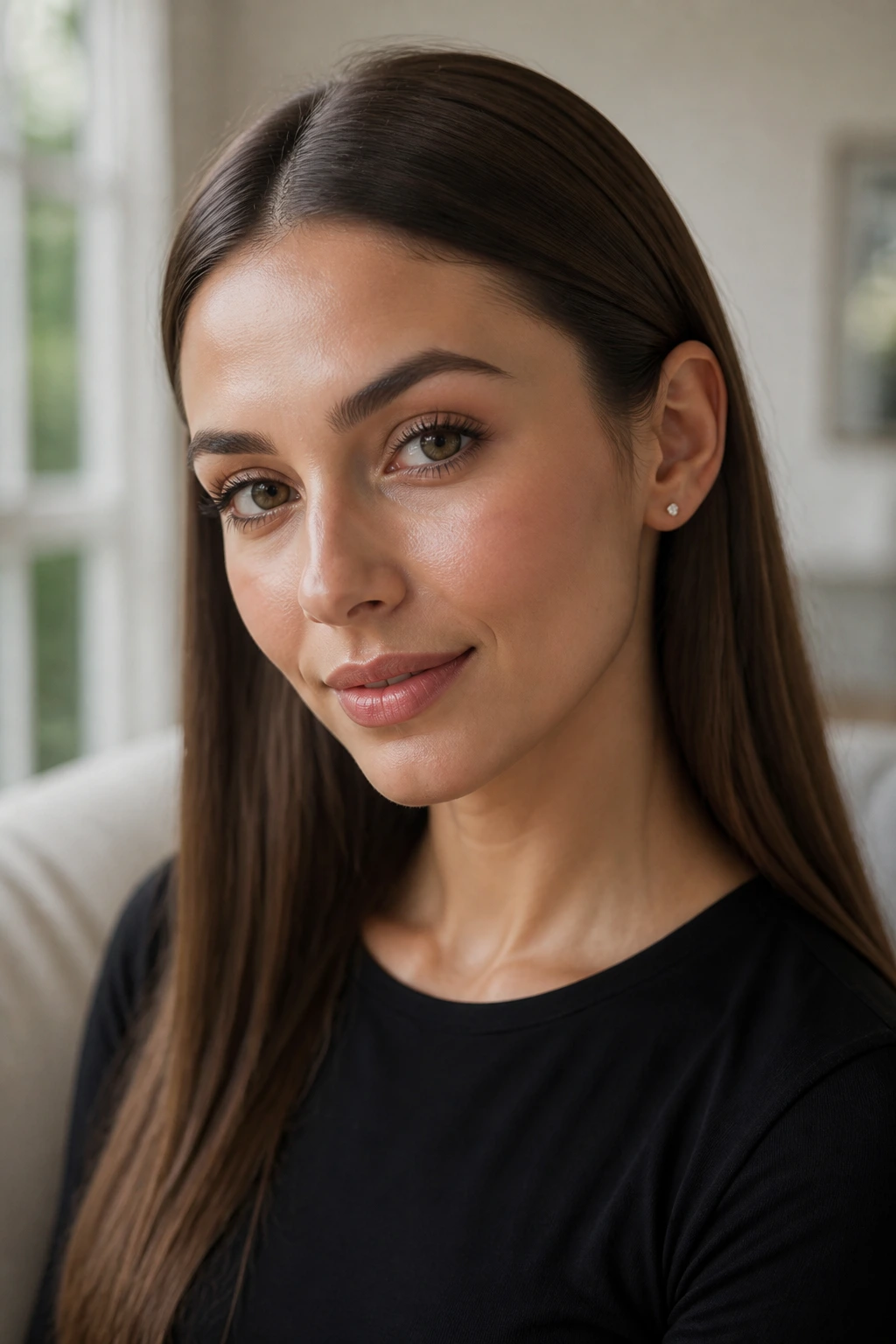
Sometimes the style is almost nothing. And that’s fine. An ear tuck with long straight hair can look quietly polished when the front sections are tucked behind both ears and the rest falls straight down the back.
Use a center part or a soft side part, then smooth the hair with a brush and tuck it back. If you want the tuck to hold, place a tiny bobby pin above and behind the ear where it won’t show. The pin catches the strand and keeps the shape from collapsing the second you move.
This is the style I reach for when I want the haircut to show, not the styling. It’s spare. Good spare.
24. Sleek Pigtail Braids
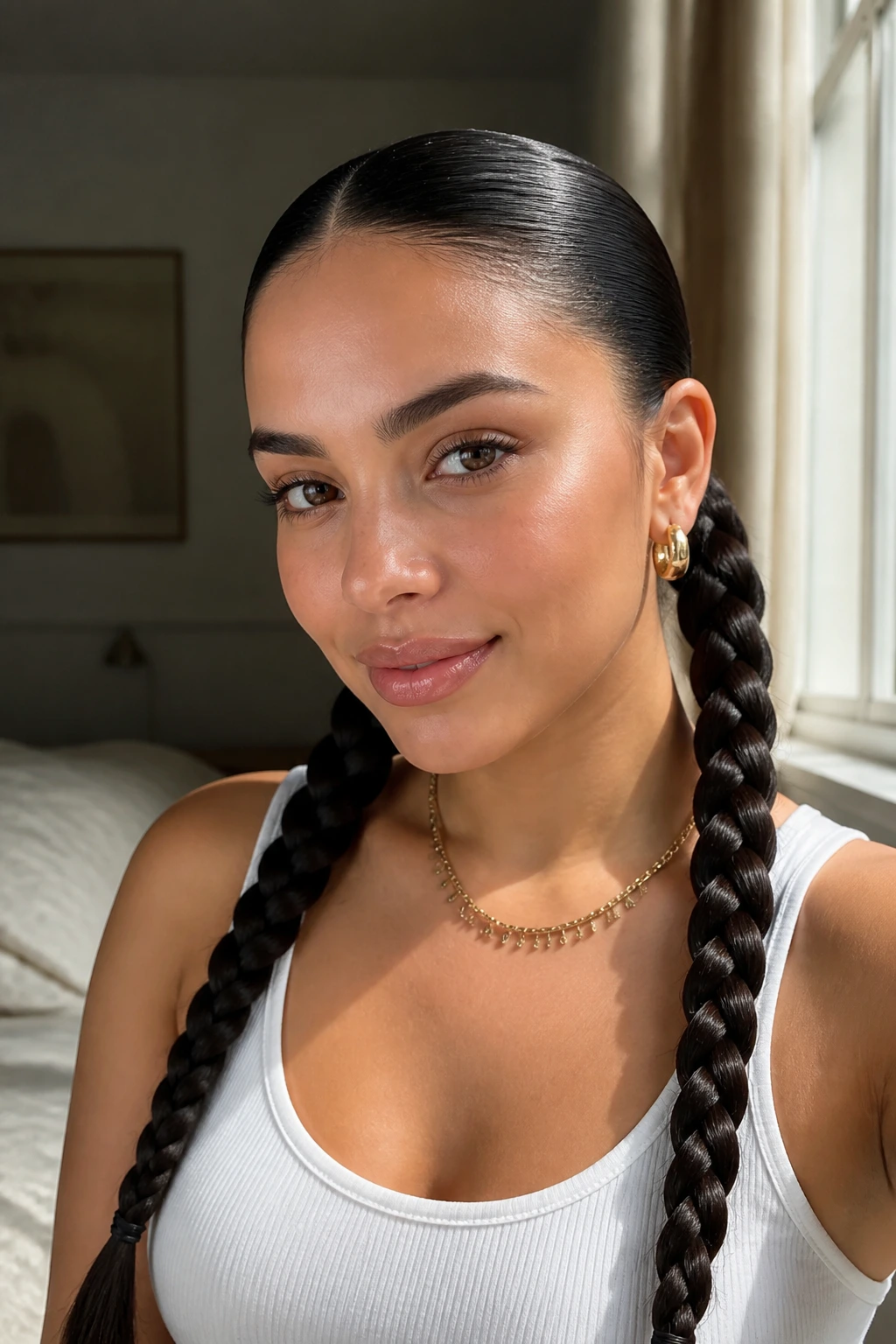
Pigtail braids on long straight hair can look very clean and modern when they’re kept tight at the top and even all the way down. Split the hair into two equal sections and braid each side low, starting near the nape rather than high at the crown.
The symmetry matters. If one braid sits higher than the other, the whole style looks off. Use a comb and a mirror for the back if you need to — yes, it takes a minute, but crooked pigtails are hard to ignore. A little gel along the part keeps the scalp line crisp.
This style is practical, plain, and stronger than people give it credit for.
25. Double Low Braids
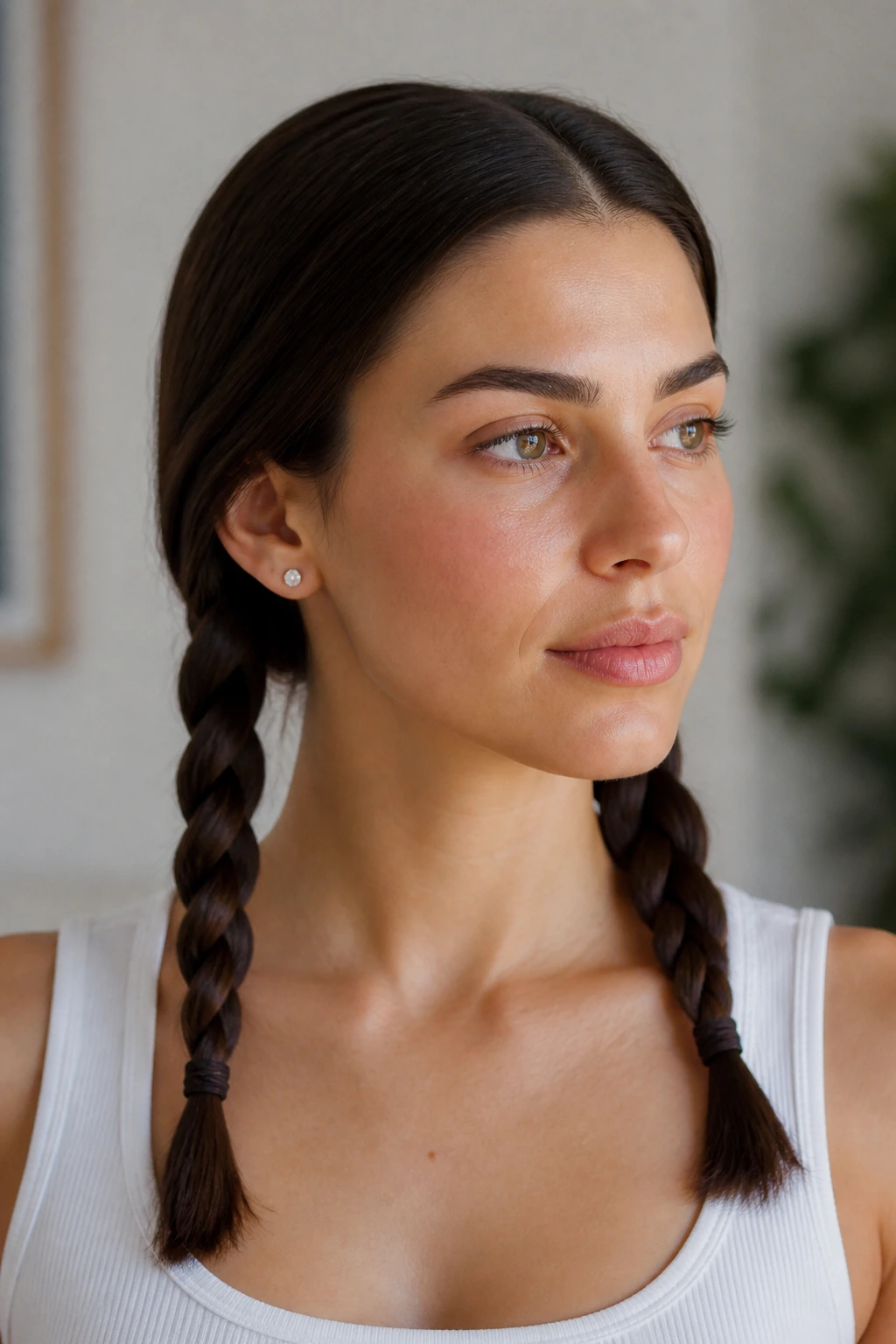
Double low braids give long hair a calm, contained shape that still feels a little more refined than pigtails. The braids sit low and close to the neck, which makes them easy to wear under a jacket, scarf, or collar.
Use even tension from root to tip. That keeps the braids from puffing out in the wrong places. If your hair is layered, expect some shorter pieces to slip out around the face. A small bit of styling cream on those pieces before braiding helps.
This is one of the best styles for active days because it stays put and doesn’t need much rescue later. No drama. Which, frankly, is underrated.
26. Tucked Half Ponytail
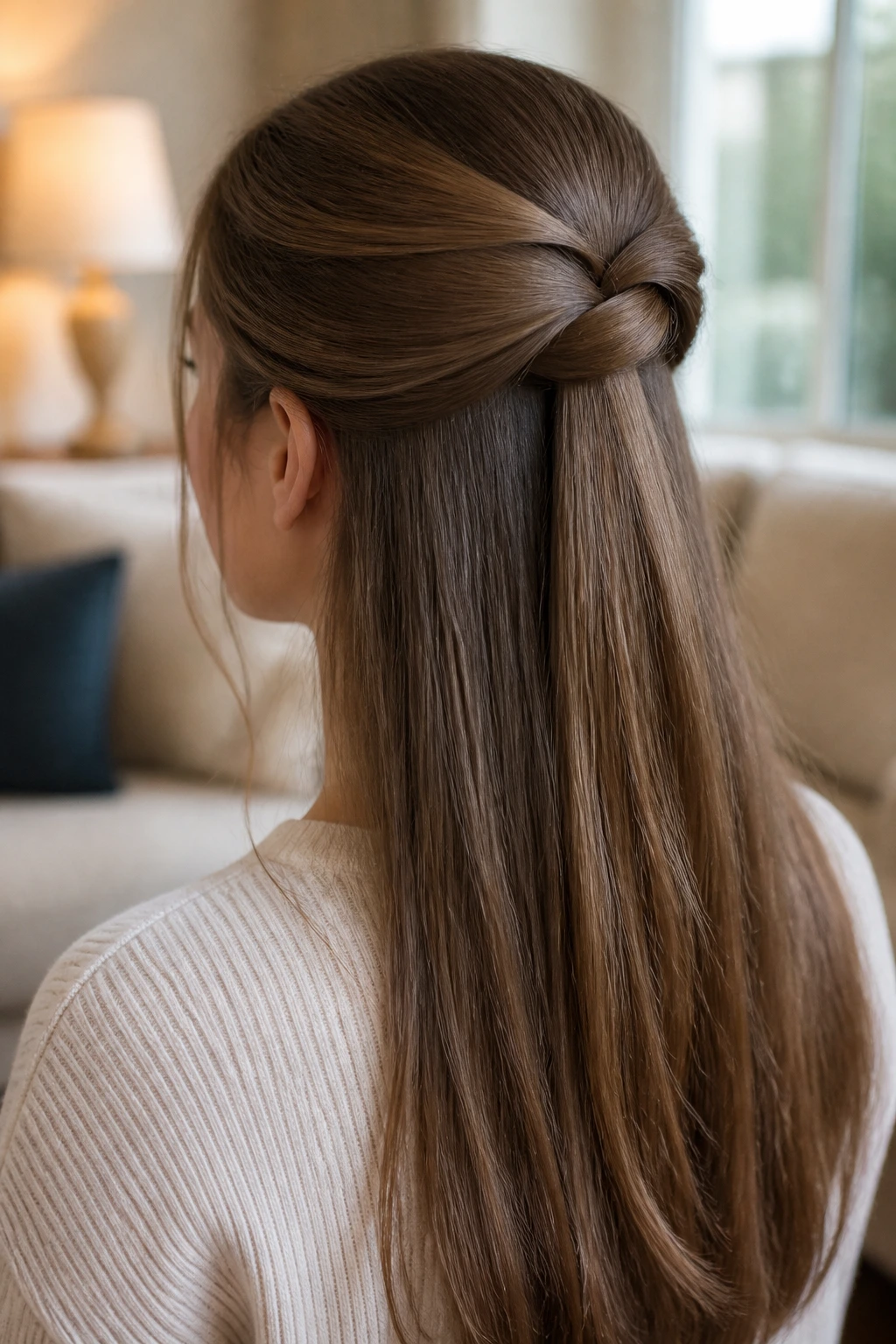
A tucked half ponytail keeps the top half of the hair controlled while the bottom half stays long and straight. Secure the top section at the back of the head, then tuck the ponytail upward through itself or into a small loop so the elastic disappears.
The result is cleaner than a half-up knot and lighter than a full ponytail. It’s a good middle ground for people whose hair looks too flat when it’s fully down but too “done” when everything is pulled back. If you want extra polish, wrap a thin strand around the base before tucking.
It’s a tidy style. Also a clever one. Those are the best kind.
27. Top Knot With Length Down
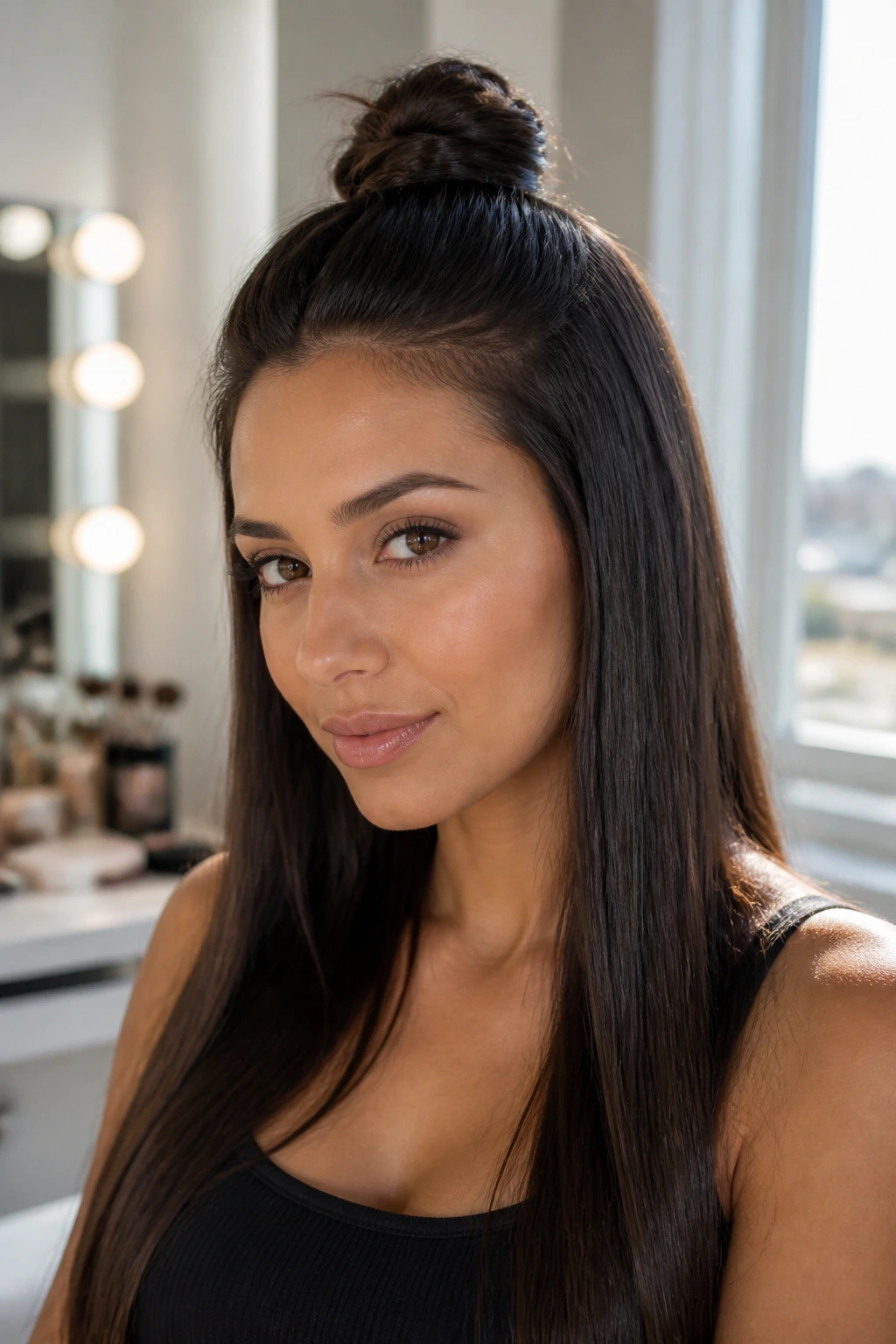
This style lets long straight hair do two jobs at once. The top knot pulls weight off the face, while the lower lengths stay down and visible. It’s practical, but not lazy-looking if the knot sits cleanly at the crown.
Take only the top third of the hair, twist it into a compact knot, and pin it in place. Leave the rest straight and smooth. The knot should be small enough to feel balanced against the length below it. If the knot gets too bulky, the silhouette turns lopsided fast.
This is a strong pick for thick hair because it reduces bulk at the crown without sacrificing length at all. That’s a rare trade worth making.
28. Asymmetrical Half-Up Sweep
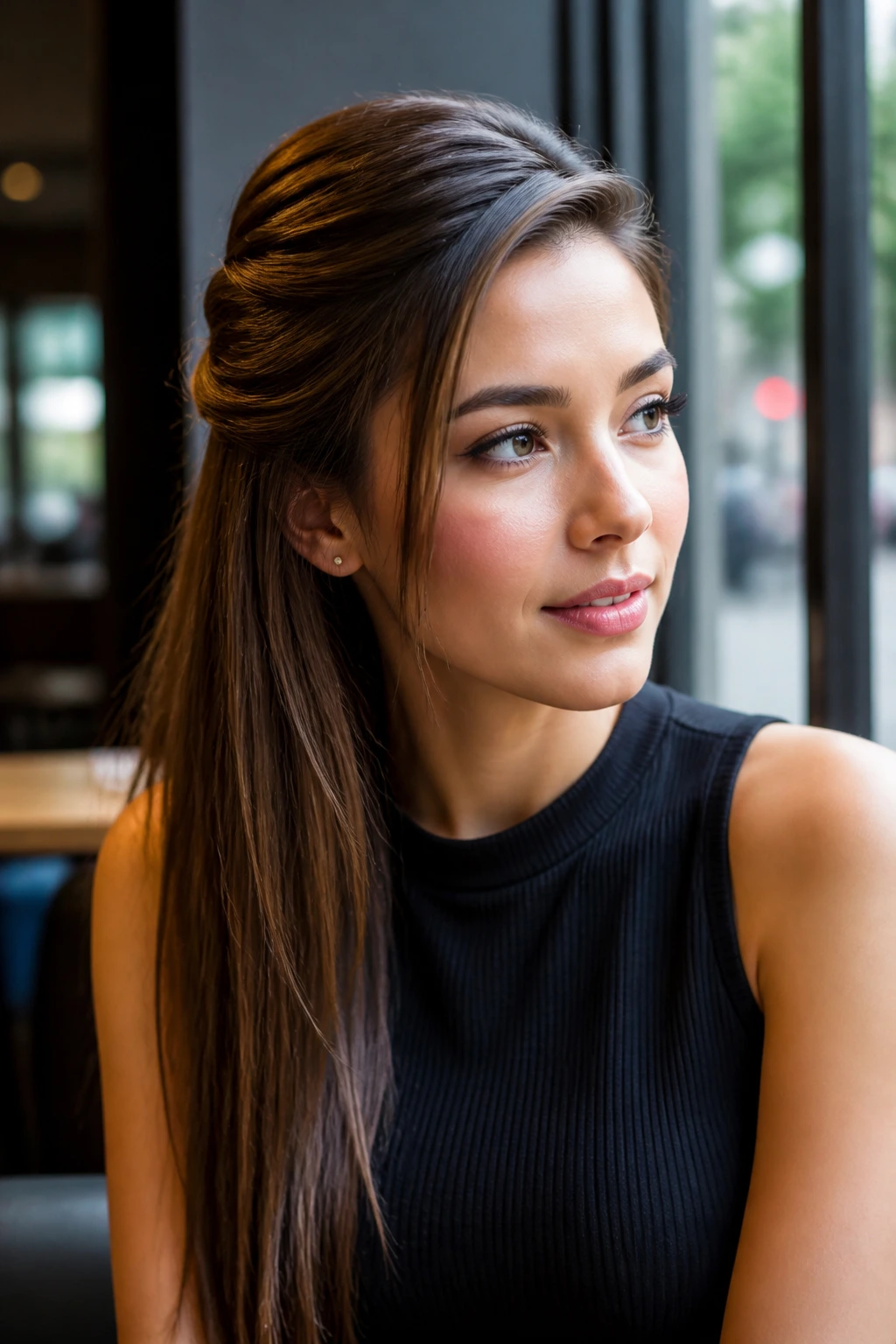
An asymmetrical half-up style shifts the visual weight to one side, which gives long straight hair a little swagger. Pull the top section back from one side more than the other, pin it just off-center, and let the long lengths fall over the opposite shoulder.
The off-balance placement is the point. It softens the severity that can come with a perfectly centered part and gives the eye somewhere to go. A small clip or a pair of bobby pins can anchor the swept section without stealing the show.
This style is especially useful when your hair feels too orderly. It breaks the symmetry in a way that still looks polished.
29. Wet-Look Straight Hair
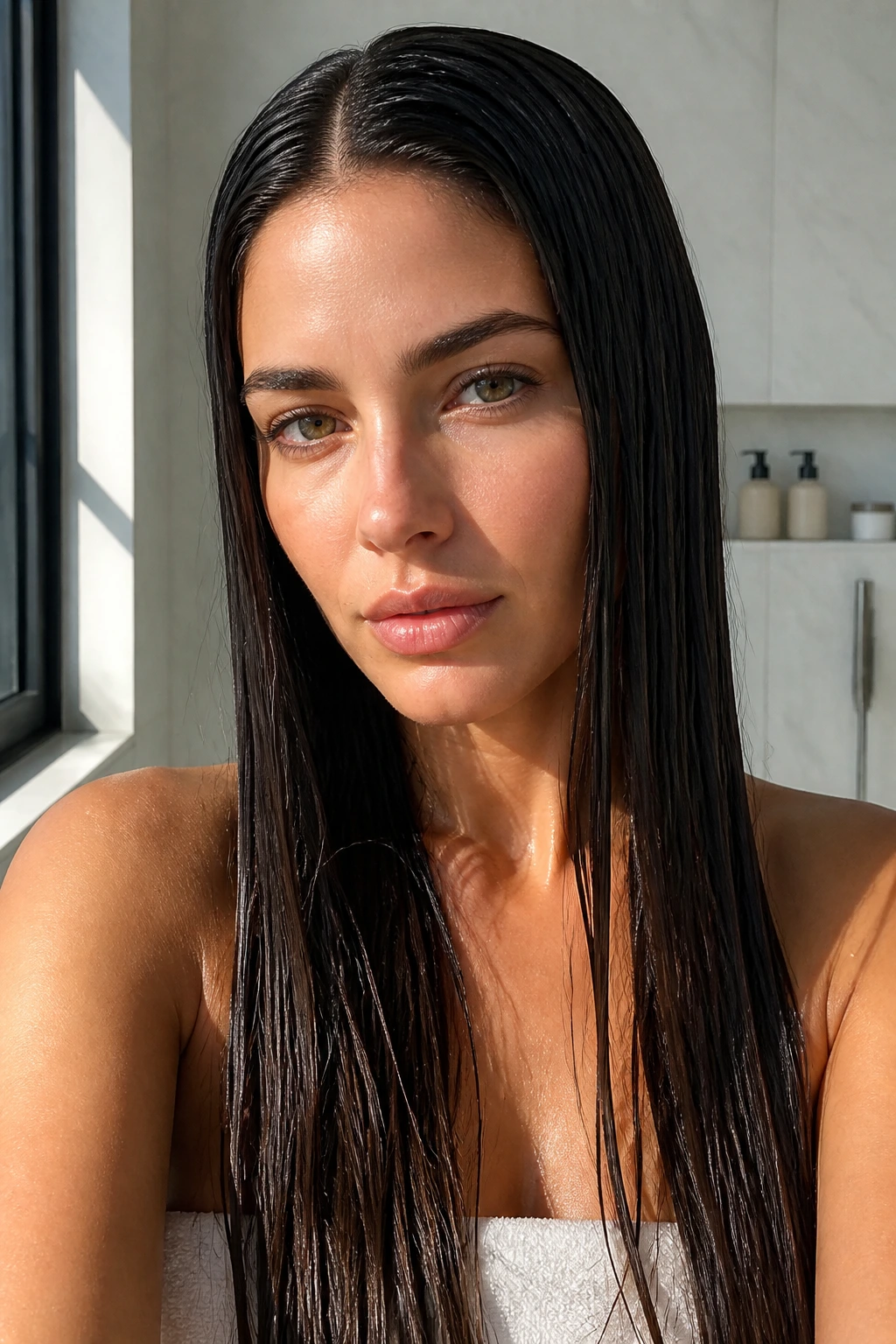
Wet-look hair on long lengths is not actually wet. It’s a controlled, glossy finish that sits close to the head and uses gel or cream to keep the top and mid-lengths smooth. The ends can stay a little softer so the style doesn’t turn into a plastic sheet.
Work product through damp hair, comb it into place, and let the top layer stay sleek while the lower lengths hang straight. The trick is restraint. Too much gel and it goes stiff. Too little and the style just looks greasy, which is a very different thing.
I like this look on long straight hair because the shine reads clearly and the length gives it presence. Short hair can wear it. Long hair owns it.
30. Long Layers With Beveled Ends
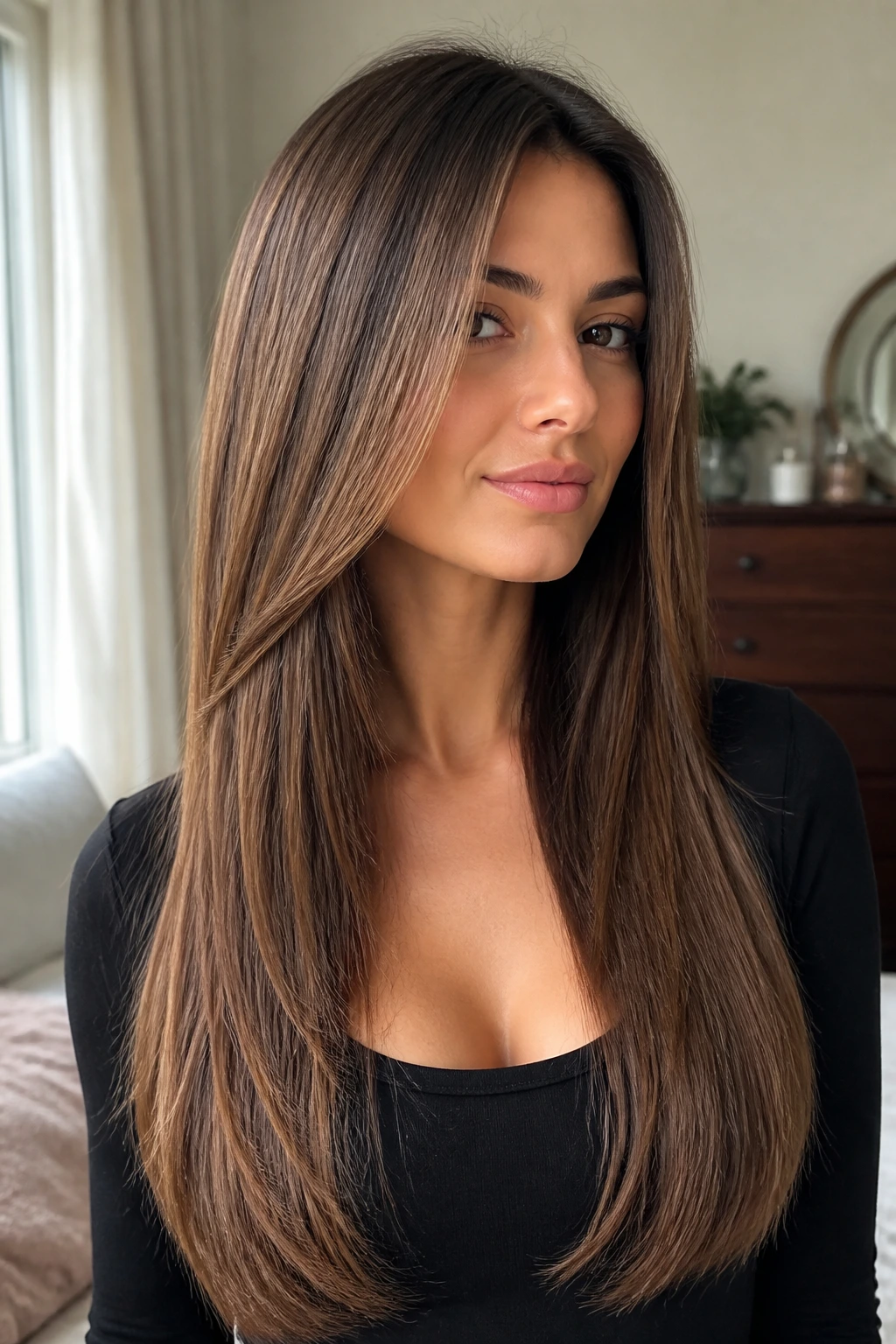
Long layers are not there to make straight hair “bouncy.” That word gets abused to death. Their real job is to stop the length from sitting like one heavy block. A few soft layers near the front and a beveled finish at the ends can make the whole style move better when you walk.
Ask for layers that don’t climb too high, especially if you like to wear your hair down often. When the layers are too aggressive, long straight hair can start to look thin in the back. A slight bevel at the ends — inward, not curled — keeps the line soft while preserving the length.
This is the haircut that makes every other style on this list easier. Quietly useful. No drama.
31. V-Cut Straight Hair
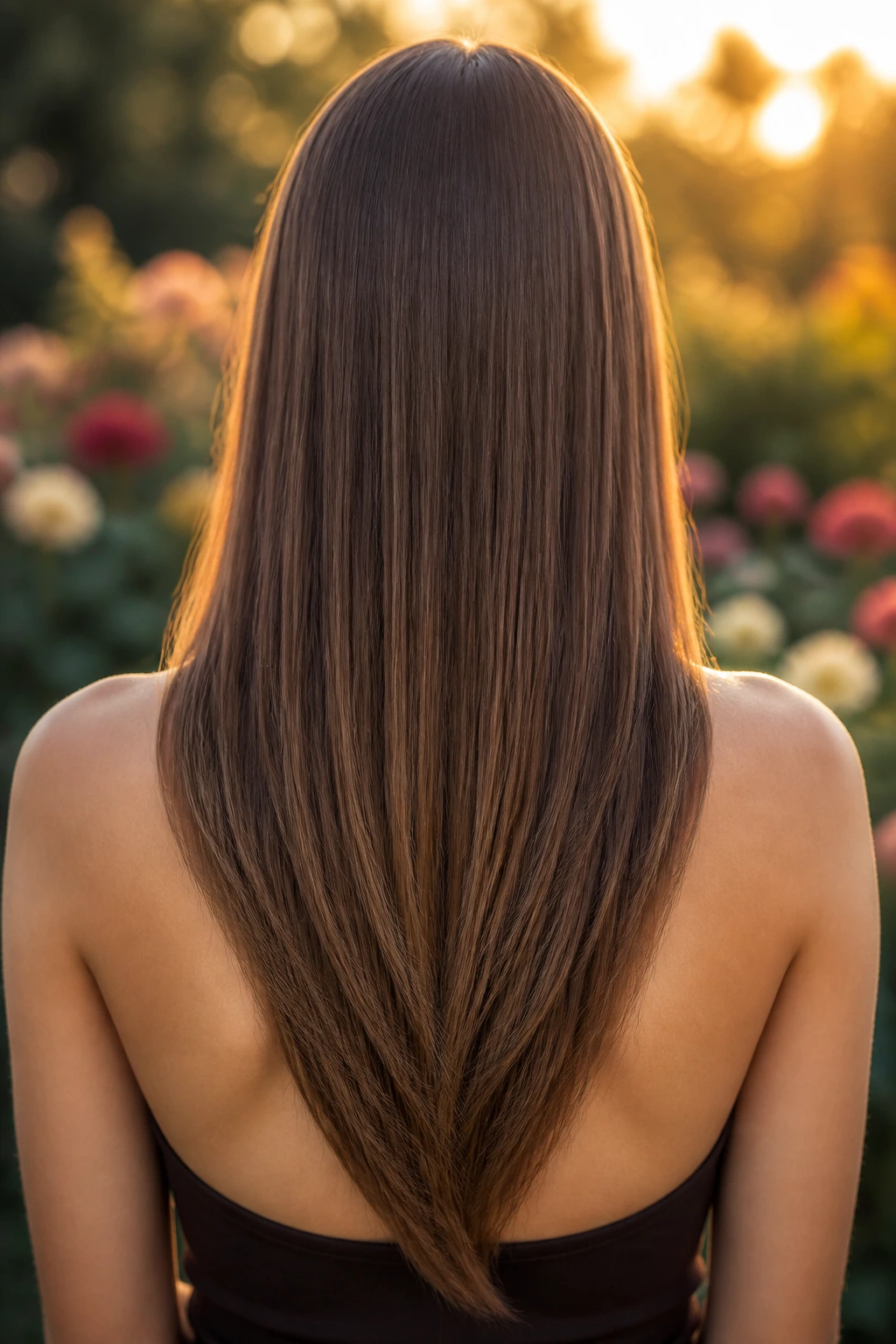
A V-cut gives long hair a pointed shape at the back, which sounds subtle until you see how much lighter the ends look. Instead of a blunt line across the bottom, the hair falls in a gentle V that adds movement without introducing curls or waves.
This cut works especially well if you like to wear your hair down most days. It keeps the silhouette from feeling heavy, and the pointed finish looks especially sharp when the hair is very straight. If your hair is fine, ask for a soft V rather than a deep one. Too much angle can make the ends look sparse.
The style itself doesn’t need much. The cut does the talking.
32. Minimal Pin-Back Finish
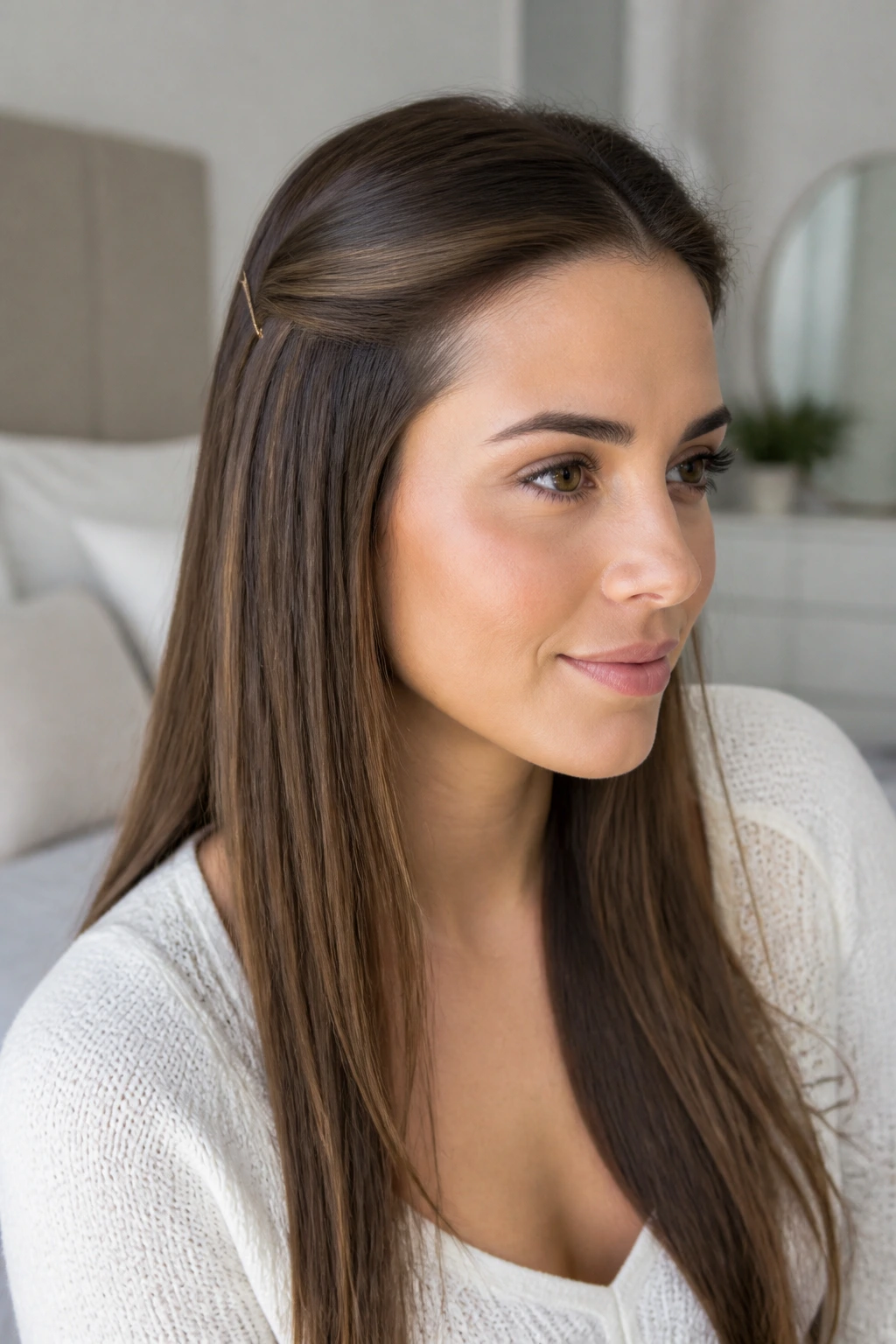
This is the style for days when you want long straight hair to stay mostly down, but not in your face. Take two small front sections, pin them back just above the ears, and leave the rest loose and sleek. That’s it.
Use simple pins that match the hair color or vanish into it. You are not building a decoration here. You’re making a clean frame for the face and giving the rest of the hair room to move. If the front tends to fall forward, a touch of dry shampoo at the roots gives the pins a little more grip.
It’s plain in the best sense. The hair looks calm, and sometimes calm is the whole point.
Why Straight Hair Holds Shape So Well When You Use the Right Lines
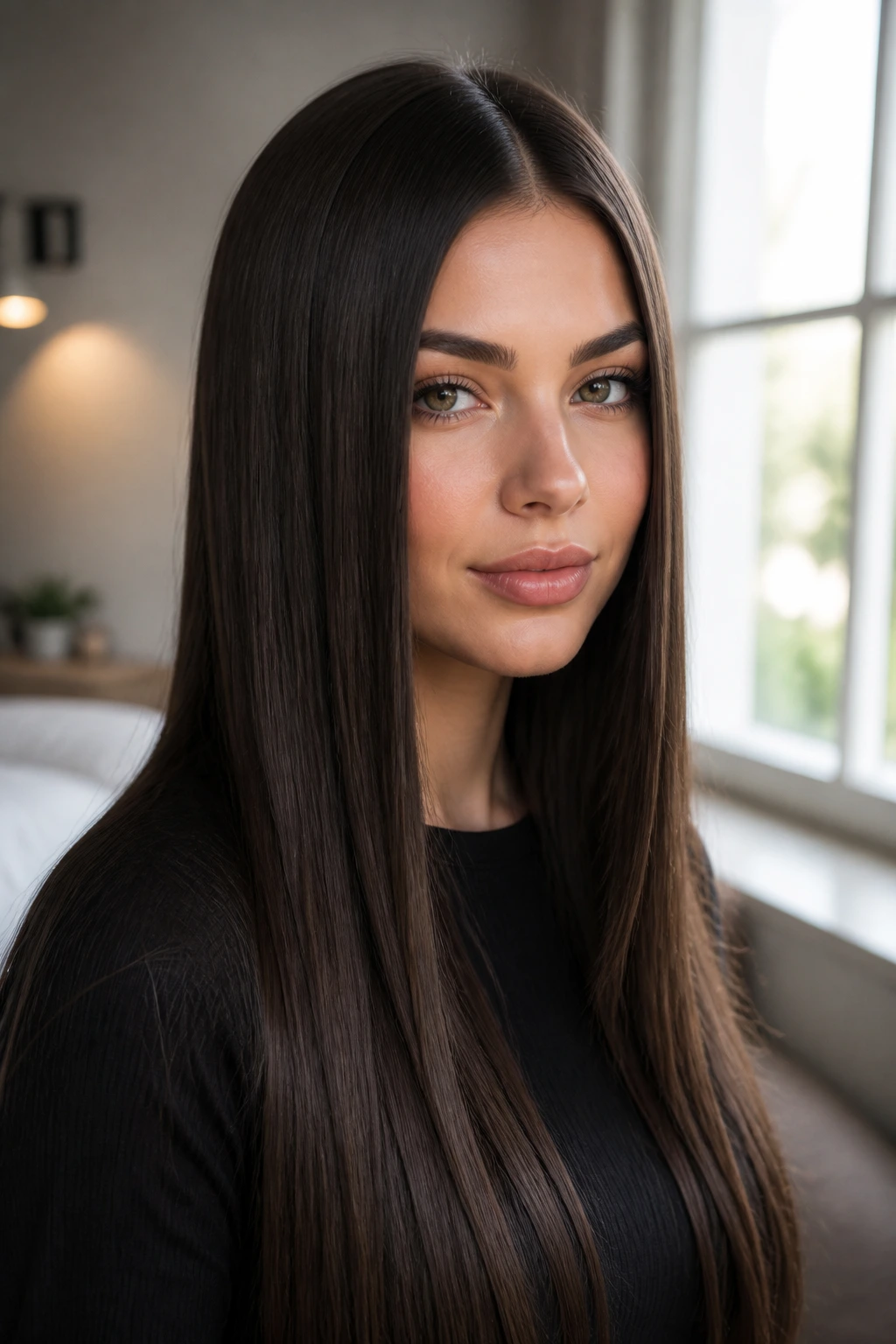
Long straight hair is stubborn in one direction and cooperative in another. It won’t give you a bent wave or a fluffy curl unless you force it, but it will hold clean lines, sharp parts, braids, wraps, and knots better than a lot of people expect. That’s the trade. Work with the line.
The biggest mistake is treating long straight hair like a blank page. It isn’t. It already has a visual language: shine, fall, weight, and smoothness. Styles that respect those features tend to look better and last longer because they don’t spend the whole day fighting gravity.
I also think long straight hair does best when you choose one anchor point and leave the rest alone. A part, a braid, a wrapped base, a barrette line, a scarf. Pick one. Too many competing details can make the hair look busy instead of styled.
Essential Tools for Straight Hairstyles on Long Hair
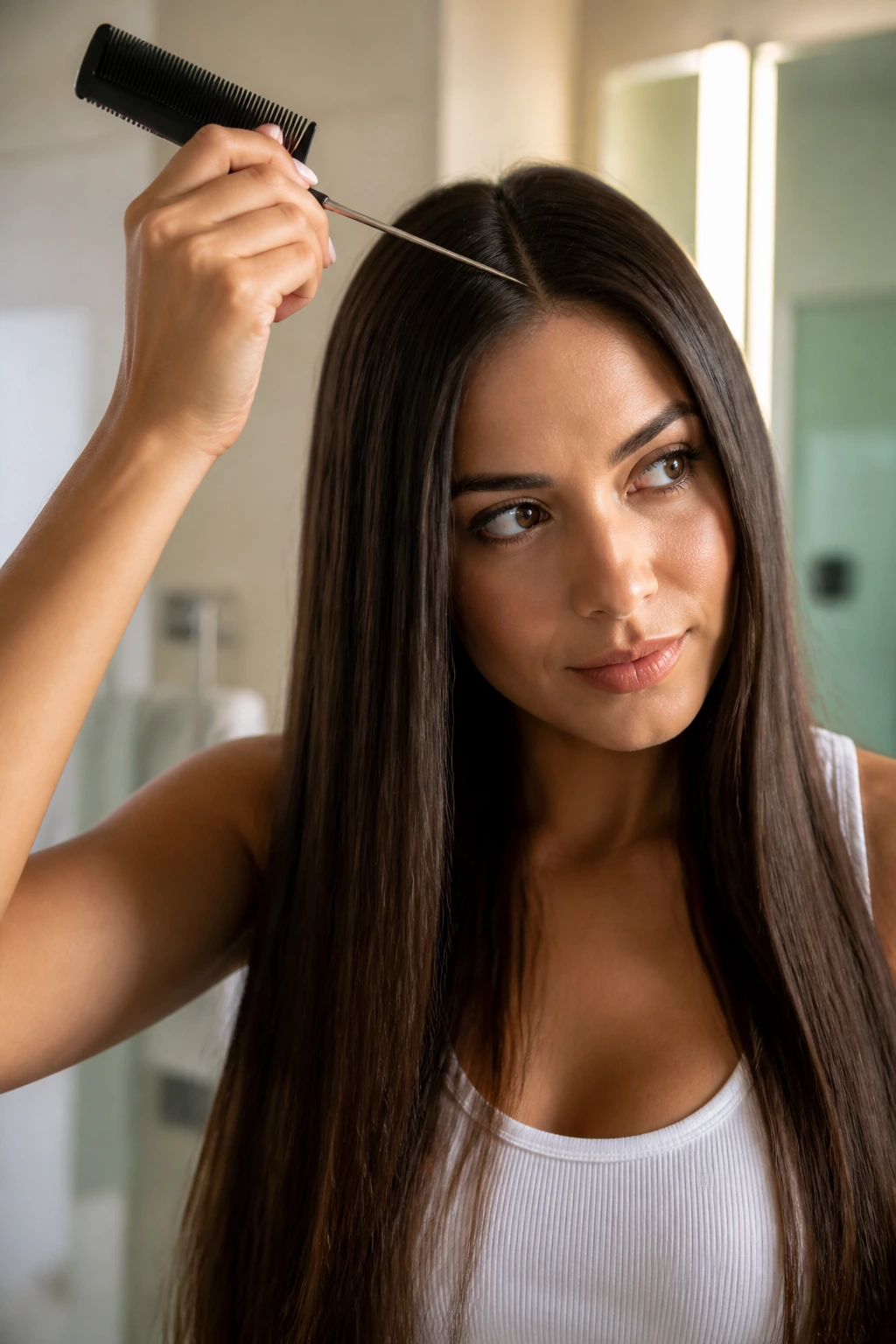
- Tail comb: The only tool that makes a crisp part look worth the trouble. It helps you draw a line that doesn’t wobble.
- Boar bristle brush or smoothing brush: Useful for ponytails, slick backs, and any style where the scalp needs to look controlled.
- Flat iron with adjustable heat: Best for blunt styles, beveled ends, and taming a few rough pieces without flattening the whole head.
- Heat protectant spray: Non-negotiable if you use hot tools. Spray lightly from mid-lengths to ends and comb it through.
- Small clear elastics: Best for bubbles, braids, and wrapped ponytails. They disappear instead of fighting the style.
- Bobby pins in hair-matching shades: Needed for knots, chignons, tucks, and pin-back styles. The right color matters more than people admit.
- Large claw clip: Choose one with real grip and enough width for your hair density. Tiny clips break or slide.
- Light serum or cream: Use on the last few inches only. A pea-sized amount is usually enough.
- Texturizing spray or dry shampoo: Helps slippery hair hold braids, clips, and ponytails better without looking dusty.
- Silk or satin scarf/pillowcase: Keeps straight hair smoother overnight and reduces the morning static halo.
Styling Details That Make These Looks Last Longer
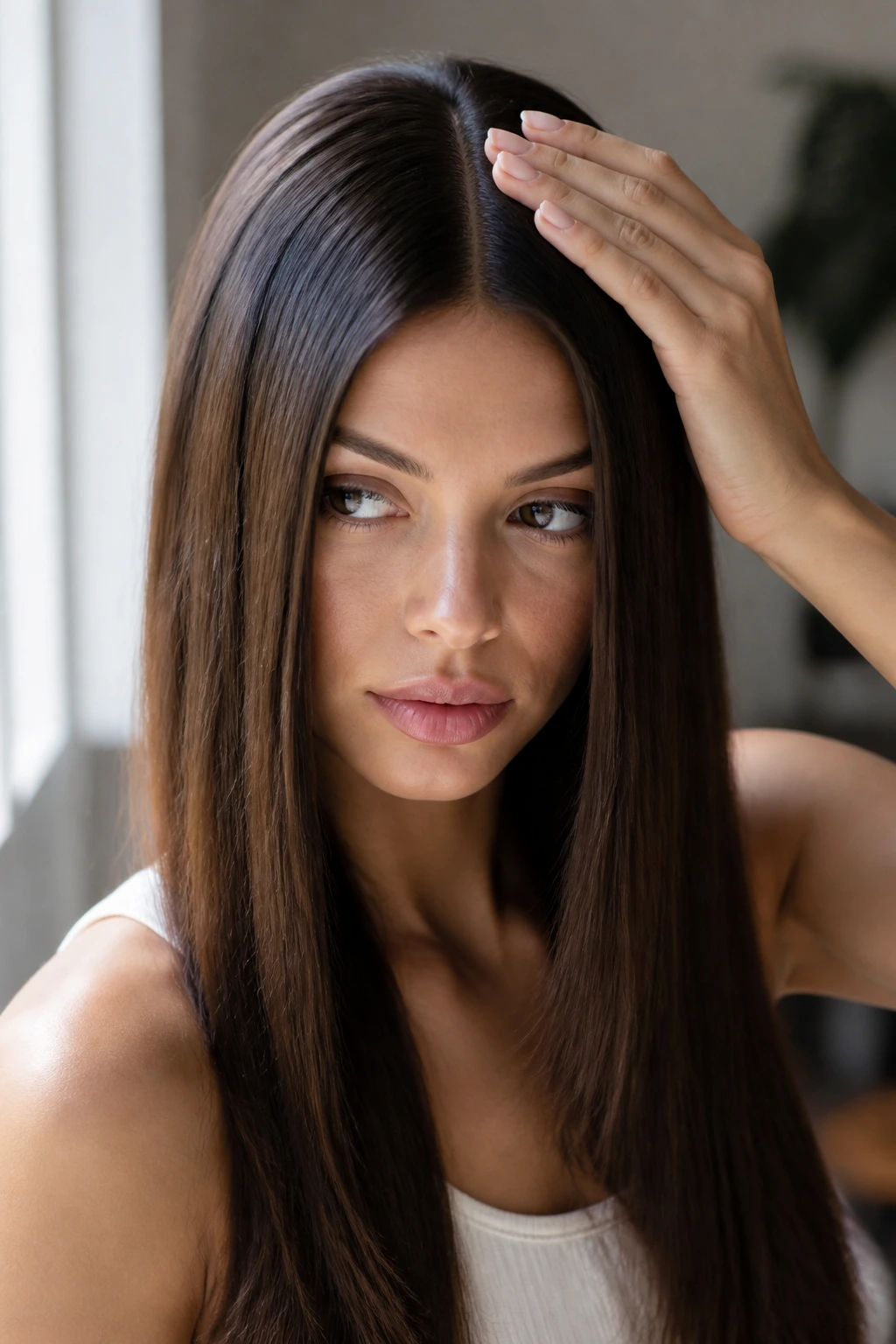
Parting matters more than product.
A clean center or side part gives long straight hair instant structure. If the part is messy, the whole style reads messy even when everything else is neat. Use the tail comb, then press the part flat with your fingertips for a few seconds so it stays where you put it.
Grip before gloss.
People love shine on straight hair, and I get it. But if you pile oil or serum near the roots before the hair is secured, the style starts slipping. Put the grip product in first, then finish the ends with something smooth.
Match the elastic to the weight of the hair.
Fine hair can get away with smaller ties. Heavy long hair cannot. If the elastic stretches out after an hour, double it or switch to one with a stronger core. A ponytail that sags is never just a ponytail problem. It’s a tension problem.
Don’t overwork the front.
The front sections frame the face, so people keep brushing them and re-brushing them until they lose their shape. Smooth once, set once, walk away. If a few flyaways remain, tame them with a fingertip dab of cream. Not a second full styling session.
Leave one small imperfection on purpose.
That can be a loose end in a knot, a slight bend in a ponytail, or a soft ear tuck. Perfectly rigid hair often looks harsher than hair with one controlled soft spot.
Common Mistakes That Flatten Straight Hair
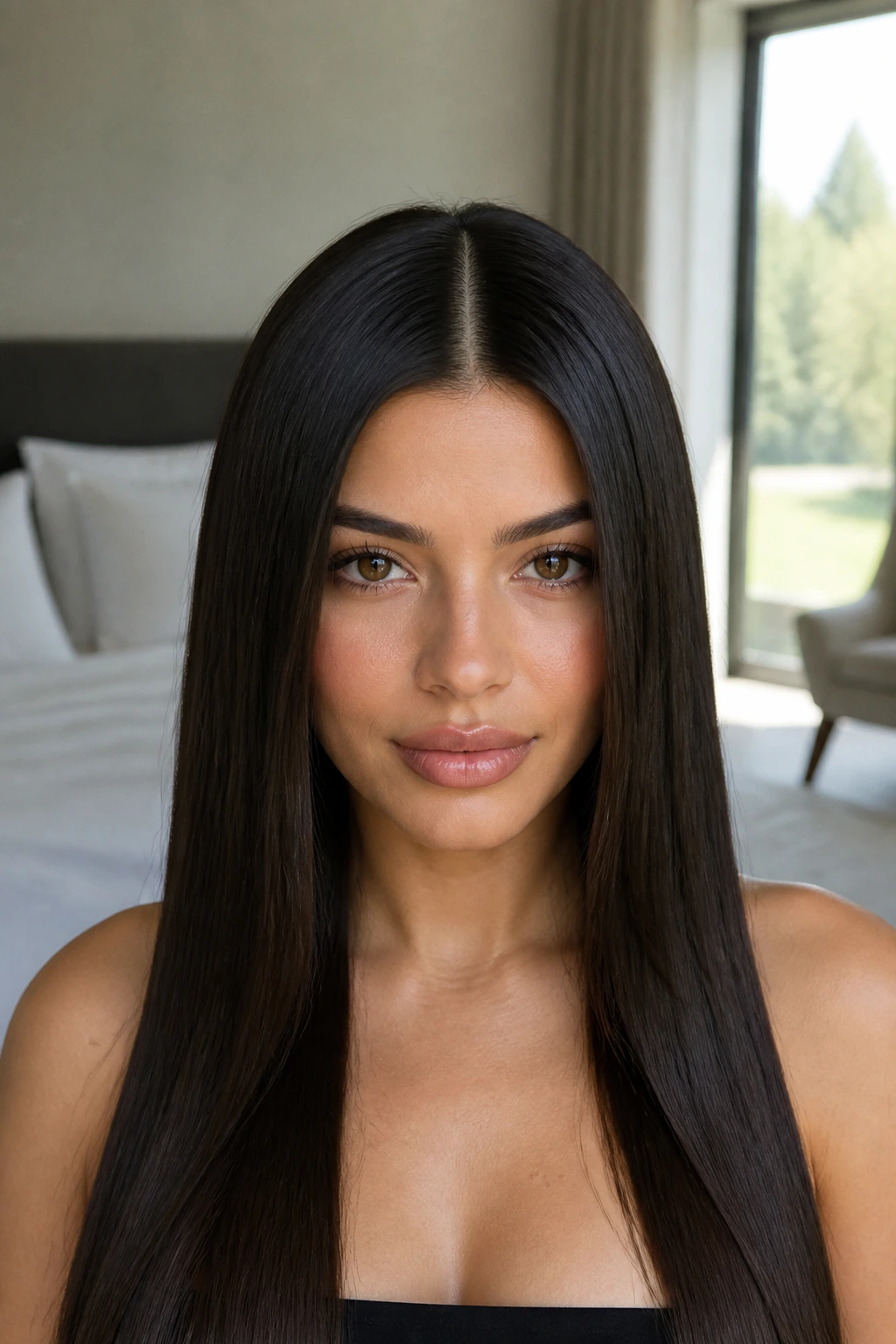
Using too much oil near the scalp.
The roots go limp, the part collapses, and the style looks older than it is. Keep oils and serums from the ears down unless you truly need them at the roots.
Choosing accessories that are too small.
Tiny clips and weak elastics can’t hold long hair for long. They pinch, slide, or twist sideways. Use pieces made for actual density, not decorative hair only.
Braiding too loosely from the start.
A loose braid on long straight hair often turns messy at the top and sparse at the bottom. Start with firm tension at the crown, then loosen the braid later if you want it softer.
Slicking everything back when the crown needs lift.
A style that’s too flat at the top can make the face look heavier. Even a half-inch of lift near the crown can change the whole silhouette.
Forgetting to hide the elastic.
A visible elastic can pull down a very polished style fast. Wrap it with hair, ribbon, or a scarf when the rest of the look is clean enough to deserve that finish.
Styling freshly washed hair the same way every time.
Very clean hair can be slippery. If braids, clips, and knots keep falling apart, let the hair sit a day longer or add a light texturizer before you start.
Variations and Swaps for Different Hair Needs
Fine Hair Lift:
Use lightweight mousse at the roots before blow-drying, then choose styles that create a shape at the crown — half-up knots, tucked halves, and ear-tucks work better than heavy buns. Fine hair usually looks best when you avoid too much product and too much pulling.
Thick Hair Control:
Bigger clips, stronger elastics, and tighter base sections matter here. Thick hair can handle braid-heavy styles and wrapped ponies, but it needs anchors that won’t slip halfway through the day.
Heat-Free Day:
Skip flat irons and use the natural smoothness of the hair with braid-based styles, low ponytails, scarf wraps, and clipped half-ups. A little leave-in cream on the ends is enough for polish.
Office-Ready Finish:
Choose parts, low bases, and hidden pins. A glass-line center part, a wrapped ponytail, or a low chignon reads neat without feeling overdone.
Soft Romantic Finish:
Add ribbons, loose face-framing pieces, or a slight bend at the ends. The style should still look controlled, just less severe.
Keeping Straight Styles Fresh Overnight
Long straight hair tends to show sleep damage fast. One crease at the crown and the whole style looks tired in the morning. The easiest fix is a silk or satin pillowcase, which cuts down on friction and keeps the surface smoother while you sleep.
If you want to preserve a braid or ponytail overnight, keep it low and loose. Tight elastics leave dents, and high styles can create weird bends where the hair bends around the pillow. A loose three-strand braid is usually the safest bet because it keeps the lengths from tangling without pressing the hair into a permanent shape.
Morning refresh is simpler than people think. Shake the hair out, smooth the roots with a brush, and mist the crown lightly with dry shampoo if it needs lift. If the ends are puffy, use a tiny bit of serum on your palms and press it into the last few inches. Not the whole head. Never the whole head.
Frequently Asked Questions
Which straight hairstyle works best for very long hair that feels heavy?
Low styles usually win here: wrapped ponytails, chignons, double low braids, and tucked half-ups. They control the weight without forcing the hair to sit too high, which is where long hair starts to sag.
How do I keep my straight hair from looking flat at the crown?
Build lift at the part or anchor section before you secure the rest. A little root spray, a clean part, and a style that pulls some hair up — like a half-up knot or clip twist — usually fixes the problem without needing extra teasing.
Can these styles work on second-day hair?
Yes, and some of them work better that way. Braids, bubble ponytails, claw-clip twists, and low buns often hold more easily when the hair has a bit of natural grip from yesterday’s styling.
What if my long straight hair is fine and slippery?
Use less serum, more root texture, and stronger pins or elastics. Fine hair usually does best with styles that create shape through placement, not bulk. A deep side part or a low wrapped ponytail is often easier than a big top knot.
How do I stop flyaways from ruining a slick style?
Use a tiny amount of cream or wax on your fingertips and press the flyaways down along the hairline. A toothbrush-sized styling brush can help too, but only if you use a light hand. Too much product makes the fix more obvious than the problem.
Which styles are best if I want to avoid heat?
Braids, half-ups, ribbon ties, scarf ponytails, and claw-clip twists are the easiest heat-free options. They rely on shape and placement instead of polished ends, so the style still looks intentional even without a flat iron.
Can I wear these styles if my hair has a slight wave or bend?
Yes. Some styles actually look better with a little texture, especially braids and half-ups. If you want a sleeker finish, smooth only the top layers and leave the ends slightly softer so the hair doesn’t look overprocessed.
How often should I trim long straight hair to keep these styles looking good?
When the ends start to feel see-through, frayed, or uneven, the styles lose their crispness. Regular trims keep blunt ends sharp, layers clean, and wrapped styles from showing every split strand at the bottom.
Styles Worth Reaching For Again
Long straight hair doesn’t need a new personality every morning. It needs a few good shapes, a couple of reliable accessories, and the willingness to stop styling the second the line looks right. That’s usually when the hair looks best anyway.
The strongest looks in this set are the ones that give the length a job: a clean part, a low base, a braid that keeps the tail controlled, a clip that lifts the crown, a ribbon that turns the elastic into part of the design. Nothing fussy. Nothing pointless. Just enough structure to keep the hair from falling into the same shape every single day.
Pick three of these and wear them on rotation for a week. You’ll know pretty fast which ones suit your hair’s weight, your morning routine, and the amount of effort you’re willing to give before coffee.
