



Gray hair changes the whole bargain in a barber chair. Dark hair can hide a sloppy line, a little extra bulk, or a crown that’s starting to thin. Gray hair does the opposite. It throws shape into relief, catches light on every ridge, and makes every trim decision show up fast.
That’s why gray hair looks for men work best when the cut is doing real work. A clean taper, a smart crop, a sharp side part, or a loose silver wave can make the hair look deliberate instead of accidental. The wrong cut tends to go puffy, flat, or oddly shiny. The right one looks like you meant every inch of it.
There’s also a little trick to gray that a lot of guys miss: the tone shift is part of the style. Silver at the temples, salt at the sides, white threading through a beard, a darker patch left at the crown — all of that can be used on purpose. Once you stop treating gray as something to hide, the haircut gets easier. The whole head starts working as one shape.
Why These Gray Looks Earn Their Keep
- Low-fuss upkeep: Most of these cuts keep their shape for weeks, which matters when gray hair shows every stray tuft.
- Sharp contrast: Shorter sides and textured tops make silver read cleaner, not washed out.
- Works with thinning: Several of these styles are built to make a crown, hairline, or temple recession look intentional.
- Beard-friendly: Gray hair and gray facial hair can balance each other instead of fighting for attention.
- Easy to explain: These cuts are simple to ask for at the chair, even if you’re not fluent in barber jargon.
- Not stuck in one age bracket: A clean gray cut can look refined, rugged, or a little rebellious, depending on length and finish.
1. Silver Buzz Cut
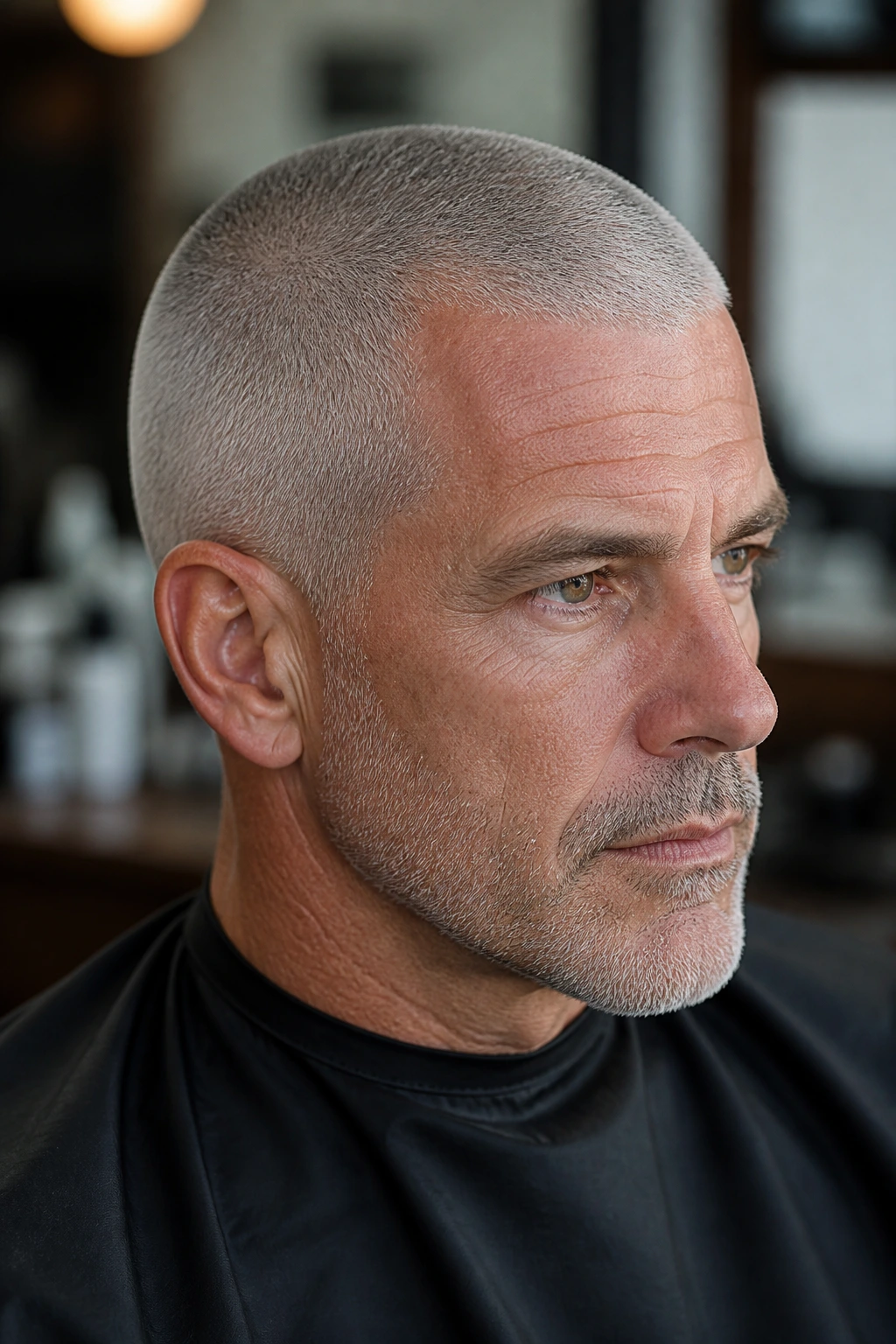
The silver buzz cut is the blunt instrument of gray hairstyles, and I mean that as a compliment. With a #1 to #3 guard all over, you get a tight, even surface that lets the gray shine through without any clutter. It’s especially good if your hair grows dense at the sides or if your hairline has started to retreat a bit.
What makes it work is the simplicity. Gray hair often looks sharper when you stop trying to force movement into it. Add a crisp neckline and clean temples, and the whole look reads as deliberate in about five seconds.
2. Salt-and-Pepper Crew Cut
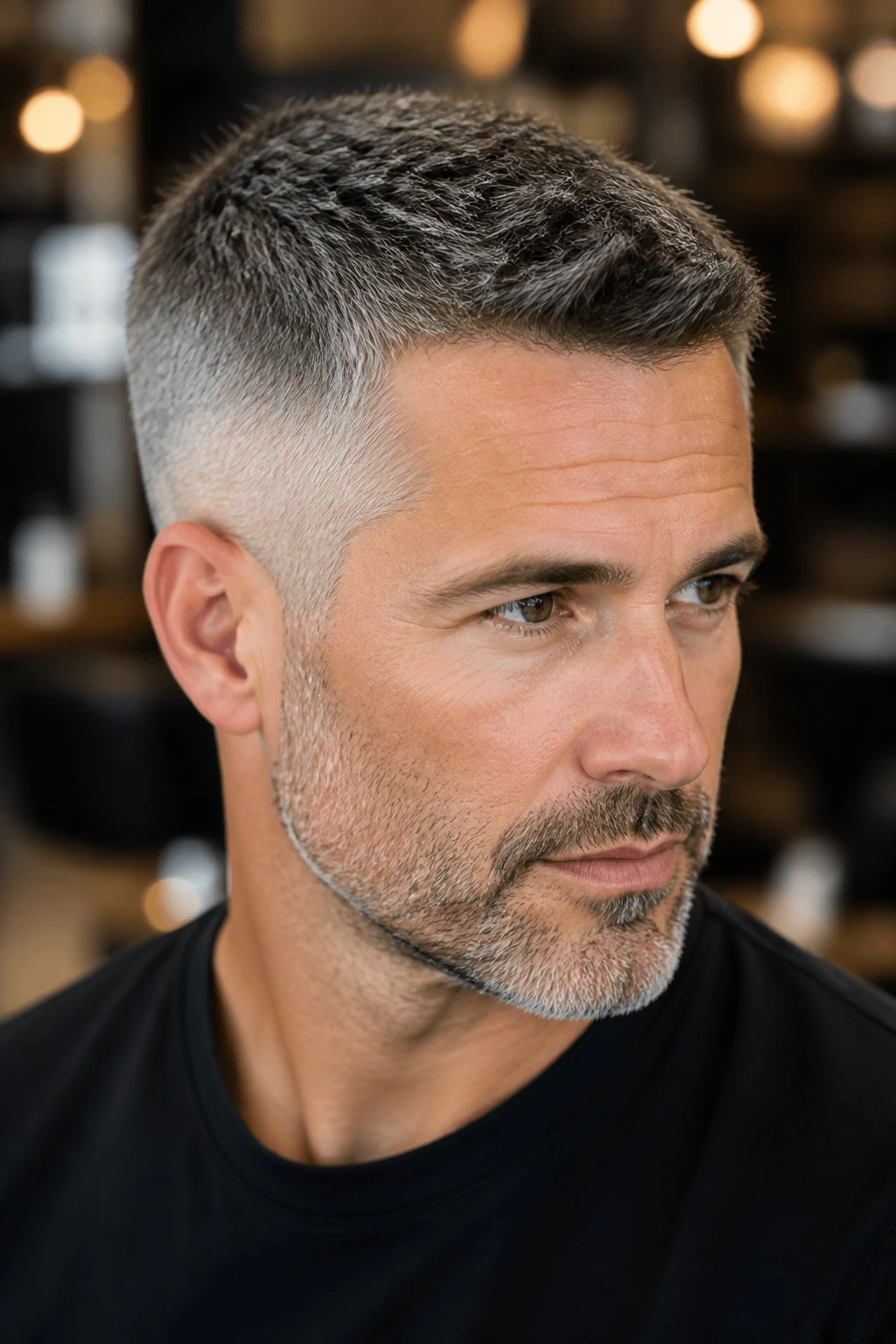
The crew cut keeps a little more length on top than a buzz, which is where the salt-and-pepper mix gets interesting. Ask for about a #3 or #4 on top with tapered sides, then keep the top lightly textured so it doesn’t sit like a helmet. That blend of dark and silver strands can look almost striped in a good way.
This is one of the easiest gray hair looks for men who want order without much styling. A pea-sized bit of matte cream is enough. If the front starts to stand up, a quick pass with damp fingers fixes it.
3. Taper Fade with Gray Top
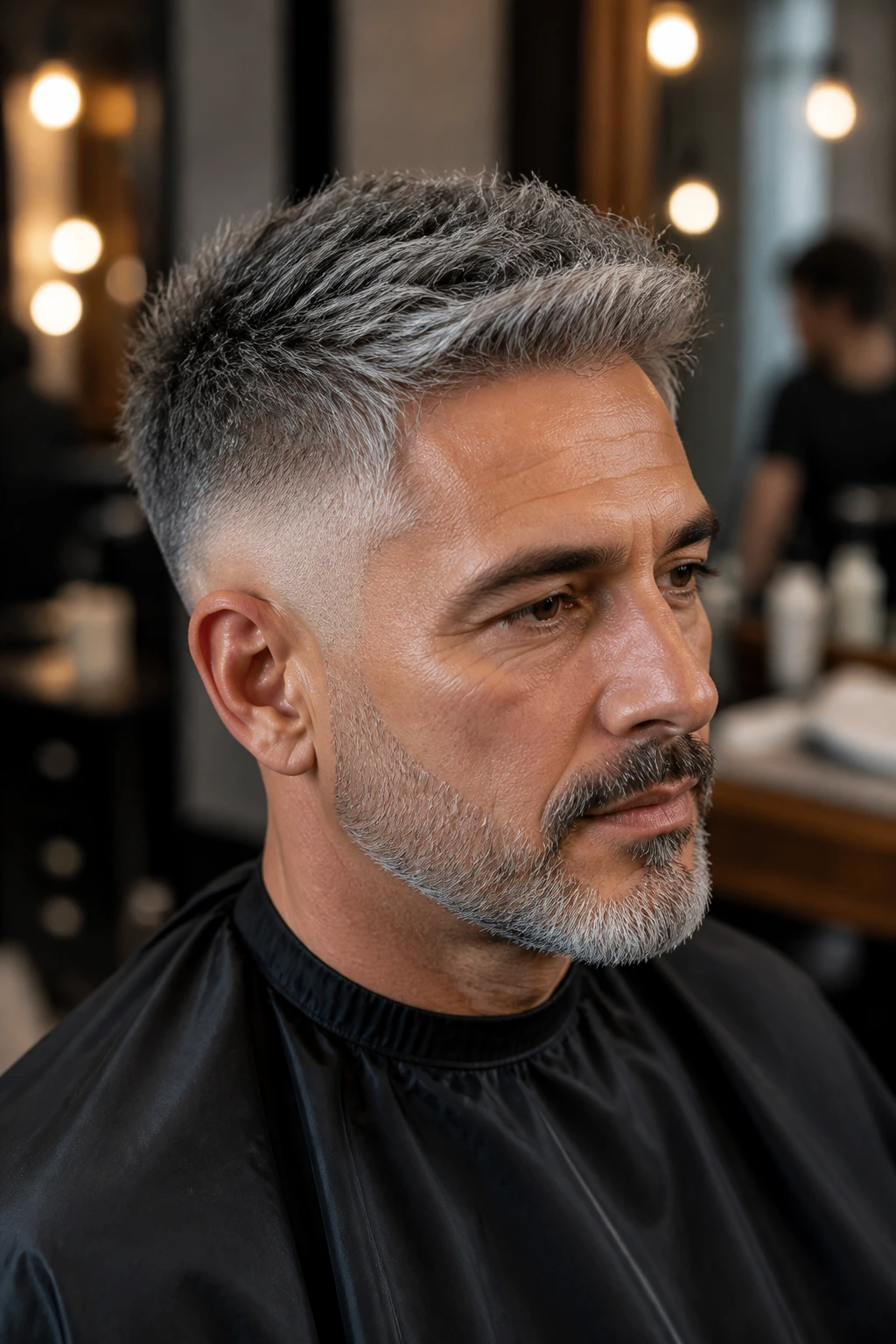
A taper fade with a gray top gives you contrast without shouting about it. Keep the sides tight around the ears and neckline, then leave 1.5 to 3 inches up top so the silver has room to show. The cut works well when the temples are going lighter faster than the rest of the head.
The nice part is the way it handles uneven graying. Darker roots on top and white at the edges can actually make the style look more dimensional. If your barber point-cuts the top instead of chopping it blunt, the finish feels softer and less boxy.
4. Classic Side Part
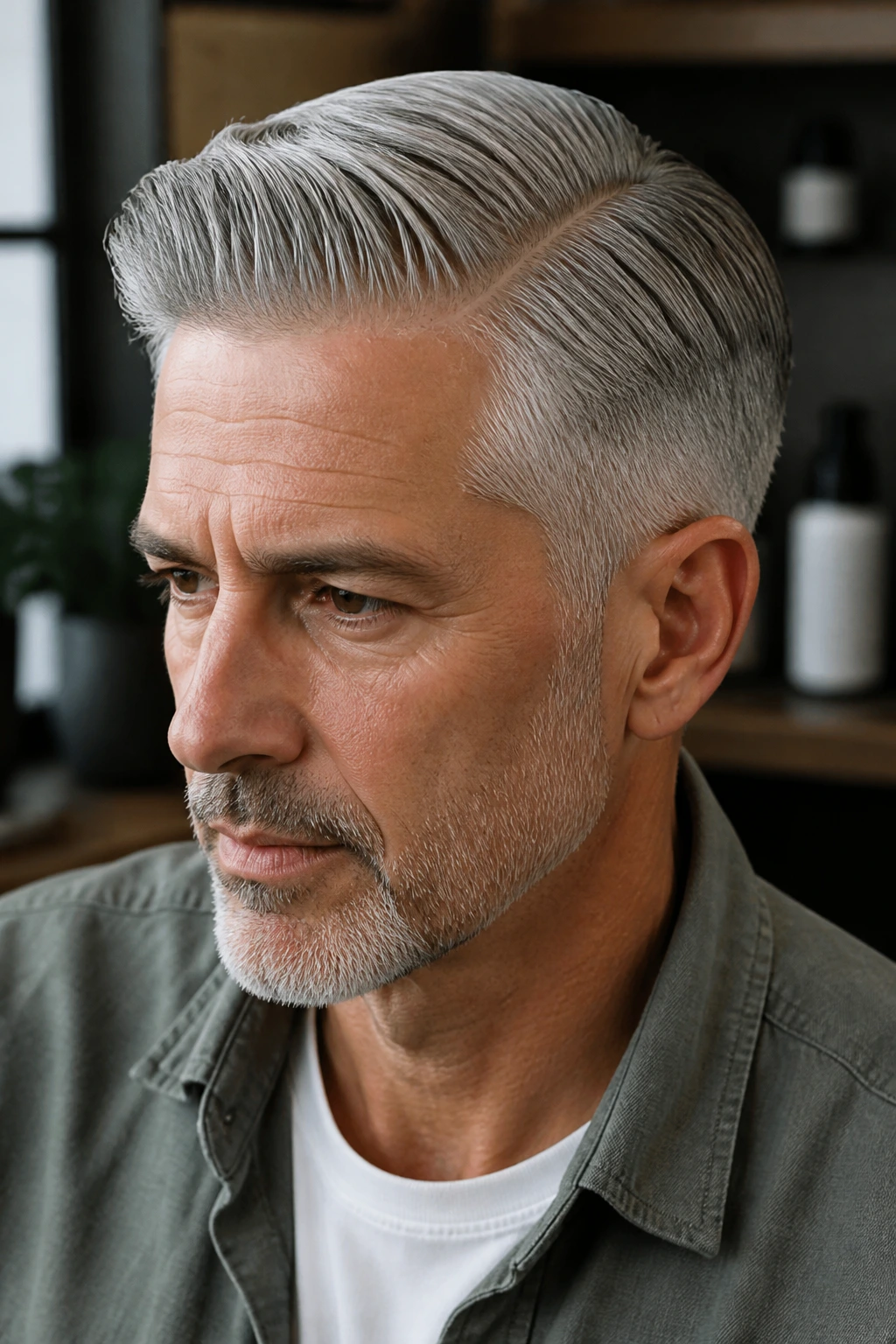
The classic side part has been around forever for a reason: gray hair makes it look more defined, not more old-fashioned. The part line shows up cleanly in silver strands, especially when the top is left around two to three inches long and the sides are tapered instead of aggressively faded.
Keep the shine low. A light styling cream or a tiny dab of pomade is enough; heavy gel makes gray hair look wet in the wrong way. This cut suits men who want structure, especially if they wear shirts, jackets, or glasses that already have a neat frame to them.
5. Ivy League With a Soft Lift

The Ivy League sits between a crew cut and a side part, and that middle ground works beautifully for gray. You get enough length to brush the front slightly upward, but not so much that the style turns floppy. The top usually sits around one and a half to two and a half inches, with a neat taper on the sides.
It’s a good choice if you like polished hair but hate fuss. The silver reads cleanly because the shape is controlled. If your hair has a little wave, let it stay there. Don’t flatten it into something stiff just because the cut is tidy.
6. Textured Crop
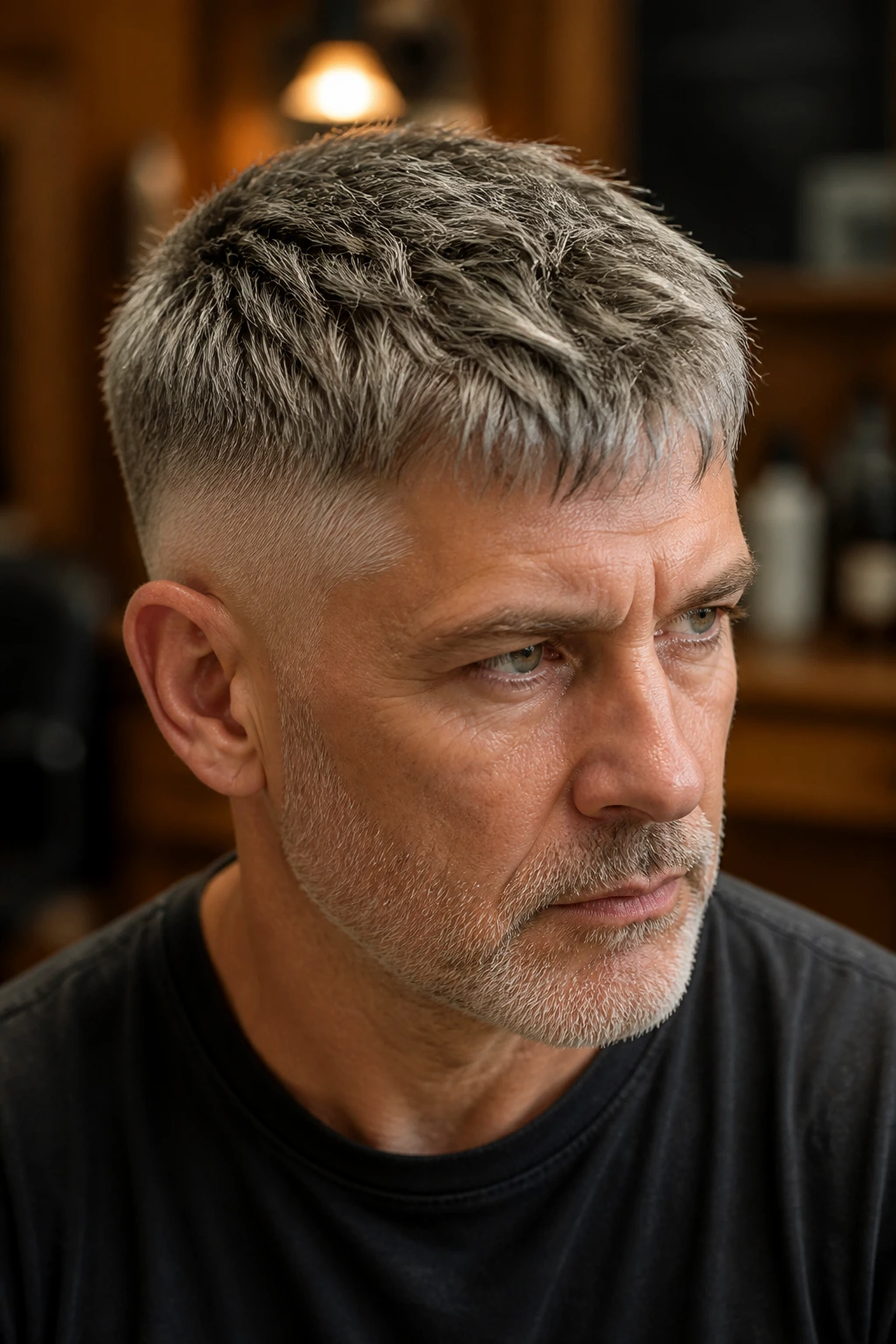
The textured crop is one of the best answers for gray hair that’s beginning to thin or lose uniform density. Keep the sides short, leave the top short-to-medium, and have your barber cut in choppy layers so the hair breaks up instead of lying flat. A forward direction through the fringe helps too.
Why it works
Gray hair tends to show scalp and gaps faster than darker hair, especially under bright light. The textured crop hides that by building a broken surface instead of one smooth sheet. A matte paste, worked through dry hair, gives the top just enough separation to look lived in without looking messy.
How to wear it
Brush the front forward with your fingers, not a comb. If the hair sticks up at the crown, dampen it lightly and press it down for ten seconds. That usually does more than a whole zoo of products.
7. French Crop
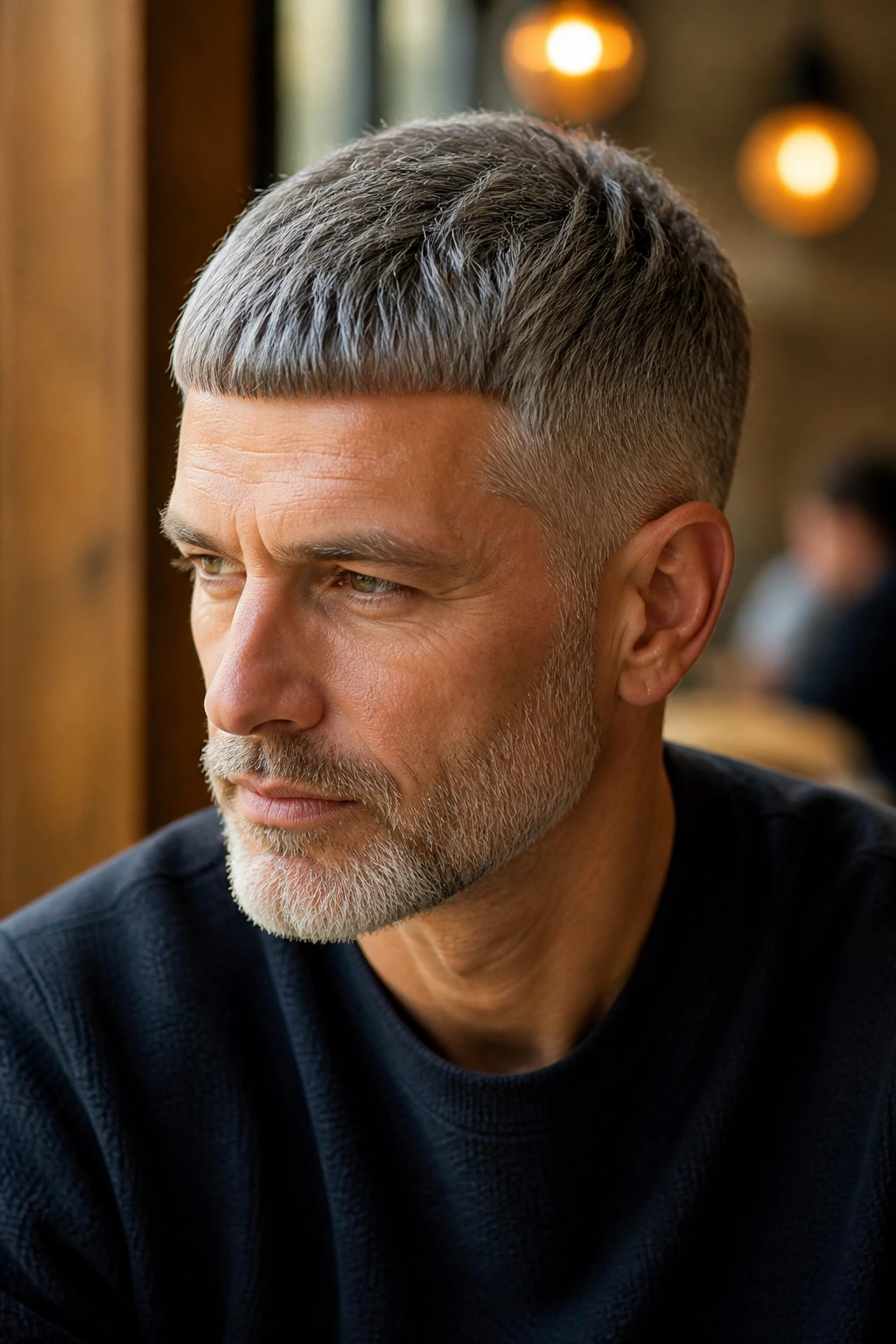
The French crop is close to the textured crop, but the fringe is heavier and more blunt. That blunt front can be a smart move if your forehead is getting taller or your hairline has started to move back. Gray hair gives the cut a cool, matte edge because the front line looks clear instead of fuzzy.
Ask for short sides, a blunt fringe, and a bit of choppy texture on top. If the hair is coarse, don’t thin it too much. The crop looks best when it keeps a little weight, not when it gets buzzed into submission.
8. Caesar Cut
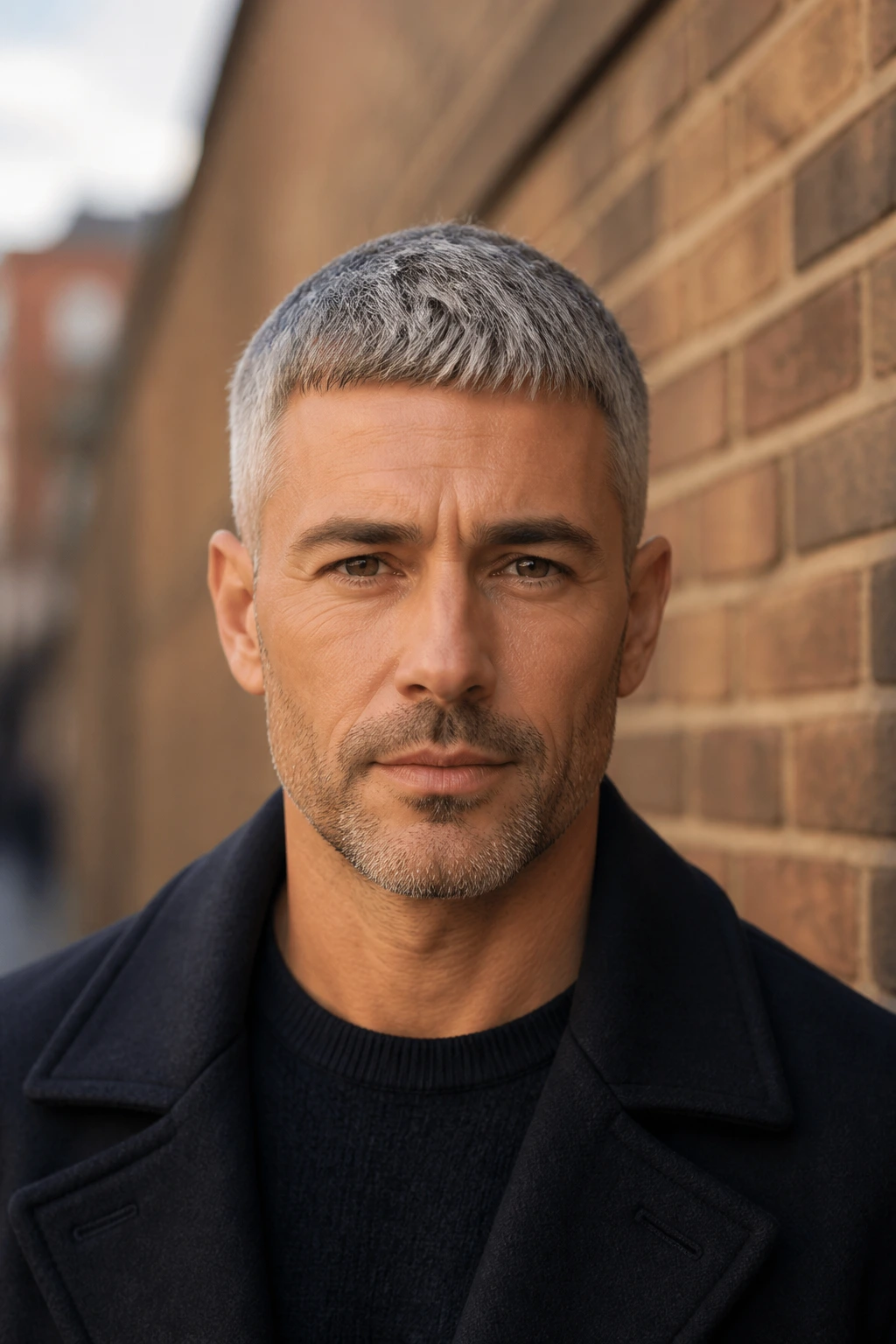
The Caesar cut is tidy, direct, and weirdly flattering on gray hair. The short fringe sits forward in a straight line, which helps keep attention on the face instead of on uneven growth patterns. It’s a solid pick for men with a receding hairline who don’t want to pretend it isn’t there.
The trick is keeping the top short enough that it behaves. Around one inch, maybe a touch more, is plenty. Put a fingertip of matte product through it after the shower, then push the fringe forward and leave the texture alone. No drama. No overthinking.
9. Brush-Up Quiff
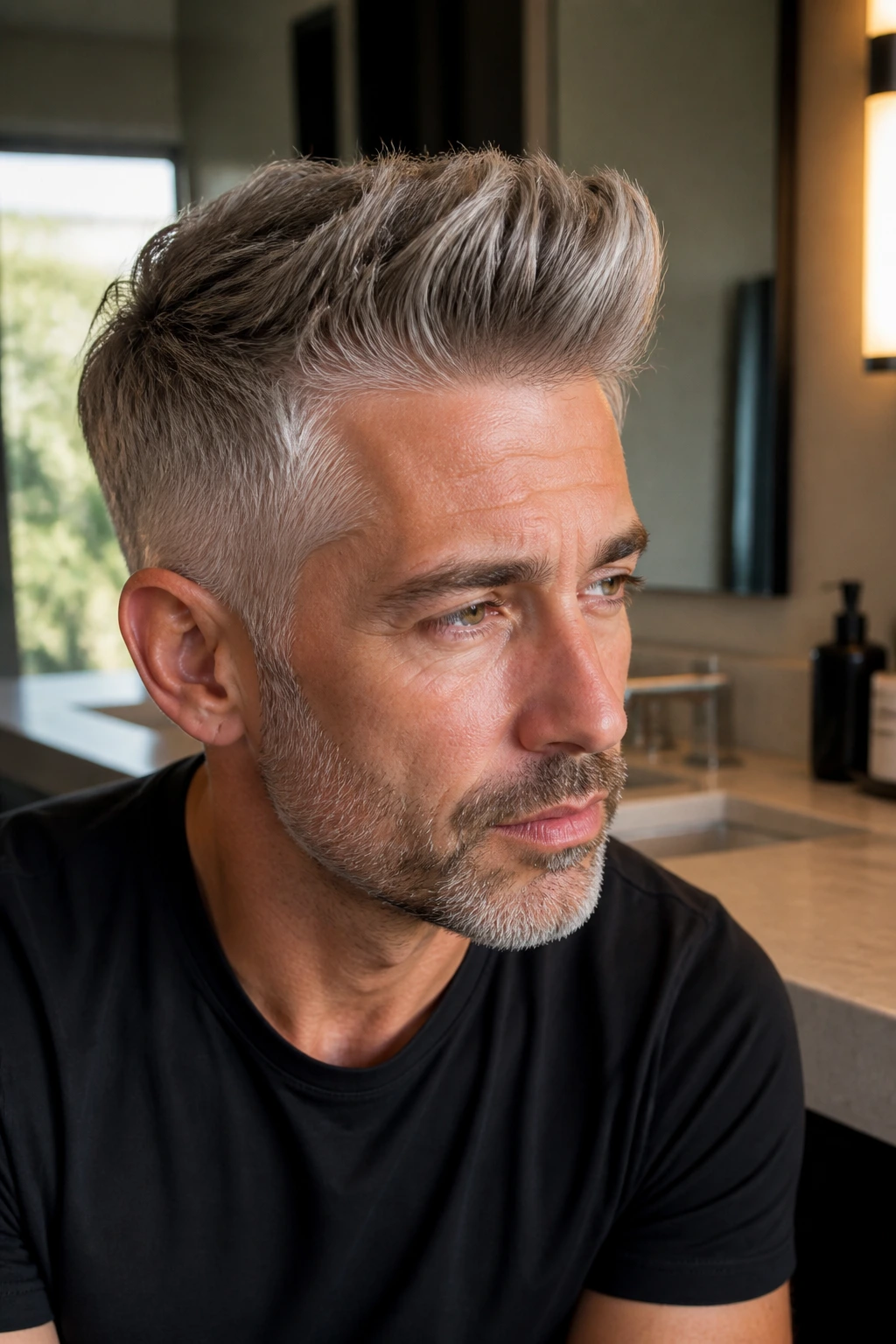
A brush-up quiff gives gray hair some height without making it look stiff. The front gets lifted with a blow-dryer, then held with a matte clay or light paste so the shape stays soft at the edges. If your hair is thick, this is one of the few styles that can handle volume without turning into a puffball.
Gray hair often looks especially good with height because the light catches the raised front edge. Keep the sides tapered so the top has something to sit on. If the quiff starts to collapse by noon, the product is probably too heavy or the roots weren’t dried fully first.
10. Slick Back
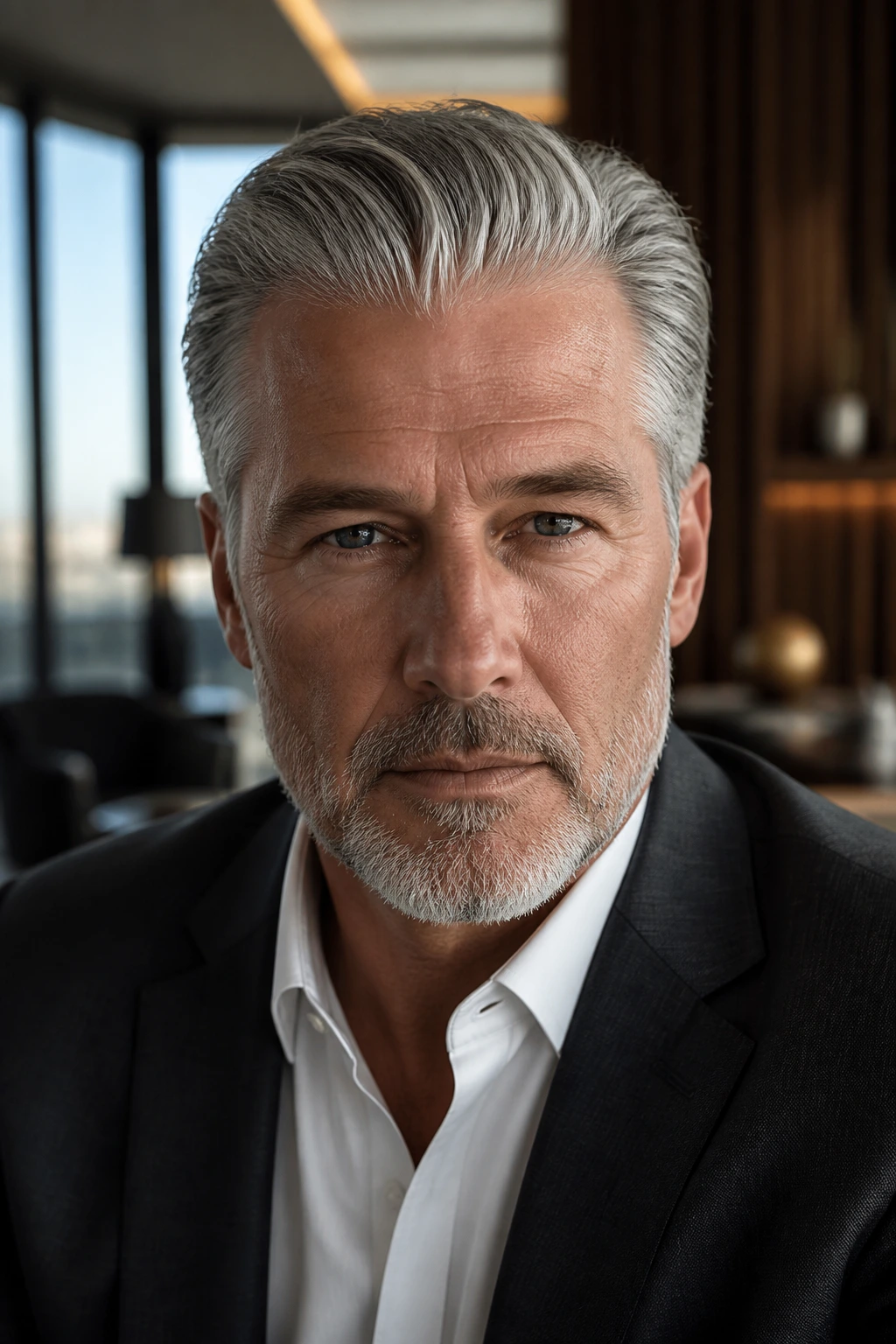
A slick back on gray hair can look expensive in the best old-school way, but only if you keep the shine under control. Use medium length on top, shorter sides, and a low-shine cream or light pomade. If you pile on grease, the silver strands go flat and start to show every separation.
This works best on straight or slightly wavy hair with enough density to hold direction. The gray gives the style a polished, almost steel-like finish. It’s strong, but not fussy. That’s the sweet spot.
11. Comb Over Fade
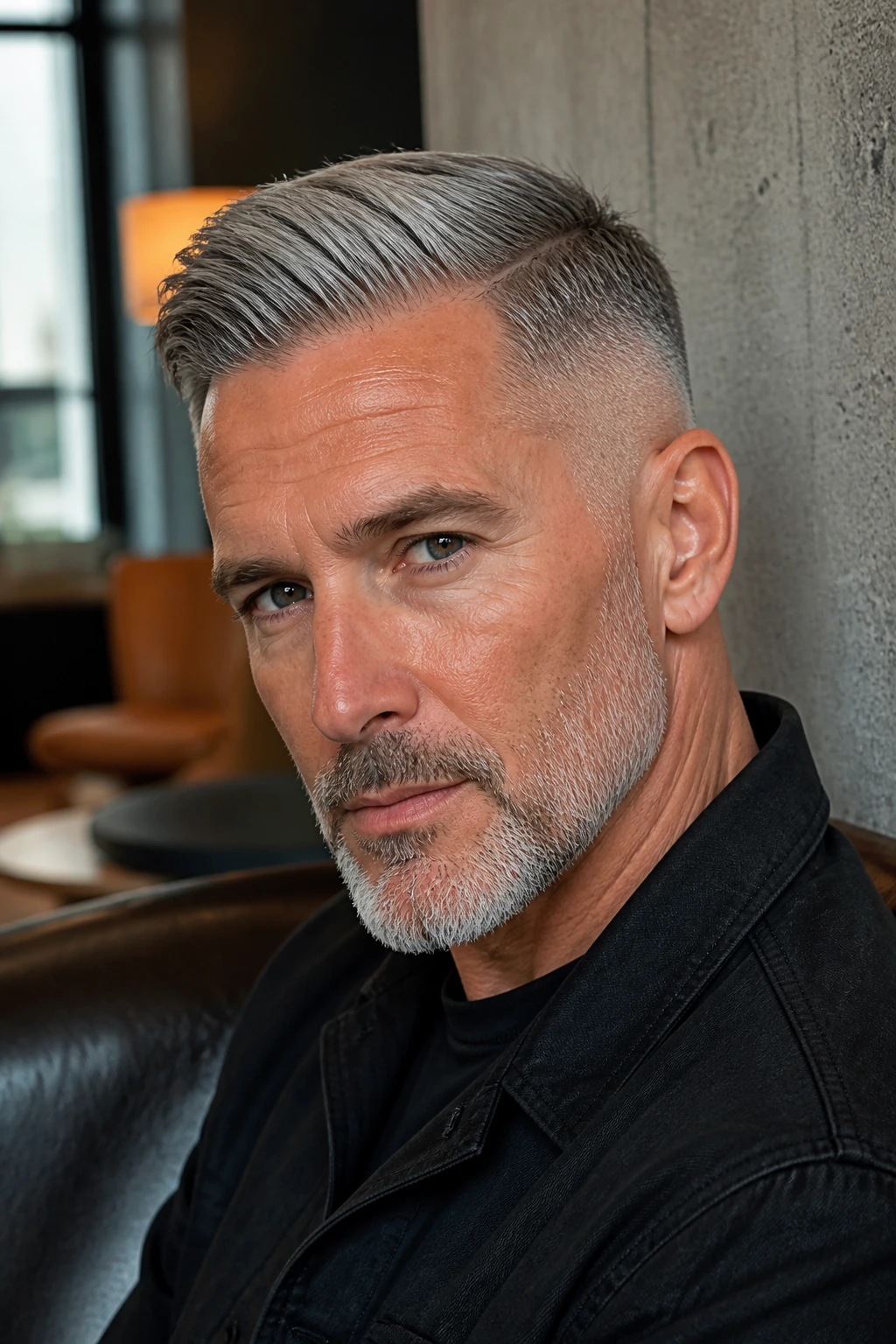
Forget the fake-cover combover people joke about. A real comb over fade is a structured side-swept style that uses the hair you have, not the hair you wish you had. Leave enough length on top to sweep across the crown, then fade the sides clean so the top gets all the attention.
This is especially useful if the crown is a little thinner than the front. A neat part and a matte finish can make that zone look intentional instead of exposed. If the front wants to split, direct the hair back at a slight angle rather than trying to force one perfect line.
12. Gray Pompadour
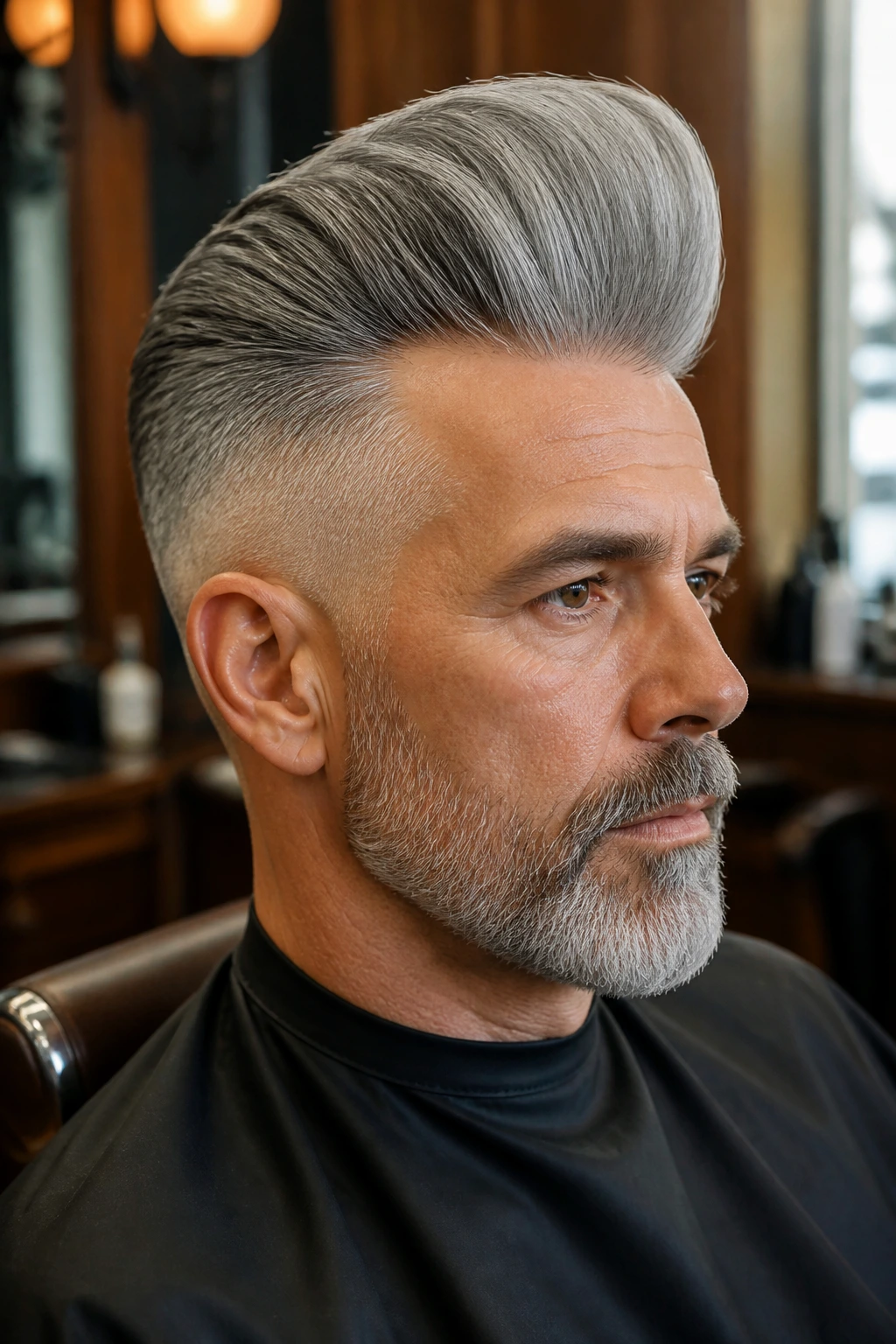
The gray pompadour is for men who don’t mind a little height. It needs enough length on top to build volume, usually two to four inches, and the sides should stay tight so the shape doesn’t turn wide. Blow-dry the front up and back, then lock it in with a product that still feels touchable.
Gray hair makes the pompadour look cleaner than dark hair in some cases, because the shape is easier to read from across the room. That’s the point. If your hair is thin, though, this one can get tricky fast. It works best on dense hair with a bit of natural body.
13. Undercut with Long Top
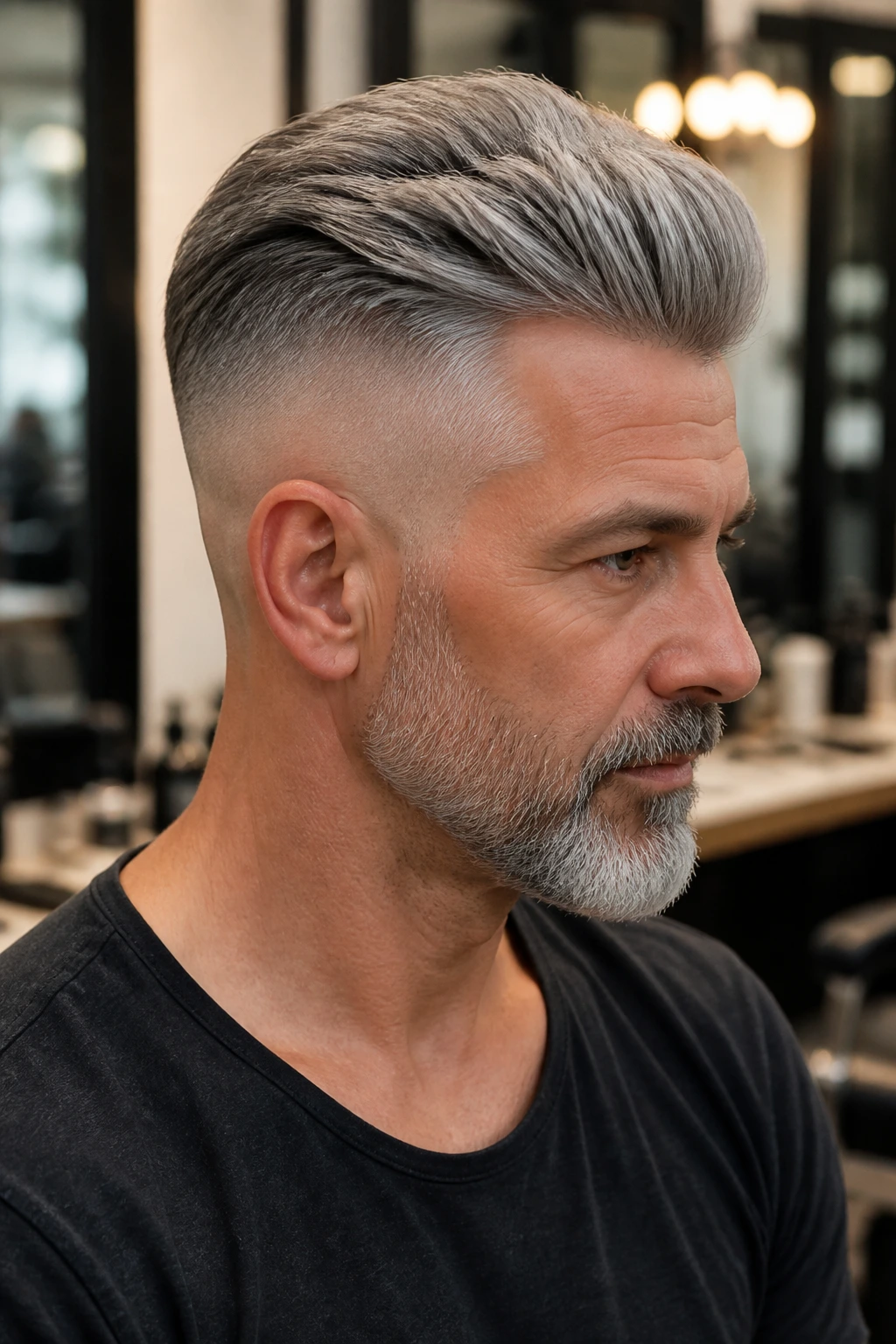
An undercut with a long top gives gray hair a strong visual break: tight sides, longer silver length above. That contrast can make the gray read almost like a highlight rather than a change in pigment. It’s a good option if you want something sharper than a taper but less formal than a side part.
The long top can be brushed back, swept sideways, or left loose depending on your mood. Keep the undercut disconnected cleanly so the whole thing doesn’t blur into one shape. Gray hair with this cut looks best when the ends are trimmed often enough to keep the edge crisp.
14. Spiky Crop
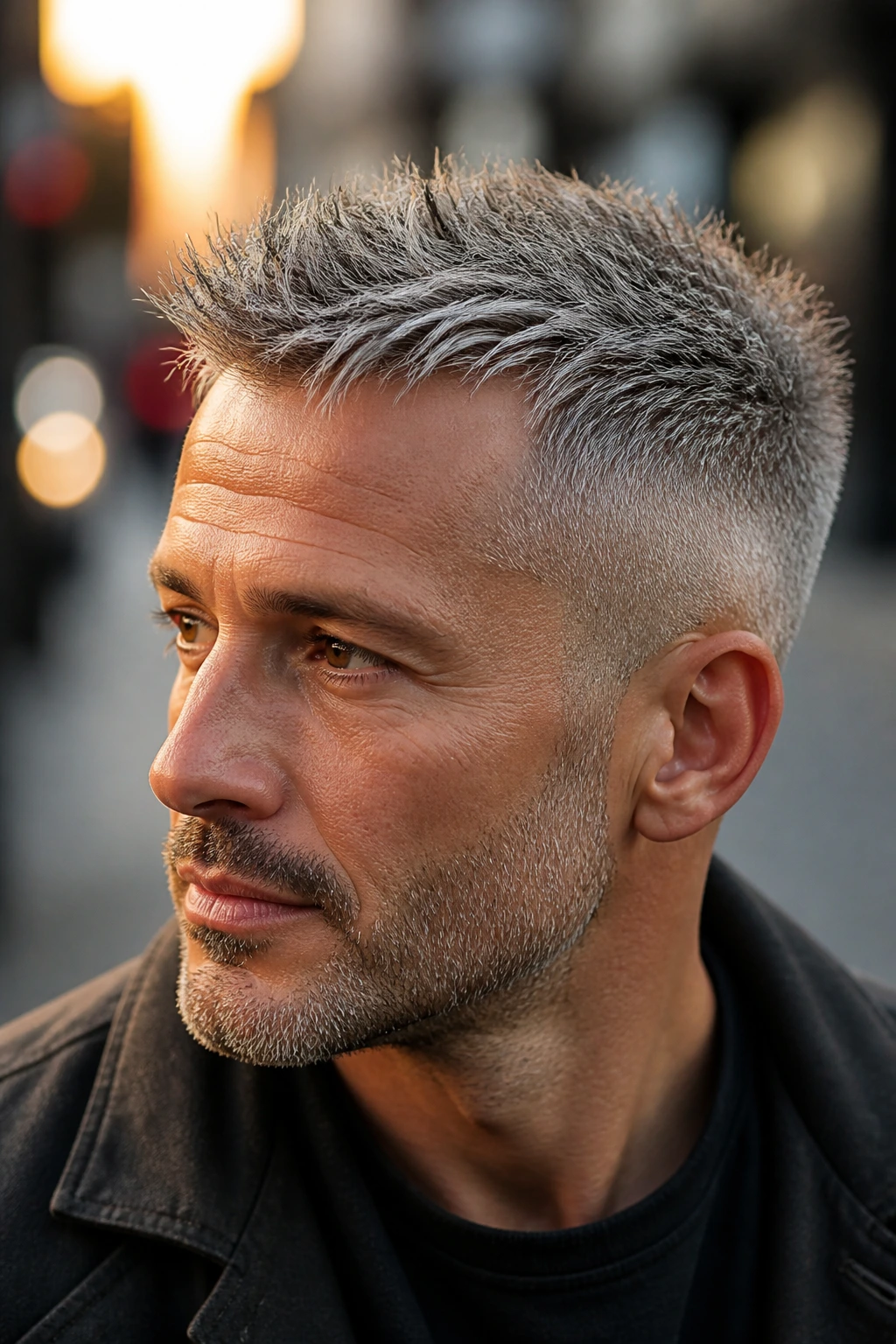
The spiky crop has a little edge, but it doesn’t need to look teenage or loud. Cut the top short and uneven, keep the sides tidy, and use matte paste to separate small points through the front and crown. Gray hair gives the spikes a frosted look that can be better than dark hair’s sharper, sometimes harsher finish.
What to ask for
Ask your barber for short, point-cut texture on top and a clean taper around the ears.
Keep the spikes small. Big, frozen spikes tend to look dated fast.
A dry finish is the whole point here.
15. Choppy Fringe

A choppy fringe softens the forehead and keeps gray hair from feeling too formal. The front falls forward in uneven pieces, which helps if you want to break up a strong hairline or distract from a wider forehead. The gray mixed through that fringe gives it a smoky, layered look.
This cut works especially well when the hair has some natural wave. You do not need to force every strand into place. A little movement is what makes it feel modern. If the fringe starts getting heavy, trim the front before it starts hanging in your eyes.
16. Side-Swept Waves

Side-swept waves are one of the more relaxed gray looks, and they’re good if your hair has natural bend. The key is letting the wave stay visible instead of ironing it flat with product. Medium length on top and a softer taper at the sides keeps the silhouette smooth.
Gray hair with wave can look almost metallic when the light hits the ridges. That’s a nice thing. Use a light cream or leave-in conditioner and push the front in one direction with your hands. A comb can make it too neat and strip away the part that makes it interesting.
17. Bro Flow
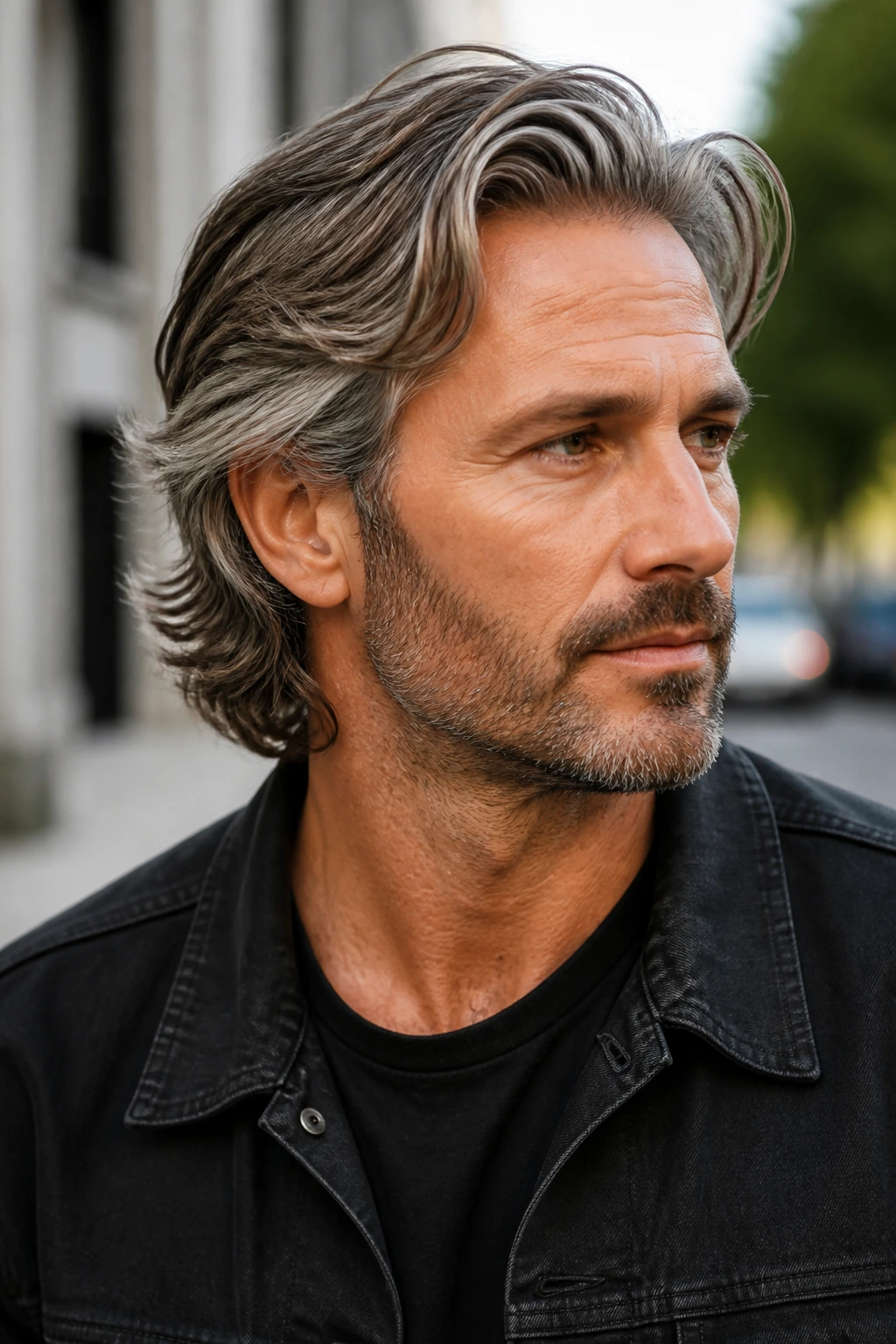
The bro flow works when you want movement, not structure. Hair sits medium-long, brushes back from the face, and falls naturally around the ears and neck. Gray makes this style feel older in a good way — not aged, just relaxed and self-assured.
The trick is layers. Without them, the whole thing turns into a curtain. With them, the hair moves and the silver strands separate enough to show shape. This style does best when you keep the ends trimmed before they start looking ragged.
18. Shoulder-Length Layers
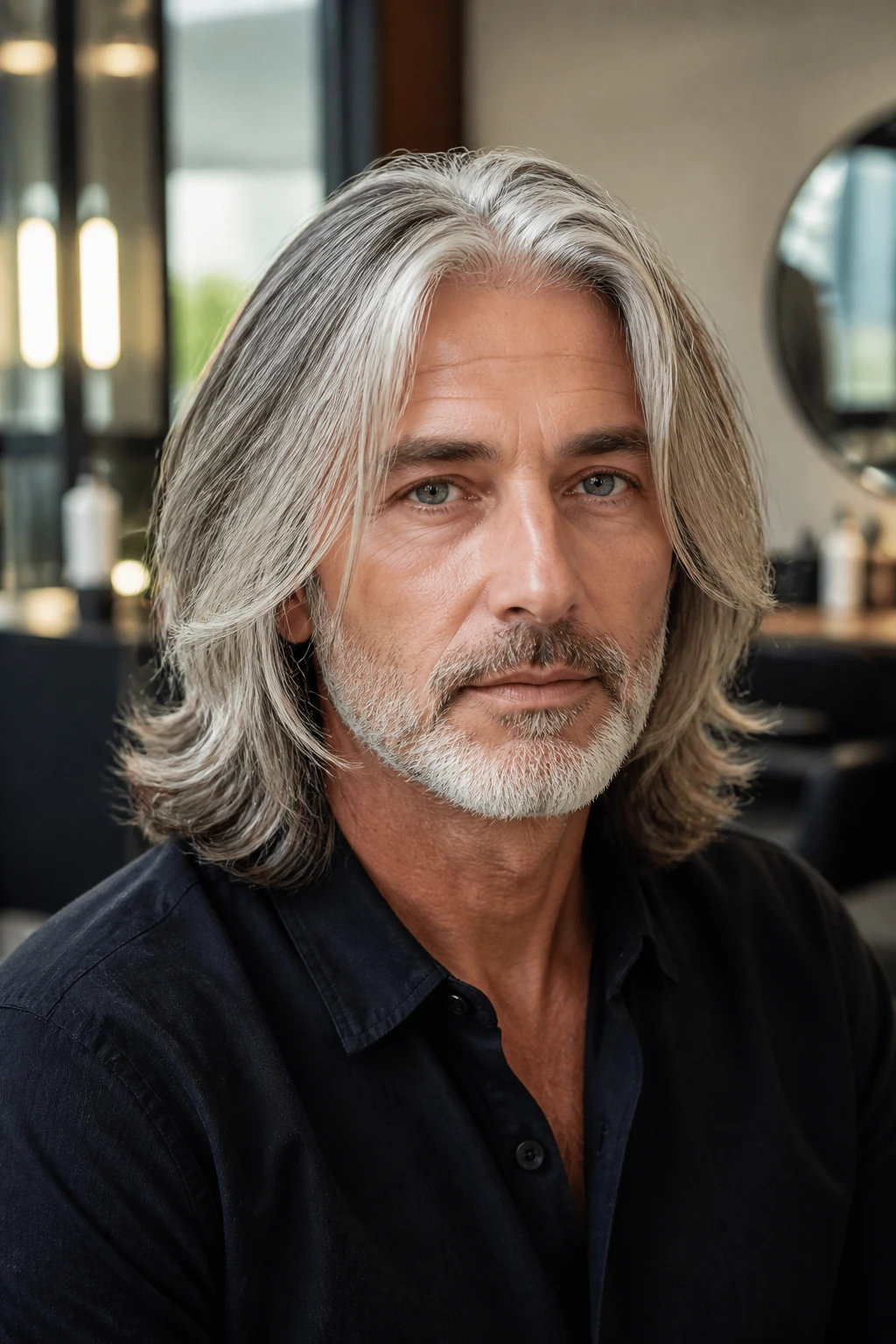
Shoulder-length layers give gray hair a lot of room, but they also demand real shape control. If the hair is all one length, it can drag the face down. Add layers, and the silver starts to fall in clean panels instead of one heavy sheet.
This cut suits men with thicker hair or a natural wave. It can look refined, rugged, or quietly artistic, depending on how you dry it. If your ends dry out fast, work a tiny bit of cream through the lower half only. The roots don’t need the weight.
19. Gray Man Bun
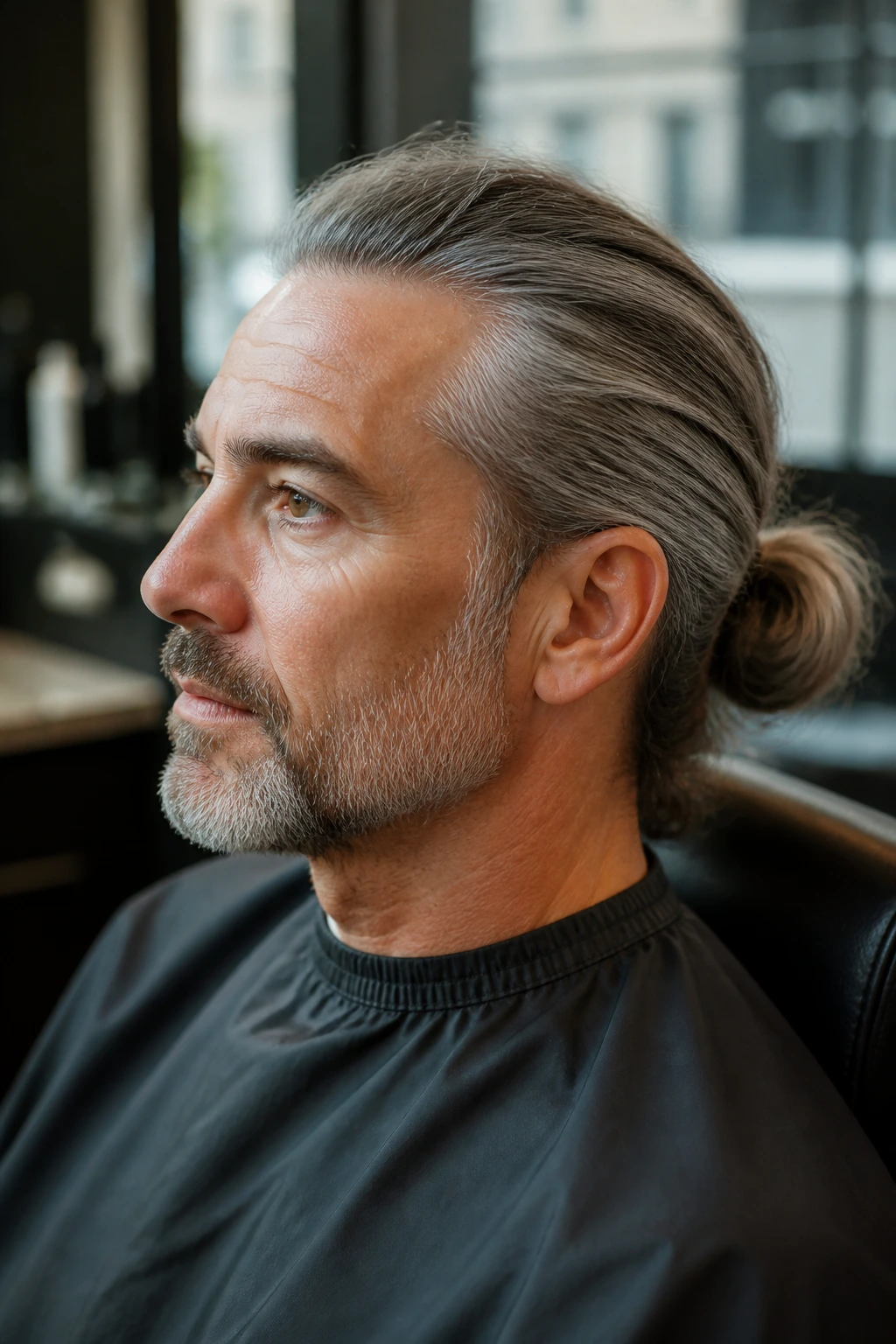
The gray man bun is a practical answer for men who have patience and enough length to tie back cleanly. It works best when the hairline is still solid enough to support a pulled-back shape. Gray strands at the temples can look especially good here, because they frame the face instead of disappearing into the bun.
Keep the bun low and loose unless you want a harder look. A very tight knot can exaggerate recession at the front. That’s the one catch. If the hair is dry, a little cream at the ends keeps the bun from looking frayed.
20. Half-Up Knot
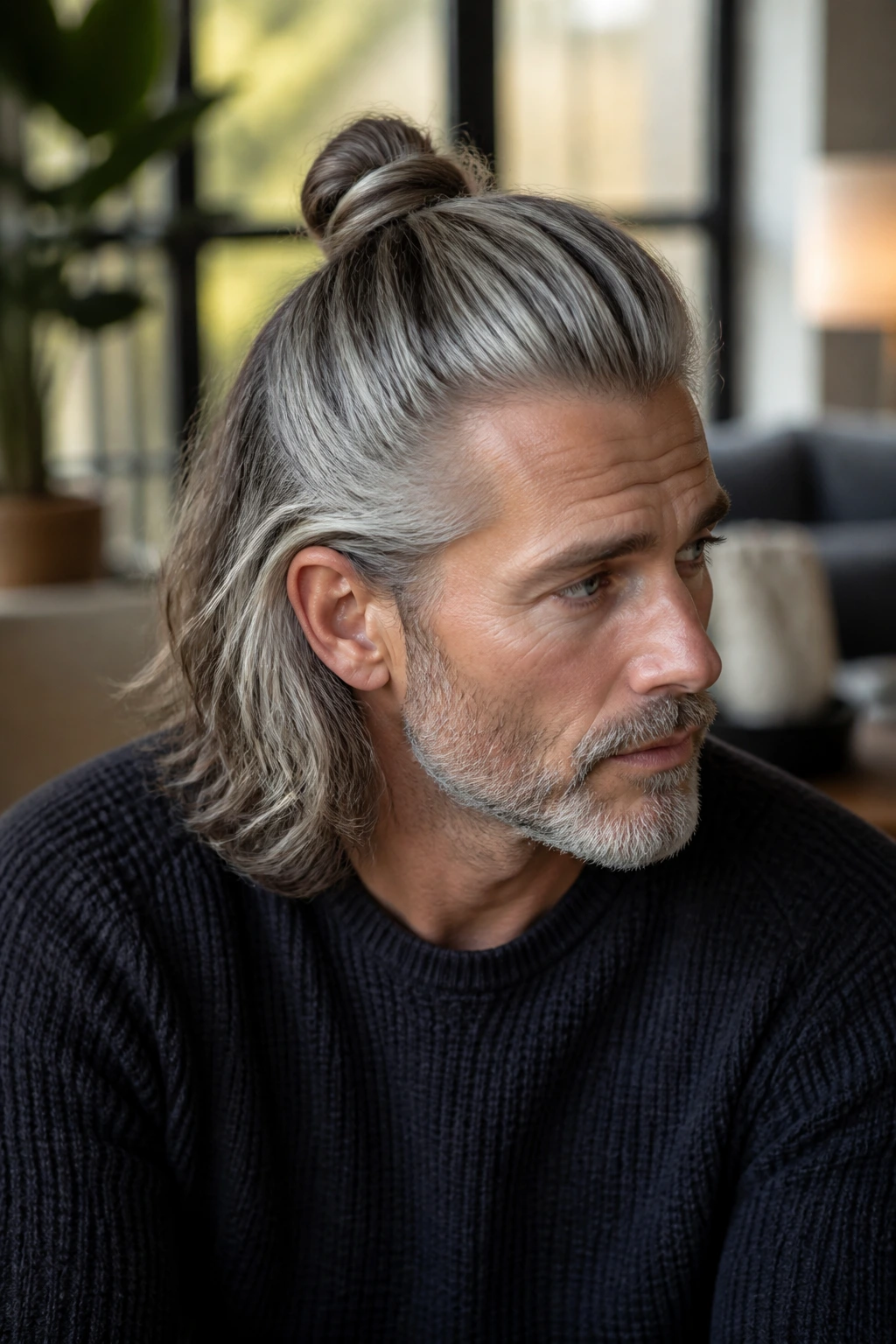
The half-up knot keeps the front and crown under control while leaving length visible in back. It’s a useful compromise for men who like long gray hair but don’t want it in their face all day. The silver on the tied section reads differently from the loose section, which gives the style some built-in contrast.
This one works best with shoulder-length hair or a little more. Don’t over-tighten the top section; the goal is restraint, not tension. If the knot starts slipping, the hair probably needs a touch more texture spray or a slightly rougher blow-dry.
21. Curly Top with Taper
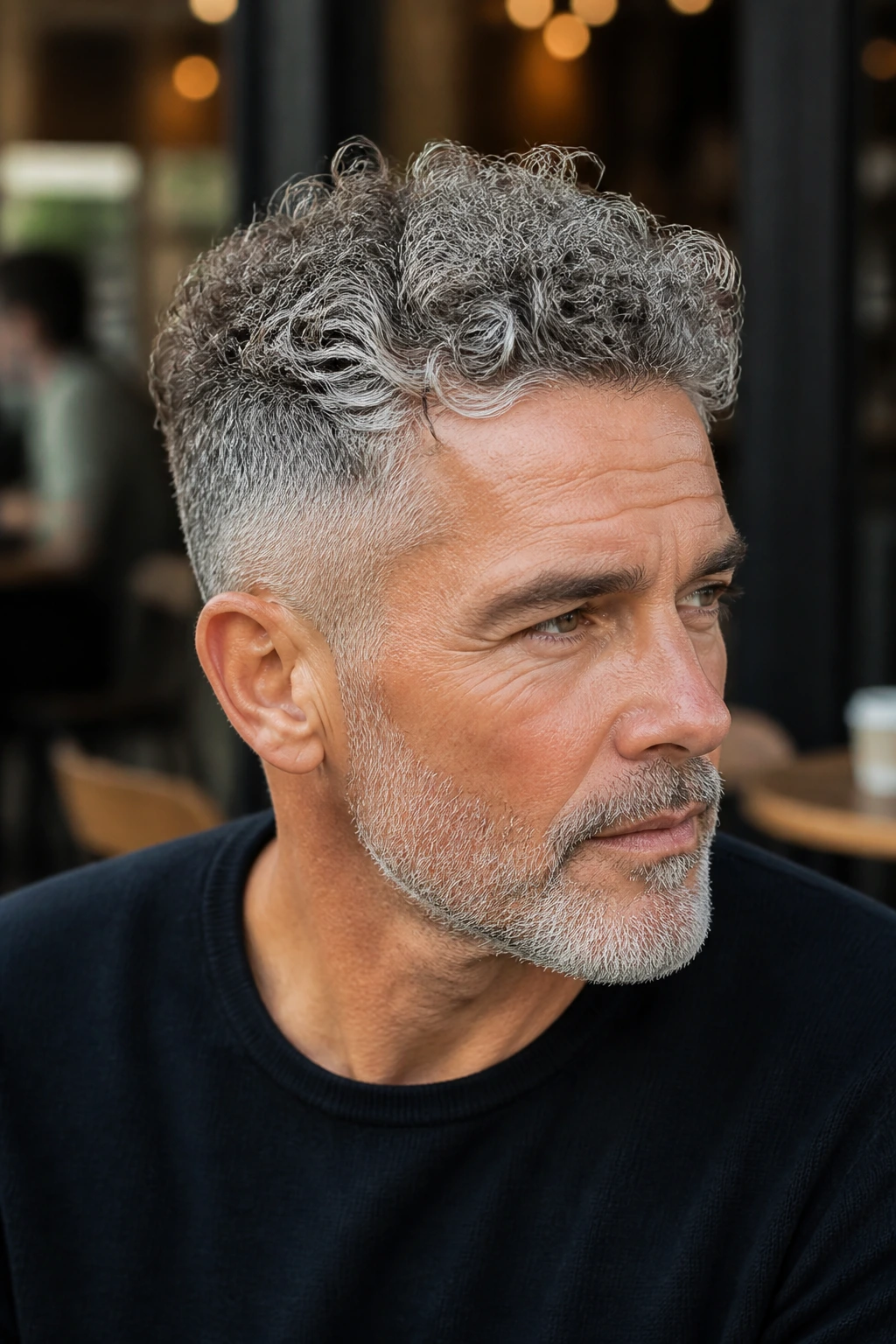
Curls and gray hair can be a very good match. A curly top with a taper keeps the sides neat while leaving the curls up top free to spring and show their shape. The silver strands catch light in little flashes, which can make the texture look fuller than it really is.
Use a curl cream or light leave-in, not a heavy wax. Heavy products clump curls and make gray hair look damp in the wrong way. A taper around the edges keeps the whole cut from getting too wide, which is the main thing to watch with curls.
22. Afro Fade
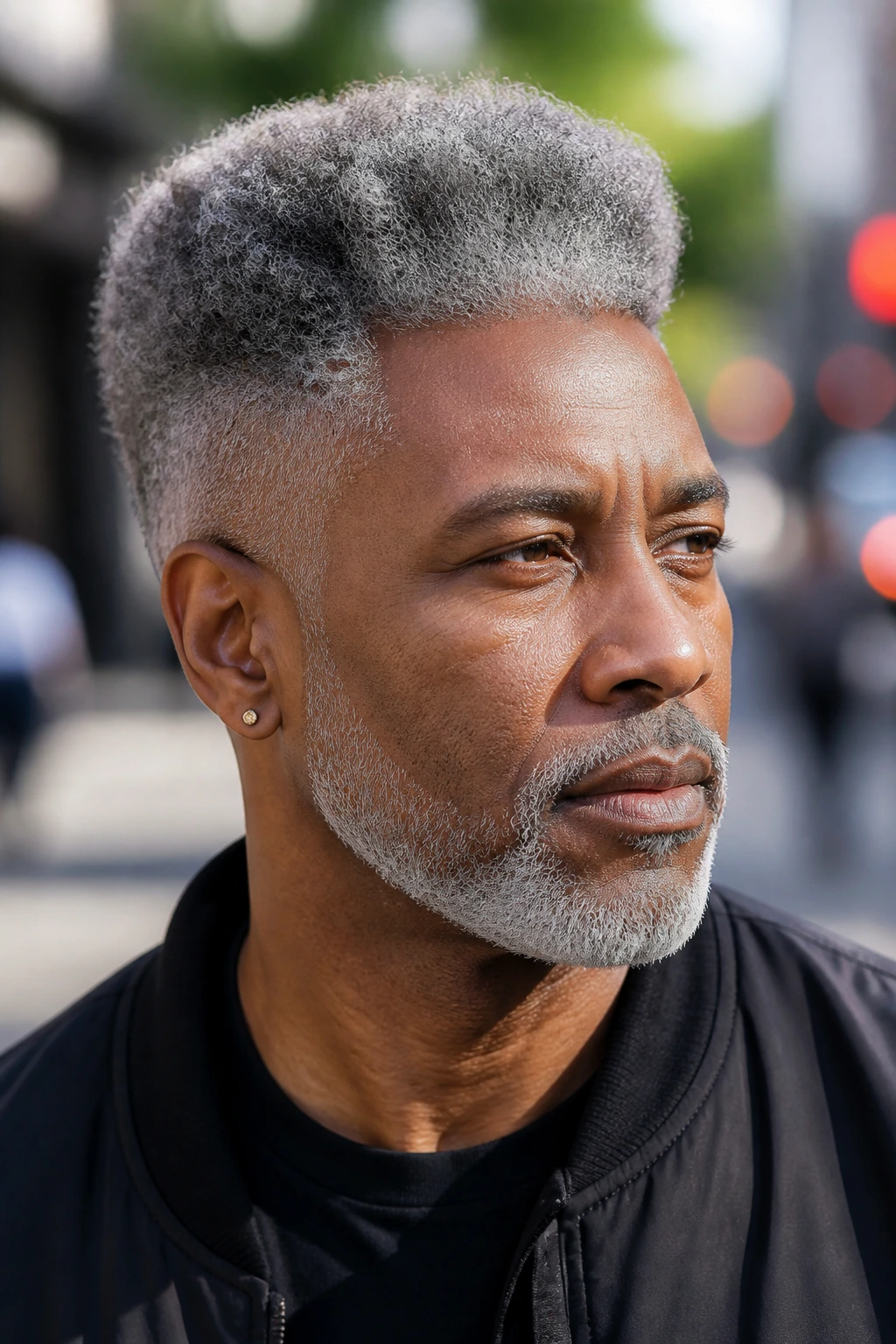
The afro fade gives gray coils and curls a strong frame. Sharp sides and a shaped top make the silver read cleanly, especially when the texture is dense enough to hold a rounded outline. Gray in textured hair can look dramatic in a good, honest way.
Why it works
Texture is doing half the styling already. The fade keeps the perimeter tight, while the top shows off the natural pattern. If the hair starts to lose shape, a quick brush-out and a small amount of curl cream usually bring it back.
Barber note
Ask for the fade to follow the head shape, not cut into it too hard. A rounded top with a clean line-up around the forehead and temples tends to look strongest.
23. Tapered Natural Coils
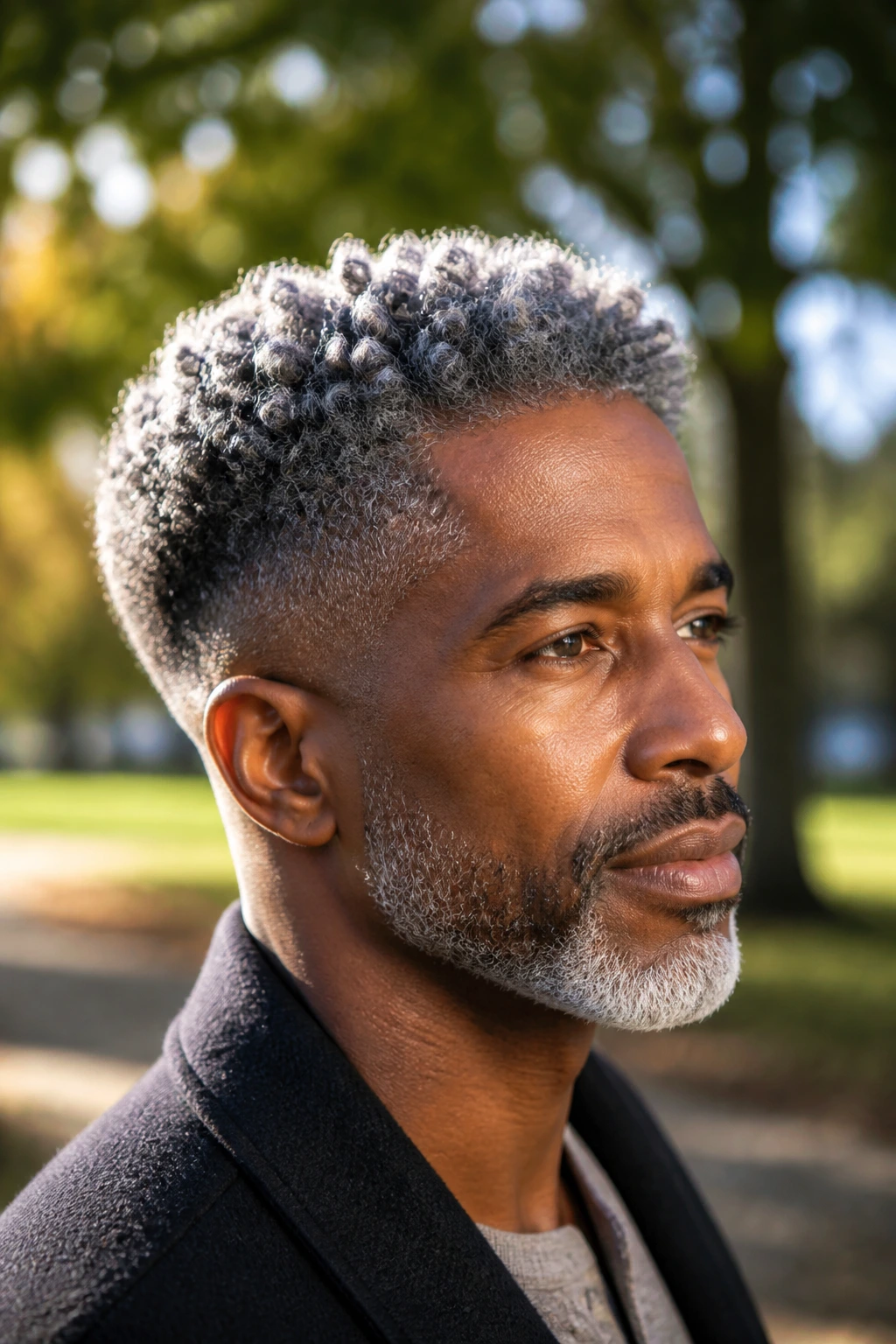
Tapered coils are about shape, not shrinkage management. Keep the sides tight and let the top stay full enough to show the coil pattern. Gray coils often look brighter than people expect, and that brightness is part of the appeal.
A little moisture goes a long way here. Use a leave-in conditioner or light curl butter so the hair stays soft, not crunchy. The taper matters because it keeps the style from ballooning at the sides, which can happen fast if the cut is too boxy.
24. High and Tight

The high and tight is blunt, athletic, and clean. Very short sides and a slightly longer top make gray hair look crisp in a way that needs almost no styling. It’s a good fit if you want a low-maintenance haircut that still looks sharp after a hat, a gym session, or a long day.
This cut also works when the hairline is changing. Rather than trying to frame every edge, it puts the shape front and center. If you like your hair off your neck and off your forehead, this one never wastes time.
25. Flat Top
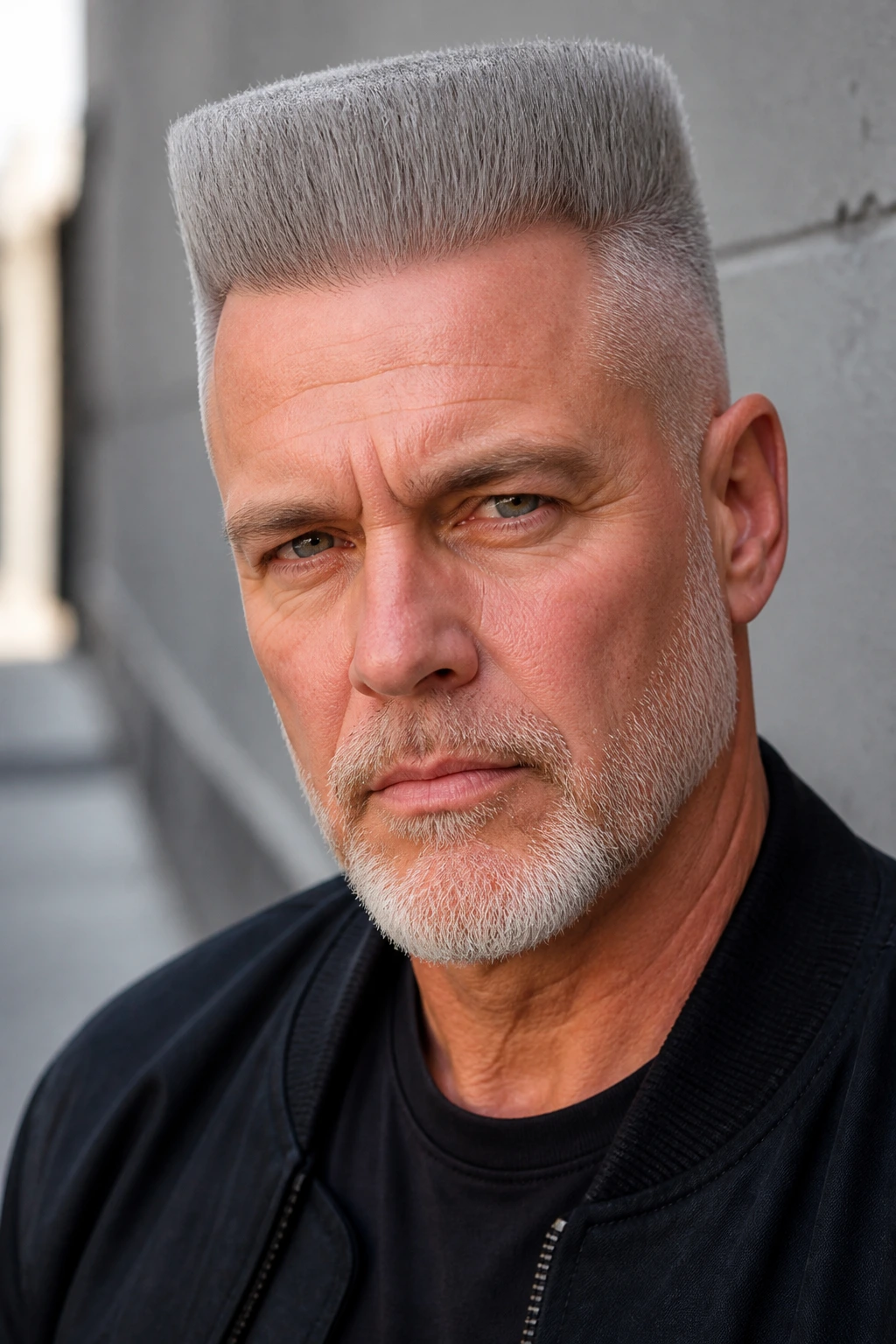
A flat top is not for blending in. Gray hair gives the geometric shape a cool, almost architectural finish because the flat plane reads so clearly. It needs dense hair and a barber who knows how to keep the top level without making the sides bulky.
This is a strong choice for men with coarse texture and a solid growth pattern. If the hair is too thin, the flat top loses its punch fast. But when it works, it works hard. Keep the top brushed and the edges square.
26. Temple Fade with Beard
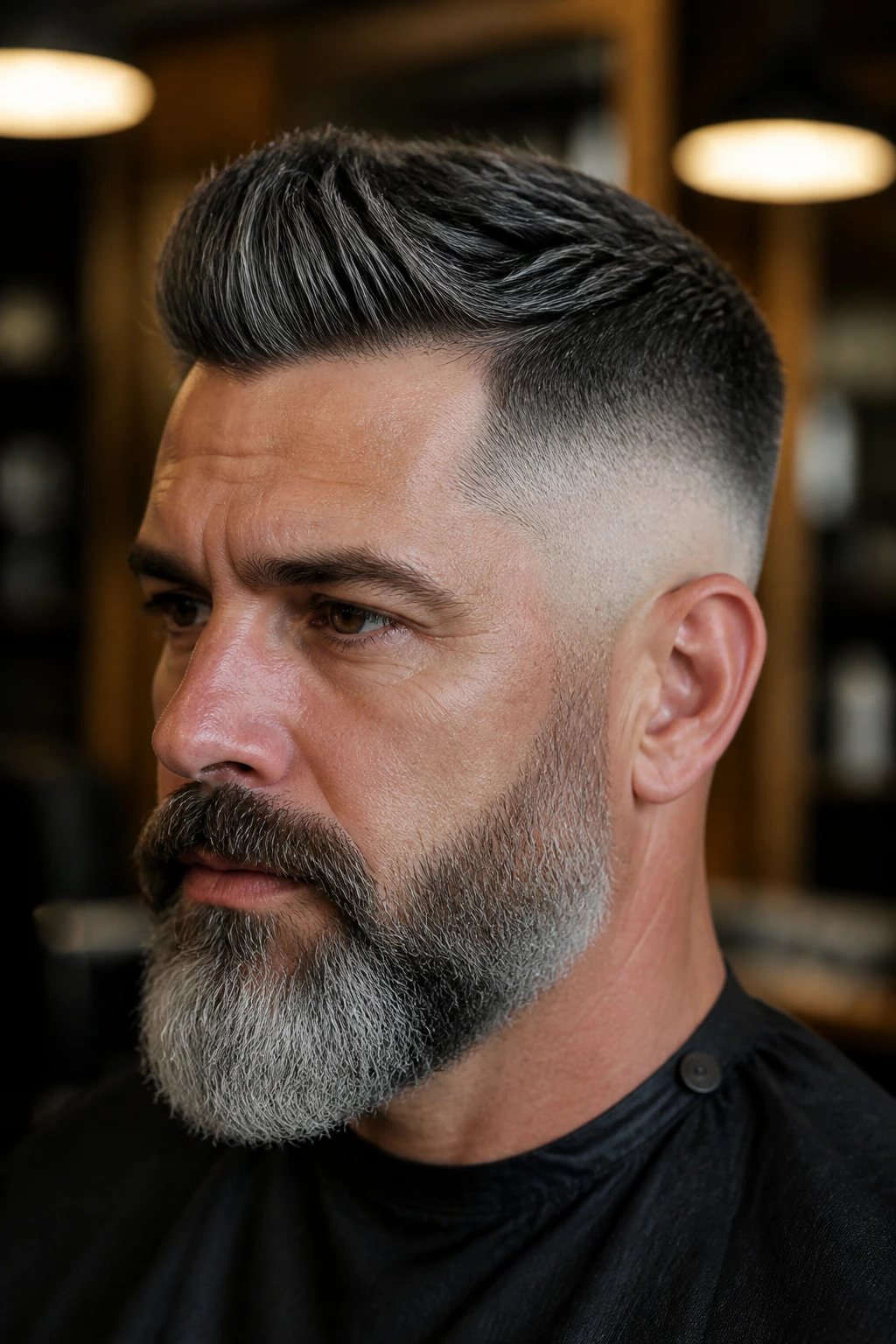
A temple fade with a beard connects the haircut to the face in a smart, controlled way. The fade opens around the temples, which is where gray often shows first, and the beard anchors the lower half so the whole head reads as one plan. That balance matters more than people think.
Ask your barber to match the fade height to the beard line. If the beard is full, keep the temple fade clean and the cheek line tidy. If the beard is shorter, leave a little more softness in the fade so the transition doesn’t feel abrupt.
27. Low Fade and Line-Up
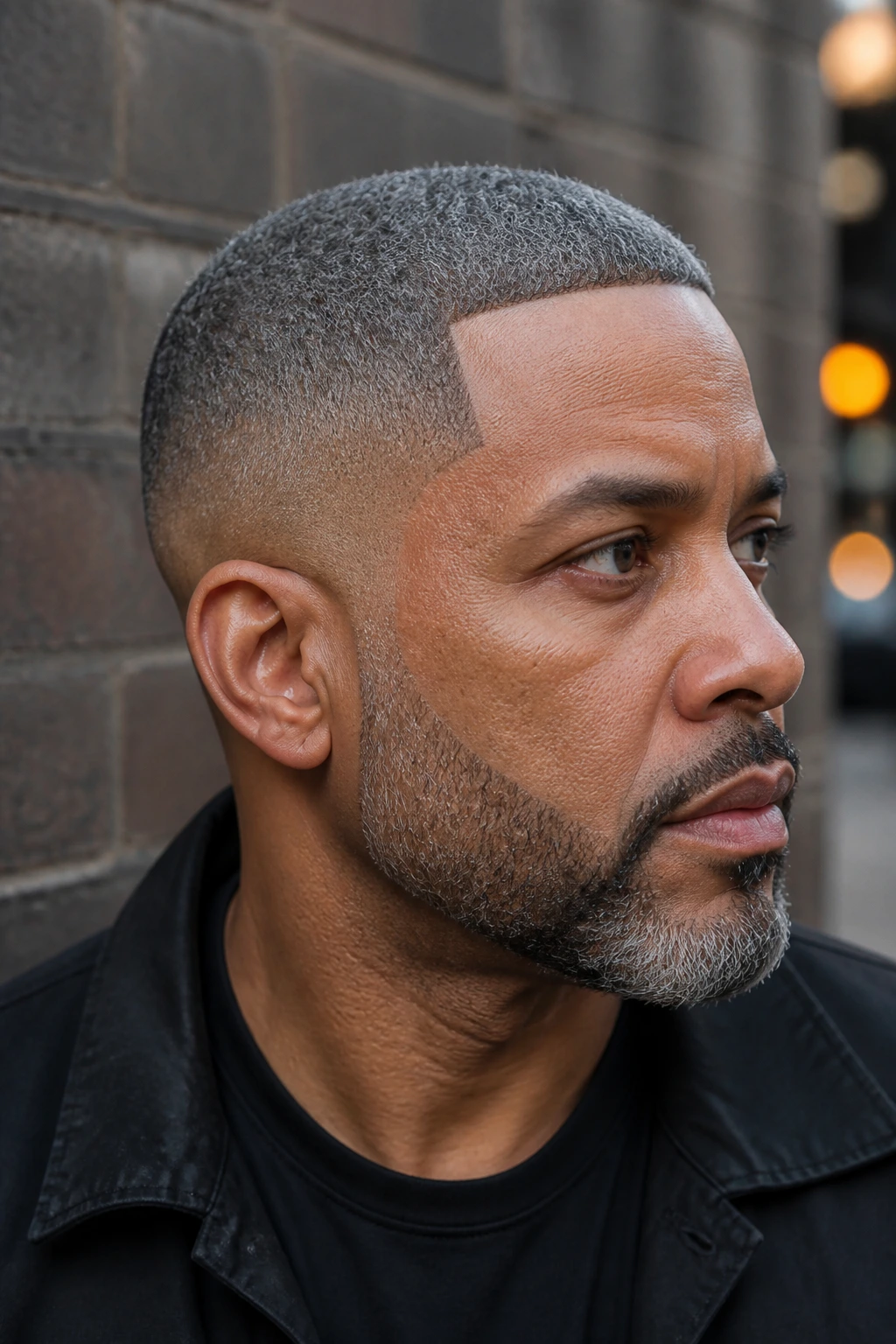
The low fade and line-up is one of the cleanest gray styles you can wear. The fade starts low near the ears and neckline, while the line-up sharpens the forehead and temples. Gray hair benefits from that precision because the lighter strands can otherwise blur into the skin edge.
This cut suits men who like a polished finish but don’t want a lot of length on top. It’s especially good with a short beard or stubble. If your hair grows fast around the temples, plan on maintenance every two to three weeks.
28. Gray Mullet
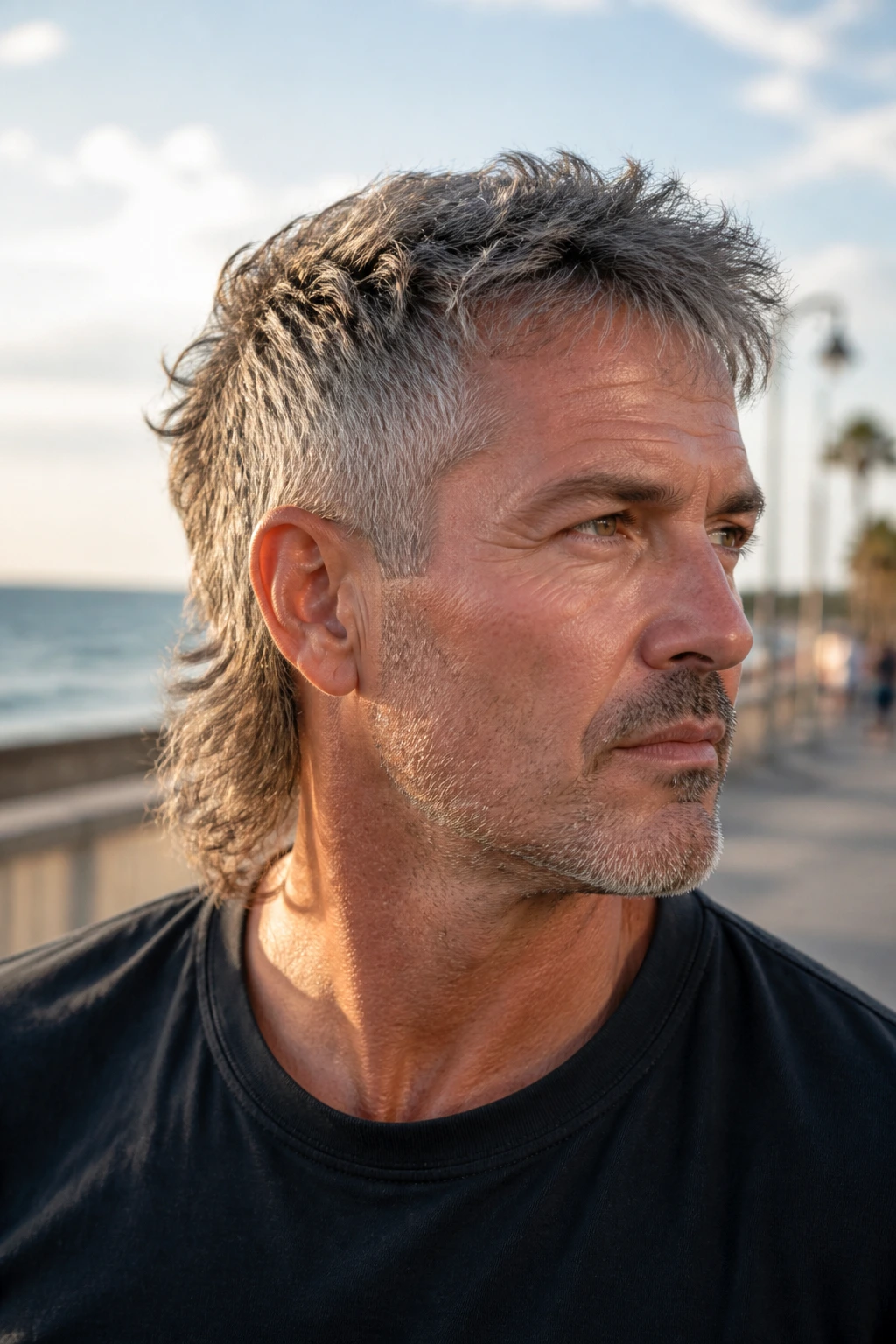
The gray mullet can sound like a joke until you see one with the right texture. Shorter in front, longer in back, and often a little messy, it gives gray hair a rough, cool edge that can look more modern than the old stereotype suggests. The key is keeping the proportions controlled.
Too much length in the back and it turns into a costume. Just enough and it becomes a shape. A gray mullet works best on men who have some wave or bend in the hair, because the texture keeps the back from hanging flat.
29. Curtain Cut

The curtain cut brings the hair into a middle part with longer fringe on both sides. Gray hair makes the center split look softer than on dark hair, especially if the front pieces are feathered instead of cut blunt. It can be a good match for men who want movement around the face.
This style needs enough length to fall naturally, usually around cheekbone level or a little shorter. Blow-dry the front away from the face, then let the part settle on its own. The result should feel airy, not parted like a school photo.
30. Shaggy Layers
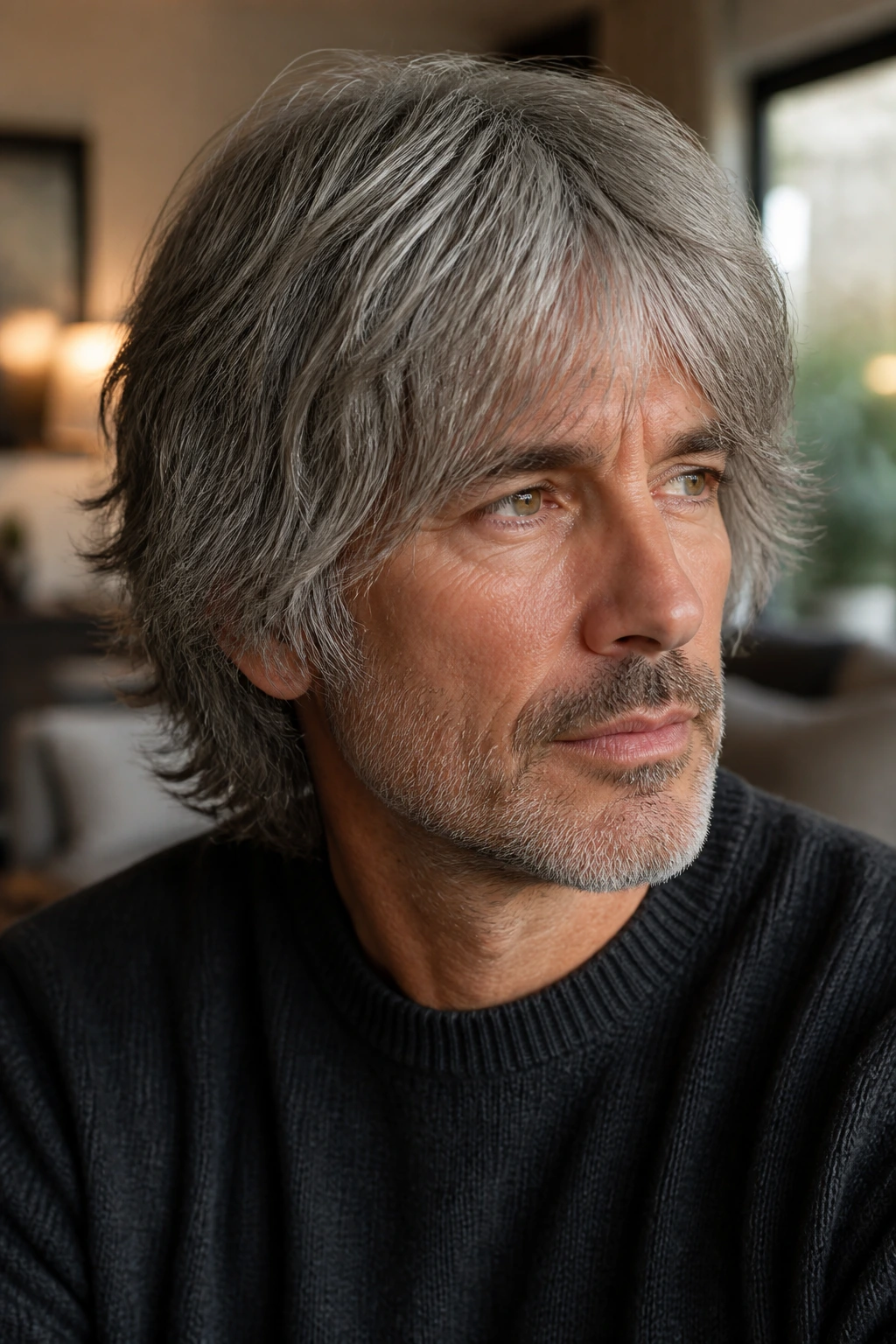
Shaggy layers give gray hair a loose, slightly undone shape that works better than people expect. The layers break up bulk and let the silver sit in irregular pieces, which can keep thicker hair from looking too square. It’s a good style if you don’t want the haircut to feel too controlled.
What makes it different
A shag is less about exact lines and more about movement. That can be a relief if your hair has natural wave or if you hate spending time styling. A bit of sea salt spray and a quick finger-dry is often enough.
Best use
This style suits men who want a lived-in look that still has a shape. If the hair starts getting heavy at the ends, trim the layers before the whole thing collapses into a triangle.
31. Long Straight Center Part
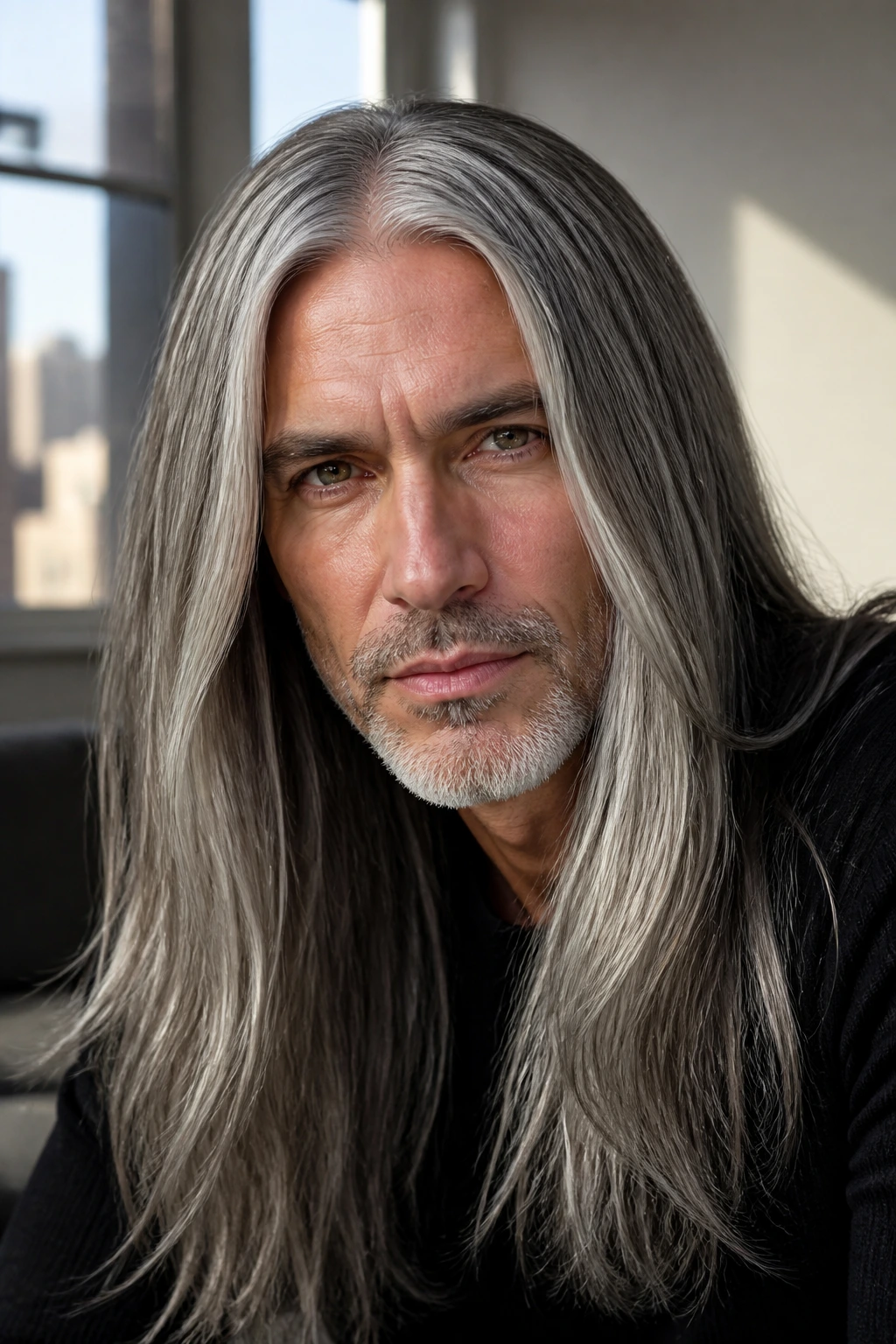
Long straight gray hair with a center part can look surprisingly clean when the ends are healthy and the part is deliberate. The center line shows off the silver evenly, and the long fall gives the hair an almost mirrored look if it’s well cared for. That said, this style exposes split ends fast.
Keep it conditioned, trimmed, and lightly polished with cream rather than shiny oil. If the hair is too flat, the style loses shape. If it has a little natural bend, even better. The center part can feel bold, but it’s a strong choice when the hair is in decent shape.
32. Silver Quiff and Beard
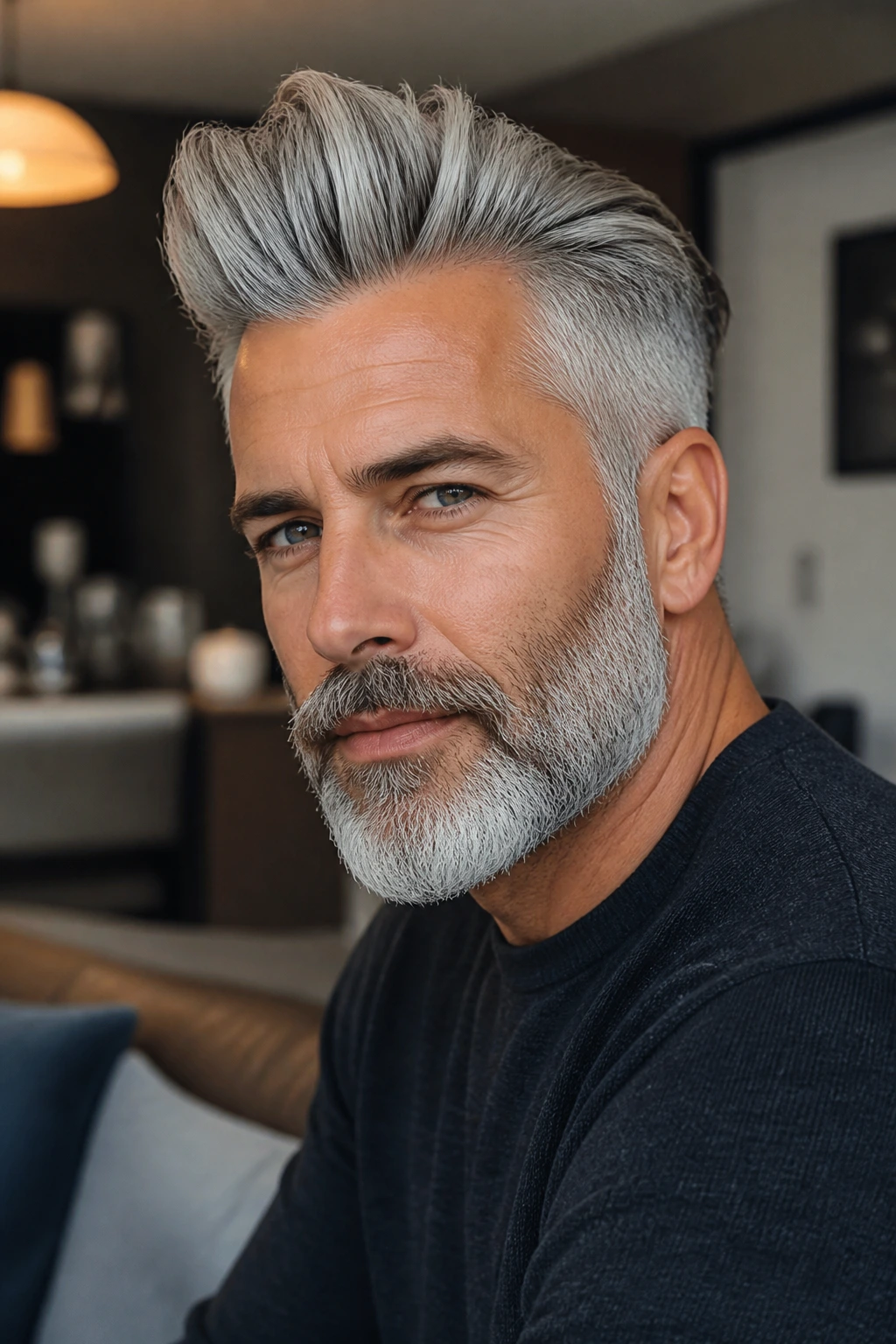
A silver quiff with a beard gives the hair height and gives the face weight. That’s a useful trade. The quiff draws the eye upward, while the beard anchors the jawline so the whole look doesn’t feel top-heavy. It works especially well when the beard has some gray in it too.
The top needs enough length to lift, but not so much that it turns floppy. Blow-dry the front up and slightly back, then let the beard stay tidy rather than overgrown. The contrast between volume above and clean shape below is the whole point.
33. Soft Pompadour
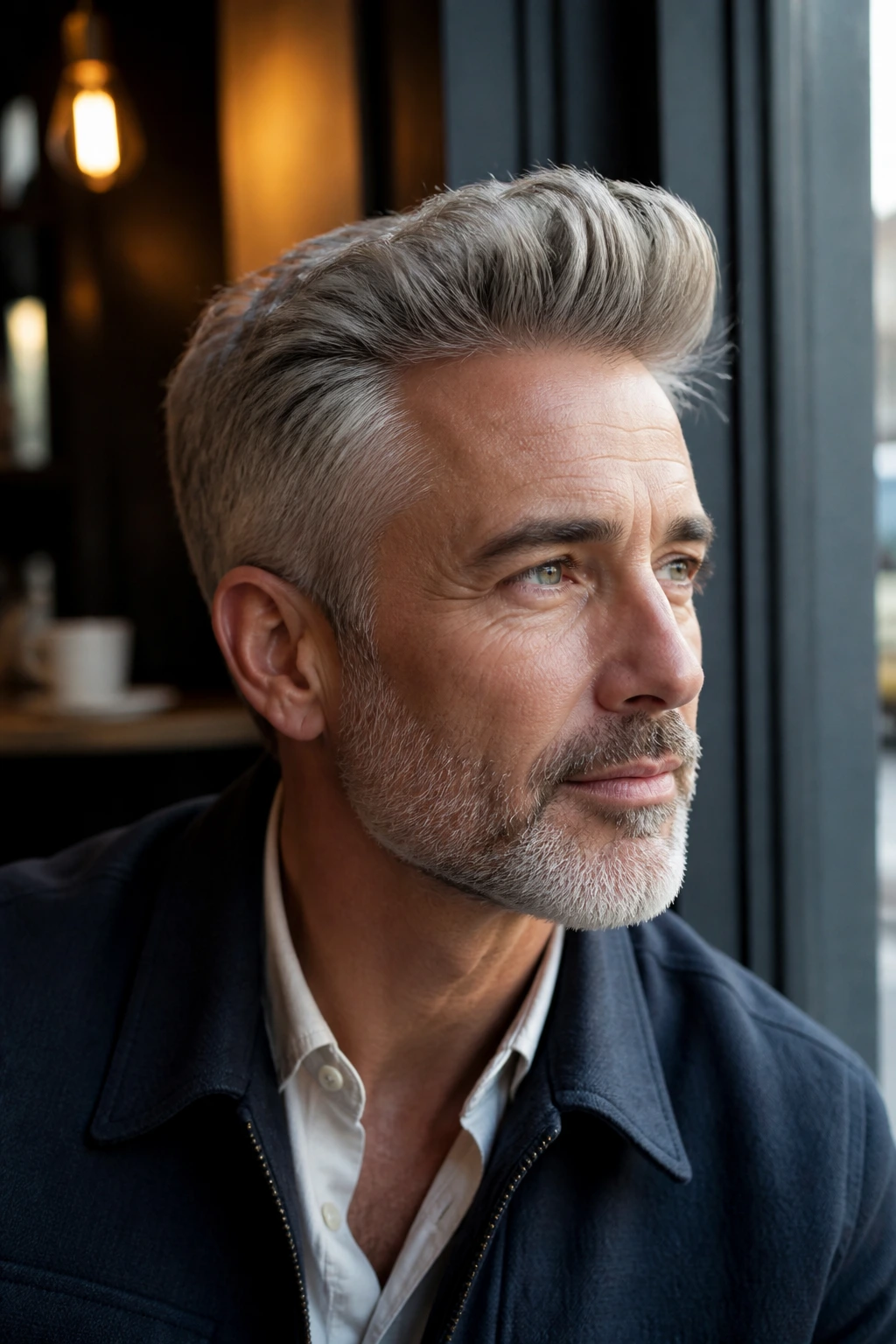
The soft pompadour keeps the shape of a pompadour without the stiff ridge that can make some versions feel dated. Think lifted front, rounded shape, and a gentler curve back through the top. Gray hair benefits from that softer finish because the tone already brings enough edge.
Use a blow-dryer and a light product, then stop before the shape gets too hard. If the front starts looking lacquered, you’ve gone too far. A little movement makes this style feel expensive in a quiet way.
34. Brushed-Forward Crop
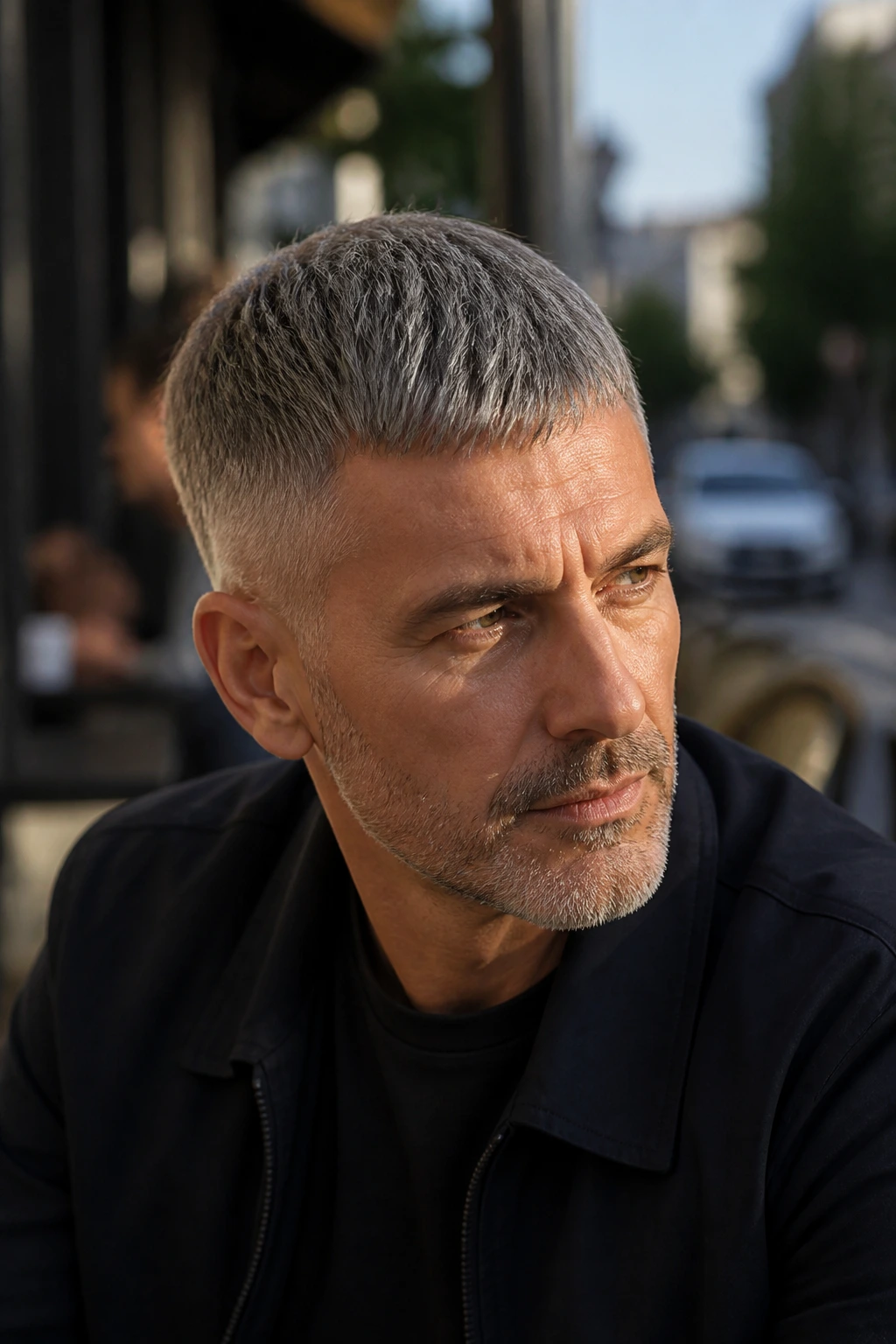
A brushed-forward crop is the practical cousin of the textured crop. It keeps the top short, pushes most of it toward the forehead, and makes the hairline part of the design instead of a problem to hide. Gray hair often looks sharper here because the forward direction keeps everything controlled.
It’s a strong choice for men who want to reduce the look of a tall forehead or simply keep the front easy to manage. A matte paste or dry cream is enough. If the hair lies too flat, lift the roots with your fingers while it dries.
35. Loose Side Sweep with Taper
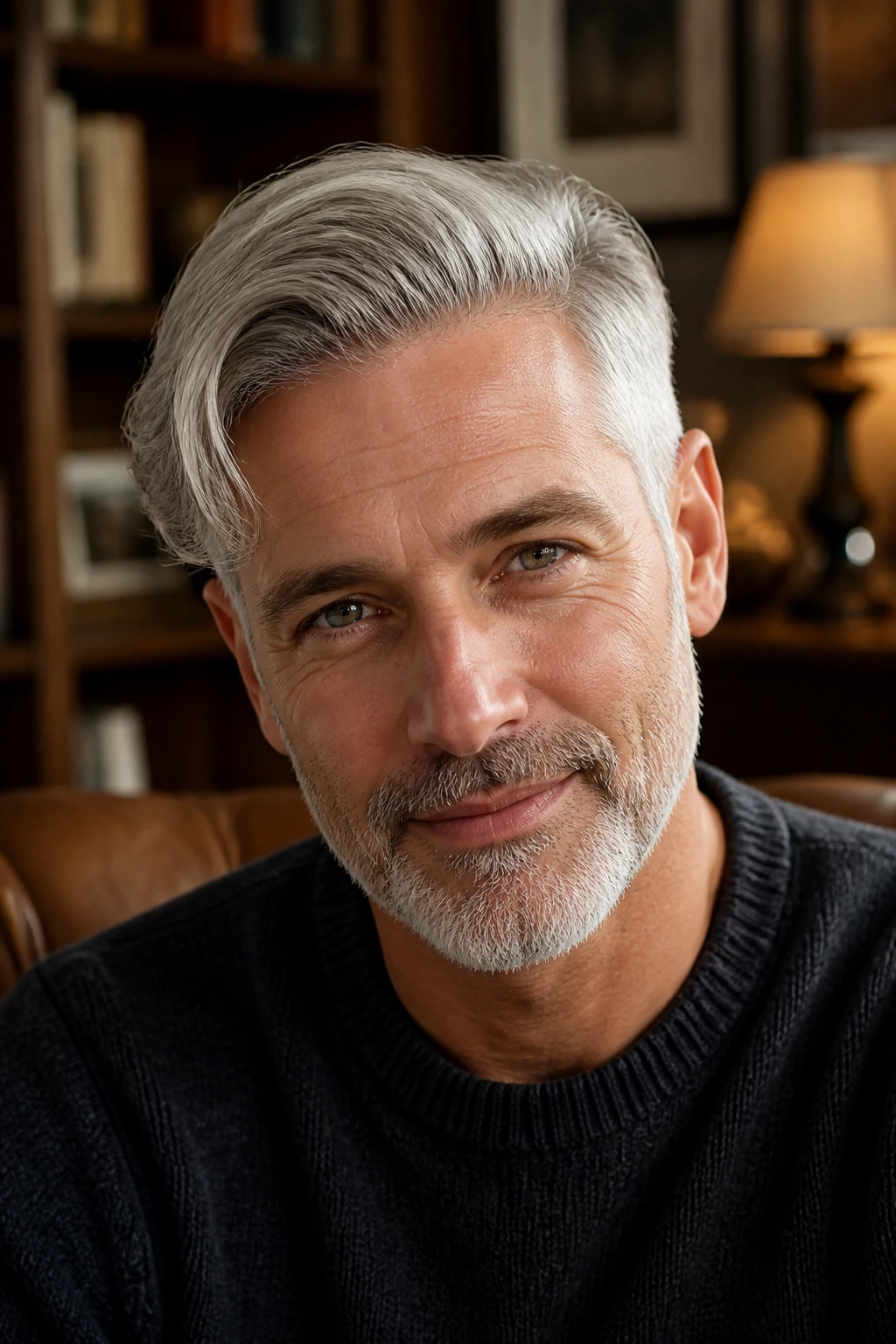
The loose side sweep with taper is the most relaxed cut in the bunch, and that’s its strength. The top is left long enough to fall to one side, while the sides stay tapered so the shape doesn’t spread out. Gray hair gives the sweep a soft, silver edge that looks natural instead of forced.
This is a good ending point for the collection because it’s easy to live with. It doesn’t ask for a lot, and it still looks thought through. If your hair has a little bend or a little body, you can wear it with almost no product at all.
Why Gray Hair Reads Better with Shape and Texture
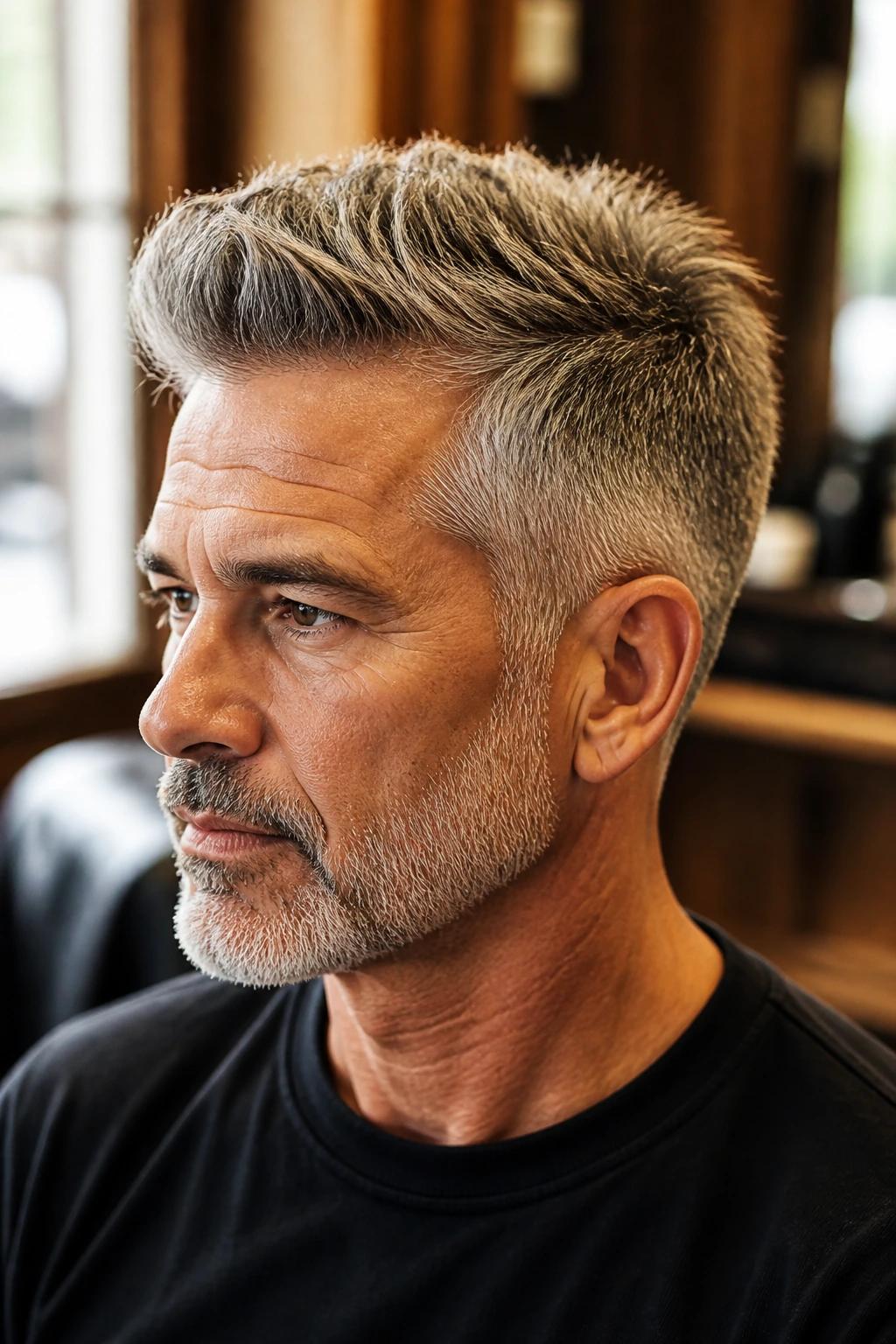
Gray hair is not just darker hair with less pigment. It behaves differently. The strands often feel drier, the surface reflects more light, and the contrast between silver, white, and remaining darker pieces can show every line of the cut. That’s why a clean silhouette matters more than it does on darker hair.
A flat, shapeless cut can make gray look tired. A cut with purpose — a taper, a crop, a part, a controlled wave — makes it look intentional. The eye reads the edge first. Once the edge is good, the rest can be as relaxed or formal as you want.
There’s also the shine problem, which is real. Too much gloss on gray hair can make it look stringy or oily, especially under indoor lighting. Matte cream, paste, clay, and lightweight leave-ins usually do the job better than heavy pomades. You want the silver to reflect light, not the product.
Beards change the equation too. Gray hair up top and a darker beard below can look balanced; gray in both places can look striking if the lines are clean. What usually ruins it is laziness around the neckline and sideburns. If the haircut is crisp but the beard is fuzzy, the whole look falls apart.
How to Pick the Right Gray Style for Your Hairline and Density

Start with the part of your head that gives you the least trouble. If the crown is thin, a buzz, crew, crop, or brushed-forward cut usually works better than a long style that needs coverage. If the hairline has receded at the temples, a side part, Ivy League, or short quiff can frame that shape without pretending it’s not there.
Density matters more than age. Thick gray hair can handle pompadours, slick backs, and longer sweeps. Thin gray hair usually looks better with crops, fades, and short textured cuts that keep the scalp from peeking through too much. Gray hair can look fuller than it is, but only when the top has some break-up.
Texture matters next. Straight hair gets along with side parts, slick backs, and comb overs. Wavy hair usually looks better with side-swept or looser styles. Curly and coily hair often need shape control at the sides and room on top. If your hair has a lot of bend, do not fight it into a flat shape unless you enjoy losing your morning.
Beard balance is worth a real look. A full beard can support a shorter haircut. A clean shave can make a long top feel more visible. If the beard is going gray faster than the hair, that can actually be useful; it ties the whole face together. Ask your barber to think of the head and beard as one frame, not two separate jobs.
Essential Tools and Products for Gray Hair Looks
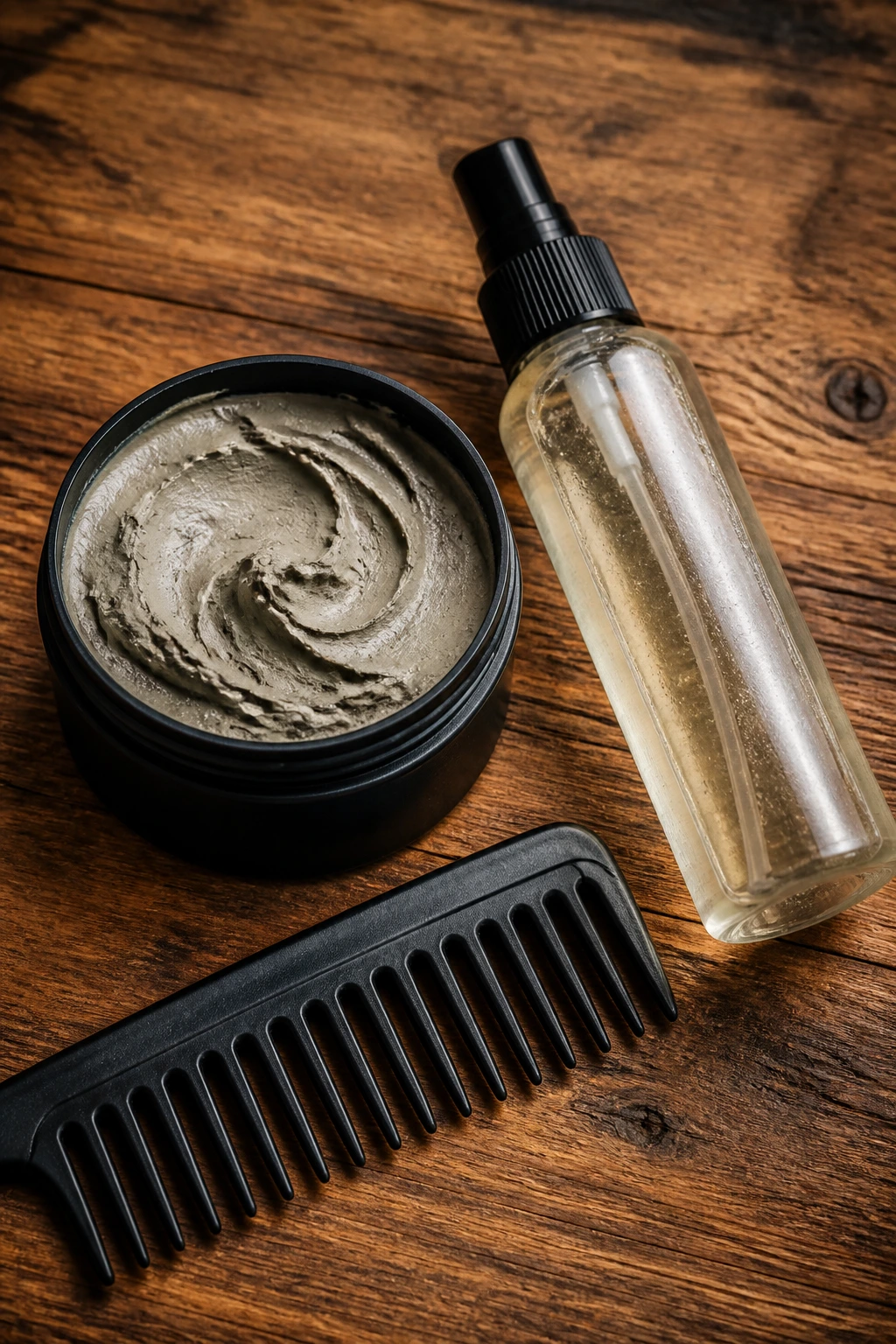
- A quality trimmer with guards: Useful for keeping fades, necklines, and beard edges clean between barber visits.
- Clippers with a fade lever: Helpful if you like buzz cuts, crew cuts, or regular taper cleanups at home.
- A blow dryer with a nozzle: Lets you push quiffs, pomps, and side parts into shape without flooding the hair with product.
- Matte clay or matte paste: Good for textured crops, quiffs, brushed-forward cuts, and anything that should stay touchable.
- Light styling cream: Best for slick backs, side parts, longer waves, and softer finishes that need control without shine.
- Sea salt spray: Adds grit to fine or straight gray hair and keeps the top from lying too flat.
- A wide-tooth comb: Better than a fine comb for wavy or longer gray hair, because it avoids breaking up the shape too harshly.
- A round brush: Useful for lifting the front on quiffs, pompadours, and brushed-back styles.
- Purple or silver shampoo: Helpful if your gray picks up yellow tones from sun, sweat, smoke, or hard water.
- A good mirror setup: A handheld mirror makes it easier to clean the neckline and check the back without guessing.
How Gray Hair Looks for Men Stay Sharp Between Barber Visits
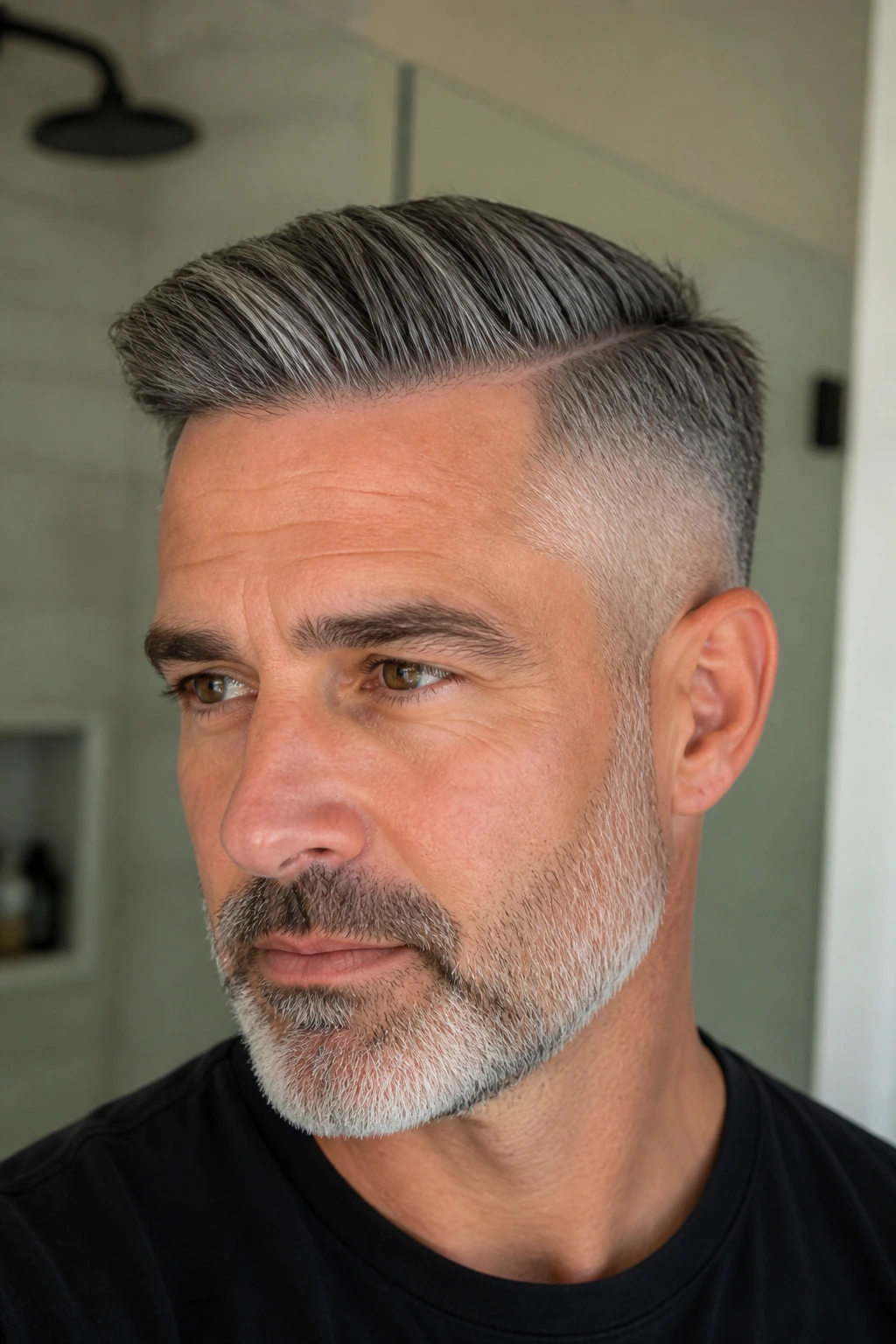
Gray hair does not forgive neglect, but it also does not need constant fussing if the cut is right. Short fades, crops, and buzzes usually need cleanup every two to four weeks. Medium-length side parts, quiffs, and Ivy League cuts can stretch to four or five weeks if the perimeter stays tidy. Longer layers and bro flows need a trim less often, but the ends should still get dusted before they split and fray.
Washing too much can dry gray hair out. Two to four washes a week is enough for most men, and a gentle shampoo matters more than fancy packaging. If the gray starts turning yellow, use purple shampoo once a week or every other week, not every day. Too much can leave the hair looking dull or slightly purple at the ends.
Condition the mid-lengths and ends more than the scalp. Gray hair often feels rough because it has less natural oil movement down the strand, so a light conditioner or leave-in can make a huge difference. Keep heat on medium when you blow-dry. Hot air plus gray hair plus daily product build-up is how you get a brittle, dull finish nobody wants.
Sun matters too. Silver hair can pick up warmth or yellowing from long exposure, and hats are not the enemy here. Neither is a rinse after swimming. If your hair lives under hard water, a clarifying wash every couple of weeks can keep mineral residue from making the silver look cloudy.
Common Mistakes That Make Gray Hair Look Flat
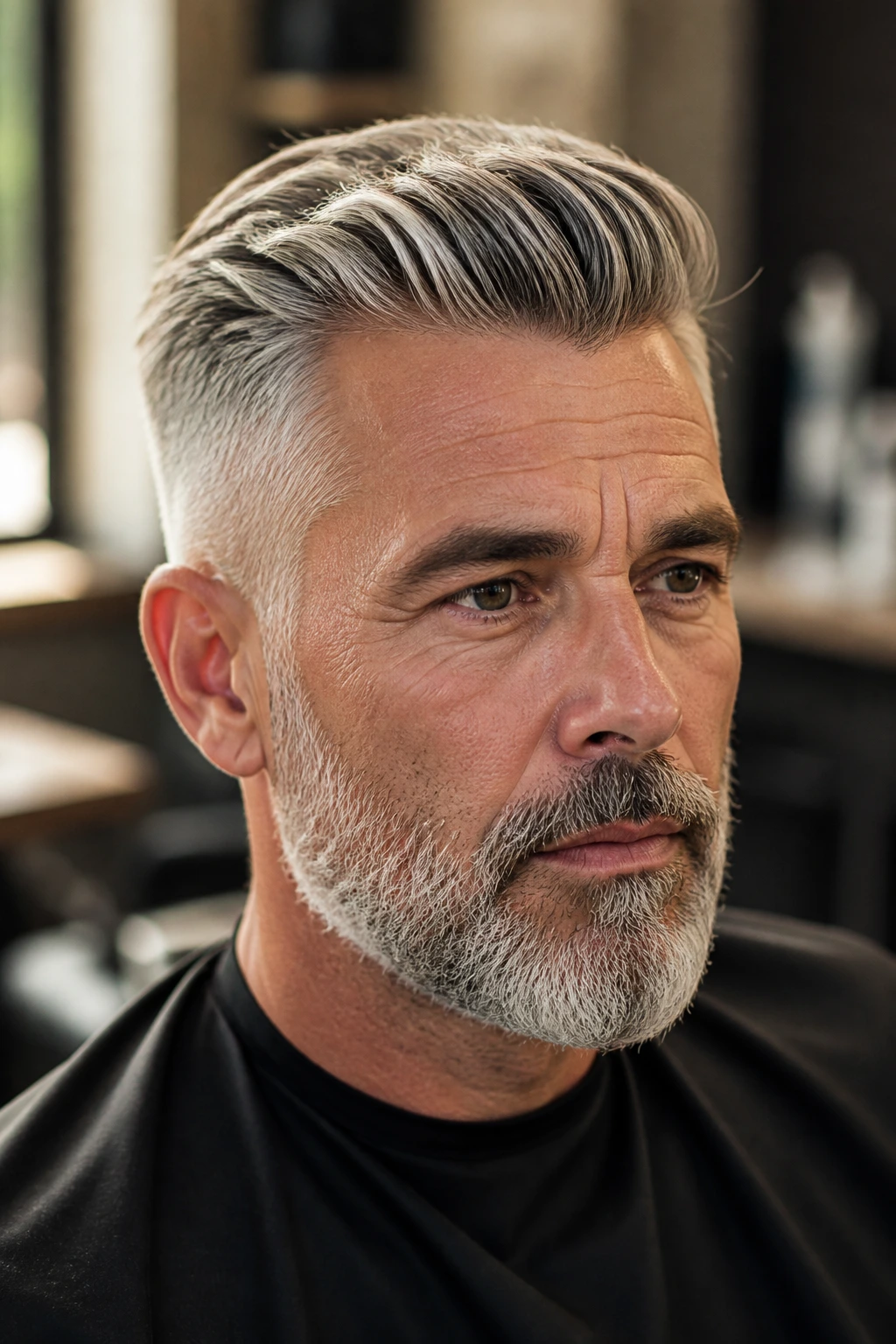
Too much shine. Heavy gel and oily pomades make gray hair look greasy instead of neat. The fix is easy: switch to a matte product or use less of the shiny stuff than you think you need.
Leaving the sides too wide. Gray hair puffs out fast when the sides grow without shape. A taper or fade keeps the silhouette controlled, especially around the ears and neck.
Ignoring yellow tones. Gray that turns yellow from sun, smoke, or hard water looks tired. Use purple shampoo sparingly and rinse well so the hair does not get dull.
Trying to hide thinning with length. Long gray hair can be gorgeous, but long hair with weak density just shows more scalp. Crops, buzzes, and side-swept cuts often solve the problem better than camouflage.
Over-thinning curls and coils. Removing too much weight from textured gray hair can make the cut balloon or lose its shape. Ask for controlled shaping, not aggressive thinning.
Skipping beard cleanup. A sharp gray haircut with a fuzzy neckline looks unfinished. Clean the cheeks, neck, and sideburns so the haircut and beard speak the same language.
Variations and Adaptations to Try
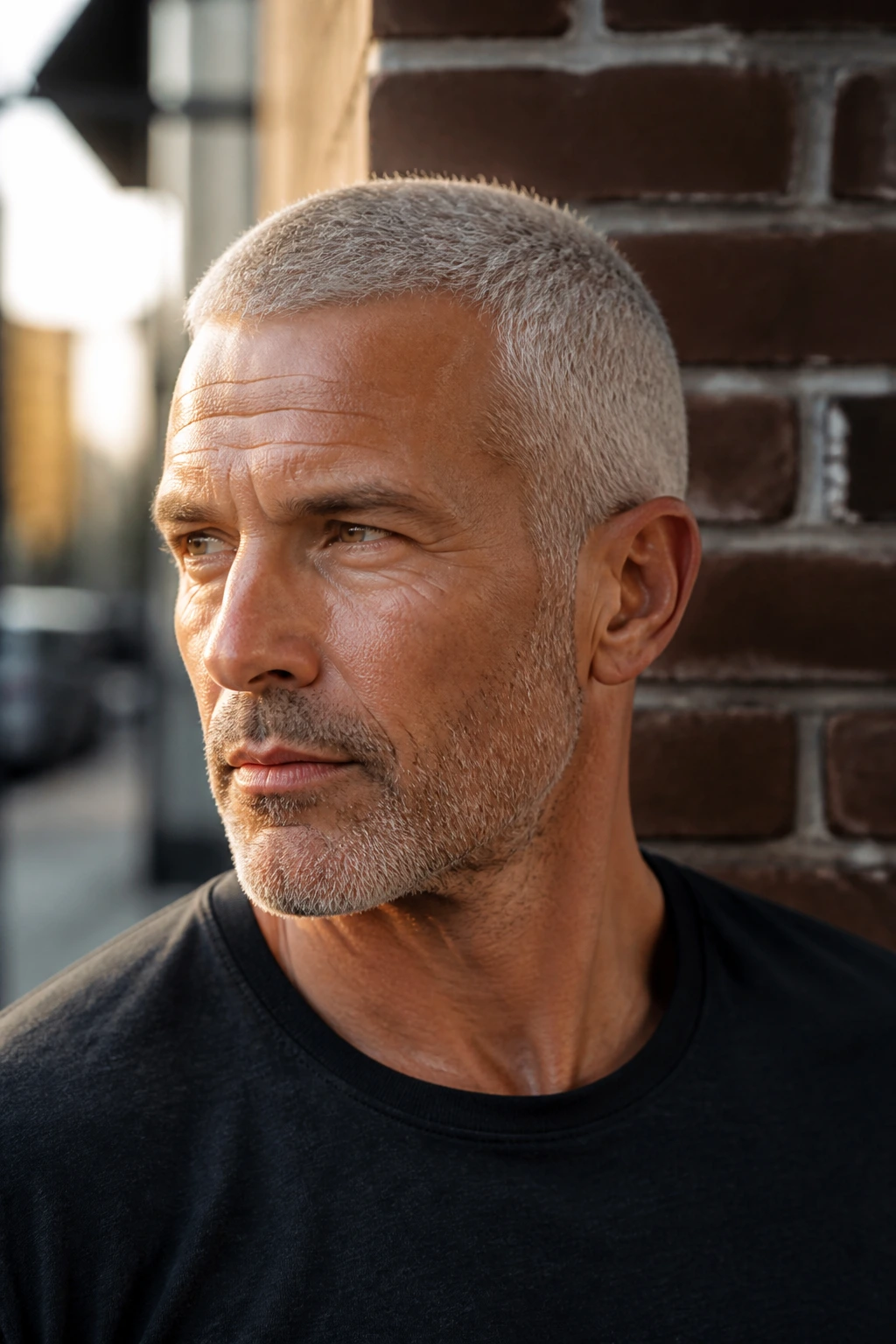
All-Silver Minimalist
This version leans into very short cuts — buzzes, high and tights, or cropped crews — and keeps everything clean. It’s a strong option if you want the gray to read as a feature, not an accent. The less product you need, the better it tends to look.
Salt-and-Pepper Blend
Here, the goal is to preserve the mix of dark and silver rather than chase an all-gray finish. Side parts, Ivy Leagues, and textured crops work especially well because they show the blend in different layers. It’s one of the easiest ways to look intentional without fighting nature.
Beard-Balanced Version
If the beard is fuller than the hair, the haircut should stay neat and relatively close to the head. Temple fades, low fades, and short quiffs all help the beard carry the visual weight. The face looks better when the top and bottom are edited together.
Curly and Coily Edit
For textured hair, shape matters more than length alone. Afro fades, tapered coils, and curly tops let the gray show through the pattern instead of flattening it. Moisture and line control are the two things to watch.
Long-Length Variation
If you want to keep length, choose layers before you choose extra inches. Bro flow, shoulder-length layers, curtain cuts, and loose side sweeps all benefit from movement and regular trims. Without layers, long gray hair can drift into a heavy, tired shape.
Low-Maintenance Version
Buzz cuts, crew cuts, Caesar cuts, and brushed-forward crops are the cleanest options when you want the mirror routine to stay short. They also age well between trims, which matters if you do not want a haircut that falls apart after ten days.
Frequently Asked Questions
What haircut is best for thinning gray hair?
Short textured cuts usually win here: a crop, crew cut, Caesar, or brushed-forward style. These keep the scalp from becoming the main event while still giving the gray some shape.
Should men with gray hair use purple shampoo?
If the gray is turning yellow or dingy, yes — but lightly. Once a week or every other week is usually enough; overusing it can leave the hair flat and dry.
Can gray hair look good long?
Absolutely, if the length has shape. Layers, trims, and some moisture matter a lot more on long gray hair than on short cuts, because split ends and frizz show faster.
Is it better to wear gray hair with a beard?
Not always, but the beard can help if the haircut is short or if the face needs more weight. A clean line around the beard makes the whole look stronger; an untrimmed beard can make even a sharp cut feel sloppy.
What’s the easiest gray hairstyle to maintain?
Buzz cuts, crew cuts, and high and tight styles are the easiest to keep in line. They need regular cleanups, but almost no daily styling.
How do I stop gray hair from looking dull?
Use a gentle shampoo, keep heavy product off the hair, and get rid of yellow build-up with a silver shampoo when needed. A clean taper and a fresh neckline also help the hair look brighter.
Should I dye gray hair darker instead of styling it?
That’s a personal call, but a lot of men try to solve a shape problem with color when the real issue is the cut. A better haircut often does more for your face than artificial color ever will.
Which gray looks work best with glasses?
Short side parts, Ivy Leagues, crew cuts, and neat textured crops sit well with glasses because they don’t fight the frame. If the haircut is too bulky around the temples, the whole look starts to feel crowded.
A Sharp Finish for Silver Hair
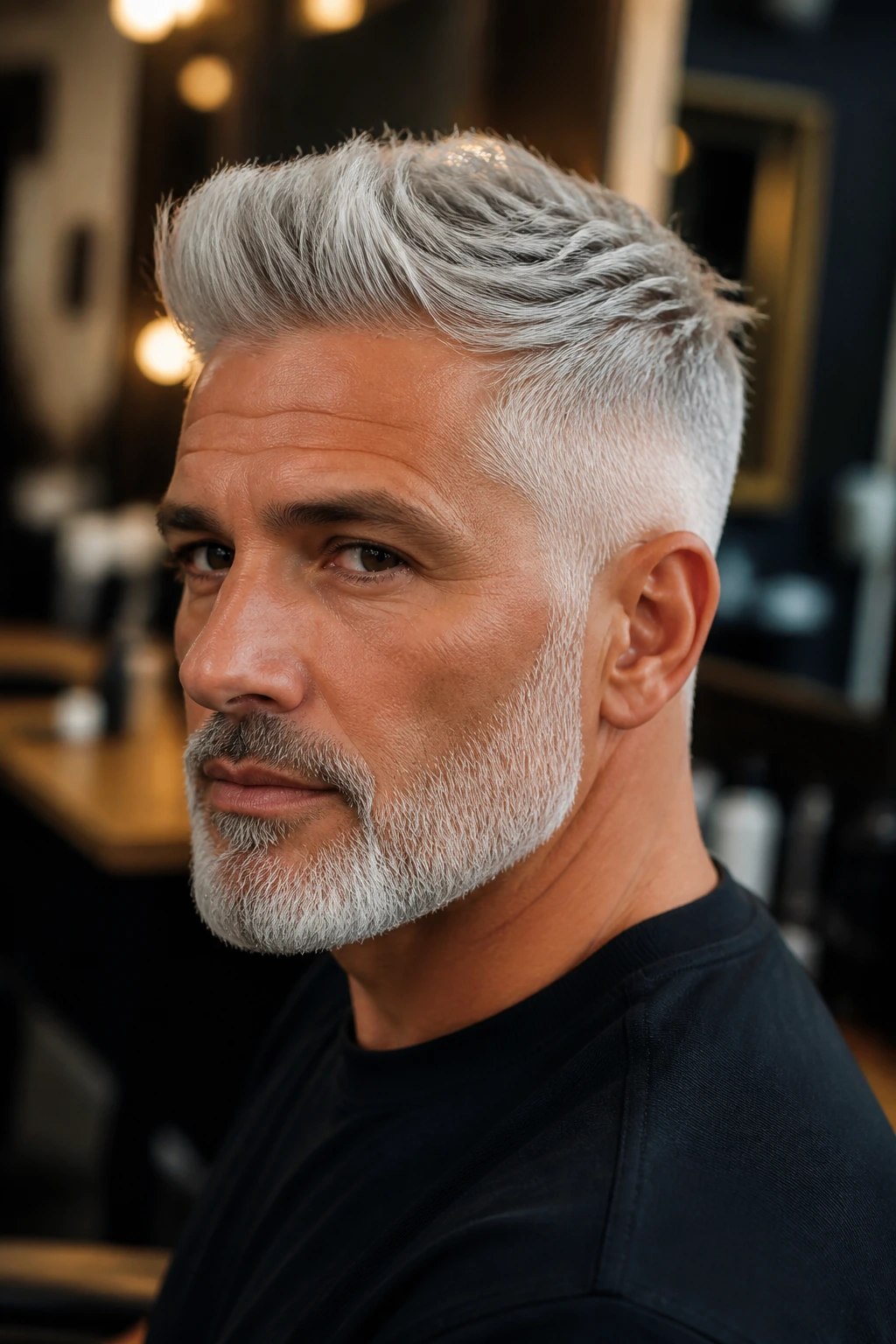
Gray hair does not need rescuing. It needs a shape. Once the cut matches the hair’s real texture — the dryness, the shine, the thickness, the places where it’s thinning, the places where it’s still strong — the whole head looks more honest and more finished.
That’s what makes these gray hair looks for men worth trying. Some are neat, some are loose, some are bold enough to make a room notice. None of them depend on pretending the gray isn’t there. They work because the gray is the point.
Pick the silhouette first, then let the silver do the rest.
