



Short haircuts for men are brutally honest. They don’t hide a crooked cowlick, they don’t soften a bad neckline, and they certainly don’t leave much room for lazy barbering. That’s the upside, too. When the cut is right, your hair stops fighting your face and starts shaping it.
For men with short hair, the small details matter more than the big dramatic ones. A half-inch difference on top can change the whole feel of the cut. A taper that ends clean around the ears can make a thick head of hair look neat instead of helmet-like. And if your hairline is moving back a little, or your crown grows in a stubborn swirl, the right short haircut can make those facts look intentional instead of awkward.
I’ve always liked short cuts for one simple reason: they make the haircut itself visible. You can see the line, the texture, the fade, the shape at the temples. There’s nowhere for a barber to hide, which is exactly why the good ones stand out. A weak short cut looks flat and chopped up. A good one looks tidy on day one and still looks like you meant it on day ten.
Why These Short Cuts Keep Their Shape
-
They save time in the morning: A crew cut, buzz cut, or short crop can be back in place with water and a thumb-sized dab of product, which matters when you don’t want a 10-minute routine.
-
They make hairlines less stressful: Styles like the Caesar, French crop, and textured crop can soften a receding front or a strong widow’s peak by pushing the eye forward instead of forcing a perfect part.
-
They handle heavy growth better: Short cuts grow out more cleanly than long layered styles, so the awkward middle stage is smaller and less embarrassing.
-
They work with a beard without fighting it: A tight fade, taper, or buzz cut gives the jawline room to breathe, which keeps the whole look from getting messy around the face.
-
They give thin hair more honesty: A close but not shaved cut can make fine hair look denser because it removes the wispy ends that show scalp through longer lengths.
-
They stay readable from every angle: With short hair, the outline is part of the style. The neckline, temples, and crown are not afterthoughts. They are the haircut.
1. Buzz Cut
A buzz cut is the haircut equivalent of turning the volume down and getting the room under control. No fluff. No stray length catching the wind. Just a clean, close shape that makes your head and face carry the style.
What people miss is that a buzz cut is not one haircut. A #1 all over looks far harder and exposes more scalp than a #3, and those few guard numbers change the whole feel. If your hairline is uneven or your crown whorl sticks up like a small tornado, leaving a little extra length on top gives the cut more grace.
What makes it work
- Ask for: a uniform guard, usually #1 to #4, or a slightly longer top with a low taper around the edges.
- Best for: thick hair, fast-growing hair, and guys who want almost no styling.
- Watch out for: harsh scalp shape, patchy density, or a strong cowlick near the crown.
- Product note: most days, you need none; on a dry scalp, a tiny amount of moisturizer beats greasy pomade.
A buzz cut looks best when the edges are clean. Ask for the neckline and sideburns to be kept tidy, even if the rest is ultra-short. That small bit of structure keeps the cut from looking accidental.
2. Crew Cut
The crew cut sits in that sweet spot where the hair is short, but not severe. The front has a touch more length than the back, so it brushes forward or slightly up instead of lying flat like a helmet.
I prefer a crew cut when someone wants short hair but still wants shape near the forehead. It leaves enough length to show texture without asking for a whole styling routine. On straight hair, the cut has a neat, almost old-school athletic feel. On thick hair, it keeps the top from puffing out.
How to wear it
How to ask for it: tell your barber you want a short top with a little more length at the front and tapered sides, not a hard disconnect. A common starting point is about 1 to 2 inches on top, shorter toward the crown.
Who it helps: men with straight, thick, or slightly wavy hair who want something clean for work but not skin-close.
How to style it: towel-dry, rub in a pea-sized amount of matte paste, then push the front forward or slightly up with your fingers. A comb makes it too polished too fast.
The crew cut works because it keeps the silhouette compact while still giving the front some life. That front bit matters more than people think.
3. Ivy League
The Ivy League is what happens when a crew cut learns how to part its hair. It’s still short, but the top has enough length to comb to one side, which gives the whole cut a more finished, less athletic look.
This is one of my favorite short cuts for men who need to look neat without looking stiff. It plays well in offices, at dinners, and anywhere a buzz cut would feel a little too bare. If your hair is fine, the side part adds a sense of fullness. If your hair is thicker, the cut keeps the top under control before it gets puffy.
The important part is balance. Too short on top and it turns into a blunt crew cut. Too long and it starts drifting into classic side-part territory. Around 1.5 to 2.5 inches on top is usually the zone where the cut stays sharp.
A light cream or matte paste works best here. I’d skip anything glossy unless you want a very polished finish. The side part should look like it belongs to your hairline, not like it was drawn on with a ruler.
4. Caesar Cut
The Caesar cut is blunt in a way that can be a lifesaver. The fringe sits straight across the forehead, which puts the eye on the front edge of the haircut instead of on the temples or crown.
That makes it a strong choice for men dealing with a high hairline or early recession. The short fringe can soften what’s happening at the temples because it gives the front a clear visual line. It also tames stubborn forward growth. If your hair wants to fall into your eyes or split into odd directions, the Caesar cuts through that problem fast.
Why it’s still around
The cut works best when the fringe is kept textured, not helmet-flat. Ask for a short top with a blunt front edge, then have the barber point-cut the top a little so it doesn’t look like one solid block. I like the Caesar more when the sides are tapered instead of buzzed right down to the skin.
A matte clay or paste is the right product here. Work a little through damp hair, then push the fringe forward with your fingers. Don’t overwork it. The charm is in the directness.
5. French Crop
The French crop is the Caesar’s rougher, cooler cousin. The fringe is still forward, but the top is choppier and the cut has more bite around the edges. It looks less formal and more deliberately textured.
If you have straight or dense hair, this cut can be a gift. It removes bulk while keeping enough weight in front to frame the face. On a good day, it looks like you spent five minutes on it. On a bad day, it still looks like you meant to wear it that way.
What I like most is how forgiving it is. A slight wave, a little bedhead, a bit of uneven texture—none of that ruins the shape. In fact, a little mess helps. Ask for the fringe to sit around eyebrow level or a touch higher, depending on your forehead, and keep the sides tight with a taper or fade.
Sea salt spray under a matte paste gives this cut more grip than shine. Spray, rough-dry for a minute, then pinch the top forward and let the fringe fall where it wants.
6. Textured Crop
A textured crop is basically the short haircut for men who want movement without length. The top is cut in uneven, choppy layers, and the sides are usually tapered or faded so the top gets all the attention.
It works especially well if your hair is thick, coarse, or naturally a little rebellious. Instead of fighting the growth pattern, the cut uses it. That’s why it feels modern without needing a lot of product or a perfect part. The texture does the job for you.
Ask your barber to leave enough length on top for visible separation—usually around 1.5 to 3 inches—and to cut the top with point-cutting or texture shears. If the top is too blunt, the whole style starts to look like a block. You want small broken pieces, not a slab.
A dry matte paste or texture powder is the move here. A tiny amount goes a long way. Work it in from the back, then use your fingers to mess up the front a little. Done right, the cut has that slightly wind-tossed look without turning into actual chaos.
7. High and Tight
The high and tight is blunt about its purpose. The sides are cut very short—often skin-close or nearly skin-close—while the top stays short enough to hold a small amount of shape. The contrast is the point.
This cut looks strongest on men with thick hair, a solid hairline, or a face shape that can handle hard edges. It also pairs well with beards because the whole look gets sharper around the jaw. If your hair grows fast and you hate waiting for a shape to come back, the high and tight stays tidy for longer than many short cuts.
There’s a catch. The cut shows everything. A lopsided crown, a scar, a patchy hairline—none of it disappears. That does not make the cut bad; it just means you should know what you’re signing up for.
Keep the top a touch longer than you think you need. Too short and the whole thing feels shaved down to the bone. A little height near the front gives the cut some life, even if the sides are brutally short.
8. Low Taper Fade with Texture
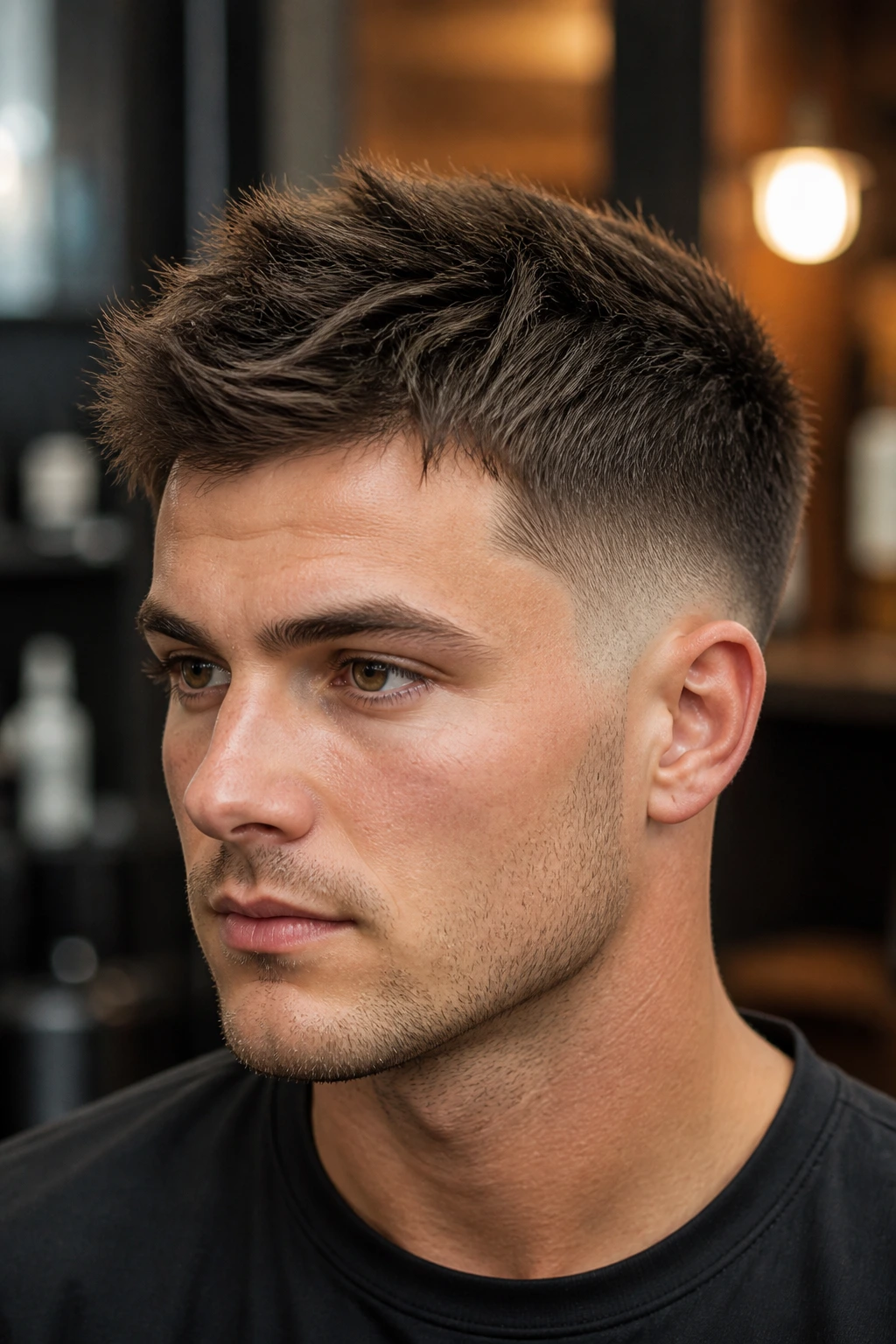
A low taper fade with texture is the cleanest way to keep short hair looking tidy without taking the sides down too aggressively. The taper stays low around the sideburns and neckline, so the cut still feels controlled, but it doesn’t have the hard bite of a skin fade.
That low contrast is what makes it useful. It works on straight, wavy, and even slightly curly hair because the top can stay short and loose while the sides quietly clean up the shape. If you’ve ever liked a fade but thought it was too loud, this is the gentler version.
Barber note
Ask for a soft low taper around the ears and nape, then leave 1.5 to 2.5 inches on top with texture. The barber should blend the sides enough that the cut grows out without a sharp ridge.
A light matte cream or paste is enough. I’d avoid heavy wax here, because the cut already gets its shape from the fade and the top’s broken texture. The goal is tidy, not shiny.
9. Mid Fade with Short Brush-Up
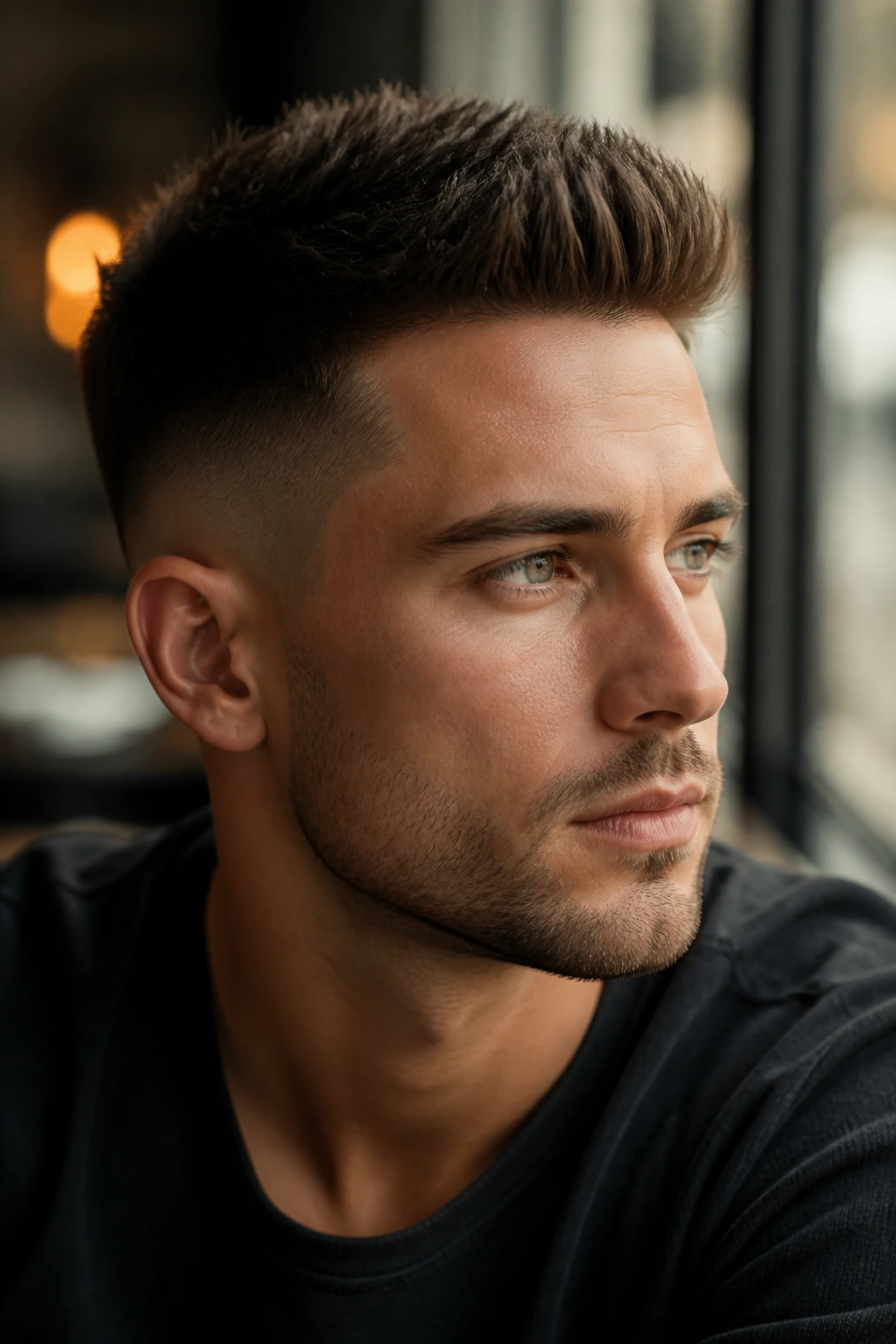
A mid fade with a short brush-up gives you height without turning the haircut into a tower. The fade sits higher on the head than a low taper, so the sides feel cleaner, and the top gets brushed up and slightly forward for a compact lift.
This works especially well for thick hair that wants to spread outward instead of staying in place. The fade removes side bulk, while the brushed-up front draws the eye upward. On rounder faces, that extra lift can make the face feel a little longer. On angular faces, it adds some softness without losing structure.
I like this cut when someone wants a modern look that still behaves during the workweek. It’s not a stiff quiff. It’s not a buzz. It sits right between the two.
Use a blow dryer for thirty seconds after towel-drying. Push the front up with your fingers or a vent brush, then lock it in with a matte clay. If the hair is too damp when you add product, it collapses. If it’s bone-dry, the product can clump.
10. Side Part Taper
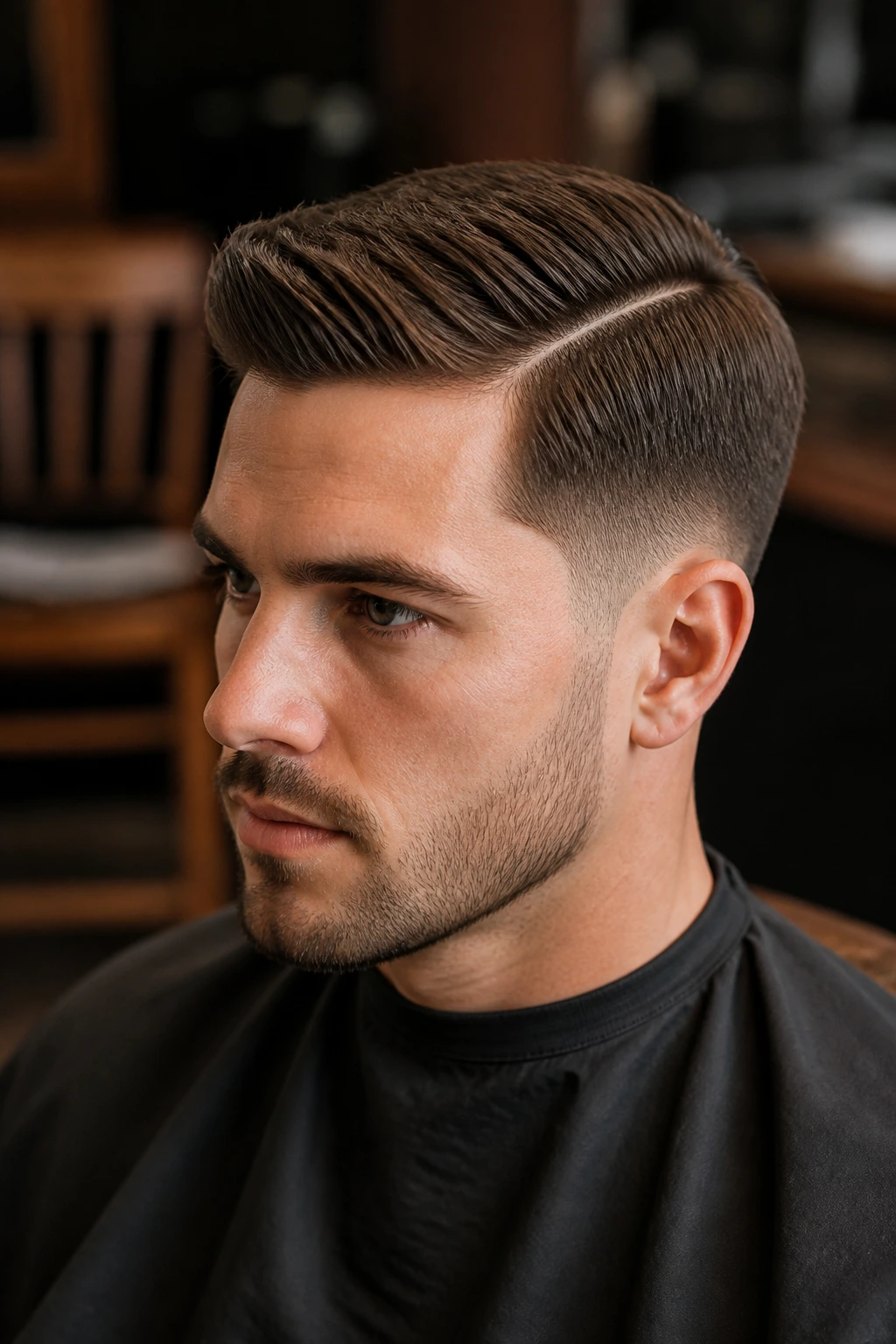
The side part taper is one of those cuts that makes short hair look considered without looking overworked. The part gives structure, the taper keeps the sides tidy, and the top has just enough length to comb cleanly without getting floppy.
This is a smart choice if you like a classic shape but do not want the bulk of a longer side-part style. With a taper instead of a skin fade, the cut feels softer around the ears and neckline. That makes it easier to wear with a beard, glasses, or a more formal wardrobe.
The part should usually sit where your hair naturally wants to divide. Forced parts never look as good as people hope. Tell your barber whether you want a hard part shaved in or a natural part that’s just styled into place. I usually favor the natural version unless the hair is very thick and stubborn.
Use a comb, a little light pomade or cream, and a quick blow-dry if your hair has a mind of its own. The finish can be neat, matte, or slightly shiny depending on the product. The shape stays the same either way.
11. Short Quiff
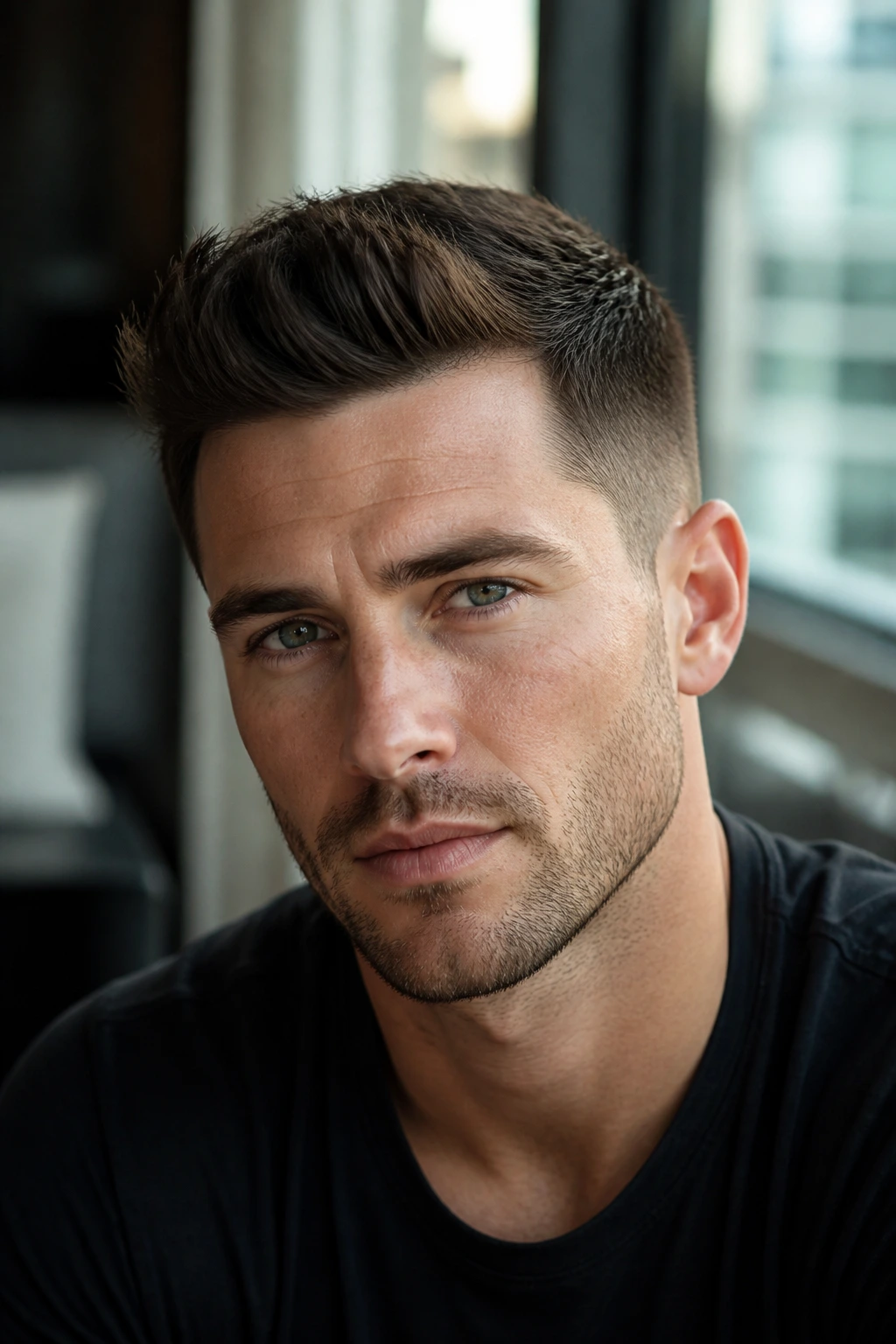
A short quiff gives the front some lift without asking for the full drama of a tall pompadour. The front is brushed up and back, but the overall cut stays tight enough that it still reads as short hair.
It’s a strong option if your hair grows straight and flat, because the quiff gives it a little architecture. It also works for men who want the forehead partially open but not fully exposed. There’s movement here, not bulk. That’s the difference.
How it differs from a pompadour
A quiff is looser. A pompadour is more sculpted. The quiff can be finger-styled in under two minutes, while the pompadour tends to ask for more shape and more product.
For this cut, ask for short sides with 2 to 3 inches on top, leaving the front a touch longer than the crown. Then use a blow dryer to push the front up and back while it’s still damp. A medium-hold matte product keeps the lift from turning sticky.
The biggest mistake is making the front too tall. Short hair should look like it has energy, not like it’s trying to prove something. Keep it controlled, and it wears better.
12. Short Pompadour
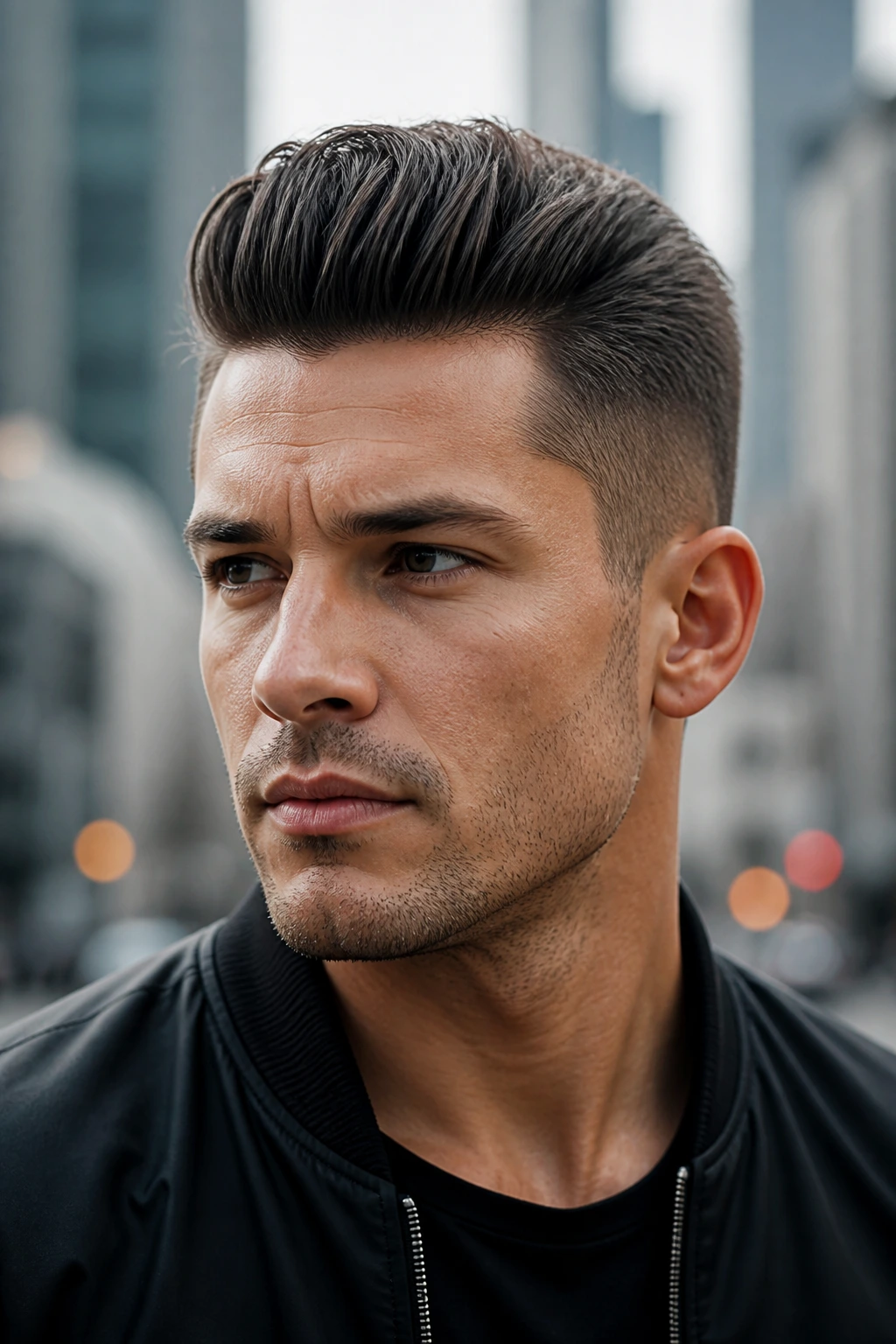
The short pompadour is a dressed-up version of short hair. The front has a clear wave of height, and the rest of the top stays short enough to avoid that old-school greaser bulk unless you really want it.
I like this cut on men with thicker hair because it gives the front a shape that looks deliberate, not accidental. It’s also a smart choice if your top line is strong and you want the haircut to feel more polished. The pompadour depends on front volume. If your hair naturally falls forward, this cut can help you redirect it.
The key is proportion. Keep the sides tight enough to let the front stand out, but not so short that the contrast turns harsh. Around 2 to 3 inches at the front is usually enough for a short pompadour to register without getting theatrical.
You’ll probably need a blow dryer, a comb, and a medium or strong-hold product. I’d choose a matte finish unless you want the shine to be part of the statement. The cut looks best when the front is smooth and lifted, but not sprayed into a shell.
13. Spiky Crop
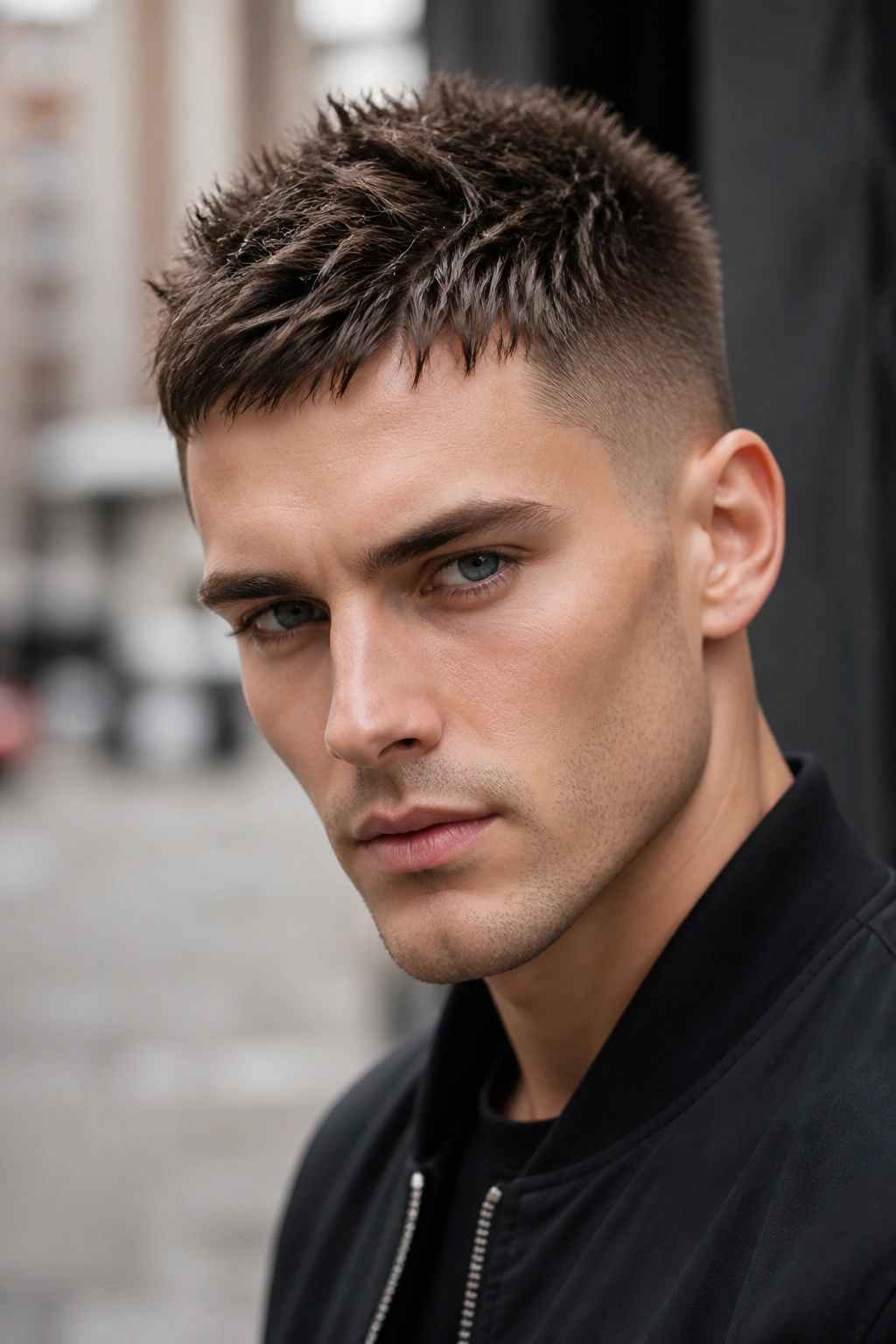
A spiky crop sounds more aggressive than it is. Done right, it’s mostly texture with a few sharp pieces pushed upward, which gives short hair a bit of edge without making it look like a teenager’s throwback photo.
This style works best on straight or slightly wavy hair. The top is short enough to stand up in small points, but long enough to separate into pieces. If the top is too short, the spikes vanish. If it’s too long, the look gets messy fast. Somewhere around 1 to 2 inches on top usually hits the mark.
What to avoid
Don’t use a crunchy gel unless you want those hard, brittle spikes from the old club scene. A fiber paste or matte clay is cleaner. Rub a tiny amount between your palms, then pinch the top in small sections. You want separation, not one giant ridge.
A spiky crop is handy when your hair is stubborn and you’d rather work with its natural spring than flatten it. The style looks best with a neat taper or fade around the sides, because the contrast keeps the top from spreading outward.
14. Flat Top
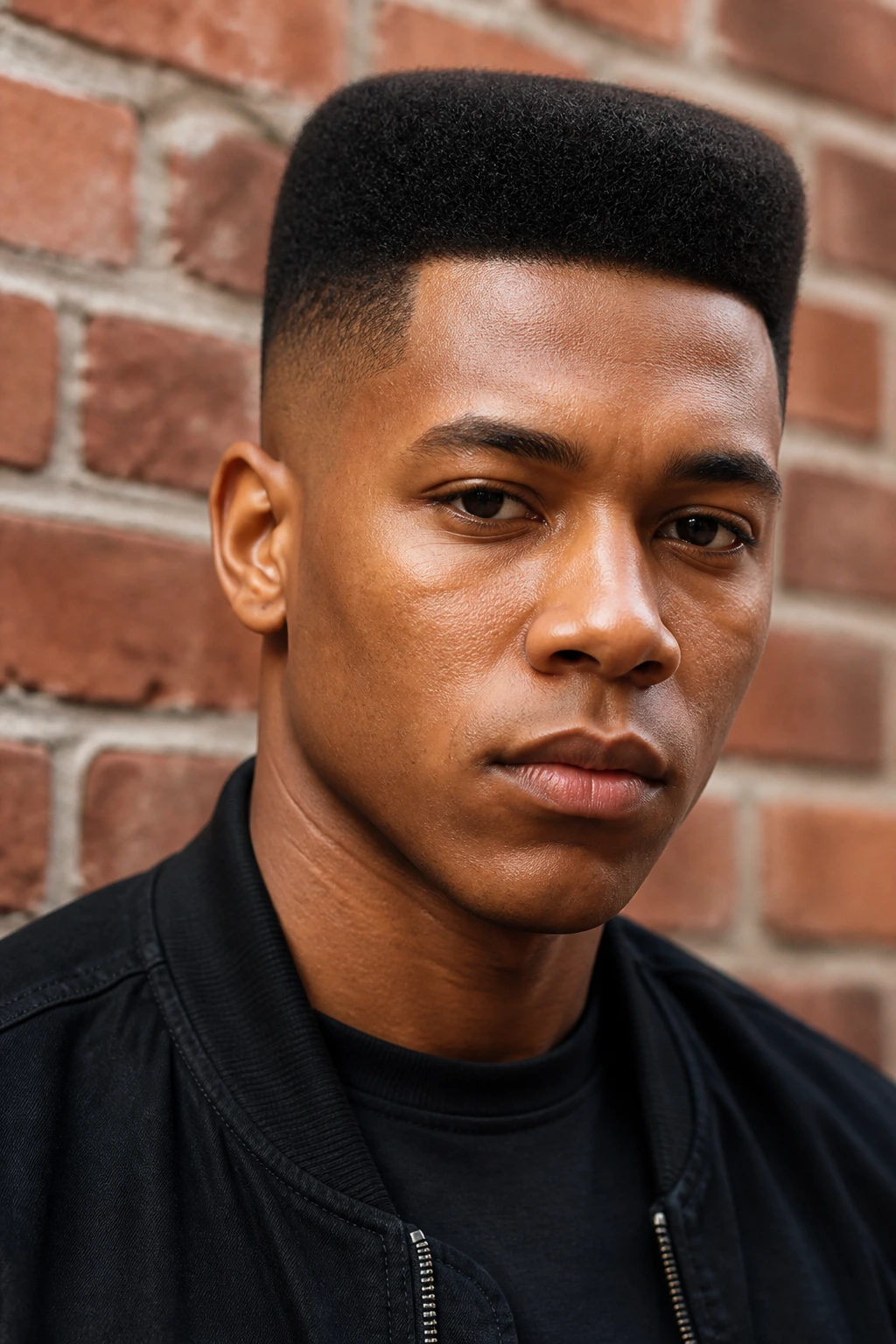
A flat top is not subtle, and that’s part of its charm. The top is cut level, so the shape reads as a flat plane from the side and front, with the sides taken much shorter to make the top edge pop.
It needs the right hair type. Thick, coarse, and fairly straight hair gives the barber something to sculpt. Soft or very fine hair can make the shape collapse. And because the line on top is so exact, the cut depends on a good barber and regular upkeep. If the top gets uneven, the whole style starts to look tired.
Ask for a level top with controlled sides, usually faded or clipped short enough that the top sits like a block above them. The top length varies, but the key is that the surface stays flat. That is the whole game.
I think the flat top works best when you commit to it. Halfway versions often look like the haircut got interrupted. Keep the neckline clean, the edges crisp, and the styling minimal. A little blow-dry and a touch of product are enough. Anything shiny can make the cut feel heavier than it needs to.
15. Brush Cut
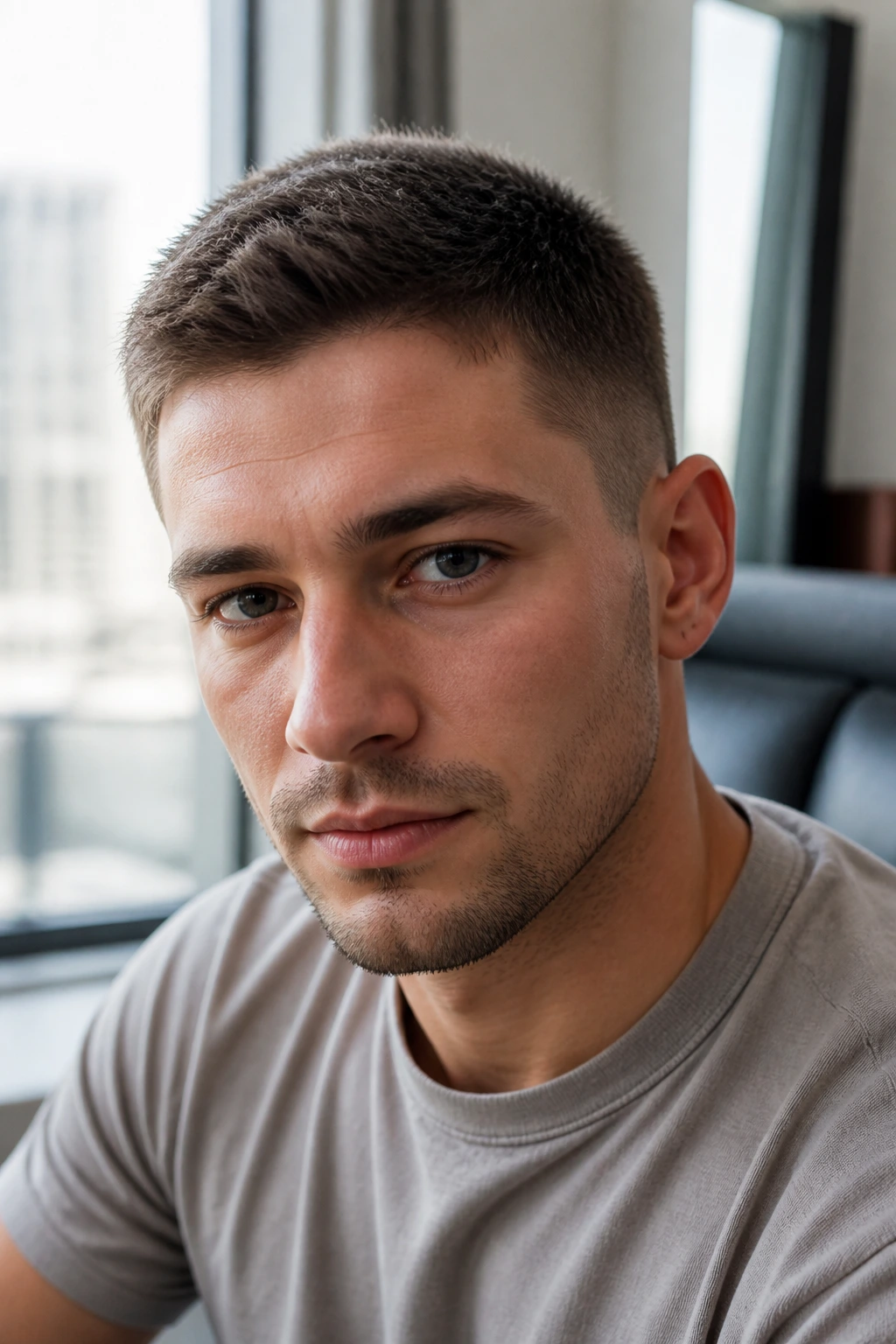
The brush cut is one of the easiest short haircuts to live with. The hair is kept short enough to brush forward or slightly up, but it’s not cut so close that the head shape takes over.
This is a practical haircut for guys who want a tidy look with almost no fuss. It’s also forgiving on hair that grows in different directions. Rather than forcing a dramatic part or a tall front, the brush cut lets the hair stay compact and slightly soft.
A brush cut sits nicely between a buzz cut and a crew cut. If the buzz feels too bare and the crew cut feels too styled, this is the middle ground. I like it on men with thicker hair who want shape without commitment.
Ask for about 1 to 1.5 inches on top and shorter, tapered sides. The barber should keep the front tidy but not blunt. Use a little matte cream and brush it forward with your fingers or a small comb. The finish should look touched, not arranged.
16. Butch Cut
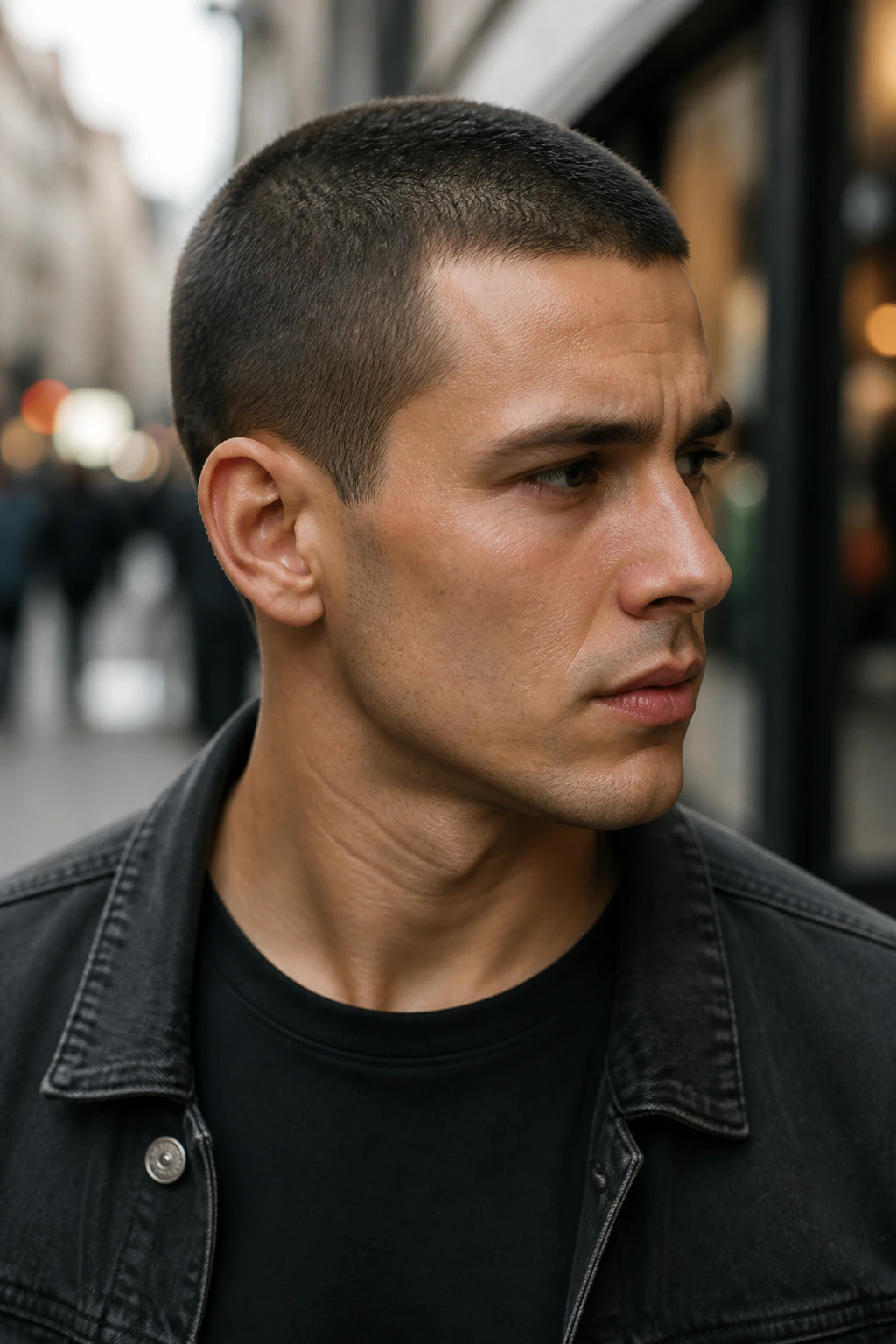
The butch cut is close, uniform, and honest. It’s longer than a buzz cut but shorter than almost anything else on this list, which gives it a softer, fuller look than a skin-close crop.
I like a butch cut for men whose hair grows thick or unevenly. The extra length helps blend patchy areas and makes the scalp less visible than a very short buzz. That’s one reason it can look better than a harsher cut on fine or inconsistent hair.
It’s also a smart choice if you like short hair but don’t want the severe feel of a military-style crop. A #3 or #4 guard all over is a common place to start, though some men go a touch longer. Ask for a subtle taper at the neckline and sideburns if you want it to feel cleaner around the edges.
No product needed. That’s the attraction. If you want the haircut to look sharper, the shape comes from the edges, not from adding shine or texture paste.
17. Burr Cut
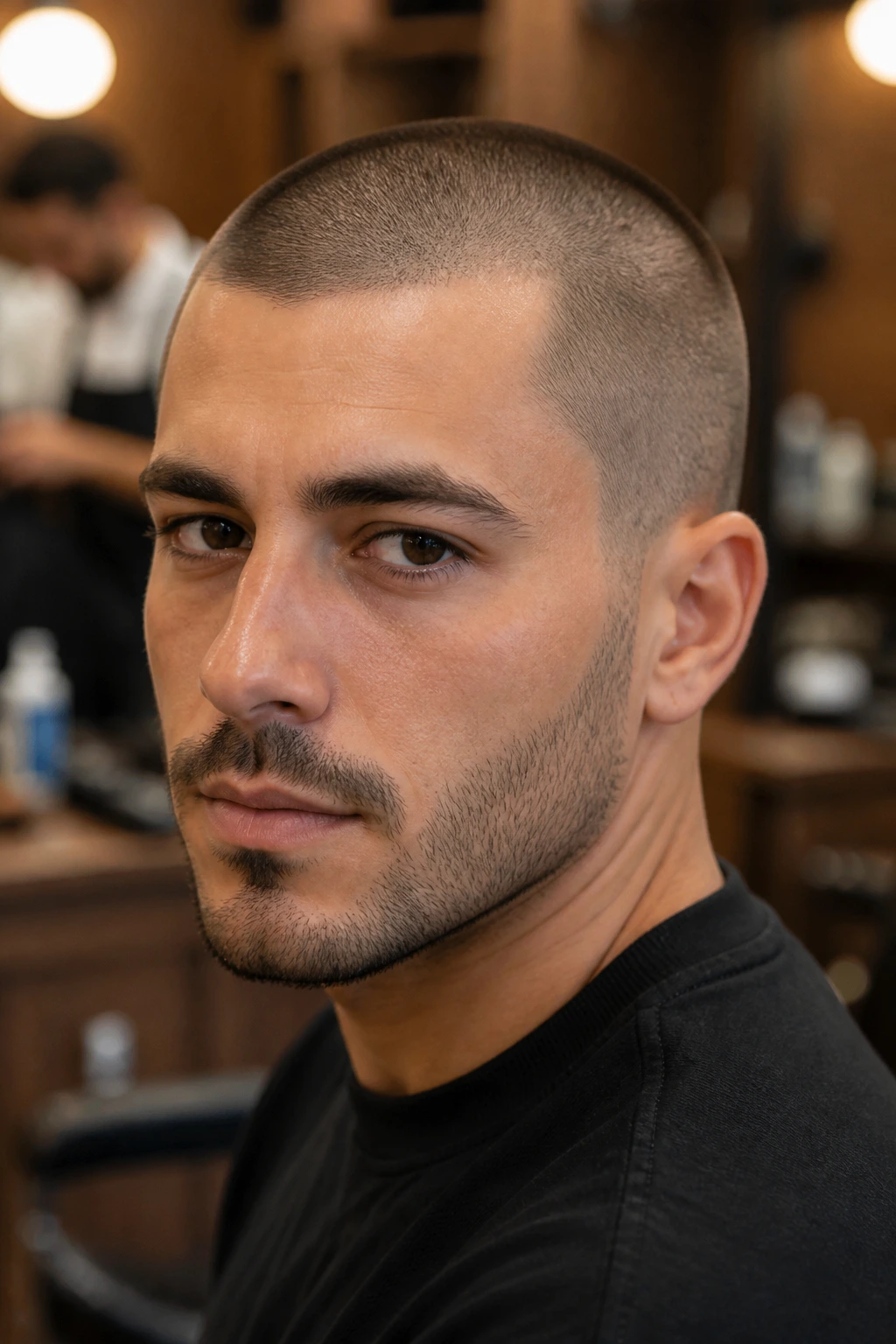
The burr cut takes the butch cut and trims it down another notch. It stays uniform, but it’s short enough that the hair is almost all feel and very little visible styling.
This is a useful haircut for men who want the shortest possible cut without going fully shaved. It’s especially good if your hair grows quickly and you want to stretch the time between barber visits. It can also make coarse hair feel easier to manage because there’s less length fighting the grain.
A burr cut can look great on a strong jaw or a clean hairline, but it does show scalp shape. If your head has a lot of unevenness, go a little longer than you think you need. The difference between a #1 and a #2 guard is not small when the hair is this short.
I’d keep the neckline tidy and leave the scalp cared for. Dry patches show more on this cut than on longer styles. A basic moisturizer and a bit of sunscreen on exposed skin are practical, not optional.
18. Curly Top Fade
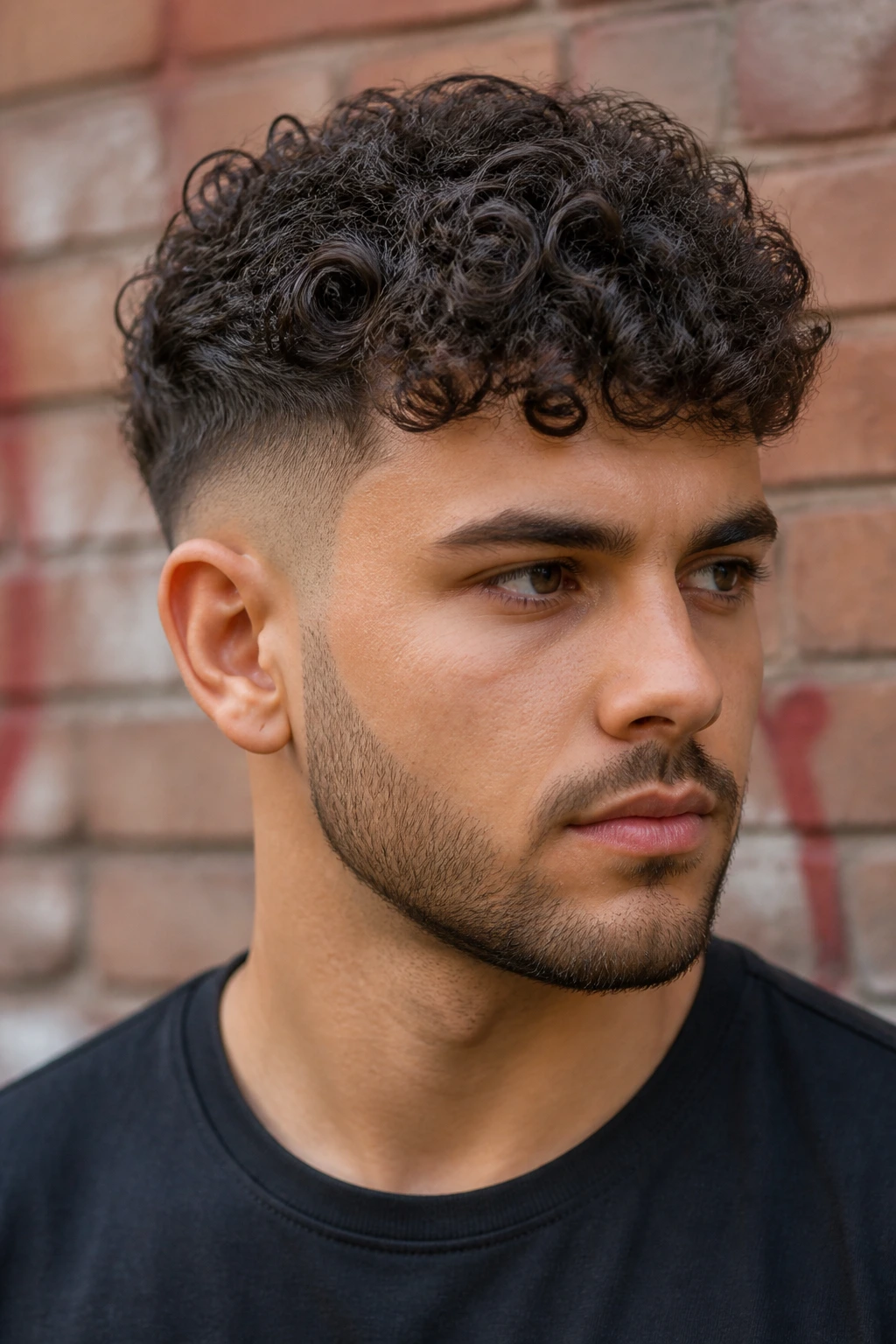
A curly top fade keeps the curls where they belong and gets rid of the bulk around the sides. The result is a clean outline with a top that still has shape, spring, and a little personality.
This is one of the best short cuts for men with curls who don’t want the sides to puff out into a triangle. The fade controls the edges, while the top keeps enough length for the curl pattern to show. If you cut the top too short, the curls can turn fuzzy instead of defined. Leave enough length for the curl to bend.
Ask for the sides faded low or mid, with 1.5 to 3 inches on top depending on curl tightness. The barber should shape the top to follow the pattern rather than fight it. A good curl cut respects the way the hair falls when dry.
Use leave-in conditioner or a light curl cream, then air-dry or diffuse on low heat. Don’t brush curls dry. That’s how you get frizz and a shape that expands sideways. Fingers or a wide-tooth comb are enough here.
19. Short Afro Taper
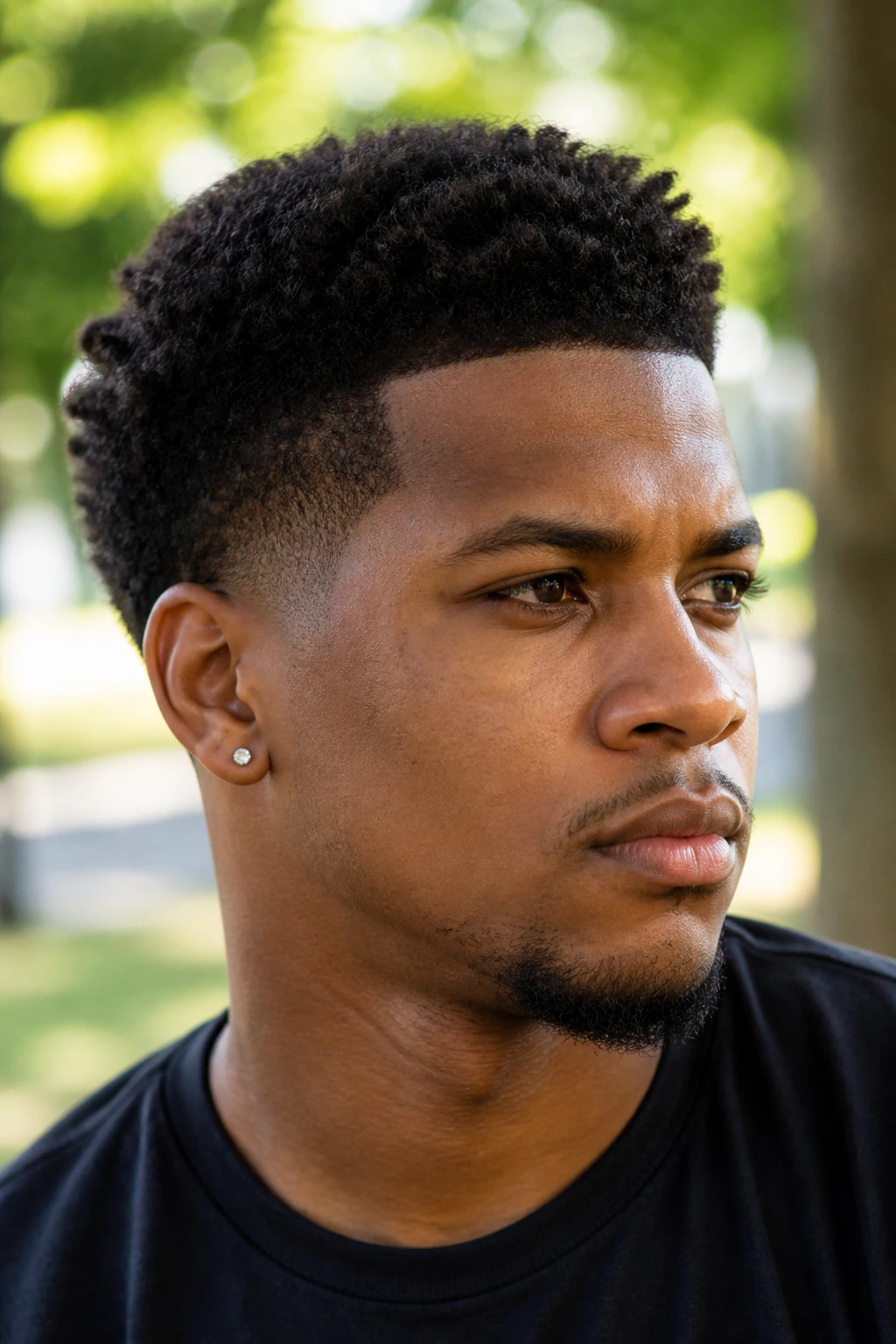
The short afro taper is clean, shaped, and smart about edges. The top keeps enough length to show texture and density, while the temples, sideburns, and neckline get tapered so the whole shape feels finished.
What makes this cut work is the outline. You can go round, slightly squared, or softly tapered, depending on your face shape and your hair’s natural pattern. The haircut looks deliberate when the edges are crisp but not carved too hard. A line-up can sharpen the front, though I prefer a softer edge if you want the grow-out to stay manageable.
This is not a cut that should be flattened by heavy product. A little moisturizer or curl cream is better than grease. If you want extra shape, a sponge can encourage texture on the top, but it should never make the cut feel puffy or overworked.
The short afro taper is one of those styles that looks strongest when it’s maintained in small, regular cleanups. Letting the outline get fuzzy takes the whole haircut down a notch fast.
20. Disconnected Undercut Crop
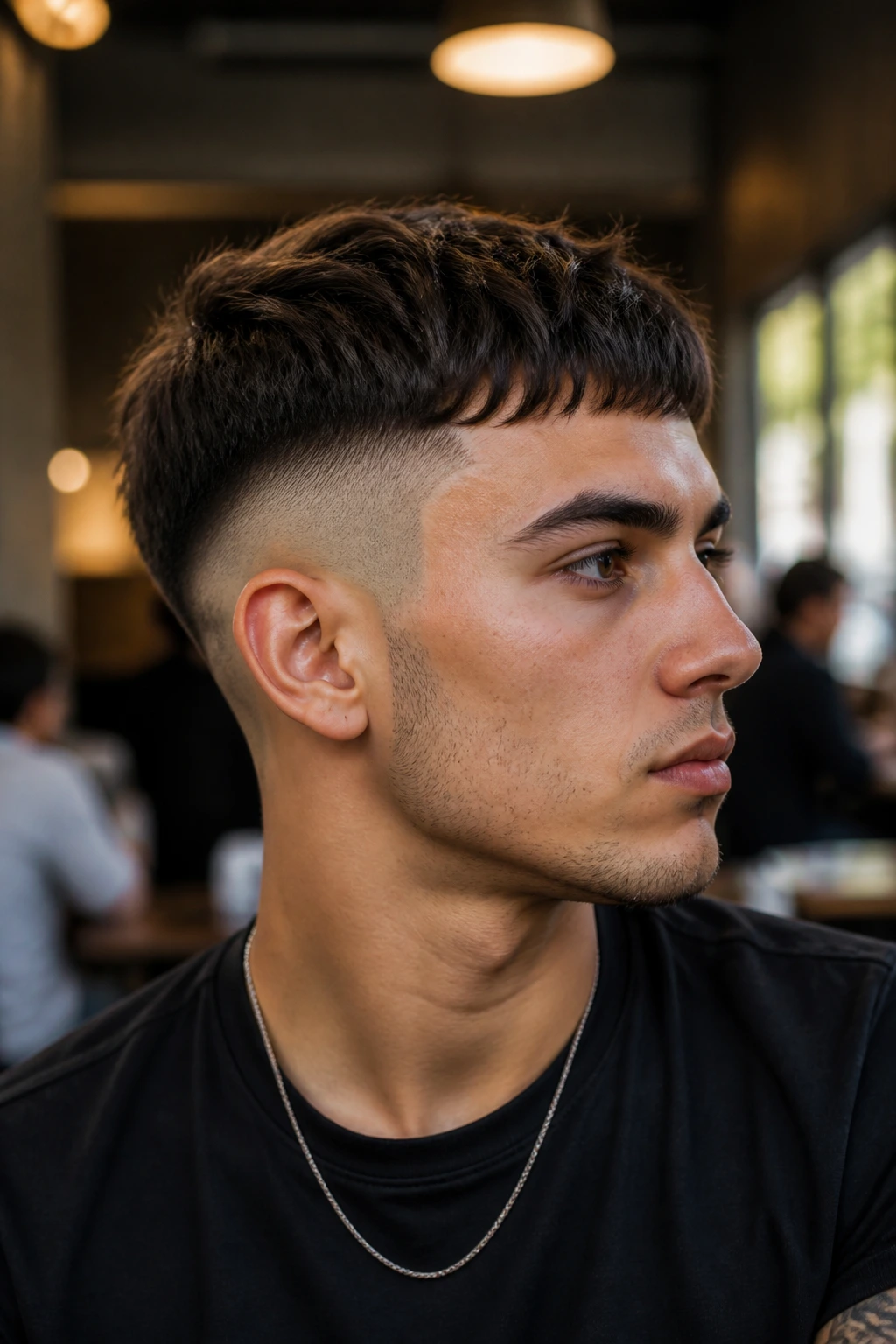
A disconnected undercut crop is for men who want the top and sides to announce themselves separately. The sides are cut much shorter, and the top stays compact and textured with a clear break between the two.
That hard contrast gives the cut attitude. It can look sharp, fashion-forward, or just plain bold depending on how you style the top. If you want a short haircut that still feels like it has an edge, this is one of the louder options on the list.
The trick is not letting the top grow too soft. Keep the top short enough that it still sits above the sides rather than drifting into a messy medium-length cut. Around 1.5 to 2.5 inches on top usually keeps the shape clean. The crop works best when the fringe is textured forward or slightly across.
This is a cut I’d pick for thick straight hair first. It can work on wavy hair too, but the contrast matters more there. If the fade is too high or the top too long, the style starts to look disconnected in the wrong way. The barber needs a steady hand here.
21. 360 Waves with Low Taper
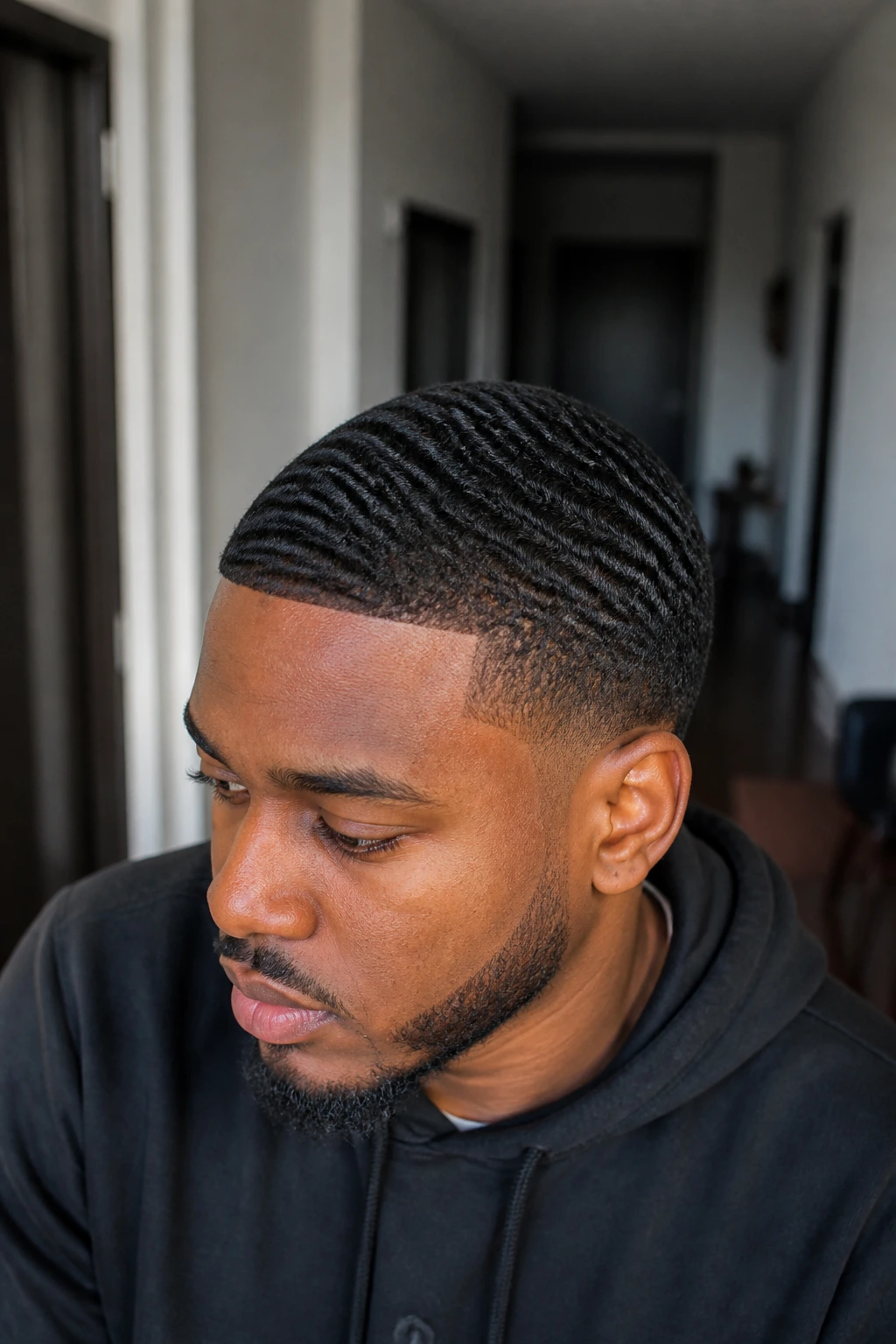
360 waves with a low taper are more of a commitment than a haircut, and that’s exactly why they belong on this list. The cut itself stays short enough to lay the wave pattern down, while the taper around the neck and temples keeps the edges clean.
This style rewards patience. You do not get waves by accident. The hair needs enough length to brush, enough moisture to stay laid, and regular maintenance so the pattern stays even. If the top is cut too low, the wave pattern disappears. If it’s too long, the look gets bulky and hard to keep neat.
Ask for enough length on top to keep the wave pattern alive—often around a #1.5 or #2 starting point—and a low taper at the temples, sideburns, and nape. That taper makes the whole cut look sharper without interrupting the wave flow.
The daily routine matters here. Brush in the direction of your pattern, use a wave cap or durag when appropriate, and keep product light so the hair doesn’t build up into a greasy layer. The good versions of this cut look calm and controlled. The bad versions look like nobody checked the mirror.
How to Choose a Short Cut That Fits Your Hairline and Texture
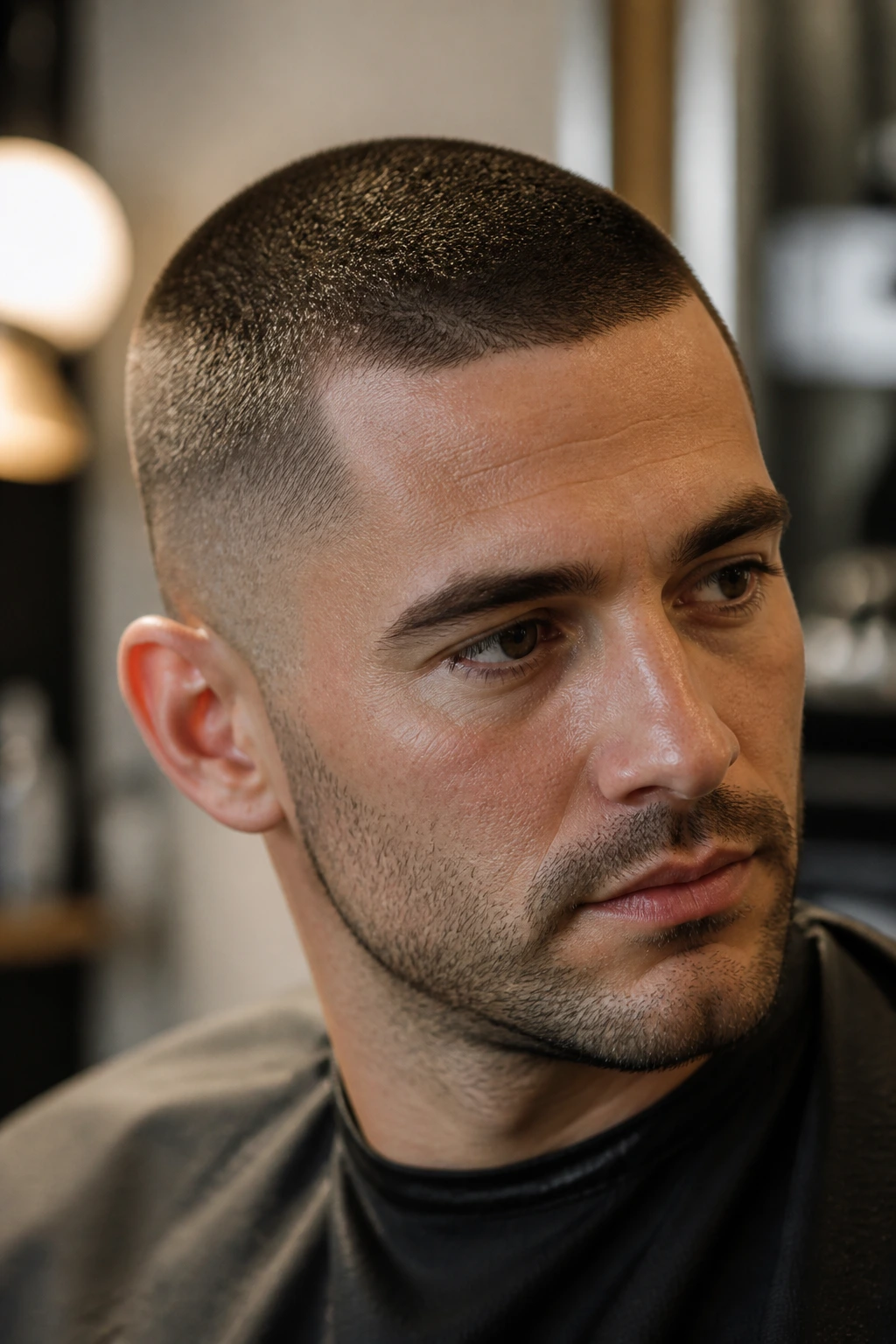
The easiest mistake with short hair is choosing the cut you like in a photo and ignoring the hair you actually have. Thick straight hair, fine straight hair, loose waves, tight curls, and coily hair all sit differently once they’re cut down. A crop that looks sleek on one head can look flat or puffy on another.
Start with your hairline. If the temples are backing up a little, styles with forward movement—Caesar, French crop, textured crop—usually look kinder than styles that pull everything straight back. If your hairline is strong and even, you can get away with a side part, quiff, or short pompadour without the front area looking sparse.
Texture matters just as much. Fine hair often looks better with cuts that create visual density, like a brush cut, crew cut, or short side part. Thick hair benefits from texture shears, fades, and crops that remove some bulk. Curls need enough length to curl, not enough to mushroom. Coily hair usually needs clean edges and a shape that respects the natural outline.
Face shape is the quiet third piece. Rounder faces usually handle a little height well. Longer faces can look better with flatter, forward-leaning shapes. Square faces tend to wear buzzes, high and tights, and tight tapers especially well. And if you’re unsure? Pick the cut that grows out cleanest. That’s the one you’ll enjoy in real life.
Five-Minute Styling for Short Haircuts for Men
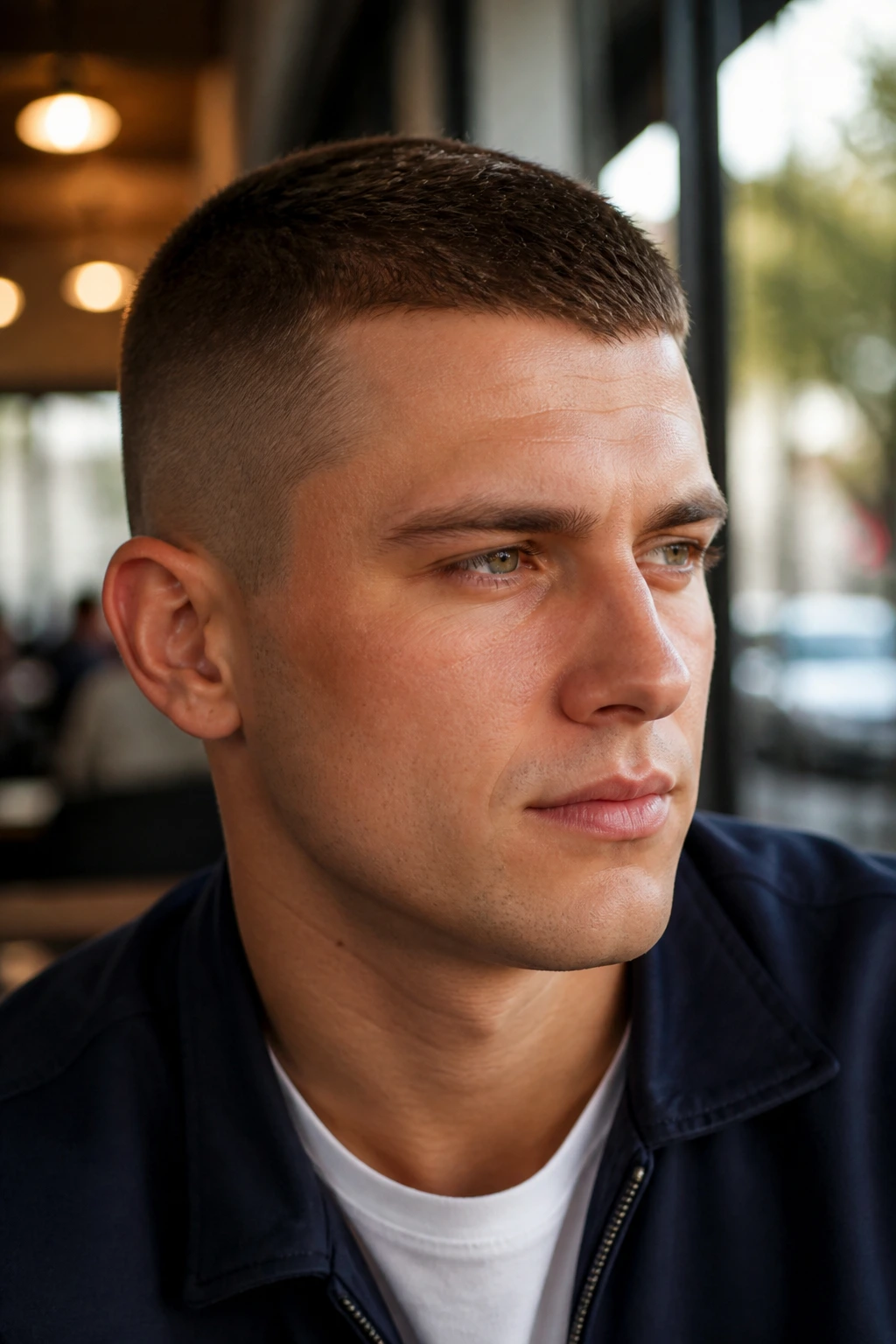
Short hair should not need a half-bottle of product. If it does, the cut is probably fighting you. The best daily routine is small, direct, and repeatable.
Start with towel-damp hair: not dripping, not dry as dust. That middle ground gives paste, cream, or clay something to grab without clumping. If your hair tends to stick up, a brief blow-dry in the right direction beats adding more product.
Use less product than you think: a pea-sized amount is enough for many short styles. Rub it into your palms until it disappears, then work it through the top before touching the sides. Short hair gets greasy fast when product sits on the surface.
Aim for one finish, not three: if the cut is textured, don’t try to make it glass-smooth. If the cut is neat and parted, don’t rough it up into spikes. Pick the shape the haircut wants and keep the styling light.
Save heavy shine for special cases: pomade has its place, but most short haircuts look cleaner with matte clay, paste, cream, or texture powder. Shine can flatten texture and make the cut feel older than it is.
Use your fingers more than your comb: fingers keep short hair loose and modern. A comb is fine for Ivy League, side part, or pompadour territory, but it can make crops and brush cuts look too stiff.
What to Say at the Barber Chair

A bad short haircut often starts with a vague request. “Short on the sides, a little on top” leaves too much to chance. A better cut starts with specific words.
Length: say the guard number or the inch range you want. If you’ve had a #2 all over before and liked it, say that. If you want the top to stay around 2 inches, say 2 inches, not “a bit longer.”
Blend: tell the barber whether you want a taper, fade, or something softer. A taper keeps the transition gentle around the neckline and ears. A fade creates stronger contrast. Those are not the same thing, and they do not grow out the same way.
Hairline shape: square, natural, or rounded at the front? A square hairline looks sharp but can be unforgiving if the front is already uneven. A natural hairline tends to look less forced on most men.
Growth patterns: mention cowlicks, a strong crown swirl, or spots that stick up no matter what. A barber can leave a little more length there so the haircut lays better after two days, not just when you leave the chair.
Reference photos: bring one, but bring one that matches your hair type. A photo of a guy with straight fine hair is not useful if your hair is thick and wavy. Use the picture for shape, not fantasy.
Essential Tools for Keeping Short Hair Sharp
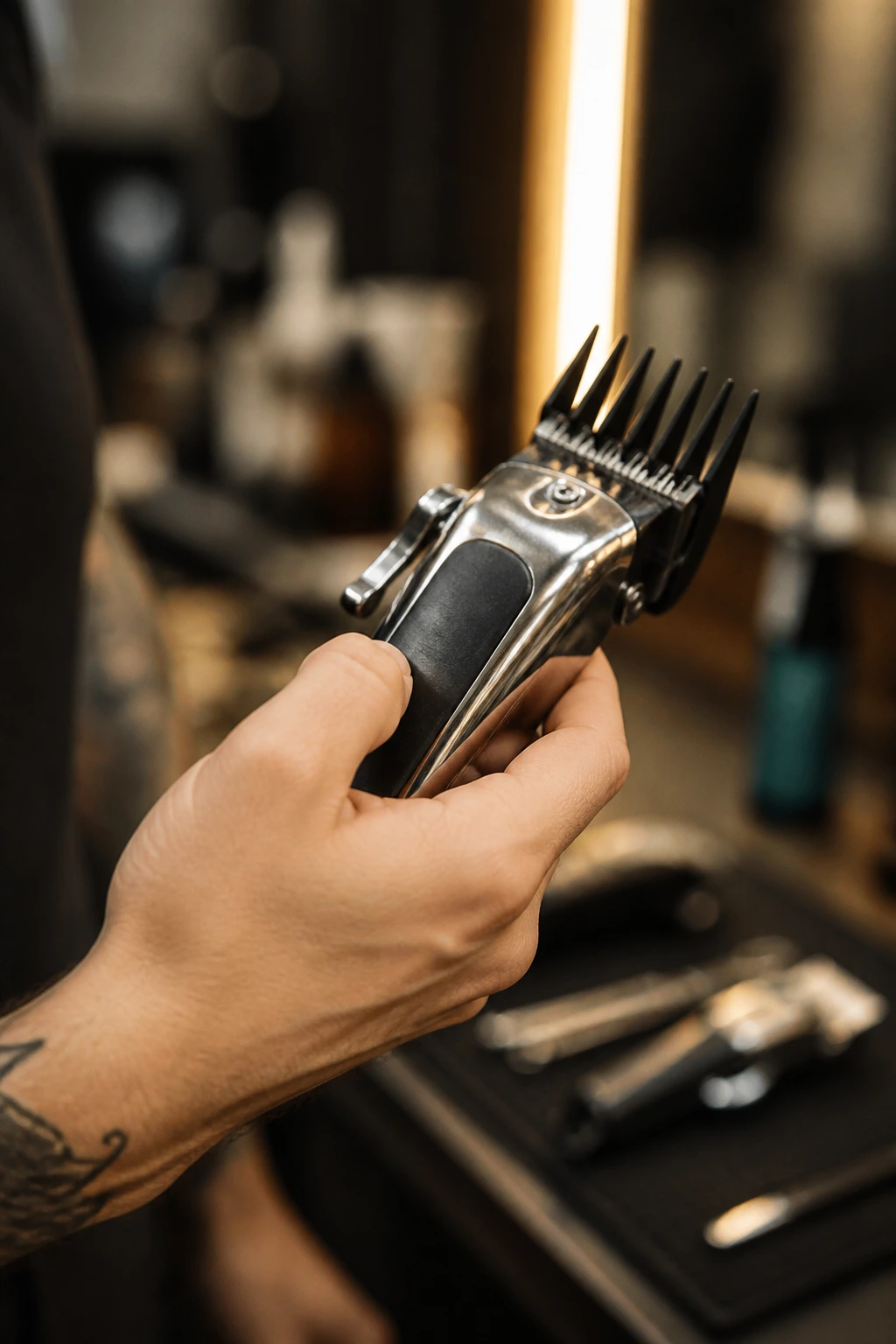
- A good pair of clippers with guards: useful for home cleanups on buzzes, butch cuts, and neckline trims.
- Detail trimmer: ideal for sideburns, neck cleanup, and edge maintenance between barber visits.
- Matte clay or paste: gives short textured cuts shape without turning them shiny.
- Light cream or leave-in conditioner: better for curls, waves, and dry hair that needs a little softness.
- Comb and vent brush: the comb helps with side parts; the vent brush helps lift short quiffs and pompadours while blow-drying.
- Hand mirror: lets you check the neckline and crown without guessing.
- Blow dryer with a nozzle: not mandatory, but useful when your hair needs direction fast.
- Scalp moisturizer or sunscreen: smart for buzzes, burr cuts, and other styles that expose more skin.
Mistakes That Make a Short Haircut Look Off
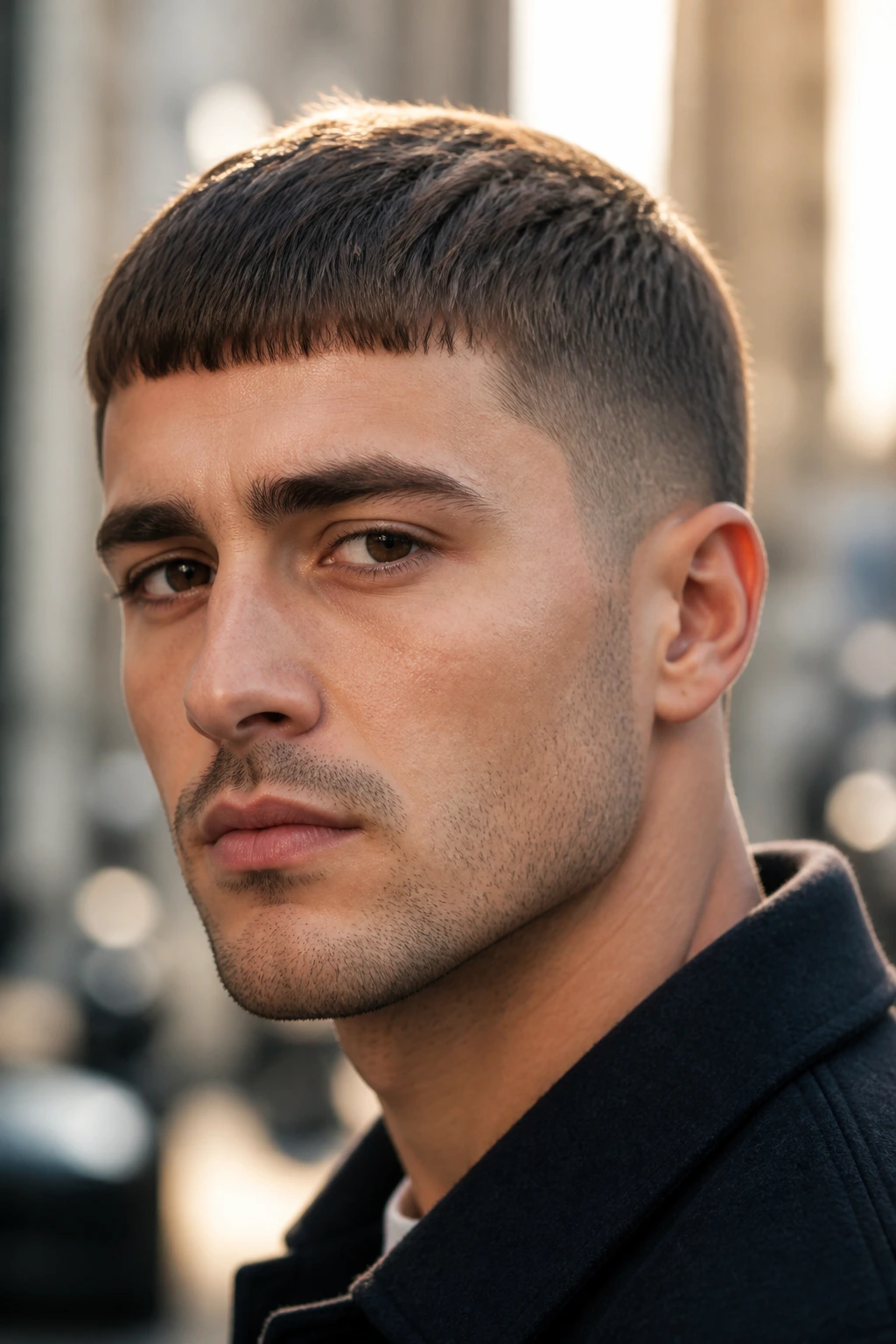
Going too short too early: A lot of guys ask for skin-close sides or a very short top before they know how their hair lays. The result is a cut that feels exposed instead of clean. Start one guard longer than you think you need, then shorten it next visit if the shape holds.
Ignoring the crown: The crown can make a short cut look tidy or messy in a hurry. If your hair swirls there, a barber needs to leave enough length to let it lay. Cut it too low and the swirl stands up like it’s fighting the rest of the head.
Using the wrong product finish: Shiny pomade on a close crop can make the hair look heavy and separated in the wrong way. Dry texture products are better for crops, buzz-adjacent cuts, and brush cuts. Save shine for a side part or short pompadour.
Letting the neckline go fuzzy: A short haircut can look good from the front and sloppy from behind. The neckline is often the first thing to blur. A quick trim every week or two keeps the cut from losing shape.
Copying a cut that ignores hair density: A flat top on fine hair or a super-high pompadour on thin hair can look forced fast. Pick a cut that matches how much hair is actually there. Not the hair you wish was there.
Variations and Adaptations Worth Trying
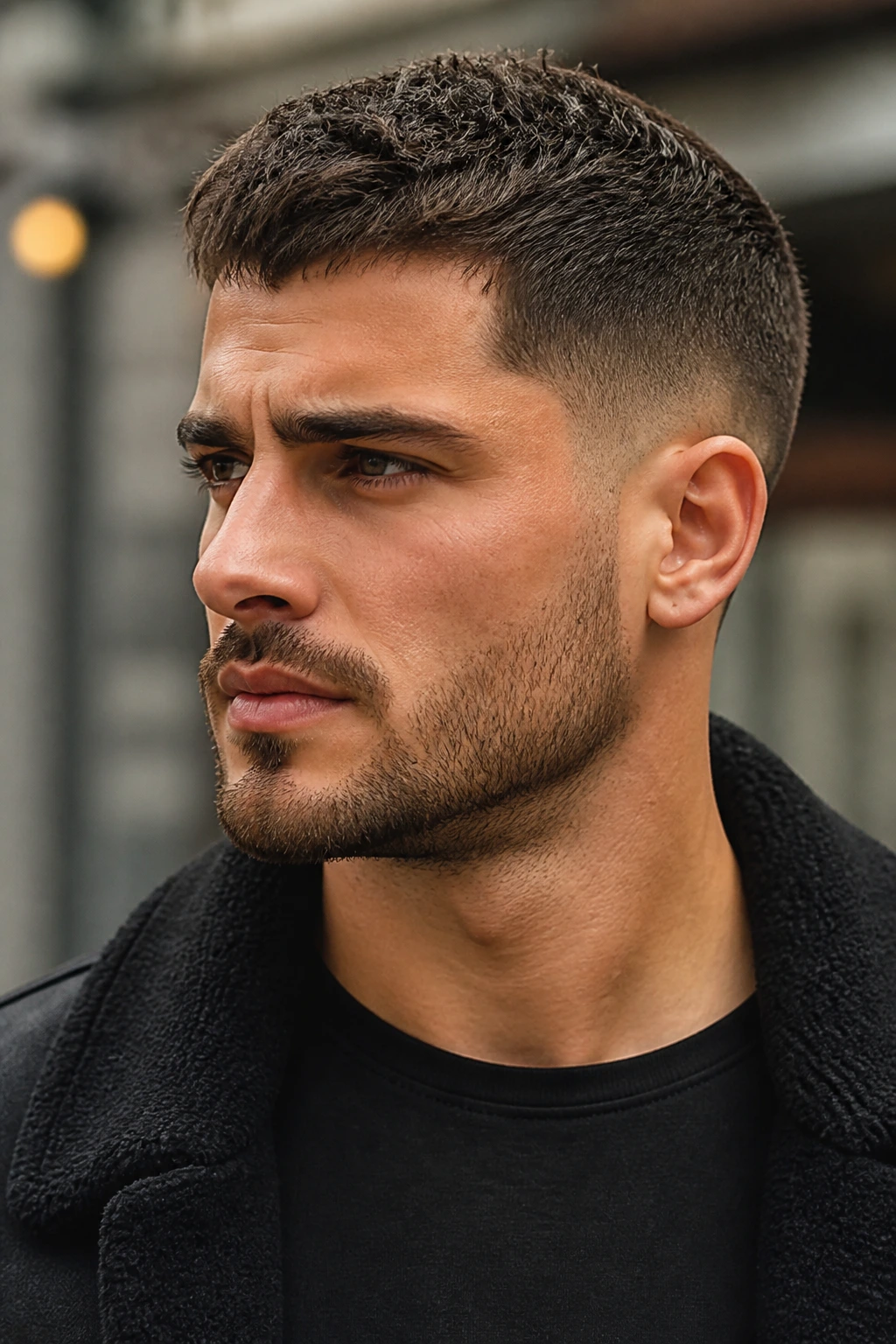
The Office-Quiet Version: Keep the sides tapered instead of faded hard, and leave a touch more length on top. This softens almost any cut on the list—crew cut, Ivy League, brush cut, even a textured crop—and makes it easier to wear with business clothes.
The High-Contrast Version: Ask for a skin fade or very tight taper and keep the top textured and short. This version turns a crew cut, crop, or quiff into something sharper. It suits men who like cleaner edges and don’t mind more frequent touch-ups.
The Curly-Friendly Version: Preserve more length on top and cut the sides low and clean. This works for the curly top fade and short afro taper, but it can also reshape a French crop or side part if your curls sit loose rather than tight. The point is to let the curl pattern show without letting the sides balloon.
The Thinning-Hair Version: Use a shorter but not shaved top, with texture cut into the surface instead of length. A brush cut, Caesar, or short Ivy League often looks fuller than a longer style that separates and shows scalp.
The Beard-Balanced Version: Keep the haircut a little tighter around the temples and sideburns so the beard can carry more of the frame. This is especially useful with buzz cuts, high and tights, and low tapers. The haircut and beard should look like they belong to the same face.
Keeping the Shape Between Haircuts
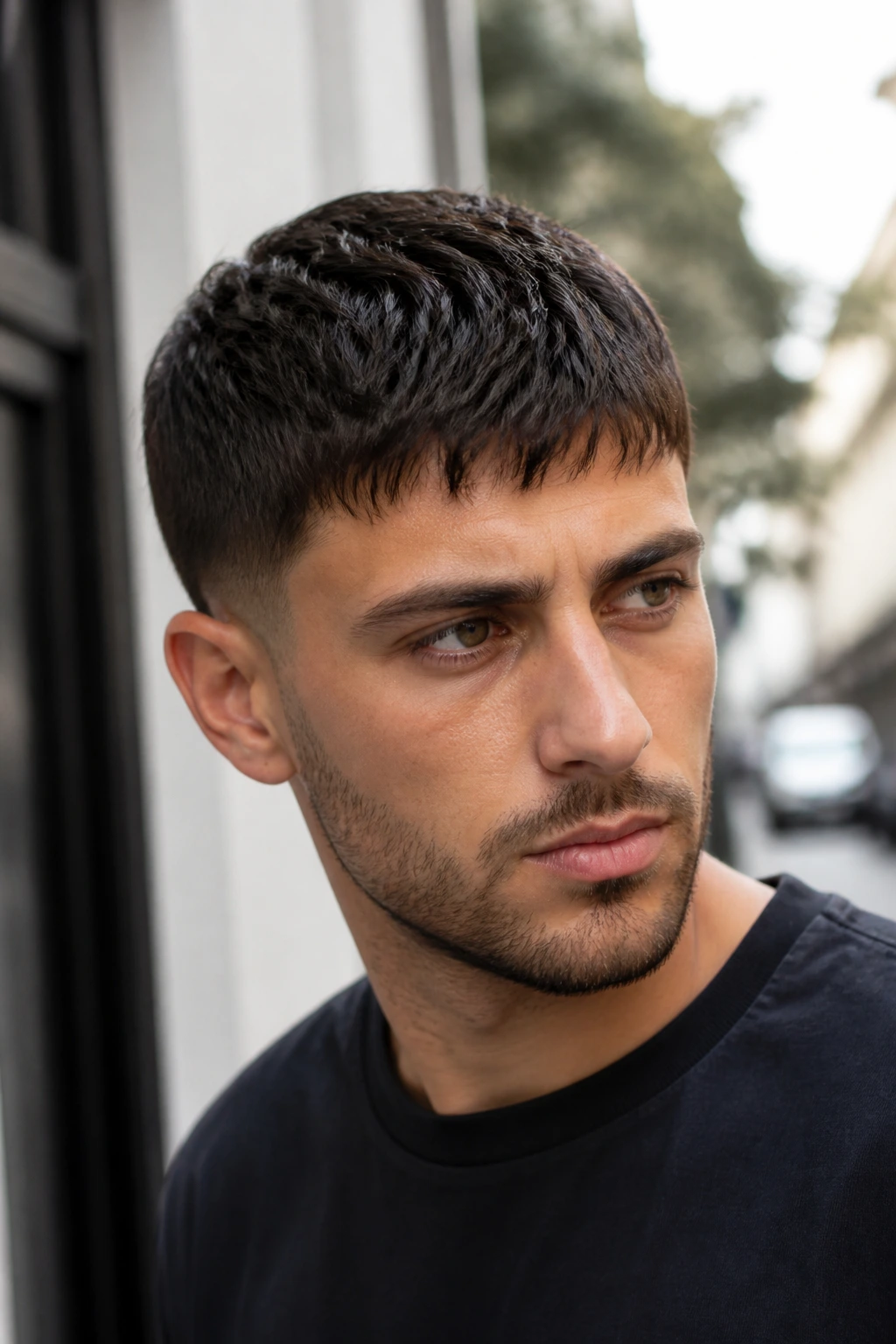
Short hair lives or dies by maintenance. A buzz cut can look sharp for two to three weeks, but a fade starts to blur sooner, especially around the ears and neckline. Crops and crew cuts usually buy a bit more time, though they still need a barber before the top loses its shape.
For most short cuts, I’d plan on a trim every 2 to 4 weeks if you want the outline to stay crisp. Fades and high-contrast cuts sit closer to the 2-week side. Tapers, brush cuts, and crew cuts can stretch a little longer. If you are growing it out on purpose, great. If not, let the cut drift too long and the shape starts to disappear first at the temples and nape.
Washing matters too. Short hair gets weighed down faster because there’s less length to spread oil around. Shampoo two to four times a week depending on how much product you use and how oily your scalp runs. Curls and waves usually need a gentler wash schedule than straight hair. A light conditioner or leave-in helps when the top starts to feel dry or rough.
Home cleanup can help, but only if you’re disciplined. Trim the neckline carefully, wipe the clippers clean after use, and oil the blades when they start sounding rough. If you’re not steady with a trimmer, leave the hard lines to the barber. A shaky DIY edge is hard to ignore once you’ve seen it in daylight.
Frequently Asked Questions About Short Haircuts for Men
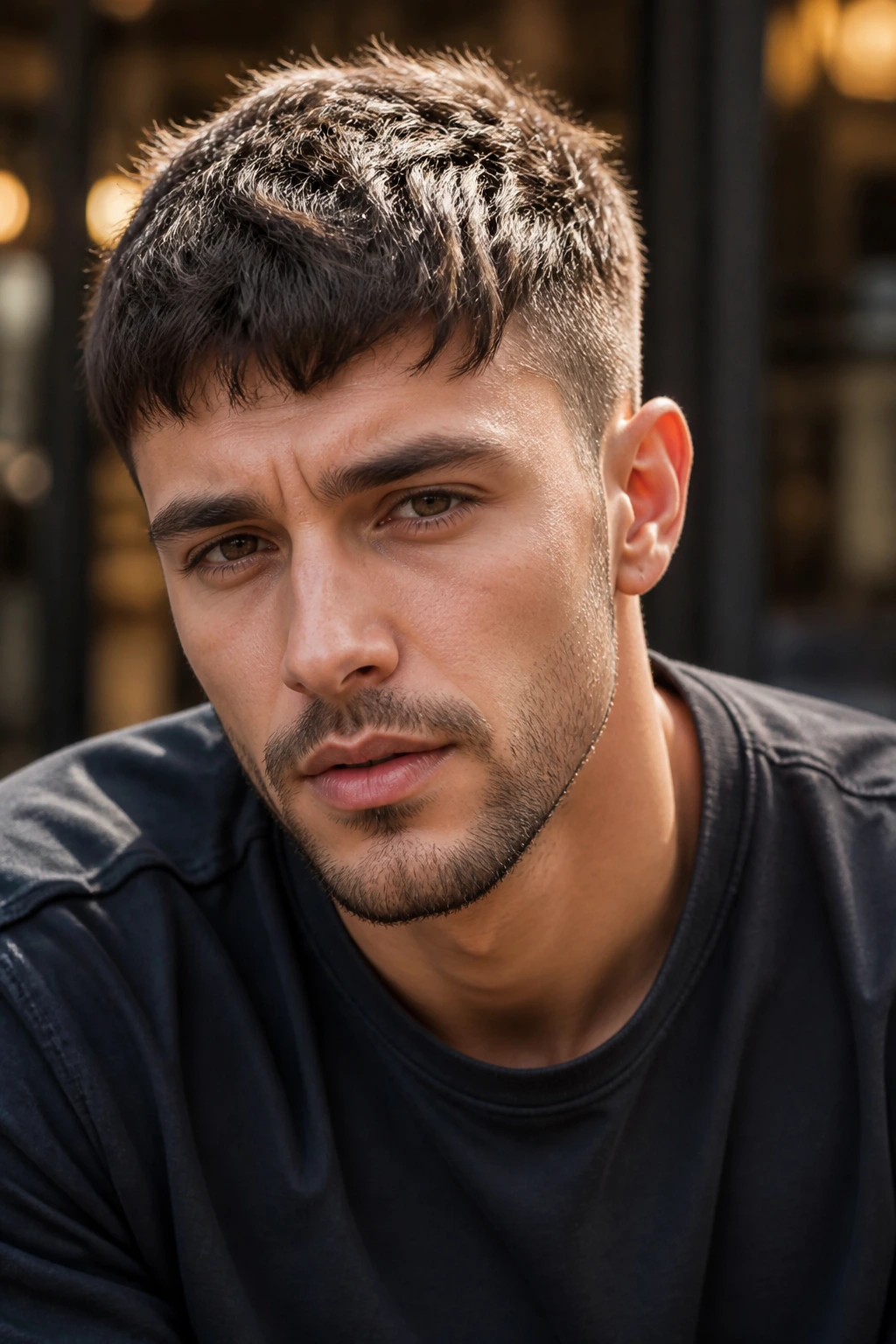
Which short haircut makes thin hair look thicker?
A brush cut, crew cut, or textured crop usually beats a longer style for fine hair. The reason is simple: short lengths separate less, so the scalp shows through less. A matte product helps, while shiny gel tends to expose the thin spots.
What short haircut works best for a receding hairline?
The Caesar, French crop, and buzz cut are the safest places to start. They shift attention forward or reduce the contrast at the temples. A short side part can still work, but it depends on how much recession is already there.
Can curly hair go short without puffing out?
Yes, but the sides need to be kept tight and the top needs enough length to show the curl pattern. A curly top fade or short afro taper usually gives the best shape. Cutting the curls too short often creates fuzz instead of definition.
How often should I get a fade cleaned up?
If you like a crisp fade, every 2 to 3 weeks is normal. A low taper can sometimes stretch a little longer because the grow-out is softer. Once the sideburns and neckline blur, the whole cut starts to feel untidy.
What product is best for short hair: clay, paste, pomade, or cream?
Clay and paste handle most short textured styles because they add grip without shine. Cream is better for softer looks, curls, and hair that dries out easily. Pomade is useful when you want a side part or short pompadour with a smoother finish.
How do I keep a buzz cut from looking too severe?
Leave a little length on top instead of cutting everything to the same shortest guard. A soft taper at the neckline and sideburns helps too. If your scalp is very visible, a #2 or #3 usually looks kinder than a skin-close cut.
Can I wear a beard with any of these cuts?
Yes, but the beard and haircut should share the same level of sharpness. A tight fade pairs well with a shaped beard, while a buzz or butch cut looks better when the beard edges are clean. If the haircut is neat and the beard is fuzzy, the contrast can feel accidental.
What if my crown sticks up no matter what I do?
Leave more length there. Seriously. A crown cowlick usually needs enough weight to lay down, and that usually means a crew cut, brush cut, or textured crop rather than an ultra-short buzz. The problem is rarely the product; it’s the missing length.
The Cuts That Keep Working
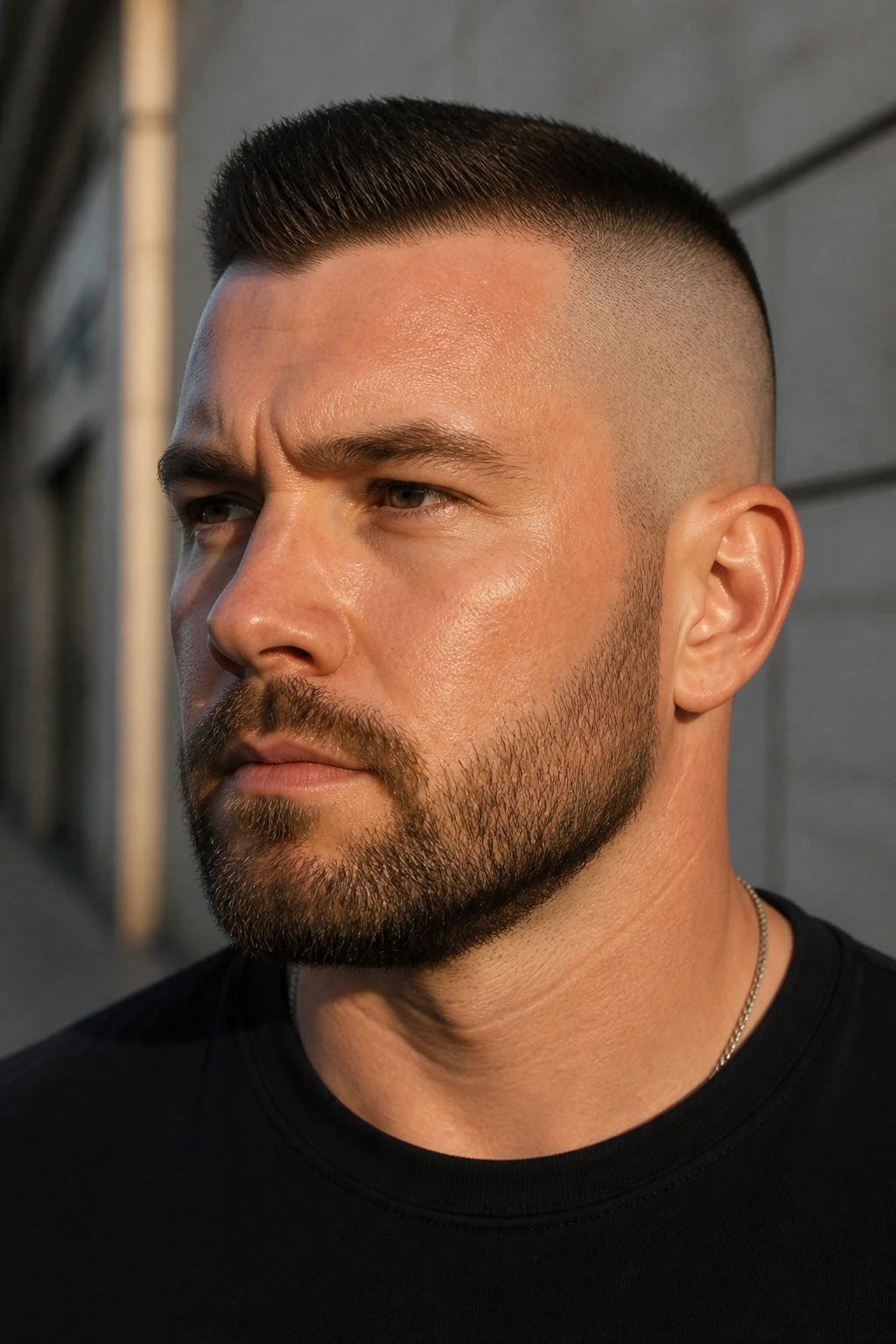
Short hair can be plain, or it can be sharp in a way that people notice without quite knowing why. The difference usually comes down to guard numbers, taper height, and whether the cut respects the hair you already have. That’s the whole game. Not fantasy hair. Your hair.
The best part is that short cuts do not ask for a big daily performance. A good one looks like a decision, not a chore. That’s rare. And once you find the shape that fits your hairline, texture, and routine, the haircut starts paying you back every morning.
