



Long hair at work lives or dies on control. Not length. A shoulder-length cut can look sharper than a short one if the neckline is clean, the front stays out of your eyes, and the whole thing still looks deliberate after a commute, a laptop session, and one too many overhead lights.
The problem is that most men get told the wrong thing. They hear “keep it neat,” then treat that like a command to chop it all off. That’s lazy advice. Long hairstyles for men for work are not about hiding your hair. They’re about giving it shape so the room reads it as intentional, not accidental.
And that means choosing styles that behave. They need to survive a collar, a headset, humidity, and the kind of desk fan that turns loose layers into static-filled nonsense by noon. The good news: you do not need a perfect blowout or a bathroom cabinet full of products. You need the right cut, the right part, and a few habits that keep the whole thing from drifting into “I gave up” territory.
Why These Styles Read as Professional
Clean neckline: Hair that sits above or just off the collar keeps shirts from bunching and makes the whole silhouette look sharper.
Visible face: Styles that keep the forehead, eyes, and temples clear tend to read better in meetings, especially when people are looking at you across a screen or a conference table.
Controlled texture: Wavy, curly, straight, or coily hair can all work if the shape is contained instead of puffing out in random directions.
Low-touch upkeep: The better office styles are the ones you can reset with water, a comb, and 30 seconds at the sink. No elaborate mirror session.
Flexible dress-code range: A low knot, a braid, and a bro flow all send different signals. That matters when one office is casual and another expects you to look like you own three decent button-downs.
Works with real life: Long hair for work has to survive coffee runs, headphones, elevators, and awkward weather. If a style only works for the first 12 minutes after styling, it is not a work hairstyle.
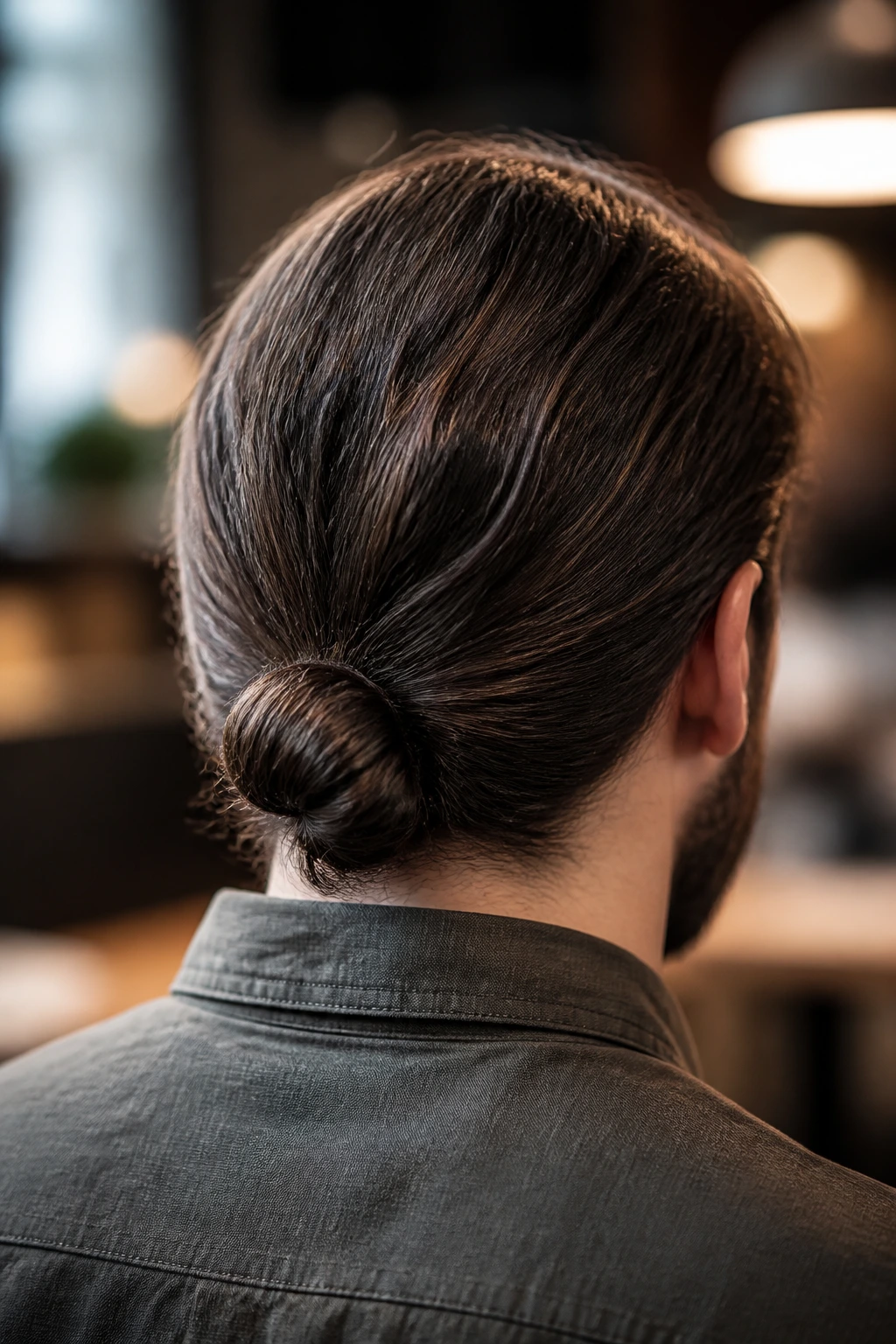
1. Low Knot at the Nape
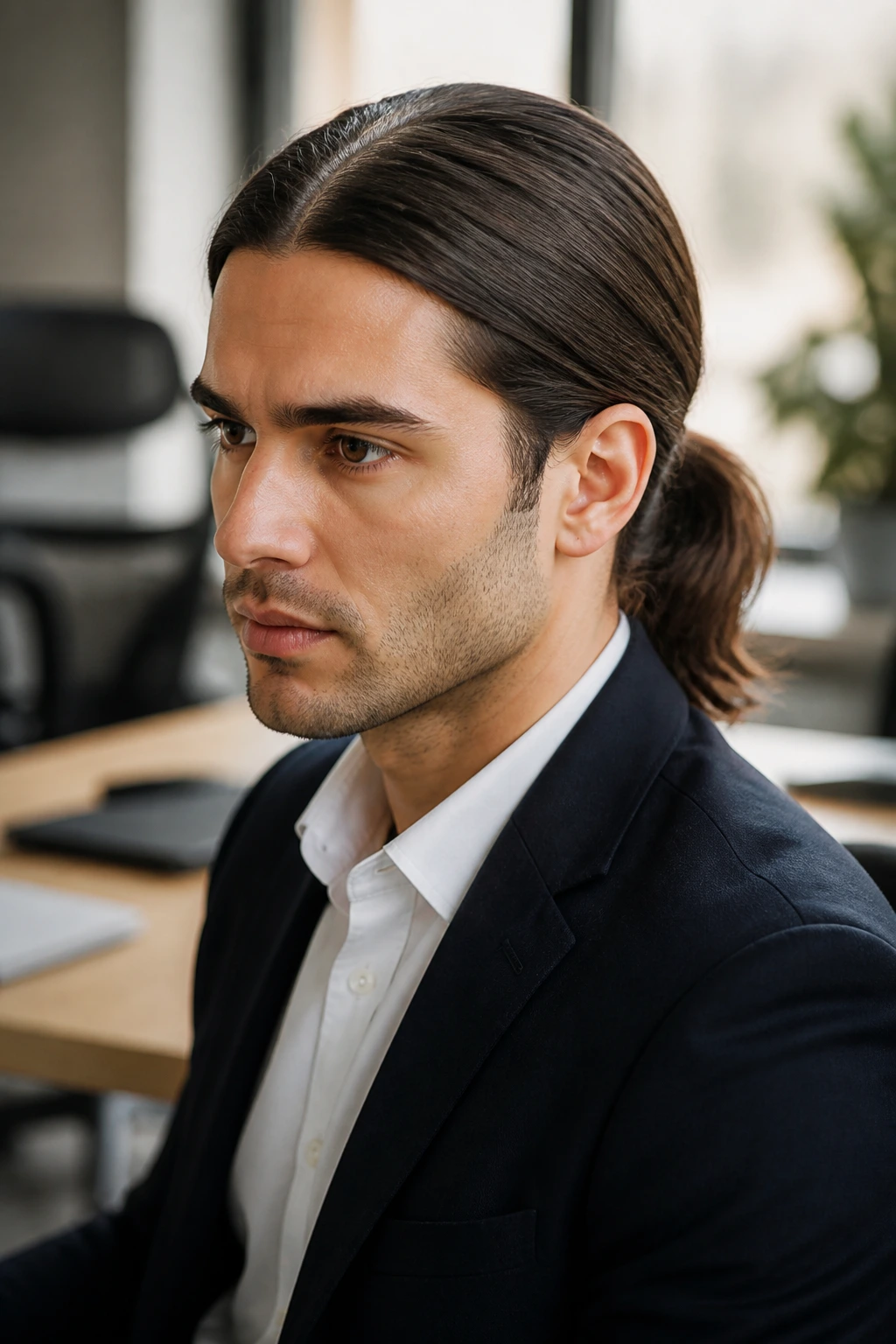
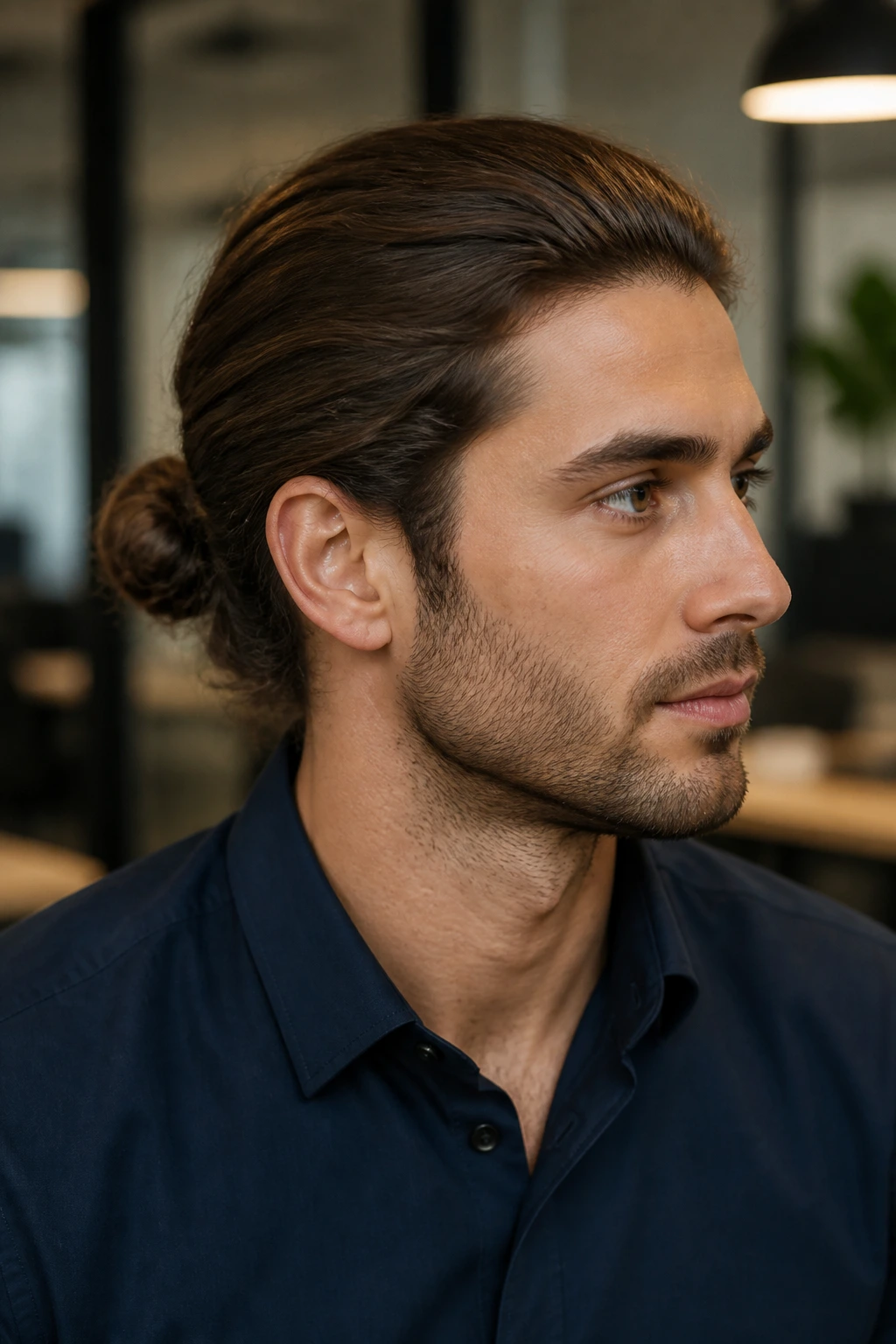
A low knot at the nape is the nearest thing long hair has to a clean white shirt. It’s plain in the best way. The hair sits close to the head, the weight stays low, and the neckline looks tidy even when the rest of the day gets messy.
What makes this one useful is the balance. It hides length without flattening the whole head into something stiff. If your hair is medium-thick or thick, the knot gives it structure. If your hair is fine, keep the knot smaller and a little looser so it doesn’t look like a golf ball perched on a string.
The key is placement. Set it right where the skull starts to curve toward the neck. Too high and it starts to look like a weekend top knot. Too low and it slips into your collar every time you lean forward. A matte cream or light paste on the front half helps tame flyaways without turning the style greasy.
2. Classic Low Ponytail with a Center Part
This is one of the safest long hairstyles for men for work because it looks clean without pretending to be fancy. A center part gives the front some order, and the low ponytail keeps the back from drifting all over your shoulders.
It works especially well on straight or slightly wavy hair that falls evenly on both sides. The symmetry helps. So does the fact that the ponytail stays out of the way when you’re typing, driving, or wearing a blazer that would otherwise collect loose ends under the collar.
Keep the tie low and snug, but not tight enough to leave a ridge. If your hair slips, mist the lengths with a little water before gathering them. That tiny bit of grip matters more than people think. And if you want the front to look polished, use a comb to draw the part before you touch the elastic. Once the ponytail is tied, stop fussing. Overworking the front makes it puff.
3. Slicked-Back Shoulder-Length Hair
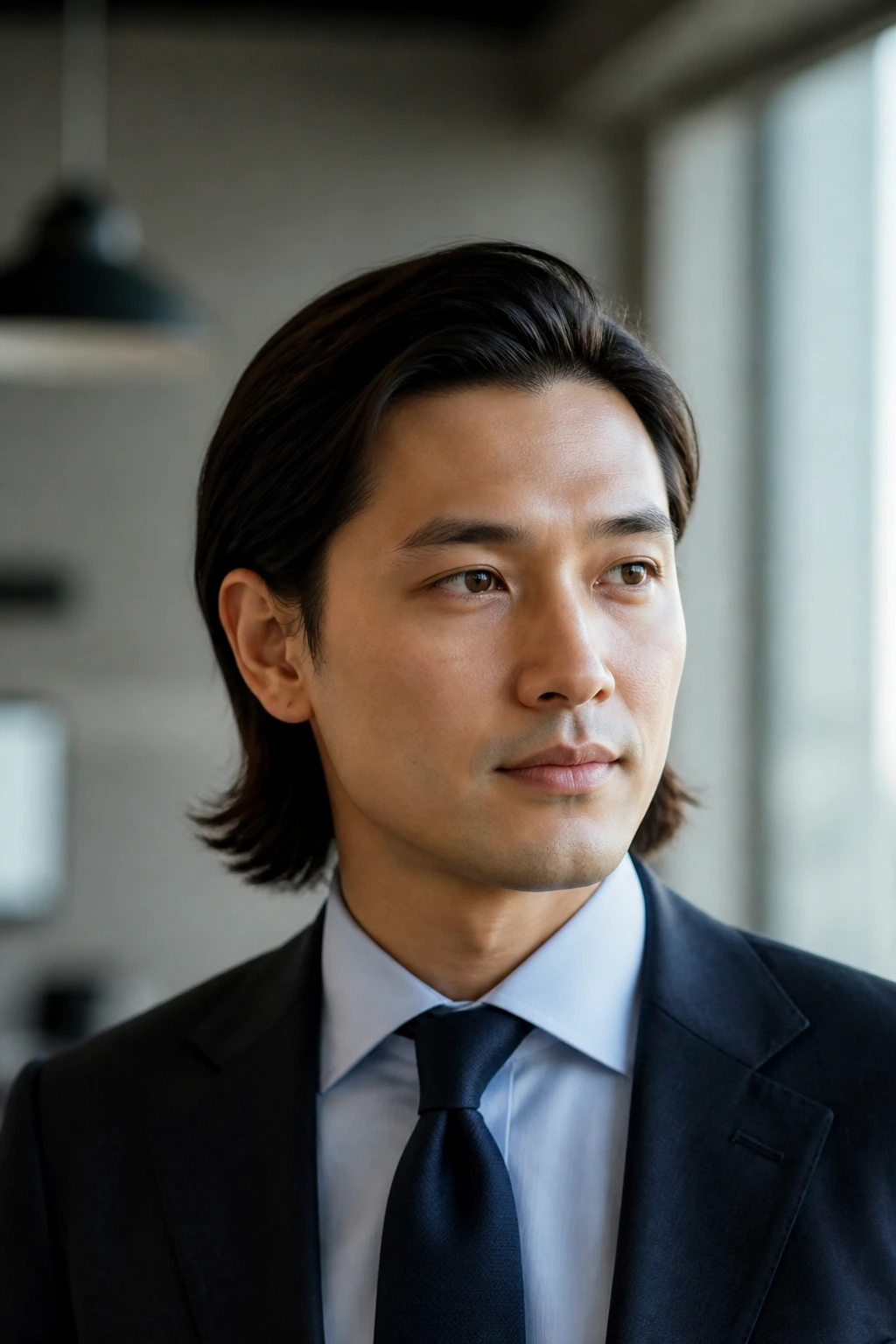
Slicked-back hair sounds formal because it is formal. Not tuxedo formal. Office formal. The kind that says you know where your comb is and you are not afraid to use it.
The trick is keeping the finish controlled, not wet. A heavy gel can make long hair look like helmet hair by lunch, especially if the room is warm. A light cream or grooming lotion gives the hair enough slip to move back from the face while still keeping some natural texture alive at the ends.
This style is at its best when the cut has layers. One-length shoulder hair tends to fall like a sheet. Layers let the back move and keep the sides from flaring out near the jaw. Comb the hair straight back from damp, not dripping-wet, then press the front into place with your palms. If you see white residue, the product is too strong or you used too much. Clean shine is good. Sticky shine is a bad sign.
4. Side Part with Tucked Ends
A side part with tucked ends is one of those styles that looks almost boring until you notice how well it behaves. The part gives the hair direction, and tucking the ends behind the ears keeps the shape from getting fuzzy around the face.
This works beautifully for shoulder-length hair that needs a little discipline without being tied up. It’s especially useful in offices where a full ponytail feels too casual or too obvious. The hair still shows length, but it doesn’t hang in your eyes every time you look down at a report.
The part matters more than the tuck. Make the part while the hair is damp, then dry it in that direction so it remembers the shape. A blow-dryer with a nozzle helps, but air-drying can work if you smooth the front with your fingers every few minutes while it sets. The tuck should look easy, not forced. If the ends keep popping out, your cut may need a tiny bit more layering around the jaw.
5. Half-Up, Half-Down for Wavy Hair
Half-up styles are useful because they split the difference. You keep the movement and shape of long hair, but the front stays out of your face. For wavy hair, that matters. Waves look better when they’re allowed to move, but work usually demands that the fringe stop wandering into your eyebrows.
The best version is loose at the crown, not slicked flat. Pull back the top section from temple to temple, then tie it just high enough to lift the front without building a little tower on the back of your head. Let the lower half hang naturally. The contrast looks intentional.
If your waves are coarse, use a small amount of cream on the top section before tying it back. That reduces frizz at the crown, which is where half-up styles usually fall apart. And if you wear a jacket or hoodie over the day, this style is a good one because you can reset it in five seconds after removing layers. That’s not a small thing.
6. The Bro Flow with a Controlled Collar Line
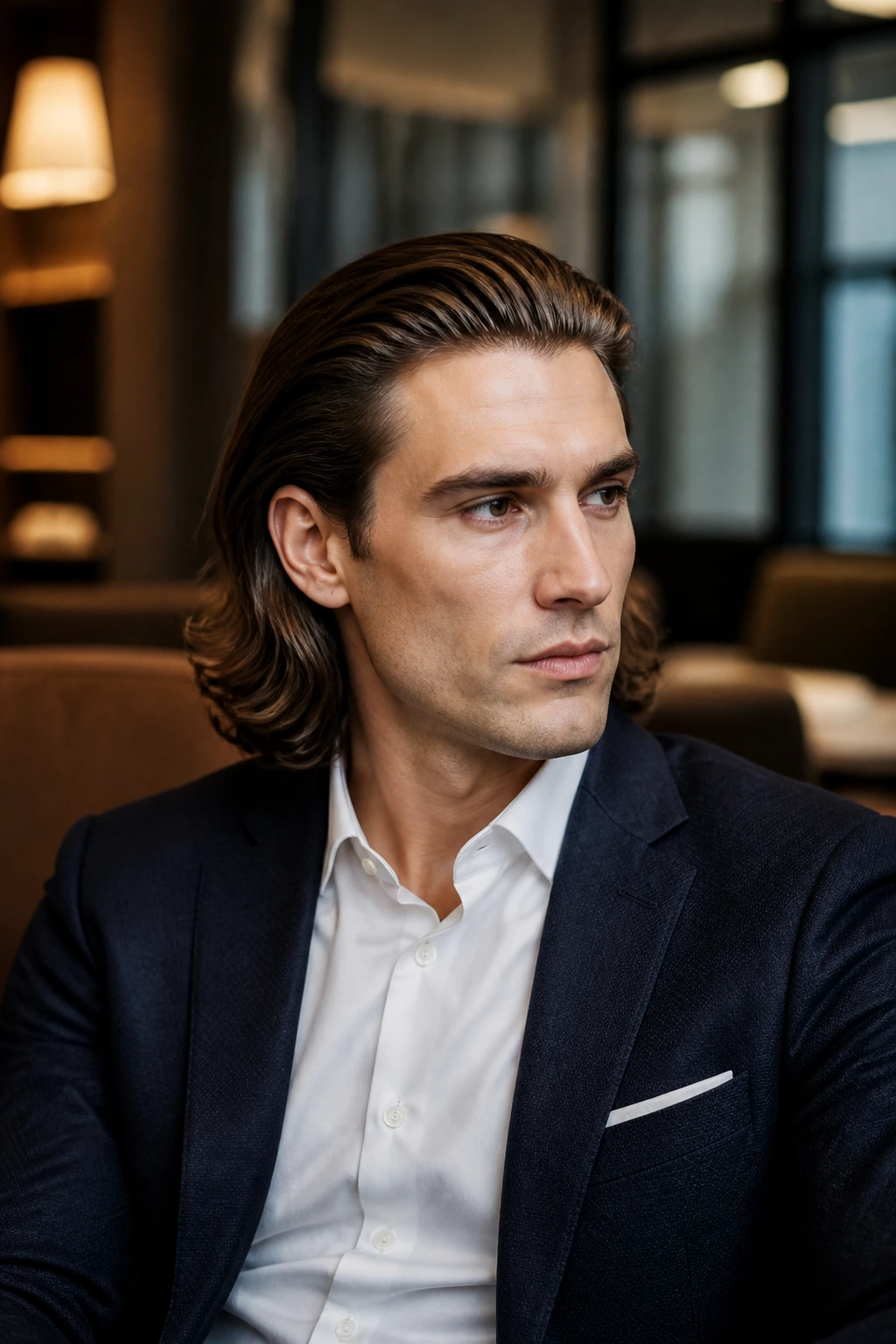
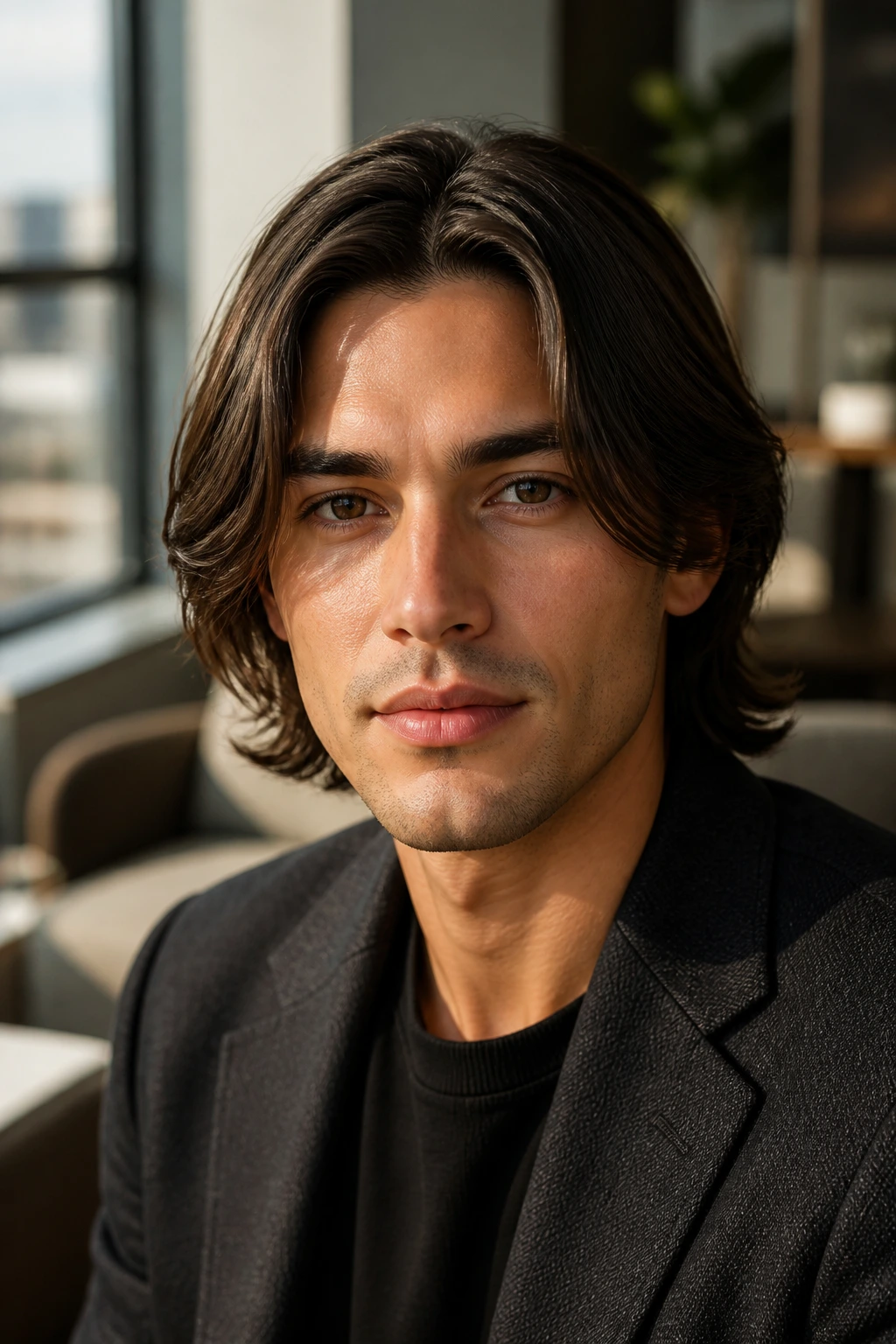
Bro flow gets mocked when it looks too loose, but a controlled version can be excellent for work. The hair moves back from the face and falls naturally around the shoulders, yet the neckline still has enough shape to look deliberate.
This is the style that benefits most from a good cut. Ask for layers that let the hair bend backward instead of hanging straight down like curtains. A slight taper around the nape helps too. Not a dramatic fade. Just enough cleanup that the hair doesn’t mushroom at the collar.
Styling is minimal, which is the point. A light blow-dry away from the face, then a touch of cream on the ends if they look dry. The style looks best when the front is off the forehead and the sides skim the ears without swallowing them. If your office is relaxed, this can look polished in a quiet way. If your office is strict, keep the neckline extra neat. That’s the difference between “effortless” and “I rolled out of bed.”
7. Center-Part Curtains with a Neat Finish
Curtain hair can absolutely work at the office. The trick is not letting it become floppy. A clean center part on medium-long hair creates a frame around the face, and that frame can look sharp when the ends are kept tidy.
This style suits straight and wavy hair best. Curly hair can wear it too, but the part needs stronger definition or the whole shape drifts. The hair should skim the temples and fall just far enough to shape the cheeks without covering them. Think controlled movement, not hair falling into your eyes every time you nod.
A small amount of cream at the mids and ends keeps the part from puffing. If you blow-dry, push the roots slightly back from the face before letting the front settle into its part. That keeps the style from collapsing onto the forehead. It’s a subtle thing, but these little angles matter. Long hair at work is often won or lost in the first two inches around the hairline.
8. Single Braid Down the Back
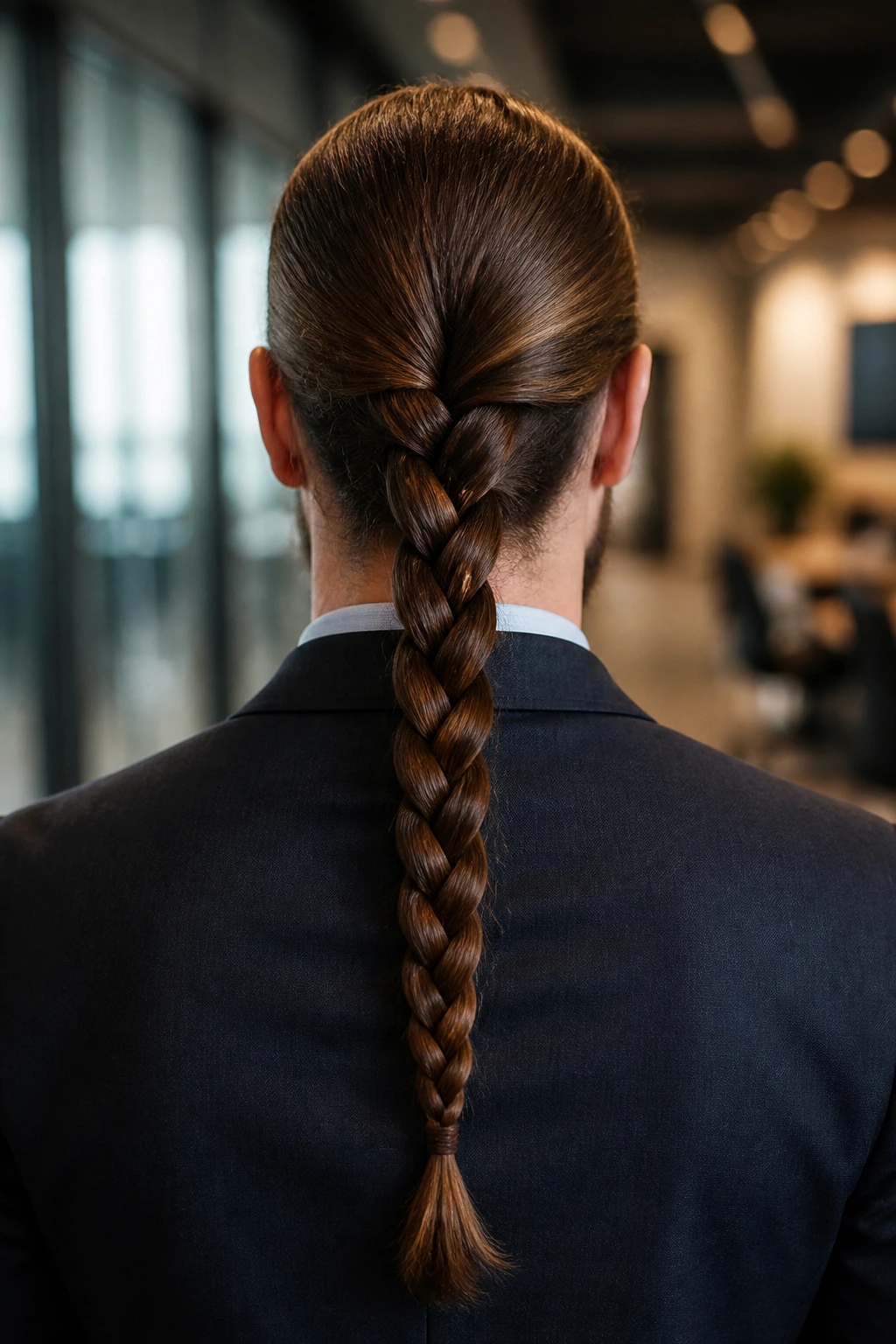
A single braid down the back is practical, sharp, and honestly underrated. It keeps every strand contained, which makes it excellent for busy days, long commutes, and offices where you’d rather not keep brushing hair off your neck.
This style works best when the hair has enough length to make a braid sit flat. Shoulder-length and longer usually does the trick. Thick hair makes a fuller braid, while finer hair benefits from a little texture spray first so the sections grip properly. A clean braid reads more intentional than a loose rope of hair tied at the end.
One detail people skip: start the braid low, near the base of the skull, rather than high. That keeps it from feeling sporty or overdone. If you’re wearing a suit or structured shirt, the braid should disappear into the back of the outfit and support it, not compete with it. And yes, this style can look extremely polished. The secret is neatness. Tiny, even sections. No rushed fingers.
9. Shoulder-Length Layers Behind the Ears
Sometimes the best work hairstyle is the one that looks like you barely touched it. Shoulder-length layers tucked behind the ears can read clean and calm, especially when the haircut already has good shape.
The ears matter here. Showing them opens up the face and keeps the hair from swallowing your jawline. That makes the whole look less heavy. It also works well if you wear glasses, because the frames and the hair stop fighting each other.
This style doesn’t need much product, but it does need a decent cut. Layers should fall in a way that naturally stays behind the ears instead of flipping out from the sides. If the cut is blunt and dense, the tuck won’t hold. A light mist of water and a finger-comb is often enough in the morning. If the ends are dry, a pea-sized amount of cream through the last 3 to 4 inches stops them from looking frayed by noon.
10. Small Man Bun with Soft Volume
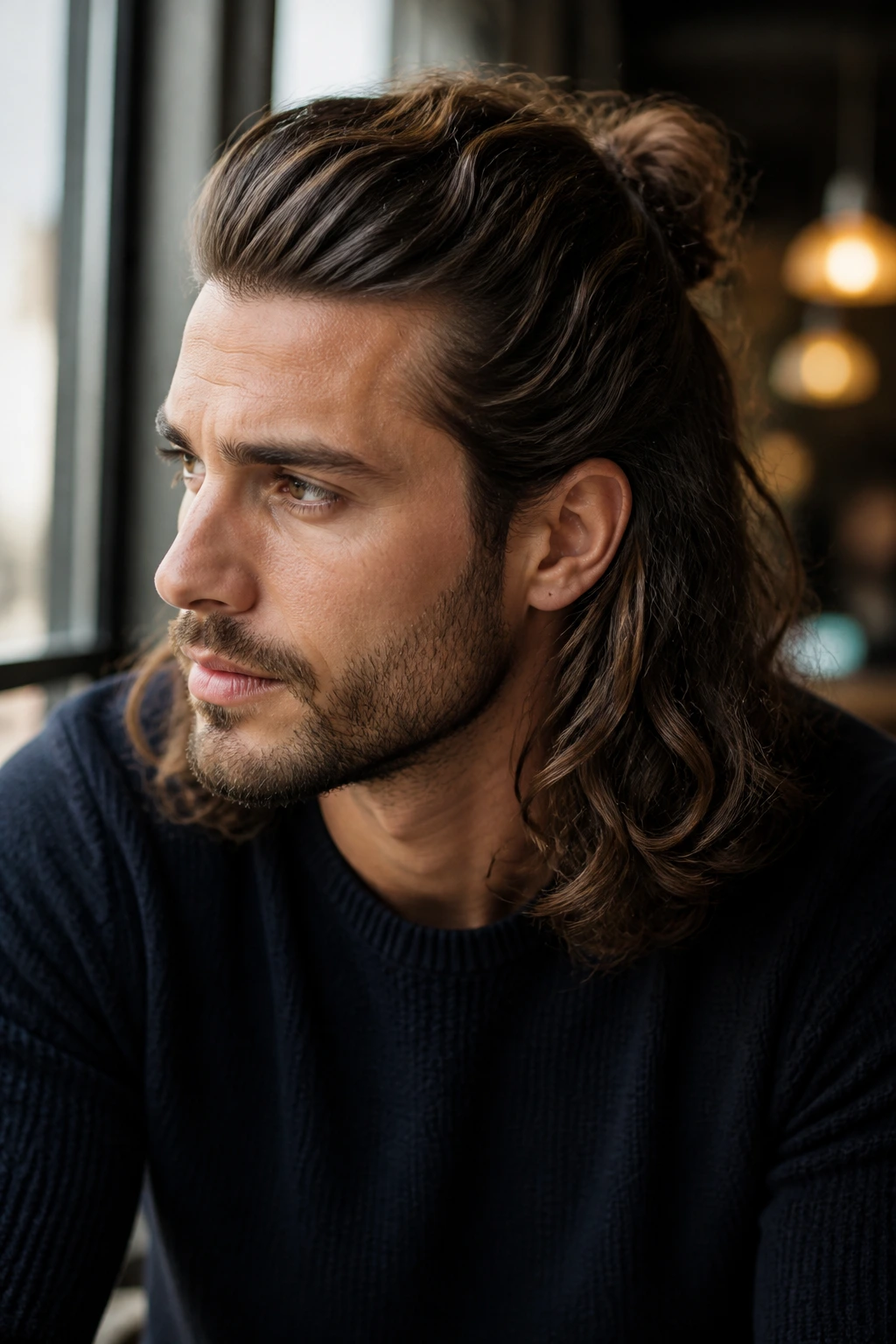
A small man bun is not the same thing as the tight, high knot people wear at the gym. For work, it should sit lower, feel softer, and keep a little volume at the crown so the head doesn’t look compressed.
The nice thing about a smaller bun is that it works even when your hair isn’t freshly washed. In fact, second-day hair often holds it better. The length stays contained, the back of the neck stays clear, and the shape reads as tidy rather than trendy-for-trendy’s-sake.
Pull the hair back with your fingers first, then smooth only the outer layer with a comb if needed. That keeps the bun from looking scraped down. Leave a few hairs loose around the temples if your hairline benefits from it. Too tight, and the style can start to look severe. Too loose, and it falls apart. The sweet spot is a bun that feels secure but still has a little air around it.
11. Defined Natural Curls with a Clean Outline
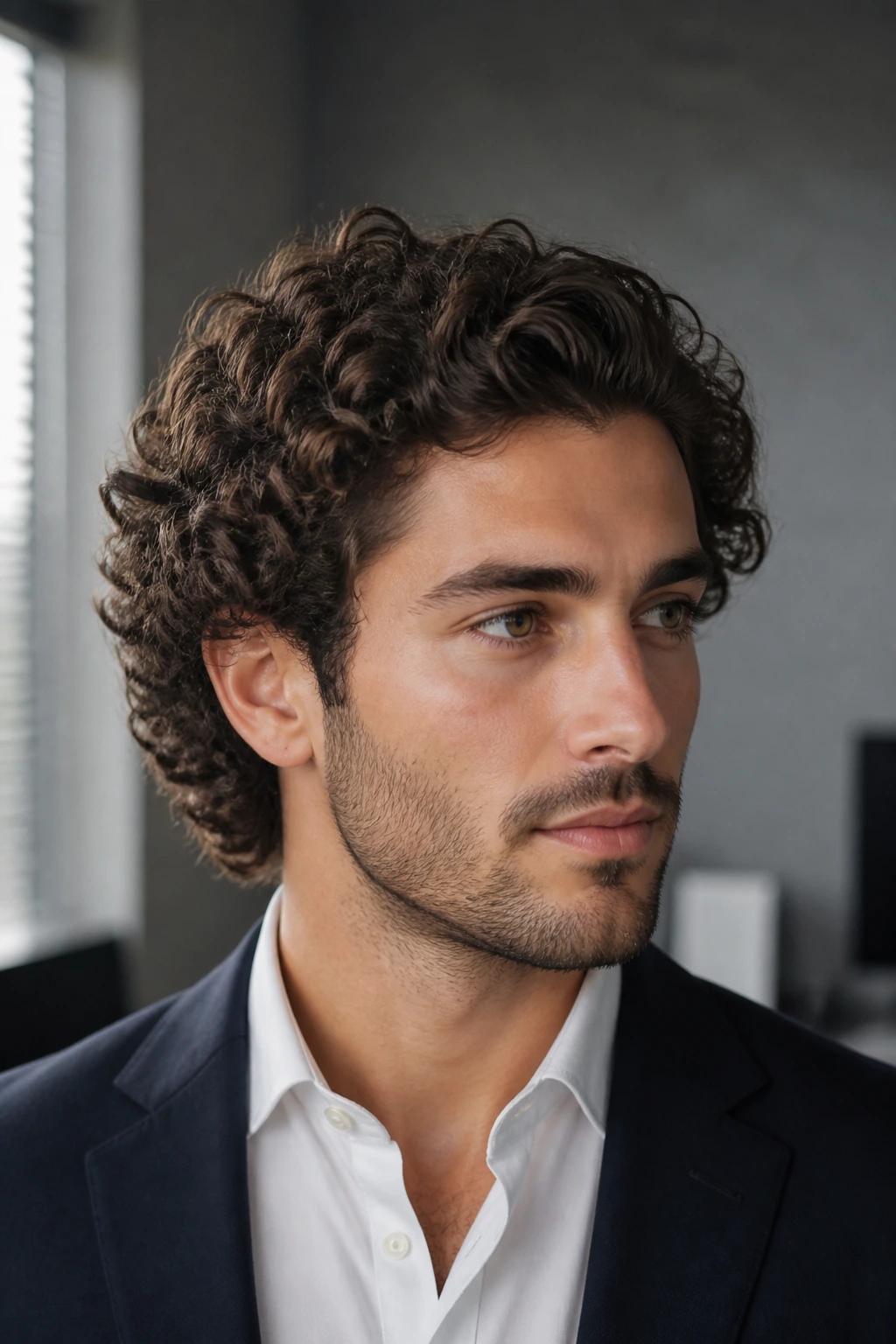
Curly hair does not need to be flattened to look professional. It needs a shape. A clean outline around the ears, neckline, and temples turns a cloud of curls into a deliberate style, and that is a much better use of your texture than fighting it all day.
The key is definition at the edges and restraint at the roots. A curl cream or light gel on damp hair helps the curls clump in tidy groups instead of separating into frizz. Then let the hair dry without shaking it apart too much. Once dry, break up only the top layer if the curls look too stiff.
This is one of the strongest long hairstyles for men for work because it keeps texture visible. That matters. Curls look best when they are allowed to do their thing, but the perimeter has to be managed or the whole look turns messy. A clean neckline, especially, changes everything. It tells the eye where the haircut ends and where the texture begins.
12. Long Hair with Tapered Sides and Back
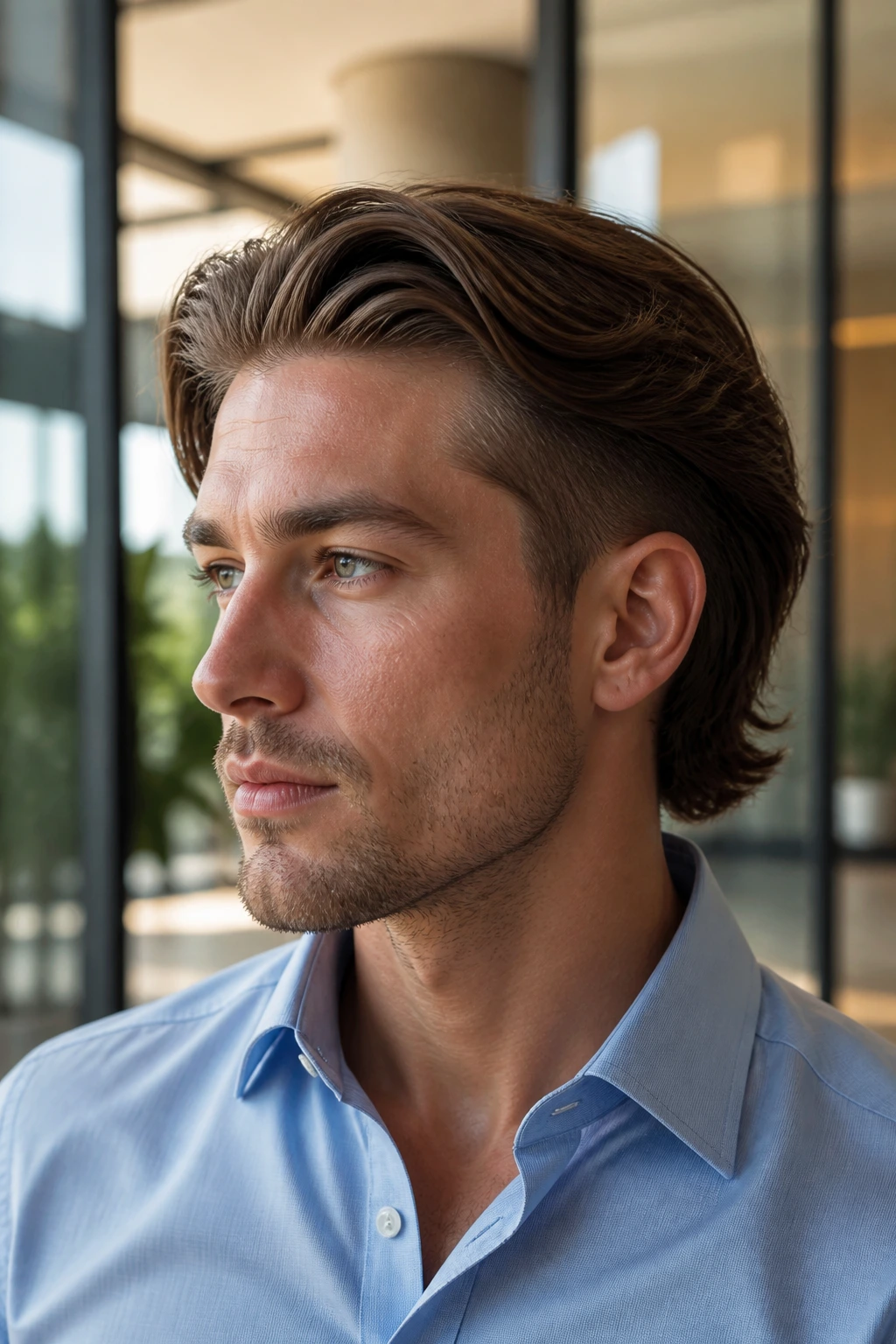
If you want length and neatness in the same haircut, a tapered side and back setup is hard to beat. The top and length stay long, but the lower edges are cleaned up so the silhouette doesn’t balloon out around the ears or collar.
This cut gives you options. Wear it loose on casual days, slick it back for meetings, or tie it low when you need the front out of the way. The taper does a lot of the professional-looking work for you, which is why barbers who know long hair usually like it. It gives the shape a backbone.
Ask for a soft taper rather than a hard fade if you want to keep the style office-friendly. A hard fade can make the contrast too loud unless that is the look you want. The hair on top should still have enough weight to move, because weight is what keeps long hair from puffing weirdly at the sides. Clean edges. Plenty of length. Good trade.
13. Loose Rope Twist
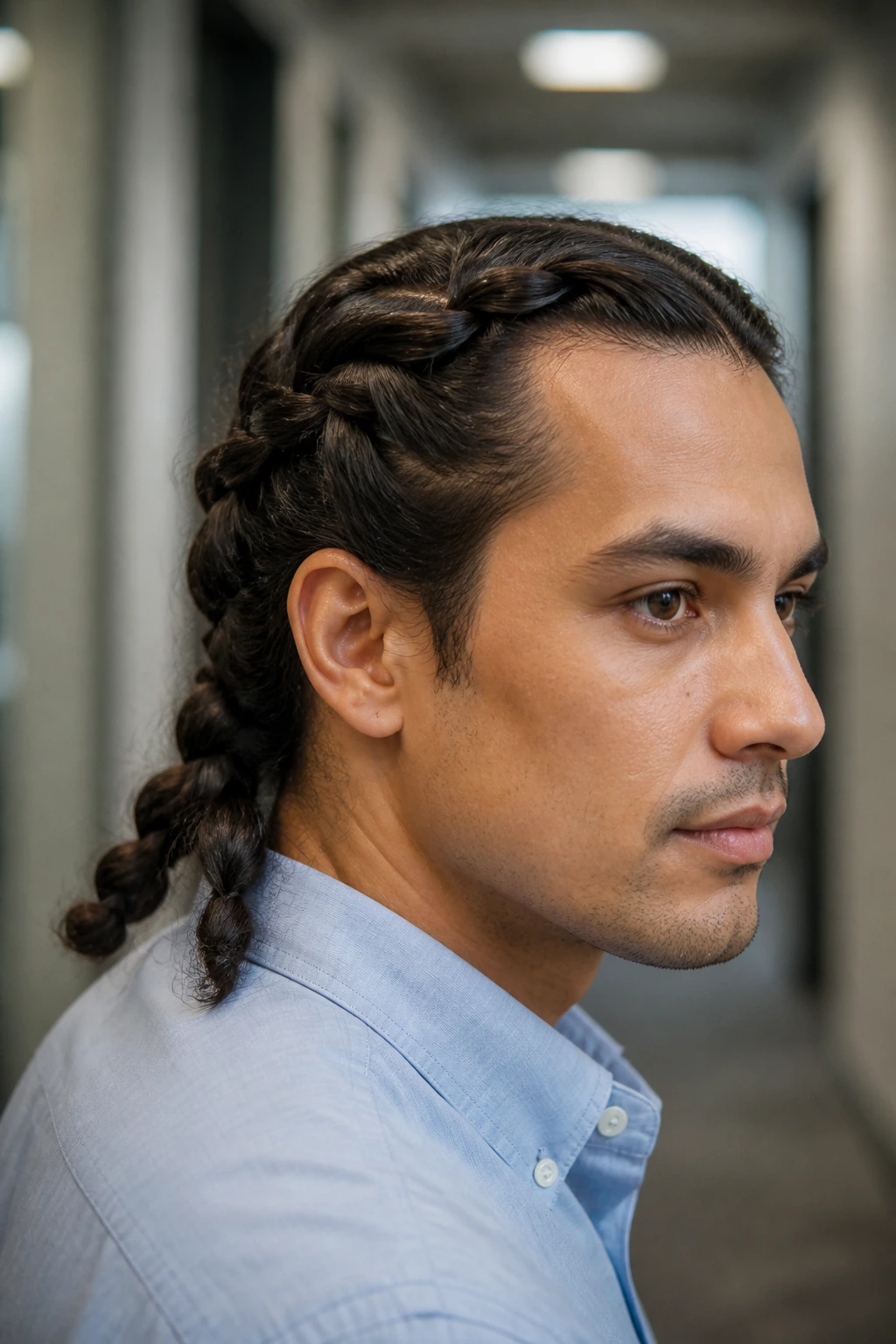
A rope twist is a calmer alternative to the classic braid. It looks a little looser, a little softer, and it doesn’t have the same formal feel as a tight braid down the back. For some offices, that’s the exact right balance.
The twist works best when the hair has some grip. Very slippery hair may need a touch of texturizing spray or dry shampoo first. Divide the hair into two sections, twist each section in the same direction, then wrap them around each other in the opposite direction. The result is neat without looking overworked.
This style is useful when you want the hair contained but don’t want the visual weight of a bun. It’s also easier on the scalp than a tight ponytail if you wear your hair up most days. A rope twist sits well with a collared shirt, especially if you keep the tie end low and tuck it under the jacket collar. Little details. They matter more here than people admit.
14. Wet-Look Push Back
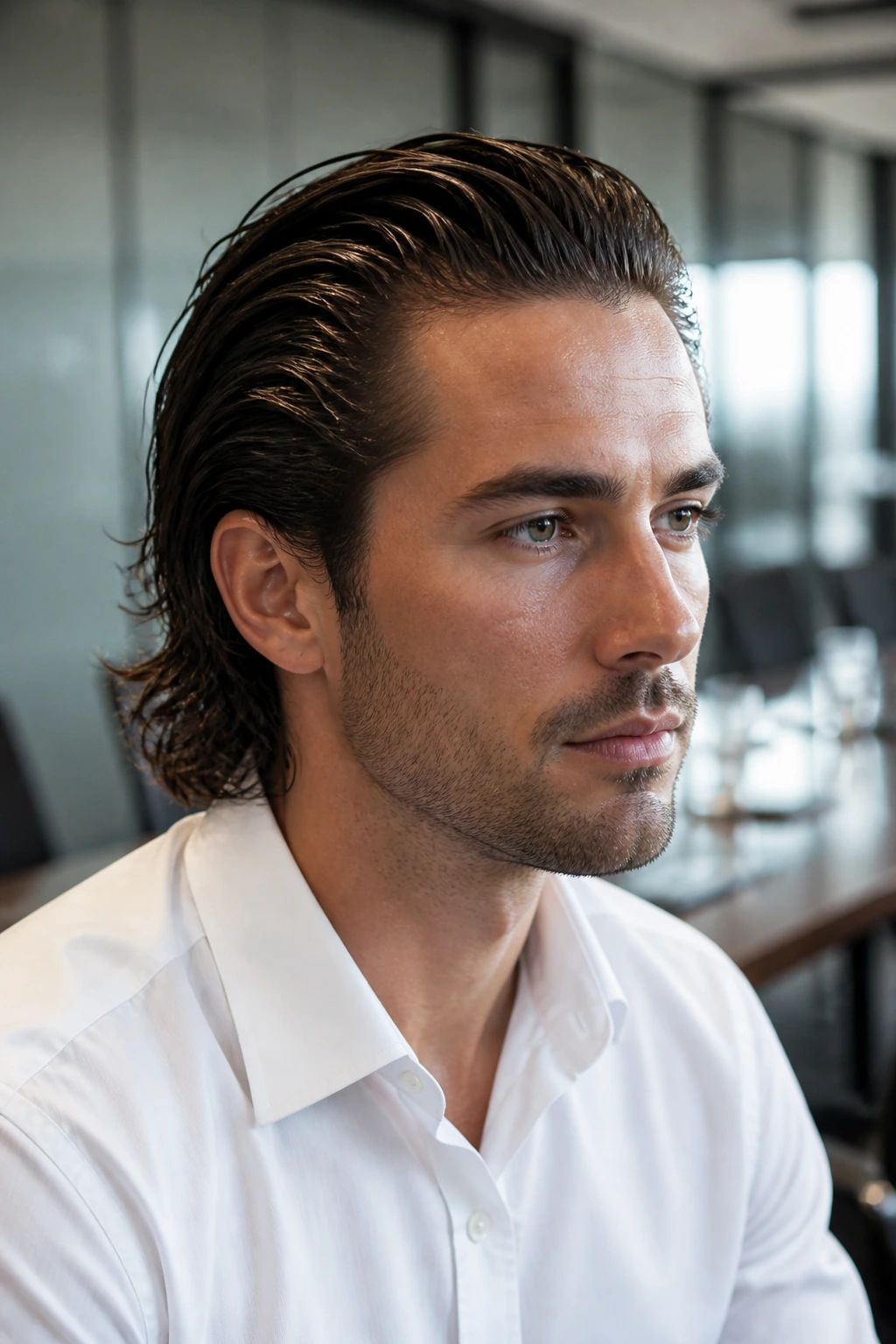
The wet-look push back is one of the most divisive office styles, which is exactly why it can work when done carefully. The key is restraint. Hair should look controlled and glossy, not saturated with product.
Use a light gel or styling cream on damp hair and comb it back from the forehead. The roots should stay smooth, but the ends can keep a little movement so the style does not freeze into a shiny helmet. If your hair is thick or coarse, this can look especially strong because the weight holds the shape. Fine hair needs a lighter hand or it collapses.
This is a good option for presentations, client meetings, or days when you want the hair completely off the face. It pairs well with a crisp shirt because the whole look has a deliberate line to it. Avoid using too much product near the crown. Once the top starts to separate into strands, the style loses its clean edge and starts looking wet in the wrong way.
15. French Braid Back
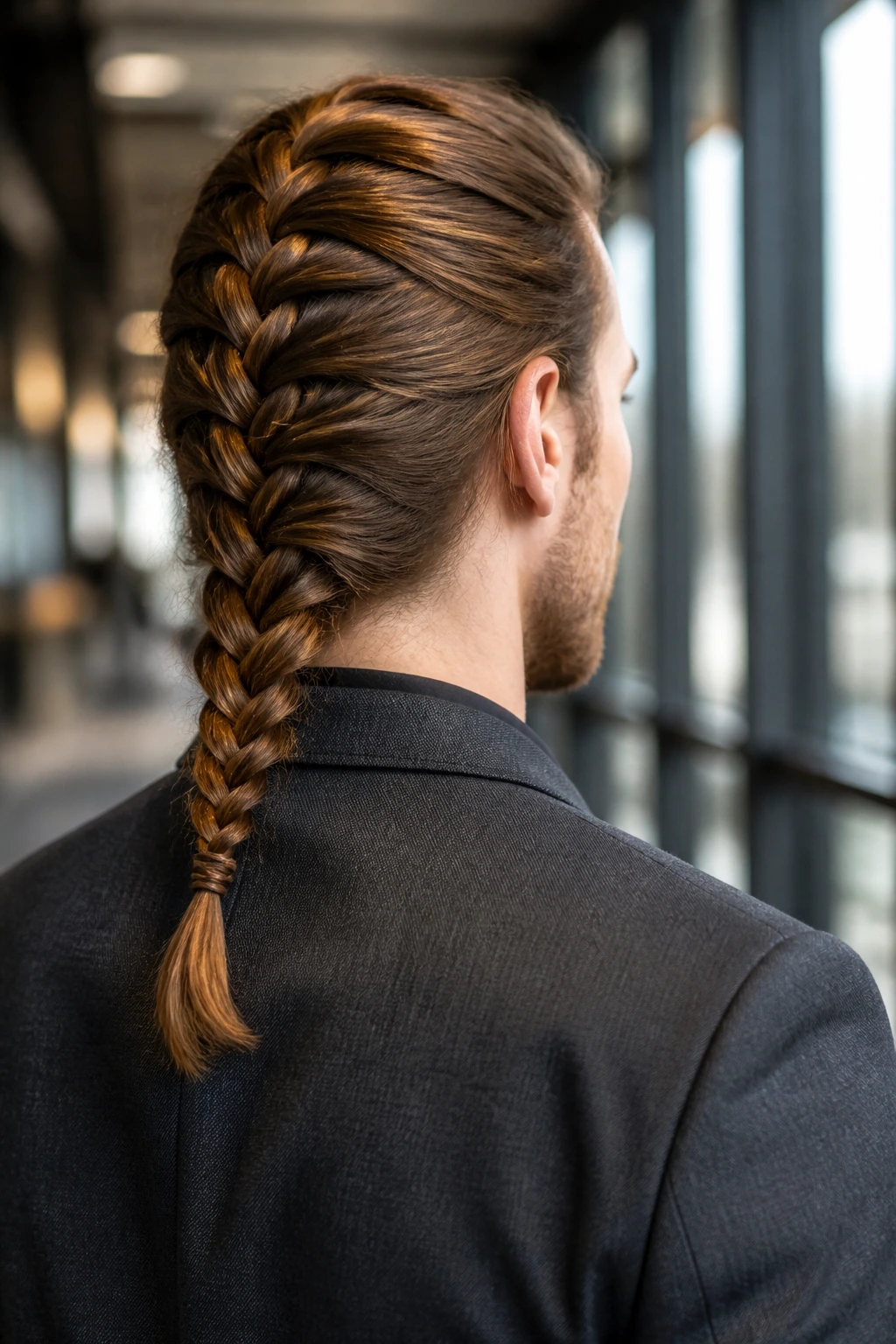
A French braid is more structured than a single braid, and that structure is the whole point. It keeps loose layers from slipping out and gives long hair a disciplined shape from the top of the head down.
This style is especially useful for thick hair that tends to expand around the crown. Because the braid starts at the scalp, it pulls the length close to the head from the beginning. That makes it less bulky under jackets and easier to wear for a full workday without constant adjustment.
It does take a little practice. The sections need to be even, and the braid should stay centered if you want it to look balanced from the front and back. Once it’s in, though, the payoff is huge: no flyaways around the face, no hair falling forward when you lean over, and a look that feels controlled without being stiff. If your office is more formal than casual, this is one of the stronger options in the entire list.
16. Low Tie-Back for Locs
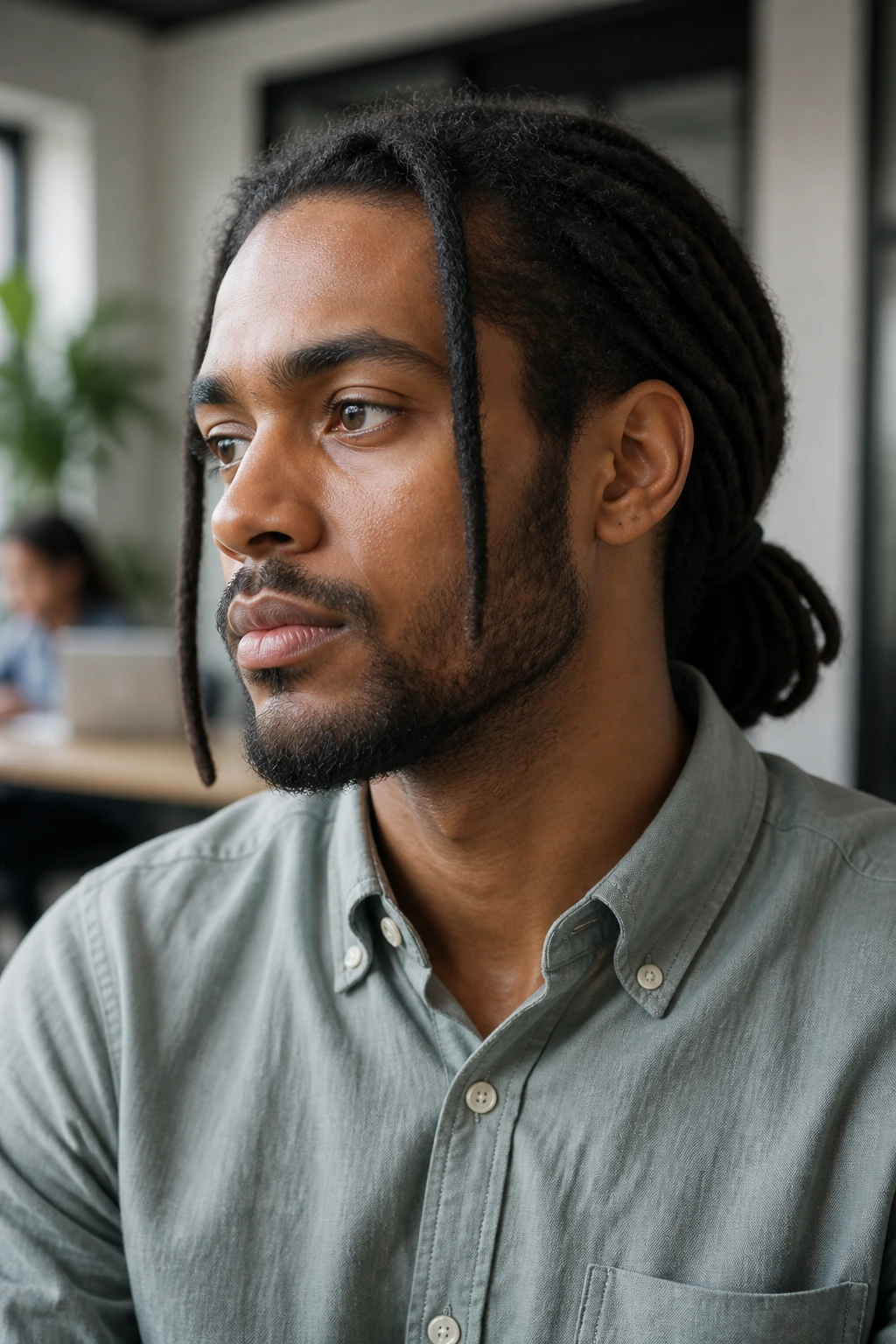
Locs have their own rules, and the office-friendly version is all about shape and edge control. A low tie-back keeps the length secure, shows off the texture, and clears the collar line without flattening the hair into something it isn’t.
The best version sits low at the back of the head or gathers the locs into a neat bundle below the crown. You want the outline to look intentional from every angle. A bit of oil on the scalp and a tidy edge-up around the hairline can make a huge difference here. The style does not need to be shiny. It needs to be clean.
If your locs are long and heavy, keep the tie loose enough to avoid stress at the roots. Use a snag-free band or a wrap that won’t pull hairs out over time. That kind of wear-and-tear adds up. A work hairstyle should help you get through the week, not leave the scalp sore by Wednesday afternoon. Simple rule. Practical result.
17. Shoulder-Length Shag with a Clean Finish
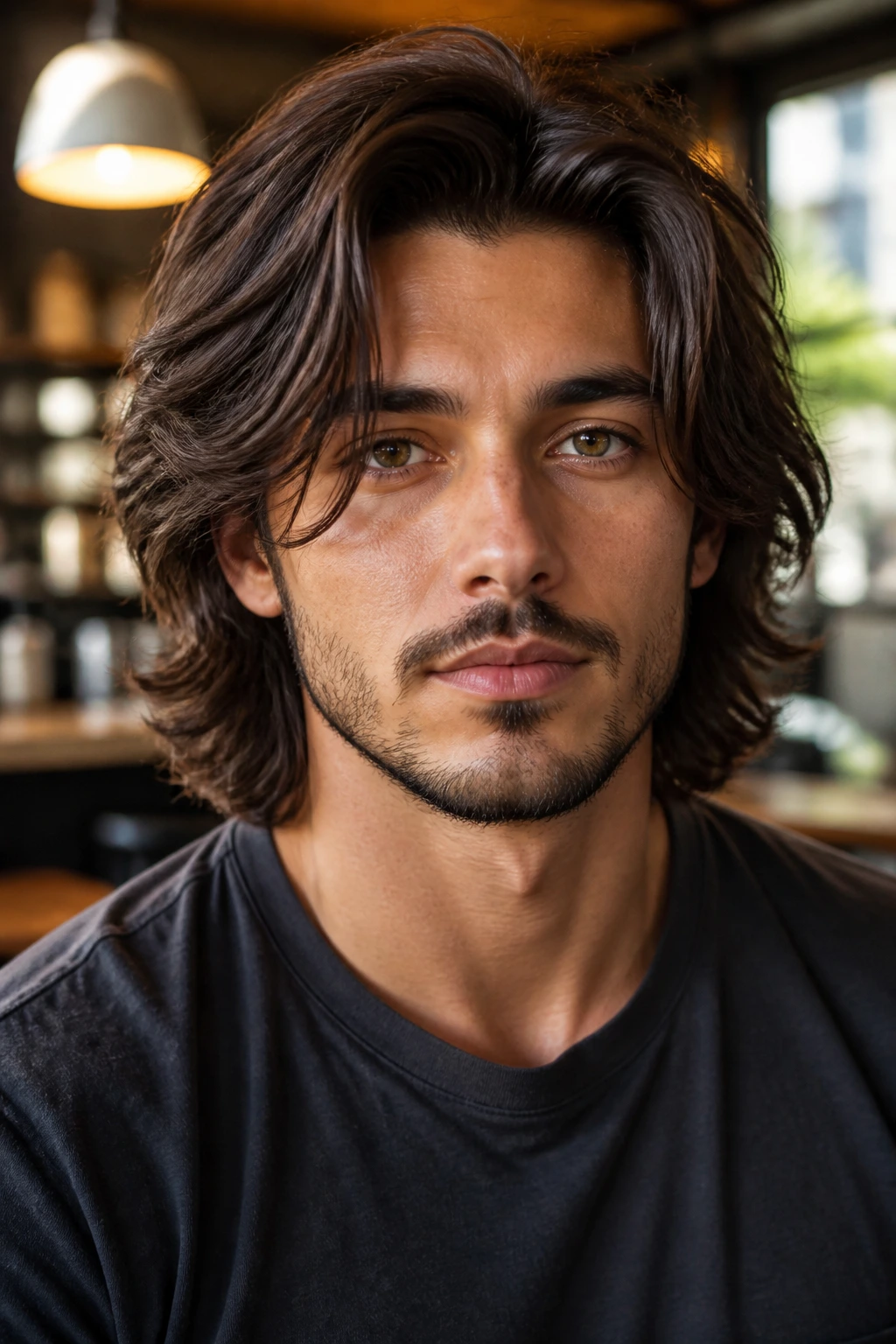
A shoulder-length shag can look rough if nobody trims it, and it can look excellent when the layers are kept in check. That’s the difference between a shape and a mistake. For work, the shag needs a cleaner perimeter, softer ends, and enough layering to keep it moving instead of flaring outward.
This cut suits men who want a little personality without giving up professionalism. The layers break up thickness around the face, and a controlled finish keeps the hair from reading as overgrown. If your hair has natural wave, even better. The cut uses that movement instead of fighting it.
Dry it with your fingers or a diffuser, then smooth the outer layer with a touch of cream. Keep the ends healthy. A shag only looks good when the last few inches are not split and fuzzy. If they are, the whole style loses shape fast. For offices that tolerate a bit of edge, this is one of the most useful long styles around because it has character without chaos.
What Makes Long Hair Read as Work-Ready
The cleanest long hairstyles for men for work all share the same quiet trick: they control the outline. People notice the silhouette before they notice the individual strands. A neat neckline, clear part, and controlled front line do more for professionalism than any expensive product ever will.
Hair length is less important than shape. A shoulder-length cut that sits properly around the ears and neck can look sharper than a shorter cut that sticks up in five directions. That’s especially true in offices with harsh lighting, because stray hairs catch the eye faster under white overhead bulbs than they do in daylight.
There’s also the question of movement. Hair that moves a little reads as healthy. Hair that shifts into your mouth, across your glasses, or onto your collar every ten minutes reads as unmanaged. The sweet spot is shape with a bit of life left in it. No one needs a sculpture.
Tools and Products That Actually Help
-
Wide-tooth comb: Best for detangling long hair after washing without ripping through wet strands.
-
Fine-tooth comb: Useful for sharp parts, cleaner ponytails, and smoothing the front before a tie-back.
-
Boar bristle brush: Good for distributing natural oils and calming the surface on straight or wavy hair.
-
Light cream or grooming lotion: Keeps longer styles soft and controlled without the hard cast of heavy gel.
-
Flexible-hold gel: Handy for slick-backs and wet looks when you want shape that lasts without crunch.
-
Texturizing spray: Helps fine or slippery hair hold braids, rope twists, and half-up styles.
-
Snag-free hair ties: Worth using. Cheap elastics snag ends and create breakage right where long hair is most fragile.
-
Microfiber towel or T-shirt: Dries hair with less friction than a rough bath towel, which means less frizz.
-
Blow dryer with a nozzle attachment: Optional, but it gives the front and part a cleaner finish if you need the style to hold through a long day.
-
Claw clip or simple barrette: Useful for fast office resets when you need the hair off your neck between meetings.
How to Pick the Right Style for Your Hair Type and Dress Code
Straight hair behaves differently from curly hair, and pretending otherwise leads to bad styling choices. Straight hair shows every ridge and every part line, so it benefits from cleaner sections, tighter ties, and a little product to stop it from slipping. If your workplace is formal, a low ponytail, slick-back, or side-part tuck is usually the safest lane.
Wavy hair tends to look best when it isn’t smothered. The wave gives you built-in movement, which means you can get away with a bro flow, half-up style, or low knot without making the hair look stiff. The only trap is frizz at the crown. Tame that, and the rest usually behaves.
Curly and coily hair need shape more than suppression. A clean outline, defined curls, or a low tie-back for locs often reads more polished than trying to flatten everything into submission. Don’t chase a straight-hair finish. It usually backfires.
Dress code matters, too. A creative office will forgive more texture and a little movement. A conservative office tends to reward cleaner parts, lower ties, and less volume around the collar. If you’re not sure where the line sits, start with the most restrained version of the style and add looseness later. That is easier than walking into the room looking like you got dressed in a hurry.
Practical Styling Tips That Keep Long Hair Sharp All Day
Start with the neckline. If the back is tidy, the whole style looks more controlled. I’d clean up the nape first, then worry about the top.
Use less product than you think. Long hair can hold a lot of cream or gel, but that does not mean it should. A pea-sized amount often does more than a palm full, especially on fine hair.
Reset the front before meetings. A damp hand over the part or hairline fixes more problems than a full restyle. The front is what people see first on a screen.
Keep a comb where you work. Desk drawer, bag, car door pocket. Doesn’t matter. The five-second fix is the one you actually use.
Trim the ends before they look desperate. Long hair that reaches the shoulders can start to look frayed faster than people expect. A small trim keeps the shape honest.
Do not ignore collar friction. Shirts, jackets, and lanyards rough up the back of long hair all day. If the ends are getting fuzzy, this is often why.
Common Mistakes That Make Long Hair Look Sloppy
Tying the hair too high: A high knot or ponytail can read sporty or casual in the wrong way. Keep the tie low unless the style is meant to be a bun.
Using heavy product near the roots: The scalp starts to look greasy, and the hair loses movement fast. Put heavier product in the mids and ends instead.
Skipping the outline: Long hair without a clean neckline and temple shape often looks unfinished, even if the length itself is healthy. Small trims matter.
Letting the front collapse into your face: Hair in the eyes changes the whole vibe. If the front keeps falling, adjust the part, the tie, or the layers.
Trying to force the wrong texture: Curly hair slicked flat, fine hair with too much cream, thick hair with no layers — these fights are visible. Work with the hair’s real behavior.
Using worn-out elastics: Old ties snag the ends and leave dents. Snag-free bands cost little and save a lot of irritation.
Variations and Adaptations Worth Trying

The Creative-Office Pullback: Keep the same low knot or ponytail, but loosen the front a little and let some texture stay visible. It reads less formal without losing control.
The Conservative-Office Tuck: For stricter workplaces, wear the hair in a low ponytail or small bun, then tuck the tail beneath the band or under the collar line. Clean and quiet.
The Humidity Fix: If your hair swells in warm weather, lean on braid styles, low knots, or slicked-back finishes. They hold shape better than loose layers.
The Fine-Hair Boost: Add texturizing spray before tying hair back. Fine hair needs grip. Without it, ponytails slip and buns shrink.
The Thick-Hair Tame Down: Ask for more layering around the crown and sides. Thick hair needs room to fold inward instead of puffing out like a triangle.
The Natural-Texture Version: Keep curls, waves, or locs visible, but define the edges with a controlled outline. That way the style keeps personality without looking unfinished.
Keeping Long Hair Fresh Between Wash Days
Long hair usually looks better on the second day than on the first, which is one of the nice little lies grooming gives us. The oils calm down, the shape settles, and tie-back styles often hold more securely. Still, you need a refresh plan.
Dry shampoo works best at the roots, not all over the head. Spray it in from a short distance, wait a minute, then brush or finger-comb it through. If you pile it on the lengths, the hair gets chalky and stiff. That’s not the fix.
For ponytails, knots, and buns, change the placement slightly every day if you can. Same spot, every day, pulls on the same hairs. A small shift keeps the scalp happier. Wash the hair when the roots feel heavy or the ends start looking dull and stringy. For most men with long hair, that means every few days, not every day. The trick is to clean the scalp properly without stripping the lengths into straw.
Questions People Ask Before Wearing Long Hair to Work
Can long hair really look professional in a conservative office?
Yes, if the neckline is clean, the front stays controlled, and the style is tidy rather than flashy. Low ponytails, side-part tucks, and restrained buns usually work best.
What if my hair is too fine for a bun?
Use a low ponytail or half-up style instead, and add a little texturizing spray before tying it back. Fine hair often looks better with shape than with forced volume.
How often should I trim long hair if I wear it to work?
The exact timing depends on your ends, but once the tips start fraying or the shape loses its outline, it’s time. Long hair at work looks best when the silhouette stays deliberate.
Is a man bun still office-appropriate?
A low, neat bun usually is. A high or messy bun can drift into casual territory fast, especially if the room is formal.
What if my hair keeps slipping out of ponytails?
You probably need more grip. A little texture spray, a drier starting point, or a better elastic usually fixes it.
Should I part my hair in the middle or on the side?
Middle parts look balanced and clean on many face shapes, while side parts can soften strong features or help hair stay out of one eye. Pick the one that stays in place.
Can curly hair wear long styles to work without looking frizzy?
Absolutely. Define the curl pattern, shape the edges, and stop trying to flatten it into straight hair. Frizz usually gets worse when you fight the texture instead of supporting it.
A Clean Finish

Long hair at work works best when it looks chosen, not tolerated. That is the whole game. Whether you wear a low knot, a braid, a slick-back, or a shoulder-length sweep, the style should clean up the neckline and make the face easier to read.
The smartest move is to pick one style that fits your hair’s natural behavior, then learn the two or three tiny fixes that keep it from drifting off course. A better part. A cleaner nape. Less product than your instincts want. Those details do the heavy lifting.
The Final Word
If your office leaves room for long hair, use it. There are more ways to look composed with long hair than most men ever try, and the best versions usually look simpler than people expect.
Choose the style that works with your texture, keep the edges neat, and the rest falls into place.
