



Medium length hairstyles for men sit in the most useful part of the haircut spectrum. The top is long enough to bend, sweep, tuck, part, or rough up with your fingers; the sides can stay neat without making the whole thing look like a helmet. That range is why this length works for straight hair, wavy hair, curly hair, thick hair, and the odd cowlick that refuses to behave no matter how politely you ask.
A cut in this range usually lives somewhere around 3 to 6 inches on top, sometimes a little longer through the fringe or crown. That’s enough hair for shape, not so much that it turns into a full-time project. The trick is that medium length hairstyles for men are never just about the cut itself. They’re about direction, density, and finish — whether you dry it forward, back, sideways, or let it fall on its own.
I’ve always liked this length because it gives you options without demanding drama. A barber can leave the top textured, keep the sides tapered, and suddenly the same head of hair can read polished on Monday, casual on Friday, and slightly undone in the best possible way on Sunday. The styles below cover the cleanest, easiest, and most wearable versions of that sweet spot, plus the ones that handle waves, curls, and awkward growth better than most guys expect.
Why These 17 Cuts Work Better Than Short Crops

- They give you room to change the finish: A 4-inch top can be dried flat, pushed up, or worn loose, which means one cut can cover more than one mood.
- They hide growth better: When the haircut starts to grow out, medium length usually softens instead of collapsing into a hard shape.
- They show texture instead of shaving it away: Waves, bends, and curls finally have something to do.
- They play well with beards: A tapered side and a medium top create balance without making the face look crowded.
- They’re easier to personalize: A small change in fringe length, side taper, or product changes the whole read of the cut.
- They work in real life: You can wash, dry, and leave the house without spending 25 minutes arguing with a comb.
1. Curtain Part With Tapered Sides
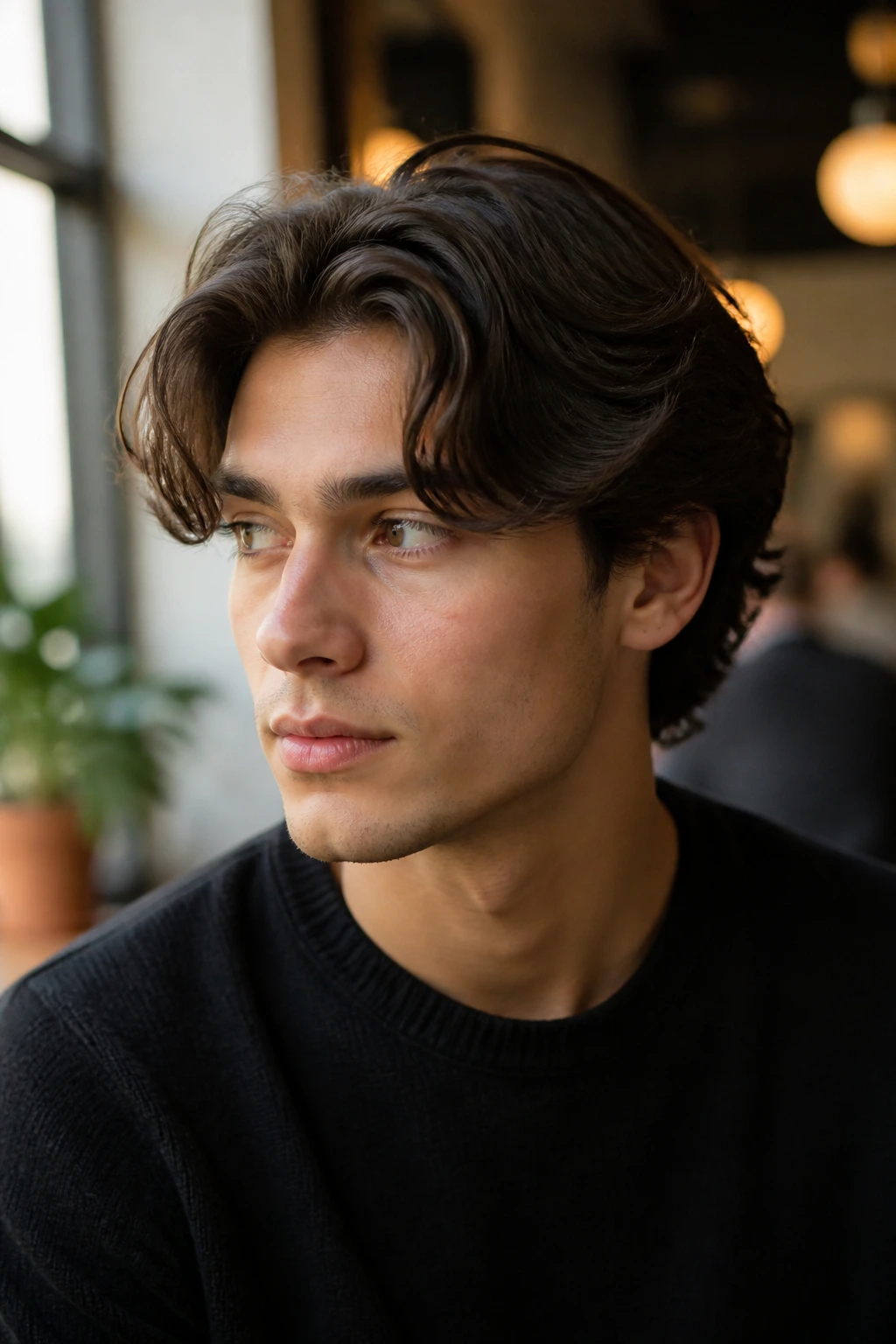
Curtains live or die on movement. If your hair falls forward naturally and splits near the middle on its own, this cut feels almost unfair in how easy it is to wear. The top needs enough length to drape — usually around 4 to 6 inches — while the sides stay tapered so the whole shape doesn’t puff out at the temples.
Why it works so well
The middle part gives the face room, and the taper keeps the haircut from looking blocky. On straight or slightly wavy hair, a quick blow-dry with your fingers can build that soft, parted fall that looks deliberate without being stiff. On denser hair, a little matte cream keeps the curtain from splitting into two heavy slabs.
A good curtain cut should move when you turn your head. If it sits like a sheet, the sides are probably too bulky or the fringe is too blunt.
Best for: oval, oblong, and heart-shaped faces.
Product note: a light cream or sea salt spray beats heavy pomade here.
Barber cue: ask for a soft center part, layered top, and low taper around the ears and neckline.
2. Bro Flow
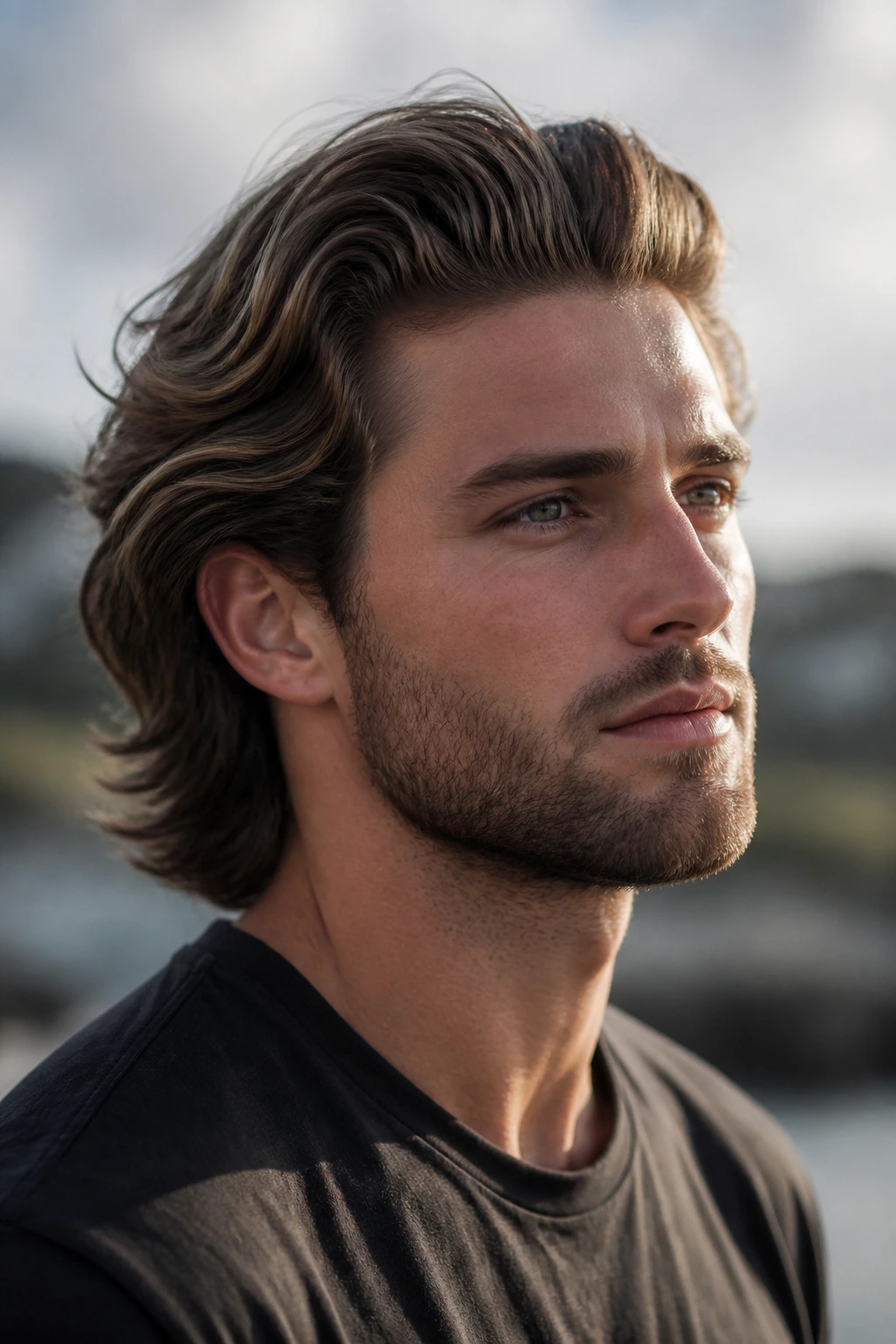
Bro flow sounds casual because it is, but don’t mistake that for shapeless. The best version has a clean silhouette through the back and sides, then lets the top and crown sweep rearward in a relaxed line. It’s the style that looks like you stepped out with air-dried hair, even when you did a little work.
You need patience for this one. The hair should be long enough to move backward without sticking up in random points — usually 5 inches or more, depending on texture. Thick hair does well because it holds flow. Fine hair can still work, but it needs a bit of root lift and a cut that removes excess weight near the ends.
What matters most: the neckline. If the back is too square, the style loses that easy movement and starts looking dated fast. A softer taper keeps it current. A tiny amount of cream or leave-in conditioner helps the ends sit together instead of frizzing apart.
3. Side Part Sweep
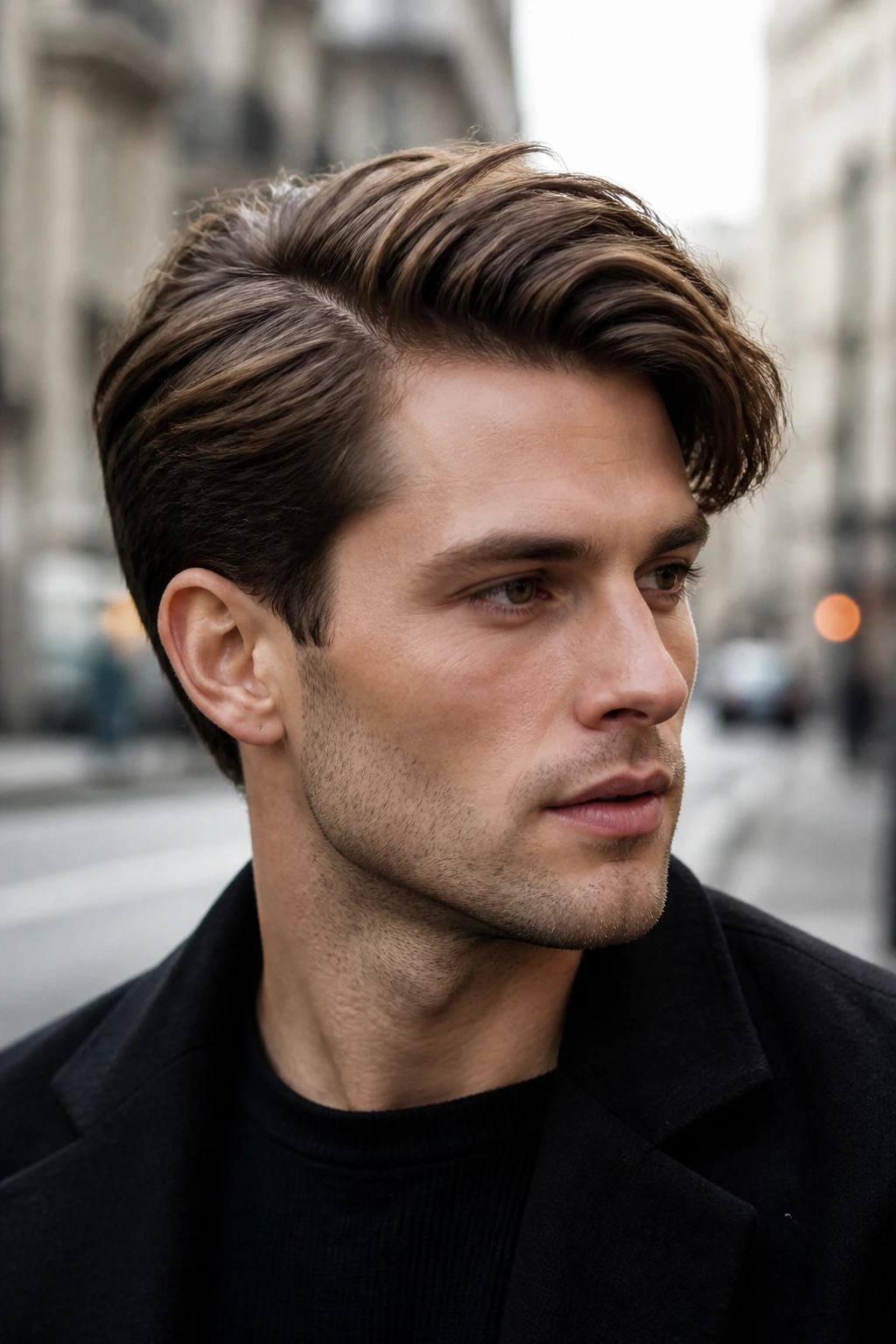
Need something that looks settled without feeling boring? This is the one. A side part sweep gives you the structure of a classic cut with enough length on top to avoid that helmet-like shine you get from old-school comb-overs.
The best side part sweep leaves about 3 to 5 inches on top, with the front slightly longer than the crown. That lets the hair fall across the head in a controlled diagonal, which is much kinder to receding corners, cowlicks, and hair that refuses to sit flat.
The part matters
A hard part line can look sharp, but a soft part usually ages better and gives the cut more room to move. Keep the sides tapered rather than clipped too high, or the top starts looking disconnected from the rest of the head.
Use a comb for precision and a little matte paste for hold. Too much shine and the style can look like you’re heading to a wedding you didn’t want to attend.
4. Matte Slick Back
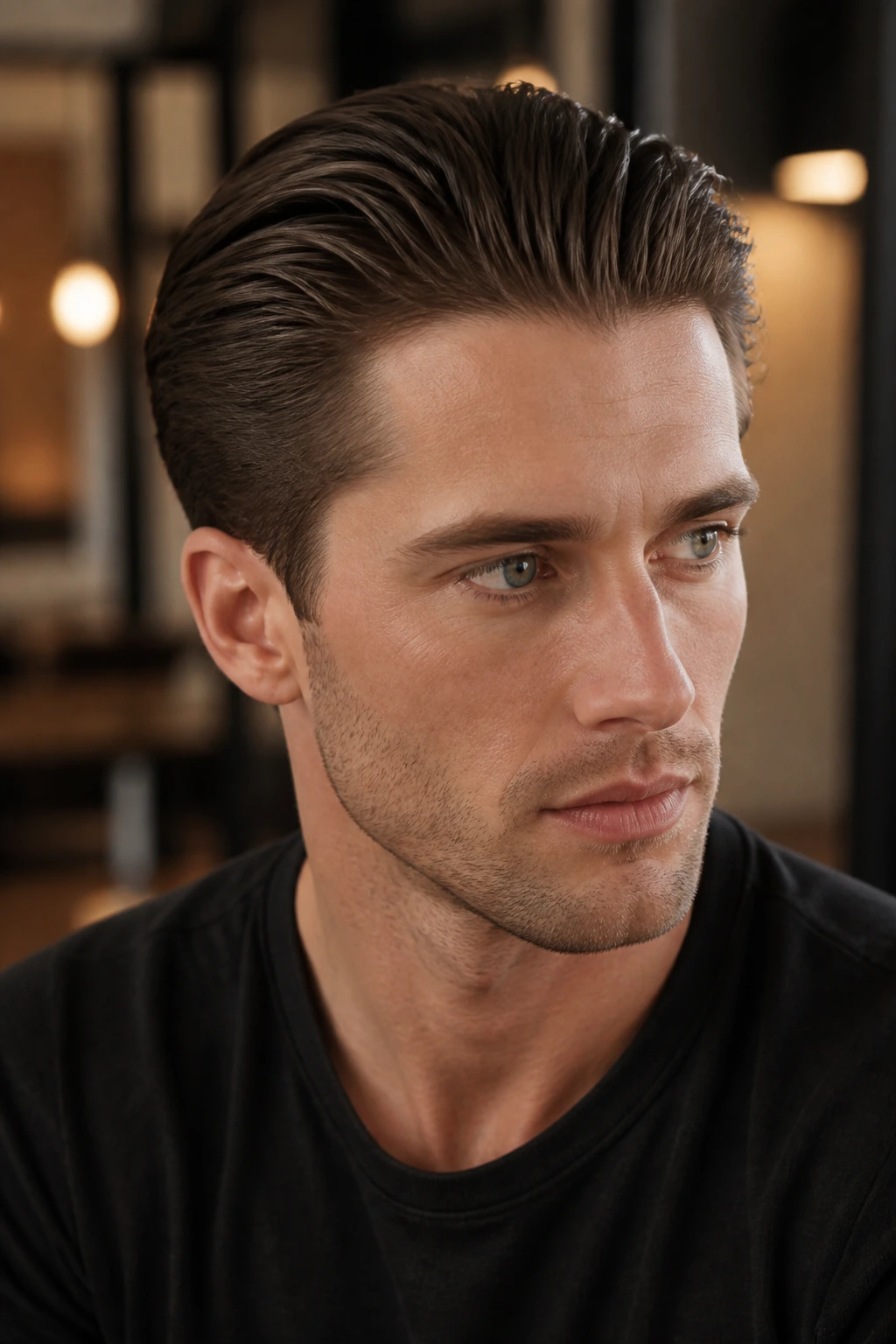
A slick back works best when the hair has enough length to sweep rearward but not so much that it starts folding over itself in heavy waves. That sweet spot is usually around 4 to 6 inches on top, with the sides tapered or faded low enough to keep the head shape clean.
I like the matte version because it feels less formal and less greasy. A glossy slick back can look sharp in the right setting, but matte finish hair feels more modern and easier to wear under bad lighting, which is most lighting, if we’re being honest.
Dry the roots backward with a blow-dryer and a nozzle attachment before you add product. If you skip the direction-setting part, the front will fight you all day. The best product here is a medium-hold clay or paste, worked into damp hair, then combed back loosely so it keeps a little separation instead of turning into one smooth panel.
5. Wavy Fringe
Waves and fringe get along in a way straight hair never quite can. A wavy fringe gives the forehead some coverage, but it doesn’t sit like a blunt slab if the cut is layered properly. That slight irregularity is the point.
This style looks best when the front is left a touch longer than the rest of the top. The fringe can fall forward in broken pieces, and the sides should stay tidy enough that the shape still frames the face instead of swallowing it. If your hair bends naturally, this cut can feel almost effortless. If it doesn’t, don’t force it — the whole thing depends on a loose, imperfect line.
Best styling move: scrunch a little sea salt spray into damp hair and let the fringe dry with your fingers instead of a brush.
What to avoid: heavy gel. It kills the movement and makes the fringe look wet in a way that never reads intentional.
6. Modern Shag
The modern shag is for men who want texture to be the point, not an accident. Layers do the heavy lifting here. The hair sits at medium length through the top and crown, with pieces cut to different lengths so the end result looks lived-in instead of chopped into one flat line.
This cut is especially good on dense hair, wavy hair, and hair with a natural bend. The layering removes weight, so the top doesn’t balloon out. A little fringe at the front keeps the cut from feeling too loose around the face, and the neckline can stay clean or slightly feathered depending on how rough you want the finish to feel.
Nope, this is not a lazy grow-out. A good shag still needs shape. Ask for movement through the crown and around the cheekbones, not random thinning everywhere. The difference is huge.
7. Curly Top With Tapered Sides
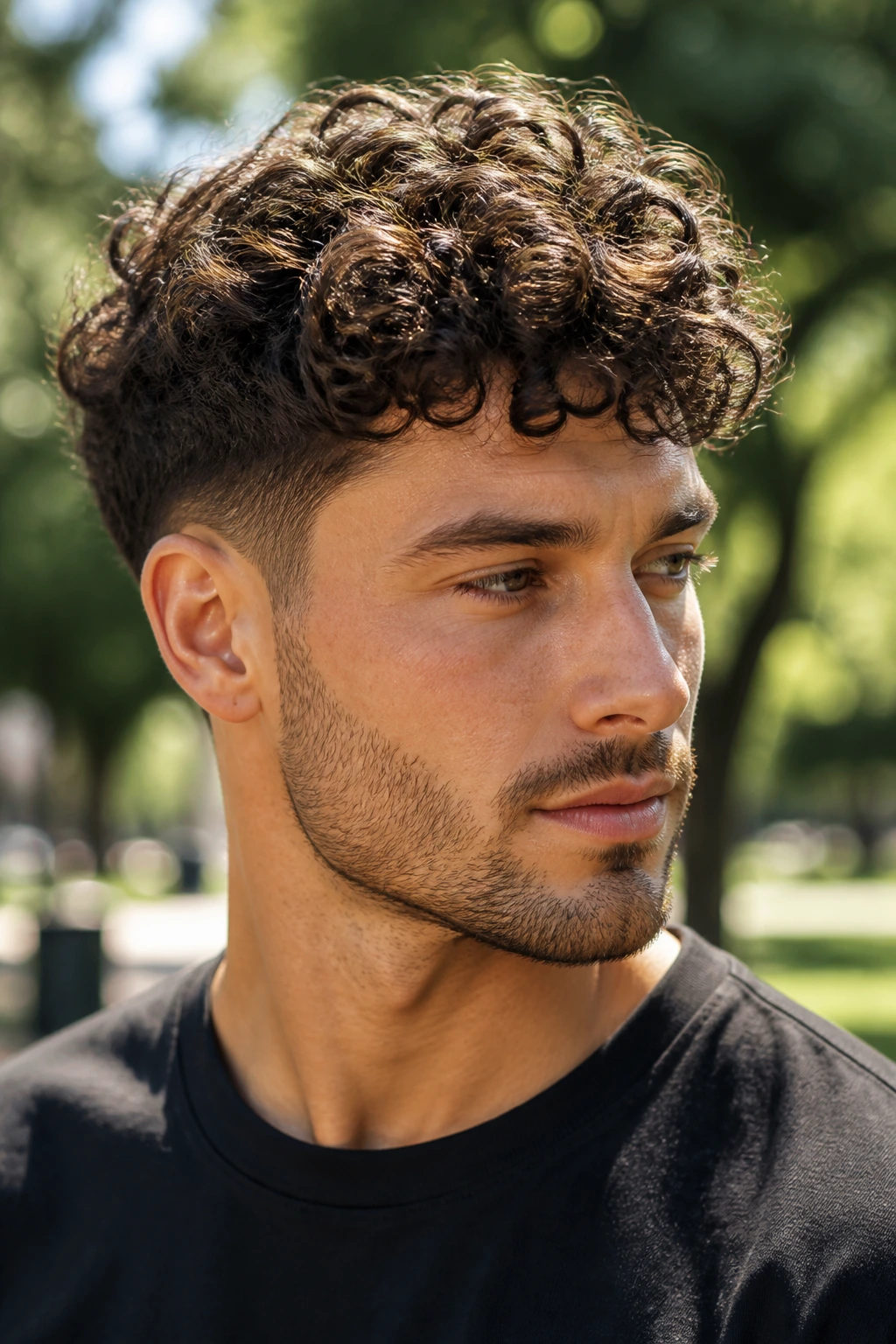
Curly hair gets better once it has enough length to form an actual curl pattern. That’s why a medium curly top can look sharper than a short crop with the same texture. The curls have room to stack, spring, and fall instead of sticking straight out from the scalp.
The sides should stay tapered low or mid-low, because a harsh fade can make the top look too top-heavy if the curls are tight. On looser curls, a bit more length through the sides keeps the shape round. On tighter curls, a careful taper keeps the outline neat without cutting the personality out of it.
Styling note
Leave the hair damp, work in curl cream, and then either air-dry or diffuse on low heat. High heat pulls moisture out fast and leaves curls fuzzy at the ends. A wide-tooth comb is better than a brush once the curls have started to set.
8. Loose Quiff

A loose quiff gives you lift in the front without turning the hair into a stiff wave. That front section is the whole show — usually lifted 1 to 2 inches above the natural fall, then softened so it doesn’t look overworked. The rest of the top stays medium and textured.
The reason this works on medium length hair is simple: there’s enough length to build height, but not so much that the front starts drooping under its own weight. Thick hair does this easily. Fine hair needs a blow-dryer and a root-lifting product, or the quiff will vanish before lunch.
Use your hands more than a comb if you want the shape to stay relaxed. A comb makes the edges too neat. A matte paste or clay keeps the front from collapsing while still letting a few strands break away. That broken-up finish is what keeps the cut from looking formal.
9. Middle Part Flow
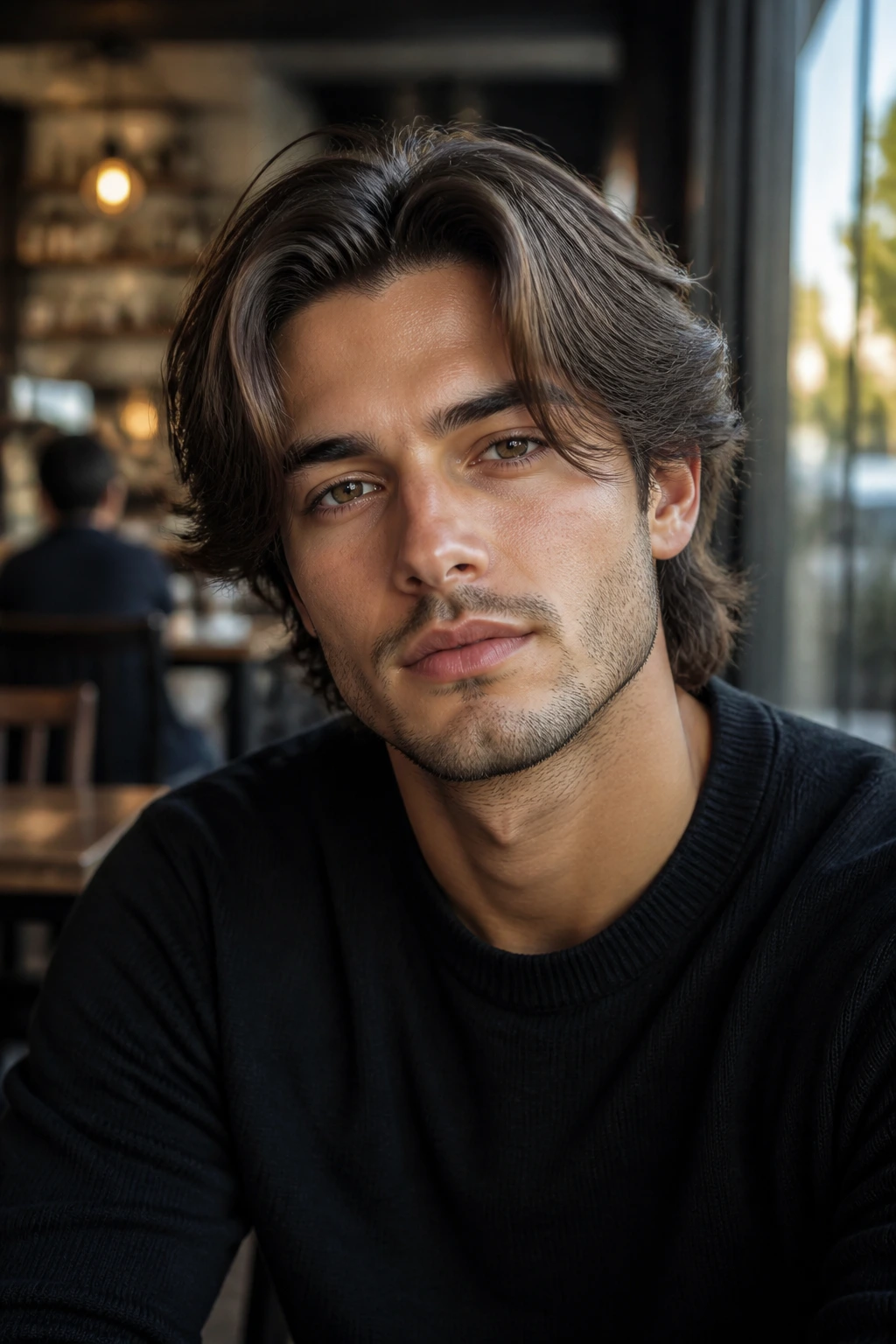
Middle parts can be divisive, which is a nice way of saying some guys are scared of them. The truth is, a center part on medium length hair gives symmetry that a side part can’t always match. If your face is fairly even and your hair has any natural movement at all, the result can look clean without trying too hard.
The trick is not forcing the part into a razor-straight line unless your hair naturally wants to sit that way. A softer middle part with slight bend at the ends looks more natural and less costume-like. Let the top and fringe sit around the cheekbones, and keep the sides gently tapered so the face doesn’t disappear behind the hair.
A middle part gets better when the ends are healthy. Split ends make the whole thing look tired. Trim them before they travel up the strand.
10. Brush Back Taper
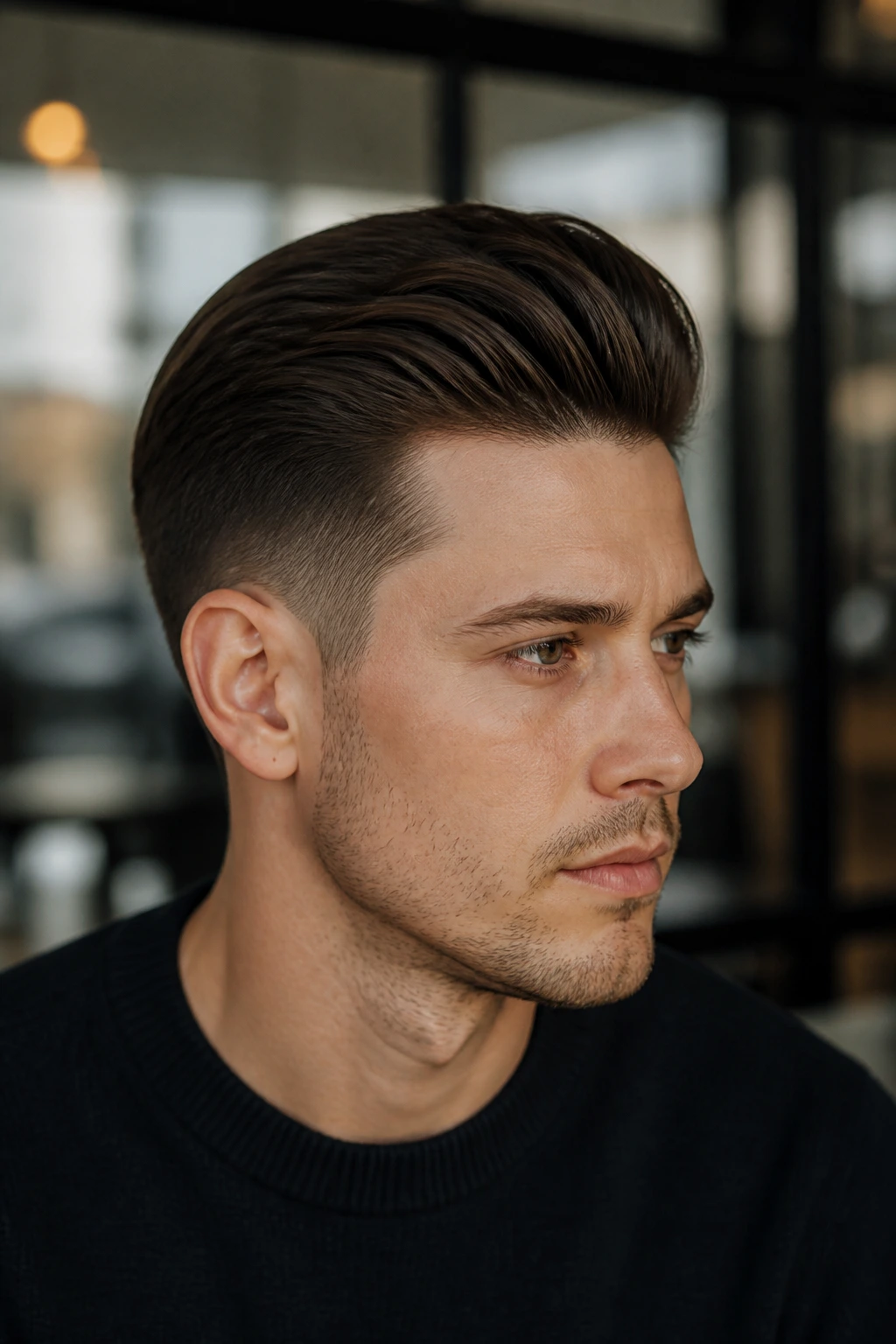
Brush-back styles feel structured, but the best ones don’t look frozen. Medium length hair gives you enough surface area to brush the top away from the face while keeping some softness through the crown. A low taper on the sides keeps the silhouette tidy and stops the cut from ballooning.
This is a good option if your hair is straight or slightly wavy and you want a cleaner shape than a curtain or shag. It’s also one of the easiest styles to move between casual and formal settings, because the finish can go from matte to low-shine with nothing more than product choice.
A quick note: if your hairline has strong corners, brush-back styles can expose them. Sometimes that’s fine. Sometimes it isn’t. Adjust the front by leaving a little more length and letting the hair fall back at an angle instead of straight off the forehead.
11. Surfer Layers
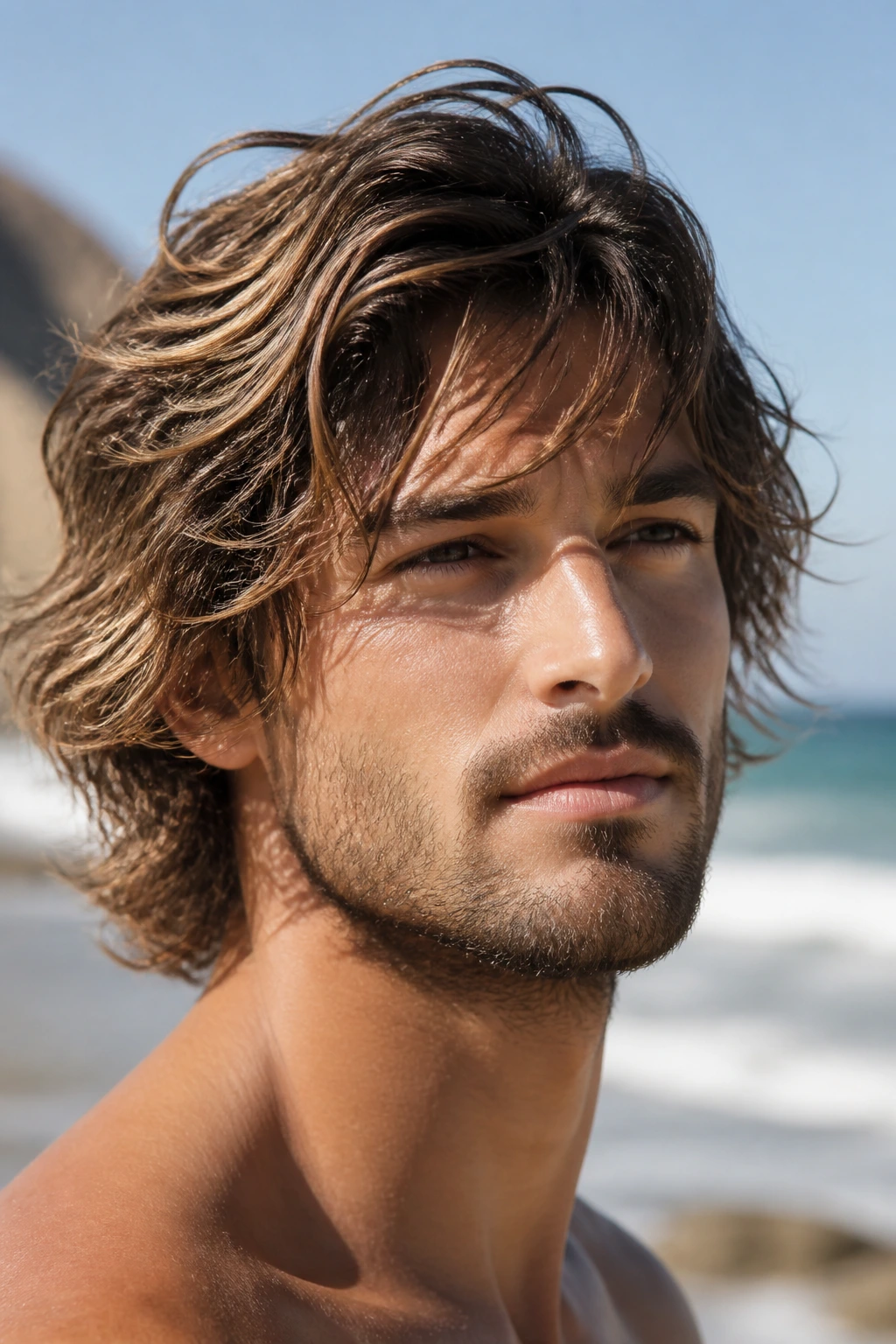
Surfer hair is not the same thing as long hair with no plan. Good surfer layers have movement through the ends, softer weight at the crown, and enough uneven texture to look like the hair has been pushed by wind and salt, not a flatiron.
Medium length is the sweet spot for this style because it keeps the flow without turning into shoulder-length maintenance. The hair usually sits loose around the ears and neck, with layered ends that break up the outline. It works especially well on wavy hair, but straight hair can borrow the shape if the cut has enough texture and a bit of sea salt spray.
Keep the finish dry, not crunchy. That’s the whole trick. If the hair clumps into hard spikes, you’ve gone too far with product. A soft cream or salt spray and a rough towel dry are usually enough.
12. Soft Mullet
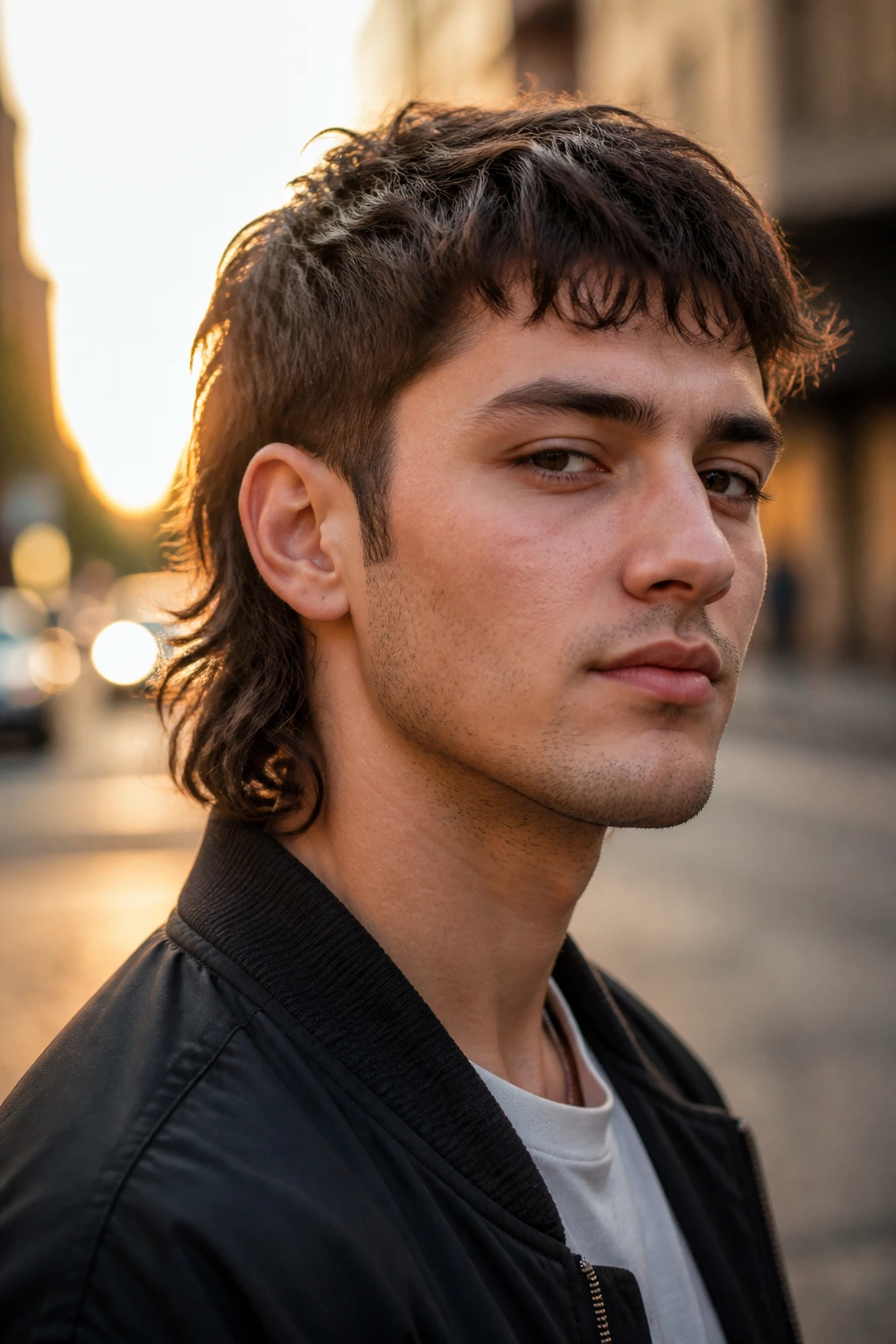
The soft mullet is for men who want edge without turning the whole cut into a statement piece. The shape is simple: shorter through the front and sides, longer through the back, but blended enough that it feels wearable. The contrast should be there. It just shouldn’t shout.
Medium length makes this style easier to control because the transition from crown to nape can be kept gradual. If the back is too long and the top too short, the haircut starts looking accidental. Keep the layers connected and ask for a softer shift rather than a hard disconnect.
This cut is better than people think on wavy or thick hair. The natural texture helps blur the lengths together. On straighter hair, you’ll need some product and a bit of deliberate messiness, or the back can look too flat.
13. Textured Comb Over
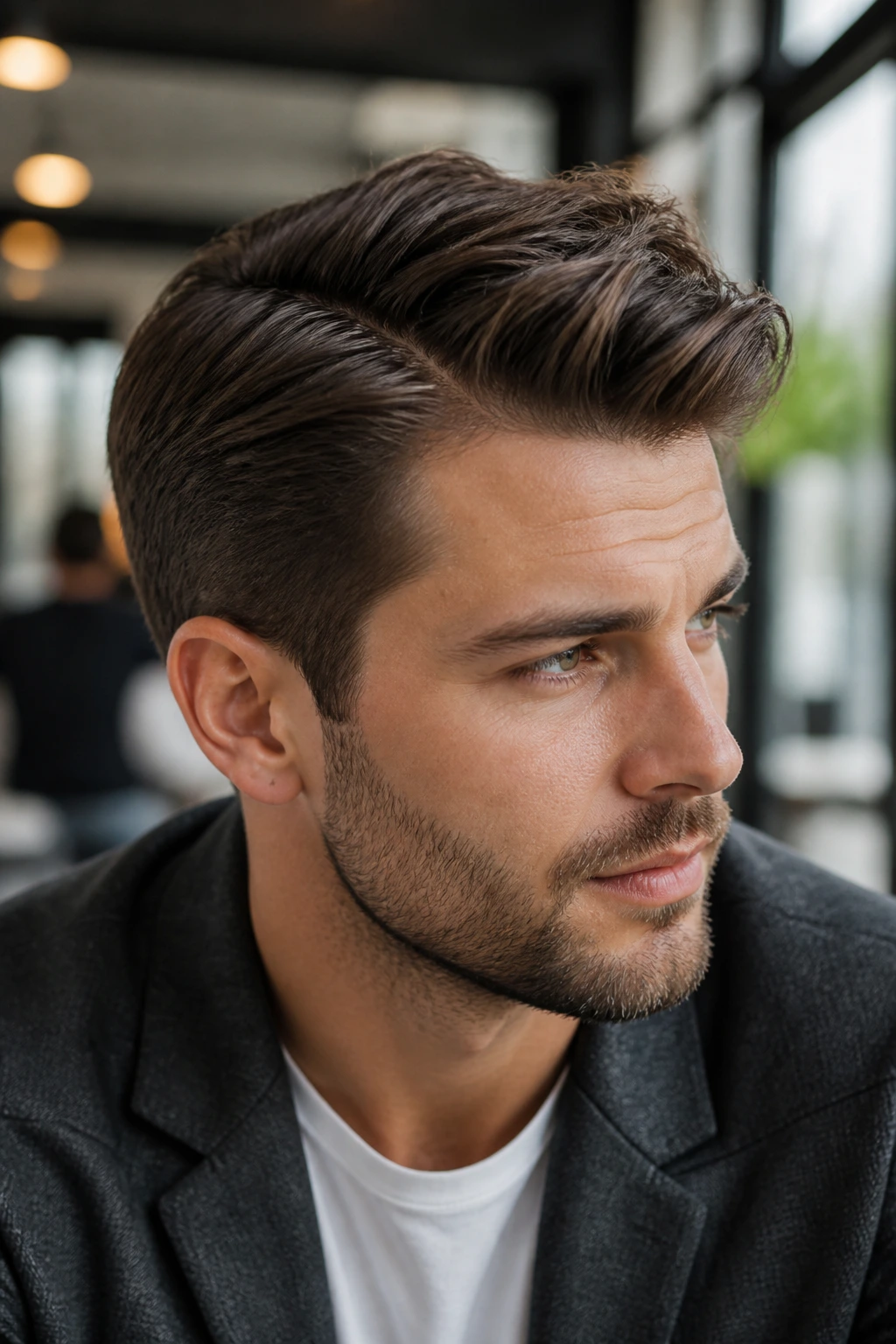
A comb-over gets a bad reputation because people picture the old version: severe part, hard shine, and a shape that tries too hard to cover something. A textured comb over is different. It uses medium length on top to sweep hair across without making the finish look lacquered.
The key is texture at the ends. You want the top to move, not sit as a shiny slab. A side part helps guide the direction, but the front should break up a little when you run your hand through it. Keep the sides tapered low so the top has enough contrast to stand out.
This is one of the best medium length hairstyles for men with fine or medium density hair that needs a bit of visual fullness. A matte clay works better than a wet pomade almost every time. Wet shine makes the part look too obvious and exposes the scalp faster.
14. Tucked-Behind-Ear Length
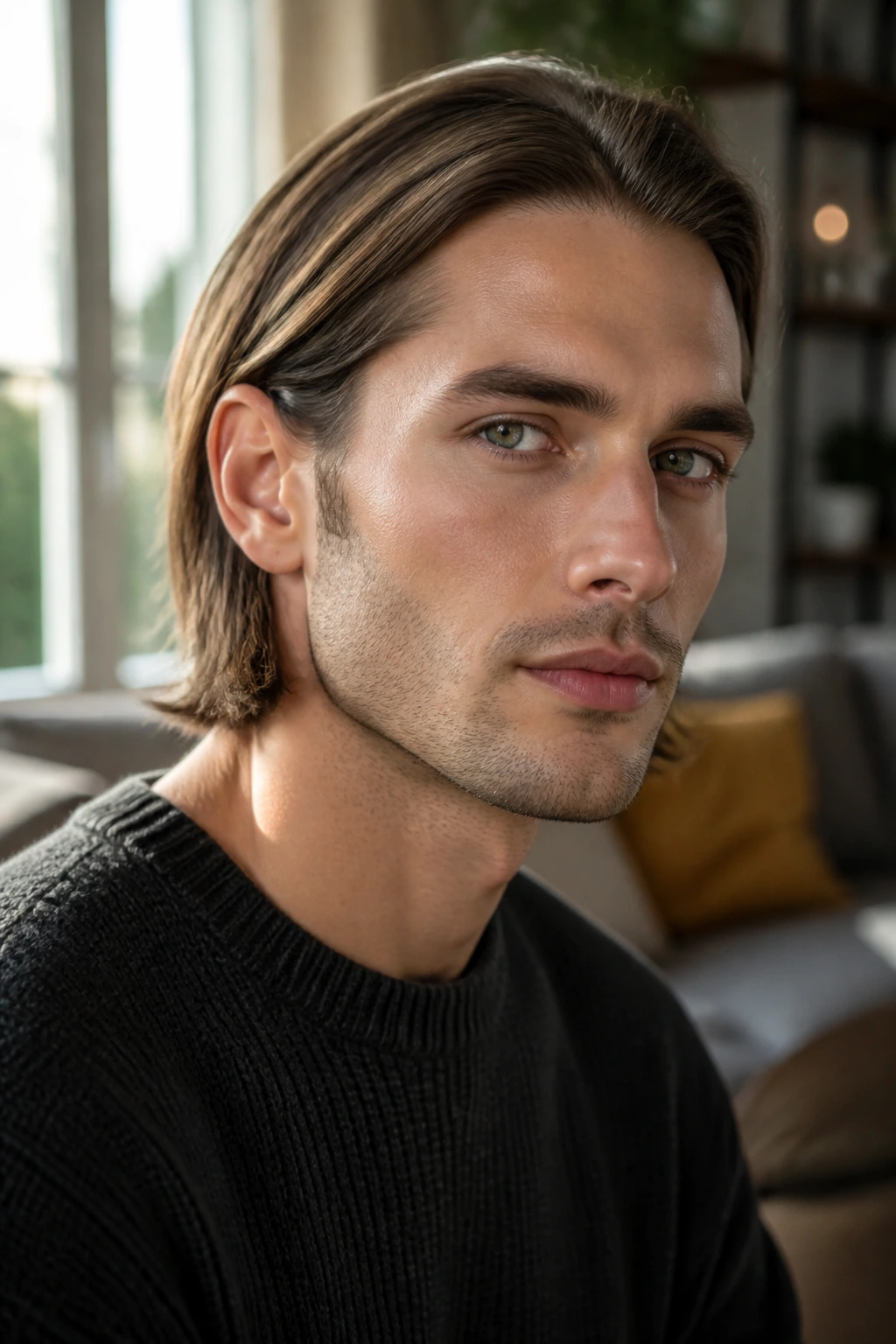
This one sits at the longer end of medium, which is why it looks so relaxed when it’s done well. Hair brushes the ears, touches the jawline in the front, and still keeps enough structure that it doesn’t drift into full long-hair territory.
The tucked-behind-ear look works because it lets the hair do some of the styling on its own. You only need enough layering to stop the sides from puffing out. Straight and wavy hair handle this shape best, though curly hair can do it too if the length is even and the bulk is controlled near the temples.
A lot of guys cut this style too short too soon. Resist that urge. The line around the ears is what gives it character. If you trim it up every time it starts touching your collar, you lose the whole point.
15. Ivy League Grow-Out
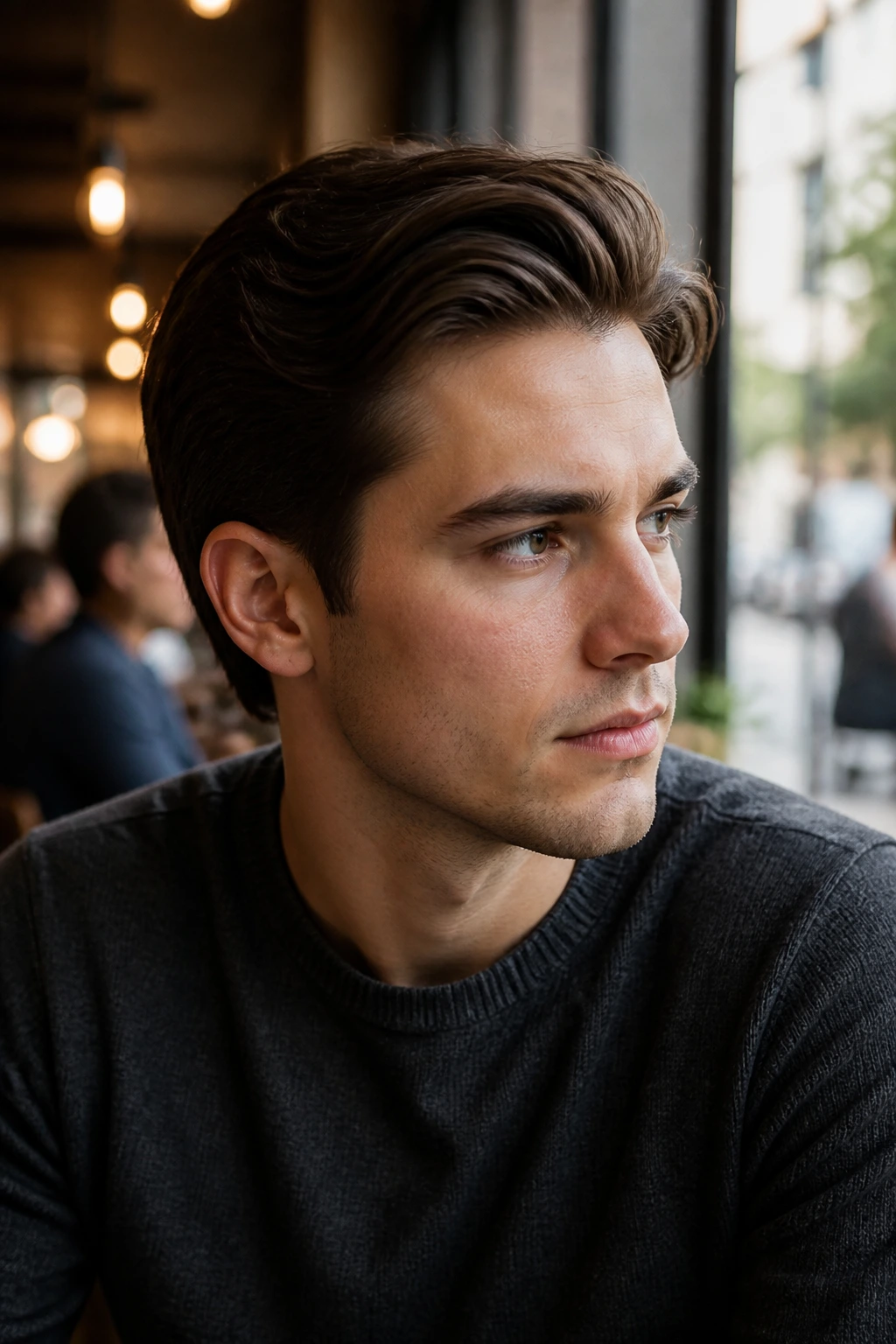
This is the cut for men who are moving from short hair into medium length and don’t want the awkward in-between stage to win. The ivy league grow-out keeps the top long enough to part, sweep, or brush back, while the sides stay neat and tapered so the shape looks deliberate.
It’s a smart bridge style. Not flashy. Very practical. You can wear it with a side part, push the top forward on windy days, or add a little lift in front if you want more shape. Because the top isn’t too long, it still behaves when you’re in a rush.
Ask your barber for scissors on top, not just clippers, if you want a softer grow-out. Scissor work leaves movement in the hair. Clippers can make the transition too blunt, and blunt is the last thing you want when you’re trying to grow into medium length.
16. Disconnected Undercut With Length
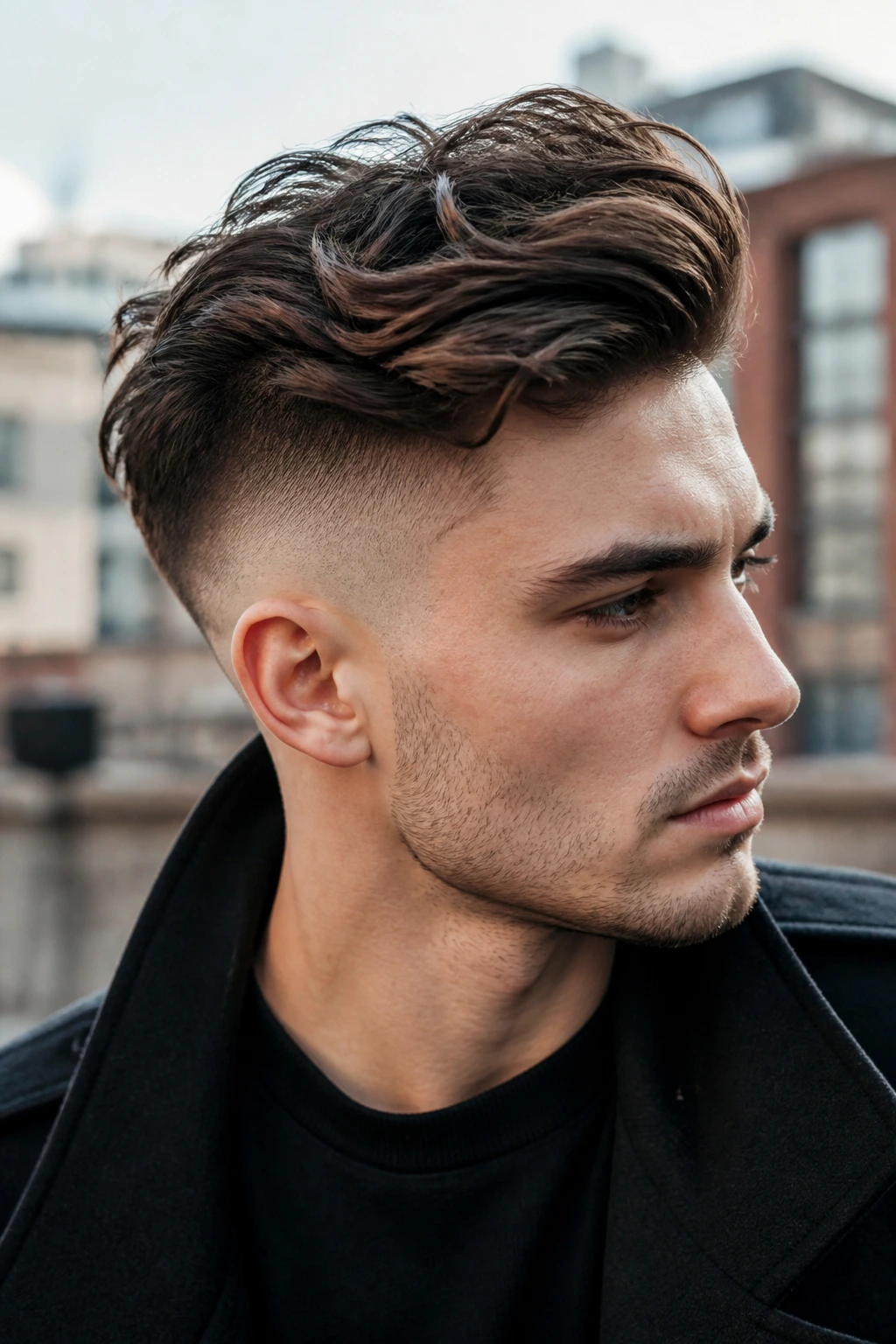
This style is not subtle, and that’s the point. The sides are cut much shorter than the top, leaving a visible break between the two lengths. On medium top length, that disconnect gives the haircut a sharp outline and a lot of contrast.
It looks best when the top has texture rather than a perfect smooth finish. The gap between short sides and longer top can feel severe if the hair is glossy and flat. Add some movement, and the whole cut becomes cleaner. Thick straight hair does especially well here, because it can hold the contrast without collapsing.
Be careful with the disconnect if your face is narrow or long. Too much height on top can stretch the face even more. A little forward movement or a softer fringe helps balance things out.
17. Natural Air-Dried Waves
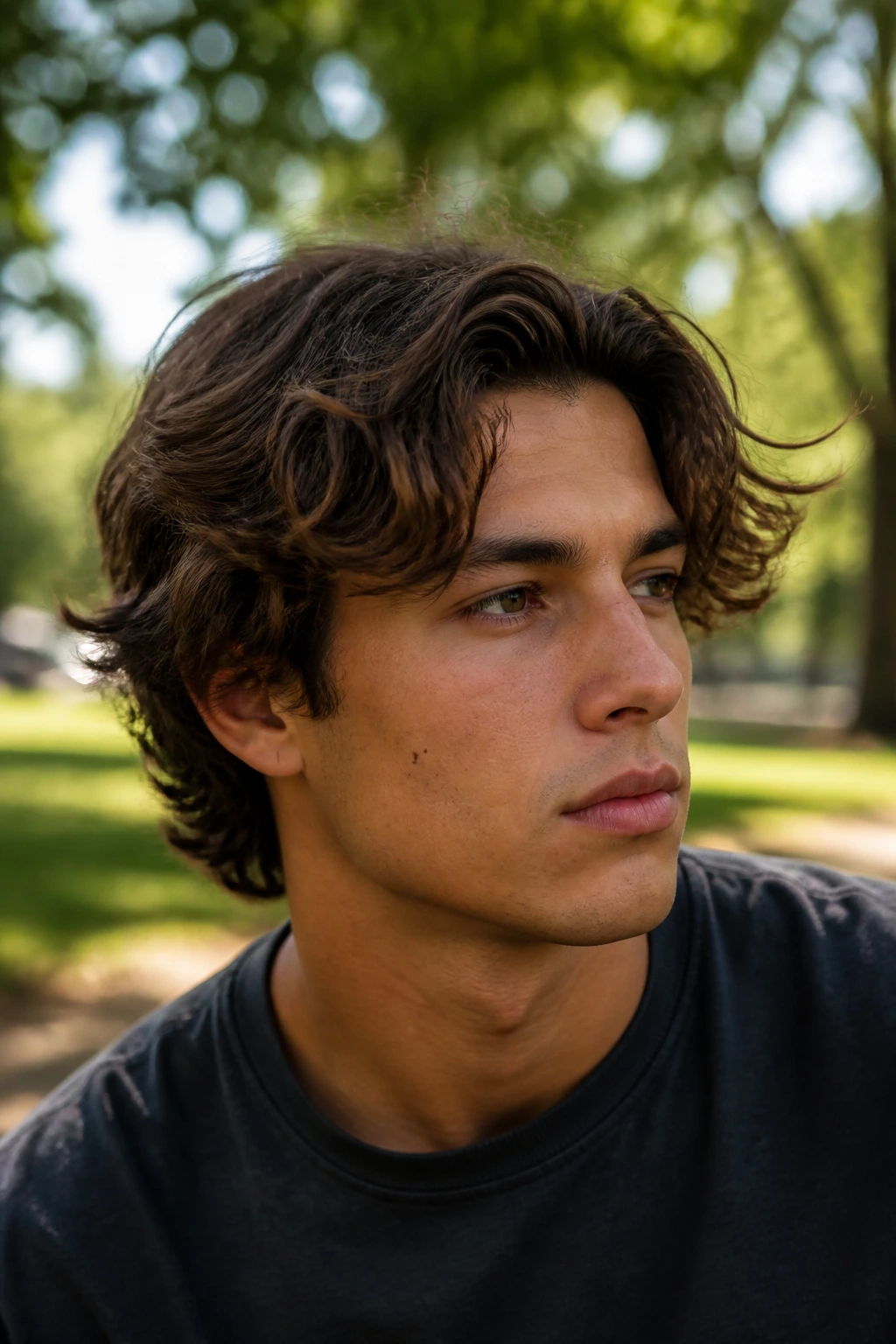
Sometimes the best medium length hairstyle is the one that doesn’t fight your hair at all. Natural air-dried waves let the bend, bends. That sounds obvious, but most bad haircuts happen when someone keeps forcing the hair into a shape it doesn’t want.
This style works best when the cut is shaped around the wave pattern, not against it. The top should have enough length to curl and separate on its own, and the sides need enough taper to stop the whole head from looking wide. If your hair gets frizzy, a leave-in conditioner or light curl cream helps keep the ends together.
Leave the towel in the drawer after a rough dry. Squeeze the water out, add product, and let the hair dry with gravity. A touch of product is enough. When the haircut is good, air-dried texture feels like an advantage, not a compromise.
Why Medium Length Hair Gives You More Room to Work

The real strength of medium length hair is that it lets shape come from both the cut and the styling. A short crop depends heavily on the barber’s line. Longer hair can take over if the weight gets out of control. Medium length sits in the middle and gives you some control back.
That matters when your hair changes through the year, or even through the week. Straight hair can puff when humidity rises. Wavy hair can look flat after a long day. Curly hair can lose shape if it’s trimmed too tight. Medium length gives you enough material to adjust. You can move it forward, back, or sideways, and you can still make a bad hair day look intentional enough to leave the house.
It also gives you a cleaner grow-out. A lot of men hate the awkward stage because the haircut stops looking fresh before they’re ready for another appointment. With medium length styles, the growing-out phase can look like a choice instead of neglect, which is a small thing until you’ve lived through a bad haircut for three weeks.
Choosing the Right Style for Your Hair Type and Face Shape
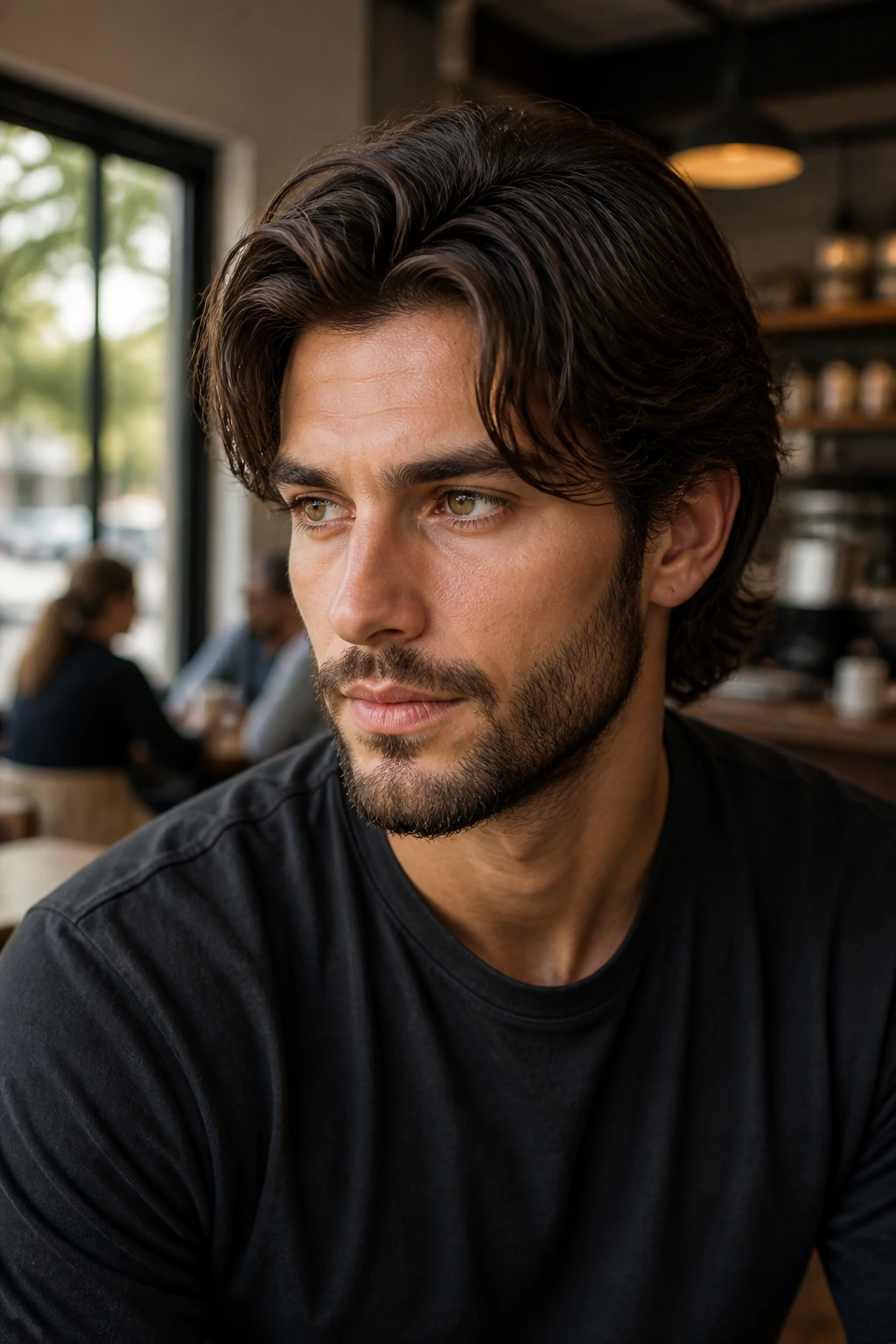
Hair texture should do most of the deciding, not whatever looks sharp in a photo from someone with a different head, different density, and probably different products. Straight hair usually does best with curtains, side parts, slick backs, and brushed-back shapes because those styles need a clear line and a bit of natural fall. Wavy hair has more freedom. It can handle shags, bro flow, fringe, and surfer layers without much coaxing. Curly hair wants layers and a taper that respects the curl pattern instead of flattening it.
Face shape matters too, but not in a rigid, rulebook way. Long faces usually do better with some width at the sides or a fringe that breaks up extra height. Rounder faces often benefit from a little lift on top and tighter sides. Square faces can carry more texture and a stronger outline. Oval faces are the least fussy, which is annoying for everybody else but true.
The mistake is picking a style based only on the front view. Turn your head. Look at the crown, the temples, and the way the neckline sits under a collar. That’s where the useful information lives.
How to Ask Your Barber for the Right Length
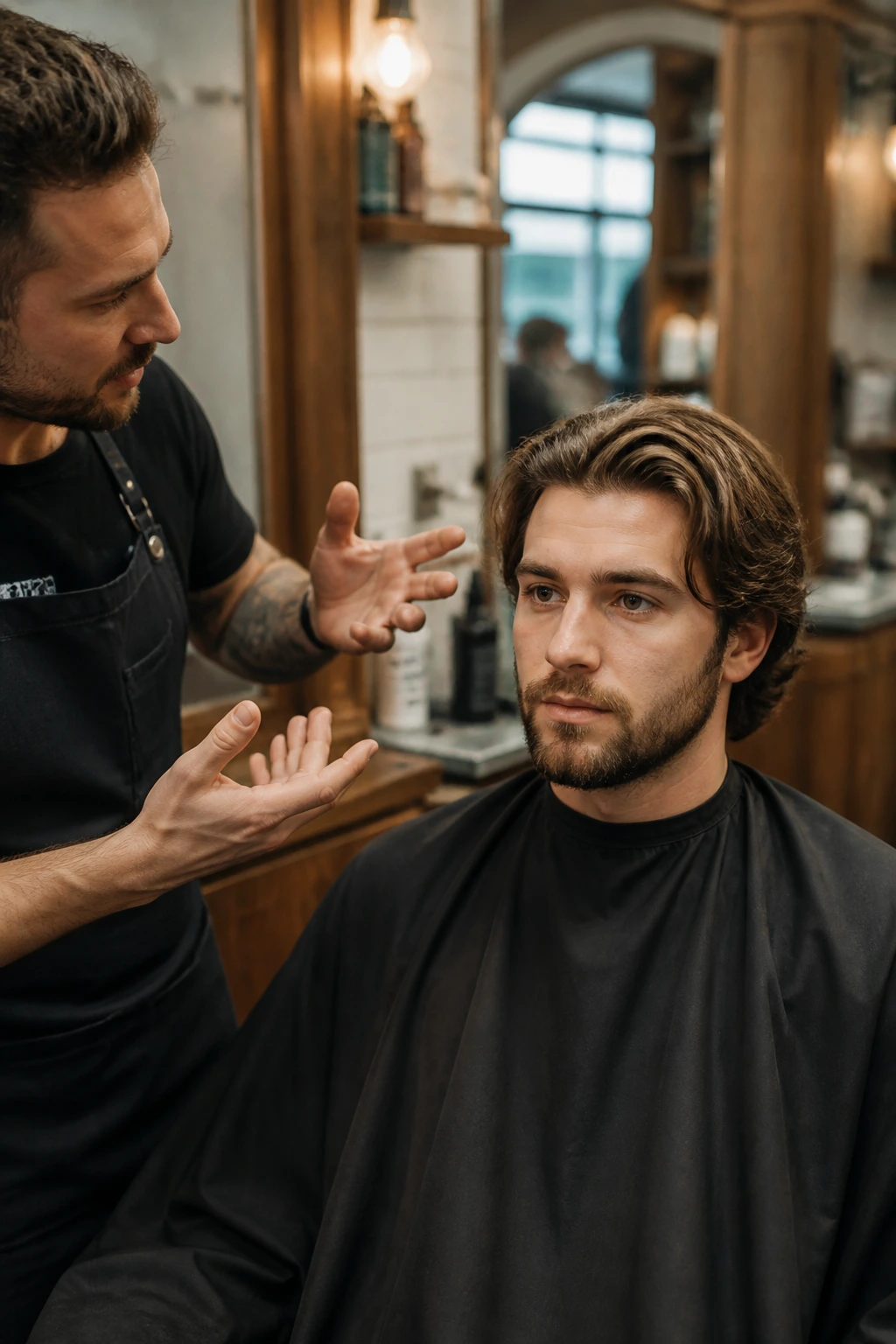
Most bad men’s haircuts start in the chair, not in the mirror at home. You say “medium length,” and the barber hears something completely different depending on their training, their location, and their mood that day. Be specific.
Bring two photos, not one. One should show the shape you want. The other should show the side taper, fringe, or back length. Photos from the front lie by omission. A good barber wants the whole picture.
Use numbers when you can. Say things like:
- Top: about 4 to 5 inches, layered for movement.
- Sides: low taper or scissor-cut, not a high skin fade unless you really want contrast.
- Front: leave enough length to sweep forward, part, or brush back.
- Crown: keep enough weight so it doesn’t stick straight up.
Tell the barber how you style it on a normal morning. That one detail saves more bad cuts than any reference photo.
Tools That Make Medium Length Hair Easier to Handle
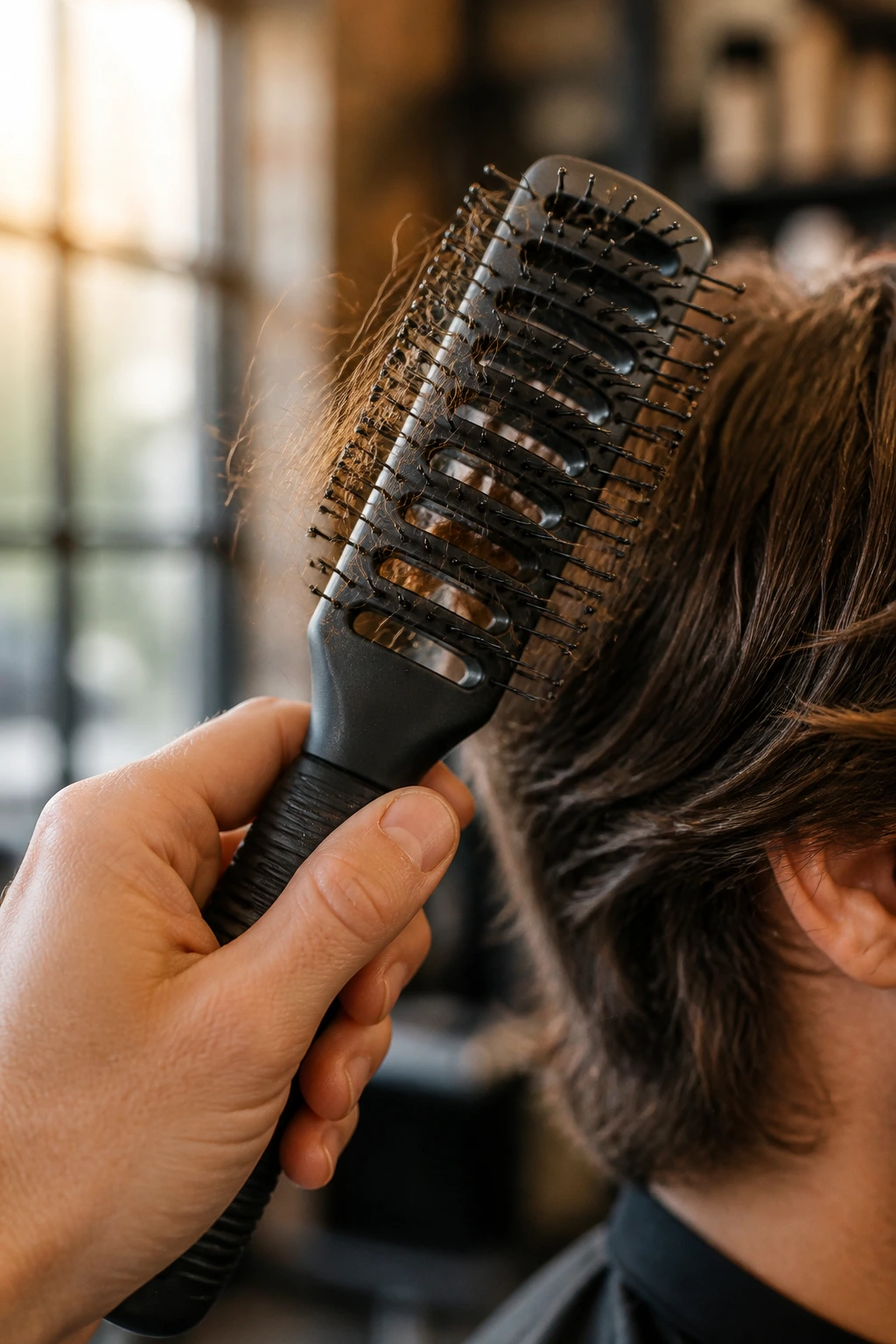
- Blow dryer with a nozzle attachment: Directs airflow so you can set the top forward, back, or sideways without blasting the cut apart.
- Vent brush: Good for adding lift at the roots while drying; especially useful for quiffs and brushed-back styles.
- Wide-tooth comb: Better for curls, waves, and damp detangling because it doesn’t pull the hair into a frizzy knot.
- Matte clay or paste: Gives hold with a dry finish, which suits most medium length cuts better than shiny products.
- Light styling cream: Helps wavy or slightly dry hair stay soft and movable instead of stiff.
- Sea salt spray: Builds separation and a bit of grit before drying, useful for curtains, shags, and surfer layers.
- Curl cream or leave-in conditioner: Keeps curls and bends from drying out and puffing around the edges.
- Heat protectant: Worth using if you blow-dry often; it keeps ends from getting rough and brittle.
- Microfiber towel or old cotton T-shirt: Dries hair with less friction, which matters more than people think.
The Products That Match Your Hair Instead of Fighting It

There’s no prize for using the strongest product in the drawer. Medium length hair usually looks better when the product matches the hair’s thickness and bend. Fine hair needs something light, or it collapses under the weight. Thick hair often needs something with more grip, or the style falls apart before it sets. Curly hair needs moisture first and hold second.
If your hair gets oily fast, keep the shine down. Matte clay or a light paste usually gives you enough control without making the roots look greasy by noon. If your hair is dry, a cream-based product or leave-in conditioner will make the ends behave better than another hard-hold product ever will. And if you’re blowing hair dry more than a few times a week, use heat protectant. People skip it because it feels optional. Then the ends get fuzzy and they blame the haircut.
A clarifying shampoo every couple of weeks helps too, especially if you use styling clay, salt spray, or heavy conditioner. Product buildup flattens medium length hair faster than most people notice. The hair looks “tired,” which is a polite way of saying it’s coated in residue.
A Five-Minute Styling Routine That Holds Shape

Start with damp hair, not dripping wet hair. That’s the difference between control and chaos. If the hair is too wet, the product slides around and the roots stay soft. If it’s bone dry, you lose direction. Damp hair gives you enough grip to shape.
Work in a small amount of product first. Pea-sized for fine hair, maybe a little more for thick hair. Warm it in your palms, then spread it from the back toward the front or from the crown outward, depending on the style. Don’t dump it all into the fringe unless you want the front to look heavy.
Dry the hair in the direction you want it to sit. That part matters more than the product, honestly. Use your fingers to lift roots for quiffs, push hair back for brushed styles, or sweep it forward for curtains and fringe. Finish by breaking up the surface with your fingertips. You’re aiming for shape, not a frozen shell.
And if the top looks flat, don’t add more product first. Re-dry the roots for 30 seconds. That fixes more bad hair mornings than another blob of clay ever will.
How to Wear These Styles With Shirts, Beards, and Dress Codes
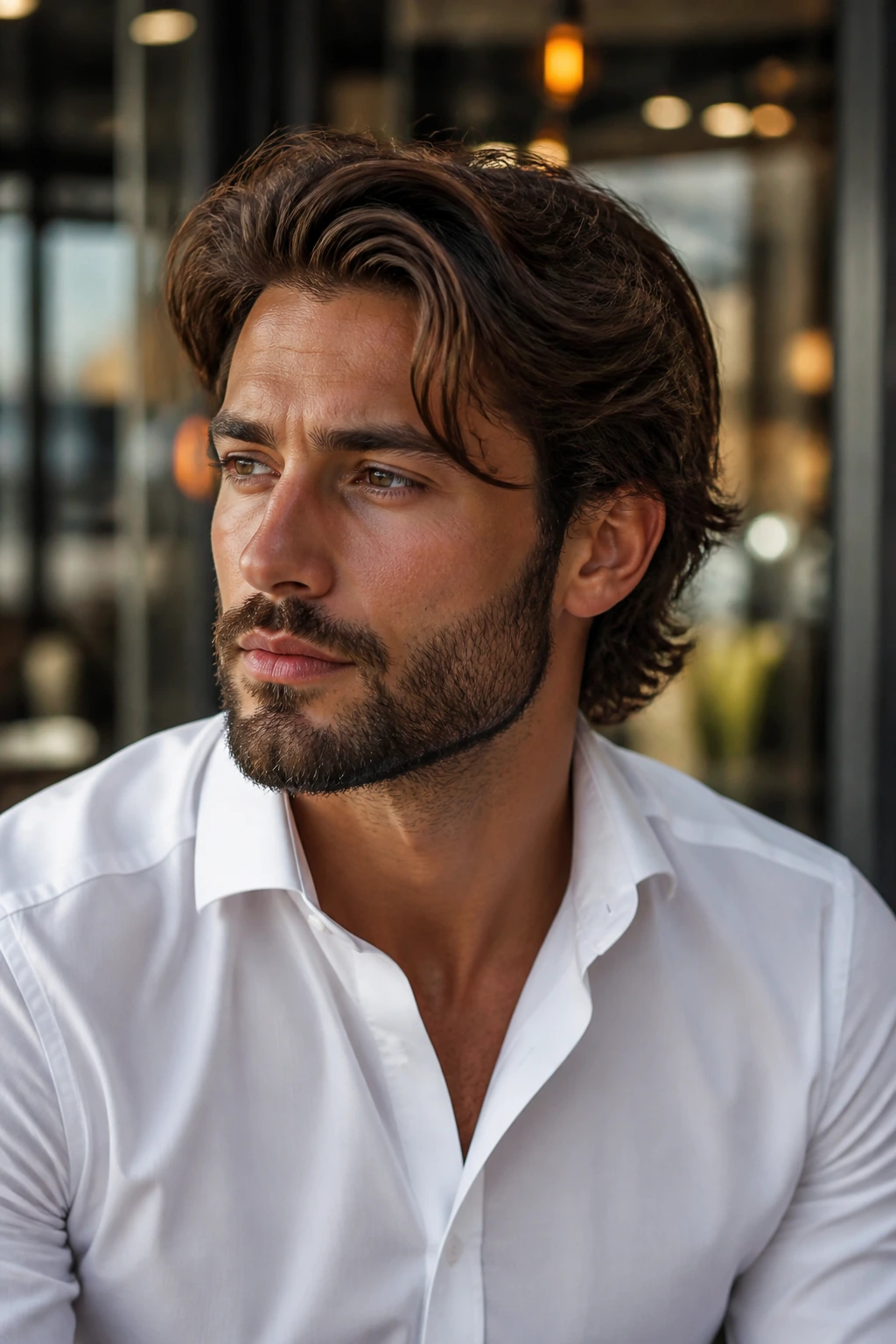
Presentation: Keep the outline of the cut clean, even when the texture is loose. A medium length style should still have a shape at the ears and neckline, or it starts looking accidental instead of styled.
Accompaniments: A short beard, a clean shave, or even a rough stubble line changes the read of the haircut fast. Tapered sides with a medium top pair best with facial hair that’s trimmed to the same level of care. Untidy beard edges make a good cut look half-finished.
Scale: If you want curtain movement, quiff lift, or a brush-back shape, keep enough length on top to support it — usually 4 to 6 inches. If the top drops below that, the style becomes simpler and closer to a short textured crop.
Finishing Touch: Matte products suit casual settings and textured cuts. Low-shine creams or a touch of pomade work better when you want the hair to sit flatter and look cleaner under indoor light.
Small Tweaks That Change the Whole Cut
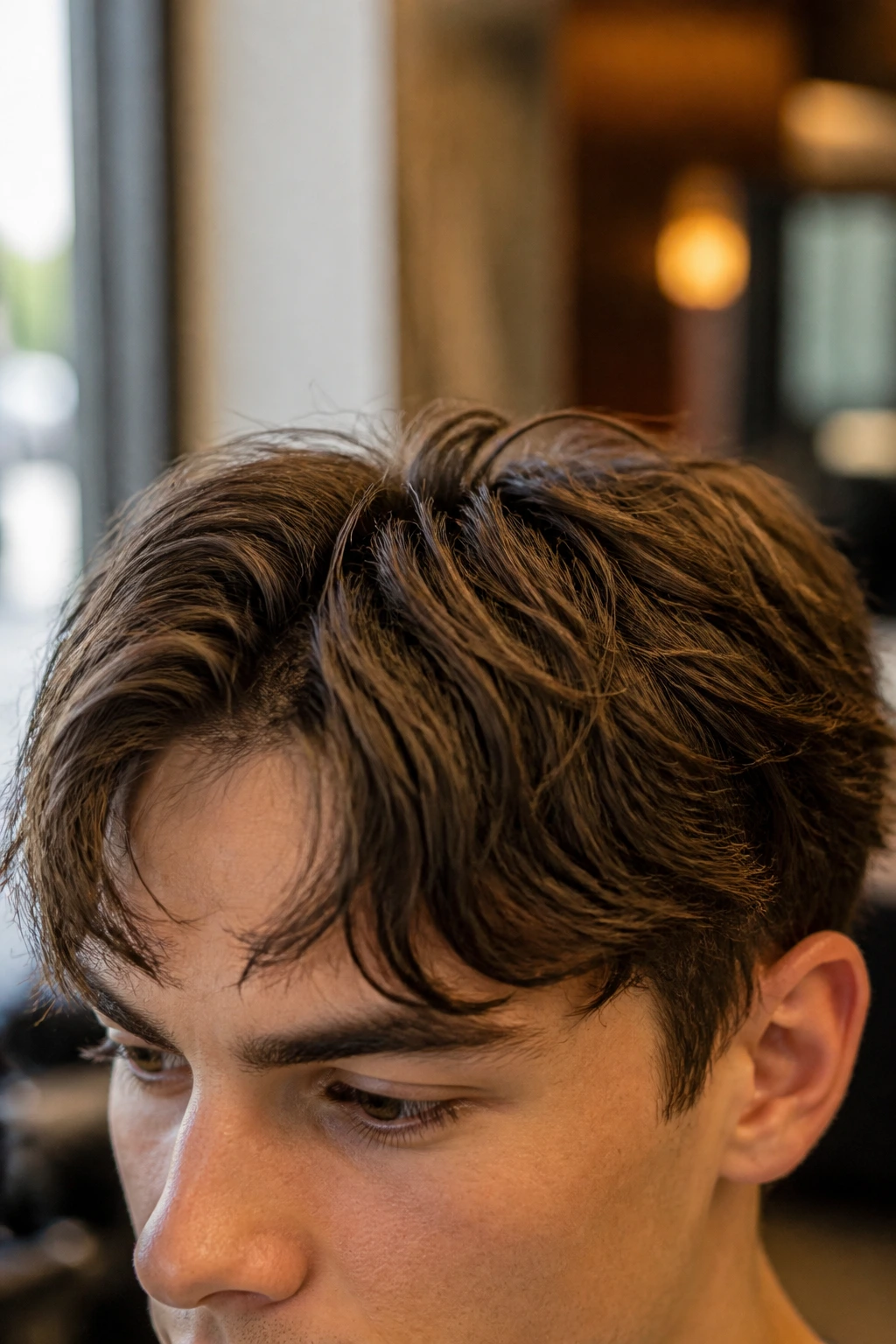
Texture Boost: A few sprays of sea salt mist on damp hair can make curtains, shags, and surfer layers sit with more separation. Don’t soak the hair; a light mist is enough.
Cleaner Edge: A low taper around the ears and neck keeps medium length styles from growing into a boxy shape. That tiny detail is why some cuts still look fresh after a month and others do not.
Fringe Shift: If the front keeps falling in your eyes, ask for a slightly shorter center section and longer corners. That keeps the fringe from building a blunt wall across the forehead.
Beard Balance: If you wear facial hair, ask your barber to blend the sideburns into the taper. It stops the haircut from looking pasted onto the face.
Low-Effort Version: Skip heavy hold and use a leave-in cream plus air-drying if your hair already has a natural bend. Sometimes less product is the smarter move.
Keeping the Shape Between Cuts
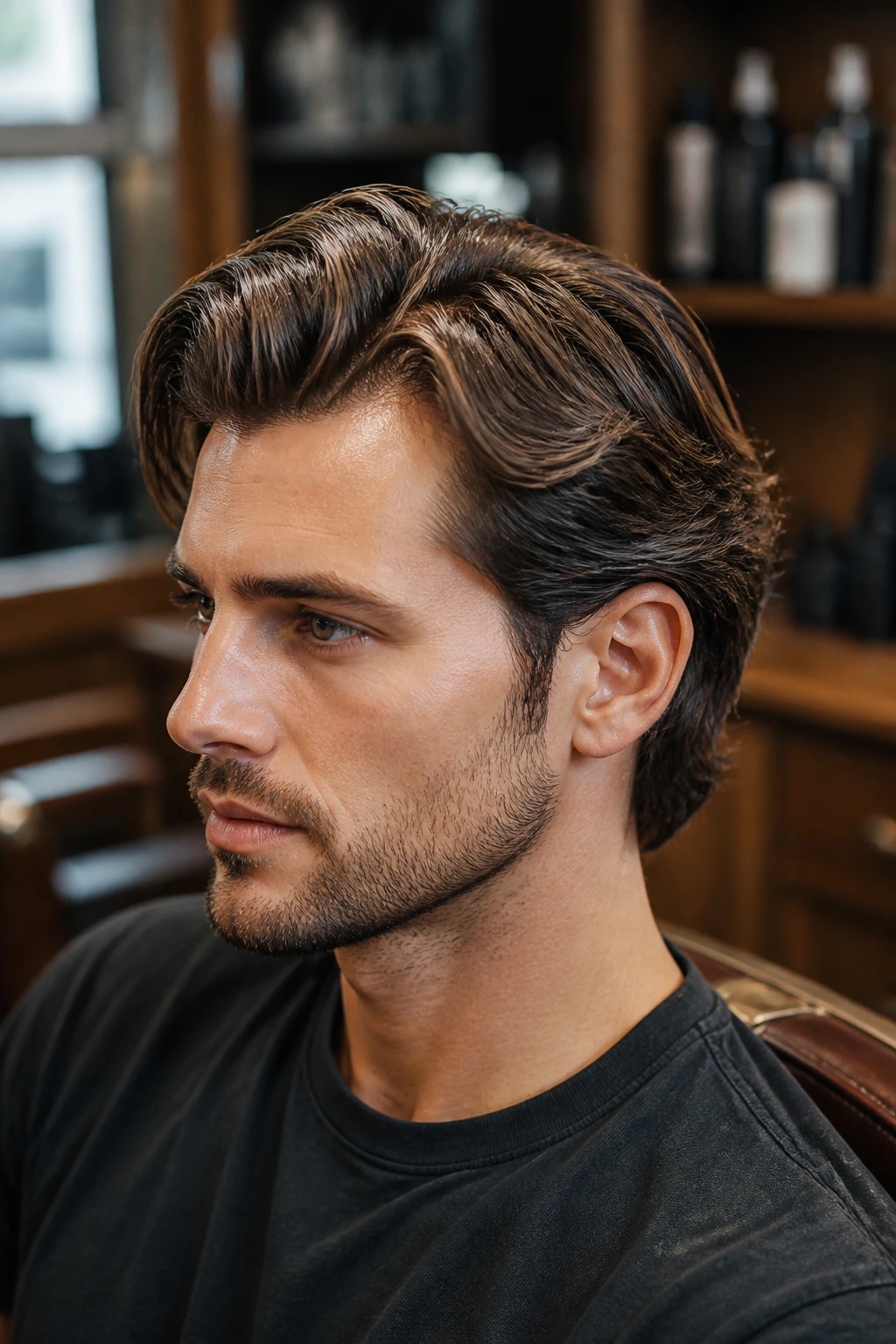
Medium length hair doesn’t need constant trimming, but it does need a schedule. If you want the shape to stay sharp, plan on a cleanup every 4 to 6 weeks. If you’re growing it out, you can stretch that to 8 weeks, but the neckline and sideburns still need attention or the whole cut starts to blur.
Wash frequency depends on oil and product, not habit. Hair that gets greasy quickly may need cleansing every other day. Dryer hair can go longer between washes, especially if you use a gentle shampoo and a conditioner on the ends only. Overwashing strips the cut of the softness that makes medium length hair look good in the first place.
Sleep matters more than most guys think. If you go to bed with damp hair, the roots set in weird directions and the crown develops a kink. Dry it first. A satin pillowcase helps too, especially for wavy and curly textures that frizz easily from friction. If you use styling clay or paste daily, a clarifying shampoo every 2 to 3 weeks keeps buildup from making the top feel heavy and dull.
Common Mistakes Men Make With Medium Length Hair
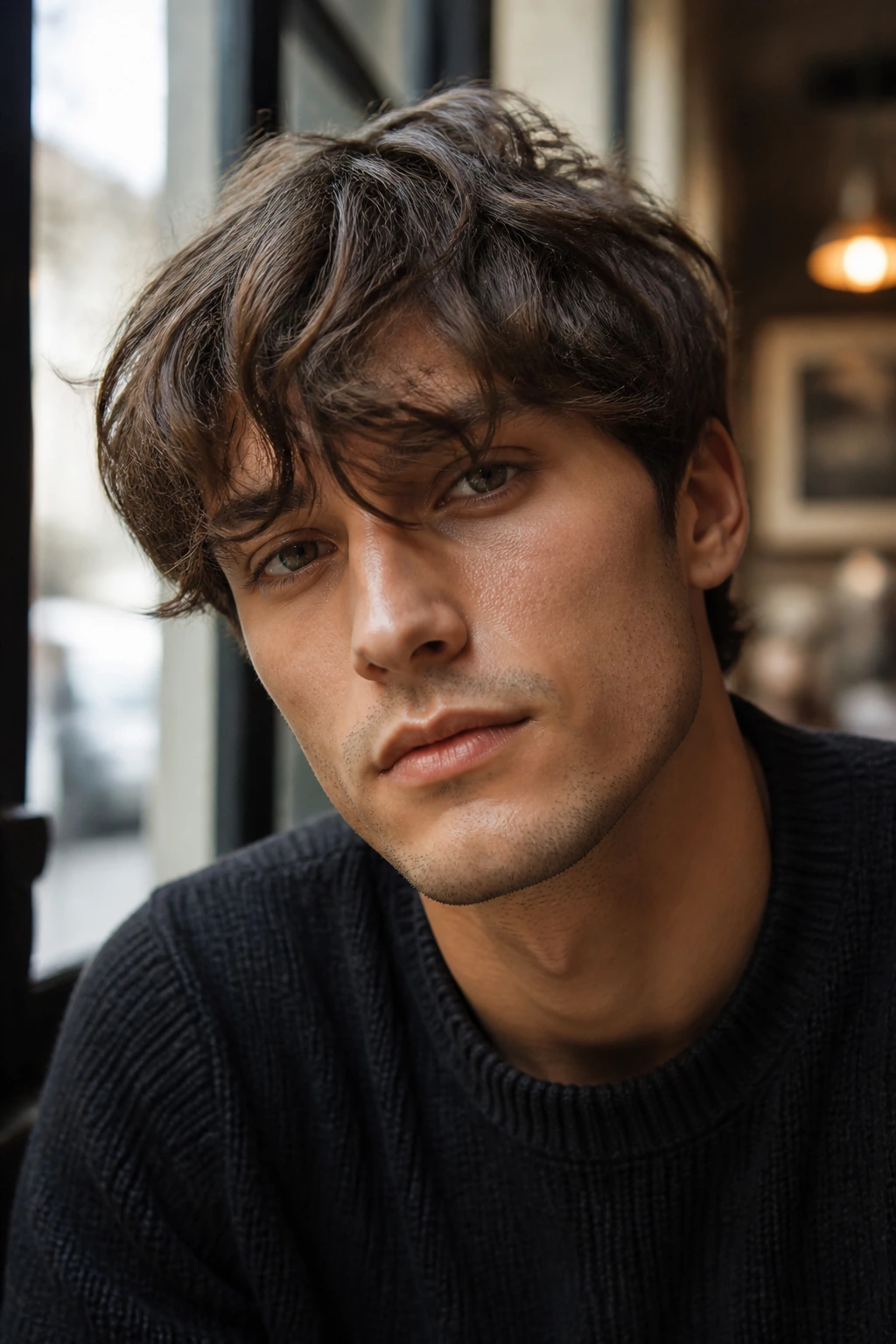
- Cutting the sides too high: The style turns into a wide mushroom shape and the top loses balance. Ask for a low or mid-low taper if you want the length to stay wearable.
- Using too much product: Hair looks oily, heavy, or sticky, and the texture disappears. Start with a small amount and add only if the hair needs it.
- Ignoring the crown: If the crown is left too heavy or too short, it sticks up or falls flat in a bad way. Tell the barber how your crown behaves.
- Drying in the wrong direction: The hair only remembers the shape you set while it’s drying. If you air-dry without directing it, it will choose the easiest path, not the best one.
- Over-thinning the ends: Some barbers remove too much weight, and the cut loses its body. Texture is good; wispy ends that split apart are not.
- Treating every photo as transferable: A cut that works on thick, straight hair will behave differently on fine waves or tight curls. Match the style to your texture first.
Variations and Ways to Make the Same Length Look Different

Office-Clean Version: Keep the top layered but controlled, then add a low taper and a side part. Use a small amount of matte paste so the finish stays tidy without looking slick.
Weekend Texture Version: Add more separation with sea salt spray and wear the fringe or top looser. This works best on wavy hair, but straight hair can fake it with a blow-dryer and finger styling.
Curly-Friendly Version: Leave extra length on top, trim the sides gently, and use curl cream instead of heavier wax. The goal is to keep the curl pattern round and visible.
Grow-Out Version: Start from a short cut with a longer top and preserve the crown weight. That way the shape improves as it grows instead of turning awkward halfway through.
Sharper Contrast Version: Pair a medium top with a disconnected undercut or tight taper. The result feels bolder, but it needs regular maintenance to stay clean.
Frequently Asked Questions

What counts as medium length hair for men?
Usually, it means about 3 to 6 inches on top, sometimes a bit longer through the fringe or crown. The sides may be shorter, but the top still has enough length to part, sweep, or push back without needing a full long-hair routine.
Will medium length hairstyles work if my hair is thinning?
Yes, but the cut needs to be smarter. A little layering and a matte product help build the look of fullness, while overly shiny styling products make the scalp show faster. Keep the top textured and avoid letting the sides get too wide.
Can curly hair pull off medium length styles?
Curly hair may be the best candidate for them. Medium length gives curls room to form shape instead of sitting tight against the scalp, and a tapered side keeps the outline neat. A curl cream or leave-in conditioner makes a big difference.
How often should I get it trimmed?
If you want the shape to stay crisp, every 4 to 6 weeks works well. If you’re growing it out, 6 to 8 weeks can be enough, but clean up the neck and sideburns in between if the style starts to look loose.
What if my hair sticks up in the morning?
That usually means the roots were set in the wrong direction overnight. Mist the hair lightly, re-dry the roots with a blow-dryer for 30 to 60 seconds, and guide the hair back into shape before adding more product.
Can I wear medium length hair with a beard?
Absolutely, and the combo can look better than short hair with a beard because the lengths balance each other. Just keep the sideburns and beard line neat so the hair and facial hair feel connected rather than separate.
Do I need a blow-dryer?
Not for every style, but it helps a lot. Curtains, quiffs, brushed-back styles, and anything with root lift look better after a quick dry in the direction you want. Air-drying works best when the haircut already supports the shape.
Which style is easiest if I don’t want to spend much time on my hair?
Bro flow, natural air-dried waves, and a soft shag usually ask for the least effort. They work with your hair’s own movement instead of forcing a perfect line, which is a relief on busy mornings.
The Shape That Gives You Room to Move
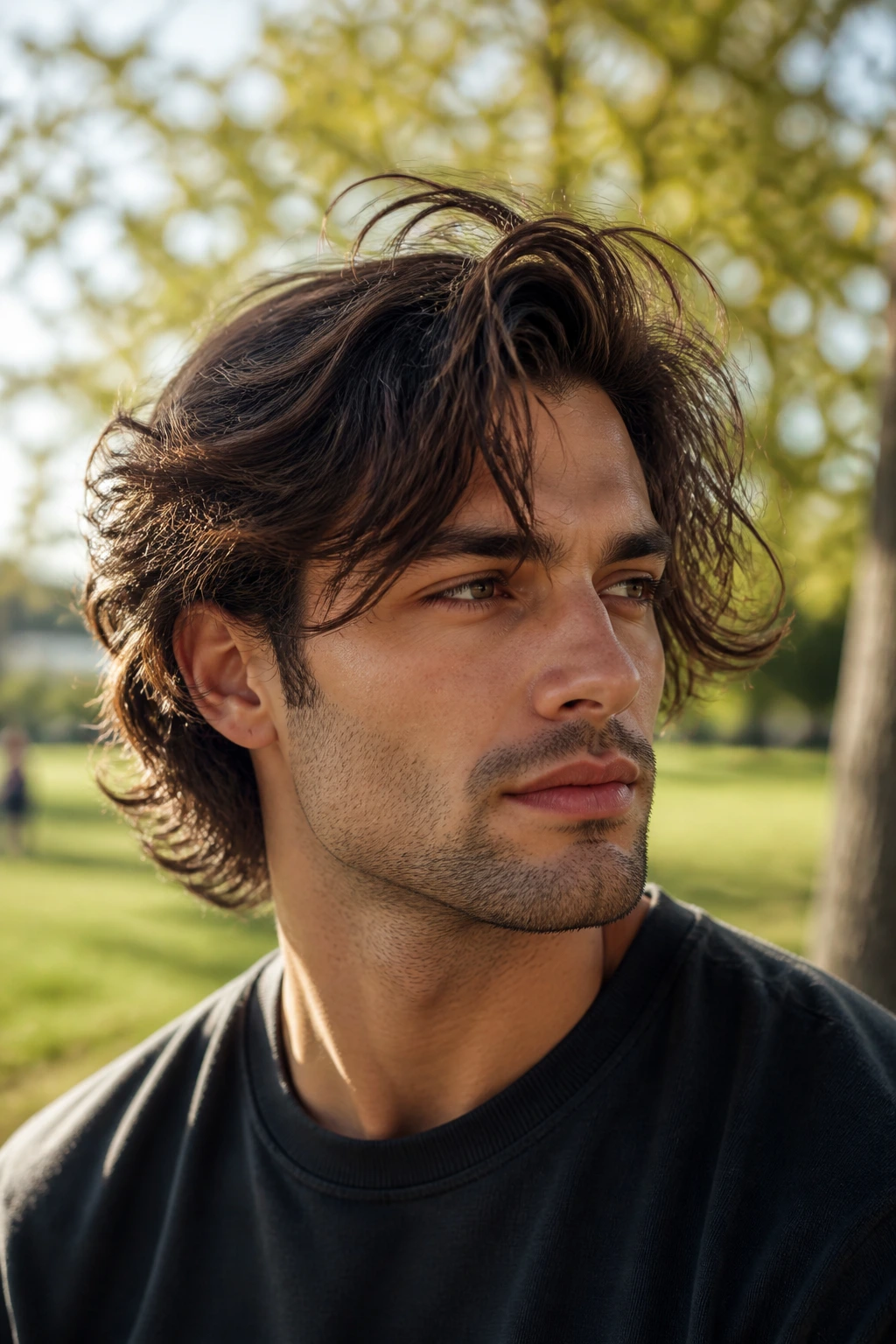
Medium length hair is useful because it gives you choice without turning grooming into a project. You can keep it tidy, let it fall loose, push it back, or add texture when the day asks for something different. That flexibility is the reason these cuts keep showing up in barbershops, even when the names change.
The styles that last are the ones that respect your hair’s actual behavior. If your hair wants to wave, let it wave. If it wants to part in the middle, stop fighting it. If it needs a taper to stop it from ballooning at the sides, give it the taper. The best-looking medium length styles for men rarely look forced, and that’s the part worth chasing.
Pick one shape that fits your texture, then give it a month or two of honest wear. You’ll learn more from how it behaves on a windy day than from any photo grid on a phone screen.
