



A bob on a man can look sharper than a fade when the line lands in the right place. That sounds contrarian until you’ve seen it done well: the hair hits the jaw, the ends move a little, and the whole shape reads intentional instead of accidental. Men’s bob haircuts have that kind of range. They can feel strict, artsy, rough, polished, or almost anonymous in the best possible way, depending on where the weight sits and how much texture you leave in the cut.
The part that gets missed most often is that a bob is not one haircut. It’s a family of shapes. A blunt chin-length bob on thick hair behaves nothing like a shaggy bob on wavy hair, and a center-parted version can soften a long face while an undercut bob throws the focus straight to the top line. The difference lives in small things: ½ inch here, a little internal layering there, a neckline cleaned up every six weeks instead of every ten.
Men’s bob haircuts also solve a problem a lot of guys know well but rarely name out loud: growing hair longer without letting it collapse into a floppy, shapeless mess. A good bob keeps the perimeter visible. You still get movement, but not the sad curtain effect that happens when the ends are left to fend for themselves. That’s the sweet spot, and the styles below cover it from every angle.
Why These Bob Haircuts Work So Well for Men
Range: You can keep the length at the jaw, push it to the collarbone, or cut it tight enough to sit just under the ears, and it still reads as a bob.
Texture control: Straight, wavy, and curly hair all behave differently here, which is a plus, not a problem. The same silhouette can be crisp or loose.
Face-shape balance: A bob can shorten a long face, soften a sharp jaw, or add structure to rounder cheeks when the weight line is placed correctly.
Low-fuss growth: A lot of men want length without weekly drama. A bob grows out in a way that still looks like a haircut, not a mistake.
Styling flexibility: You can wear it center-parted, side-parted, tucked, brushed back, or left alone with a bit of product and a towel dry.
Barber-friendly language: Once you know the length, weight line, and fringe shape you want, it’s easy to explain at the chair without sounding vague.
1. Classic Chin-Length Bob
A chin-length bob is the cleanest place to start. It sits right at the jaw, keeps the outline visible, and gives the face a frame without stealing all the attention. On straight hair, it looks crisp. On slightly wavy hair, it gets a little swing in the ends, which I like even more.
Why It Works: The chin line is a useful anchor because it gives structure to the haircut and to the face at the same time. If the hair is thick, that perimeter keeps it from puffing out into a triangle. If the hair is fine, the shape stays honest and doesn’t need much product.
What to Ask Your Barber:
- Keep the length grazing the chin all the way around.
- Remove bulk inside the shape if the hair is dense.
- Leave the ends blunt or only lightly point-cut.
How to Style It: Work a small amount of leave-in cream through damp hair, then comb it down and let it fall where it wants. If the ends kick out, use a blow-dryer with a nozzle and a paddle brush for 2 to 3 minutes.
Tools:
- Paddle brush
- Blow-dryer with nozzle
- Wide-tooth comb
- Lightweight cream
Pro Tips: Keep the neckline tidy every 4 to 6 weeks, even if the rest grows out. A clean back edge changes the whole read of the cut.
Variations: Soft Chin Bob adds a little face-framing softness; Hard-Line Chin Bob keeps the edge blunt and graphic.
Common Mistakes: Don’t over-layer the sides. Don’t drown it in paste. And don’t let the back grow longer than the front unless that’s a deliberate shape choice.
2. Center-Part Bob
A center-part bob has a calm, even look that feels almost architectural. The hair falls evenly on both sides, which makes the face line look clean and the haircut feel deliberate even when the texture is messy.
Why It Works: The middle part creates symmetry, and symmetry is doing a lot of work here. It can lengthen a round face and keep a strong jaw from feeling too heavy. On straight or gently wavy hair, it also lets the bob move instead of sitting like a helmet.
What to Ask Your Barber: Ask for equal length on both sides, a soft middle part, and enough weight left at the perimeter to keep the shape from collapsing. If your hair splits naturally off-center, tell the barber before they start cutting.
Styling Notes: Dry the roots in the direction of the part first. That part matters more than people think. If you force it the wrong way, the cut will fight you every morning.
Tools:
- Tail comb
- Blow-dryer
- Medium-hold cream
- Clip for sectioning
Who It Suits: Best on medium-density hair that falls naturally in two directions. If your hair has a stubborn cowlick at the crown, this can still work, but the part may need a touch of heat.
Pro Tips: Use a tiny amount of serum on the ends only. Too much at the roots makes the center part look flat by lunch.
Variations: Soft Center Bob uses a slightly off-center part for a looser read; Glossy Center Bob leans into a smoother, neater finish.
Common Mistakes: A center part that starts too far back can expose too much scalp. Keep the part narrow and forward enough to keep the balance right.
3. Blunt Edge Bob
This is the heavy-hitter of the bunch. A blunt bob has a straight, even perimeter that makes the haircut look dense and deliberate, almost like the hair was cut with a ruler.
Why It Works: Blunt edges make thick hair look expensive without being fussy. They also give fine hair the look of more mass because the line stays solid instead of feathering away at the ends. That said, this shape lives or dies on the quality of the cut.
What to Ask Your Barber: Ask for one length, minimal layering, and a crisp line through the bottom. If the hair is coarse, ask for internal debulking so the shape doesn’t stick out at the sides.
Styling Notes: This cut does not need much. A small amount of smoothing cream and a quick blow-dry are enough. If you pile on texture spray, you blunt the point of the blunt cut, which is a little funny and also a little sad.
Tools:
- Paddle brush
- Blow-dryer
- Smoothing cream
- Fine-tooth comb
Best For: Men who want the haircut to look precise from every angle. It also suits sharper features, because the line gives the face a cleaner edge.
Pro Tips: Ask for the perimeter to be checked with dry hair before the final trim. Wet hair can hide little dents that show up later.
Variations: Glass-Edge Bob adds extra smoothness; Heavy Blunt Bob keeps more weight at the ends for thick, stubborn hair.
Common Mistakes: Don’t ask for a blunt bob and then ask the barber to “thin it out a lot.” Those two requests fight each other.
4. Layered Movement Bob
If a blunt bob is a straight line, a layered bob is the version that breathes. The layers are subtle, usually hidden through the interior, so the ends still look like a bob while the hair gets better swing and less bulk.
Why It Works: Layers keep the haircut from ballooning out at the sides, especially if your hair is thick or grows with a slight bend. They also make the bob easier to tuck, toss, or push behind the ear without breaking the shape.
What to Ask Your Barber: Ask for soft internal layers, not choppy, stepped ones. The goal is to remove weight from inside the cut while keeping the outside line readable.
Styling Notes: A little mousse at the roots helps the top stay lifted, then a cream on the ends keeps the layers from fraying. Air-drying works fine if the hair already has movement.
Tools:
- Volumizing mousse
- Round brush or fingers
- Blow-dryer
- Lightweight cream
How It Wears: This is one of the easiest bobs to live with because it doesn’t demand perfect styling. The layers do some of the work for you.
Pro Tips: If your hair flips outward at the ends, ask for softer graduation rather than more layers. Too many cuts in the wrong place can make the silhouette fuzzy.
Variations: Feather-Layer Bob softens the perimeter even more; Dense Layer Bob keeps the ends heavier while lightening the center.
Common Mistakes: Don’t turn this into a shag by accident. A layered bob still needs a recognizable outline.
5. Textured Crop Bob
This version sits closer to a cropped shape but keeps enough length to read as a bob. The edges are piecey, the surface is broken up, and the result feels less polished and more street-ready.
Why It Works: Texture takes the attention off exact symmetry. That’s useful if your hair has natural waves, a bit of frizz, or inconsistent density from front to back. The haircut feels intentional even when it’s not perfectly smooth.
What to Ask Your Barber: Ask for choppy point-cut ends, light layering, and enough length to brush the ears or jaw. The word you want is texture, not thinning.
Styling Notes: A sea salt spray on damp hair gives grip, then a matte paste can separate the ends once it dries. Don’t overwork it. You want pieces, not a mud pie.
Tools:
- Sea salt spray
- Matte paste
- Wide-tooth comb
- Blow-dryer
Best For: Guys who want the bob shape without looking like they spent twenty minutes combing it into place.
Pro Tips: Scrunch the hair lightly while it dries. On some hair types, that’s enough to keep the ends from lying dead flat.
Variations: Rough-Cut Bob leans more jagged; Clean Texture Bob keeps the edges softer but still broken up.
Common Mistakes: Heavy pomade kills the texture. Once the hair clumps, the cut loses its whole point.
6. Wavy Bob
Wavy hair and a bob get along better than people expect. The bend in the hair adds motion, and the bob shape keeps that motion from turning sloppy.
Why It Works: Natural wave gives the haircut lift without needing layers everywhere. The perimeter keeps the shape recognizable, while the wave keeps the style from looking flat or forced.
What to Ask Your Barber: Ask them to work with your wave pattern, not against it. That usually means leaving enough length for the bend to show and not cutting too short around the crown.
Styling Notes: Use a curl cream or light mousse on damp hair, then air-dry or diffuse on low heat. High heat tends to rough up the wave and make the ends puffy.
Tools:
- Curl cream
- Diffuser
- Microfiber towel
- Wide-tooth comb
Who It Suits: This is a strong option for men whose hair bends but doesn’t curl hard. If your wave pattern changes from the sides to the back, let the barber see it dry.
Pro Tips: Put product in with your hands, not a brush. A brush can stretch the wave out before it sets.
Variations: Loose Beach Bob keeps the wave relaxed; Defined Wave Bob uses a little more cream for clearer bends.
Common Mistakes: Don’t cut too much length off in the name of “cleaning it up.” Wavy bobs need a little room to move.
7. Curly Bob

A curly bob has presence. It sits away from the head a bit, which can look bold and healthy when the cut is shaped properly.
Why It Works: Curly hair shrinks, and the bob format respects that. You keep enough length to show the curl pattern, while the perimeter keeps the volume from spreading in every direction.
What to Ask Your Barber: Ask for a dry cut if possible, or at least a barber who knows how curls behave once they spring up. Keep the outline rounded or slightly squared, depending on how much width you want at the cheeks.
Styling Notes: Use leave-in conditioner plus a curl cream, then either diffuse on low or let it air-dry undisturbed. Touching curls while they dry is how you get frizz and weird clumps.
Tools:
- Diffuser
- Curl cream
- Leave-in conditioner
- Microfiber towel
Best For: Men who want shape without flattening their curl pattern. It also works well with shorter beards because the volume at the sides can balance the jaw.
Pro Tips: Have the barber leave the front a touch longer than the crown. That helps the curl stack nicely instead of shooting upward.
Variations: Rounded Curl Bob keeps the silhouette soft; Squared Curl Bob makes the shape more graphic.
Common Mistakes: Don’t brush dry curls into submission. You’ll just make a halo of frizz and lose the shape.
8. Shaggy Bob
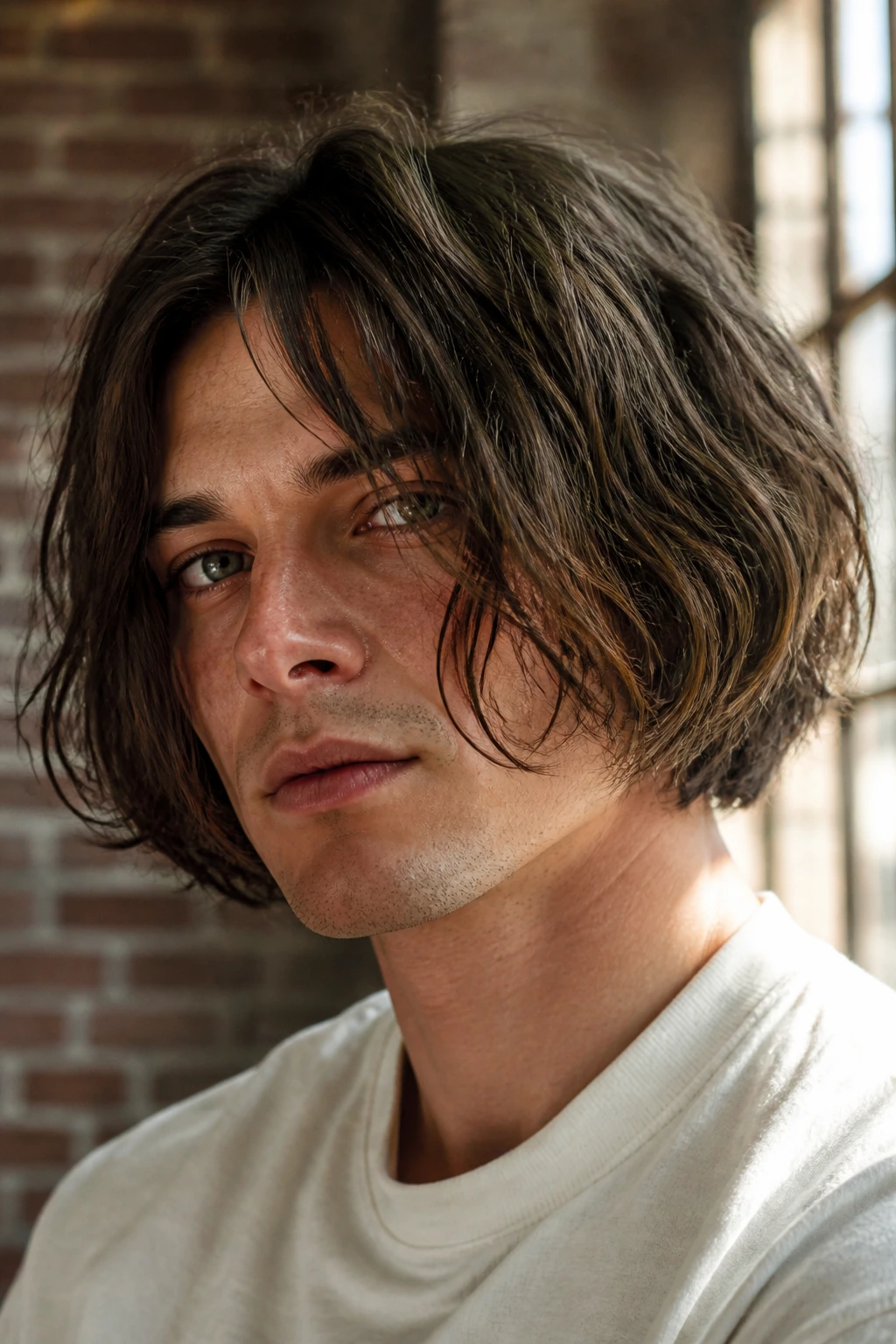
This is the casual one. The shaggy bob has uneven layers, broken ends, and a little built-in mess, which makes it useful for anyone who wants a bob that doesn’t look like it came from a formal lineup.
Why It Works: Shaggy cuts hide awkward growth and let the hair sit with some life. They’re especially good if your hair is thick at the ends or if you hate spending long in front of a mirror.
What to Ask Your Barber: Ask for a bob length with shag-inspired layers, especially around the crown and cheekbones. You still want enough outside length to read as a bob, not a full shag.
Styling Notes: A salt spray or texture foam works better here than heavy cream. Let it dry with a little chaos; the shape should look brushed with fingers, not arranged with a ruler.
Tools:
- Sea salt spray
- Texture foam
- Blow-dryer
- Fingers, mostly
Who It Suits: Great for straight-to-wavy hair that wants movement. It’s also one of the easier cuts to grow out.
Pro Tips: Ask for the fringe to be left slightly longer if you like a messy front. That helps the haircut look lived-in instead of choppy for the sake of it.
Variations: Grunge Shag Bob is rougher around the edges; Soft Shag Bob keeps the layers quieter.
Common Mistakes: Don’t mistake shaggy for uncut. A good shaggy bob still needs a perimeter and a plan.
9. Curtain-Bang Bob

Curtain bangs change the whole mood. The front splits and falls away from the face, while the rest of the bob keeps the body underneath.
Why It Works: The fringe creates a frame that softens the forehead and can make a long face look more balanced. It also gives the bob some movement near the eyes, which is where people notice a haircut first.
What to Ask Your Barber: Ask for a center opening in the fringe, with the shortest point around the nose or cheekbone and longer pieces blending into the sides. That blend is what keeps it from looking chopped up.
Styling Notes: Blow-dry the fringe forward first, then split it with your fingers and sweep each side out. If you skip that step, the bangs usually split where they want and not where you want.
Tools:
- Round brush
- Blow-dryer
- Light cream
- Clips for sectioning
Best For: Faces that need a little softening at the forehead or temples. It works especially well on medium-density hair.
Pro Tips: Keep the curtain pieces slightly longer than you think. Short fringe on a bob can get awkward fast if it shrinks up.
Variations: Soft Curtain Bob uses a looser fringe; Sharp Curtain Bob keeps the part cleaner and the ends tidier.
Common Mistakes: Don’t cut the front too short. That’s how a curtain bob turns into a panic trim.
10. Side-Part Bob
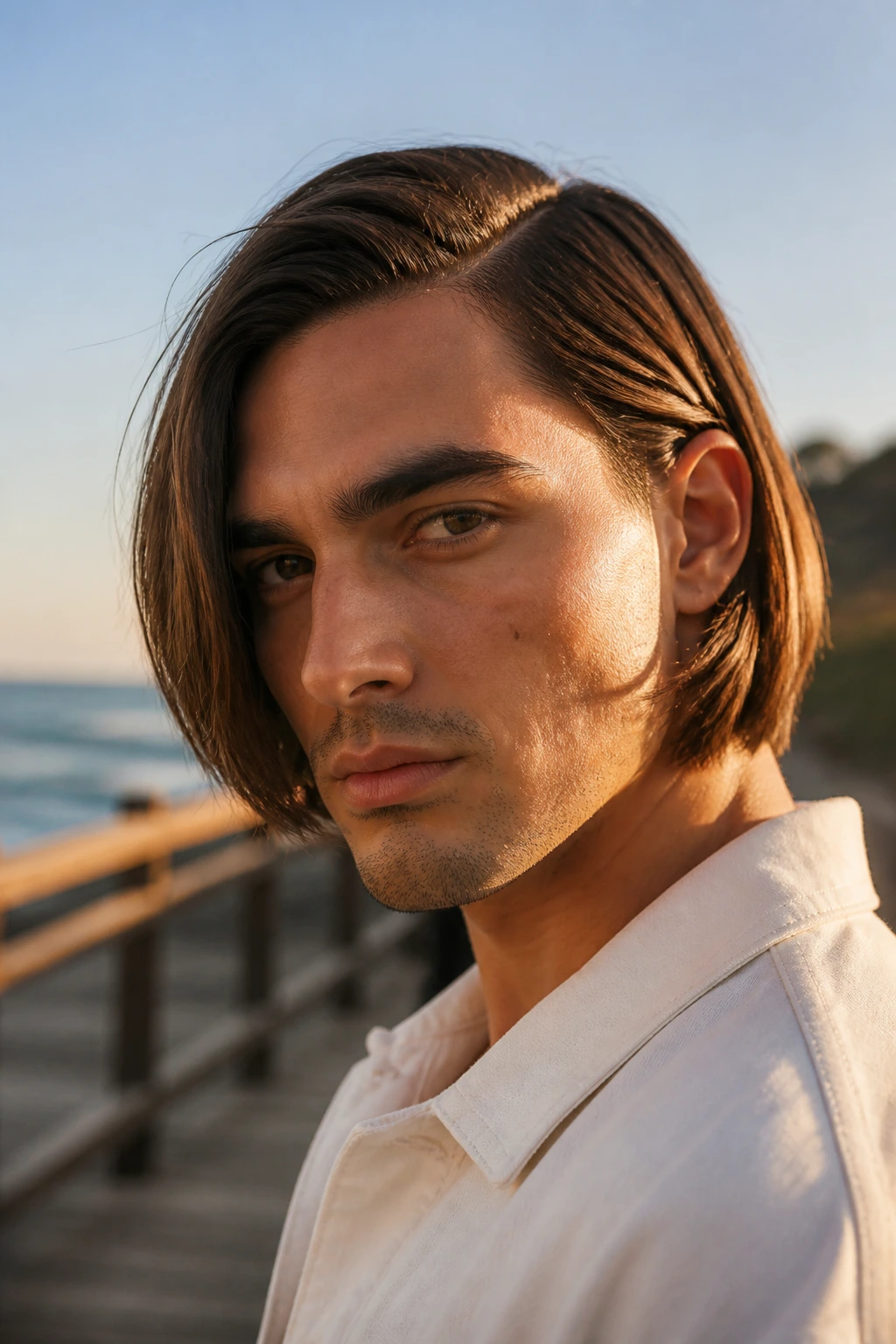
A side-part bob has a little more drama than a center part, and it often sits better on hair that naturally wants to fall one direction.
Why It Works: The side part adds asymmetry without turning the haircut into a full-on asymmetrical bob. It can soften a square forehead and give the hair a cleaner fall along the cheek.
What to Ask Your Barber: Ask for a bob that can be worn with a strong side part, with enough length at the front to sweep across without exposing too much scalp. If one side always lies flatter, tell them.
Styling Notes: Set the part while the hair is damp. Once it dries the wrong way, you’ll spend twice as long fixing it.
Tools:
- Tail comb
- Blow-dryer
- Light cream or mousse
- Sectioning clip
Who It Suits: People with a natural side growth pattern, or anyone who wants the bob to look a little less formal than a center part.
Pro Tips: A side part looks better when the crown has a little lift. Flat roots make the whole thing look tired.
Variations: Deep Side Bob pushes the part farther over; Loose Side Bob keeps the part softer and less obvious.
Common Mistakes: Don’t force a side part against a strong cowlick. The cut will split and expose the problem every morning.
11. Undercut Bob
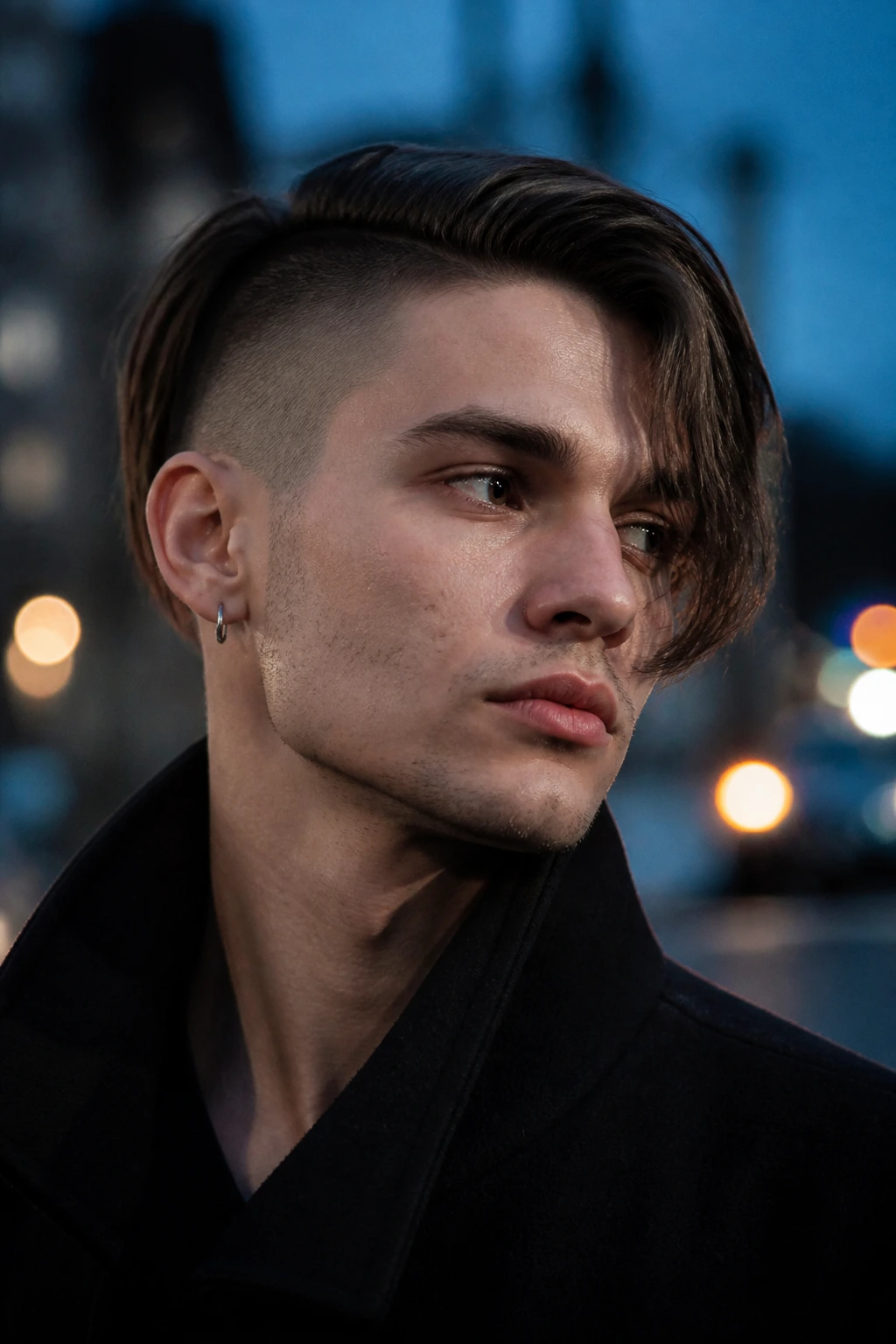
An undercut bob trims the sides and nape down tight while leaving the top and outer length longer. The contrast is the whole point.
Why It Works: It removes bulk fast, which makes thick hair easier to wear at bob length. It also sharpens the silhouette so the top line feels more dramatic.
What to Ask Your Barber: Ask for the sides and nape disconnected from the longer top section. Tell them how high you want the undercut to sit, because that line changes everything.
Styling Notes: Keep a little product near the ends and less at the roots. If the undercut is clean, the top can move without getting too heavy.
Tools:
- Clippers for the undercut area
- Blow-dryer
- Matte cream
- Comb
Best For: Thick hair, straight hair, or anyone who wants the bob shape but hates the feeling of too much hair at the neck.
Pro Tips: Ask the barber to check the transition with the hair hanging naturally, not just clipped up. That’s where bad disconnections hide.
Variations: Hidden Undercut Bob keeps the short section less visible; High-Contrast Undercut Bob makes the separation obvious.
Common Mistakes: Don’t let the undercut grow out too long or it turns into a lopsided shelf.
12. Disconnected Bob
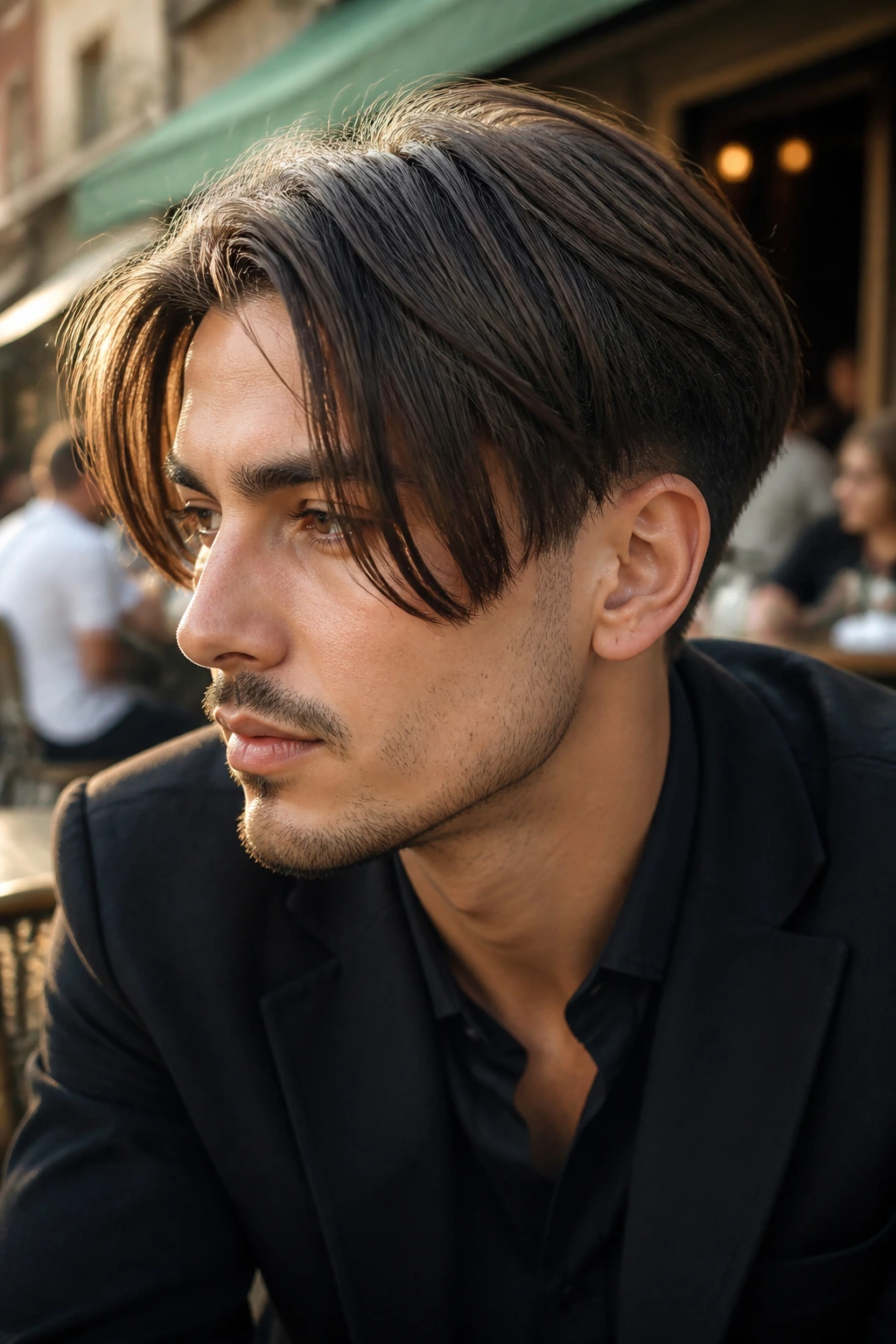
This one looks sharper and a little more fashion-forward. The sides and top don’t blend smoothly; instead, the haircut keeps a clear break between short and long sections.
Why It Works: The disconnect creates shape fast and can make medium-length hair feel lighter. It works especially well if you want the bob to show off the top line instead of sitting softly around the face.
What to Ask Your Barber: Ask for a clear separation between the longer bob section and the shorter sides. The word “disconnected” matters here; if you ask for blending, you’ll lose the effect.
Styling Notes: Use a dryer and a brush to keep the longer section moving away from the sides. A little texture at the top helps the break look intentional.
Tools:
- Clippers
- Blow-dryer
- Flat brush
- Light paste
Who It Suits: Men who like a bolder line and don’t mind regular upkeep. This is not the shy version of a bob.
Pro Tips: Keep the top ends clean. If they fray, the disconnect starts looking accidental.
Variations: Soft Disconnect uses a subtler break; Sharp Disconnect makes the contrast obvious.
Common Mistakes: Don’t try to blur the line so much that the haircut loses its shape. The break is the point.
13. Asymmetrical Bob
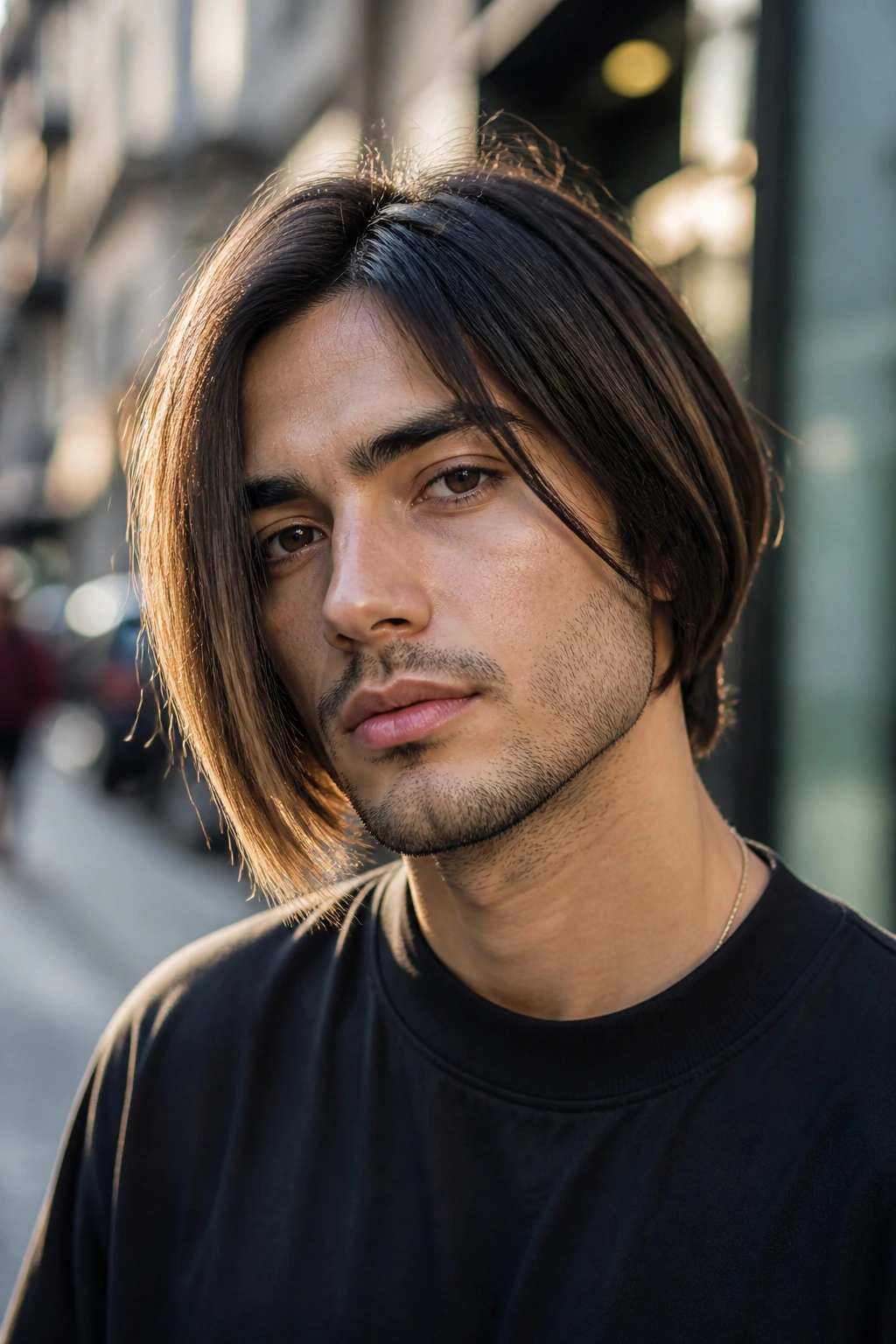
One side longer than the other. Simple idea, big change. An asymmetrical bob turns the haircut into a statement without needing color or a weird product finish.
Why It Works: The uneven length adds motion and pulls the eye in a specific direction. It can also balance out a face that feels wider on one side or a jaw that leans visually heavier.
What to Ask Your Barber: Ask which side should carry the extra length based on your part and your facial features. Then keep the difference measured, not extreme, unless you want the haircut to feel more editorial.
Styling Notes: Keep the shorter side tucked or cleaner, and let the longer side move a little. That contrast is what gives the style its edge.
Tools:
- Comb
- Blow-dryer
- Medium-hold cream
- Clips
Best For: Guys who want a bob that feels less symmetrical and more obvious in profile.
Pro Tips: The asymmetry should still look balanced from the front. If one side swallows the face, the cut went too far.
Variations: Soft Asymmetry keeps the difference subtle; Bold Angle Bob pushes the longer side farther down.
Common Mistakes: Don’t make one side way longer without a reason. Uneven does not automatically mean better.
14. Graduated Bob
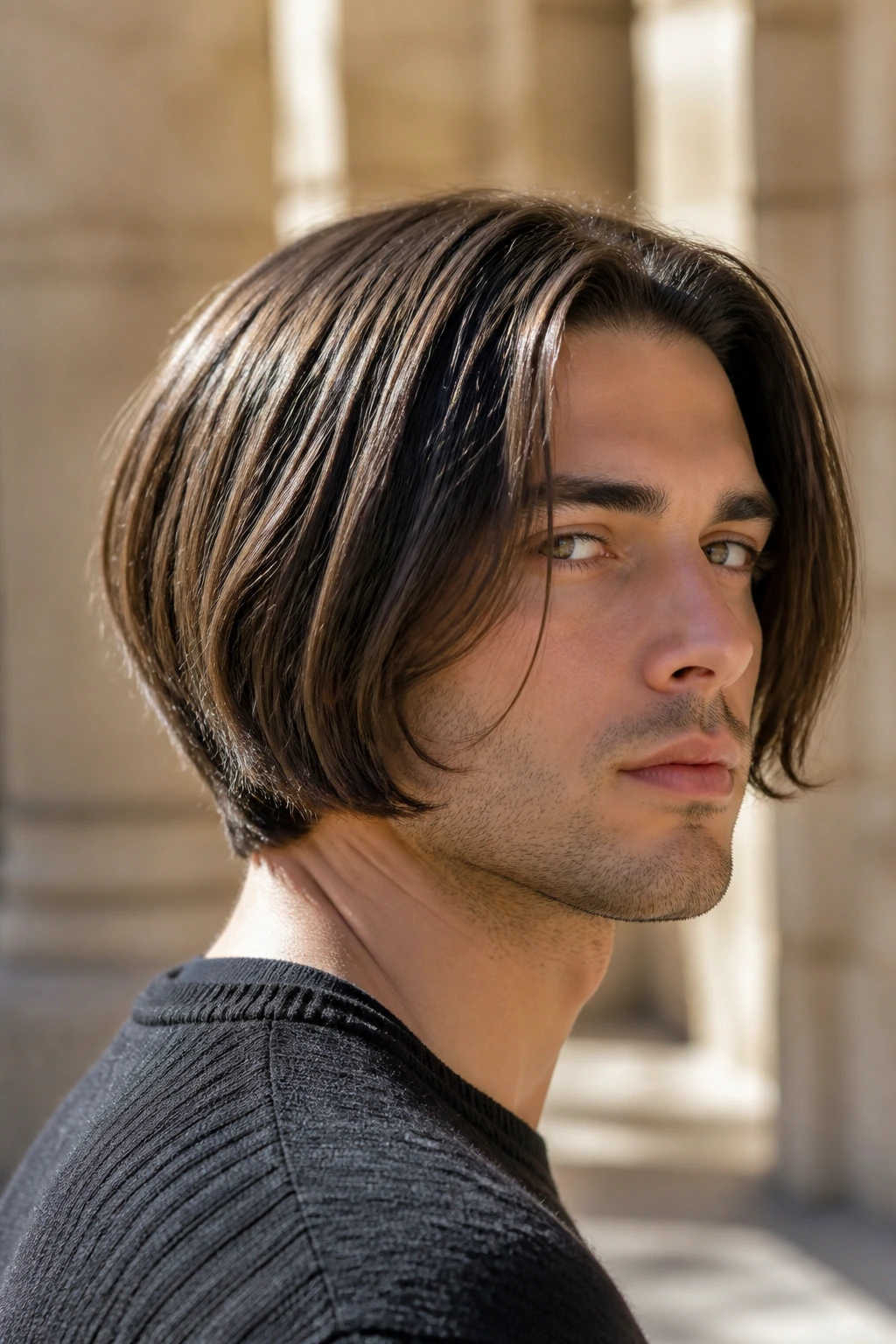
A graduated bob is shorter at the back and longer toward the front. It gives the haircut a slight angle, which can make the neck look cleaner and the jawline look more defined.
Why It Works: The graduation lifts the back off the neck, so the haircut sits neatly instead of hanging straight down. That’s useful if your hair flips out at the nape or grows in a thick block.
What to Ask Your Barber: Ask for stacked weight in the back with a soft front length that reaches the jaw or just below it. The transition should feel smooth, not like steps.
Styling Notes: Blow-dry the back downward and forward so the angle shows. A round brush helps if the ends want to kick out.
Tools:
- Round brush
- Blow-dryer
- Heat protectant
- Smoothing cream
Who It Suits: Men with thick hair, strong growth at the nape, or anyone who wants a neat back profile.
Pro Tips: If the front starts to drag down, ask for a light dusting at the longest pieces rather than shortening the whole cut.
Variations: Soft Graduated Bob is subtler; Stacked Bob leans harder into the back volume.
Common Mistakes: Too much stacking can make the back puff out. Keep the lift controlled.
15. Slicked-Back Bob

This one takes the bob and pushes it away from the face. The result feels clean, grown-up, and a little slick in the best sense of the word.
Why It Works: The slicked-back shape shows the face, jaw, and hairline more clearly. It also works when you want longer hair to stay controlled without tying it back.
What to Ask Your Barber: Ask for a bob that still has length at the perimeter but enough density up top to comb back cleanly. If the hair is very fine, too much removal can make this style collapse.
Styling Notes: Start with damp hair and work a small amount of cream or light pomade through the mid-lengths. Comb back with a wide-tooth comb, then leave it alone.
Tools:
- Wide-tooth comb
- Light pomade
- Blow-dryer
- Heat protectant
Best For: Worn best with sharper clothes, but it can also look good with a plain T-shirt when the hairline is tidy.
Pro Tips: Don’t use too much product near the roots. The haircut should look set, not wet all day.
Variations: Loose Slick Bob keeps more movement; Hard Slick Bob leans into a tighter, smoother finish.
Common Mistakes: If you slick back a bob with no perimeter control, the sides will flare. Keep the ends trimmed.
16. Wet-Look Bob
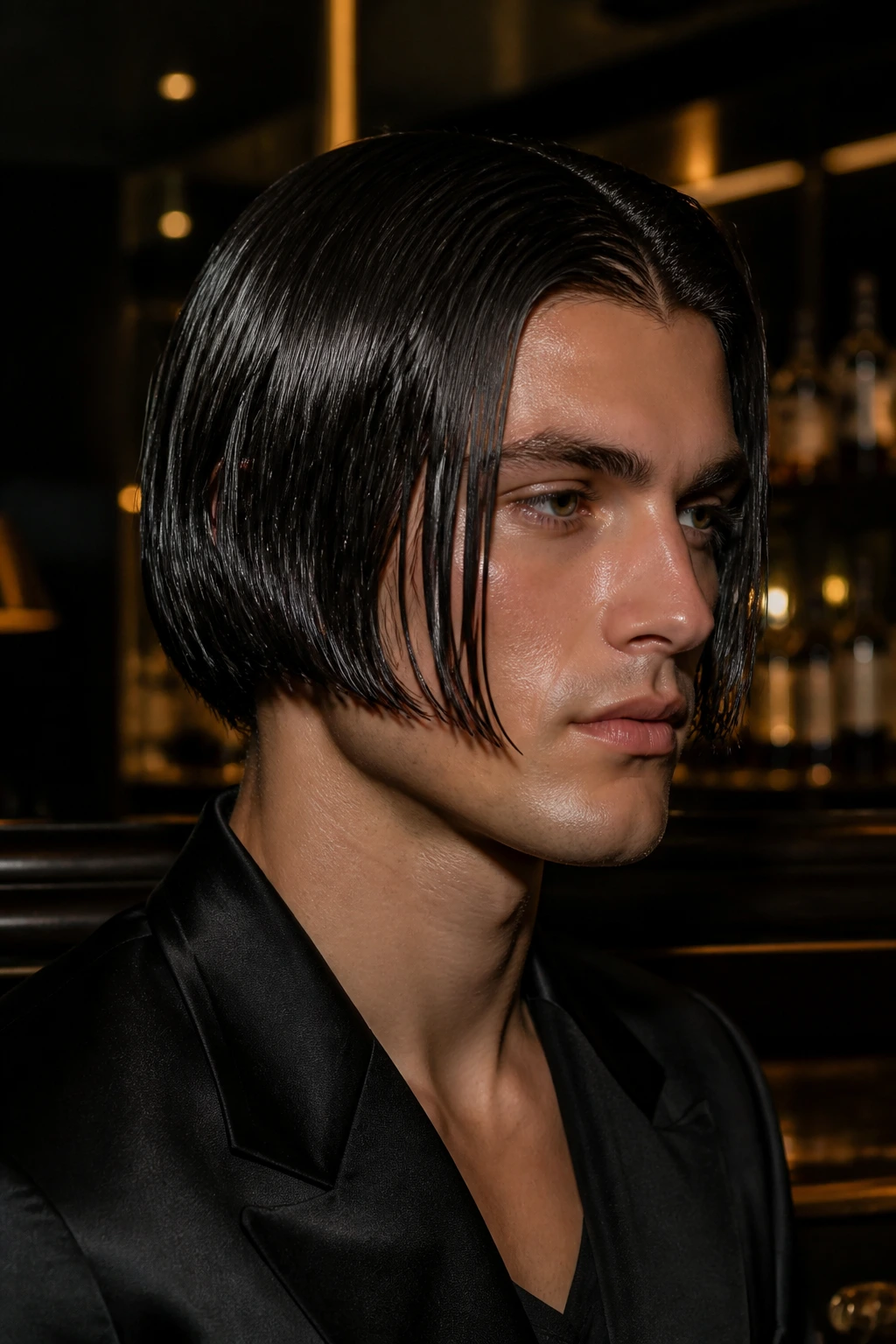
Glossy, smooth, and a little dramatic. The wet-look bob is basically a slick bob with more shine and less concern about appearing natural.
Why It Works: Shine accentuates the shape of the haircut and makes the edges read more clearly. It works well on evenings out, photo-heavy settings, or hair that naturally lays close to the head.
What to Ask Your Barber: Ask for a bob with clean lines and enough weight to hold a saturated finish without looking stringy. Thin ends and wet-look styling are not friends.
Styling Notes: Use gel sparingly, then comb it through damp hair so the product sits evenly. If you use too much, the hair gets crunchy and starts separating in ugly ways.
Tools:
- Gel
- Fine-tooth comb
- Blow-dryer on cool if needed
- Shine spray, optional
Who It Suits: Straight to slightly wavy hair does this easiest. Curly hair can still wear it, but the finish will feel more controlled than glossy.
Pro Tips: Apply product from mid-lengths outward. The roots need less than you think.
Variations: Glass-Gloss Bob goes shinier; Soft Wet Bob keeps a little texture peeking through.
Common Mistakes: Don’t confuse wet-looking with dripping wet. That usually just means too much product.
17. French Bob

The French bob sits shorter and neater, usually around the cheekbones or just below the ears, with a soft fringe or a loose front.
Why It Works: The shorter length opens up the face and keeps the haircut from feeling heavy. It’s a good choice when you want a bob that reads crisp rather than floppy.
What to Ask Your Barber: Ask for a short bob with a clean perimeter, slight bend at the ends, and optional fringe that skims the brow or cheekbone. The cut should look smart even without much styling.
Styling Notes: A little cream and a quick hand-dry can be enough. If your hair is naturally straight, that’s often all you need.
Tools:
- Small round brush
- Light cream
- Blow-dryer
- Tail comb
Best For: Narrower faces, straight hair, and anyone who wants a shorter bob that doesn’t need much fuss.
Pro Tips: Keep the fringe a touch longer than the rest if you want it to soften the forehead without swallowing it.
Variations: Fringe French Bob adds a fuller front; Bare-Bones French Bob keeps the front cleaner and shorter.
Common Mistakes: Don’t cut the sides too tight. Then it stops reading as a bob and starts looking like a grown-out crop.
18. Bro Flow Bob

This is the relaxed cousin in the family. The bro flow bob brushes the shoulders or sits just above them, with movement and a loose back flow instead of a hard line.
Why It Works: It gives length without making the hair feel ceremonially styled. The weight falls back naturally, which makes it easy to live with if you hate constant fixing.
What to Ask Your Barber: Ask for length that skims the collar or sits just under it, with light shaping around the face. You want the ends to move, not stack up.
Styling Notes: Comb it back with damp hands, then let it dry loosely. A touch of cream or leave-in conditioner is enough for most days.
Tools:
- Wide-tooth comb
- Leave-in conditioner
- Blow-dryer, optional
- Hair ties, if needed
Who It Suits: Men growing out shorter hair who want a shape instead of a messy halfway point.
Pro Tips: Trim the ends before they start to split. A bro flow bob can go from easy to tired-looking fast if the perimeter frays.
Variations: Loose Flow Bob is softer; Neater Flow Bob keeps the edges more controlled.
Common Mistakes: Don’t leave the neckline ignored. A little cleanup keeps the whole cut looking intentional.
19. Tucked-Behind-Ear Bob

This one changes the shape by how it’s worn. The cut itself can be classic or layered, but the ear tuck adds polish and opens the face.
Why It Works: Tucking one or both sides behind the ears shifts focus to the jaw, cheekbones, and eyes. It also helps the bob stay neat through the day without needing constant combing.
What to Ask Your Barber: Ask for enough length near the ears to tuck comfortably without the sides puffing out. If your hair is thick, the area around the ears may need a little internal thinning.
Styling Notes: Blow-dry the front slightly away from the face, then tuck while the hair is still warm. That helps the bend stay instead of popping back out.
Tools:
- Blow-dryer
- Flat brush
- Lightweight cream
- Bobby pin or clip, if needed
Best For: Men who wear glasses, earrings, or sharp collars. The tuck helps those details show.
Pro Tips: The tuck looks better when the back is clean and the sideburns are tidy. Messy sides make the trick look accidental.
Variations: One-Side Tuck feels relaxed; Double Tuck Bob looks cleaner and more formal.
Common Mistakes: Don’t force an ear tuck on hair that’s too short. It just springs out and gets annoying by noon.
20. Beard-Balanced Bob
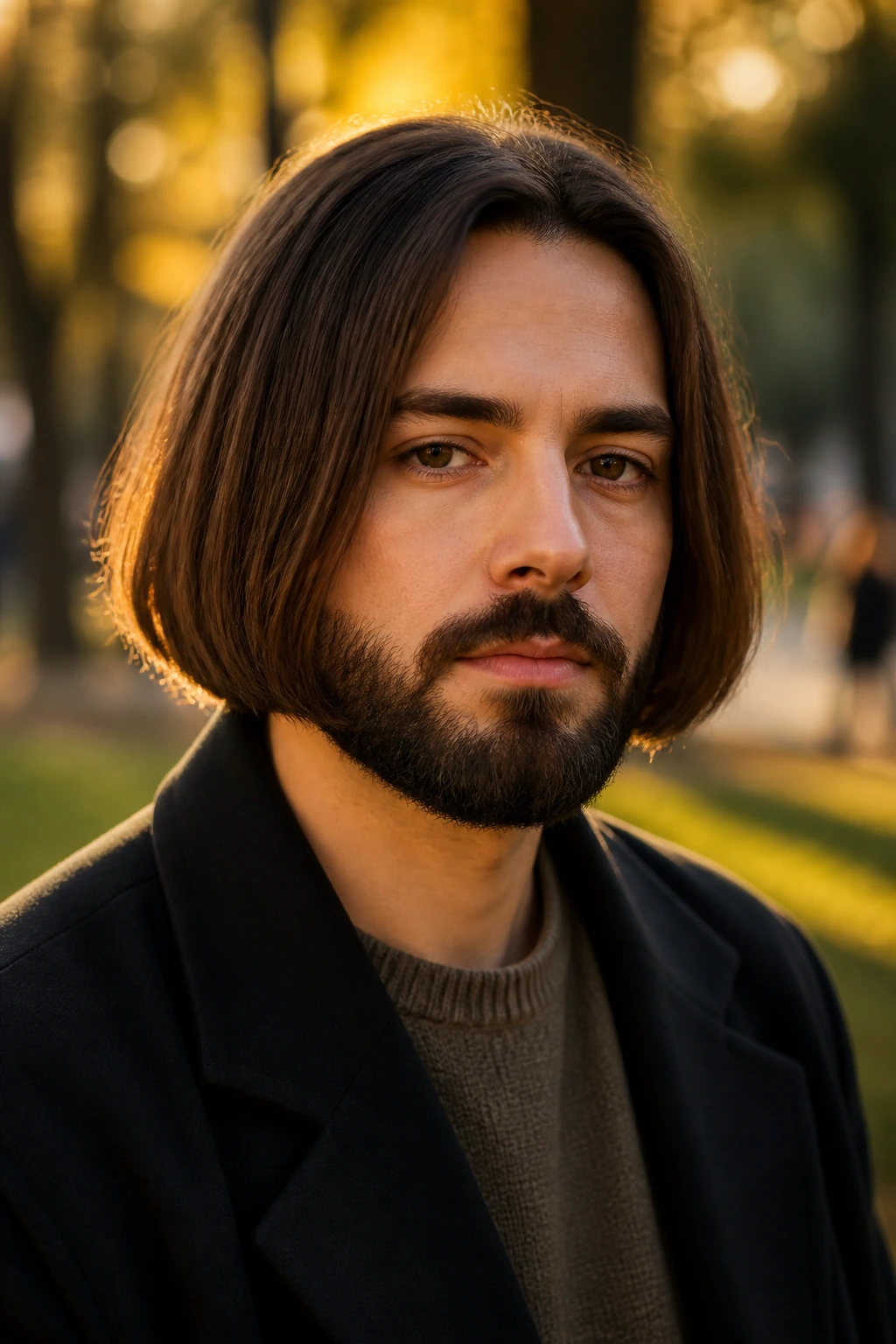
This cut is all about proportion. The bob sits at a length that works with the beard instead of competing with it.
Why It Works: Hair at the jaw and facial hair at the jaw can either clash or create a strong frame. When the lengths are balanced, the face looks more structured and the whole profile reads cleaner.
What to Ask Your Barber: Ask for the bob length to stop at a point that leaves room for the beard line. Usually that means either chin-length or slightly above it, depending on beard thickness.
Styling Notes: Keep the bob tidier near the sides if your beard is full, or the lower face can get crowded. A beard oil and a smoothing cream on the bob often pair well.
Tools:
- Beard trimmer
- Smoothing cream
- Comb
- Blow-dryer
Best For: Men with medium to heavy facial hair who want the haircut and beard to look like one decision.
Pro Tips: Let the barber see your beard growth pattern before cutting. Jawline balance is a moving target.
Variations: Short-Beard Bob keeps the beard tight; Full-Beard Bob adds more lower-face weight and usually needs more side control.
Common Mistakes: Don’t let the bob and beard end at the exact same visual line unless you want a blocky effect.
21. Feathered Bob

Feathering softens the ends and gives the haircut a lighter edge. It’s a quieter bob, less blunt and less severe, which is useful if you want movement without a lot of styling.
Why It Works: Feathered ends break up density and keep the haircut from feeling heavy around the face. On medium to thick hair, that can make a huge difference.
What to Ask Your Barber: Ask for feathered ends and soft internal shape, not chopped-up layers everywhere. You want air around the edges, not a collapse in the middle.
Styling Notes: A round brush and a quick blow-dry can keep the feathering visible. If you air-dry it, the ends usually settle into a softer version of the same shape.
Tools:
- Round brush
- Blow-dryer
- Light cream
- Heat protectant
Who It Suits: Good for men who want the bob shape but don’t want it to look hard or boxy.
Pro Tips: Feathering works best when the ends are trimmed cleanly. Split ends make the texture look tired instead of soft.
Variations: Soft Feather Bob keeps the feathering subtle; Airy Feather Bob goes lighter and more brushed-out.
Common Mistakes: Don’t confuse feathering with thinning the life out of the hair. There still needs to be body.
22. Bowl-Bob Hybrid
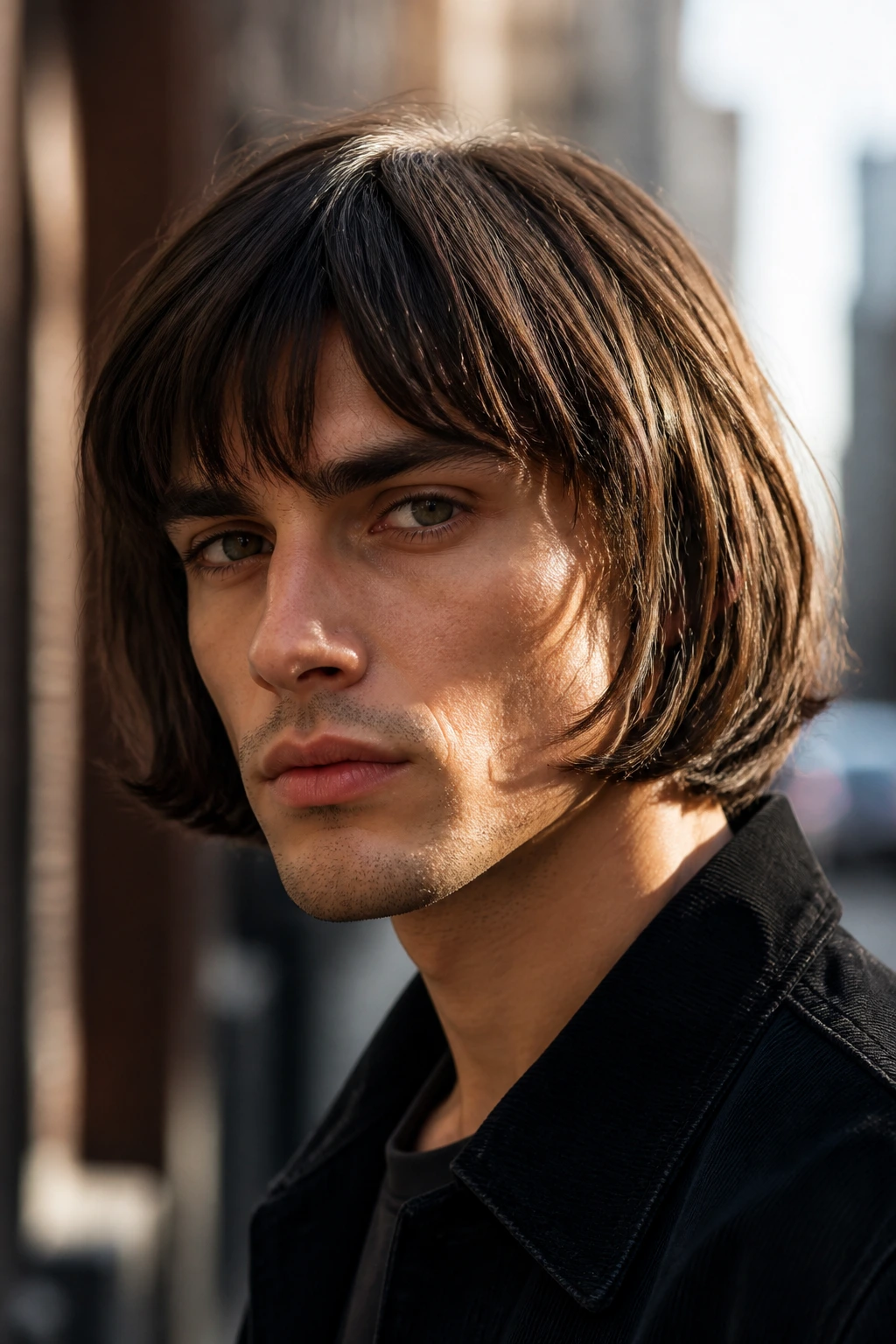
Part bob, part bowl cut, and much cooler than the name sounds when it’s done well. The outline curves around the head with a rounded perimeter and a little more length than a classic bowl.
Why It Works: The curve gives the haircut a strong graphic read, and the extra bob length keeps it from looking like a schoolboy cut. It’s bold, but not random.
What to Ask Your Barber: Ask for a rounded perimeter with controlled weight around the sides and back. The crown should be shaped, not puffed.
Styling Notes: A small amount of smoothing cream can keep the curve clean. This is not the place for messy texture unless you’re deliberately breaking the shape.
Tools:
- Comb
- Blow-dryer
- Smoothing cream
- Clippers for the neckline
Best For: Straight hair and men who like clear shapes. It’s also a strong choice if you want the haircut to look deliberate from across a room.
Pro Tips: Keep the fringe line neat. A sloppy front makes the whole cut feel wrong.
Variations: Soft Bowl Bob rounds the curve gently; Sharp Bowl Bob leans into a cleaner, more striking shape.
Common Mistakes: Don’t leave the ears half-covered and half-exposed. The line needs commitment.
23. Micro Bob

The micro bob is short enough to feel lean but still has the bob outline. It usually sits around the ears or just below them, which makes it a tidy option for guys who want movement without much length.
Why It Works: The short length means less weight, less tangling, and less drama in the morning. It also makes the face look sharper because the hair isn’t hanging low enough to blur the jaw.
What to Ask Your Barber: Ask for a short bob with a visible perimeter and just enough length to tuck or sweep. If the cut goes much shorter than the ears, it starts leaving bob territory.
Styling Notes: A little cream or light paste is enough. The point is to keep the shape in place, not build volume.
Tools:
- Small comb
- Light paste
- Blow-dryer, optional
- Neck trimmer
Who It Suits: Men who want a smaller silhouette, especially if they have fine hair or dislike constant upkeep.
Pro Tips: This cut looks best with a clean neckline. Once the neck grows fuzzy, the whole thing loses its crispness.
Variations: Close Micro Bob sits tighter to the head; Soft Micro Bob allows a little more movement at the ends.
Common Mistakes: Don’t cut it so short that it stops reading as a bob and turns into a crop.
24. Lob

The lob, or long bob, is the easiest bob for a lot of men to wear. It sits at the jaw, neck, or collarbone and gives you the longest runway before the style starts to collapse.
Why It Works: The extra length softens the transition from short hair to long hair. It also gives thick hair room to lie down and fine hair room to drape without looking stiff.
What to Ask Your Barber: Ask for a collar-skimming or jaw-skimming bob with clean ends and subtle shape around the face. If the hair grows in thick, a little inside weight removal helps.
Styling Notes: This is a strong air-dry cut. A light leave-in and a comb-through are often enough unless the hair has a stubborn bend.
Tools:
- Wide-tooth comb
- Leave-in conditioner
- Blow-dryer, optional
- Soft brush
Best For: Men who want the bob shape but not the pressure of keeping it short.
Pro Tips: A lob grows out gracefully, which makes it a smart choice if you only trim a few times a year.
Variations: Clean Lob keeps the line sharper; Loose Lob leaves the ends softer and more relaxed.
Common Mistakes: Don’t forget the front shape. A long bob with no facial framing can just hang there.
25. Surfer Bob

Sun-rough, wind-tossed, and better when it looks a little imperfect. The surfer bob is all about casual movement and soft ends.
Why It Works: The uneven texture mimics naturally worn hair, so it grows out well and does not need strict daily styling. The shape still feels like a bob because the perimeter is there, even if it’s a soft perimeter.
What to Ask Your Barber: Ask for a medium-length bob with light layers and face-framing pieces. The goal is movement, not a shaggy collapse.
Styling Notes: Sea salt spray and air-drying are the obvious play, but don’t overdo the salt or the hair gets rough and dry. A dab of cream on the ends smooths it out.
Tools:
- Sea salt spray
- Leave-in conditioner
- Fingers
- Diffuser, optional
Who It Suits: Wavy hair, fine hair with some bend, and anyone who likes the “I ran my hands through it” look without actual chaos.
Pro Tips: Keep the ends healthy. A surfer bob looks best when the texture feels soft, not fried.
Variations: Dry Sand Bob is rougher; Soft Surf Bob stays smoother and more touchable.
Common Mistakes: Don’t pile on texture spray every day. The hair will dry out fast.
26. Punk Bob

This is the sharp, slightly rebellious version. It can be jagged, asymmetrical, or shaved underneath, and it looks best when the shape says something on purpose.
Why It Works: A punk bob uses contrast and edge rather than softness. It gives you the bob outline but refuses to be neat about it, which is the whole appeal.
What to Ask Your Barber: Ask for rougher ends, an uneven fringe, or a disconnect somewhere in the shape. If you want color or a shaved line, bring that up before the cut starts.
Styling Notes: Matte paste, fingers, and a little mess work better than any glossy product. The cut should look like it can move fast.
Tools:
- Matte paste
- Clippers, if there’s a shaved detail
- Comb
- Texture spray
Best For: Men who like the haircut to have attitude. It works best when the wardrobe doesn’t try too hard to match it.
Pro Tips: Keep one element controlled, like the neckline or the fringe, so the style doesn’t become noise.
Variations: Shaved Punk Bob adds a hard undercut; Ragged Punk Bob keeps everything rough but less severe.
Common Mistakes: Don’t let “punk” become an excuse for poor cutting. Even a jagged bob needs shape.
27. Nordic Straight Bob
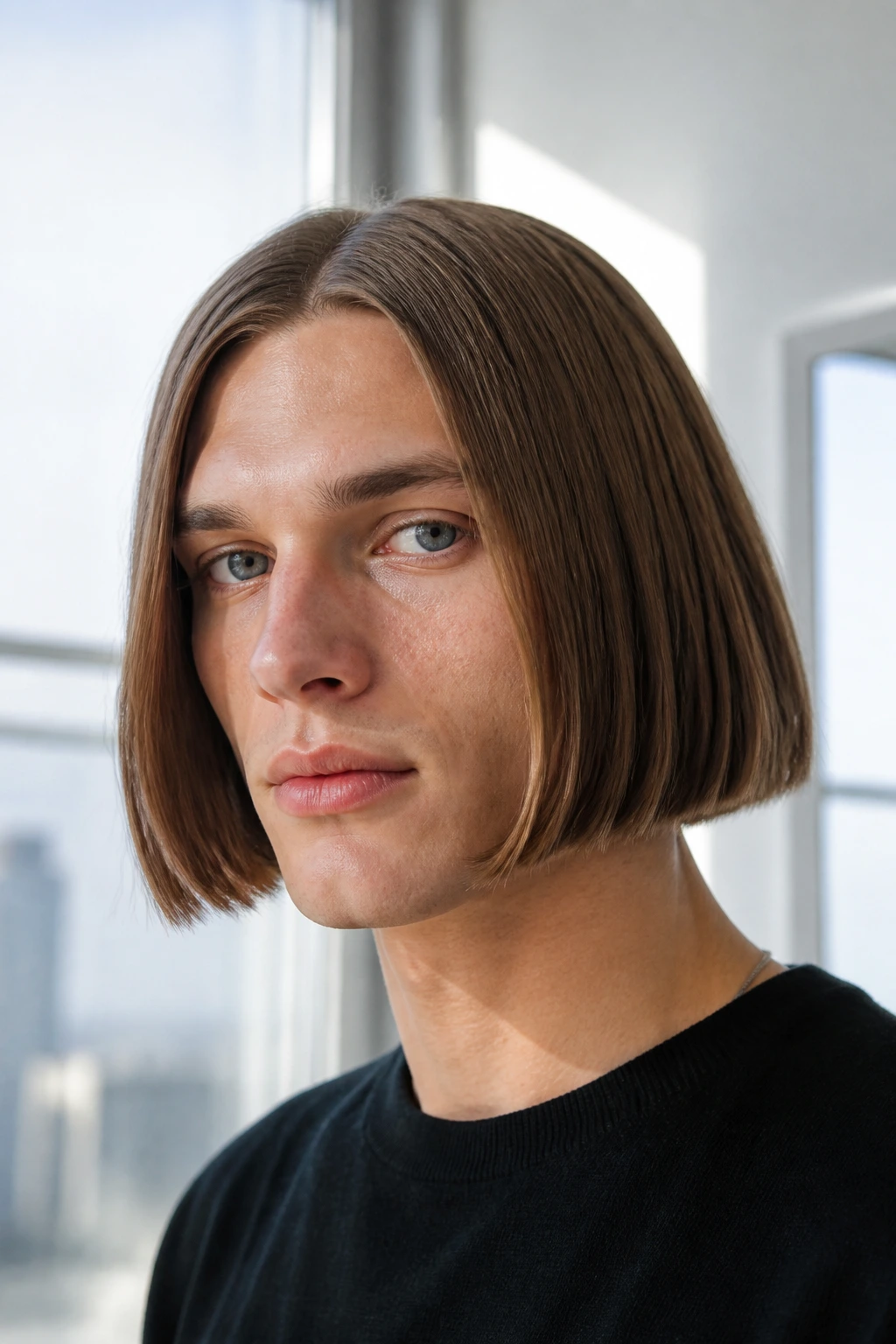
Cool, clean, and very direct. The Nordic straight bob is built on straight hair, a crisp part, and a line that looks almost severe in the best way.
Why It Works: Straight hair shows off the geometry of the cut, so the bob’s shape becomes the whole story. That makes this a strong choice if you like minimal styling and strong edges.
What to Ask Your Barber: Ask for a one-length or lightly graduated bob with a clean middle or side part. The finish should be neat, and the ends should sit level.
Styling Notes: Dry with a brush, smooth the ends, and stop there. Too much product turns the clean line heavy.
Tools:
- Flat brush
- Blow-dryer
- Light serum
- Tail comb
Who It Suits: Straight hair that naturally falls with little fight. It also looks good on men with sharper features.
Pro Tips: Keep the hair glossy but not greasy. Shine helps this style; slickness does not.
Variations: Crisp Nordic Bob is tighter; Soft Nordic Bob keeps a tiny bend at the ends.
Common Mistakes: Don’t add texture spray just because you feel like you should. That defeats the straight-line effect.
28. Samurai-Inspired Bob

A little longer, a little cleaner, and strong through the perimeter. This bob borrows the feel of tied-back traditional length without forcing you to wear it tied every day.
Why It Works: The shape keeps enough density and length to be pulled back, tucked, or left loose. That makes it practical for men who like one haircut and two different ways to wear it.
What to Ask Your Barber: Ask for a strong perimeter around the collar or jaw with enough length in front to sweep back. Keep the sides balanced so the cut still looks like a bob when loose.
Styling Notes: Wear it loose with a light cream, or tie part of it back with a small band when you want the face open. The haircut should work both ways.
Tools:
- Small hair ties
- Wide-tooth comb
- Light cream
- Blow-dryer, optional
Best For: Men who want versatility and don’t mind a bit of length maintenance.
Pro Tips: Keep the ends healthy. Longer bobs get ragged fast if you skip trims.
Variations: Loose Samurai Bob stays down; Half-Tied Bob pulls the top back and leaves the rest loose.
Common Mistakes: Don’t tie it back too tightly every day. That can create weak spots and breakage near the front.
29. Braided Bob
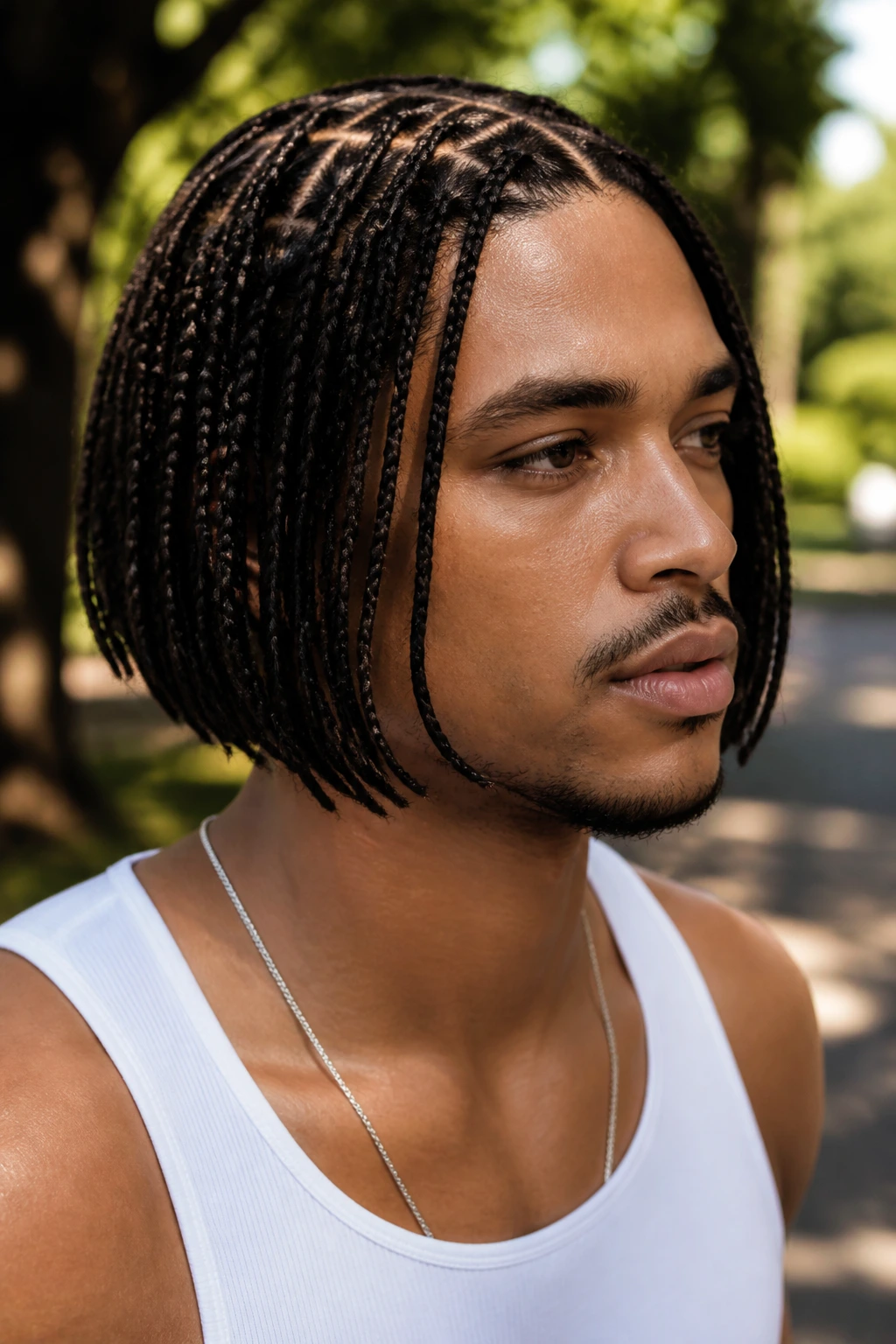
Braids and bob length make a good pair when the hair has enough length to hold a neat pattern but still falls around the jaw or neck. The look is structured, clean, and adaptable.
Why It Works: Braiding adds control to hair that might otherwise puff up or tangle. It also gives a bob a different texture without changing the underlying length.
What to Ask Your Barber or Stylist: Ask for a bob length that leaves enough material to braid comfortably. If your hair is thick or curly, you may need slightly more length than straight hair does.
Styling Notes: Moisturize first, then braid in sections that suit your density. Tight braids can look sharp, but pulling too hard is a fast route to discomfort and breakage.
Tools:
- Rat-tail comb
- Small elastics
- Leave-in conditioner
- Edge brush, if needed
Who It Suits: This is especially good for textured hair that benefits from control. It also works as a protective style when the hair needs a break.
Pro Tips: Keep the scalp clean and the braids not-too-tight. A pretty braid that hurts is not a win.
Variations: Single-Braid Bob is simple; Multi-Braid Bob gives more texture and structure.
Common Mistakes: Don’t braid dry, brittle hair without adding moisture first. The ends will pay for it.
30. Messy Air-Dry Bob

This one is for the guy who wants a bob to look good after five minutes, not thirty. The cut is built to fall well on its own, with shape that survives a towel dry and a quick pass of fingers.
Why It Works: Air-drying lets the hair keep its own movement, which is useful if it has wave, bend, or a bit of natural volume. The cut still needs shape, though. Messy is not the same as random.
What to Ask Your Barber: Ask for a bob with soft layering, a clean perimeter, and enough front length to tuck or sweep. Make sure they know you plan to air-dry most of the time.
Styling Notes: Put in a small amount of leave-in conditioner or light cream, scrunch the ends once or twice, and stop touching it. That last part matters more than people think.
Tools:
- Microfiber towel
- Leave-in conditioner
- Light cream
- Fingers
Best For: Low-maintenance wearers, wavy hair, and anyone who wants the bob to look a little undone without looking neglected.
Pro Tips: If the hair dries too puffy, smooth only the outer layer with a tiny bit of cream. Don’t restart the whole style.
Variations: Bedhead Bob is a touch rougher; Clean Air-Dry Bob keeps the ends smoother and closer to the head.
Common Mistakes: Don’t assume air-drying means zero structure. The cut still has to be built for it.
Why Men’s Bob Haircuts Keep Working When Shorter Styles Feel Boring
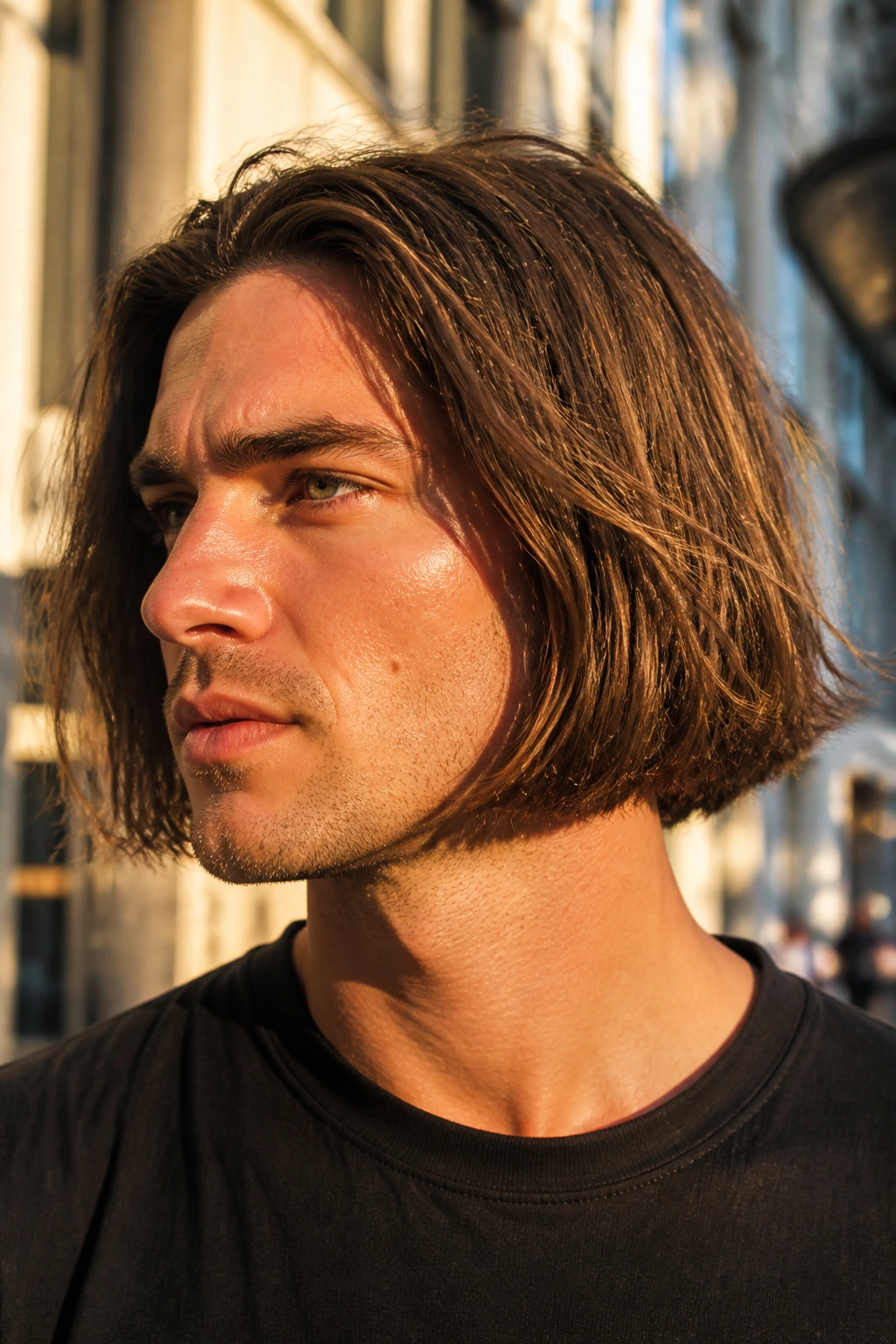
A bob gives you something most shorter men’s cuts don’t: a visible shape that still moves. That sounds small, but it changes how the haircut lives on your head. A fade can disappear into skin and regrowth quickly. A bob keeps its outline. You can see the perimeter at breakfast, at lunch, and usually right before the next trim too.
The other reason bob haircuts for men keep coming back is that they are flexible without being shapeless. You can shift the part, add a little texture, or clean up the neckline and the haircut changes mood without losing identity. That’s a useful thing when you want one cut to handle office clothes, weekend clothes, and whatever happens after that.
And honestly, the bob has one quality that gets underappreciated: it looks like someone decided on it. Even when it’s messy, it still feels chosen. That’s rare.
The Small Tool Kit That Makes a Men’s Bob Easier to Wear
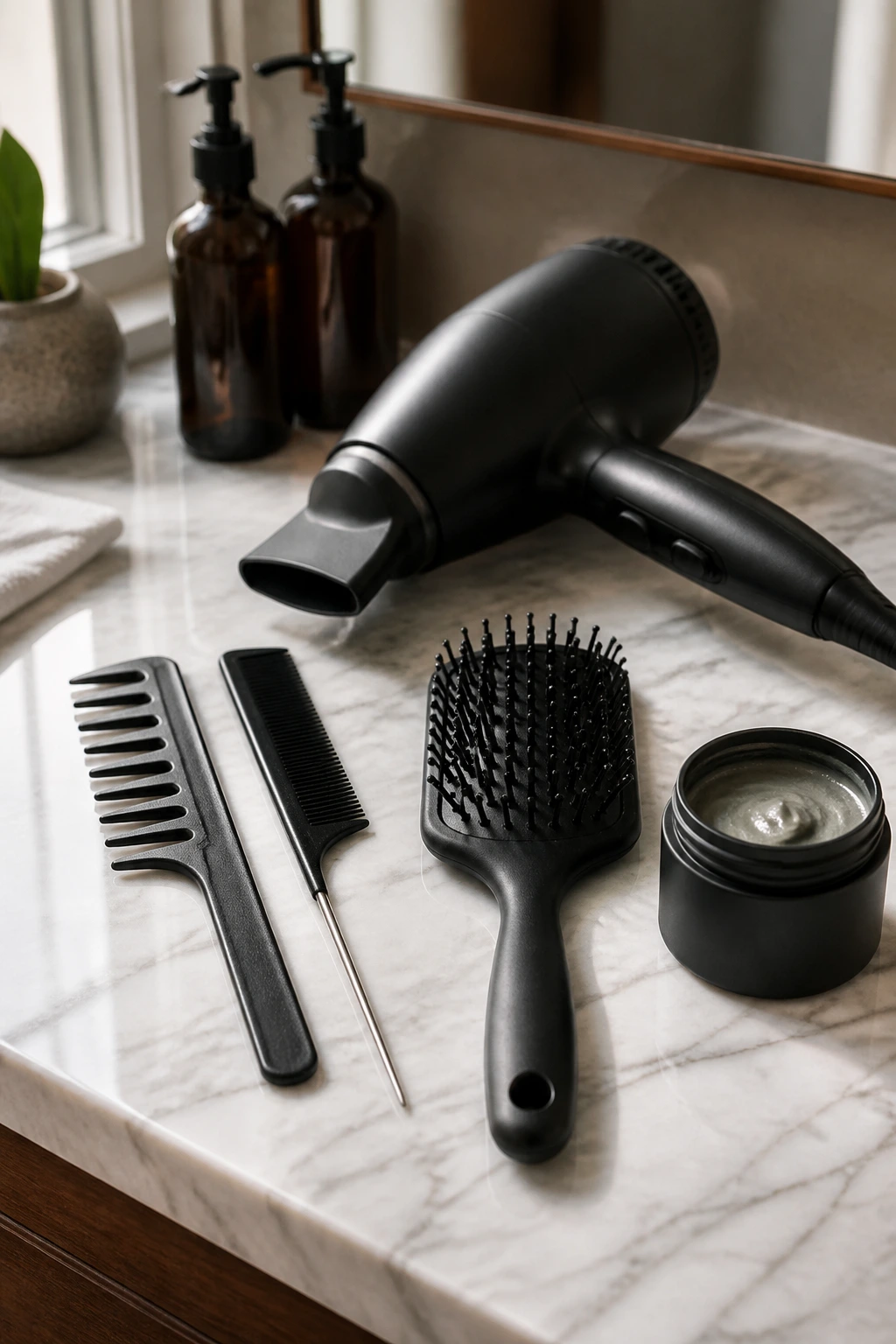
You do not need a bathroom full of product to make these cuts behave. The right few tools do most of the work, and the wrong heavy stuff usually makes the hair look older than it is.
- Wide-tooth comb: Good for damp hair and for keeping wave or curl from getting crushed.
- Tail comb: Useful for parts, sectioning, and getting the front to sit where you want it.
- Blow-dryer with nozzle: Helps direct the perimeter and smooth the roots without blasting the hair everywhere.
- Paddle brush or round brush: Paddle brushes keep bob lines flat; round brushes add bend and lift.
- Lightweight cream or leave-in conditioner: Good for smoothing ends without making them greasy.
- Sea salt spray or texture spray: Best for wavy, shaggy, and surfer-style bobs.
- Matte paste or light pomade: Gives control without the shine overload.
- Heat protectant: Necessary if you blow-dry often, which a lot of bob wearers end up doing.
If your hair is curly or coarse, add a diffuser and keep it on the list. If it’s fine, keep the product lighter than you think. Fine hair gets weighed down fast.
Choosing the Right Bob for Your Hair Type and Face Shape
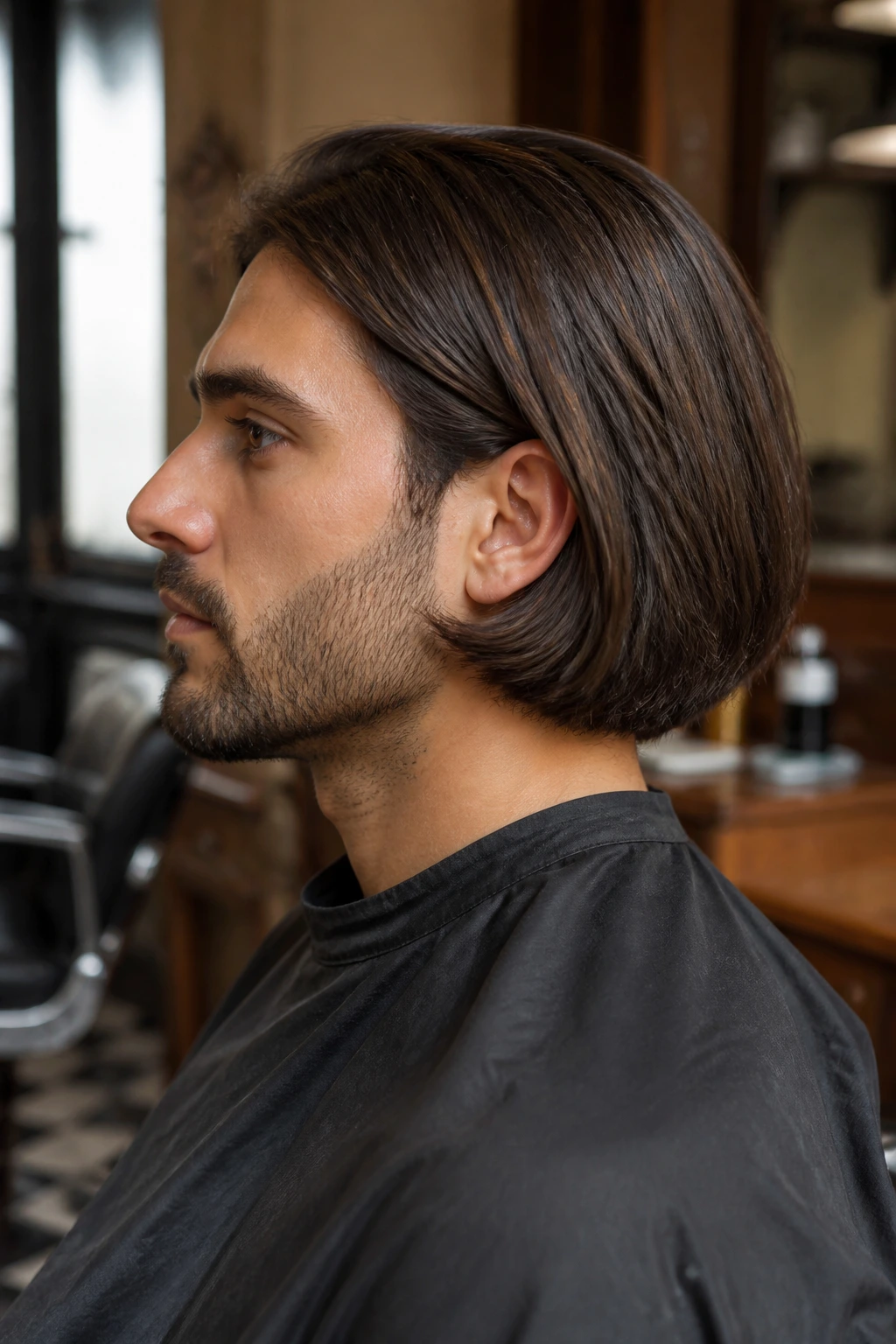
Straight hair is the easiest place to see a bob’s line, which is why blunt, center-part, and Nordic straight versions work so well. Straight hair shows every decision you make, good or bad. If the perimeter is crisp, the haircut looks expensive. If the ends are choppy in the wrong way, it looks like you gave up halfway through.
Wavy hair usually does better with layering, curtain bangs, or a surfer-style texture. The wave already adds movement, so you’re mainly controlling the shape rather than creating it from scratch. A little more length near the front helps too, because wavy hair shrinks and flips in ways that can surprise you.
Curly and coily hair need room. Short bobs can work, but the shape has to respect shrinkage and volume. Rounded silhouettes, side shapes, and dry cutting often help more than trying to force the hair into a flat, straight-line bob. That approach usually fails by day two.
Face shape matters, but not in the rigid, chart-like way people love to pretend. A long face often likes a center part or fringe because it breaks vertical lines. Rounder faces usually benefit from a little height or a side part. Square jaws can look excellent in a chin-length bob, especially if the ends are softened just enough to keep the lower face from feeling too boxy.
How to Style a Men’s Bob Without Flattening It or Puffing It Out

The sweet spot is shape plus movement. Too much product, and the hair turns stiff. Too little control, and the ends spread out or collapse.
Start with towel-dried hair and decide what the haircut wants to do. If it leans straight, comb it down and smooth the perimeter. If it has wave, scrunch a little cream through the mids and leave the ends alone. If it’s thick, use the blow-dryer to push the bulk where you want it before it dries in a weird direction.
Roots matter more than most guys realize. If the roots dry flat and the ends dry puffy, the whole bob looks tired. A quick lift at the crown with the dryer or a brush helps the shape stay alive. And if you’re in a hurry, focus on the front and the neckline. Those are the parts people notice first.
How to Wear These Bobs in Real Life
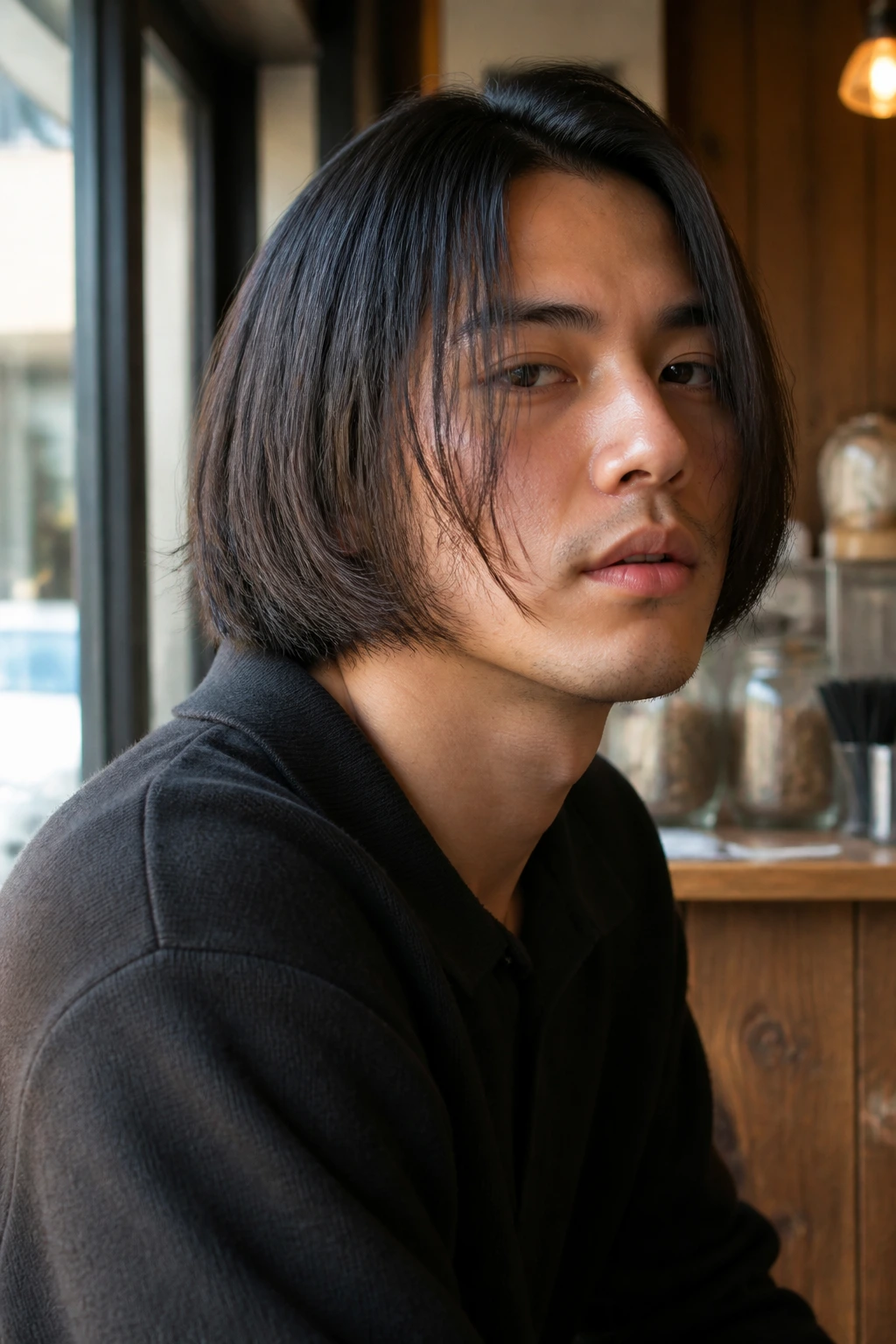
Presentation: Keep the neckline clean, the part deliberate, and the sides either clearly tucked or clearly loose. A bob looks best when it doesn’t seem undecided about itself.
Accompaniments: Clean collars, simple tees, glasses, a short beard, or a bare face all change the read of the cut. Heavy, busy outfits can fight the shape; cleaner lines usually help it.
Portions: Chin length is the most balanced entry point for most men. Cheekbone length feels bolder, while collarbone length leans into lob territory and gives more styling room.
Beverage Pairing: A slicker bob fits a black coffee, espresso, or a clean whiskey soda kind of mood. A shaggy or surfer version feels more at home with iced coffee, sparkling water, or a simple beer after work.
Additional Tips and Finishing Moves
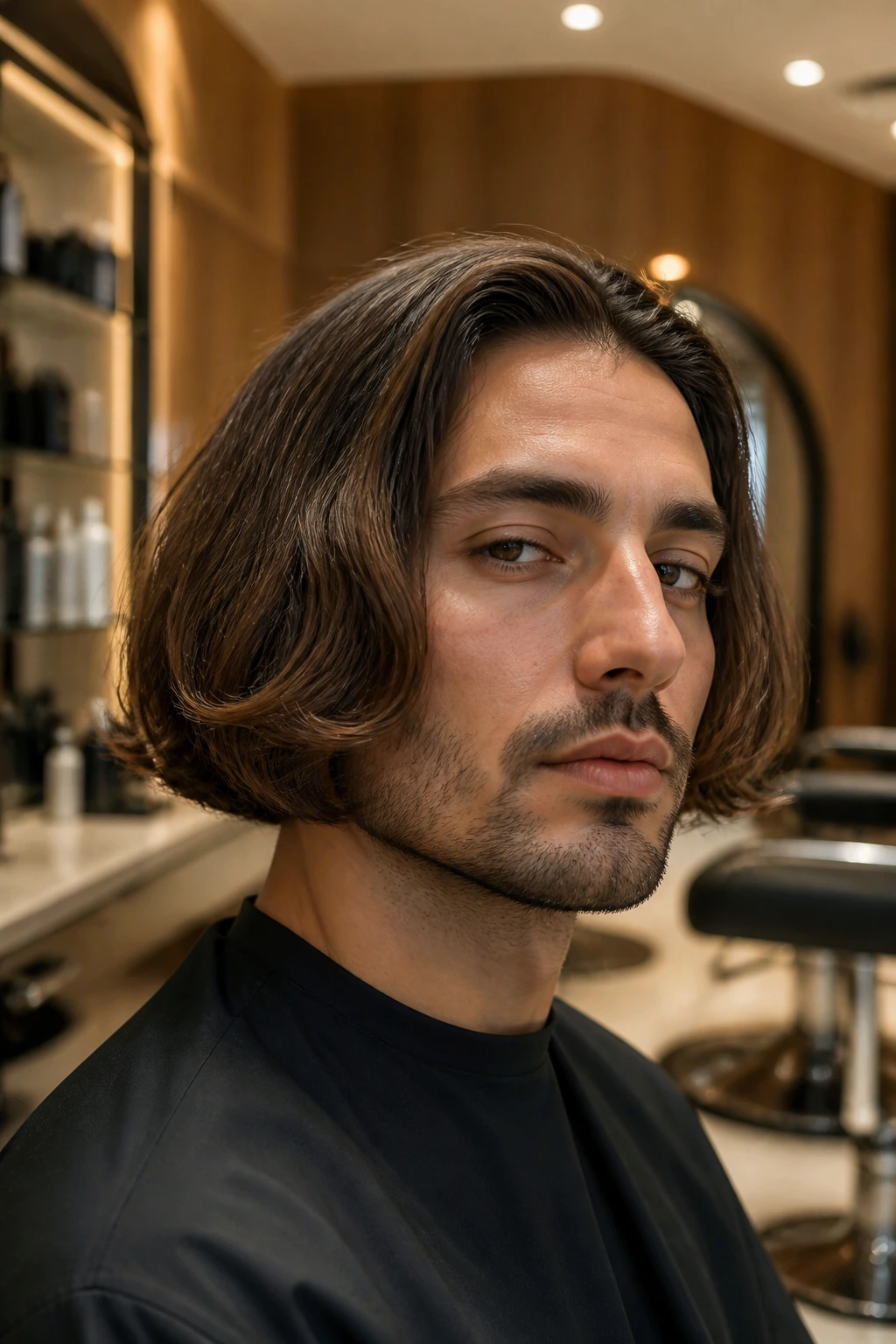
Texture Boost: If the bob feels too flat, use a pea-sized amount of mousse at the roots and a touch of sea salt spray through the mids. That usually fixes the limp look without making the hair rough.
Shape Control: Blow-dry the front away from the face first, then set the part, then leave the ends alone. People reverse that order all the time and wonder why the haircut looks off.
Beard Balance: If you wear facial hair, keep the beard line cleaner than you think. A messy beard plus a bob can tip the whole look into clutter.
Low-Fuss Upgrade: Ask for soft internal debulking instead of aggressive layering when your hair is thick. You’ll keep the shape and lose the bulk that makes a bob feel heavy.
Make-It-Yours: Add a fringe, a harder part, a tucked side, or a bit of asymmetry before you reach for color. Small changes go a long way on this haircut.
Keeping a Bob in Shape Between Trims
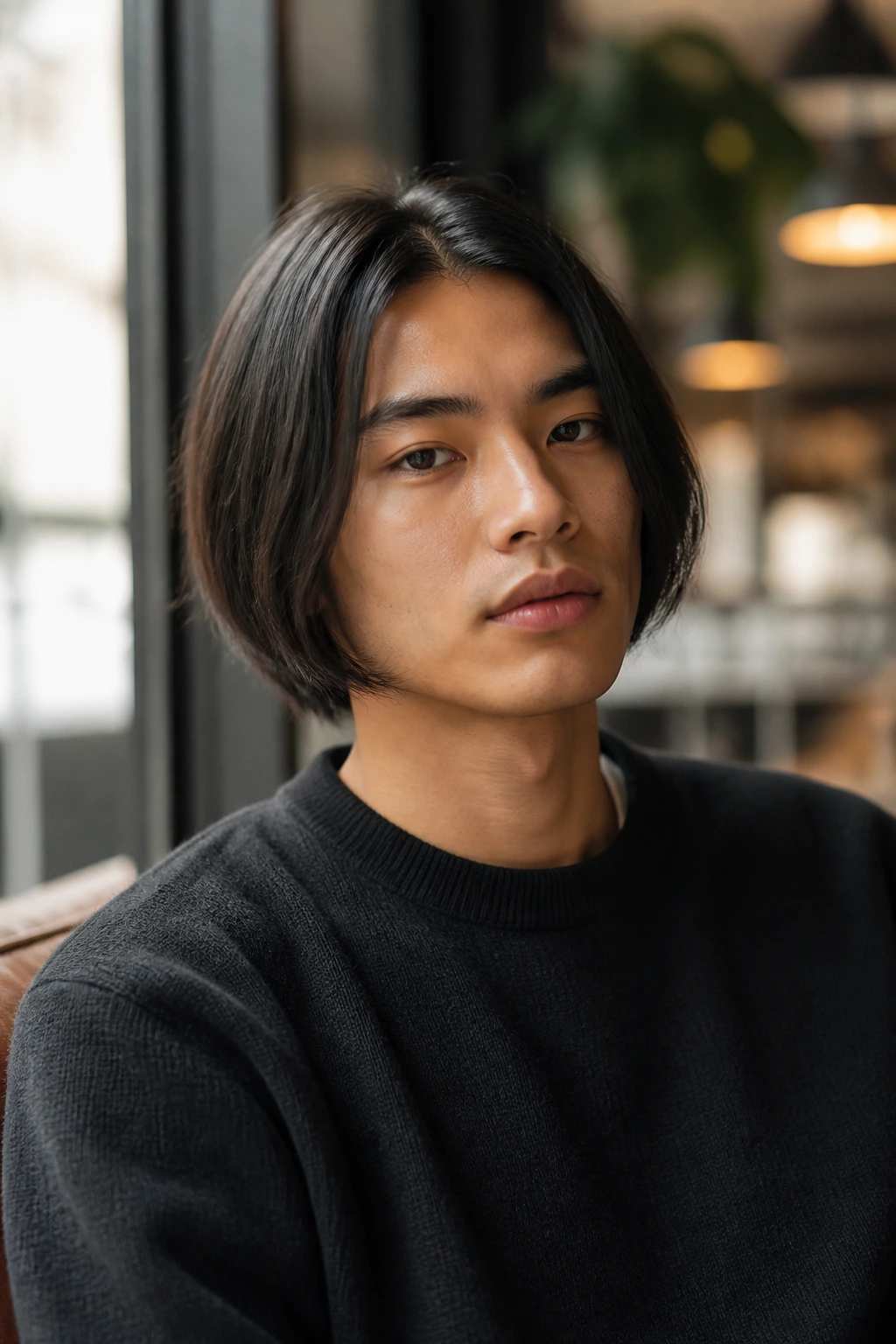
A bob is forgiving, but not forever. The haircut starts to change the moment the neckline grows out, the ends split, or the weight line shifts enough that the front and back stop agreeing with each other.
For blunt bobs and chin-length cuts, a trim every 4 to 6 weeks keeps the outline from getting fuzzy. Layered, shaggy, and surfer styles can usually stretch to 6 to 8 weeks because they’re built to look a little looser. Longer lob versions often live happily in the 8 to 10 week range if the ends stay healthy and the shape doesn’t lose too much definition.
If you wear product daily, wash enough to stop buildup from dulling the ends, but not so much that you dry the hair into straw. For most men, that means 2 to 4 washes a week, depending on hair type and scalp oil. Use clarifying shampoo once every couple of weeks if cream, paste, or salt spray starts to sit on the hair instead of blending in.
When the haircut begins to grow out, ask for a dusting or cleanup rather than a whole redesign. That keeps the original shape alive. And if you’re trying to grow the bob longer, resist the urge to trim the front every time the back looks messy. That’s how people accidentally stall the whole process.
Variations and Adaptations to Try
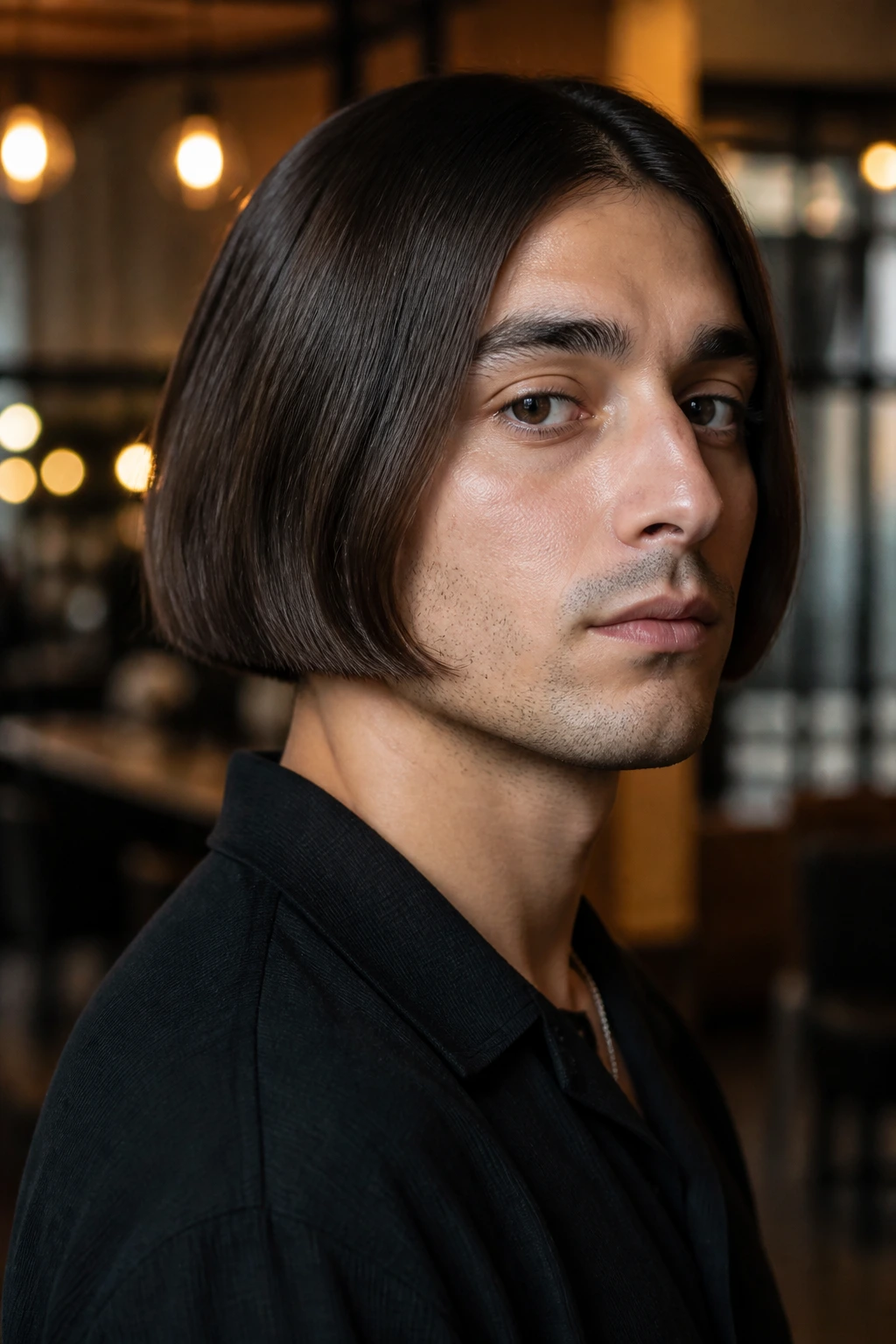
Curly-Friendly Bob: Leave more length than you would on straight hair and cut with shrinkage in mind. This keeps the curls from bouncing up too high and changing the silhouette completely.
Fine-Hair Lift Bob: Ask for a cleaner perimeter with light internal layering and use mousse at the roots. Fine hair needs support, not over-thinning.
Thick-Hair Clean-Out Bob: Ask for bulk removal inside the shape, especially near the sides and nape. The haircut keeps its line, but it stops feeling like a wool hat.
Beard-Heavy Balance: Keep the bob a touch shorter at the chin and cleaner near the jaw if you wear a full beard. That prevents the lower face from feeling crowded.
Office-Quiet Bob: Choose a center part, chin length, and very soft layering. It reads neat without looking severe, which helps if you want a bob that doesn’t start conversations before you do.
High-Edge Bob: Add asymmetry, a sharper fringe, or an undercut underneath. That version has more attitude, which is useful if you want the haircut to stand out on purpose.
Common Mistakes That Make a Bob Look Off

The first one is over-thinning. A bob needs weight somewhere, or the ends start looking wispy and weak. If the haircut feels see-through at the bottom, the shape is probably too aggressive.
The second is ignoring the neckline. A fuzzy nape can ruin an otherwise clean bob in a week or two. A quick trim there keeps the whole haircut looking fresh.
Third, people use too much product. A bob should move. If the hair is greasy, sticky, or stiff, the shape loses the very thing that makes it interesting.
Fourth, the part gets treated like an afterthought. A center part, side part, or soft off-center part changes the haircut a lot, so the cut should be built to support the part you’ll actually wear.
Fifth, some guys ask for bob length but forget to mention their hair density. Thick hair needs more debulking; fine hair needs less. If you don’t say that out loud, you can end up with a cut that looks good in the chair and strange at home.
Frequently Asked Questions About Men’s Bob Haircuts

Can a bob haircut work on a man with very thick hair?
Yes, but the haircut needs internal weight removal so the sides don’t balloon. A blunt perimeter with careful debulking usually works better than heavy layering, because thick hair still needs a line to sit on.
What face shape looks best with a men’s bob?
There isn’t one winner. Long faces often do well with a fringe or center part, rounder faces usually like a bit of height or asymmetry, and square jaws can look excellent with chin-length versions that soften the lower edge.
Can men with curly hair wear a bob without frizz?
They can, but the cut should be shaped for curls and the styling should stay gentle. A leave-in conditioner, curl cream, and a diffuser on low heat usually beat aggressive brushing or high heat.
How do I ask my barber for a bob without sounding vague?
Bring the length you want in concrete terms: chin, jaw, cheekbone, or collarbone. Then mention the part, the amount of layering, and whether you want the sides blended, undercut, or disconnected. Those three details do most of the talking.
How often does a men’s bob need trimming?
Blunt versions usually need cleanup every 4 to 6 weeks. Layered, shaggy, or lob-length versions can often go longer, around 6 to 10 weeks, depending on how neat you want the outline.
Will a bob work with a beard?
Absolutely, but the balance matters. A fuller beard usually pairs better with a bob that’s a bit shorter at the jaw or cleaner at the sides so the lower face doesn’t look crowded.
Can I style a bob without heat?
Yes. A lot of bob haircuts look best with air-drying, especially wavy, shaggy, and surfer styles. Use a light cream or leave-in, comb it into place, and leave the hair alone while it dries.
What if my bob keeps flipping out at the ends?
That usually means the perimeter or weight line needs attention. A quick blow-dry with a brush can tame it for the day, but the real fix is usually a trim that removes the awkward bend point.
The Shape That Keeps Working
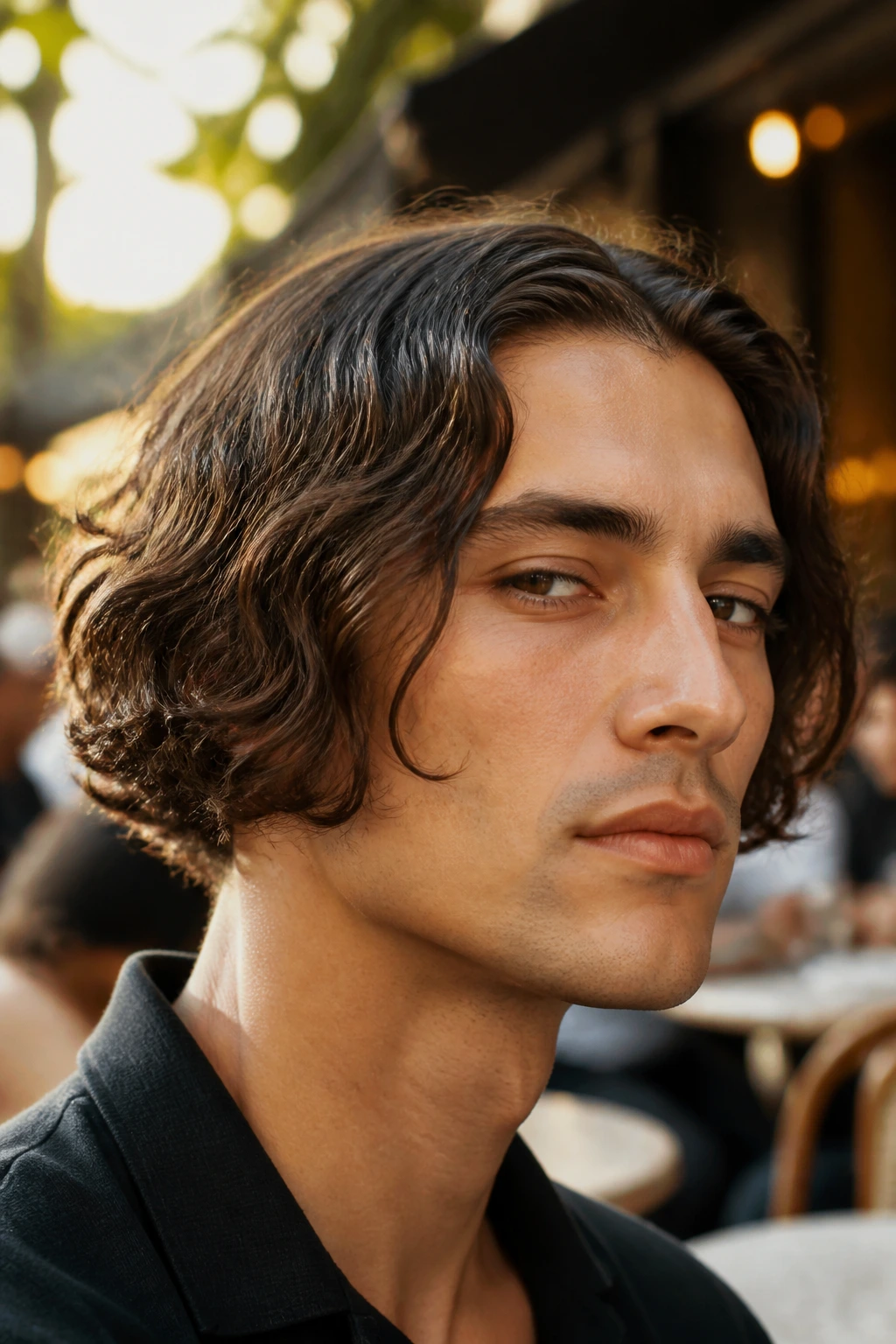
A bob on men works because it gives hair a shape you can see from every angle. That sounds obvious until you compare it with a lot of shorter cuts that lose themselves the minute they grow half an inch. A bob keeps its outline, and that outline is half the style.
The best version is the one that matches your texture instead of fighting it. Straight hair likes precision. Wavy hair likes room. Curly hair likes respect. And once those three things line up, the haircut stops feeling like a statement and starts feeling like something you can actually live in.
That’s the real appeal here. Not novelty. Not costume. Just a cut with enough structure to hold up and enough movement to stay interesting.
