



A bad asymmetrical bob haircut looks accidental, like someone stopped halfway through a decision. A good one does the opposite. It sharpens the jaw, opens the neck, and gives the hair a direction that feels deliberate the second it moves.
That’s why asymmetrical bob haircuts stay interesting long after the first glance. The cut can be subtle — one side only a little longer — or it can swing into full drama with a front panel that grazes the collarbone while the back sits tight at the nape. On straight hair, the line reads clean and architectural. On waves and curls, it turns into something looser and more lived-in, which is its own kind of charm.
The tricky part is that asymmetry is only flattering when the length difference has a reason. A half-inch can matter on fine, straight hair. Curly hair needs a different approach because the curl pattern shrinks everything up and can make a cut look uneven if it isn’t planned properly. That’s where the real value is: not just picking a picture, but picking the right version of the shape for your texture, your face, and the amount of styling you’re willing to do on a Tuesday morning.
Why These 25 Cuts Keep Working
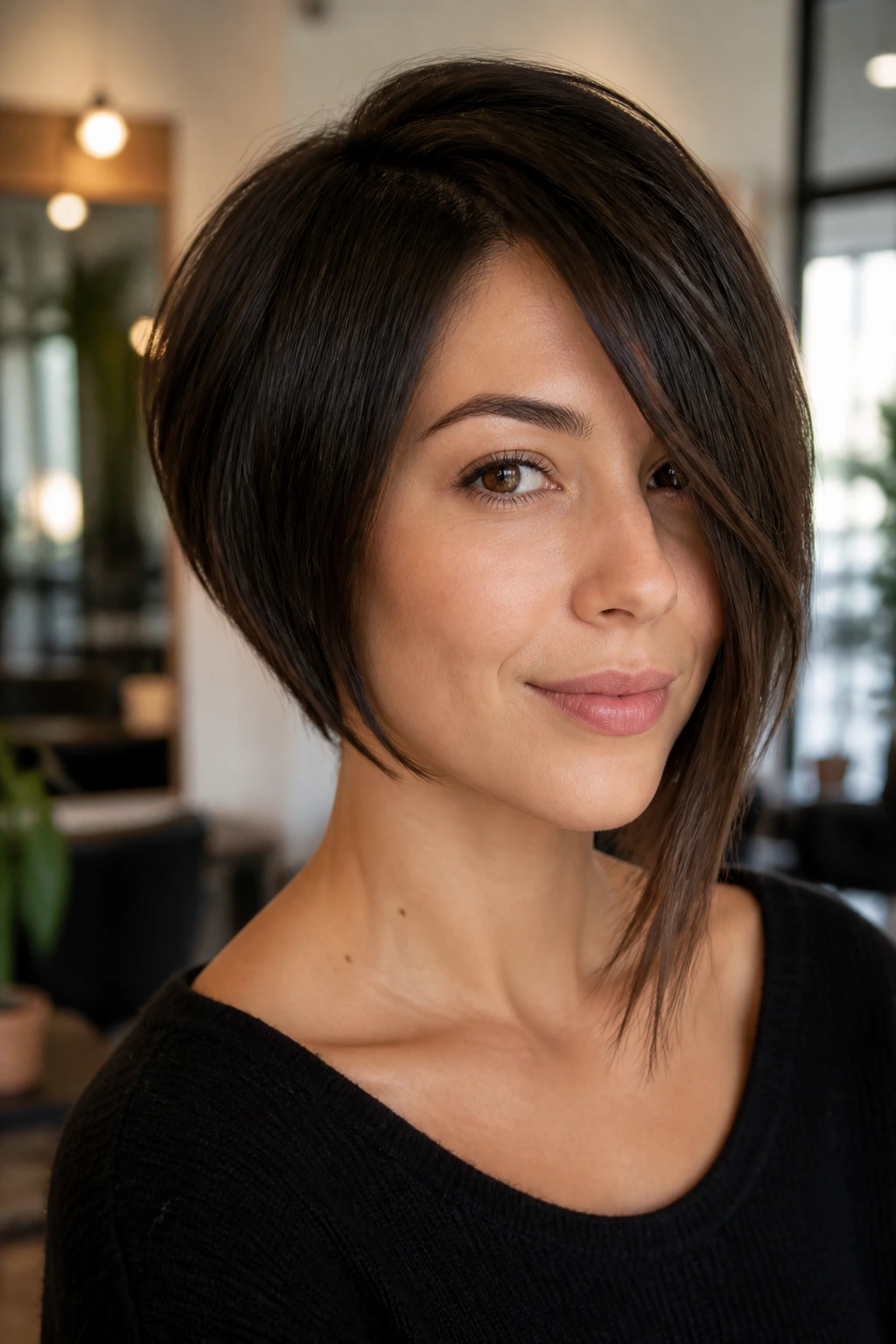
Small changes do a lot of heavy lifting. A bob with a one- to two-inch difference between sides can change the entire silhouette without forcing you into a dramatic chop.
The angle gives the face somewhere to go. Instead of ending in one hard line, the eye follows the longer side downward, which can soften a square jaw or stretch a round face a little.
They work with more than one texture. Straight hair shows the edge, waves add movement, and curls turn the asymmetry into shape instead of sharpness.
Most versions grow out with less drama than a blunt one-length bob. The shape is already directional, so a little extra length usually reads as softening instead of failure.
You can keep the cut subtle or push it hard. The same basic bob can feel office-clean, edgy, polished, or messy depending on how steep the angle is and how the ends are finished.
They play well with bangs, side parts, and tucks. That matters more than people think. A bob that can be tucked behind one ear and still hold its line is doing real work.
1. The Sleek Chin-Length Asymmetrical Bob
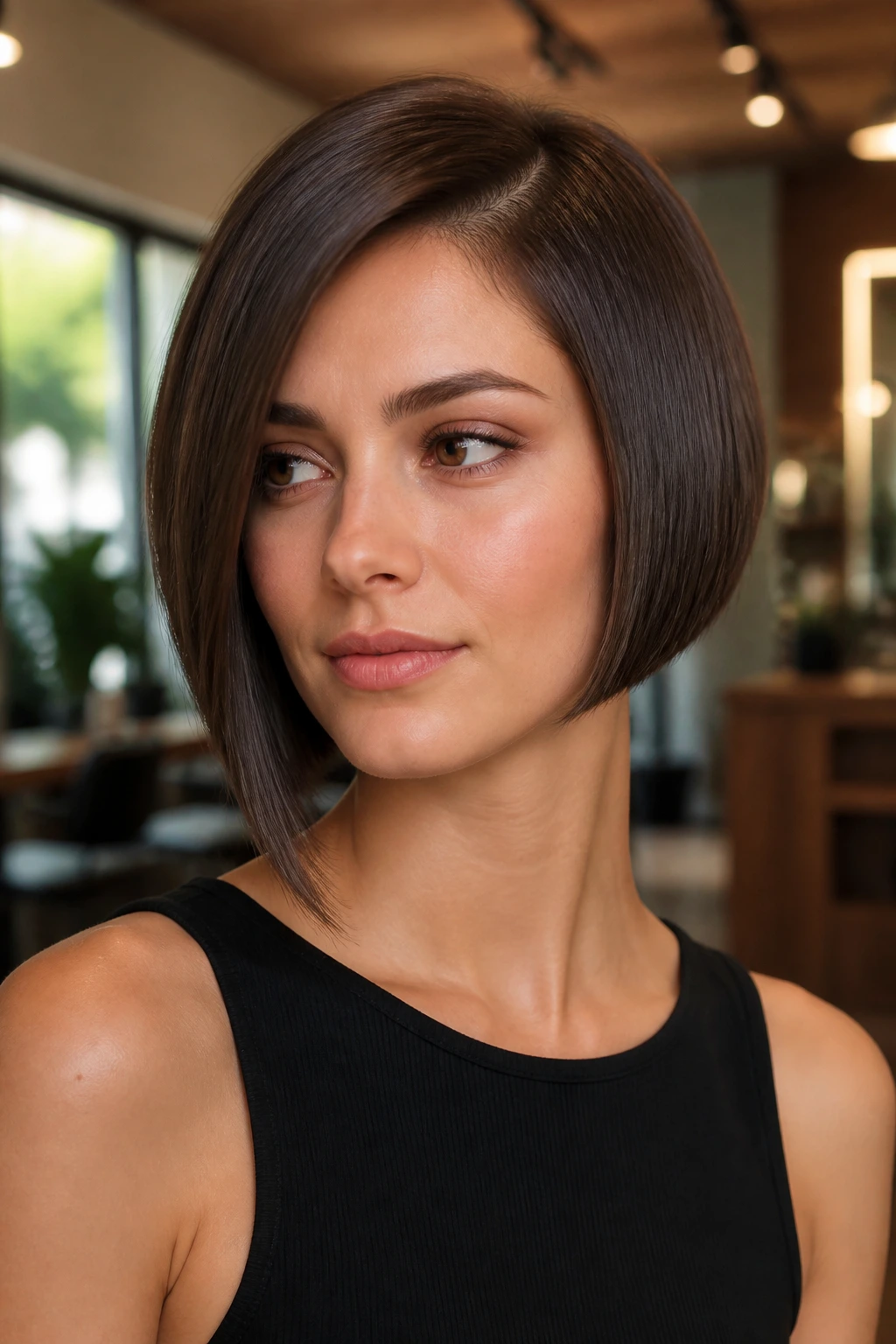
This is the version that looks calm from the front and more interesting the second you catch it from the side. One side lands right at the jaw, the other falls a touch lower, and the ends stay blunt so the angle reads clean instead of floppy. On straight hair, the line feels crisp enough to show every millimeter of the cut.
Where the angle should land
Ask for the shorter side to skim the jawline and the longer side to sit about an inch lower. That tiny difference is enough for a sleek finish, and it keeps the shape from turning into a lopsided grow-out. If your hair is fine, blunt ends help the cut look fuller at the edge.
A center part can work, but a soft off-center part usually gives this cut more life. It lets the longer side take the lead without screaming for attention.
2. The Lifted Stacked Asymmetrical Bob
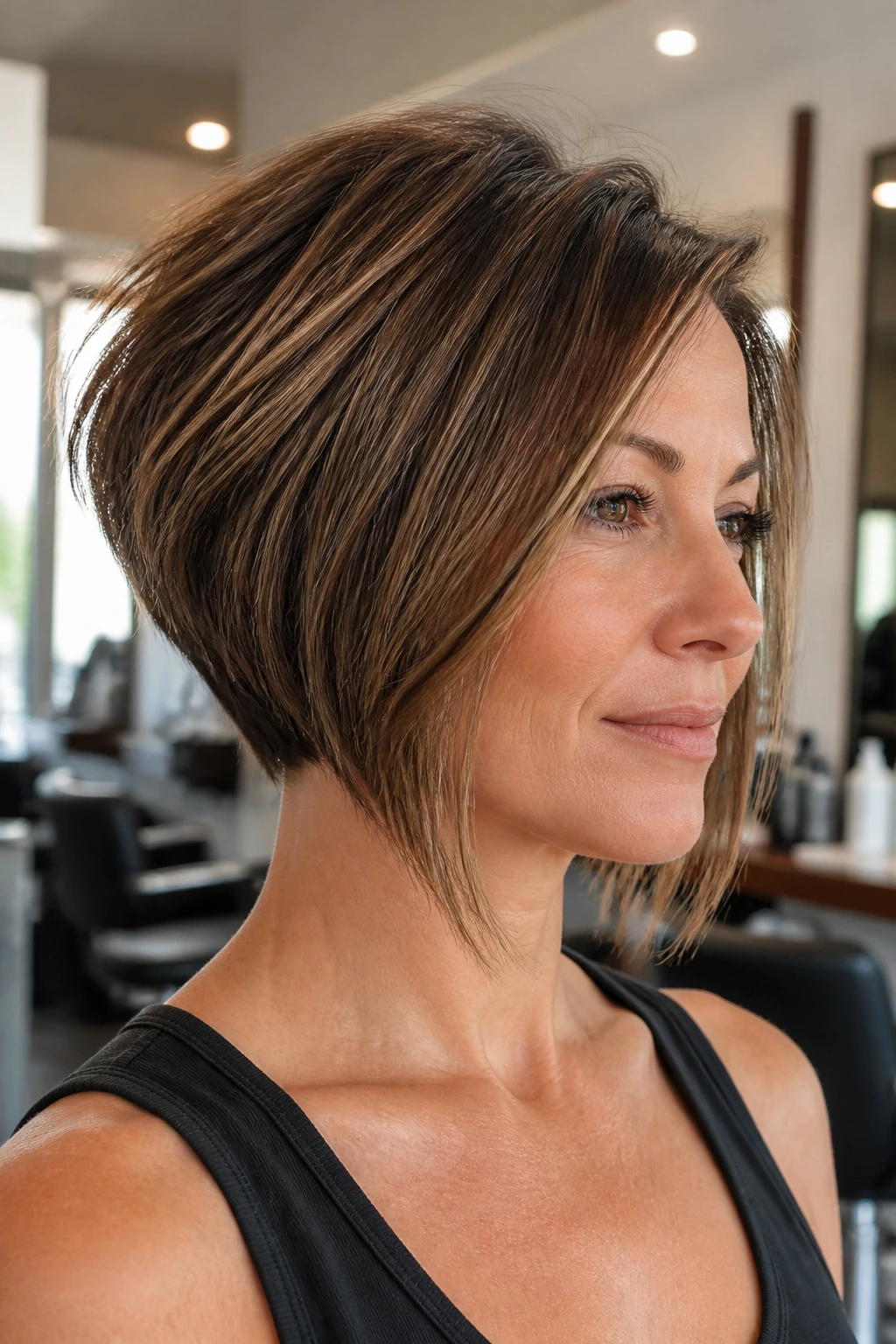
If you like a back that looks neat and slightly lifted, this is the one. The nape is stacked tighter, the crown gets a little internal shape, and the front slides longer so the whole cut has that clean tilt from back to front. It’s one of the better asymmetrical bob haircuts for hair that needs volume without a ton of styling.
This version is especially good when your hair falls flat at the crown or collapses around the back of the head. The stacked shape gives the illusion of more density where the head needs it most, then the longer front pieces keep it from feeling too severe.
Nope, it doesn’t need to look helmet-like. If the stacking is done well, the back should curve, not puff. That’s the difference between a good bob and a haircut that spends all day fighting your brush.
3. The Wavy Lob with a Deep Side Part

Want the asymmetry without giving up length? This is the safer, softer version. The longer side can brush the collarbone, the shorter side sits above the shoulder, and the deep side part throws the whole shape off-center in a way that feels easy, not forced.
What makes it work
The wave does half the work for you. On damp hair, a little cream or mousse and a rough dry are often enough, because the point of this cut is motion more than precision. If you try to iron every bend out of it, you lose the good part.
This version is one of my favorites for people who want change but not shock value. It still reads as a bob, but it has enough length to tuck behind one ear, clip back, or let fall over a sweater collar without looking rigid.
4. The Blunt Asymmetrical Bob with a Sharp Edge
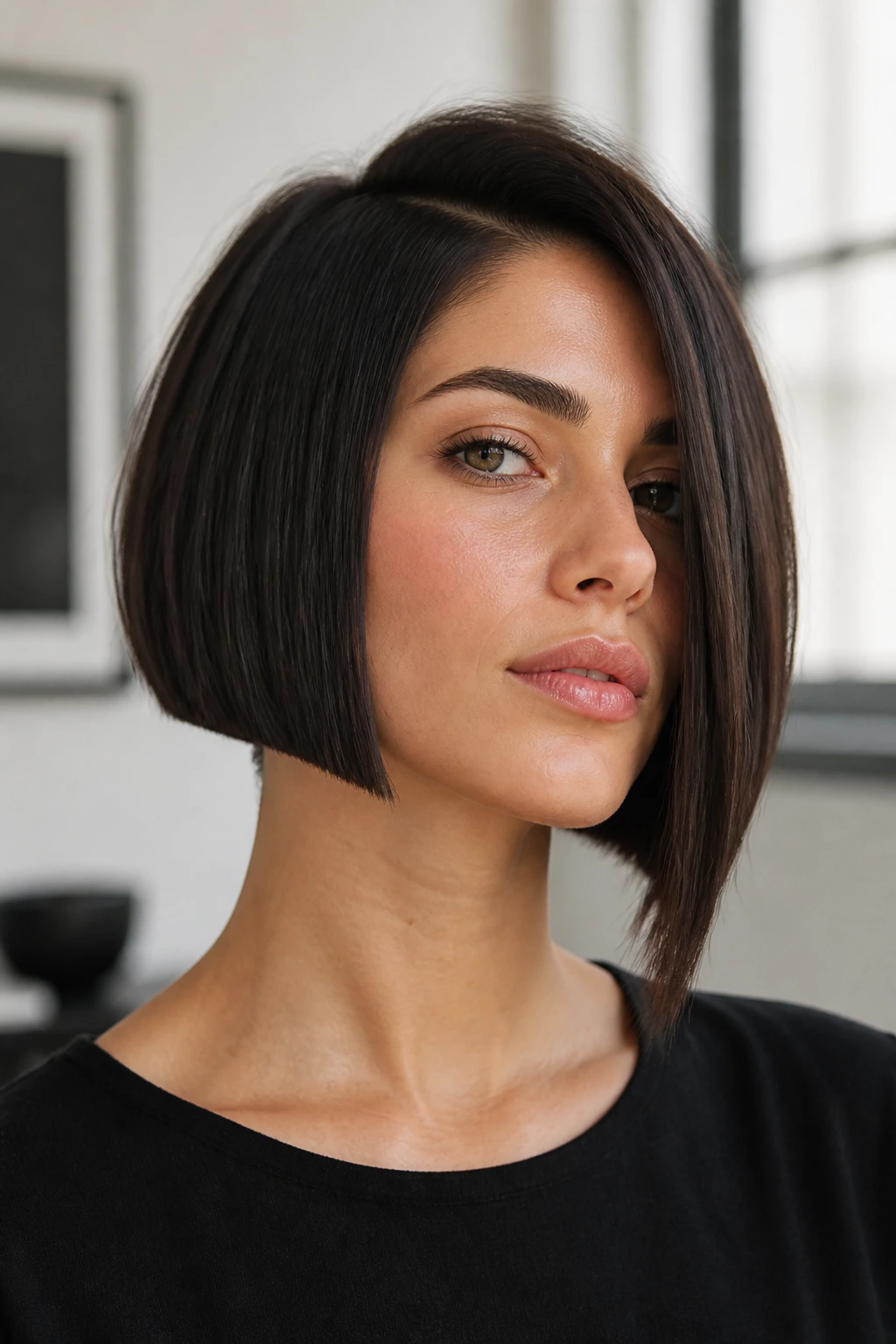
This cut has opinions. The ends are blunt, the line is obvious, and the asymmetry is clean enough that nobody has to squint to see it. On straight hair, it looks expensive in the plainest sense: not flashy, just exact.
Best when you want structure
- Straight or nearly straight hair: The line stays visible and the ends don’t frizz outward.
- Thick hair with density at the ends: Blunt weight gives the bob presence instead of wisps.
- A low-maintenance styling habit: A quick blow-dry and a bend at the ends is usually enough.
Skip this version if you want softness around the face. It can be beautiful, but it’s not shy, and it won’t pretend to be. If the difference between sides gets too dramatic, the whole cut can start to look more fashion-editorial than wearable, so keep the angle clean and the edge precise.
5. The Curly Asymmetrical Bob That Follows the Curl Pattern
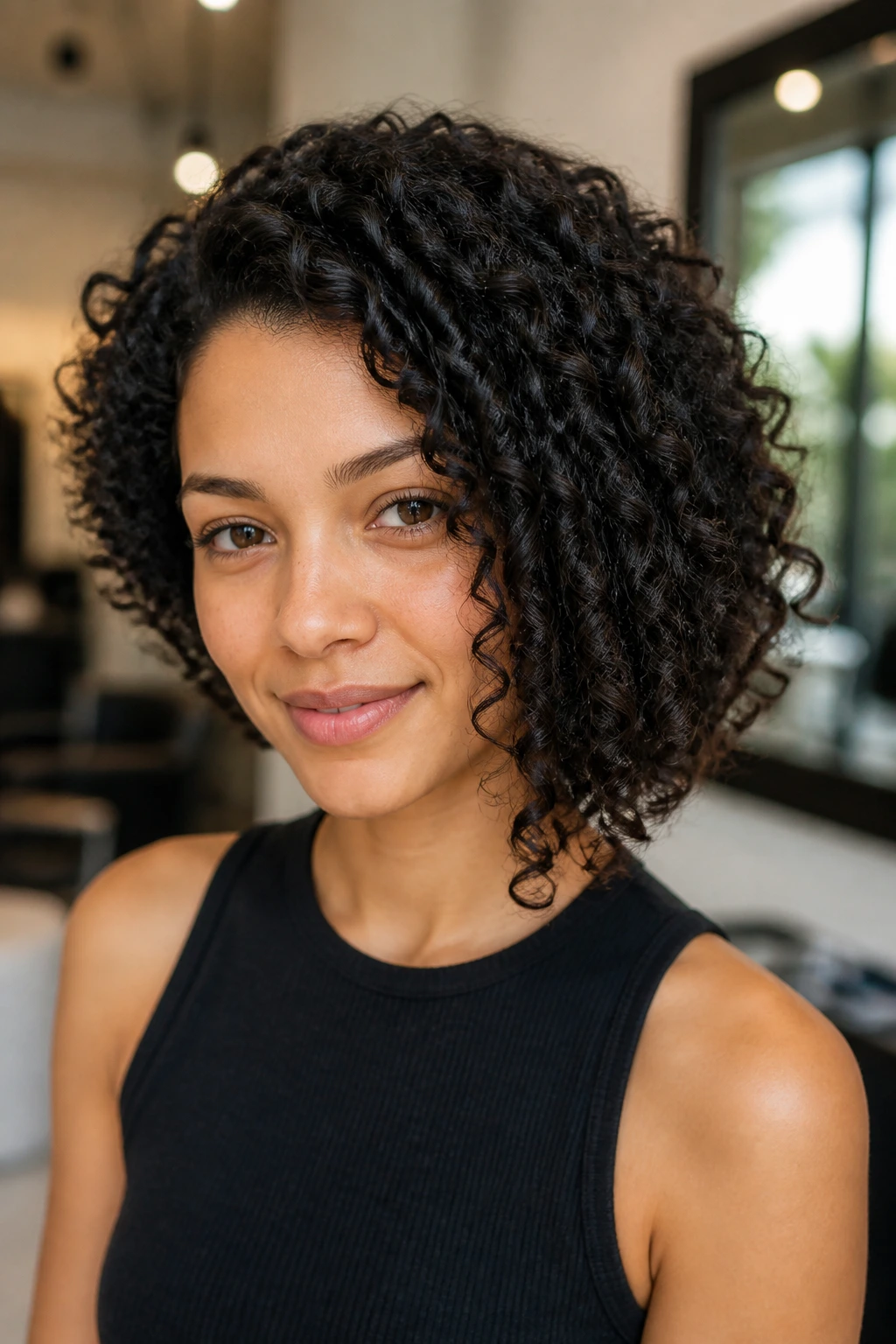
Curly hair changes the rules, and I mean that in the nicest possible way. A curly asymmetrical bob works best when the cut respects the curl pattern instead of forcing a straight outline onto a shape that won’t hold it. One side can sit a little higher, the other a little lower, but the real goal is balance after shrinkage.
A dry cut is usually smarter here, or at least a cut done with the curls in their natural state. A curl can spring up a full inch or more after drying, and that tiny detail matters when the shape depends on one side being visibly longer. If you’ve ever left the salon thinking the bob looked even, then dried your hair and watched it turn uneven, you know the problem.
The nicest version of this cut keeps the front pieces long enough to frame the face while the back sits neat and compact. It gives you shape without making your curls fight each other.
6. The Choppy Textured Asymmetrical Bob
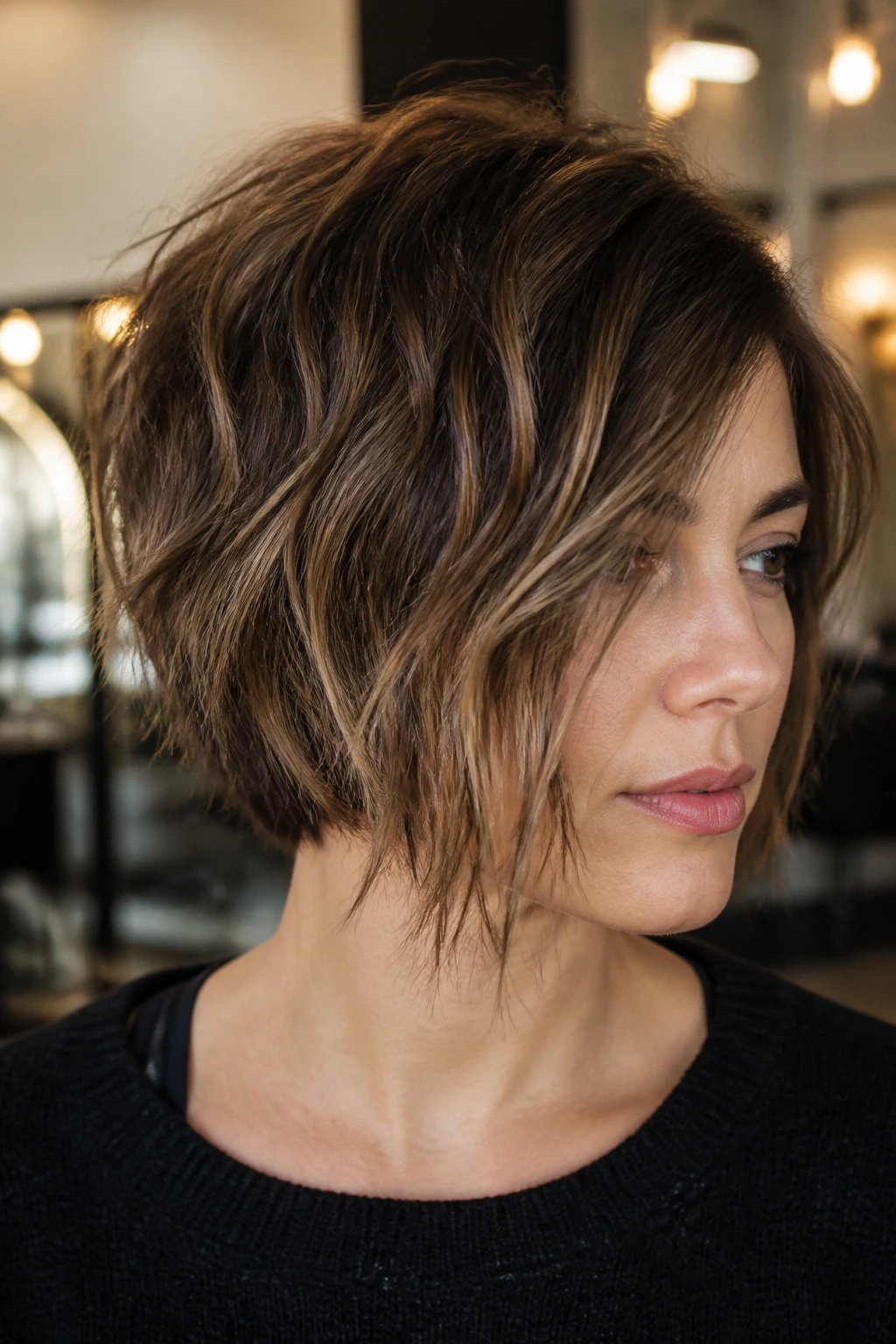
This is the messy one, but “messy” is doing a lot of polite work here. The edges are point-cut or lightly razored, the ends break up into pieces, and the asymmetry feels casual instead of geometric. It’s the cut for people who like movement more than polish.
A little matte paste or texture spray goes a long way. Too much product and the pieces stick together; too little and the cut can look flat at the ends. You want separation, not crunch.
This shape tends to flatter medium-density hair because it can carry texture without going poofy. On very fine hair, too much choppiness can make the perimeter look thin, so the texture should be controlled rather than shredded.
7. The Inverted Asymmetrical Bob
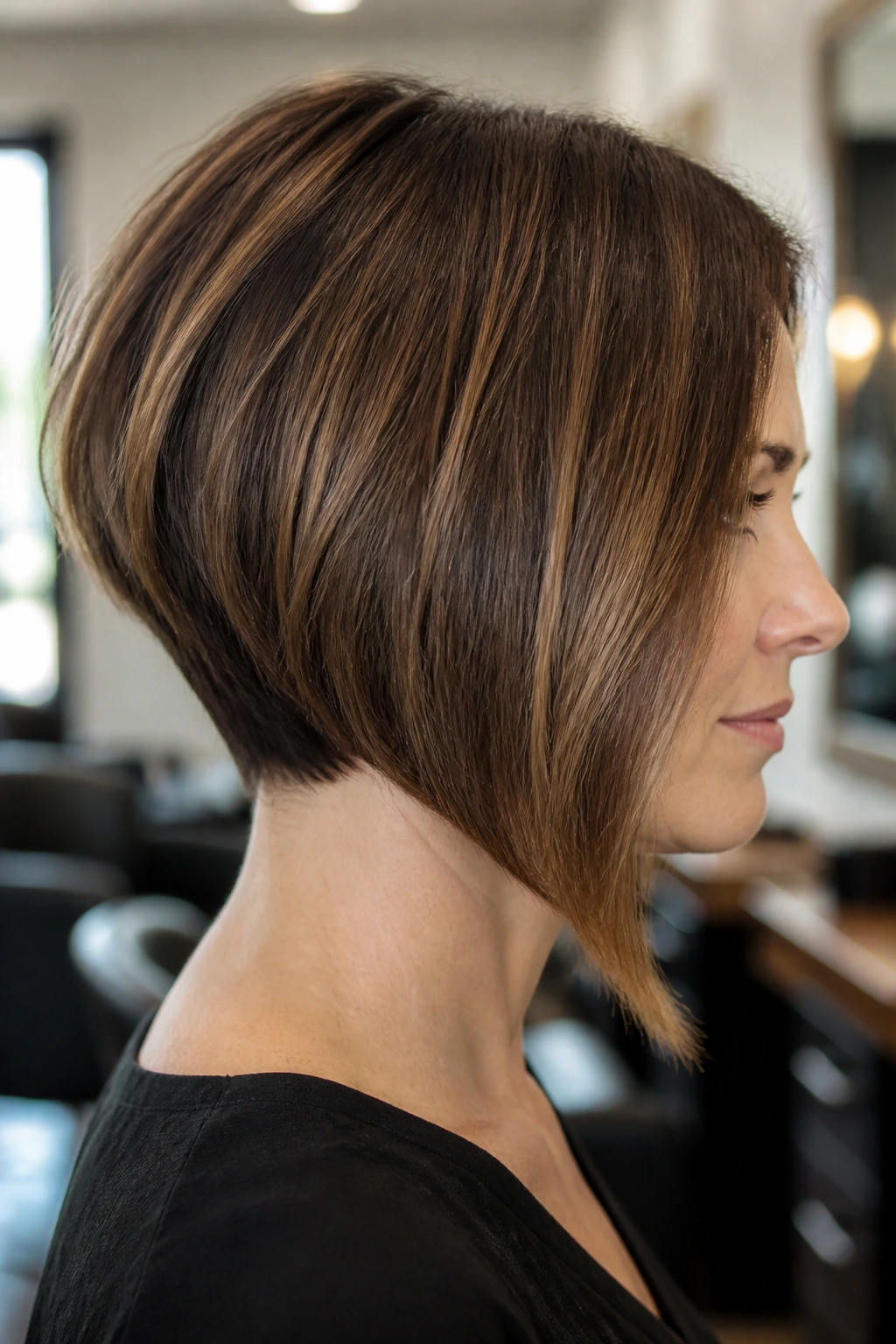
If the classic bob is a line, the inverted bob is a slope. The back sits shorter and often hugs the nape, while the front stretches forward at a visible angle. Add asymmetry and you get a cut that feels strong from the side and surprisingly elegant when the head turns.
Why the back matters
The back is the part that keeps this haircut from sagging. If the nape is cut too long, the whole shape loses lift. If it’s too short without enough blending, it can look like a wedge. The sweet spot is a tight back curve that opens into longer front panels.
I like this version on people who want a bob with presence but don’t want layers all over the place. It’s tidy. It has discipline. And when it’s done well, the shape still moves.
8. The French Asymmetrical Bob with Soft Bangs

This one has a little less edge and a little more attitude. The bob itself stays compact, but the front gets softened with airy bangs or a barely-there fringe that brushes the brows or splits lightly at the center. The asymmetry is there, but it feels sly.
The cut works especially well when the shortest side lands around the jaw and the longest side drops only slightly lower. You don’t need a huge length gap. The charm is in how the bangs and the angle play against each other.
If you want a bob that looks good a little imperfect, this is a strong pick. A few bends from a flat iron or a bendy blow-dry keep it from feeling too formal.
9. The Asymmetrical Bob with Curtain Bangs
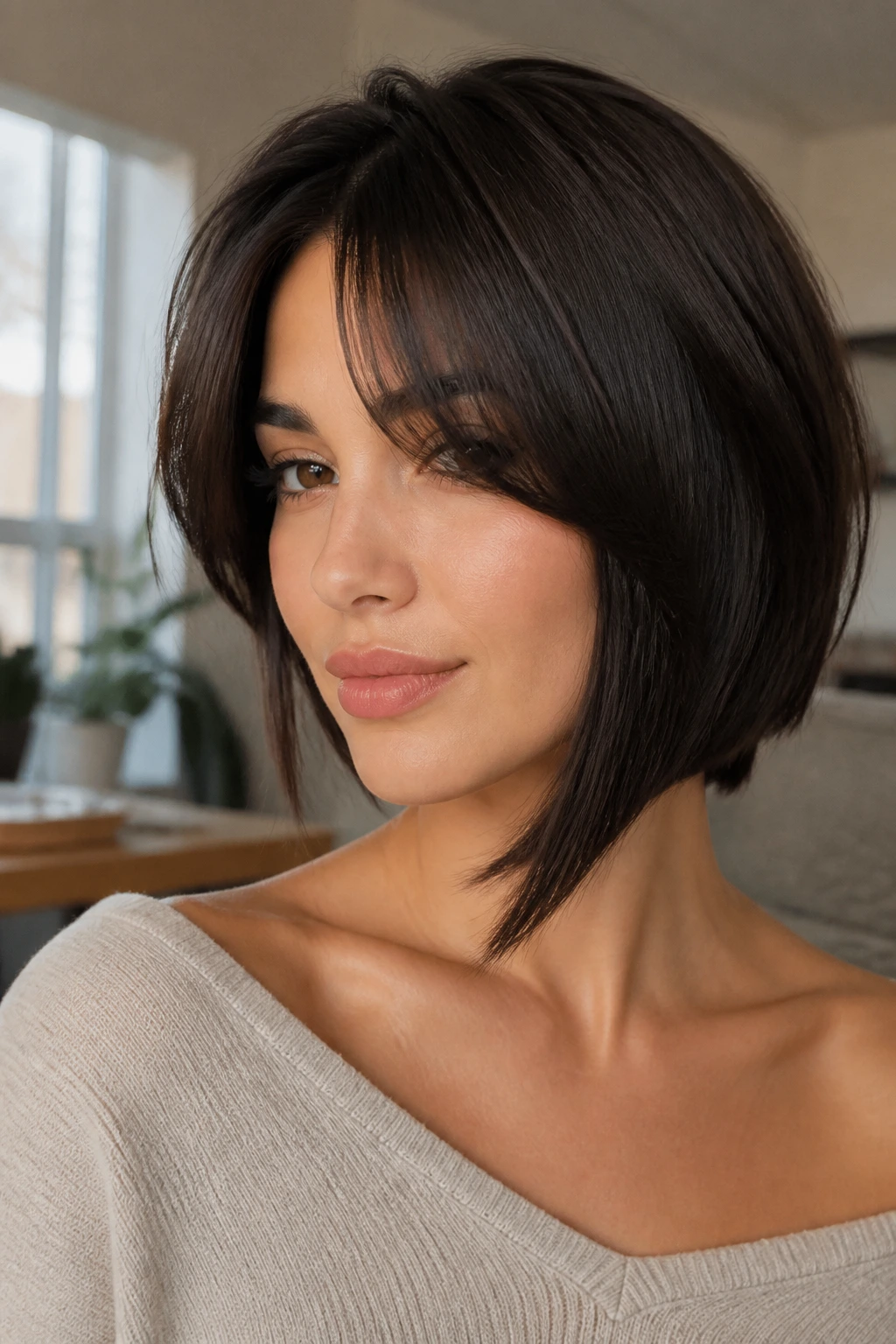
Curtain bangs can calm down asymmetry in a way that’s more useful than people expect. They break up the forehead, soften a strong side part, and give the longer side of the bob somewhere to land visually. The result feels balanced without losing the off-kilter line.
Best for readers who want softness at the front
- Longer faces: The bangs shorten the vertical line a touch.
- Broad foreheads: The center-split fringe narrows the upper face gently.
- Anyone who tucks one side behind the ear a lot: Curtain bangs keep the shape from feeling too exposed.
This version does need a bit of styling. A round brush, a quick blow-dry away from the face, and a small dose of flexible spray are enough. Don’t drown it in hairspray; curtain bangs should move when you turn your head.
10. The Piecey Asymmetrical Bob for Fine Hair
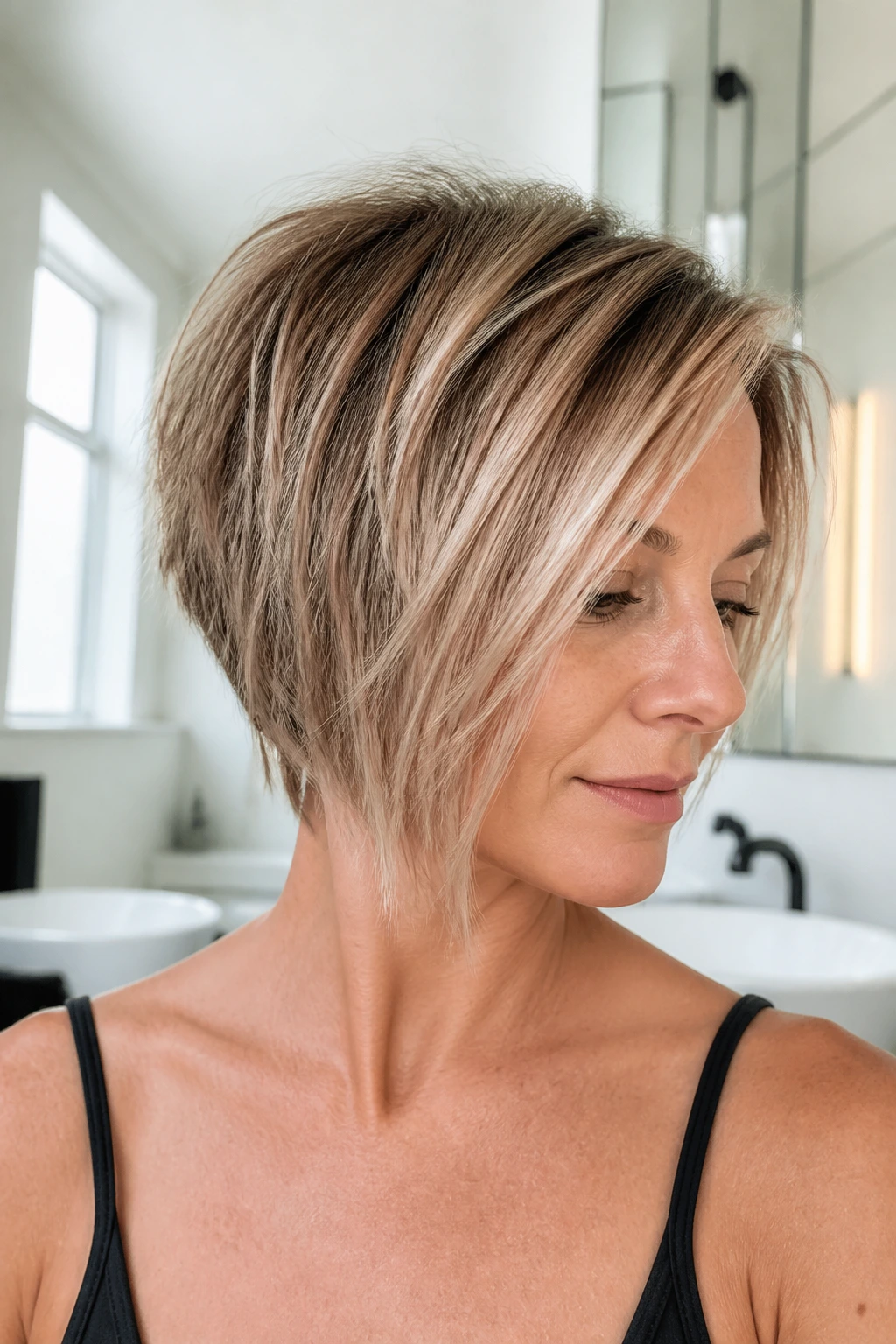
Fine hair and over-layering are bad neighbors. This cut solves that by keeping the perimeter visible while building tiny bits of texture into the surface, not the whole head. The asymmetry gives the style interest; the piecey finish gives it lift.
What gives it lift
Ask for light internal texturing, not aggressive thinning. Fine hair can lose too much body if the ends are carved up too much, and then the bob starts to look see-through at the bottom. A clean outline with just enough separation at the ends is the safer move.
A root-lifting spray at the crown and a quick blow-dry with the nozzle pointed upward at the roots can change the whole shape. It doesn’t take much. Fine hair usually needs less product than people think, not more.
11. The Heavy-Duty Bob for Thick Hair
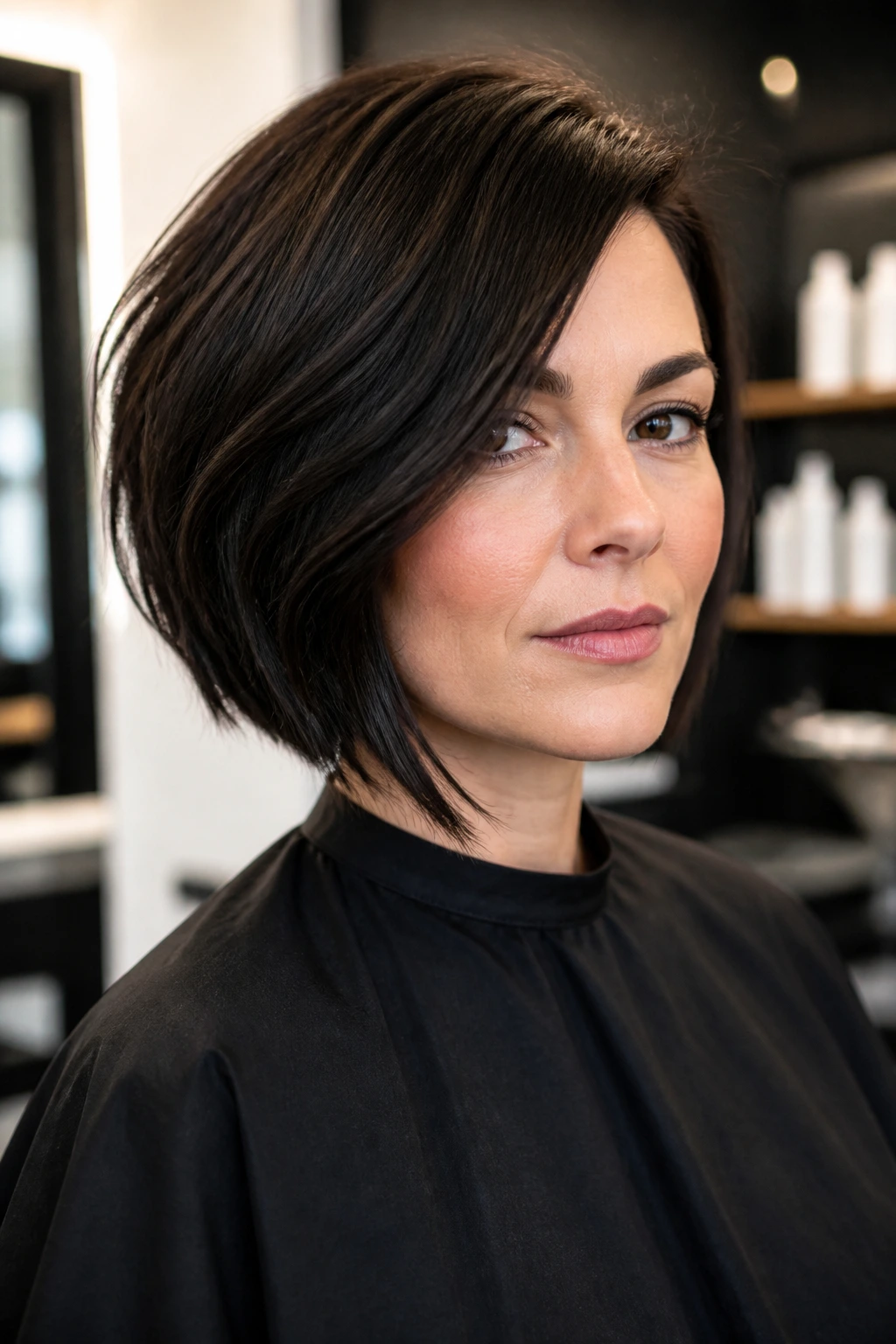
If your hair comes in dense and full, the asymmetrical bob needs structure, not just length. Thick hair can hide the angle if it’s not debulked in the right places, and the shape can swell out around the jaw instead of tapering cleanly. That’s why the interior work matters here.
The best version keeps the perimeter strong while removing weight from underneath. Not on top. Underneath. If the top layers get too short, the cut can puff out like a triangle, and nobody wants that sitting around the jawline all day.
This is the cut I’d recommend when you want a bob that feels controlled even in humidity. It has enough built-in shape to hold its own, which is a relief when your hair tends to do its own thing.
12. The Undercut Nape Asymmetrical Bob
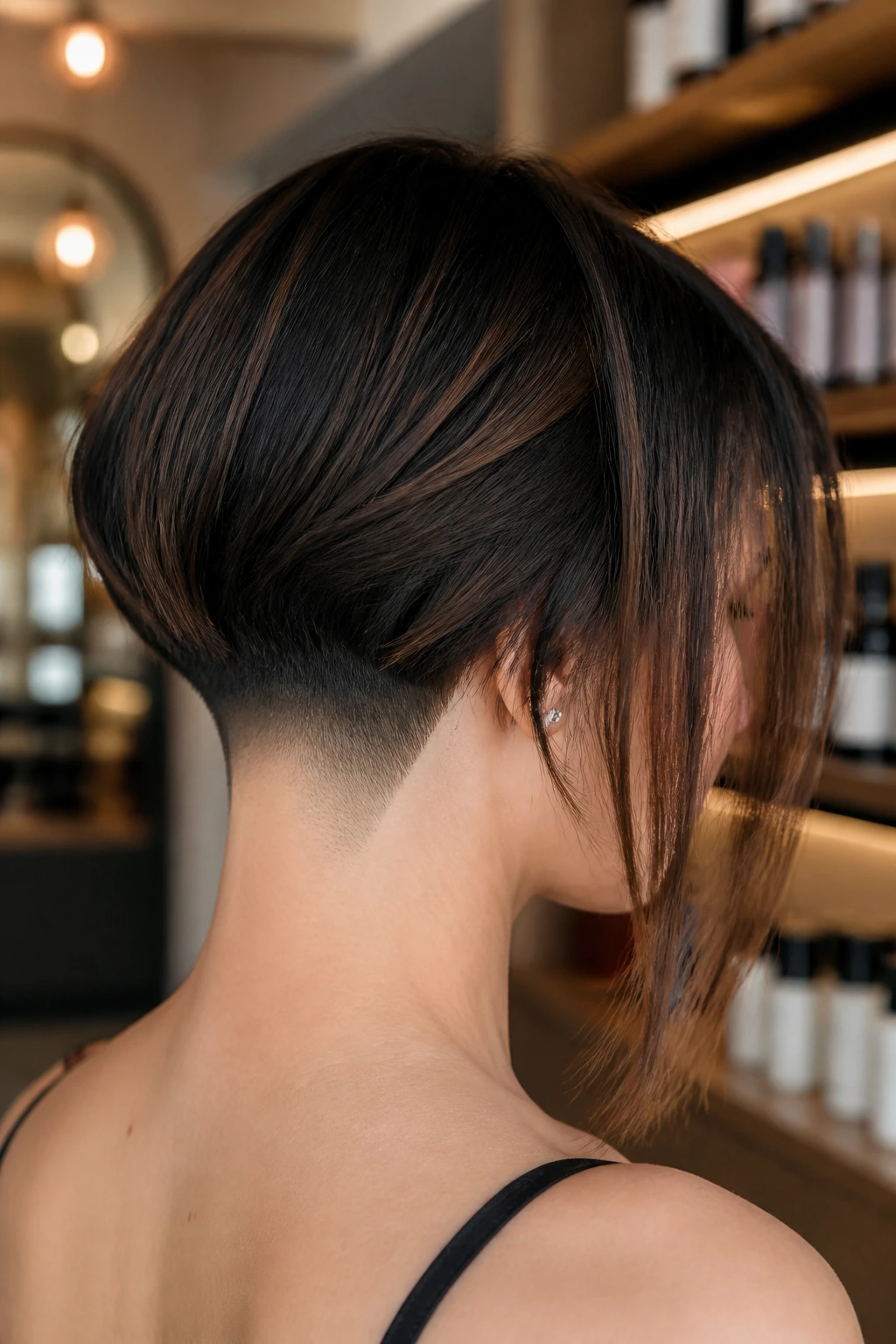
This one is not subtle, and that’s the point. A hidden undercut at the nape clears out bulk under the top layer, which makes the asymmetry read sharper and the neckline lighter. The top layer keeps the bob look; the undercut quietly handles the heavy lifting.
The best part is that it lets thick hair lie closer to the head without collapsing the rest of the shape. You still get the front length, but the back doesn’t balloon. That can make a huge difference if your hair grows out fast and starts stacking awkwardly at the neckline.
You do have to stay on top of maintenance. The undercut area usually needs cleaning up more often than the rest of the bob, or it starts to bulge out in all the wrong places. Small annoyance. Big payoff.
13. The Razored Asymmetrical Bob

Can a razor cut work on a bob? Absolutely, if the hair can handle it. A razored asymmetrical bob softens the ends and makes the line feel less blocky, which is useful when the goal is movement rather than a hard geometric edge.
What to watch for
Razor work is best on straight to wavy hair with enough density to survive texture removal. If the hair is already fragile, over-processed, or prone to split ends, a razor can leave the perimeter ragged fast. In that case, point cutting is the safer version.
The nice thing about this cut is how it behaves when air-dried. It can look intentional with very little effort, which is useful if your styling habit is more “scrunch and go” than “two-brush morning routine.”
14. The Layered Asymmetrical Bob for Waves
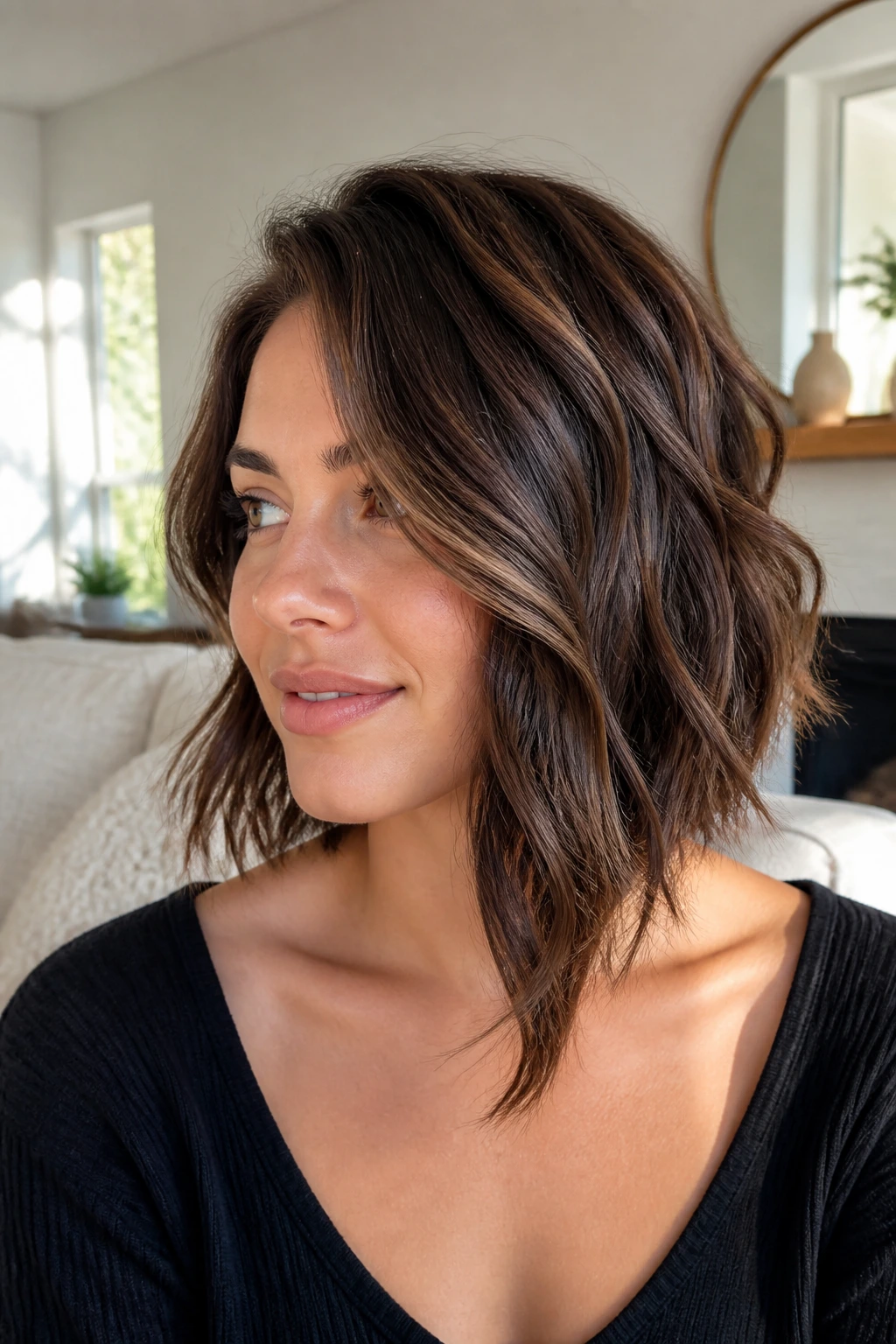
Waves need room. If the cut is too blunt around the bottom, the hair tends to flip out in the same place on both sides and the asymmetry gets lost under all that bend. A layered version gives the wave somewhere to move, which makes the angle visible again.
The longest front piece can drop to the collarbone while the back sits much shorter, but the real work happens in the mid-length layers around the cheeks and jaw. They stop the cut from turning into a triangle and keep the wave from swelling at the widest point.
I like this shape for people who never want to flat iron their hair. It looks better with a little bend and a little mess. That’s a blessing, not a flaw.
15. The Jaw-Skimming Asymmetrical Bob

This cut lives on the line between sharp and flattering. One side kisses the jaw, the other drops just below it, and the whole point is to frame the lower face without sitting right on top of it. That tiny distinction matters more than it sounds.
If the bob ends exactly at the widest part of the jaw, the shape can feel heavier. Slide it a fraction lower, and the face looks cleaner. That’s the part a lot of people miss when they bring in a photo and say they want “something like this.”
This is one of the better choices if you like definition around the face but don’t want the haircut to feel severe. It has edge, but it doesn’t fight your features.
16. The Collarbone Asymmetrical Bob

Longer bob haircuts get overlooked because people think bob means short. It doesn’t. A collarbone-length asymmetrical bob gives you enough hair to tuck, twist, pin, or throw into a lazy half-up knot, while still keeping the angled shape obvious.
Why it’s so wearable
Because the front has a little extra length, the cut survives growth better than a jaw-length version. A half-inch outgrowth doesn’t wreck the line the way it can on a shorter bob. That makes this a smart choice if you hate frequent trims but still want shape.
It also plays nicely with sweaters, coats, and scarves. Shorter bobs can fight collar lines. This one usually sits with them, which sounds small until you’re dealing with static in cold weather or a high neckline that catches the ends.
17. The Short Side-Swept Asymmetrical Bob

This is the cut for people who want the part to matter. The longer side sweeps forward, the shorter side opens the face, and the angle has enough movement to feel modern without being complicated. It can look sleek or undone, depending on how much you smooth the front.
The side-swept shape is useful around glasses, too. One side can tuck cleanly behind the frame while the other drapes forward and keeps the style from feeling flat. That tiny practical detail changes how the cut behaves in real life.
If you have a cowlick near the part, this one needs a patient blow-dry. Otherwise, the short side can pop up and refuse to cooperate. Hair has opinions.
18. The Asymmetrical Bob with a Micro Fringe
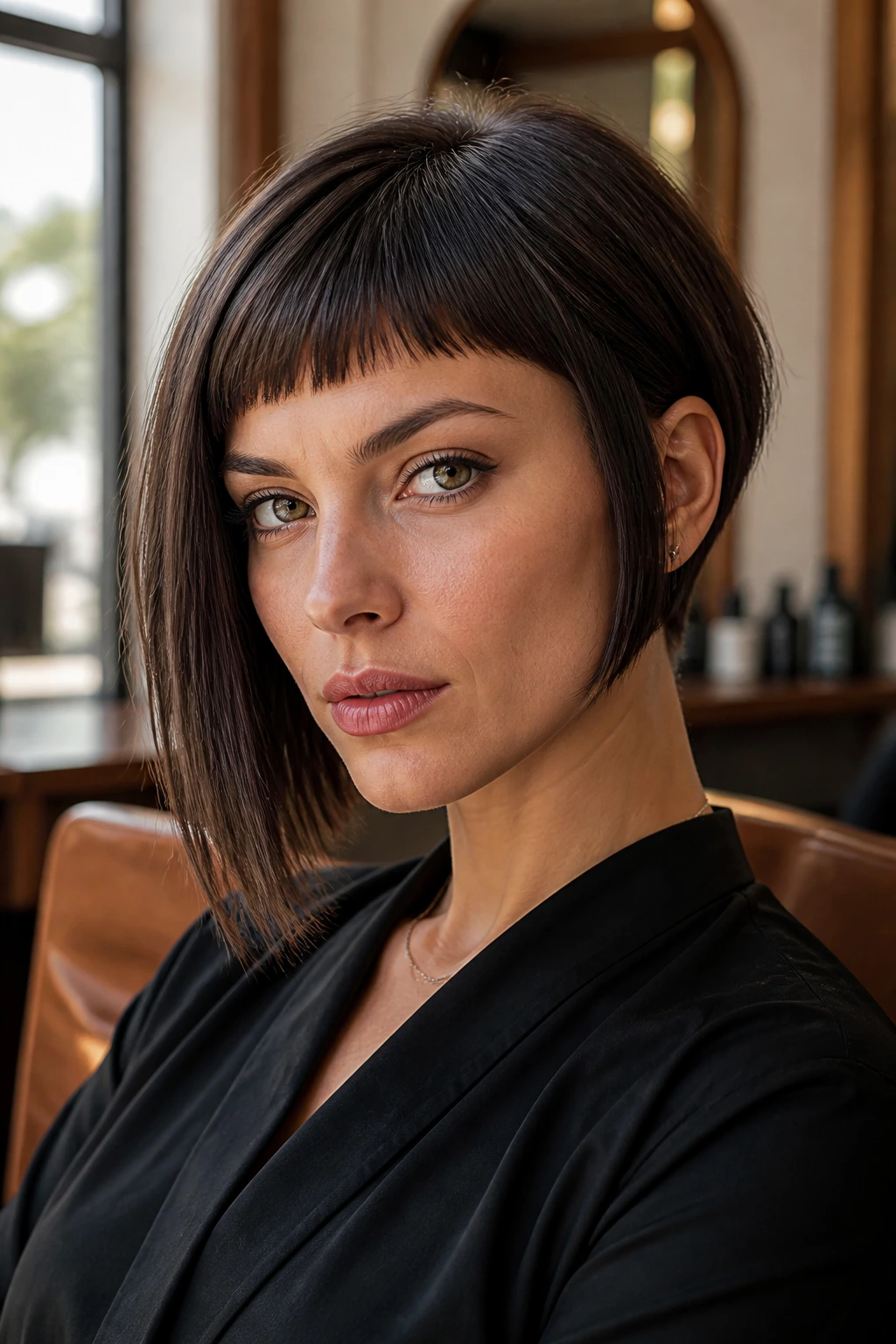
A micro fringe changes the whole mood. The bob stays short and angled, but the tiny fringe above the brows gives the cut a sharper, slightly editorial edge. It’s a brave look, though not nearly as hard to wear as it sounds.
Why the fringe changes the balance
The small bang line pulls the eye upward, which means the asymmetry doesn’t have to do all the work alone. That can be useful if the face is long or narrow and you want to break up the vertical line a bit. The cut feels more deliberate because there’s a second line to read.
This one looks best when the fringe is kept light, not heavy. A dense micro bang can drag the whole face down. A wispy one gives the bob room to breathe.
19. The Old-Hollywood Asymmetrical Bob
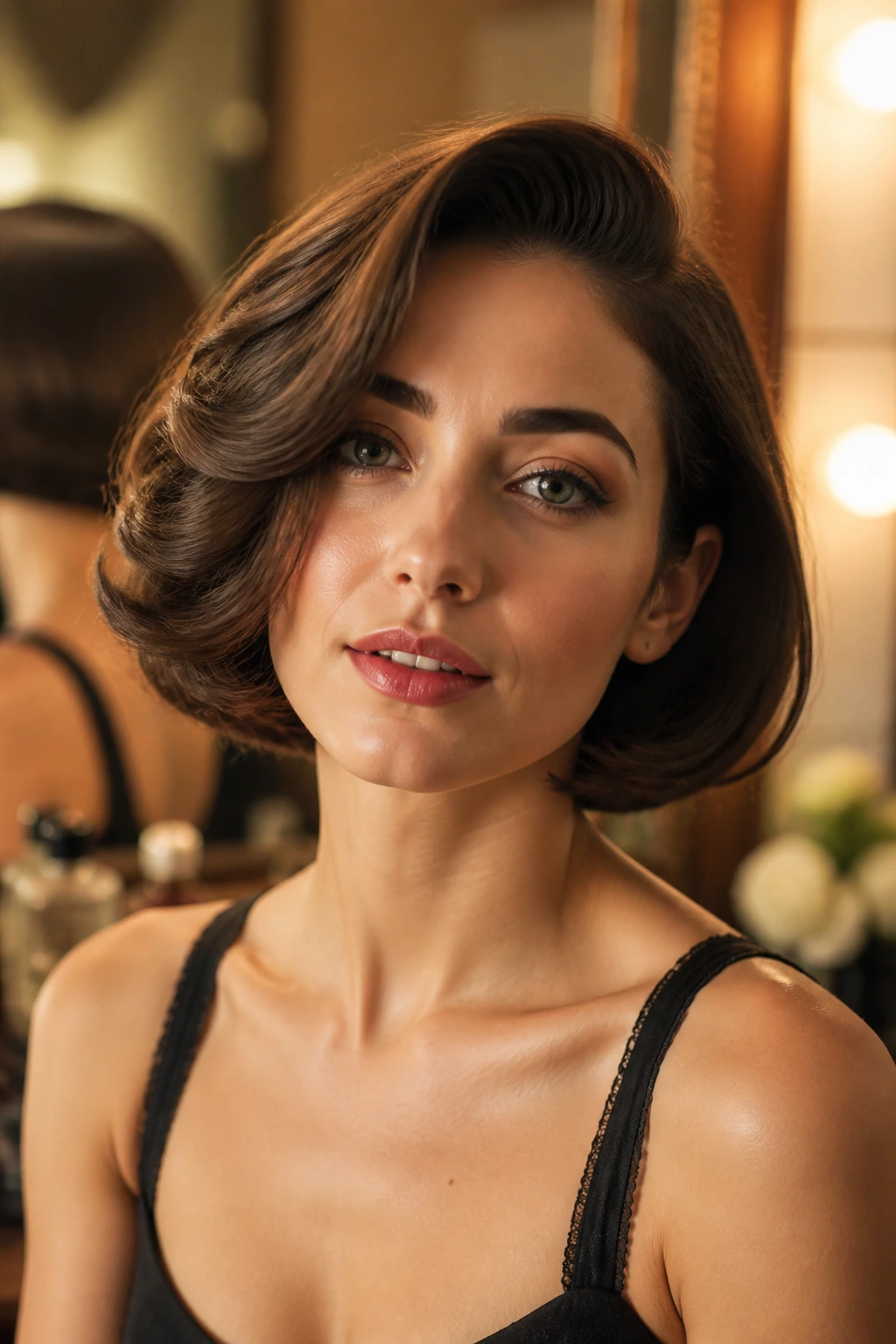
This version likes a side part, a soft bend, and a little patience. The asymmetry shows up in the line of the cut, but the styling leans polished: brushed-out waves, tucked ends, a smooth finish through the crown. It’s less sharp than the glass-hair version and more forgiving if you don’t want a strict edge.
The long side can curve along the cheekbone while the shorter side stays tidy near the jaw. A round brush and a medium-barrel iron can both work, depending on how smooth you like the wave. The key is keeping the finish soft enough that the cut doesn’t lose its shape under all the styling.
It’s a good one when you want the haircut to look dressed up without wearing a lot of product.
20. The Air-Dry Asymmetrical Bob
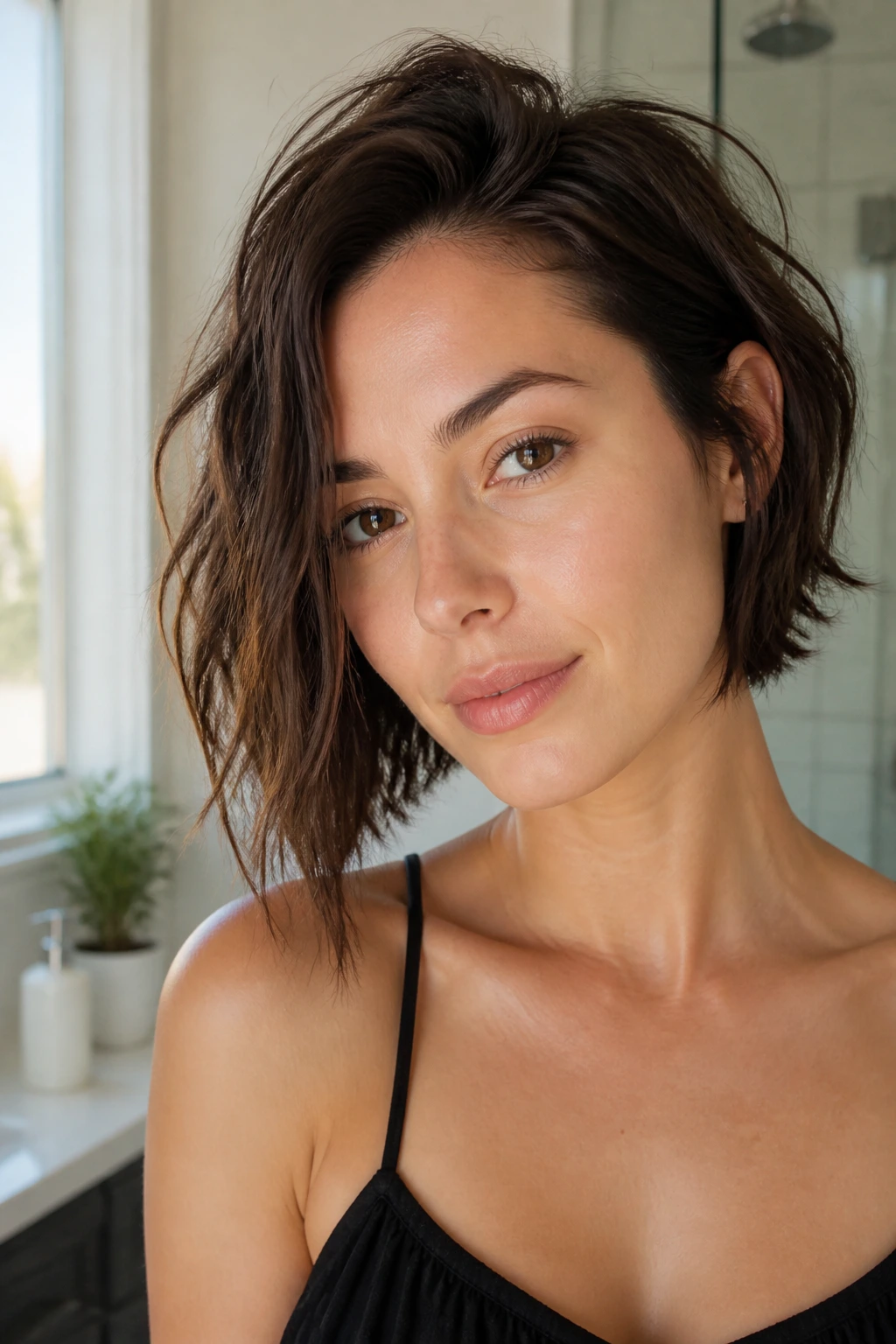
Not every bob needs a blowout. This cut is built to look decent when you wash it, scrunch it, and leave it alone. The asymmetry should still be readable, but the ends can be softer and a little imperfect, because the texture is part of the point.
The cut usually works best when the stylist leaves enough length in the front to show movement and keeps the back compact enough to avoid frizzing into a triangle. A lightweight cream or mousse can help, but too much product weighs down the bend and makes the hair sit in clumps.
If you live in your hair between shampoo days, this is one of the smarter choices. It doesn’t ask for a lot.
21. The Round Face-Flattering Asymmetrical Bob
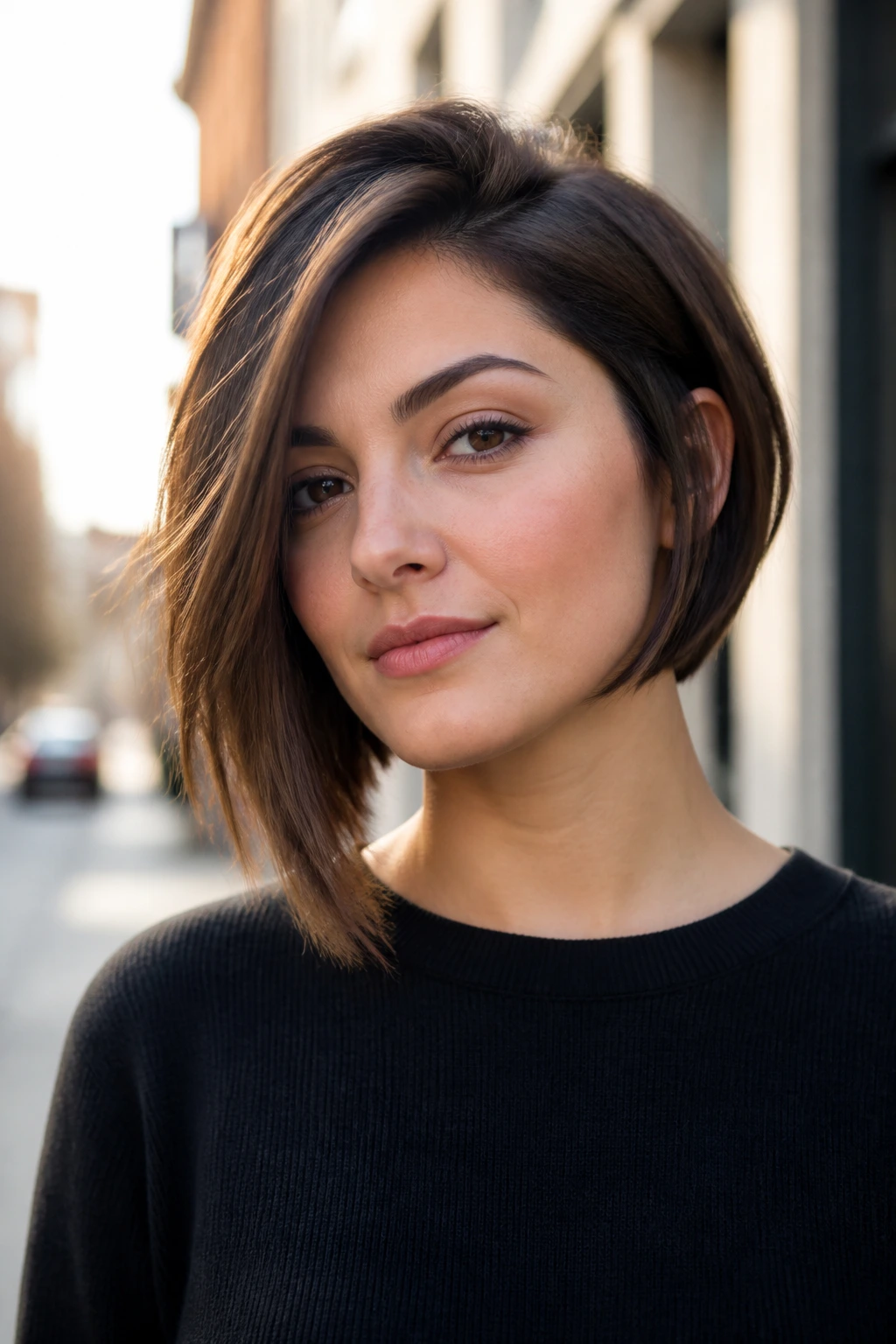
A round face does well with angles that create length, not width. That means the longer side should fall below the jaw, the shorter side should avoid stopping exactly at the cheek, and the crown should keep a little lift so the face doesn’t get shortened visually.
What to ask for
- A longer front panel: Let it fall at or below the jawline.
- A deep side part: It creates a diagonal line instead of a wide middle.
- Softer fullness at the crown: Enough lift to lengthen the face, not so much that it puffs out.
The worst version for a round face is a bob that sits right at cheek level on both sides. That just adds width where you don’t want it. A good asymmetrical bob for this face shape feels like it’s stretching the line downward.
22. The Strong-Jaw Asymmetrical Bob
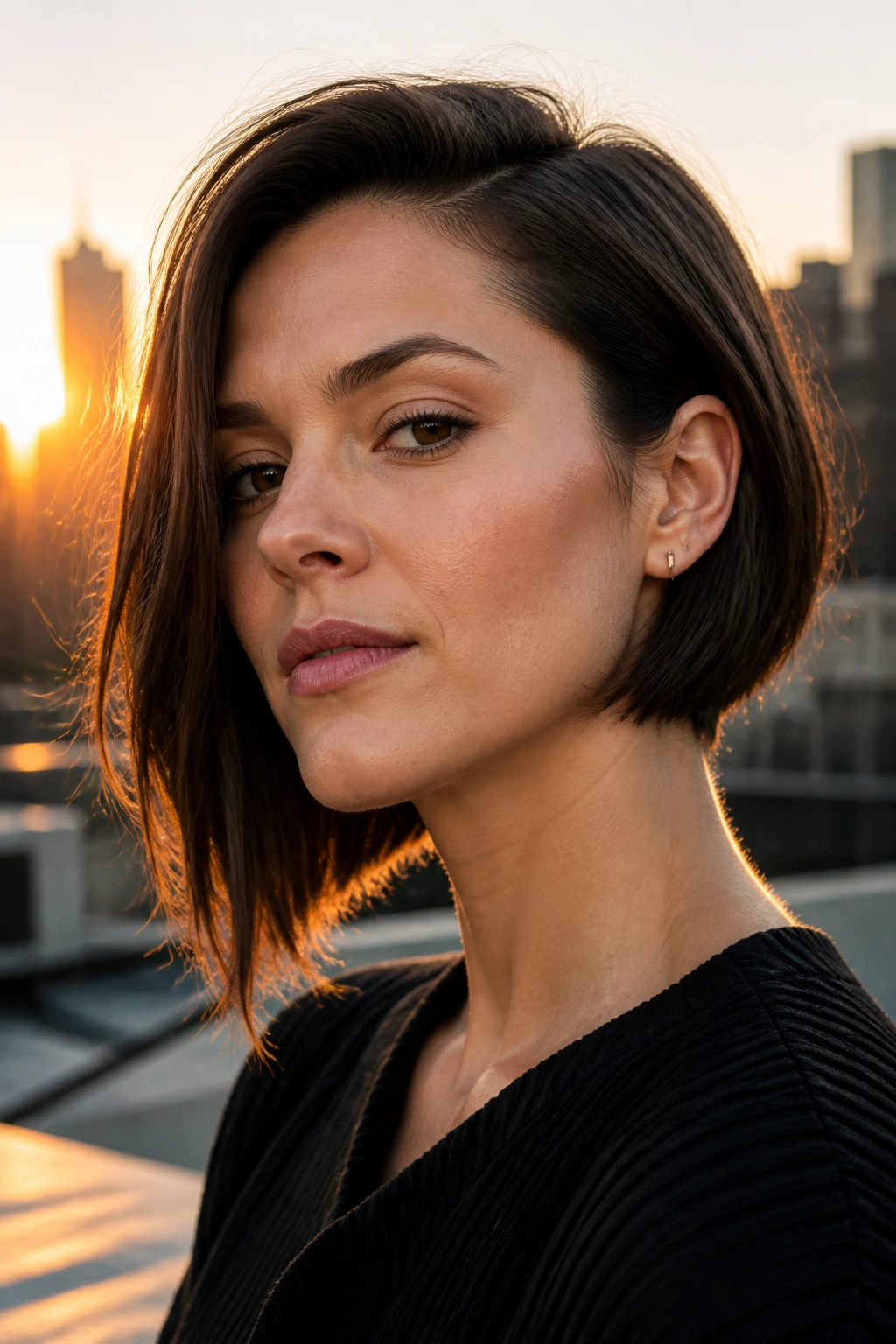
If your jaw already gives the face a strong outline, the bob should soften the hard stop instead of repeating it. A version that ends right at the jaw can look too boxed-in. Move the longer side a little lower and let the shorter side skim above the angle of the jaw so the shape feels lighter.
This is where asymmetry earns its keep. It breaks up the horizontal line and gives the face a diagonal path to follow. That makes the haircut feel balanced instead of squared off.
I’d avoid anything too blunt here unless you like a very assertive silhouette. A bit of texture around the ends usually helps the cut sit with the face instead of against it.
23. The Glass-Hair Asymmetrical Bob
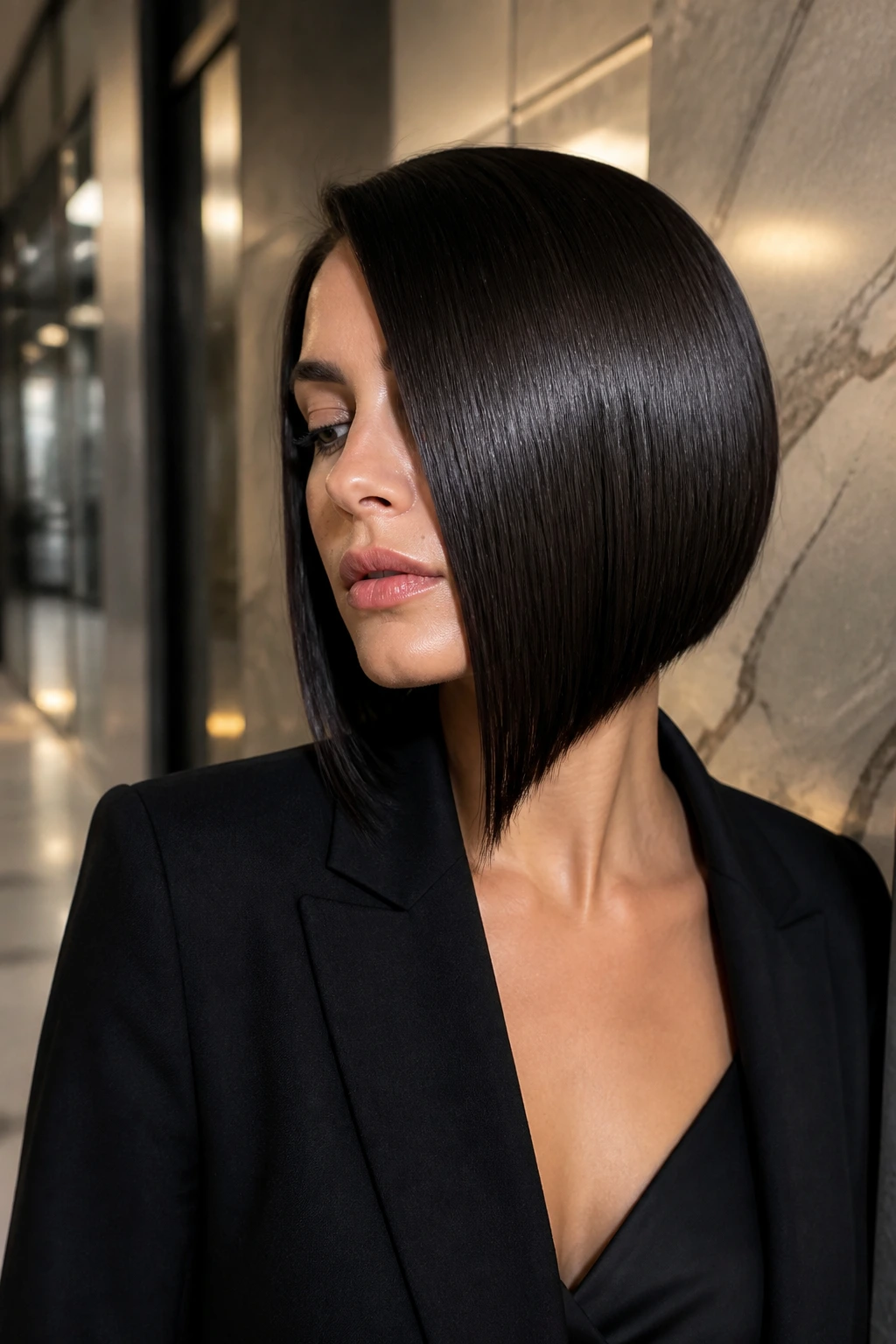
This is the glossy one. The line is sharp, the finish is sleek, and the shine matters as much as the cut itself. A flat iron, a heat protectant, and a small amount of serum can turn an ordinary bob into something that looks almost lacquered.
The style works best when the shape underneath is already precise. If the cut is uneven, the glossy finish only makes that more obvious. That’s why the consultation matters here more than usual.
It’s a little high-maintenance, yes. But when the light hits it, the result is clean enough to make all that straightening feel justified.
24. The Soft Graduated Asymmetrical Bob
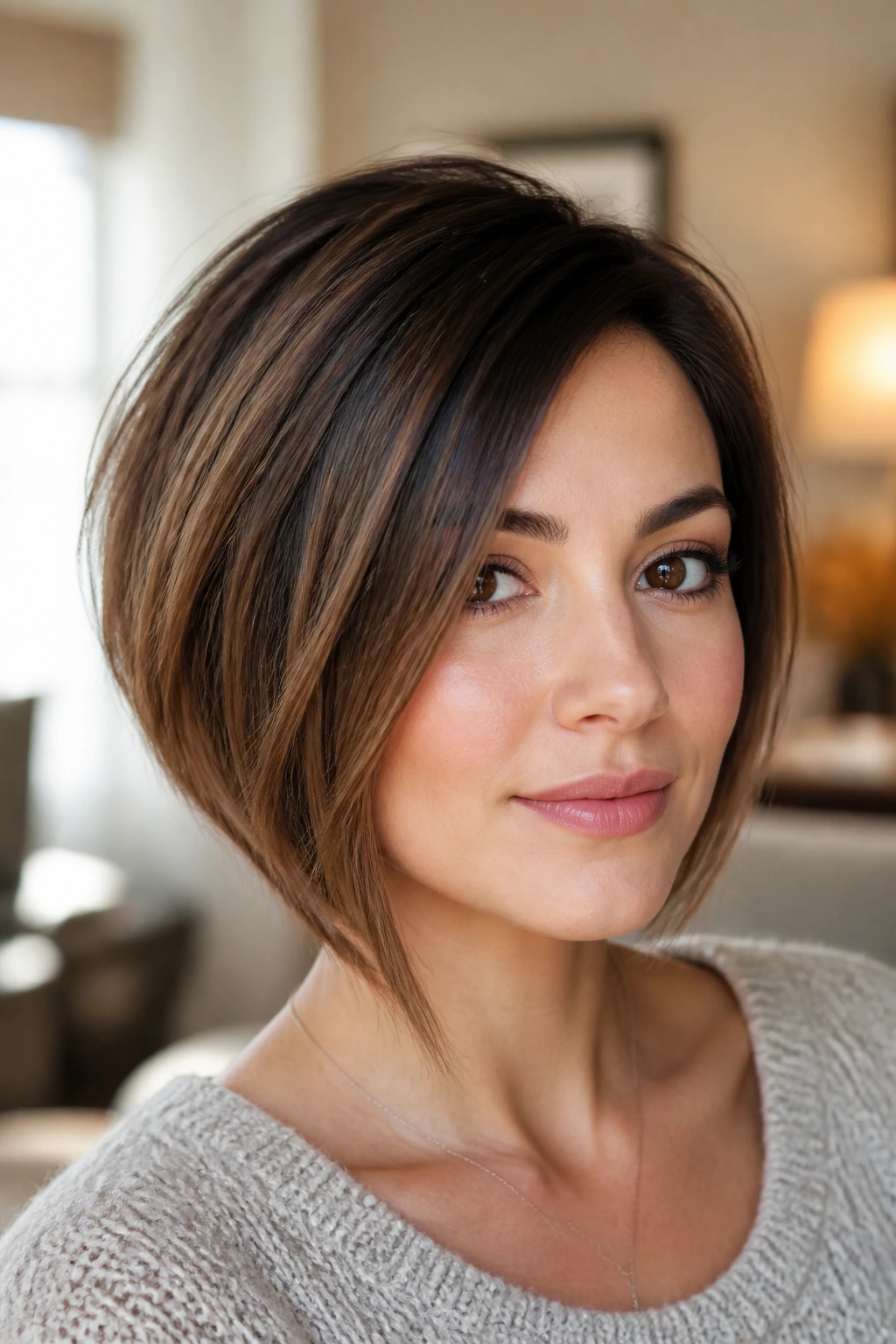
This is the forgiving one. The graduation is there, but it’s gentler than the high-stacked version, so the back transitions into the front without shouting. The asymmetry still shows, only now it feels rounded and wearable rather than hard-edged.
Why people keep coming back to it
- It grows out with less drama: The softer line stays believable longer.
- It suits more textures: Straight, wavy, and lightly curly hair can all wear it.
- It’s easier to wear to work: The cut has shape without looking severe.
This is a smart choice if you want the bob to look tidy on day one and still decent three weeks later. That matters more than Instagram would have you believe.
25. The Long-Front Asymmetrical Bob
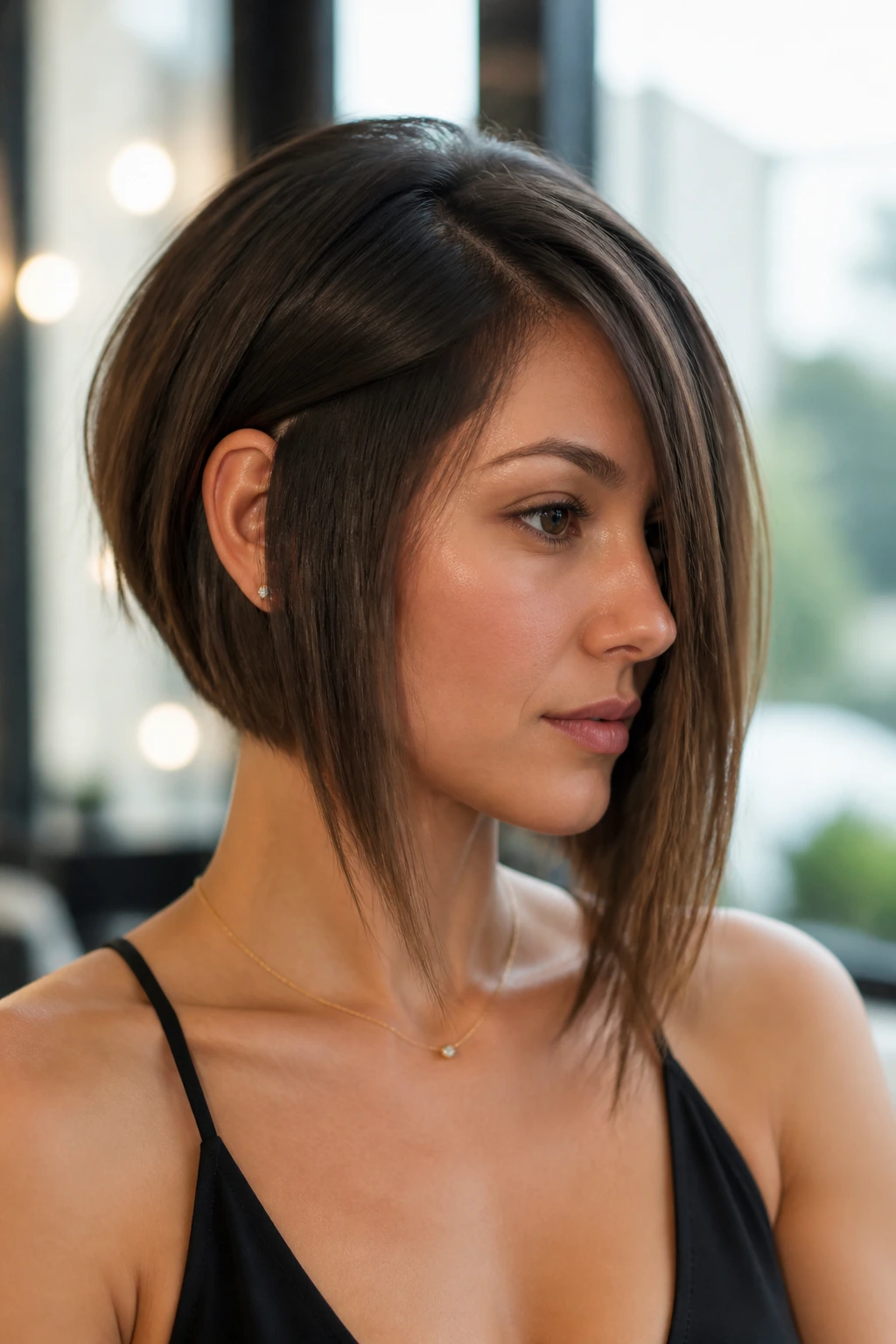
This is the version to show when you want the asymmetry to be obvious but not loud. The back stays shorter and neat, while the front pieces drop well forward — sometimes to the collarbone — so the contrast reads immediately. It has drama, but it still behaves like a haircut you can live in.
What makes it so usable
The long front gives you options. You can tuck it, wave it, pin it, or let it hang forward like a curtain. The shorter back keeps the neck open, which stops the cut from feeling heavy.
If I had to pick one asymmetrical bob haircut for someone who wants a clear change without committing to a sharp, high-contrast chop, this would be near the top. It has enough shape to feel intentional and enough length to avoid regret.
Why the Asymmetrical Line Changes Everything
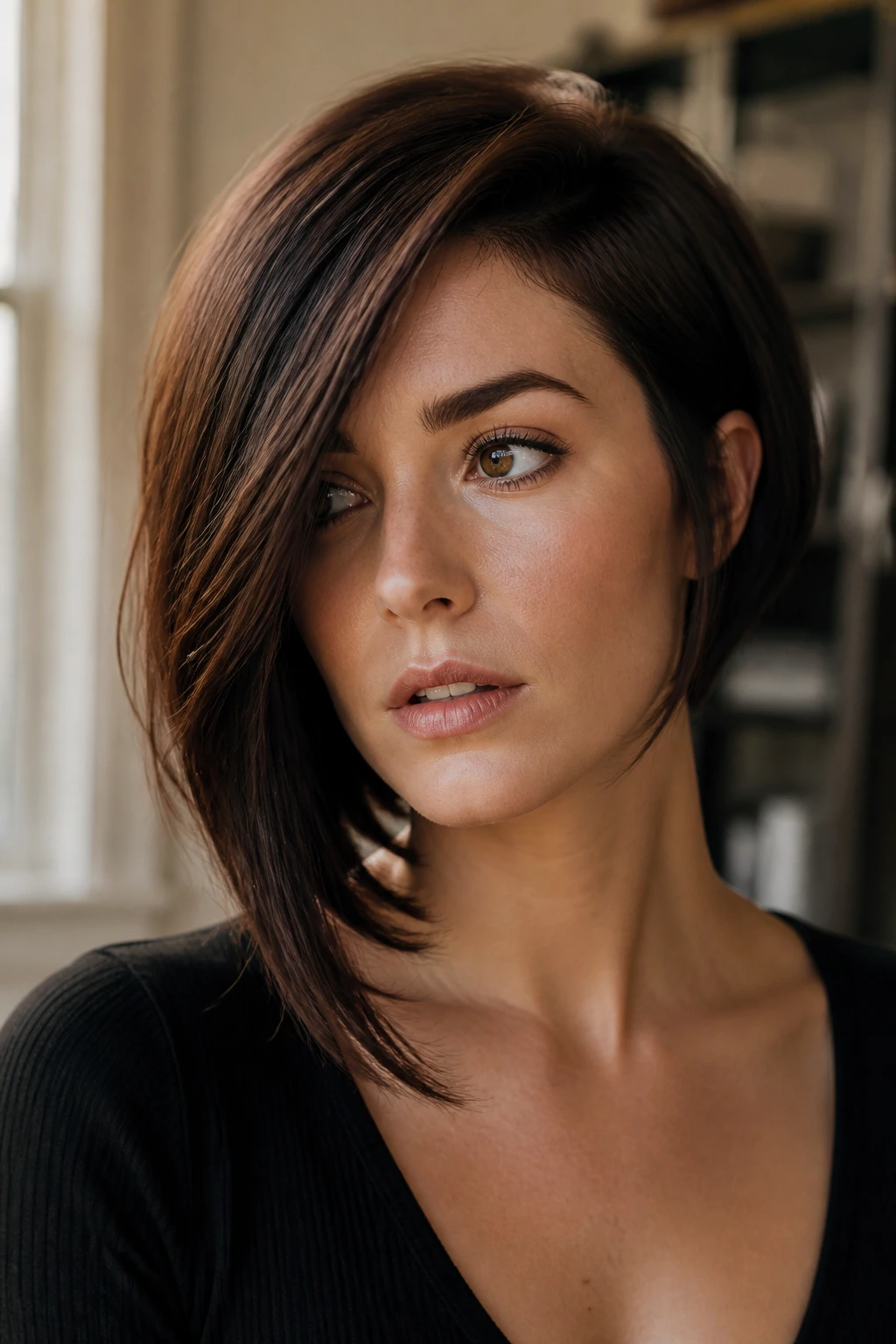
A bob is already a shape. Asymmetry gives that shape direction.
That diagonal line is doing more than looking stylish in photos. It shifts the eye, and that shift can change how broad a face feels, how long a neck looks, and how much movement the haircut has when you turn your head. A one-length bob can sit there politely. An asymmetrical one has somewhere to go.
The other thing I like about this cut is how it changes with texture. On straight hair, it reads sharp and clean. On waves, the angle softens and gets a little lived-in. On curls, the unevenness turns into a face-framing shape that feels intentional rather than rigid. That flexibility is why asymmetrical bob haircuts keep showing up in salons year after year.
The Tools That Make These Cuts Easier to Wear
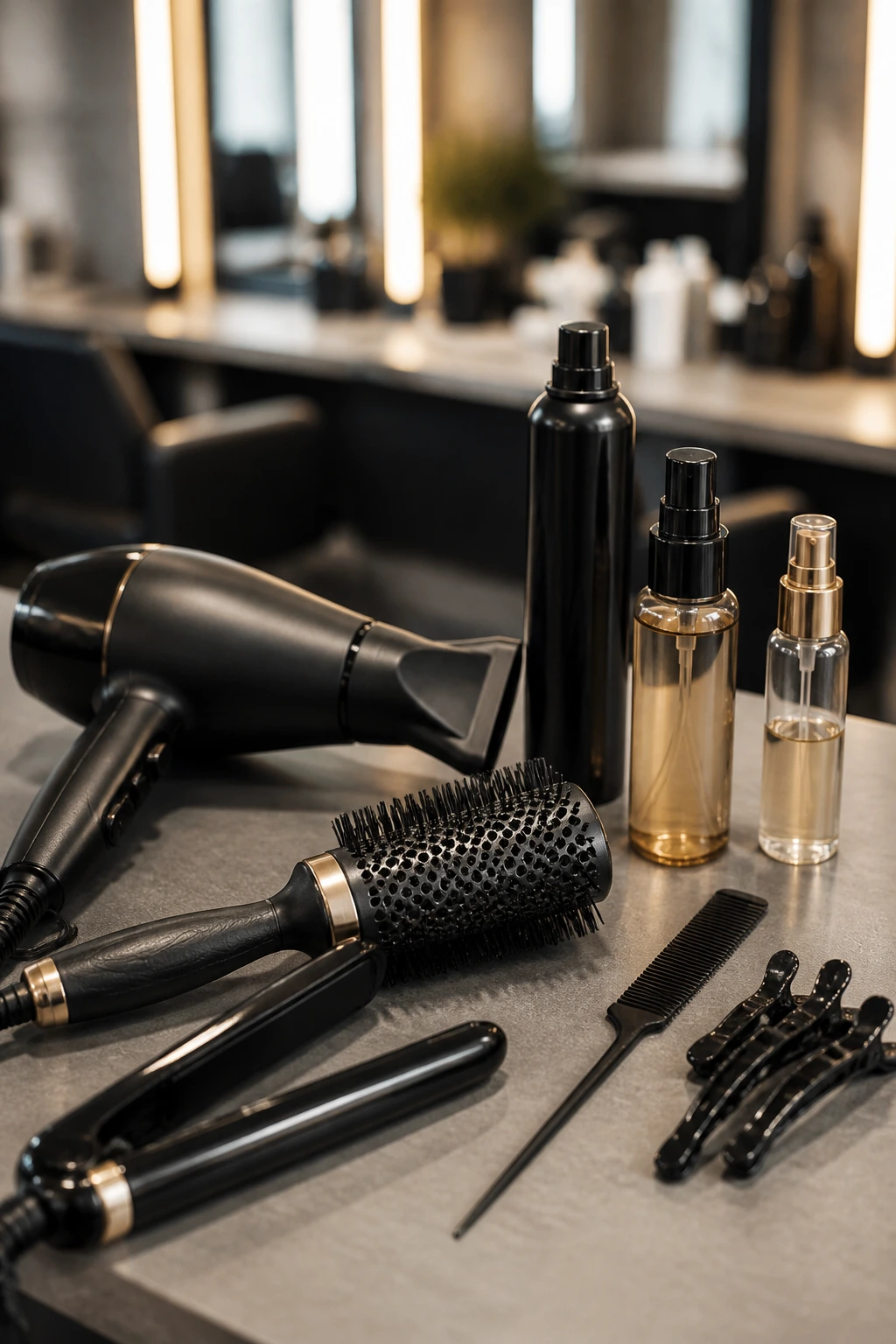
- A blow dryer with a narrow nozzle: It helps direct the hair down the line of the cut instead of blasting it every direction.
- A 1 to 1.5-inch round brush: Best for bending the front pieces under or away from the face without making them puffy.
- A flat iron with smooth plates: Useful for glass-hair finishes and for sharpening the angle on straight or wavy hair.
- A tail comb: Good for clean parts and for moving hair into the exact side sweep you want.
- Sectioning clips: They keep the longer and shorter sides separate while you style, which matters more than people admit.
- Heat protectant spray: Non-negotiable if you use hot tools more than a couple of times a week.
- Lightweight serum or oil: Use a pea-size amount through the ends to stop the line from looking dry.
- Texturizing spray: Helps choppy or air-dried cuts hold their separation without getting sticky.
- Dry shampoo: Handy at the crown, especially if the asymmetry is paired with a side part that goes flat fast.
- A hand mirror: Worth it. You need to see the back and the nape, not guess.
How to Choose the Right Asymmetrical Bob for Your Texture
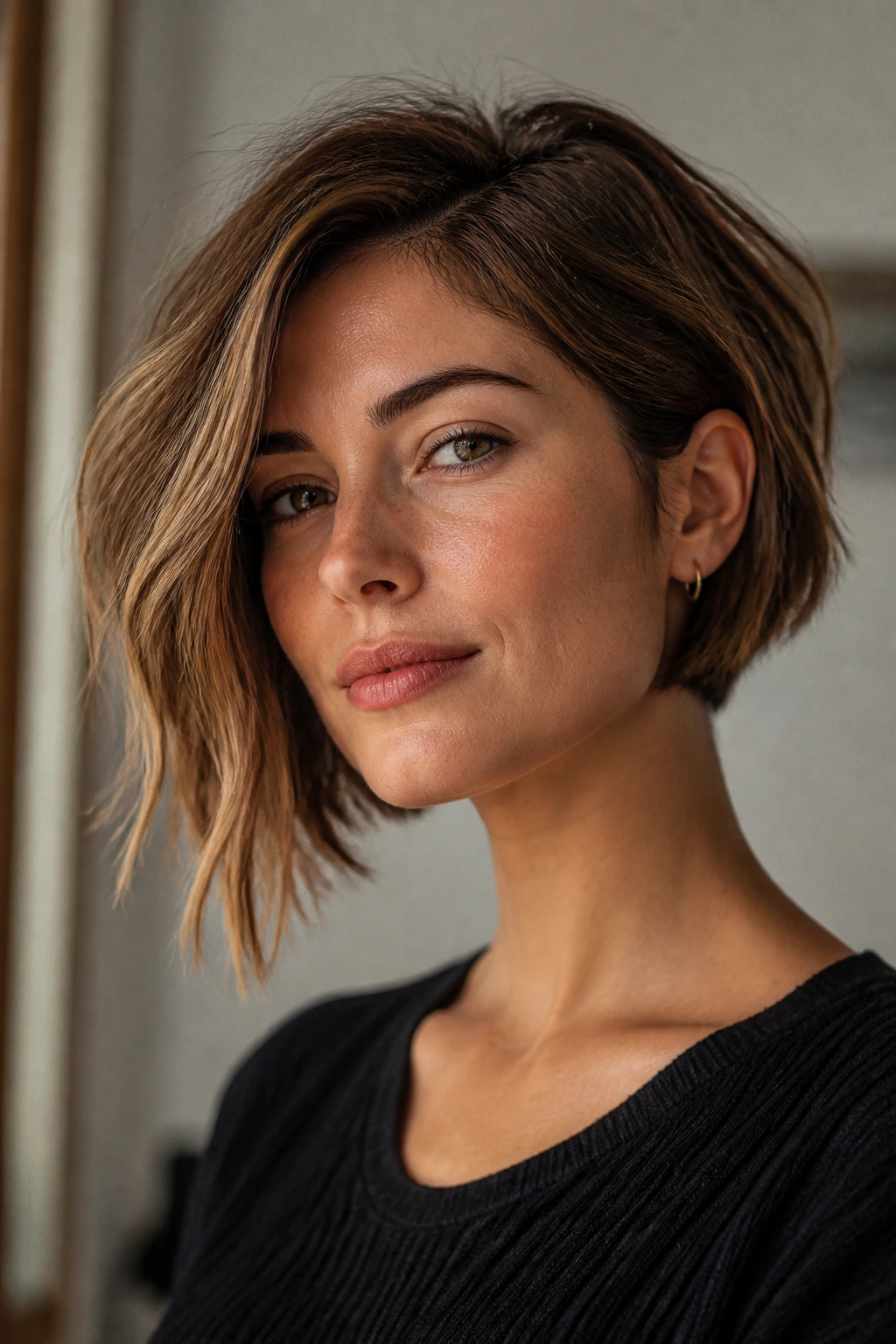
Fine hair usually benefits from blunt edges, subtle layering, and not too much thinning. Thick hair often needs interior weight removal so the shape can sit close to the head without ballooning. Wavy and curly hair need more respect for shrinkage and spring, which means the cut should be planned around how the hair behaves after it dries, not just how it looks wet in the chair.
Cowlicks matter too. A strong cowlick at the front can make a side part jump around unless the cut is designed to work with it. If your hair naturally pushes one way, ask for the shorter side to live on the side that already wants to lie flatter. That little choice can save you ten minutes every morning.
And glasses? They matter. So does how often you tuck your hair behind one ear. A bob that looks clean in a photo can be annoying in real life if it fights your frames or drops in your face every time you turn. Bring that up. It changes the cut.
How to Style Asymmetrical Bob Haircuts Without Fighting the Shape
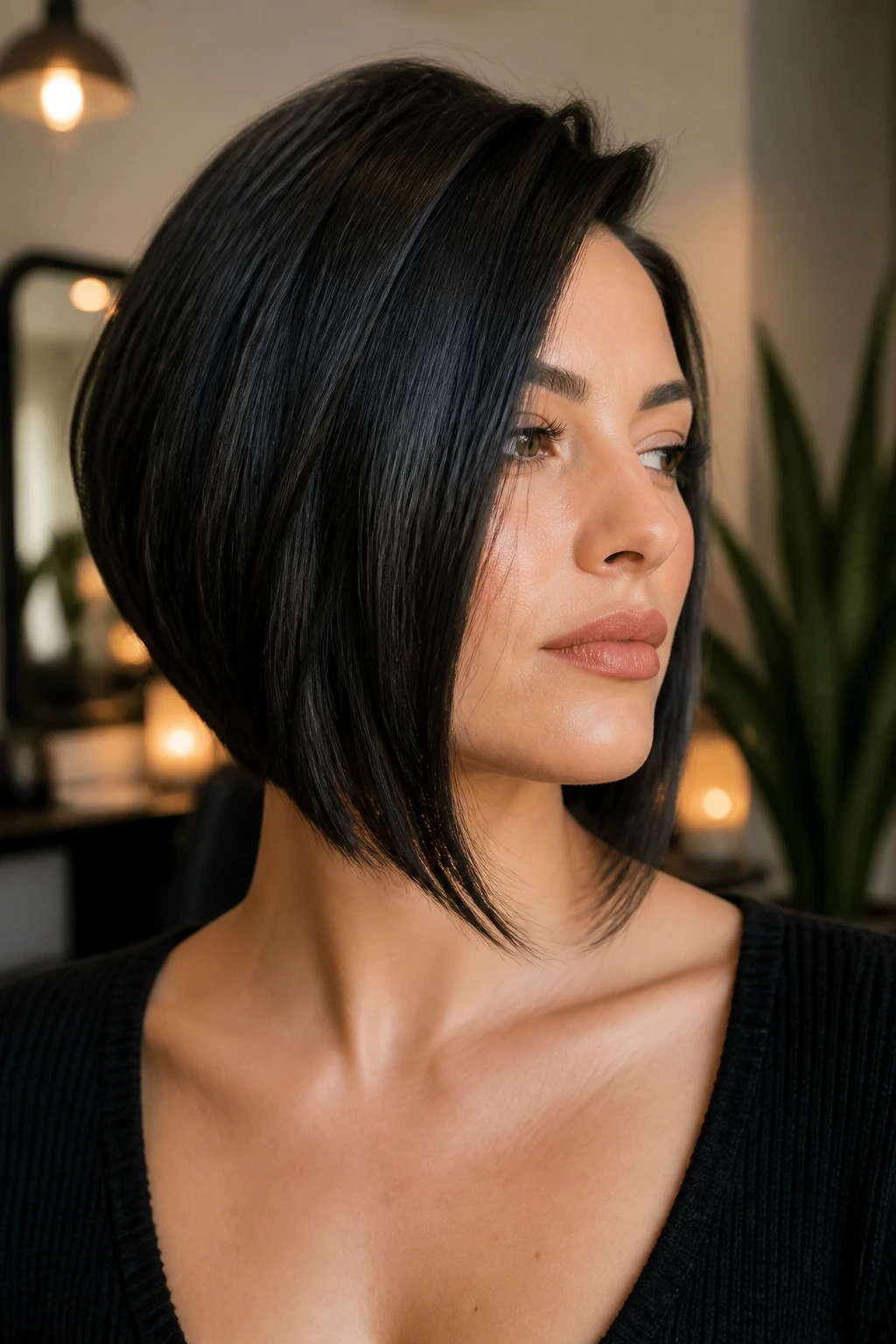
Straight and polished: Blow-dry with the nozzle pointing down the hair shaft, then bend just the last half-inch of the ends under with a round brush or flat iron. The goal is to keep the line visible, not curl the bob into something it isn’t.
Soft bend and movement: Rough-dry until the hair is mostly dry, then use a medium iron or brush to add a small bend away from the face on the longer side. That keeps the asymmetry obvious without making the style stiff.
Air-dried texture: Work a light cream through damp hair, scrunch the ends, and leave the roots a little lifted with your fingers. If the hair dries too flat at the crown, the bob loses its shape and starts reading like a triangle.
Pinned and tucked: One side of an asymmetrical bob looks especially good behind the ear with a small clip or pin. The tucked side exposes the neck and the longer side does the styling work on its own.
The Mistakes That Make an Asymmetrical Bob Look Off
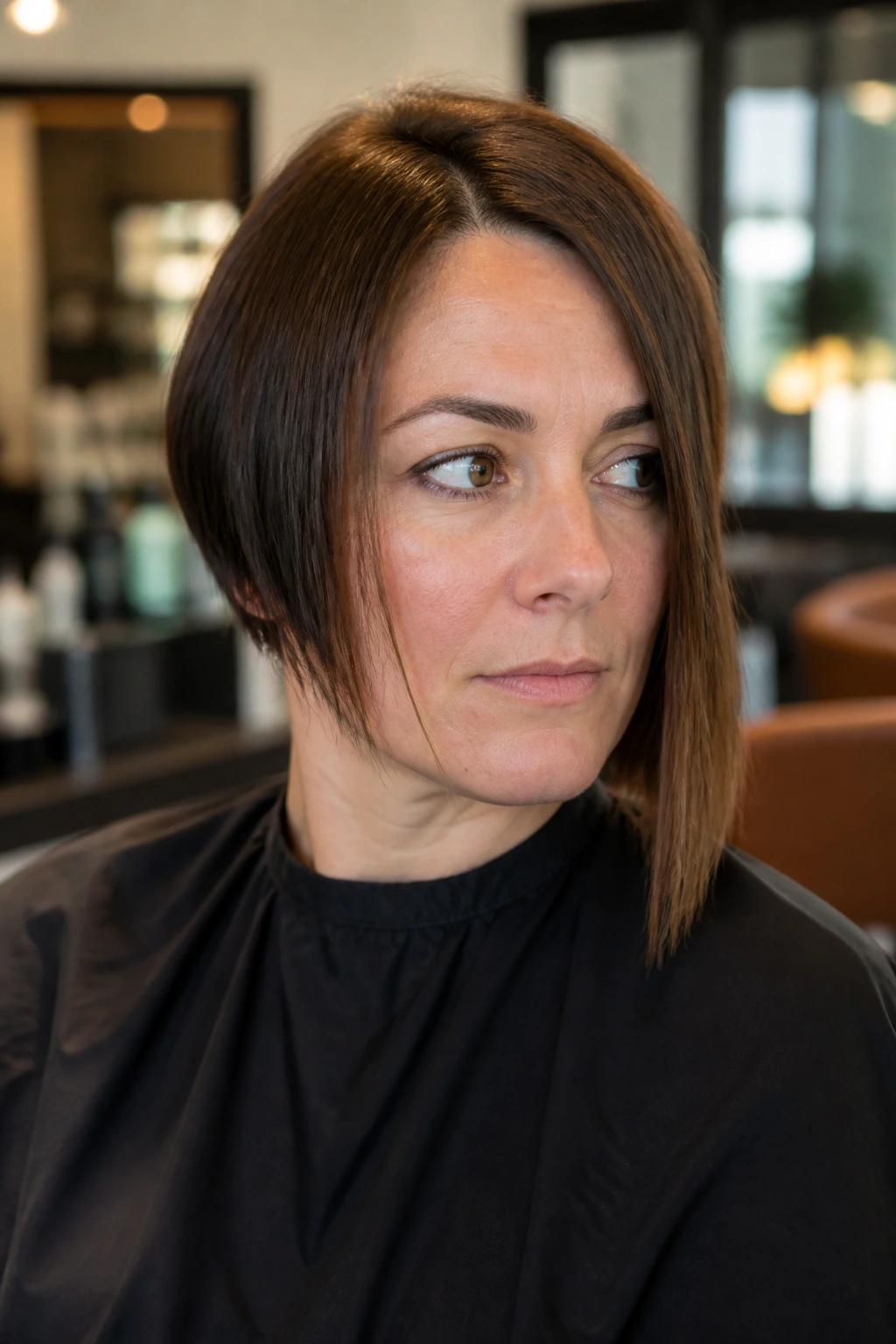
Mistake: not setting the anchor point. If the stylist doesn’t decide exactly where the shortest side should land, the cut can wobble around the face. The fix is to name a landmark — jaw, chin, cheekbone, or collarbone — before the first snip.
Mistake: making the long side too long. Once the difference gets too extreme, the bob stops looking like a bob and starts looking like someone lost interest halfway through. If you want drama, fine. If you want wearability, keep the gap controlled.
Mistake: over-thinning thick hair. The symptom is a fluffy perimeter that expands every time humidity shows up. The better fix is internal weight removal, not hacking the ends to pieces.
Mistake: ignoring shrinkage in curls. A curly asymmetrical bob can look even when wet and turn lopsided after drying. Cut it dry or at least check the dry shape before deciding the final line.
Mistake: styling every version the same way. Glass-hair bobs, air-dry bobs, and choppy bobs do not want the same products. Give each cut the finish it was designed for, or it starts fighting back.
Ways to Make the Shape More You
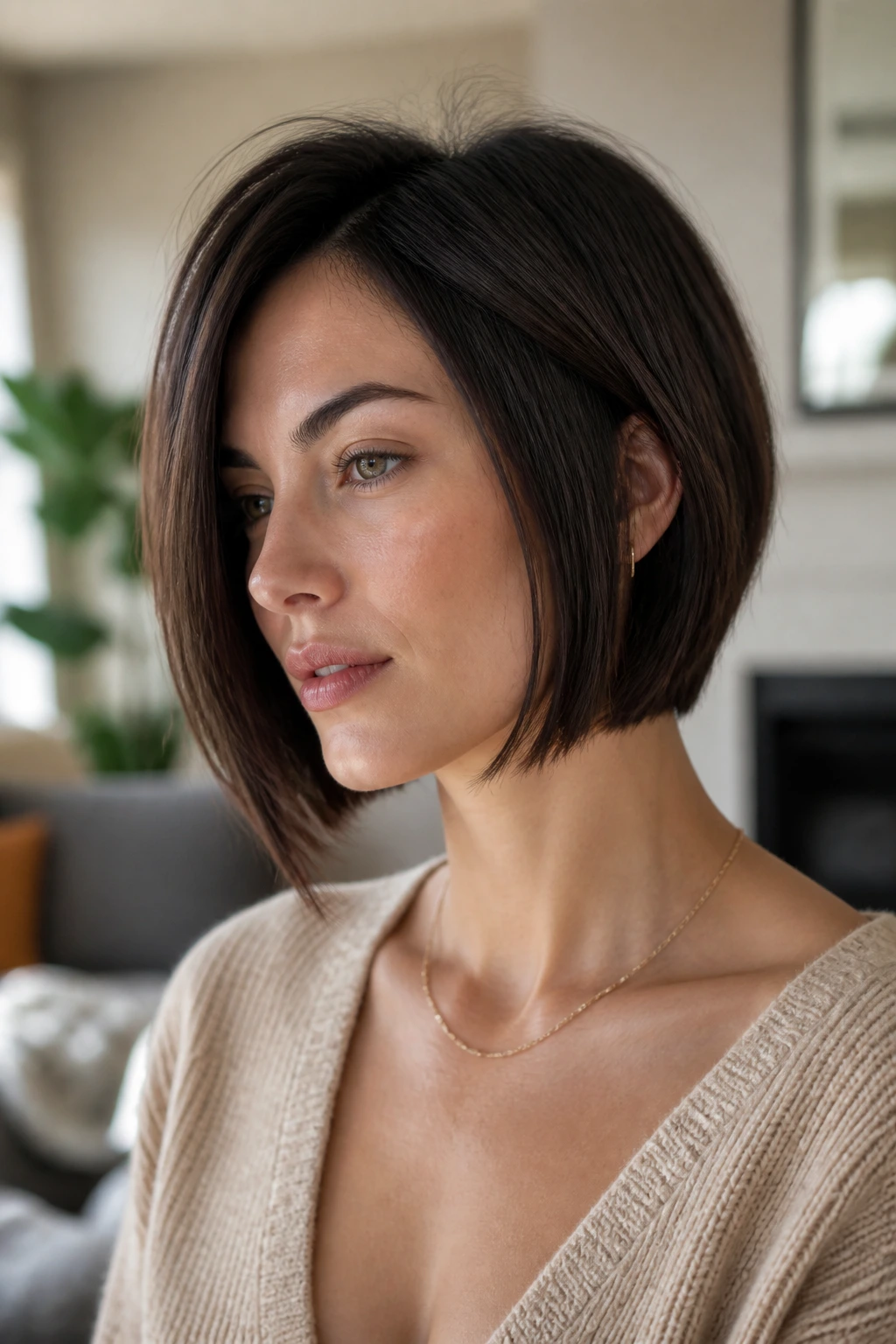
Barely-There Angle: Keep the difference between sides subtle — under an inch on straight hair — if you want the haircut to read polished and low-key. It’s a smart option for first-timers.
Sharp Statement Cut: Push the front panel longer and let the shorter side open the face more aggressively. This version needs precision, but it delivers the strongest silhouette.
Curl-Friendly Shape: Let the longest side be measured by curl clusters rather than a ruler. The shape should feel balanced after drying, not perfectly mirrored.
Fringe-Forward Version: Add curtain bangs, soft bangs, or a tiny micro fringe if you want the asymmetry to feel less stark. Bangs change the mood fast.
Grow-Out Friendly Bob: Choose a collarbone-length front and a softer back graduation if you know you won’t sit in a salon chair every six weeks. This one ages better.
Office-Ready Version: Keep the line clean, the texture soft, and the difference between sides modest. It still has personality, just without the sharp edge.
Keeping the Shape Sharp Between Trims
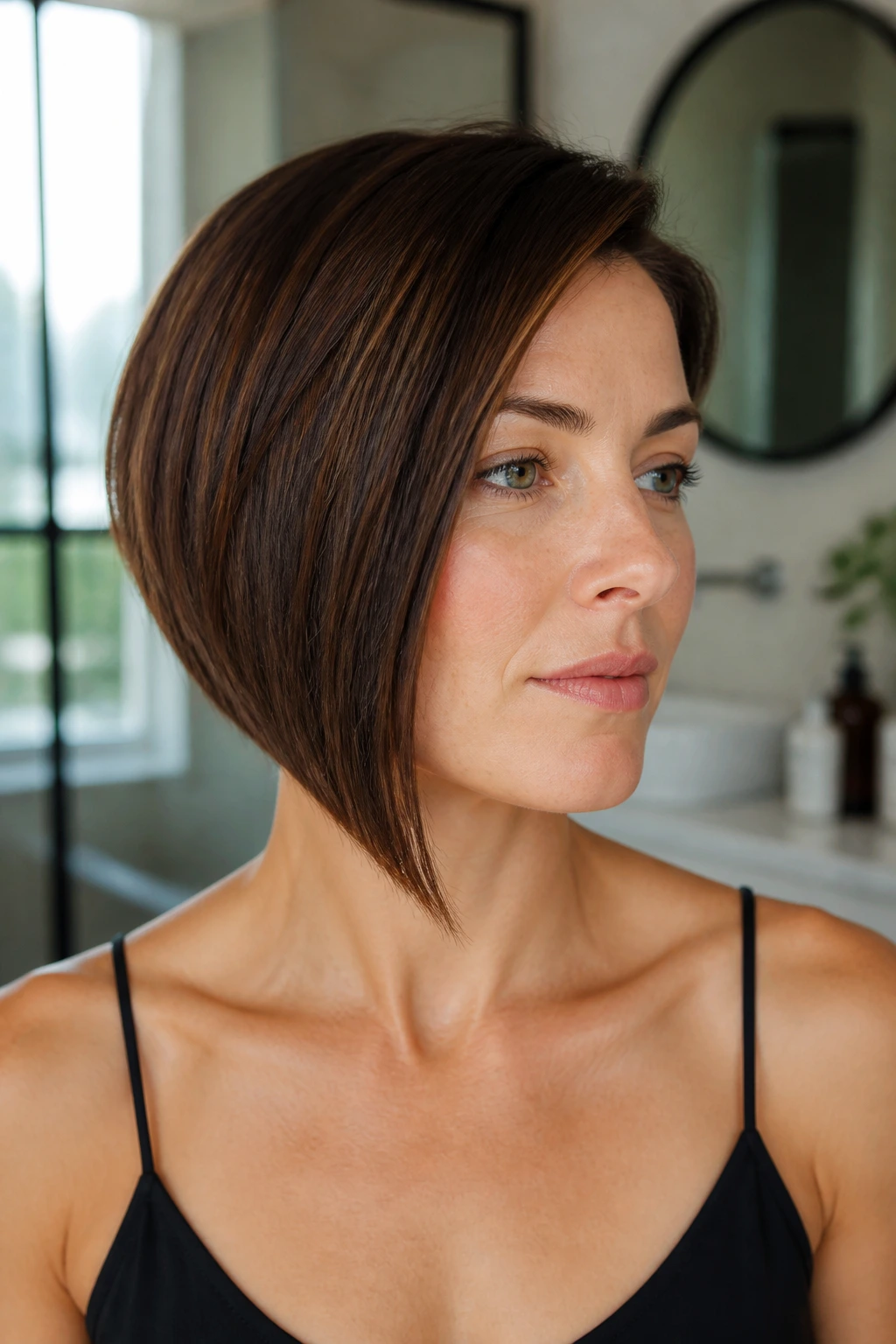
Asymmetrical bob haircuts usually need a trim every 6 to 8 weeks if you want the line to stay clean. Shorter versions with a stronger angle may need a touch-up sooner, especially if the back is stacked or undercut. Longer versions can stretch a little farther, but once the front starts collapsing onto the shoulders, the shape changes fast.
Sleep matters more than people think. A silk or satin pillowcase helps reduce the fluff at the ends, and it keeps the longer side from snagging into a weird bend overnight. If the bob kinks on one side, mist it lightly in the morning and re-bend the ends with a brush or iron instead of soaking the whole head.
Dry shampoo helps at the crown, but don’t pile it on the ends. That makes the perimeter dusty and dull. A small amount at the roots is usually enough to give the asymmetry back its lift.
When an Asymmetrical Bob Goes Wrong
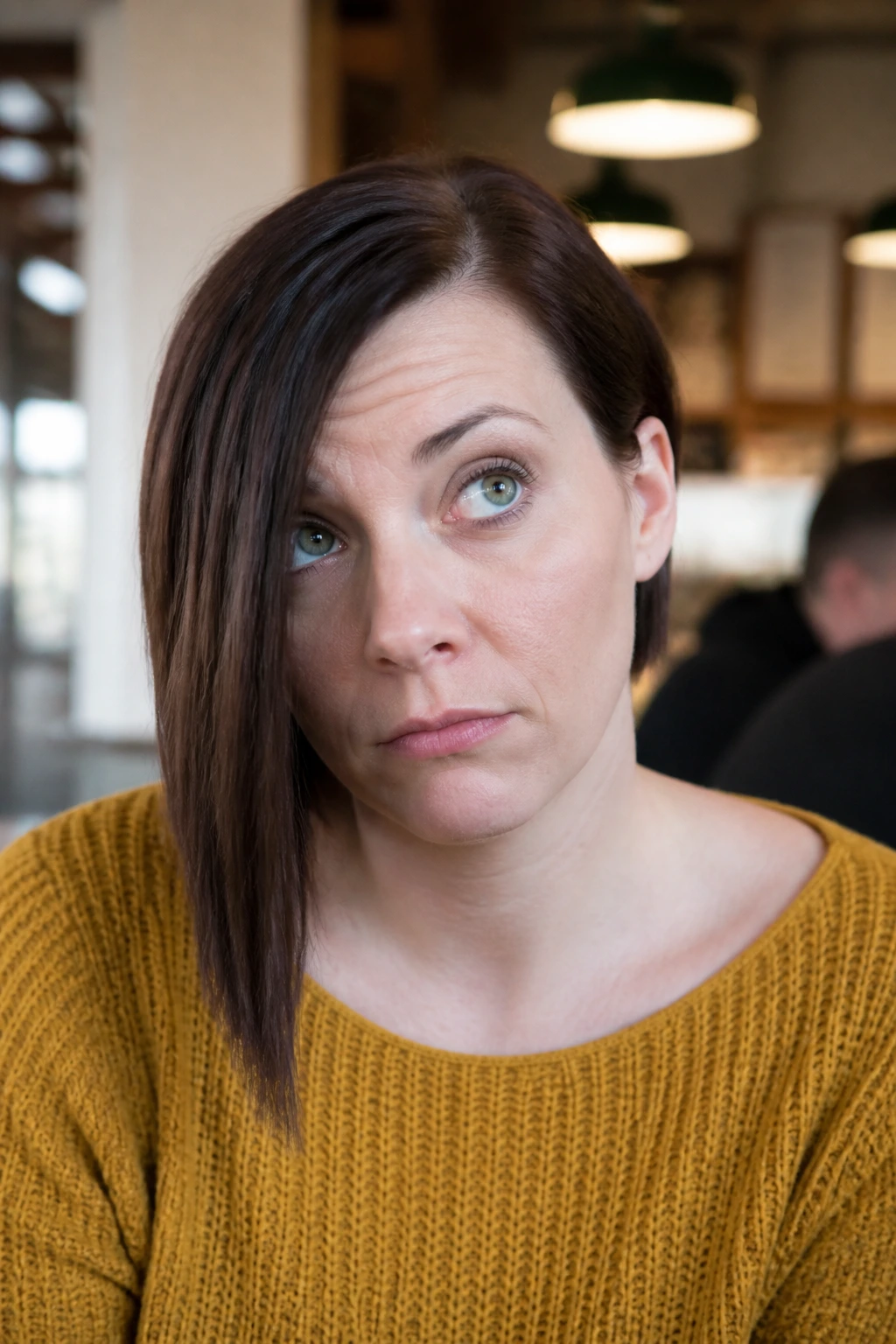
Why does one side look heavier than the other? Usually the longer side is too long, or the weight underneath isn’t balanced. A stylist can fix that by adjusting the front length and cleaning up the internal shape instead of just trimming the ends.
Can curly hair wear an asymmetrical bob without looking uneven? Yes, but only if the cut respects the curl pattern. Dry cutting or curl-by-curl checking is the safer route because shrinkage changes the line once the hair dries.
What if the cut looks too severe on my face? Soften the front with waves, curtain bangs, or a slightly lower asymmetry gap. You do not need the most dramatic version to get the effect.
Is this a good cut if I hate daily styling? Some versions are. The soft graduated bob, the air-dry bob, and the collarbone-length version all ask for less than a glass-hair bob or sharp blunt chop.
How do I ask for the right length difference? Bring a photo and name landmarks. Say where the short side should land and where the long side should fall — jaw, chin, collarbone, or just below it.
Will it grow out awkwardly? Not if the cut was planned well. A softer angle usually softens nicely; a very steep angle needs more frequent cleanup.
Can I tuck one side behind my ear and still keep the shape? That’s one of the best things about this haircut. The asymmetry should still be visible even with one side tucked, which is part of why it works so well in real life.
A Shape That Knows Its Place

The best asymmetrical bob haircuts don’t look like they’re trying to prove something. They look composed. There’s a clean line, a little swing, and enough difference between the sides to make the eye travel instead of stopping dead at one blunt edge.
That’s the real appeal here. You can go subtle or bold, sleek or textured, short or collarbone-grazing, and still keep the same basic structure. If you choose the version that matches your hair instead of the loudest one in the photo search, the cut does what good haircuts are supposed to do: it makes your face look a little more awake and your styling routine a little less annoying.
And that, honestly, is why this shape keeps winning people over.
