



A choppy bob fixes one of the oldest haircut problems: a clean bob can look sharp at 9 a.m. and flat by lunch. The choppy version keeps the line, but breaks up the heaviness that makes a straight bob feel boxy. On fine hair, it adds the illusion of grit and lift. On thick hair, it takes the edge off the bulk so the shape can actually move.
That’s the part people miss when they ask for “texture.” Choppy bob haircuts are not one thing. Some are jaw-grazing and crisp, some are soft and shaggy, some sit close to the head with a little bite in the ends, and some are long enough to brush the collarbone while still feeling cropped. The difference comes from where the weight sits, how the perimeter is cut, and whether the texture lives only at the ends or through the whole shape.
The best versions don’t look random. They look deliberate in that slightly undone way that takes real haircutting skill. A little point cutting here, a bit of internal layering there, maybe a sharper nape or a longer face frame — tiny choices, big payoff. And because that’s where the magic lives, the range of choppy bobs is wider than most people think.
Why These Choppy Bob Haircuts Stand Out

-
They move when you move: The broken-up ends stop the haircut from sitting like a solid block, so even a quick finger-comb gives the shape life.
-
They work across hair types: Fine hair gets lift, thick hair loses weight, and wavy hair gets a cleaner outline instead of a puffed-out triangle.
-
They grow out with less drama: A little texture at the ends makes the first few weeks of grow-out look intentional instead of neglected.
-
They can be polished or messy: The same bob can look sleek with a round brush or airy with a few bends from a flat iron.
-
They leave room for bangs: Curtain bangs, micro fringe, side-swept pieces, and grown-out fringe all sit well with a choppy outline.
-
They suit people who hate overstyling: A cut with built-in separation needs less fuss on days when you only have five minutes and a dry shampoo can.
1. Jaw-Grazing Choppy Bob With Piecey Ends
A jaw-grazing bob has a built-in point of view. The line lands right at the jaw, which gives the haircut shape, while the choppy ends keep it from turning severe or helmet-like. On straight hair, it reads crisp. On hair with a little bend, it looks lived-in in the best way.
Why It Works
The jaw is a useful place to stop because it gives the face a frame without swallowing the neck. I like this version when someone wants a clean silhouette but not a blunt edge that feels frozen in place. Ask for the perimeter to stay solid and the bottom half-inch to be point-cut, not hacked up with heavy thinning shears.
Best on: straight to softly wavy hair, especially if the ends tend to flip out.
Style move: one bend at the front with a flat iron or 1-inch curling iron is enough. You do not need to curl every section.
2. French Bob With a Micro Fringe and Rough Ends
This one has attitude, and it knows it. The French bob sits shorter, usually around the lip to cheekbone zone, and the micro fringe makes the whole thing feel sharp without being fussy. Choppy ends keep it from looking too neat, which is exactly why it works.
If you like cuts that make your brows and eyes matter more than your length, this is one to show your stylist. The fringe should be short enough to show the forehead a little, but not so short that it feels severe. The ends can be point-cut just enough to soften the line around the jaw.
A French bob with texture is the haircut equivalent of a black tee that fits well. Nothing extra. No fluff. And somehow that restraint gives it more personality.
3. Fine-Hair Choppy Bob With Invisible Layers
Fine hair usually behaves better with discipline than with too many layers, and this cut understands that. The trick is to keep the base line intact while adding just enough invisible layering inside the shape to stop the ends from collapsing into one flat strip.
How to Style It
- Blow-dry with a small round brush at the roots, not the ends.
- Use a light mousse or root lift spray before drying.
- Finish with texture spray only on the mid-lengths, not the crown.
That last part matters. Too much product at the roots makes fine hair drop even faster. A good choppy bob for fine hair should look airy, not shredded. If you can see through the ends too much, the cut has gone too far.
4. Thick-Hair Choppy Bob With the Bulk Removed
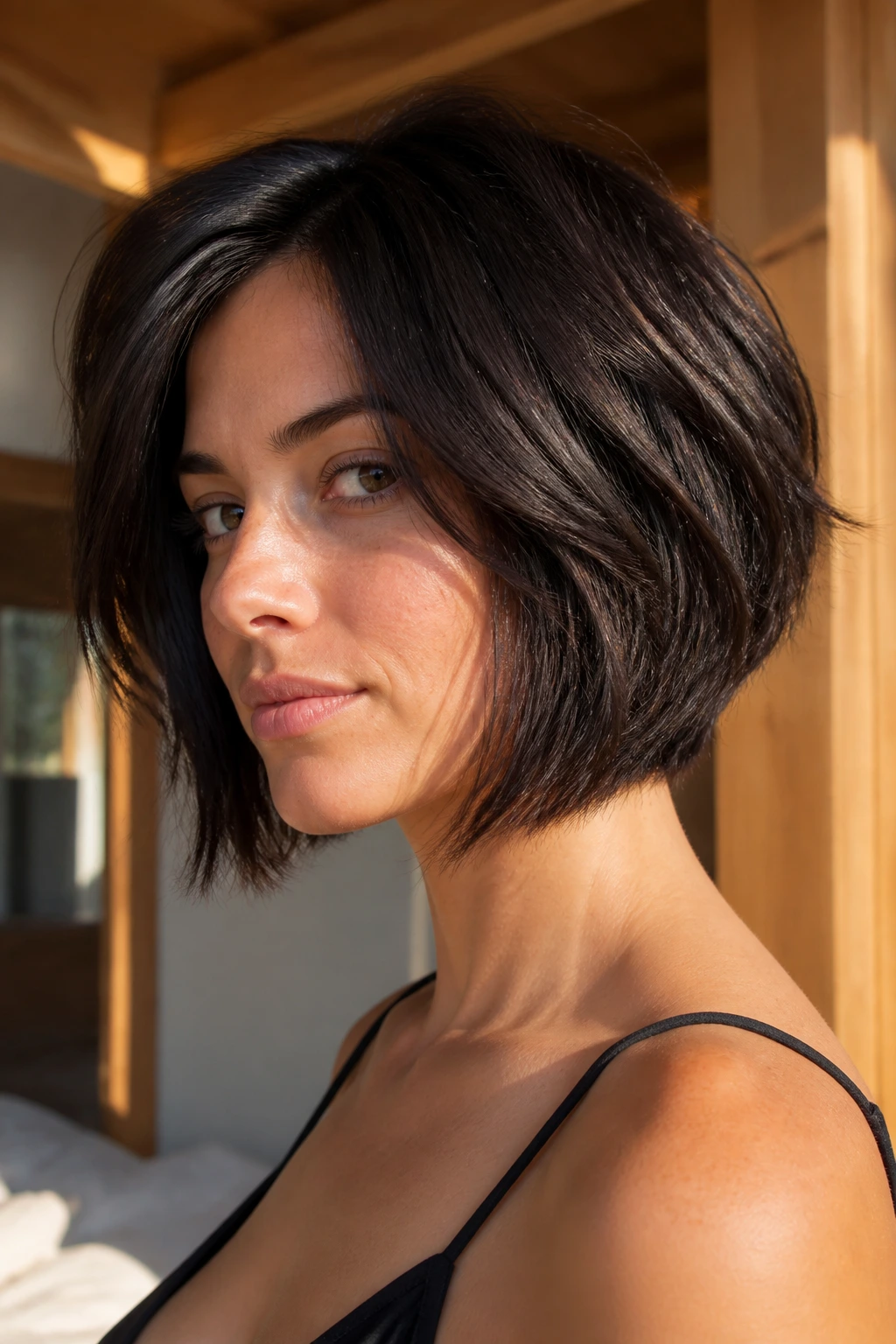
Thick hair can make a bob look heavy fast. The fix is not to chop it to pieces. The fix is to remove bulk from the inside so the shape can sit down instead of puffing out at the sides.
This version usually looks best with a strong perimeter and careful interior debulking. I prefer it when the stylist uses controlled texturizing rather than aggressive thinning. Heavy thinning shears can create frizz on the ends, especially if the hair has any wave or dryness.
The finished result should feel lighter in the hands, but still full. That’s the sweet spot. If the bob starts looking fluffy around the ears, too much weight was removed.
5. Inverted Choppy Bob With a Sharp Nape
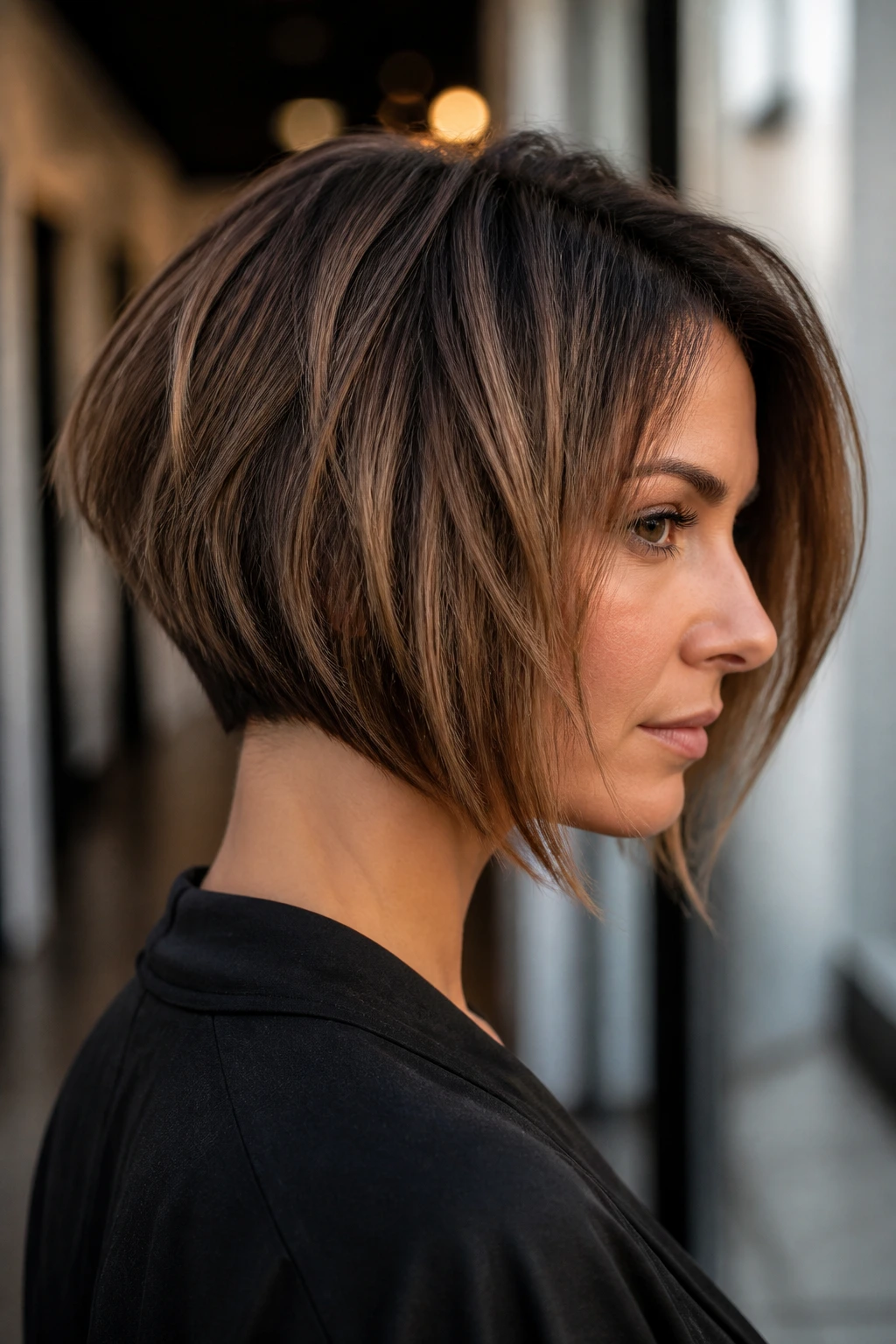
The inverted bob gives you drama without needing a lot of length. It’s shorter in the back and longer in the front, so the angle creates shape before you even add texture. A bit of choppiness through the front pieces stops the cut from looking too geometric.
This cut has a clean nape, and that’s part of the appeal. The shorter back hugs the head, while the front length skims the jaw and neck. Ask for the front to stay soft, not pointed into a hard V. A slight texture at the edge is enough.
It’s especially good if you like a haircut that looks deliberate from every angle. Side view. Back view. Front view. No dead spots.
6. Asymmetrical Choppy Bob With a Deep Side Part

A deep side part changes everything. One side falls a little longer, the other side gets tucked or swept back, and the whole bob picks up a sharper attitude without needing extra length. The choppy ends keep the asymmetry from feeling too polished.
This is one of my favorites for people who want movement without waves. The asymmetry creates the drama; the choppiness keeps it from becoming stiff. If your hair naturally falls to one side, work with that instead of fighting it.
Tell your stylist: keep one side about half an inch to an inch longer, and soften the ends with point cutting. That small difference is enough. You want a shift, not a lopsided accident.
7. Wavy Choppy Bob With Air-Dried Bend
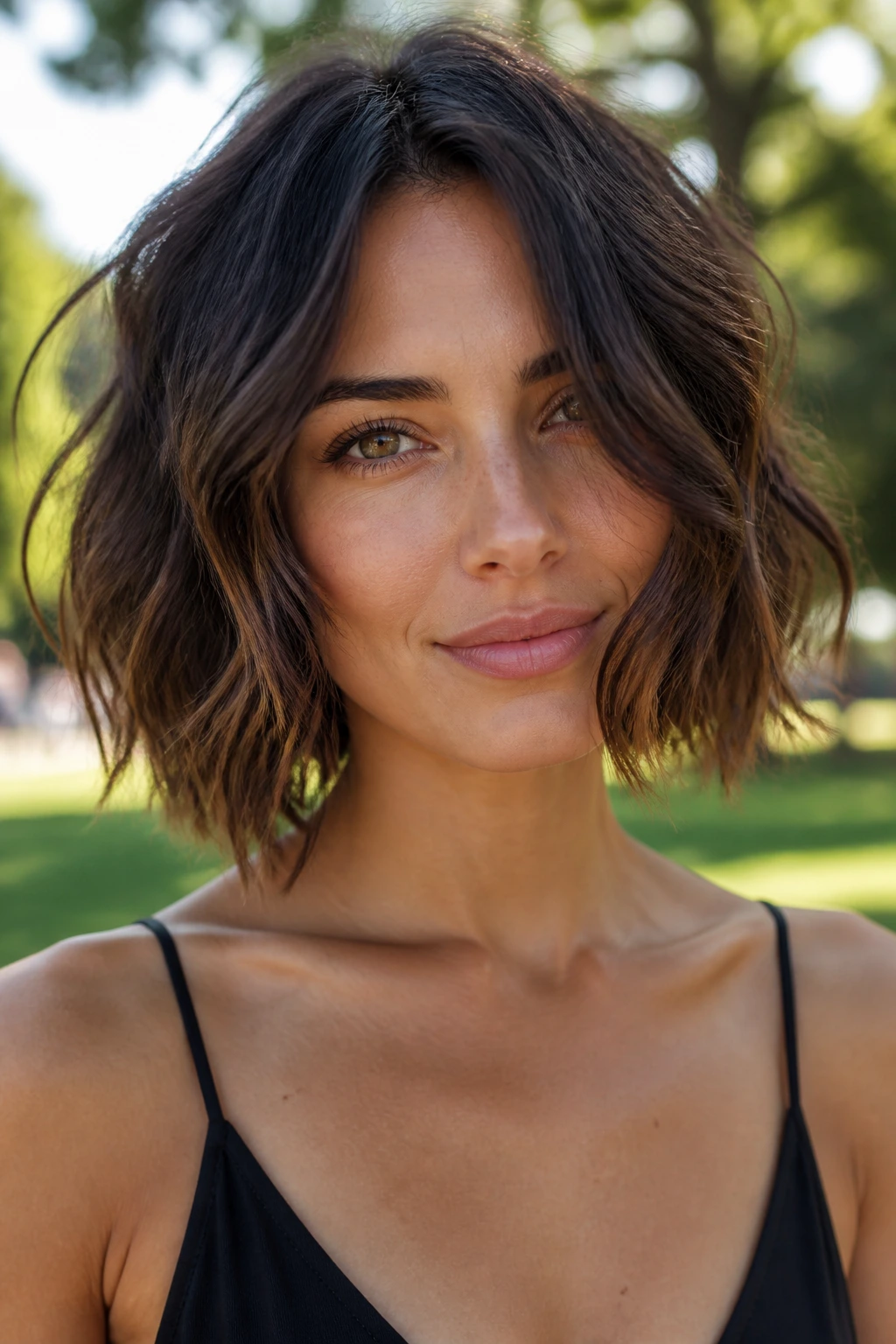
Wavy hair and choppy bobs get along because they both like a little irregularity. When the cut is shaped to the wave pattern, the ends fall into broken pieces instead of sitting in one clean sheet. That makes air-drying far more forgiving.
Use a curl cream only if your wave needs slip. If your wave is looser, a light mousse is often better. Scrunch with a microfiber towel, leave the roots alone, and let the shape form before you touch it. Touching it too much while it dries is how you end up with puff.
A wavy choppy bob works because it does not try to force perfect symmetry. It lets the wave do the talking, then sharpens the outline just enough to keep it honest.
8. Curly Choppy Bob With a Rounded Shape
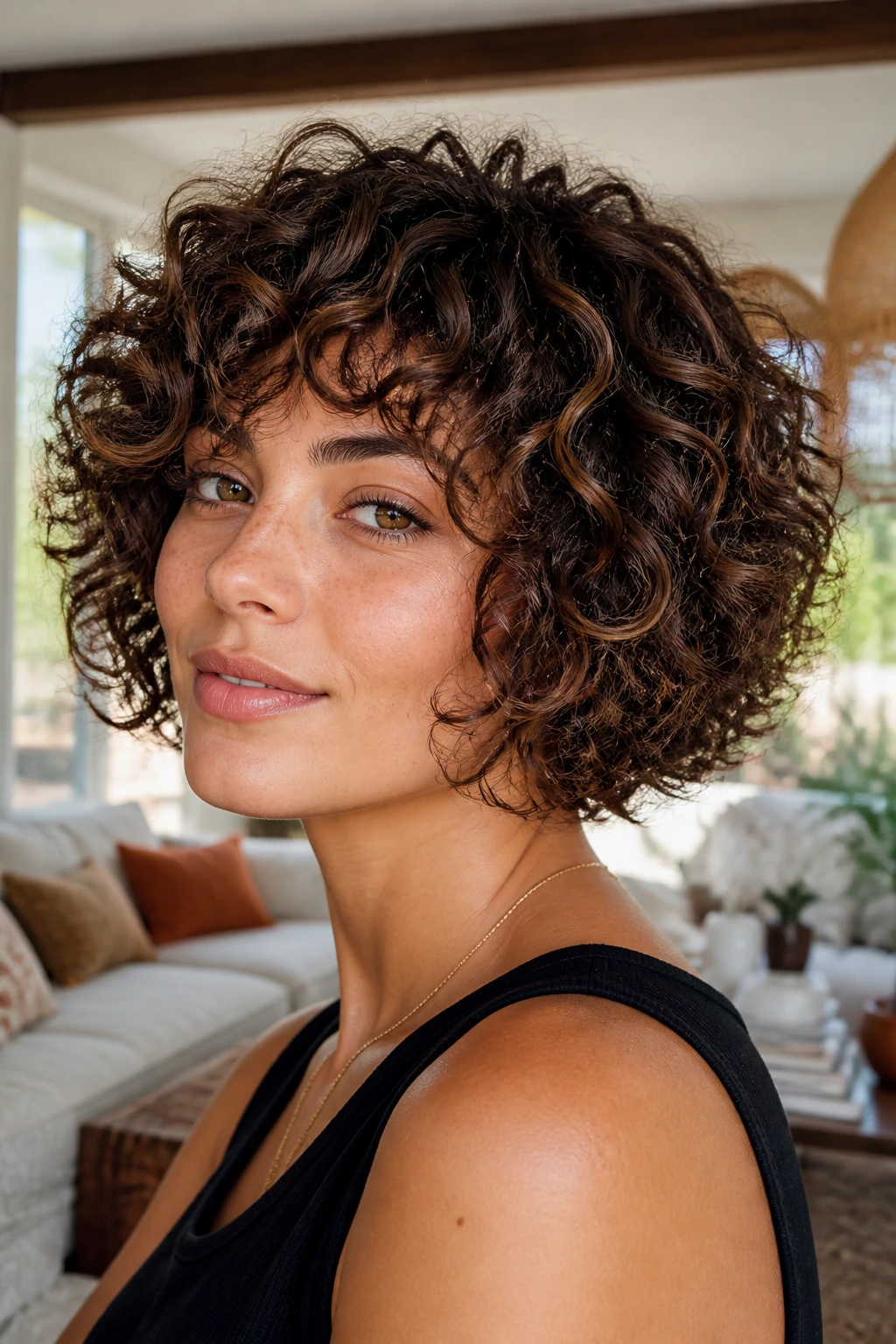
Curly hair needs a different kind of choppy bob. The cut has to respect shrinkage, curl pattern, and how the curls stack on top of each other. If the bob is cut too short when wet, it can spring up far above the jaw and lose all sense of shape.
I like this version rounded, not square. That means the curls keep their fullness, but the ends are shaped so the outline bends around the face instead of flaring outward. Choppy texture here is less about slicing the curls apart and more about letting them fall in pieces with clean spacing.
A good curly bob should move. It should also keep enough weight at the ends that the curls don’t frizz into a halo the second humidity shows up.
9. Choppy Bob With Curtain Bangs
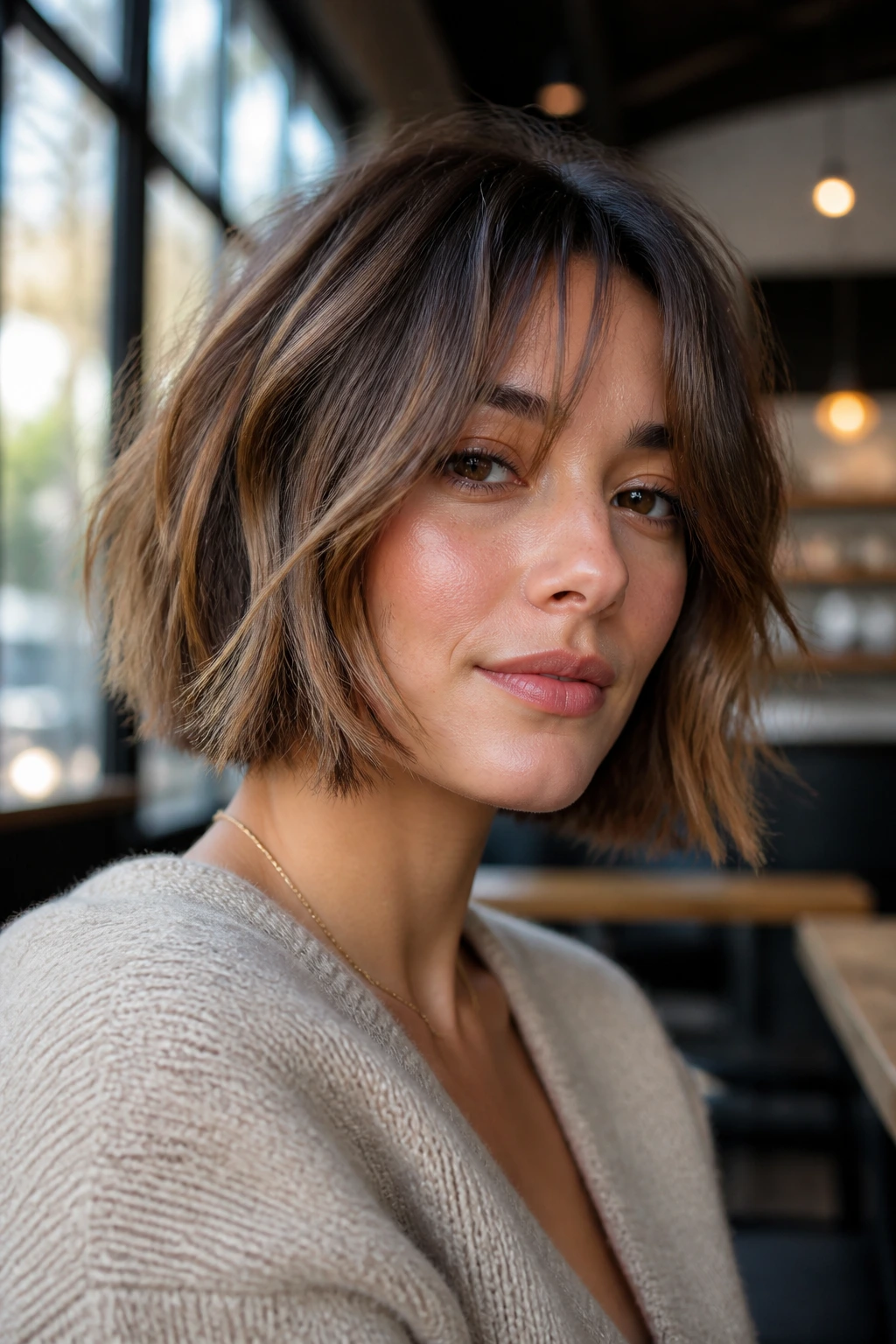
Curtain bangs soften a bob fast. They open at the center, skim the cheekbones, and fall into the rest of the cut instead of sitting like a separate piece. With a choppy bob, they help the haircut feel a little less hard around the face.
This is the version for people who want edge but also want some softness near the eyes. The bangs should be long enough to tuck behind the ears or split at the center when needed. Short curtain bangs can get fussy. Longer ones are easier to live with.
A small round brush at the bangs and a quick bend through the front pieces is usually enough. The rest of the bob can stay a little imperfect. That’s the point.
10. Shaggy Bob With Feathered Ends

A shaggy bob is where the bob starts flirting with a shag, and honestly, that border is useful. The shape is still bob-like, but the layers are looser, the ends are feathered, and the whole haircut feels more undone. If you like movement first and precision second, this one deserves a look.
What to Ask For
- Keep the length around the chin or just below it.
- Add soft layers through the top and crown.
- Feather the ends rather than creating a blunt bottom line.
- Leave enough length around the face so it does not collapse into a triangle.
This cut works best when the texture is not overworked. A light salt spray and a rough dry are often enough. Too much smoothing ruins the charm.
11. Blunt Bob Softened by Choppy Points
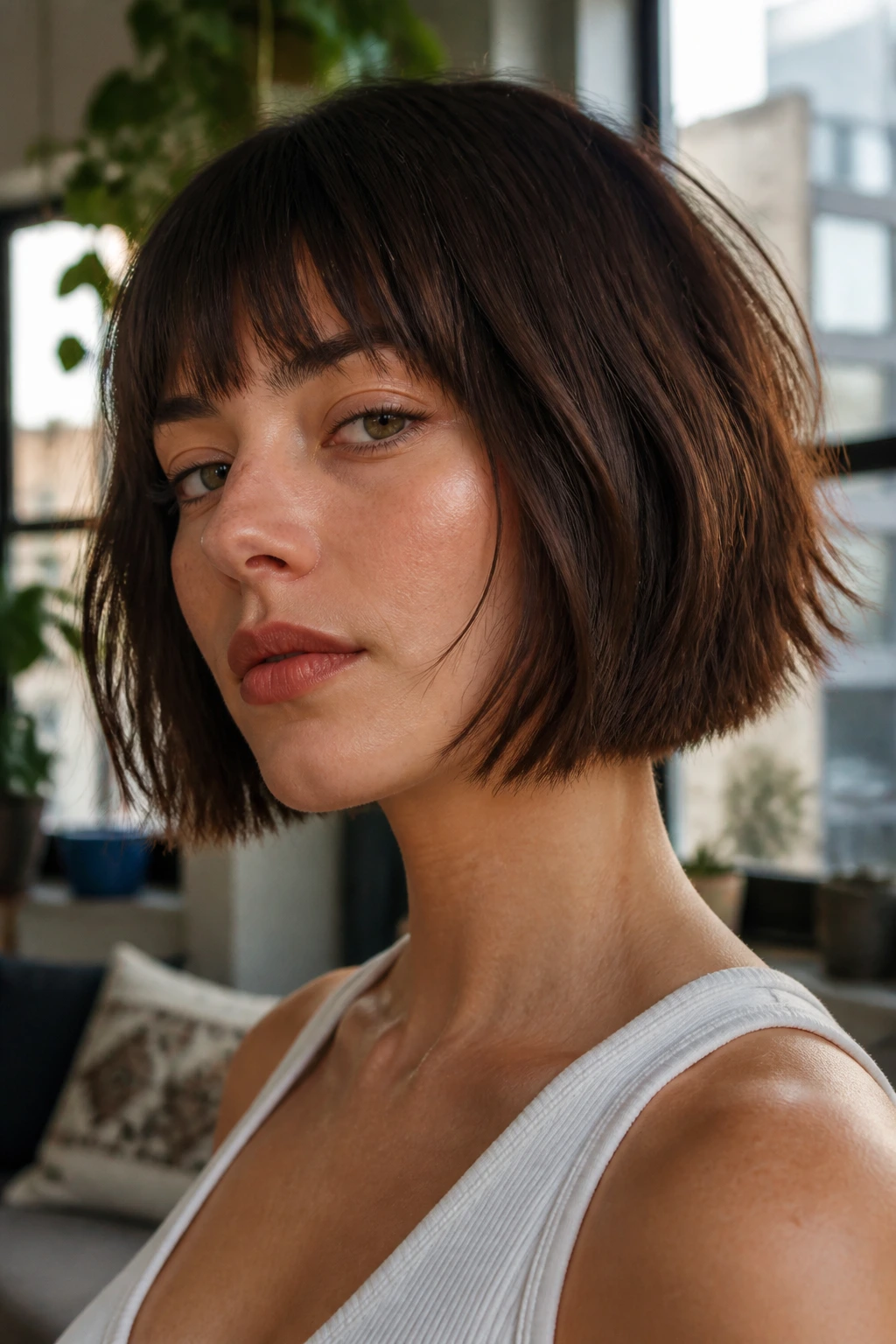
This is the haircut for someone who wants to keep a strong line but hates how severe a full blunt bob can look. The perimeter stays clean, so the bob still reads as a bob. The choppy part shows up at the very edge, where the ends are softened with careful point cutting.
I like this version for straight hair because it keeps the shine and structure. You get the crisp silhouette, but the ends don’t look like they were cut with a ruler and left there. That tiny bit of broken texture makes the whole haircut breathe.
It’s also useful if you work in an environment where you want the cut to look neat up close. The texture is there, but it’s subtle. Blink and you might miss it. That’s exactly why it works.
12. Collarbone Choppy Lob With Loose Texture
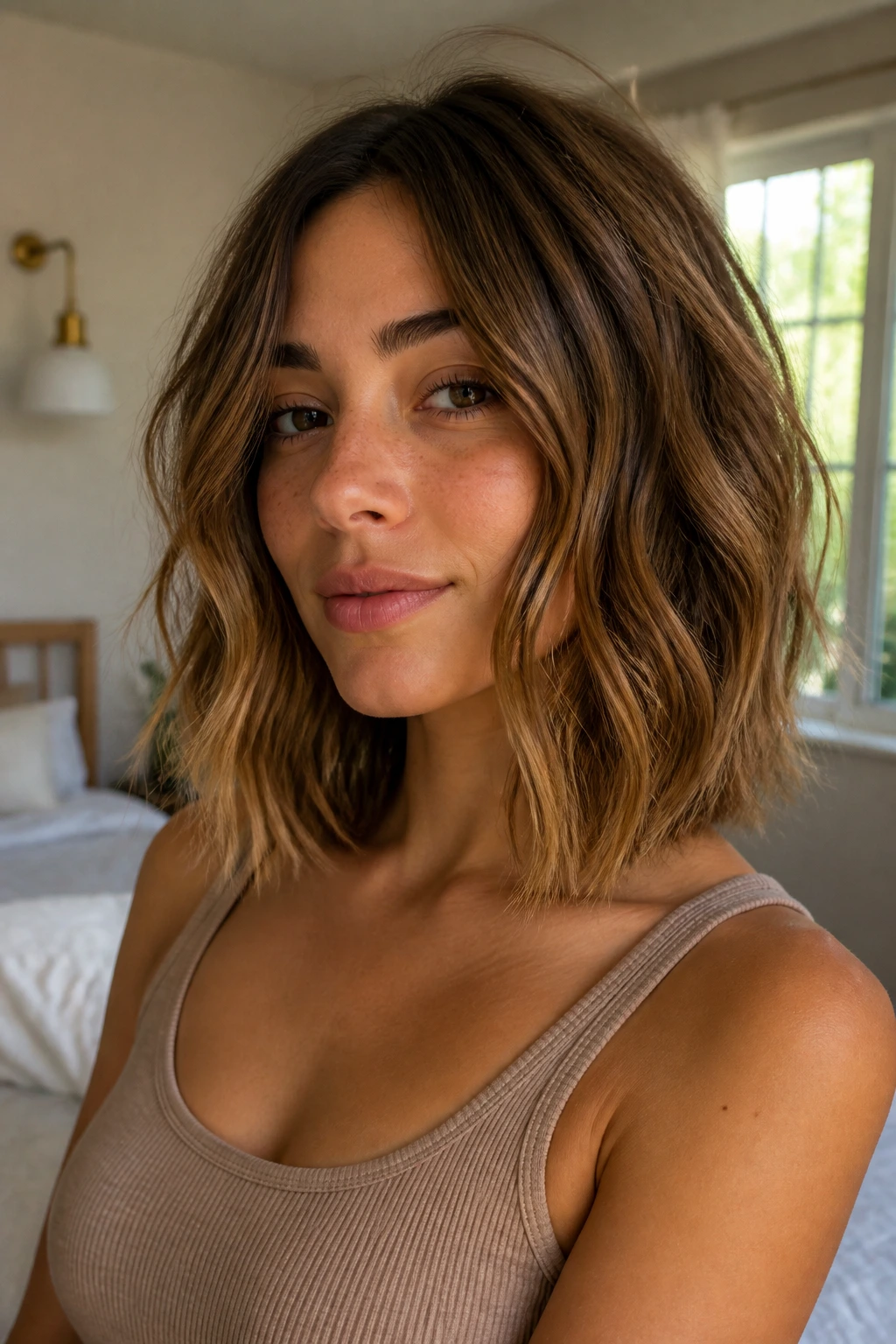
A longer choppy bob — really a lob — gives you more styling room and less pressure every time it grows a quarter inch. Sitting around the collarbone, it still feels cropped, but it can be tucked, waved, clipped, or pulled back without losing its shape.
This length is handy if you’re not ready for a chin-length cut. The extra inches keep it versatile, while the choppy ends stop it from looking heavy. I’d pick this version for someone who wants to test the bob waters without going all the way short.
It also handles second-day hair well. A little dry shampoo at the roots and a bend through the front pieces is usually enough to make it look on purpose again.
13. Stacked Choppy Bob With Crown Lift
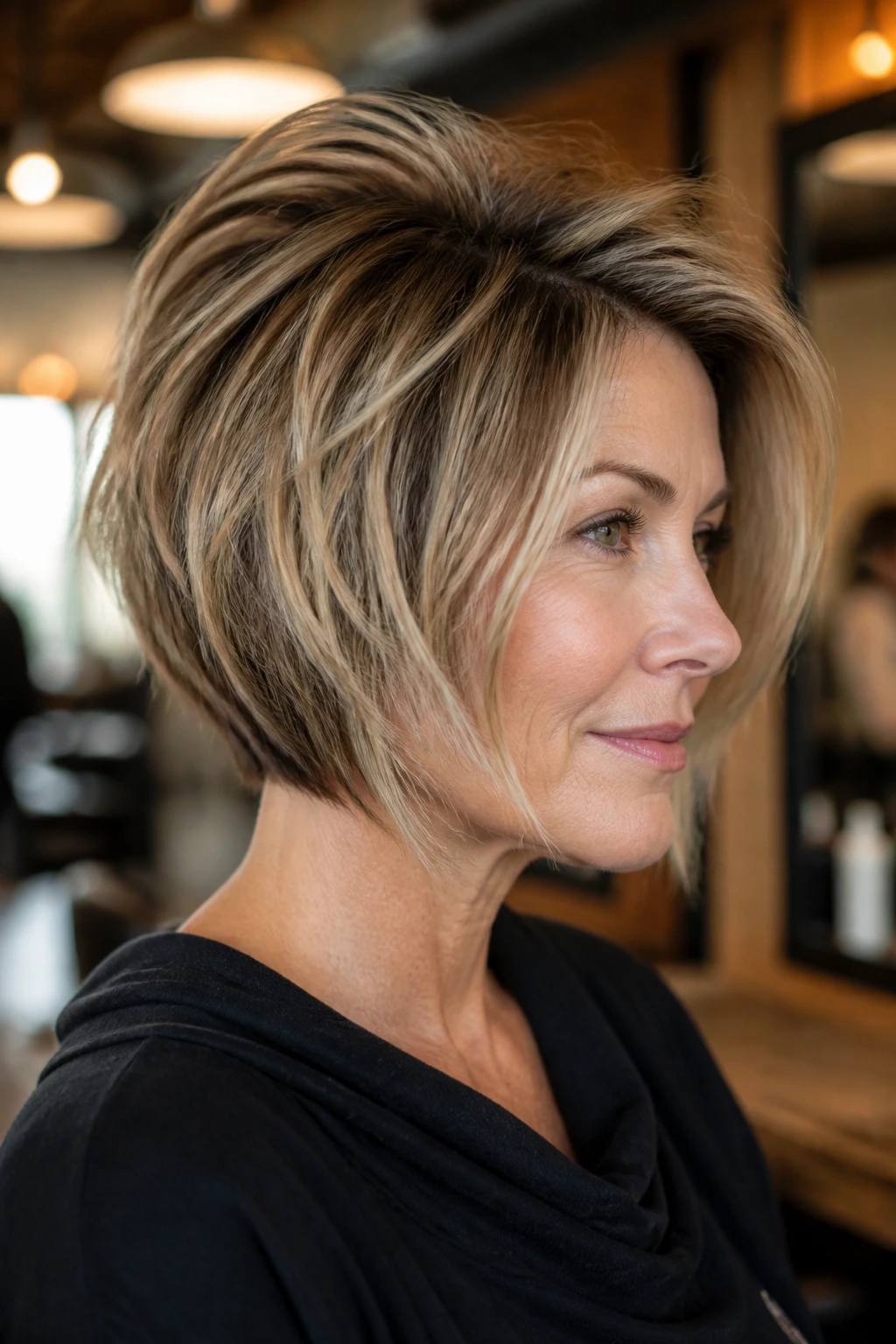
The stacked bob gets its lift from graduation at the back. That means the hair is cut shorter in the nape and slightly longer toward the top, which naturally creates volume at the crown. Add choppy texture on top, and the cut feels lighter instead of bulky.
This is a smart shape for hair that falls flat in back. The stack gives structure, while the texture keeps the top from looking puffy. If the back of your hair tends to lie too close to the head, this haircut fixes that without needing aggressive styling every morning.
A good stacked bob should look lifted, not round like a cap. There’s a difference. The lift should be at the crown, not around the ears.
14. Razored Bob With Airy Edges

A razor can make a bob feel almost weightless, but it has to be used with a steady hand. When done well, the edges look airy and broken up, especially on hair that wants to hold a little texture anyway. When done badly, the ends can fray and go fuzzy fast.
This version is best for medium to thick hair that can handle some softening. I’d be cautious with very dry or damaged strands, because a razor on brittle hair can make the ends feel rough. Ask for a razor finish only if your stylist knows how your hair reacts to it.
The payoff is a bob that moves like it has already been worn in. It looks especially good with a slight bend away from the face.
15. Choppy Bob With Side-Swept Bangs

Side-swept bangs bring softness without eating up the whole forehead. They also work well with a choppy bob because the bang can blend into the longer side pieces instead of sitting as one heavy block across the front.
This is a nice bridge between classic and casual. If micro fringe feels too bold and curtain bangs feel too symmetrical, side-swept bangs sit in the middle. They’re forgiving on days when you don’t have time to style the whole head.
The key is keeping the bangs long enough to move. Too short, and they need too much maintenance. Too thick, and they start bullying the bob. Somewhere between the cheekbone and brow is usually the sweet spot.
16. Hidden-Layer Bob That Looks Clean Up Front

Not every choppy bob has to look visibly shredded. Some of the best ones hide the layers inside the haircut so the outside still looks neat. That gives you movement without the obvious piecey finish, which is useful if you like a cleaner look for work or formal settings.
This cut is smart on thick hair, because the bulk can be taken out underneath while the outer line stays smooth. It’s also a good choice if you want a bob that doesn’t scream “layered” from across the room. The texture is there when you move, not when you stand still.
Honestly, I wish more people asked for this version. It’s the quiet one. Less obvious, more wearable.
17. Choppy Bob That Flatters a Round Face

A round face usually benefits from a little length below the cheekline and some vertical movement through the front. A choppy bob can do that well if the shortest pieces do not stop exactly at the widest part of the face.
What to Aim For
- Keep the length at or just below the chin.
- Leave the front slightly longer than the back.
- Add off-center parting for a bit of visual length.
- Use face-framing pieces that skim rather than hug the cheeks.
The trick is avoiding a rounder silhouette than the face already has. A straight-across bob at cheek level can widen everything. A choppy bob with a little forward angle usually does the opposite.
18. Choppy Bob That Sofens a Strong Jawline
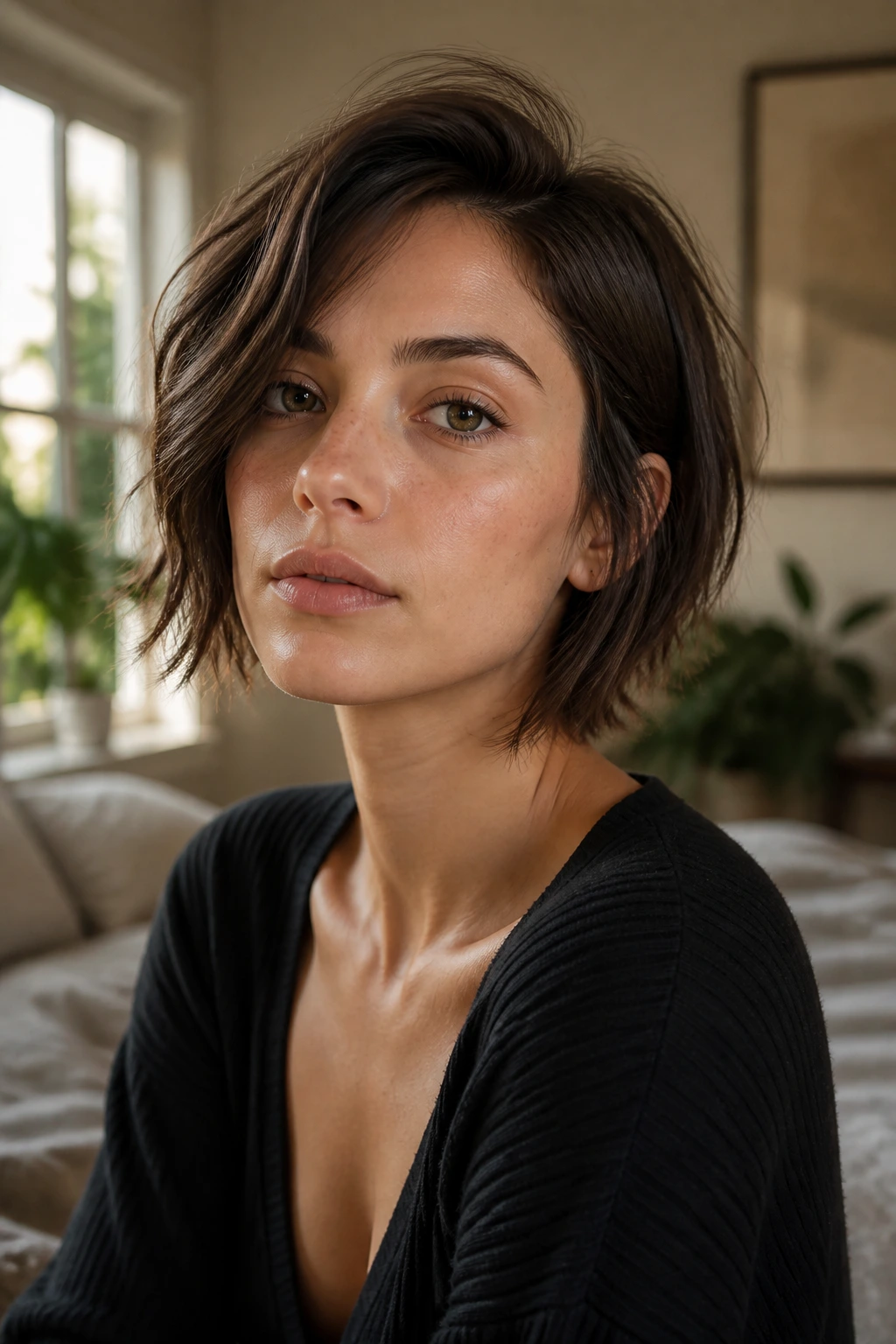
A square jawline can look gorgeous in a choppy bob, but the cut needs softness at the front. If the bob ends right at the jaw and the sides are too blunt, the cut can make the jaw look even stronger. That’s not always a bad thing, but it is a choice.
I like longer face-framing pieces here, especially if they fall just below the jaw and break up the line. The ends should feel slightly jagged, not sharp. A side part can help too, because it moves some of the visual weight away from the center of the face.
The result is a haircut with edge and balance. It does not hide the jaw. It just stops the bob from getting into a staring contest with it.
19. Choppy Bob With Money-Piece Highlights

Color changes the way a choppy bob reads. Bright face-framing pieces pull the eye forward, and the texture around them makes the contrast feel deliberate instead of striped. This is one of the easiest ways to make a short cut feel more dimensional without changing the length.
The money pieces should sit where the shortest front layers are, usually around the cheekbone or jaw. That way the color follows the movement of the cut. If the highlights are too wide, they can overpower the texture and make the bob feel busy.
I like this on darker hair with warmer blonde or copper pieces, but the idea works with subtle contrast too. A soft ribbon of brightness around the face can change the whole haircut.
20. Center-Part Choppy Bob With Tucked Ends

A center part makes a choppy bob look cleaner and more modern, but it also exposes every imbalance in the cut. That’s why the ends matter. If the perimeter is too blunt, the style can feel severe. If the ends are too shredded, the center part loses its shape.
This version works well with tucked ends, where the front sections are softly bent under or behind the ears. It gives the bob a little contained movement. You get the neatness of a center part and the edge of texture, which is a useful combination if you want the haircut to work in more than one setting.
A little serum on the ends goes a long way here. Too much, and the cut goes flat. Too little, and the ends stick out like they’re arguing with you.
21. Wet-Look Choppy Bob With Sleek Separation

A wet-look finish gives a choppy bob a different personality. Instead of airy movement, you get sleek separation and glossy definition. It’s a more editorial version of the cut, and it looks especially good on shorter bobs where the shape can stay close to the head.
Use a gel or styling cream that dries with hold, not crunch. Comb it through from roots to ends, then piece out the front sections with your fingers before it sets. The bob should look defined, not greasy.
I wouldn’t wear this every day unless you love product, but for an evening out or a sharper mood, it’s hard to beat. The texture becomes the style instead of just supporting it.
22. Grown-Out French Bob With Soft Fringe

A grown-out French bob has a little less strictness than the shorter version, which is why I like it so much. The fringe is softer, the line is slightly longer, and the whole thing feels like it has already lived through a few good mornings without a brush.
That extra length makes the haircut easier to style and easier to grow. The fringe can sweep to the side, split in the middle, or sit in a loose curtain over the forehead. Ask for the ends to stay choppy, but not jagged. There is a difference, and it matters here.
If the shorter French bob feels too exact, this is the gentler sibling. Same attitude. Less pressure.
23. Choppy Bob With an Undercut
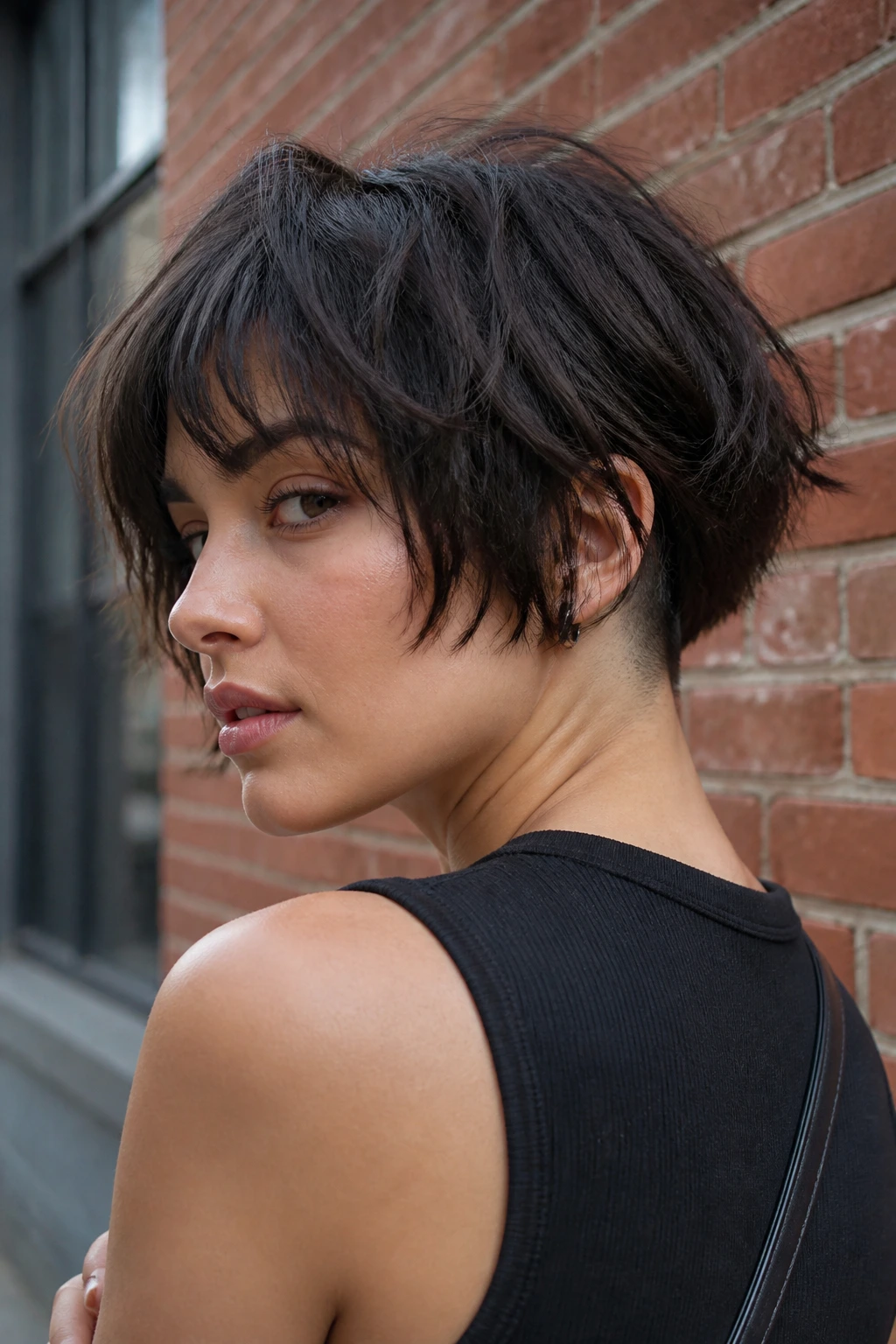
An undercut changes the game when the hair is dense or the nape area refuses to lie flat. By shaving or closely cutting a hidden section underneath, you remove bulk where it causes the most trouble. The outer layers can then fall cleaner and lighter.
This is not a haircut for someone who wants to change their mind every two weeks. Once the undercut is there, it needs maintenance. But on the right head of hair, it solves a real problem. The bob sits better, the neck feels cooler, and the shape doesn’t balloon out after drying.
Keep the visible top layers choppy, not spiky. The undercut is the practical part. The texture is the style part.
24. Low-Effort Air-Dry Bob That Still Has Shape
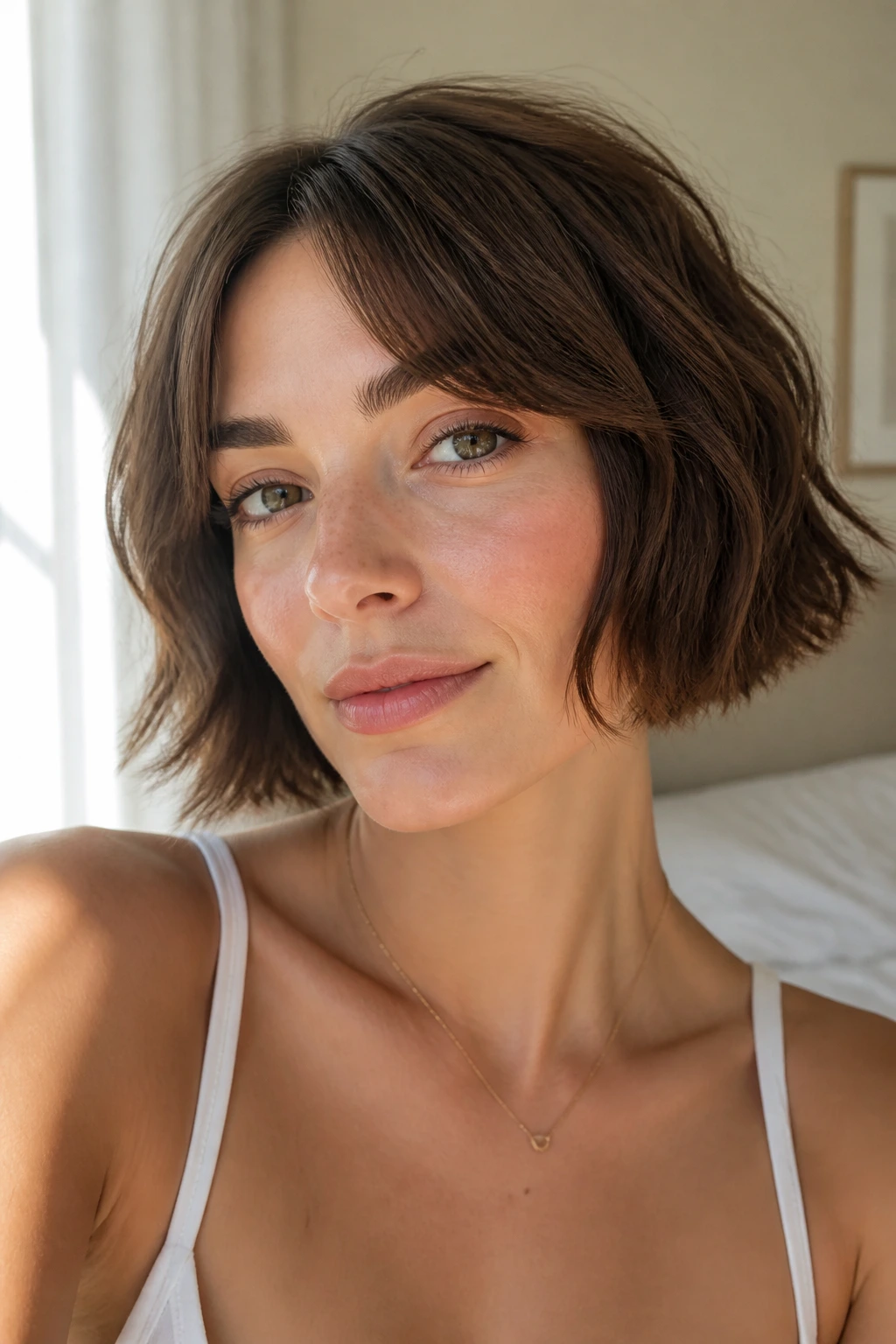
If you hate using hot tools, this is the bob to look at. It relies on a good cut, a little product, and the hair’s natural bend. The ends are choppy enough to keep the silhouette from falling flat, but the whole thing is designed to look decent without a full styling session.
The secret is in the prep. A light mousse or curl cream on damp hair, a microfiber towel squeeze, and then hands off. Don’t keep touching it while it dries. That’s how the shape gets frizzy and weird at the ends.
This version is especially good for people who want the haircut to do more work than the styling routine. Which, frankly, is most people.
25. Rounded Retro Bob With Modern Texture

A rounded bob can feel very polished, almost old-school, but a little choppy texture keeps it from looking too precious. The curve around the head gives it structure, while the roughened ends keep the finish from becoming stiff or dated.
This cut loves a smooth blow-dry with just a touch of bend at the ends. If you want a more modern mood, leave a few front pieces a little undone so the softness is visible. It’s a clean shape, but not a frozen one.
I think of this one as the final proof that choppy bob haircuts are not just messy bobs. They can be neat, curved, glossy, or sharp. The choppiness is the detail, not the whole story.
What Makes a Choppy Bob Look Intentional Instead of Ragged
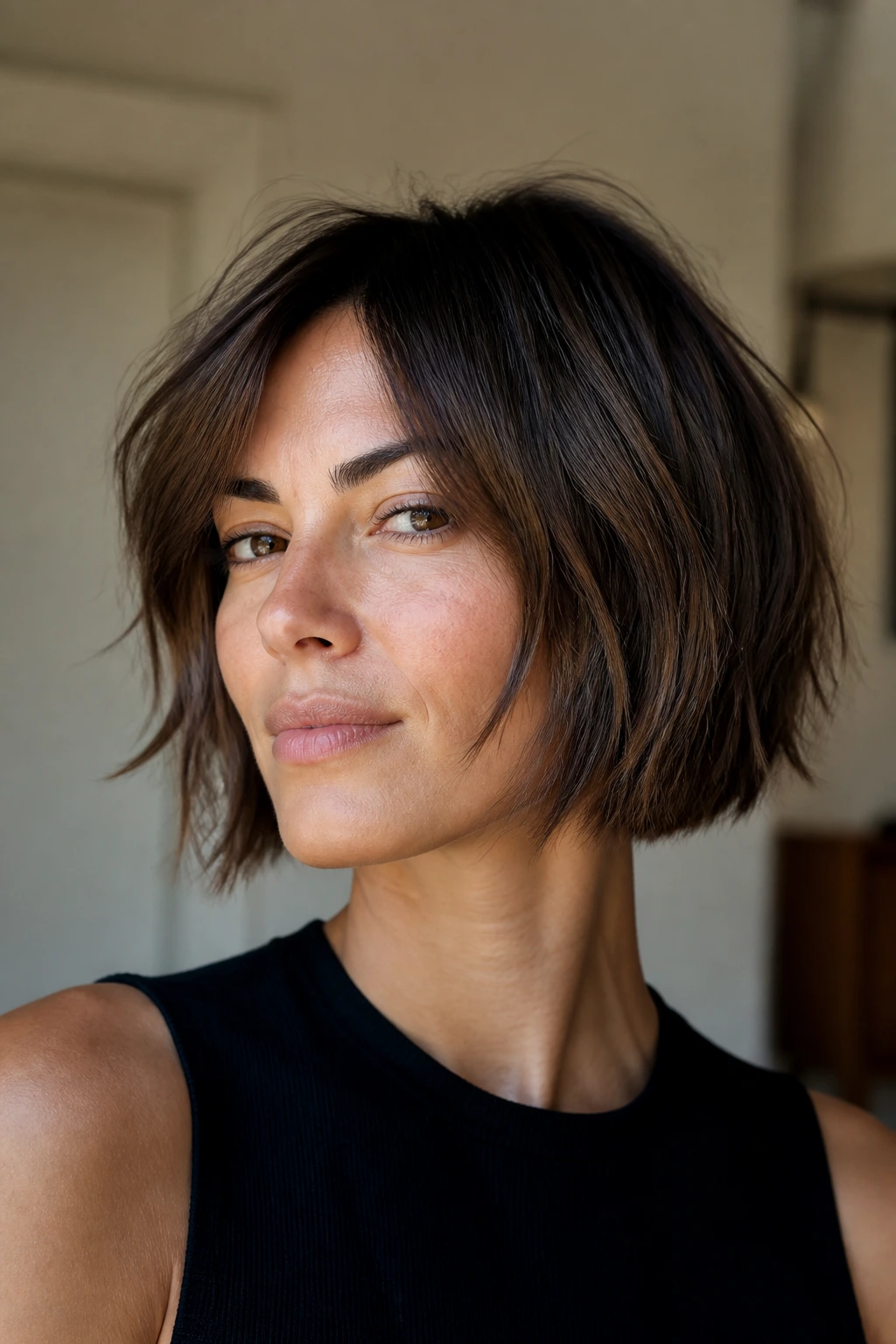
A good choppy bob is built, not hacked. That sounds obvious, but it’s where a lot of home haircut disappointment starts. The shape needs a perimeter that still makes sense, even if the ends are broken up. If the base line disappears, the cut starts looking like it lost a fight with thinning shears.
The real work happens in the balance between the outer line and the interior texture. A stylist might point-cut the last half-inch, slide-cut certain pieces, or remove weight under the top layer so the bob can move without puffing. That kind of texture only looks random if you don’t know where the weight was before it was removed.
Hair density matters too. Fine hair needs light texturing and a little lift at the roots. Thick hair can take more internal debulking, but it still needs a clean outline. Curly hair needs room for shrinkage and shape memory, which means the cut should be slightly longer than you think if you want it to land at the jaw after drying.
Color changes the read, too. A solid dark color shows every line in a cut, which is useful if you want the shape to look sharp. Highlights and money pieces make the texture pop because they catch on the broken edges. Different finish, different mood. Same cut family.
How to Ask for the Cut Without Losing the Shape
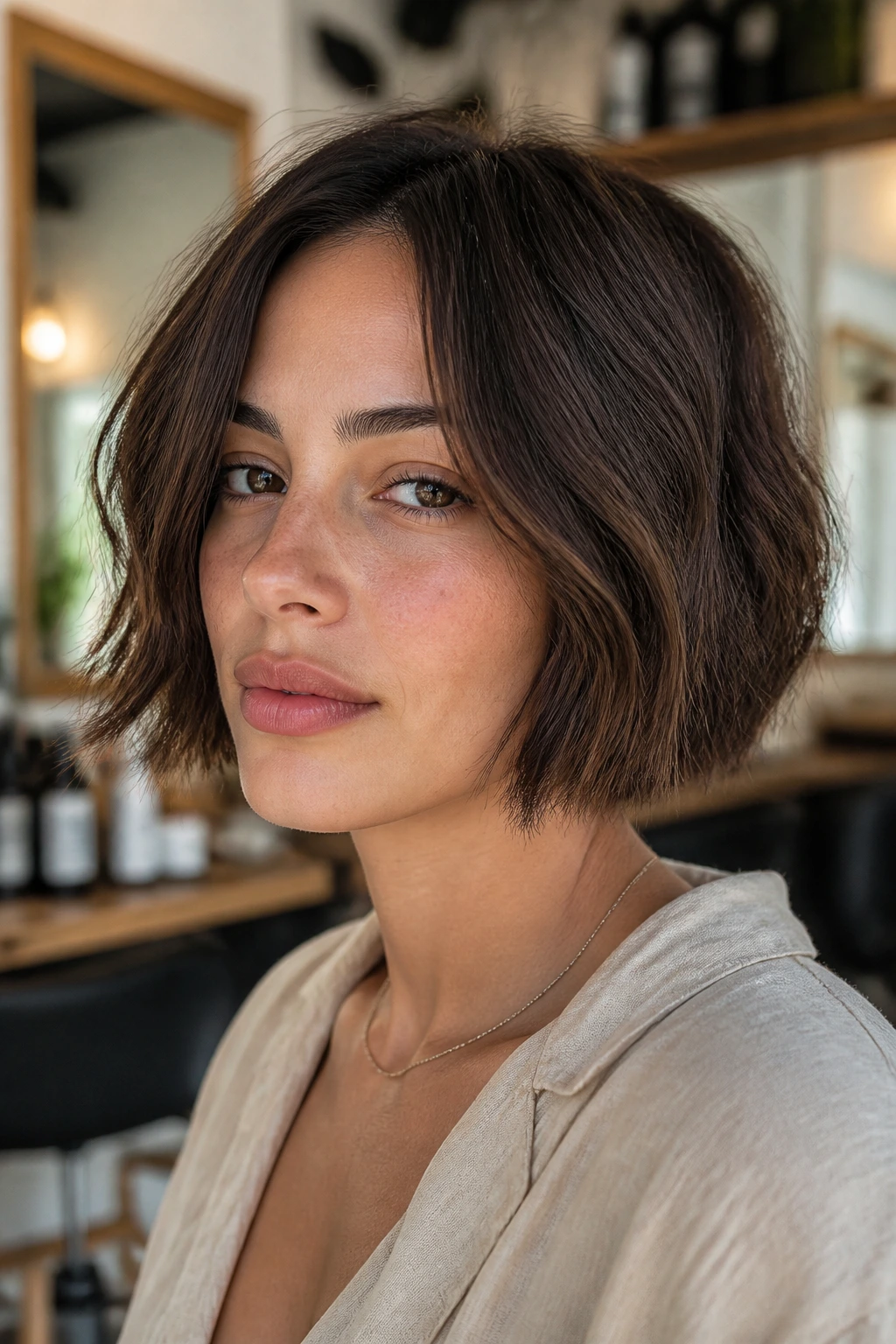
Bring photos, yes, but bring the right kind. One photo should show the length you want. Another should show the texture. People get into trouble when they hand over a picture of a shaggy bob with curtain bangs and then expect a chin-length French bob. Those are cousins, not twins.
Use plain language with your stylist. Say whether you want the perimeter to feel blunt, soft, or angled. Say if you want the choppiness to show only at the ends or through the whole top layer. Say whether you like to tuck hair behind the ears, part it in the center, or wear it with a side sweep. That matters more than a vague request for “lots of texture.”
If your hair is wavy or curly, ask whether the cut should be shaped dry or mostly dry. That one detail can save you from shrinkage surprises. If your hair is fine, say you want movement without the ends looking see-through. If it’s thick, say you need weight removed where it balloons out, not just at the surface.
And one more thing. Don’t let anyone talk you into more thinning than you asked for. “Texture” and “thin out” are not the same instruction.
The Styling Tools That Actually Earn Counter Space
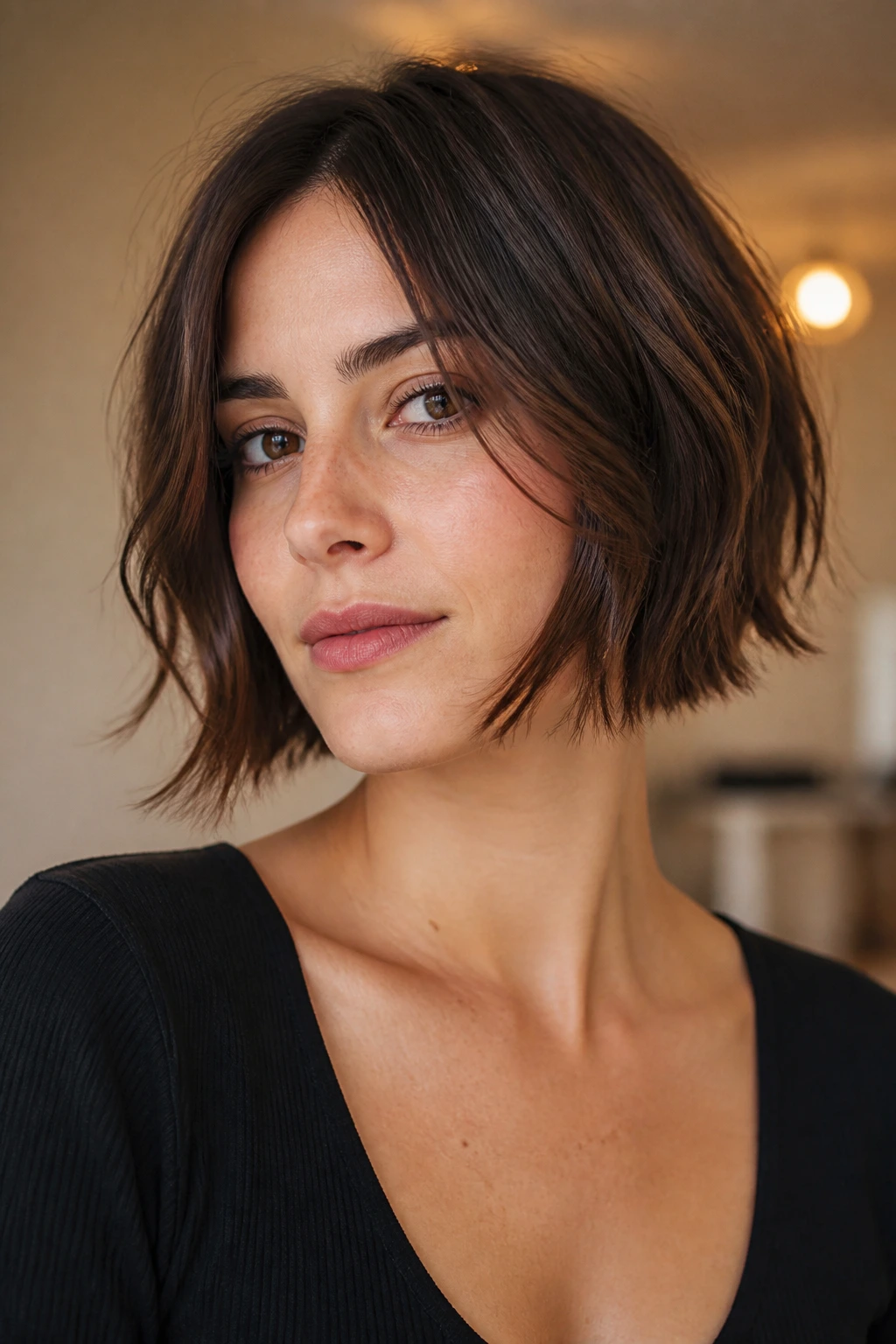
You do not need a drawer full of gadgets to wear a choppy bob well. You need a few tools that shape the hair without flattening it. A blow dryer with a nozzle, a small round brush, a 1-inch curling iron or flat iron, and a wide-tooth comb will cover most of the looks in this list.
- Blow dryer with concentrator nozzle: Directs air where you want it, especially useful for smooth roots and lifted crown sections.
- Small round brush: Good for adding a slight bend at the ends without making the bob too puffy.
- 1-inch curling iron or wand: Creates loose bends and piecey movement; wider barrels usually get too round for a bob.
- Flat iron: Best for a soft wave or tucked-under end, not pin-straight drama.
- Microfiber towel or T-shirt: Helps air-dry texture without roughing up the cuticle.
- Sectioning clips: Keep the top layer out of the way while you work the nape or front pieces.
- Texturizing spray: Adds separation without turning the ends sticky.
- Light mousse or root lift spray: Useful for fine hair or flat crowns.
- Heat protectant: Non-negotiable if you use hot tools more than once a week.
- Light serum or cream: A tiny amount on the ends keeps the bob from looking dry.
Quick Ways to Wear a Choppy Bob on Busy Mornings

Air-dried and scrunched: Put mousse in damp hair, squeeze with a microfiber towel, and leave the ends alone. This is the fastest route for wavy and curly hair, and it also works if you don’t want to fight your natural texture before coffee.
Smooth but not stiff: Blow-dry the roots with a brush, then use the round brush only on the last two inches of the hair. That gives the bob a polished bend without turning it into an old-fashioned helmet. A little movement at the ends is enough.
Second-day reset: Mist the roots with water or dry shampoo, warm up the front pieces with your hands, and re-bend just the face frame. You do not need to restyle every strand. One or two touched-up pieces can change the whole impression.
Edgier finish: Rub a pea-size amount of styling paste between your palms and pinch the ends. That makes the texture read more piecey and less airy, which is nice for nights out or sharper makeup.
Extra Texture Tricks That Keep the Ends Moving
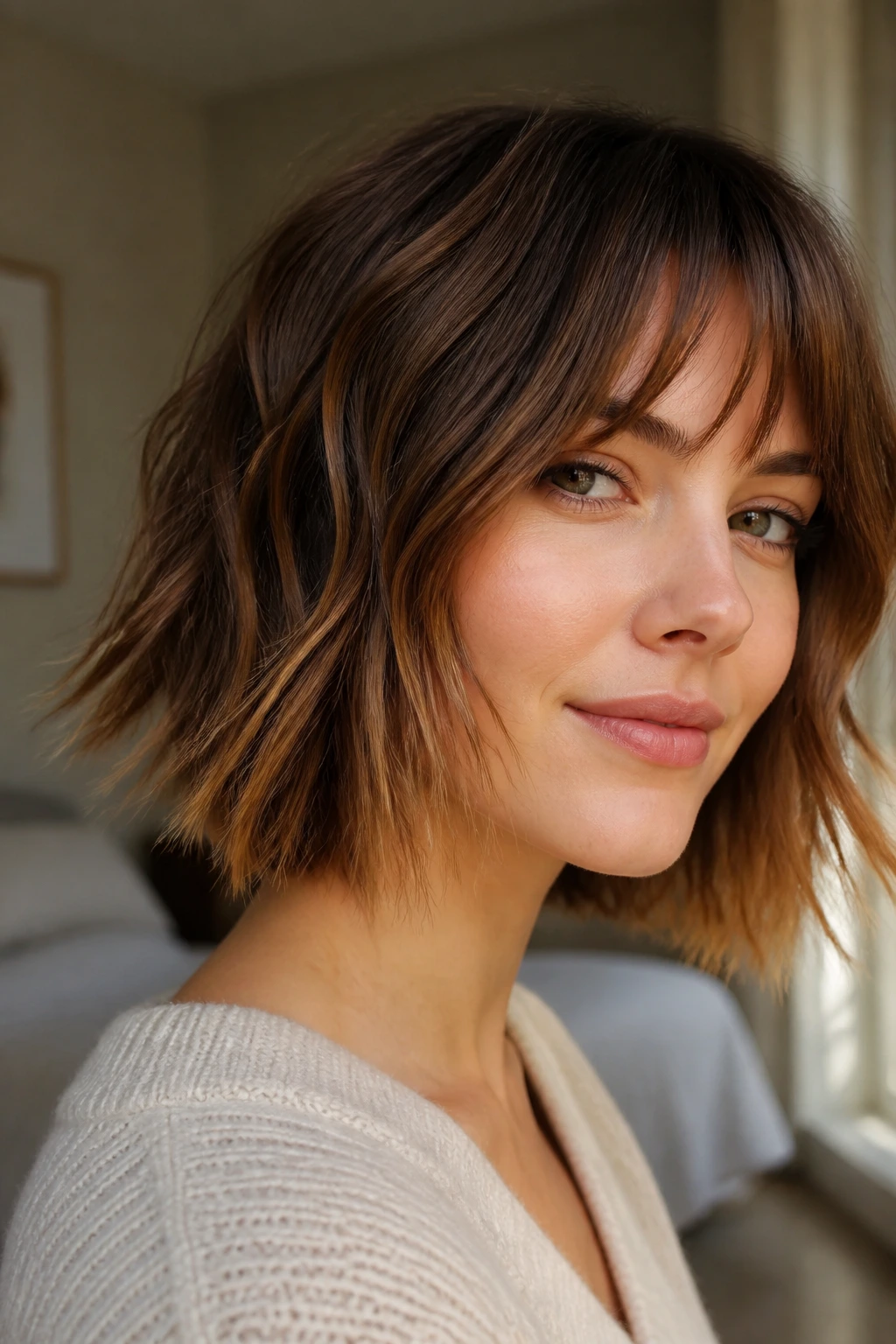
A choppy bob lives or dies on the edge of the cut. If the ends are too heavy, the haircut sits there. If they’re too thin, the whole shape starts looking frail. The middle ground is where the haircut feels expensive, even if you’re just using drugstore styling products.
Root Lift: Spray a little volumizer at the crown while the hair is still damp. Focus on the top inch, not the whole head. Too much product near the ends drags them down.
Controlled Bend: Wrap only the front sections around a curling iron for five to eight seconds, then let them cool in your hand before you touch them again. That cooling time helps the shape stay.
Piece Separation: Finish with a tiny amount of dry texturizing spray. Aim it at mid-lengths and ends, then shake the hair out with your fingers. If the haircut starts looking crunchy, you used too much.
Soft Shine: A drop of lightweight oil on the very ends can make the choppiness look deliberate instead of dry. Keep it away from the roots. A choppy bob should look lived in, not greasy.
How to Keep the Shape Fresh Between Salon Visits

A choppy bob needs maintenance, but not constant fuss. The shorter the cut, the more quickly the silhouette shows growth. Jaw-length bobs usually need a trim every 6 to 8 weeks if you want the edges to stay crisp. Longer lobs can go 8 to 10 weeks before they start losing their outline.
The neckline is the first place to go soft. If the back starts flipping out, that’s your sign the cut has grown past its cleanest stage. Bangs need even more attention. Curtain bangs can often wait a little longer, but micro fringe usually wants a small trim every 3 to 4 weeks if you want it to stay short and neat.
At home, the biggest mistake is overloading the hair with heavy cream products. Choppy cuts need movement. If the ends start clumping, switch to a lighter mousse or texturizing spray and keep conditioners off the roots.
Sleeping matters too. A silk pillowcase or a loose clip can reduce the bend and kink that happen overnight. If you wake up with the front pieces flattened, mist them lightly with water and re-bend just those sections. That is often enough. You do not need to wash the whole head every time the shape gets sleepy.
Common Mistakes That Turn Texture into Frizz

Over-thinning the ends: The hair looks wispy, see-through, or frayed instead of piecey. The fix is to ask for texture in the interior or at the perimeter edge, not aggressive thinning through the whole bob.
Going too short too fast: A bob cut above the jaw can work, but if your hair is thick, curly, or grows out in a strong pattern, it may pop out at the sides. Keeping a little length under the jaw usually gives more control.
Using heavy creams everywhere: The roots flatten and the ends separate into little greasy strands. Use lighter hold at the roots and keep richer creams for dry, coarse ends only.
Skipping trims until the shape disappears: Once the bob turns into an in-between length, the choppiness can stop looking cute and start looking shapeless. Book the next cut before the outline gets fuzzy.
Styling every piece into a curl: A choppy bob is not a set of identical spirals. A few bends and a little separation are enough. Over-styling makes the hair look overworked, and that is the opposite of what this cut needs.
Variations and Adaptations to Try
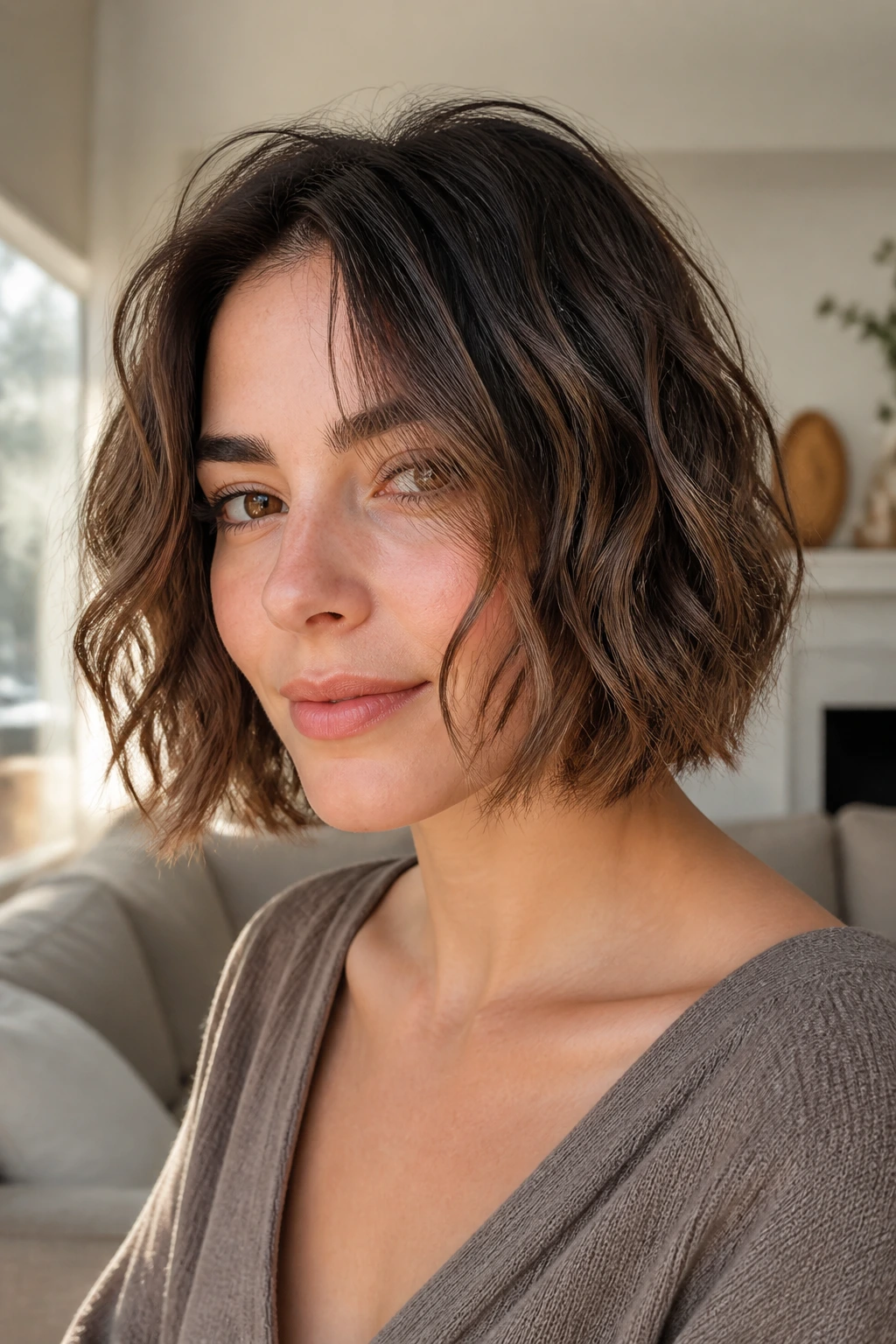
The Air-Dry Bob: This version leans on your natural bend and uses mousse or curl cream instead of hot tools. It works best if your hair already has some wave, because the cut can keep its shape with very little effort.
The Glossy Bob: Same choppy structure, but styled smooth with a round brush and a light serum. The ends stay soft and broken up, while the surface looks sleek enough for a more polished setting.
The Curly-First Bob: Built for curls and coils, this adaptation keeps length slightly longer and shapes the bob around shrinkage. The texture is the star, but the outline still lands cleanly around the face.
The Grown-Out Lob: If you want less upkeep, let the length sit at the collarbone and keep the front a touch longer than the back. It still reads as a choppy bob family member, but it grows out with a little more grace.
The Edgy Nape Bob: A hidden undercut or a tighter nape gives this version more bite. It suits dense hair and anyone who likes a sharper finish under the surface.
Frequently Asked Questions About Choppy Bob Haircuts

What exactly makes a bob “choppy”?
It usually comes down to texture at the ends, light layering, or point cutting that breaks up the line. A blunt bob has one clean edge; a choppy bob keeps that shape but loosens the finish so it moves more.
Is a choppy bob good for fine hair?
Yes, if the layers are controlled. Fine hair does better with a solid perimeter and light texture inside the cut, because too much thinning can make the ends look sparse.
Will a choppy bob work on curly hair?
It can, but the cut needs to respect shrinkage. Curly hair usually needs to be shaped longer than straight hair so the bob still lands where you want it after it dries.
How do I ask for one at the salon?
Bring two or three reference photos and say where you want the length to sit — chin, jaw, or collarbone. Then explain whether you want the choppiness only at the ends or through the top layers too.
Can I wear a choppy bob without heat styling?
Absolutely, if your texture already has some bend. A light mousse, a microfiber towel, and a hands-off air-dry routine can get you there with far less effort than a full blowout.
How often should I trim it?
Shorter versions usually need trimming every 6 to 8 weeks. Longer lobs can stretch to 8 to 10 weeks, but bangs and necklines may need small touch-ups sooner.
What if the cut looks too jagged after it’s done?
That usually means too much weight was removed or the texture was cut too high up the strand. A stylist can often soften it with a minor reshape, but the fix is easier if you ask for controlled texture from the start.
Does a choppy bob make the face look wider?
It can if the shortest pieces stop right at the widest point of the face. To keep the shape flattering, let the front fall a little lower or angle it forward so the cut creates length instead of width.
Why This Cut Keeps Showing Up in the Mirror

A choppy bob has range, and that’s the real reason people keep coming back to it. It can look crisp enough for a clean outfit, messy enough for a hoodie, and soft enough to wear with almost no styling if the cut was done well. That kind of flexibility is rare in a short haircut.
The trick is remembering that “choppy” is not the point by itself. The point is shape with movement. Clean enough to hold up. Loose enough to breathe. When those two things meet, the haircut has a way of looking right even on the days when the rest of the routine is a little off.
If you bring one good photo, one honest description of how much styling you’ll actually do, and a clear idea of where you want the length to sit, you’re already ahead of most salon conversations. After that, the cut can do what it does best: stay sharp without feeling stuck.
