



Curly bob haircuts have a funny habit of looking either expensive or accidental, with very little middle ground. The difference usually comes down to one thing: whether the cut respects shrinkage. A curl that lands at the jaw when it’s wet may sit two inches higher when it dries, and if the shape wasn’t planned for that jump, the whole bob can balloon at the sides or collapse in the back.
That’s why the best curly bob haircuts are built around the curl pattern, not against it. They leave enough weight to keep the ends from frizzing into a halo, but not so much weight that the curls hang flat and sad. They also make peace with the fact that curly hair moves. A bob on straight hair and a bob on curls are cousins at best. One is geometry. The other is weather.
I love a good curly bob when the shape is doing real work. It should frame the cheekbones, open up the neckline, and let the curls stack instead of fighting each other. Some versions are polished and round. Some are shaggy and wild in the best way. A few have bangs that barely skim the brows and make the whole thing feel sharper. The point isn’t to force every curl into the same mold. It’s to find the cut that gives your curls a better job than they already have.
Why These Curly Bob Haircuts Keep Their Shape
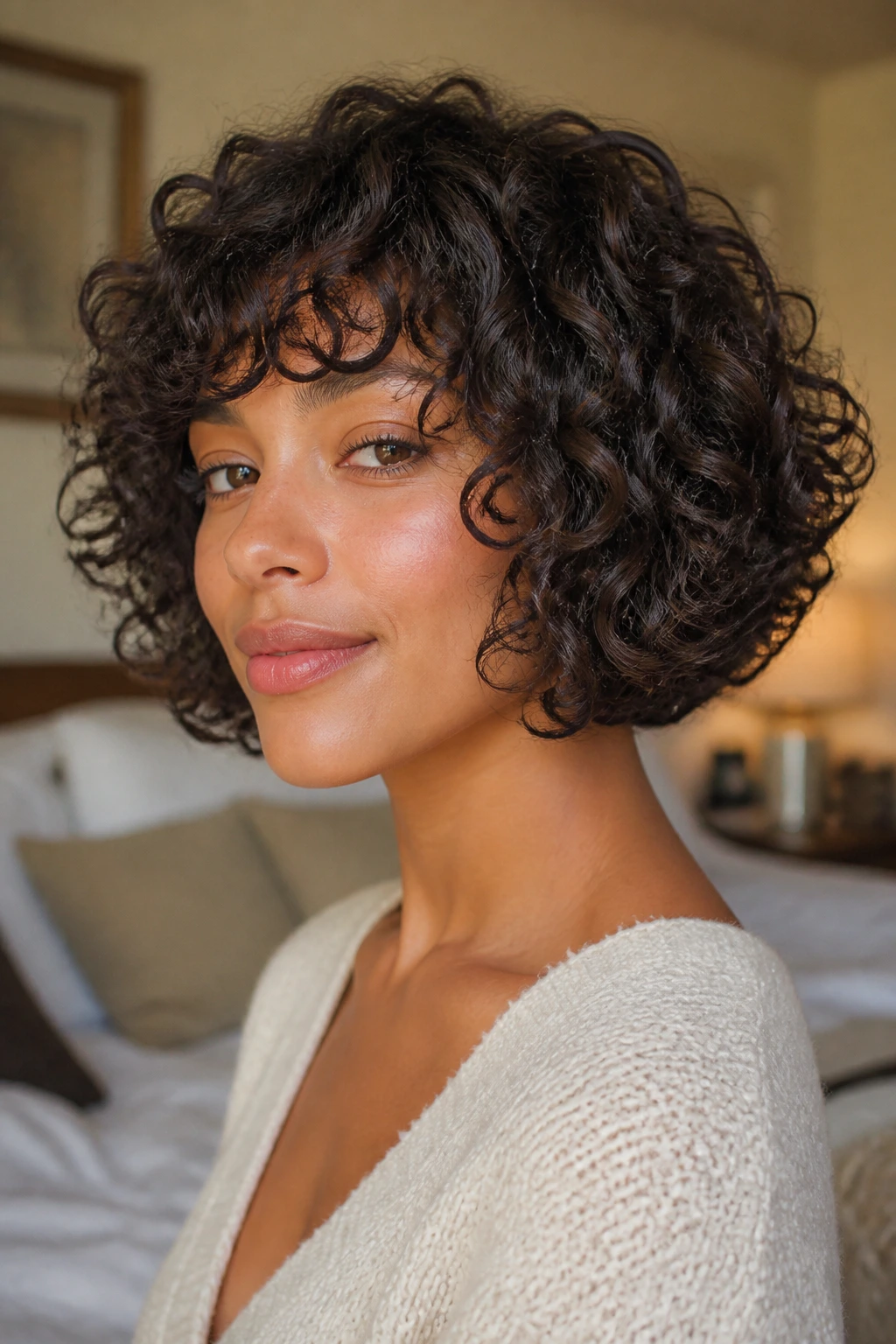
-
Shrinkage is built in: Most of these cuts leave extra length on purpose, because curls can spring up 1 to 3 inches after drying, and sometimes more if the pattern is tight.
-
The perimeter still matters: A clean line at the bottom keeps a curly bob from turning into a puffed-up cloud with no outline.
-
Layers are placed with intent: These styles use interior shaping, crown lift, or face-framing pieces instead of chopping random steps into the head.
-
Bangs are used as structure, not decoration: Fringe in curly hair can be gorgeous, but only when it follows the curl pattern instead of forcing it flat.
-
There’s room for different textures: Fine curls, dense spirals, loose waves, and tighter coils all need different weight distribution. One bob never fits all.
-
The styles grow out better than people expect: A smart bob can live comfortably through the awkward in-between stage, which is half the battle.
What Makes a Curly Bob Bounce Instead of Puff
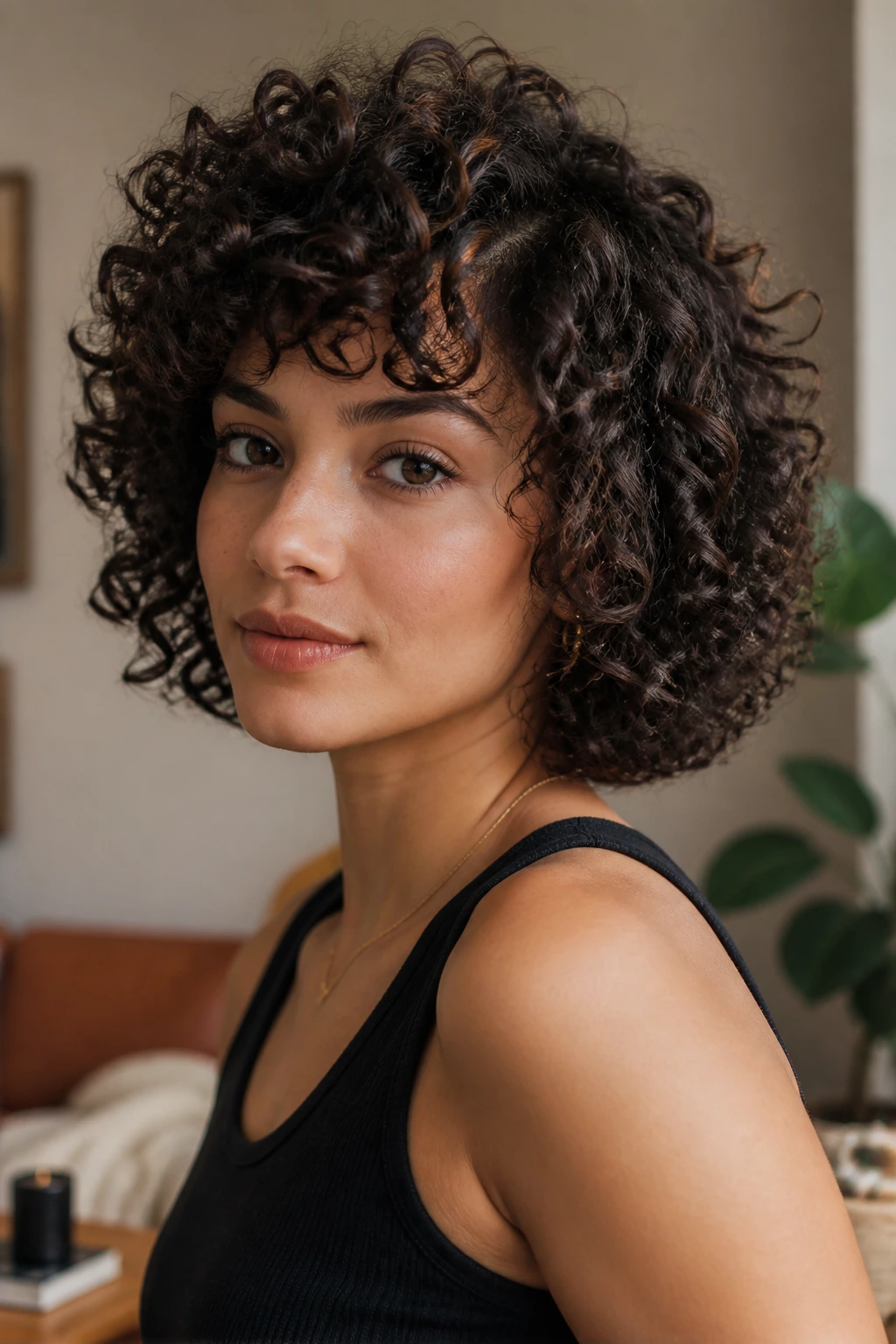
A curly bob gets its bounce from a balance of weight and lift. Too much weight, and the curls droop into narrow ropes. Too little, and the cut expands outward like a triangle that forgot its manners. The sweet spot is a perimeter that still has shape, plus enough internal removal to let the curl pattern spring.
Dry checking matters here. A wet curl lies to you. It stretches, relaxes, and pretends it has more length than it really does. A stylist who cuts curly hair well will usually either shape it dry or stop to check the fall as it dries, especially around the crown, the nape, and the front corners. Those three spots decide whether the bob looks crisp or sloppy.
The length line
Chin, jaw, and collarbone are the big players. Chin length gives the most obvious bob silhouette. Jaw length feels sharper and more open around the face. Collarbone length edges into lob territory, which can be a smart compromise if you’re nervous about shrinkage.
The layer choice
Short curls need a different kind of layering than loose waves. A few well-placed layers can free the curl pattern and let the hair move, but over-layering makes the silhouette fuzzy and uneven. The best curly bobs almost always keep some weight on the bottom edge.
The part and the front pieces
A middle part gives symmetry. A side part changes the whole mood. Longer front pieces soften the face and stop the cut from feeling too boxy. If your curl pattern is uneven from side to side, the part matters more than most people think.
1. The Rounded Chin-Length Curly Bob
This is the curly bob I reach for when someone wants shape, not drama. The length sits right around the chin, and the outline curves softly instead of jutting out at the sides. On curls, that rounded edge does a lot of quiet work. It keeps the silhouette tidy while still letting each curl pop a little away from the face.
Why it works
The chin-length version is the easiest place to see natural bounce. It’s short enough for the curls to spring up and stack on themselves, but not so short that the shape turns into a puffball. If your curl pattern bends easily and your hair has medium density, this cut tends to sit in a sweet spot.
Ask for a shape that follows the jaw but doesn’t cut into it too hard. I like this one best when the front pieces graze the chin and the back is only a touch shorter. That tiny difference keeps the bob from looking blocky.
- Best for 2B to 3B curls
- Works well with medium density hair
- Ask for dry checking near the jawline
- Keep the bottom line a little longer if shrinkage is strong
One thing to watch: if the layers go too high, the sides will puff before the rest of the cut has time to settle.
2. The Jaw-Length French Bob with Soft Fringe
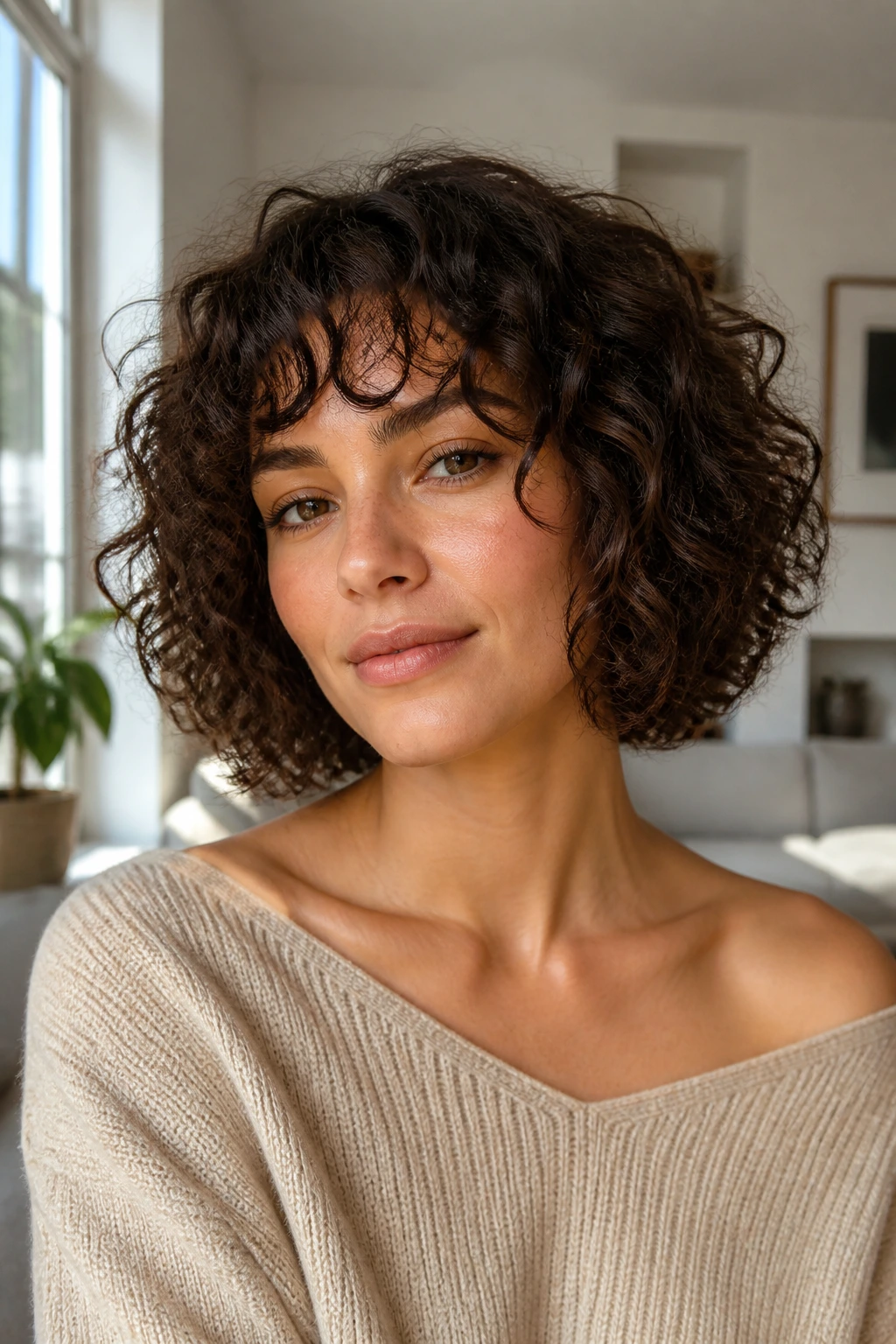
A jaw-length French bob has attitude without being loud about it. The shape opens up the cheekbones, the nape stays neat, and the soft fringe makes the whole cut feel a little sly. On curly hair, it lands somewhere between polished and playful, which is exactly why people keep coming back to it.
The fringe matters. A hard, blunt fringe on curls can fight you all day. A softer fringe, cut with the curl pattern in mind, falls in small arcs instead of a rigid curtain. That movement is the whole point. It gives the haircut a face-first focus and keeps the forehead from dominating the look.
I like this cut best when the bangs are left a touch longer than you think. Curly fringe always shortens more than straight fringe once it dries. A stylist who knows curls will usually leave enough room for bounce, then clean up the shape after the first dry.
This one suits people who want a shorter bob but don’t want it to feel severe. It’s tidy. It’s lively. And it looks especially good when the curls are a little glossy and separated, not brushed out into one big shape.
3. The Stacked Curly Bob with Crown Lift
Does your hair go flat at the roots by lunchtime? Then the stacked curly bob earns its spot fast. The back is cut a little shorter, with internal graduation that lifts the crown and lets the curls sit higher in the silhouette. It’s a smart cut for denser hair, because it removes bulk where it tends to gather first.
The trick is restraint. A stacked bob can go old-fashioned in a hurry if the back is overbuilt. On curls, the best version looks rounded and buoyant, not helmet-like. You want lift, not a shelf. That usually means shorter layers near the nape and a gentle transition up toward the crown.
How to wear it
Diffuse the roots first, using clips if the crown tends to collapse. Once the roots are dry enough to hold their shape, let the ends finish on low heat or air-dry from there. If you rough-dry the whole head from the start, the stack loses its clean line and the back can frizz upward.
This cut is especially good for thicker curls that feel heavy when they’re all the same length. The stack gives them a place to sit. Without that internal lift, the back can drag the whole haircut downward.
4. The A-Line Curly Bob with Longer Front Pieces
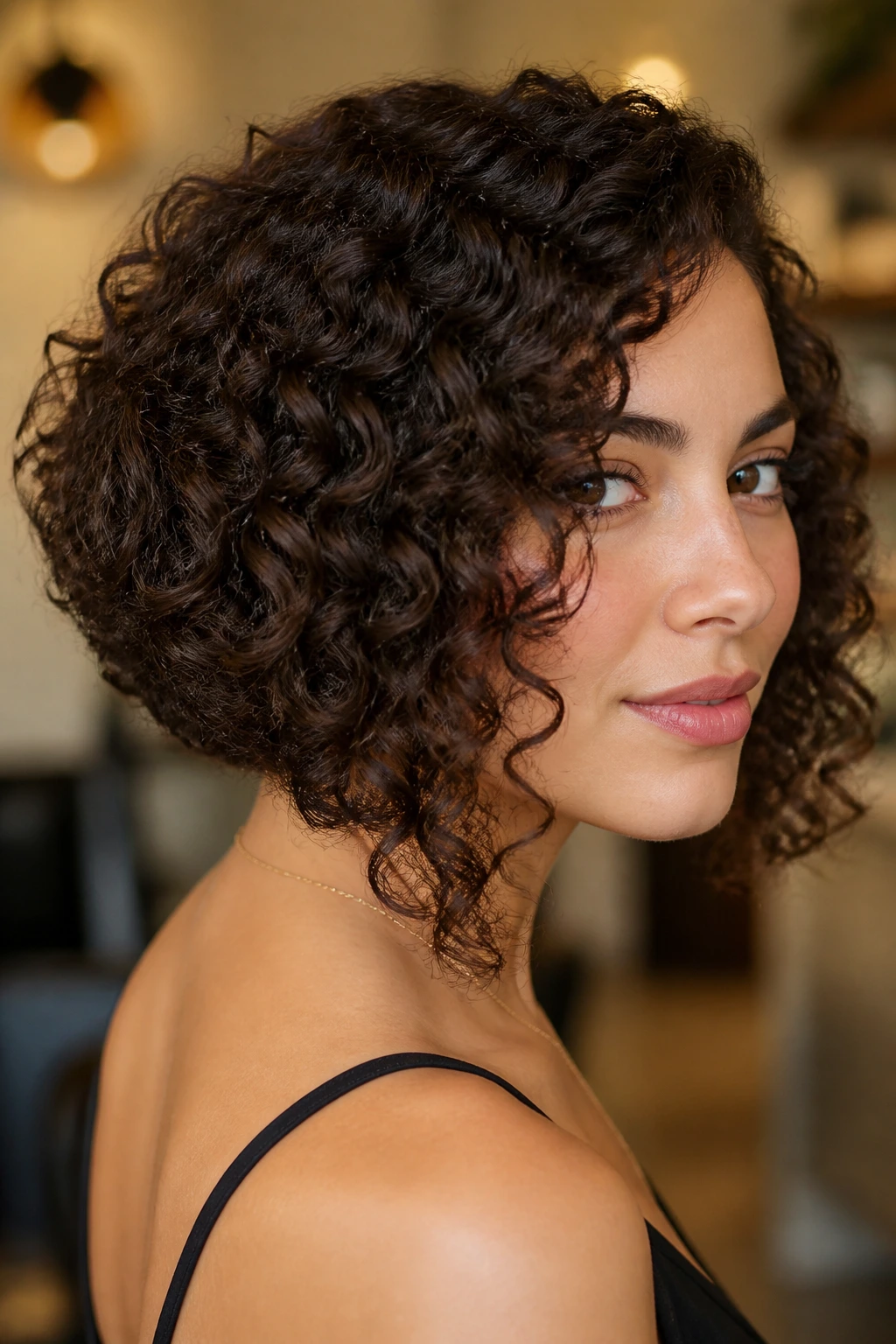
If your curls puff under the ears and your neck disappears into the haircut, the A-line bob fixes a lot of that. The back stays shorter, while the front pieces stay longer and angle forward. That diagonal line changes the whole face of the cut. It adds length where the eye needs it.
The A-line shape is one of my favorite answers for rounder faces or fuller cheeks. It creates a little vertical stretch without looking severe. On curls, the front pieces can skim the jaw or drop toward the collarbone, depending on how much length you want to keep. Either way, the line pulls the cut forward instead of letting it balloon equally all the way around.
What makes it work: the back has enough structure to stay off the neck, and the front keeps enough length to soften the profile. That balance keeps the bob from feeling square.
If you wear a side part, this shape becomes even easier to live with. One side naturally swoops forward, and the hair has somewhere to go when the curls start doing their own thing.
5. The Curly Bob with Curtain Bangs
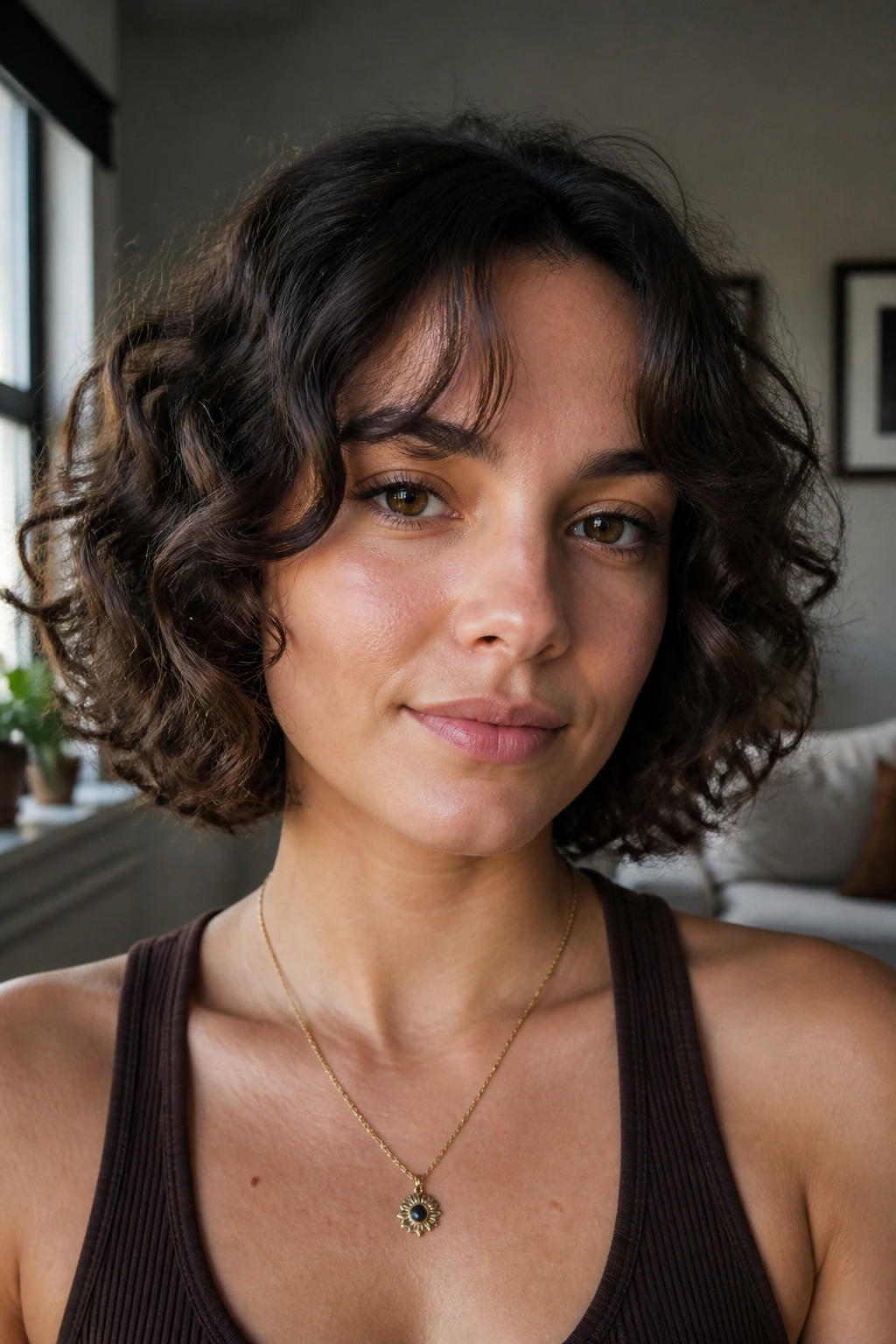
Curtain bangs can be a very good idea on curly hair, which surprises people who have only seen them on blowouts. The split fringe opens at the center and falls away from the face, so the bangs don’t sit like a wall. Instead, they frame the eyes, the cheekbones, and the top of the bob with a softer line.
This is one of the easiest curly bob haircuts to grow out. If you get tired of the fringe, it can blend into the front layers without making the cut look lopsided. That alone earns it a lot of points in my book. Bangs are a commitment; curtain bangs are a gentler one.
The best version keeps the bang pieces a little longer on the outside corners so they curl back instead of sticking straight out. That little angle matters more than people think. It’s the difference between “face-framing” and “why are these bangs poking at me?”
Use this cut if you like softness around the forehead and don’t want your bob to feel too compact. It works with loose waves and medium curls especially well, because the fringe has enough movement to split cleanly.
6. The Micro-Fringe Curly Bob

A micro-fringe on curly hair is a choice, not a compromise. It’s short, direct, and a little bit cheeky. The contrast between a tiny fringe and a rounded bob gives the whole haircut a sharper edge, especially if the curls are springy and naturally defined.
This cut does best when the bangs are cut dry and left longer than they appear on straight hair. Curly micro-fringes bounce up fast. If the line is cut too high, you’ll spend the next few weeks wondering whether the fringe was meant to be there at all. It was. It just needed another quarter inch.
I like this cut on people who don’t mind a little maintenance at the front. The bob itself can be easy. The fringe needs occasional reshaping, especially if the curl pattern splits in the middle or twists unevenly. But when it works, it really works. The forehead gets a crisp frame, and the bob underneath feels sharper because of it.
This isn’t the safest option on the list. It is one of the most expressive. If you want your haircut to say something before you even style it, this is the one.
7. The Shaggy Curly Bob with Choppy Layers
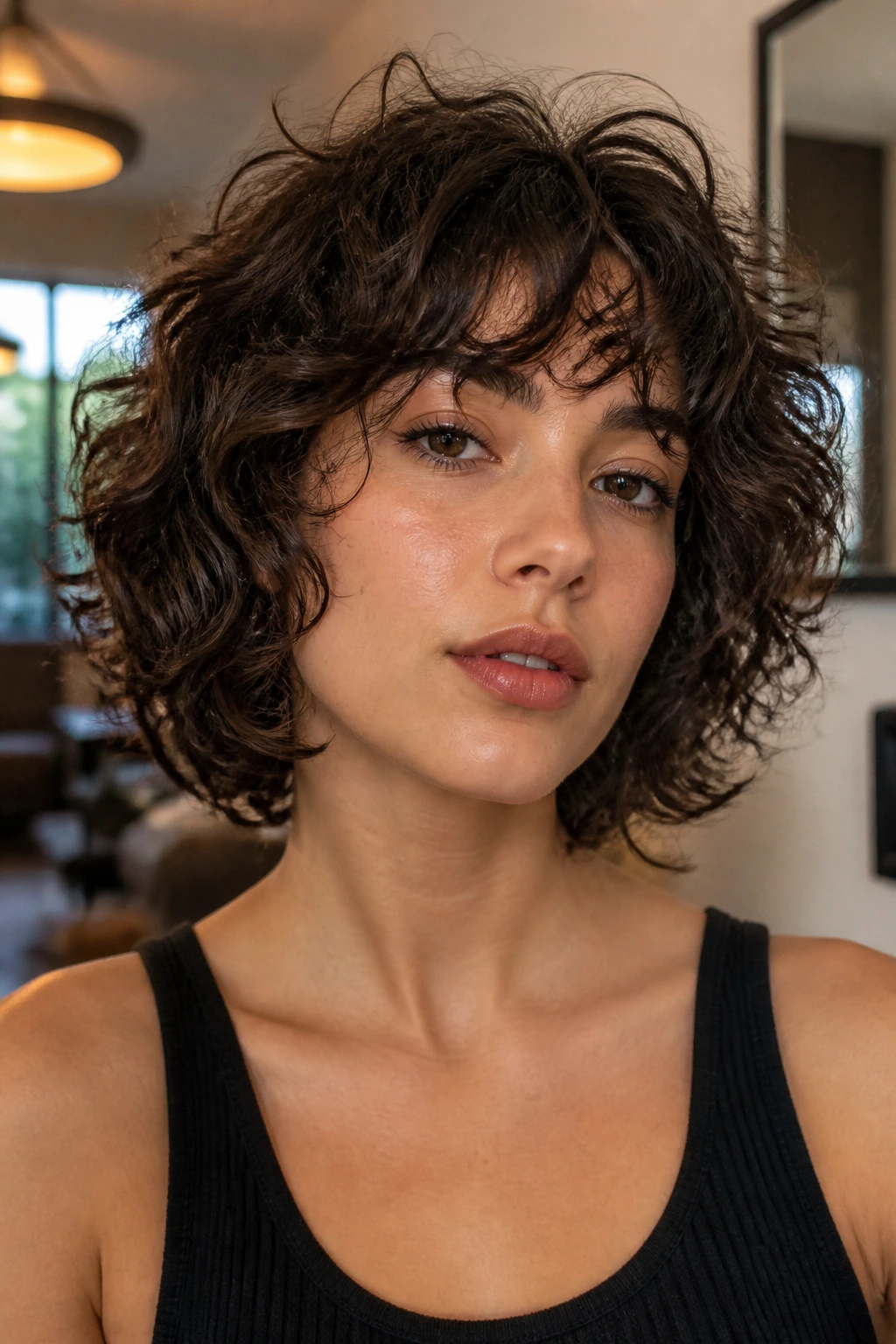
A shaggy curly bob is the haircut equivalent of rolling up your sleeves and letting the curls have a little freedom. The layers are lighter and more broken up, which gives the shape movement from top to bottom. It’s especially good for wavy to curly hair that wants to expand but doesn’t want to sit in one heavy block.
Why it feels different
The choppy layers stop the silhouette from looking too neat. That can be a plus if your curls already have a lot of personality. The haircut moves when you move. It doesn’t sit there like a helmet and wait for permission.
- Best for 2C to 3C textures
- Easy to air-dry with a curl cream and gel
- Works well if the top is flat but the ends are bulky
- Needs regular shaping if the layers start to fray
My note: keep the bottom edge a little stronger than you think. Too much shredding at the perimeter and the bob loses its shape fast.
The shaggy version is forgiving on days when your curls are not cooperating. A few pieces can go rogue and the cut still looks intentional.
8. The Blunt Curly Bob with a Soft Edge
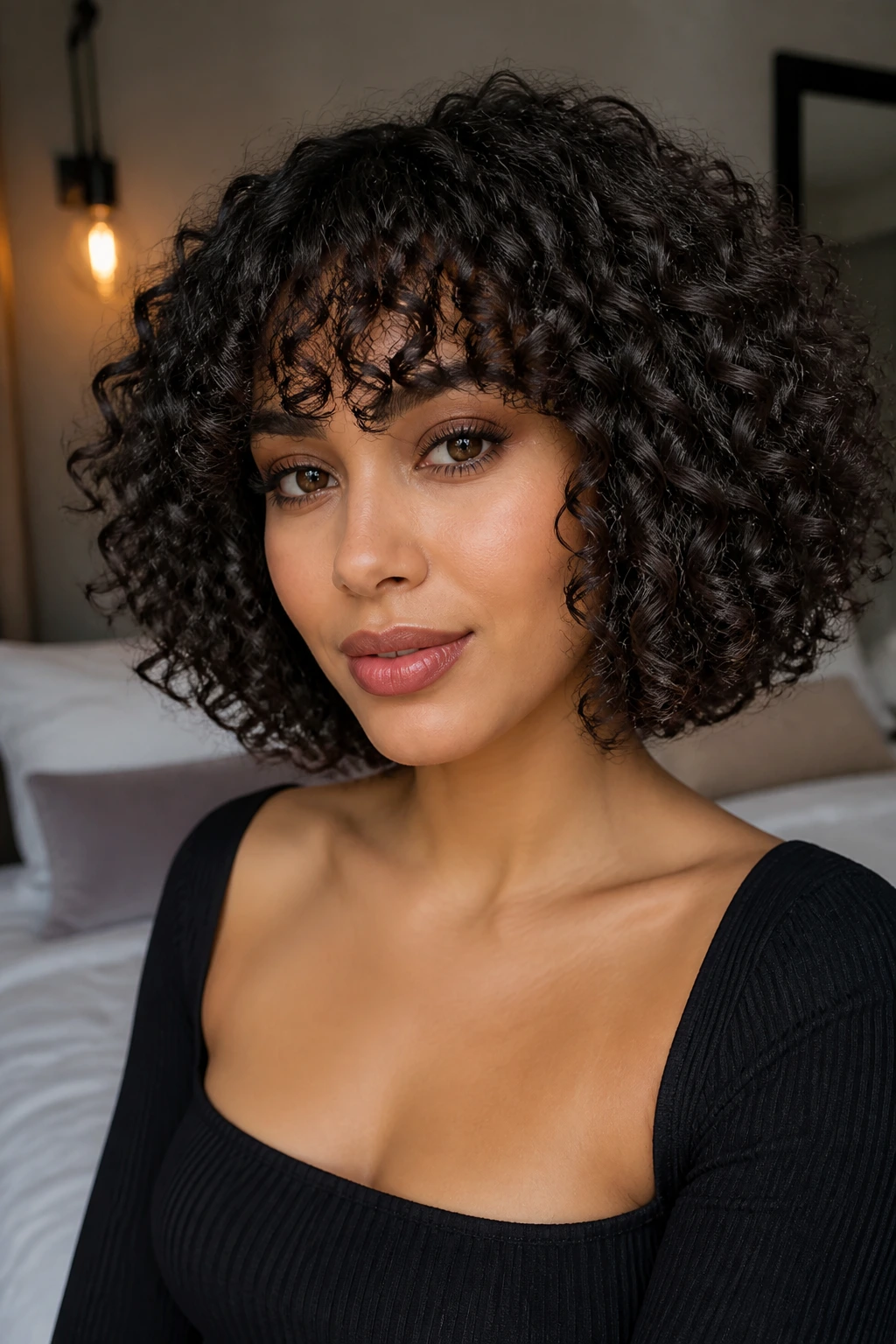
Blunt does not have to mean rigid. On curly hair, a blunt bob with a soft edge can look clean and lush at the same time. The perimeter stays full, which helps fine curls look denser and gives looser curls a thicker-looking bottom line. It’s a very good shape when you want the hair to feel plush rather than feathered.
The soft edge part matters. A hard, razor-straight line can look boxy on curls, especially if the hair is thick or expands at the sides. A tiny bit of point cutting at the very ends softens the outline without taking away the fullness that makes this cut work in the first place.
I like this cut for people who are tired of over-layered curly hair. Sometimes the answer is less slicing and more discipline. A blunt perimeter gives curls a clear place to land. Then the shape comes from the curl pattern itself.
It’s also a smart choice if your hair is finer than you wish it were. Too many layers on fine curls can leave see-through gaps. A blunt bob keeps the body where you can see it.
9. The Asymmetrical Curly Bob
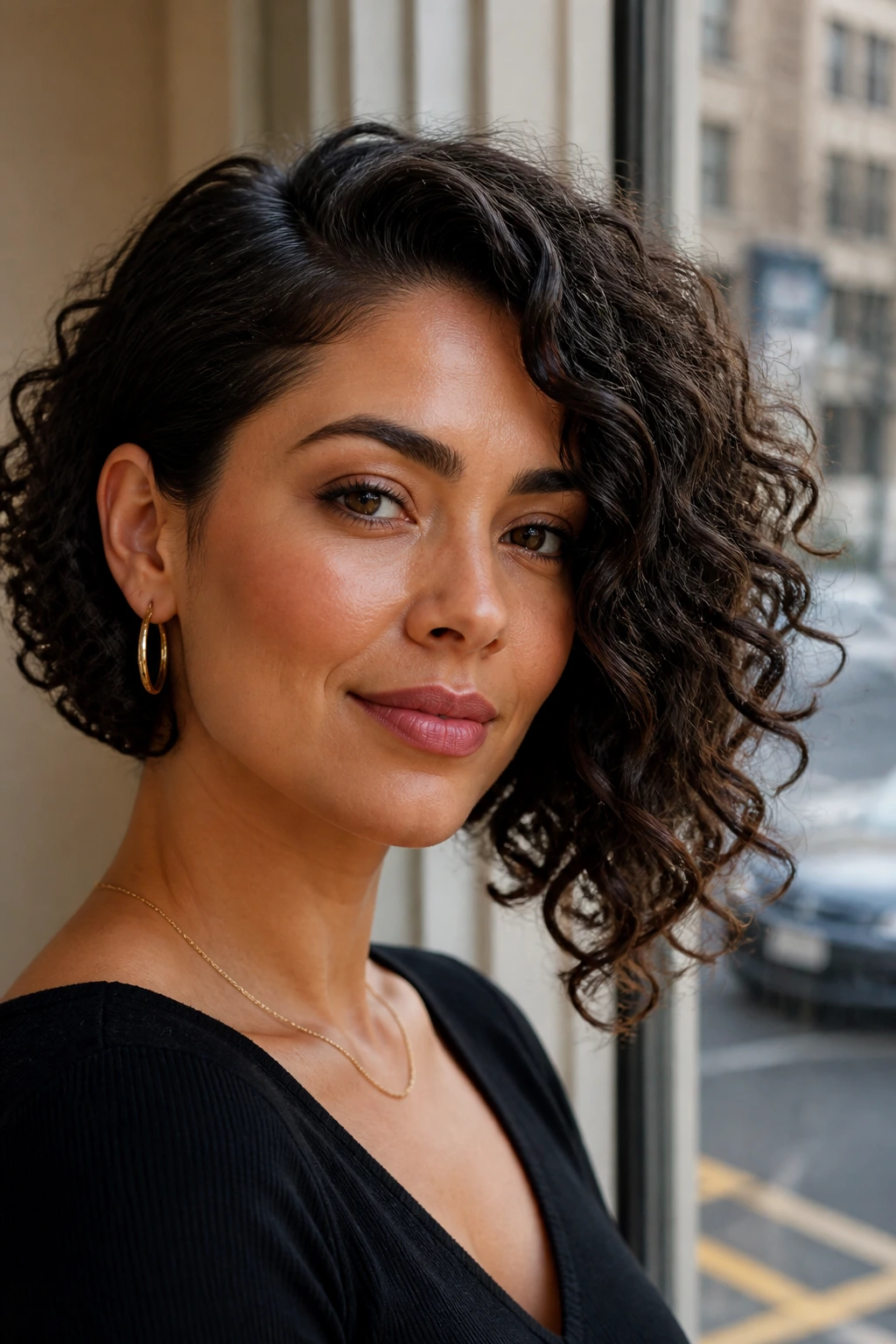
Want a curly bob that looks deliberate even when the curls decide to do their own thing? Go asymmetrical. One side stays a little longer, often by an inch or more, and the difference gives the cut a built-in point of interest. On curls, that uneven line reads as stylish instead of fussy.
The asymmetry also helps if one side of your curl pattern is looser than the other. A slightly longer side can balance the head shape and keep the shorter side from looking too abrupt. That’s one of those practical details people ignore until they see the haircut in motion. Then it suddenly makes sense.
How to keep it wearable
Ask for the longer side to follow your natural part and face shape, not just a random diagonal. If the longer side falls across the cheekbone, the whole cut feels more integrated. If it’s too steep, the bob can look like it’s mid-change rather than finished.
This is the style for someone who likes a little edge but still wants a real haircut, not a gimmick. The curls do the rest of the work. The asymmetry just gives them a smarter path.
10. The Tapered Nape Curly Bob for Coils
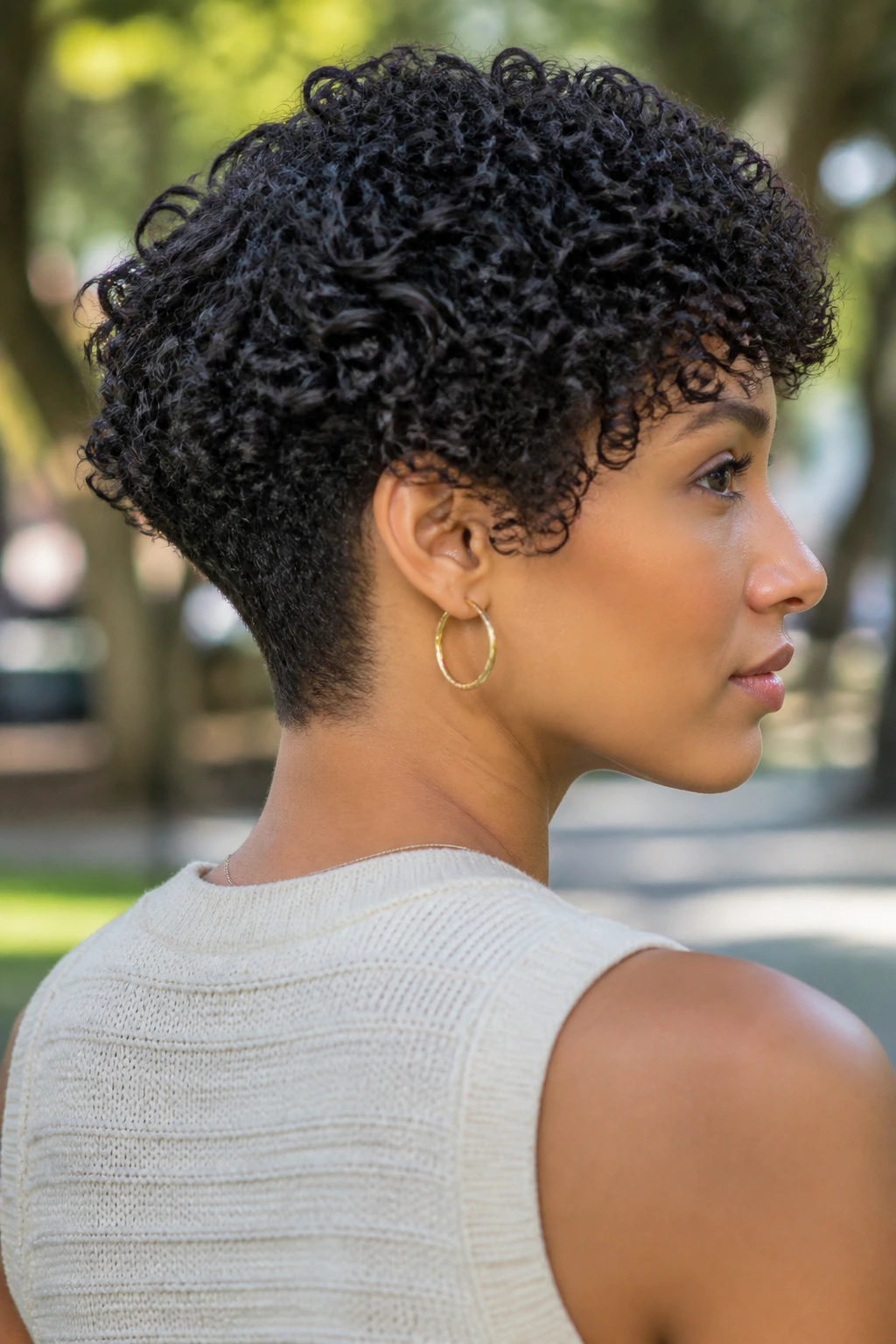
Tight coils often need a different kind of bob altogether. A tapered nape curbs bulk at the back of the neck and keeps the shape from ballooning under the head. It’s neat, rounded, and especially good when you want the silhouette to sit close without losing fullness at the sides and crown.
The back is the reason this cut works. If you leave too much length at the nape on coily hair, the shape can bunch up and drag the outline down. Tapering removes that extra weight so the head looks shaped instead of stuffed.
Key details
- Best for 3C to 4C textures
- Ask for the nape to be tapered, not shaved flat
- Keep the crown rounded so the top doesn’t collapse
- Use a pick at the root only if the shape needs a little lift
I like this cut because it respects shrinkage instead of fighting it. Coils want to contract. Let them. A tapered nape gives them a clean place to do that, and the rest of the bob stays easier to maintain.
11. The Deep Side-Part Curly Bob
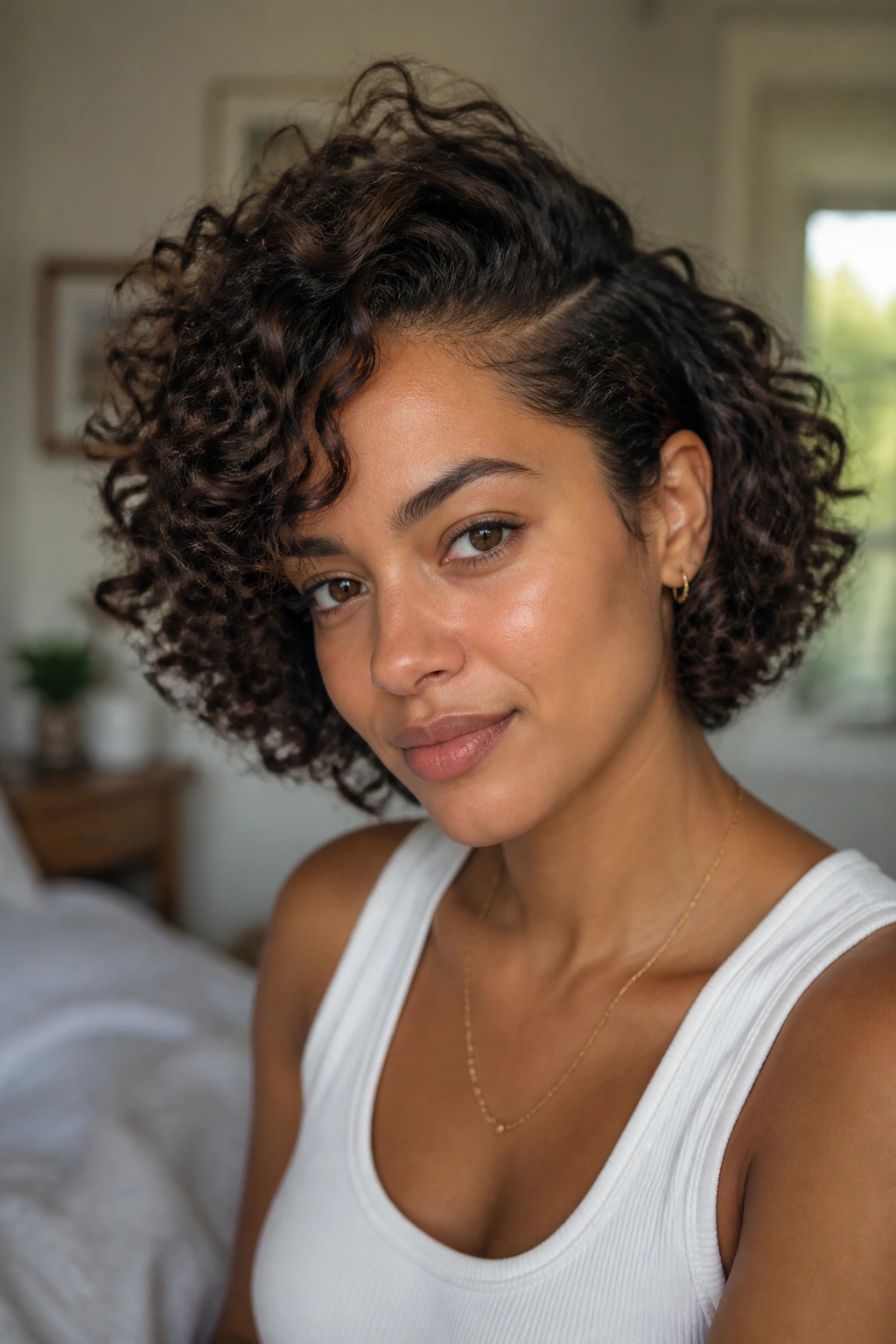
A deep side part can change a curly bob in one move. It creates height on one side, pushes volume upward at the roots, and breaks up a face shape that feels too round or too symmetrical. If your curls sit flat along the scalp, the side part is a fast way to get lift without teasing the roots or stacking on product.
I’m partial to this version on medium-density curls, because the asymmetry gives the hair somewhere to go. The curls can sweep across the forehead and temple instead of sitting straight down. That diagonal line is flattering on a lot of faces, especially if the jawline is softer or the cheeks are full.
If you wear your hair this way, clip the smaller side while it dries. Just one small root clip can change the whole lift pattern. When you take it out, the part settles with a little bend instead of lying flat in a lazy line.
This cut also plays well with second- or third-day hair. A deep side part looks even better once the curls have loosened a touch and the root at the heavier side has gained a bit of memory.
12. The Face-Framing Curly Bob for Round Faces
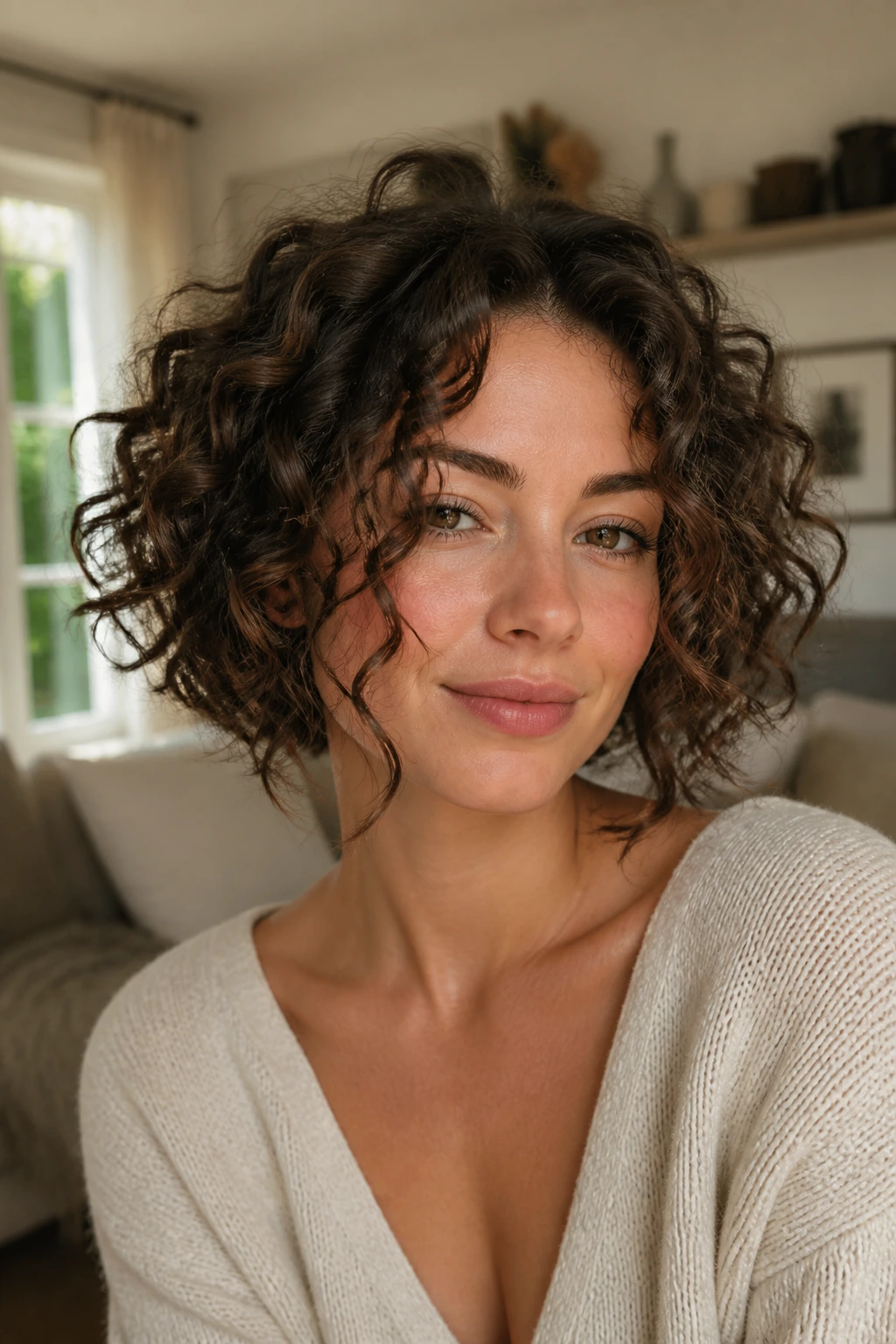
This cut is all about breaking the circle. The front pieces are left long enough to skim below the cheekbones, while the rest of the bob stays contained. That contrast stops the haircut from widening at the cheeks, which is where round faces often get overwhelmed by a one-length bob.
The face-framing pieces should not be so short that they bounce right back up to the jaw. That’s the mistake. If they land at the wrong spot, they can make the face look wider, not slimmer. Better to keep them a little longer and let the curls curl upward on their own.
What to ask for
- Longer front sections that hit below the cheekbone
- A cleaner, narrower perimeter at the back
- Soft internal shaping near the temples
- No heavy chunking at the sides
This version is one of the most practical curly bob haircuts for people who have been told bobs “don’t suit” them. Usually, the issue is the shape, not the length. Once the front is framed correctly, the haircut stops fighting the face and starts working with it.
13. The Inverted Curly Lob
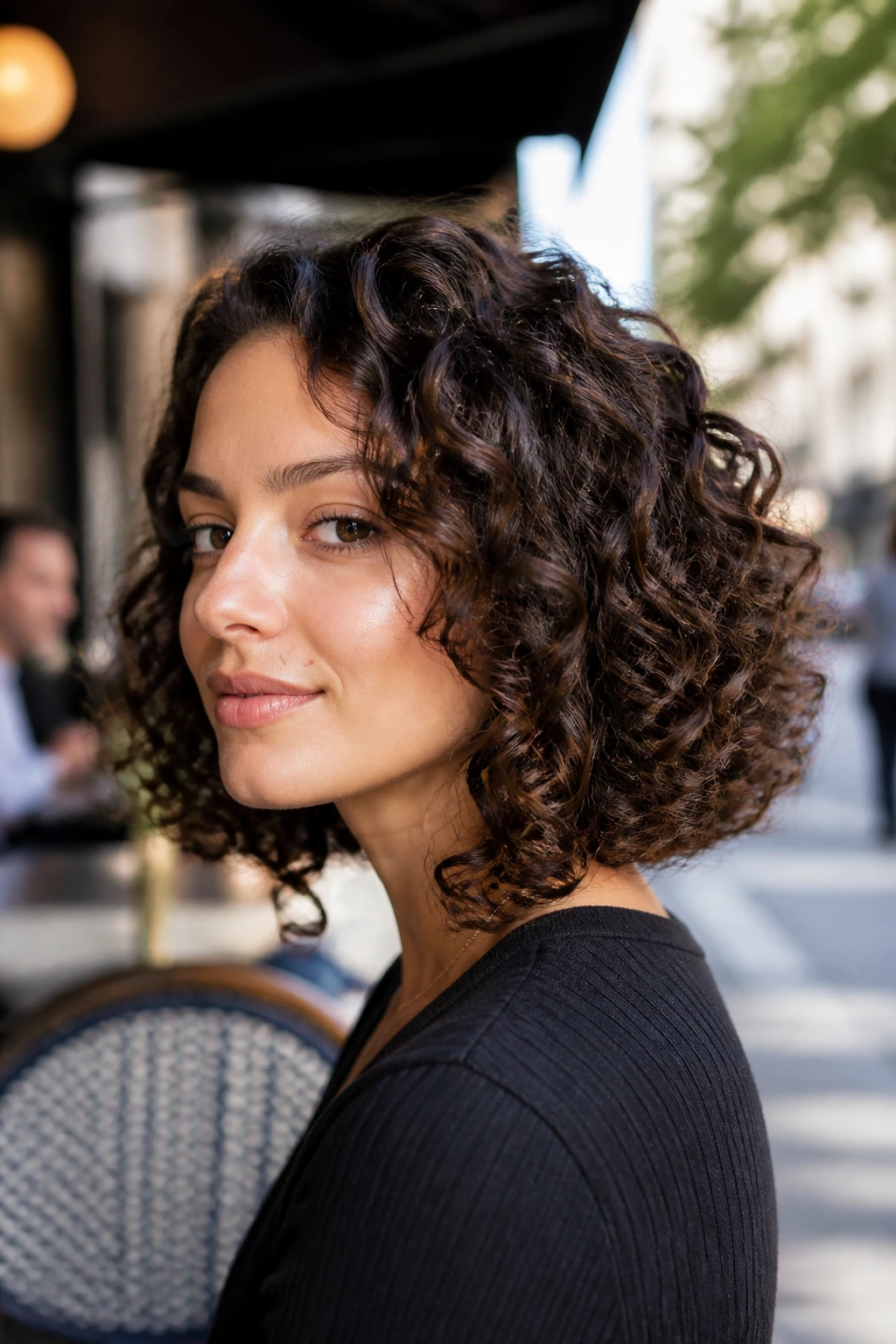
A curly lob is the safe harbor for anyone who wants bob energy without losing too much length. The back sits a little shorter, the front stays longer, and the whole cut has a forward-sweeping shape that reads polished even when the curls are loose and messy. It’s the easiest cut on this list to grow into or out of.
The inverted line matters because it keeps the collarbone area from getting bulky. If the hair rests on the shoulders at one uniform length, curls can snag, fluff, and flip in odd places. A slightly shorter back avoids that problem and gives the ends a cleaner fall.
Why it’s a good bridge cut
If you’re nervous about going short, this is the one that lets you test the waters. You still get the bounce and the bob shape, but the front length keeps the haircut soft. It also works well when you want to tie part of the hair back without losing the look completely.
The best thing about a curly lob is that it buys you options. It can feel like a full haircut on wash day and still tuck behind the ear when you need it to behave.
14. The Invisible-Layer Curly Bob
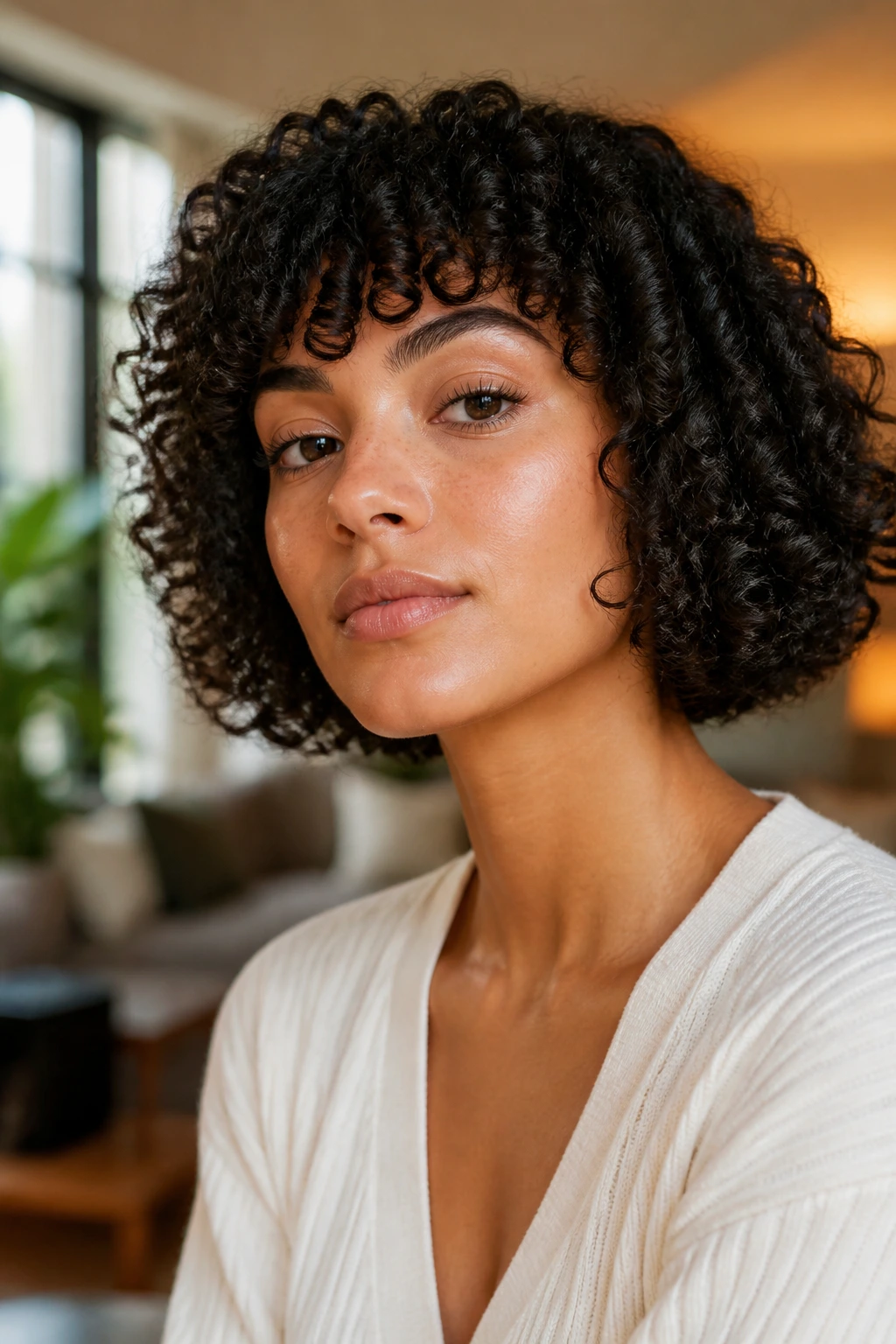
Some people love layers. Others hate the choppy look they can create. Invisible layers are the answer for the second camp. The cut keeps a cleaner outer line while removing just enough weight inside the shape to let the curls spring. You don’t see the layers first. You see the movement they create.
This is one of my favorite choices for people with medium-density curls who want structure without visible stair steps. It keeps the bob looking smooth from the outside, but the inside has room to breathe. That means less bulk at the sides and less chance of the dreaded triangle.
The key is that the perimeter stays believable. If the layers get too adventurous, the whole point disappears. Ask for interior shaping only, and make sure the stylist checks the cut dry before taking off more length. Invisible layers should feel like a secret, not a reveal.
This is the calmest-looking bob on the list. Not boring. Calm. There’s a difference.
15. The Round Curly Bob for Dense Hair
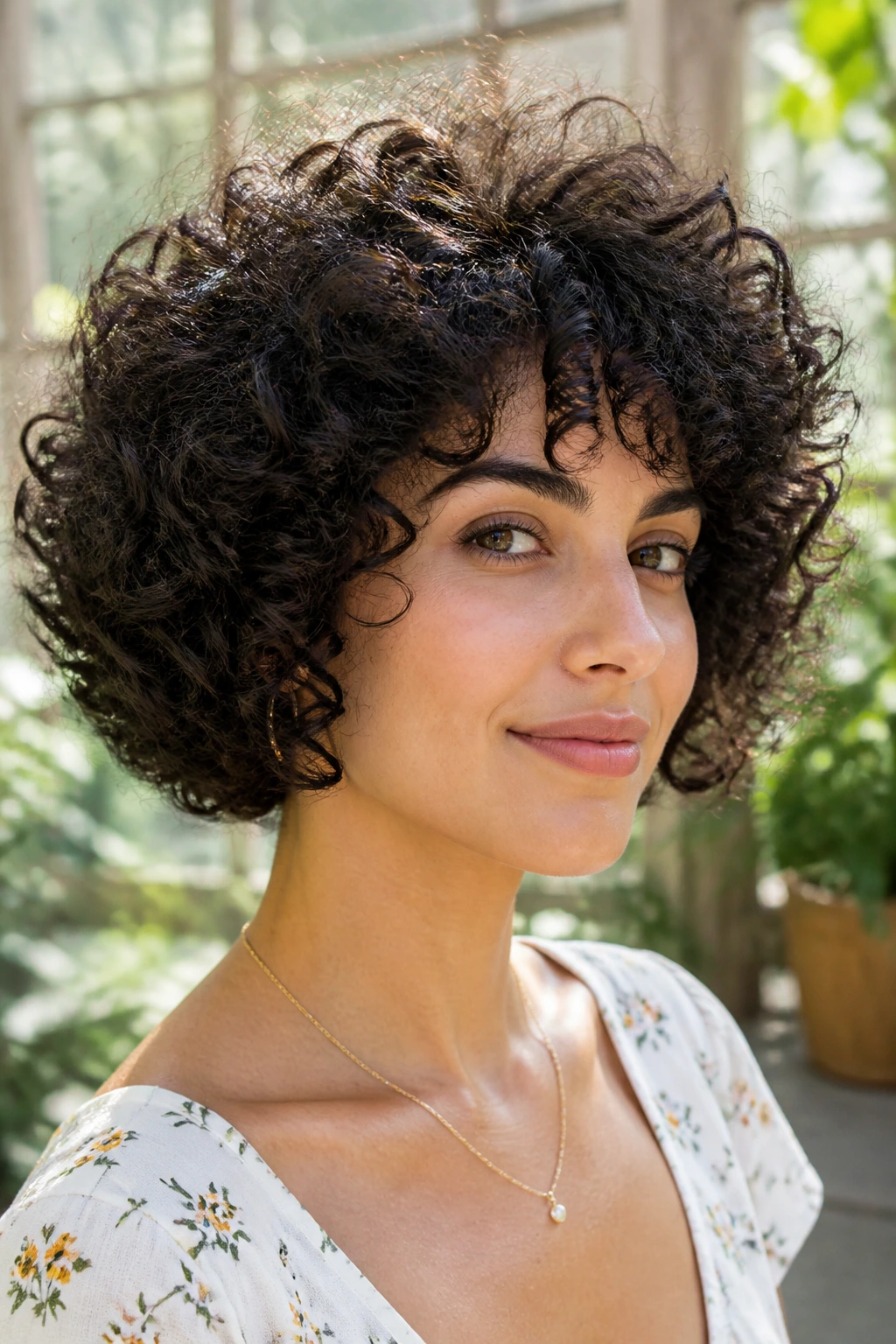
Dense curls can wear a round bob beautifully when the shape is done with a firm hand. The outline follows the curve of the head, with the curls stacked in a halo rather than spread wide. It gives thick hair a controlled silhouette instead of a wide, heavy square.
This cut is especially useful when your hair has so much volume that a blunt line starts to look bulky. The round shape lets the curls compress upward and inward. That sounds technical, but in practice it just means the haircut sits closer to the head and feels more balanced.
How to wear it
Ask your stylist to remove internal weight where the hair swells the most, usually at the crown and just above the ears. Keep the outer shape rounded and the bottom edge clean. Then style with a light cream and a gel that holds the curl clump without dragging it down.
If your dense curls have a mind of their own, this shape gives them a house with walls. That’s the whole charm.
16. The Ear-Length Curly Bob for Fine Curls

Fine curls can be tricky. Too much length and they hang. Too many layers and they look thin at the ends. The ear-length bob solves both problems by keeping the cut short enough for the curls to lift, but not so layered that the perimeter disappears. It feels light, airy, and surprisingly neat.
This style works best when the product load is low. Fine curls don’t need a heavy cream sitting on top of them. They need enough moisture to stay smooth and enough hold to keep the shape from separating. A mousse or lightweight gel usually does the job better than a thick butter or oil-heavy mix.
The cut itself should stay simple. Strong perimeter. Soft shaping near the temples. Nothing overdesigned. If the bob is too fussy, fine hair will show every uneven bit. If it’s clean, the curls can do the talking.
I like this one on people who want more lift around the face and less maintenance at the ends. It’s a small haircut with a big payoff.
17. The Collarbone Curly Bob That Grows Out Gracefully
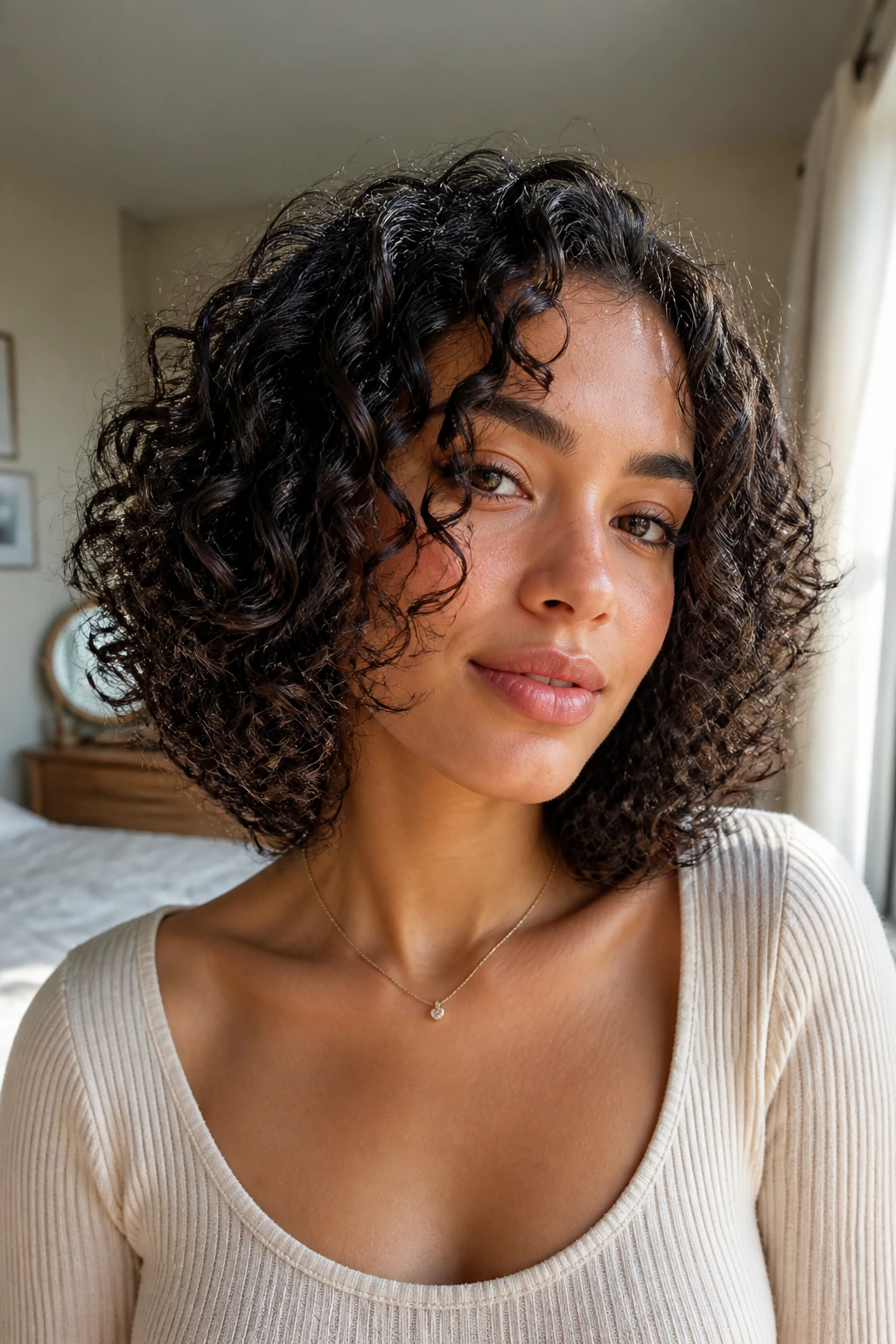
This is the version for people who want the bob feeling without the panic that comes with going too short. The collarbone length gives curls room to spring, but it also keeps enough length to tuck behind the ears, pin back, or pull into a tiny half-up shape when needed. It’s practical in a way shorter bobs sometimes aren’t.
The grow-out is the real selling point. As the ends get a little longer, the haircut doesn’t fall apart. It just turns into a softer lob. That makes this style a good choice if you don’t want to book trims every six weeks like clockwork. A collarbone bob can stretch longer between cuts and still look on purpose.
This cut also handles awkward curl days better than very short bobs. If one section is doing more than the others, there’s enough length to blend it back into the whole. That can be a relief when your curl pattern is mixed or your hair tends to have a few stubborn pieces near the front.
Not flashy. Just sensible. And sometimes that’s the smartest thing in the room.
18. The Bottleneck-Bang Curly Bob
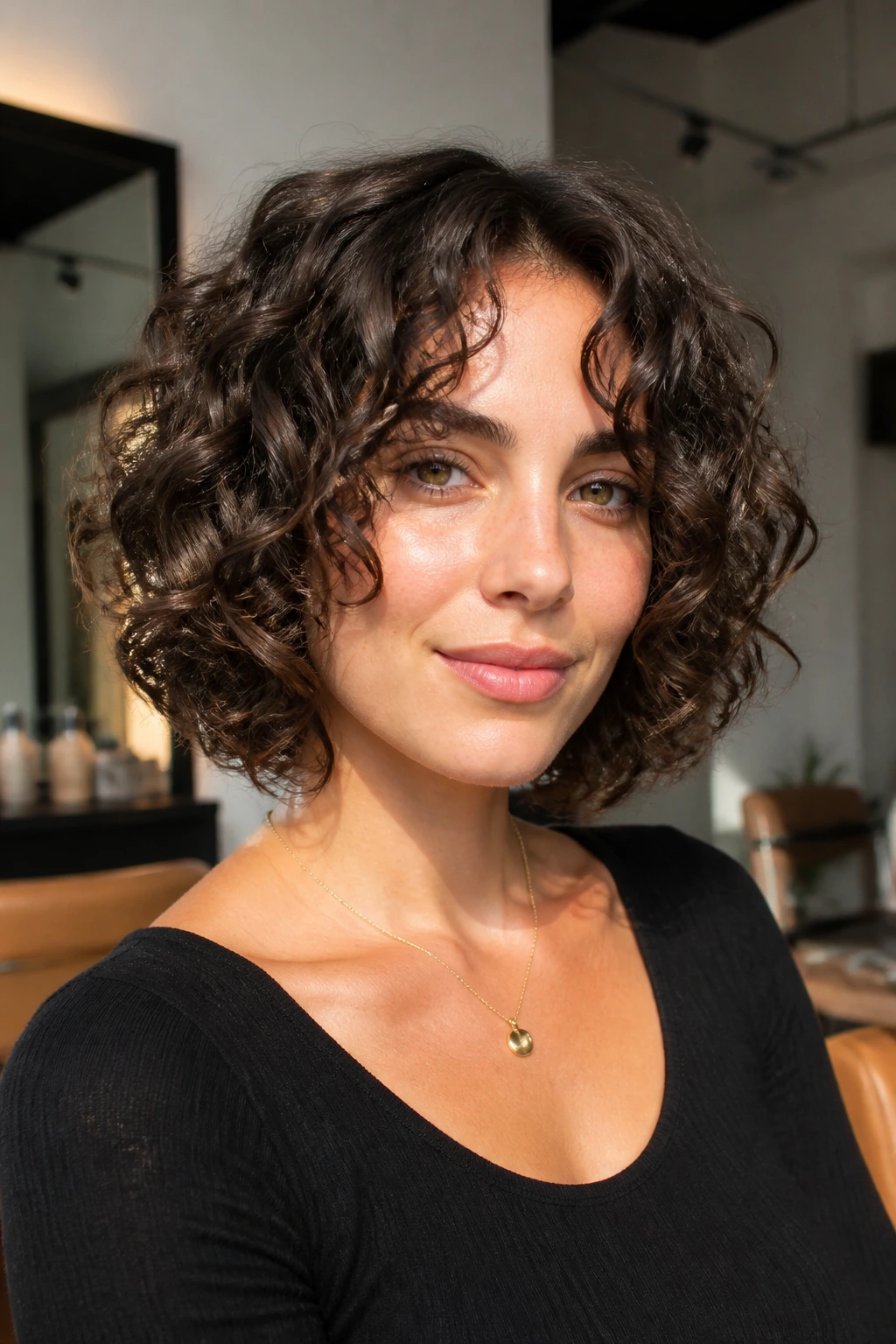
Bottleneck bangs have that narrow middle and wider outer shape that flatters curls better than a blunt fringe in a lot of cases. The center opens a little, while the sides curve out toward the cheekbones. On a curly bob, that creates a soft frame without burying the face in hair.
This style sits in a nice middle ground between curtain bangs and full fringe. It gives you forehead coverage without the heaviness of a straight-across bang, and it works especially well when the curl pattern is moderate rather than wildly springy. The shape needs enough bend to split and settle on its own.
Why it stands out
The bottleneck shape helps the bob feel balanced, especially if the rest of the cut is fairly compact. It pulls the eye toward the center of the face and then eases out to the sides. That makes the haircut look finished without looking stiff.
Ask for the fringe to be cut dry, with the ends left a touch longer than you think. Curly bangs are smaller than they look on the stylist’s fingers. Once they dry, they snap upward and get lively fast. Better to leave room and trim again than to start too short.
What to Tell Your Stylist Before the Scissors Come Out

Bring more than one photo. Better yet, bring photos that show the front, the back, and the side of the cut you want. One glamorous front-facing shot can hide a terrible nape shape, and the nape is where many curly bobs live or die.
Say how your hair behaves when it dries. If your curls shrink a lot, say so. If one side is tighter than the other, say that too. Stylists can work with honest information. They cannot read curl math by staring at a wet head.
Ask whether the cut will be shaped dry, cut curl by curl, or checked after the first dry pass. That’s a real question, not a fancy one. Curly bob haircuts often look best when the stylist can see how the curls sit in their natural state. Wet hair is useful for sectioning, but it does not tell the whole story.
If you want bangs, say how much forehead you actually want covered on day two, not day one. That detail matters. Curly fringe changes more than the rest of the cut, and a good stylist will leave room for the bounce.
Styling Tools That Keep the Shape Light and Springy
-
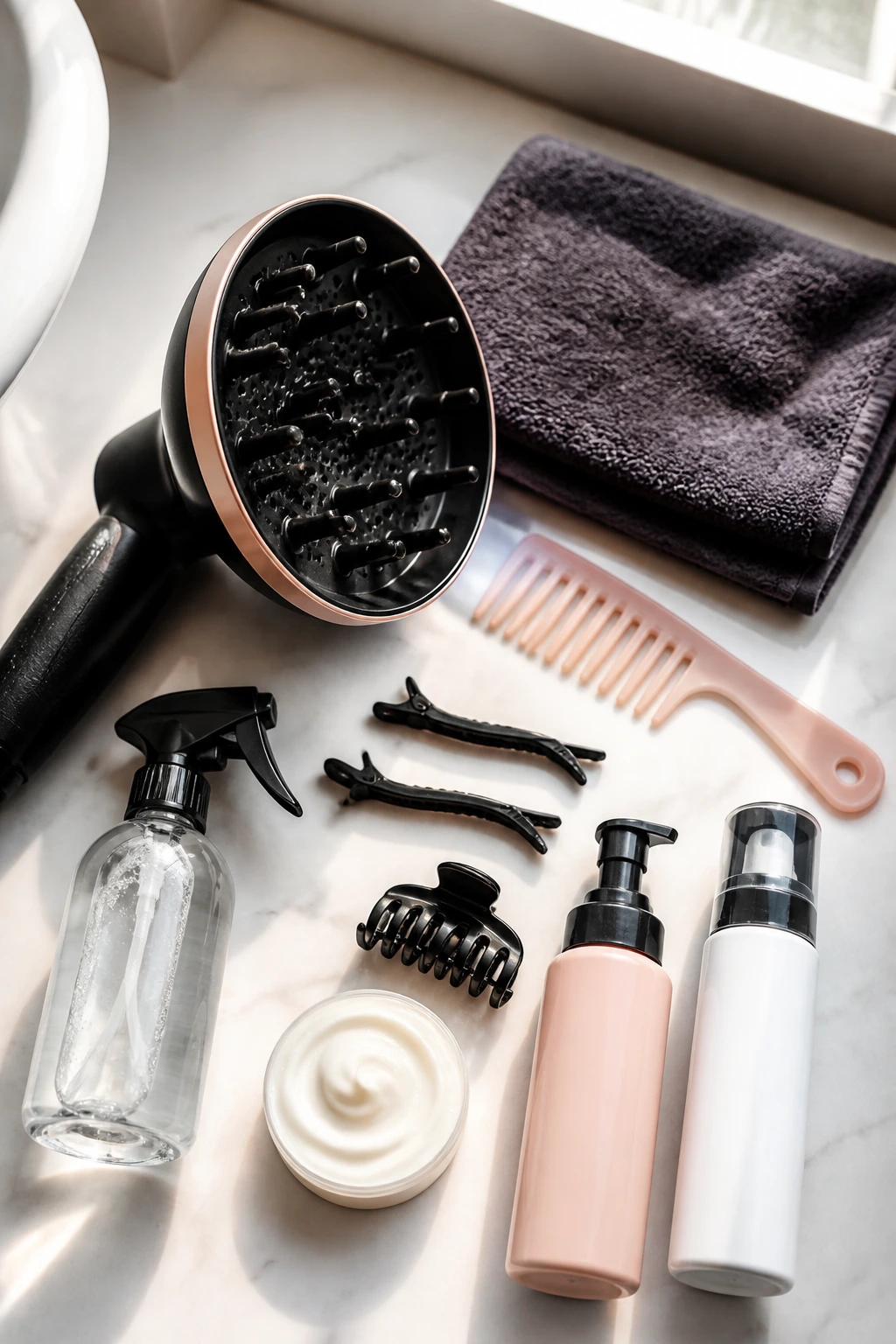
Diffuser attachment: Use low heat and low airflow so the curls dry without blasting apart the clumps.
-
Microfiber towel or cotton T-shirt: This cuts down on friction after washing and keeps the curl pattern from fraying before it even starts.
-
Wide-tooth comb: Best for detangling in the shower while the conditioner is still in the hair. Don’t rake through dry curls with it.
-
Sectioning clips: These help when you want to apply product evenly or clip roots for lift while drying.
-
Spray bottle: A small one, not a mist cannon. Great for refreshing the shape on day two without rewashing.
-
Light curl cream or leave-in: Use enough to smooth, not so much that the curls droop. Fine hair needs less than dense hair.
-
Mousse or gel: Mousse gives airy lift; gel gives hold and definition. A lot of curly bobs look better with both in a small amount than with one heavy product.
-
Hand mirror: Sounds boring. It isn’t. It’s the fastest way to check the back shape and make sure the bob isn’t bulking up at the nape.
How to Style a Curly Bob Without Crushing the Curl
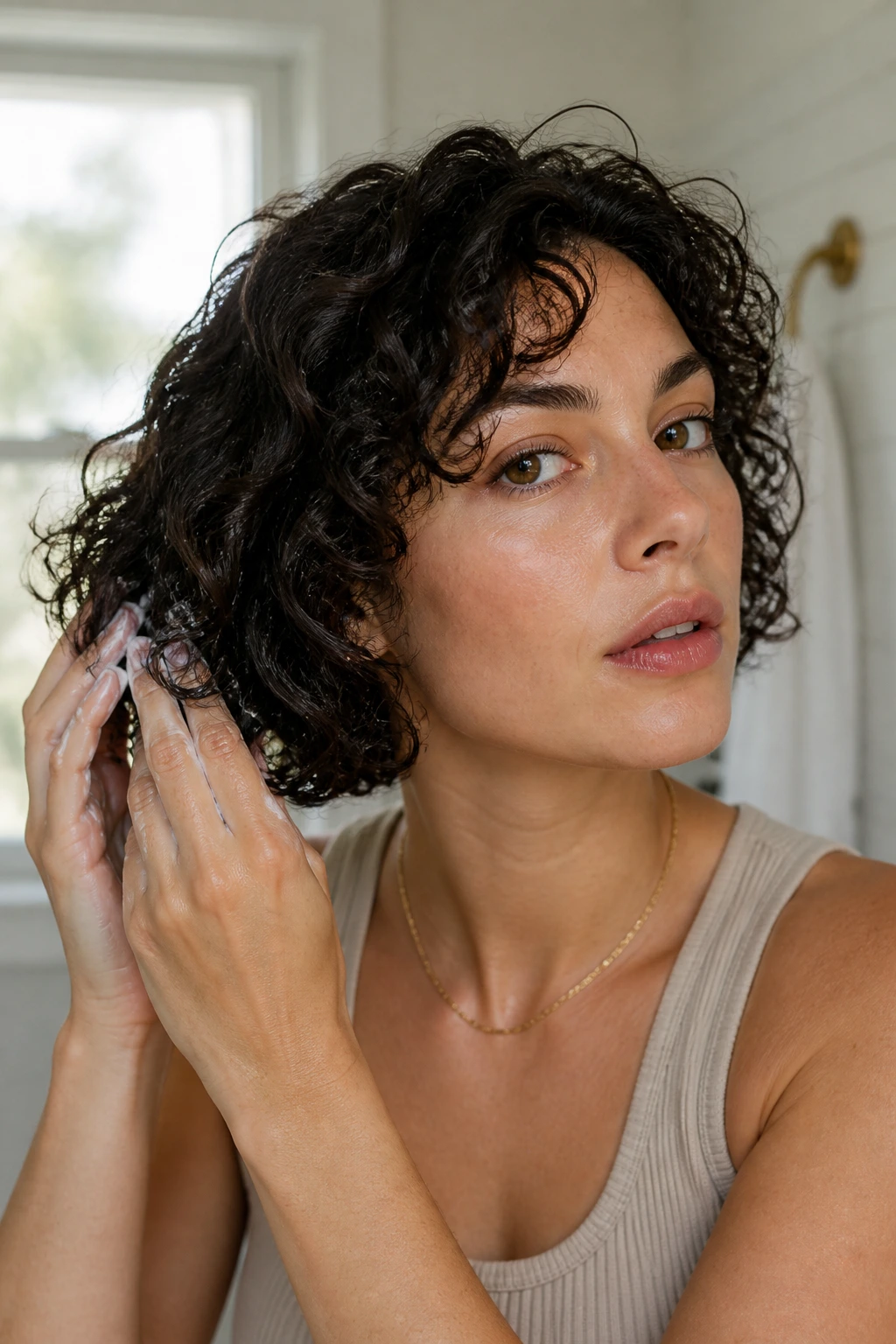
Moisture first: Start on soaking-wet or very wet hair. That gives your curl cream and gel something to spread across instead of sitting in greasy patches. Work product in with your hands, then gently scrunch from the ends upward. Don’t squeeze the life out of the curls.
Hold, then let go: A bob needs enough hold to keep the outline. If the curls dry without structure, the sides can puff and the ends can split into little frizzy forks. A light gel or mousse helps the shape stay crisp while the hair dries.
Diffuse with patience: Hover the diffuser near the roots first, then cup the ends once the pattern starts to set. Use low heat. High heat often gives you frizz where you wanted bounce. Stop drying when the hair is about 80 percent dry, then let the rest finish in the open air if needed.
Refresh, don’t restart: On day two, mist the hair lightly, add a pea-sized amount of leave-in to your palms, and scrunch the curls back into place. If the crown has gone flat, clip the roots for 10 to 15 minutes while the hair dries again. That little reset works better than piling on more product.
Common Mistakes That Turn a Curly Bob Boxy

-
Cutting too short on wet hair: The bob looks fine in the chair and too high once it dries. The fix is simple: leave extra length for shrinkage, especially around the front and crown.
-
Removing too much weight from the bottom edge: The ends start to look wispy and the sides spread outward. Ask for a stronger perimeter and lighter internal shaping.
-
Using heavy creams on fine curls: The hair goes flat, the root loses lift, and the bob stops bouncing. Switch to mousse or a lighter leave-in and use less product than you think.
-
Ignoring the nape: A bulky back can ruin a nice front shape. Clean up the nape regularly and ask for a subtle taper if your curl pattern stacks there.
-
Brushing curls once they’re dry: That turns neat clumps into frizz and wrecks the silhouette. Detangle in the shower, shape with your hands, and leave the dry curls alone.
-
Over-layering dense hair: Too many short layers can make the cut expand in weird places. Better to remove bulk inside the shape than to carve the whole bob into pieces.
Ways to Adapt These Cuts for Loose Waves, Spirals, and Coils
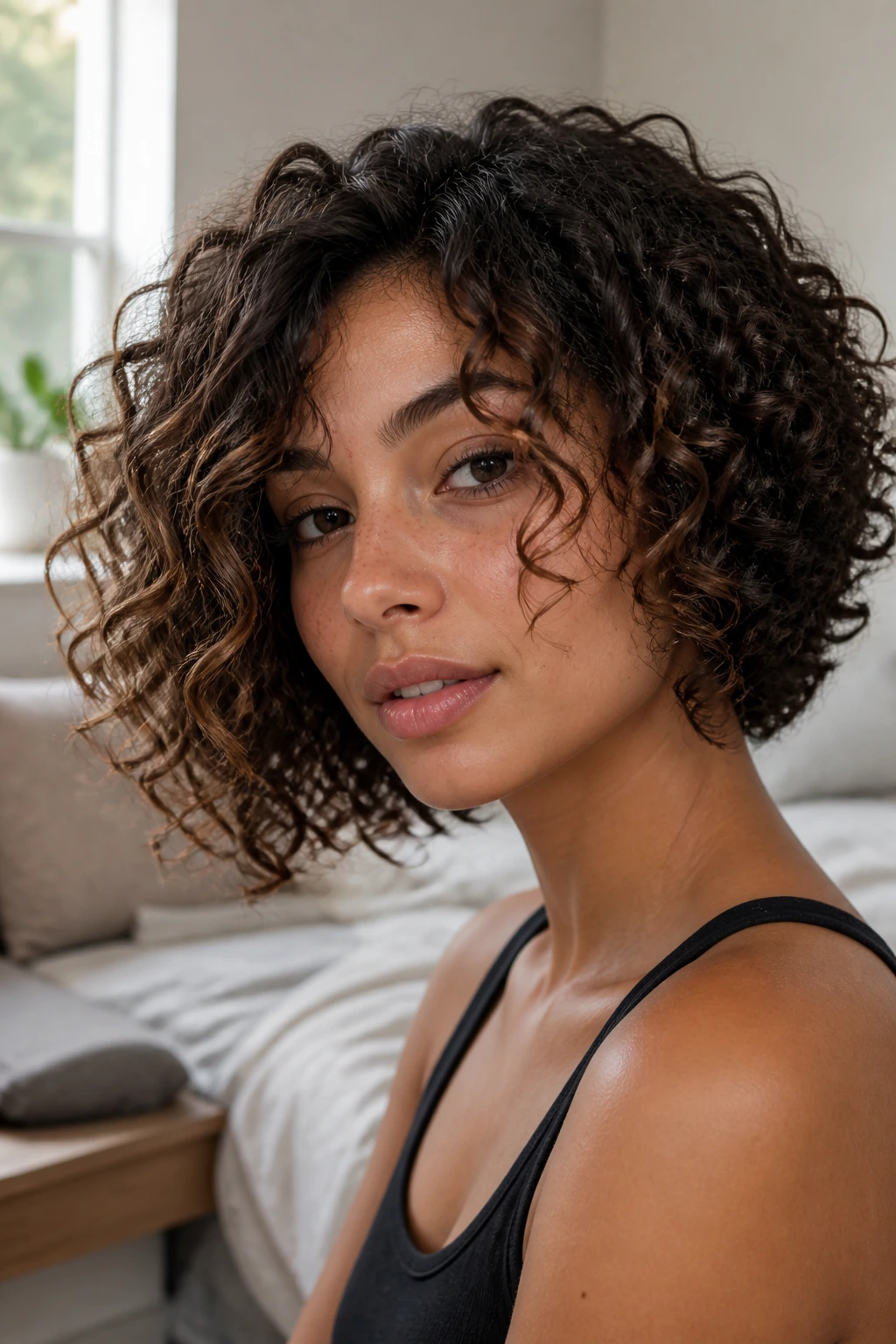
The Soft Wave Version: Loose waves need a little less layering and a cleaner perimeter. A chin-length or collarbone bob with subtle face-framing pieces keeps the waves from slumping into one long bend.
The Spiral-Friendly Version: Medium curls often do best with visible shaping near the front and crown. Curtain bangs, A-lines, and stacked backs all work here because the curls have enough spring to show the cut.
The Coily Halo Version: Tighter coils want a stronger round shape and a tapered nape. The silhouette should be planned around shrinkage first, length second. If the back is too long, the shape loses energy fast.
The Fine-Hair Lift Version: Fine curls need less weight and fewer heavy products. A blunt or lightly layered bob, kept just above or at the collarbone, can make the hair look denser without overwhelming it.
The Grow-Out Version: If you hate constant trims, start at the collarbone and move shorter later. That keeps the haircut flexible and saves you from the panic that hits when a fresh bob feels too committed.
Keeping the Shape Fresh Between Trims
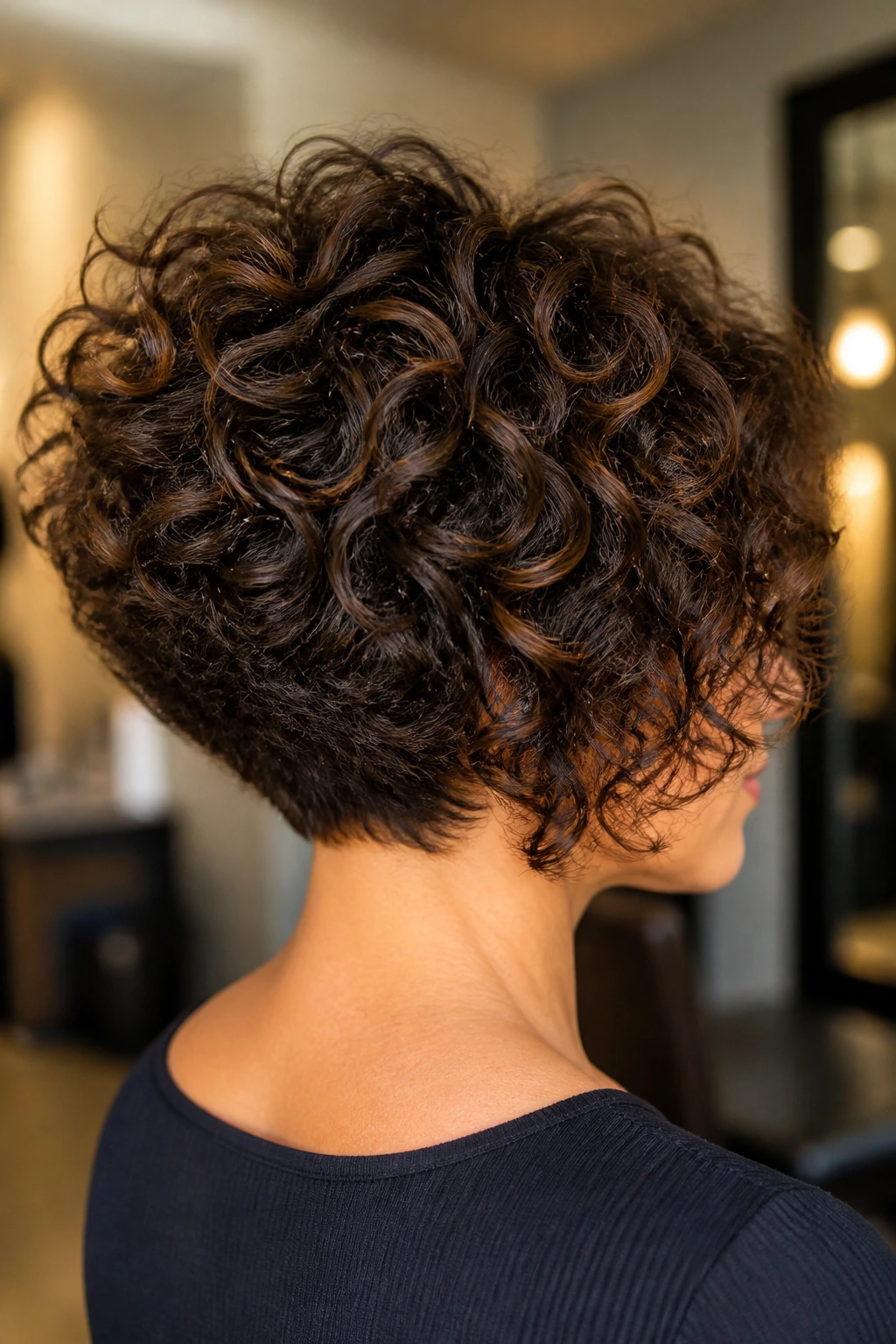
Short curly bobs usually want a trim every 8 to 10 weeks if you want the outline to stay crisp. Collarbone-length versions can stretch to 10 to 12 weeks, especially if the ends still hold together and the back isn’t swelling out of control. Once the perimeter starts to lose its line, the cut reads as shapeless, not relaxed.
Sleeping on satin or silk helps more than people admit. A bonnet, scarf, or pillowcase reduces the friction that roughs up the top layer and crushes the crown. If the back is going flat in the morning, a quick mist at the roots and a few minutes with a diffuser can bring the shape back.
Midweek refreshes should stay light. Water, a tiny bit of leave-in, and a touch of gel or mousse are usually enough. Heavy restyling products often make the bob limp by the end of the day. If the curls are frizzy but still shaped, don’t overwork them. Just smooth the surface and re-clump the pieces with wet hands.
If you wear bangs, check them more often than the rest of the cut. Fringe grows fast on a curly bob because it loses its shape sooner. A tiny trim around the brow line can keep the whole haircut from looking overgrown.
Frequently Asked Questions About Curly Bob Haircuts
Will a curly bob make my hair look shorter than I expect?
Usually, yes. Curls spring up when they dry, so a bob that lands at the chin when wet may sit closer to the mouth or jaw once it’s styled. That’s why curl-specific cuts often look a little longer in the chair than you think they should.
Should curly bobs be cut wet or dry?
Dry cutting gives the clearest read on shape, especially for tighter curls or uneven patterns. Some stylists mix methods and use wet cutting for sectioning, then dry checking for final shape. That hybrid approach can work well if the cutter knows how your hair behaves.
What face shapes work best with a curly bob?
A curly bob can work on almost any face shape if the length and front pieces are adjusted correctly. Round faces often like longer front angles, square faces usually do well with softer layers, and longer faces can handle a fuller, rounder bob or a fringe.
Can fine curly hair wear a bob without looking thin?
Yes, but the cut needs to stay controlled. Fine curls usually look better with a blunt or lightly layered perimeter and a lighter styling product. Too many short layers or too much cream can make the ends look sparse.
How do I stop my curly bob from turning into a triangle?
Keep the bottom edge strong, but remove weight from the areas that swell the most, usually the sides and crown. A tiny taper at the nape and some internal shaping near the head can help a lot. The triangle shape usually shows up when the perimeter is too long and the top is too heavy.
Do bangs work with a curly bob?
Yes, if they’re cut with the curl pattern in mind. Curtain bangs, bottleneck bangs, and soft fringe usually work better than a blunt, heavy bang unless the curls are very cooperative. Leave them longer than you think and let them dry before judging the length.
How often should I trim a curly bob?
Most curly bobs look best with trims every 8 to 12 weeks, depending on length and density. Shorter, sharper shapes need more frequent clean-up. Grown-out bob and lob shapes can go a little longer if the perimeter still looks even.
What if one side of my curl pattern is tighter than the other?
That’s normal. A good stylist can balance the cut with a slight adjustment in length or parting so one side doesn’t look heavier. On your end, styling with clips during drying can help the looser side hold a little more shape.
The Bob That Lets Curl Do the Work
The best curly bob haircuts don’t bully the hair into submission. They give it a shape that makes sense, then step out of the way. That’s why some bobs look effortless in the real world while others need perfect lighting and a prayer. The cut did the heavy lifting.
If your curls have been waiting for a shorter shape that still lets them move, there’s a good chance one of these versions will feel right. Maybe you need the neatness of a jaw-length French bob. Maybe you want the softness of curtain bangs or the balance of an A-line. Maybe you just need a blunt edge and a better nape cleanup. Curls are picky, but they’re not impossible.
Pick the shape that solves your specific problem, not the one that looks most dramatic on a screen. That’s where the good curly bob lives — in the version that makes your hair behave a little better every time you wash it.
