



A good asymmetrical bob for long hair doesn’t look like a compromise. It looks deliberate. One side skims the collarbone, the other sits higher at the jaw or cheekbone, and the whole cut moves when you turn your head instead of hanging there like a block.
That’s why asymmetrical bobs for long hair keep showing up in salons and on real people with real schedules. You get shape without losing every inch, swing without the constant tug of very long hair, and enough length to tuck behind an ear, clip back, or pull into a small knot when life gets messy. The trick is in the balance: cut too flat and it turns limp; cut too short on the heavy side and it starts arguing with your face shape.
The best versions aren’t all dramatic. Some are barely off-center and whisper-soft. Others lean hard into the diagonal line and make the whole haircut feel sharp, a little architectural, and very intentional. The nice thing is that a long asymmetrical bob can be tailored to density, texture, parting habits, and how much time you actually spend with a round brush. That flexibility is the whole appeal.
Why These Asymmetrical Bobs Keep Their Shape
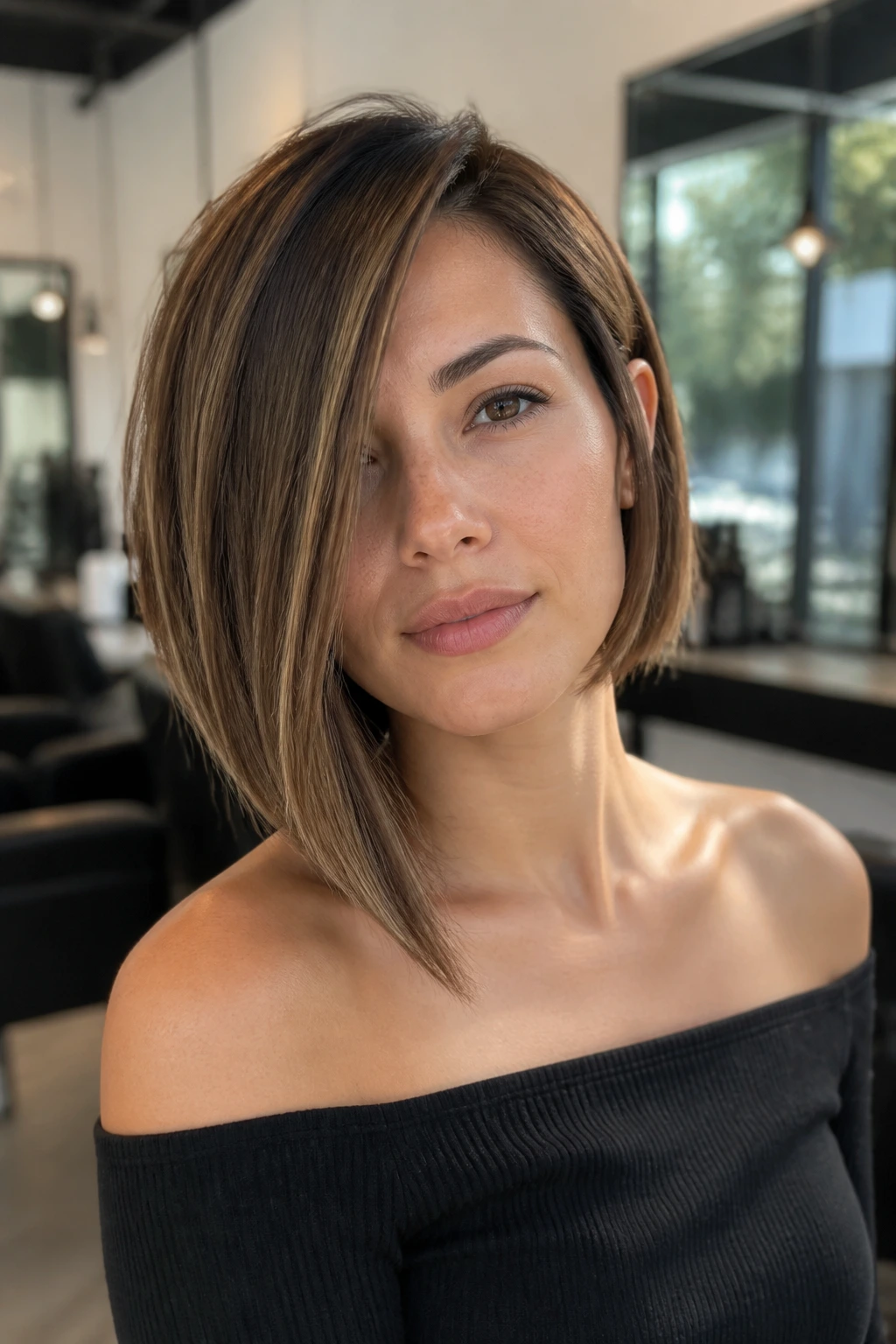
- They keep length where you want it: The longer side can graze the collarbone or upper chest, so you don’t feel like you lost all your hair in one appointment.
- They open up the face: The shorter side pulls the eye upward and inward, which gives the cut direction instead of just width.
- They work with heavy hair: A diagonal perimeter removes weight in a way that feels cleaner than layers scattered everywhere.
- They make fine hair look fuller at the edges: A clean line at the bottom creates the illusion of density, especially when the hair is blow-dried smooth.
- They play well with texture: Wavy hair gets movement, straight hair gets contour, and curly hair gets a shape that doesn’t puff into a triangle.
- They grow out with some grace: The shape softens before it collapses, which matters if you are not racing back to the salon every four weeks.
1. Collarbone-Lean Asymmetrical Bob
This is the version I’d hand to someone who wants change without shock. One side sits just above the collarbone, the other side lifts closer to the jaw, and the front line is soft enough to feel wearable on a Tuesday morning. The angle is visible, but it doesn’t shout.
Why it works
The longer front keeps the haircut from feeling too short, which matters if you’re attached to your length. The shorter side gives lift around the cheek and jaw, so the cut still has shape when you wear it straight. It’s a smart place to start if your hair is medium to thick and you want the diagonal line to do the heavy lifting.
What to ask for
- Keep the longer side at collarbone length.
- Let the shorter side skim the jawline, not the earlobe.
- Ask for soft blending through the front corners.
Best for: people who want a clean change with low drama. It’s the version that still looks polished when you skip a full blowout.
2. Deep Side-Part Lob
A deep side part changes the whole mood of an asymmetrical lob. Suddenly the haircut looks fuller at the top, sharper through the front, and a little more intentional than a center-part version. The long side falls across one shoulder; the short side exposes the jaw and cheekbone.
You get a lot of visual effect without needing a dramatic cut line. That’s the part I like. If your hair is fine and you need a bit of lift at the roots, this is the easiest place to get it without layers that disappear once the hair settles.
Styling note
Blow-dry the roots in the opposite direction first, then flip the part into place. It creates a small bend at the root that keeps the top from collapsing flat by noon.
Who it suits: anyone with medium or fine hair who wants more body at the crown and a face-framing edge that doesn’t require five styling tools.
3. Curtain-Bang Asymmetrical Bob
Curtain bangs change the geometry. Instead of letting the side cut do all the talking, the fringe opens in the middle and feeds into the longer front pieces, which softens the diagonal line a bit. It’s a nice choice if you want the haircut to feel airy rather than severe.
The key is to keep the bangs long enough to blend into the longest side. If they’re chopped too short, the whole thing starts feeling disconnected. With the right length, the fringe melts into the lob and gives you movement right around the eyes.
How to wear it
Wear it with a loose bend from mid-length down. Straightened curtain bangs can look flat against the rest of the shape; a soft curve keeps the cut from feeling rigid.
One smart detail: if your hairline grows forward at the temples, ask for the bangs to be cut a touch longer there. It saves a lot of awkward brushing later.
4. Razor-Soft Long Bob
A razor cut on an asymmetrical bob gives you movement at the ends without building a fluffy, over-layered shape. The line still reads as a bob, but the perimeter has a bit of bite taken out of it. On long hair, that matters because the ends can get heavy fast.
This version is best when you want the haircut to feel light without losing the outline. It works especially well on straight or slightly wavy hair. Curly textures can use it too, but the stylist needs to be careful; too much razor can make the ends fray instead of soften.
What makes it different
Unlike a blunt lob, this one doesn’t sit like a shelf. The ends move. That can be gorgeous if you like a lived-in finish and hate the stiff look that some long bobs get after a fresh cut.
5. Wavy Off-Balance Lob
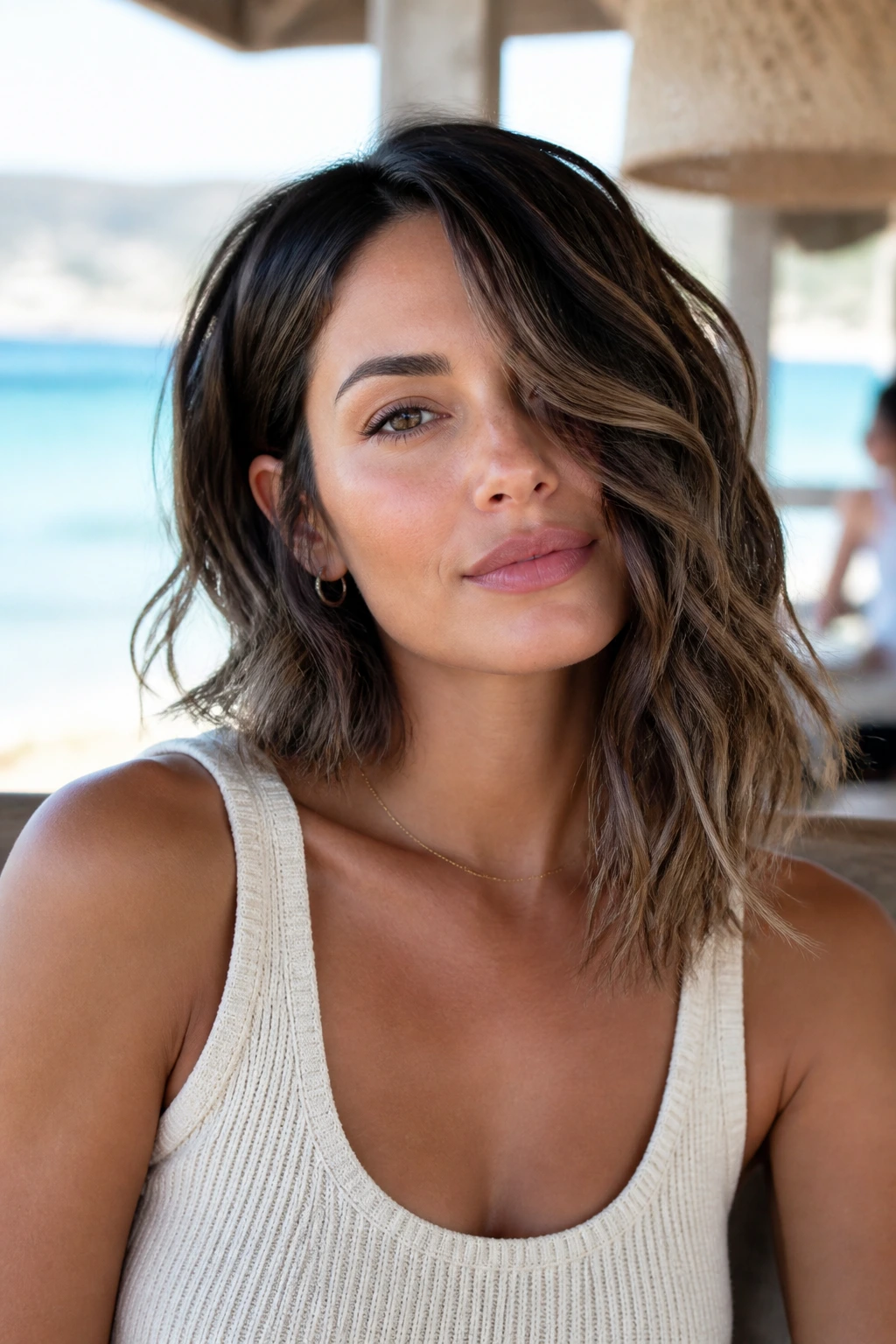
A loose wave changes how the asymmetry reads. On straight hair, the diagonal line is obvious. On wavy hair, it becomes softer and a little more relaxed, which is useful if you want the cut to feel casual instead of graphic.
The longer side gives the wave somewhere to fall; the shorter side keeps the whole shape from getting too wide. If your hair has a natural bend, this is one of the easiest asymmetrical bobs for long hair to live in. It doesn’t fight the texture.
Best styling move
Use a 1-inch curling iron only on the mid-lengths and leave the ends slightly straighter. That keeps the wave from turning into a uniform spiral, which can make the angle disappear.
6. Stacked Back, Longer Front
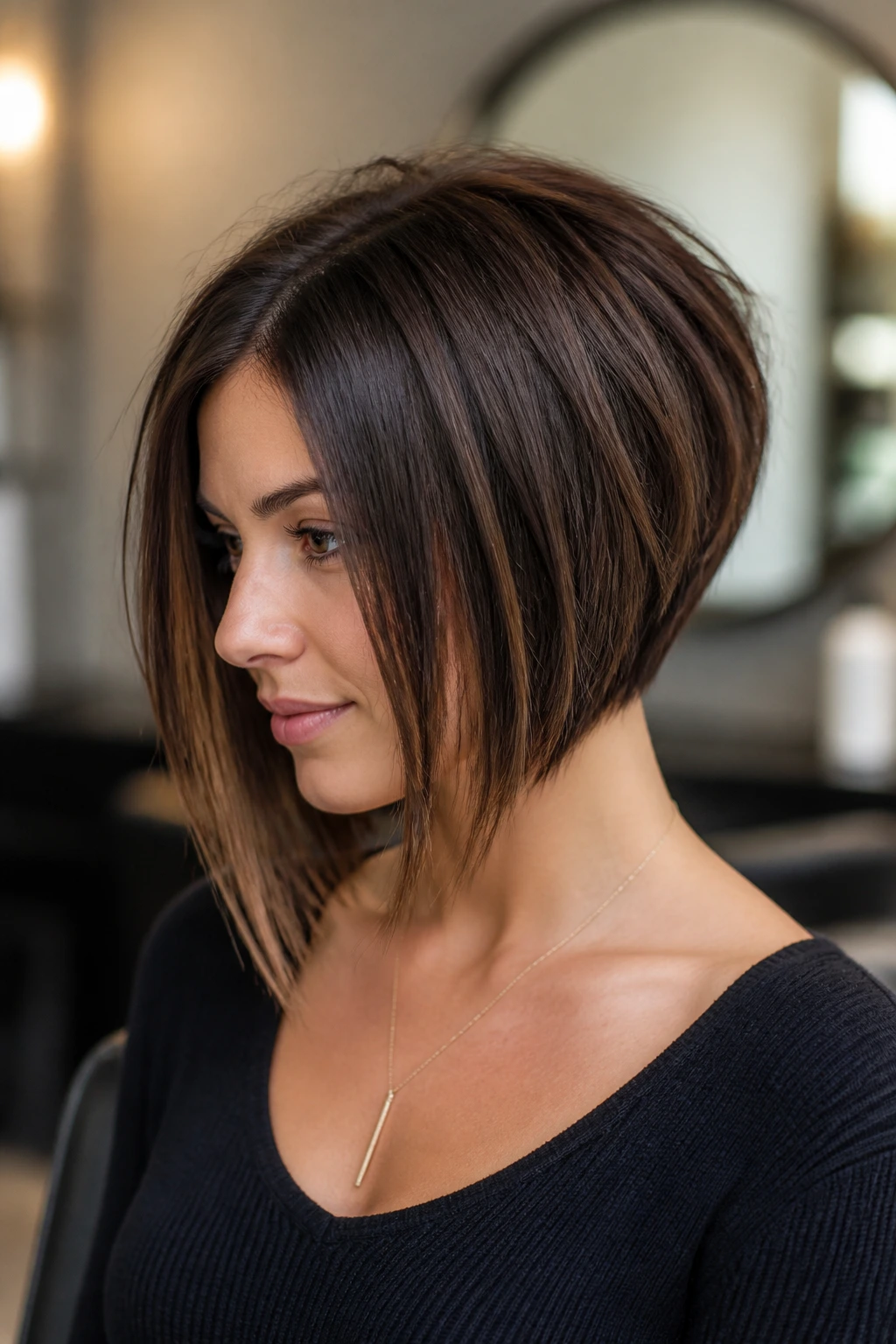
This is the more structured version. The back is lightly stacked so the crown has a bit of lift, while the front stays longer and drapes forward. You get a real sense of shape from the side, which is where this cut earns its keep.
It’s a good answer for thick hair that collapses at the roots. The stacking removes weight right where the head curves, so the silhouette doesn’t look square. The longer front keeps it from turning into a traditional short bob.
For the salon chair
Ask for stacking only through the back third, not all the way around. Too much graduation can make the back spike up and steal length from the whole haircut.
7. Blunt Edge With a Long Sweep
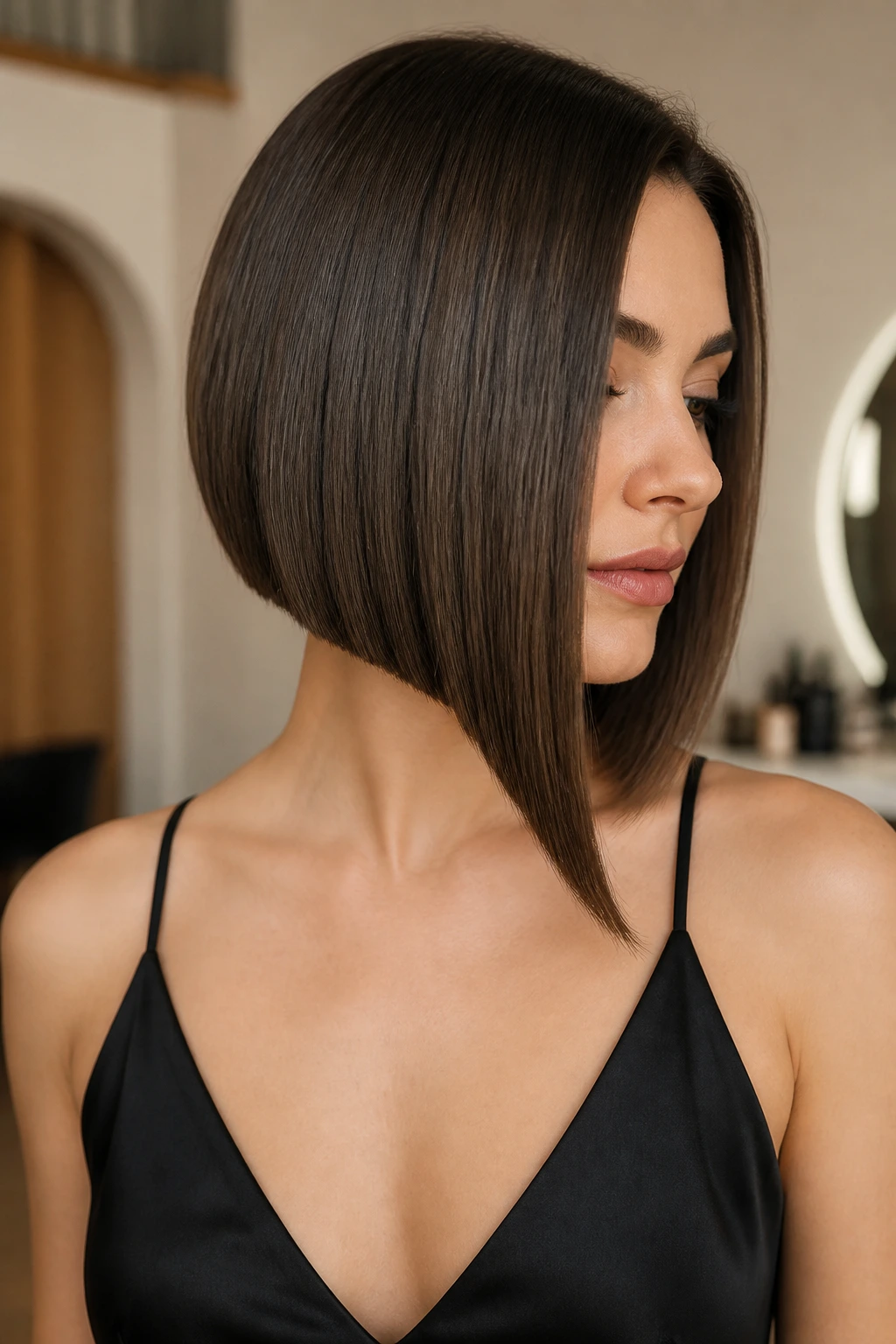
If you like clean lines, this is the one. The bottom edge stays blunt and crisp, while one side carries a longer sweep that lands below the chin. The effect is sharp, sleek, and a little dramatic without needing wild layers.
The blunt edge helps fine hair look denser. The long sweep gives the asymmetry its personality. I especially like this on straight hair because the line stays visible; waves soften it, but they don’t erase it.
Small warning
Blunt ends on thick hair need careful internal debulking. If the stylist forgets that part, you can end up with a heavy triangle at the bottom. Not cute. Not the goal.
8. Fine-Hair Illusion Bob

Fine hair loves a good perimeter, and this asymmetrical bob is all about making the edges look fuller. Keep the layers minimal and let the shorter side sit just long enough to give shape without exposing too much scalp at the part.
A slight off-center part can help too. It creates a thicker-looking mass on one side, which makes the cut seem fuller from the front. The trick is to avoid over-thinning the ends. Fine hair does not need to be hacked to pieces to move.
How to wear it
Blow-dry with a small round brush and tuck the shorter side behind one ear. That little asymmetry near the face makes the haircut look more intentional and less like you just slept on one side.
9. Thick-Hair Debulked Lob
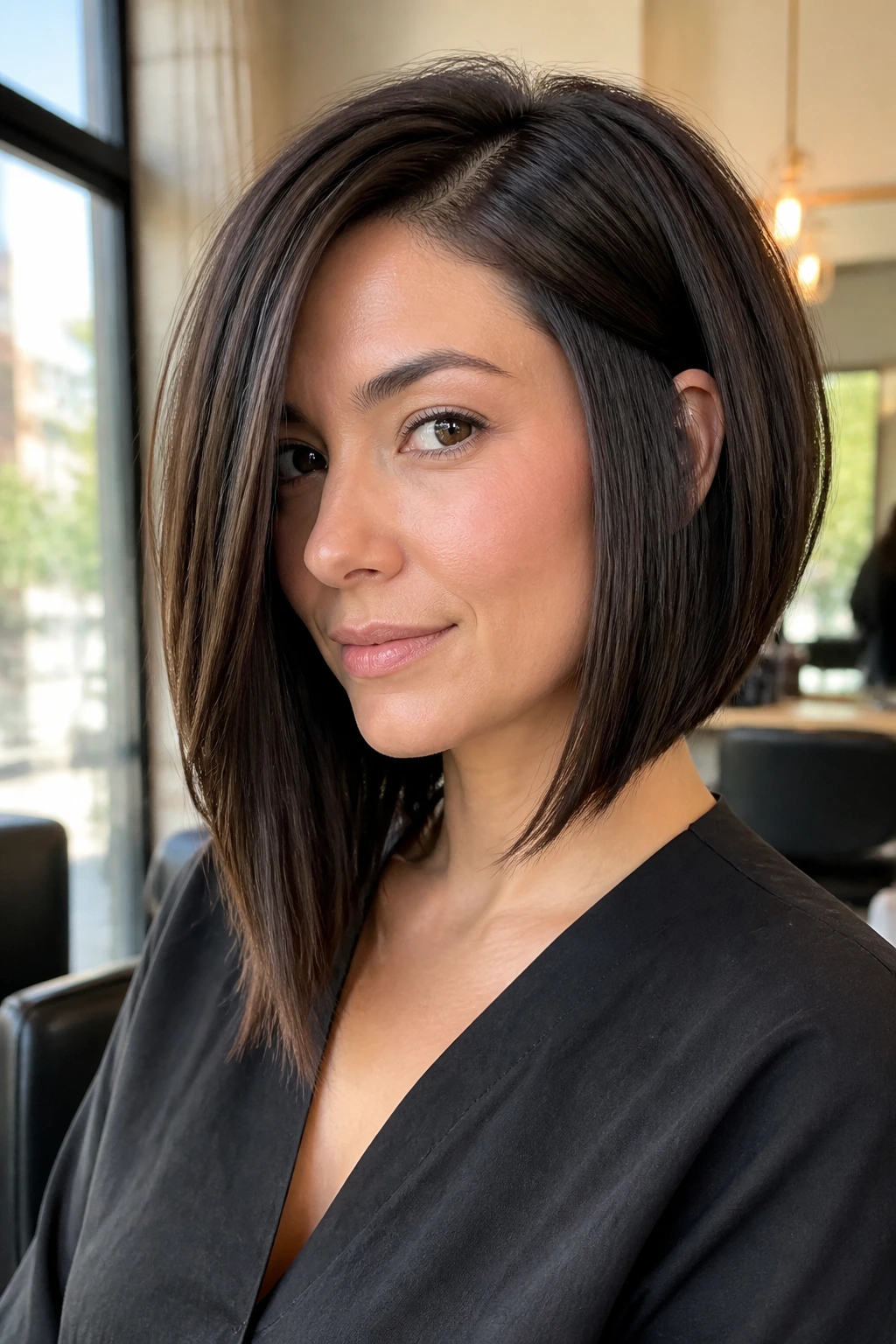
Thick hair can wear asymmetry beautifully, but only if the weight is removed with purpose. This version keeps the long side smooth and the short side lifted, while the interior is debulked enough to stop the hair from feeling like a helmet.
The outer line should still look clean. Too much thinning at the surface makes thick hair frizz at the ends, and then the whole bob loses the polished shape that makes it work in the first place.
What to request
Ask for internal weight removal, not random layers. That distinction matters. You want the bulk taken out from inside the shape so the perimeter still looks strong.
10. Curly Asymmetrical Bob
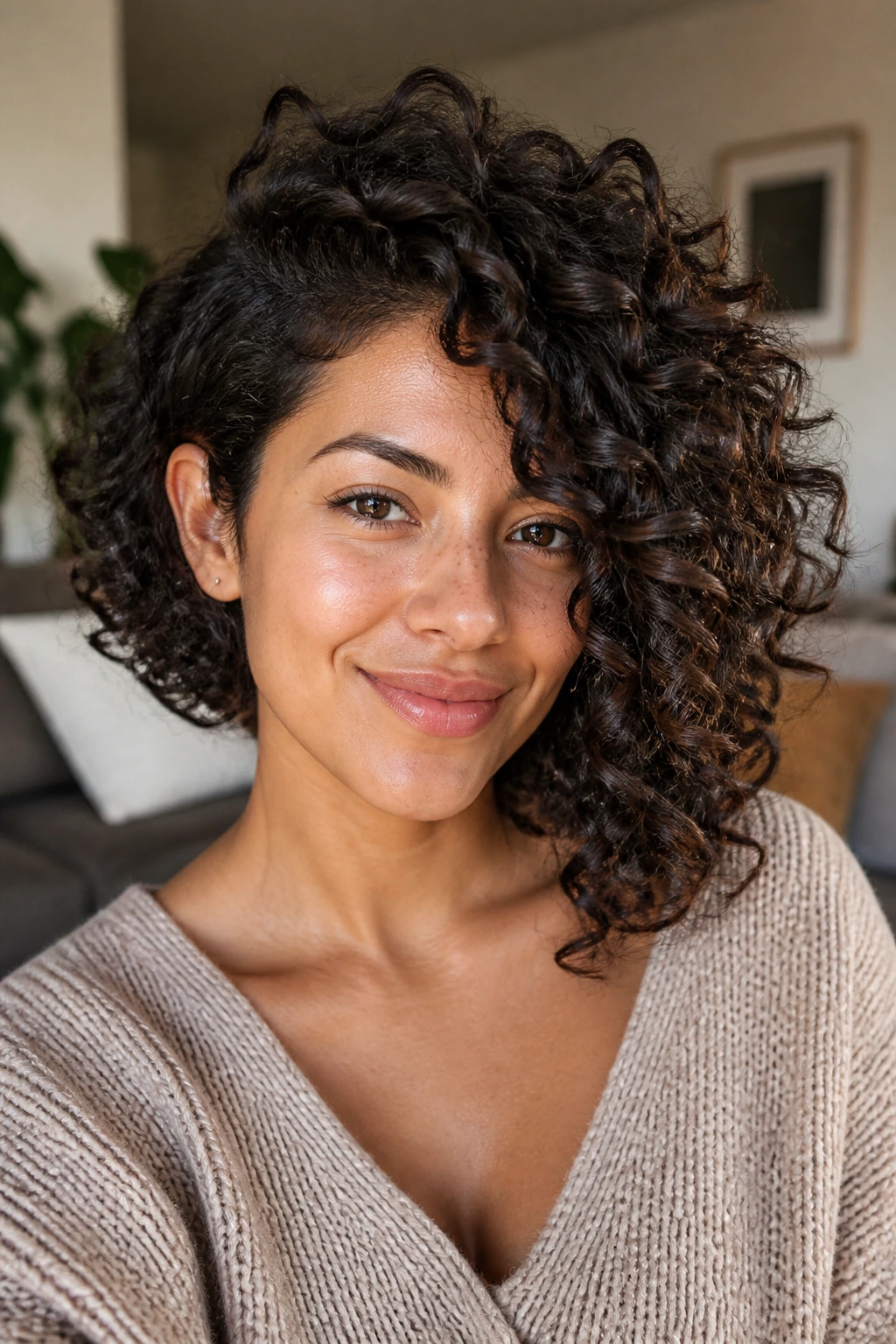
Curly hair makes asymmetry feel alive. The shorter side bounces up more, the longer side stretches downward, and the cut gets that lovely unevenness that straight hair has to fake. The key is to cut it while the stylist understands shrinkage.
This version usually works best when the longer side sits longer than you think it needs to. Curls spring up. That’s not a surprise; it’s the whole deal. If the long side is cut too aggressively, the shape can end up shorter than you wanted once it dries.
Best detail
Ask for the haircut to be checked in its natural pattern, not just blown straight. Otherwise you are judging the wrong shape.
11. Coily Angled Lob
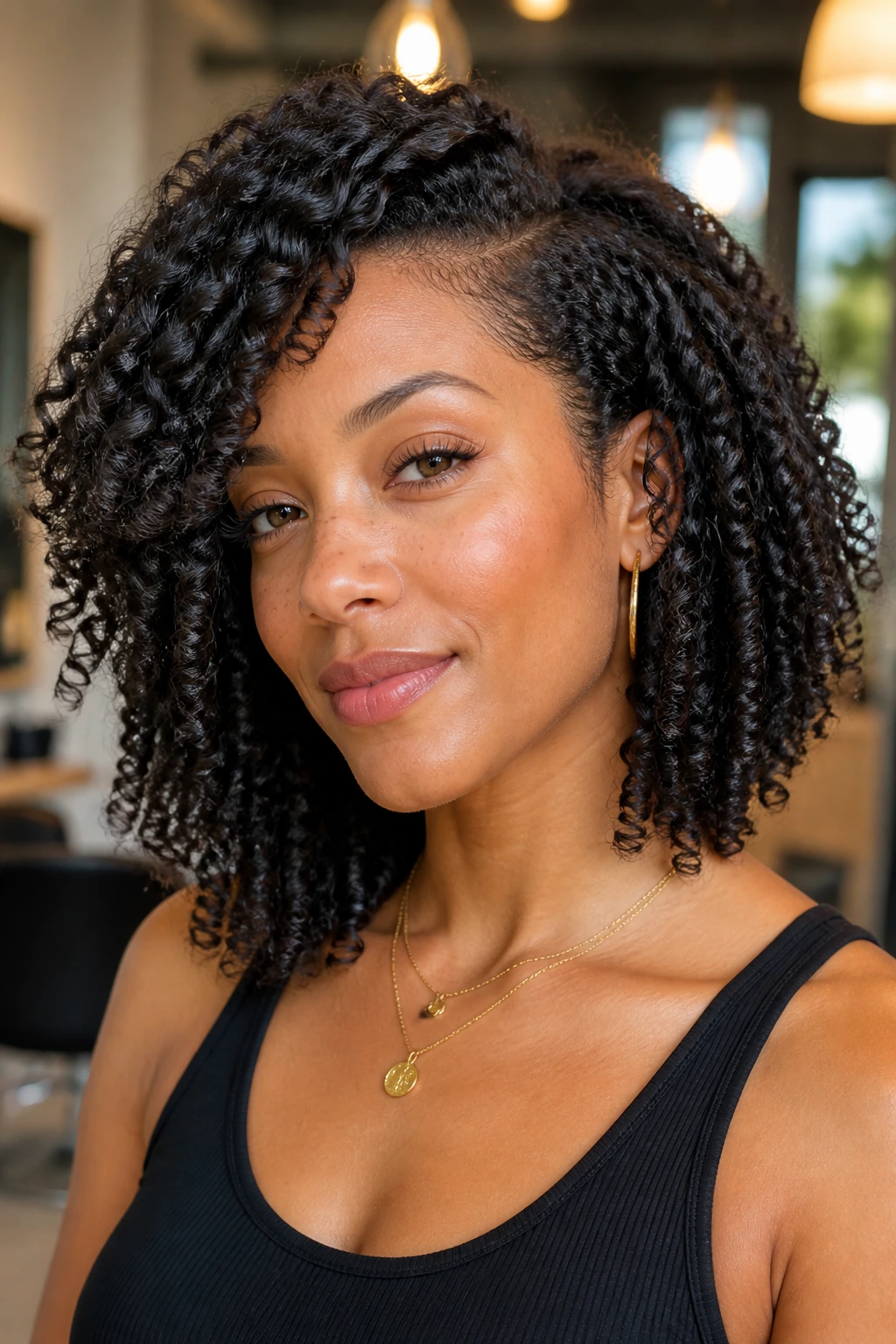
Coily textures can look fantastic in an angled lob because the curve of the coils adds body to the shorter side and elongation to the longer one. The result is shape with presence. Not puff, not bulk — shape.
I’d keep the angle visible but not extreme. Coils already bring plenty of movement, and too-steep a line can get lost once the hair shrinks. A longer front that reaches the collarbone gives the style room to breathe.
Practical tip
Ask your stylist to cut with your shoulders in mind. If your hair sits right at shoulder level on one side, it can spring up and flip in a way that changes the silhouette more than you expected.
12. Undercut Long Bob
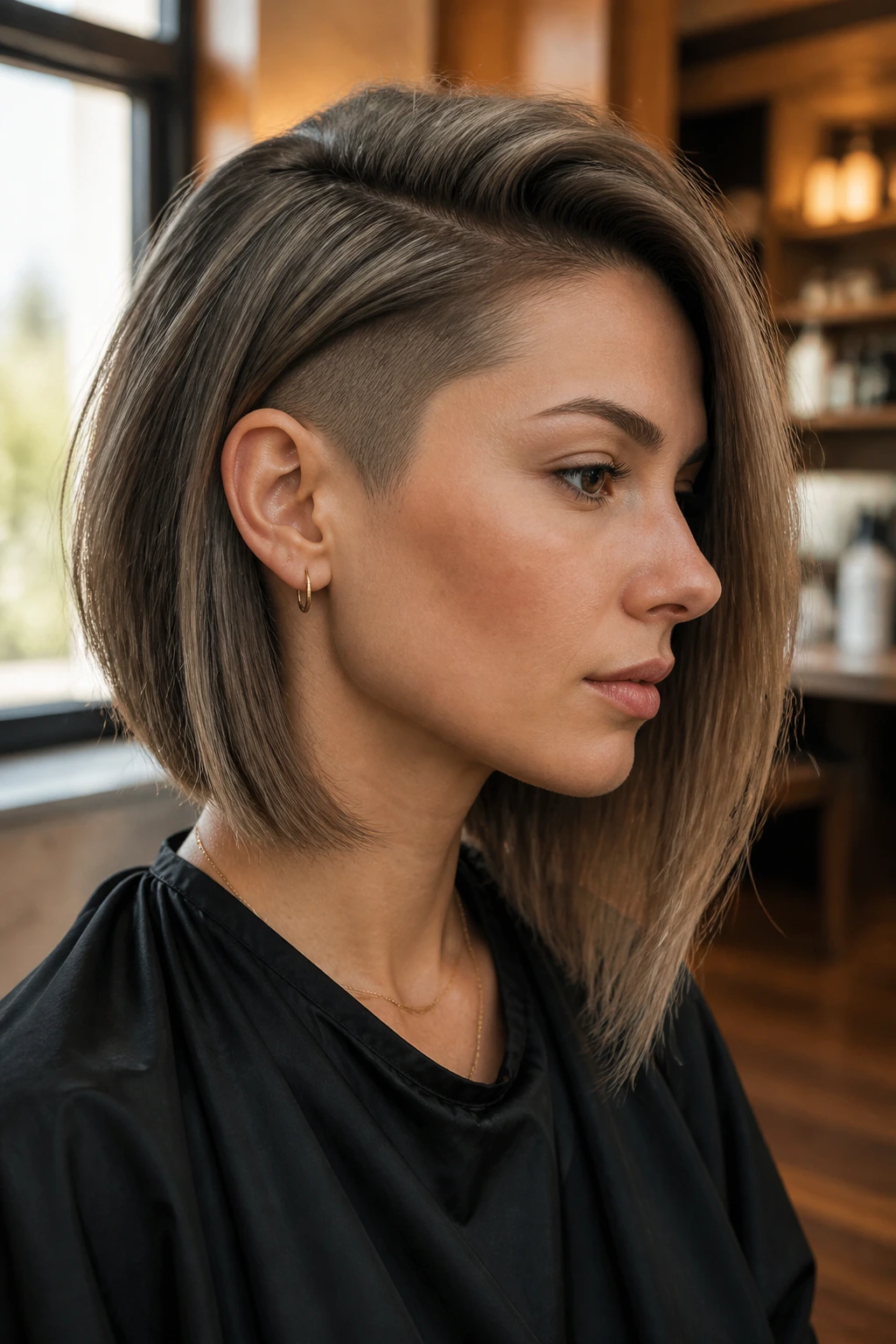
An undercut gives an asymmetrical bob a hidden edge. The top layer keeps the bob shape, while the removed bulk underneath helps dense hair lie closer to the head. On long hair, that can be the difference between “cool shape” and “why is my head so wide?”
This cut is not shy. It suits people who like a little secret drama and don’t mind that the haircut has a more technical feel. The long side still drapes nicely, but the underside keeps the silhouette clean.
Good to know
The undercut doesn’t have to be obvious. A shallow one under the heavier side can fix puffiness without showing up when the hair is down.
13. Tucked-Behind-Ear Bob
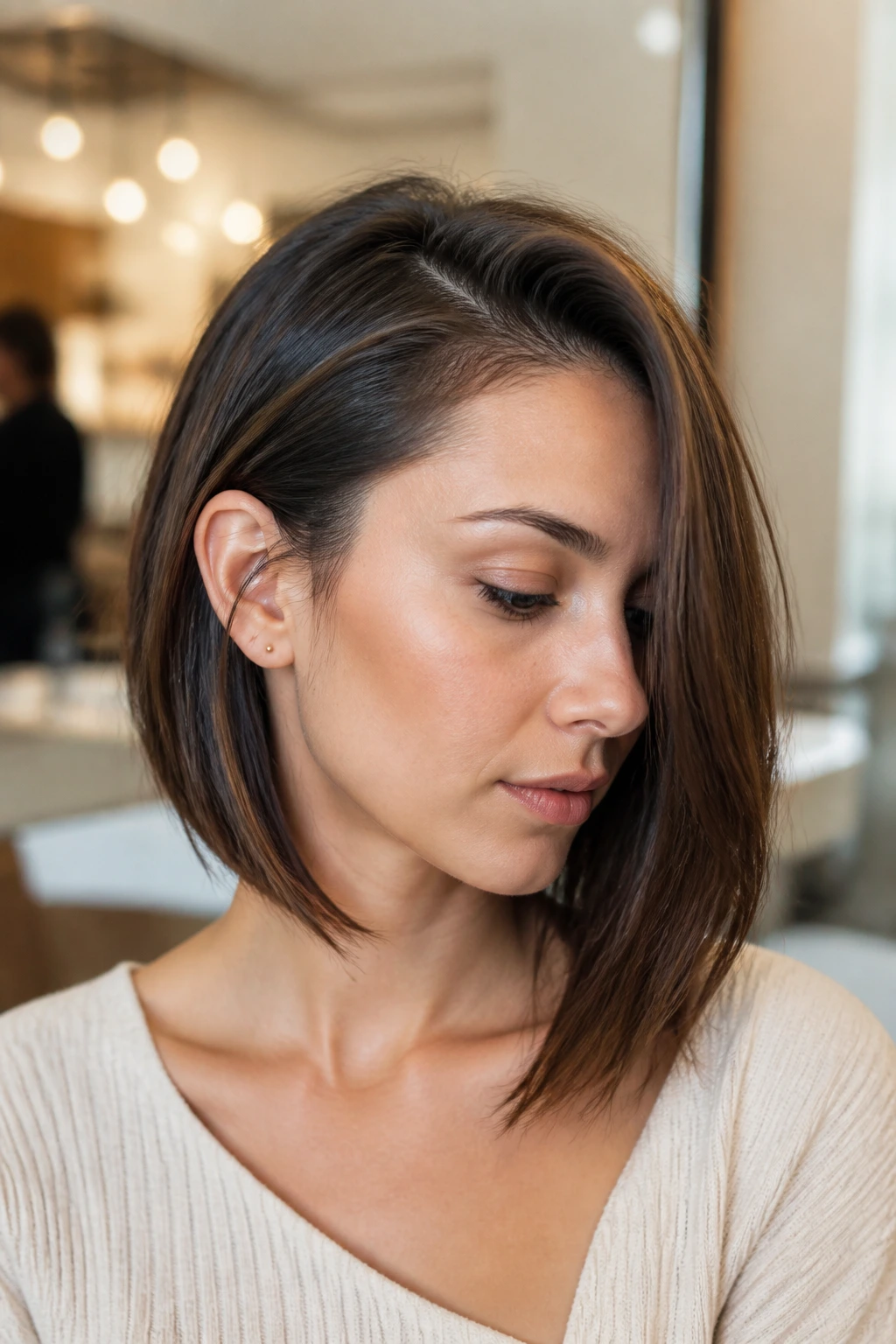
A tucked-behind-ear asymmetrical bob is one of those cuts that looks simple until you notice how the ear changes the line. The shorter side gets clipped back, the longer side falls forward, and the whole thing becomes about contrast.
This works especially well if you wear glasses or statement earrings. The ear gets a little space, the face opens up, and the long front keeps the haircut from feeling too severe. It’s a smart everyday version.
Styling cue
Dry the hair with the tucked side slightly smoother than the long side. That small difference makes the ear tuck look deliberate instead of like you were just getting hair out of your face.
14. Soft Glam Side-Sweep
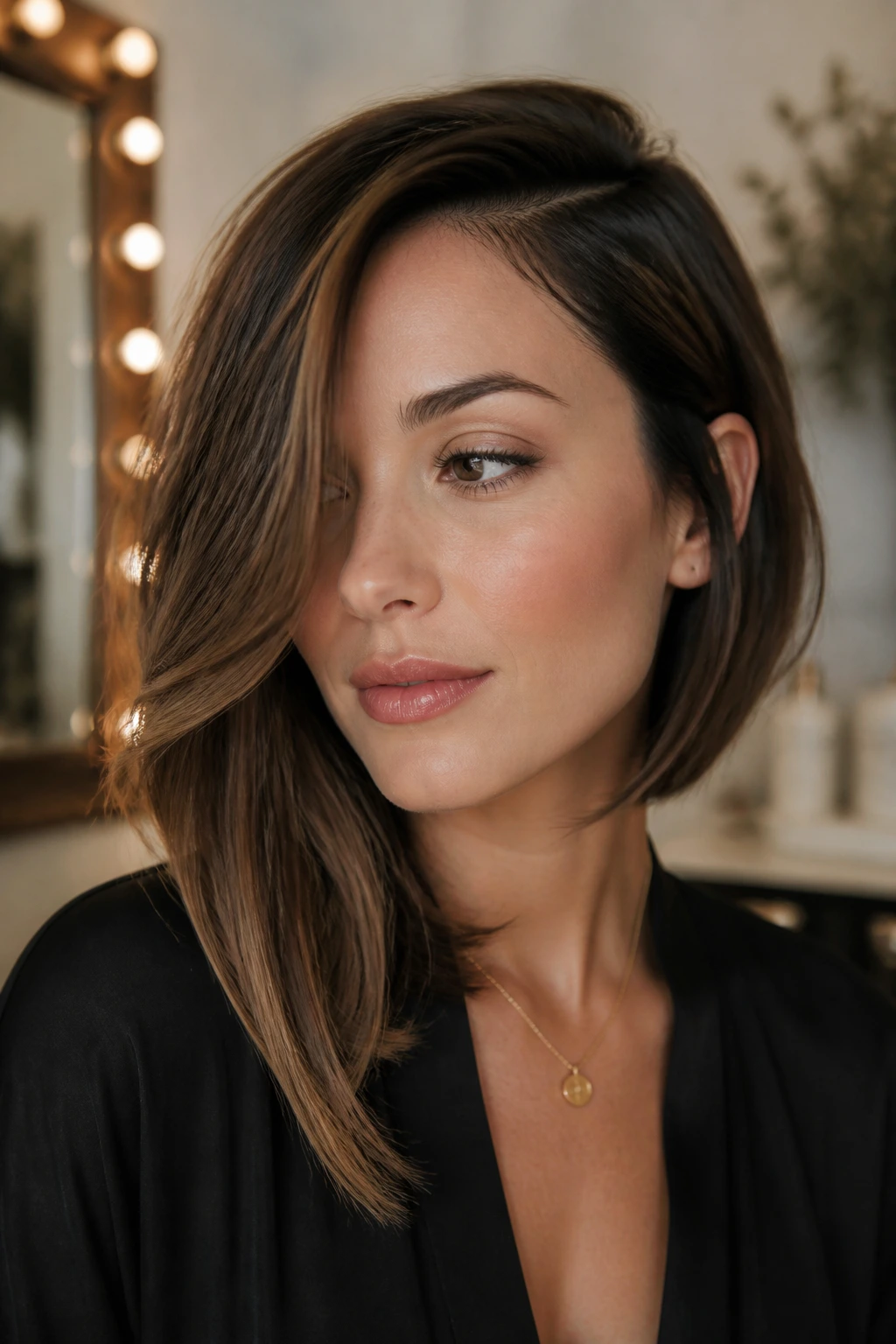
Think polished, but not stiff. The side-swept version gives the long side a soft curve across the cheek, while the short side stays neat and lifted. It’s the asymmetrical bob you’d wear when you want your hair to look done without looking lacquered.
This cut really likes a blowout. The round brush helps the ends bend under or away just enough to keep the shape from dropping flat. If you’ve got medium-density hair, this is a nice way to make the style feel a bit dressier.
One opinion
Skip crunchy hairspray. A flexible mist keeps the sweep moving, which is the whole point.
15. Shattered Ends Lob
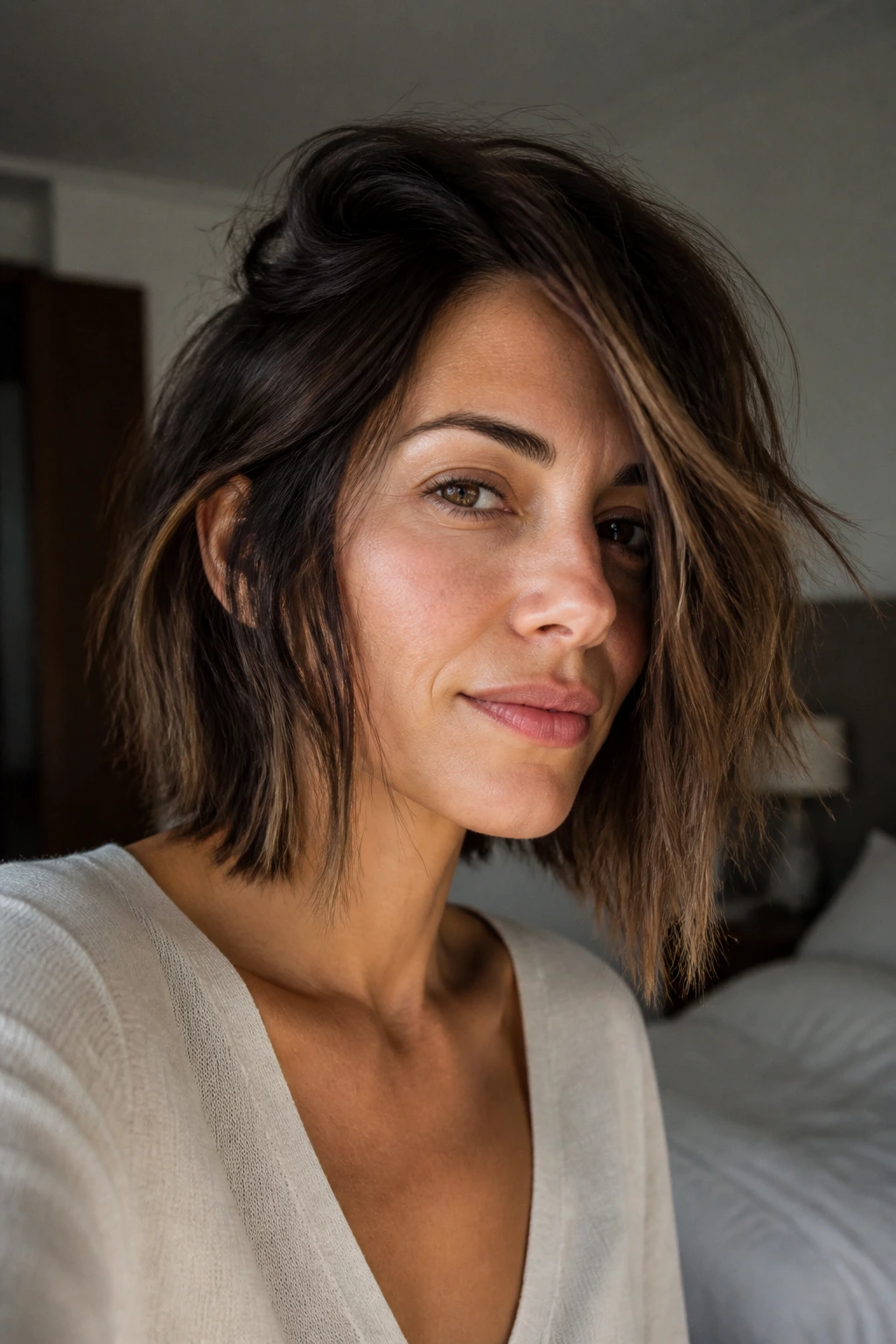
Shattered ends take the edge off a bob that might otherwise feel too solid. The asymmetry still reads clearly, but the tips break apart a little, which gives the haircut motion without piling on layers everywhere.
This is the one I reach for when someone wants a lived-in finish. It looks especially good on second-day hair, when the shape settles and the texture gets a little rougher. Clean, but not fussy.
Watch for this
If the ends are shattered too much, the line disappears. You want a broken edge, not a wispy mess. There’s a difference, and the wrong version ages the haircut fast.
16. Center-Parted Asymmetrical Bob
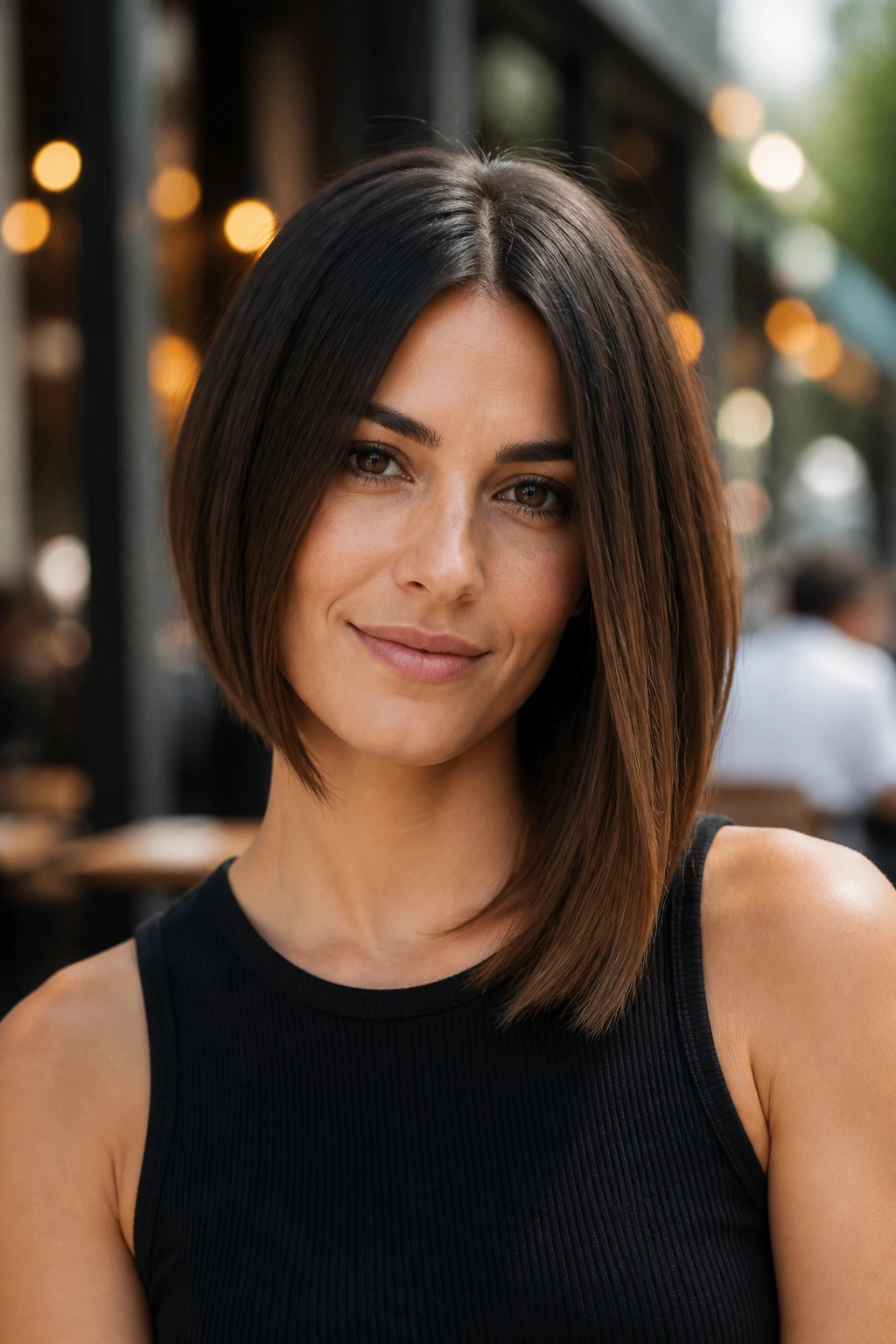
A center part on an asymmetrical bob sounds contradictory, and that’s exactly why it works. The part is symmetrical, but the cut itself isn’t, so the eye gets a clean entry point before the diagonal line kicks in. It’s understated in a way I like.
This version is good when you want the haircut to feel modern without leaning into obvious styling tricks. The longer side falls on its own; the center part just keeps the shape honest. On long hair, that balance keeps the style from feeling too trendy or too precious.
Small note
If your hair has a stubborn cowlick, don’t fight it too hard here. A slightly off-center part may look cleaner than forcing a strict middle.
17. One-Side-Tucked Minimal Bob
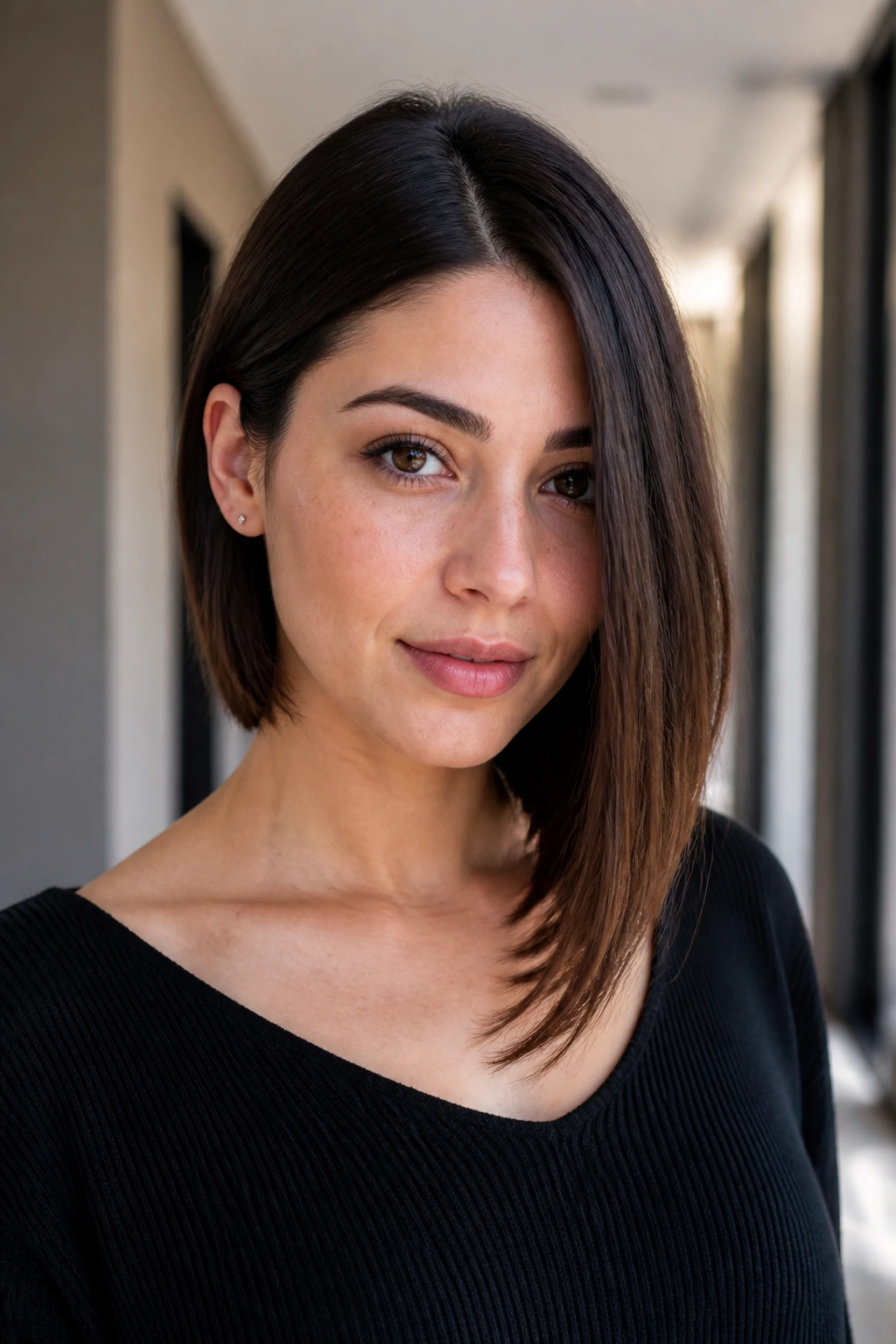
This is the quiet one. The haircut itself is softly angled, but the styling relies on a single tuck to show it off. One side stays behind the ear; the other side hangs loose. Simple. Sharp enough. No theater required.
It’s ideal if you live in clean lines and basic clothes. The cut does the work, not the styling. And because the length stays moderate, you can still put half of it back with a clip when you need the hair out of your way.
Who should try it
People who like low-effort mornings and hate obvious layers. If you want the haircut to be visible but not bossy, this is your lane.
18. Air-Dried Natural Texture Bob

Air-drying changes everything. On an asymmetrical bob, natural texture keeps the longer side from looking too heavy and gives the shorter side enough lift to show the angle. The shape ends up softer, less rigid, and easier to live with.
The best part is that this cut doesn’t need perfect drying. If your waves are a little uneven or your curls dry with a bit of swing, the asymmetry absorbs that instead of fighting it. That’s a rare kind of mercy.
Helpful detail
Use a light cream or mousse through the mid-lengths only. Too much product near the roots makes the hair clump and collapses the shape.
19. Blowout-Smooth Long Bob
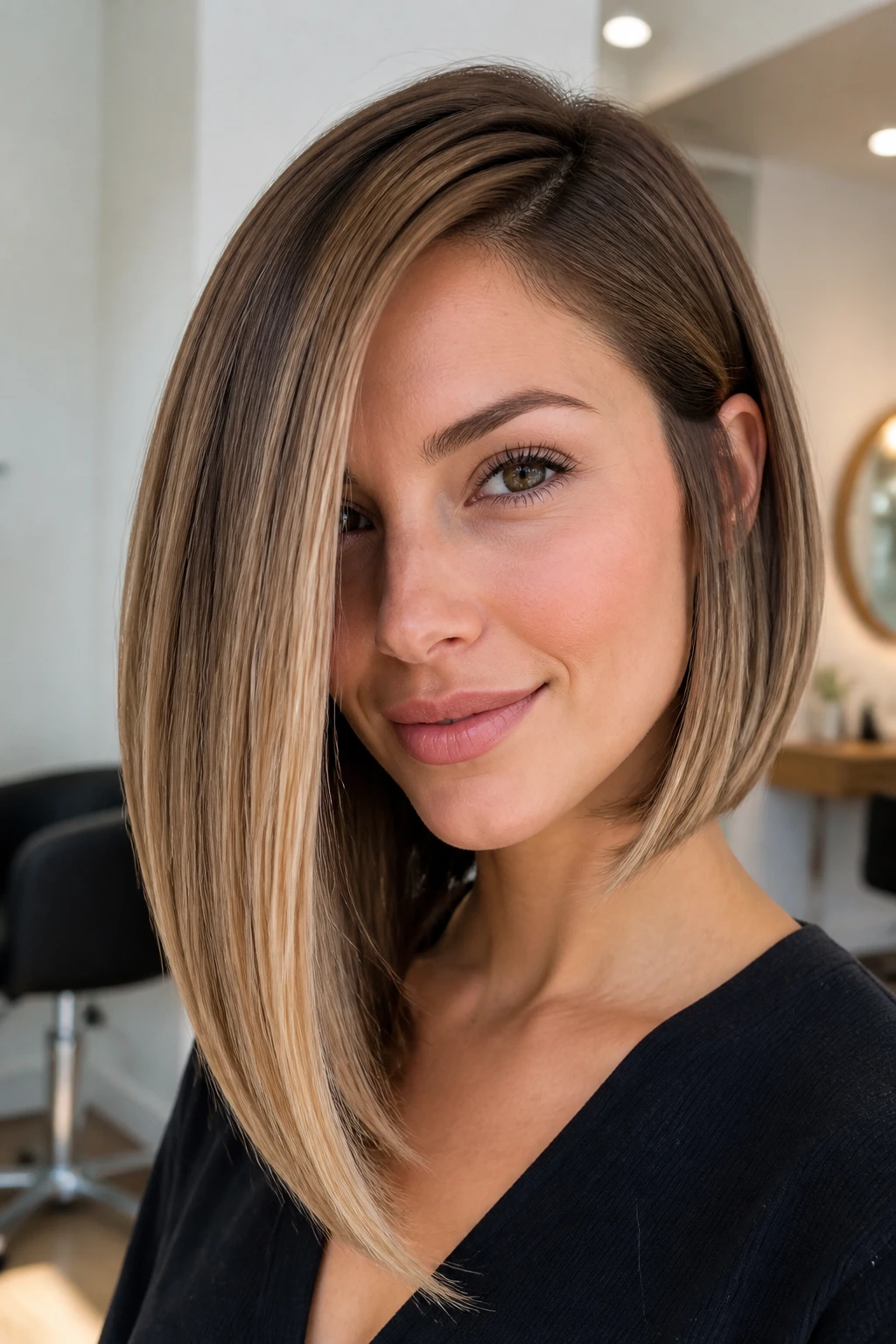
A smooth blowout makes the angle crystal clear. The longer side sweeps forward, the shorter side lifts near the jaw, and the ends curve just enough to keep the line from feeling rigid. If you like a clean salon finish, this version is hard to beat.
It’s also the most forgiving on days when you need your hair to behave. A good blow-dry hides rough texture, aligns the ends, and makes the asymmetry look intentional even if the cut is two weeks past its fresh appointment.
Styling move
Dry the hair in sections with the nozzle pointed downward. That keeps the cuticle lying flat and gives you the sleekness that makes the angle pop.
20. Bob with Money Piece
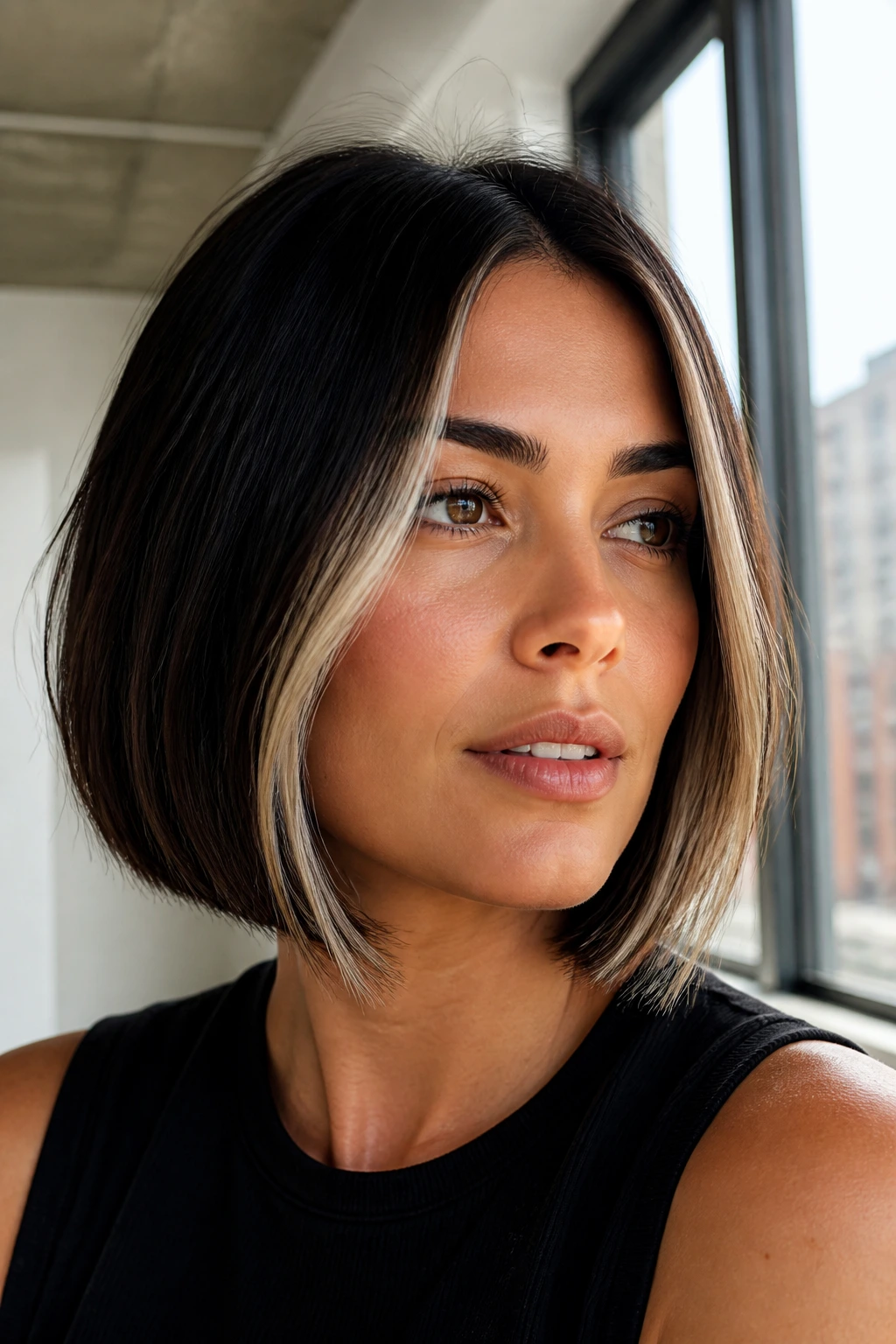
A money piece can make an asymmetrical bob for long hair read brighter and sharper around the face. The lighter front strands pull attention to the longer side and keep the haircut from blending into the rest of your hair color.
This works especially well if your haircut is dark or one tone. The contrast makes the line easier to see. It also helps if you want the cut to feel a little more playful without changing the silhouette itself.
Best use
Keep the money piece no wider than a couple of front sections. If it gets too chunky, it starts looking stripey and swallows the shape.
21. Soft U-Shape Asymmetrical Lob
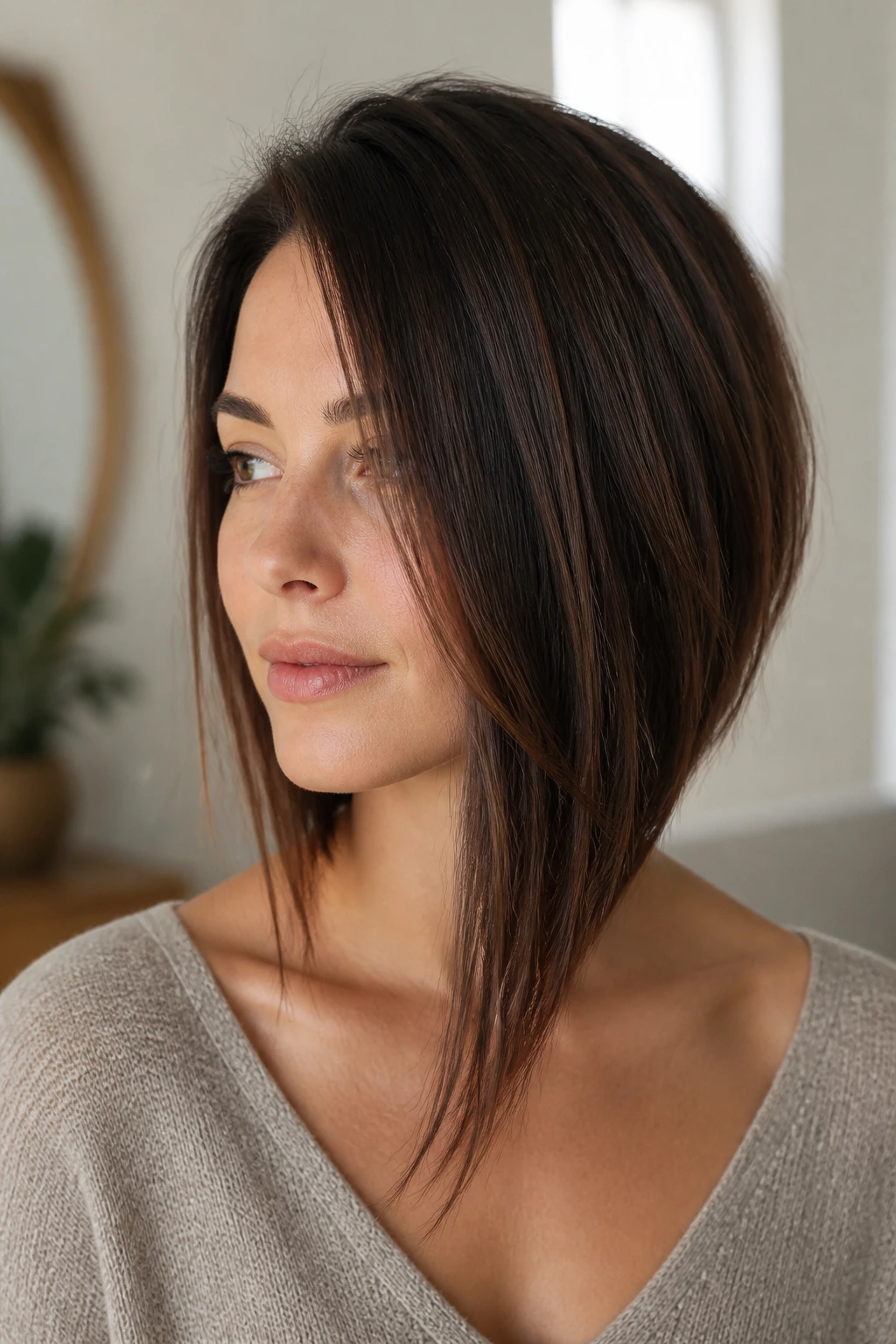
A U-shape doesn’t sound asymmetrical at first, but with one side longer, it becomes a very wearable hybrid. The back curves gently, the front corners stay longer, and the overall silhouette feels soft instead of sharp.
This is one of the best options if you don’t want a hard diagonal line. The difference in length is visible, but the perimeter stays rounded, which suits people who like movement without a heavy edge.
Why I like it
It grows out politely. That’s not glamorous language, but it matters. Some cuts need babysitting. This one can breathe for a while.
22. Face-Framing Long Angle
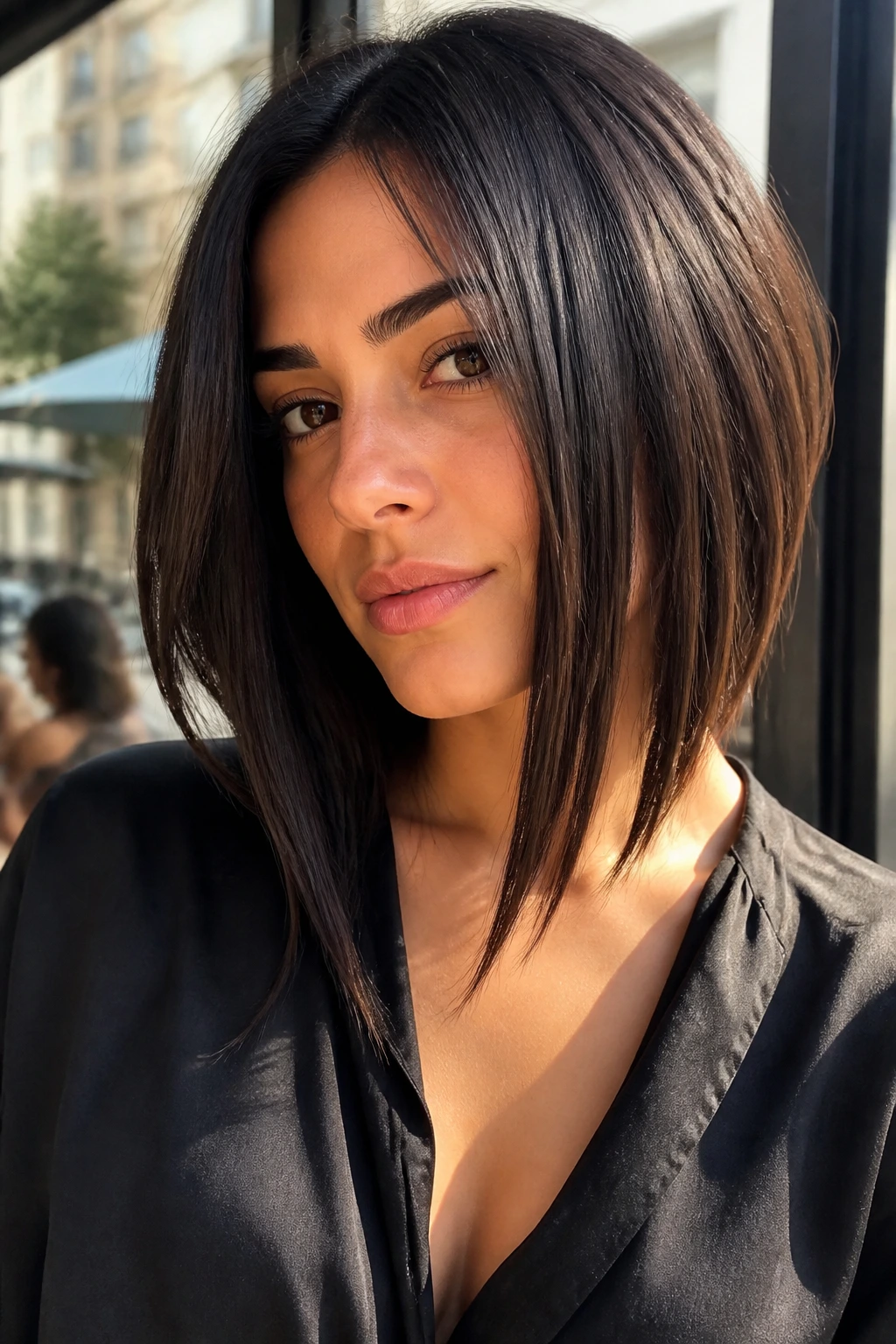
This version puts the front pieces front and center. The asymmetry starts near the cheekbone and stretches down toward the collarbone, which means the haircut does a lot of its work around the face rather than at the back.
That makes it useful for people who want their features emphasized without a huge chop. If you have a strong cheekbone or want to soften a longer face, the front angle can do that job better than a blunt row of ends ever will.
How to wear it
Use a flat iron only on the front pieces if needed. A slight bend away from the face opens the shape, and that tiny movement matters more here than a polished pin-straight finish.
23. Round-Face Balancing Bob

A round face needs vertical movement and a line that doesn’t stop right at the widest part of the cheeks. This asymmetrical bob keeps the longer side below the chin, which helps stretch the silhouette. The shorter side still opens the face, but it doesn’t crowd it.
The best versions avoid too much volume at the sides. Keep the crown lifted and the ends tidy. If the bob puffs outward, you lose the slimming effect and end up right back where you started.
Small fix
Ask for soft internal layering at the top, not around the cheeks. That keeps the shape taller without making the sides bulky.
24. Square-Jaw Softening Bob
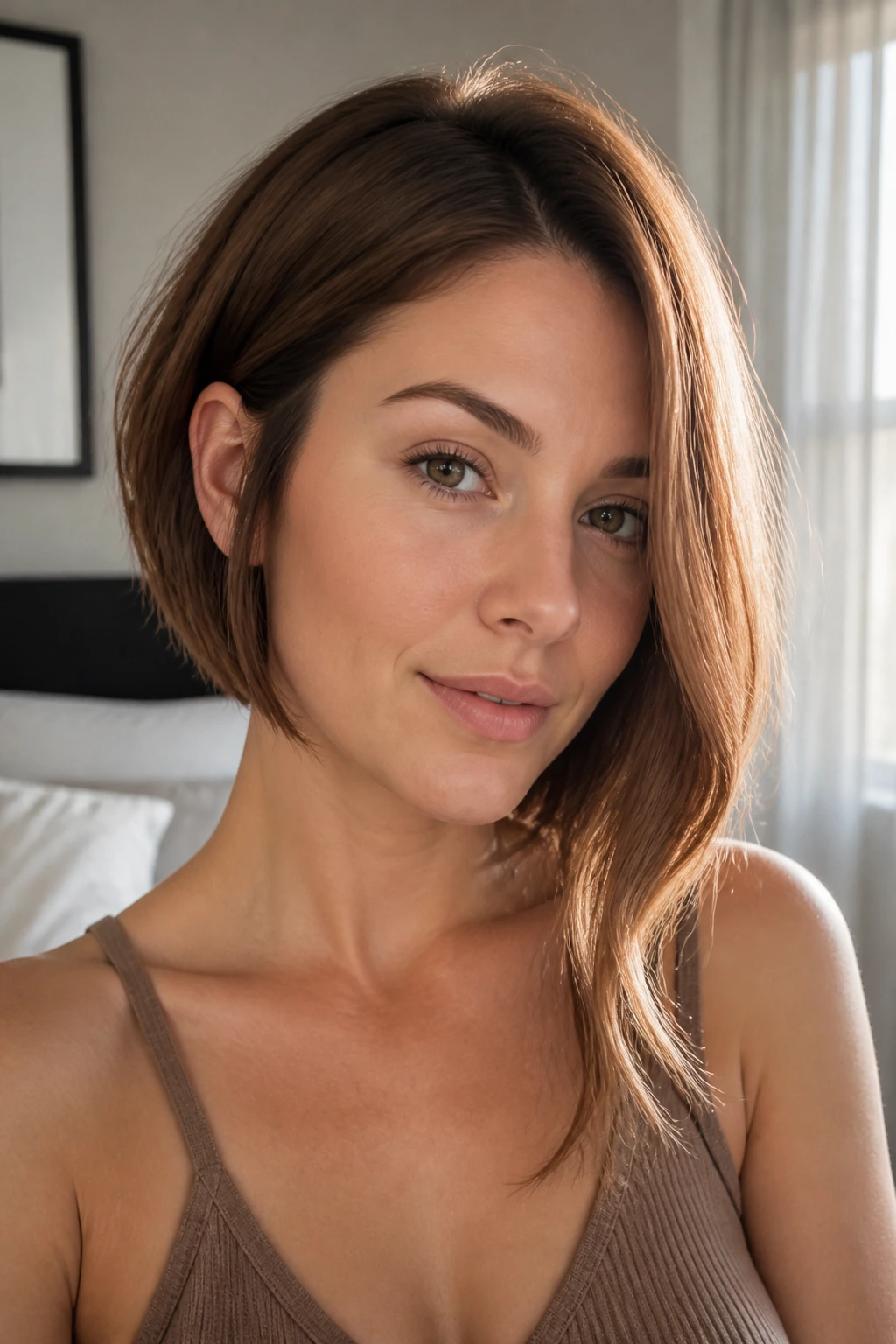
Square jaws can wear an asymmetrical bob beautifully, but the cut needs curves somewhere. A long front that brushes past the jaw softens the line, while a slightly shorter opposite side breaks up the symmetry that can make the jaw feel extra hard.
You don’t need to hide the jaw. That’s not the point. You want the haircut to share the attention with it instead of fighting it head-on.
Styling note
A loose bend through the front pieces works better than a stiff tuck under. The bend takes the edge off the angle and keeps the lower face from feeling boxed in.
25. Heart-Shaped Face Lob
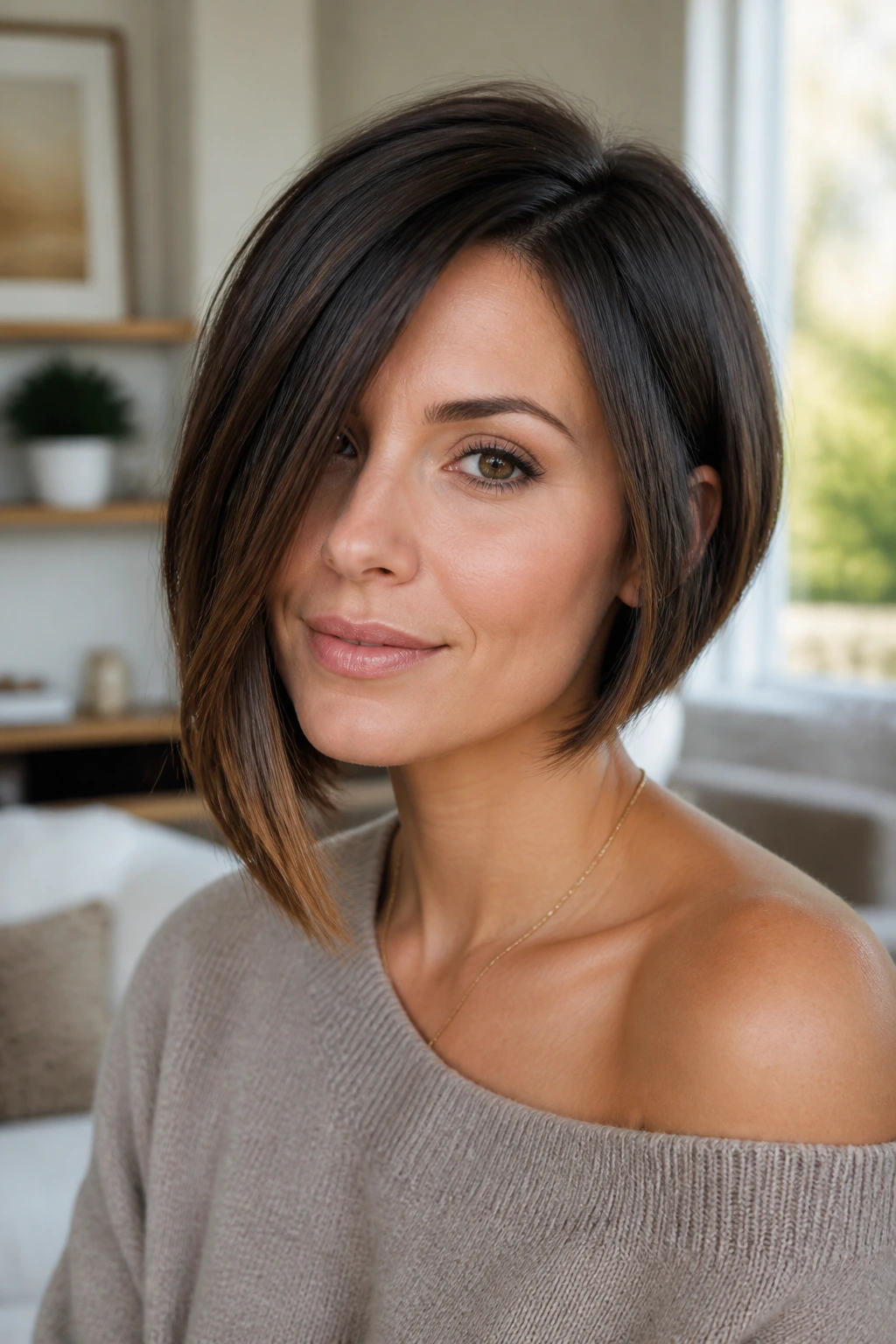
Heart-shaped faces usually benefit from a little visual weight near the chin. A long asymmetrical bob can do that nicely if the longer side lands low enough and the shorter side doesn’t stop too high on the cheek. It creates balance without dragging the face down.
This cut also works well with side parts because they direct the eye diagonally. That plays nicely with the natural shape of the haircut and stops the forehead from feeling overly dominant.
What to remember
If you have a strong chin point or a narrow jaw, keep the longest sections softly beveled instead of razor sharp. A hard line can feel too angular.
26. Low-Maintenance Grow-Out Lob
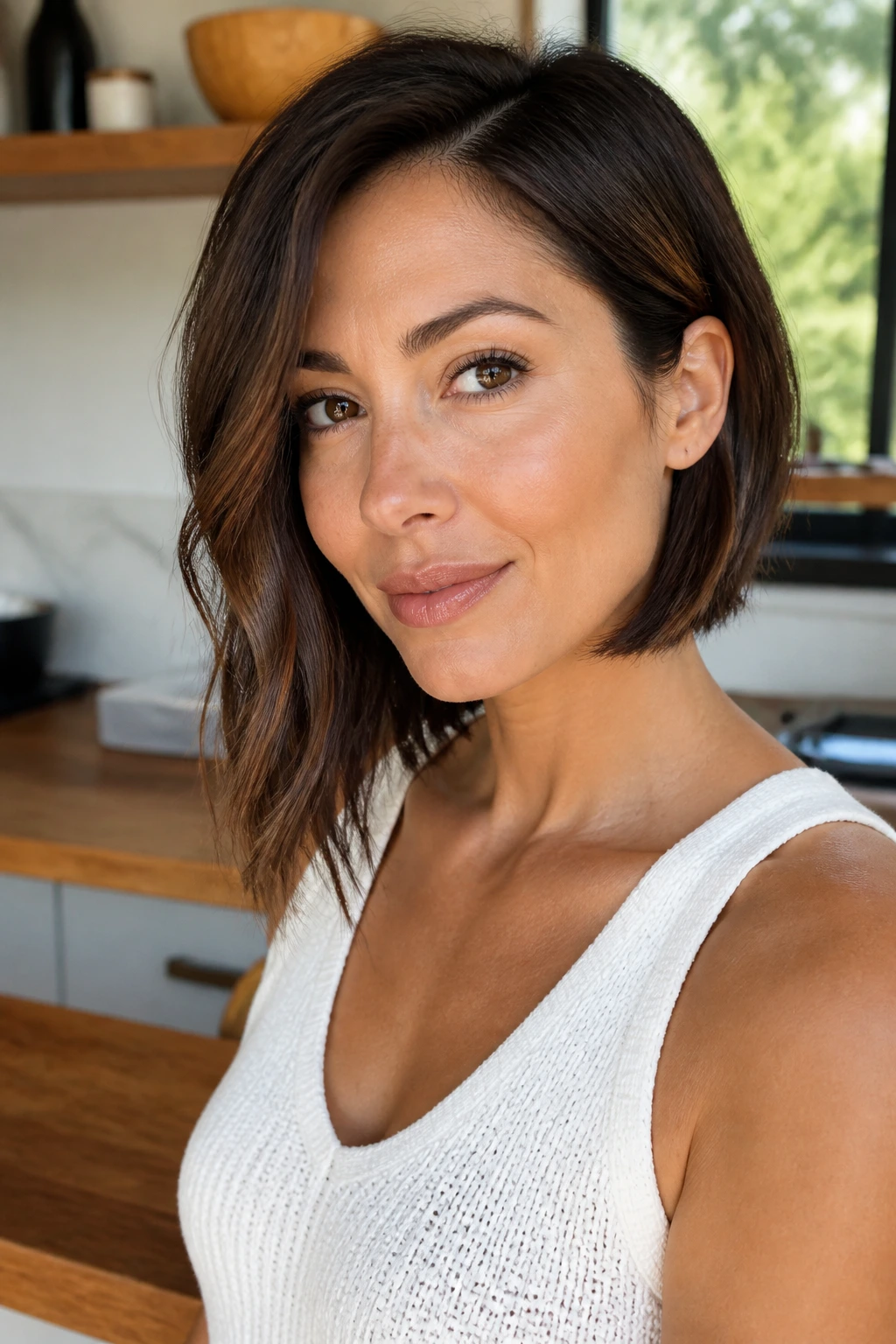
This is the practical person’s asymmetrical bob. The difference between the two sides is visible, but it’s not so extreme that the cut looks weird after a few weeks. The angle softens as it grows, which means the haircut stays decent longer.
That matters more than people admit. A lot of cuts are cute on day one and annoying on day twenty-one. This one keeps its manners.
A good detail
Ask for the shortest side to sit at or below the chin if you want the grow-out to stay easy. Anything much shorter tends to show regrowth faster.
27. Strong Diagonal Line Bob
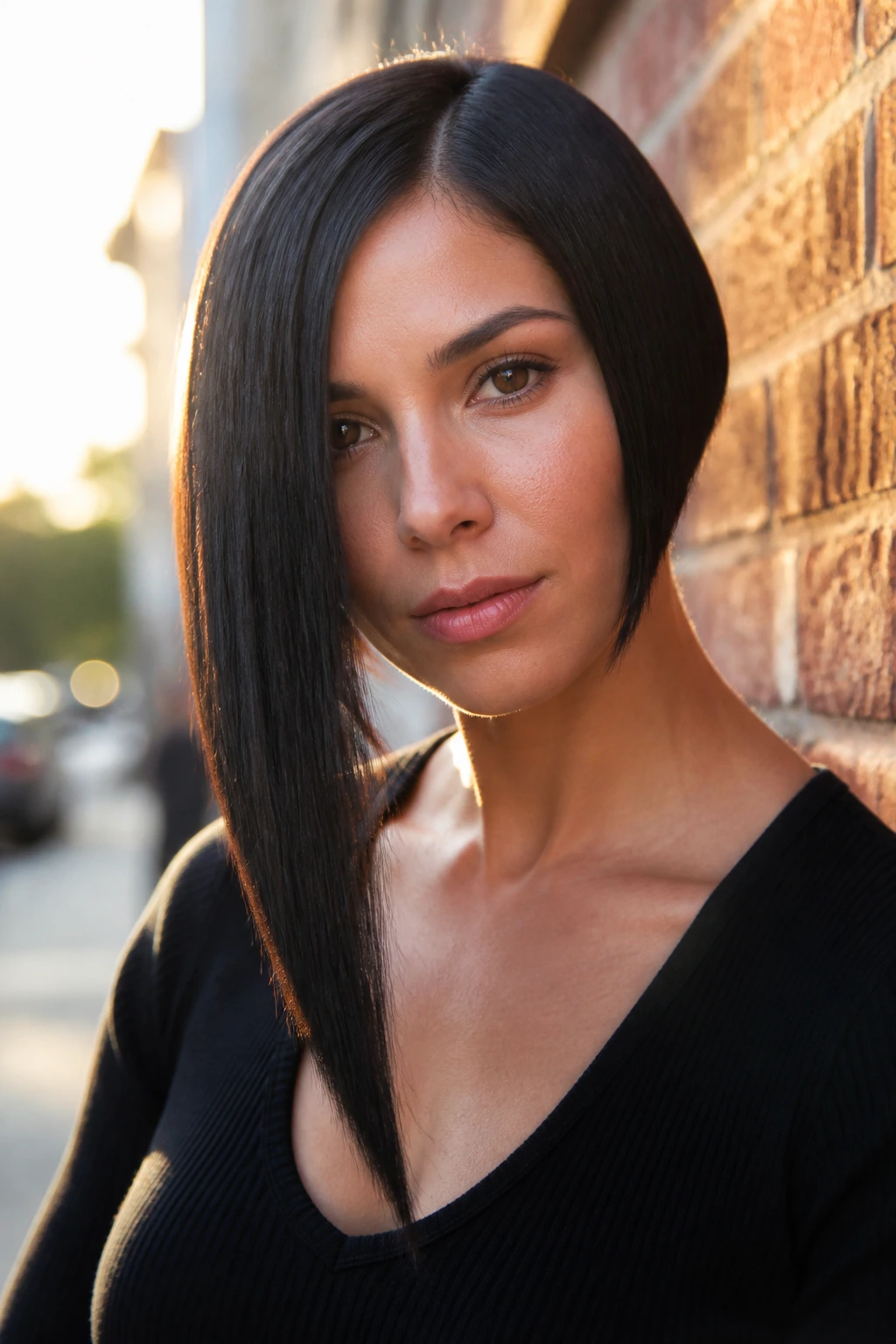
Here’s the bold one. The diagonal is obvious from the back all the way through the front, and the longer side lands low enough to make the angle feel dramatic. If you like a haircut that has presence, this is it.
The shape works best on straight or smoothed hair because the line needs to be seen. Waves soften the angle, which can be pretty, but it won’t have the same graphic effect.
Best for
People who want the haircut to be the outfit. This is not the quiet version.
28. Micro-Layered Asymmetrical Bob

Micro-layers are tiny, almost invisible layers placed to keep the cut moving without changing the outline. On an asymmetrical bob, they help the longer side flow instead of hanging like a curtain.
This is useful if your hair is medium-thick and you dislike obvious layering. You get lift and motion with a cleaner shape. The haircut still looks like a bob, not a stack of disconnected pieces.
The caution
Too many micro-layers can make the ends flick out in odd directions. You want a small amount of internal movement, not a shag hiding in a bob’s clothes.
29. Choppy Piecey Bob
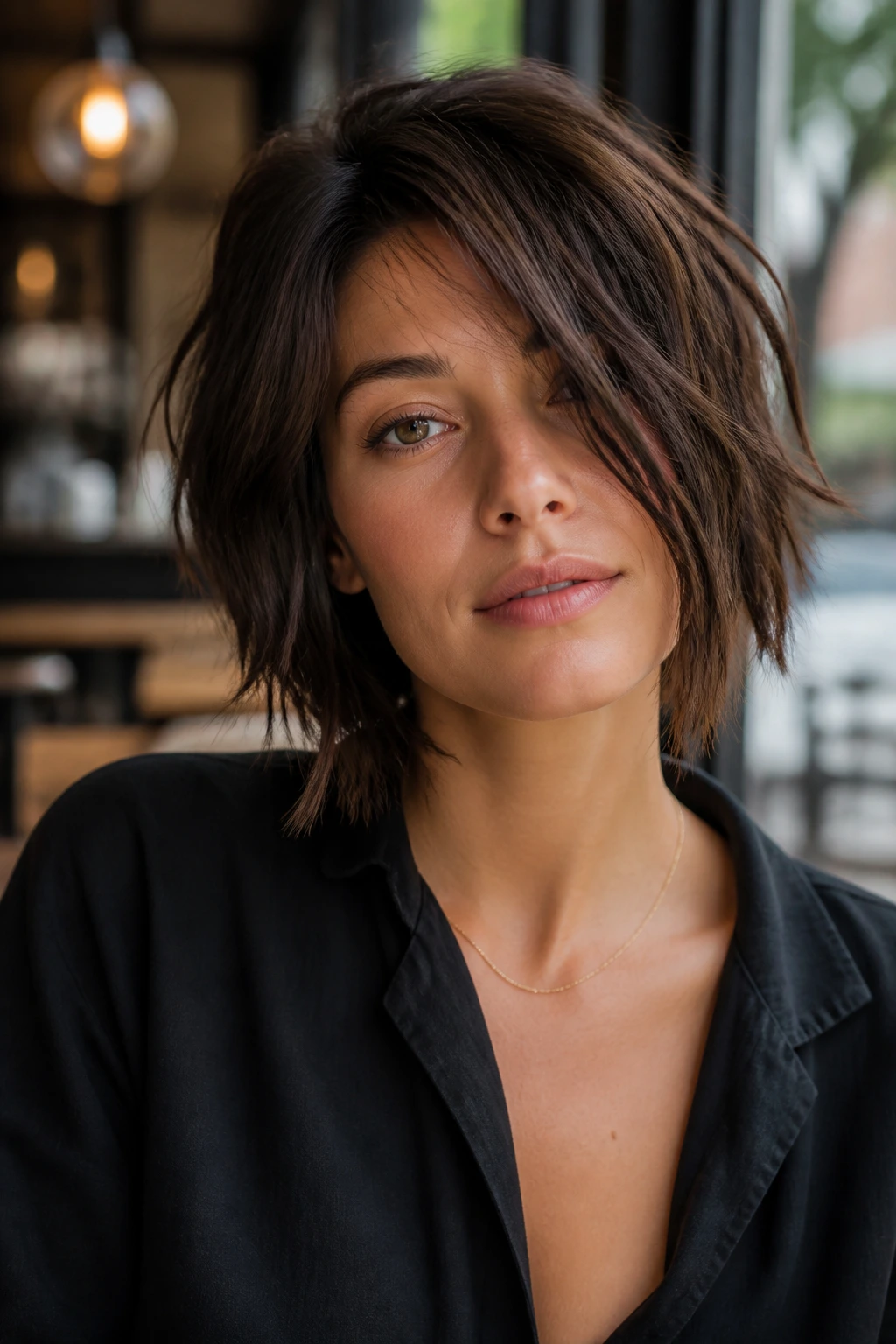
This version lives on texture. The ends are separated enough to show individual pieces, and the asymmetry feels more casual because of it. If you like hair that doesn’t sit too perfectly, this one has real charm.
It’s especially nice with matte texturizing products. A little grit helps the pieces stand apart. Without that, the cut can lose the chipped-up edge that makes it interesting.
Try this
Work a pea-sized amount of paste through dry ends, then pinch sections with your fingers. It sounds minor. It’s not. It changes the whole finish.
30. Salt-and-Pepper Asymmetrical Lob
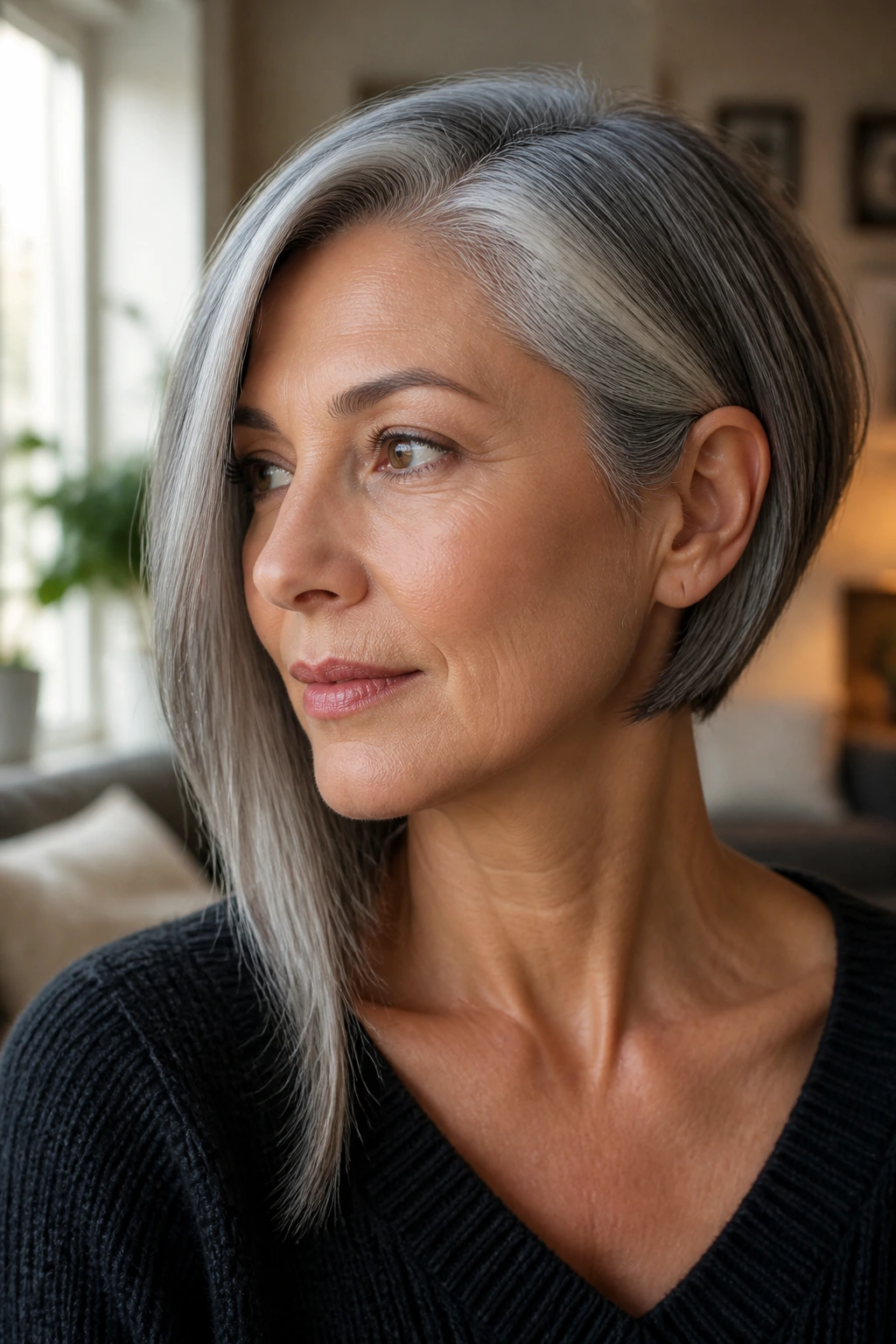
Gray hair, silver strands, and salt-and-pepper blends take beautifully to asymmetry because the cut line catches the mixed tones in a very direct way. The longer side gives the lighter strands somewhere to shimmer, while the shorter side keeps the shape fresh.
This is one of those cuts that doesn’t try to hide anything. It lets the color and texture exist as they are. That honesty suits the style.
Practical note
Use a blue or purple-leaning shampoo only if your hair tends to yellow. Don’t overdo it, though. Too much toning can make the hair look flat and dry.
31. Wet-Look Slick Bob
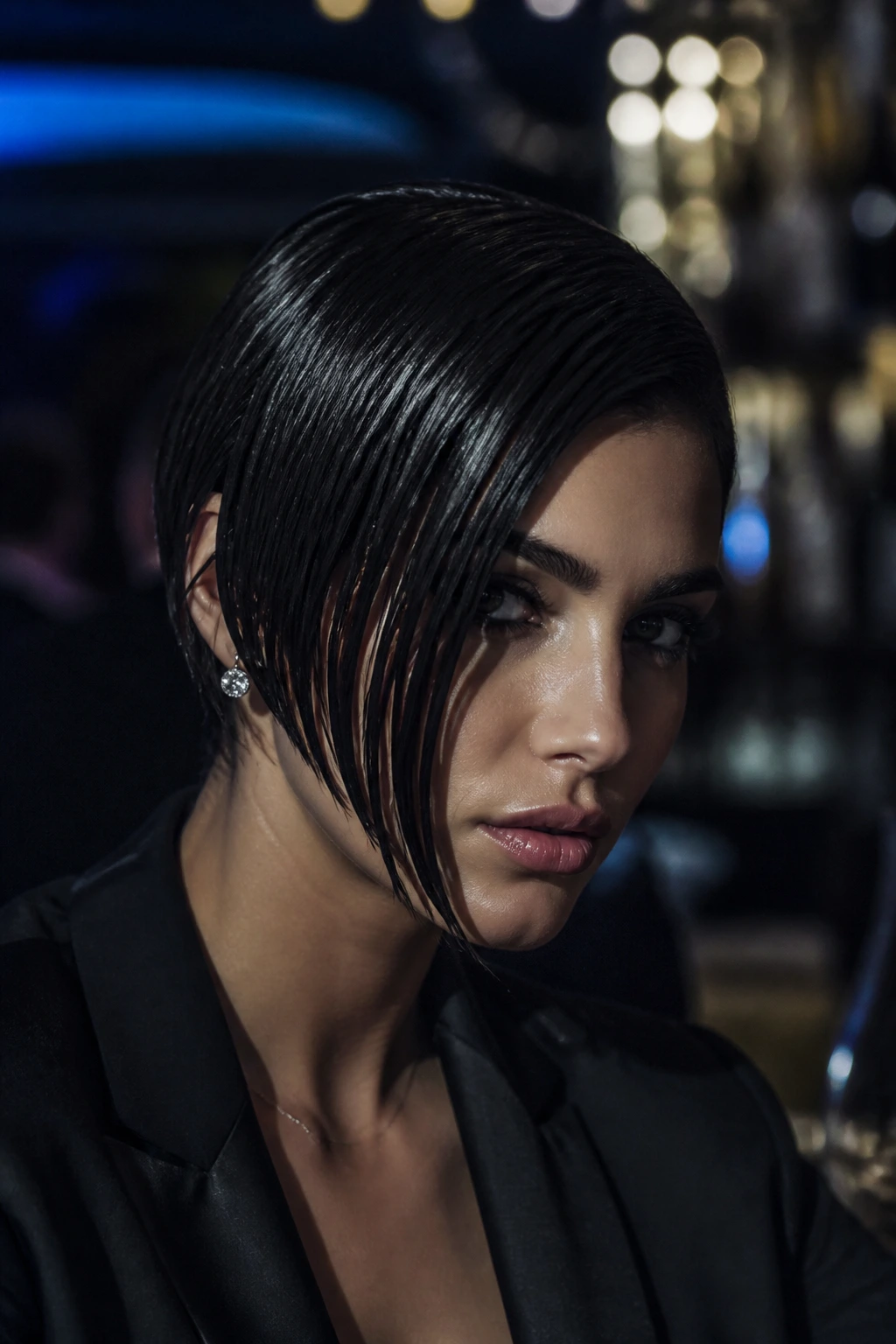
A slick finish turns the asymmetrical bob into something sharper and more fashion-forward. The hair hugs the head, the diagonal line becomes more obvious, and the longer side hangs with a heavy, glossy feel.
This works best for a night out, a sharp outfit, or anyone who likes a deliberate, editorial look. It’s not the easiest day-to-day version, but it’s one of the most striking when done right.
The trick
Use less gel than you think you need. Start with a small amount, comb it through, and build only if the hair still frizzes. Too much product makes the ends look greasy instead of sleek.
32. Hidden-Undercut Long Bob
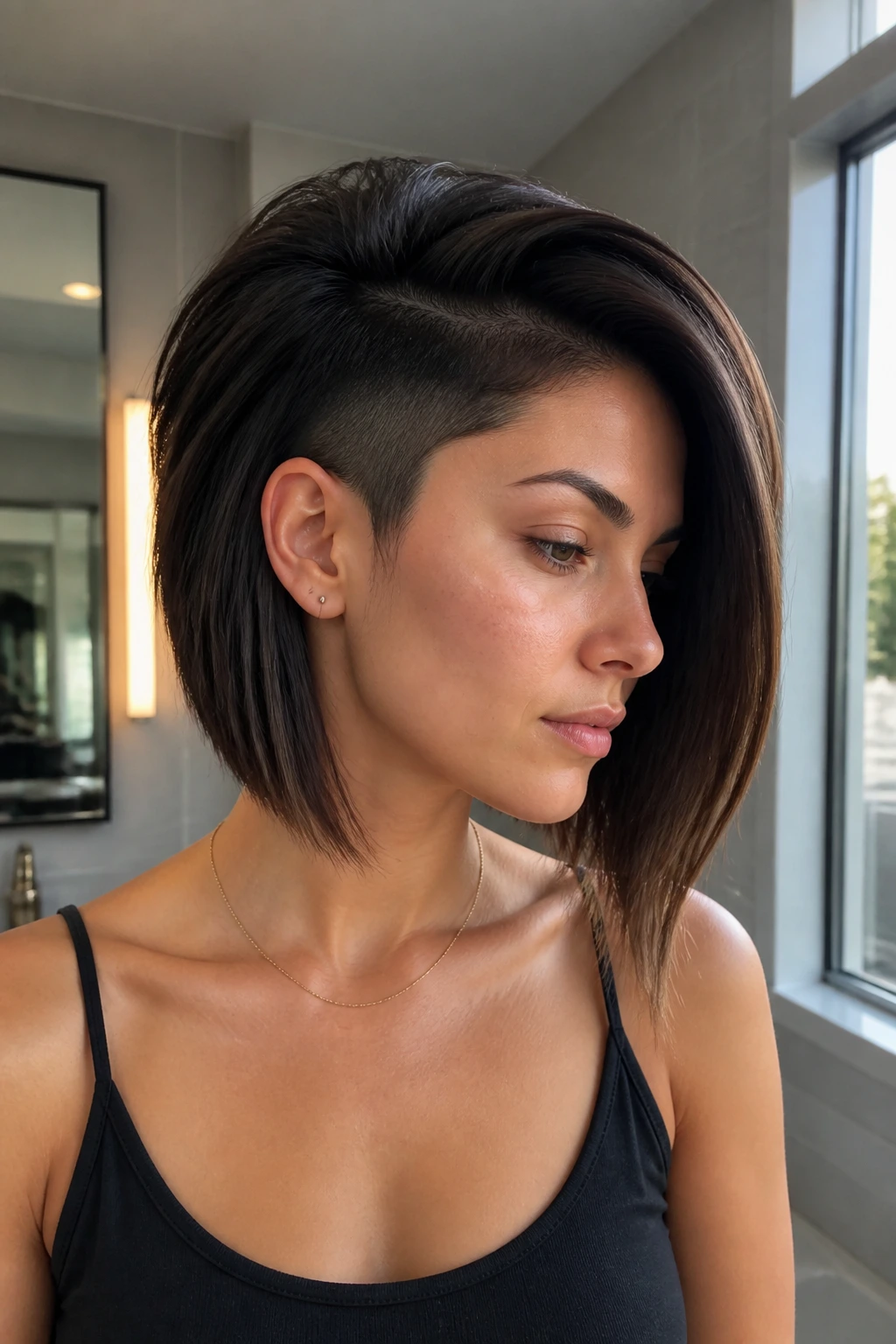
A hidden undercut gives you the clean shape of a bob with a little secret relief underneath. On thick or coarse hair, that hidden removal of bulk can make the longer side fall more neatly and stop the cut from ballooning out.
You don’t have to show the undercut for it to matter. That’s the beauty of it. The haircut gets easier to wear, and most people only notice that it suddenly looks tidier.
Good fit
If your hair takes forever to dry, this can shave off some time too. Less bulk usually means less drying effort. Not magic. Just math.
33. Feathered Collarbone Bob
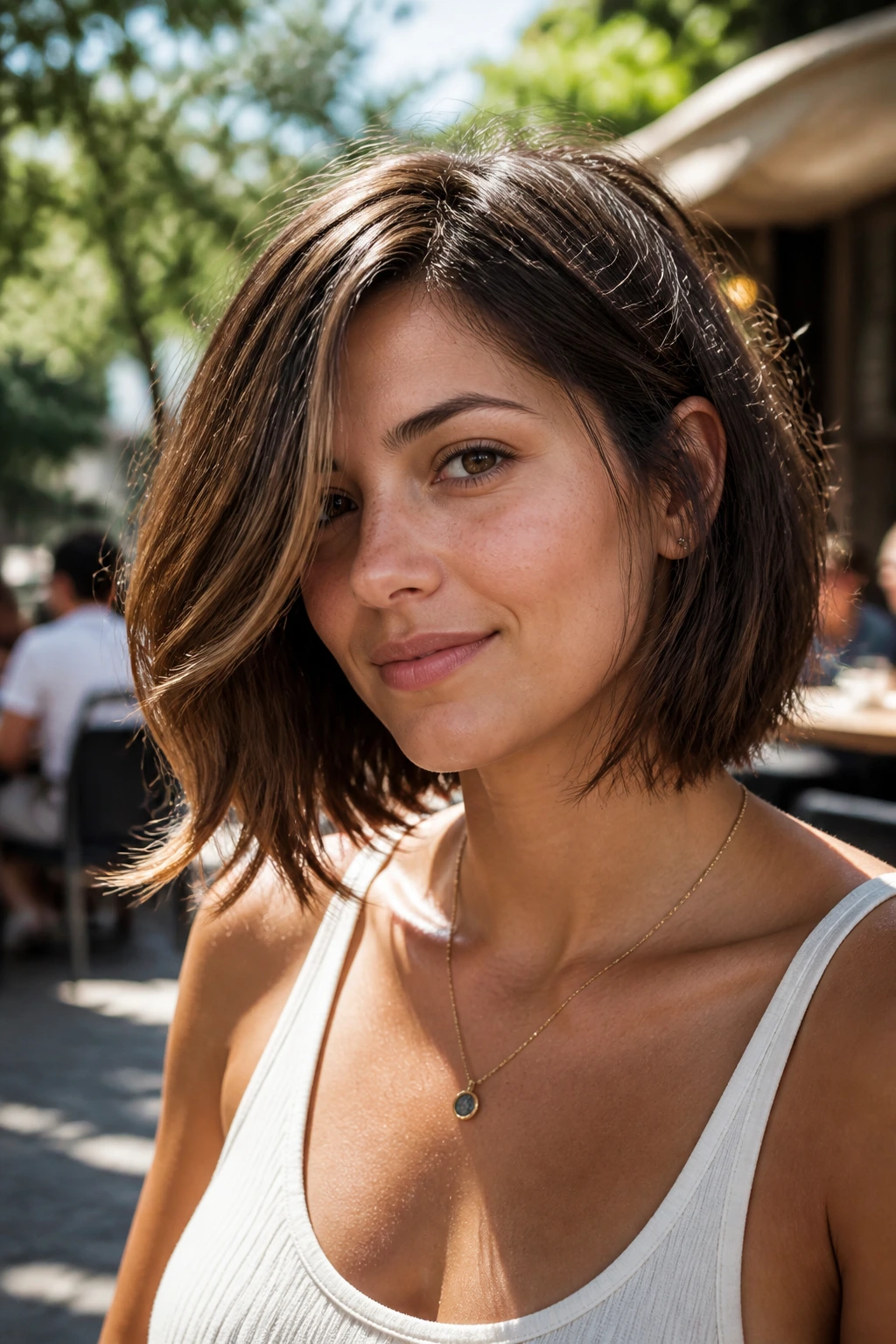
Feathering gives the ends a softer edge, which is useful if you want the asymmetry to feel light rather than sharp. The collarbone length keeps the cut versatile, and the feathered finish prevents the lower edge from becoming too heavy.
This version is one of the prettiest on medium-textured hair because it moves with you. The ends flick gently instead of sitting like a block, which means the haircut looks better from the side and in motion.
One useful detail
A medium round brush works better than a giant one here. You want gentle bend, not a huge curl that erases the line.
34. Glam Side-Part Lob
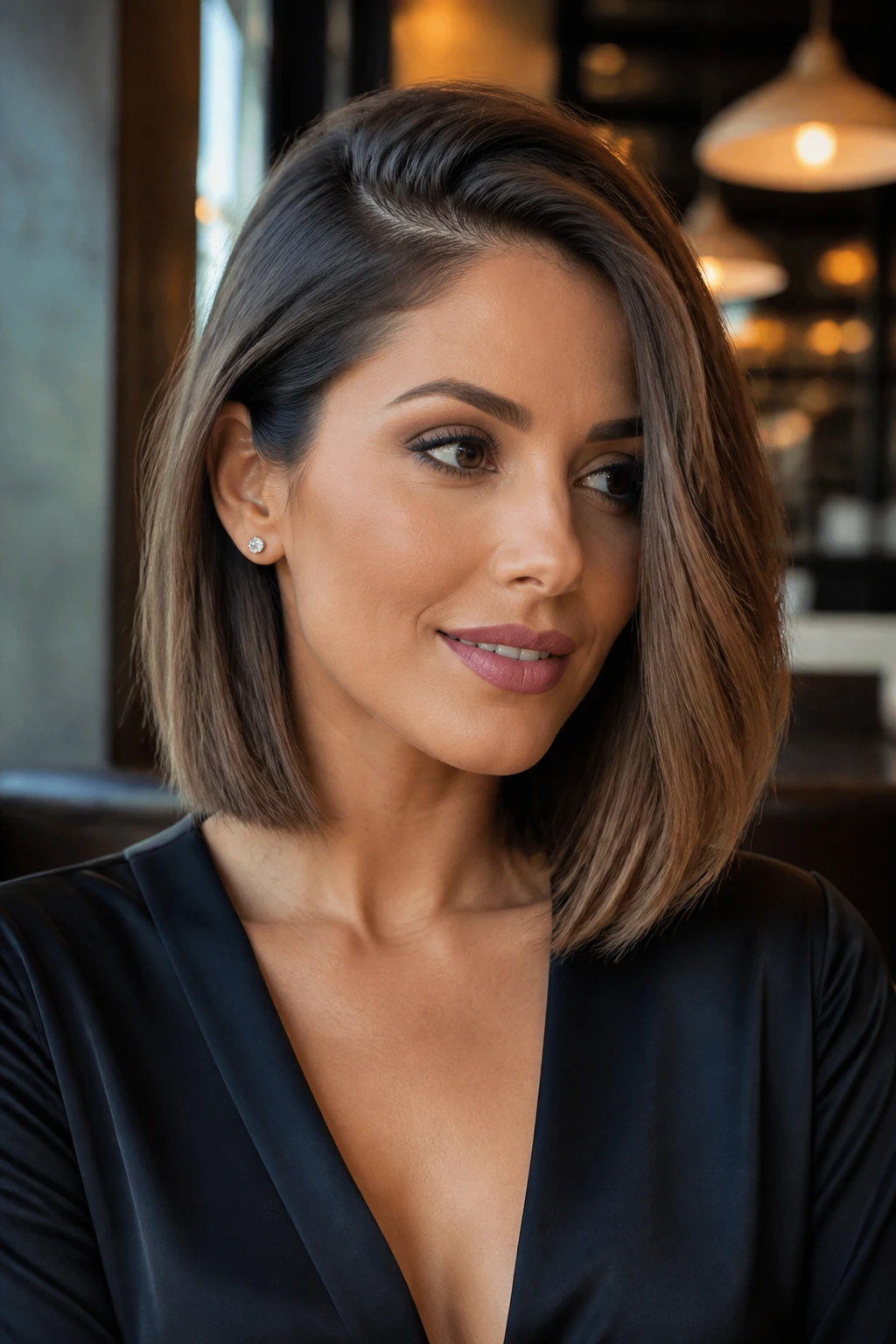
This one brings a little old-school shine. A deep side part, smooth roots, and a long front section make the asymmetry feel dressy without trying too hard. It’s the sort of cut that looks good with a strong brow, a bold lip, or a simple black top.
The reason it works is the direction. The hair falls across the face in a controlled sweep, which makes the shape look longer and more deliberate than a neutral part would.
Best use
Save it for days when you want polish. It is a strong haircut, but a side part pushes it into formal territory fast.
35. Airy Shoulder-Skimming Bob
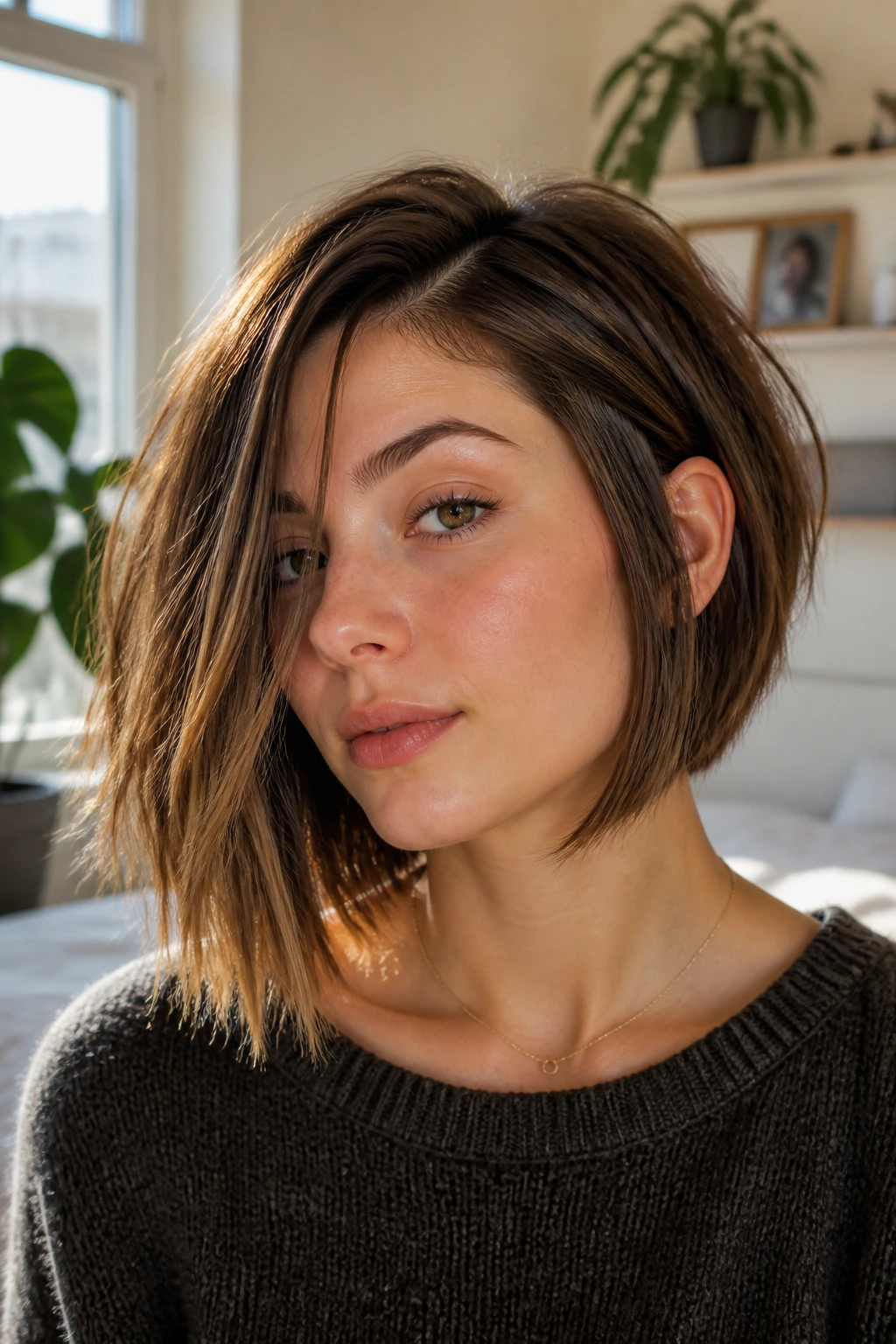
Shoulder-skimming length changes the way asymmetry behaves. There’s enough length to move, but not so much that the haircut collapses into the shoulders and flattens out. The shorter side keeps the outline visible.
This is a good option if you’re nervous about going shorter but still want the feeling of a bob. It gives you the shape and lets some length hang on.
Styling note
Keep the ends light. Heavy cream all the way to the tips can make shoulder-length hair droop, and then the asymmetry looks muddy instead of clean.
36. Asymmetrical Bob with Long Fringe
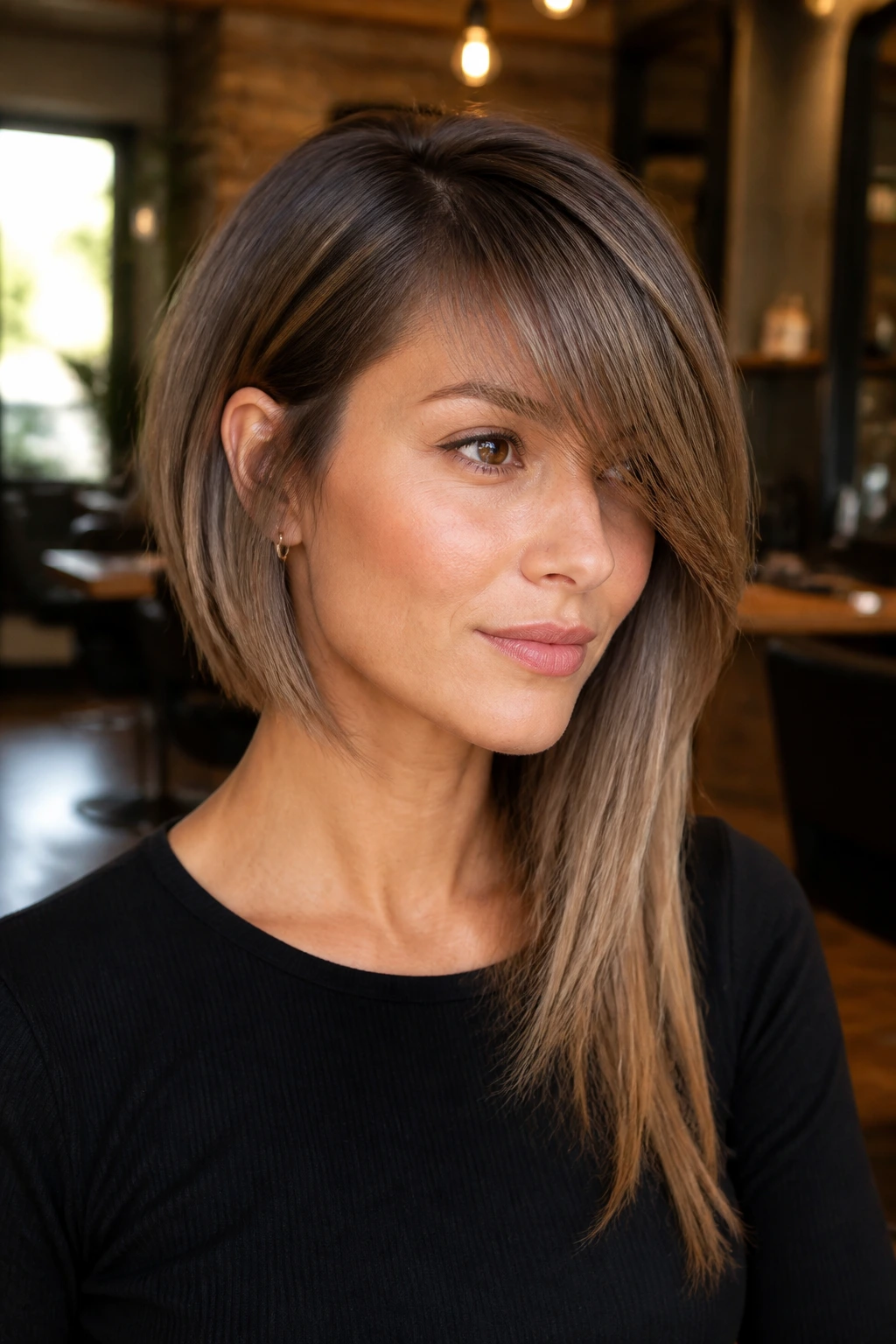
A long fringe gives the haircut a little more drama across the forehead and temples. It also helps tie the shorter and longer sides together, which can be useful if you want the asymmetry to feel blended rather than abrupt.
The fringe should be long enough to sweep or separate. If it sits too short, it interrupts the line instead of helping it. Long fringe on a bob is one of those things that looks easy and takes careful cutting.
Who should try it
People who like face-framing hair and don’t mind regular bang trims. If you’re not willing to maintain the fringe, it will start misbehaving faster than the rest of the cut.
37. Softly Curved Inversion
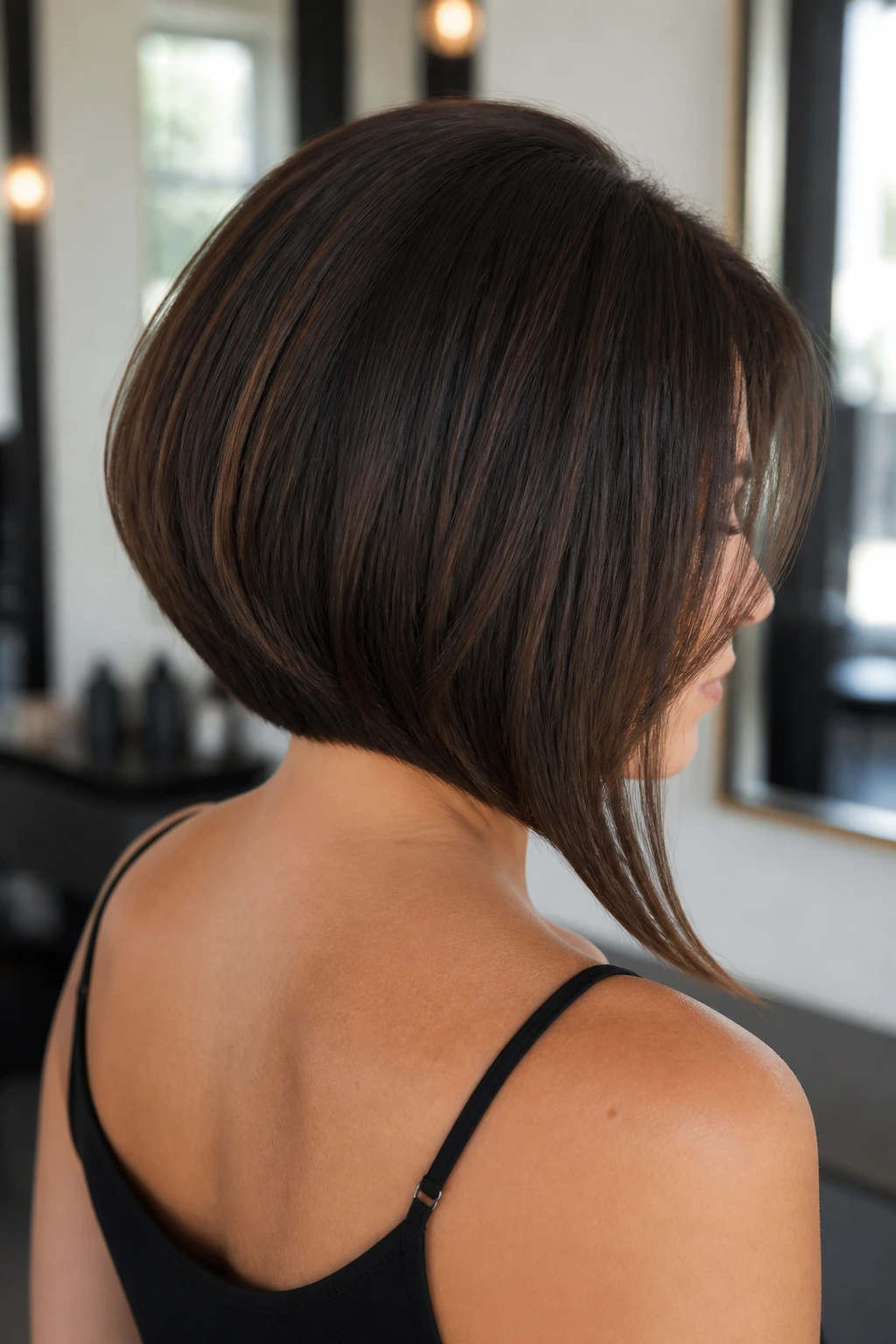
A softly curved inversion keeps the back tucked in and the front stretched out, but without the stark stacked shape some inverted bobs have. That makes it easier to wear on long hair, especially if you want movement and not a hard wedge.
The curve gives the hair a natural fall. It doesn’t fight the head shape. That’s why it looks good on people who feel boxed in by sharper cuts.
Best detail
Ask for the back to be curved under only slightly. Too much inversion can make the front look like it belongs to a different haircut.
38. Long Asymmetrical Bob with Movement at the Ends
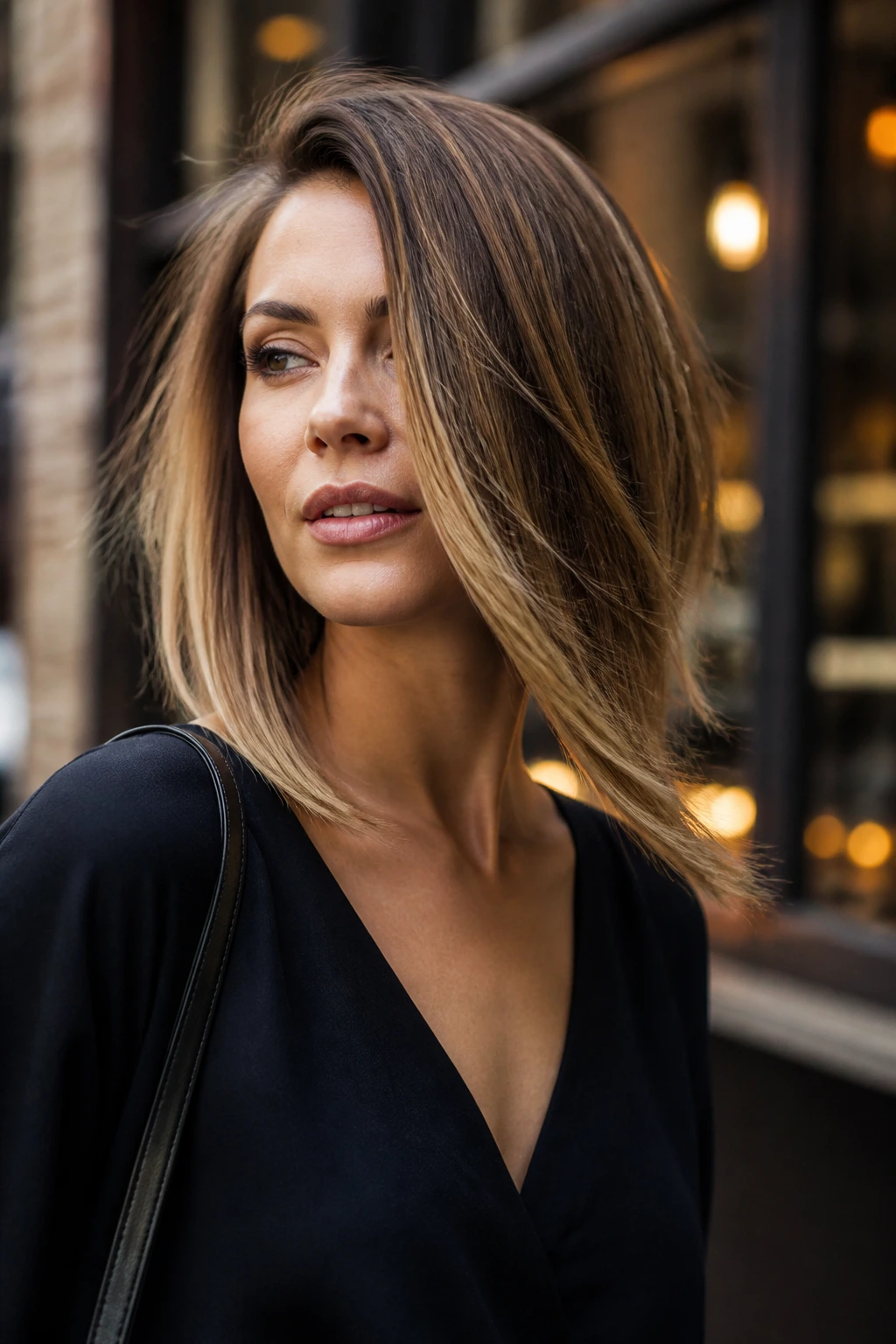
This is the least fussy version and, honestly, one of my favorites. The angle is there, the length stays generous, and the ends move instead of hanging around like they’re waiting for instructions. It’s the asymmetrical bob for people who want softness over severity.
The point isn’t perfection. The point is shape. If you can see the longer side and the shorter side from across the room, the cut is doing its job. If the ends swing a little when you walk, even better.
How to use it
Let the hair air-dry halfway, then finish the last 20 percent with a dryer or diffuser. That’s usually enough to keep the shape from flattening while still letting the natural movement stay in charge.
Why the Long Angle Works Better Than a Flat Cut
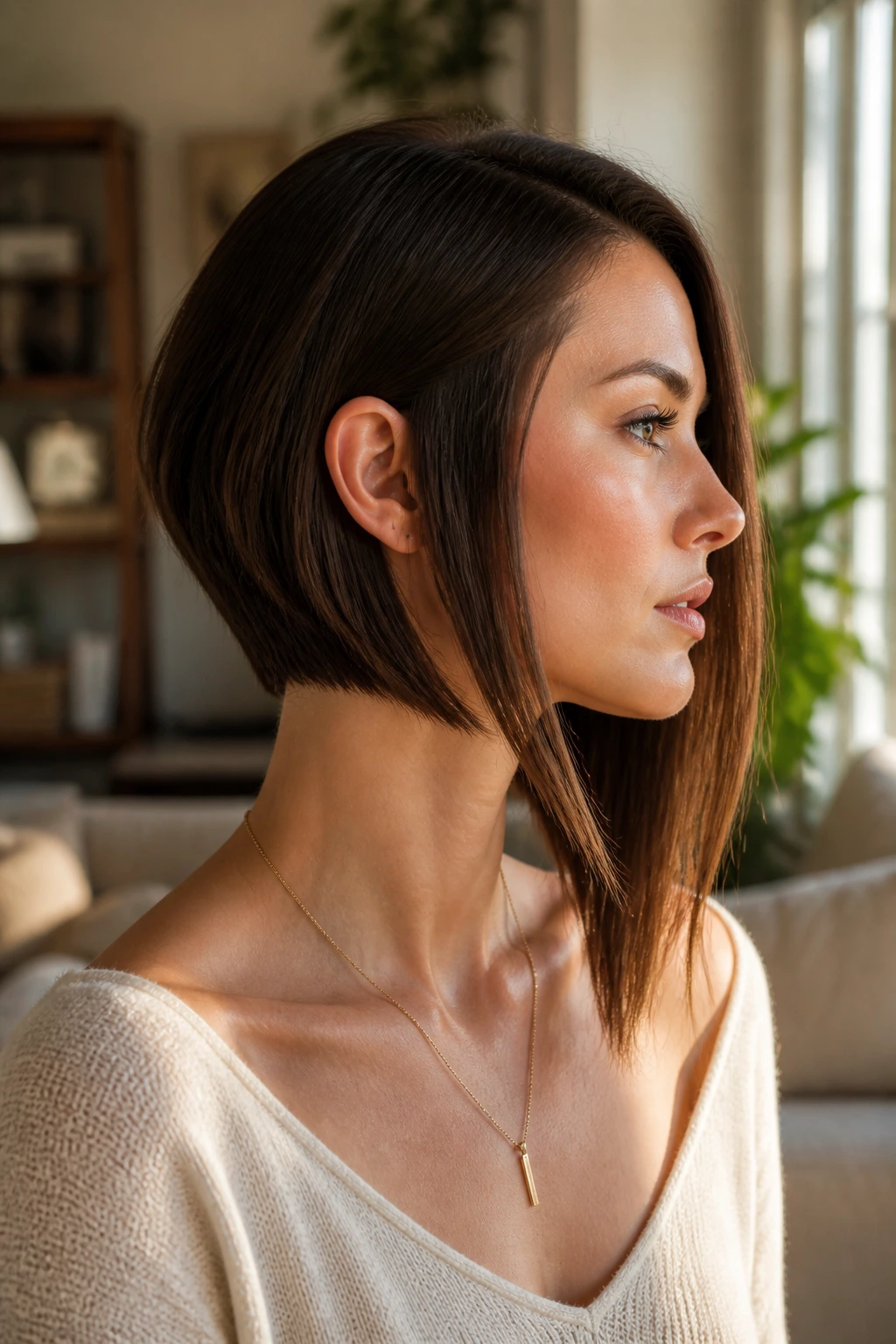
The thing people forget about long bobs is that length adds weight fast. Once the hair passes the chin, it starts pulling itself down unless the cut has a clear direction. Asymmetry solves that by giving the eye a path to follow.
That path matters. A shorter side near the jaw opens the face, and a longer side near the collarbone keeps the hair feeling substantial. You get contrast, but you don’t lose the sense of hair around your shoulders. That balance is what makes the style feel expensive even when it’s not complicated.
And there’s another practical upside: it’s easier to style than a long, uniform cut when your hair has some natural bend. A diagonal line works with the movement instead of fighting it, which is why so many of these cuts hold up after a few hours out in the world.
The Tools That Make This Cut Easier to Wear
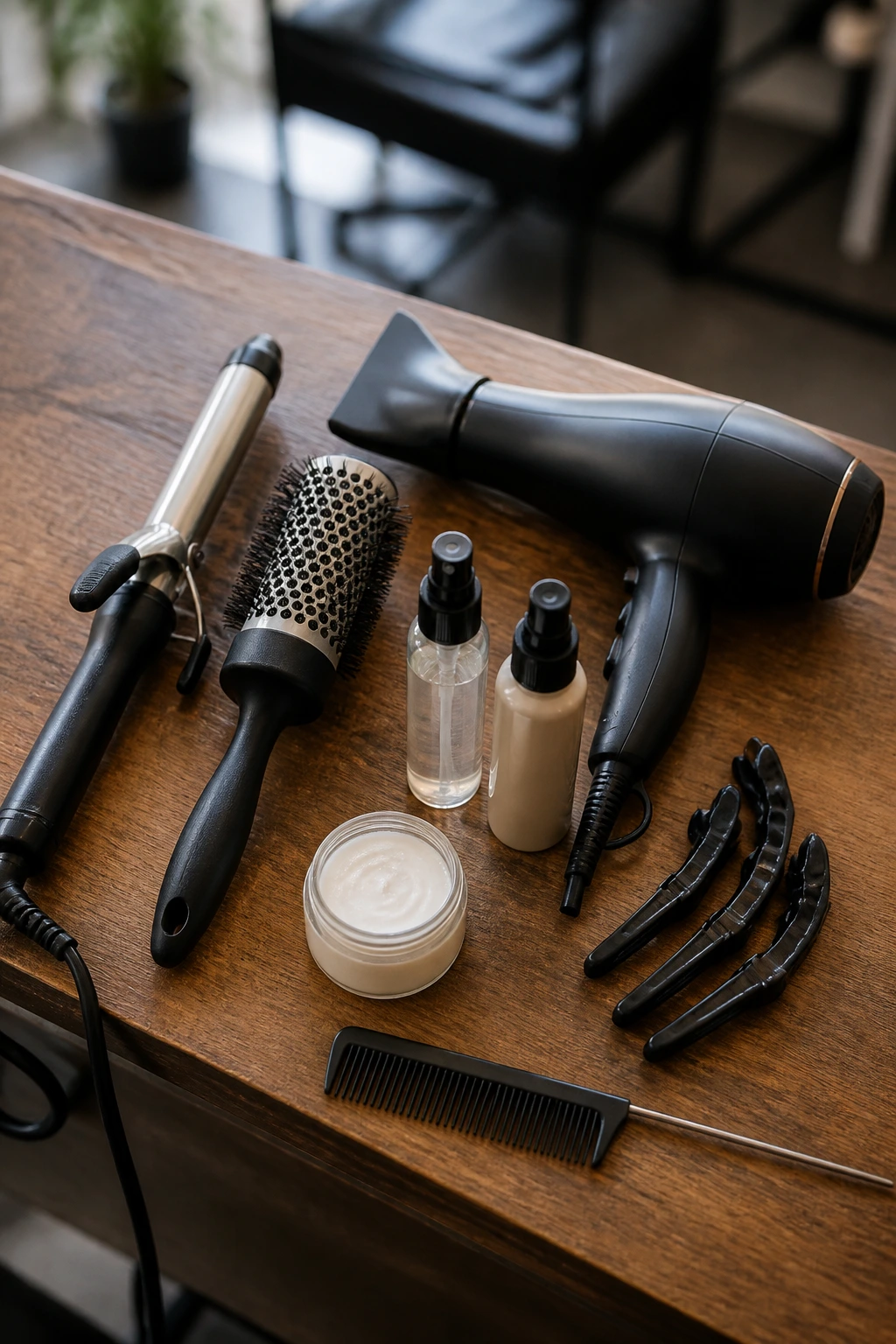
- A 1-inch curling iron or wand: Best for soft bends on the longer side and face-framing pieces.
- A medium round brush: Useful for smoothing the perimeter and giving the shorter side a little lift.
- A blow dryer with a nozzle: Directs airflow so the cuticle lies flatter and the line looks cleaner.
- Heat protectant spray: Non-negotiable if you use iron or dryer heat often; spray from mid-length to ends.
- Texturizing spray: Helpful for piecey, lived-in styles that need separation without crunch.
- Light styling cream or mousse: Good for air-dried waves, curls, or fine hair that needs a bit of control.
- Salon clips: Handy for sectioning while you dry the hair in layers.
- A tail comb: Better than your fingers when you need a clean part or want to show the asymmetry properly.
How to Choose the Right Version for Your Hair Texture
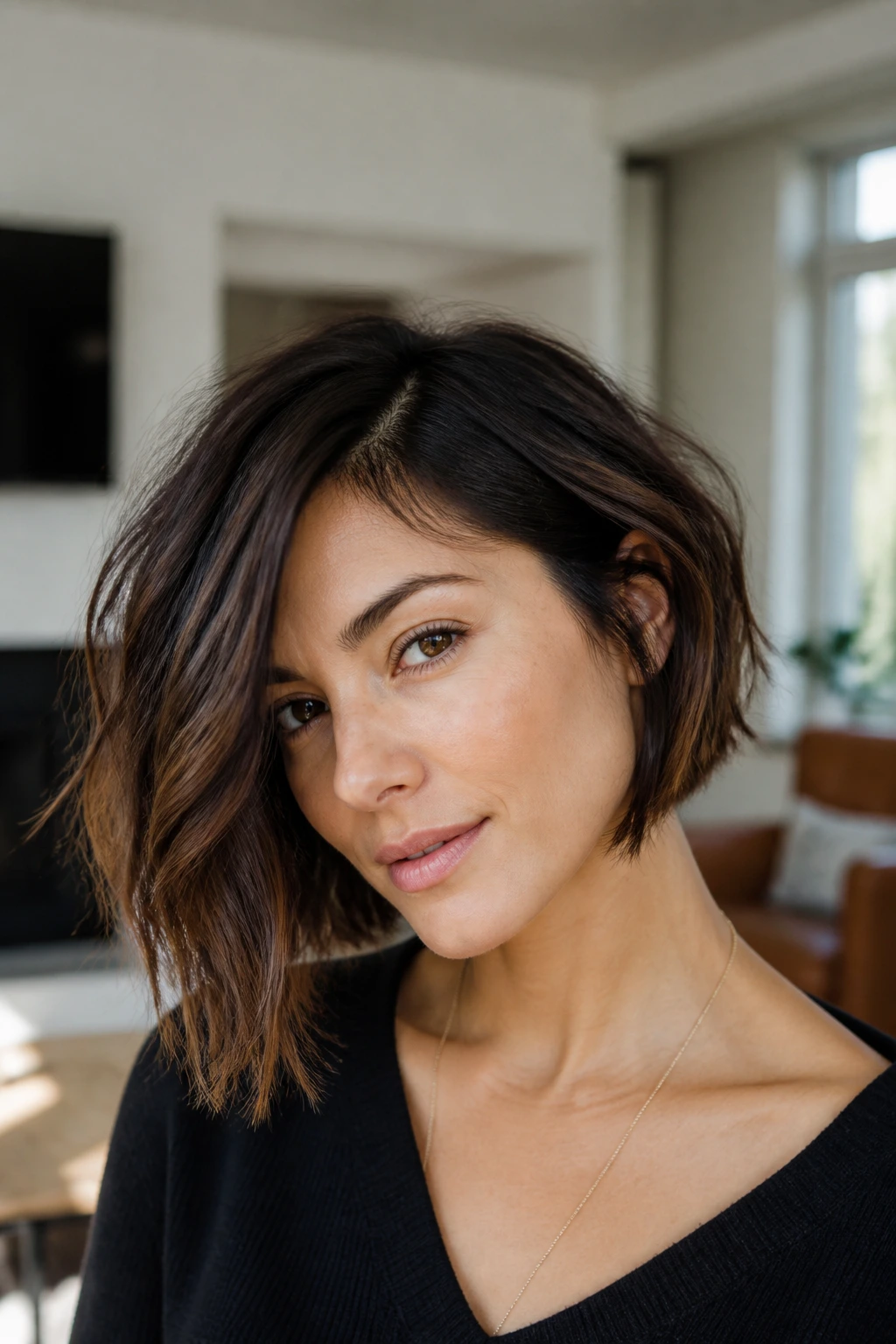
Start with the way your hair falls on a bad day. Not the best day. Not the day after a professional blowout. The ordinary one. If your hair is fine and flat, keep the line crisp and the layers minimal. If it’s thick, ask for internal debulking so the shape doesn’t puff out at the ends.
Curly and coily hair need longer lengths than straight hair does because shrinkage changes the map. That’s why a photo of the haircut on the same texture is worth more than ten photos on pin-straight hair. If your hair is wavy, you’ve got the easiest middle ground: the angle shows, but the texture softens any harshness.
Bringing two or three reference photos is smarter than bringing one. One picture shows the silhouette, another shows the finish, and a third shows the length. That gives your stylist a clearer target than “something like this, but not exactly.”
How to Wear These Cuts Without Overthinking It
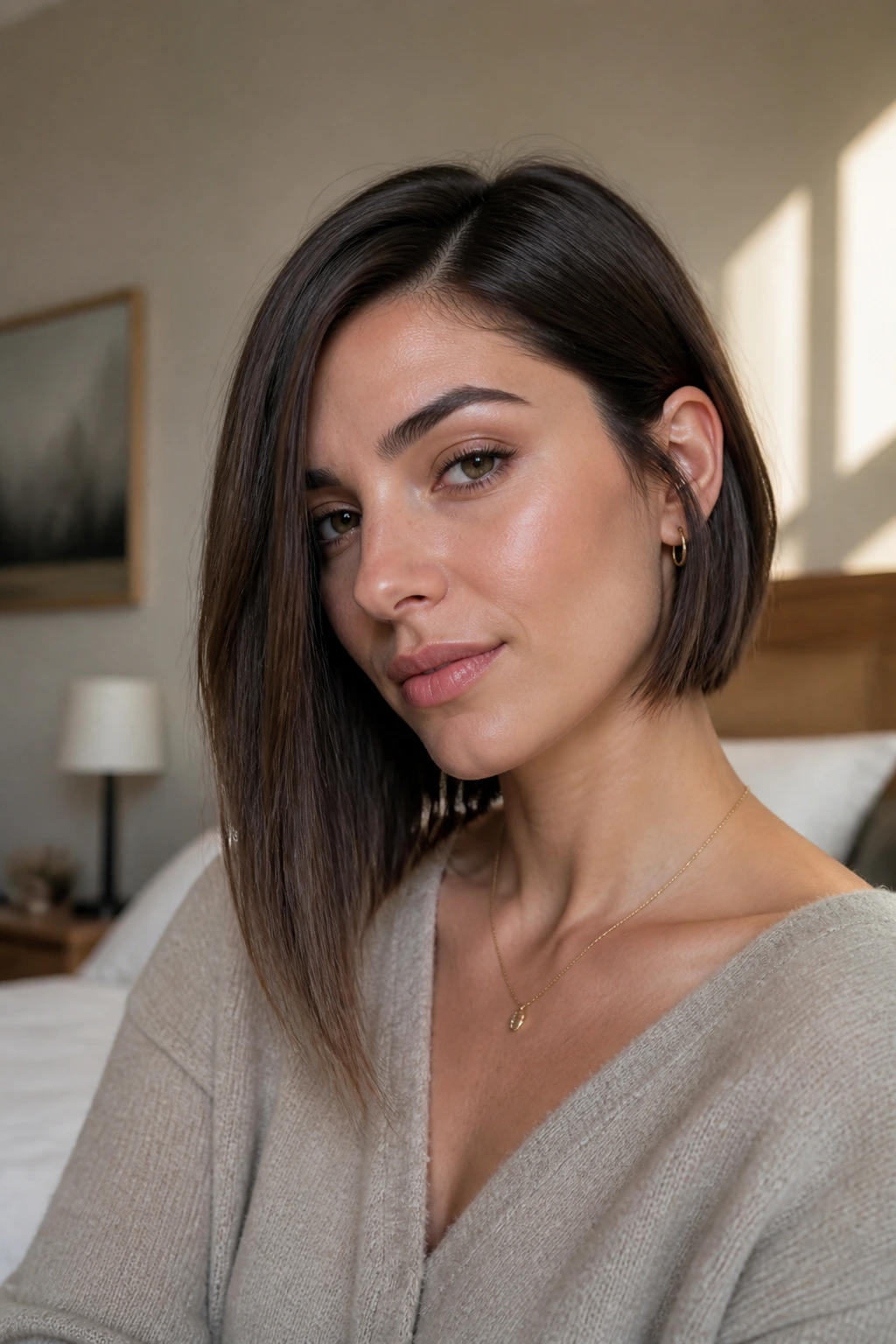
Presentation: Keep the part where it helps the cut most. A center part gives a cleaner, quieter look; a deep side part makes the asymmetry louder. If you want the diagonal line to show, let the longer side fall across the collarbone instead of pinning it back.
Accompaniments: Earrings matter more than people think. Hoop earrings, slim hoops, and short drop earrings work well because they don’t fight the line near the jaw. Turtlenecks and high collars can make the shorter side look shorter, so a neckline with a little open space often feels easier.
Sizing: If your hair is dense, go for a version that removes weight through the interior. If it’s fine, keep the bottom line cleaner and lighter on the layers. The same haircut does not behave the same way on different heads. Annoying, yes. True, also yes.
Beverage Pairing: A strong cup of coffee, a cold sparkling water, or a simple iced tea. Haircuts don’t need a drink pairing, but I’m not against a good mirror ritual.
Practical Styling Tips That Make the Shape Read Better
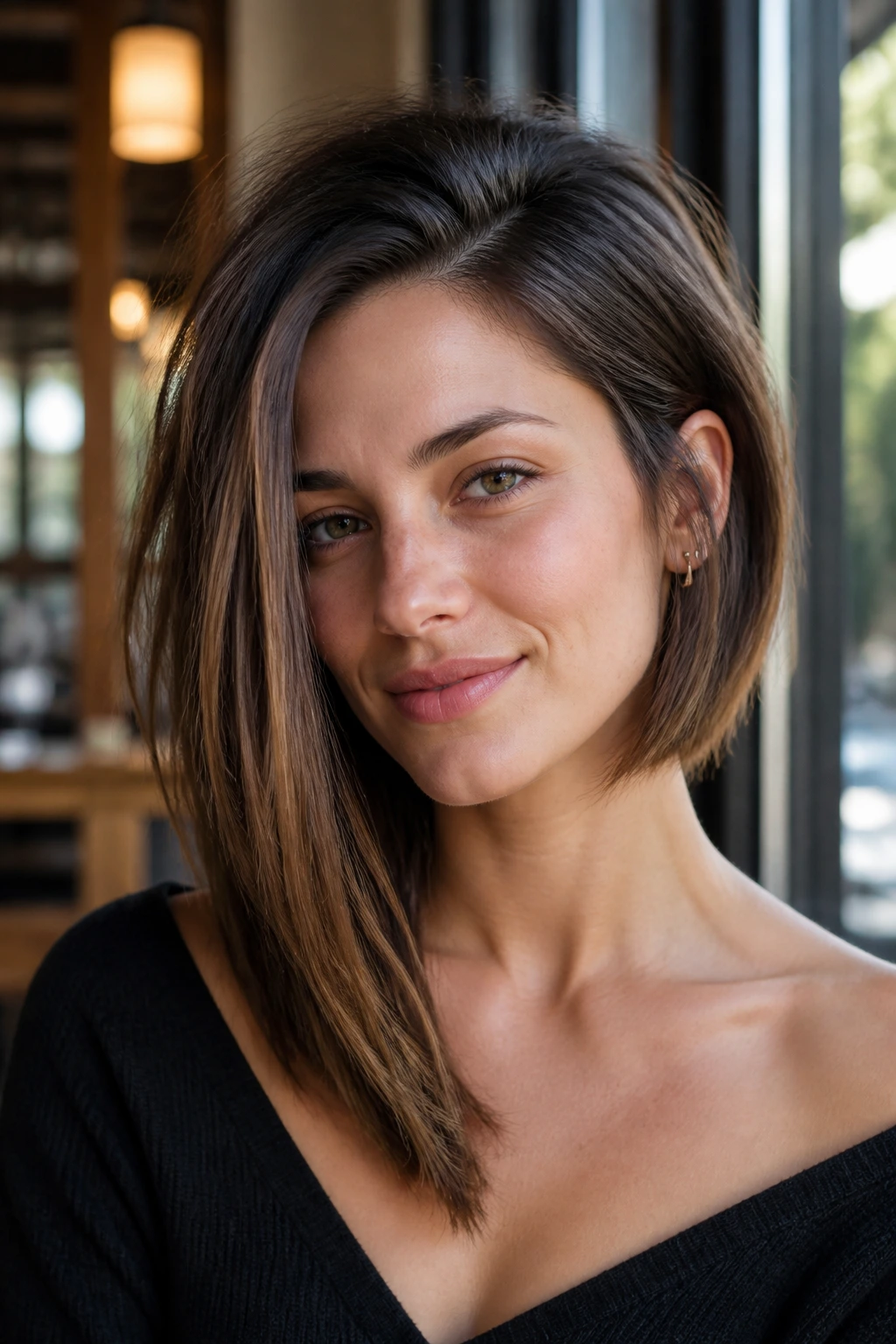
Parting Trick: Shift your part a half-inch off center before you dry. That tiny move gives one side more lift and makes the angle easier to see without adding extra layers.
Texture Boost: If the ends look too clean and heavy, spray a small amount of texturizer into your hands first, then scrunch the last 2 inches of hair. Direct spray can be too much. Hands give you control.
Pro Move: Dry the shorter side first. It tends to set the shape, and once that side is smooth, the longer side can be bent to match the direction instead of flopping around on its own.
Cost-Saver: If you’re stretching salon visits, ask for a version that keeps the longest side a bit longer. It grows out more gracefully and buys you extra weeks before the line starts losing shape.
Common Mistakes That Flatten the Cut
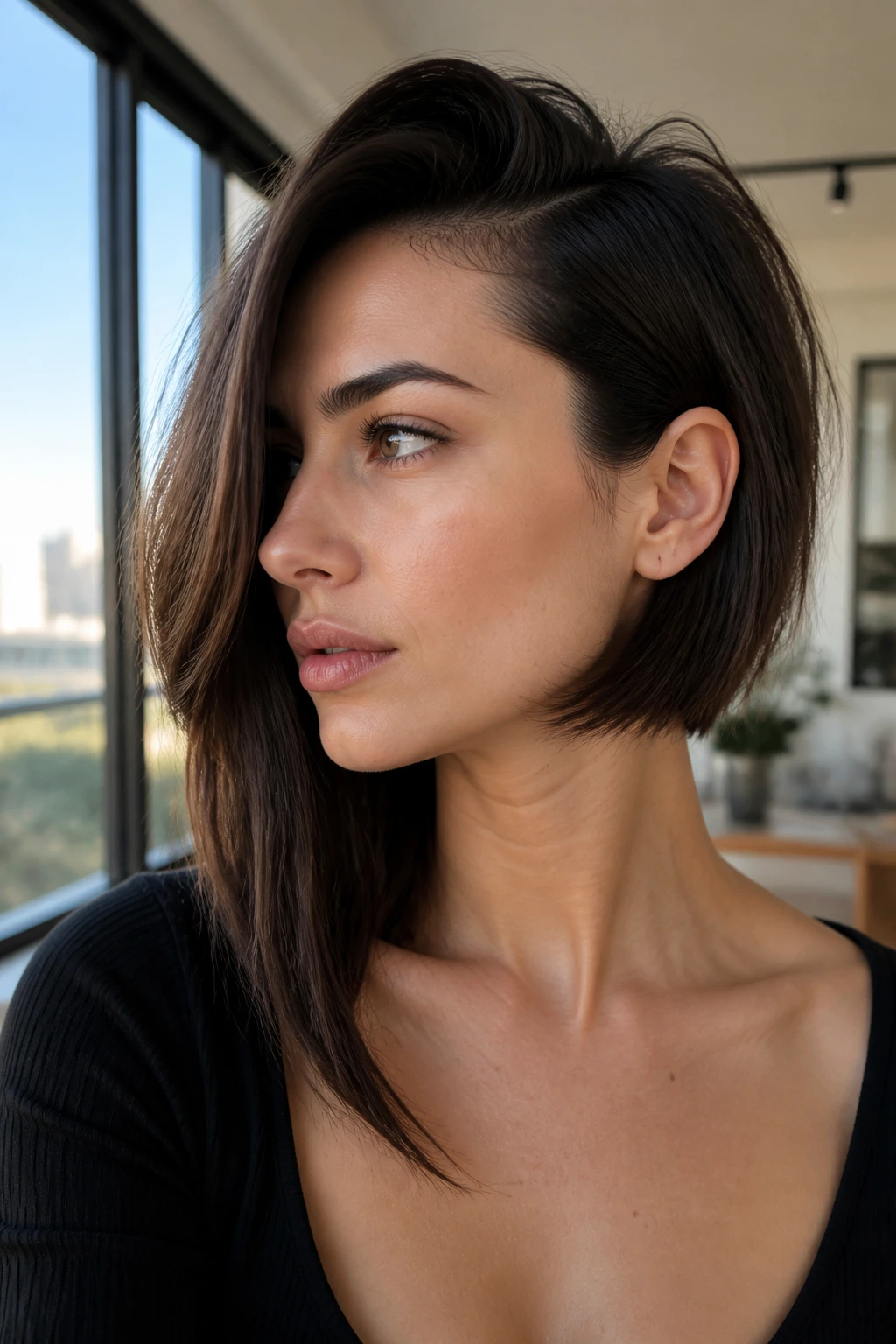
The first mistake is making both sides too close in length. Then it isn’t really asymmetry; it’s just a slightly uneven bob. You lose the whole point of the shape. If you want the cut to read from across a room, the difference has to be visible.
Another one: over-layering the perimeter on fine hair. The ends go see-through, the bob gets wispy, and you spend all day trying to make it look fuller. Keep the surface cleaner and let the angle do the work.
The third is ignoring how your natural part sits. If your hair insists on living off-center and you force a dead middle part, the cut can look lopsided in the wrong way. Work with the grain. It saves time and swearing.
And then there’s overusing heat. A flat iron on every strand, every day, can make the ends look frayed fast. The cut depends on crisp edges. Burn them up and the shape starts reading tired.
Variations Worth Taking to the Salon
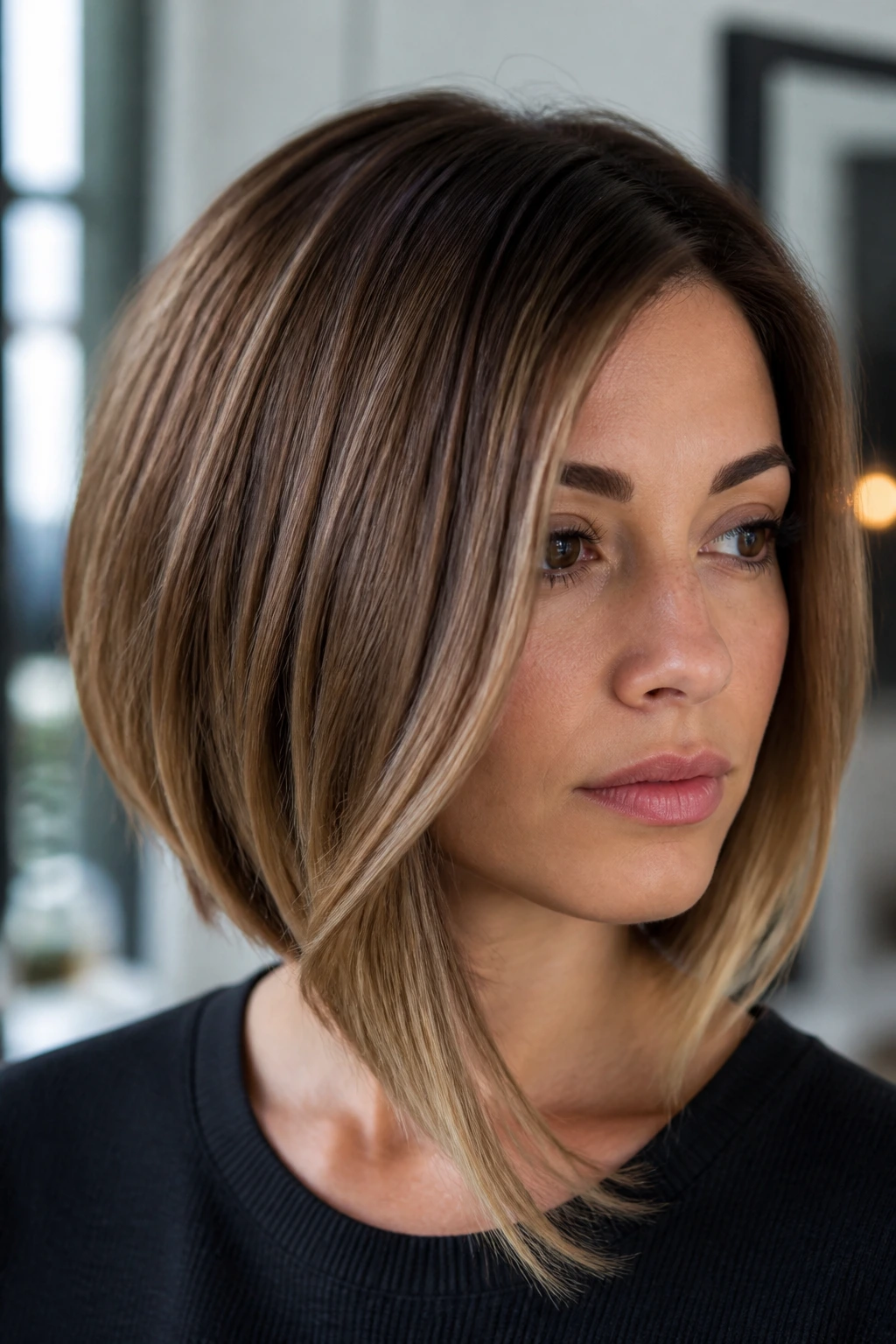
The Soft Drift: A mild diagonal with blurred ends. Choose this if you want asymmetry you can wear to work without thinking about it.
The Sharp Slash: A more obvious angle with a clean perimeter. Best when you like definition and don’t mind a haircut with attitude.
The Curly Float: Longer on both sides, cut to respect shrinkage. This is the one to ask for if your curls need space.
The Hidden Lift: A long bob with undercut support underneath. Good for thick hair that needs less bulk but still wants visible length.
The Face-Frame Sweep: Longer front pieces built to sit around the cheekbone and jaw. Useful if you want the haircut to act like a soft contour.
Keeping the Shape Fresh Between Cuts

Long asymmetrical bobs usually hold up for 6 to 8 weeks before the line starts losing its bite, though thicker hair may need a tidy-up sooner. If one side starts flipping weirdly or the ends feel blunt in the wrong places, that is your sign.
At home, sleep on a silk or satin pillowcase if you can. If not, clip the hair loosely at the crown so the longer side doesn’t get bent into a wrinkle overnight. A mist of water plus a pea-sized amount of cream is enough to reset most versions in the morning.
Heat tools should stay on a short leash. Use a protectant, keep the iron at the lowest heat that still works, and avoid dragging the same section over and over. The cut looks better when the ends stay crisp.
Questions People Ask Before They Chop
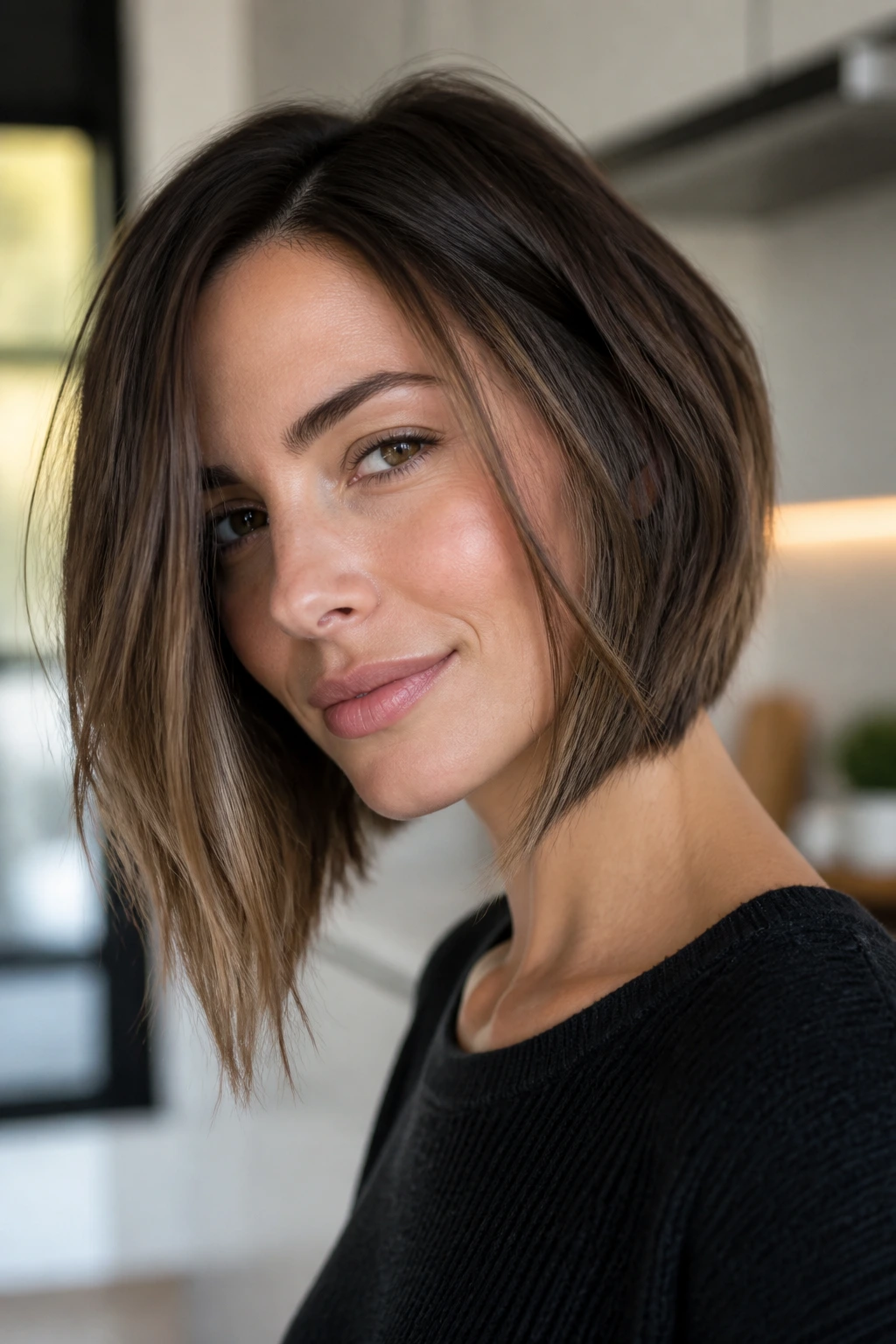
Will an asymmetrical bob work if my hair is very thick?
Yes, but it needs internal weight removal so the sides don’t puff out. A blunt outer line with a debulked interior is usually the cleanest route.
Can I still tie it back?
Usually, yes. A low clip, half-up knot, or small ponytail works better than a high one, especially if the longer side is just grazing the collarbone.
Does this cut suit curly hair?
It can, as long as the stylist cuts with shrinkage in mind. Curly asymmetry often looks better a little longer than you first expect.
How do I ask for the right length?
Bring photos, then point to the shortest side and the longest side separately. Saying “jawline here, collarbone there” is clearer than asking for “an asymmetrical bob” and hoping for the best.
What if it grows out awkwardly?
Keep the longer side long enough to survive the grow-out, and avoid overtexturizing the ends. If the cut starts losing shape, a light dusting trim can reset the line without shortening everything.
Is it high maintenance?
The dramatic versions can be. The softer versions aren’t. If you air-dry most days and choose a longer angle, maintenance stays pretty manageable.
Will it work with glasses?
Yes, especially versions with a tucked side or a softer face-frame. Just avoid cutting the shortest side so high that it competes with the frame of the glasses.
The Shape That Keeps the Length
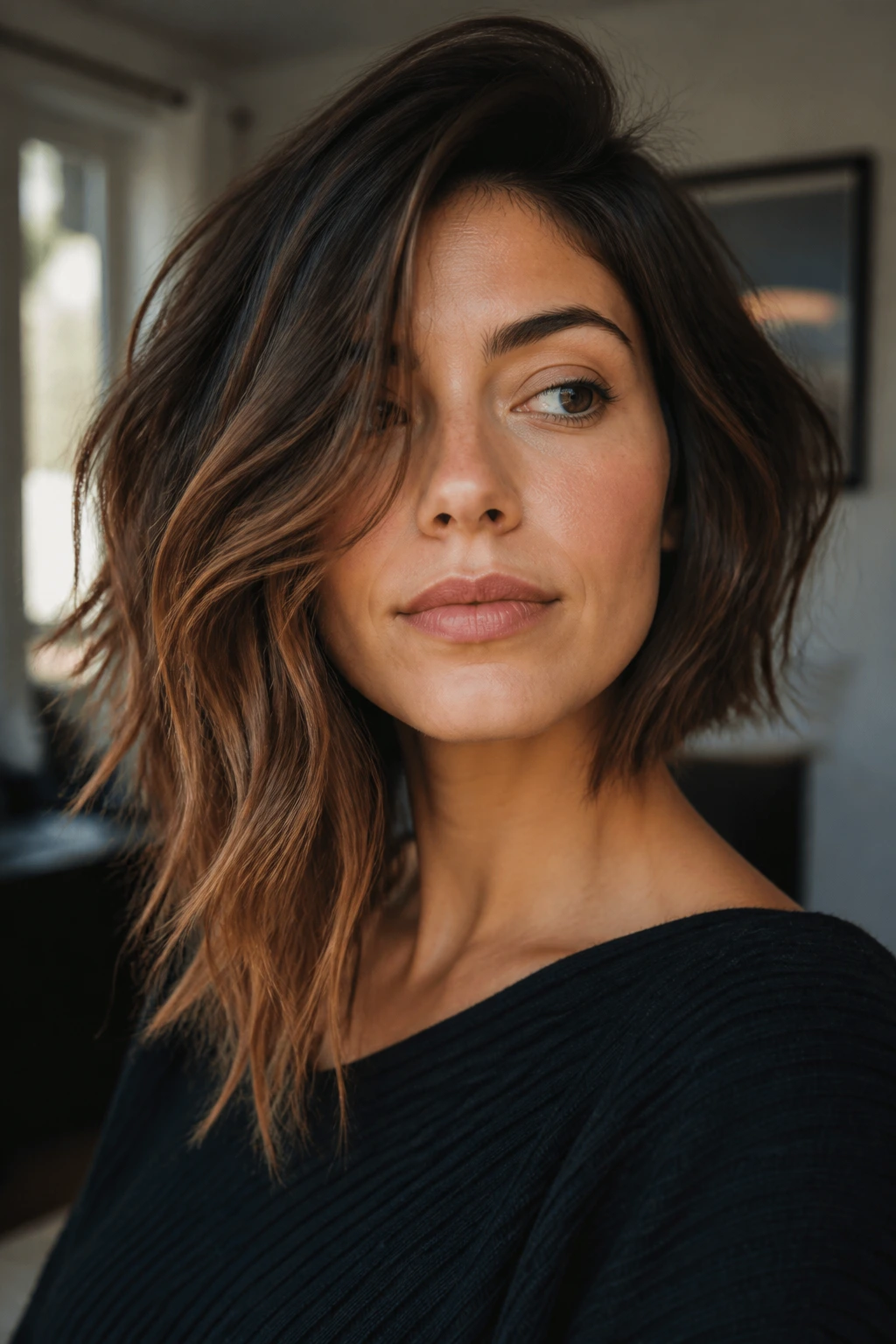
What makes asymmetrical bobs for long hair worth the trouble is that they give you a real shape without making you feel like you sacrificed all your length for the sake of a trend. That’s the sweet spot. The hair still brushes the shoulders, the front still moves, and the cut has enough direction to feel intentional every time you catch it in a mirror.
The best version is the one that matches your texture, your part, and how much styling you’ll actually do. Pick the one that fits your daily life, not the one that looks best only in a salon photo. That’s where the good cuts live.
