



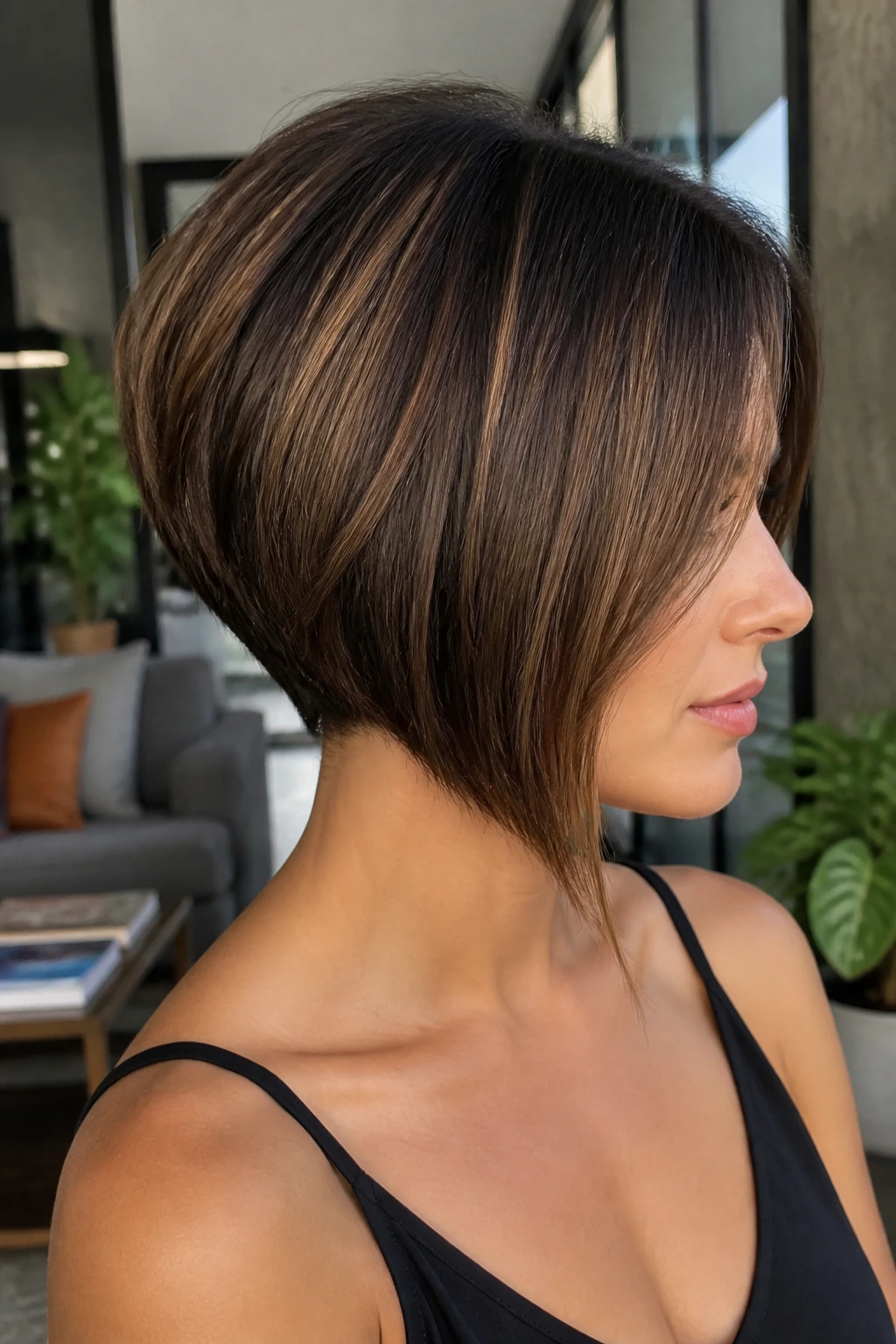
An angled bob haircut has a very particular kind of authority. The back sits shorter, the front falls longer, and suddenly the whole shape looks intentional even when the hair isn’t perfectly behaved. That clean diagonal line does a lot of work. It sharpens the jaw, lifts the neck visually, and gives straight hair a little architecture instead of that flat, stuck-to-the-head look that so many shorter cuts can land in.
The trick is that angled bob haircuts are not one thing. A hard, chin-grazing angle reads sleek and polished. A softer, more graduated version feels airy and easy. Add waves, bangs, or a strong side part, and the whole mood changes. That’s why this cut keeps showing up in salons: it can be tailored without losing the shape that makes it worth wearing in the first place.
And yes, the details matter. A quarter-inch difference in the back can change how the front swings. Too much layering can turn the ends frayed. Too little and the cut can feel like a helmet. The good versions look edited, not overworked. The best ones move when you move, which is exactly what makes the angled bob such a useful shape to know.
Why These Angled Bob Haircuts Are Worth a Look
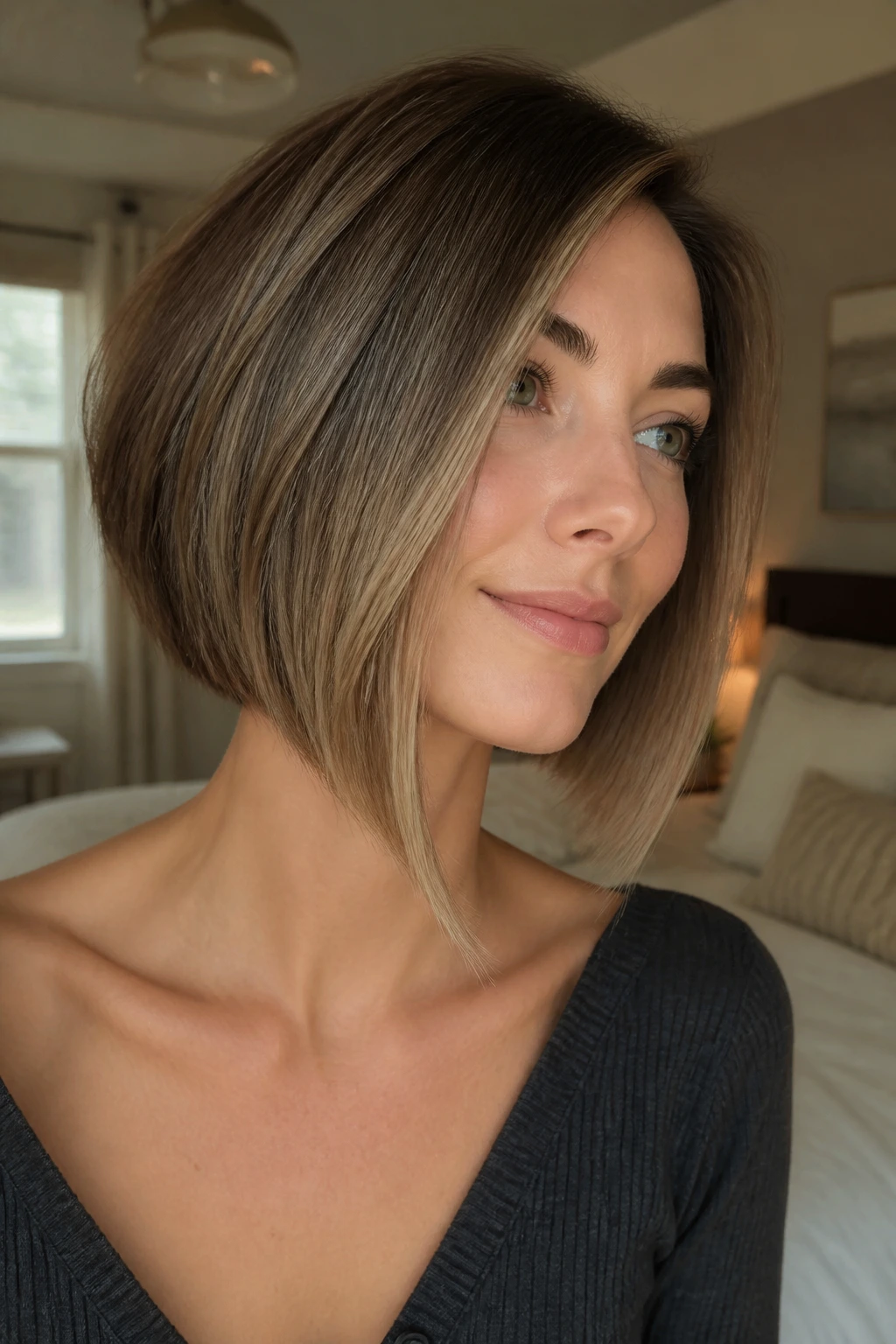
Face-framing shape: The longer front panels pull the eye downward along the cheek and jaw, which gives the face a cleaner outline without hiding everything under hair.
Less dead weight in the back: Shorter nape length removes bulk where a lot of bob cuts get heavy, especially if your hair grows dense or puffs at the crown.
Easy to tailor: You can keep the angle subtle, steep, blunt, feathered, or asymmetrical, and the cut still reads as an angled bob.
Works with a lot of textures: Straight hair shows off the line, wavy hair softens it, and curly hair gives it a rounder, fuller shape that still keeps direction.
Grows out better than it sounds: If the front is cut to the right length, the shape can slide into a lob without looking awkward for weeks on end.
Plays well with styling shortcuts: A round brush, a flat iron bend, or a little mousse can change the finish fast, which matters when you do not want to fight your hair every morning.
1. Classic A-Line Angled Bob
The classic A-line version is the cut most people picture when they hear angled bob. The nape sits close to the neck, the front drops just below the jaw, and the line between the two is smooth enough that you notice the shape before you notice the technique. It’s tidy without feeling stiff.
What I like about this version is how little it asks for. If your hair is naturally straight or only slightly wavy, a quick blow-dry with a paddle brush can be enough. If you want the angle to read clearly, keep the ends blunt and the part clean. A messy, uneven finish can blunt the shape fast.
This is the bob I’d hand to someone who wants structure but not drama. It’s the sensible one in the group. Not boring. Just precise.
2. Stacked Angled Bob
A stacked angled bob leans into the back even more, with graduated layers building lift through the crown and upper nape. From the side, you get that nice curved rise at the back before the front slips longer toward the face. It has more shape in motion than a plain A-line.
This cut loves medium to thick hair because the stacked interior removes weight where the hair tends to balloon. Fine hair can wear it too, but the graduation has to stay controlled or the back can get see-through. When it’s done right, the crown sits up without needing a mountain of mousse.
What it gives you:
- Lift at the crown without teasing
- A clean neckline that looks sharp even on day two
- A front that still keeps enough length to tuck behind the ear
If you like a bob that looks good from the side, this is one of the strongest options.
3. Blunt Angled Bob
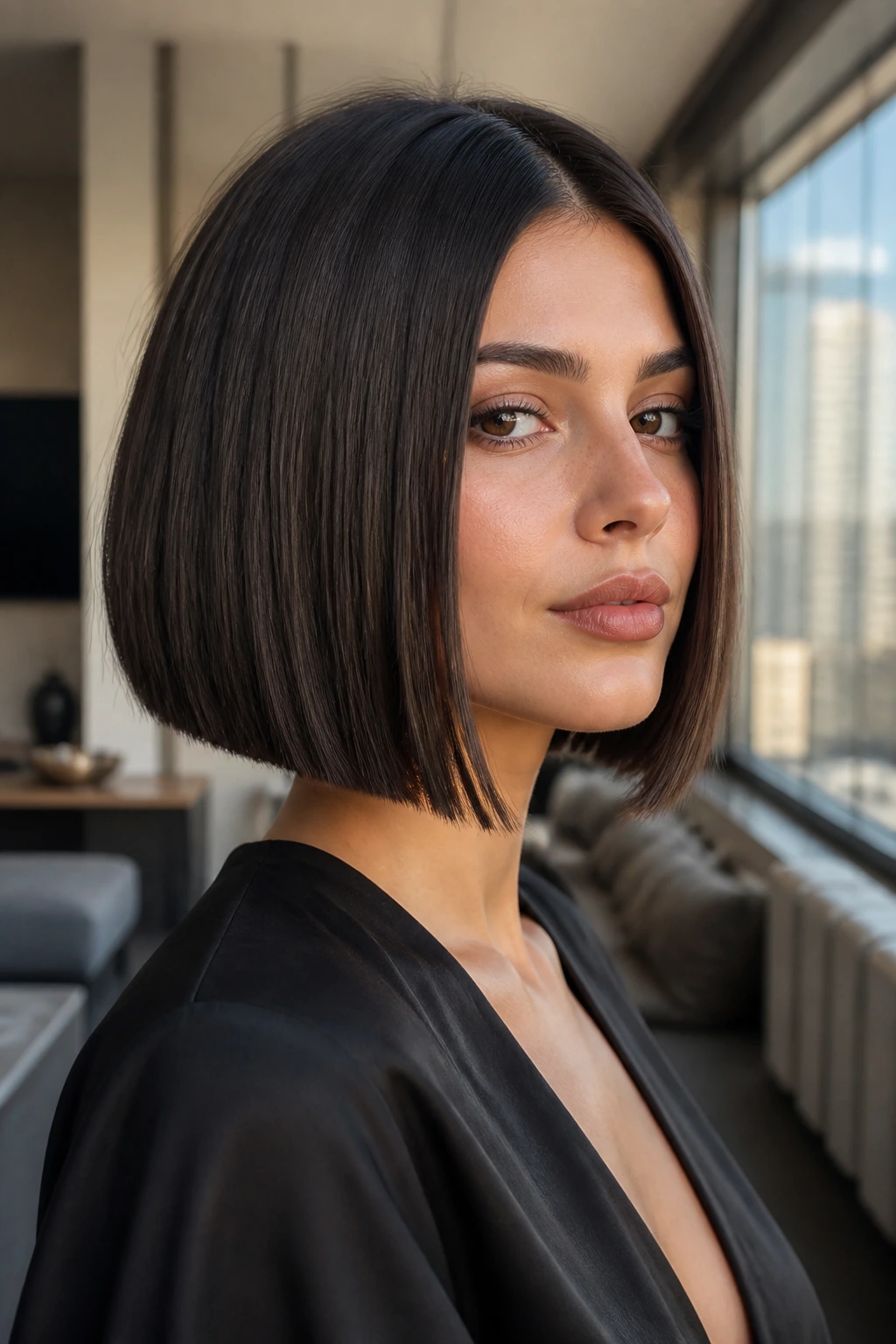
Blunt angled bob haircuts are for people who want the line to do the talking. No wispy ends. No soft fade at the perimeter. The whole point is that crisp edge from back to front, usually with the front landing around the chin or just below it. It can look very modern, almost severe in the best way.
This cut is happiest on straight hair or hair that can be smoothed easily. Thick hair can wear it beautifully, but the inside usually needs some internal removal so the edges don’t puff out like a triangle. I prefer this version with a center part or a very clean side part, because both show off the angle without fuss.
If your styling routine already includes a flat iron or a blowout, this cut pays you back. If you air-dry and walk away, it may just sit there waiting for more help.
4. Soft Layered Angled Bob
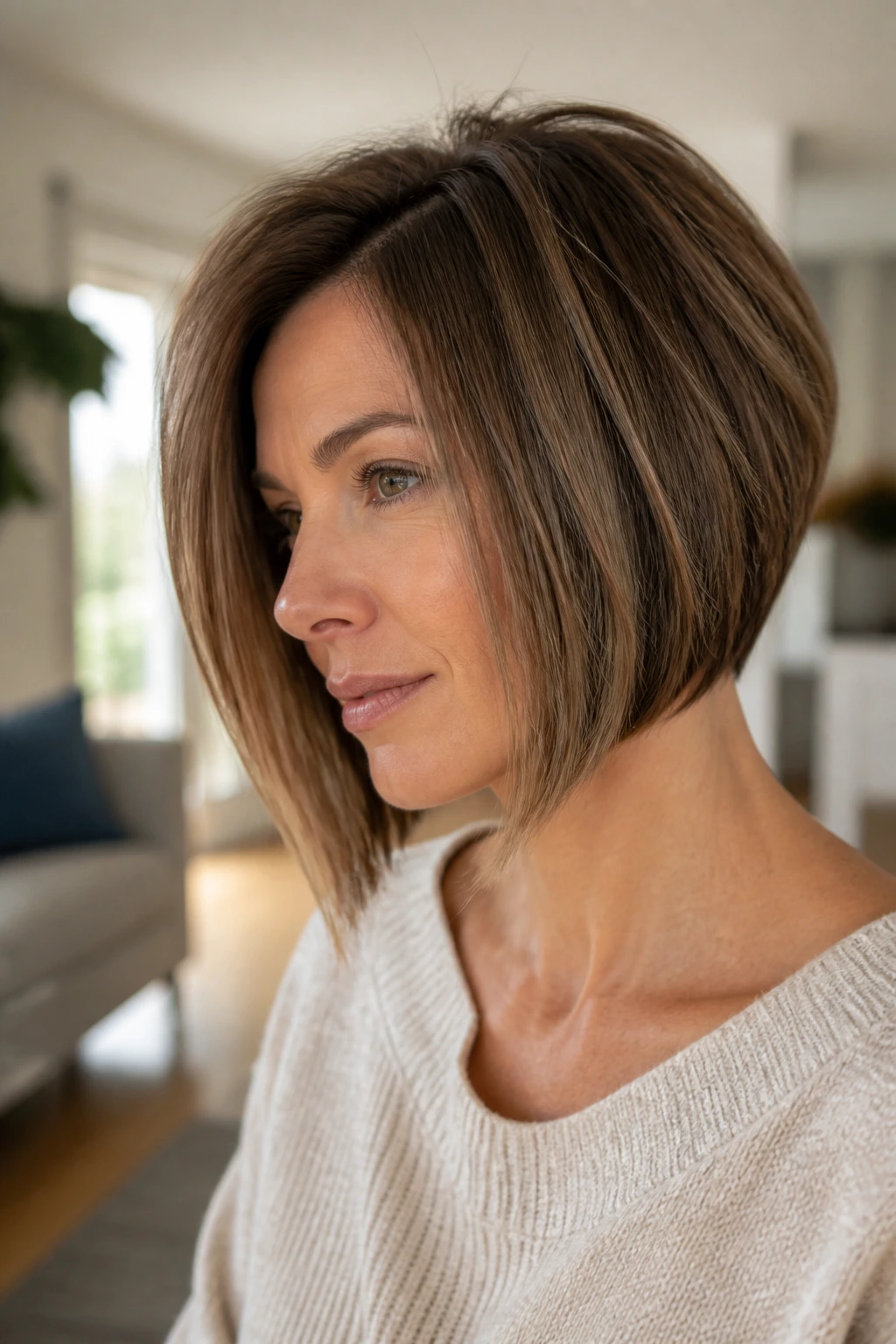
A soft layered angled bob keeps the front-to-back slope, but the interior is sliced with light layers so the cut moves instead of sitting like a helmet. The perimeter still matters, though. You want enough line at the edges that the angle stays readable.
This is one of the better choices if your hair has a slight wave or if you hate the feeling of too much weight around the jaw. The layers stop the bob from turning boxy, especially around the cheekbones. It also helps if your hair is fine but not limp; the cut gives a little lift without over-thinning the ends.
The danger here is going too layer-heavy. Then the angle starts to disappear, and you end up with shape floating around shape. That’s not the goal.
5. Long Angled Lob
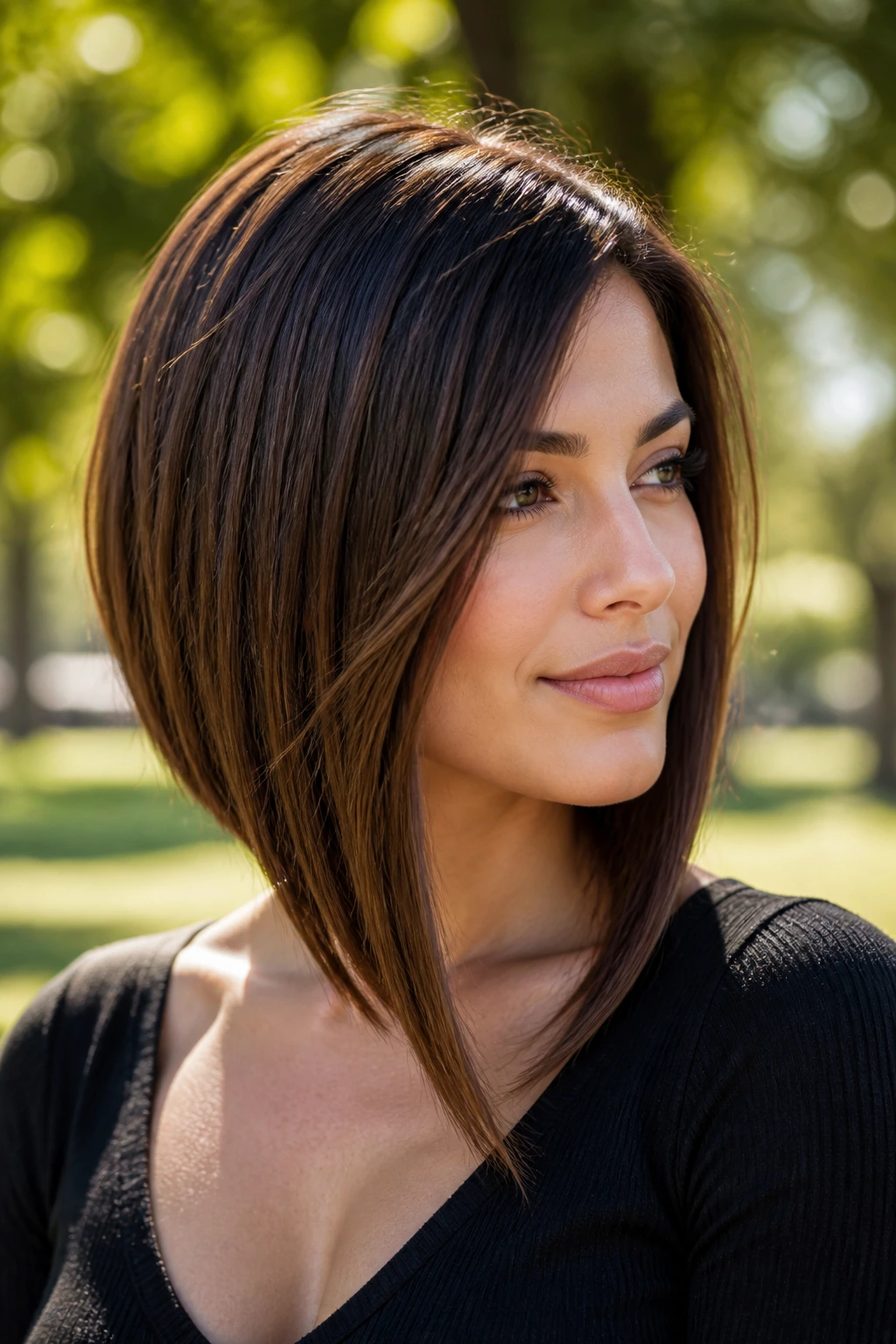
The long angled lob is the version I recommend to anyone who likes the idea of a bob but isn’t ready to go fully short. The back still sits higher, the front still drops forward, but the longest pieces usually hit between the collarbone and upper chest. It feels softer, less abrupt.
Because the length is more forgiving, it’s a smart choice for people with growth patterns they don’t want to battle every six weeks. It also gives you more room to curl, wave, or tuck the front behind one ear without losing the silhouette. On thick hair, the extra length keeps the cut from feeling puffy. On fine hair, it prevents the front from looking stringy.
This is the version that sneaks up on people. They think they want a bob. They leave with a lob and keep the side view.
6. Chin-Length Angled Bob
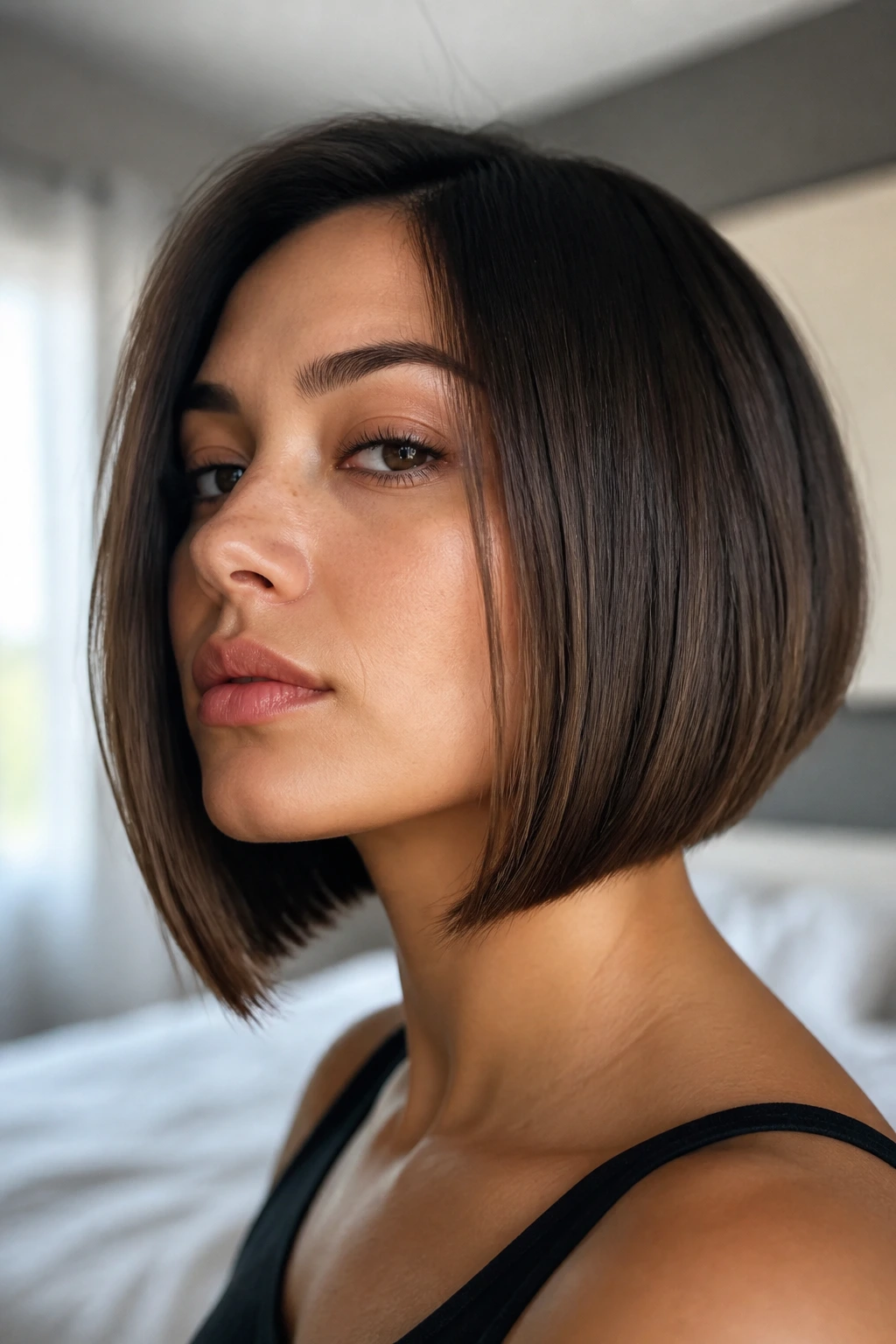
Chin-length angled bob haircuts hit with a little more attitude because the front line lands right where the face gets busiest: the jaw, the mouth, the chin. That makes the cut feel deliberate. It’s not a background shape. It’s a frame.
I like this length on oval and heart-shaped faces because it brings the focus back to the lower half of the face without swallowing the neck. It can also make a strong cheekbone line look even cleaner. The styling matters here. If the ends flip in too much, the cut can look dated. If they curve under with a tiny bend, it looks sharp.
This is one of those cuts that benefits from a small round brush and a little patience. Not a lot. Just enough to make the front edge sit with purpose.
7. Asymmetrical Angled Bob
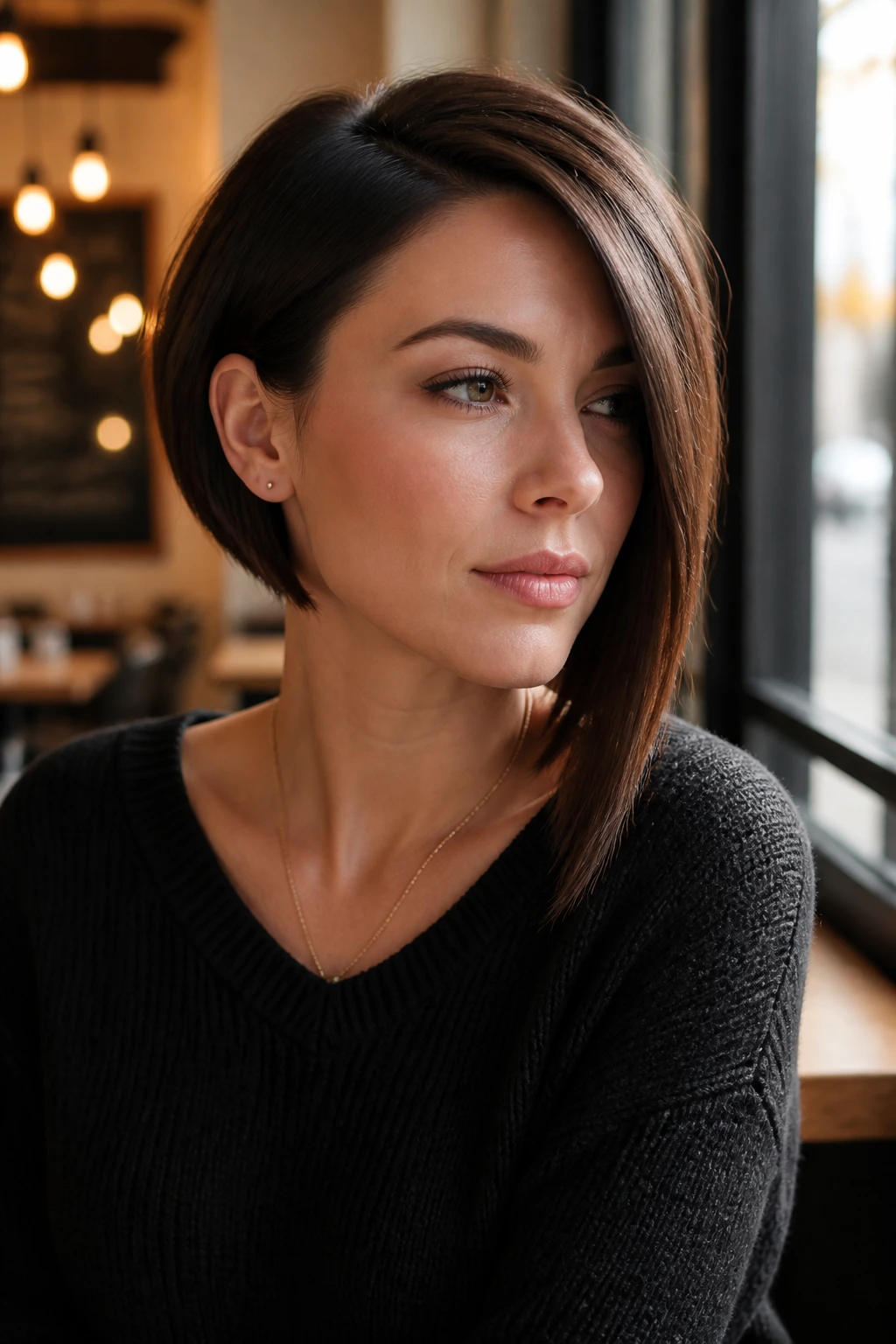
An asymmetrical angled bob pushes the angle further by making one side noticeably longer than the other. The shape still feels like a bob, but the imbalance gives it edge. It’s the cut that looks like it has opinions.
This works best when the difference is clean and intentional, not lopsided in a careless way. Usually the shorter side skims the jaw while the longer side reaches toward the collarbone or beyond. Keep the styling simple. A complicated finish can fight the whole point of the cut.
If you want something that looks a little sharper than a standard angled bob without stepping into punk territory, this is a good middle ground. It’s strong. It doesn’t need much else.
8. Wavy Angled Bob
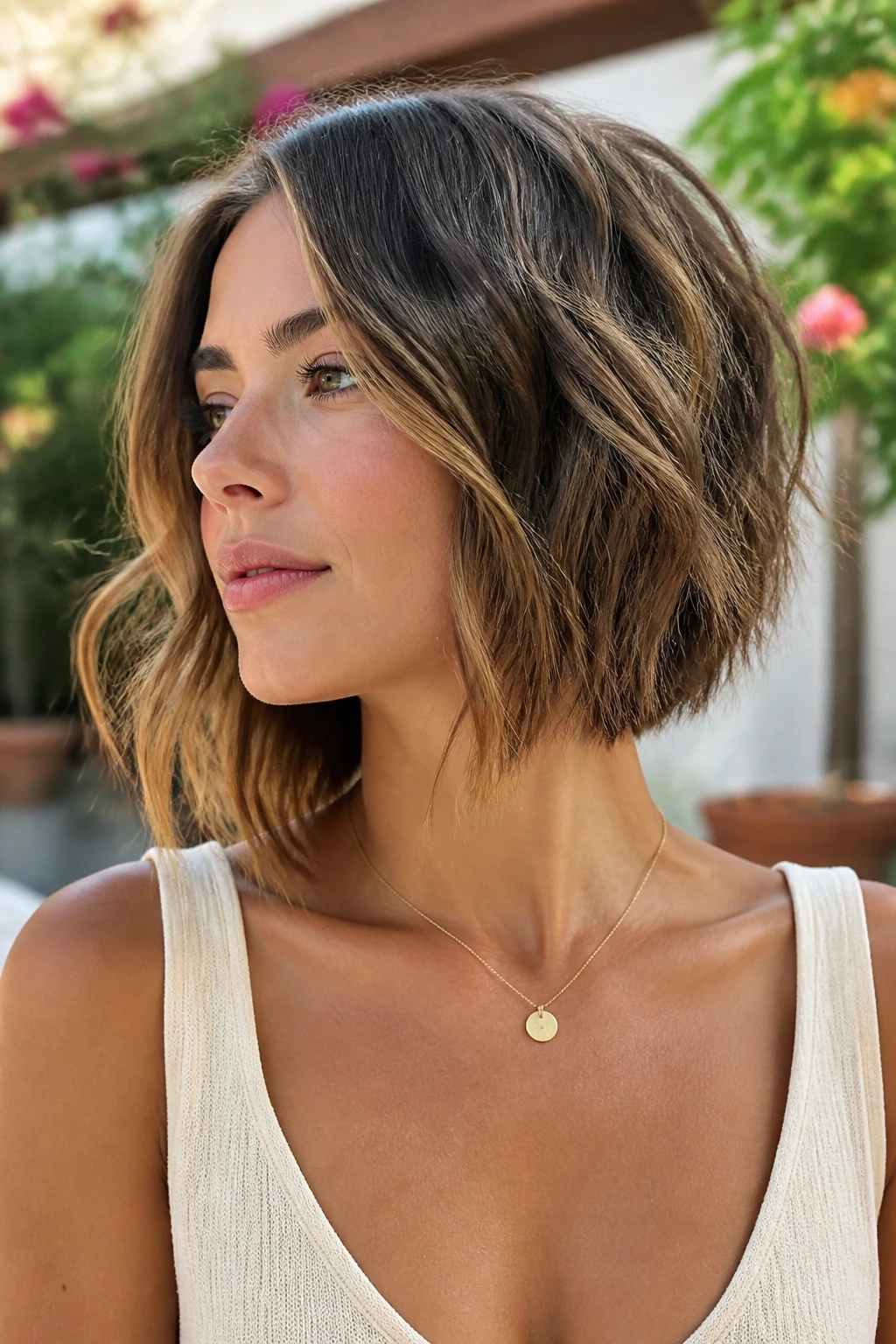
Waves soften the geometry of an angled bob, but they do not erase it. That’s the appeal. The front still falls longer, the back still sits shorter, and the bends in the hair make the line feel lived-in instead of rigid. It’s one of the easiest ways to keep the cut from looking too polished.
A light mousse or a wave cream helps the shape hold together from root to tip. I’d avoid heavy oils here; they flatten the movement and can make the ends collapse. A rough dry, a few twists with a diffuser, and some finger separation are usually enough.
- Best when the wave pattern is loose to medium
- Looks especially good with side-swept front pieces
- Needs texture spray, not sticky gel
The point is movement with direction. Not frizz with ambition.
9. Curly Angled Bob
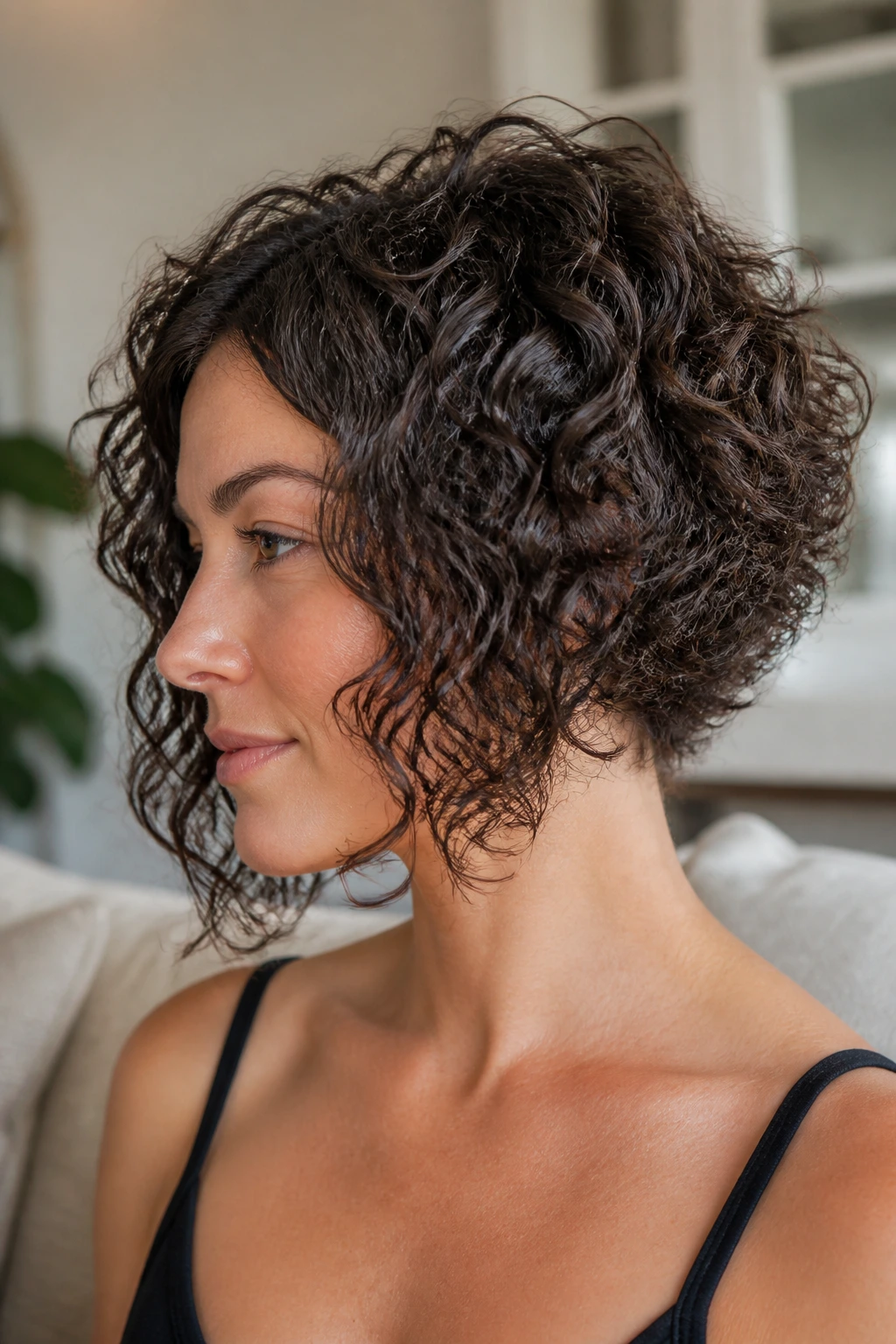
Curly hair changes the math, and that’s fine. In a curly angled bob, the front still needs to sit longer than the back, but the cut should be shaped for spring and shrinkage. That usually means the angle looks more subtle when wet and more obvious once the curls dry and spring up.
This cut is usually better when it’s shaped while dry or with the curl pattern partially visible. A stylist who understands curl clumps can keep the back from stacking too high and the front from becoming a triangle. Moisture matters here, too. A leave-in and a curl cream help the curls hold their form so the angle doesn’t get lost in fuzz.
Curly versions of this cut are not trying to look straight. They’re trying to look balanced. That’s a different job, and a much better one.
10. Side-Part Angled Bob
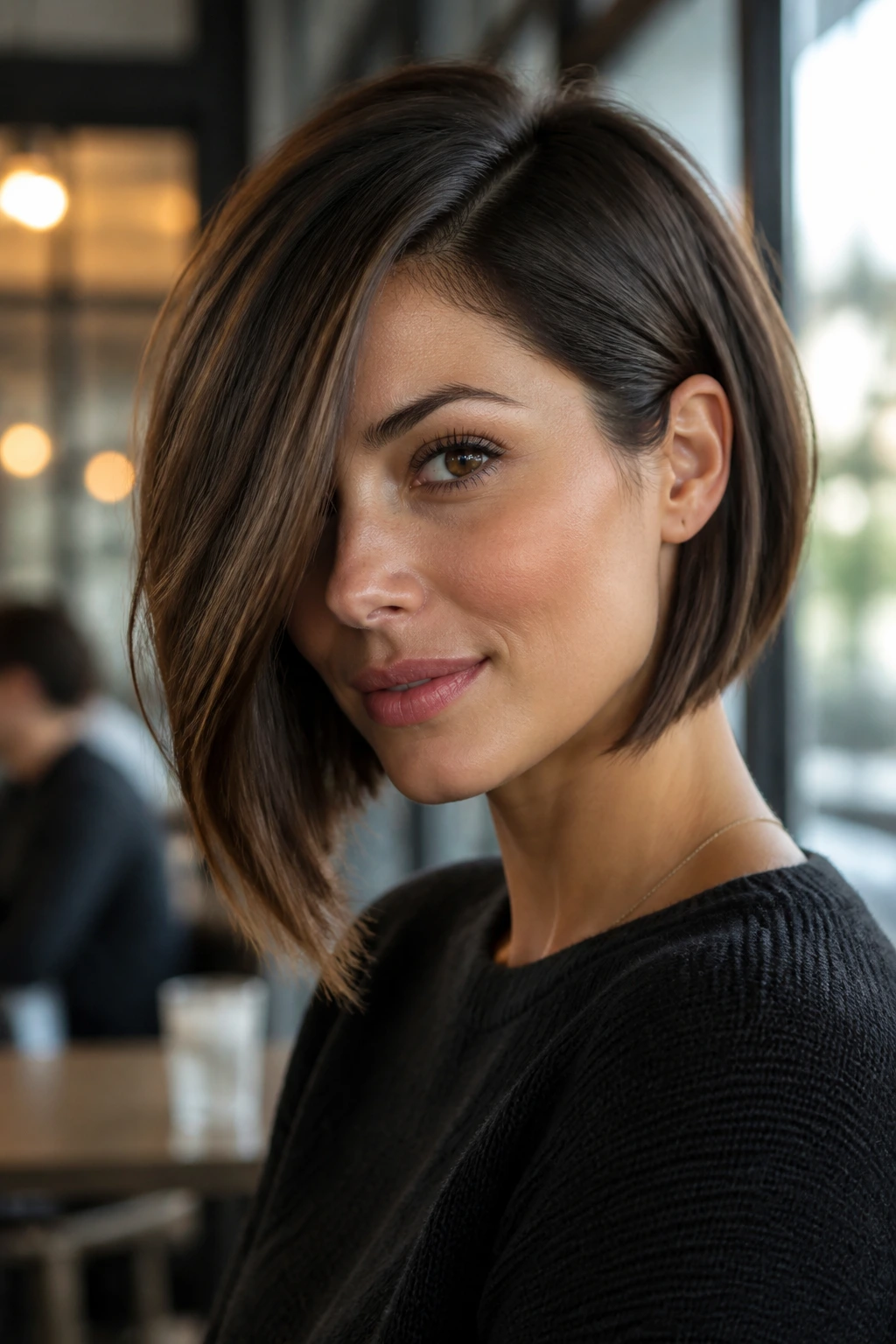
A deep side part can make an angled bob feel instantly more dramatic because it creates a heavier sweep across one side of the face. The longer front pieces get more movement, and the shorter side often opens up the eye and cheekbone line. It’s a simple change that makes the cut look more deliberate.
I like this on round or square faces when the goal is a little asymmetry without actually changing the haircut. The part does a lot of the work. If the hair is very flat, a little root lift spray at the crown keeps the heavier side from drooping by noon.
The side part also gives you a graceful way to tuck one side behind the ear. Small gesture. Big effect.
11. Center-Part Angled Bob
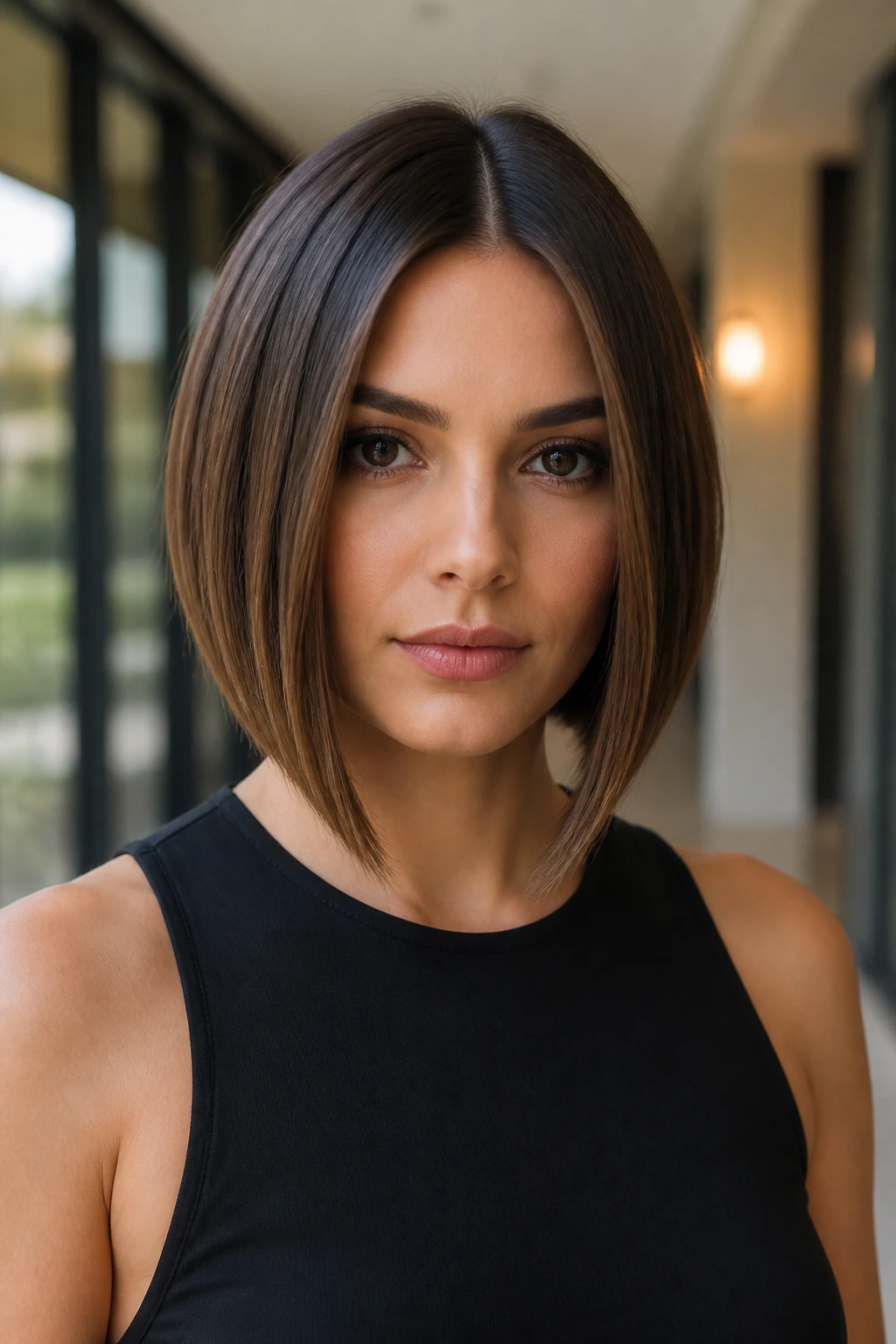
A center-part angled bob is cleaner and more symmetrical, which lets the actual cut do the styling. The diagonal line from back to front becomes easier to see because both sides are giving you the same visual weight. It looks calm, but not sleepy.
This version works especially well when the front pieces are cut to skim the jaw evenly. Straight hair gives it a more graphic feel. Wavy hair makes it softer and a bit less strict. If your hairline is uneven or your cowlick insists on wandering, the center part may need a little persuasion with heat and a comb.
It’s a good choice when you want the cut to look intentional from the front, not just the side. That matters more than people think.
12. Textured Choppy Angled Bob
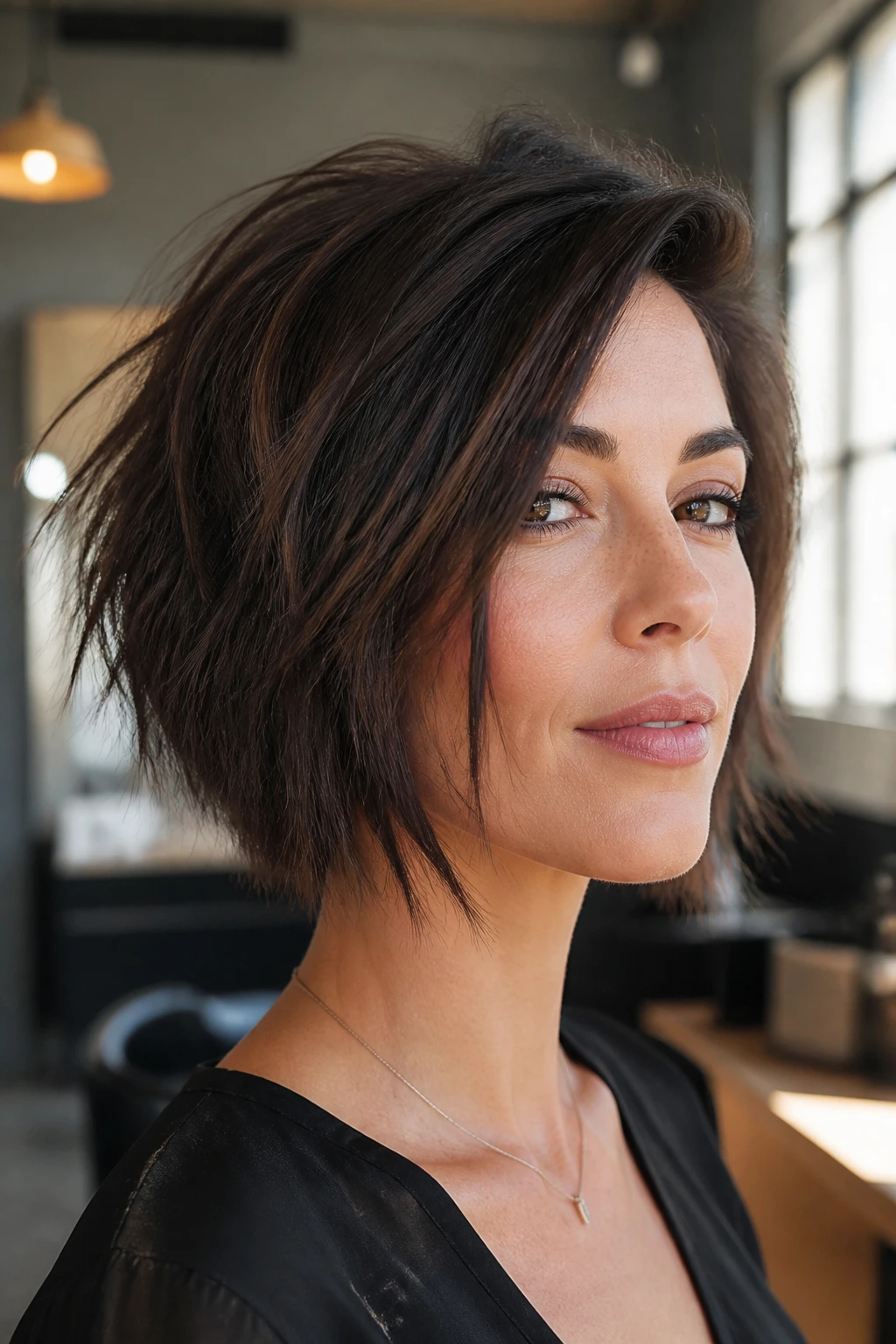
A choppy angled bob trades sharpness for movement. The perimeter still slopes forward, but the ends are cut with a little more bite, sometimes with a razor or point-cutting so the finish looks piecey instead of heavy. It has a bit of grit to it.
This is the one I reach for when someone says they want “something cool” but can’t explain why the last bob felt flat. Texture gives the cut some air. It also helps thick hair stop feeling like one solid block. A dry texturizing spray or a tiny bit of paste through the ends can make the pieces separate without turning crunchy.
If you like hair that looks touched rather than polished, this is the lane. Not neat. Better than neat.
13. Sleek Straight Angled Bob
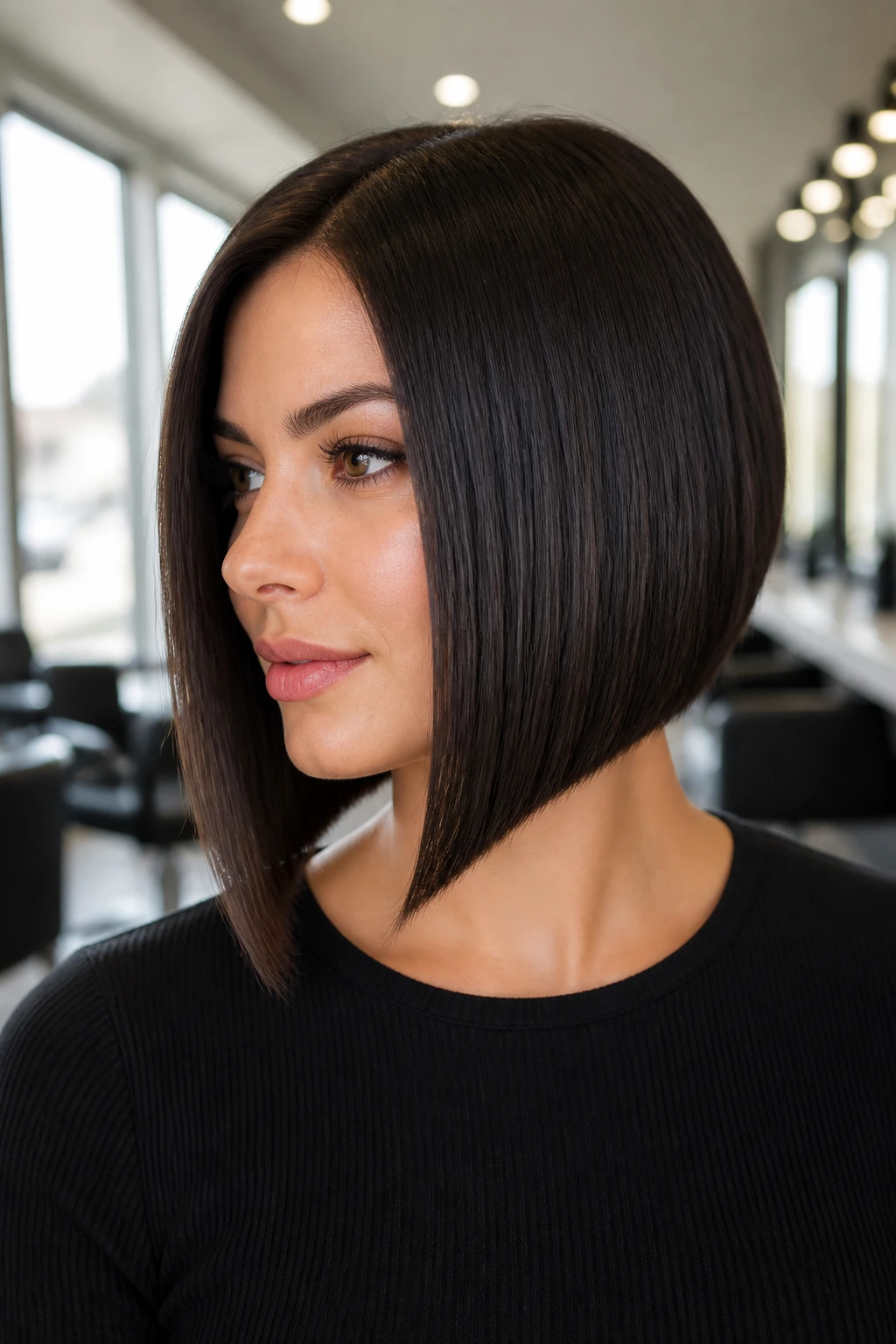
Sleek straight angled bob haircuts are all about the line. Every strand sits where it should, and the front edge falls in a clean sweep that almost looks drawn on. This is where a good blow-dry matters. So does a flat iron with a low, controlled bend at the ends.
What makes this style work is restraint. Too much product and the hair gets greasy. Too much movement and the sharp shape starts to blur. A pea-sized smoothing cream, a nozzle on the dryer, and a quick pass with a flat iron are usually enough if the cut itself is solid.
I like this version most on hair that naturally leans straight or on people who don’t mind spending ten extra minutes getting the line just right. The payoff is a bob that looks expensive without trying to look expensive. Which is nicer, honestly.
14. Angled Bob with Full Bangs
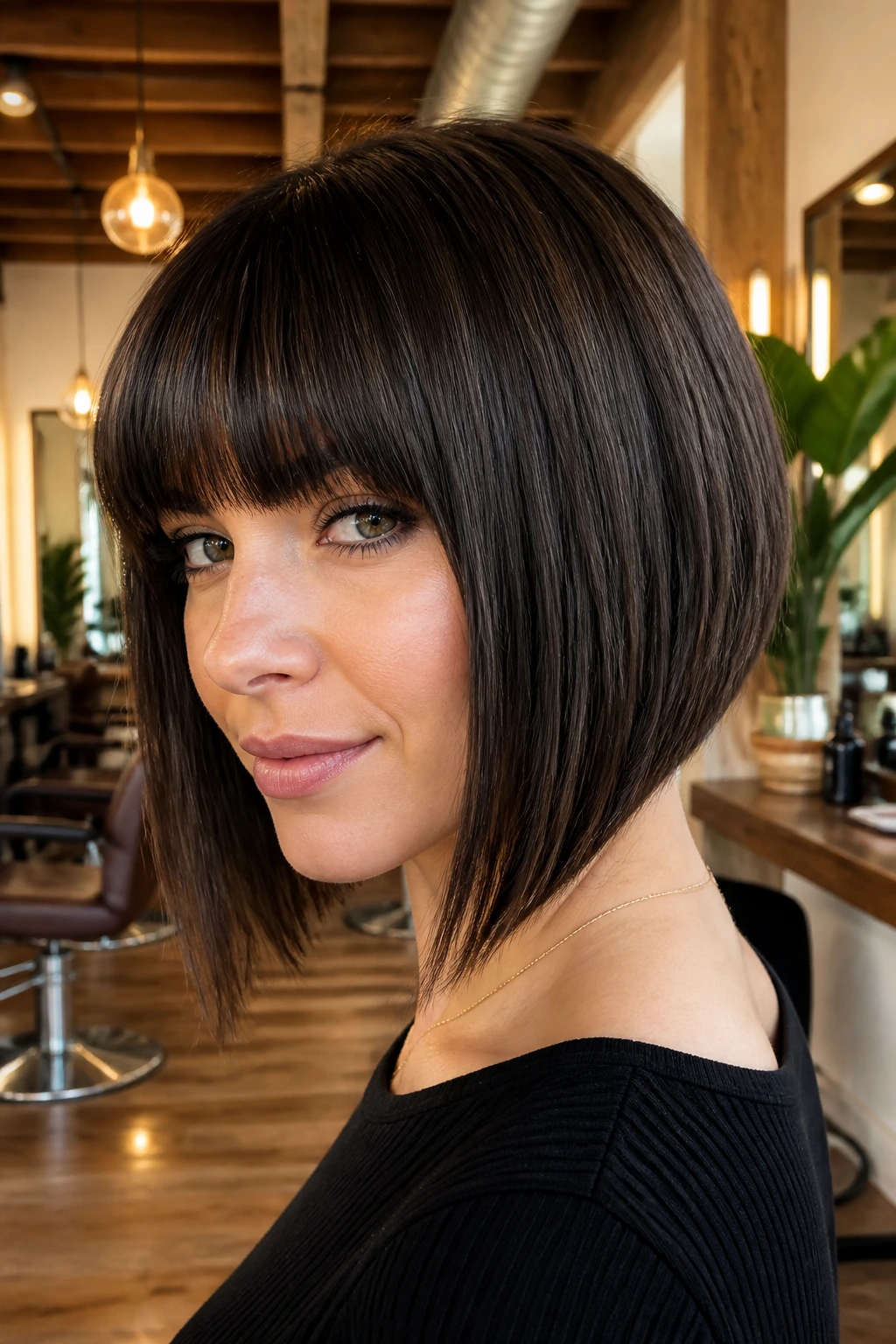
Full bangs change the whole mood of an angled bob. Instead of the face opening at the forehead, the fringe anchors the top while the front length keeps the lower half light. That balance can be excellent on longer faces or on anyone who wants the jawline to feel stronger.
The cut works best when the bangs are dense enough to sit cleanly, not wispy enough to split apart after one humid walk outside. Keep the bob itself fairly smooth so the fringe and the angle don’t compete. If both are busy, the style starts to look crowded.
There’s also a very practical upside: full bangs make a shorter angled bob feel less exposed. If you like the shape but don’t love having all your forehead on display, this is a good fix.
15. Angled Bob with Curtain Bangs
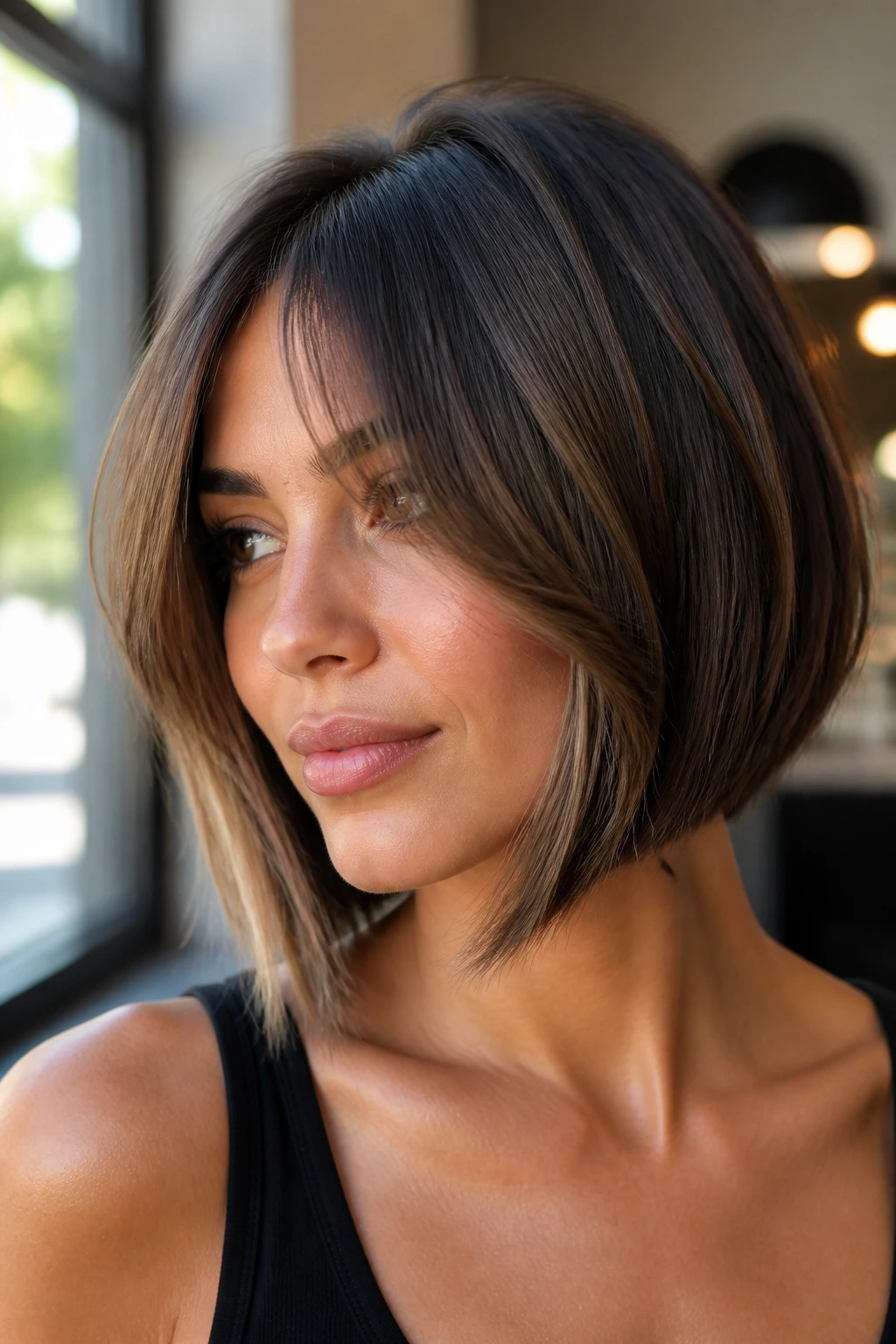
Curtain bangs and an angled bob get along because both shapes already create movement around the face. The fringe opens in the middle, drapes softly along the cheekbones, and then hands the eye straight down to the longer front pieces. It’s a gentle way to soften a cut that could otherwise feel severe.
This version is especially useful if you want the angled bob to grow out without looking like you missed your trim. Curtain bangs blur the transition as the length changes. A round brush or blow-dry brush helps them sweep away from the face rather than collapsing into the eyes.
It’s a quieter look than full bangs, but not a timid one. There’s still enough edge in the cut to keep it from drifting into generic long-hair territory.
16. French Angled Bob
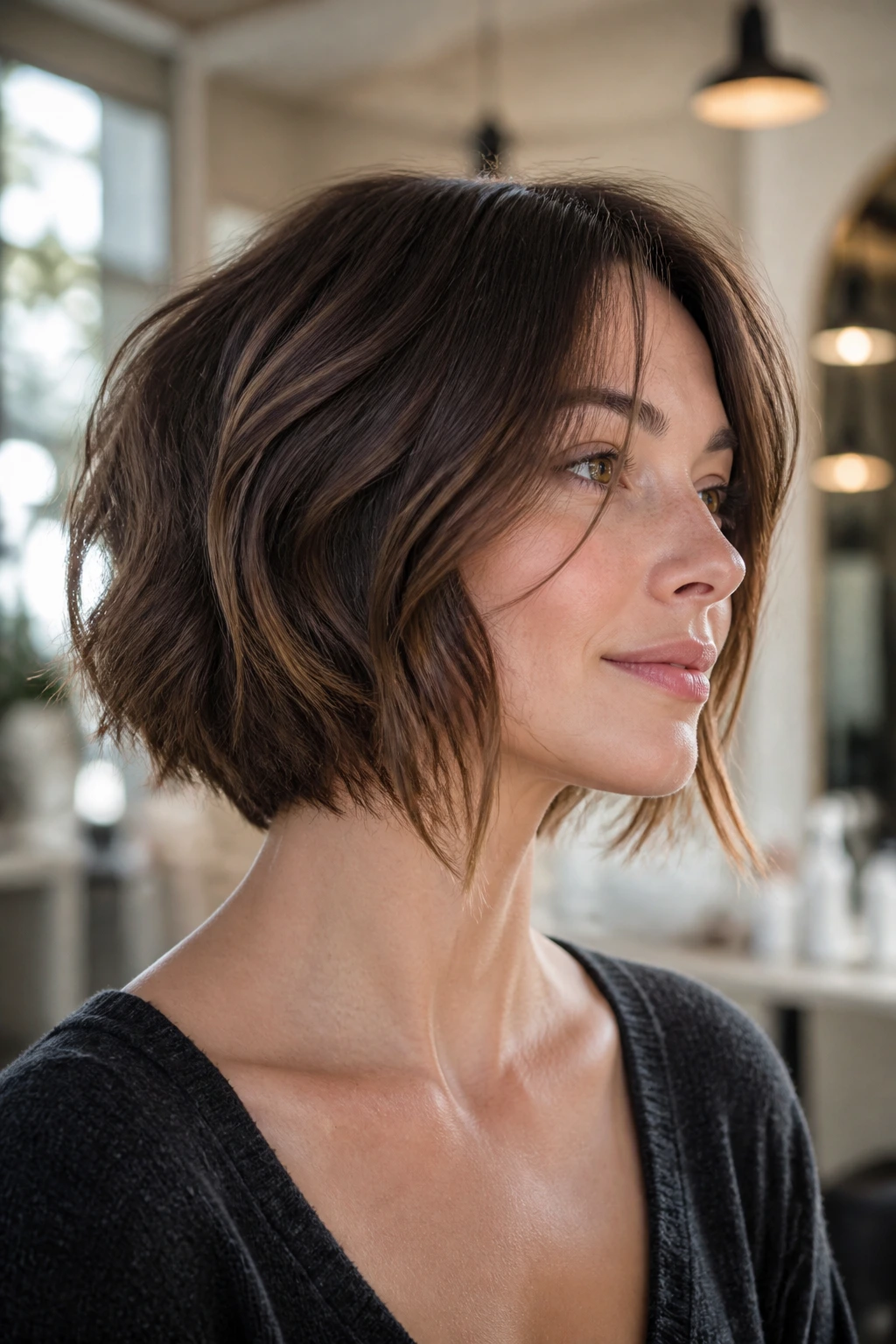
A French angled bob tends to be shorter, looser, and a little less engineered than a very sharp salon bob. The angle is still there, but the finish feels airy, almost casual, with soft movement around the ends and a shape that looks better when it isn’t over-styled. That is the whole charm.
This cut usually sits close to the jaw in back and slips forward just enough to suggest the angle rather than announce it. It works well with a natural wave, a quick bend from a small round brush, or even a slightly undone air-dry. The main thing is not to flatten it to death.
If you like hair that looks like it was cut by someone who trusts their scissors, this version has that energy. Understated. Still directional.
17. Fine Hair Angled Bob
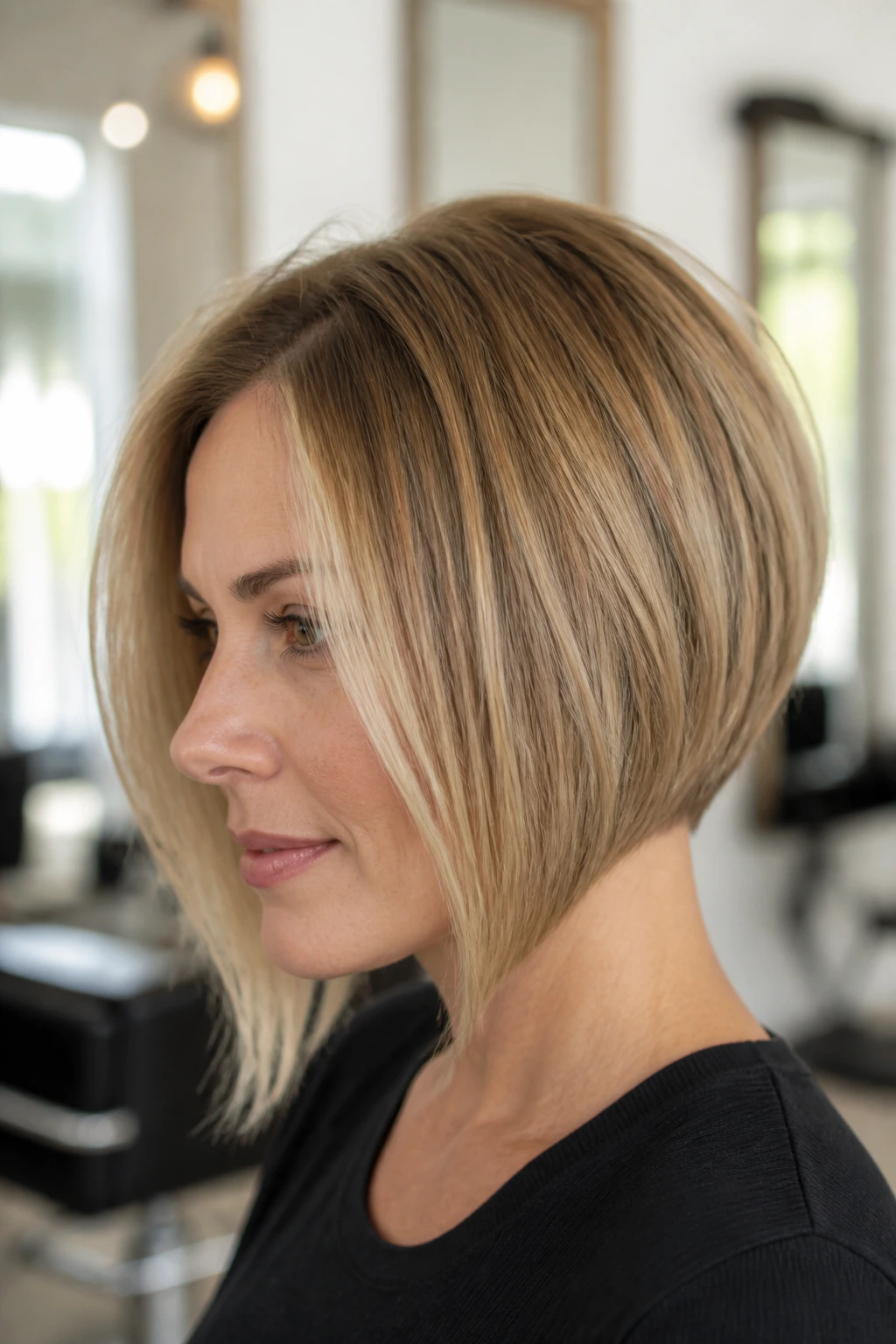
Fine hair needs a careful angled bob, not an aggressive one. Too many layers can leave the ends wispy and make the angle disappear. The better move is a clean perimeter with just enough internal shape to stop the crown from falling flat.
A shorter back can help fine hair look fuller because it removes dead weight. The front should still have enough length to create a swing line, usually around the jaw or just below. I’d pair this with a root-lifting spray and a blow-dry that focuses on the crown, not just the ends.
- Keep layers minimal
- Use lightweight mousse, not heavy cream
- Trim regularly so the ends stay blunt enough to hold shape
Fine hair in an angled bob can look very crisp. It just needs discipline.
18. Thick Hair Angled Bob
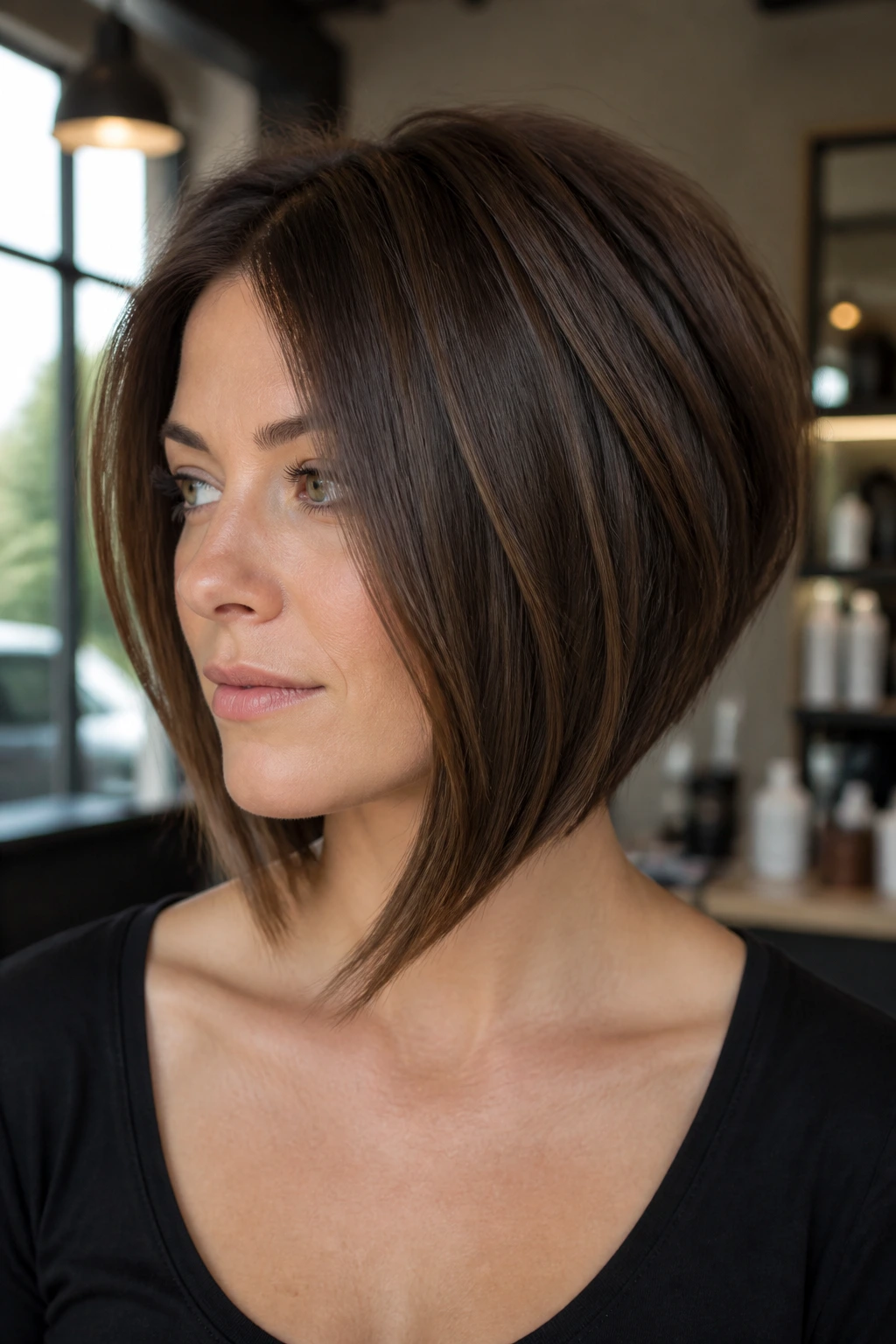
Thick hair gives you more room to play, but it also gives you more room to mess it up. A thick-haired angled bob needs internal weight removal so the back doesn’t puff out and the front doesn’t drag your whole face down. When that balance is right, the cut looks expensive in the plainest, best sense of the word.
I usually prefer a slightly longer front on thick hair because the extra length helps the shape settle. Heavy hair that’s cut too short at the back can spring up in a way that feels boxy. A good stylist will thin the inside, not the edge, so the bob keeps its line.
This cut is one of the easiest to style once the shape is right. It already has body. You’re just guiding it.
19. Inverted Angled Bob
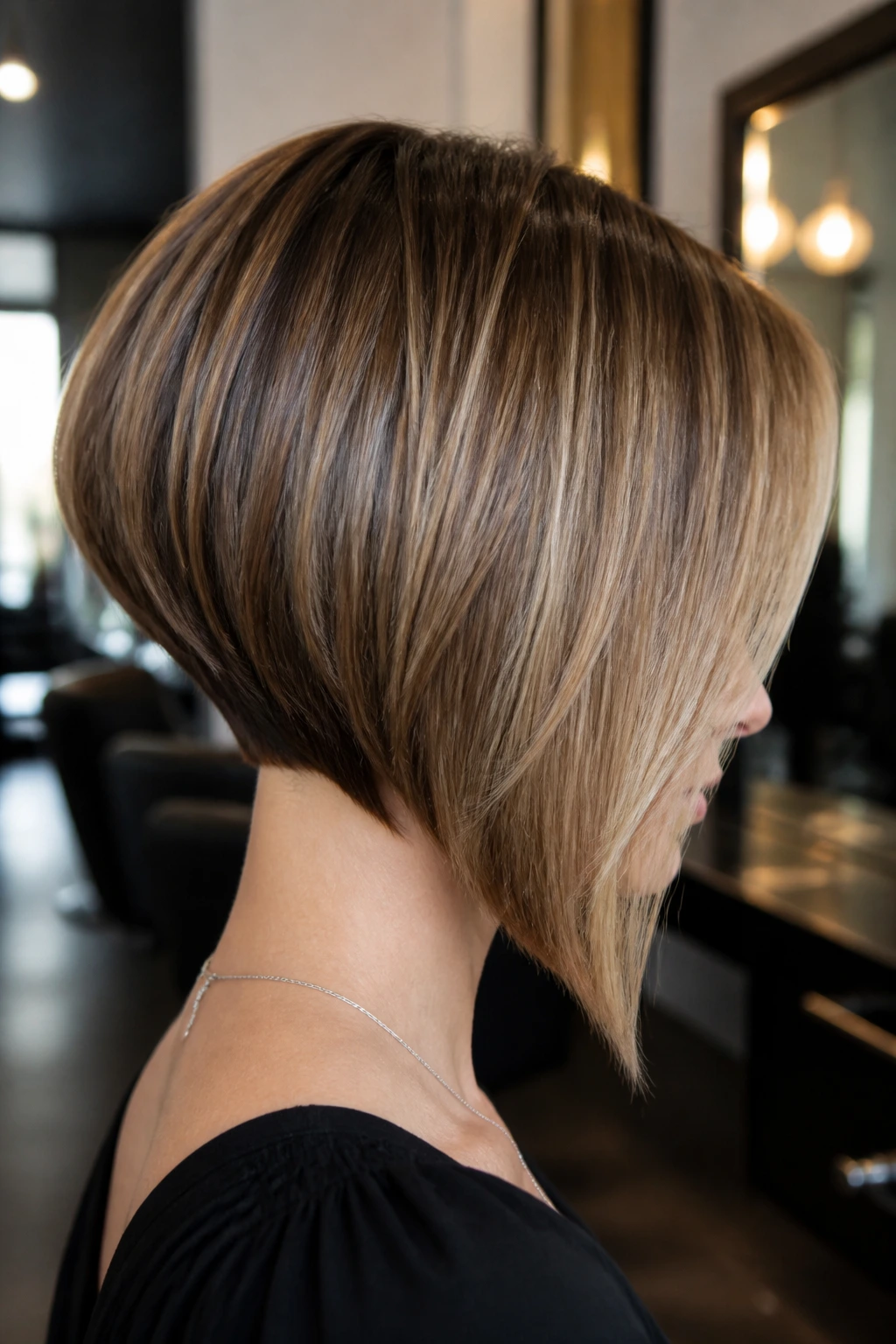
An inverted angled bob is the dramatic cousin in the family. The back is shorter and more curved, the front is longer, and the graduation through the crown is more obvious. You can see the architecture from across the room. That’s the point.
This version reads best when the cut is precise. If the graduation is muddy, the style loses the clean sweep that makes it worth wearing. It’s also a better fit for someone who likes a pronounced side or back profile, because that’s where the shape really shows off.
This is not the easiest option, and I say that as a compliment. Some haircuts are supposed to be a little fussy. This is one of them.
20. Feathered Angled Bob
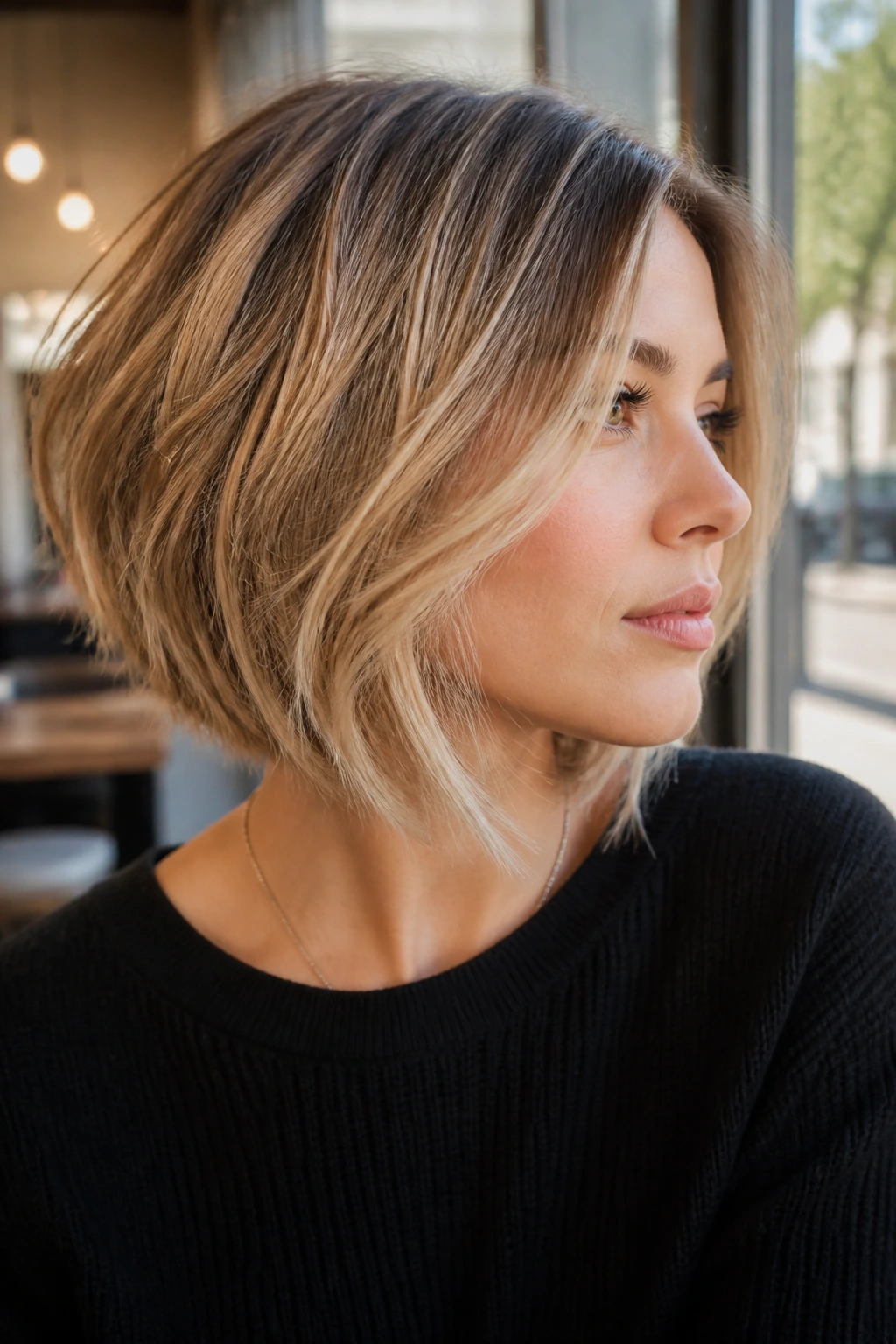
A feathered angled bob takes the hard edge out of the ends and leaves you with a softer, airier finish. The pieces separate a little, the line still slopes forward, and the whole style feels lighter around the jaw. It’s useful if you love the idea of an angled bob but do not want a hard perimeter.
Feathering works well for medium-density hair that needs movement but not a full texture overhaul. A small round brush and a light mist of hairspray are usually enough. I’d avoid going too fluffy, though. The ends should look touched by air, not blown apart by it.
This is a good compromise cut. You still get the geometry. You just lose the stiffness.
21. Micro Angled Bob
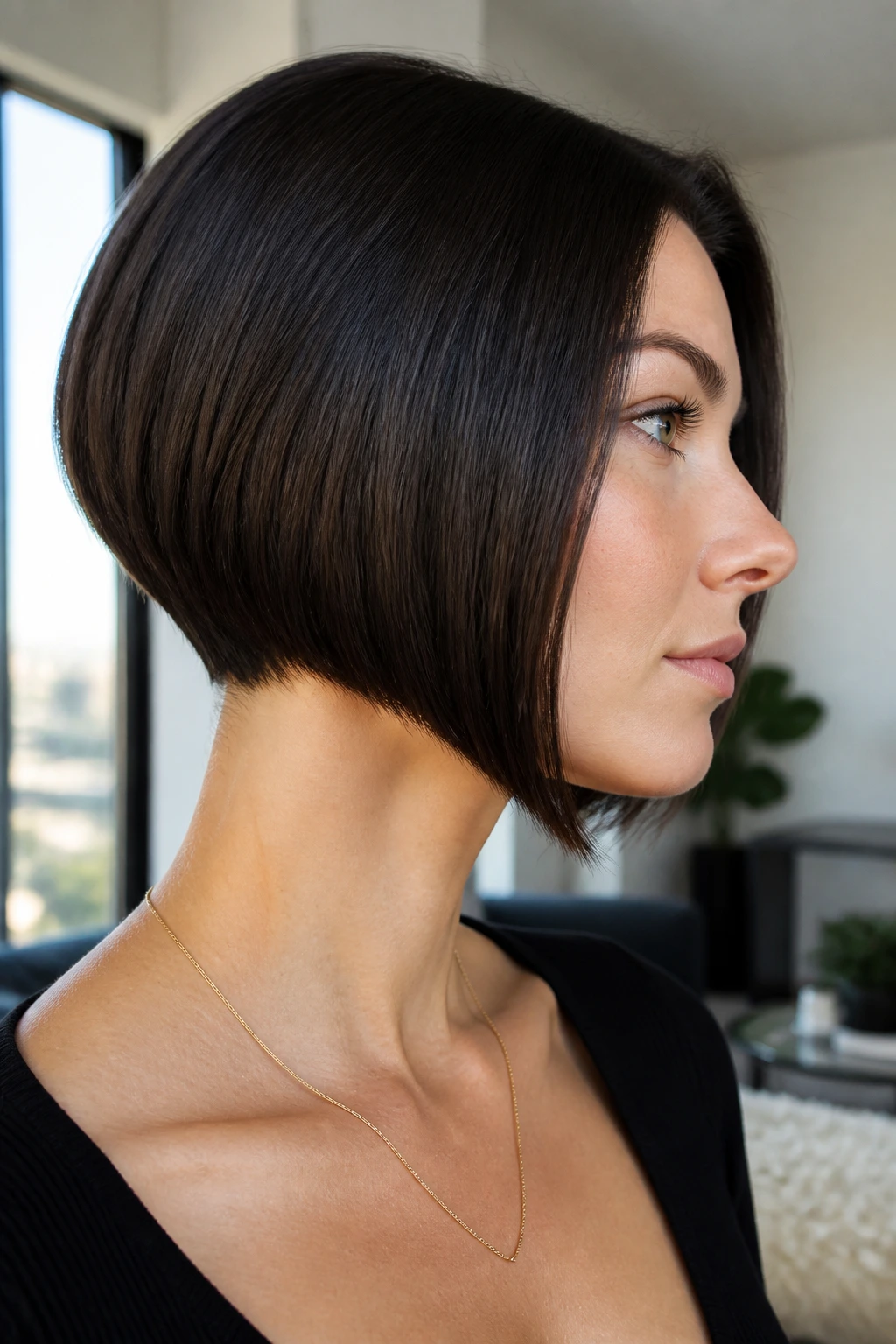
The micro angled bob is short enough to show off the neck and sharp enough to feel fashion-forward. The nape gets very close-cropped, while the front stays just long enough to make the angle visible. It’s the kind of cut that looks simple until you notice how exact it has to be.
This one asks for confidence and straight lines. It also asks for honest hairline placement, because a strong cowlick or a very low nape can fight the shape fast. If you wear jewelry, this cut loves it — hoops, studs, anything that keeps the eye up near the face.
It’s a clean, decisive haircut. No hiding.
22. Collarbone Angled Bob
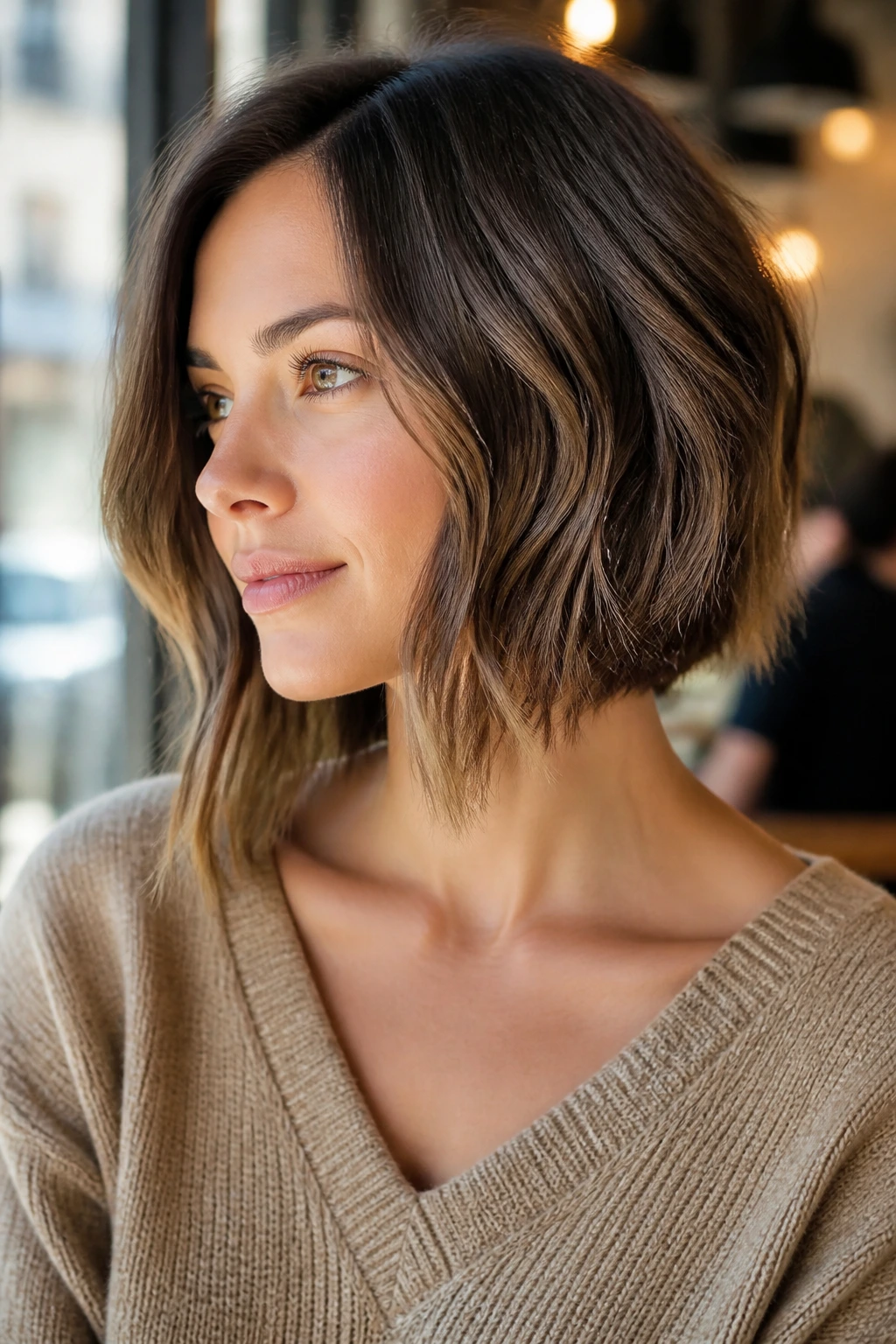
A collarbone angled bob is the graceful version that gives you movement without the commitment of a jaw-length crop. The back can still sit above the shoulders, but the front drapes toward the collarbone, which softens the line and makes grow-out far less annoying.
This is one of the best choices if you’re testing the angled shape for the first time. It gives you enough length to tuck, braid, or wave, but the diagonal still reads clearly. For wavy hair, this length is especially useful because the pattern has room to form without puffing out.
If you want a bob that behaves on busy days and still looks like a haircut, not a compromise, this is the one to keep in your back pocket.
23. Angled Bob with a Hidden Undercut
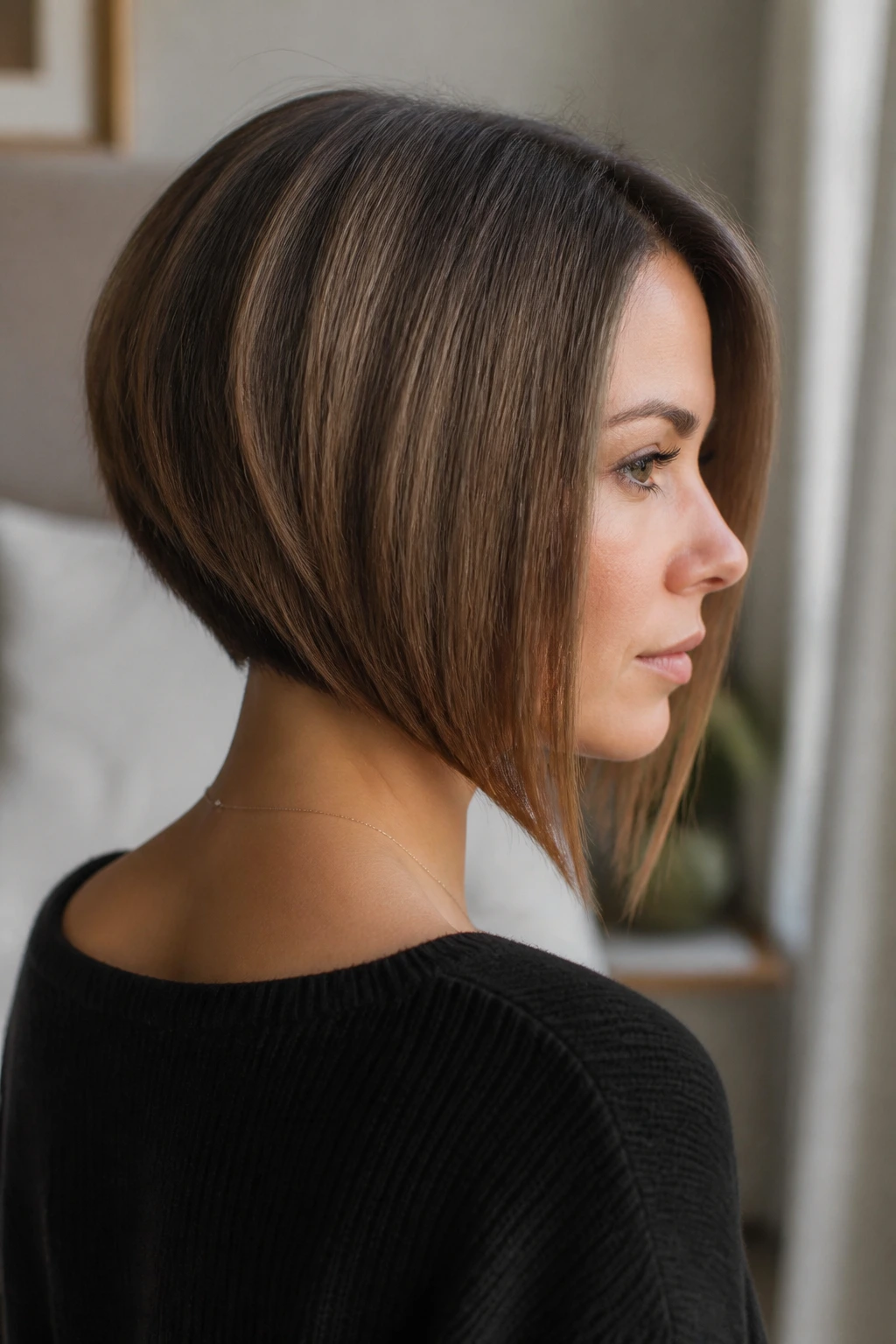
An angled bob with a hidden undercut is a smart fix for hair that keeps bulking up underneath. The top layer keeps the visible shape, while the nape or lower back is clipped shorter so the cut lies closer to the head. You don’t see the undercut unless the hair moves or is pinned up.
This is a practical choice for very thick hair, especially if the back of your bob tends to balloon the second humidity shows up. It can also make the angle cleaner because there’s less hidden weight pushing against the front pieces. Styling gets easier, too. Less bulk means less blow-drying.
It’s not flashy on purpose. It’s the haircut equivalent of solving a problem before it gets rude.
24. Angled Bob with Money Piece Highlights
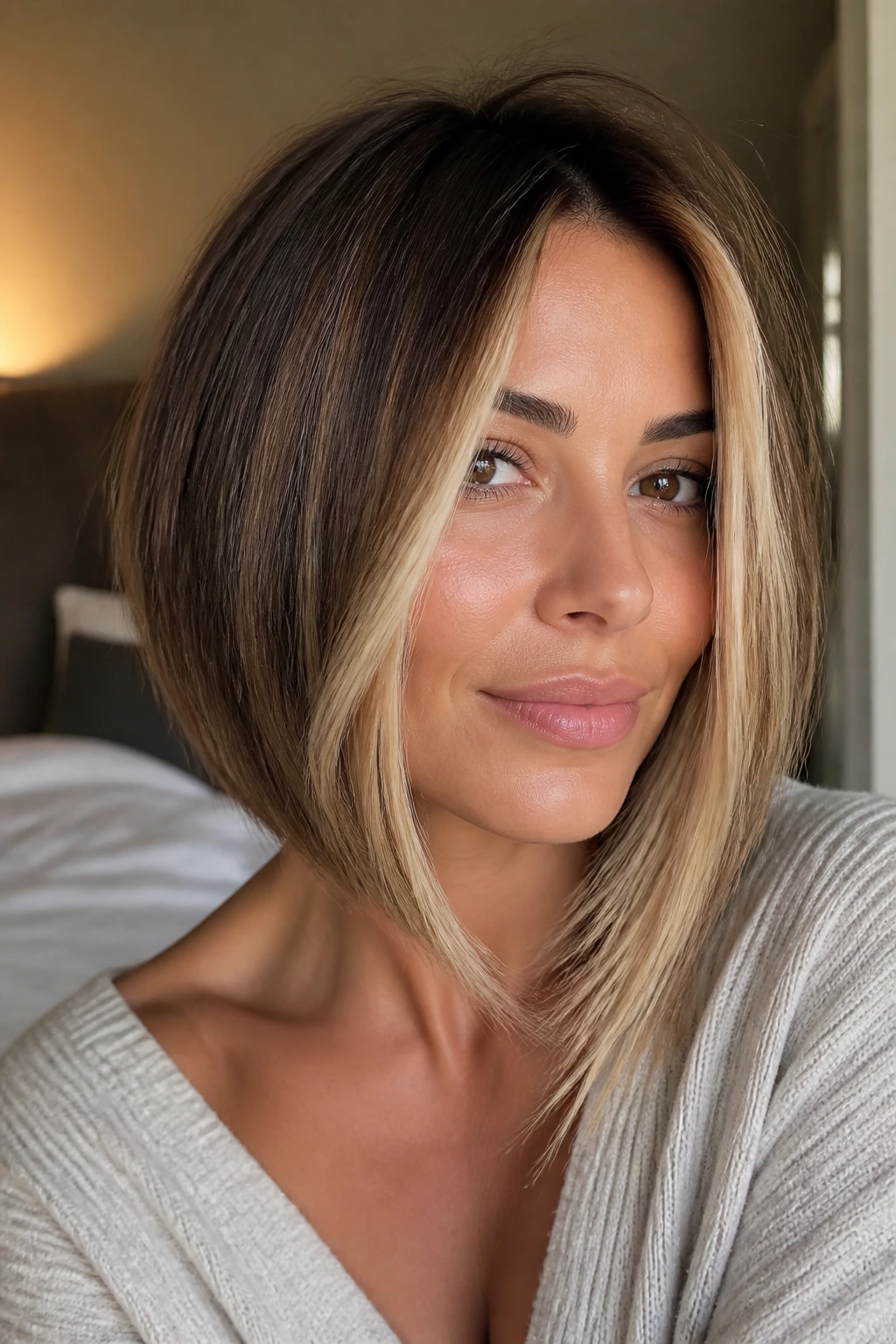
Money-piece highlights change the way the angle reads because they brighten the front edges and pull attention right where the bob wants it. The haircut itself still does the work, but the lighter face-framing pieces sharpen the diagonal line and keep the front from disappearing into the rest of the hair.
This is a strong move if your color feels flat or if the bob needs more dimension without a full head of highlights. Keep the lightness around the front panels and maybe a softer lift near the crown. Too much contrast all over can blur the shape instead of outlining it.
The result is a cut that looks more alive in motion. The angle becomes part of the color story, which is a nice trick when the haircut needs a little extra help.
25. Copper Angled Bob
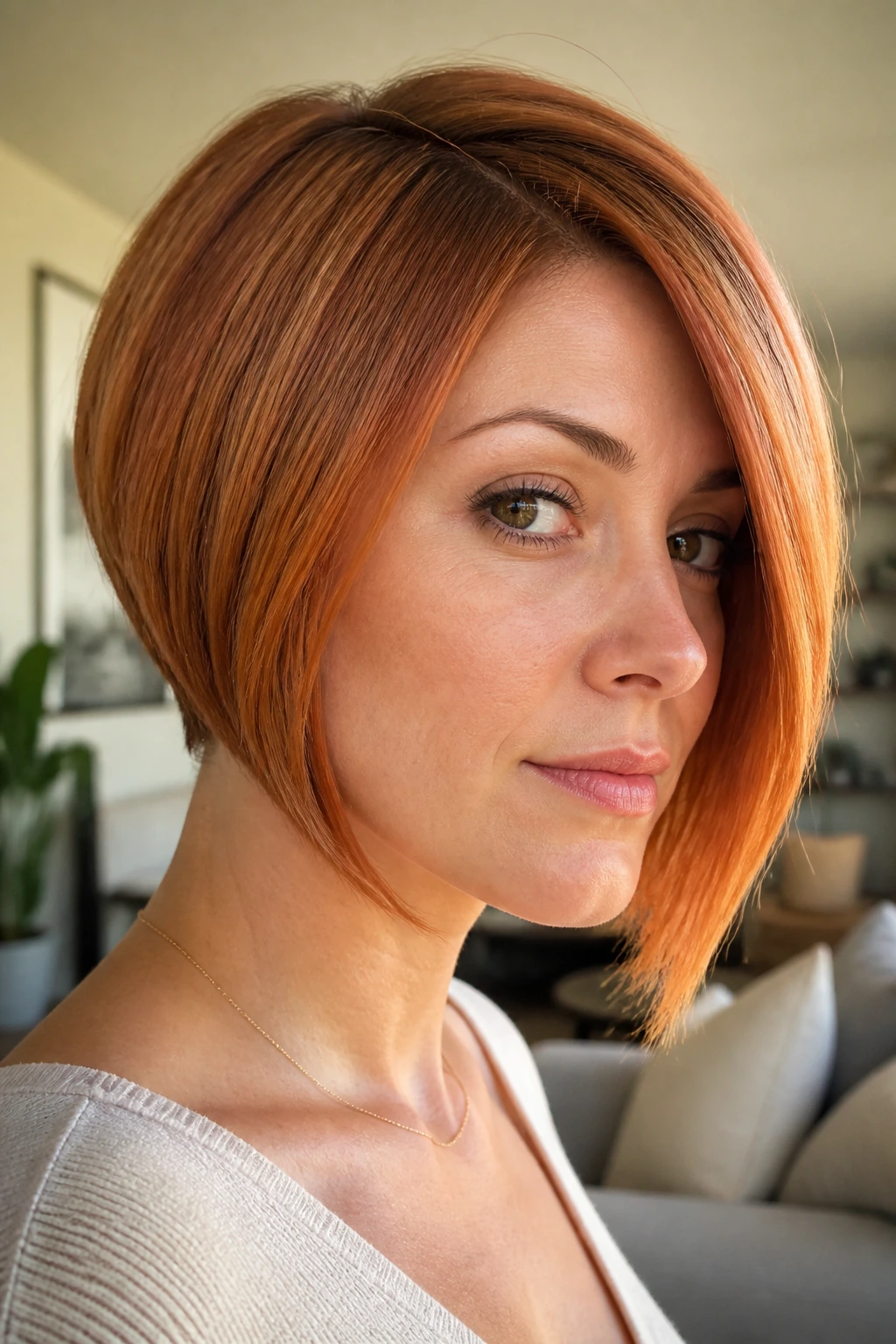
Copper gives an angled bob a warmer, more visible edge because the light catches the front line and the stacked back in a different way than it does on flat brown or cool blonde shades. The cut reads with more depth, especially if the color has a little gold or red in it rather than leaning dull.
This is the kind of bob that looks good with very little styling because the color already breaks up the shape in a flattering way. A smooth blowout makes the copper gleam along the diagonal line, while a soft wave turns the ends into little flashes of movement. If you want the haircut to feel lively without adding bangs or heavy layering, copper does a lot of the heavy lifting.
It’s a clean cut with a little heat in it. I like that combination.
Why the Angle Works So Well on Real Hair
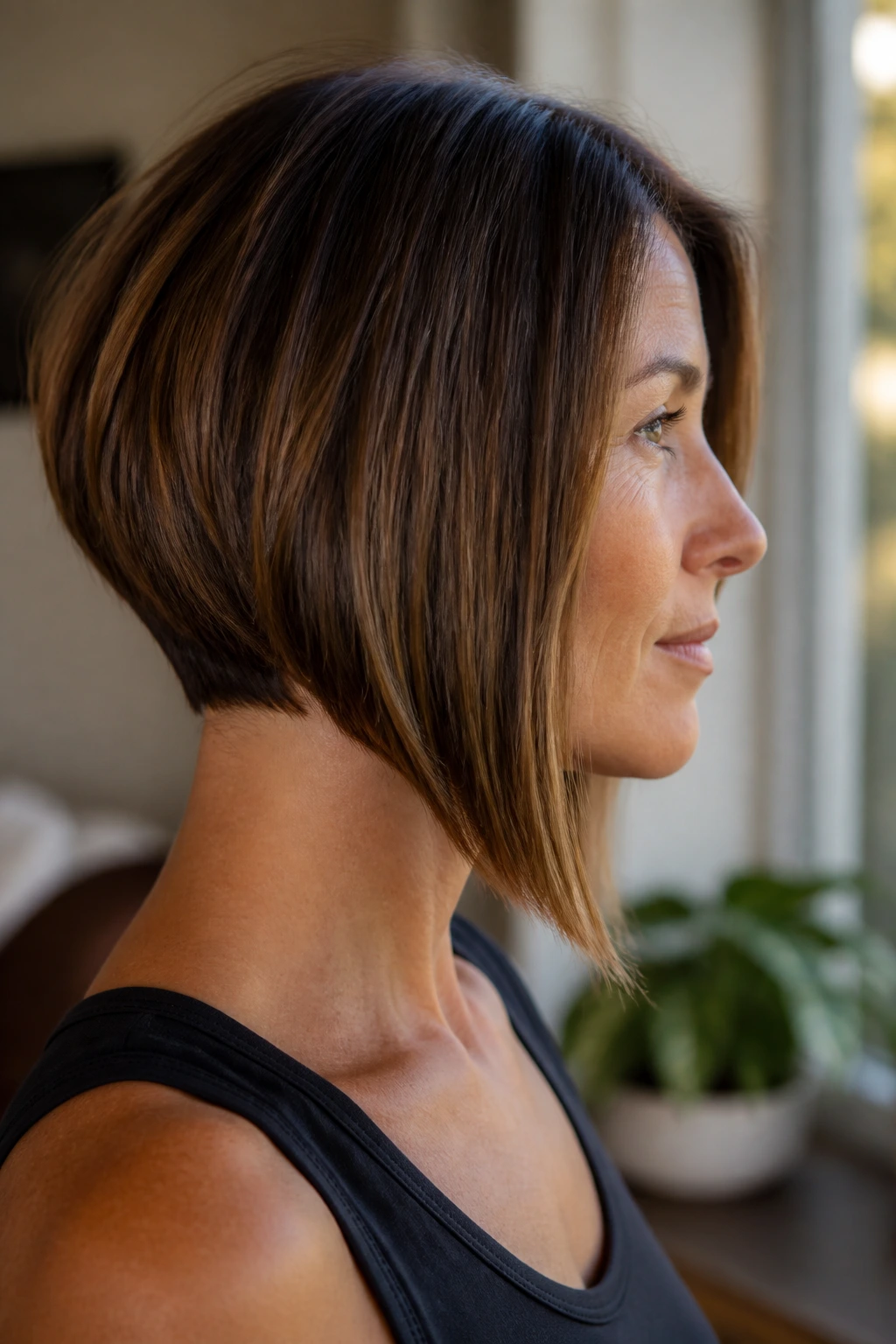
The angled bob earns its keep by changing how the eye reads the head. Shorter in back, longer in front — that simple difference adds structure where a blunt bob can look too boxy or too wide. The neck seems longer. The jaw looks cleaner. Even hair that likes to lie flat gets a little more shape from the slope.
It also gives stylists room to work with the hair’s actual behavior. A cowlick at the nape, a dense crown, a wider jaw, a narrow chin — all of that matters. The angle can be softened, steepened, or stretched depending on what the hair is doing before the scissors ever touch it.
That’s why this cut survives beyond trend cycles. It solves a geometry problem. And good geometry doesn’t date fast.
What to Tell Your Stylist Before the First Snip
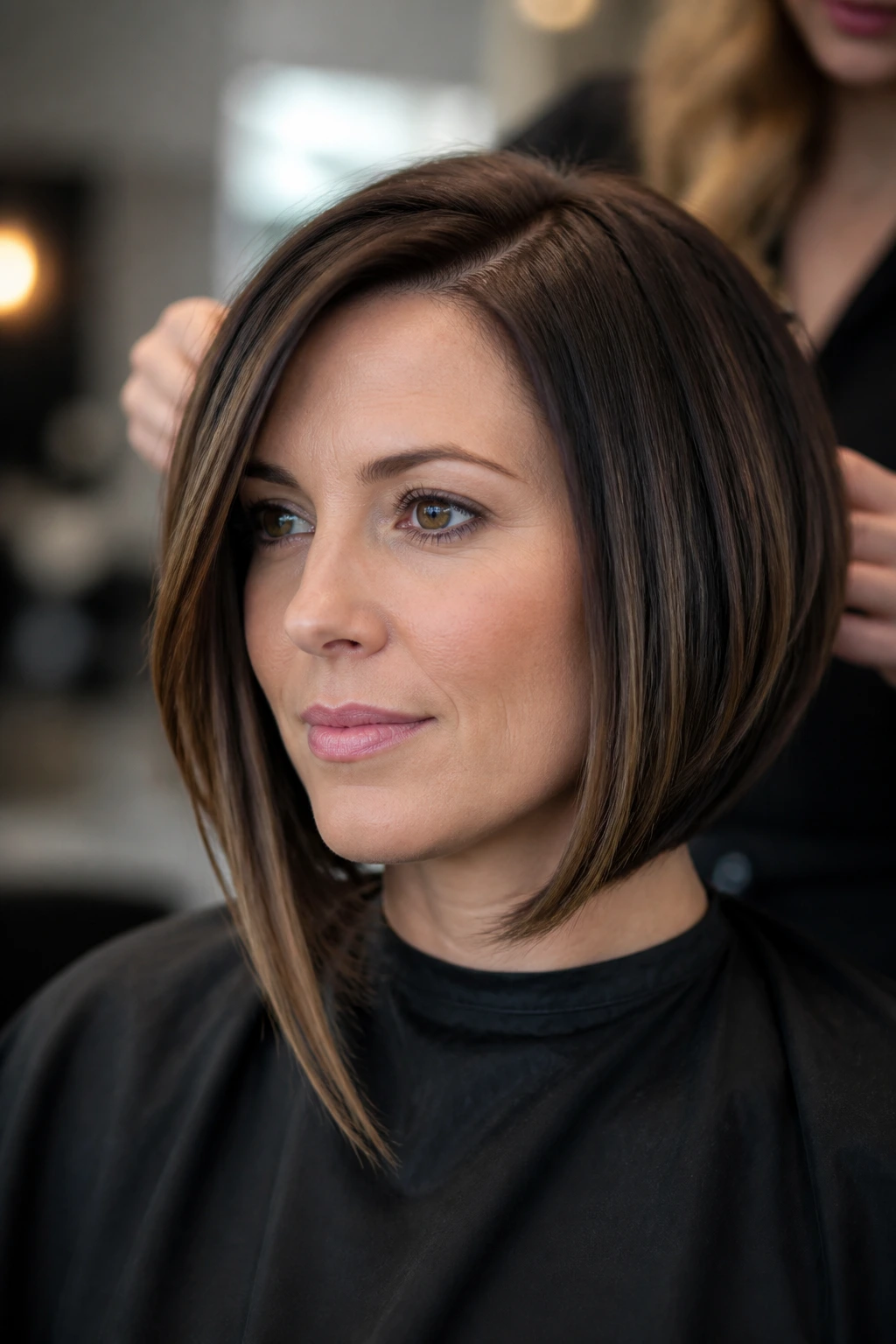
Bring pictures, yes, but bring the right pictures. One photo from the front is not enough. You want side views, back views, and at least one image of the finish you actually wear most days — smooth, wavy, tucked, air-dried, whatever. Otherwise you’re asking for a shape without giving the map.
Say where you want the front to land. At the jaw? The collarbone? Just below the chin? That single sentence changes the whole cut. Also mention your cowlicks, your part, and how much time you’ll spend styling it. A good stylist can work with that. They cannot read your morning mood.
If your hair shrinks when it dries or puff-bends in humidity, say so. That is not a small detail. It’s the detail.
Tools That Make the Cut Sit Right
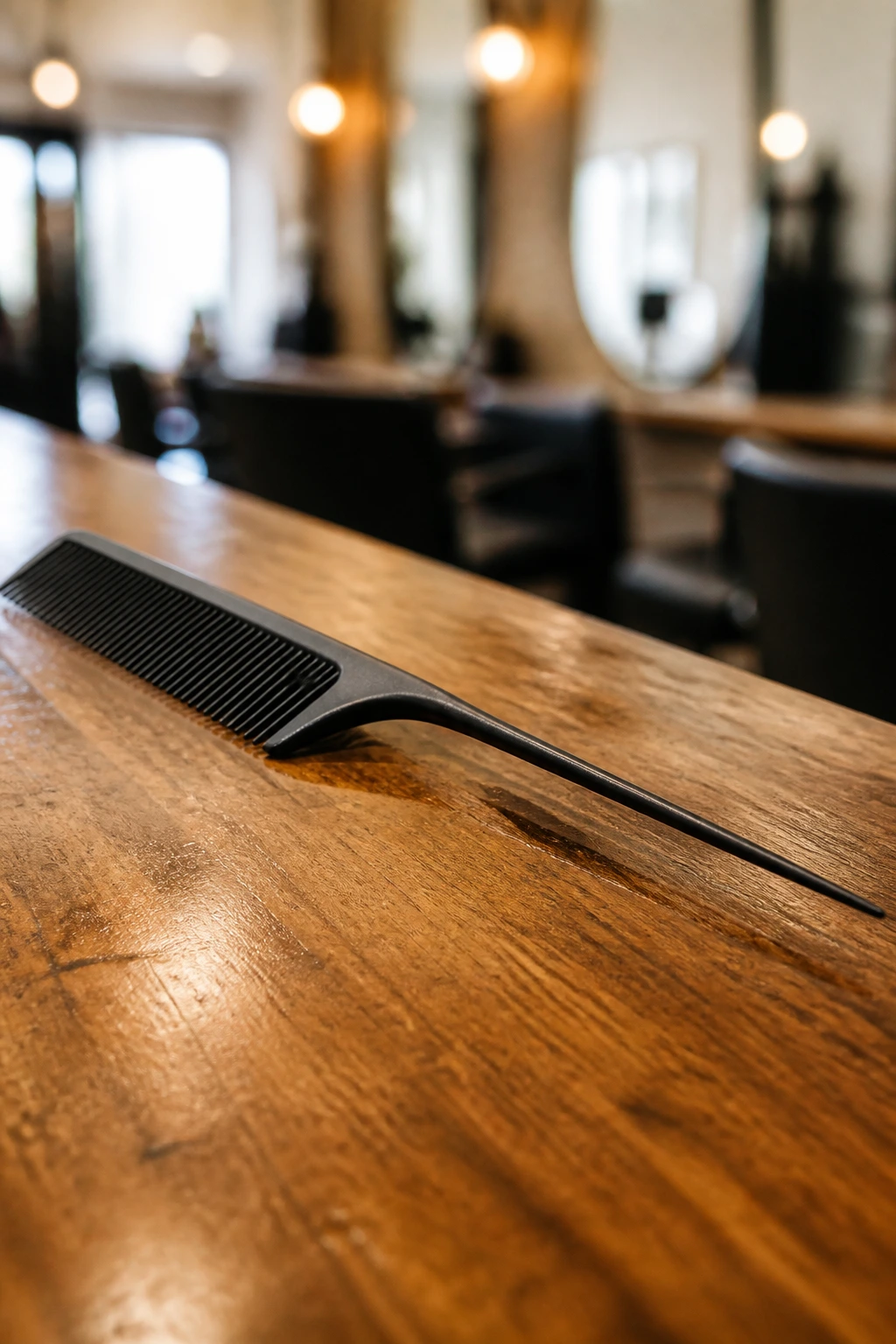
- Tail comb: Useful for making a clean part and sectioning the nape without ripping through damp hair.
- 1- to 1.25-inch round brush: Big enough to smooth the front pieces, small enough to bend the ends under.
- Blow-dryer with nozzle: The nozzle matters; it keeps the airflow narrow so the angle doesn’t get frizzy.
- Flat iron with adjustable heat: Good for a crisp finish or a slight bend at the ends, especially on straighter styles.
- Sectioning clips: Keep the front pieces out of the way while you work the back.
- Lightweight mousse or root spray: Gives lift without turning the bob sticky.
- Heat protectant spray: Non-negotiable if you use hot tools.
- Texturizing spray: Best for wavy or choppy versions when you want the ends separated, not slick.
- Smoothing cream: Helps blunt or sleek versions stay polished through the day.
- Mirror with good side-angle view: Sounds obvious. It isn’t. The angle is a side-view haircut.
How to Style an Angled Bob Without Overworking It
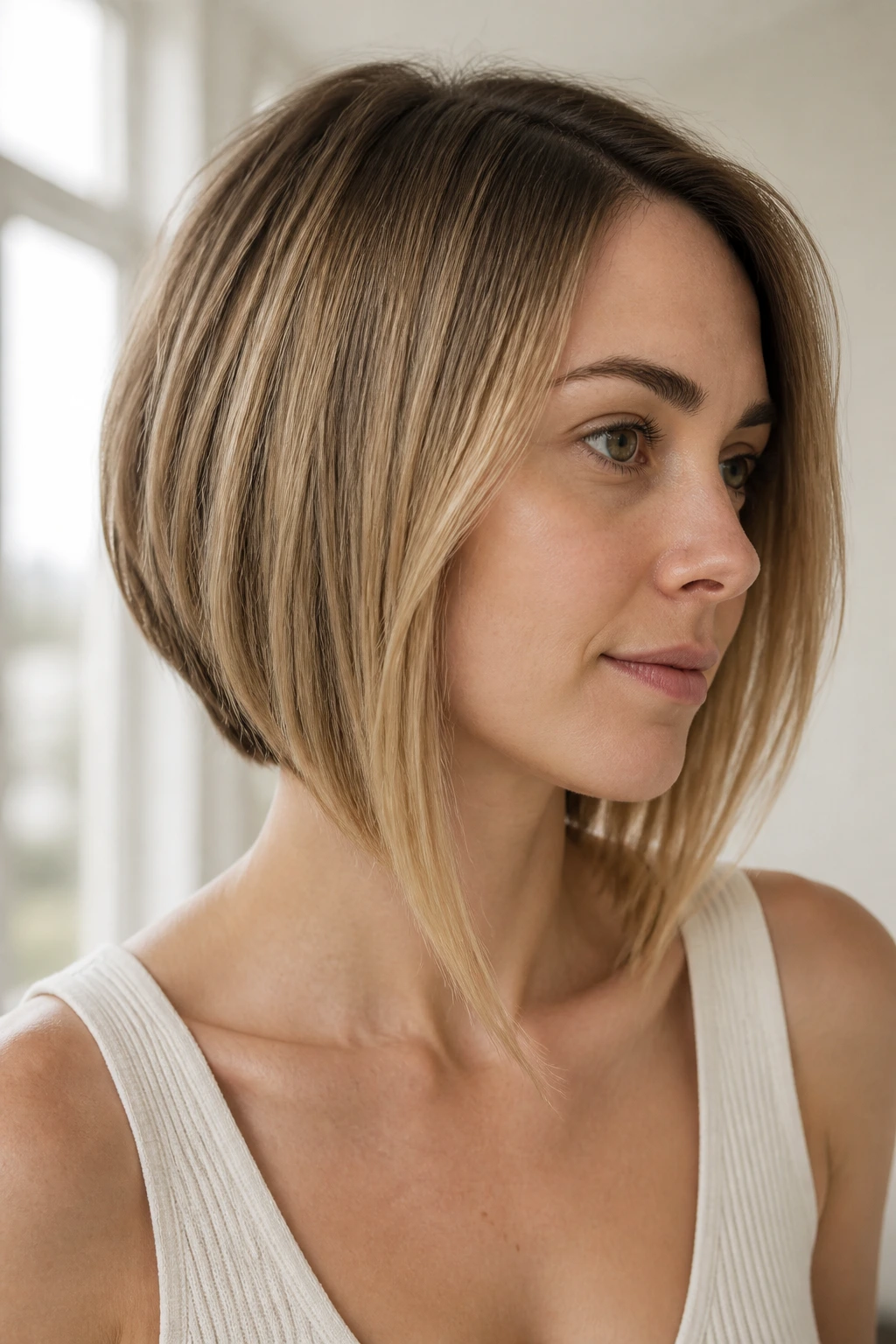
Presentation: Start with the silhouette. Dry the back first, then direct the front pieces forward and under slightly so the slope reads from cheek to collarbone. If the ends look too puffed, they’ve probably been dried too loosely.
Accompaniments: Sharp necklines, small hoops, and simple collars all let the cut breathe. A huge scarf can bury the front pieces; a clean crew neck or open collar keeps them visible. That matters more than people admit.
Scale: If you want a sharper look, keep the back shorter and the front tighter to the jaw. If you want something easier to live with, lengthen the front to the collarbone and soften the graduation. Same haircut family. Different daily mood.
Finish: Sleek styles need shine spray, not heavy oil. Wavy styles need a light mist of texture spray at mid-length, then a quick scrunch. Curly versions usually look better with a leave-in and a diffuser than with a brush fight you cannot win.
Practical Styling Moves That Keep the Line Clean
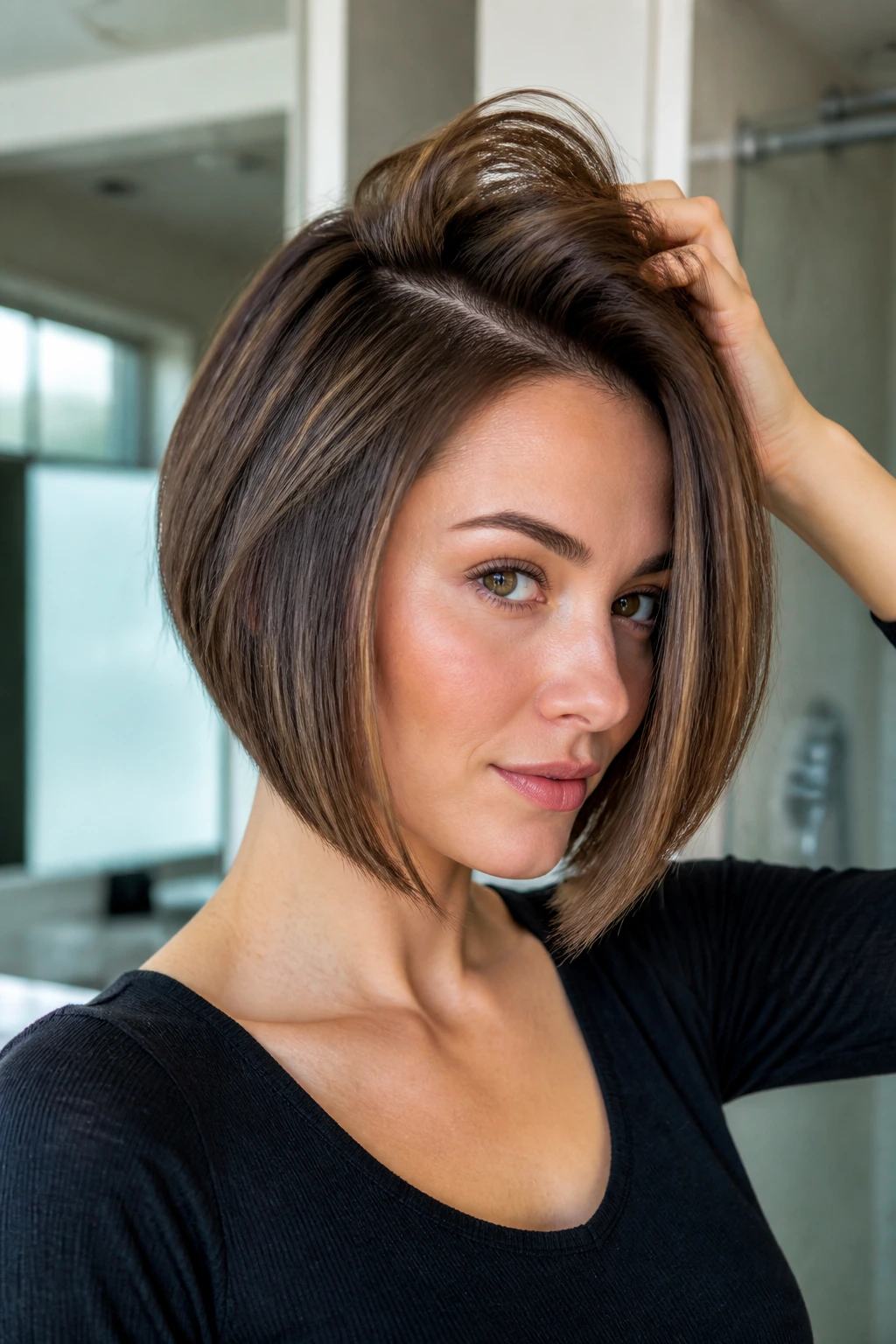
Blow-dry the roots first. The angle starts at the crown, not the ends. If the root area is flat, the whole shape slumps and the front loses the lift that makes it interesting.
Use the brush to guide, not force. Wrap the ends just enough to curve under or away. If you yank the hair into a hard bend, it can look stiff and old-fashioned.
Keep product light near the perimeter. Heavy creams and oils belong mostly in the mid-lengths. Put too much on the ends and the line gets greasy fast, especially on fine hair.
For day-two hair, mist the front and restyle only the last two inches. That tiny reset often does more than redoing the whole head. The bob lives or dies on the bottom edge.
Common Mistakes That Flatten the Angle
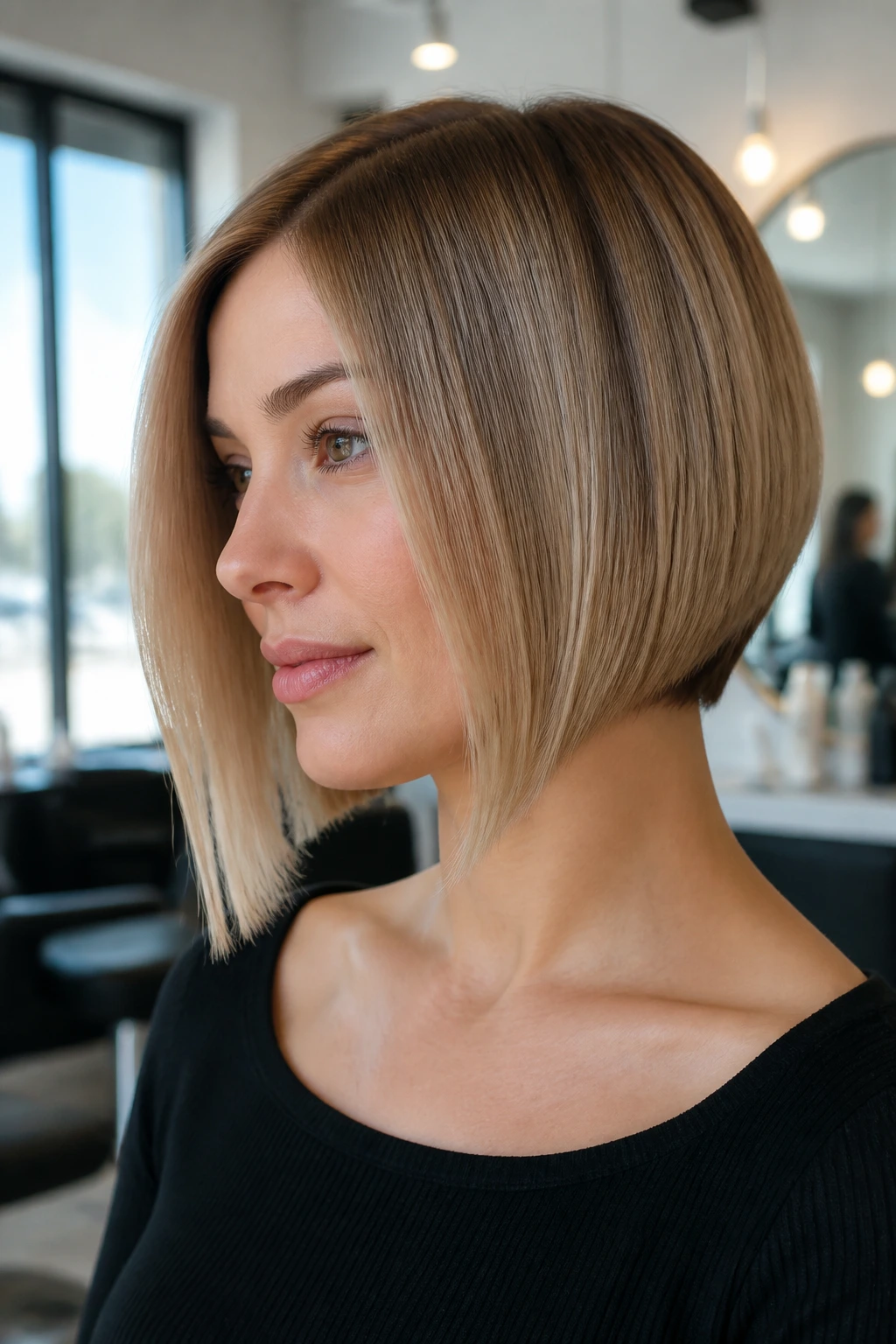
The easiest mistake is asking for too much difference between the back and the front. On paper, a dramatic slope sounds exciting. In the mirror, it can turn into a haircut that looks unbalanced from the side and annoying from the front. A softer angle usually wears better unless you want a very graphic shape.
Another one: over-layering the ends. The symptom is a bob that looks stringy, especially after washing. The fix is a cleaner perimeter with just enough internal movement to reduce bulk.
Ignoring cowlicks is a classic problem. If your nape flips up or your front hairline splits in weird places, the cut needs to account for that before the scissors start. Don’t let anyone wave it off.
And trim timing matters. If you wait too long, the angle grows into a regular bob and the whole point gets fuzzy. That’s not a disaster. It’s just a reminder that shape needs maintenance.
Variations and Adaptations to Try
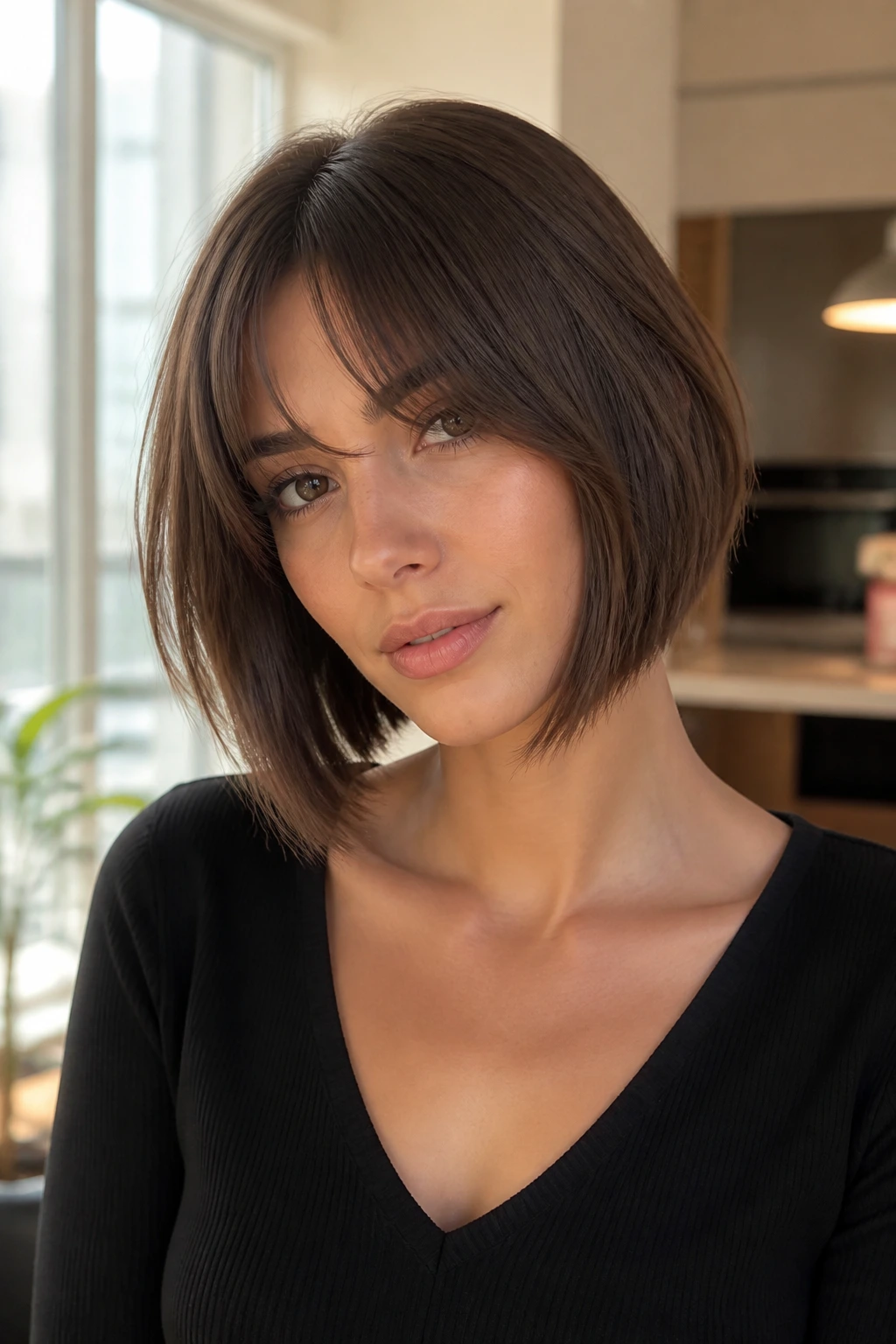
The Soft Grow-Out Angle: Keep the front a little longer, closer to the collarbone, and soften the back graduation. This version slides gracefully into a lob and does not look abrupt when it grows.
The Editorial Blade: Ask for a blunt edge, a clean part, and a very slight angle. It’s the sharpest version in the group and works best when you like crisp lines and low clutter.
The Bend-and-Wave Bob: Cut for wave pattern, then style with a loose bend from mid-length down. The angle stays visible, but the finish feels relaxed and modern.
The Fringe-Forward Angle: Add bangs or curtain bangs to pull focus upward and keep the face framed. It’s a smart move if you want the bob to feel softer or if your forehead balance needs help.
The Bulk-Removal Version: Ask for a hidden undercut or deeper internal debulking if your hair is thick. The shape will sit closer to the head and the angle will stop fighting volume at the nape.
Keeping the Shape Sharp Between Salon Visits
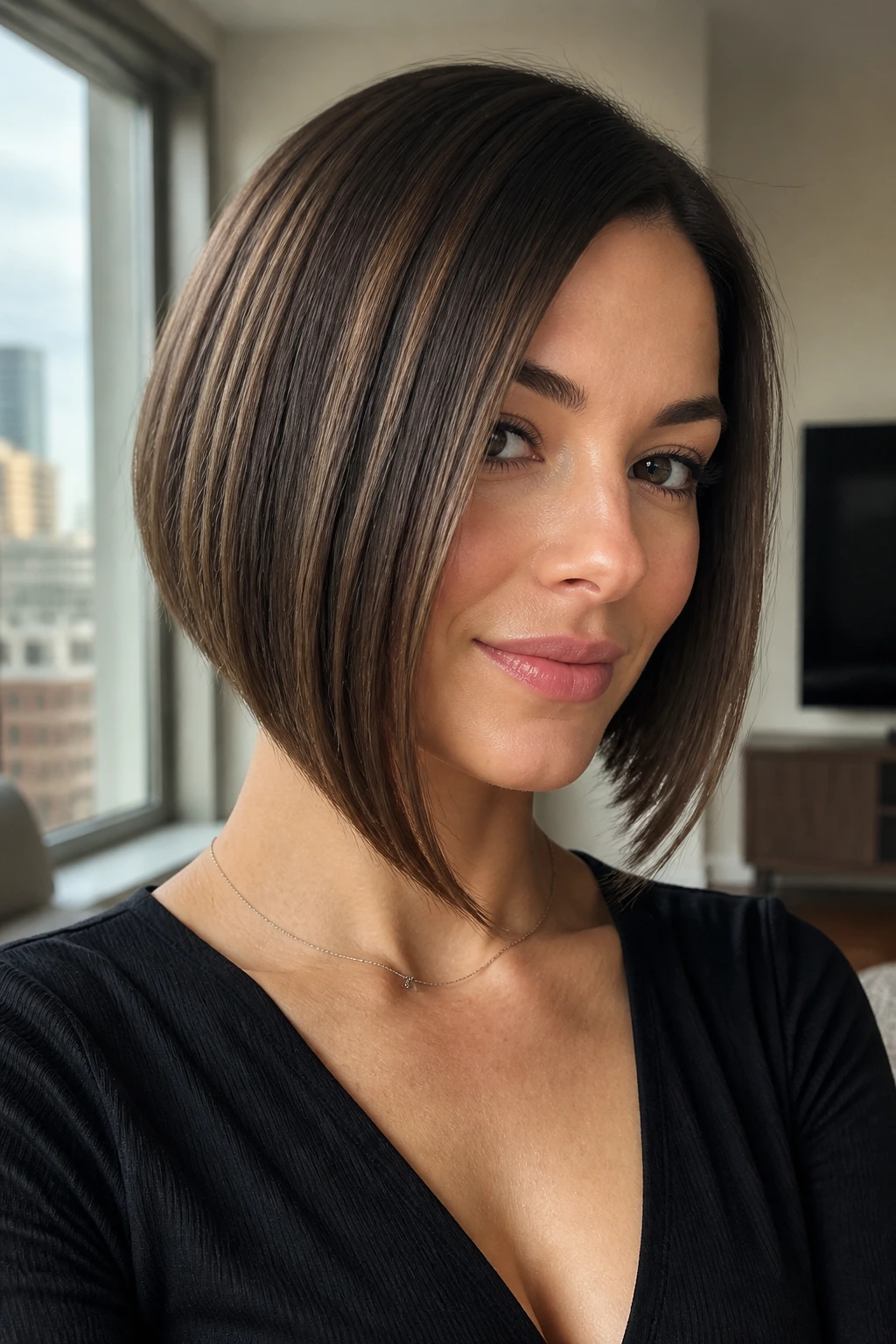
Angled bob haircuts hold their line best with regular trims. For a crisp blunt or stacked version, six to eight weeks is the sweet spot. Softer, longer bobs can often stretch to eight to ten weeks, especially if the front is near the collarbone.
If you wear bangs, that schedule gets tighter. Fringe usually wants attention sooner than the rest of the cut. Two or three quick snips at home can go wrong fast, so I’d only trim bangs yourself if you already know your hair and have decent shears.
Heat protectant every time. That part is not optional if you use a blow-dryer or flat iron. Also, if your hairline flips at the nape, spend a minute blow-drying that section while it’s still damp. That small habit keeps the back from puffing into a triangle by noon.
Frequently Asked Questions About Angled Bob Haircuts
How short should the back of an angled bob be?
Usually short enough to sit above the nape line, but not so short that it stands up on its own unless you want that shape. The back should support the angle, not steal the show.
Does an angled bob work on curly hair?
Yes, if the cut is shaped with shrinkage in mind. A curl-friendly version usually keeps the front longer than you think and avoids too much stacking at the back.
Will this cut make a round face look wider?
Not if the angle is handled with some length in the front. A longer front that lands near the jaw or collarbone can pull the eye down and create a cleaner frame.
How often does it need a trim?
A sharper cut usually needs one every six to eight weeks. Softer versions can last a bit longer, but the front pieces will still tell you when they’re getting tired.
Can I air-dry it?
You can, especially if the cut has softness or wave. Straight, crisp versions usually need at least some root drying or a quick pass with a brush so the angle doesn’t collapse.
What’s the difference between an angled bob and an inverted bob?
An inverted bob usually has stronger graduation through the back and crown, while an angled bob can be gentler and less stacked. The line still slopes forward in both, but the vibe changes fast.
What if my hair is very thick?
Ask for internal weight removal, not just shorter length. Thick hair needs room to move underneath or the bob ends up puffing away from the head.
How do I grow one out without looking awkward?
Let the front reach the collarbone and keep the ends blunt enough to hold shape. That stretch turns the cut into a lob instead of a half-finished bob.
The Cut That Knows Where It’s Going
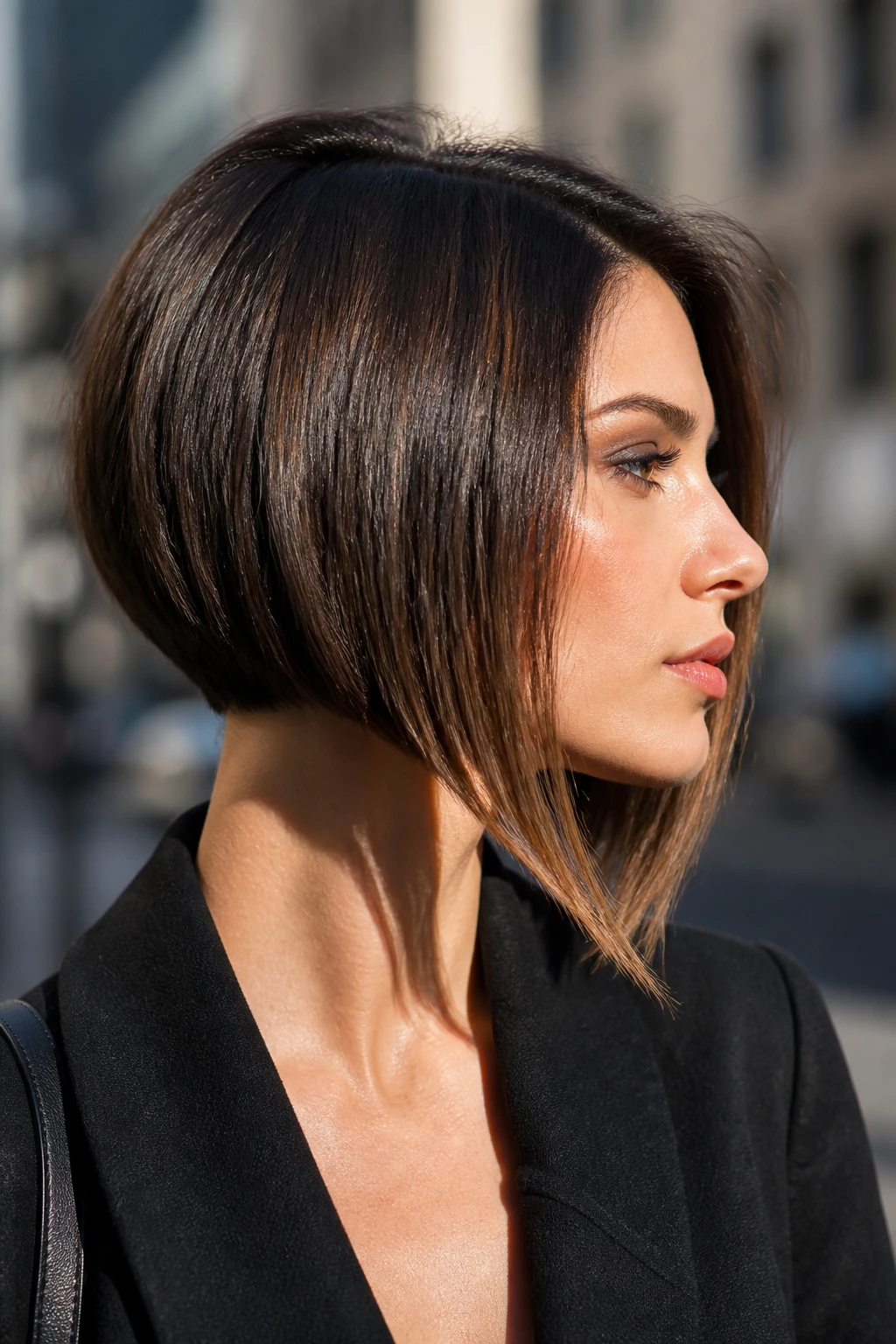
The nice thing about an angled bob is that it has direction baked into it. You do not have to invent the shape every morning. The cut gives you the line, and your styling just decides how sharp or soft that line will be.
If you want clean edges, shorter neck exposure, and a haircut that looks deliberate from the side, this family of cuts has a lot to offer. Choose the version that matches your hair’s weight and your tolerance for upkeep, and the result tends to hold together better than people expect.
A good angled bob does not shout. It points.
