



A stacked bob haircut lives or dies by the back of the cut. When the graduation at the nape is clean, the whole shape lifts; when it isn’t, the style sinks into a plain bob by lunchtime. That little hinge of length and layering is what makes stacked bob haircuts feel sharper than a one-length crop. The back does the heavy lifting. The front just gets to enjoy the credit.
That’s why these cuts keep coming back in salons. They can be crisp or soft, high or low, polished or rumpled, but the silhouette always has a job to do. Fine hair gets a sense of body. Thick hair loses that blunt, boxy puff at the back. Curly hair gets structure instead of triangle shape. Straight hair gets a line that actually holds.
The versions below aren’t random pretty pictures. Some lean sleek, some are airy, some tuck close to the neck, and some let the front stay longer so you keep a little security blanket around the jaw. The differences are worth paying attention to, because a stacked bob is one of those cuts that looks simple until you actually sit down in the chair.
Why Stacked Bob Haircuts Keep Their Shape So Well
-
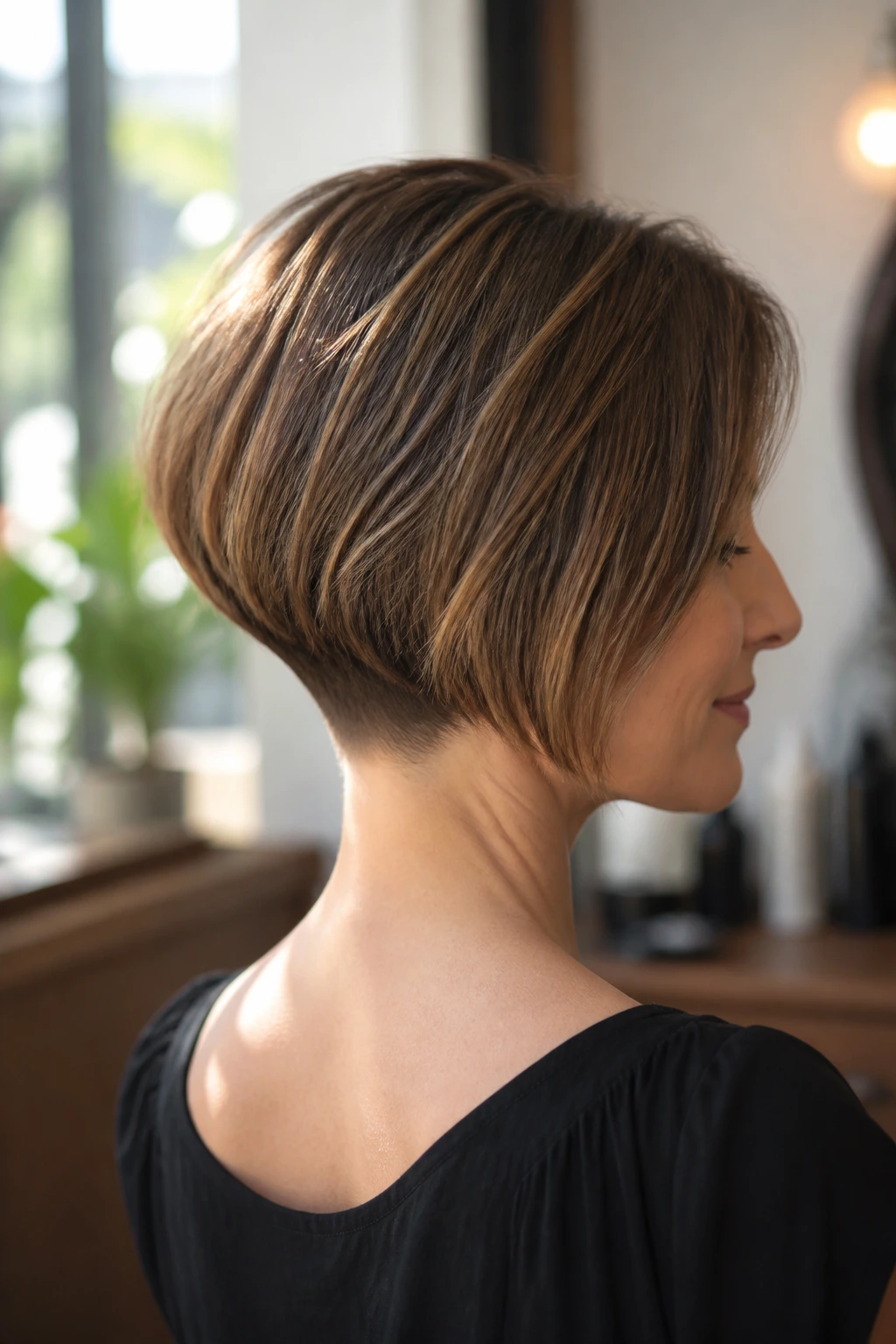
The nape does the lifting: The shorter graduation at the back creates a built-in rise at the crown, so the haircut keeps some shape even when you don’t style every strand.
-
The side view matters: A stacked bob is designed to look good from profile, where the curve from nape to jaw shows whether the cut was built well or rushed.
-
Bulk gets controlled, not erased: A strong stack removes weight from the back without making the whole head look thin or flat.
-
The cut can be tuned to texture: The same silhouette can be softened for waves, tightened for straight hair, or widened a little for curls that need room.
-
It grows out in stages: Even as the stack loosens, the front and top can keep wearing well for a while, which makes the cut less fussy than it sounds.
-
Styling time can be short: If the haircut is shaped well at the nape, a round brush, a quick bend, or a little product at the roots is often enough.
What the Stack Actually Does at the Nape
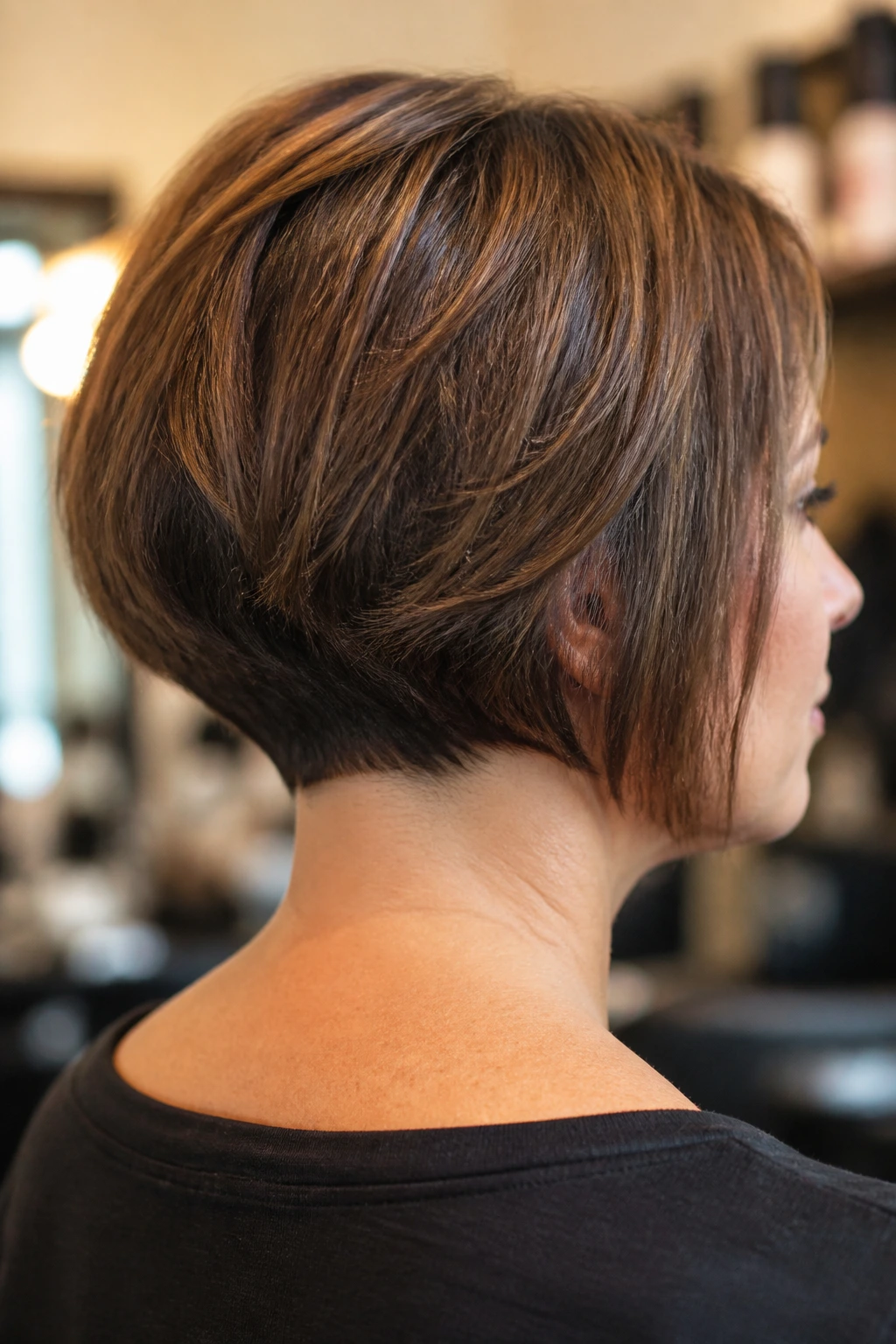
The stack is the part most people feel before they can explain it. You sit down, the stylist lifts the back section, and suddenly the nape gets shorter while the layers above it build a little shelf. That shelf is what gives the haircut its lift. It keeps the back from collapsing into the neckline and lets the top sit with more air under it.
A true stacked bob is not just “shorter in back.” That’s the lazy version. The shape comes from graduation — a controlled change in length that follows the head’s curve. When the graduation lands correctly around the occipital bone, the haircut rounds nicely without looking puffy. Too high, and the back balloons. Too low, and you’re basically wearing a plain bob with a small attitude problem.
The nicest thing about this structure is how different it looks on different textures. Straight hair shows every clean line. Wavy hair gets movement through the back. Curly hair turns the stack into a soft, lifted curve that hugs the neck instead of kicking out. One cut, three moods. That’s a useful trick, and it explains why stylists keep coming back to the stacked shape when a client wants body without a pile of styling work.
1. Classic Rounded Stacked Bob
This is the version people picture first, and for good reason. The back is neatly graduated, the crown has a rounded lift, and the front skims the jaw without dragging the whole shape downward. It feels tidy in the best sense of the word. Not stiff. Tidy.
Why It Works
The rounded silhouette keeps the stack visible from every angle, which is exactly what makes it satisfying. On straight or lightly wavy hair, the curve sits cleanly and the nape stays snug. On fine hair, the back looks fuller because the layers are compact rather than blown apart.
- Best on fine to medium hair that needs lift without heavy layering.
- Works well with a side or center part, depending on how much volume you want at the crown.
- Styling takes about 10 to 15 minutes with a round brush and a blow-dryer nozzle.
Pro tip: Ask your stylist to keep the back rounded, not flat. A flat back loses the whole point of the cut.
2. Jaw-Length Stacked Bob with a Deep Side Part
A deep side part changes the mood fast. The stack still sits at the nape, but the heavier side gives the cut a little swing and lets the front fall in a longer arc along one cheek. It’s a small change that makes the haircut feel less symmetrical and more deliberate.
The side part is also useful if one side of your hair naturally falls flatter than the other. Instead of fighting that, this cut lets the weight land where it wants to land. The result is cleaner than trying to force a center part on hair that prefers a little off-balance drama.
For round or square faces, this version can soften the outline without making the bob feel too soft overall. The back stays sharp. The front just gets a little more movement.
3. Angled Stacked Bob with Longer Front Pieces
If a classic stack feels too safe, this one brings the edge. The back is kept tight and high, while the front drops longer toward the chin or even lower. That angle makes the side profile look sleek, and it gives you the feeling of length without giving up the lift in the back.
What Makes It Different
Unlike a traditional rounded stack, this cut lets the front become part of the design. You can tuck one side behind the ear and let the other sweep forward. The line becomes visible, which is half the fun. It’s a good choice if you like the look of a bob but don’t want to lose the sense of hair around your face.
- Best for straight or lightly wavy hair that shows angles clearly.
- Needs a clean blowout or flat-iron bend to keep the front line crisp.
- Works especially well if you like wearing one side tucked.
The only thing this cut hates is sloppy trimming. If the angle is uneven, you’ll see it instantly.
4. Stacked Bob with Curtain Bangs
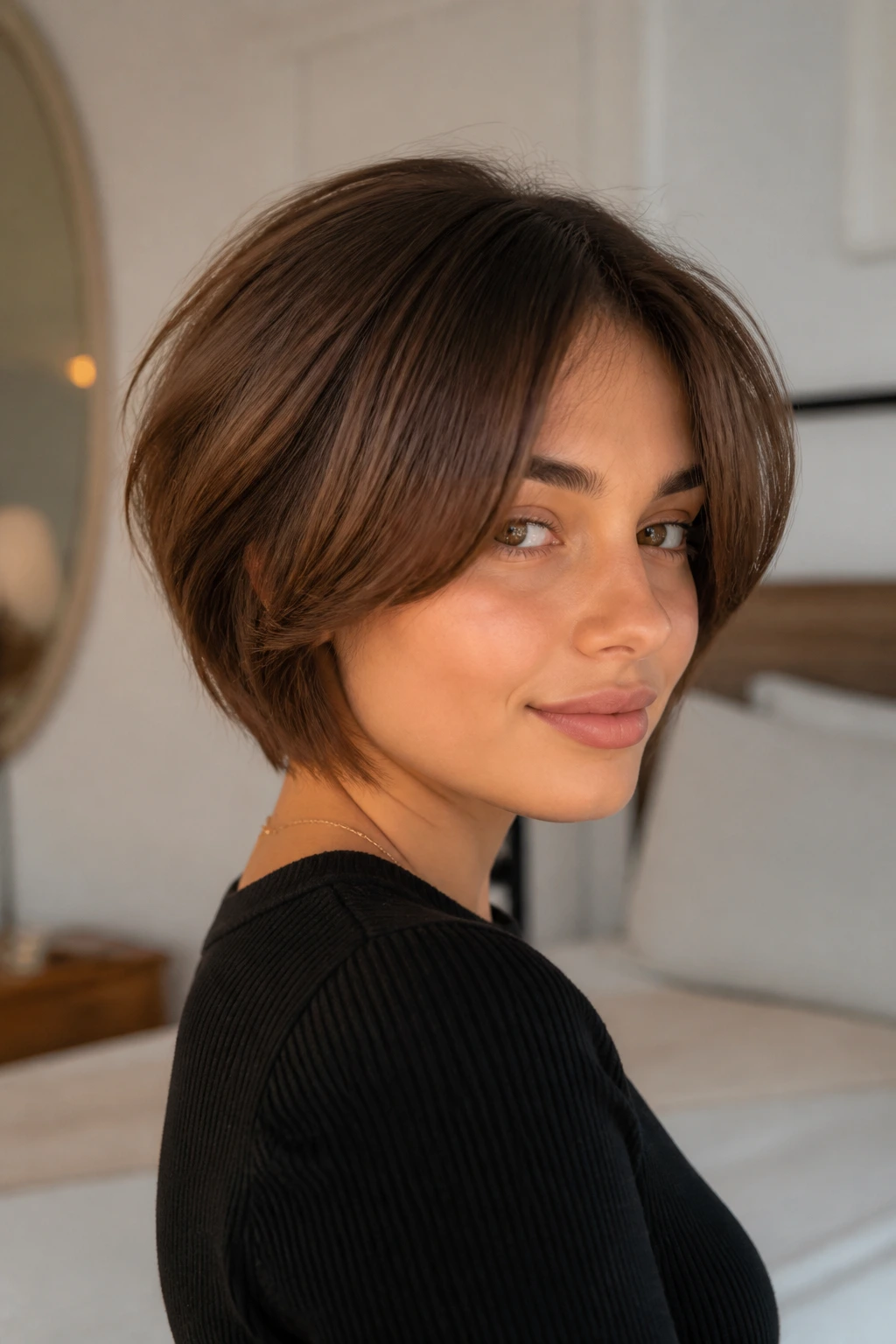
Curtain bangs make a stack feel less severe. That’s the whole story, really. The back still does its neat, lifted thing, but the fringe opens away from the face and breaks up the hard line that some bob cuts can create around the cheekbones.
This version works nicely if you want shape without a sharp “helmet” effect. The bangs should be long enough to part naturally at the middle or just off-center, and they need a little bend at the ends so they don’t hang there like a curtain rod. A round brush or a medium barrel brush does the job fast.
It’s especially good on medium-density hair. The bangs give movement at the front, while the stack keeps the back from going flat. If you’ve ever liked a bob in theory but felt boxed in by it in real life, this is one of the easiest fixes.
5. Curly Stacked Bob
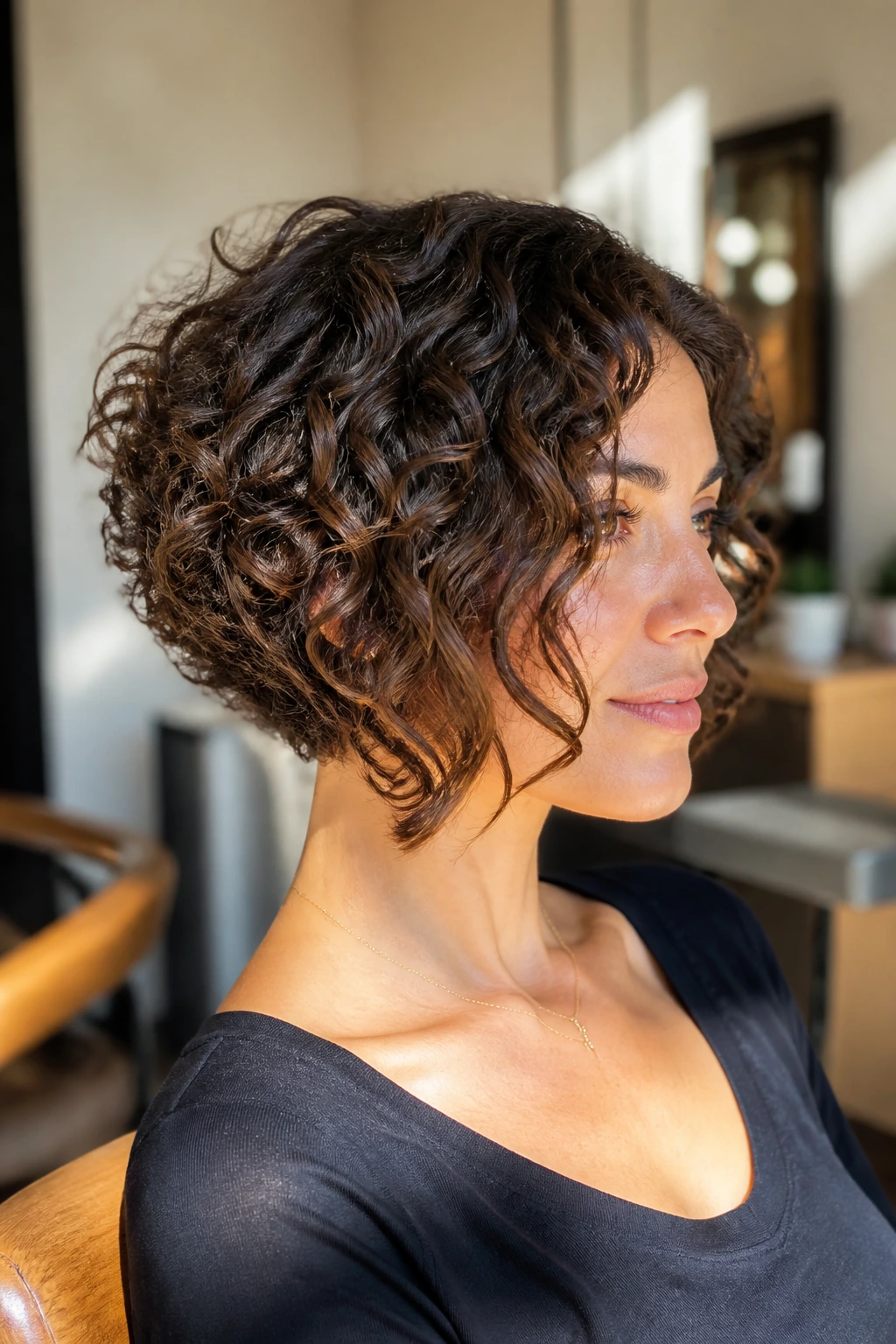
Can curls work with a stack? Absolutely. But they need room, and they need respect. A curly stacked bob is not cut the same way as a straight one, because curl shrinkage changes everything. If the layers are cut too aggressively, the back can spring into a short puff. If the layers are too timid, the whole shape turns into a triangle.
The trick
The stack sits lower, the graduation is softer, and the length in the front is left a little longer so the curls have somewhere to fall. Many stylists prefer to cut this shape dry or mostly dry, because that’s the only way to see where each curl settles.
Best for
- Loose curls and medium curls that need contour at the nape.
- People who like diffusing more than flat-ironing.
- Anyone tired of the “wide at the sides, flat on top” look.
A curl cream and a diffuser are enough most days. Don’t drown it in product. Curls in a stacked bob need definition, not a helmet of mousse.
6. Wavy Balayage Stacked Bob
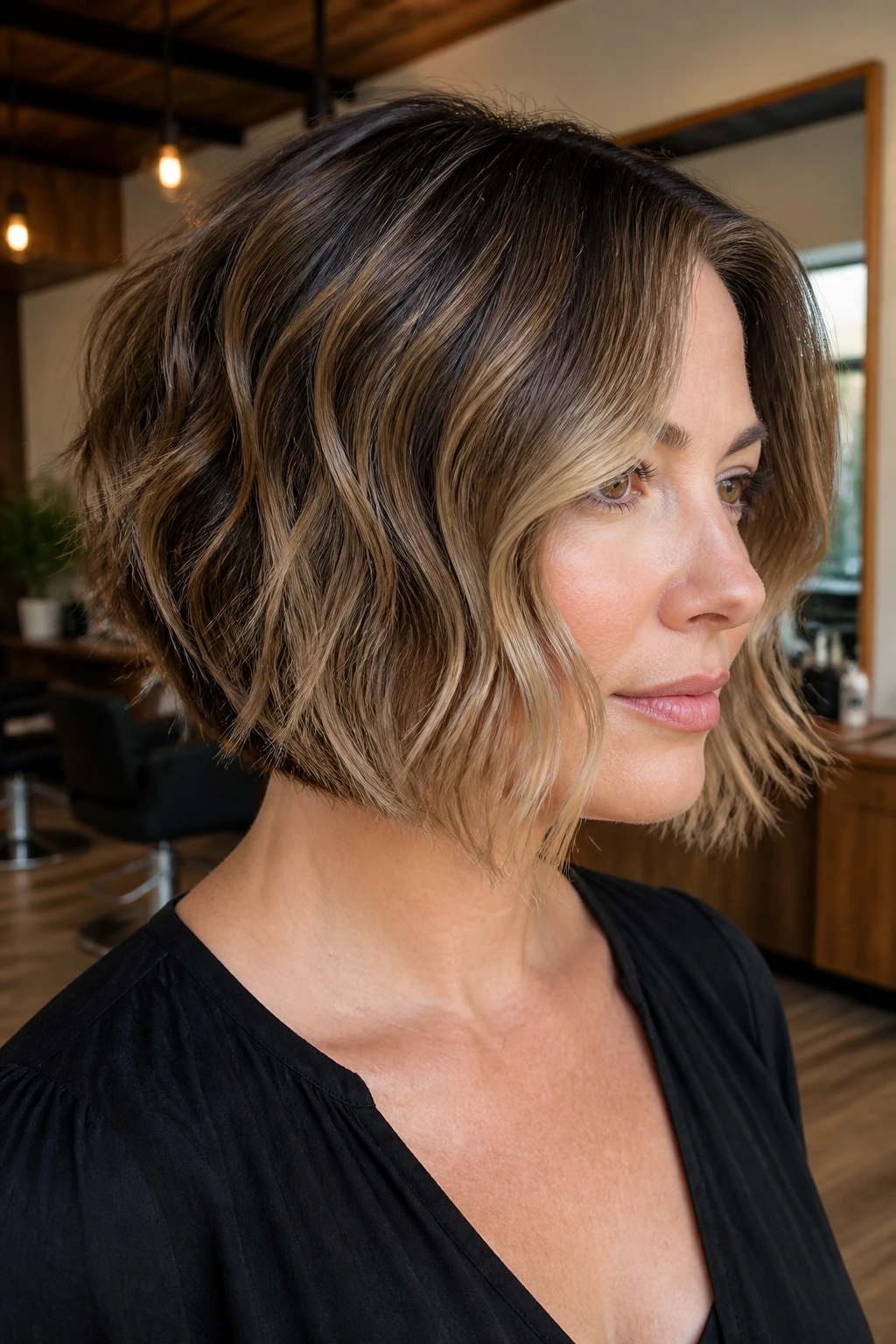
Waves and balayage are natural partners here, and not because it sounds pretty on paper. The color placement actually helps the cut read better. When the lighter pieces sit through the top layer and toward the ends, the graduation in the back shows up more clearly in motion.
This version has an easy, lived-in feel, but the shape still matters. The stack keeps the nape neat, while the wavy finish keeps the overall look from becoming too formal. It’s a good choice if you want a bob that can be air-dried sometimes and polished other times.
The color should not be too stripey. Soft ribbons look better than chunky panels, because a stacked cut already has enough structure. Let the movement come from the wave pattern and the layered back, not from aggressive highlights that fight the shape.
7. Sleek Inverted Stacked Bob
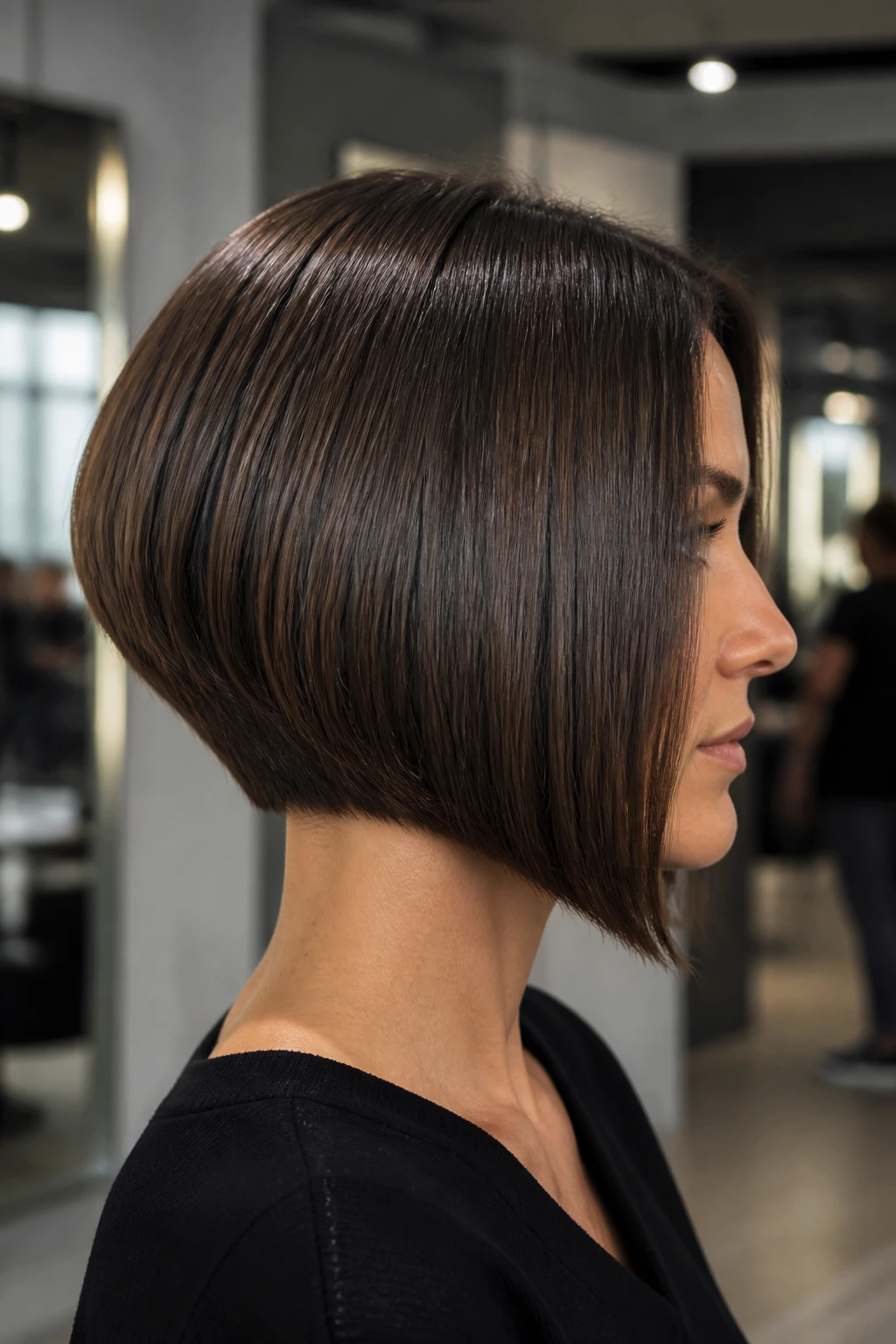
A sleek inverted bob is all about the line. Shorter in the back, longer in the front, and smoothed until the edges look deliberate from chin to nape. If you like clean shapes and glossy hair, this one has a lot to say without actually being loud.
The best version has a visible curve at the back and a front that stays long enough to skim the jaw. The result is neat but not dull. You can almost feel the cut when you look at it — that’s how clear the geometry is.
This is the kind of stacked bob that benefits from a flat iron pass and a lightweight serum at the ends. Heavy oil will smear the line. Too much texture spray will blur it. Keep it polished, keep it simple, and let the shape speak.
8. Feathered Stacked Bob for Fine Hair
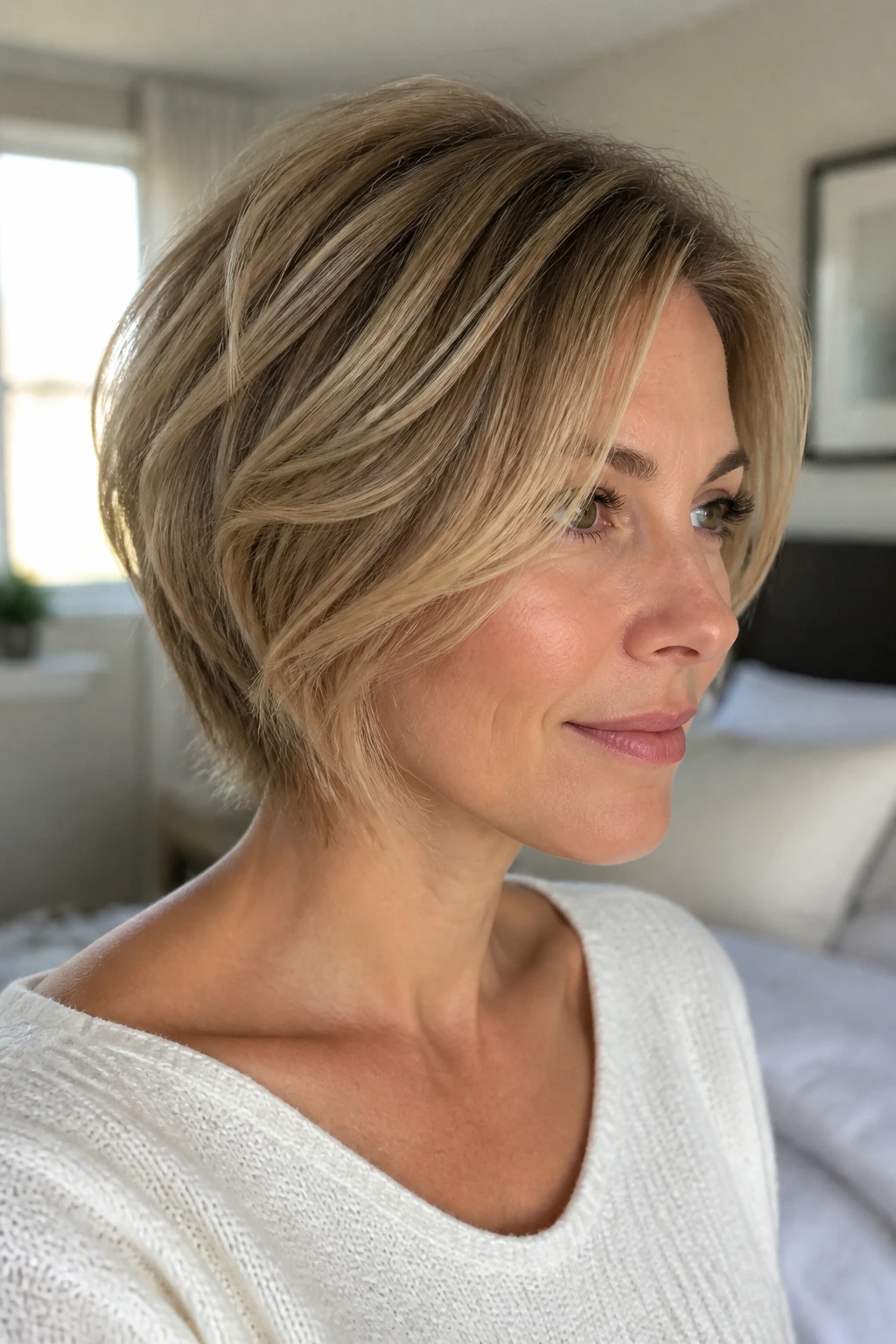
Fine hair and stacked bobs get along when the cut is handled with restraint. Feathering helps because it softens the ends without removing all the support. The back still lifts, but the surface looks airy instead of choppy.
This is one of the smartest versions if your hair tends to collapse around the crown. The stack gives the illusion of density, while the feathered ends keep the perimeter from looking like one hard block. The goal is movement, not stringiness.
A lot of stylists make the mistake of thinning fine hair too much at the back. Bad idea. You want controlled removal of weight, not a see-through mop. A light mousse at the roots and a quick blow-dry with a small round brush usually gives this cut enough shape to last the day.
9. Thick-Hair Stacked Bob with Internal Weight Removal
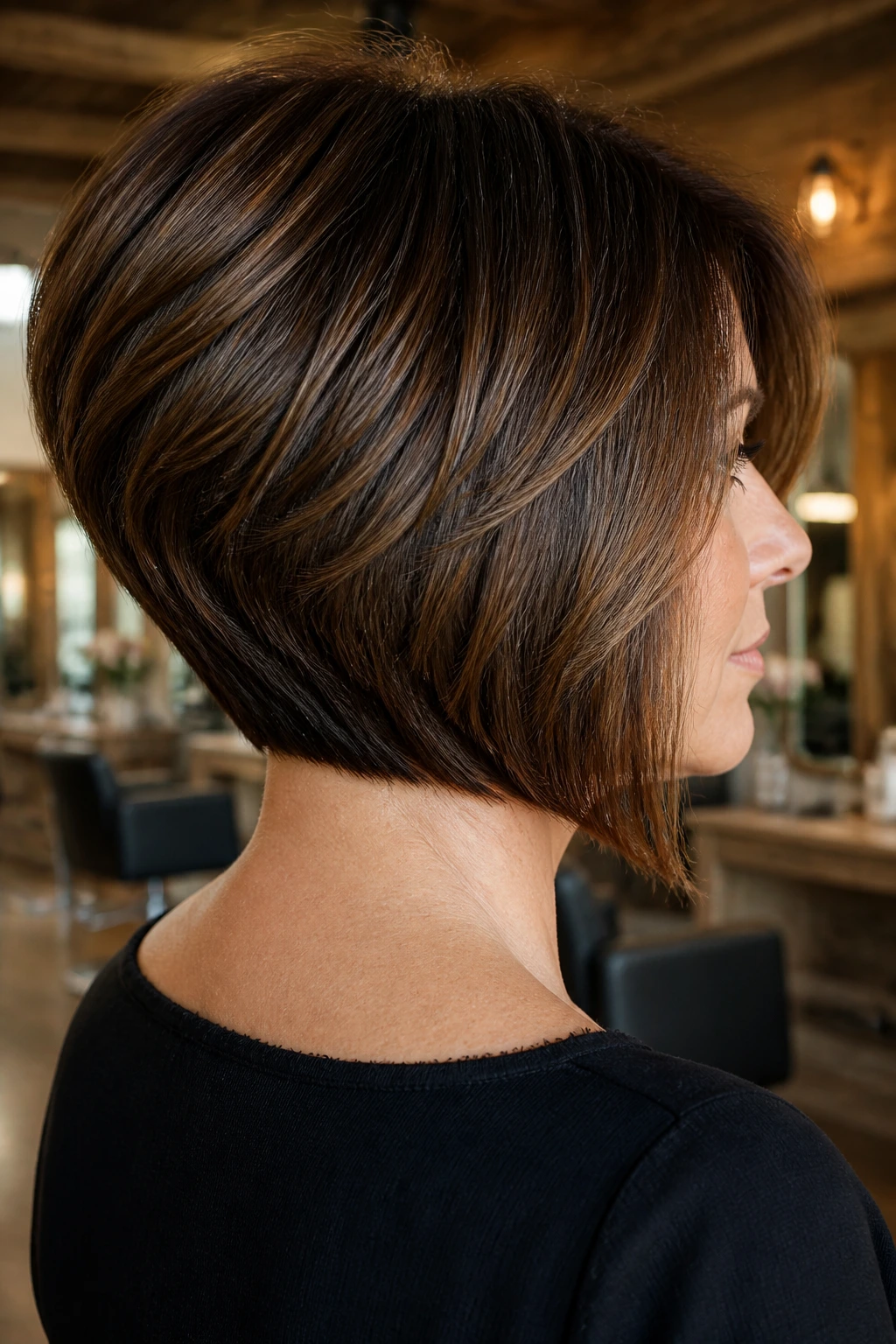
Thick hair needs a different kind of discipline. You cannot just chop layers into it and hope for the best. If the cut is too surface-heavy, it turns into a puffball at the back. The smarter approach is internal weight removal, which means taking bulk out where the hair stacks but leaving the outer line clean.
What to ask for
A blunt perimeter with controlled graduation. That phrase matters. It tells the stylist you want shape, not frizz-shaped chaos.
What to watch for
- Too much thinning shears can create frayed ends.
- Too much razor work can make the hair expand in humidity.
- Too short at the crown can make thick hair stand up instead of fall.
The best thick-hair stack looks structured but calm. You should see the curve in the back without seeing every single layer trying to be the star.
10. Platinum Stacked Bob
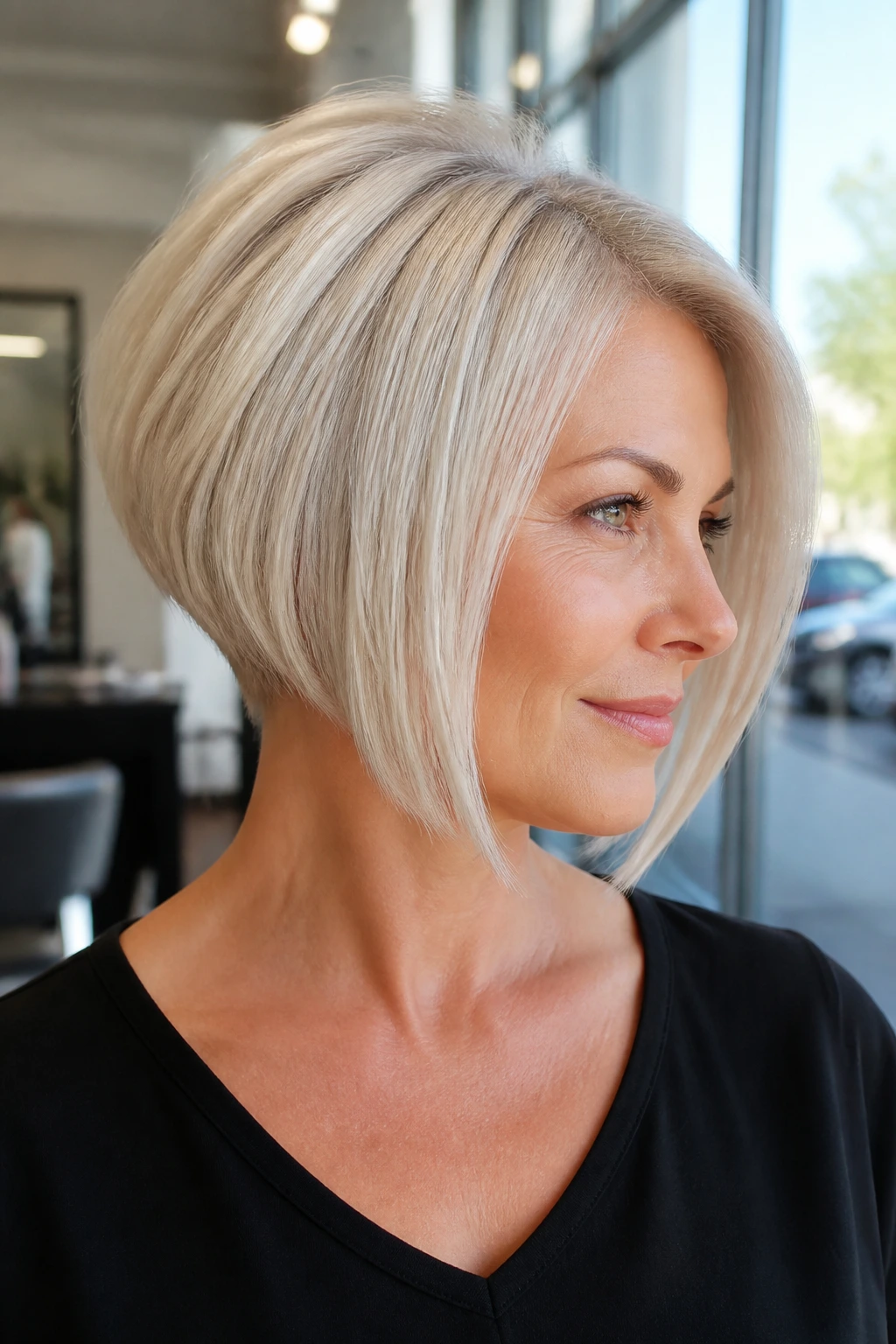
Platinum hair changes the whole mood of a stacked cut. The shape becomes more graphic, almost architectural, because the light color makes the outline easier to see. That can be a gift or a curse. If the graduation is neat, the haircut looks razor-clean. If it’s rough, you’ll notice that too.
The upkeep is the tradeoff. Platinum needs toning, careful conditioning, and some honesty about root maintenance. But paired with a stacked bob, it gives the silhouette a crisp edge that darker colors sometimes hide. The nape line looks especially sharp against the skin.
This cut looks strongest when the styling stays simple. A smooth blowout, a soft bend at the ends, or a tucked-behind-the-ear finish keeps the color and shape from fighting each other. Leave the texture spray for another day if you want the tone to read clean.
11. Undercut Stacked Bob
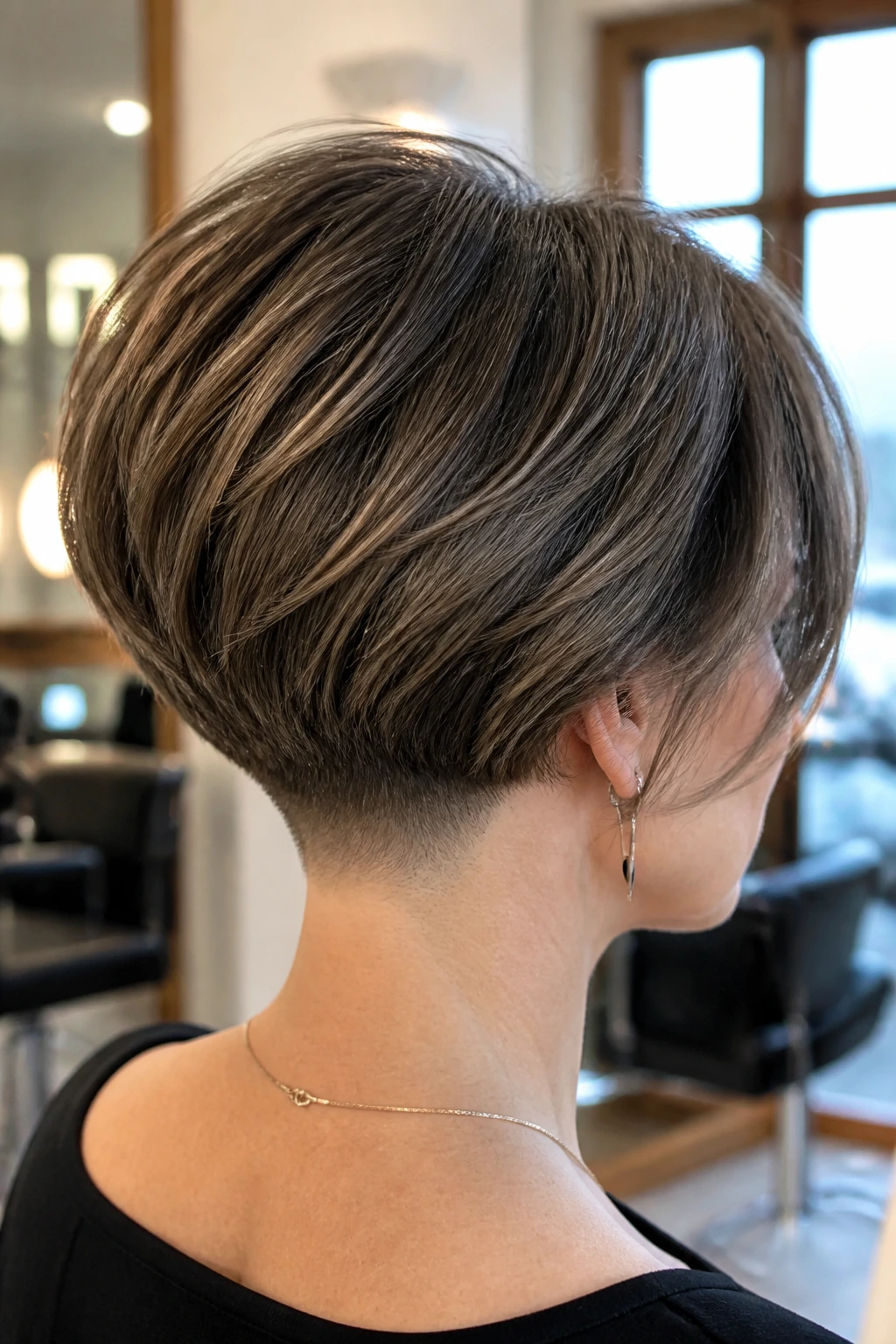
Why leave bulk under the nape if you do not need it? That’s the logic here. An undercut removes weight from the lower section so the top layers can sit closer to the head. It’s especially helpful on very dense or coarse hair that keeps pushing outward at the neckline.
The cool thing about this version is how hidden the undercut can be. When the hair falls down, most people won’t see it. They’ll just notice the cleaner shape and the way the back sits flatter without looking clipped too tight.
It’s not the best choice if you like frequent grow-out breaks, because the undercut can feel awkward once it starts to come back in. But if you want a stack with less bulk and more control, this is one of the sharpest solutions.
12. Micro-Bang Stacked Bob
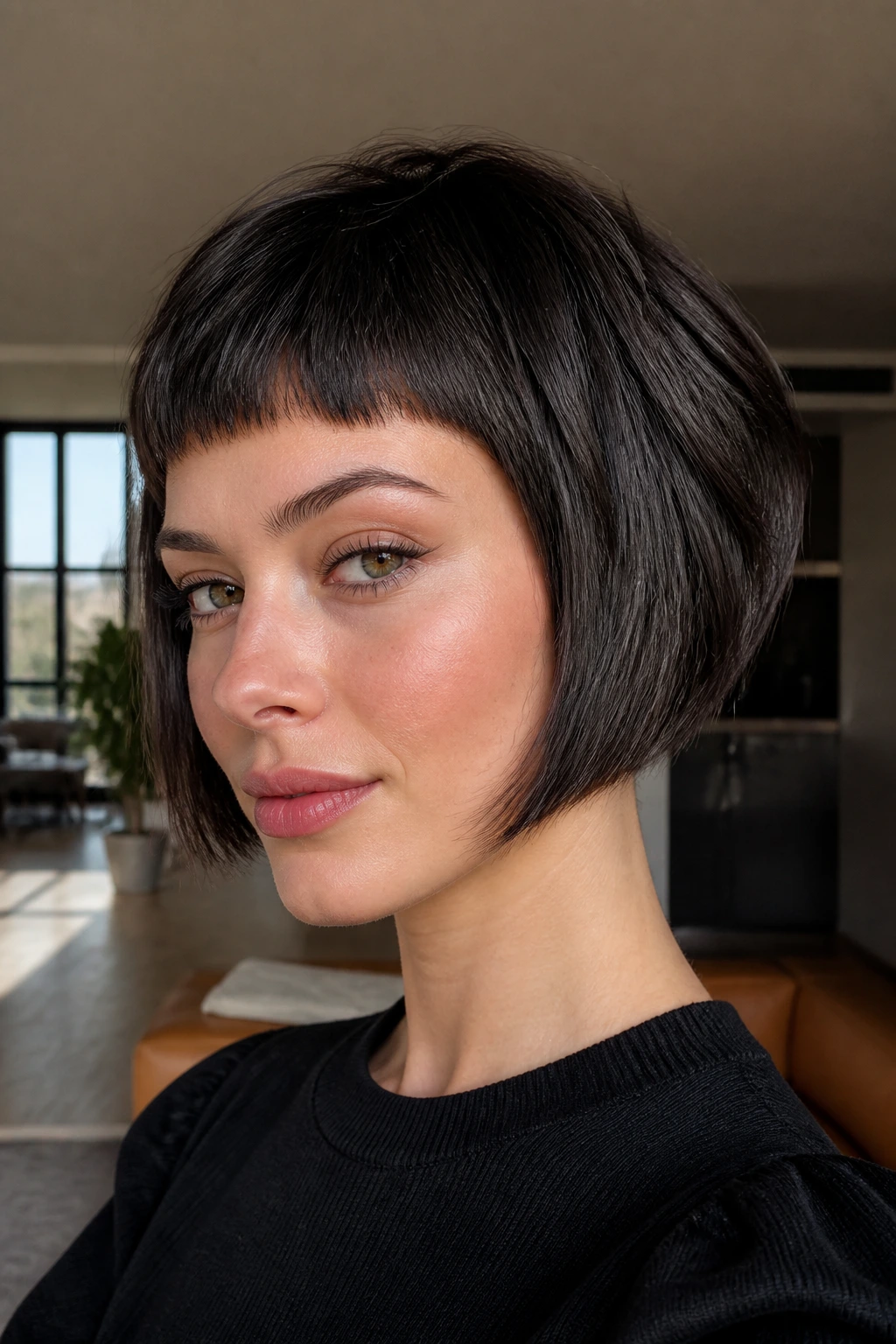
A micro-bang stacked bob is bold by nature. The fringe sits high, the back is tight, and the whole cut feels more editorial than safe. It works because the short bang pulls attention upward while the stack keeps the back from looking too heavy under it.
This shape is best when the rest of the haircut stays simple. If you add too many competing layers, the cut gets busy fast. The bang should be the visual accent, not one more thing that needs explaining.
Maintenance is the catch. Micro bangs need regular trims, and they show grow-out quickly. If you like a haircut that keeps its edge and don’t mind visiting the salon more often, this one has real personality. If you want a low-maintenance bob, walk right past it.
13. French Stacked Bob
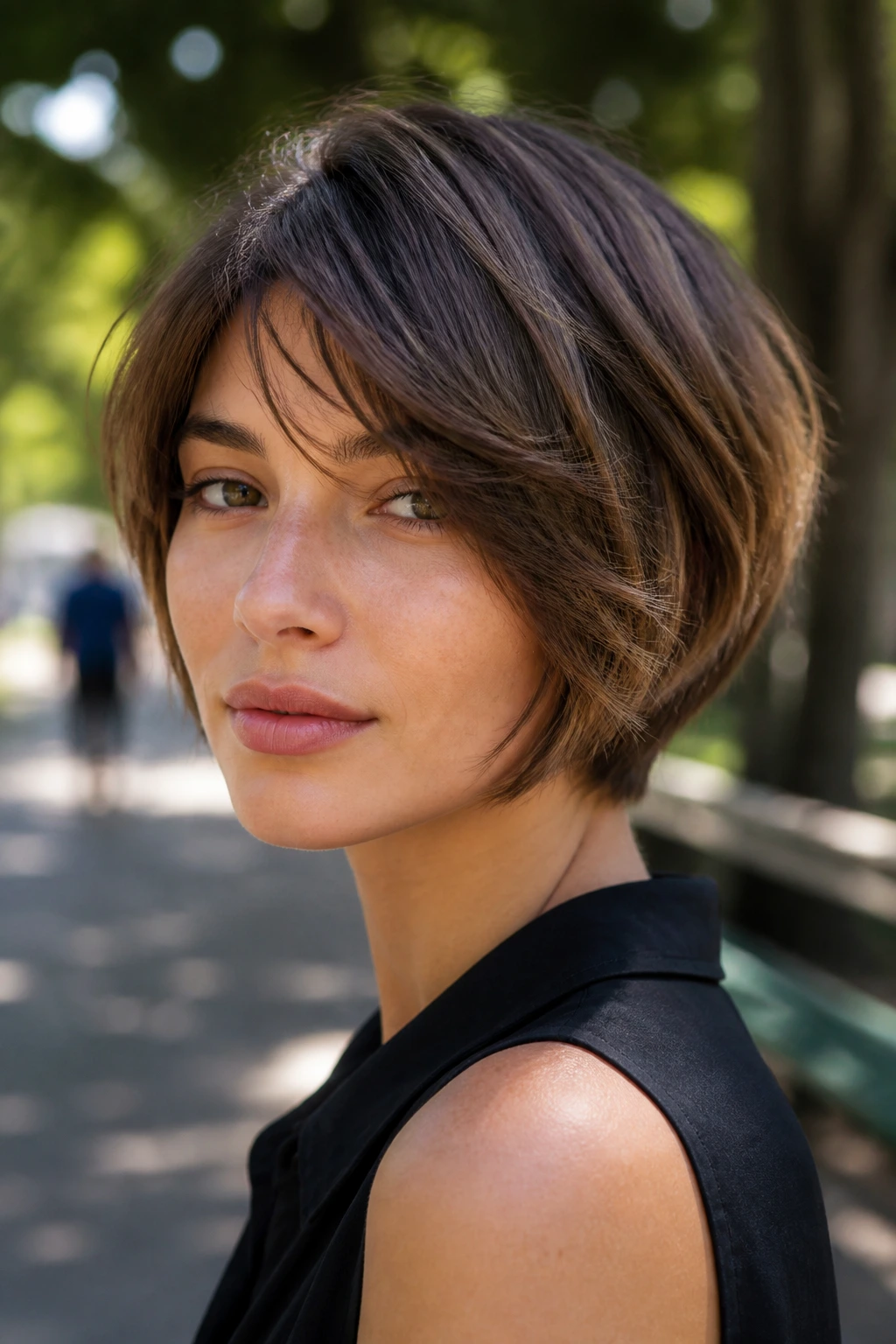
The French version is softer around the edges. It still has a stack, but the graduation doesn’t shout. The front usually sits a little airier, the ends are less rigid, and the whole haircut feels easier to move through the day.
Think of it as the less engineered cousin of the crisp stacked bob. It works well with a slight bend, a touch of texture cream, and hair that can fall on its own without being forced into place. The look is especially nice if you like a side part, an undone fringe, or a little face-framing length that doesn’t try too hard.
A lot of people want this style because it looks relaxed. Fair enough. The trick is that relaxed still needs structure. If the stack is too weak, you just end up with a loose bob that forgot to commit.
14. Collarbone Stacked Lob with a Soft Stack
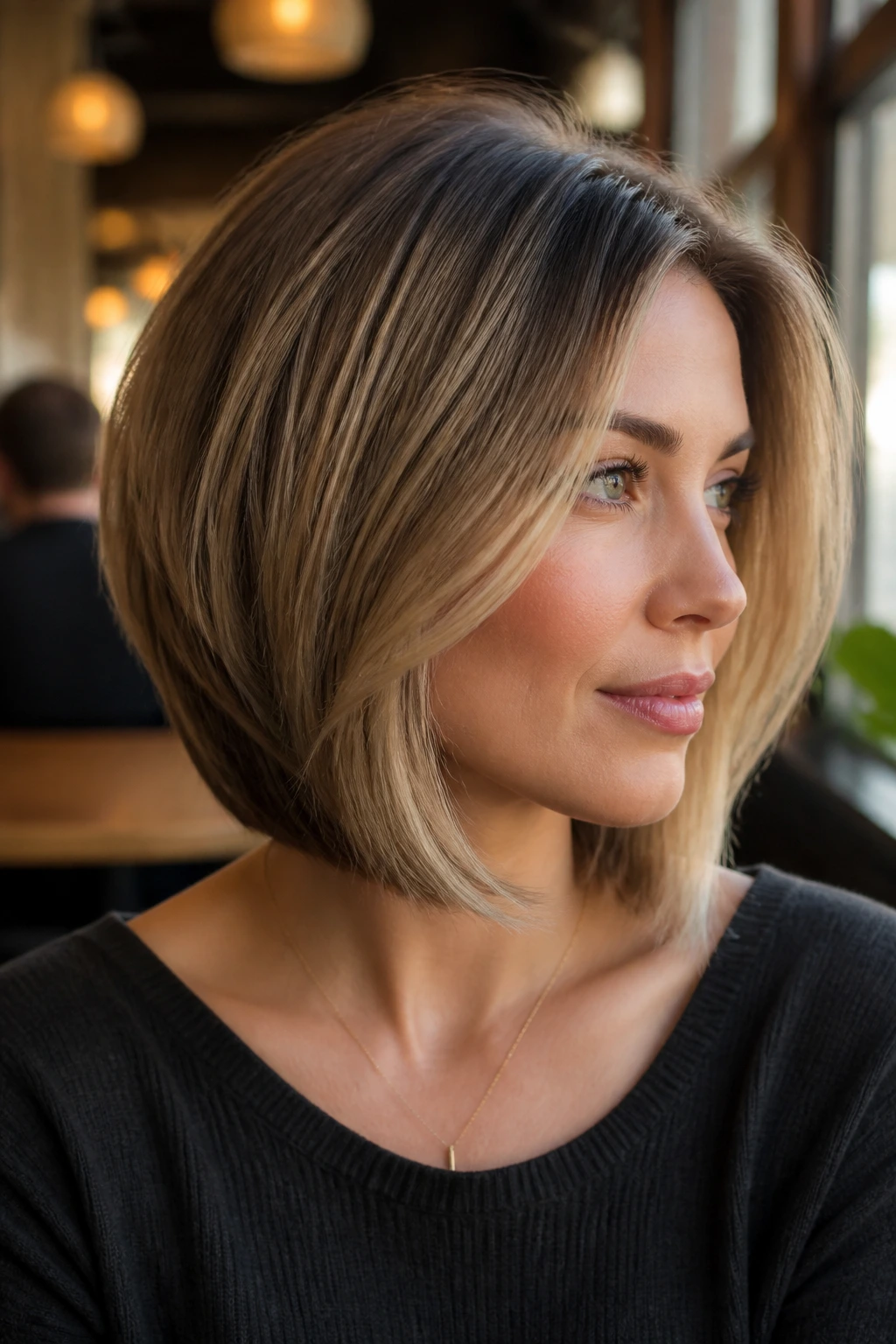
Not everyone wants to go short. This version keeps the front around the collarbone and the back stacked enough to lift the crown, which gives you the best part of the silhouette without the full crop. It’s a smart middle ground if you like length near the face or need something that tucks into a coat and still behaves.
The stack in a lob has to be gentler than in a shorter bob. Otherwise the contrast feels clunky. The back should curve upward quietly while the front keeps enough weight to swing when you turn your head.
This is also one of the easiest stacked styles to grow out. If you’re nervous about commitment, start here. The haircut can move shorter later, or it can drift into a long bob without a dramatic ugly phase.
15. Piecey Textured Stacked Bob
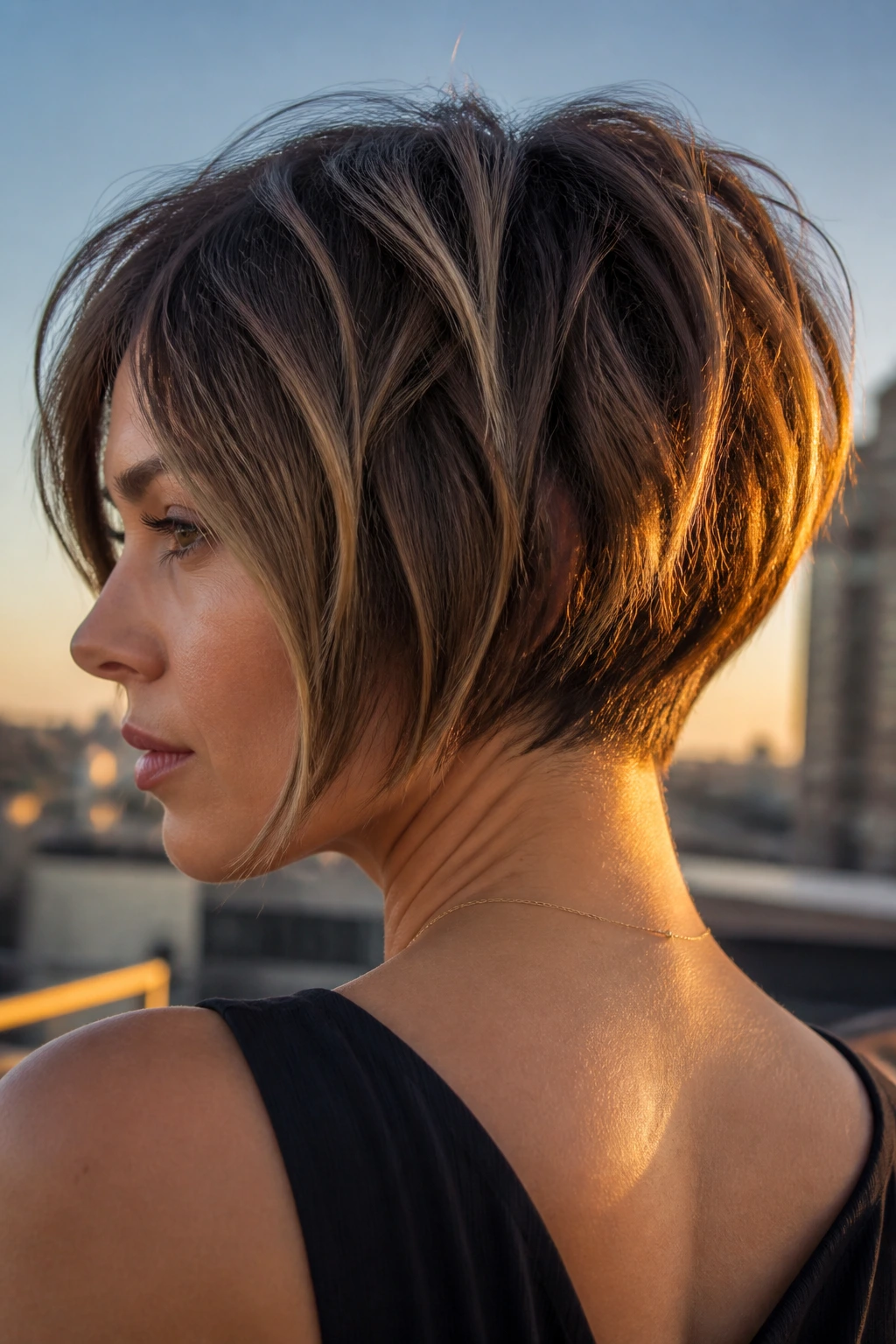
If you hate hair that looks too neat, this is your lane. A piecey stacked bob uses choppy movement through the top and ends so the haircut feels broken up instead of rounded and polished. The stack is still there, but it’s wearing a more casual jacket.
Why it works
Texture spray, a little paste at the ends, and some finger-combing can turn the shape from smooth to sharp in a few seconds. That makes the cut feel modern without chasing a fussy finish.
- Best for second-day hair and hair that naturally holds a bit of bend.
- Better with a light hand on product; too much paste makes the ends look dirty.
- Needs a perimeter that stays readable, even when piecey.
The mistake is over-texturizing every section. Then the style loses its outline, and you’ve paid for a haircut no one can see.
16. Asymmetrical Stacked Bob
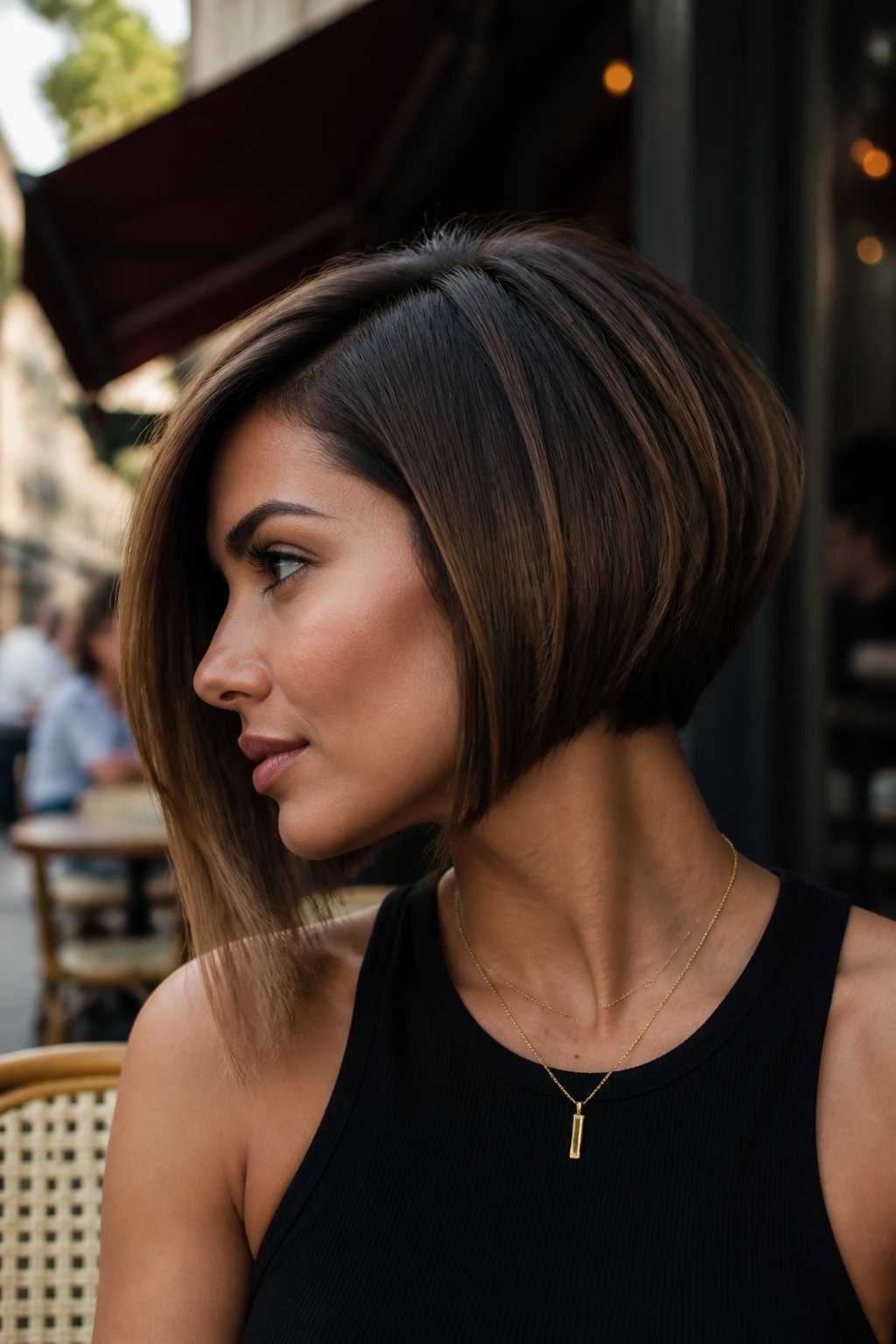
One side longer, one side shorter. That’s the idea, but the clean version is more controlled than that sounds. The stack stays even at the back so the haircut still has its architecture, while the front tilts to one side in a way that changes the whole face line.
This works especially well if you like a bob that feels a little less expected. It adds movement without relying on curls or heavy styling. On straight hair, the asymmetry shows immediately. On wavy hair, it softens into something looser and more casual.
The important bit is balance. An asymmetrical bob should look intentional, not like one side got forgotten during the cut. If the shorter side and longer side are not connected well at the back, the shape will feel off no matter how much styling you do.
17. Face-Framing Stacked Bob
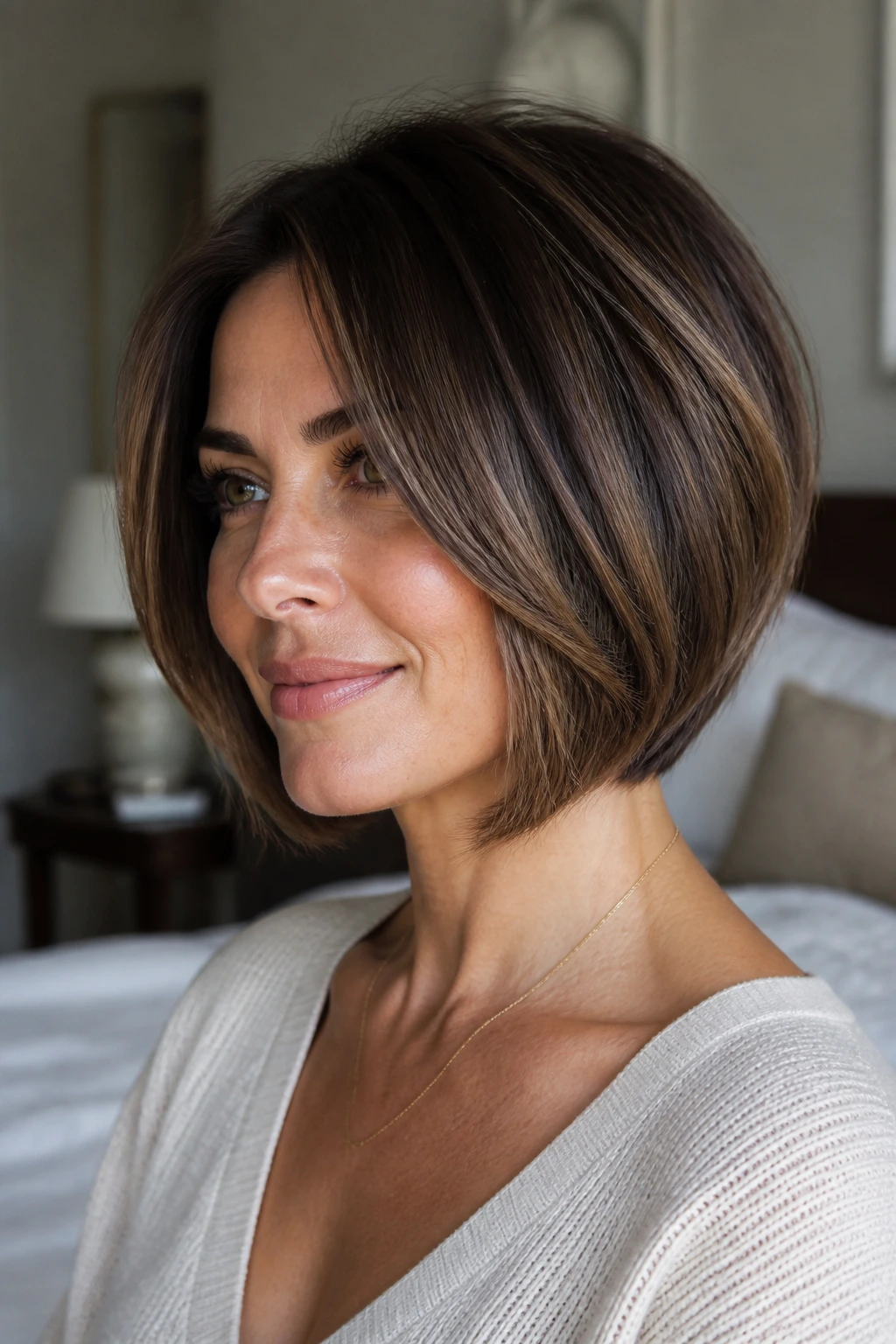
Here’s the problem this cut solves: a stack can sometimes feel too abrupt around the jaw. Long face-framing pieces fix that. They let the front skim the cheekbones and chin while the back still holds its lift, so the haircut feels softer without losing structure.
This version is useful for round or fuller faces, but it works on plenty of face shapes. The long front pieces create a vertical line near the cheeks, while the stack keeps the back from turning flat or fuzzy. It’s a nice compromise if you want the neck to look longer and the jawline to feel less boxed in.
You can wear it smooth, wavy, or tucked behind one ear. That flexibility is part of the appeal. The haircut gives you enough shape to stay interesting but enough length to stay comfortable.
18. Brunette Stacked Bob with Caramel Ribbons
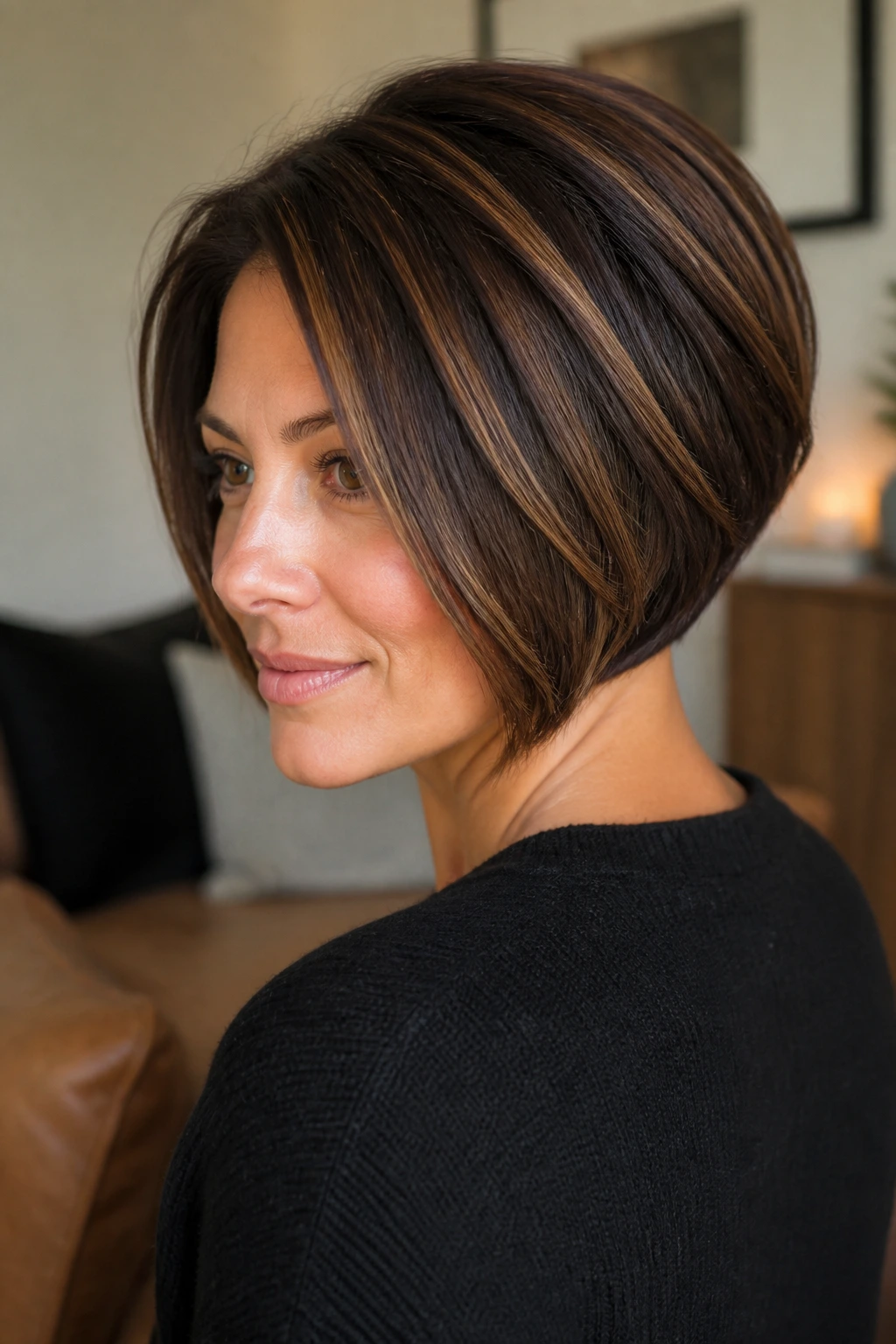
Color can change a bob almost as much as the cut. In brunette hair, caramel ribbons through the top layers and around the face make the stack easier to read, because the lighter pieces catch the movement of the graduation. You see the curve faster.
The trick is placement. Highlights through the stack itself can make the back look busy if they’re too chunky. Softer ribbons near the crown and front keep the shape visible without turning the whole head into a stripe pattern. A gloss afterward helps the brown look rich instead of flat.
This is a strong choice if you want dimension without going bright blonde. The haircut does the structure work, and the color handles the movement. That combination usually looks more expensive in person than in photos — which, honestly, is the better test.
19. Blunt-End Stacked Bob
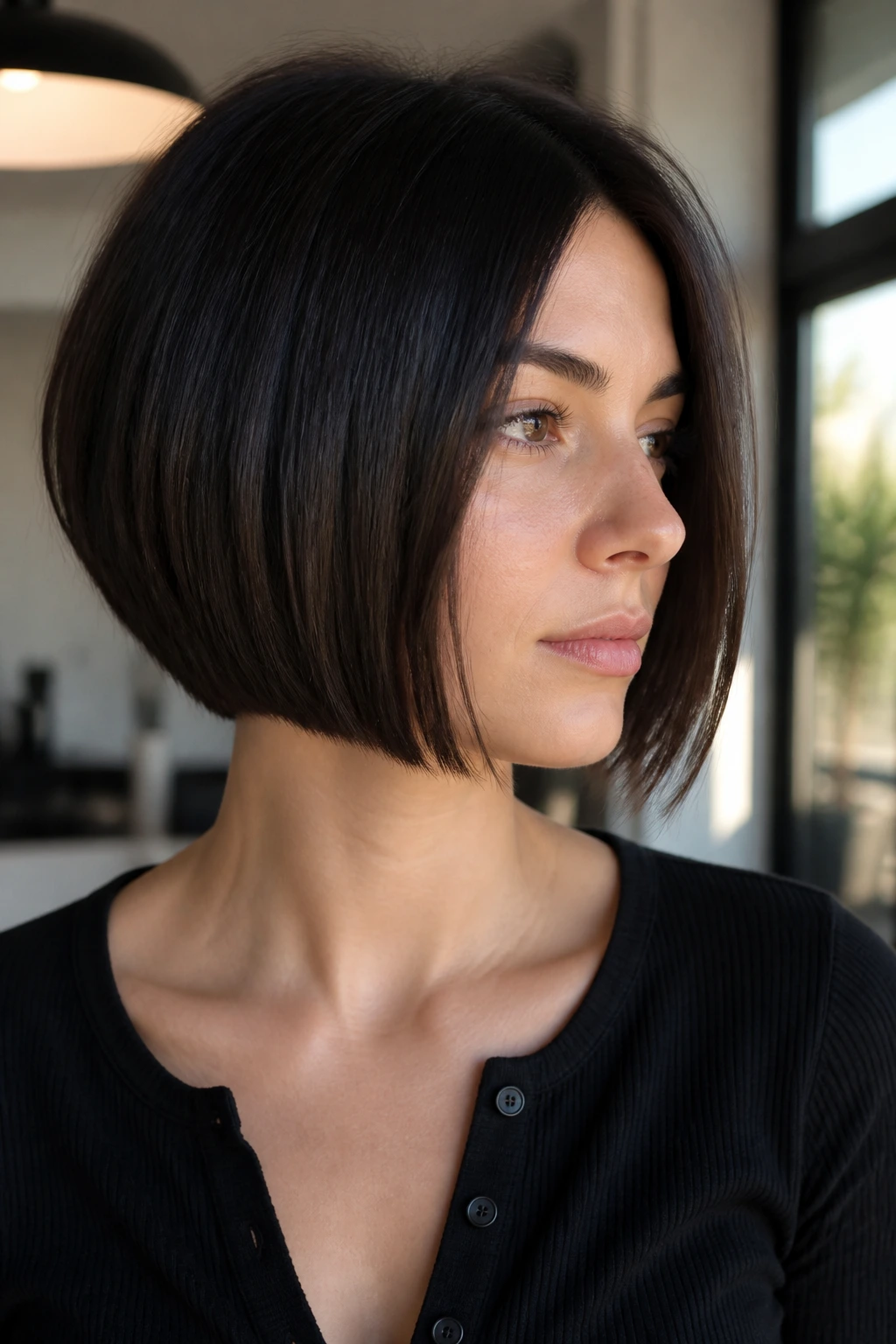
A blunt-end stacked bob has a cleaner edge than the more feathered versions. The back still graduates, but the bottom line is cut sharply enough that the haircut looks precise from the side and straight on. It’s the neat freak of the stack family.
This version works well on straight hair because the blunt ends show clearly. It can also help thicker hair look denser at the perimeter while the stack removes bulk underneath. The contrast between a rounded back and a firm bottom line is what gives it character.
If you want the haircut to look sharp for a few days after styling, this is a good pick. It does not forgive sloppiness, though. Split ends, uneven blow-drying, and over-textured products all show up fast on a blunt line.
20. Shattered Stacked Bob
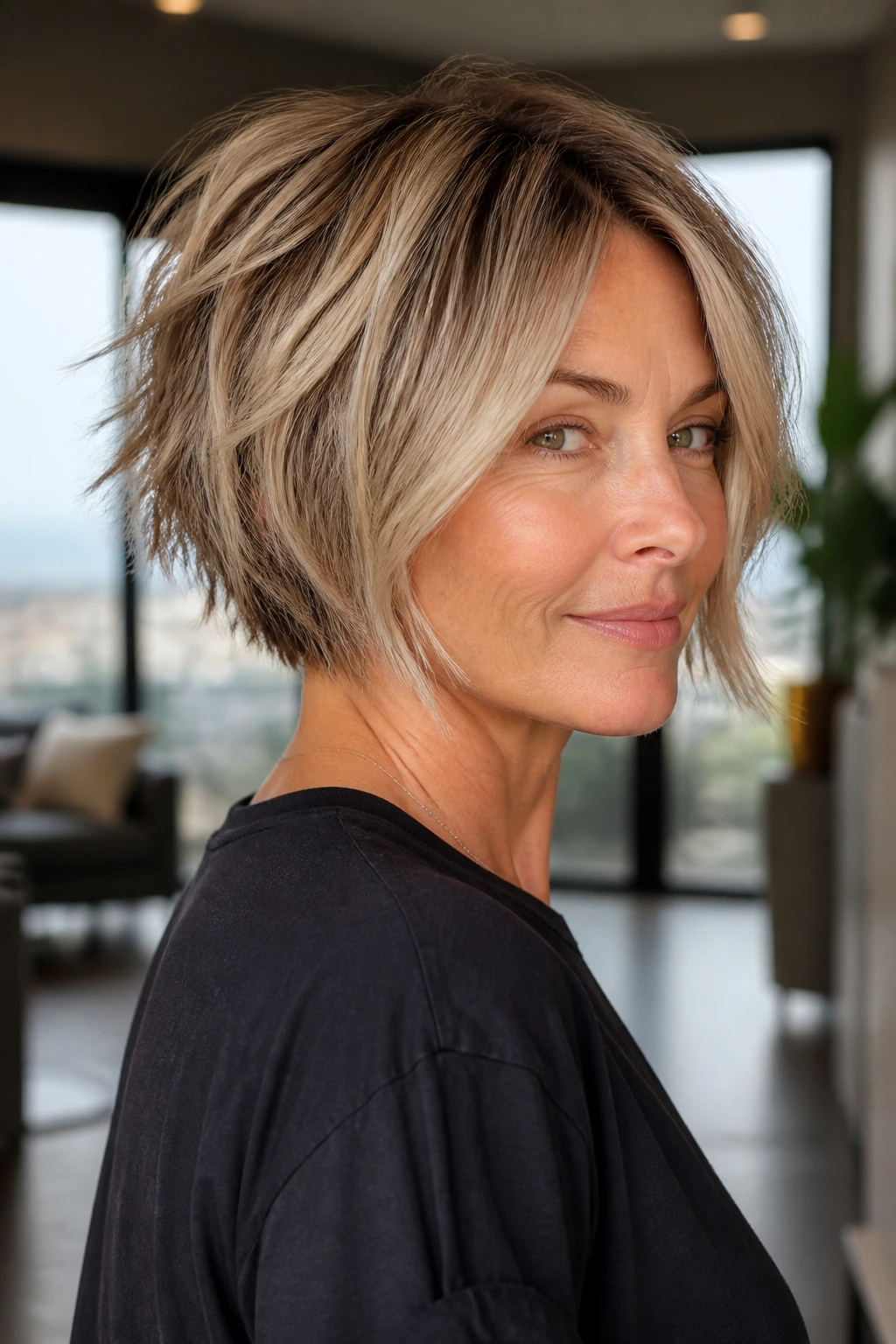
A shattered stacked bob takes the neat edges and breaks them apart on purpose. The ends are point-cut or razored so the haircut feels airy, moved, and a little messy in a controlled way. It’s the opposite of the blunt-end version above.
This cut works best when the hair already has some texture. Fine straight hair can go wispy too quickly, while wavy or slightly rough hair gets the benefit of movement without looking over-styled. The stack still gives the back shape, but the shattered ends keep the finish from feeling heavy.
Use a small amount of texture spray and finger-twist a few sections near the front. Don’t overdo it. A shattered bob should still look like hair, not a craft project.
21. Soft Stacked Bob with a Side Fringe
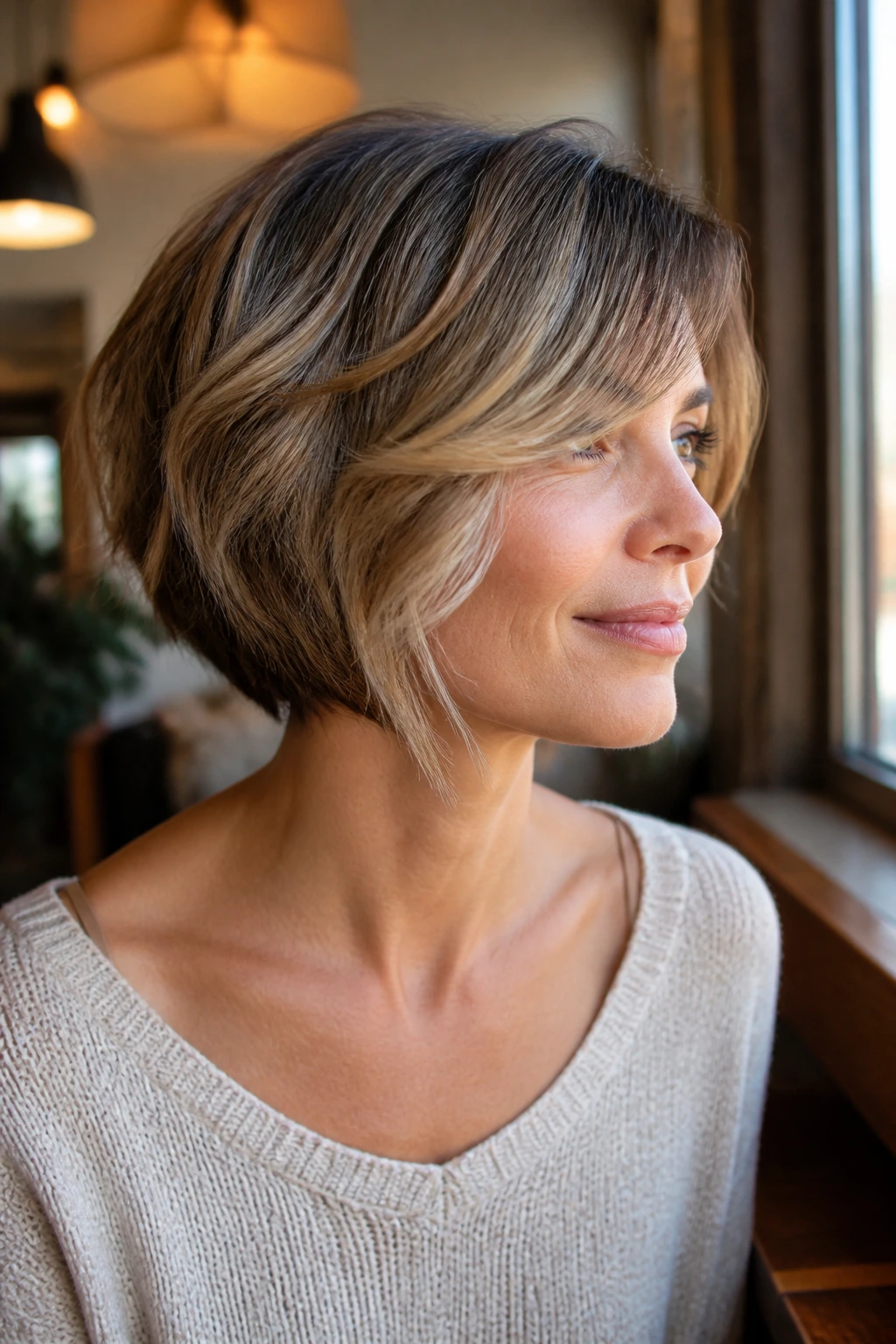
Can a stacked bob be soft? Yes, if the graduation is lower and the fringe sweeps rather than chops. A side fringe is especially good at bending the eye away from a harsh line at the forehead, which makes the whole haircut feel friendlier.
This version sits in the middle of polished and casual. The stack gives the back shape, but the fringe and front pieces keep the face open. That makes it useful if you want coverage near the temples or just dislike the bluntness of a straight-across bang.
It’s one of the easiest styles to wear with a soft wave. The fringe can be blown to one side, tucked under lightly, or left loose with a bend. The haircut does not need to be perfect to work, which is part of its charm.
22. Neck-Hugging Nape Stacked Bob
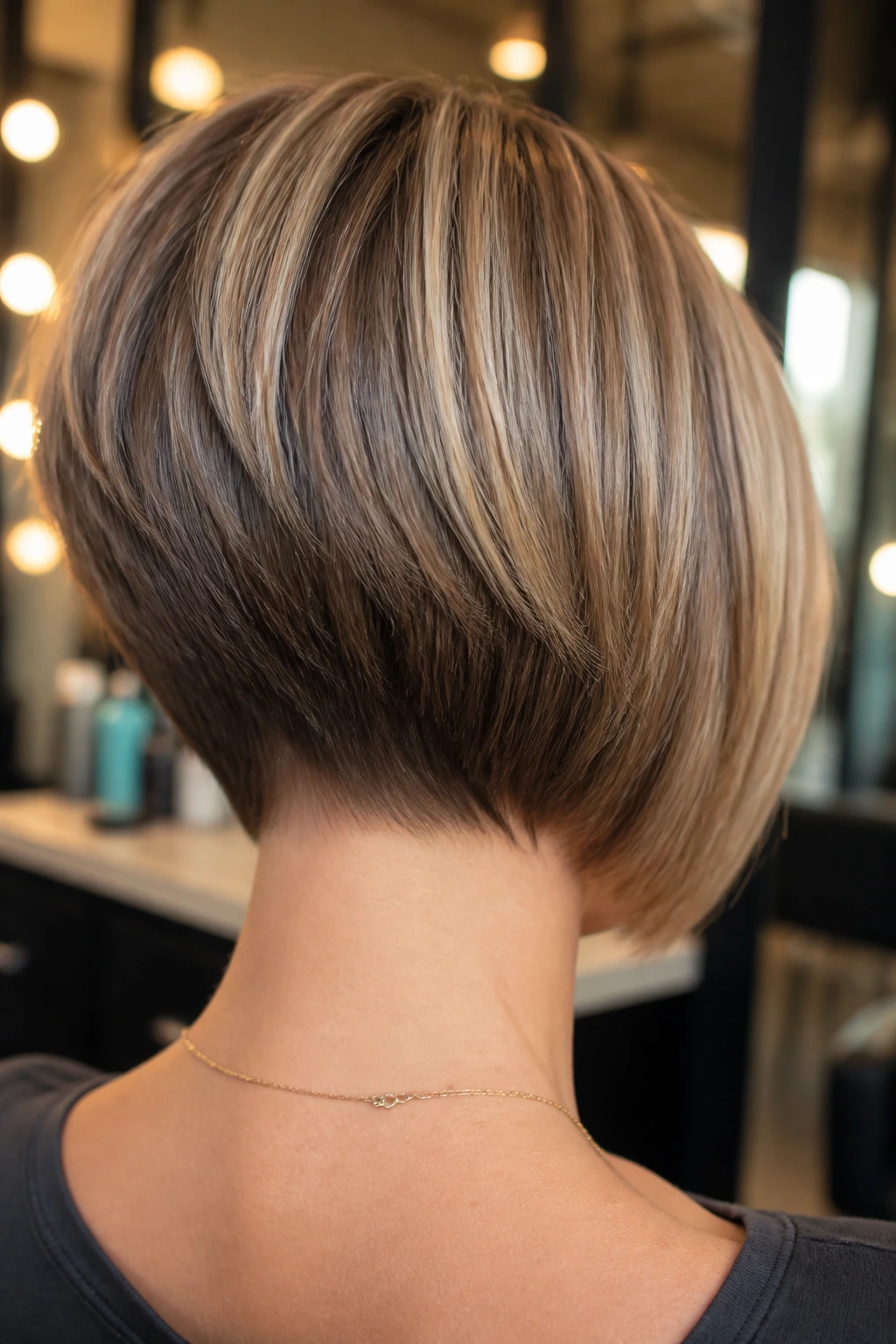
This one is for people who want the back cut close. The nape hugs the neckline tightly, the stack rises right above it, and the silhouette looks clean from the back without needing a lot of product. It exposes the neck in a way that can feel very crisp.
The shape is strongest when the stylist pays attention to the hairline itself. Cowlicks at the nape matter here. So do neck contours. If the cut sits too high, it can look severed. If it sits too low, the whole point disappears.
This is a great choice if you like regular trims and enjoy a haircut that looks intentional even when the front is tucked or pinned. It is not the best choice for people who dislike showing the back of the neck. That part of the style is the whole show.
23. Air-Dried Natural Stacked Bob
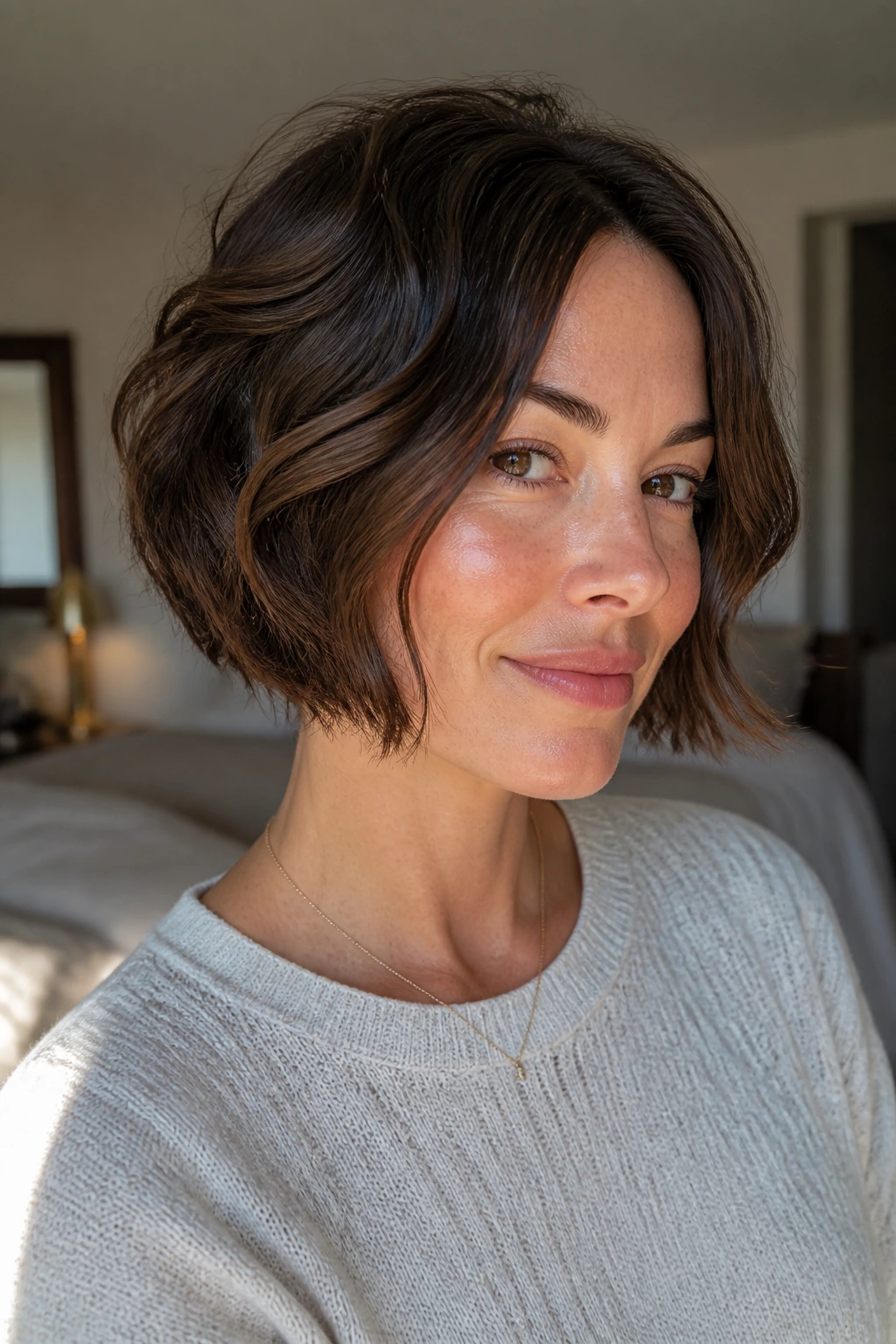
Some stacked bobs are built for the blow-dryer. This one is built for your actual hair pattern. The idea is to cut the stack in a way that still makes sense when you let it dry naturally, so waves, bends, and cowlicks work with the shape instead of sabotaging it.
That means the back is usually softer and the front has enough length to settle without a brush. A light curl cream or air-dry lotion can help, but the haircut itself does most of the work. If a stack only looks good after 25 minutes with a round brush, it is not a very forgiving cut.
This version is a smart pick for anyone who wants shape with less daily fuss. It won’t look as crisp as a smooth blowout, and that’s fine. The point is to make the haircut behave on ordinary days.
24. Dramatic Long-Front Stacked Bob
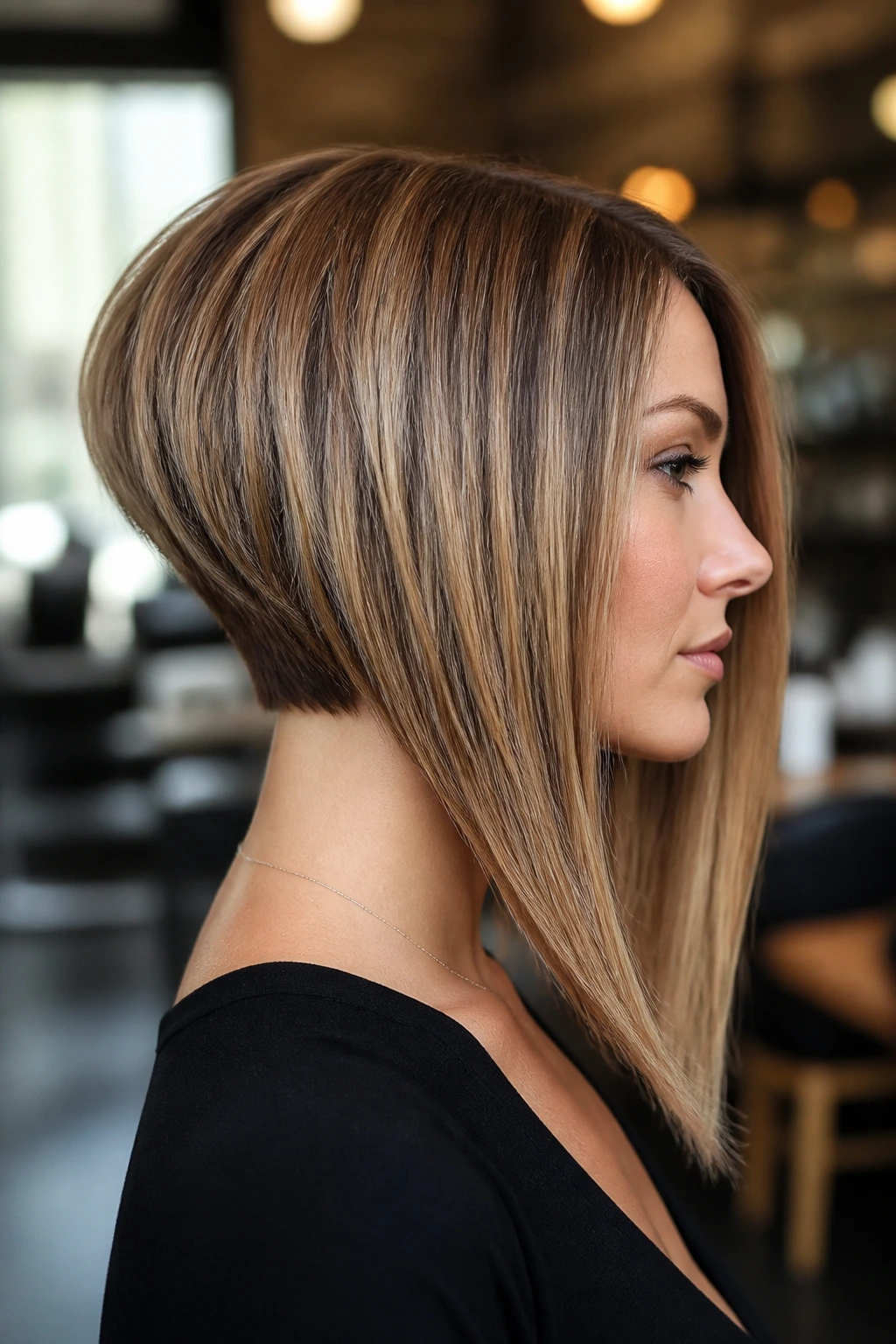
This is the version for someone who likes a little swing. The back is cropped close, but the front pieces stretch longer — often well below the chin — so the haircut has a strong diagonal line from nape to face. The side profile looks especially good in this one.
Compare it to a classic stack
A classic stacked bob stays more rounded. This one leans more angular, almost like the cut is reaching forward. That makes it stronger visually, and it also gives you more options for tucking, curling, or pinning the front.
It suits people who want the back neat but don’t want to lose the feeling of length around the jaw and neck. If you wear earrings, this is one of those cuts that shows them off without trying.
25. Gray-Silver Stacked Bob with Shine
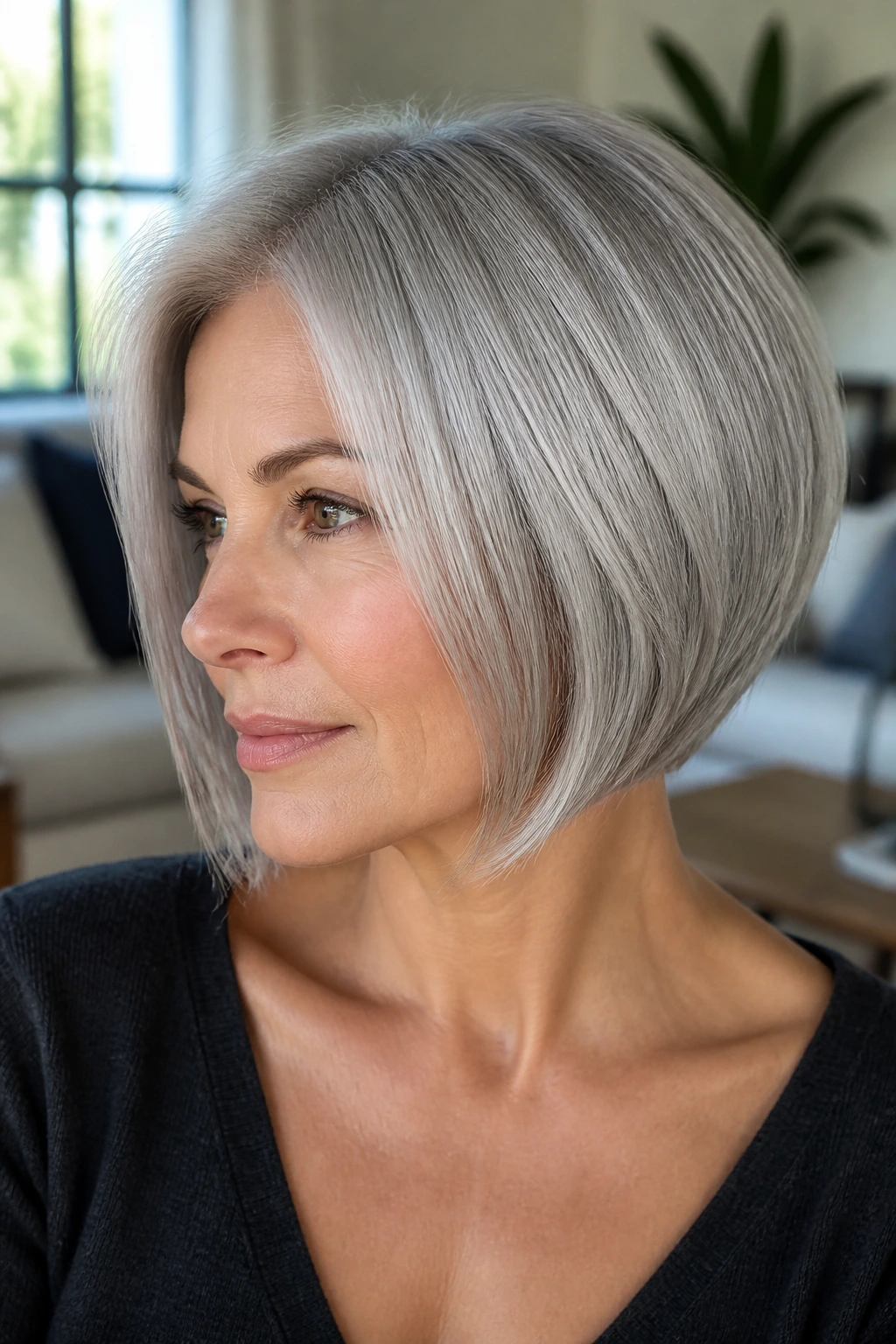
Silver hair and a stacked cut make a very clean pair. The shape is sharp, the color is cool, and the whole thing depends on shine. Dull silver can look flat fast, while glossy silver shows the stack like a line drawn on paper.
The cut itself should stay crisp at the nape and smooth at the front. A good silver shampoo or toner keeps brass from creeping in, but the styling matters too. A light serum through the mids and ends helps the cut reflect light instead of soaking it up.
This isn’t about age. It’s about tone and finish. Silver and gray hair often have enough natural texture and personality already; the stack just gives that texture a frame.
How to Choose the Right Stacked Bob for Your Hair Texture
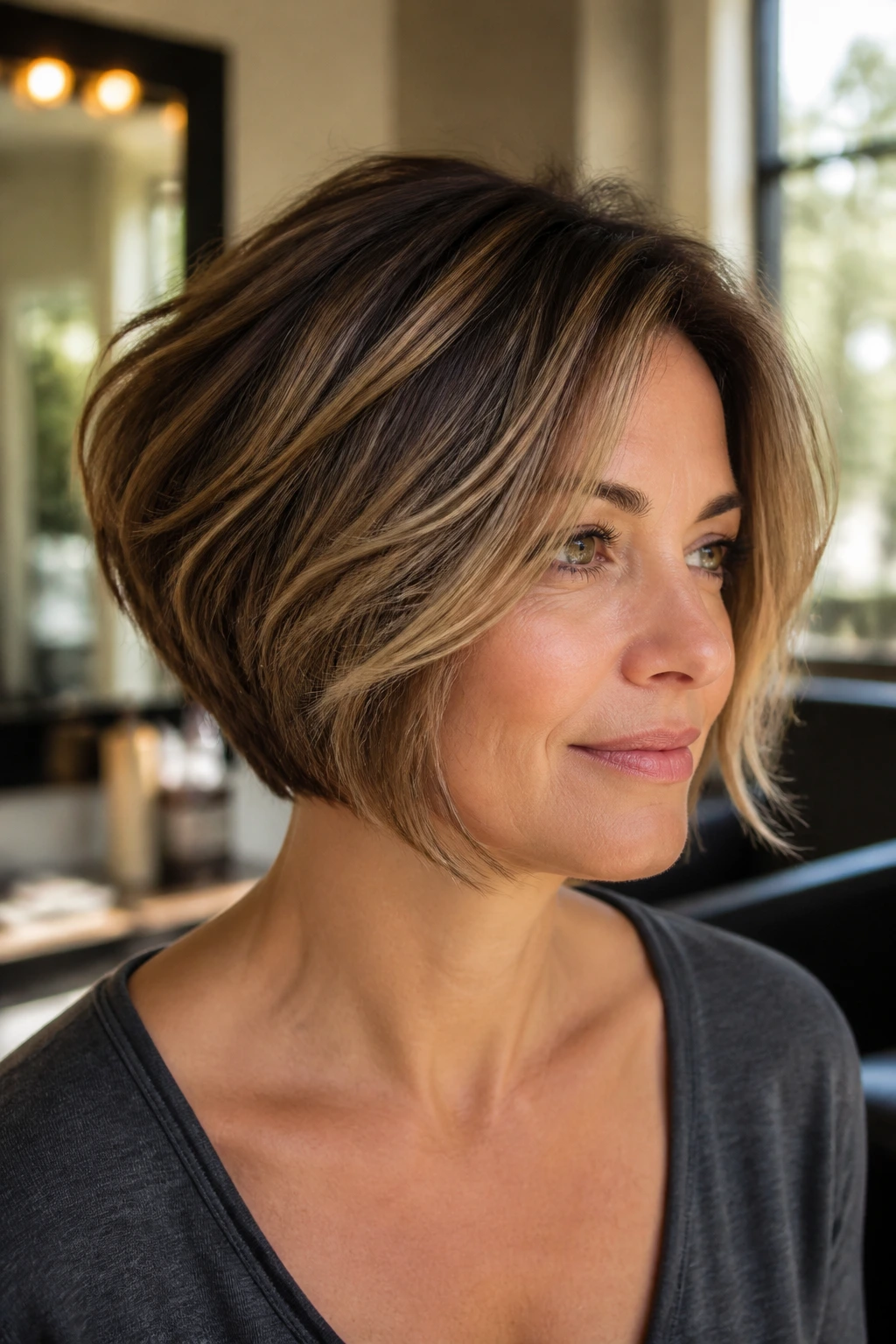
Texture decides how much stack you can get away with. Fine hair usually likes a tighter graduation and a blunt perimeter, because too many wispy layers steal the body before the haircut has a chance to stand up. Thick hair usually needs the opposite: weight control underneath, not aggressive thinning on the surface.
Wavy and curly hair need room for shrinkage. If the nape is cut too short, the back can bounce up higher than you expected. That may look neat on the day you leave the salon and awkward two washes later. Straight hair, on the other hand, shows every line, so the graduation has to be clean or the shape looks accidental.
Face shape matters, but it’s not the whole story. Round faces often do well with longer front pieces. Square faces usually soften nicely with a side part or curtain bangs. Long faces can use a softer stack and a little width at the sides so the haircut doesn’t drag everything downward.
Lifestyle matters too. If you want five-minute hair, ask for a stack that sits well with air-drying or a quick blow-dry. If you like polished hair, go sharper and more angular. If you hate trim appointments, skip micro bangs and very short napes. They grow out fast, and they show it.
Tools That Help a Stacked Bob Sit Right
-
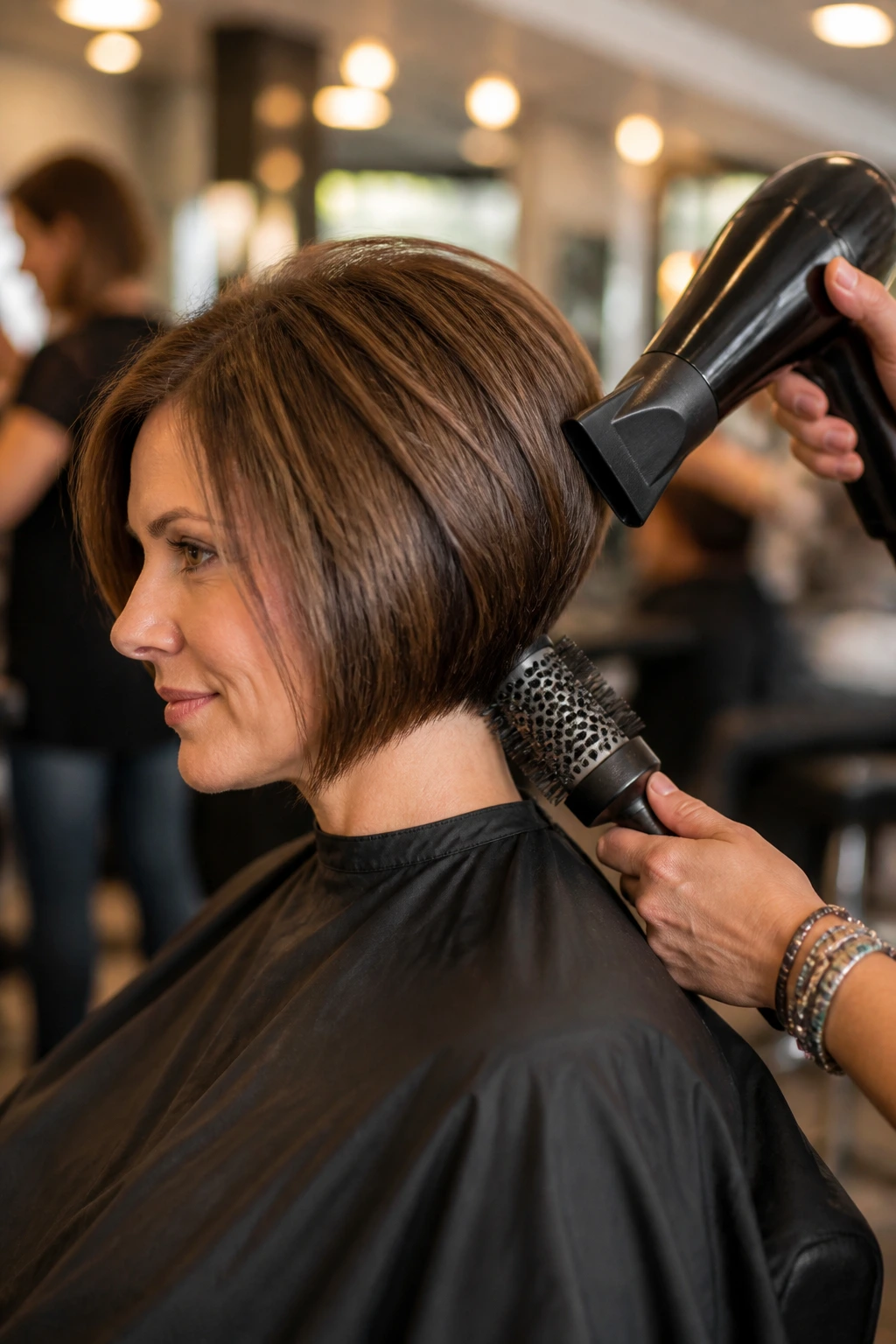
Blow-dryer with a concentrator nozzle: Directs the airflow at the roots so the back keeps lift instead of puffing everywhere.
-
1- to 1.5-inch round brush: Small enough to round the ends and smooth the stack without making the hair curl too much.
-
Tail comb: Helps create a clean part and lift the crown sections while you clip away the rest.
-
Sectioning clips: Useful for working the back in neat panels, especially on thick or wavy hair.
-
Flat iron: Good for sleek versions, angled fronts, and a tiny bend at the ends.
-
Heat protectant spray: Keeps the ends from drying out when you style the bob several times a week.
-
Light mousse or root lift spray: Best for fine hair that needs support at the crown and nape.
-
Texturizing spray: Helps piecey, shaggy, or air-dried versions hold their movement without feeling crunchy.
-
Light serum or finishing cream: A small amount smooths the ends and keeps the back from looking fuzzy.
-
Hand mirror: Handy for checking the nape line after styling. The back is where stacked bobs can quietly go wrong.
How to Ask Your Stylist for the Cut You Want
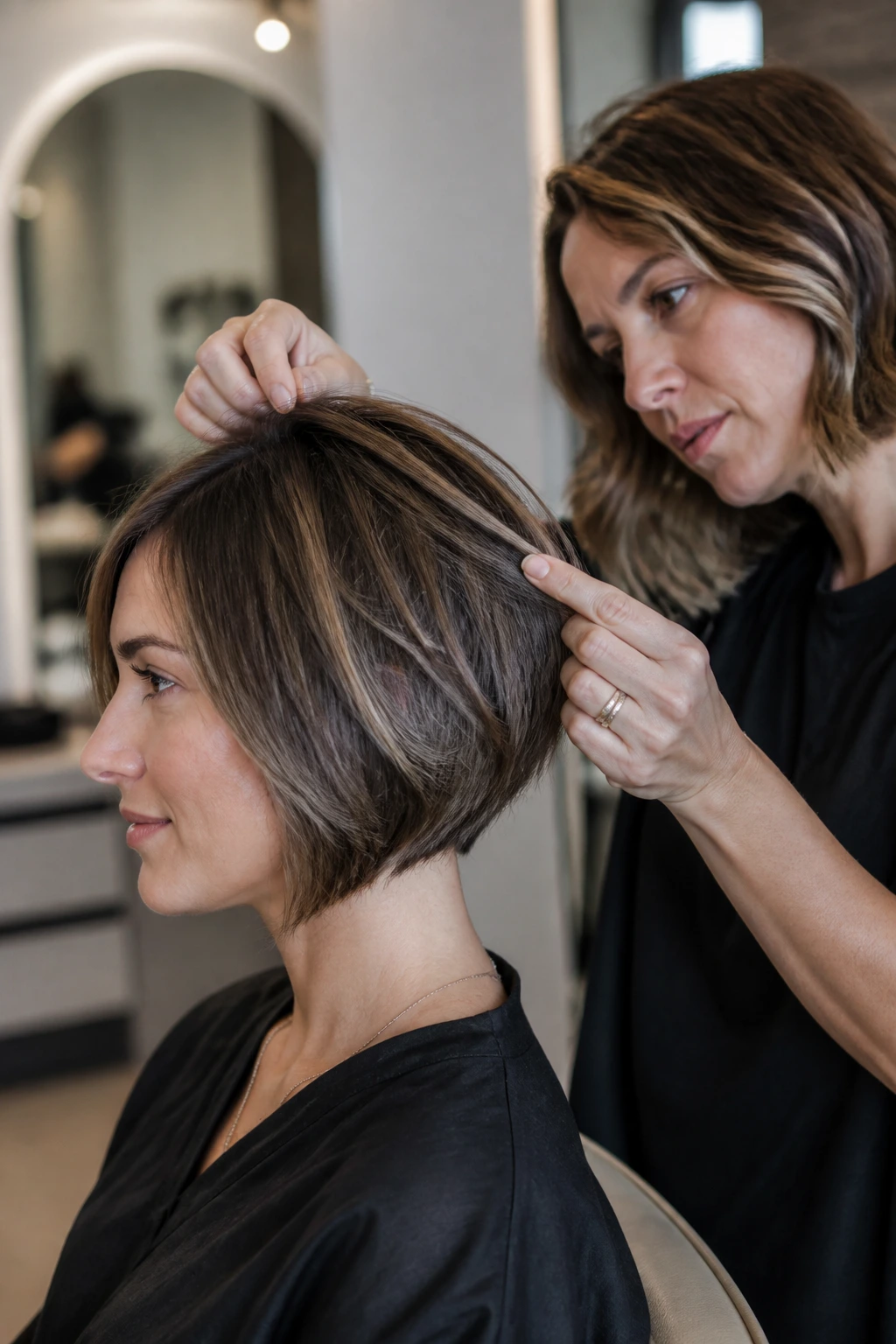
Bring photos, yes, but bring the right ones. One photo of the front tells almost nothing. You need a side view and a back view too, because the stack lives in profile. If the photos don’t match your hair texture, say so. A picture of pin-straight hair won’t tell your stylist much if your own hair bends and swells.
Be specific about the shortest point. Say where you want the nape to land — above the neckline, at the top of the neck, or grazing the base of it. Then tell them how long you want the front to stay. “Short in back, longer in front” is too vague. So is “not too short.” Those phrases mean different things to different stylists.
Say how you style your hair on ordinary days. Ten minutes with a blow-dryer is not the same as air-drying and walking out the door. If you live in clips, if you flat iron once a week, if you hate touching your hair, say that. The best stacked bob is the one that fits your routine, not someone else’s mirror selfie.
Common Mistakes That Flatten the Shape
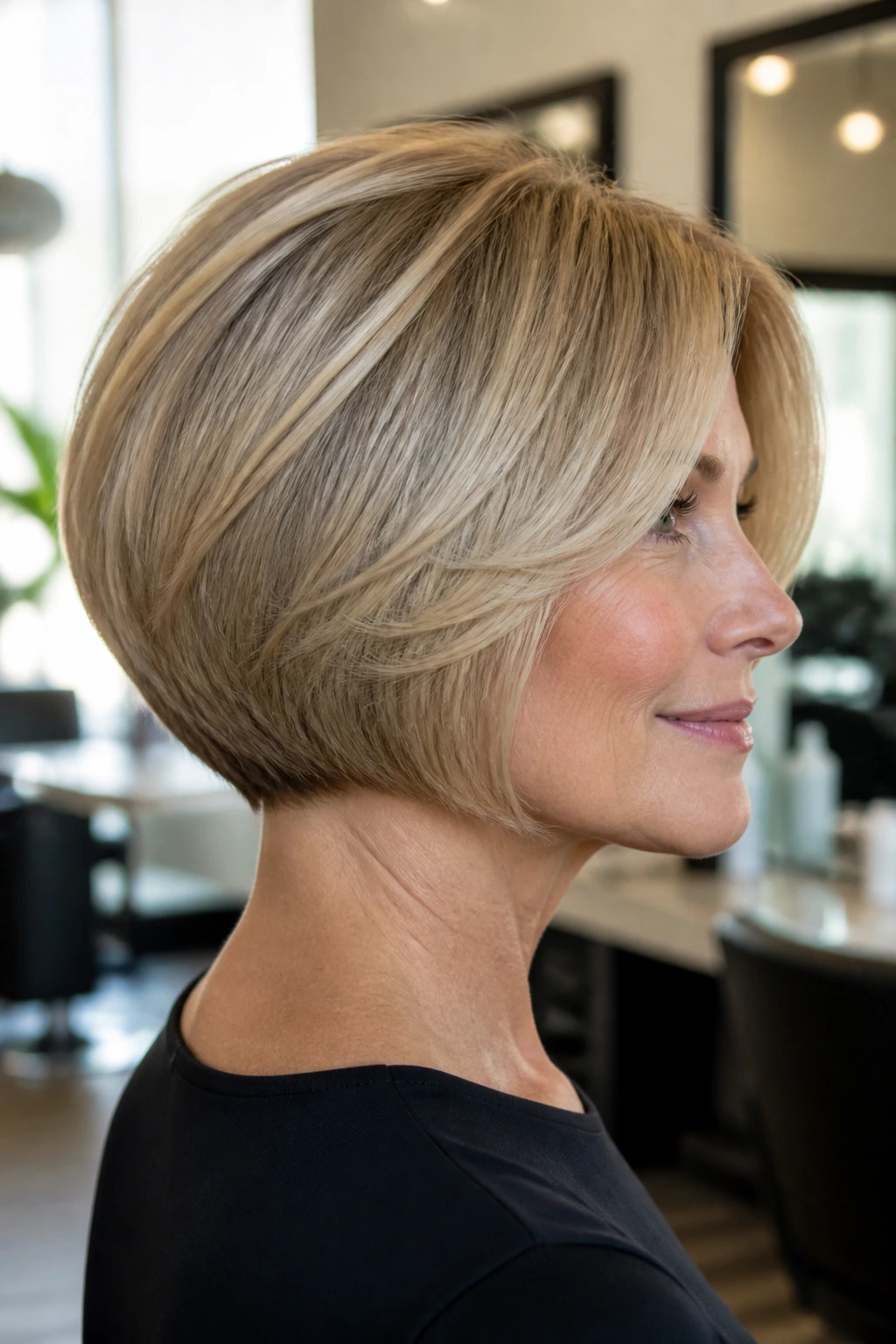
The first mistake is asking for a stack without talking about the nape length. If the back is cut too high, the style can look severe and grow out awkwardly. If it’s cut too low, the haircut loses the lift that makes it a stacked bob in the first place. Show the stylist where you want the curve to sit.
The second mistake is over-thinning thick hair. The ends can start to fray, and the back gets bigger instead of neater. You want bulk removed from inside the shape, not shredded off the surface.
Another common problem is loading the roots with heavy cream or oil. Fine. The hair looks shiny for a minute. Then it collapses. Keep rich products on the ends, and use lighter sprays near the crown.
Finally, people wait too long between trims. The stack is the part that fades first. Once the nape grows out, the whole silhouette changes. If you love the shape, cut it before it forgets what it is.
Variations and Alternatives Worth Trying
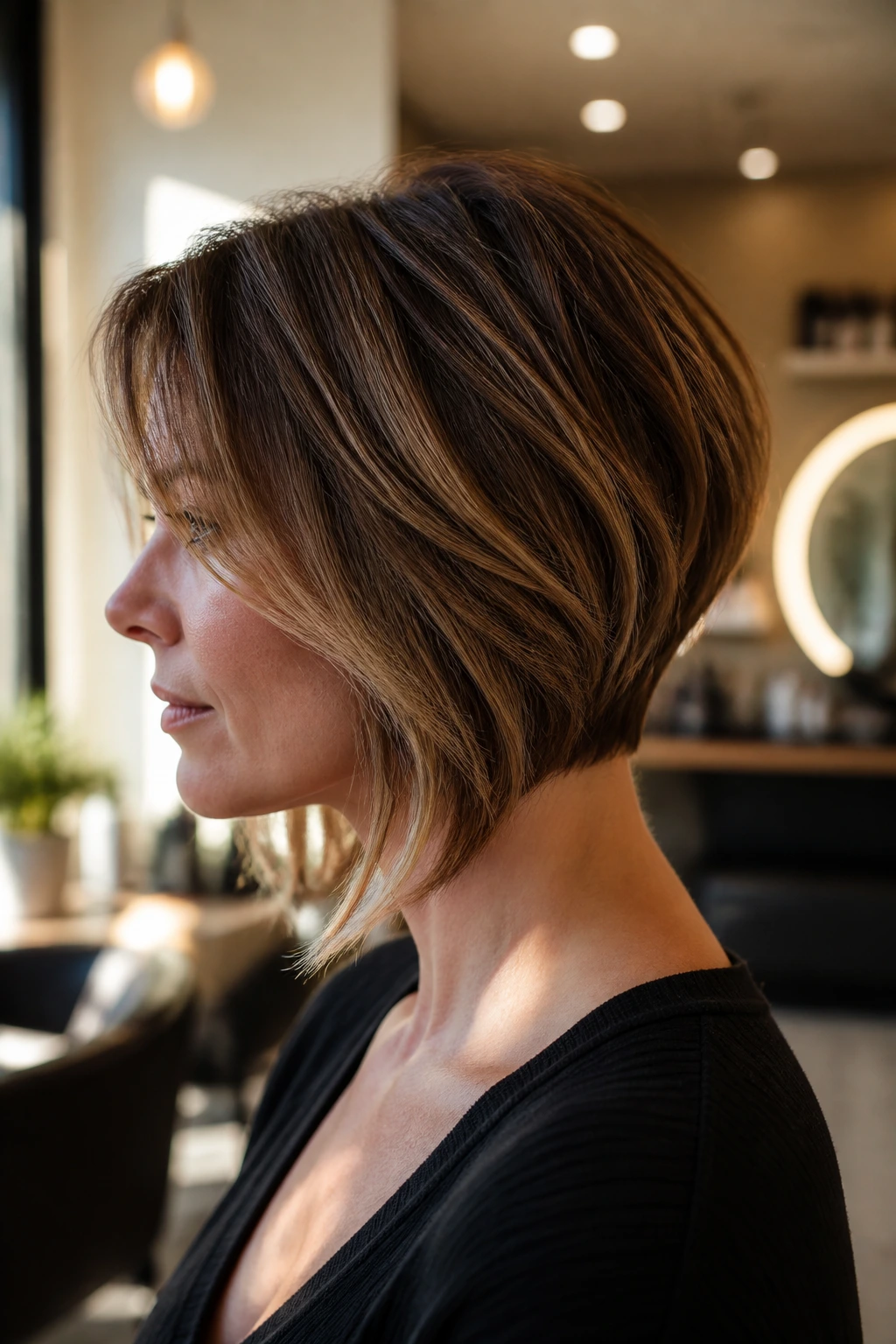
Long Stack, Soft Front: This keeps the nape lifted but leaves the front a little longer and less severe. It’s a smart bridge if you want a stacked bob without giving up the security of length around the face.
Curly-Safe Stack: The graduation sits lower, the layers are softer, and the cut is shaped with shrinkage in mind. It’s a better bet for curls that spring up the second they dry.
Undercut Relief: If the back is too bulky, an undercut trims away the hidden weight and makes the stack sit closer to the head. It’s especially useful for very dense hair that refuses to lie flat.
Micro-Fringe Accent: A short fringe changes the whole balance of the bob. The stack stays clean, but the front becomes sharper and more fashion-forward.
Soft French Bend: This version uses loose movement and less structure at the edges. It still reads as a stacked bob, only with a calmer, more lived-in finish.
How to Style the Cut at Home
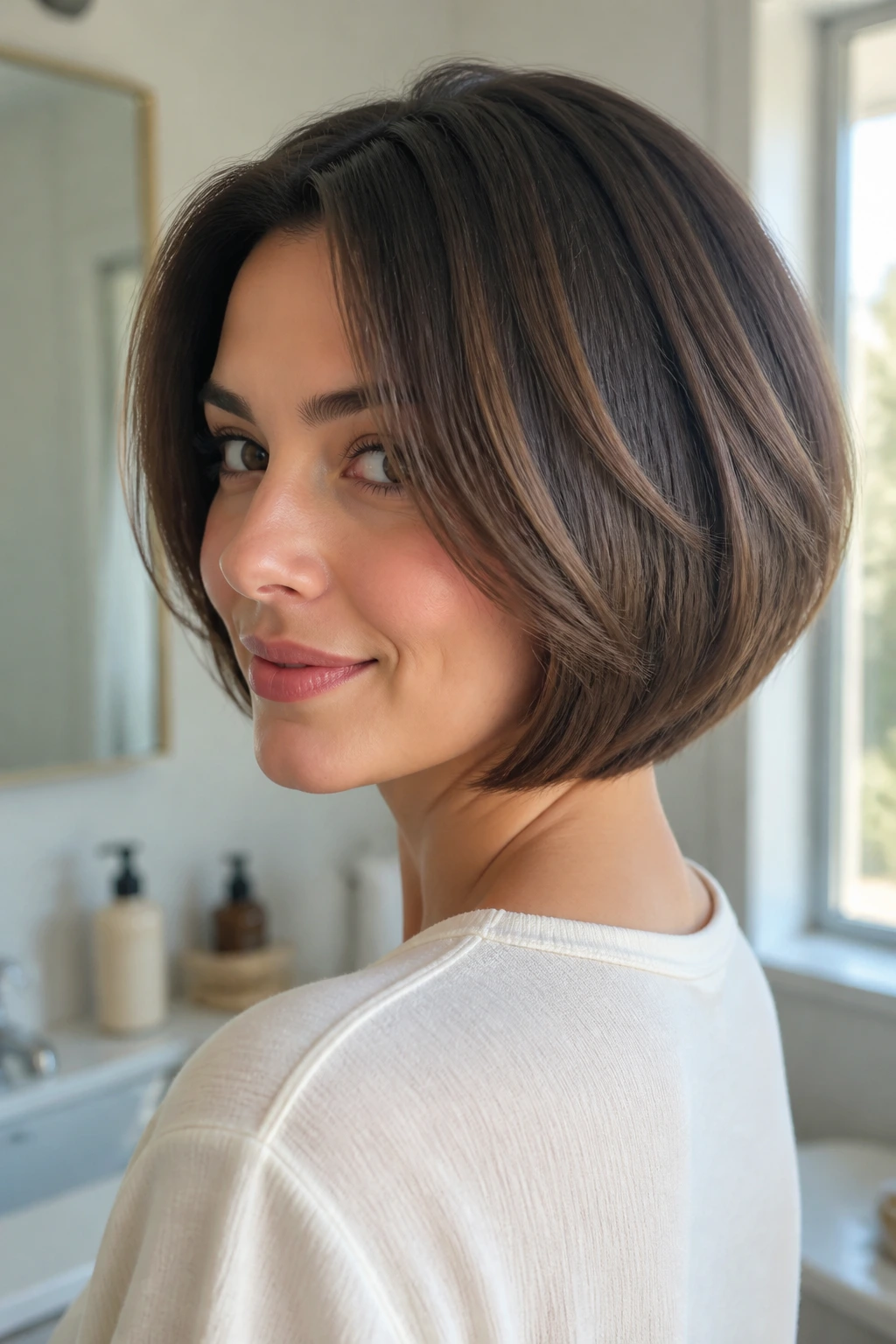
Smooth blowout: Start with heat protectant, rough-dry the roots, then use a round brush to lift the crown and turn the ends under. Focus on the back first. That’s where the shape either happens or disappears.
Quick air-dry: Work a light mousse or curl cream through damp hair, then twist a few front sections and let the back settle naturally. This works best when the haircut was cut for your texture, not against it.
Flat-iron bend: For sleek versions, run a flat iron through the front pieces with a tiny inward bend at the ends. Do not straighten every inch into a dead line; a little curve keeps the bob from looking stiff.
Piecey finish: Rub a pea-sized amount of texture paste between your fingers and tap it onto the ends, then separate a few pieces around the crown. Less is better. If the product shows, you used too much.
Keeping the Shape Between Salon Visits
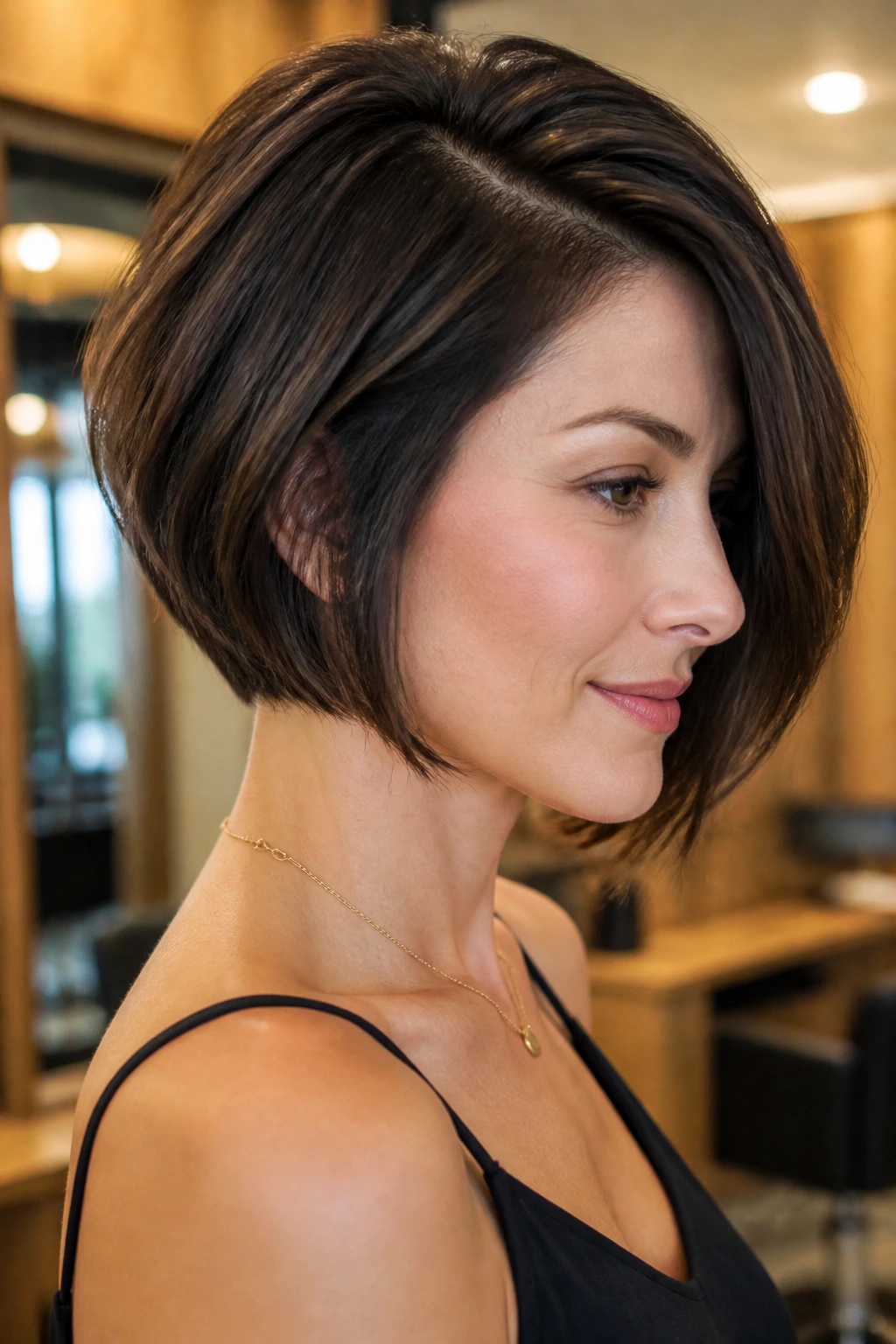
The stack starts to lose its snap when the nape grows out. That usually happens first, before the front looks long enough to bother you. For a sharp version, plan on trims every 6 to 8 weeks. If you wear a longer, softer stack, you can often stretch to 8 to 10 weeks before the shape starts to sag.
Dry shampoo helps at the root, but use it with restraint. A little at the crown on day two or three can keep the lift alive. A cloud of it at the start of the day can leave the hair chalky and dull, which is bad news for a cut that depends on clean lines.
At night, a satin pillowcase or a loose clip at the crown can keep the back from crumpling. Curly versions may prefer a bonnet or a loose pineapple, while straight versions usually just need less friction. If the nape gets weird after sleeping, mist it lightly, smooth it with your hands, and re-dry the roots for two minutes. That tiny reset often saves the whole shape.
Frequently Asked Questions
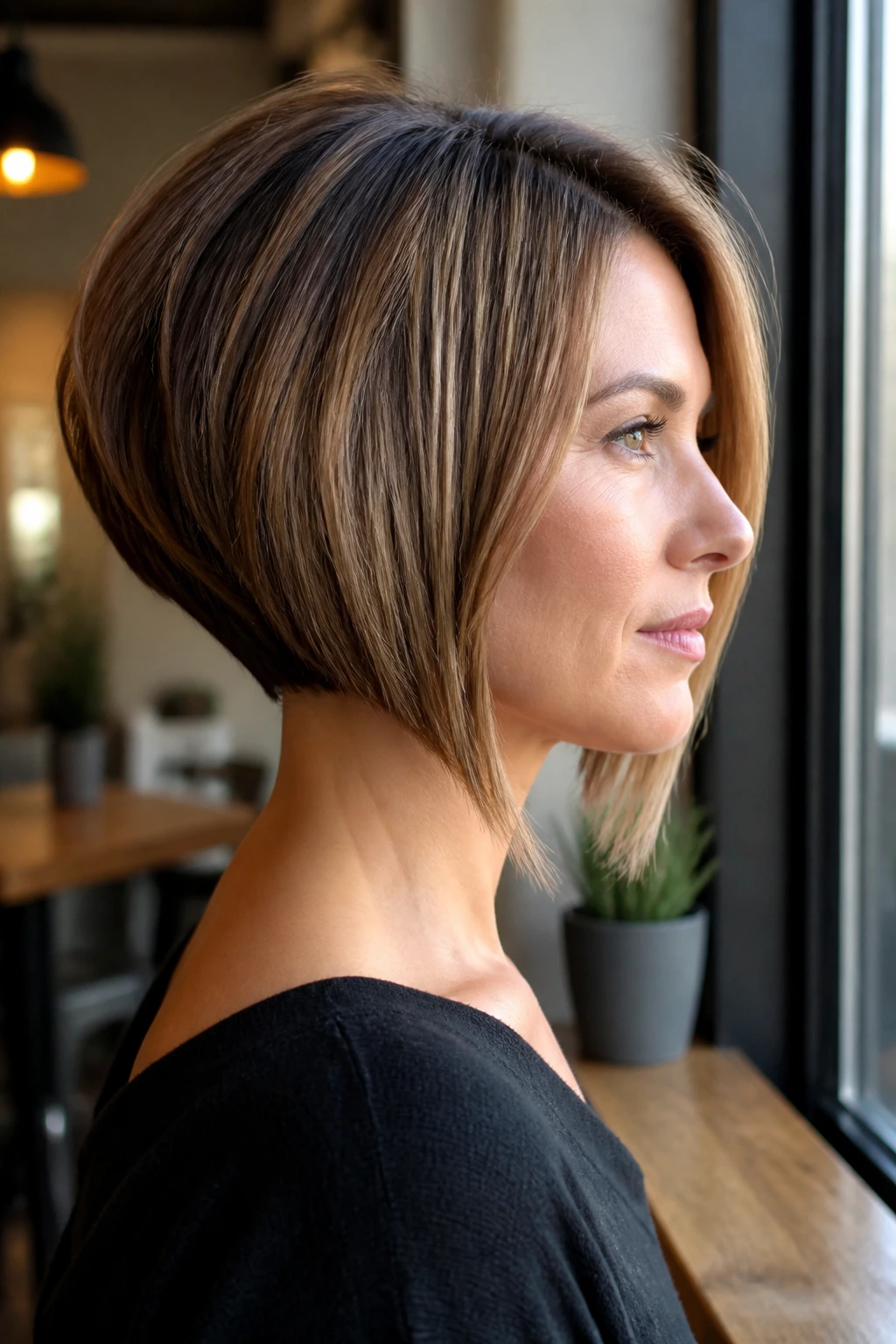
Are stacked bob haircuts good for fine hair?
Yes, if the stack is tight and the perimeter is kept clean. Fine hair usually looks better with controlled graduation and a blunt or softly blunt edge, because too many wispy layers can make it look thinner than it is.
Do stacked bobs work on curly hair?
They do, but the cut has to account for shrinkage. A curly stacked bob usually needs a lower stack and softer layering so the back does not spring too high once the hair dries.
What’s the difference between a stacked bob and an inverted bob?
A stacked bob focuses on graduation at the back, often with a rounded or lifted nape. An inverted bob leans more on the angle from short back to longer front. The two overlap, and many stylists blend them, but the emphasis is not quite the same.
How short is too short for the back?
Too short is when the nape sits so high that the cut looks disconnected from your neckline. If you worry about that, ask the stylist to show you the shortest point before they commit. That conversation saves a lot of regret.
Do I need to style it every day?
Not necessarily. A good stack can survive a quick root refresh, a light bend at the ends, or even a tidy air-dry. But if you want the sharper versions — sleek, angled, or blunt — some styling usually helps the shape hold.
Can I grow out a stacked bob without an awkward phase?
You can make the grow-out gentler by keeping the front longer and softening the stack gradually rather than chopping everything off at once. The awkward phase shows up when the nape grows first and the front stays frozen.
What if my hair has a cowlick at the nape?
Tell your stylist before the cut. Cowlicks can push the back outward, so the nape length and graduation should be shaped around that pattern instead of ignored. A little extra length in the back often helps.
Will a stacked bob make my face look wider?
It can if the sides are cut too blunt at cheek level. Longer front pieces, a side part, or a soft fringe usually balance that out by pulling the eye downward and forward instead of straight across.
A Shape That Keeps Its Edge
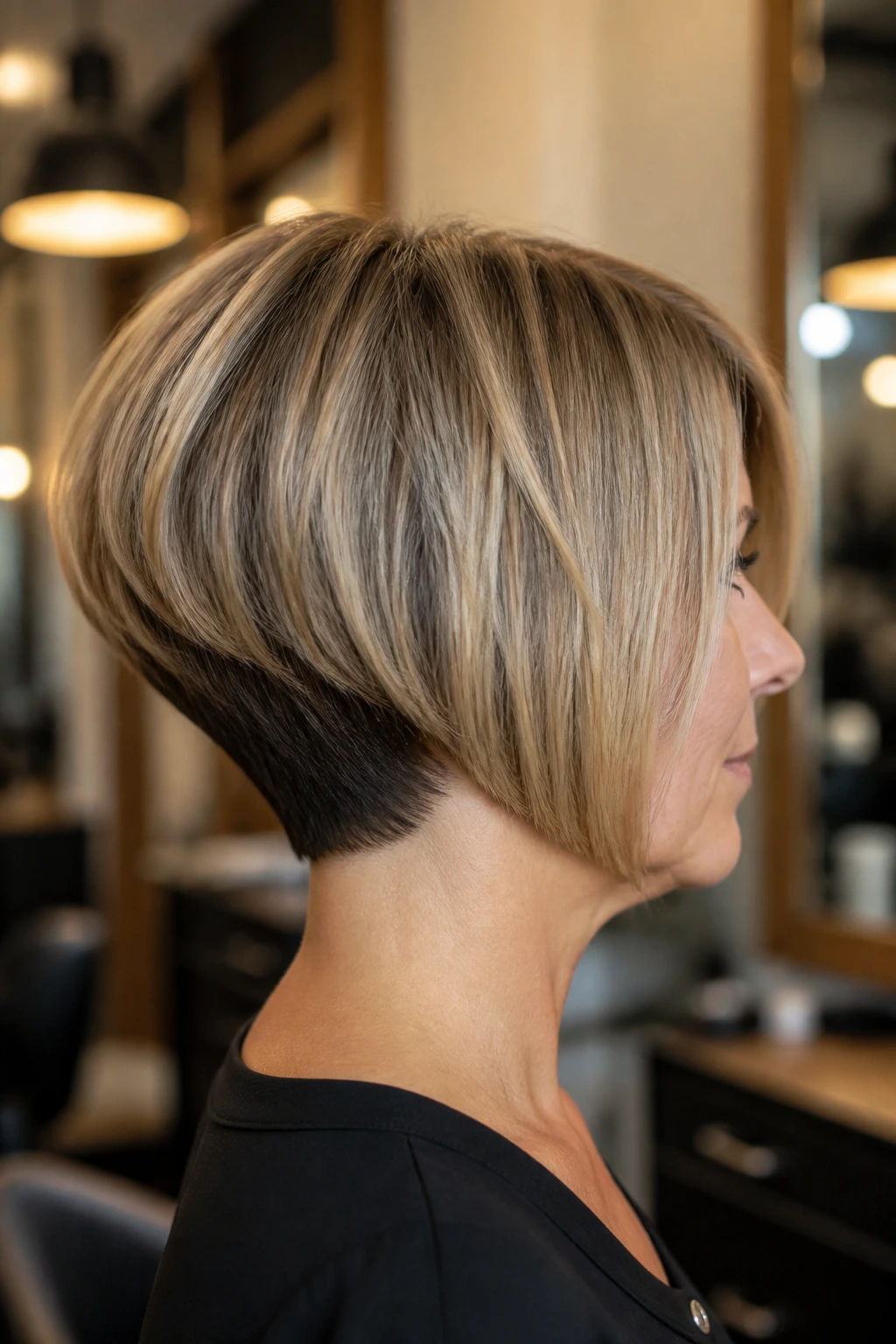
Stacked bob haircuts work because they respect the back of the head. That sounds fussy, but it’s the truth. When the graduation is handled well, the cut looks intentional from the side, lifted from behind, and easy to live with from the front.
The best part is how many directions it can go. You can keep it rounded, angle it hard, soften it with bangs, or let your texture do most of the work. The silhouette stays useful either way. That’s why this cut keeps showing up in real salons, on real heads, and in real mirror checks before someone grabs their coat.
