



Asymmetrical haircuts do one thing blunt cuts can’t: they make the eye move. The shorter side gives you a clean edge, while the longer side keeps the shape from feeling frozen. On straight hair, that difference looks sharp and deliberate. On wavy or curly hair, it softens just enough to feel lived-in without losing the line.
The smartest versions are not the most dramatic ones. A bob that lands at the jaw on one side and slips half an inch lower on the other can look more polished than a full side shave, because the imbalance is visible without shouting. That little shift changes how the face reads, how the neckline sits, and how the cut grows out over the next few weeks.
What makes asymmetrical haircuts so useful is that they work with a real routine, not just a salon mirror. You can go sleek, piecey, airy, or blunt. You can keep the difference subtle or lean into it hard. The cuts below cover all of that, from barely-there angles to bolder shapes that feel almost architectural.
Why These 25 Cuts Keep Working
-
Face-shape control: The longer side can pull attention down the cheek, soften a wide jaw, or add length to a round face without changing your whole haircut.
-
Built-in movement: Even when the hair is still, the uneven line gives the style motion; that’s why these cuts don’t look dead-flat the way some blunt styles do.
-
Texture friendly: Straight, wavy, curly, and coily hair each get their own version here, because asymmetry is a shape, not a texture.
-
Grow-out flexibility: Several of these cuts stay readable as they grow, which matters if you do not want to live at the salon every four weeks.
-
Style range: The same cut can go glass-sleek for a sharp finish or rough-dried with paste for a more casual edge.
-
Stylist clarity: These are easier to request when you know the key landmarks — ear, jaw, chin, collarbone, nape — instead of just saying “make it edgy.”
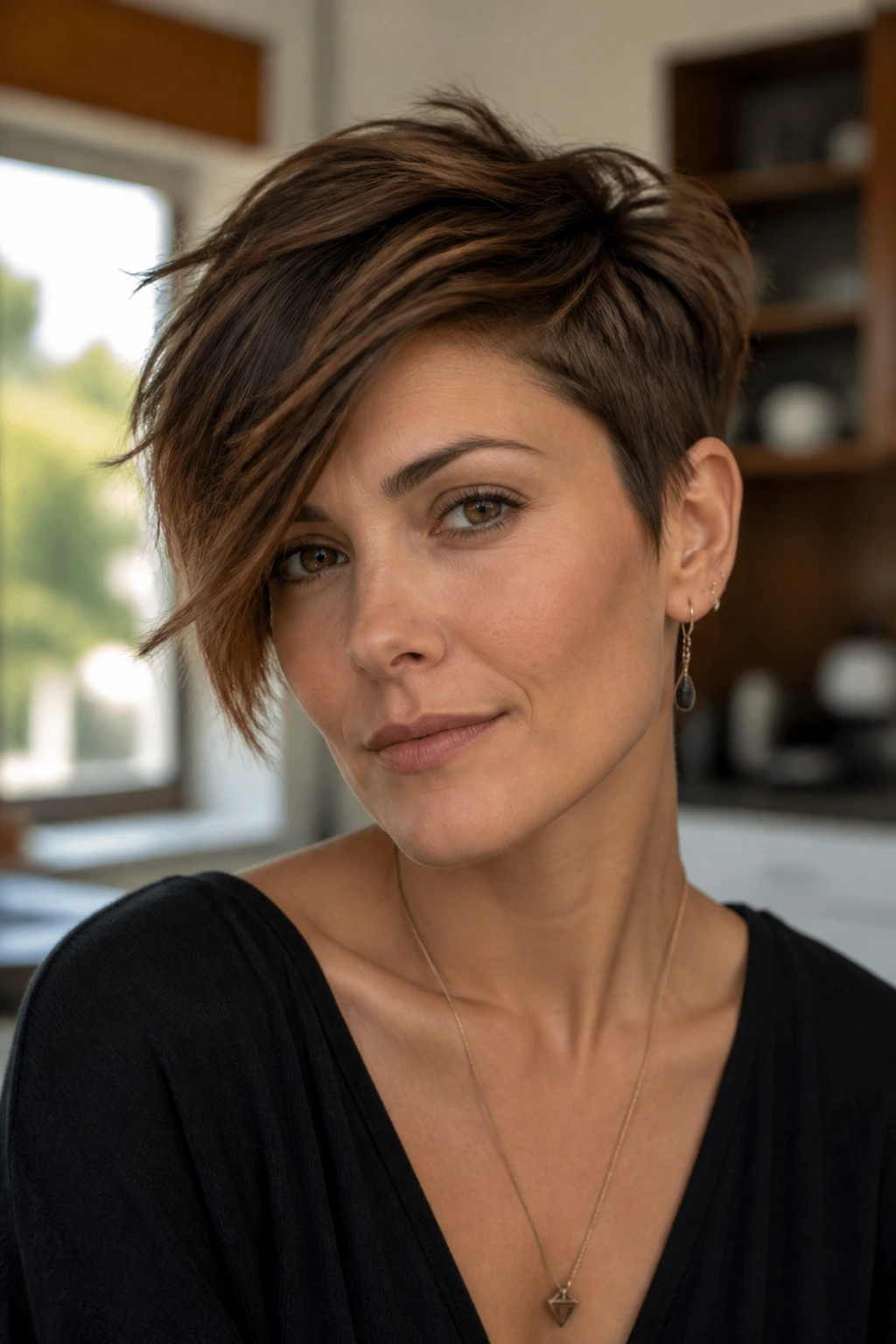
1. Textured Asymmetrical Pixie
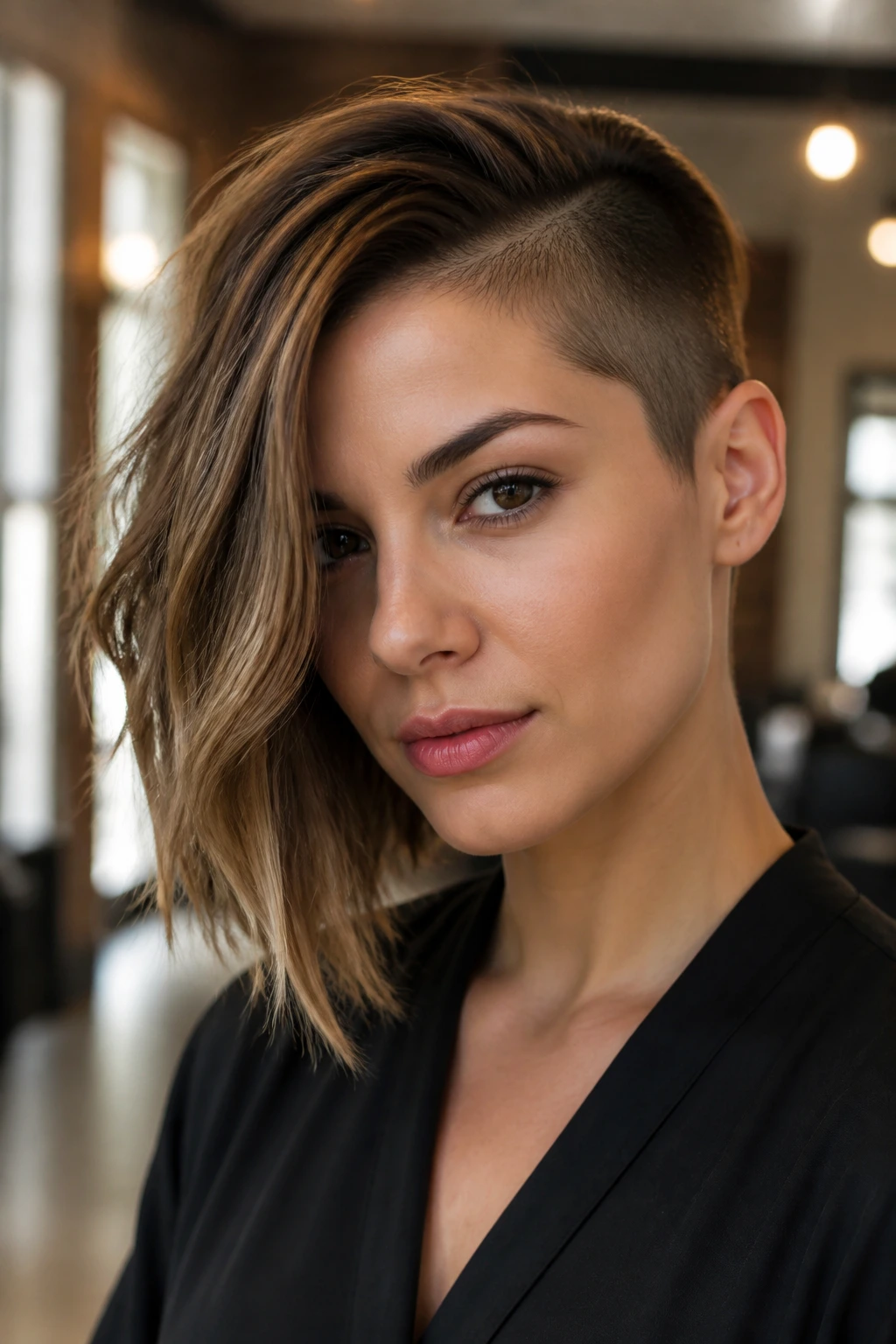
A textured asymmetrical pixie is the cut I reach for when someone wants short hair that still has personality. One side can hug the ear while the longer side leaves 1 to 2 inches of fringe to sweep across the forehead or cheekbone. That tiny imbalance keeps the whole shape from looking helmet-stiff.
This version works best when the top is point-cut or lightly razored, not thinned to death. You want separation, not fuzz. A pea-sized amount of matte paste on dry hair is enough to break up the ends and keep the longer side from falling into one flat sheet.
Styling note: If your hair sits flat at the crown, ask for a touch of lift there and a tighter nape. A pixie lives or dies by the back shape.
2. Chin-Grazing Asymmetrical Bob
Why does a chin-length bob feel so crisp when the front corners are uneven? Because the jawline has a natural visual stop, and a bob that lands there with one side just a shade longer creates a clean frame instead of a boxy one. On straight hair, it reads neat. On wavy hair, it gets a little bend and still keeps the edge.
I like this cut when someone wants short hair but not a severe crop. The trick is to keep the perimeter blunt enough to feel solid, then shift the length by a small but obvious amount — usually half an inch to 1.5 inches from side to side. Any more and the whole thing can start looking lopsided instead of intentional.
What to Ask for
Ask your stylist to keep the nape tidy and the front panels angled just enough to open the face. If one side tucks behind the ear easily and the other brushes the cheek, you’re in the right zone.
3. Sleek Deep-Side-Part Lob
A sleek deep-side-part lob has a kind of quiet authority to it. The line lands around the collarbone, but one front section dips a little lower, which makes the shape feel longer and sharper without losing the ease of a lob. It’s one of the best options if you want asymmetry that still works with a blazer, a tee, or a silk shirt.
The deep part matters. It does half the design work. Slide the part about 2 to 3 inches off center, then smooth the shorter side closer to the head while letting the longer side move. That contrast is what gives the cut its clean, modern read.
Practical tip: A flat iron bend at the ends — not a full curl, just a slight inward sweep — keeps the longer side from looking heavy.
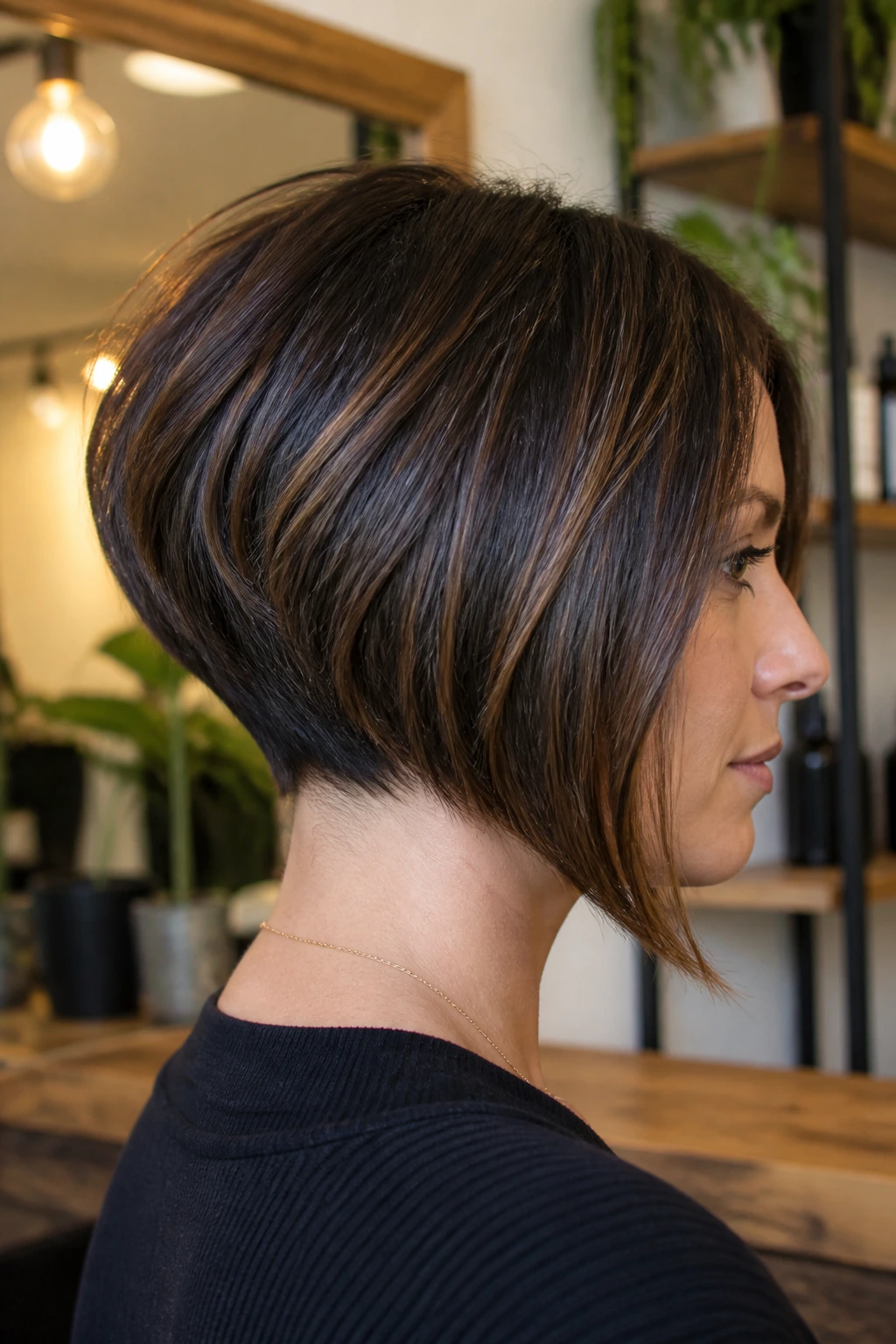
4. Stacked Asymmetrical A-Line Bob
This is the bob for someone who likes the back of the haircut to do some talking. The nape is stacked and shorter, the front angles down toward the jaw, and one side gets a touch more length so the silhouette feels less predictable. It has structure. Real structure.
The shape works especially well on fine to medium hair because stacking creates built-in lift. The downside? You need regular trimming, because the line shows every inch of growth. If you want a sharp result, ask for the back to be undercut slightly at the nape and the front to stop just past the chin on the longer side.
Why It Stands Out
The stack makes the crown look fuller without teasing or a mountain of product. That’s the part a lot of people miss — the drama comes from the geometry, not from extra hair.
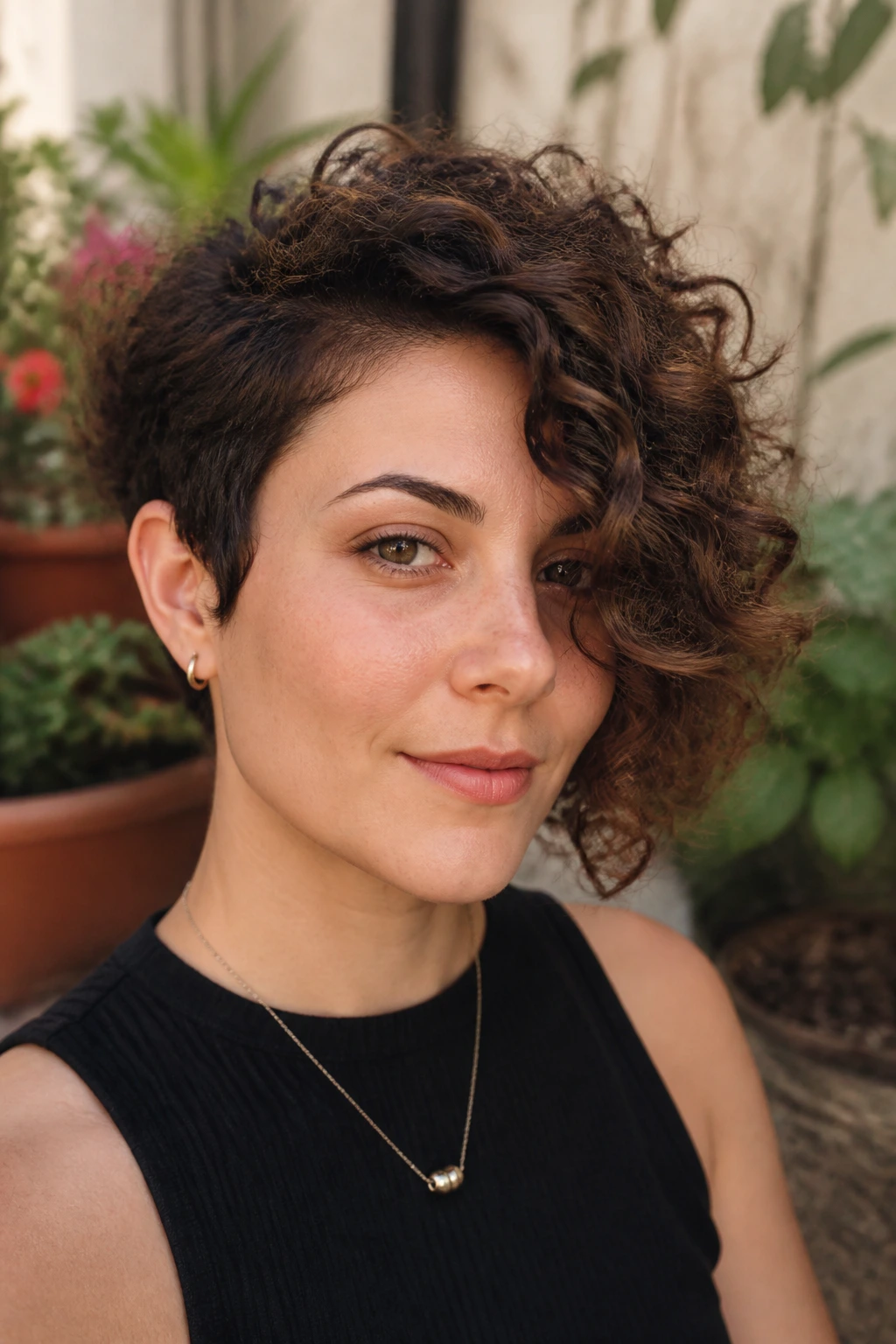
5. Curly Asymmetrical Crop
Curly hair can carry asymmetry beautifully, but only if the cut respects the curl pattern instead of fighting it. A curly asymmetrical crop usually sits above the jaw or just at it, with one side shaped a little longer so the curls fall in a deliberate slope. Done right, it looks sculpted. Done wrong, it looks like someone cut one side while the curls were wet and guessed.
Dry cutting is the move here. Curls shrink, sometimes a lot, and the real perimeter only shows once the hair is dry and in its natural state. Ask for the longer side to be measured by curl length, not by stretched length, or you’ll lose the line the second you diffuse.
Good sign: When the cut is right, the curls around the longer side will stack softly instead of puffing out like a triangle.
6. Long Asymmetrical Layers
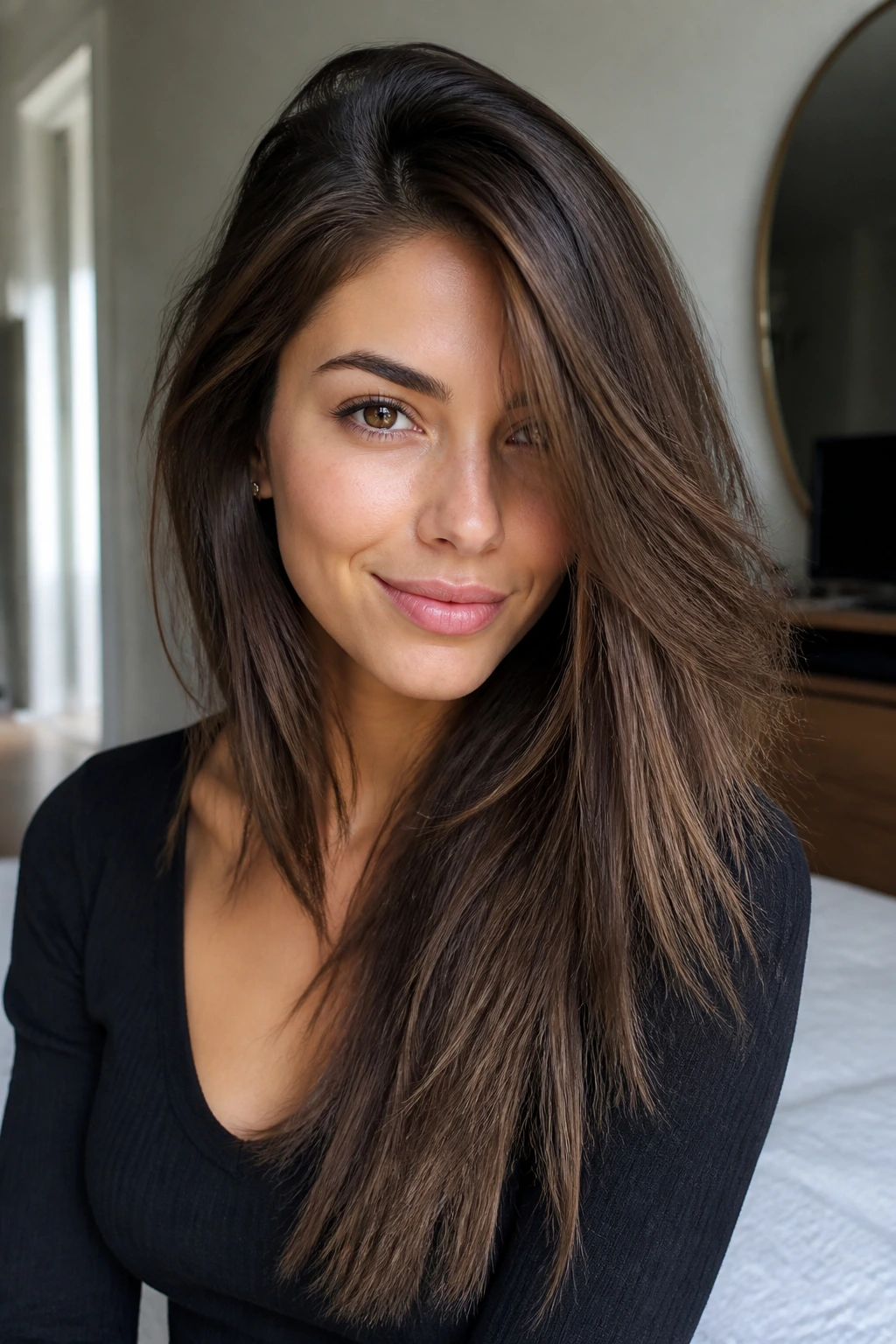
Not every asymmetrical haircut has to broadcast itself from across the room. Long asymmetrical layers are subtler: one front side is kept a little longer, then the rest of the hair falls in soft layers that guide the eye downward. The result is movement, not a harsh angle.
This cut is smart if you like length but want something more deliberate than “all one length and parted wherever.” It works on straight hair because the layers create direction. It works on waves because the front pieces can frame the face while the back keeps its length and weight.
Styling tip: A large round brush or a 1.25-inch curling iron can tuck the ends under on the shorter side and give the longer side a looser bend. Small change. Big difference.
7. Shaggy Asymmetrical Wolf Cut

The shaggy asymmetrical wolf cut is what happens when a shag refuses to behave. There’s texture up top, weight taken out through the mid-lengths, and one side left longer so the whole shape keeps shifting as you move. It has a little grit. That’s the point.
This cut loves medium to thick hair, especially if your hair naturally bends rather than falling poker-straight. The layers need room to separate, and the asymmetry helps the style look intentional instead of messy. If your stylist over-thins the ends, it can go stringy fast, so ask for controlled texture rather than aggressive razoring.
A little mousse at the roots and a dab of cream through the ends is usually enough. Do not drown it in oil. The cut already has enough movement on its own.
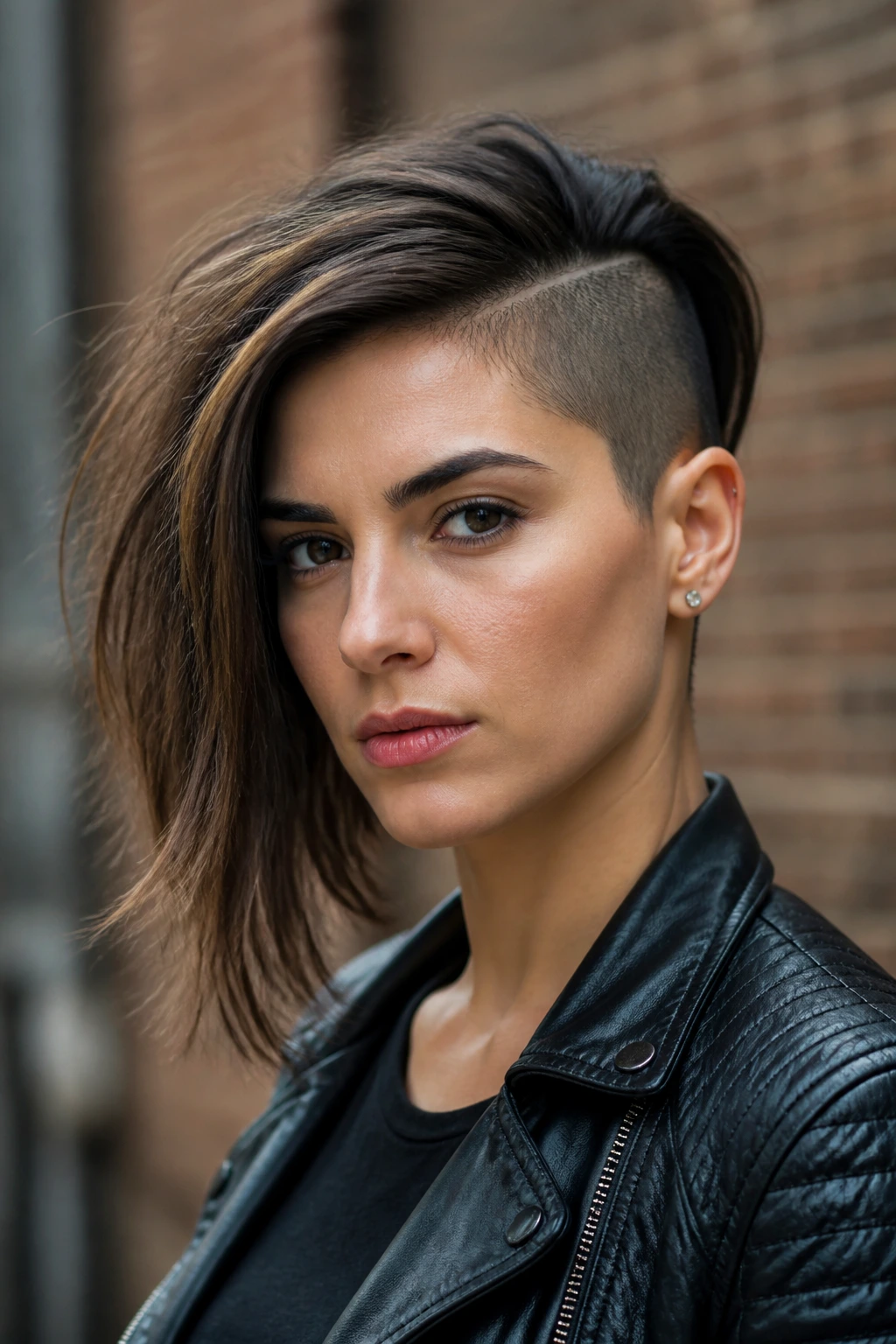
8. Undercut Asymmetrical Pixie
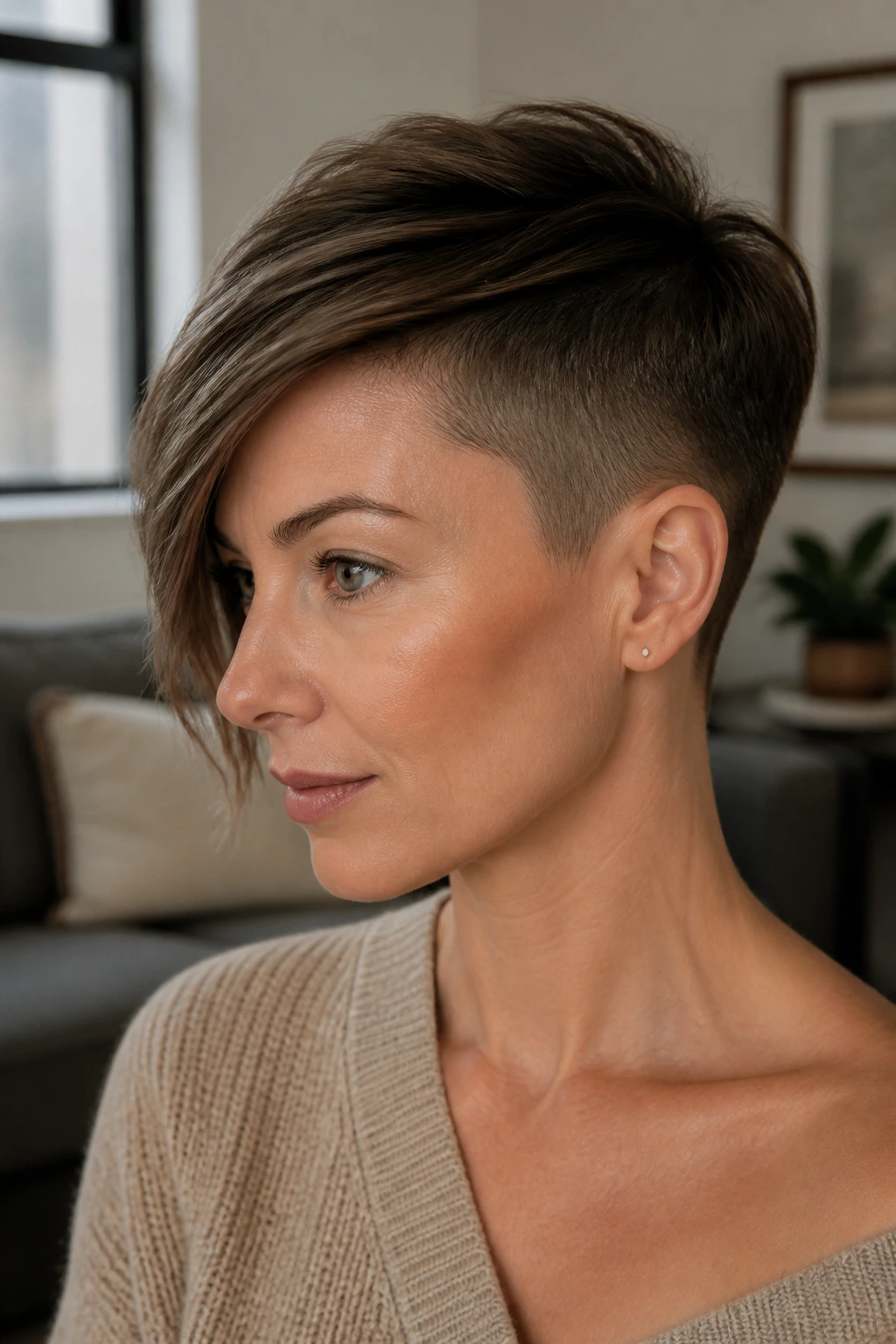
An undercut asymmetrical pixie is for the person who wants contrast you can actually see. One side may be clipped tighter at the temple or around the nape, while the top stays longer and sweeps across the head in a clean diagonal. The sharpness comes from that difference in density.
This is a smart choice for thick hair because the undercut removes bulk where it tends to balloon. It also lets the longer side lie flatter and look smoother, which helps if you want a polished finish instead of a fluffy one. Keep the undercut maintained every 3 to 5 weeks if you want the shape to stay crisp.
What to watch: If the top is left too heavy, the style can turn top-heavy fast. The balance matters more here than the actual length.
9. Wavy Collarbone Cut with One Longer Side
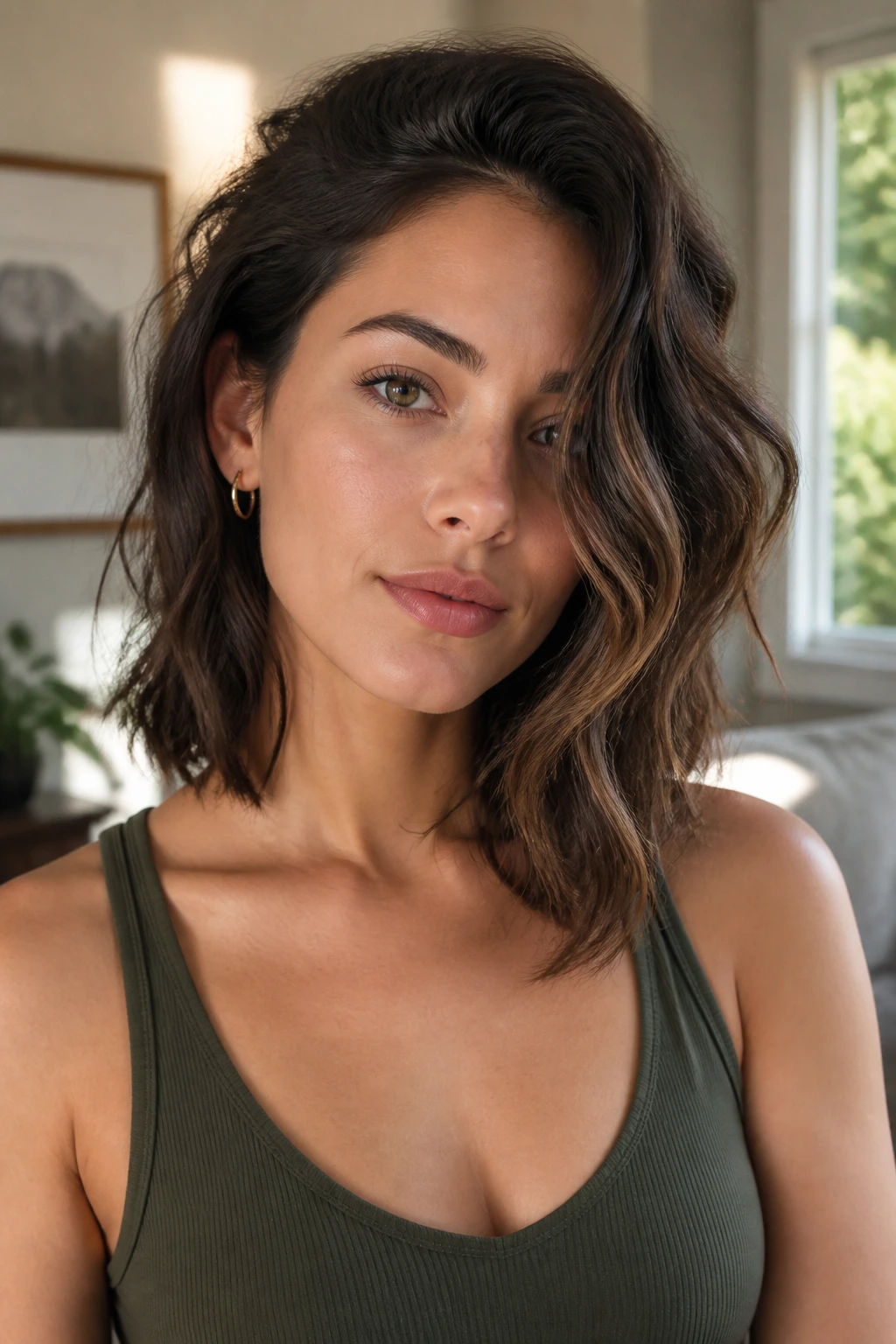
A wavy collarbone cut with one longer side has just enough asymmetry to feel modern without forcing the issue. The hair skims the collarbone, then one front piece drops lower and acts like a guide for the rest of the shape. It’s a good middle ground if you want to keep flexibility.
Waves make this cut better, not fussier. A side that falls a little lower catches the movement, so the haircut looks like it was designed for your hair rather than stamped onto it. A 1-inch curling iron or a few strategic bends with a straightener can make the longer side swing in a cleaner line.
I’d call this the easiest “starter” asymmetrical cut. It grows out with less drama than a pixie, but it still gives you that off-center energy that makes the whole look feel sharper.
10. Inverted Asymmetrical Bob with a Tapered Nape
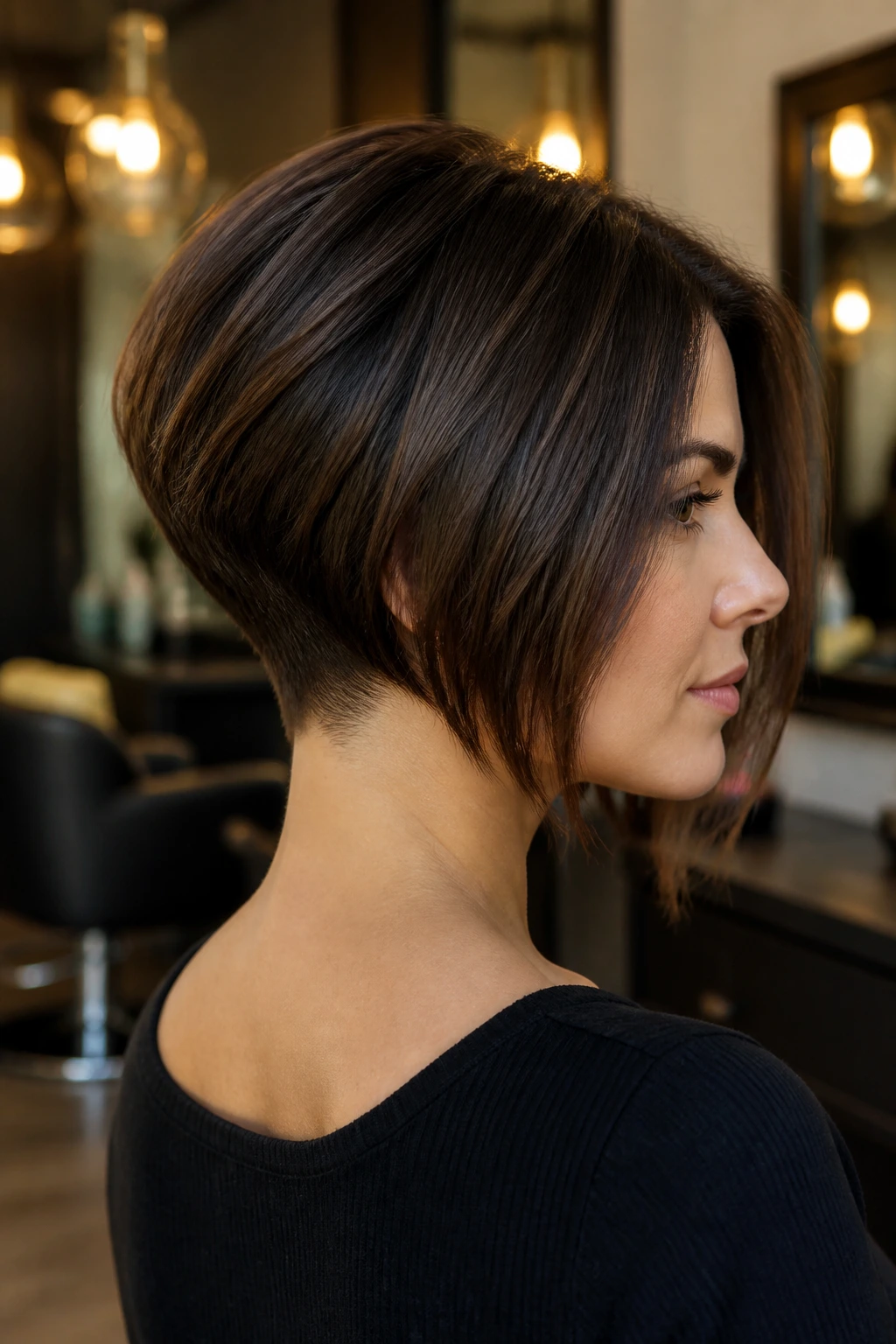
The inverted bob is already a strong shape; adding asymmetry makes it feel even more precise. The back sits shorter and hugs the nape, then the front angles down, with one side kept a touch longer so the line doesn’t feel too engineered. It has a neat, almost tailored quality.
The tapered nape is the part people underestimate. A clean neckline keeps the whole bob from puffing out at the base, which is especially useful on thicker hair. If you wear the style straight, the nape should lie close to the head. If you wear it wavy, the back still needs enough taper to keep the bulk under control.
Why the Nape Matters
A fuzzy neckline can ruin a strong shape in a week. A clean one lets the front angles do their job.
11. Asymmetrical Bixie
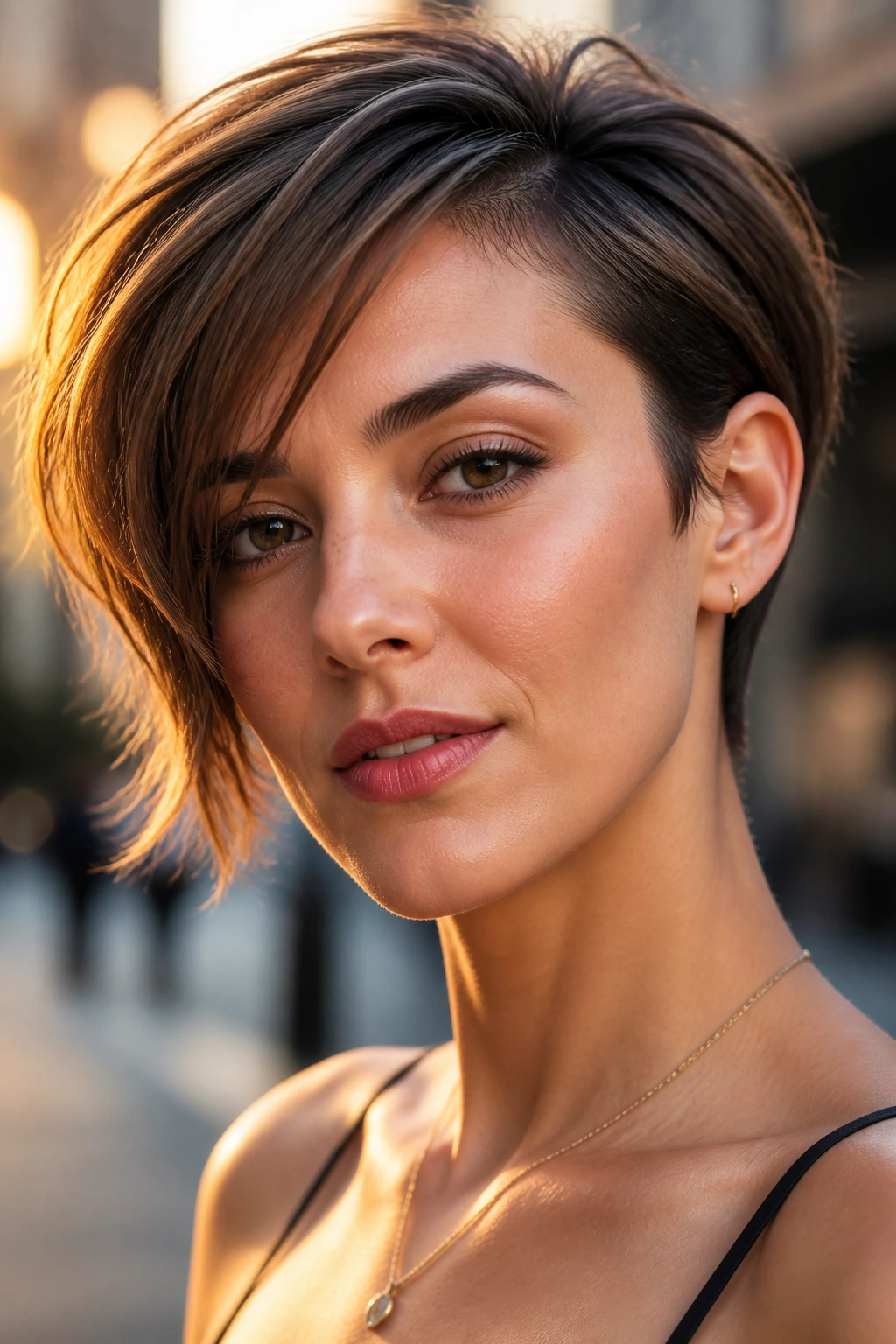
A bixie sits between a bob and a pixie, and the asymmetry gives it a little more attitude than the usual in-between cut. One side can tuck close to the ear while the longer front layer brushes the cheekbone. That mix keeps it soft enough for daily wear but short enough to feel decisive.
This is one of the easiest cuts to style if you like a rough-dried finish. A little root lift, a quick finger rake through damp hair, and maybe a touch of cream at the ends — done. The shape does most of the heavy lifting, which is handy on mornings when you are not in the mood to wrestle a round brush.
Best for: Anyone growing out a pixie who still wants the neck and cheekbones to stay visible. It bridges the gap without looking like a compromise.
12. Side-Swept Asymmetrical Crop
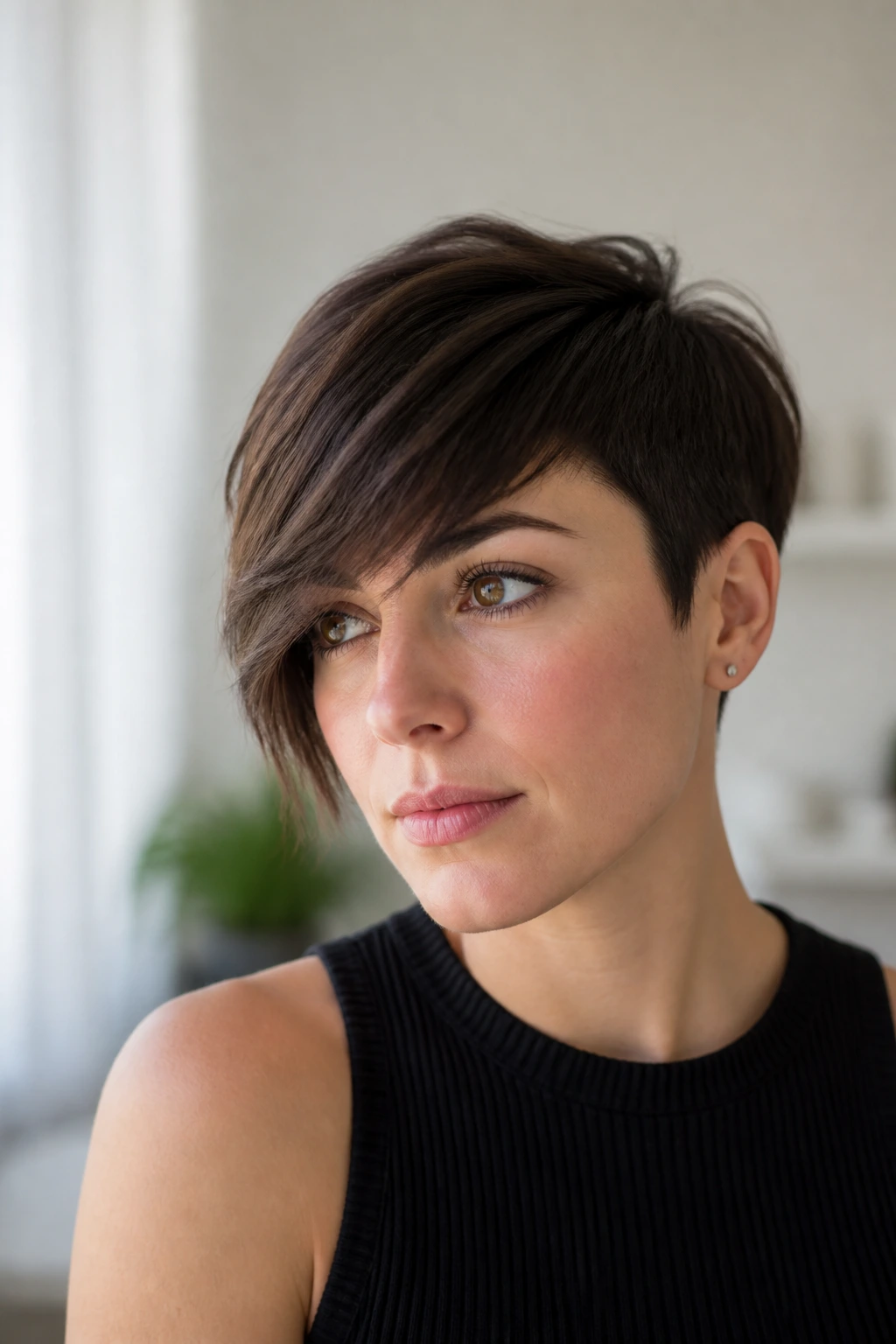
There’s a reason a side-swept crop can look so clean. The fringe does the work of redirecting the eye, and the asymmetry lives in the sweep rather than a huge length difference. One side sits closer to the temple, the other falls heavier across the forehead.
This cut suits straight or lightly wavy hair especially well, because the side-swept section needs to move as a single shape. If the hair is too heavily layered, the fringe breaks apart and the effect gets lost. Keep the texture controlled, and use a small brush or your fingers to push the top in the same direction every time you style it.
It’s a sharp look, but not severe. That matters.
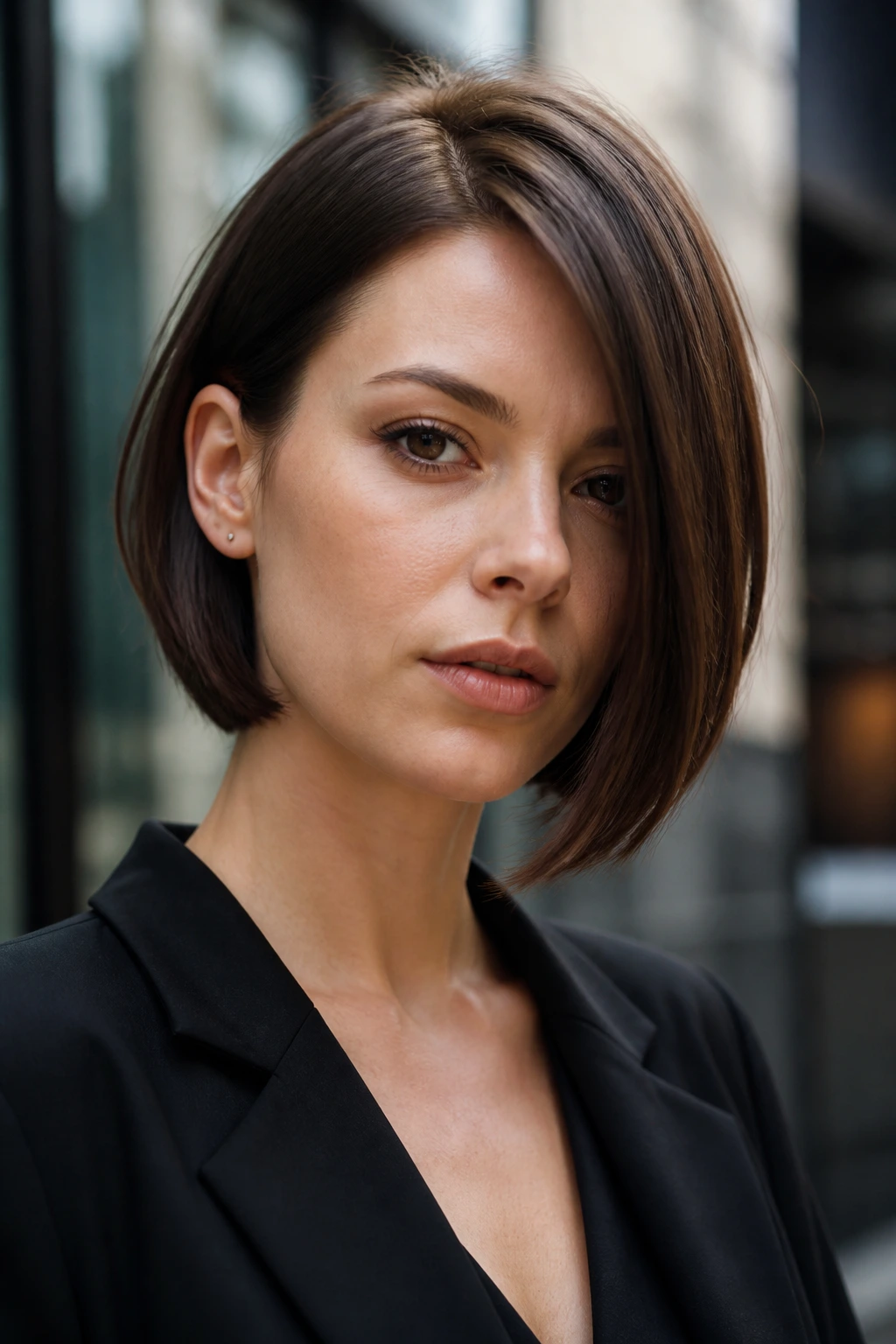
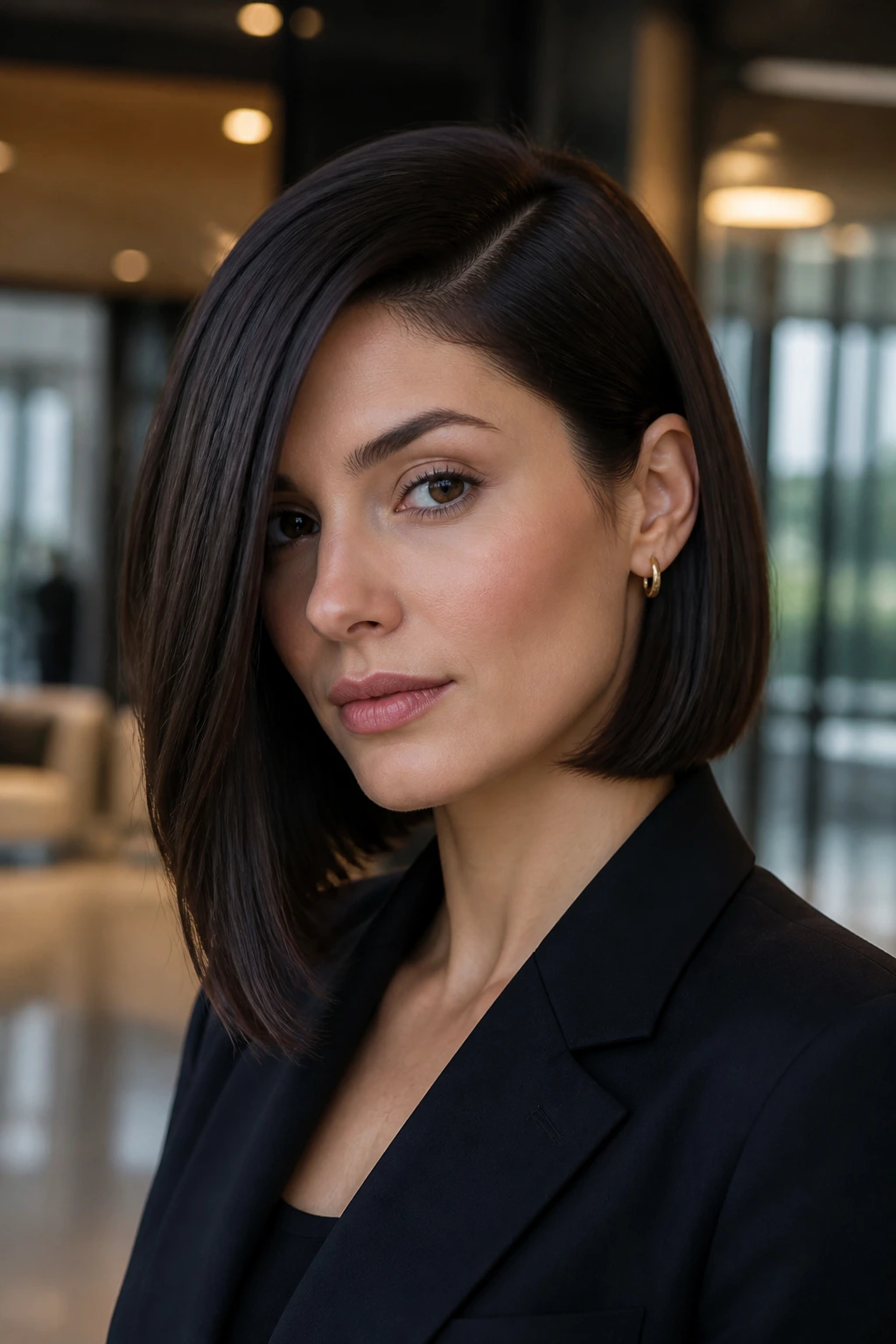
13. Blunt Asymmetrical Bob
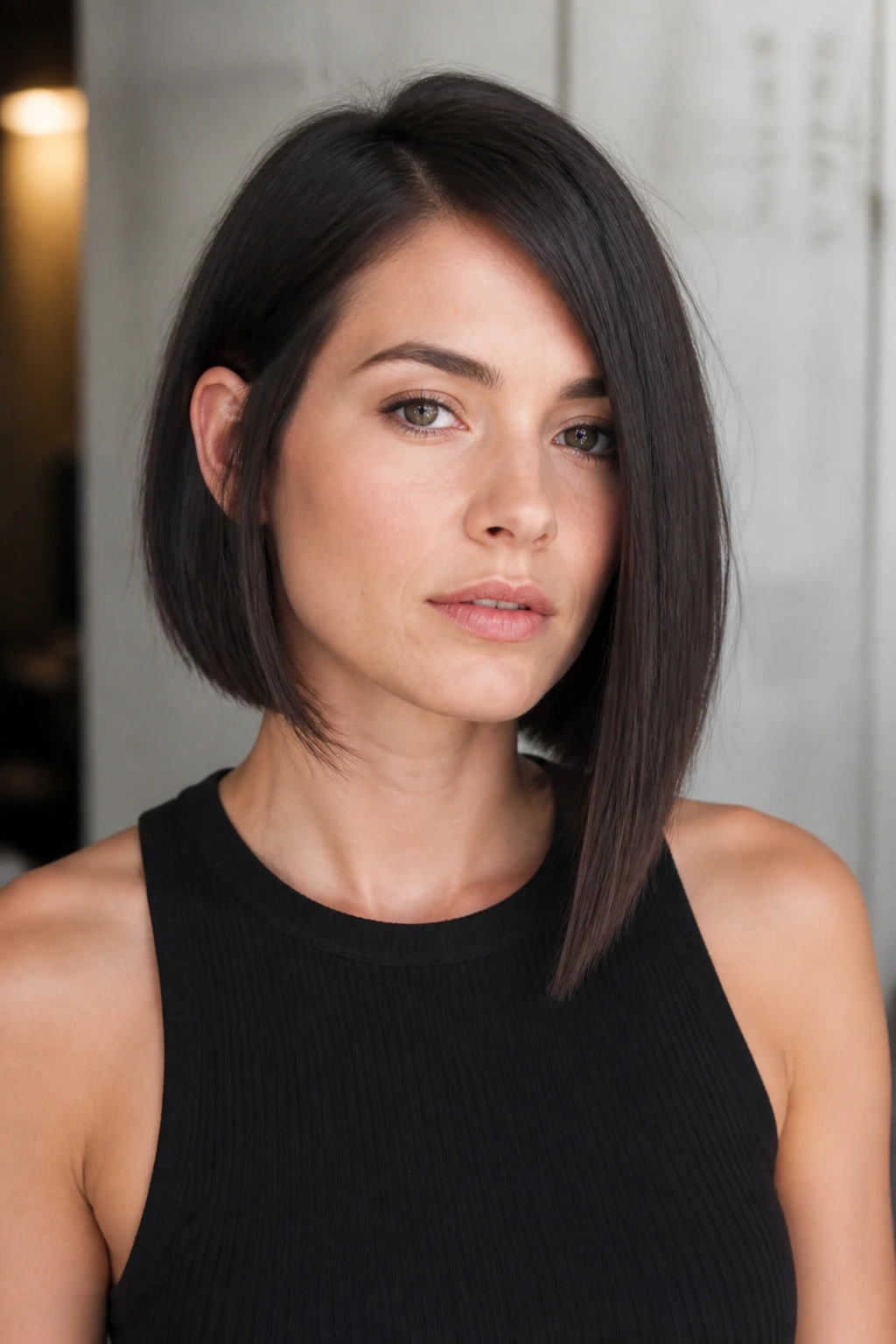
A blunt asymmetrical bob is one of my favorite contradictions in haircut form. The line is strong and even at the ends, but the two sides are not the same length, so the shape feels strict without becoming flat. That contrast is what gives it punch.
This cut is a gift for straight hair. A clean perimeter makes the difference between the sides look deliberate, not accidental. If your hair is dense, ask for the interior to be lightly debulked while the edge stays blunt; otherwise the bob can balloon at the ends and lose its clean outline.
Styling note: Keep the finish smooth. The blunt edge is the point here, and too much texture paste can muddy the line.
14. Asymmetrical Shag with Fringy Ends
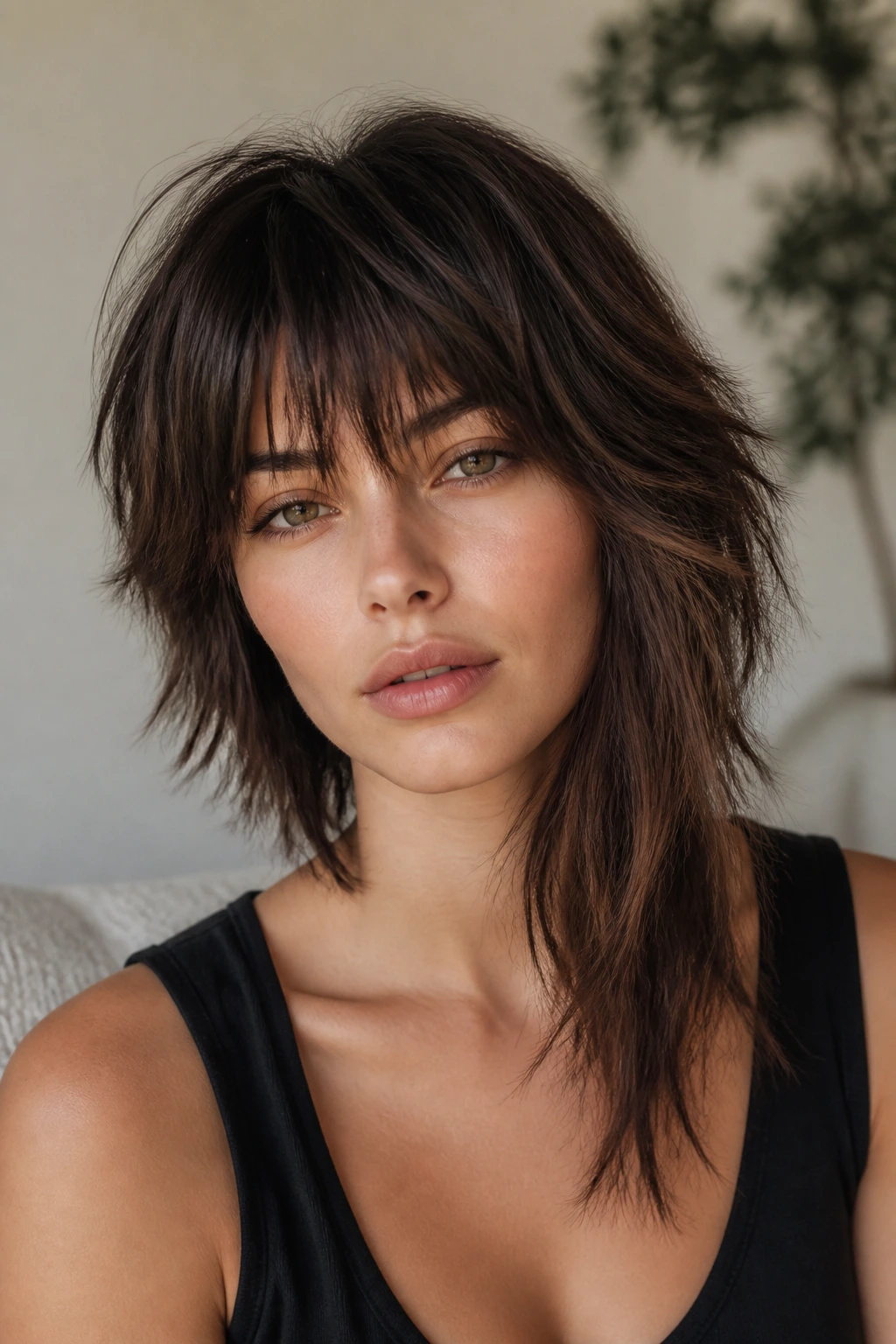
An asymmetrical shag with fringy ends brings movement to the face without losing shape. The layers are feathered, the ends are broken up, and one side falls longer so the haircut reads as directional instead of random. It’s softer than a wolf cut but less polite than a standard shag.
This is a strong option for medium-density hair that needs movement more than volume. The fringe should be light enough to skim the eyebrows, not sit like a heavy curtain. If the front gets too dense, the asymmetry disappears under all that hair.
A little salt spray or texture mist helps, but the cut should not depend on product to hold its story. If it does, the shape needs adjusting.
15. Razor-Cut Asymmetrical Lob

A razor-cut asymmetrical lob has a softer edge than a blunt one, which can be useful if you want the style to feel airy instead of severe. The razor takes some of the weight out of the perimeter, especially near the longer side, so the cut moves when you walk. It’s not fluffy. It just breathes.
This version is especially good on hair that tends to feel heavy at the shoulders. The razor keeps the ends from sitting like a shelf. On very frizz-prone hair, though, go carefully — too much razor work can make the ends split visually, and then the shape loses that clean line you wanted in the first place.
Where the Razor Helps
A light touch around the front gives the longer side a soft fall. That’s enough. You do not need every strand thinned out to get the effect.
16. Asymmetrical Pageboy
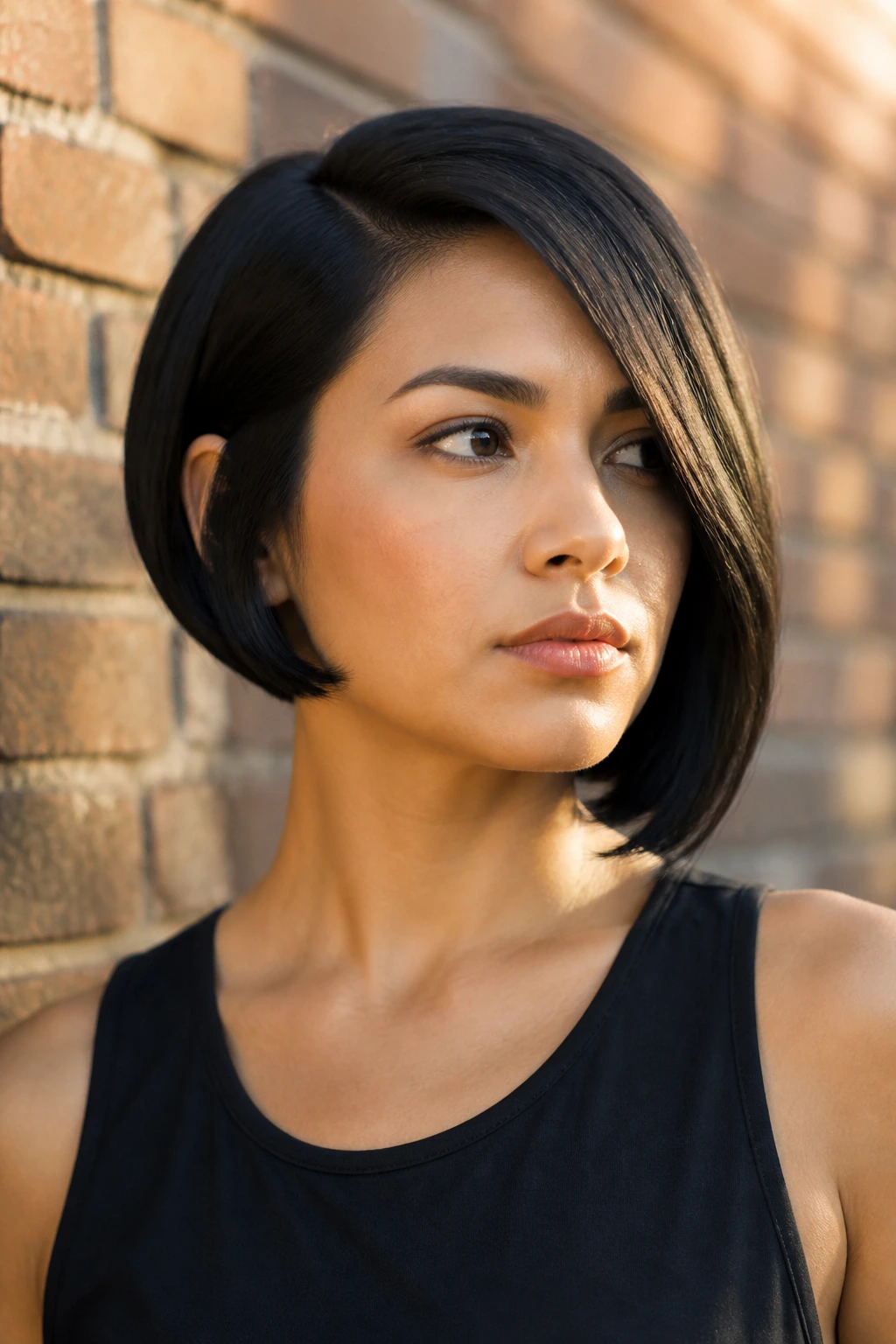
The pageboy is having a quiet comeback, and the asymmetrical version is the one that feels freshest. Think rounded shape, tucked-in ends, a bit of curve around the jaw, and one side left longer so the look doesn’t slide into costume territory. It has retro bones with a modern cut.
This works best on straight to lightly wavy hair, because the rounded silhouette depends on visible shape. A little smoothing cream and a round brush can keep the ends curled under. If your hair is very thick, ask for internal weight removal so the roundness stays controlled instead of bulky.
It’s a cut with opinions. That’s part of the charm.
17. Micro-Asymmetrical Bob
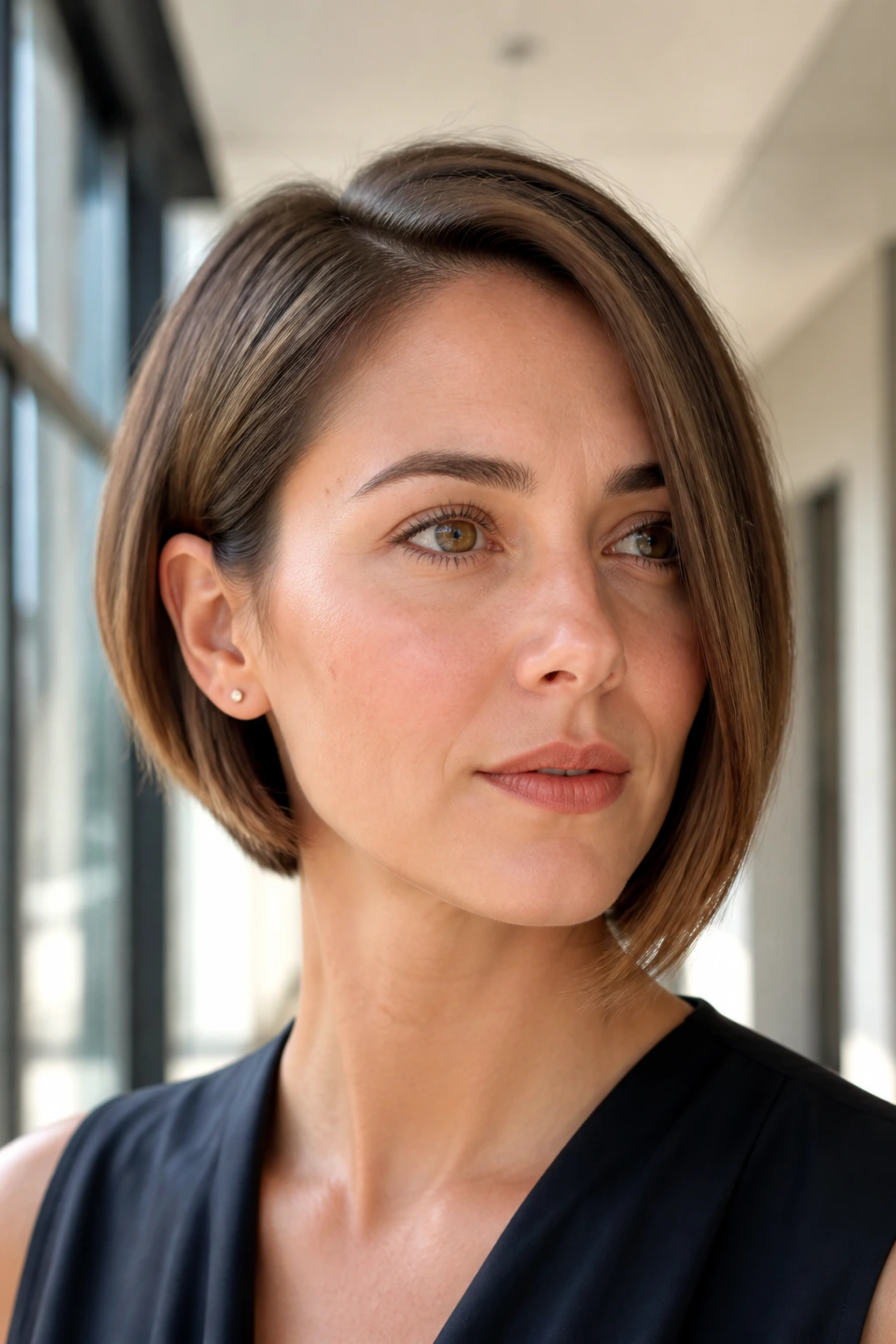
A micro-asymmetrical bob is the detail-oriented version of the bob family. The difference between sides is small — maybe just enough to be seen when you turn your head — but that small shift keeps the haircut from feeling too boxy. It’s subtle, polished, and useful if you want asymmetry without obvious drama.
Because the difference is small, the quality of the cut matters a lot. The ends need to be clean, the part needs to sit where you actually wear it, and the neckline should be tidy. If any of that is sloppy, the cut just looks off instead of intentional.
Best use: Office hair, sharp evening hair, or anyone who wants a modern line without explaining it to everybody in the room.
18. Asymmetrical Curly Lob
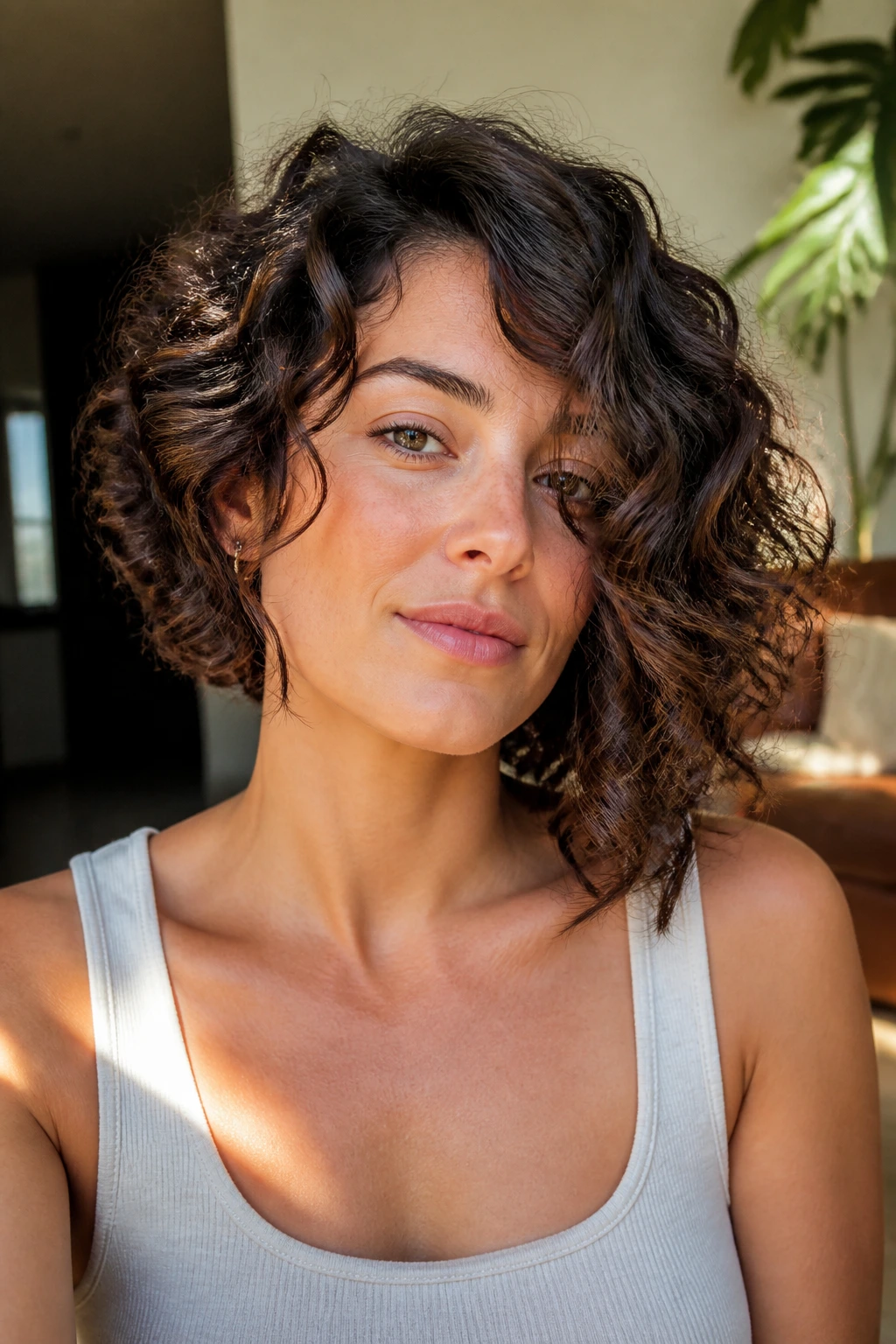
A curly lob with asymmetry has a lovely built-in swing to it. One side falls a little lower, the curls stack differently on each side, and the whole shape looks like it was designed around motion instead of fighting it. It’s flattering because it lets the curls breathe.
A curl-by-curl dry cut is the right way to do this. Wet curls lie. They shrink, spring, and change their mind. Ask for the longer side to be measured after the curls are dry, and keep the perimeter a touch longer than you think you need. That extra inch disappears fast once the hair dries.
If the curls are tight, the asymmetry can be more about silhouette than length. That’s fine. Sometimes the line is enough.
19. Tucked-Behind-One-Ear Bob

This cut is built for the way real people wear bobbed hair when they’re working, driving, or having coffee on the move. One side is shaped to tuck neatly behind the ear, while the other side stays fuller and longer, so the act of tucking becomes part of the design. Smart. Simple. Effective.
I like this one on hair that naturally wants to fall forward. The tucked side shows the jaw and ear, the longer side keeps the front from going too severe, and the result feels casual without losing the line. If your hair is slippery or very fine, ask for a slightly blunt edge so the tuck holds better.
It’s the kind of cut that looks better when it’s not overthought.
20. Asymmetrical Mullet
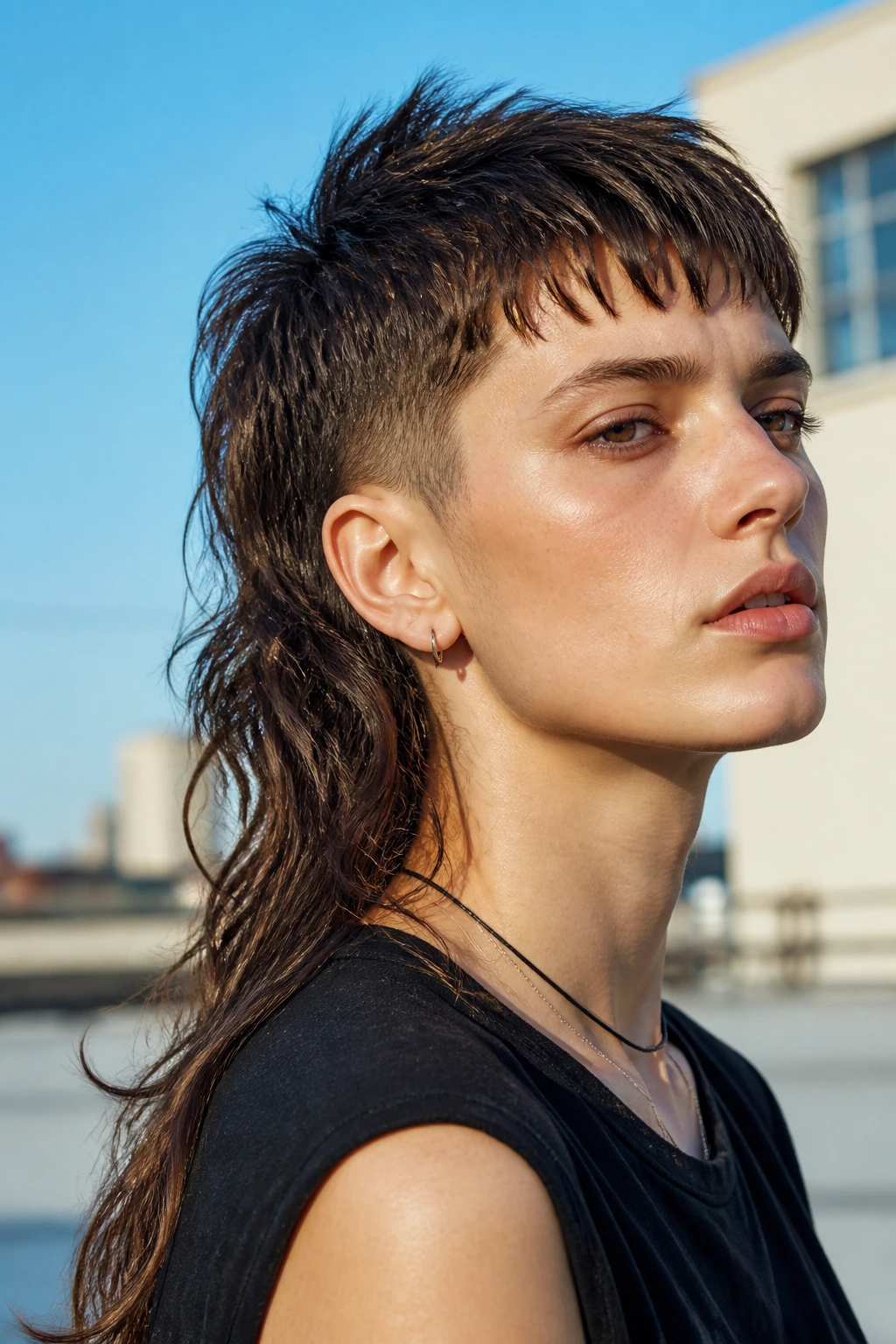
The asymmetrical mullet is the most unapologetic shape on this list, and that’s exactly why it works. The front stays short and directional, the back hangs longer, and one side is allowed to travel farther than the other. It has edge, but the edge is built into the cut, not piled on with styling.
This version suits people who want something sharper than a shag and less polite than a bob. It also gives thick hair room to move because the shorter front and crown remove weight where the hair tends to puff. If the transition from front to back is too abrupt, the cut can feel dated fast, so ask for a soft but visible connection through the sides.
Keep the Crown Controlled
Too much height up top makes this cut look messy. The crown should lift just enough to show the shape, not stand up and argue with it.
21. Feathered Asymmetrical Cut
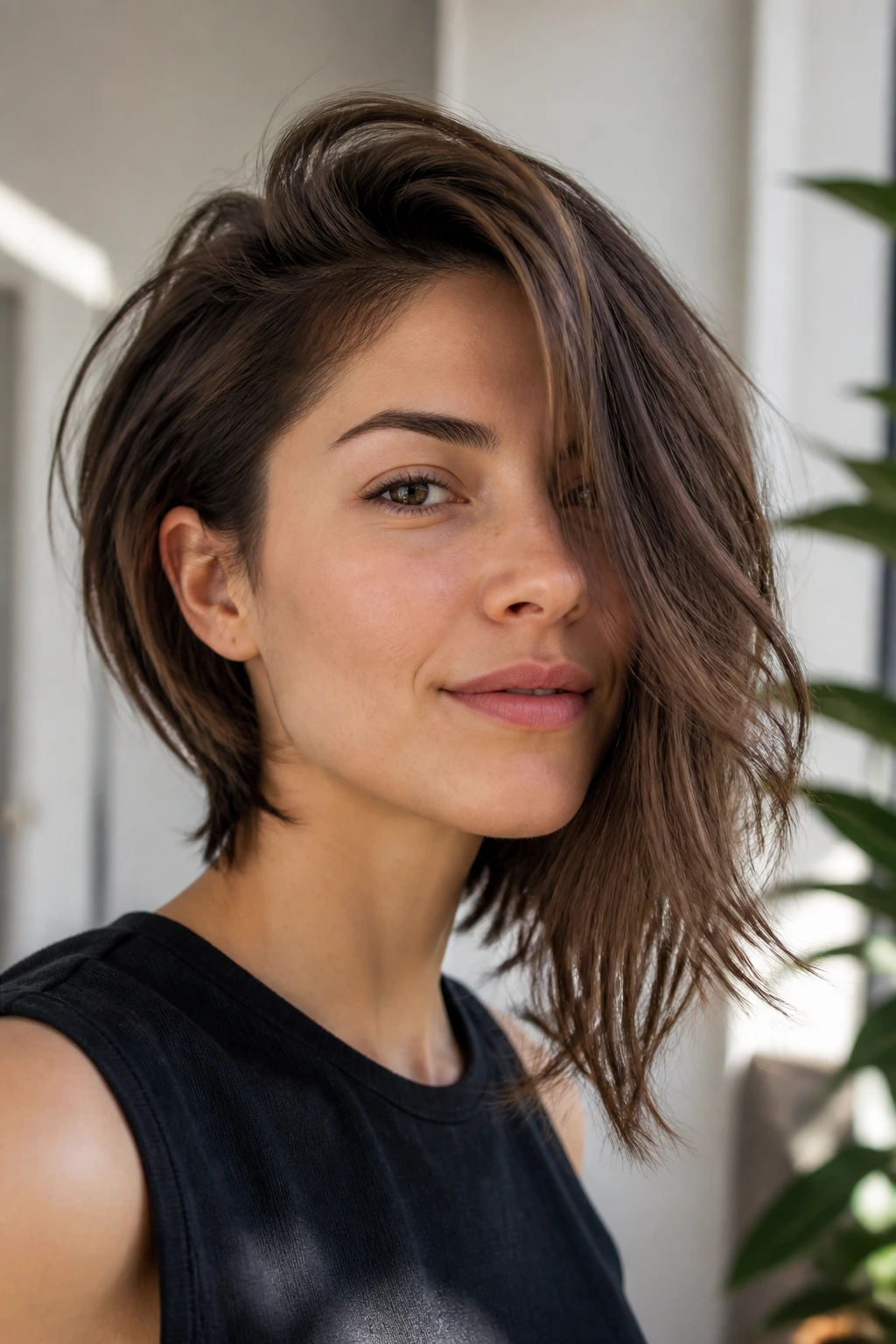
A feathered asymmetrical cut is softer than a blunt bob and lighter than a shag. The ends are feathered away from the face, one side sits a little longer, and the whole haircut moves with a kind of easy swing. It’s one of the few asymmetrical shapes that can look crisp and gentle at the same time.
This is a strong choice if you have medium to fine hair and want shape without heaviness. The feathering keeps the ends from stacking up, which helps the longer side feel fluid. A round brush and a low-heat blow-dry usually give it enough finish.
Styling note: Keep the product light. Feathering gets lost if you drown the hair in cream.
22. Dramatic Side-Length Pixie
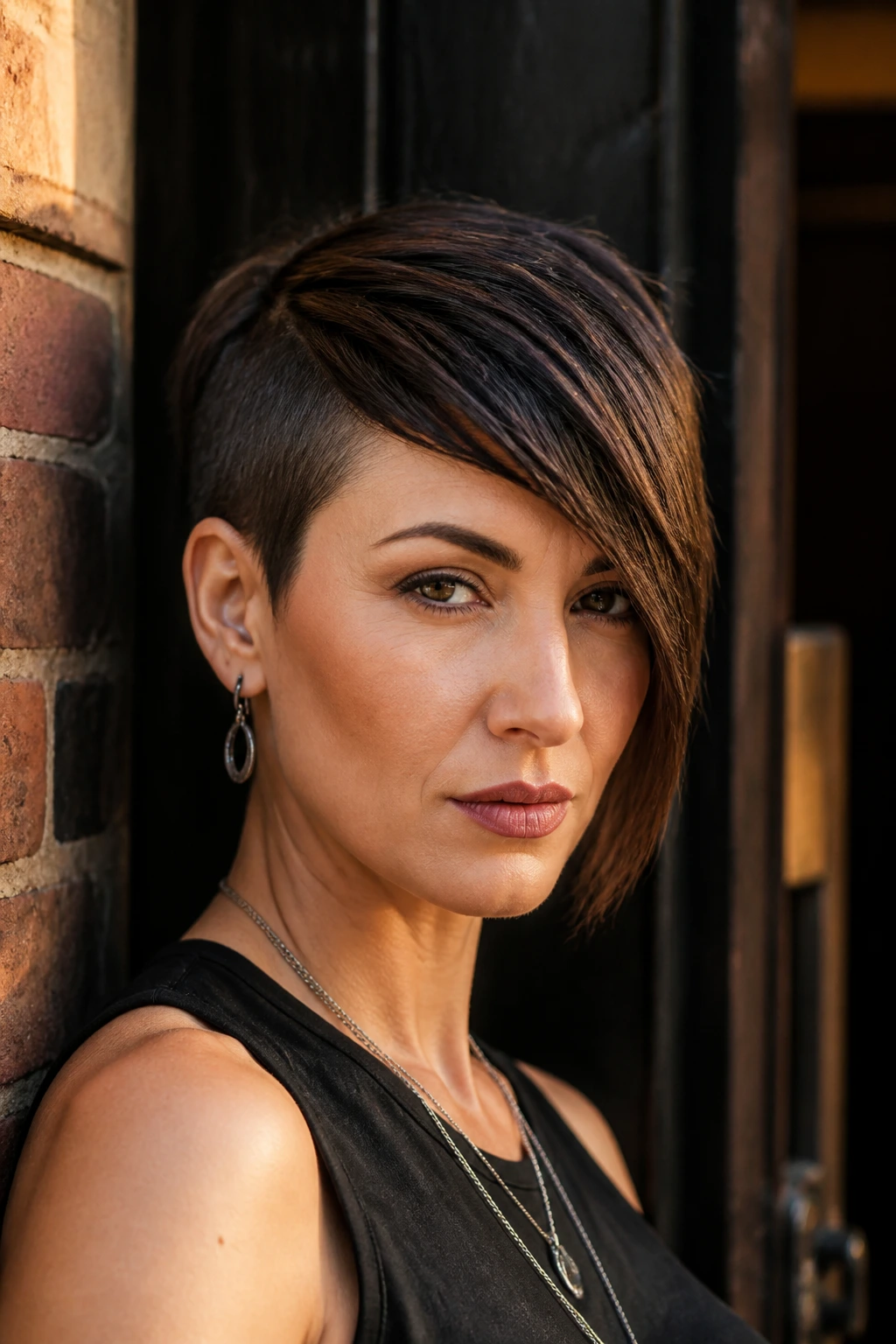
If you want a haircut that announces itself the second you tilt your head, this is the one. One side sits cropped close, sometimes around the temple or ear, while the other side keeps much more length and can sweep across the face almost like a fringe. The contrast is the whole point.
This cut needs confidence in the shape and discipline in the styling. The short side should stay neat, the long side should remain touchable, and the top should connect the two without looking pieced together. It works well on straight hair and on hair with a little bend, but it needs a stylist who is comfortable building a visible line.
It’s not subtle. That’s the appeal.
23. Asymmetrical Cut with Curtain Bangs

Curtain bangs can soften a sharp asymmetrical haircut in a way that feels smart rather than sweet. The bangs split at the center or just off center, then the sides of the cut carry different lengths beneath them. You get movement at the face and a clear line under it.
This works nicely on medium-length hair because the bangs create a bridge between both sides of the cut. If the fringe is too short, it can fight the asymmetry instead of supporting it. Keep the curtain section long enough to sweep into the cheekbones, then let the longer side of the haircut continue that line down toward the jaw or collarbone.
A blow-dry brush helps here. The fringe needs direction, not random fluff.
24. Sleek Collarbone Flip Cut
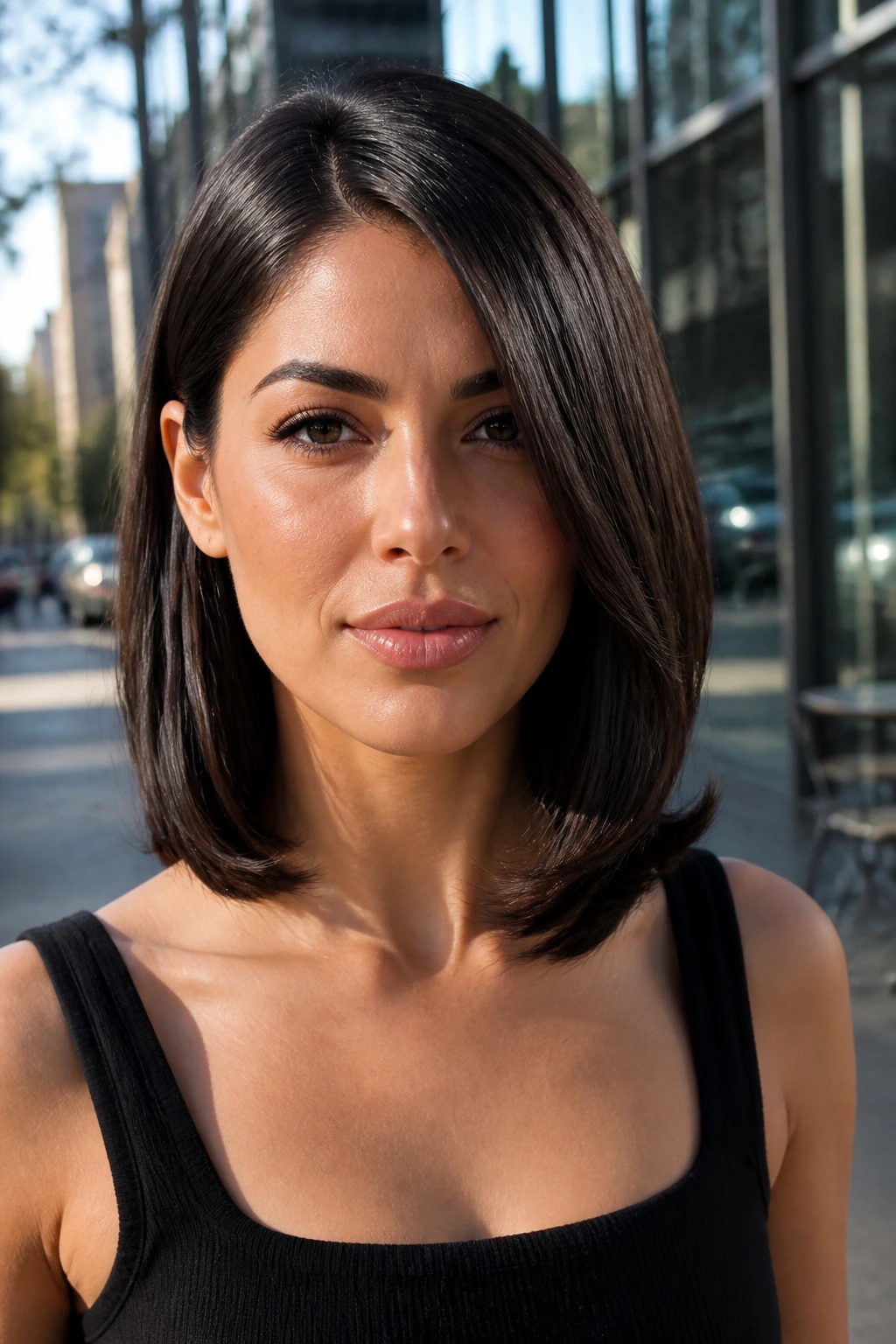
A sleek collarbone flip cut is all about a long, polished line with one side carrying a little more length and the ends turning outward or inward depending on the mood. The collarbone length gives you flexibility, and the asymmetry keeps it from feeling like a plain grow-out trim. It’s tidy, but not boring.
This cut likes shine. A heat protectant, a smooth blowout, and a subtle flip at the ends are enough. If the hair is very straight, the asymmetry shows as a gentle shift in the silhouette. If the hair is wavy, the ends need to be trained a bit or the shape can blur.
Best for: Anyone who wants a sharp finish without going short enough to lose a ponytail.
25. Asymmetrical Tapered Afro
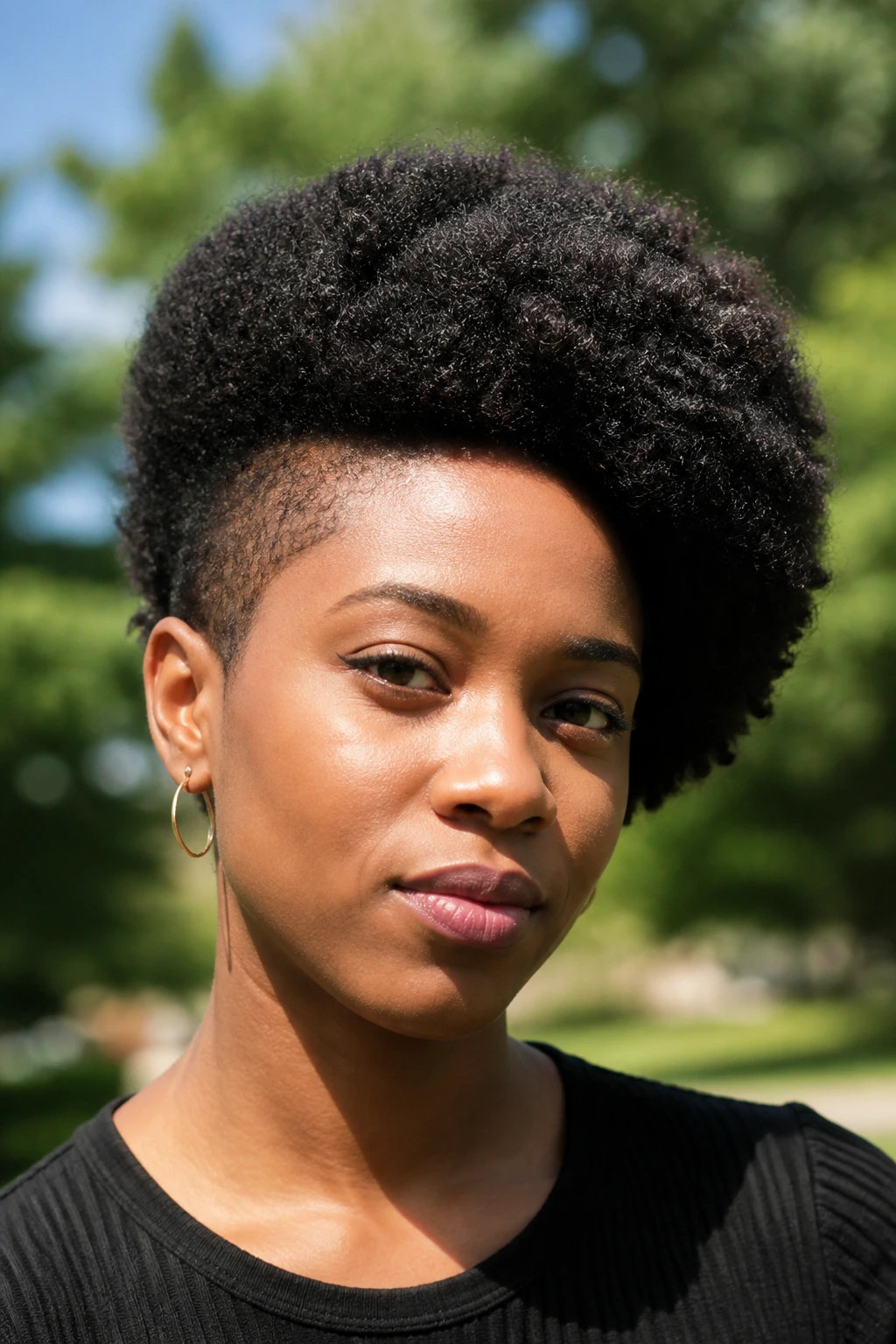
A tapered afro with asymmetry can look incredibly clean when the shape is handled with care. One side is left a touch fuller or longer, the crown is shaped to keep height under control, and the nape is tapered so the silhouette stays neat. It’s not about forcing the curl pattern into something else. It’s about drawing a smarter outline around it.
This cut works best when it’s shaped dry or close to dry, because shrinkage changes everything. The asymmetry should be measured in the finished form, not in stretched hair. If the texture is dense, ask for weight to be removed carefully from the interior so the shape stays rounded instead of boxy.
Shape It on Dry Hair
That one step saves a lot of guesswork. Coils tell the truth only when they’re in their natural state.
How Asymmetry Changes the Silhouette

The reason asymmetrical haircuts read so modern is simple: they break the expected balance without destroying the line. A straight bob can be tidy, but an asymmetrical bob gives the eye a direction to follow. That little imbalance is enough to make the cut feel considered.
The best asymmetry also works with gravity. Hair on the longer side falls a little differently from hair on the shorter side, which changes how light hits the surface and how the jawline shows through. On dense hair, the imbalance can remove heaviness from the wrong place. On fine hair, it can create the illusion of more body because the shape is not trying to be perfectly even.
A lot of people ask for asymmetry and picture a huge dramatic slant. Sometimes that’s right. More often, the smartest move is a small shift in length paired with a clean neckline or a precise part. Subtle asymmetry can be the sharpest of all.
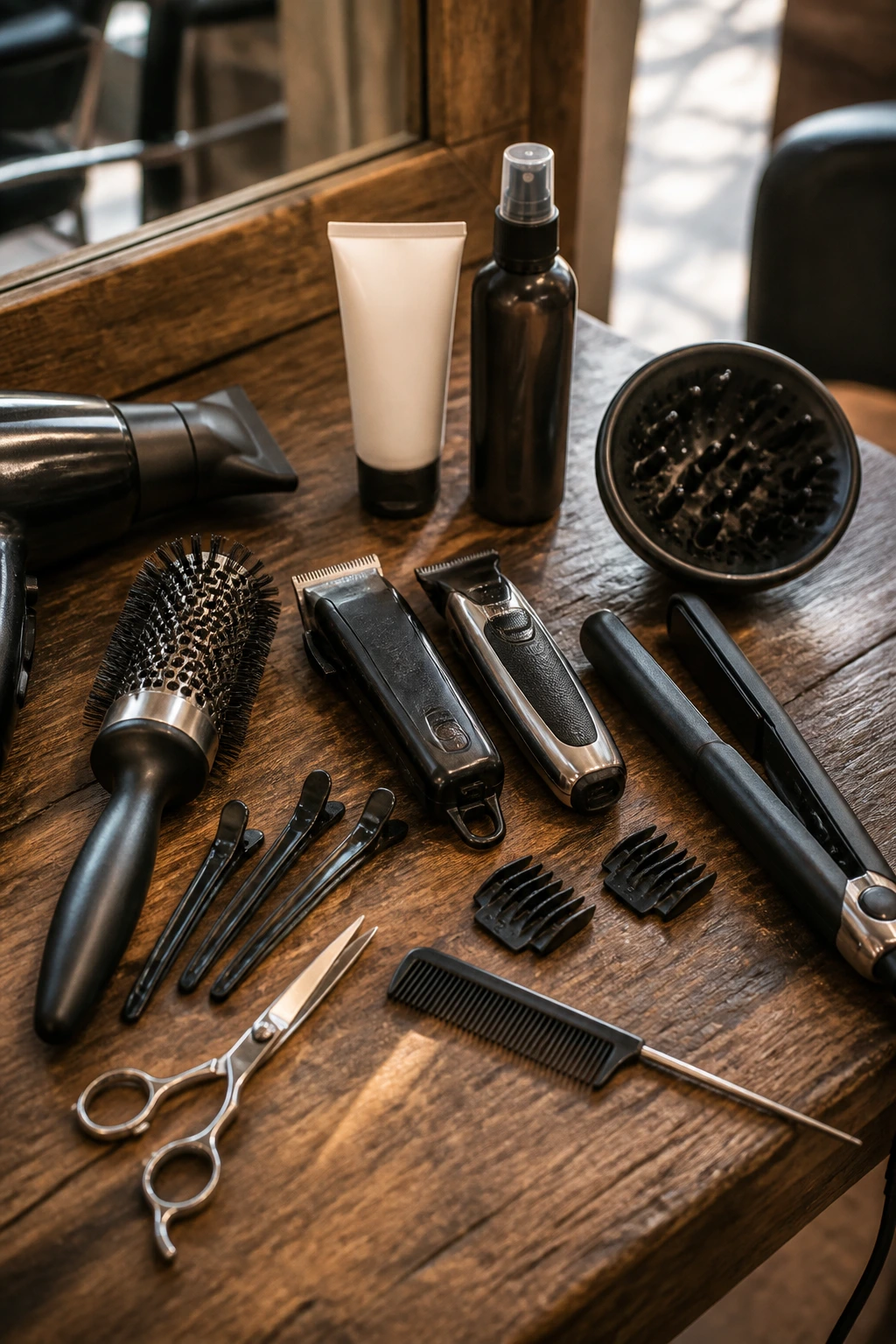
Essential Equipment for These Cuts
-
Sharp haircutting shears: Regular scissors crush the ends and make the line fuzzy.
-
Texturizing shears: Useful on thick hair, but they should be used with restraint; too much thinning makes the shape collapse.
-
Clippers with guards: Necessary for undercuts, tight napes, and any cropped side that needs a clean edge.
-
Tail comb: The fine point helps create clean parts and section hair accurately before cutting or styling.
-
Sectioning clips: Keep the short side and long side separate while you blow-dry or style.
-
Blow dryer with nozzle: Direct airflow matters when you’re trying to keep one side sleeker than the other.
-
Round brush, 1.5 to 2.5 inches: Best for bob and lob lengths that need bend and polish.
-
Flat iron or hot brush: Handy for smoothing the longer side or giving the ends a subtle curve.
-
Diffuser: A must for curly and coily versions where you want the shape to dry in place.
-
Lightweight styling cream or paste: Gives pixies and crops separation without turning them stiff.
-
Heat protectant spray: Non-negotiable if you’re using hot tools on the longer side to keep the line clean.
How to Choose the Right Asymmetrical Cut for Your Hair Texture

Fine Hair: Keep the perimeter blunt and the asymmetry modest. A micro-asymmetrical bob, a stacked bob, or a textured pixie gives fine strands a cleaner look than heavy layering does.
Thick Hair: Go for controlled removal of weight — undercuts, tapered napes, inverted bobs, or razor-softened lobs. Thick hair can carry drama, but it needs room to move or the style turns bulky.
Wavy Hair: Waves are natural allies here. A collarbone cut, a deep-side-part lob, or a soft shag lets the asymmetry show without needing perfect heat styling every day.
Curly Hair: Shape by curl pattern, not by wet length. Longer front pieces, dry cutting, and thoughtful shrinkage planning matter more than a precise ruler measurement.
Coily Hair: Build the outline first, then fine-tune the asymmetry on dry hair. A tapered afro or cropped coil shape often looks sharpest when the longer side is left a bit longer than feels safe during the consultation — shrinkage eats length fast.
Cowlicks and strong growth patterns: Put the shorter side where your hair naturally wants to sit flatter. Fighting a stubborn bend every morning gets old. Fast.
How to Style These Haircuts Day to Day
Polished Finish: Blow-dry with a nozzle, direct the shorter side close to the head, and use a round brush or flat brush to bend the longer side under slightly. A drop of serum at the ends keeps the line shiny without making it greasy.
Air-Dry Finish: Work a light mousse or curl cream through damp hair, then move the longer side into place with your fingers. This is the easiest route for wavy and curly cuts, because forcing too much polish can flatten the personality out of the shape.
Texture and Separation: A small amount of matte paste at the ends of a pixie or crop gives the shorter side structure. Rub it between your palms first. Cold, sticky product will clump the hair if you drop it straight on.
Parting and Accessories: A deep side part exaggerates asymmetry, while a soft off-center part keeps it subtle. A single tuck behind one ear, a slim barrette, or a clean clip on the shorter side can sharpen the shape fast.
Maintenance, Grow-Out, and Trim Timing
The tighter the asymmetry, the faster it shows growth. A pixie or undercut with a hard line usually needs a trim every 3 to 5 weeks if you want the shape to stay crisp. Bobs and bixies can stretch to 5 to 8 weeks. Lobs and longer layers often hold their shape for 8 to 12 weeks, especially if the difference between sides is subtle.
Hair grows about half an inch a month, and that matters more than people think. A tiny bit of growth barely affects a lob, but it can change a pixie from sharp to fuzzy in a blink. If the neckline goes soft, the whole cut loses definition first at the nape, then around the ears.
Between appointments, keep the style tidy with dry shampoo at the roots, a quick mist of water on the longer side, or a small pass with a flat iron or round brush. Curly and coily cuts usually need less frequent “correction” and more moisture refreshes — leave-in conditioner, a little water, a small amount of cream. The shape should be maintained, not attacked.
Variations and Adaptations to Try
Soft Asymmetry: Keep the difference between sides under an inch for a quieter shape. This is the version to choose if you want the modern line without the obvious drama.
High-Contrast Undercut: Leave one side close-cropped and the other significantly longer. It gives thick hair room to breathe and makes the asymmetry impossible to miss.
Curly Curve: Shape the cut around your curl pattern instead of forcing a ruler-straight perimeter. The line will look softer, but the silhouette can still be sharp.
Glass-Sleek Finish: Style the cut pin-straight with a heat protectant, flat iron, and a touch of shine cream. This is the version that makes blunt asymmetry look almost graphic.
Grow-Out Lob: Start with collarbone length and only a small difference between sides. It buys you more time between salon visits and still keeps the shape moving.
Common Mistakes to Avoid
-
Going too extreme on the first cut: If one side is chopped way shorter before you know how your hair moves, the result can feel off-balance instead of sharp. Start smaller; you can always take more length away later.
-
Ignoring the way your hair parts naturally: A cut that fights a strong cowlick or hard part will need daily work. Ask for the asymmetry to support your growth pattern, not battle it.
-
Over-thinning curly or fine hair: Too much texturizing makes the ends see-through and frizzy. Keep the perimeter clean and let the shape do the work.
-
Styling both sides the same way: The longer side usually needs more movement, while the shorter side may need to lie flatter. If both sides get the same brush-out, the haircut can lose its point.
-
Skipping nape maintenance on short cuts: A fuzzy neck makes even a good pixie look tired. Clean it up on schedule.
Frequently Asked Questions
What face shapes suit asymmetrical haircuts best?
Almost any face shape can wear one, but the placement matters. Round faces often look good with longer front pieces that stretch the silhouette, while square faces usually benefit from softer edges around the jaw. Heart-shaped faces do well with fullness lower down, near the chin or collarbone.
Are asymmetrical haircuts hard to grow out?
Not if the imbalance is modest. A subtle asymmetrical bob or lob grows out almost like a regular cut, while a dramatic pixie or undercut needs more planning because the shorter side reaches the awkward stage faster.
Do asymmetrical haircuts work on curly hair?
Yes, and they can look especially good on curls because the asymmetry shows up in motion. The key is cutting with the hair in its natural state so shrinkage does not erase the line.
How do I ask my stylist for one without sounding vague?
Use landmarks. Say where you want the shortest side to land — ear, jaw, chin, nape, collarbone — and where the longest side should finish. A sentence like “keep one side at the jaw and let the other touch the collarbone” is much easier to work from than “make it uneven.”
Will an asymmetrical cut make fine hair look thinner?
Not if the edges are kept blunt and the layering is controlled. Fine hair usually looks fuller when the perimeter is solid and the difference between sides is modest, not carved into a lot of wispy pieces.
Can I style one of these cuts without heat?
Yes, especially the pixies, crops, and wavy lobs. Use a lightweight cream or mousse, part the hair while it’s damp, and let the longer side fall where it wants to. The cut itself should carry the shape.
How often should I trim a sharp asymmetrical bob?
About every 5 to 7 weeks if you want it to stay crisp. If the difference between the two sides is very small, you can stretch a little longer. Once the line starts softening at the nape, it’s time.
Is a side shave necessary for a bold asymmetrical look?
No. A side shave gives you contrast fast, but a strong asymmetrical bob, pixie, or lob can read just as sharp without losing so much hair. Sometimes the cleanest version is the one that keeps most of the length and lets the shape do the talking.
The Shape That Holds
The best asymmetrical haircuts are not the ones that look rebellious for one day and then collapse into a grown-out mess. They’re the ones that keep their line when you’re running late, when the wind hits, when you tuck one side behind your ear and forget about it. That’s the real test.
A small shift in length can change the whole mood of a haircut. A little more at the front, a tighter nape, a deeper part — suddenly the shape feels sharper, lighter, more deliberate. And that’s the part people keep coming back for.
If you choose the cut that matches your texture and your maintenance habits, the asymmetry does half the styling for you. The rest is just keeping the outline clean enough that the shape can keep doing its job.
