



A flat brunette can look oddly heavy the minute the light changes. Spring sun shows everything — the warmth you meant to keep, the brass you did not ask for, the hard line of a root that looked fine indoors and suddenly feels blunt outside. That’s why the best spring brown hair color ideas are never one-note. They move. They soften at the crown, brighten around the face, and keep enough depth at the ends so the hair still feels like brown hair, not a halfway-bleached experiment.
That balance matters more than people think. Brown is the easiest color to ruin with overcorrection. Push it too warm and it can slide orange. Push it too cool and it can go khaki or muddy. The sweet spot lives in the middle: chestnut, mushroom, caramel, mocha, beige, amber, walnut. Each one catches light in a different way, and each one behaves differently on a level 4 brunette than it does on a level 6 or 7 base.
These spring brown hair color ideas are chosen for that exact reason. Some are low-maintenance and only need a gloss. Some rely on ribboned balayage. Some are soft enough to grow out for months. All of them have a reason to exist beyond a pretty photo. The right brown should look good when you turn your head at a window, not only under salon lights, and that’s where the interesting choices begin.
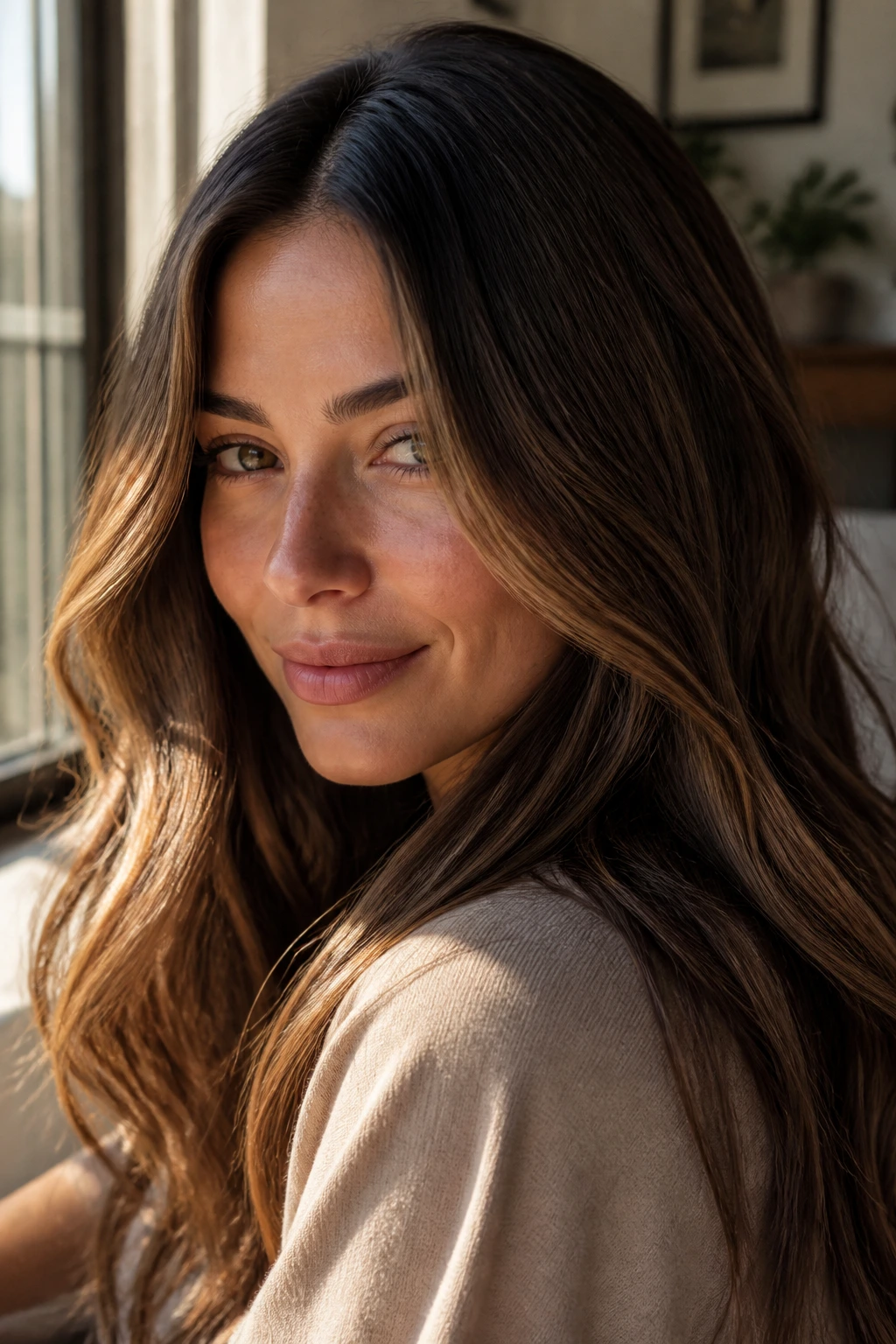
Why These Brown Shades Feel Fresh Instead of Flat
-
They keep depth at the roots: A little shadow at the scalp makes the color look richer and buys you extra weeks before the grow-out line starts shouting.
-
They use light where it counts: Face-framing ribbons, mids, and ends get brightness first, which keeps the shade lively without turning the whole head blonde.
-
They work with spring light: Cooler beige browns, soft caramel, and muted amber all behave better in bright daylight than a dense, single-process brunette.
-
They give you options on upkeep: Some of these shades only need a gloss every 4 to 6 weeks. Others can stretch longer if you like a lived-in grow-out.
-
They suit real brunette hair: A lot of color ideas look nice on a chart and awkward on actual brown hair. These ones are built around brunette depth, not against it.
-
They photograph the way they live: The goal here is not a filter. It’s hair that shows movement when the wind hits it and does not go dead the second you step indoors.
1. Mushroom Brown Melt
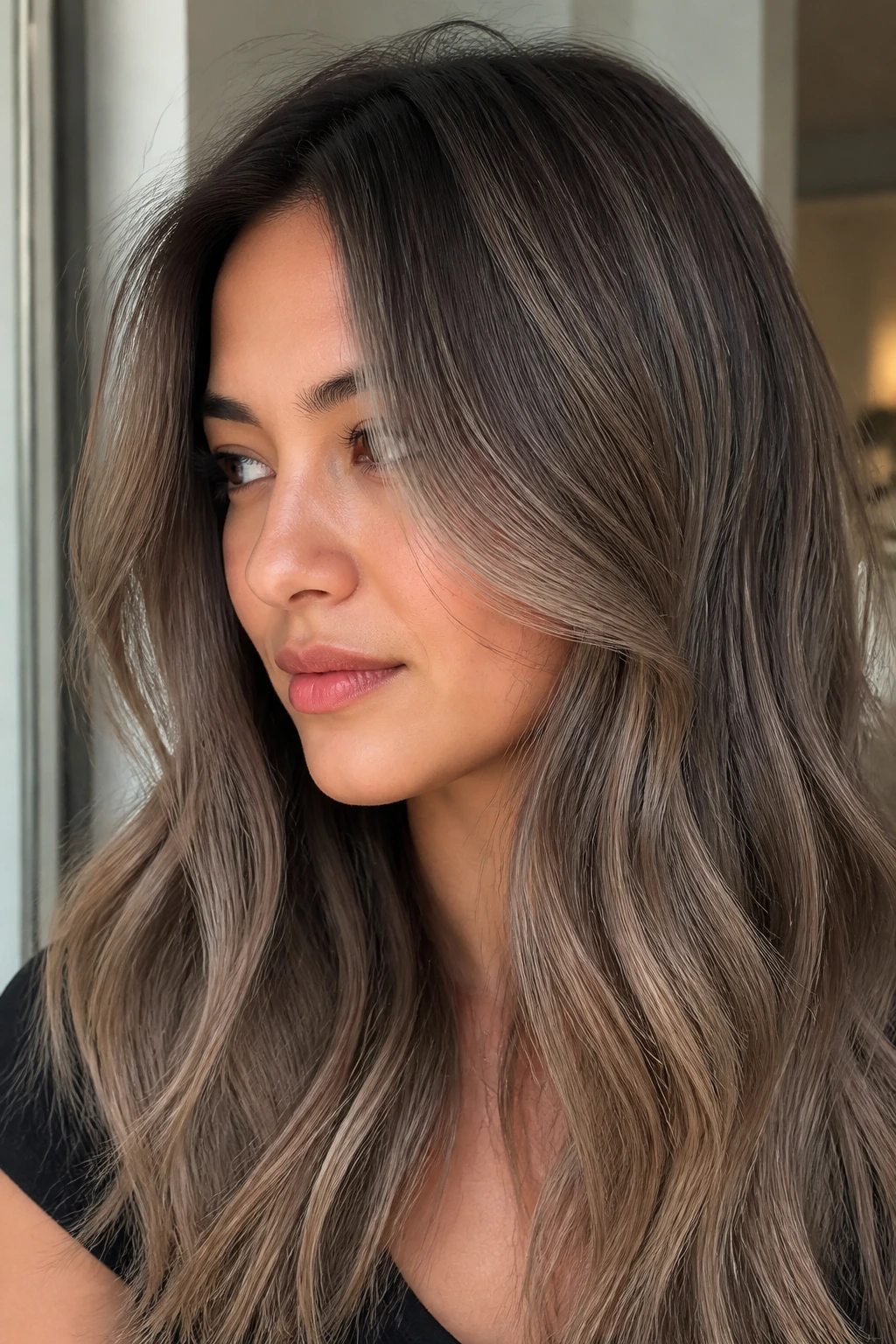
Mushroom brown is the brunette for people who are done fighting brass. It sits in that cool taupe zone between ash and beige, so the color feels soft rather than smoky in a heavy way. On medium-brown hair, it looks especially good with a root shadow that fades into mushroom-toned mids and a faintly beige finish at the ends.
What I like about this shade is that it makes brown hair look expensive without looking loud. No chunky contrast. No orange streaks. Just a smooth, muted melt that reads calm in bright light.
Ask for: a level 5 root with level 6 to 7 beige-brown ribbons and a neutral gloss at the bowl.
Best on: straight hair, soft waves, and anyone whose hair tends to pull warm too fast.
Keep in mind: mushroom brown needs a colorist who knows when to stop toning. Push it too far and it can go gray or dull, which is a dead giveaway that the toner sat too long.
2. Caramel Ribbon Brunette
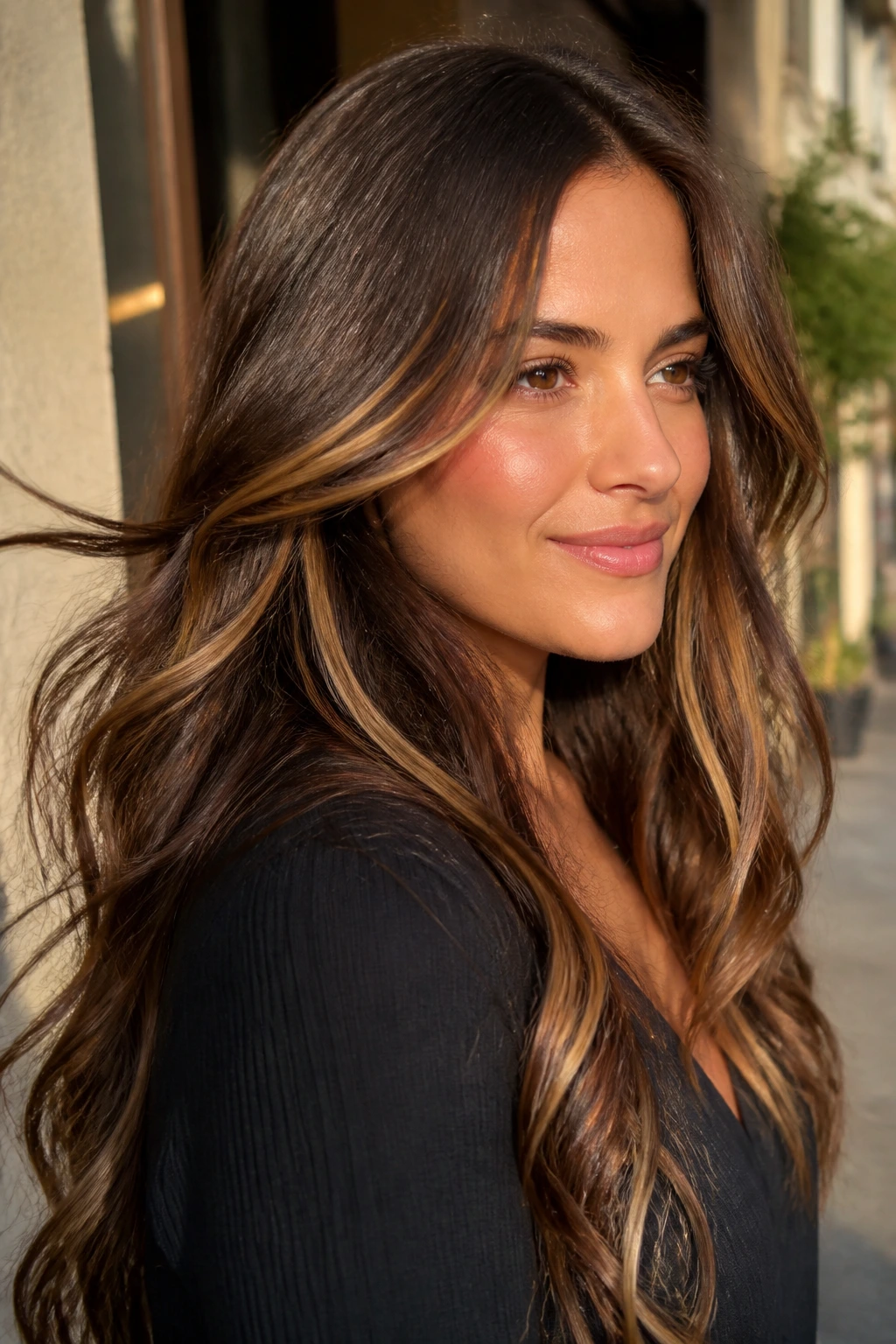
Want warmth without the weird pumpkin tone that can sneak into brunette highlights? Caramel ribbon brunette does the job when it’s painted in fine, deliberate strands instead of broad stripes. The base stays chocolate or medium espresso, and the caramel lives in ribbons that bend around the face and catch the light through the mid-lengths.
This one looks best when the placement is slightly irregular. A few brighter pieces near the cheekbone. A couple of softer ones under the top layer. That unevenness keeps the hair from looking stamped.
What makes it work
- The caramel adds movement to a dark base without erasing the brunette tone.
- Loose waves show the ribbons best because the bends create flashes of color.
- The grow-out stays softer than all-over dye, which is the whole point here.
If you wear your hair in a loose bend or a round-brush blowout, this shade does most of the work for you. It’s one of those colors that looks polished even when the style itself is simple.
3. Chestnut Glaze Brown
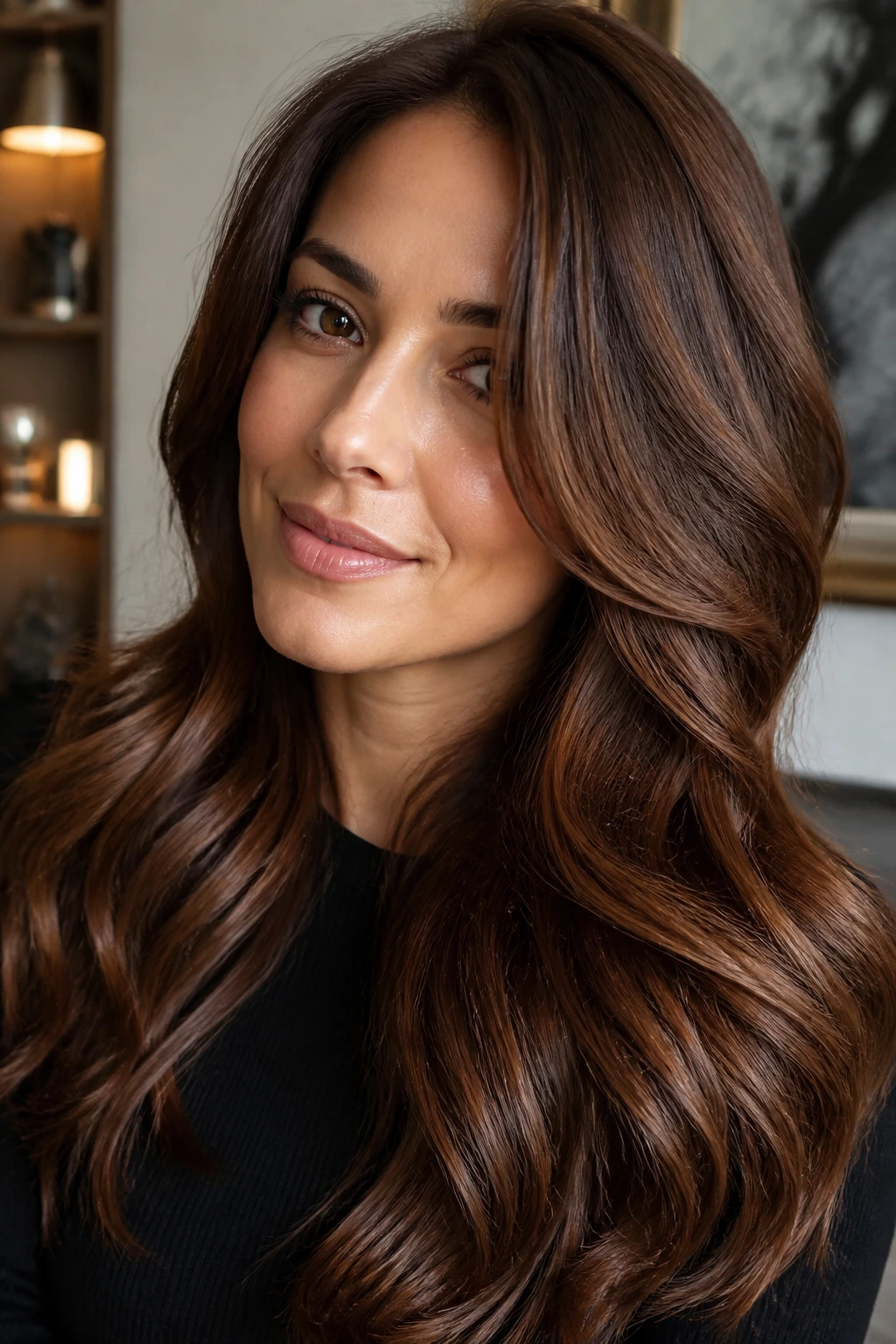
Chestnut glaze is for the brunette who wants shine more than lift. It’s warm, but not blazing warm. Think roasted chestnut shell, a little red-brown softness, and a glossy finish that makes the hair look freshly conditioned even when it’s just air-dried and tucked behind the ears.
The trick here is that chestnut doesn’t need big color changes to look interesting. A demi-permanent gloss over level 4 to 5 brown can be enough, especially if the cut already has some shape. On a blunt lob, chestnut gleams. On long layers, it looks plush.
I prefer this shade on hair that feels dull from too much heat styling or hard water. It wakes the color up without making the maintenance annoying. You are not chasing lightness here. You are chasing sheen.
4. Honey Balayage Brunette
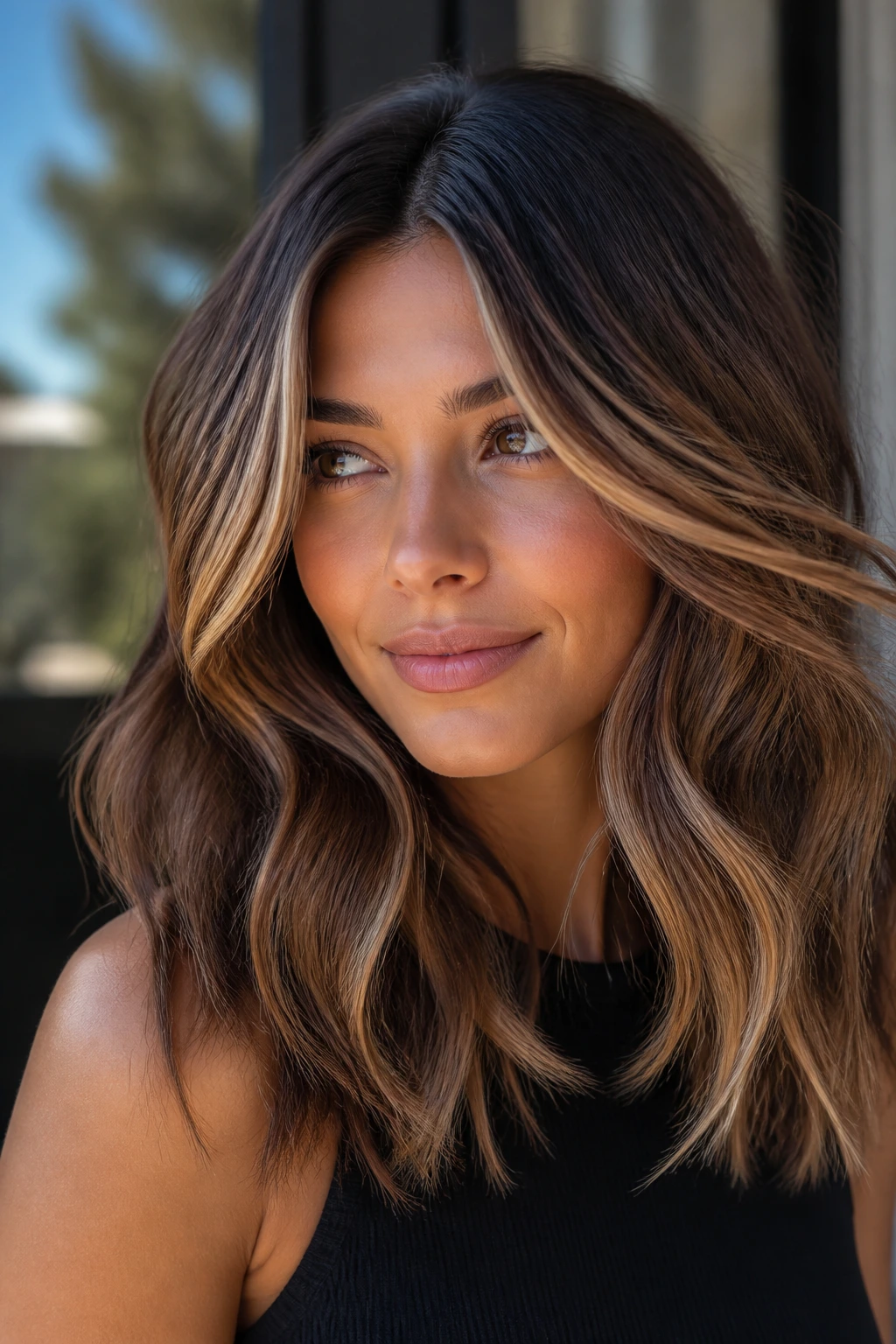
Honey balayage is the shade people ask for when they want the room to notice the hair, not the dye job. The brunette base stays in place, but the honey comes through in face-framing pieces, mid-length ribbons, and lighter ends that look sun-touched rather than bleached.
What to tell your colorist: “Keep the base brunette and brighten the pieces around my face with honey, not gold-orange.” That last part matters. Honey should glow, not scream.
Why it earns its spot
The warmth catches spring sunlight fast, especially on wavy hair or layered cuts. It also works on a lot of skin tones because honey sits in that middle lane — warm enough to feel alive, but not so yellow that it washes out the face.
If you style your hair with a middle part and a soft bend, this shade can look almost dimensional enough to change shape as you move. That’s a nice trick for a color that still wants to read as brown at the roots.
5. Espresso Root Shadow
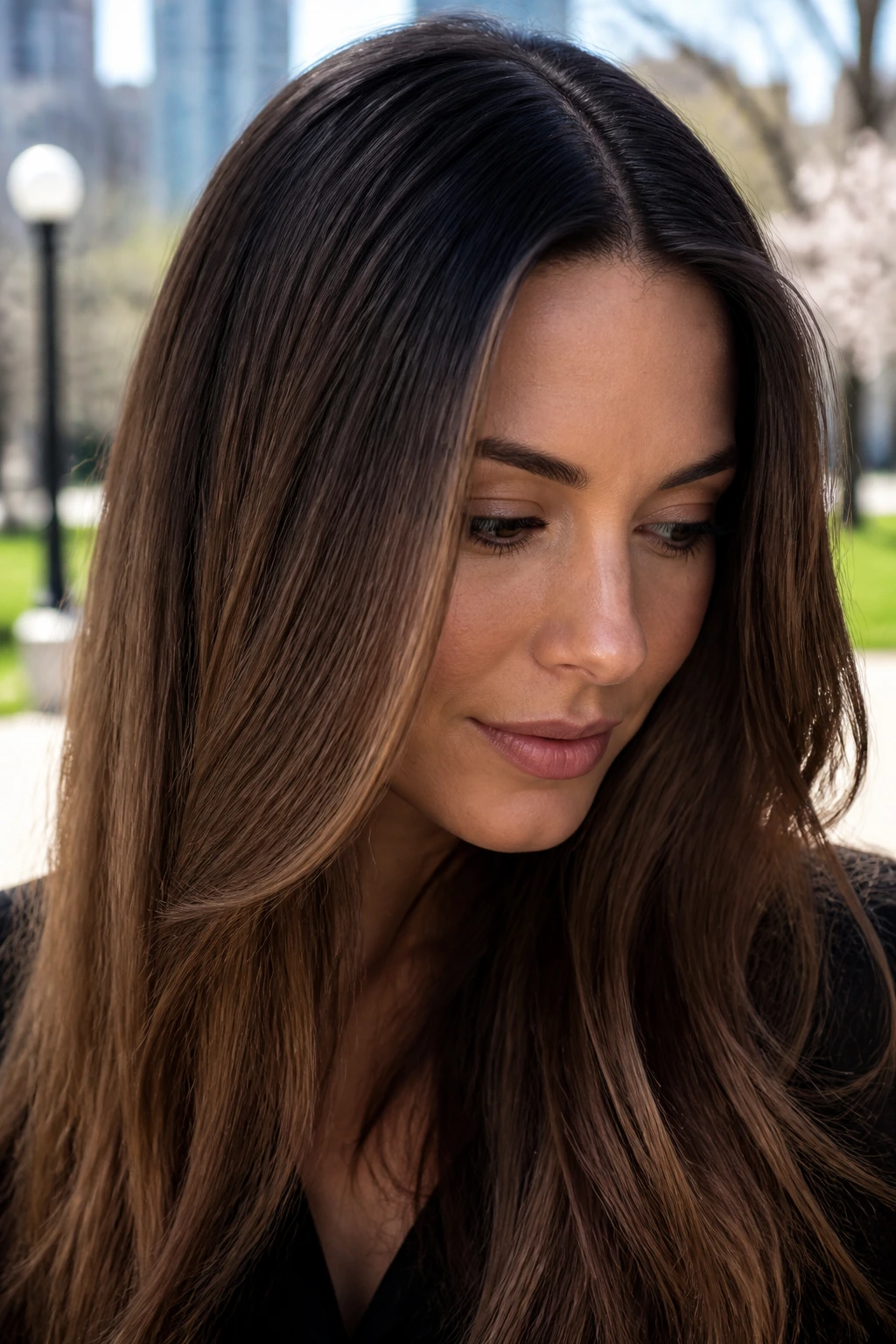
Espresso root shadow is the practical brunette’s answer to spring brightness. The roots stay deep and dark — think espresso, not black ink — and the mids soften into mocha or milk chocolate lengths. It is not flashy. It just looks tidy, intentional, and expensive in a way that holds up for weeks.
This is the shade I’d pick for someone who hates obvious grow-out. The darker root gives the color a clean start, and the softer lengths keep the look from feeling like a helmet. On hair that’s naturally dark, it barely needs more than a tonal shift.
It also happens to be one of the best choices if you wear your hair straight most days. Straight styles can make color shifts look stark. A root shadow keeps the line from getting harsh.
6. Toffee Money Pieces
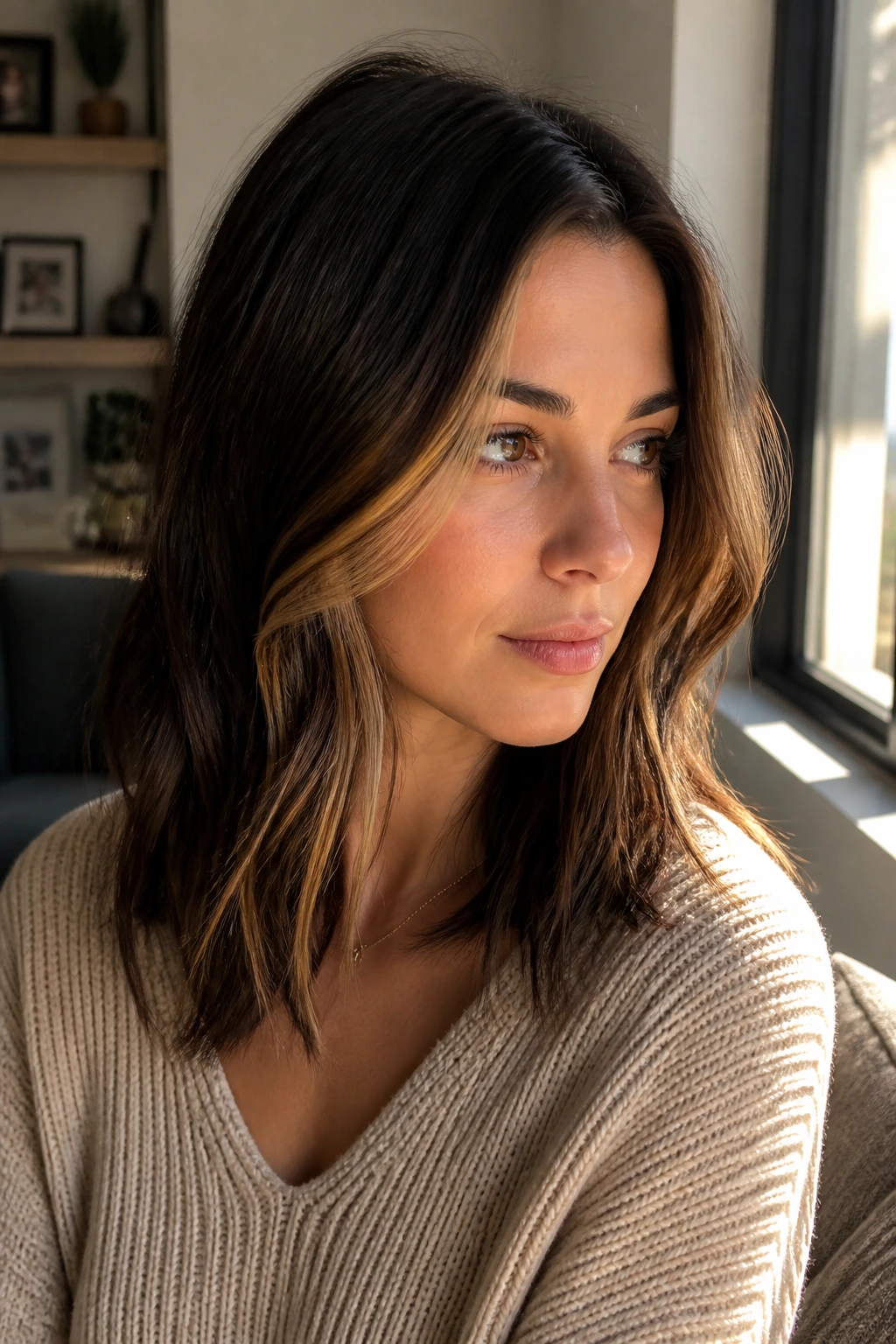
Toffee money pieces are the fastest way to brighten a brunette without going all-in on highlights. The rest of the hair stays deep, and the front sections get toffee or light caramel lightness right where the face opens up. The result is a little bolder than a whisper balayage, but still easy to wear.
A lot depends on placement. If the pieces start too far back, you lose the framing effect. If they’re too thick, they look trendy in the wrong, dated way. The sweet spot is a couple of slim sections near the temples and a soft lift around the part.
The look at a glance
- Best for lobs, long layers, and curtain bangs.
- Works especially well on medium to deep brunettes.
- Needs more toner attention than a softer balayage because the front pieces are the brightest part.
If you want your haircut to do more work visually, this is the one. Money pieces make a simple cut feel deliberate.
7. Cinnamon Brunette
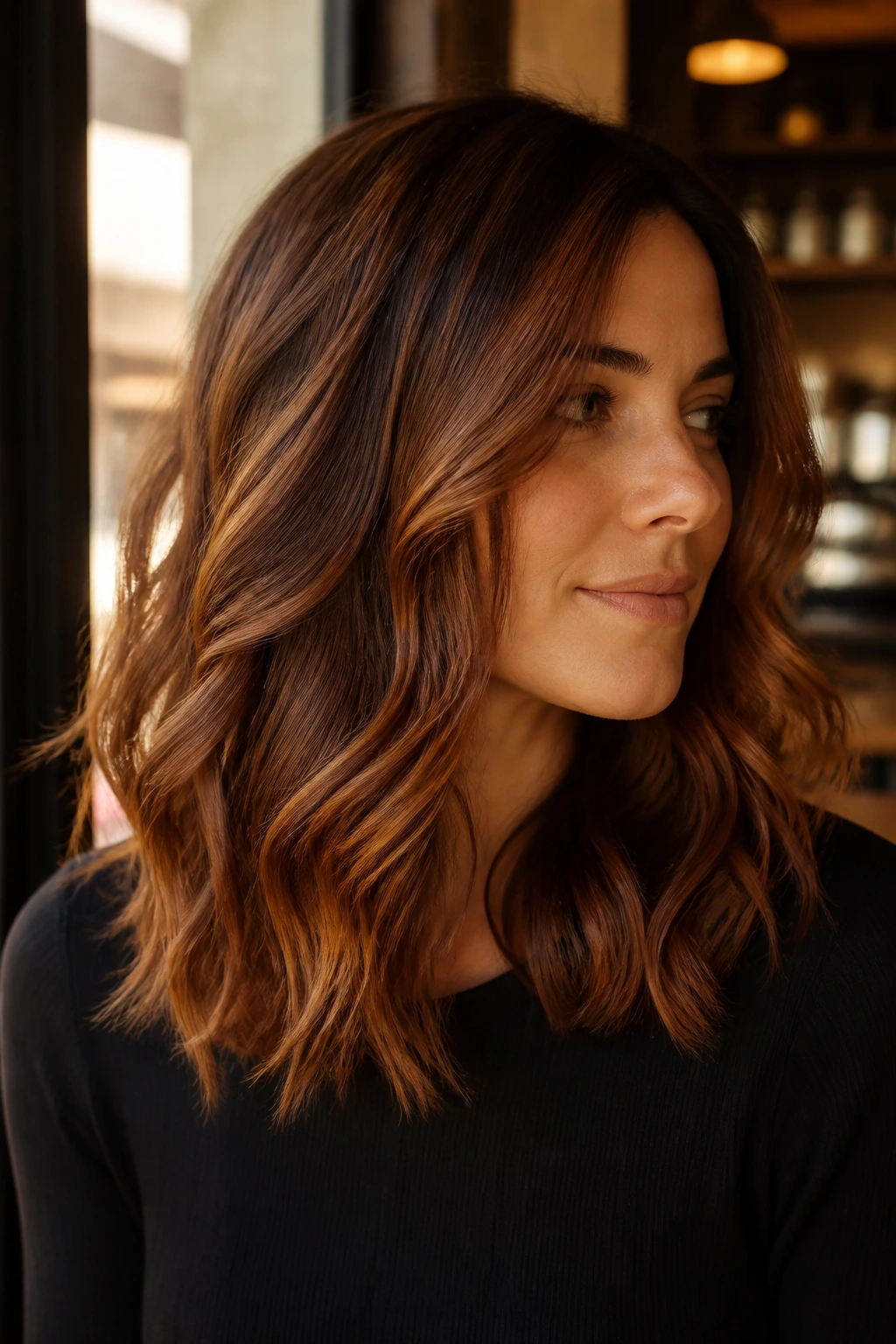
Cinnamon brunette is warm in a spiced, wearable way. Not red. Not copper. Just enough red-gold undertone to keep the brown from reading flat. On olive skin, it can look especially lively. On cooler skin, it needs a little more neutral balancing so it doesn’t tip too orange.
This shade is good for people who want a brown that feels alive even when the lighting is lousy. Cinnamon has that built-in warmth that shows up in cloudy weather and still looks rich under indoor bulbs. It’s a friendlier color than ash, and less predictable than plain chocolate.
If you have waves or curls, cinnamon can be a gift. The curls catch warmth on the surface, then let the deeper brown stay visible underneath. That layered effect is what makes it feel dimensional instead of reddish all over.
8. Beige Brunette
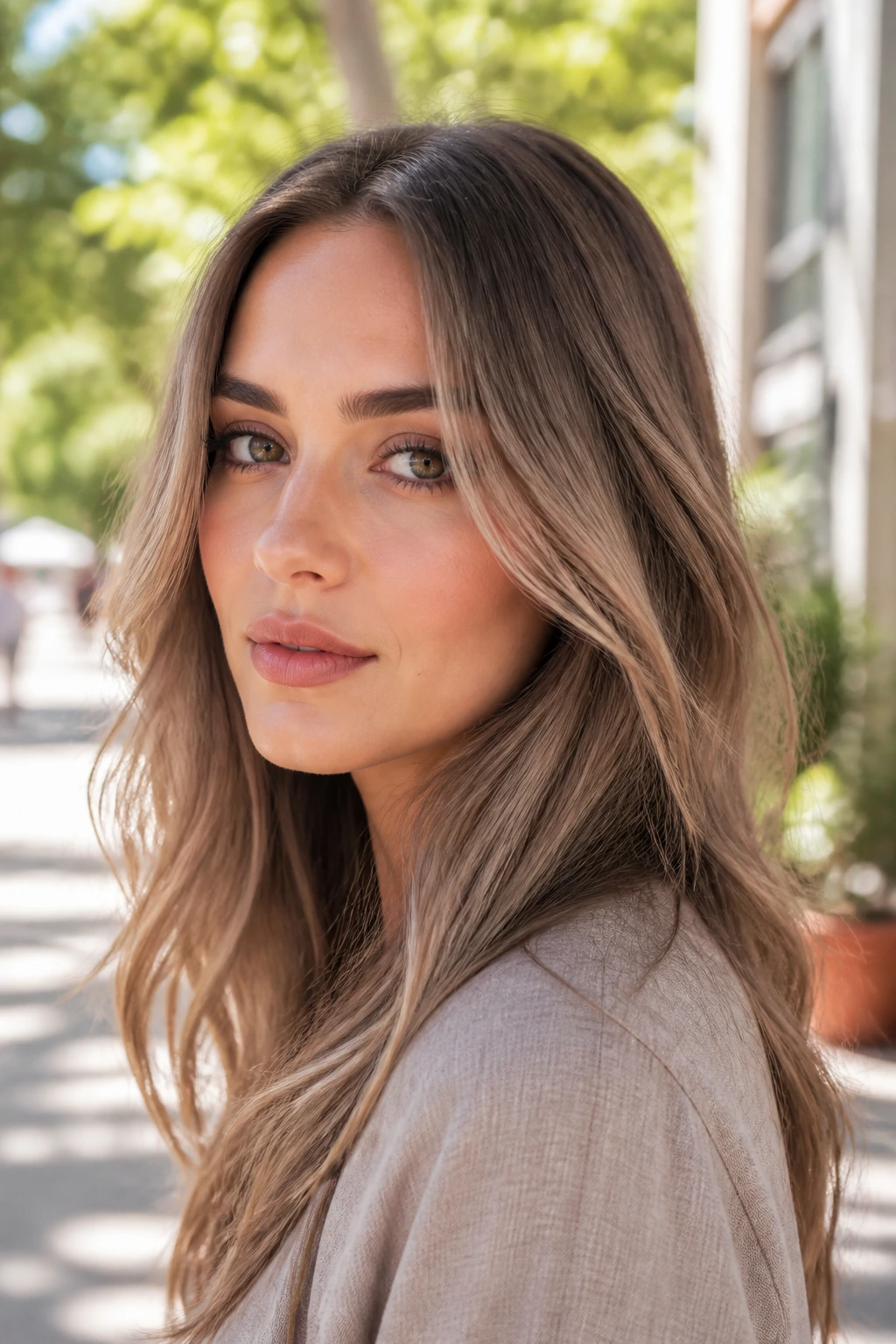
Beige brunette is the cool-neutral cousin in the brown family, and it can be beautiful when it’s handled with a light hand. The shade lives between taupe and soft sand, which gives it an airy feel that works especially well when spring hair starts looking too heavy after winter.
Unlike caramel, beige brunette should never look yellow. The whole point is softness. If the hair pulls too warm, the color loses its clean finish and starts reading brassy instead of creamy. That is why beige needs an attentive toner and a colorist who can stop before the warmth takes over.
I like this on shoulder-length cuts, airy layers, and fine hair that needs some visual lift. It makes the hair look lighter without making each section scream for attention. Quiet color. Better shine.
9. Cocoa Balayage
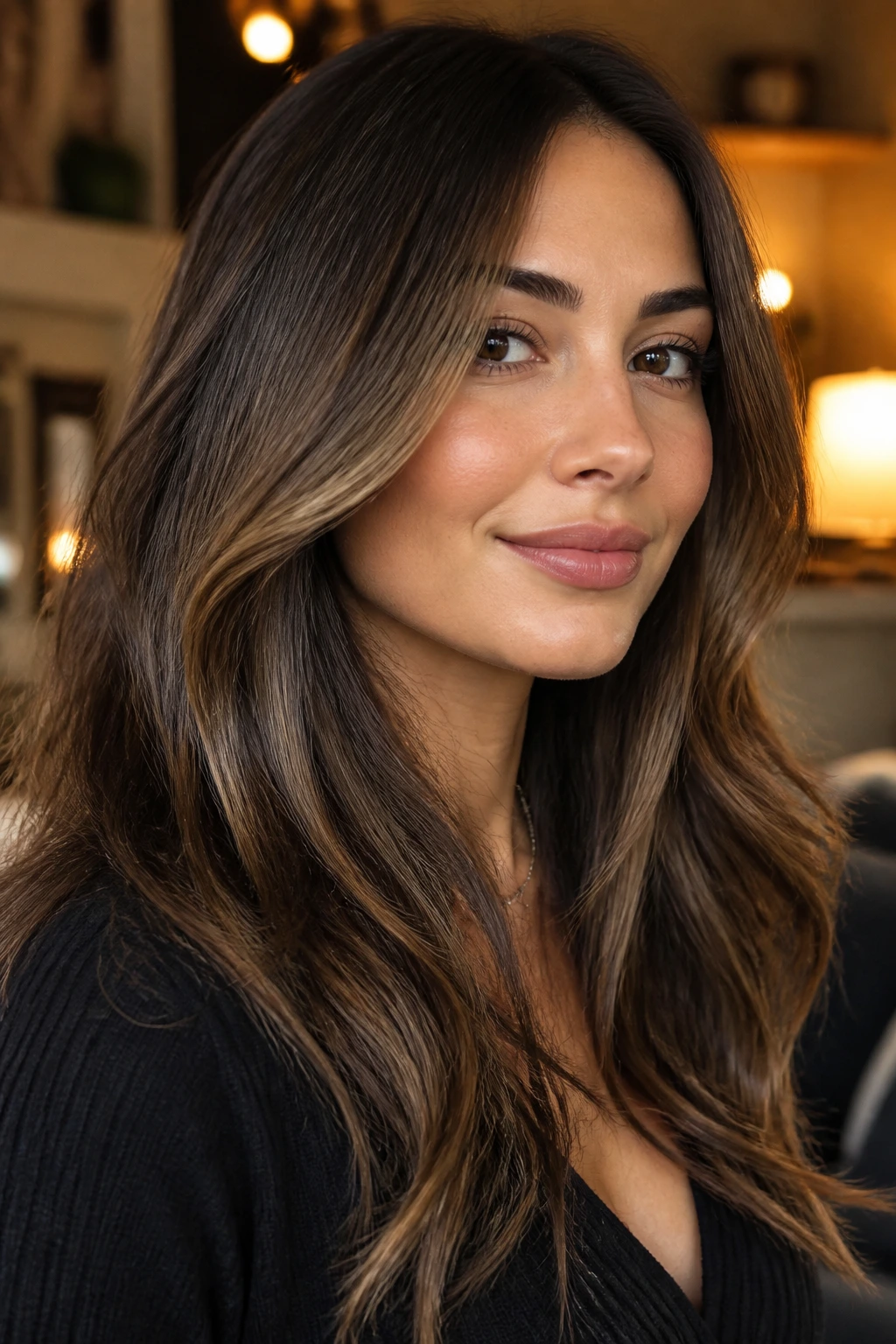
Cocoa balayage is one of the safest bets on the list, which sounds boring until you see it in motion. The base stays cocoa or dark milk chocolate, and the painterly pieces lighten just enough to break up the surface. No hard stripes. No contrast that fights the cut.
This is the brunette shade for someone who wants movement, not drama. It’s especially nice on thicker hair because the lighter ribbons prevent the color from sitting as one solid block. The hair gets texture before you even touch it.
What to ask for
- A cocoa base in the level 4 to 5 range.
- Hand-painted ribbons one or two levels lighter, concentrated on the surface.
- A gloss that keeps the brown creamy, not red.
The result should look soft when the hair is down and even better when it’s clipped back in a messy twist. That’s a useful sign that the color has depth, not just brightness.
10. Rosewood Brown
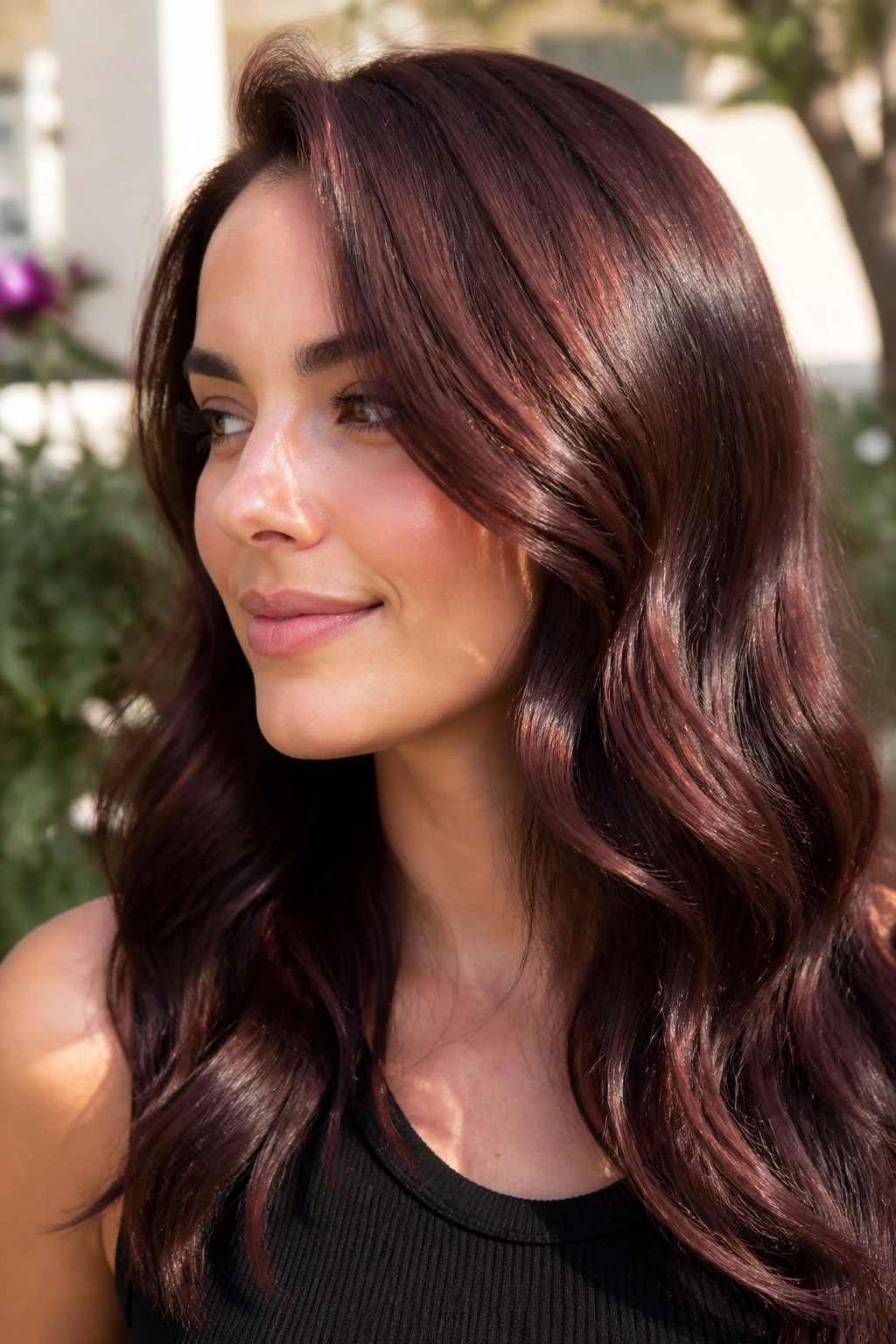
Rosewood brown has a little attitude. It is a brown base with a dusty rose or plum-brown reflection that appears most clearly in sunlight and soft indoor light. It is not purple hair in disguise. It is a brunette with a blush in its tone.
I reach for this idea when someone wants brown hair that does something different without blowing up the whole color story. The red-violet undertone can make brown eyes look deeper and give cooler skin a little more life. On layered cuts, the rosewood note shows up in the movement rather than sitting on top of the hair.
What it needs
Color logic
The underlying brown should stay visible. If the rose takes over, the hair stops reading spring brunette and starts feeling like a fantasy color.
Best styling partners
Soft waves, a side part, and glossy finishes. A matte texture dulls the nuance and makes the color look flat.
Who it suits
People who like a little edge, but not enough to scare off a conservative dress code. It’s subtle, which is its charm.
11. Mocha Melt
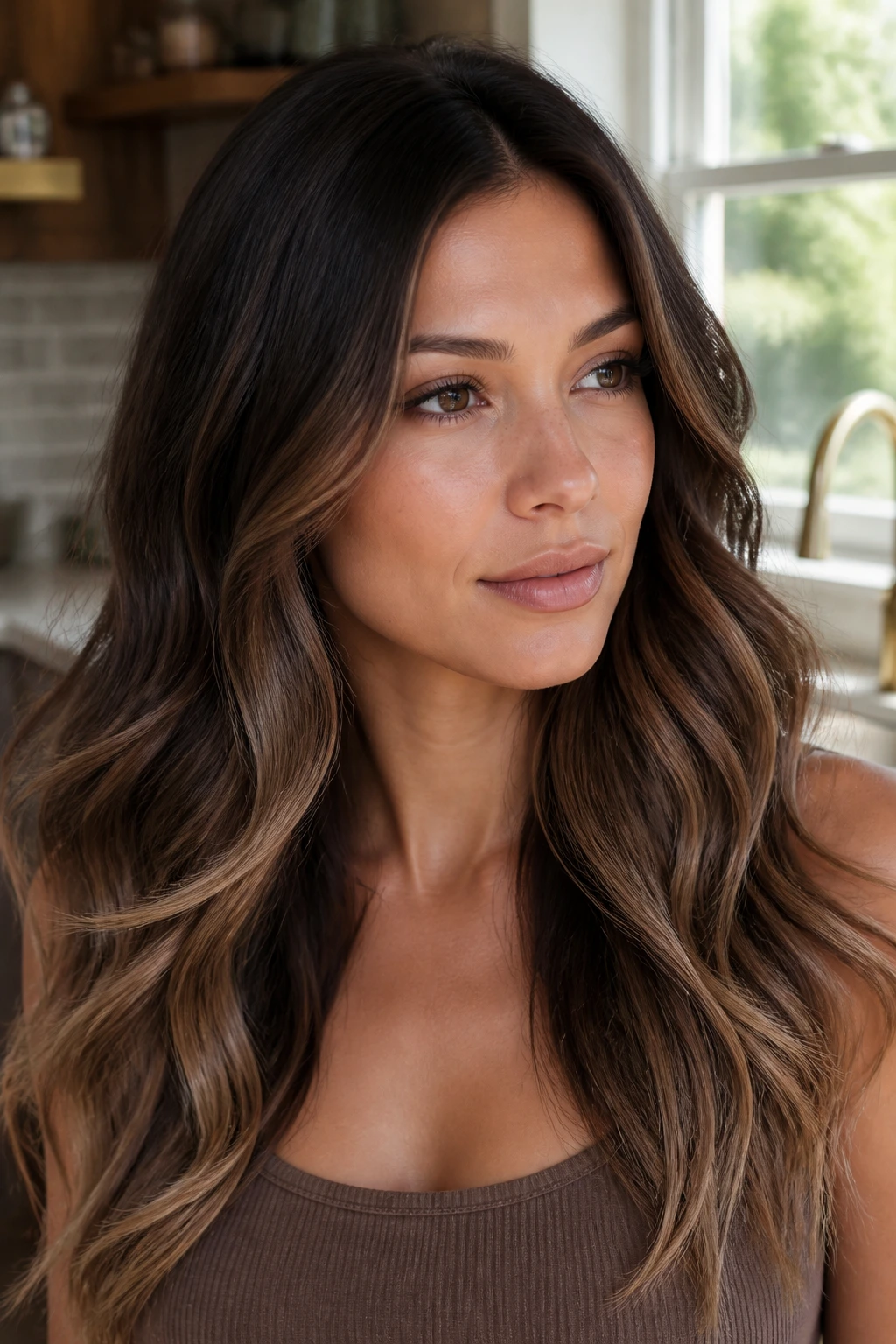
Mocha melt is the brunette version of a perfectly made coffee drink: layered, smooth, and not trying too hard. The roots are deeper mocha, the mids soften into milk chocolate, and the ends usually get just enough lift to keep the whole thing from reading one-dimensional.
This shade makes sense if you want the color to grow out cleanly. It does not depend on a stark line or chunky highlight pattern, so the transition stays soft for a long time. That makes it a smart option if you can’t be in the salon every six weeks.
It’s one of the easiest colors to wear with a basic haircut, too. A straight cut can look a little plain under other shades. Under mocha melt, it looks deliberate. Add a wave, and the color moves even more.
12. Amber Brown
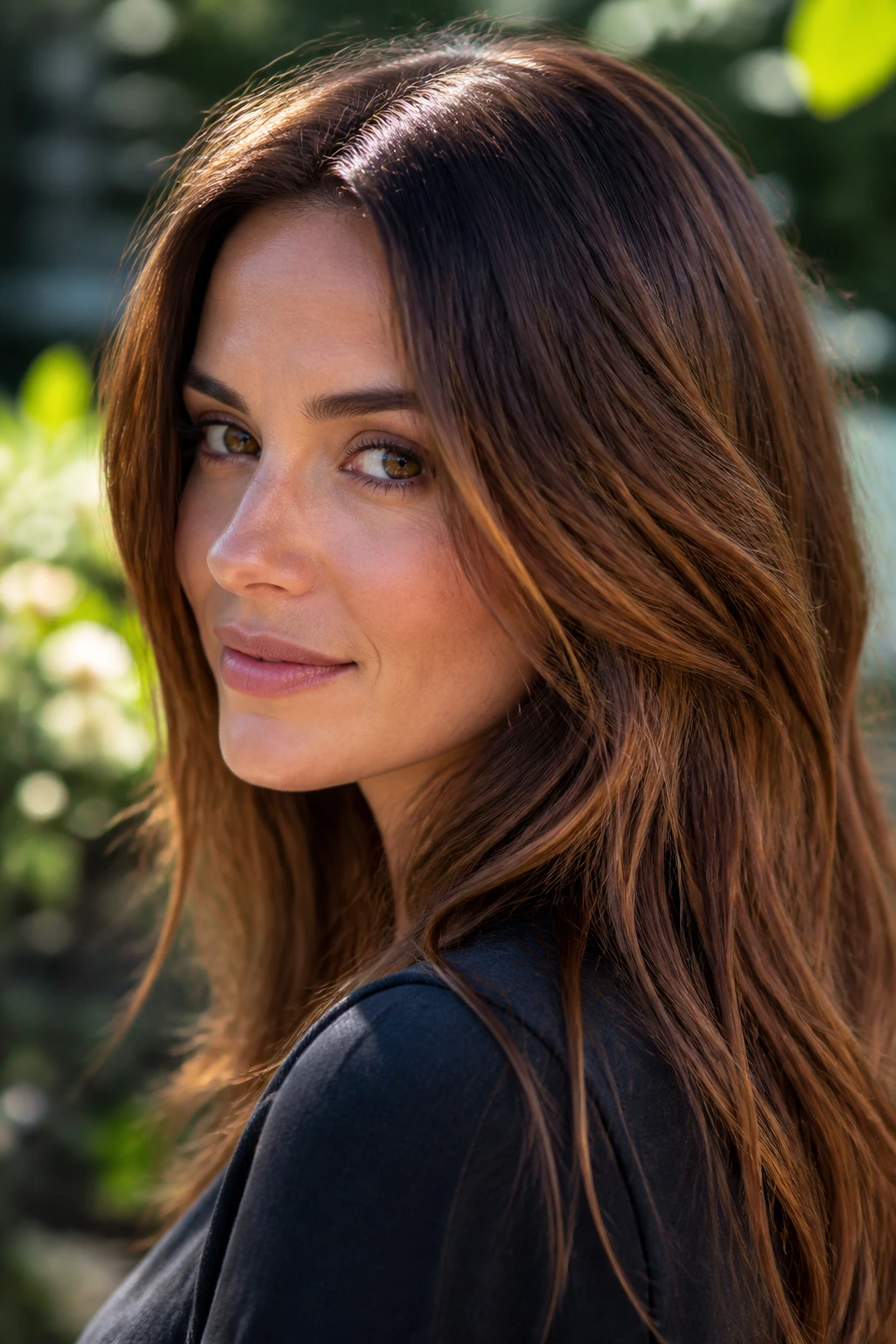
Amber brown is for people who want their brunette to glow. The undertone sits in that warm amber space where brown picks up golden-copper reflections without becoming orange. In sun, it looks like the hair has tiny lit sections inside it. Indoors, it stays rich and soft.
The shade works because the warmth is controlled. Amber brown can go wrong if it gets pushed too far toward copper, so the color formula needs restraint. Too much orange and the whole head starts fighting itself. Keep the base brown. Let the amber be the reflection, not the headline.
This is a good color for layered hair, shag cuts, and longer styles that move. The more motion the hair has, the better the amber shows up. Static hair can still look nice, but it won’t have the same glow.
13. Milk Chocolate Smoother
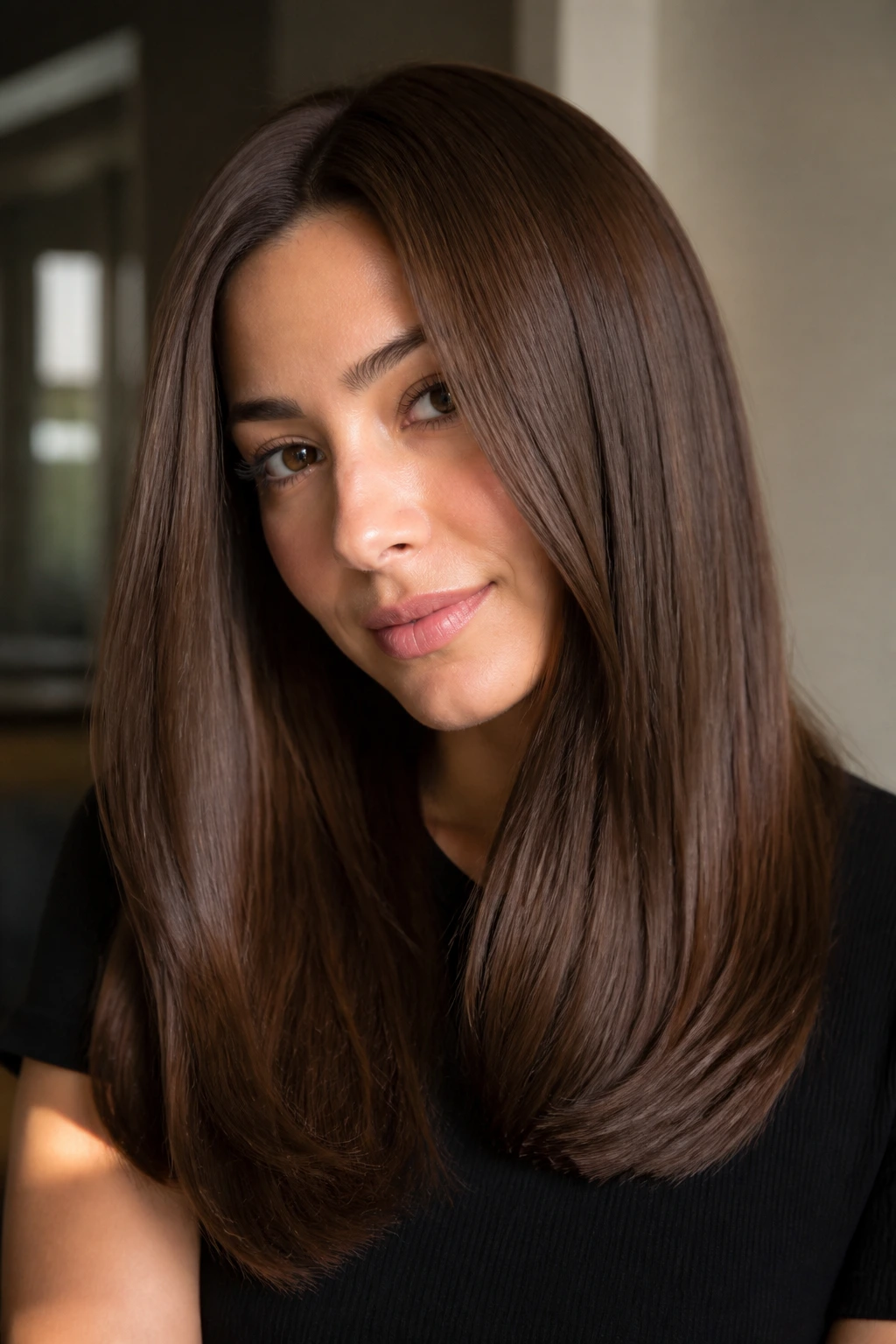
Milk chocolate brown is the one I recommend when someone says they want a “natural brunette” but still wants it to look polished. It’s creamy, medium-deep, and soft around the edges. No sharp ash. No loud gold. Just a clean brown that feels touched-up even if the haircut is simple.
This shade is especially flattering on hair with a blunt line, because the smooth tone keeps the ends from looking harsh. On long hair, it can feel lush and uniform in the best way. The shine matters here. A milk chocolate brown with dull finish loses half its charm.
It also tends to age well between appointments. As it fades, it usually softens instead of turning into something embarrassing. That matters more than people admit.
14. Bronde Spring Lights
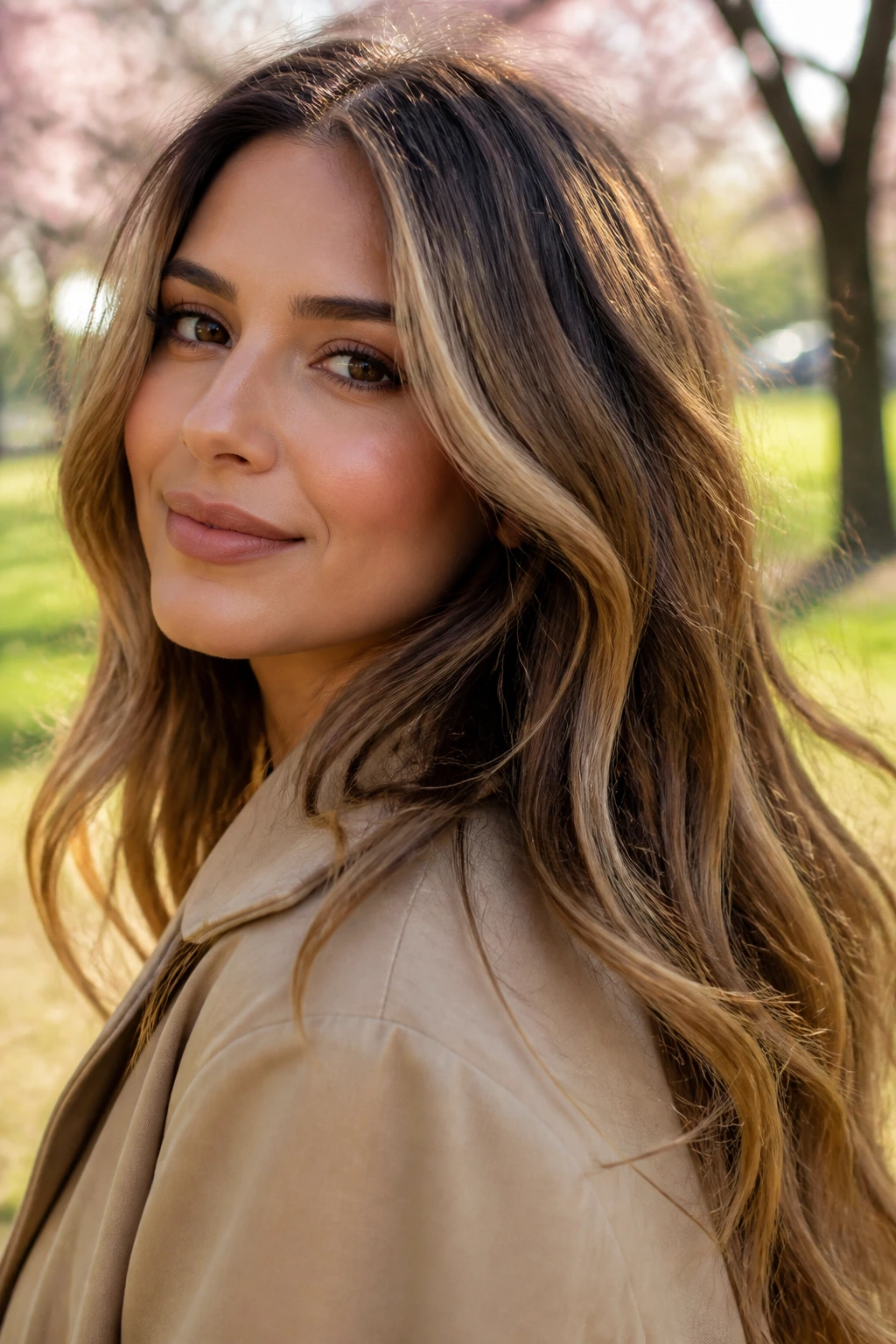
Bronde spring lights is what happens when a brunette wants daylight without losing the base. The color sits between brown and blonde, but it should still read brunette first. The lighter pieces are airy, not chunky, and they usually live around the face, crown, and ends.
If you’ve ever seen a brunette highlight job that looked too obvious, this is the fix. Bronde works because the blonde pieces are thinned out and placed with some breathing room between them. You get brightness, but you also get shadow. That shadow is what keeps the color wearable.
What makes it different
- It needs a brown anchor underneath the lighter pieces.
- The highlight tone should be beige or soft honey, not yellow.
- It works best on cuts with movement, because movement breaks up the contrast.
It’s a smart pick if you want a lighter spring feel without committing to full blonde upkeep. The grow-out can be forgiving if the root is kept soft.
15. Hazelnut Brunette
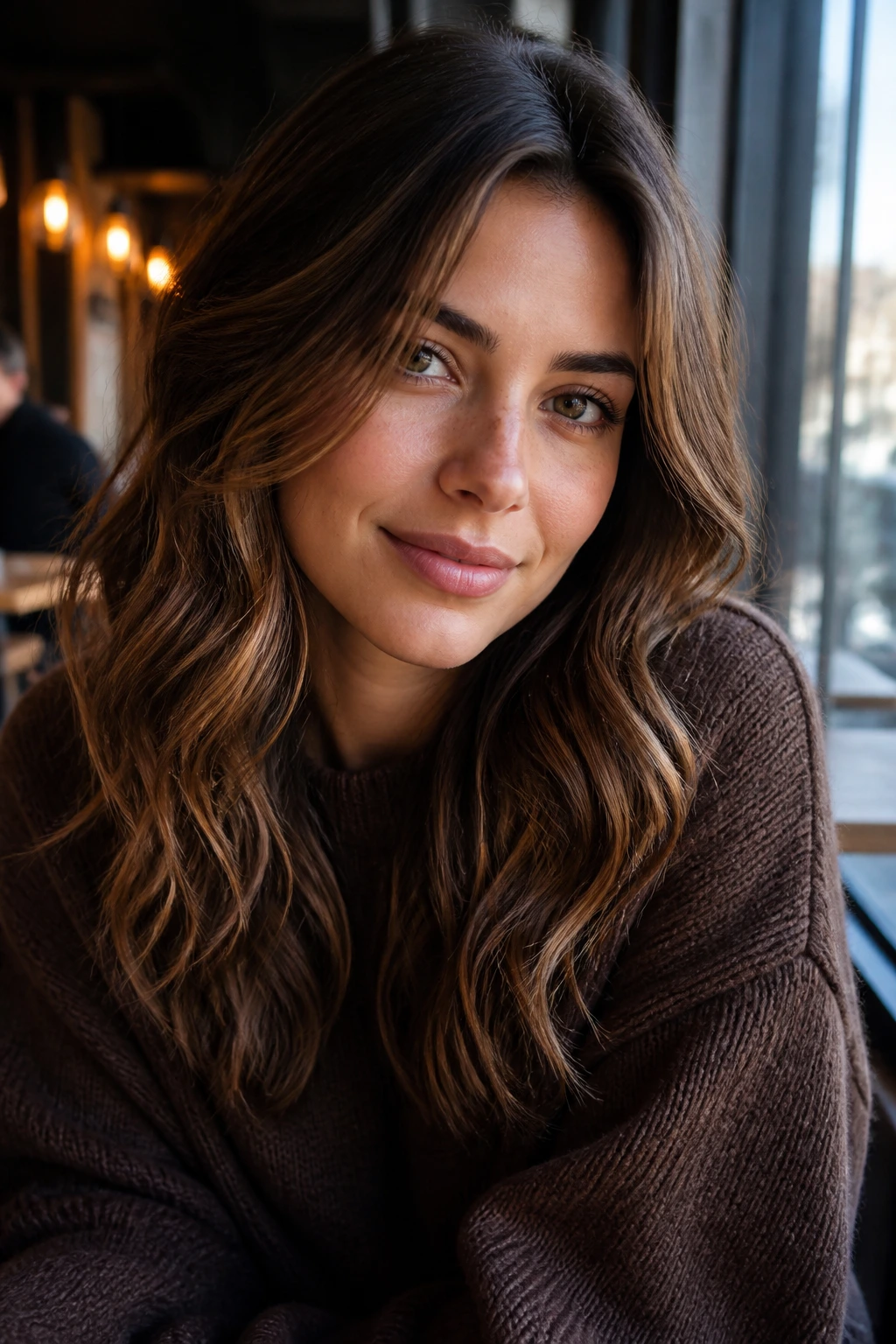
Hazelnut brunette has a warm, nutty softness that looks especially good when the hair needs a gentle shift rather than a full color change. It usually lives in the medium-brown range with subtle golden lowlights or a gloss that makes the strands look almost creamy.
This is the shade for someone who says they want dimension but gets nervous around obvious highlights. Hazelnut stays friendly. It gives the surface a little lift without breaking the brown base apart.
I also like it on curls and coils. The warm brown catches on the raised parts of the texture, while the deeper pieces tuck underneath and create depth that flat straight hair can’t fake. That’s the kind of color that looks better the less you fuss with it.
16. Copper-Kissed Brown
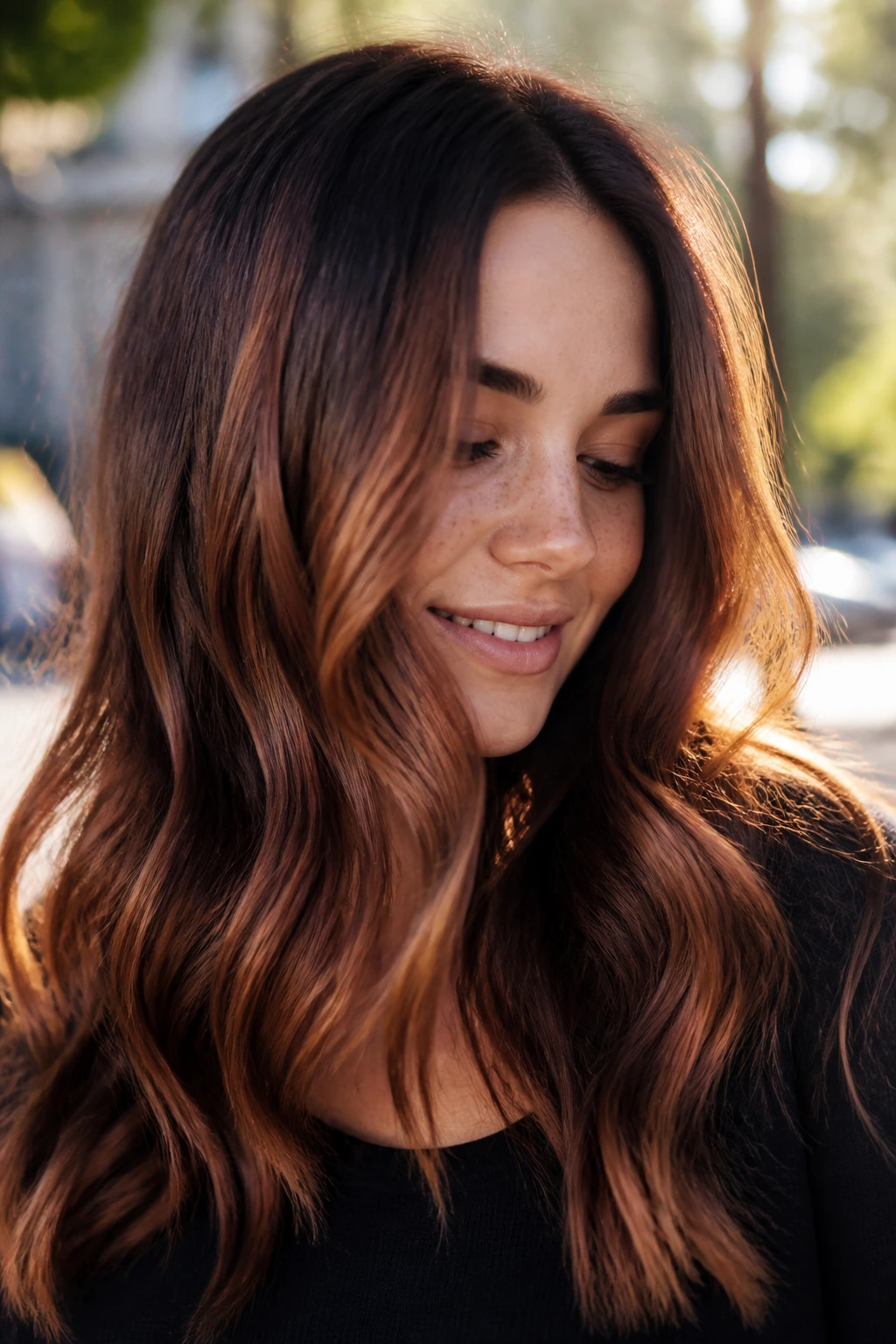
Copper-kissed brown is a brunette with a little spark in it. The brown base stays present, but the copper sits on top like a thin veil, giving the hair warm reflect in sun and movement around the face. It is brighter than chestnut and less subtle than amber.
The best version of this shade keeps the copper controlled. A little too much and it becomes obvious red-brown. Just enough and it looks lively, especially on layered cuts or curls. If your hair tends to feel dark and heavy in spring, this is one of the fastest ways to change the mood without leaving the brown family.
It’s also one of the more fun shades to pair with simple styling. A loose twist, a low bun, or a soft blowout lets the copper hit light at different angles. Very little effort. A lot of payoff.
17. Ash Brown with Vanilla Ends
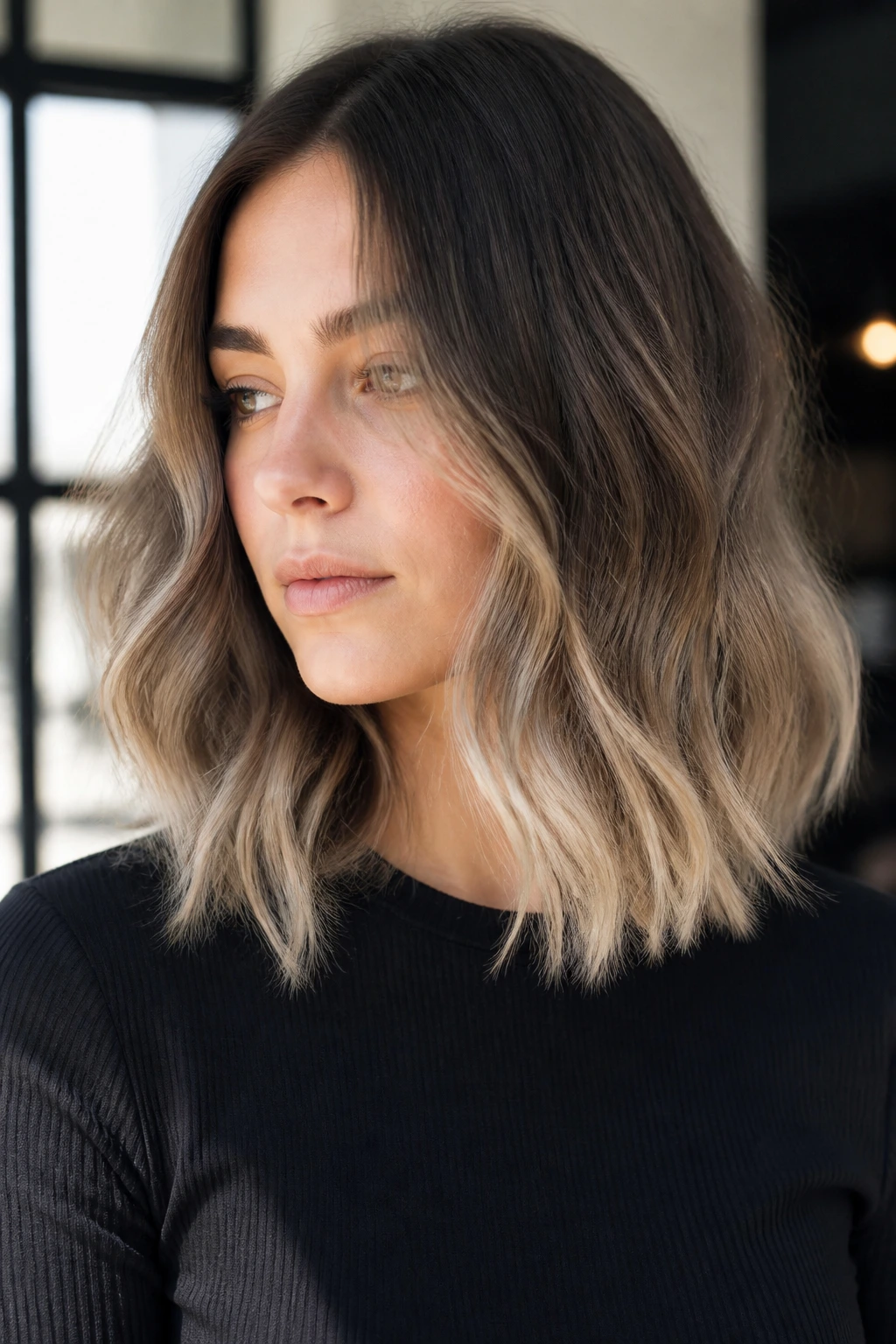
Ash brown with vanilla ends is a cooler, cleaner contrast than most people expect from a brunette look. The roots stay smoky and ash-toned, then the ends brighten into vanilla beige. It sounds high-contrast on paper. In practice, it can feel soft if the transition is blurred properly.
This is a shade for someone who likes a crisp finish and can handle cooler tones. It needs careful toning, because ash can go greenish or muddy if the hair underneath is too warm. The vanilla ends also need a gentle hand; if they’re pushed too pale, the whole look loses its brown identity.
I like it best on shoulder-grazing cuts and polished waves. The contrast shows up in motion, and the ends light up without looking stripy. Clean. A little sharp. Very intentional.
18. Warm Walnut
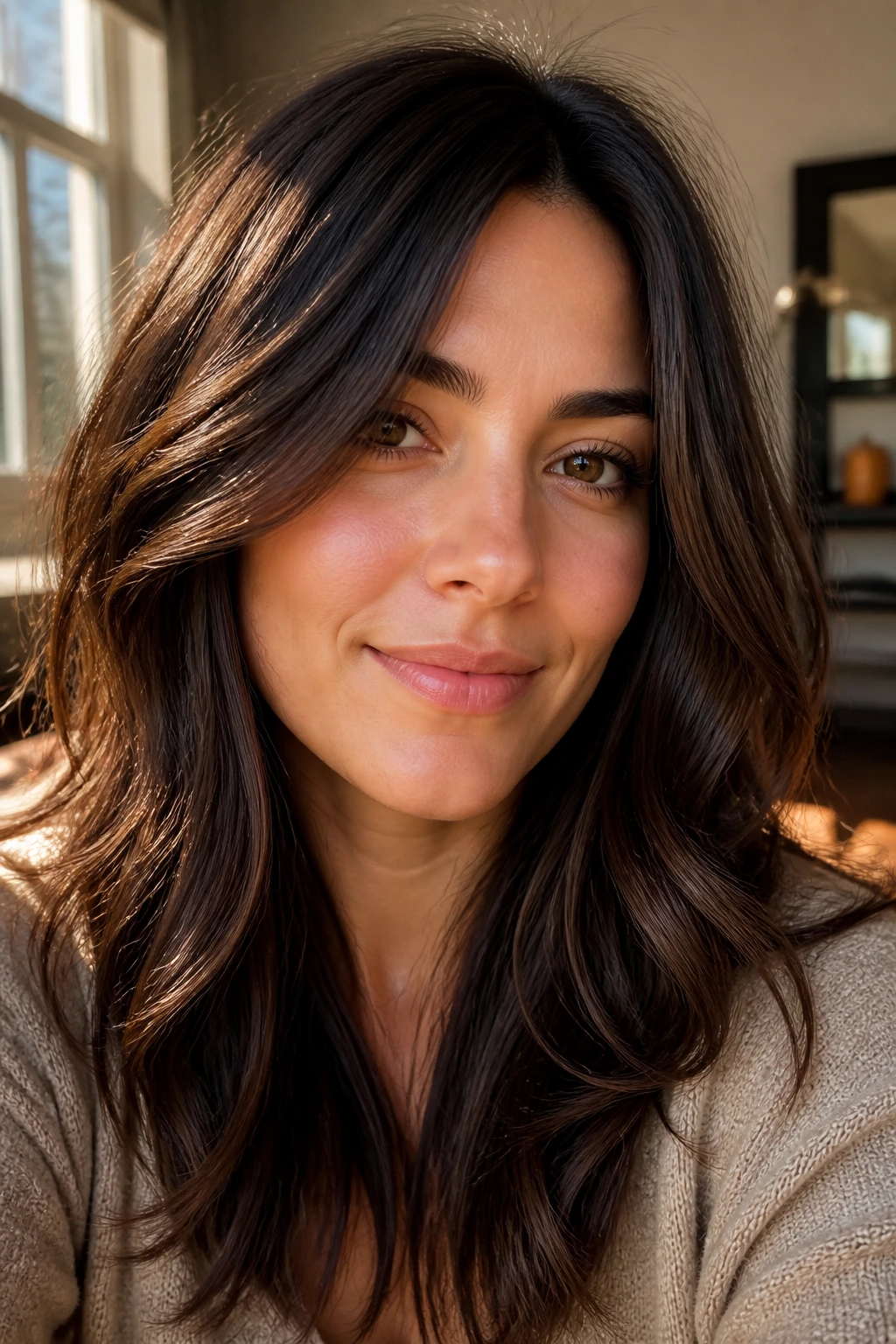
Warm walnut is one of the easiest brunettes to wear because it feels grounded. The brown is medium-dark, but it has a muted warmth that keeps it from looking like a block of color. Think polished wood. Rich, even, and quietly dimensional.
This shade works beautifully on layered cuts where the movement can break up the surface. It also sits nicely on people who want brown hair that doesn’t scream for attention in every photo. The warmth is there, but it’s not loud enough to drag the whole color into copper territory.
If you want a shade that can live through a long grow-out and still look believable, warm walnut is a solid choice. It ages gracefully. That matters more than flashy color does.
19. Frosted Mocha
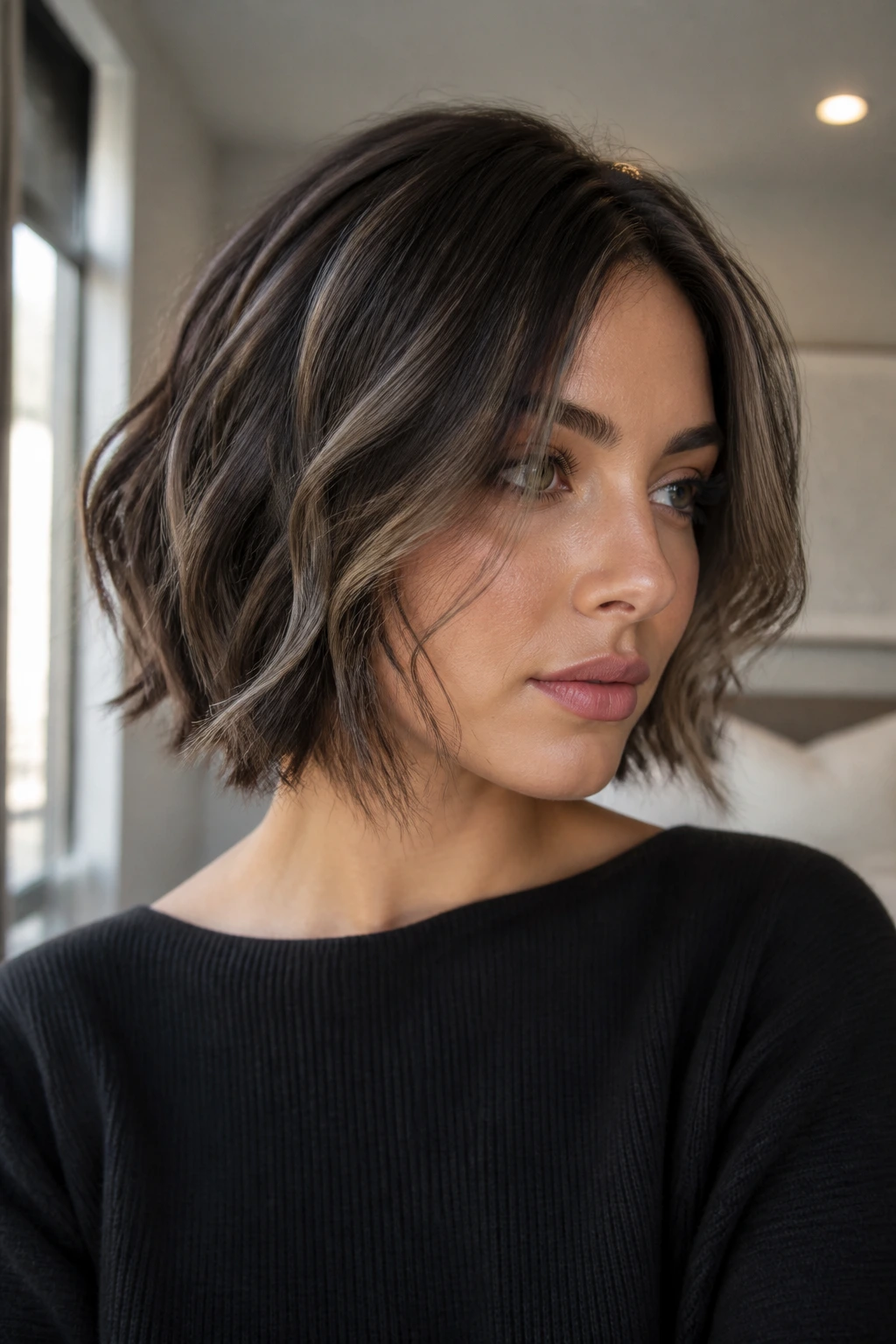
Frosted mocha is a cooler take on dimensional brunette, and it has a little edge to it. The base is mocha brown, but the light pieces are frosted beige or silvery taupe rather than honey. The result feels crisp and modern, with a cooler finish that can make brown eyes look especially sharp.
Why it stands out
The contrast is cleaner than in caramel looks, but it still belongs in the brown family. That’s the useful part. You get visible dimension without the heat that some spring brunettes pick up too easily.
If your wardrobe leans black, white, denim, or charcoal, frosted mocha slides in easily. It also works well with shorter cuts because the cooler pieces read deliberate on cropped or mid-length hair. Too much layering can make it busy. Keep the cut clean and the color does the talking.
20. Sunlit Sepia Brown
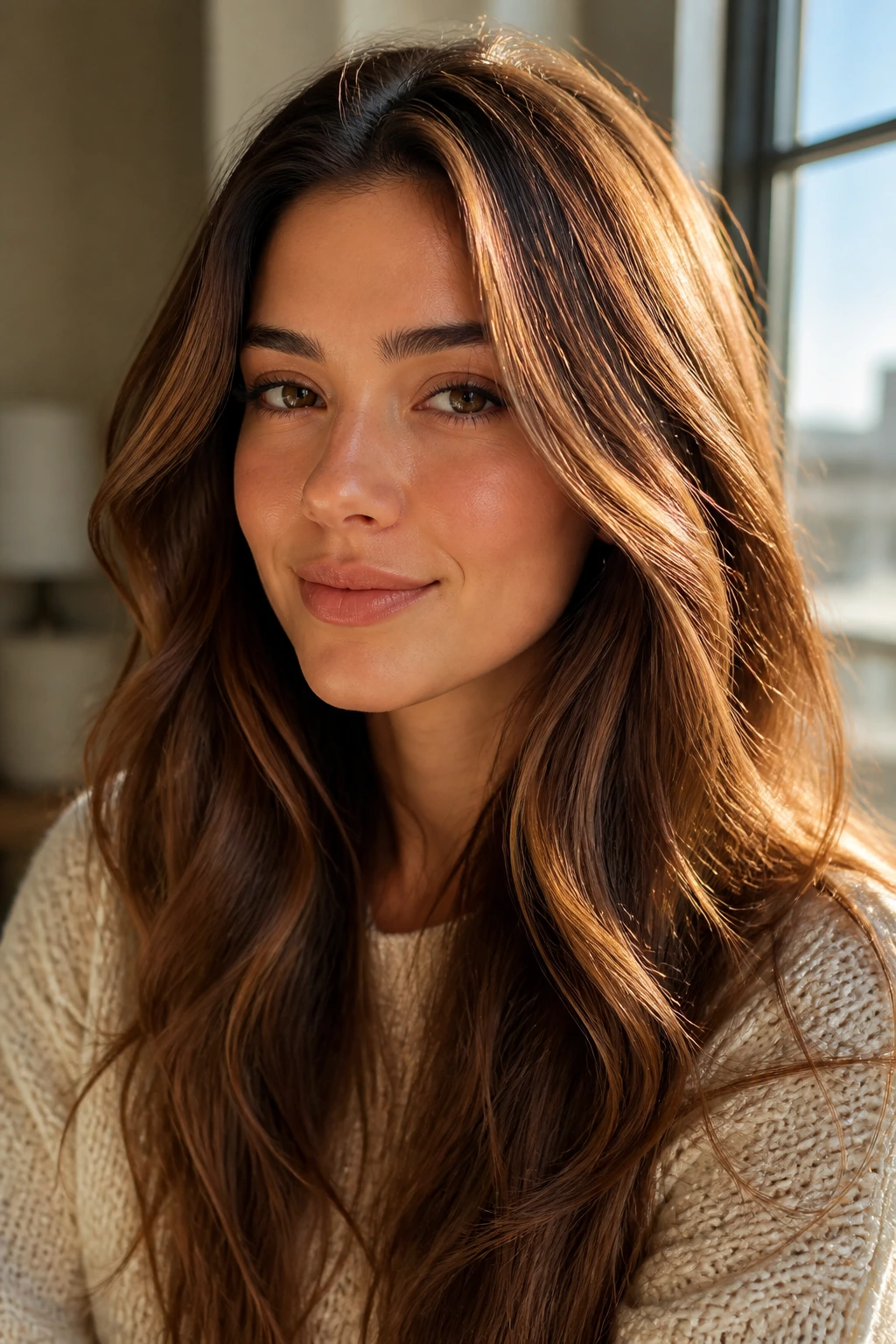
Sunlit sepia brown is the shade I’d call “natural, but improved.” It keeps the brunette base grounded and adds soft golden ribbons that look as though the hair spent some time in indirect sunlight. Not beachy. Not blonde. Just warm enough to feel lifted.
The sepia note is important. It keeps the color muted and refined, which makes it easier to wear on a daily basis. Some warm browns can go shiny-orange fast. Sepia brown stays calmer because the warmth is filtered.
It’s a smart option for people who want a spring shift but don’t want the maintenance of brighter highlights. A good gloss can keep the tone looking fresh for weeks. The color should show up most when the hair moves, not when it’s frozen in a photo.
21. Latte Brunette
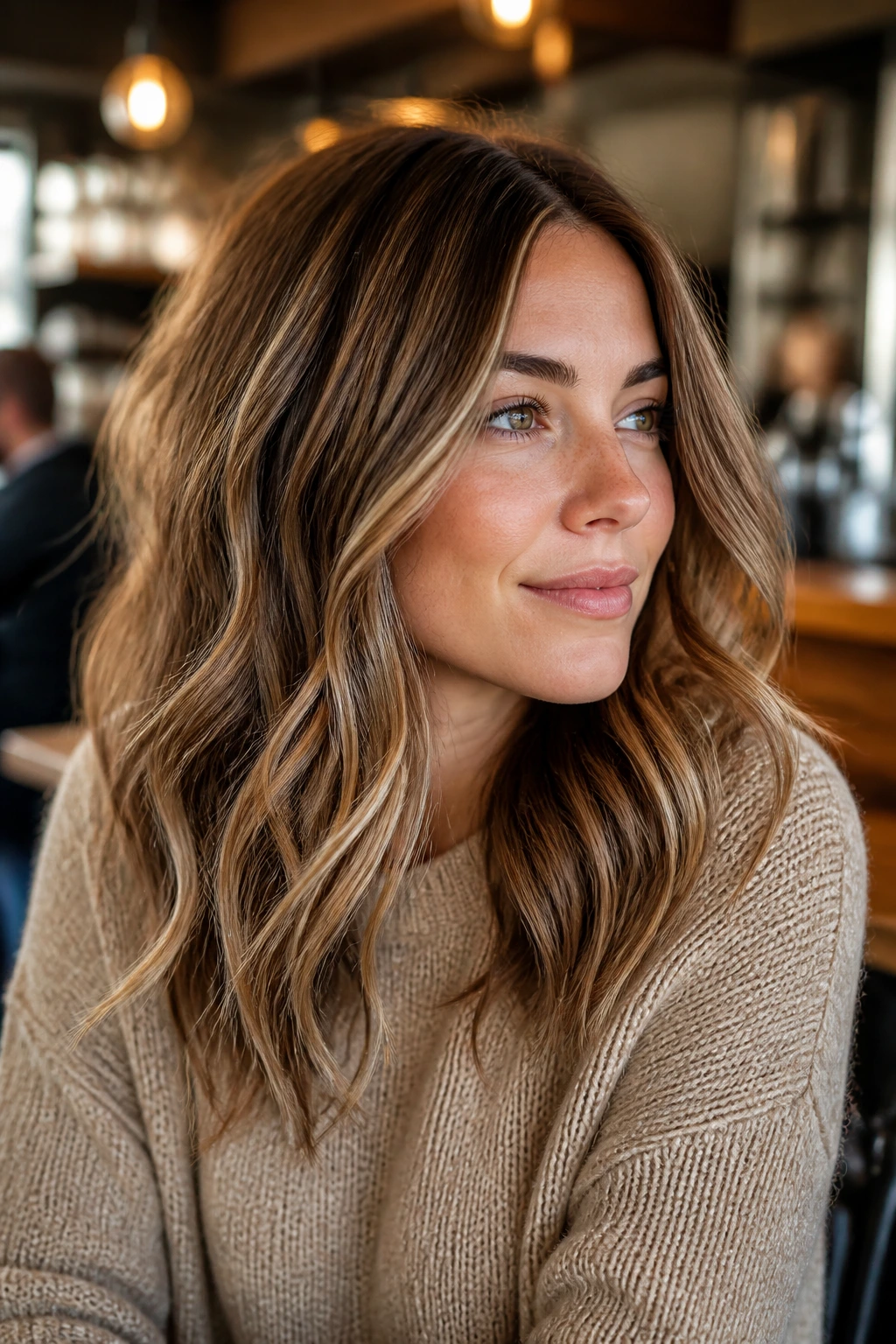
Latte brunette is creamy, soft, and easier to wear than the name sounds. The base stays brown, but the highlights or gloss live in a milky beige zone that gives the hair that café-au-lait look. It’s lighter than mocha, softer than bronde, and usually more neutral than honey.
This shade is especially useful if you want your brunette to look lighter without moving into obvious blonde territory. It has a soft-focus effect that flatters layered hair and round brushes alike. Straight hair shows the smoothness. Waves show the dimension.
A good latte brunette should never look streaky. The lighter pieces need to blend into the base so the whole head feels creamy instead of striped. If it looks patchy, the placement is too aggressive.
22. Soft Espresso with Gold Veils
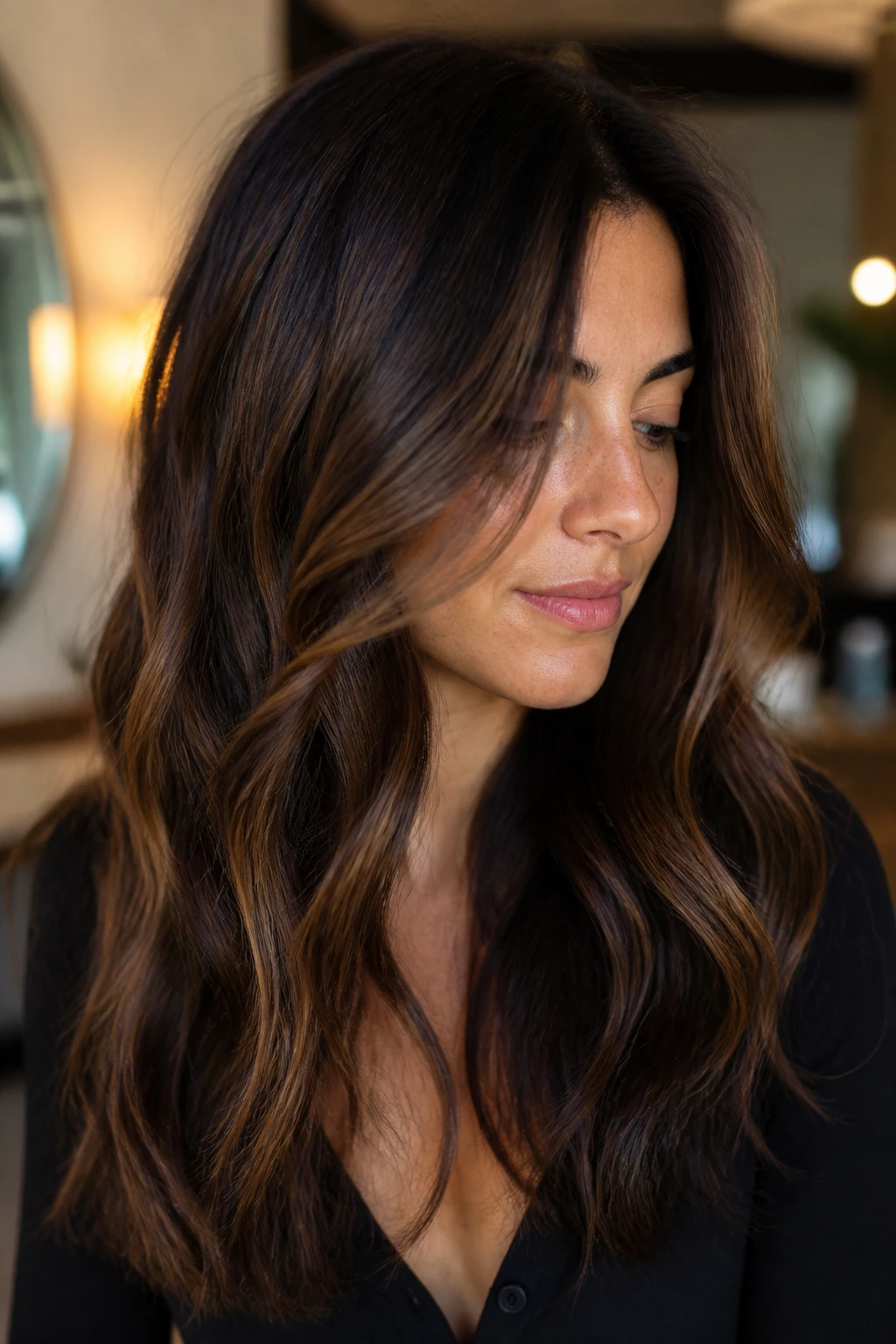
Soft espresso with gold veils is the closing argument for people who think dark brown has to be heavy. The base stays deep and glossy, but the gold veils are so fine that they only show when the hair shifts. It is subtle, elegant, and far more spring-appropriate than a flat dark brunette.
The strength of this look is restraint. The gold should not sit as obvious highlights. It should feel like a whisper through the surface, the kind of color that people notice because the hair looks healthy and dimensional, not because a streak jumps out at them.
Best for
- Dark brunettes who want change without a big lift.
- Hair that already has shine or a good blowout shape.
- Anyone who likes depth at the roots and movement at the ends.
If you only want one appointment and one color shift, this is a strong way to spend it. Small change. Big difference in motion.
Why Brown Hair Looks Fresher When the Light Changes
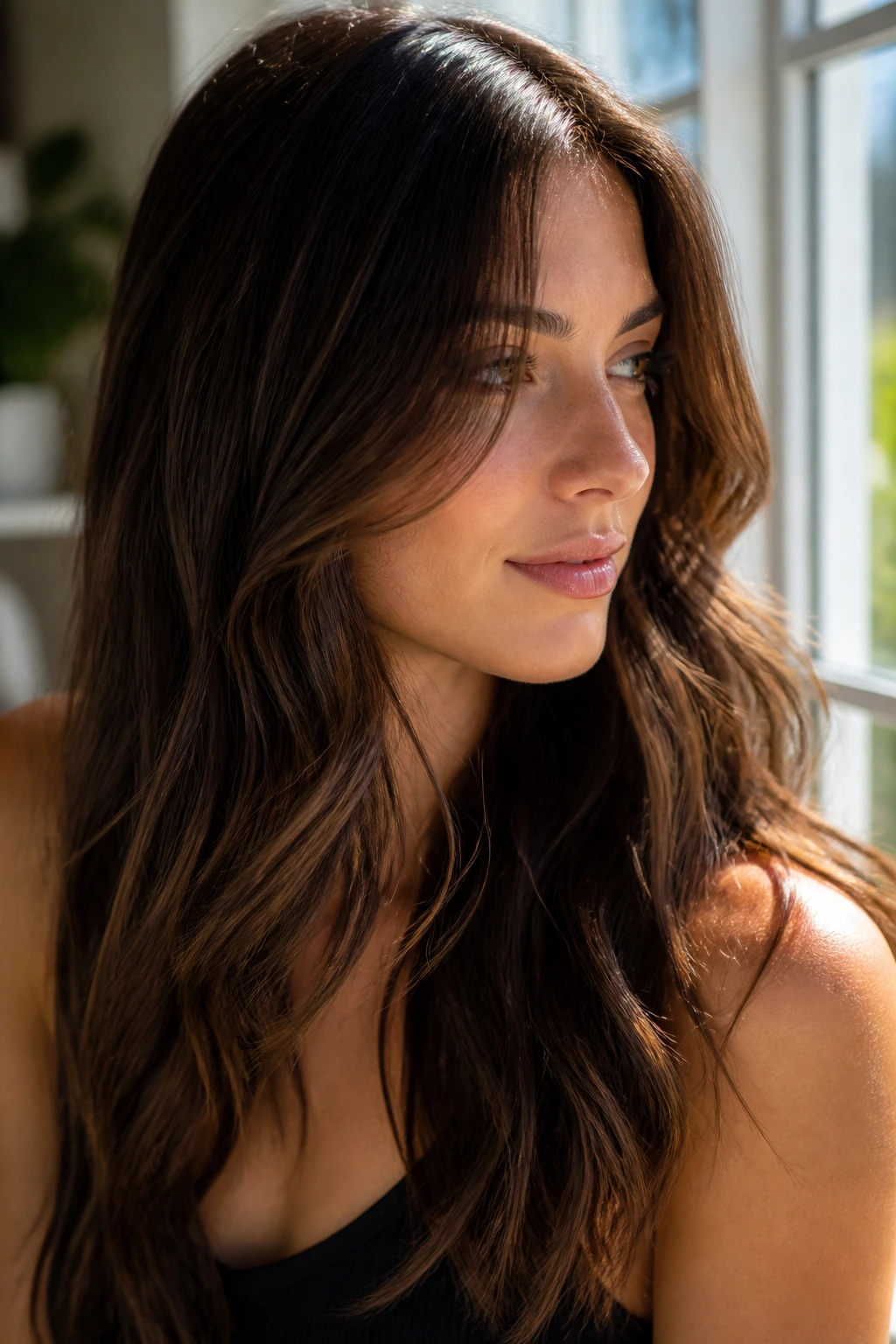
Brown hair starts to feel different when the days get brighter because light hits the pigment instead of hiding it. A winter brunette can survive on depth alone. Spring brunettes need dimension, or they flatten out fast. That is why glosses, ribbons, and root shadows matter so much here.
The best brown shades do two things at once. They keep enough depth near the scalp so the hair still looks rich, and they leave enough reflection through the mids and ends so the color doesn’t turn into a solid wall. That wall effect is the enemy. It makes the haircut look heavier, the face look harsher, and the whole style feel older than it is.
Another thing people miss: spring light exposes brass faster than indoor lighting ever will. A caramel tone that looked soft in a salon chair can suddenly go orange in daylight if it was lifted too high or toned too warm. Cooler browns, beige browns, and controlled warm tones solve that problem in different ways. The common thread is restraint.
The Tools and Products That Keep Brunette Color Honest
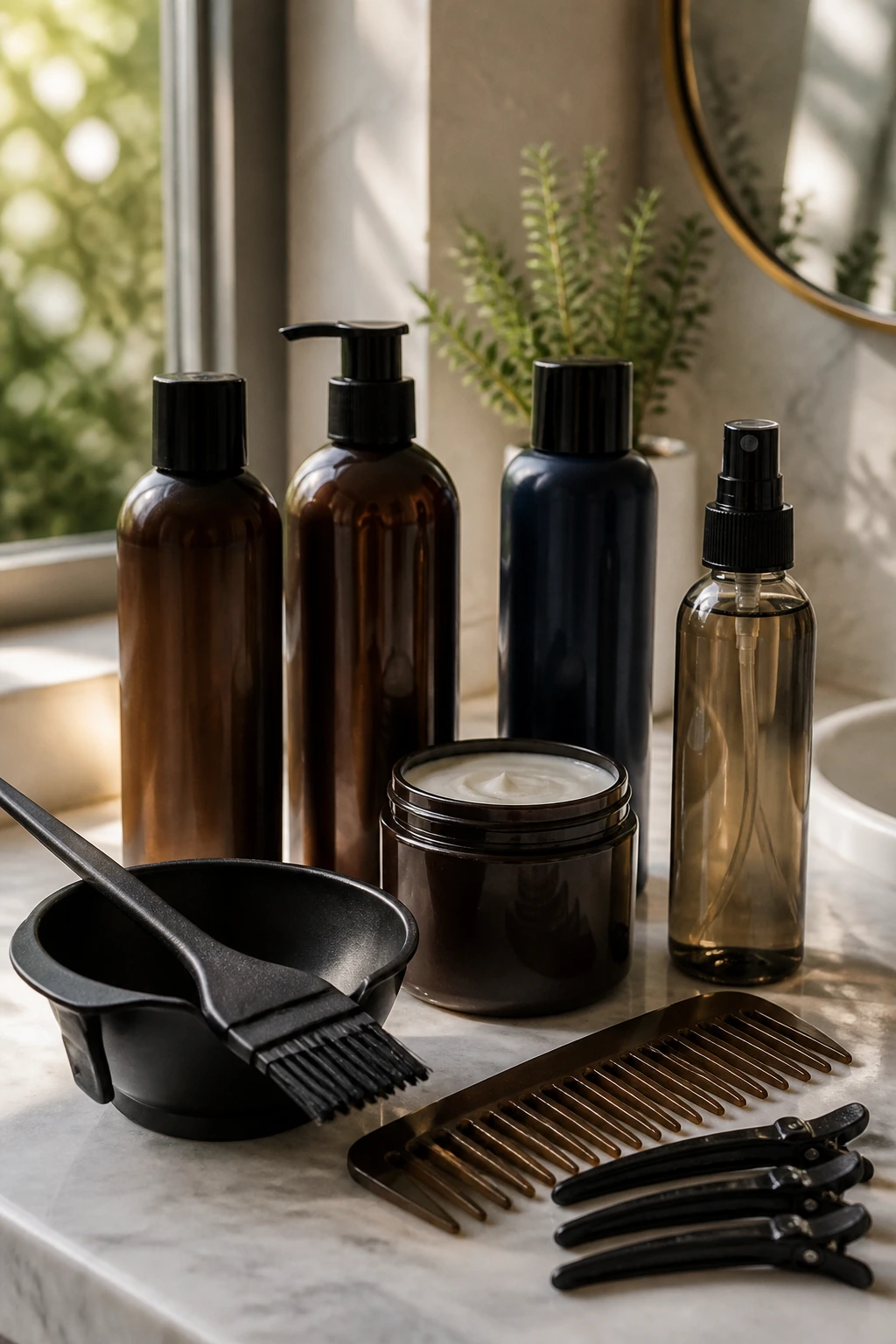
You do not need a shelf full of fancy bottles, but a few basics make brown color behave much better. A good brunette shade is half salon work and half maintenance, and the maintenance side starts in the shower.
- Color-safe shampoo: Keeps the brown from stripping out too fast and helps the tone stay closer to what you left the salon with.
- Moisturizing conditioner: Brown color looks dull fastest on dry hair, especially if highlights sit on the surface.
- Gloss or color-refresh mask: Useful for chestnut, mocha, amber, and latte shades that need tone revived between appointments.
- Purple or blue shampoo: Blue helps with orange brass in brunettes; purple helps cooler blonded pieces. Use it sparingly, not every wash.
- Heat protectant: Necessary if you blow-dry, flat-iron, or curl your hair more than once a week. Heat shifts brunette tones faster than people expect.
- Wide-tooth comb: Better for spreading conditioner and gloss evenly through highlighted ends.
- Sectioning clips: Helpful if you’re refreshing face-framing pieces or applying a mask to specific zones.
- Tint brush and bowl: Only if you’re working with a color-depositing gloss at home and know exactly what the formula is meant to do.
How to Choose the Right Brown at the Salon
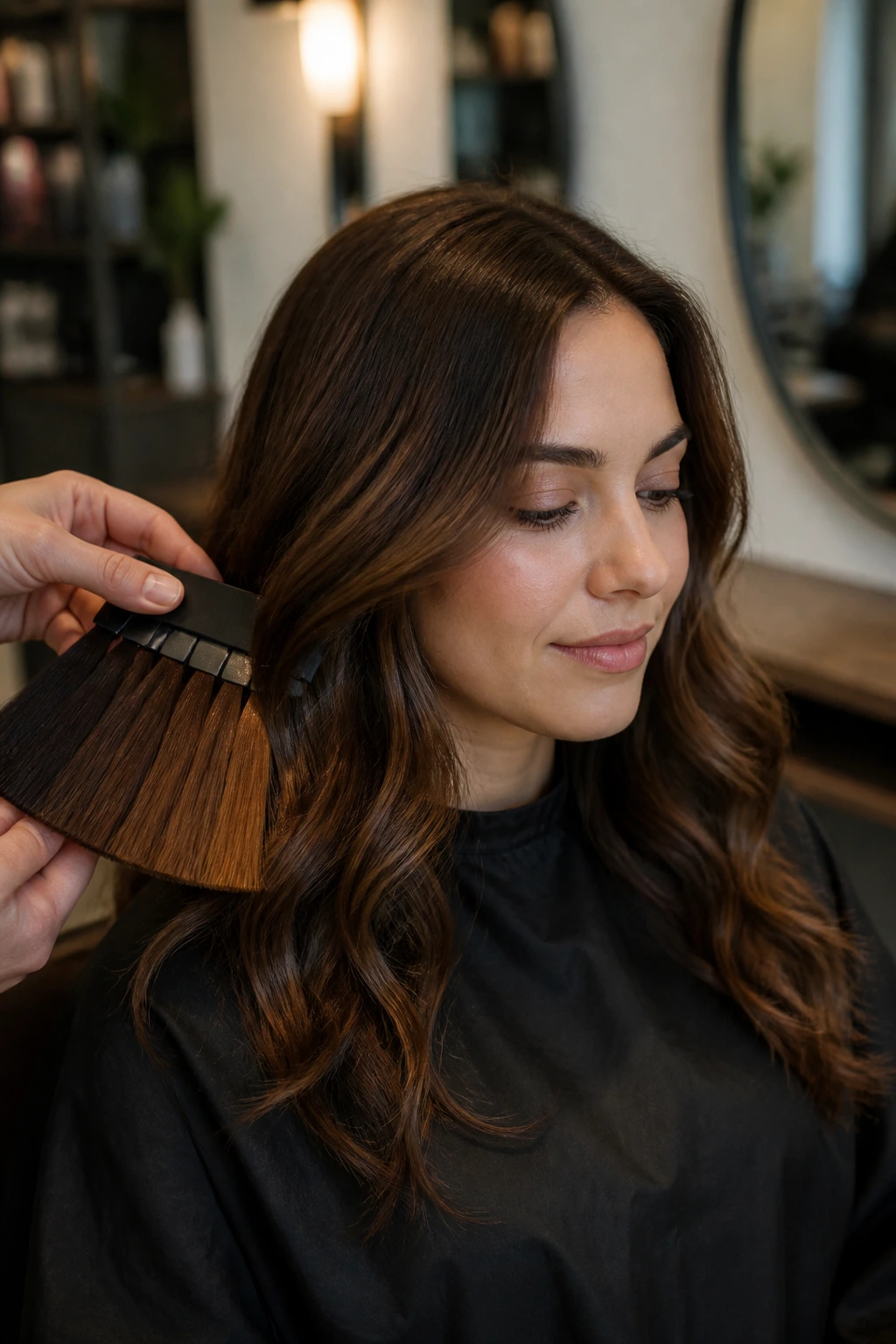
Bring photos. Bring three of them. And make sure at least one is a bad reference, because that tells the colorist what you do not want.
The most useful thing you can say is not “I want caramel brown.” That sentence is too vague. Say where you want the lightness, how much contrast you can live with, and whether you want the grow-out to stay soft. A level 5 brunette with soft beige balayage is a very different job from a level 4 espresso root with honey money pieces. Those details matter.
Read the photo, not the mood
- Lighting: Was the picture taken in direct sun, indoor light, or near a window? That changes everything.
- Base level: If your natural hair is very dark, the same shade may need more lift or more appointments.
- Undertone: Warm, cool, or neutral matters more than the color name on the mood board.
- History: Box dye, henna, previous bleach, and hard water can all change how the shade behaves.
If your colorist asks about maintenance, answer honestly. A beautiful spring brunette that needs a toner every two weeks is only beautiful if you’re willing to do that.
How to Wear These Shades So They Show Up
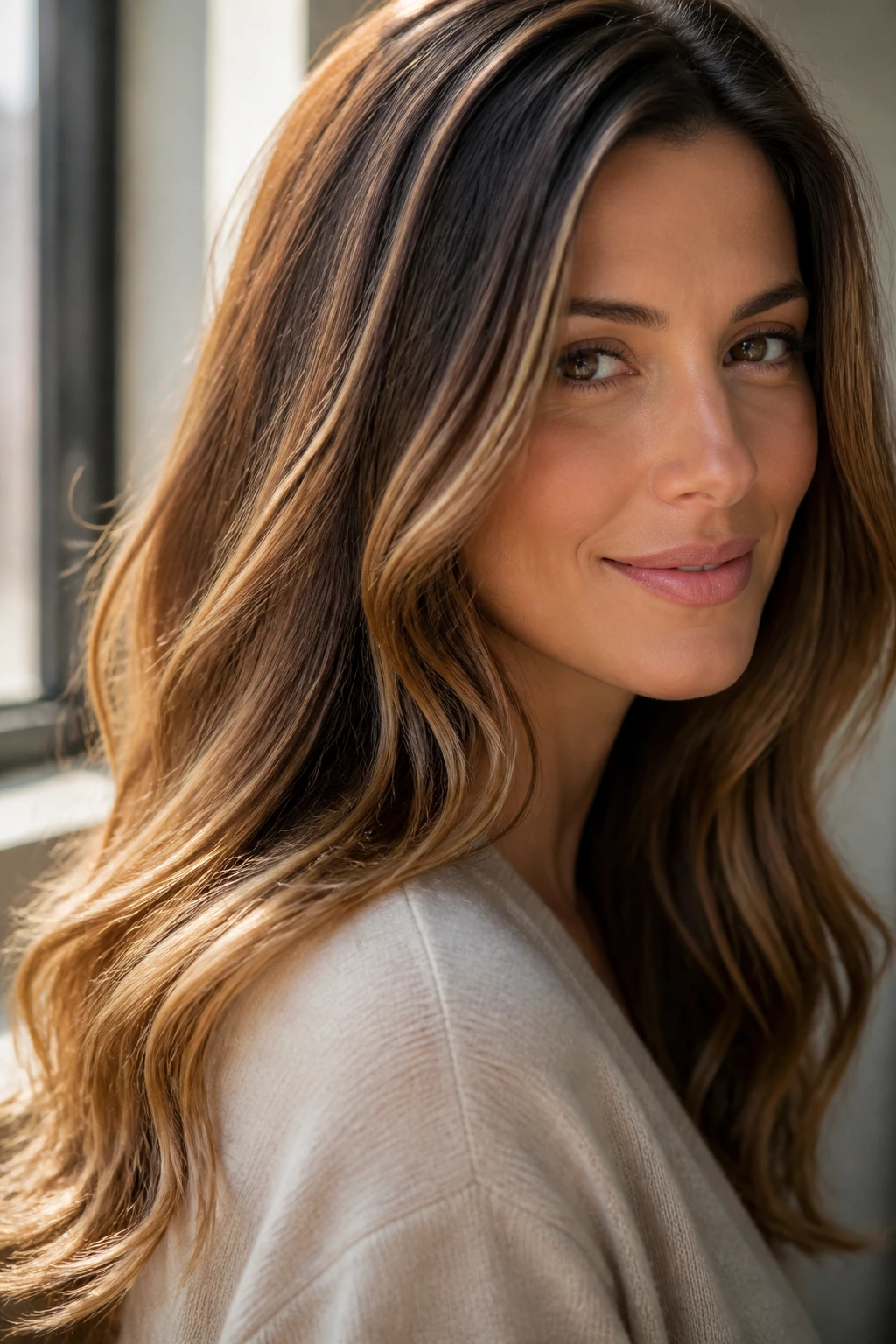
Lighting: Brown hair lives or dies by where you see it. If you want mushroom, beige, or frosted mocha to read properly, look at it near a window or outside in soft daylight. Warm shades like caramel, amber, and honey look best when the light hits them from the side, not head-on. That angle lets the ribbons show instead of flattening the whole head into one tone.
Haircut: Layers are the friend of dimension. A one-length cut can still look good with brown color, but it needs shine to carry the look. Curtain bangs and face-framing layers are especially useful for toffee money pieces, honey balayage, and latte brunette because they pull the brightest sections toward the face.
Makeup: Warm browns like cinnamon, amber, and copper-kissed brown usually like peach blush, bronzy shadow, and a soft nude lip. Cooler browns — mushroom, ash, frosted mocha, beige — tend to look cleaner with taupe, rose, or berry tones. You do not need to match the hair exactly. Please do not do that. But the wrong makeup can make a beautiful brown look muddy.
Wardrobe: Cream, olive, denim, charcoal, and rust all play nicely with brunette dimension. Bright white is fine, but if the shade is very cool, a stark white shirt can make the hair look even cooler. That is useful when you want it. Not so much when you don’t.
Small Color Boosters That Make a Big Difference
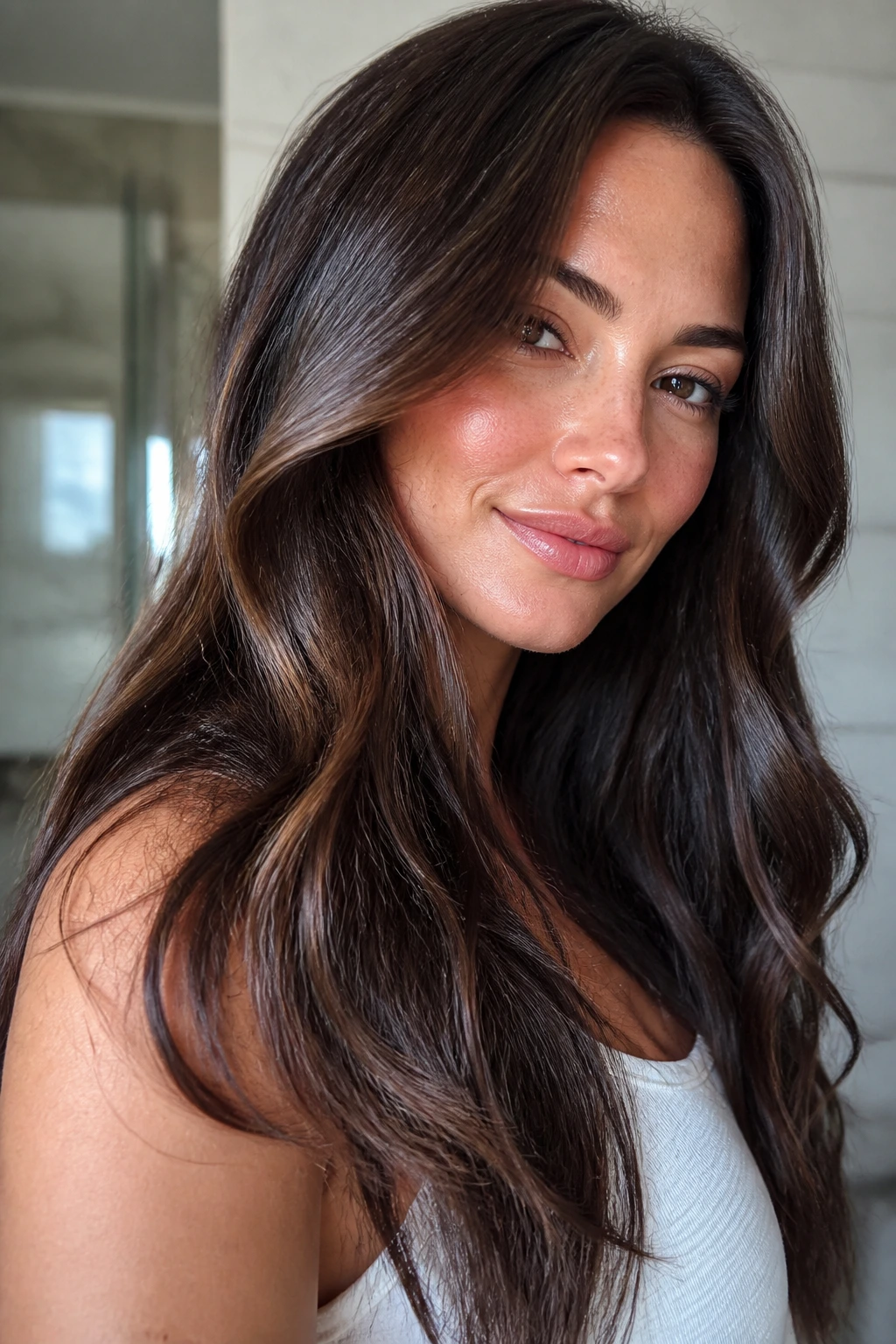
Gloss Boost: A clear or tinted gloss every 4 to 6 weeks keeps chestnut, mocha, latte, and walnut shades from going dull. If the color is warm, the gloss should keep it warm but soft; if the color is cool, the gloss should keep the brass from creeping back in.
Tone Control: Blue shampoo is better for brunettes than people think, but use it like a tool, not a lifestyle. Once a week is usually enough for brown highlights that want to stay calm. Use purple only when the lighter pieces lean blonde or beige.
Customization: Want more contrast? Ask for a stronger face frame or a slightly deeper root shadow. Want less? Push the highlights farther apart and keep the ribbons very fine. That one decision changes the whole read of the color.
Make-It-Yours: If your hair is curly, prioritize placement over brightness. Curly texture shows color in ribbons and pockets, so even subtle highlights can look vivid. If your hair is straight, ask for more tonal variation in the mid-lengths because flat hair shows every color line.
Mistakes That Make Brunette Color Look Off
-
Going too dark when you wanted dimension: If the whole head is one deep brown, the hair can look heavy in daylight. The fix is a root shadow or a gloss with a few levels of variation, not a darker dye.
-
Choosing warmth that’s too loud: Caramel and amber are not the same as orange. If the shade reads pumpkin under indoor bulbs, it will look louder outdoors. Ask for softer gold or beige balance.
-
Letting toner sit too long: Ash and beige brunettes can slip into gray, khaki, or dull taupe if they’re overtoned. The hair ends up looking tired instead of polished.
-
Ignoring the haircut: A blunt, dry cut with no movement can make even beautiful balayage look stuck in place. Sometimes the color is fine and the cut is the problem.
-
Using purple shampoo too often: It can make warm brunettes flat and cool brunettes chalky. Once a week is usually enough unless the hair is very blonde around the face.
-
Skipping a strand test on color-treated hair: Previous box dye, henna, or heavy pigment can change how the new shade lifts. If there’s history, test first. Always.
Other Ways to Wear Brunette Dimension
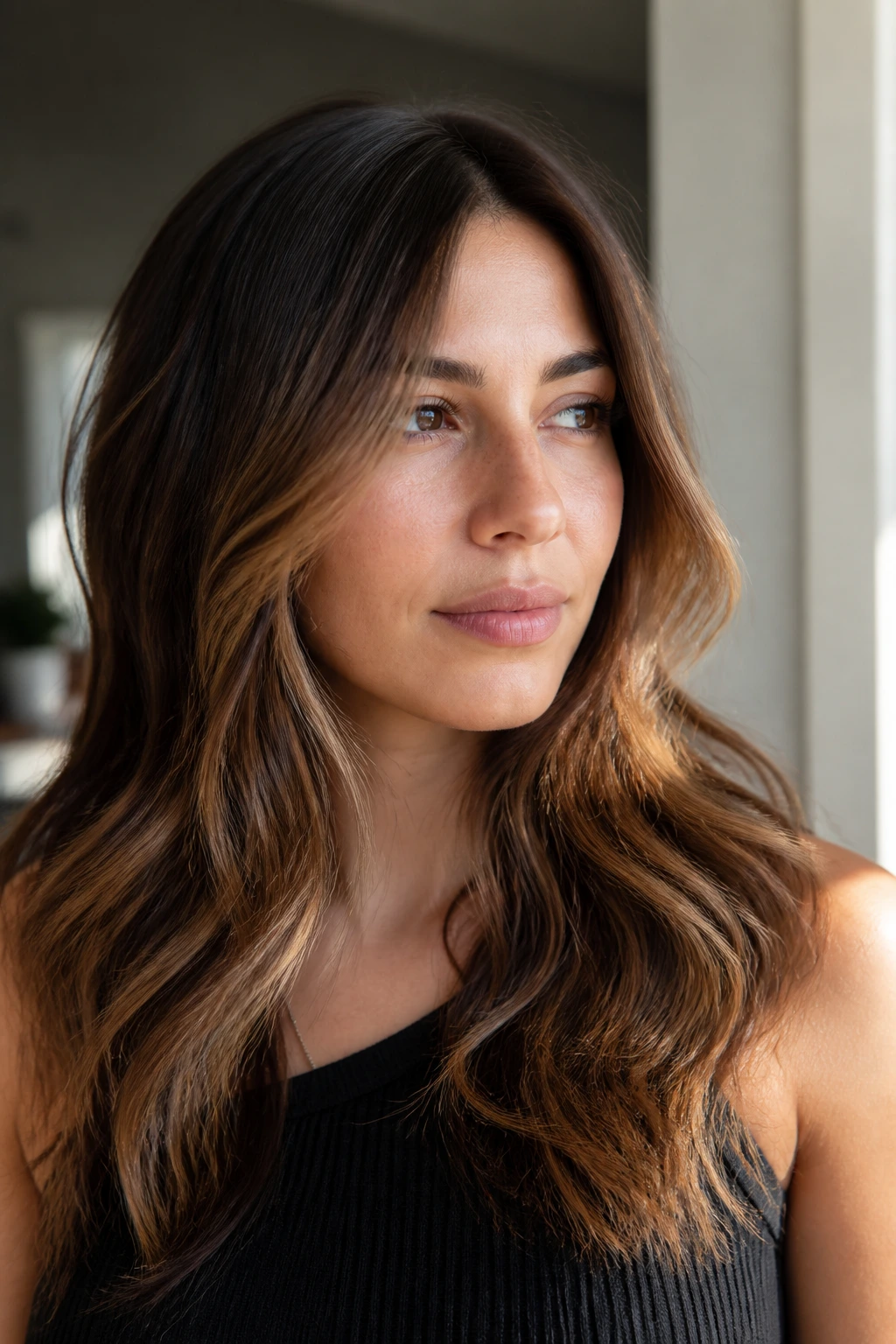
Gloss-Only Brunette: This is the low-commitment version. Keep the natural base and refresh tone with a demi-permanent gloss so the hair looks richer, not lighter. It works best when you like your current depth and only want more shine.
Soft Balayage Fade: Painted ribbons through the mids and ends create a lived-in look that grows out slowly. This is the choice if you want visible movement but hate root drama.
Face-Frame First: Brighten only the front pieces and leave the rest dark. It’s a smart compromise when you want the face to pop but the maintenance to stay low.
Gray-Blending Brunette: Fine ribbons of beige, caramel, or ash can blur early gray instead of covering it in one solid block. The result looks softer at the root and less stripey as it grows.
Curly-Hair Brown Dimension: On curls, placement matters more than brightness. Highlight the raised surfaces and let the darker coils sit underneath. The effect is fuller, not louder.
Keeping the Tone Fresh Between Salon Visits
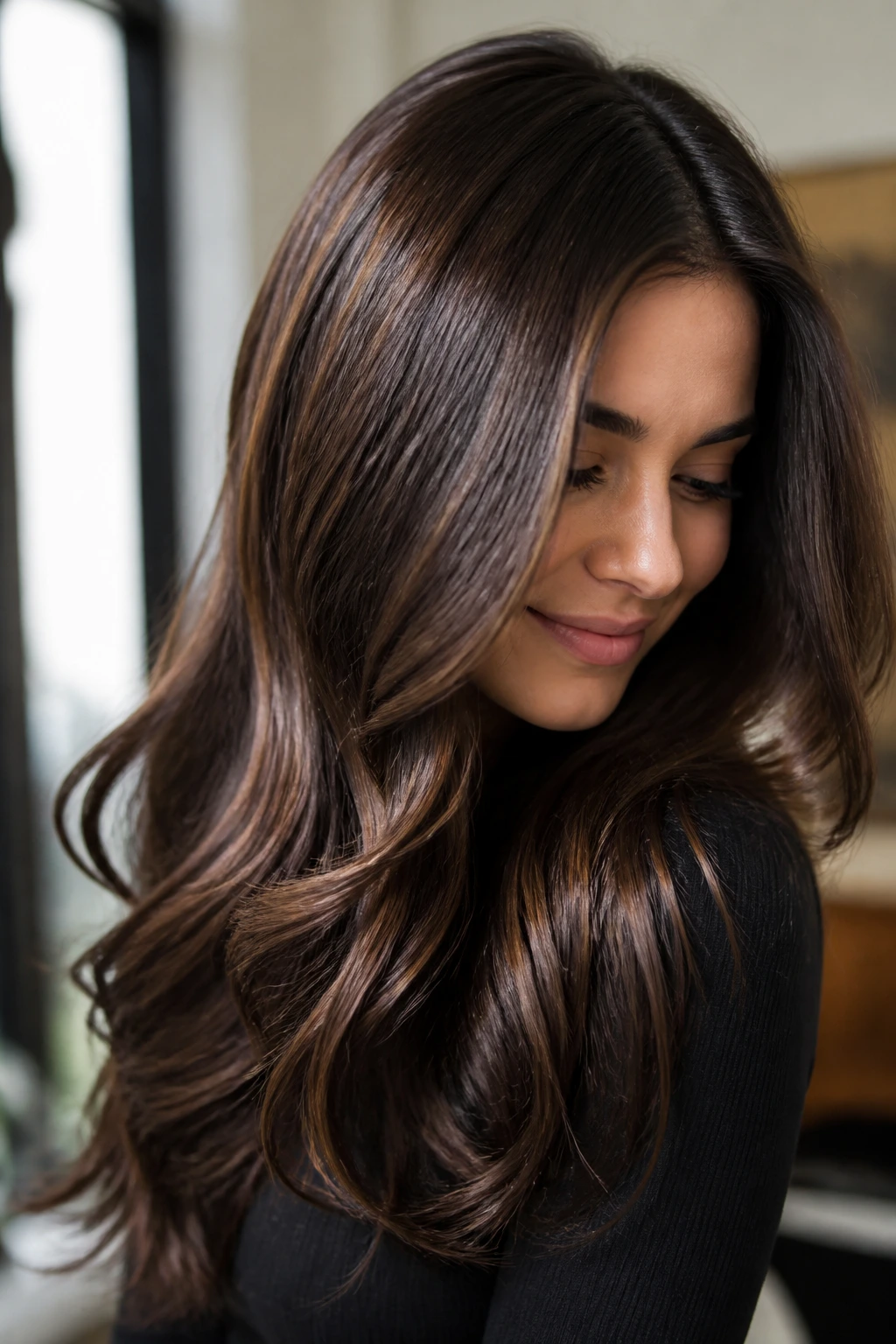
Brown hair has a way of looking fine until it doesn’t. Then one bad wash, one hot iron, or one hard-water shower can flatten the whole thing. The fix is routine, not panic.
Gloss-heavy shades like chestnut, mocha, latte, and walnut usually stay best when refreshed every 4 to 6 weeks. Balayage and money-piece looks can stretch longer, often 6 to 10 weeks, because the grow-out is part of the design. Cooler shades — mushroom, ash, frosted mocha, beige — may need a toning shampoo or gloss more often if the hair pulls warm.
Heat is the silent thief here. If you air-dry or use low heat, the color keeps its reflection longer. If you flat-iron every day, you will burn through shine fast. A leave-in conditioner and a heat protectant are not optional extras on highlighted brunette hair. They are the difference between glossy and tired.
If you swim, wet the hair with clean water first and add a leave-in or conditioner before the pool. That helps reduce chlorine absorption, which can turn lighter brown pieces strange and dry. Afterward, wash it out the same day if you can.
Questions People Ask Before They Book
Which spring brown shade is easiest to maintain?
Espresso root shadow, warm walnut, and milk chocolate smoother are the most forgiving. They keep depth near the scalp, so the grow-out is soft and the color doesn’t need constant rescuing.
What brown shade looks best on cool skin tones?
Mushroom brown, beige brunette, frosted mocha, and ash brown with vanilla ends usually flatter cool undertones because they keep the warmth under control. The trick is avoiding gold that turns yellow.
Can I get a spring brown look without bleach?
Yes, if you stay within a gloss or tonal shift. Chestnut glaze, mocha melt, warm walnut, and soft espresso with gold veils can often be done with minimal lift on the right base.
How do I stop brown highlights from turning orange?
Use blue shampoo sparingly, avoid too much heat, and ask for a cooler or neutral gloss at your refresh appointment. Orange usually shows up when the underlying pigment is too warm or the toner has faded.
What if my hair is already very dark?
Then the lighter ideas need either more lift or a more subtle placement. Honey balayage and latte brunette may take more than one appointment, while espresso root shadow, warm walnut, and copper-kissed brown can work with less change.
Do these shades work on curly hair?
Absolutely, and some look better on curls than on straight hair. The movement gives dimension to ribbons, glosses, and face-framing pieces, which makes colors like cinnamon brunette and hazelnut brunette feel richer.
How often should I refresh balayage?
Most brunettes can wait 8 to 12 weeks for a bigger refresh if the grow-out is soft, but a gloss or toner touch-up may be useful halfway through. If the ends are getting dry or dull, do not wait for the roots to look bad first.
What if the color looks too stripey?
That usually means the highlights are too chunky or too evenly placed. Ask for finer ribbons, more blending at the root, and a gloss to soften the contrast. A good brunette balayage should move like shadow and light, not like separate sections.
A Softer Brown That Still Has Movement
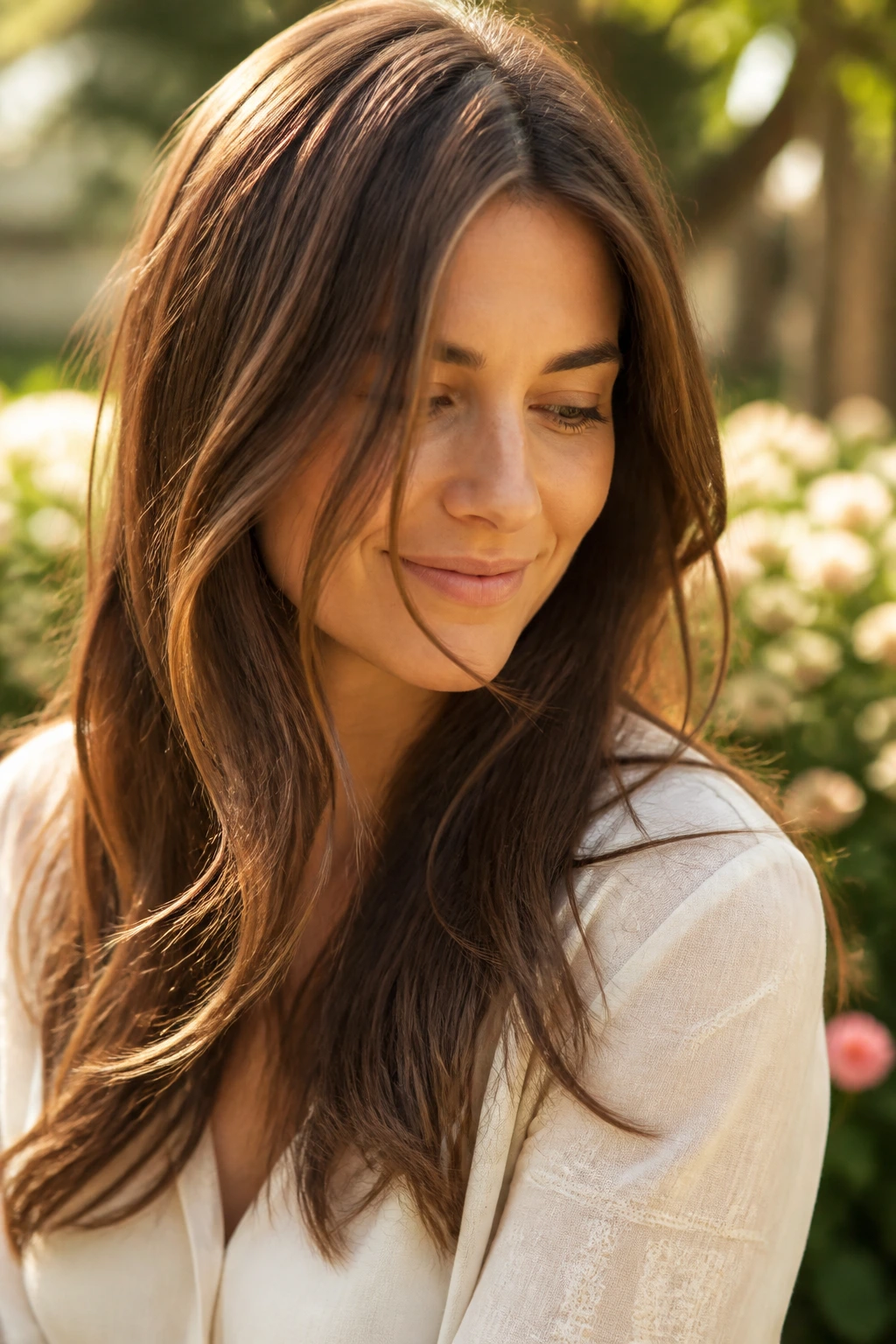
The best brown shades for spring are not the ones with the most obvious contrast. They’re the ones that hold together from a distance and still shift when the light hits them sideways. That is why glosses, root shadows, beige ribbons, and fine face-framing pieces keep showing up in the strongest looks.
If you want the safest route, start with chestnut, mocha, or warm walnut. If you want brightness, move toward honey, toffee, or latte. If you want something cooler and cleaner, mushroom, beige, and frosted mocha do the work without turning the hair harsh.
Brown hair does not have to mean “one color, one note, one appointment.” The right spring brunette has depth at the crown, movement through the mids, and enough shine to look alive even when the weather can’t decide what it’s doing. Pick the version that fits your maintenance habits, not the one that only looks good under perfect light, and the color will keep paying you back every time you catch it in a window.
