



Gold blonde hair colors can do something ash blondes rarely manage: they make warm skin look alive instead of washed out. The trick is not brightness. It’s the kind of gold—honey, beige, amber, buttercream—that sits next to peach, olive, or golden undertones without turning the face red or the hair banana-yellow.
Warm skin is not one fixed shade. Some faces lean peach and freckled, some read olive and muted, and some go straight bronze after one afternoon outdoors. A good gold blonde respects that range by keeping the root a touch deeper, brightening the face frame with intention, and using glosses that leave the hair looking creamy rather than chalky.
That’s why this family of blondes is so interesting. Honey ribbons, caramel balayage, soft champagne gold, amber foilayage—each one changes the balance a little, and those small changes matter when your skin already carries warmth. The right choice is the one that makes your eyebrows, eyes, and cheek color look cleaner the minute the hair moves. First, it helps to read the undertone before you pick a shade.
Why These Gold Tones Stand Out on Warm Skin
-
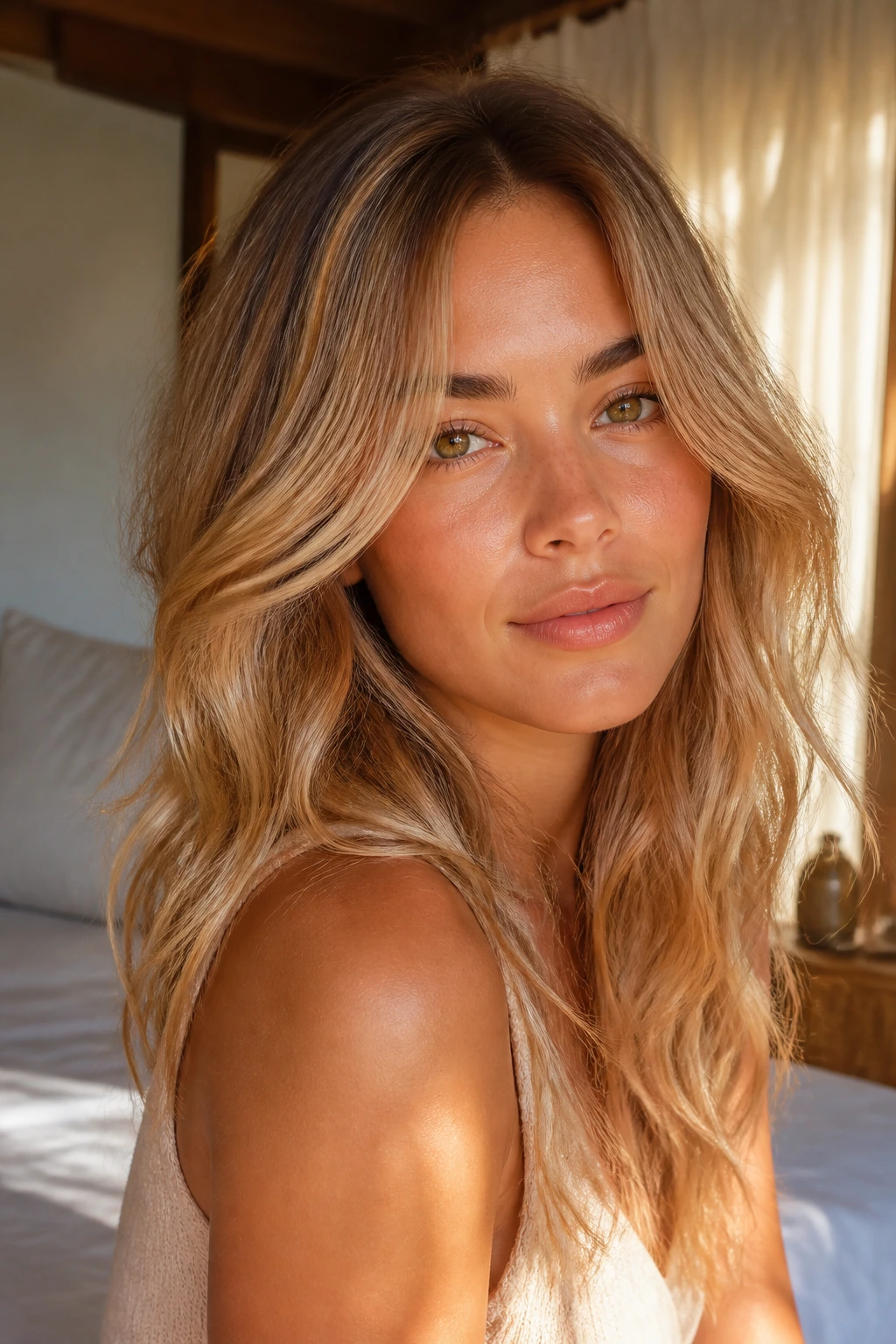
They echo the warmth already in your complexion: honey, beige-gold, and amber tones keep peachy or olive skin from looking flat or slightly gray.
-
They soften the line between face and hair: root shadow, ribbons, and glosses make regrowth less obvious than a hard all-over blonde.
-
They fade more gracefully than icy blondes: beige-gold usually drifts into a softer, richer blonde instead of a dull silver cast.
-
They give you room to choose your upkeep level: you can go subtle with a gloss or commit to brighter foil highlights depending on how often you want salon visits.
-
They read well on movement: waves, curls, shags, and layered cuts show off gold reflection better than a single flat panel of color.
Reading Warm Skin Before Choosing a Gold Blonde
Warm skin isn’t one thing, and that’s where a lot of blonde advice falls apart. A peach-toned face can handle a brighter buttery blonde than a muted olive one. A deeper bronze complexion often needs more depth in the root and a richer gold through the mids, or the contrast gets too harsh.
Peach, Olive, and Golden Skin Want Different Golds
Peachy skin usually likes blonde with a creamier base—think honey, apricot, or buttercream. Olive skin often looks best when the gold is softened with beige or taupe so the color doesn’t go neon. Golden skin can handle the widest range, but even then, too much yellow at the ends can make the whole look feel flat.
Depth Matters as Much as Undertone
A level 8 honey blonde on medium warm skin can look polished. The same shade pushed to level 10 with no root depth can look washed out and a little loud. That’s why the best gold blondes usually keep some contrast near the scalp, especially if your brows are dark or your eyes are deep brown.
Root Shadow Is Not a Cop-Out
A soft root shadow is one of the smartest tools in this category. It buys you grow-out time, but it also stops the blonde from sitting like a helmet on top of the face. On warm skin, that tiny bit of depth at the root often makes the whole color look more expensive.
1. Soft Honey Blonde
Soft honey blonde is the safe harbor of gold blonde shades. It sits between yellow-gold and beige, so it brightens warm skin without shouting from the top of your head. On shoulder-length waves, it looks like sunlight moved in and got comfortable.
Ask for level 8 honey ribbons with a beige-gold gloss and a root shadow that stays just one shade deeper than the mids. If your skin flushes easily, this version is friendlier than a brighter lemon blonde because the beige softens the reflection.
2. Buttercream Blonde
Buttercream blonde is for the person who wants light hair but hates that flat, icy finish some blondes get. The color lands creamy and pale, with enough gold in it to flatter warm skin and enough softness to keep it from turning brassy-looking in bad light. It’s a good choice if your natural base is already fair and warm.
A light gloss at the end matters here. If the toner leans too violet or too ash, the whole thing can look chalky instead of lush. I’d keep the roots subtle and let the lighter pieces sit around the face and crown, where they catch the most natural light.
3. Golden Beige Blonde
Golden beige blonde is the quiet overachiever in this lineup. It doesn’t have the dessert-name charm of honey or butterscotch, but it does something better: it gives warm skin a clean, even glow without making the hair scream gold. That beige note is what keeps the shade believable.
This is one of the best choices for olive warm skin because it stays warm without turning orange. Ask for gold-beige ribbons through a level 8 or 9 base, then finish with a soft neutral-gold gloss. The result should look polished, not painted on.
4. Caramel Ribbon Balayage
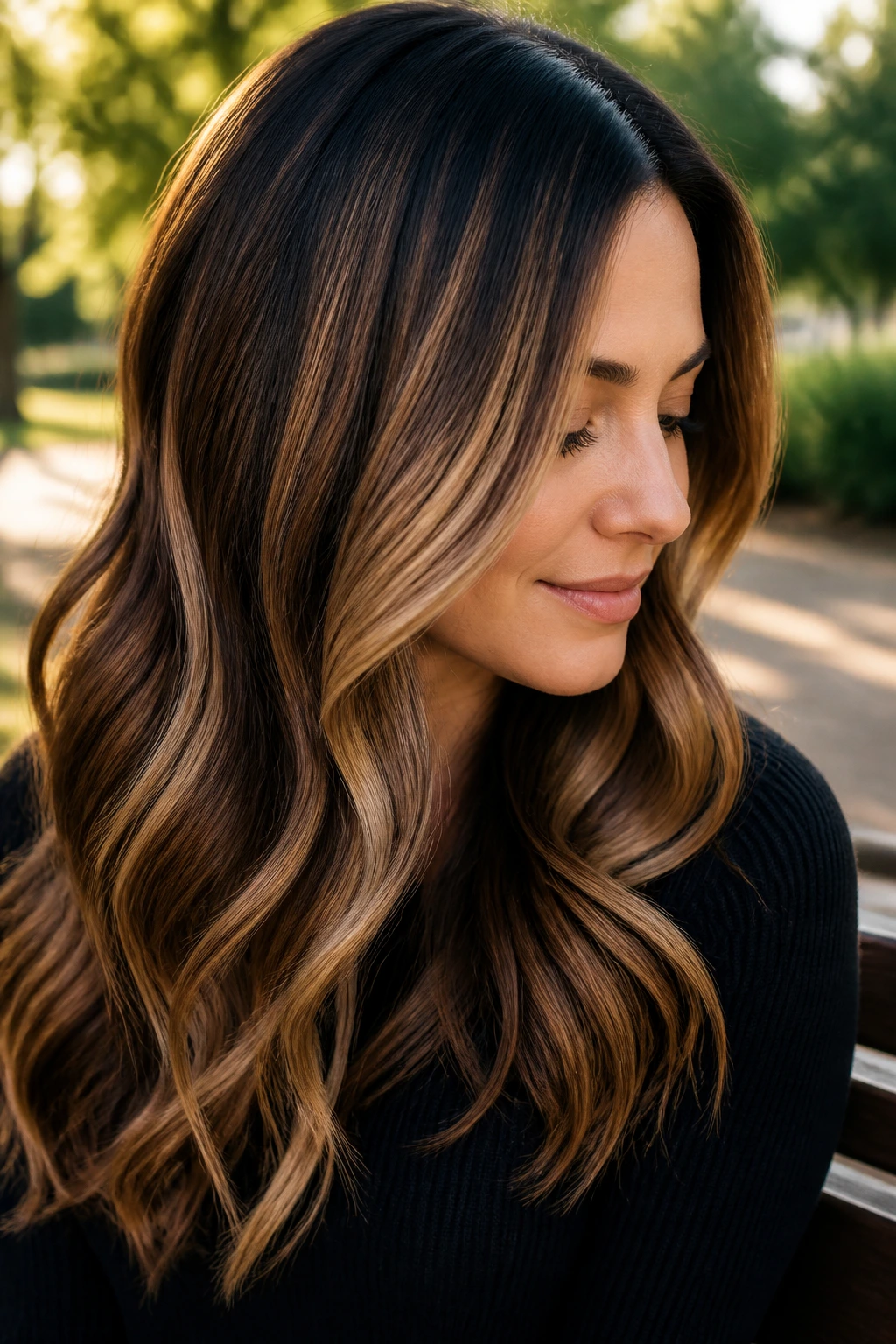
Caramel ribbon balayage is what happens when brunette hair wants to flirt with blonde instead of diving in headfirst. The ribbons sit in caramel and soft gold, so the color lifts warm skin while keeping the roots rich and wearable. It’s especially good if you like dimension more than brightness.
The best part is grow-out. Because the highlights are hand-painted, they break up the line at the scalp and let the darker base do some of the work. That means fewer harsh regrowth lines and a lot less stress about perfect maintenance.
5. Honey Bronde
Honey bronde lives in that middle lane between brown and blonde, and honestly, that’s where a lot of warm-skin clients should start. It keeps enough brown to frame the face, but the honey pieces stop the color from feeling heavy. Think of it as a blonde that remembers where it came from.
This shade works especially well on medium warm skin and on people with dark brows who don’t want to bleach them out of the picture. Ask for low-contrast honey lights around the hairline and a deeper root through the part. It reads expensive because it doesn’t try too hard.
6. Champagne Gold Blonde
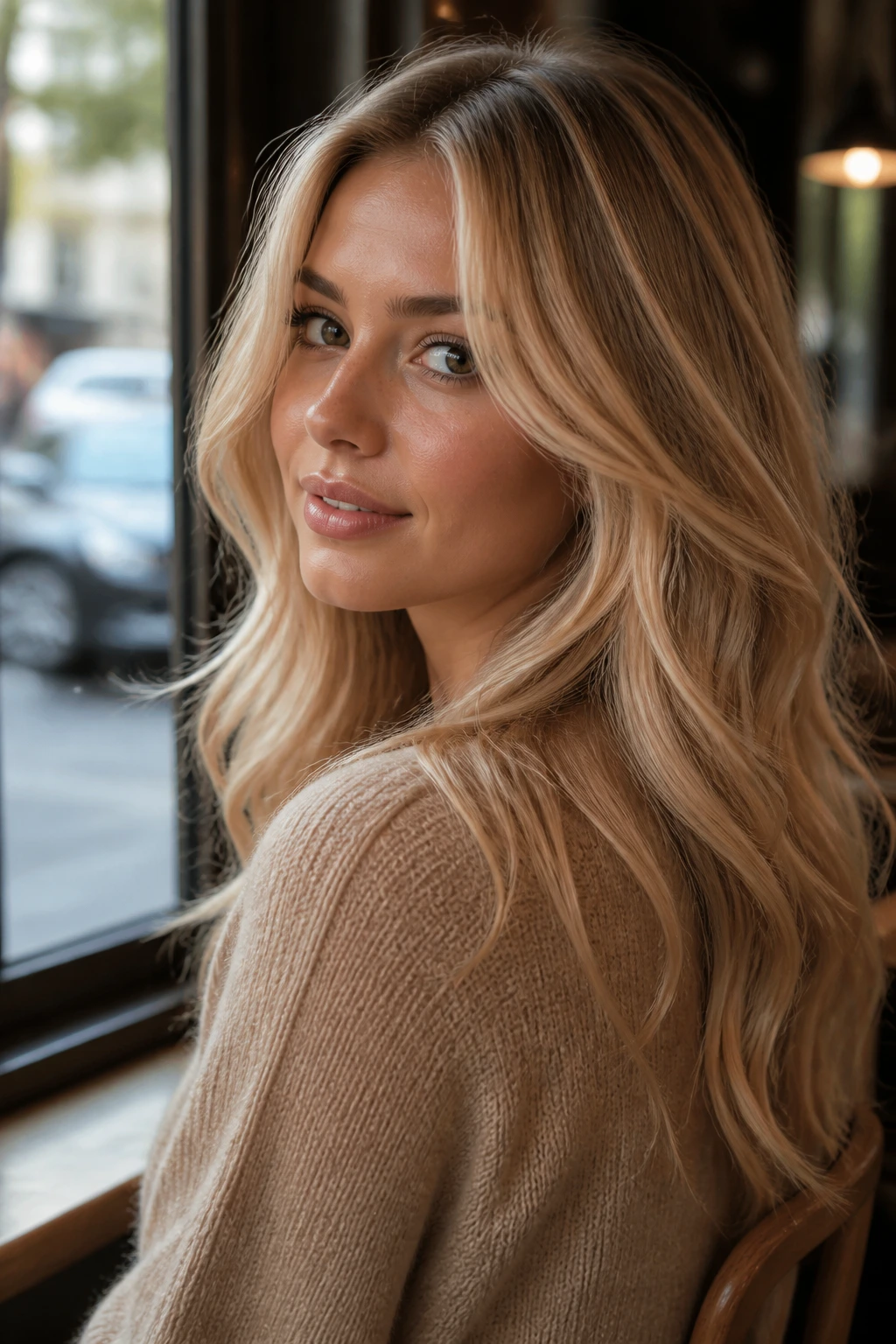
Champagne gold blonde should not be confused with icy champagne blonde. The warm version has a beige-gold sparkle that flatters peach and golden skin without dragging the face toward pinkness. It looks especially nice on clean, glossy blowouts because the reflection stays soft and bright.
If your complexion is fair and warm, this is one of the brighter options that still feels wearable. Keep the toner neutral-gold rather than silvery, or the entire shade can tip too cool. The best versions have a faint cream tone at the ends and a little depth up top.
7. Apricot Blonde
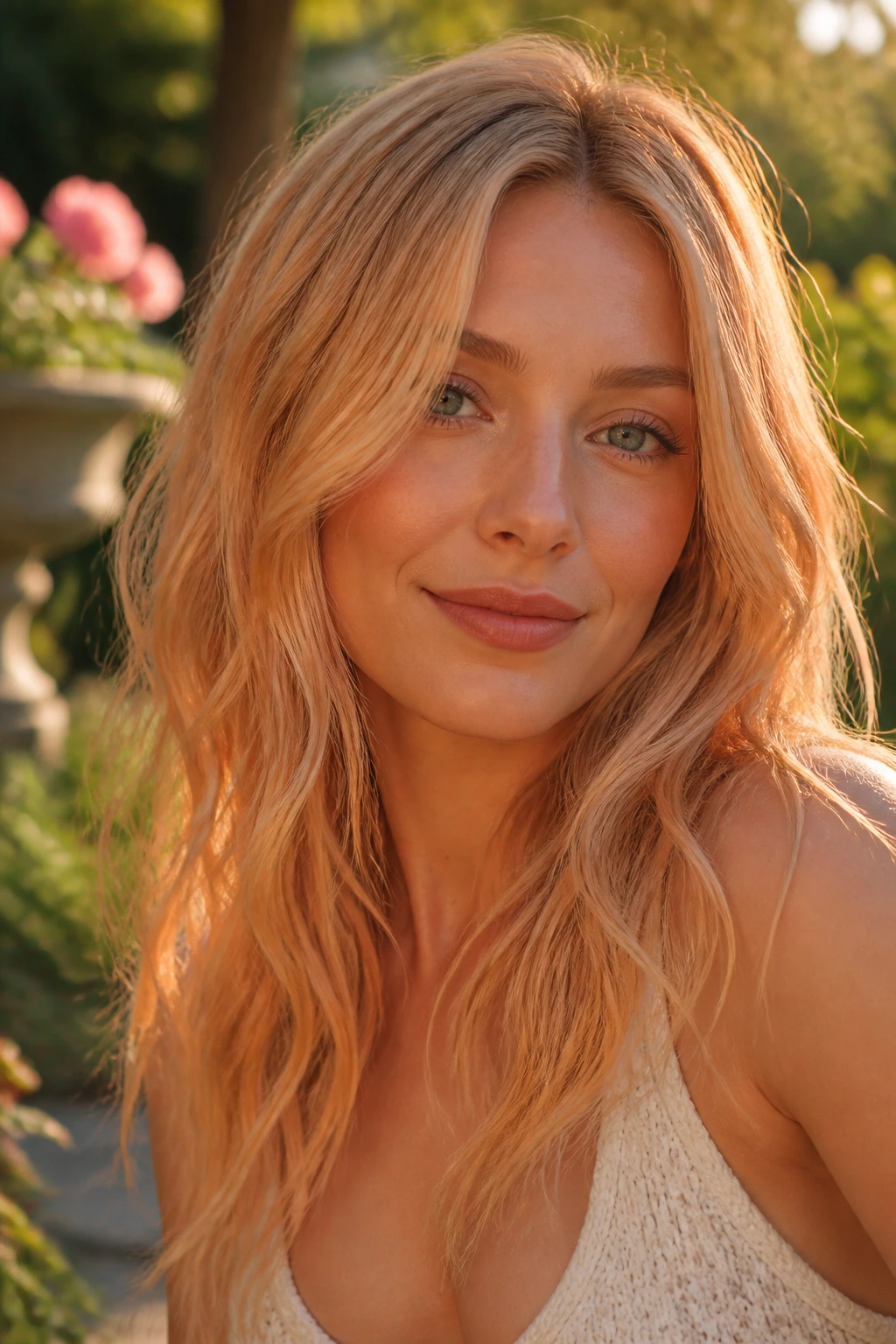
Apricot blonde is the warmest shade in the soft-gold family, and that’s exactly why it works. The peach-gold notes bring out the same tones already sitting in warm skin, especially on faces that blush easily or carry a little rose in the cheeks. It looks playful without turning cartoonish.
Why It Flatters Warm Skin
The apricot note lifts the complexion instead of flattening it. It’s a strong choice for warm skin with freckles, light eyes, or a natural flush, but it does need a careful hand. Too much orange and it stops reading as blonde.
Ask for a pale gold base with apricot gloss just on the mids and ends. If your hair is porous, have your colorist test a strand first. Porous hair grabs warm pigment fast, and apricot can go louder than expected.
8. Sandy Wheat Blonde
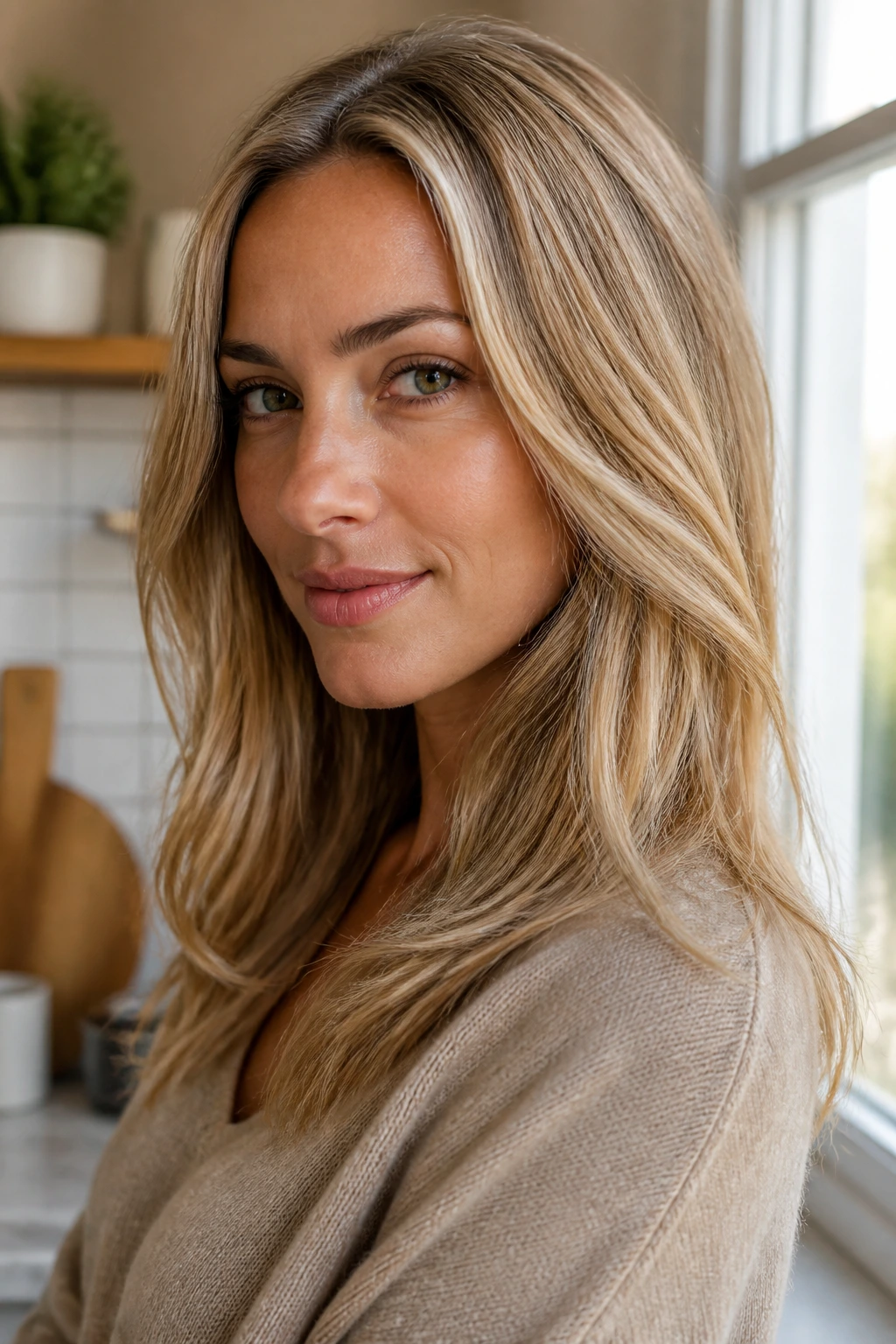
Sandy wheat blonde is the shade for people who want blonde that doesn’t feel loud when they walk into a room. It has a dry, sunbaked look—more warm beige than bright yellow—and that makes it especially kind to olive and muted warm skin. The tone is soft enough to wear every day.
This color is also forgiving. It grows out with less drama than high-contrast blonde because the base and the highlights stay in the same warm family. If you like understated color that still looks intentional, this one lands in the sweet spot.
9. Toffee Melt Blonde
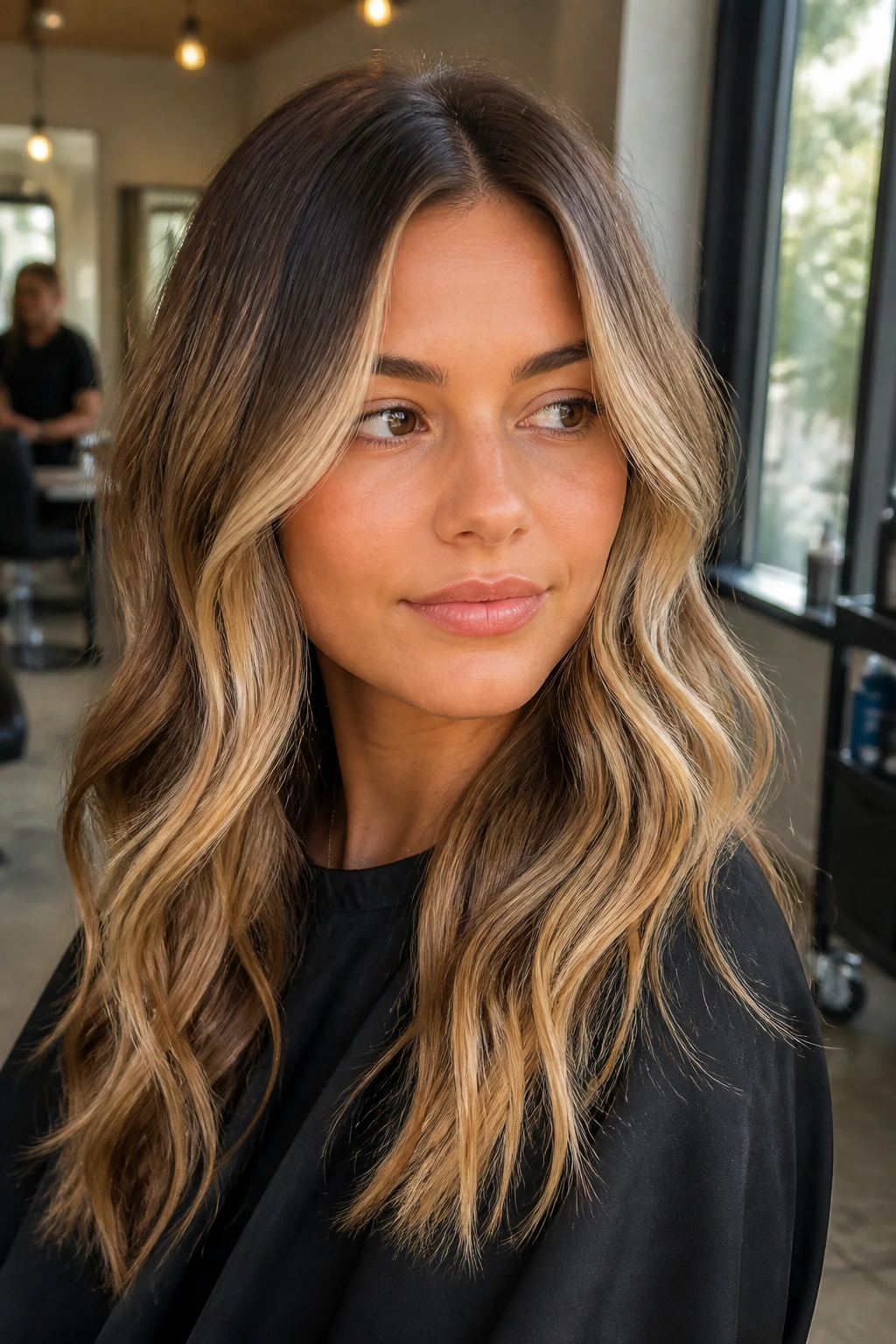
Toffee melt blonde starts deeper at the root and slides into lighter gold ends, which is exactly why it looks natural on warm skin. The darker base keeps the hair grounded, while the toffee and honey pieces bring light forward around the face. It’s one of the easiest ways to go blonde without losing your natural depth.
I like this on medium and deep warm skin most of all. It keeps the color rich, especially on textured cuts and long layers. Ask for a melt, not a stripe—those tiny blends make a huge difference.
10. Sunlit Almond Blonde
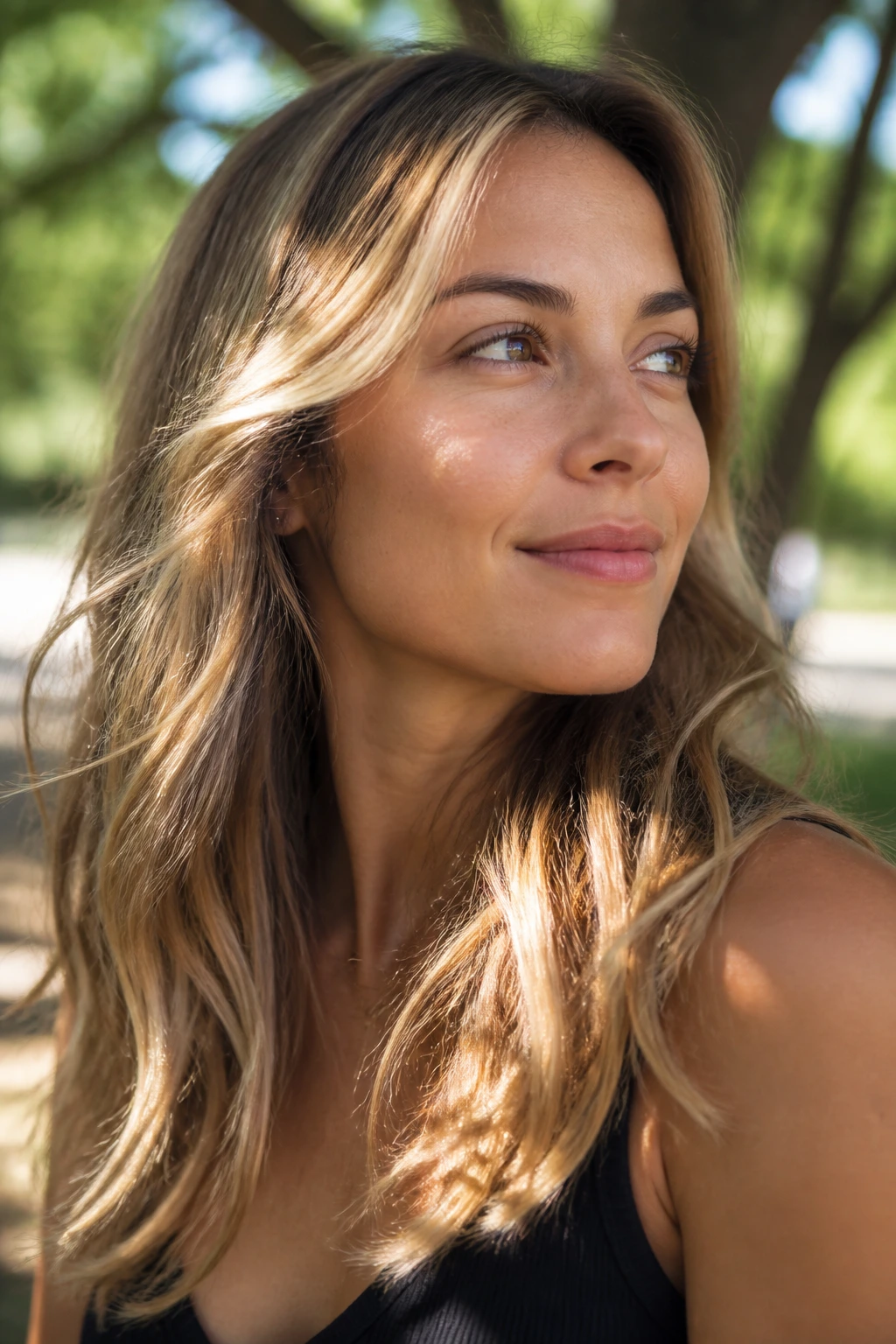
Sunlit almond blonde has a brown-blonde backbone with soft gold placed where the light hits first. It’s lovely on warm skin that needs dimension more than brightness. The almond base keeps the whole look from floating away from the face.
This shade is smart for dark brows and medium-deep warm complexions. The blonde pieces should be finer near the temples and a touch wider through the ends so the style moves well. If your hair is thick, the contrast will show up better than you expect.
11. Warm Vanilla Blonde
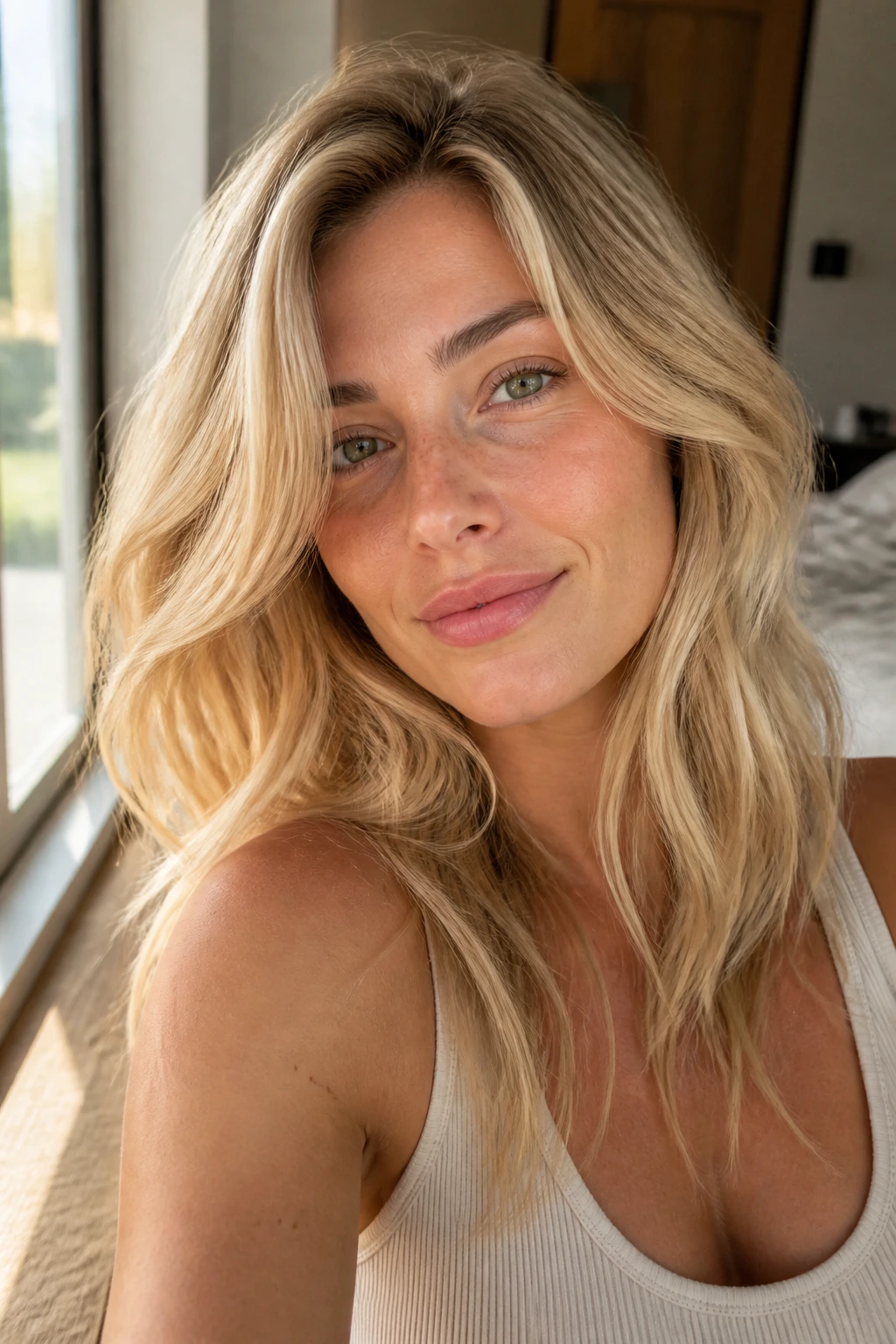
Warm vanilla blonde looks light, but it isn’t fragile. The creaminess in the tone keeps it from crossing into paper-white territory, which matters on warm skin because chalky blonde can make the face look more ruddy than it is. This is the blonde for someone who wants brightness with a soft edge.
How to Keep It From Looking Flat
Keep a little beige in the mix. If the toner is too cool, warm skin can look strangely pink around the nose and cheeks. A gentle root shadow and soft face-framing layers help the color read airy instead of washed out.
This shade works best when the hair is healthy enough to reflect light cleanly. Dry ends will make vanilla look dull fast, and that’s a miserable trade.
12. Butterscotch Blonde
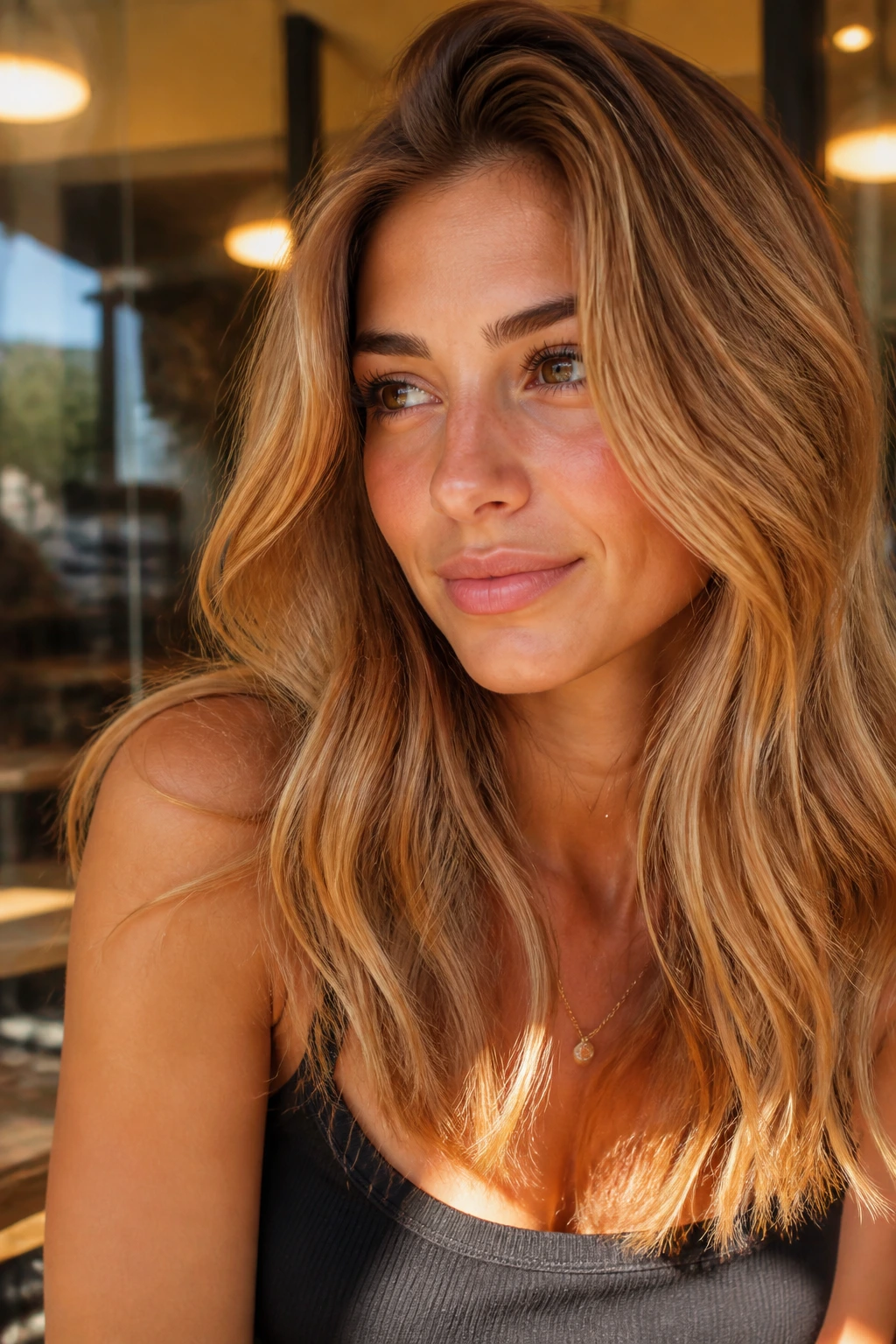
Butterscotch blonde is richer than honey and deeper than cream. It has that cooked-sugar warmth that feels especially good on medium warm skin and deeper complexions with gold undertones. The shade reads luxurious because it carries a little brown in the background.
This is one of my favorite picks for people who want blonde but don’t want the upkeep of very pale hair. It can live comfortably on a level 7 or 8 base, with lighter pieces woven through the mids. The result is soft, warm, and pleasantly dimensional.
13. Maple Gold Blonde
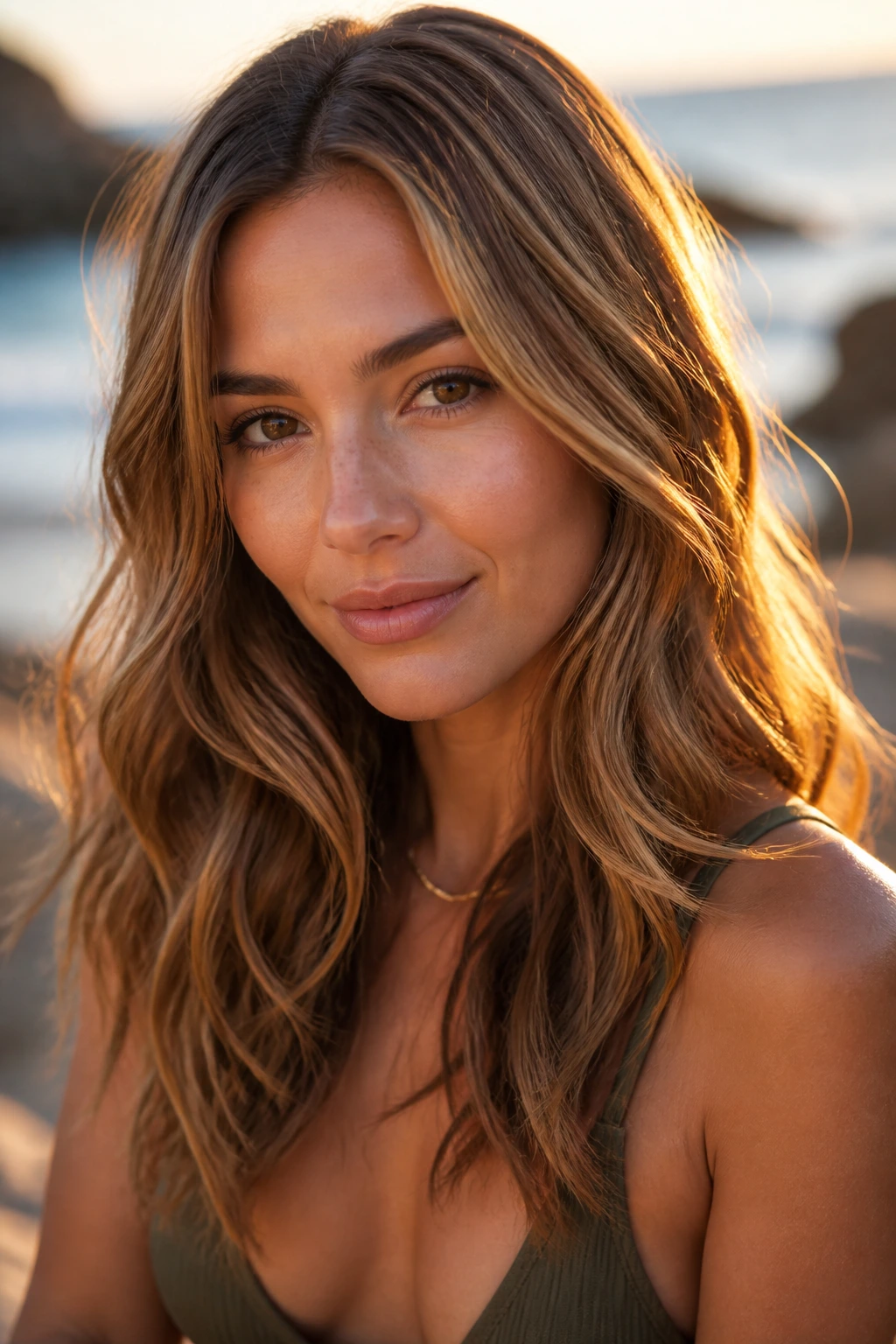
Maple gold blonde leans amber-brown first, gold second. That makes it perfect for deeper warm skin, especially when the hair is naturally dark and the eyebrows are strong. The color gives glow without making the hair look disconnected from the face.
What Makes It Different
Maple tones sit deeper than honey, which means they hold up better on bronzed skin and in indoor lighting. If you go too light with this shade, it loses the maple character and starts acting like generic blonde.
Ask for gold ribbons over a warm brown base, then finish with a maple-gloss glaze. It looks especially good on long waves, where the darker root can move under the lighter pieces.
14. Peach Gold Blonde
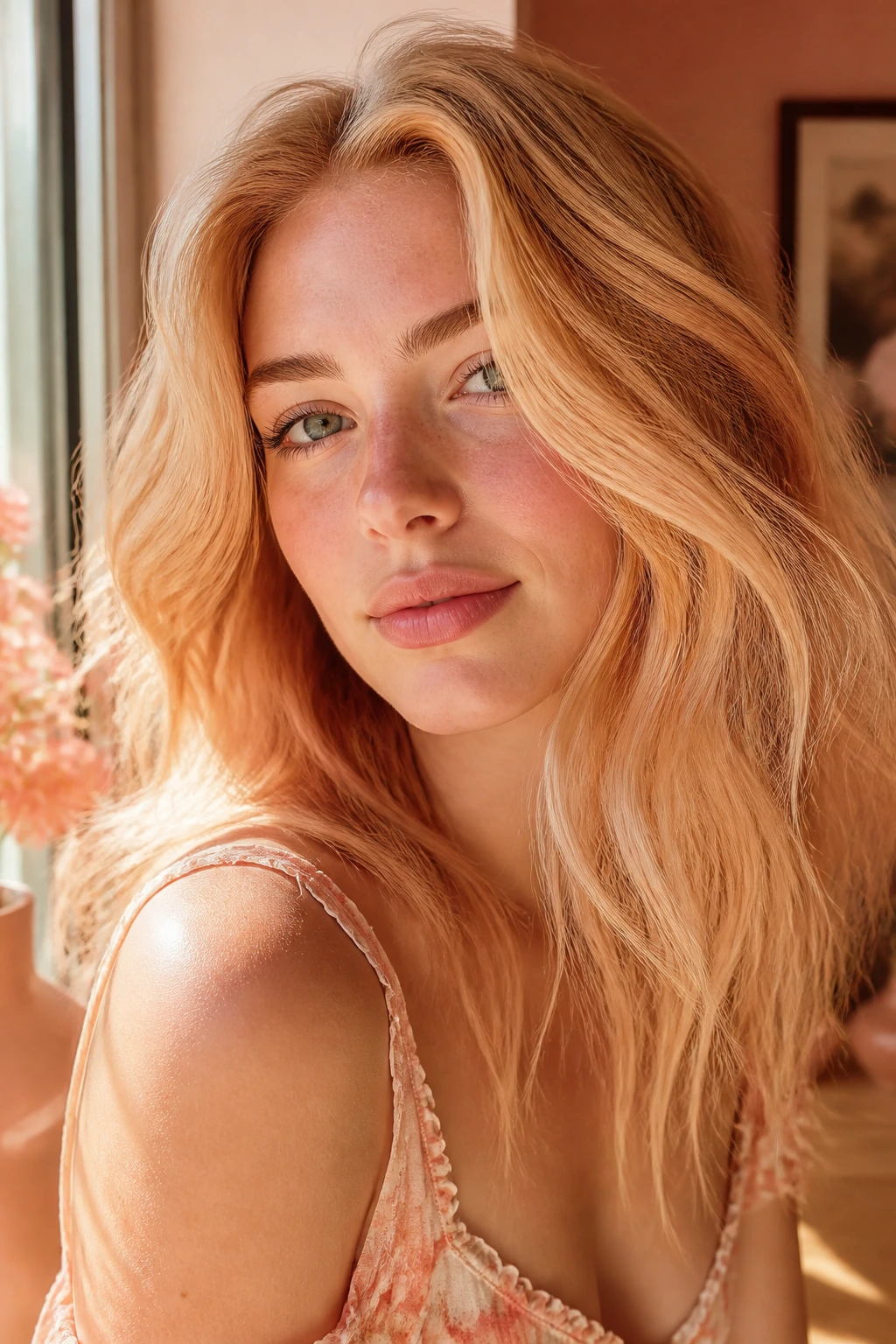
Peach gold blonde is brighter and more playful than apricot, with a little more blonde underneath the warmth. It flatters skin that already has a rosy or peach cast because the color keeps that same family of warmth going from face to hair. On curls, the shade looks especially alive.
The risk is saturation. If the peach goes too orange, it can fight with warm skin instead of flattering it. Keep the gold level high and the copper very light unless you want the color to read bolder on purpose.
15. Bronze Blonde
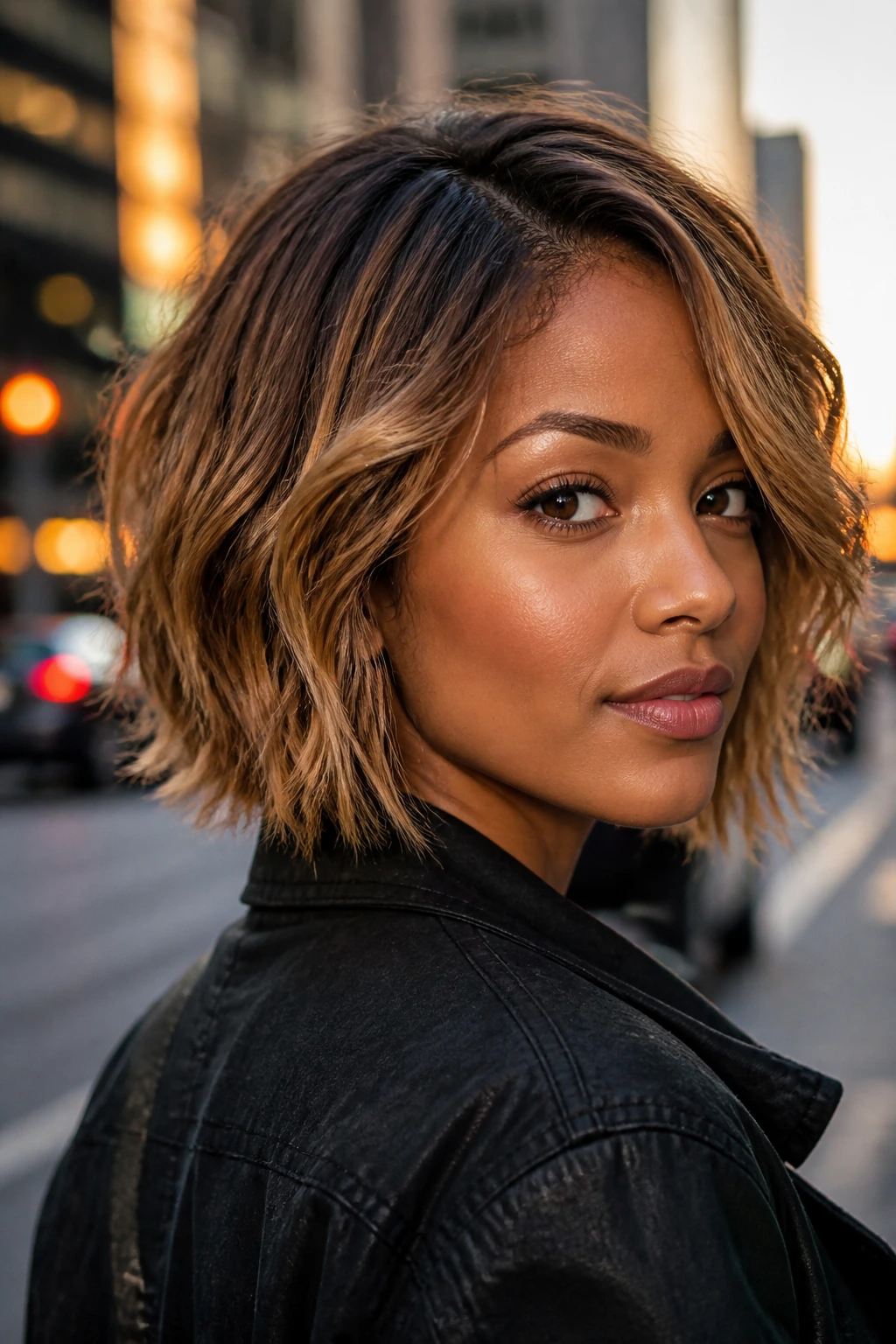
Bronze blonde is one of the best choices for deep warm skin because it doesn’t pretend the hair is pale. It holds onto brown depth while letting gold and copper-light reflections move through the ends and face frame. The effect is rich rather than bright.
This shade is also practical on bobs, lobs, and shorter layered cuts, where a more metallic finish can look sharp. If you’ve tried lighter blondes and felt they washed you out, bronze blonde is a much better lane.
16. Biscotti Blonde
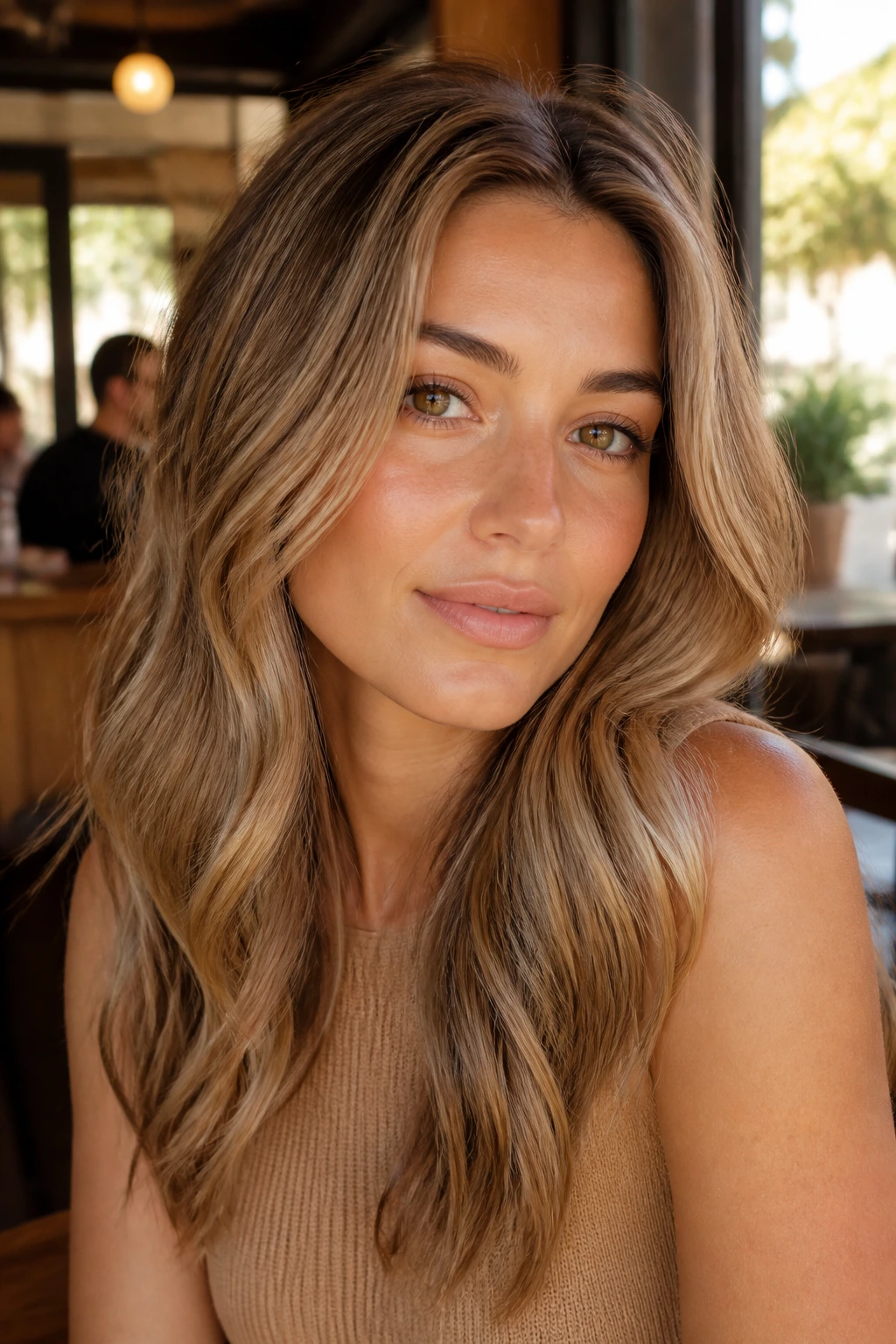
Biscotti blonde has a toasted, beige-brown feeling that works beautifully on warm skin that looks best in softer contrast. It doesn’t flash gold from across the room. Instead, the warmth appears in the gloss and in the way the lighter pieces sit against the base.
Best For
This is a smart choice if you need a blonde that behaves in office lighting, brunch lighting, and bad fluorescent lighting without changing personalities. It sits neatly between brunette and blonde.
Ask for a level 7 or 8 beige-gold blend with gentle highlights through the top layer. If the base is too dark, the blonde pieces can disappear; if the lightening is too aggressive, you lose the biscotti softness.
17. Golden Bronde
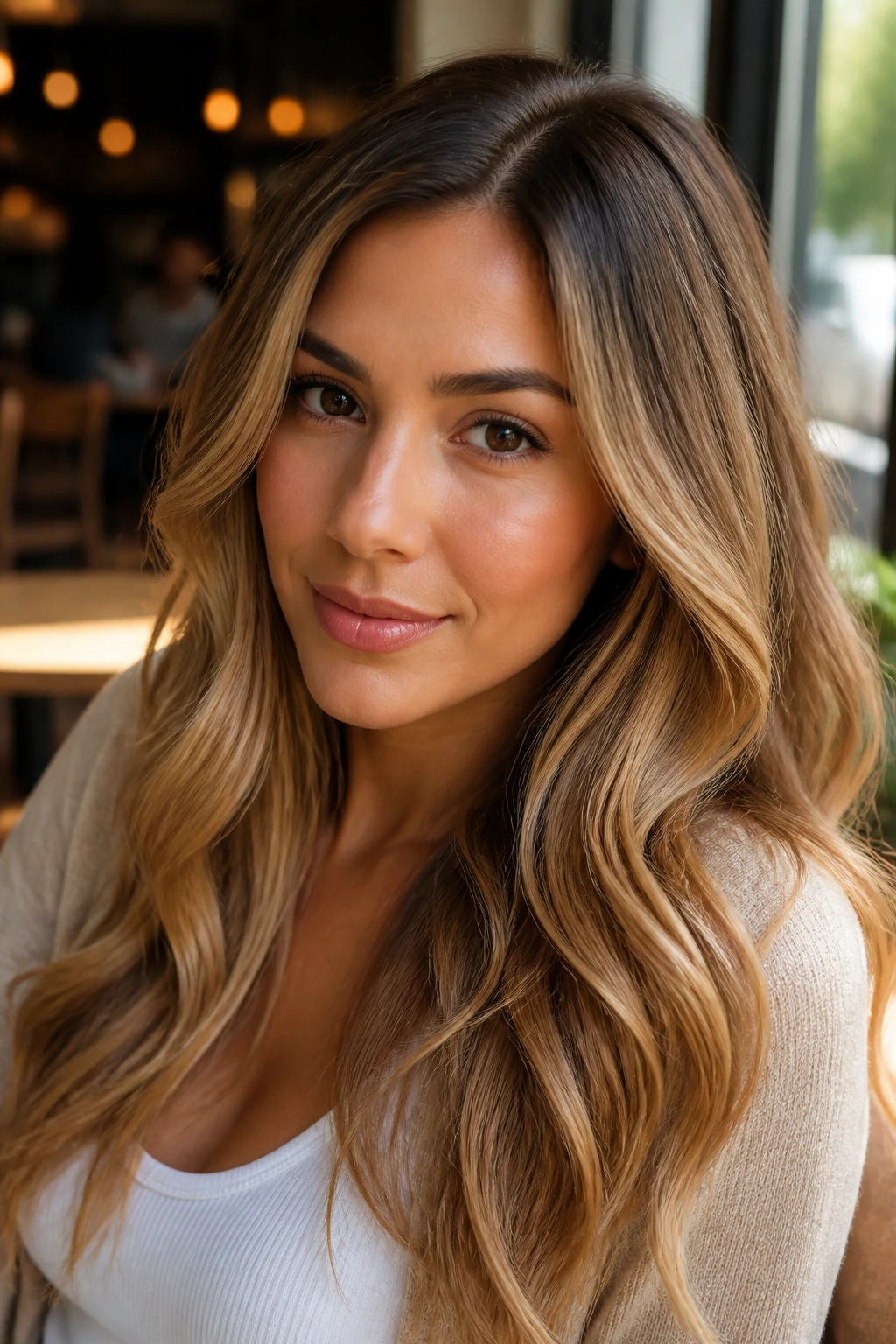
Golden bronde is the easiest gateway shade for someone unsure about going fully blonde. The brown root keeps the face grounded, while the gold through the mids and ends does the flattering work. Warm skin usually loves this because it never looks severed from the brows.
This is a good choice if you want low contrast and low panic. The color grows out well, and the gold can be adjusted warmer or cooler without changing the whole look. It’s a useful shade, and I mean that in the nicest way.
18. Amber Honey Blonde
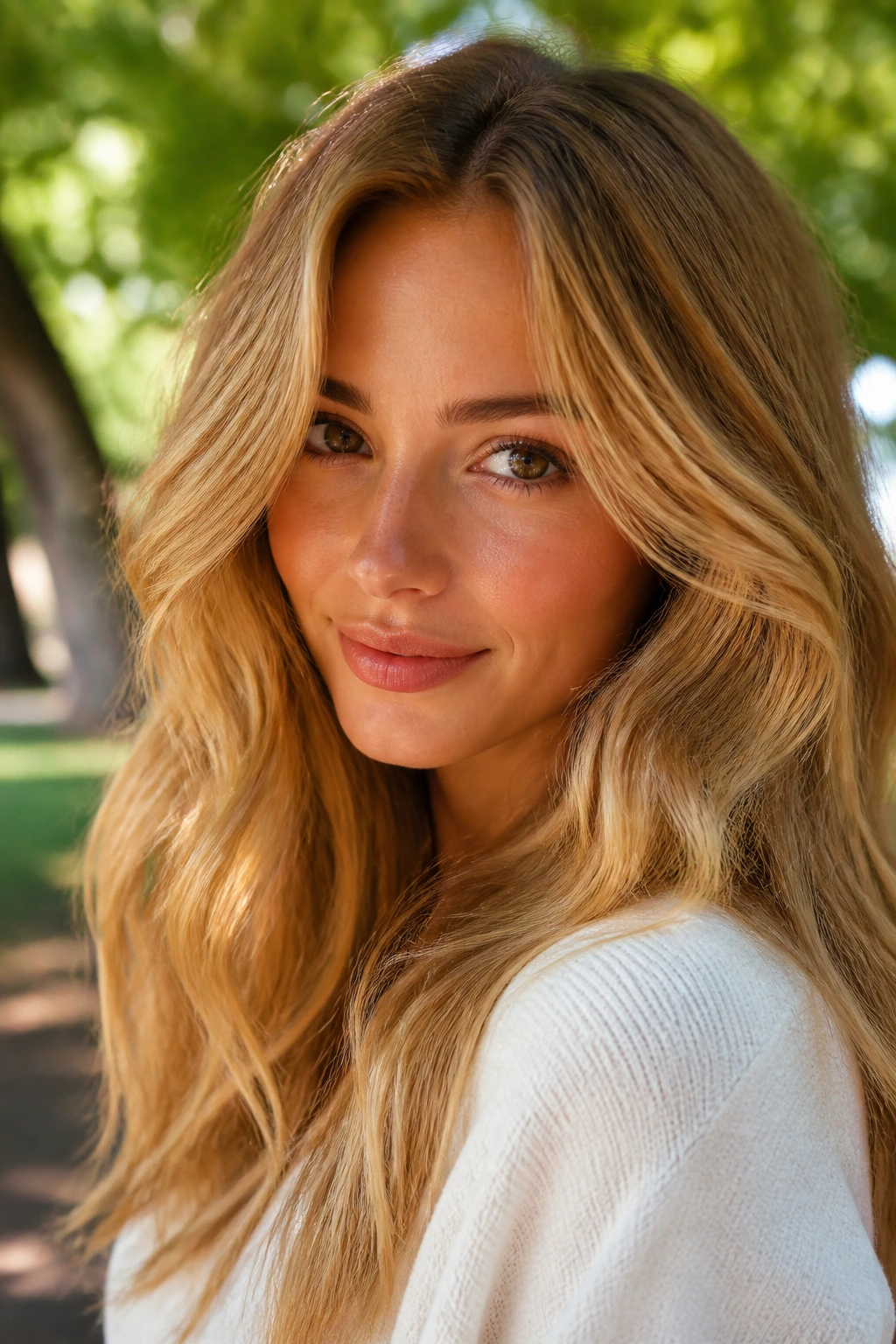
Amber honey blonde is honey with a little more depth and a little more fire. On warm skin, it gives a glowing effect that reads especially well in daylight, when the amber tones show up without turning orange. It’s richer than a soft honey blonde and less soft than buttercream.
This is a good option for hair that already lives around level 7 or 8. If you push it too pale, the amber character can get lost. I prefer it with soft waves, because the movement helps the color shift between amber and honey.
19. Cream Soda Blonde
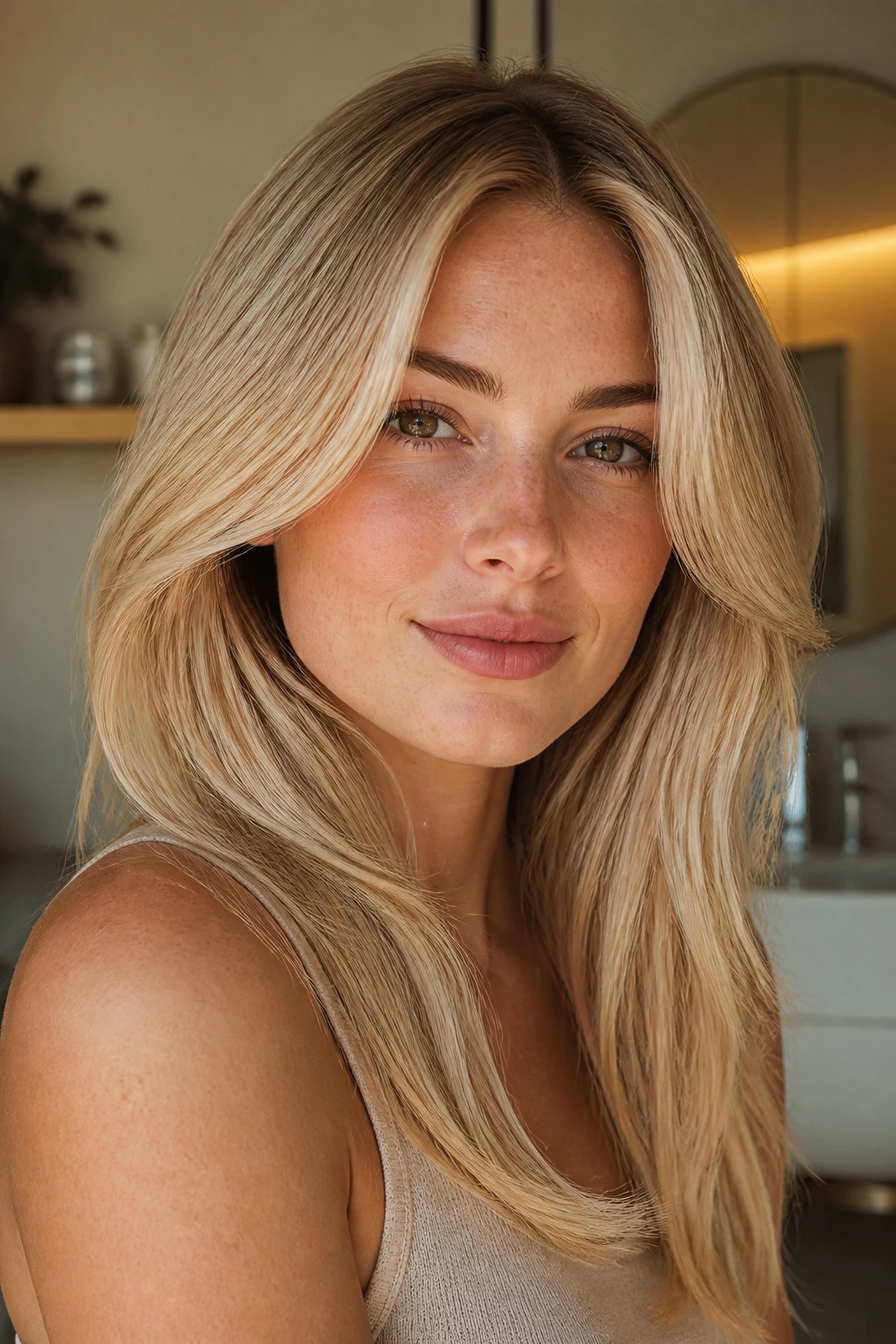
Cream soda blonde is pale, glossy, and easy to overdo if the toner gets too cool. The warm version keeps enough beige-gold in it to flatter warm skin without making the hair look like a flat yellow sheet. It’s a nice choice for fair warm skin and lighter eyes.
The shine matters more than the brightness here. If the cut is blunt and the hair is dry, cream soda blonde can look dull very fast. Keep the ends trimmed and the gloss fresh, or the whole thing loses its clean, silky finish.
20. Chestnut Gold Highlights
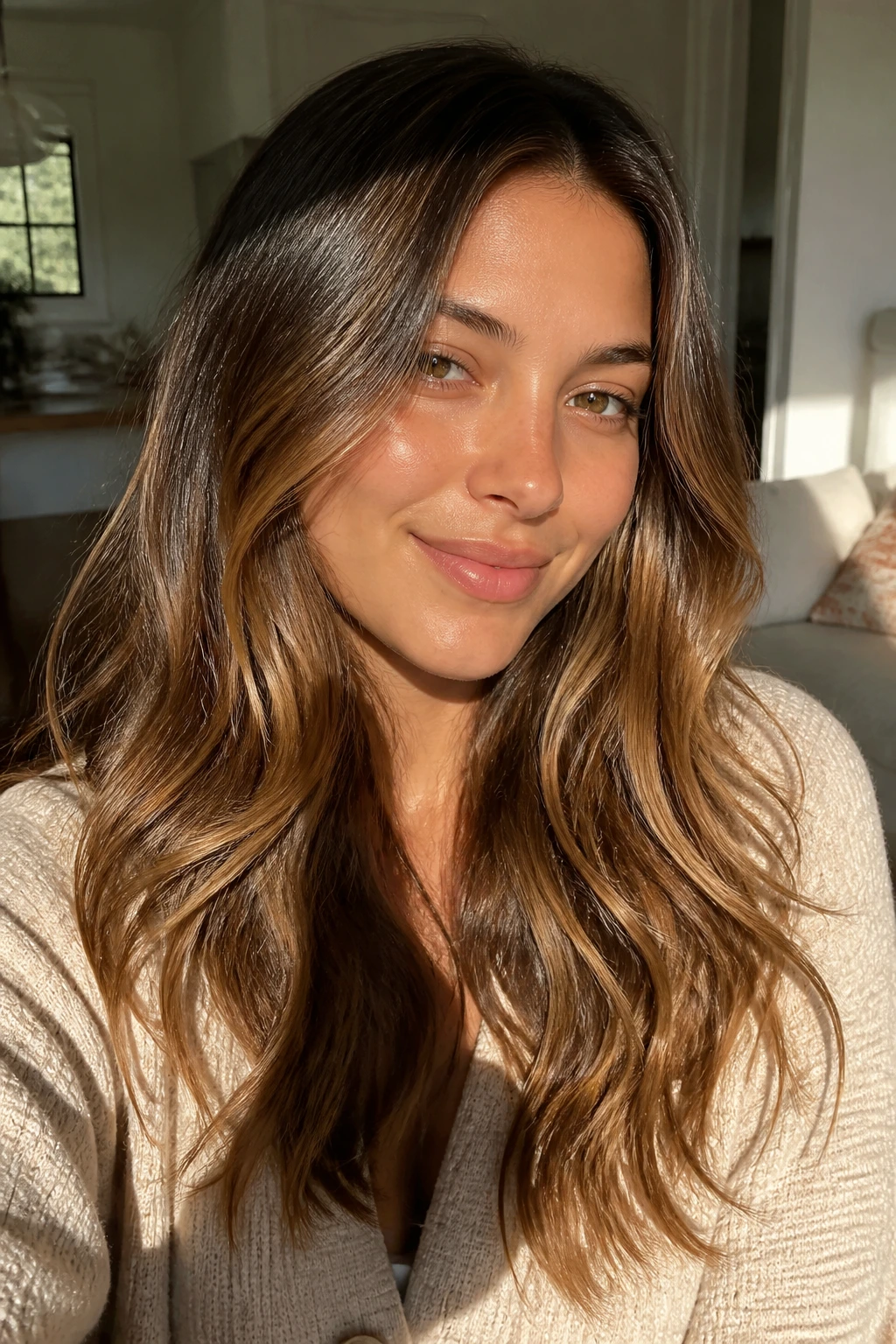
Chestnut gold highlights are the safest route for anyone who wants warmth without a dramatic blonde commitment. The chestnut base keeps depth under the gold, which is useful if your brows and lashes are naturally dark. Warm skin gets the glow, but the hair still looks anchored.
This works well when the highlights are fine and scattered through the crown and front. Big chunky pieces can look dated fast. Fine chestnut-gold lights, though, look like the sun found your hair and decided to stay.
21. Rooted Gold Blonde
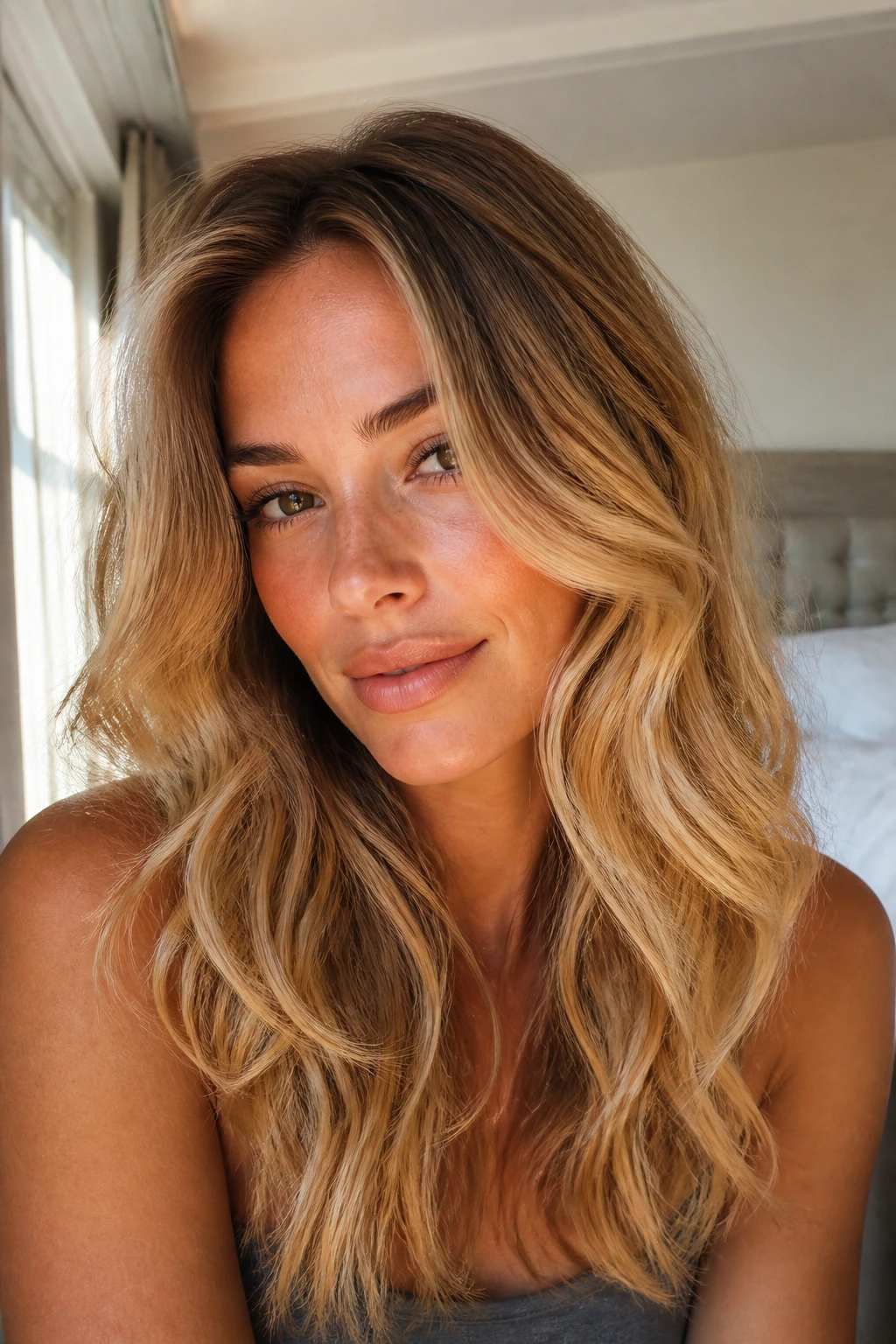
Rooted gold blonde is all about the shadow root. The darker base gives the blonde somewhere to start, and warm skin tends to like that bit of contrast because it keeps the face from looking overly bright. The gold then shows up in the mids and ends where it can do the most good.
Why It Works
The root shadow makes grow-out easier and the color more believable. It also helps if your natural hair is darker than the blonde you want, because the transition is softer and less expensive-looking than a solid bleach job.
Ask for a melted root that stays warm, not ash-brown. That small detail keeps the whole head in the same tone family.
22. Rose-Honey Blonde
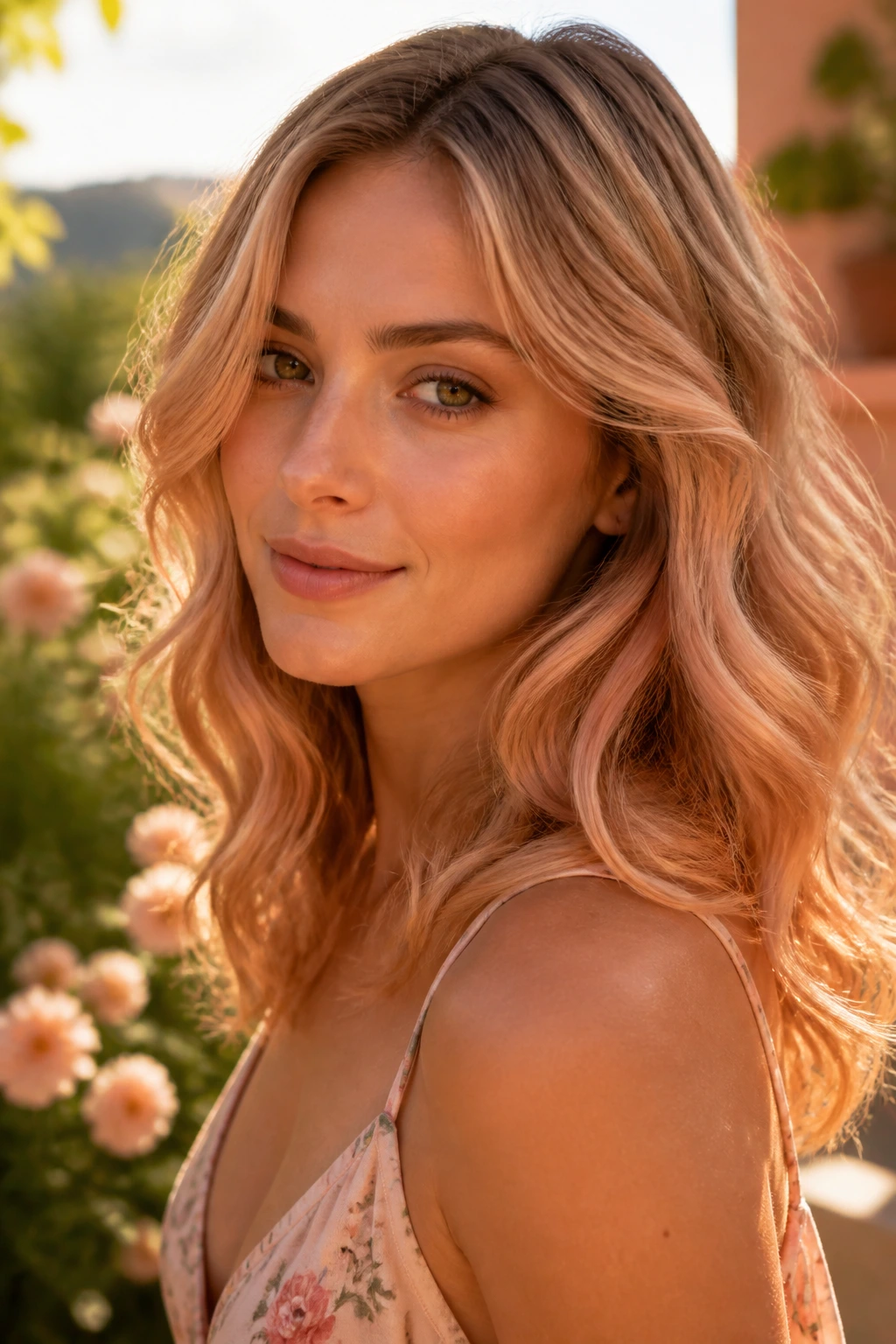
Rose-honey blonde has a whisper of pink in the gold, but only a whisper. That slight rosy cast can look gorgeous on warm skin that already has a soft flush or a bit of freckling. The result is gentle, not sugary.
This shade likes loose curls and soft face-framing layers. The movement keeps the rose-gold note from going flat. If your skin tends to redden easily, keep the rose portion minimal and let the honey do more of the work.
23. Saffron Blonde
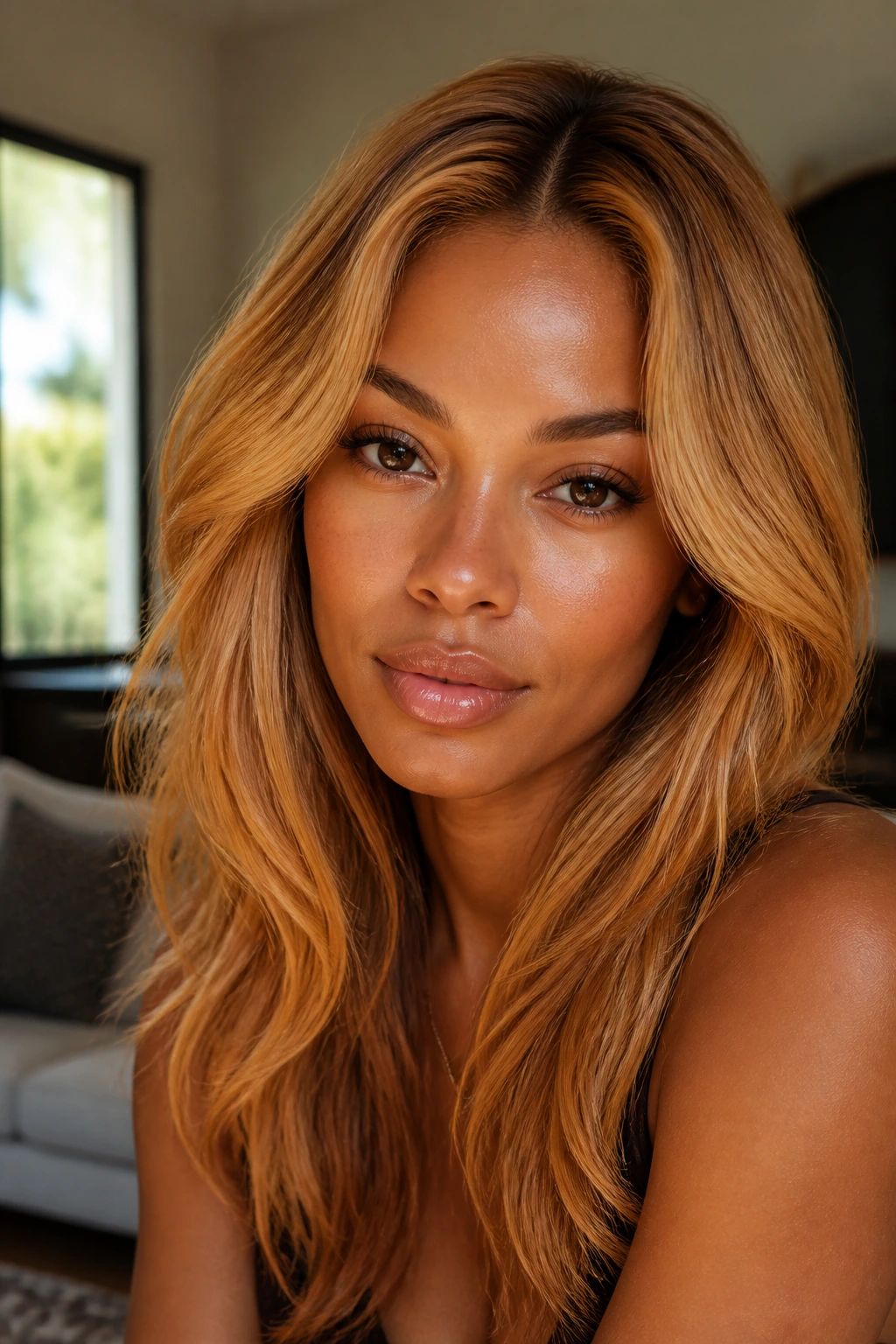
Saffron blonde is warmer and spicier than classic honey. It has an amber-yellow depth that reads especially well on deeper warm skin and on complexions with strong gold undertones. It is not subtle, and that’s part of the appeal.
This is one of the better choices if you want your blonde to show up indoors, not just in sunlight. The caveat: too much saffron can go orange if the lightening is pushed unevenly. That’s a tone for a skilled hand.
24. Malt Blonde
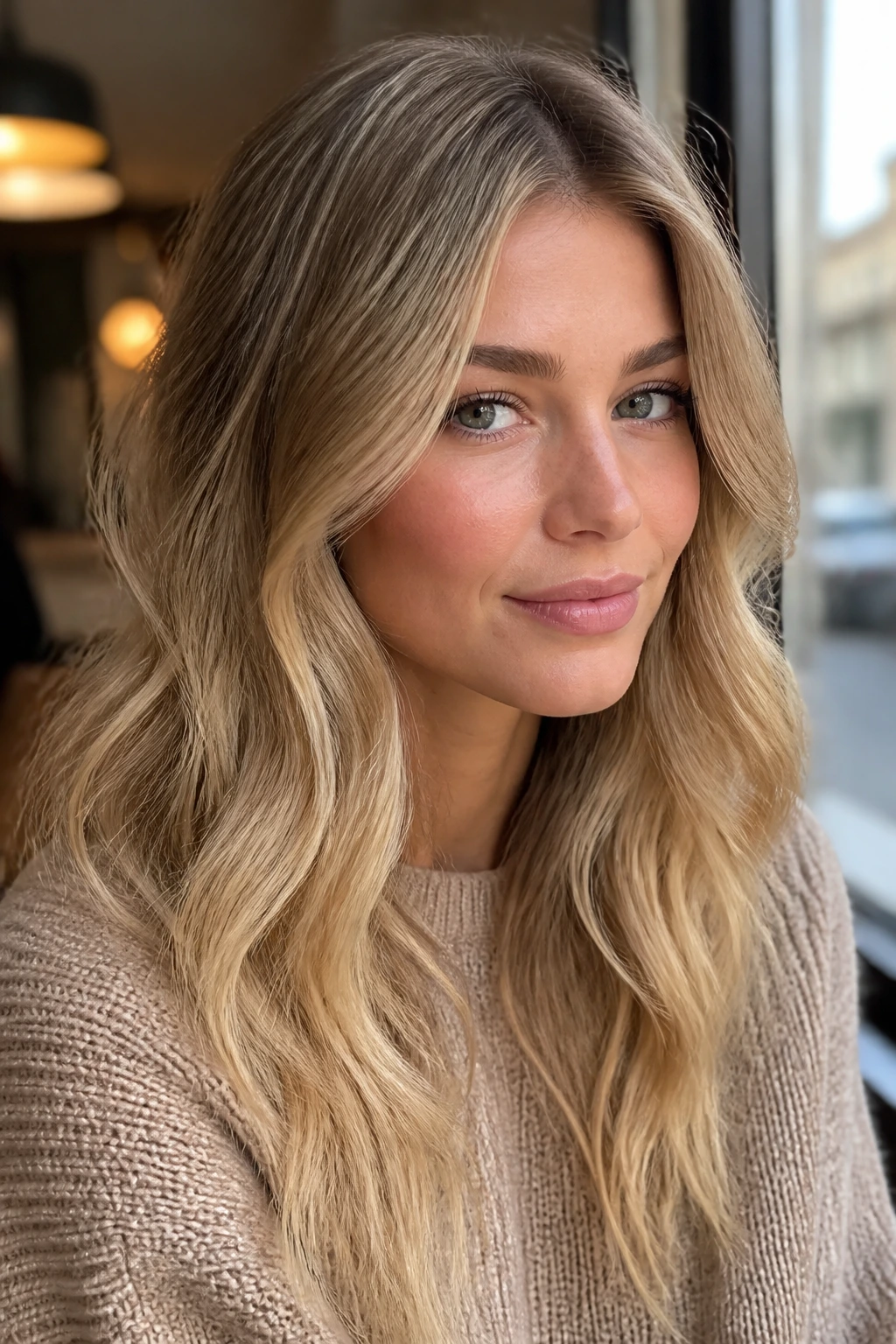
Malt blonde is soft, toasted, and just a little smoky. It keeps enough warmth to flatter warm skin while staying muted enough for people who dislike shiny yellow-blonde. If your face looks best in beige, camel, and cream, this is your lane.
This shade is especially good on medium olive skin because it doesn’t push too far into brass. It works well with a slightly darker root and a cool-to-warm middle zone. In other words, a little restraint is the whole point.
25. Honeyed Face-Framing Blonde
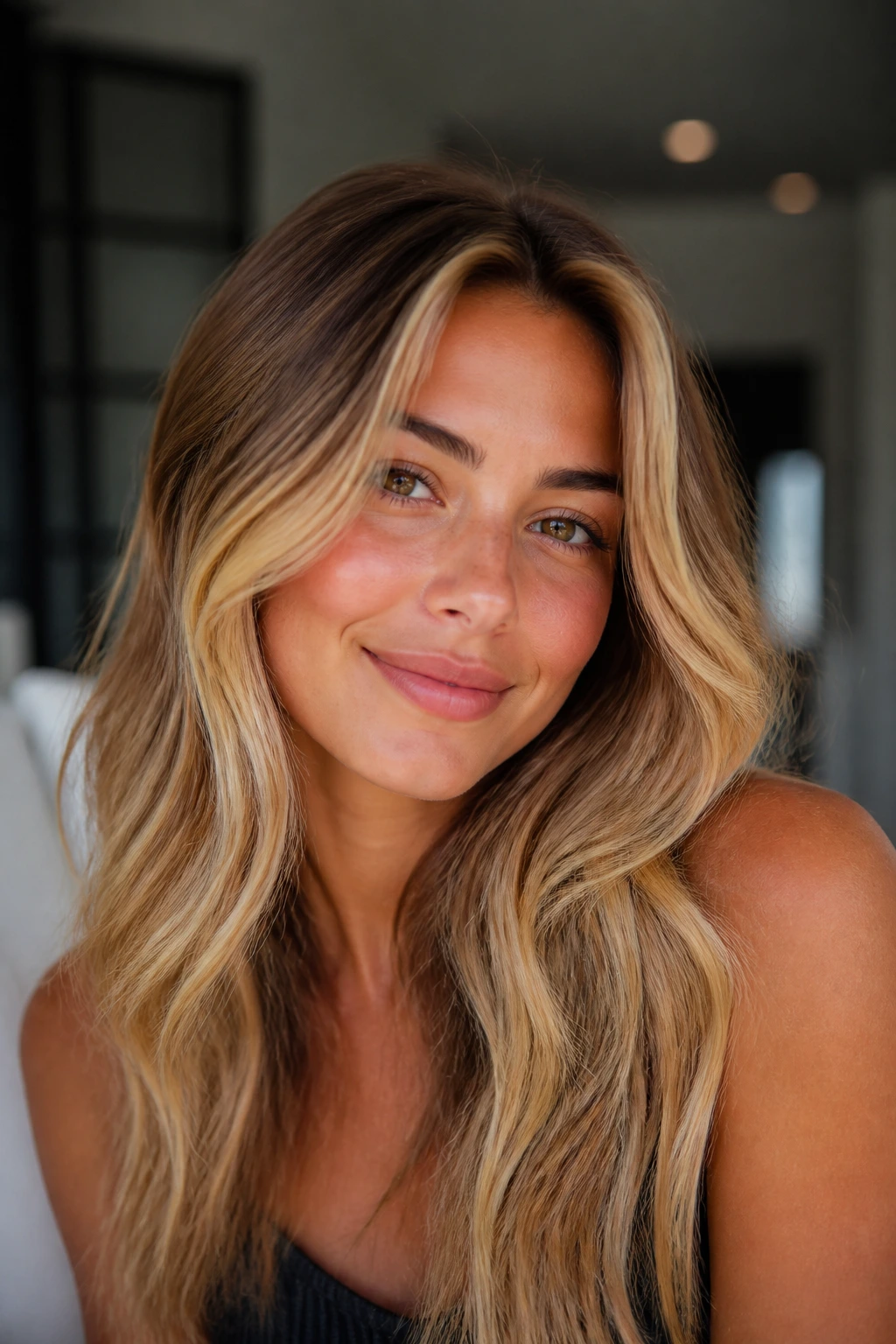
Honeyed face-framing blonde is the quickest way to brighten warm skin without committing to an all-over blonde change. The lighter pieces sit around the cheeks, temples, and hairline, where they make the face look more open and lifted. The rest of the hair can stay richer.
How to Ask for It
Ask for two to four lighter ribbons on each side, then soften the crown with a gentle honey gloss. That keeps the blonde from looking patchy. It also works on almost any base color, from dark brown to medium blonde.
This is a good place to start if you’re nervous. It gives the warmth and dimension without the maintenance of full highlights.
26. Sunset Peach Blonde
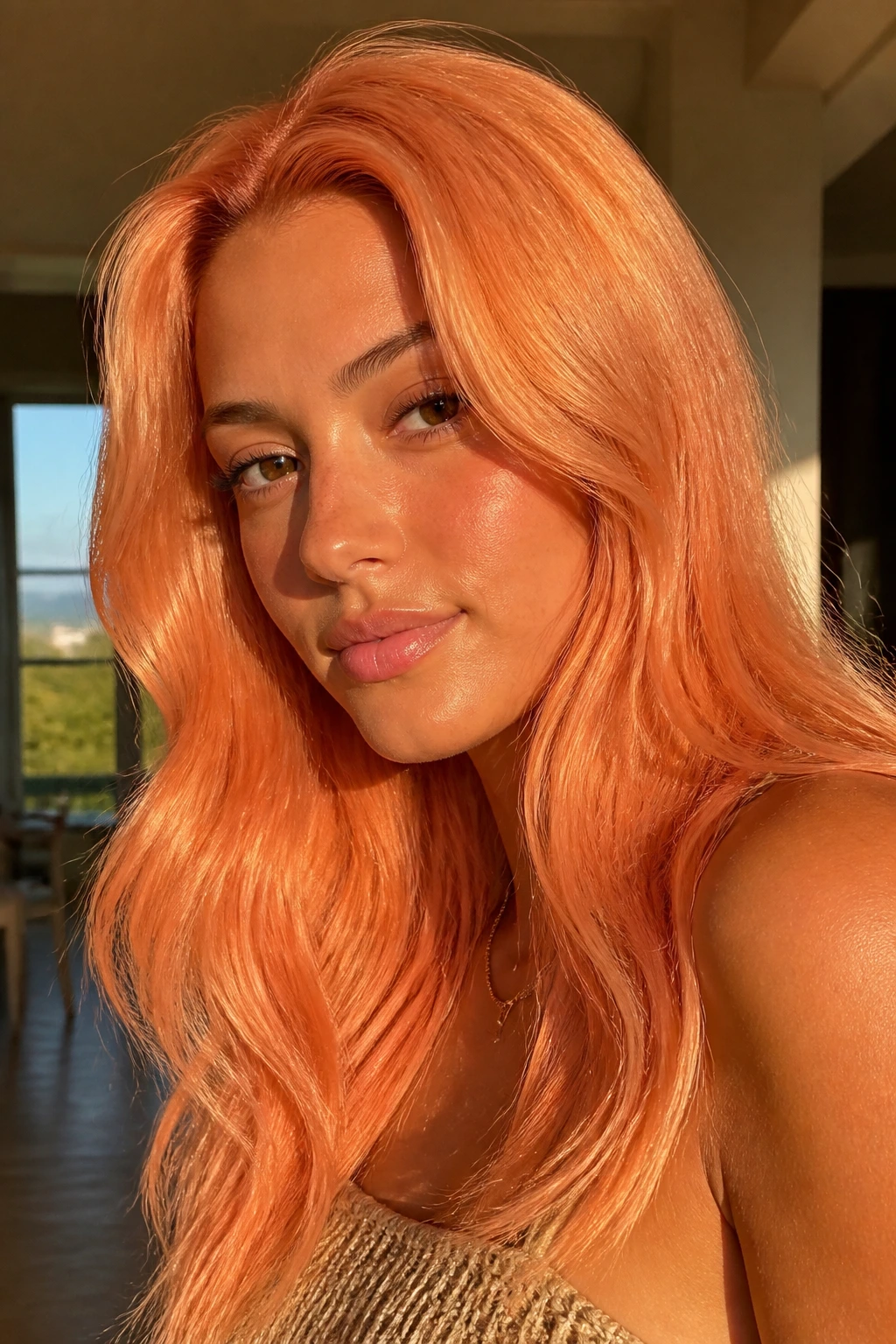
Sunset peach blonde is bolder, warmer, and a little more dramatic than the softer peach shades. It leans into copper-gold and gives warm skin a vivid glow, especially on tan or bronzed complexions. It’s the kind of blonde that doesn’t whisper.
If you like color with personality, this is a strong choice. The downside is upkeep: peach tones fade fast, especially on porous hair. You’ll want gloss appointments more often than you would with beige-gold shades.
27. Golden Copper Blonde
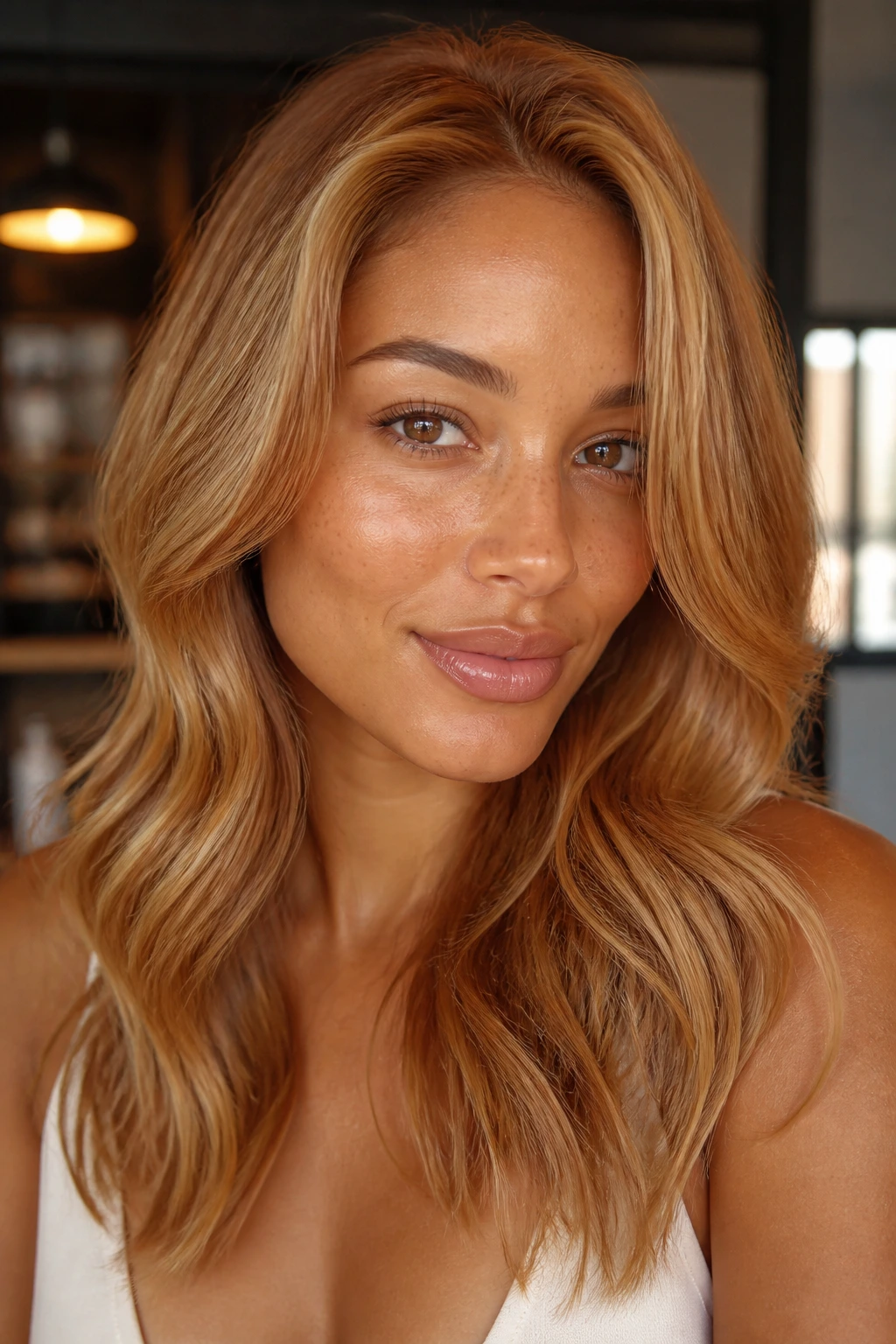
Golden copper blonde sits right on the edge between blonde and copper, and that’s why it works so well on deeper warm skin. The copper warms the complexion, while the gold keeps the shade from reading like plain red. It’s a great option for anyone bored with soft honey blonde.
The trick is balance. Too much orange and the shade loses its blonde character; too much yellow and the copper disappears. Ask for a gold base with copper lowlights, not the other way around.
28. Toasted Almond Balayage
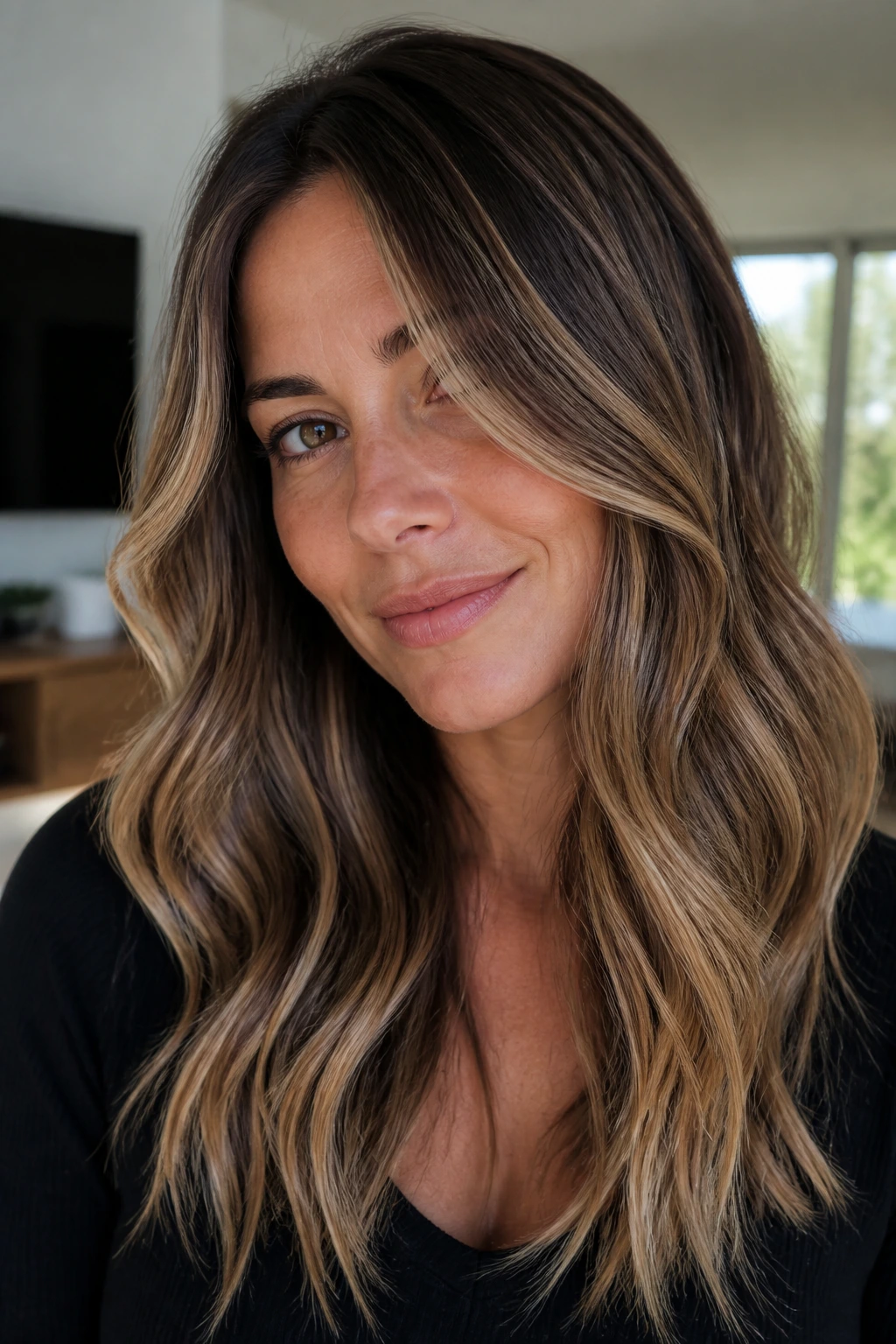
Toasted almond balayage has a deeper brown foundation with almond-gold ribbons hand-painted through the lengths. The effect is smooth and warm, not stripey. Warm skin tends to like this kind of color because it mirrors the skin’s own depth instead of competing with it.
This is one of the most wearable options for long layered hair. The painted placement lets the ends lighten while the root stays toastier and more natural. It’s a very good compromise if you like softness but still want visible blonde.
29. Milk Tea Blonde
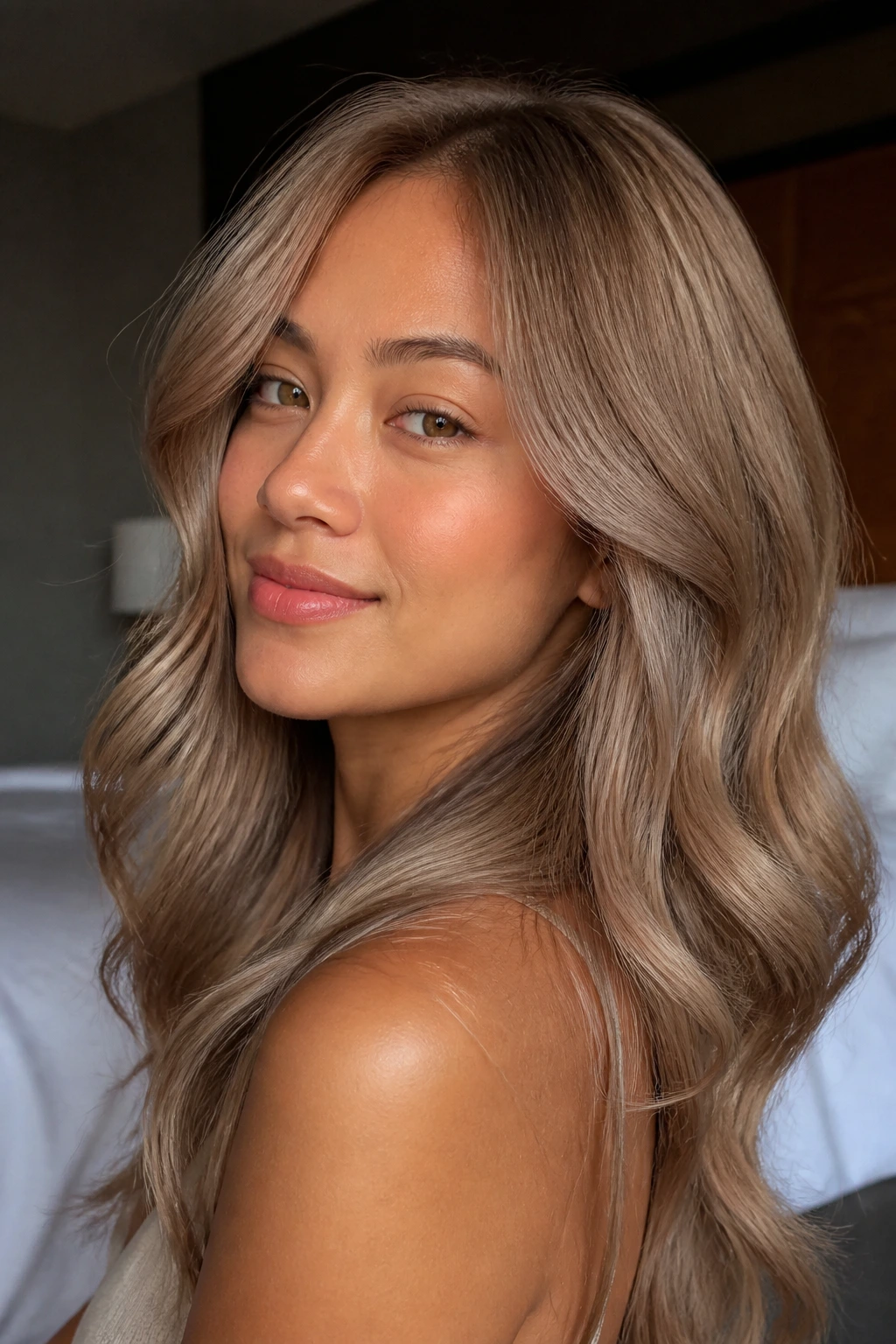
Milk tea blonde is muted beige-gold with a brown base that makes the whole look feel soft and wearable. It’s one of the best shades for olive warm skin because it avoids both icy coolness and loud yellow. The color looks calm, which is harder to pull off than it sounds.
This is the blonde I’d send someone to if they want something chic without too much maintenance. It works best when the gloss stays beige, not silver, and when the highlights are fine enough to blend into the base.
30. Gilded Beige Blonde
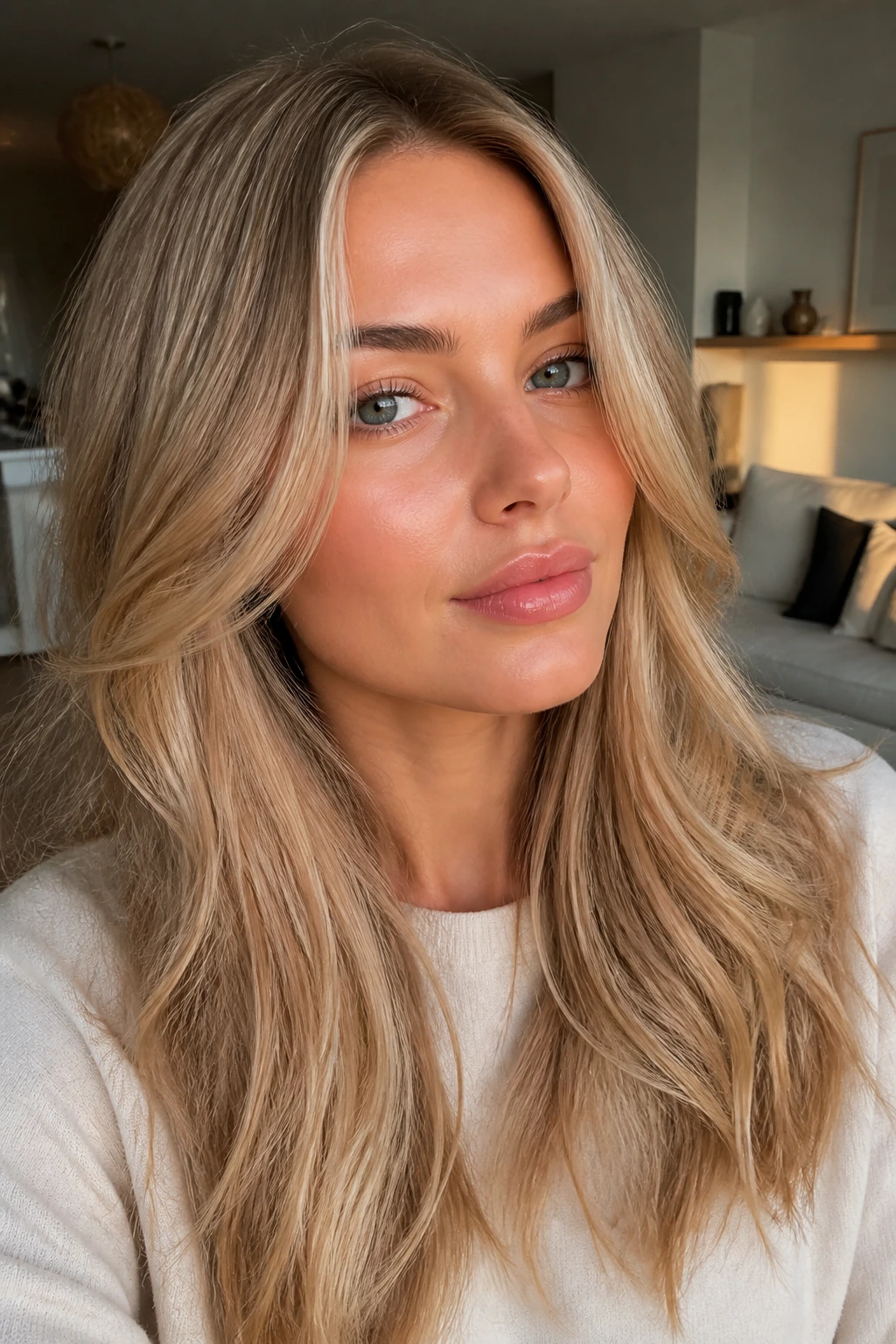
Gilded beige blonde is polished. The gold stays quiet, the beige stays clean, and the whole thing looks like it was meant to be that way from the start. Warm skin benefits from that balance because the color gives glow without making the face look overlit.
This is a nice choice if you want a blonde that pairs easily with gold jewelry, warm makeup, and darker brows. It can be worn sleek or wavy, but a smooth blowout really shows off the gilded finish. It’s understated in a way that still looks expensive.
31. Sun-Kissed Gold Blonde
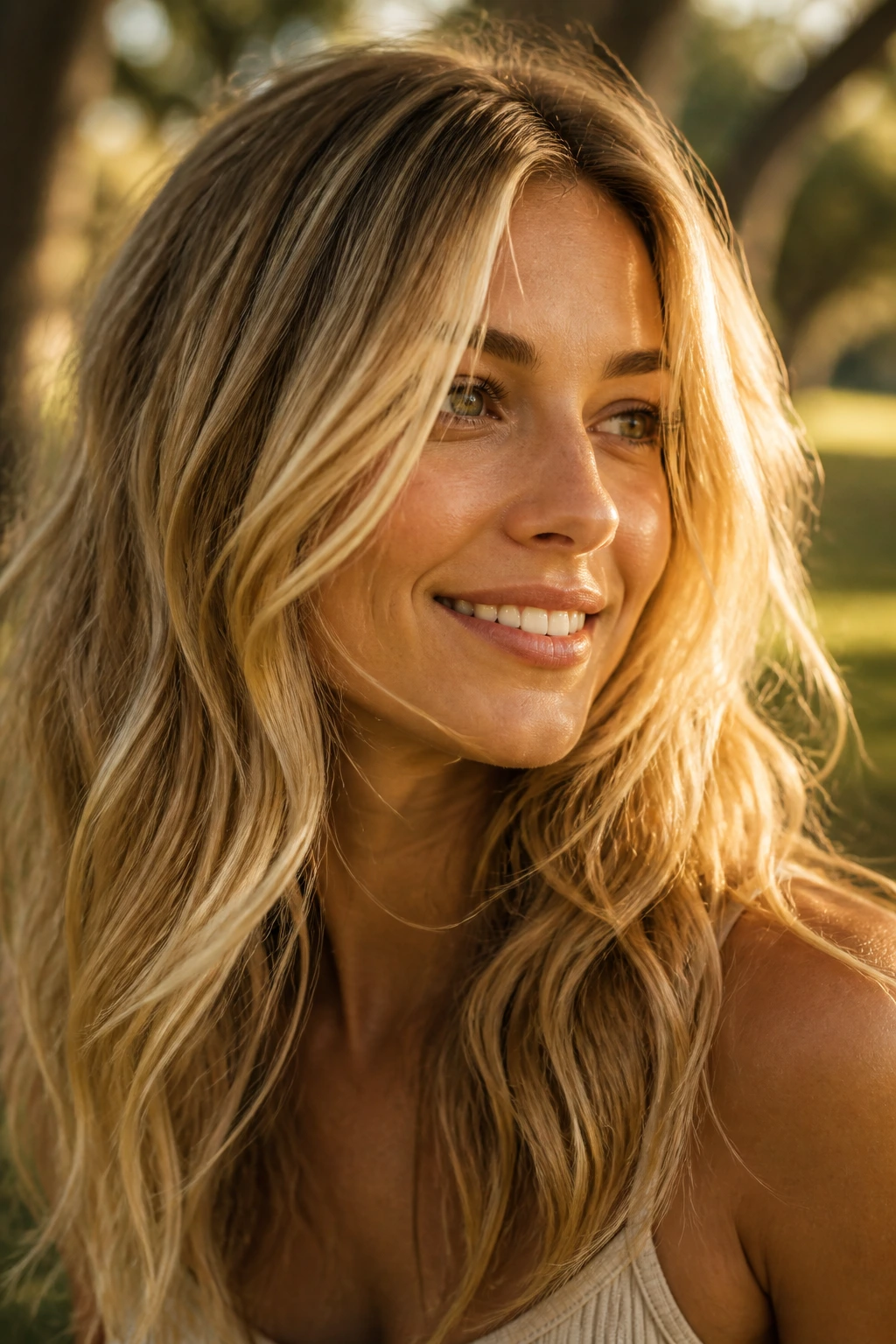
Sun-kissed gold blonde is the classic beachy version of this family. The lighter pieces sit where the sun would naturally hit, so the color looks easy and relaxed instead of heavy. On warm skin, that effect tends to work well because the brightness has a believable pattern.
When It’s Best
This shade needs movement. Soft waves, layered ends, or a shaggy cut help the gold read as sunlit rather than one-note. If the hair is poker-straight and very glossy, it can lose some of its charm.
It’s a good choice if you want obvious blonde but still prefer warmth over platinum. The gold should live in multiple tones, not one flat shade.
32. Cinnamon-Maple Blonde
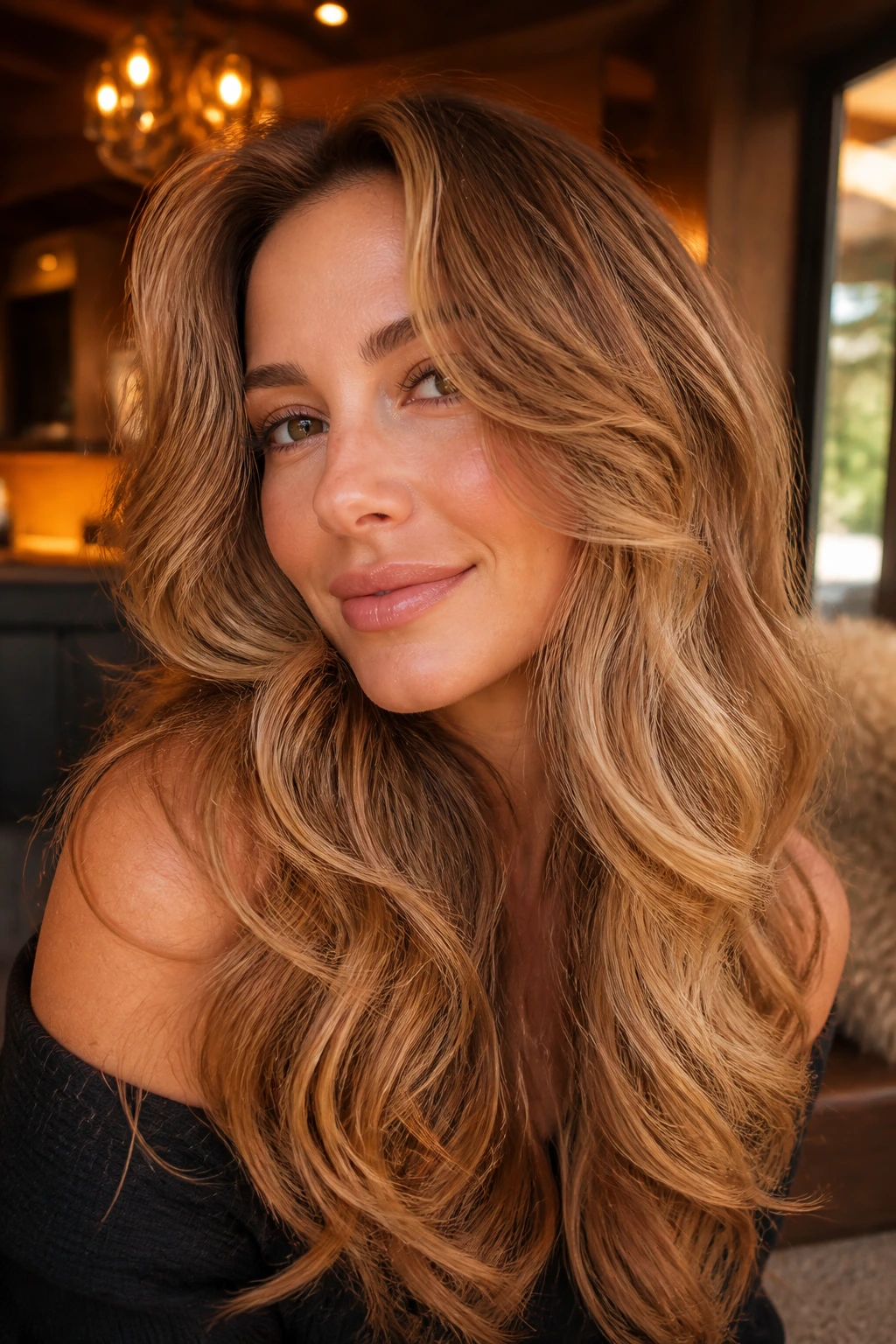
Cinnamon-maple blonde is one of the richest shades on this list. It blends spicy warmth with syrupy depth, which makes it flattering on medium-deep warm skin and anyone whose hair naturally runs dark. The color feels plush rather than bright.
This is a strong pick for layered cuts and long curls because the darker cinnamon pieces underneath keep the maple blonde from floating away. If you want warmth that looks grounded in indoor light, this one delivers.
33. Buttered Sand Blonde
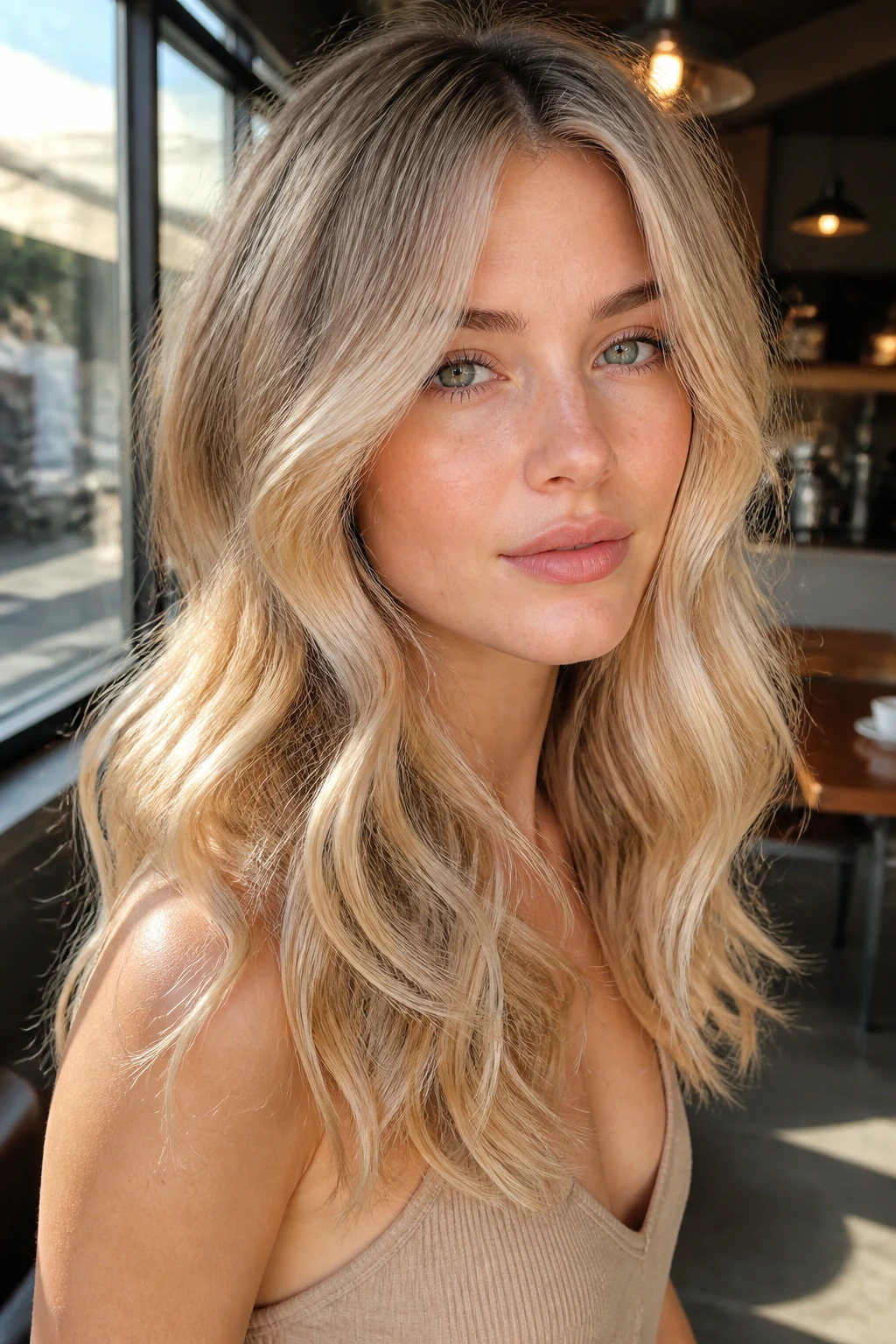
Buttered sand blonde is soft, airy, and quietly warm. It has the pale, sandy quality of a beach blonde, but the butter note keeps it from turning flat or chilly. Warm skin tends to like this when the undertone is golden but not overly red.
This is a low-drama choice for someone who wants a blonde that fades well. The root can stay slightly deeper and the mids can carry the lightness, which makes regrowth less annoying. It’s simple in the best way.
34. Warm Pearl Blonde
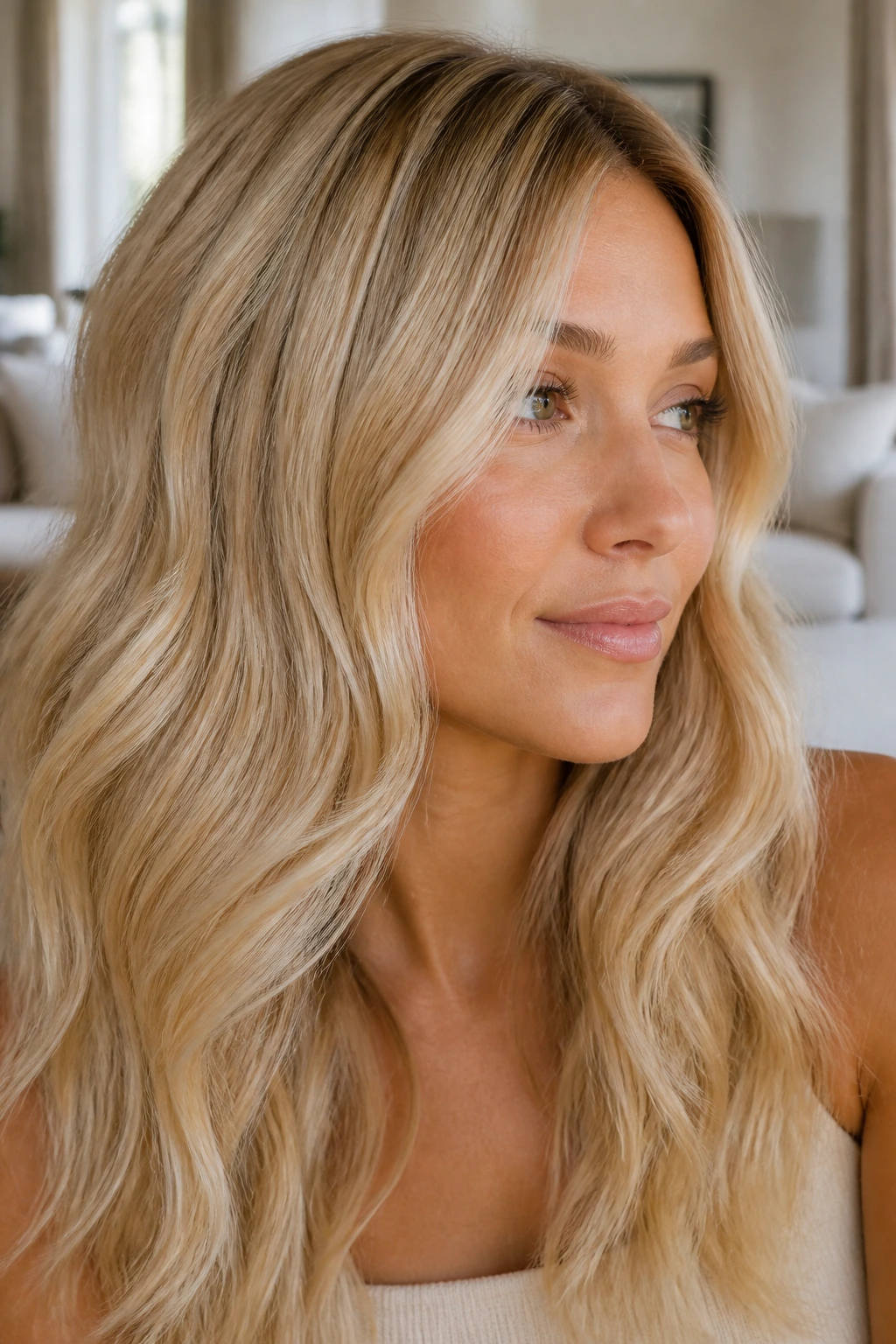
Warm pearl blonde gives you luminosity without the icy finish that usually comes with pearl tones. The warmth underneath keeps the hair from looking blue-white, which is a relief on warm skin. The result is refined, almost creamy, and far less fussy than it sounds.
This works best when the gloss is tuned carefully. If the pearl leans too cool, the skin can start to look sallow. Keep the warmth in the base and let the pearl just soften the reflection.
35. Bronze Honey Balayage
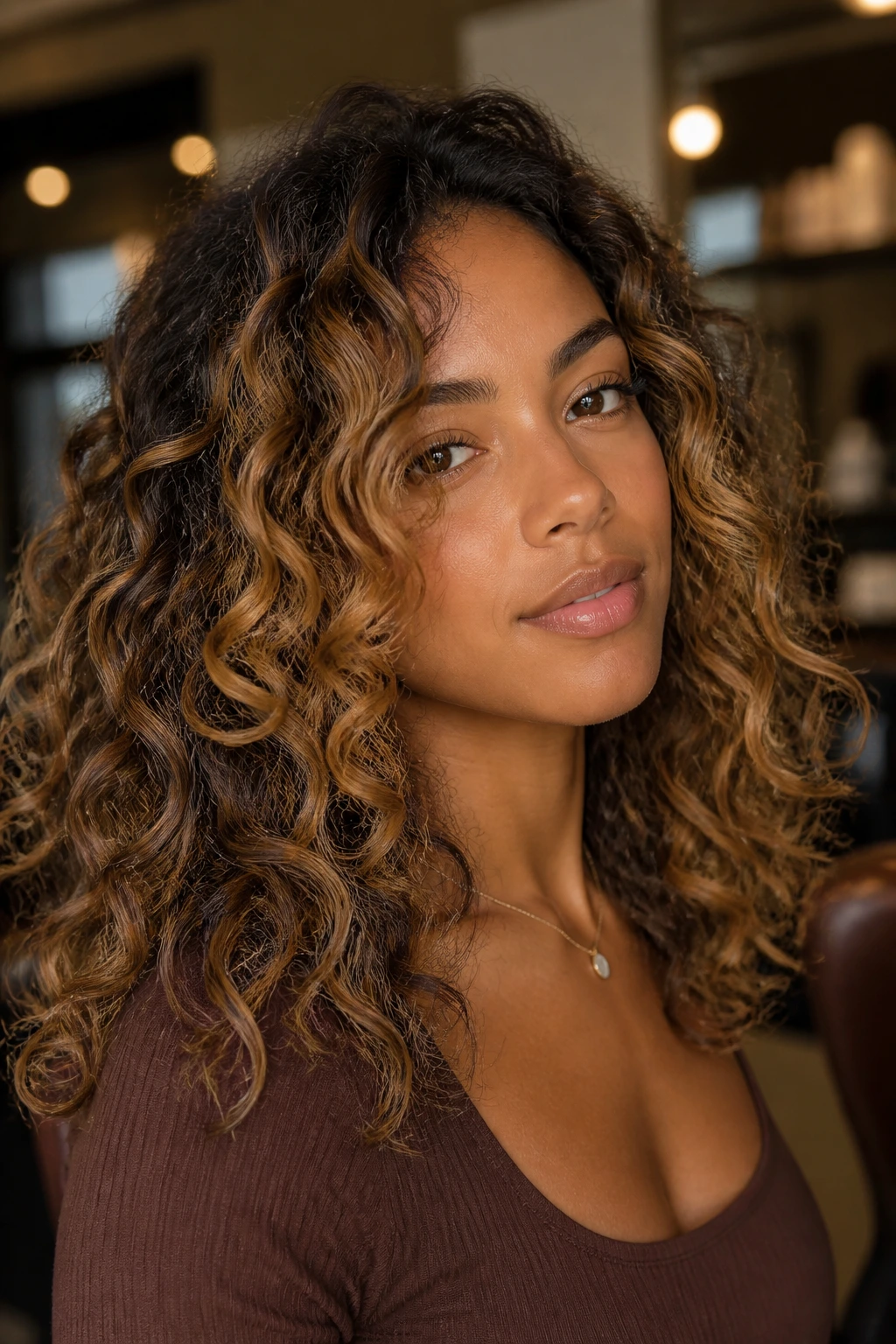
Bronze honey balayage is a deeper, richer version of honey blonde, and it flatters warm skin that needs more contrast around the face. Bronze gives the base weight, honey gives the movement, and balayage keeps the color from looking drawn on. It’s especially nice on curly and thick hair.
The best version has a darker root and honeyed ribbons that get brighter toward the ends. That structure gives the color shape. Without it, bronze honey can read muddy instead of dimensional.
36. Gold-Tipped Shag
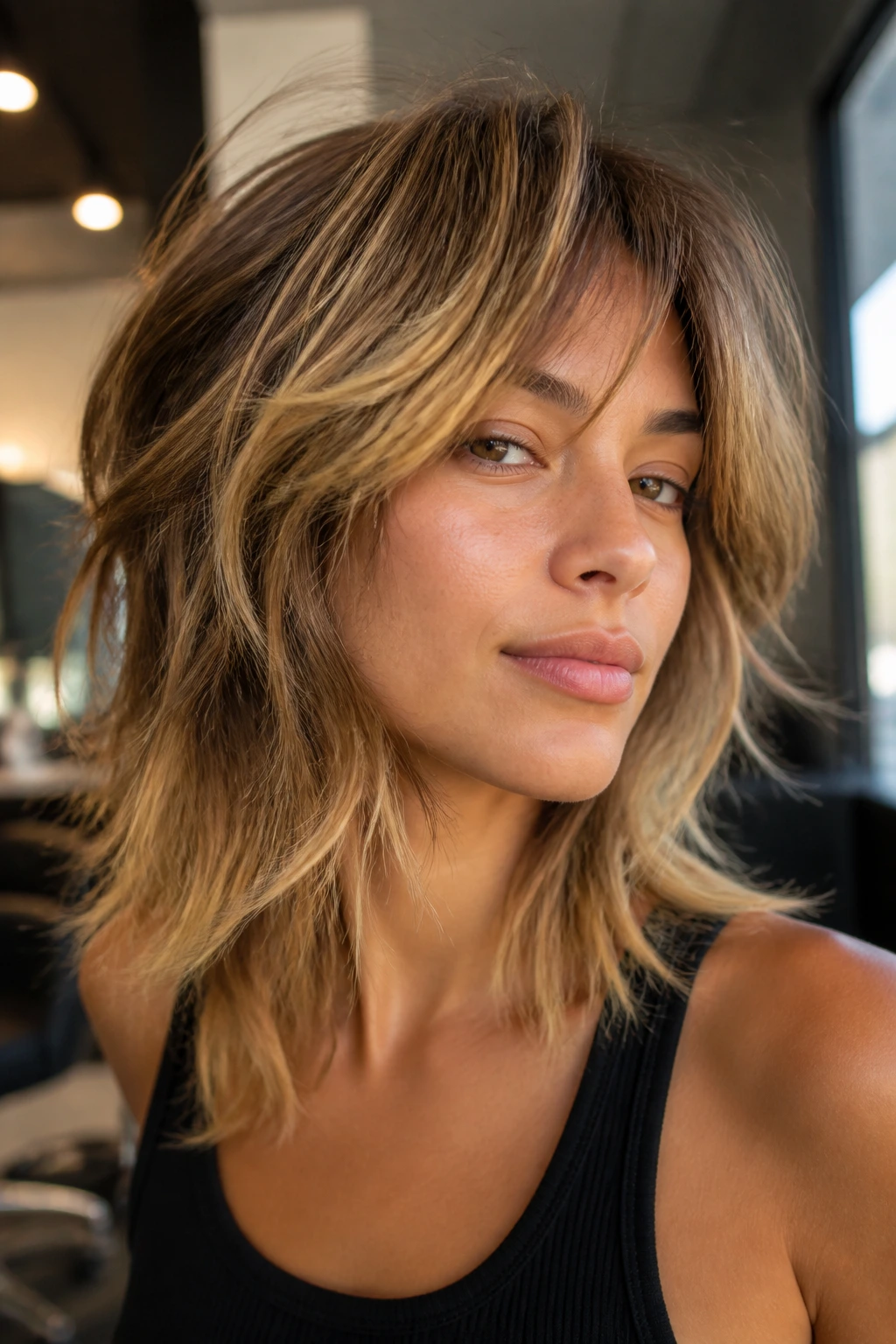
Gold-tipped shag is part color, part cut strategy. The shag layers create the movement, and the gold is concentrated around the tips, fringe, and outer layers so the texture does the talking. Warm skin gets a brightening effect without an all-over bleach job.
This is a smart choice if you like messy, lived-in hair. The gold reads best when the layers move and separate. Too much styling cream, though, and the color can disappear under the texture.
37. Lived-In Golden Glow Balayage
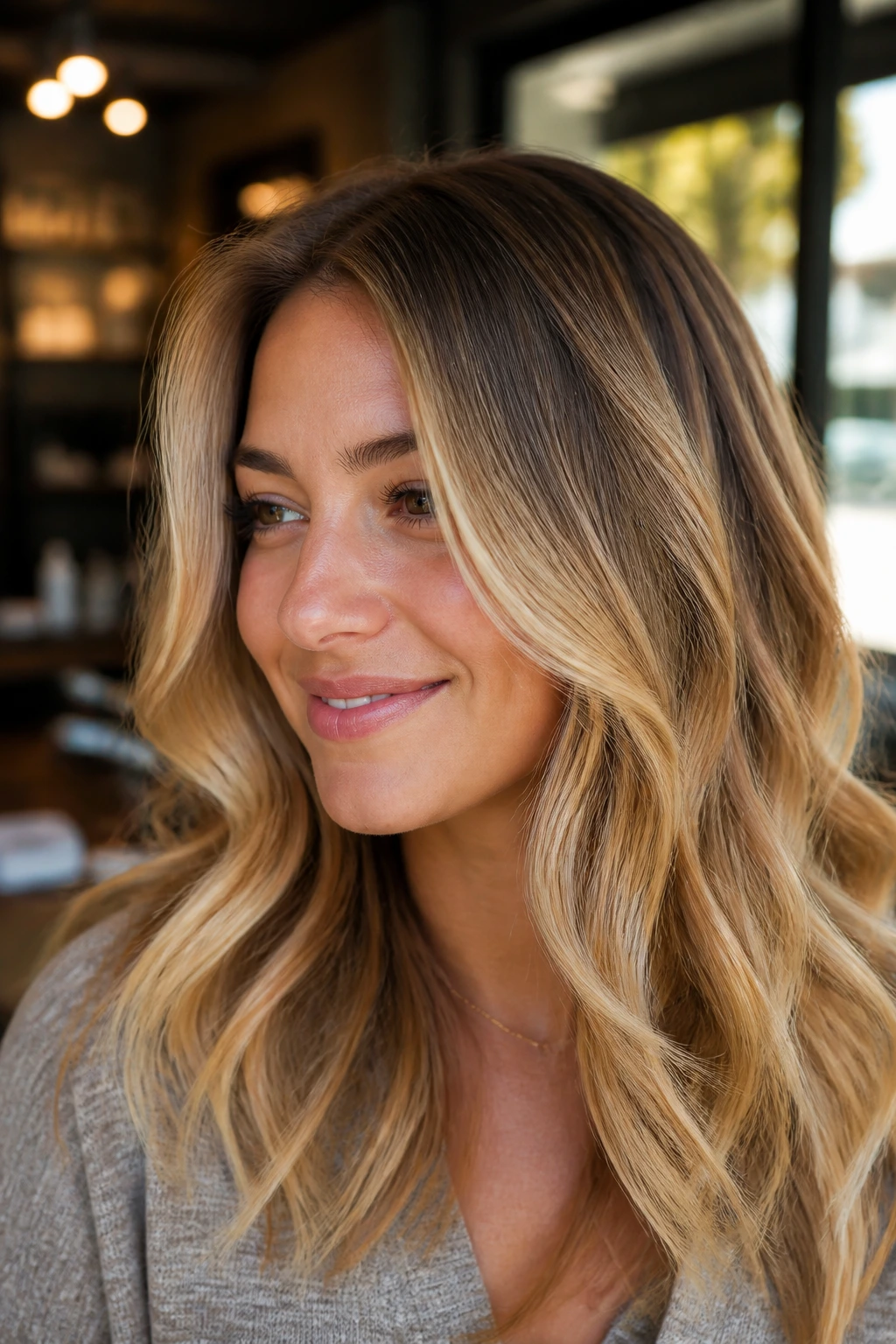
Lived-in golden glow balayage is the low-maintenance version of glamorous blonde. The lightener is painted softly, the root stays shadowed, and the gold is blended enough that grow-out doesn’t look harsh. Warm skin likes this because the tone never feels fighty.
What Makes It Different
The color is diffused, not striped. That means the blonde sits in broad, soft panels instead of obvious sections, which is easier on the eye and easier on your schedule.
If you want a shade that looks good six weeks after the salon, start here. It’s one of the most forgiving ways to wear gold on warm skin.
38. Amber Gold Foilayage
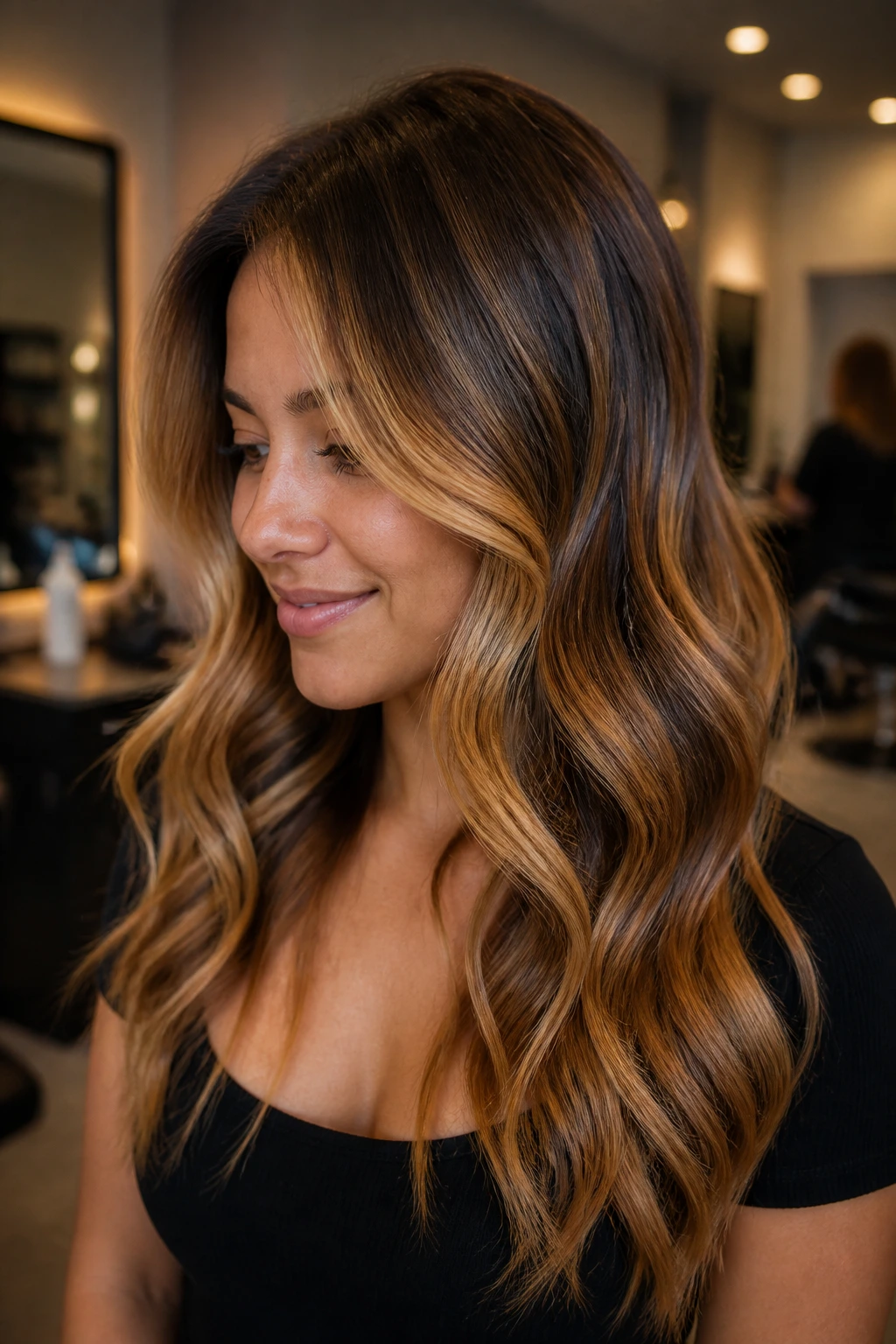
Amber gold foilayage is the brightest, most salon-forward option in the set. Foilayage gives a little more lift than open-air balayage, so the amber-gold pieces stand up better against darker bases. Warm skin benefits from the depth because the color gets light without losing its richness.
This is the kind of blonde that works when you want visible dimension and a stronger color contrast. It does need a skilled hand. If the foil placement is too dense, the hair can look chunky; if it’s too sparse, the amber effect disappears.
How Gold Blonde Hair Colors Change the Formula at the Salon
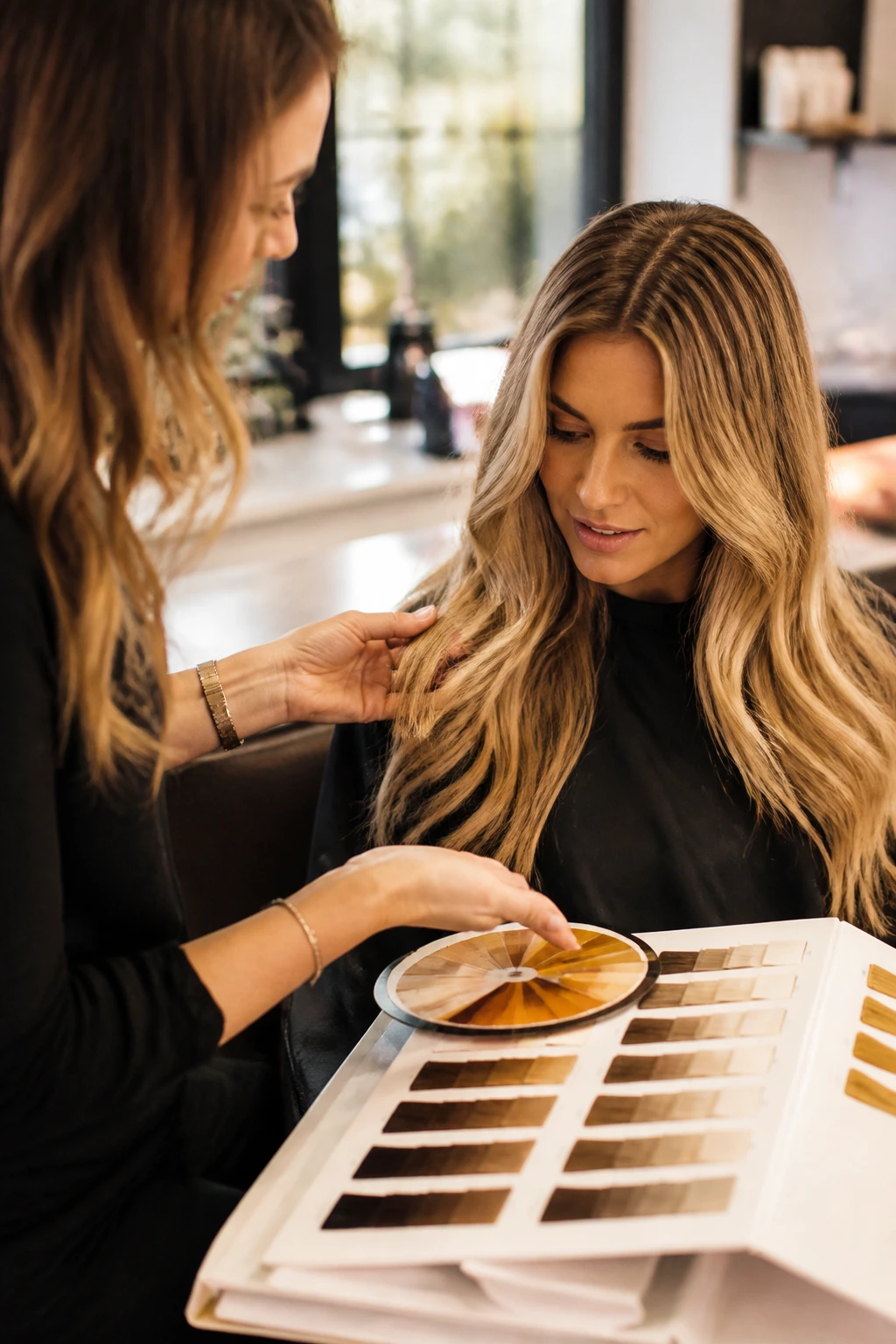
A good salon conversation starts with level, not with the word “blonde.” Level 7 is dark blonde to light brown territory, level 8 is medium blonde, level 9 is light blonde, and level 10 is the pale end of the spectrum. Gold shades live across all of them, but the look changes a lot depending on where your starting point is.
If your hair is naturally dark, asking for all-over light gold in one sitting usually ends badly. The ends get thirsty, the mids go too warm, and the result can look patchy. Foils, balayage, or a rooty melt let the gold build in layers, which is safer and usually prettier.
Bring Photos, But Talk About Tone
Photos help, but the real job is describing the tone. Say honey, beige-gold, amber, buttercream, caramel, or maple. Say whether you want a soft grow-out or a brighter face frame. Those words tell a colorist more than “I want blonde” ever will.
Ask Where the Light Should Live
The best gold blonde is rarely bright from root to tip. Usually, the money pieces are a half-shade lighter, the mids are blended, and the ends carry the strongest reflection. That structure makes the color read intentional instead of over-processed.
Essential Tools and Products That Keep the Tone Soft
-
Color-safe sulfate-free shampoo: Keeps the cuticle calmer and slows down fade; harsh cleansers strip warm gloss fast.
-
Lightweight conditioner with slip: Helps the blonde pieces stay smooth, especially if your hair has been lightened more than once.
-
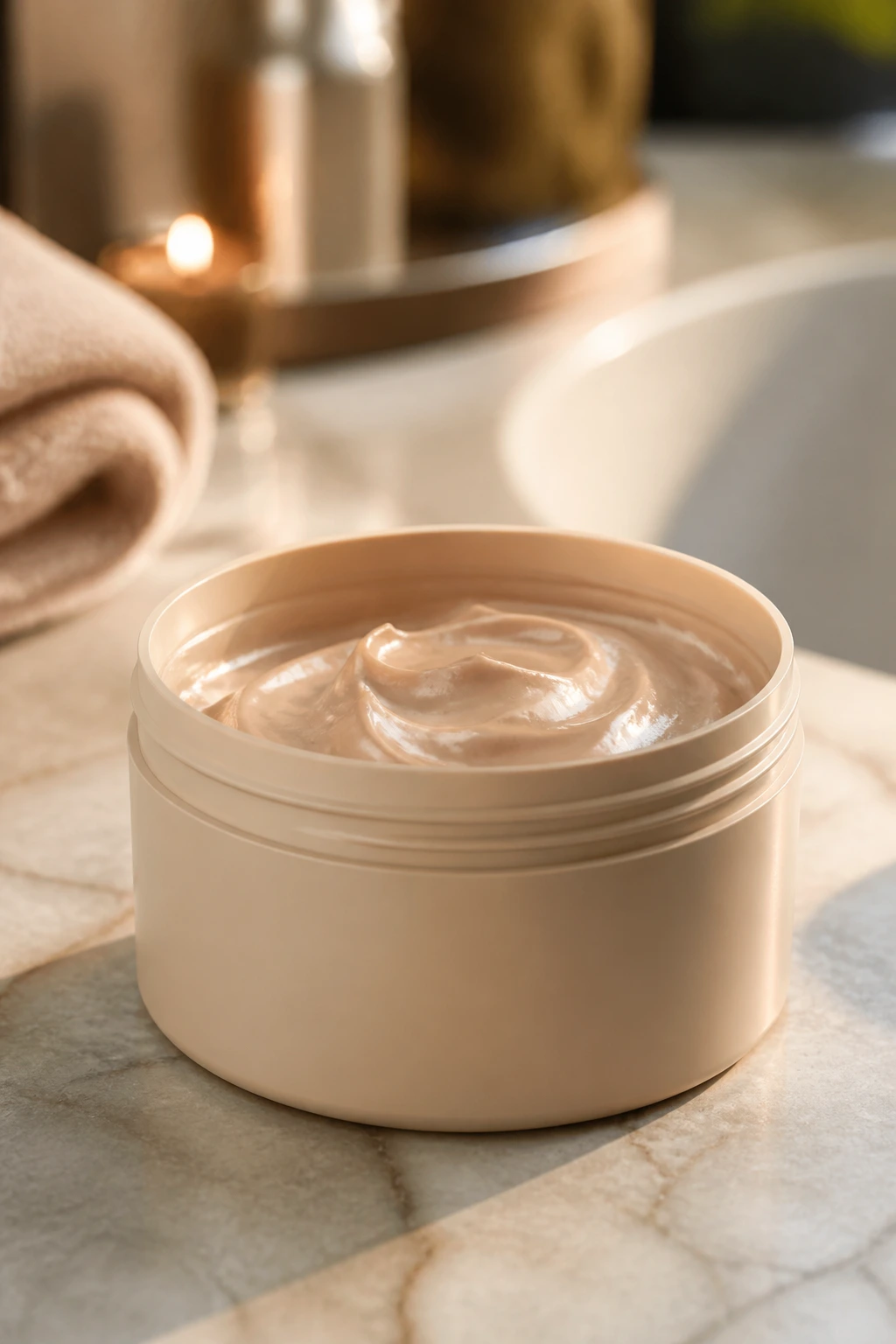
Gold or beige color-depositing mask: Useful when the warmth starts to look tired; choose beige-gold, not strong copper, unless you want a deeper tone.
-
Heat protectant spray: Blonde hair shows heat damage fast, and a 375°F styling iron can chew through gloss if you skip this.
-
Wide-tooth comb: Better than a brush on damp hair; it reduces breakage on highlighted sections.
-
Shower filter: Worth it if your water is hard, because mineral buildup can make gold blonde look dull and slightly greenish.
-
Microfiber towel or soft T-shirt: Rough towels create frizz, and frizz makes warm blonde look coarse.
-
Tint brush and mixing bowl: Handy for at-home glosses or color masks if your stylist gives you a maintenance formula.
-
Light oil or shine serum: One or two drops on the ends gives gold tones a cleaner reflection without making them greasy.
Keeping Gold Blonde Fresh Between Appointments
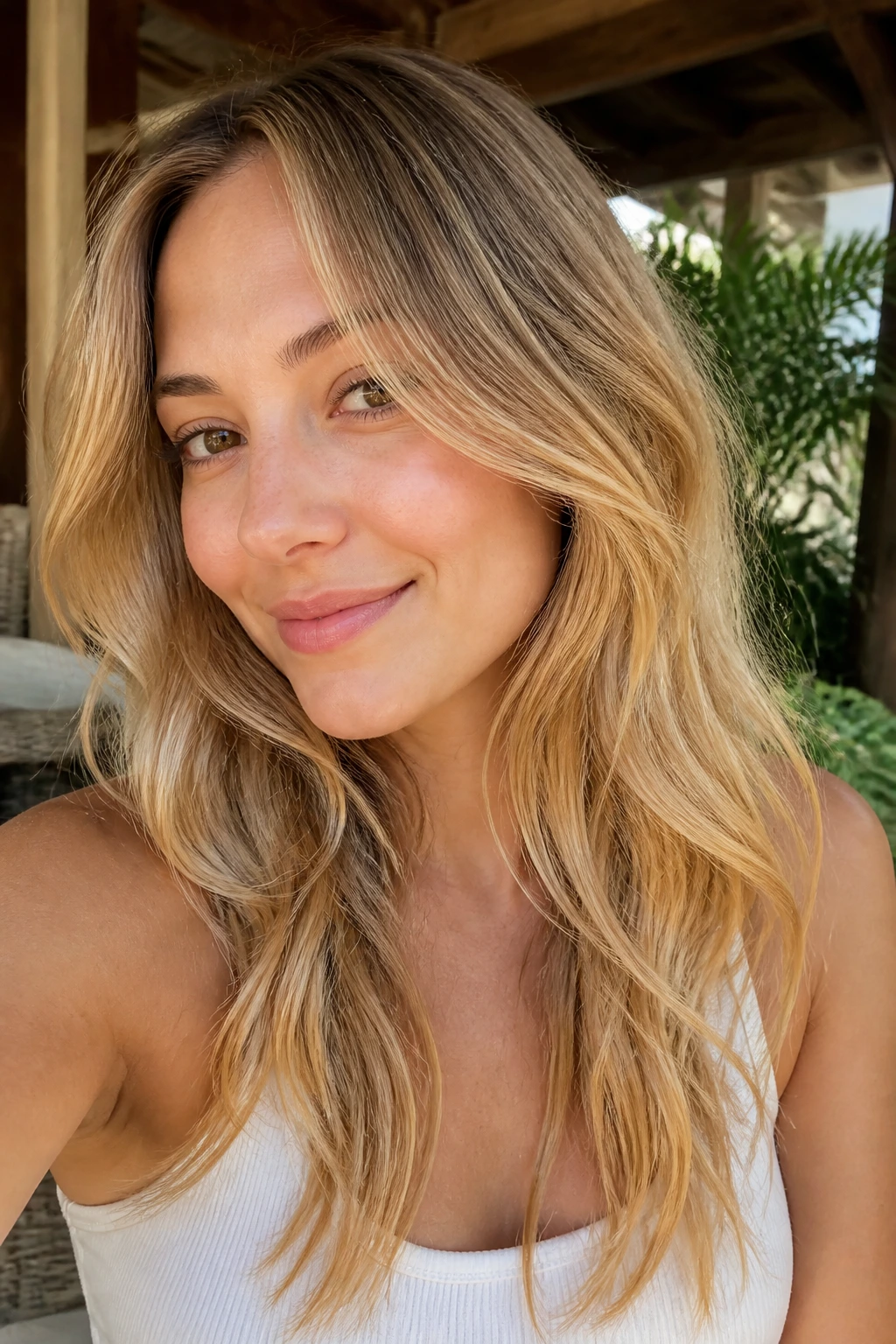
Gold blonde is forgiving, but it isn’t maintenance-free. If the hair is lightened, the gloss starts to fade first, then the tone gets a little dry-looking, then the brass creeps in. That’s the order of operations, and it’s worth watching.
Wash 2 to 3 times a week if you can. Frequent washing pulls tone out faster, especially from lighter honey and buttercream shades. On the other hand, if your scalp runs oily and you stretch washes too far, the roots can look flat and the gold pieces lose their shine under buildup.
Glossing every 4 to 6 weeks keeps the warmth soft. For foiled blondes or high-contrast money pieces, plan on root touch-ups around 6 to 8 weeks if you like a tidy line. Balayage can often go 8 to 12 weeks before it really needs a salon reset, which is one reason people keep coming back to it.
Purple shampoo deserves caution here. A little can save you if the blonde starts to go too yellow, but too much will mute the gold and leave it dull. If your target is honey, beige-gold, or amber, use purple shampoo sparingly—once every couple of weeks, not as your main cleanser.
Practical Ways to Make the Color Look Richer
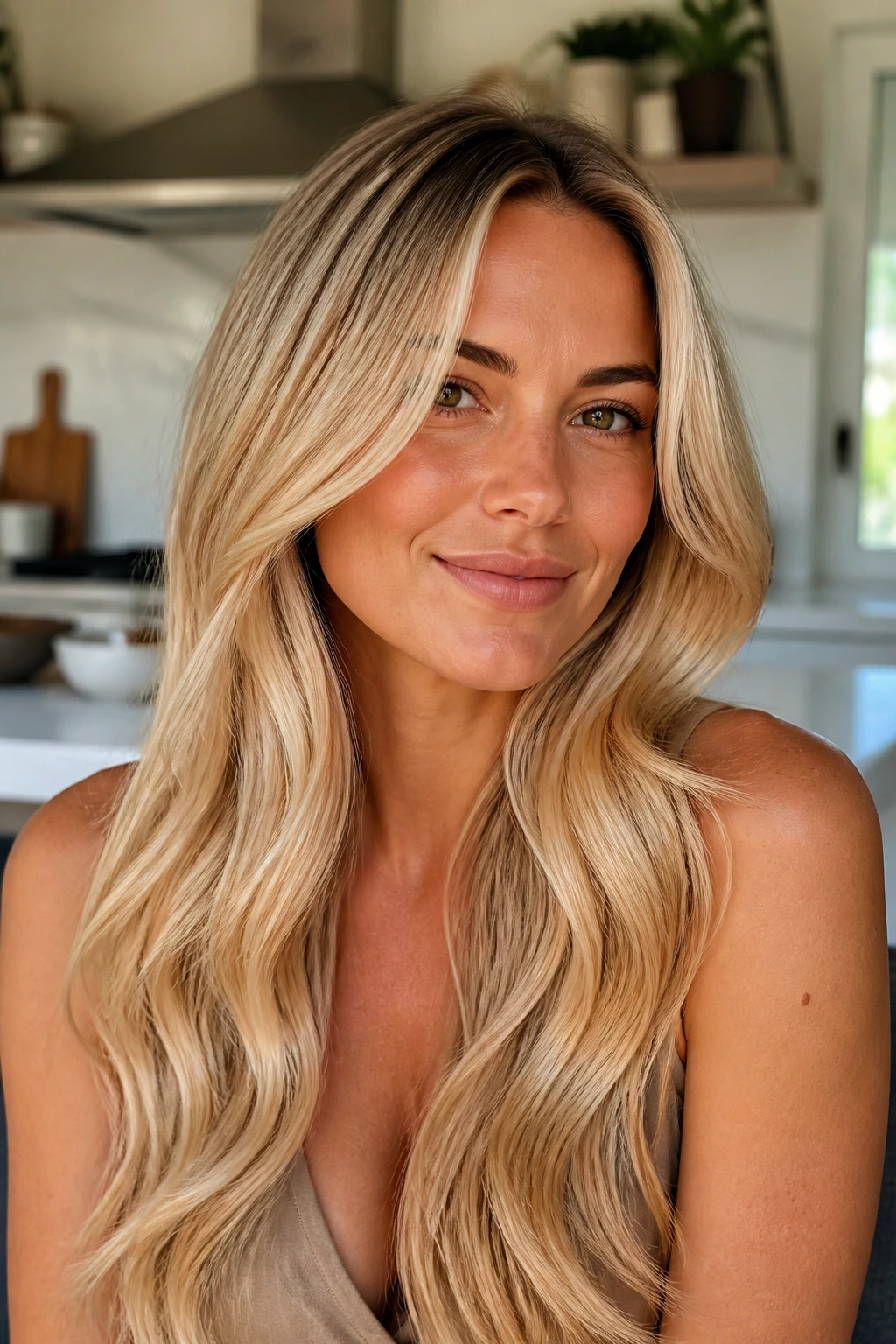
Shine: Finish with a lightweight serum or gloss spray on dry hair, focusing on the mids and ends. Gold reflects better when the cuticle lies flat, and that small bit of shine can make the color look one shade deeper.
Dimension: Ask for one tone at the root, one in the mids, and one brighter ribbon around the face. Flat gold blonde can look yellow in a hurry; layered tone gives it shape.
Face Frame: Keep the brightest pieces near the temples and cheekbones. That’s where warm skin benefits most from light.
Cost-Saver: Choose balayage or rooted gold if you don’t want to live in the salon every six weeks. They grow out softer and need fewer emergency touch-ups.
Heat Control: Use lower heat on irons and curling wands, and don’t drag hot tools over already-dry ends. Blonde hair loses tone faster when it gets fried, and fried ends make any gold look dusty.
Common Mistakes That Push Gold Blonde Off Track
-
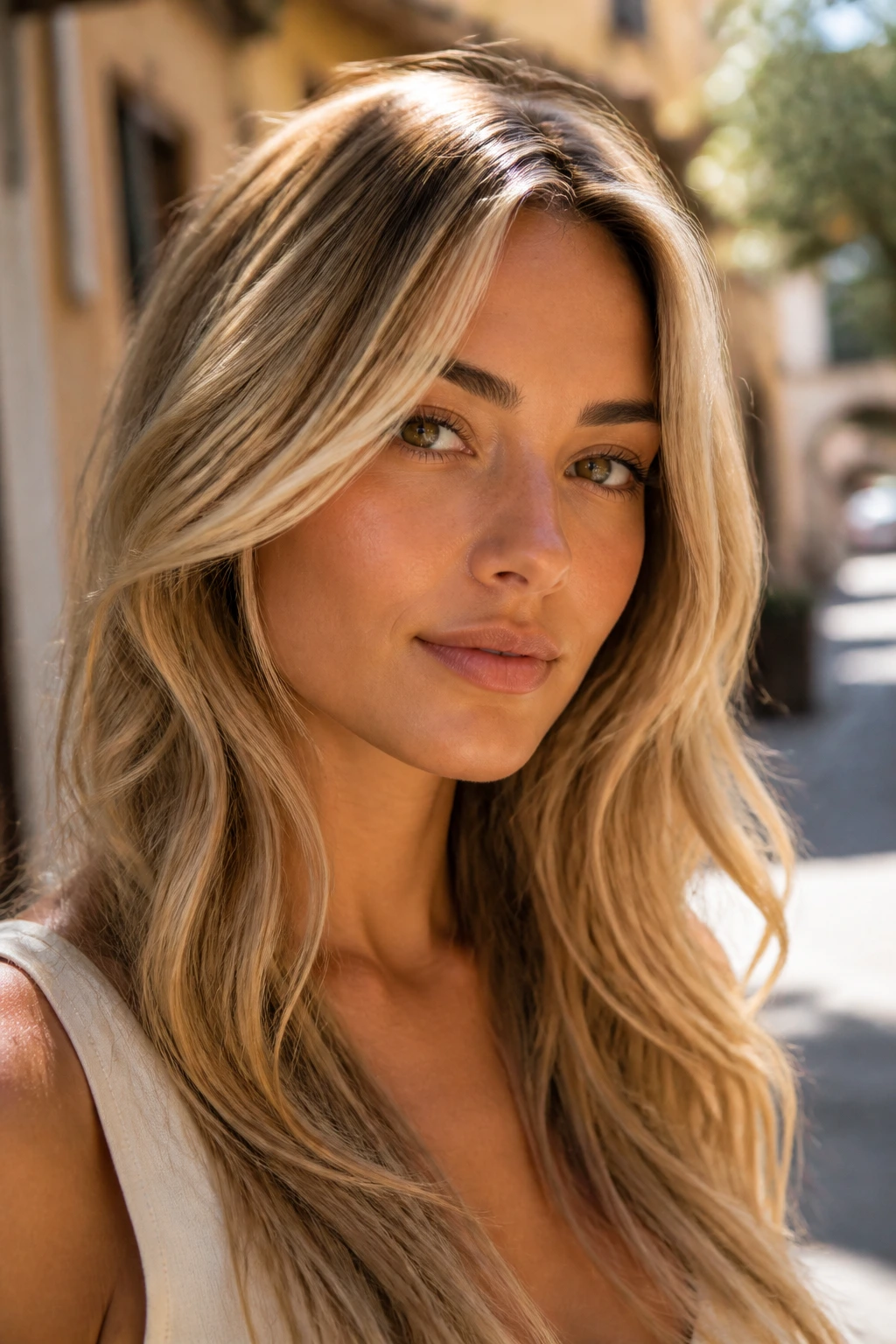
Going too yellow too fast: If the blonde looks like a banana peel under indoor light, the tone is too saturated. The fix is a beige or neutral-gold gloss, not more lightener.
-
Lifting dark hair in one jump: High-lift blonding on a dark base can leave the ends brassy and the mids muddy. Foils, balayage, or a staged lightening plan usually look cleaner.
-
Using purple shampoo like a daily cleanser: It can flatten a gold blonde into something dull and grayish. Save it for when the tone starts to drift warm in the wrong direction.
-
Ignoring your brows and makeup: Very pale gold against very dark brows can look disconnected, especially on warm skin. A deeper root or a richer shade like honey bronde keeps the balance better.
-
Skipping lowlights: If every strand is the same brightness, the hair can look flat in sunlight. A few deeper pieces give the blonde shape and help the gold read richer.
-
Chasing the photo instead of your base: A level 10 buttercream on dark hair is not the same as a level 10 buttercream on light hair. Starting point matters, and pretending it doesn’t is the fast route to disappointment.
Variations and Alternatives Worth Trying
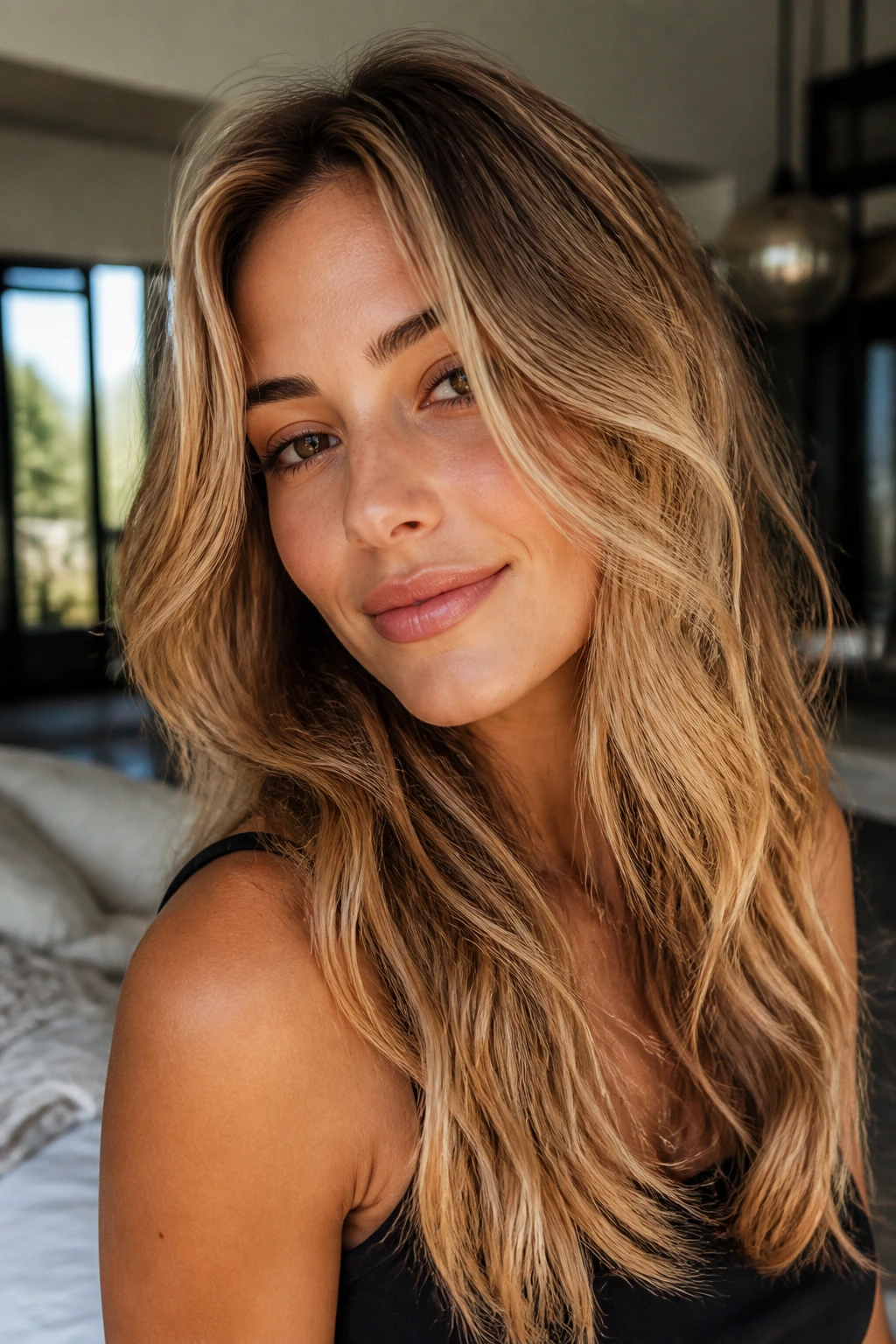
Soft Beige Gold: This is the quietest version of gold blonde, built for people who want warmth without obvious brightness. It works well on olive skin and on anyone who wants a shade that won’t fight with their makeup.
Brunette-to-Gold Melt: Keep the root deep, add caramel through the mids, then finish with honey at the ends. It’s a smart choice if you want blonde movement but don’t want to see regrowth every time you part your hair.
Peach-Glazed Blonde: Add a faint apricot or rose glaze over a pale gold base for a warmer, more playful tone. This suits warm skin with freckles or a natural flush, but it needs regular glossing to stay fresh.
Face-Framing Gold: Brighten only the front pieces and keep the rest of the hair richer. That makes the complexion look lifted without committing to an all-over lightening job.
Bronze Honey Version: This one keeps more brown in the formula and works best on deeper warm skin. It’s the easiest pick if bright blonde usually feels too disconnected from your features.
Questions People Ask Before Going Gold Blonde
Will gold blonde make warm skin look too yellow?
Not if the tone is balanced with beige, honey, or amber. The problem usually comes from over-toned yellow blondes, not from gold itself.
What gold blonde works best on olive skin?
Golden beige, milk tea blonde, and sandy wheat blonde usually behave well on olive undertones because they keep warmth without going loud. Very bright yellow-gold can pull green or brassy against olive skin.
Can dark brown hair go gold blonde without looking orange?
Yes, but usually not in one step. A staged balayage or foilayage process gives the hair enough lift to reach honey, caramel, or amber without making the mids look rusty.
Is balayage better than highlights for gold blonde?
Balayage usually gives a softer grow-out and a more lived-in result. Highlights give more brightness and can be better if you want a stronger face-framing effect.
How often should gold blonde be glossed?
Most gold blondes benefit from a gloss every 4 to 6 weeks, especially the lighter ones. Richer shades like bronze honey or toffee melt can sometimes stretch longer.
Does purple shampoo ruin gold blonde?
It can, if you use it too often. A light touch is fine when the hair gets too yellow, but regular use will mute the warmth that makes gold blonde flattering on warm skin.
Can warm skin wear platinum blonde?
Sometimes, but it usually takes more work to keep platinum from looking harsh. Most warm skin looks easier in beige-gold, honey, buttercream, or amber because those shades match the face instead of fighting it.
What if my gold blonde turns orange after lightening?
That usually means the hair hasn’t lifted enough yet or the gloss is too copper-heavy. A colorist can balance it with a beige-gold toner or lift it another step, depending on the condition of your hair.
The Warm Shade That Sticks
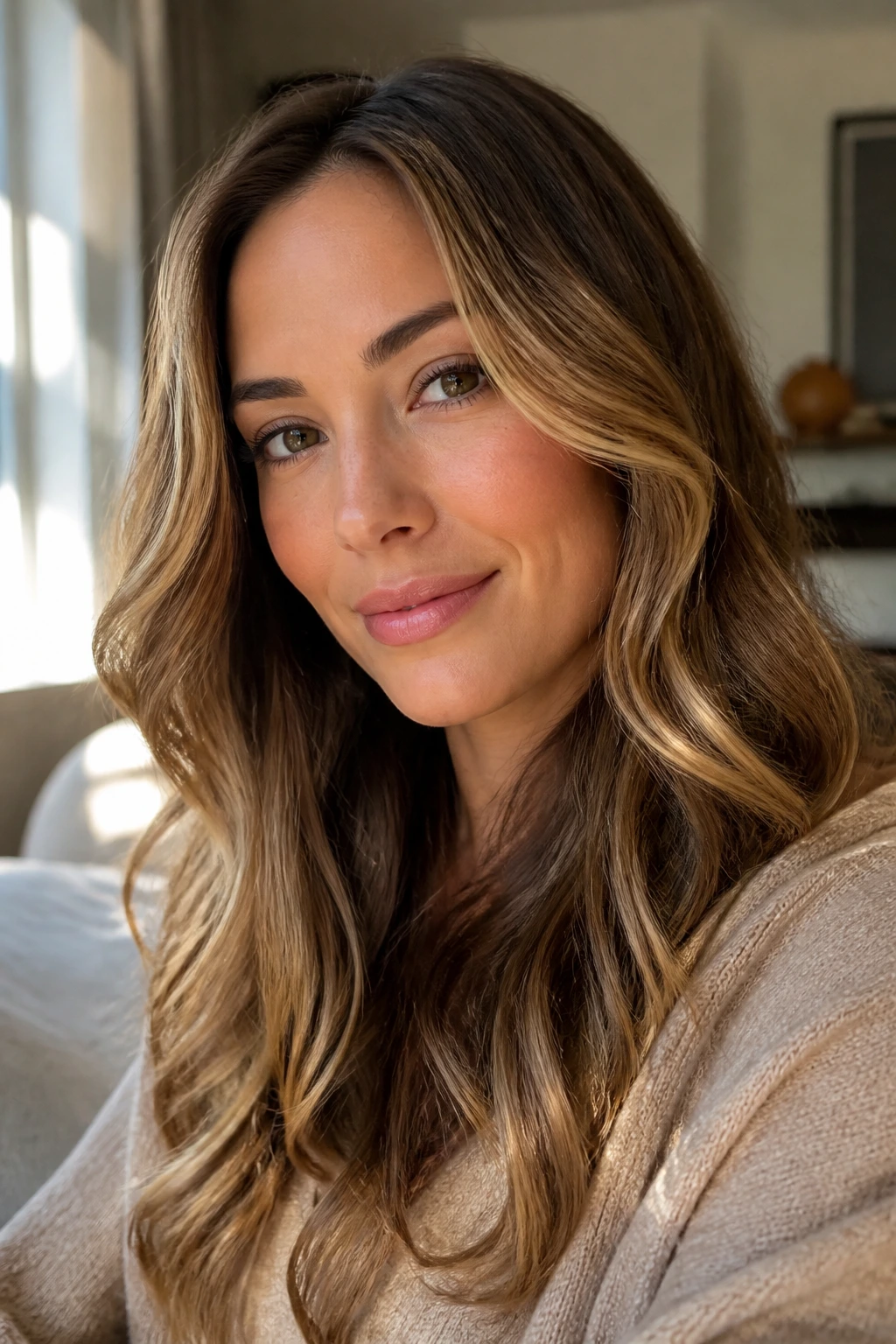
Gold blonde works on warm skin because it doesn’t ask the face to become something else. It meets peach, olive, bronze, and golden undertones where they already live, then gives them a little more light and shape. That’s a better trick than chasing some icy, high-maintenance blonde that never quite settles in.
The nicest versions of this color family are the ones with a little depth at the root, a soft gloss through the mids, and enough beige in the finish to keep the gold calm. Get that balance right, and the hair looks like it belongs on your face, not like it was borrowed for the afternoon.
