



Babylights can do what chunky highlights rarely manage: make hair look lighter, fresher, and more expensive without shouting about it.
That tiny weave matters. A few pencil-fine foils around the part line can shift the whole head of hair, while the rest stays deep enough to keep the cut and texture intact. Soft dimensional color lives in that balance — enough light to catch the eye, not so much that the hair starts reading like stripes.
A lot of babylights ideas fail for one simple reason: the tone is right, but the placement is wrong, or the placement is gorgeous and the toner is fighting the base. Mushroom beige on a dark blonde, ash on a brunette, honey on a mocha base — each one behaves differently under daylight, indoor light, and a round brush finish. The same technique can look airy, smoky, warm, or almost invisible depending on where the lightest pieces land.
The good versions are subtle in a very specific way. You notice movement first, then shine, then the color itself. That’s the whole trick.
Why These Babylights Ideas Work So Well
- Soft Grow-Out: The fine weave blurs the root line, so the color keeps looking intentional long after the salon visit.
- Tone Control: Beige, ash, honey, copper, and pearl all shift the mood without forcing a full color change.
- Less Bulk, More Movement: Babylights keep bobs, lobs, and long layers from looking heavy or blocky.
- Face Brightening: A few tiny foils around the hairline can wake up the face faster than a full-head lightening job.
- Easy to Personalize: The same placement can go cooler, warmer, brighter, or deeper depending on the gloss and the base color.
- Better for Texture: Waves and curls hold onto micro-light pieces in a way that reads woven, not streaky.
1. Mushroom Beige Babylights on Dark Blonde
Mushroom beige is the color I reach for when someone wants dimension but refuses to look stripey. On a dark blonde base, the soft taupe-beige ribbons sit right between cool and warm, which keeps the finish calm instead of golden or muddy.
Why It Reads Soft
The magic is in the lift level. Keep the babylights only one to two shades lighter than the base, and finish with a beige gloss rather than a bright blonde toner. That tiny restraint is what makes the color feel expensive instead of loud.
- Best base: Level 6 to 7 dark blonde or light brown.
- Placement: Crown, temples, and top layers where light naturally hits first.
- Tone: Beige with a whisper of smoke.
- Ask for: A fine weave, not chunky slices.
Pro tip: If your hair tends to go orange fast, ask your colorist to leave a touch of depth near the roots and brighten only the midlengths and ends.
2. Smoky Ash Babylights for Brunettes
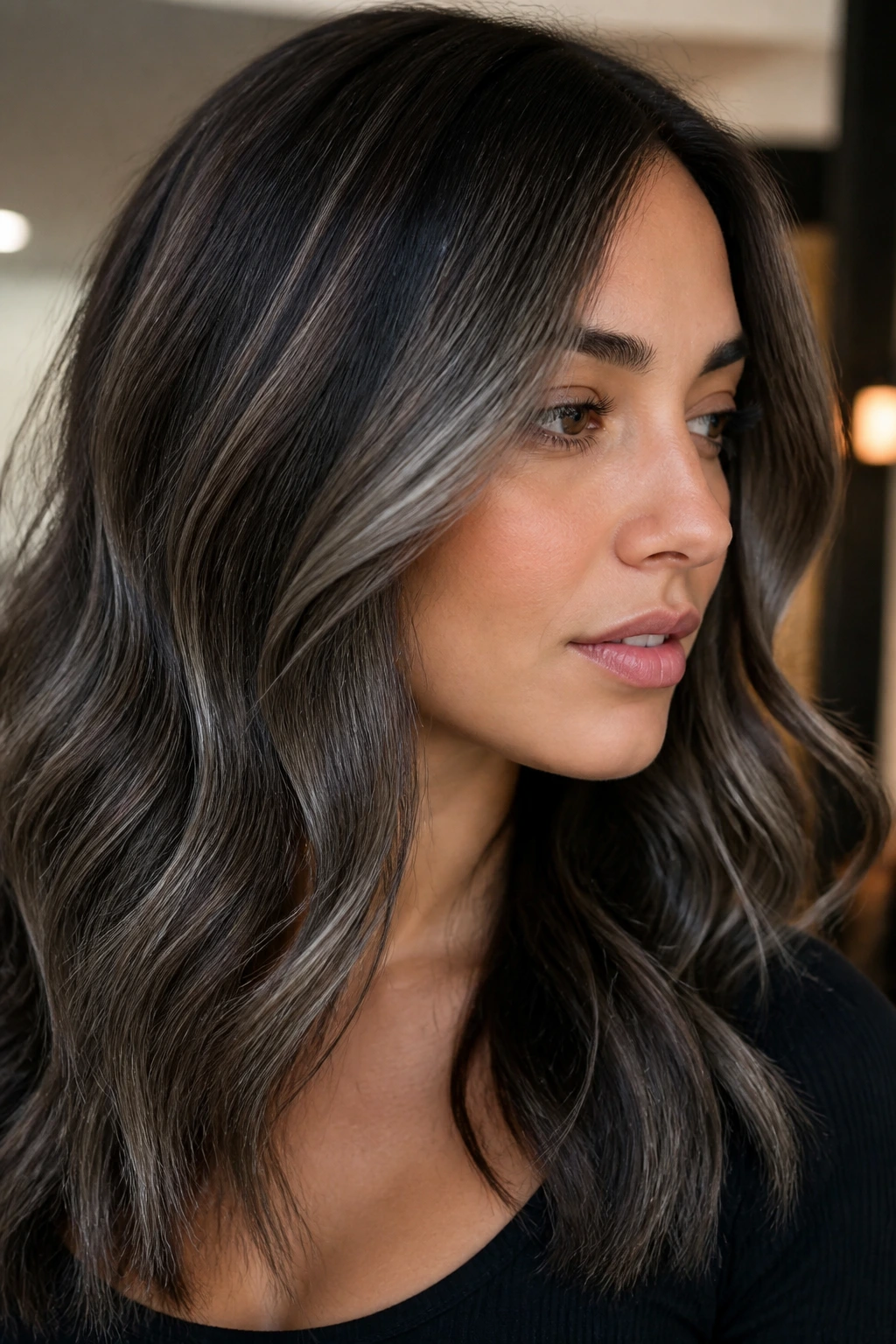
This is the move for brunettes who are tired of brass. Smoky ash babylights cut through warmth without turning the hair flat, and that matters on darker bases where a harsh blonde streak can look out of place.
The best version starts on a level 4 or 5 brunette and lifts just enough to create cool ribbons through the top half of the hair. If the ash gets too pale, the color can look chalky. Keep it soft, keep it smoky, and let the brunette base do some of the work.
Straight or softly waved hair shows this best. The cool pieces trace the bend of the hair, so the finish reads as depth rather than contrast.
3. Honey Ribbon Babylights on Mocha Hair
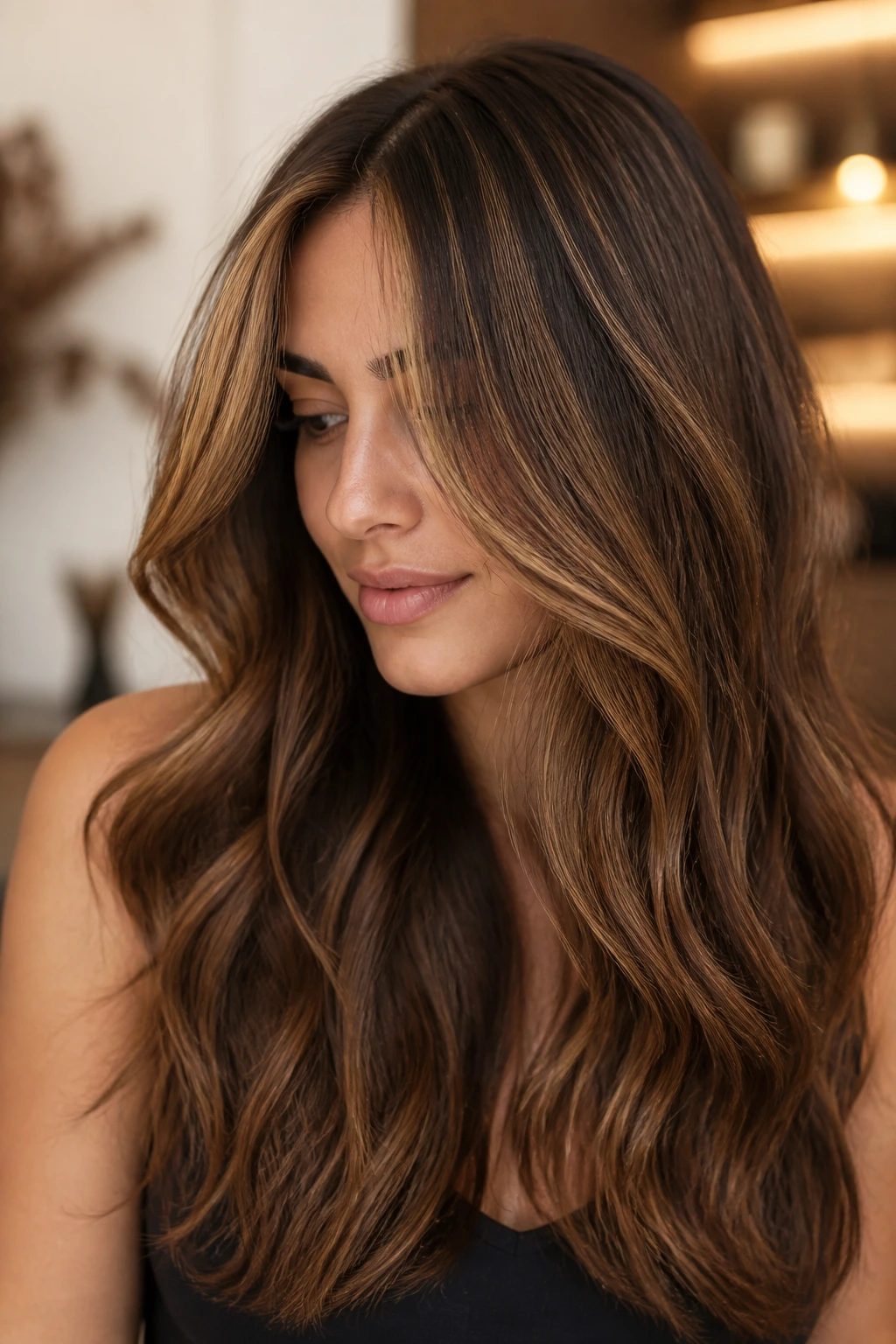
Want brunette hair that looks sunlit instead of flat? Honey ribbon babylights are the answer, especially on mocha bases that need warmth without crossing into copper.
How to Wear It
The prettiest version places the lightest honey pieces through the mids and around the face, then leaves the underneath darker so the hair still has weight. A 1-to-2 level lift is usually enough. Go too light and the effect stops looking soft.
Keep the gloss warm but not orange. Honey should feel buttery, not brassy. That’s the difference between rich and overdone.
If your hair is layered, this placement gives each layer a little more definition. If it’s one length, it keeps the surface from looking like a single dark sheet.
4. Champagne Babylights Around the Face
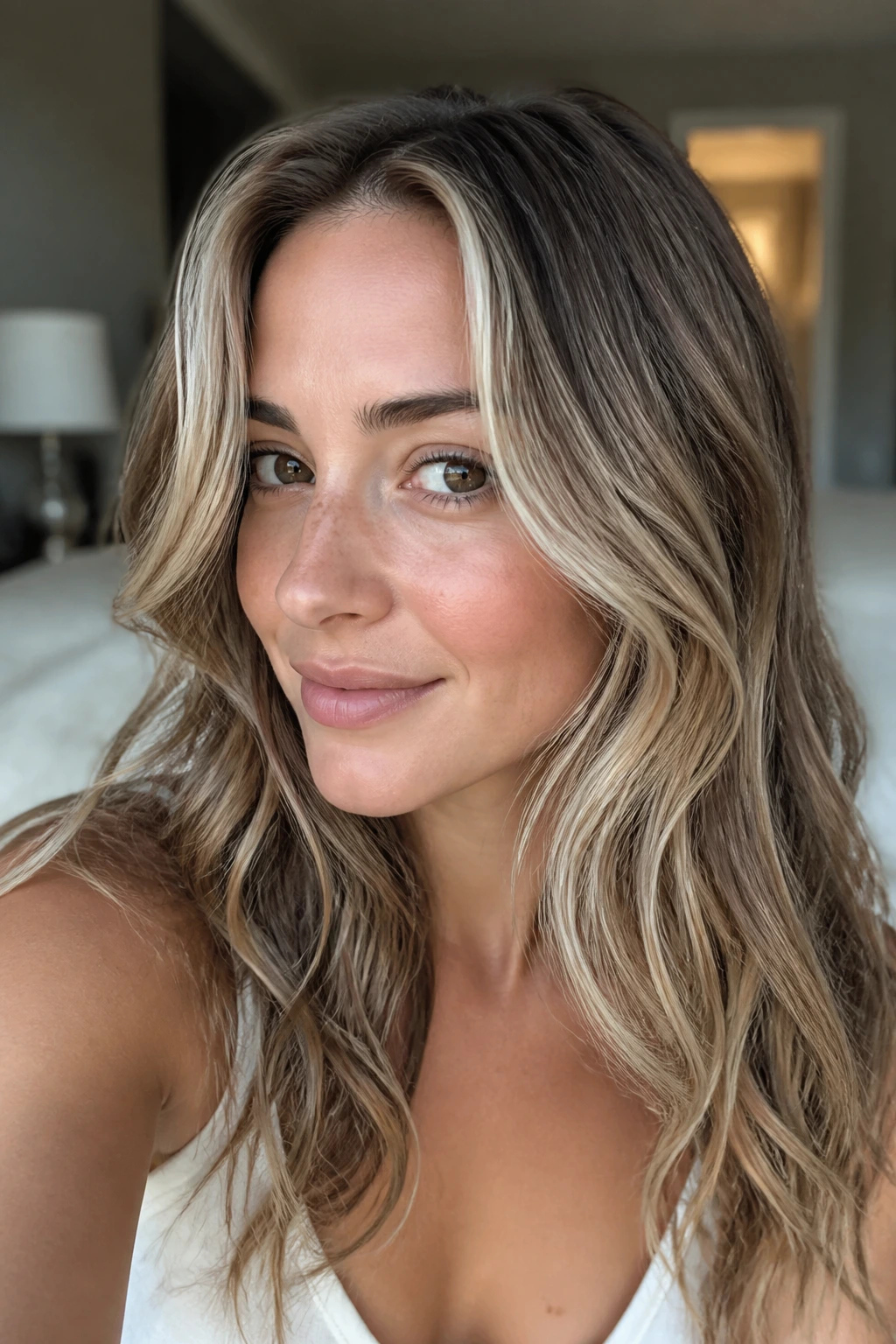
A few champagne babylights around the face can change the whole haircut. You notice it when the hair is tucked behind the ear or falling over a cheekbone — those tiny bright pieces catch the light first.
This idea works especially well if the rest of your color is staying close to your natural shade. Ask for micro foils along the part, temple, and front perimeter, then keep the interior of the head softer. Too much brightness everywhere kills the effect.
- Best for: Short layers, lobs, and long hair that needs a little lift.
- Placement note: Concentrate on the first two inches around the hairline.
- Tone note: Champagne should lean beige-gold, not white.
- Wear it with: Loose waves or a smooth blowout.
A face frame this fine looks polished without turning the whole head blonde. That restraint is the charm.
5. Caramel Babylights With a Soft Root Shadow
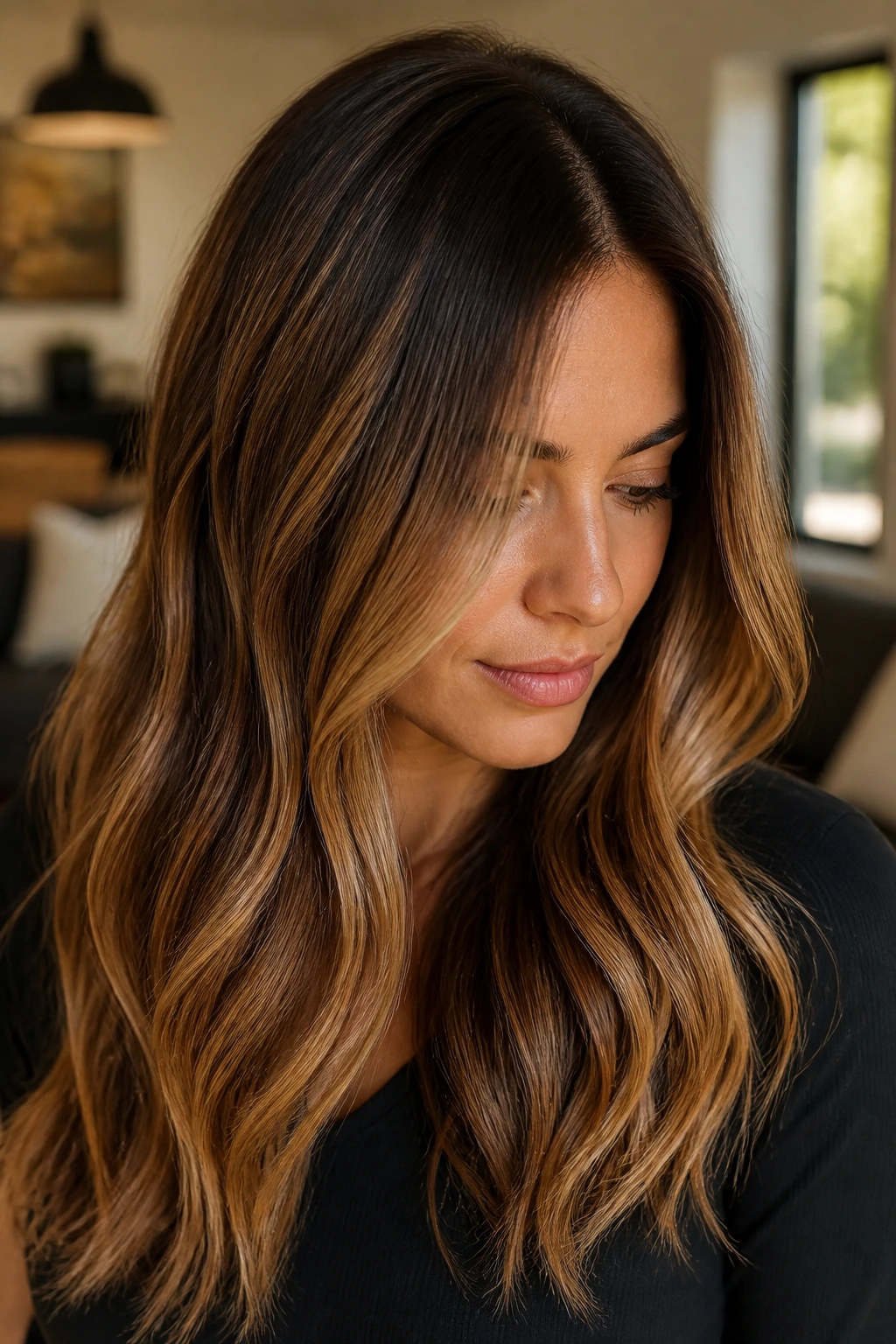
Caramel babylights are one of those shades that look easy only when they’re done well. On deep brunette hair, the warm ribbons add movement right away, but the real trick is the root shadow. Leave the root a half-shade deeper and the color grows out like it belongs there.
I like this look on hair that gets worn in soft bends or big blowouts. The caramel pieces move as the hair moves, and the darker root keeps the whole thing from reading as a solid block of warmth.
No stripy business. Just depth, shine, and a finish that holds up for weeks.
6. Pearl Blonde Babylights on Cool Blonde Hair
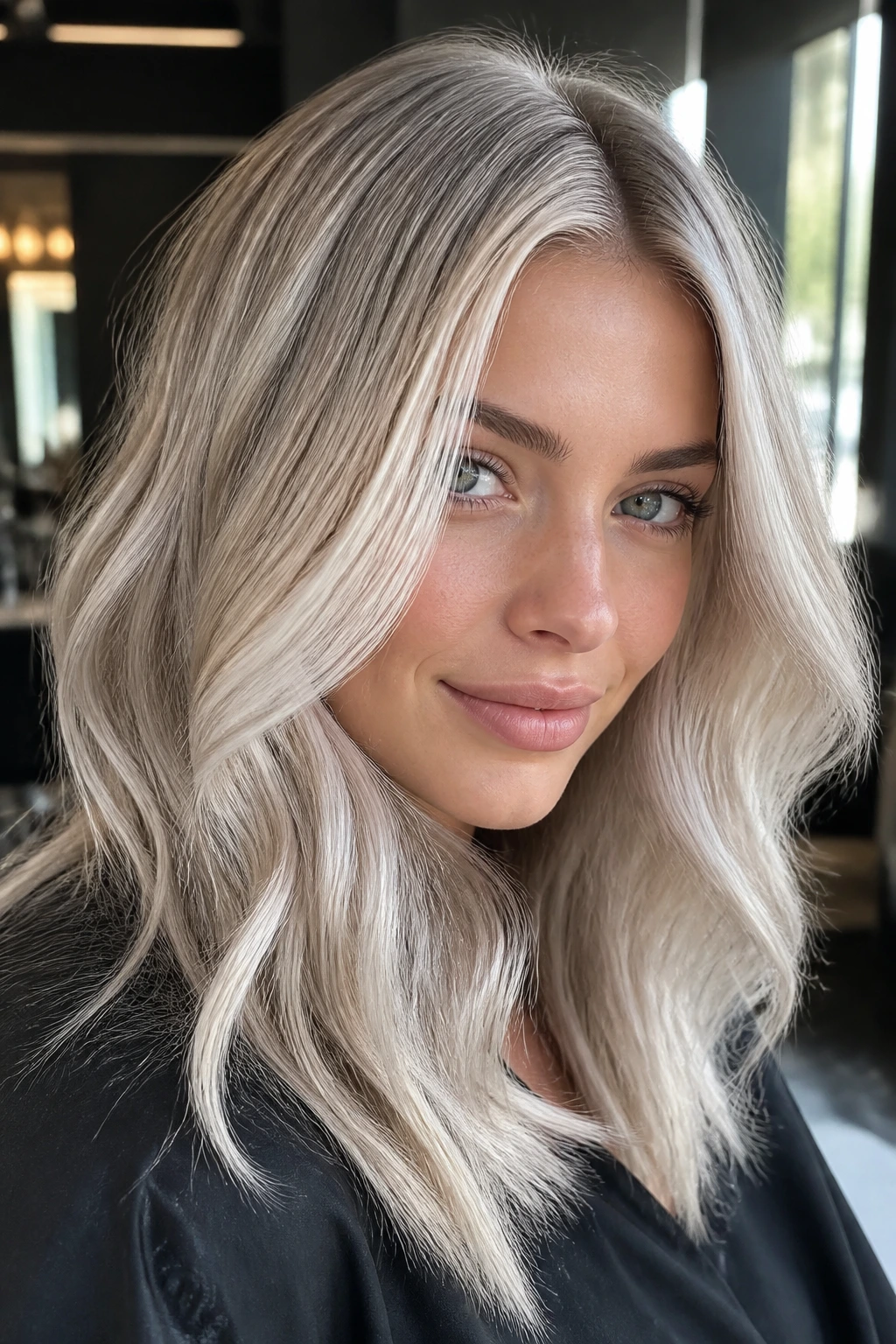
Pearl blonde babylights sit in a sweet spot between icy and beige. They give cool blondes a softer finish than straight platinum, which can sometimes look flat if the toner goes too pale.
This is a smart choice when the base is already light but needs a little light-catching detail. The babylights should be tiny and closely woven, then finished with a pearl gloss that keeps the blonde luminous instead of yellow.
Avoid pushing the tone too silver if your hair is porous. On damaged blondes, silver can swallow the shine. Pearl keeps the brightness and leaves some cream in the mix.
7. Copper Babylights for Warm Brunettes
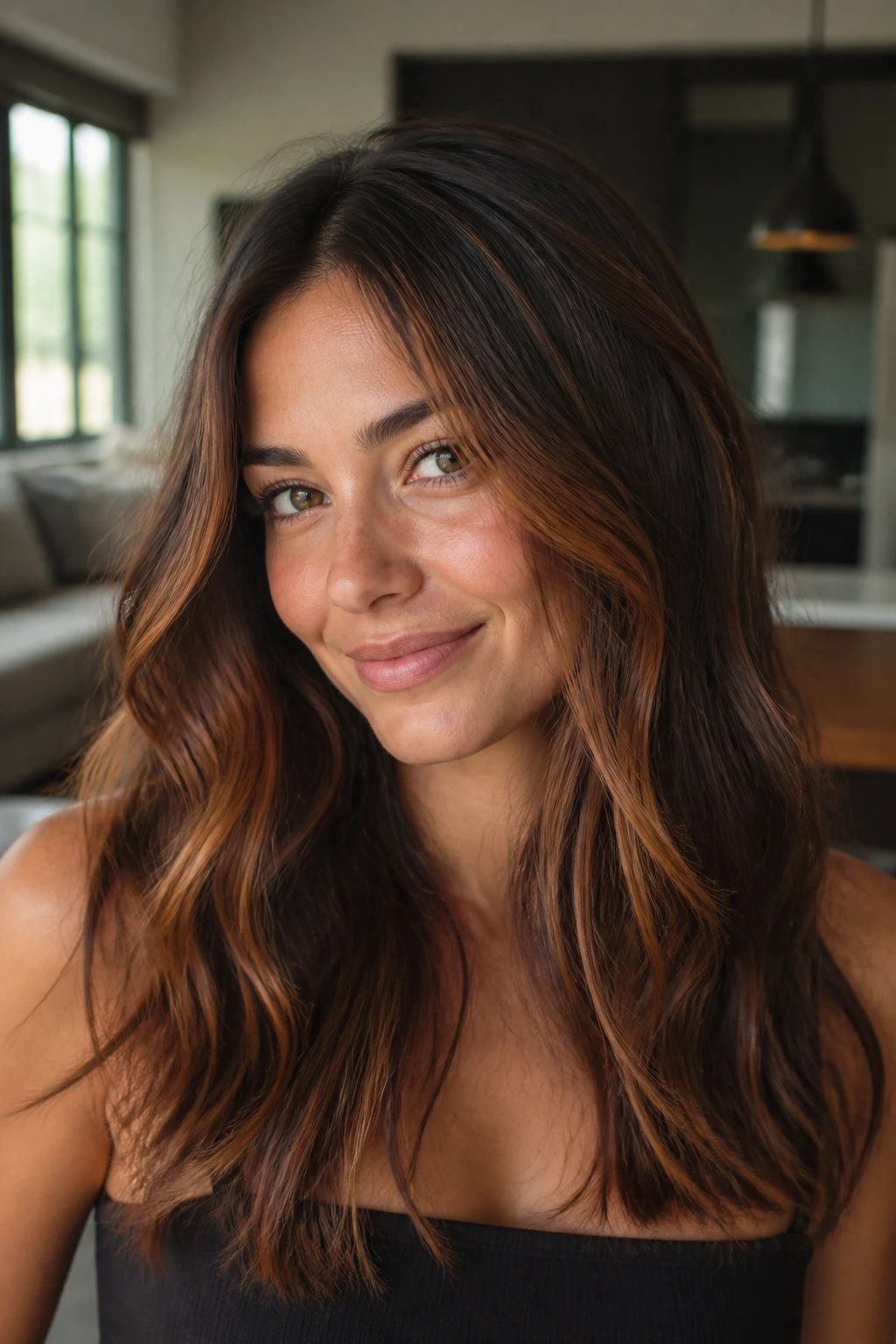
Copper babylights wake up warm brunette hair in a way nothing else quite does. The color lands like a glint, not a neon streak, as long as the pieces stay thin and the base stays visible.
What to Ask For
- Base level: Level 5 or 6 brunette with warm undertones.
- Lift level: One to two levels lighter than the base, never a huge jump.
- Tone: Copper with a hint of brown, not bright orange.
- Placement: Around the face, through the top layer, and a little at the ends.
The best copper babylights look richer when the hair is styled smooth. On tight curls or very choppy layers, they can read louder than expected, so placement matters. Keep some of the copper tucked underneath and let a few brighter pieces sit on top.
8. Rose Gold Babylights on Light Brown Hair
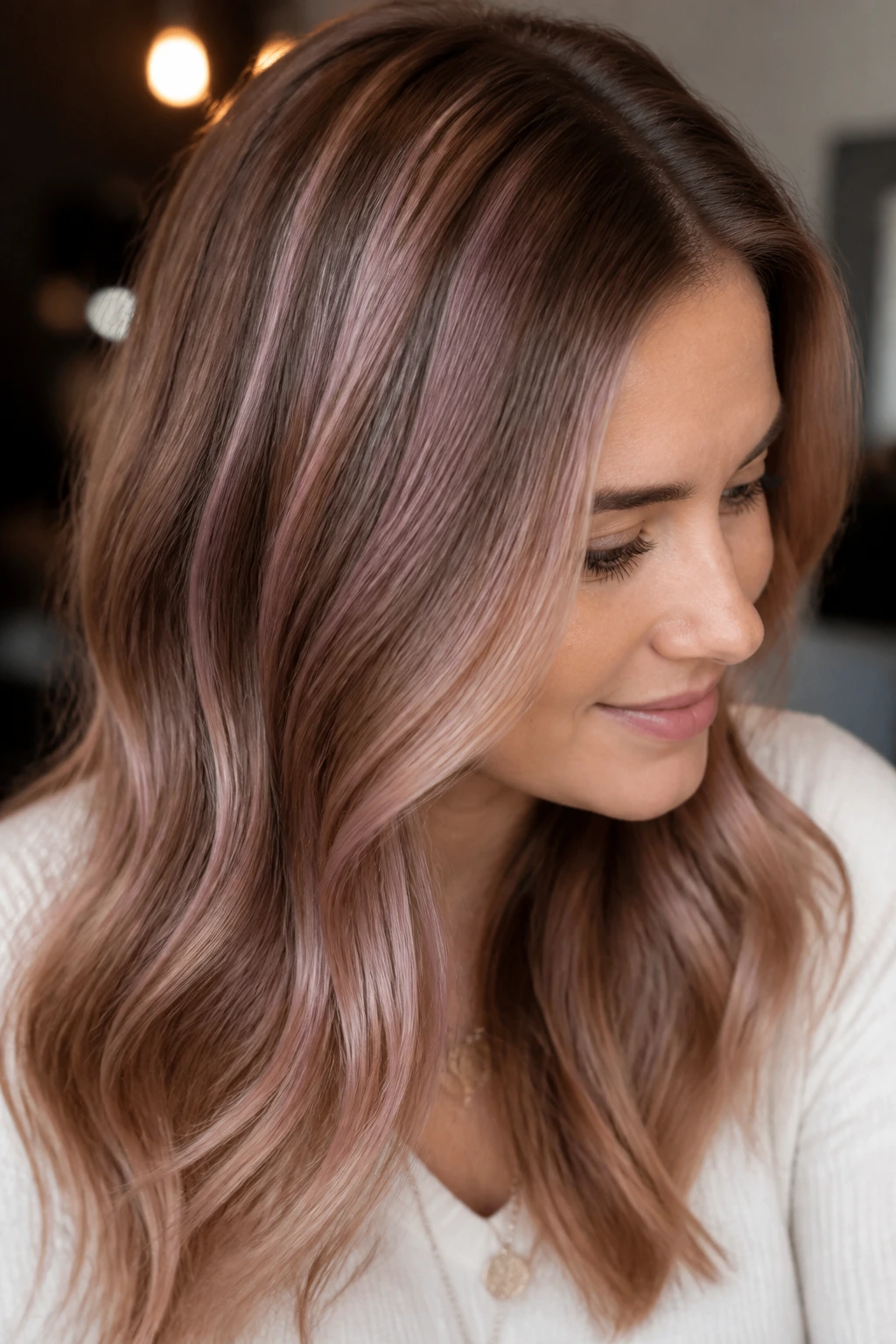
Rose gold works because it softens the space between blonde and copper. On a light brown base, it gives the hair a warm blush that looks delicate rather than pink-heavy.
The trick is restraint. Too much red and the whole head starts looking tinted; too little and the color disappears. Ask for babylights that lift just enough to hold a beige-gold-pink glaze, then keep the pieces fine around the crown so the rose tone shows in motion.
This is one of my favorite babylights ideas for hair that feels plain in daylight. A little rose gold fixes that without forcing a dramatic color change.
9. Sandy Babylights on Long Layers
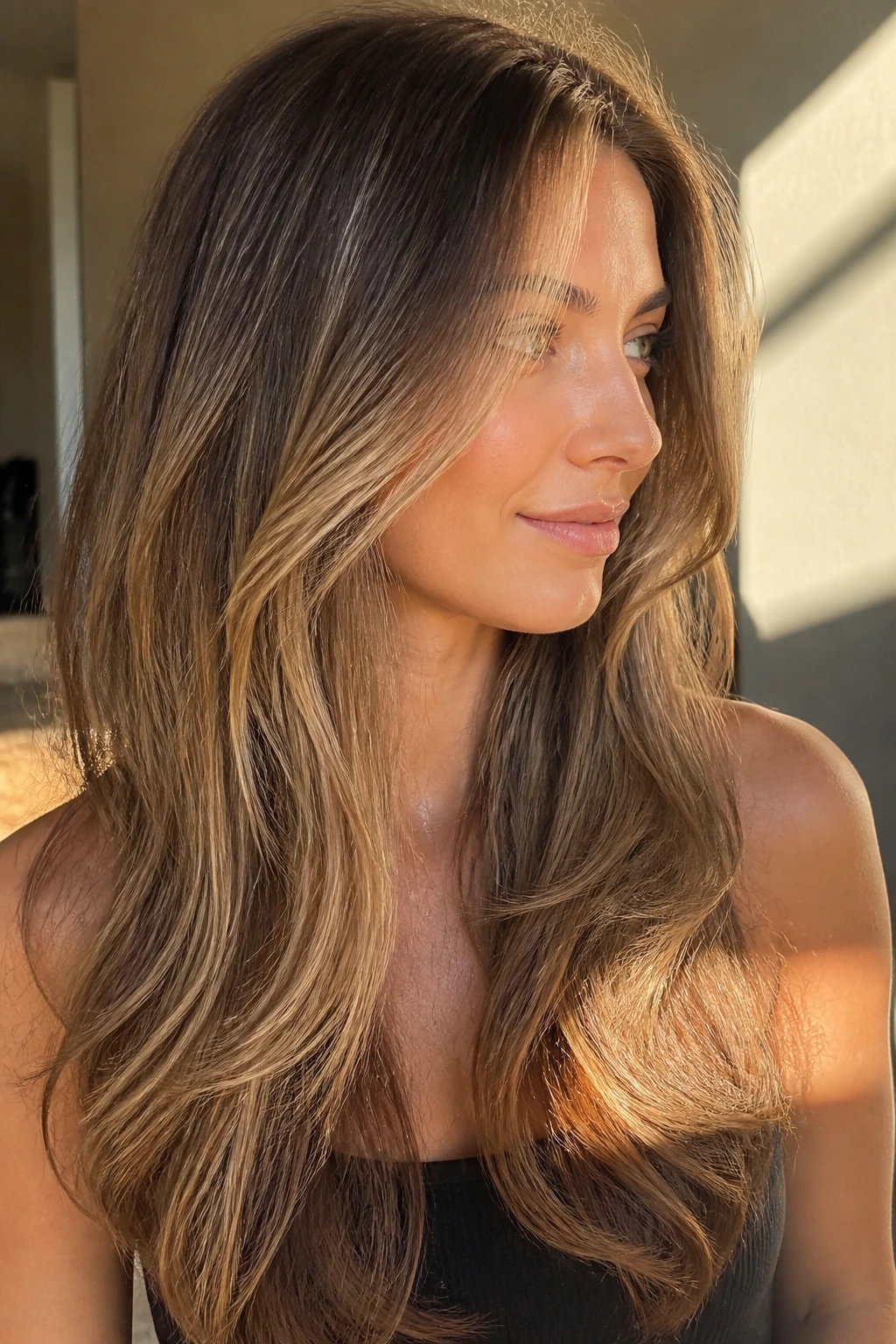
Why do some long layers look heavy even when the cut is good? Because the color sits too flat. Sandy babylights solve that by putting soft neutral light through the lengths so each layer has a little air around it.
How to Place It
You want the lightest pieces through the midlengths and upper ends, not packed into the roots. On long hair, that keeps the color from looking like a helmet of brightness. Sandy tones should stay neutral-beige, with just enough warmth to avoid a dusty finish.
This is a quietly flattering choice on hair that wears waves well. Each bend shows a different part of the ribbon, and the whole style starts to move.
10. Vanilla Babylights on a Blunt Bob
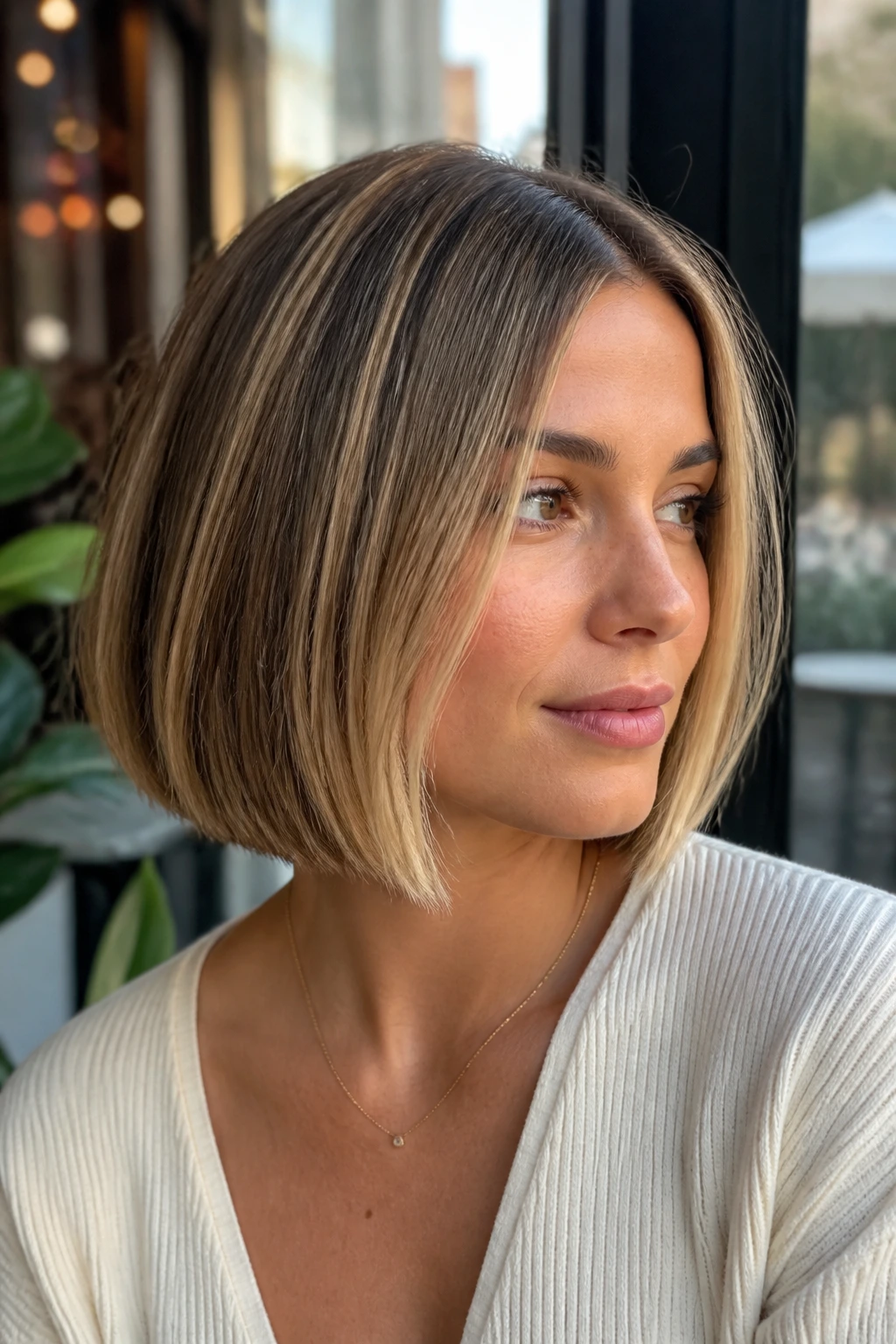
A blunt bob can look very sharp. That’s the point, usually. But if the color is one flat tone from root to chin, the cut can start feeling blocky. Vanilla babylights break that edge.
The light pieces should live mostly on the top layer and the sides, with a few tiny foils near the front corners. Keep the nape a shade deeper so the shape still looks clean. Vanilla, in this case, means creamy and soft — not white, not icy.
This is one of the best babylights ideas for anyone who wants a bob to feel lighter without losing the crisp outline of the cut.
11. Cinnamon Babylights on Espresso Brown Hair
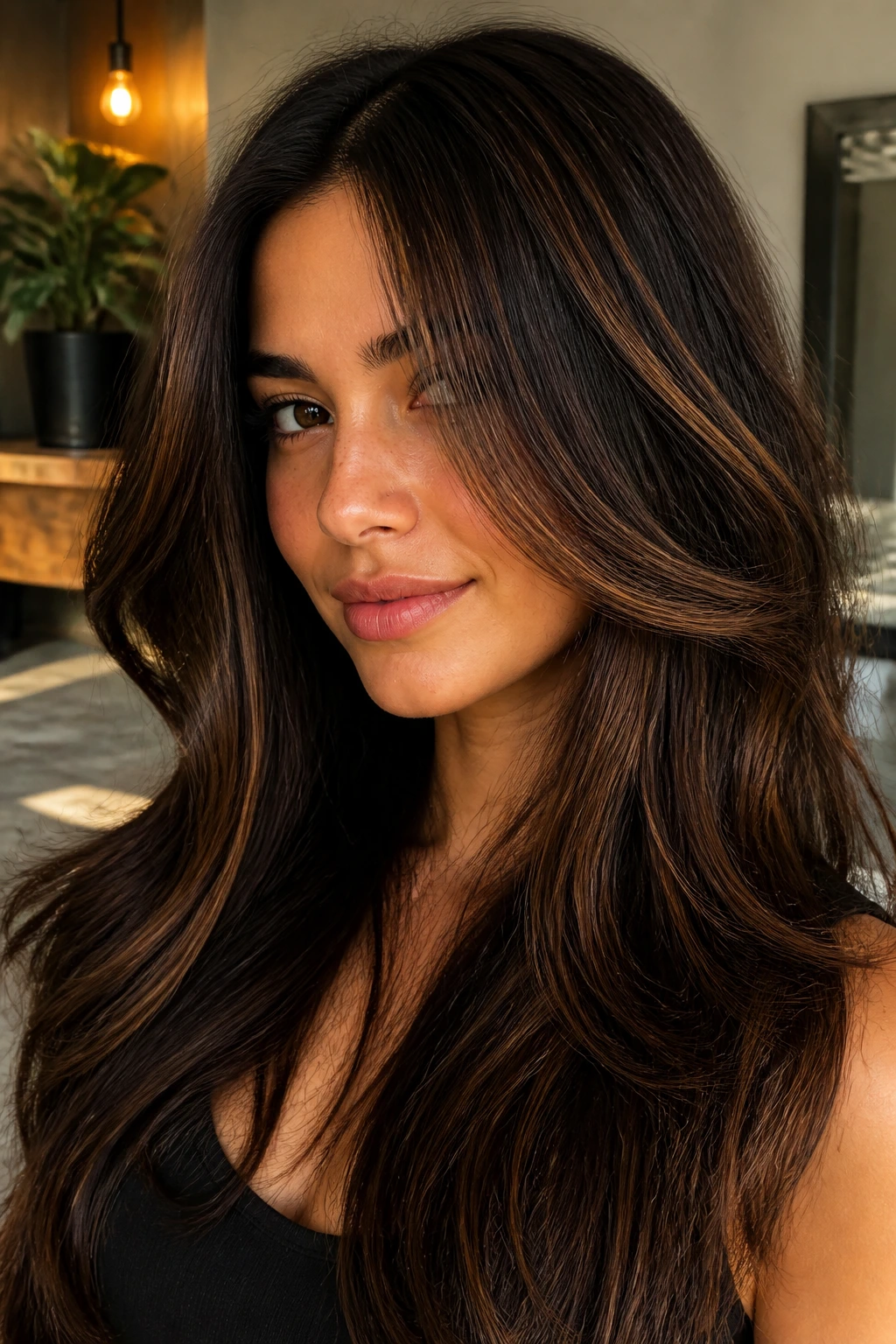
Cinnamon on espresso brown hair is a warm, grounded look. The pieces are just light enough to catch shine, but the base stays dark enough that the color never slips into orange territory.
I like this on hair that’s worn straight or blown out with a round brush. The cinnamon tone shows best when the surface is smooth and reflective. If the hair is very porous, a gloss between appointments keeps the color from turning dull or red-heavy.
It’s a small shift, but it changes the whole mood of the hair.
12. Sunlit Babylights for Curly Hair
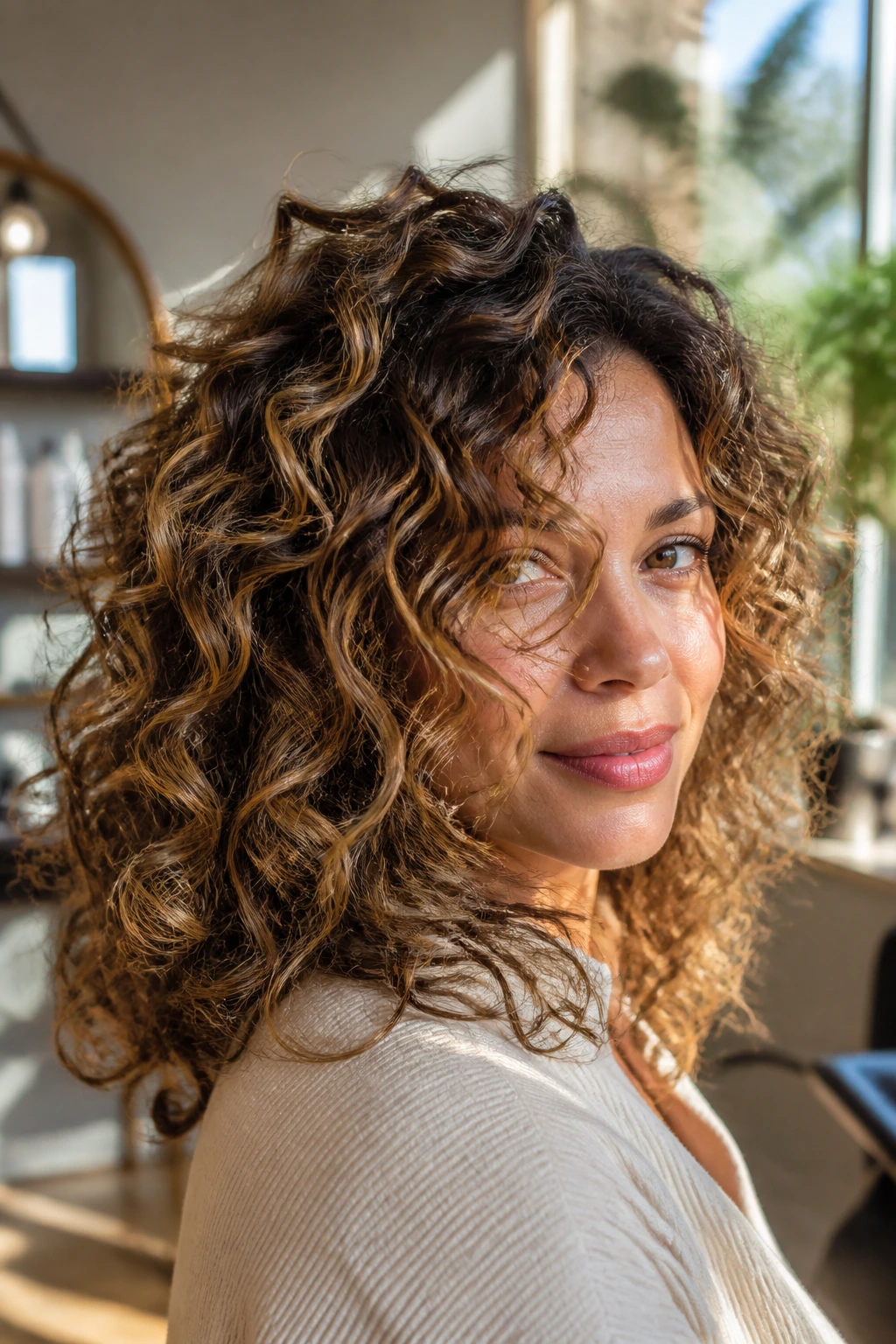
Curly hair doesn’t need big highlight bands to look dimensional. In fact, those bands can fight the curl pattern. Babylights solve that by following the curls in smaller, softer sections so the light pieces sit where the coil naturally opens.
How to Wear It
The lightest pieces should live on the curl peaks, not buried in the densest part of the pattern. That way, every bend gets a tiny hit of brightness. Keep the underneath darker so the shape of the curls still feels strong.
This technique works best when the lift is gentle — one or two levels, tops. Curls already create visual movement. The color just has to keep up.
13. Invisible Babylights for Fine Hair
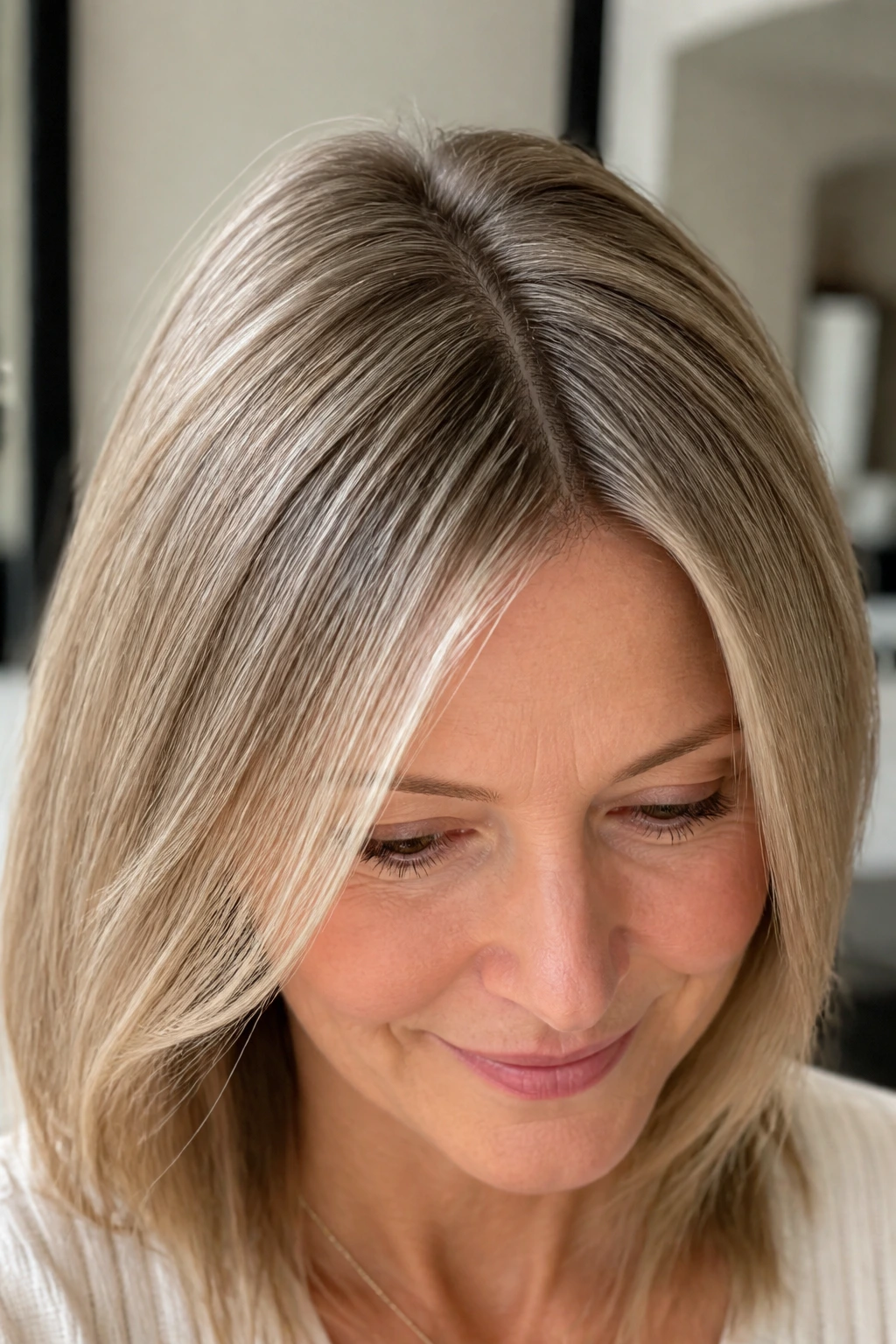
Fine hair can get swallowed by heavy highlights. Invisible babylights do the opposite. They create tiny shifts in tone that make the hair look thicker because the eye reads more depth, not more bleach.
The Trick Is Placement
Use a very fine weave through the crown and around the part, then leave the underneath nearly untouched. The contrast should be low enough that you notice movement before you notice color. That’s what keeps fine hair from looking overprocessed.
- Best for: Finer strands, shorter cuts, and delicate textures.
- Goal: Add depth without widening the visual profile of the hair.
- Tone: Beige, soft ash, or pale honey depending on the base.
- Avoid: Big foil sections that create obvious stripes.
A little bit goes a long way here. That’s not a flaw. It’s the whole point.
14. Rooty Babylights for Low-Maintenance Grow-Out
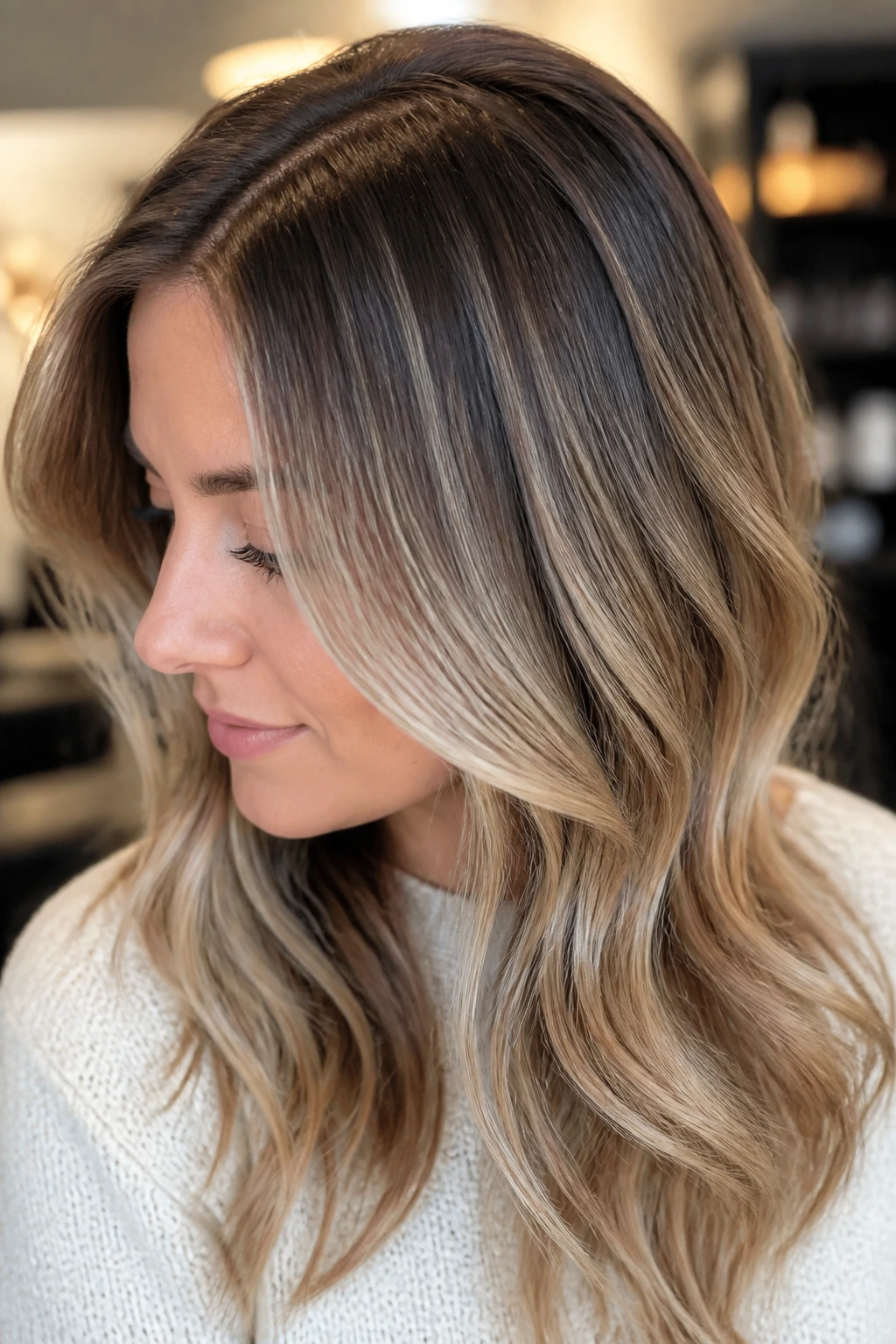
If you want babylights that still look good eight weeks later, rooty placement is your friend. Leave a deeper root, feather the light pieces a little lower, and let the color melt instead of starting bluntly at the scalp.
The result is softer from day one and even softer as it grows. That darker root gives the brighter pieces somewhere to live, and it stops the hair from looking freshly “done” in the stiffest possible way.
This suits people who do not want to live at the salon. A soft grow-out is not laziness. It’s smart color planning.
15. Beige Balayage-Babylight Hybrid
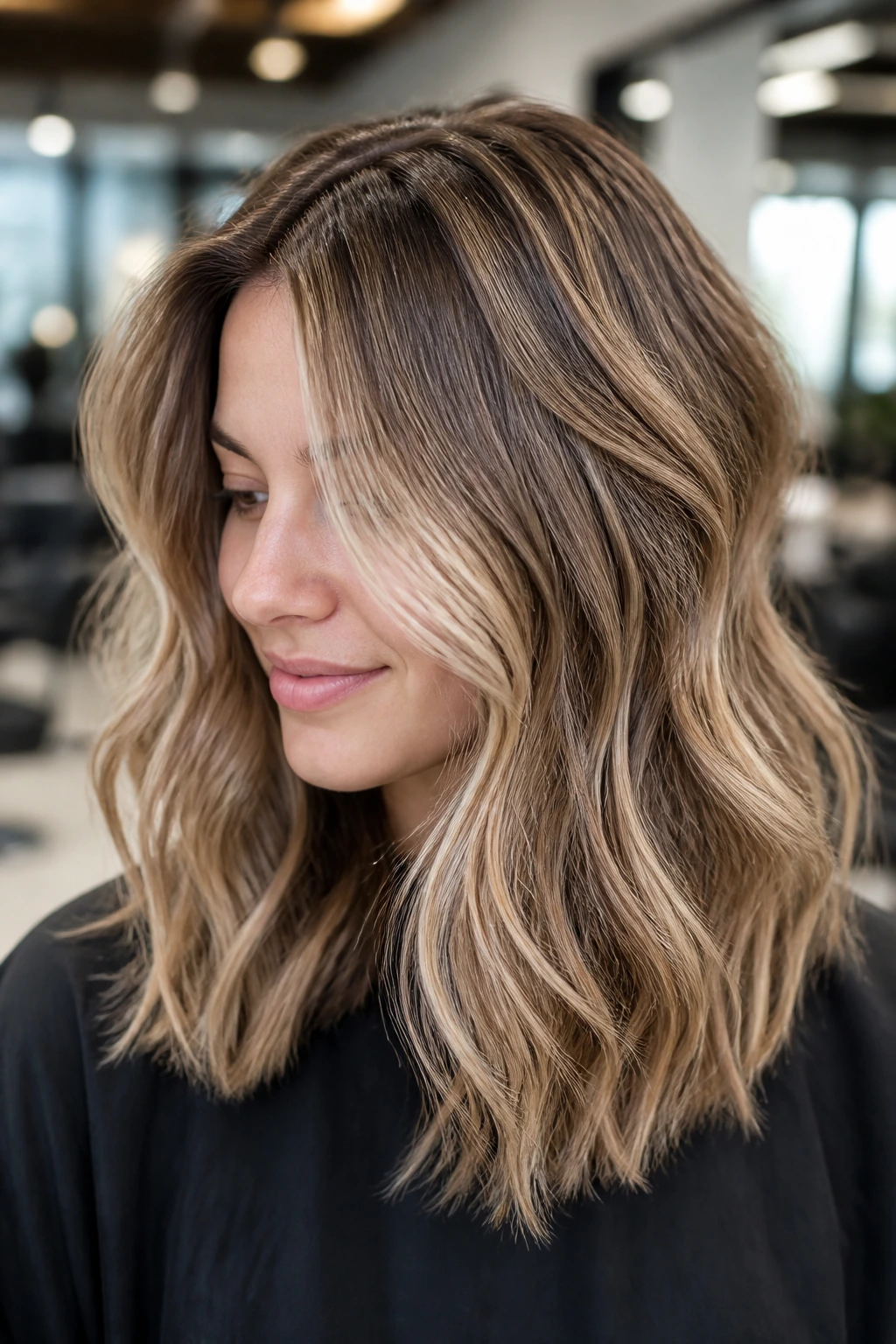
Can babylights and balayage work together? Absolutely. In fact, the blend can look better than either technique alone when the goal is soft dimension instead of obvious streaks.
Where the Two Techniques Meet
Use hand-painted brightness through the midlengths and ends, then add a few micro-weaved babylights around the hairline and crown. The balayage creates the sweep; the babylights create the detail. One gives shape, the other gives texture.
This is a nice choice for medium to long hair that needs movement but not drama. Beige toner keeps the result calm and neutral, which matters if you’re trying to avoid a beach-blonde finish.
16. Strawberry Babylights on a Brunette Base
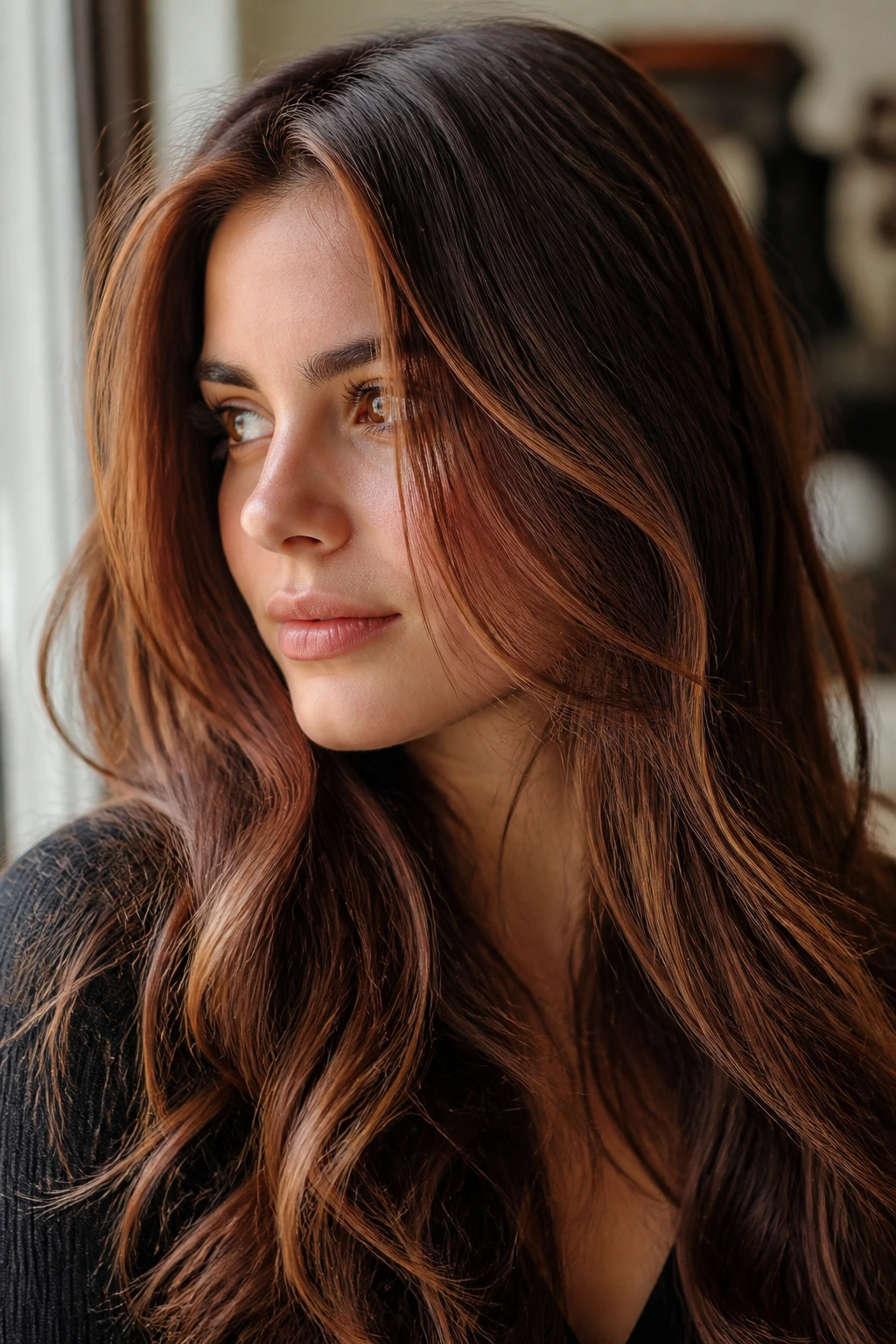
Strawberry babylights work when you want warmth with a little twist. On a brunette base, the color should read like a softened red-gold shimmer, not an all-over copper takeover.
The prettiest version uses tiny ribbons through the top layer and around the face, with the rest of the hair staying in the brown family. That keeps the strawberry note from turning loud. It’s especially good when the hair is styled with loose bends, because the red-gold flashes show at different angles.
If your skin likes warmer shades, this can be a lovely fit. If you’re nervous about red, keep the strawberry muted and beige-heavy.
17. Money-Piece Babylights With Tiny Foils
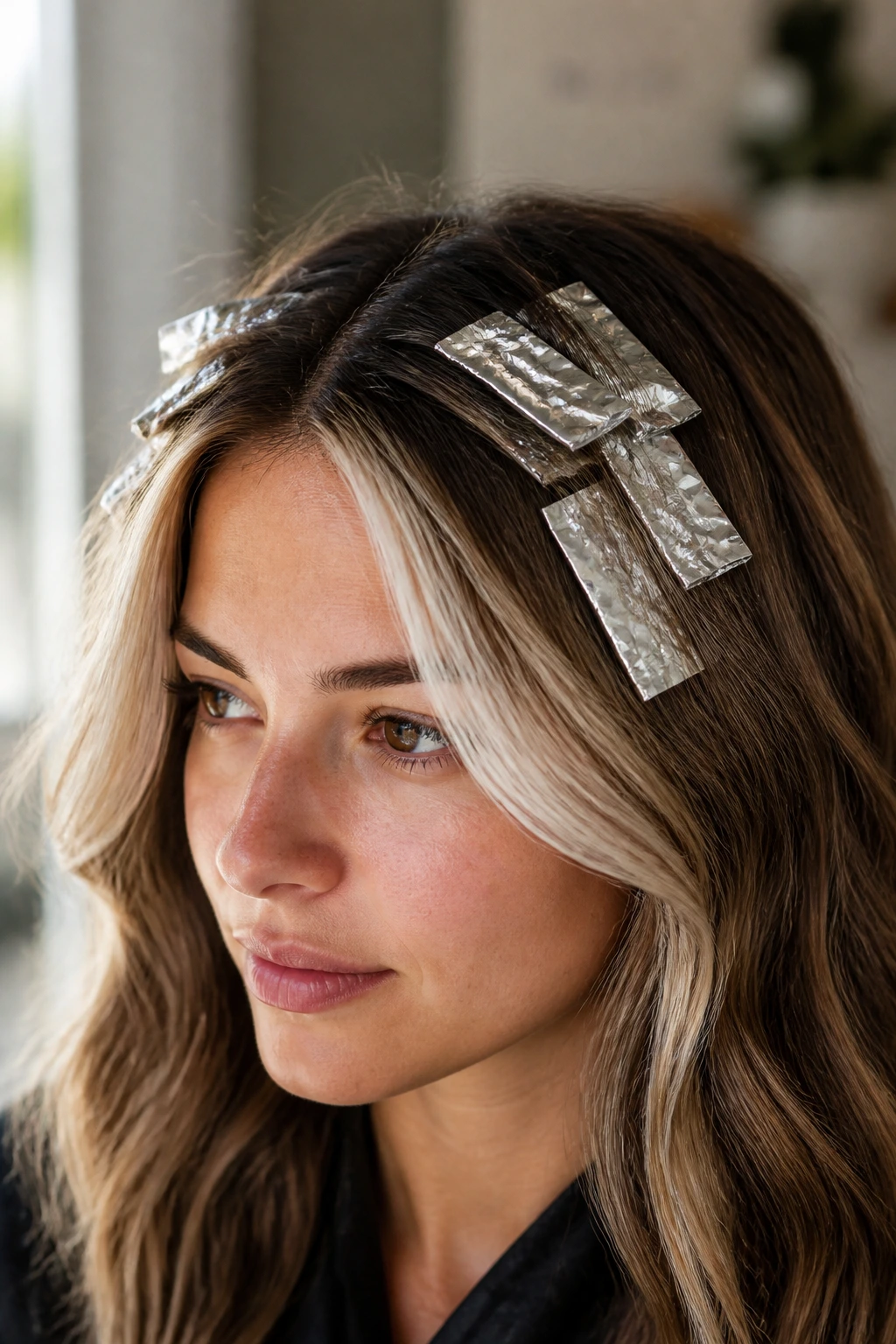
A chunky money piece can be fun. A tiny-foil money piece is smarter if you want brightness without the hard front panel. The difference is huge once the hair is styled and moved around.
The front two sections get a little extra light around the temples and part, but the pieces stay narrow enough that they don’t look like thick stripes. This keeps the face bright while the rest of the head remains soft and blended. It’s one of the better babylights ideas for people who wear their hair up a lot.
18. Toasted Almond Babylights on Dark Brown Hair
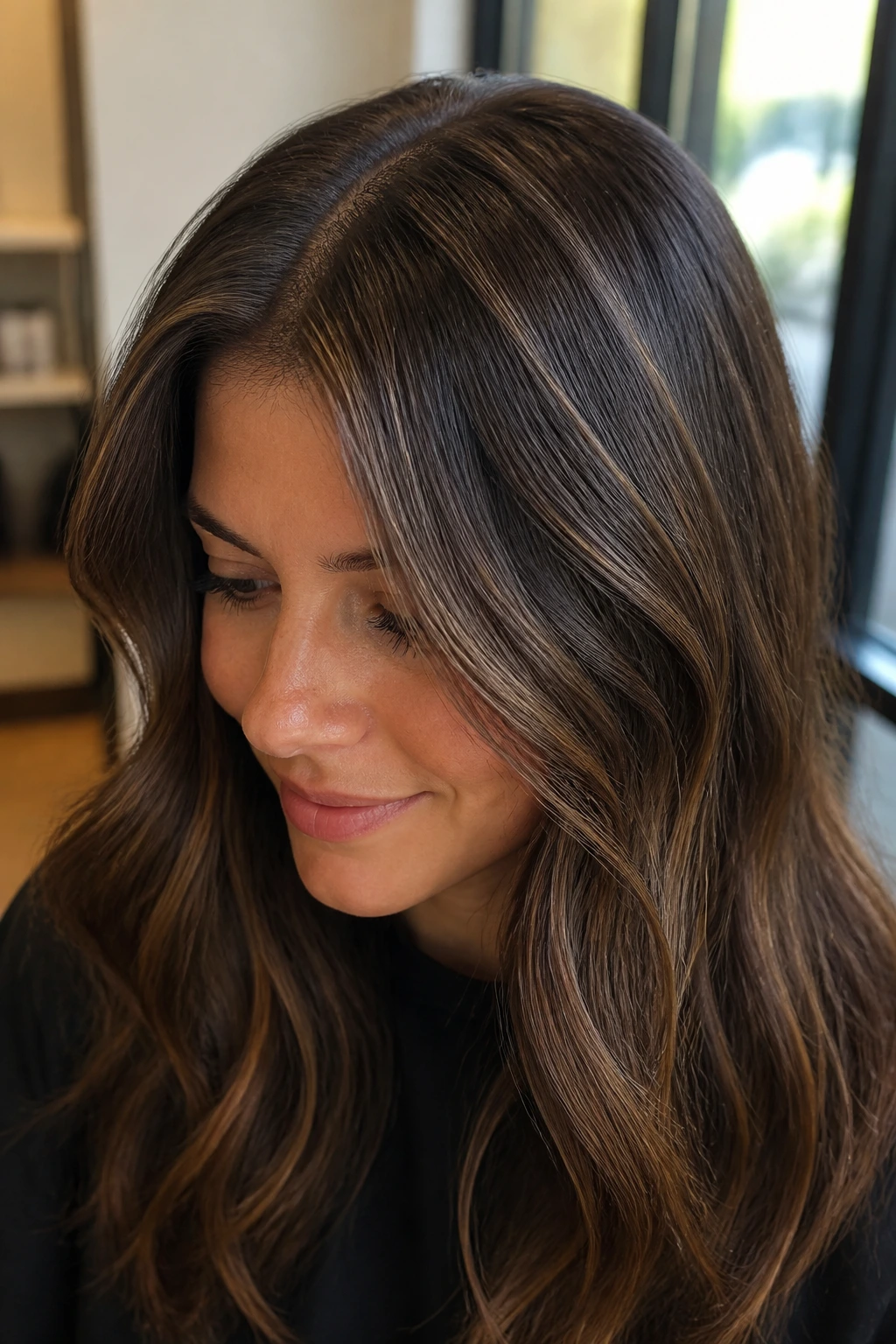
Toasted almond sits in that sweet zone between beige and warm brown. On dark brown hair, it gives a softer, more natural lift than a bright caramel, and it doesn’t fight the base.
The color works best when the lift is modest. If the pieces are too light, the warmth gets obvious and the almond note disappears. Keep it around the top layer and a few pieces through the mids, then gloss it so the shine feels smooth rather than frosted.
This one is quietly flattering. Not flashy. Just good-looking hair.
19. Soft Silver Babylights for Gray Blending
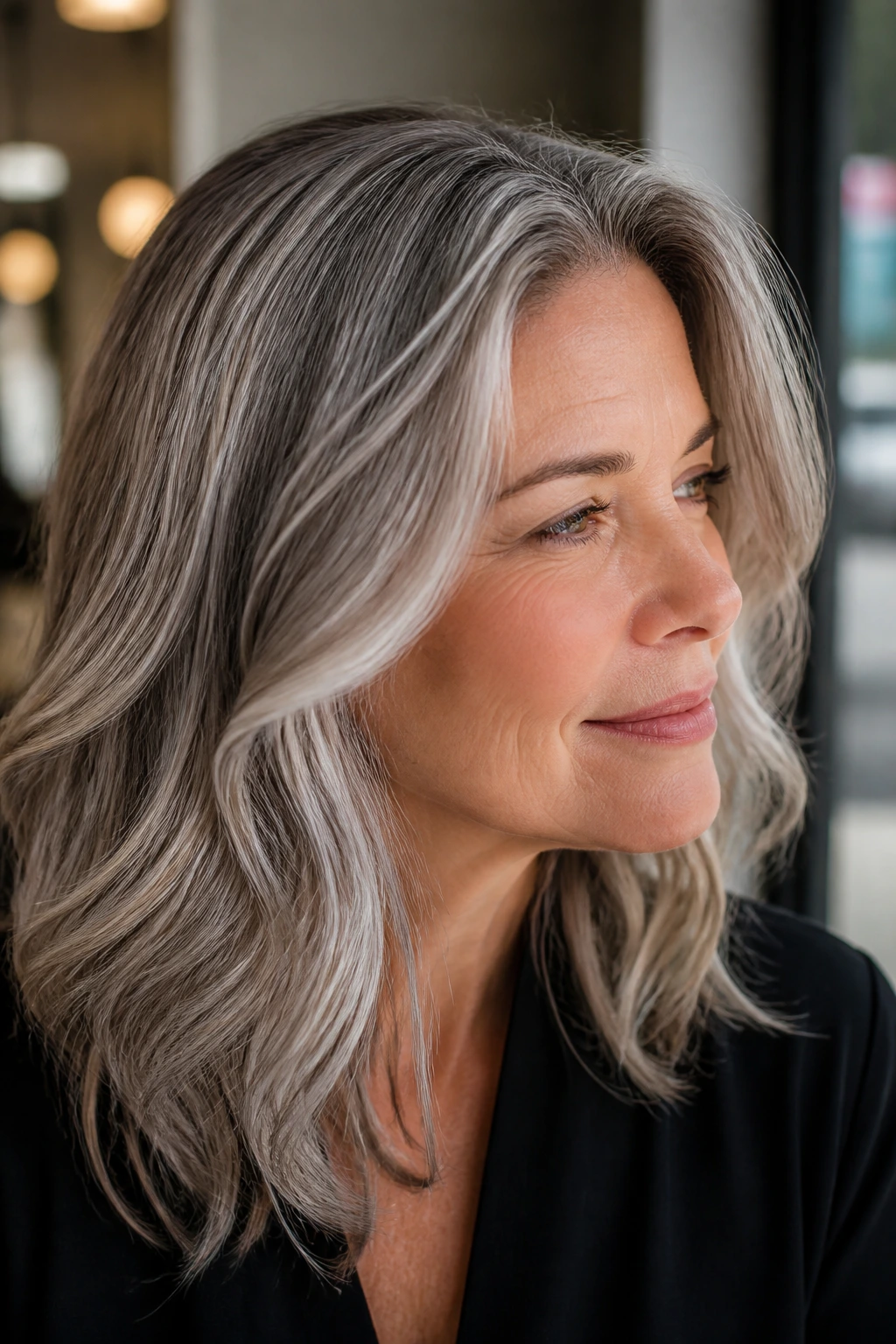
Want to blend grays without fully covering them? Soft silver babylights can make the transition feel intentional instead of patchy. The idea is not to turn the whole head silver. It’s to weave cool light through the gray areas so they blend with the rest of the hair.
Who It Suits
This works best when the natural gray is already starting to show in streaks rather than big blocks. The babylights should sit near those lighter strands so the eye stops separating the gray from the rest of the hair. A silver-beige gloss keeps the tone soft.
This is one of those techniques that looks better the longer it grows in. The mixed shades help the regrowth look part of the design.
20. Multi-Tonal Babylights for Long Waves
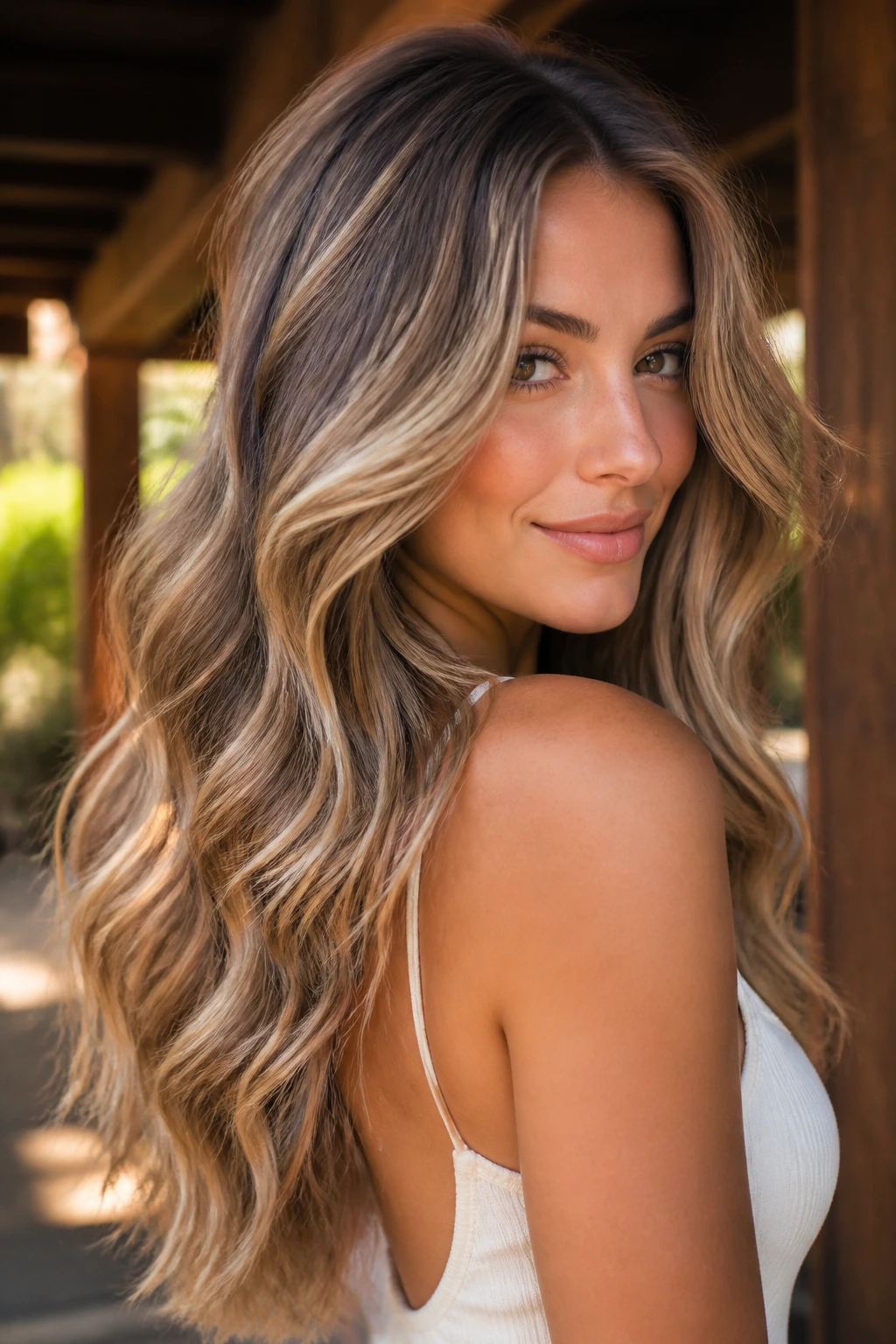
Long waves can look flat if every lighter piece is the same shade. Multi-tonal babylights fix that by mixing beige, honey, and a touch of ash in the same head of hair. The waves catch different tones as they move, and the color reads richer because of it.
A good colorist won’t scatter the shades randomly. They’ll place the warmest pieces where the hair needs glow, the cooler pieces where it needs depth, and the beige pieces in between so the whole thing blends. That little bit of strategy keeps the color from looking busy.
This is a strong choice if you want dimension that stays interesting in photos and in real life.
21. Peachy Babylights on Warm Blonde Hair
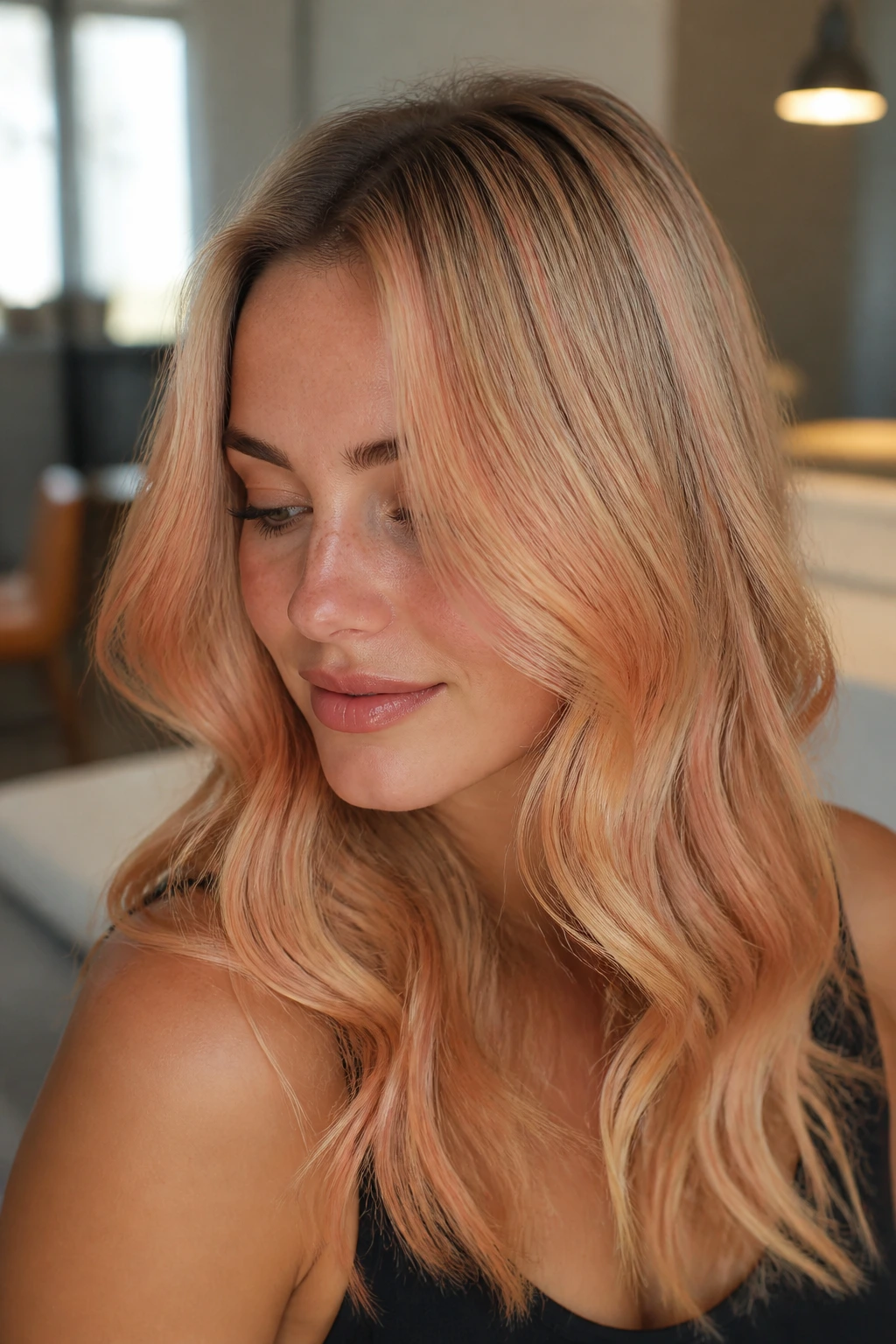
Peachy babylights are softer than copper and brighter than beige. On warm blonde hair, they add a gentle glow that feels playful without tipping into neon.
The trick is to keep the peach sheer. You want a whisper of tint, not a fully pastel finish. That means a fine weave, a light lift, and a toner that leans peach-gold instead of red. Smooth blowouts show the color best, but loose waves keep it from looking too sweet.
This is a fun shade when blonde hair needs personality.
22. Cool Beige Babylights for Olive Undertones
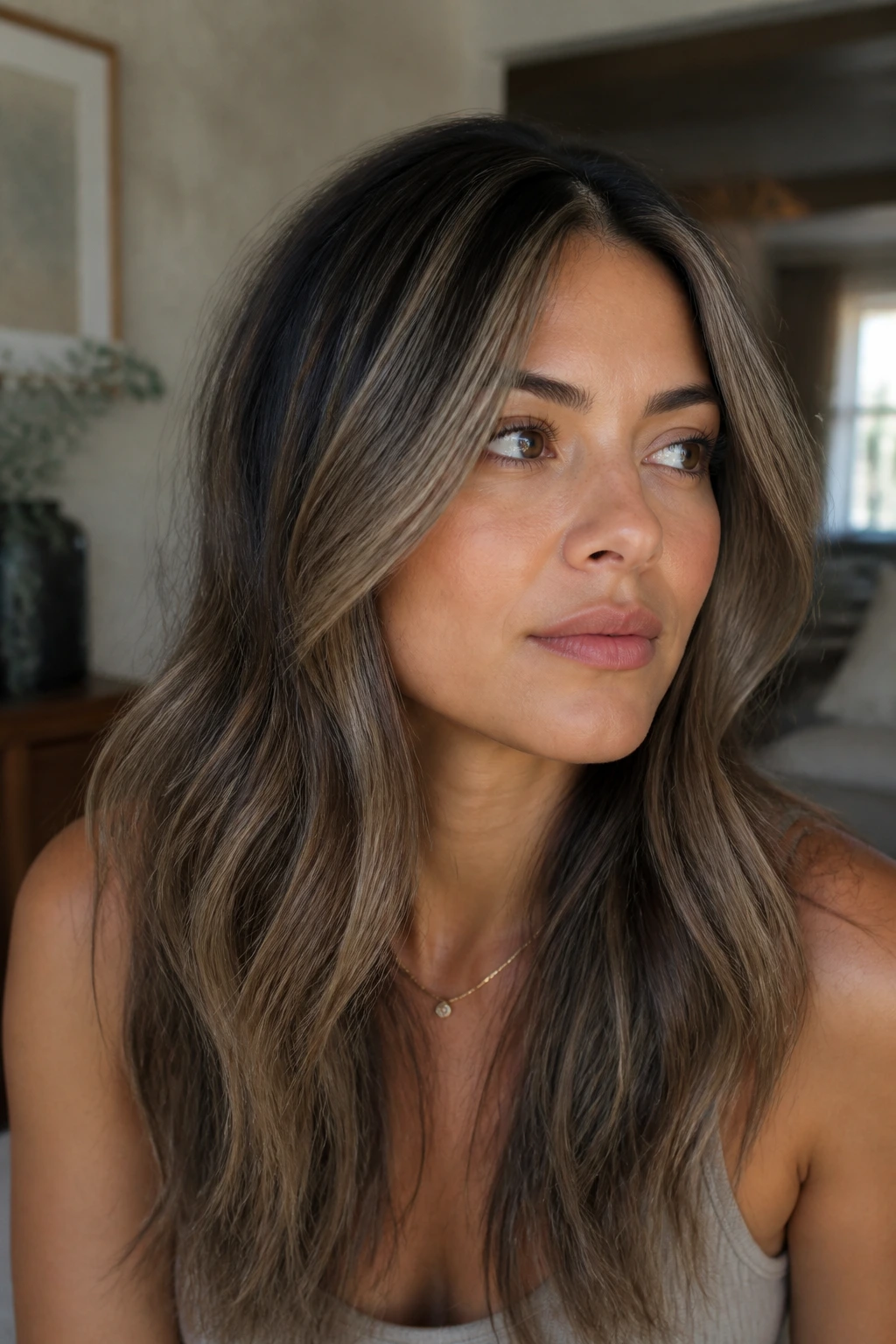
Olive undertones can get tricky with hair color. Too much ash makes the face look flat; too much gold can turn the complexion sallow. Cool beige babylights split the difference.
The beige keeps the hair from going gray, while the cool edge stops warmth from getting brassy. Ask for low-contrast placement around the part and cheekbones, then keep the lower sections a little darker so the color doesn’t wash out the face.
This is one of the safest soft-dimension choices for olive skin because it stays balanced.
23. Maple Babylights on Chestnut Brown Hair
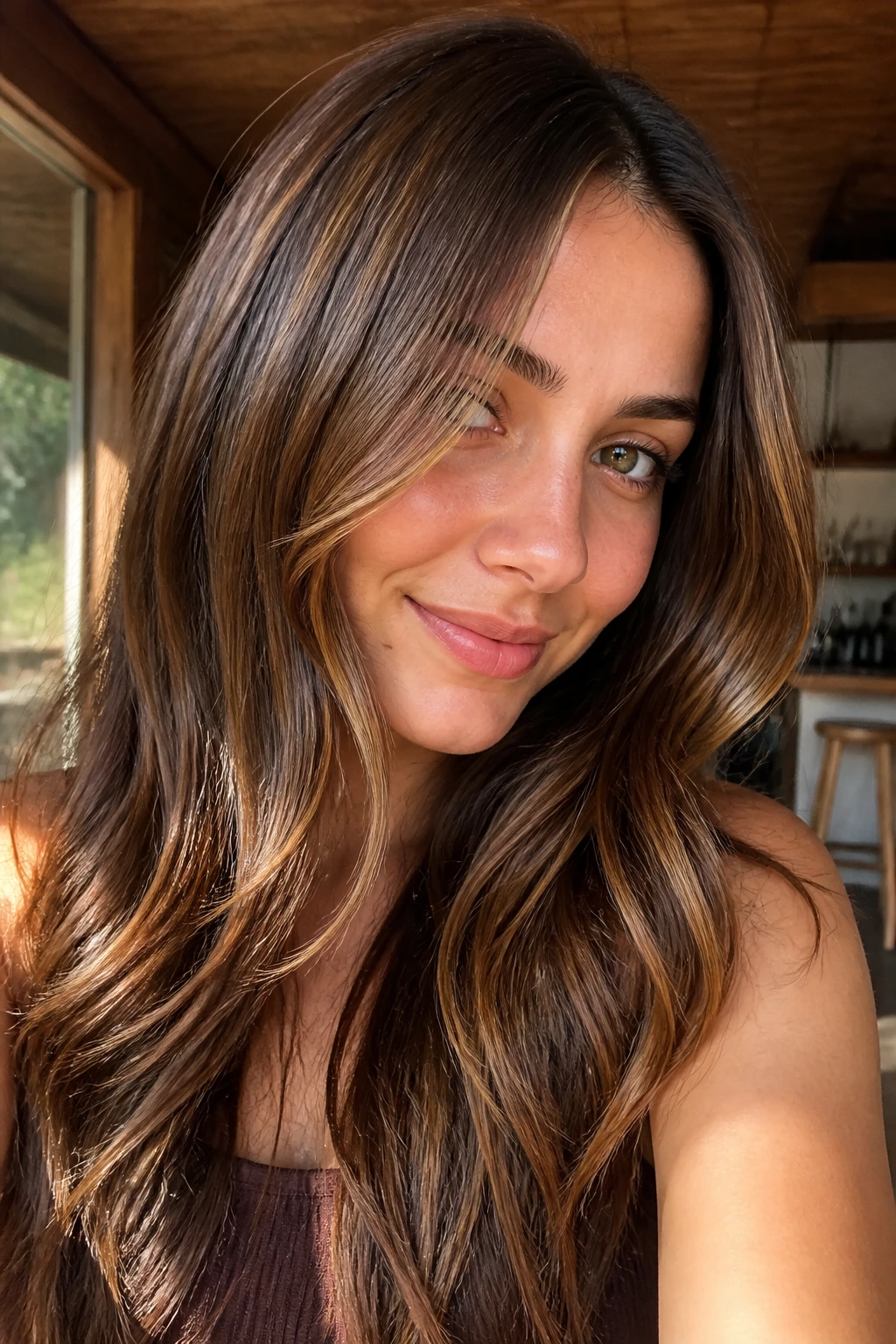
Maple babylights give chestnut brown hair a warm, rounded glow. The color sits between caramel and cinnamon, which makes it easy to wear without looking overly red or overly blonde.
I like this look when the base already has a little warmth. The maple pieces pick up shine in daylight and keep the hair from looking one-note indoors. Ask for tiny ribbons through the upper layers, then leave some chestnut depth underneath so the contrast stays soft.
It’s rich without being heavy. That’s the sweet spot.
24. Espresso-to-Cocoa Babylights for Extra Depth
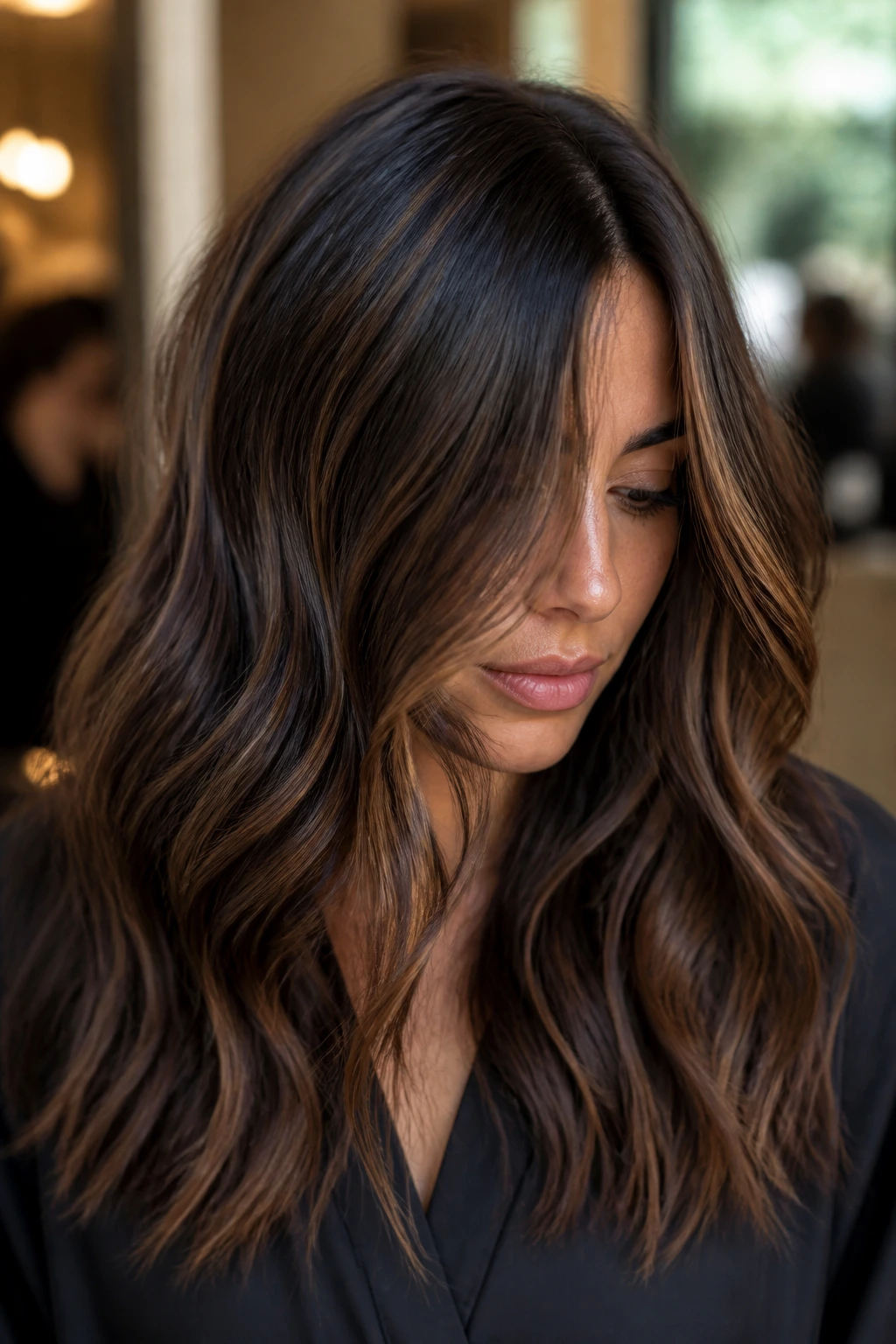
What if you want dimension but do not want to leave the brown family? Espresso-to-cocoa babylights are the answer. The lift is subtle enough that the hair still reads deep brown, but the cocoa pieces carve out movement so the color doesn’t sit in one flat block.
Why It Never Looks Flat
The tiny shade shift is enough. On dark bases, even a half-level difference can catch light when the hair moves. That’s why this works best on layered cuts, waves, or blowouts with a bit of bend.
If you’re the kind of person who likes brown hair to stay brown, this is the calmest option in the bunch. It is also the one most likely to look polished between appointments.
25. Platinum Veil Babylights With a Smoky Finish
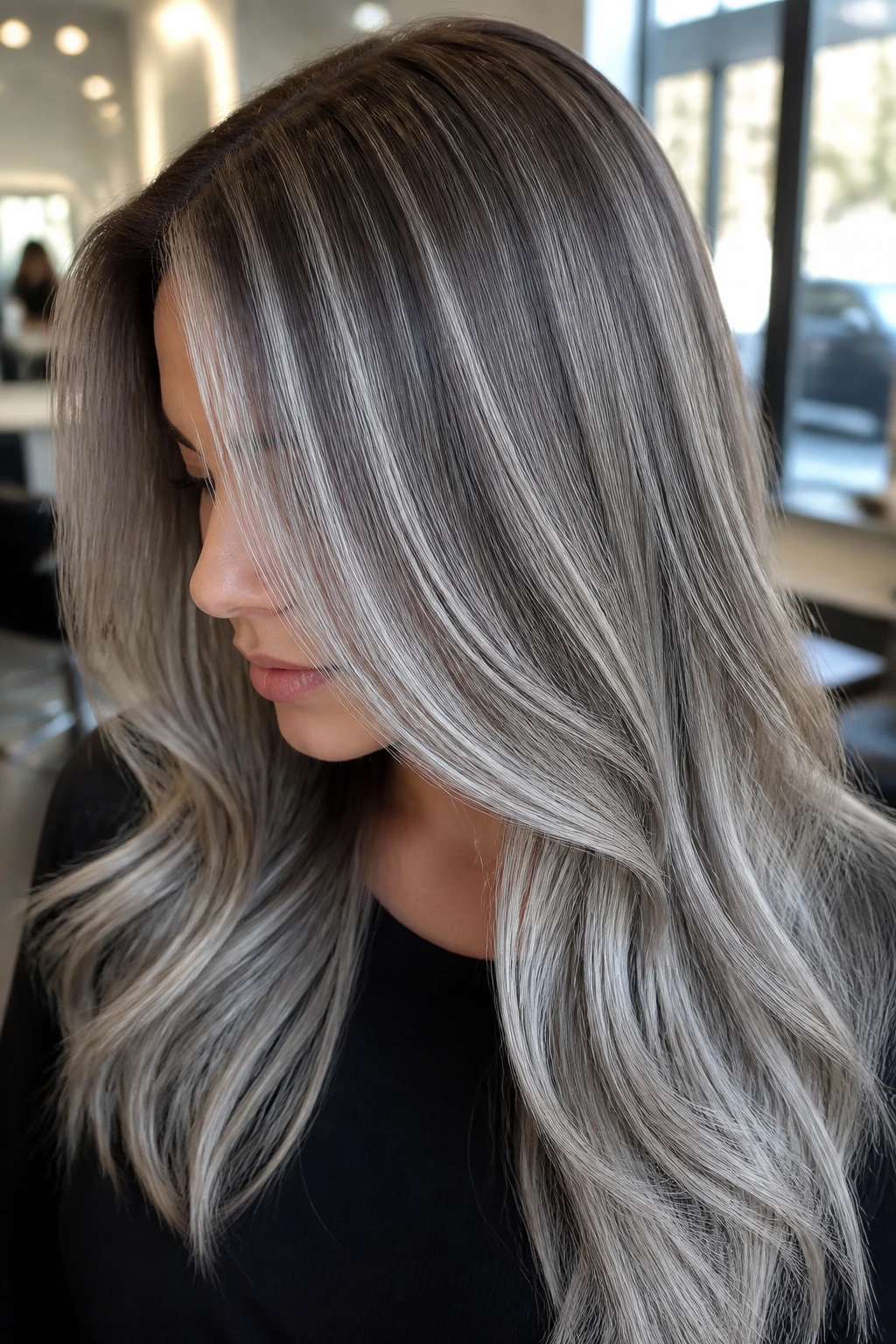
Platinum babylights can look harsh when they’re too wide or too dense. A veil approach keeps them soft. The pieces stay very fine, the base stays visible, and the toner keeps the platinum smoky instead of blindingly bright.
This is the most high-maintenance look in the list, and I would not pretend otherwise. It works best when the hair already handles lightening well and the wearer likes cooler, more editorial color. The shape of the cut matters here too, because the fine pale pieces need movement to keep from reading like frost.
When done carefully, it’s elegant in a sharp, modern way.
Why Babylights Create Soft Dimension
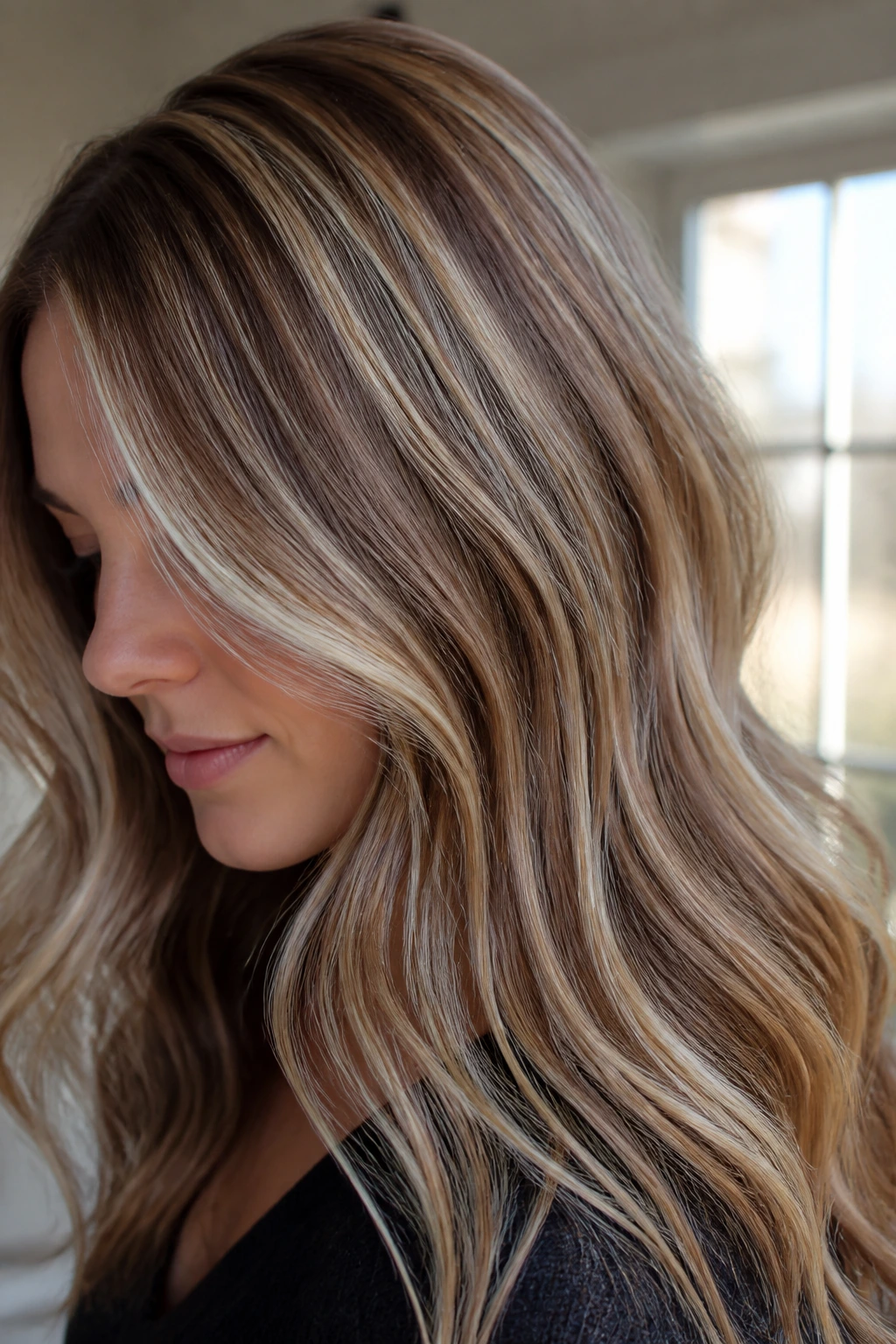
Babylights work because they break up the surface of the hair without carving obvious lanes through it. The weave is fine enough that the light and dark blend while the hair is still moving, which is why the finish looks softer than classic highlights.
That softness matters more on some cuts than others. A blunt bob, for example, can turn boxy if the color is too solid. Long waves can go flat if every ribbon is the same brightness. Babylights solve both problems by making the eye travel across tiny tonal shifts instead of one blunt contrast line.
The catch is simple: babylights are not the right choice if you want dramatic stripes. They are for people who like the hair to look expensive only after you stare at it for a second. That delay is the charm.
Essential Tools for a Babylights Consultation and Aftercare
- Saved reference photos: Bring at least two — one for tone and one for placement — because those are not always the same thing.
- Level chart or daylight selfie: A natural-light photo of your current color helps a colorist judge how much lift is realistic.
- Color-safe shampoo and conditioner: These slow down tone fade and keep freshly lightened strands from feeling squeaky or rough.
- Purple shampoo: Useful for blondes that drift yellow, but use it sparingly or the hair can turn dull.
- Bond-building treatment: A smart pick if your hair has been lightened before or feels stretchy when wet.
- Heat protectant: Use it before any hot tool; babylights show heat damage faster because the lighter pieces are more fragile.
- Microfiber towel: Less rubbing, less frizz, less color fade from aggressive towel-drying.
- Wide-tooth comb or detangling brush: Better for wet hair than a fine brush that snags the lighter pieces.
- Shower filter: Optional, but useful if hard water leaves blondes brassy or makes gloss fade too fast.
How to Choose the Right Tone and Placement
If Your Base Is Brunette
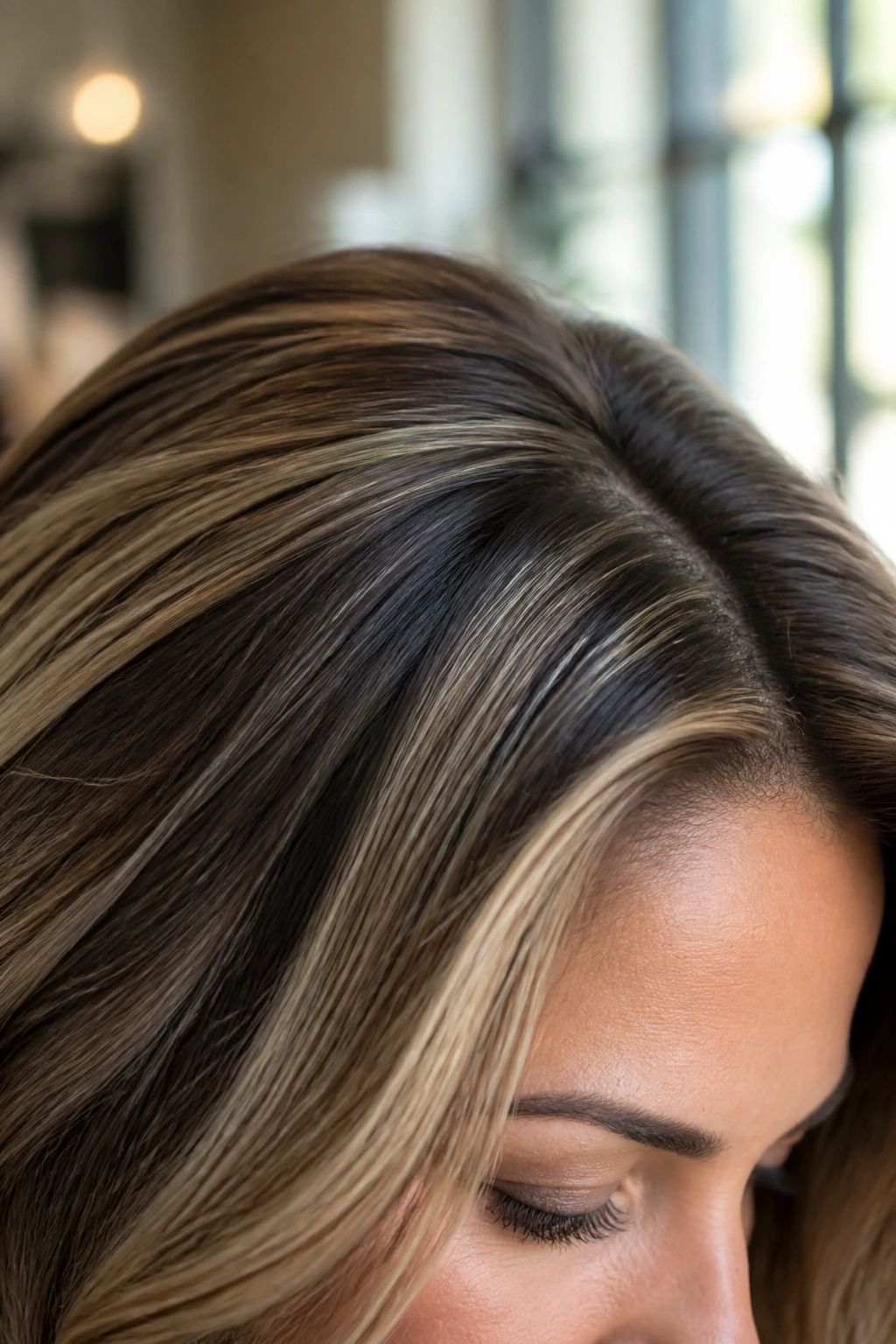
Brunettes usually look best in beige, caramel, smoky ash, maple, or toasted almond. The goal is to keep enough depth that the color still feels like brunette hair, not a full conversion to blonde. A few tiny brighter pieces around the temples and crown are usually enough.
If Your Base Is Blonde or Dark Blonde
Blondes can take pearl, vanilla, sandy, champagne, or soft beige beautifully. The mistake people make is going too light too fast. A soft babylight should still leave some tone in the hair so the dimension has something to sit against.
If You’re Blending Gray
Gray-blend babylights work best when the light pieces follow the gray pattern instead of fighting it. Silver-beige, cool taupe, or soft pearl can blur the regrowth line and make the whole head look more intentional. That’s much easier to maintain than chasing full coverage every few weeks.
The placement matters as much as the tone. Hair with lots of movement can handle brighter surface pieces. Fine hair usually needs tighter weaving and more depth left behind. Curly hair needs the light pieces to follow the curl clumps, not the straight sections from the comb.
How to Style Babylights So the Dimension Shows Up
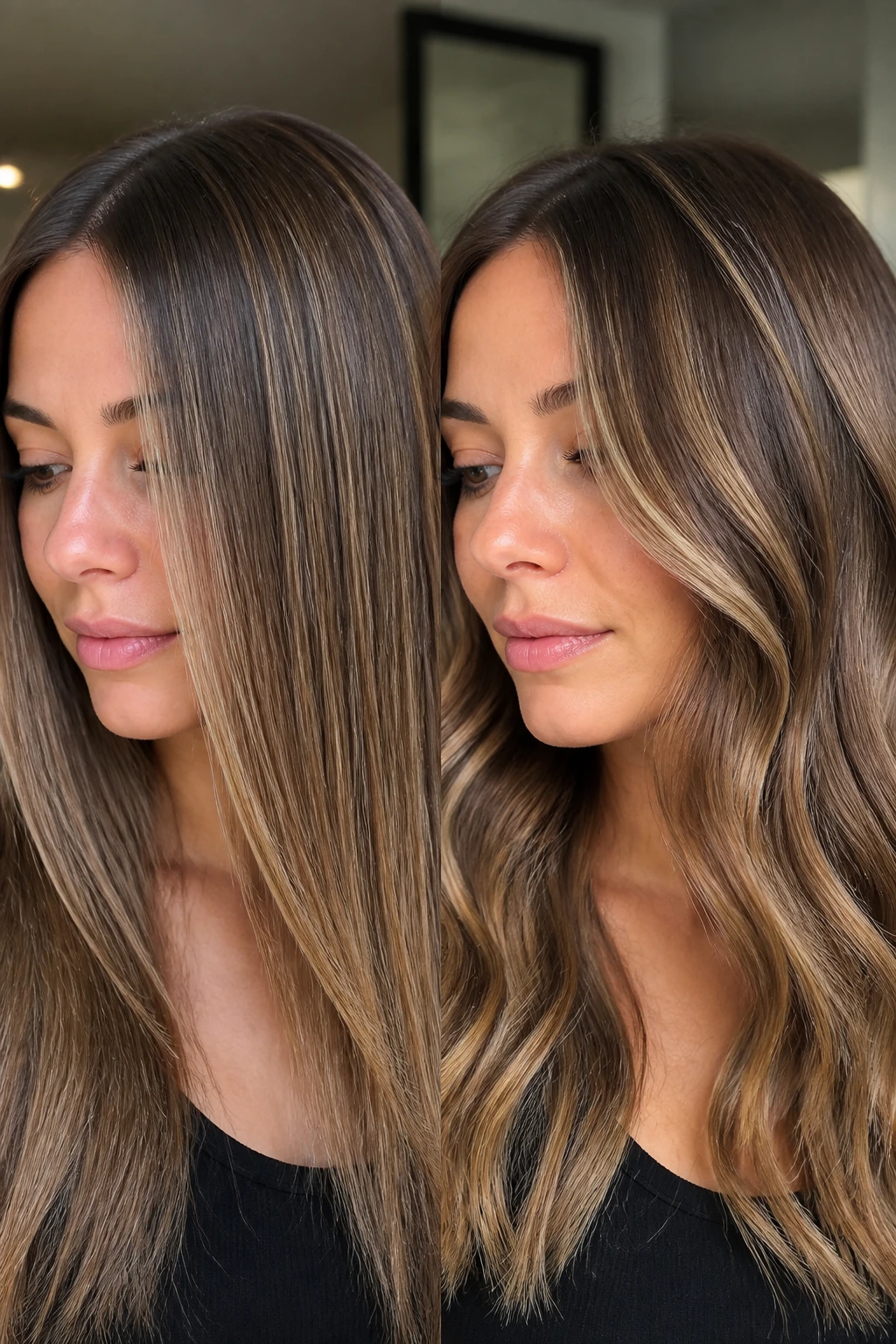
Straight Finish: Blow-dry with the nozzle pointed down and use a round brush only if you want a little bend at the ends. Straight styling shows the cleanest contrast, so this is where subtle babylights look crisp rather than blurry.
Soft Wave: Wrap 1-inch sections around a 1.25-inch iron, leave the last inch out, and let the curl cool in your hand for a few seconds. The bends make the lighter strands flash without turning the whole style into ringlets.
Curl Pattern: Diffuse on low heat and keep your hands out of the hair once it starts to set. Babylights on curls look best when the curl shape stays intact, because the light pieces fall into the coil instead of sitting on top of it.
Air-Dry Day: Use a lightweight cream or mousse, then tuck the front sections behind your ears while the hair is damp so they dry with a soft bend. That tiny habit makes the face-framing pieces do more work.
Additional Tips and Color Boosters
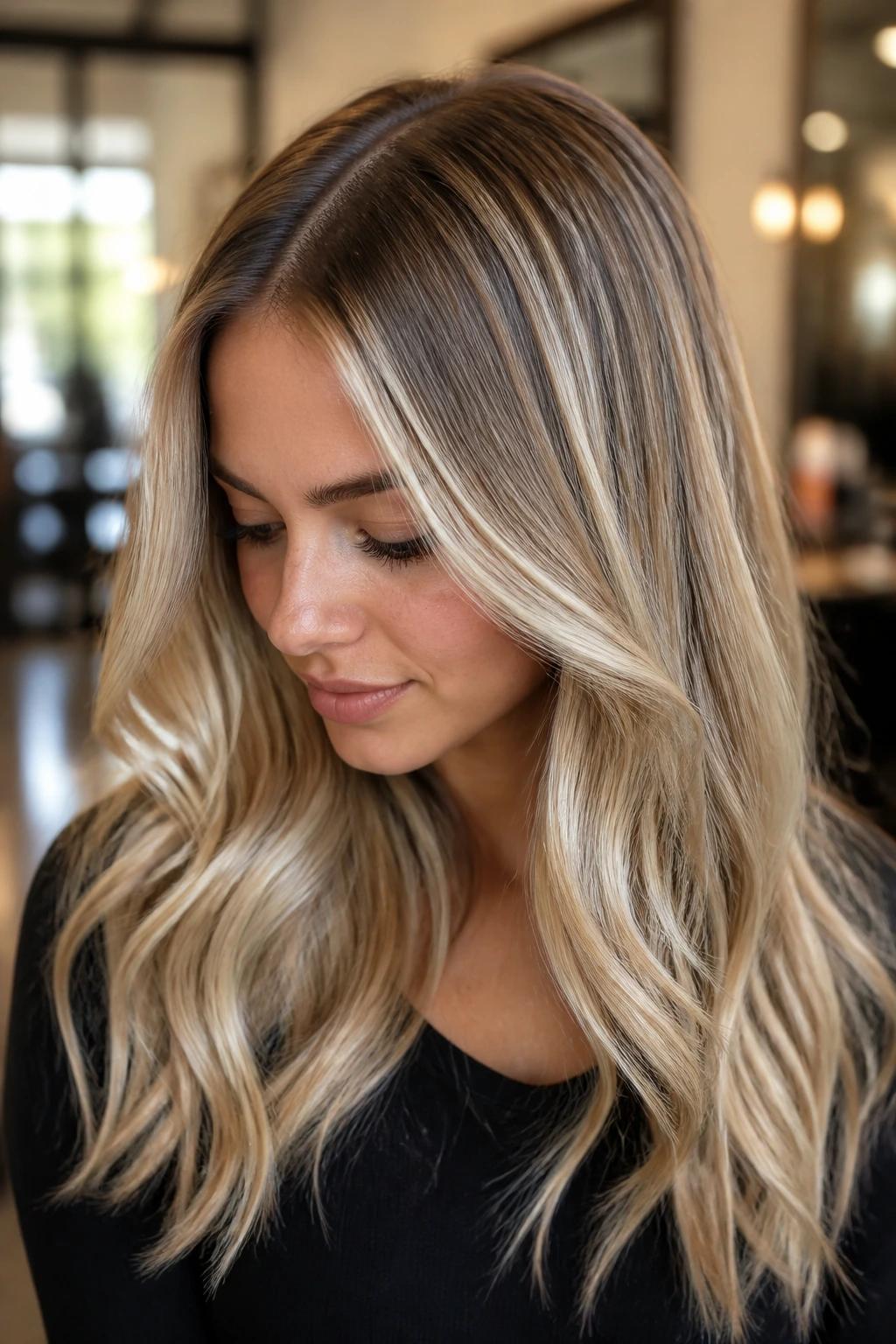
Gloss Enhancement: A demi-permanent gloss one shade lighter than the base can make beige, honey, or pearl babylights look creamy instead of flat. Gloss is where a lot of the polish lives.
Root Softening: Leaving a 1 to 2 inch shadow at the root keeps the color from looking painted on. It also buys you time between appointments, which is useful if your schedule is not built around salon visits.
Face-Framing Priority: Put the lightest pieces around the temples and part line if you want the face to look brighter. That area catches the first hit of daylight.
Make-It-Yours: Fine hair usually needs lower contrast and smaller sections. Thick hair can handle slightly more spacing between foils and still keep the blend soft. Curly hair tends to look best when the brightest pieces sit on the outside of the curl pattern, not buried inside it.
Common Babylights Mistakes That Leave Hair Stripy or Muddy
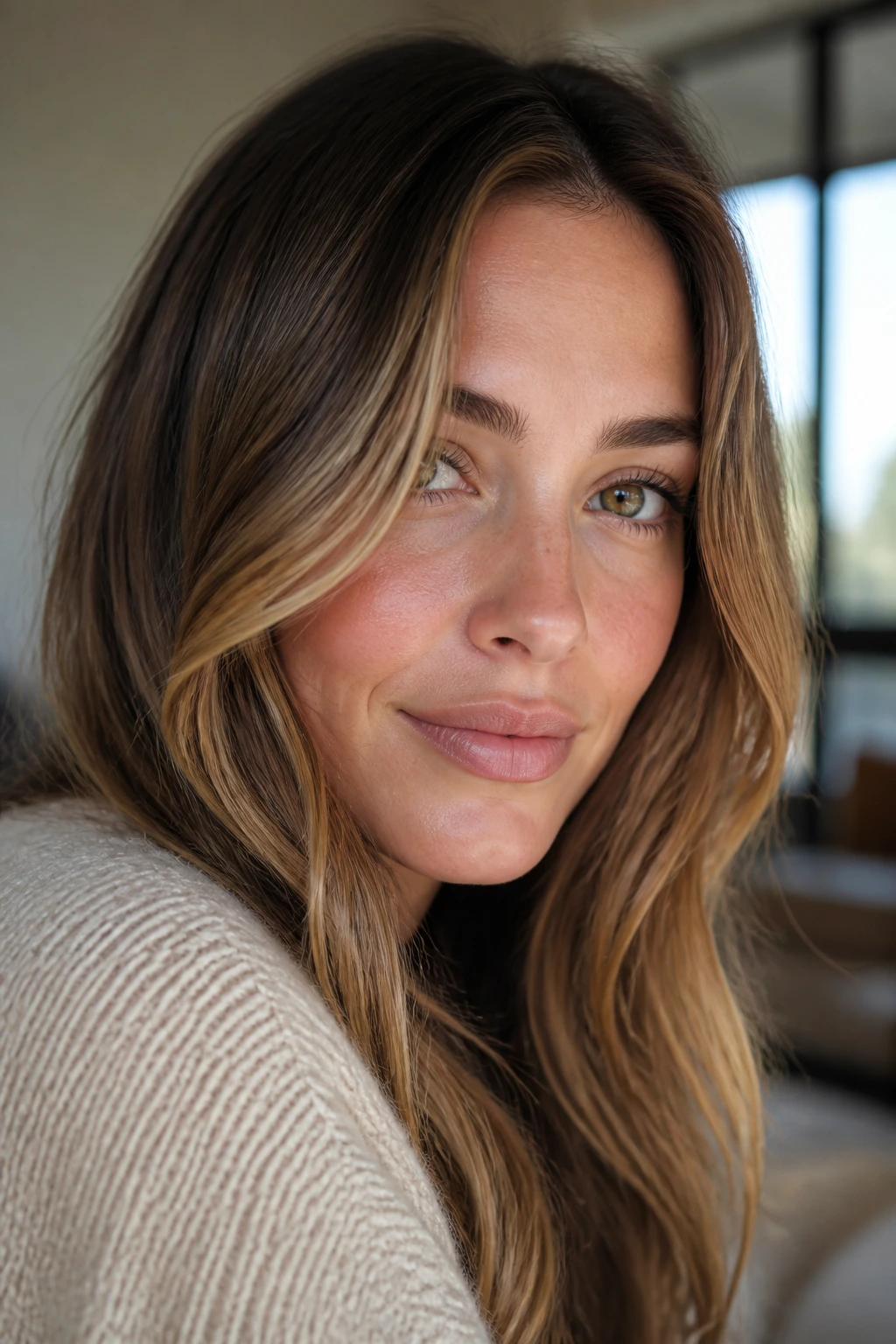
- Making the sections too wide: Wide pieces turn into visible stripes once the hair moves. Ask for a finer weave, especially around the face and crown.
- Choosing toner that fights the base: Too much ash on a warm brunette can go muddy; too much gold on a cool blonde can read brassy. Match the toner to the undertone, not to a photo on a screen.
- Lighting up the whole head evenly: Uniform brightness flattens the cut. Keep some depth underneath and through the lower layers so the dimension has contrast.
- Skipping a gloss after lift: Bleached hair without toner often looks dry and rough. A gloss softens the finish and helps the pieces sit together.
- Overusing purple shampoo: It can help a blonde tone stay clean, but too much dulls beige and pearl babylights fast. Once a week is often enough.
- Ignoring porosity: Porous ends grab toner fast and can go darker than expected. That is where a good colorist spends the most care.
Variations and Adaptations to Try
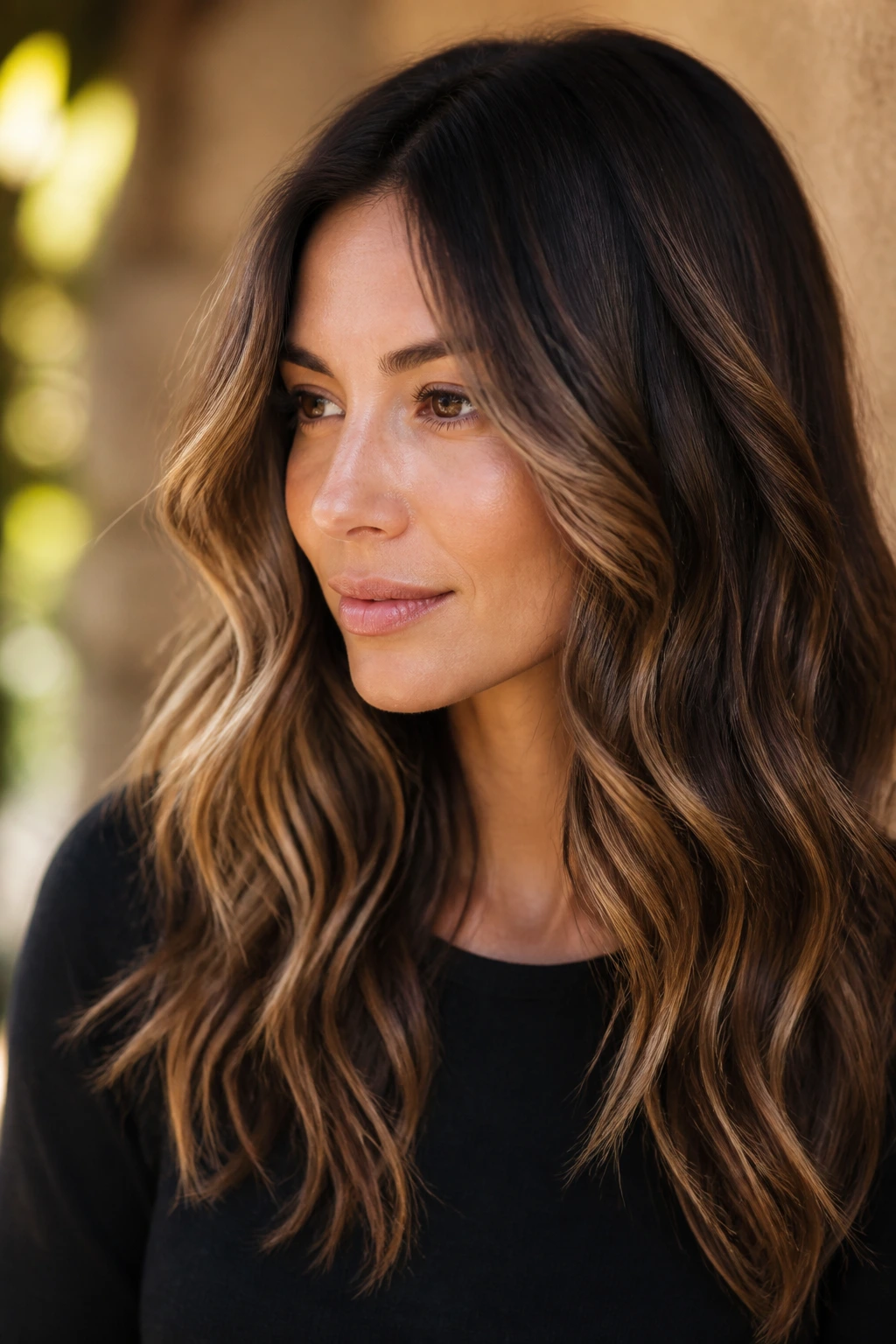
Barely-There Veil: Keep the babylights only one shade lighter than the base and concentrate them at the top. This works when you want movement without visible contrast, especially on fine hair.
Honeyed Ribboning: Use warm beige and honey tones through the mids and ends, then leave the root softer. It suits brunettes who want light without losing richness.
Smoky Brunette Melt: Blend ash and mocha babylights through a dark base for a cooler, dimmer finish. The color stays understated and grows out with almost no visible line.
Gray-Blend Whisper: Weave silver-beige or pearl pieces through the natural gray pattern rather than over it. The result is softer than full coverage and easier to maintain between appointments.
Curly Coil Light: Place the light pieces along the outer curve of the curl clumps and avoid over-lightening the underside. That gives the curl pattern sparkle without breaking its shape.
Maintenance, Toning, and Grow-Out Timing
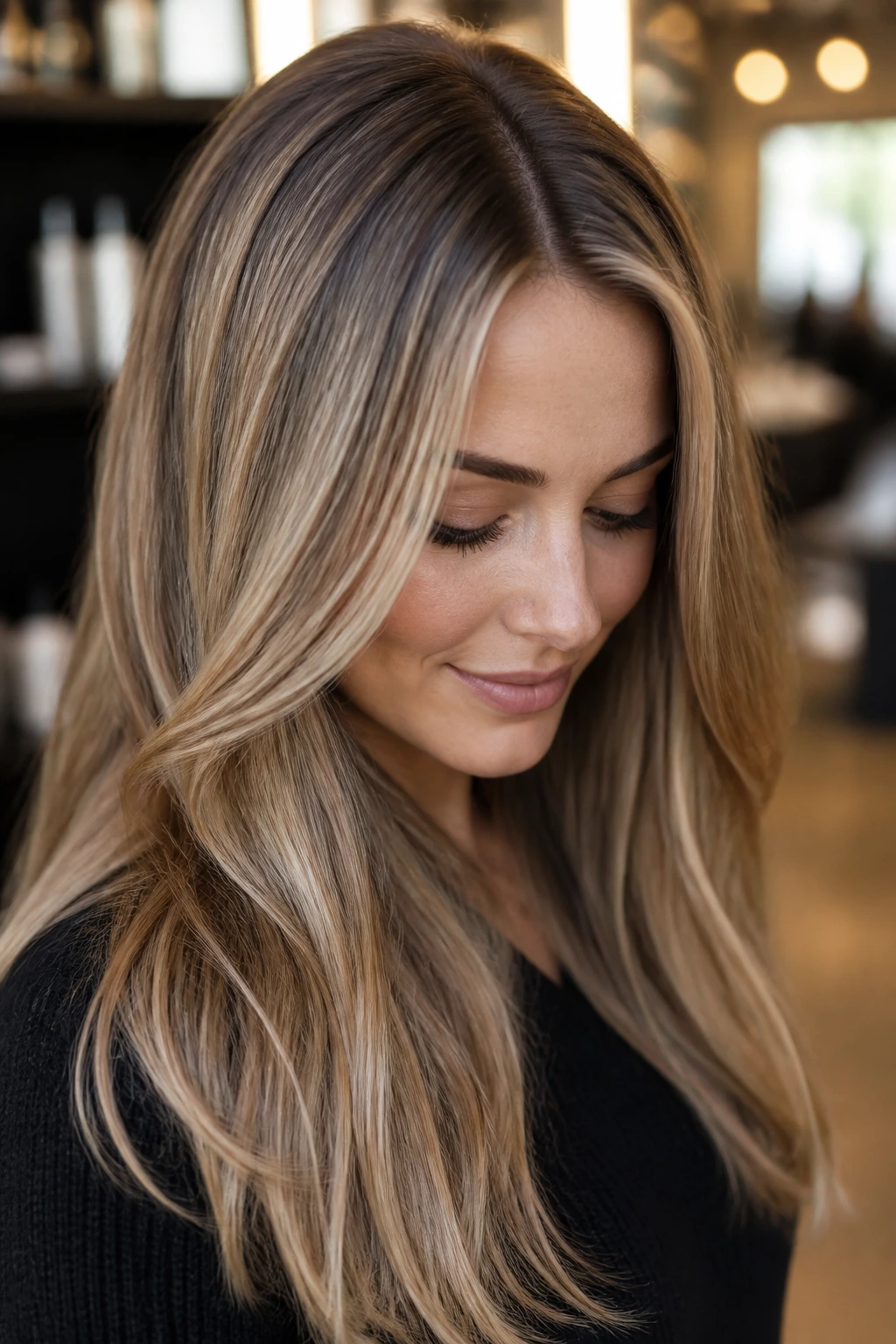
Babylights are lower maintenance than big, high-contrast highlights, but they are not no-maintenance. Fine light pieces still fade, and the toner still shifts with washing, heat, and water quality.
For blondes and cool beige shades, a gloss or toner refresh every 6 to 8 weeks keeps the color from turning yellow or dull. Brunettes with caramel, maple, or honey babylights can usually stretch salon visits to 8 to 12 weeks if the root shadow is done well. If the hair is porous, the ends may need a sooner toner than the rest of the head.
Wash less often if you can. Two or three shampoos a week is easier on soft dimension than daily washing, especially when the lighter pieces sit near the face. Use lukewarm water, not hot water, because hot water opens the cuticle and lets tone slip faster.
Heat tools matter too. If you curl or straighten often, use heat protectant every single time. No shortcuts. Lightened strands show dry ends faster than darker hair, and once the texture goes rough, the babylights stop reflecting light the way they should.
Frequently Asked Questions
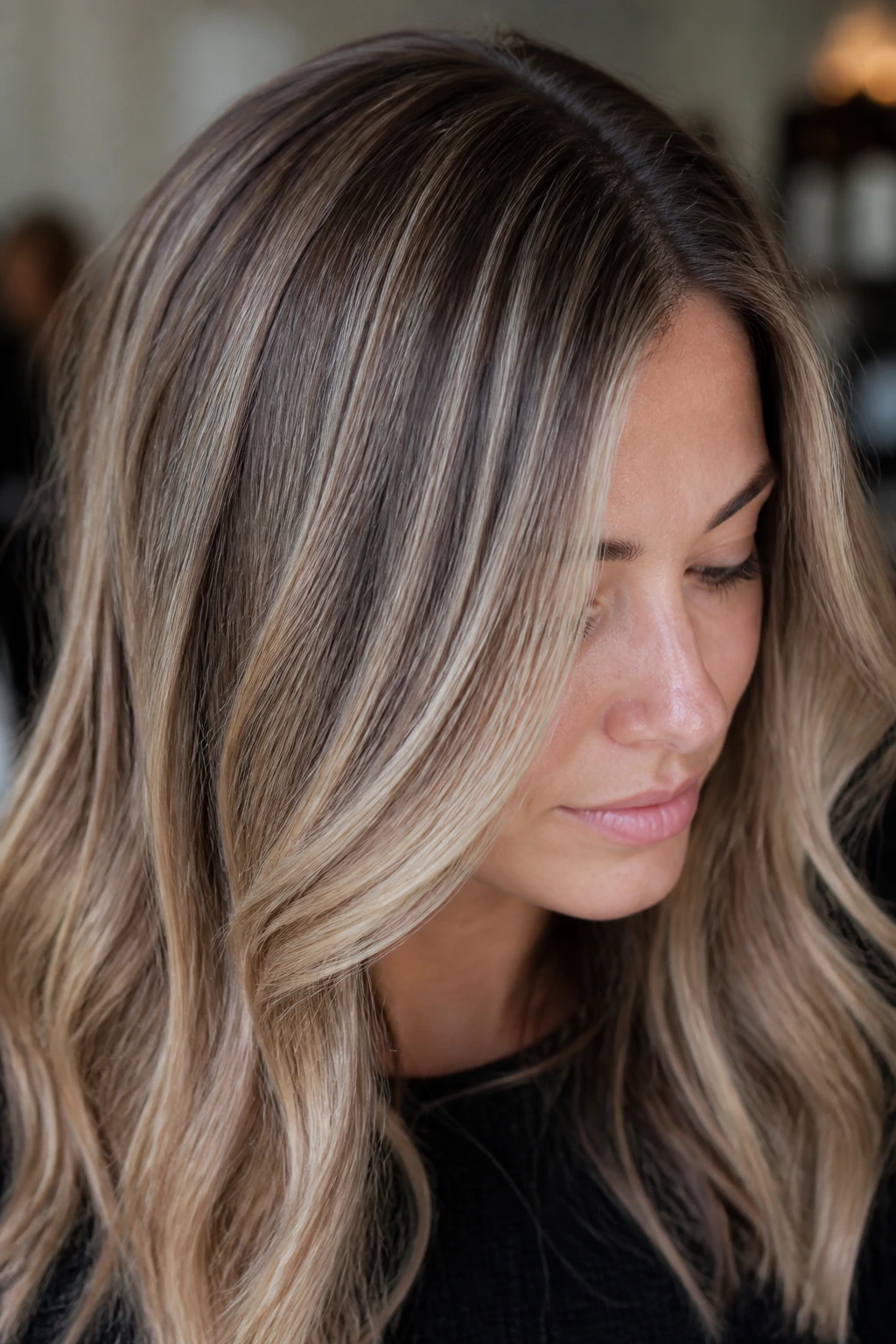
What’s the difference between babylights and regular highlights?
Babylights use much finer sections, so the result looks softer and more blended. Regular highlights can be chunkier and more obvious, while babylights tend to melt into the base and grow out with a less visible line.
Do babylights work on dark brown hair?
Yes, but the tone needs to be chosen carefully. Caramel, toasted almond, smoky mocha, and soft copper usually look more natural than very pale blonde on deep brunette bases.
How many babylights do I need for a soft look?
More foils do not always mean more softness. A good soft result usually comes from tiny, well-placed sections around the crown, hairline, and upper layers, not from packing brightness everywhere.
Can babylights cover gray hair?
They can blend gray beautifully, but they do not fully cover it the way permanent color does. If your goal is softness and a less obvious regrowth line, gray-blend babylights are a smart choice.
How often do babylights need toner or gloss?
Most blondes need a refresh every 6 to 8 weeks, while warmer brunette babylights can often go a little longer. If the hair starts looking yellow, flat, or too warm, that is your sign to bring back the gloss.
Are babylights less damaging than regular highlights?
Usually they can be gentler because the lightening is spread through smaller sections, but bleach is still bleach. The lighter the lift, the more care the hair needs afterward.
Can you do babylights without bleach?
On lighter bases, a high-lift color or glaze can sometimes create enough shift. On darker hair, though, true visible babylights usually need lightener to create that soft contrast.
What if my babylights look too streaky?
A toner, gloss, or a few lowlights can soften the look fast. If the issue is the placement itself, the fix is finer weaving and less contrast next time.
The Softest Kind of Brightness
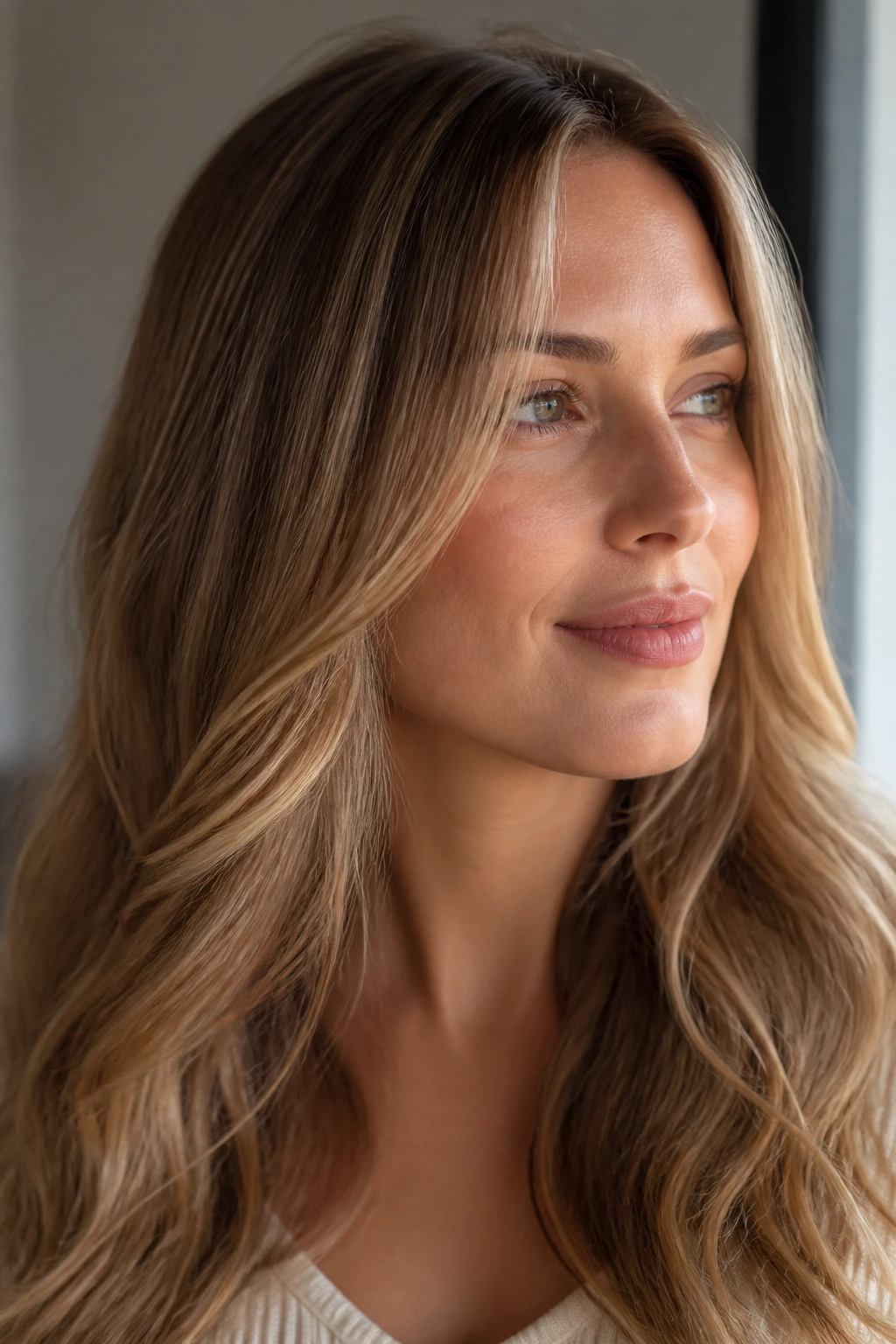
The best babylights ideas are the ones that still make sense when the hair is pulled into a ponytail, tucked behind the ear, or left to air-dry on a busy morning. They are not trying to win a spot from across the room. They are trying to make the cut, the movement, and the tone look like they belong together.
That’s why soft dimensional color has such staying power. A fine weave, the right toner, and a little restraint around the roots can do more than a whole head of brighter panels ever will. Bring a photo, ask for the tone you actually want, and let the light pieces stay small enough to breathe.
