



Short hair shows color mercilessly. A few ribbons of caramel on a bob can look chic and expensive; place them badly, and they look like three separate paint strokes. On Asian hair, that difference gets even sharper because the base is often darker, the underlying pigment can lean red or gold when lifted, and the cut itself doesn’t give you much room to hide a clunky pattern.
That’s why the best highlight ideas for Asian women with short hair are rarely the loudest ones. They’re the ones that understand geometry. A jaw-length bob needs a different color map than a pixie. A blunt fringe wants a different amount of light than a feathery bixie. And if your hair is naturally very dark, the first lift often lands in orange or copper territory before it gets anywhere near beige blonde. That’s not a flaw. That’s the road.
The good versions make the haircut look cleaner, not busier. They put brightness where the eye lands first: around the face, through the top layer, at the ends of a textured crop, or tucked just under the surface so the color flashes when you move. The wrong versions are all about one thing only — lightening — with no thought to shape. On short hair, shape is the whole point.
Why These Highlight Ideas Hit So Well on Short Asian Hair
-
Placement matters more than sheer brightness: A half-inch shift on a bob can change the whole read of the cut, which is why these ideas focus on where the light sits, not just how pale it is.
-
Dark bases make dimension look sharper: Deep brown or black hair gives caramel, ash, copper, and beige pieces a clearer outline, so even subtle highlights can look deliberate instead of washed out.
-
Short hair grows out faster in plain sight: Root shadow, babylights, and peekaboo panels help the color age in a softer way instead of turning into one obvious stripe line.
-
Warm and cool shades both have a place: Honey, copper, and peach bring warmth; mushroom, ash beige, and smoky gray-brown bring a cooler, cleaner edge. You do not have to pick one camp and stay there forever.
-
These ideas are salon-friendly and realistic: Some can be done with foils, some with hand-painting, and some are really just smart glossing and toning around the shape you already have.
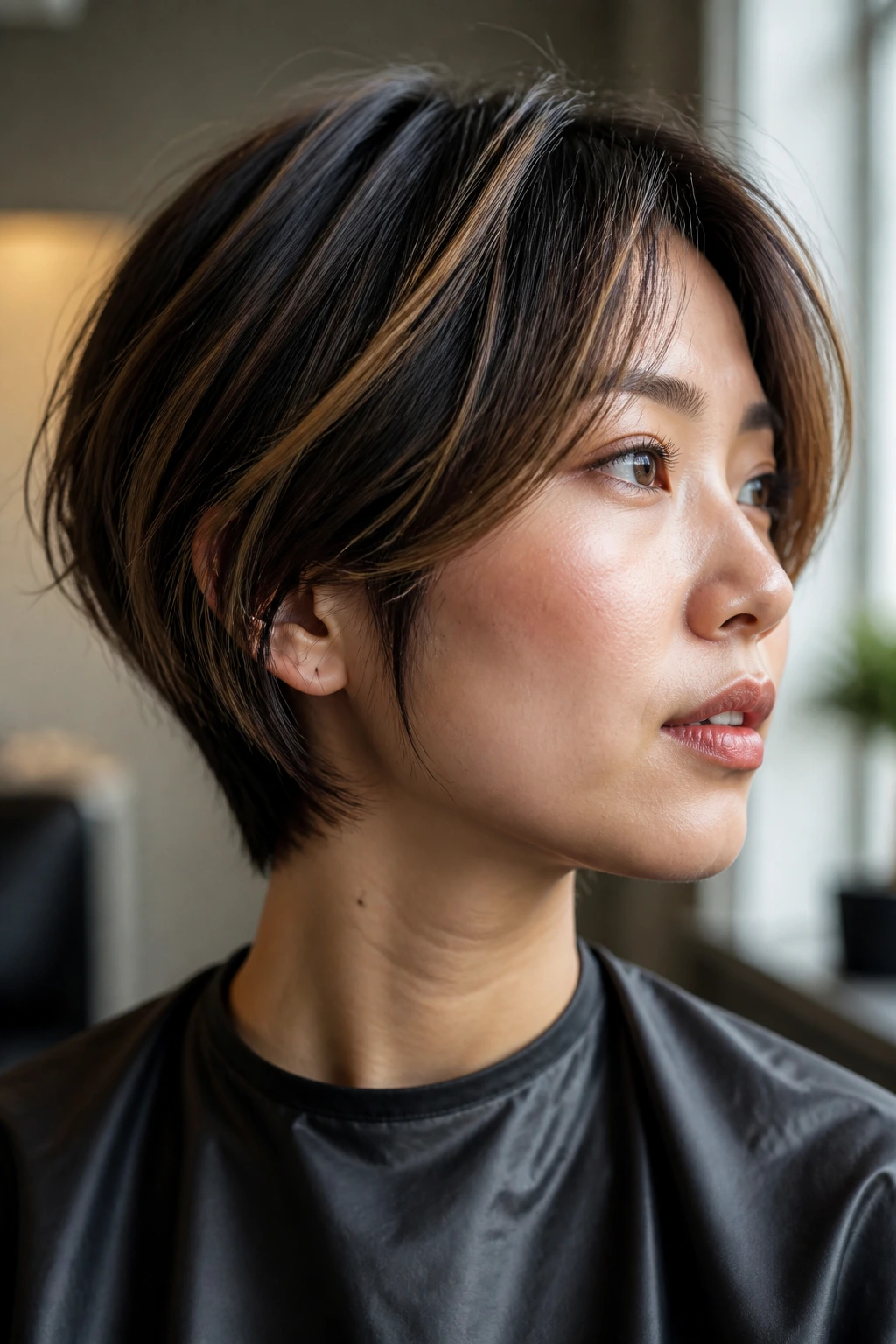
1. Caramel Ribbon Highlights on a Textured Bob
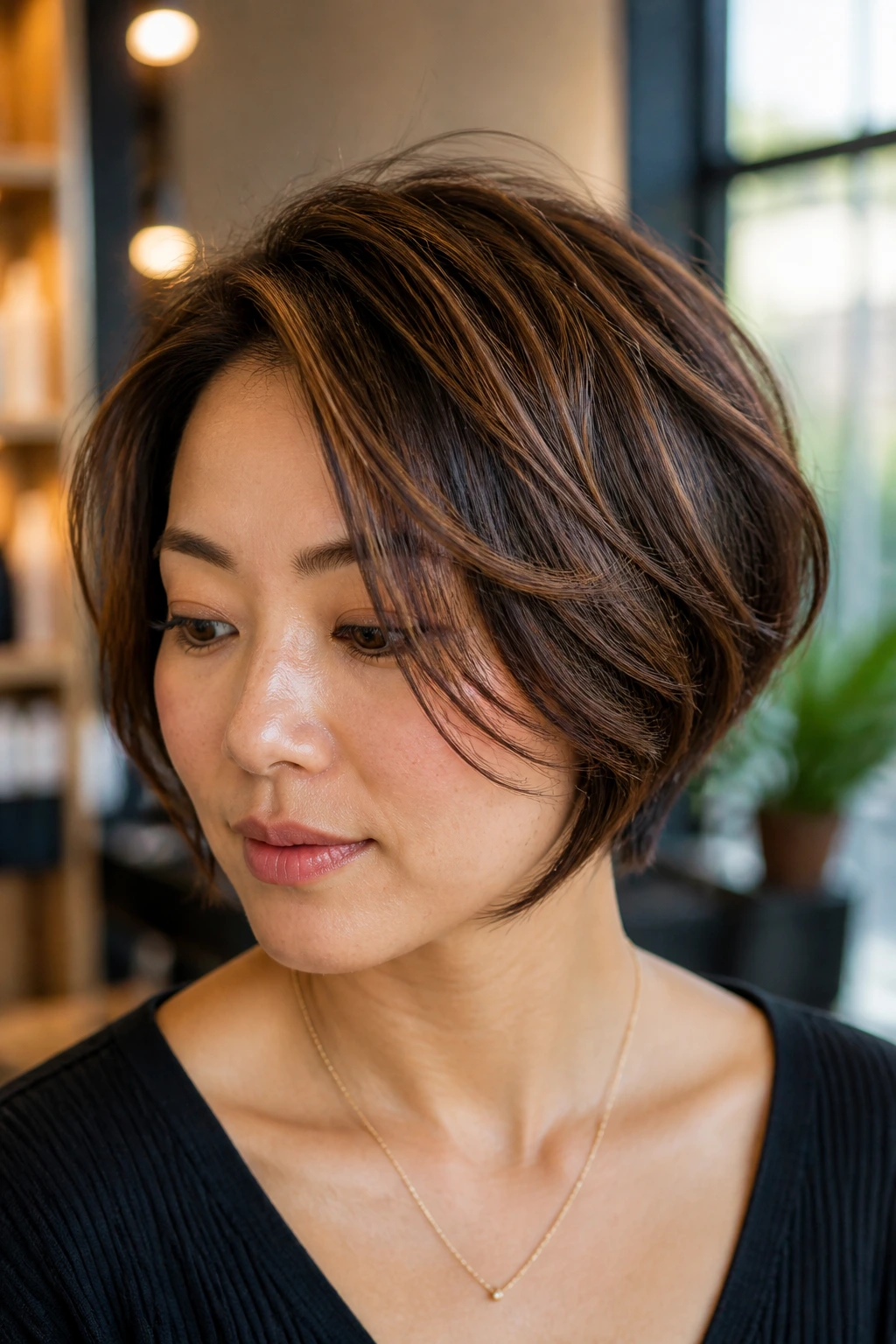
Caramel ribbon highlights are the sort of thing that makes a short bob move. The color sits in thin, visible strands rather than a heavy sheet, so when the hair flips at the jaw or tucks behind the ear, you get this soft flicker of warmth instead of one flat block of brown. On dark Asian hair, that warmth can be a lifesaver if your natural color tends to swallow subtle dimension.
Why it reads so cleanly on short hair
Caramel lands in the sweet spot between brown and blonde. It’s light enough to show, but not so pale that it fights a dark base. On a textured bob, especially one with internal layers, those ribbons break up the shape just enough to keep it from feeling helmet-like.
A good colorist usually keeps the lighter pieces around the face and the top layer, then lets them taper toward the back. That way the bob still looks grounded when you’re standing still, but it catches movement the second you turn your head.
- Best on: jaw-length bobs, softly stacked bobs, and bixies with movement.
- Ask for: fine ribbons, not chunky blocks, with a beige-caramel toner.
- Avoid if: you want a cool, smoky finish. Caramel lives on the warm side.
If your hair is very dark, this is one of the easier places to start because the lift doesn’t need to be extreme. The result should look like sunlight got trapped in a few strands. Not a full flood. That part matters.
2. Mushroom Brown Balayage for a Blunt Cut
Mushroom brown is for people who want dimension without sweetness. It’s muted, earthy, a little taupe, and a lot less red than most warm brunette shades that get slapped onto dark hair. On a blunt short cut, it keeps the edge of the haircut crisp while softening the overall tone enough that the style doesn’t feel heavy.
The important thing here is restraint. Mushroom brown should never look gray and dead, and it should never slide into muddy green either. That’s what happens when the lift is too weak or the toner is chosen blindly. Done well, the shade sits between cool brown and soft beige, which is a beautiful lane for Asian short hair because it cools down the warmth many dark bases reveal once they’re lightened.
It’s especially good on chin-length bobs and sleek lobs because the straight lines of the cut make the tonal shift obvious. You don’t need loud contrast. You need clean contrast. And this is one of the few shades that can do that without screaming for attention.
3. Espresso Babylights for Barely-There Shine
Can highlights be almost invisible and still matter? Absolutely. Espresso babylights are the subtle version of highlighting that makes short hair look more expensive in real life than on a saturated salon photo. The trick is tiny weaves — so fine they don’t shout — lifted just enough to soften the black or deep brown base.
On a pixie or pixie-bob, this works because the haircut already has texture built in. Babylights catch on the spikes, the crown, and the fringe, so the whole head gains movement without losing its dark richness. You’ll notice it most when the light hits from the side, which is usually where flat dark hair needs help.
How to ask for it
Tell your colorist you want micro-fine highlights in a shade only one or two levels lighter than your base. That keeps the effect quiet and expensive rather than stripey. If your hair is naturally coarse or very resistant, a strong lift isn’t the goal here anyway. You’re after reflection, not a blonde result.
This is one of my favorite looks for people who hate obvious grow-out. The root line is soft from the start, so when the hair grows half an inch, it still reads as texture instead of neglect. Nice little trick. Very useful.
4. Honey Money Piece for a Face-Lifting Pop
Picture a blunt short cut that suddenly looks less severe. That’s what a honey money piece does. The brighter front sections frame the face, soften the hairline, and stop a bob or lob from feeling too closed in around the cheeks. On Asian women with short hair, that matters because dark hair can sit close to the skin tone and flatten the whole look if nothing breaks it up.
Honey is warmer than caramel and less orange than copper, which gives it a friendly middle ground. It’s especially effective if you wear your hair tucked behind one ear or part it off-center. The lighter section becomes the first thing people see, and the rest of the hair stays darker, which keeps the look grounded.
A money piece also buys you some flexibility. You can keep the back darker, keep the maintenance lighter, and still get a real visual change at the front. That’s a smart trade if you don’t want every appointment to be a full-head project.
5. Ash Beige Frosting for a Clean, Soft Finish
Ash beige frosting has a quiet, cool edge that works especially well when you want the short haircut to feel airy instead of dense. The color sits in that pale beige zone that doesn’t lean too golden and doesn’t go flat gray. On dark Asian hair, that balance is hard to get and worth the effort when it lands.
This look depends on clean lift. If the hair doesn’t reach a pale yellow stage before toning, the ash-beige result can read dull or khaki. That’s the part most people underestimate. Beige is not magic powder. It’s a tone laid over a good base.
I like this best on short cuts with soft edges — French bobs, slightly shaggy pixies, layered crops — because the frosting effect needs texture to break it up. A blunt cut can wear it, sure, but the finish tends to shine more when there’s a little bend in the hair and some movement around the crown.
If your skin tone leans cool or neutral, this is one of the most flattering ways to lift dark hair without going warm.
6. Cinnamon Lowlights and Highlights for Extra Depth
Unlike single-tone caramel, cinnamon color works in two directions at once. You get deeper brown-red lowlights tucked under the top layer and lighter cinnamon strands woven on top, which makes short hair look thicker, fuller, and a lot less one-note. It’s a smart move if your hair is naturally very dark and a little coarse.
The pairing matters. Lowlights stop the haircut from going hollow when the lighter pieces are added, and the warm highlights keep the color from feeling muddy. On a bixie or layered crop, that contrast gives the ends some grit. That’s useful if your hair tends to lie flat and show every missing inch.
This look is better than plain all-over warmth if you like dimension that keeps changing in different light. Inside, it can look deep and chestnut; near a window, the cinnamon glows. Short hair does not give you much length to create variation, so playing with depth like this is a nice workaround.
7. Copper Streaks That Wake Up a Short Crop
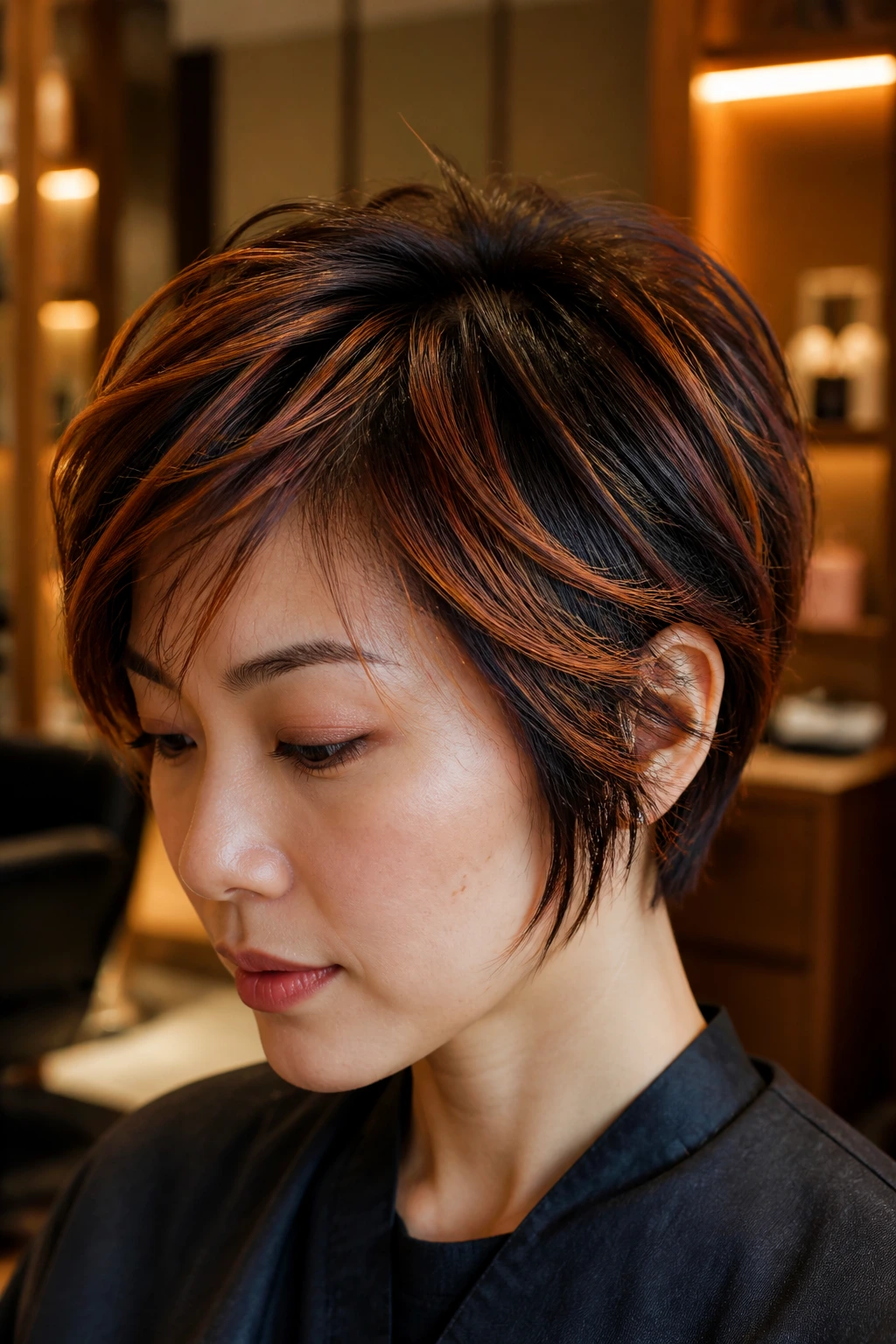
Copper is not shy. Good. Short hair can handle it. In fact, a textured crop or choppy bob often looks better with copper than with a softer brown because the brighter tone shows off layers that would otherwise disappear into a dark base.
Copper on Asian hair usually starts by pulling warm — sometimes very warm — and that’s not a mistake if the goal is a rich red-orange glow rather than a pale blonde result. The shade needs care, though. Copper fades faster than brunette tones, especially if you wash often or use hot styling tools without protection.
The strongest version of this look is a few strategic streaks through the fringe, crown, and front sides, not a full orange blanket. That kind of placement makes the haircut feel alive. Too much copper on short hair can look loud in a hurry. A few well-placed streaks? Much better.
If you like warm makeup — peach blush, terracotta lipstick, bronzy lids — copper hair tends to slot right in.
8. Rose Brown Peekaboo Color for a Hidden Flash
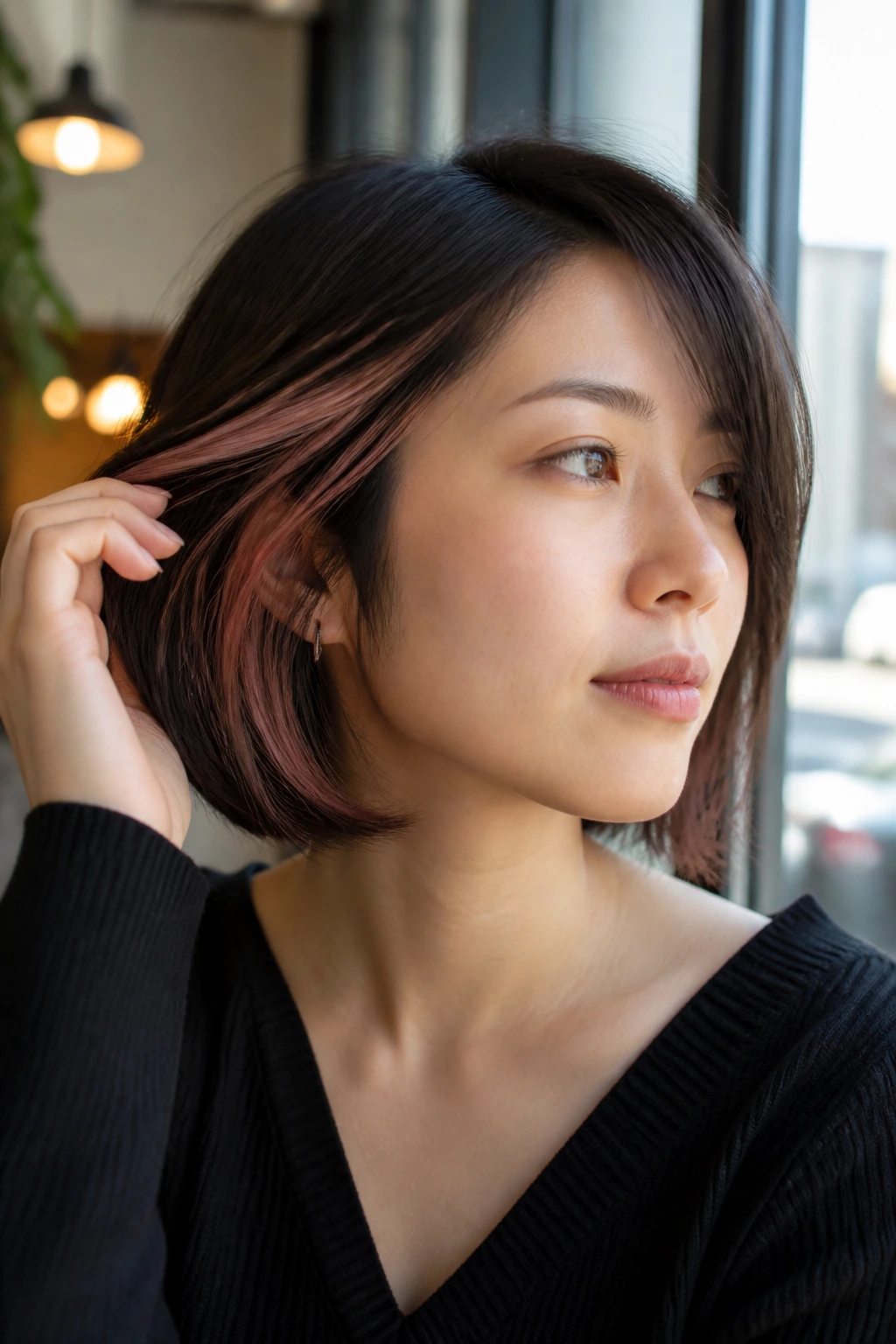
Rose brown peekaboo color is made for people who want a little mischief under a calm surface. The top layer stays brunette or black, while the inner sections carry a muted rosy tone that shows when the hair swings open, when you tuck it back, or when the wind catches it. Short hair actually makes this more fun because there’s less distance between hidden and visible.
The trick is to keep the pink side of it smoky, not bubblegum. On Asian hair, rose brown looks best when it’s diluted with brown pigment so the result lands somewhere between plum, blush, and chocolate. If you go too bright, the contrast can feel disconnected from the rest of the cut.
I like this on short bobs and longer pixies because the hidden color peeks out in motion. It’s office-friendly if you need it to be, but it still feels playful at the salon sink. That’s a rare combination.
9. Champagne Blonde Ends on a Wavy Bob
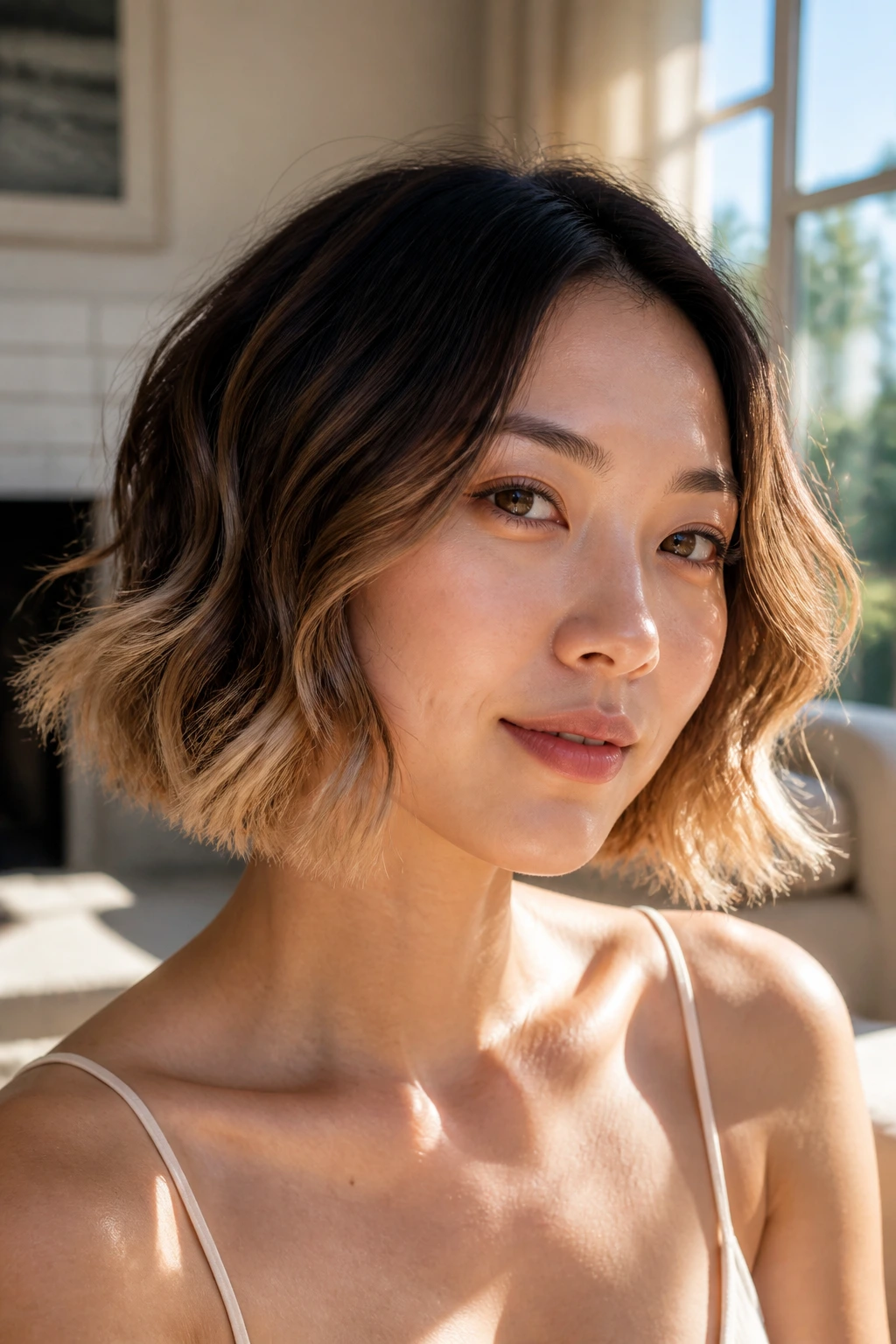
Champagne blonde ends can make a short bob stop looking heavy at the bottom. The shade is pale, but not icy-white; there’s enough beige warmth in it to keep the color from looking chalky against Asian skin tones. On a wavy bob, the lighter ends catch each bend and make the haircut look lighter on its feet.
This one needs patience if your base is very dark. You are not getting champagne from black hair in a single casual appointment without risking the hair. The safer route is a staged lift with careful toning so the ends reach the right pale level before the champagne gloss goes on.
What I love here is the shape effect. Dark roots keep the haircut anchored, while pale ends lift the visual weight from the perimeter. It makes the bob look cleaner, especially if the cut sits right at the chin or slightly below it.
A wave iron or even a quick bend with a flat iron helps this color read. Straight hair can wear it, but the ends need a little movement to show the gradient.
10. Blue-Black Shine with Hidden Violet Panels
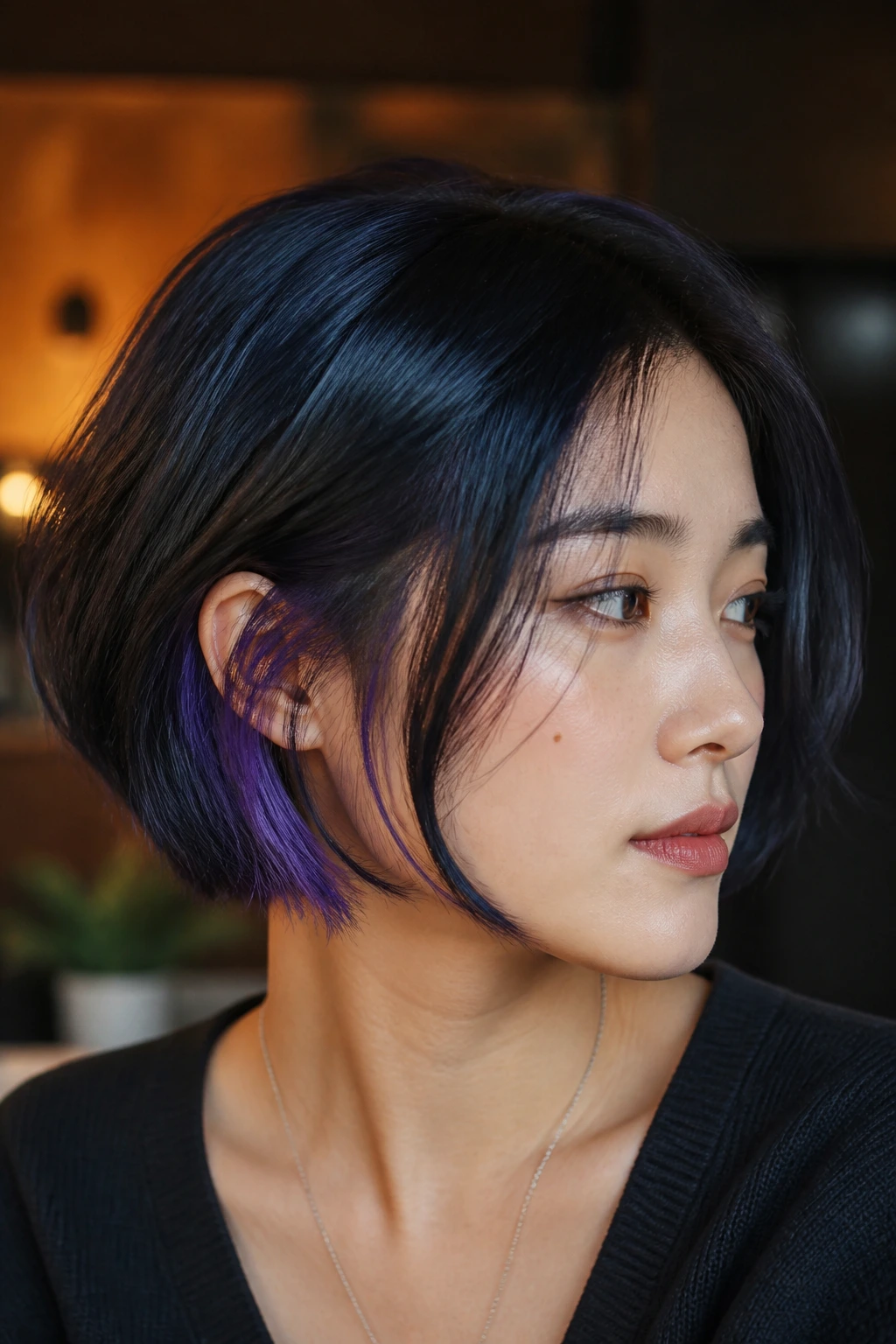
This is the one for people who like a little drama, but don’t want to turn the whole head into a neon project. Blue-black shine keeps the top glossy and deep, while hidden violet panels sit underneath or behind the ears so they flash only when the hair shifts. On short hair, that hidden placement is what makes it feel clever instead of busy.
The blue-black base is a good match for very dark Asian hair because it respects the natural depth instead of fighting it. The violet panels add interest without needing a giant amount of lightening. If your haircut is a pixie with longer top layers, or a bob with undercut sections, the color placement can be surgical in the best way.
This look does need maintenance. Blue and violet pigments fade, and once they wash out, they can lose that rich edge fast. But if you’re okay with a regular deposit conditioner or gloss, the payoff is strong. It looks crisp in daylight and even better under indoor light.
11. Bronde Face-Framing Pieces for an Easy Lift
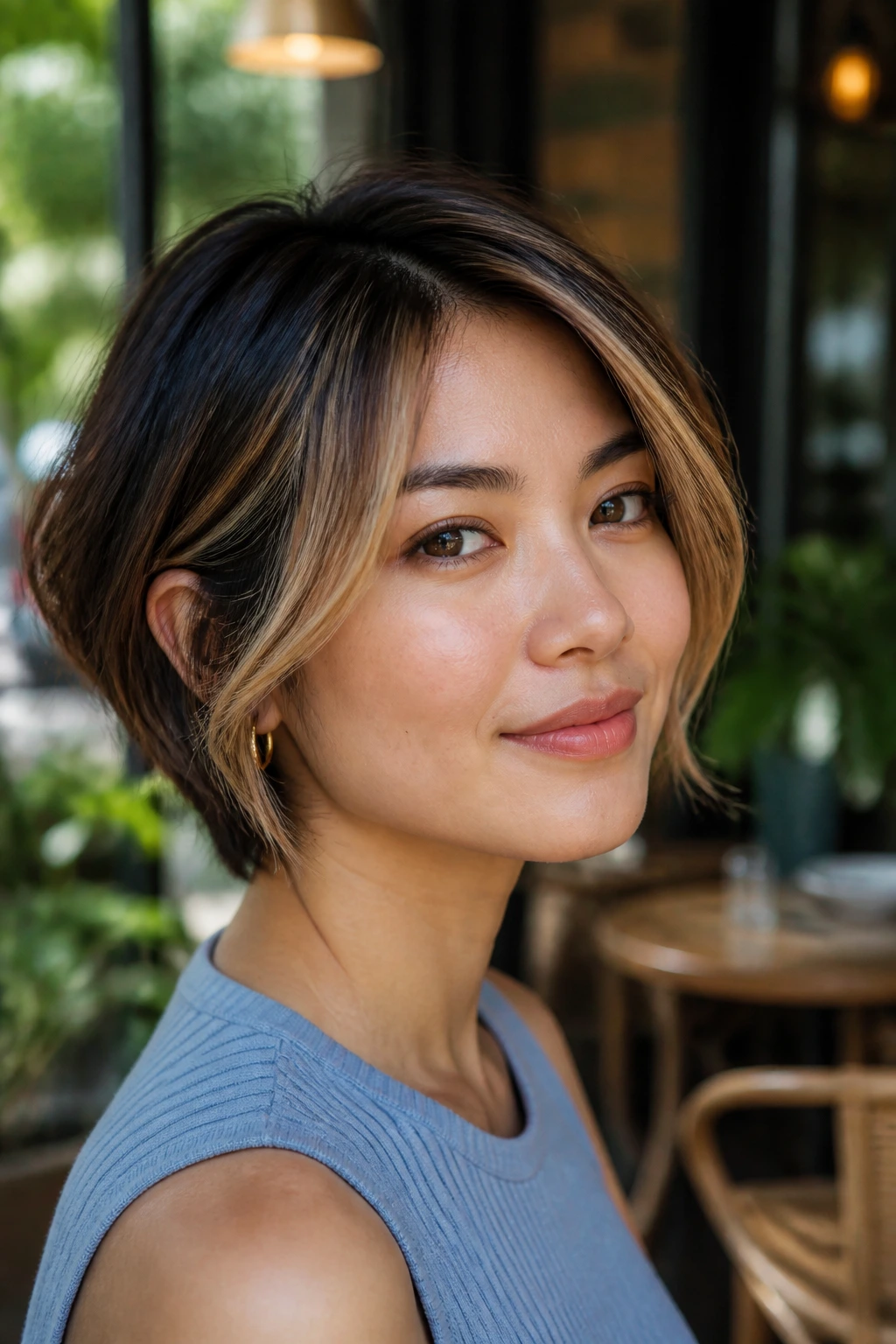
Bronde is one of those shades that sounds vague until you see it done right on short hair. It’s not blonde. It’s not brown. It’s the bridge between the two, which is exactly why it’s so useful for Asian women who want brightness without committing to an obvious lightening job.
On a short layered cut, bronde face-framing pieces keep the perimeter from feeling dark and closed in. They also make the skin look more awake, which is usually the whole point of brightening the front. The best version is usually placed around the temples, cheekbones, and the first inch or two of the fringe.
This is a strong pick if you wear your hair tousled or air-dried. The color doesn’t need perfect symmetry to work; it just needs a little daylight around the face. It’s also a forgiving option if you’re not sure whether to go warm or cool, because bronde can lean beige, honey, or smoky depending on the toner.
Short hair and bronde get along because neither one wants to fuss too much. Easy. Clean. Not boring.
12. Beige Blonde on a French Bob
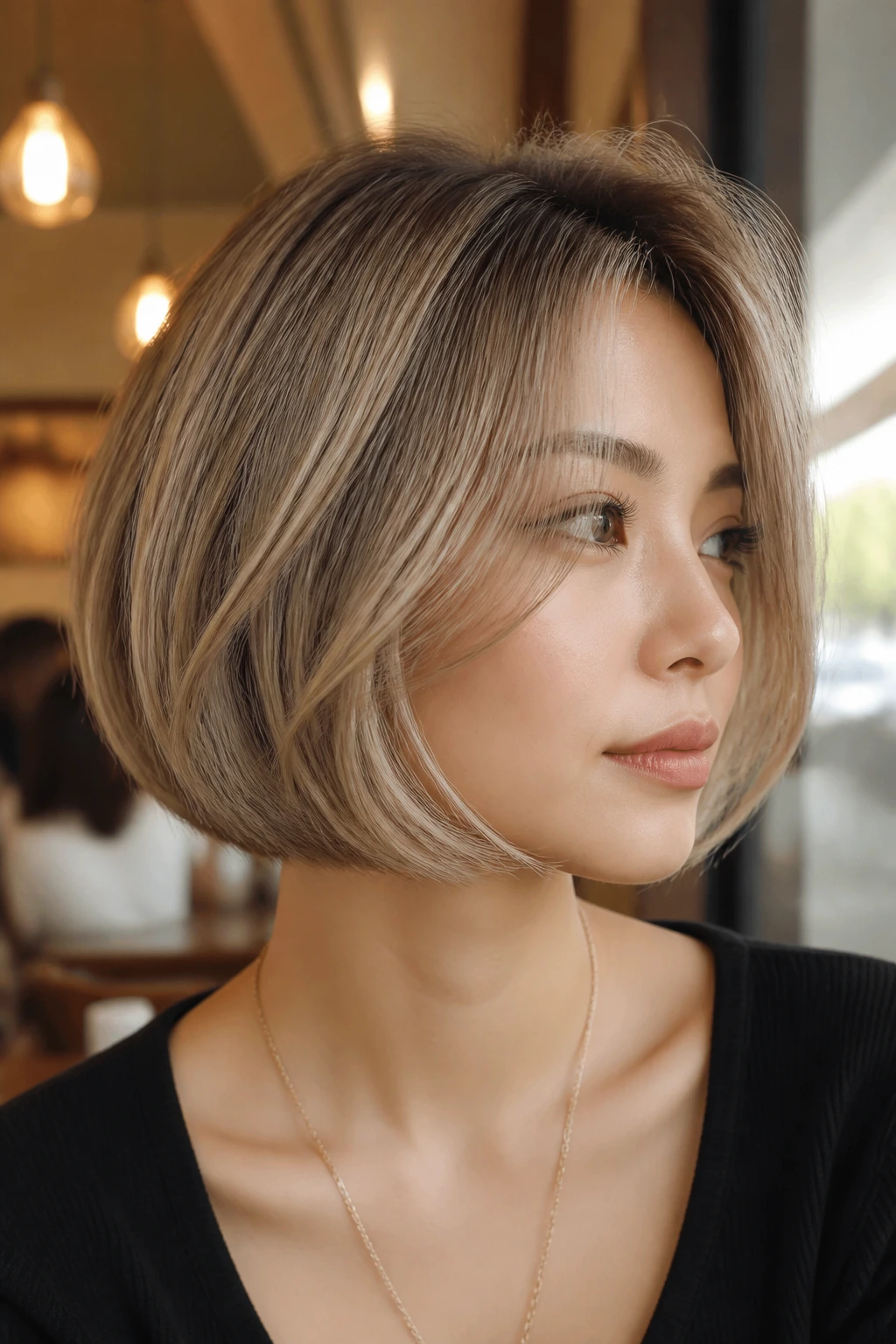
A French bob with beige blonde highlights can look sharp in a way that feels almost old-world. The cut itself is neat and usually sits around the jaw, so the beige tone softens the severity without making the hair fluffy or sugary. It’s one of the best choices if you want the bob to look polished but not stiff.
Beige blonde is friendlier than icy blonde on many Asian skin tones because it keeps enough warmth to blend with a darker base. The highlight pattern should be sparse and deliberate. You want clean lines at the edge of the cut, not a blanket of lightness from root to tip.
This shade is also one of the easiest to mess up if the toner is too cool. Then it turns flat, and a French bob has nowhere to hide flatness. A slightly creamy beige reads much better, especially when the hair is tucked under at the ends or worn with a soft fringe.
If your face shape benefits from structure, this is a smart pick. The haircut does the framing, and the color just nudges it along.
13. Smoky Gray-Brown Melt for a Moody Finish
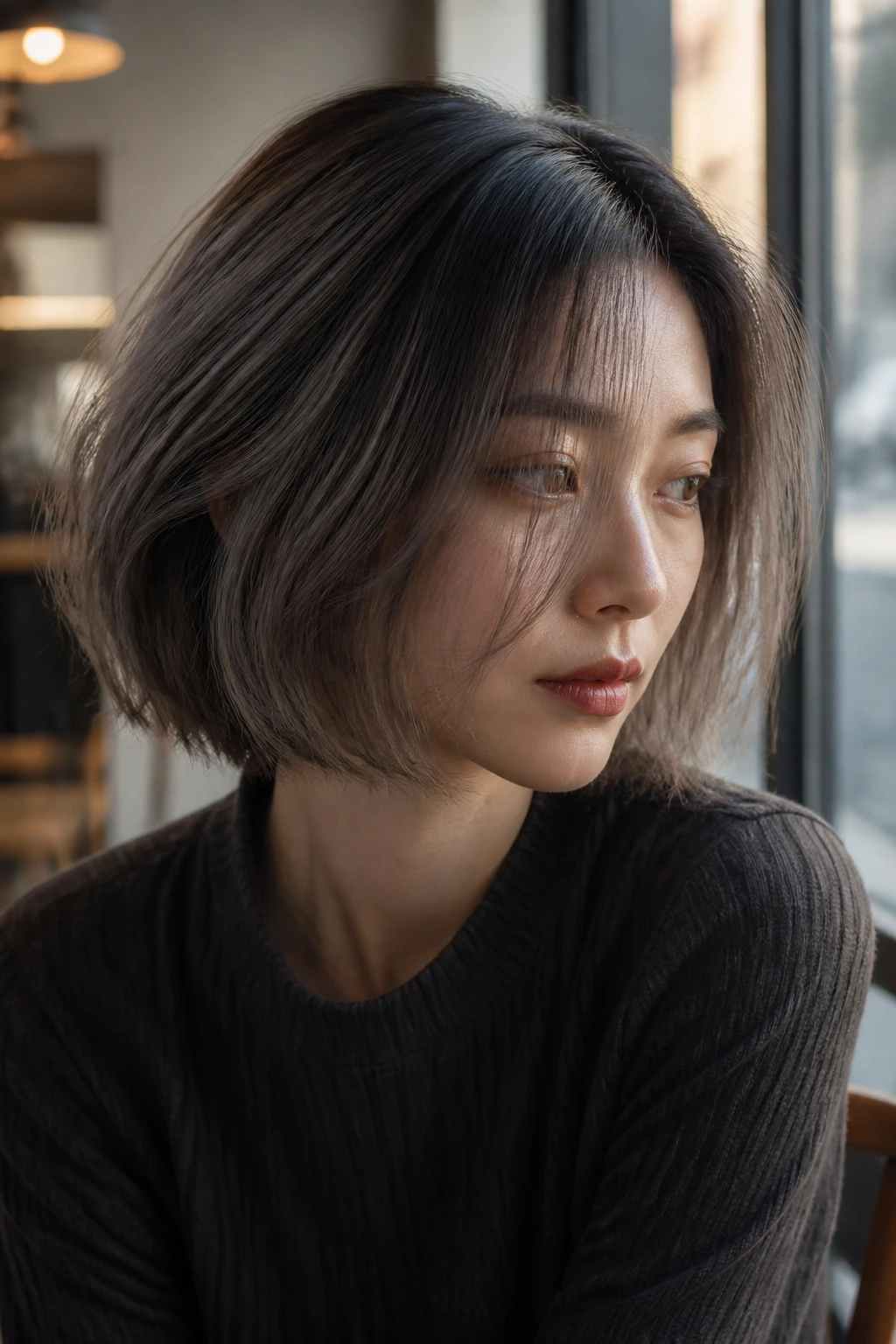
Smoky gray-brown is what happens when you want something cool and modern, but not stark silver. The melt usually starts darker at the root and shifts into a brown-gray zone through the mid-lengths, which looks especially good on thick, straight Asian hair because the smooth texture shows the gradient clearly.
The key is not to force the gray too hard. If the hair isn’t lifted evenly, gray tones can read patchy or slightly green. A smoky brown base with gray glazing is often much cleaner than trying to chase silver on a dark short cut all at once.
This look loves a precise bob or a tapered crop. You can see the color change around the contour of the haircut, which is where short styles make tonal work look intentional instead of washed out. It’s not a soft, sleepy color. It has edge. But the edge is quiet enough to wear day to day.
14. Auburn Micro-Highlights That Catch the Light
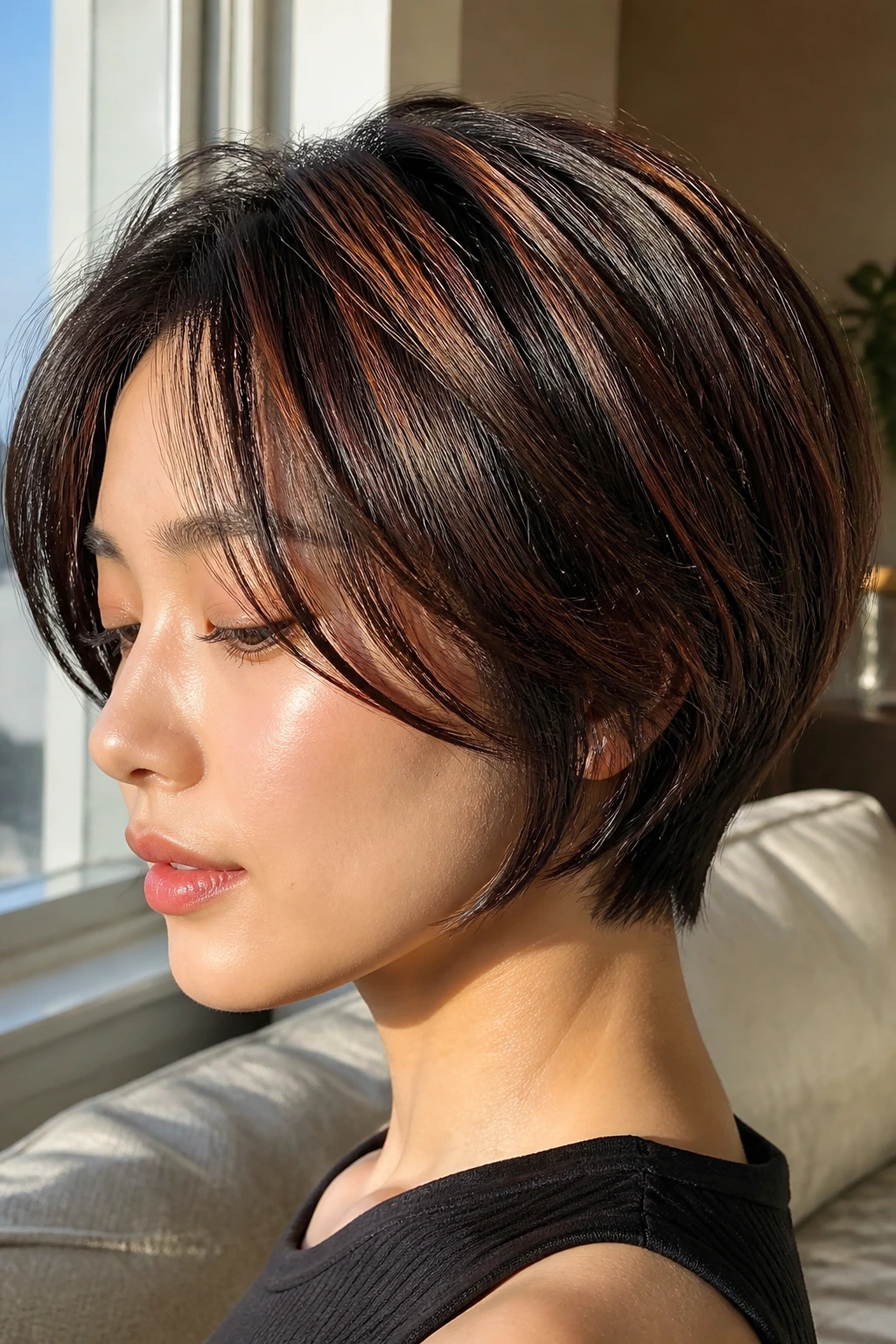
Tiny auburn strands can do more work than bigger color blocks. That’s the beauty of micro-highlights on short hair. They slip into the cut like thread, and when the hair moves, they catch the light with a reddish-brown glow that feels richer than a single solid brunette tone.
On Asian hair, auburn is especially useful because it sits in the warm zone that dark bases already know how to hold. You’re not asking the hair to become blonde. You’re asking it to reveal a red-brown note that might already be waiting underneath. That usually means less damage and a more natural result.
This is one of the best ideas for short cuts that need depth more than drama. Think cropped layers, soft pixies, or short bobs with fringe. You get warmth around the crown and temples without creating a stripe pattern. Nice, quiet, and a little underrated.
15. Chunky Contrast Highlights for Pixie Cuts
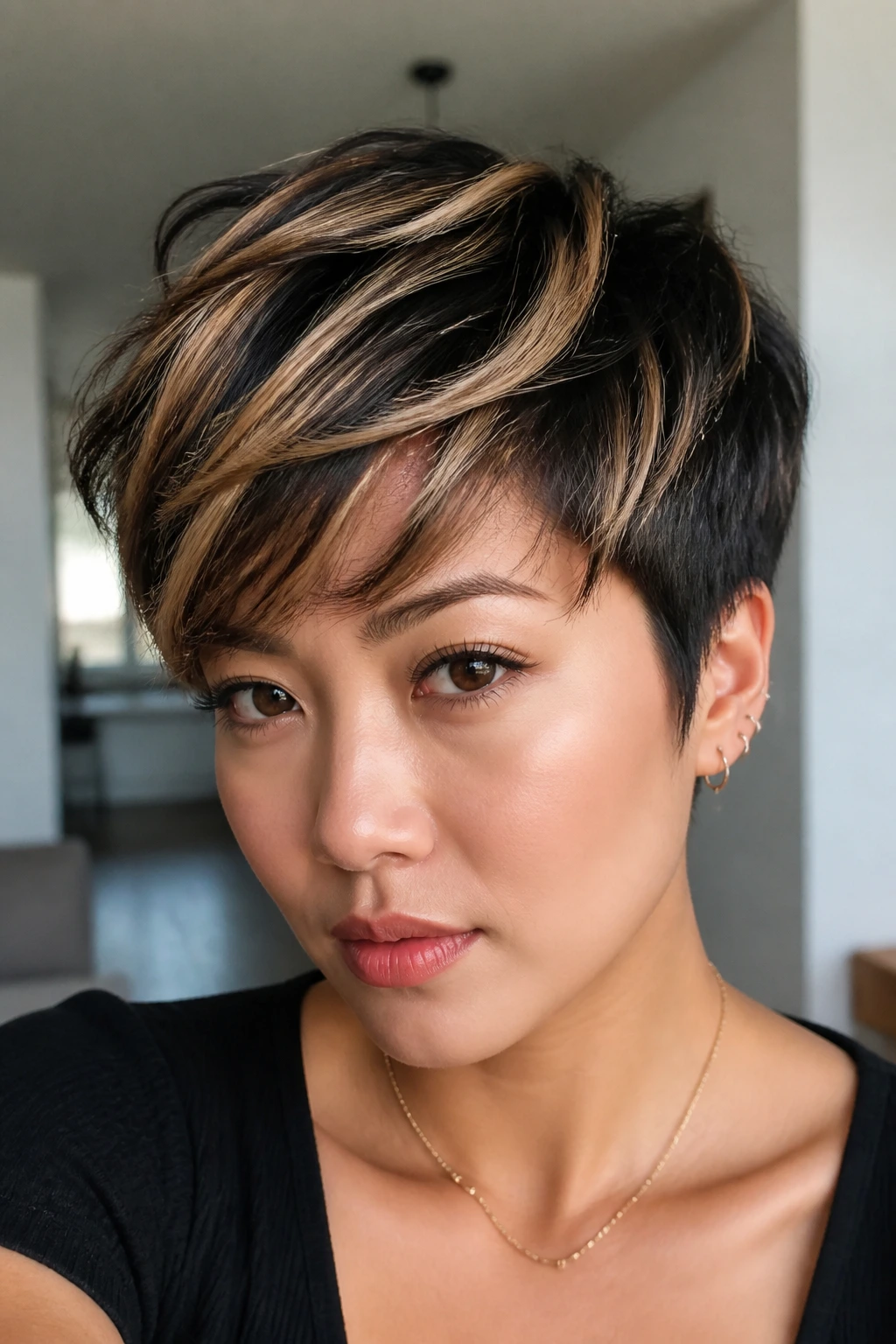
Can chunky highlights work without looking dated? Yes — if the placement is sharp and the haircut has enough texture to support it. A pixie with a strong top layer can wear wider contrast pieces, especially if the highlights are placed through the fringe, crown, and top ridge rather than scattered everywhere.
On Asian hair, chunky contrast usually means picking a lighter tone that stands apart from the base: beige, warm caramel, even a pale copper if you want energy. The effect is graphic. Not subtle. That’s the point. Short hair can look flat when everything is blended too softly, and this style fixes that by making the shape readable from across the room.
It works best when the rest of the cut is clean. If the pixie is grown out or uneven, chunky pieces start to look accidental. But on a crisp crop with a little texture paste, the contrast gives the hair a strong, editorial feel.
16. Soft Plum Glaze for a Cool-Toned Twist
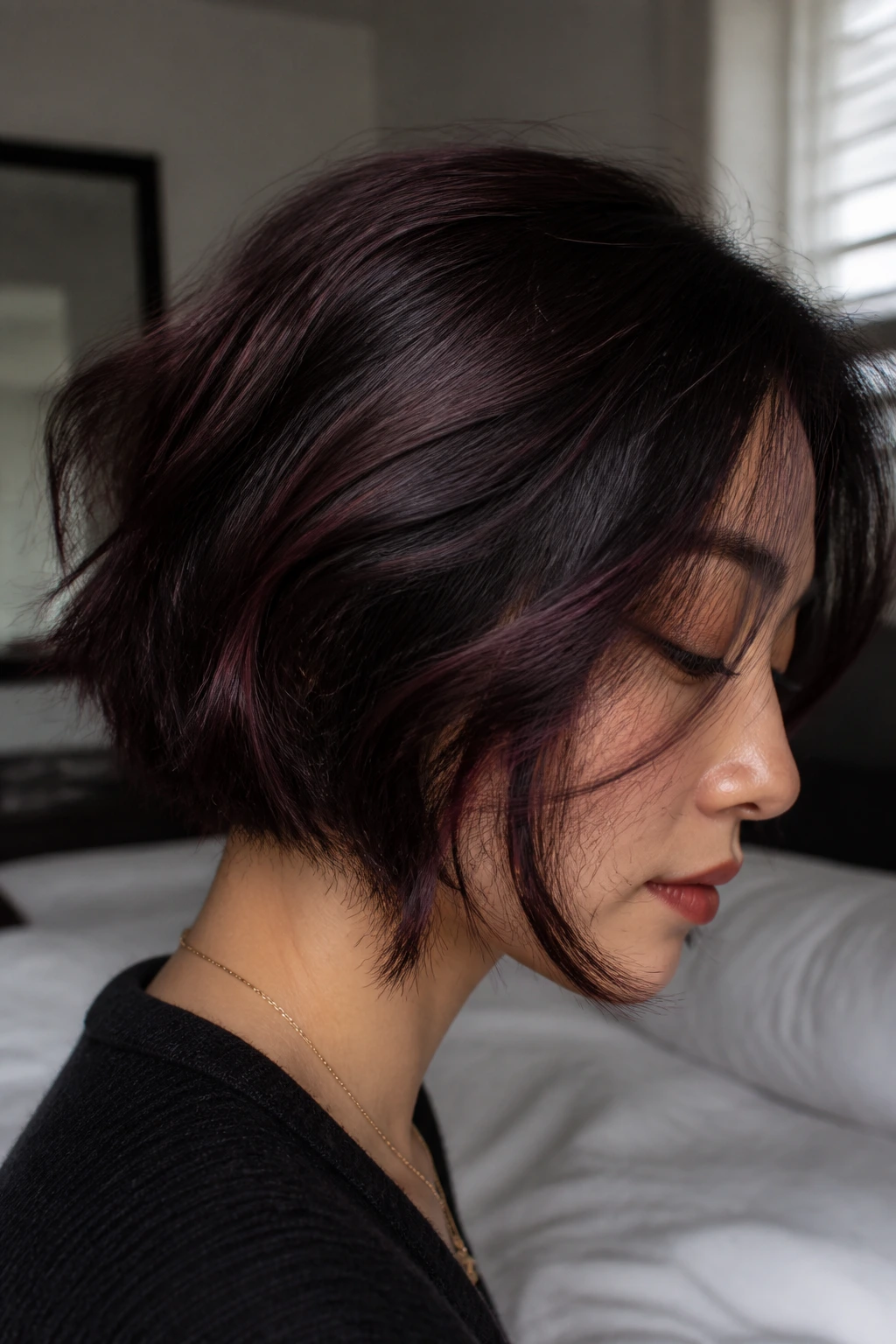
Soft plum glaze sits in a very specific lane: dark, moody, and a little romantic without tipping into full purple. On short Asian hair, that means the base can stay deep brown or black while the glaze adds a wine-colored sheen that shows only when the light slides across it.
The nice thing about plum is that it does not need a bright lift to look interesting. A glaze can deposit tone over existing color, which makes it a lower-commitment choice than full highlights. That matters if your hair is already short and you do not want to chase a big color correction later.
I like this on a choppy bob or bixie because the movement makes the plum flashes more obvious. Straight, flat hair still works, but the glazed pieces come alive when the cut has texture. If you want something cooler than copper but warmer than blue-black, plum is a smart middle path.
17. Toasted Almond Balayage on a Longer Bob
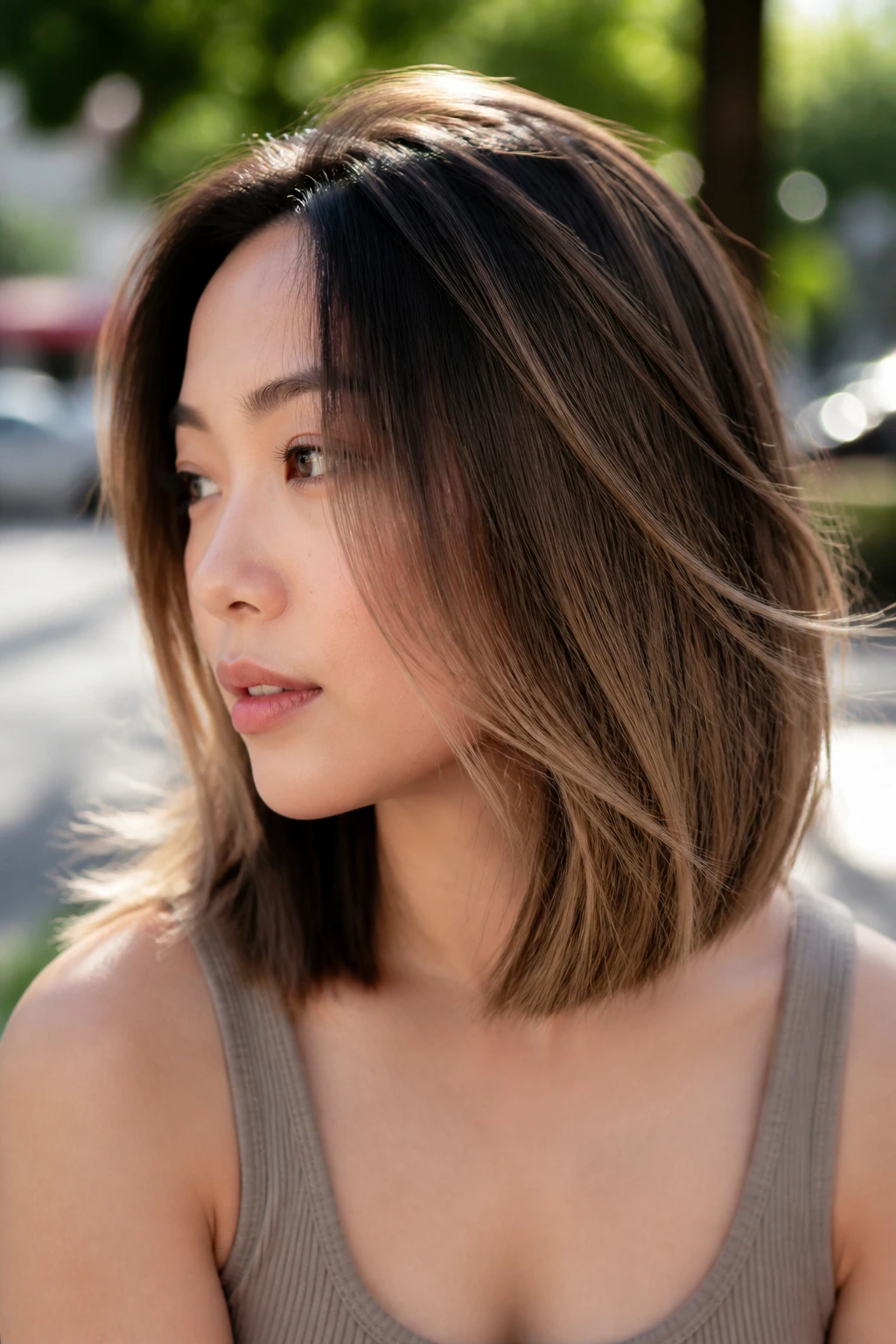
Toasted almond balayage is one of the most wearable brunette-lightening ideas for Asian women with short hair. The shade is warm, nutty, and soft, with enough lift to show dimension but not so much contrast that it starts to dominate the haircut. On a longer bob or lob, it feels relaxed and natural.
Balayage makes sense here because the hand-painted pieces can follow the movement of the cut. That means the lightness sits where the hair curves, not just where a foil happened to land. The result is softer grow-out and less of that hard stripe line that can make short color look tired too soon.
This is a good choice if you air-dry a lot or prefer a bend instead of tight curls. The toasted almond shade catches the middle and ends of the strand, then disappears back into the darker base near the roots. It gives the illusion of volume without changing the whole identity of the hair.
18. Golden Peach Tint for a Bright, Playful Finish
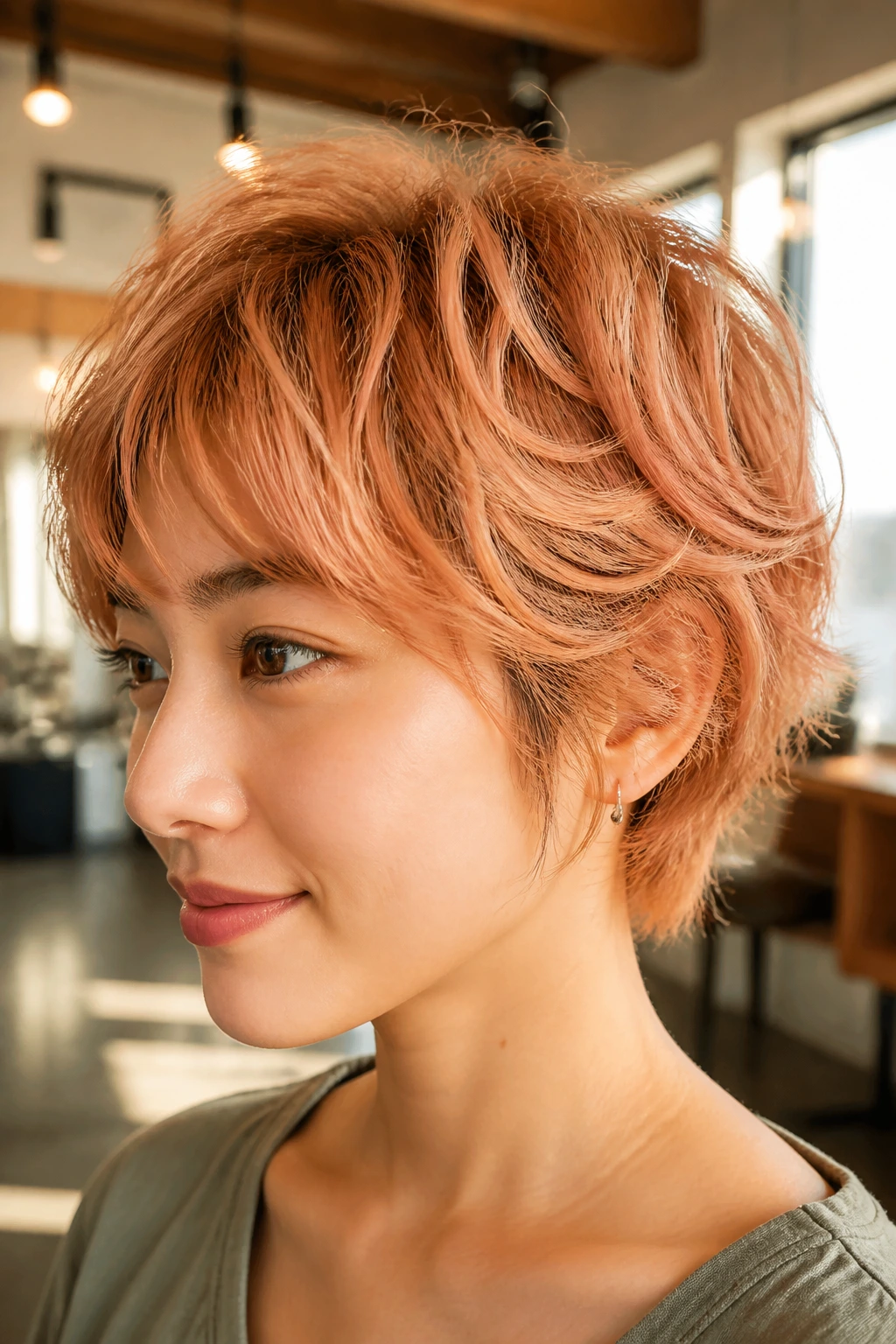
Golden peach sits between copper and blonde, but softer than both. It has enough warmth to light up short hair, yet it avoids the heavy red note that can overpower a face if the cut is very short. On a shaggy crop or curly bob, it looks lively and slightly unexpected.
This shade needs a pale enough base to hold the peach cleanly. If the hair is left too dark, the result can look orange-brown instead of golden-peach. That’s why this works best as a tonal choice after careful lightening, not as a shortcut.
I like it on short hair because it changes the mood of a cut fast. The same pixie that looked tidy and conservative in dark brown suddenly feels lighter and more playful once peachy gold is woven in. That kind of shift is useful if you want color that changes the personality of the haircut, not just the brightness.
19. Icy Silver Threading with a Dark Root Shadow
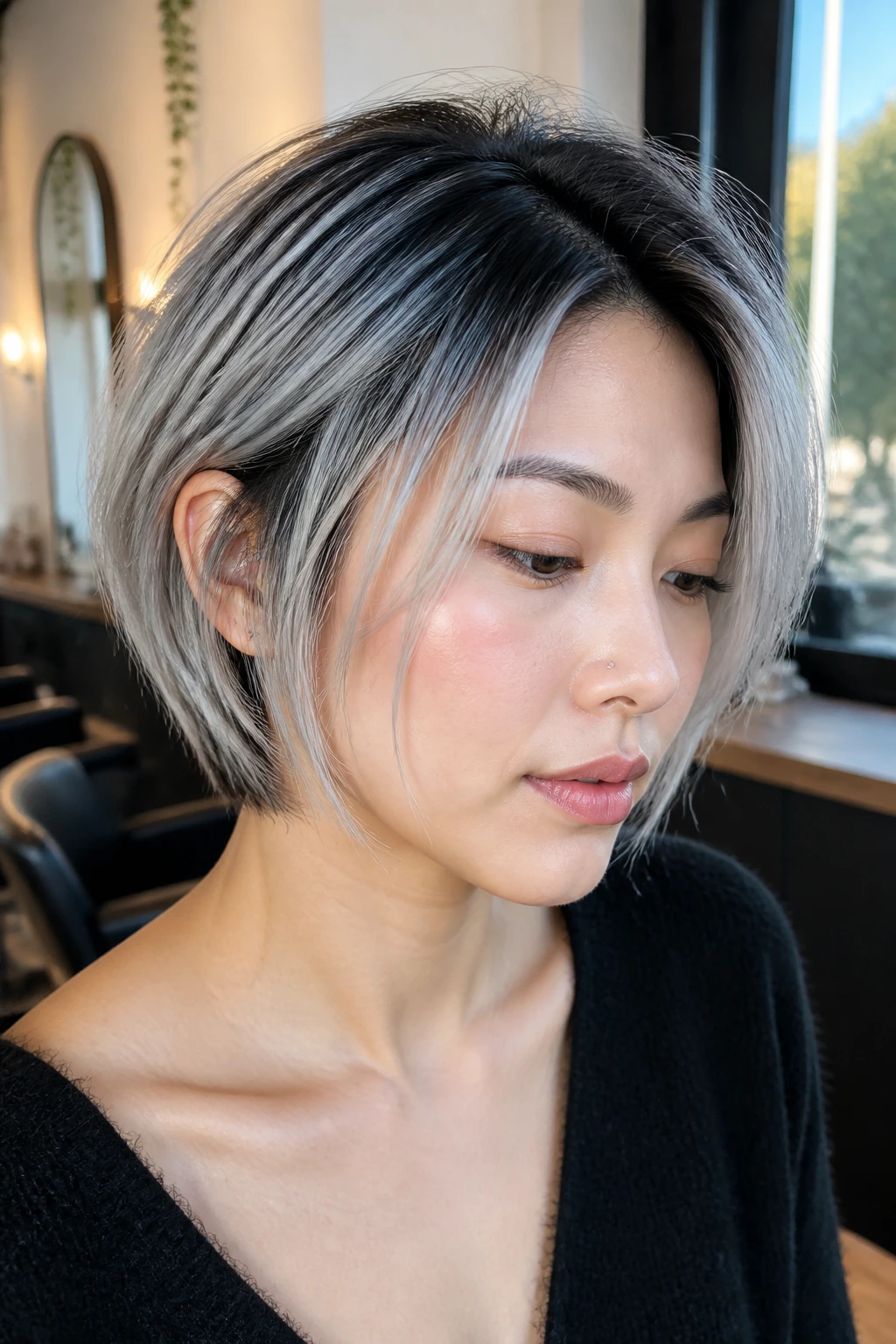
Icy silver threading is for the brave or the very specific. A few ultra-light strands, paired with a dark root shadow, can make a short cut look sharp and deliberate instead of washed-out. The shadow root is what keeps this from turning into a high-contrast mess, especially on Asian hair that starts very dark.
The silver itself needs careful lifting and toner control. If the hair is pushed too fast, the result can be yellow at the base and gray at the ends, which is not the look anyone is trying to wear. The best version uses thin threading around the face and top layer, then lets the root stay deep for structure.
This is strongest on a precise bob, a very short crop, or a pixie with clean lines. You want the cut to anchor the color, because icy tones can feel chilly fast if the haircut is loose or over-layered. When it works, though, it looks clean and almost architectural. Very sharp. Very little fuss.
Why Short Hair and Strategic Color Need Each Other
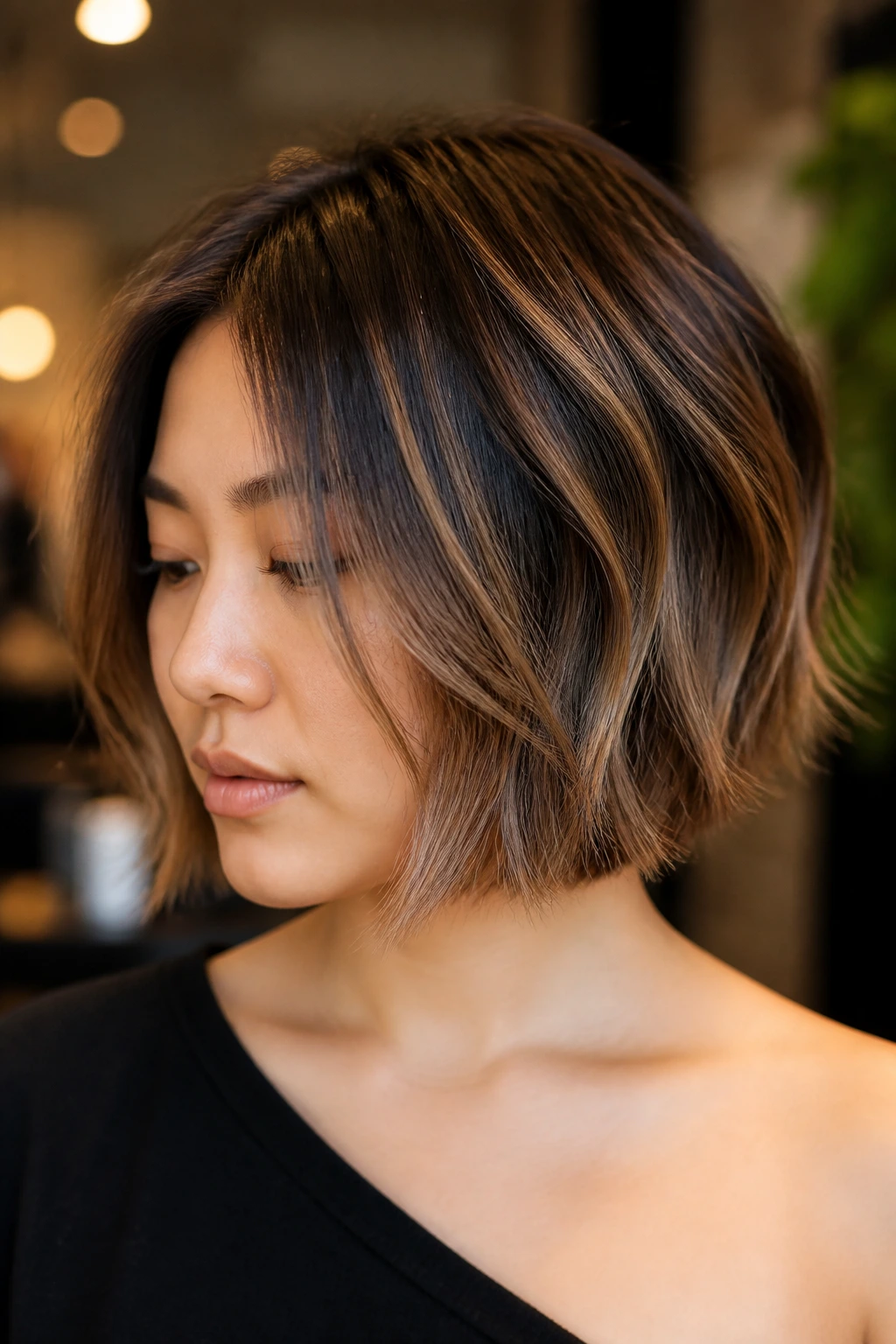
Short hair does not have the luxury of pretending. Every highlight sits closer to the face, every root shows up sooner, and every bad placement gets noticed fast. That is why the best highlight ideas for Asian women with short hair are built around shape first and shade second.
Dark hair can take warmth, coolness, or contrast, but the haircut decides how that color behaves. A pixie needs tiny lights or strong slices. A bob usually wants ribbons, face framing, or a root shadow. A bixie can handle a little more play because the layers create movement on their own. If you match the color method to the haircut, the whole thing starts to make sense.
Why the base matters so much
Many Asian hair types sit at a very deep level, and when they lighten, they often reveal copper or red before they reveal pale blonde. That is normal. It is also why a good toner matters more than people think. A beige gloss over clean lift looks intentional. The same shade on a brassy base looks tired in about five minutes.
Why short cuts show more detail
There’s nowhere for sloppy highlights to hide. That’s the truth. Short hair exposes every foil line, every too-wide panel, every missing spot at the crown. The upside is that a well-placed highlight map can make even a simple cut look custom, and custom beats loud almost every time.
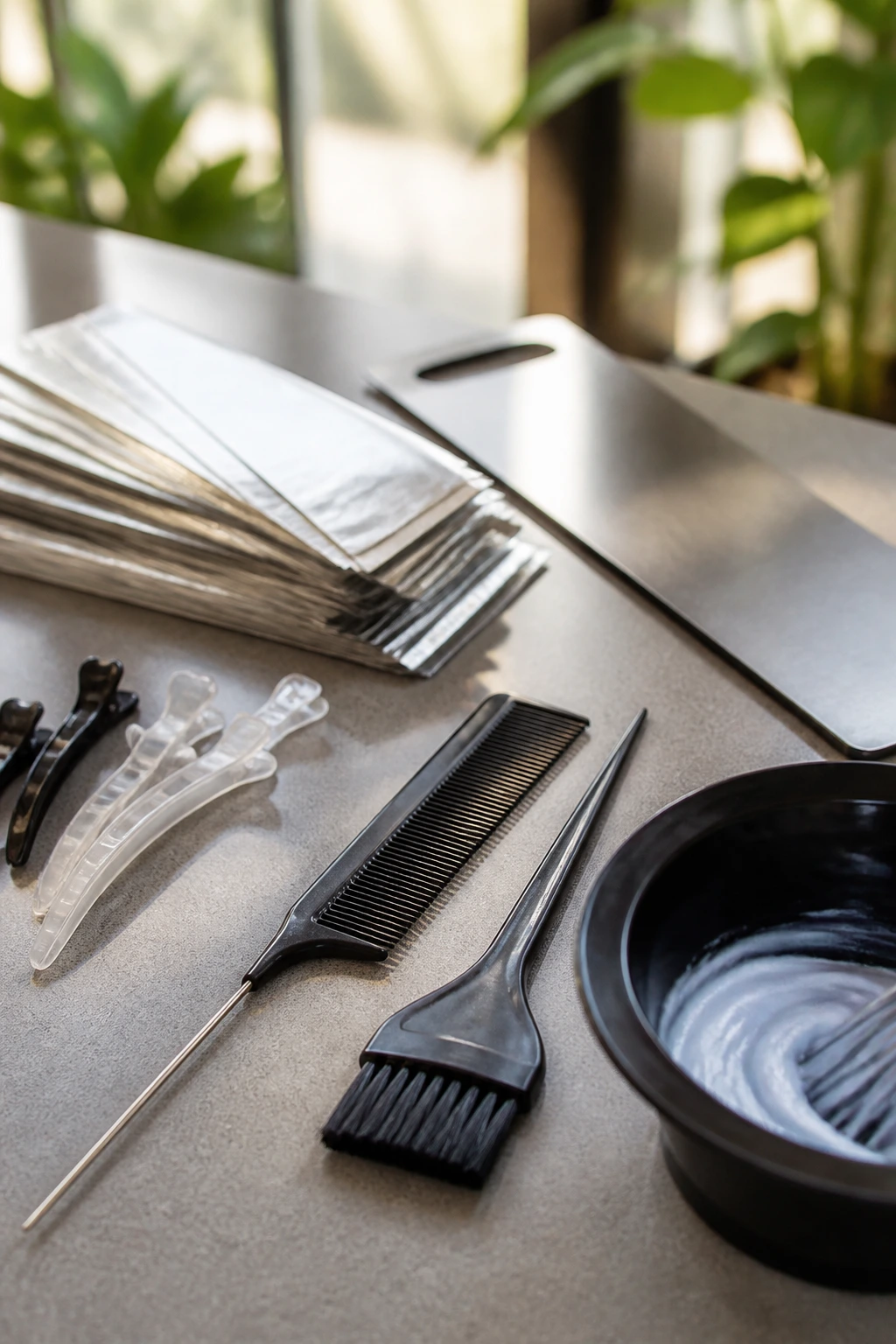
The Tools That Make the Color Read Cleanly
-
Reference photos in natural light: Bring at least 2 or 3 shots, because indoor salon lighting can make beige look warmer and ash look flatter than it really is.
-
Tail comb and sectioning clips: These keep the part lines clean, which matters more on short hair than on long hair where color can disappear into length.
-
Foils or balayage board: Foils create a stronger lift and more precise ribbons; a board helps with hand-painted placement on bob lengths and layered crops.
-
Color bowl and tint brush: The brush should be narrow enough for babylights and money pieces, not just broad color application.
-
Bond builder or reparative treatment: Especially useful if your natural base is dark and you’re going lighter than two levels.
-
Purple shampoo or blue shampoo: Purple helps pale blonde and beige pieces; blue is better when brass is orange or coppery.
-
Heat protectant: Short hair gets hit with curling irons and flat irons more often than people admit. Color fades faster without protection.
-
Shine spray or light serum: A tiny amount makes highlights read cleaner on bob and pixie textures.
How to Wear These Highlights So They Show
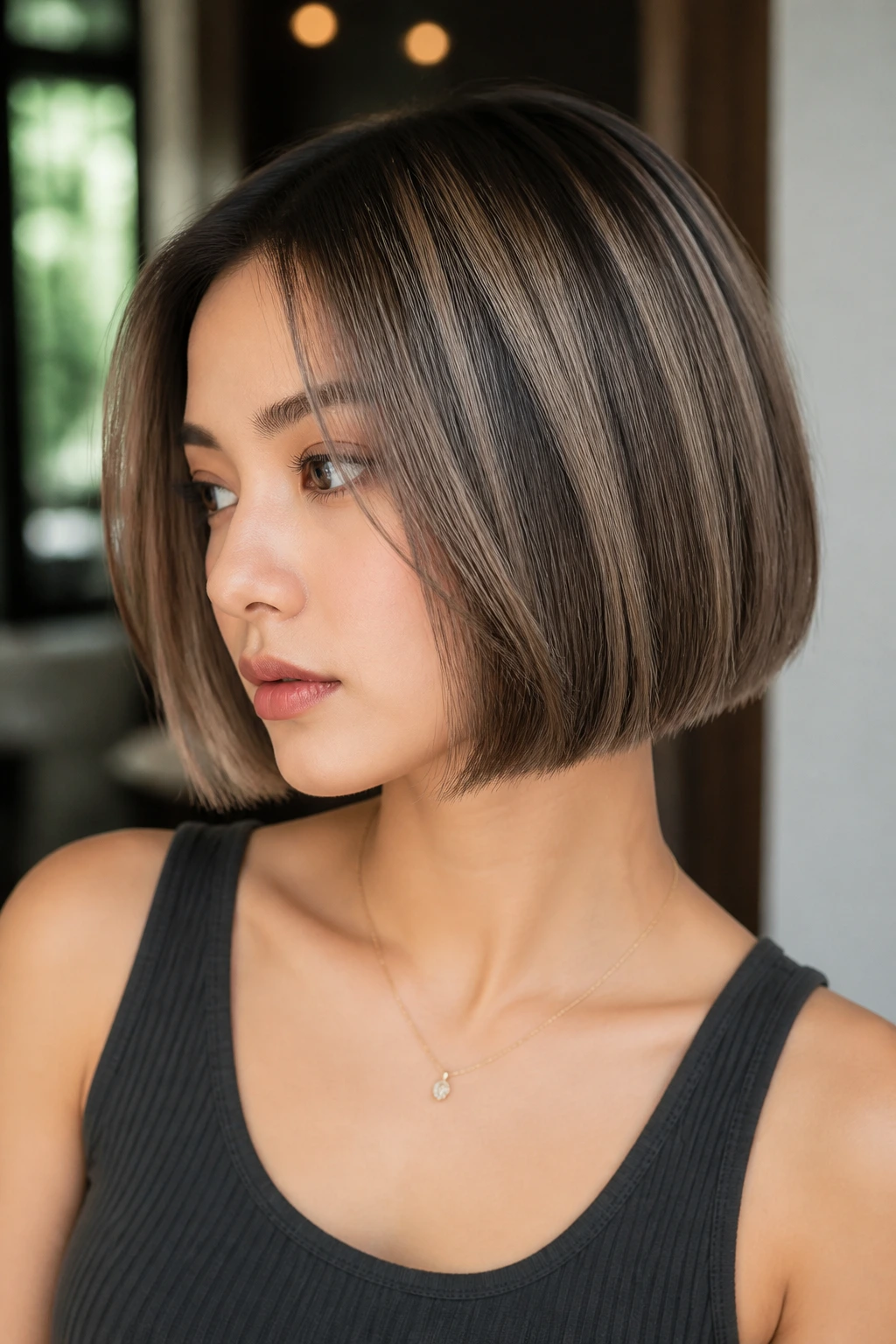
Parting: A side part can expose face-framing pieces in a way that a center part hides. If your highlights live around the front, switching the part is the easiest styling trick in the book.
Styling: A one-inch curling iron, a flat iron bend, or even a rough blow-dry with a round brush can make ribbons and babylights show up more clearly. Straight hair is fine too, but the color reads flatter when the cut is still damp-looking or pressed too smooth.
Finish: Use a light serum on the ends and a dry texture spray at the crown if you want the lighter pieces to separate a little. Too much oil will blur the whole effect. Too much wax will make the hair look sticky. Tiny amount. That’s enough.
Outfits and makeup: Warm shades like caramel, copper, honey, and peach tend to glow next to terracotta, peach blush, and cream clothing. Ash, mushroom, and icy silver read cleaner with black, gray, white, or cooler makeup. A good colorist will think about this, but so should you if you’re trying to photograph the result.
Extra Tips and Color Boosters That Pay Off
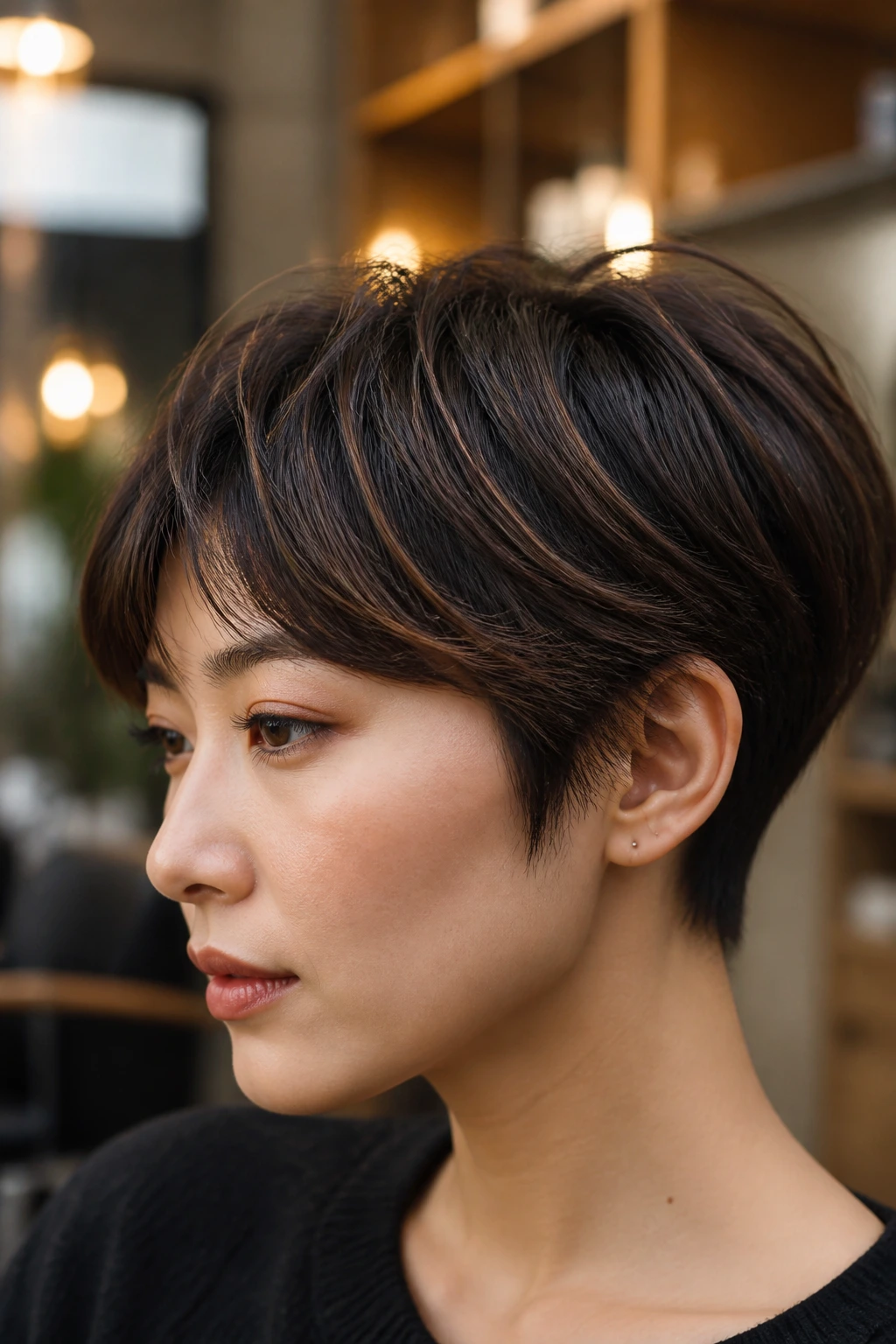
Glossing: A clear or tinted gloss every 4 to 6 weeks keeps caramel, beige, and copper from going dull. It also helps short hair look freshly cut even when the shape has grown a little.
Customization: If your bob feels too heavy, ask for more lightness around the face and crown. If your pixie feels too spiky, soften the top with babylights and leave the sides darker.
Serving Suggestions: That sounds like a cooking phrase, but in hair terms it means the finish. A little bend at the ends, a tuck behind one ear, or a clipped-back front section can show off the color better than a perfect, stiff blowout.
Make-It-Yours: If you want lower maintenance, choose root-shadowed balayage, babylights, or peekaboo panels. If you want stronger contrast, go for money pieces, chunky pixie streaks, or copper ribbons. If you want the most subtle change, ask for gloss-only dimension around the front.
Maintenance, Glosses, and Retouch Timing
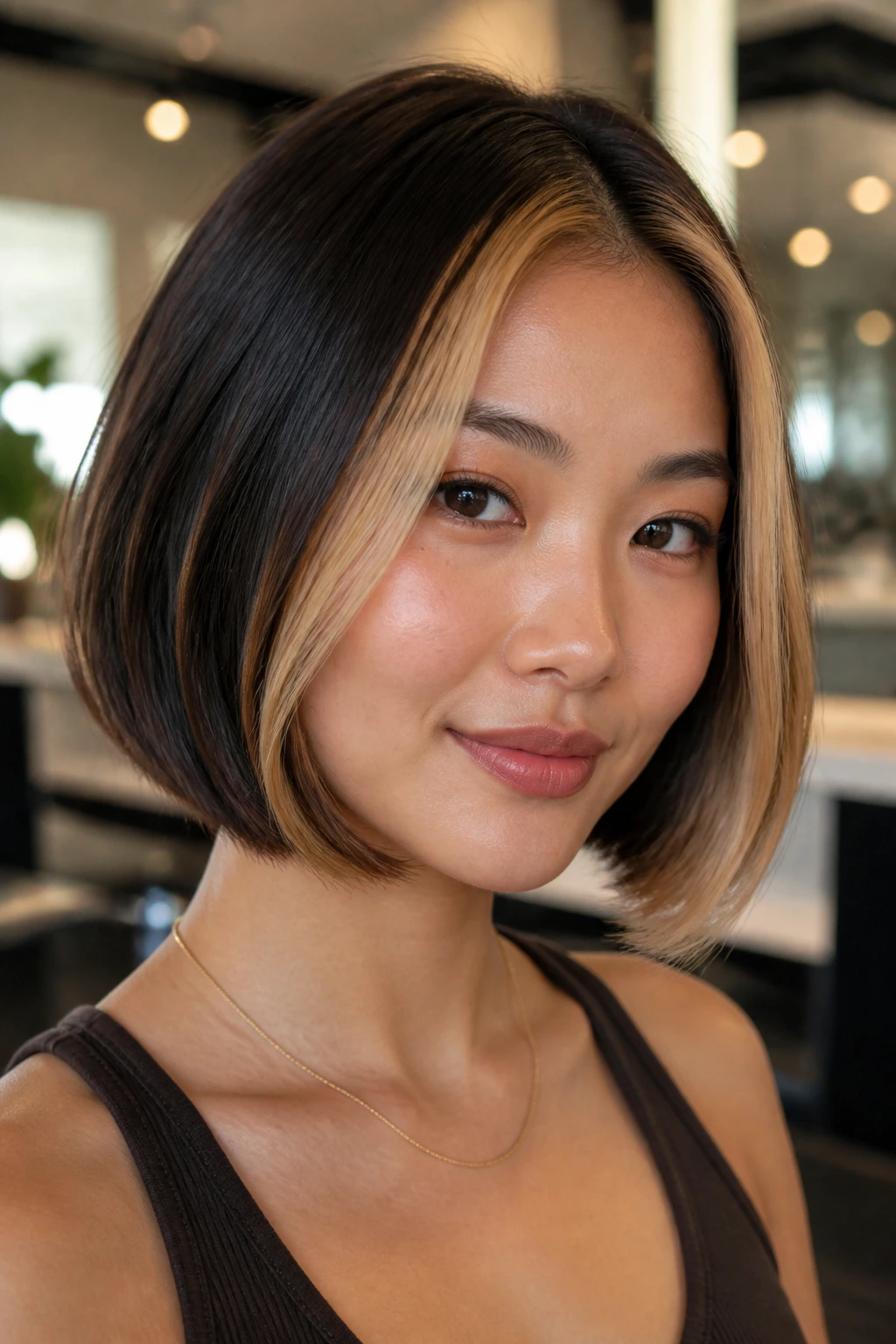
Short hair asks for faster touch-ups than long hair. That’s the deal. A half-inch of regrowth on a bob can change the whole mood, and on a pixie, it can change the placement line even faster. If you choose a soft balayage, you may get 8 to 12 weeks before it starts asking for attention. If you go copper, rose, plum, or icy blonde, the color may need a gloss or refresh closer to every 4 to 6 weeks.
At home, color-safe shampoo matters more than most people want to hear. Wash too hot, and the cuticle opens; wash too often, and the tone slides out faster. A cooler rinse and a light conditioner on the mids and ends are boring advice, but boring advice is what keeps the color looking expensive.
If your look includes pale blonde or ash beige, use purple shampoo sparingly — once a week or even less if the pieces are already clean-toned. If your look leans copper, rose, or plum, a color-depositing conditioner can help stretch the salon visit. Just do not overdo it. Short hair grabs pigment fast, and one heavy-handed wash can shift the tone more than you want.
Variations and Adaptations to Try
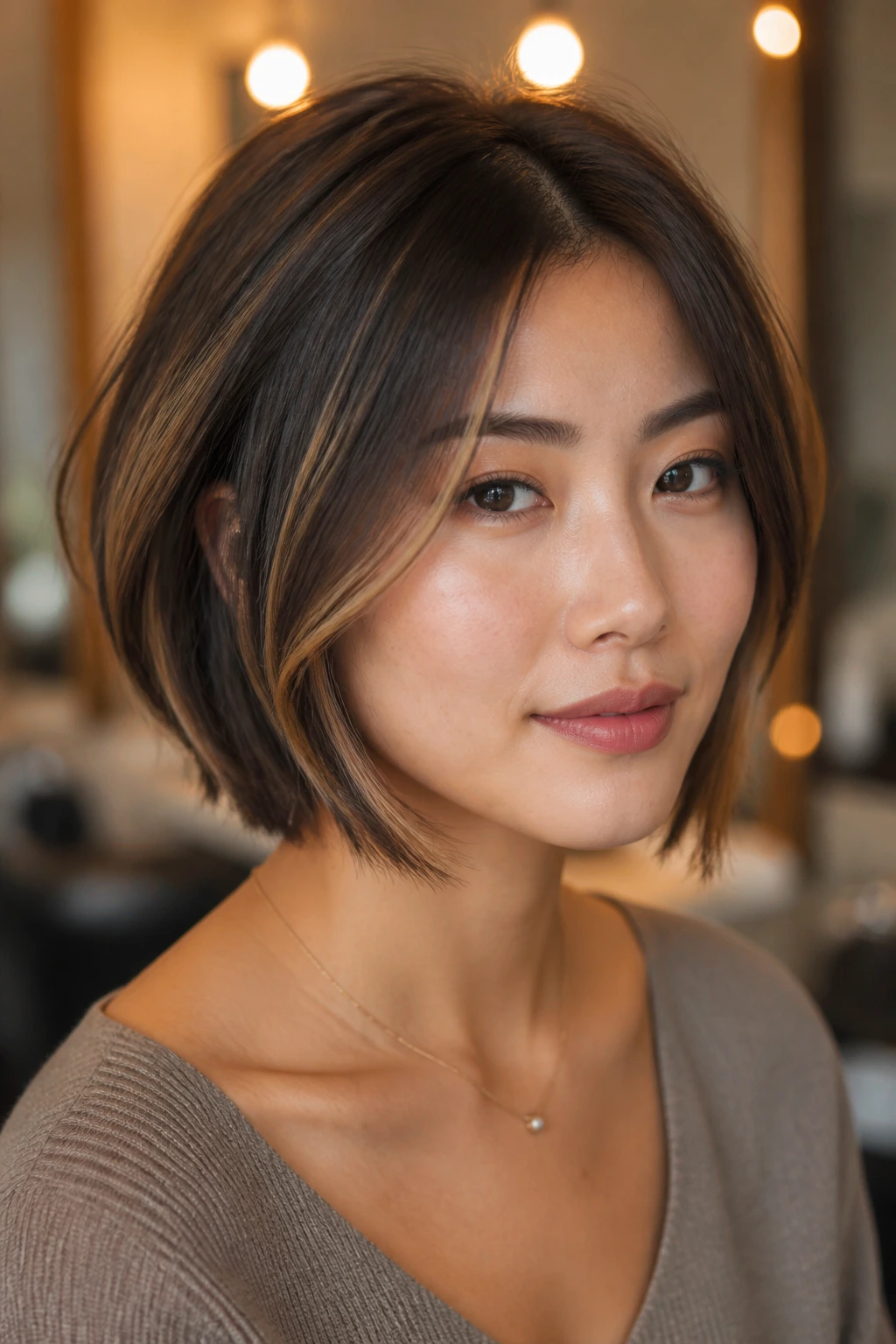
Low-Commitment Face Frame: If you want the smallest possible change, keep the highlights around the money piece and fringe. This works well on bobs and pixies because the face gets brightness without dragging the whole cut into a color maintenance cycle.
Warm Brunette Glow: Choose caramel, honey, toasted almond, or auburn if your skin leans golden or peachy. These shades make dark Asian hair look rich and intentional without needing a big lift.
Cool Smoke Mode: Mushroom brown, ash beige, and smoky gray-brown all sit in a cooler lane. They’re best when you want the haircut to feel sharper and a little more modern, especially on blunt bobs and precise crops.
Bold Color Flash: Copper, plum, rose brown, and peach are the louder choices. Short hair handles them well because the color sits close to the face and the shape keeps the whole thing from running wild.
Fine-Hair Fix: If your hair is fine, ask for babylights or micro-weaves rather than chunky blocks. Fine hair can look thin if the sections are too wide, while tiny light strands create the illusion of density and movement.
Thick-Hair Breakup: If your short hair feels too dense, lowlights help more than people expect. A few deeper pieces under the top layer can make the cut read lighter and less boxy.
Common Mistakes to Avoid
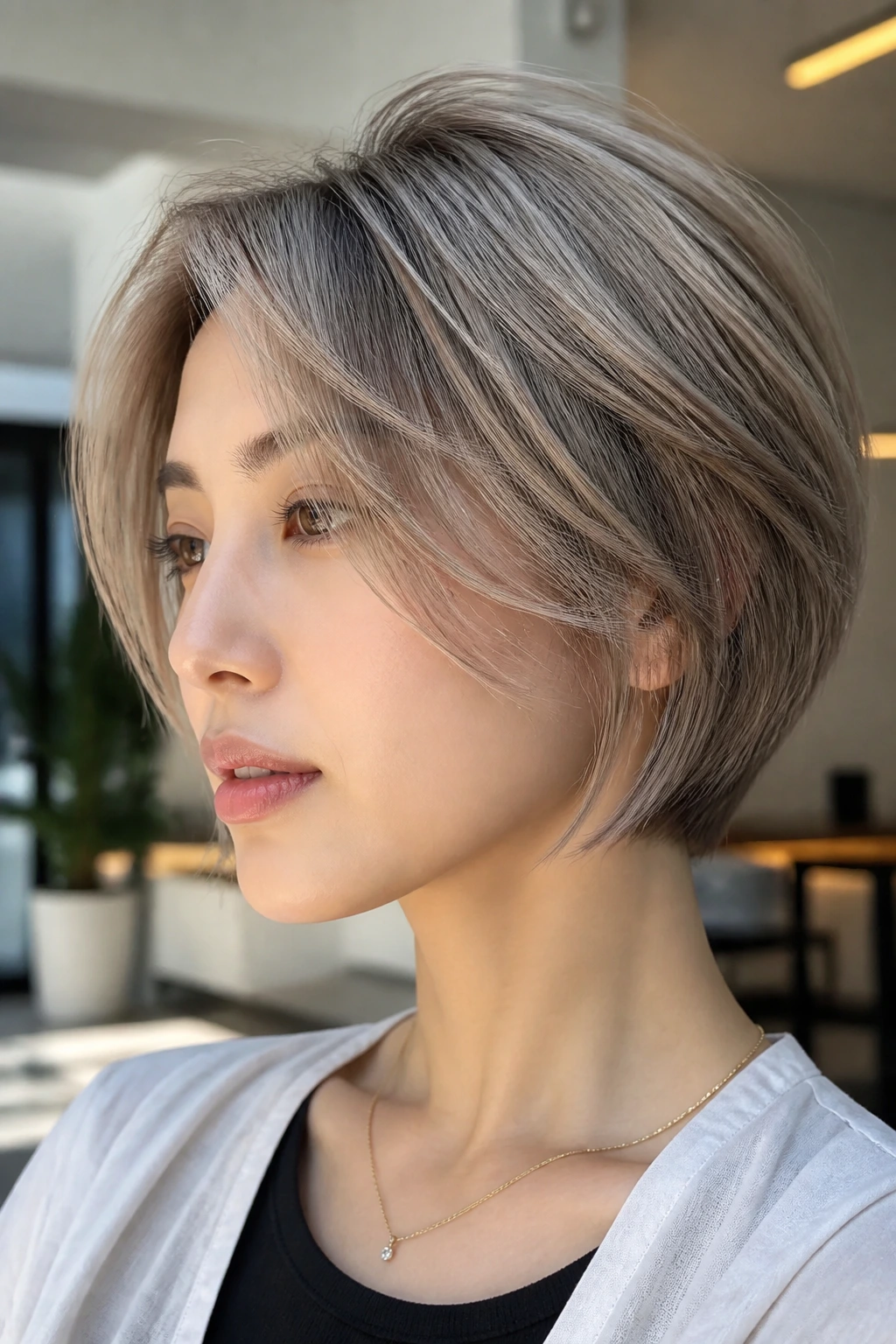
Trying to jump from black to blonde in one swing. The hair usually turns orange or yellow before it reaches a clean blonde stage, and forcing it faster can leave the ends dry and stressed. The fix is patience, foils, and a realistic lift plan.
Putting all the brightness only on the ends. On short hair, that can make the cut look disconnected, especially on pixies and bixies. Spread the lighter pieces through the crown, fringe, and face frame so the color follows the haircut.
Choosing a tone that fights your base. Very cool ash over a very warm lift can look muddy. Very golden highlights over a cool skin tone can feel heavy. Ask for a toner that matches the actual level of lift, not the color name on a mood board.
Skipping the gloss. Fresh highlights can look raw for a few days, but if they stay raw, they usually need toning. A good gloss softens the line between the base and the lighter pieces, which is half the battle on short hair.
Using purple shampoo like it’s laundry detergent. Too much purple can make beige or blonde pieces go dull and flat. Use it lightly, watch the tone, and back off when the brass is under control.
Ignoring grow-out from the start. If you know you hate obvious roots, ask for a root shadow or balayage placement. If you love a crisp line, then chunkier foils may suit you better. Pick the maintenance pattern before the color bowl comes out.
Questions People Ask Before Sitting in the Chair
What highlight color looks best on dark Asian hair?
Caramel, honey, toasted almond, and mushroom brown are the easiest starting points because they sit close to the natural base and still show dimension. If you want something brighter, beige blonde and champagne can work too, but they usually need more lifting and toning.
Can I go blonde on short Asian hair in one appointment?
Sometimes, but not always safely. If your hair is very dark, a clean blonde result often needs more than one session, especially if you want the ends to stay healthy. A soft beige or champagne finish is more realistic than a pale icy blonde jump.
Are foils or balayage better for short hair?
Foils give you more precision and stronger lift, which helps on bobs and pixies when you need clear ribbons. Balayage is softer and better for grow-out, but it can be harder to place neatly on very short cuts unless the stylist is used to short hair.
Will highlights make short hair look thinner?
Not if they’re placed well. Babylights, micro-highlights, and lowlights can actually make short hair look fuller because they break up flat color and add depth. Wide, disconnected strips are the things that make hair look sparse.
How often should short highlights be touched up?
Warm or bold colors like copper, plum, and rose brown usually need more frequent refreshes, around 4 to 6 weeks for the tone. Softer brunette-based highlights can go longer, often 8 to 12 weeks, especially if there’s a root shadow built in.
What if my highlights turn orange?
That usually means the hair lifted to the orange stage but didn’t get toned enough, or the toner faded too fast. A salon gloss or toner correction can fix the tone, but the next appointment should be planned around the underlying pigment, not against it.
Can I do these looks at home?
Some glossy brunettes and subtle face-framing pieces can be managed at home if you know how to section cleanly. The lighter blonde, ash, silver, and copper looks are much safer in a salon because short hair shows every uneven patch.
What’s the lowest-maintenance option on this list?
Mushroom brown balayage, espresso babylights, and toasted almond dimension are the easiest to live with. They grow out softly and don’t demand constant color correction the way platinum, copper, or silver can.
The Cut Makes the Color Work
Short hair is honest. That’s why it’s so good with highlights when the placement is right. The haircut does half the visual job, and the color does the rest. If you choose the shade with your base, your undertone, and your maintenance patience in mind, the result looks deliberate instead of accidental.
The best version is rarely the brightest one. It’s the one that makes your bob, pixie, or bixie look sharper, lighter, and more alive every time you turn your head. Pick the placement first, and the rest gets a lot easier.
