



Balayage ideas for straight hair live or die by placement. On a blunt lob or a long, glossy one-length cut, every painted ribbon shows up; there’s nowhere for curl and texture to hide a rough blend. That is exactly why the look can feel expensive when it’s done well — and why it can look stripy in a heartbeat if the color lands in the wrong place.
Straight hair is a ruthless canvas. Also a flattering one. A soft root shadow, a clean face frame, a few lighter mids around the cheekbones, and suddenly the whole cut has movement without losing that sleek, glassy line that makes straight hair so satisfying in the first place.
The trick is not “more blonde” or “more contrast.” It’s choosing the right tone, the right lift, and the right amount of painted brightness for the base you already have. Once those pieces line up, straight hair stops looking flat and starts reading as crisp, polished, and intentional.
Why These Balayage Ideas Are Worth Saving
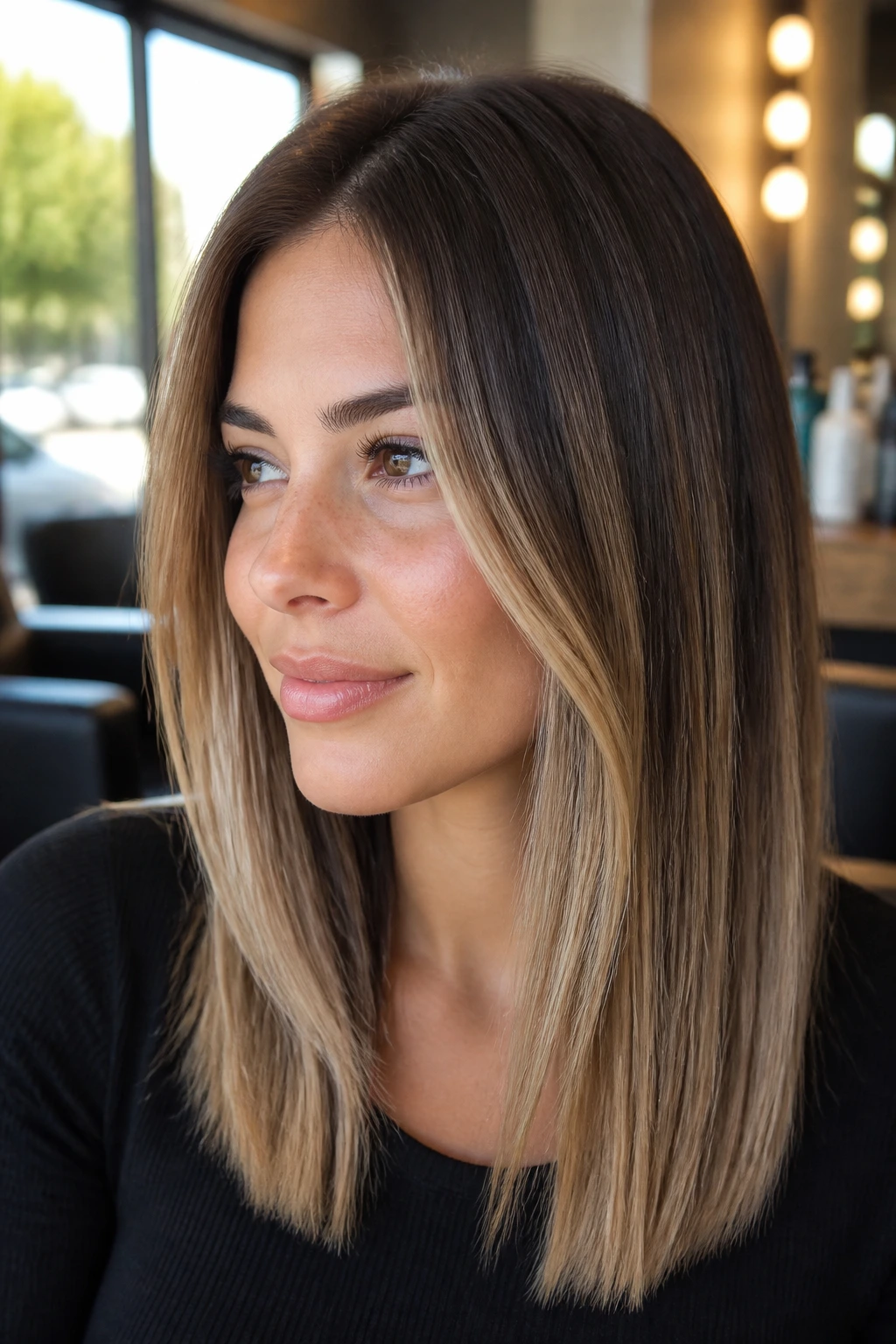
- Soft regrowth: A hand-painted root blur grows out with a softer line than classic foil highlights, so you can stretch appointments without the harsh stripe at the scalp.
- Straight-hair friendly: These shades are chosen because they still read clearly when the hair hangs smooth and flat, not only when it’s waved and tousled.
- Tone control: Cool beige, honey, copper, ash brown, and mushroom brunette each create a different mood on straight strands, even when the lift level is nearly the same.
- Cut-friendly: A blunt bob, a lob with a center part, and long straight layers all take color differently, so placement can be adjusted to suit the shape of the haircut.
- Salon-friendly wording: You can describe most of these looks with level numbers, tone words, and placement notes instead of trying to explain a vague “sun-kissed” idea that nobody can picture.
Why Balayage Ideas for Straight Hair Look So Crisp
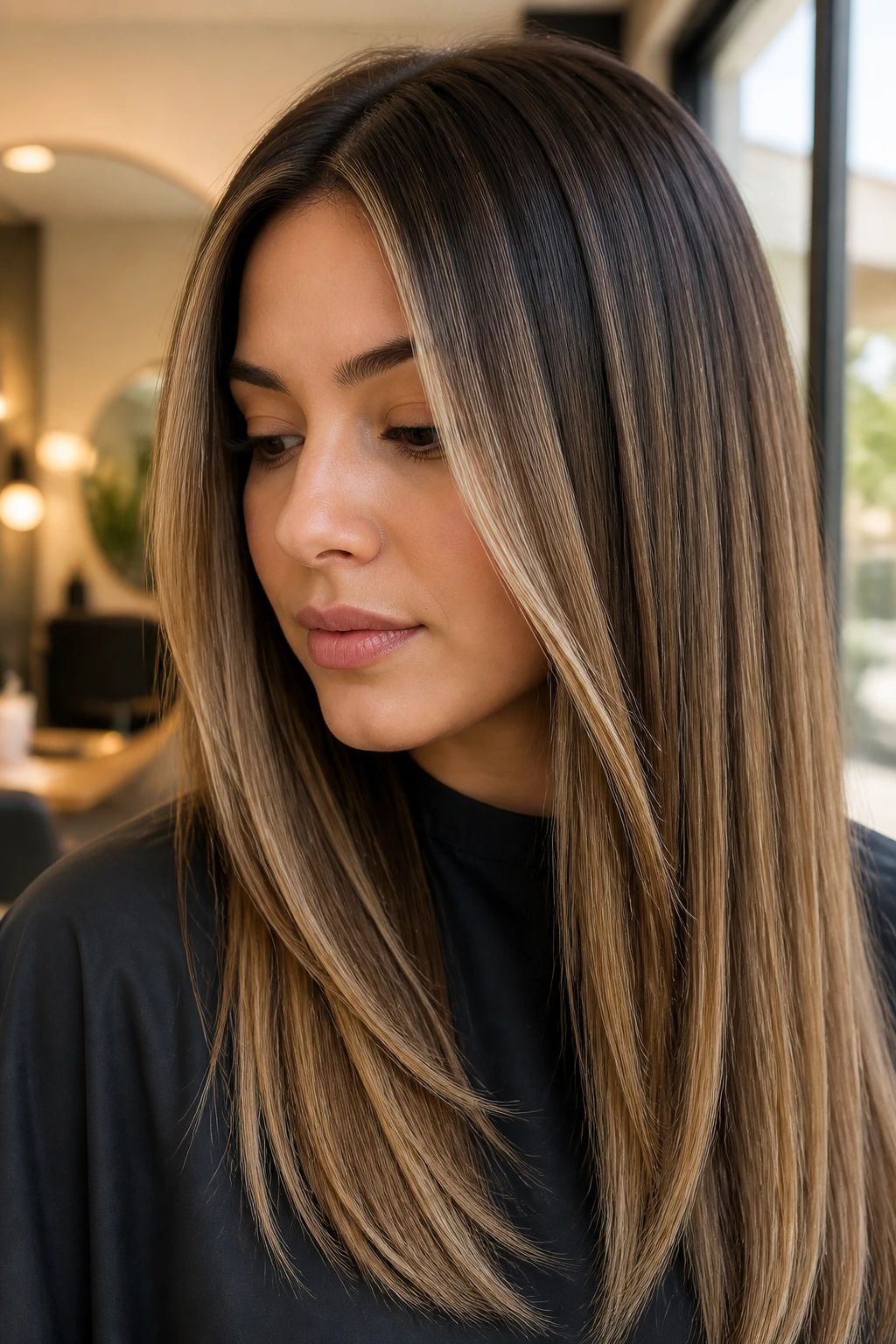
Straight hair shows line work. That sounds obvious, but it matters more here than in almost any other color conversation. On curly or wavy hair, a few placement imperfections can hide under movement. On pin-straight strands, every painted section either melts or it doesn’t.
That is why the best balayage on straight hair usually has a softer root, a controlled mid-length brightness, and a slightly brighter finish around the face or ends. The goal is not a perfect, even blanket of color. It is a light pattern that breaks up the solid base enough to add depth without making the hair look chopped up.
A good colorist will often keep the lightest pieces away from the exact root line and avoid placing them in chunky, evenly spaced bands. That “random” hand-painted feel is what makes the color look expensive instead of striped. In straight hair, random still has rules. The lighter pieces usually need to follow the haircut’s natural fall, not fight it.
How to Pick a Shade That Works With Your Base Level
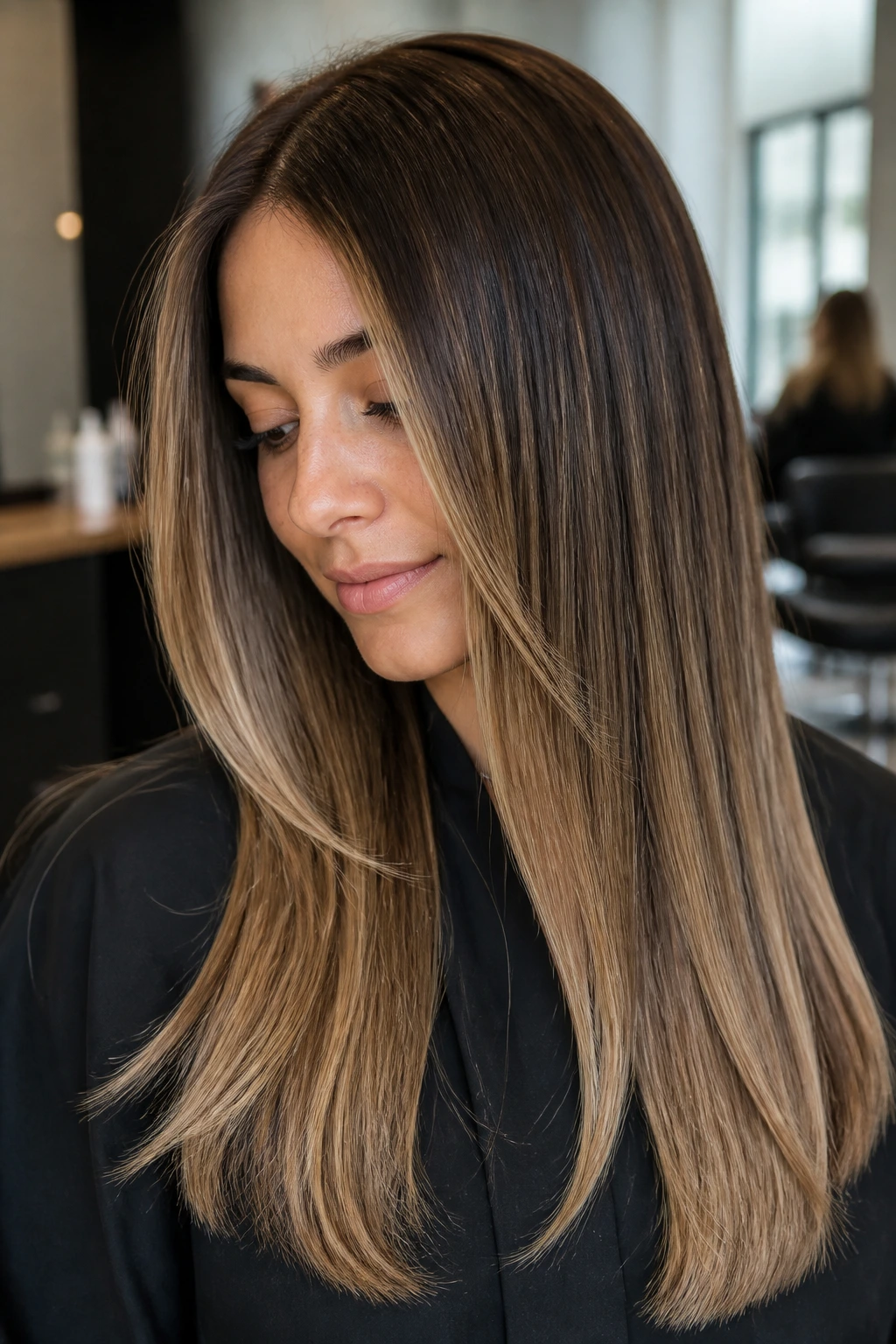
The easiest way to choose is to think in levels, not just in color words. A level 3 to 4 brunette does not need the same balayage approach as a level 6 dark blonde, even if both photos look “caramel” on your phone screen. The darker base can handle richer, warmer ribbons. The lighter base can support beige, pearl, or icy tones without looking patchy.
Warm skin tones usually tolerate honey, caramel, copper, and golden beige with less fuss. Cooler undertones often look cleaner with mushroom brown, ash beige, pearl blonde, or smoke-toned brunette ribbons. Neutral skin can pull either way, which is lucky because you can choose between a soft beige melt and a more dramatic copper or chocolate blend.
And then there is upkeep. Some shades look gorgeous for six weeks and then go brassy. Others fade softer and need less toning. If you do not want to babysit your color, pick a brunette-forward balayage with painted lightness through the mids rather than a high-lift blonde that sits right on the edge of gold.
Where Placement Should Sit on Pin-Straight Strands
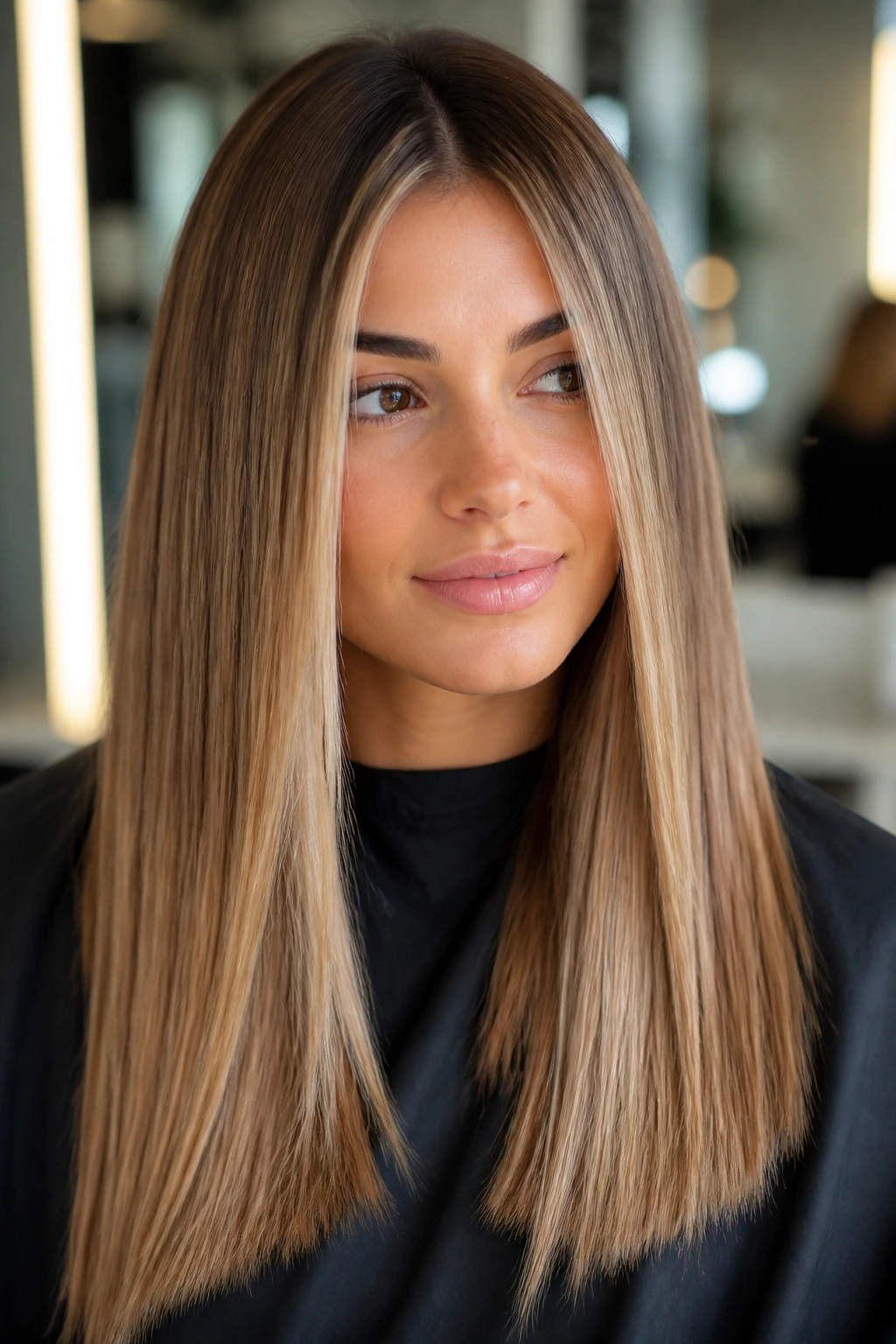
Placement is the whole game. On straight hair, the color has to do the work that curls often do for free. That means the strongest brightness usually belongs around the face, the upper mids, and the lower third of the length where the eye naturally travels.
A center-parted lob, for instance, looks best when the front sections are slightly brighter than the back. The face frame can start a little higher, but the back should stay softer so the cut doesn’t turn into one bright band all the way around. That is one of those tiny decisions that changes the whole feel.
If the hair is very straight and fine, too many bright pieces can make it look thinner, not fuller. Fewer, more deliberate ribbons tend to work better. If the hair is thick and blunt, you can push the contrast harder because the density gives the color something to sit on.
1. Champagne Beige Balayage
Champagne beige is one of those shades that looks expensive because it sits right between gold and ash. On straight hair, that balance matters. Too warm, and it can drift yellow. Too cool, and it can look flat. Champagne beige keeps the brightness, but the beige base softens the shine so the color doesn’t scream for attention.
Why It Works on Straight Hair
The shade catches light along a blunt edge without making the ends look frosted. It’s especially nice on medium brunettes who want lift around the face but do not want a heavy blonde commitment.
- Works best on level 6 to 7 bases.
- Ask for soft ribbons through the mids and brighter money pieces.
- A beige toner keeps the finish from turning brassy after a few washes.
Best tip: keep the root shadow just a shade or two deeper than the mids so the blend stays soft when the hair is iron-straight.
2. Mushroom Brown Melt
Mushroom brown is cooler, smokier, and a little more understated than caramel or gold. It has that earthy taupe-brown look that can make straight hair feel denser and more polished, especially on a blunt cut.
The best part is how quietly it grows out. The root stays close to the natural brunette base, while the painted mids carry soft ash and beige. There’s no sharp jump. No chunky contrast. Just a smooth shift that looks very deliberate on hair that hangs flat.
This is the one I’d pick if you like a brunette look but want movement without obvious blonde. It’s also kind to color maintenance because the tone can fade into a softer brown rather than a hard orange or yellow. That makes it one of the safer choices for people who hate weekly toning.
3. Caramel Ribbon Balayage
Why does caramel work so well on straight strands? Because straight hair shows the shape of every ribbon, and caramel has enough warmth to register even in simple, sleek styling. You can see it without needing curls to puff it up.
Ask your colorist for thin, painted ribbons rather than full panels. The result should look like light slipping through the hair, not like streaks sitting on top of it.
How to Ask for It
Tell them you want the caramel to live mostly through the mids and lower lengths, with a softer face frame if your cut is blunt. If you have a dark brunette base, the caramel should be lifted enough to read as warm brown-blonde, not orange. That tiny difference matters.
4. Face-Framing Money Piece
A money piece can be dramatic, but on straight hair it often works best when the contrast is controlled. Two bright front sections can sharpen the whole face, especially on a center part or a collarbone-length lob.
The key is to keep the money piece brighter than the rest of the balayage without making it thick. Thin, well-blended front lightening looks modern. Thick blocks look like old-school streaks, and straight hair is unforgiving about that.
This is the move if you want a visible change without coloring the whole head aggressively. It’s also a good choice when the back length is already healthy and you only want the front to feel fresh. Small surface changes, big visual payoff.
5. Espresso to Mocha Melt
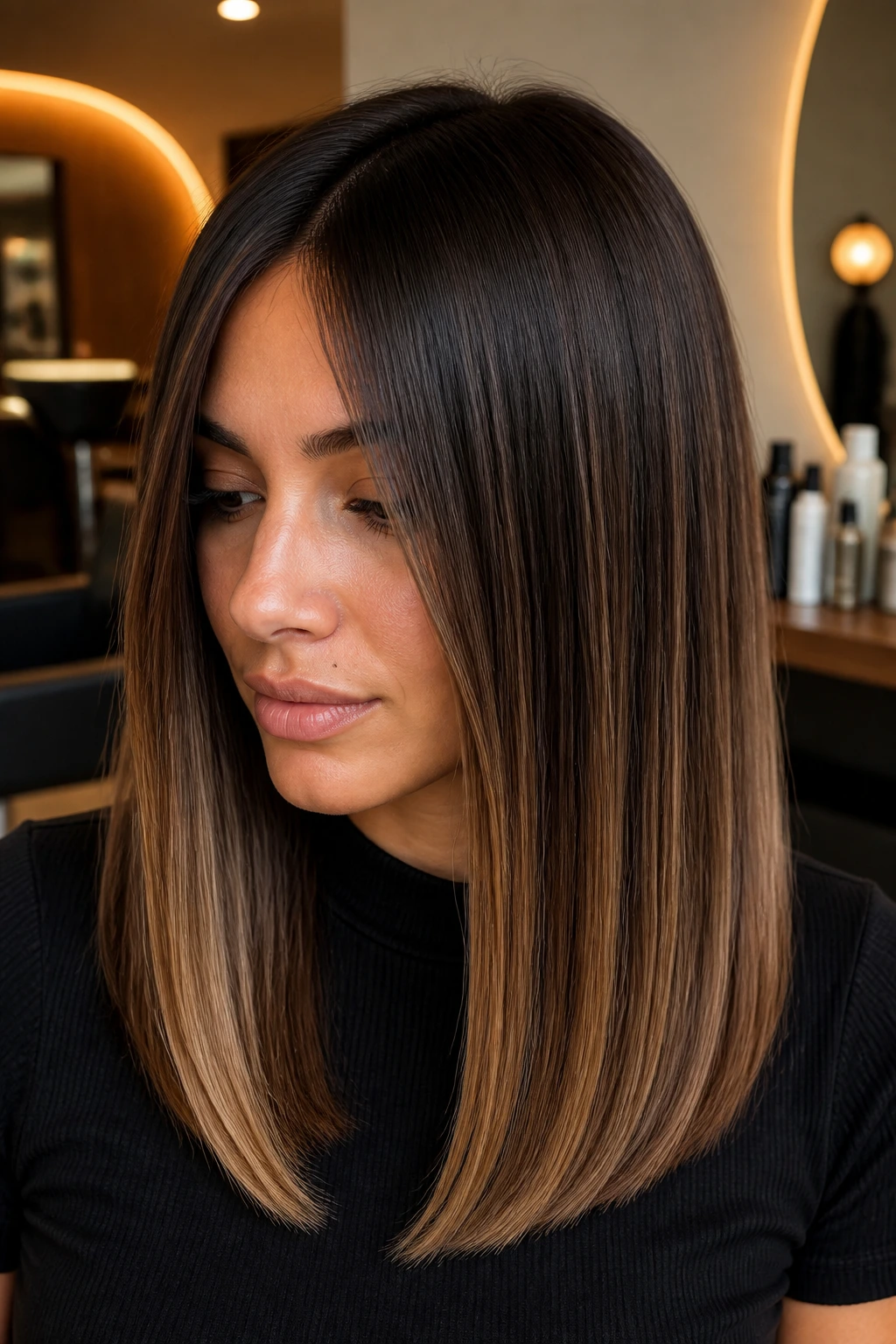
Espresso to mocha is the brunette version of a good cashmere sweater: smooth, rich, and not trying too hard. The shade shift stays within the brown family, which makes it especially good for straight hair that you want to keep elegant rather than bright.
On a one-length cut, the melt matters more than the lightness. The roots stay deep espresso, the mids soften into mocha, and the ends pick up just enough lighter brown to catch light when the hair moves. It reads as dimension, not highlight stripes.
This is one of the easiest ways to add depth to dark straight hair without going anywhere near blonde. If your hair tends to look heavy in winter-light rooms or under office lighting, this blend solves that problem without giving up the brunette identity.
6. Honey Bronde Sweep
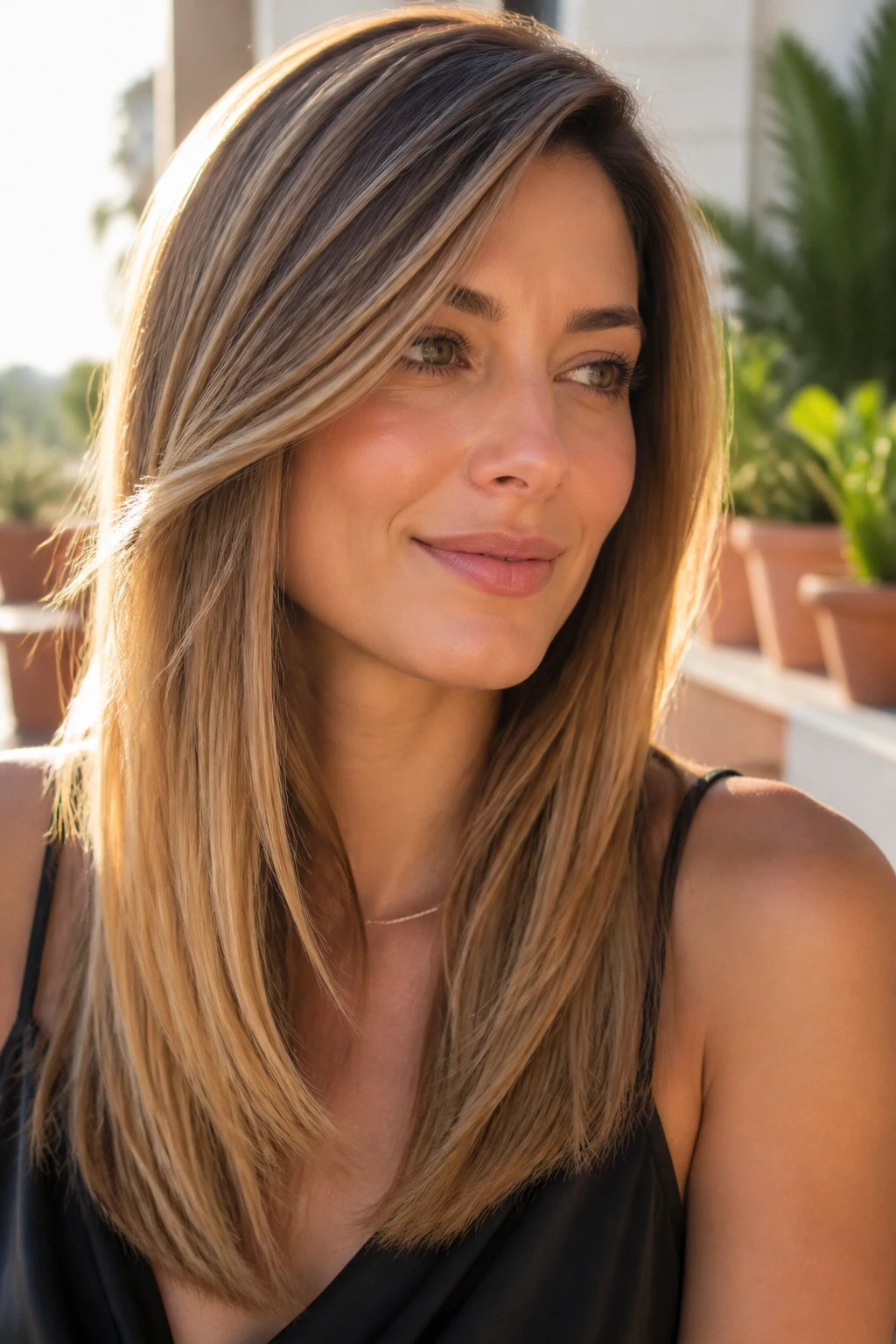
Bronde lives in the gray zone between brown and blonde, and honey bronde is the friendliest version of that idea. It gives straight hair a sunlit look without forcing the tone too cool or too gold.
What Makes It Different
The honey tone keeps the color warm enough to flatter deeper brunettes, but the overall lift is lighter than a caramel melt. On straight hair, that means you get visible brightness even when the hair is worn sleek and tucked behind the ears.
Best on long layers or a lob with a soft side part. If the cut is very blunt, ask for the lightest pieces to stay broken up instead of being packed into one section.
7. Icy Beige Blonde
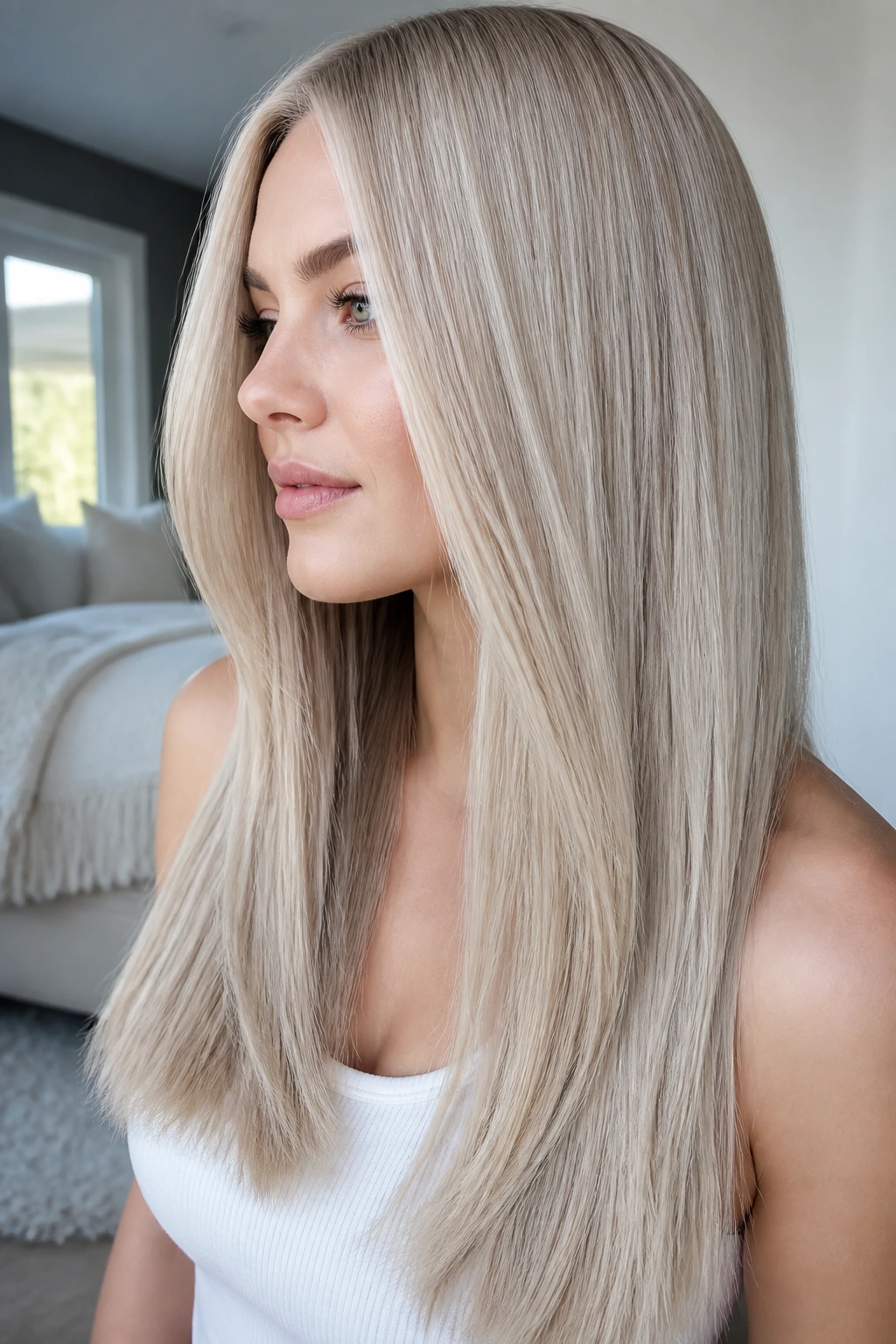
Icy beige blonde is for people who like their straight hair to look sharp and almost reflective. The beige keeps it from turning flat white, while the icy tone gives the color that cool, polished edge.
This look is not the lowest-maintenance option, and it should not be treated like one. Straight hair makes pale blonde look more obvious, which means toner and purple shampoo need to be used with a light hand. Too much purple shampoo and the ends can go dull and violet-tinted. Too little, and brass creeps in fast.
Best on lighter natural brunettes or dark blondes who are already close to the target level. On a darker base, this shade can be done, but it usually asks for more lift than most people expect. That’s the tradeoff.
8. Cinnamon Swirl Brunette
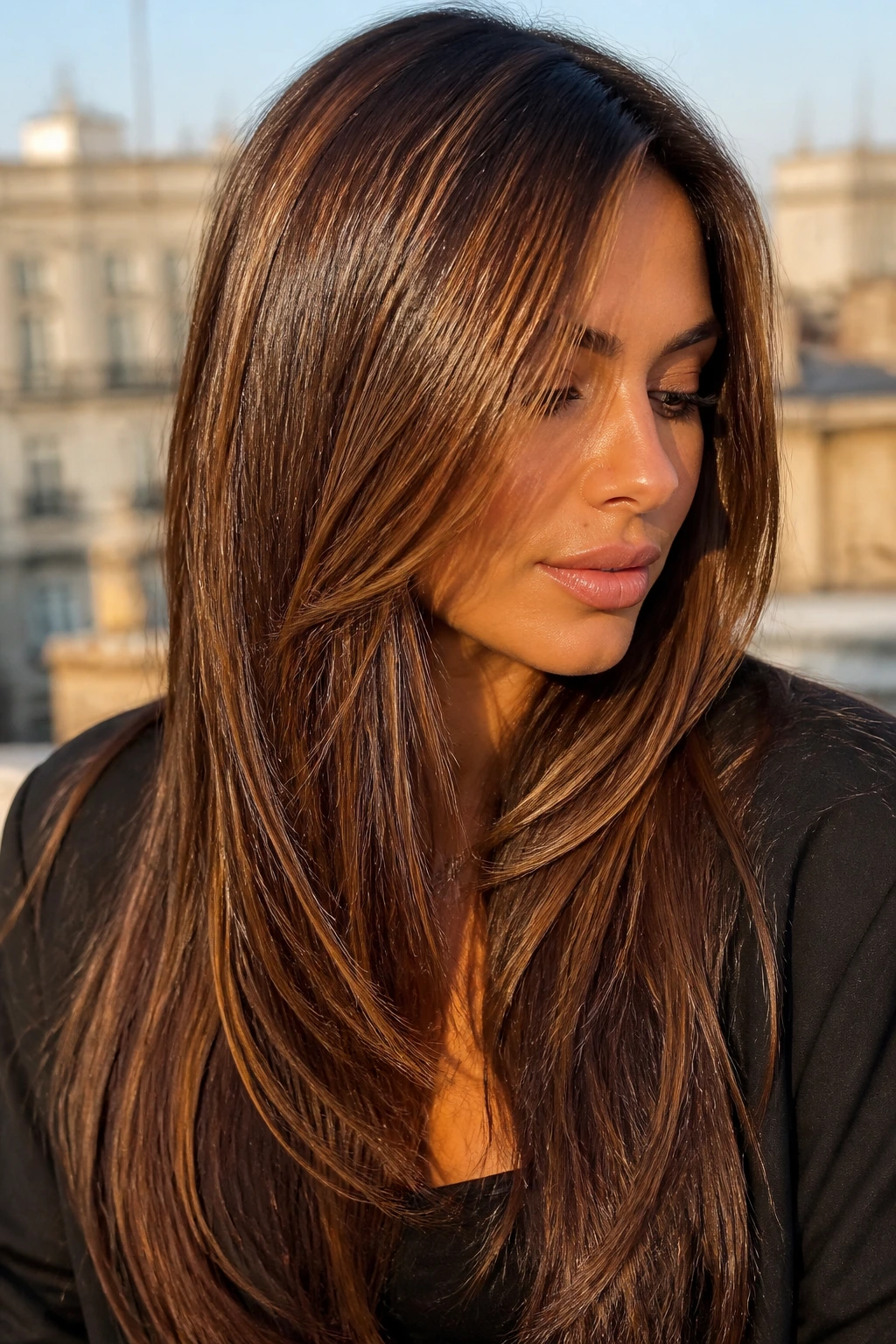
Cinnamon swirl is warmer and spicier than caramel. It has a reddish-brown undertone that glows on straight hair, especially in sunlight or warm indoor lighting.
The nice thing here is subtle movement. Straight hair can make red-brown tones look richer because there’s less texture breaking up the pigment. If your base is medium brunette, this shade adds a soft flush that feels seasonal without reading as a full copper transformation.
I like this one on longer straight hair where the color can stretch from a deep root into layered cinnamon ends. The blend is less obvious in a flattering way. You see warmth first, then depth, then the lighter ribbons if you look closer.
9. Copper Veil Balayage
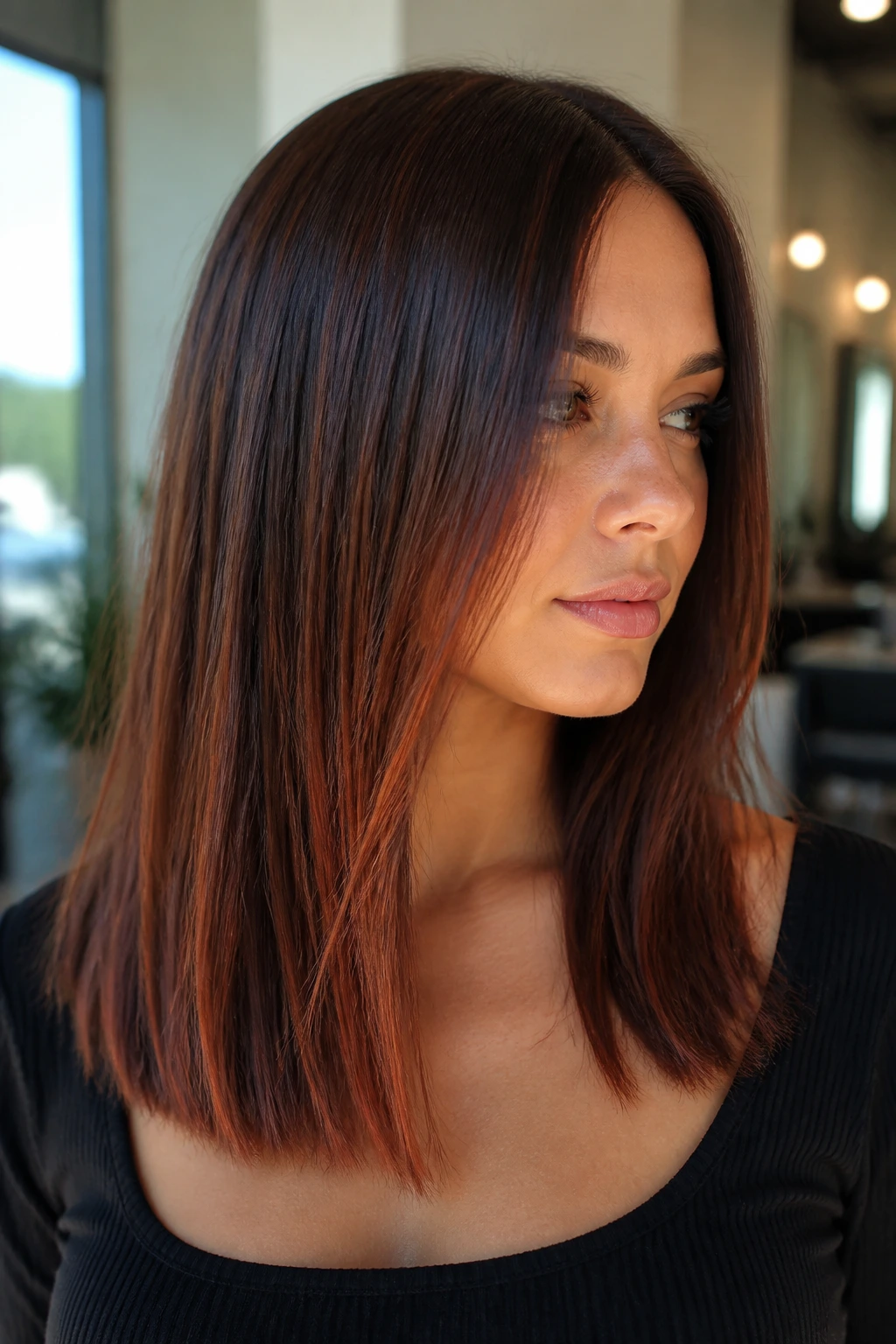
Copper veil is not a loud copper head of hair. It’s a thin wash of copper painted over a brunette base so the shine peeks through rather than taking over. On straight hair, that veil effect is exactly the point.
When the light hits, the copper flashes at the surface. When it doesn’t, the hair still reads brunette. That makes it a smart choice for people who want a bold tone without the full-time upkeep of all-over copper.
How to Wear It
Keep the ends slightly lighter than the roots so the copper has somewhere to land. A blunt cut with a middle part can look especially strong here because the color line stays clean and modern.
10. Tortoiseshell Brunette
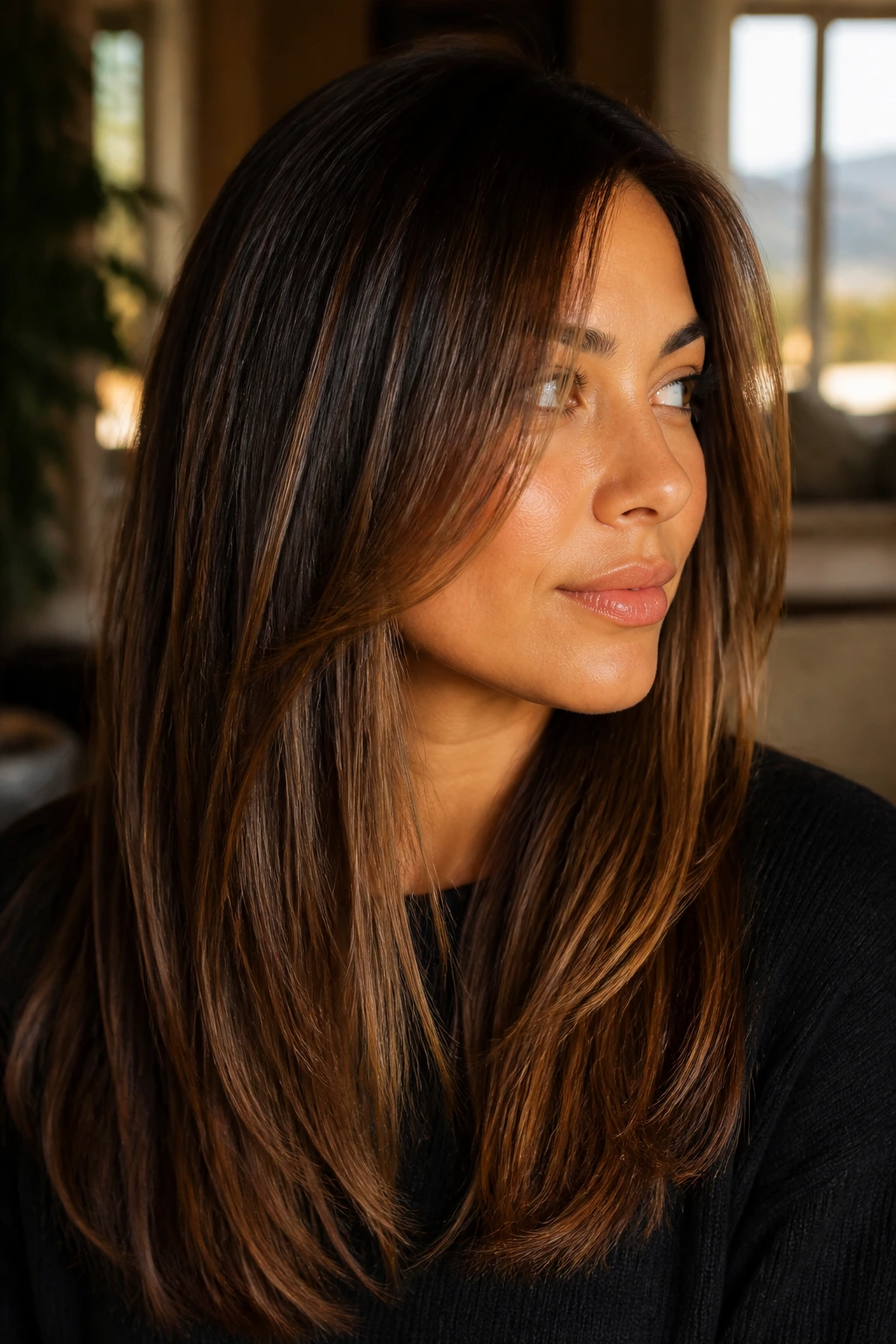
Tortoiseshell brunette is a layered mix of dark brown, caramel, toffee, and soft amber. It is one of the best straight-hair balayage ideas because the color has enough contrast to show up, but the tones stay inside the same warm family.
That family resemblance matters. Instead of looking striped, the hair looks expensive and deep, almost like polished wood with light running through it. Straight hair shows this blend very clearly because the painted pieces sit in long visible lines.
Use this if you want dimension without a dramatic blonde leap. It flatters medium and deep brunettes especially well, and it tends to grow out in a forgiving way because the darkest and lightest pieces are separated by only a few shades.
11. Vanilla Cream Ends
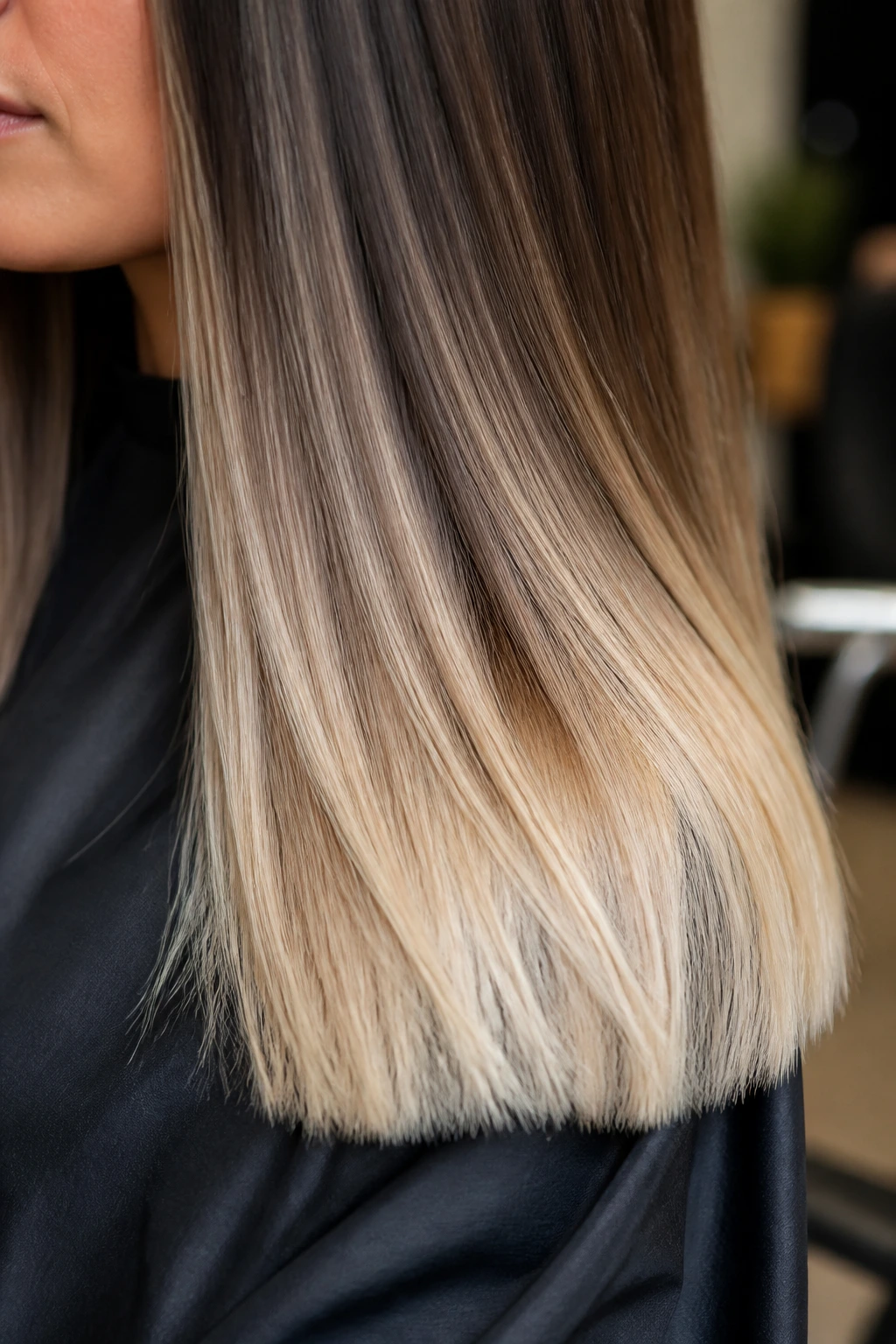
Vanilla cream ends are lighter and airier than honey bronde. The idea is to keep the root and mids soft, then let the bottom third go creamy and bright without making the whole head feel bleached out.
On straight hair, the ends become the visual anchor. A vanilla finish can make the cut look longer and cleaner, especially on layered hair that needs a little lightness at the bottom to avoid looking heavy. I prefer it on hair that has a decent amount of density, because thin hair can look wispy if the ends are pushed too pale.
Ask for a soft root stretch so the brightness doesn’t start too high. If the lightness climbs up the shaft too far, the style loses that gentle fade and starts to feel patchy.
12. Smoked Bronze
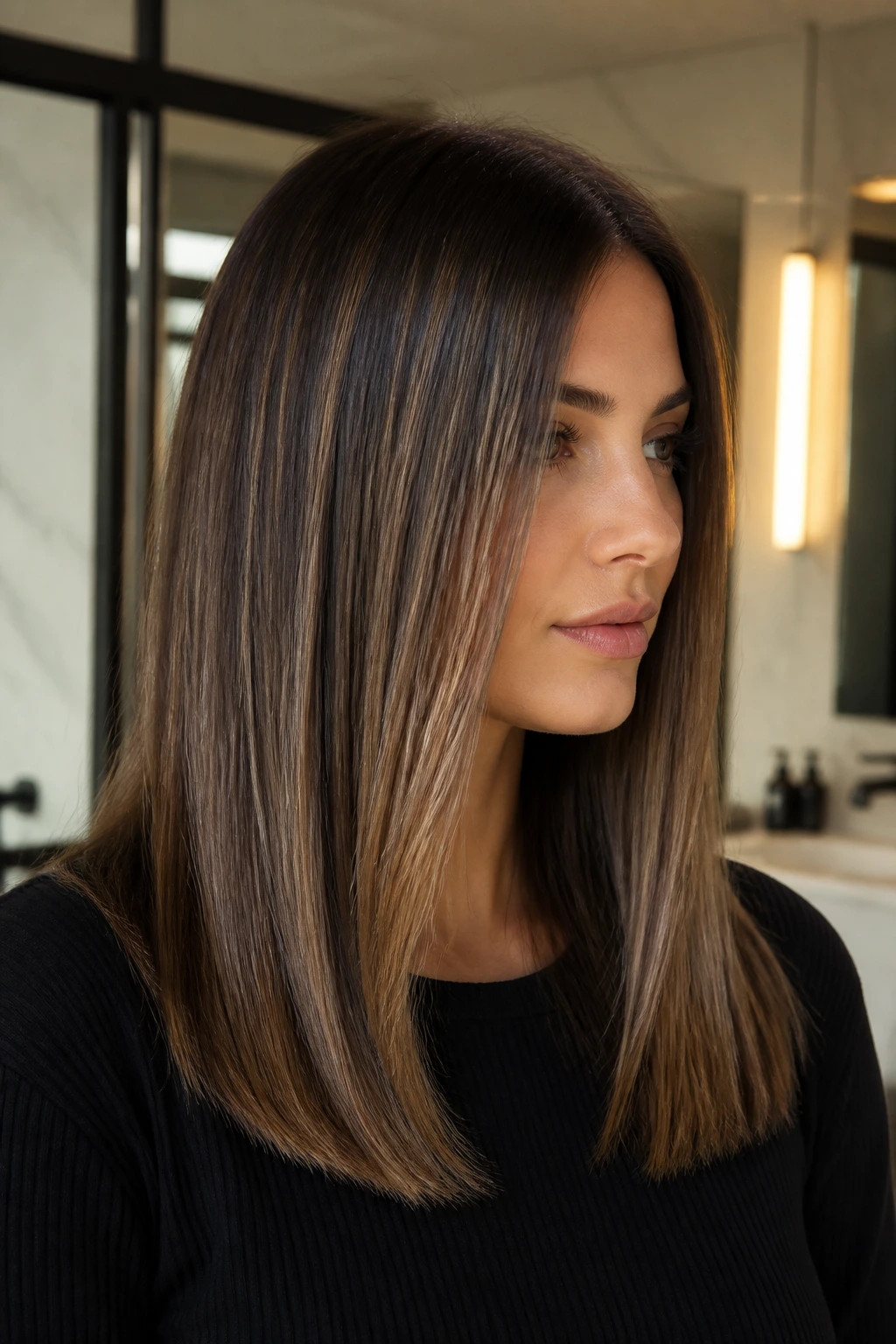
Smoked bronze sits between brunette and warm metallic brown. It has a muted, almost smoky quality that keeps the shine from turning brassy, which is a real advantage on straight hair because straight strands can show unwanted warmth faster than textured hair.
The color looks especially good if you like a glossy blowout finish. The bronze catches the ends, the smoke keeps the roots grounded, and the whole thing reads as sleek rather than shiny in a synthetic way.
This is one of the easier warm tones to wear if your skin has neutral undertones. It also tends to pair nicely with a blunt bob, where the clean cut line gives the bronze something solid to bounce against.
13. Pearl Ash Blonde
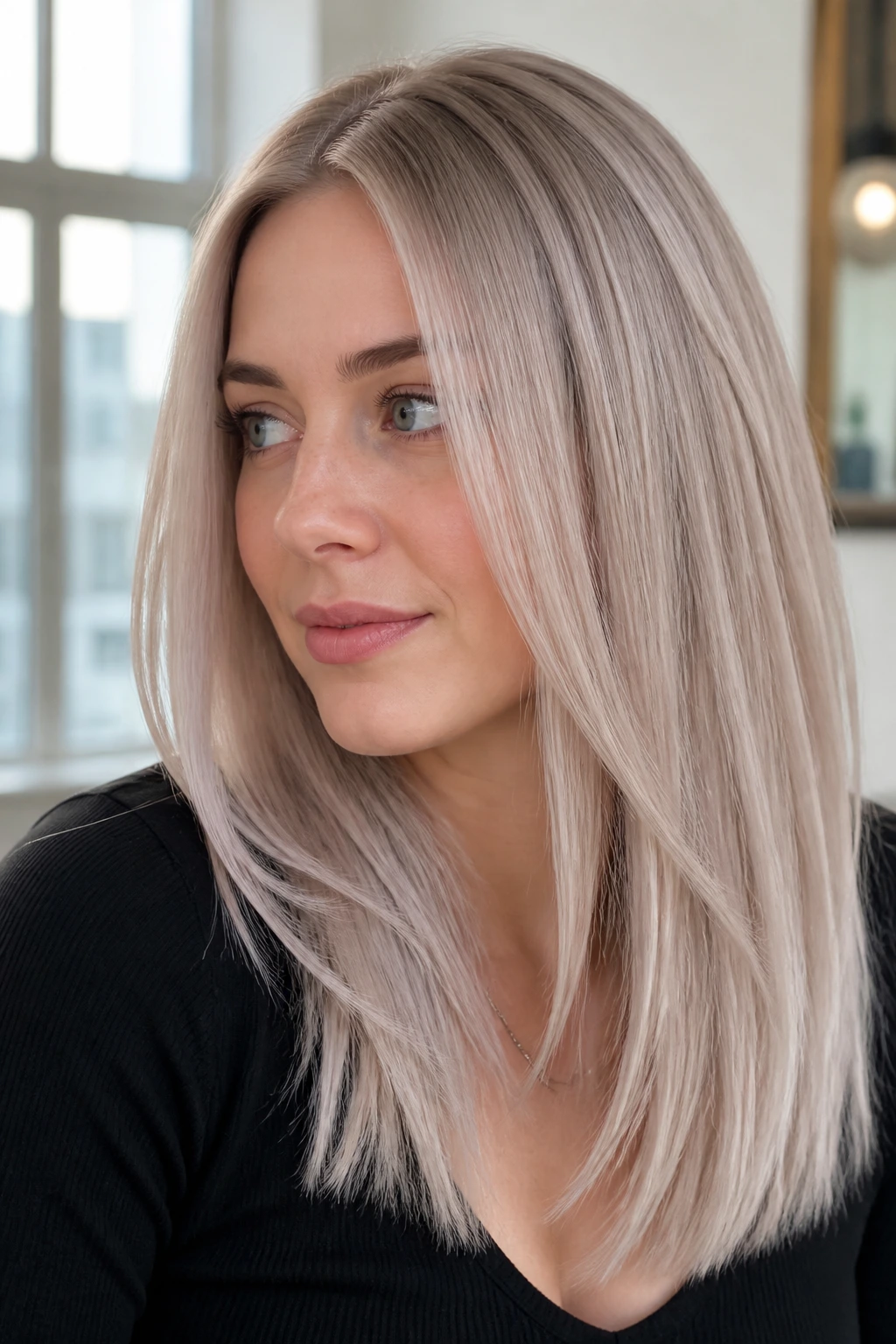
Pearl ash blonde is cooler and more refined than a standard beige blonde. It has a pale, soft-lilac-adjacent sheen in some lights, but it stays blonde, not pastel.
Straight hair is one of the few textures where pearl ash can look controlled instead of washed out. The sleek surface keeps the tone from wandering into frizz-led brightness. But the color needs care. If the toner slips, it can tilt yellow fast.
What to Watch For
Use this shade if your base is already light enough to support pale blonde without too much damage. A deep brunette trying to leap straight into pearl ash usually needs more than one session, and the hair should come first. Always.
14. Sandy Bronde
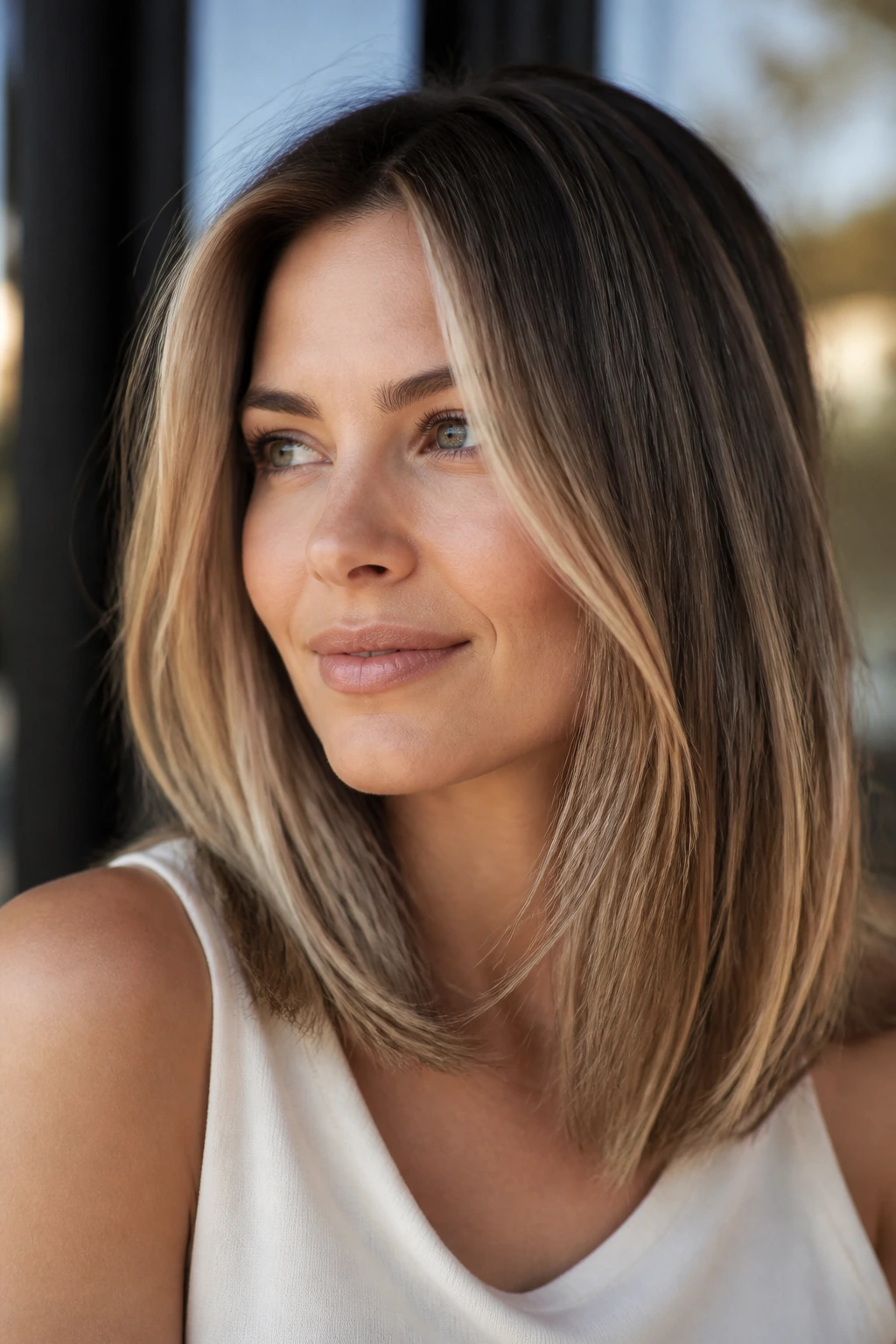
Sandy bronde is the practical cousin of honey bronde. Less gold, less ash, more of a dry, sun-softened beige-brown that looks natural on straight hair.
It works because it does not rely on texture to create interest. The shade itself has enough variation. On a sleek lob, the sandy ribbons still show depth, especially if the colorist places the lightest bits around the face and the ends rather than running them evenly through every section.
This is a favorite when somebody wants blonde-ish brightness but doesn’t want the upkeep of a high-contrast look. It’s also one of the easiest colors to live with if you wear your hair straight most days, because the tone doesn’t need curls or waves to make sense.
15. Rose Gold Tint
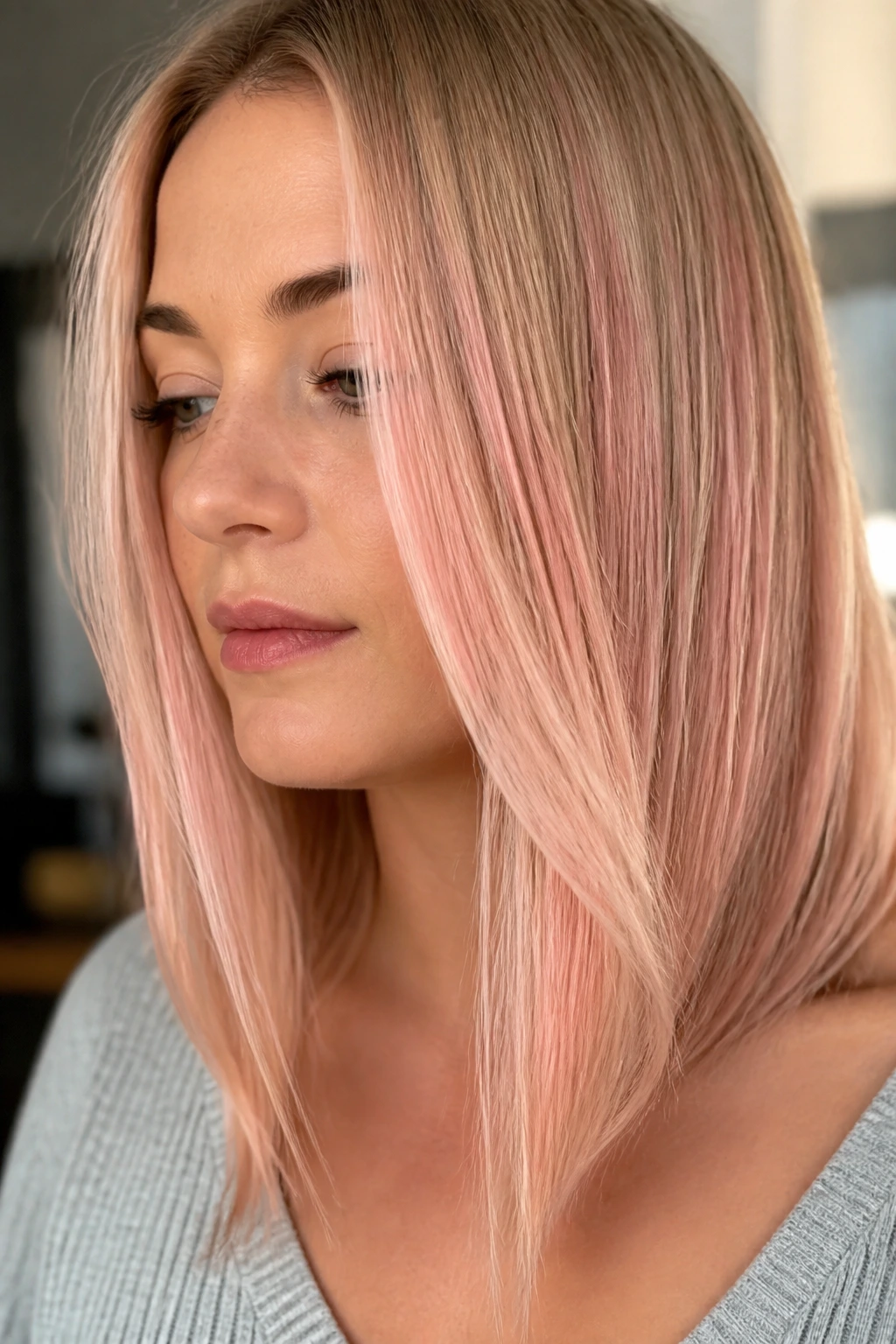
Rose gold can be tricky on straight hair, but when it’s kept soft, it has a nice flushed look that feels fresh rather than costume-y. The trick is to let it sit on a blonde or light brown base instead of trying to force it onto very dark hair.
If the rose is too strong, straight hair will show every pink panel. If it’s too faint, the hair can look merely warm. So the sweet spot is a thin, peachy-rose glaze over pale blonde ribbons. Enough to see. Not enough to scream.
Use this if you want something that feels playful but not loud. It’s especially good on blunt cuts because the clean edge keeps the tint from drifting into fairy-tale territory.
16. Walnut and Wheat Blend
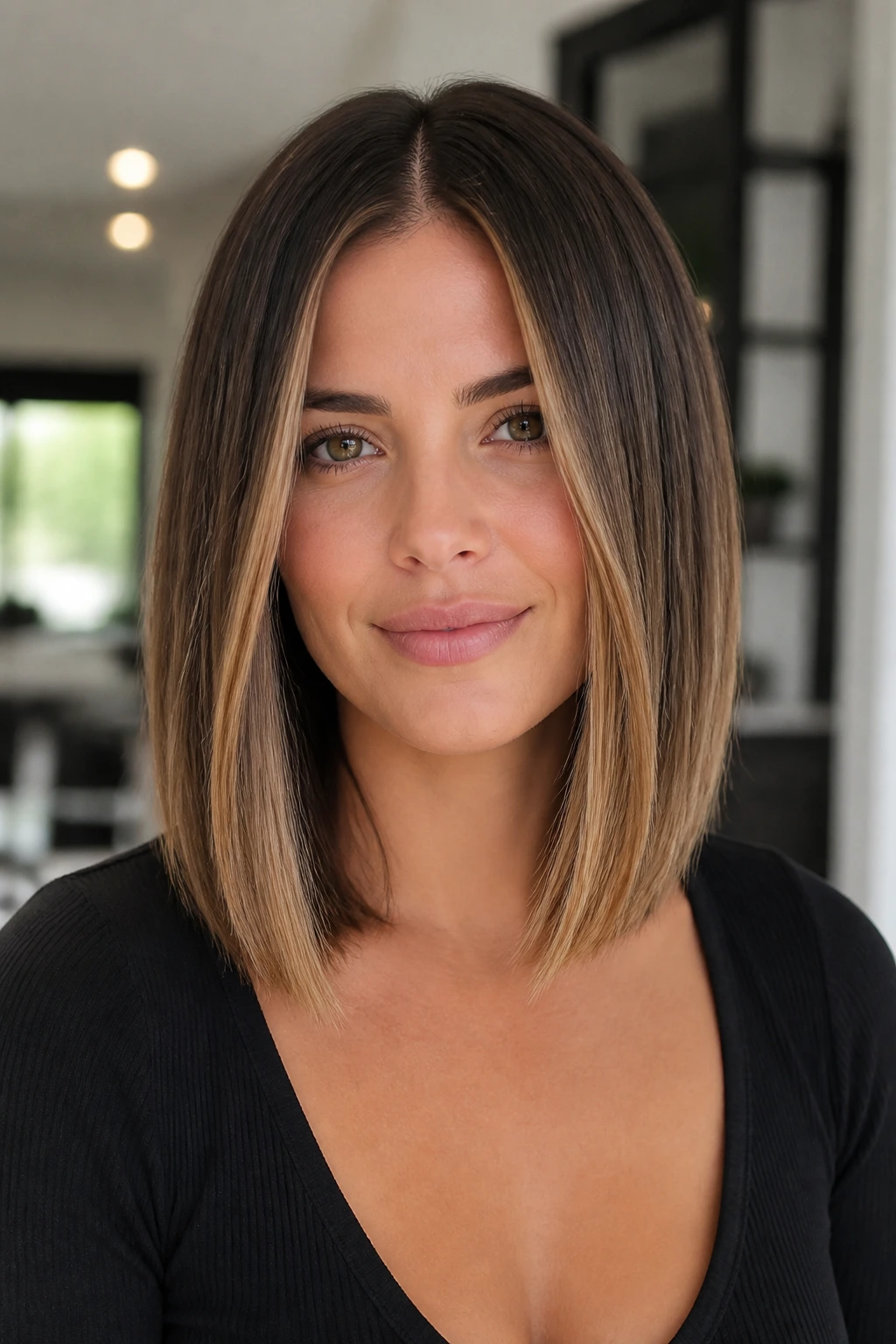
Walnut and wheat is a nice way to describe a brunette-to-dark-blonde balayage that stays earthy. The walnut gives you the deeper root and mid-tone base; the wheat lifts the surface without going too yellow.
Straight hair benefits from that kind of controlled softness. You can see the woven effect without the color looking banded. It is one of the more wearable ideas for medium brunettes who want lightness but do not want to look “done.”
A center part makes this one read very cleanly. So does a collarbone cut with a slight bevel at the ends. If the hair is super flat, the wheat pieces should be placed where the light naturally lands — near the face, through the top layer, and at the last few inches.
17. Shadow-Root Blonde
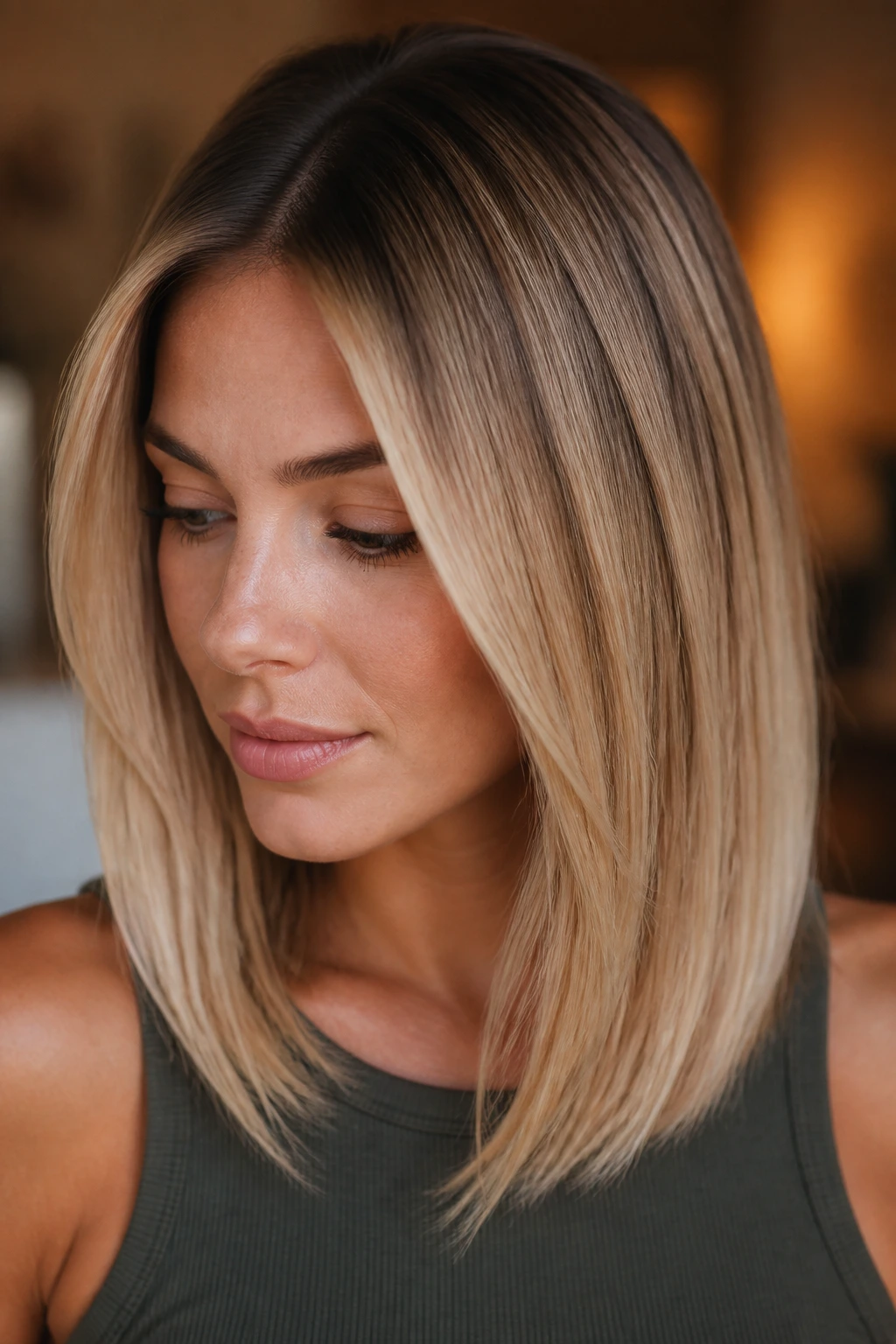
Shadow-root blonde is the safest blonde strategy for straight hair if you hate obvious regrowth. The darker root gives the color a soft base, while the blonde mids and ends do the bright work.
The root shadow is not there to hide the color. It is there to make the transition believable on hair that doesn’t have waves to blur the line for you. That is the whole point. Straight hair needs the blur built in.
This is also a smart move if your ends have been colored before and need a more forgiving shape. The root can stay deeper, the blonde can stay lighter, and the whole finish reads as expensive instead of overprocessed.
18. Soft Auburn Ribbons
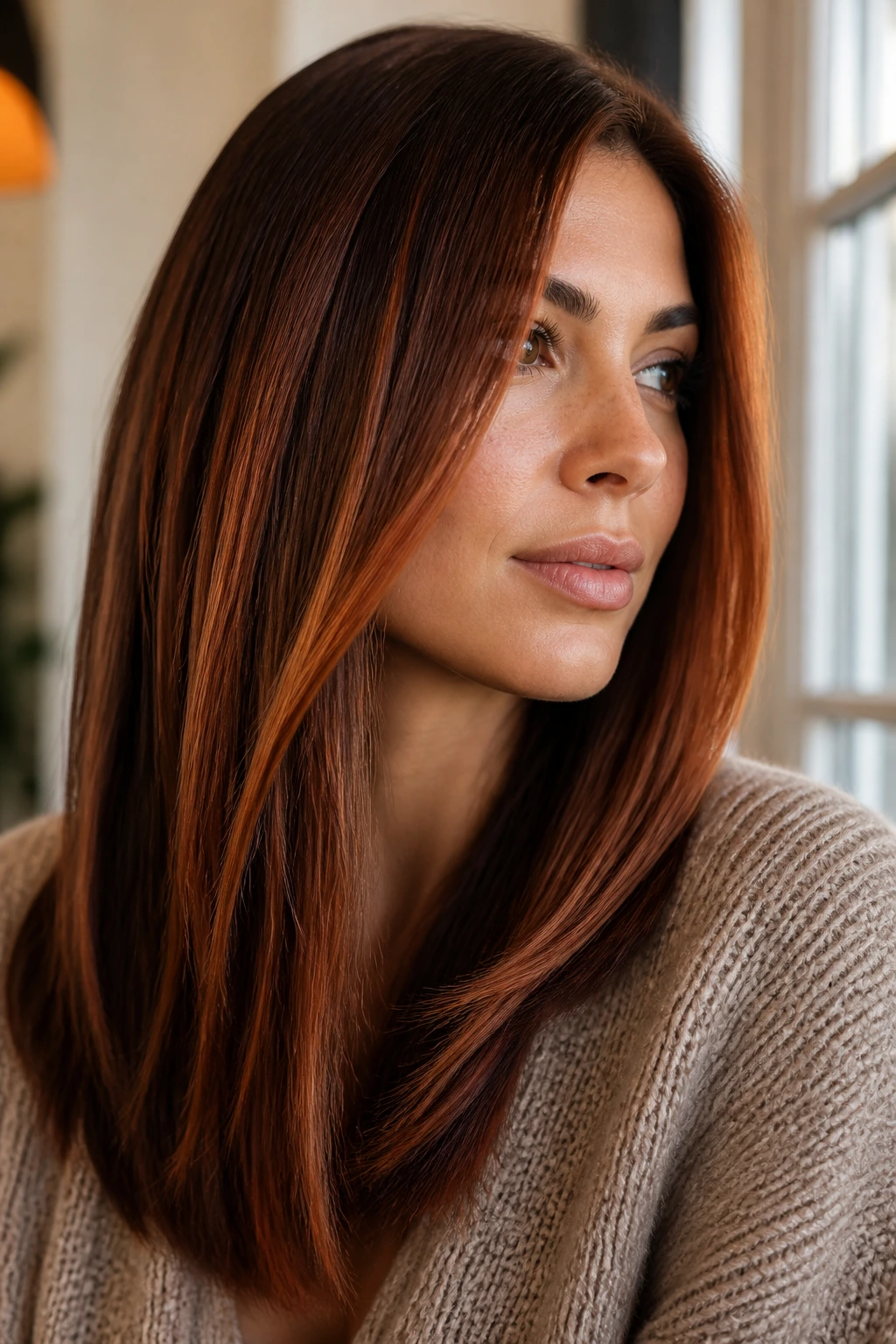
Soft auburn ribbons bring a red-brown glow without going full copper. They are a smart middle ground if you want warmth but not the intensity of a bright red shade.
On straight hair, auburn can read even richer because the pigment stays visible from root to end. The painted ribbons show off nicely against a brunette base, and the result feels dimensional rather than flat.
Best for medium to deep brunettes who want a warm color story for the lengths. If you already wear warm makeup or earthy clothing, this shade fits right in. If you love cool-toned wardrobes, it can still work, but the contrast may feel stronger than you expect.
19. Cocoa and Toffee Layers
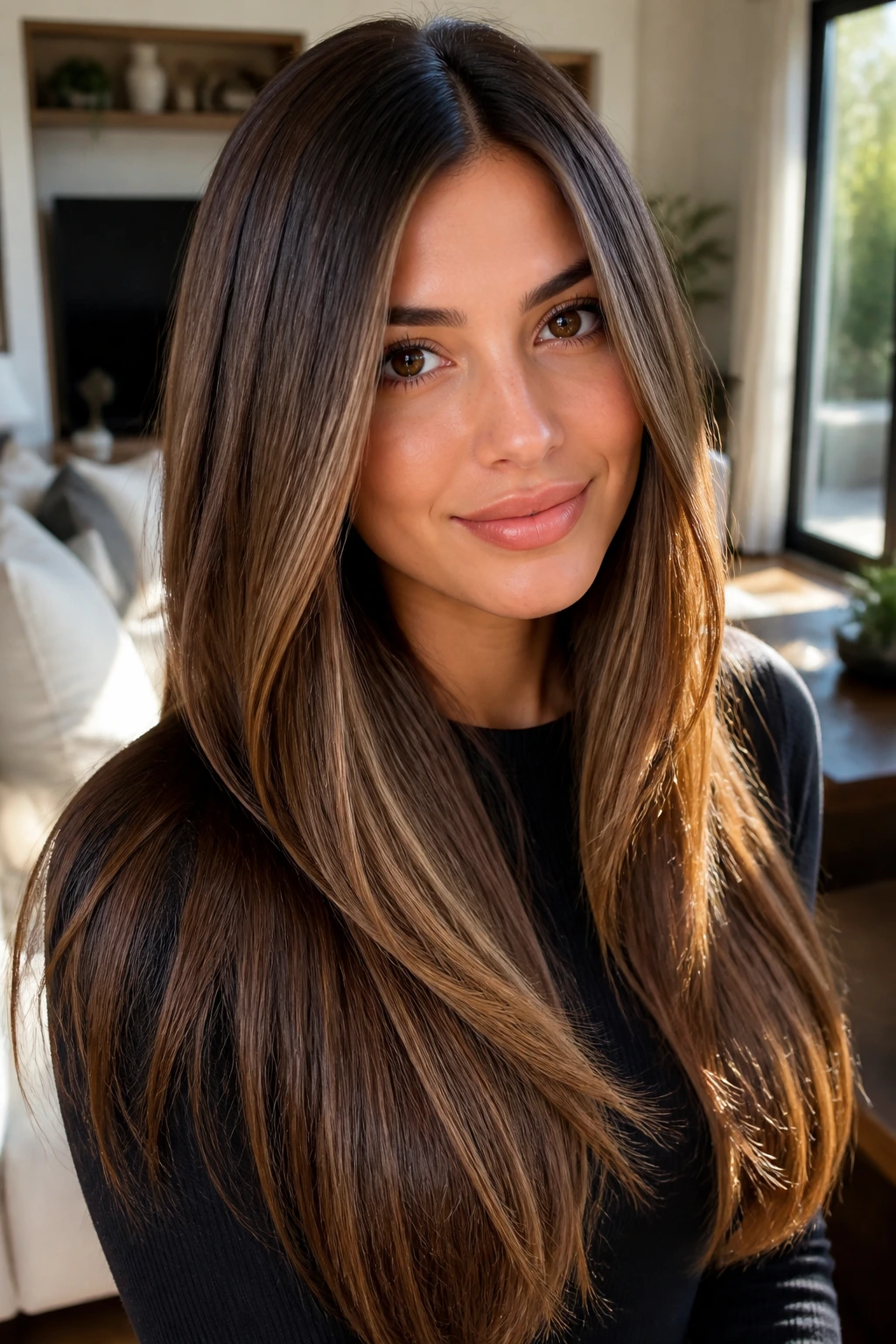
Cocoa and toffee is one of those color pairings that just makes sense on straight hair. The cocoa gives the base weight, the toffee adds the lift, and the two shades sit close enough together that the blend looks calm rather than striped.
I like this on long straight hair because the layers of color can follow the length like a soft gradient. It is not flashy. That is the appeal. You see shine first, then depth, then the lighter pieces catching at the edges.
This is a strong choice if you want brunette hair that still looks shaped from a distance. It’s especially nice for people who part their hair in the center every day, because the toffee can be placed to frame the face without feeling overdone.
20. Platinum Dust Ends
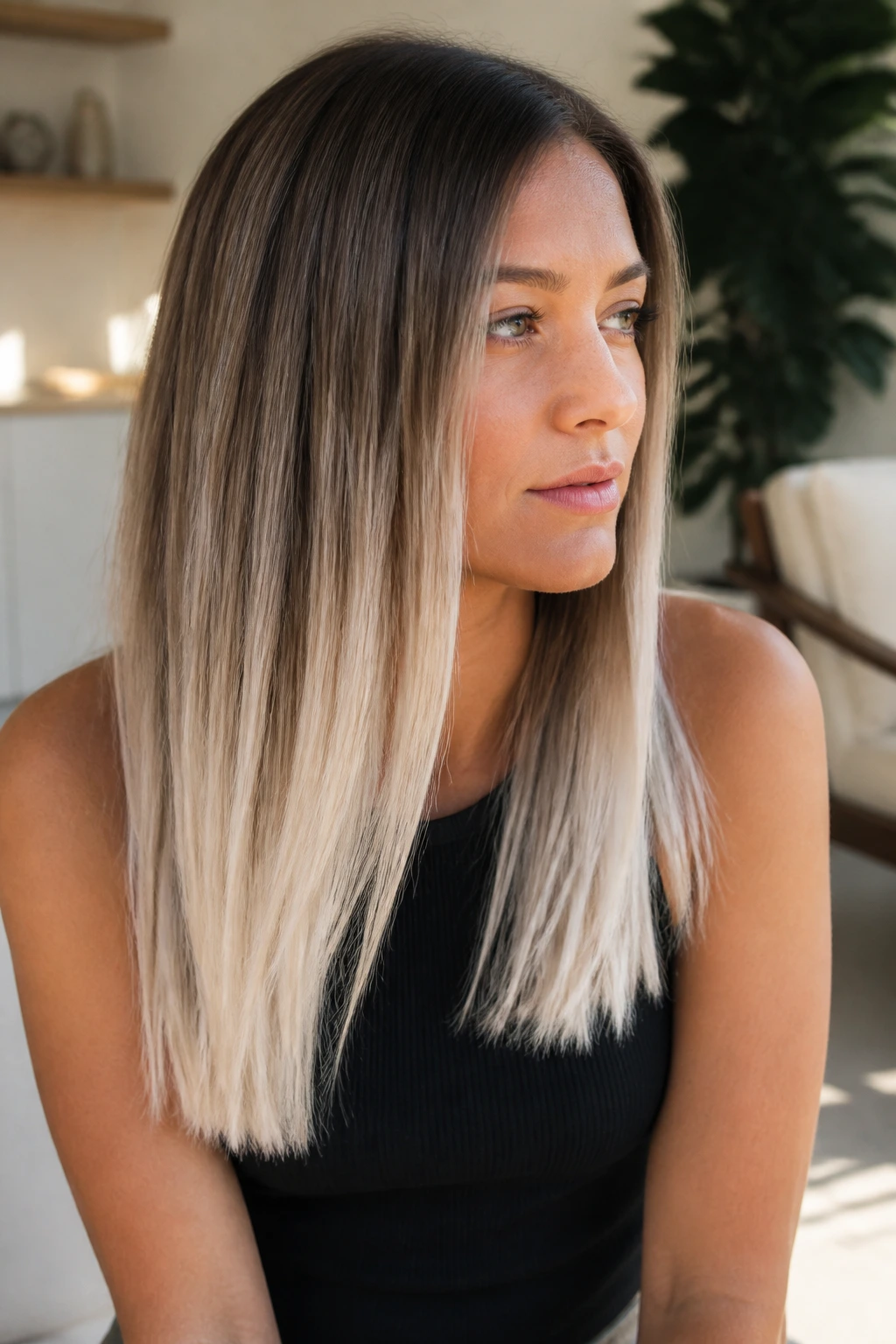
Platinum dust ends are the bolder end of the spectrum. Think of it as a pale blonde finish concentrated at the bottom portion of the hair, with the roots and mids kept more grounded so the look doesn’t turn into a full bleach job across the whole head.
Straight hair can carry this because the long line shows off the contrast in a clean way. The downside is also the upside: every level shift is obvious, so the blend has to be intentional. A weak melt will show instantly.
This one works best on hair that is already light enough to lift cleanly. It also rewards regular conditioning, because dry ends show more quickly when they’re pushed to platinum.
21. Beige Blonde Contour
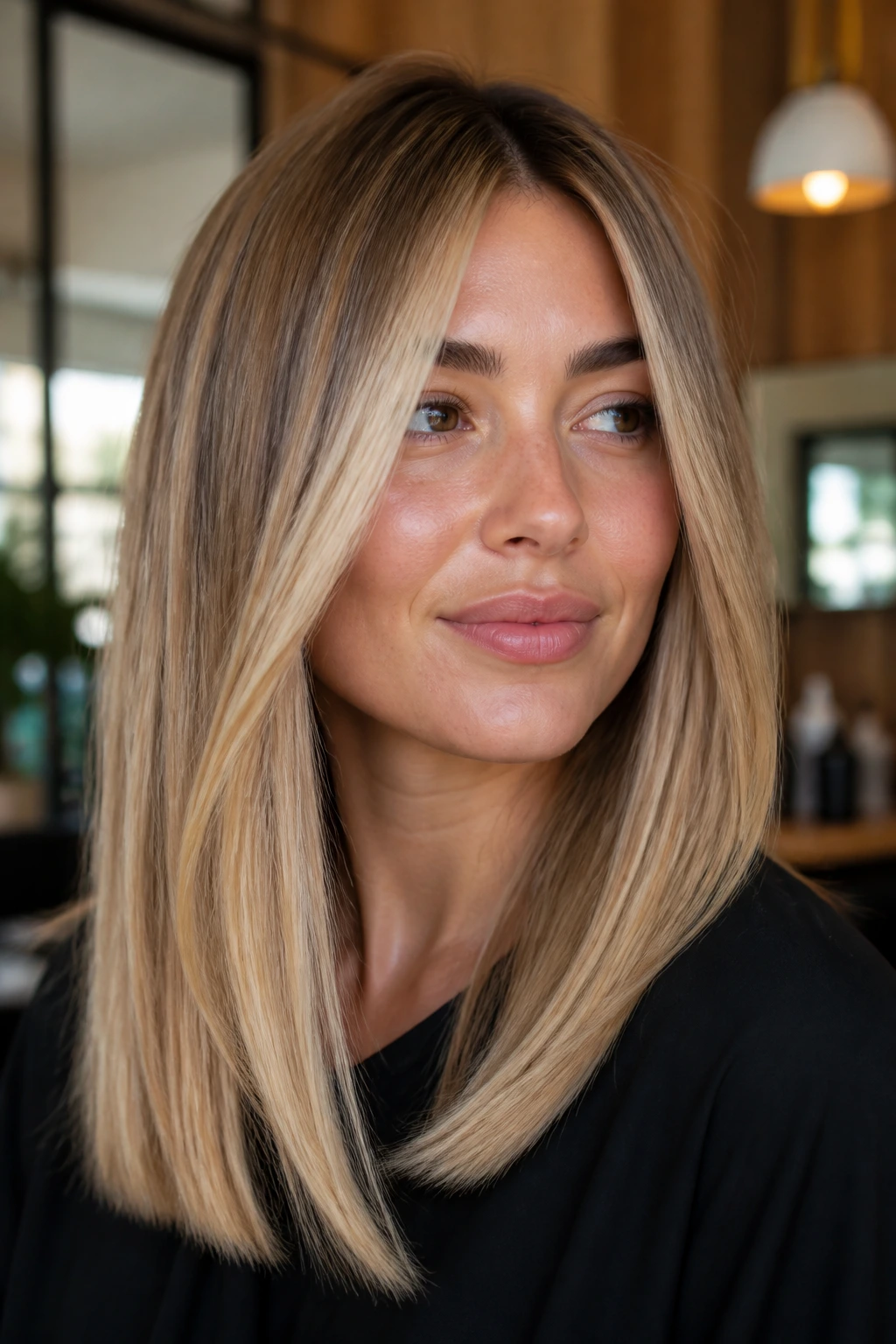
Beige blonde contour is a placement story as much as a color story. The brightness is painted to frame the face and lift the outer edges, while the interior stays a little softer and deeper.
On straight hair, that face contour gives shape where texture can’t. A blunt cut gets an instant outline. Long hair gets cheekbone emphasis. It’s subtle, but not boring.
The Best Use Case
Pick this if you want your straight hair to look sculpted without a chunky highlight pattern. The beige tone keeps it from going too icy or too warm, which makes the contour easier to wear across different skin tones.
22. Cherry Cola Balayage
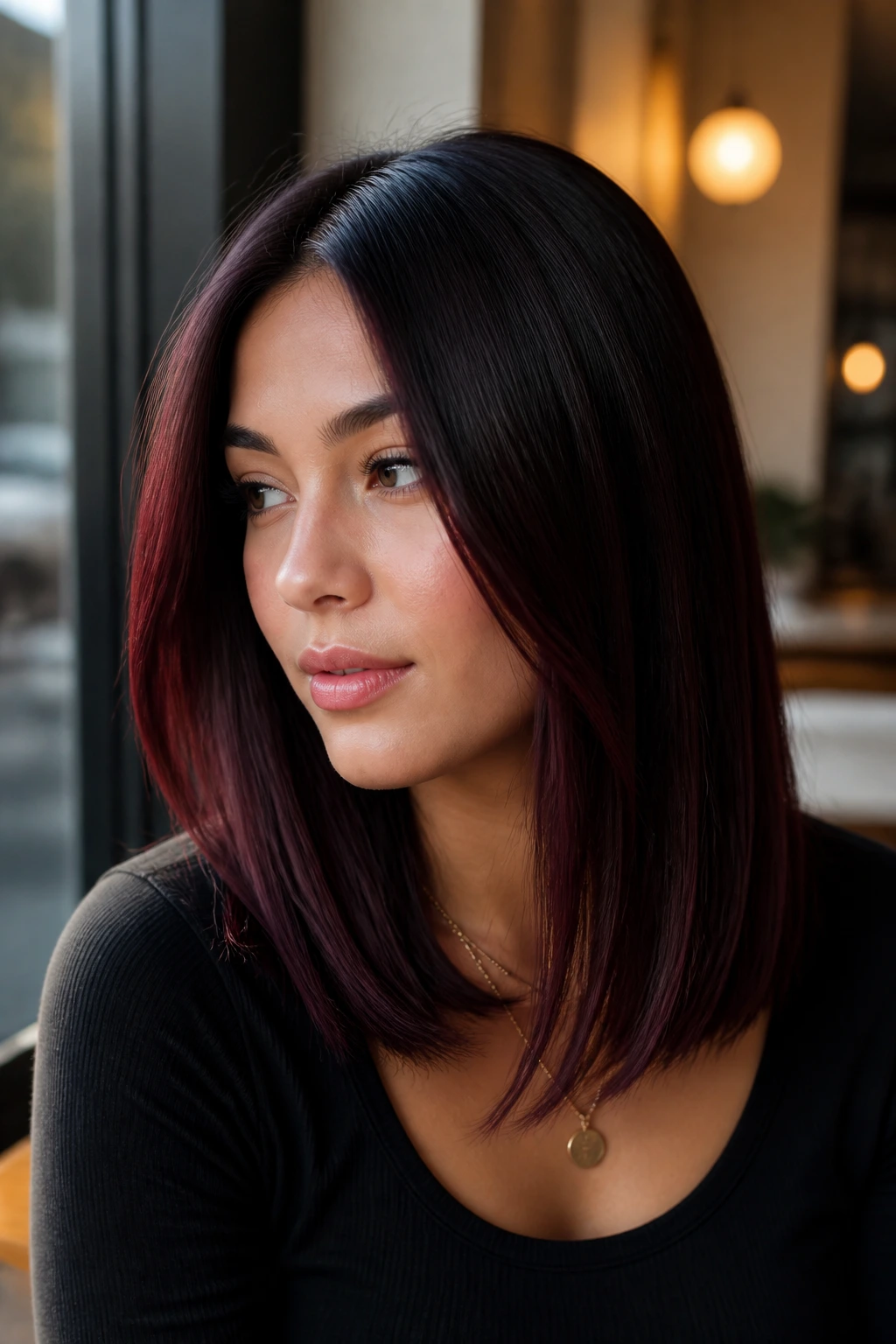
Cherry cola is darker and moodier than rose gold or auburn. It has a deep brown base with a red-violet sheen that shows up in motion or light.
Straight hair gives cherry cola a polished, almost lacquered finish. The color doesn’t need waves to create interest; the undertone does the work. If you like brunette hair that looks richer instead of lighter, this is a strong pick.
It’s also one of the easier ways to flirt with red without committing to high-maintenance copper. The shade can fade gracefully into a soft brown with a little warmth left behind, which is not a bad place to land.
23. Muted Mocha with Lived-In Ends
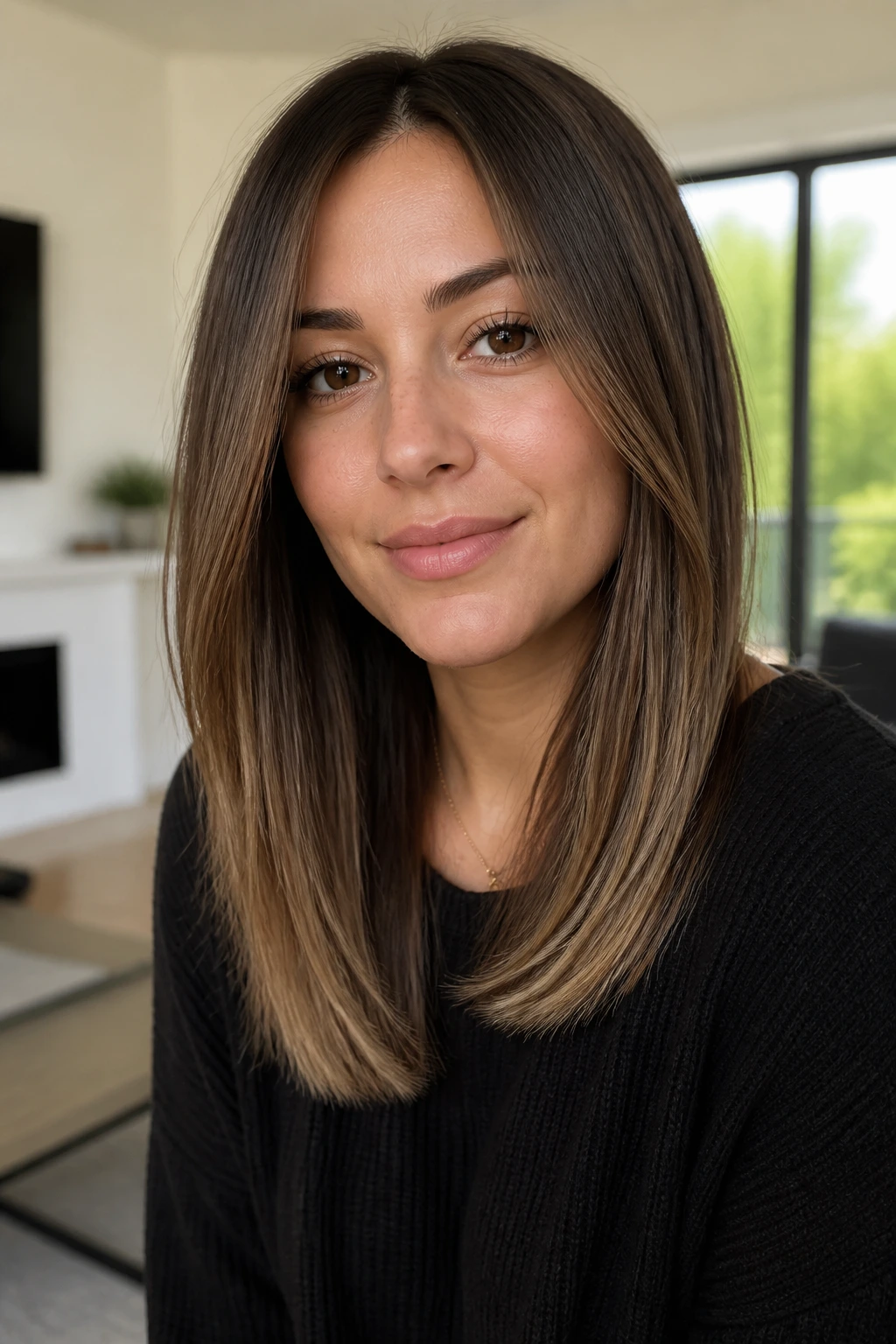
Muted mocha is the answer to anyone who wants dimension but hates obvious highlights. The brightness stays low and the ends are only a few steps lighter than the root, which makes the whole thing feel soft and grown-up.
Straight hair is a good match because the low contrast keeps the color smooth instead of broken up. You can still see the dimension. It’s just quieter. The look works especially well on medium brunettes who want movement without a lot of upkeep.
A lived-in finish like this also plays nicely with a trim schedule, since the color does not depend on precise root spacing. The shape can change a little over time and the shade still holds together.
24. Chestnut Glow
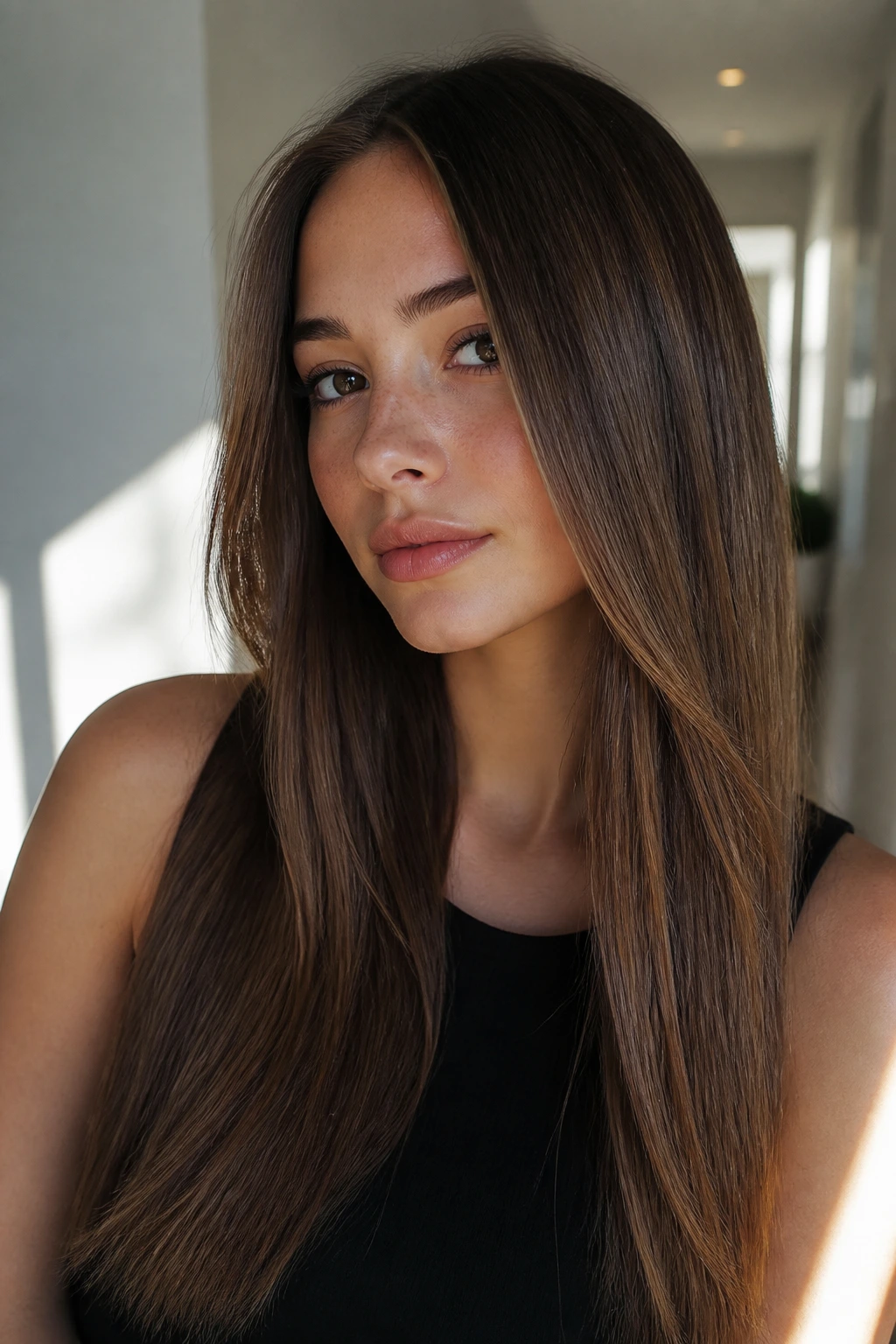
Chestnut glow is warm, rich, and not too red. It’s the kind of brown that looks healthy on straight hair because the color has enough light bouncing through it to keep the lengths from looking heavy.
The glow comes from a gentle difference between the root and mids, not from a hard lightening jump. That makes it useful for anyone who wants dimension but does not want the ends to look much lighter than the rest.
This is one of the easiest shades to wear with a sleek blowout. The chestnut tone catches shine without sliding into brass, which is a nice line to walk when the hair is worn straight most days.
25. High-Contrast Ribbon Balayage
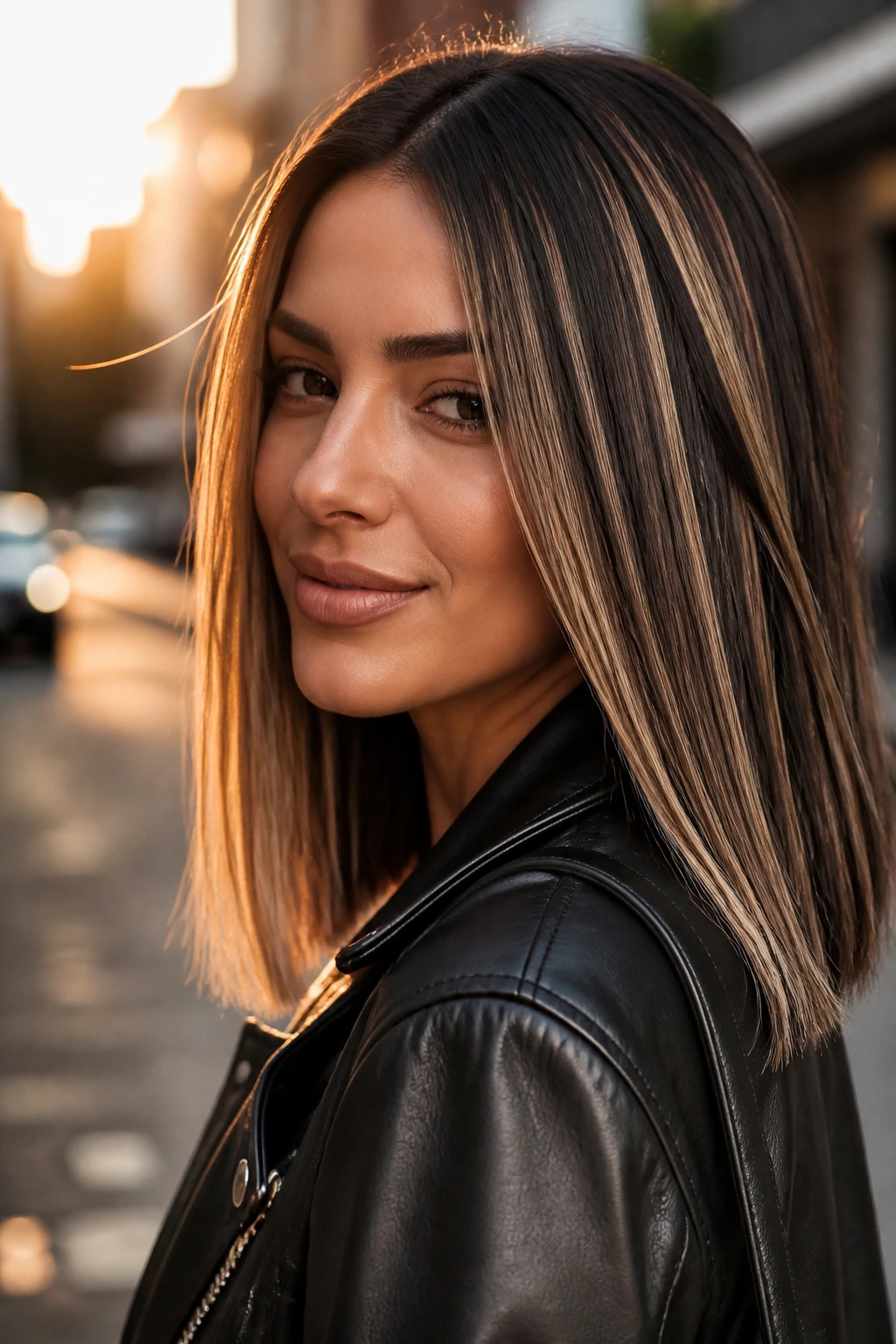
High-contrast ribbon balayage is for the person who likes a stronger visual hit. Think deep brunette base with deliberate, lighter ribbons spaced just enough apart to show the pattern without turning the hair into stripes.
On straight hair, this look has attitude. There is no texture to soften the contrast, so the placement has to be clean and the tone has to be controlled. Done well, it looks crisp and modern. Done poorly, it looks like four separate color jobs in one head.
This is best if you want straight hair to feel bold from the first glance. Keep the ribbons thin, vary their width slightly, and let the face frame carry more brightness than the back. That keeps the whole thing from reading harsh.
How to Choose Balayage Ideas for Straight Hair by Base Color
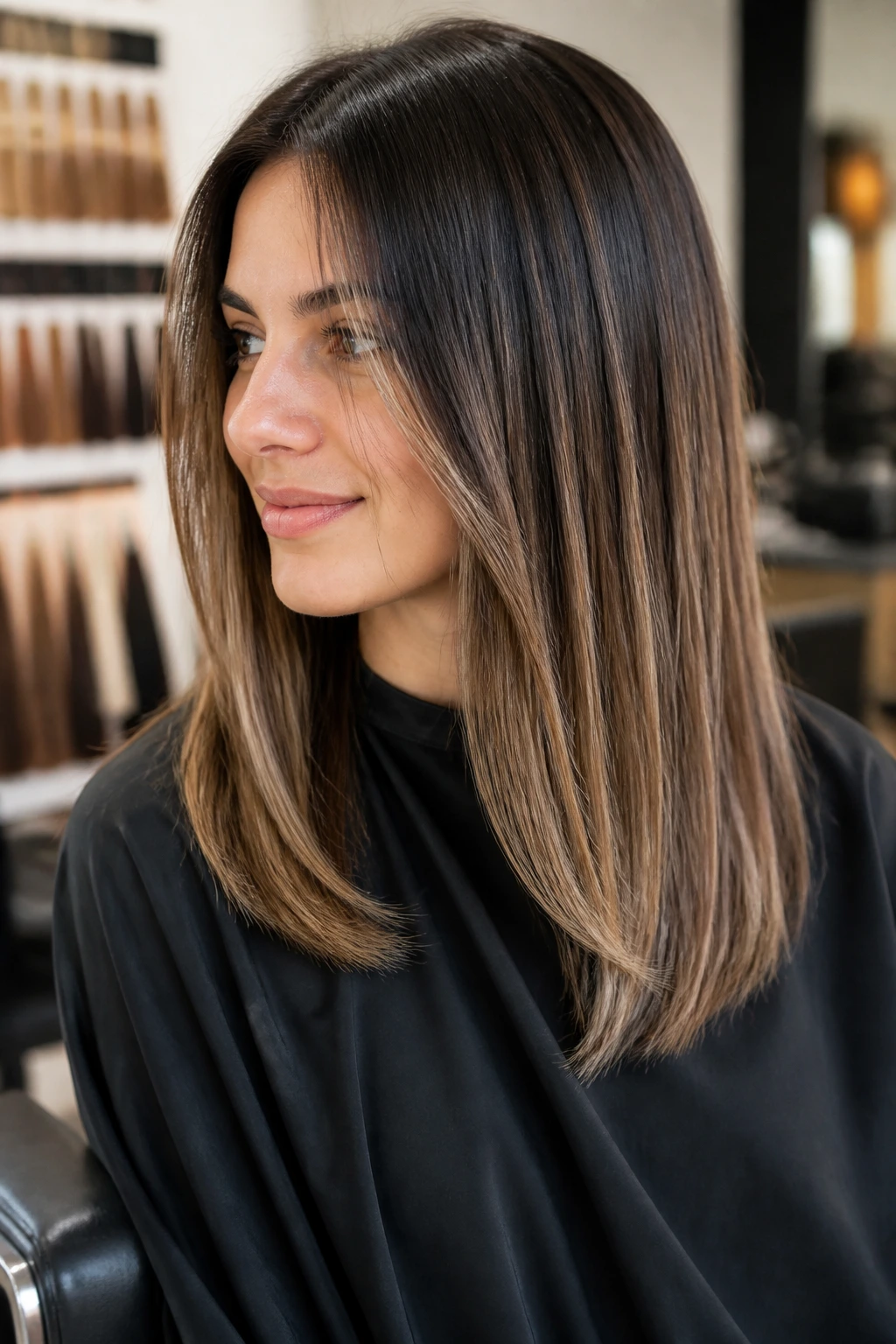
Base color changes everything. A level 4 brunette can wear caramel, chestnut, mocha, bronze, and copper in a way that a level 7 dark blonde cannot. On the darker base, the light pieces need enough lift to show up. On the lighter base, the same lift can look thin or washed out.
If your natural color is dark brown, focus on warm brunettes and controlled contrast. Espresso-to-mocha, tortoiseshell brunette, cinnamon swirl, smoked bronze, and cherry cola all make sense because they stay rooted in depth. You can still add lightness. It just should not be the only event in the room.
If you’re starting from a lighter brunette or dark blonde base, beige blonde, sandy bronde, champagne beige, or pearl ash can work without such a dramatic color correction. These shades are happiest when the hair is already close to the target level and only needs refinement, not a full lift. That’s usually kinder to the cuticle too.
What Balayage Placement Should Sit on Straight Hair
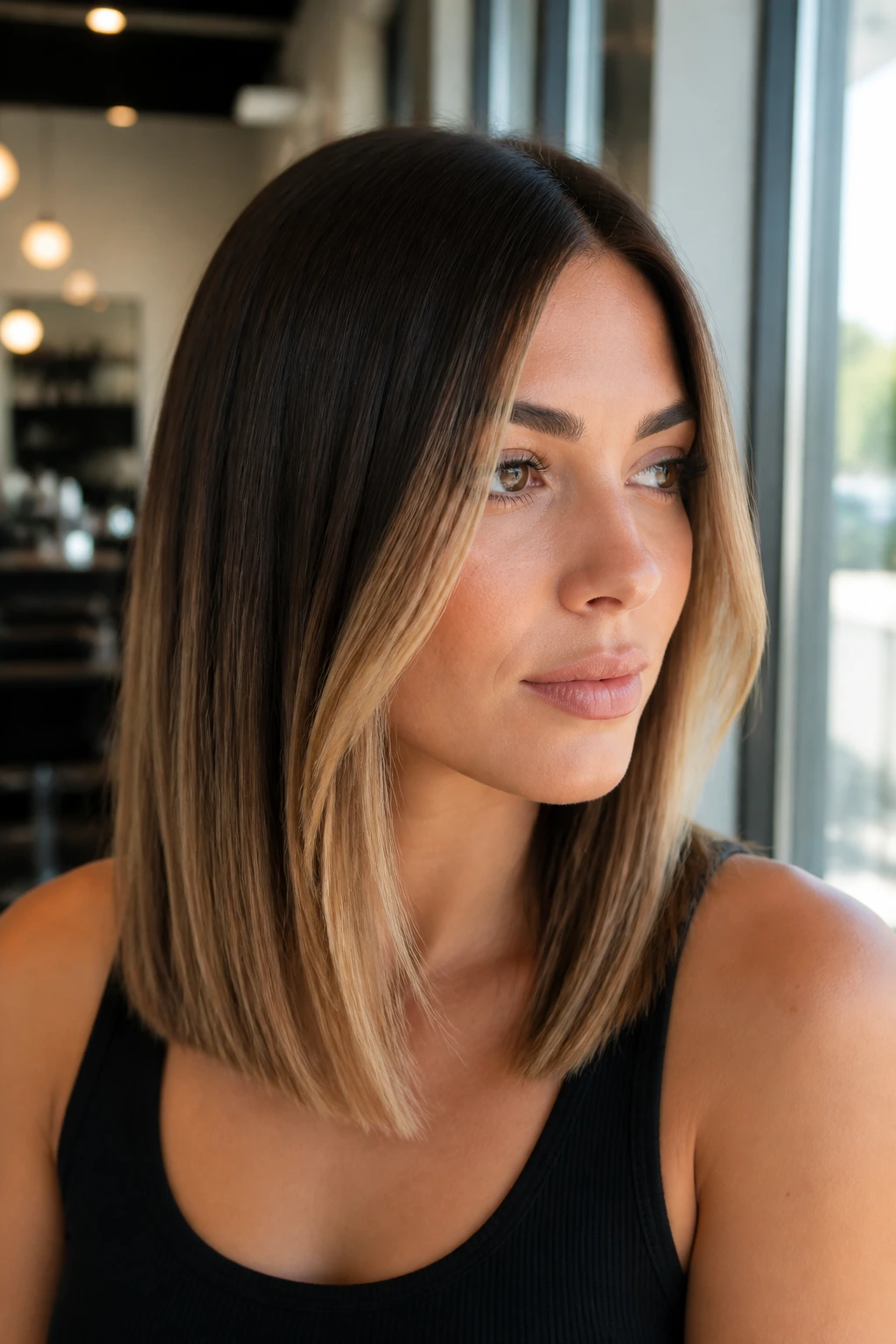
Placement should follow the haircut, not the other way around. A blunt bob needs a different color map than waist-length straight layers. A bob can handle brighter face-framing pieces and a few lifted mids. Long hair can take a more gradual stretch because the eye has more distance to travel.
The front sections deserve the most attention. That is where straight hair reveals the most shape. A few well-placed lighter pieces around the cheekbones and jawline can do more than heavy saturation through the back, which often just makes the whole head look lighter instead of more dimensional.
Ask for contrast where the hair bends or moves naturally — around the part, through the outer layer, and at the lower third of the length. Skip the temptation to make every section equally bright. Equal brightness is usually the fastest way to flatten straight hair.
Essential Tools and Products for Straight-Hair Balayage
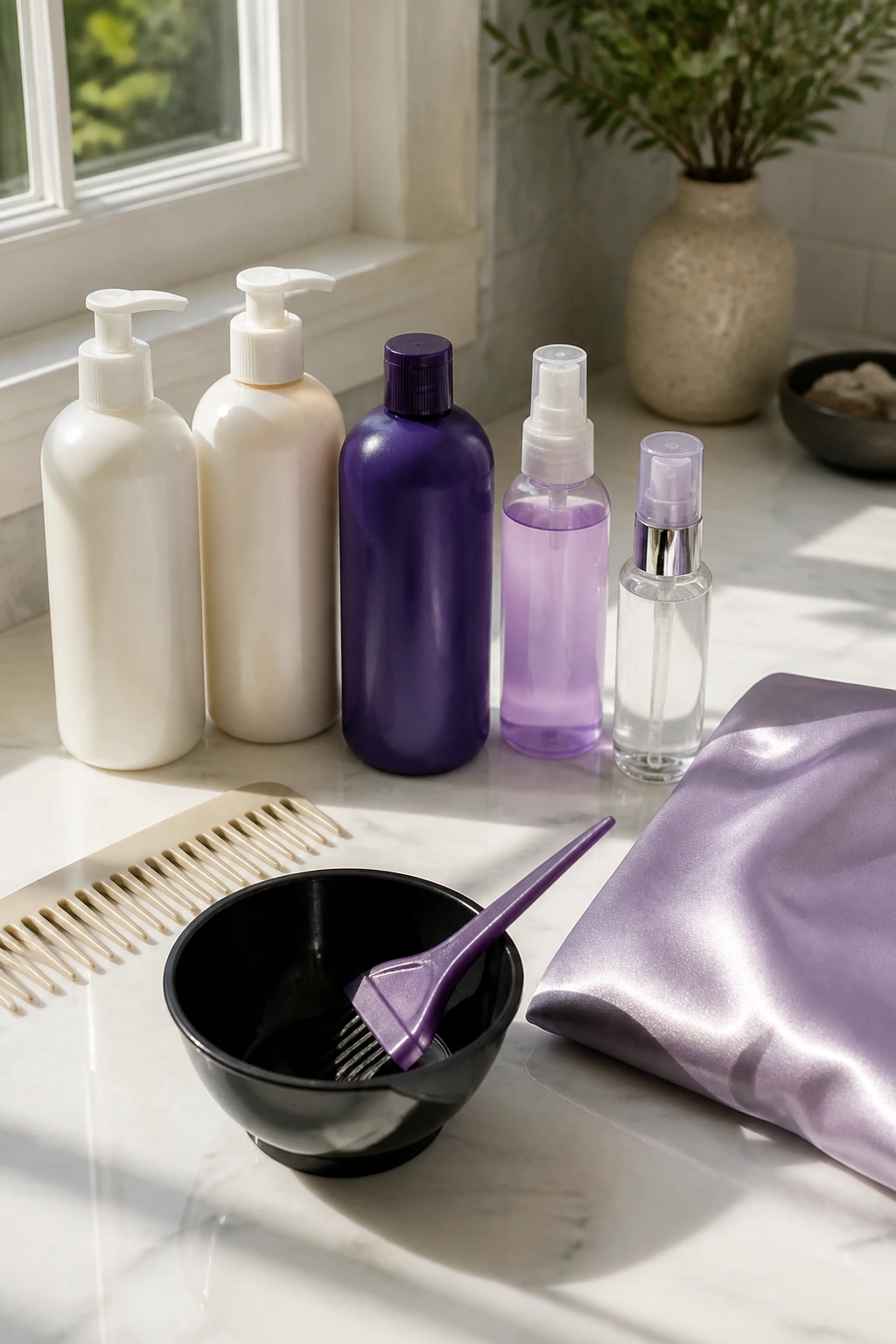
- Sulfate-free shampoo: Keeps color from stripping out fast and helps the tone stay softer between salon visits.
- Color-safe conditioner or mask: Use this on the mids and ends twice a week if the hair has been lightened.
- Purple or blue shampoo: Purple helps blonde and beige tones; blue is better for brunette brassiness. Use sparingly.
- Heat protectant spray: Straight styles usually mean heat styling, and bleached pieces need that buffer before a flat iron or blowout brush.
- Light serum or oil: One to two drops on the ends smooths flyaways without greasing the shape.
- Wide-tooth comb: Better than yanking through damp lightened hair with a tight brush.
- Tint brush and mixing bowl: Handy if you are glossing at home, though I’d still keep home color very mild.
- Silk or satin pillowcase: Cuts down on friction, which matters when the ends are lighter and drier.
Smart Consultation Notes and Swatch Rules
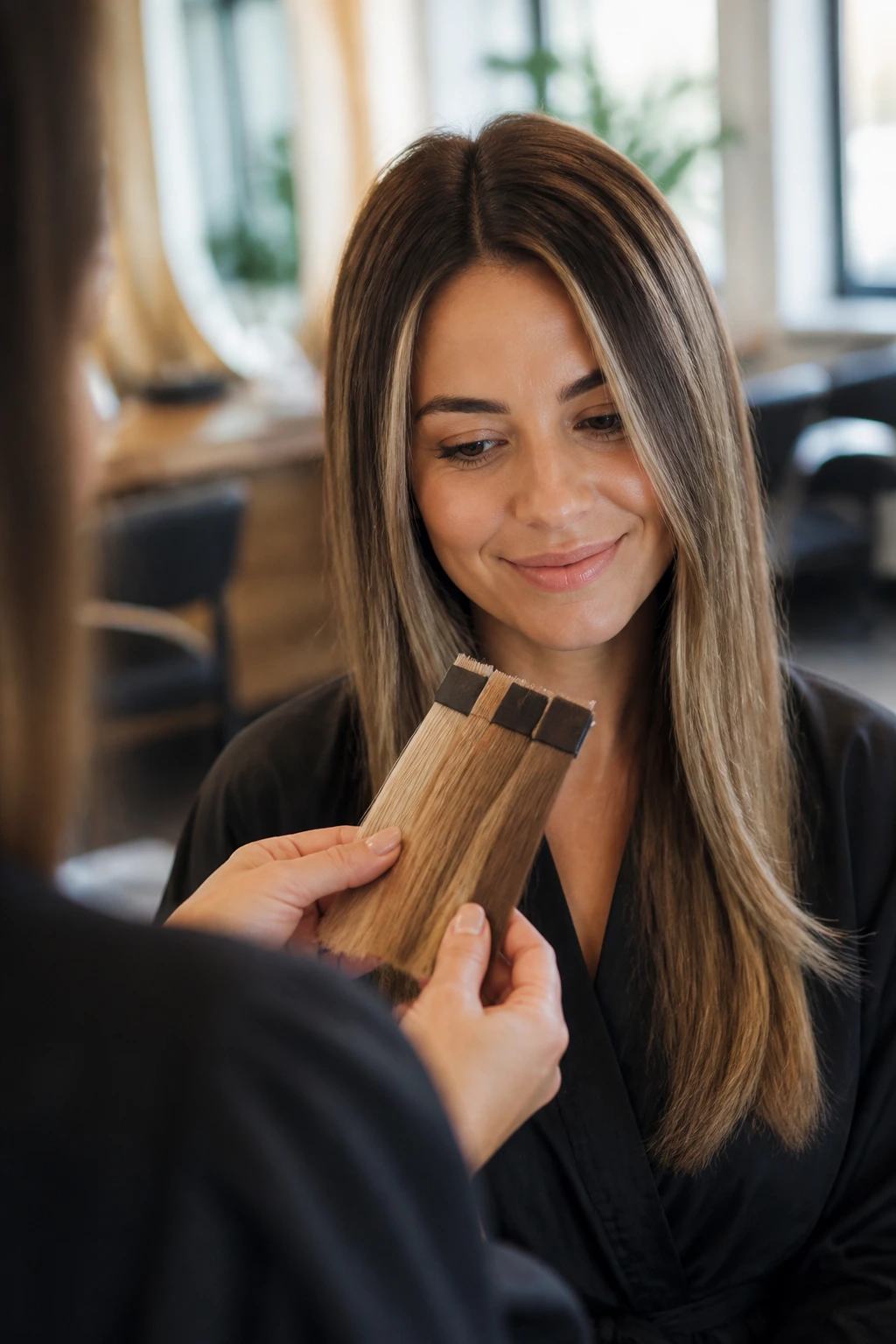
Bring photos, but bring better photos than the ones people usually save. A picture with the right tone on the wrong haircut is not much help. Look for the base depth, not just the shine. If you love a caramel balayage on curly hair, say so — but also mention that you wear your hair straight and want the same mood translated for a smooth finish.
Tell your colorist two things: your natural base level and how often you want to come back. That second part changes everything. If you can only sit in a chair twice a year, a shadow-root brunette melt makes more sense than a high-lift blonde that begs for toner every few weeks.
Swatches matter too. Hold them near your face in daylight, not under store lighting. Warm beige can look flattering in one room and too yellow in another. Small detail. Big difference.
The Styling Tricks That Let the Color Read on Straight Hair
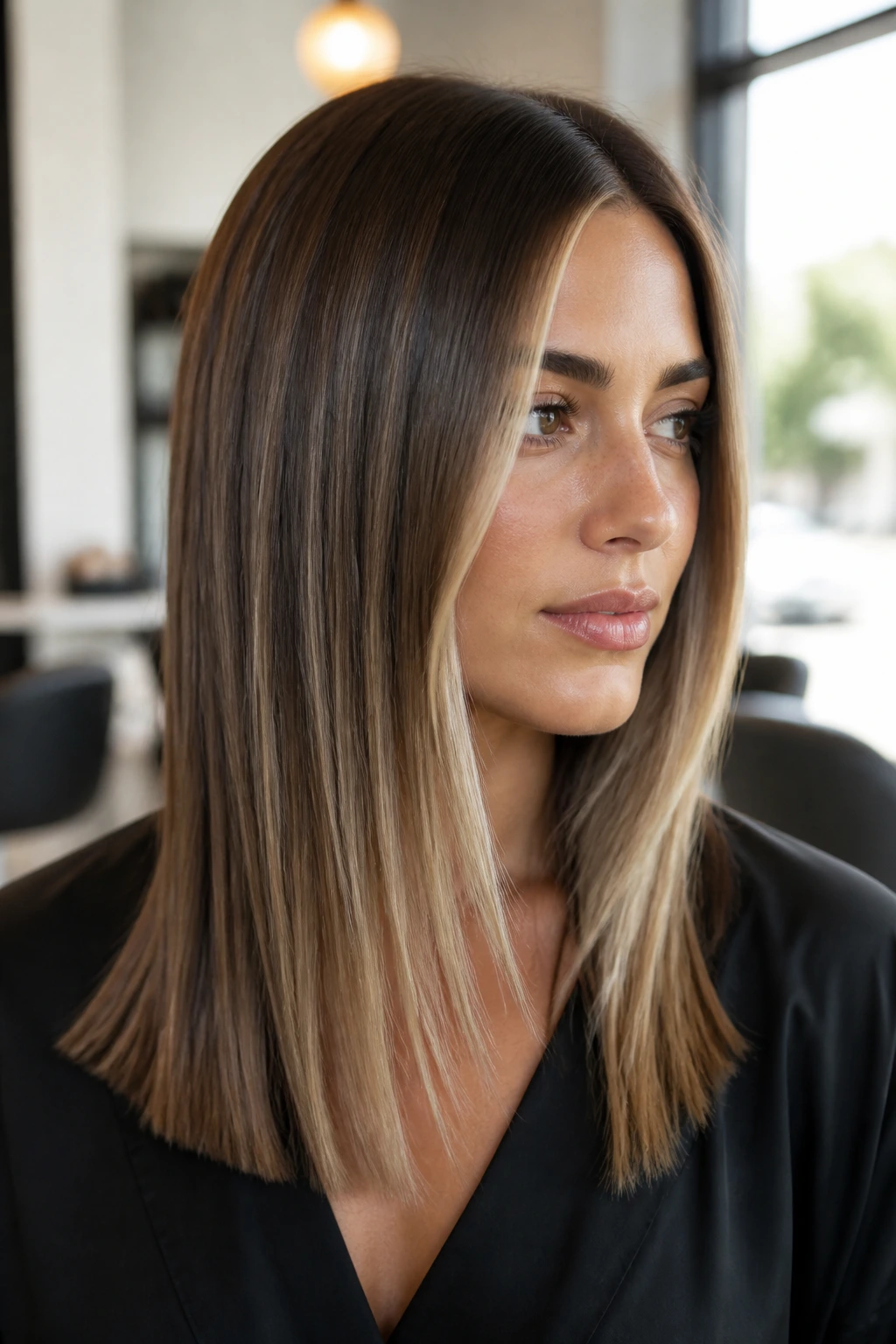
Straight hair shows color best when the finish has a little movement, even if it’s still sleek. That can mean a soft bevel at the ends from a round brush, a subtle bend near the face, or a center part that keeps the front ribbons visible.
- Presentation: A glossy blowout, a smooth flat-ironed finish, or a neat tucked-behind-the-ear look shows off the color line cleanly.
- Best cut pairings: Blunt bobs, collarbone lobs, curtain bangs, and long layers each change where the light pieces land.
- Intensity control: A subtle melt reads softer; a high-contrast ribbon pattern reads sharper and more fashion-forward.
- Finishing move: Use a pea-sized amount of lightweight serum on the ends only. Too much product can turn the light pieces oily and dim.
Additional Tips and Shine Boosters
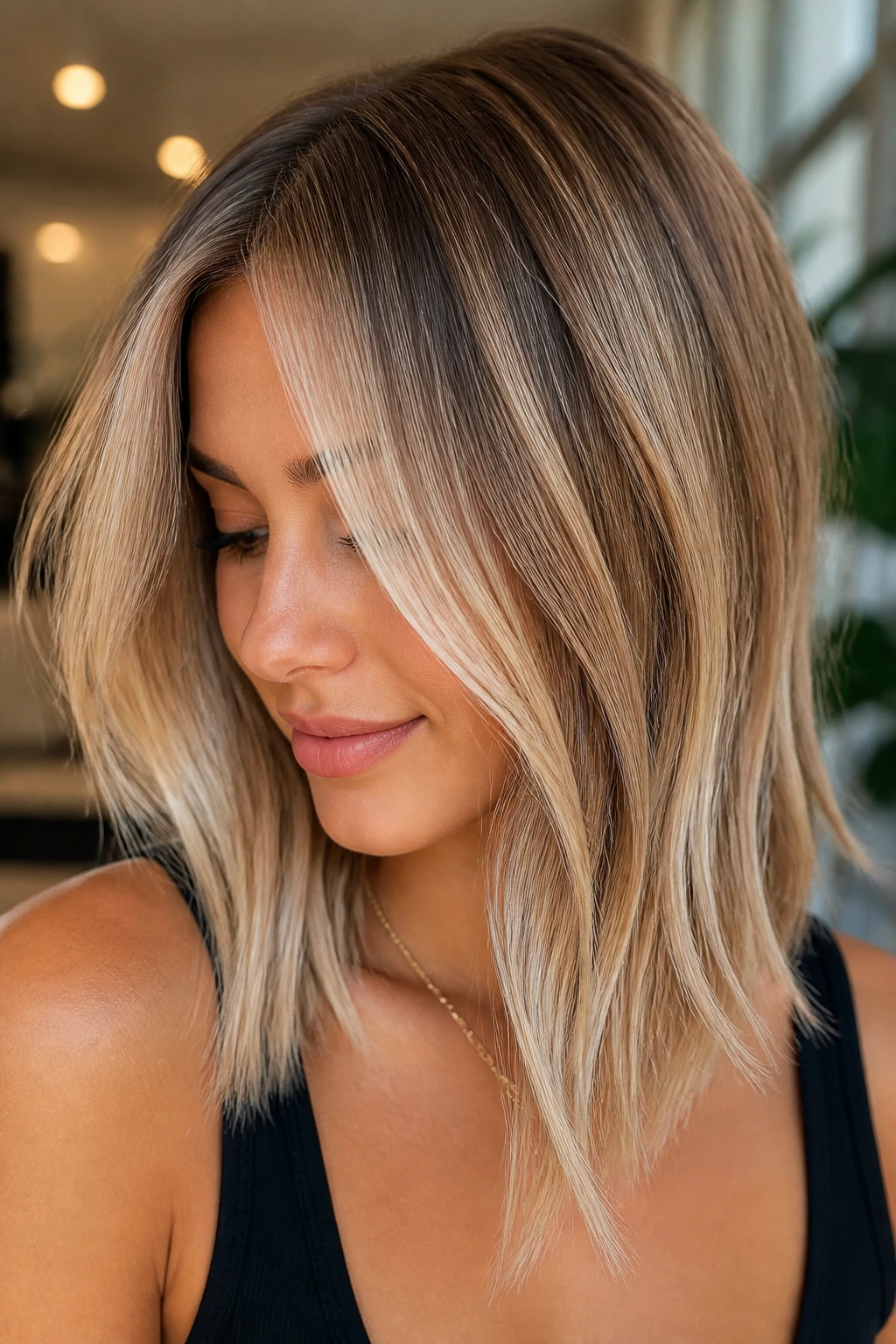
Gloss Booster: A clear or tone-matched gloss every 6 to 8 weeks can keep beige, caramel, and mushroom tones from looking dusty. On straight hair, that reflective finish matters because the surface is so visible.
Placement Trick: Ask for a brighter money piece only if the rest of the color stays quieter. Straight hair can handle a focal point, but it needs a calm background or the whole head gets noisy.
Make-It-Yours: If you like low-maintenance color, stay within two or three levels of your natural base. If you like a bigger shift, keep the brightest pieces near the face and the ends so regrowth stays softer.
Finish Note: On very straight hair, a one-inch bevel at the ends can make balayage look far more expensive than poker-straight, blunt ends that split the light in a hard line.
Common Mistakes That Make Straight-Hair Balayage Fall Flat
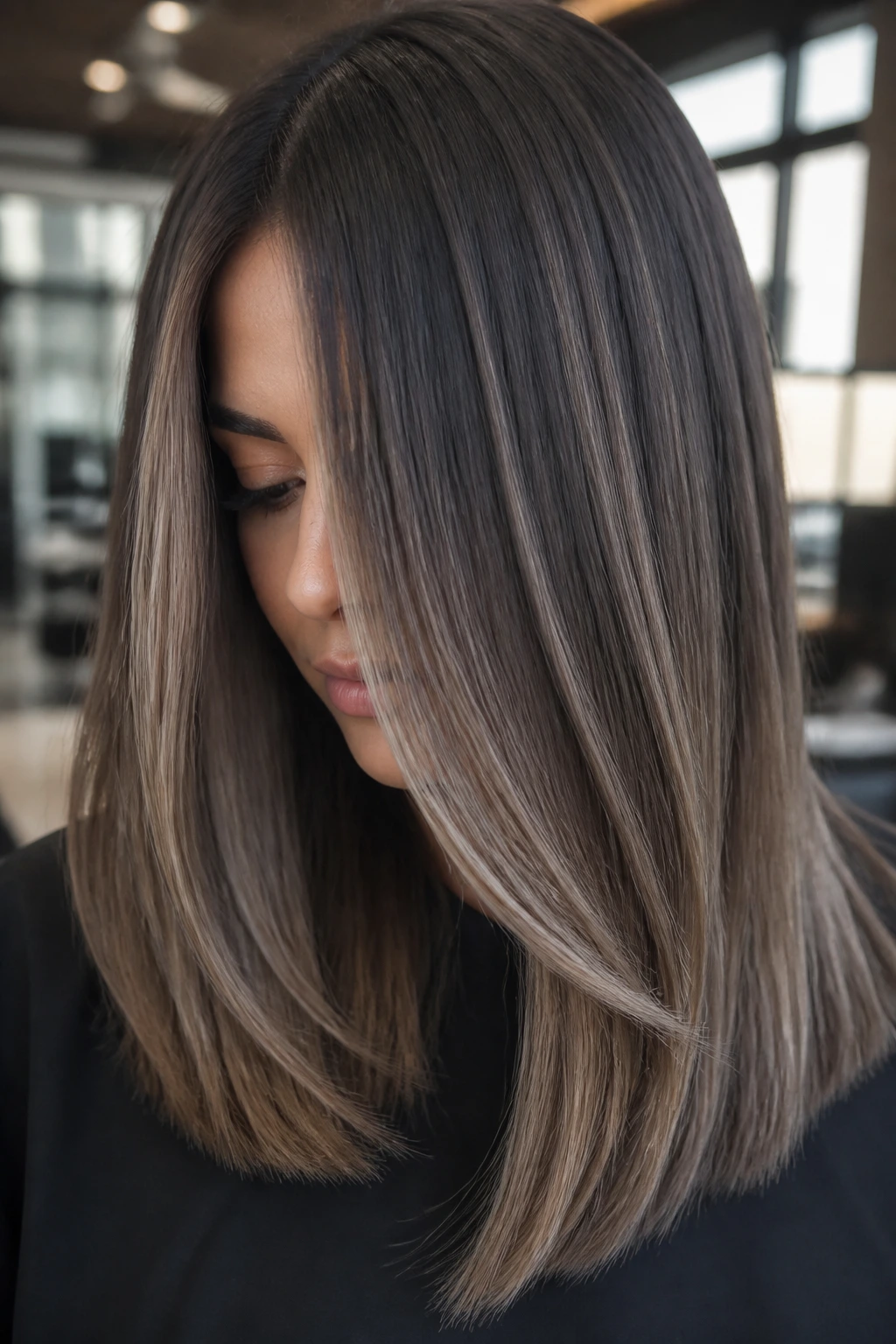
The first mistake is too much evenness. Equal lightness from root to tip can look tidy on paper and dead on the head. The fix is a deeper root, lighter mids, and a slightly brighter finish where the eye needs it.
The second mistake is choosing a tone that fights the base. A very cool blonde on a warm brunette base can go muddy; a very warm copper on a cool skin tone can feel louder than intended. The cure is to work with the underlying pigment instead of trying to overwrite it in one appointment.
The third mistake is skipping gloss upkeep. Lightened straight hair turns dull faster than people expect, because every bit of brass or rough cuticle is visible. A gloss or toner refresh keeps the finish clean and stops beige from turning flat yellow.
The fourth mistake is overloading the front with brightness. A money piece is useful, but if the whole front is hammered with lightness, the face can look disconnected from the rest of the hair. Keep the front bright and the blend soft. Both.
Variations and Adaptations to Try
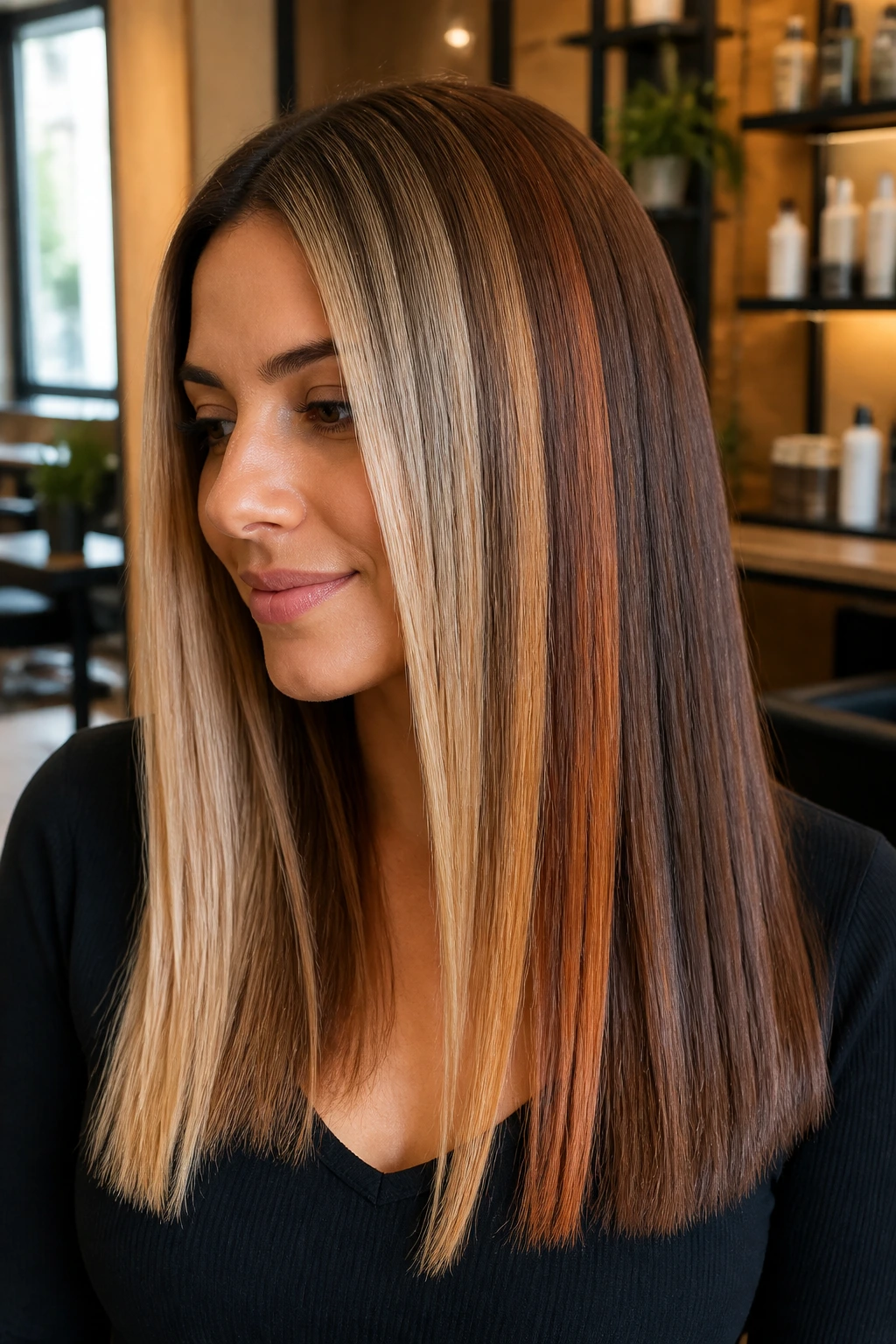
The Soft Lift: Keep the balayage two levels lighter than your base and focus on beige or caramel. This is the easiest version to live with if you want movement, not drama.
The Moody Brunette: Stick with espresso, mocha, bronze, and chestnut tones. The result is richer and lower contrast, which is a smart move if you wear your hair straight every day and want the color to stay calm.
The Cool Girl Blonde: Use ash beige, pearl, and shadow-root placement. It looks best on lighter bases and needs regular toning, but the payoff is that glassy, clean finish straight hair does so well.
The Warm Copper Shift: Add cinnamon, auburn, or copper veils through the mids and ends. This is a good way to dip into red without losing the dimensional shape of balayage.
The High-Contrast Edit: Keep the base deep and add thin ribbons with a brighter face frame. It is bolder, more graphic, and more fashion-forward, especially on blunt cuts.
Frequently Asked Questions
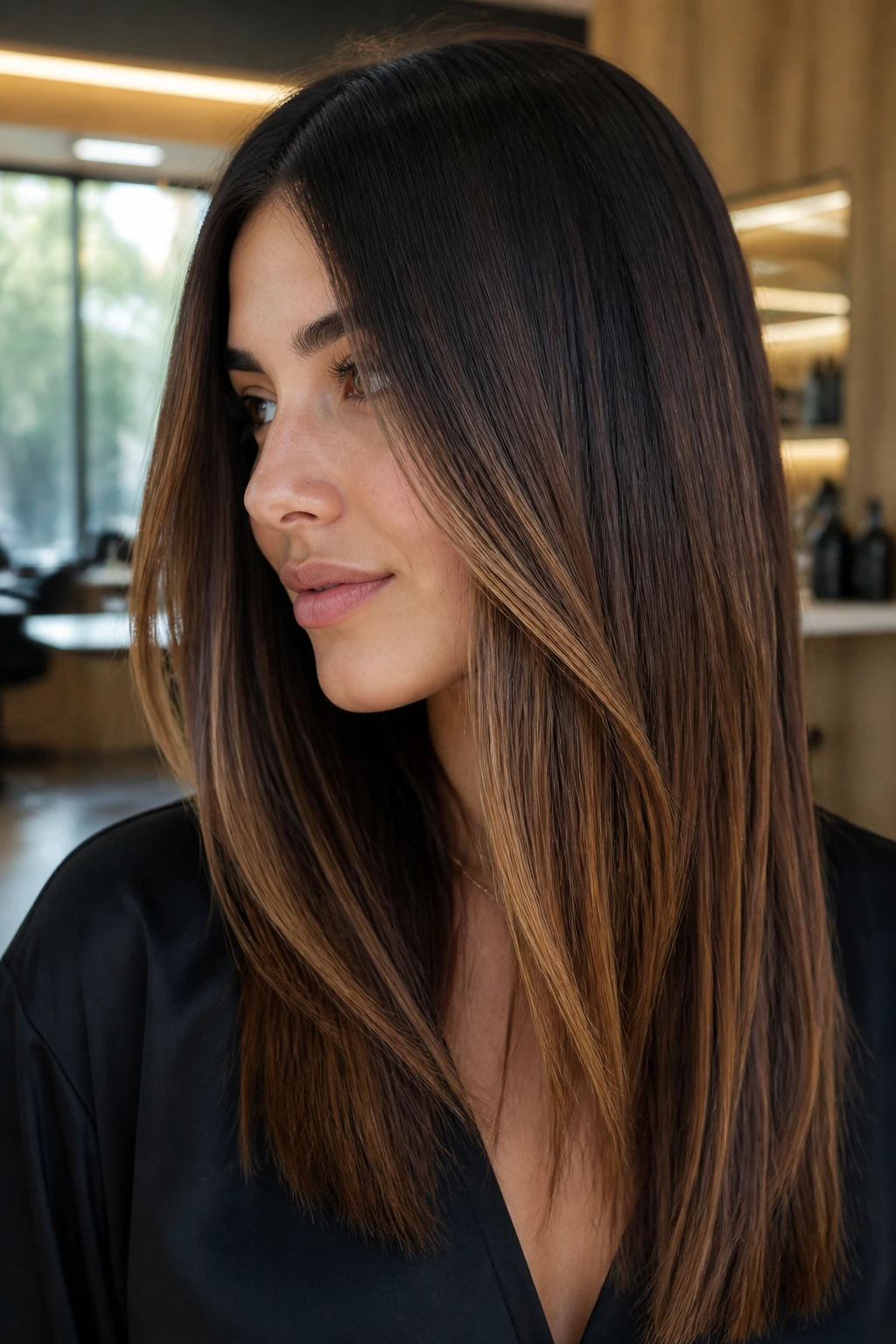
Can straight hair pull off balayage without looking stripey?
Yes, if the placement is soft and the ribbons vary in width. Straight hair exposes harsh lines, so the blend has to be built in with a shadow root and broken-up light pieces rather than evenly spaced bands.
What balayage shade is easiest to maintain on straight hair?
Brunette-forward shades like mocha melt, tortoiseshell, smoked bronze, and chestnut glow tend to be the easiest. They fade in a softer direction and do not need toning as often as pale blonde or icy ash looks.
Does balayage damage straight hair more than curly hair?
The color work itself is similar, but damage shows more clearly on straight hair because the surface is smooth and reflective. That means dryness, split ends, and uneven tone are easier to spot, so bond care and regular conditioning matter.
Can I get balayage on naturally black or very dark hair?
Yes, but the result often needs a warmer, lower-contrast approach unless you’re willing to lighten more aggressively. Rich caramel, bronze, cinnamon, and cherry cola usually look more believable than a jump straight to pale blonde.
How often should I tone balayage on straight hair?
Most blonde and beige balayage needs toning every 6 to 10 weeks, depending on wash frequency and water quality. Brunette and bronze blends can go longer, though a gloss every couple of months helps keep the shine from going dull.
What haircut works best with straight-hair balayage?
Blunt lobs, long layers, curtain bangs, and polished bobs all work well because they give the light pieces a shape to follow. Very one-length cuts look clean too, but the placement has to be more intentional since there’s no texture to hide mistakes.
Can I do balayage at home on straight hair?
You can, but it is a risky place to experiment if you want soft blending. Straight hair shows uneven application fast, and correcting patchy ribbons can take more processing than starting with a better plan.
Why does my balayage look warmer or brassier once it’s styled straight?
Straight styling reflects light more evenly, which makes warm undertones stand out. If the color skews orange or yellow after a blowout, the toner is probably too weak or too old, and the shampoo routine may be stripping the cooler pigments too fast.
Keeping the Color Fresh Between Appointments
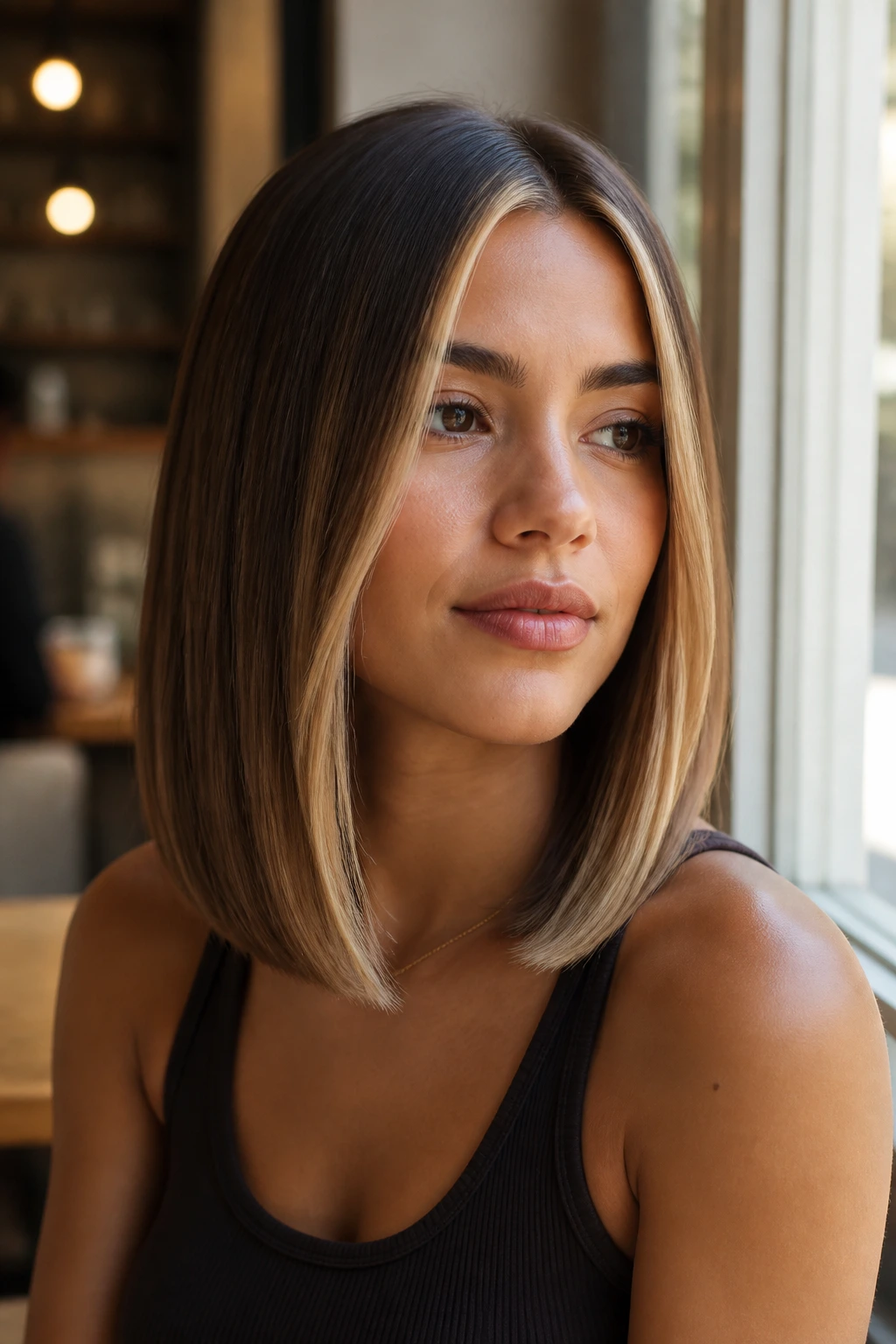
Straight-hair balayage stays prettier when you treat the lightened pieces like they are drier than the rest of your hair, because they are. Wash with lukewarm water, not hot water, and keep shampoo on the scalp rather than scrubbing the mids and ends like they’re dirty dishes. That alone helps the tone last.
Use purple shampoo only when the blonde or beige starts to look yellow, usually every 1 to 2 weeks for most people. If you use it too often, the color can go dull or slightly purple. Blue shampoo works better for brunette balayage that is drifting orange, especially on caramel and bronze blends.
Gloss appointments every 6 to 8 weeks can make a huge difference on straight hair because the shine sits on the surface. If you heat-style often, keep a protectant in the routine before every blow-dry or flat iron pass. And trim the ends before they split — once lightened hair frays, the color stops looking soft no matter how good the toner is.
The Straight-Hair Balayage That Holds Its Shape
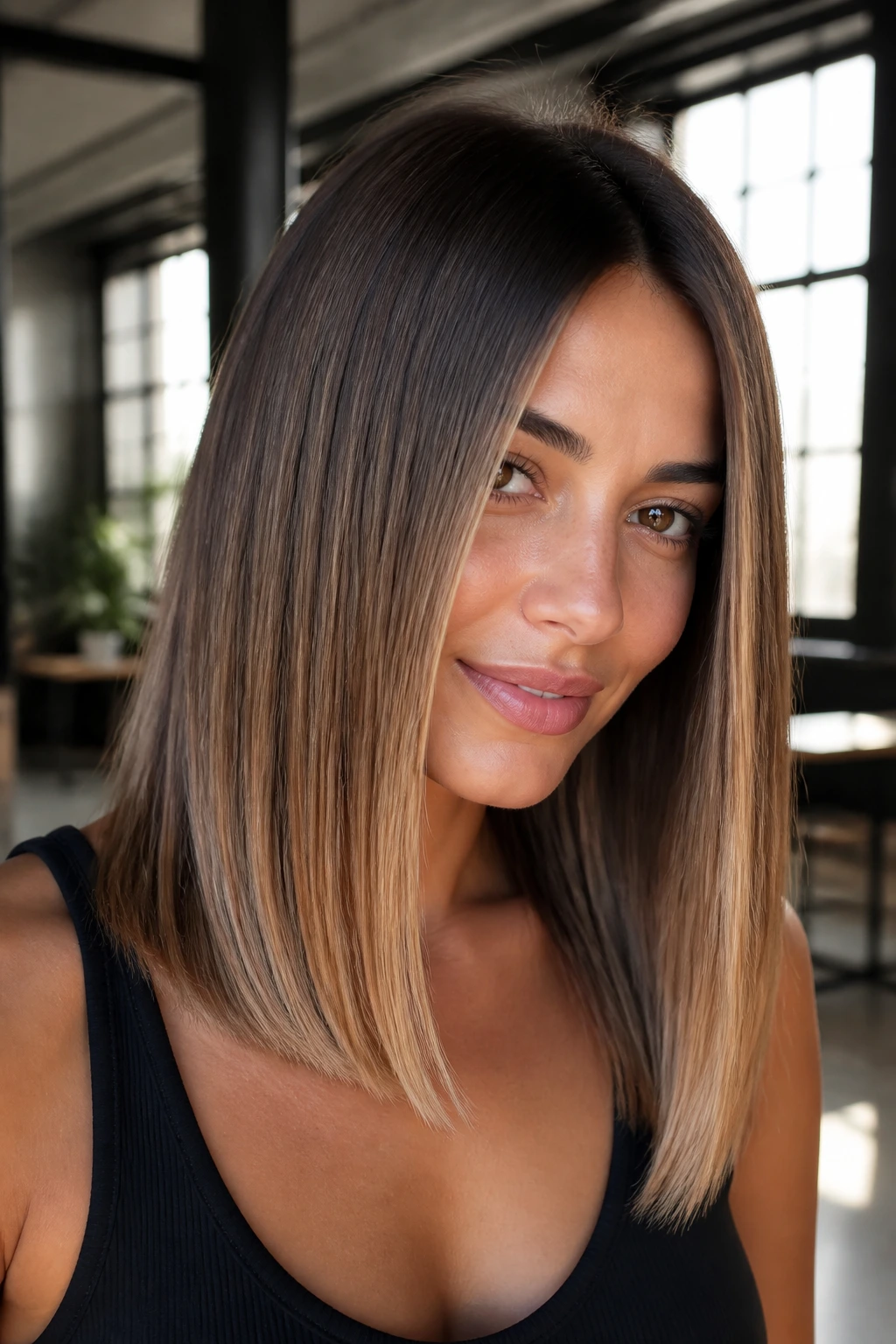
Straight hair does not need more color noise. It needs a smarter map. The best balayage choices here are the ones that keep a clean line, soften the root, and let the brightness land where the eye already wants to look.
That’s why these ideas span the range from quiet mocha melts to brighter beige blondes and copper veils. Some are low-key. Some are louder. All of them depend on placement and tone doing the heavy lifting, because straight hair doesn’t do you many favors if the color is sloppy.
Pick the version that fits your base, your upkeep tolerance, and the way you actually wear your hair. Then keep the blend soft, the tone honest, and the ends trimmed. Straight hair will show every decision you make — which is exactly why the right one pays off so well.
