



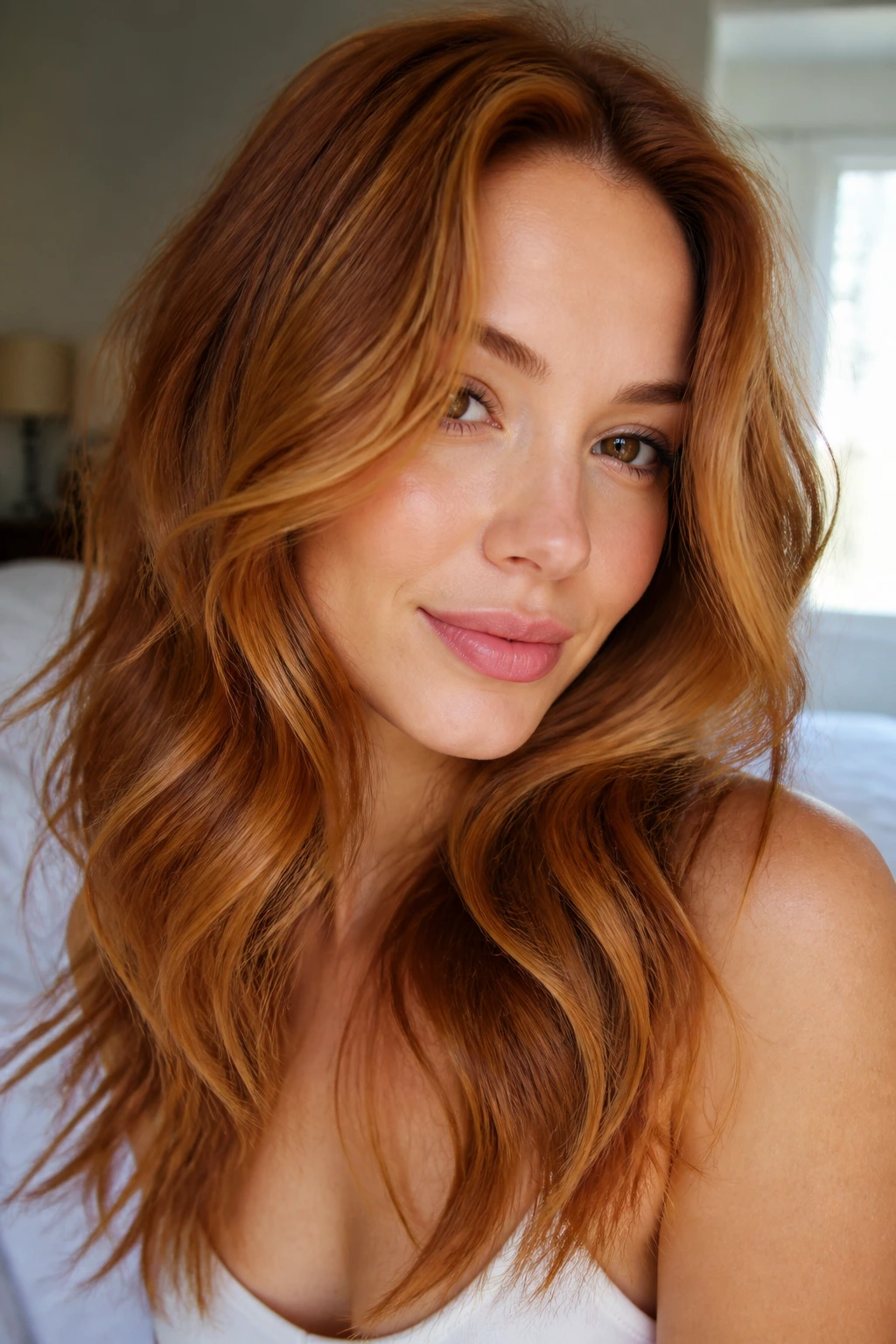
Amber hair color has a funny habit of looking rich in the mirror and then turning muddy the moment the formula or placement gets lazy. Done right, though, it sits in that sweet spot between gold and copper and gives warm honey toned hair a deeper glow without tipping into pumpkin or flat orange. That balance is why amber keeps showing up on brunettes, dark blondes, and anyone who wants warmth with a little edge.
The part people miss is that amber is not one shade. It can read like toasted honey, cider copper, maple brown, apricot gold, or a soft glazed bronze depending on how light the base is and where the color is placed. On wavy hair, the movement breaks the tone into ribbons. On a blunt bob, the same shade can look sharper and more graphic. That’s the whole appeal.
I’ve always preferred amber when it has some brown underneath it. Pure copper can feel loud fast. Pure gold can go dull. Amber, when it’s handled well, has a pulse to it — warm, shiny, dimensional, and just brown enough to keep the color believable.
Why These Amber Shades Deserve a Spot in Your Inspiration Folder
-
They flatter warm undertones without flattening the hair: Amber sits close to honey, caramel, and gold, so it doesn’t fight a warm base the way an icy tone would.
-
They can be subtle or punchy: A clear gloss gives a soft amber veil, while foils and face-framing panels push the color brighter and more noticeable.
-
They grow out in a friendlier way than high-contrast color: Root shadow, balayage, and ribbon placement leave enough depth near the scalp that regrowth looks planned.
-
They work on more than one texture: Waves show off ribbons, curls break the color into little flashes, and straight hair lets the shine do the talking.
-
They give brown hair a real mood shift: A medium brunette can keep depth and still look warmer, fresher, and more polished without going blonde.
-
They are easier to customize than a full copper transformation: You can lean golden, spicy, smoky, or caramel depending on how bold you want the result to feel.
1. Classic Amber Melt
Classic amber melt is the look I reach for when someone wants warmth without fuss. The color starts with a soft golden-brown at the root and deepens into a honey-copper glaze through the mid-lengths and ends. It reads polished, not flashy, and that matters if your hair already has a warm base.
What makes this version work is the low-contrast shift. The root stays close to your natural level, then the amber tone gets a little brighter as it drops through the lengths. That means the color looks expensive in indoor light and doesn’t scream for attention under every bulb.
Ask for a demi-permanent amber gloss or a gentle melt over a level 6 to 8 base if you want this to stay soft. If your hair is already honey toned, the result can look like your own color, only richer.
2. Honey Amber Balayage
Balayage and amber get along because both depend on movement. Hand-painted ribbons of honey amber through the mid-lengths and ends keep the warmth from sitting in one hard stripe, which is where a lot of copper-inspired looks go wrong.
Why It Avoids the Stripy Look
The trick is contrast control. Keep the amber pieces a shade or two lighter than your base, not four shades lighter, and the color will flash when the hair bends instead of sitting there like obvious dye. That’s why this works so well on layered cuts and soft waves.
A few smart notes if you’re asking for it:
- Best on layered hair: Shorter top layers let the amber catch the light without looking heavy.
- Best with a neutral or golden base: If the natural color is too ash-heavy, the amber can look disconnected.
- Best when the ends already need brightness: You get lift where the hair can handle it, and the root area keeps some depth.
If you want amber that looks lived-in rather than newly dyed, this is the one I’d point to first.
3. Cinnamon Amber Lob
Why does a lob make amber look sharper? Because that blunt edge gives the color a place to land. Cinnamon amber on a shoulder-grazing cut feels compact and tidy, and the warm tone keeps the shape from looking severe.
This shade sits a touch deeper than golden amber and a touch spicier than honey brown. The result is a clean, almost polished warmth that shows off the line of the cut. If you tuck one side behind the ear, the color change around the face becomes the whole point.
I like this on hair that has a little density. A lob with cinnamon amber can look too flat if it’s overly thinned out. Keep the ends blunt or only lightly textured, then let the tone do the heavy lifting.
4. Copper Amber Ribbon Highlights
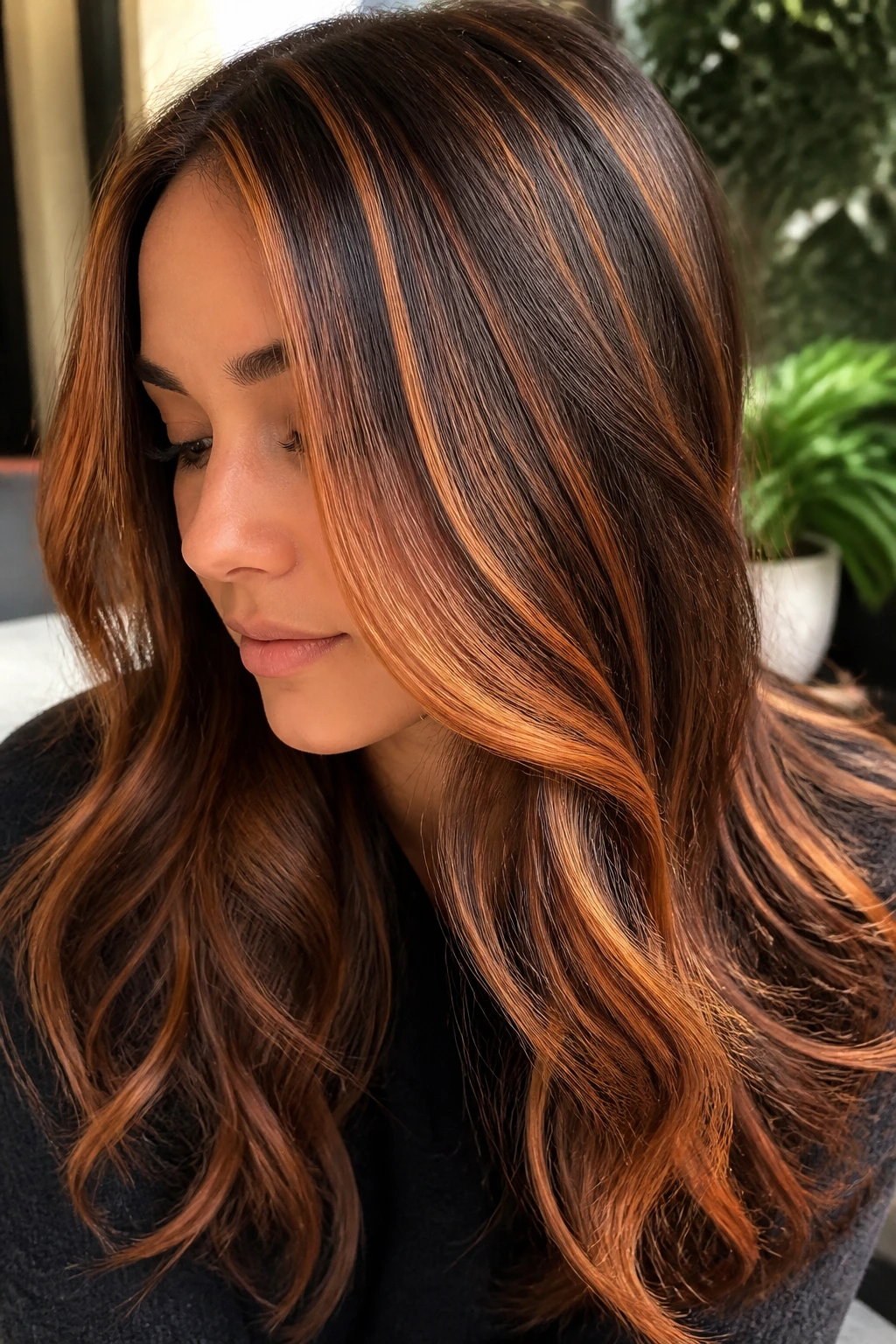
This is the version for hair that needs motion. Thin copper-amber ribbons threaded through brown or dark blonde hair give a thick head of hair some lift without turning the whole thing orange.
A client with a lot of natural volume usually gets the best payoff here, because the ribbons appear and disappear as the hair moves. The color doesn’t need to be everywhere. It just needs to be placed where the eye naturally follows the curve of the head.
A few placement notes:
- Keep the brightest pieces around the face and crown.
- Let the back stay deeper so the whole look doesn’t go flat.
- Ask for thin sections, not chunky blocks, unless you want a more dramatic stripe effect.
If you like warmth that shows up when you turn your head, this is a strong choice.
5. Deep Amber Brunette
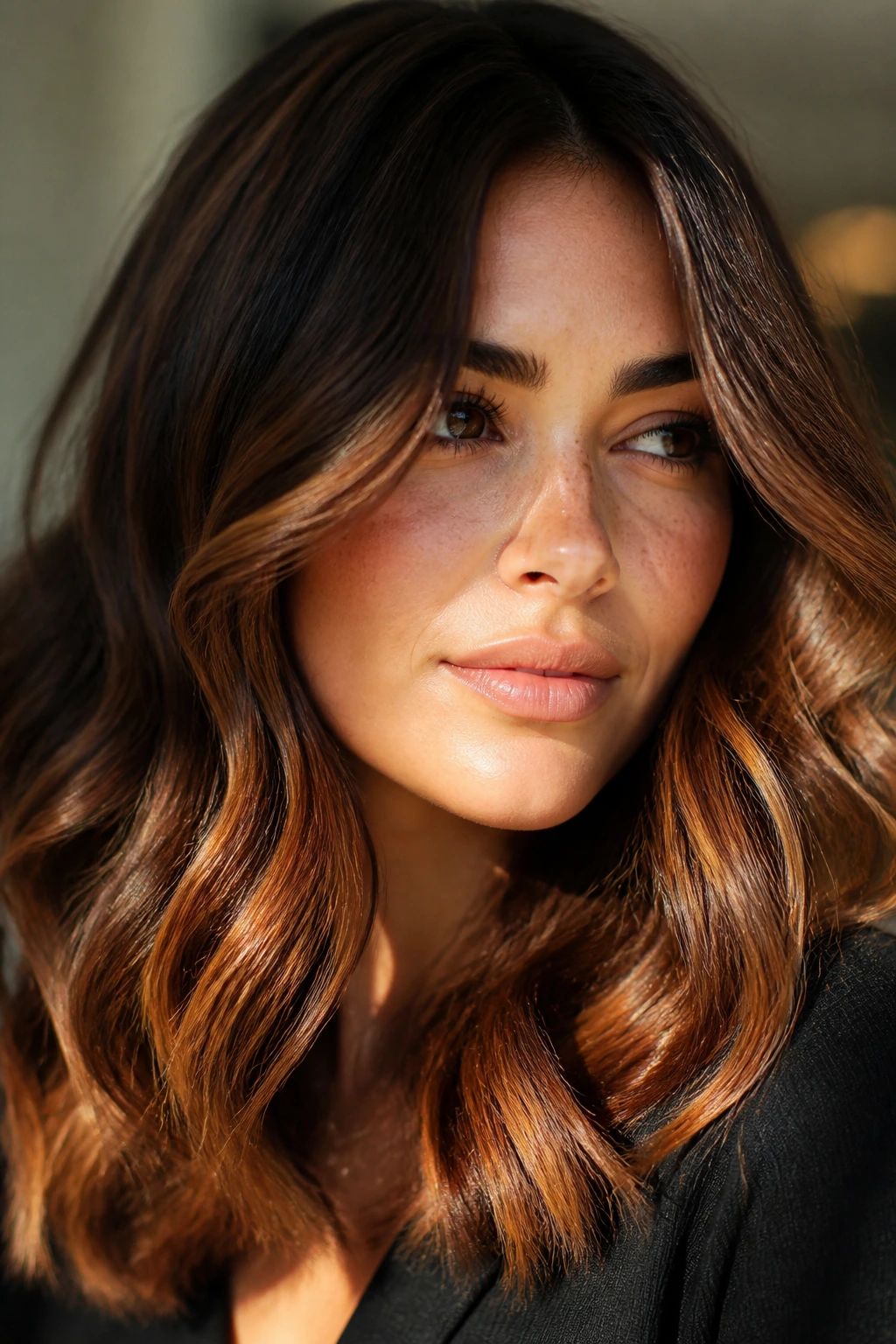
Deep amber brunette is proof that amber does not need to be bright to work. On a dark brown base, the tone can live inside the hair instead of sitting on top of it, and that gives the whole result a toasted, glossy feel.
The best version of this look keeps the root rich and moves the amber through the mids and ends in a restrained way. You catch it in sunlight or under a good lamp. That little reveal is half the fun. Too much lift, and you lose the brown depth that makes it interesting.
I prefer this on hair that already has a warm undertone. If your base is naturally cool, the shade can lean a little flat unless a colorist builds in some gold and copper reflect. It’s a quieter amber, but not a boring one.
6. Amber Money Piece
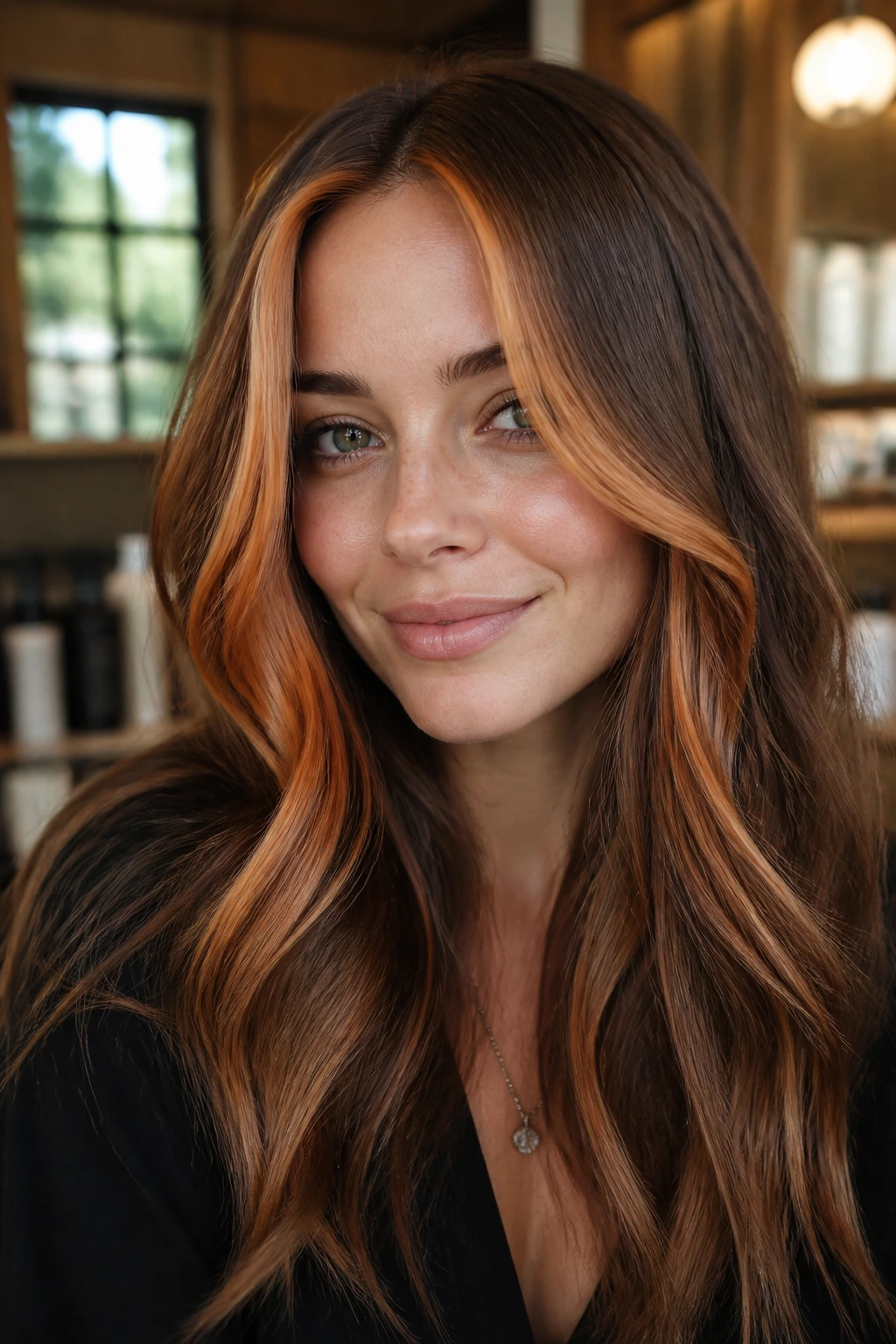
The money piece is the quickest way to test amber without committing to a full head of color. Two brighter amber panels at the front frame the face, brighten the hairline, and pull the whole look forward.
That’s what makes it useful. You get the visual payoff where people actually see it first, while the rest of the hair can stay honey brown, caramel, or untouched. On medium and long hair, it also creates a clean contrast against the rest of the color, especially if you wear a center part.
This is the shade I like for anyone who wants a visible change but hates long appointments. It grows out more gracefully than a full-on bright copper front, and it can be refreshed in small sections instead of redoing the whole head.
7. Golden Amber Curl Revival
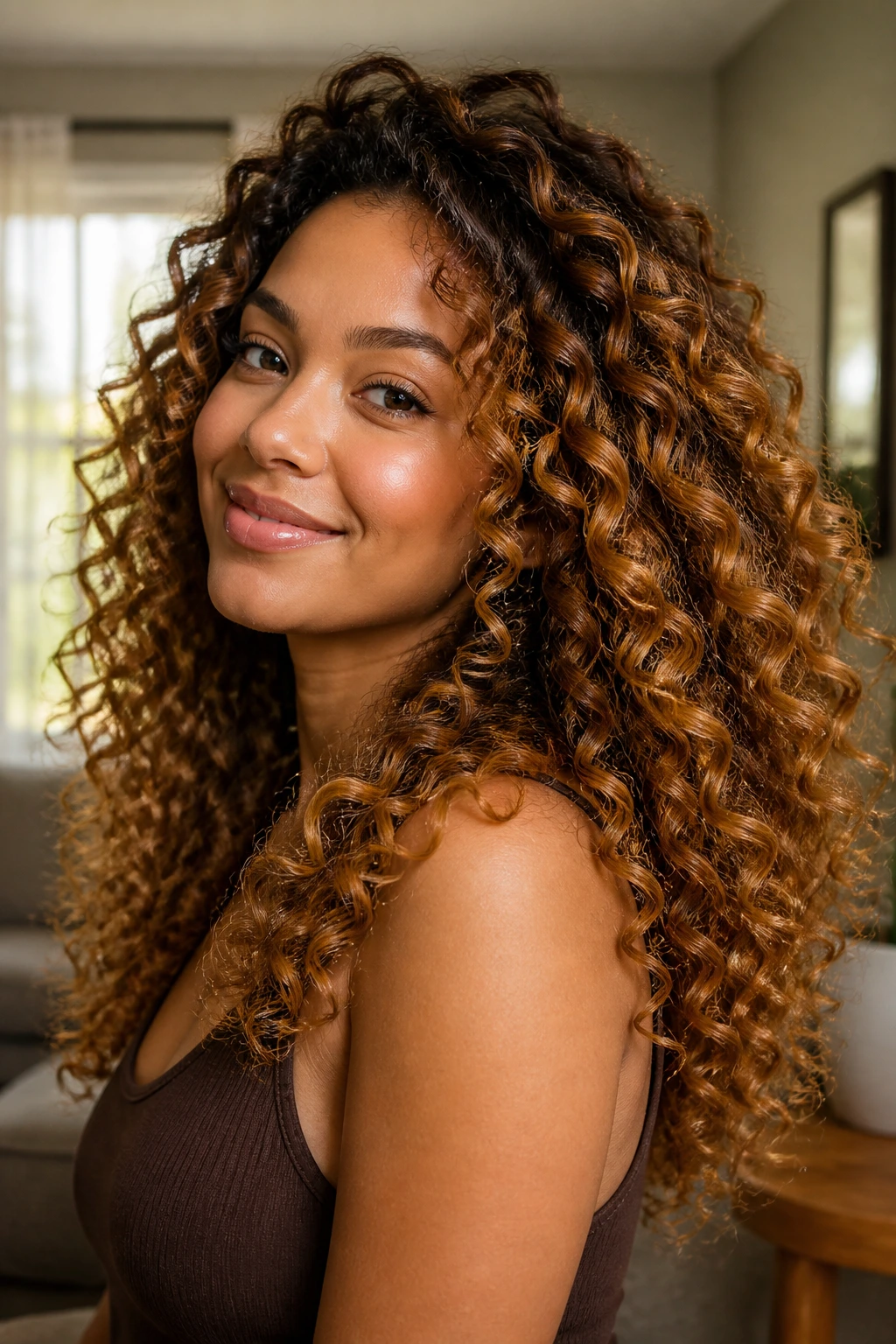
Curls love amber because every bend in the hair catches a different piece of the color. Golden amber on coils, spirals, or loose ringlets breaks into tiny flashes of honey, apricot, and warm brown as the hair moves.
What Makes It Work on Texture
The texture does half the work. You don’t need oversized contrast when the curl pattern already creates separation. A good amber formula on curls should look glossy and soft, not pasted on. If the color is too flat, curls can lose the depth that makes them interesting.
A few things I’d ask for:
- Painted ribbons, not solid saturation: Keeps the curls from looking blocky.
- A gloss or glaze at the end: Gives the curl surface that soft shine.
- Warm ends with deeper roots: Helps the shape keep its shadow and bounce.
On a curl pattern, amber should look like light moving through the hair, not paint sitting on top of it. That’s the version worth saving.
8. Apricot Amber Bob
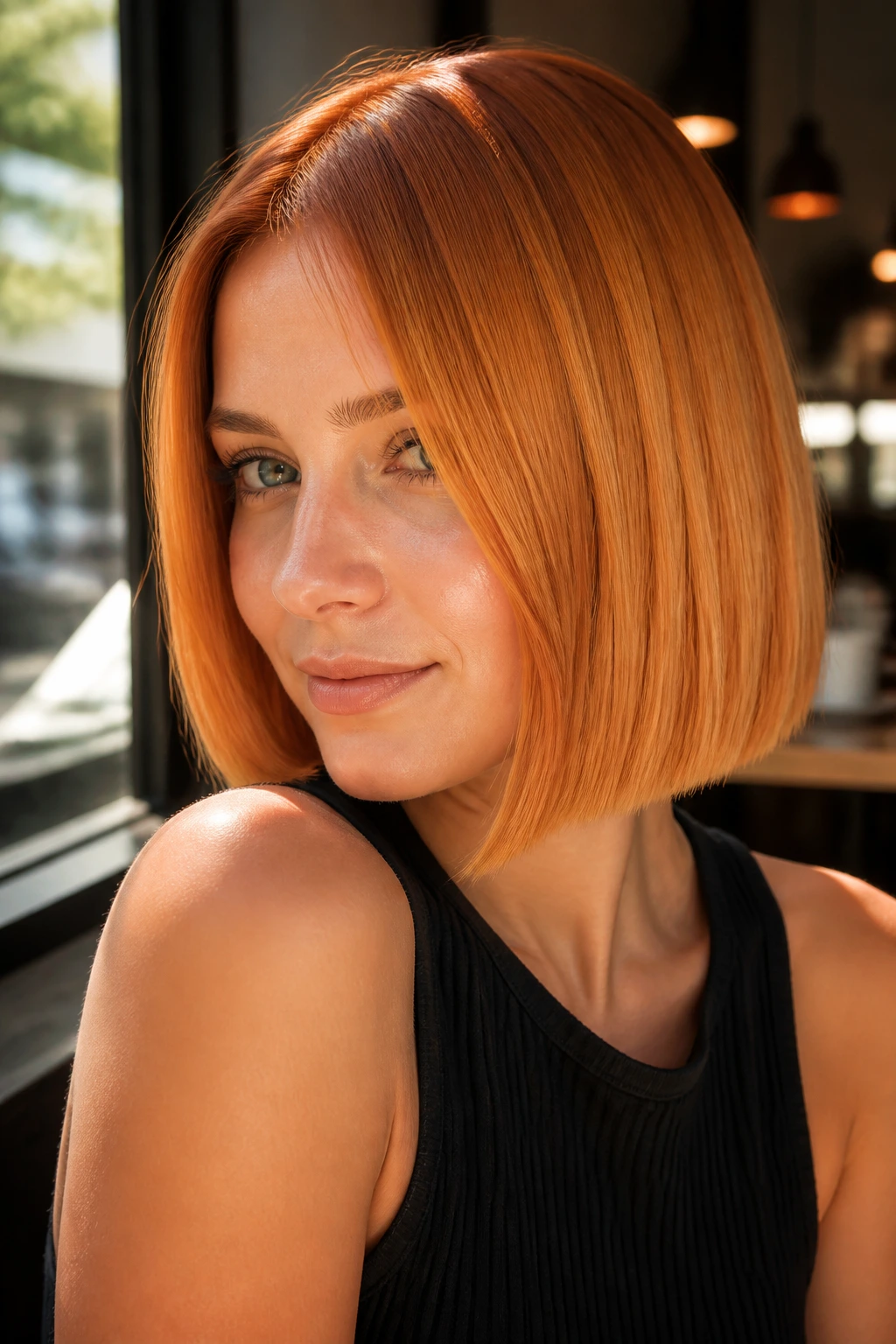
Apricot amber is the playful cousin in the group. It leans peach-gold with enough copper to keep it from drifting into soft pastel territory, and on a bob it looks clean, modern, and a little cheeky.
This shade is especially good on straight or slightly wavy bobs because the cut gives the color a crisp outline. When the ends are blunt and the shine is high, apricot amber can make the whole style feel deliberate instead of sweet. That’s the difference between cute and expensive-looking.
If your wardrobe already has cream, tan, rust, or olive in it, the shade drops in easily. It also works well with a middle part, since the even line of the cut keeps the bright warmth from feeling scattered.
9. Smoky Amber Root Shadow
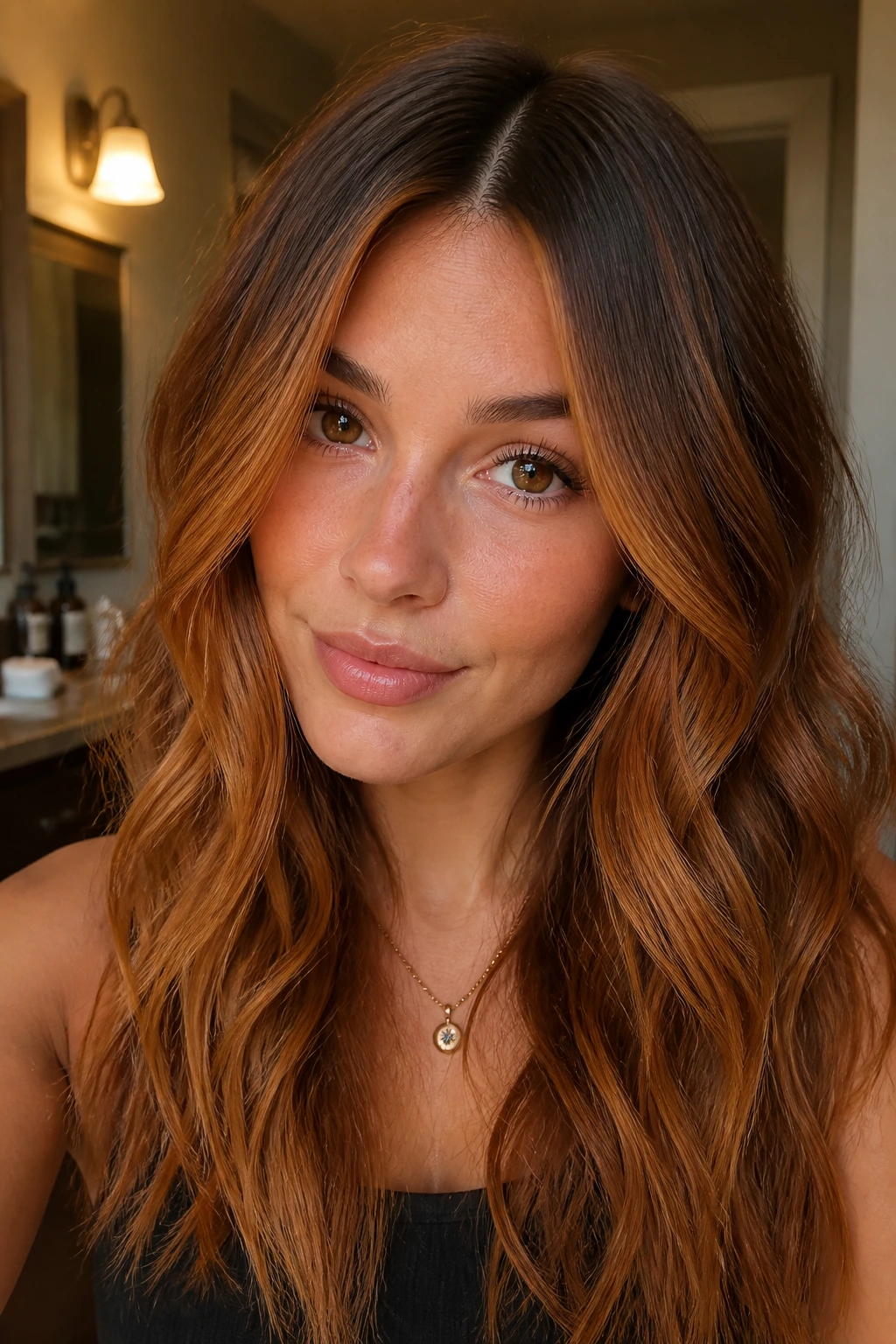
What keeps amber from looking flat when the roots start coming in? A soft root shadow. Smoky amber root shadow pairs a neutral or slightly cool root with warm amber mids and ends, and the contrast is what gives the whole look shape.
The root doesn’t need to be dark-dark. It just needs enough smoke to hold the amber in place. Without that, warm hair can blur together after a few washes and lose its depth. With it, the amber looks intentional longer.
This is one of the best choices if you want a little forgiveness between salon visits. The grow-out line stays soft, and the darker root gives the brighter pieces somewhere to land. It’s subtle, but the difference is obvious when you look at the hair from a few feet away.
10. Butterscotch Amber Face Frame
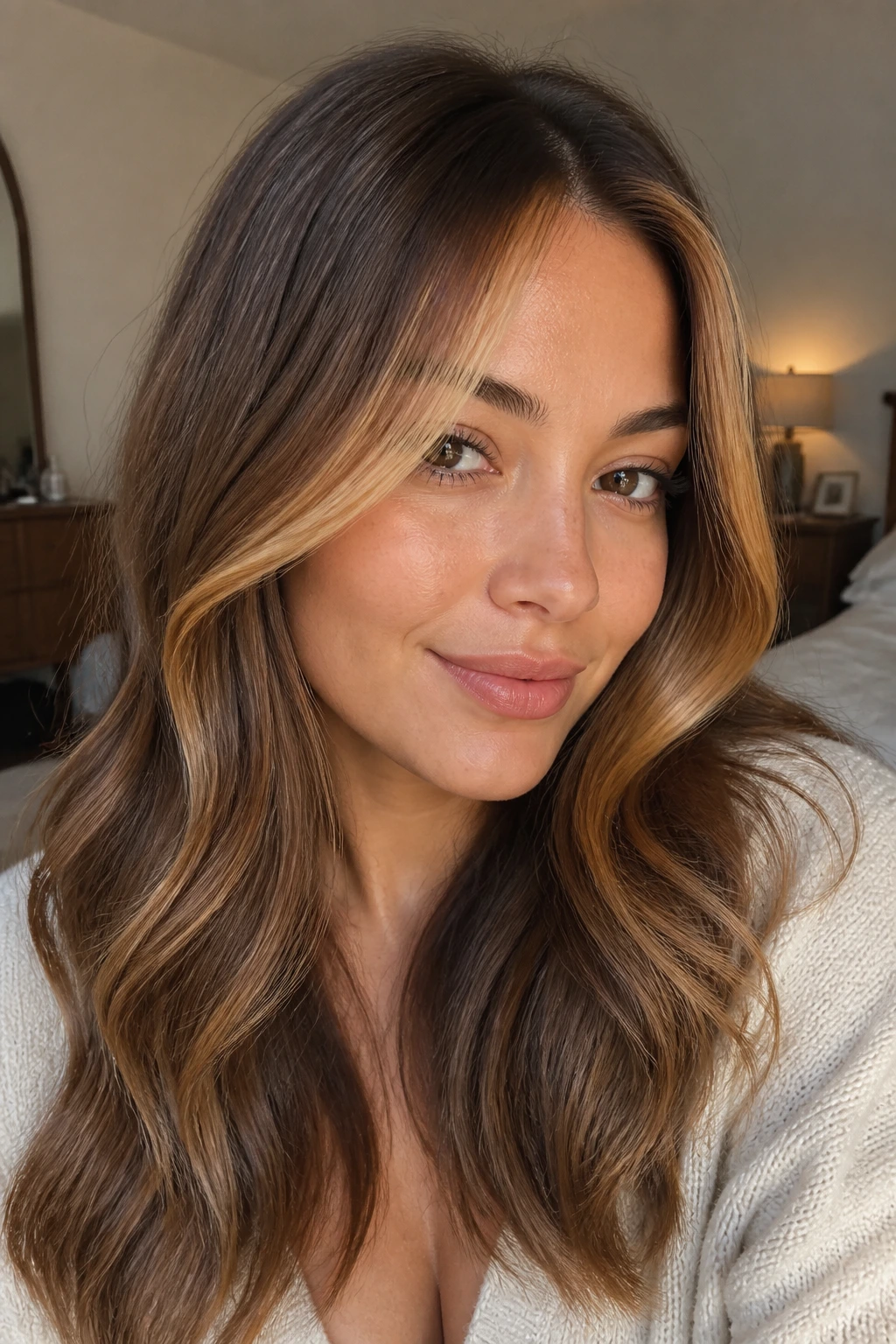
This is the shade I’d hand someone who wants a color change they can live with every day. Butterscotch amber around the face gives you brightness where it counts, while the rest of the hair stays softer and easier to maintain.
The front pieces should feel creamy and warm, not yellow. That’s where the butterscotch note comes in. It softens the copper edge and makes the shade sit nicely against warm skin, freckles, or a golden base.
A quick way to think about it:
- If you wear a center part, this frames the face fast.
- If your hair is long and one-length, it keeps the ends from looking heavy.
- If you want less salon upkeep, this is easier than an all-over amber refresh.
It’s one of those looks that can be quiet from the back and noticeable from the front, which is a nice trade.
11. Toasted Amber Pixie
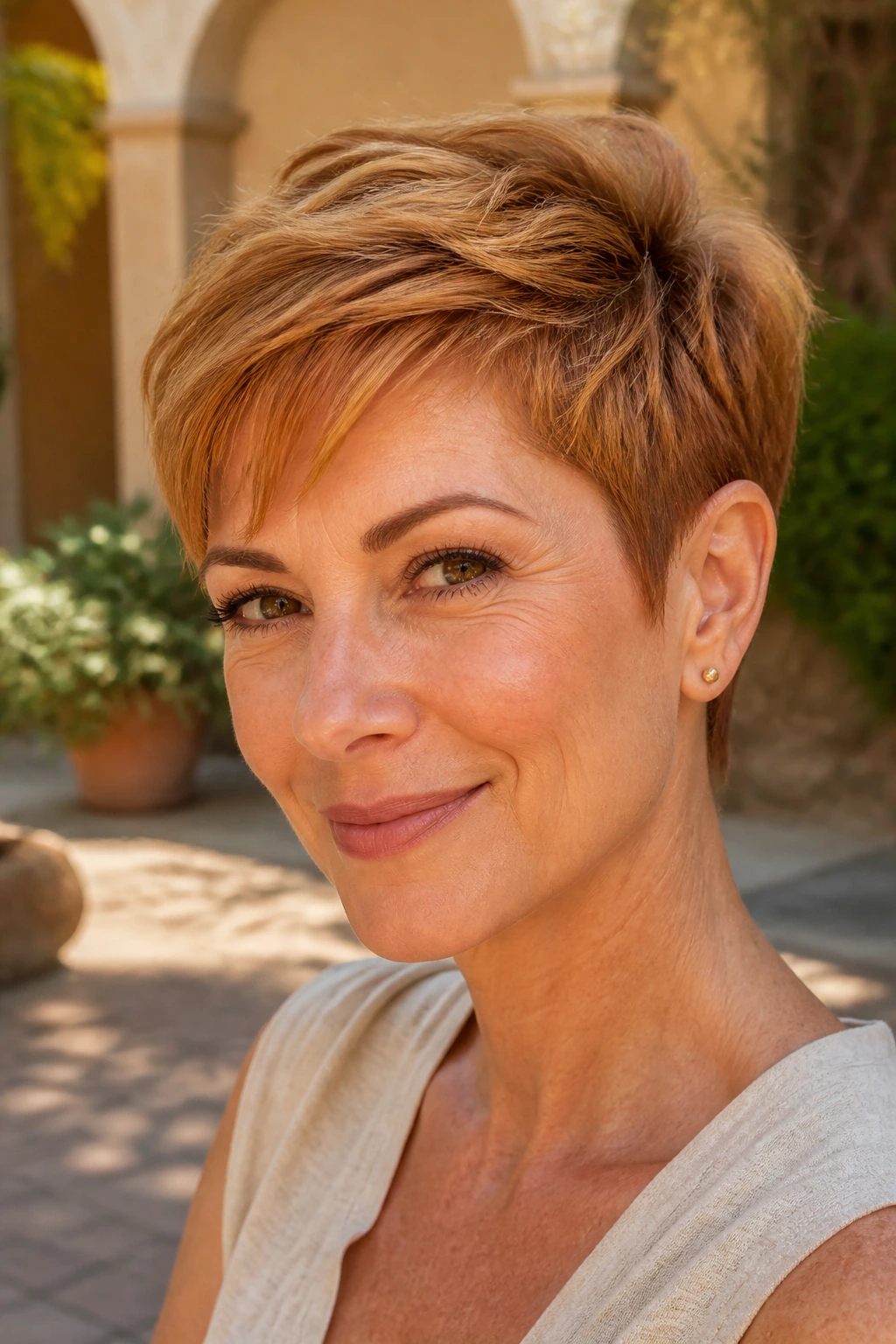
A pixie cut does not need bright chunks to feel dimensional. Toasted amber on short hair uses tiny shifts in tone — a little lighter on top, a little richer near the sides — to keep the cut from reading as one solid block.
The reason this works is simple: short hair shows shape first. If the color is too loud, it fights the cut. Toasted amber stays close enough to brunette and gold that the texture and the layers still get to lead.
I like this on pixies with a soft fringe or a longer crown. The warm tone picks up the movement without making the whole head look overdone. It’s neat, but not severe. That’s a rare balance on short hair.
12. Sunlit Amber Waves
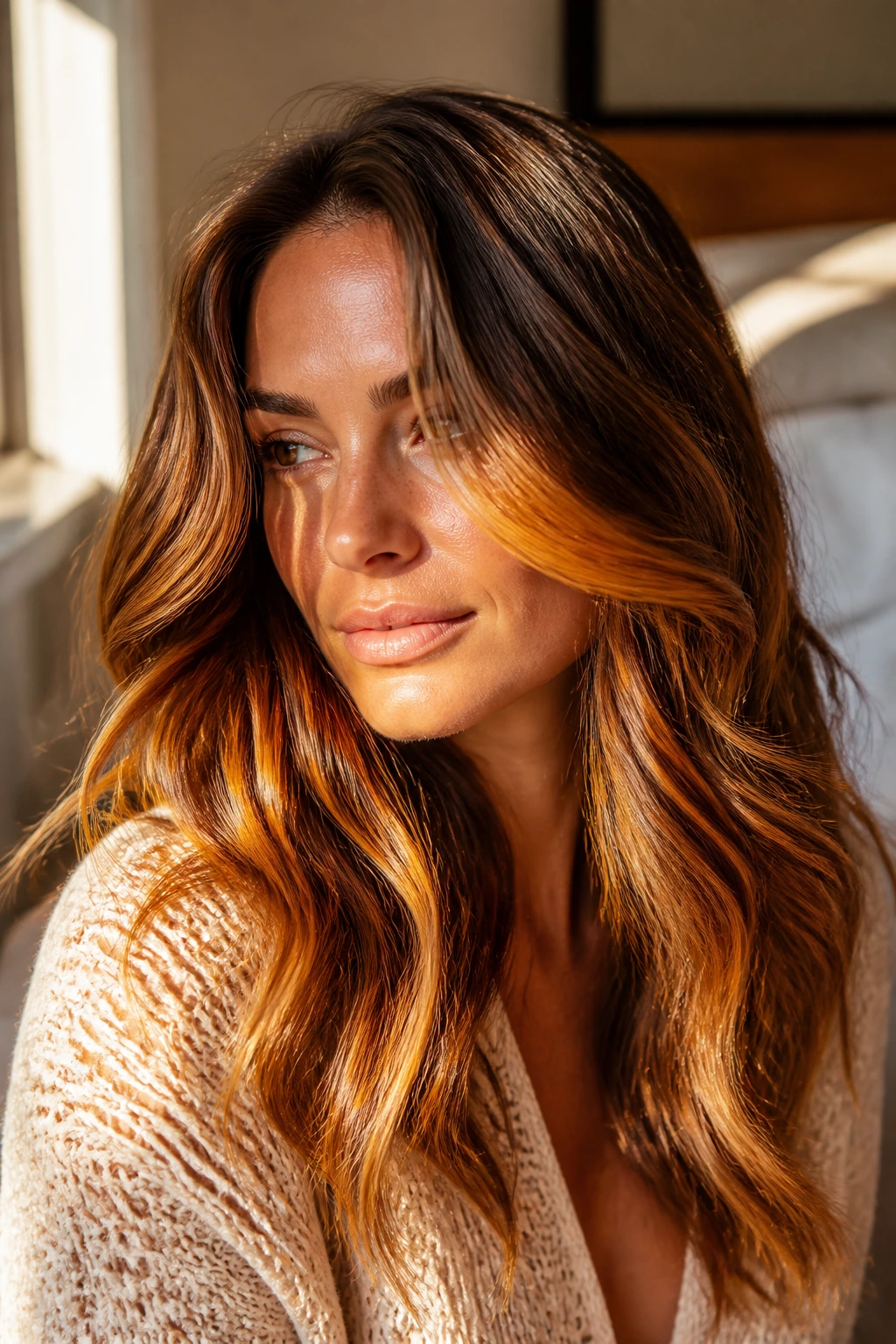
Unlike a tight balayage, sunlit amber waves are all about wider painted sections that show up when the hair bends. The result is less “highlight” and more “warm light moving through the hair.”
The trick is to keep the wave pattern loose enough that the amber bands can open and close as the hair shifts. On a round brush blowout or a large-barrel wave, the tone gets a soft glow that reads richer than a flat blow-dried finish. Straightened, it can look more muted. That’s fine if you want a gentler result.
This is a good fit for medium to long hair, especially when the ends are already a touch lighter. The shape of the wave and the placement of the color do the same job: they keep the eye moving.
13. Chestnut Amber Gloss
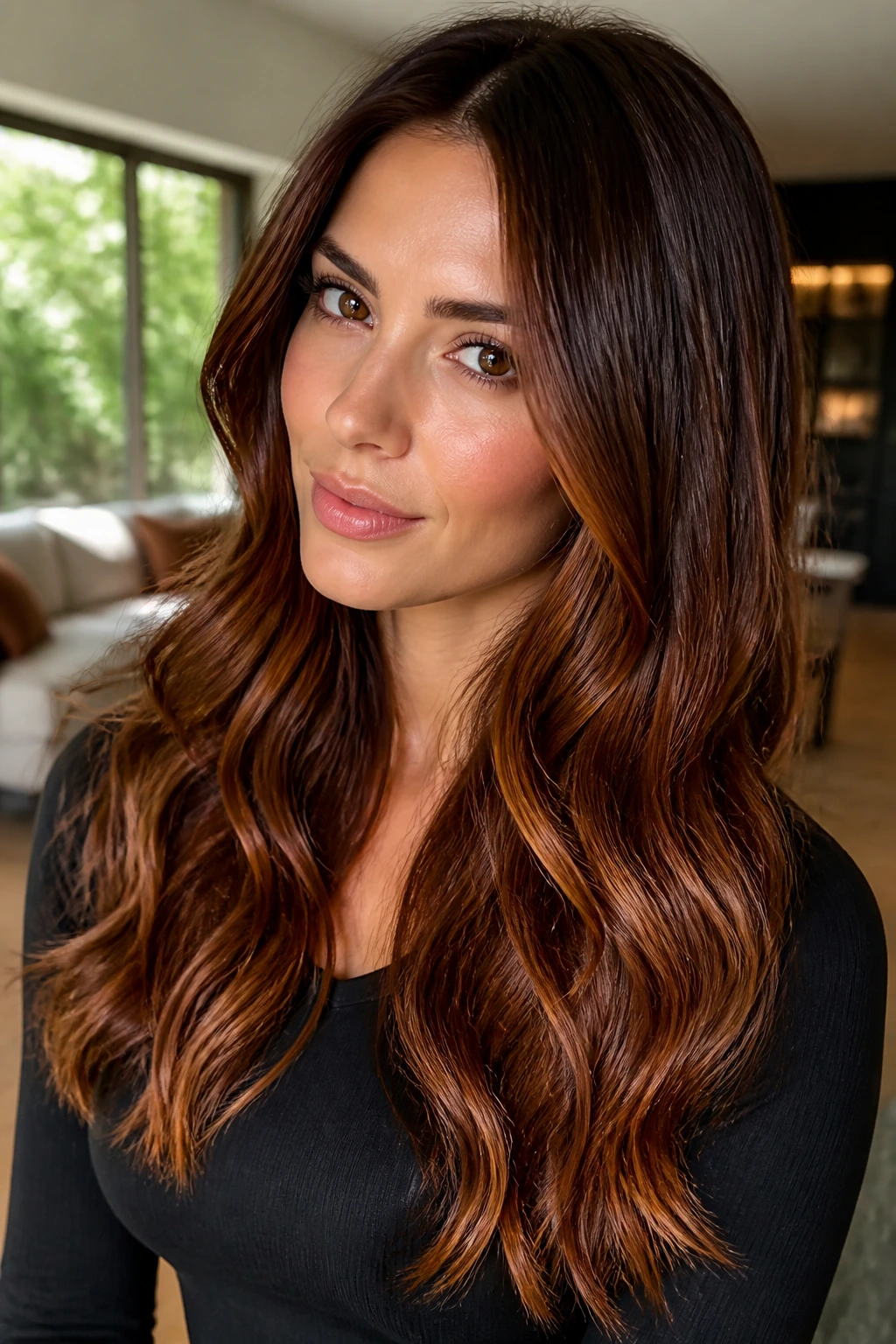
Chestnut amber gloss is the brownest shade in this group, and that’s why it’s useful. If you want warmth without making the hair look copper-heavy, a chestnut base with amber reflect can be the sweet spot.
Who Should Ask for It
This works best on brunettes who want to keep their depth. The hair looks chestnut first and amber second, which means it still feels rich in low light. Under sunlight, the warm notes come forward and the whole color wakes up.
A gloss version is especially good if you don’t want permanent change. It can refresh dull brown hair, soften old highlights, and make the surface look smoother without aggressive lightening. That part matters. A good amber gloss should make the hair feel expensive in the simplest possible way: shiny, even, and warm.
14. Spiced Amber Shag
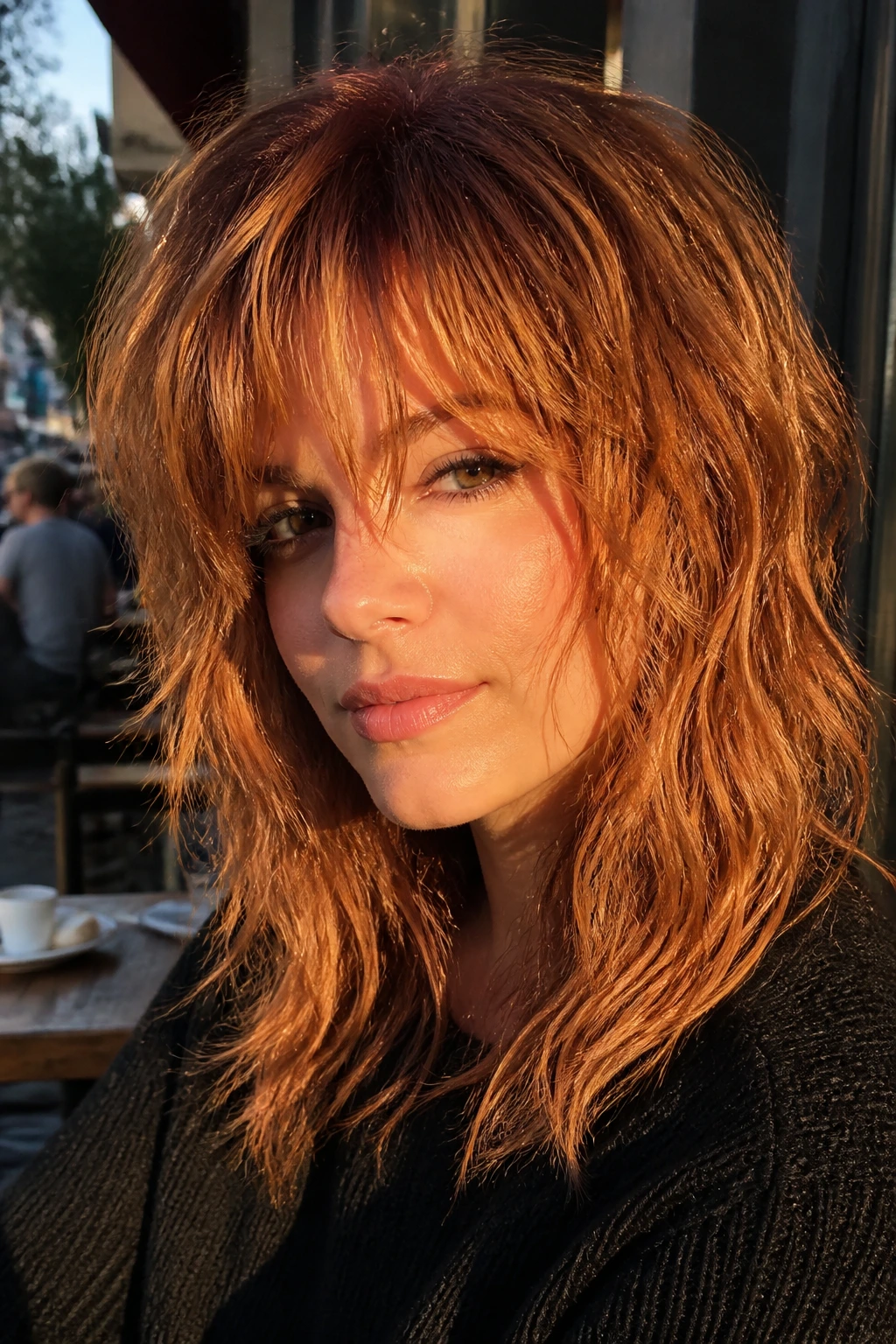
Why do shags make warm tones look intentional? Because the layers break the color into little sections, and those sections keep the amber from sitting there like a single block of dye. On a shag, the movement is baked in.
The spiced version leans a little deeper than a bright copper look. Think cinnamon, clove, gingerbread edges — warm, yes, but with enough brown to stay wearable. Fringe pieces can be a touch brighter, while the crown and underlayers stay slightly darker.
A shag also gives you room to be messy. Air-dried texture, a light wave, or a diffuser can all make the shade look better. If you want a color that suits a more lived-in cut, this is one of the easiest wins.
15. Rose-Amber Undertone
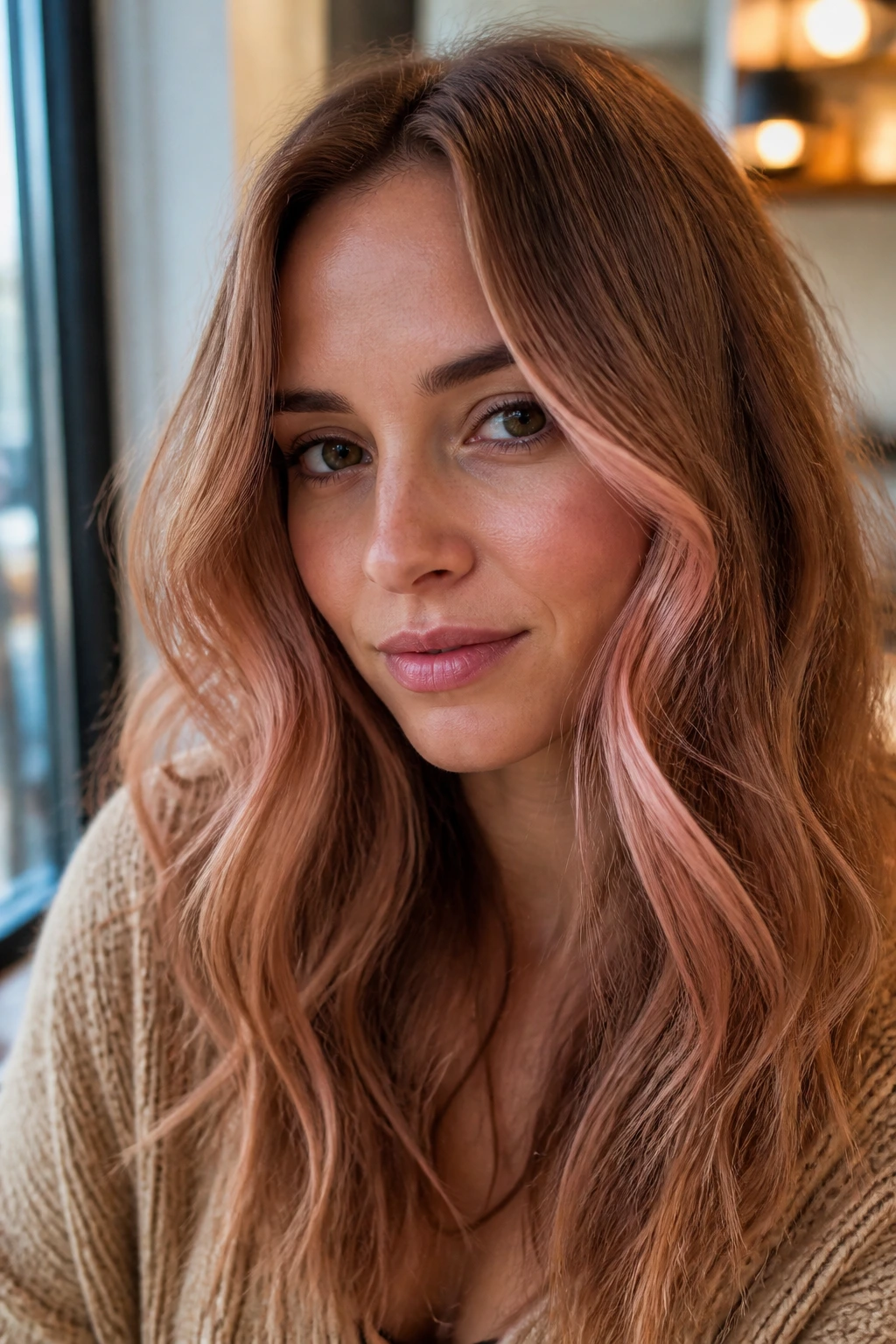
Rose-amber is what happens when amber gets a softer center. The copper is still there, but a gentle rosy note rounds it out so the color doesn’t go too orange or too yellow.
On hair, that can look almost like warm blush reflecting through honey brown. It’s a good move if your skin runs warm but you still want the shade to feel a little softer than classic copper. The rose edge keeps it from looking harsh near the face.
This one surprises people because it reads subtle in a swatch and richer in motion. When the hair swings, the pink-gold balance catches light in a way that a plain gold gloss doesn’t. Quiet. But not plain.
16. Amber Bronde Blend
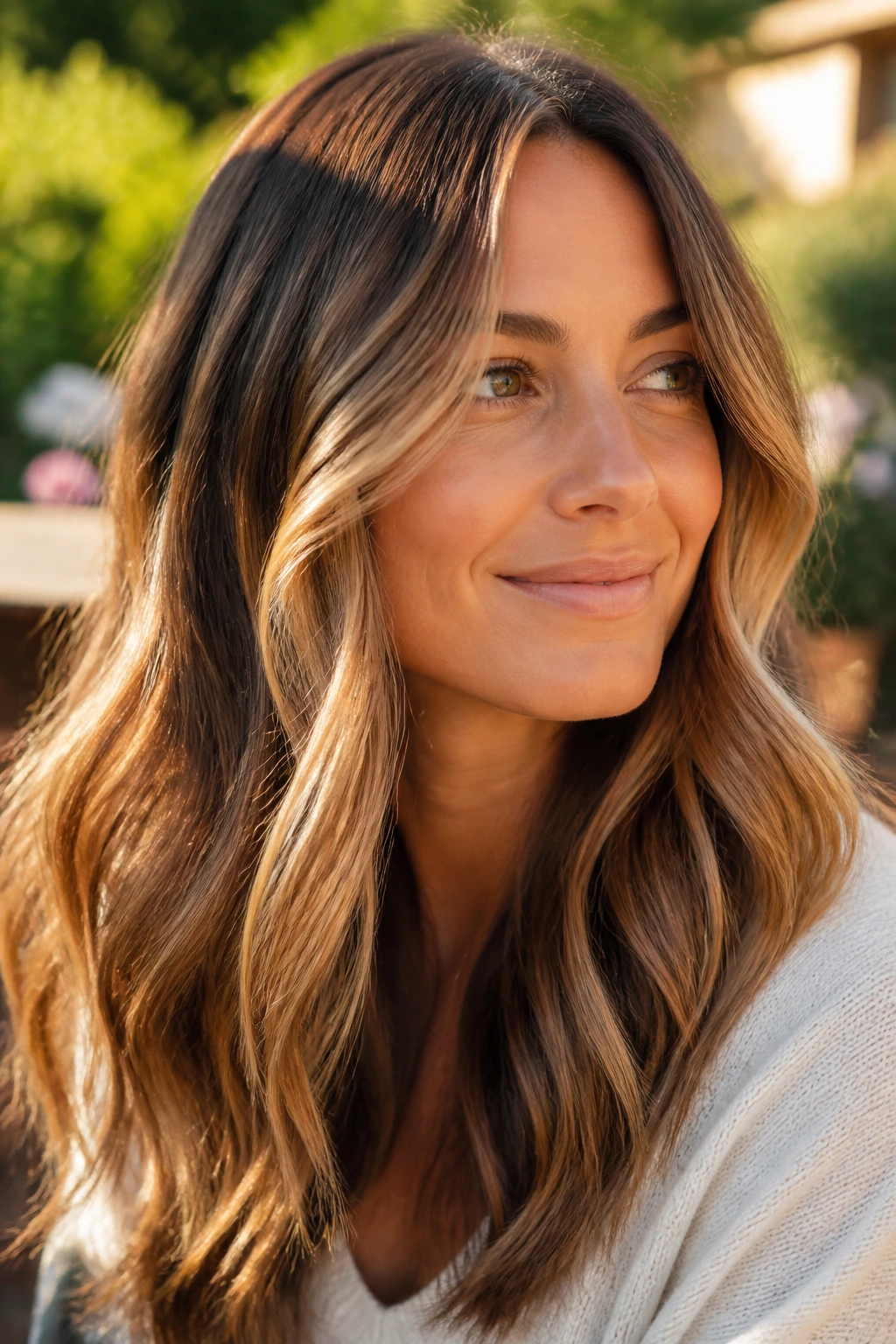
Bronde can look muddy when the warm pieces don’t have enough personality. Amber fixes that. An amber bronde blend keeps the brown base and blonde softness, then threads in honey-copper warmth so the whole head feels more awake.
The important part is balance. Too much amber and you lose the bronde softness. Too little and the result looks like ordinary highlighted brown hair. The sweet spot sits right in the middle, where the pieces look warm but not obvious.
This is one of the best choices for someone who wants dimension without a dramatic color identity shift. You still look like a brunette or dark blonde. You just look like a better-lit version of yourself.
17. Maple Amber Layers
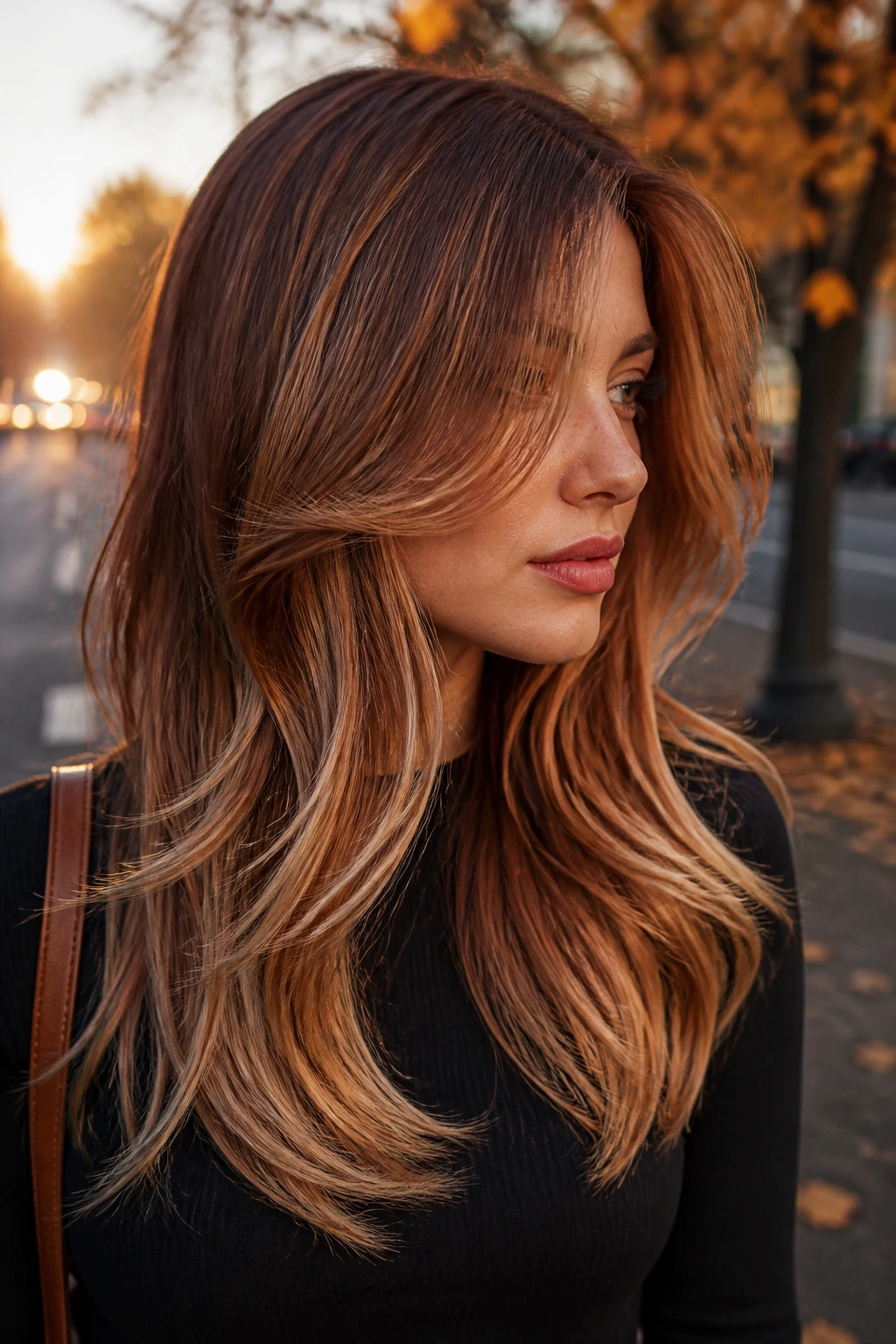
Maple amber layers are one of those styles that make long hair feel lighter without actually cutting much off. The amber shows up on the outer layers and ends, so each section of hair has enough contrast to move.
I like this look on shoulder-length to long hair with a few visible layers around the face. When the top pieces fall over warmer ends, the result looks natural and deliberate. It also photographs in a very honest way — not glossy in a fake sense, just glossy because the layers catch light at different points.
A few placement notes help here:
- Keep the brightest warmth on the surface layers.
- Leave the underside a shade deeper.
- Add a soft gloss to the ends if they tend to look dry.
That extra depth is what keeps maple amber from turning flat.
18. Tangerine Amber Peekaboo
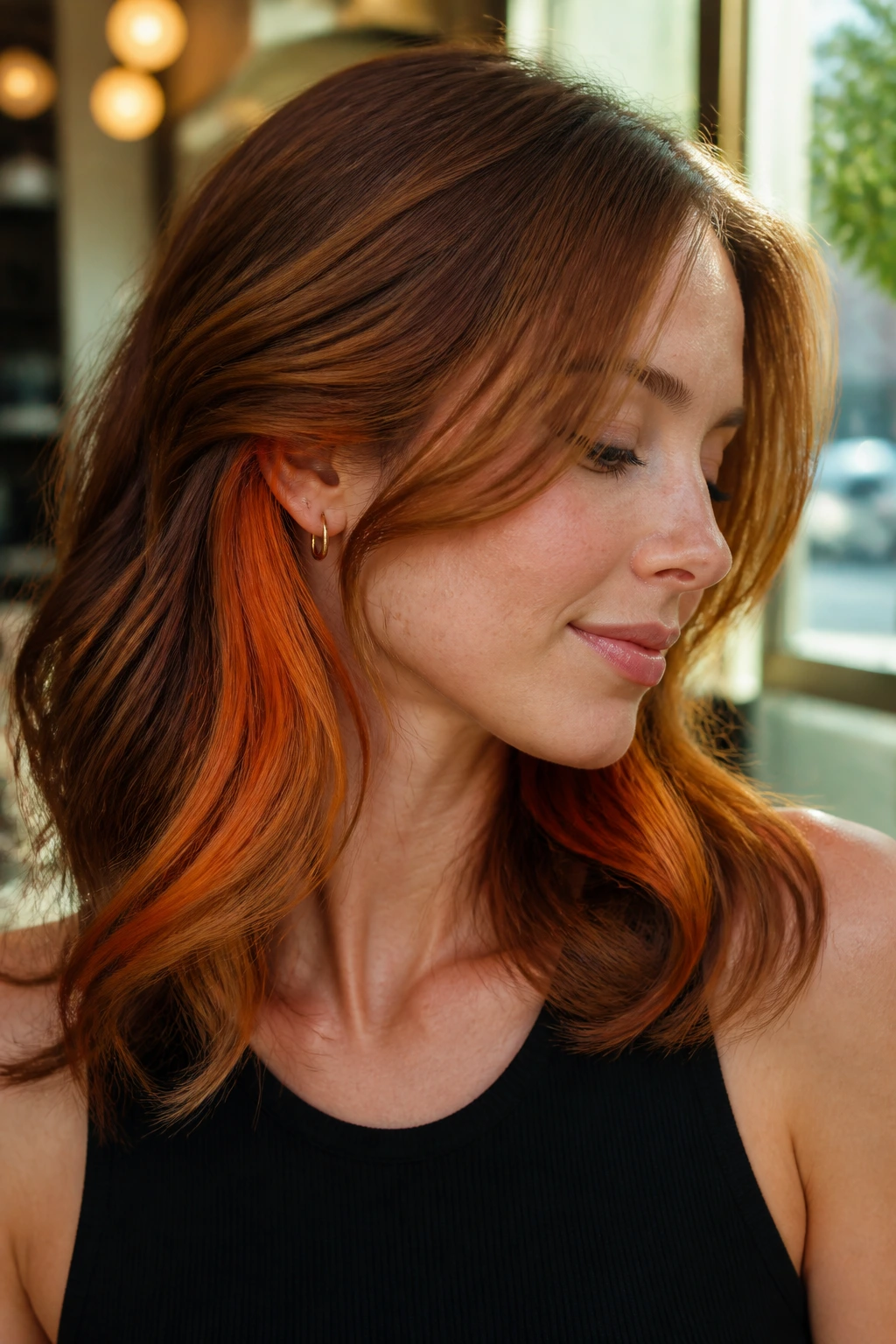
This is the bold one, and I like it more than people expect. Tangerine amber peekaboo color hides under the top layer, so you get little flashes of orange-gold warmth when the hair moves, flips, or gets tucked behind the ear.
The color works because it’s placed like a surprise, not a full statement. On straight hair, it can peek through in clean lines. On waves, it breaks up and looks almost molten. Either way, it gives you drama without painting every strand the same way.
If you want a vivid amber but don’t want to live inside it, this is the compromise I’d choose. You can keep the top layer softer and let the hidden panels do the fun part.
19. Velvet Amber Bob
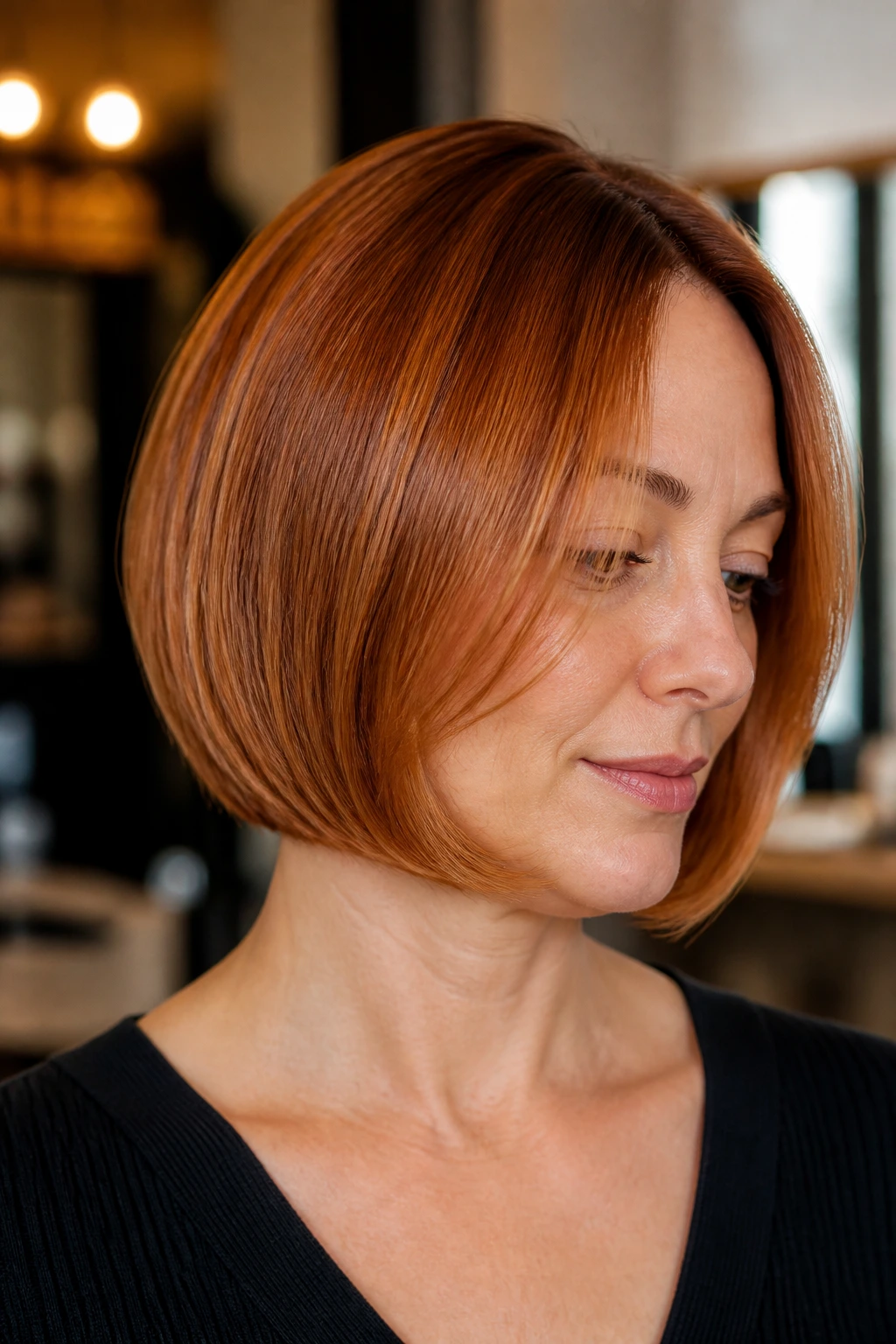
Velvet amber on a bob is all about finish. The cut already gives you shape, so the color should deepen it, not compete with it. A velvet gloss over a bob produces a smooth, almost plush surface where the amber looks embedded in the hair instead of sitting on top.
This is the shade for people who love shine more than contrast. It’s warm, but restrained. When the ends are slightly beveled under and the surface is polished, the whole style reads as one clean line with warmth running through it.
I like this best when the color stays close to chestnut-amber rather than bright copper. That little bit of brown keeps the bob grounded and stops it from feeling too cheerful or too loud.
20. Amber Shadow Roots for Grey Blending
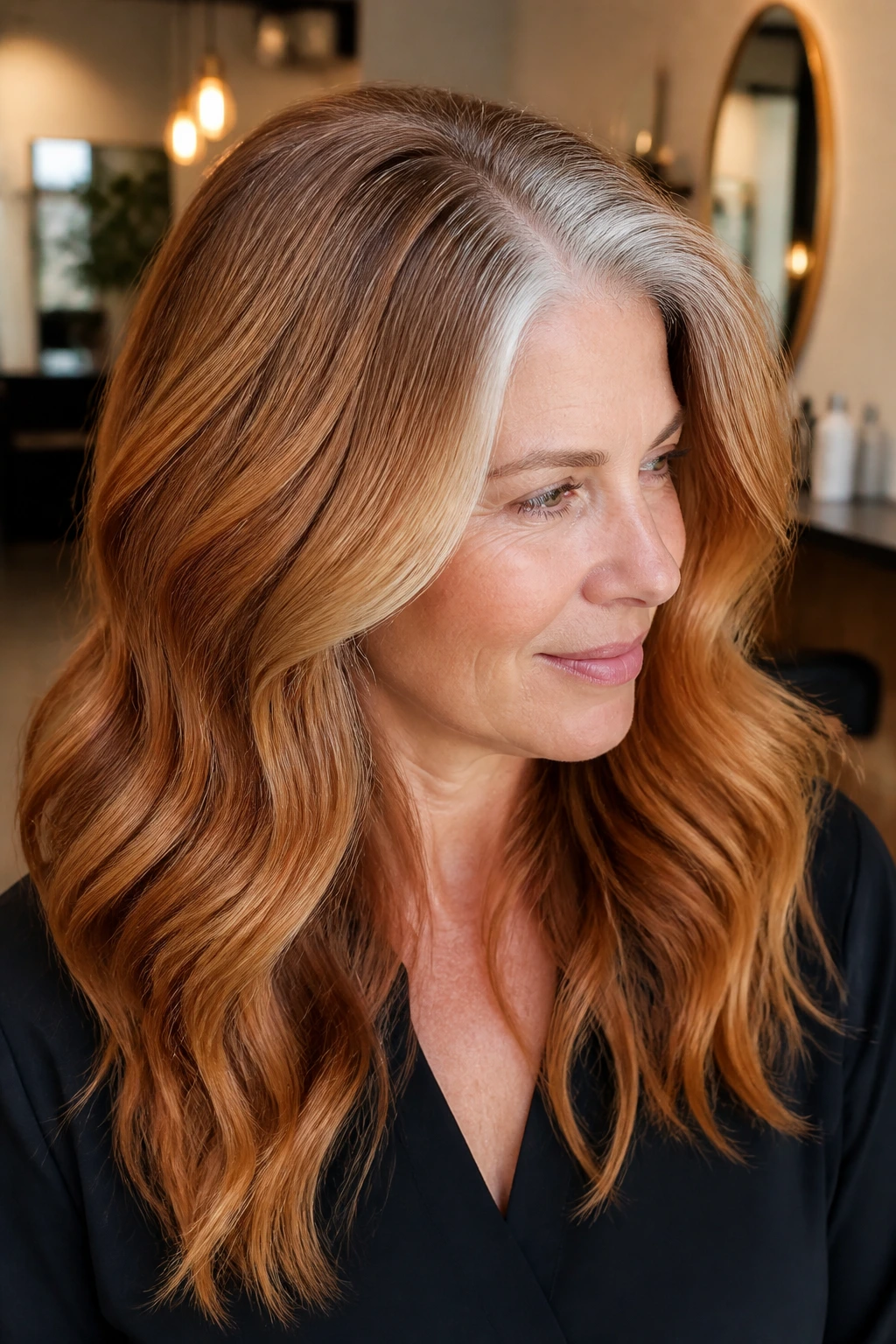
What do you do when you want amber but also need grey blending? You build the color around the grey, not over it. Amber shadow roots let the root area stay soft and muted while the mids and ends hold warmer, brighter reflect.
This is smarter than trying to force every silver strand into full coverage. The grey catches light differently, and a shadow root helps it disappear into the overall pattern instead of making a hard line. The amber then lives in the lengths, where it can stay glossy and warm.
It’s a good choice if you’re tired of fighting regrowth. The grow-out looks softer, and the hair keeps some movement at the crown. That little bit of depth makes a big difference.
21. Caramel Amber Melted Ends
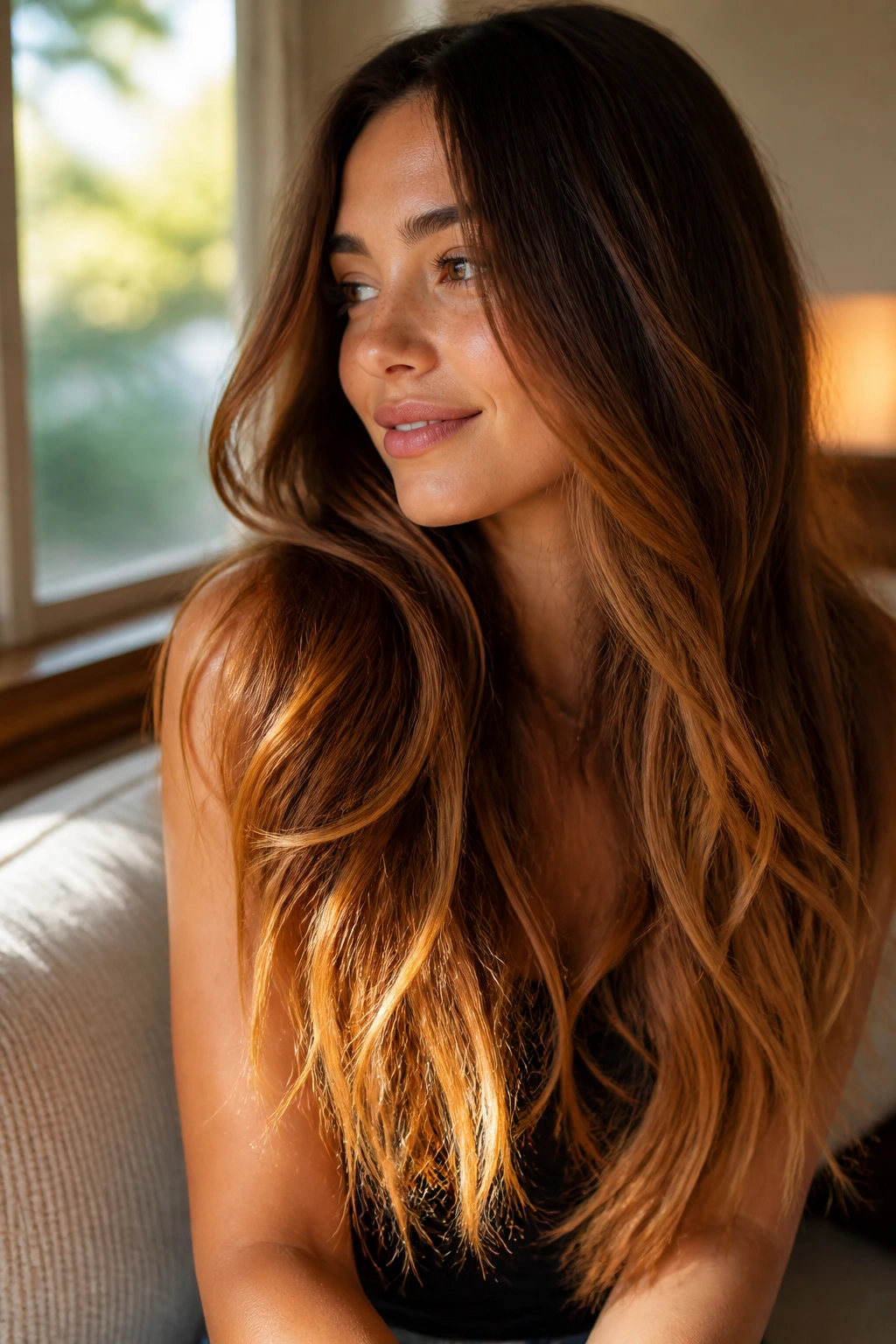
Caramel amber melted ends are a nice alternative to the usual ombré. Instead of a stark dark-to-light shift, the color slowly warms as it moves down the hair, ending in caramel and amber that feel blended rather than dipped.
This works especially well on hair that likes movement. Waves and curls break up the melt and make the color read softer. Straight hair shows the fade more clearly, which can be a good thing if you want a neat gradient.
The key here is keeping the ends warm, not pale. Once the color gets too light, the amber loses its depth and starts drifting toward generic gold. A caramel base gives it enough body to stay interesting.
22. Ultra-Gloss Amber Halo
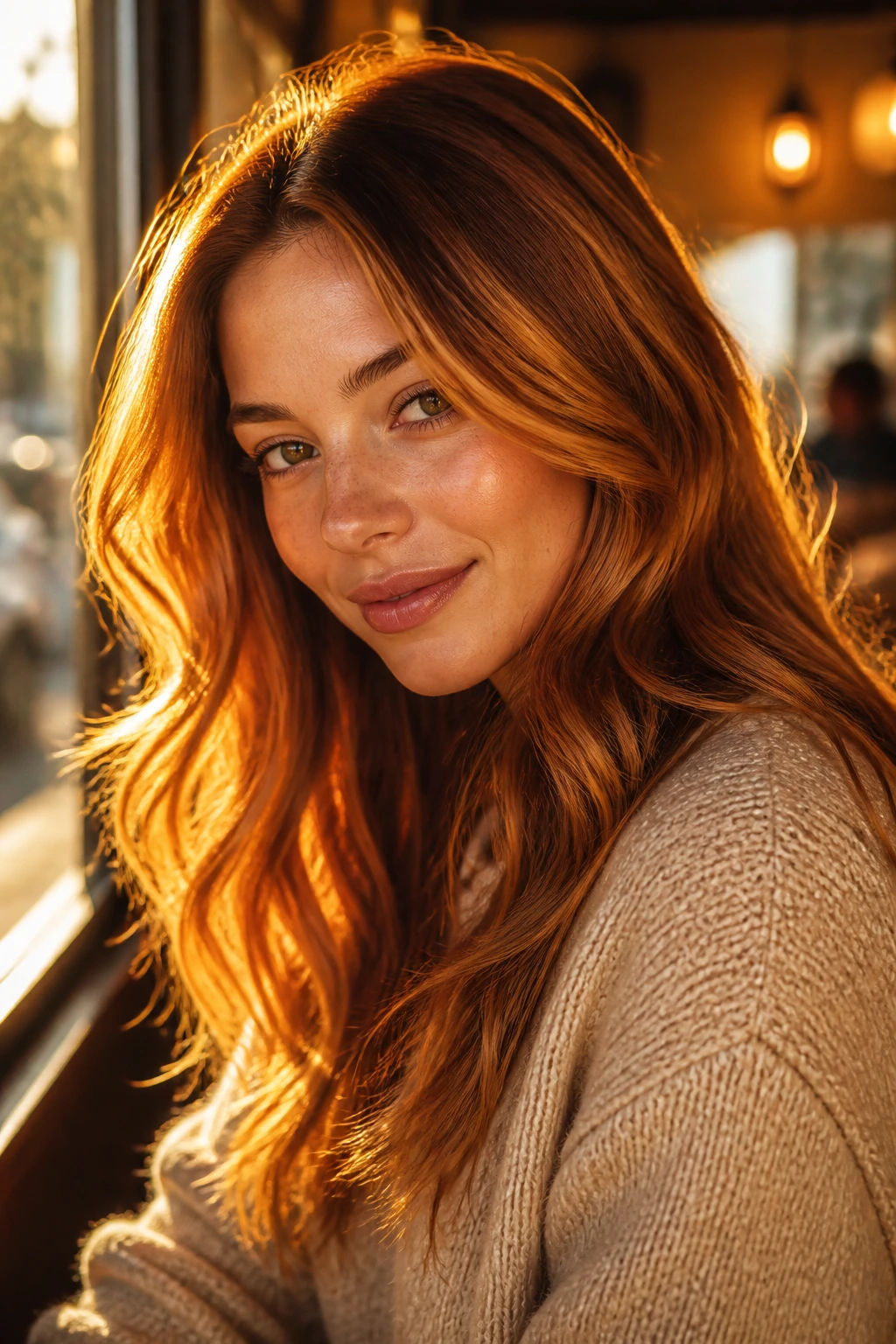
Ultra-gloss amber halo is the version I save for the finish obsessives. The color sits around the face and outer layers like a warm ring of light, and the gloss makes every bend in the hair look smoother.
The halo part matters. Instead of changing the whole head, the warm amber lives where the eye lands first: hairline, temples, top layers, and the surface around the part. On a good day, it looks almost luminous. On an ordinary day, it still looks clean and rich.
Why Shine Matters Here
Amber can fall flat if the surface is dry or rough. A clear glaze or shine treatment keeps the tone crisp and makes the gold-copper balance read correctly. That’s the difference between warm hair and warm hair that looks cared for.
If you want the most polished version of amber without making the color too loud, this is the one I’d keep at the top of the list.
Why Amber Hair Color Works So Well on Honey-Toned Bases
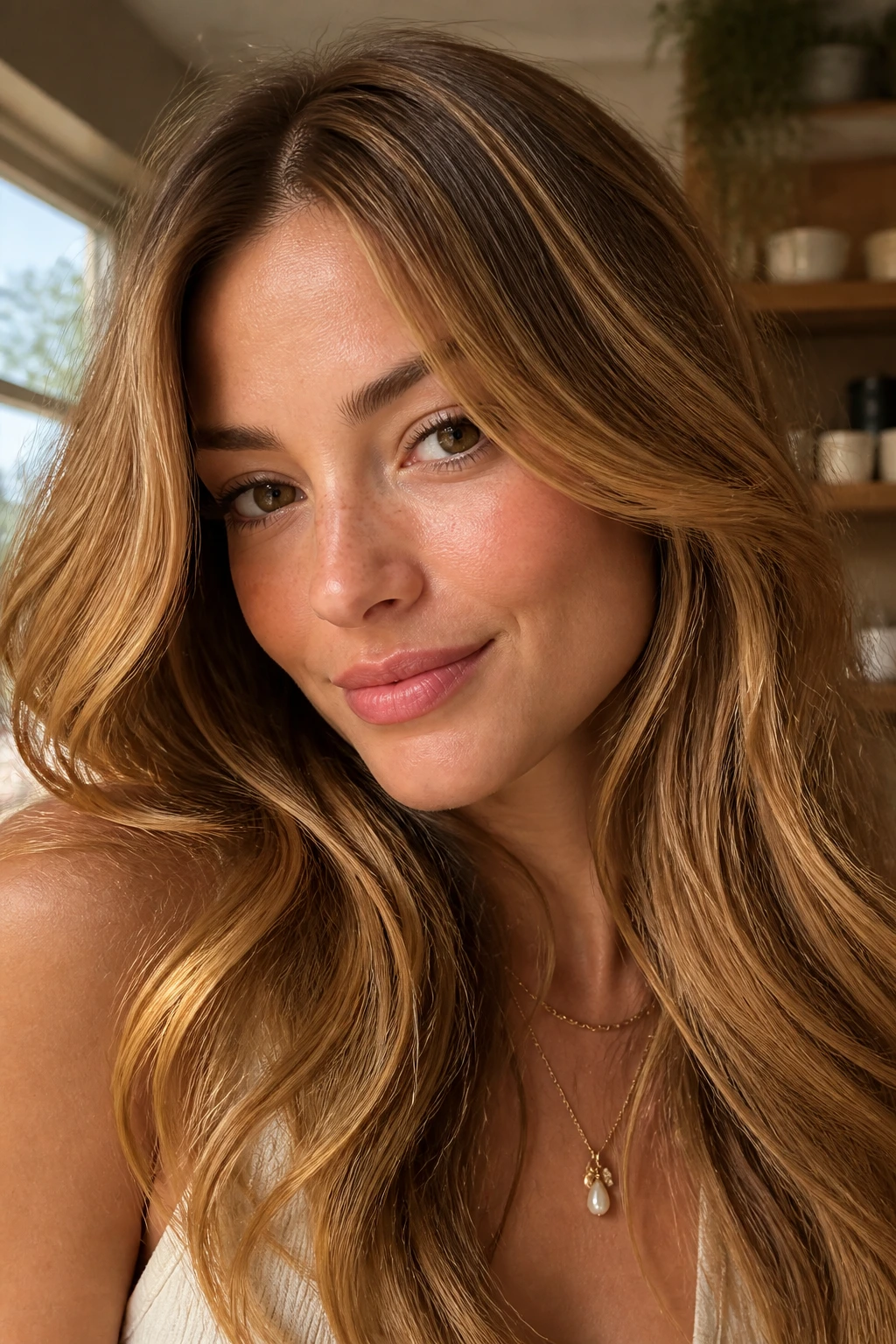
Amber sits in a useful little pocket on the color wheel. It isn’t as bright as copper, and it isn’t as yellow as gold. That middle ground is why it behaves so well on honey-toned hair: the warmth feels built in, not pasted on.
Level Matters More Than the Name on the Box
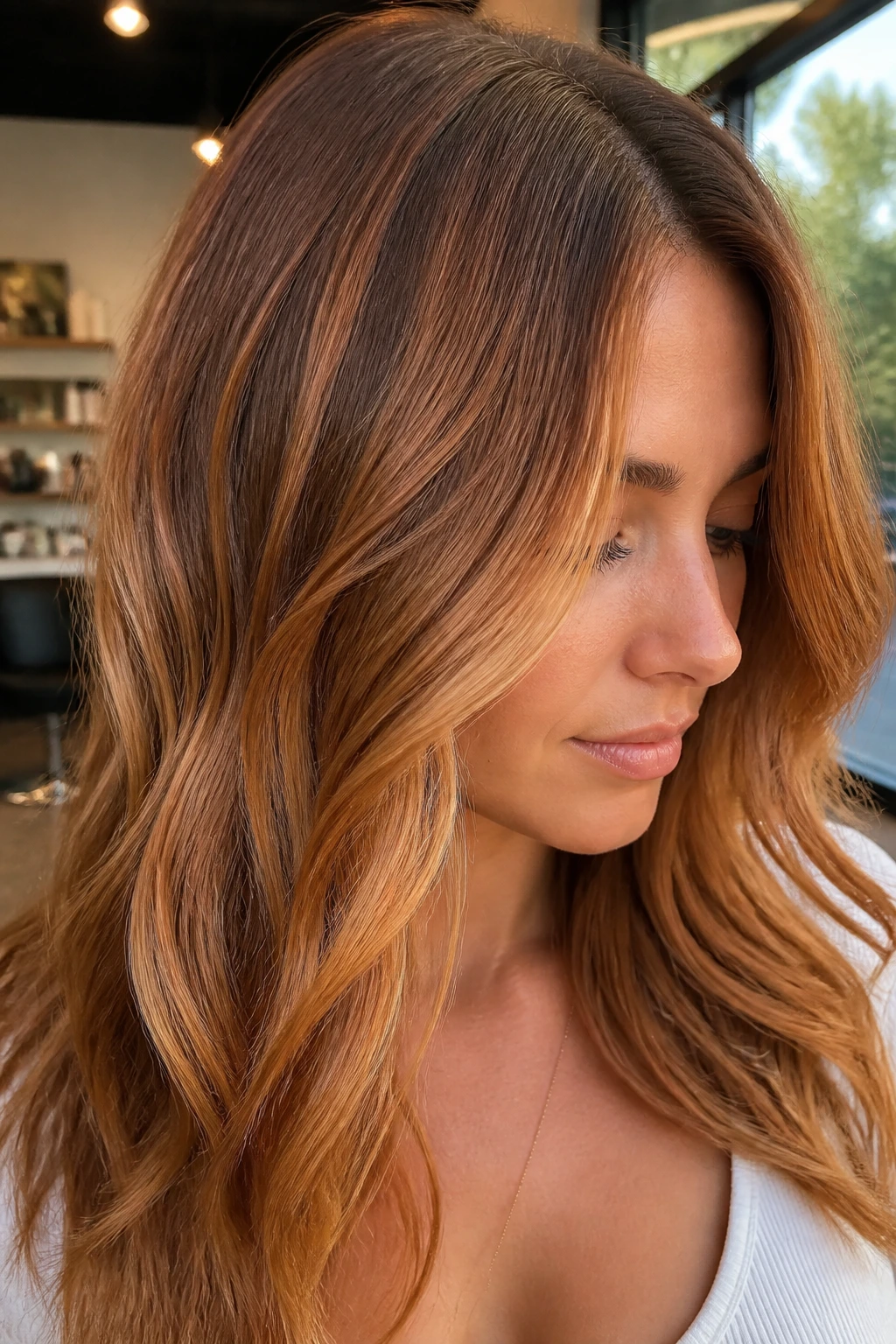
A shade called amber can land very differently depending on the base level underneath it. On a level 7 brown-blonde base, amber can read as golden copper. On a deeper level 5 brunette base, the same idea may look like chestnut with warm reflect. The label is only part of the story.
That’s why I trust swatches and photos only if they show a natural base close to yours. If the model’s hair is three levels lighter than yours, the result will not map cleanly onto your head. The same goes for texture. Fine hair tends to show warmth faster. Dense hair often needs more dimension to keep the color from looking solid.
Brass Is Usually a Placement Problem
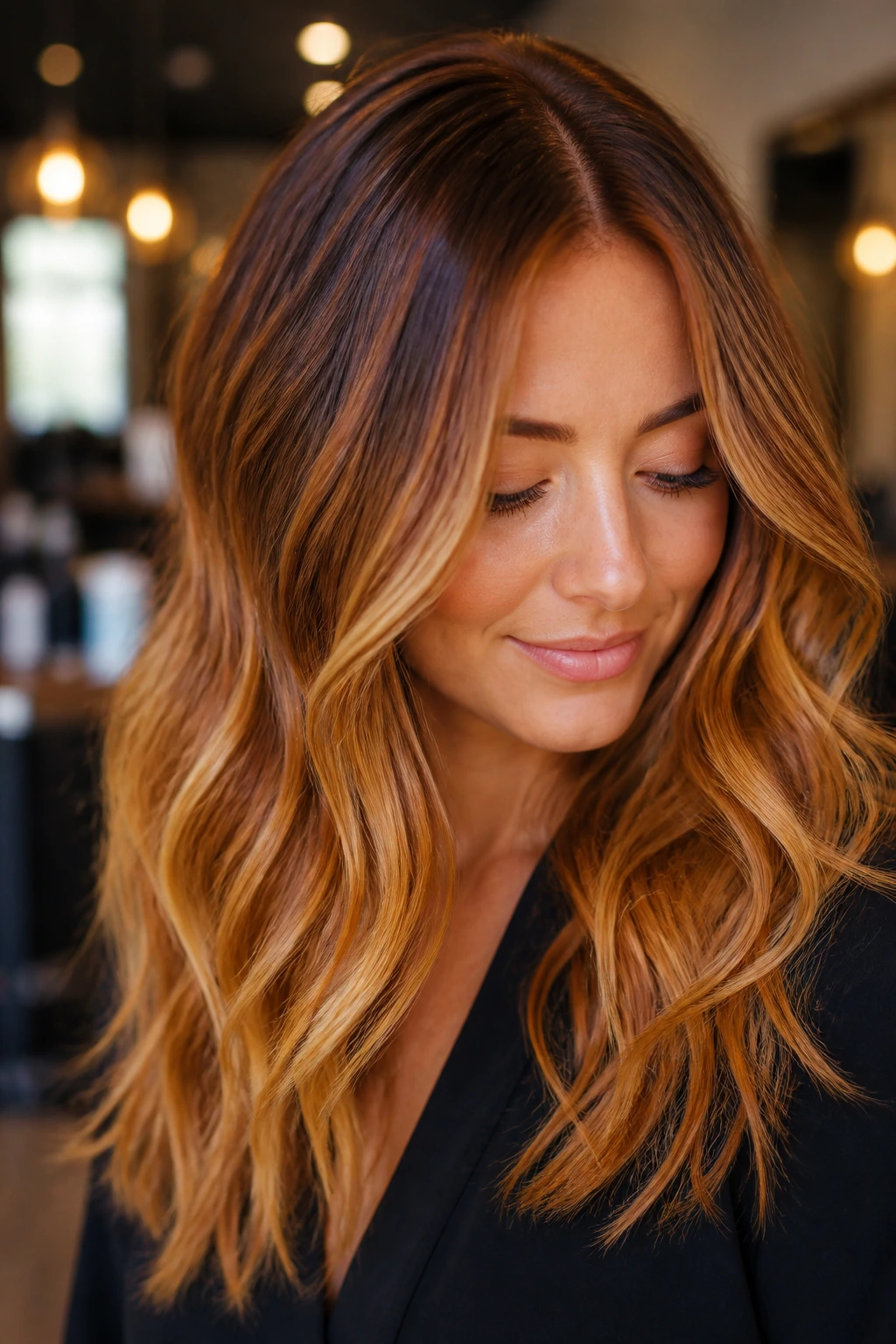
A lot of amber hair that gets called “brassy” wasn’t the wrong color. It was just placed badly. Too much warmth at the root, too little depth at the scalp, or too broad a section of bright copper can turn the whole thing into a wash of orange.
A cleaner amber formula keeps darker depth where the hair needs shadow and places brighter warmth where the light naturally hits. Face frame, mid-lengths, ends, top layers. That’s where amber looks alive. Everywhere else, it can start to blur.
The Best Amber Has Brown Inside It
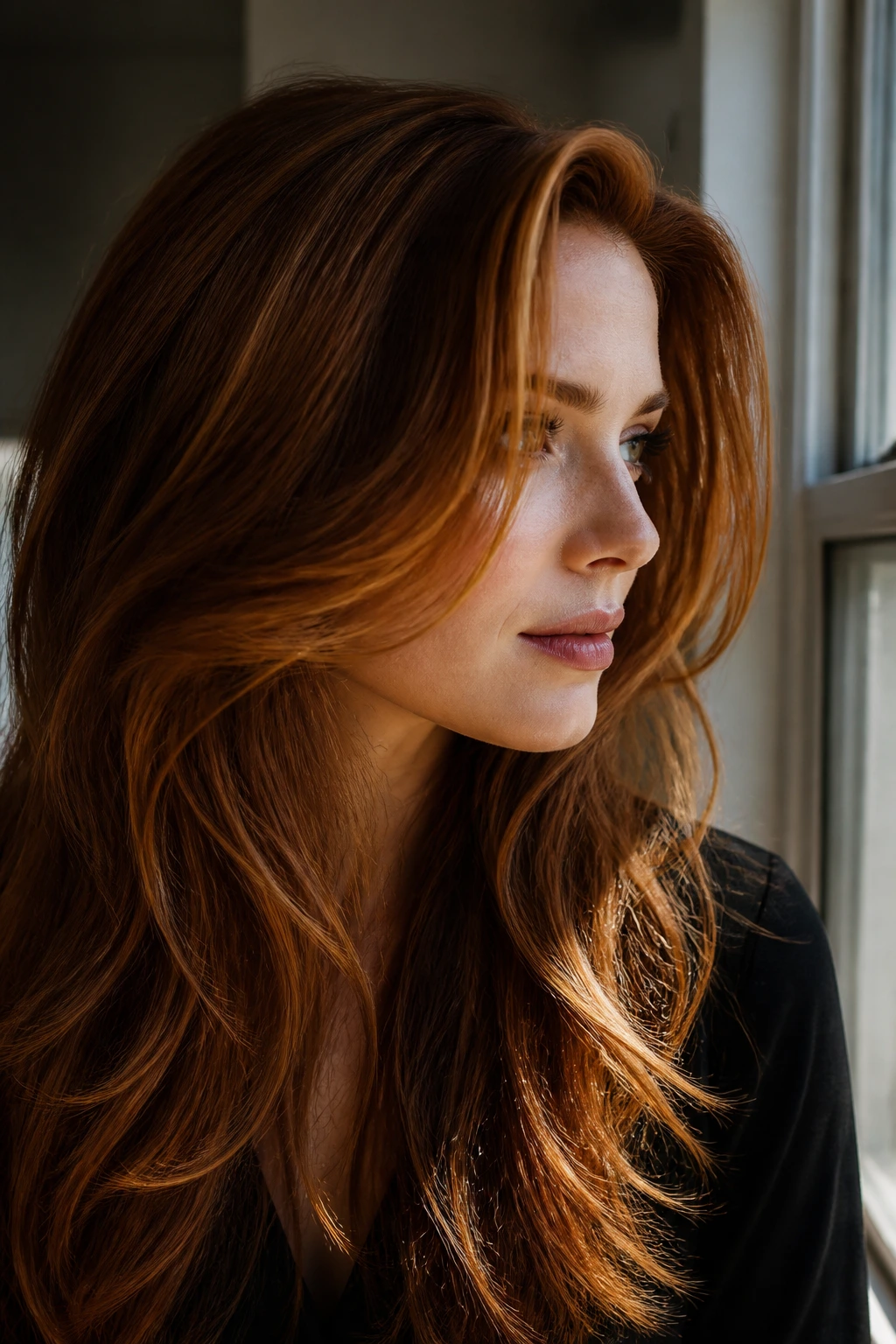
This is the part people skip, and it matters. Good amber hair usually has some brown underneath the warmth. That brown keeps the color from looking like costume copper and gives it a lived-in feel that holds up after a few washes.
If your reference photo is all shine and no depth, ask a stylist to show you where the shadow will stay. If there’s no shadow at all, the color will probably feel louder than you expected.
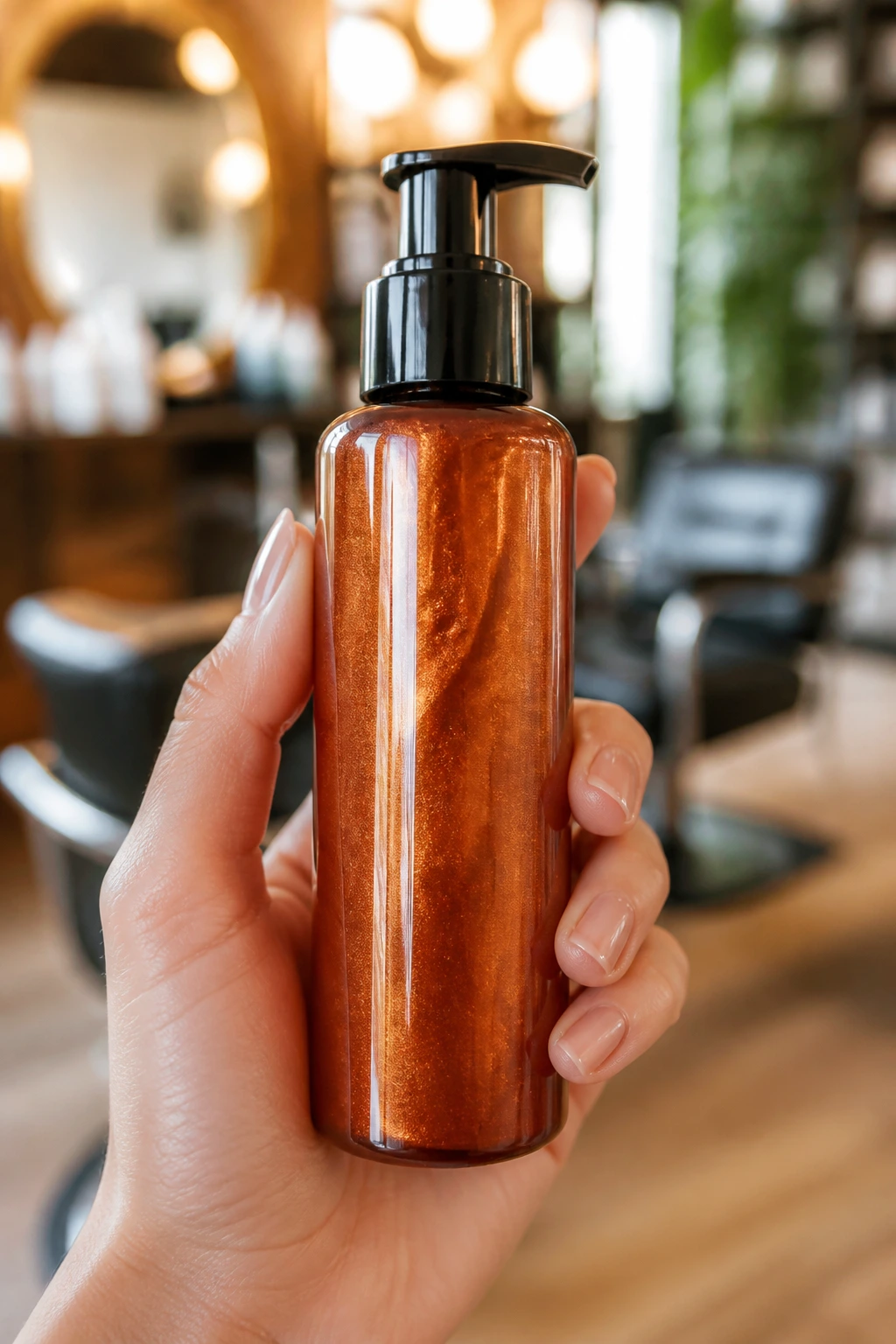
Essential Tools and Products for Amber Hair Color
-
Color-safe shampoo: Choose a gentle cleanser with no harsh sulfate load; it helps amber tones stay in the hair longer.
-
Moisturizing conditioner: Warm colors show dryness fast, so a slip-heavy conditioner keeps the surface smooth.
-
Color-depositing gloss or mask in copper-gold tones: Use this sparingly to refresh faded amber between salon visits.
-
Heat protectant spray: Amber looks best when the cuticle is smooth; heat without protection roughs up the shine.
-
Wide-tooth comb: This helps you detangle without yanking pigment-rich, freshly toned hair apart.
-
Microfiber towel or soft cotton T-shirt: Rough towels can swell the cuticle and dull the finish.
-
Sectioning clips: Handy for at-home glossing, root touch-up work, or placing color only where you want it.
-
Tint brush and bowl: Useful if you’re doing a semi-permanent glaze or a small face-frame refresh.
-
Clarifying shampoo for occasional reset: Keep this for rare buildup, not weekly use, or you’ll strip the warmth out too fast.
-
Bond-building treatment: If the look involves lightening, this helps hair handle the process without feeling crunchy at the ends.
Smart Shopping and Shade-Choice Tips for Amber Hair
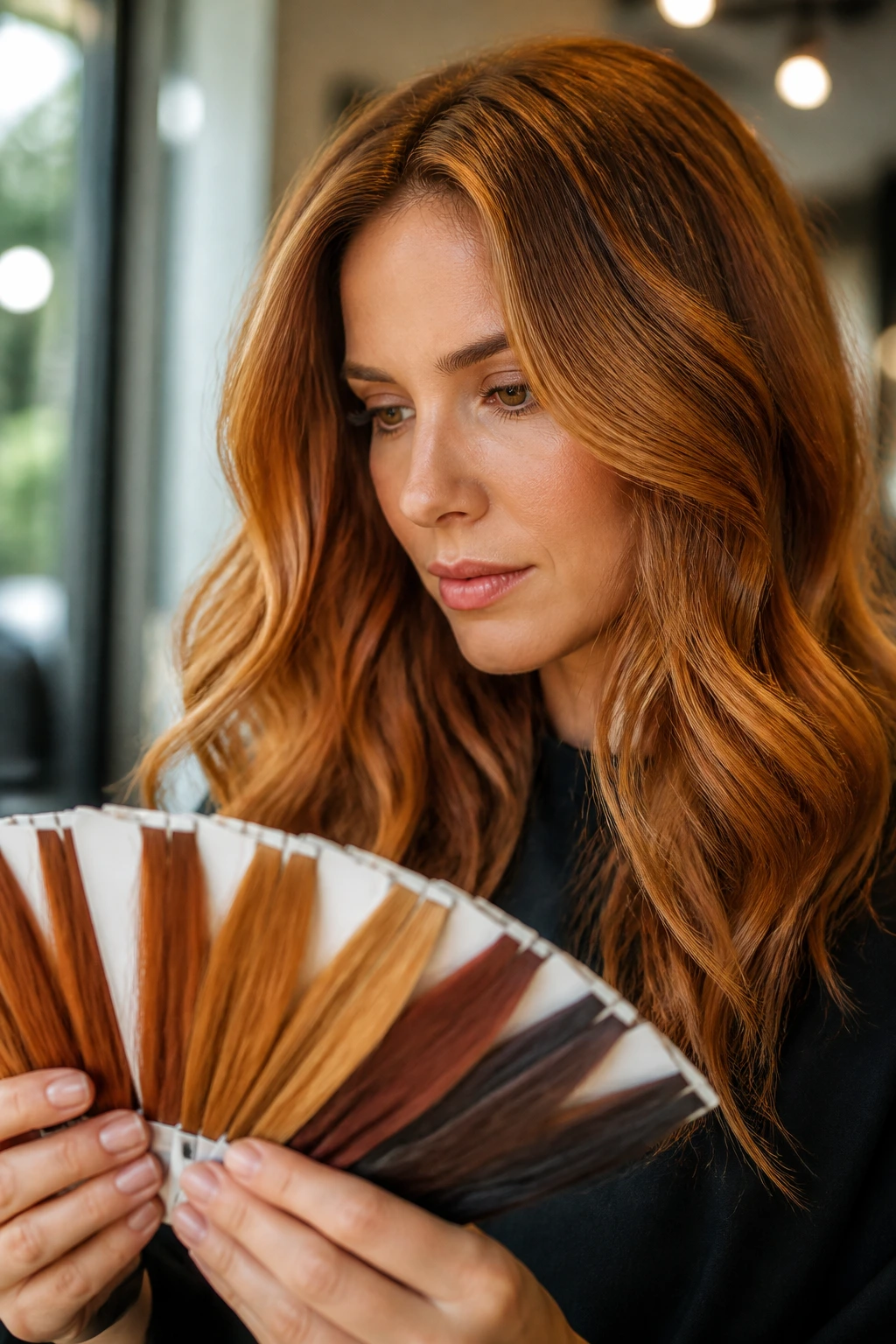
When you shop for amber hair color, ignore the romance in the name and read the undertone. Boxes and salon charts often use words like honey, bronze, copper, cinnamon, apricot, maple, or caramel for shades that live in the amber family. The real question is whether the formula leans gold, copper, red, or brown.
If your hair is already warm, I’d look for soft reflect rather than high lift. A demi-permanent gloss or glaze can add amber without changing the base too much. That matters on warm honey toned hair because the base already gives you most of the structure you need. If you start lifting aggressively from there, the color can swing orange faster than you expect.
Bring at least two reference photos that show the shade in different lighting. One should be indoors. One should be in daylight. A good amber in bright sun can look much deeper inside, and that difference can help you and your colorist agree on how loud the result should be.
If you have more than a little grey, ask how the warm tone will sit next to silver strands. Sometimes amber works better as a blend than as a full cover. A shadow root and warm mids can look more natural than trying to paint every grey away.
And if you’re doing this at home, keep your expectations honest. The safest box or tube choice is usually one shade softer than the swatch that caught your eye. Amber gets brighter in movement. It doesn’t need to shout from the tube.
How to Wear Amber Hair So the Color Reads Warm
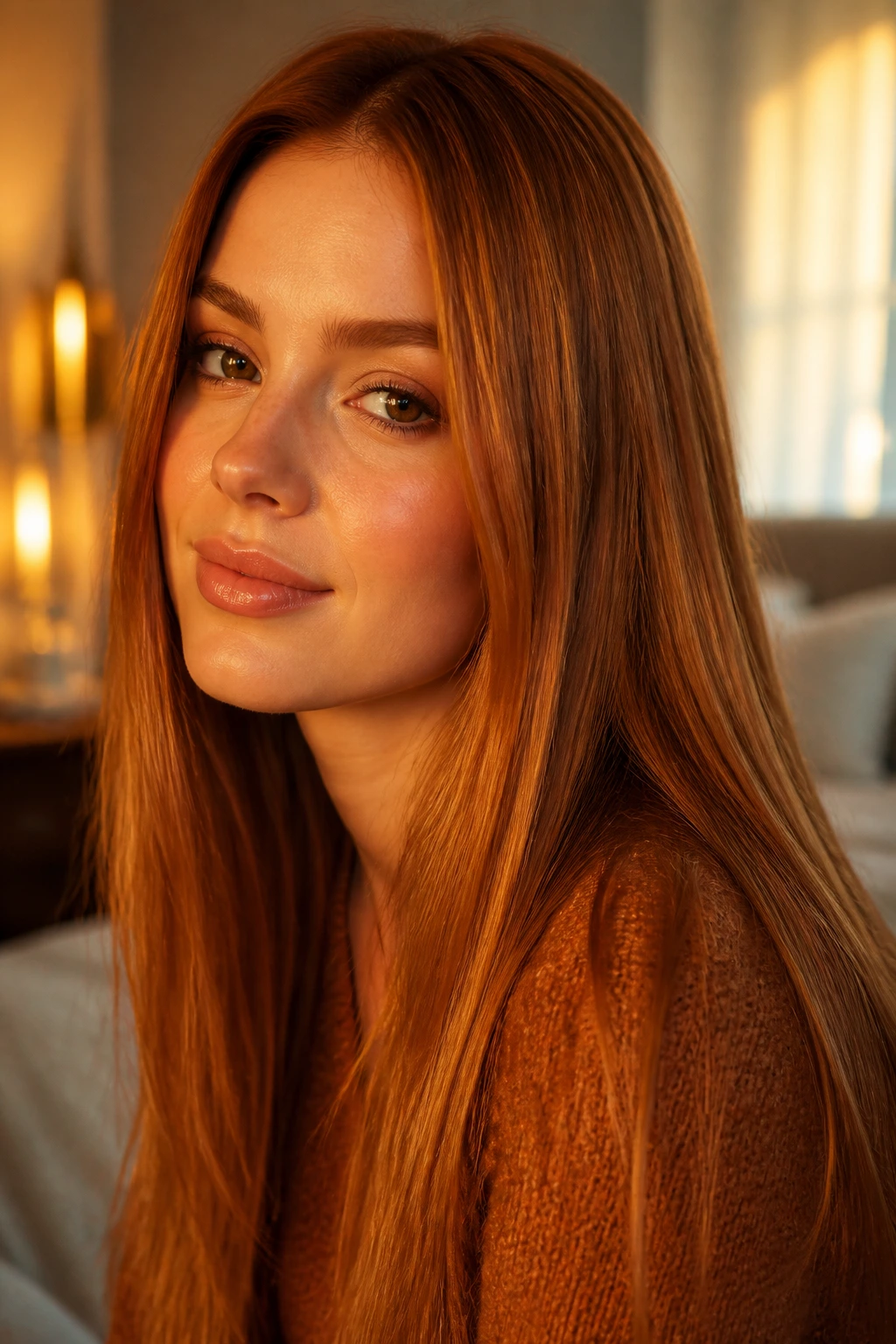
Straight and Sleek: A smooth blowout shows off the exact tone of amber, especially on ribbon highlights and root melts. If the cut is blunt, the color looks sharper; if the ends are layered, the shine moves more softly.
Loose Waves: This is the easiest way to make amber look dimensional. The bends separate the warm pieces from the deeper ones, so the hair keeps changing as you move.
Curls and Coils: Amber looks richest when texture breaks it up. The color should live in the curl pattern, not sit as one flat block across the head.
Best Cut Pairings: Bobs sharpen apricot and velvet amber. Lobs hold cinnamon and chestnut tones well. Shags and long layers make balayage and peekaboo placement feel more relaxed.
Makeup and Wardrobe Pairings: Cream, olive, rust, cocoa, warm taupe, and soft berry tones all sit well next to amber hair. If you wear a lot of icy gray or stark white, the hair may read warmer and brighter by contrast, which can be a good thing if you want that pop.
Additional Tips and Color Boosters
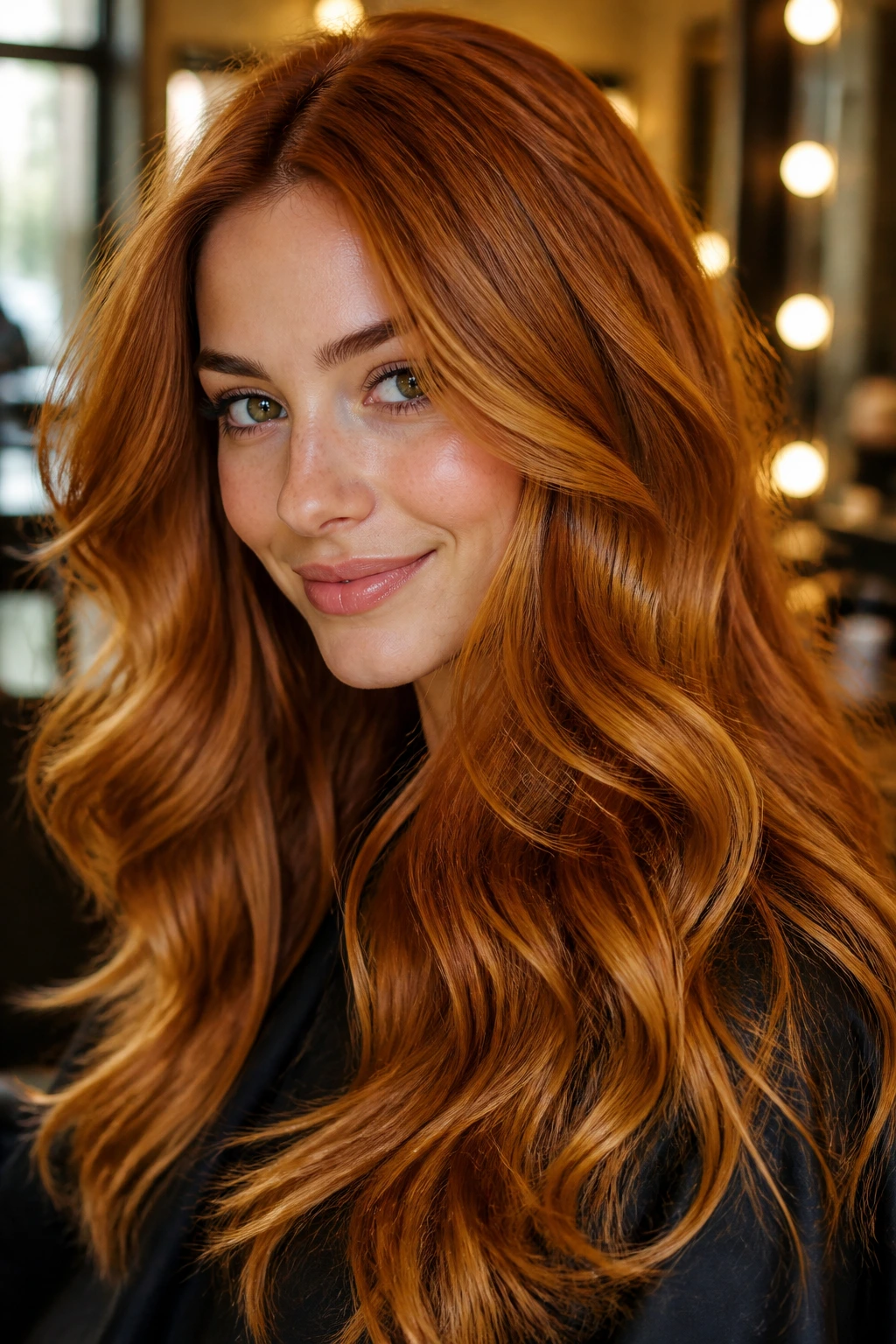
Gloss Boost: A clear or slightly gold-tinted gloss every 4 to 6 weeks keeps amber from drifting flat. If the color starts looking dry before it looks faded, the gloss is doing two jobs at once: tone refresh and shine repair.
Customization: Add a few deeper lowlights if your base is too light. Add a few brighter face-frame pieces if the hair feels too brown. Amber is one of those shades that gets better with small adjustments, not huge ones.
Styling Finish: A light shine serum on the mid-lengths and ends helps the warmth read as polished, not dusty. Keep it off the roots, or the hair can go limp at the crown.
Make-It-Yours: If you want low-maintenance, keep amber near the ends and front pieces. If you want more drama, ask for brighter copper-amber pieces around the crown and temples. A tiny change in placement can move the whole vibe.
Common Mistakes That Drain Amber Hair Fast
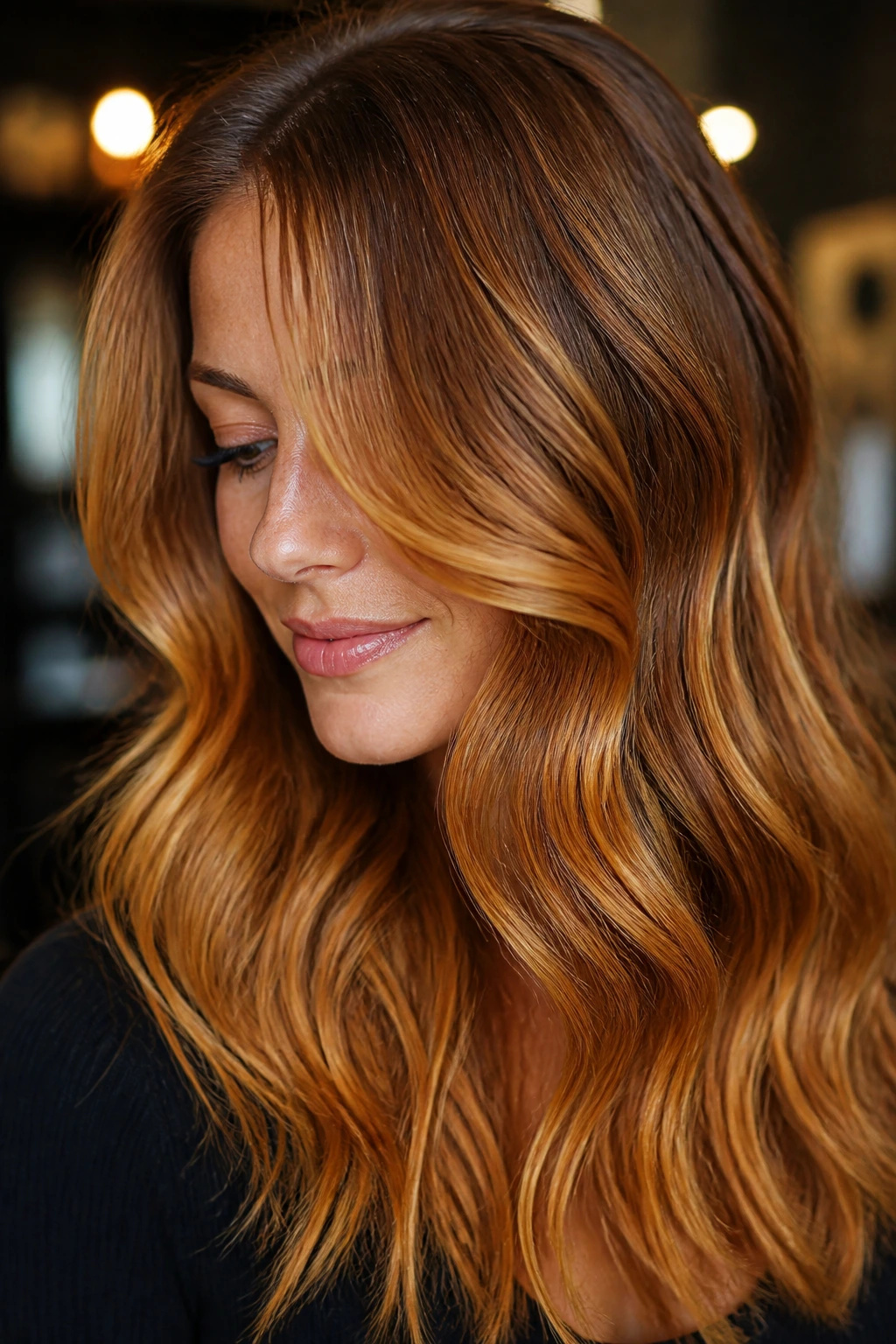
Using a photo without checking the base level: A shade that looks honey-amber on a level 8 blonde can look much darker and more copper-heavy on a level 5 brunette. The fix is to ask how the result will land on your natural depth, not the model’s.
Going too bright too fast: If the hair is lightened too far, the amber can flip into orange and stay there. The better move is to keep some brown depth under the warmth so the shade has something to rest on.
Overdoing purple shampoo: Purple is meant to knock back yellow, which is not the same job amber needs. Use it only when the hair has drifted brassy in the wrong direction, and keep it out of the routine if you want to preserve warm reflect.
Skipping a root shadow on darker hair: A bright amber sitting on a pale root can look striped after the first wash. A soft shadow keeps the grow-out smoother and helps the color look planned.
Washing too hot, too often: Hot water opens the cuticle and lets warmth escape faster. Color-safe shampoo, lukewarm water, and a less aggressive wash schedule keep the amber from fading into a dull beige.
Ignoring the finish: Dry ends make amber look flat even when the tone is right. A little bond care or a nourishing mask keeps the color surface smooth enough to reflect light the way it should.
Variations and Adaptations to Try
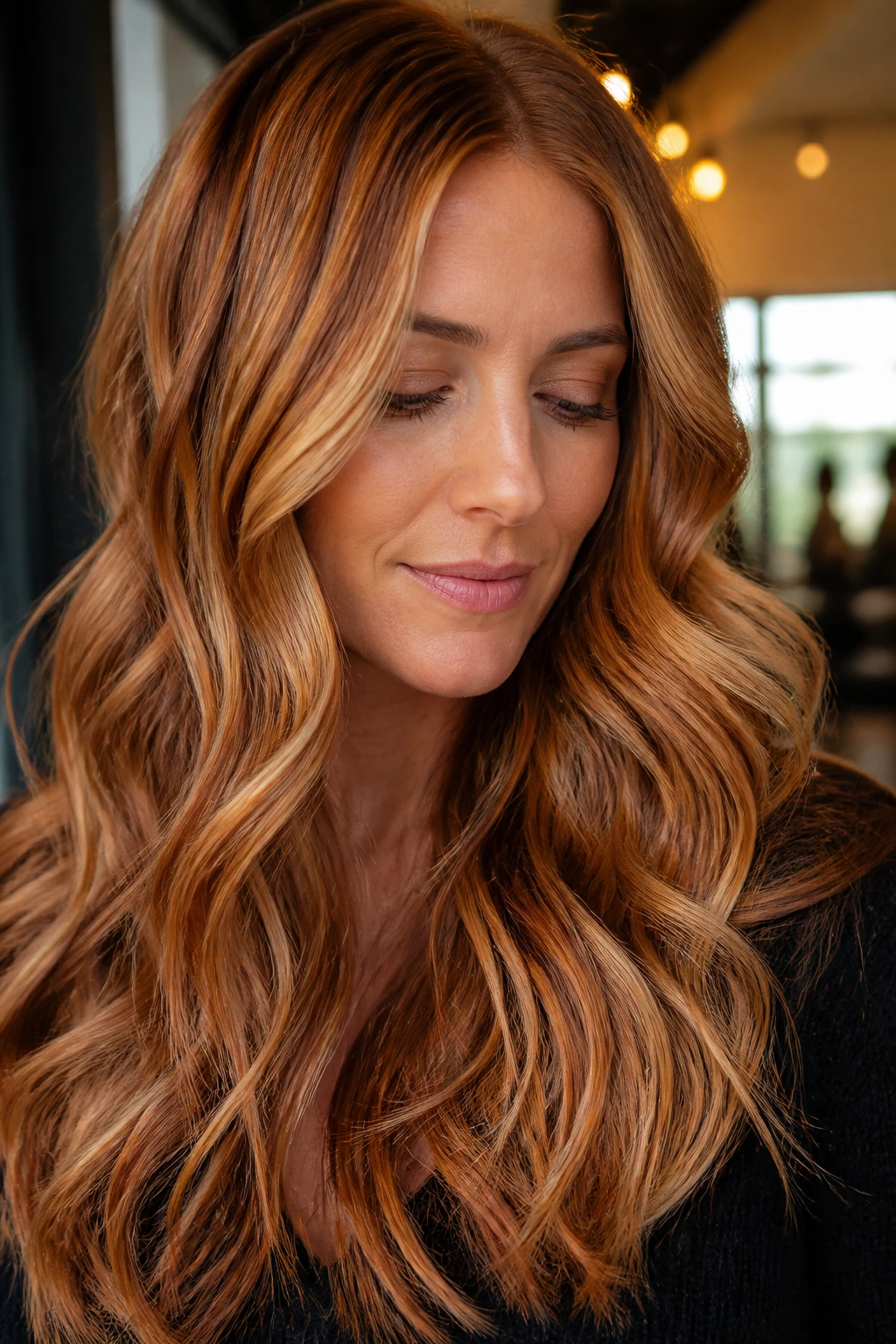
Soft Honey Veil: Ask for a translucent amber gloss over a warm brown or dark blonde base. This is the gentlest version, and it works when you want the color change to feel expensive rather than obvious.
Ember Ribbon Lights: Choose narrower, brighter amber ribbons through the crown and face frame. The placement gives the hair motion, and the higher contrast makes it a better fit for layered cuts or waves.
Grey-Softening Amber Smoke: Keep the root zone slightly muted and let amber live through the mids and ends. This is a smart option when you want grey blending without a hard line at the regrowth point.
Copper-Sugar Balayage: Push the tone a little warmer and brighter on the outer layers, then keep the interior pieces deeper. It reads vivid in daylight but still has enough brown to stay grounded.
Low-Commitment Amber Ends: Color only the last few inches of the hair, then blend upward with a soft melt. It’s a good choice if you want a visible shift without changing the tone near the scalp.
Amber Hair Color Maintenance, Washing, and Refresh Timing
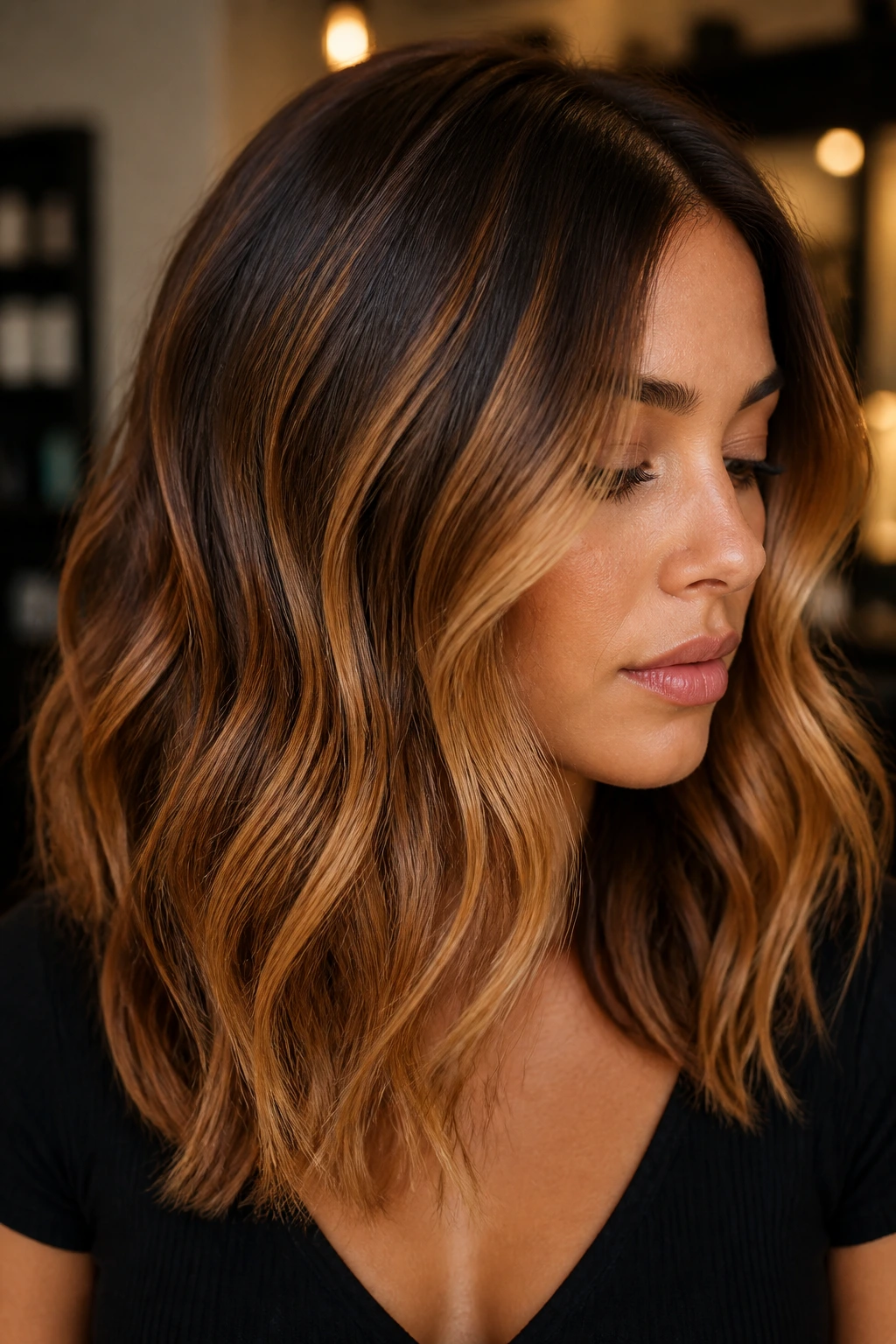
Amber stays richer when you treat it like a glossed color, not a wash-and-forget color. If your hair is colored but not heavily lightened, two to three shampoos a week is usually enough. Use lukewarm water, not hot. Hot water roughs up the cuticle and drains the warm reflect faster than most people expect.
A weekly deep conditioner helps, especially on the ends where amber can look dry first. If the shade includes lightening or a full highlight service, add a bond treatment or a richer mask every week or two depending on how the hair feels. If it starts snapping, tangling, or sounding squeaky when dry, it needs moisture before it needs more color.
Glosses and depositing masks usually keep amber looking fresh for about 3 to 6 weeks, depending on how often you wash and how porous the hair is. Bright face-frame pieces and peekaboo panels fade faster because they’re seen, touched, and styled more. Root shadows and deeper amber brunettes tend to hold their shape longer.
If you heat-style often, use protection every single time. A curl iron or flat iron in the 300 to 375°F range is enough for most hair types. The goal is smoothness, not scorching. Once amber hair gets fried, the shine goes first, then the tone starts to look dusty.
Frequently Asked Questions About Amber Hair Color
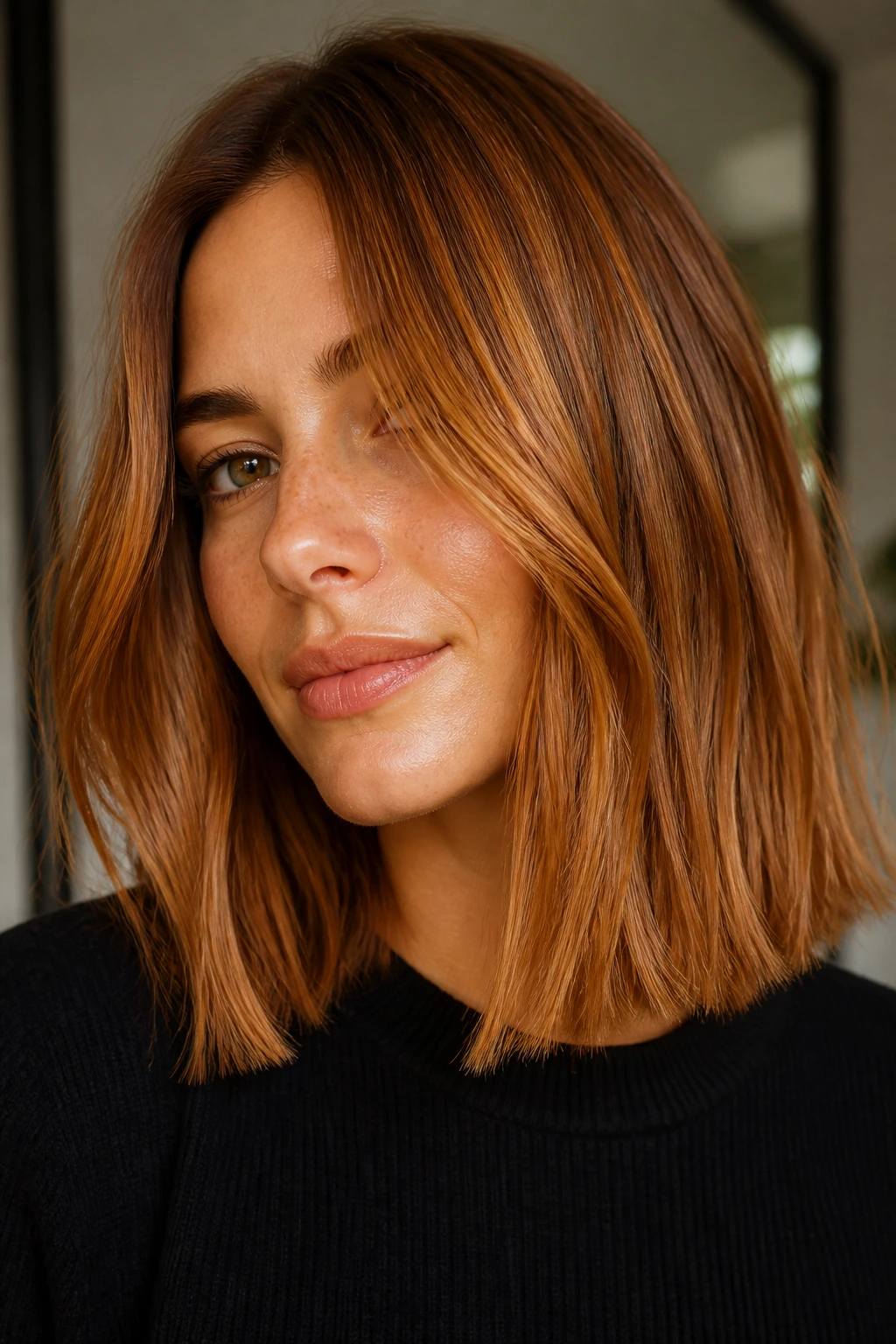
How do I ask for amber hair without ending up orange?
Ask for the undertone, not just the name. Words like golden, honey, chestnut, or caramel tell the colorist where you want the warmth to sit. Also ask them to keep some brown depth in the formula so the result has shadow and not just brightness.
Does amber hair work on dark brown hair?
Yes, but it usually works better as ribbons, a gloss, or a soft melt than as a full bright lift. Dark brown hair can hold amber in a way that looks rich and polished, but if you lift too much, the result can turn loud fast.
Can blondes wear amber hair too?
They can, and often the result is softer than people expect. On a light blonde base, amber can look like apricot gold, honey copper, or a warm glaze instead of a heavy red tone.
How long does amber hair color last?
That depends on whether the color is a gloss, demi-permanent, or permanent formula and how often you wash. A gloss can fade in a few weeks; a more permanent placement can hold shape much longer, especially if you keep heat and shampoo under control.
What if my amber hair looks brassy after a few washes?
First check whether it’s faded or truly brassy. Faded amber usually needs a warm gloss or mask, while brassy amber may need a small tone correction to pull the orange back in line. Don’t reach for purple shampoo first unless the color has gone yellow.
Is amber a good choice for grey blending?
Yes, if you want the greys to soften into the rest of the color instead of disappear completely. A shadow root and warm mids can make grey regrowth look intentional, especially on layered cuts and shorter styles.
Can I do amber hair at home?
You can, if you’re working with a gloss, a deposit-only glaze, or a small face-frame refresh. Full lightening, major correction, or a big shift from ash brown to warm amber is the part I’d leave to a pro.
What skin tones suit amber hair best?
Warm and neutral undertones usually take to amber easily, but cooler undertones can wear it too if the formula has enough brown or rose in it. The trick is matching the depth of the color to the base of your hair and the warmth you already have in your skin and brows.
The Amber Look That Still Feels Like Hair
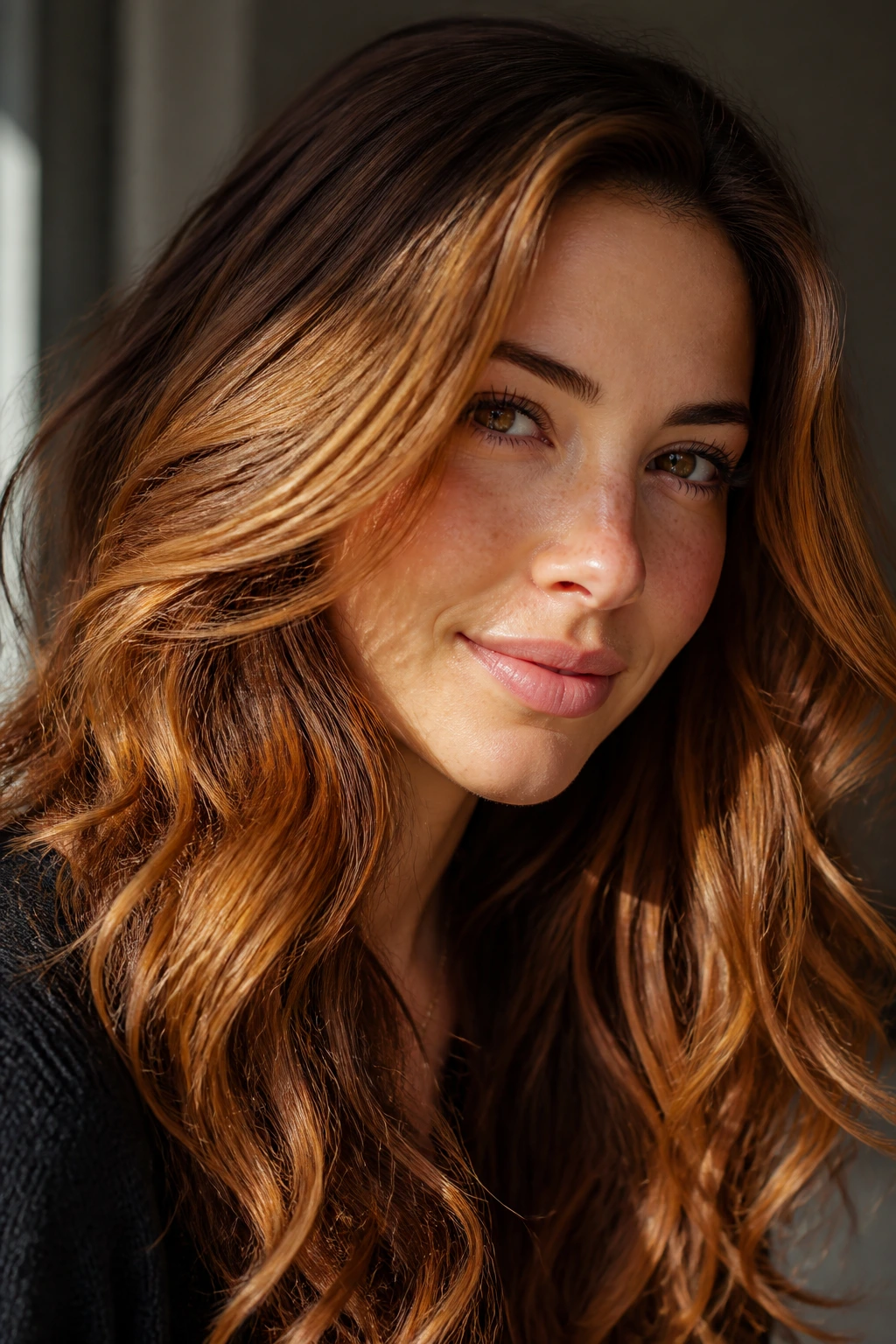
Amber works best when it looks earned, not forced. The shades that age well are the ones with shadow in them: a little brown at the root, a little gold in the mid-lengths, a little copper in the light-catching pieces. That mix gives the color movement, and movement is what keeps warm hair from looking one-note.
If you want the easiest place to start, go for a honey amber balayage or a soft amber gloss around the face. Those two live in the safest part of the spectrum and still give you that warm glow people notice when you turn your head. Small shift. Big payoff. That’s the kind of color worth wearing.
