



Long blonde hair looks can turn flat fast when the tone is wrong. On waist-length hair, the difference between butter blonde, ash beige, and champagne isn’t a small nuance; it changes how the whole head moves when you catch daylight, how the ends fall against a sweater, and whether the color reads as glossy or just pale.
That’s why blonde on long hair deserves more thought than a single “go lighter” request in the salon chair. Long lengths hold more color history, more porosity, more variation from root to end. A blonde that looks expensive on a bob can look thin on long hair if it has no depth. And yes, the reverse is true too: a shade that seems too soft on paper can become the most flattering thing in the room once it runs through layered lengths.
Some blonde hair looks for long hair are about brightness. Others live on root shadow, soft ribbons, or a cool gloss that keeps the tone from drifting yellow. The smart move is choosing the look that fits your cut, your upkeep tolerance, and the way your hair actually falls when it isn’t being posed for a mirror. Start there, and the whole thing gets easier.
Why These Blonde Looks Work So Well on Long Hair
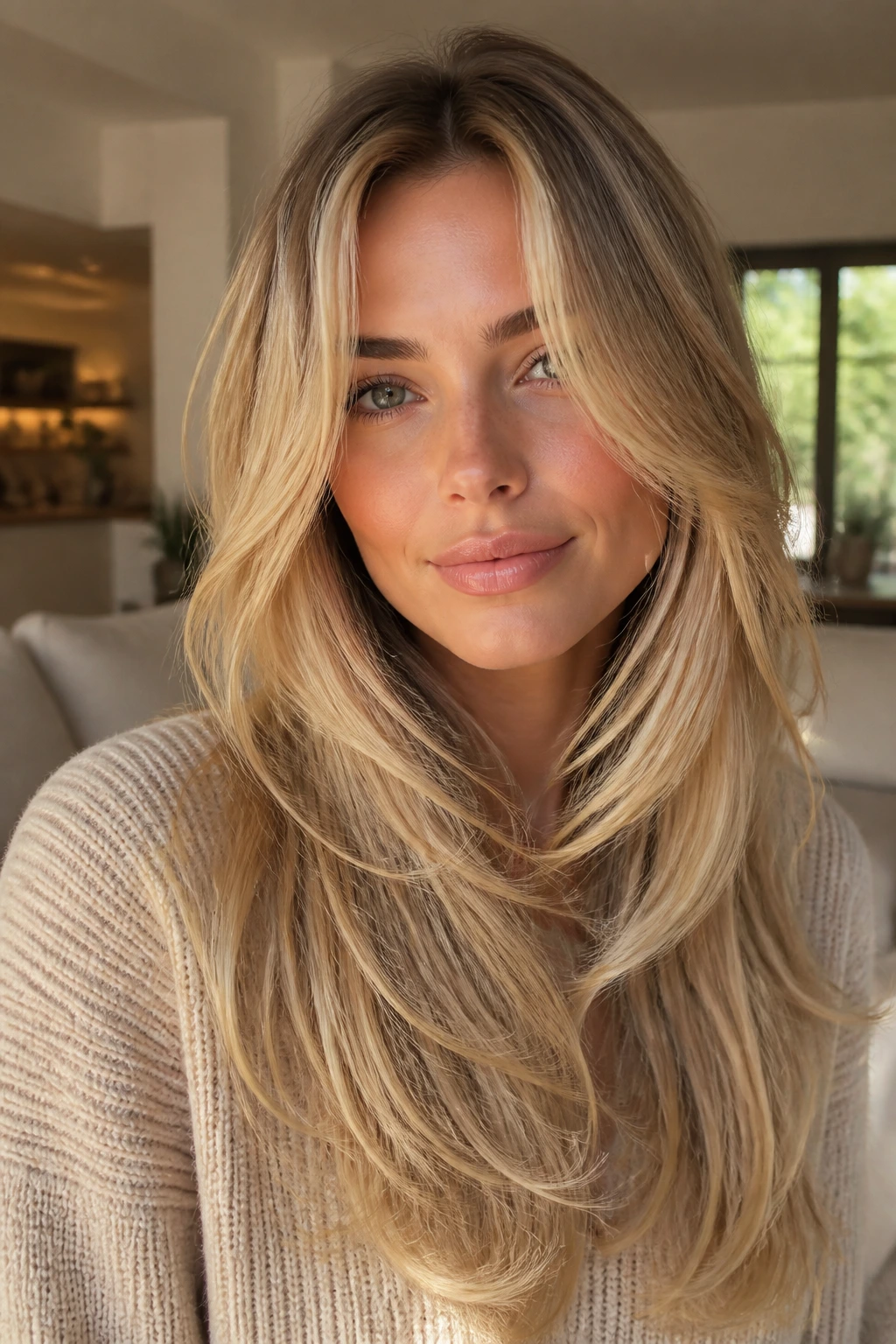
- Dimension matters: Long lengths give you room for a root shade, a midtone, and brighter ends without the color looking noisy.
- Movement changes everything: Waves, layers, and curtain pieces break up heavy blonde panels so the hair doesn’t read like one pale sheet.
- Grow-out is part of the design: On long hair, a soft root melt or lived-in highlight line can make the color look intentional for weeks, not days.
- Tone shows more clearly: Beige, honey, ash, pearl, and champagne all behave differently once they hit mid-back length and catch light at different angles.
- Placement is the secret sauce: A few face-framing pieces can do more than another round of all-over lightener.
- Maintenance is not one-size-fits-all: Some of these looks want gloss appointments every 6 to 8 weeks; others can stretch longer if the root shade is doing its job.
How to Choose the Blonde That Won’t Fight Your Hair
Long hair is a truth-teller. If the ends are dry, if the cut is too heavy, if the toner is off by half a shade, you see it. The upside is that you can use that extra length to your advantage. A cool ash blonde can look expensive on sleek, layered hair. A honey bronde melt can make thick hair look softer without pretending to be platinum. And a bright money piece can wake up a face without repainting the whole head.
Start with your base level and your routine, not a photo you saw in flattering lighting. If your natural color is deep brown and your ends are already light from old color, asking for an all-over icy blonde in one visit is how people end up with brittle hair and a long trim appointment. If you wear your hair in ponytails and loose braids, the front pieces matter more than a hidden underlayer. If you heat-style a lot, choose a blonde with some depth in the root and mids so the ends aren’t doing all the visual work.
Ask one blunt question in the chair: How will this look in six weeks? That question saves more bad color decisions than any filter ever will.
1. Butter Blonde Layers
Butter blonde is the shade I reach for when long layers need softness, not drama. It sits in that creamy middle ground between gold and beige, so it doesn’t flash yellow under indoor light or go chalky in daylight. On long hair, that matters. The color moves with the cut instead of sitting on top of it.
The best version keeps a slightly deeper root and brighter mids and ends, especially where the layers flip out around the shoulders. Ask for a level 8 to 9 butter tone with enough beige in the gloss to keep it from looking sticky. It works best on layered cuts, medium-thick hair, and anyone who likes warmth but not brass.
Salon note: If your hair is fine, keep the highlights feather-light and the root a shade darker. Too much pale blonde on fine long hair can look wispy fast.
2. Vanilla Champagne Balayage
Want brightness without a loud bleach crown? Vanilla champagne balayage does exactly that. The color leans pale and creamy, but the placement stays soft, with painted ribbons through the mids and ends instead of a solid light cap. On long waves, the champagne tone gives the hair that clean, polished look that never feels harsh.
It’s a good match for people who want their blonde to look expensive but not frozen. Ask for a level 9 ribbon placement with a vanilla-beige gloss, and keep the root diffused so the grow-out line doesn’t shout. This one looks especially good when the first bend in the hair starts below the cheekbone, because the lighter pieces get room to move.
If you like a blowout more than beach waves, this is one of the better choices on the list. The shine reads.
3. Face-Framing Money Piece Blonde
A face-framing money piece does one job better than almost anything else: it wakes up long hair fast. Those bright panels around the face can be only one to two levels lighter than the rest of the blonde, but the effect is immediate because your eye goes straight there. On long hair, the contrast feels even sharper when the front pieces fall past the jaw and brush the collarbone.
Ask your colorist for brightness from temple to cheekbone, then let the rest of the blonde stay softer. That keeps the look modern instead of stripy. It’s especially useful if you wear half-up styles, high ponytails, or loose top knots, because the front brightness still shows when the rest of the hair is tucked away.
Best for: people who want the fastest visual change with the least overall commitment.
Watch for: front pieces that are too wide. They can drift into early-2000s territory fast.
4. Mushroom Blonde on Waist-Length Waves
Mushroom blonde looks best when the hair has enough length to show the smoke in the tone. The shade lives in taupe-beige territory, with cool lowlights that stop the blonde from going yellow or flat. On waist-length waves, it feels quietly dimensional, almost like ash brown and beige blonde had a well-behaved conversation.
This is one of my favorite options for thicker hair, because the cool depth trims visual bulk. Ask for a darker root, a muted beige midtone, and just enough lightness at the ends to keep the wave pattern visible. If the toner is too gray, the whole thing can go dull; if it’s too warm, you lose the point.
Why It Works on Long Hair
The length gives mushroom blonde room to show its subtle shifts. Short hair can lose the effect in a hurry, but long waves catch the tone differently from top to bottom, and that’s where the shade gets interesting.
5. Honey Bronde Melt
Honey bronde is the shade for people who like blonde but don’t want to surrender the darker base. The root stays brunette or deep blonde, the mids turn honey-beige, and the ends get lighter in a slow melt that looks lived-in rather than painted. On long hair, that gradient has room to breathe.
It’s one of the easiest looks to live with if you hate obvious regrowth. Ask for a soft root shadow and warm golden ribbons through the lower half, then keep the front pieces slightly brighter so the color doesn’t sink. A good honey bronde never feels orange. It feels like light that arrived late in the day and stayed put.
If your calendar is crowded, start here. It’s forgiving in a way the paler blondes are not.
6. Platinum Silk Lengths
Platinum silk lengths are unapologetic. This is not the shade you choose when you want color to hide in the background. On long hair, though, the payoff can be striking: a smooth, pale finish that looks almost reflective when the cut is clean and the ends are healthy.
The catch is obvious. Platinum shows everything. Split ends, rough texture, uneven lift, neglected toner — all of it. Ask for gradual lightening, not one aggressive session, and keep the cut blunt enough or the layers long enough that the hair still feels full. This look is best on hair that can handle weekly masks and heat protection without complaint.
If you love sleek blowouts and don’t mind maintenance, platinum silk is hard to beat. If you want low-fuss hair, skip it and save yourself the regret.
7. Sandy Beige Blonde
Sandy beige blonde is what I recommend when someone wants hair that looks sun-touched, not striped. The tone sits in a neutral zone that avoids the too-yellow problem and the too-ashy problem at the same time. On long hair, that neutrality makes the ends read soft and clean, especially with loose bends or a brushed-out wave.
It works on medium and olive skin beautifully, but it isn’t limited there. The bigger win is how easy it is to wear with everyday clothes — a white tee, a black coat, a knit sweater, whatever. Ask for beige ribbons on a soft base, then keep the toner leaning neutral rather than gold. If the blonde starts to get brassy, a small amount of purple shampoo once a week is enough.
This is a quietly good blonde. Not flashy. Not boring.
8. Scandinavian Hairline Bright Blonde
The Scandinavian hairline technique has a lot more to do with placement than with going as pale as possible. The front hairline is brightened more aggressively, while the top and lower lengths stay softer. On long hair, that contrast frames the face in a way that looks crisp even when the rest of the hair is in a braid or a low bun.
The trick is restraint everywhere else. If the whole head is lifted to the same pale point, you lose the clean frame and end up with a flat blonde blanket. Ask for fine, bright pieces around the hairline and a more diffused blonde through the crown and ends. It’s especially good if you like center parts, because the brightness lands exactly where the eye looks first.
What Makes It Work
The hairline takes more visual abuse from daylight, mirrors, and selfies. Brightening that zone gives long hair a sharper outline without forcing the whole head into full platinum maintenance.
9. Toasted Almond Blonde
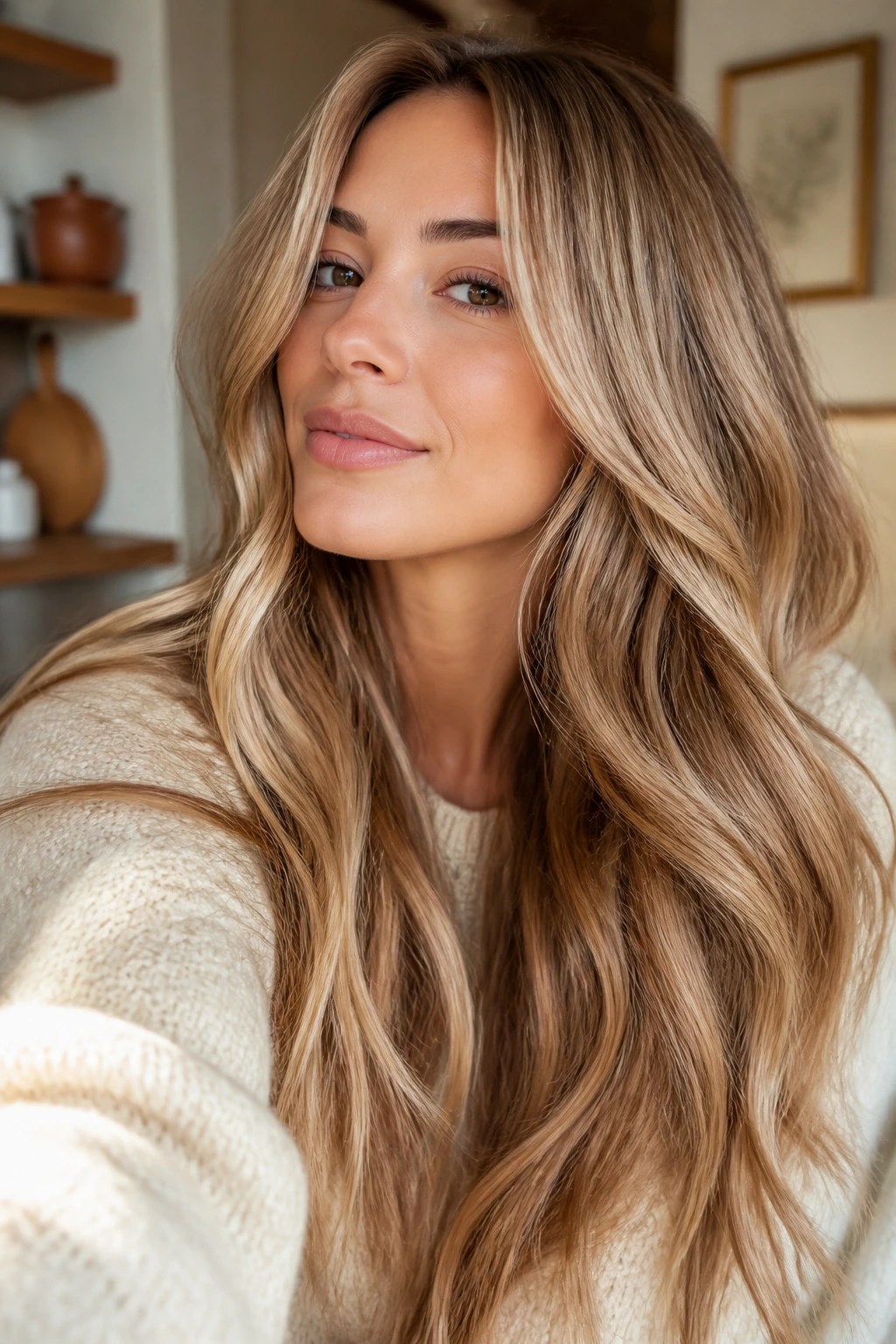
Toasted almond blonde sits in that useful middle lane between warm and cool. It has a beige base with soft lowlights that feel a little nutty, a little golden, and not at all flat. Long hair gives the tone room to show its depth; on shorter cuts, it can blur together.
If your current blonde feels washed out, this is one of the quickest ways to give it body again. Ask for almond-beige glossing with a few cinnamon-tinted lowlights through the underlayer. That extra shadow keeps the long hair from looking thin at the ends. It’s also a smart choice if you have a naturally warm complexion and don’t want your color to fight your skin.
Quick note: keep the face-framing pieces lighter than the rest. Almond tones can sink a little if every section is the same shade.
10. Cream Soda Blonde Curls
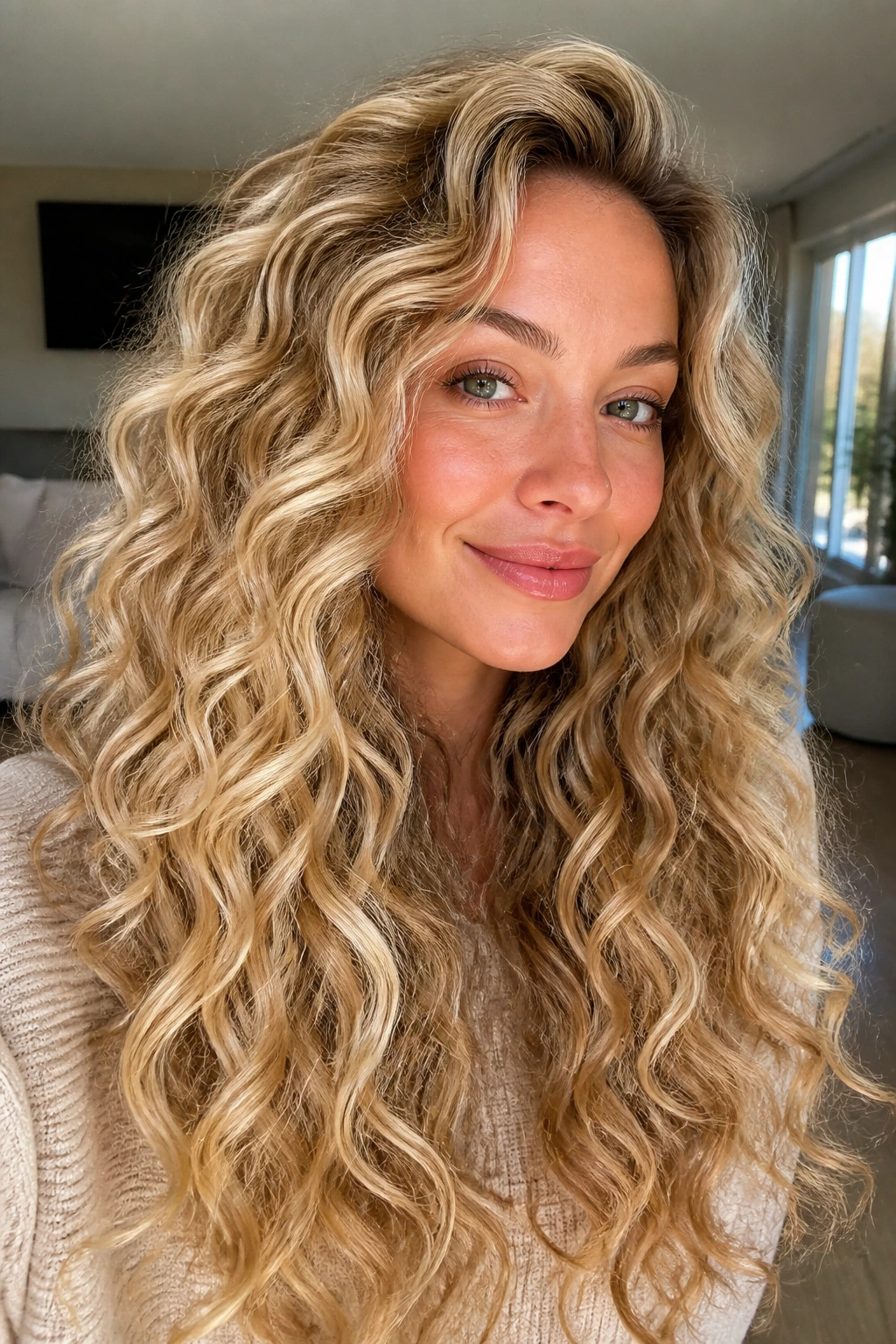
Cream soda blonde on curls needs room to breathe. If the blonde is painted too evenly, the curls lose their shape and start looking washed out. But when the lift is placed around the curl bends, the color pops in the best way — creamy, soft, and full of movement.
Ask for dimension, not blanket lightness. A mix of brighter ribbons, some neutral beige, and a lowlight or two keeps the curl pattern visible from root to end. This shade is especially good when the hair is long enough to show multiple curl sizes, because the color can shift as the curl falls. Let the toner stay creamy rather than icy. Curls usually look better when there’s some warmth left in the blonde.
A diffuser and a leave-in cream matter here. So does patience. Rake the product through, then stop touching it.
11. Rooty Ash Blonde Shag
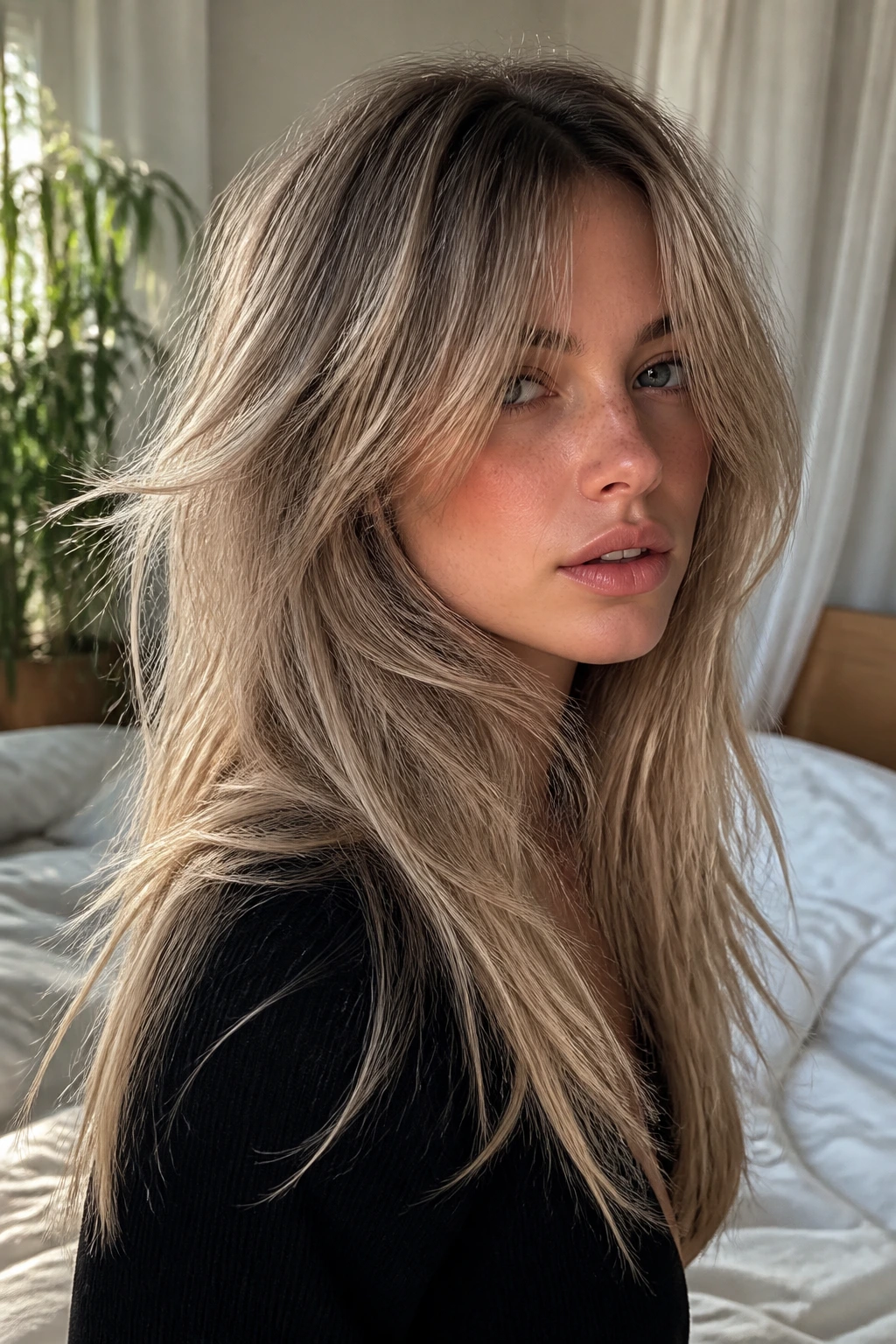
A rooty ash blonde shag only works if the cut has movement. The shag layers let the cool blonde break up into airy pieces instead of hanging in one heavy sheet, and the root shadow keeps the whole thing from looking overprocessed. On long hair, the effect is a little edgy, a little lived-in, and much easier to wear than a full ash rinse from root to tip.
This is the blonde for people who like texture spray, undone waves, and a color that doesn’t beg for weekly attention. Ask for a darker ash root, beige-ash mids, and lighter ends only where the layers need it. It’s not the brightest blonde on the list. That’s the point. The haircut does some of the talking.
If your hair falls very straight, you may want more interior layering so the color doesn’t disappear into a curtain.
12. Sunlit Ribbon Highlights
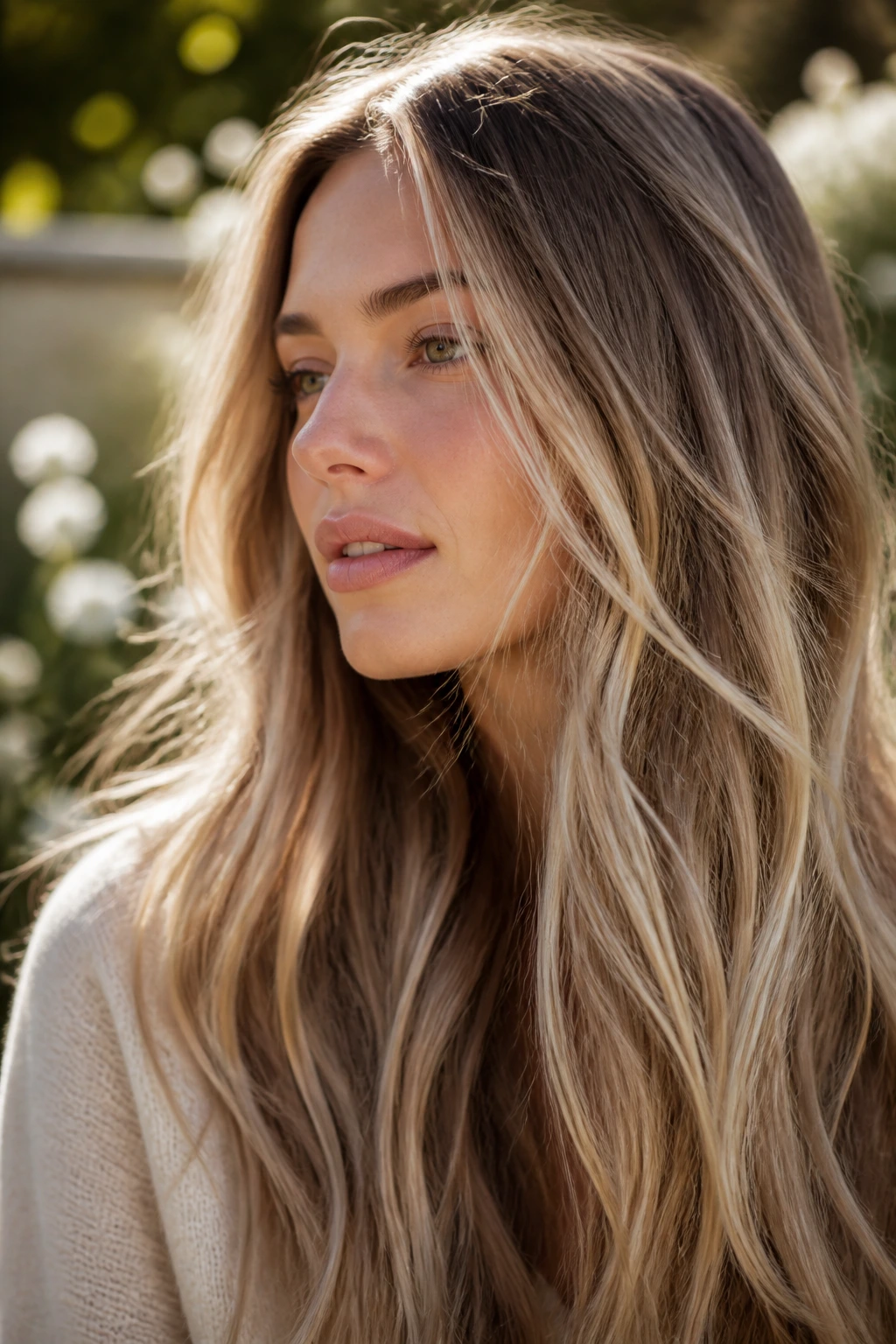
Sunlit ribbon highlights are the antidote to chunky, obvious stripes. The strands are finer, more scattered, and painted so the blonde shows up like thin bands of light running through the length. On long hair, that thinness matters; you can see the movement of each ribbon as the hair swings.
This style is especially kind to fine hair, because it preserves the sense of density. Instead of lightening big slabs, you keep the overall body while adding brightness where the eye notices it most. Ask for delicate foil work around the part, a few underlayer lights, and soft ends that aren’t pushed to the same pale level everywhere. The result feels natural, but not dull.
If you’re tired of highlights that announce themselves from across the room, this is the cleaner, calmer answer.
13. Beige Balayage with Lived-In Roots
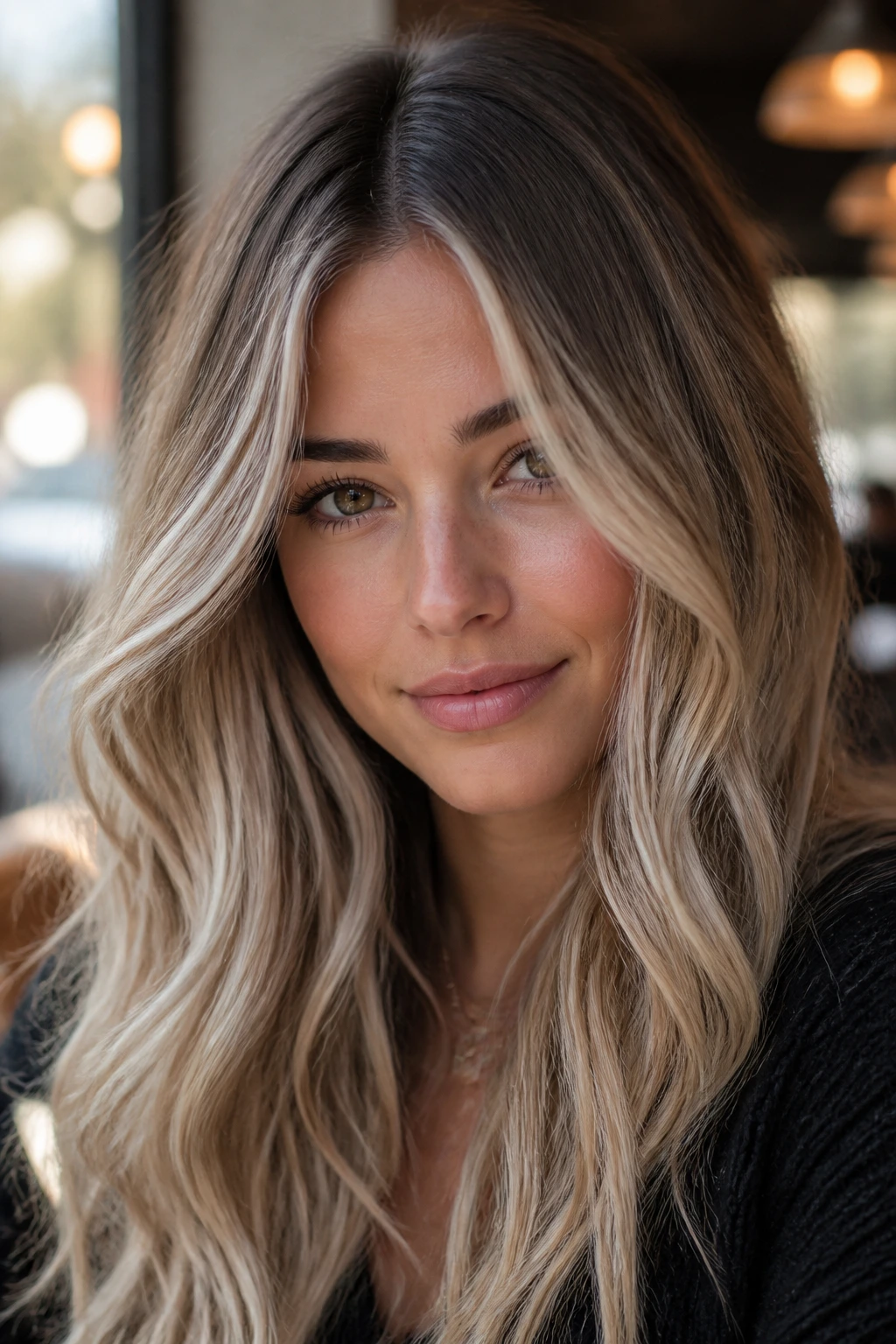
Beige balayage with lived-in roots is the color I suggest when the grow-out calendar matters more than the first week of shine. The root stays purposeful and a little deeper, while the balayage brightens the lengths in a beige tone that doesn’t turn gold by mistake. On long hair, that soft transition reads especially well, because there’s room for the fade to actually fade.
This is a smart option if you like to stretch appointments or if your hair grows fast. Ask for a root melt, hand-painted mids, and brighter ends only where your hair naturally catches light. It should look like the blonde came from the inside out, not like it was parked on top.
The best part? It ages gracefully. A lot of blondes don’t.
14. Strawberry Blonde Meets Gold
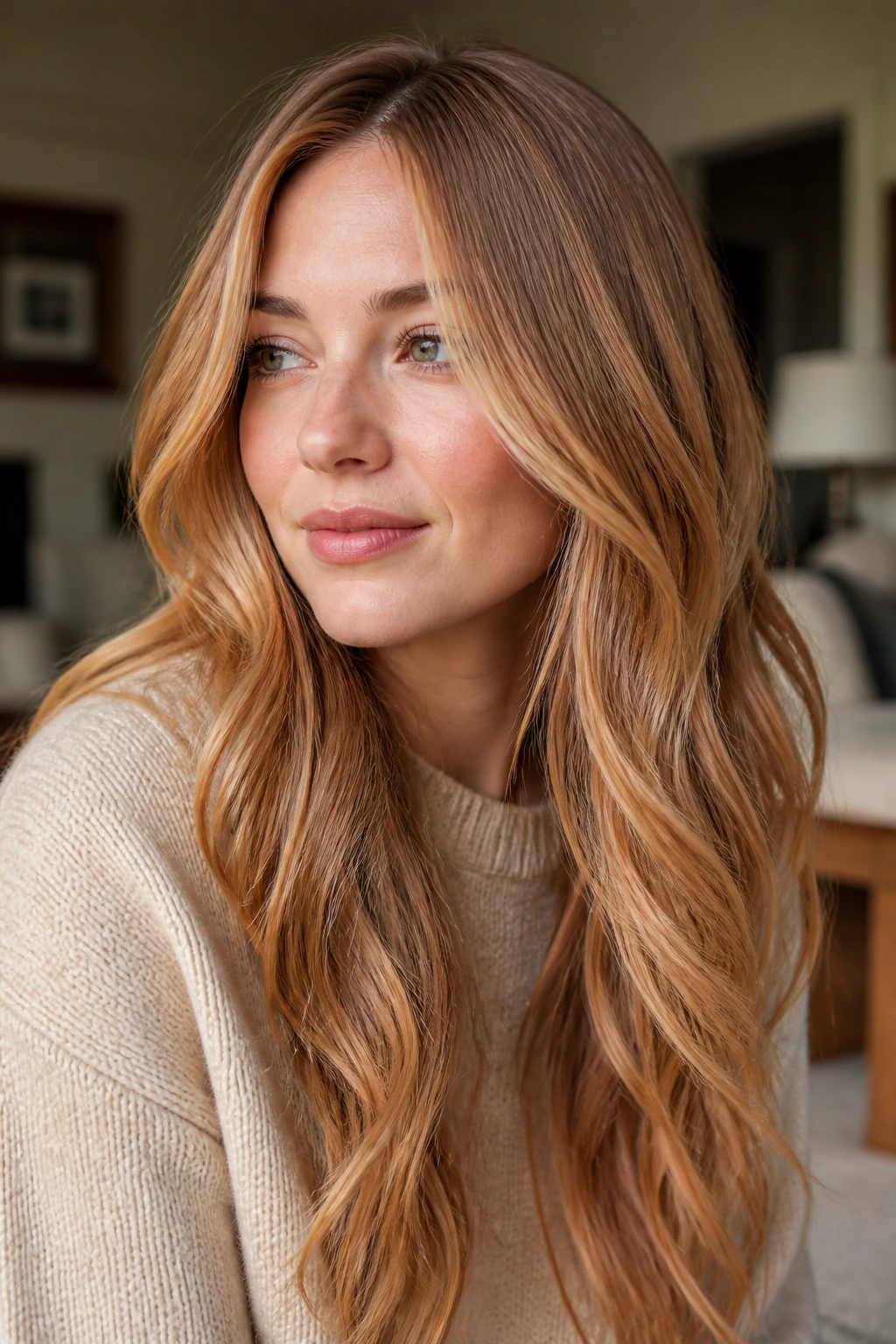
Strawberry blonde and gold can look either syrupy or vivid, and the line between them is placement. On long hair, a touch of strawberry gives the blonde a rosy lift, while gold keeps it from drifting too copper or too pale. The combination feels warm without becoming loud.
It’s a good fit for fair skin with pink undertones, freckles, or anyone who wants warmth that isn’t orange. Ask for a soft strawberry glaze over gold-blonde highlights, leaving the root a shade deeper so the color stays dimensional. If the ends are porous, the rosy tone can grab too hard, so a good stylist will watch the toner closely and pull it early if needed.
This one looks especially good in loose braids. The alternating warm strands keep the plait from going flat.
15. Pearl Blonde Glass Hair
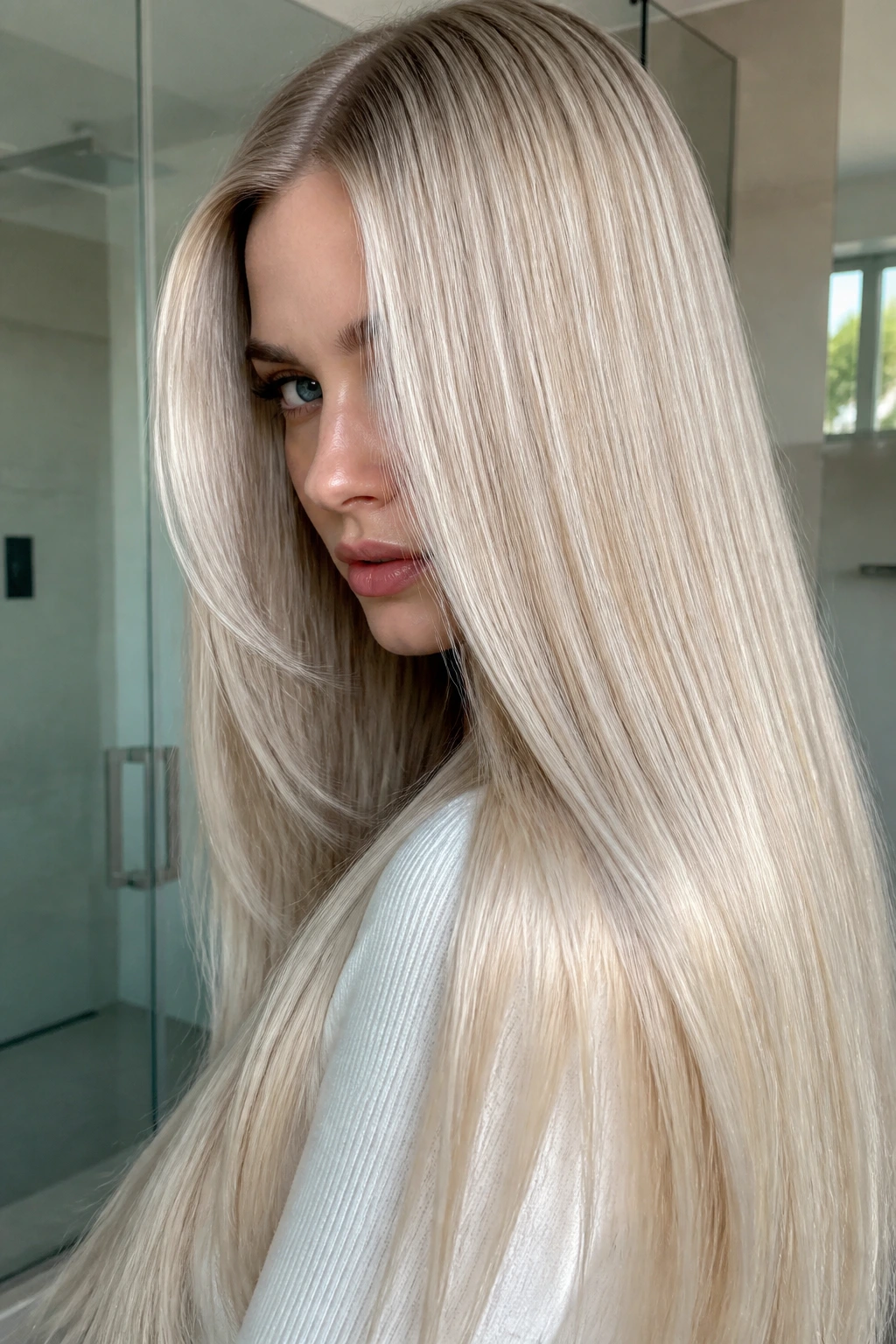
Pearl blonde on long hair is about reflectivity, not flat brightness. The shade leans cool and creamy with just enough sheen to make straight lengths look polished instead of harsh. If the cut is clean and the blowout is smooth, the color almost looks lit from inside.
Ask for a pearl gloss over a pale blonde base, then keep the ends trimmed enough that the finish doesn’t get ragged. This look needs discipline. A frizzy finish breaks the spell fast. Use a heat protectant, a paddle brush, and a final smoothing pass with a low-heat tool if your texture needs it. It’s especially striking on very long hair because the line of shine keeps traveling.
If you want blonde that looks refined rather than beachy, this is the one.
16. Caramel-Dipped Ends
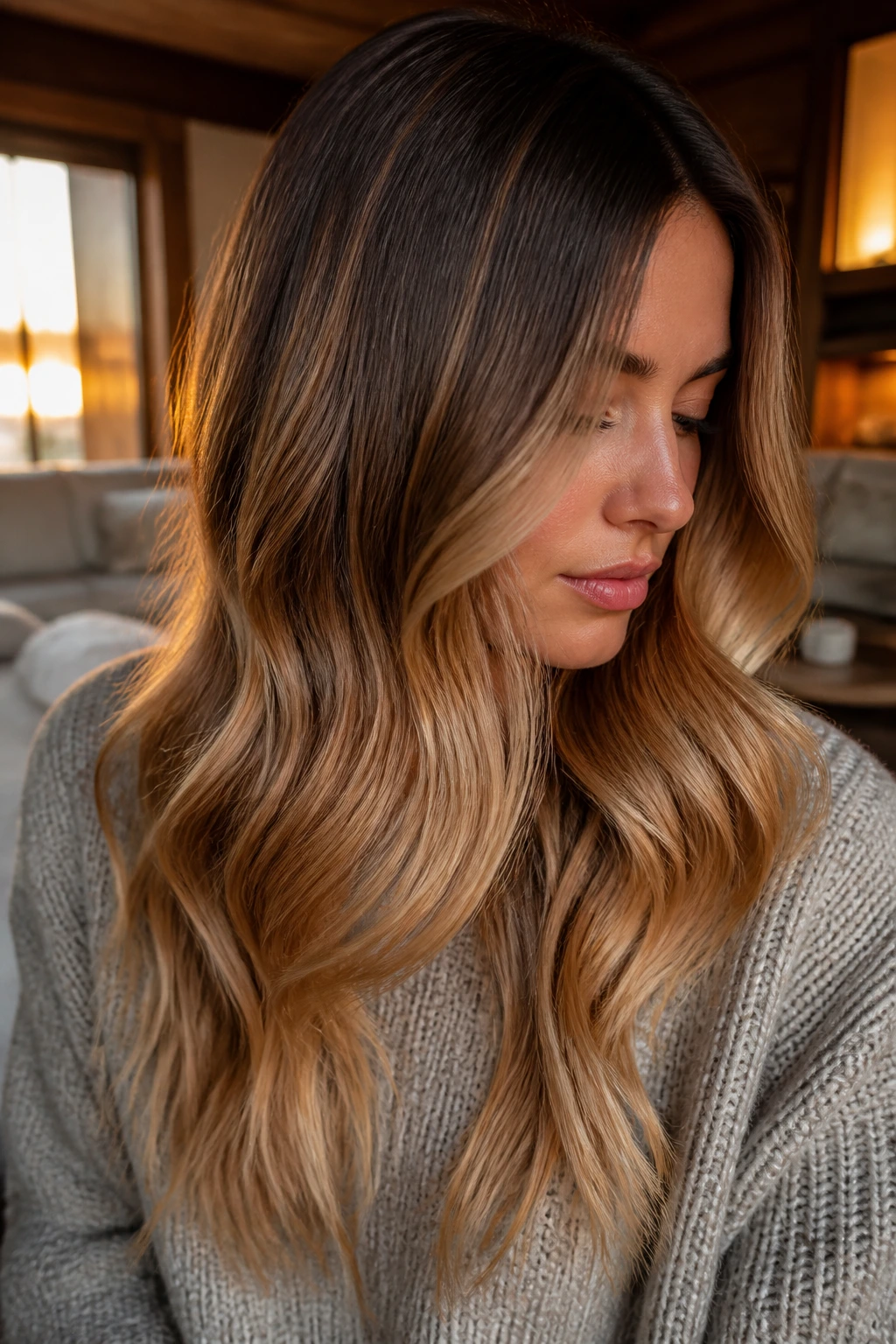
Caramel-dipped ends give long hair a softer fade than a hard ombré line. The root and midlengths stay deeper, then the ends melt into caramel and soft beige instead of jumping straight to pale blonde. On long hair, that lower contrast keeps the whole look from feeling chopped up.
I like this for brunettes who want visible lightness without a full bleach-out. Ask for a feathered transition through the midlengths, not a sharp line near the ears. If the caramel is too orange, the ends can look dry; if it’s too ashy, the warmth disappears and the whole point gets lost. The sweet spot is a soft tan-gold that still looks like hair, not dye.
This is one of the easiest ways to lighten a long cut while keeping the base strong.
17. Baby Blonde Foils with Shadow Root
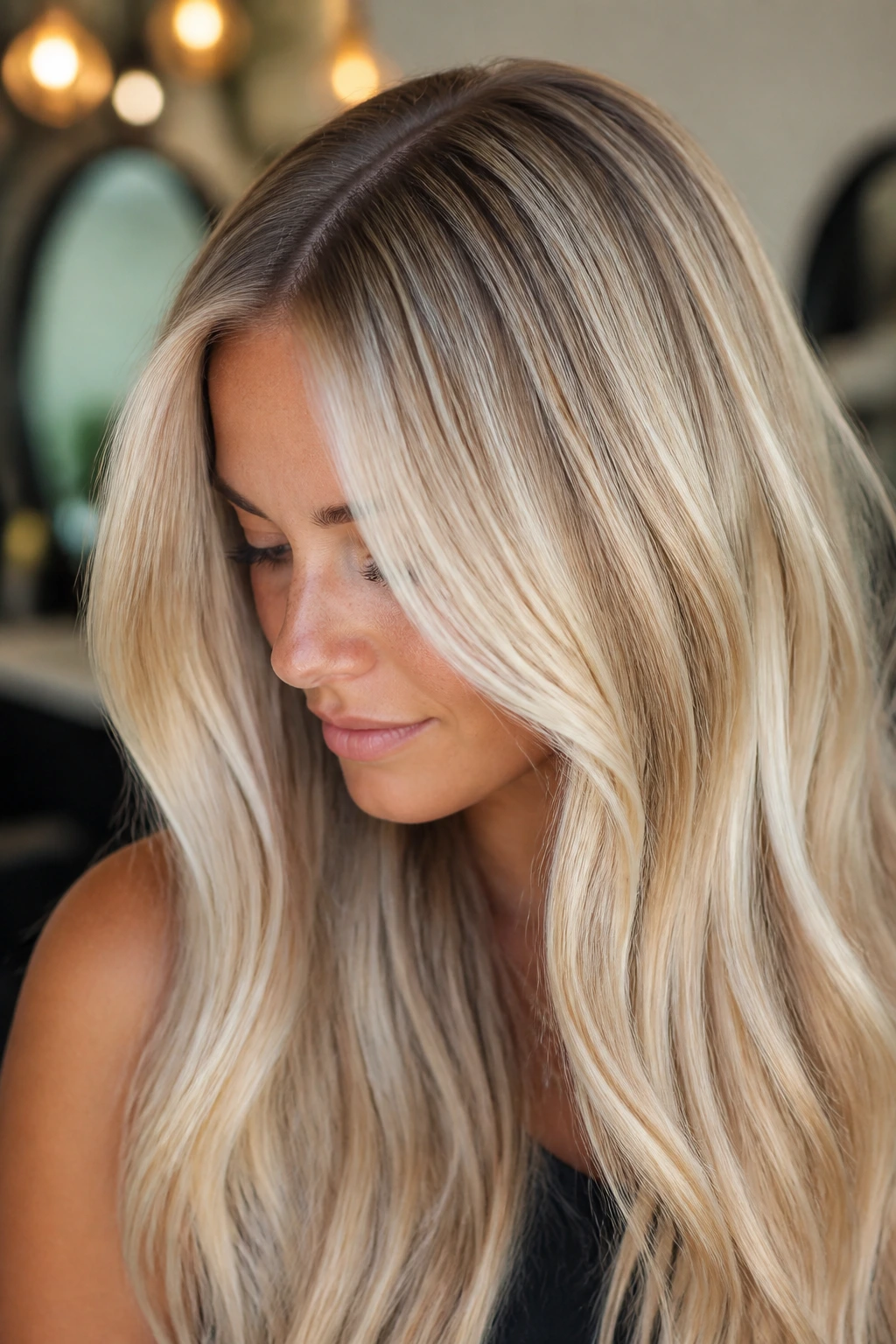
Baby blonde foils are tiny, but the result is not subtle. Because the foils are so fine, the blonde reads as a soft haze of brightness instead of obvious streaks. Add a shadow root, and the grow-out starts to look deliberate almost immediately. On long hair, that balance is gold.
Placement Matters More Than Lift
The best version puts the brightest pieces near the crown, part line, and face framing, then lets the lower lengths stay a little softer. That keeps the color from turning into a pale block. It’s a smart choice if you want dimension, shine, and a maintenance schedule that doesn’t punish you after five weeks.
Ask for micro-foils, not chunky sections. The difference is visible from across the room.
18. Champagne Curtain Layers
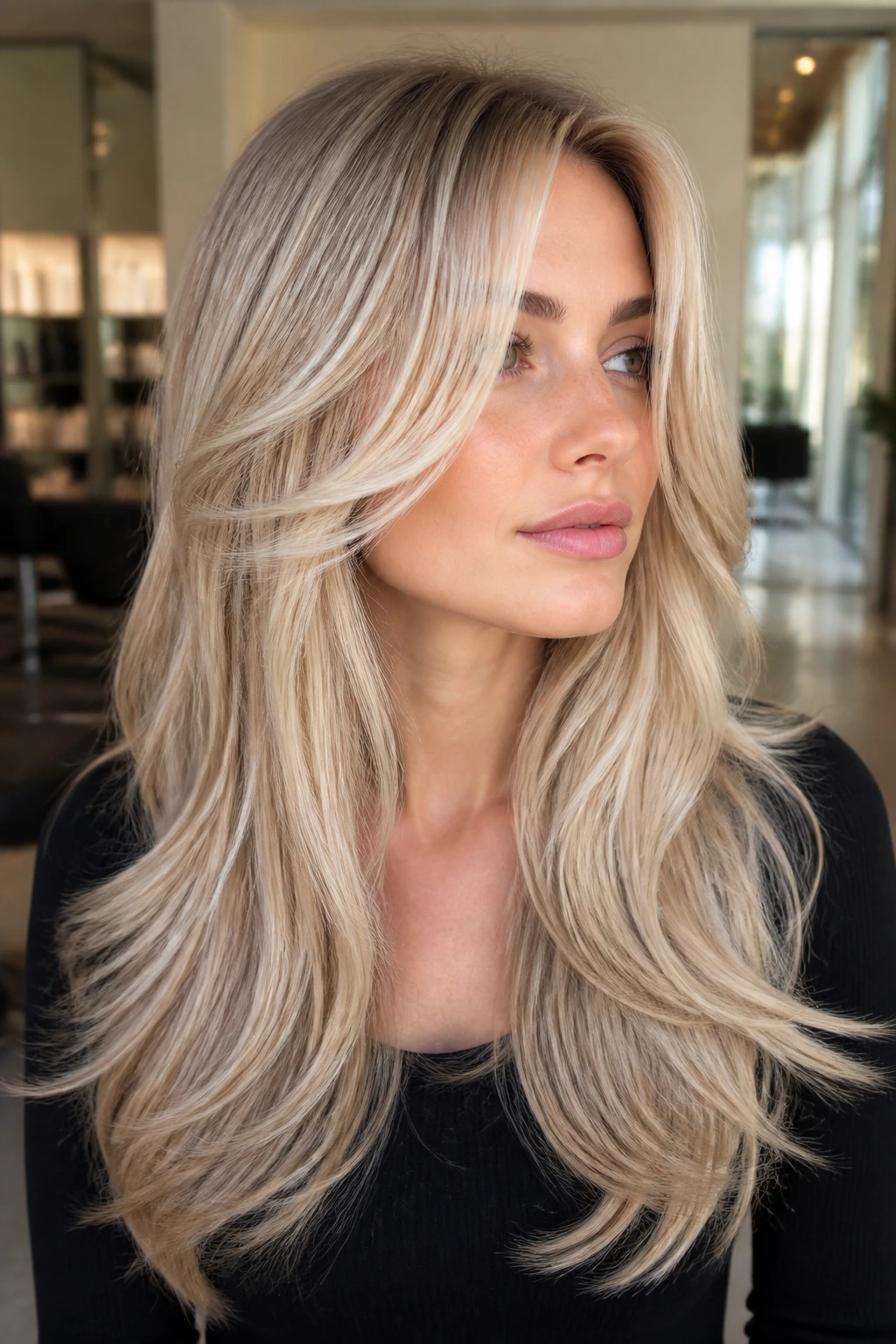
Champagne curtain layers are basically face-framing done with better manners. The front layers open around the cheekbones and jaw, and the champagne tone adds a soft pale warmth that doesn’t overpower the rest of the blonde. On long hair, this look is especially flattering because the front pieces travel downward and keep the eye moving.
This is a strong choice if you live in a middle part or wear curtain bangs grown out into longer face-framing pieces. Ask for brighter front ribbons, then a gentler champagne glaze through the rest of the head. The color should feel airy, not icy, and never flat at the roots.
It’s one of those shades that looks low-key in a ponytail and polished when the hair is loose. I trust that kind of range.
19. Vanilla Cream Money Pieces
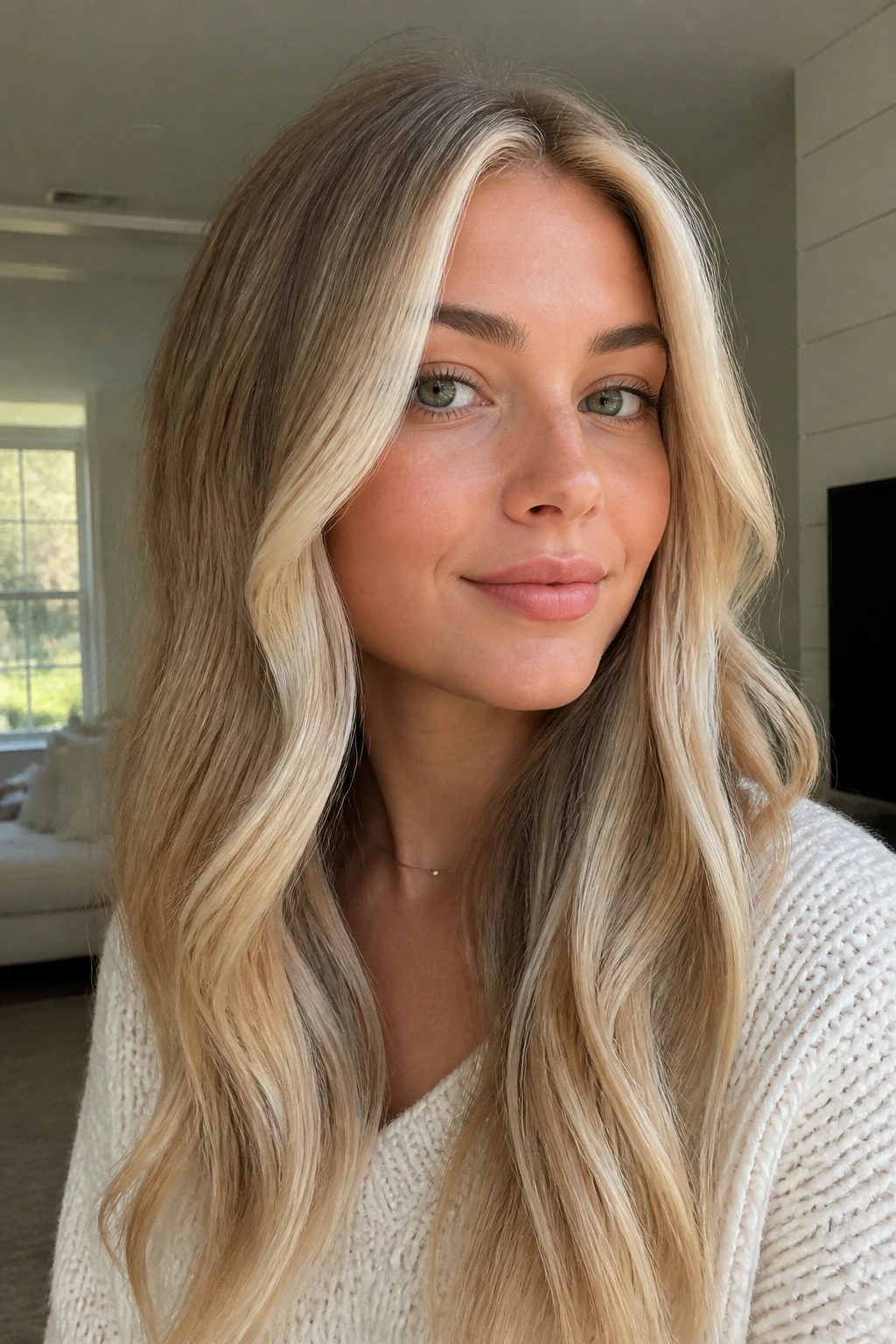
What if you want brightness near the face but not all the upkeep of full blonde? Vanilla cream money pieces are the answer. The front panels are pale and creamy, while the rest of the hair stays softer and more diffused, so you get a lift without repainting every inch of the head.
This works especially well on long hair because the bright pieces have room to taper as they fall toward the chest. Ask for vanilla cream around the front, with the rest of the blonde kept neutral-beige. If the money piece is too thick, it starts looking harsh. If it’s too thin, you lose the effect.
I like this for people who wear their hair down but want something noticeable in selfies and mirrors. It’s a small move with a strong payoff.
20. Ivory Ends with a Smoked Root
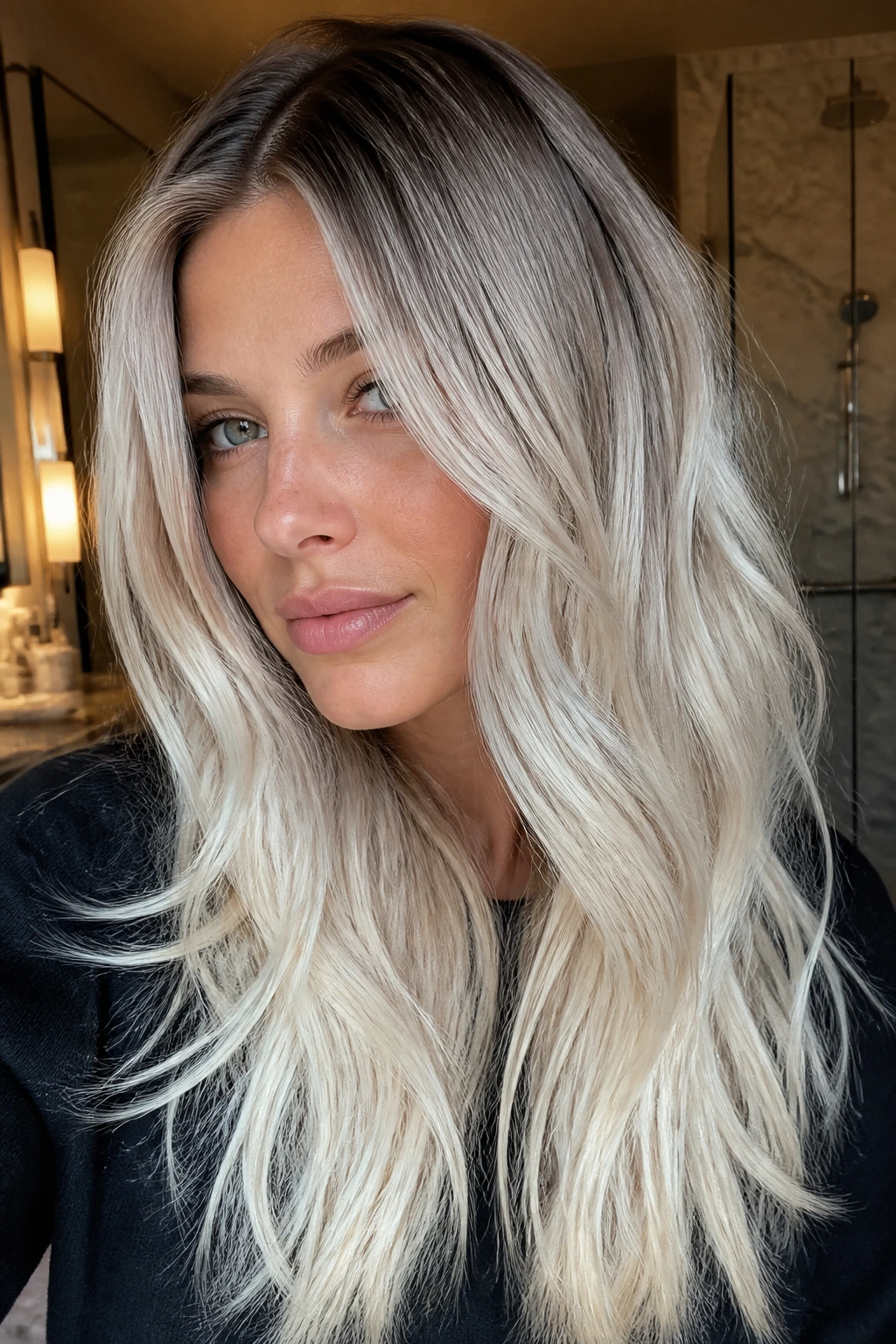
Ivory ends with a smoked root are for people who like contrast but hate stripes. The root is deepened with a smoky tone, then the hair opens into very pale ivory at the ends. On long hair, that vertical change can look sharp and clean, especially when the cut has long layers that keep the fade soft.
This is not a look for already-fragile ends. Ivory shows damage fast. If your hair is porous, the lightest sections can grab toner unevenly and look patchy. The right version starts with careful lightening and a root shadow that stays cool, not muddy. It’s dramatic, yes, but in a refined way.
If your wardrobe leans black, charcoal, or crisp white, this shade has a nice graphic edge.
21. Golden Apricot Blonde
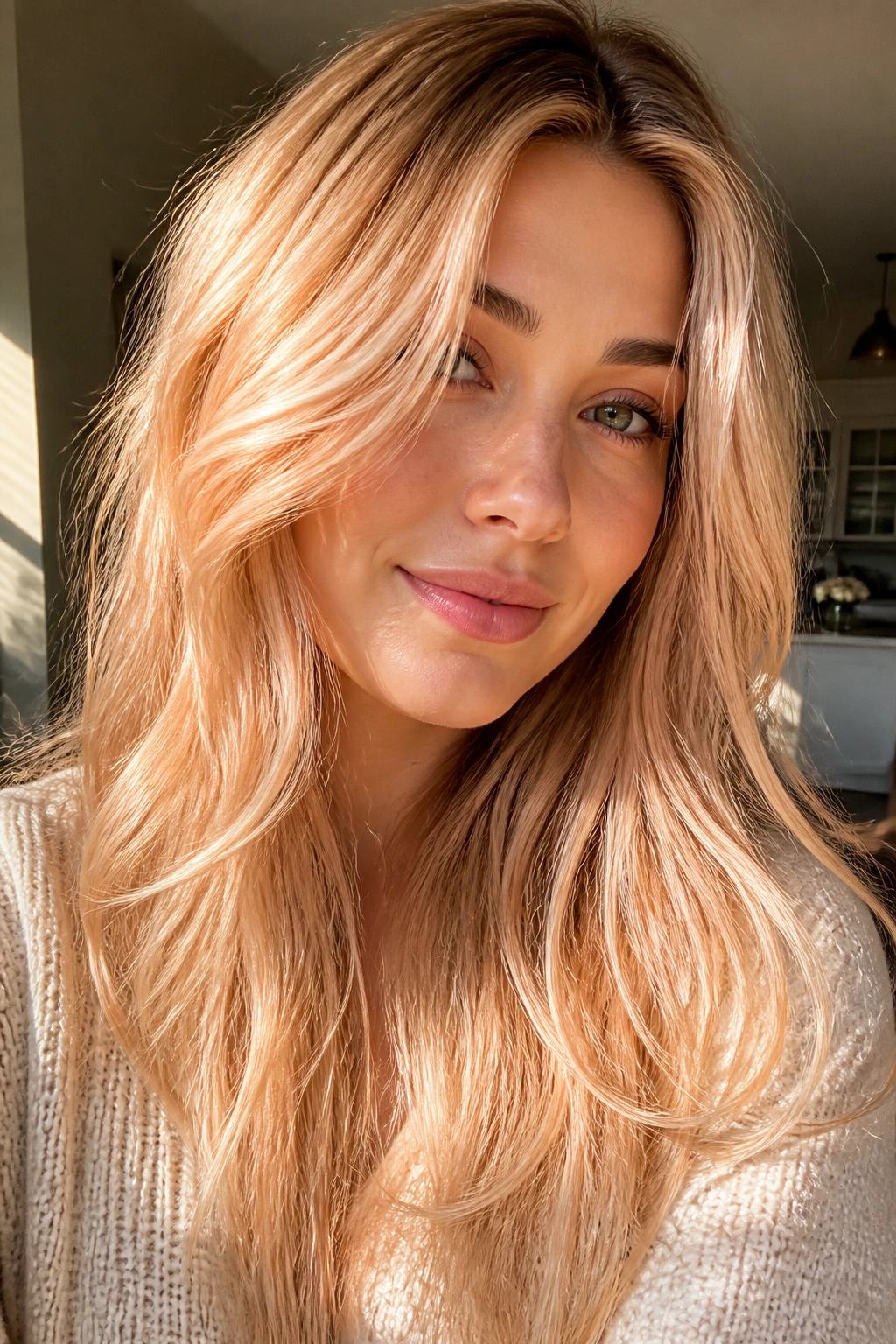
Golden apricot blonde has more charm than glamour, and that’s why it works. The shade pulls warm gold with a whisper of peach, so it feels lively without turning into copper overload. On long hair, the color can look like late sunlight moving through the lengths.
It’s especially good for warm complexions and people who like a little color in their blonde. Ask for golden blonde with a soft apricot glaze — not a heavy copper deposit — and keep the root slightly deeper so the warmth has somewhere to land. If the tone gets too orange, it loses the apricot softness and starts looking brassy. That’s the line to watch.
This one looks nicest when the hair is loosely waved or tucked behind one ear. Small things. They matter.
22. Frosted Beach Blonde
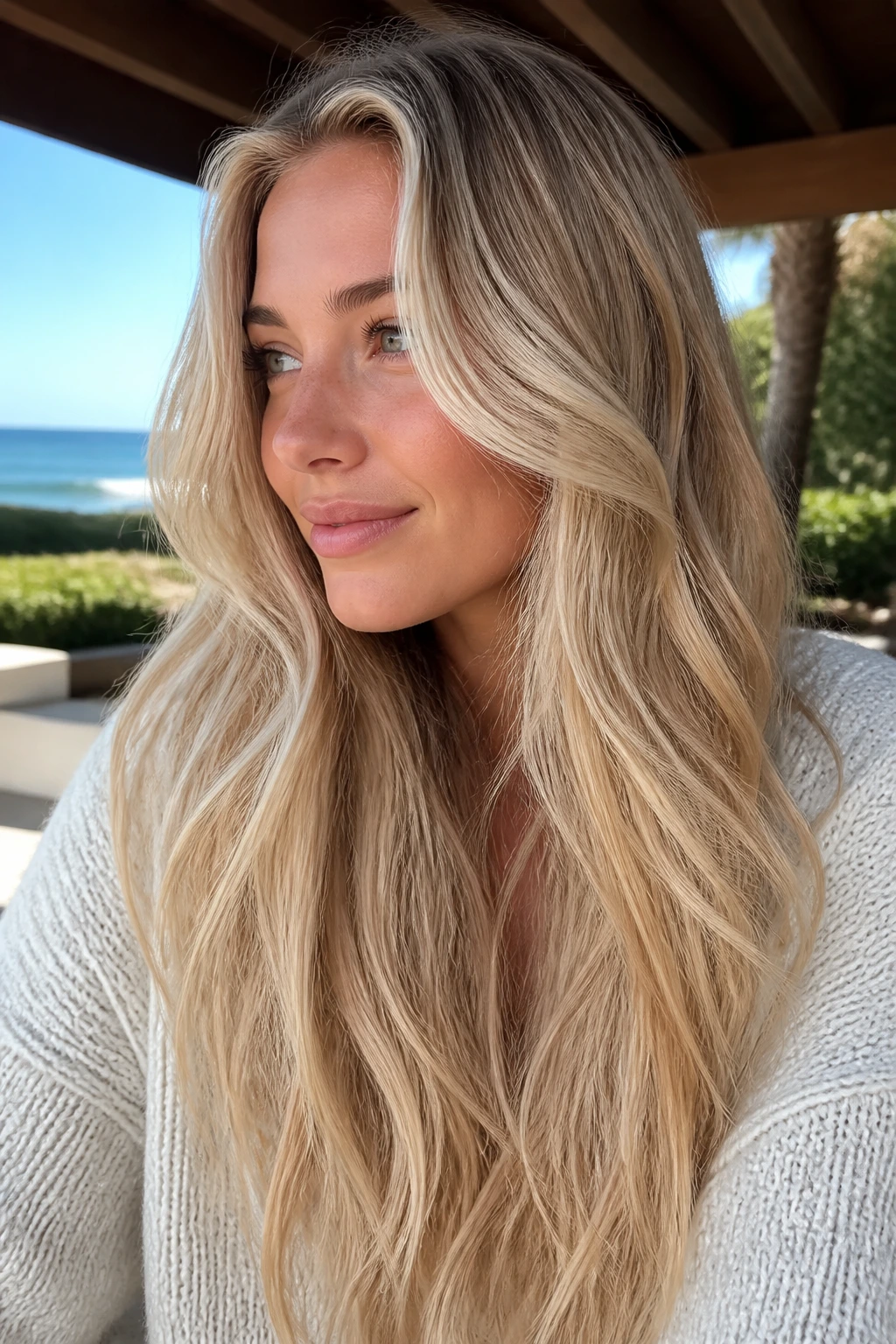
Frosted beach blonde can veer icy fast if the toner goes too cool. The better version keeps the sandy base and adds cool, frosted pieces through the top and ends so the hair looks sunlit and salt-washed, not dry. Long hair gives the color enough room to shift between pale and neutral without feeling repetitive.
I like this when someone wants a beachy blonde that still reads polished. Ask for bright surface pieces, cooler tips, and a root that isn’t pushed too dark. The trick is contrast without harshness. If the ends are over-toned, the whole look can go gray. A little warmth in the base keeps it wearable.
Pair it with loose waves and a light texture spray. The movement is the whole point.
23. Soft Foilyage on Long Curls
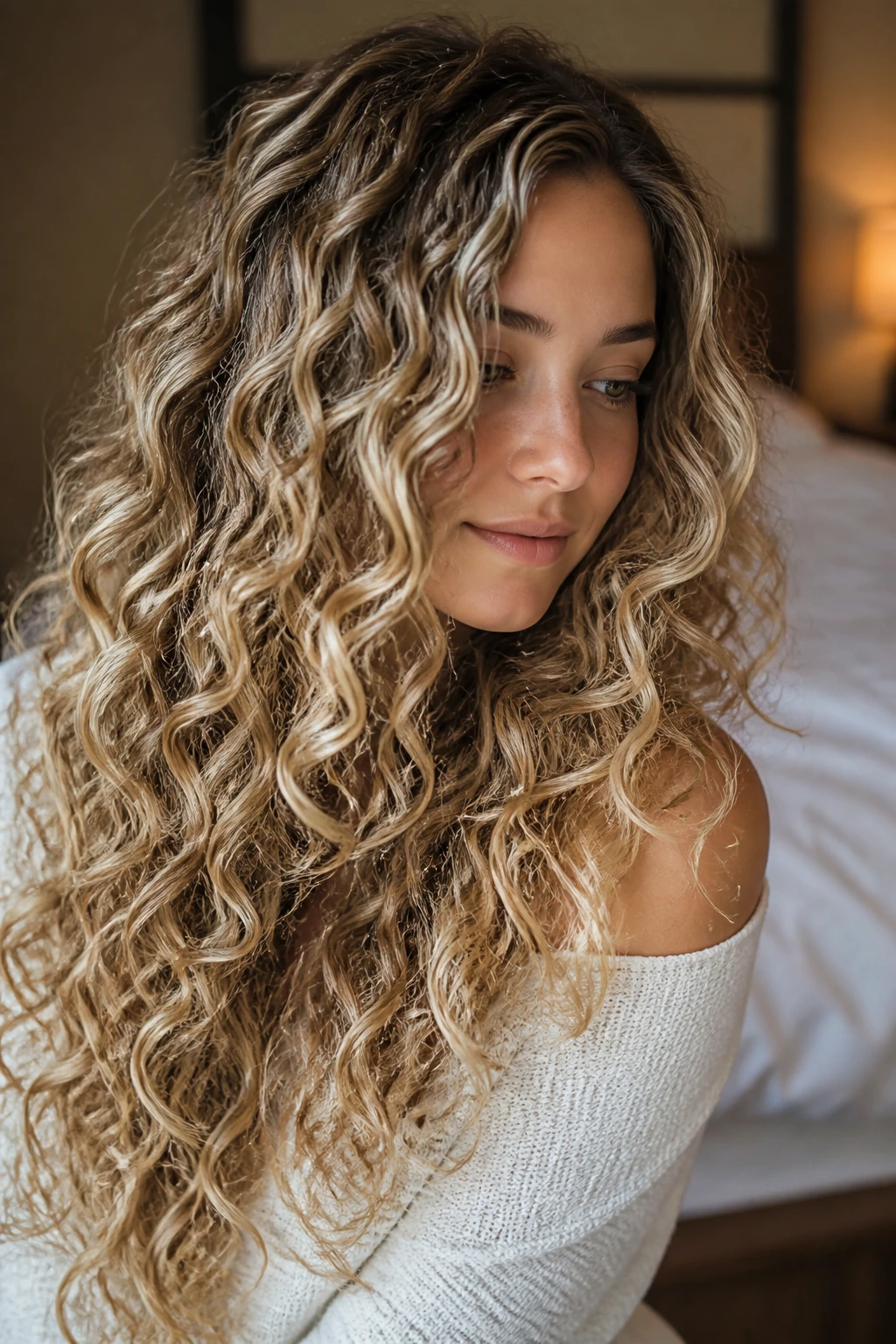
Soft foilyage on long curls gives you lift where curls actually bend. That’s the key. Traditional highlight placement can miss the curl pattern and make the blonde look scattered, while foilyage lets you paint brightness where the shape needs it most. On long curls, that creates a halo of light that follows the hair instead of fighting it.
How It Reads in Motion
The brightest pieces usually live around the top third, face frame, and the outer curve of the curl. The rest stays slightly deeper so the spiral still has depth. Ask for a soft beige or honey-blonde finish rather than an ultra-cool tone. Curls can lose their richness fast if the blonde is too pale and too flat.
This is one of the better choices for people who want blonde that respects the curl pattern instead of flattening it.
24. Bronzed Vanilla Balayage
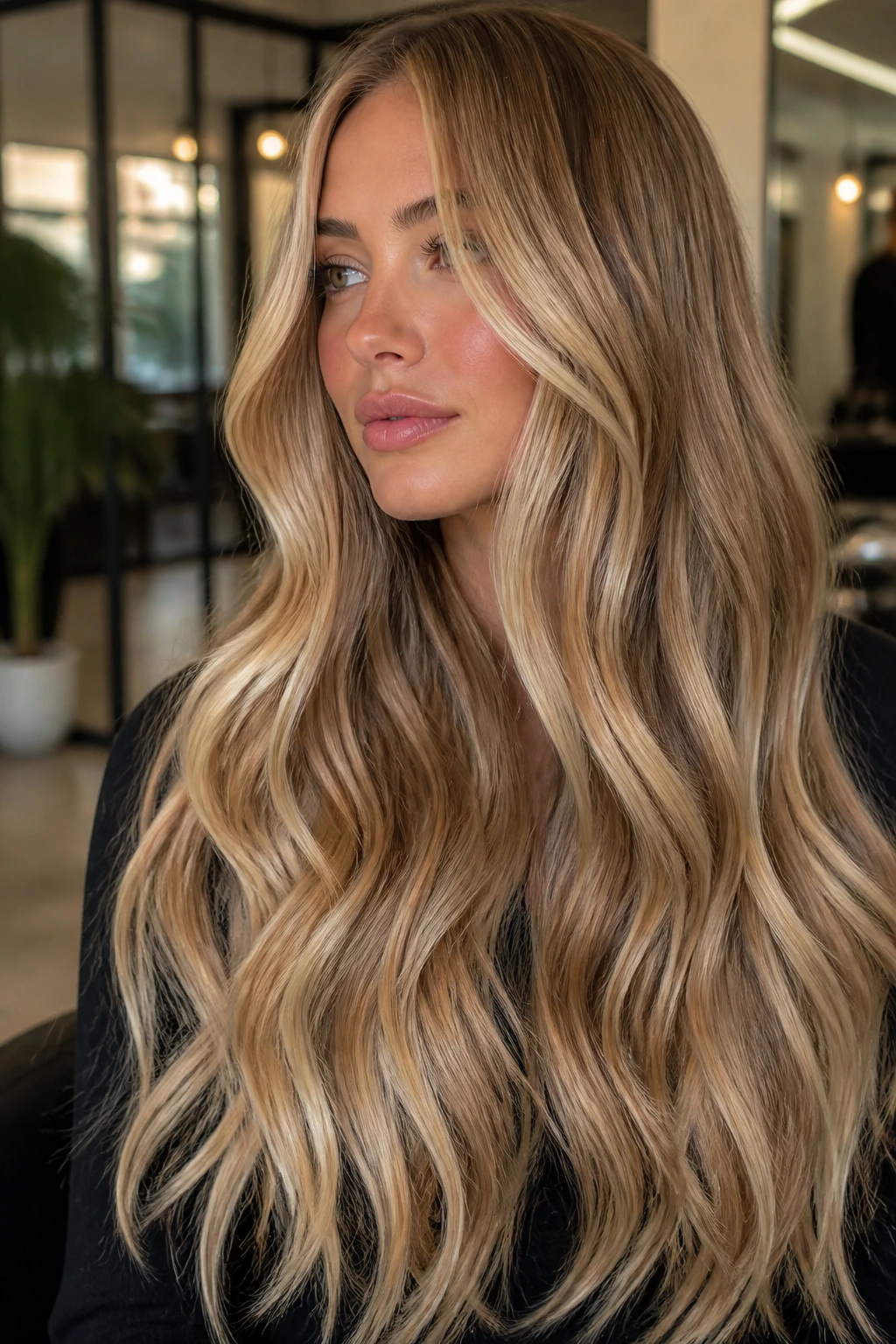
Bronzed vanilla balayage lands in the narrow band between warm and beige, and that’s exactly why it’s useful. The bronzed pieces keep the color from going washed out, while the vanilla sections lighten the whole head without drifting into heavy gold. On long hair, that blend can look rich instead of streaky.
This is a strong choice if your skin has olive, tan, or neutral undertones and you want depth with brightness. Ask for bronzed lowlights through the underlayer and vanilla gloss on the lighter sections. It’s one of those shades that holds up well in low light because it doesn’t rely on the sun to make sense.
If you want blonde that looks a little more expensive than beachy, this is a good lane to stay in.
25. Creamy Beige Butterfly Layers
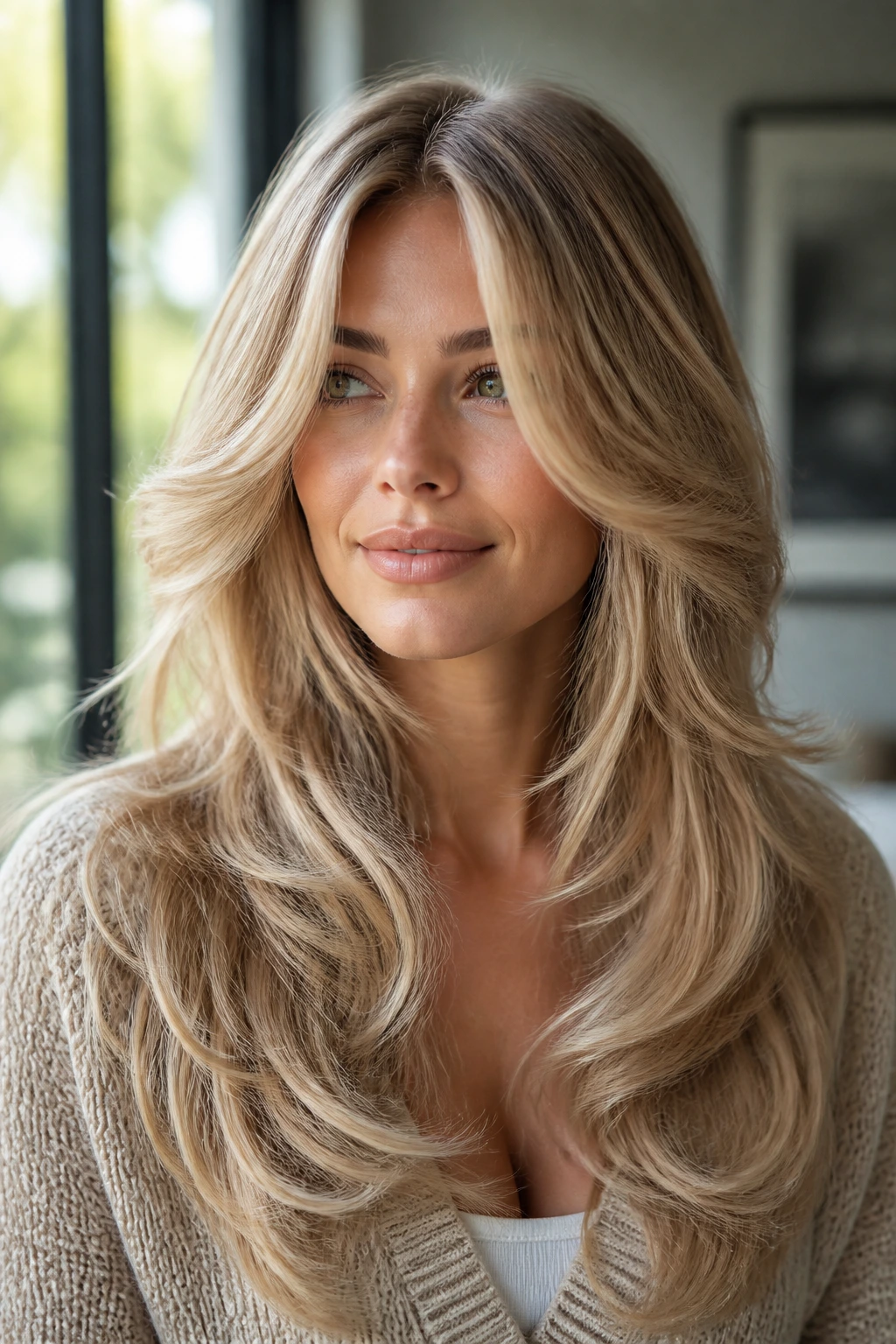
Creamy beige butterfly layers are built for hair that needs shape and movement from the same cut. The butterfly haircut creates shorter face-framing pieces and longer lengths underneath, and the creamy beige blonde makes each layer separate just enough to show the silhouette. On long hair, that contrast is lovely.
It’s a good option for medium to thick hair that tends to hang heavy when it’s one length. Ask for beige highlights concentrated around the layers that sit at the cheekbone, collarbone, and ends. You want the movement to read in the cut, not only in the color. Too much brightness everywhere and the shape gets lost.
This look is one of the easiest ways to make long hair feel lighter without sacrificing length.
26. High-Contrast Dimensional Blonde
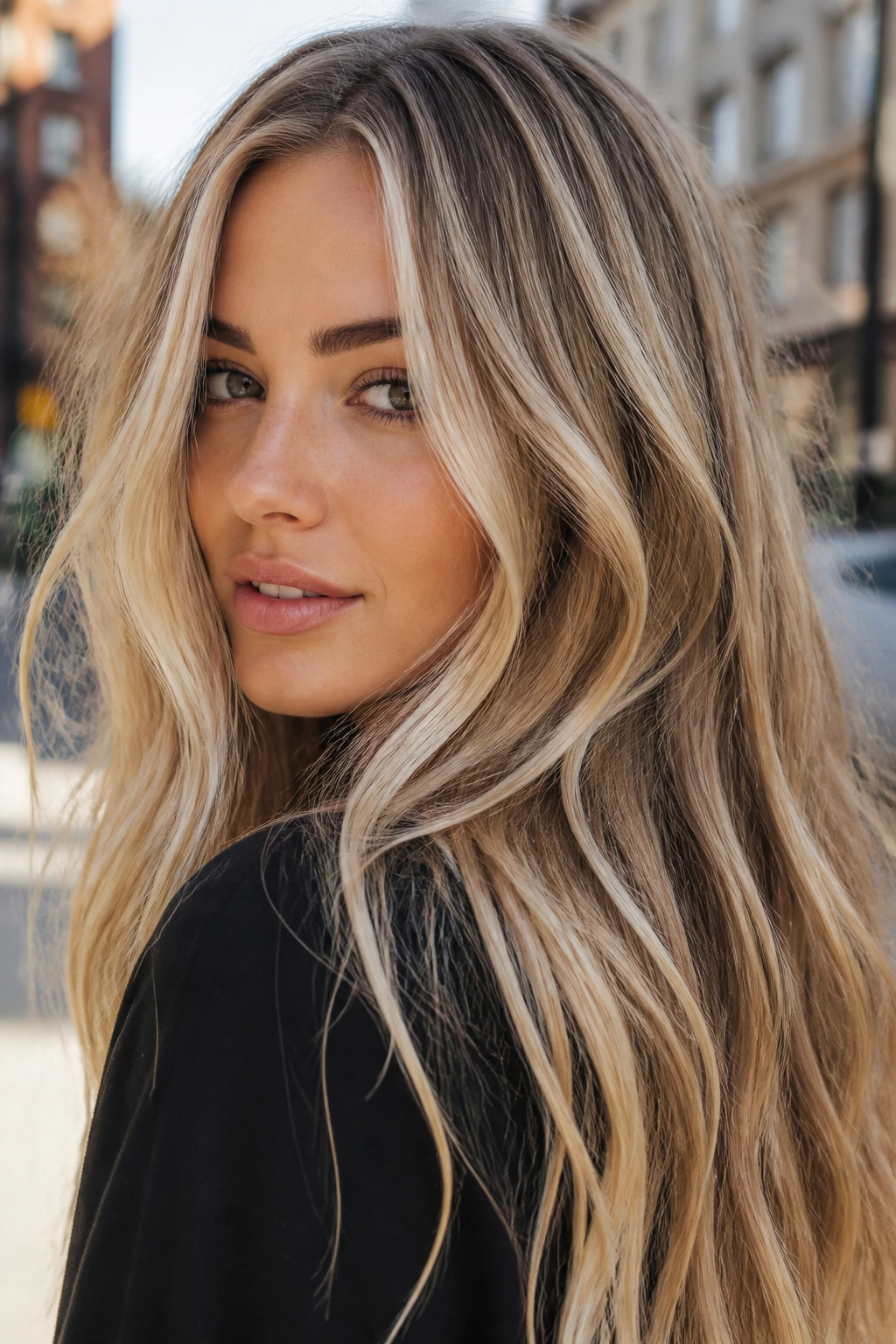
High-contrast dimensional blonde is not shy. Darker lowlights and brighter ribbons live side by side, and on long hair that contrast keeps the color from disappearing into one pale plane. If you like hair that looks bold when it swings and even bolder when it’s pinned up, this is the one.
The important part is balance. The dark pieces need to be intentional, not muddy, and the blonde pieces need enough spacing to breathe. Ask for visible ribbons around the face and crown, then let the mids and underlayers keep some depth. That makes the hair look thick, not patchy.
This is the blonde for people who want the room to notice the color first. It does that job.
27. Platinum Babylights on Long Straight Hair
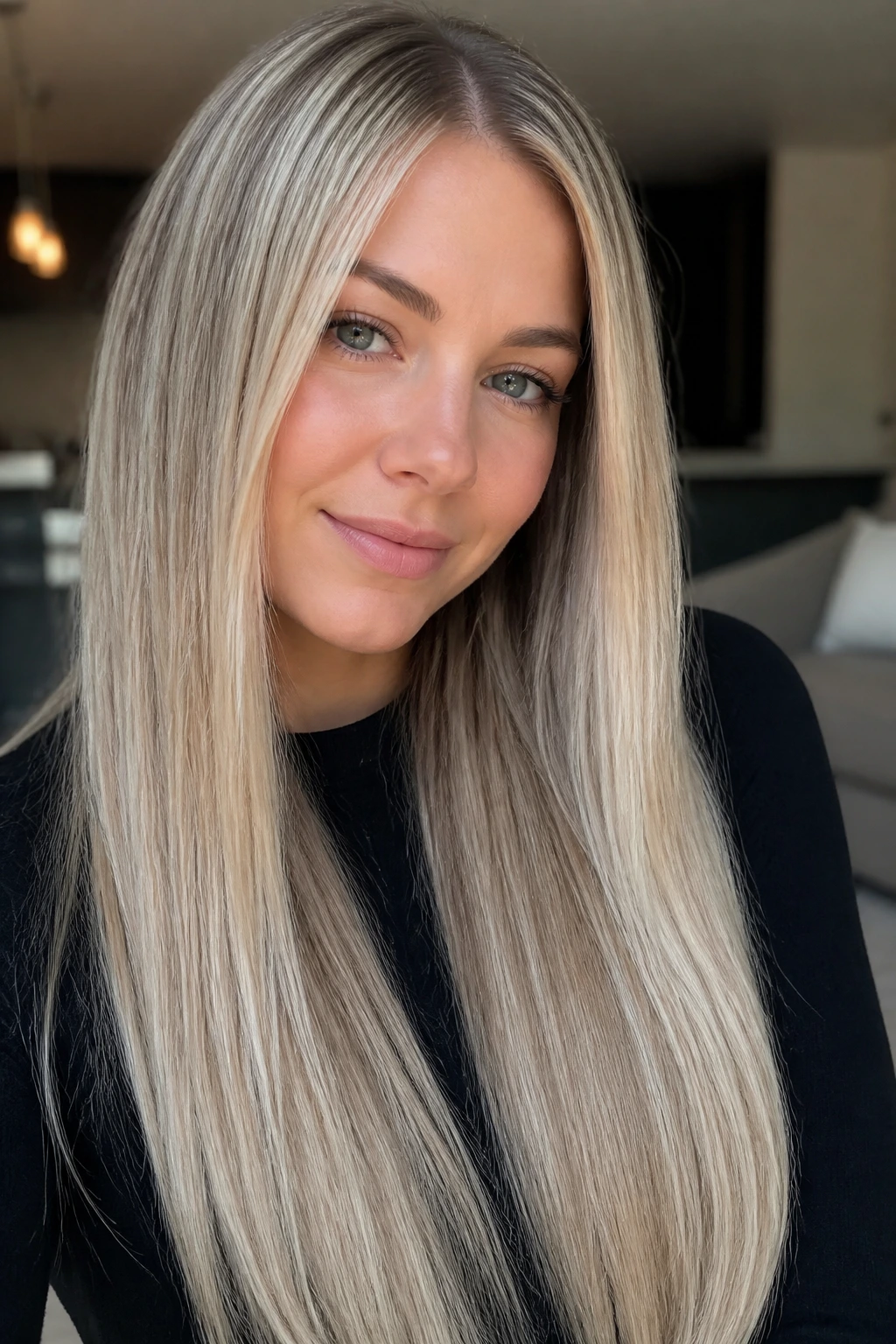
Platinum babylights on long straight hair are the opposite of chunky highlights. The pieces are tiny, numerous, and placed close enough together to create a pale veil rather than obvious stripes. On sleek hair, that gives you a soft shimmer from root to end, which is a very different thing from a blunt platinum block.
Because the strands are fine, the look can stay elegant even as it grows out, but only if the root is managed well. Ask for microscopic foils, a controlled lift, and a cool toner that won’t go flat. Long straight hair shows every line, so trims matter too. A clean perimeter makes the blonde look intentional instead of overworked.
If you love a polished finish and don’t want the color to depend on waves for personality, this is the cleanest version on the list.
What Long Hair Changes About Blonde Color
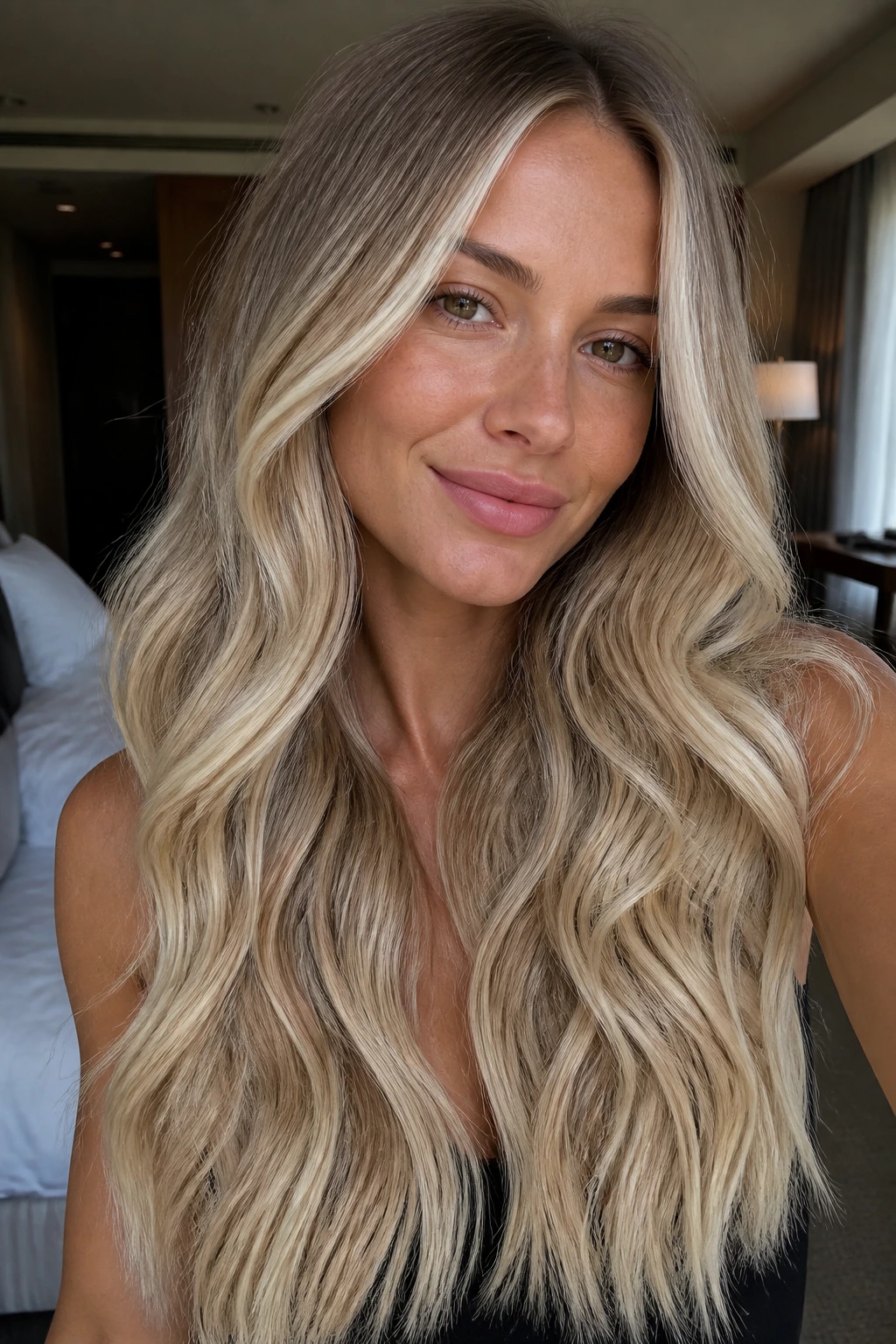
Long hair does something shorter cuts can’t quite do: it shows a blonde in stages. The root, the crown, the mids, and the ends all catch light differently, so the same shade can look beige near the scalp and almost ivory at the bottom. That’s why one-dimensional blonde often falls flat on long lengths. It doesn’t have enough structure to stay interesting.
Porosity matters more, too. Older ends usually take toner faster and lose it faster, which is why long blondes can go muddy or hollow if the colorist ignores the last six inches. A good placement plan respects that. It uses root shadow, midtone, and lighter ends on purpose instead of treating every section the same.
Haircut shape also changes the game. A long one-length cut can make even a pretty blonde look like a sheet. Add layers, curtain pieces, or a butterfly shape, and the color suddenly has edges to play against. That’s why long hair and blonde need to be planned together. Separate them, and you get compromise. Keep them in the same conversation, and the result looks deliberate.
Essential Tools for Blonde Long Hair
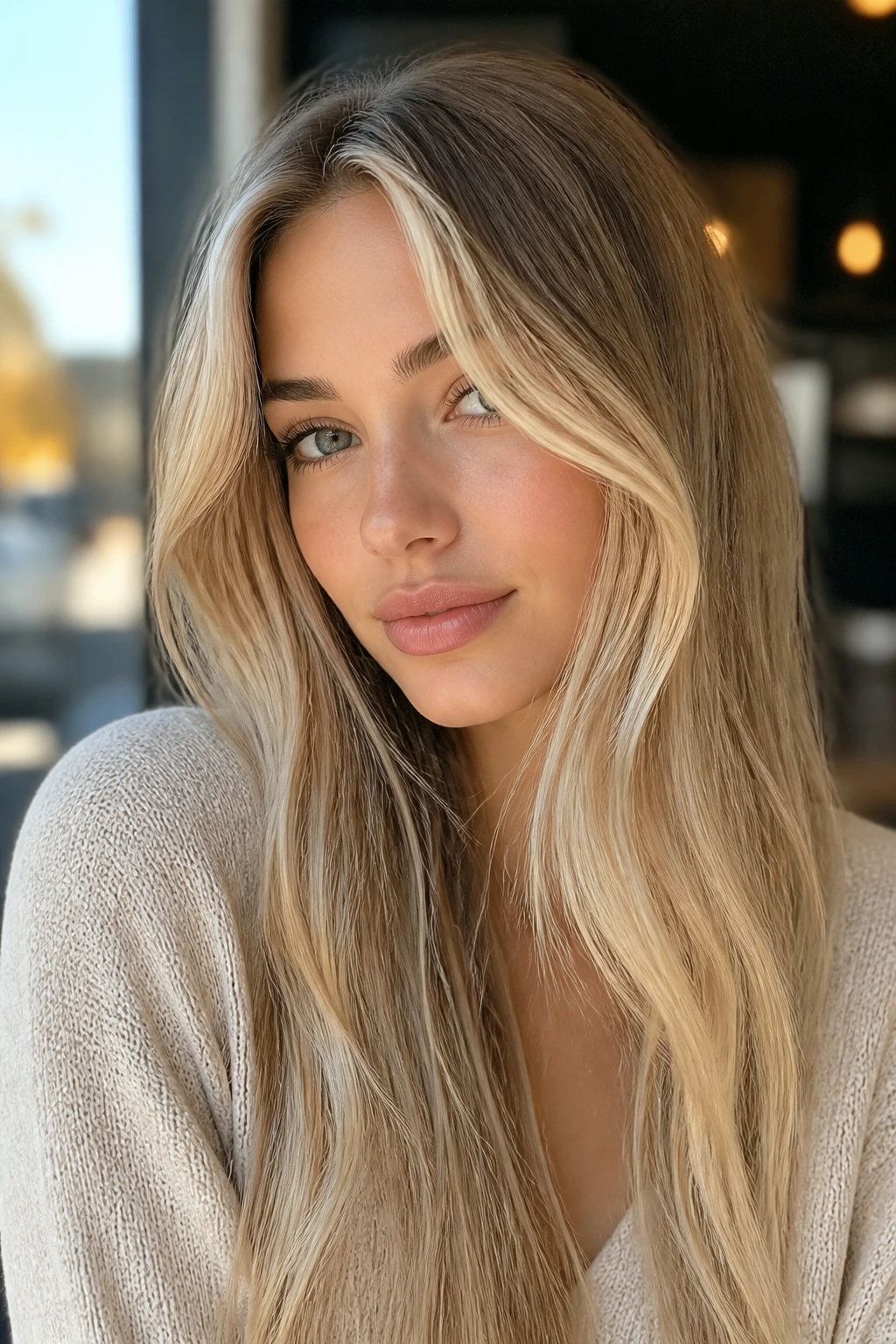
- Color-safe sulfate-free shampoo: Keeps the blonde from fading as fast and helps the tone stay cleaner between salon visits.
- Purple shampoo: Use it sparingly on cool blondes; one wash every 1 to 2 weeks is usually enough.
- Hydrating mask: Long lightened ends drink moisture, and a weekly mask keeps the midlengths from feeling rough.
- Leave-in conditioner with heat protection: This does two jobs at once, which is why I like it.
- Wide-tooth comb: Safer than a brush on wet, freshly conditioned hair.
- Microfiber towel or soft T-shirt: Cuts friction when hair is wet and fragile.
- Round brush or paddle brush: Pick based on whether you smooth or blow out the hair.
- Bond-building treatment: Helpful if the hair has been lightened more than once.
- Sectioning clips: Nice for home toning, deep masks, and blow-drying in tidy sections.
- Shower filter, optional: Worth considering if your water is hard and your blonde keeps going dull or brassy.
What to Tell Your Colorist Before the Foils Go In
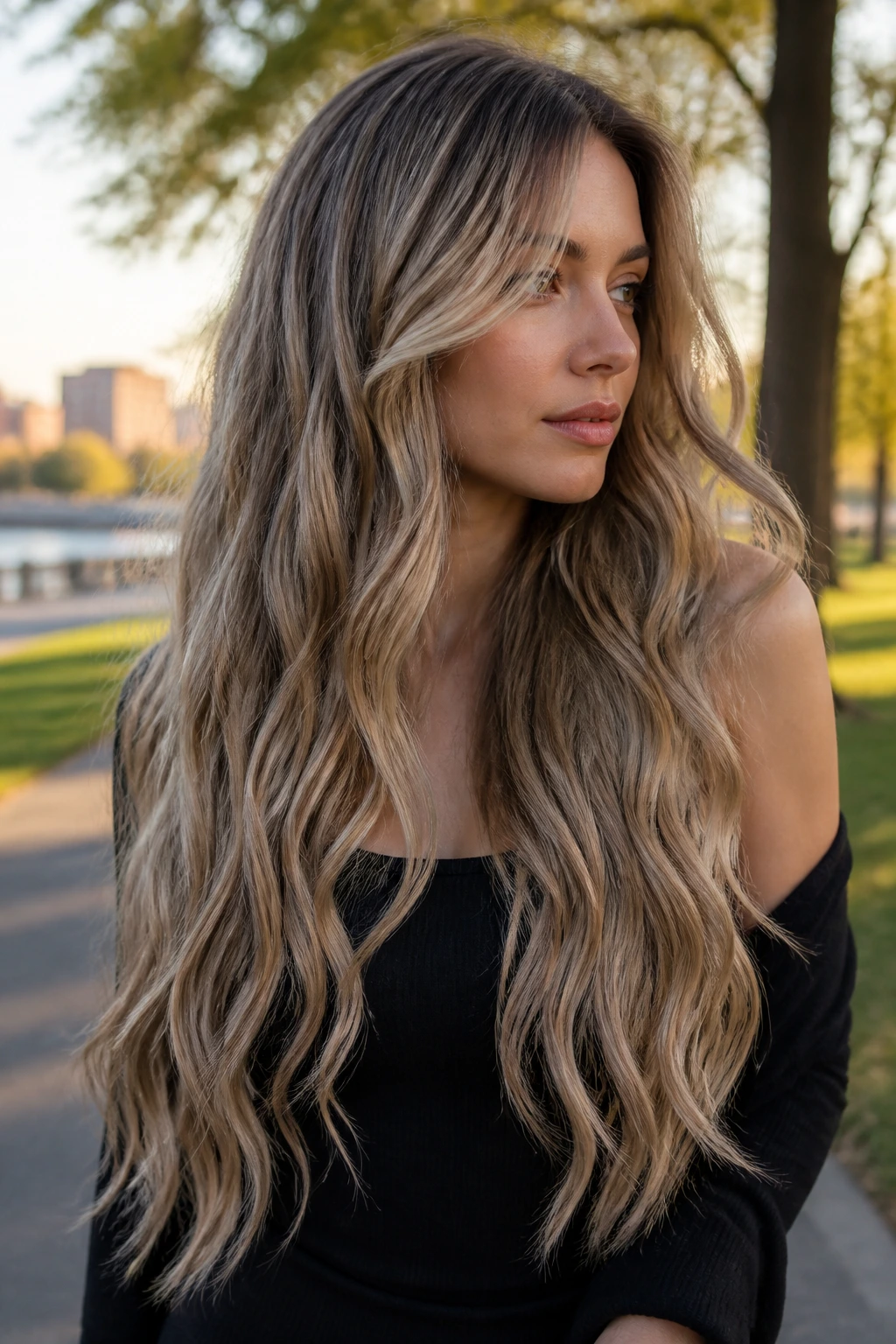
The worst blonde appointments usually start with a vague request. “Make me blonder” is not a plan. It’s a dare. On long hair, your colorist needs to know where the blonde should live, how much root you can tolerate, and what the hair has already been through. Box dye, old highlights, hard water, frequent heat styling — all of that changes the outcome.
Bring two or three reference photos, but do not stop there. Say which part you like: the root depth, the brightness around the face, the beige tone, the softness at the ends. Most photos are a mash-up of good things, and the useful part is knowing which one you actually want. Also mention how often you want to come back. A high-maintenance platinum and a stretch-friendly bronde are not the same appointment, even if both look “blonde” on your phone.
One more thing people skip: tell them how you wear your hair. If it’s usually in a ponytail, the face frame matters. If you wear it blown out straight, the toner matters more. If it lives in waves, placement through the midlengths matters most. That’s not extra detail. That’s the brief.
How to Keep Long Blonde Hair Bright Between Appointments
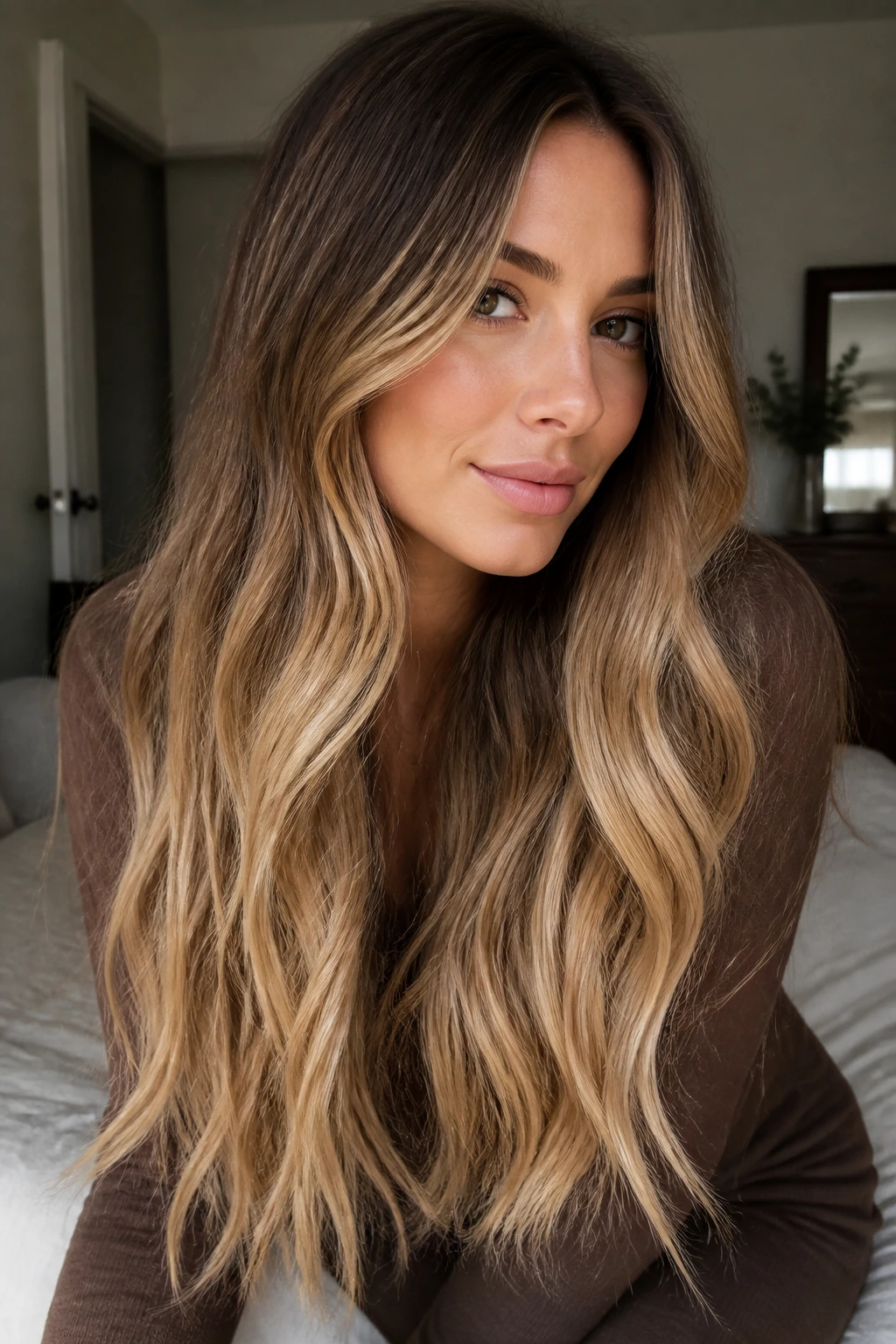
Wash frequency should match your scalp, not a purity test. For most long blondes, 2 to 4 washes a week is enough. Use a gentle shampoo at the roots, let the suds slide through the lengths on the rinse, and stop scrubbing the ends like they’re greasy. They’re not. They’re just dry.
Purple shampoo is a tool, not a lifestyle. Cool blondes usually need it every 1 to 2 weeks, and only for one wash at a time. Leave it on too long and the hair can go dull, gray, or lavender in a way nobody asked for. Warm blondes often do better with a gloss or beige-toning treatment instead of constant purple use. That keeps the tone soft rather than flat.
Heat protection matters more on long hair because the ends are old hair. That’s not an insult; it’s biology. A mist or cream that shields up to your styling temperature can keep the blonde from turning rough and straw-like at the bottom. Trim every 8 to 12 weeks if you want the ends to stay clean. And if the blonde loses its shine before the haircut, ask for a gloss around week 6 or 8. That tiny appointment can bring the whole color back to life.
Common Mistakes That Make Long Blonde Look Flat or Dry
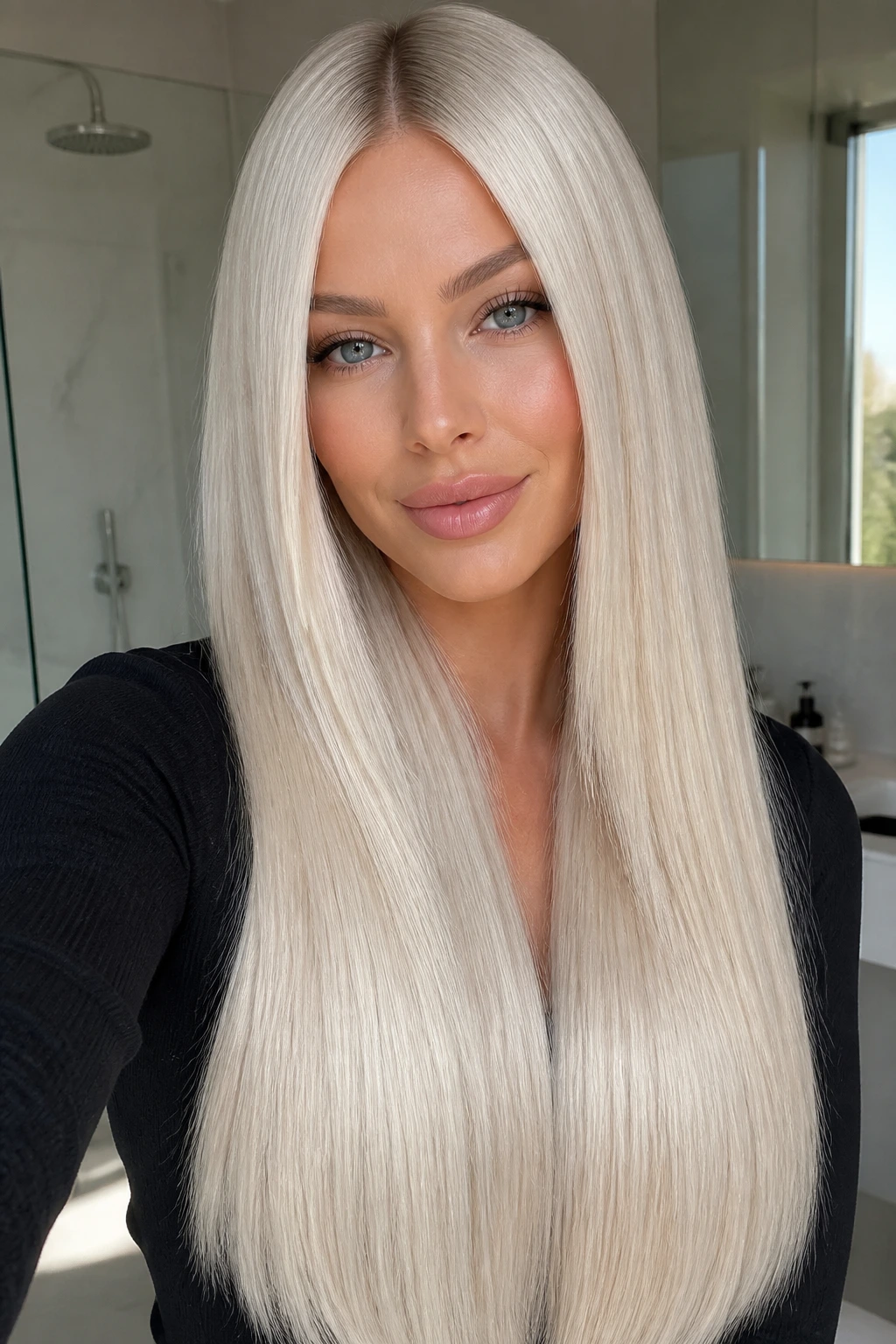
- Going too pale everywhere: A full sheet of light blonde can erase the shape of long hair. The fix is depth at the root or lowlights through the underlayer so the length has something to separate against.
- Overusing purple shampoo: If the blonde starts looking gray, matte, or slightly violet, you’ve gone too far. Switch to a gentle shampoo and use toner less often.
- Ignoring porous ends: Old ends grab pigment fast and can turn muddy. Ask for a lighter hand on the last few inches or plan on a trim before a big lightening service.
- Skipping the haircut: Even strong blonde placement looks limp if the ends are ragged or the cut is too blunt for the texture. Shape matters.
- Trying to lift too much in one session: Long hair can only take so much at once. Gradual lightening often looks better and feels better than one hard push.
- Using heat with no guardrail: Flat irons and wands are rough on blonde ends. If you style with heat, use protection every time and keep the temperature lower than you think you need.
Ways to Bend These Looks Toward Your Texture and Schedule
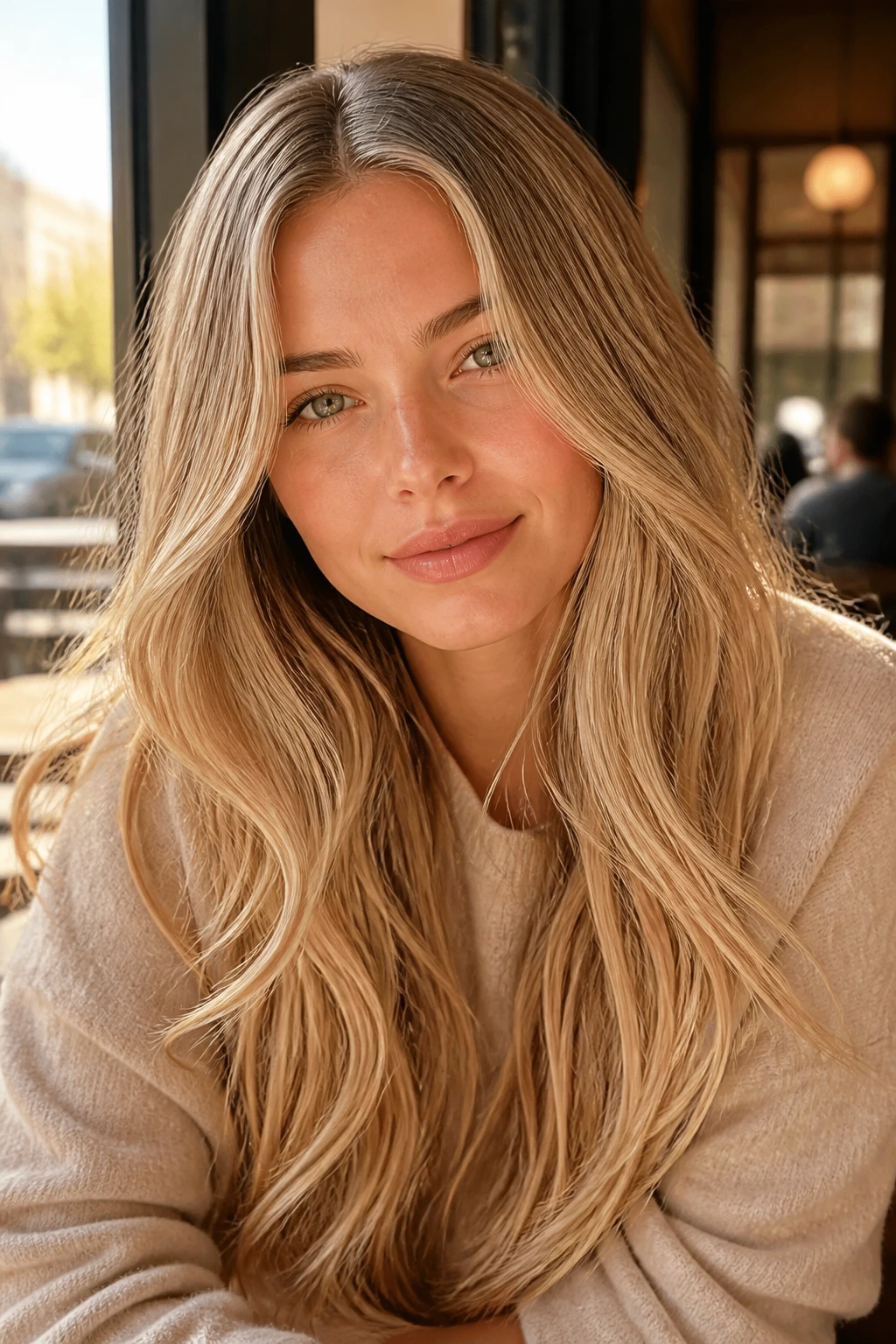
- The Low-Maintenance Root Shadow: Keep 2 to 3 levels of depth at the root and let the blonde live through the mids and ends. This softens regrowth and makes long hair easier to stretch between visits.
- The Brighter Front, Softer Back: Put the strongest brightness around the face and crown, then let the back stay calmer. It’s a smart option if you wear your hair up a lot.
- The Cooler Glass Finish: Lean into pearl, ash, or beige-pale tones and style the hair straight or in polished bends. This suits people who want a clean, sleek look more than a beachy one.
- The Warm Glow Version: Swap icy toner for honey, almond, or apricot beige. This keeps long hair from looking washed out, especially on warmer skin tones.
- The Curly-Friendly Placement: Focus brightness around the curl bends and surface pieces instead of the whole strand. Curly blonde needs shape, not uniformity.
- The Stretch-Appointment Plan: Choose balayage, foilyage, or ribbon highlights over all-over lightening. You’ll get a grow-out that behaves itself.
Frequently Asked Questions About Blonde on Long Hair
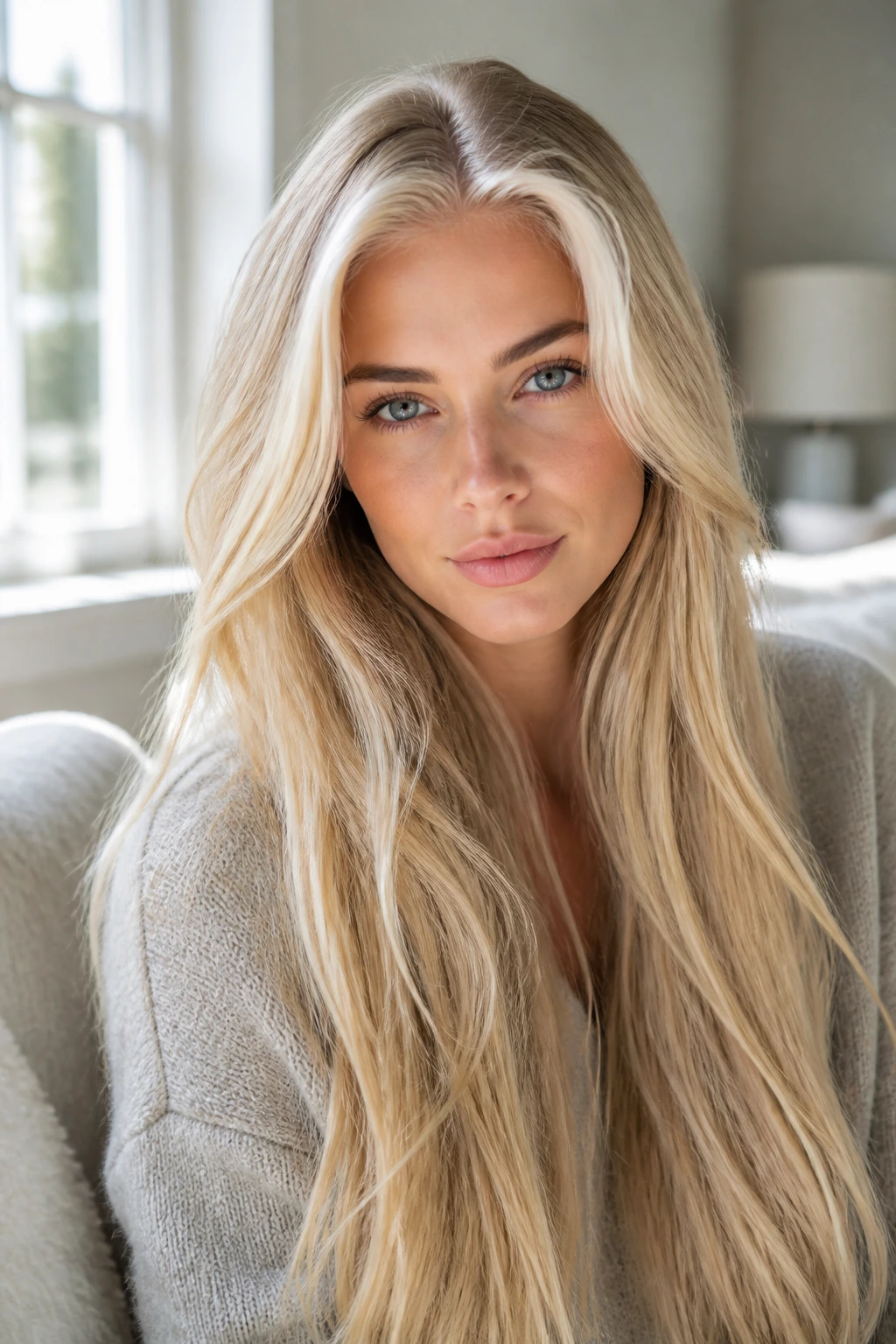
Which blonde is the easiest to maintain on long hair?
Beige balayage with lived-in roots and honey bronde melts are usually the easiest. Both keep depth at the root and allow the grow-out to blend instead of showing a hard line. If your schedule is packed, stay in that zone.
Can long hair go platinum without looking thin?
Yes, but only if the cut and condition are in good shape. Platinum looks best when the ends are trimmed cleanly and the hair has enough density to support the pale shade. On fine or damaged lengths, it can get wispy fast.
Is balayage or foil highlights better for long blonde hair?
Balayage gives you a softer grow-out, while foils usually create brighter lift. On long hair, a mix of both — foilyage — often gives the best result because it keeps dimension and brightness at the same time.
How often should blonde long hair be toned?
Most blondes do well with a gloss every 6 to 8 weeks. Cooler blondes may need toning a little sooner, while warmer blondes can stretch longer if the shade is holding. Purple shampoo should not replace toner.
What if my ends are already dry before I go blonde?
Then a big lightening service needs to be handled carefully. Ask for a trim, bond-building treatment, and softer placement on the last few inches. Bright ends on dry hair tend to look rough rather than luminous.
Will blonde make long hair look thinner?
It can, if the color is one-note and too pale. Dimension fixes that. Root depth, lowlights, and layered placement give long hair more visual body, which matters as much as the haircut itself.
Can curly long hair wear blonde without losing definition?
Yes, if the placement follows the curl pattern. Foilyage, ribbon highlights, and brighter surface pieces tend to work better than heavy all-over blonding. Curly hair needs contrast, not uniform lightness.
How do I keep blonde from turning brassy?
Use a gentle shampoo, limit heat, and stay on top of gloss appointments. Hard water can also make blonde shift warm, so a shower filter can help if your color fades fast or looks dull after washing.
Long Blonde Hair That Still Moves
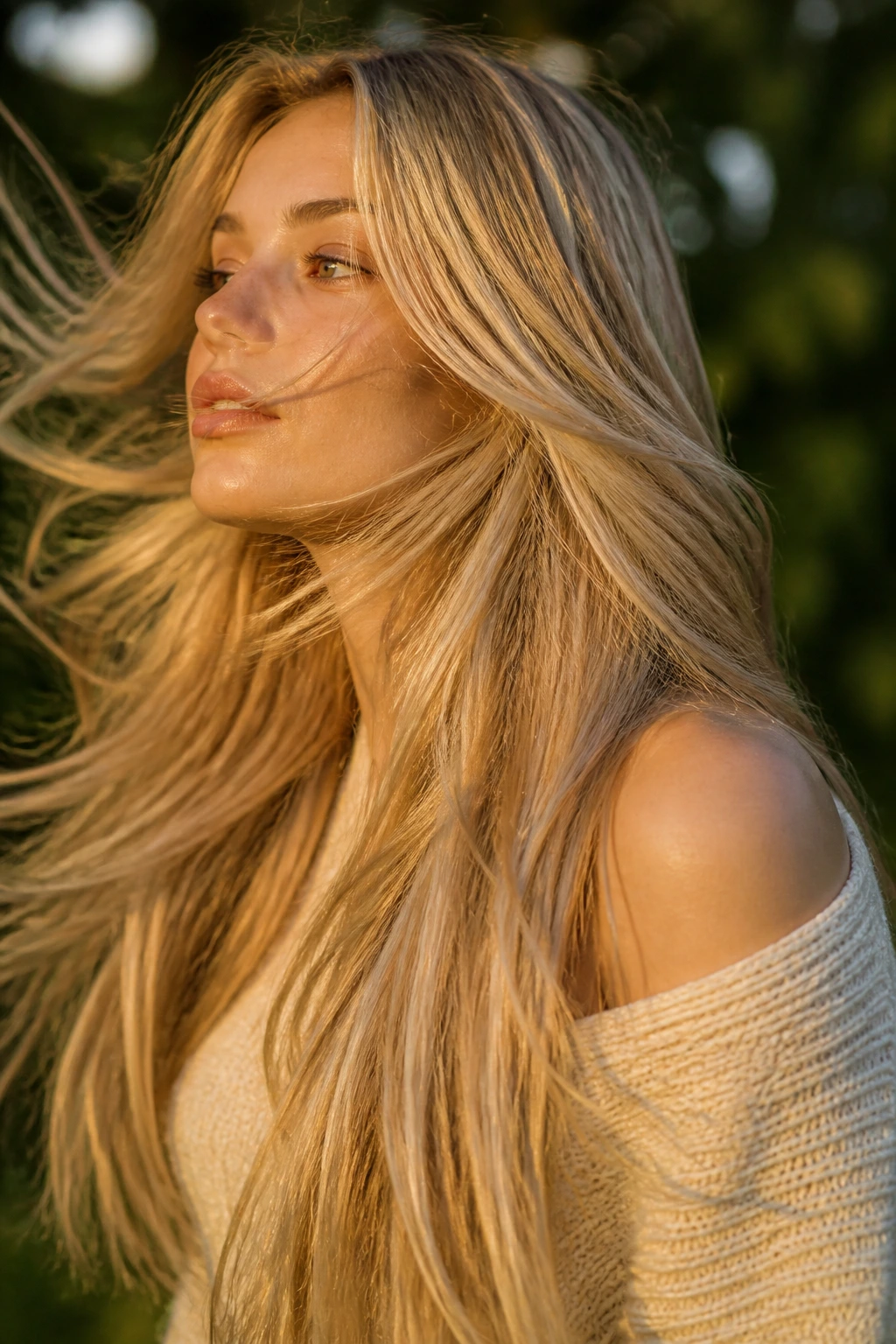
The best blonde on long hair doesn’t just look light. It looks shaped. You can feel the difference when the color has a root, a middle, and an end that each do their own job instead of all shouting the same tone. That’s what makes the prettier blondes on this list so wearable: they use length as an advantage, not a problem to hide.
Pick the version that matches your upkeep, your texture, and the way you actually style your hair. A soft beige balayage can be smarter than a full platinum overhaul. A bright money piece can carry more style than a head full of highlights. And sometimes the most flattering thing is the shade that leaves the ends glossy, the root calm, and the whole thing moving when you turn your head.
