



Blonde hair color ideas for curly hair work best when the blonde follows the curl, not when it sits on top of it like a flat coat of paint. That sounds obvious until you’ve seen the difference in person: one version looks airy and dimensional, the other looks stripy, dry, and a little too eager. Curls bend light. They also bend the rules. A shade that looks soft on straight hair can read harsh on coils, while a placement that looks subtle in the bowl can turn into a halo of brightness once the curls spring back.
The trick is not “going lighter” in the abstract. It’s choosing the right blonde tone, the right lift level, and the right placement for the pattern you actually wear. Tighter curls need space between bright pieces so the hair doesn’t look busy. Looser waves can carry more ribboning. High-porosity curls need a gentler tone plan than low-porosity hair, because they grab lightener fast and can go hollow or brassy if the toner is rushed.
If you’ve ever wanted blonde that looks expensive in the daylight and still makes sense when your hair shrinks, this is the right rabbit hole. The shades below are built for curls first, color second.
Why These Shades Work So Well on Curls
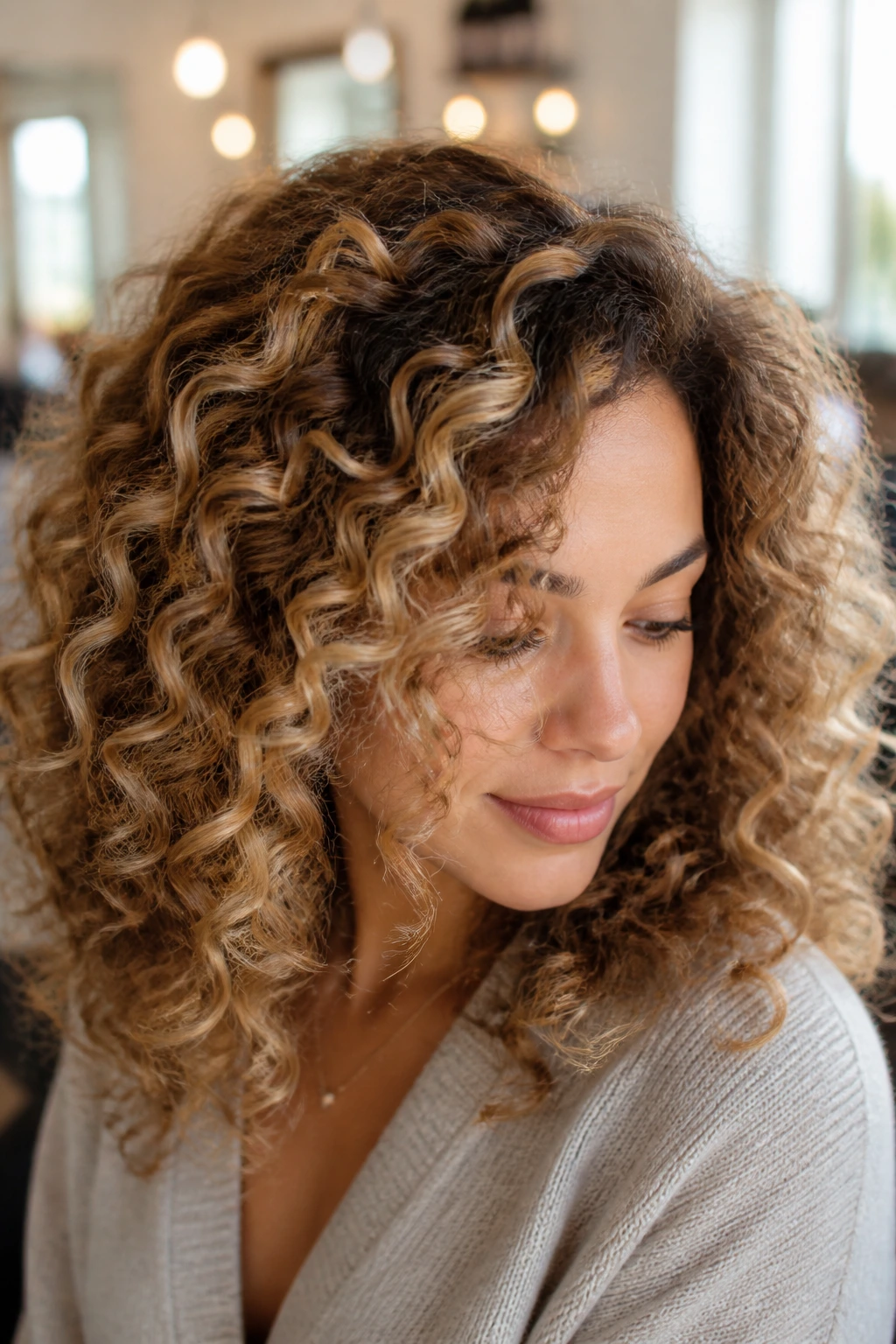
- The shape does half the work: A bend in the hair catches light on its own, so a few well-placed blonde pieces can look fuller than a heavy all-over lightening job.
- Root shadow keeps curls from looking brittle: Leaving depth at the base makes the curl pattern easier to read and buys you a softer grow-out line.
- Tone matters more than most people think: Beige, honey, pearl, and ash each change the mood of the curl; the same lift level can look warm, cool, or smoky depending on the toner.
- Placement beats saturation: Ribbon highlights, face-framing pieces, and halo lights can brighten the hair without flooding every strand.
- Maintenance gets easier when the blonde is strategic: Less surface lightening usually means less dryness, fewer split ends, and fewer fights with brass.
1. Honey Beige Ribbon Highlights
Honey beige is the shade I reach for when someone wants blonde that feels warm but not loud. On curls, those ribbons move through the pattern like sun slipping across fabric. You see brightness, then depth, then brightness again. That back-and-forth is what keeps the hair from looking helmet-like.
Why it works
Ribbon highlights trace the curve of the curl instead of cutting across it. That matters because curls expose more surface area as they twist, so even a few slim lightened sections can change the whole read of the style. Ask for hand-painted pieces in the mid-lengths and around the top layer, then keep the roots softly shadowed so the color doesn’t fight the curl pattern.
This shade is a good fit for medium brown, light brown, and dark blonde bases that lean warm or neutral. If your hair pulls orange when lifted, honey beige gives you room to work with that warmth instead of trying to erase it. The result feels lived-in, not overworked.
2. Creamy Champagne Balayage
Champagne blonde on curls has a silky look that can go wrong fast if the toner is too pale. Keep it creamy, not icy. When the shade stays in that soft, pale beige zone, the curls read plush instead of chalky.
The smartest version of champagne balayage leaves a deeper base at the roots and concentrates the lighter pieces where curls naturally open up: the crown, outer sides, and a few face-framing sections. On loose ringlets, that contrast gives the hair a lifted, airy edge. On tighter textures, it keeps the blonde from getting lost inside the coil.
I like this one for people who want a softer, more polished finish than honey blonde gives. It has less gold, less brass, and more of that pale, pearly glow that looks especially nice in daylight. If your ends are already dry, ask for a gloss rather than a second round of aggressive lift.
3. Sandy Blonde Babylights
Sandy blonde is the quiet one in the room. No drama. No stripes. Just tiny, fine lights that make curls look more detailed from root to tip. If you wear short curls, these can make the shape look sharper. If your hair is long, they stop the lengths from sinking into one block of color.
Babylights work because they mimic the way hair lightens naturally over time, only much more controlled. On curls, that softness matters even more. The color isn’t shouting from the top layer; it’s peeking through the bends and catching around the face and crown where the hair moves the most.
This is a smart choice if you want blonde without the maintenance of big highlights. It grows out with less visible contrast, especially when your natural color is light brown or dark blonde. The downside? You need patience in the chair. Fine weaving takes time, and that’s the point.
4. Mushroom Blonde with a Soft Root Shadow
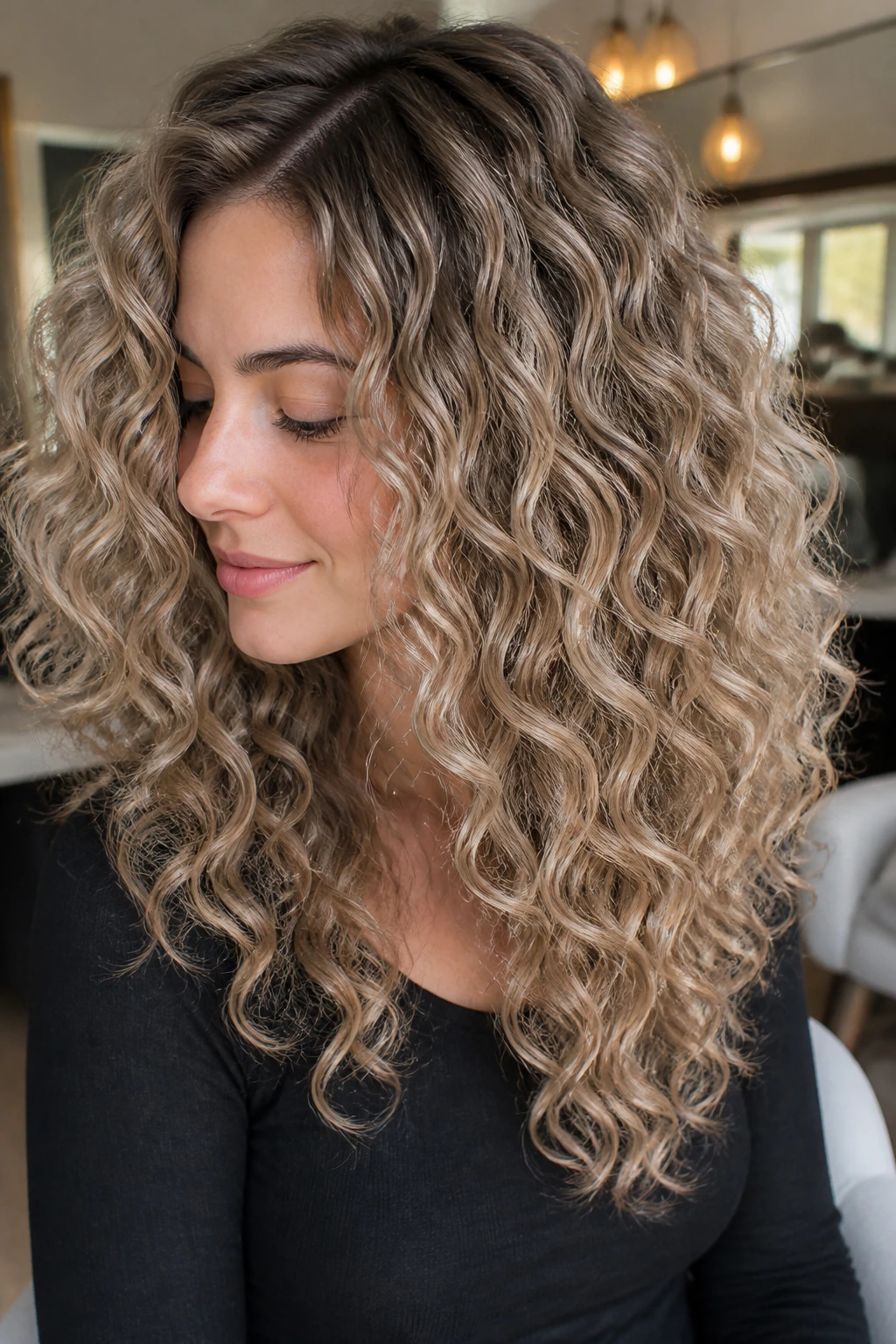
Mushroom blonde sounds odd until you see it on curly hair. Then it makes sense. The shade sits in that cool beige-brown space that keeps the blonde from going too yellow, and the rooted finish keeps the shape grounded.
For curls, this is one of the best options if your natural base is medium brown or dark blonde and you want dimension rather than brightness. The top stays shadowy, the mids go beige, and the ends can carry a little more light. The whole effect looks cooler and more expensive than a flat ash dye job, which can sometimes make curls look dusty.
Ask for a root melt that’s about 1 to 2 inches deep, not a hard line. That little stretch at the base softens regrowth and gives the curls a shadow to sit against. It’s also kinder to finer curly hair, because you’re not lifting every inch to the same level.
5. Buttercream Face-Framing Pieces
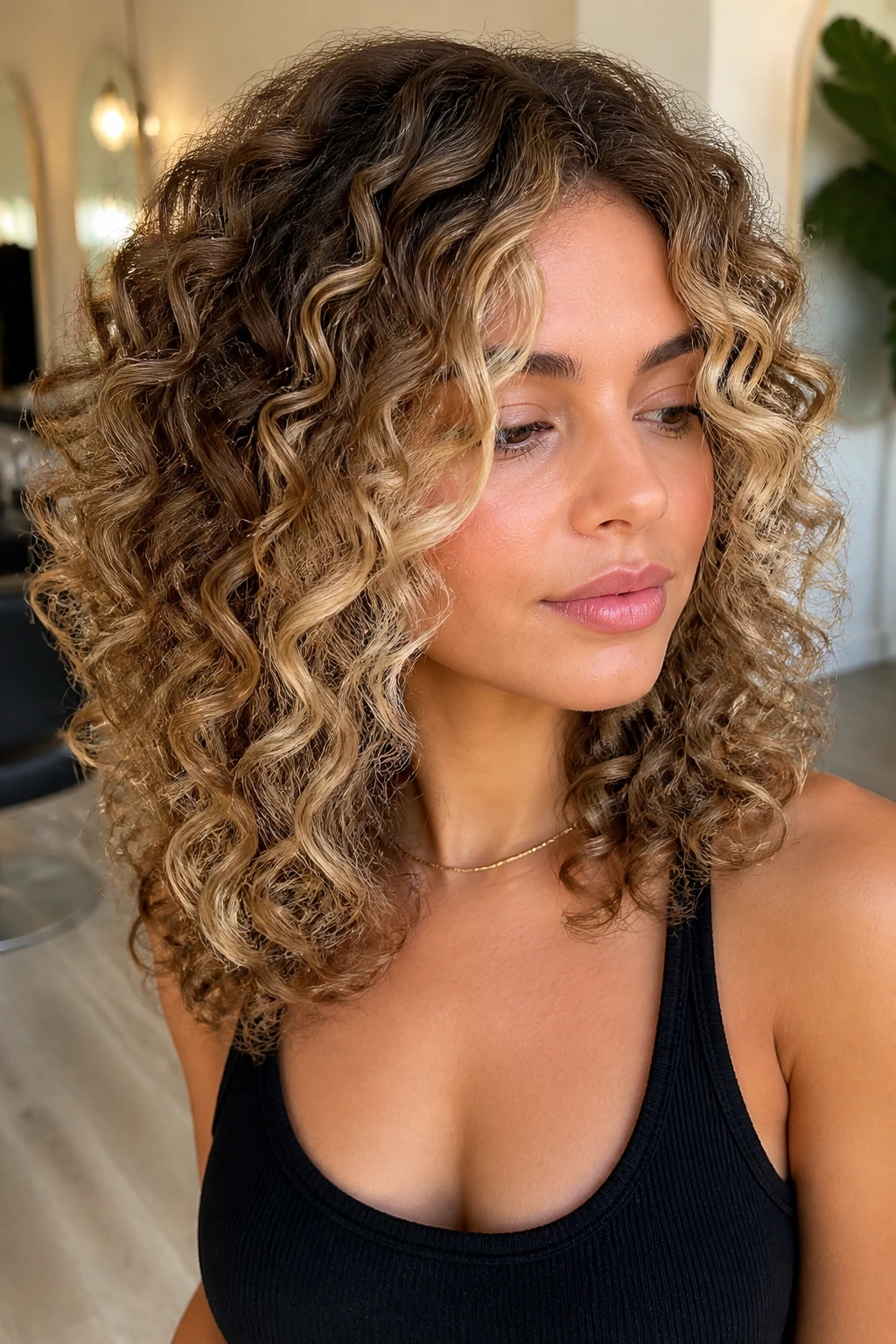
Buttercream blonde around the face is one of those moves that does a lot with very little. The hair near your cheeks and temples catches light first, so even two or four well-placed pieces can brighten the whole cut. On curls, that brightness also pulls attention to the shape of the face-framing coils, which is usually where the curl pattern looks most alive.
I like buttercream because it stays soft. It’s pale, but not icy. Warm, but not yellow. If your skin has peach, olive, or golden undertones, this shade tends to sit very naturally against the face. The pieces should be thicker than babylights but thinner than chunky highlights—enough to show up, not enough to break the curl pattern into pieces.
Best used when you want:
- brightness around the face without full-head lightening
- a faster salon appointment
- a blonde that looks good even when the back of the hair is darker
The grow-out is forgiving, too. That’s not boring. That’s practical.
6. Golden Curl-Map Highlights
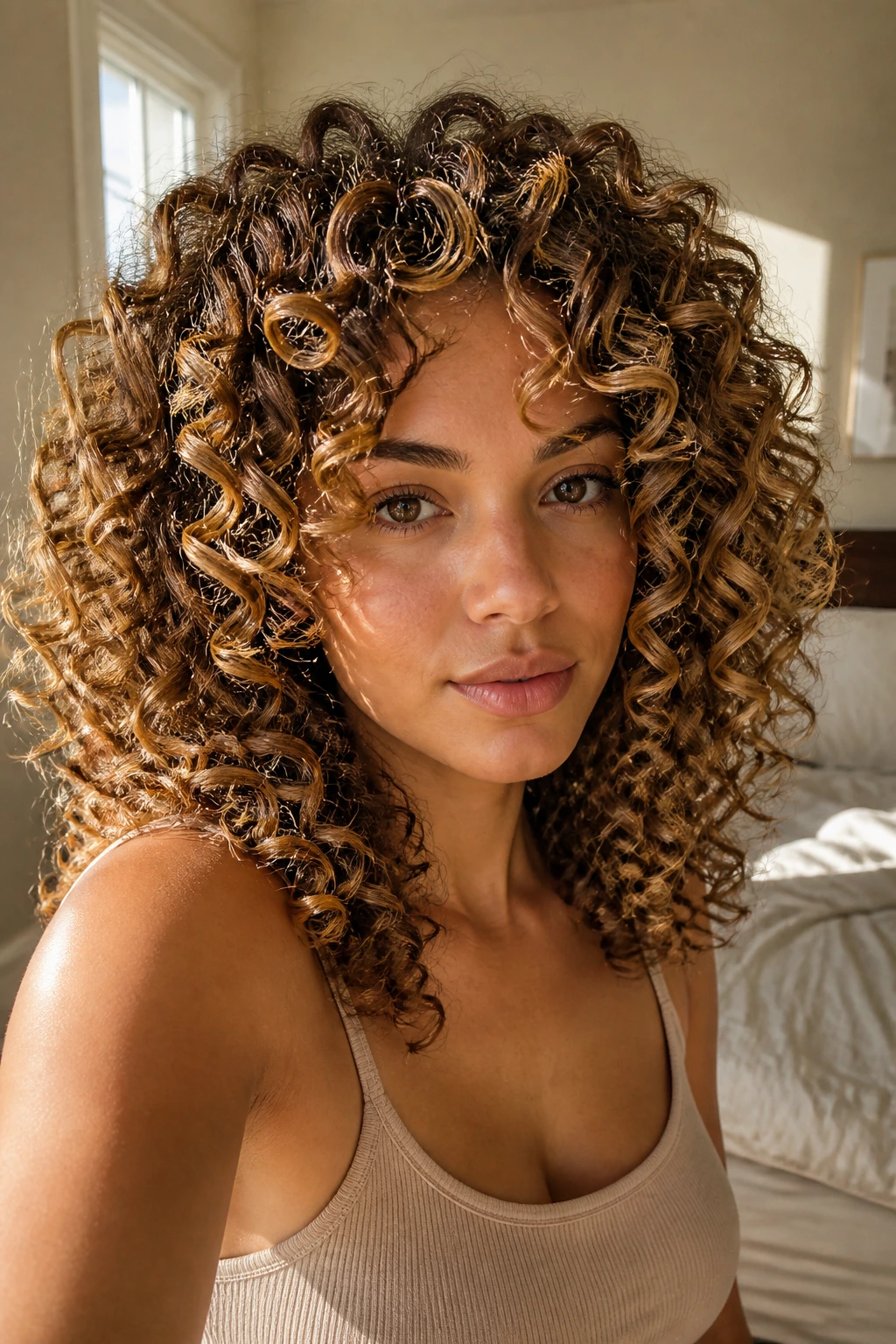
Not every blonde needs to be airy and pale. Golden highlights can be the right call when the curl pattern is dense and the natural base is already warm. The trick is to place the light where the curl opens, almost like tracing a map across the head.
This shade is strong on coily and tightly curled textures because the gold doesn’t disappear into the hair. It glows. You get a warm shimmer without sacrificing depth. That depth is what keeps the style from looking too lifted or too busy.
A lot of people ask for “golden highlights” and then end up with a yellow result they hate. That’s a tone problem, not a concept problem. Ask for golden beige, not banana yellow. A soft glaze at the end usually keeps the tone rich for longer than skipping toner and hoping for the best.
7. Caramel-to-Blonde Ombré
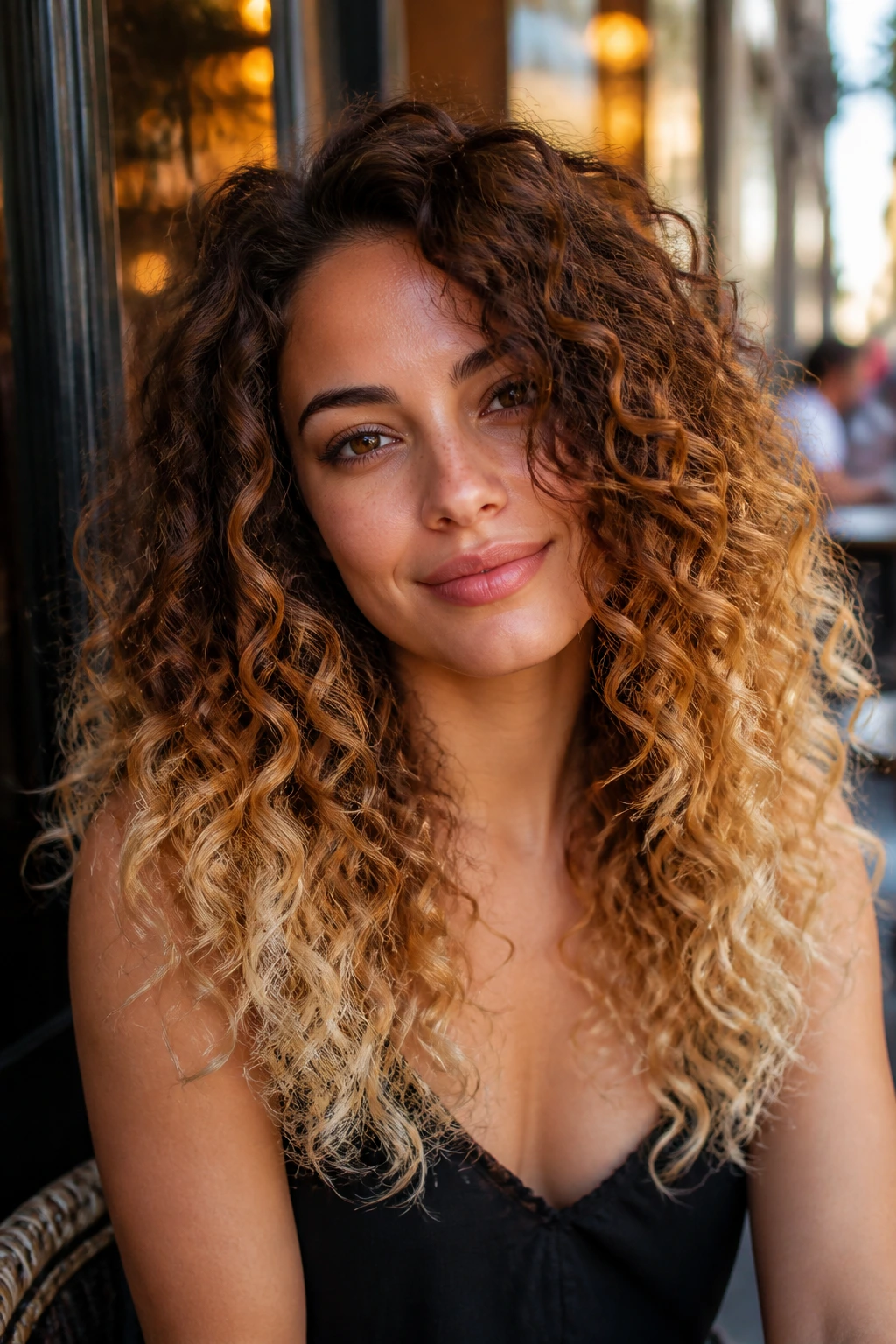
Ombré still works, but on curly hair it needs to be handled with a lighter hand than people expect. The gradient should feel like a slow shift from caramel roots or mids into blonde ends, not a hard dip from brown into light.
This style is especially good on long curls because the length gives the fade room to breathe. Short curls can handle ombré too, but the transition has to start higher and be feathered carefully. If the line is too obvious, the curl pattern breaks up in a clumsy way.
The appeal here is movement. Darker roots anchor the style, caramel mids keep it warm, and blonde ends create a finish that looks sun-kissed when the curls separate. I’d ask for a gloss on the ends every so often, because ombré can drift brassy fast if the lightest parts are left alone too long.
8. Platinum Money Piece with Dark Curls
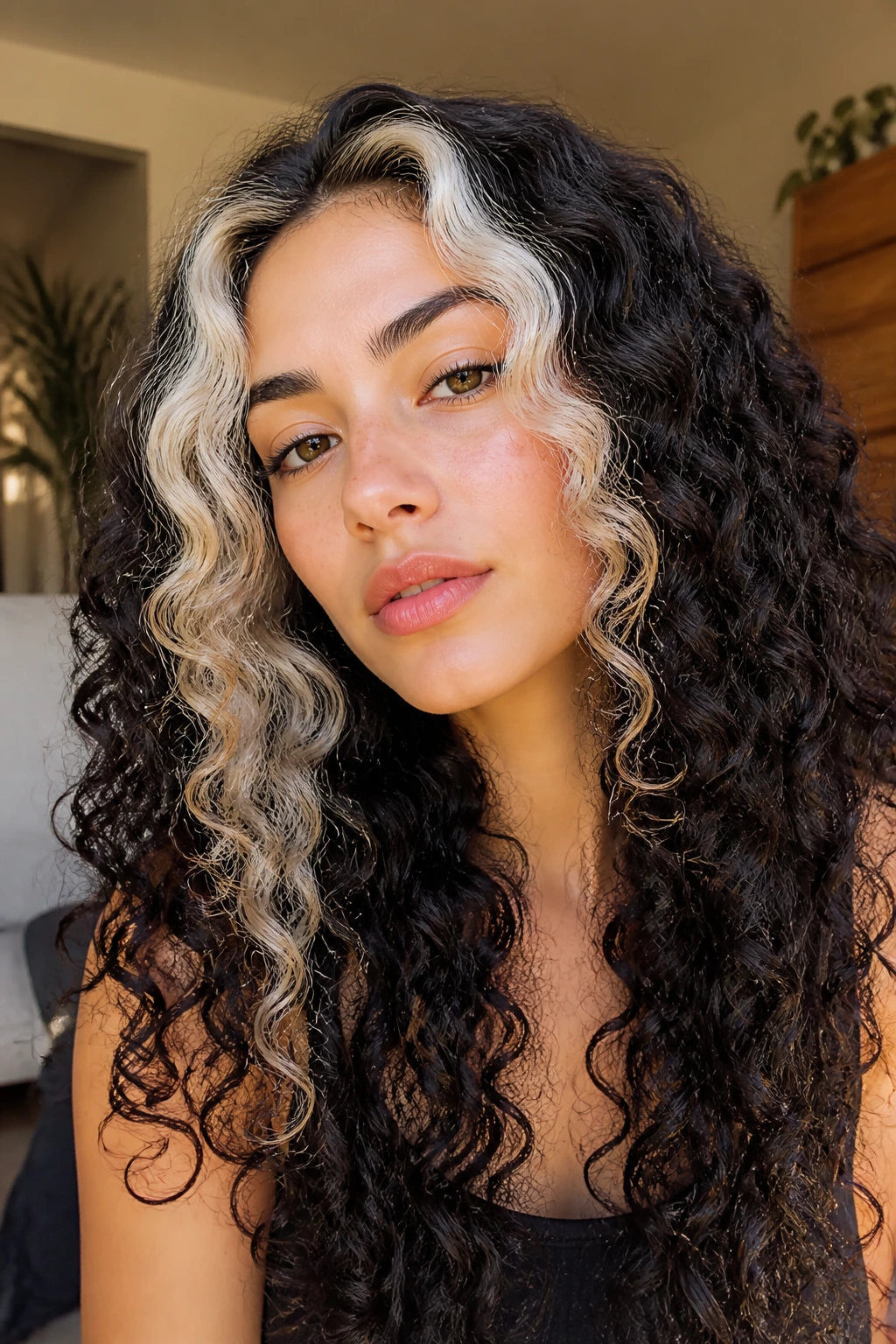
This is the bold one. It’s also the one that can look fantastic or chaotic depending on placement. A platinum money piece around dark curls makes the front of the hair pop hard, especially when the rest of the curls stay rich and dimensional.
The contrast is the whole point. On a curly cut with lots of layers, the bright front pieces frame the face and make the curl pattern look even more sculpted. The rest of the head doesn’t need to be lightened to the same level, which keeps the damage concentrated in a smaller zone. That’s a real advantage if you love impact but don’t want your whole head lifted to a pale blonde.
This shade works best when the money piece is thick enough to show, but not so wide that it looks like a stripe on the forehead. A clean toner matters here. Platinum can go dull or gray if the tone is too flat, and then the whole front looks tired instead of sharp.
9. Vanilla Balayage on Loose Ringlets
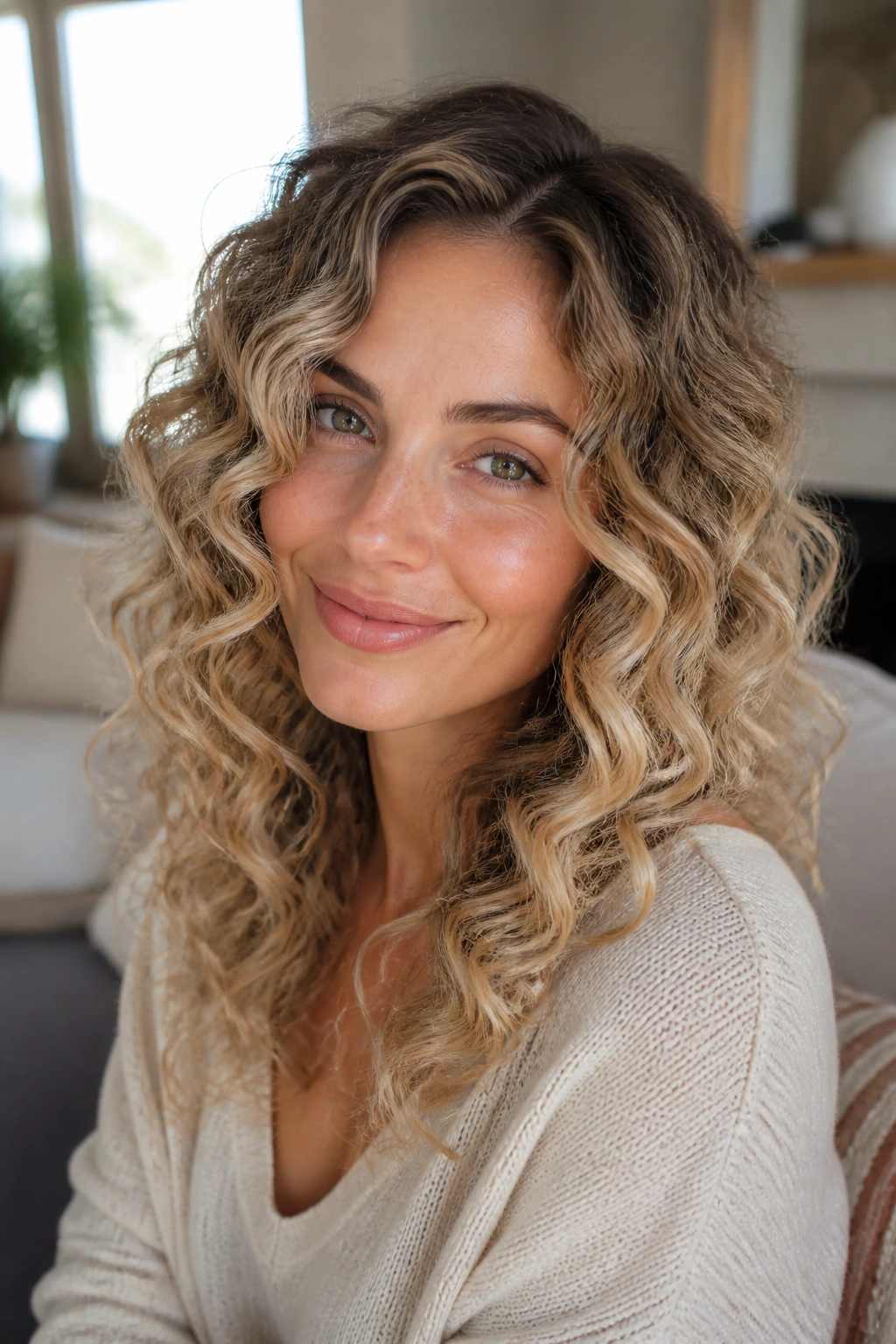
Vanilla blonde is soft, pale, and a little creamy in the best way. On loose ringlets, it gives you that light, airy finish that looks natural if the placement is quiet enough. The shade is lighter than honey beige and warmer than pearl, which makes it easier to wear if your hair tends to fight icy tones.
What makes it work on curls is the way it spreads. Instead of one big light area, you want several soft passes over the upper layers and ends. Loose ringlets can carry more blonde than tighter coils because the pattern opens wider. That gives you room for a brighter surface without losing the shape underneath.
This is a shade I like for hair that already has some natural lift in the mids. It doesn’t need to be the brightest blonde in the room. It just needs enough contrast to keep the curls from blending into one solid mass.
10. Sunlit Bronde for Everyday Wear
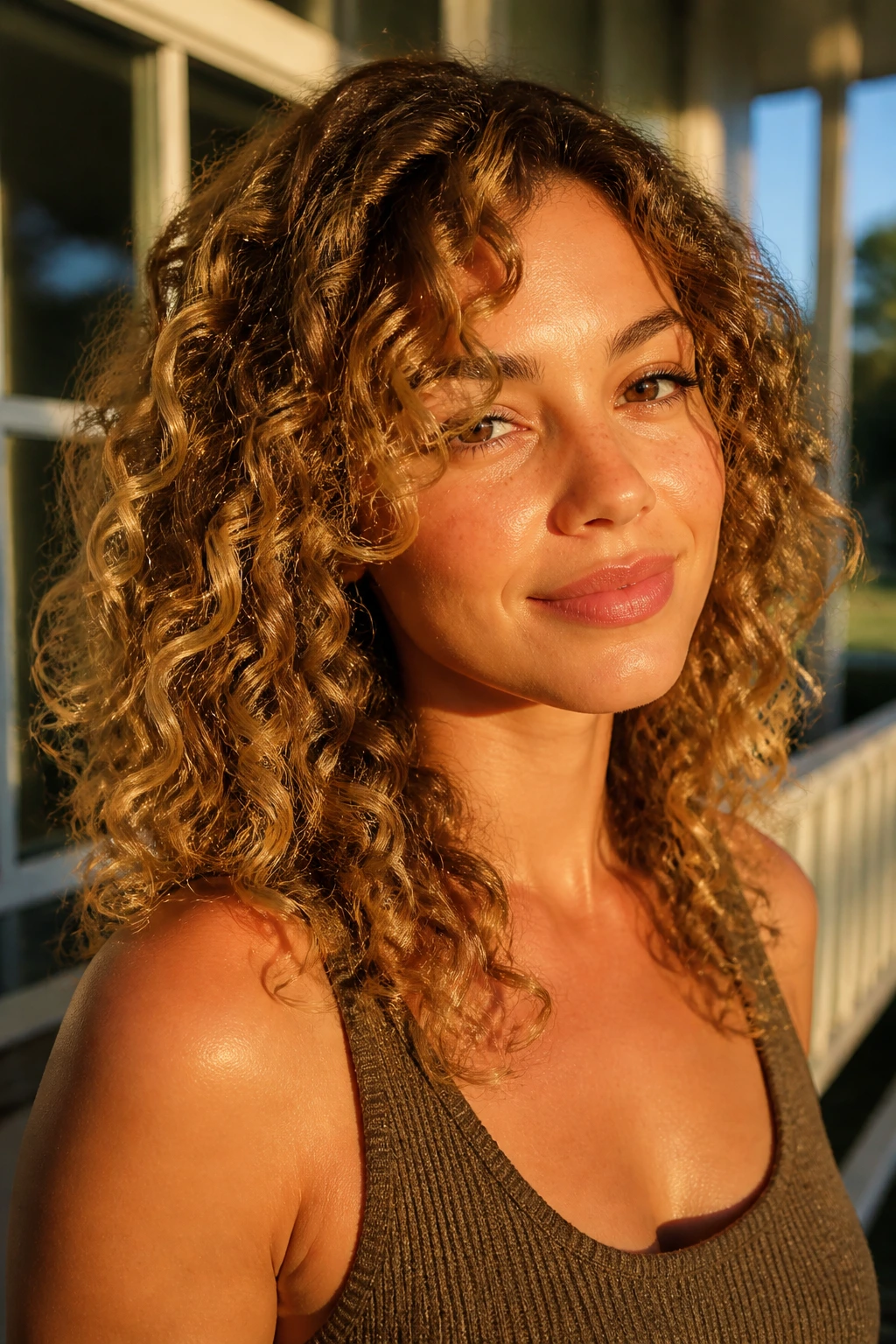
Bronde sits in that middle space between brown and blonde, and I think curly hair wears it better than straight hair does. The bend in the curl makes the brown and blonde sections separate naturally, so the color looks rich rather than muddy.
Sunlit bronde is the low-drama option for someone who wants brightness but not a full blonde commitment. The base stays in the brunette family, while the top layers and ends get a lighter beige or golden lift. If you’ve been nervous about going blonde, this is a sensible first step. It gives the hair more light without forcing the whole head into a high-maintenance zone.
A few face-framing pieces can make bronde look brighter than it sounds on paper. That’s the thing with curls: movement does part of the color work for you. You don’t need to flood the hair with bleach to make the dimension show.
11. Ash Beige Blonde for Cool-Toned Curls
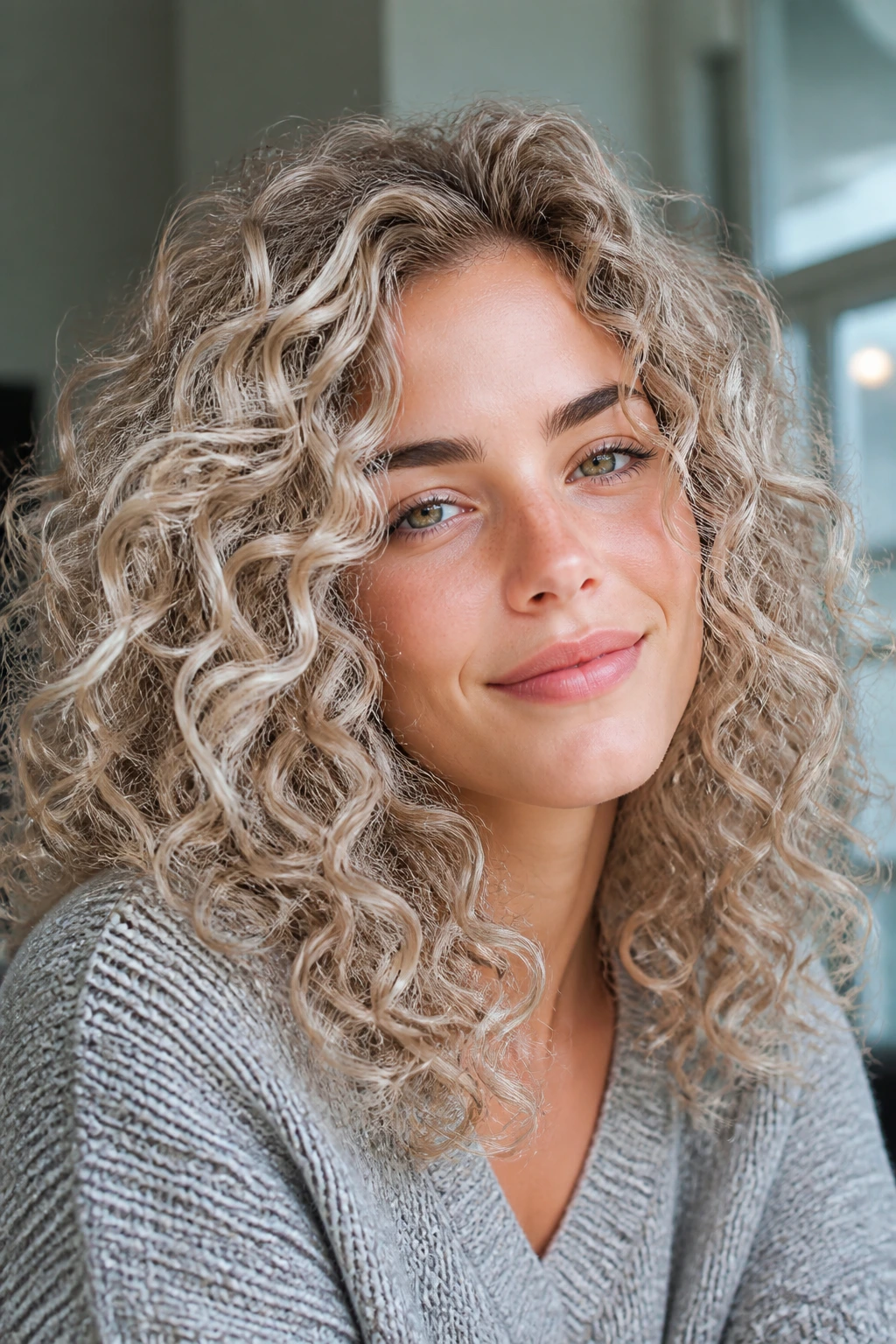
Ash beige is for people who hate orange, hate gold, and still want the hair to look soft instead of smoky and flat. On curly hair, that cool-beige balance can be tricky, because too much ash can make the color feel dry. The beige keeps it wearable.
This shade is especially useful on medium brown bases that lift warm no matter what you do. A cooler toner calms the brass, while the beige keeps the blonde from looking gray. The best versions still have a little light bounce in them; they don’t go dead matte.
If your curls are porous, you’ll need a watchful eye here. Cool toner can grab fast. A colorist who knows how to glaze without over-toning is worth the extra time, because the difference between ash beige and dull khaki is smaller than people think.
12. Toasted Almond Highlights
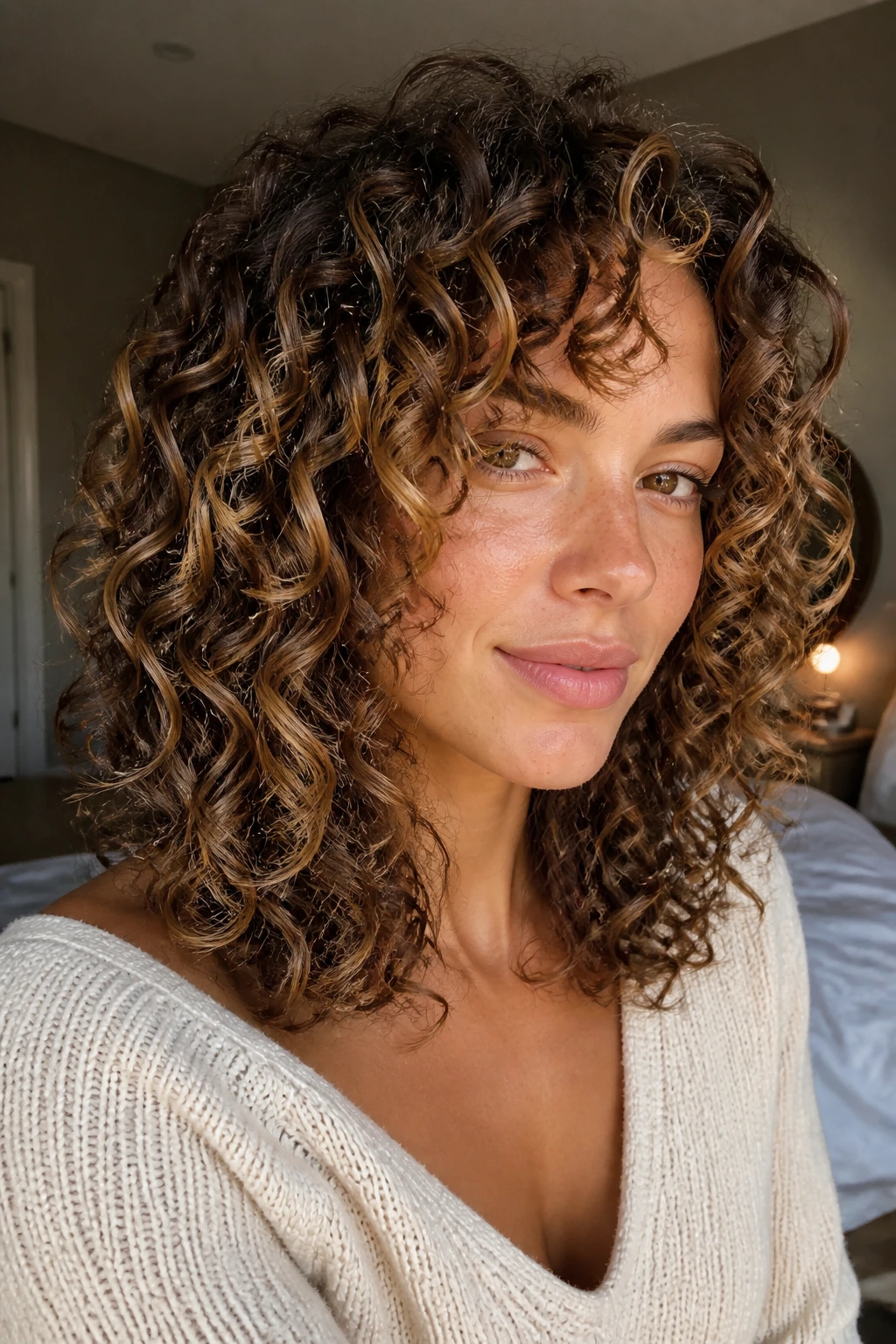
Toasted almond is one of my favorite warm blondes for curly hair because it feels grounded. It’s not as golden as honey, not as pale as vanilla, and not as flat as beige alone. There’s a gentle roasted quality to it that sits nicely against brown curls.
The best placement is a mix of midshaft pieces and a few softer ends. That keeps the color from sitting only on the surface. Curly hair needs that depth inside the shape, or the blonde can look pasted on. Toasted almond avoids that by letting the curl stack show through.
This shade is easy to wear with warm undertones in the skin, but it also softens neutral complexions nicely. If you want blonde that doesn’t scream “bleach,” this is a smart lane. It looks especially good when the curls are defined and glossy rather than brushed out.
13. Strawberry Blonde Curly Layers
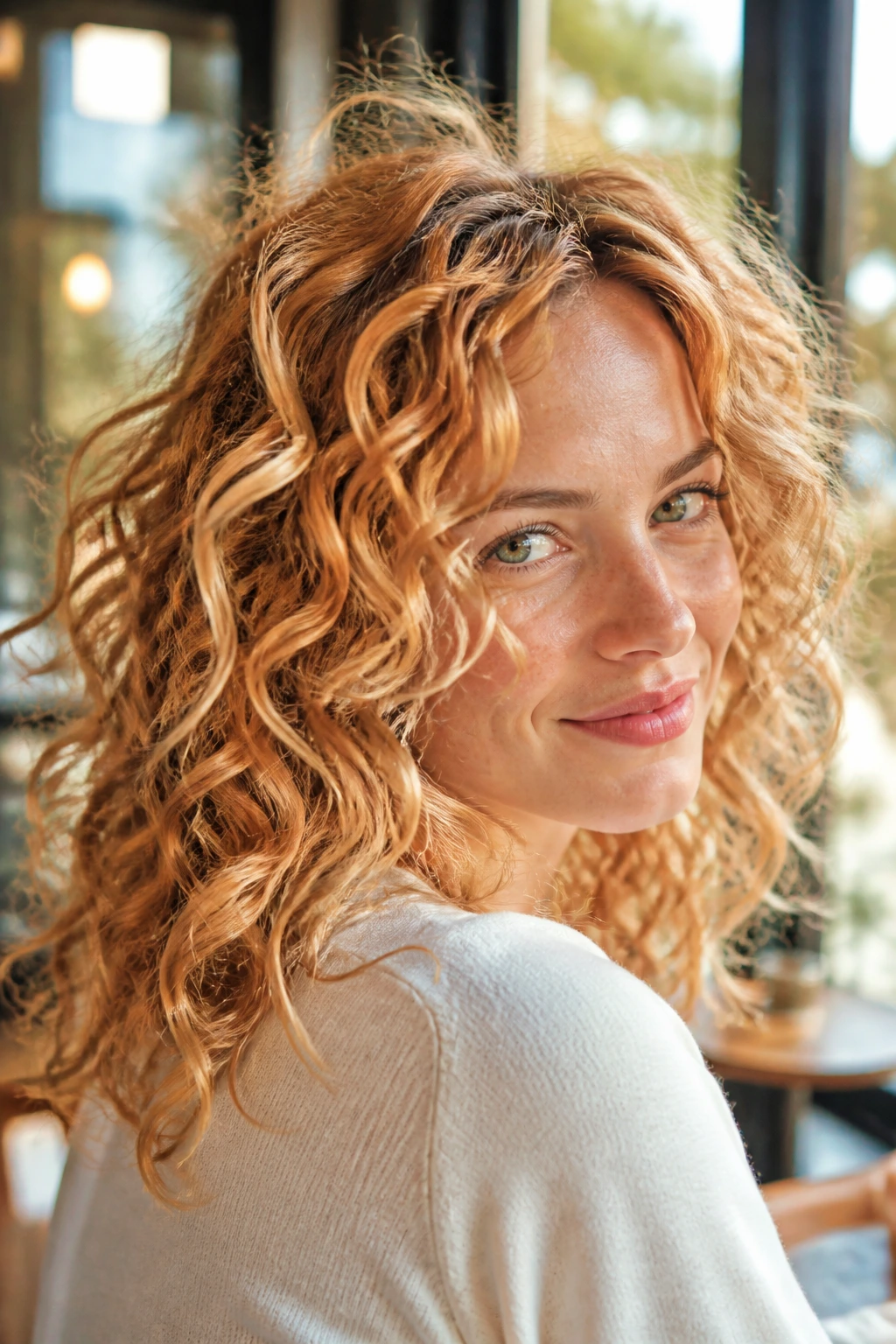
Strawberry blonde on curls can be gorgeous, but it needs a lighter touch than people usually expect. Too much copper and it stops reading blonde. Too little and it vanishes. The sweet spot is a soft strawberry tone with a blonde base underneath, so the warmth feels woven in rather than painted on.
Layered curls give this shade room to breathe. The lighter ends and warmer mids catch the eye, while the deeper roots keep the style from drifting into one flat red-blonde block. This is one of the few blonde ideas that looks especially good on curl types that already pull warm naturally.
A few things to ask for:
- a soft golden-blonde base
- a strawberry glaze rather than a heavy copper overlay
- root depth that keeps the shape from getting too bright at the scalp
It’s a pretty shade, but not a low-commitment one. The warm tone fades faster than beige or ash, so plan on glosses if you want the strawberry note to stay obvious.
14. Pearl Blonde with a Cool Sheen
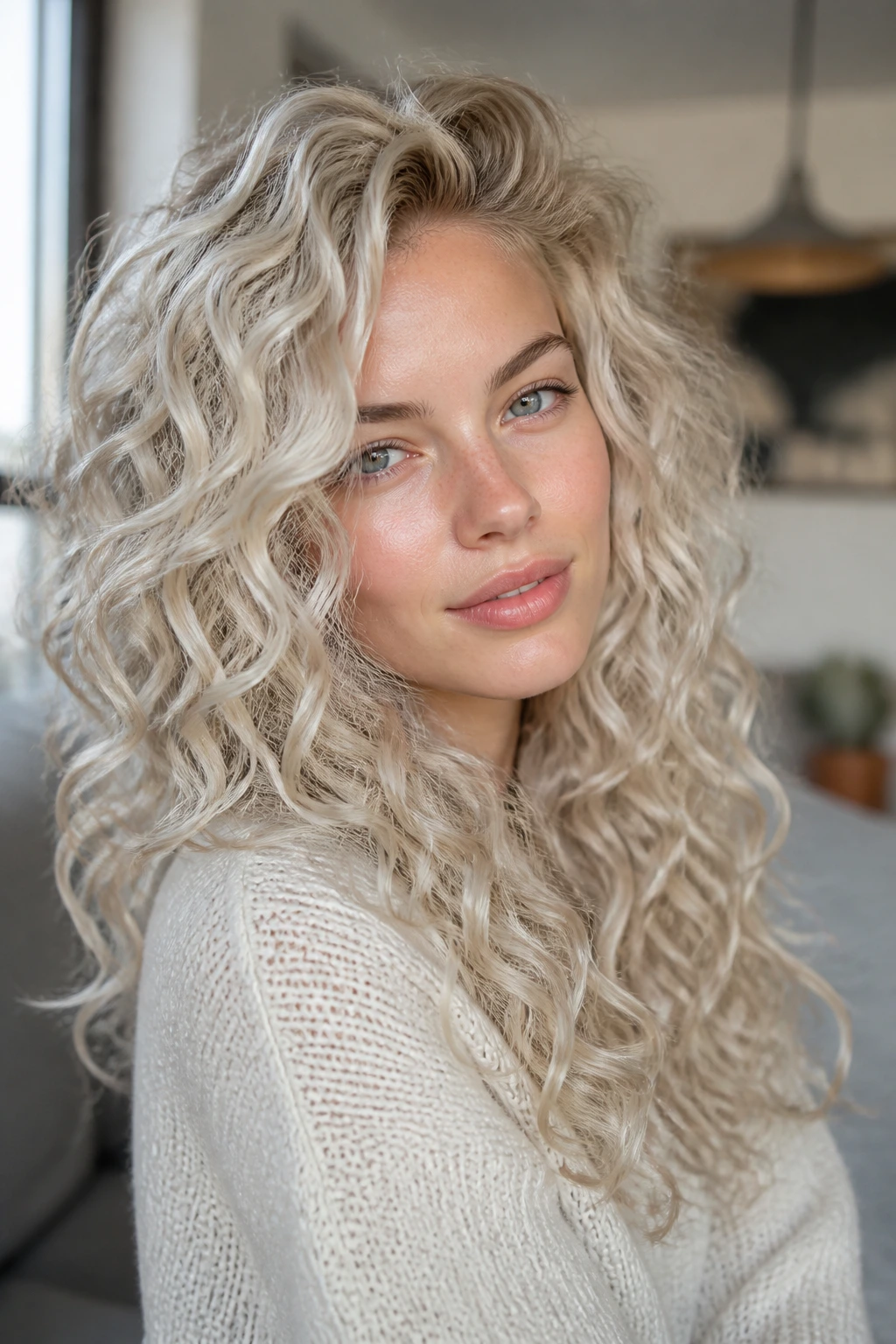
Pearl blonde is all about softness and shine. On curls, it reads best when the hair is healthy enough to reflect light cleanly, because the tone itself is pale and cool. If the ends are rough, pearl blonde can look muted in a hurry.
The shade works beautifully on looser curl patterns and textured waves that naturally separate into defined S-shapes. The cool sheen gives the hair a polished finish, but the curl pattern keeps it from becoming stiff or too formal. That balance is the whole point.
This is not the shade I’d choose if your hair already feels fragile. It asks for a careful lightening process and a toner that doesn’t go flat. But when it’s done well, pearl blonde makes curls look crisp in a way that’s hard to fake with styling alone.
15. Dirty Blonde Melt
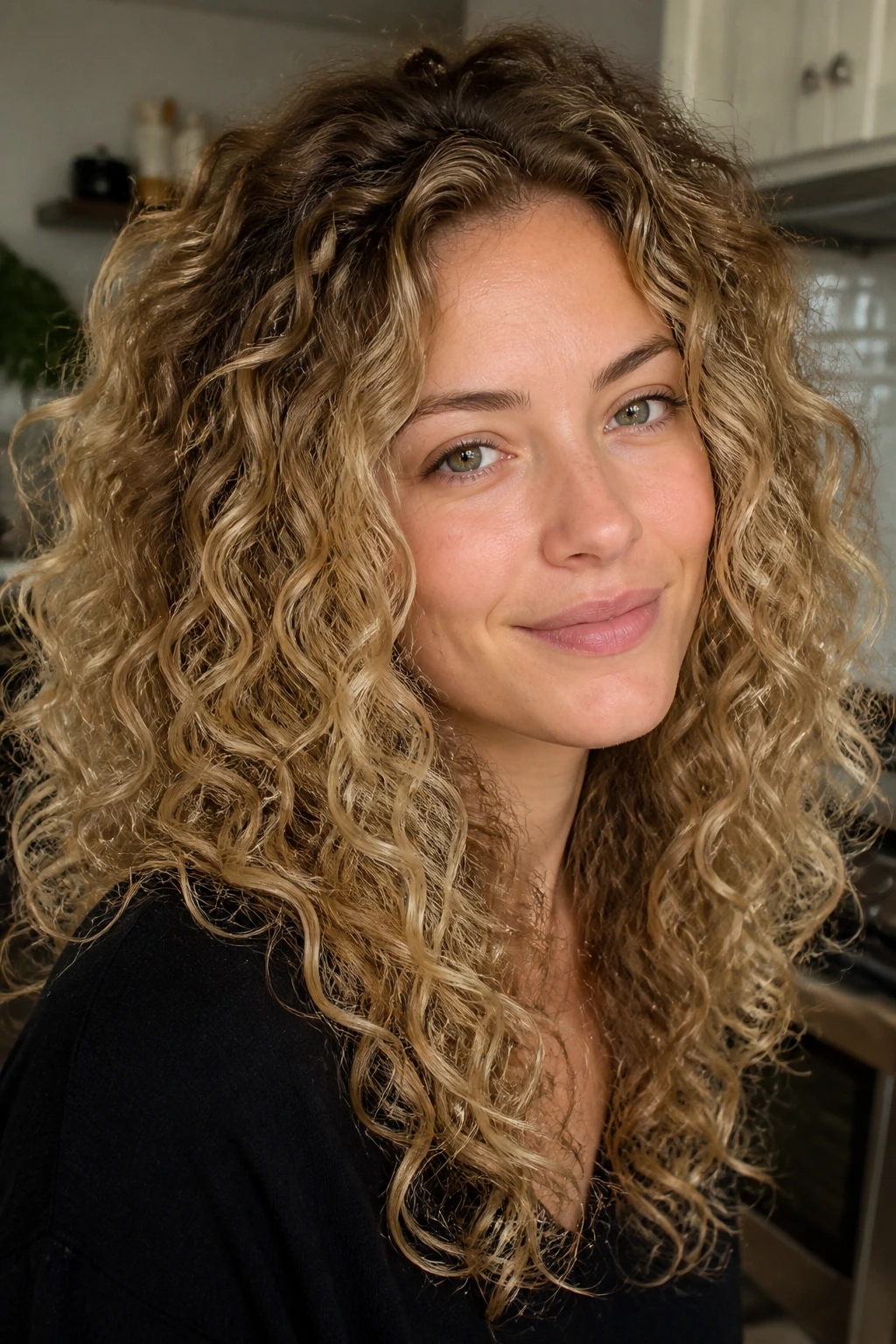
Dirty blonde sounds plain, which is part of why it’s so useful. The shade lives in that darker blonde zone that doesn’t fight with your natural depth. On curly hair, a dirty blonde melt can look almost effortless, even though the placement behind it still needs skill.
I like this on people who want the idea of blonde more than the full brightness of blonde. The darker roots melt into beige-gold mids, and the ends stay just light enough to break up the overall mass. It’s one of the easiest ways to grow into lighter hair without making the shift feel sudden.
This shade also handles regrowth better than a high-lift blonde. If you’re not eager to sit in a chair every six weeks, dirty blonde buys you breathing room. Curls help, too. Their movement hides the grow-out line better than straight styles ever do.
16. Rooted Butter Blonde Bob
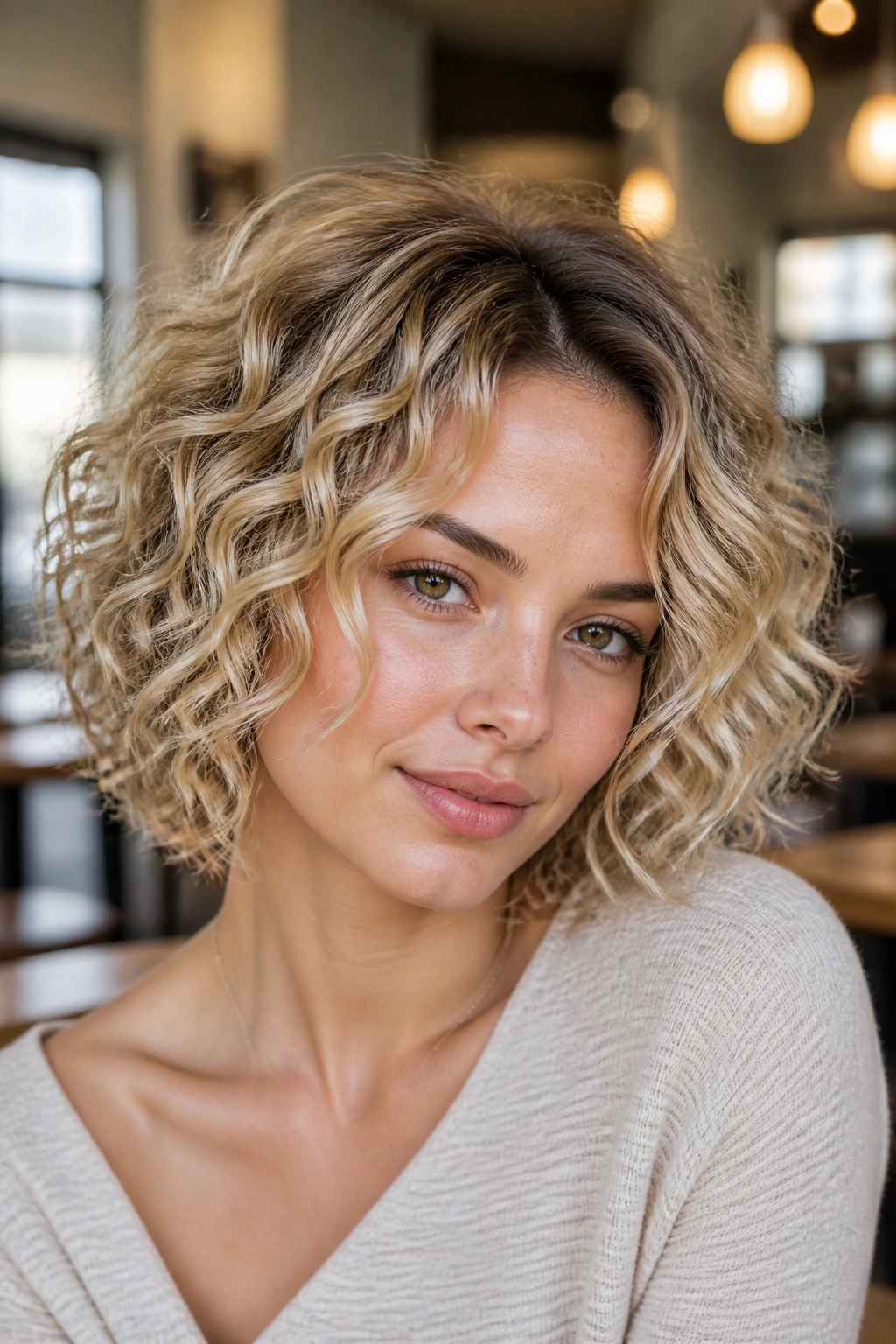
A curly bob with rooted butter blonde has a lot of personality, and I mean that in the good way. The short shape keeps the blonde pieces close to the face and neck, where they create instant brightness. The root shadow keeps the style from turning puffy or overprocessed-looking.
Butter blonde itself sits warmer and richer than platinum. On a bob, that warmth keeps the cut from looking severe. If the curls are tight, the blonde should live mostly on the top layer and around the perimeter. If the curls are looser, you can spread it a bit more through the interior.
Short curly hair has less forgiveness for uneven lightening, so this is a shade that benefits from clean sectioning. The payoff is big. A rooted butter blonde bob can look soft, expensive, and deliberately shaped rather than accidental.
17. Scandi Blonde Spiral Lights
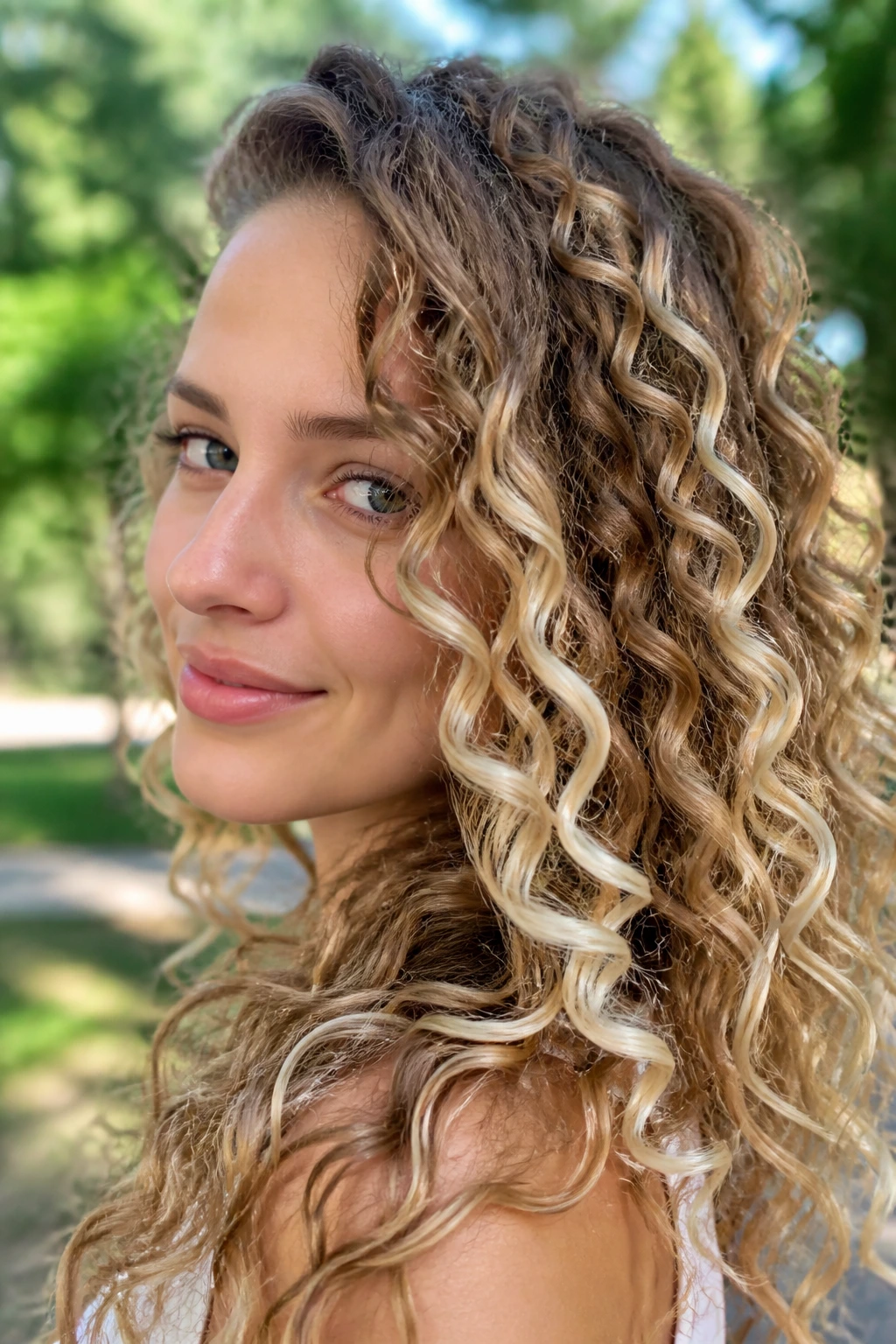
Scandi blonde is bright. No pretending otherwise. On curly hair, though, it doesn’t have to look harsh if it’s placed as narrow spiral lights instead of broad panels. That means the blonde follows selected curls through the pattern, leaving depth between the pieces.
This works best on curls that are medium-density and fairly defined. The shape needs enough structure to hold the contrast. When it’s done right, the hair looks fresh and light, but the curl pattern still comes through clearly. It’s a more editorial version of blonde, and not everyone wants that. Some people do. A lot.
If your natural base is dark, the upkeep is real. You’ll need toning, conditioning, and an honest plan for regrowth. Still, for someone who likes contrast and doesn’t mind spending time on maintenance, Scandi blonde can make curls look striking instead of washed out.
18. Honeyed Ombré Ends
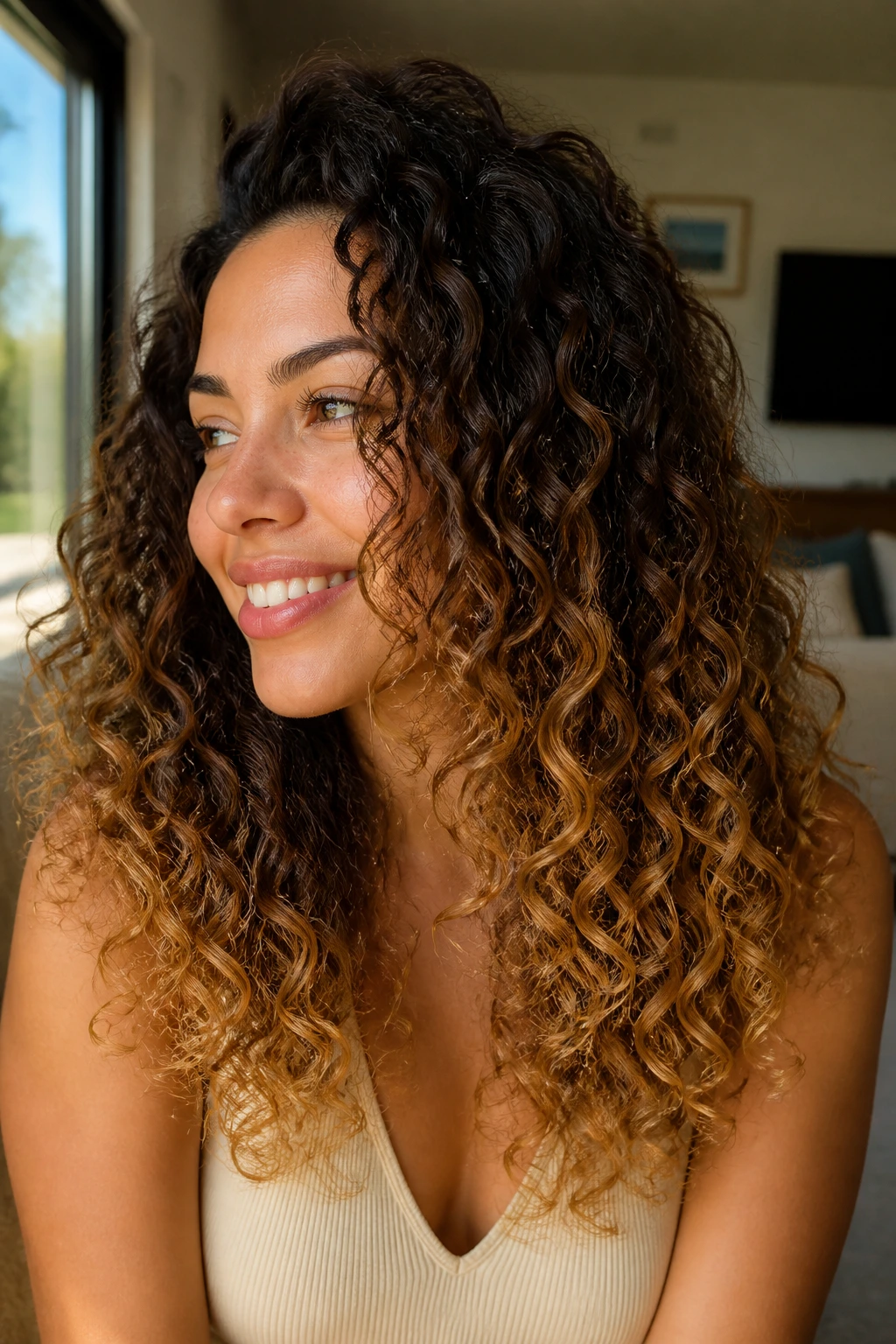
Honeyed ends give curly hair a warm finish that feels soft from a distance and rich up close. The top stays deeper, which keeps the scalp area grounded, and the ends carry the brightness. That works well on curls because the oldest, driest parts of the hair are often at the ends anyway, so placing the light there can feel more natural than flooding the roots.
This style is especially useful when you want blonde that grows out gracefully. The ombré shift hides a lot of the maintenance that full lightening demands. The lighter ends also move a lot when curls bounce, so the shade keeps changing as the hair moves. That’s where the interest comes from.
If the transition line is too neat, the style loses its charm. A soft blend, especially with a few lifted pieces around the face, keeps it from looking like a dip-dye job from a decade ago. That clean transition is everything.
19. Taffy Blonde Ribbon Balayage
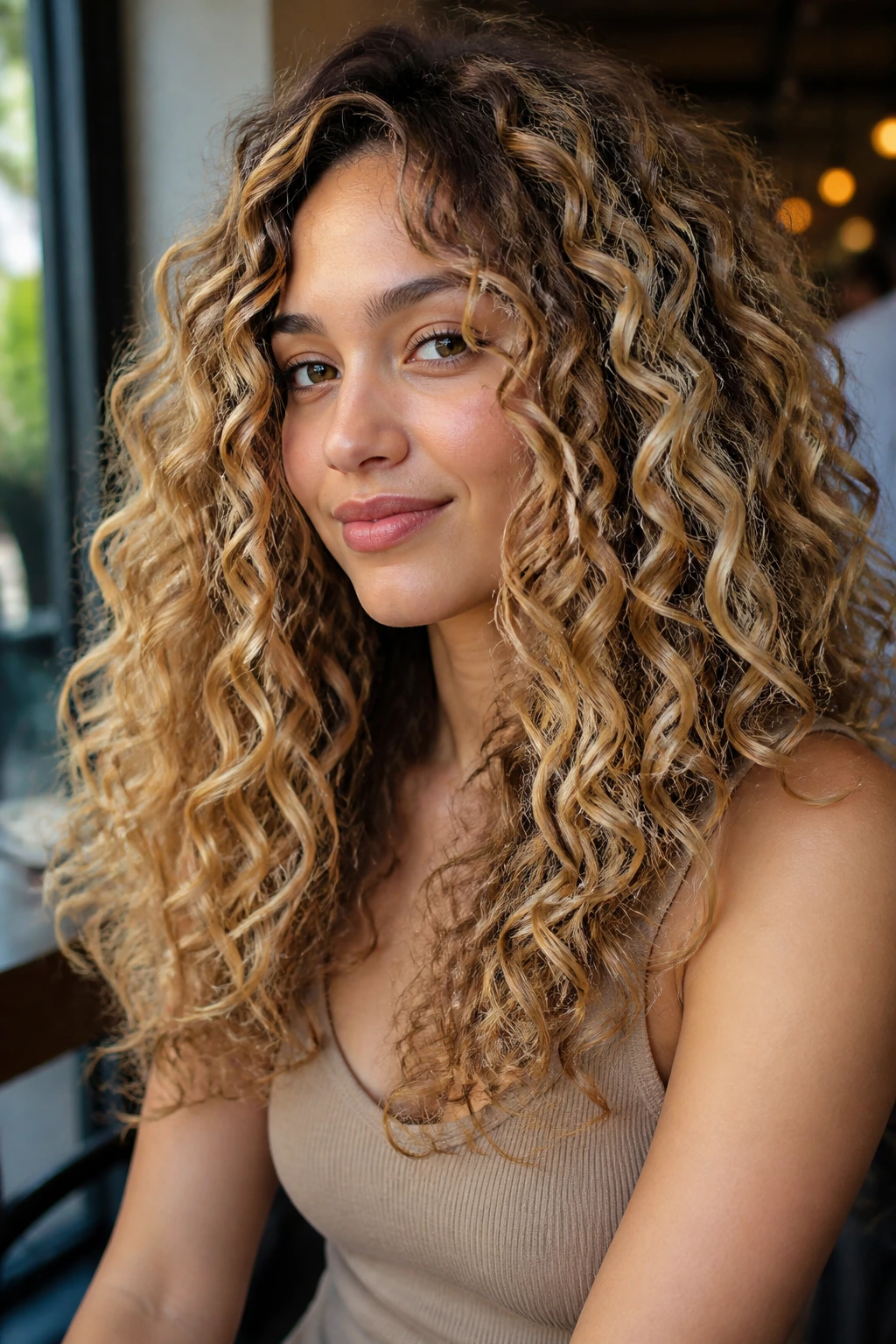
Taffy blonde is sweet without getting sticky. It has a soft caramel-blonde tone that looks especially good when painted in long ribbons through layered curls. The color sits in the warm midrange, so it doesn’t get as brassy as pure gold and doesn’t flatten like beige can sometimes do.
Ribbon balayage is a smart technique for curly hair because it preserves the way the curl stacks. Rather than blanket-lightening the surface, the colorist paints selective vertical sections that show when the curls separate. That gives the hair a sense of movement even when it’s dry and still.
I like this option for people who want dimension first and lightness second. It’s flattering, lower-drama, and easier to maintain than a very pale blonde. If your curls tend to puff outward, the ribbon placement can also make the shape look more intentional.
20. Champagne Pop Ends
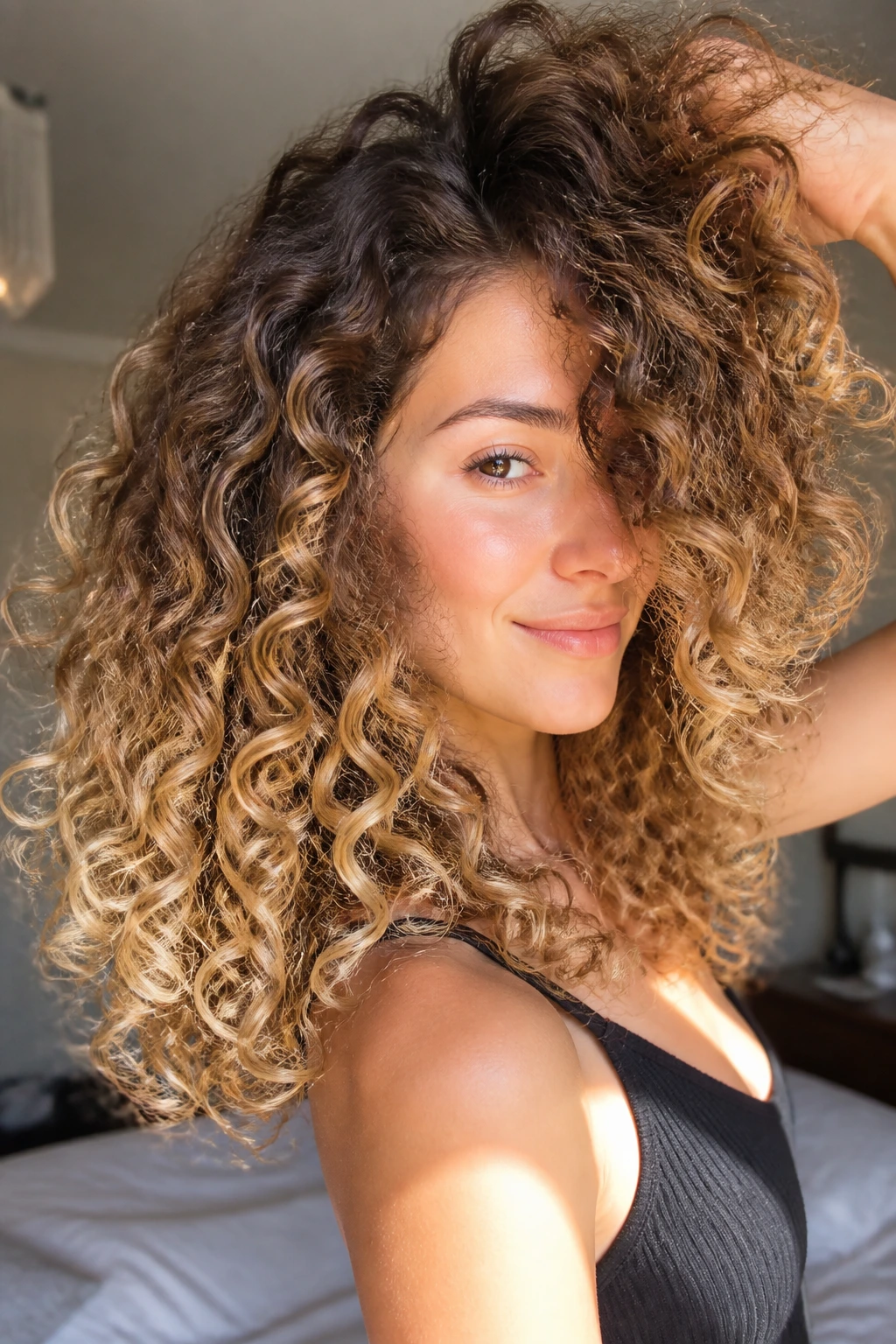
Champagne pop ends give you brightness where the eye naturally falls. The ends of curly hair are often the most visible when the hair springs out, so a pale, sparkling finish there can change the whole style. Keep the roots deeper. That contrast matters.
This shade works when you want the curls to look lighter at the bottom without losing the anchor at the scalp. It’s especially nice on medium-to-long lengths, where the ends have enough room to carry the lighter tone without looking too thin. If the hair is fine, too much blonde at the ends can make it look wispy, so ask for a soft veil rather than full saturation.
The best versions of this shade have a glossy, almost reflective feel. Not shiny in a plastic way. Just enough slip that the curls catch daylight and read clean.
21. Bleached Halo Underlayers
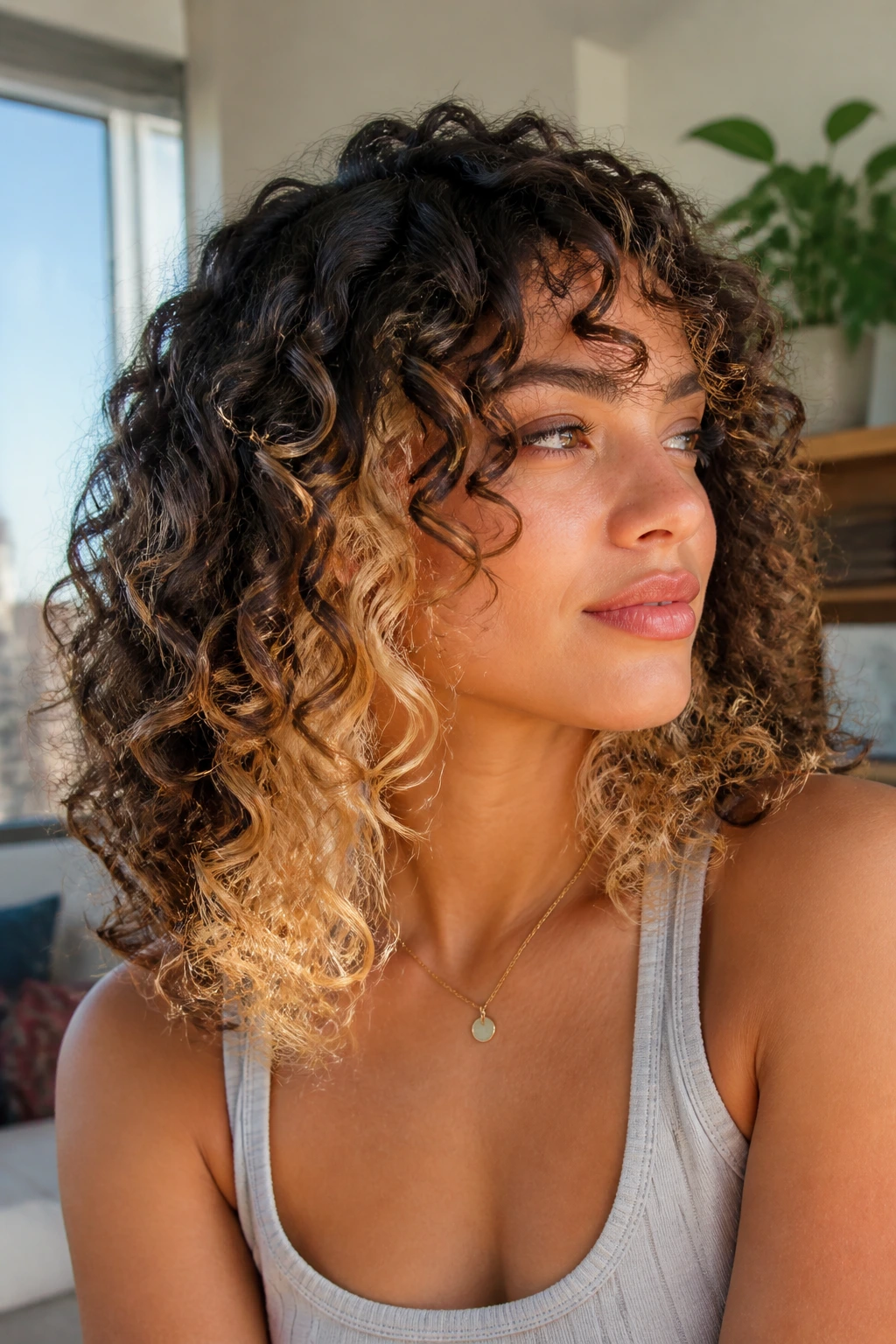
This one is for people who want a surprise when the curls move. The outer surface stays darker, while the underlayers are bleached or lifted to a bright blonde. When the hair shifts, the pale sections flash through the top curls like hidden light.
The halo effect can be gorgeous on curly hair because movement reveals it in pieces. It looks less obvious when the hair is still, which is useful if you want a more creative blonde without making the whole head bright. It also lets you keep more of your natural color visible on the outside, which can help with maintenance and dryness.
The main caution is placement. If the underlayers are too broad or too close to the surface, the style loses its mystery and starts looking patchy. Ask for clean sectioning and a clear plan for how much blonde should show from the front, the sides, and the back.
22. Rooted Cream Blonde
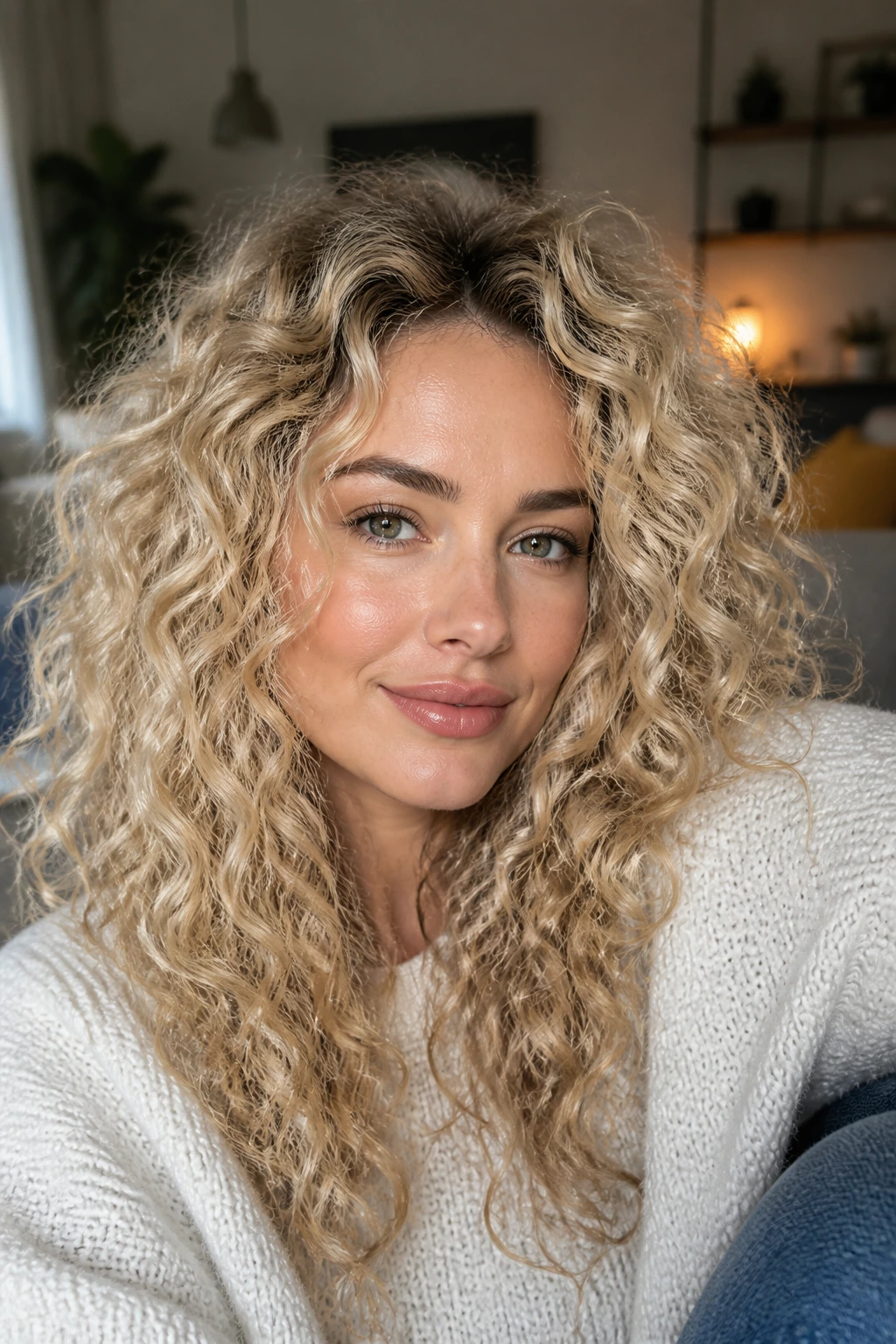
Cream blonde is softer than platinum and less yellow than gold. On curly hair, a rooted version gives you the best of both worlds: visible brightness and a base that keeps the curls grounded. That root depth is what stops the style from looking floaty or over-lightened.
This is a strong option if you want a lighter overall look without losing your natural shadow. The blonde can live through the mids and ends, with just enough root darkness to protect the curl pattern visually. It’s a clean, polished choice that works on loose curls, ringlets, and some tighter textures if the lightening is handled carefully.
If I had to pick one pale blonde for curly hair that still feels wearable after the salon chair, rooted cream blonde would be near the top of the list. It doesn’t fight the curl. It follows it.
Why Blonde Hair Color Ideas for Curly Hair Need Different Placement
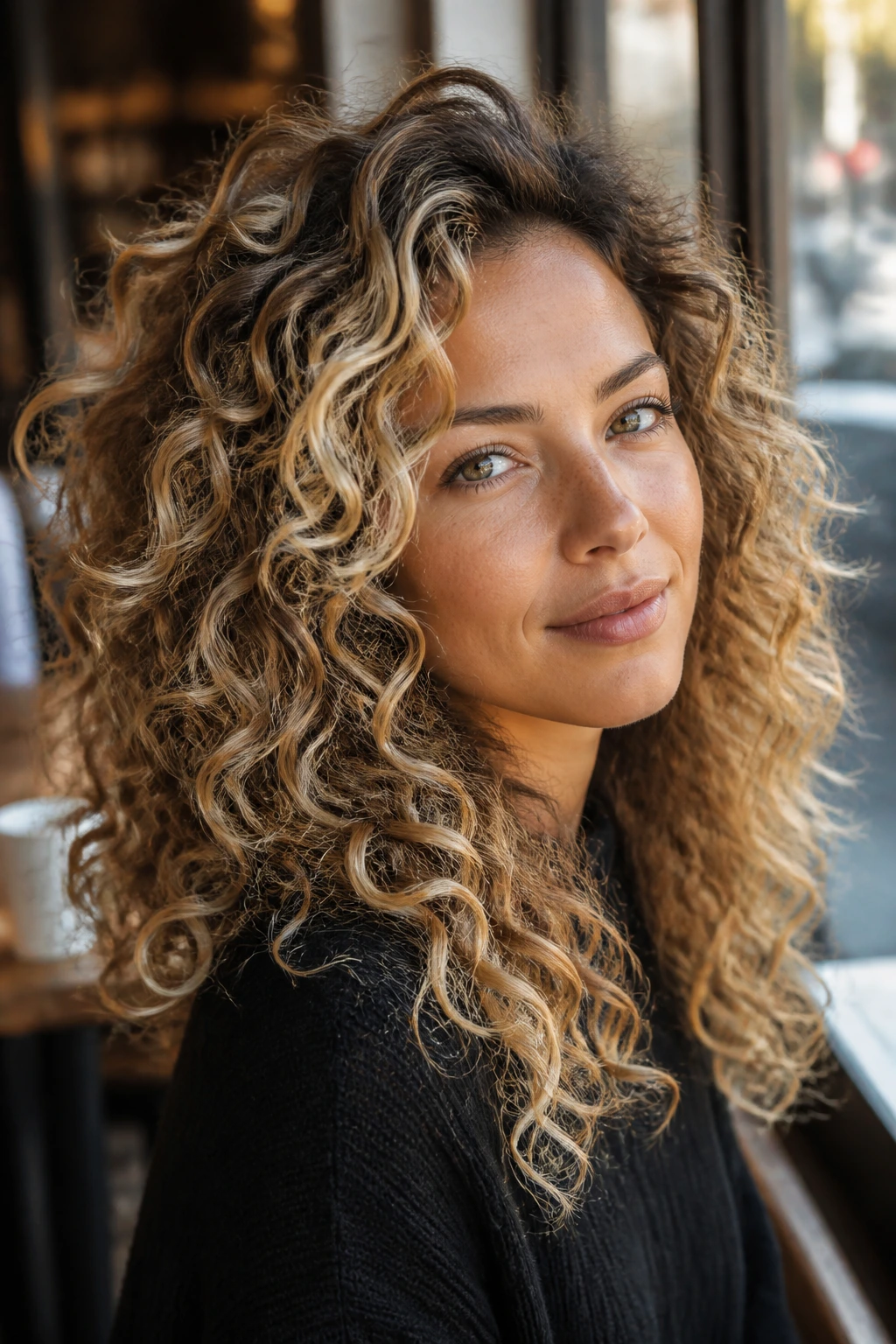
Curly hair doesn’t show color the way straight hair does. A straight strand lies in a single direction, which means the color sits on a flat surface. A curl twists, folds, and opens, so the same blonde can look brighter in one spot and disappear in another. That’s why placement matters so much here.
The best blondes for curls usually use a mix of techniques: balayage for softness, babylights for detail, face-framing pieces for lift, and root shadow for control. One single method can work, but mixed placement tends to look better because it respects the way curls move. It also helps the shade stay readable when the hair shrinks after drying.
Porosity changes the result, too. High-porosity curls drink up lightener and toner fast, which can make a blonde look flatter or more muted than expected. Low-porosity curls resist lift and can stay orange longer than you want. A good consultation should cover both the curl pattern and the hair’s history, because bleach does not care about your inspiration photo. Your hair does.
What to Bring to the Consultation Chair
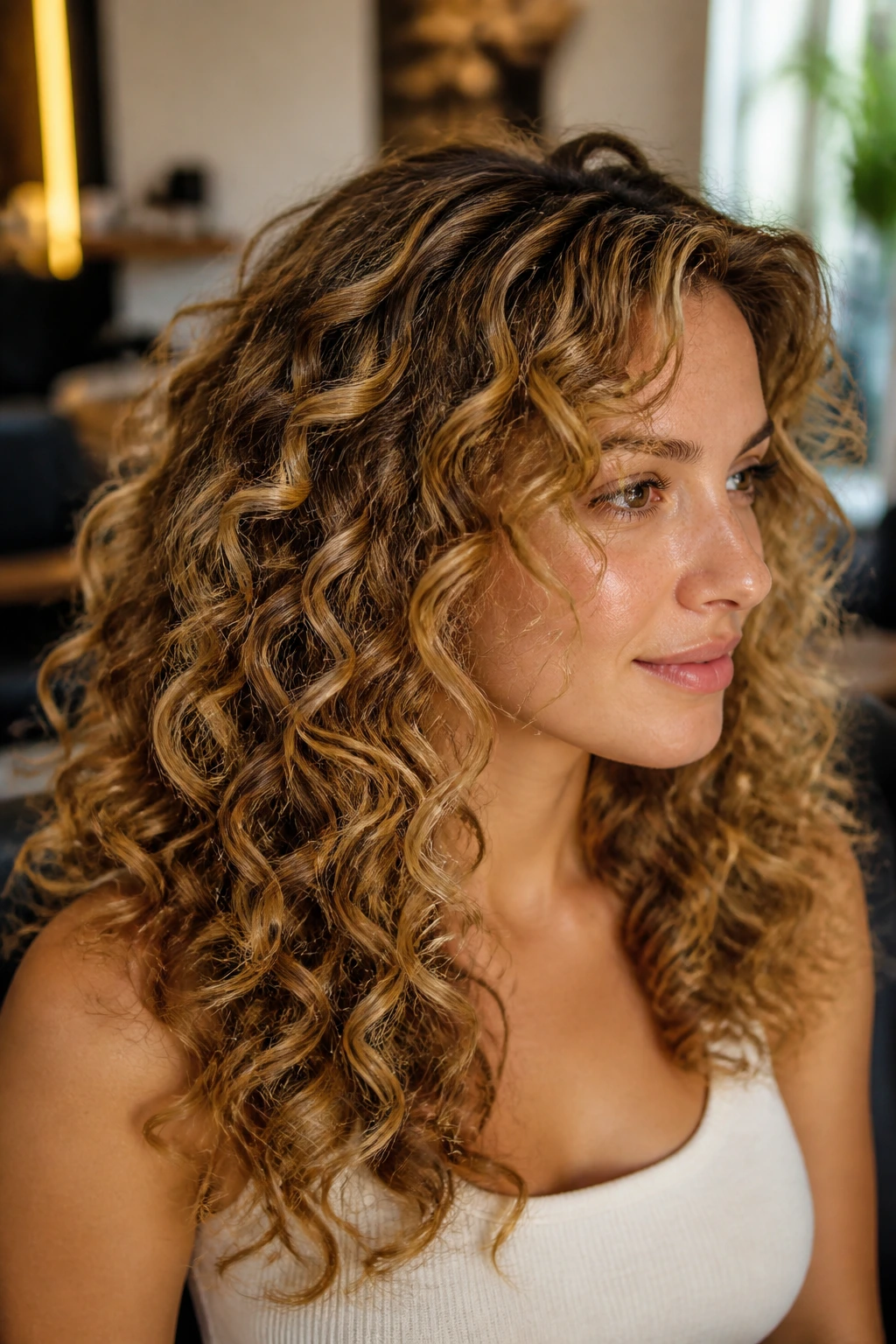
A color appointment goes better when you bring more than a screenshot and a hope. The best photos show your own curl pattern, not just a model with a different texture and a different light source. One photo of a shade you love, one of a shade you don’t want, and one of your hair in natural light can save a lot of guessing.
Bring details, too. How often do you heat-style? Do your curls hold toner well? Have you used box dye, henna, or permanent dark color? Those answers shape the plan more than people realize. If your hair has old color on it, the blonde has to work around that history.
What to bring:
- 2 to 3 reference photos that show both the color and the curl pattern you want
- Notes on your hair history if you’ve colored, relaxed, or straightened it before
- A list of products you use so the colorist can judge buildup and dryness
- A few honest no-thank-you notes about tones you hate, like yellow, copper, or gray
- A realistic maintenance budget so the placement matches your schedule, not someone else’s
A good color plan starts with honesty. Glamour comes later.
How to Keep Curly Blonde Hair Bright Without Flattening It
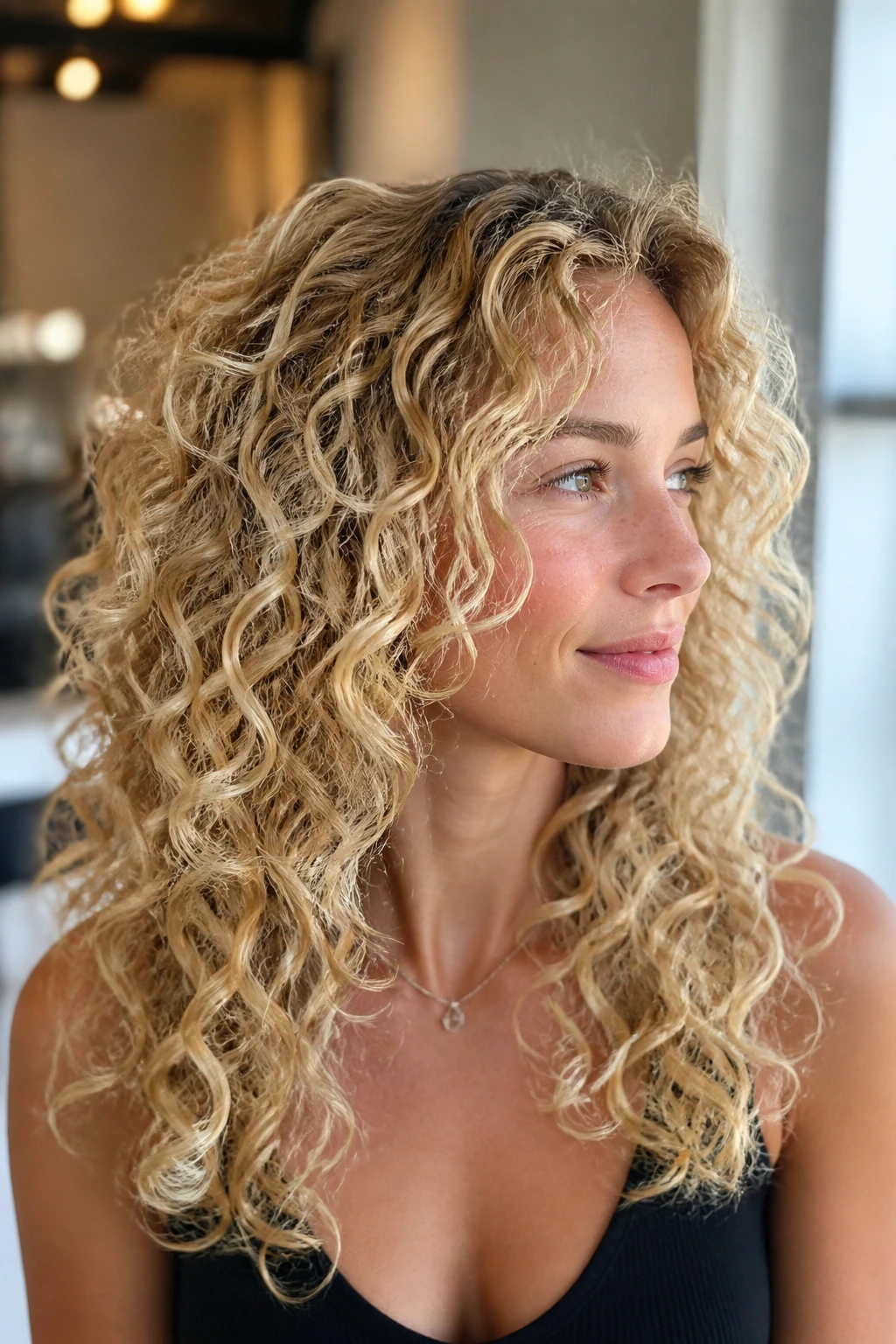
The quickest way to wreck curly blonde is to treat it like straight blonde. Don’t. Curly hair needs moisture, but it also needs enough strength that the curl doesn’t collapse under product weight. The sweet spot is a light hand with shampoo, a richer mask on the ends, and a leave-in that doesn’t leave a waxy film.
Purple shampoo is useful, but it is not a hobby. Use it when the blonde starts to look yellow, not every wash. Leave it on for the shortest time that gets the tone back—usually a few minutes, not a full shower-length drama. If the hair starts looking dull or gray, back off. You’re over-toning it.
Heat matters, too. If you diffuse on high heat every time, the cuticle roughens and the blonde goes matte fast. Lower heat and a diffuser with decent airflow keep the shape intact. If you need a refresh between appointments, a gloss or toner is usually better than piling on pigmenty conditioner after pigmenty conditioner and hoping for the best.
Common Mistakes That Flatten Curls or Turn Blonde Brass
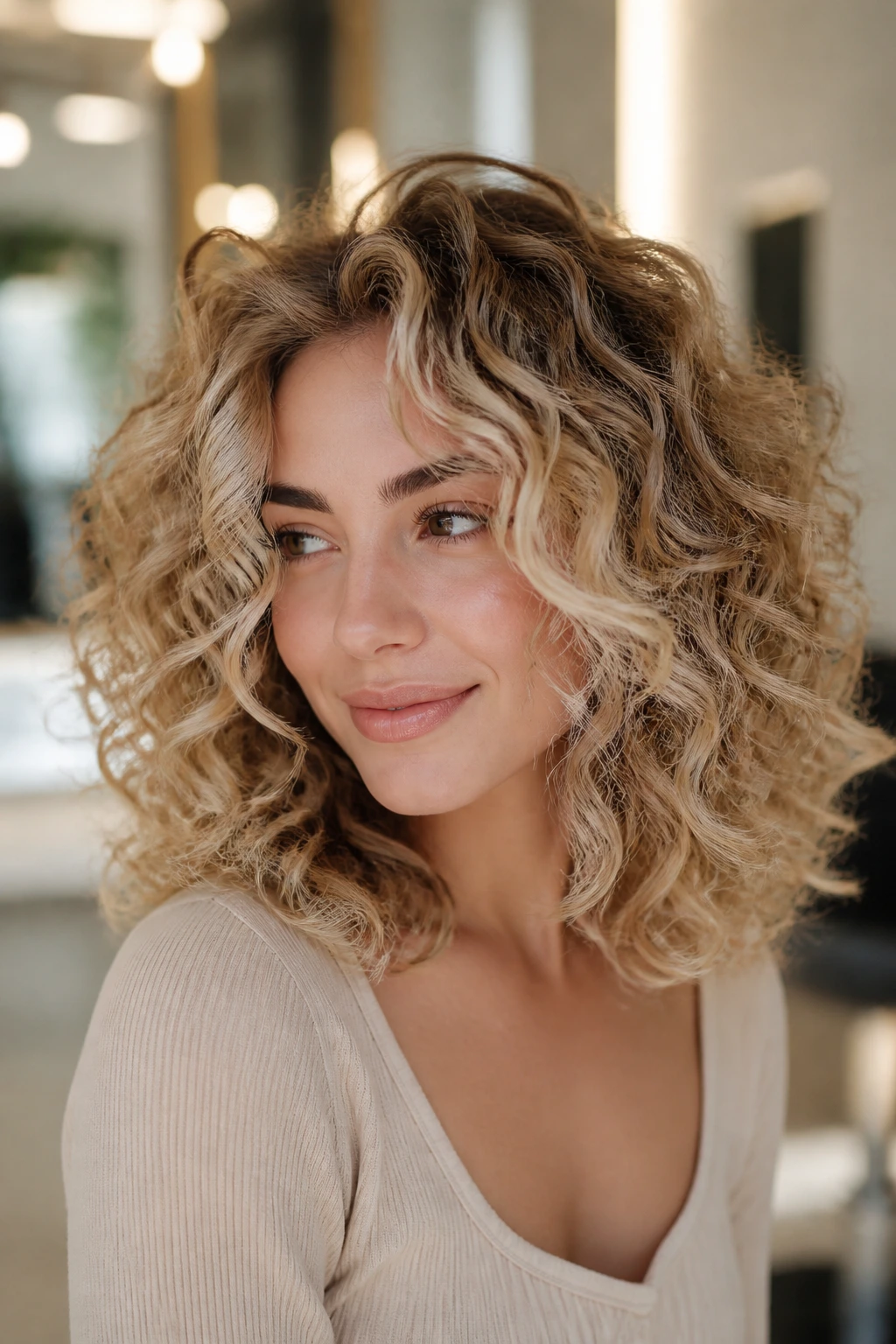
The most obvious mistake is lifting too much of the hair to the same level. Curly hair needs depth. When every curl is equally blonde, the shape loses edges and the whole style can look puffed out instead of dimensional.
Another one: choosing a tone by photo alone. Studio lights lie. Sunlight lies, too, sometimes in the opposite direction. A pale ash blonde that looks soft on one head can look muddy on another if the undertone is off.
- Mistake: Over-lightening the crown. The symptom is a scalp area that looks bright but strangely empty. The fix is a deeper root shadow and lighter pieces only where the hair naturally lifts.
- Mistake: Skipping toner after lift. The symptom is raw yellow or orange. The fix is a toner or gloss matched to your base level, not a random cool rinse.
- Mistake: Using heavy oils before styling. The symptom is curls that collapse and make the blonde look patchy. The fix is to keep heavy finishing products off the roots and use them sparingly on dry ends.
- Mistake: Ignoring porosity. The symptom is toner that grabs too fast or fades in a week. The fix is to ask for a gentler formula and a realistic refresh schedule.
Blonde on curls is not fragile by default. Poor planning makes it look fragile.
Smart Tweaks for Different Curl Patterns
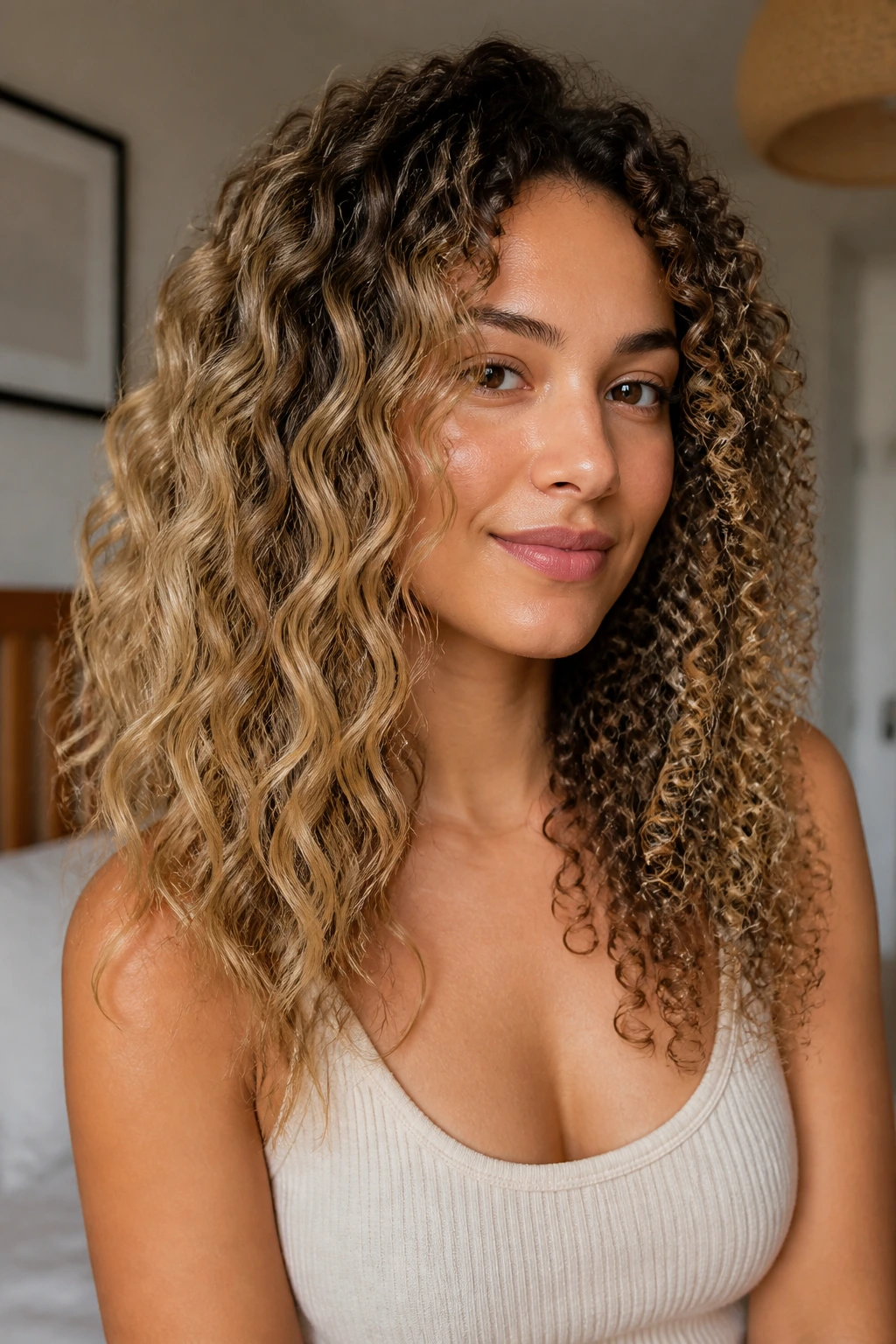
Not every curl type should wear blonde the same way. Loose waves can take wider balayage panels because the pattern itself is more open, which means the blonde reads in sweeping sections. Medium ringlets usually look best with a mix of ribbon highlights and a shadow root. Tight coils often need the brightest pieces placed more intentionally so the contrast doesn’t turn busy.
If your hair is fine, keep the brightest blonde in smaller doses. Wide strips can make the ends look see-through. If your hair is dense, you can afford more spacing between the light pieces because the volume creates its own texture. That’s one of those little details that changes everything in the chair.
Three named approaches worth asking about:
- The Soft Halo: brighter pieces around the outer perimeter and face, with depth underneath. Good when you want light without a full overhaul.
- The Ribbon Melt: slim blonde ribbons threaded through the mid-lengths. Best for ringlets and layered cuts.
- The Hidden Flash: underlayer blonde that shows when the hair moves. Good for people who like a little edge without committing to full brightness.
Frequently Asked Questions
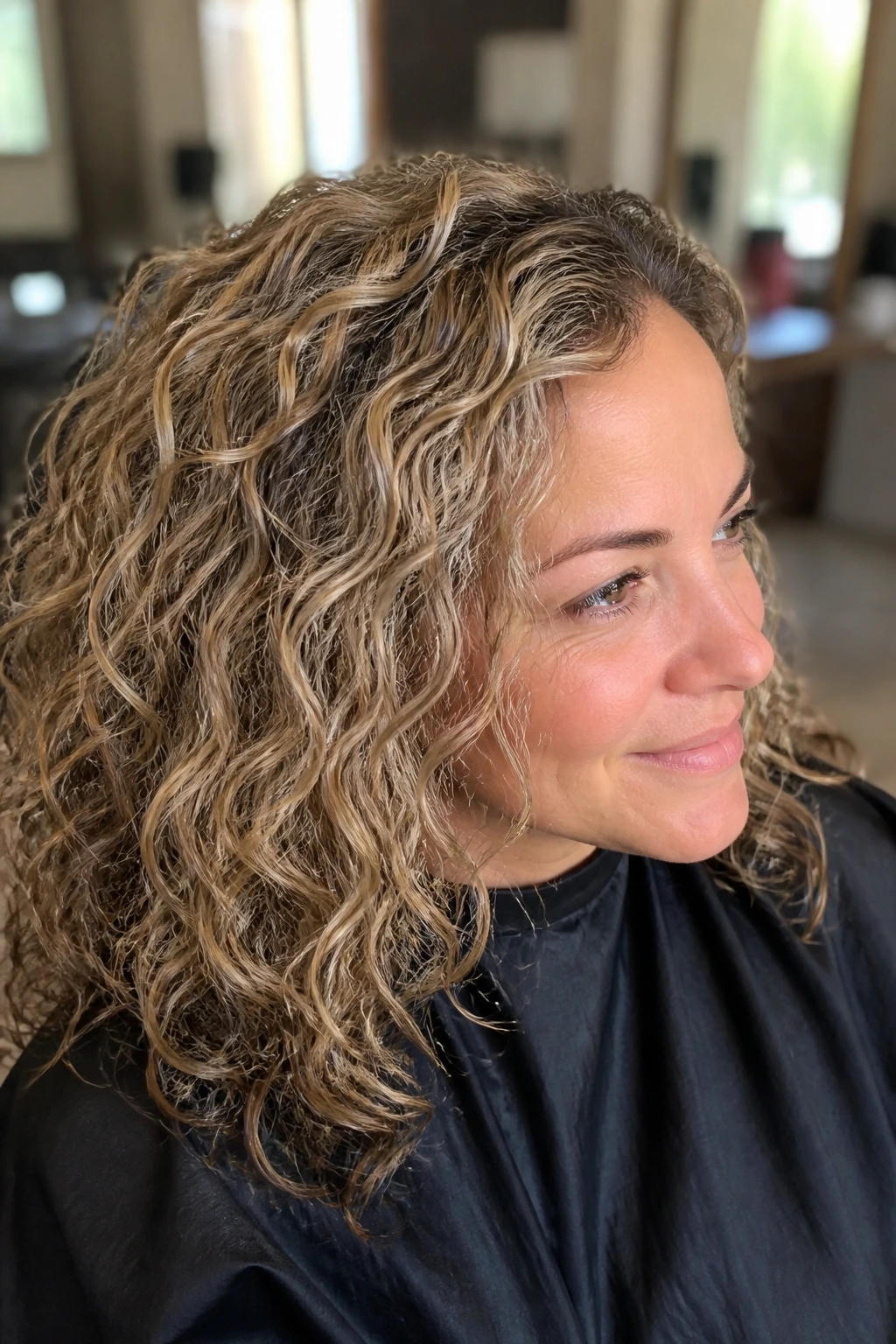
Will blonde damage curly hair more than other colors?
Lightening curly hair can be more drying because curls already lose moisture faster along the bend. That doesn’t mean blonde is off-limits; it means the lift has to be controlled, with bond protection, careful toning, and a cut that removes weak ends.
What blonde shade is easiest to maintain on curls?
Dirty blonde, honey beige, and rooted bronde tend to be the least fussy because the regrowth line is softer and the toner doesn’t need to fight brass as hard. The more platinum the shade, the more often you’ll need glosses and tone checks.
Can I go blonde if my curls are dark brown?
Yes, but the jump should be planned in stages unless your hair is already in excellent condition. Dark brown curls usually need more than one lift session to reach pale blonde safely, and rushing it can leave the ends thirsty and the tone uneven.
Do highlights or all-over blonde work better on curly hair?
Highlights usually work better if you want the curl pattern to stay visible. All-over blonde can look beautiful, but it asks for more maintenance and can flatten the shape if the tone is too even from root to end.
How often should curly blonde hair be toned?
Most people need a gloss or toner refresh every 6 to 10 weeks, depending on wash frequency, porosity, and how much sun or heat the hair sees. If the blonde starts looking yellow before that, a toning shampoo can bridge the gap for a few washes.
Can I wear blonde if I air-dry my curls?
Absolutely. In fact, air-drying often shows the dimension better because the curl pattern settles in its natural shape. Just use a lighter leave-in and avoid heavy creams that can blur the lighter pieces.
What if my blonde turns brassy fast?
That usually means the tone is too warm for your underlying pigment or the hair is porous enough to let the toner slip away quickly. Ask for a cooler gloss next time, and don’t stack purple shampoo every wash, which can leave the hair dull instead of balanced.
Is face-framing blonde enough, or do I need highlights everywhere?
Face-framing pieces can carry a lot of the look, especially on curly hair where front sections get the most light and movement. If you want a softer commitment, start there and add more later only if the shape needs it.
The Curl Pattern Comes First
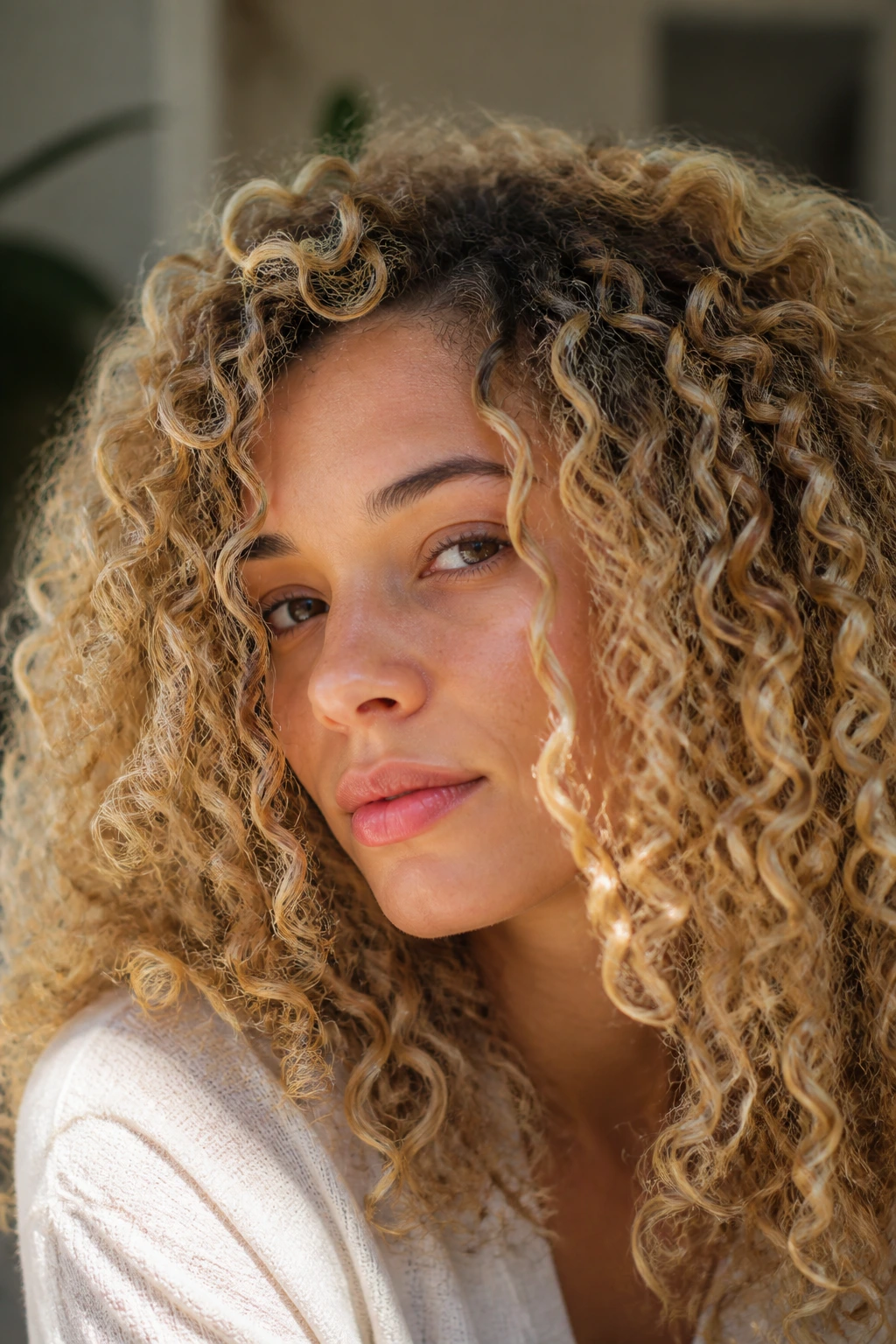
The best blonde on curly hair never fights the curl. It follows the bends, respects the density, and leaves enough depth at the root for the pattern to breathe. That’s why some shades look rich and expensive on curls while others look flat the second they dry.
If you’re choosing between a few of these ideas, start with your maintenance habits before you start with the color chart. A softer beige ribbon or rooted bronde will forgive a busy schedule. A platinum money piece or Scandi blonde spiral light needs more attention, more glossing, and a little more nerve. Neither is wrong. One just asks more from you.
And that’s the honest test. Pick the blonde that fits the curl you actually wear, not the version you only see in a mirror after a blowout.
