



Bob-length box braid hairstyles have a particular kind of pull. They don’t drag like waist-length braids can, and they don’t disappear the way a too-short cut sometimes does. They land in that sweet spot around the jaw, chin, or collarbone where the shape stays crisp, the neck stays visible, and the whole style moves when you move. That movement matters. A bob with box braids swings, flips, and shifts in a way long braids often don’t.
What I like most about a braided bob is that it gives you structure without the all-day weight. The style can look polished and sharp, or soft and playful, depending on how the parts are drawn and where the ends fall. A blunt cut reads almost architectural. A side part softens the face. Add curls, cuffs, beads, or a little asymmetry and the same basic cut takes on a totally different mood.
There’s also a practical side people sometimes skip past. Shorter braids dry faster after washing, snag less on coat collars and seat backs, and are easier to refresh when the roots start showing fuzz. That doesn’t make them low-maintenance in some magical way. It just means the maintenance is less annoying, which is honestly the part that matters most.
Why Bob-Length Box Braid Hairstyles Keep Working
Less weight, less drag: A bob-length braid set puts far less pull on the scalp than longer lengths, especially when the braids are medium or jumbo size. That can make the style feel lighter from day one instead of “I need a bun by lunchtime.”
Cleaner outlines: Shorter braids show off the cut. If the ends hit around the jaw or the top of the shoulders, the silhouette stays visible instead of getting swallowed by the braid length.
Better movement: A braided bob swings when you turn your head. That tiny bit of motion gives the style life, which is why a short set can look more deliberate than a long one that’s been left to hang.
Easier to dress up or down: You can tuck one side behind the ear, pin one or two braids back, throw on gold cuffs, or leave it plain. The length doesn’t fight you.
Less maintenance at the edges: Shorter styles are still a commitment, but there’s less hair to re-braid, less length to tangle, and fewer ends to baby every night.
1. Chin-Grazing Classic Bob Box Braids
This is the clean, no-nonsense version. The braids stop right around the chin or slightly below it, so the whole cut sits in a tidy frame around the face. It’s the bob-length box braid hairstyle I recommend to people who want the shape to read immediately from across the room.
The trick here is balance. Keep the parts medium-sized, not too tiny, so the bob doesn’t turn into a fuzzy cloud. The ends should land evenly, with just enough variation to move, not so much that the cut looks accidental.
A classic bob like this works best when the installation is neat at the hairline and the ends are trimmed with intention. If a braid sticks out half an inch longer than the rest, it will show. That’s not a flaw. It’s the whole point of a bob: the line matters.
2. Blunt-Cut Bob With Clean Ends
If you like a sharp look, this is the one. The blunt-cut bob has nearly the same length all around, with the ends forming a straight line that sits close to the jaw or just below it. It has a kind of crispness that feels almost tailored.
What Makes It Different
Unlike looser bob styles, this version depends on precision. The braids need to be installed evenly, and the trim at the bottom has to stay clean. No wispy slope, no uneven tail hiding in the back. Straight line. That’s the payoff.
I prefer this with medium-sized braids and minimal extra texture at the ends. Too much curl or fray softens the line and muddies the effect. If you want the braids to look especially deliberate, add a middle part and keep the perimeter the same length all the way around.
The blunt bob is a good choice when you want the hairstyle to carry the outfit. Big earrings help. So does a strong neckline on a shirt or dress. The hair does not need much help.
3. Side-Part Bob Box Braids That Frame the Cheekbones
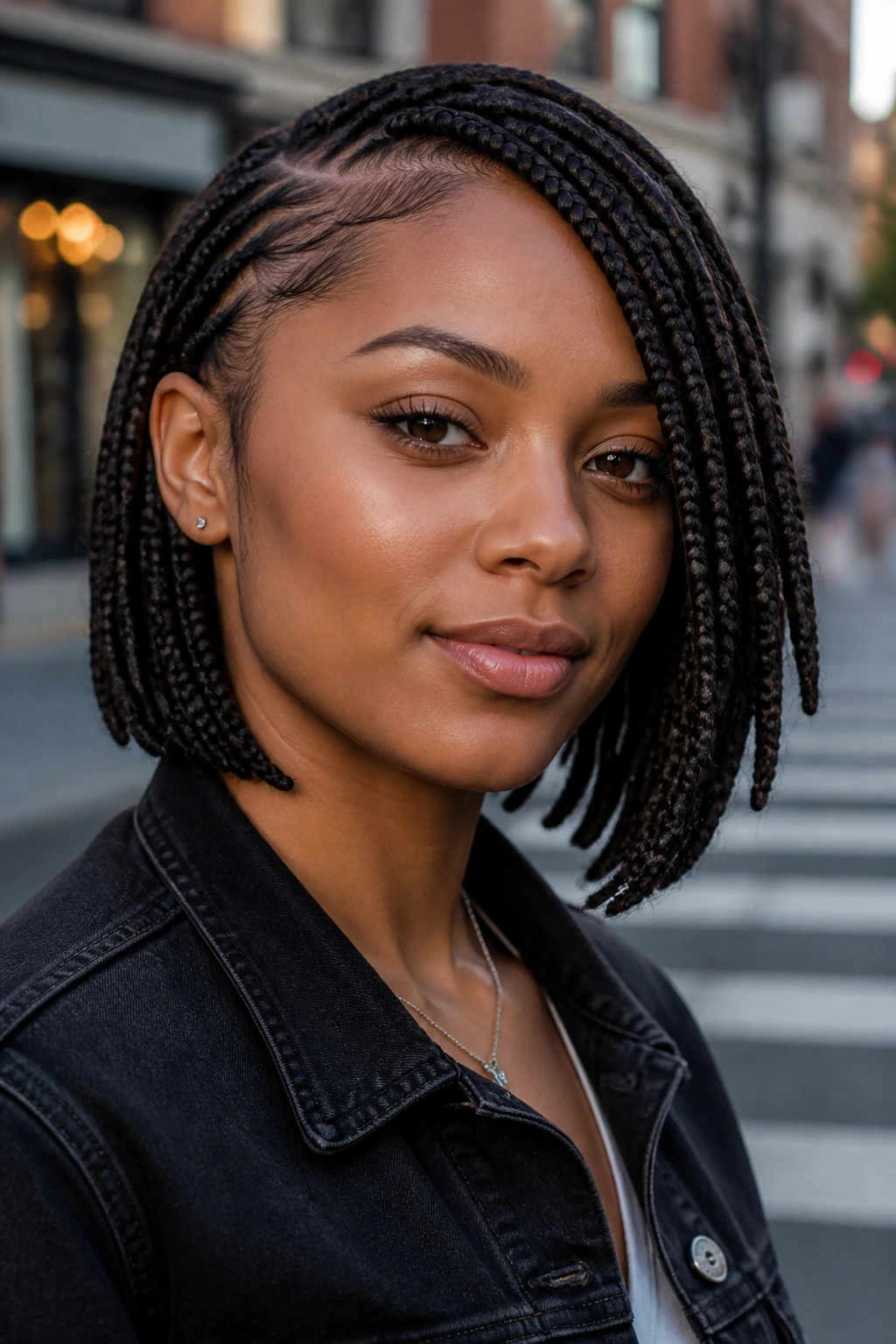
A side part changes everything. Suddenly the same braided bob feels softer, more angled, and a little less strict. The longer side skims the cheekbone while the shorter side opens up the face, which is useful if you want the style to look less symmetrical.
There’s a small but important detail here: don’t make the part too deep unless you’re ready for the front to get heavy. A deep side part with dense braids can collapse toward one side by the end of the day. A gentle off-center part usually sits better and stays neater.
I like this style on square and round faces because it breaks up the straight-down shape of the bob. One side tucked behind the ear, the other falling near the cheek. Simple. Effective. No extra drama needed, which is rare and welcome.
4. Middle-Part Bob Box Braids With Clean Symmetry
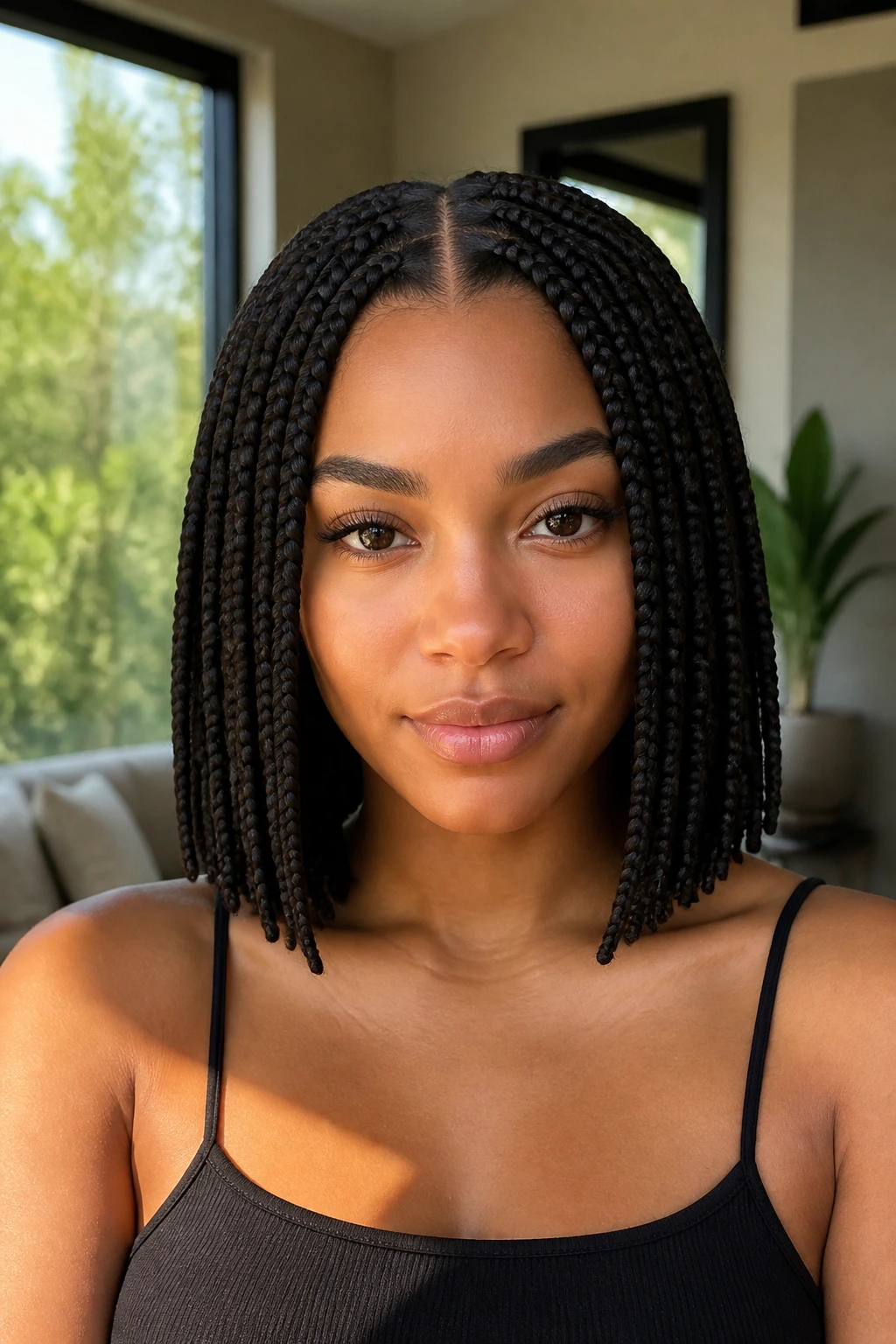
Middle parts can be unforgiving, but when they work, they really work. A center part gives bob box braids a neat, balanced frame that feels calm and steady rather than fussy. The look is especially strong when the braids are uniform in thickness and the ends all hit around the same point.
If your hairline is uneven, a middle part can still work. The answer is not to force the part straight like you’re measuring tile. Let it follow the natural lay of the hair just enough to look intentional. The eye reads symmetry more easily than perfection.
This style tends to look best when the front pieces are not too bulky. Keep the first row tidy so the part has some breathing room. Otherwise the braid mass can crowd the forehead, and the clean line disappears.
5. Curly-End Bob Box Braids
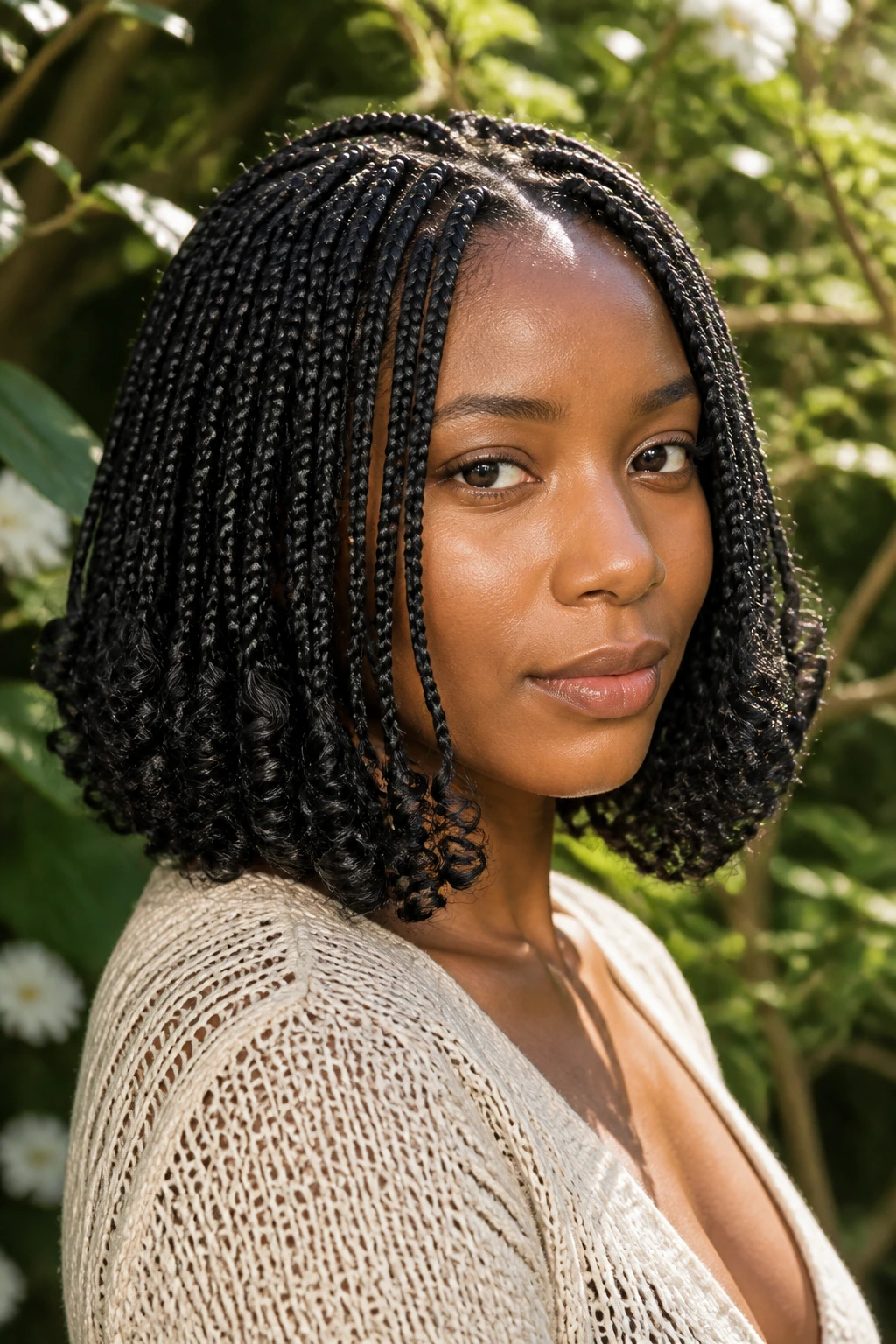
There’s a reason curly ends keep showing up on braided bobs. The soft curl changes the whole mood of the cut. Instead of a hard stop at the bottom, the braids finish with a little bounce, which makes the style feel lighter and more relaxed.
The nicest version of this look uses a set of synthetic or human-hair curls that hold their shape without turning fluffy on day one. If the curls are too tight, the ends can look busy. If they’re too loose, they lose the point. Aim for a gentle bend that reads as finish, not frizz.
This works especially well on shoulder-skimming bob lengths. You want enough room for the curl to show. A chin-length set can still do it, but the effect is subtler. Either way, the ends give the braids a softer finish that plain blunt tips can’t quite match.
6. Beaded Bob Box Braids
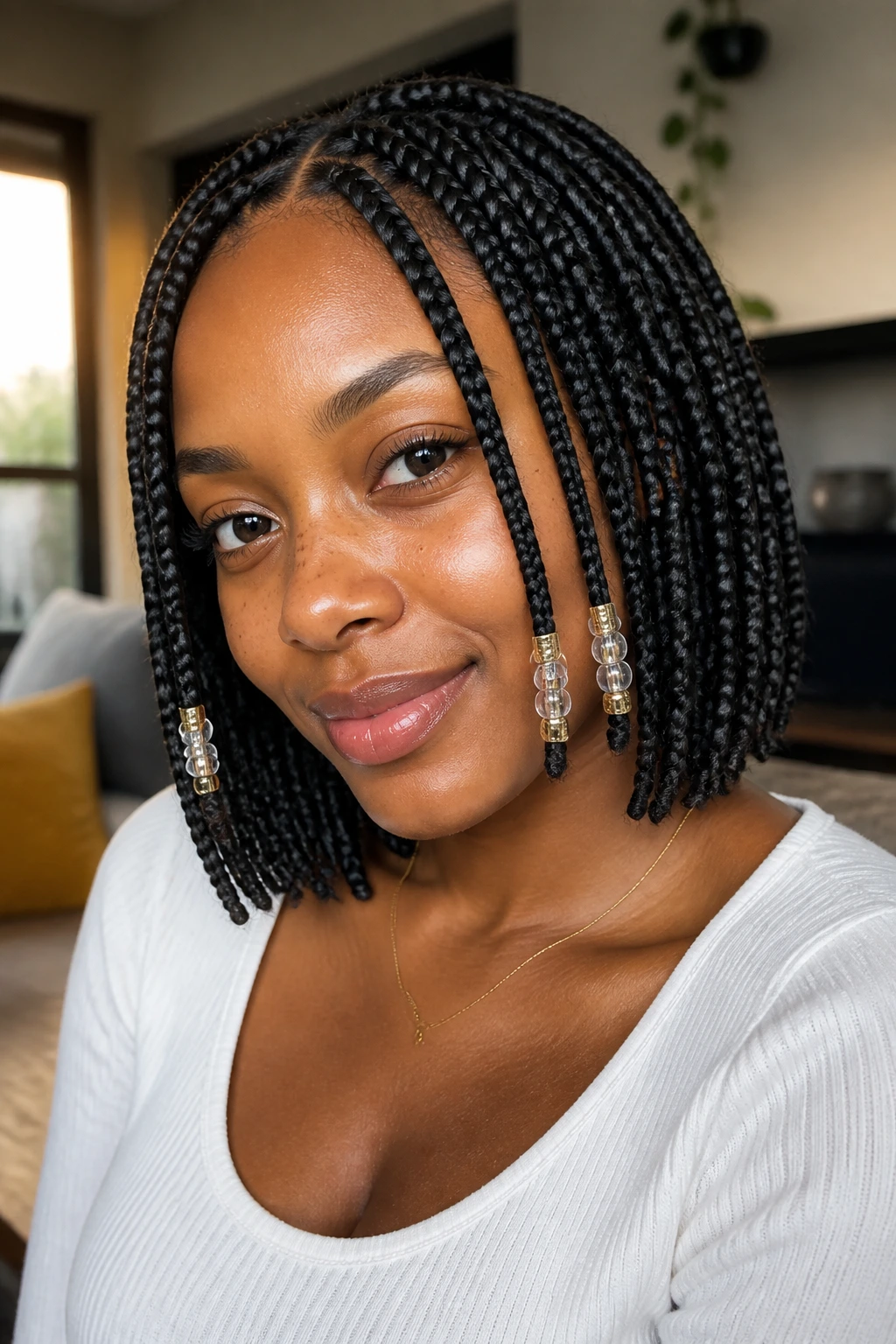
Beads on bob-length braids are loud in the best way. Even one or two rows of beads near the ends changes the whole rhythm of the style, adding sound, weight, and movement. When you turn your head, you hear it. That sound is part of the look.
The key is restraint. If every braid gets stacked with heavy beads, the style can tip from polished to clunky fast. I like beaded bobs best when the beads are concentrated in a few face-framing braids or placed only at the very ends of a handful of plaits.
You can go clear, wood, gold, black, or color-mixed. Just keep the bead size proportional to the braid size. Tiny beads on jumbo braids disappear. Oversized beads on micro braids swallow the line. The match matters more than the color story.
7. Triangle-Part Bob Box Braids
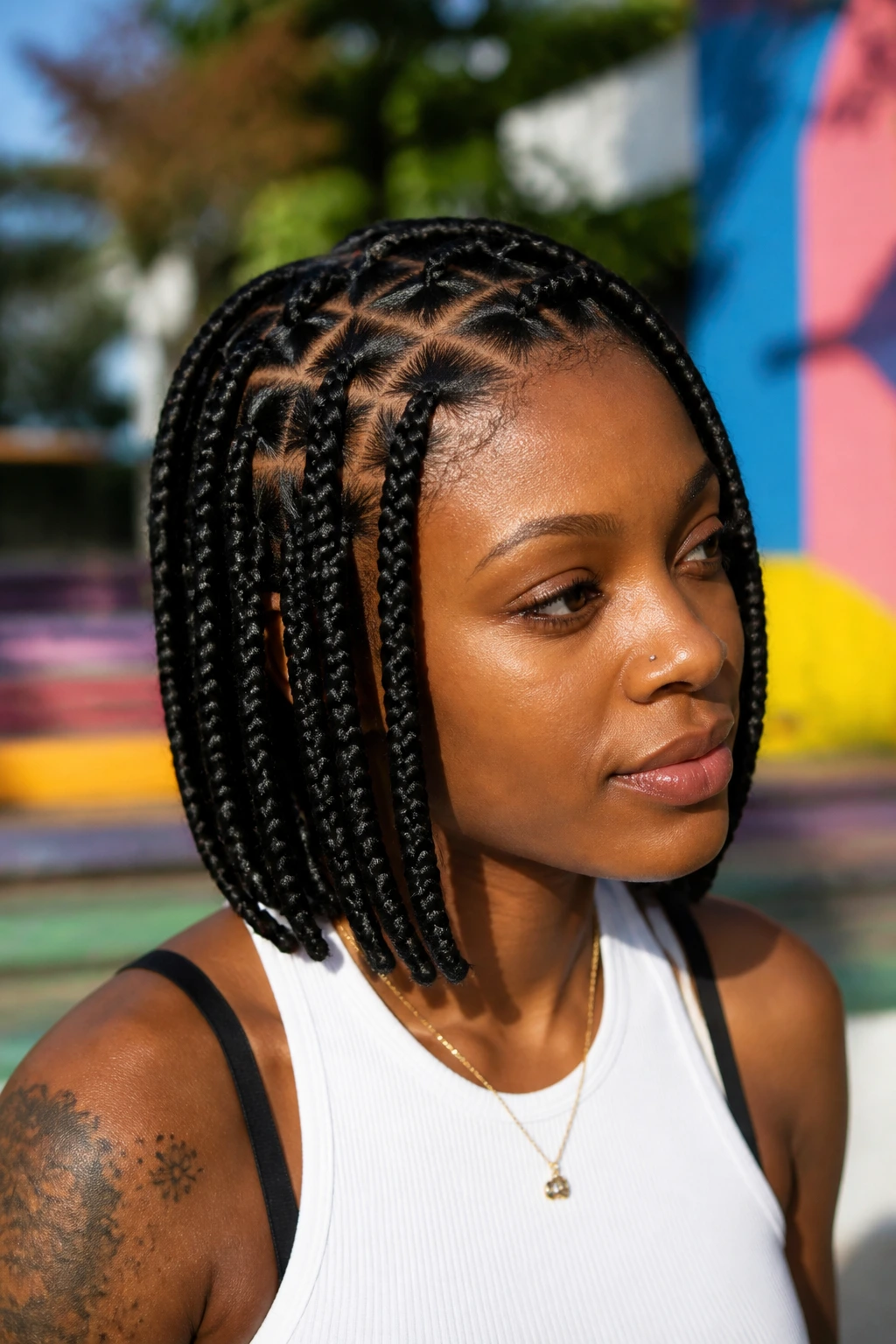
Triangle parts do a lot of quiet work. They turn the scalp pattern into part of the design instead of leaving it as a hidden grid. On a bob-length set, those angled sections are visible enough to matter, especially when the hair is pulled into a side tuck or half-up style.
Why It Works
The triangle shape breaks up the boxy feel that sometimes comes with straight rows. That little change makes the whole style feel more textured, even when the braids themselves are simple and medium-sized.
I like triangle parts most on shorter bobs because the scalp pattern has room to breathe. On long braids, the pattern can disappear under the length. Here, it stays visible and becomes part of the haircut’s personality. If you like detail that shows up in bright light and in photos, this is a good one.
8. Layered Bob Box Braids
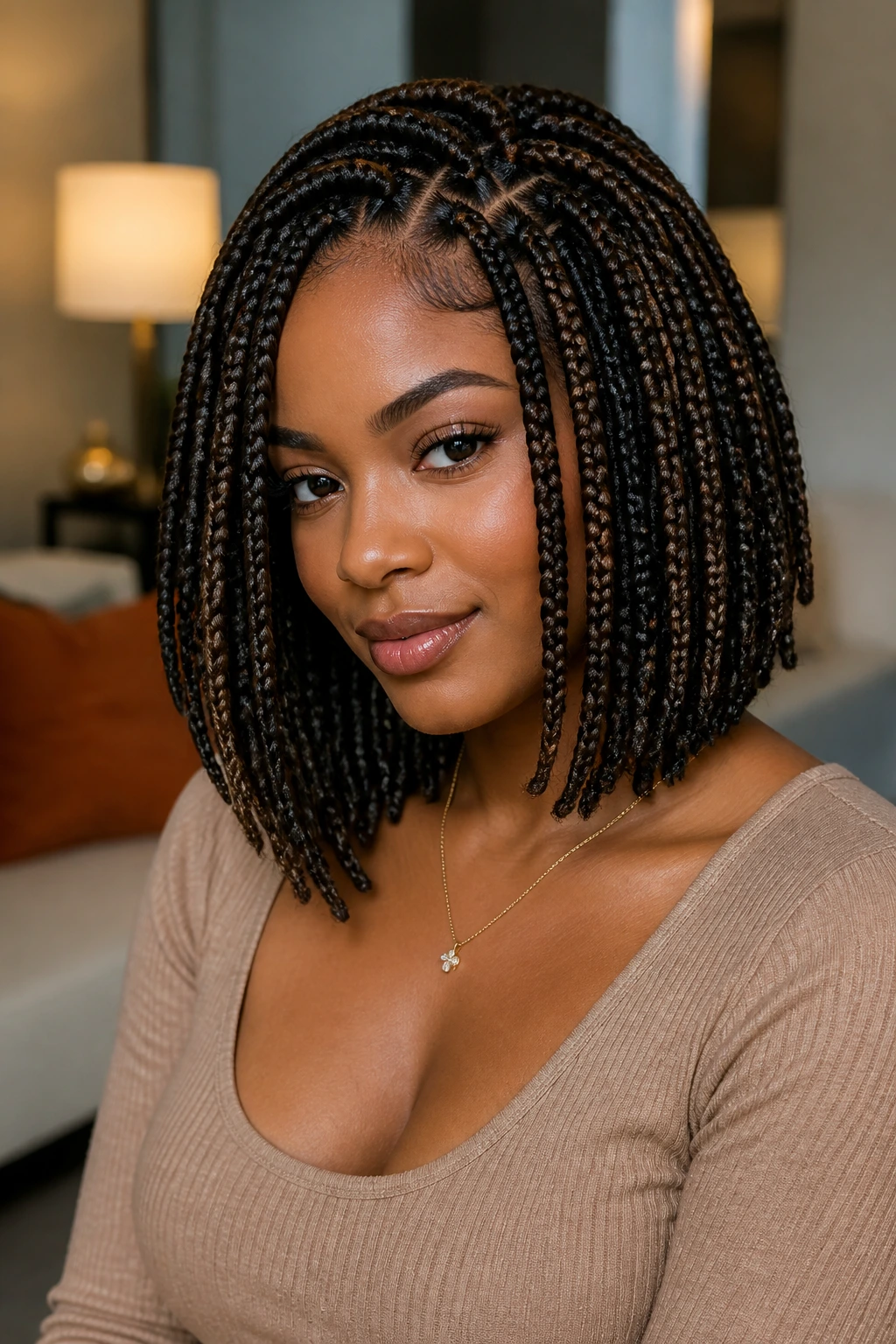
Layered braided bobs have more movement because not every braid lands at the same place. Some hit at the chin, some just under it, some kiss the top of the collarbone. The cut looks a little softer, a little less severe, and usually more flattering if you like volume without a blunt edge.
The layering has to be controlled. Too much difference in length and the style starts looking broken rather than shaped. A soft stagger is enough. The front can be a touch longer, with the back slightly tighter to the neck.
This is one of the better choices if you wear your hair mostly down but want a shape that doesn’t feel static. The layers catch light differently, and the ends don’t form one heavy block. That small detail changes the whole feel of the style.
9. Half-Up Half-Down Bob Box Braids
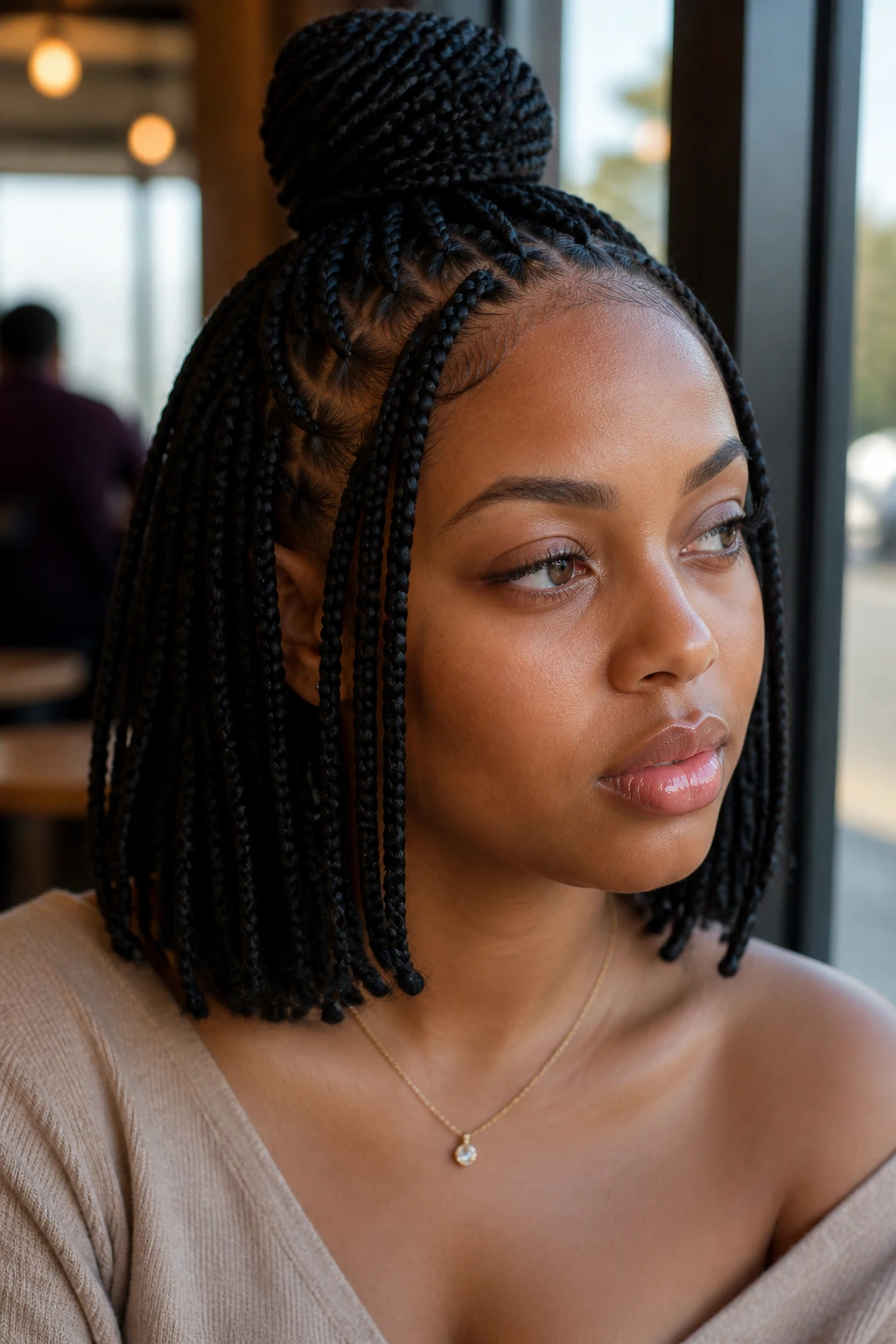
A half-up half-down braided bob gives you two moods in one style. The back stays short and easy, while the top section gets pulled up into a bun, puff, knot, or tiny ponytail. It’s practical, but it doesn’t look like you settled.
The main thing to watch is tension at the crown. The top section should lift, not yank. If the braids at the front are already heavy, don’t pull the style too tightly or it will feel sore by the afternoon.
I like this look when the bob is cut a little below the chin. That gives you enough length in the back for movement while the lifted top creates height. It’s one of those styles that works at brunch, at work, and at a weekend event without needing a restyle.
10. Jumbo Bob Box Braids
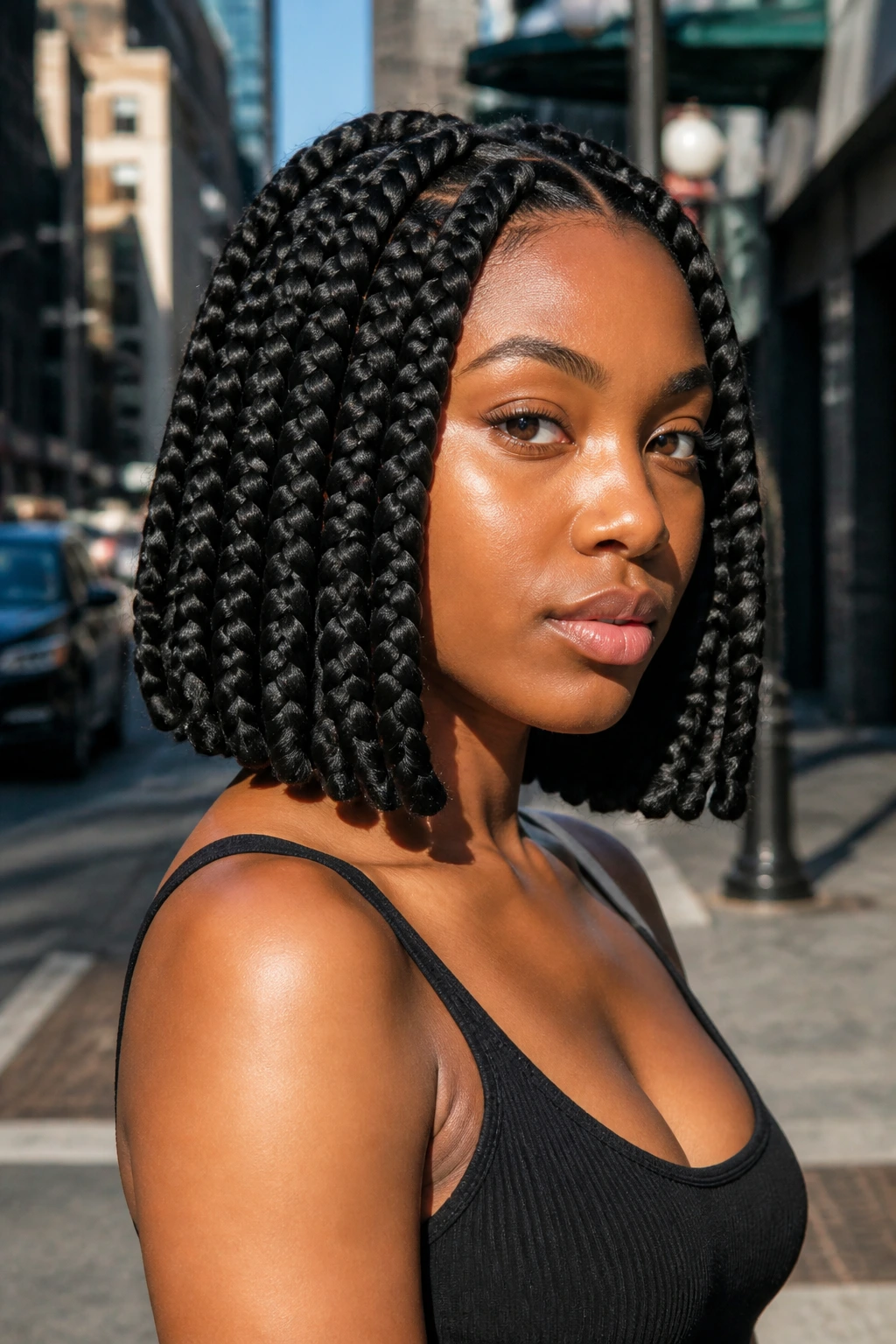
Jumbo bob box braids are blunt, bold, and fast to install compared with smaller braid sizes. You get fewer parts, bigger sections, and a fuller silhouette. The result is chunky in a way that feels strong rather than bulky.
Because the braids are larger, the shape matters even more. A jumbo bob should be even at the perimeter, or the uneven sections show immediately. If the cut is slightly slanted, that can look deliberate. If it’s random, it looks unfinished.
This style is also good when you want the braid pattern to be visible from a distance. The larger sections make the grid easy to see, and that gives the bob a graphic edge. It’s not delicate. That’s the charm.
11. Micro Bob Box Braids
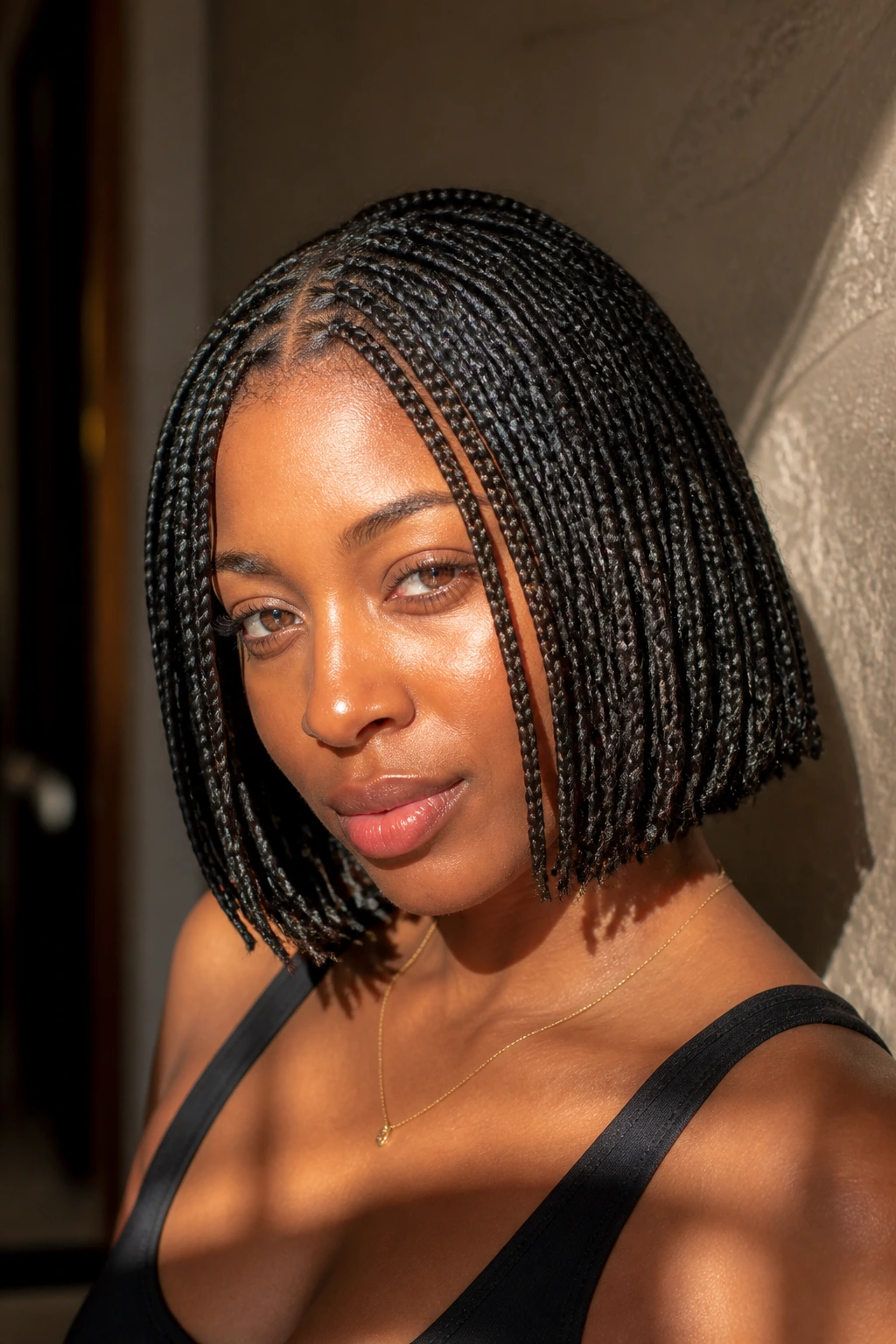
Micro bob box braids are the opposite mood. Soft, detailed, and full of movement. Because each braid is smaller, the whole style can bend more naturally around the face and neck, and the bob reads a little more like fabric than rope.
What to Watch For
Micro braids take longer to install, and the ends can puff if the synthetic hair isn’t sealed well. That means this style needs patience up front and decent maintenance afterward. But if you like styles that look airy instead of chunky, it’s worth the time.
The other advantage is flexibility. You can tuck them, pin them, half-up them, and stack them without the base looking too heavy. They’re especially nice if you want a bob that feels fluid when you move.
12. Knotless Bob Box Braids
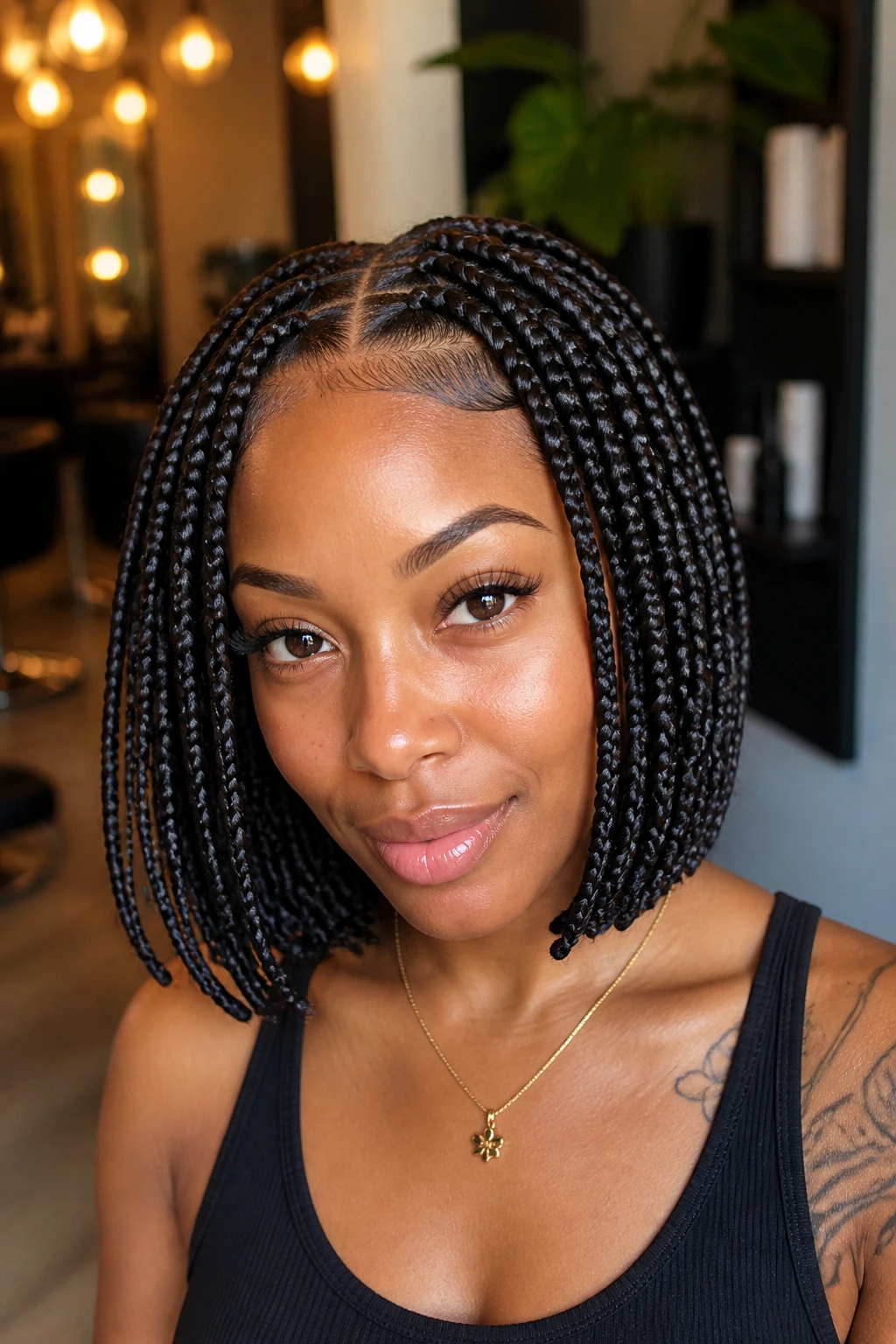
Knotless bob box braids are a smart choice when you want the look of a bob without the heavy knot at the root. The braids start flatter and blend more gently into the scalp, which gives the style a smoother front and less of that little bump some people dislike.
The installation takes longer. That’s the trade. But the payoff is a cleaner hairline and a lighter feel at the roots, especially around the crown and temples. On a short bob, that difference shows.
I’d pick knotless over traditional box braids if your scalp is sensitive or if you want the braid line to look softer around the face. They also take well to side parts and tucked styles because the front doesn’t have as much bulk.
13. Boho Bob Box Braids With Loose Curls
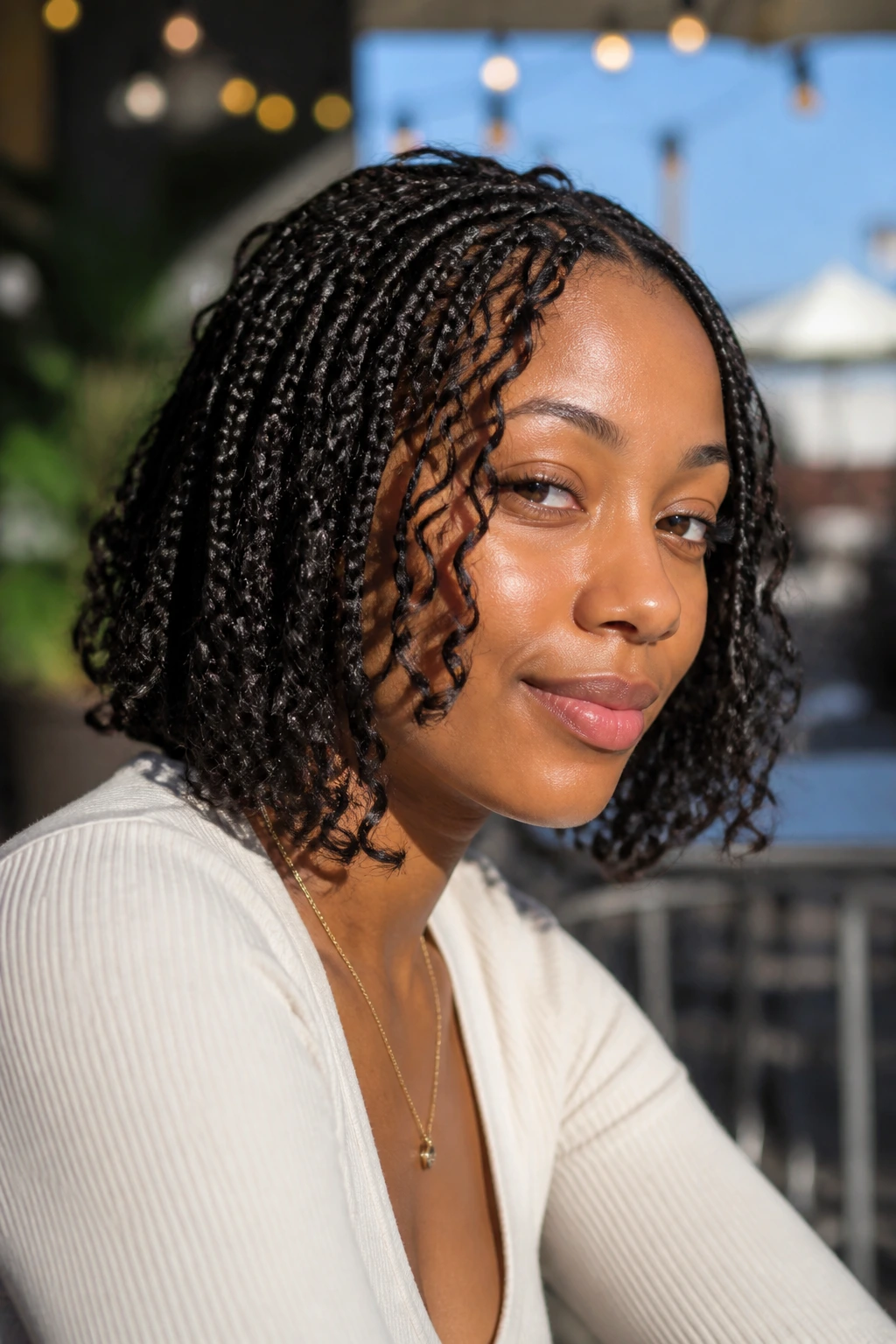
Boho braids are for people who like a little looseness. A boho bob mixes boxed sections with curly strands left out on purpose, giving the whole style texture and a lived-in finish. It’s messy, but in a controlled way.
The important part is proportion. You want the loose curls to act like accents, not to swallow the braid structure. A few pieces around the face and a few more near the ends is usually enough. Any more and the bob stops reading as braided first.
This style looks especially good when the braids are a touch shorter and the curls hit around the chin. That length gives the loose texture a chance to move without turning into a puffball. I like it with neutral makeup and simple clothes, because the hair already does a lot.
14. Color-Block Bob Box Braids
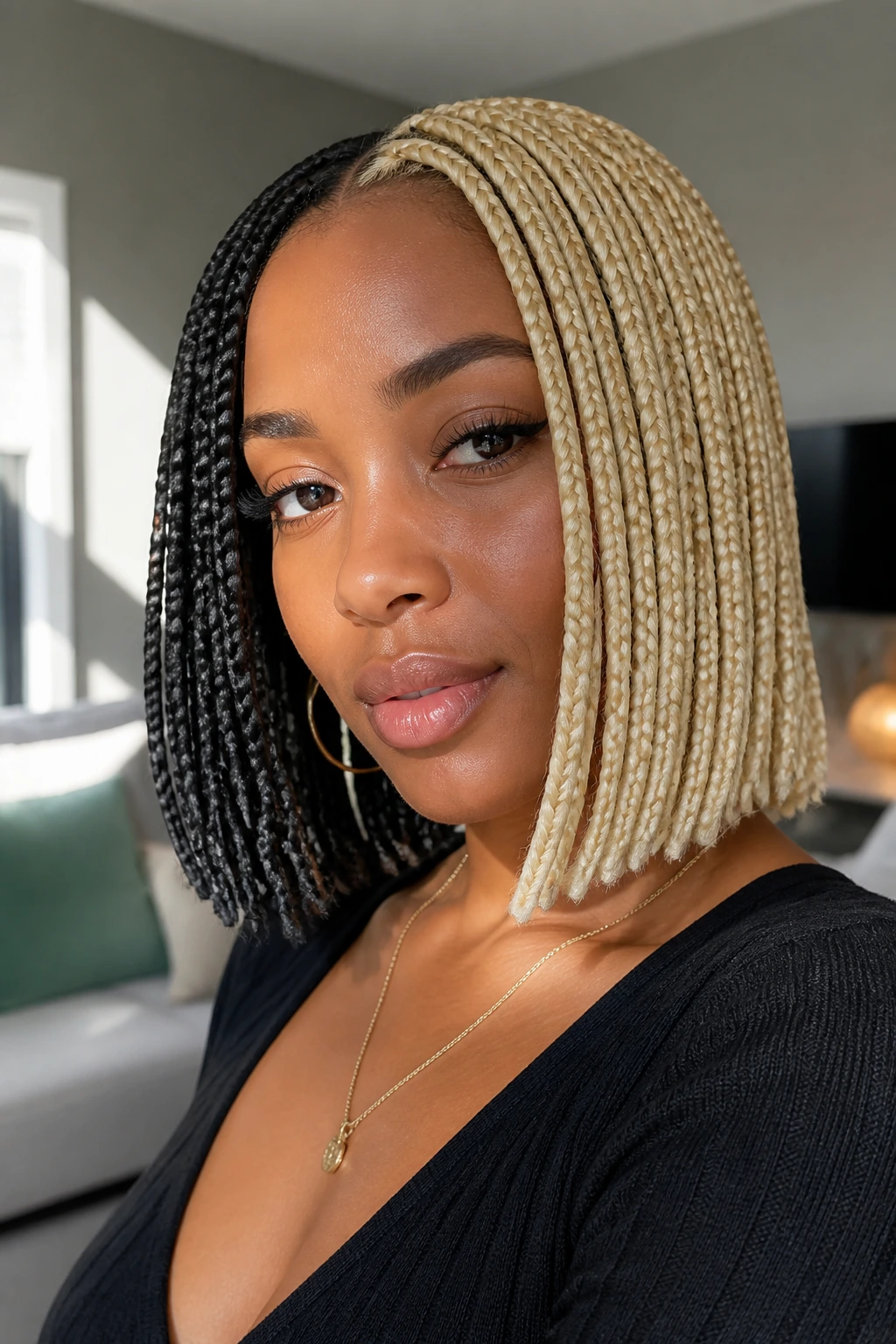
Color-blocking gives a braided bob a sharper point of view. One section can be dark and one section light, or the front can contrast with the back. The cut becomes more graphic, and the bob shape becomes easier to read because the color breaks up the mass.
The best part is how dramatic the change looks in short lengths. On long braids, color can blend into a wash. On a bob, the split is obvious. That makes this a strong choice if you want the hair to be the main event.
Keep the contrast intentional. A soft brown against honey blonde looks different from jet black against platinum, and the energy changes with it. Pick the version that matches your skin tone, wardrobe, and tolerance for attention.
15. Honey Ombre Bob Box Braids
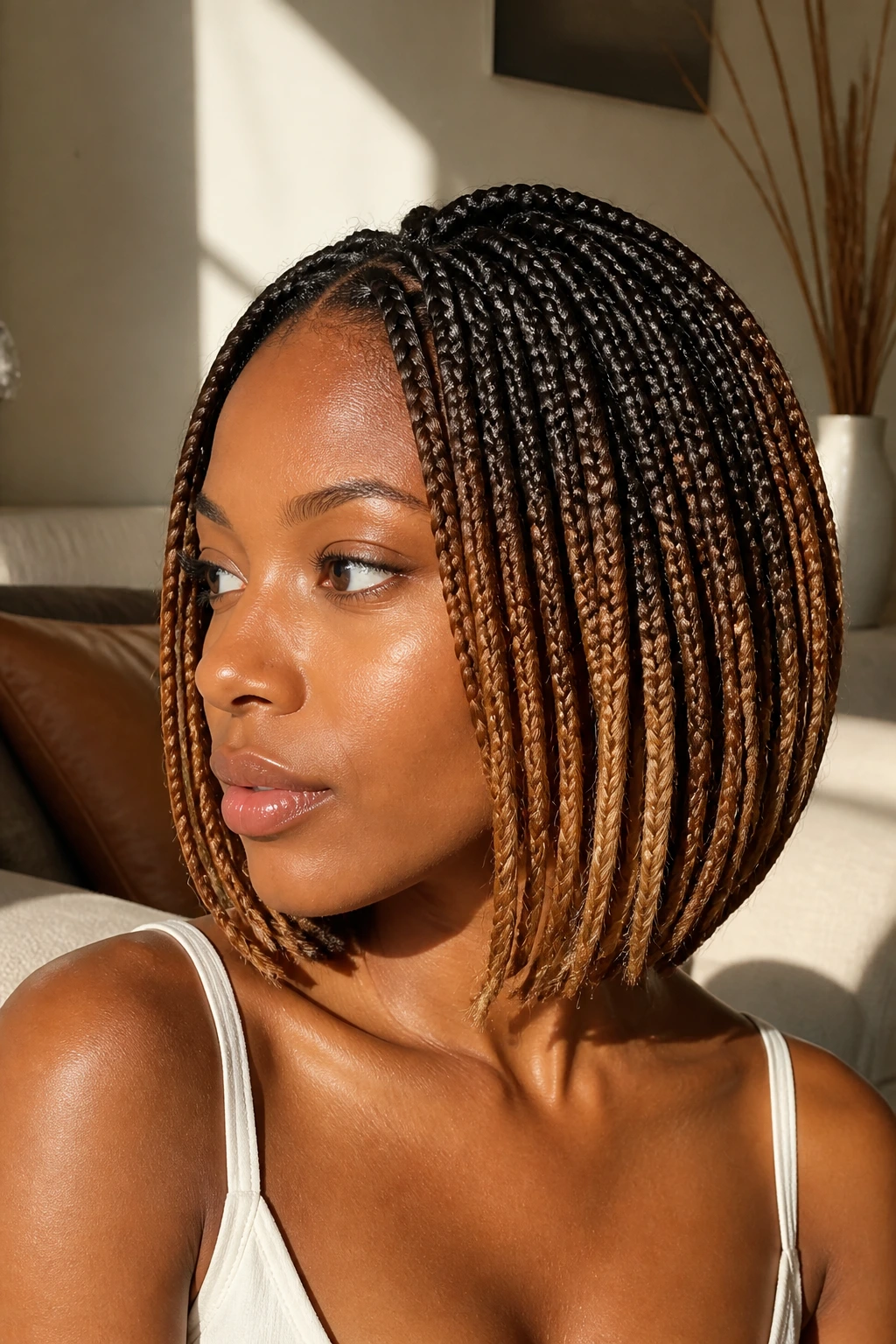
Honey ombre on a bob is one of those styles that looks more expensive than it has any right to. Dark roots fading into warm caramel or honey ends give the braid line some depth, and the shorter length makes the color shift visible immediately.
What Makes It Stand Out
The fade is the point. If the transition is too abrupt, the bob loses its softness and starts looking striped. A gentle ombre creates a warmer frame around the face, especially when the lighter color lands near the chin.
I think this works best on bob lengths that reach just below the chin or the top of the shoulders. That gives the color enough room to show before the style ends. If you like warmth without a full head of blonde, this is a strong middle path.
16. Curved Swoop Bob Box Braids
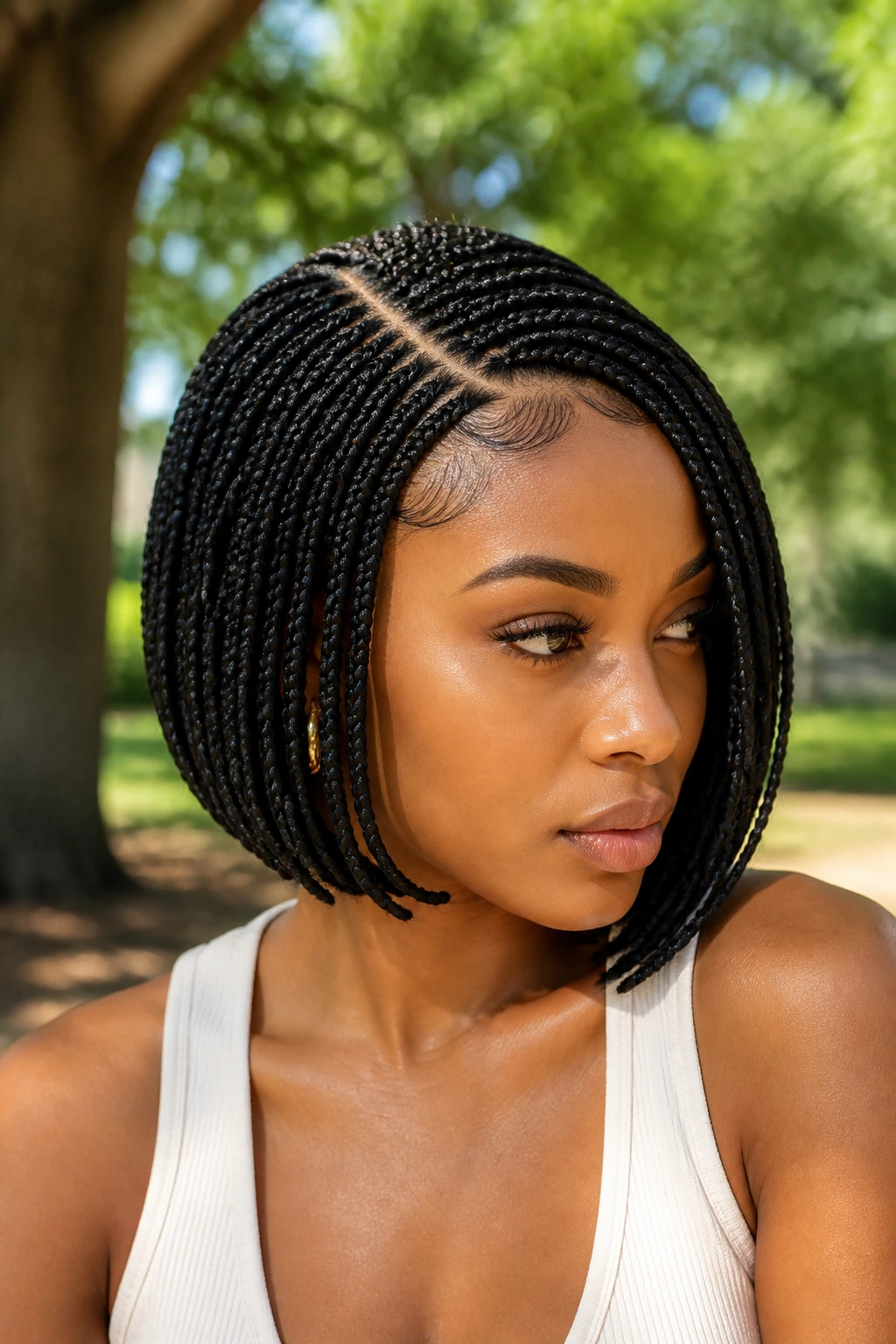
A curved swoop part adds motion before the braids even start. Instead of a straight line across the scalp, the part arcs gently across the head and shifts the eye toward the cheekbones and forehead. It’s a small detail. It changes the whole face.
This style feels especially good with medium-size braids because the curve stays readable. Very tiny braids can blur the part pattern, and huge braids can make the swoop feel crowded. Medium sections keep the line clean.
You can wear the bulk of the braids to one side or let them settle naturally. Either way, the curved part makes the bob feel less rigid. If straight parts make you feel too boxed in, this is a nice escape hatch.
17. Tapered Nape Bob Box Braids
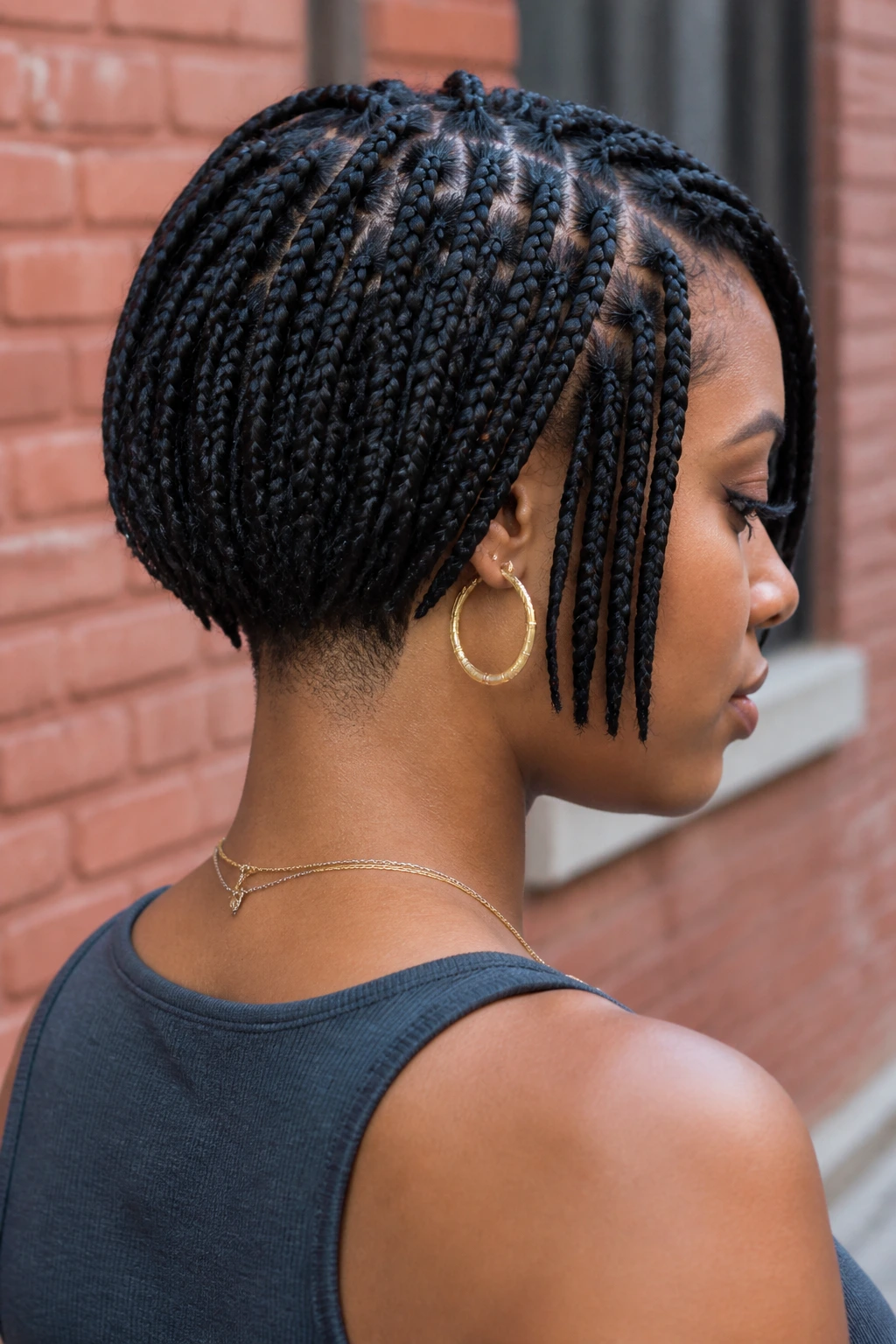
A tapered nape bob is shorter at the back and slightly longer toward the front. It gives the style a built-in angle, almost like a haircut translated into braids. The back sits close to the neck, which keeps the silhouette neat and cool.
This shape is especially useful if you don’t want the braids rubbing on your collar all day. The shorter nape reduces that friction, while the front still gives you enough length to show off the braid pattern and any color variation.
The taper has to be subtle. Too steep and the style starts to feel like it wants to be a stacked bob rather than braids. A gentle slope is enough. Think shape, not drama.
18. Gold-Cuff Bob Box Braids
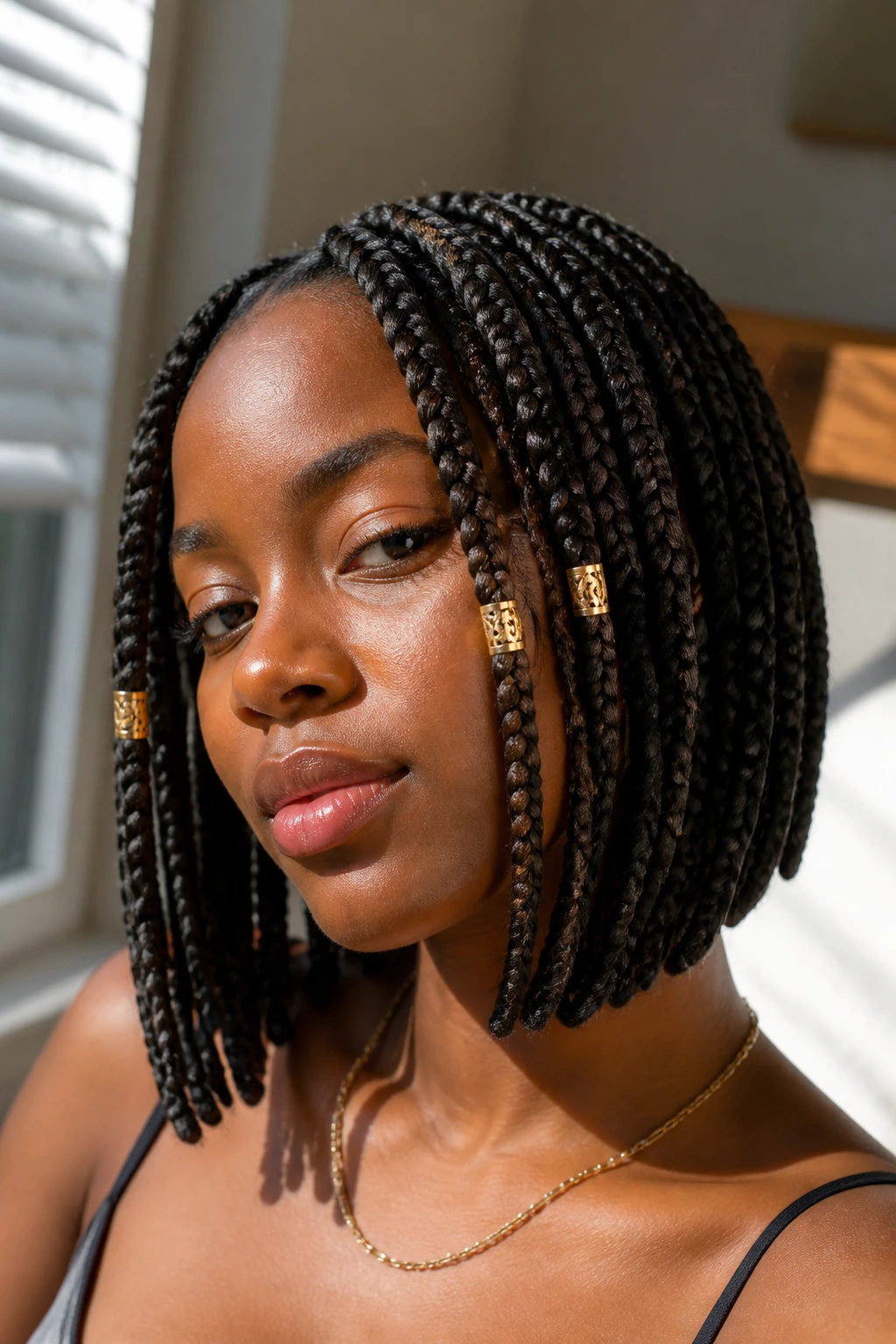
Gold cuffs are the easiest way to make a bob feel finished. They catch the light, frame the face, and give the braids a little structure without adding much weight. One cuff near the front is often enough. Three can be too many. There’s a limit.
I like cuffs on bob-length braids because they sit close enough to the face to be noticed, but not so close that they overwhelm the cut. Put them near the ends, or cluster them on one side if you want the style to feel asymmetrical.
Mixing cuff sizes can work, but keep the metal tone consistent. Gold with gold, silver with silver. The bob already has enough going on with its shape; the accessories should support it, not compete.
19. Flipped-End Bob Box Braids
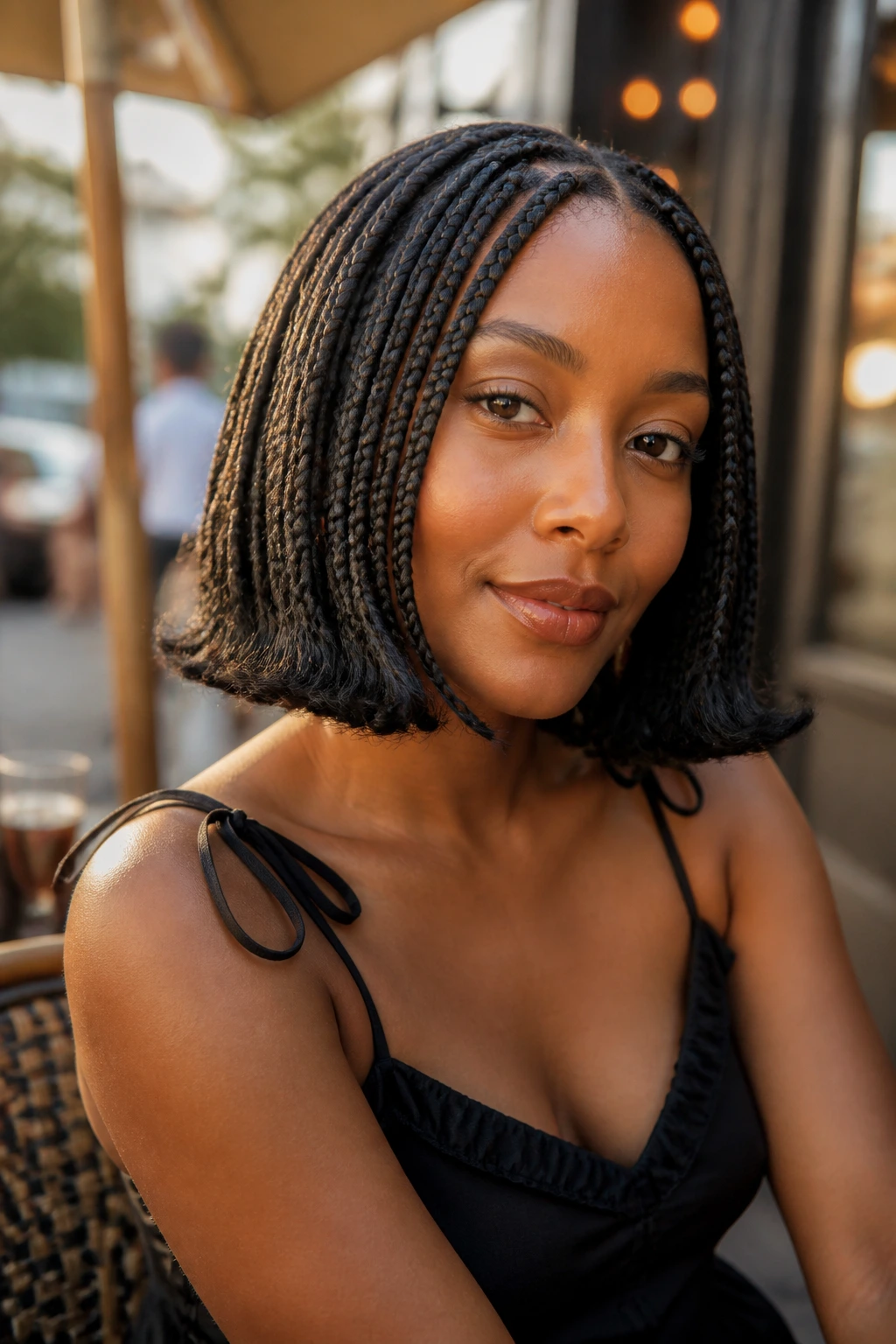
Flipped ends give the bob a playful kick. Instead of hanging straight down, the tips curl outward just a little, which keeps the style from feeling too strict. It’s a tiny change, but the silhouette becomes more lively right away.
To make this work, the ends need to be set with enough heat or water to hold the flip without looking crimped. You want a bend, not a curl cloud. When the flip is right, the bob feels light and slightly retro.
This style is especially good if you wear crisp clothes or tailored jackets. The hairline stays neat, and the flipped ends soften the overall look. It’s a neat contradiction, which is why it works.
20. Shoulder-Skimming Lob Box Braids
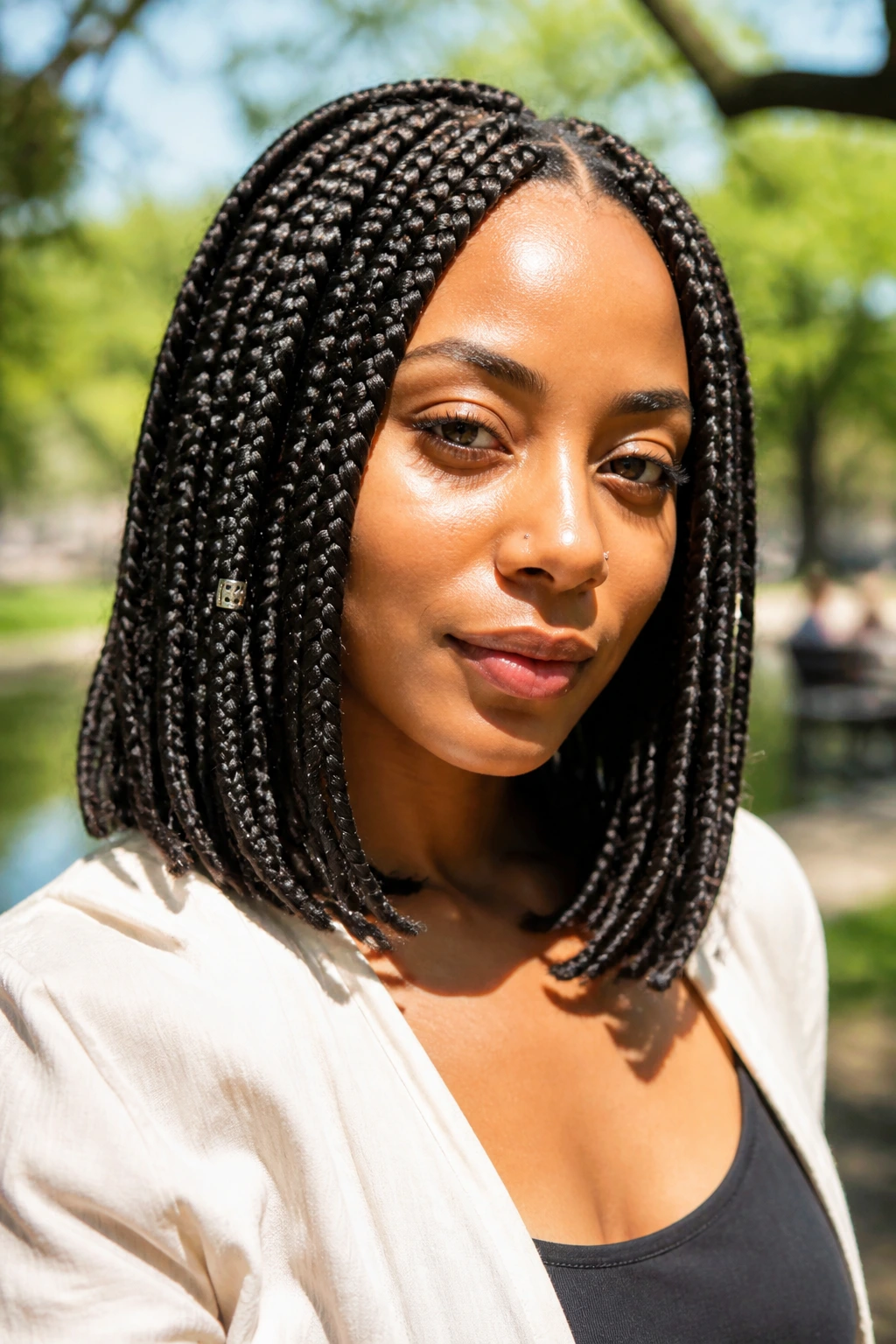
If chin-length feels too short, the lob is the answer. Shoulder-skimming box braids give you the ease of a bob with a little more length to play with. The style still counts as short, but the extra inches change how the braids sit against the body.
I like this length because it doesn’t flip inward as aggressively as a chin-length set can. It falls with more weight and less bounce, which helps if you want a calm, polished feel. On the other hand, it still stays light enough to tuck behind the ear or pin back.
This is a smart middle ground for people who want to test a shorter braid cut without going all the way to the jaw. It’s also the easiest version to grow out if you decide you want a touch more length next time.
21. Softly Messy Bob Box Braids
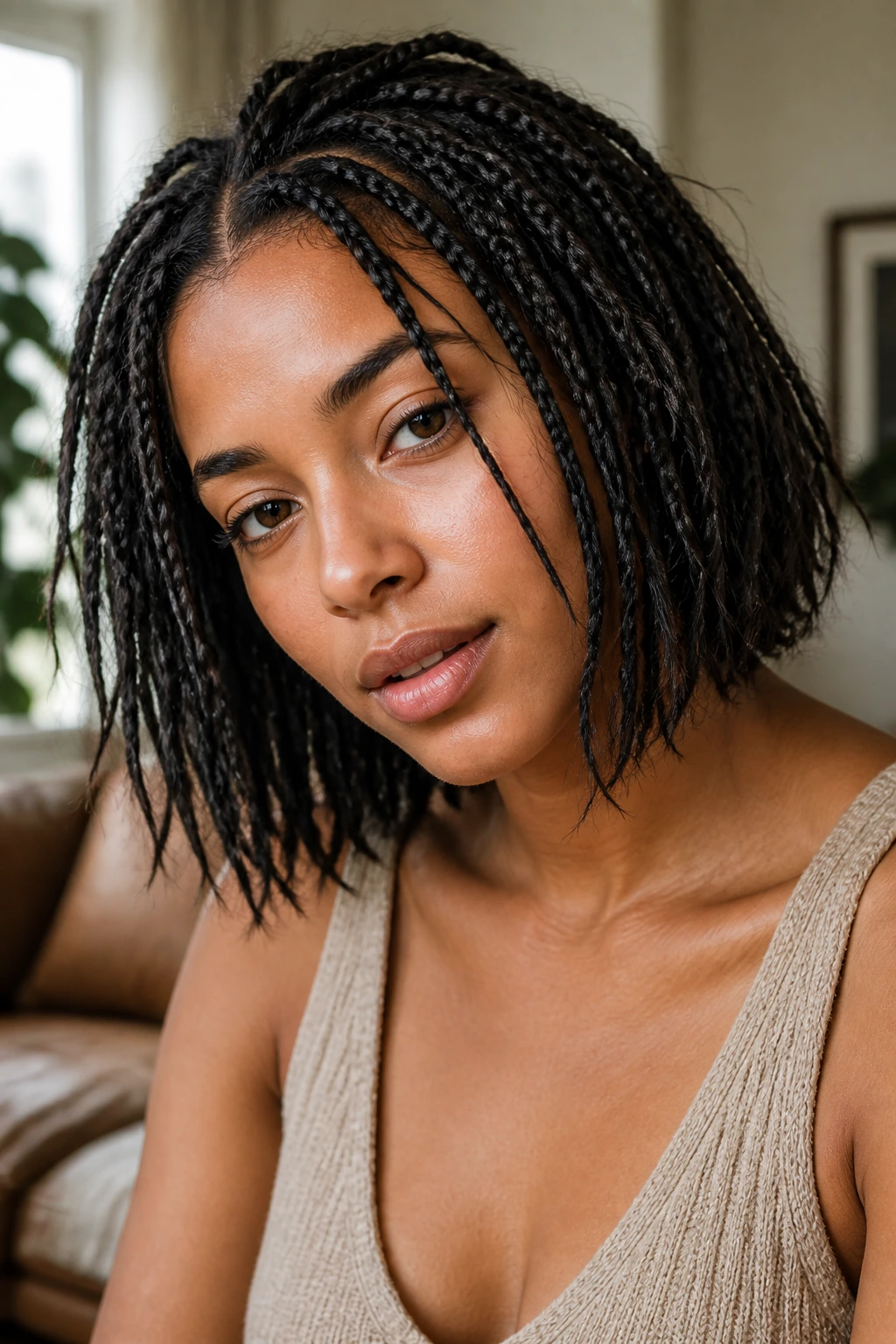
A softly messy bob is not the same as a sloppy one. The braids are still neat at the roots, but the ends may separate a little, the parts may feel relaxed, and a few strands can sit out of place on purpose. It has a lived-in feel that suits casual clothes and no-fuss days.
The danger is overdoing it. Too much frizz and the style just looks tired. The better version keeps the structure visible while letting a bit of texture stay loose around the face and crown.
This is one of my favorites for weekends because it doesn’t demand perfection. You can refresh the roots, smooth the front, and still let the bob feel a little undone. That’s a useful sweet spot.
22. Low Bun Bob Box Braids
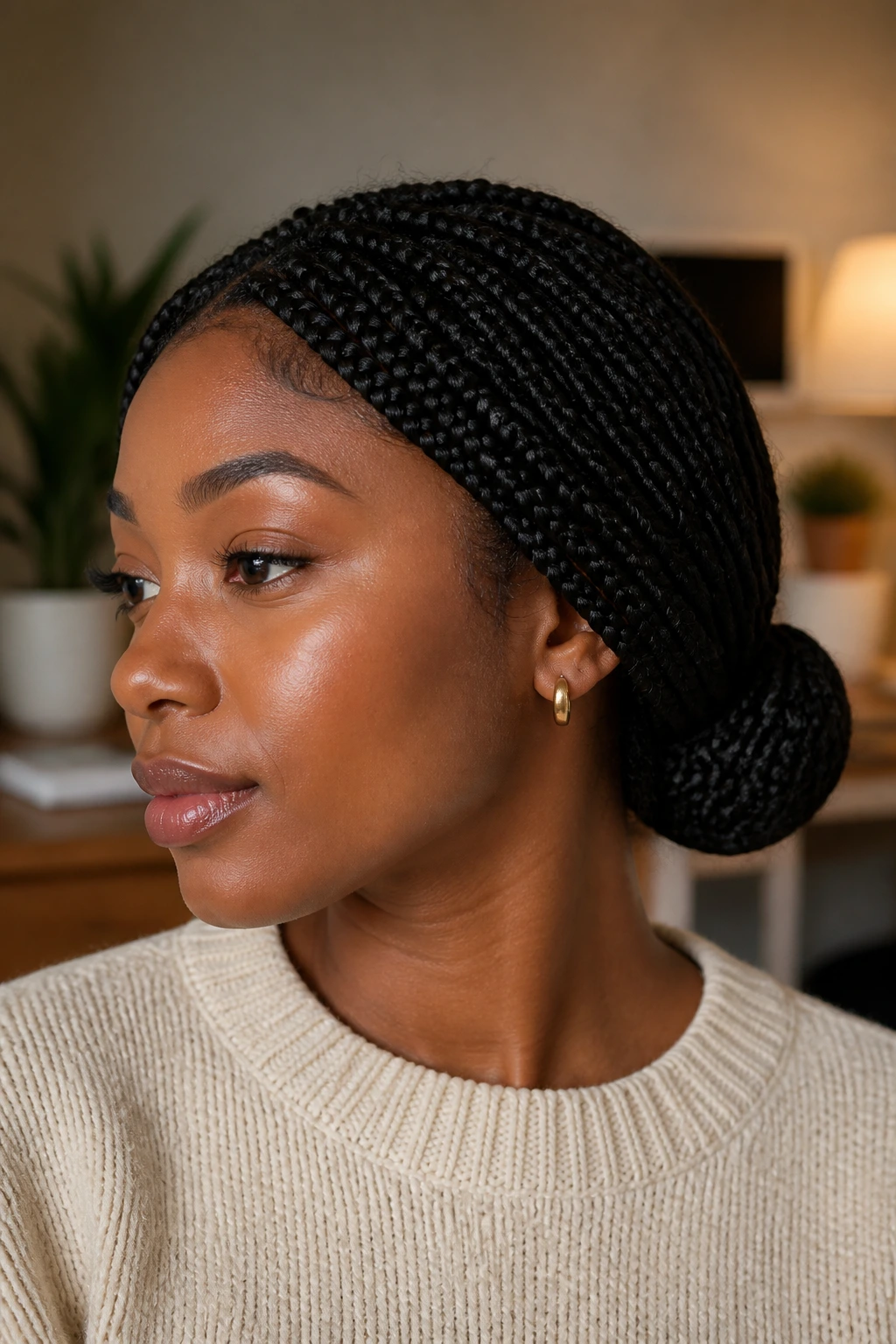
A bob that can fold into a low bun earns its keep. Shorter braids can be gathered at the nape for a compact knot, which makes this style more versatile than people expect. It’s the kind of trick that saves a haircut when you’re tired of wearing it down.
The bun should sit low and close to the head. If you force a high bun with a bob-length set, the shape gets bulky and the pins start fighting the braid weight. Low is better. Always.
I like this style for work, errands, and days when you want the neck clear. The bob still shows when it’s down, but the backup option is there. That matters more than it sounds like it should.
23. Scarf-Tied Bob Box Braids
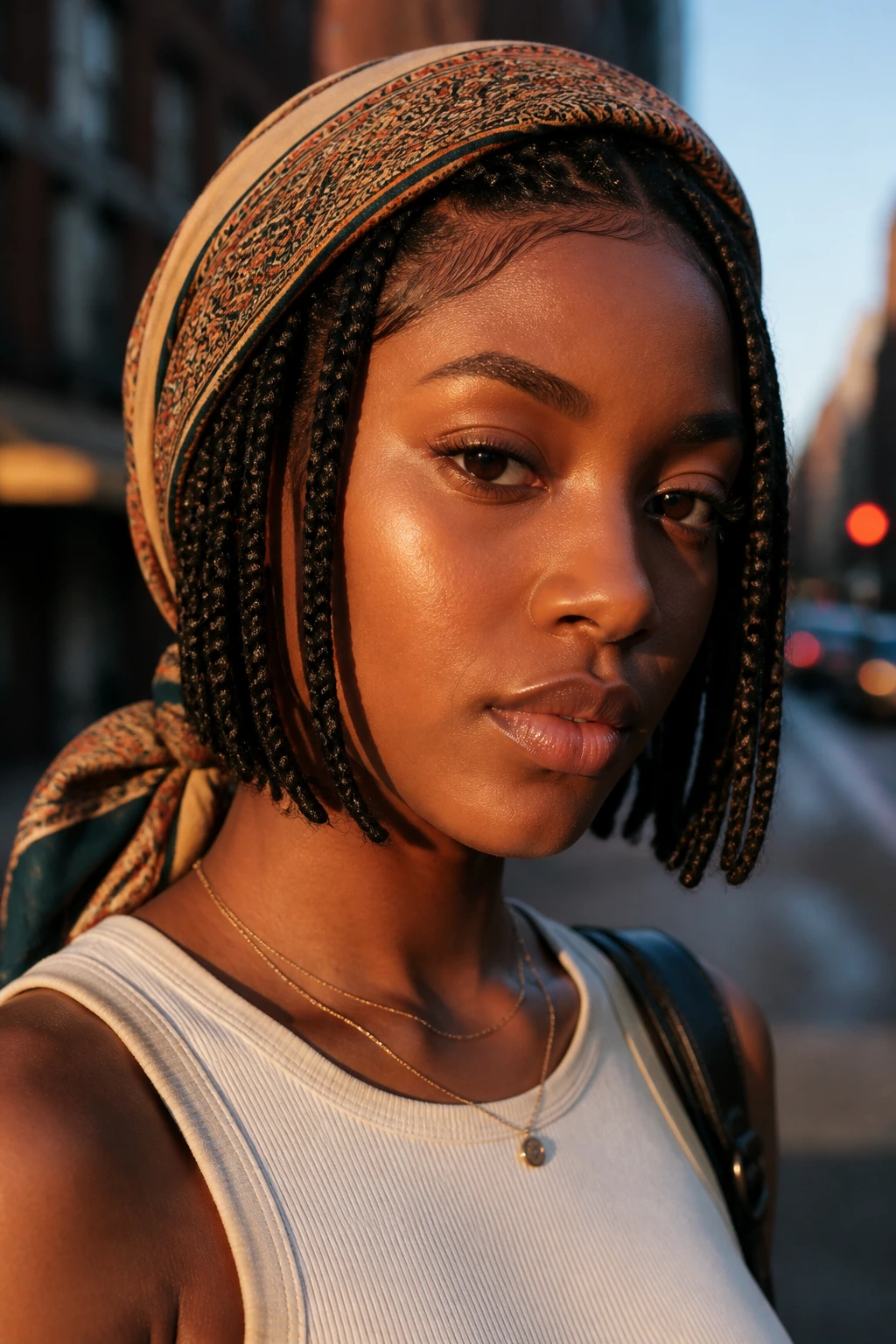
A scarf changes the whole mood of a bob. Wrap it at the crown, tie it at the nape, or let it frame the forehead, and the braids suddenly feel more intentional. The scarf can soften a blunt cut or sharpen a plain one, depending on fabric and color.
Satin and silk scarves are kinder to the hairline than rough cotton. That matters if you’re wearing the style for more than a quick outing. A scarf shouldn’t fight the braids; it should sit on top of them and keep the shape calm.
This look is especially useful on days when the braids are a little fuzzy and you don’t want to restyle the whole set. A good scarf buys you time. Sometimes that’s the whole point.
24. Deep Side-Swept Bob Box Braids
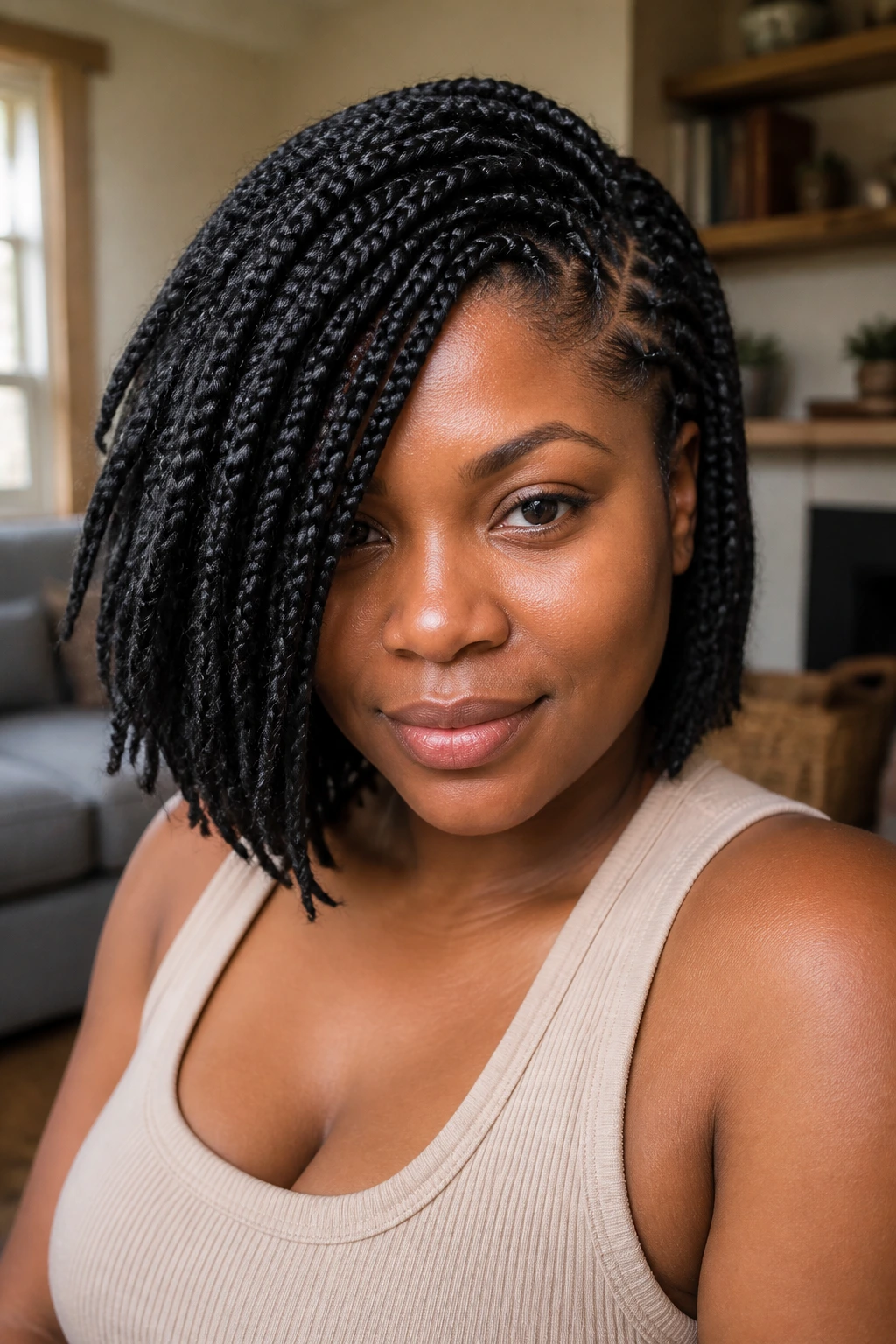
A deep side sweep gives the bob a little theater. The entire set moves to one side, creating volume on one half of the face and leaving the other side more open. It’s bolder than a simple side part because the hair actually commits to the angle.
This works best when the braids are medium or light in weight. If they’re too heavy, they’ll slide back toward center and defeat the shape. A bit of hairspray on the roots or a discreet pin under the top layer can help hold the sweep.
I like this style when I want the bob to feel like an event without changing the braid pattern itself. One change. Big difference.
25. Braided Bang Bob Box Braids
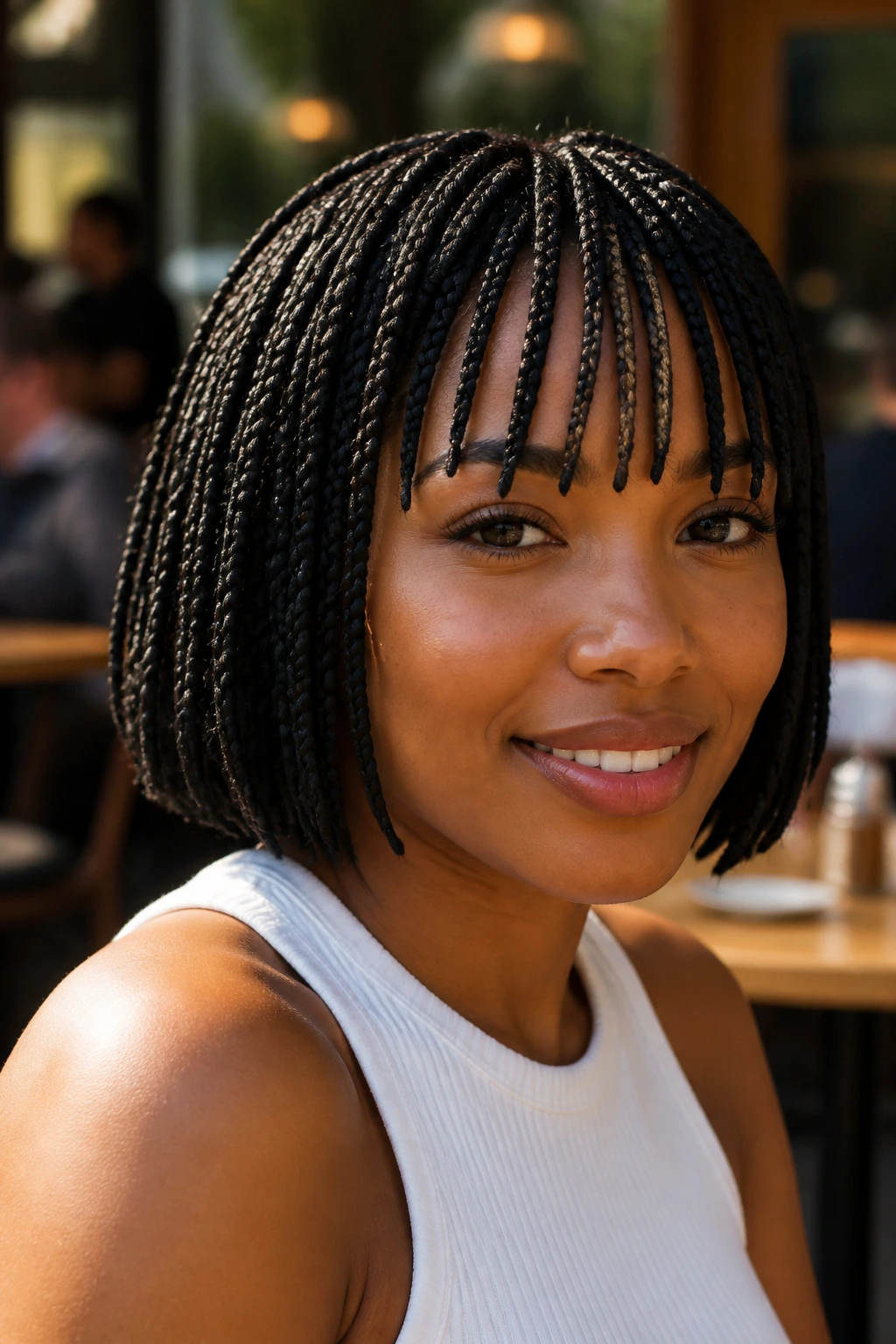
Braided bangs are not for everyone. That’s exactly why they’re interesting. A few short front braids fall toward the forehead like a fringe, while the rest of the bob keeps its normal length and shape. The effect is edgy, a little romantic, and far less ordinary than a plain center part.
The bangs need to be short enough to frame the eyes without hanging into them constantly. If they’re too long, they become awkward face curtain pieces. Too short, and they sit in an odd patch above the brows. The sweet spot is just above or brushing the eyebrow line.
This style works especially well when the rest of the bob is simple. Let the bangs do the talking. The cut doesn’t need more than that.
Why Shorter Braids Often Feel Better on the Head
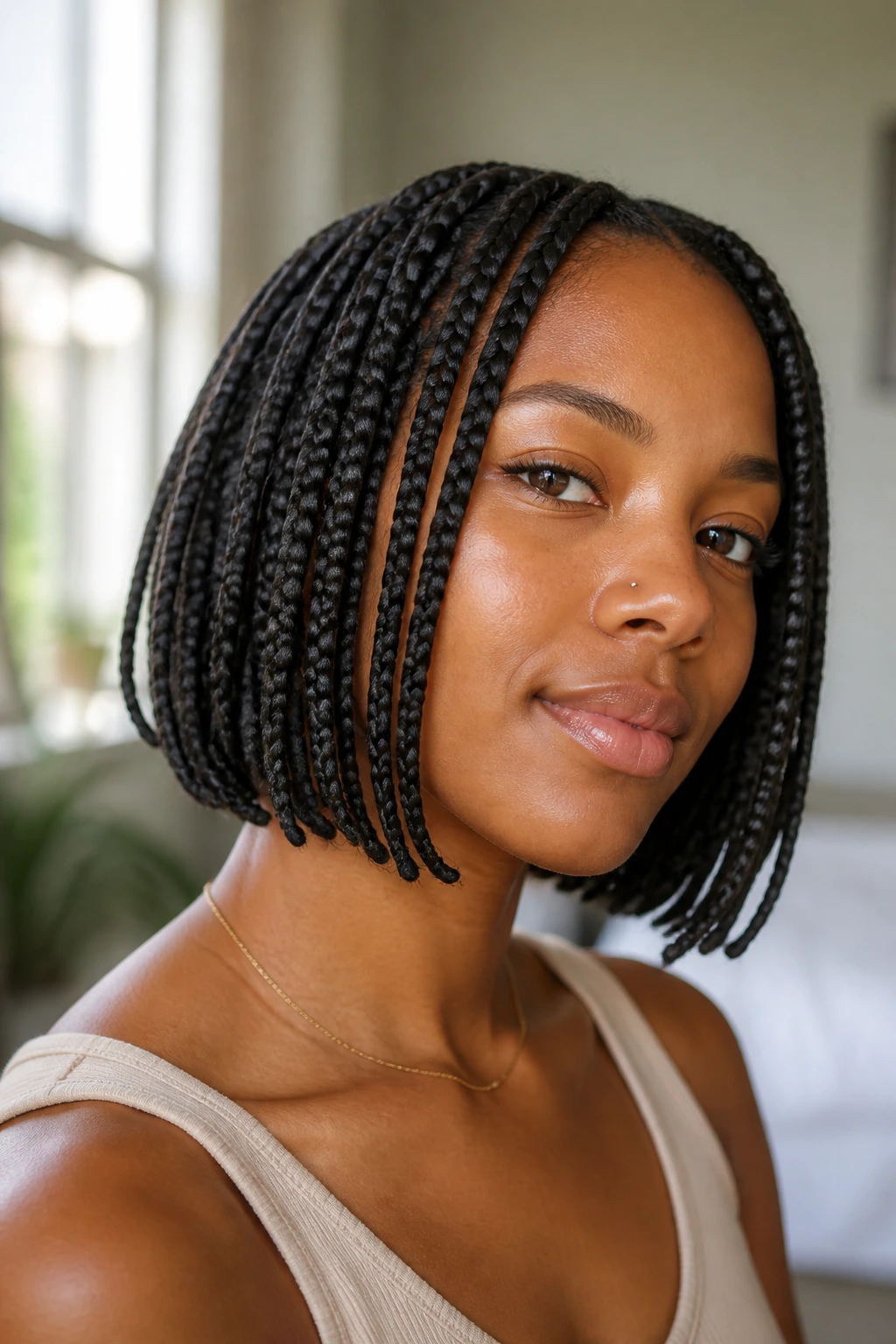
Bob-length box braids have a real comfort advantage, and I’m not being sentimental about it. Less length means less swing, less snagging, and less weight pulling at the roots when you bend, sleep, or lean back against a seat. That doesn’t sound glamorous. It is, though, because comfort changes how often you’ll actually wear the style.
The scalp matters too. A shorter set usually dries faster after washing, which is a small mercy with braids. Damp roots trapped under long hair can stay heavy for longer than people expect, and that can make the whole style feel stale before it looks old. With a bob, the air gets in faster.
There’s also the practical matter of daily life. Collars, jackets, scarves, headphones, car headrests — they all interfere less when the braids stop at the chin or shoulder. You stop thinking about your hair every fifteen minutes. That’s the real luxury.
Essential Tools for Box Braid Bobs
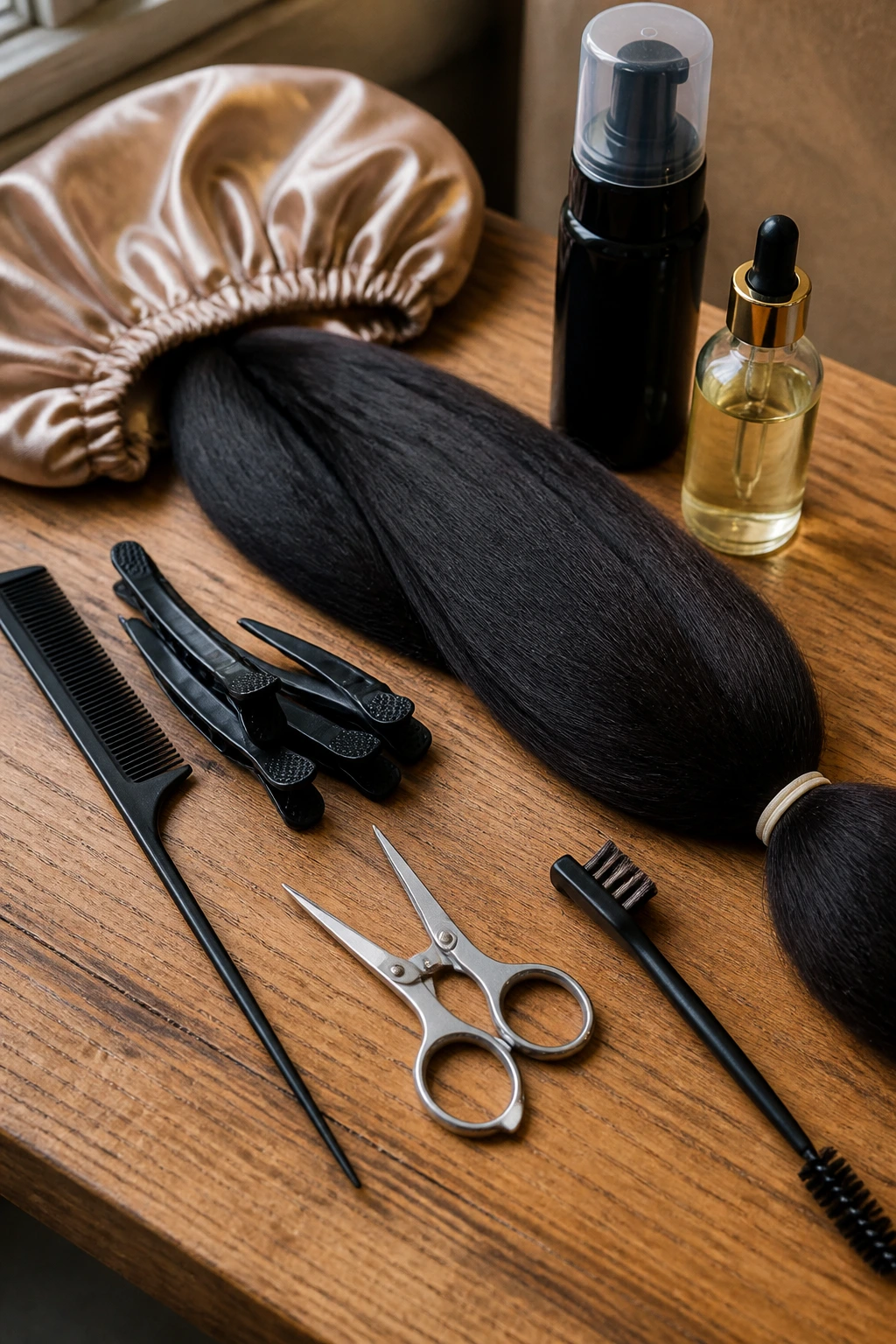
- Rat-tail comb: The long tail makes clean parts, especially if you want triangle sections or a sharp center line.
- Sectioning clips: Keep the loose hair out of your way while you braid; duckbill clips are the easiest to clip on and off.
- Pre-stretched braiding hair: It saves time and usually gives the ends a smoother look than hair that has to be stretched by hand.
- Small scissors: Useful for trimming uneven ends after installation, but work slowly. One careless cut can change the whole shape.
- Braid mousse: A light pass helps tame flyaways and smooth the finished bob without making it stiff.
- Edge brush or soft toothbrush: Handy for smoothing the front hairline if you like a neat finish.
- Satin bonnet or scarf: Non-negotiable if you want the bob to stay tidy overnight.
- Light oil or scalp mist: Use sparingly. A little goes far on short braids.
Smart Shopping for Braid Hair, Cuffs, and Color
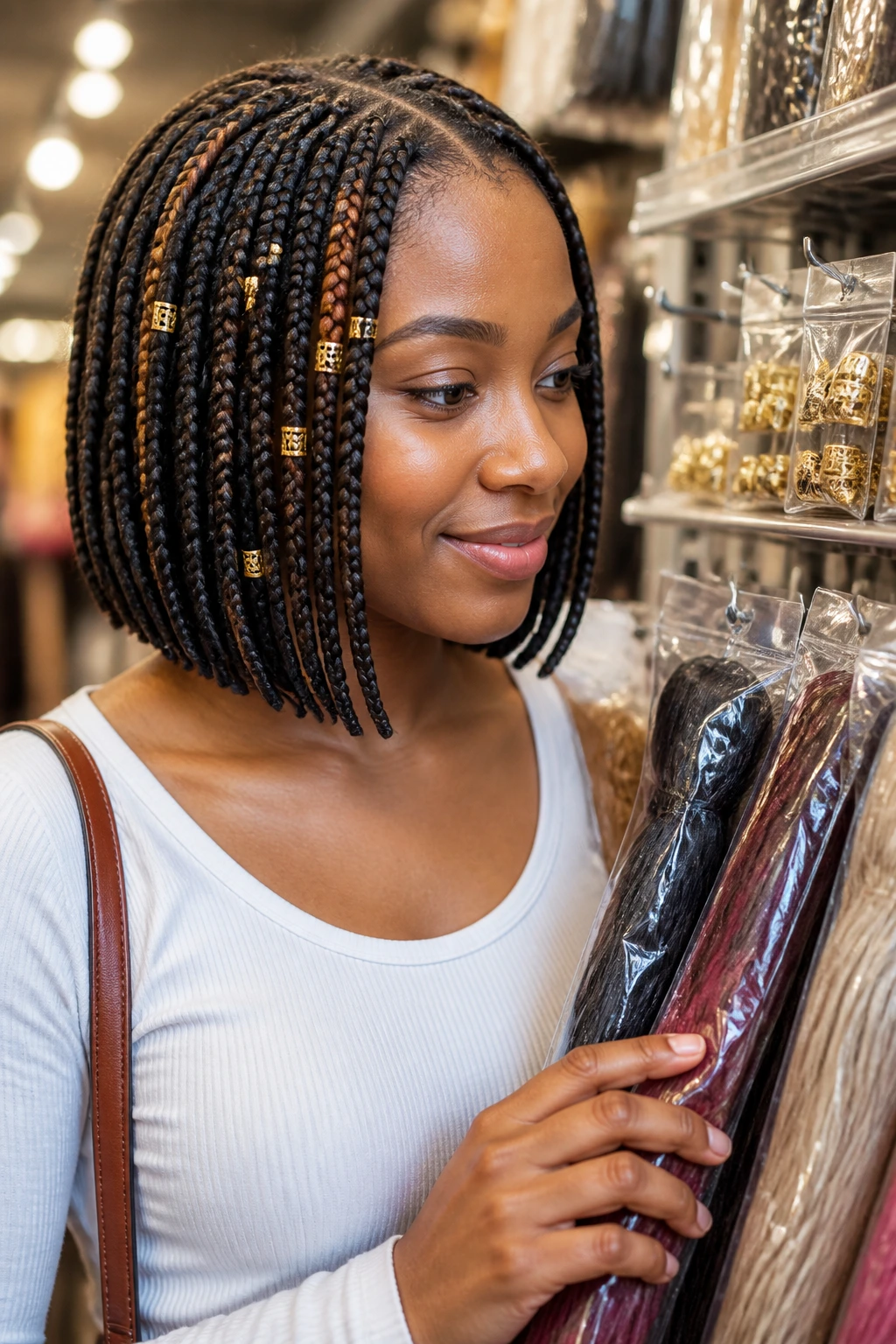
For a bob-length install, pre-stretched synthetic braiding hair is usually the most useful starting point. It saves prep time and gives the braids a neater, more natural taper at the ends. If you want a fuller bob, buy a little extra. If the style is jumbo, you can often use fewer packs than you’d expect because each braid carries more visual weight.
Color matters more on short braids than long ones. A black bob looks sharp and graphic. Brown softens the line. Blonde, copper, and honey shades show off the cut’s shape because the light catches the ends fast. If you’re nervous, use color only at the front or the bottom layer.
Accessories should match the braid size. Tiny cuffs disappear on thick braids. Heavy beads can weigh down fine sections. The whole style reads better when the extras are scaled to the braid, not the other way around.
How to Wear Bob-Length Box Braid Hairstyles Well
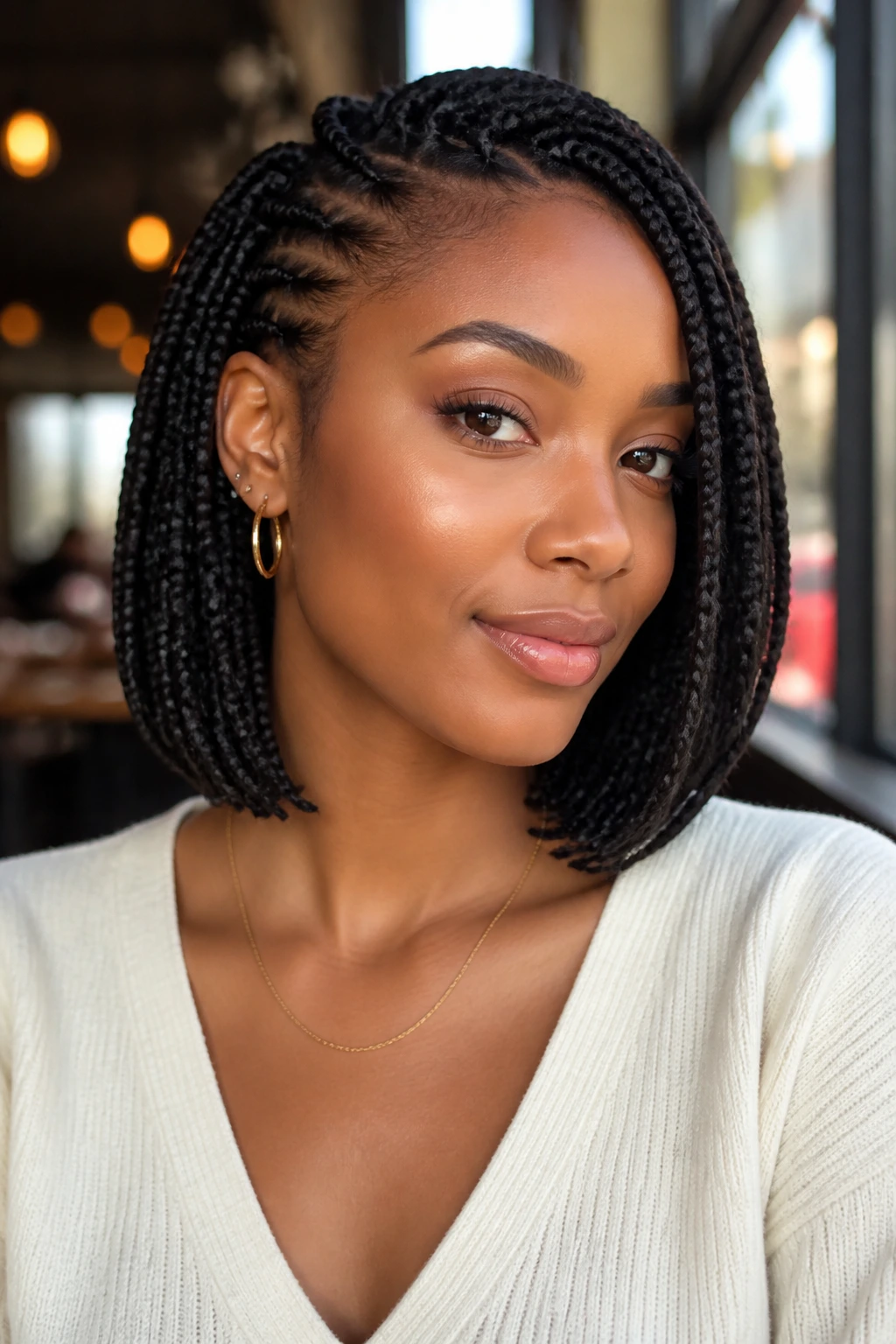
Presentation: The bob looks best when the perimeter is visible. Tuck one side behind the ear, let the ends graze the jawline, or keep the part clean so the cut reads as a shape instead of just “braids.”
Accompaniments: Small hoops, stacked rings, a sharp collar, a turtleneck, or a scarf all sit well with a braided bob because they frame the neckline instead of burying it. Big necklaces can work too, but they need space.
Scale: A chin-length set feels crisp and compact. A shoulder-skimming lob gives you more styling room. If the braids are very thick, I’d lean a touch longer so the ends don’t bunch under the chin.
Setting: These styles move easily from errands to evening plans. The short length makes them less likely to get stuck under a coat or flattened by a car seat, which sounds minor until you live with braids for more than a day.
Extra Ways to Personalize a Bob Braid Cut
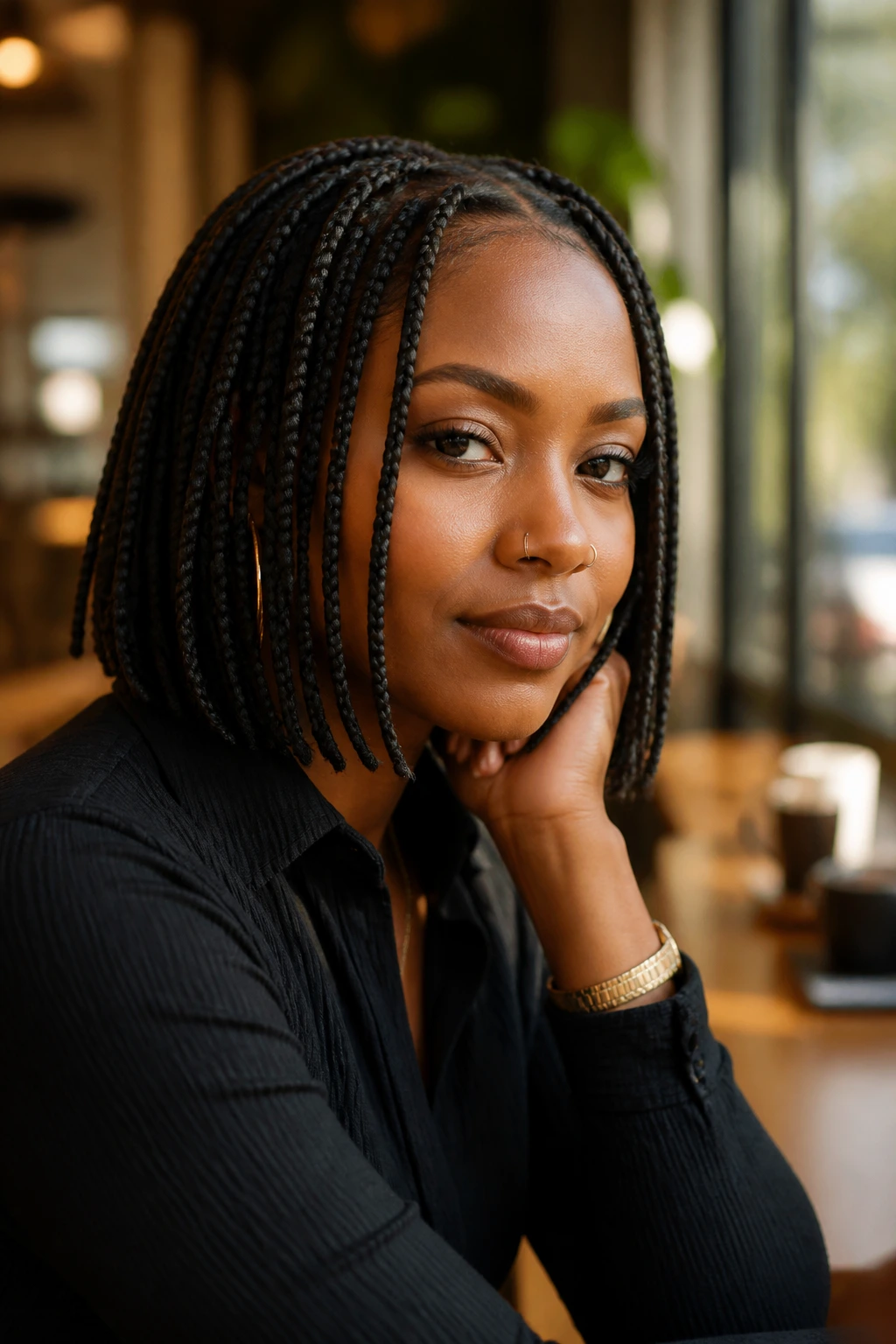
Finish: A light mist of braid spray gives the hair a cleaner look, but don’t drown it. Too much product makes the bob feel waxy and collects lint at the nape.
Customization: Add one accent braid in a brighter color, or keep the whole set neutral and use gold cuffs only around the face. Both approaches work; they just tell different stories.
Edge Detail: If your hairline is fragile, keep the edges soft and avoid over-twisting baby hairs. A neat braidline looks better than a sore scalp, and it lasts longer too.
Make-It-Yours: For a sharper look, go blunt and symmetrical. For a softer one, add curly ends, a side sweep, or a few loose pieces near the cheeks. You do not need every trick at once. One change is often enough.
Keeping the Style Fresh Between Wash Days
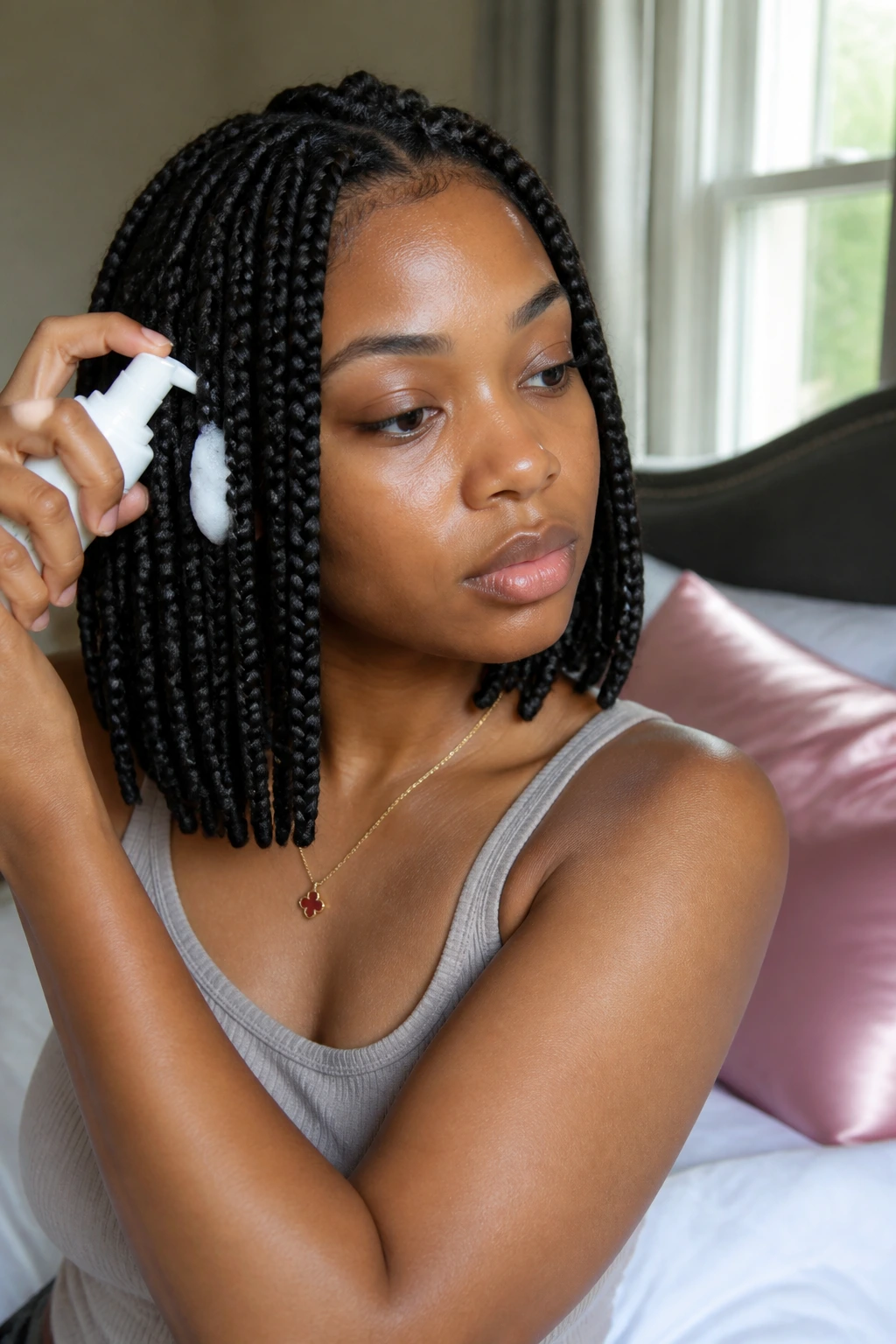
A braided bob stays neat longer when you treat the roots and ends separately. The scalp needs light cleansing and a little breathing room; the braid body needs smoothing, not soaking. I like a light mousse refresh every few days, followed by a satin scarf or bonnet at night.
Wash timing depends on how much product you use and how active your days are, but many people can go about one to two weeks before a gentle cleanse feels useful. If the scalp starts itching or the roots look dusty, don’t pile on more oil. Clean it. Oily buildup is sneaky.
At bedtime, wrap the bob so the ends don’t bend and fuzz in random directions. For longer bob lengths, a loose pineapple isn’t always possible, so a flat wrap or bonnet often works better. Sleep rough, and the style tells on you by morning.
Bob-Length Box Braid Variations to Try
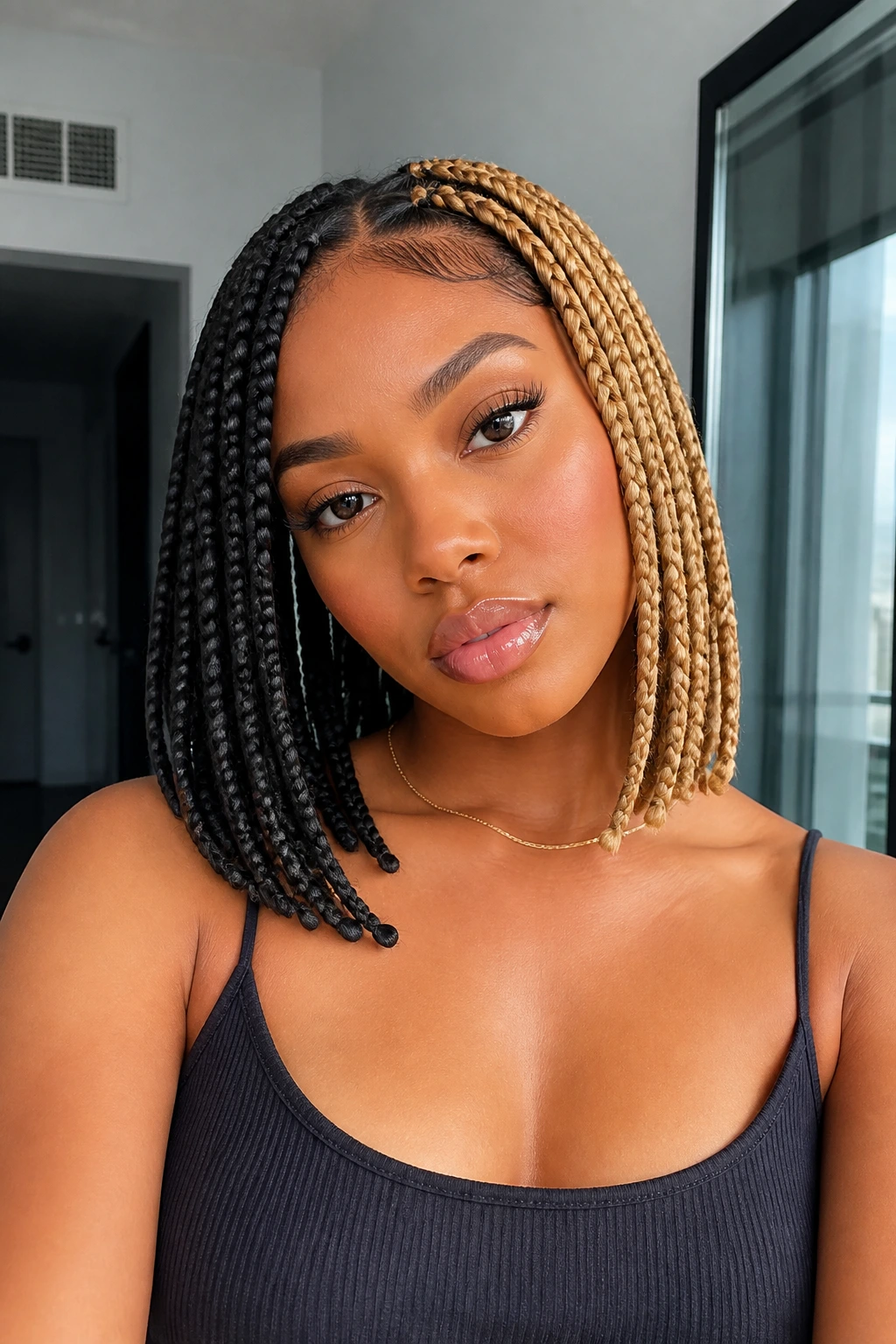
Soft Office Bob: Keep the parts neat, the ends blunt, and the accessories minimal. This version works when you want the cut to look tidy with almost no fuss.
Weekend Boho Bob: Add loose curls, a few stray face-framing pieces, and maybe one or two cuffs. It’s looser, warmer, and a little less structured.
Contrast-Color Bob: Use two shades with a visible split, like black and honey or brown and blonde. The short length lets the color shift show without fading into the background.
Lightweight Knotless Bob: Choose knotless roots, medium parts, and a shoulder-skimming finish. Good if you want less tension at the scalp and a cleaner front.
Braided Bang Bob: Keep the front pieces shorter and let them fall toward the brows. The rest of the braids can stay simple so the fringe shape stands out.
Tapered Nape Bob: Shorten the back slightly and leave the front longer. That little slope gives the bob a tailored shape and keeps the neck area lighter.
Mistakes That Make a Bob Braid Style Look Off
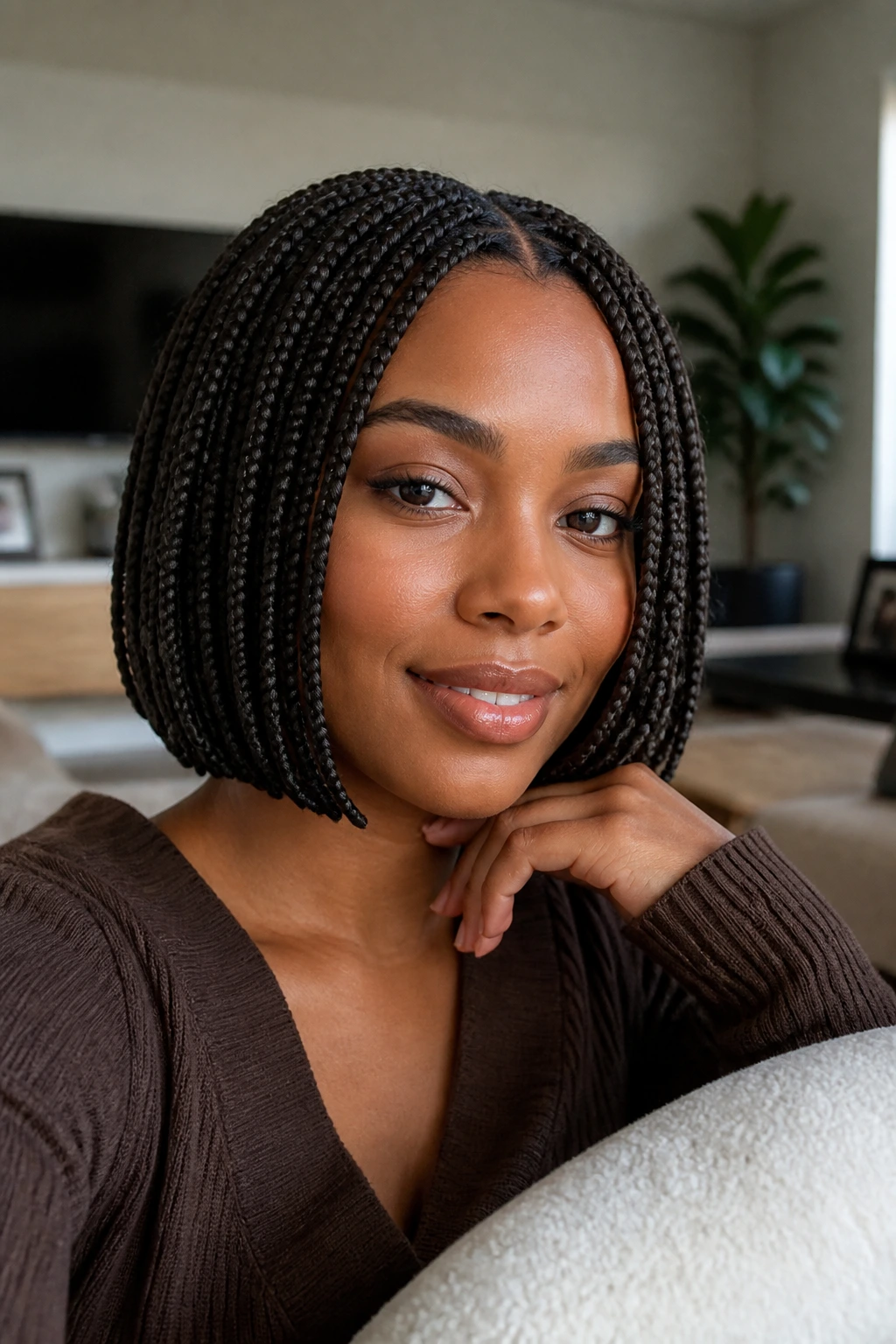
- Making the braids too heavy for the length: Huge, dense braids on a chin-length bob can swallow the face. The fix is to scale the braid size to the cut, not force density where it doesn’t belong.
- Ignoring the perimeter: If the ends are uneven, the bob stops looking like a bob. Trim with care after installation and check the line from every angle.
- Overloading with product: Grease, gel, and heavy shine spray can make short braids look dirty fast. Use a light hand and refresh more often instead.
- Pulling the front too tight: Sharp tension around the hairline can leave the style looking harsh and can feel sore within hours. Ask for neatness, not pain.
- Skipping nighttime protection: Short braids still frizz when they rub against cotton pillowcases. Satin keeps the ends and roots calmer.
- Choosing beads or cuffs that are out of scale: Oversized accessories can take over a small bob. Match the size of the extras to the braid thickness.
Common Questions About Bob-Length Box Braids
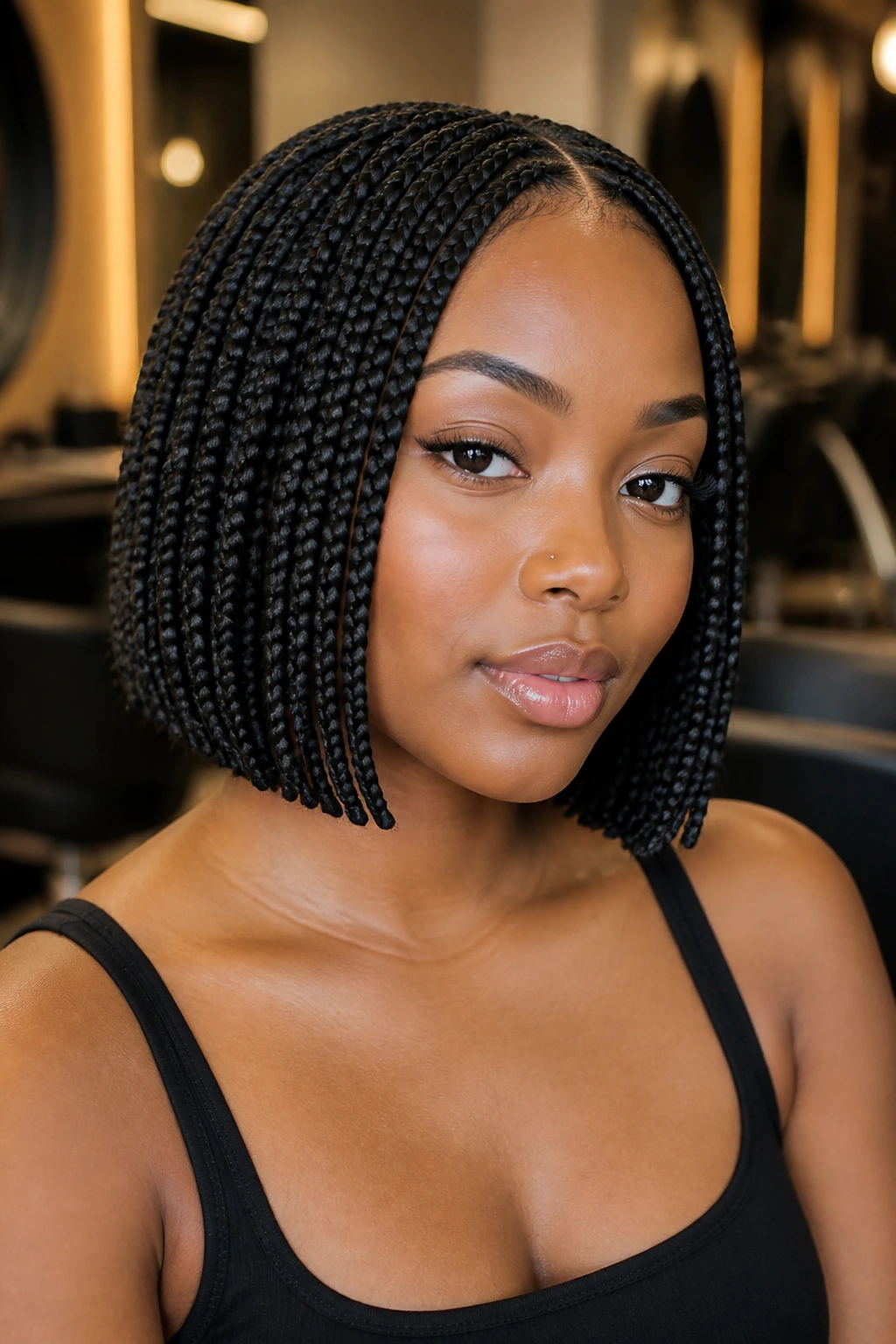
How long should bob-length box braids be?
Most fall somewhere between the jawline and the top of the shoulders. Chin-grazing lengths feel sharper, while collarbone lengths give you more room to tuck, pin, or curl the ends.
Are bob box braids lighter than long braids?
Yes, usually. Shorter braids reduce the weight hanging from the scalp, which can make the style feel easier to wear for long stretches. The braid thickness still matters, though; jumbo bobs can still feel substantial.
Can I get knotless braids in a bob length?
Absolutely. Knotless installs are often a strong choice for shorter braid styles because they give the roots a smoother start and reduce that bulky knot at the scalp.
Do curly ends work on short braids?
They do, as long as the braid length leaves enough room for the curl to show. On very short bobs, the curl is subtle; on shoulder-skimming bobs, it reads more clearly.
How many packs of hair do I need?
That depends on braid size and fullness. A medium bob often uses fewer packs than a long style, while micro braids can use more. The safest move is to buy one extra pack and keep the receipt.
What face shapes suit a braided bob?
Most face shapes can wear one, but the part and length change the effect. Side parts soften square faces, middle parts sharpen symmetry, and shoulder-skimming lengths tend to be the easiest middle ground.
How long do bob-length box braids last?
That depends on the install, hair texture, and upkeep, but many people get several weeks out of them before the roots look tired. The bob shape usually keeps looking neat longer than longer braids because there’s less length to tangle.
Can I wash bob box braids?
Yes, gently. Focus on the scalp, use diluted shampoo, and dry the braids thoroughly afterward so the style doesn’t stay damp at the base.
The Shape That Keeps Its Edge
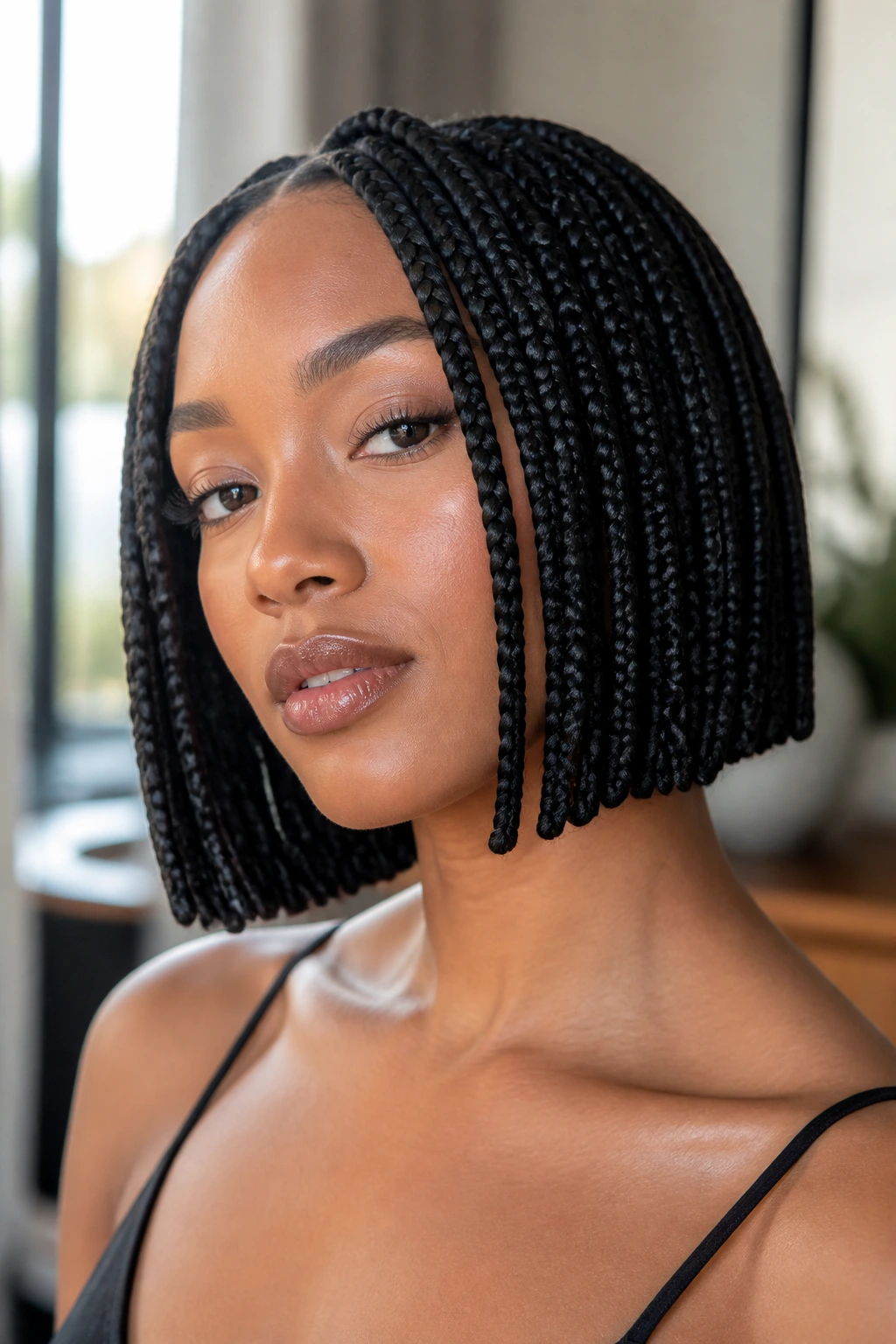
Bob-length box braid hairstyles keep winning because they do a lot without looking like they’re trying too hard. They frame the face, lighten the neck, and hold their shape in a way longer braids sometimes can’t. That’s a useful combination. Not flashy for the sake of it. Just strong.
What makes the cut worth returning to is how much room it gives you to play. One day it’s blunt and sleek. Another day it’s curled, beaded, swept, or wrapped with a scarf. The structure stays the same, but the mood shifts underneath it.
If you’re thinking about a braided style that feels clean, wearable, and easy to restyle without turning into a project, a bob is a very good place to land. Once you find the length that suits your face and your routine, the rest falls into place fast.
