



Marley twist styles on Black hair have a very particular pull: they look finished without looking slick, and that matte, ropey texture does half the styling work for you. The fiber has enough grip to hold shape, which is why these twists read fuller than silkier braids and a little softer than a hard, polished rope twist. On the right head, they can look sharp, soft, and pulled-together without begging for extra decoration.
The cutest Marley twist looks are rarely the ones trying hardest. A chin-length bob can do more for your face than a waist-length set packed with cuffs, and a side part can calm down a heavy silhouette almost instantly. I keep coming back to that because the difference between “nice twists” and the style people remember is usually the shape, not how much hair you added.
Black hair gives this style one of its best foundations. Coils and curls help the base grip, the twists stay readable even when a little fuzz shows up, and the style still looks like a style when it’s lived in for a few days. The trick is choosing a length, part, and finish that fit your routine instead of fighting it. Some of these looks are tidy and low-drama. Some lean playful. A few bring real attitude. All of them can work.
Why These Marley Twist Looks Keep Getting Saved
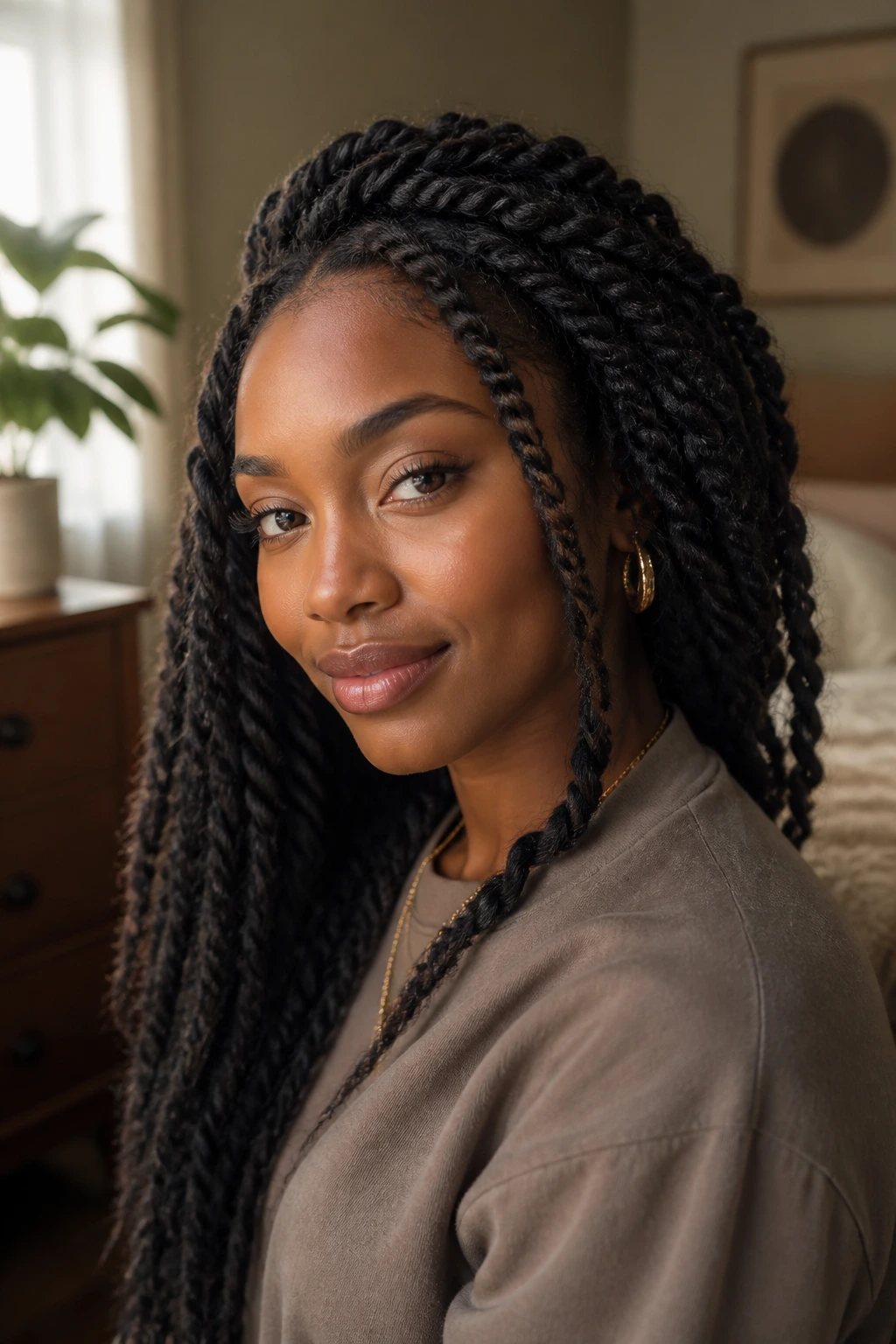
-
Texture does the heavy lifting: Marley hair has a soft, matte finish that looks fuller and less shiny than smoother extensions, so the style has depth even when the parting is simple.
-
Length changes the whole mood: A bob, a shoulder-length set, and waist-length twists are the same basic technique, but they sit on the body in completely different ways.
-
The base matters as much as the finish: Clean parts, a snug-but-not-tight root, and a wrapped edge keep Marley twists from looking sloppy after the first night.
-
Accessories work fast: One cuff, a few beads, or a scarf can shift the style from plain to polished without restarting the install.
-
They suit real life: Marley twists can be pinned up, worn loose, pulled into a ponytail, or tucked behind the ear when you’re tired of hair on your neck.
-
They age better than you’d think: A little fuzz at the ends usually reads as softness, not failure, which is a nice change from styles that fall apart the second they loosen.
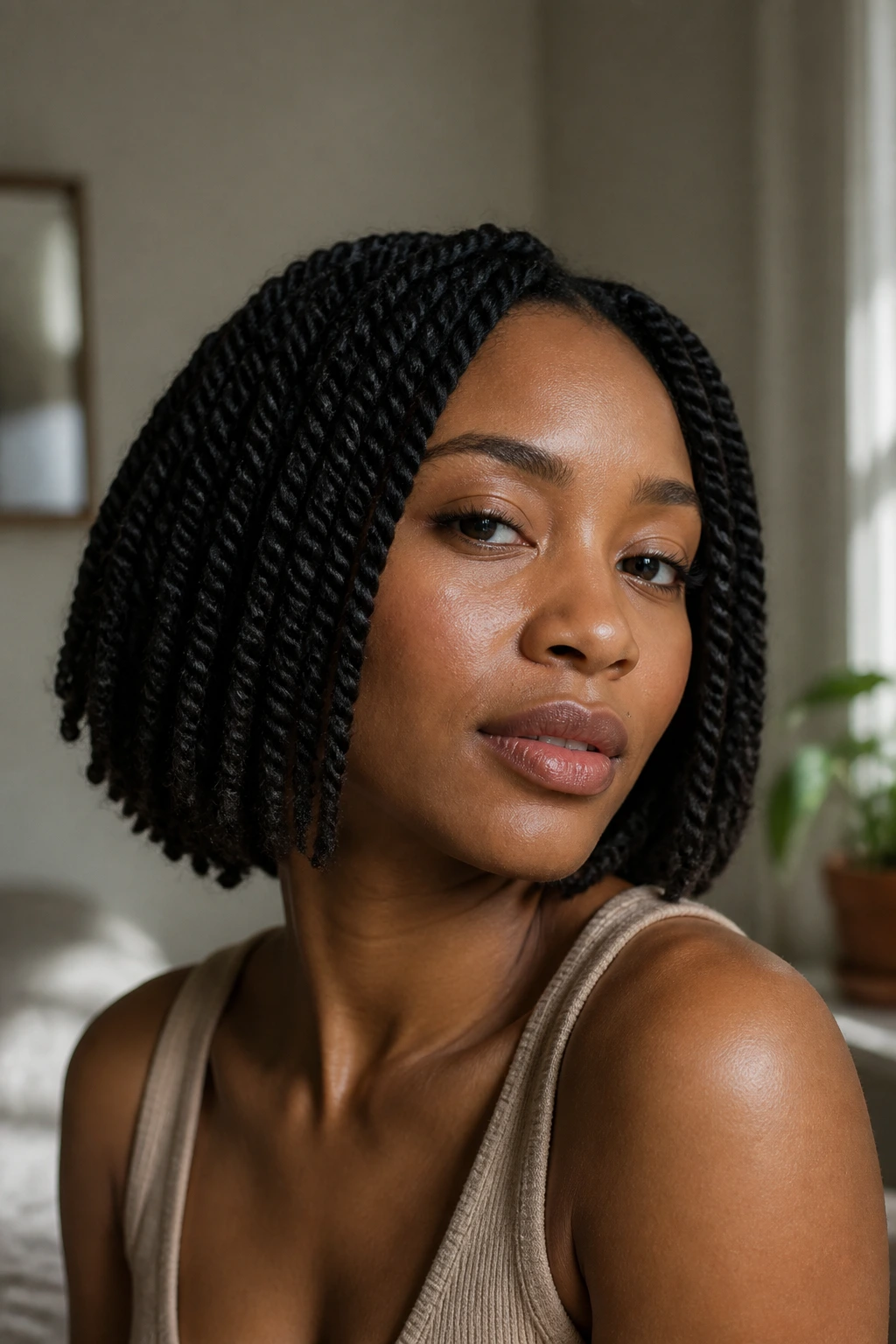
1. Chin-Grazing Marley Twist Bob
A chin-length bob gives Marley twists a clean, no-nonsense shape that still feels soft around the edges. The twists land right where the jaw starts, so the style frames the face instead of dragging it down, and the blunt line at the bottom keeps the whole look crisp.
This is the length I’d point to if you want something cute without carrying a lot of weight. It’s especially good with medium-sized twists, because tiny twists can look too busy at this length and jumbo twists can puff out at the sides. A deep side part makes it feel a little flirtier. A center part makes it read sharper.
2. Shoulder-Length Marley Twists with a Side Part
Why does this length work so well? Because it gives you movement without the tug that comes with longer installs. Shoulder-length Marley twists sit in that sweet spot where you can wear them down, tuck them back, or pin one side behind the ear and still have shape left.
A side part softens the top and breaks up the density at the crown, which matters when the twists are medium or full. If your hairline likes gentle styling, this is one of the easiest Marley twist styles to keep neat without looking stiff. It also plays well with hoops, glasses, and a plain tee—the kind of details that make a style look intentional.
3. Waist-Length Marley Twists with a Center Part
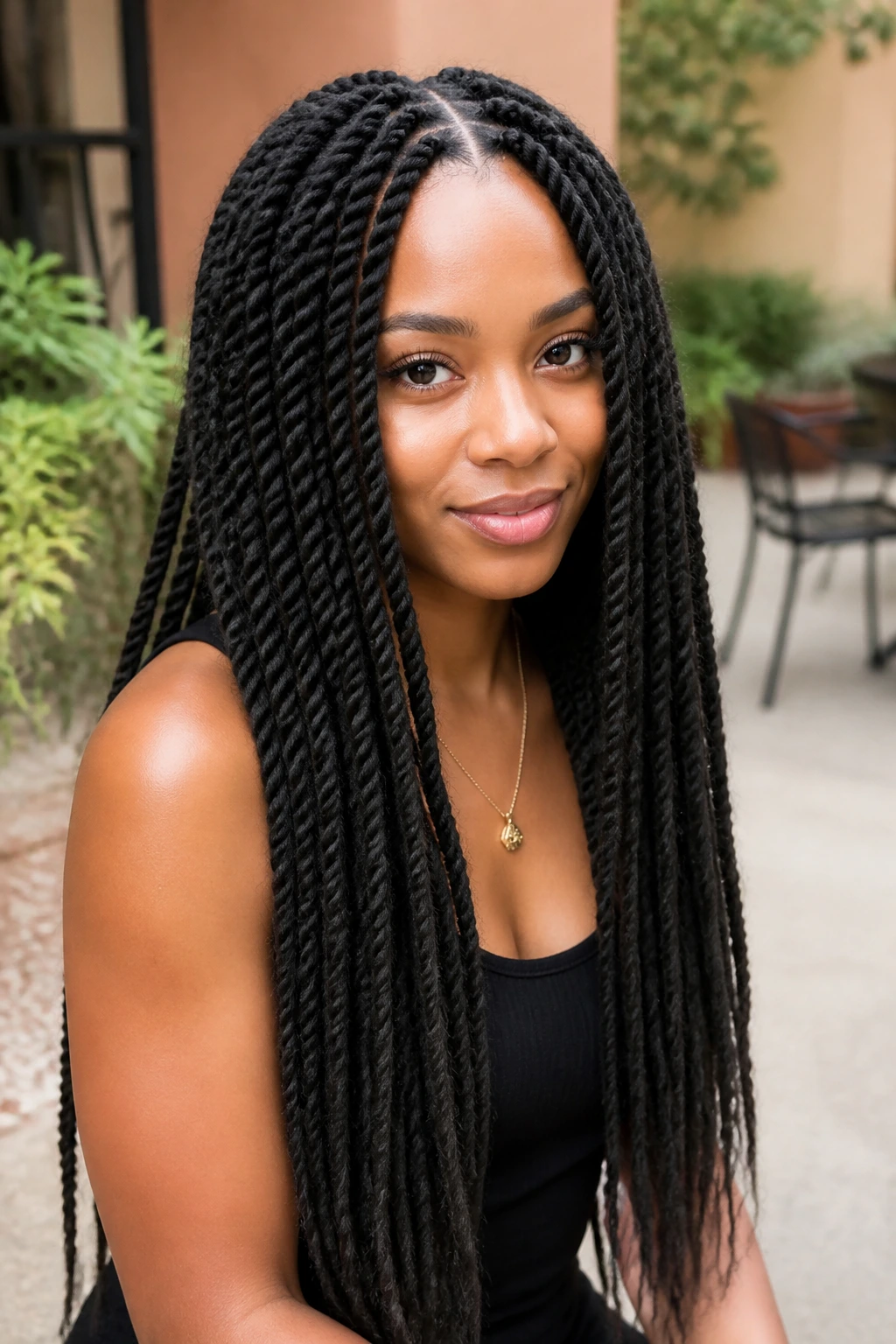
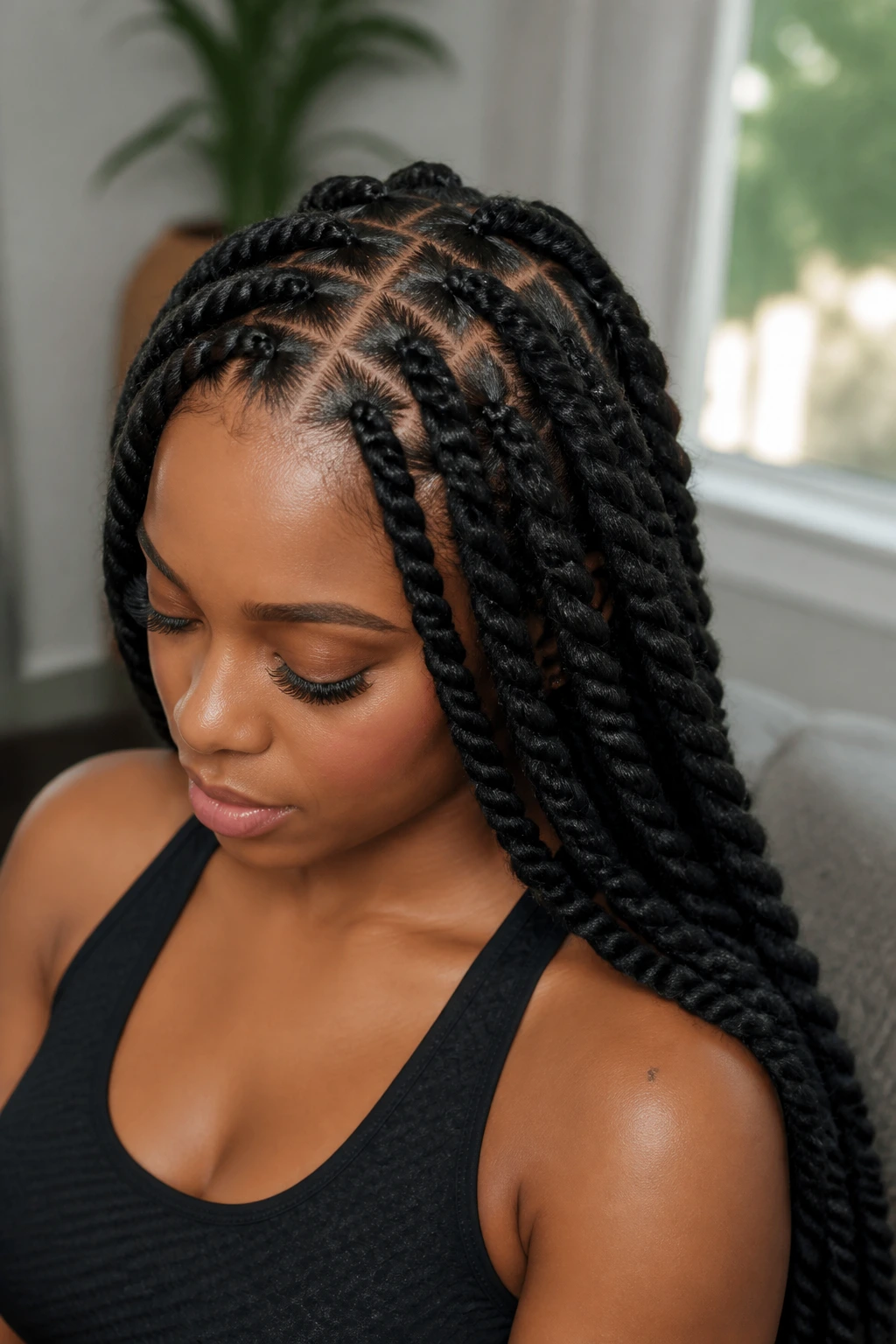
Long Marley twists have a different energy entirely. They swing when you move, they pull the eye downward, and they turn even a simple center part into a full look. The longer the set, though, the more the parting and root work matter, because a sloppy top makes the whole thing feel heavy.
I like waist-length twists best when the sections are clean and the finish is not too perfect. That tiny bit of fuzz at the ends softens the length and keeps it from looking like a curtain. If you go this long, plan on a stronger wrap at night and a little extra patience when you put on jackets, scarves, or anything with a narrow neckline.
4. Jumbo Marley Twists with Clean Rows
Jumbo Marley twists are for people who want the style to read bold from across the room. Fewer parts, thicker twists, faster install. Simple. The rows show off the scalp pattern, which means the parting has to be neat enough to carry the whole look.
These are the twists that look especially good when the base is sharp and the length stays around shoulder to mid-back. A jumbo set can feel a bit hefty if it gets too long, so the cleaner your rows, the better the balance. I’d call this a strong choice when you want the drama of Marley twists without sitting in the chair forever.
5. Tiny Marley Twists with a Dense Crown
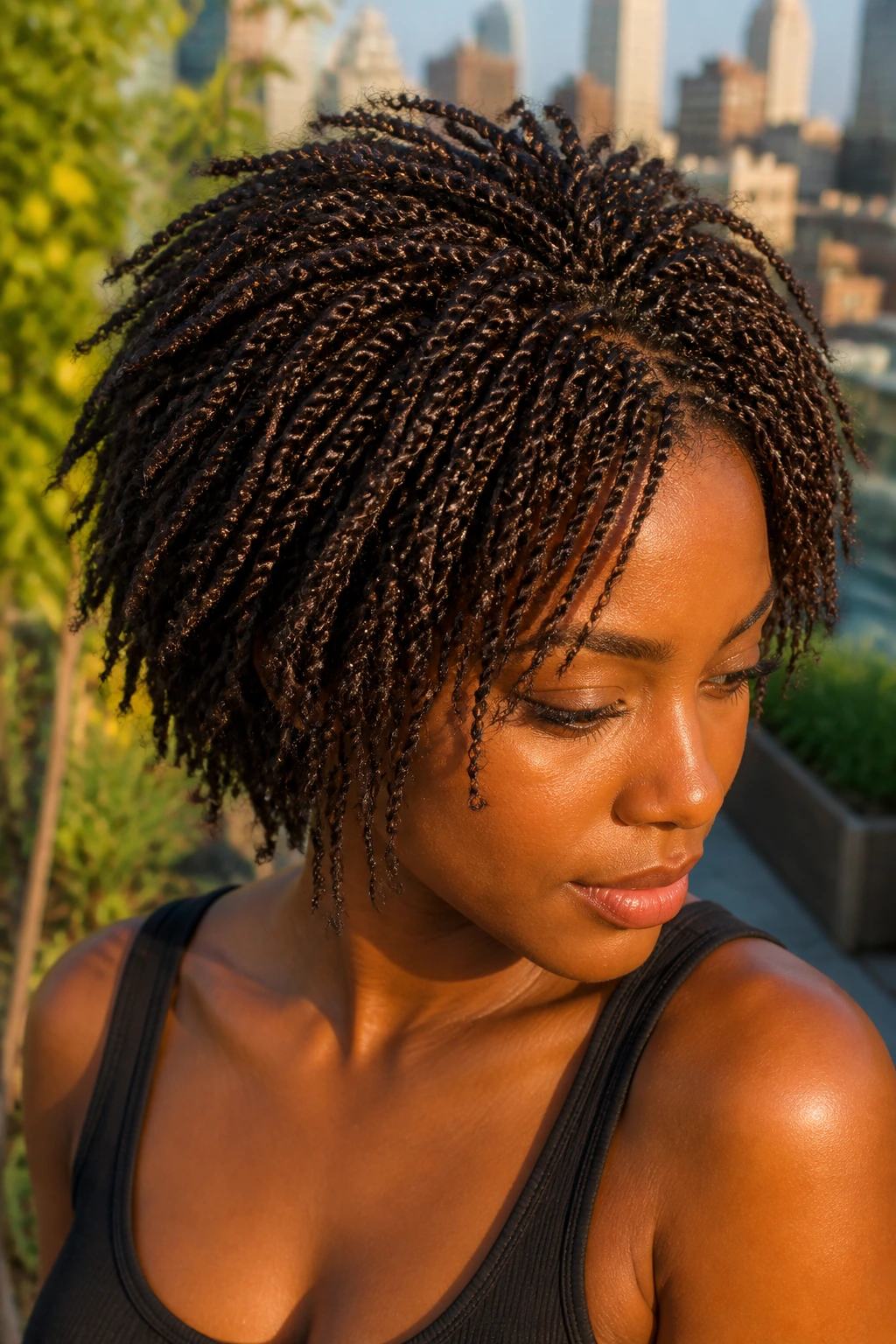
Small Marley twists give you the opposite effect: more detail, more movement, more texture. The crown can look almost plush when the parts are tight and even, and the finished style has a lot of visual depth because every twist catches light differently.
This version takes time. There’s no pretending otherwise. But if you like styles that stay tidy for longer and don’t ask for a lot of daily fixing, the smaller size pays you back. It also tends to look especially good on people who want their face framed without a lot of bulk around the cheeks.
6. Half-Up, Half-Down Marley Twists
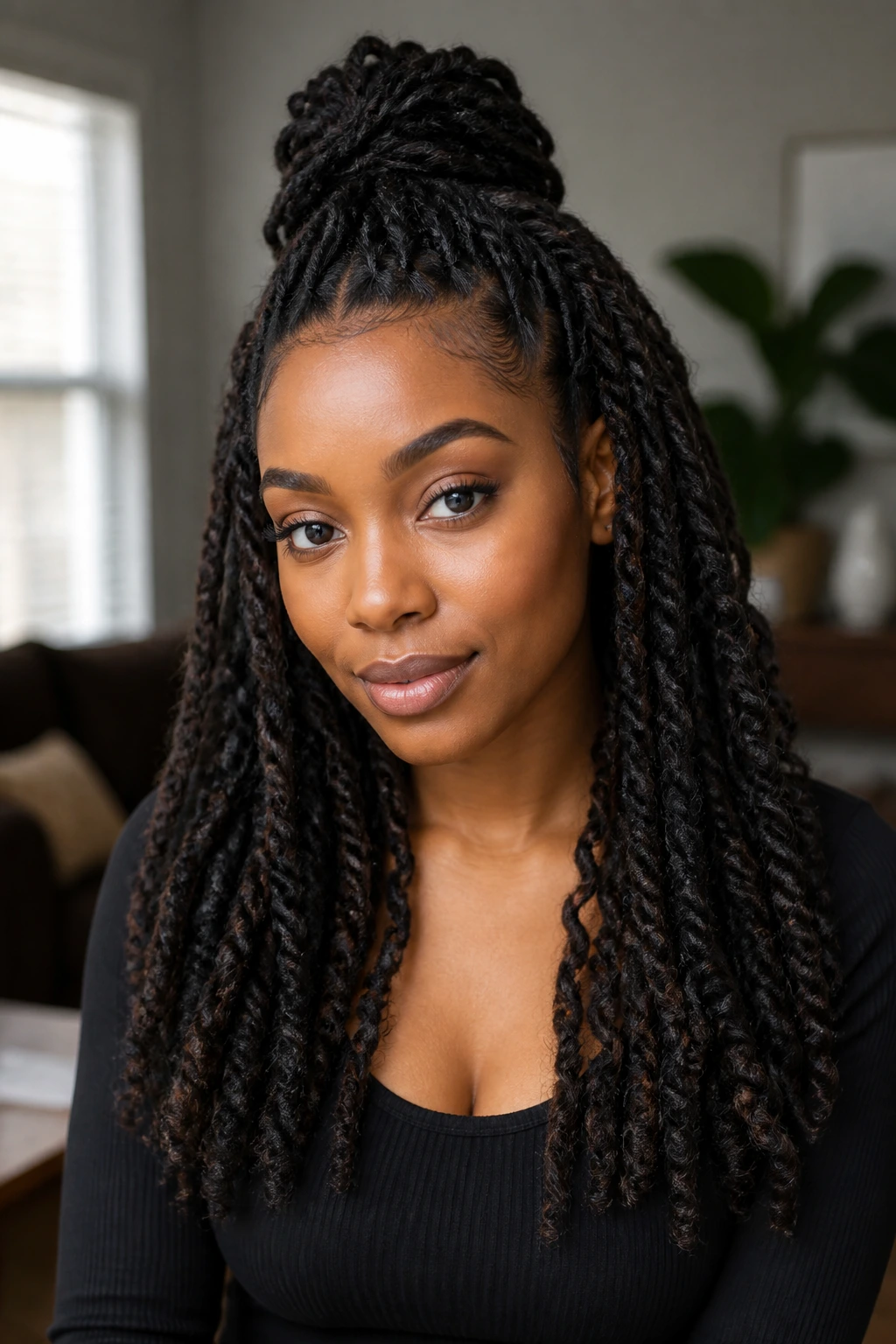
Half-up, half-down is the move when you want your twists off your face but don’t want the whole style pinned away. The top section gives you lift at the crown, while the loose length keeps the style soft and easy.
The nice thing here is control. If your twists are shoulder length, a half-up style keeps them from falling into your eyes. If they’re longer, it takes weight off the neck. A few face-framing pieces left out in front can make the style feel less formal and more lived-in.
7. High Pineapple Marley Twist Ponytail
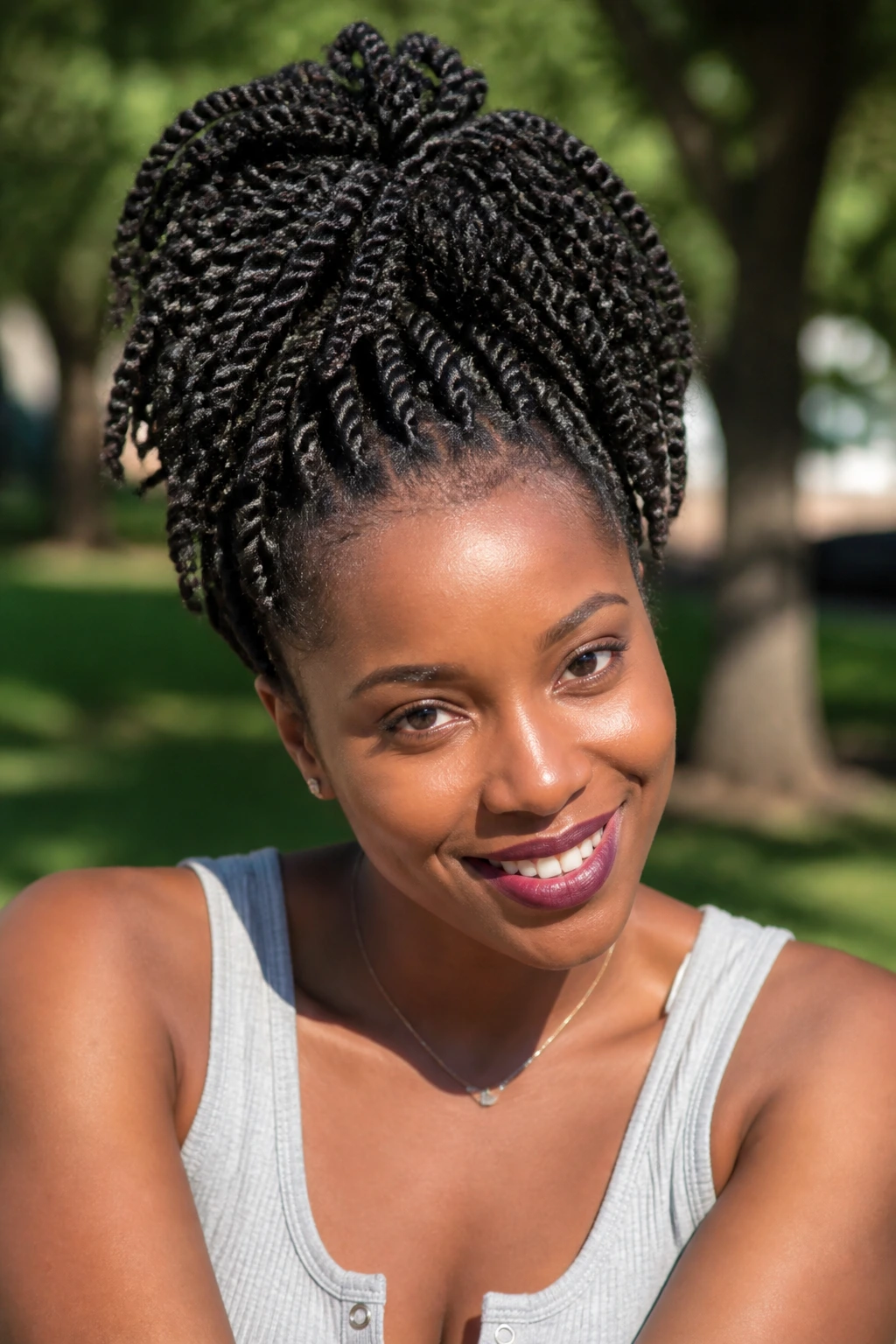
A high pineapple makes Marley twists look playful and clean at the same time. Pulling the hair up toward the crown shifts all the attention to the face and gives the whole style a bit of bounce, which matters when the twists are long or thick.
This works best when the base is not too bulky. If the ponytail sits too low, the style can sag and feel heavy; if it sits high and secure, it gets that lifted, easy look that people keep reaching for. Leave the ponytail a little loose at the front if you want a softer hairline.
8. Low Wrapped Bun with Twists Left Out
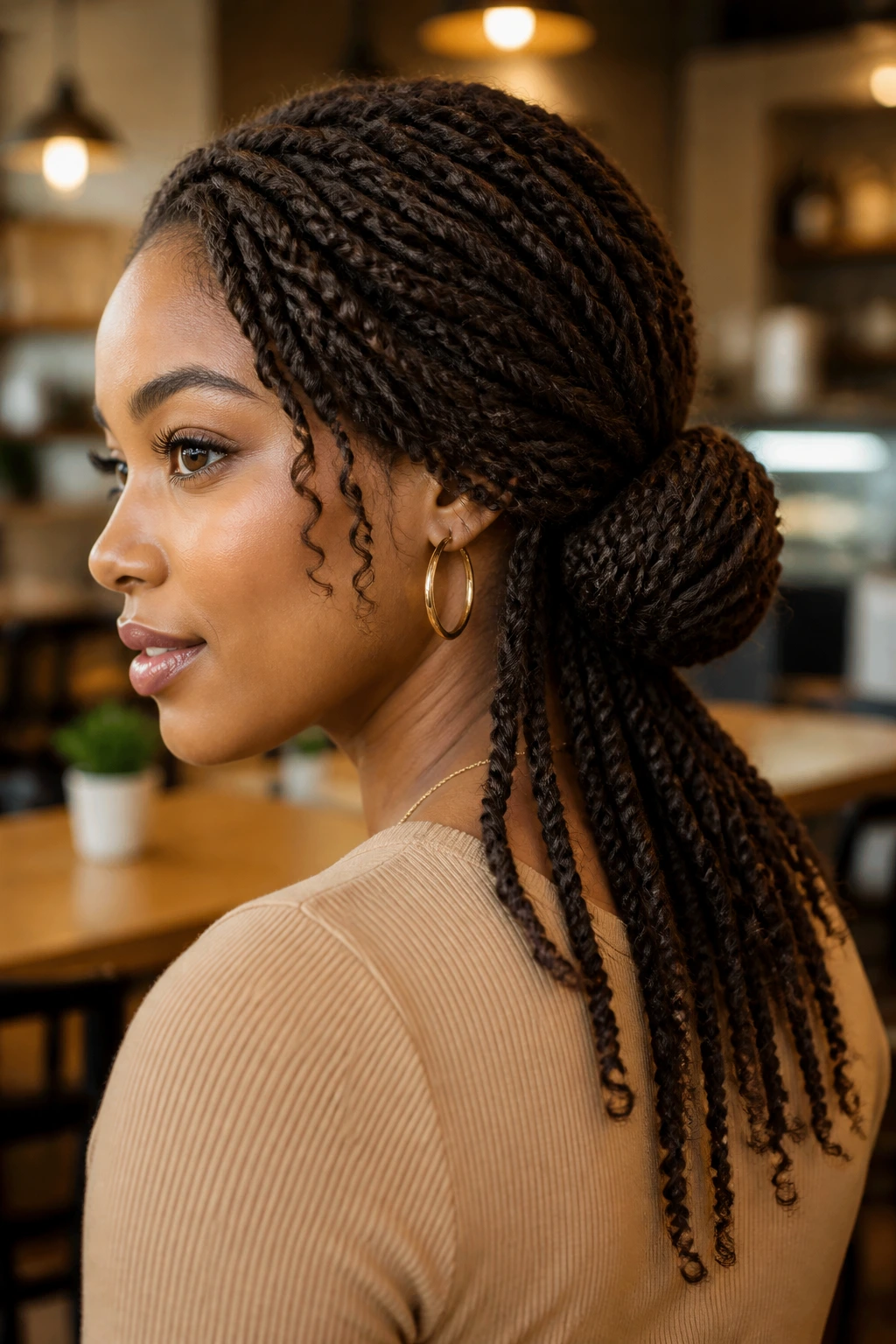
A low bun with a few Marley twists left hanging is one of those styles that looks polished without being fussy. The bun clears the neck, which is useful when the set is long, and the loose pieces keep it from looking too severe.
This version shines when the base is smooth and the bun is wrapped close to the nape. Don’t make it tiny unless you want the style to feel tucked in and formal. A wider bun with a few twists left free at the back reads softer and suits earrings, makeup, or anything else you want to show off.
9. Marley Twists with Curled Ends
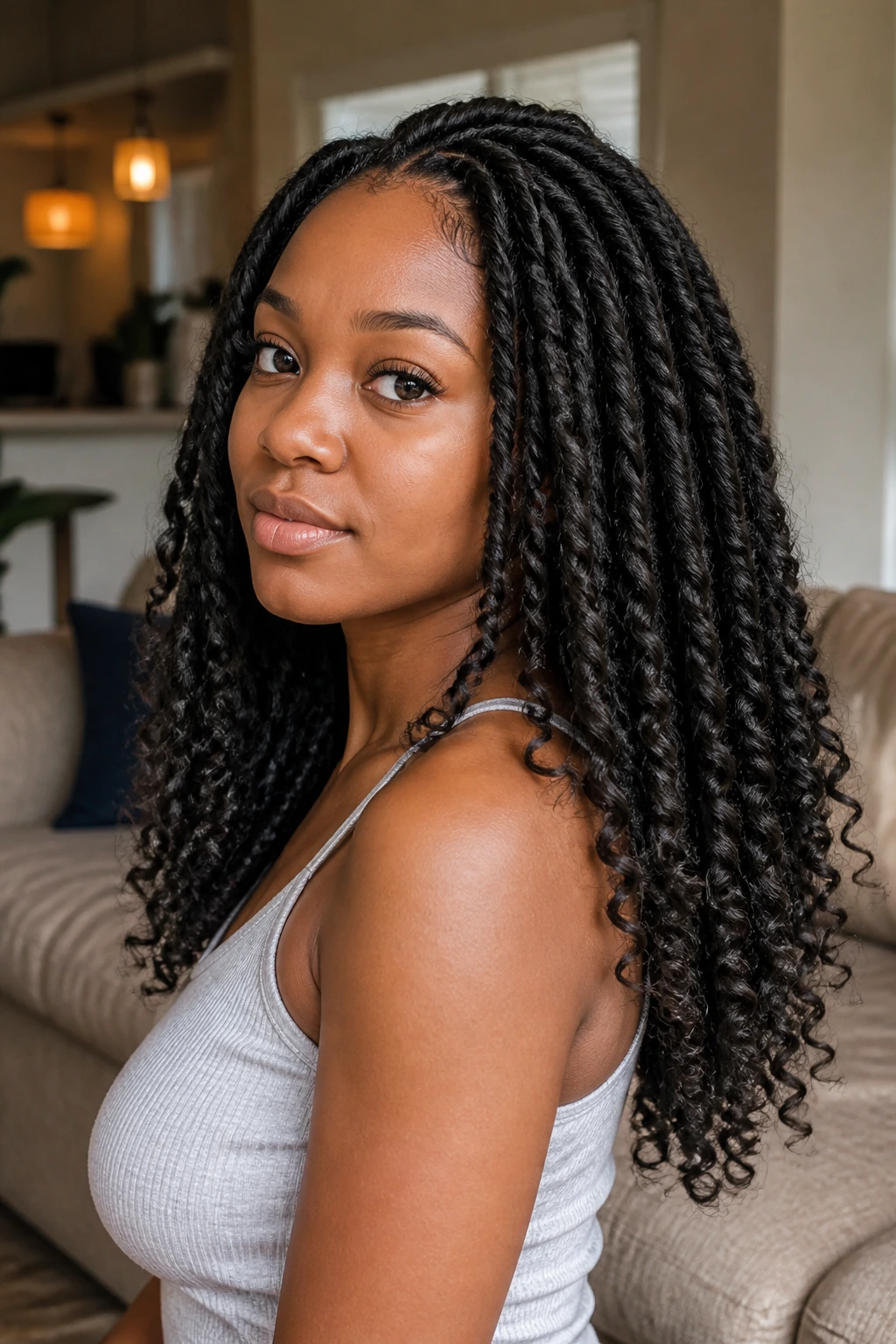
Curled ends change the whole mood. Instead of a straight drop, the twists finish with a soft bend or coil that makes the style look more styled and a little less rigid. It’s a small detail, but it changes the silhouette fast.
This is the set I’d pick when you want Marley twists that feel a little dressed up without adding beads or color. The curled ends make shoulder-length and mid-back styles especially pretty, because the motion shows up when you turn your head. If the ends start to fray, the curl still helps the style look deliberate.
10. Marley Twists with Beads at the Ends
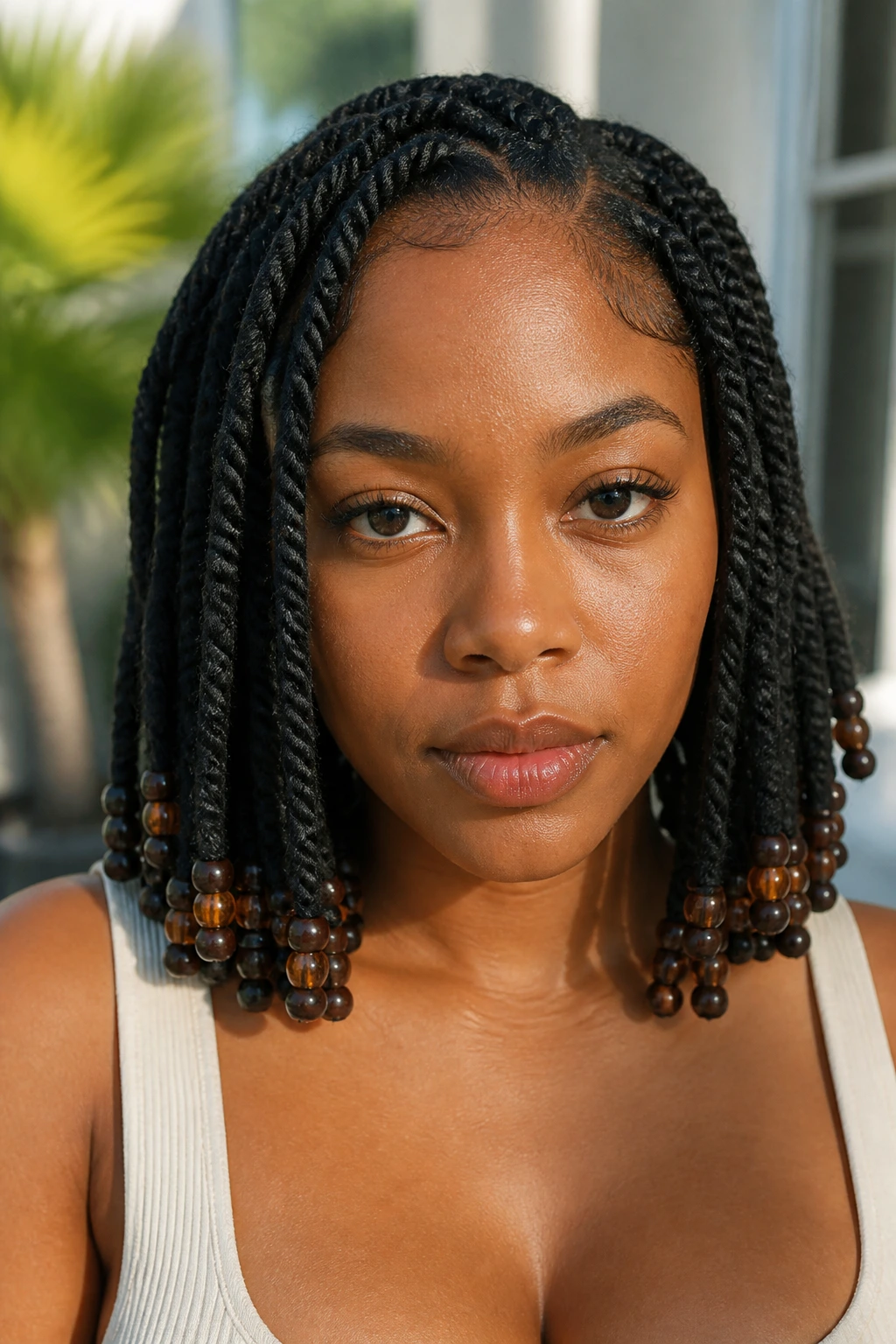
Beads bring sound, movement, and a little nostalgia to Marley twists. A few wooden or clear beads at the ends can make a plain set feel personal without turning the style into costume territory.
The trick is restraint. One or two beads per twist can look elegant; too many can make the ends clatter and pull. I like this look best on medium or shorter twists, where the beads show up near the shoulders instead of disappearing into too much length. It’s also a nice way to make a simple style feel special for a weekend or event.
11. Triangle-Part Marley Twists
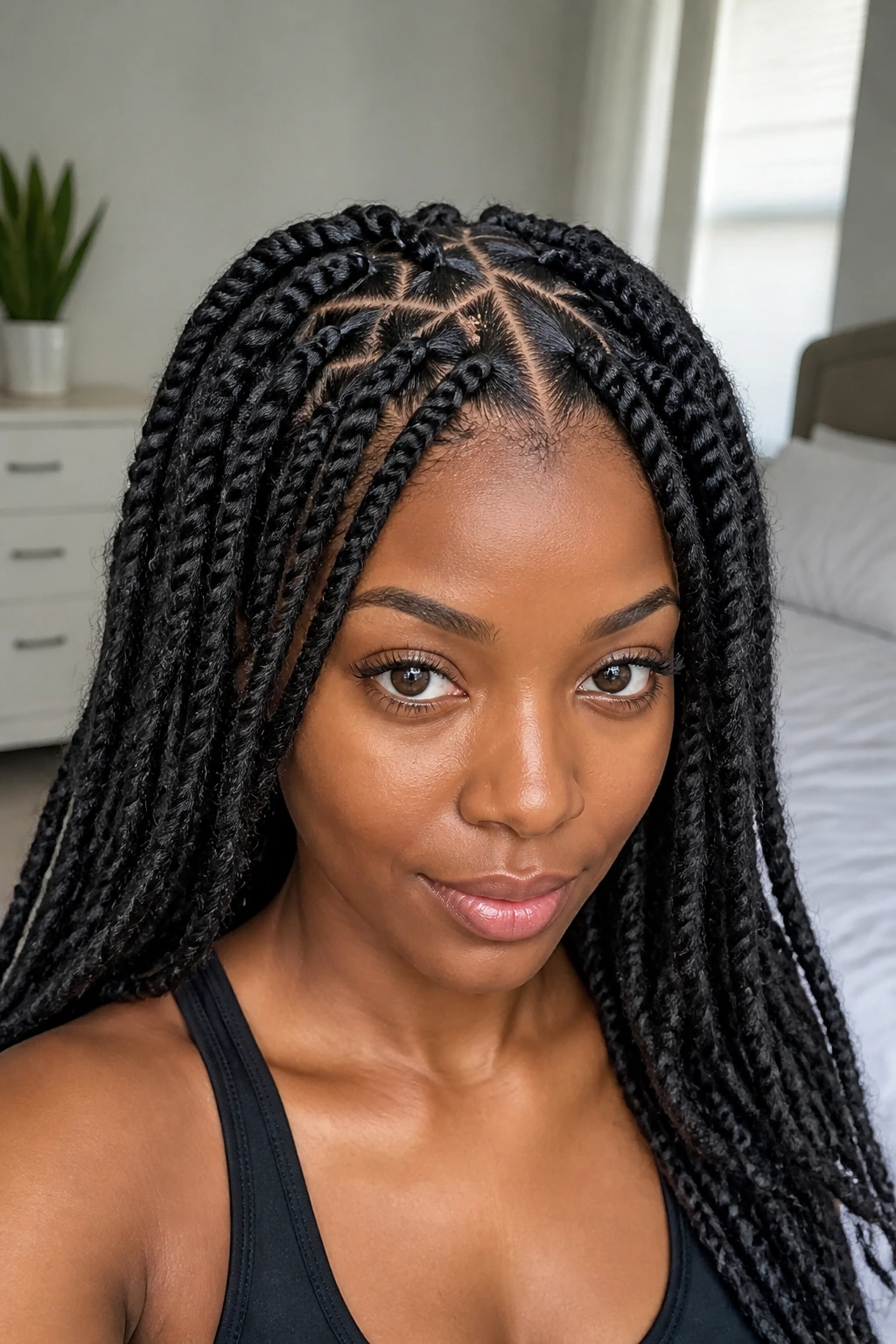
Triangle parts give Marley twists a graphic edge that straight parts don’t have. The scalp pattern looks a little more custom, and even when the twists themselves are simple, the parts do a lot of visual work.
This is a smart choice if you want the style to stand out without changing the length or size of the twists. Triangle parts are especially good when the hair is worn down, because the pattern peeks through as you move. They also hide grow-out a little better than perfect straight lines, which is useful if you like to stretch the style.
12. Side-Swept Marley Twists with a Fringe
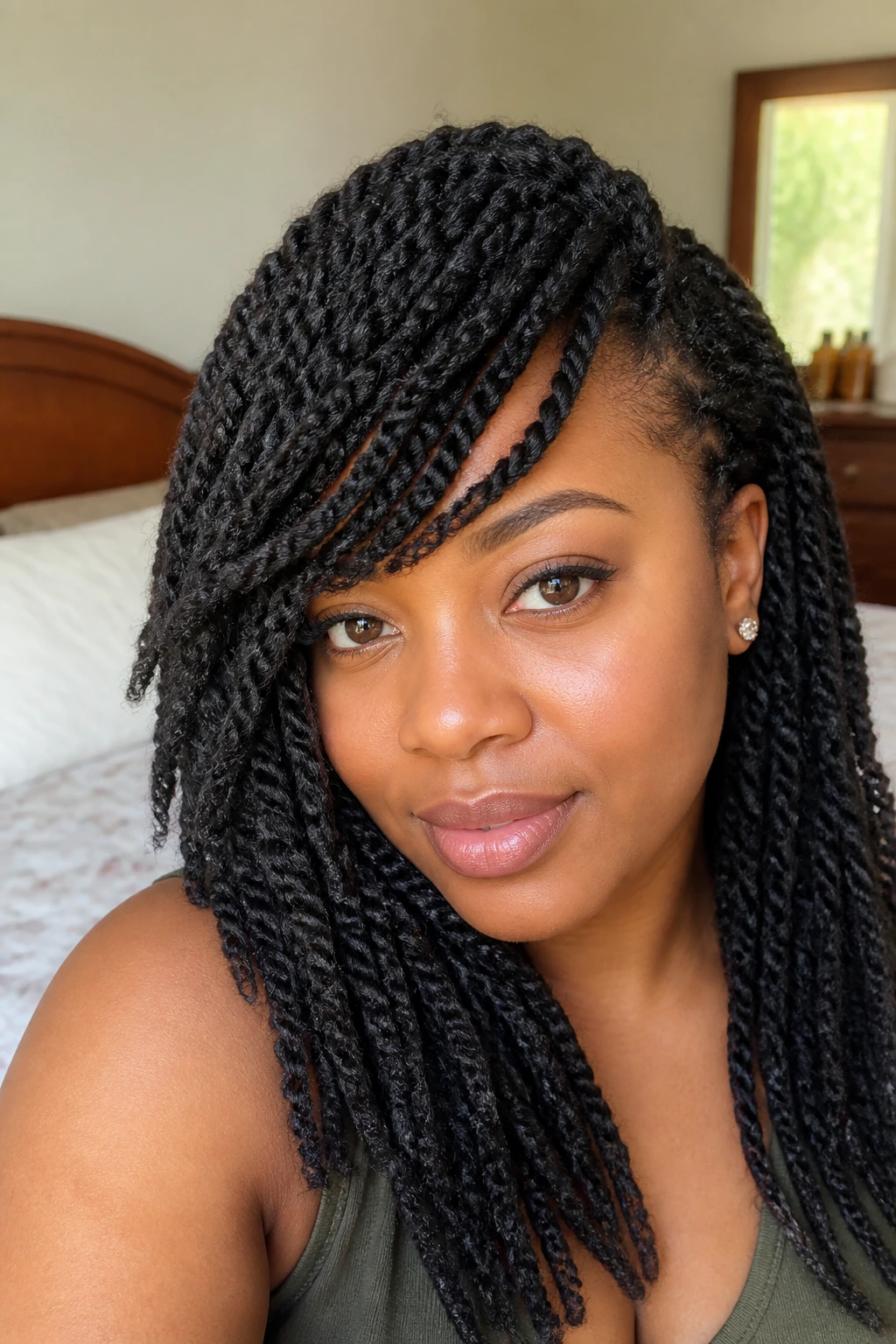
A side-swept front changes the face frame fast. Instead of splitting the hair evenly, you sweep the bulk to one side and let a few pieces fall forward, which softens the forehead and gives the style a little motion.
This one works when you want Marley twists to feel less formal than a strict center part. It’s especially flattering on days when the hairline needs a break from being the main event. A little volume at the sweep keeps the style from collapsing, so don’t over-pin the front flat.
13. Two-Tone Marley Twists
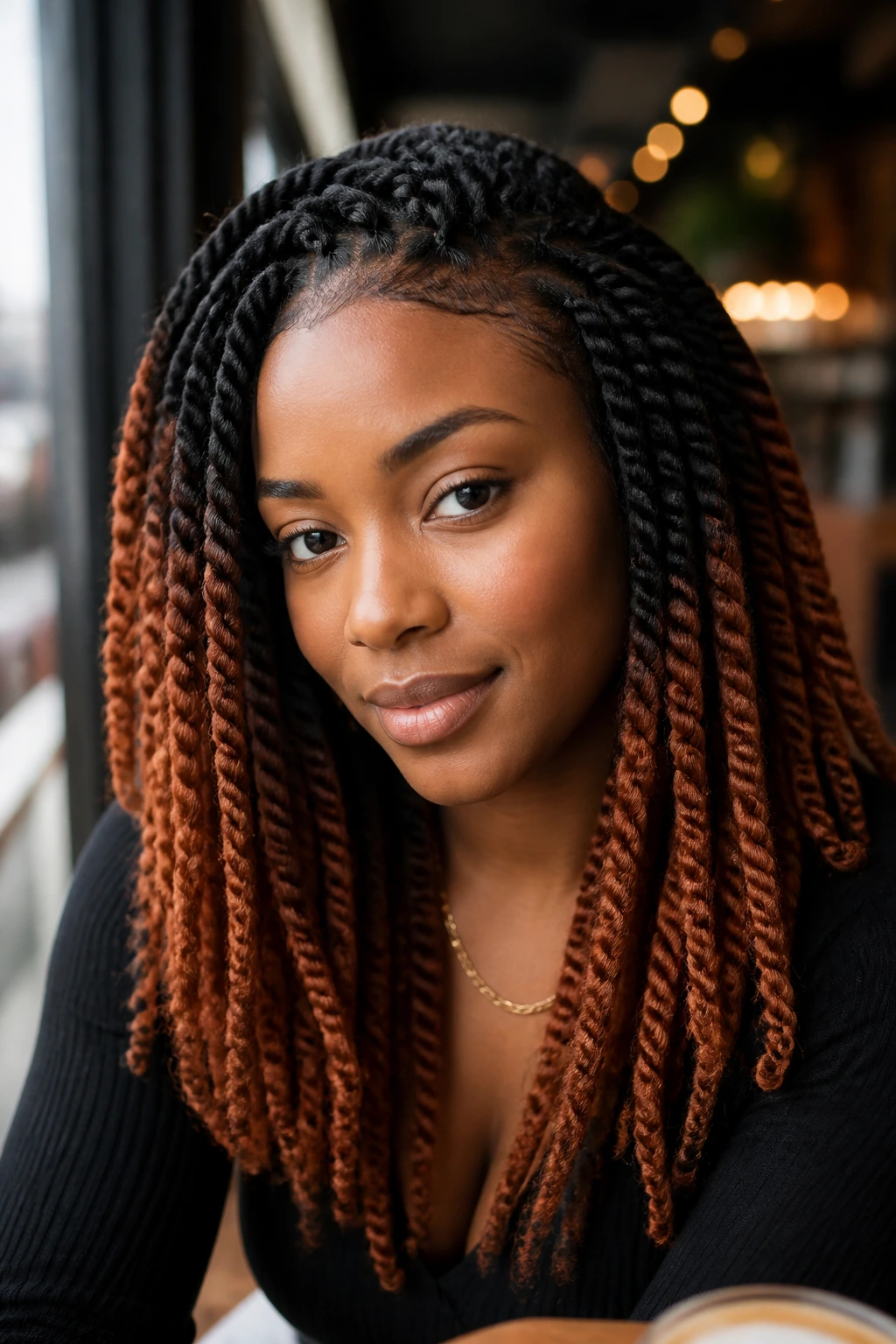
Two-tone Marley twists do not need much help from anything else. A darker base with warm brown ends, or black with a copper streak through the front, can make the style look richer and more dimensional without changing the cut.
I like this approach when the install is simple and you want the color to carry the look. It works best if the tones are close enough to blend at the parting, because harsh contrast can make the twists look striped instead of intentional. If you’re nervous about color, just use it in a few face-framing twists first.
14. Boho Marley Twists with Loose Curls
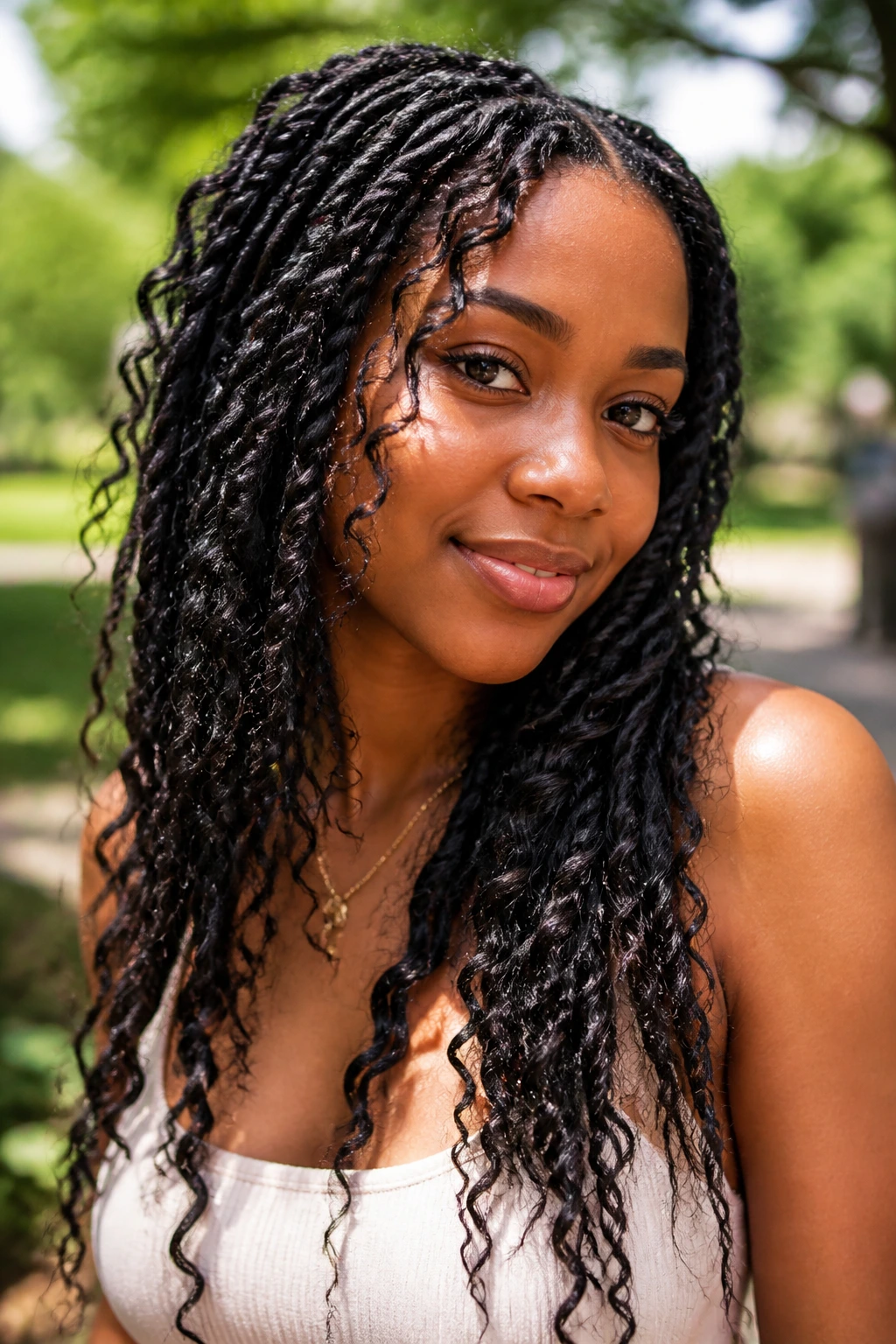
Boho Marley twists are for people who want a little softness and movement around the face. The added loose curls break up the rope-like shape and make the style feel less uniform, which is exactly the point.
This version does better when the curls are used as accents, not everywhere. A few curly strands at the front and ends are enough to give the hair motion without making it messy. It’s a good pick if you want Marley twists that look relaxed instead of severe, especially with a loose sweater or a simple dress.
15. Goddess Marley Twists with Face-Framing Pieces
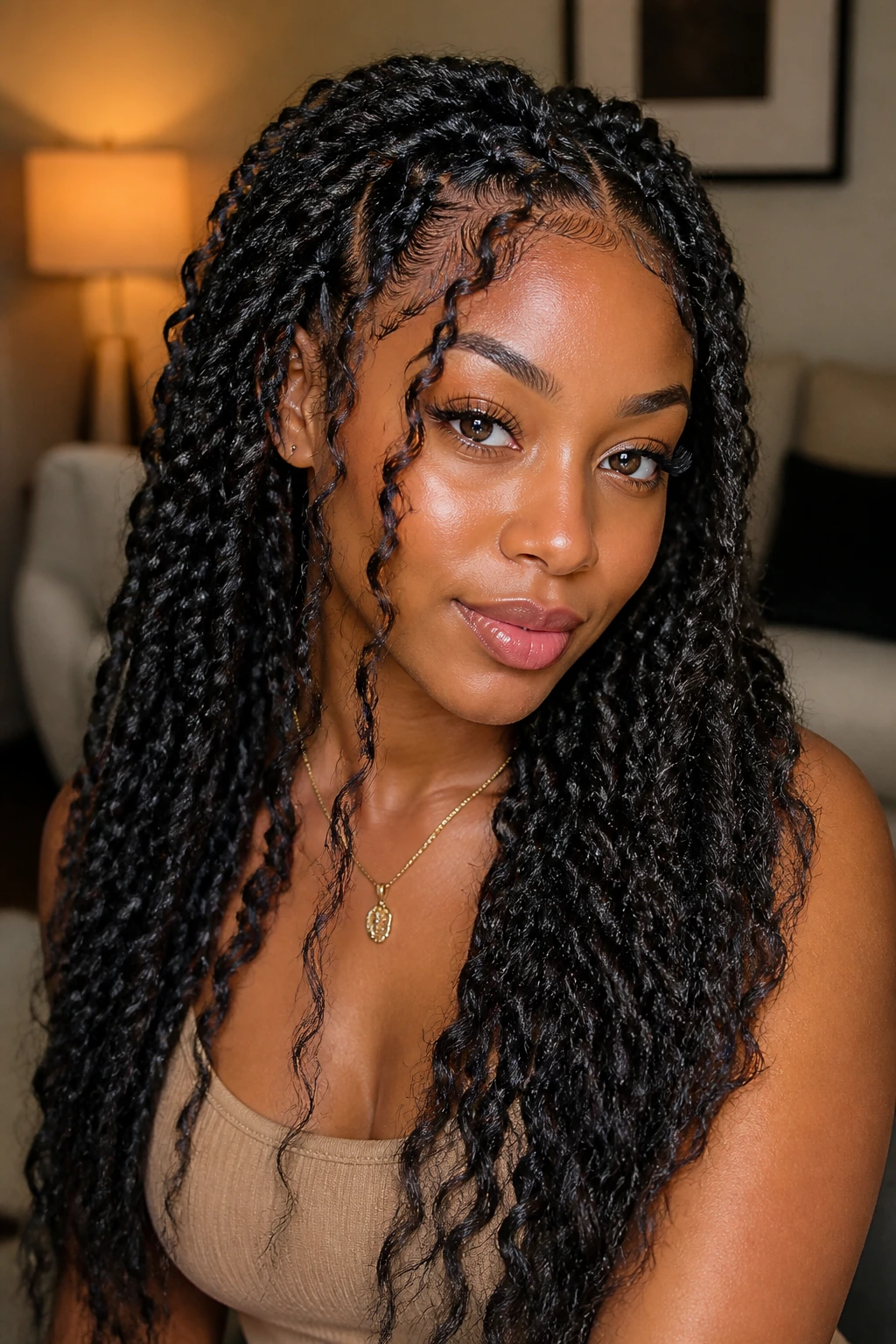
Face-framing pieces can take a heavy set and make it feel lighter instantly. That is the whole appeal here. The twists stay full through the back, but a few thinner strands around the cheeks soften the shape and keep the style from closing in on the face.
This is one of the easiest ways to make Marley twists feel flattering without changing the whole install. The front pieces should fall in a way that skims, not clings. If they’re too thick, they just become extra hair. If they’re too thin, they can look accidental. The middle ground is the sweet spot.
16. Feed-In Cornrows Into Marley Twists
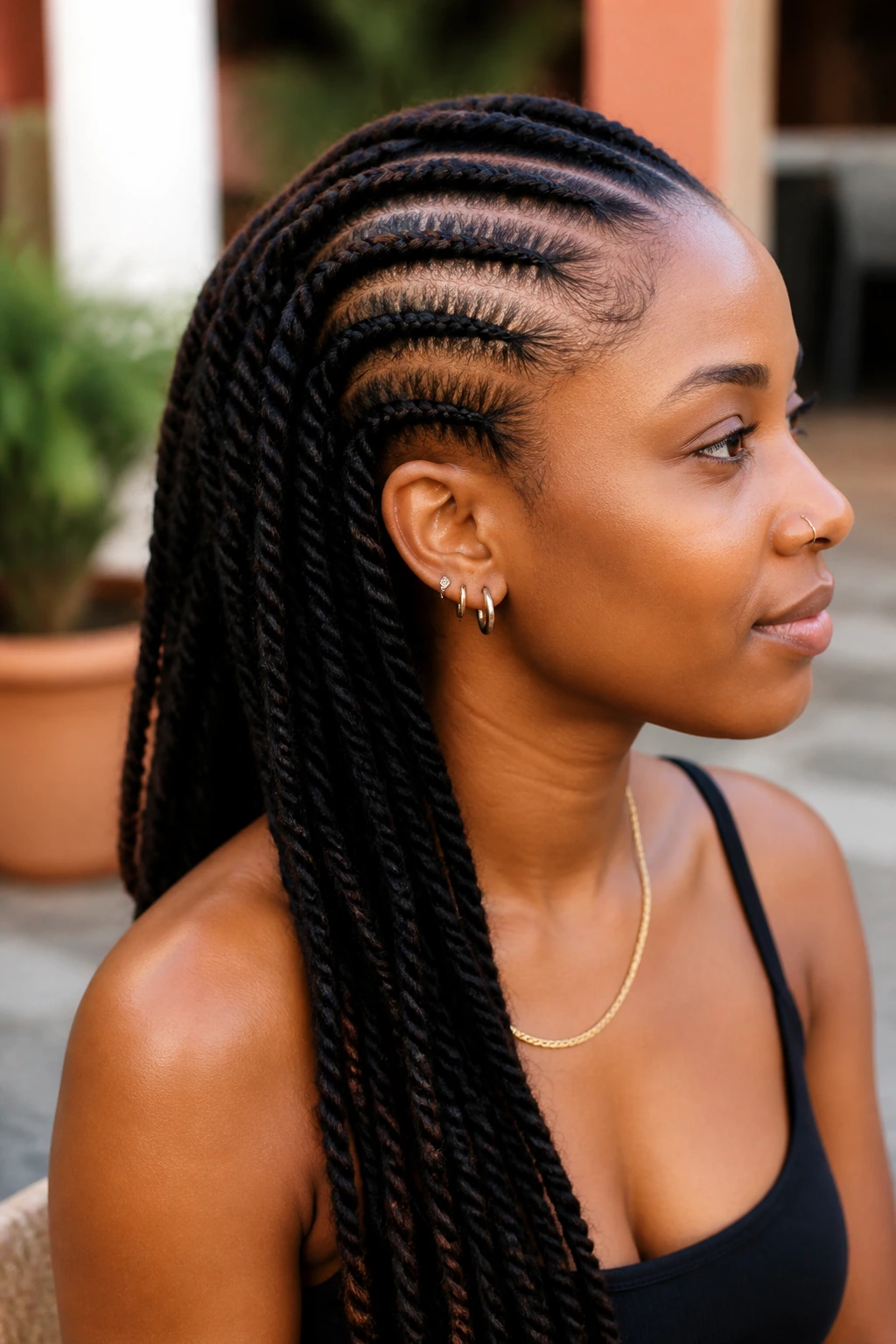
Feed-in cornrows at the front give Marley twists a sharp start and keep the scalp pattern doing some of the work. The braids at the hairline narrow into twists farther back, which creates a neat front and a fuller body.
I like this when the front needs extra control or when the style needs a little lift at the roots. The cornrow section keeps the hair off the face, while the twists in the back add softness and movement. It’s a good blend if you want a style that looks put-together from the front but still has weight and length.
17. Marley Twist Faux Hawk
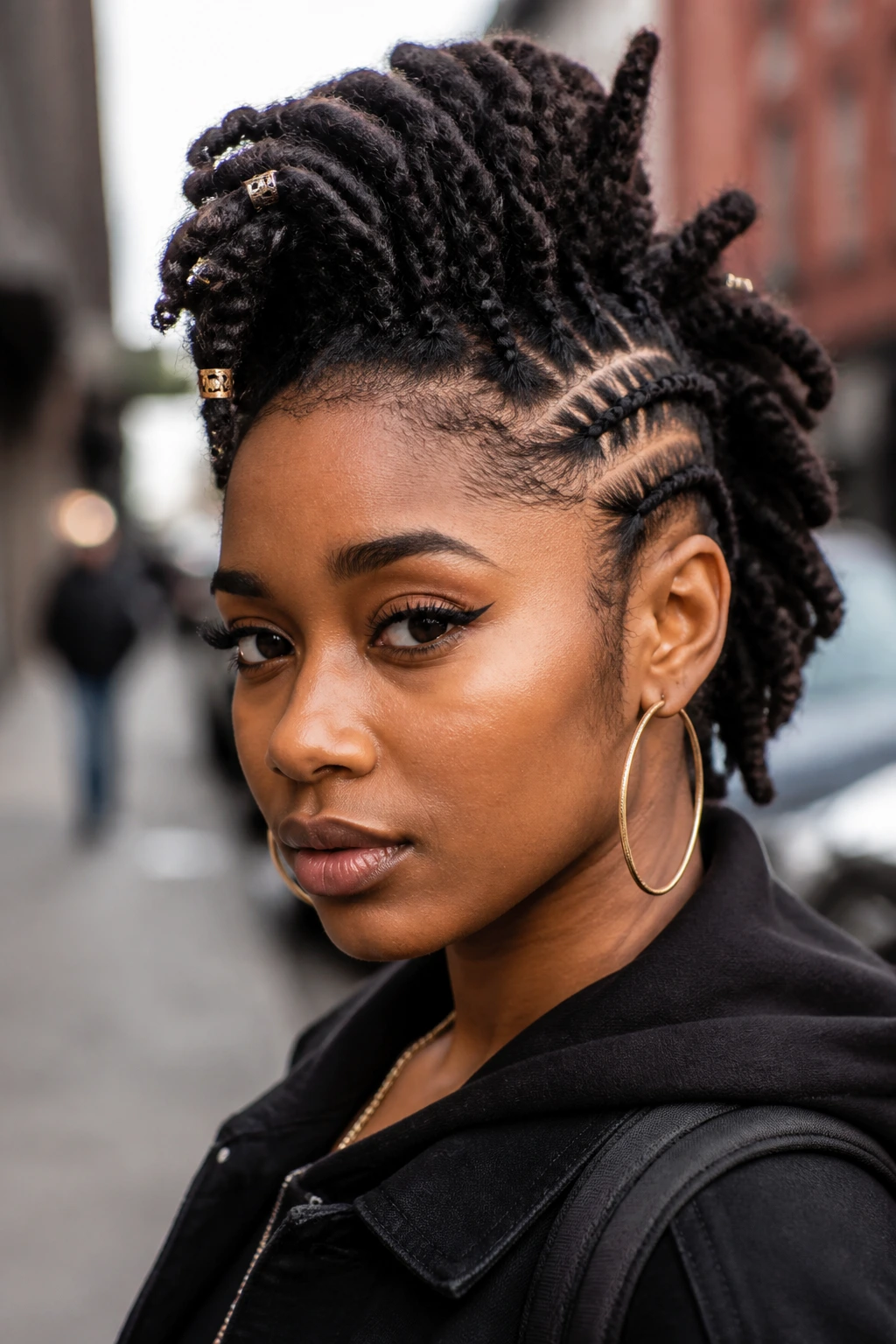
A faux hawk is the style for when you want Marley twists to look a little louder. The sides get pinned or braided tighter, and the center row stays fuller, which creates that lifted strip down the head.
This one has attitude, plain and simple. It’s also useful if you want the back and sides lighter on your scalp while still keeping the bulk of the twists visible. The more defined the center ridge, the more the style reads. Leave a few twists loose near the temples if you want to soften the line.
18. Marley Twists in Double Space Buns
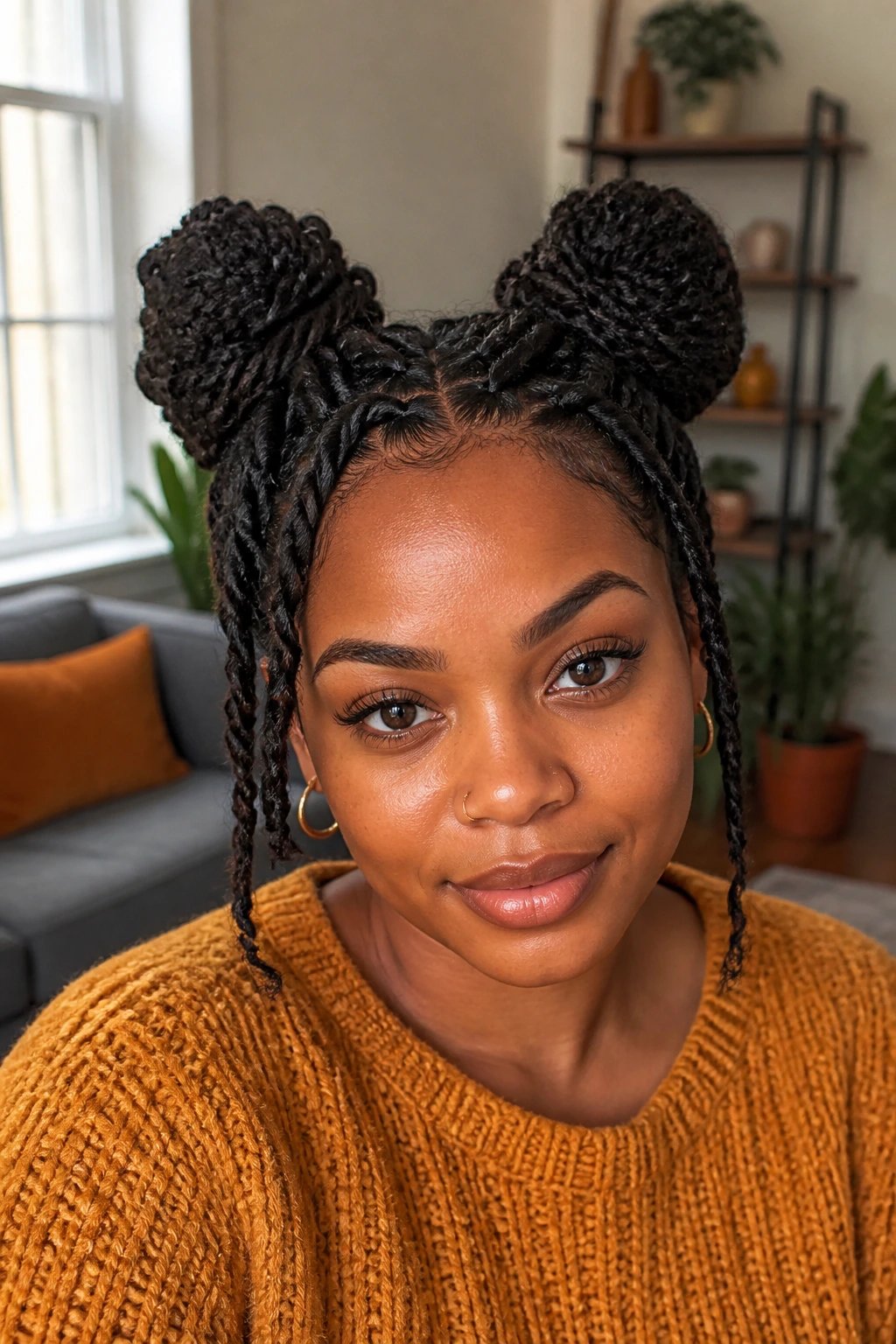
Space buns turn Marley twists into something playful fast. Two buns at the crown give the style a youthful shape, but the twists keep it from looking childish because the texture still feels grown and deliberate.
This is one of the better ways to handle medium-length twists when you want them up and out of the way. A few loose pieces near the ears keep the style from feeling too tight. If the buns are too tiny, they can look sparse; larger buns hold the shape better and feel more balanced.
19. Halo Crown Marley Twists
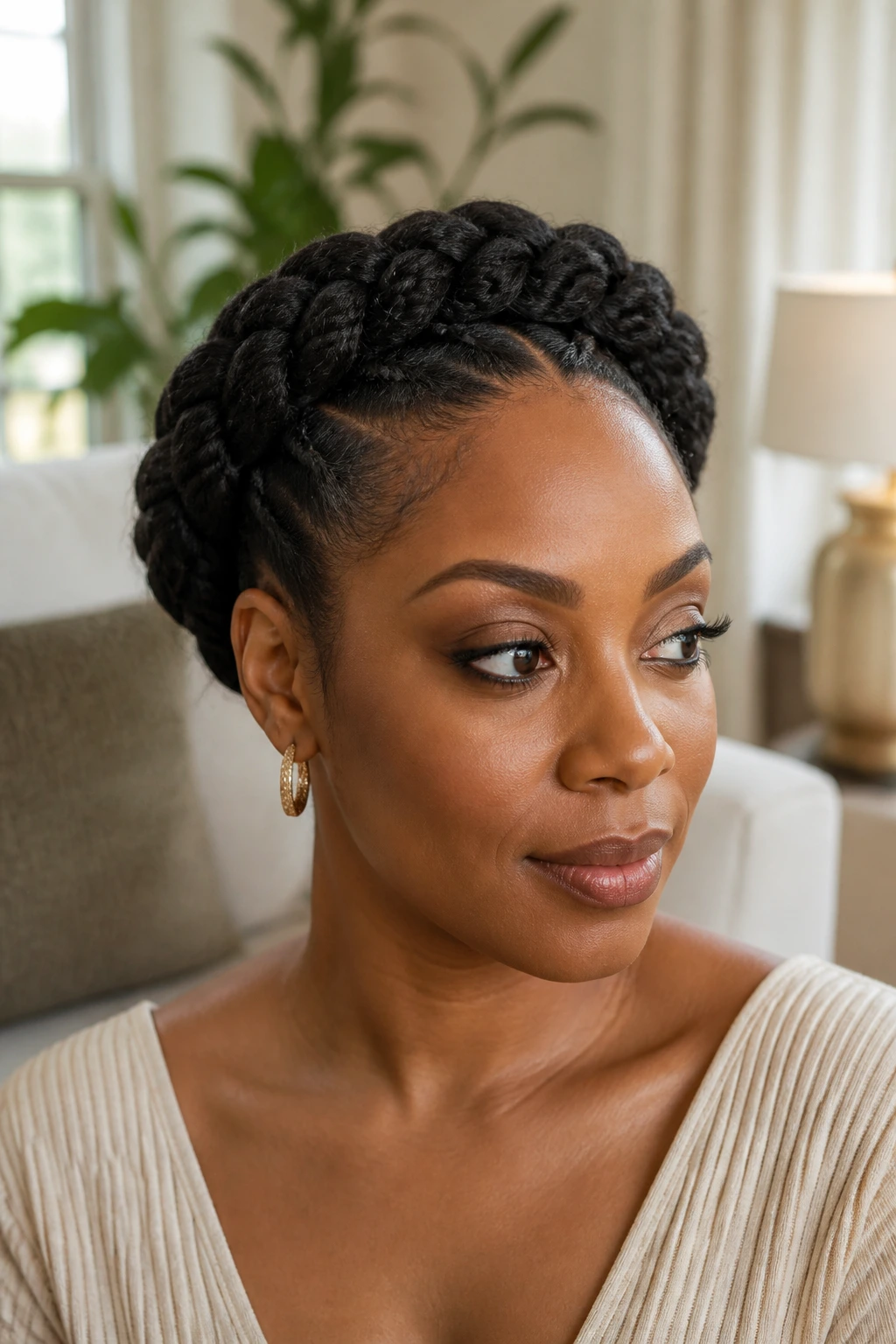
A halo crown wraps the twists around the head in a circular shape, which gives the style a soft, almost regal outline. It’s a nice way to make Marley twists feel special without relying on curls or color.
The good version of this style sits close to the head and doesn’t wobble. You want the crown to look smooth around the perimeter, with the loose ends or wrapped pieces falling evenly. It’s one of the few updos that works beautifully with a plain outfit because the hairline and shape already do enough.
20. Low Braided Ponytail Marley Twists
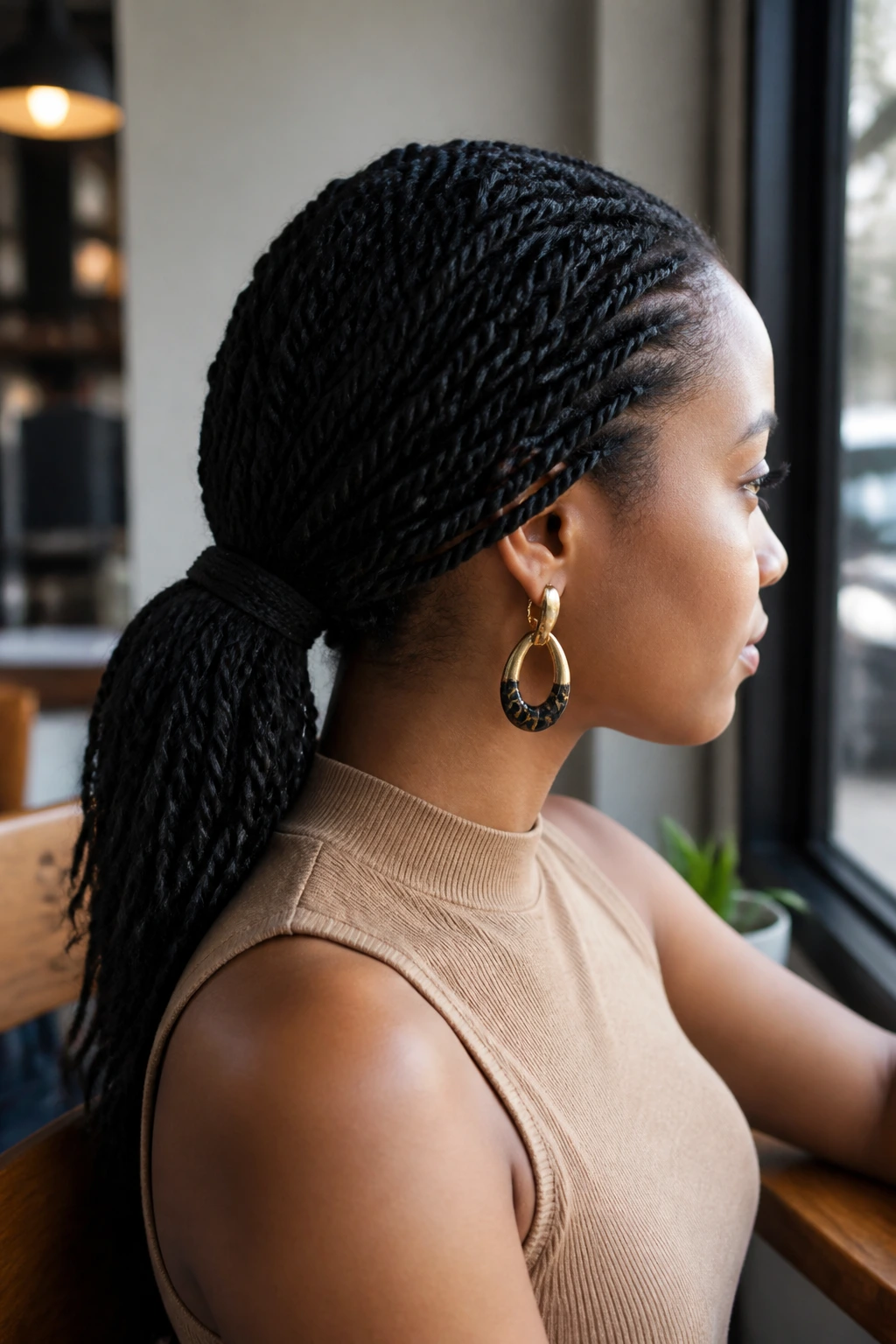
A low braided ponytail keeps the style controlled but not stiff. Gathering the twists low at the nape lets the length swing behind you, and the braided base gives the ponytail a firmer, cleaner look than a simple tie would.
This works especially well when the twists are long enough to feel heavy loose. Pulling them back into a ponytail takes pressure off the neck and makes the set easier to wear for long days. I like a little fullness at the crown here; too much smoothing can make the style read flat.
21. Marley Twists with Gold Cuffs
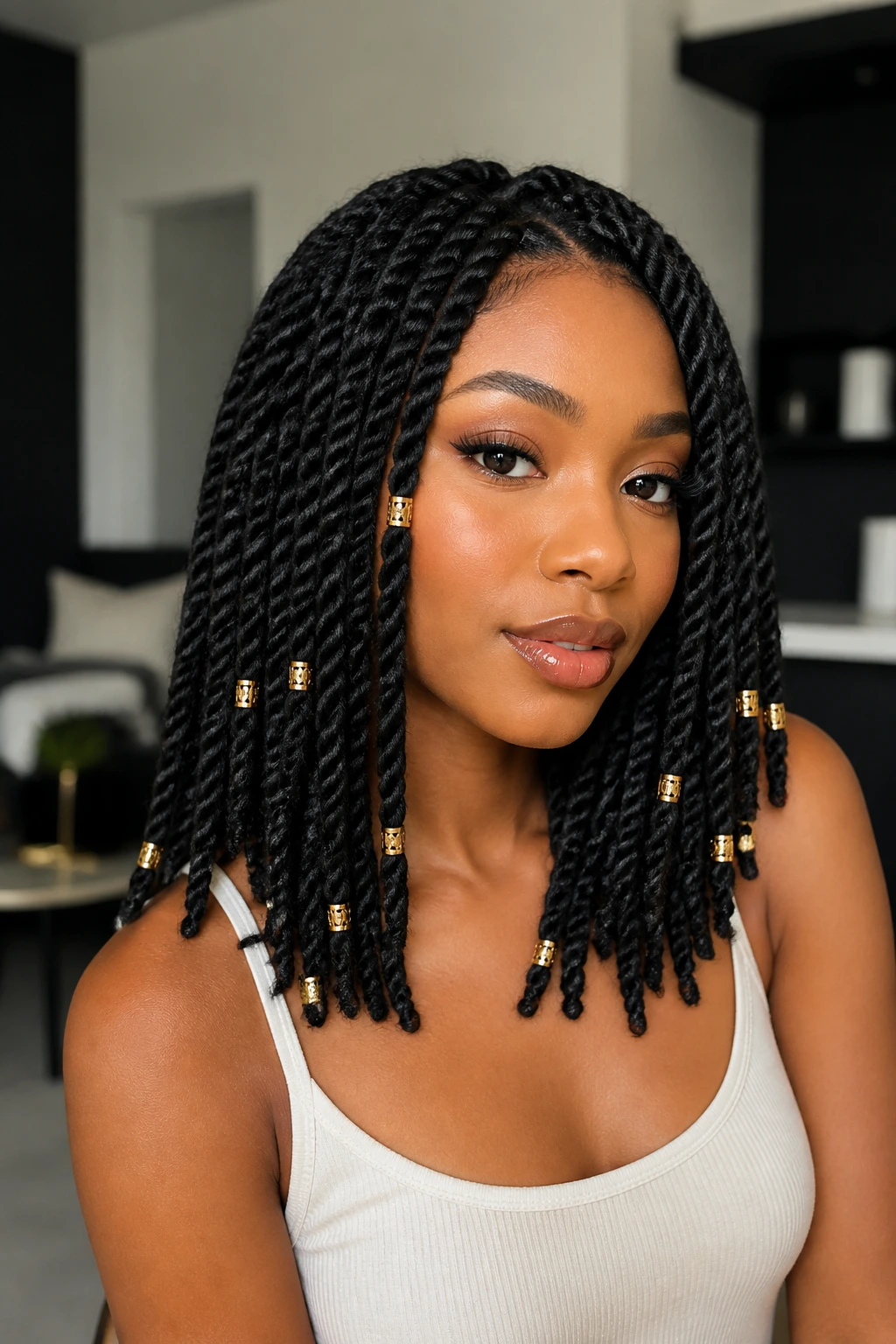
Gold cuffs are tiny, but they change the whole surface of the hair. A few cuffs placed near the front or at the ends break up the matte texture and give the twists a little shine without needing color or extra length.
The key is spacing. Three cuffs placed with intention will look cleaner than ten scattered all over the head. If the twists are already bold in size, keep the cuffs small. If the twists are tiny, a slightly larger cuff can show up better and keep the style from disappearing into the texture.
22. Pixie-Length Marley Twists
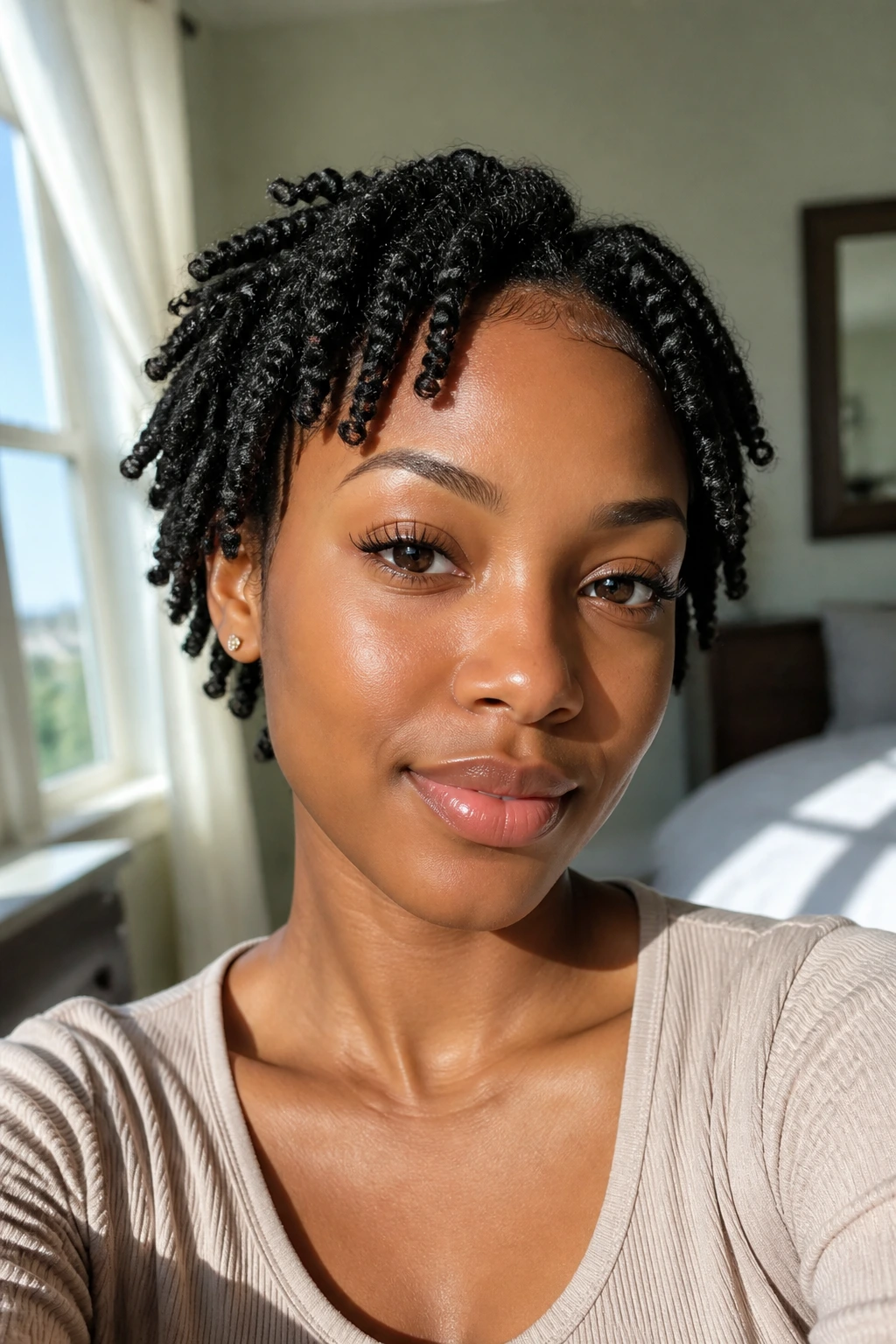
Short Marley twists are underrated. They sit close to the face, they don’t pull hard on the neck, and they give you all the texture of the style without the weight that comes with longer installs.
This length is especially good when you want something neat for daily wear. It doesn’t tangle as fast, it dries faster if you need to refresh the hair, and it pairs well with glasses or bold earrings. If you’ve been staring at waist-length twists and feeling tired already, a pixie-length set might be the smarter move.
23. Layered Marley Twists
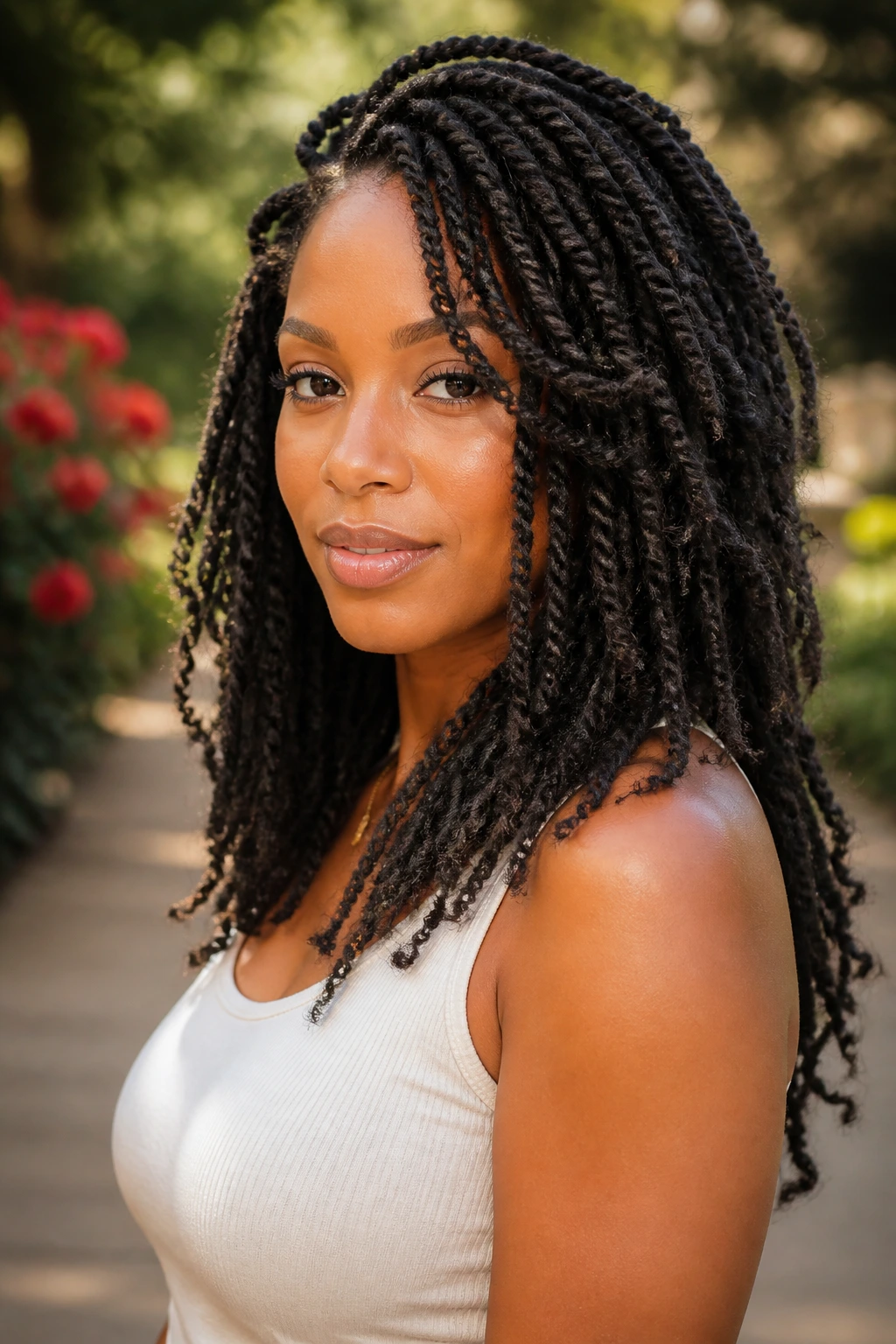
Layering keeps the silhouette from looking boxy. When the twists fall at slightly different lengths, the ends move more and the style looks softer around the shoulders and back.
This is one of those details you don’t always notice at first, but you feel it. The set shifts better when you walk, and the shape doesn’t land as hard at one straight line. It’s useful if you like length but don’t want the whole style to feel dense from top to bottom.
24. Side Ponytail Marley Twists
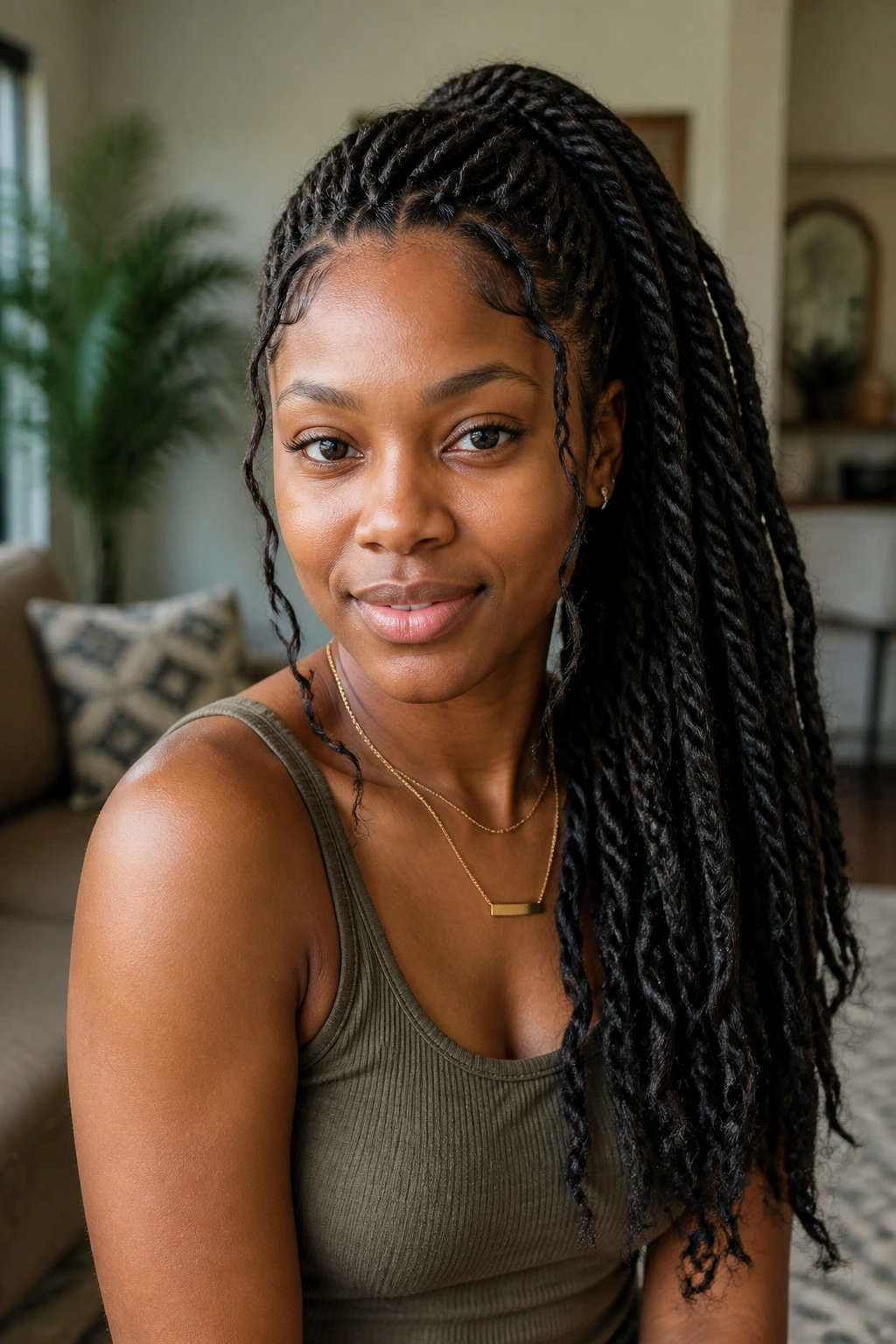
A side ponytail gives Marley twists a little asymmetry without fully changing the style. All that hair pulled over one shoulder changes the line of the face and opens up the opposite side of the neck.
It’s a good answer when you want the hair down but not in the center of your back. A side pony also makes long twists feel lighter because the weight isn’t split evenly across both shoulders. A few loose pieces near the front keep it from looking too severe.
25. Zigzag-Part Marley Twists
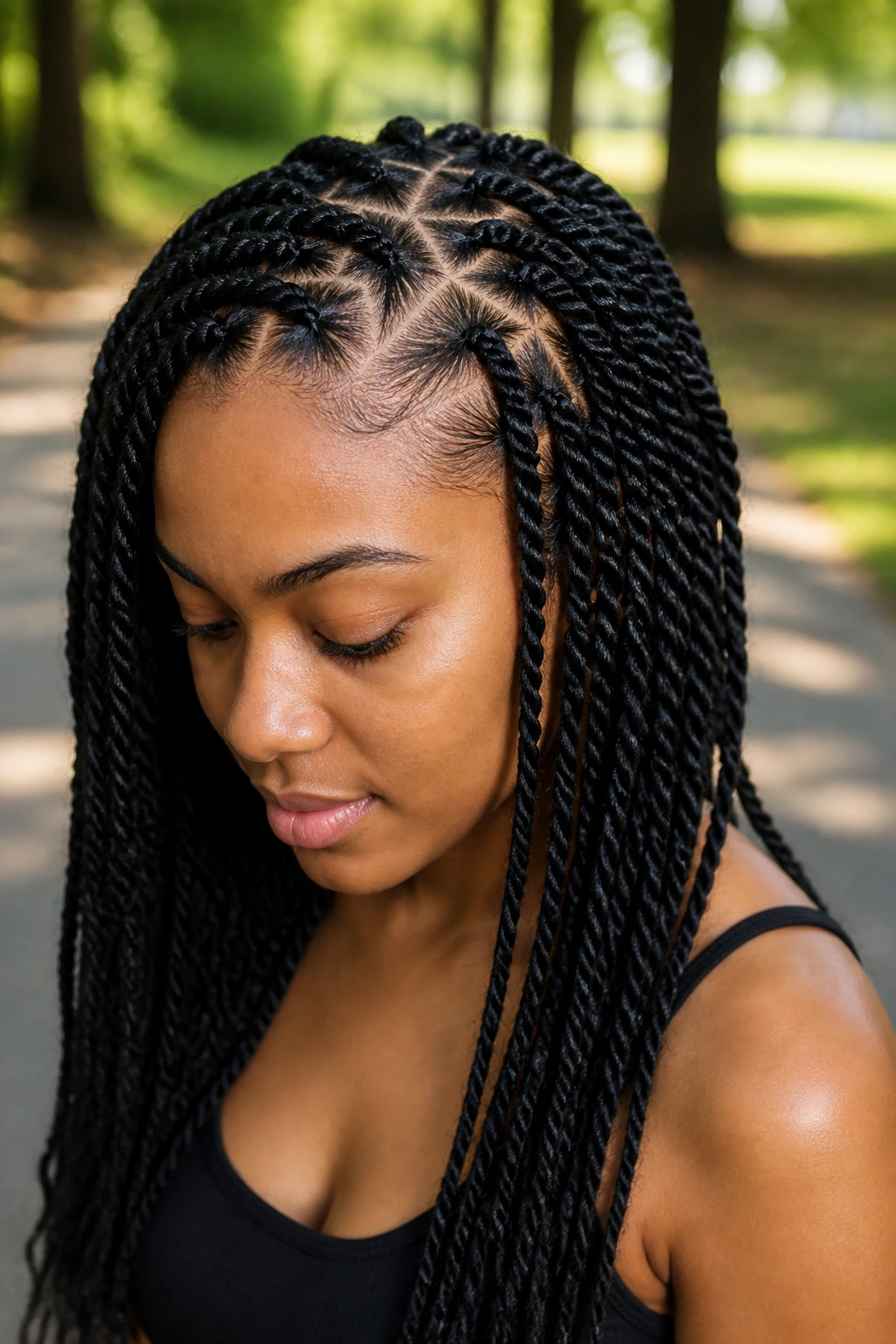
Zigzag parts bring some graphic energy to a style that can otherwise look very neat and simple. The scalp pattern adds a little surprise, which is exactly why it works so well on a plain twist set.
If you like the twists themselves to stay understated, this is the place to put the design. The zigzag parting shows up best when the sections are crisp and the base is clean. It’s a small detail, but it can make the whole install feel more custom without adding length, color, or accessories.
26. Tapered-End Marley Twists
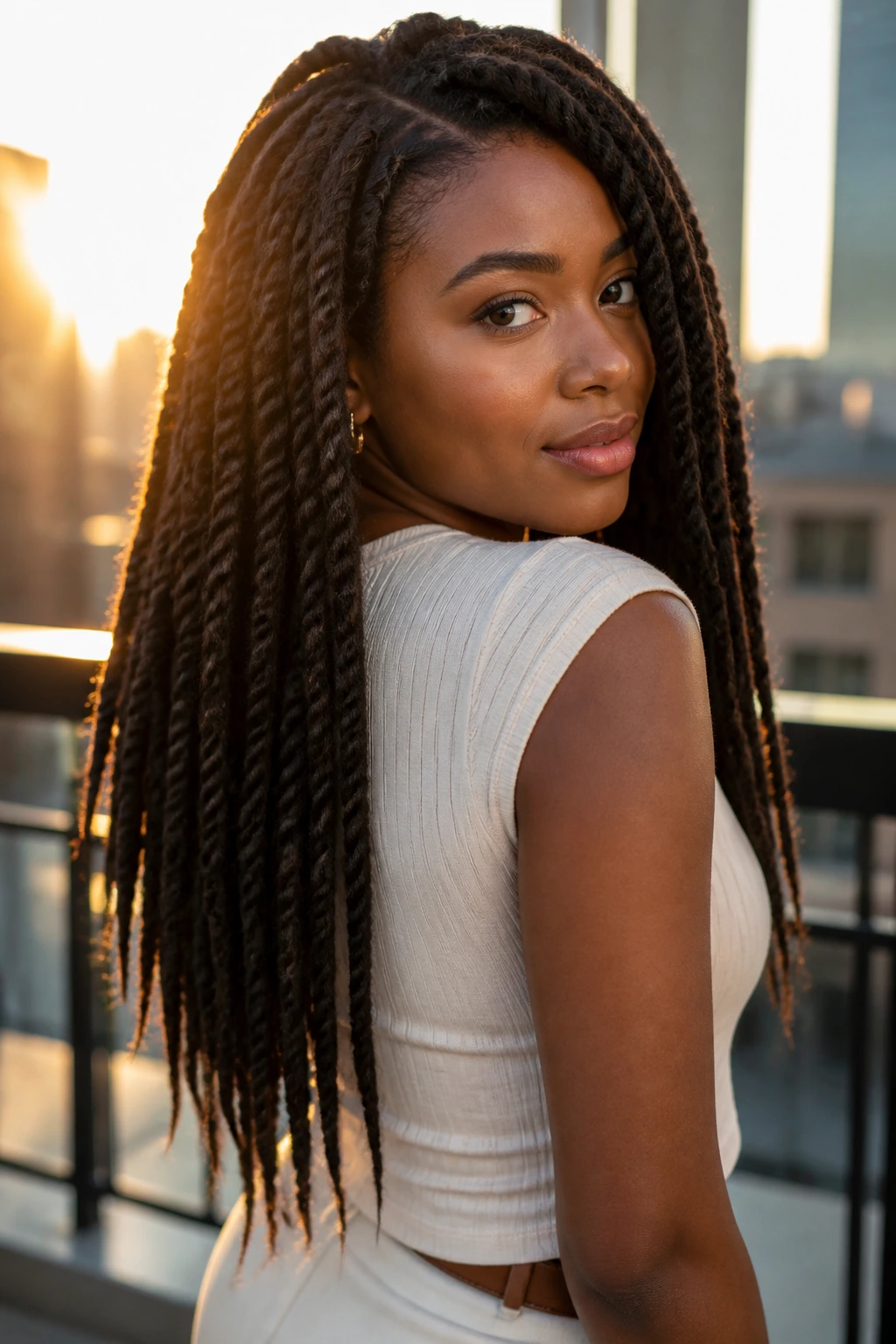
Tapered ends give the style a pointed finish instead of a blunt one, and that changes the silhouette more than people expect. The twists look lighter at the bottom, which helps the set move instead of hanging in one heavy block.
This is a nice choice for medium and long lengths, especially if you want the style to feel airy. The tapered finish also makes the ends look less bulky when you pin the hair up. If the set tends to puff at the bottom, tapering solves that without changing the overall length.
27. Marley Twists with a Clean, Laid Hairline
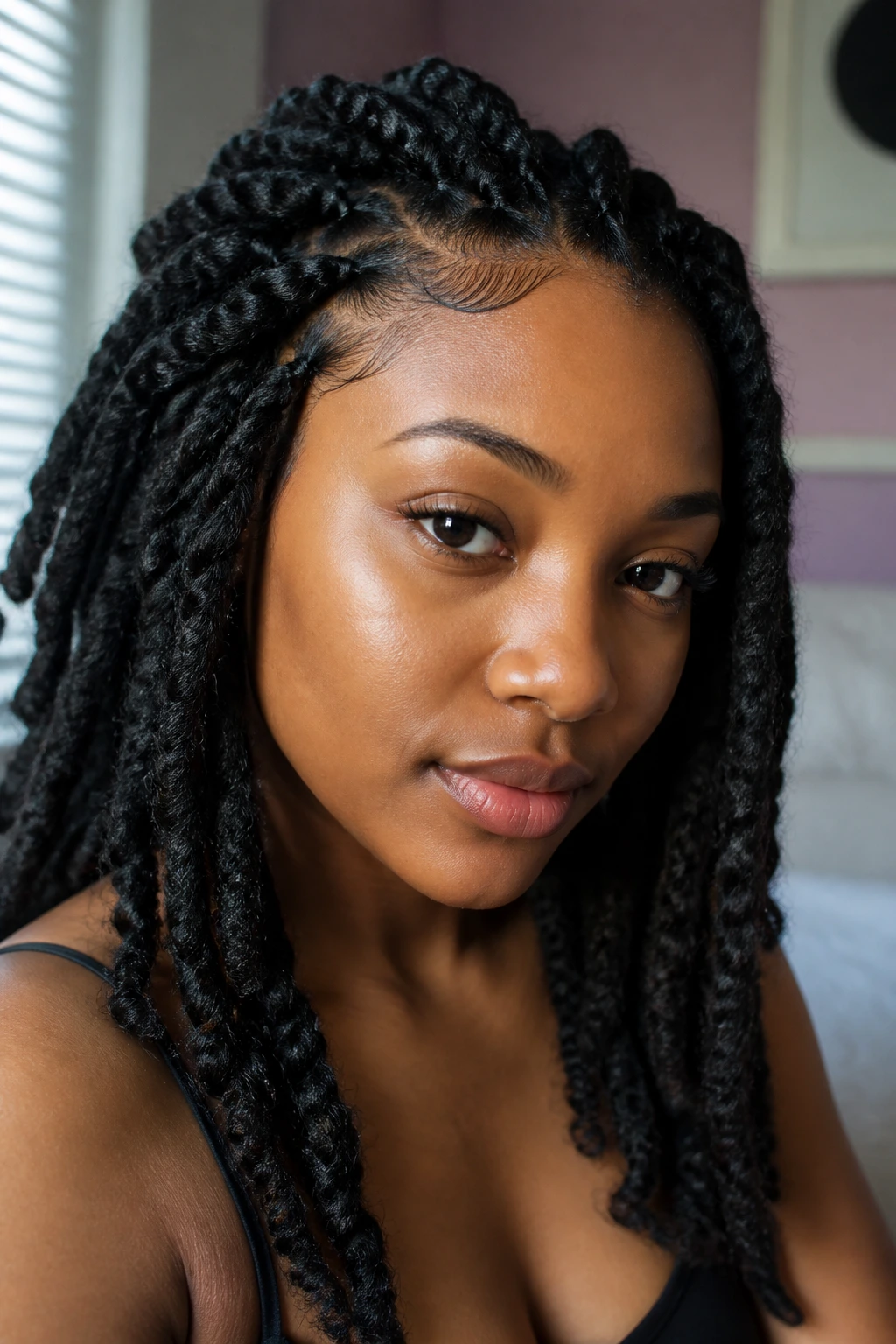
A soft, laid hairline can make Marley twists look neat without making them crunchy. The front gets brushed and smoothed just enough to frame the face, while the twists stay textured and full behind it.
I like this look because it creates contrast. The roots look controlled, the twists keep their fuzzy softness, and the whole style reads finished from a distance. The line near the forehead should stay gentle; too much gel and the front starts looking stiff against the rest of the hair.
28. Undercut-Illusion Marley Twists
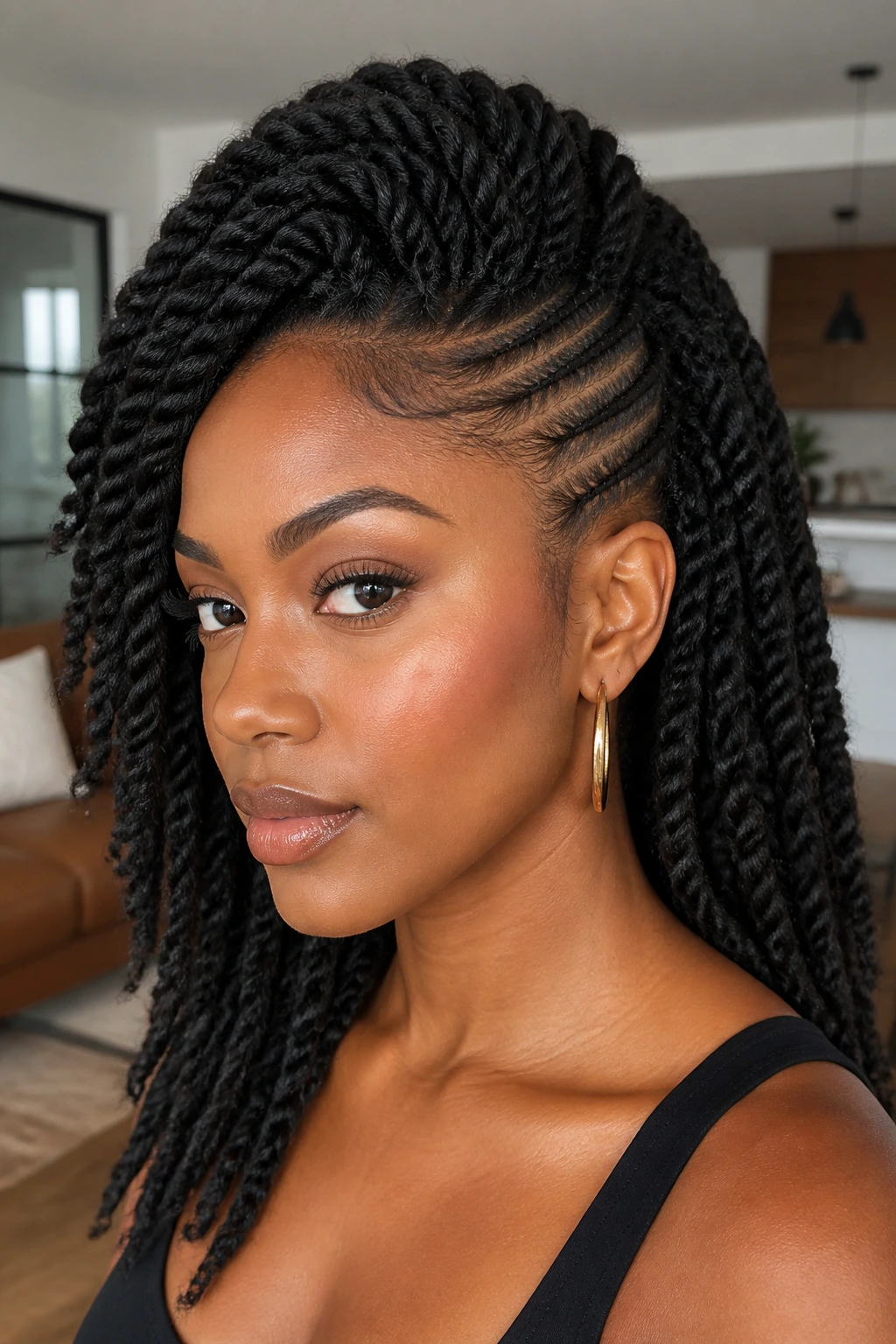
An undercut illusion gives you the shape of a cut without actually shaving the sides. The twists are pinned tighter or directed away from the temples, so the center section looks fuller and the sides feel lighter.
This is a sharp choice when you want the style to have edge but still stay protective. It works especially well on medium and long twists, because the contrast between the narrow sides and fuller center is easier to see. If you want it even cleaner, keep the side sections flat and let the center do the talking.
29. Marley Twists with Cowrie Shell Accents
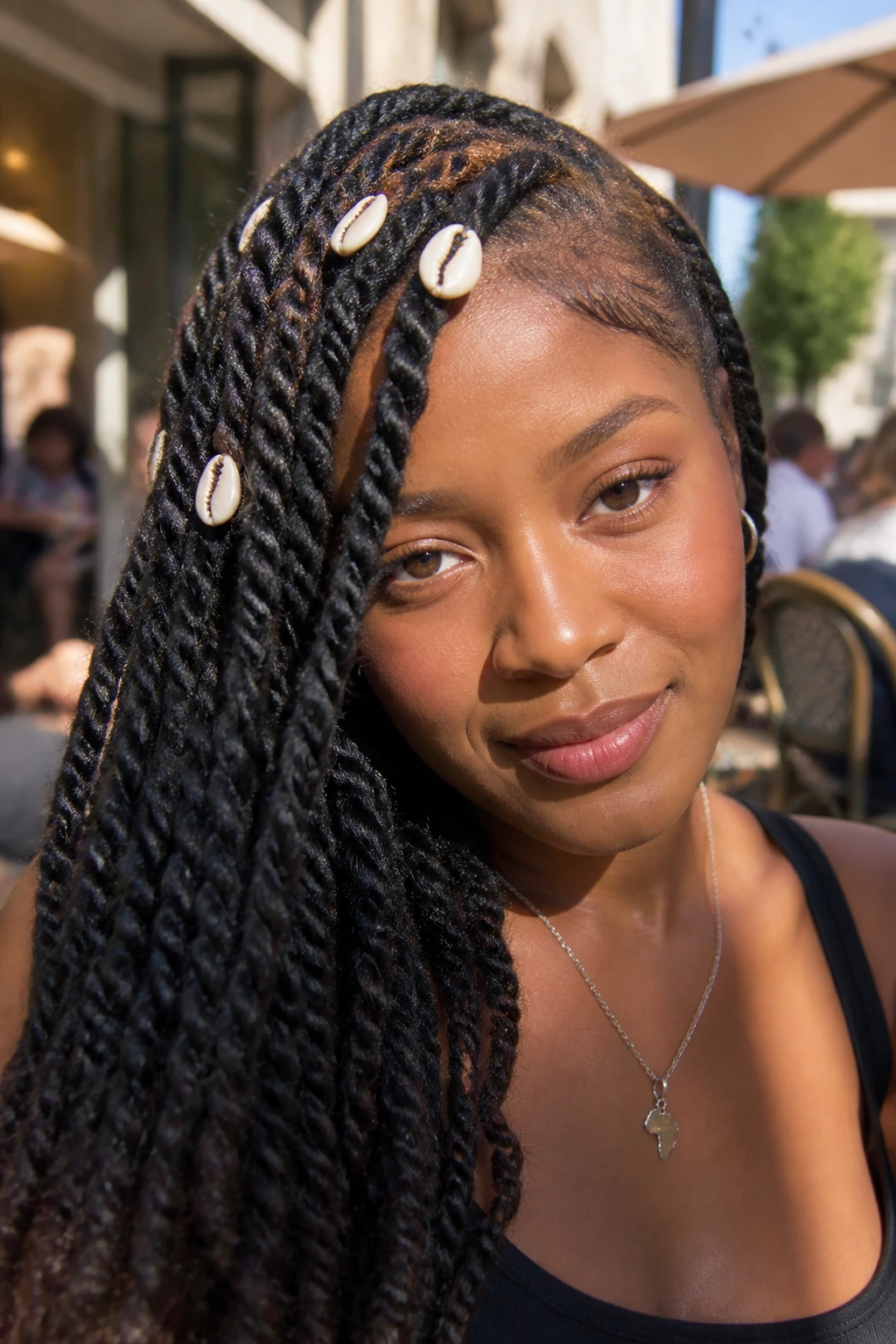
Cowrie shells bring a beautiful, grounded detail to Marley twists when they’re used with care. A few shells near the front or the ends can turn the style into something that feels personal and rooted, not just decorated.
The thing to watch is balance. Too many shells can make the twists noisy and heavy, especially on smaller sections. A small cluster placed deliberately looks better and lets the texture of the hair stay the star. This style works best when the rest of the set is simple and the accents are the point.
30. Asymmetric Marley Twists
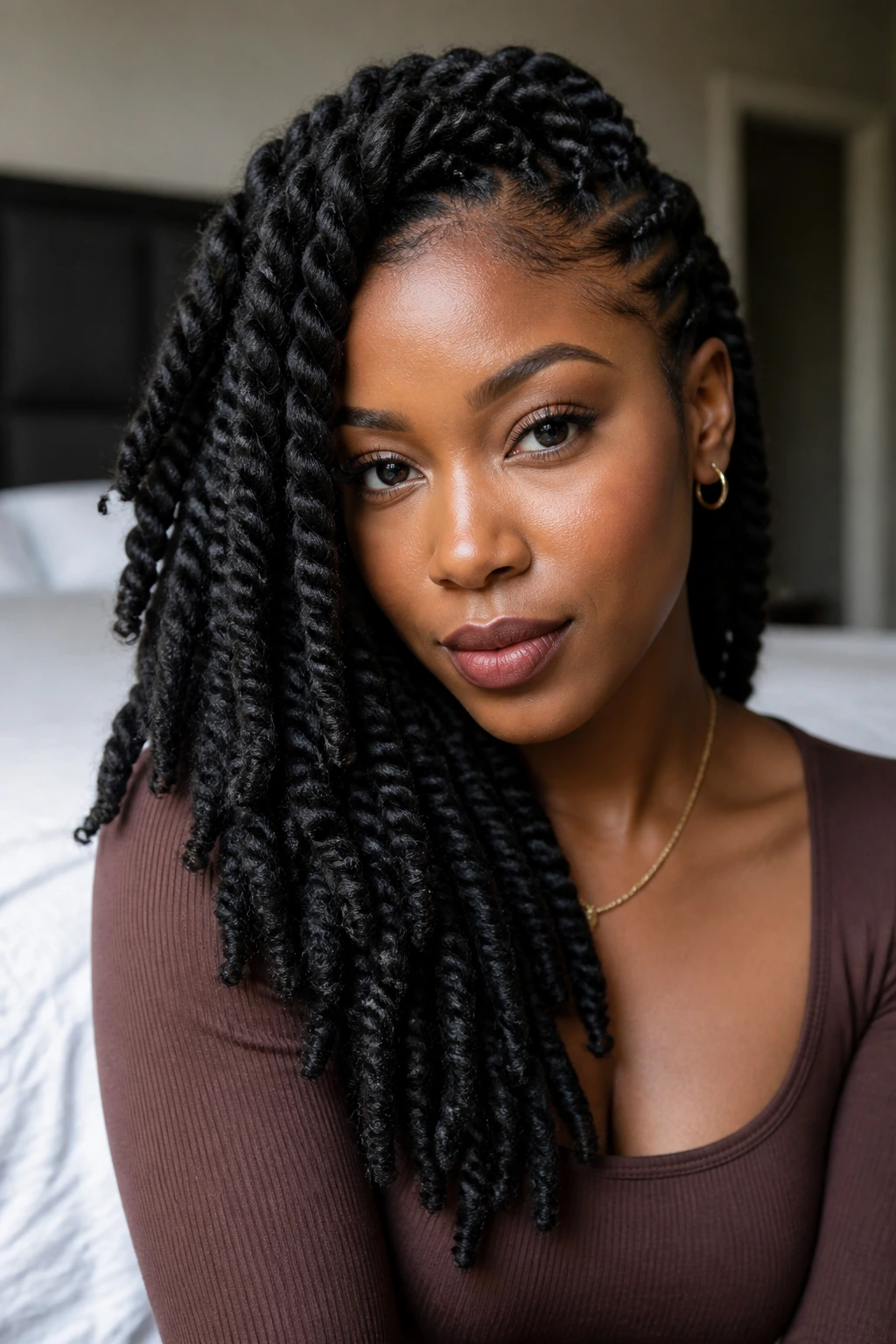
Asymmetry gives the style movement even when the hair is worn down. One side can be fuller, longer, or tucked behind the ear while the other side falls forward, which creates a shape that feels alive instead of symmetrical and flat.
This is a strong option if your face likes a little drama. It also helps when one side of the head needs less bulk than the other, which happens more often than people admit. The best asymmetric looks still feel balanced at the shoulders, so don’t let one side get wildly longer unless you want that deliberate lopsided effect.
31. Long-Front, Short-Back Marley Twists
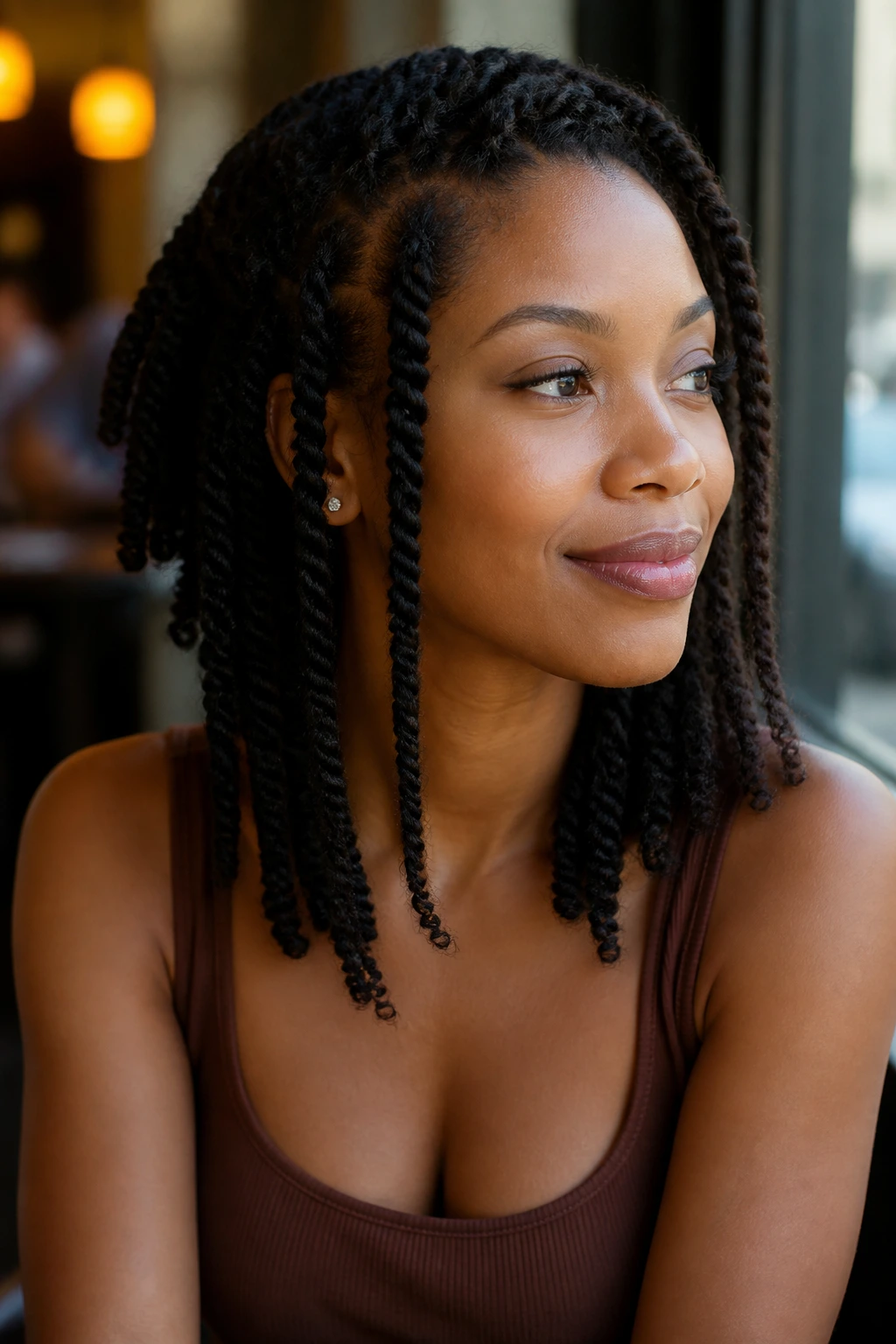
A long-front, short-back cut changes the silhouette immediately. The front pieces skim the collarbone or chest while the back sits shorter and lighter, which keeps the style from feeling heavy across the shoulders.
I like this shape because it looks styled even when you’ve done very little with it. The front gets the drama, the back stays practical, and the whole thing feels easier to wear day after day. If you want Marley twists that move a lot but don’t beat up your neck, this is one of the smartest shapes in the bunch.
32. Knotless-Base Marley Twists
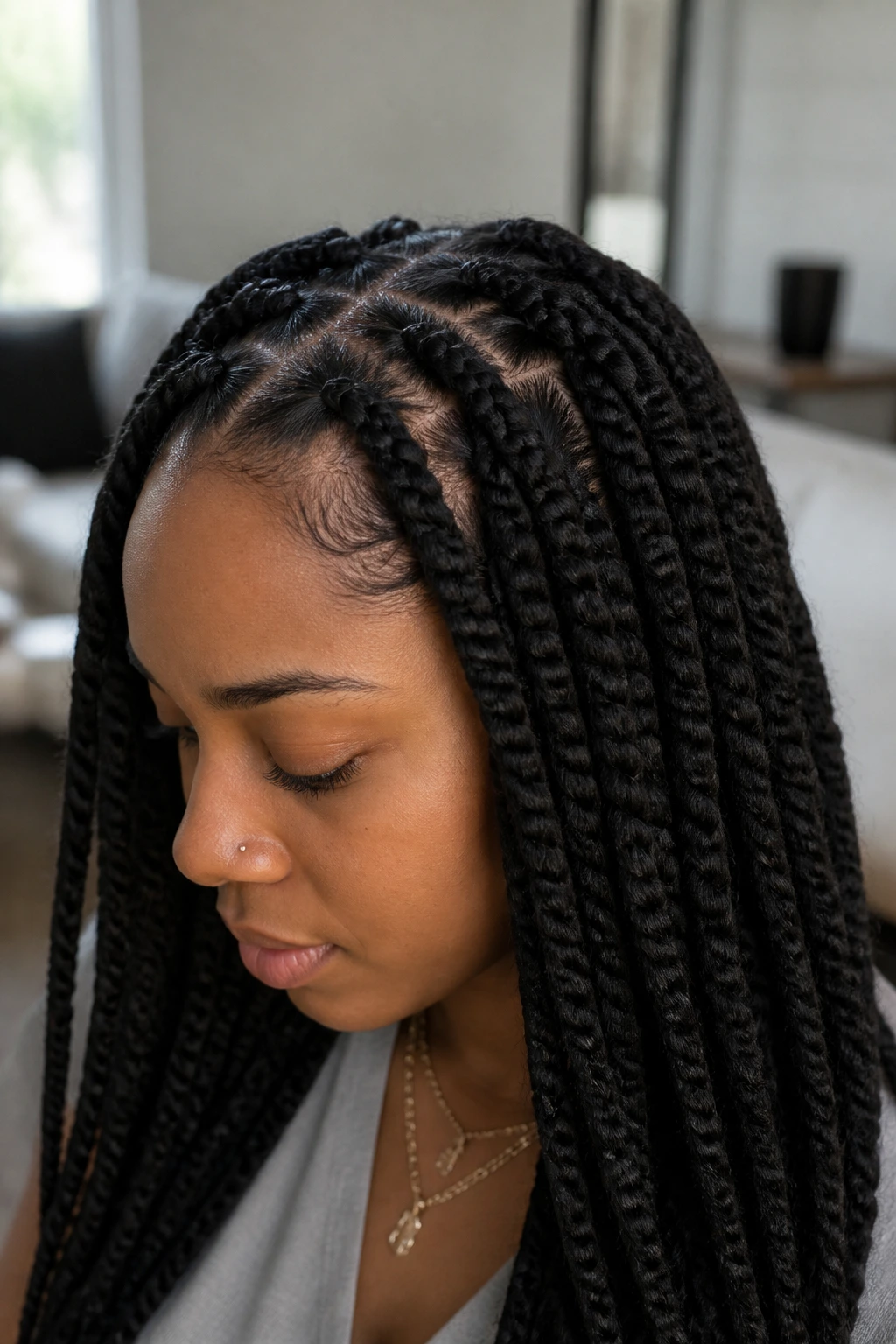
A knotless base matters more than people think. It gives the roots a flatter, smoother start, so the style looks cleaner at the scalp and feels gentler if your edges or temples are sensitive.
The visual effect is subtle at first, but it shows up in the way the twists sit. They look less bulky at the root and tend to blend better into natural hair. That makes this a good option for anyone who wants Marley twist styles that look neat without the obvious bump where the extension begins.
33. Deep Side-Sweep Marley Twist Bob
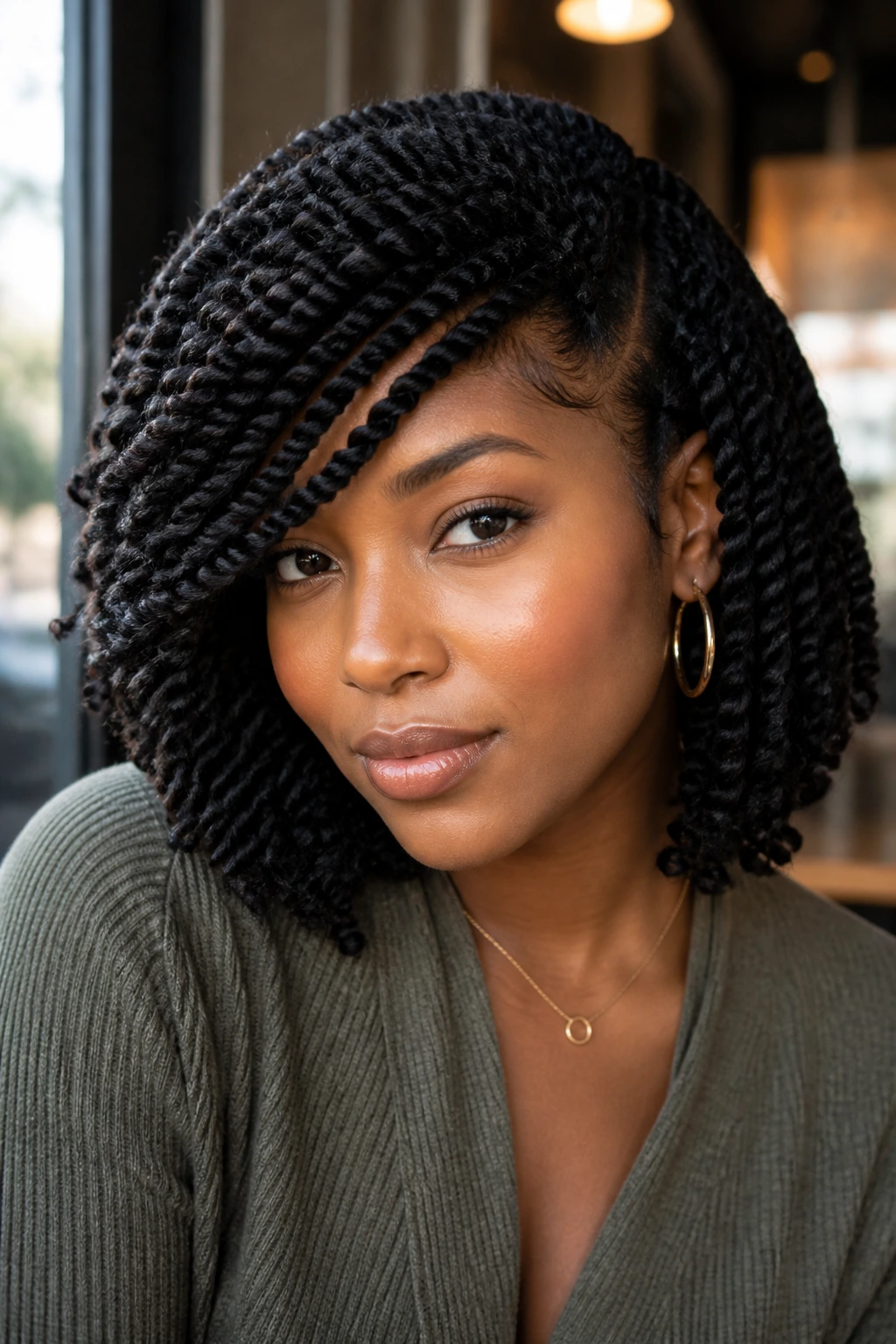
A deep side sweep adds a little glamour to a bob without changing the cut. The front mass moves over one side of the forehead, which gives the short length a softer line and keeps the style from feeling boxy.
This is one of my favorite fixes for a bob that feels too plain. It changes the whole face frame in seconds, and it works especially well when the ends are slightly curved or blunt. Keep the sweep smooth near the part and fuller through the lengths so it doesn’t fall flat by noon.
34. Wrapped-End Marley Twists
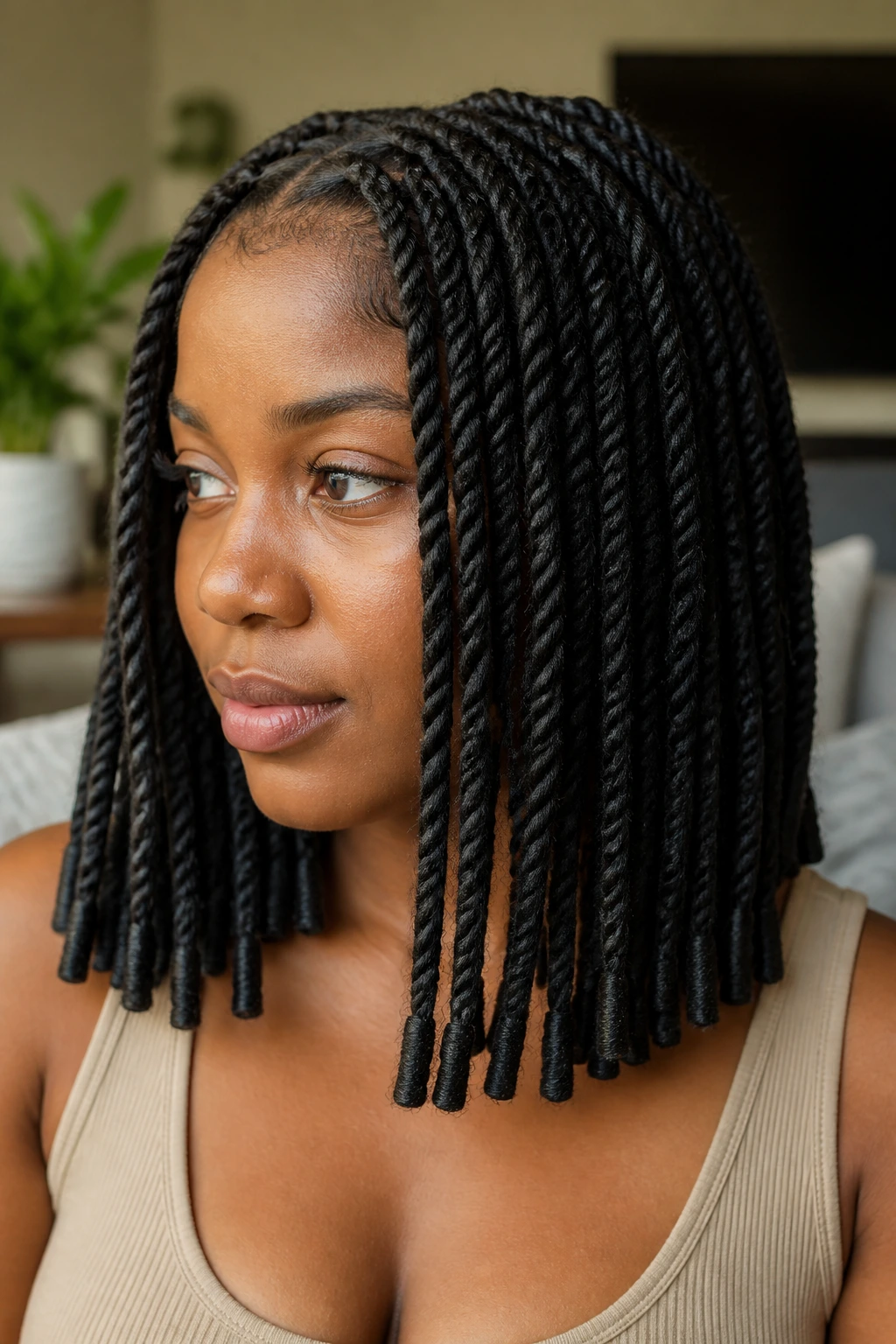
Wrapped ends give the finish a cleaner, more finished edge. Instead of letting the ends fray openly, you wrap or secure them so the final line looks neat and the twists hold their shape longer.
This is a good pick if you like your styles tidy. Wrapped ends can make shorter twists feel polished and longer twists easier to wear under scarves or jackets. They also help when you want the style to look deliberate in photos, because the ends read as part of the design instead of an afterthought.
35. Scarf-Crowned Marley Twists
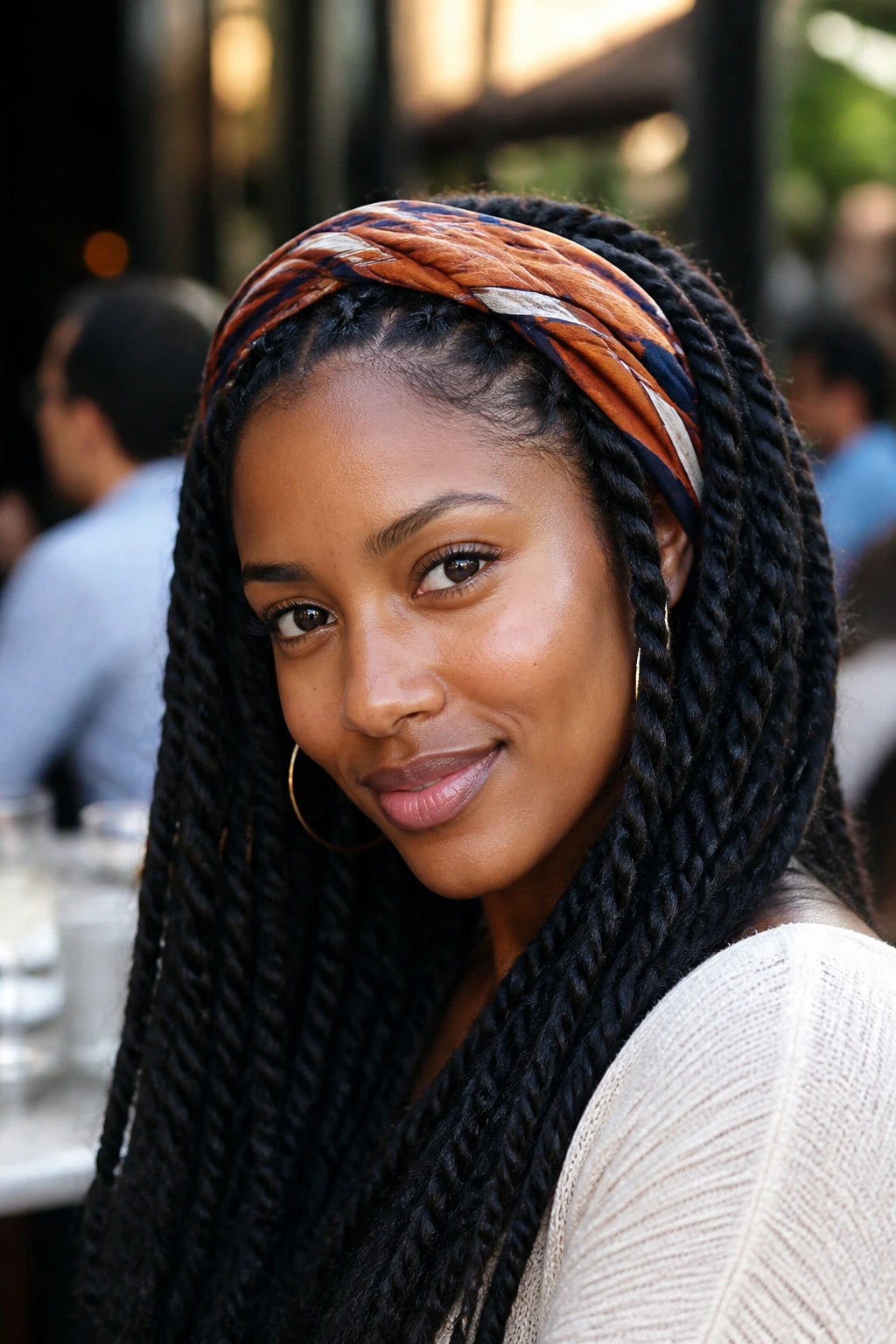
A scarf across the crown changes the style without changing the twists themselves, which is useful when you’re tired of the same look but don’t want to take anything down. The scarf adds color, pattern, and a little structure at the hairline.
This works best when the scarf is placed low enough to show the twists around the face. A silk or satin piece keeps the style gentle, while a printed cotton wrap can make the whole look feel bolder. If the twists are long, let them fall freely under the scarf instead of stuffing everything underneath.
Why Marley Twists Work So Well on Black Hair
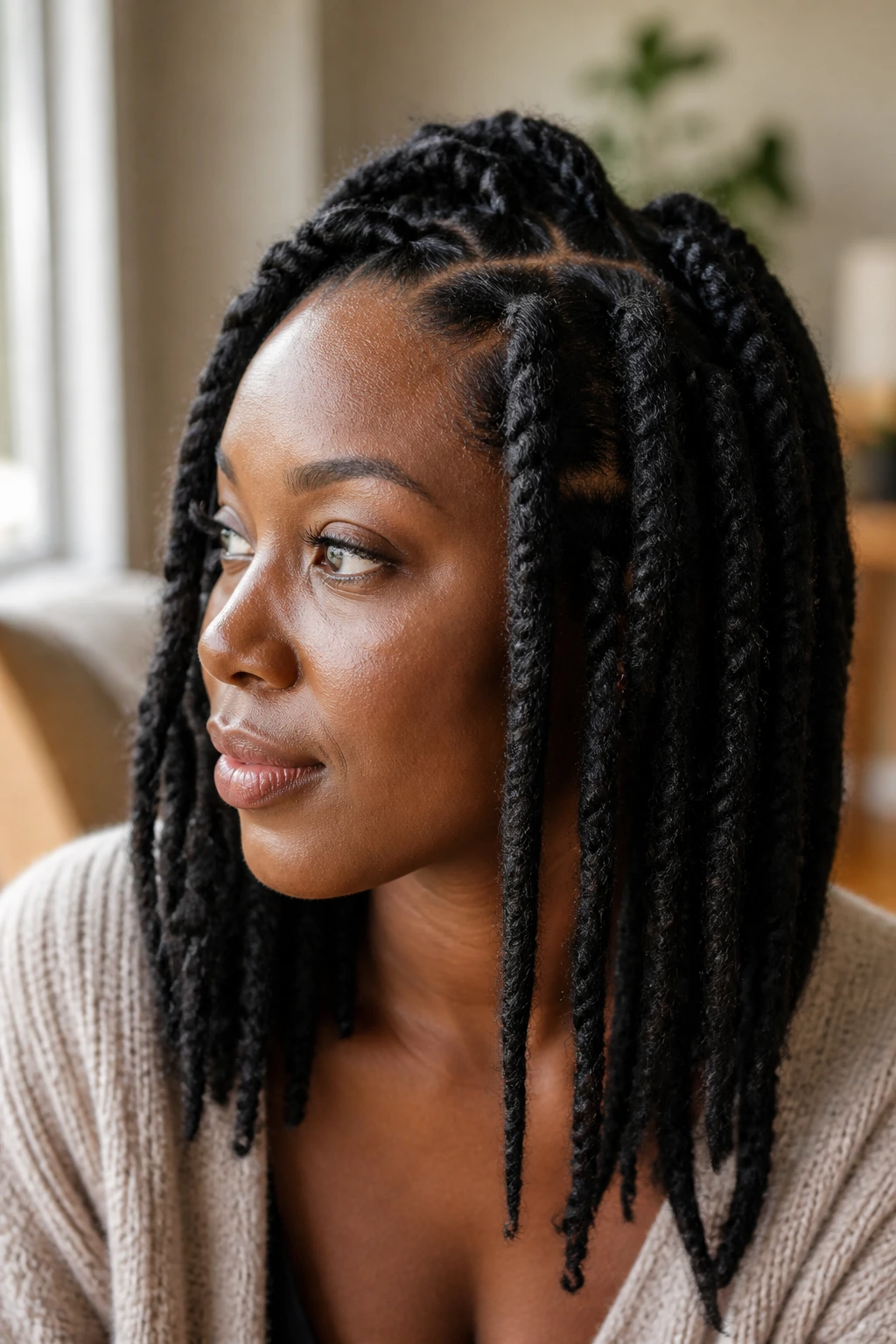
Marley twists behave differently on Black hair because the hair and the extension meet in the middle. The natural texture gives the twist something to hold, and the Marley fiber has enough friction that the style doesn’t slip apart the second you move around. That grip is part of why the style lasts.
There’s also the matter of shape. Black hair can carry density at the root without making the style collapse, so a Marley twist set can start neat and still look full as it settles. A little fuzz later on does not ruin the look; it softens it. That matters more than a lot of people think.
A sleek synthetic braid can look too sharp against textured hair. Marley twists avoid that. The matte finish blends better, which is why the style often feels more natural on Black hair than shinier options do.
Essential Tools and Hair You’ll Want Nearby
-
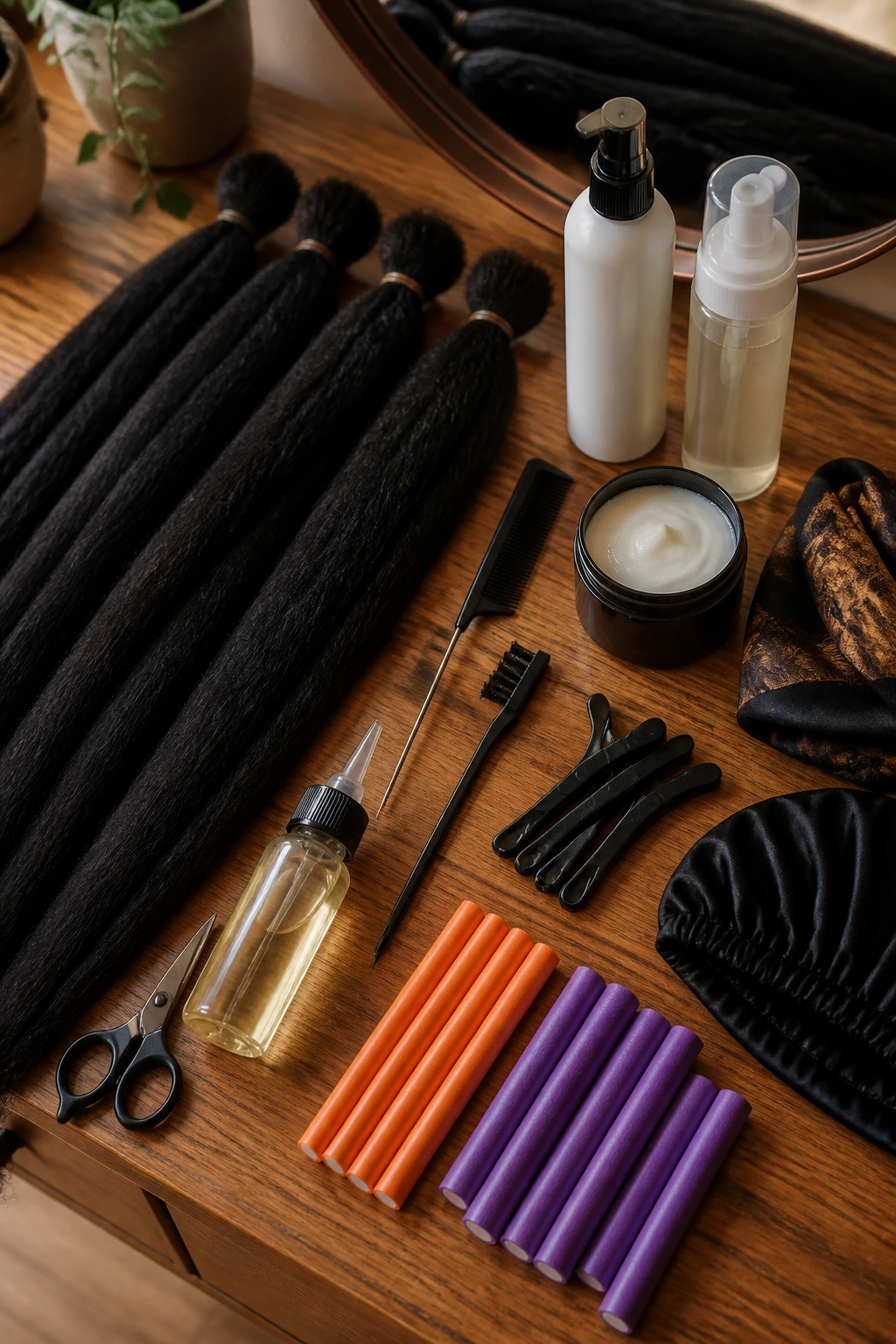
Marley hair, 6 to 10 packs depending on length and fullness: Mid-back sets need more hair than a chin-length bob, and it’s better to have one extra pack than to run short at the front.
-
Rat-tail comb: A metal or fine plastic tail gives you cleaner parts and helps keep section lines straight.
-
Hair clips or duckbill clips: These keep the working sections out of the way so the parting stays tidy.
-
Leave-in conditioner or lightweight moisturizer: Use this on your natural hair before installation so the base stays soft, not dry and wiry.
-
Mousse or foaming wrap lotion: A light pass after installation helps tame flyaways and settle the roots.
-
Edge brush and small amount of edge control: Useful if you want a clean hairline, but don’t pile it on.
-
Scarf or satin bonnet: Night protection is not optional if you want the style to last.
-
Scissors: Helpful for trimming stray extension ends or evening out an accessory wrap.
-
Scalp applicator bottle: Makes it easier to place oil or a light cleanser directly along the parts without soaking the twists.
-
Flexi rods or perm rods, optional: Useful if you want curled ends or a softer finish at the bottom.
Smart Shopping for Marley Hair, Length, and Density
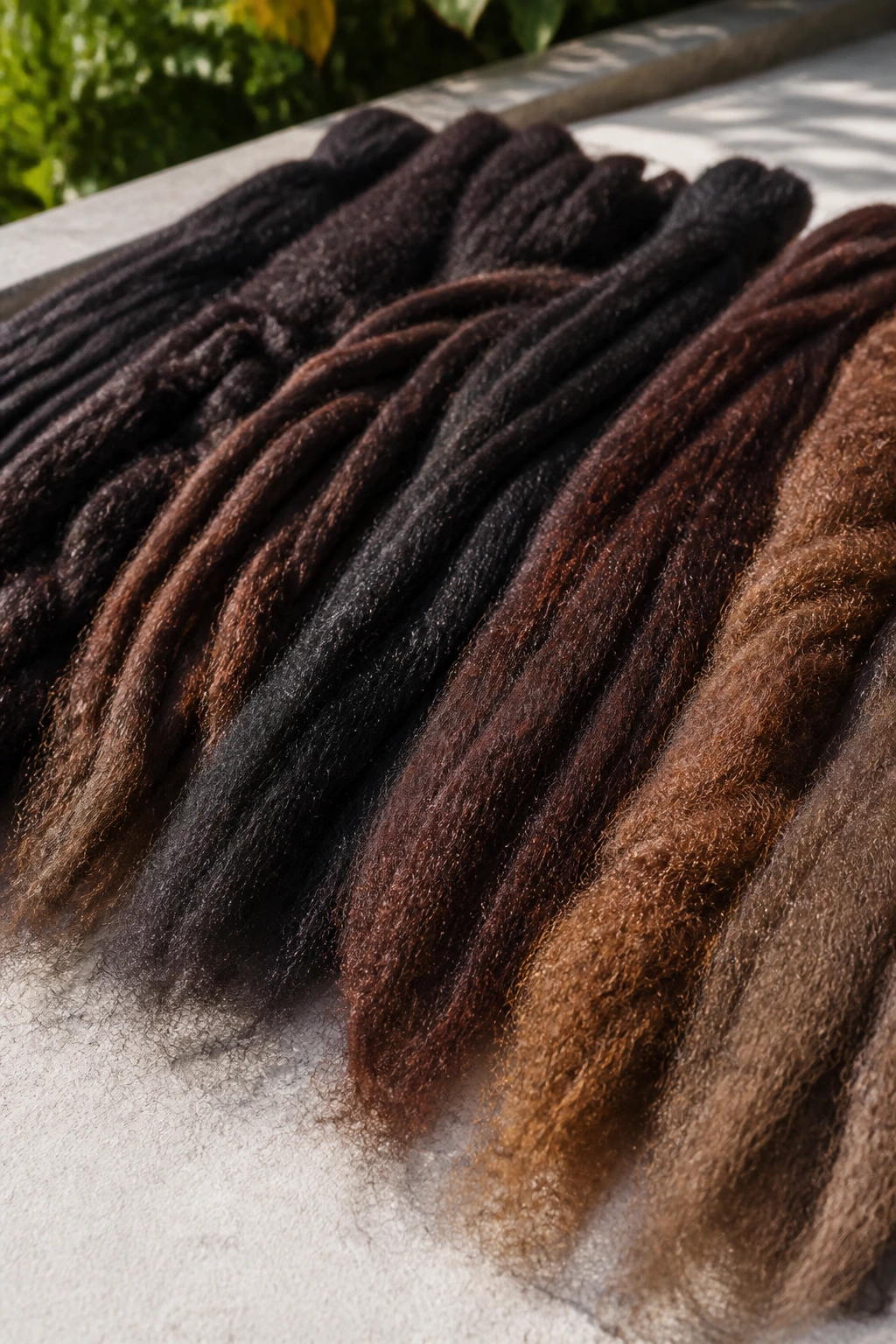
The first thing I’d look at is texture. Marley hair should have that soft, coarse feel that grips itself. If the hair is too shiny, the twists can look plastic. If it’s too rough and dry, the install can snag as you work. You want something that moves a little but still holds shape.
Length is where people usually overshoot. Waist-length twists are lovely, but they also bring weight, tug, and more nighttime fuss. If you know you hate hair touching your collar, don’t pretend you suddenly love it because the photo is pretty. Shoulder length and mid-back usually give you more wear time before the style starts feeling like a job.
Buy hair in one go if you can. Mixing packs from different batches can give you tiny changes in color or texture that show up once the twists are done. And if you’re going for color, check the undertone in daylight. A brown that looks warm in the store can read red under a bathroom mirror.
Density matters too. Fine hair often looks best with medium parts and mid-sized twists because the style sits more evenly. If your hair is thick, you can usually handle a fuller set, but don’t overload the front just because you have the hair to do it. The front is where comfort and shape both show up first.
How to Wear Marley Twists Without Fighting the Style
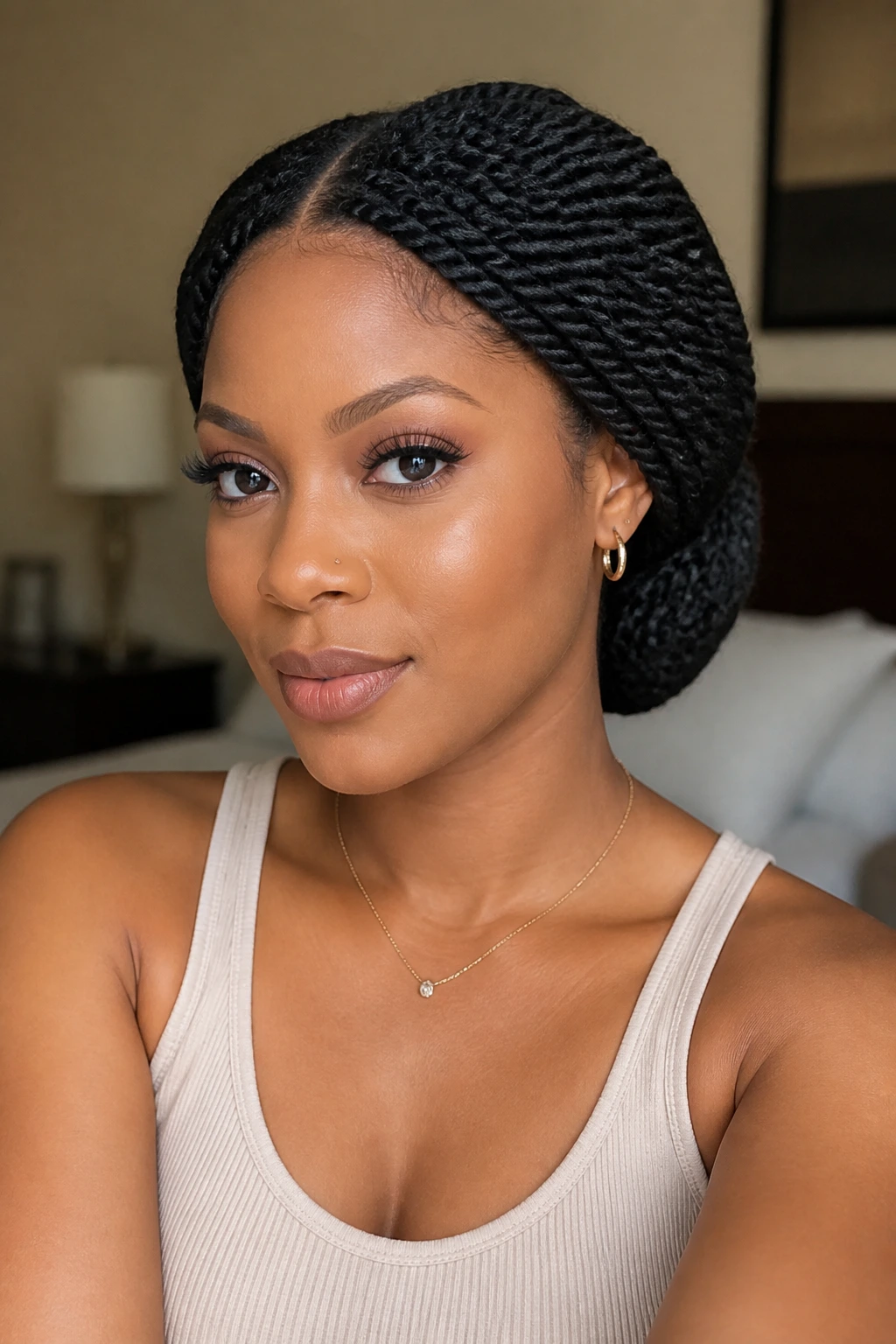
Everyday wear: Keep the line simple. A center part, a side part, or a low ponytail is enough for days when you don’t want to think about your hair every twenty minutes. A few twists tucked behind one ear can be more flattering than a big accessory.
Work or school: Choose a shape that looks tidy from the front and doesn’t flop into your face. Shoulder-length twists, a low bun, or a half-up style usually make the most sense here because they stay controlled without needing constant fixing.
When you want more lift: Pull the hair toward the crown, sweep it to one side, or add a small puff at the top. Those little changes shift the balance of the style and make even simple Marley twists feel styled on purpose.
When comfort matters most: Keep the weight off the neck. A bob, a wrapped bun, or a knotless-base set will usually feel kinder than a heavy, long install. Hair should suit your day, not the other way around.
Small Tweaks That Make a Basic Set Look Intentional
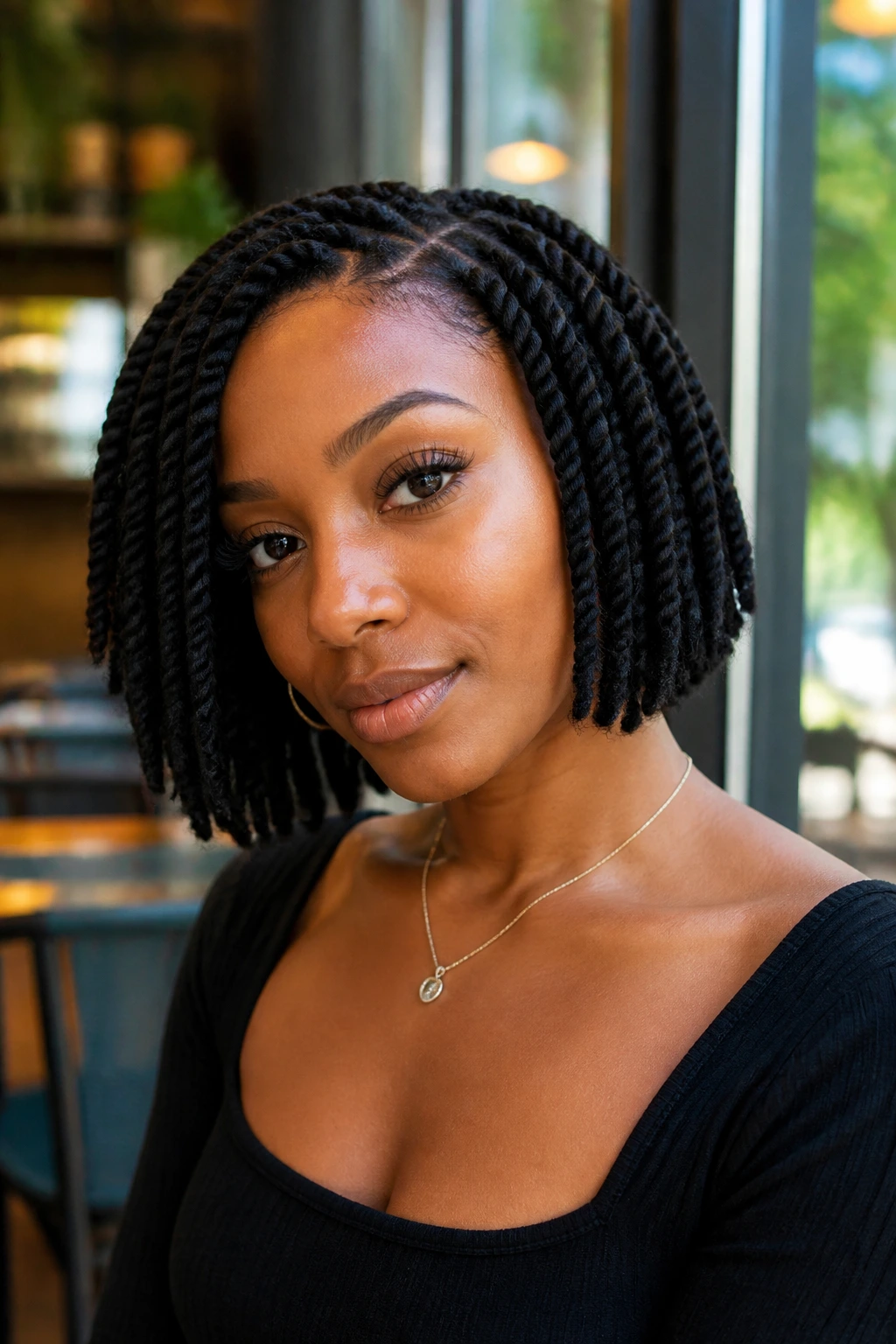
Parting: Triangle parts, zigzags, or a clean side part can change the whole read of the style. Straight parts feel neat; curved or angled parts feel softer and a little more custom.
Finish: A light mousse pass after installation settles the frizz at the roots without turning the twists stiff. If you use edge control, keep it at the hairline only.
Accessories: Pick one family of accents and stick to it. Gold cuffs, wooden beads, or a printed scarf can all work, but piling all three into one style usually looks crowded.
Weight: If the twists feel too heavy at the temples, move some of the bulk backward or shorten the length. That one adjustment can save the style from looking droopy.
Face framing: A couple of thinner pieces around the cheeks softens the line and keeps the style from closing in on the face. Small move. Big payoff.
Nighttime Care, Refreshing, and Safe Removal
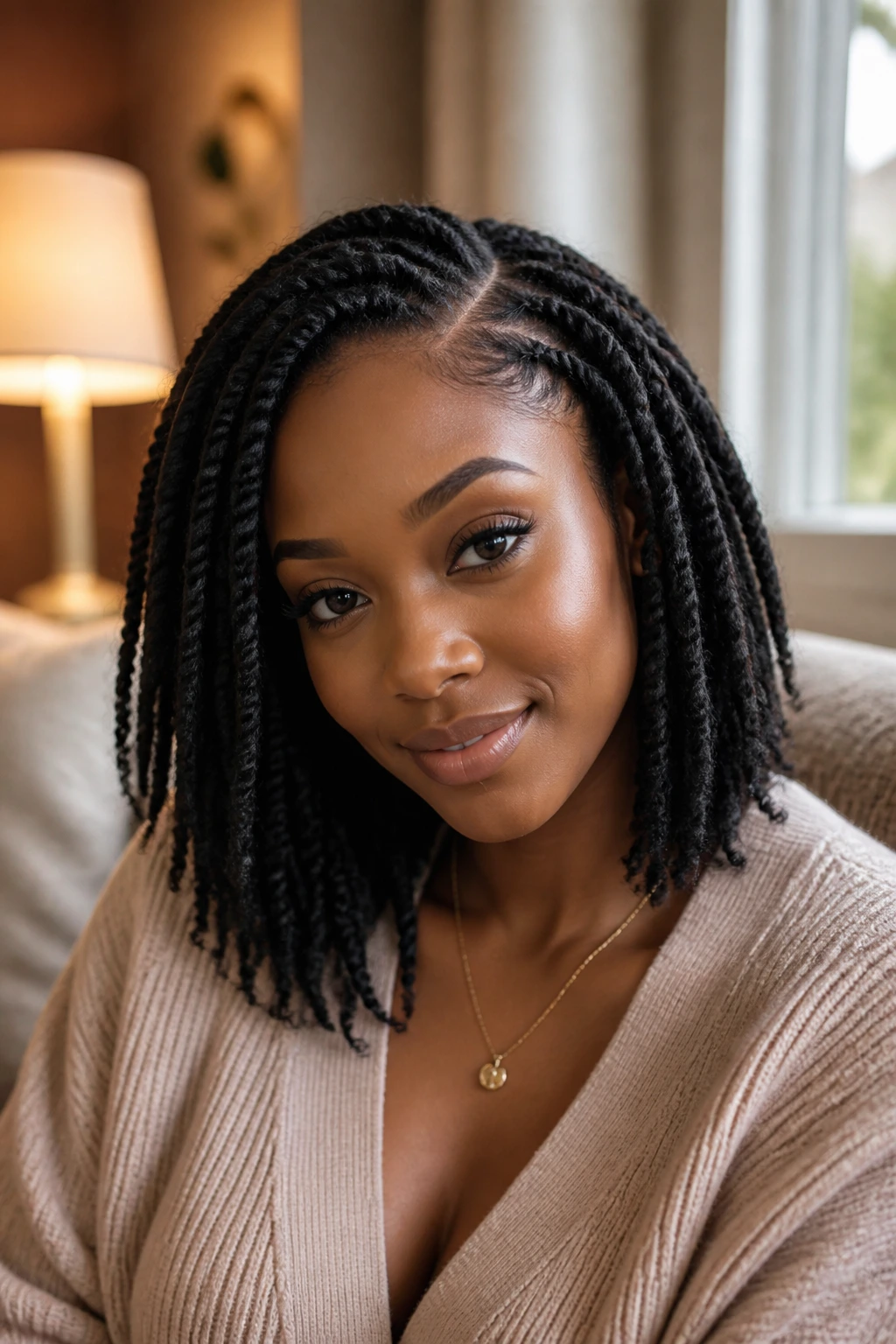
Night care is where Marley twists either stay cute or slide into chaos. A satin bonnet or scarf keeps the outer layer from rubbing against cotton pillowcases, and if the twists are long, I’d use both a scarf at the hairline and a bonnet over the top. The goal is to reduce friction, not crush the shape.
Every few days, a light mist on the scalp and a quick press of the roots is enough. Don’t soak the twists. Marley hair can hold moisture longer than you think, and damp twists under a bonnet are how you end up with a style that smells wrong before it looks wrong. If the scalp gets dry, use a tiny amount of oil along the parts, not all over the hair.
For removal, patience matters more than force. Clip the hair into sections, unwind the extension slowly, and separate the natural hair as you go so you don’t drag knots downward. If the style has been in for six to eight weeks, stop before the roots mat hard. That’s the line where a protective style stops being protective.
Variations and Adaptations Worth Trying
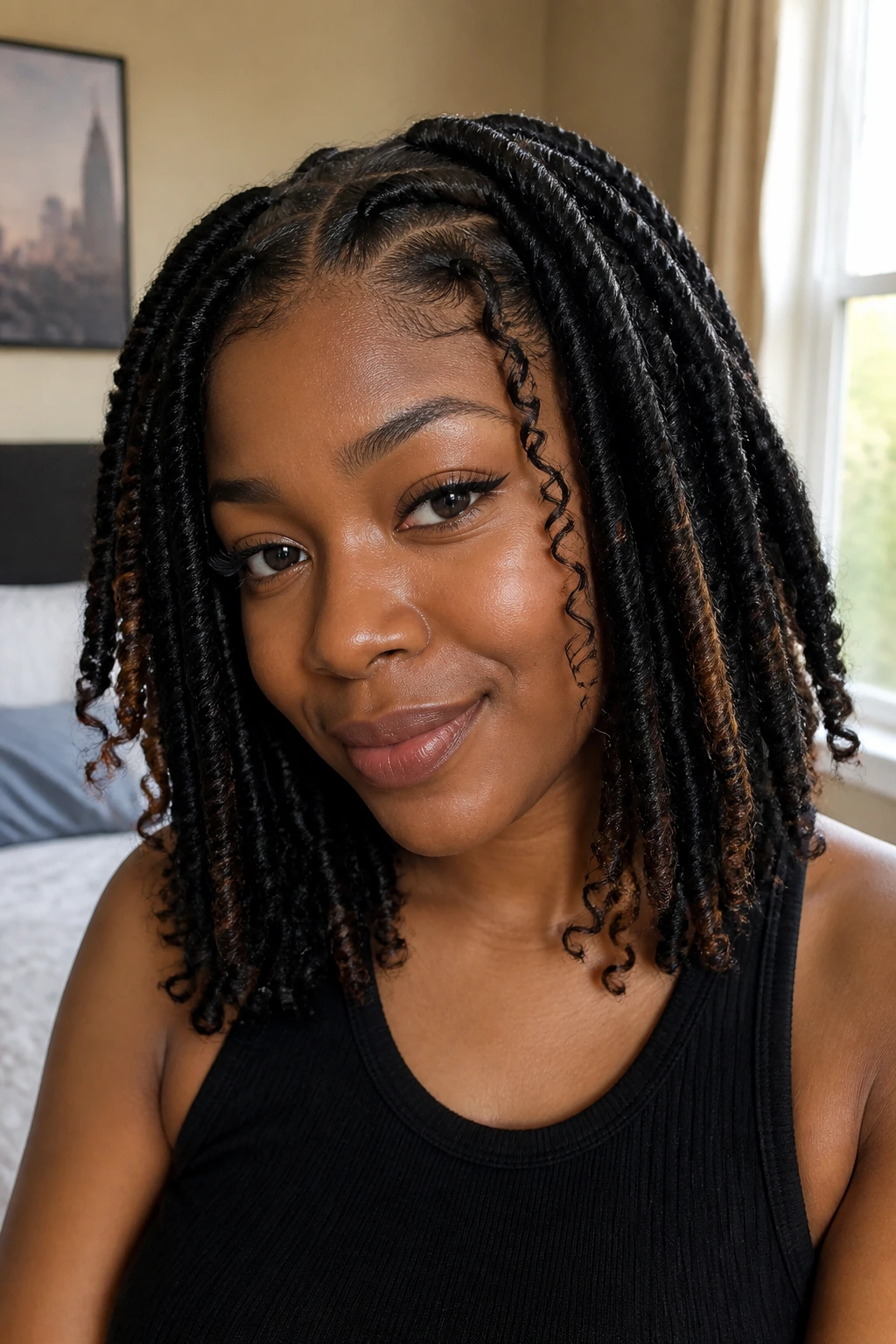
Lightweight Everyday Set: Keep the twists shoulder length, use medium parts, and skip heavy accessories. This version works when you need a style you can keep under a scarf, hood, or jacket without getting annoyed.
Bold Color Story: Try copper, burgundy, or honey-brown Marley hair in the front with darker pieces toward the back. The color shifts add depth even when the twist pattern stays plain.
Soft Boho Version: Add a few loose curls at the front and ends, but keep the rest of the install neat. That keeps the style from drifting into chaos while still giving it movement.
Event-Ready Updo: Build a halo, low bun, or high ponytail and finish with cuffs or a scarf. This works when you want the twists to look dressed up without losing the texture that makes them interesting.
Tender-Scalp Version: Choose a knotless base, keep the parts slightly larger, and stop the length at the shoulders or collarbone. The style stays cute, but the weight drops off fast.
Kid-Friendly Short Set: A chin-length bob or pixie-length version keeps the hair out of the way and cuts down on nightly fuss. Beads can work here too, as long as they stay light and balanced.
Common Mistakes That Flatten the Style or Stress the Scalp
-
Making the roots too tight: If your scalp throbs, your hairline lifts, or the style feels sore by the end of the day, the base is too snug. Marley twists should sit secure, not clamp down.
-
Choosing more hair than your neck can carry: A huge set can look great for one photo and miserable by day three. If you know you don’t like weight, keep the length or density in check.
-
Skipping the night wrap: Friction at the pillow fluffs the roots and roughs up the ends fast. A scarf or bonnet is the difference between a set that stays neat and one that goes fuzzy in a hurry.
-
Piling product onto the hairline: Too much edge control turns the front stiff and dusty-looking. Use a small amount, smooth it once, and leave it alone.
-
Ignoring the front while styling the back: The back might be full and pretty, but if the crown is flat or the part is crooked, the whole look suffers. The front is what people see first.
Questions People Ask Before Getting Marley Twists
How many packs of Marley hair do I need?
Most shoulder-length sets land around 6 to 8 packs, while longer or fuller styles can need 8 to 10. If you’re adding beads, cuffs, or a lot of density, buy one extra pack so you don’t end up stretching the front.
Do Marley twists work on short natural hair?
Yes, as long as the base has enough grip and the sections are neat. Shorter hair often does well with a knotless or medium-sized install, because the weight stays lower and the twists sit more naturally.
How long do Marley twists usually last?
A solid wear window is about 4 to 8 weeks, depending on how tight the base is, how well you wrap it, and how much you touch it. Once the roots start matting and the scalp feels crowded, it’s time to take them down.
Can I wash Marley twists?
You can clean the scalp, but don’t drench the whole style unless you’ve planned for a long dry time. A scalp applicator with diluted cleanser or a careful rinse on the roots is usually safer than fully soaking the hair.
Why do Marley twists get fuzzy so fast?
Because the fiber is textured on purpose. The fuzz is part of the look, but if it’s getting wild fast, the roots may be rubbing too much at night or the install may have been handled roughly.
Are Marley twists heavy?
They can be, especially when they’re long or jumbo-sized. Medium twists at shoulder or mid-back length usually feel easier to wear for longer stretches.
What if the style feels tight after the first day?
A little snugness at the base is normal; pain is not. If your scalp aches, the front feels pulled, or you see tension bumps, the install was too tight and should be loosened or redone before it gets worse.
Can I put Marley twists into updos after they’ve been in for a week or two?
Yes, and that’s one of the reasons people like them. A half-up, bun, ponytail, or side sweep can refresh the style without disturbing the whole set, especially if the base was installed neatly.
The Styles That Keep Their Shape
The nicest thing about Marley twists is that they don’t need a lot of extra decoration to look complete. A different part, a shorter cut, or one good accessory can change the whole mood. That’s why this style family keeps coming back: it gives you shape first, then lets you decide how loud you want to be.
Pick the silhouette that fits your neck, your mornings, and the amount of patience you actually have. A chin-length bob can be smarter than waist-length drama. A low bun can feel better than a fancy front. And a clean set with a little texture left in the ends can look better on day five than a style that was overworked on day one.
