



The difference between a braid that looks soft and one that looks строг… no, not strict, stiff — usually comes down to three things: tension, finish, and where the braid sits against the head. A braid hairstyle for a soft polished look should hold its shape, but it should not feel pulled so tight that every line screams for attention. The nicest versions have clean parts, controlled shine, and a little give around the hairline.
That’s why braids, twists, and loc styles work so well here. They give structure without forcing the hair into a hard shell. A low braid can sit close to the nape and still look relaxed. A crown braid can feel romantic instead of costume-y if you keep the crown loose and the ends tucked neatly. Even a loc updo can read soft if the shape is round, the edges are brushed smooth, and the finish stays matte-to-satin instead of glossy and heavy.
There’s also a practical side to this look that people do not talk about enough. Soft polished braids are forgiving. A tiny bit of texture at the roots? Good. Second-day hair? Even better. A few face-framing pieces? Usually better than trying to force every strand into submission. The trick is to make the style look intentional, not overworked, and that comes from the details you choose before your hands ever start braiding.
Why These Braids Read Soft Instead of Severe
- Controlled tension: The braid should hold its shape, but the scalp should never look stretched or shiny from pulling. A braid that hugs the head too tightly usually looks harsher than it needs to.
- Clean parting: A neat center part, a soft side part, or crisp sectioning gives the style polish. The rest of the braid can stay loose enough to move.
- A finish with movement: A little pancaking, a few curled ends, or a low tucked shape keeps the style from turning boxy. Flat is not the goal.
- The right product amount: A pea-sized dab of gel at the roots and a light mist of mousse often does more than a heavy layer of styling cream. Too much product turns soft into greasy.
- Face-framing details: Tendrils, side swoops, or a few softly curved front pieces make the whole style feel gentler without losing structure.
- Low placement: Braids that sit at the nape, around the crown, or just off-center tend to feel more refined than high, tense styles that perch on top of the head.
1. Loose Low French Braid
A low French braid is one of those styles that looks more polished than the effort it takes. Start it with a clean center or side part, then keep the first two or three passes relaxed so the braid sits close to the head without swallowing the hairline. Once it drops to the nape, the braid can loosen a touch and still hold its shape.
What makes this version feel soft is the finish. Gently tug the outer loops after braiding — not enough to wreck the pattern, just enough to widen the braid by a few millimeters. That small move changes everything. The braid stops reading as sports-day practical and starts reading as elegant.
I like this on medium to long hair that has a bit of texture already. If your hair is freshly washed and very slippery, mist the lengths with texture spray first. That keeps the braid from collapsing halfway down your back.
2. Side-Swept Dutch Braid
A side Dutch braid has more lift at the scalp than a French braid, which sounds like it would look harsh, but it does not if you keep the tension even and the braid off-center. The raised pattern gives the hair a tidy frame, and the side placement keeps it from looking too formal.
The best version starts just above one temple and travels diagonally toward the opposite nape. That angle softens the whole face. When you finish, loosen the braid with your fingers from the outside edges only. Do not yank at the middle, or the braid will go puffy in the wrong way.
This is one of my favorite braid hairstyles for a soft polished look on day-two hair. Natural oils at the roots help the braid grip, and a little residual shape in the hair makes the finish look lived-in, not flat.
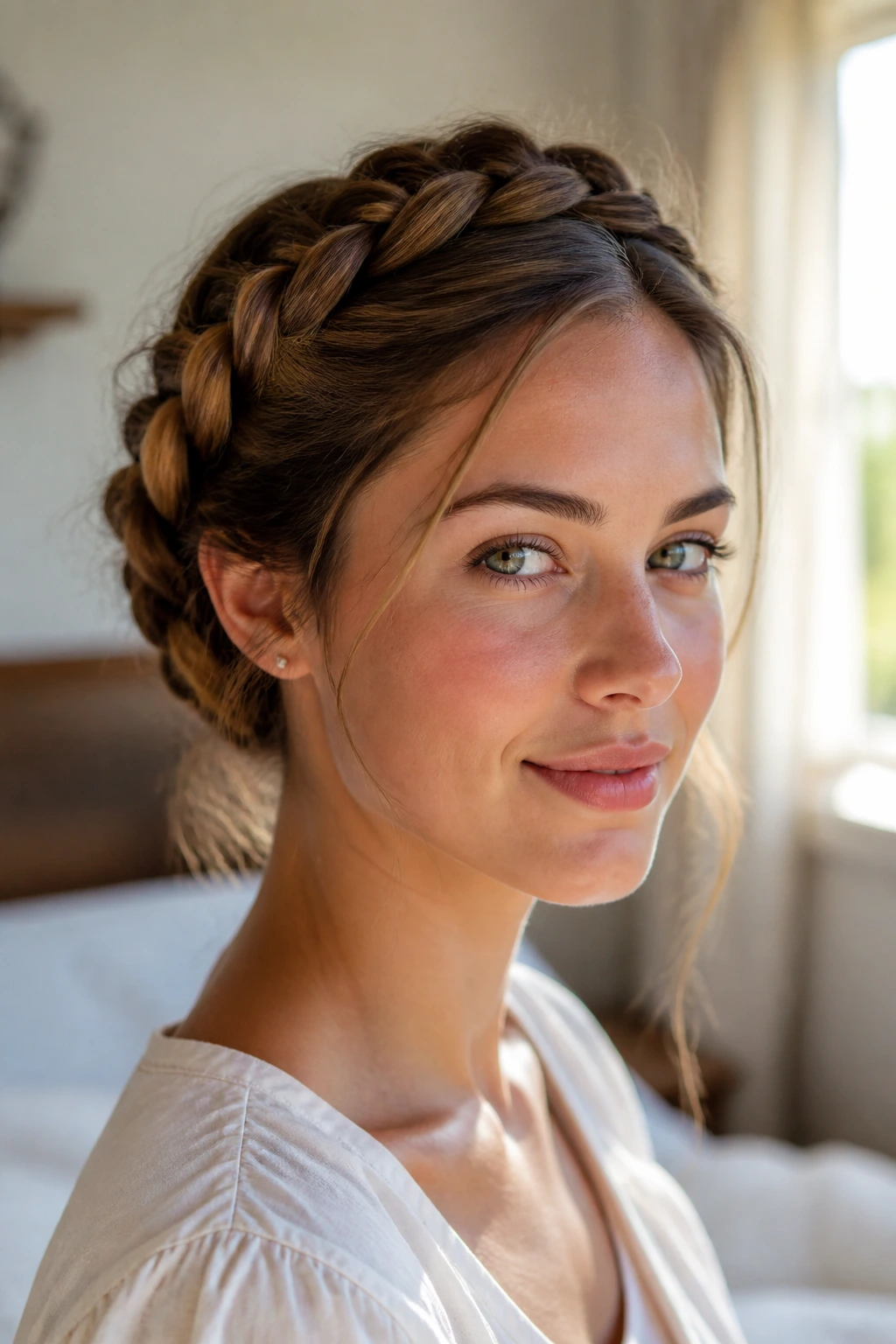
3. Center-Part Crown Braid
A center-part crown braid has a calm, balanced feel that is hard to beat. Two braids start near the front, travel along the hairline, and meet near the back like a quiet frame. If the parts are neat and the braid itself stays slightly loose, the result is graceful instead of fussy.
The main mistake here is making the braids too narrow at the front. That can make the style look sharp in a way that works against the soft finish. Give the front sections enough width to sit like a band rather than a thread. You want a visible shape.
A little styling cream at the roots helps the braid stay smooth, but stop before the hair gets slick. The crown should look controlled, not glued down.
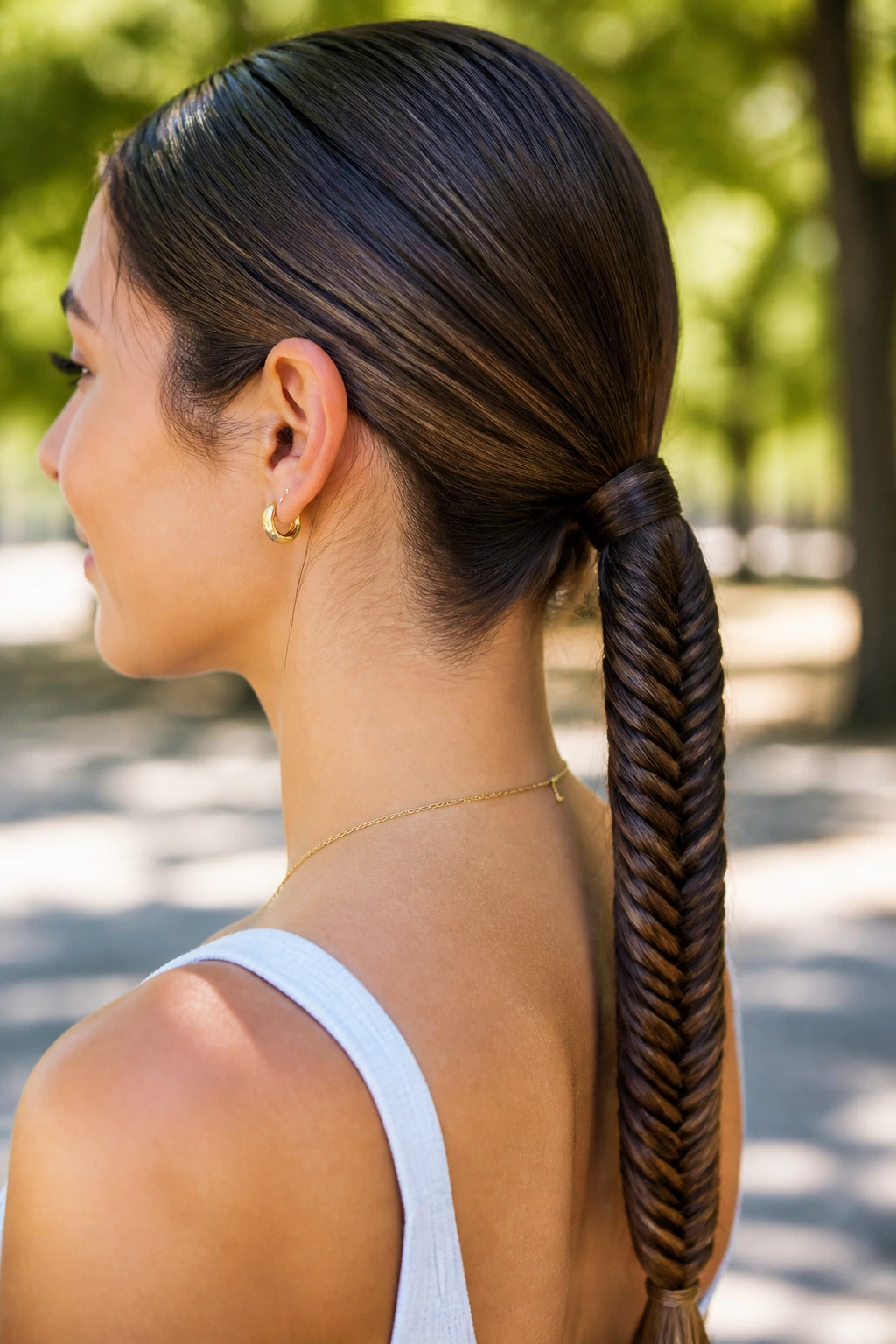
4. Fishtail Braid Ponytail
A fishtail braid brings detail without adding bulk, which is why it works so well when you want a polished look that still feels light. The smaller the sections, the more intricate the braid looks, but there’s no need to pull it tight. Let the pattern sit close, then relax the outer edges once the braid is secured.
This version shines when it drops into a low ponytail first and then gets fishtailed from there. The base stays smooth, the braid stays narrow, and the whole style moves like ribbon. It also takes well to a soft wrap of hair around the elastic, which hides the rubber band and cleans up the finish.
A fishtail braid can get stringy fast if the hair is too silky. A dry texture spray or a little mousse through the lengths helps the sections grip. That one detail saves you from endless re-braiding.
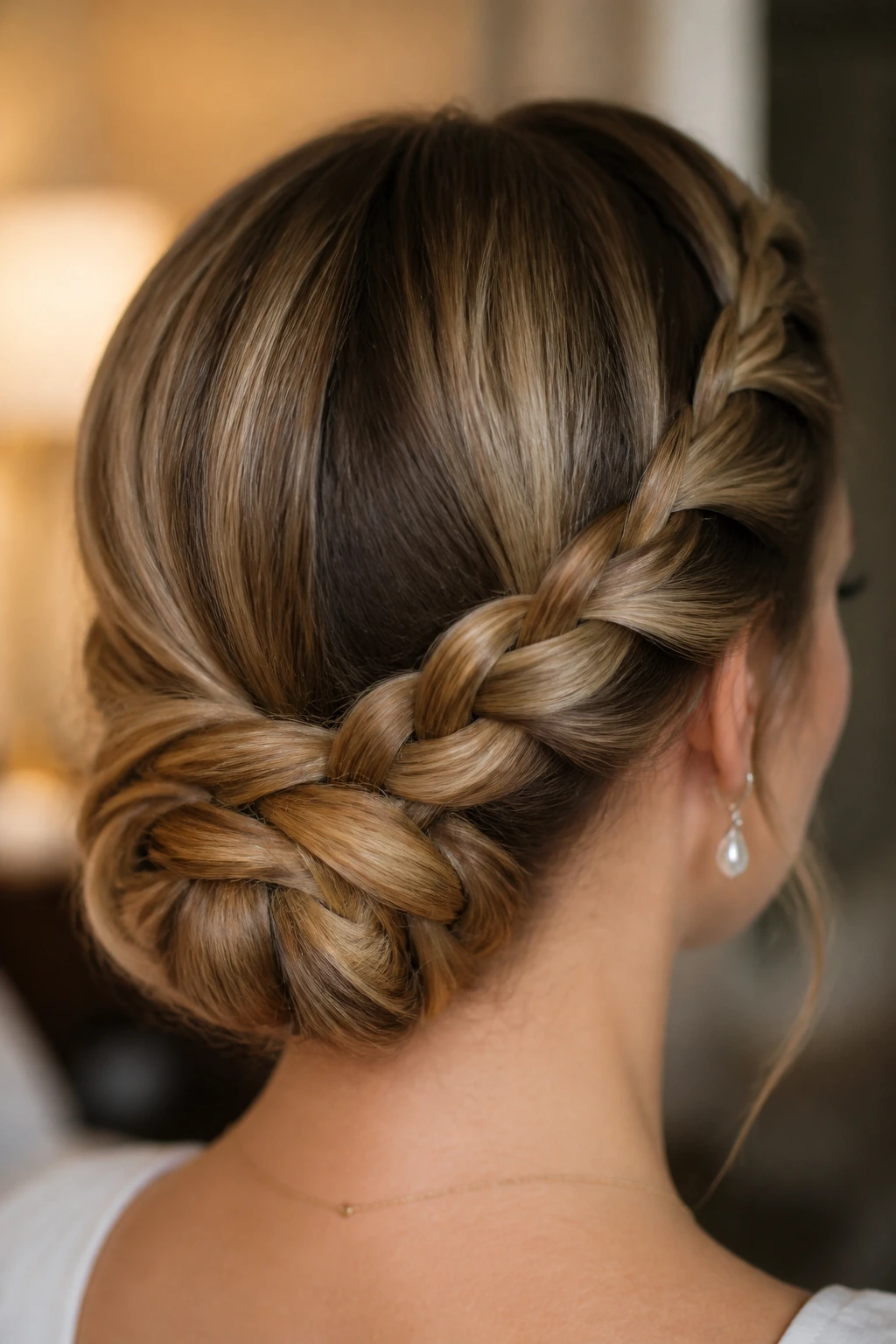
5. Braided Low Chignon
A braided low chignon is for the person who wants neatness without severity. First braid the hair into a single braid or a couple of smaller braids, then coil them at the nape into a soft bun. The shape should look tucked, not trapped.
The beauty of this style is the rounded silhouette. You do not need to chase perfection with every pin. A few loose turns around the bun make it feel gentle, and a lightly smoothed crown keeps the top polished. If the hair is very layered, pin the shorter pieces underneath instead of forcing them into the braid. That keeps the bun from frizzing at the base.
This one works especially well with drop earrings and a simple neckline. The braid does the work, so the rest of the look can stay clean.
6. Milkmaid Braids with a Soft Tuck
Milkmaid braids can look a little severe if they’re too tight or too high. The soft version sits lower on the head, with both braids wrapped across the crown and the ends tucked discreetly underneath. That shift makes the style feel calmer and less costume-like.
What helps most is keeping the crown section a little airy before the braid is pinned. The braid should frame the face, not clamp the head. A few tiny flyaways are fine here. They stop the style from looking overbuilt, which is the opposite of the soft polished effect.
If you have very long hair, tuck the tails under with two or three hidden pins on each side. If your hair is shorter, a couple of lightweight extension pieces can help build the wrap without making the braid bulky.
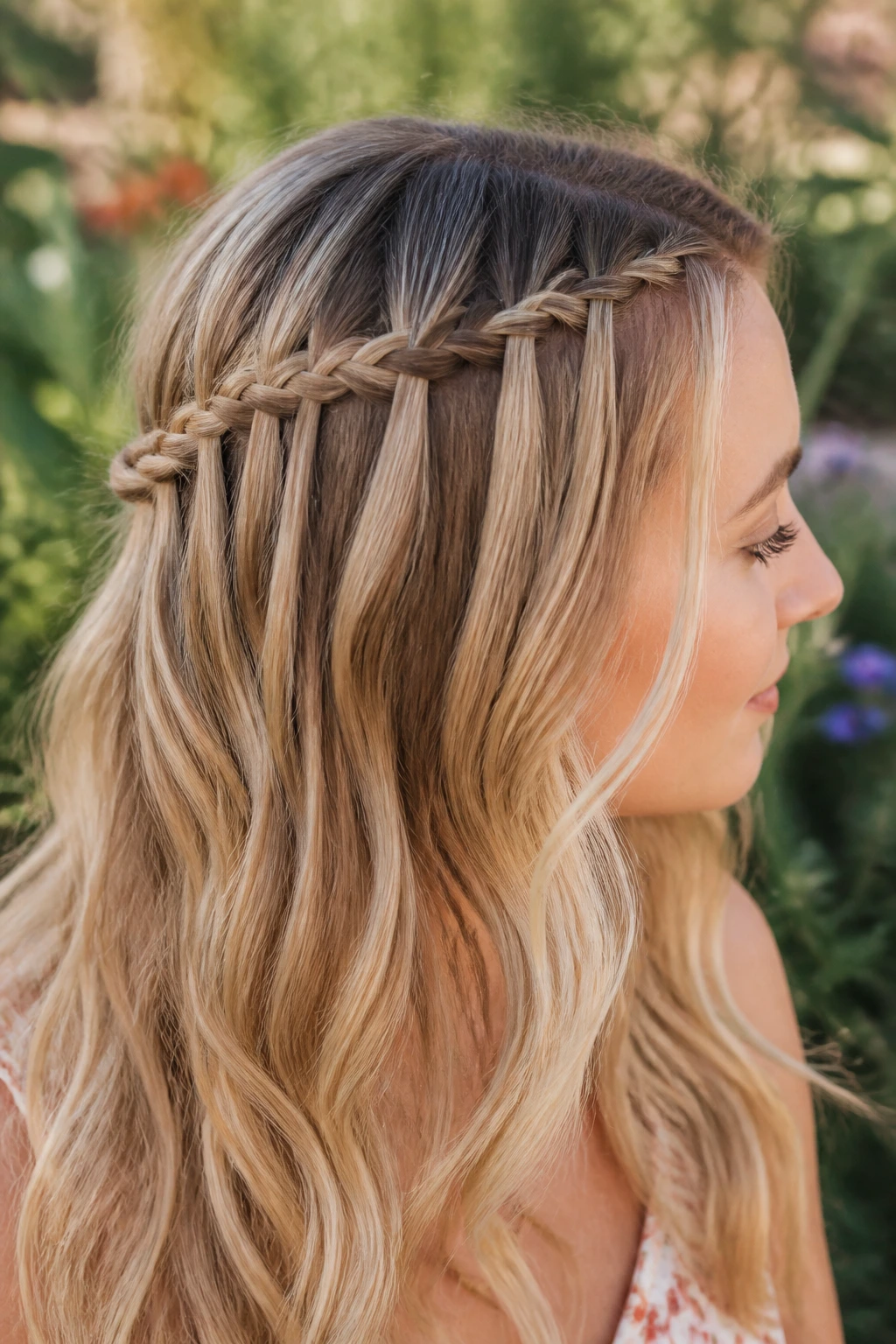
7. Waterfall Braid Half-Up
Waterfall braids are almost made for a soft polished look. The braid pattern drops sections through the weave, which leaves the rest of the hair loose and moving. That open structure keeps the style light around the face and soft through the lengths.
This version looks best with loose waves underneath. Straight hair can work, but it tends to feel sharper. The bend in the hair gives the braid somewhere to land, and the layers around the face catch the light in a way that feels gentle rather than rigid.
Keep the braid small and precise across the top half of the head. If it gets too wide, the pattern starts fighting with the loose hair below it. A small braid, a smooth crown, and a curled end finish are usually enough.
8. Rope Twist Ponytail
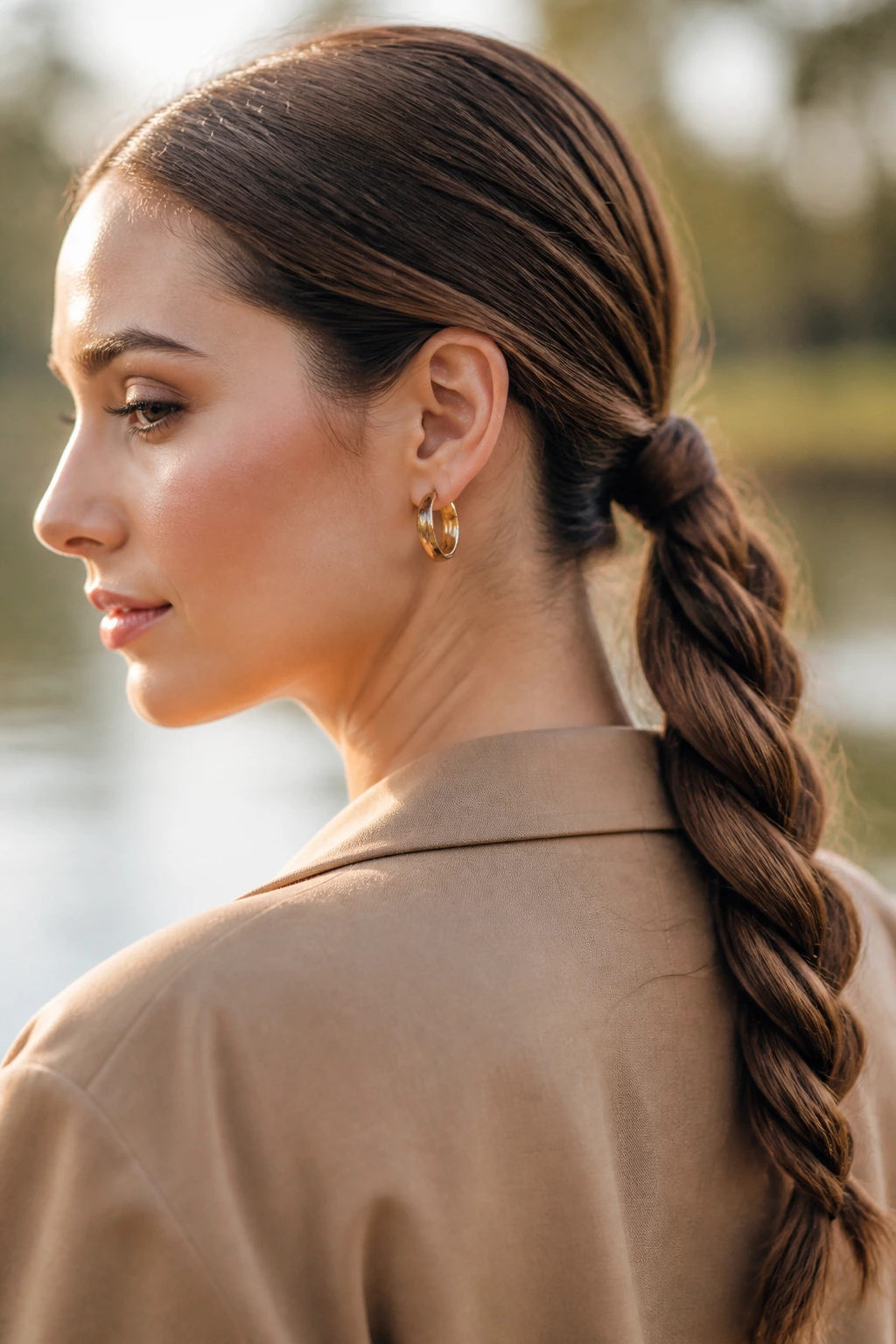
A rope twist ponytail has a clean, almost glossy line that still feels softer than a tight traditional braid. Two sections twist around each other, so the pattern looks polished without the denser weave of a three-strand braid. It’s a nice choice when you want movement and shine at the same time.
The trick is to keep the ponytail low and the twist even from top to bottom. If one section twists faster than the other, the shape gets wobbly. Brush the hair smooth before you start, then secure the base with a small elastic and hide it with a wrapped strand if you want a cleaner finish.
This style is especially good on wavy or curly hair that’s been blown out just enough to smooth the roots. It keeps texture in the lengths while giving the top a tidy line.
9. Double Braids Into a Low Bun
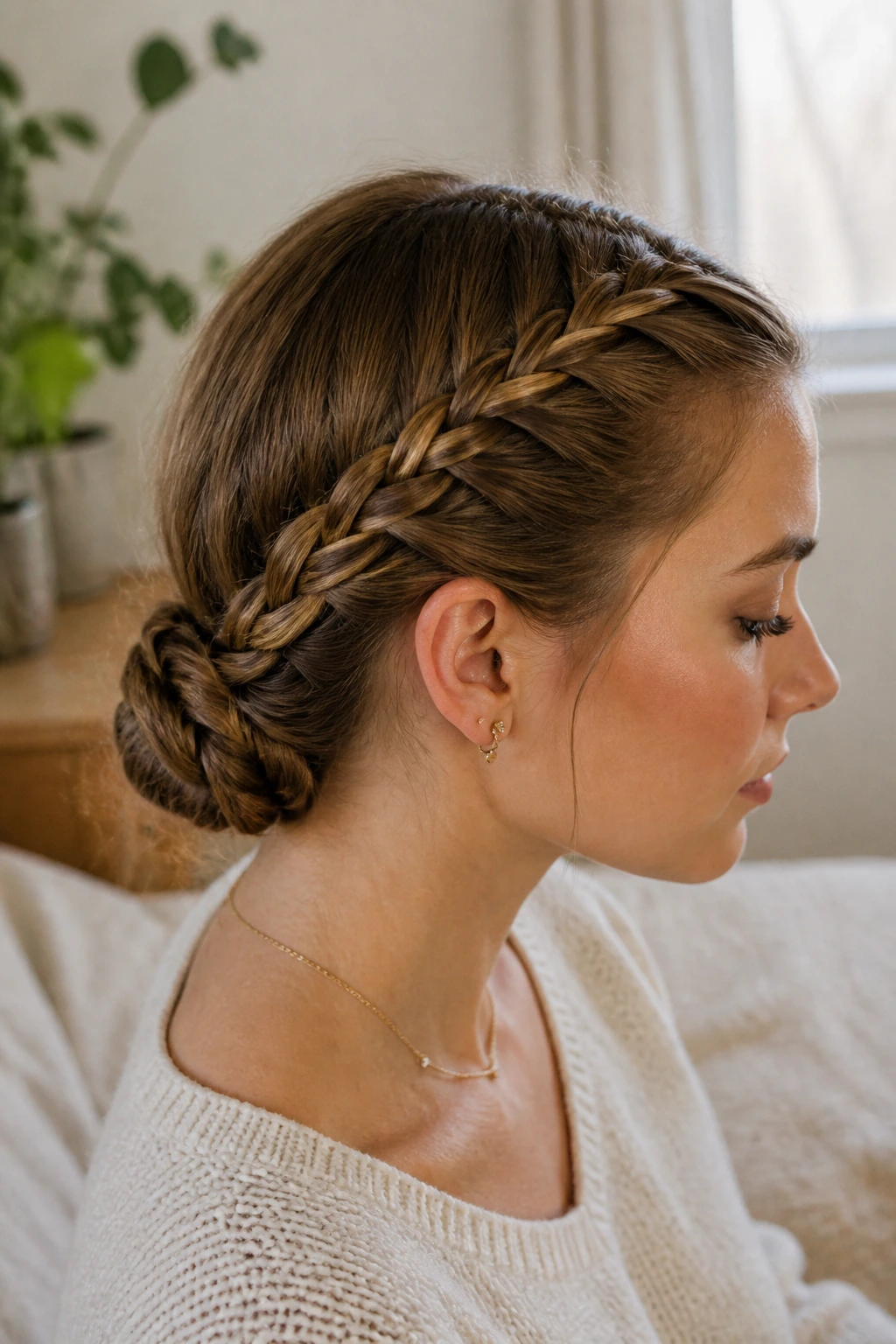
Two braids feeding into one low bun sound simple, and that’s part of the appeal. The symmetry makes the style feel settled, while the bun keeps the silhouette soft at the nape. It’s polished, but not stiffly formal.
Start with a center part, braid each side loosely, then cross the tails into a bun shape and pin them flat against the head. The braid pattern becomes texture inside the bun, which is a nice way to add detail without clutter. If your hair is thick, make the bun a little wider instead of forcing all the length into a tight knot.
I prefer this on hair that has a little grit to it. Too much slip and the braids slide. A touch of dry shampoo or texture spray at the roots gives the whole style staying power.
10. Braided Headband With Loose Waves
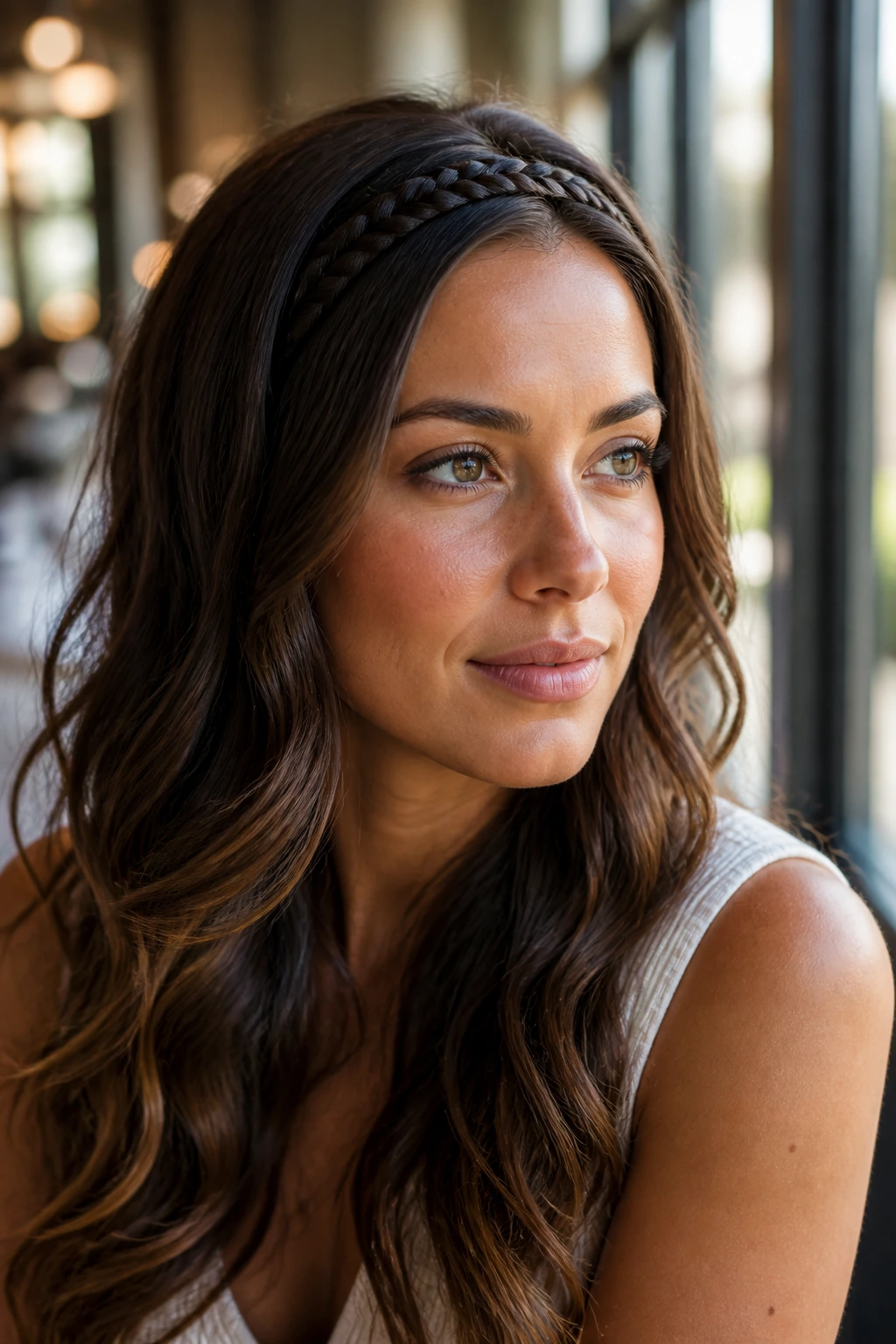
A braided headband is one of the easiest ways to make a simple hairstyle look thought-out. A narrow braid travels across the front hairline like a built-in accessory, while the rest of the hair stays loose in soft waves. Clean, pretty, no drama.
This style works especially well when you want the front of the hair controlled but still want movement through the ends. The braid should be thin enough to blend into the shape of the hair, not compete with it. A few face-framing pieces left out around the temples make the style feel less rigid.
The waves matter here. Flat hair can make the braid look pasted on. Loose bends, done with a curling iron or overnight set, create that gentle contrast between structure and softness.
11. Pull-Through Braid Ponytail
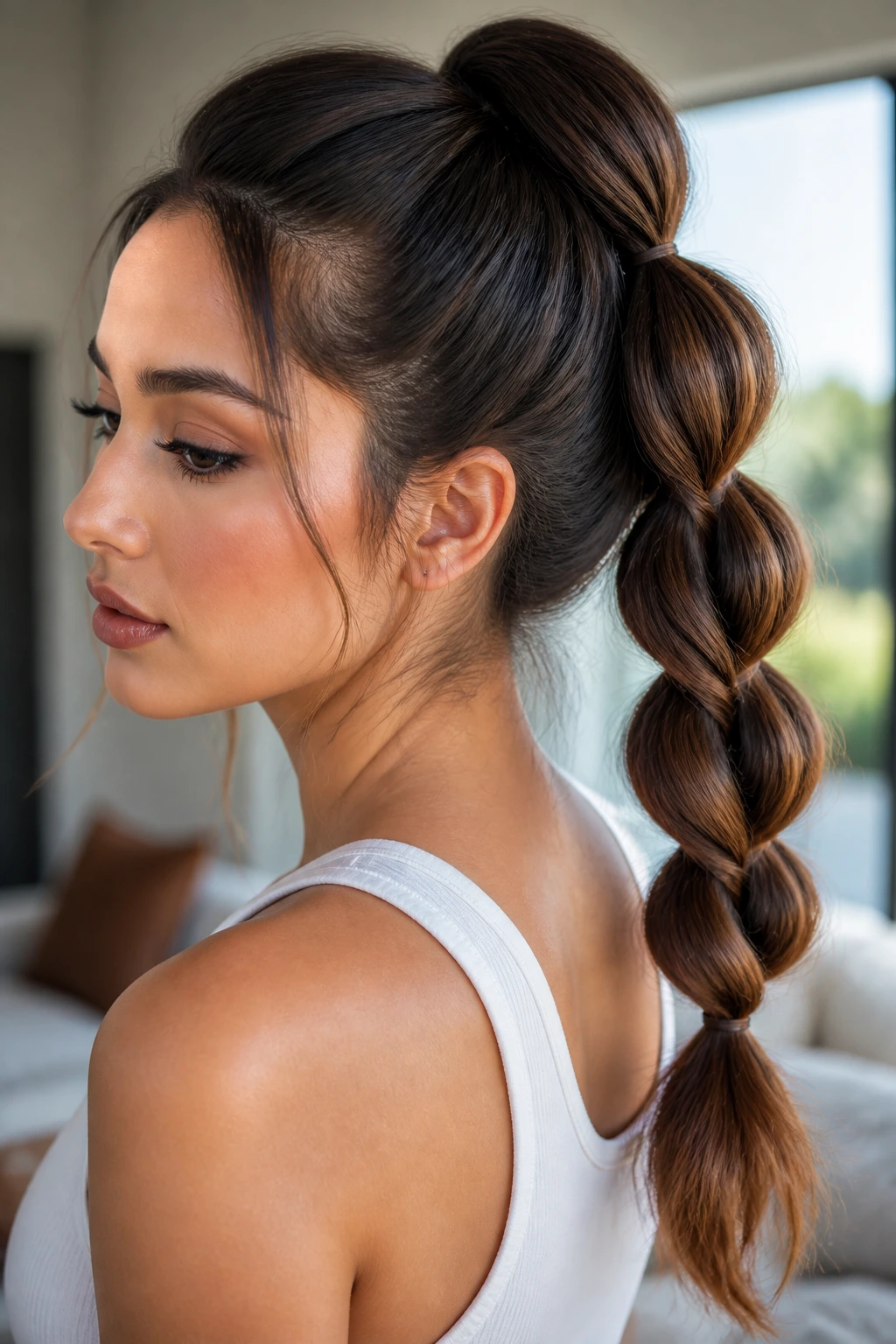
A pull-through braid gives you the look of a very full braid without requiring long hair or expert hands. It’s made from stacked ponytail sections, which means you can build height and fullness exactly where you want it. That alone makes it useful.
For a soft polished version, keep the braid low and gently fan out each loop after it’s secured. The “pancaked” sections should look rounded, not frayed. Smooth the top first, then build the braid down the ponytail so the root area stays neat and the body stays soft.
It’s a smart style for finer hair because the added elastics create volume that a standard braid can’t always give. Use clear elastics if you can. They disappear better than black ones and keep the whole thing looking cleaner.
12. Knotted Braid Half-Up
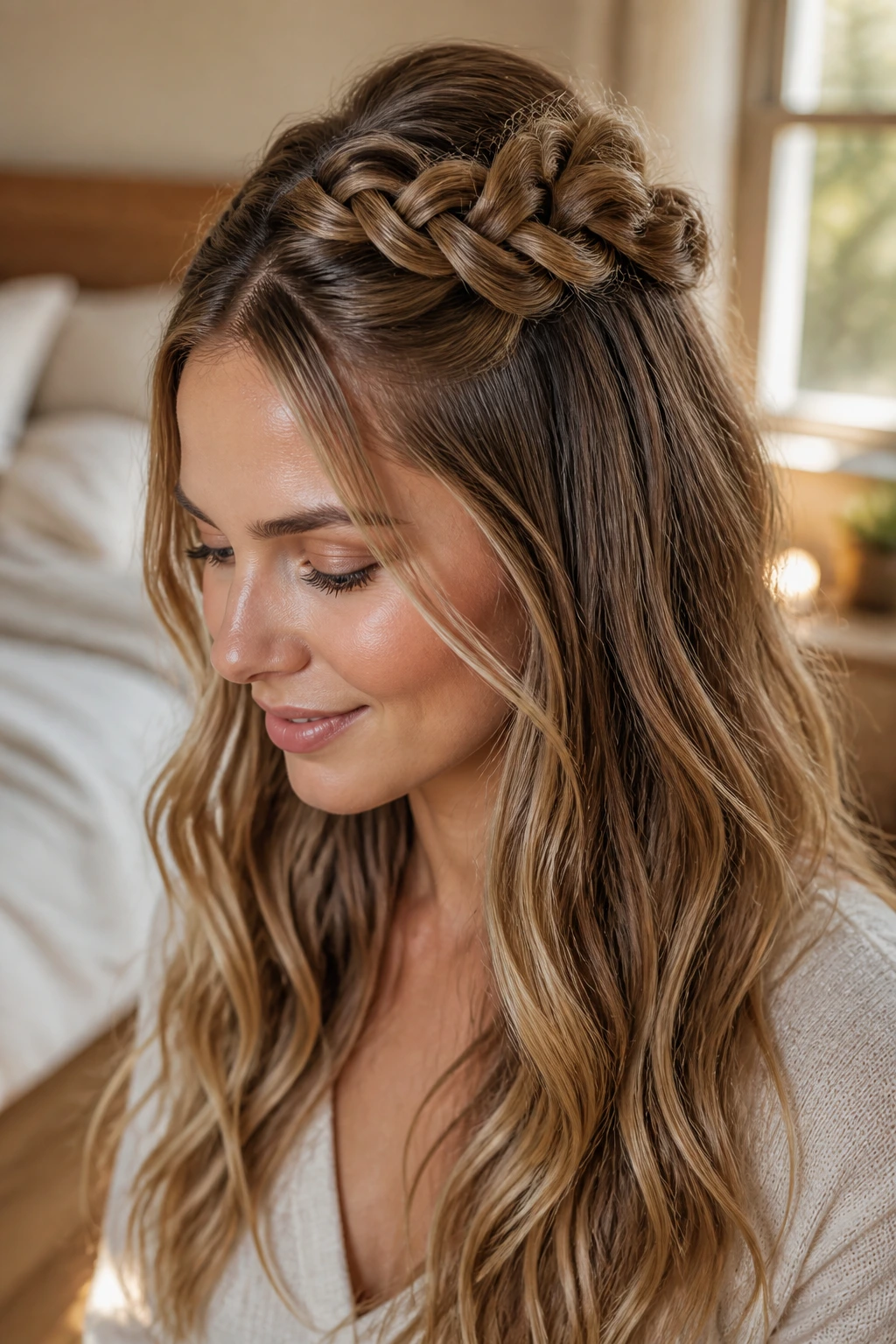
A knotted braid half-up style has a bit of an old-world feel, but it still looks fresh when the hair stays loose and touchable. Instead of a strict braid all the way through, sections are folded and looped into a knot-like pattern that sits across the crown. The result is soft in a way that straight-line braids sometimes aren’t.
What keeps this style polished is the balance between structure and slack. The knots should be even, but not tight enough to pull the sides flat. Leave the lower half of the hair free, and if the ends are a little waved, even better. The contrast makes the top section feel deliberate.
If your hair is very layered, prep it with a light cream before knotting. That cuts down on little pieces popping loose before you’ve pinned the style in place.
13. Knotless Box Braids in a Sleek Top Knot
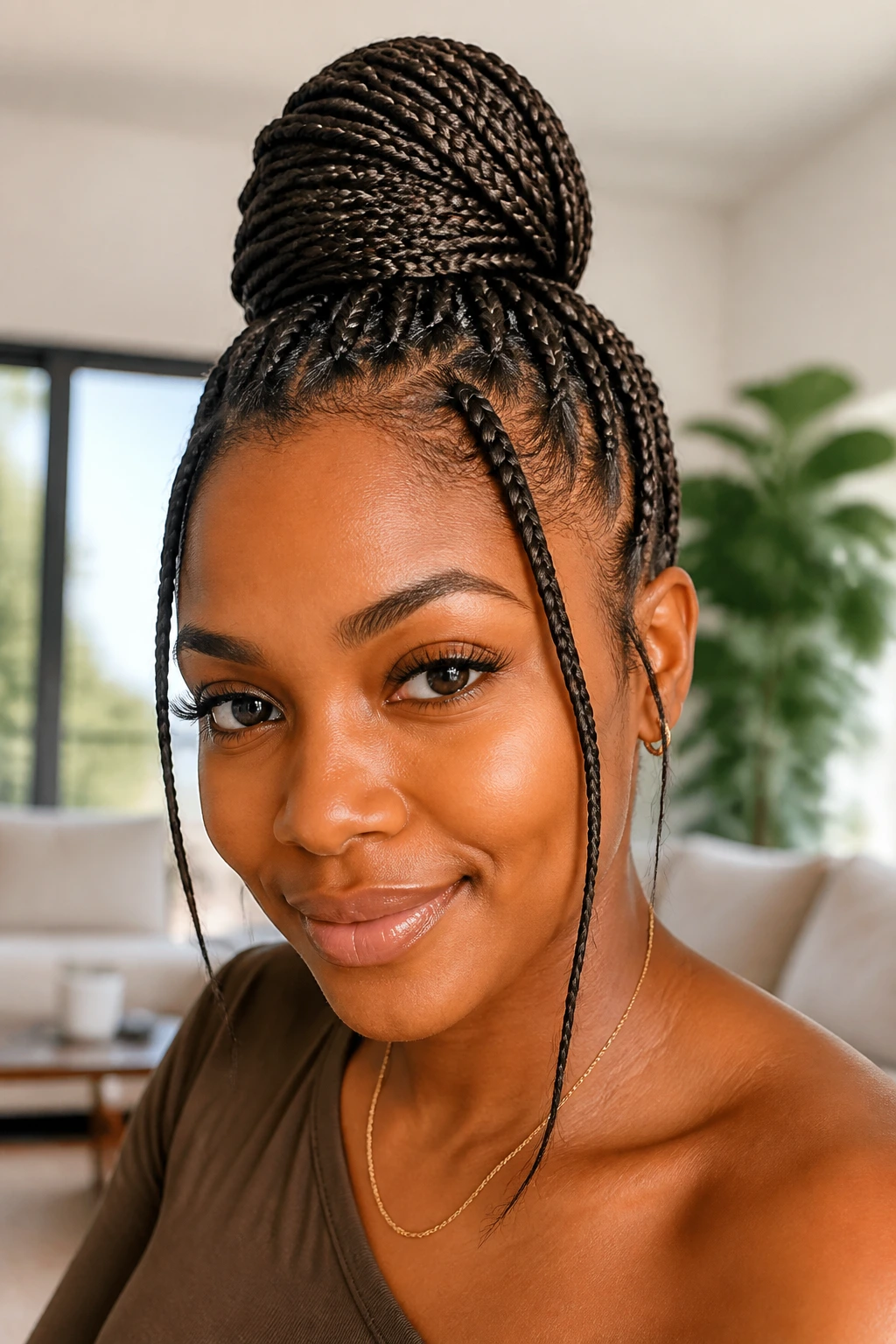
Knotless box braids already lean softer than traditional box braids because the root starts more gradually. Pulled into a top knot, they can look sharp without looking harsh, which is a useful line to walk. The key is height control. Put the knot high enough to lift the face, but not so high that it feels like a hard bun perched on the crown.
Wrap the braids around the base instead of twisting them into a tiny knot. That leaves the bun round and full. A few braids can fall free around the hairline if you want a slightly gentler edge, but keep the shape neat overall.
This style holds well for long days because the braids already have structure. Still, a satin scarf at night matters. The top knot will stay smoother if the roots are protected from friction.
14. Boho Knotless Braids with Curled Ends
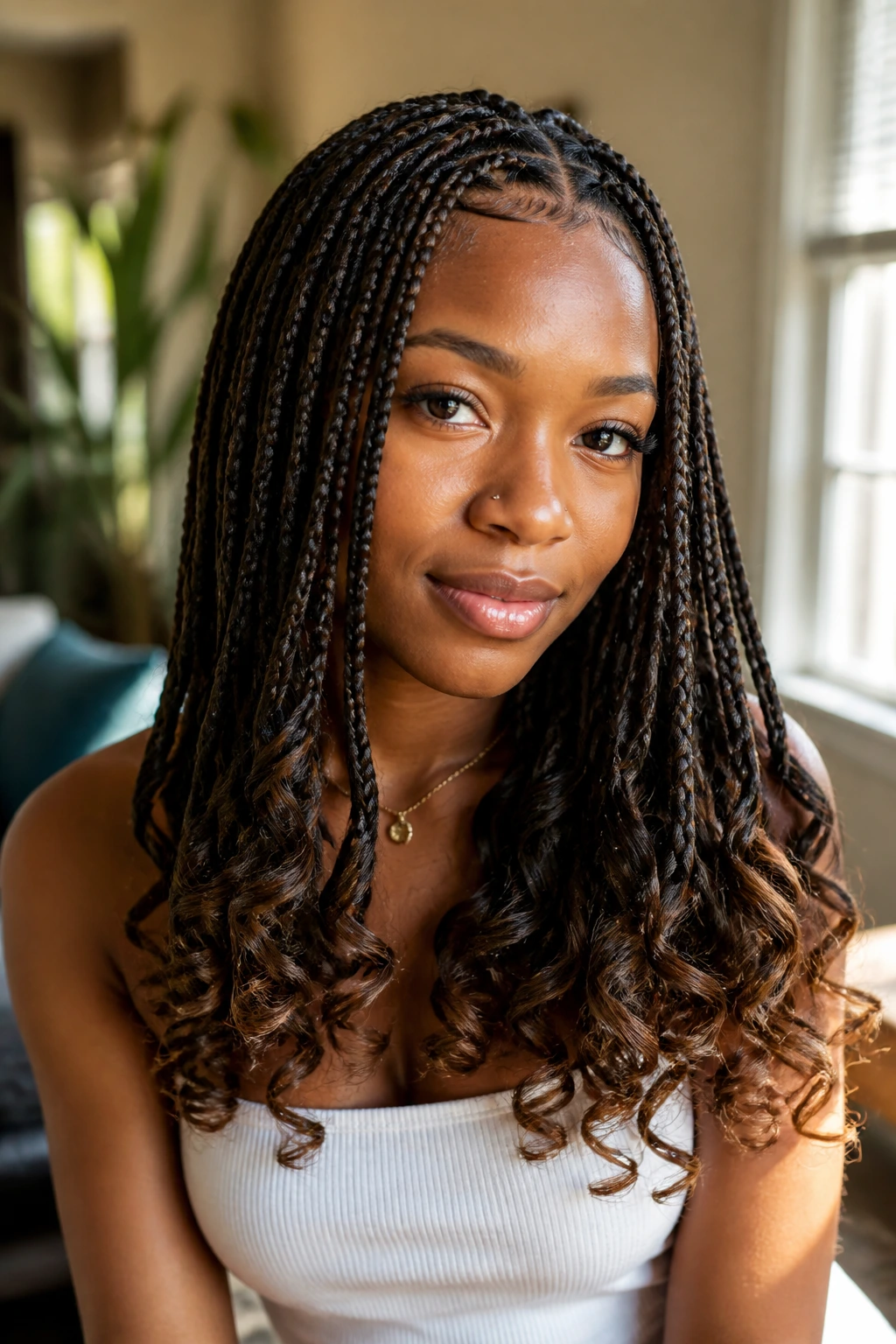
Boho knotless braids are made for softness. The braid itself stays neat at the root, while the loose curls threaded through the lengths and left at the ends give the style movement. It’s one of the easiest ways to get a polished look without losing that airy, lived-in feel.
The curls should look intentional, not crimped. If the curls are too tight, the style tips into busy territory. Soft barrel curls or heatless curls work better than tiny ringlets here. Keep the braid size consistent so the whole look feels calm, then let the ends do the talking.
This style is a good choice when you want your hair to look done but not heavy. It’s especially nice with simple clothing, because the texture in the braids becomes the main visual detail.
15. Cornrow Ponytail with a Soft Side Swoop
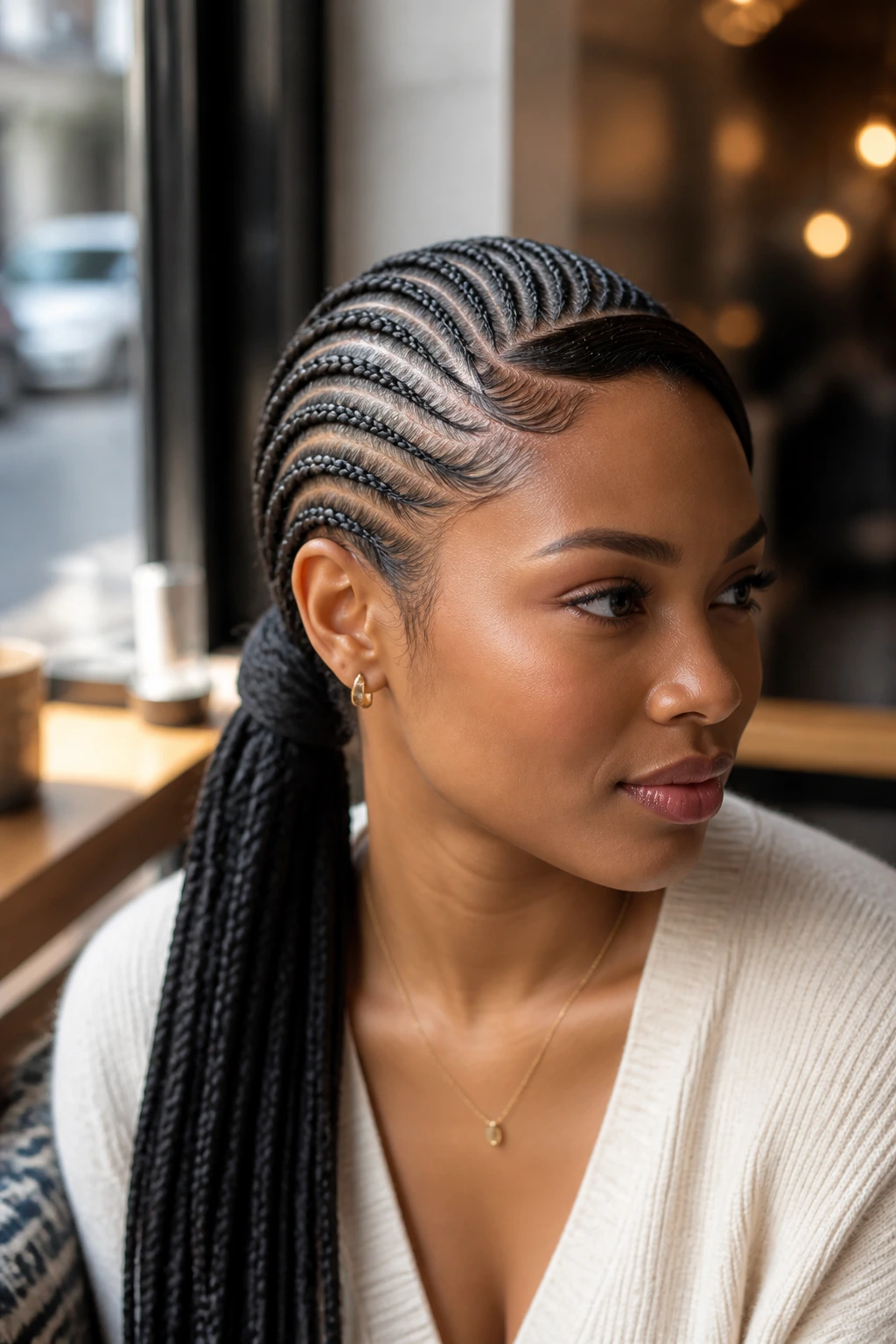
A cornrow ponytail can look very sleek, but the soft side swoop changes the mood completely. A curved front section or a light side part softens the line at the forehead, and the ponytail keeps the back tidy. It’s structured, but not severe.
The rows should be neat and even, and the ponytail base should sit low enough to feel elegant. If you slick the hair too hard at the hairline, the style loses its softness. Use a small amount of gel, brush it through, and stop once the hair is smooth. You want control, not shine that looks wet.
This is one of the best braid hairstyles for a soft polished look if you like clean lines and a face-opening shape. Add small hoop earrings or a clean neckline, and it reads refined without trying too hard.
16. Stitch Braids into a Wrapped Bun
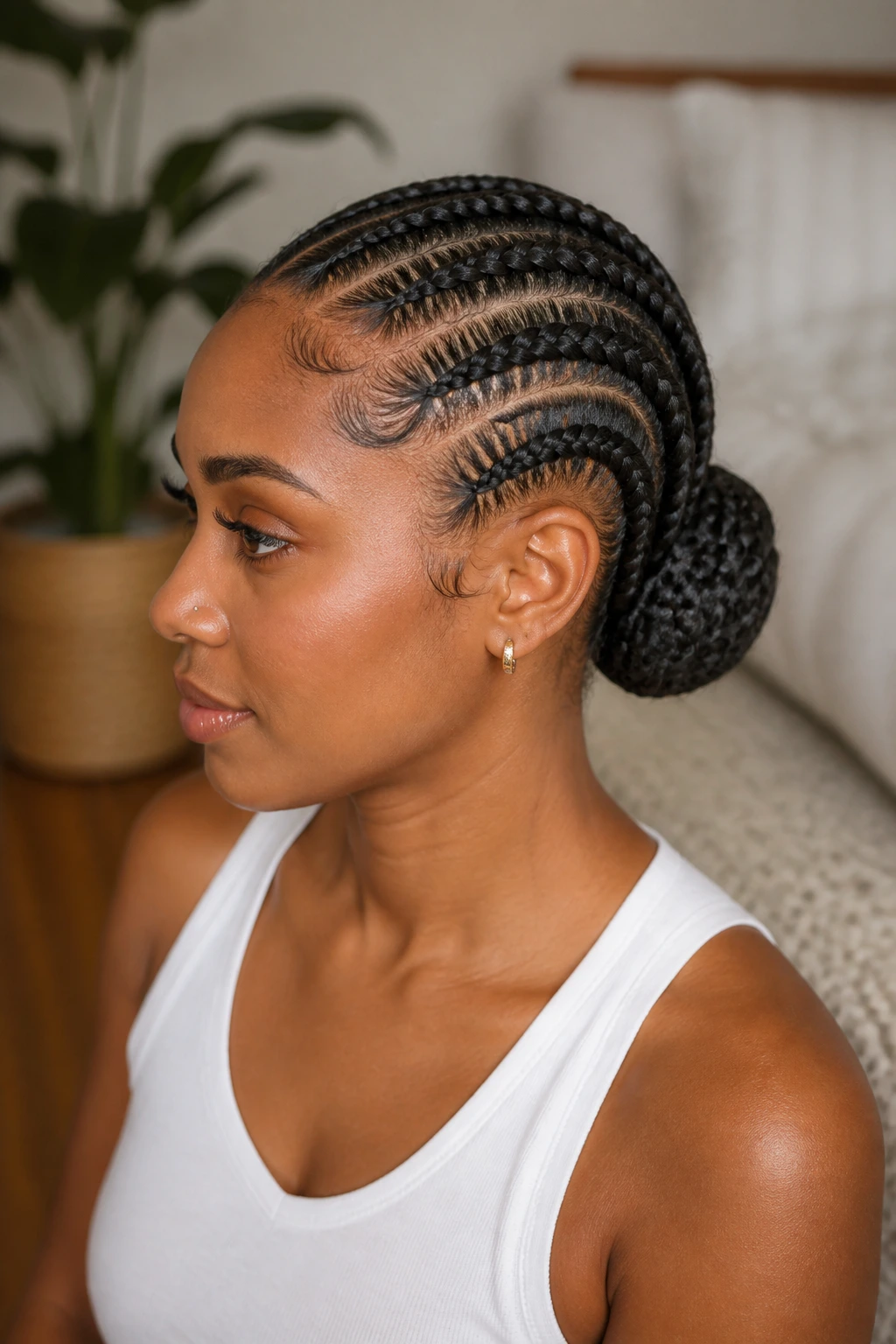
Stitch braids have crisp, visible rows, which can sound harsh on paper. In practice, the style looks soft when the bun at the back stays rounded and the parting is precise rather than aggressive. That contrast — sharp lines on top, roundness at the nape — is what makes it work.
If you’re wearing stitch braids into a bun, keep the feeding sections even and avoid over-tightening the first inch at the scalp. A little too much tension ruins the softness fast. The bun itself should be wrapped, pinned, and slightly cushioned so it doesn’t sit flat like a coin.
This style has real staying power, and it’s one I reach for when I want the hair to stay put through a long day. It looks especially good with a soft matte lip and minimal makeup, because the braids already do the talking.
17. Braided Loc Updo with Tucked Ends
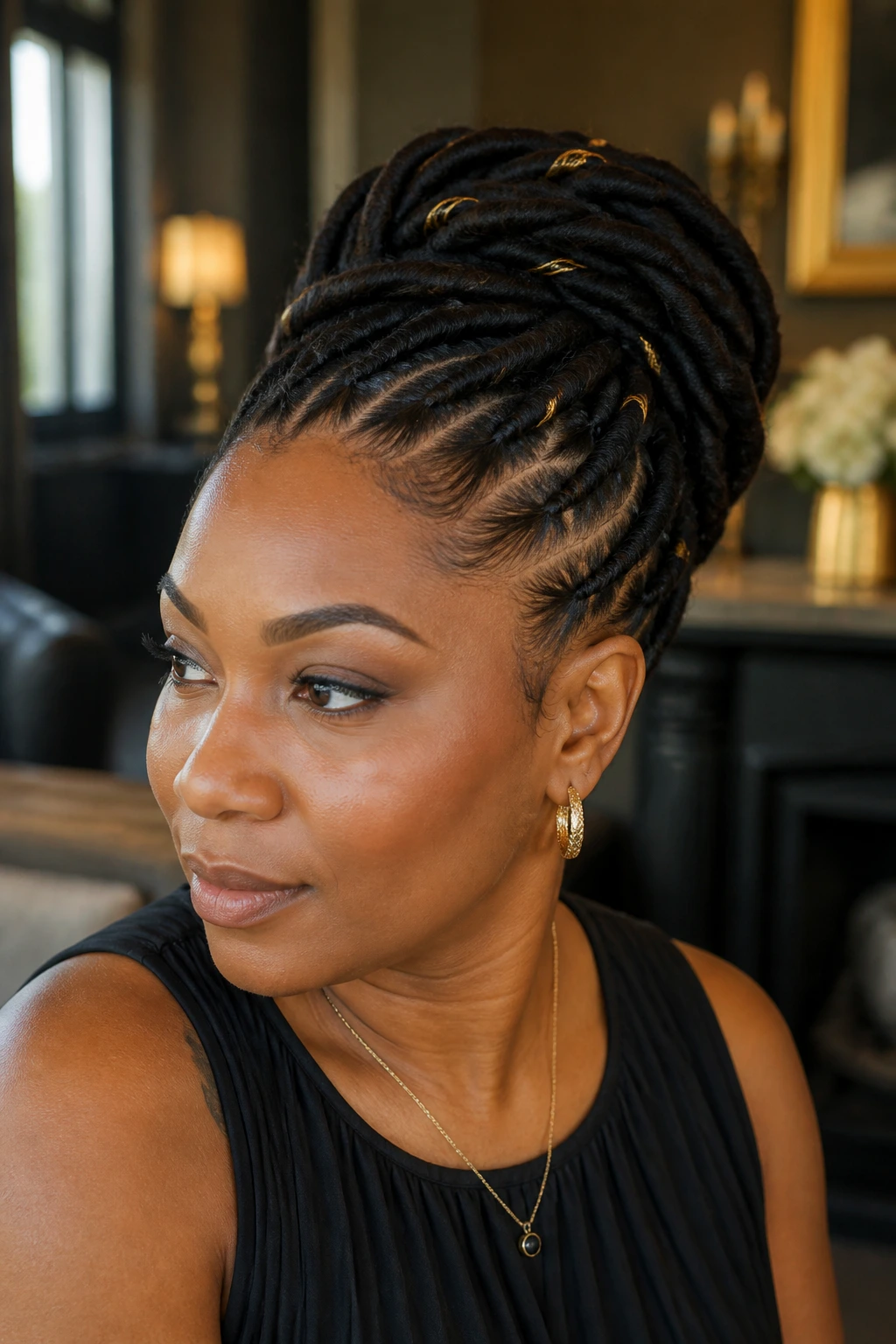
Locs bring their own weight and texture, which is why a braided loc updo can look so elegant when the shape is controlled. The trick is not to fight the locs into a tiny, overpacked knot. Keep the base smooth, gather the locs in sections, and tuck the ends in a way that leaves the silhouette round.
A braided loc updo feels softer when the front hairline is brushed gently into place and the crown has a little lift. You do not need every loc to sit in the exact same direction. Small differences in the placement add texture, and the overall shape still reads polished.
If your locs are medium or long, a low tucked bun is easier than a high bun. It holds better and keeps the style from looking too formal. A dab of lightweight oil on the hands can help tame frizz without making the locs shiny in a heavy way.
18. Halo Braid with a Low Roll
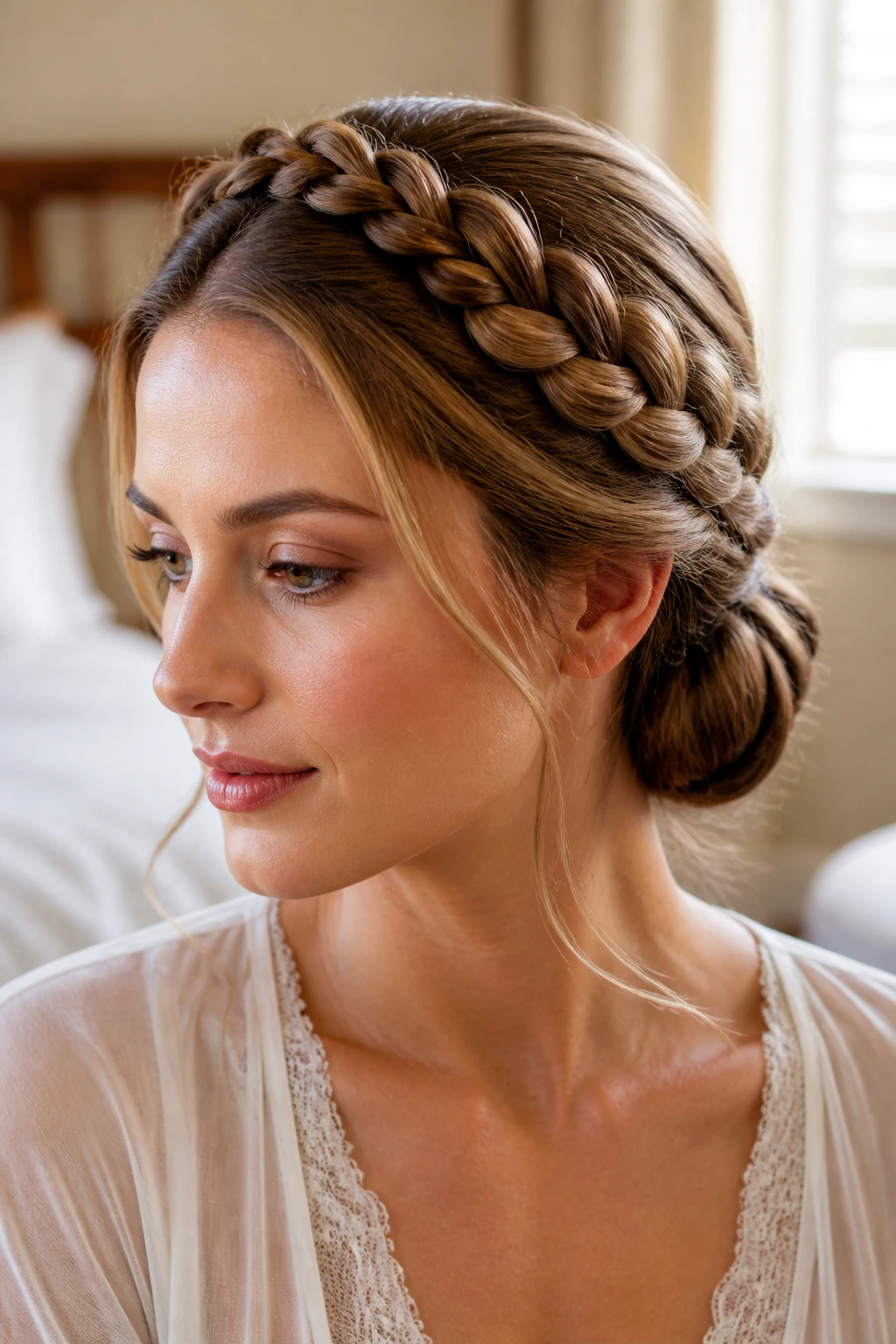
A halo braid wraps the head like a frame, and when you pair it with a low roll at the nape, the style becomes softer and more wearable. The braid itself creates a clean line around the face. The roll in back keeps the finish grounded.
This style works best when the braid isn’t pulled so tight that it loses thickness. A fuller halo looks gentler and more relaxed. Once the braid reaches the opposite side, tuck the ends into the roll and pin them under neatly. You want the finish to look tucked away, not packed in.
A halo braid also works well with hair that has a bit of natural bend. The texture helps the braid stay full, which is half the charm. Straight, freshly blown-out hair can work too, but it usually needs a little texturizing spray to avoid looking too flat.
19. Four-Strand Braid Down the Back
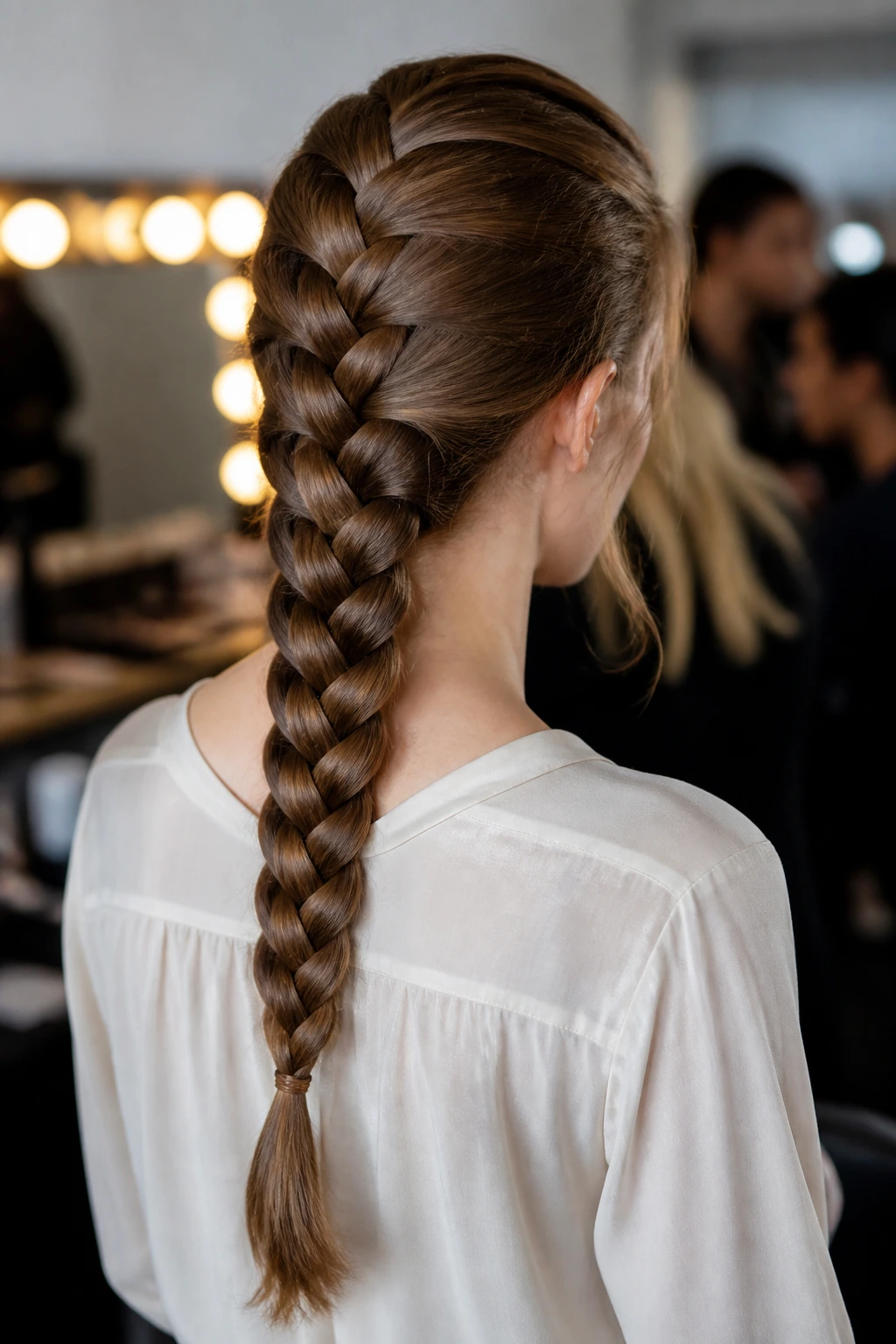
A four-strand braid has a denser, ribbon-like texture that looks expensive without feeling flashy. It’s a quiet kind of detail. The braid sits like woven cord, which makes it a strong choice when you want the hair to look polished from the back.
The style shines when the braid starts with a smooth crown and a clean section at the top. From there, let the braid travel straight down the back and secure it with a small elastic. If you want a softer finish, gently widen the outer edges after you finish braiding. Just don’t stretch it so much that the pattern gets fuzzy.
This braid is especially flattering with long hair because the structure has room to show. On shorter hair, it can look a little compressed unless the strands are thick enough to fill it out.
20. Bubble Braid with a Braid Base
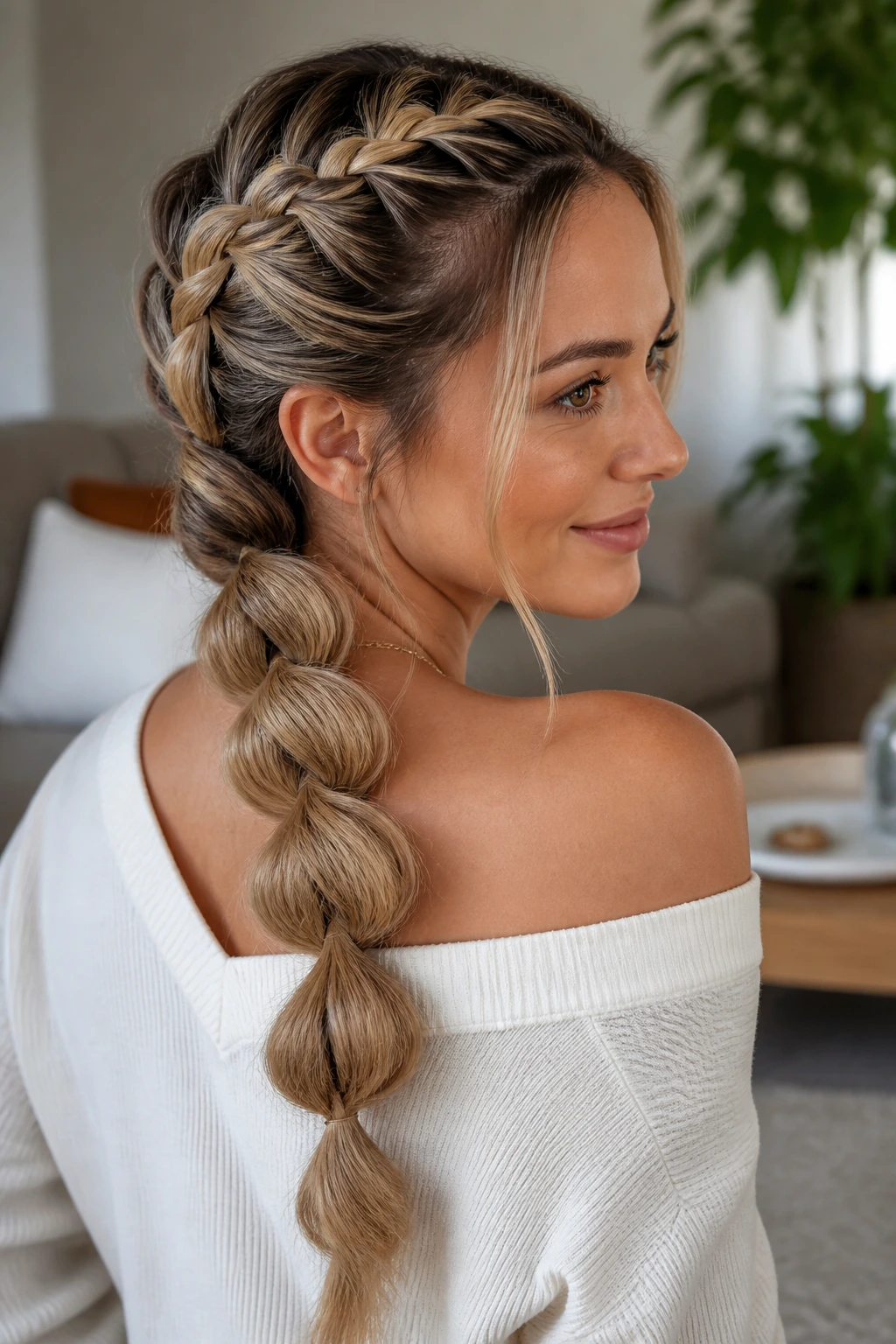
A bubble braid gets its polish from the spacing. You build a small braid or smooth ponytail at the top, then add elastics every few inches and tug each section outward to make the “bubbles.” The shape is playful, but the clean base keeps it from looking childish.
For a soft polished version, keep the bubbles rounded rather than overly puffed. Think gentle spheres, not balloons. A little smoothing cream at the top and a few spritzes of hairspray on a brush help keep flyaways down without flattening the shape.
This is a good choice if your hair is medium to long and you want something more interesting than a basic ponytail. It also works well on layered hair because the elastic sections hold the shape together as the hair moves.
21. Braided Low Ponytail with Ribbon Wrap
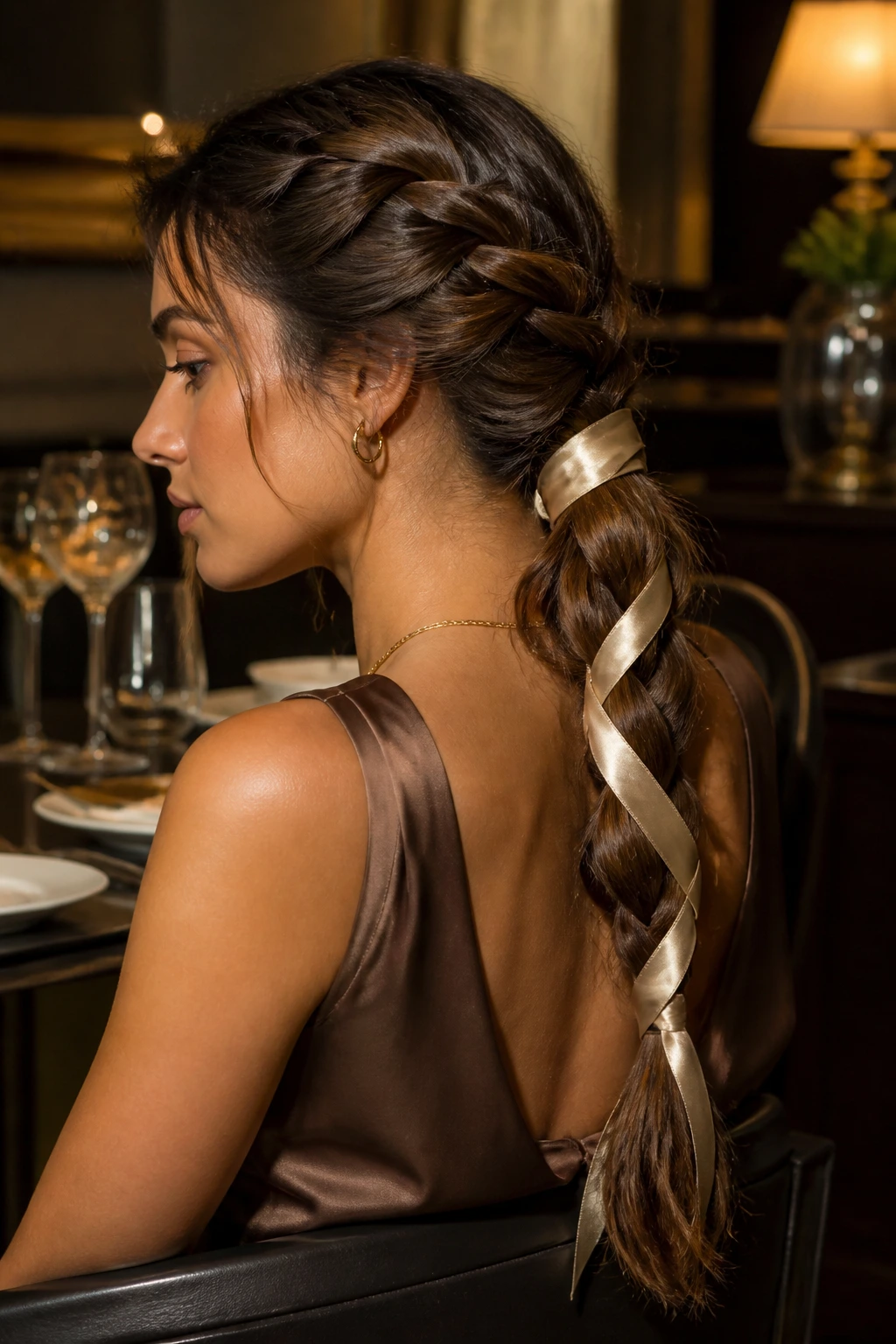
A ribbon wrap is the easiest way to turn a simple braid into something that feels finished. Start with a low ponytail, braid it loosely, then wrap a satin ribbon around the base and weave it a few inches down the length if you want more detail. The ribbon softens the look right away.
The ribbon matters more than people think. Matte satin reads polished. Stiff grosgrain can feel too school-uniform unless the rest of the outfit leans in that direction. Keep the braid itself relaxed and the ribbon neat. The contrast between the soft weave and the clean tie is what makes it work.
This style is a nice option for dinner plans, photo days, or any moment when you want a braid that looks dressed up without a lot of product or pinning.
22. Twisted Braid Bun
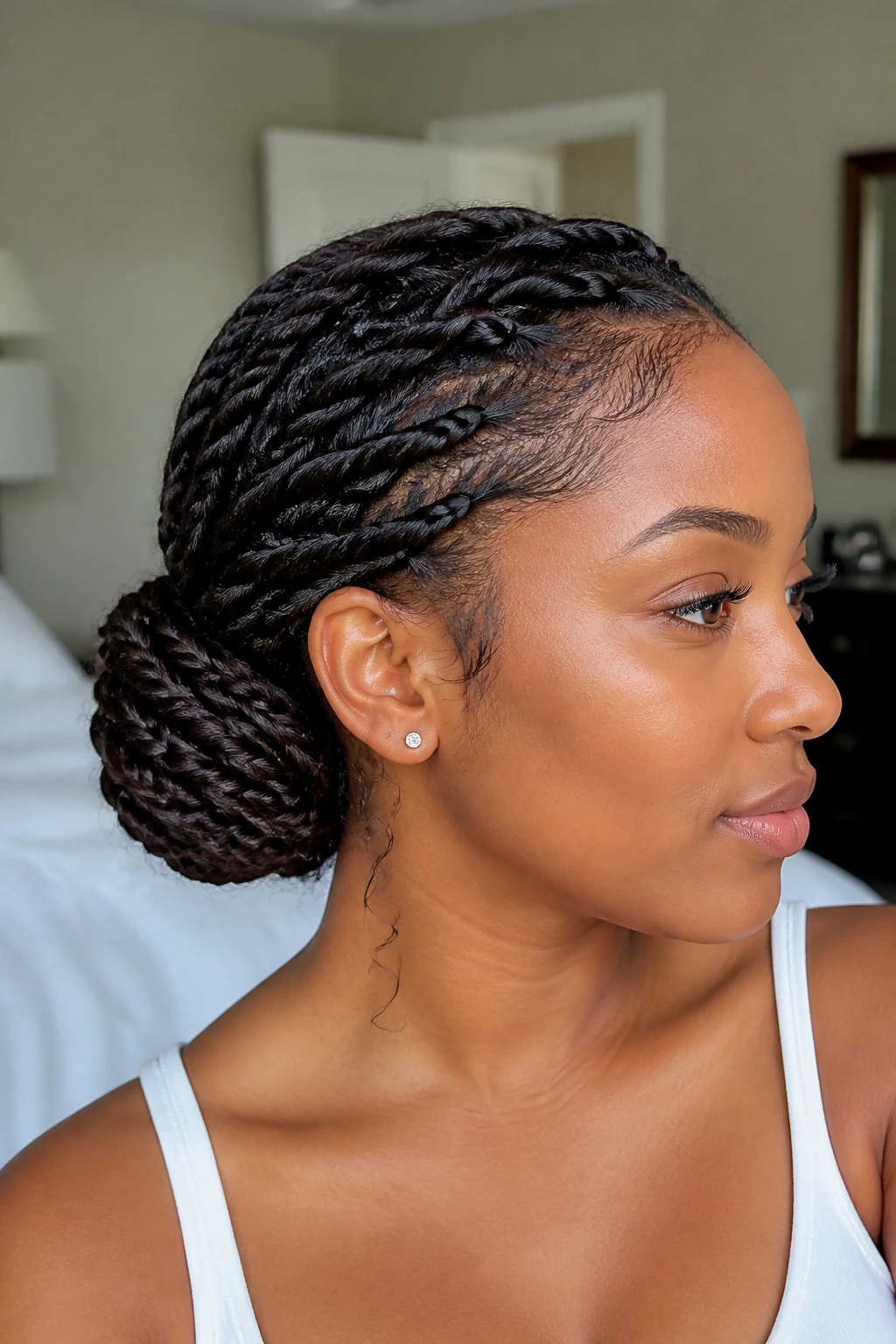
A twisted braid bun combines rope-like sections with a tucked bun, which gives you movement at the crown and softness at the nape. It’s not one of the loud styles, and that’s exactly why it works. The lines are clean, but the shape stays gentle.
The twist should be even from root to end. If one side gets tighter than the other, the bun starts leaning. Build the bun low, secure it with pins, then soften the outer edge by pulling a few tiny sections free near the back of the head. That small messiness keeps it from looking severe.
I like this style on hair that’s been smoothed with a light blowout. It gives the twist enough slip to shine, but not so much that the bun falls apart.
23. Dutch Braid Pigtails Gathered Low
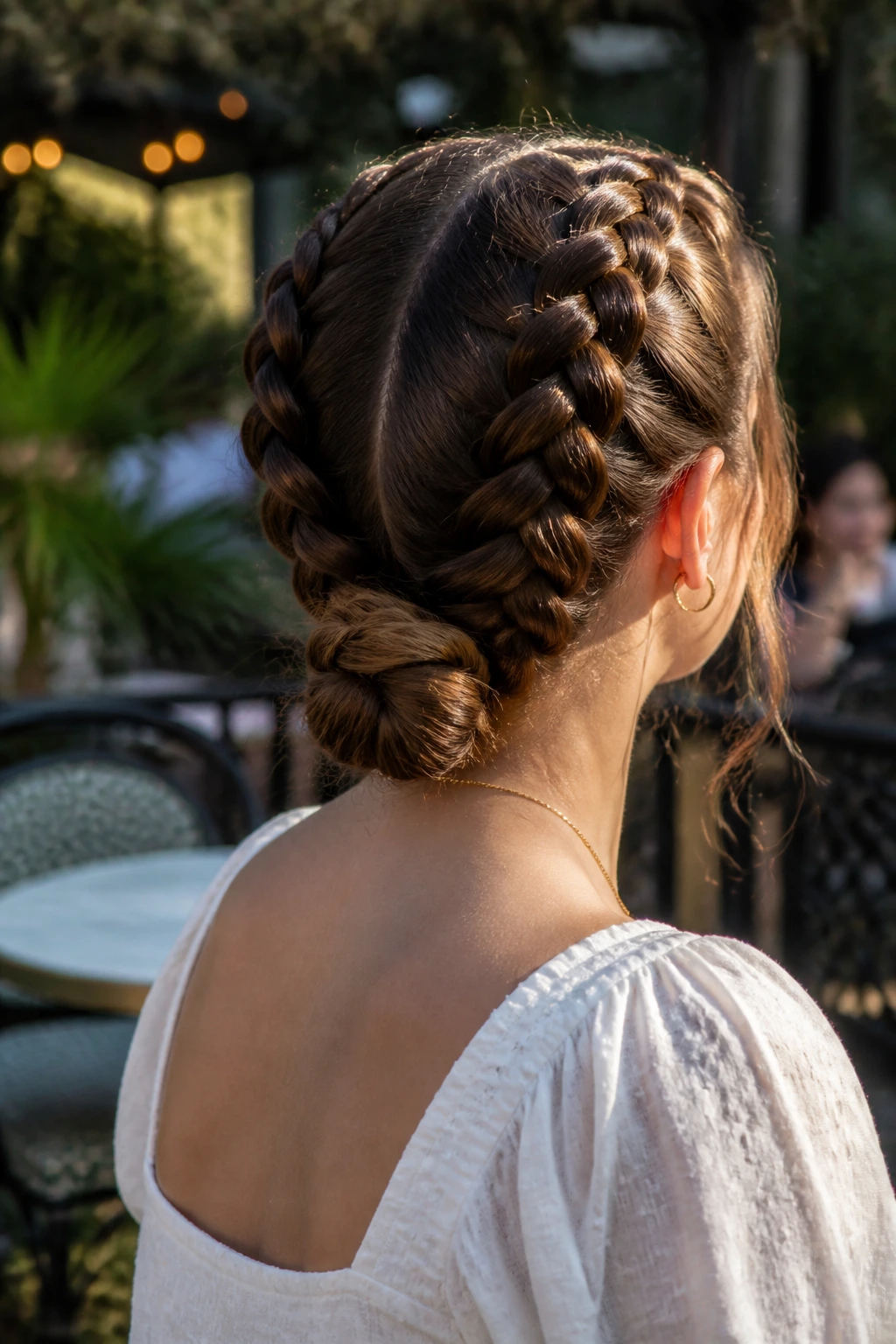
Two Dutch braids can look sporty if they stop high on the head. Bring them down low, gather them at the nape, and the whole mood changes. The style becomes neater, softer, and a little more grown-up.
The middle part should stay straight, and the braids should be symmetrical enough to read intentional without being cartoon-perfect. Once both braids reach the neck, tie them together into a low knot or small tucked bun. Leave the ends pinned under so the finish stays tidy.
This is a practical style for thicker hair because the braids spread out the weight. It’s also good when you want something that stays put but doesn’t feel overdesigned. A touch of shine spray on the lengths can help, but go easy. Too much and the braids start looking coated.
24. Side Braid with Face-Framing Tendrils
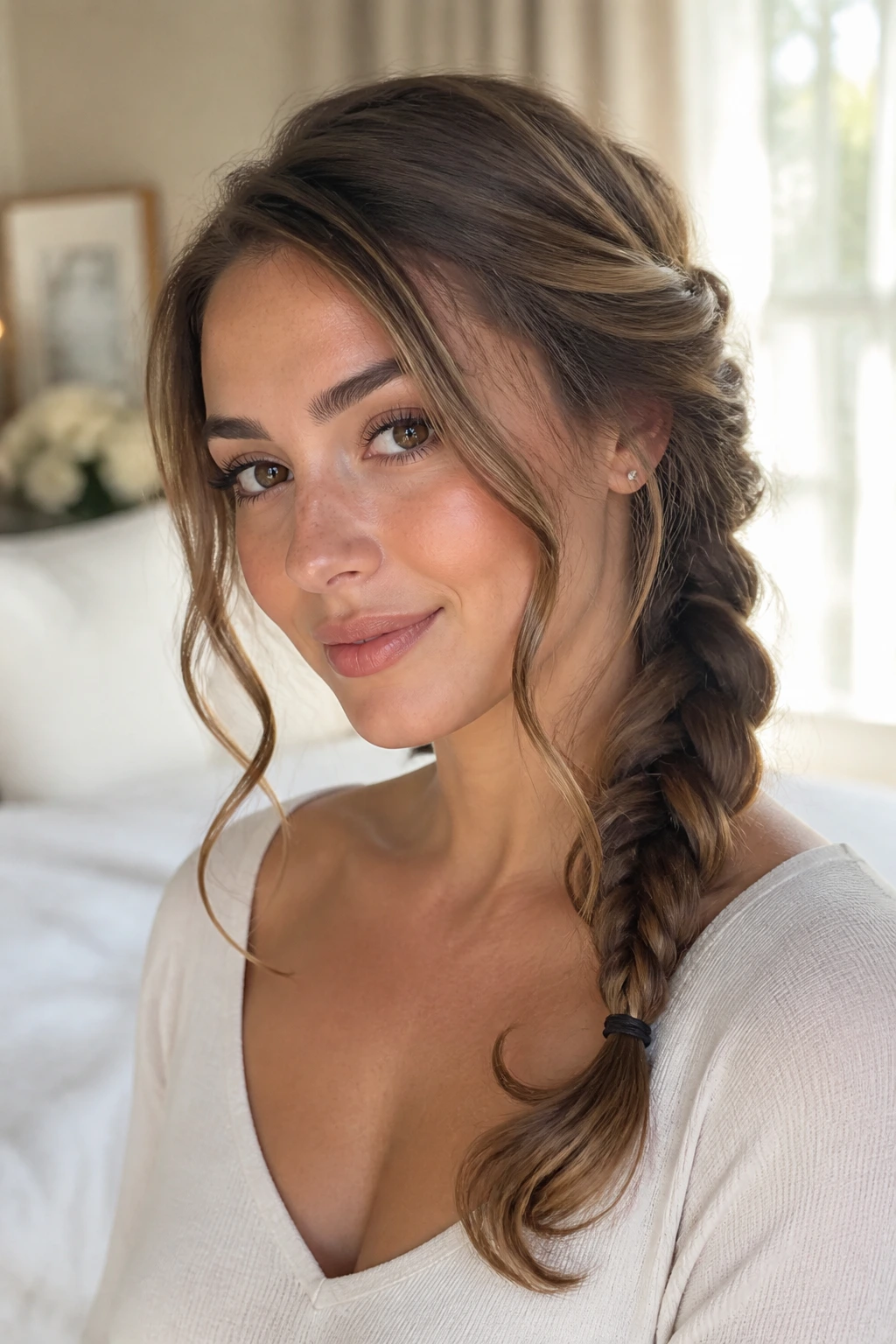
A side braid is often the easiest path to softness. The asymmetry naturally loosens the look, and the tendrils around the face keep it from turning severe. If you’re after polish, make the braid itself neat and then let the front do a little work for you.
Start the braid just behind one ear or from a deep side part, then keep it low and broad across the shoulder. Pull out two small front pieces — one near the cheekbone, one closer to the temple — and curl them lightly if you want extra shape. Those pieces should skim the face, not hide it.
This style is forgiving on layered hair, which often has trouble staying smooth in more structured updos. The side braid gives the layers a place to land instead of fighting them all the way down the back.
25. Braided Crown Into a Soft Bob Tuck
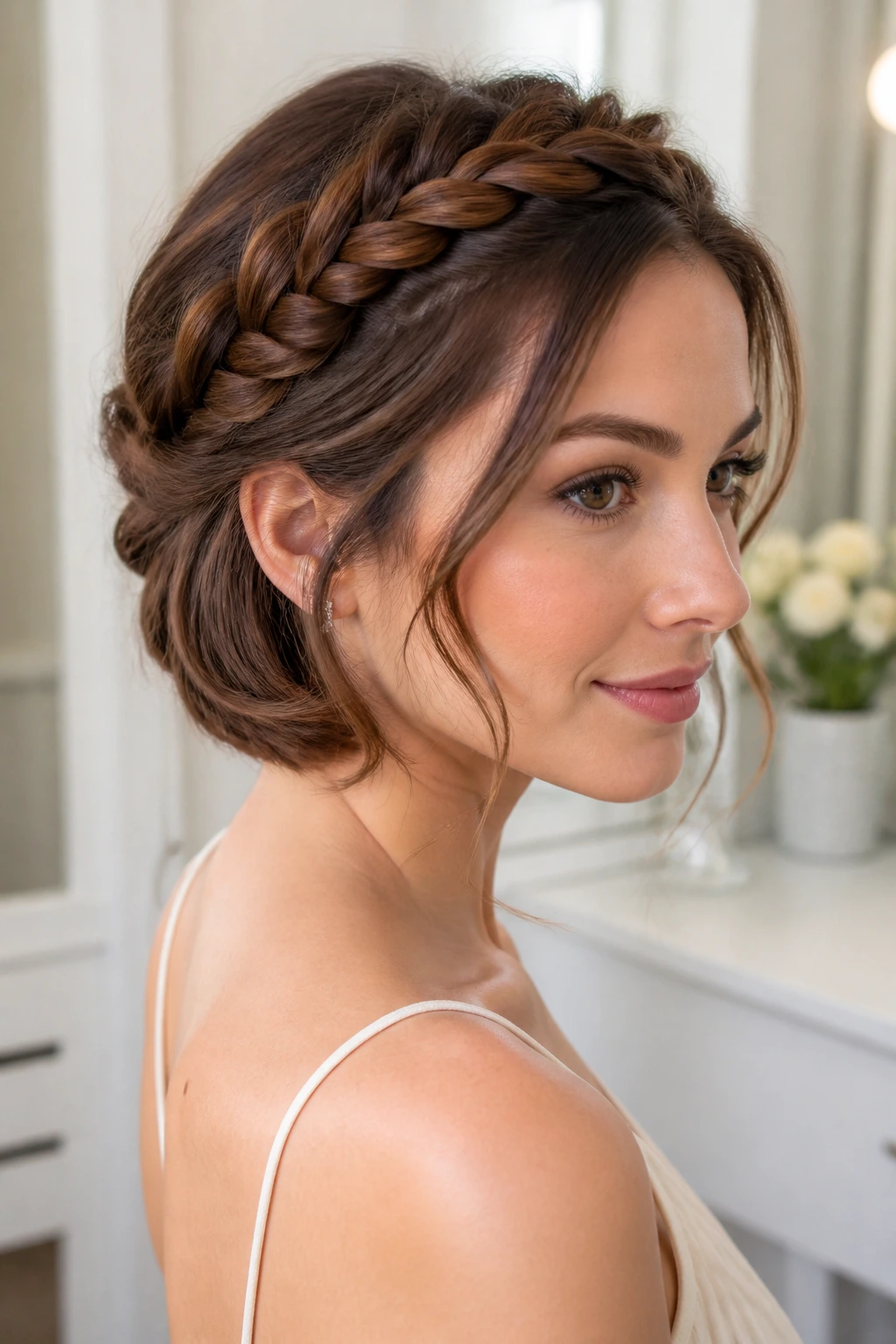
Shorter hair can do this too. A braided crown into a soft bob tuck uses the front and side sections to build a wrap around the head, then tucks the ends under the bob or shoulder-length layers at the back. The result feels tidy but not overdone, which is rare for shorter hair styles.
The braid should stay close enough to the head to hold, but loose enough that it doesn’t expose every tiny section line. Use bobby pins that match your hair color, and slide them in flat so the crown doesn’t get bumpy. A small amount of pomade at the roots can help keep the ends smooth, but don’t overload the hair or it will collapse.
This is one of the nicest polished braid looks for shoulder-length cuts. It gives the illusion of more structure than the hair length suggests, and the tuck keeps the finish clean.
How to Get the Softest Finish Without Losing the Shape
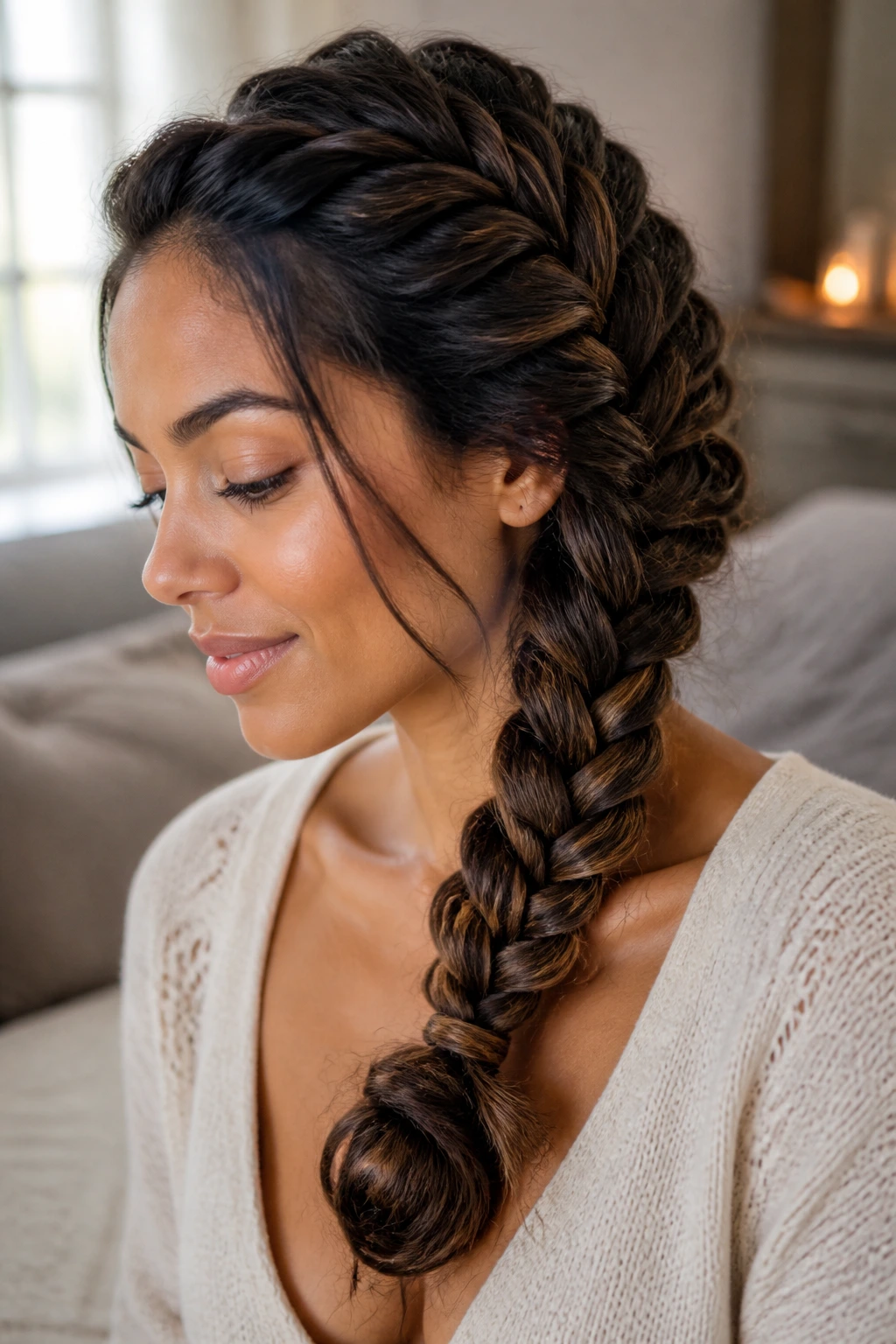
The soft polished braid starts before the braid starts. Hair that is either too clean or too loaded with product tends to fight back. I usually aim for hair that has enough grip to hold a section, but not so much grit that it feels rough as you run a comb through it. That’s the sweet spot.
Texture first, then shine. A light mist of texturizing spray, mousse, or a tiny bit of dry shampoo at the roots gives the braid something to hold onto. After the braid is secured, smooth the visible top layer with a small brush and a pea-sized amount of gel or cream. More than that and the hair starts looking heavy.
Keep the crown calm. The soft look lives or dies at the top of the head. If the crown is too flat, too tight, or too glossy, the braid loses its ease. If the crown has a little lift and the braid begins with controlled tension, the rest usually falls into place.
Let the ends breathe. Curled ends, tucked ends, ribbon wraps, or gently loosened braid tails all help. A braid that ends in a hard, narrow tail can feel abrupt. A softer finish feels deliberate, not clipped off.
Tools That Make Braided Styles Easier
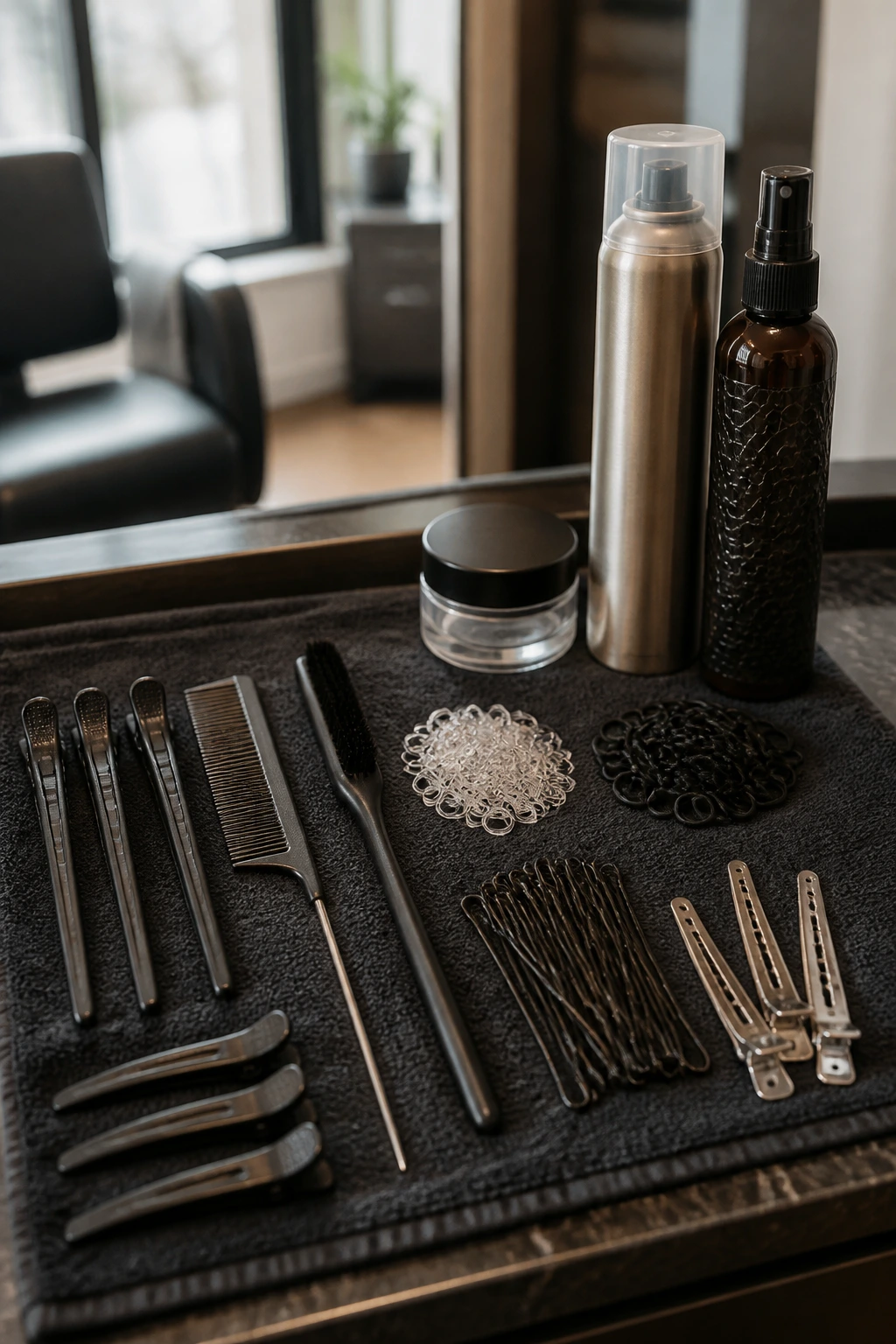
- Rat-tail comb: Best for clean parts, especially center parts, crown sections, and stitch-style rows.
- Edge brush or soft toothbrush: Helps smooth the hairline without scraping product all over your forehead.
- Duckbill clips: Keep sections out of the way while you braid one side at a time.
- Clear elastics: Good for ponytails, pull-through braids, and ribbon-wrapped styles where you want the base to disappear.
- Bobby pins in your hair color: A must for buns, crowns, and tucked styles. The color match matters more than people think.
- Light-hold mousse: Keeps flyaways under control without turning the hair stiff.
- Texture spray or dry shampoo: Gives freshly washed hair enough grip for braiding.
- Satin scarf or bonnet: Protects the style overnight and keeps the crown from puffing up.
- Small finishing brush: Useful for smoothing the top layer after the braid is in place.
- Optional curling wand or heatless curler: Handy for the loose ends on half-up braids, boho styles, and soft tendrils.
Smart Product and Hair Prep Tips
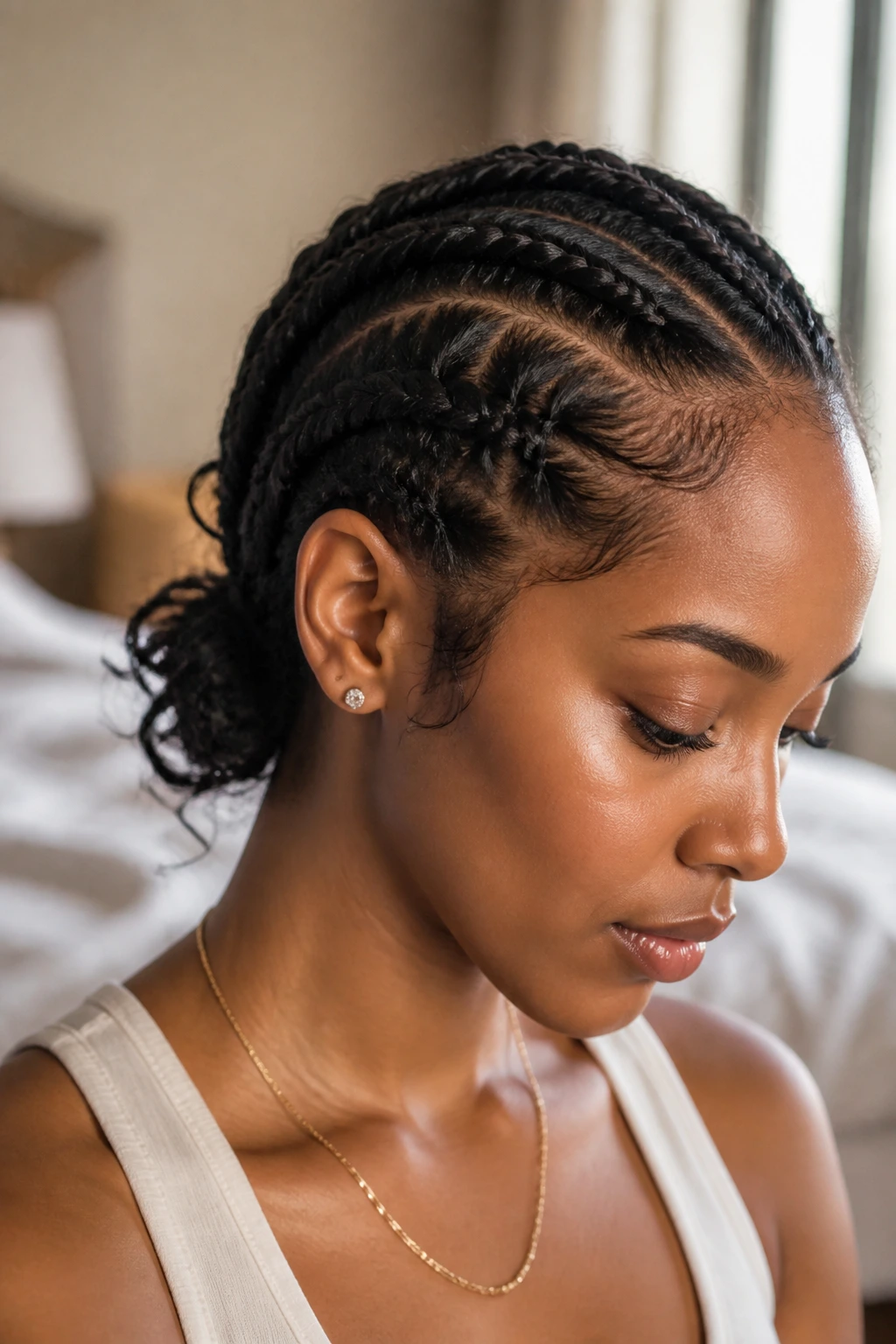
Hair prep is where most braid styles either stay soft or slide straight into crunchy territory. Start with hair that’s detangled all the way through, because half-done brushing leaves little knots that snag while you braid and make the sections uneven. If the hair is freshly washed, blow-dry it or air-dry it enough that it has body. Damp hair can work for some looks, but it usually makes the braid too limp and the finish too flat.
For product, I prefer a light mousse or foam at the roots and a tiny bit of smoothing cream on the lengths. That combination gives control without making the hair greasy. Heavy waxes and thick pomades can be useful at the hairline, but use them sparingly. A little goes a long way, and too much can turn the front pieces dark and sticky.
If you’re using extensions, pick hair that matches your own texture as closely as possible. Soft polished styles look best when the braid blends in rather than shouting “extensions!” from across the room. Pre-stretched braiding hair can save a lot of time because the ends behave better and need less trimming. For loc styles, keep the scalp clean and the locs moisturized with a light mist or oil on the hands, not a heavy layer on the strands.
One more thing. The parting matters more than the products sometimes. A neat part can make a simple braid look intentional even on a busy day. A crooked part can drag down an otherwise pretty style. Tiny detail. Big effect.
How to Wear These Braids With the Rest of Your Look
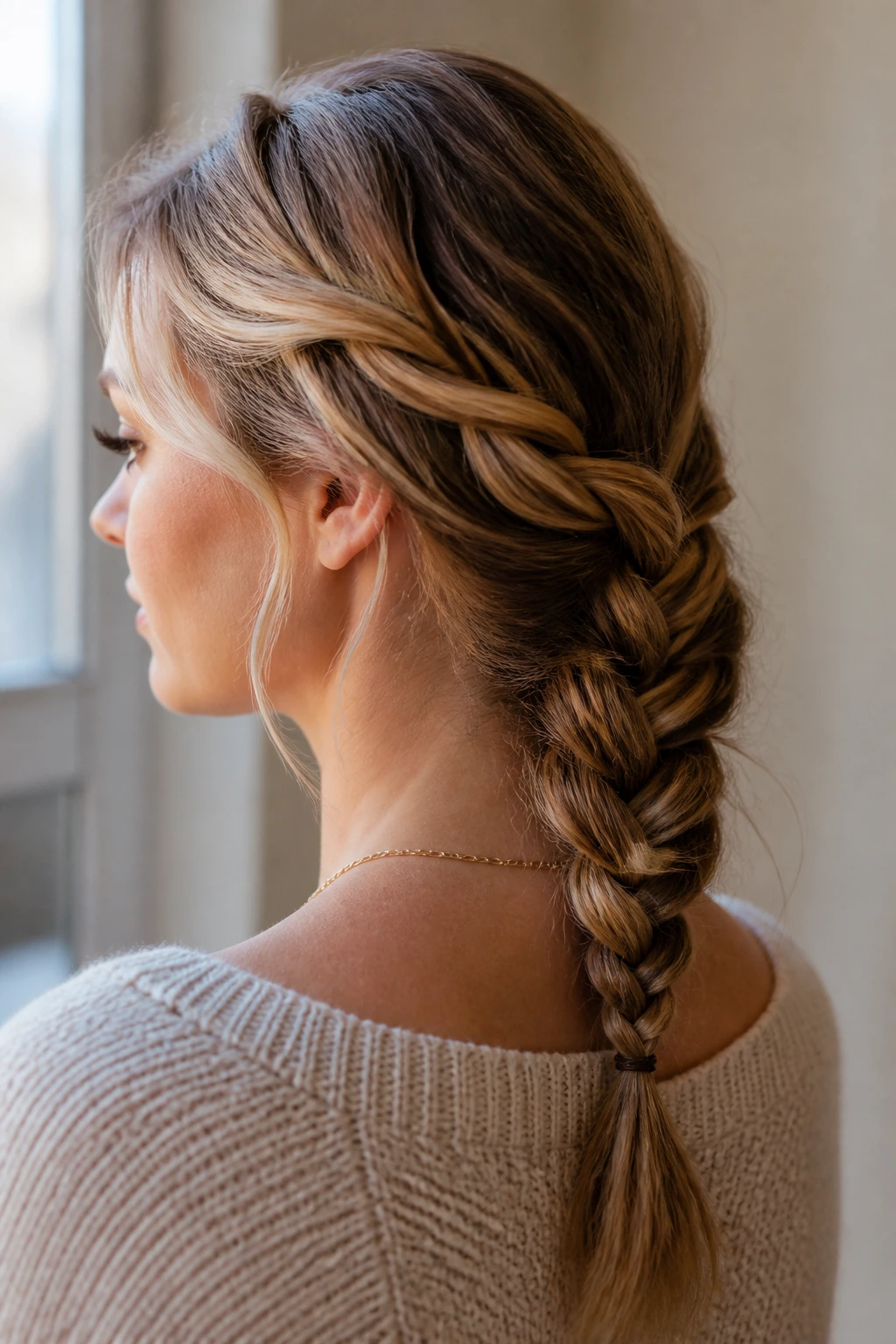
Presentation: A soft polished braid usually looks best when the neckline is clean and the braid has room to show. Low buns like to sit against open collars or simple knits. Crown braids and side braids work well when the front of the hair is the focal point, so keep the rest of the styling calm.
Accompaniments: Small hoops, pearl studs, a satin blouse, or a sharply cut blazer all help the braid feel finished. Big statement earrings can work too, but only if the braid itself stays quiet. The goal is balance, not competition.
Portions: If your hair is fine, keep the braid size smaller and tighter at the root so the style doesn’t slip apart. Thick hair can handle wider sections, larger buns, and fuller crowns without losing softness. For shoulder-length hair, half-up styles and tucked crowns usually look better than trying to force a long braid that doesn’t have enough length to hang properly.
Beverage Pairing: Not a literal one here, obviously. Think of the equivalent as the setting: brunch, a work meeting, a wedding guest outfit, or a simple dinner out. These braids do well in places where neat hair matters, but you still want motion and a little ease.
Practical Ways to Make the Style Last
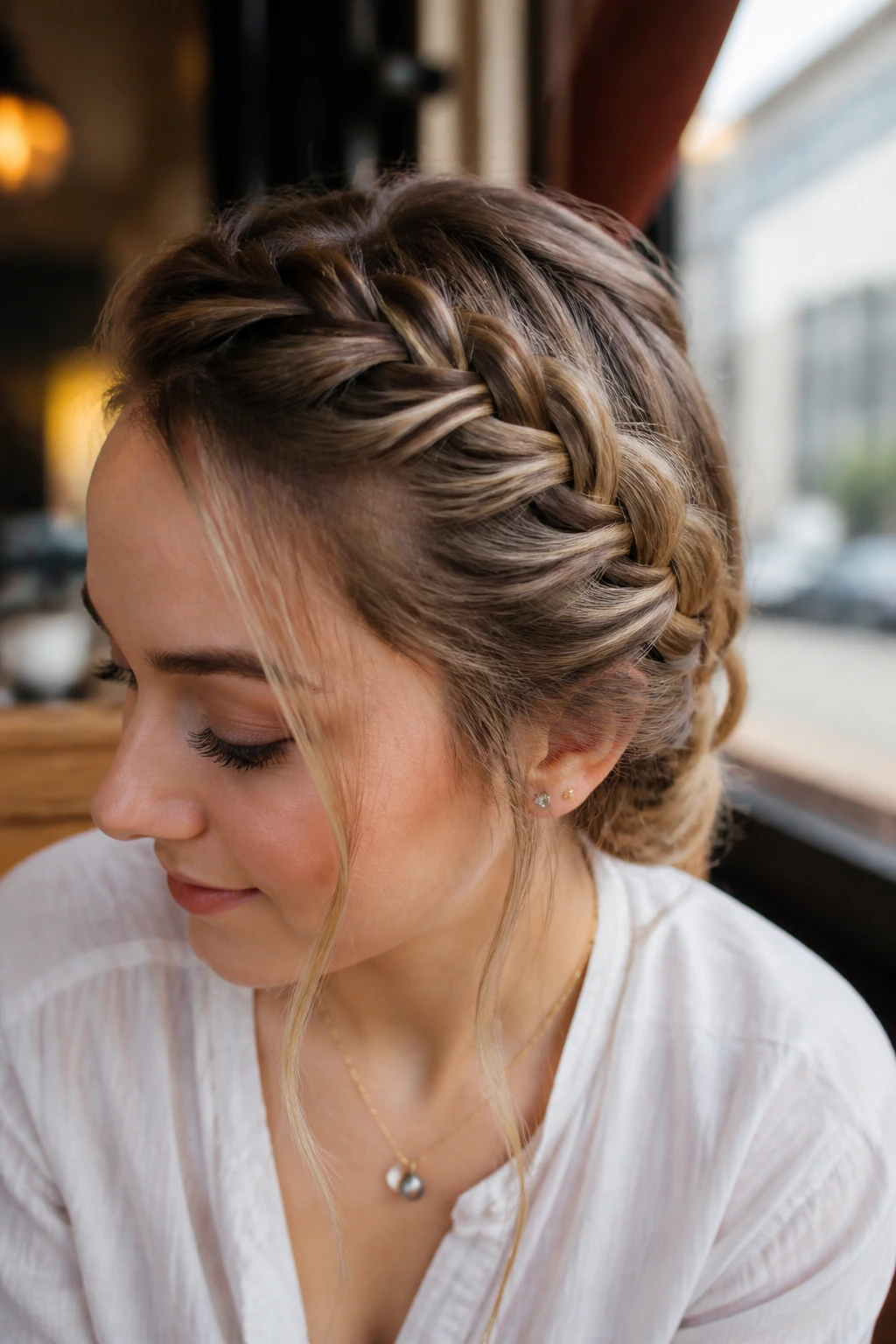
Refresh the roots, not the whole head. A fine mist of water mixed with leave-in conditioner can wake up the front and crown without soaking the braid. Spray your hands first, smooth the hairline, and stop. Direct spraying is often too much.
Pin the weak spots early. If a braid keeps loosening at the temple or nape, add one hidden pin before it gets worse. Waiting until the style has already collapsed means you’ll overcorrect and pull the whole thing too tight.
Use the right amount of hold. A light mist of flexible hairspray can keep flyaways in line, but a hard shell ruins the softness. Spray from a distance of about 10 to 12 inches and let it settle before touching the hair again.
Tame the ends on purpose. Curled ends can be brushed out for a softer finish, while straight ends can be smoothed with a drop of serum. Decide which finish you want before you leave the mirror. Otherwise you end up fiddling with the style all day.
Common Mistakes That Make Braids Look Too Tight
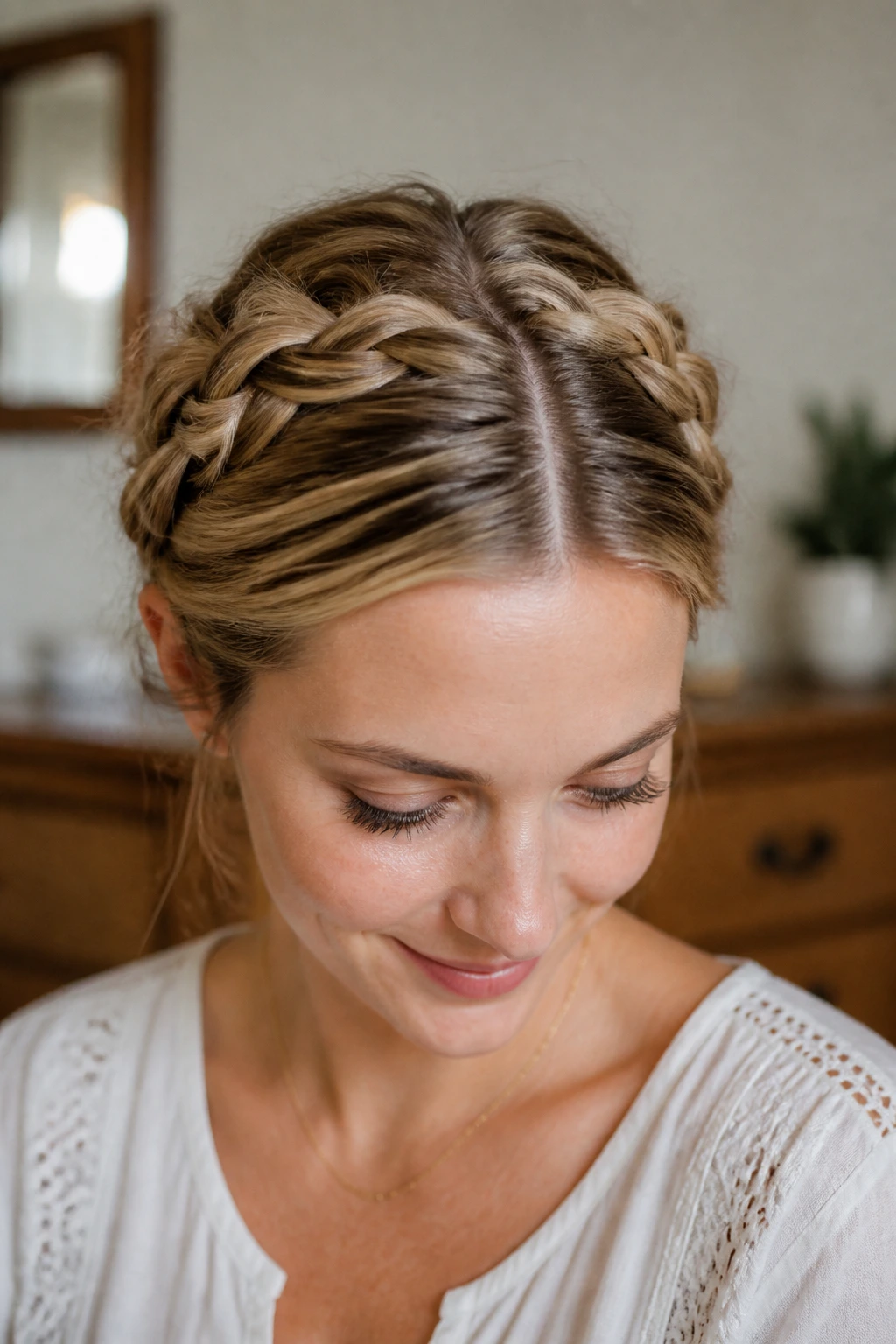
- Pulling the root sections too hard: The braid may last longer, but the hairline will look tense and shiny. Fix it by braiding with steady, even tension instead of yanking each pass.
- Using too much gel at the crown: The top turns slick, and the braid loses its softness. Use a small amount only where the hair needs smoothing.
- Skipping texture on freshly washed hair: Slippery hair can make the braid sag or unravel. Add dry shampoo, mousse, or texturizing spray before you start.
- Ignoring the ends: A neat crown with messy ends looks unfinished. Tuck, curl, wrap, or pin the tails so the finish feels intentional.
- Forcing every braid to be the same size: That can make the style look rigid. Slight variation is fine, especially in softer crowns and side braids.
- Not matching the style to the hair length: Some looks need length to drape, while others need density to hold shape. A braid that fights your haircut will look off no matter how careful you are.
Variations and Alternatives to Try
Ribbon-Soft Finish: Thread a satin ribbon through a low braid or ponytail and let the ends trail a few inches. It changes the whole mood fast, especially on simple styles like a side braid or low ponytail.
Curled-End Romance: Leave the braid tight through the crown, then curl the loose ends under with a 1-inch wand. It’s a smart move for waterfall braids, half-up styles, and boho knotless braids.
Matte Minimalist: Skip the shine spray and use only enough mousse to keep the hair smooth. This works best when the braid itself has enough texture to look full on its own.
Glam Low Bun: Take any single braid or pair of braids and tuck them into a rounded low bun with a few polished pins showing. This feels right for events where you want the hair to look neat from every angle.
Protective Soft Set: For knotless braids, loc styles, or cornrow-based looks, keep the parting clean, the braid sizes moderate, and the edges smooth rather than pasted down. It gives you a neater finish without turning the style rigid.
How to Keep Braids Looking Fresh Overnight
Braided styles tend to live or die by what happens after bedtime. A satin scarf or bonnet is the easiest fix, and it matters more than most people want to admit. Cotton pillowcases steal smoothness and puff up the crown, especially on styles with loose ends or face-framing pieces.
For loose natural-hair braids, one night is usually enough to knock them down a notch if they’re not protected. Twist the ends into a loose bun or low knot before covering the hair. For extension styles, a good wrap can help the braid keep its shape for several days, sometimes longer, depending on tension and humidity.
If the roots start frizzing, smooth them with a little mousse on your fingertips rather than soaking the style. For loc and extension styles, avoid heavy daily product. Buildup shows up faster than people think, and once it sits around the roots, the braid loses that clean, polished line.
Frequently Asked Questions
Which braid hairstyle looks the softest on fine hair?
Pull-through braids, low French braids, and ribbon-wrapped ponytail braids usually work well because they create fullness without needing a massive amount of hair. Fine hair often benefits from a bit of texture spray before braiding so the style does not slip flat.
How do I keep a braid from looking too tight at the hairline?
Start with slightly larger sections near the front and keep the first passes relaxed. If the braid already feels tight, gently loosen the edges after it’s secured instead of trying to fix it while you’re still braiding.
Can short hair still pull off a soft polished braid style?
Yes, but the style choice matters. Braided crowns, headband braids, tucked half-ups, and bob-length crown braids usually work better than long hanging braids that don’t have enough length to drape.
What product gives the softest finish without crunch?
A light mousse or foam usually wins. It smooths the hair enough to hold the braid, but it does not harden the surface the way a strong gel can.
Are these styles good for second-day hair?
Very often, yes. A little natural oil at the roots and a bit of leftover texture make braids easier to grip. Second-day hair can actually look better than freshly washed hair for many of these styles.
How long can braided loc or extension styles stay polished?
That depends on the style, the tension, and how well you sleep in a satin bonnet or scarf. Many extension-based styles stay neat for several weeks, while loose natural-hair braids usually need refreshing much sooner.
What if my braid keeps slipping apart?
The hair is probably too smooth or the sections are too large. Add a touch more texture spray, reduce the section size, and braid with firmer tension at the start rather than trying to rescue the ends later.
Do I need edge control for a polished look?
Not always. A little smoothing cream or gel at the hairline is often enough. Edge control helps when you want sharper front detail, but too much can make a soft braid look hard and shiny.
Braids That Stay Soft
The best braid hairstyles for a soft polished look do one simple thing well: they hold the shape without flattening the personality out of the hair. That can mean a low French braid with loosened edges, a tucked chignon at the nape, or a loc updo with a round, easy finish. The details change, but the rule stays the same.
Start with clean parts, controlled tension, and a finish that moves a little. That’s the difference between hair that looks arranged and hair that looks forced. Once you start noticing those small choices — the width of a section, the placement of a pin, the amount of shine — the whole category opens up.
The nicest part is that these styles do not all ask the same thing from your hair. Some lean sleek. Some lean airy. Some keep the structure tight and the ends soft. Pick the one that fits the day, the outfit, and the length you actually have, and the braid will look like it belongs there.
