



Braided hairstyles for medium hair hit a very useful middle ground. The length gives you enough room to build a real pattern, but not so much that the braid turns heavy, loosens under its own weight, or disappears into a tangle of ends halfway down your back. That balance is the whole appeal. Medium-length strands hold shape, show detail, and still leave you with movement at the ends instead of one long, pulled-down curtain of hair.
I’ve always liked braids best at this length because the style reads cleanly from the front. You can see the part. You can see the texture. And when the braid is done well, it looks deliberate rather than like you ran out of ideas and pinned the rest up. Medium hair also forgives a little more. A few shorter layers around the face, a tail that only reaches the shoulder blades, a crown braid that needs three extra pins — none of that ruins the look.
The catch is that medium hair can also be fussy. Layers slide. Fine hair slips. Heavy styling cream can make everything collapse. So the styles that work here are the ones that respect the length instead of pretending it’s longer than it is. That’s where the fun starts.
Why This Collection Feels Different on Medium-Length Hair
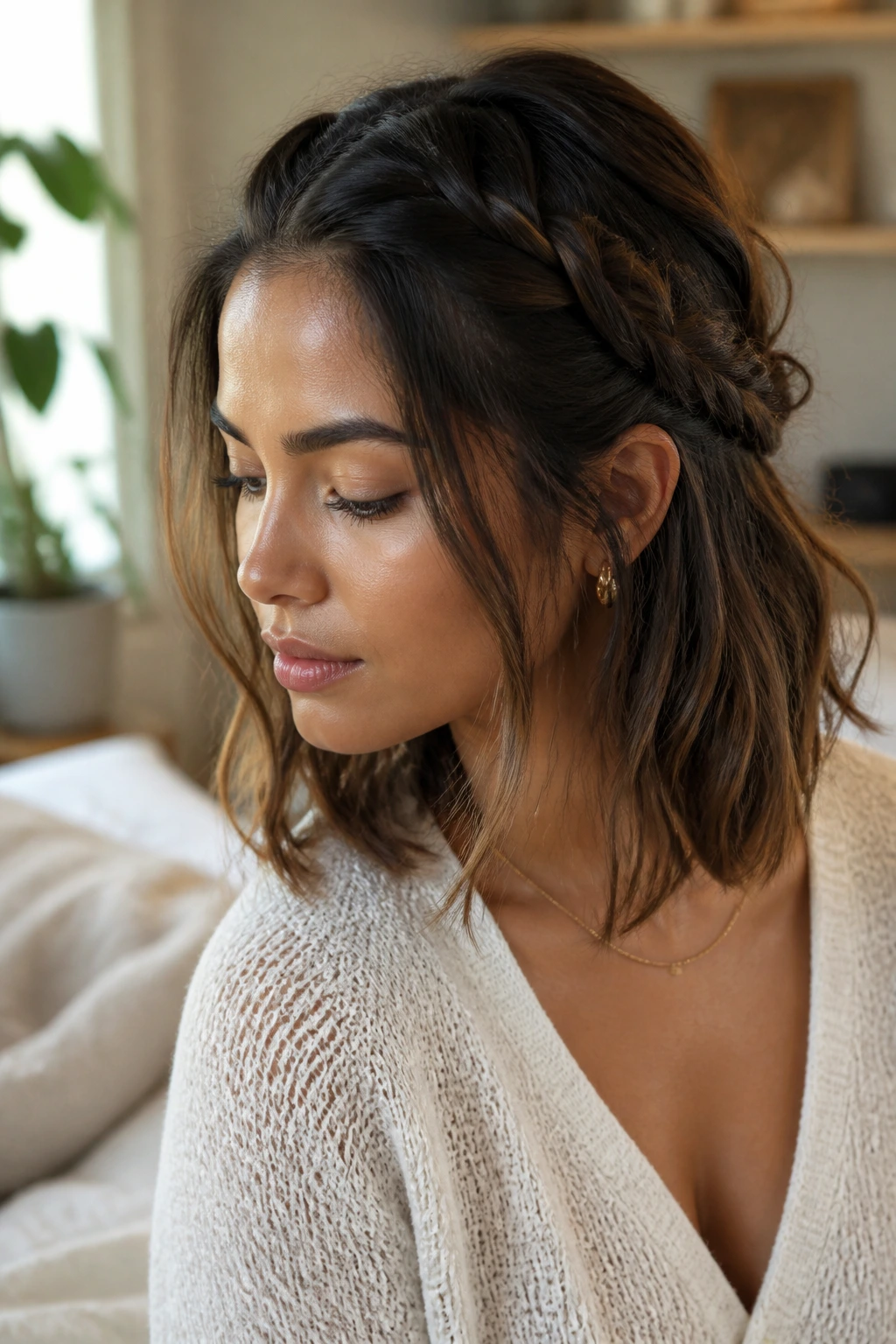
-
You get visible braid detail without a ton of bulk. Medium hair shows the weave clearly, so a French braid, fishtail, or four-strand pattern doesn’t get swallowed by length.
-
The ends are easier to manage. Instead of fighting a huge tail, you can tuck, wrap, knot, or pin the last few inches into a bun, ponytail, or crown.
-
Layered cuts stop being a problem and start being texture. A few loose face-framing pieces can soften a braid fast, which is useful when you do not want a look that feels too tight or severe.
-
Most of these styles work on day-two hair. A little grit helps medium hair hold a braid, especially if your roots are silky or freshly washed.
-
You can go polished or messy without changing the entire structure. Pull the braid tight for a sharp line, or pancake it for width and softness. Same braid. Very different mood.
-
No extensions are required for most of them. That matters more than people admit. Medium hair can carry a lot of style on its own if the sections are mapped well.
1. Classic French Braid for Medium Hair
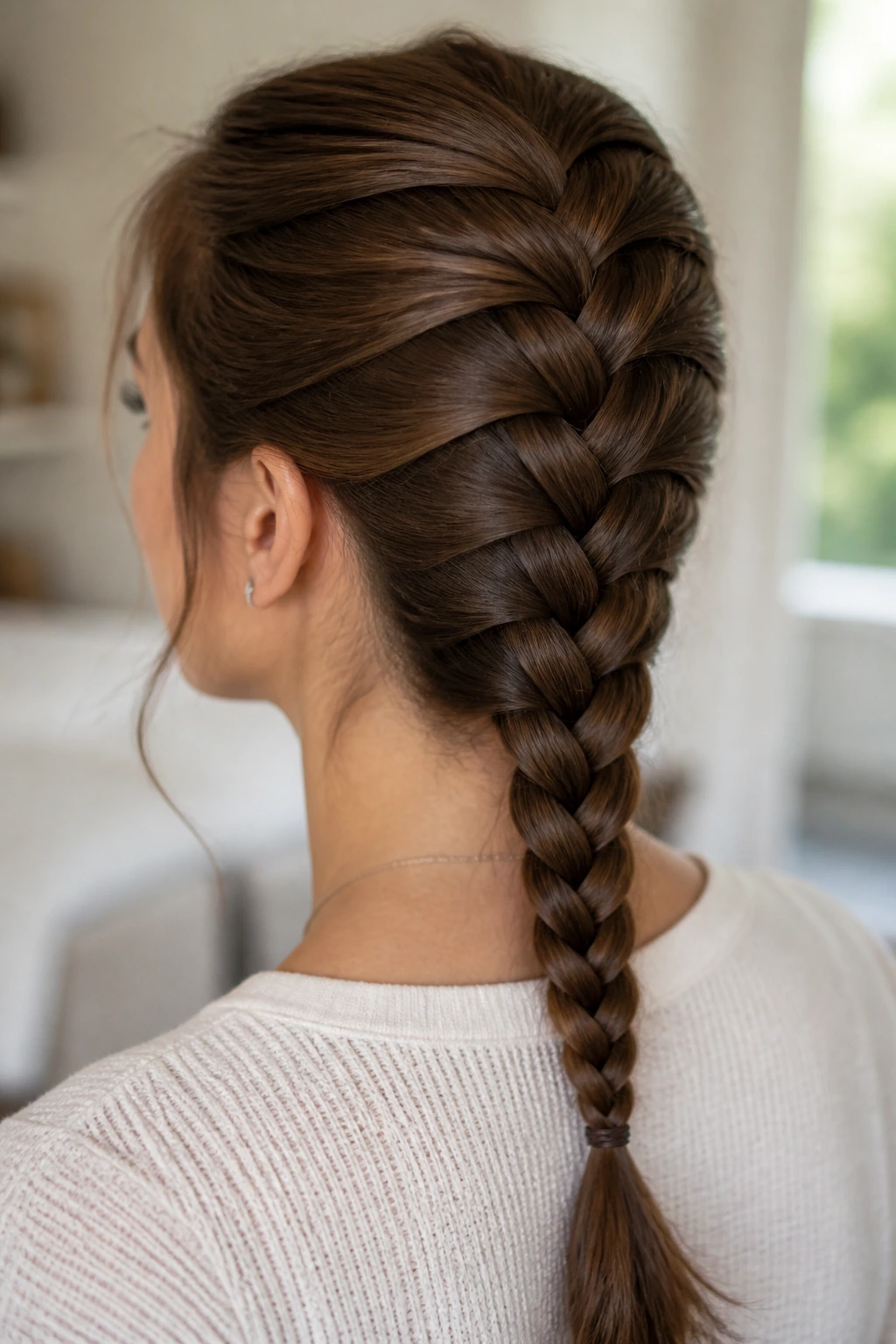
A clean French braid is the style I reach for when the hair needs to look settled, not fussy. On medium hair, it gives you enough length for a full back panel without the tail dragging into a heavy rope at the bottom. The finished braid sits flat against the head, which makes the parting work feel neat and intentional.
Why It Works
The French braid keeps adding hair as it moves down, so medium-length strands don’t need to do all the work at once. That matters if your hair is layered or a little slippery. Tighten the first three crosses more than the rest, then ease up once you’re past the crown so the shape doesn’t look too severe.
If you want this style to read polished, keep the part straight and the braid centered. If you want it softer, leave the front a touch looser around the temples. Either way, the braid lands in a place where medium hair can still swing at the ends without looking underbuilt.
Best for: school mornings, office days, or any time you want hair off the neck.
Best trick: mist the roots with dry shampoo before you start. It gives fine hair a little more grip.
2. Double Dutch Braids for Medium Hair
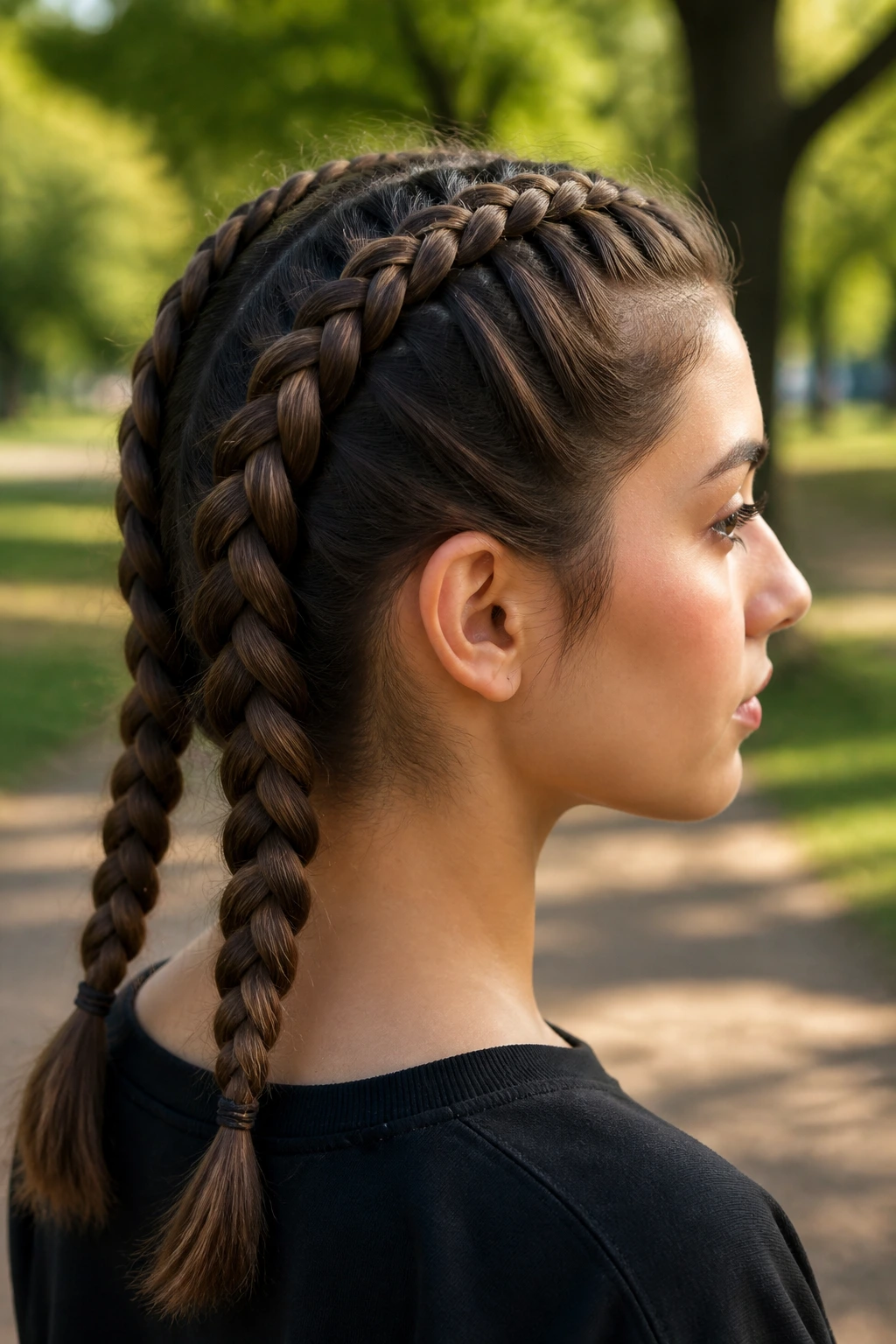
Two Dutch braids have a different energy. They sit on top of the head instead of sinking into it, so the style has more lift and a little more attitude. On medium hair, the length is enough to build each braid cleanly without needing to stuff the ends into miles of extra braid.
The biggest reason this style works is balance. The braids frame the head evenly, which keeps medium-length hair from feeling flat at the crown. Wear the tails loose, twist them into mini buns, or tie them off with clear elastics if you want the finish to stay compact.
What to watch: medium hair that’s too soft will puff out after an hour. A tiny bit of texture spray before braiding saves the shape.
Who it suits: straight hair, wavy hair, and anyone who wants a style that still looks good after a long walk or a gym session.
3. Side Fishtail Braid with Loose Face-Framing Pieces
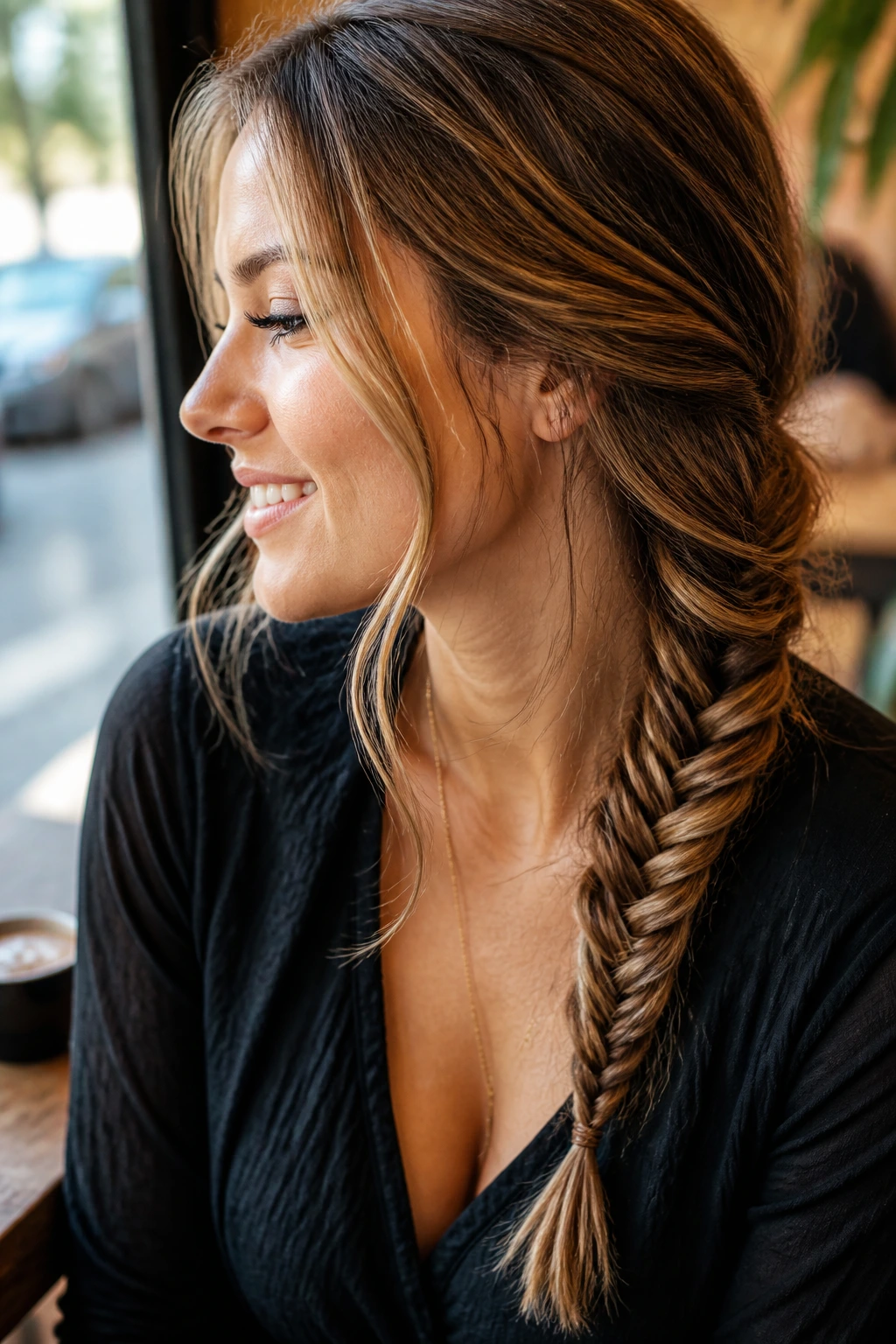
Why does a side fishtail look so good on medium hair? Because the braid has enough length to show the pattern, but not so much that it turns into a bulky tail hanging off one shoulder. The smaller sections in a fishtail braid create a woven look that holds up well when the hair isn’t super long.
Leave two slim pieces around the face if you want a softer finish. On medium hair, those pieces matter. They stop the braid from looking too rigid, and they work especially well if your layers are shorter around the cheekbones. Pull the braid apart gently with your fingers at the very end. Not enough to ruin the shape. Just enough to let the weave breathe.
How to Wear It
Keep it low and a little undone for brunch, or pull it tighter and set the ends with a tiny elastic for a more tidy look. If your hair is wavy, don’t fight the texture. The braid looks better with a little bend in it.
4. Braided Crown with a Clean Part
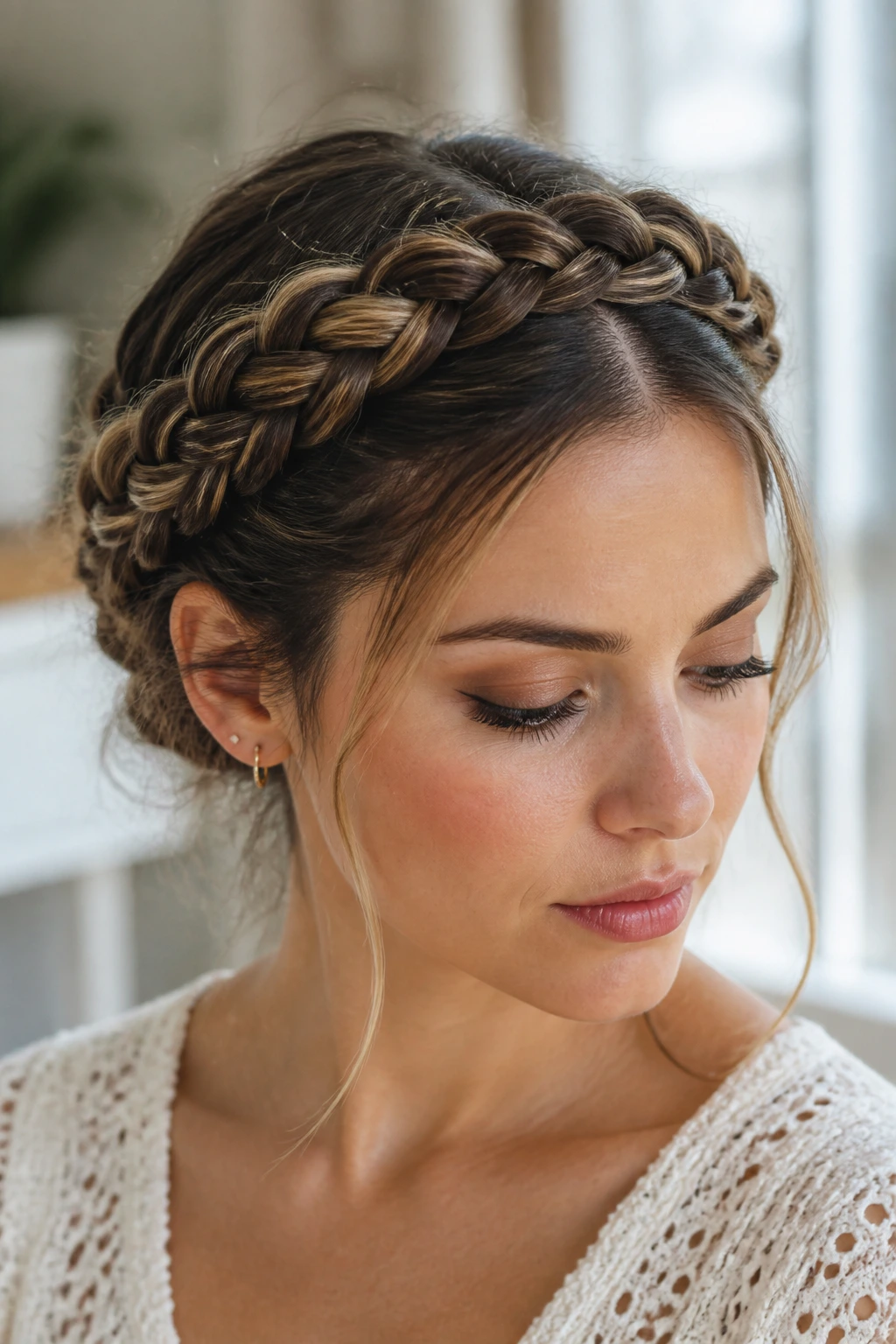
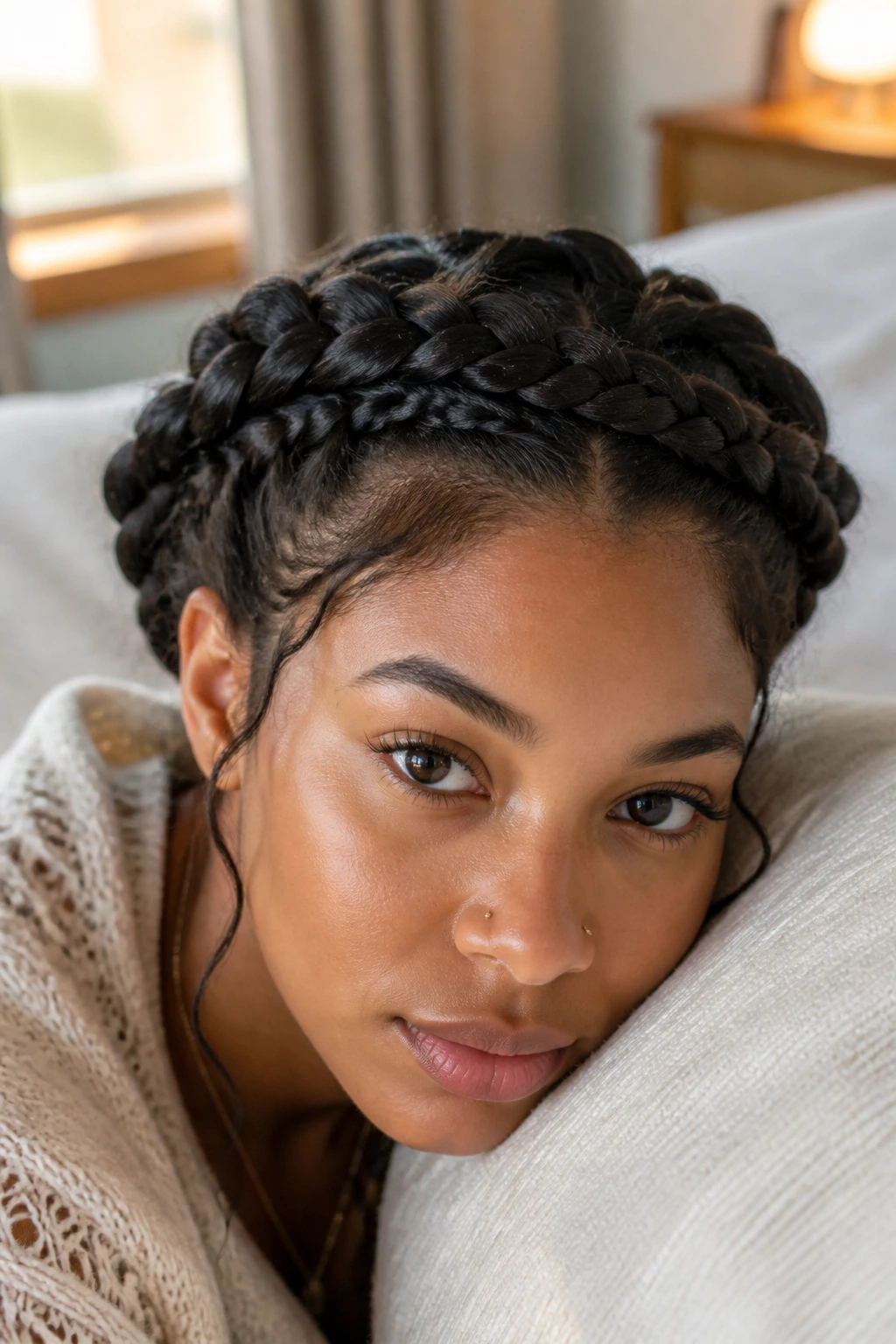
A crown braid is one of those styles that looks far more complicated than it is. On medium hair, that’s a gift. You have enough length to wrap the braid around the head without a huge, heavy tail pulling it off balance, and the shape sits nicely when pinned across the back.
The clean part is what makes it work. A center part gives the crown a more symmetrical feel, while a deep side part softens the whole thing. Either way, use bobby pins that match your hair color and tuck them under the braid, not above it. That tiny detail matters. You want the pins to disappear.
Good for: weddings, dinners, or any day when you want hair up but not stiff.
Small note: medium hair usually needs more pins than you think. Pin from both sides of the braid, especially near the ears.
5. Boxer Braids with Short Ends
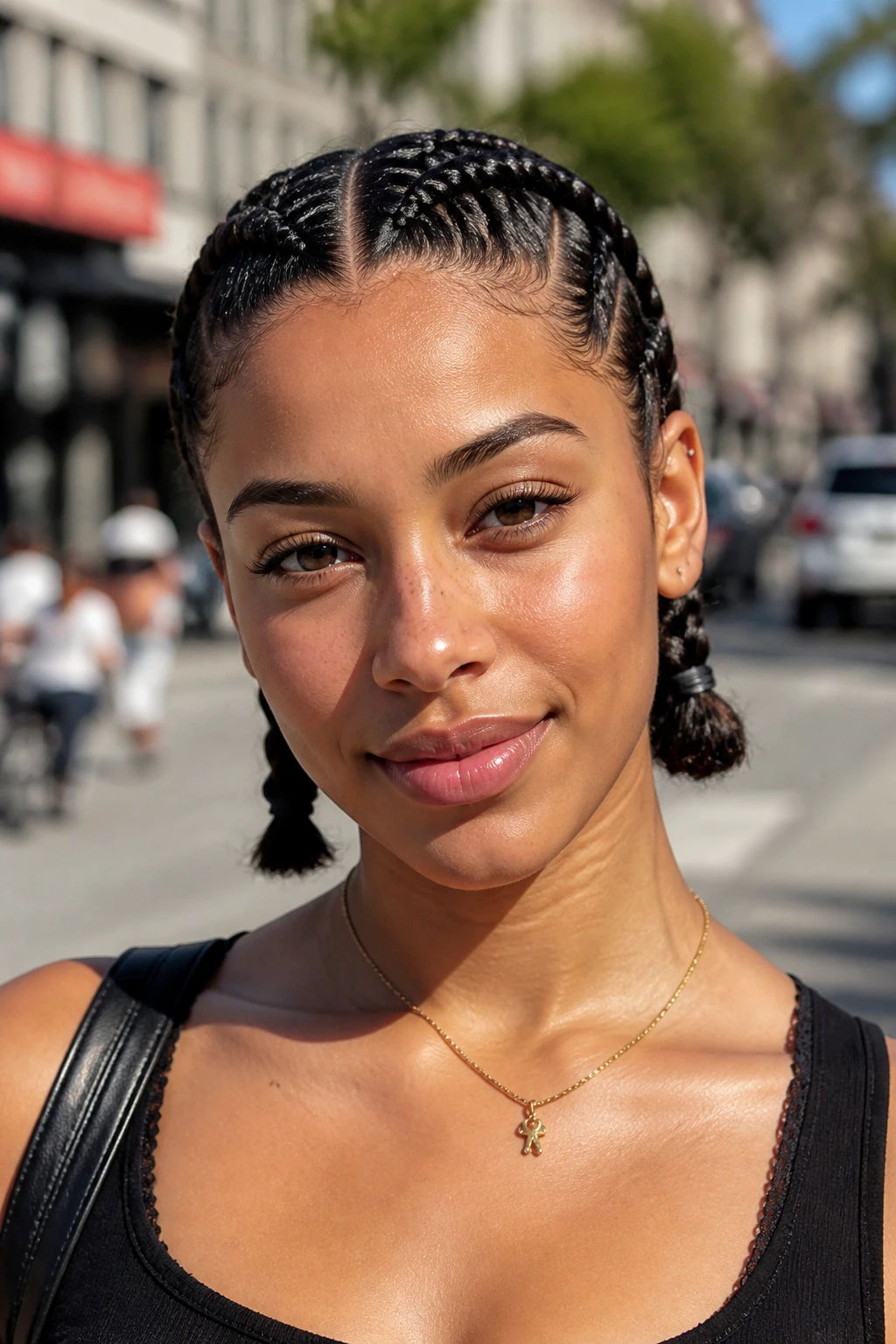
Boxer braids can be sharp and sporty, but medium hair keeps them from getting too heavy or too long. The braids hug the scalp, which is useful if your hair tends to puff out by midday. I like this style when the weather is humid or when I want hair off my face without losing the braid detail.
The short ends are part of the charm here. Instead of endless braids hanging down the back, the ends stop at a manageable length and stay neat if you secure them with small elastics. If you want a more relaxed finish, let the last inch or two stick out a bit. It softens the whole look.
What Makes It Different
- The braid line stays visible from the front.
- The style holds better on second-day hair.
- Medium hair keeps the ends from getting bulky.
- A center part makes the look symmetrical and strong.
6. Rope Braid Low Bun
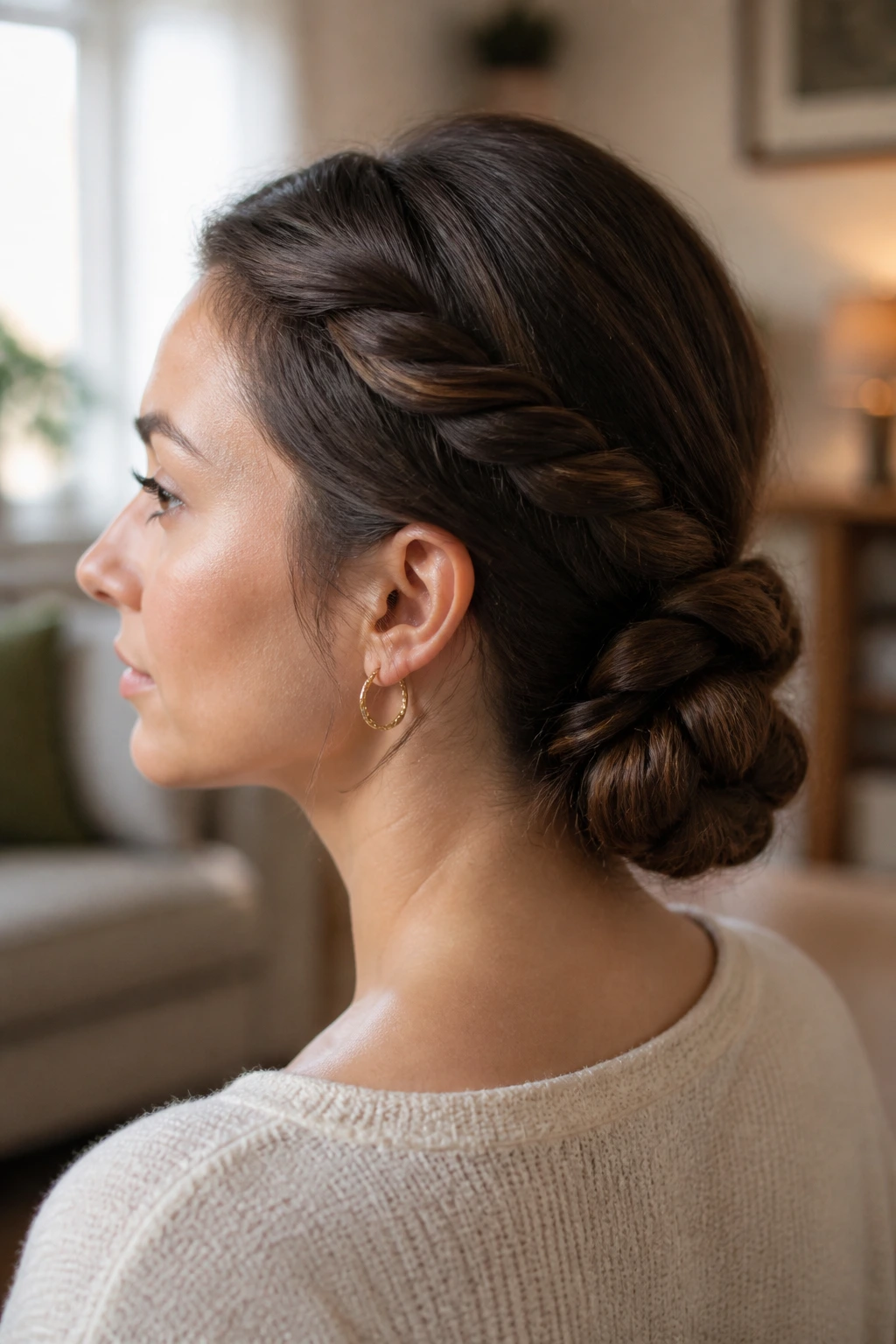
A rope braid is just two sections twisted around each other, but don’t let the simplicity fool you. On medium hair, it makes a tidy low bun that feels cleaner than a normal twist and less fussy than a full braid. It’s a smart choice when your hair has enough length to twist but not enough to build a giant knot.
Twist the two sections tightly at the start, then loosen your grip once you’re near the ends. Coil the rope into a bun at the nape and pin it in place with crossed bobby pins. If your hair is silky, start with a touch of styling cream on the mids and ends — not the roots. Roots that are too slick slide right out.
Best for: work, travel, or days when you need a braid-adjacent style that stays put.
7. Waterfall Braid Across Soft Waves
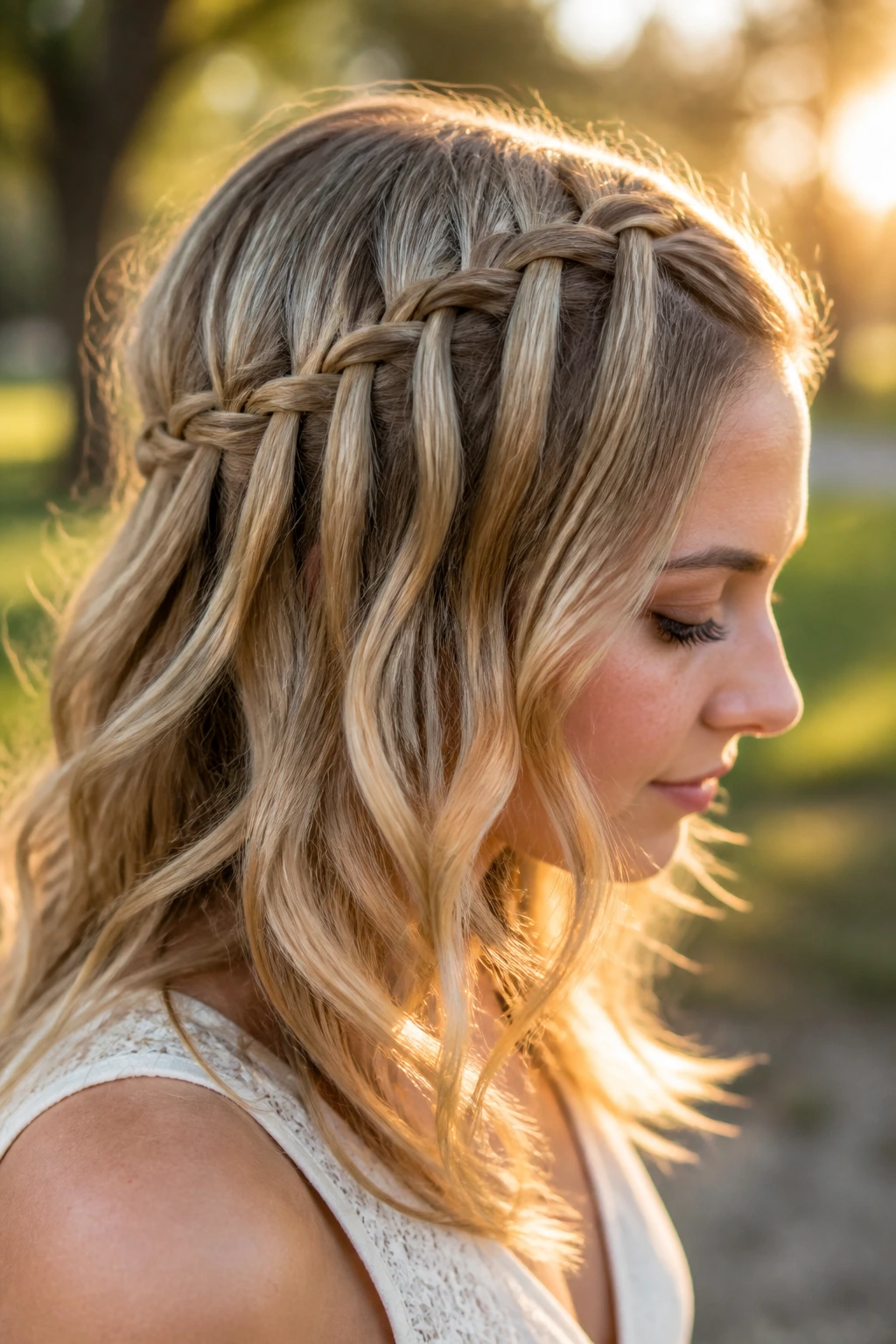
A waterfall braid is all about the drop. One strand keeps falling through the braid while the rest travels across the head, and that open pattern looks especially pretty on medium hair because the length is just enough to let the braid travel without getting lost. It’s one of the few styles here that benefits from a little wave underneath.
The braid itself is delicate, so the hair around it should have some texture. If your hair is pin-straight, add a few bends with a curling iron first. Not curls. Just loose bends. The braid will sit on top better, and the released pieces will blend into the rest of the hair instead of sticking out like little ropes.
Quick note
This style is more about the front and sides than the back. If the braid line looks neat from the temple to the ear, you’ve done it right.
8. Pull-Through Braid Ponytail
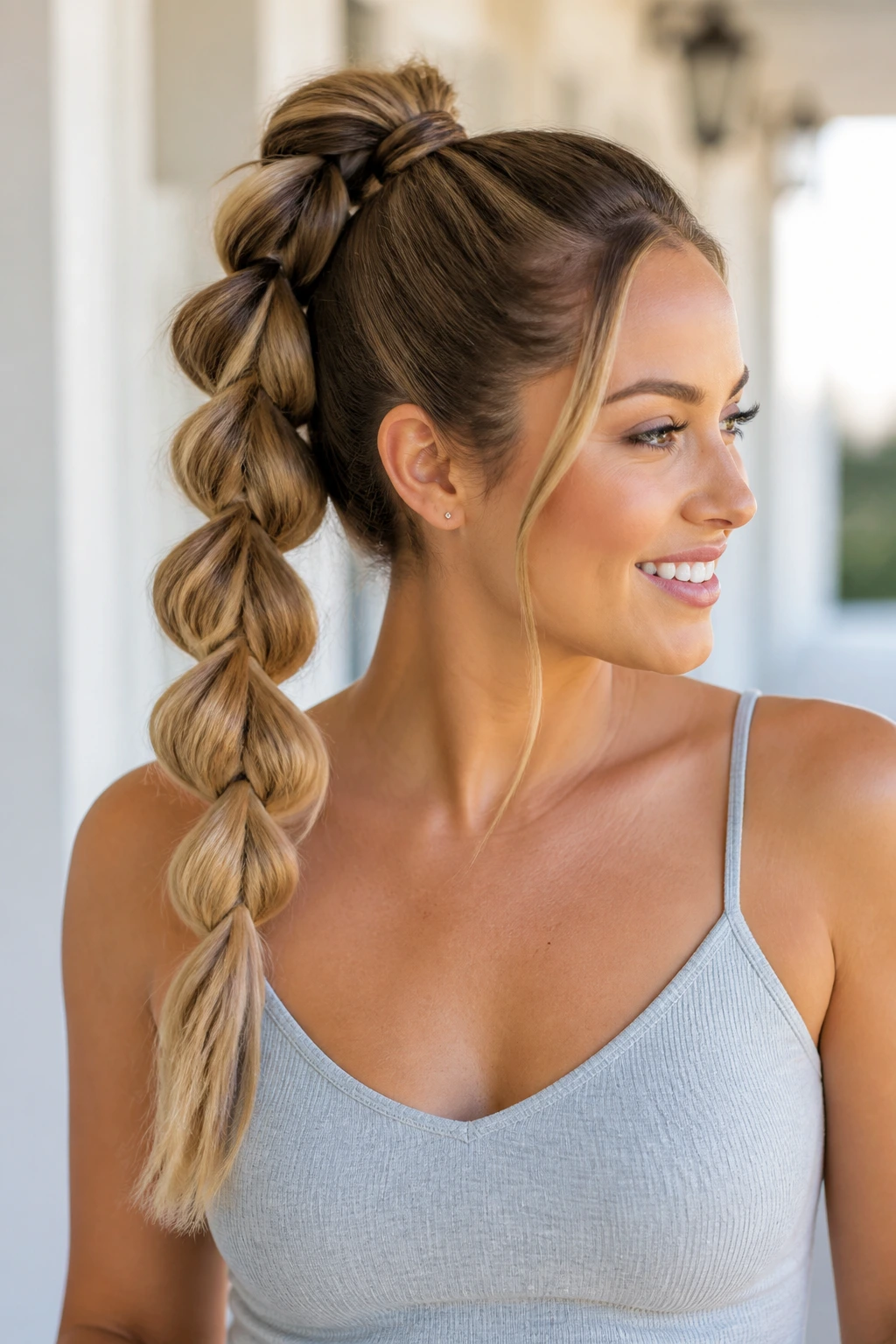
Here’s the honest thing: a pull-through braid isn’t a braid in the classic sense, but it gives the same visual effect with less effort. Medium hair is ideal for it because you can build volume without needing extra inches to hide the elastics. The style reads bigger than it is.
Start with a ponytail, split it into sections, and stack them with clear elastics. Then pull each loop open a little for width. That soft expansion makes the braid look thick, even if your hair is fine. If you’ve ever wanted a fuller braid without adding extensions, this is the one to try. It’s almost cheeky how well it works.
Best for: fine or medium-density hair that needs a little fake fullness.
9. Side-Swept Boho Braid
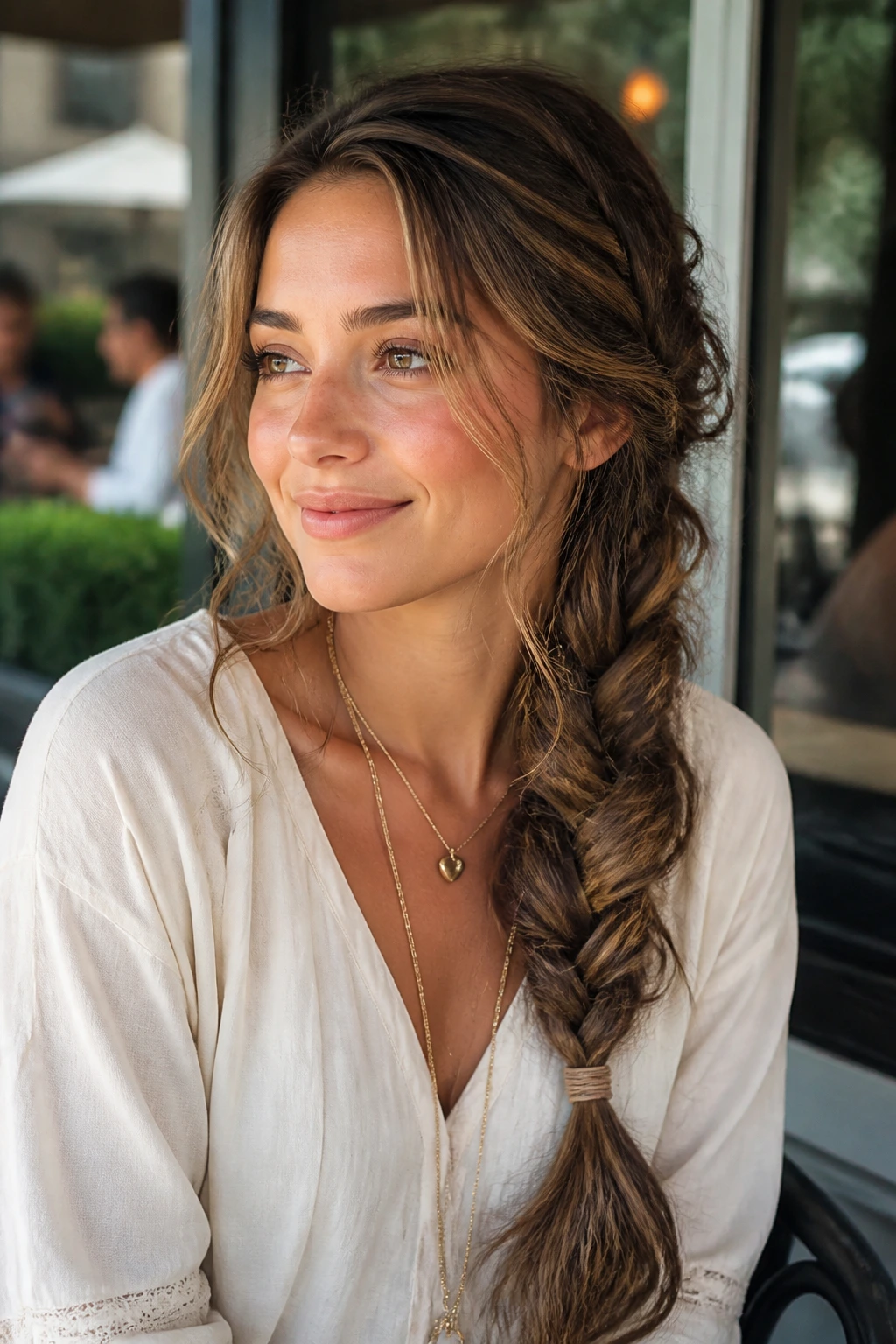
A side-swept boho braid works because it does not try too hard. Medium hair keeps it from becoming a heavy, overbuilt side plait, and the looser structure lets natural texture do some of the work. It should look touched, not engineered.
Pull the braid over one shoulder and leave a few face-framing pieces loose. If you have layers, let them live. Don’t force every shorter bit into the braid. The little pieces around the cheek and jaw make the style feel soft instead of stiff, and they keep the side braid from looking like a school uniform version of itself.
Best with: beachy waves, a little dry shampoo, and a simple clip or ribbon at the end.
10. Lace Braid Headband
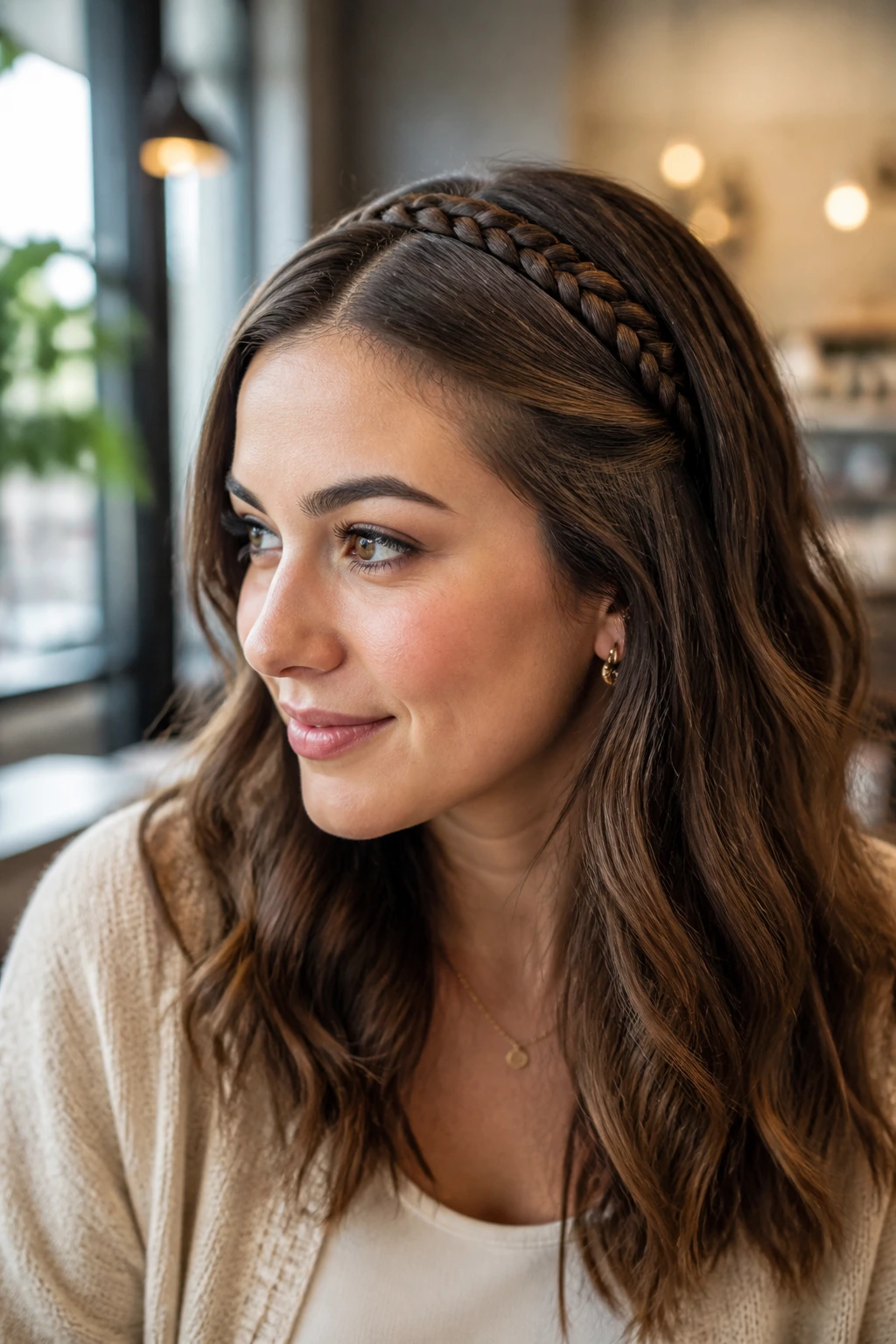
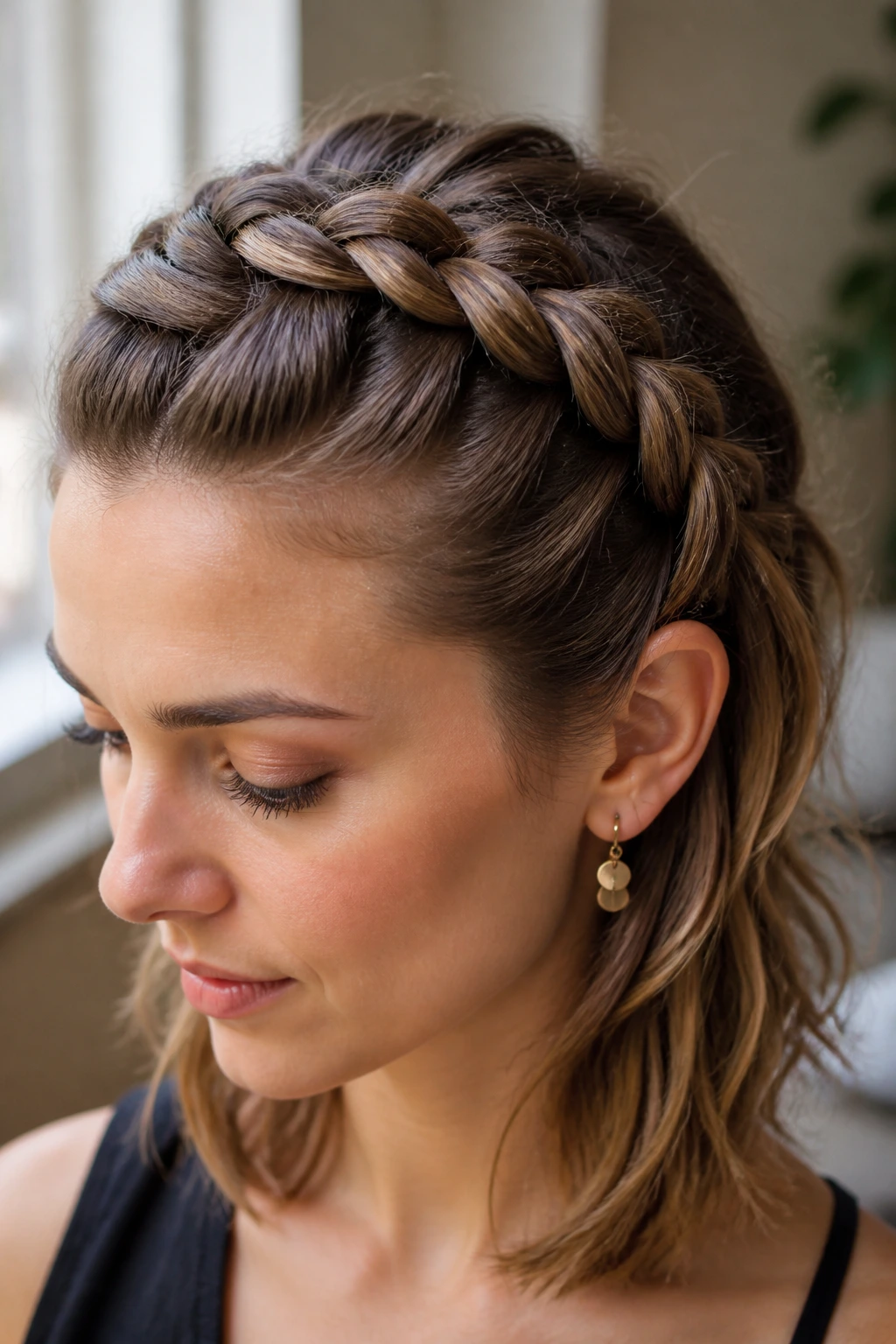
A lace braid is like a French braid’s more focused cousin. Instead of pulling hair from both sides, you only add hair from one side as the braid moves across the head, which leaves the rest down. On medium hair, that makes a very useful headband effect without needing a long tail.
The best part is how it deals with grown-out bangs and face pieces. If the front section keeps falling into your eyes, this braid keeps it in line while still looking light. You can stop at the temple and pin the end behind the ear, or continue across the crown if you want a more finished band.
How to use it
Pair it with loose waves or straight hair. The contrast makes the braid stand out more, and medium hair gives you enough length left over to keep the rest of the style simple.
11. Milkmaid Braids for Shoulder-Length Hair
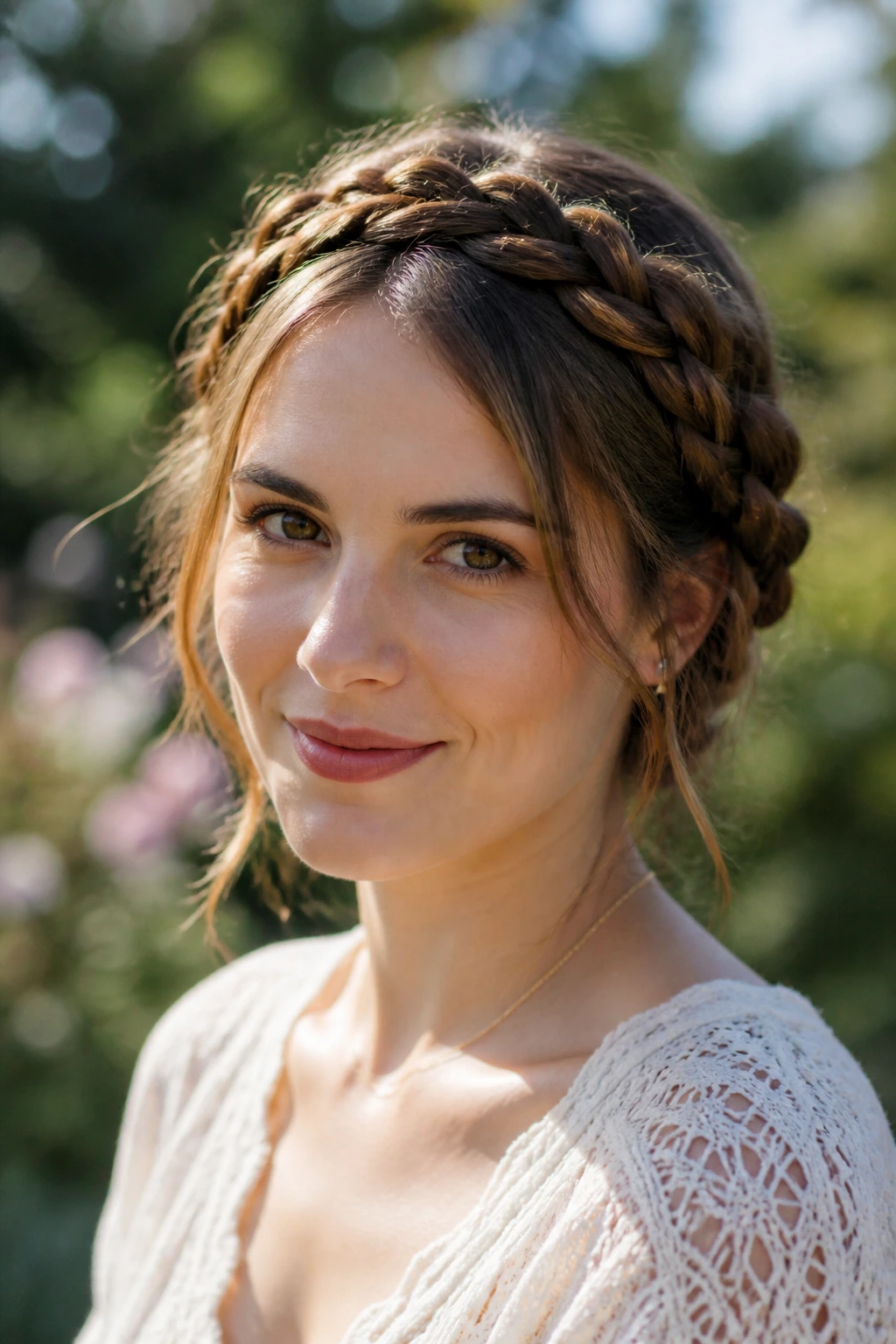
Milkmaid braids tend to look best when the hair isn’t too long, and that’s why medium hair does them a favor. Two braids wrapped over the head can get bulky fast on longer lengths. Here, the shape stays tucked close to the scalp and the pins can actually hold.
Braid each side separately, then cross them over the top of the head and pin them in place. Leave the braids a little loose if you want a softer crown, or keep them tight if you need the style to survive a long day. This one looks especially nice when the ends are hidden neatly underneath the wrapped braids.
Small warning: use enough pins. Milkmaid styles look casual, but they fall apart fast if you skimp.
12. Braided Top Knot
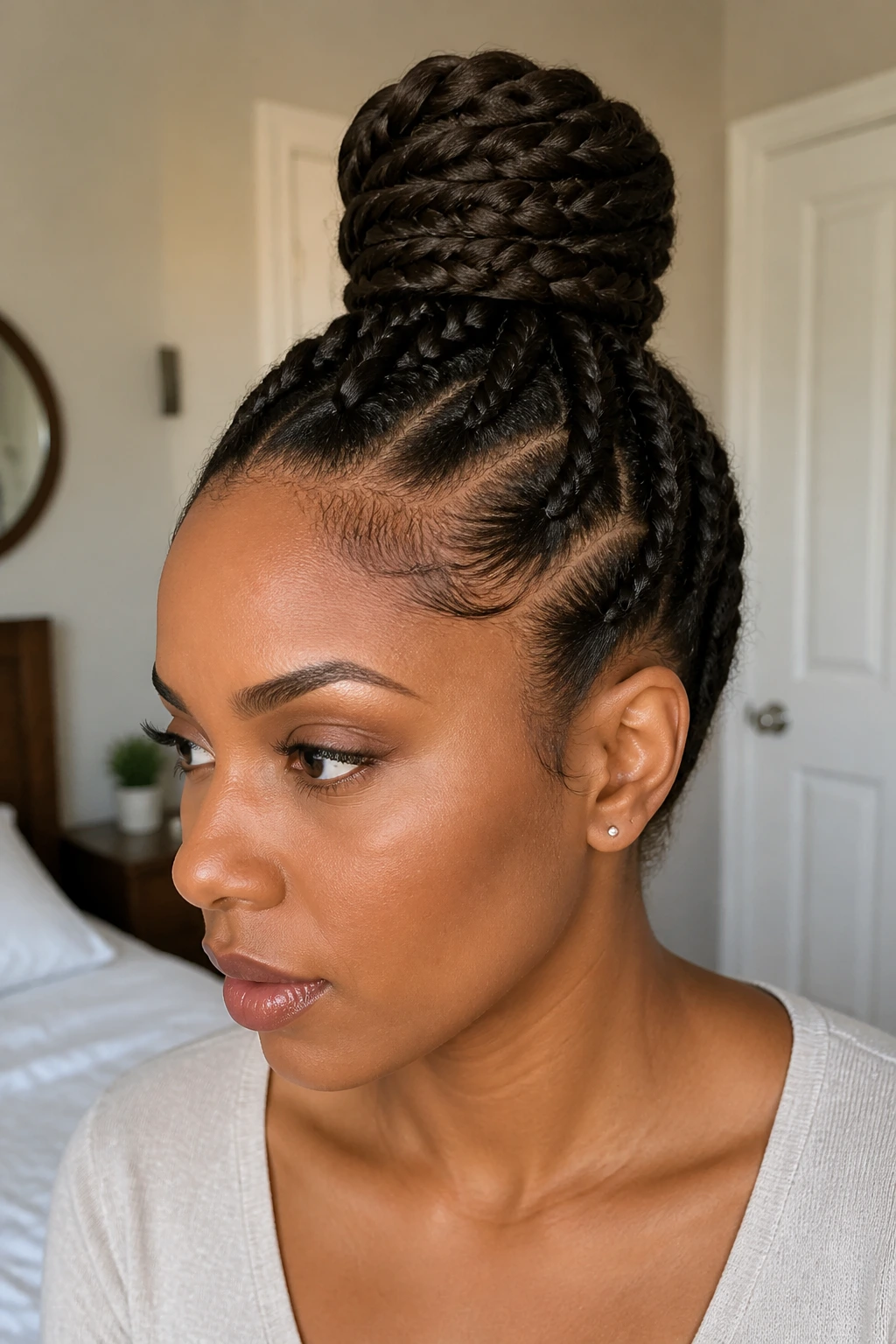
A braided top knot gives medium hair a little more structure than a plain bun. Braid the ponytail first, then twist or wrap it into a knot at the crown. The braid holds the shape of the bun and keeps the finish from looking flat.
This is one of those styles that benefits from texture at the roots. If your hair is freshly washed and smooth, the bun can slip. Add a bit of dry shampoo, gather the hair high, and secure the base tightly before you braid. The knot should sit centered, not lopsided, or the whole look starts to tilt.
Best for: hot days, workouts, or when you want your face and neck completely clear.
13. Pancaked Three-Strand Braid
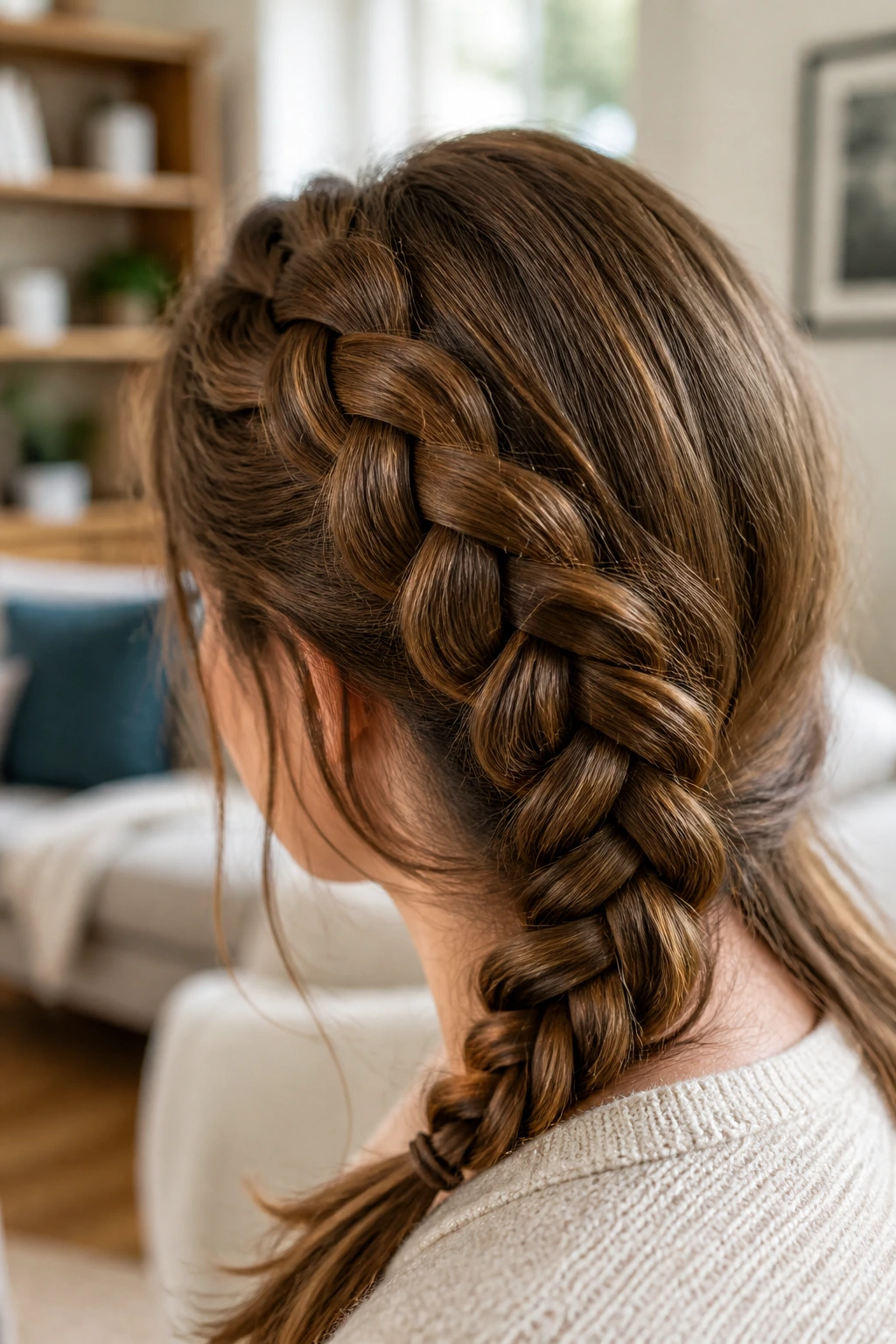
A pancaked braid is just a normal three-strand braid that gets widened by pulling the outer edges apart. On medium hair, that trick matters because it gives the braid more presence without requiring extra length or thickness. The shape becomes fuller and softer, almost like a fabric ribbon.
Why It Works
Fine medium hair can look thin in a regular braid. Pancaking fixes that in about thirty seconds. Braid the hair all the way down, secure the end, and then tug each loop outward from the outside edge only. Go slowly. If you yank both sides at once, the braid turns messy instead of full.
This style is one of my favorites for layered cuts because the loosened shape helps hide uneven ends. It also looks better when it is a little imperfect. Clean enough to show the pattern. Loose enough to feel real.
14. Twisted Halo with Tucked Ends
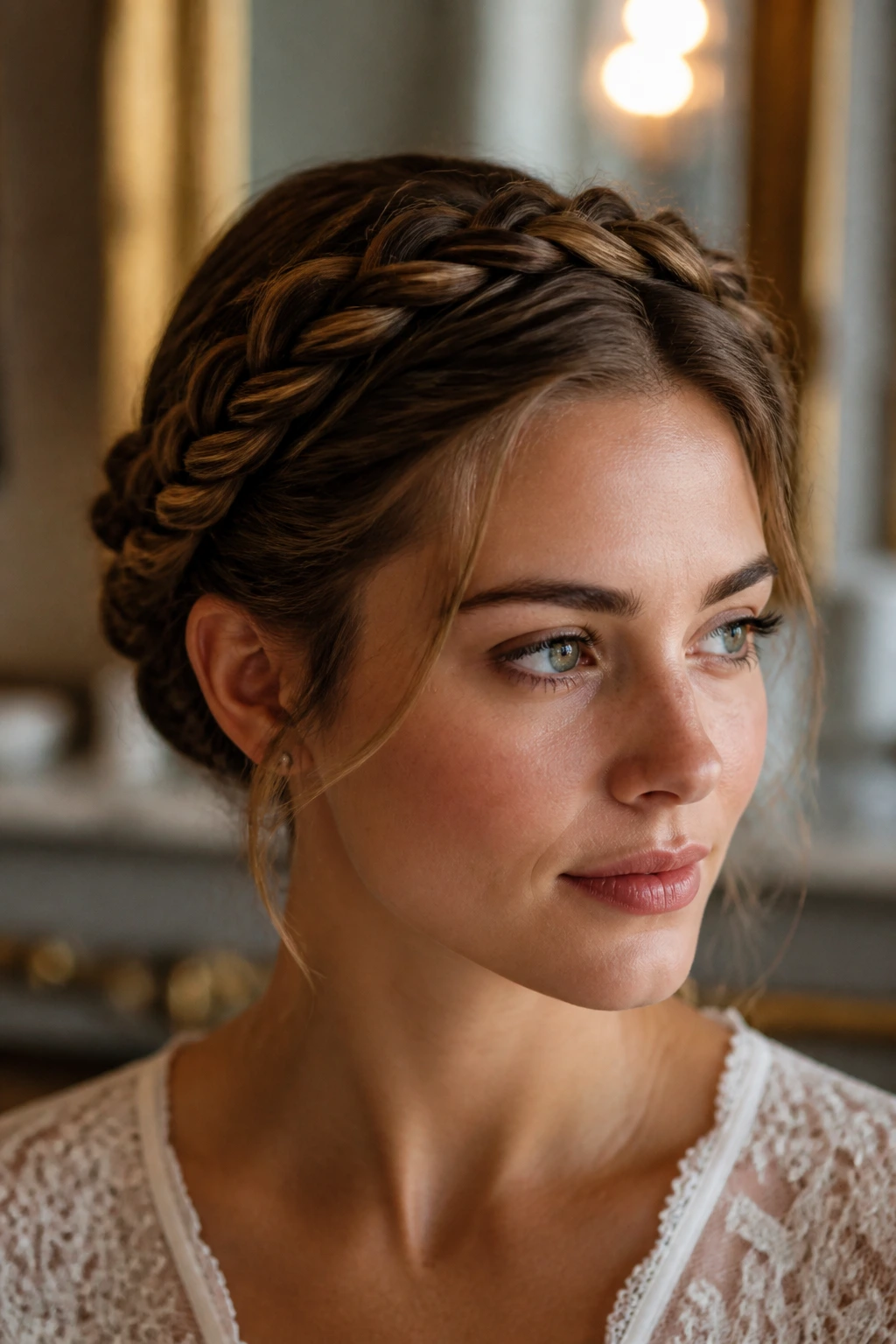
A twisted halo uses two rope-like sections that travel around the head and get pinned beneath the rest of the hair. On medium hair, the style lands right where it should — wrapped enough to feel special, not so long that the ends bunch up at the nape. It’s neat without looking severe.
The trick is to keep the twist close to the scalp and pin every few inches instead of waiting until the end. That’s what keeps the halo from shifting. If your hair is shorter at the nape, tuck the ends under the twist and secure them with crossed pins. The finish should feel smooth, not bulky.
Best for: events, photos, or a dressy dinner when you want hair off the face.
15. Four-Strand Braid Down the Back
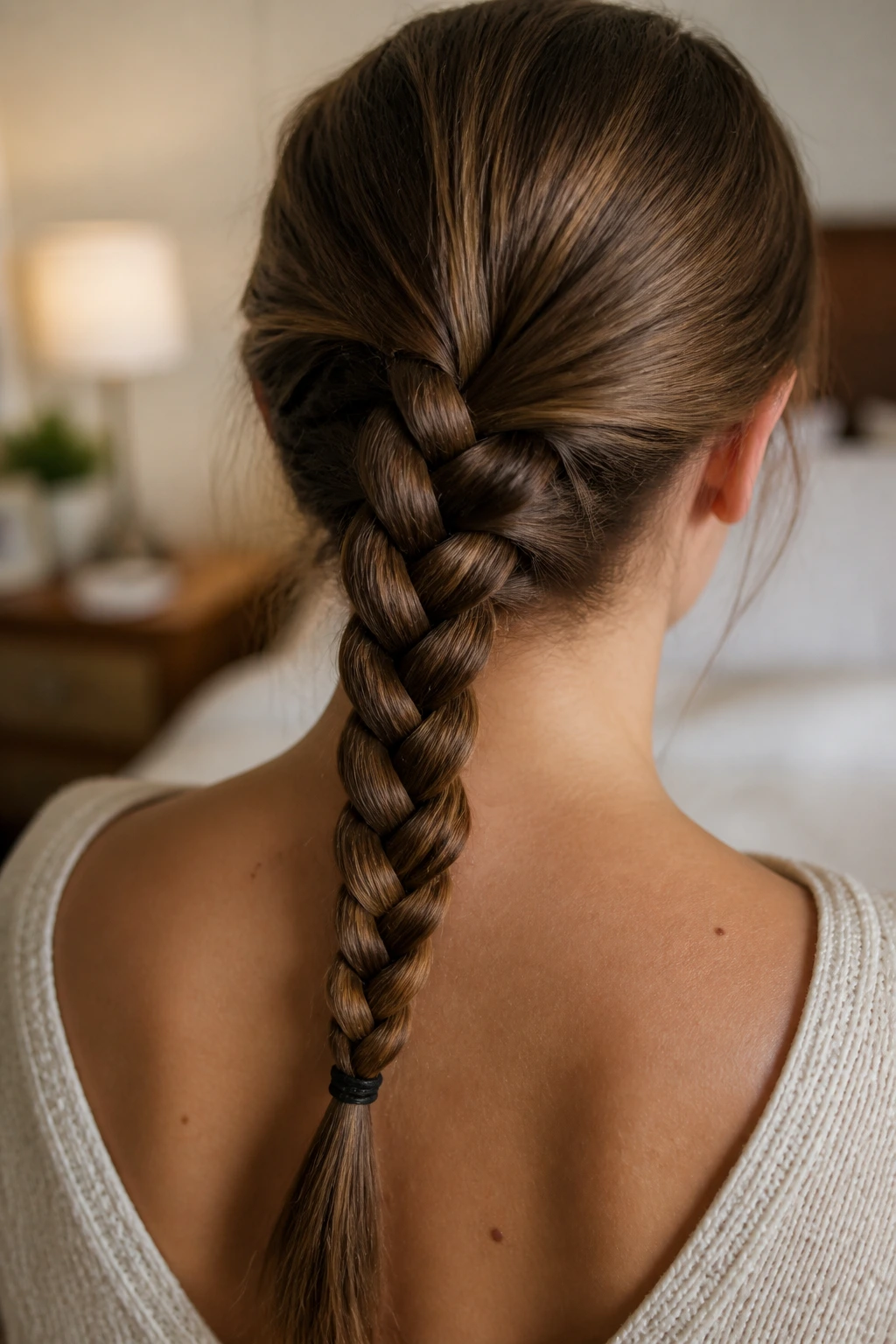
A four-strand braid gives you a tighter, more patterned weave than a standard braid, and medium hair is long enough to show that pattern without making the tail too heavy. It sits somewhere between polished and slightly unexpected, which is a nice place to be.
The braid needs a bit of patience at the start because the sections are easy to mix up. Once you get the rhythm, though, it moves quickly. Keep the tension even. Uneven pulling will make one side look flatter than the other, and that’s the one thing that gives this style away as rushed.
How to wear it
A four-strand braid works best when the rest of the hair is kept simple. No competing curls. No big clips. Let the pattern do the talking.
16. Braided Space Buns
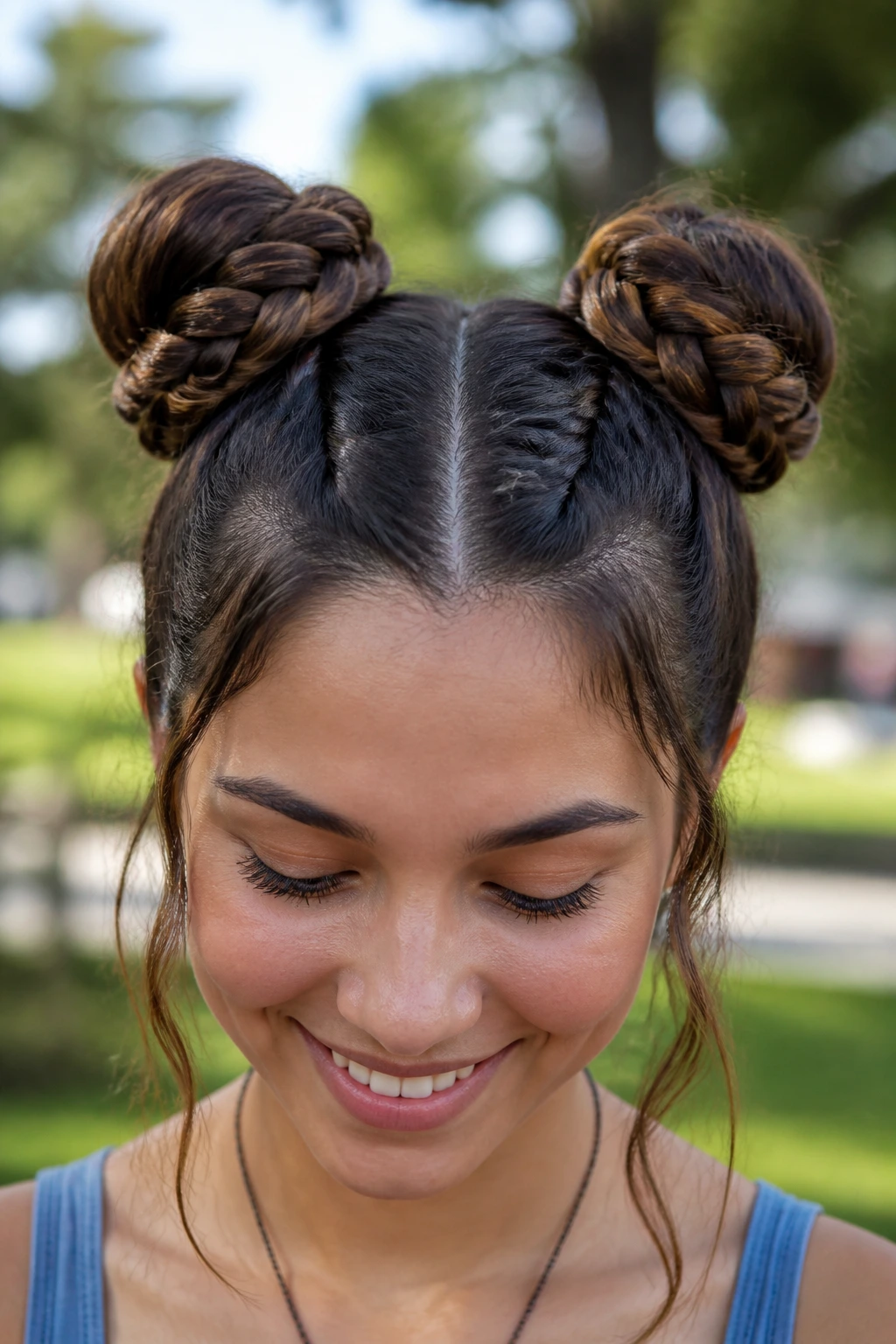
Braided space buns are playful, but they’re also practical on medium hair because the length is just enough to build each bun without the whole thing collapsing. You can make the braids tight and tidy, then coil them into two small buns near the crown.
The symmetry matters here. Part the hair straight down the middle and mirror the braid size on both sides if you want the buns to look balanced. If you don’t care about perfect symmetry, even better — the slightly uneven version feels less costume-y. Leave a few wisps loose around the ears and temples if the style starts to feel too sharp.
Best for: concerts, weekends, or any day when you want something that’s fun but still holds.
17. Side Fishtail with Face-Framing Pieces
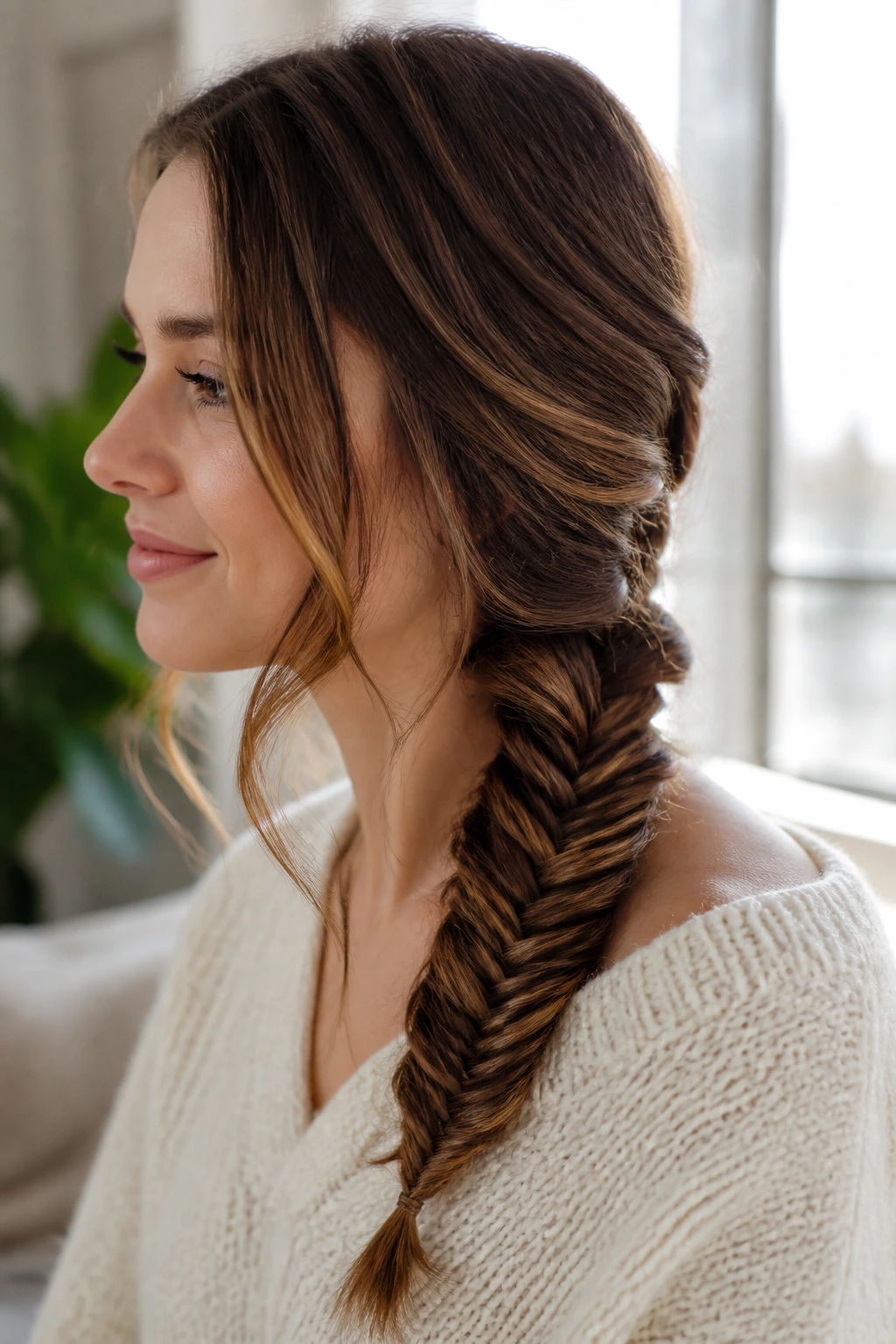
A side fishtail is already soft. Medium hair makes it softer by keeping the tail from becoming too long and stiff. The braid falls over one shoulder, and the length gives you enough room to show the stitch-like texture without weighing the style down.
The face-framing pieces are not optional here. They keep the braid from looking too formal and help the style sit with layered cuts. If your hair is thick, keep the fishtail sections small. If it’s fine, make them a touch larger and pull the braid apart at the end. Both approaches work. They just change the scale.
Small detail that matters
Secure the end with a clear elastic, then wrap a tiny piece of hair around it and pin it underneath. That tiny cover-up makes the style look cleaner immediately.
18. Messy French Braid Bun
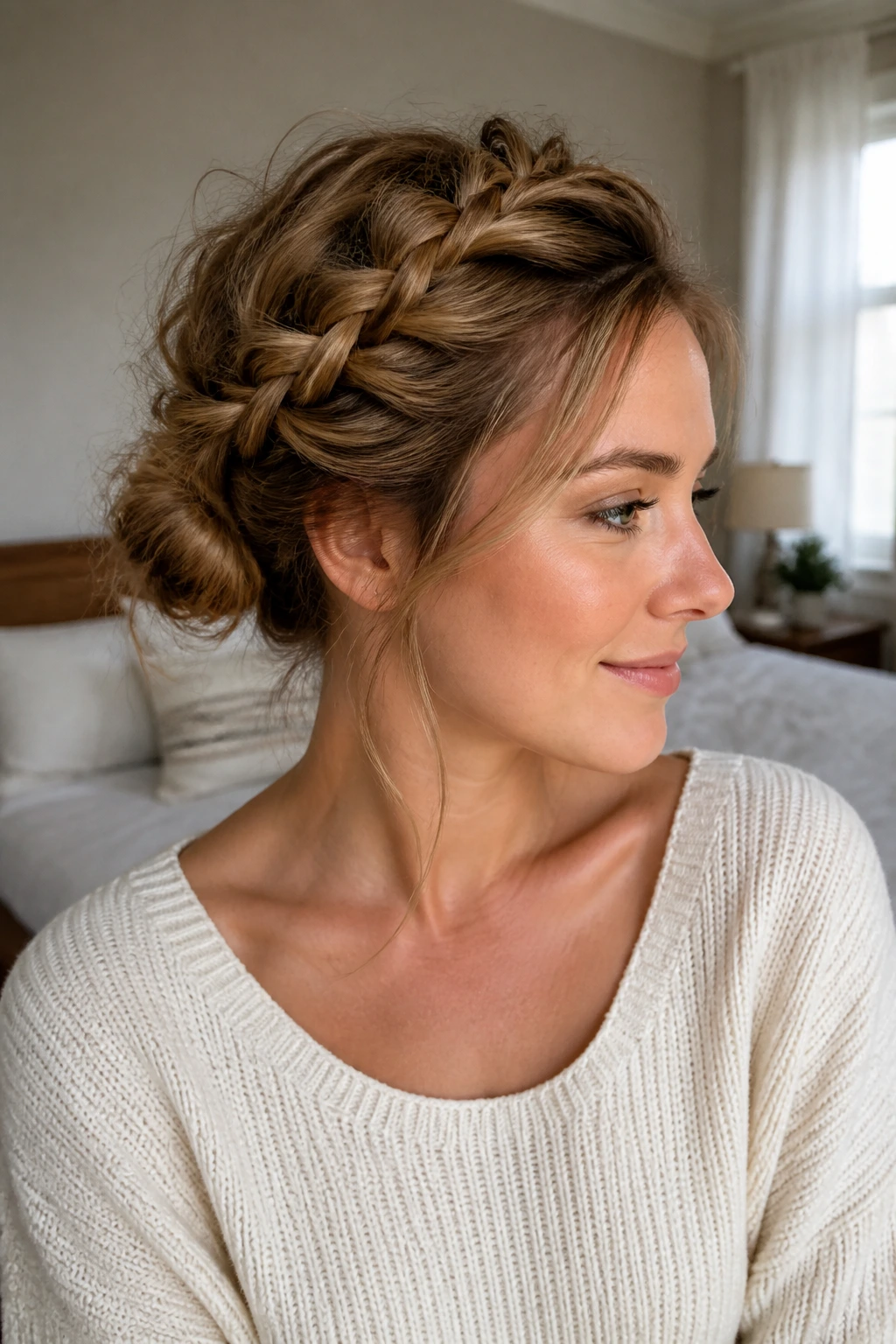
A messy French braid bun starts as a braid and ends as a knot, which makes it one of the most useful medium-hair styles when you want structure without precision. Start the French braid at the crown, braid down toward the nape, then twist the tail into a loose bun and pin it.
The appeal is in the transition. The braid keeps the top neat, and the bun gives the lower half of the style some softness. Medium hair is the right length for this because the bun won’t balloon into something huge. It stays compact, which makes the messy finish look intentional instead of accidental.
Pro move: pull a few strands free at the ears and the crown after the bun is pinned. It makes the style look lived in instead of helmet-like.
19. Cornrow Accent Braids into Loose Waves
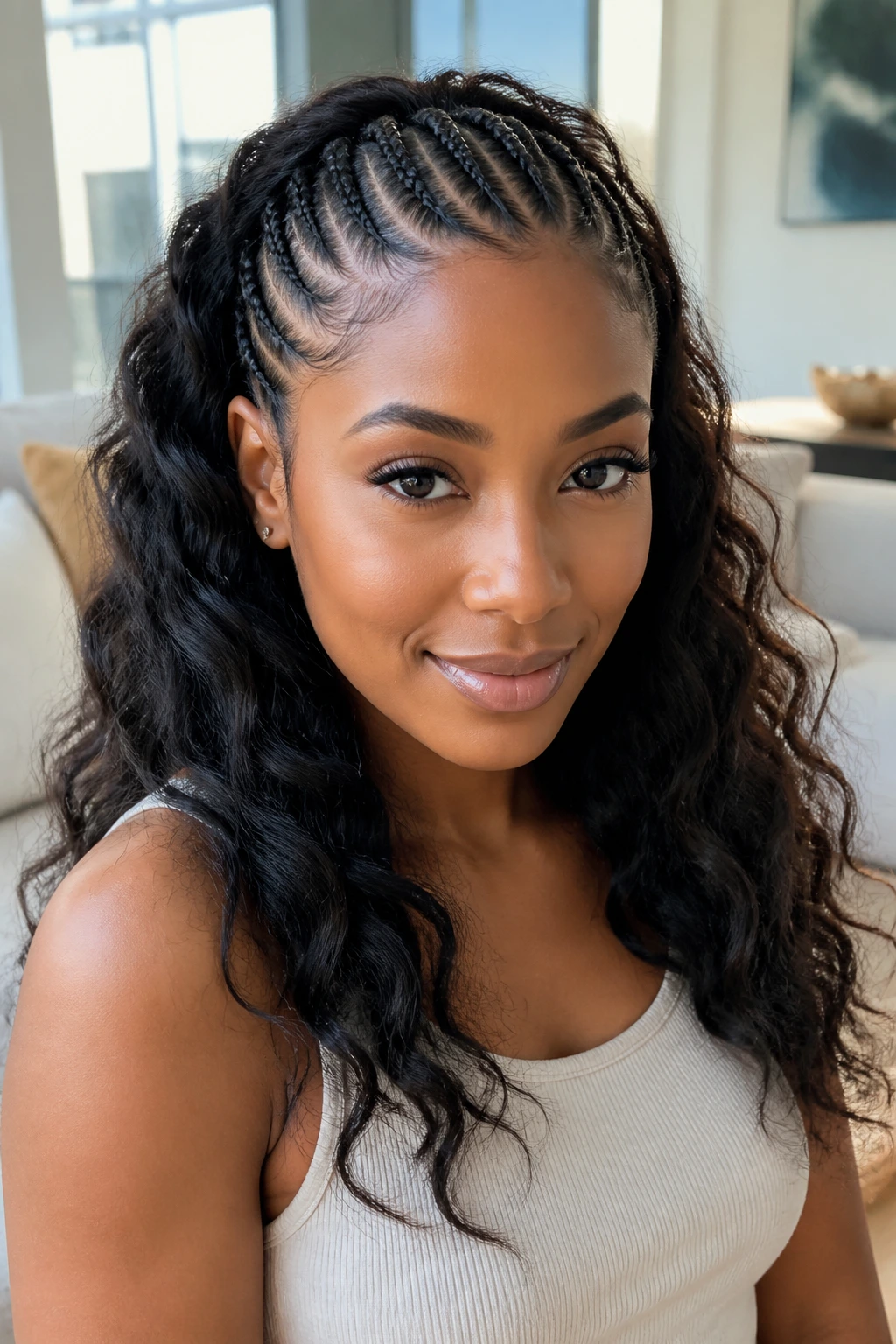
Accent cornrows are a smart way to control the front of medium hair without committing to a full braided style. A few narrow braids at the hairline pull the face pieces back, while the rest of the hair stays loose and wavy. That contrast is the whole point.
The braids should be small, clean, and close to the scalp. You’re not building a big braid. You’re creating structure where the hair likes to slip forward. On medium hair, those accents are especially useful because the loose length still has enough movement to balance the tight front.
What to notice
If the braid starts looking puffy at the root, the section was too large or the tension was uneven. Keep the rows narrow and the parting crisp.
20. Braided Low Ponytail with Wrapped Elastic
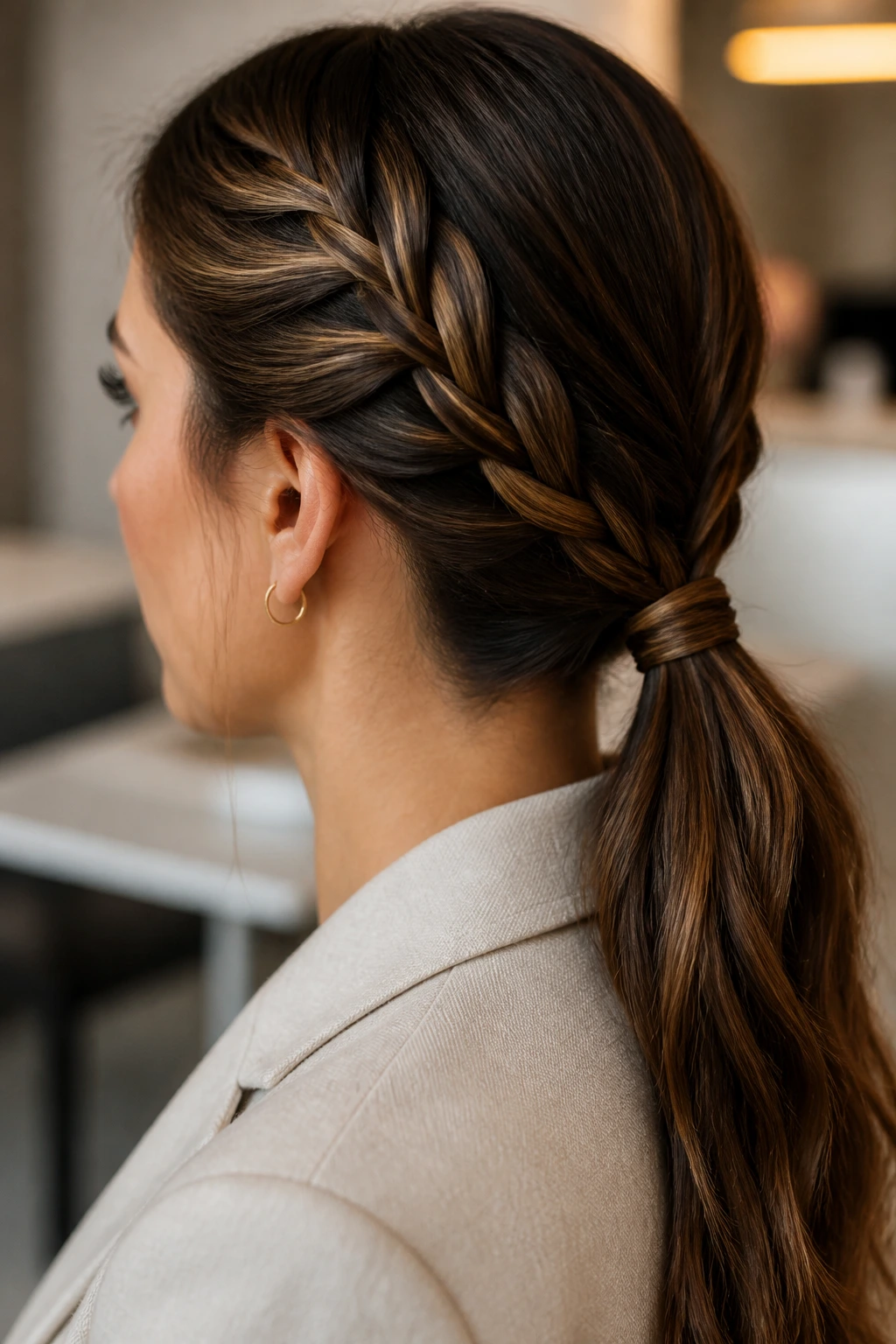
A braided low ponytail is one of the easiest ways to make medium hair look finished fast. The braid starts at the nape or just above it, then travels into a simple ponytail. Wrap a small piece of hair around the elastic and pin it underneath, and the whole thing looks cleaner right away.
The reason it works so well on medium hair is that the braid and the tail stay in proportion. Long hair can make this style drag. Medium hair keeps the ponytail light and mobile, so the braid remains the focus. If you want extra polish, smooth the front with a brush before you braid, then leave the tail slightly textured.
Best for: interviews, office days, or dinners where you want the hair secure but not severe.
21. Infinity Braid Accent on Medium Hair
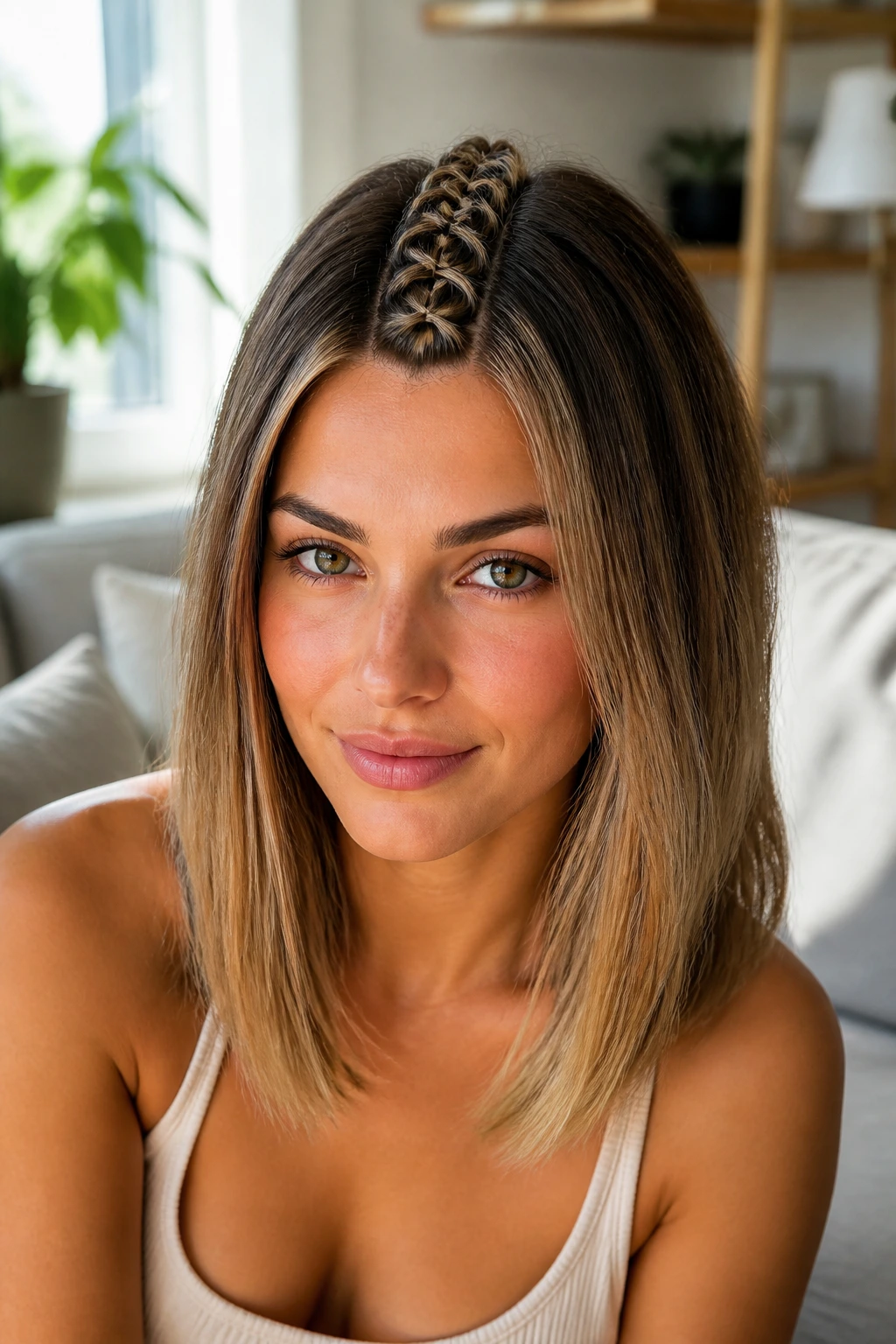
An infinity braid is one of those styles that looks like it belongs in a braid chart somewhere, but it’s actually just a repeated looping pattern. On medium hair, that pattern shows up well because there’s enough length to see each crossover without losing the shape in a long tail.
Use it as a center accent or work it into a half-up section. It’s especially nice when you want one detail to stand out instead of braiding the entire head. The style has a decorative feel, but it isn’t fragile if you keep the sections even and the base secure.
How to use it
Pair it with straight or lightly waved hair. The pattern reads better when the surrounding texture is not fighting for attention.
22. Mermaid Braid with Narrow Sections
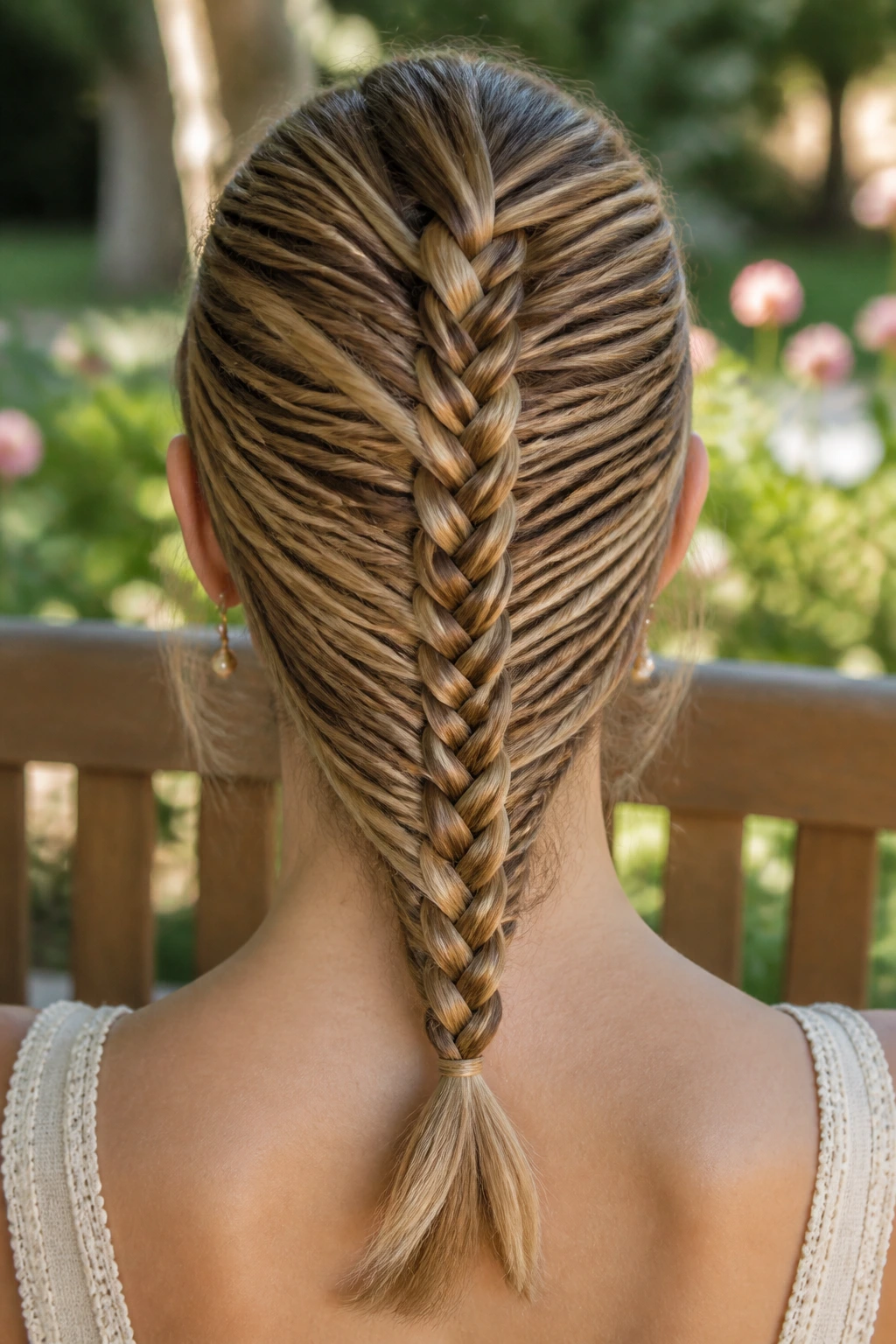
A mermaid braid uses tiny sections layered around a larger central braid, and medium hair keeps the whole thing from looking overbuilt. The result is textured and a little ornate, but not weighed down by endless length. It’s one of the more satisfying braids to look at from the back.
The trick is section control. If the pieces are too large, the braid loses its fish-scale look. If they’re too tiny, the style becomes hard to maintain and starts slipping. Medium hair gives you a workable middle zone where the braid feels detailed without turning into a project that eats your afternoon.
Best for: long lunches, events, or anyone who enjoys a braid that looks more intricate than it is.
23. Rope Crown with Loose Ends
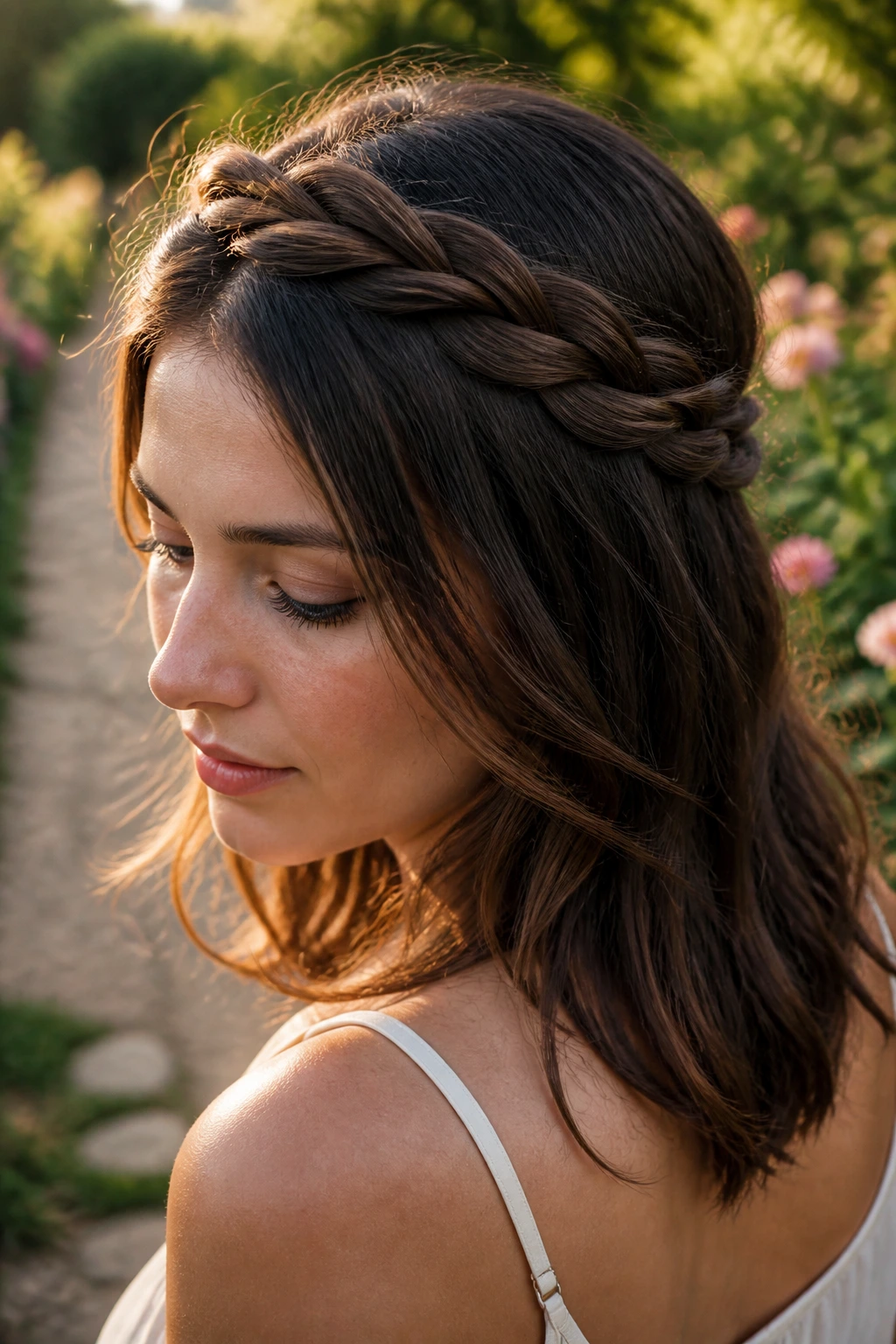
A rope crown is a softer cousin of the braided crown. Instead of a three-strand braid, you twist two sections around each other and pin them across the head. Medium hair gives the crown enough length to wrap cleanly without piling up too much bulk at the back.
I like this version because it looks gentle. Not fussy. The loose ends can be tucked under the twist or left to blend into the rest of the hair, which makes the style feel less formal than a tight halo. If your hair has some wave, the twist will catch the texture nicely.
Why it’s useful
It’s one of the easiest styles to adjust on the fly. If the crown sits too high, pin it lower. If the twist starts to loosen, add one pin near the ear and one at the nape.
24. Half-Up Braided Bow
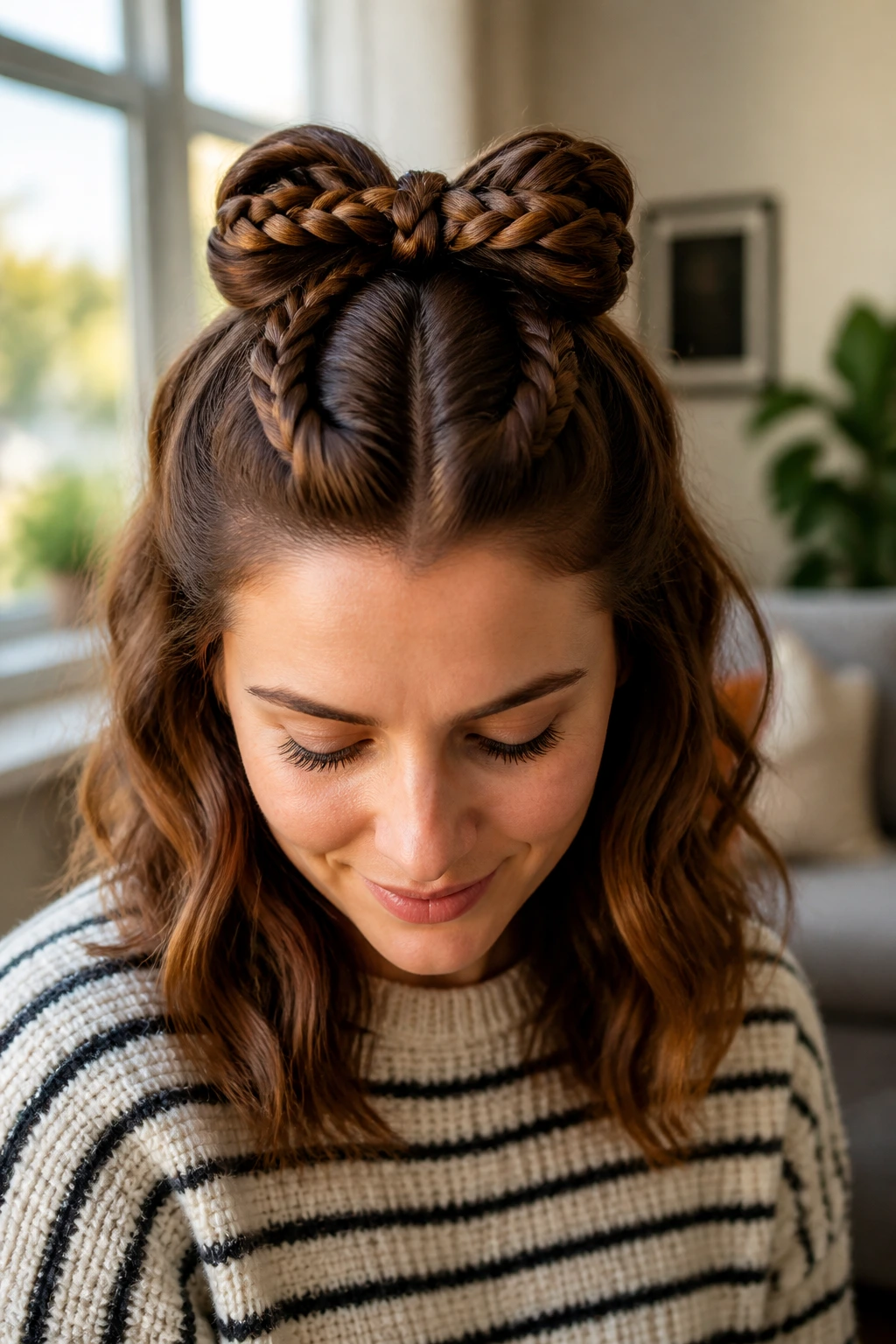
The half-up braided bow is a playful choice that medium hair can actually support. You use the hair from the top half of the head, braid or twist it, then loop it into a bow shape and pin the center. The length is just enough to create the loops without them collapsing flat.
This style is more about shape than speed. Keep the loops even, and use small bobby pins hidden under the center wrap. If your hair is too slippery, lightly backcomb the section before you shape it. The bow should hold its curve, not sink into a soft blob.
Best for: parties, date nights, or days when you want the braid to be the main event.
25. Chunky Dutch Braid with Pancaked Ribs
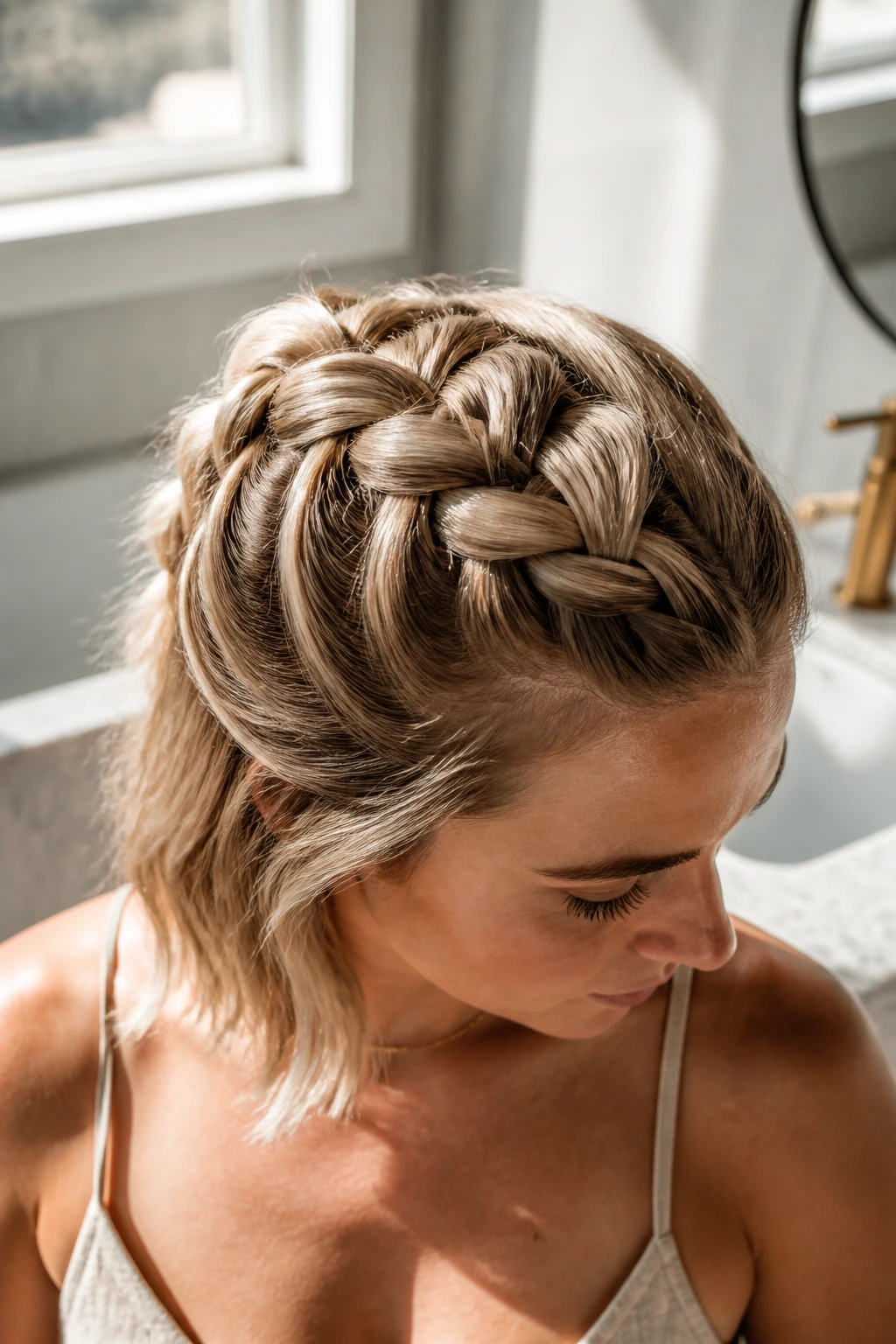
A chunky Dutch braid is one of the easiest ways to make medium hair look fuller fast. Because the braid sits on top of the head, it creates visible height at the crown, and once you pancake the ribs slightly, the braid gets wider and softer. The style reads bold without needing extra length.
The key is to start with strong tension at the scalp and relax it a bit as you move down. That keeps the braid from looking pulled at the top and flat at the bottom. Medium hair is long enough to keep the braid continuous, but short enough that the end doesn’t turn into a thick, clumsy tail.
A useful note
If you only try one braid from this collection, this is a smart one. It gives the most visual payoff for the least amount of hair.
26. Zig-Zag Parted Pigtails
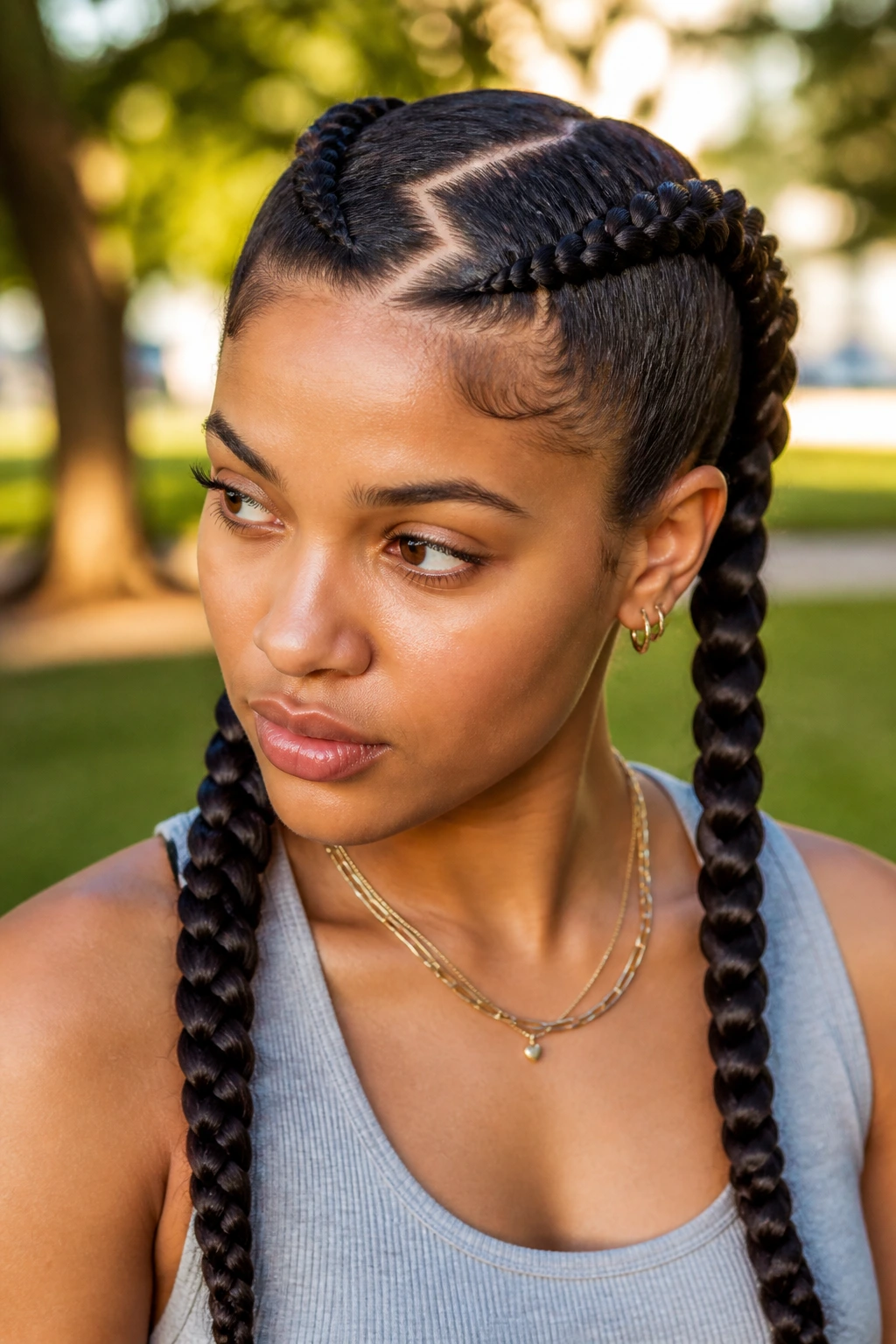
A zig-zag part can change the whole mood of pigtails. On medium hair, it gives the style a little edge and breaks up the bluntness of a straight part. The braids themselves can be simple three-strand plaits, Dutch braids, or even rope braids.
The part is the star. Draw it with the tail of a comb in short angles rather than trying to carve it in one sweep. That keeps the line sharp. Medium hair suits this style because the braids don’t need to be oversized to make an impact, and the ends stay manageable instead of hanging too low.
Best for: school, weekends, or any day when you want a playful style that still feels deliberate.
27. Braided Low Chignon
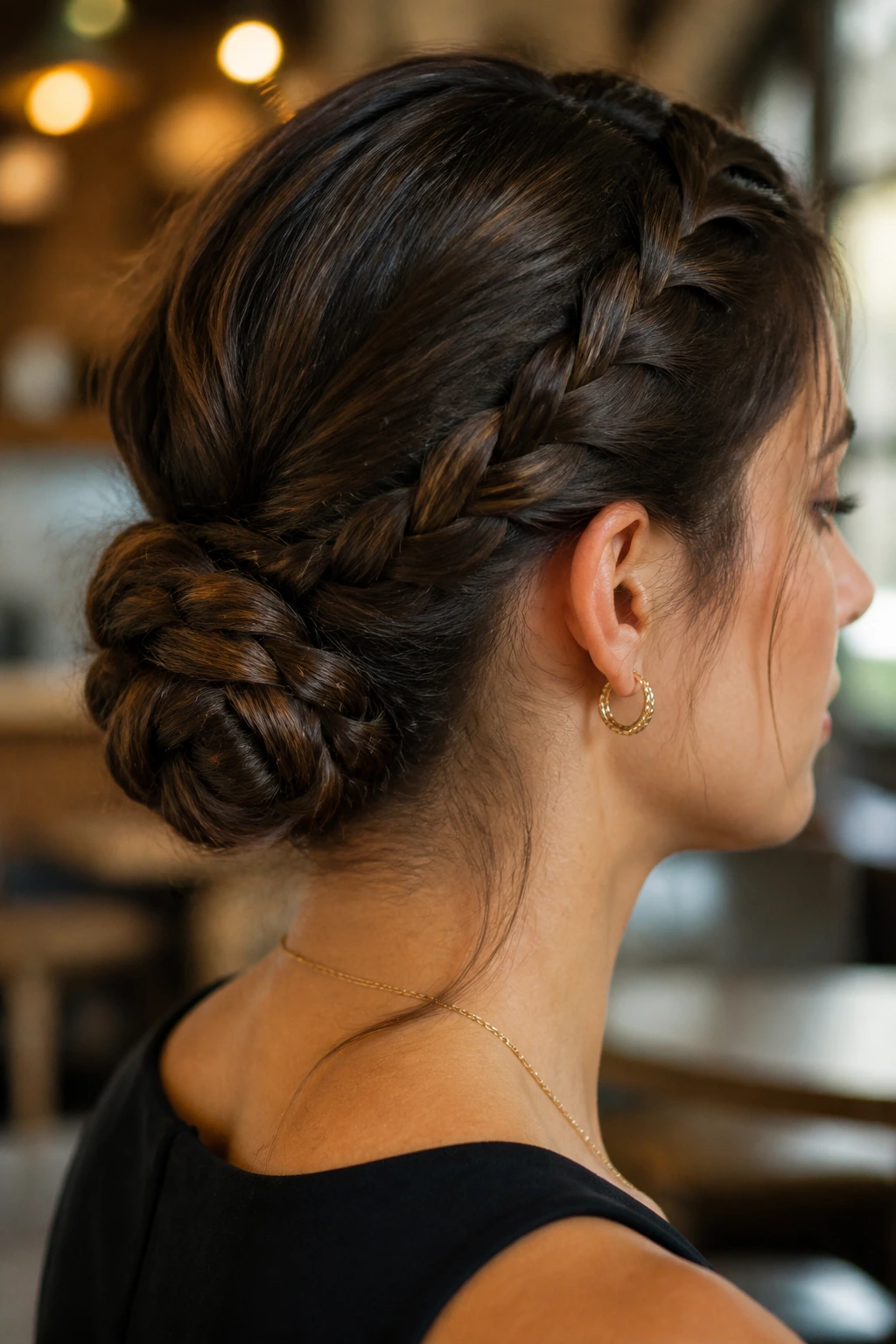
A braided low chignon is the grown-up braid that still feels comfortable. Braid the hair, coil it into a knot at the nape, and pin the shape until it sits close to the head. Medium hair makes this easier because the bun stays compact and the braid can wrap around itself without too much extra mass.
The finish should be smooth at the base and slightly textured in the knot. That contrast keeps the style from looking too tight. If you want more softness, leave a thin strand on each side of the face and tuck the rest cleanly under the chignon.
Who it suits
Anyone who wants a braided updo that can handle a long day without turning into a frizzy heap by dinner.
28. Crown Braid with Curly Ends
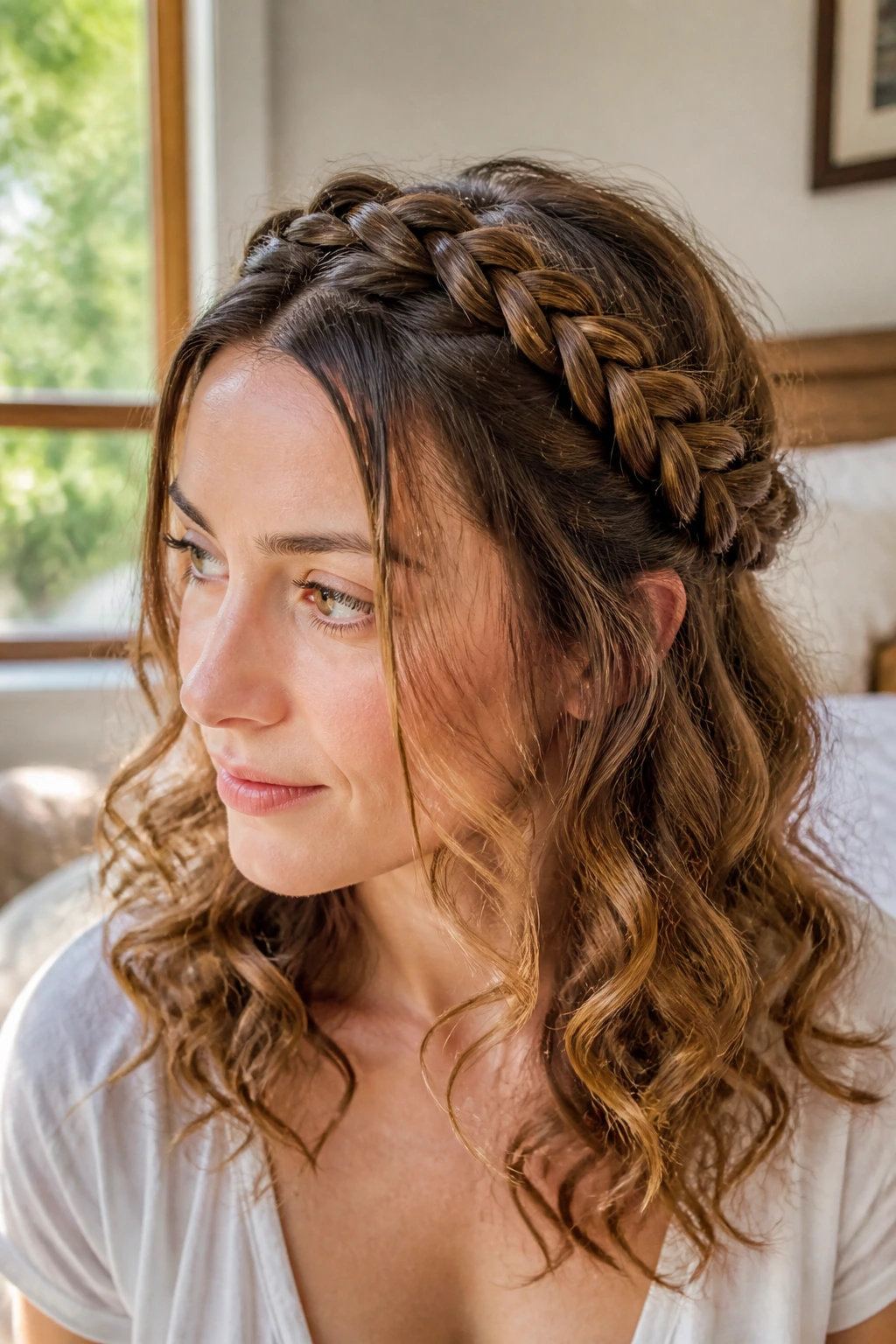
A crown braid with curly ends is a nice match for medium hair because it gives you structure up top and motion below. The braid holds the hair away from the face, then the ends stay loose enough to show natural bend or defined curls.
This is one of the better styles if your hair texture already has some body. Don’t try to flatten every wave. Let the ends do their thing. Pin the braid securely around the head, then curl the loose tail if you want the bottom half to feel finished. The result is less rigid than a full crown and easier to wear for a long stretch.
Good detail to remember: the transition from braid to loose ends should happen low enough that the braid still feels anchored.
29. Tiny Accent Braids Woven Through a Lob
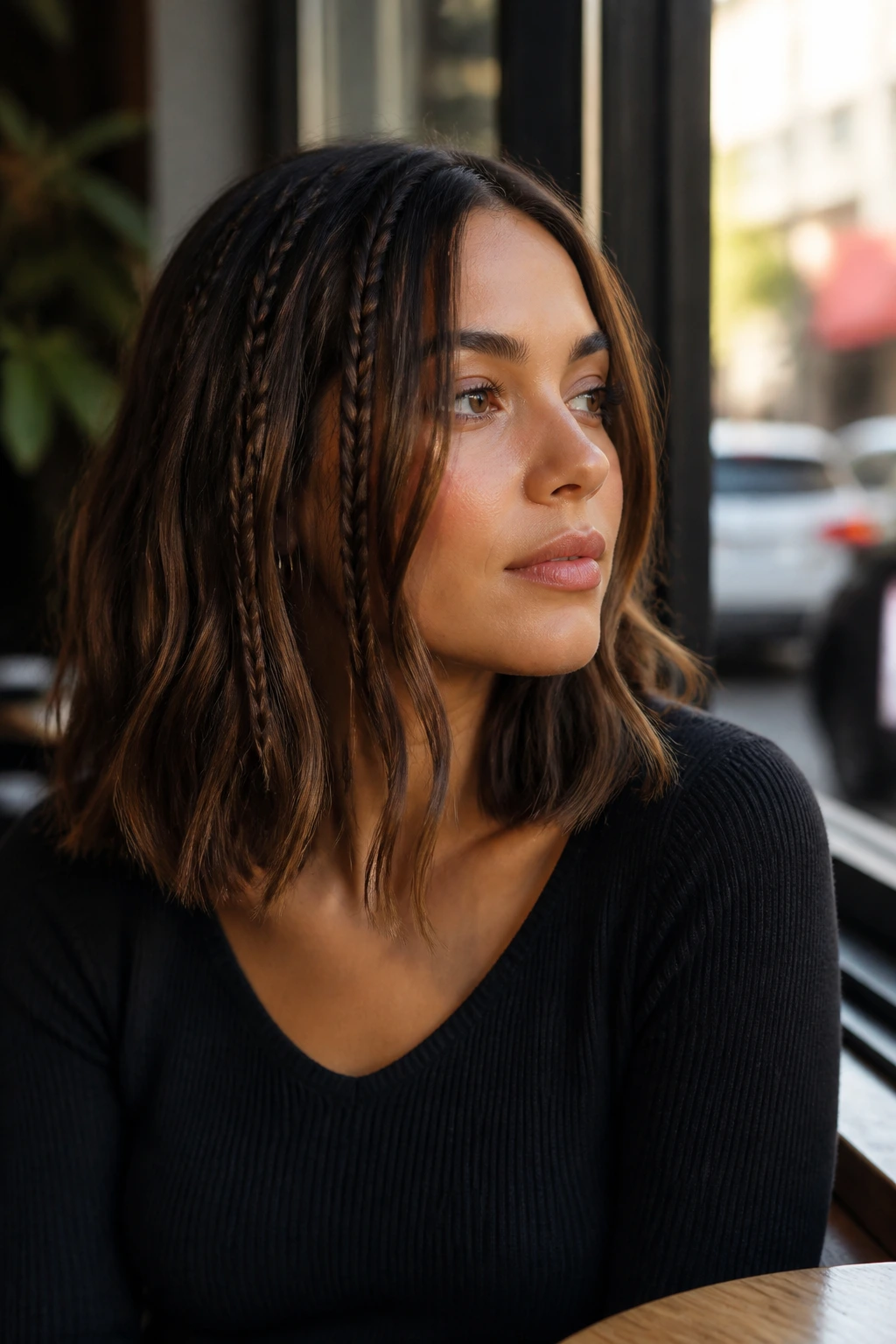
Tiny accent braids are easy to overlook, which is exactly why they work. On medium hair, especially a lob, a few slim braids woven through loose lengths add texture without taking over the style. They can live near the face, hide under the top layer, or sit at the temples.
The point here is restraint. Don’t braid everything. Pick two or three spots where the hair needs structure or visual interest, then leave the rest alone. Medium hair is ideal for that kind of styling because the loose length still shows movement, and the accents break up the shape without making it look busy.
Small bonus
These are useful when you want braided detail but not a full braided head. They also grow out gracefully if you leave them in for a couple of days.
30. Dutch Braid Into a Tucked Ponytail
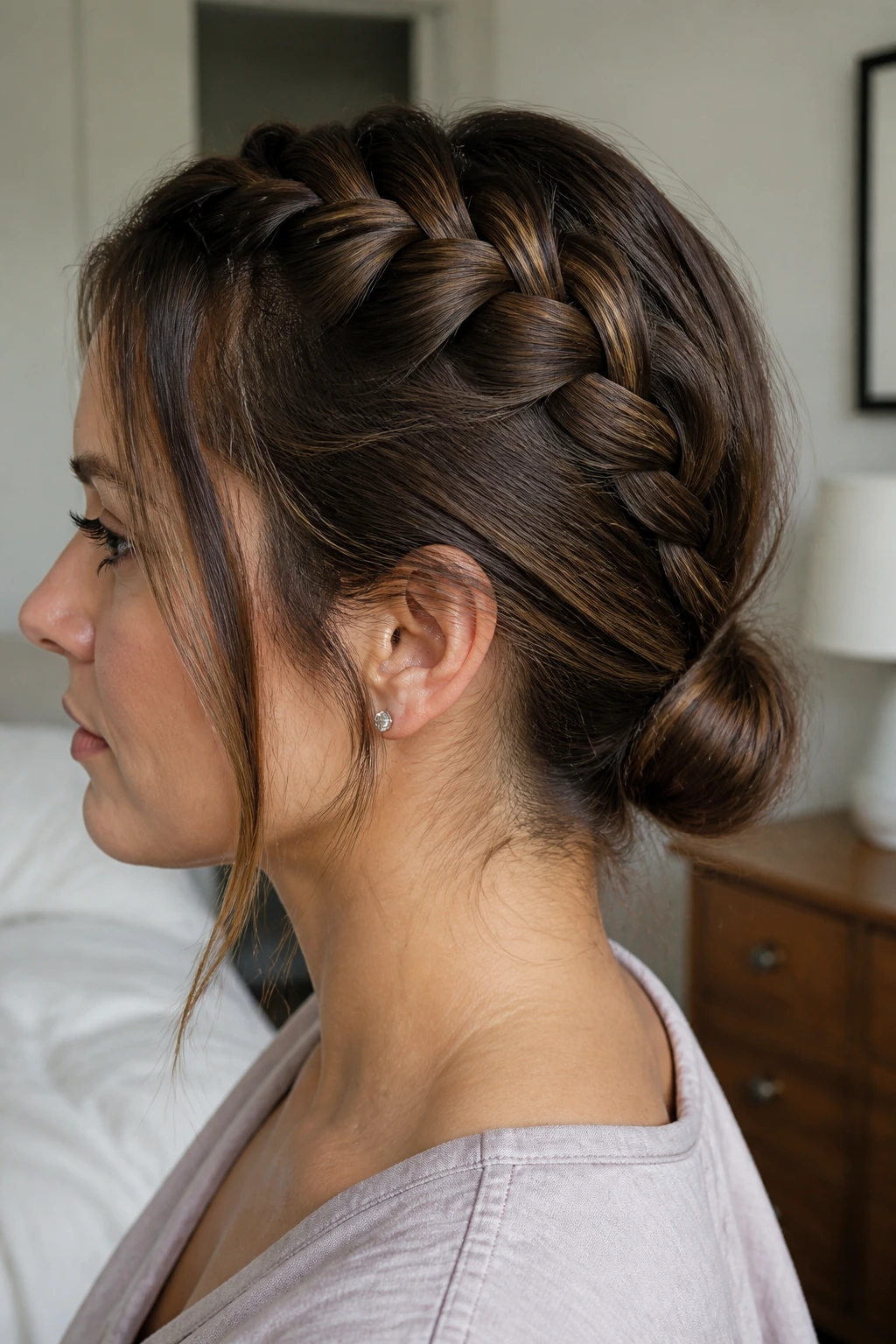
This version starts with a Dutch braid at the crown and ends in a ponytail that gets tucked under or wrapped close to the neck. On medium hair, that tucked finish looks intentional because the length is enough to create the braid, but short enough that the tucked section does not become bulky.
Compared with a standard braid-down-the-back style, this one feels neater and a little sharper. It’s a good choice if you want the braid to lead into a clean finish instead of hanging loose. Keep the braid tight near the scalp, then secure the ponytail low and tuck the ends under with pins or a second elastic.
Best for: workdays, dinner plans, or any moment when you want braid detail without a long tail.
The Small Moves That Make Medium-Hair Braids Hold
A braid on medium hair lives or dies by prep. Too clean, and the strands slide apart. Too much product, and the whole thing turns sticky in the wrong places. I like starting with hair that’s one day old, then adding dry shampoo at the roots and a tiny bit of texturizing spray through the mids. That gives the braid something to grip without turning the hair rough.
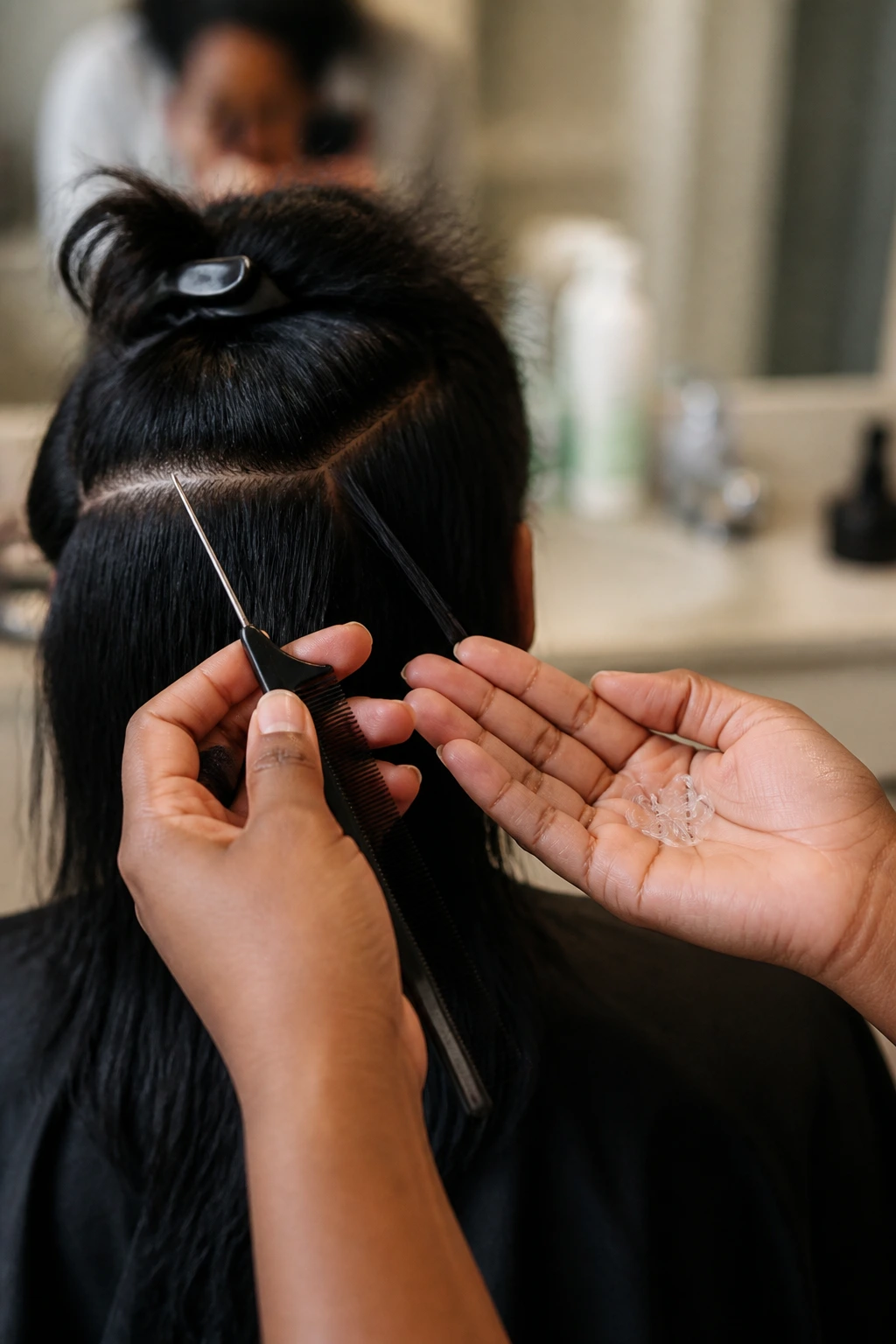
Parting matters. A rat-tail comb makes cleaner lines than fingers ever will, especially for center parts, crown braids, and accent braids near the hairline. If the part is crooked, the whole style looks a little off even when the braid itself is fine.
Tension should change as you go. Start firmer at the scalp, then loosen slightly through the lengths. That keeps the braid neat where you need it and soft where you want it. And yes, a few bobby pins close to the elastic can rescue a lot. They are not glamorous. They work.
The Mistakes That Make Braids Slip on Medium Hair
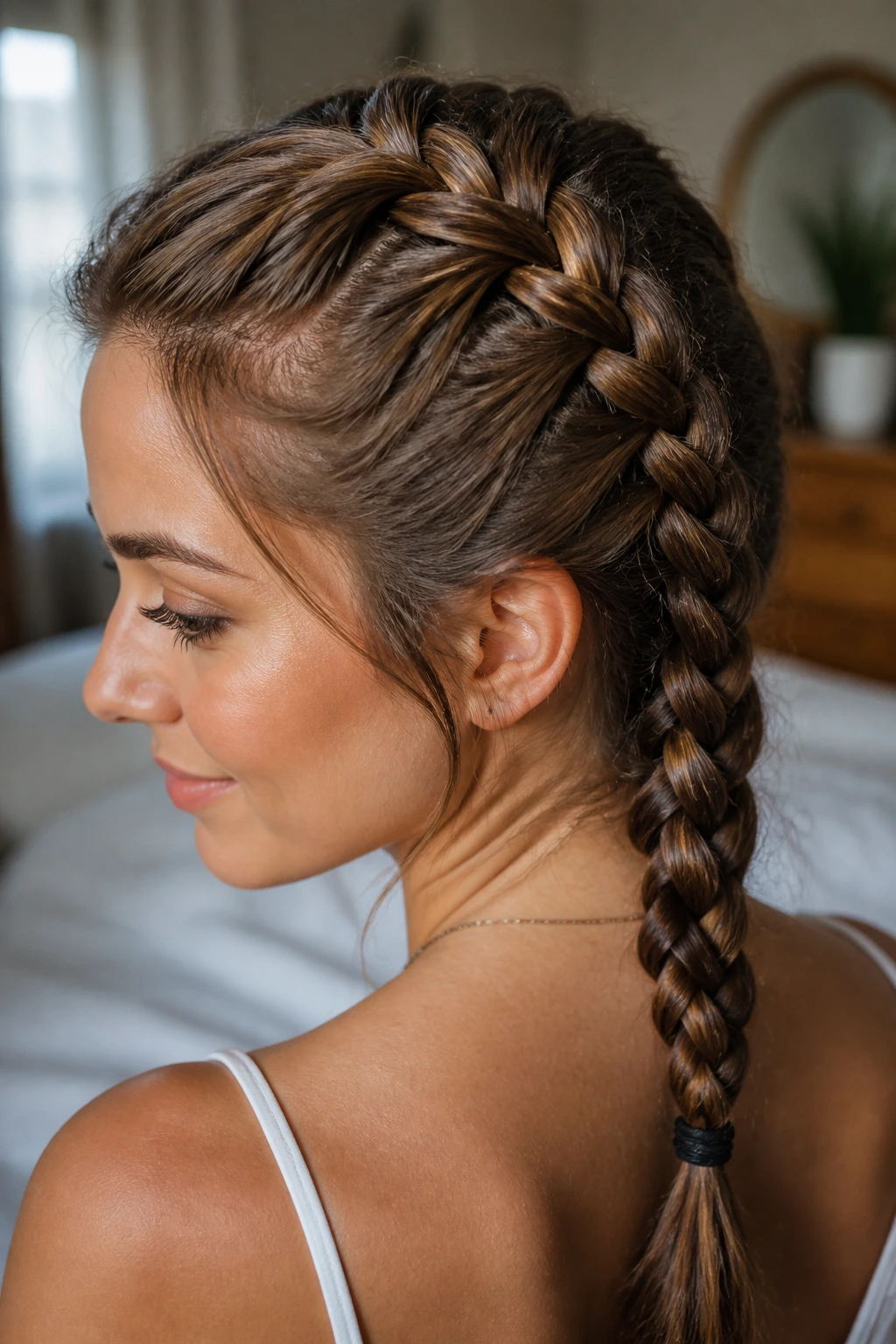
The most common mistake is starting with hair that’s too silky. Freshly washed hair often looks nice and behaves badly for braids. The sections slide, the weave loosens, and the style falls apart before you finish lunch. Fix it with texture spray, dry shampoo, or a little mousse at the roots before you start.
Another one: pulling every section too tight from the start. That makes the braid feel stiff at the crown, and medium hair often puffs in the wrong places once you relax your grip. Keep the base controlled, then loosen the lower lengths. The braid will look cleaner and feel less painful.
Skipping the end security step is a classic problem. A tiny clear elastic is often enough, but if the braid is layered or slippery, add a hidden pin. Same story with pins at the crown or behind the ears. One or two extra pins can save twenty minutes of redoing the style.
And don’t ignore the layers around the face. If they’re too short to braid in, let them be framing pieces. Forcing them into the plait usually creates tiny, broken sections that pop out later anyway.
Easy Ways to Change the Mood Without Starting Over
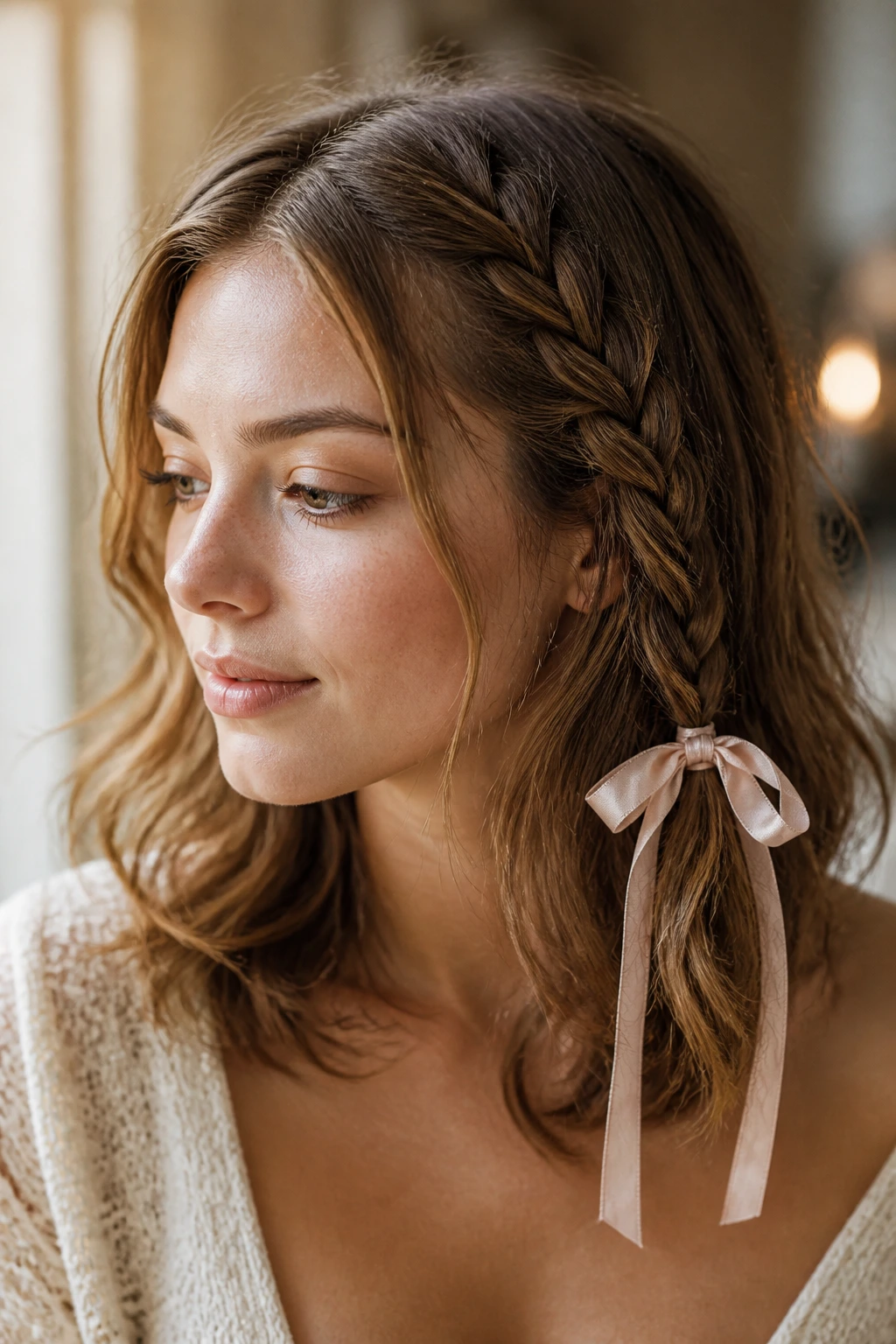
Soft Romance: Loosen the braid with your fingers, pull out a few temple pieces, and add a ribbon or satin tie at the end. This works best on fishtails, side braids, and half-up styles.
Polished Office Version: Keep the part straight, the braid centered, and the flyaways smoothed down with a pea-size amount of cream on your hands. French braids, low ponytail braids, and braided chignons fit this lane neatly.
Weekend Messy Version: Pancake the braid, let the ends stay a little imperfect, and stop obsessing over symmetry. That approach suits crown braids, Dutch braids, and messy braid buns.
Curly-Hair Friendly Version: Braid only the root area or the top half of the hair, then leave the length loose. This keeps the curls from getting crushed and gives you more control over shrinkage.
Low-Tension Version: Choose rope braids, loose side braids, or accent braids near the front. They put less strain on the scalp and still give you structure.
The Tools That Make Braiding Medium Hair Easier
-
Rat-tail comb: For straight parts and clean sectioning. A finger part almost never looks as tidy on the back of the head.
-
Small clear elastics: Best for finishing fishtails, pull-through braids, and ponytail braids without adding bulk.
-
Bobby pins in your hair color: Useful for crown braids, buns, and tucked ends. Buy more than you think you need.
-
Texturizing spray: Adds grip to soft or freshly washed hair. A light mist on the mids is usually enough.
-
Dry shampoo: Helps fine hair hold shape and cuts shine at the roots.
-
Alligator clips: Keep loose sections out of the way while you work on the braid.
-
Hand mirror or phone camera: Good for checking the back of the head when you’re pinning a crown, halo, or side braid.
-
Satin scarf or bonnet: Keeps the style from frizzing overnight if you plan to wear it again.
How to Keep Braids Looking Fresh for a Few Days
Most braided hairstyles for medium hair last best for one to three days, depending on how tight they are at the base and how much texture your hair has. A tight Dutch braid or boxer braid can often make it to day two or three. A loose waterfall braid or boho side braid usually looks best the same day. That’s just the reality of it.
Sleep with the braid protected. A satin bonnet works. So does a loose satin scarf tied around the head, especially for crown braids and side styles that tend to flatten against the pillow. If the style has a bun, pin the bun low enough that it doesn’t get crushed into a hard bump overnight.
For refresh day, don’t soak the hair. That’s a mistake. Use a little dry shampoo at the roots, mist the loose pieces with water if they’ve gone fuzzy, and smooth the braid with clean fingers. If the elastic at the end looks tired, replace it. A fresh elastic can make an old braid look usable again in about ten seconds.
Questions People Ask Before Braiding Medium Hair
What counts as medium hair for braids?
Usually hair that sits somewhere between the chin and the shoulders, or just past the collarbone. The exact spot matters less than the fact that you have enough length to build a pattern but not so much that the braid becomes heavy.
Are braids better on clean hair or second-day hair?
Second-day hair usually holds better. Clean hair can be too smooth, especially if it has a slippery feel after conditioner. If you must braid clean hair, use dry shampoo or texturizing spray first.
How do I keep layers from slipping out of the braid?
Use smaller sections at the start, then secure the shortest layers with bobby pins once the braid is done. For face-framing pieces, it’s often better to leave them loose on purpose than to force them into the plait.
Which braid lasts the longest on medium hair?
Tight Dutch braids, boxer braids, and braided low ponytails tend to hold up the best. Styles that sit close to the scalp keep their shape longer than loose side braids or waterfall braids.
Can I make these styles look fuller if my hair is fine?
Yes. Pancake the braid, use texture spray at the root, and avoid too much conditioner near the crown. Pull-through braids are also a smart option because they create visual volume without needing thick hair.
What if my braid keeps unraveling at the end?
Use a smaller elastic and finish with a hidden pin under the last crossover. If the hair is especially slippery, a tiny bit of styling cream on the ends before braiding helps.
Can I sleep in braided styles?
You can sleep in tighter styles like Dutch braids, boxer braids, or low braided buns. Loose boho braids and waterfall braids usually flatten too much, so they’re better for same-day wear.
Do these braids work on wavy or curly medium hair?
Absolutely. Some of them look even better with natural texture. Crown braids, side braids, and accent braids often hold well on curly hair because the texture gives the braid something to grip.
Braids That Fit the Cut
Medium hair gives you a sweet spot that long hair sometimes misses. The braid can still show its pattern, the ends stay manageable, and you don’t need a mountain of pins to make the style stay in place. That is the real advantage here. Not length for length’s sake. Control.
If I had to narrow the whole list down to a starting set, I’d pick the chunky Dutch braid, the side fishtail, the low braided ponytail, and the braided crown. They cover four different moods, and each one tells you something useful about how your hair behaves once it’s sectioned and pinned.
The rest is tinkering. A little more texture. A cleaner part. One extra pin behind the ear. That’s usually what separates a braid that looks fine from one you keep wearing all week.
