



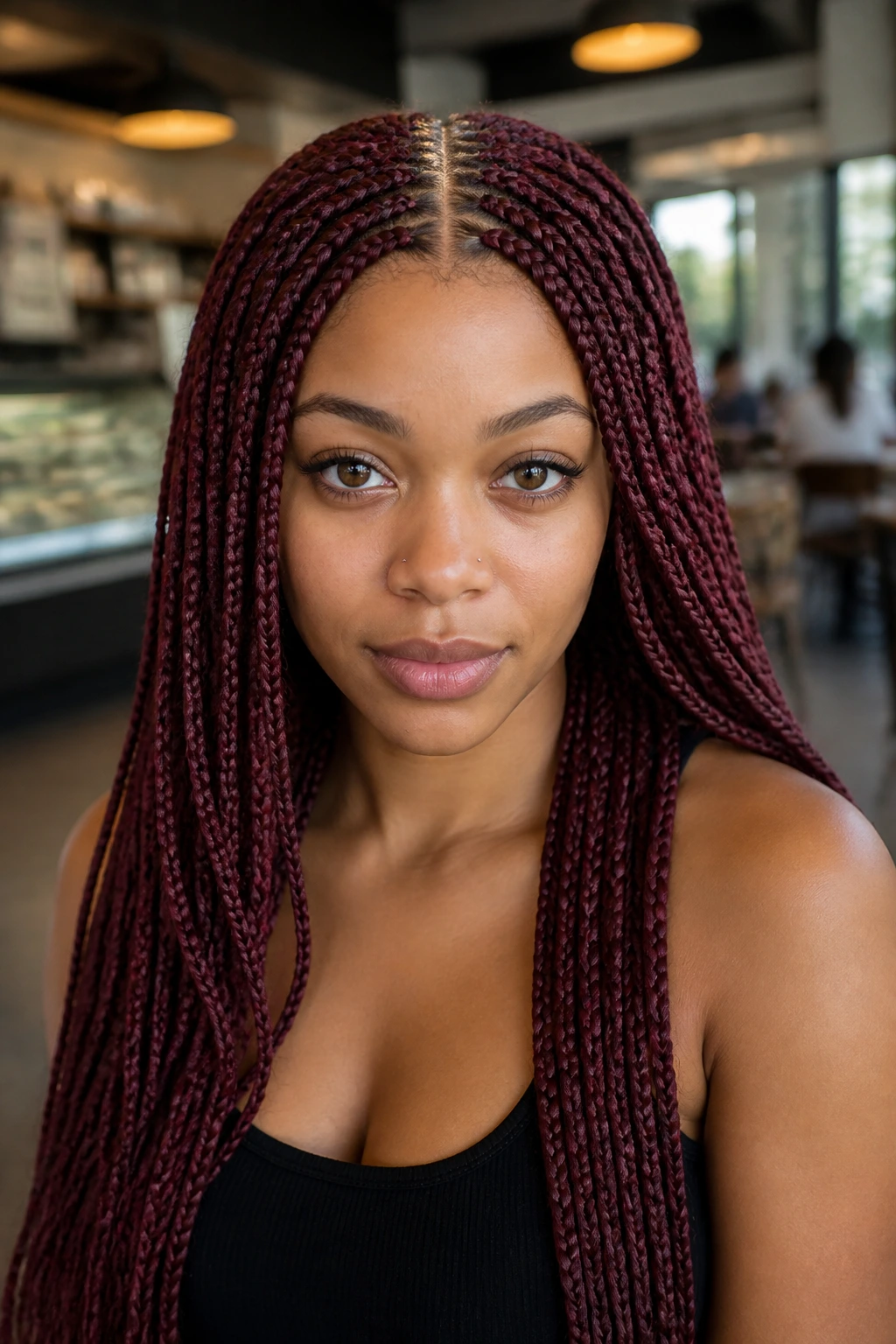
Burgundy knotless braid ideas have a way of making the whole head look finished even when the styling is simple. That’s the part I keep coming back to. The color does a lot of work on its own, and the knotless base keeps the root soft instead of bulky, so the braids move like they were meant to live there.
What makes this shade so satisfying is the range. Under indoor light, burgundy can read like dark wine. Step into daylight and the red-violet tone wakes up a little, sometimes with a plum edge, sometimes with a warmer cherry note. If the parting is neat, the color looks rich. If the parting is sloppy, the shade exposes it fast. There’s nowhere to hide, which is exactly why the style can look so clean.
The ideas below lean different ways on purpose: some are low-key and wearable, some are sharper, some are playful, and some are for the days when you want the braids to do the talking before you even walk into the room.
Why These Burgundy Knotless Braid Ideas Keep Getting Saved
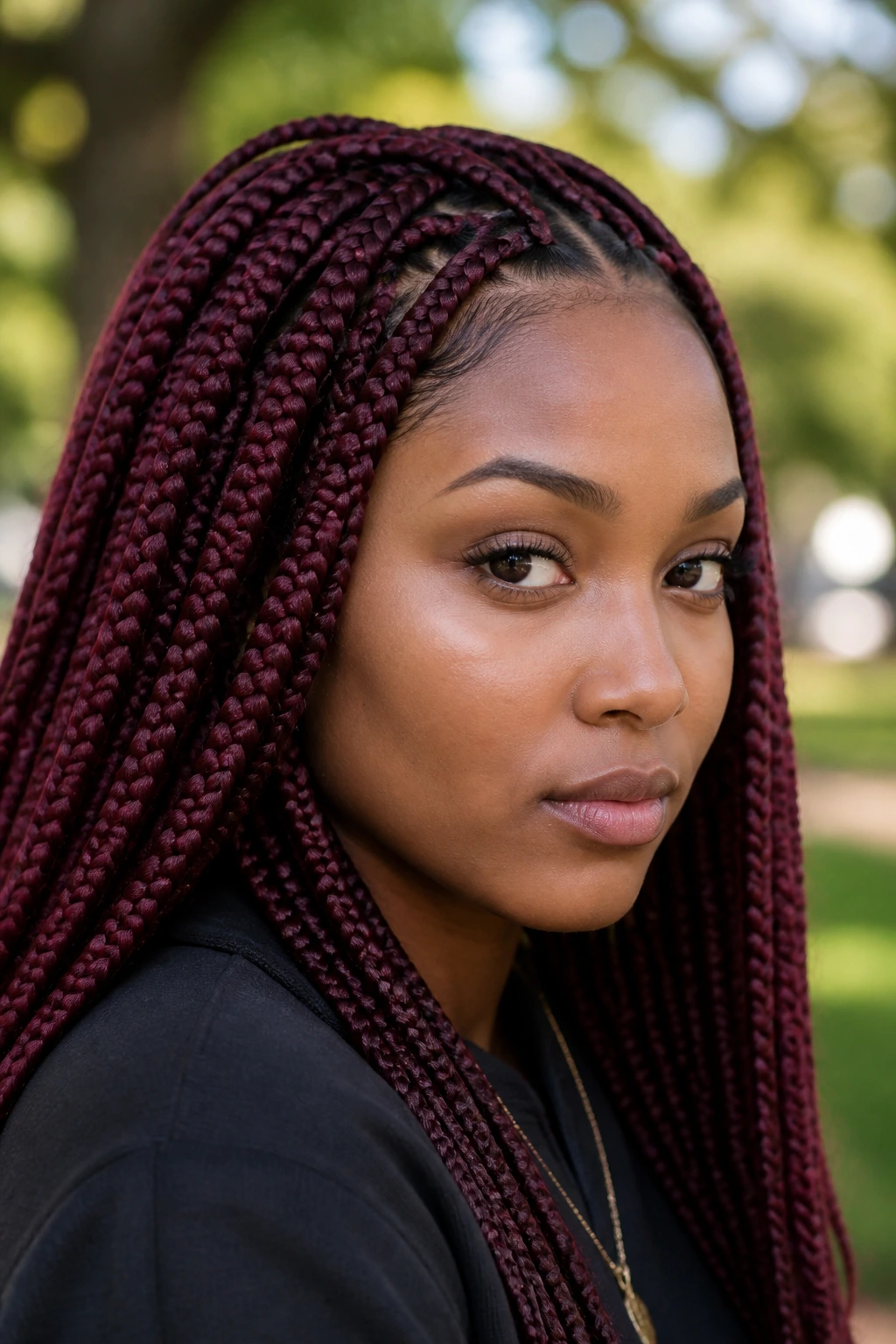
-
The color works at more than one length: Burgundy still reads clearly on a bob, but it also holds its depth on waist-length braids where lighter reds can look loud or flat.
-
The knotless start keeps the crown from looking heavy: That flatter root matters with a dark red shade because too much bulk at the hairline makes the whole style feel stiff.
-
The tone plays well with gold, black, cream, and denim: You do not need a whole new wardrobe to make burgundy look intentional; even a plain white tee can make the color pop.
-
Accessory choices stay easy: Gold cuffs, beads, thread, and scarves all stand out against wine-toned hair without fighting it.
-
Grow-out looks softer than a hard knot: As your hair grows, the style shifts gradually instead of giving you that obvious “time to take it out” line at the scalp.
-
There’s a version for every schedule: You can keep it simple with a mid-back set or turn the same color family into curls, ponytails, buns, or a full boho look.
1. Classic Mid-Back Burgundy Knotless Braids
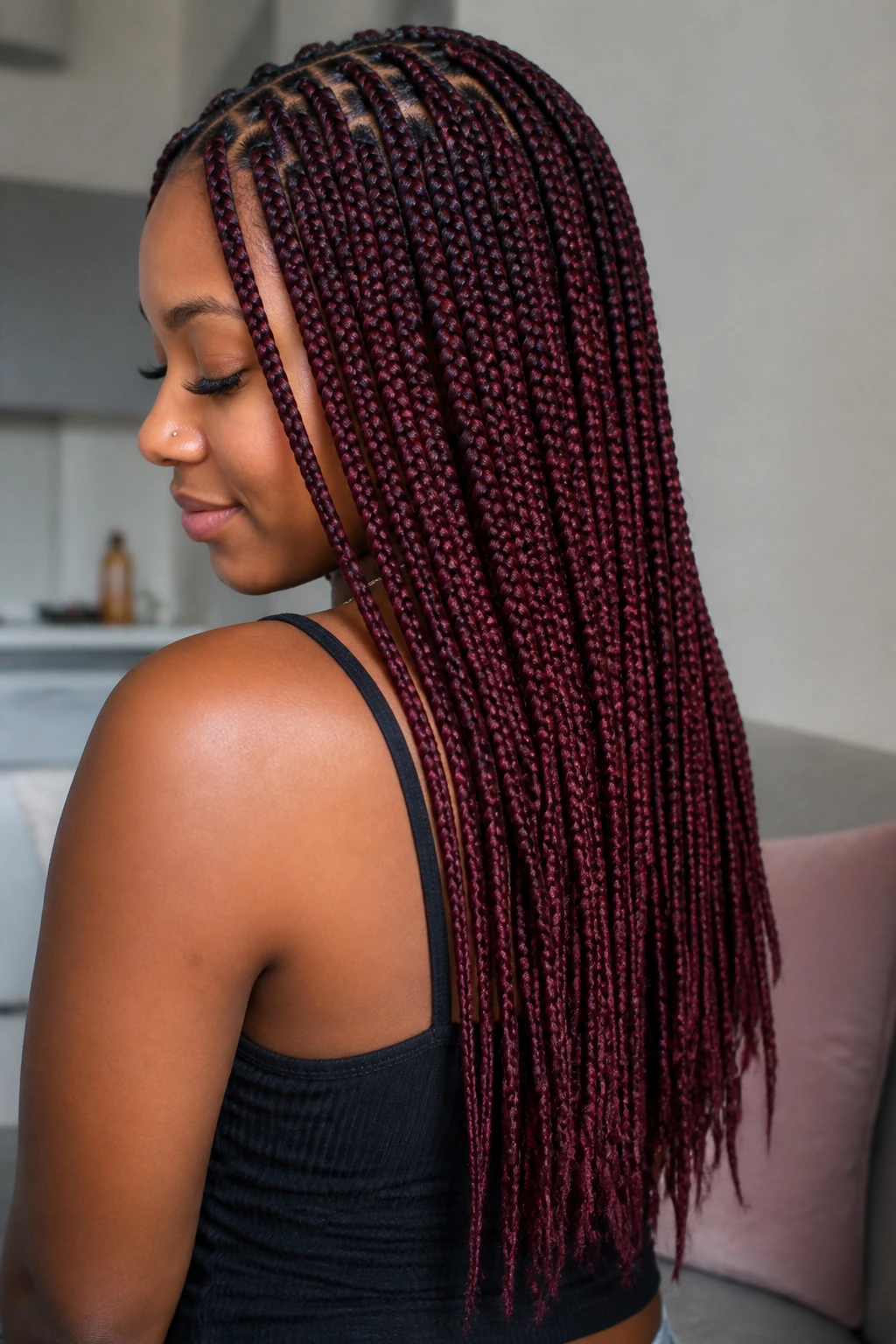
Mid-back is the length I keep coming back to when someone wants burgundy without turning the whole style into a production. The braids fall where they still move, but they do not drag on jackets, seatbacks, or tote straps. The color looks deep and glossy when the hair is down, then shows a little extra red when the ends swing.
This version works because it gives you enough length to show the burgundy tone without asking the braids to carry too much weight. I like it with medium-sized sections and a blunt finish at the ends; that keeps the set from looking wispy. If you want the color to feel calm instead of loud, this is the safest place to start.
A few details that matter
- Keep the parting clean and even.
- Ask for pre-stretched hair so the ends don’t look choppy.
- Wear it with a center or soft side part depending on your face shape.
- Skip oversized accessories if you want the shade to stay the focus.
2. Burgundy Knotless Braids with a Clean Center Part
A clean center part makes burgundy look deliberate. No fuss, no extra drama, just a straight line that lets the color fall equally on both sides of the face. It has a crispness that works especially well if you wear your braids tucked behind the ears or pulled straight back into a ponytail.
The reason this one lands so well is simple: the symmetry gives the eye a place to rest. Burgundy already carries visual weight, so a center part keeps it from feeling busy. I’d choose this version if you like strong brows, defined cheekbones, or a style that looks tidy even when you have not done much else with it.
Keep the first braid on each side the same size. Burgundy shows imbalance faster than black hair does, and a slightly crooked center line can throw off the whole look.
3. Waist-Length Burgundy Knotless Braids
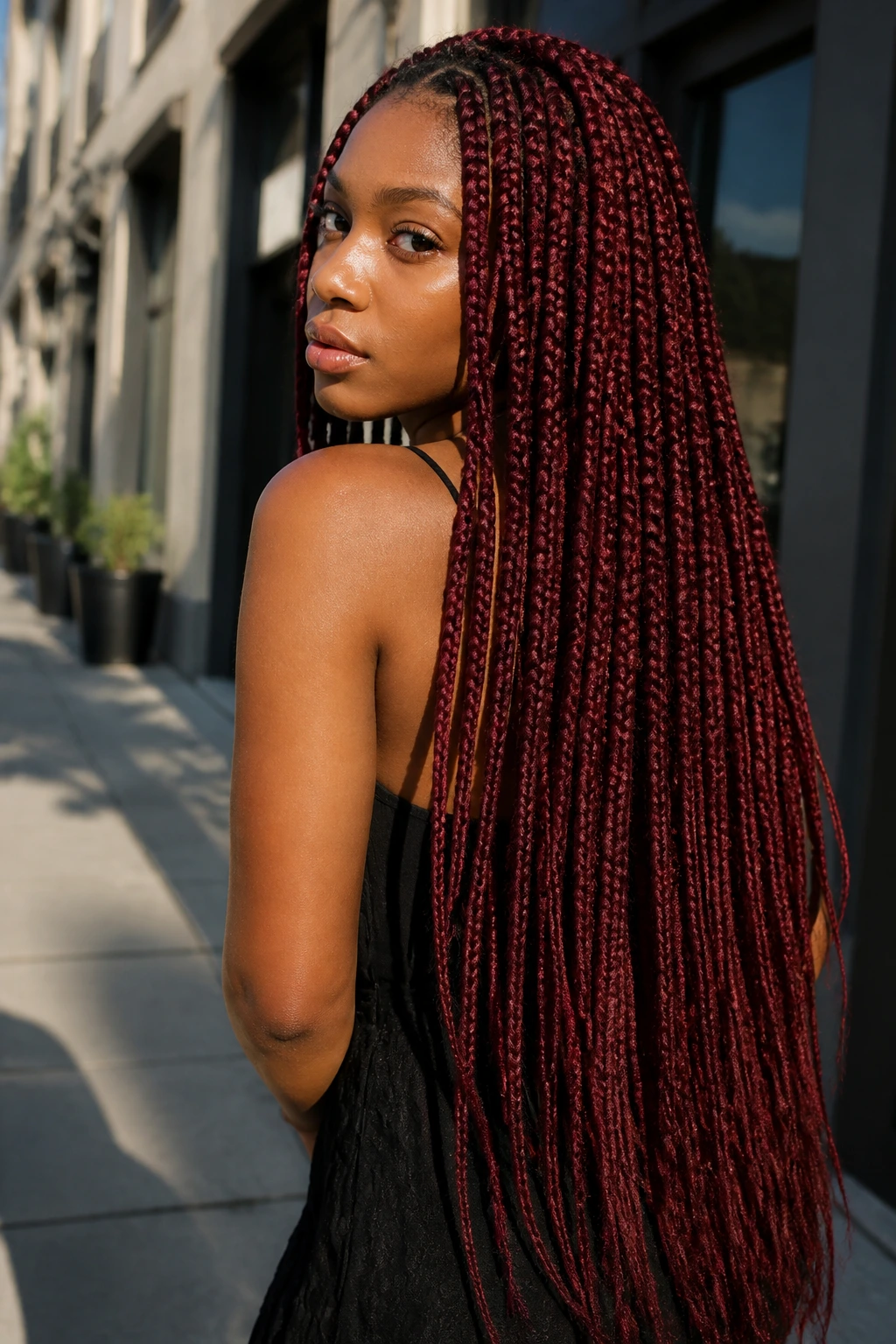
Waist-length burgundy braids have a little drama in them, even when the rest of the outfit is plain. The length lets the color ripple as you walk, and the deeper wine tone looks especially good when it moves against dark clothing or a neutral coat. It’s the version that makes a T-shirt look styled.
But this length does ask something from you. It takes more time in the chair, more hair, and a little more patience with weight. If you like the feeling of braids brushing your waist and sliding down your back, it’s worth it. If you hate tugging at the ends every time you sit down, mid-back will probably serve you better.
Best for: people who like a full, swaying finish.
Watch for: heavy ends. If the braids get too thick, the length starts to look stiff instead of fluid.
4. Burgundy Knotless Braids in a Blunt Bob
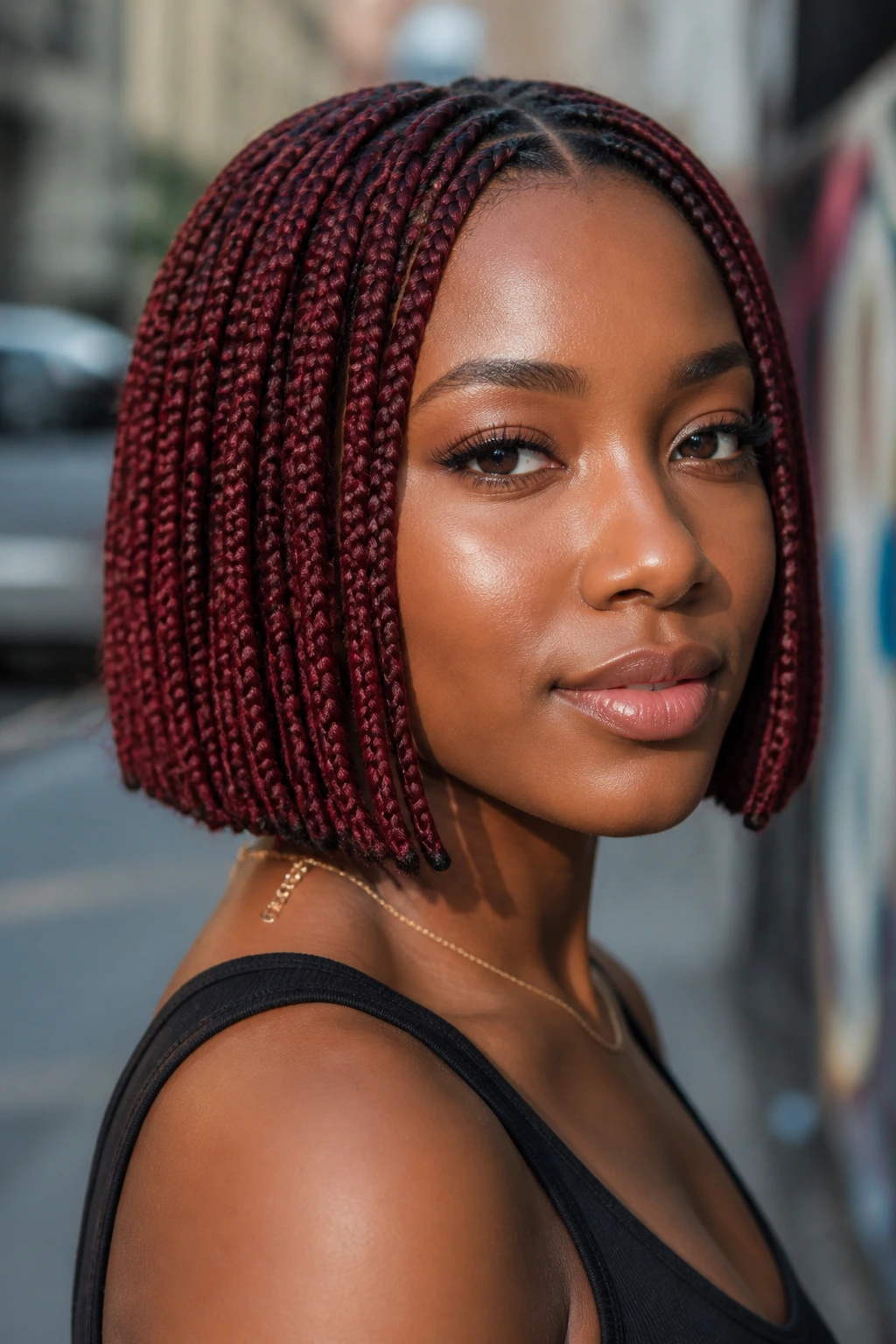
A burgundy knotless bob sits close to the jaw and shows off the color in a cleaner, sharper way than longer styles do. The shorter length makes the red-violet tone look denser, almost velvety, especially when the ends are cut blunt and even. It’s tidy, but not boring.
I like this version for anyone who wants burgundy without the feeling of hair everywhere. It’s easier to wash, faster to dry, and less likely to get caught under a coat collar. The bob also puts the focus on your face instead of on the length of the braids, which can be a relief if you’re wearing bold earrings or a strong lip.
Ask for the ends to land right at the chin or just below the jaw if you want a sharper shape. A slightly longer bob softens the look; a shorter one reads cleaner.
5. Burgundy Knotless Braids with Curly Ends
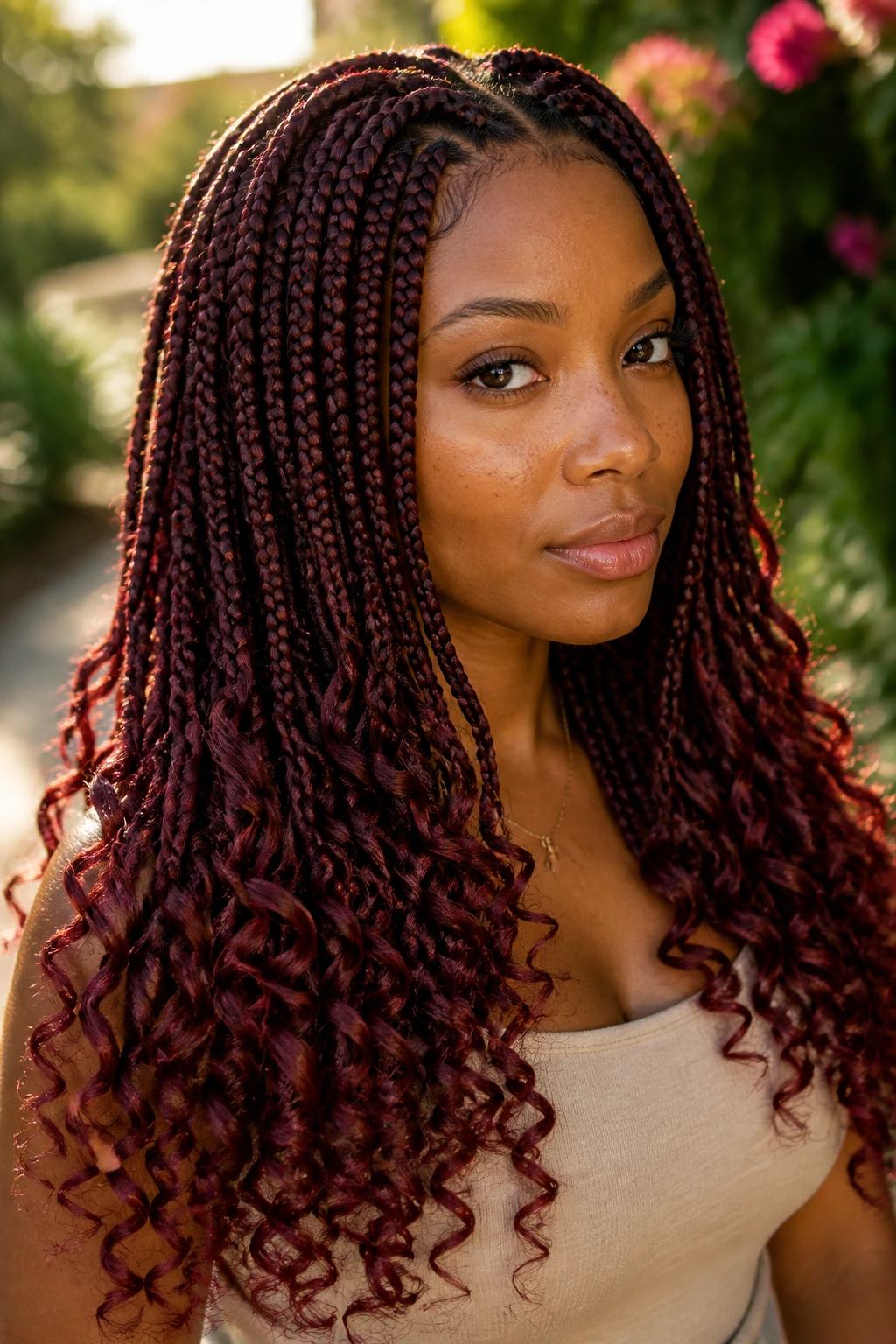
The first thing people notice about curly ends is movement. Straight burgundy braids already have depth, but once the ends flip into curls, the whole style loosens up. The finish looks softer around the shoulders and picks up light in a way that straight ends don’t.
This version works especially well if you want the braids to feel a little less severe. Keep the curls defined with mousse and a light wrap at night, or they start to puff and lose their shape faster than you’d like. I prefer this look on medium to long braids, because the curled ends need enough length underneath them to feel balanced.
If your curl pattern is loose, concentrate the curls at the very bottom. Tight curls on the whole length can make burgundy look busier than it needs to be.
6. Burgundy Boho Knotless Braids
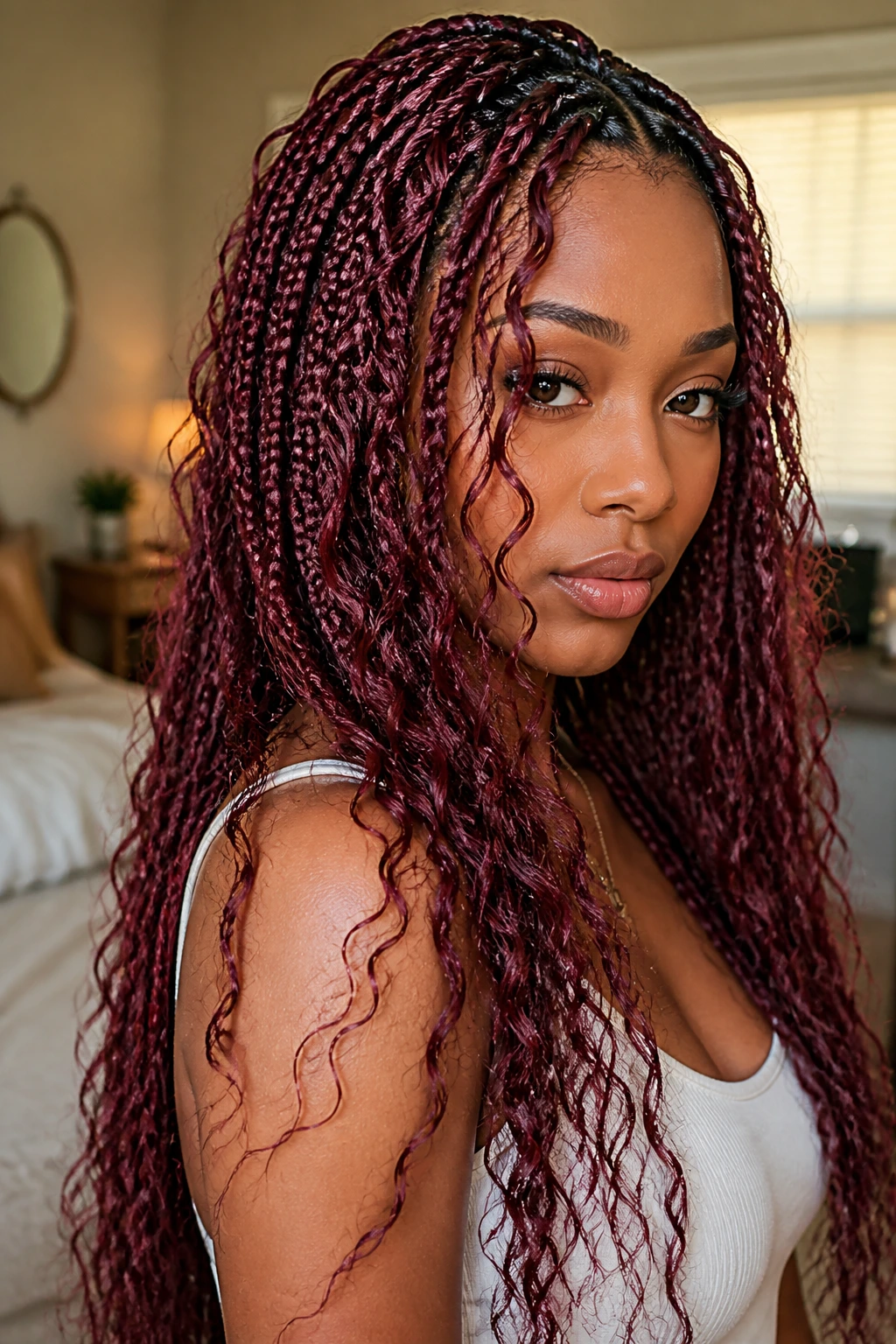
Boho braids are not messy when they’re done well. That’s the part people get wrong. The loose wavy pieces give burgundy a little softness, and the braid itself keeps the style grounded so it doesn’t drift into frizz-land after three days.
I like this version because the extra texture makes the color look deeper. The loose strands break up the solid braid line and give your hair movement even when it’s tied back. It also hides the fact that real life happens; if one section gets a little fuzzy, the whole look still reads intentional.
Keep the loose pieces concentrated near the front and crown if you want easier upkeep. If you scatter them everywhere, you’ll spend more time refreshing them than wearing them.
7. Jumbo Burgundy Knotless Braids
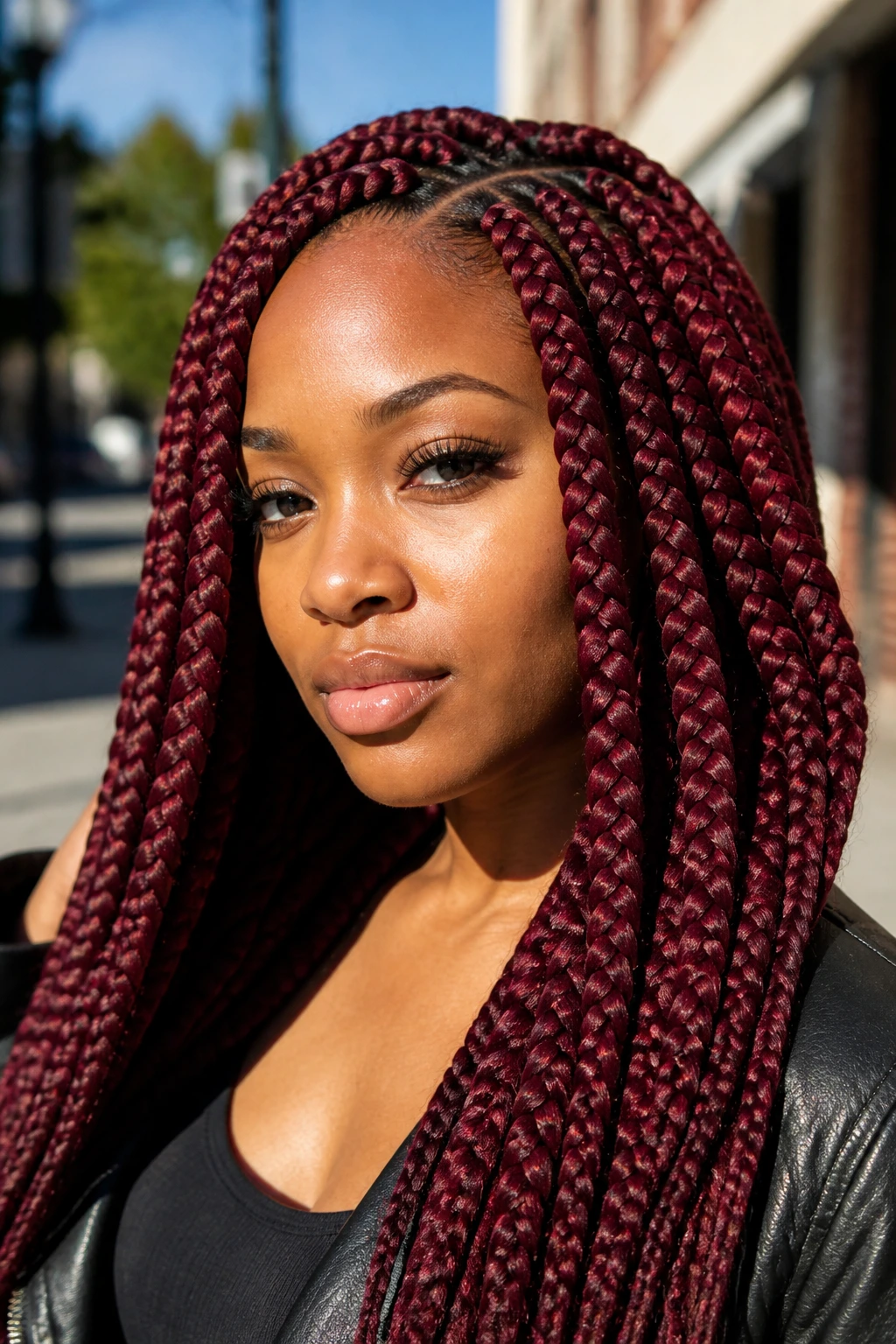
Jumbo braids are where burgundy stops whispering and starts speaking up. The sections are larger, the install goes faster, and the color reads from across the room because there’s less braid texture between you and the shade itself. It’s bold in the cleanest way.
This style is best when you want a strong color payoff without committing to tiny sections. The trade-off is weight: jumbo braids can feel heavy if they’re too long or too tightly packed at the root. I prefer them around shoulder to mid-back length, where the shape stays full but still moves.
A good rule: the larger the braid, the more careful the parting needs to be. Burgundy makes neat work look better and sloppy work more obvious.
8. Burgundy Knotless Braids with Triangle Parts
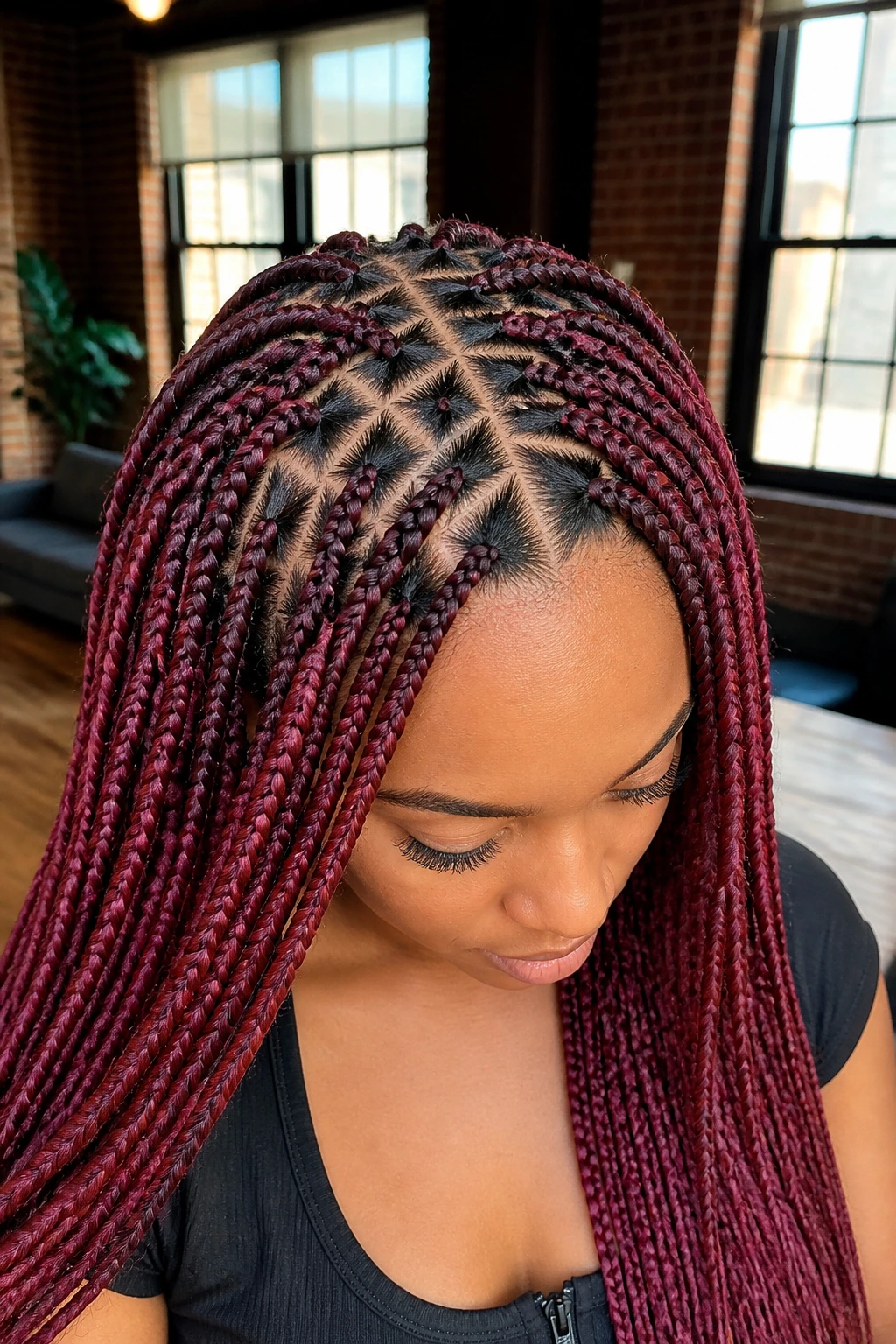
Triangle parts change the whole mood of the style. Instead of the standard grid, you get sharper shapes at the scalp, and burgundy makes those lines easier to see. The result feels more designed, less default.
Why does it work so well? The eye follows the geometry first, then the color. That keeps the style interesting even if the braids themselves are medium and plain. It’s a smart choice if you like details that show up when the hair is worn down and when it’s pulled back.
What to ask for
- Medium-sized triangle sections so the scalp design can breathe.
- A clean front hairline; the shapes lose their effect if the front is fuzzy.
- Not too much braid thickness, or the triangles get crowded and hard to read.
9. Side-Part Burgundy Knotless Braids
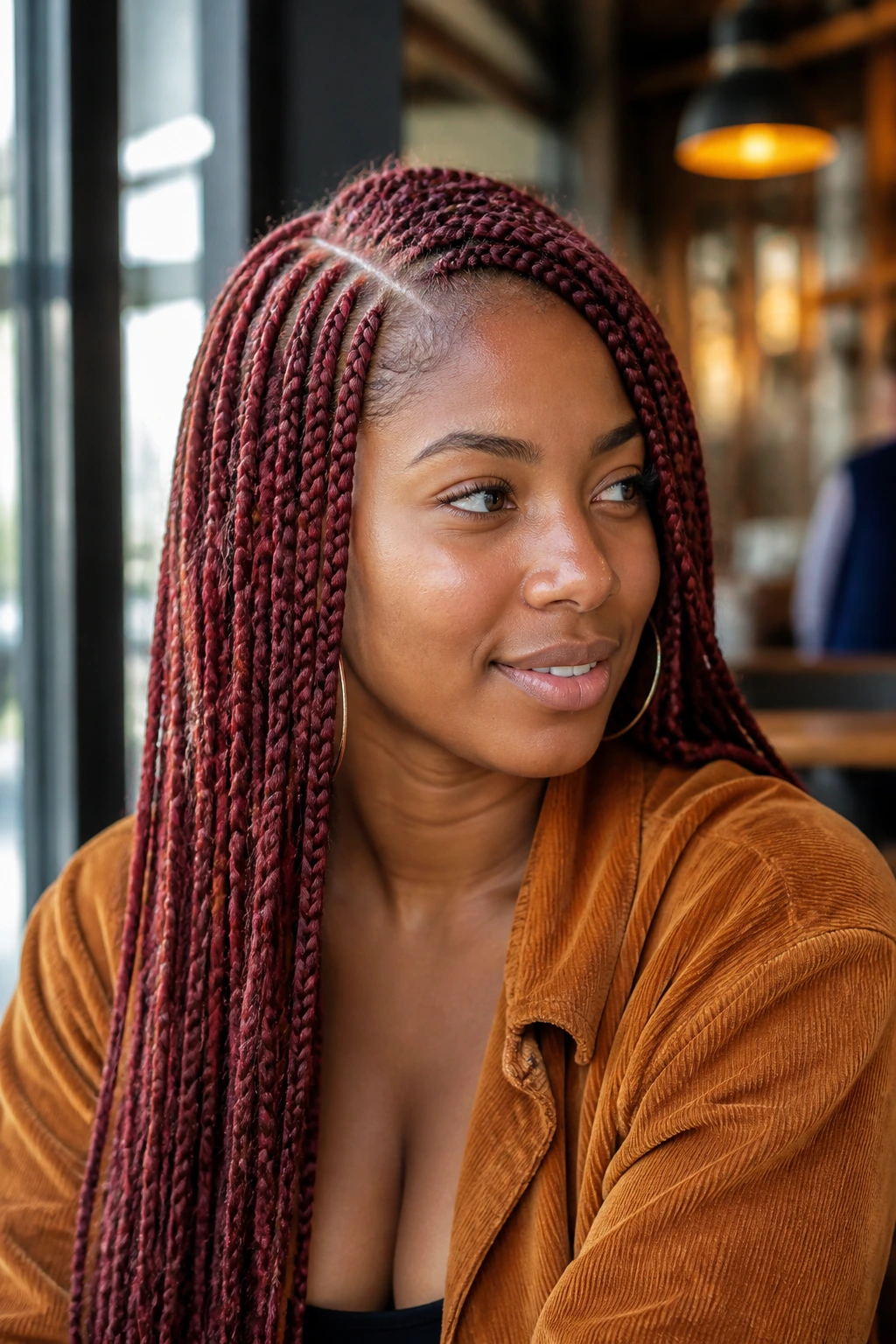
A side part changes the mood faster than most people expect. The braids fall over one side of the face, which makes burgundy feel a little softer and a little more cinematic. It’s a good move if a center part feels too straight or too severe.
This version can flatter a lot of face shapes because it shifts the visual weight off the center line. It also gives you room to play with baby hairs, swooped edges, or a tuck-behind-the-ear moment on the heavier side. I like it most when the part is deep enough to matter. A tiny side shift barely reads.
If you wear glasses, a side part can keep the front from crowding your frames. That sounds small. It isn’t.
10. Half-Up, Half-Down Burgundy Knotless Braids
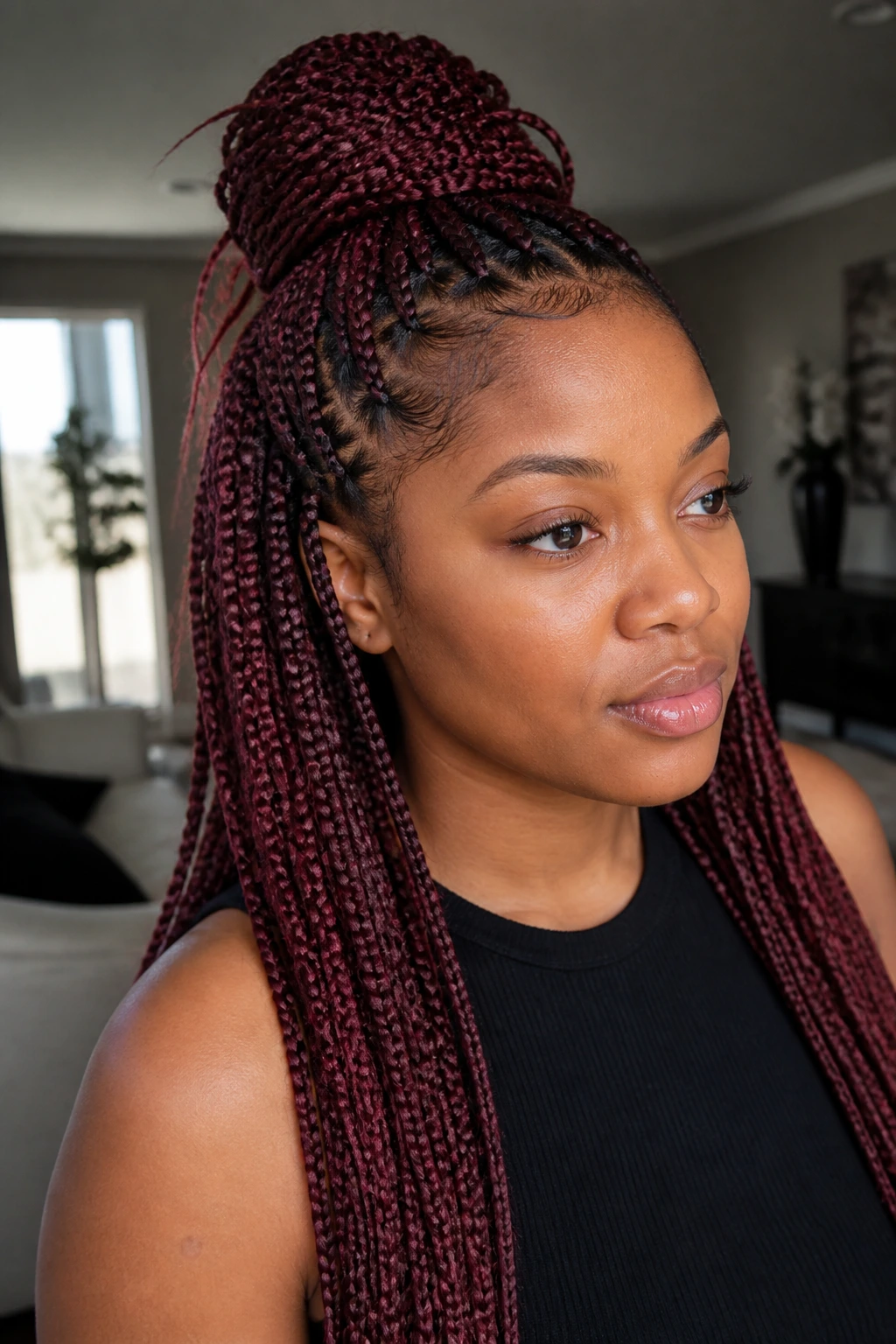
If you want a style that can go up and down without looking half done, this is the one. The top half lifts the braids off your face and shows the color at the crown, while the bottom half keeps the movement and length that make burgundy feel rich.
The style works because it gives shape. A full-down set can look heavy if the braids are long, but a half-up tie loosens the silhouette without losing the color. It’s also useful on days when you want the braids out of your eyes but you do not want a strict bun.
Use a snag-free elastic and don’t yank the front tight. The whole point is to look controlled, not strained.
11. Burgundy Knotless Braids with Gold Cuffs
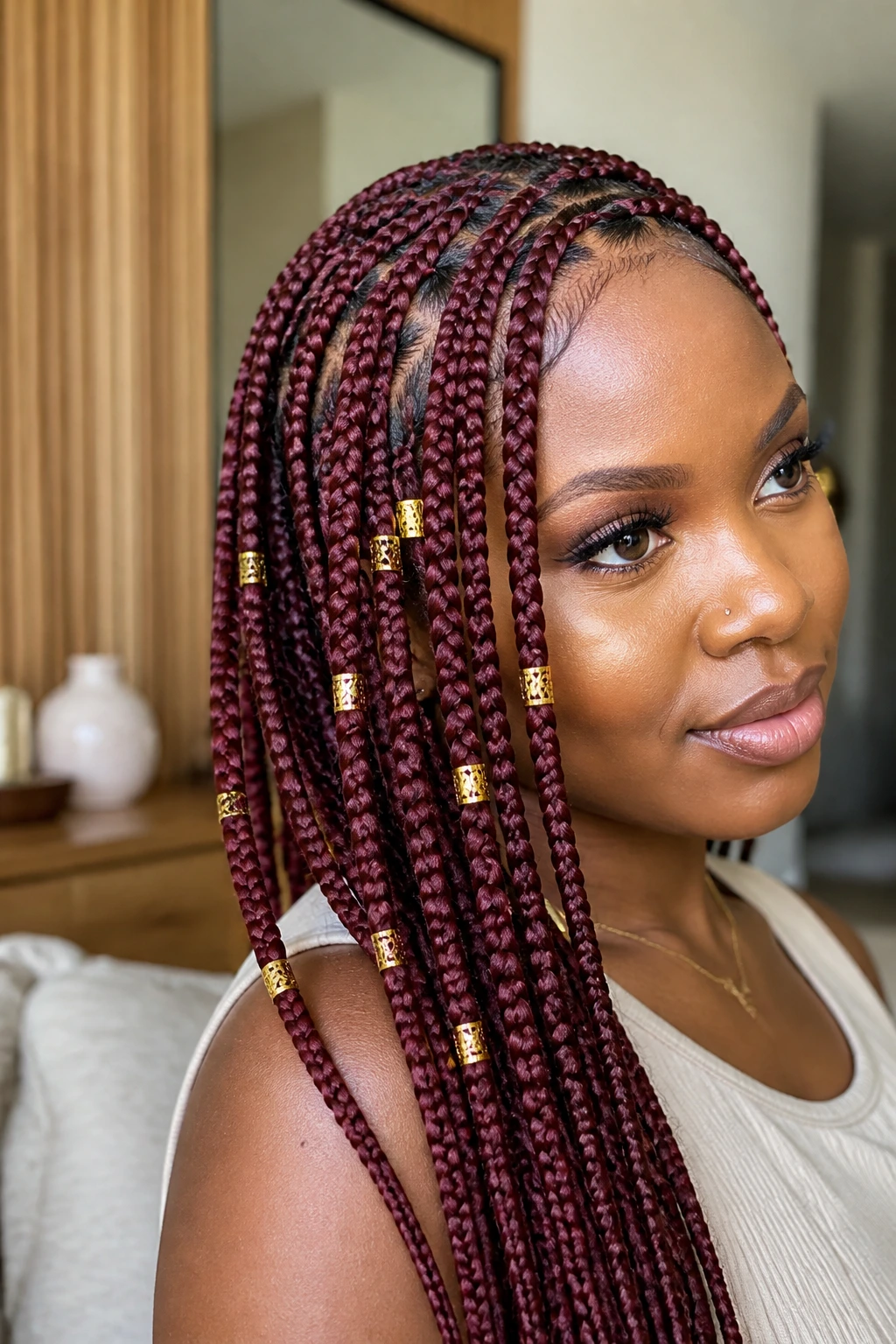
Gold cuffs and burgundy hair are a classic combination for a reason. The warm metal catches the eye against the wine tone, and even a few cuffs can make a plain braid pattern feel finished. You do not need many. Six to ten placed with a light hand is usually enough.
I like this style when the braids themselves are simple. The accessories do the speaking, which means the overall look stays neat instead of cluttered. Put cuffs near the front and a couple lower on the length so they don’t all crowd one section.
If you use too many, the braid stops looking rich and starts looking busy. One metal. Maybe two. That’s enough.
12. Burgundy Knotless Braids with Beads
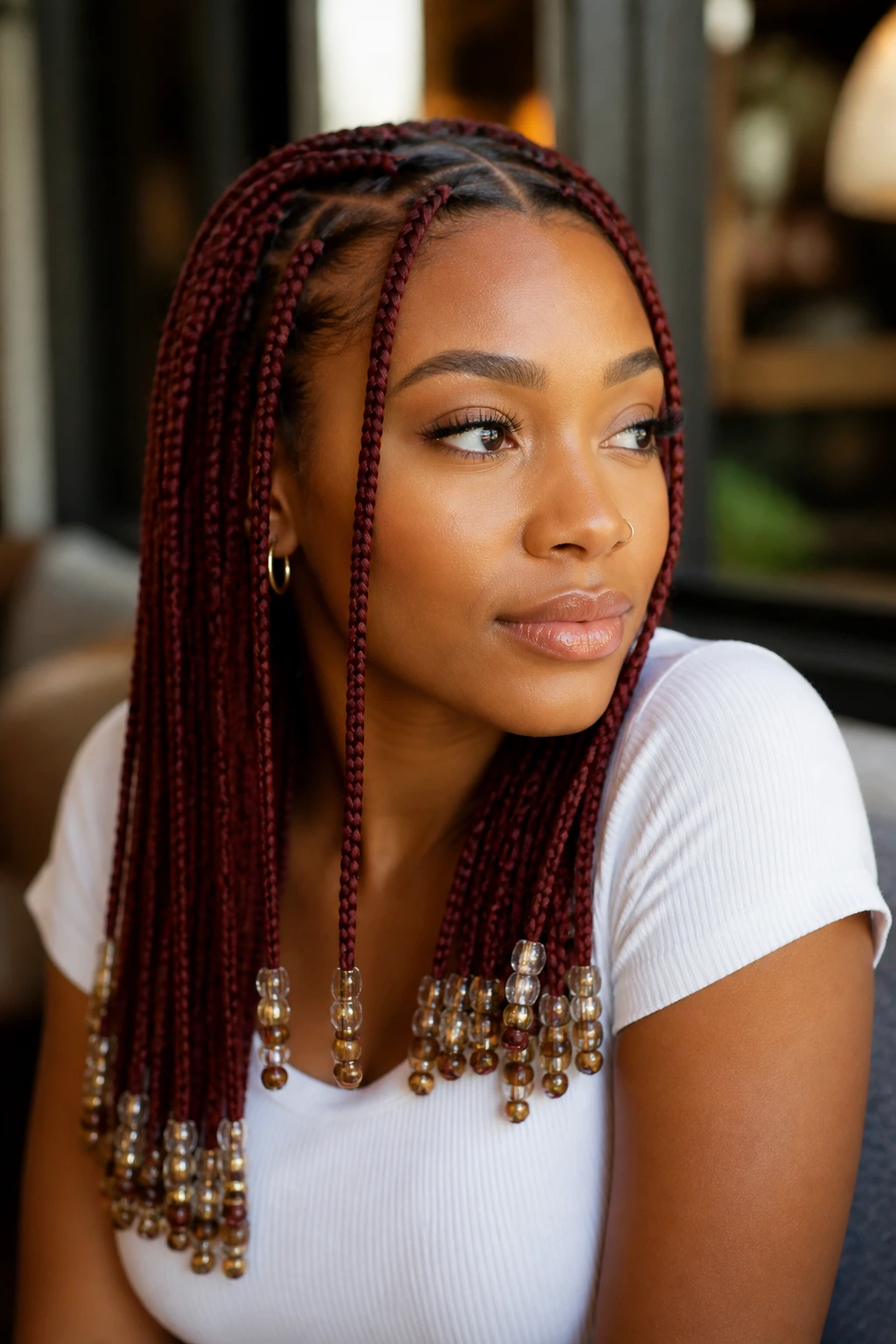
Beads bring sound into the style. They click softly when you move, and against burgundy hair they stand out more than they would on black braids. Clear, gold, and smoky beads work especially well because they let the red tone stay visible.
This version feels playful without losing structure. I’d choose it if you want something with a little personality but not a full accessory overload. Keep the beads clustered toward the ends or on a few front braids, so the style doesn’t get dragged down by too much weight.
Best use case
A few beads on the front pieces can change the whole face-framing effect. You do not need to bead every braid to make the style feel special.
13. Burgundy Knotless Lemonade Braids
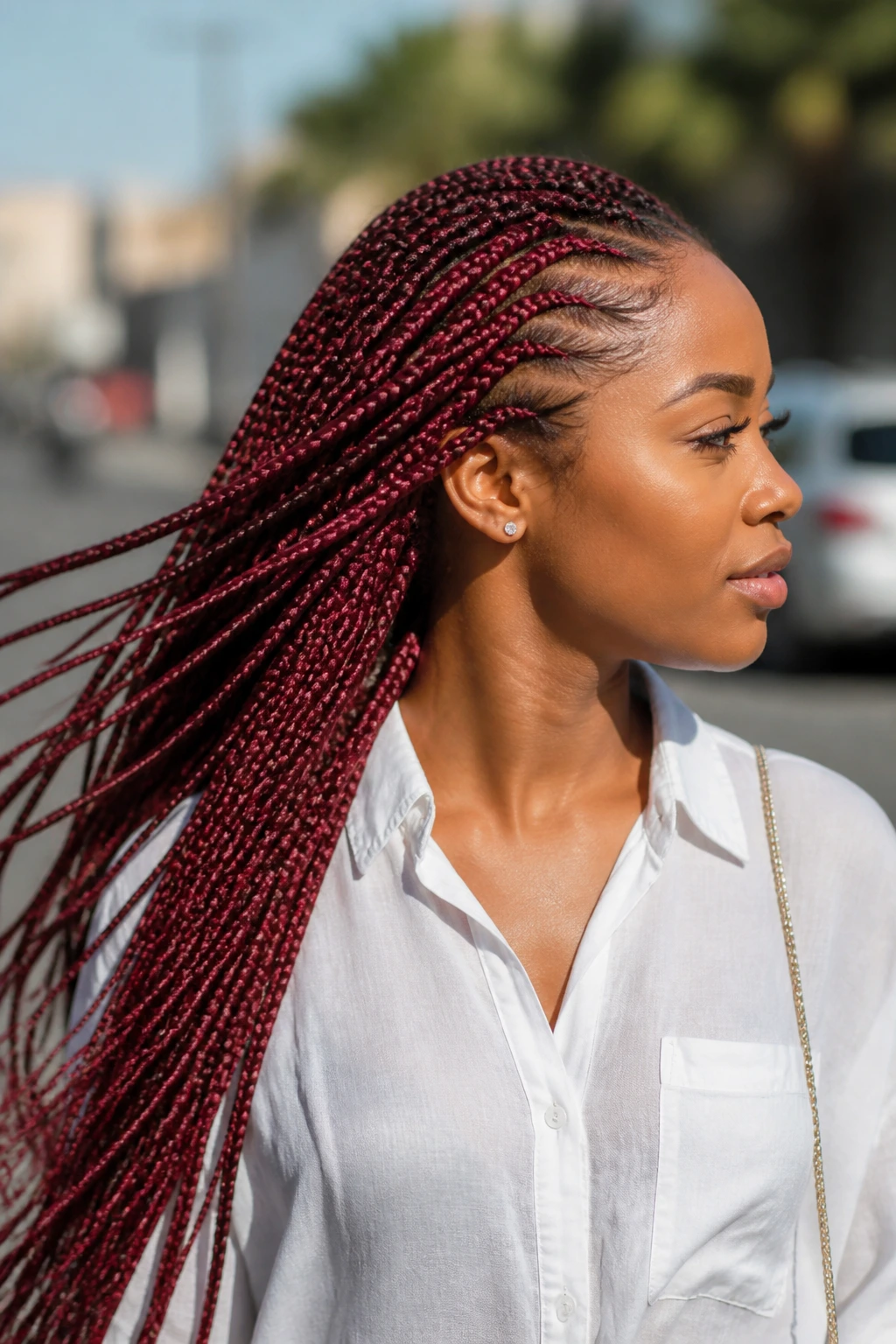
Lemonade braids pull the hair in a strong side-swept direction, and burgundy makes that sweep even more obvious. The style has motion built into it, which is why it looks so good when you’re walking, turning, or wearing one shoulder bare. It is clean, but not flat.
The side direction gives the color a long line to travel on. That means burgundy can read as one continuous ribbon instead of a stack of separate braids. I like this look when the braids are medium to long and the temple area is parted cleanly. If the front is messy, the whole effect falls apart fast.
Keep the edge work soft. Sharp is good. Tight is not the same thing.
14. Fulani-Inspired Burgundy Knotless Braids
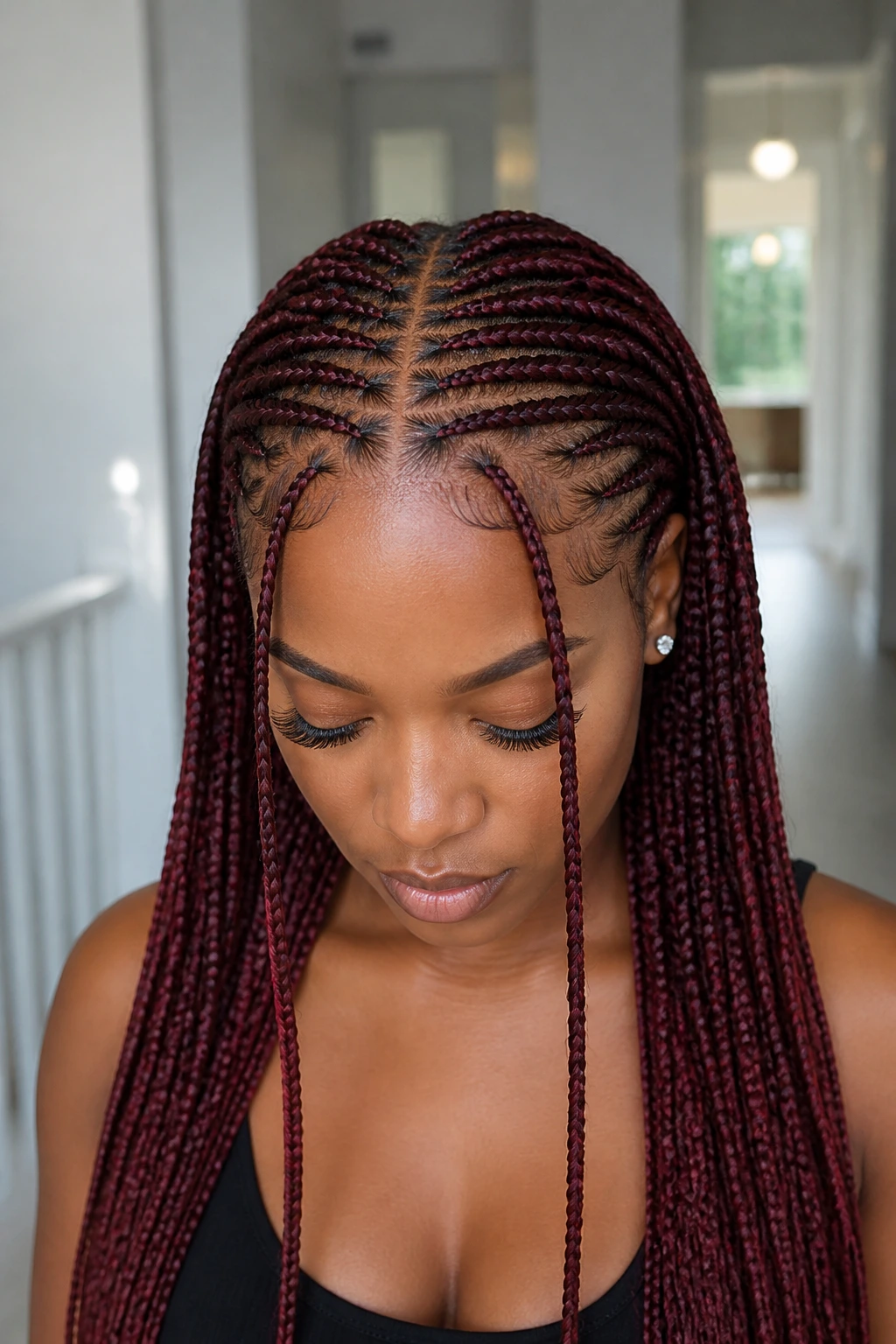
What makes Fulani-inspired burgundy braids hit harder than plain straight-backs? The pattern, mostly. You get that central line or braid, the side detailing, and often a little accessory work near the front, which gives the color a frame instead of letting it sit by itself.
This style works best when the parting is precise and the front braids are slim enough to show the design. Burgundy adds warmth to the pattern, but the pattern keeps the style from looking like “just red braids.” I prefer a cleaner version with one strong center element and a couple of side details rather than a crowded front.
Good choice if: you like a style that feels rooted in structure and still gives you room for beads, thread, or cuffs.
15. Burgundy Knotless Braids with a Braided Crown
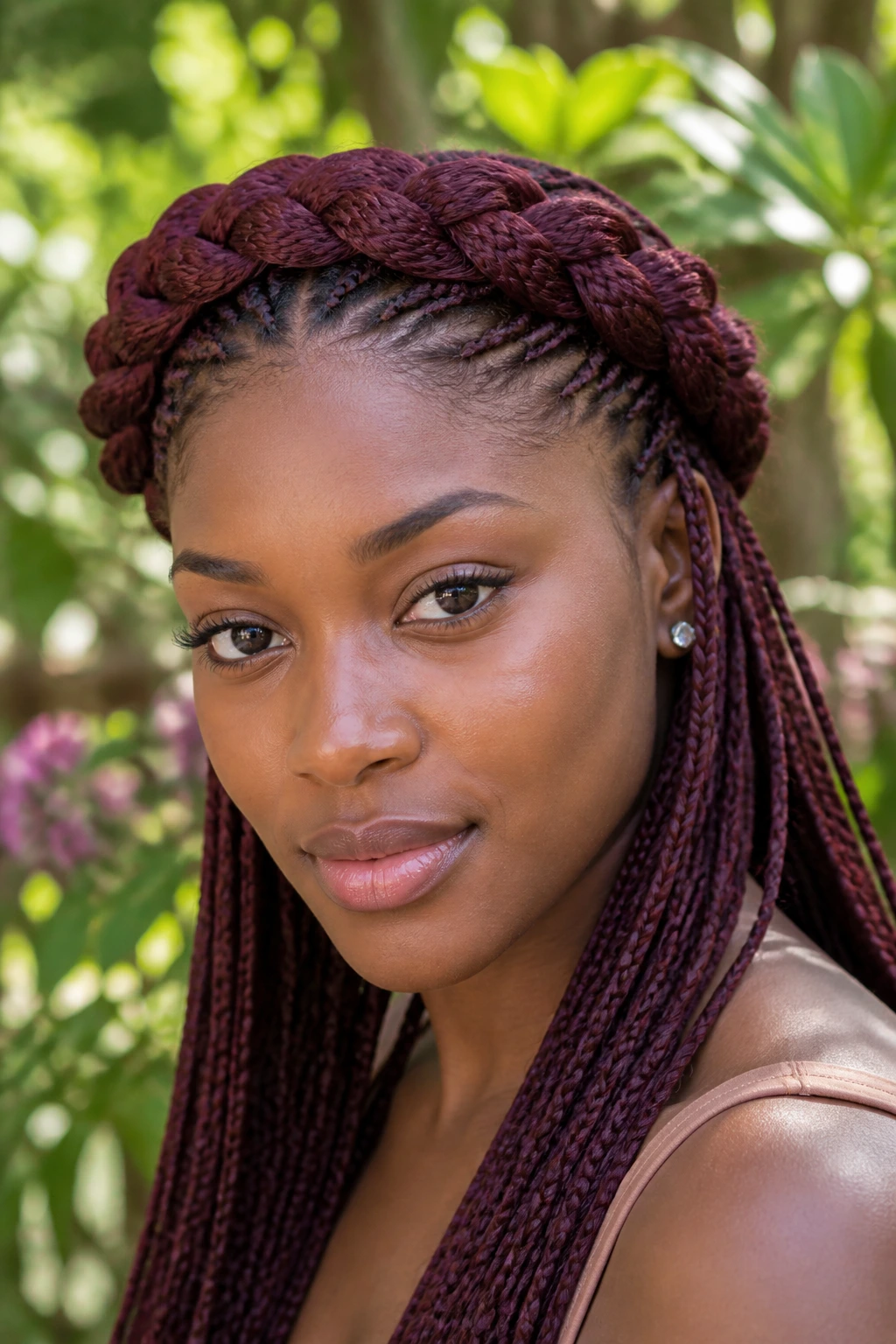
A braided crown pulls the hairline upward and makes the face look more open. In burgundy, that shape gets even more interesting because the color curves around the head like a ribbon. It’s one of those styles that looks more complicated than it actually is once the braids are installed.
This is a good choice when you want the hair off your face for a long day, a dinner, or a warm stretch of weather. It also keeps the front from feeling heavy, which matters if the braids are long. The crown should sit smooth, not tight. If the tension is too hard, the style loses its ease fast.
Pin the crown underneath the braid line instead of stacking visible pins on top. Hidden hardware is always cleaner.
16. Burgundy Knotless Braids with Black Roots
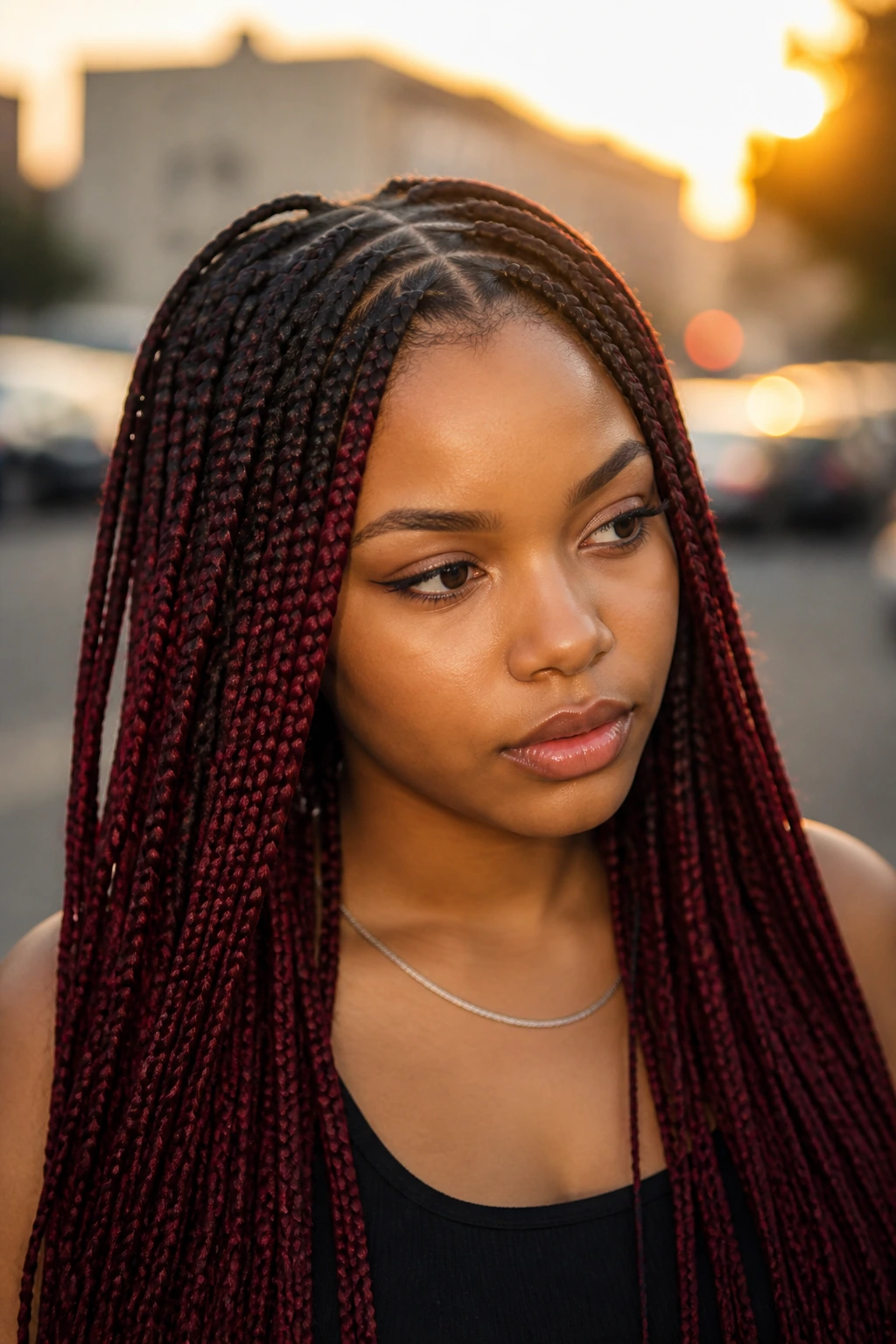
Black roots fading into burgundy lengths are the calmest way to wear red-toned braids. The darker root softens the grow-out and makes the color transition feel more grounded, which is useful if you want burgundy without a full bright-red commitment. It also keeps the crown from looking overly warm.
I like this when someone wants a version that plays nice with natural hair color. The black root makes the style easier to wear with black clothing and darker makeup, while the burgundy lengths still give you the visual payoff. It’s a smart compromise, not a watered-down one.
The fade should look deliberate. If the transition is patchy, it reads like mismatched bundles instead of design.
17. Burgundy Knotless Braids with Honey-Accent Face Framing
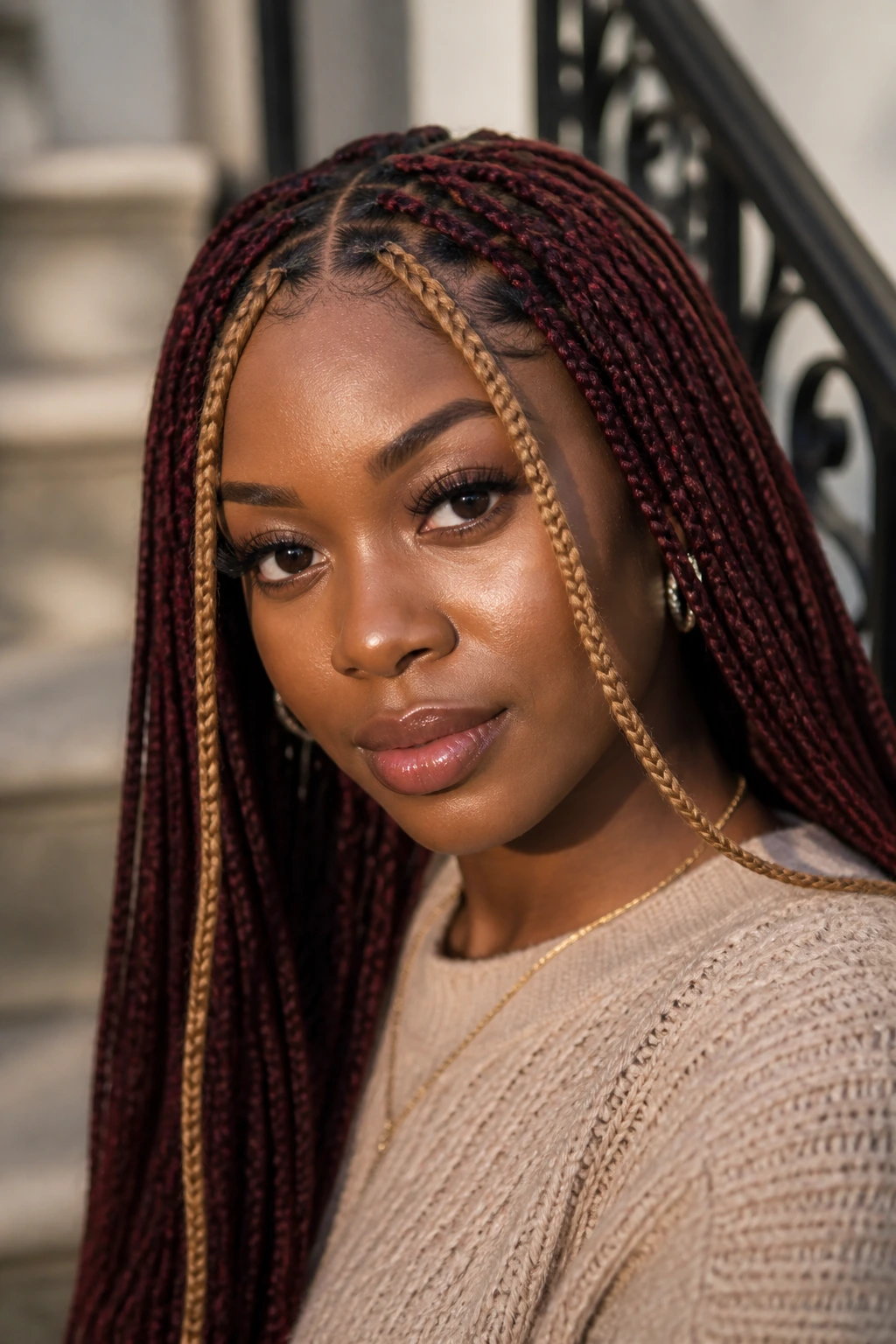
A few honey-toned pieces near the face can wake up burgundy in a really nice way. The warm accent catches the light and lifts the front without turning the whole head into a color experiment. I would keep it to two to four front braids, tops.
This one is for people who want brightness near the skin but still want burgundy to stay the main shade. The trick is restraint. Too many accent pieces and the color story gets noisy. A small frame of caramel or honey against deep wine reads deliberate, especially if you wear soft makeup or gold jewelry.
If you already have warm undertones in your skin, this version tends to look especially easy. The front lightens the face without needing more length or more accessories.
18. Burgundy Knotless Braids in a High Ponytail
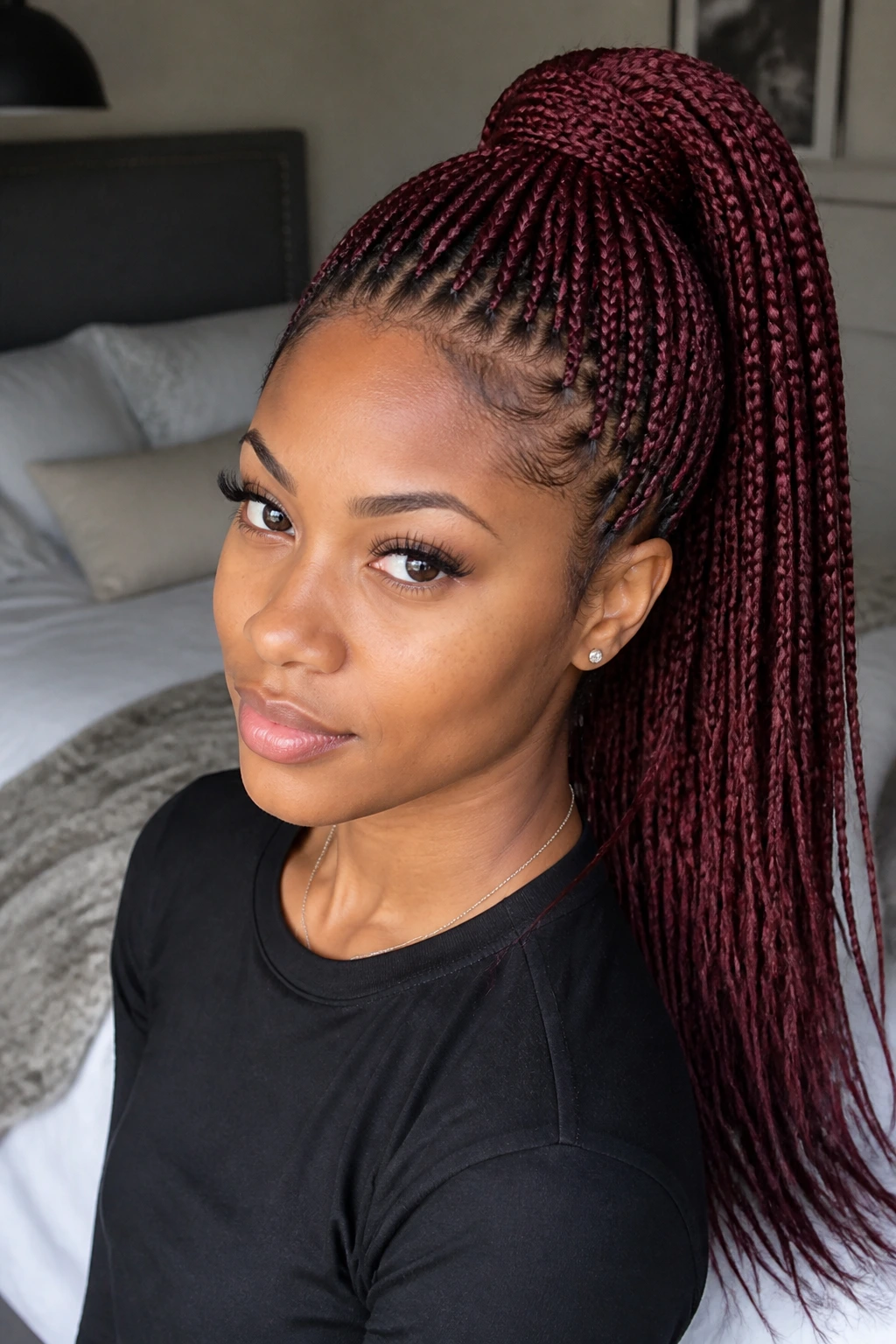
A high ponytail exposes every clean part, which is exactly why it works. The burgundy lengths lift up and swing, and the color shows from the crown all the way down. It’s one of the easiest ways to make a standard braid install feel more styled without changing the braids themselves.
This look needs a lightweight install, though. If the braids are too thick or the ponytail base is too tight, it stops feeling fun fast. I like it best on medium or small braids, where the weight stays manageable and the ponytail still has movement.
Keep it from sagging
- Wrap the base with a braid or matching hair piece.
- Use a strong elastic that doesn’t snag.
- Do not pull the front so hard that the style starts complaining before lunch.
19. Burgundy Knotless Braids in a Low Bun
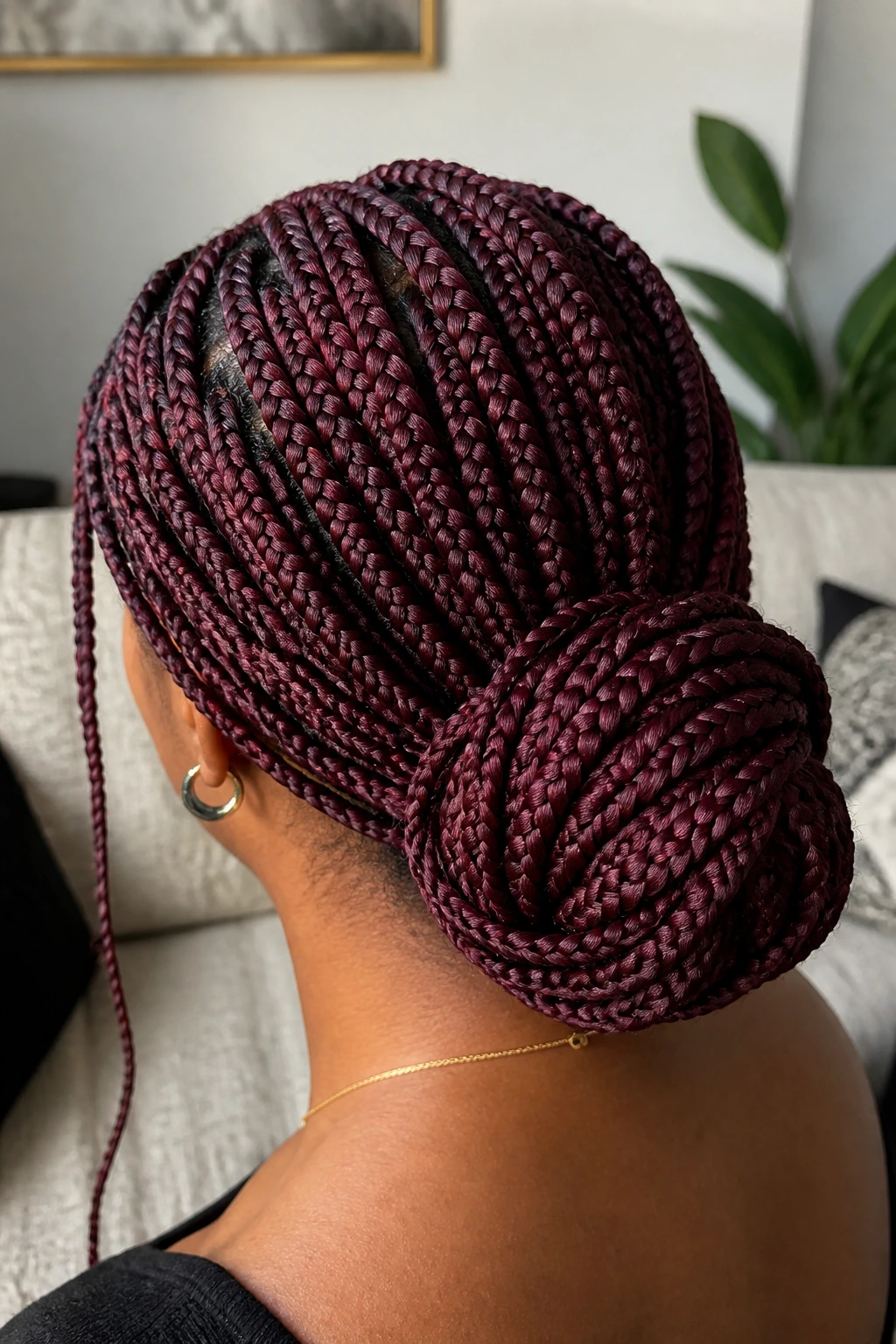
A low bun is the quiet answer when you want the color to stay visible but the length to get out of the way. The burgundy wraps into a neat coil at the nape, which looks polished without needing anything extra. It’s practical, but not plain.
This style is especially useful when the braids are long or when you want to protect the ends on a busy day. It reduces shoulder tug and keeps the hair from getting in the way of coats, scarves, or backpacks. The bun should sit low and secure, not twisted so tightly that it leaves a sore spot.
If you wear this often, change the placement a little from day to day. The same twist point over and over is what starts to wear the roots out.
20. Burgundy Knotless Braids with Heart Parts
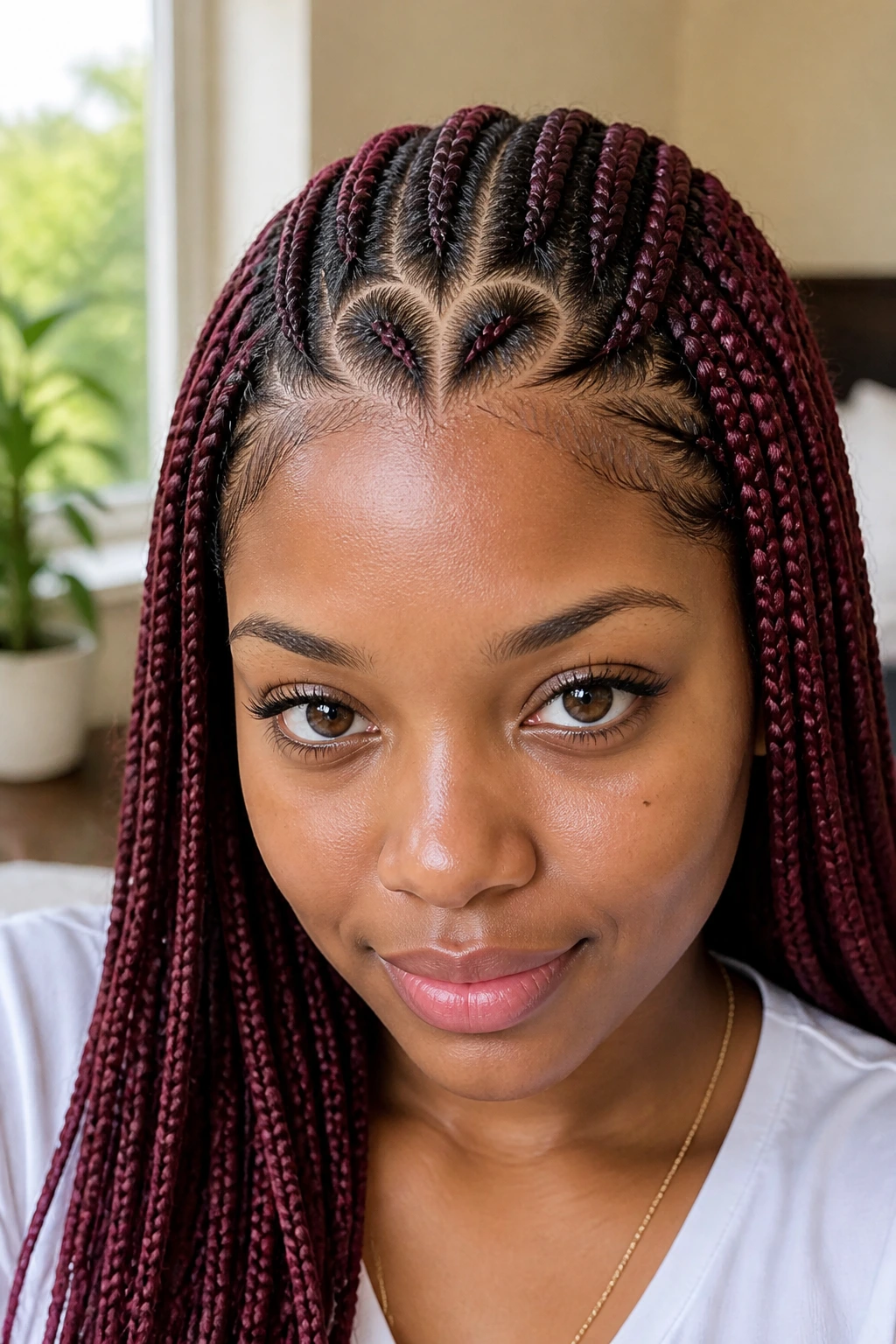
Heart parts are for people who like the camera angle a little more than average. The small heart shape at the hairline or crown gives the style a playful detail that people notice when they get close. Burgundy makes it easier to see than a dark braid color would.
The parting needs to be crisp for this one. If the heart gets blurred or the sections around it are too thick, the design disappears. I like it best as a single standout detail rather than a whole head full of shapes. One heart. Maybe two. Enough to make people look twice.
It’s a strong choice if you want the braids to feel personal instead of generic.
21. Burgundy Knotless Braids with Zigzag Parts
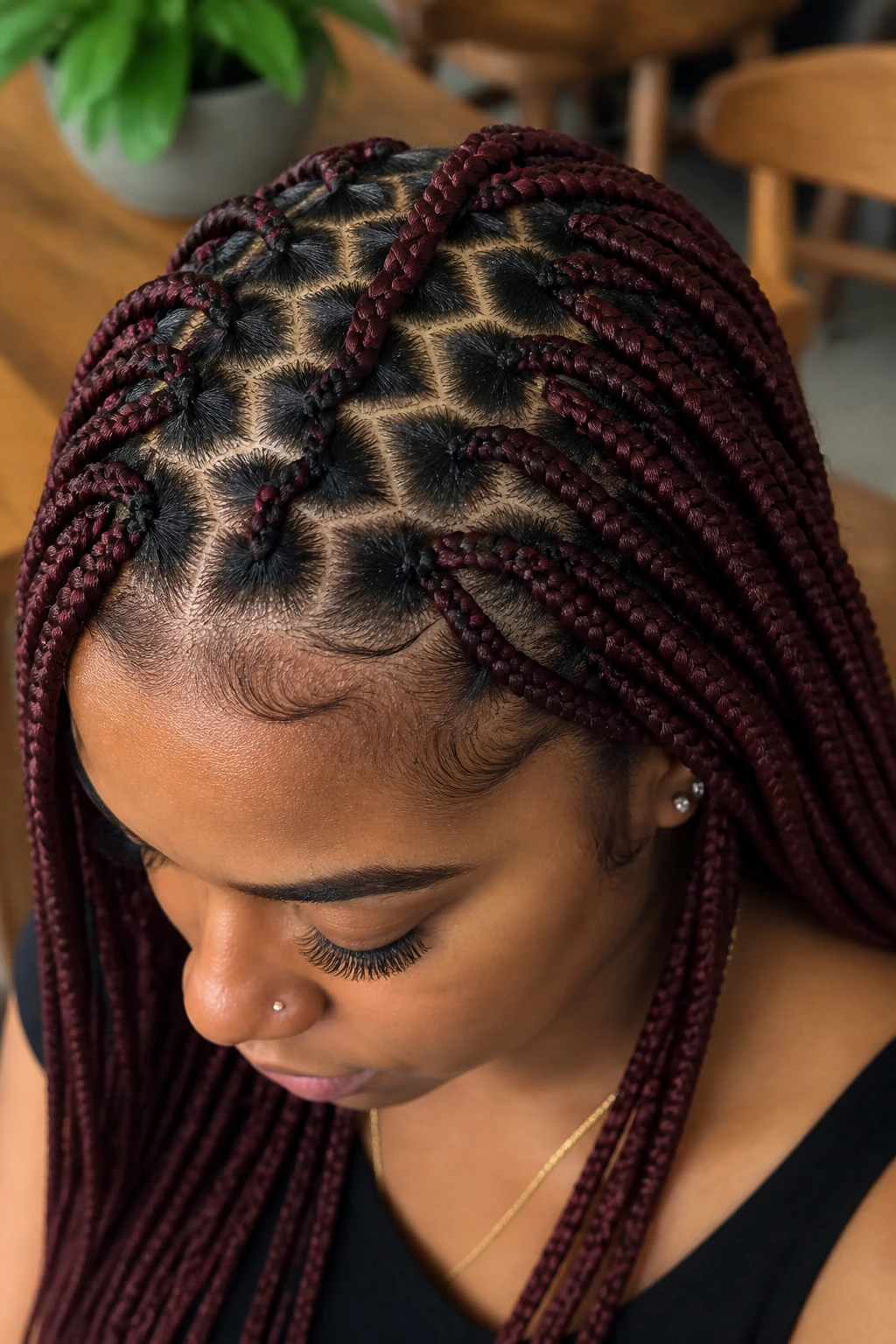
Zigzag parts read sharper than a full color change sometimes. The shape at the scalp gives the style motion before the braids even fall, and burgundy makes every angle easier to see. It is a good option if you want a little edge without adding beads, curls, or heavy accessories.
The reason this works is that the zigzag breaks the grid. Straight parts can look very clean, but they can also feel expected. A zigzag line adds energy while still staying neat. I’d keep the braids medium-sized so the pattern stays visible.
If the parts are too busy, the look gets lost. One clear zigzag pattern usually says more than a dozen small flourishes.
22. Burgundy Knotless Braids with Layered Lengths
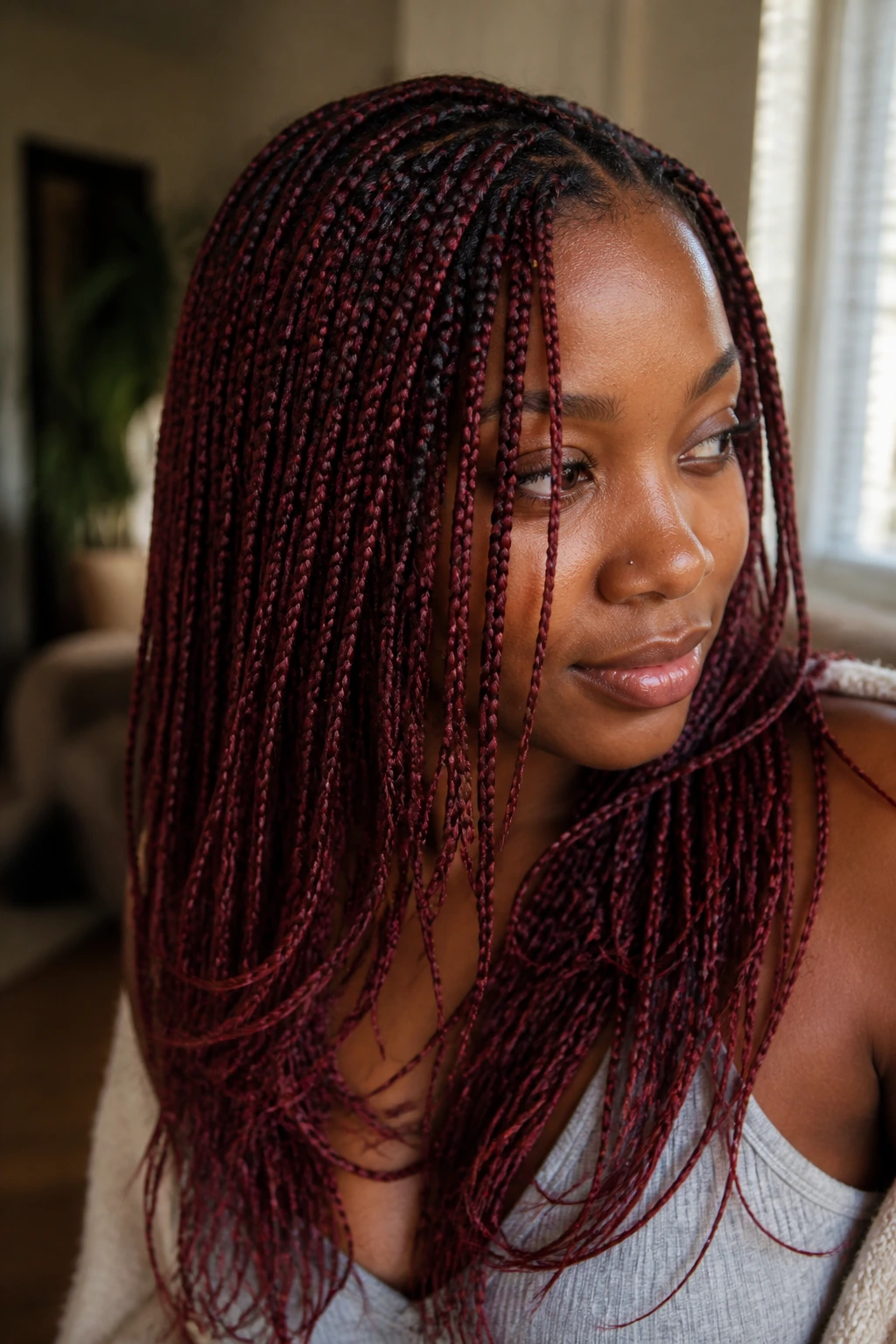
Layered lengths keep long braids from looking like one blunt curtain. Shorter pieces around the face, longer pieces in the back, maybe a little taper at the ends — that kind of shaping changes the whole silhouette. Burgundy especially benefits from layers because the color shows each level differently.
This style is good when you want movement without curls. It also helps long braids sit more naturally around the shoulders, which can make them feel lighter even when the actual weight is the same. Ask for a clean cut after installation if you want the layers to read on purpose.
Why it works
The eye reads the shape first. Then the color. That order matters here.
23. Burgundy Knotless Braids with Loose Tendrils
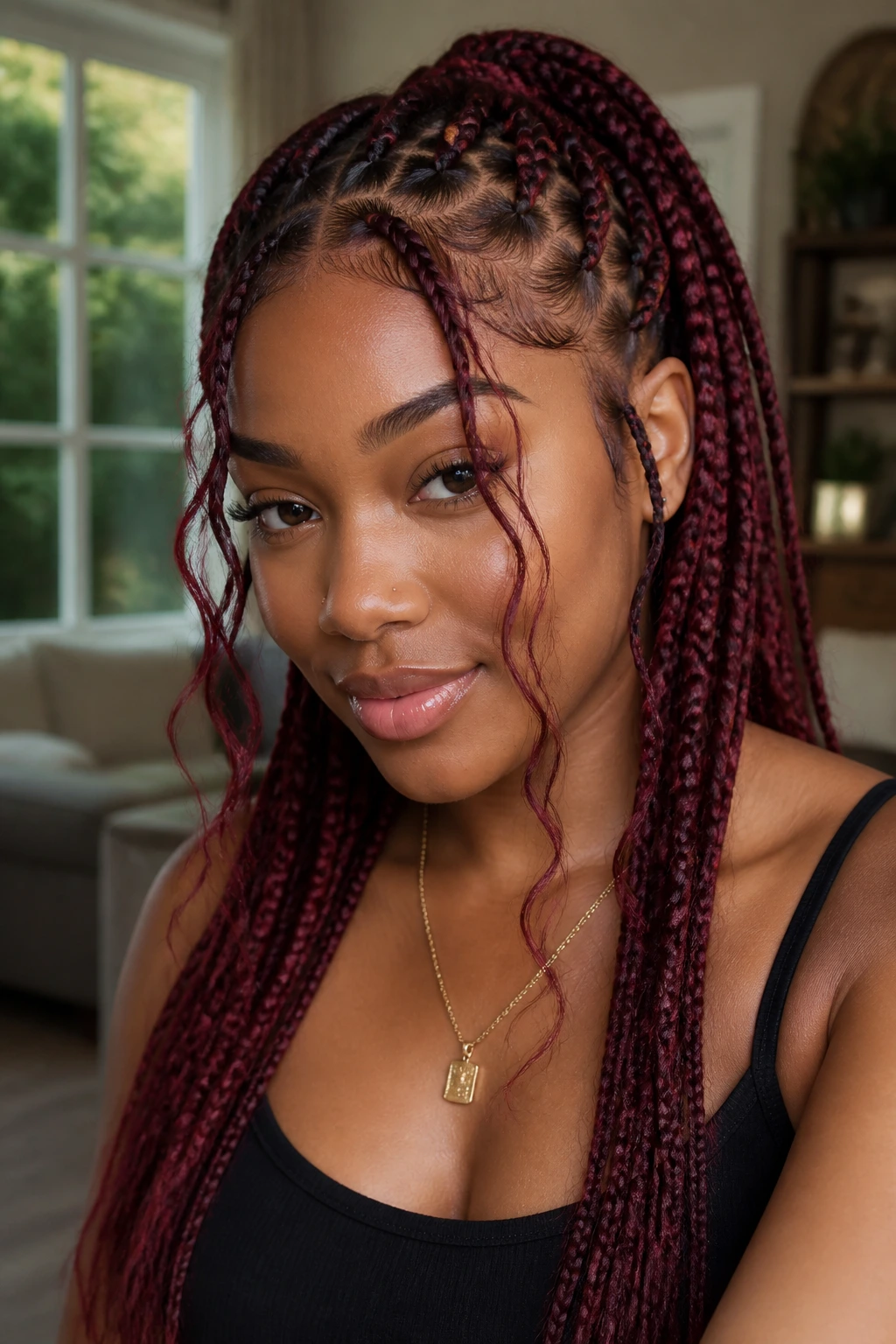
Loose tendrils soften a braid set without making it fuzzy. A few intentional pieces around the face or near the nape can keep burgundy from looking too formal, especially if the rest of the style is sleek. The trick is to make the strands look chosen, not forgotten.
I like this when someone wants a little softness but doesn’t want full boho texture. One or two tendrils near the front can change the entire mood of the face-framing area. If the loose pieces start fraying, refresh them with a touch of foam and finger-roll them back into shape.
The result should look like a decision, not damage.
24. Petite Burgundy Knotless Braids
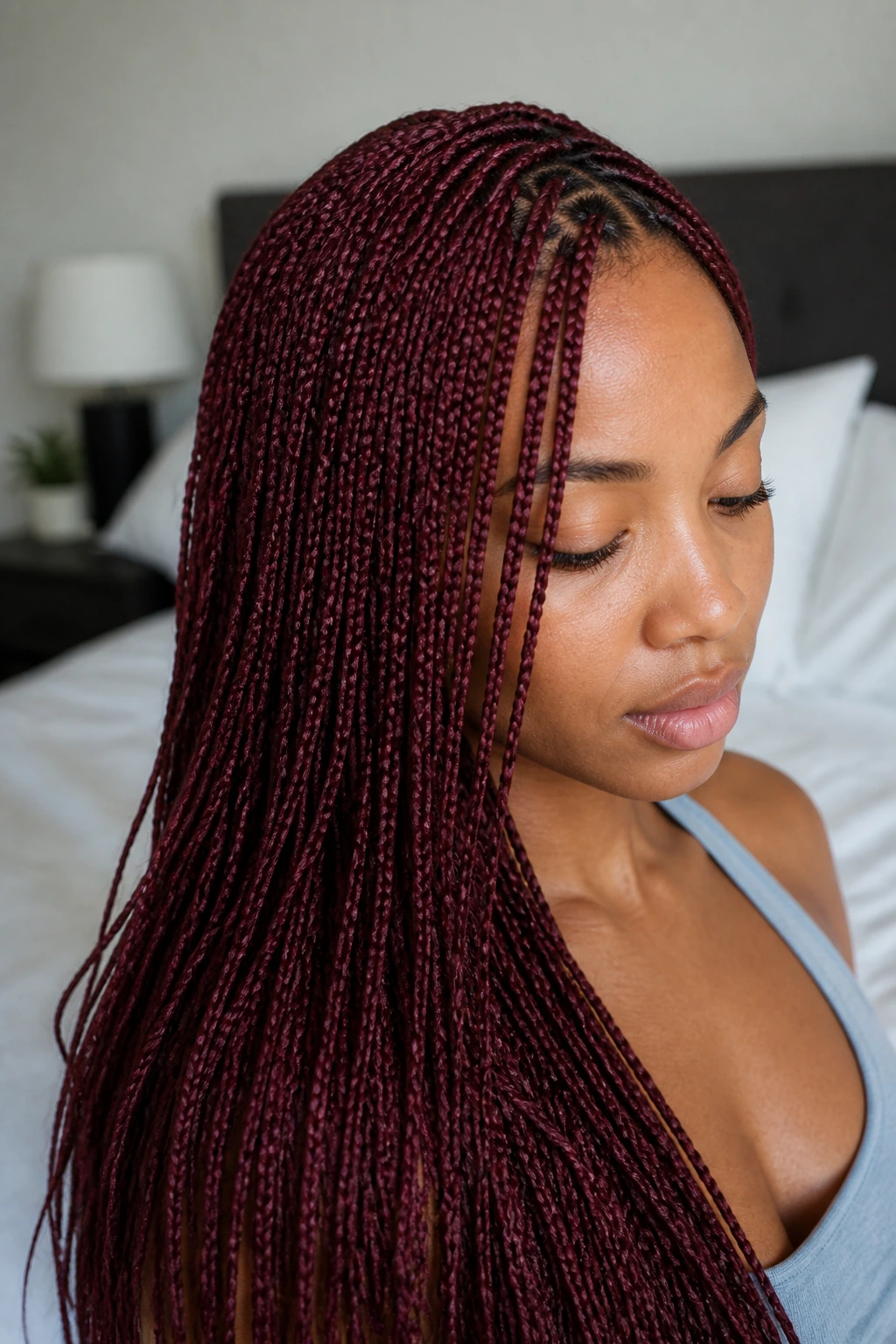
Petite braids are the most time-consuming version on this list, and the most controlled. The smaller sections let burgundy read almost like woven fabric, with a lot of movement and a very neat finish. If you like detail, this is the one.
There’s a reason people keep coming back to tiny braids in rich shades: the color has more surface to play across, so it looks layered instead of flat. The downside is obvious. More time. More patience. More aftercare if you want the small parts to stay crisp.
I’d choose petite braids if you want a long-wear set and don’t mind the chair time. The payoff is a head full of texture that still looks refined from every angle.
25. Burgundy Knotless Braids with an Accessory Mix
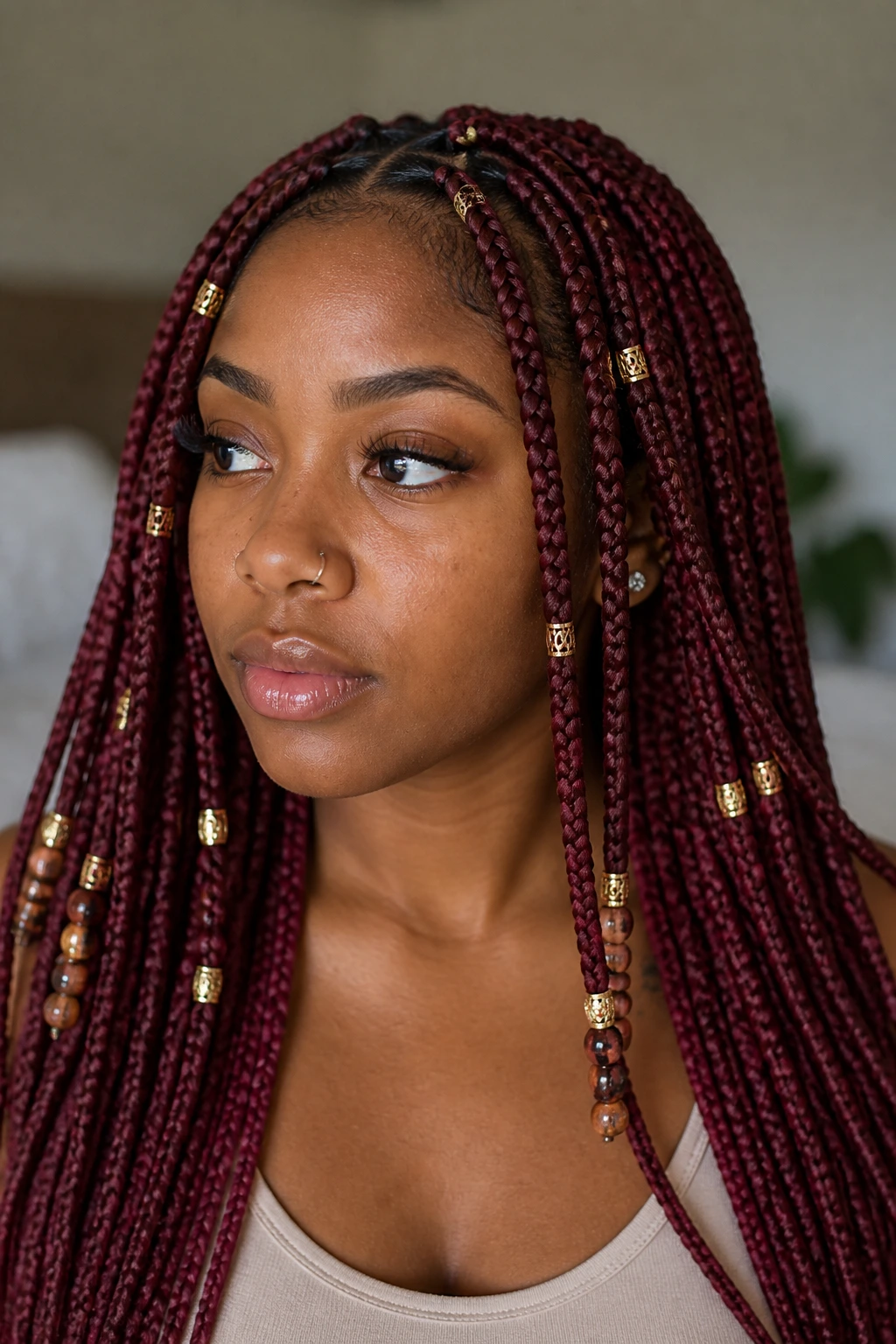
This is the style for people who get bored easily. A few gold cuffs, a couple of beads, maybe one thin thread wrap near the front — enough to make the braids feel edited, not overloaded. Burgundy gives the accessories a darker backdrop, so even small details show up well.
The key is to pick a lane. One metal tone. One bead style. One thread color if you’re using it. If you mix too many accents, the braid pattern gets buried. The hair should still be the main event.
A simple rule: let the accessories echo each other. Repeating one detail three times looks smarter than adding six different ones once.
Why Knotless Braids and Burgundy Play So Nicely Together
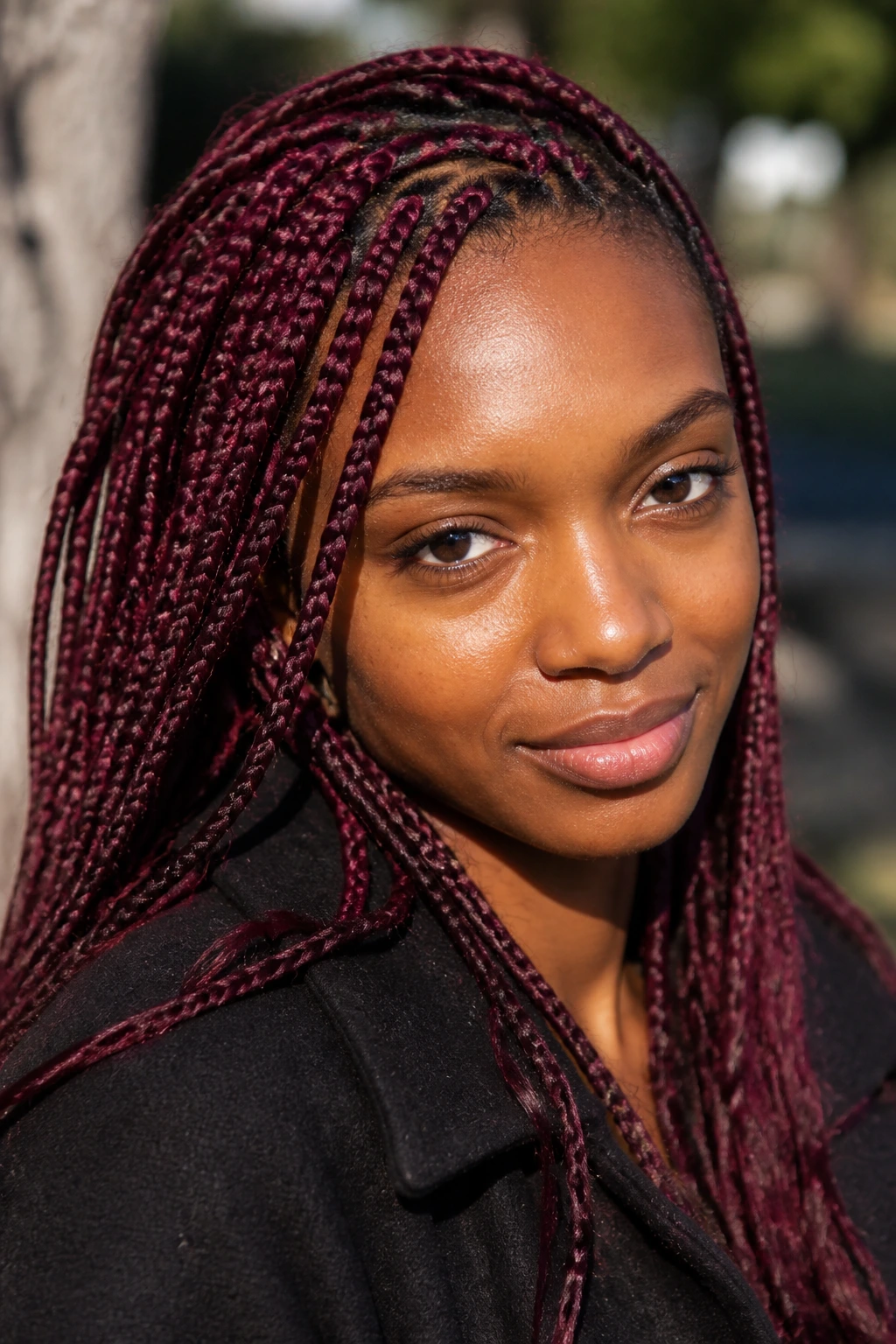
The knotless start does more than spare your scalp from a bulky root. It gives burgundy room to read cleanly from the first inch down. That matters because red-violet shades show texture faster than plain black hair does. If the root is lumpy, the eye goes there first.
The color also changes how the braid behaves in light. Burgundy can look deep and almost brown indoors, then shift toward wine or plum outdoors. On a smooth knotless base, that shift feels rich. On a chunky knot, it can look uneven. Same color. Very different result.
Why the root matters
A flatter root lets the braid sit closer to the scalp, which helps the style look lighter and keeps tension down. If you’ve ever had braids that felt heavy before the day was over, you already know why this part matters.
Why the color shift matters
Burgundy has enough depth to stay wearable, but enough red in it to catch daylight. That’s the sweet spot. Too bright and it starts shouting. Too dark and you lose the whole point.
Essential Tools for Burgundy Knotless Braids
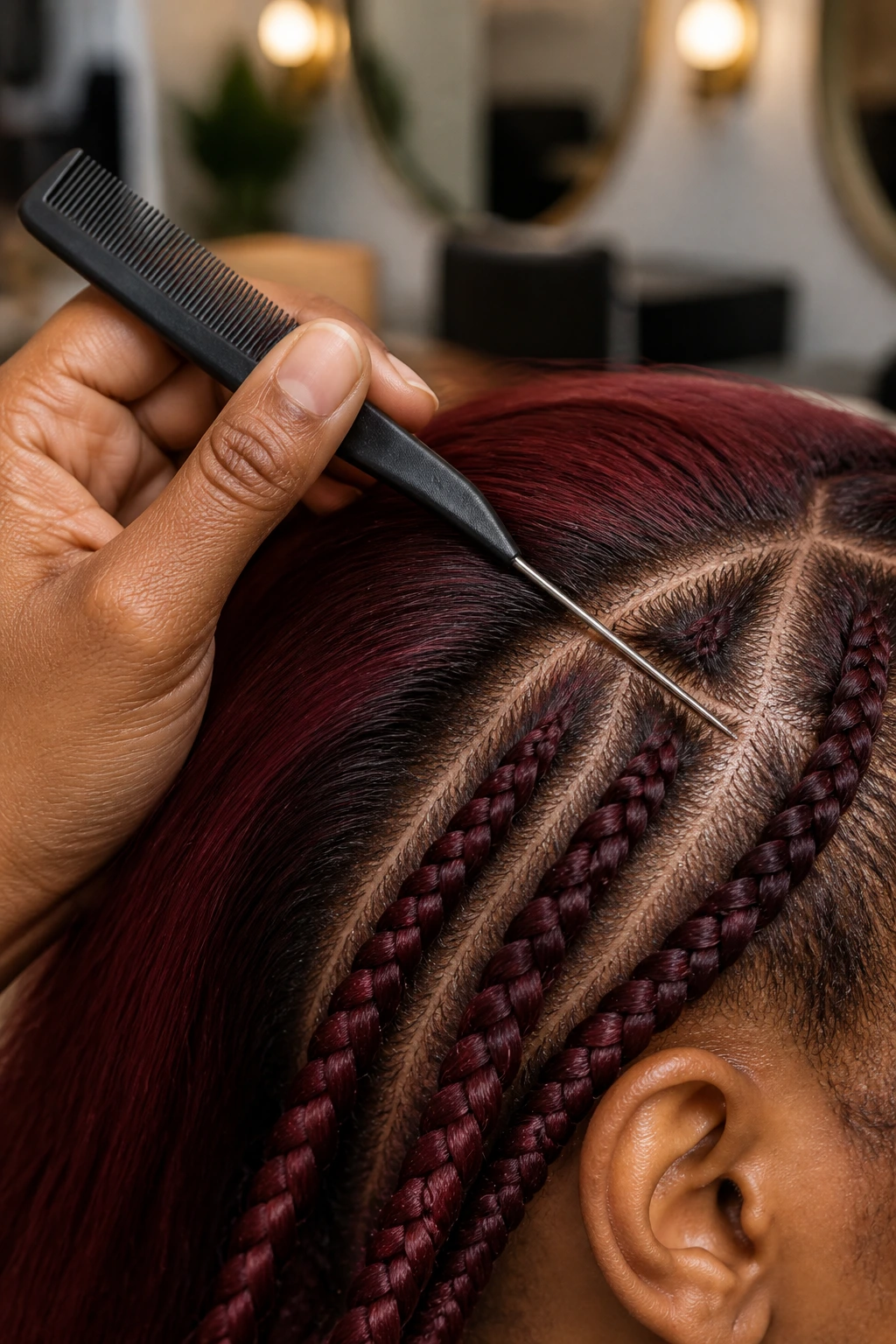
-
Rat-tail comb: Needed for clean parts. A dull comb makes the line fuzzy before you even start.
-
Sectioning clips: Keep the hair you are not working on from slipping into the braid you’re building.
-
Pre-stretched burgundy braiding hair: Saves time and gives the ends a smoother finish than unprepared bundles.
-
Edge brush: Useful for smoothing the hairline without drowning it in gel.
-
Styling mousse or foam wrap: Helps set the braids, tame flyaways, and keep curly ends from puffing out too fast.
-
Braid spray or diluted leave-in: Good for scalp freshness between wash days; use it lightly so the roots don’t feel coated.
-
Small scissors: For trimming stray fibers and cleaning up the ends after the install.
-
Satin scarf or bonnet: Non-negotiable if you want the burgundy tone to stay sleek and the roots to stay neat.
-
Hot water dip setup: Optional, but common if the ends need sealing. Use care and let the hair cool fully before moving it around.
-
Elastic bands or covered ponytail holders: Helpful for ponytails, buns, and half-up styles without snagging the braids.
Smart Shopping for Hair, Shade, and Length
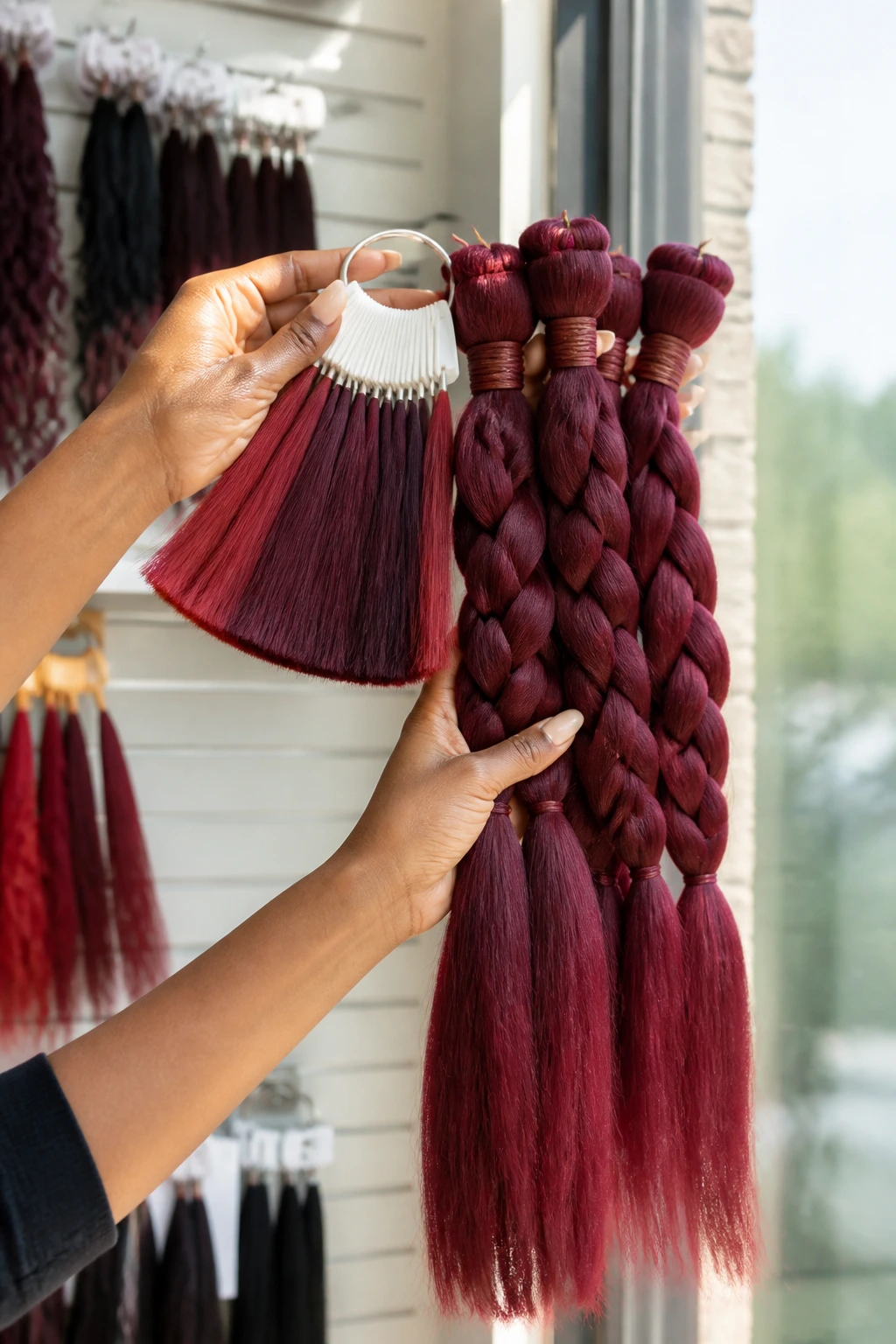
Burgundy is one of those shades that can look expensive or awkward depending on the bundle you buy. The big mistake is shopping under fluorescent store lights and trusting what you see there. Don’t. Take the bundle to daylight if you can, or at least hold it near a window. A burgundy that leans too cherry can look loud against deep skin; one that leans too brown can disappear indoors.
How much hair you need depends on braid size and length. A medium mid-back set usually needs less than a waist-length set, obviously, but the texture matters too. Pre-stretched hair often saves you a full trimming step, and that small detail keeps the ends from looking chopped off. For petite braids, you’ll need more bundles. For jumbo braids, fewer bundles but more precision.
Synthetic braiding hair is the standard for most knotless installs, and it’s fine for the bulk of this look. Human hair makes sense only when you want curly ends or boho pieces that need extra softness. If the style is meant to be sleek and long-lasting, a good synthetic fiber with a soft matte finish usually looks better than shiny hair that reflects every bulb in the room.
How to Wear Burgundy Knotless Braids
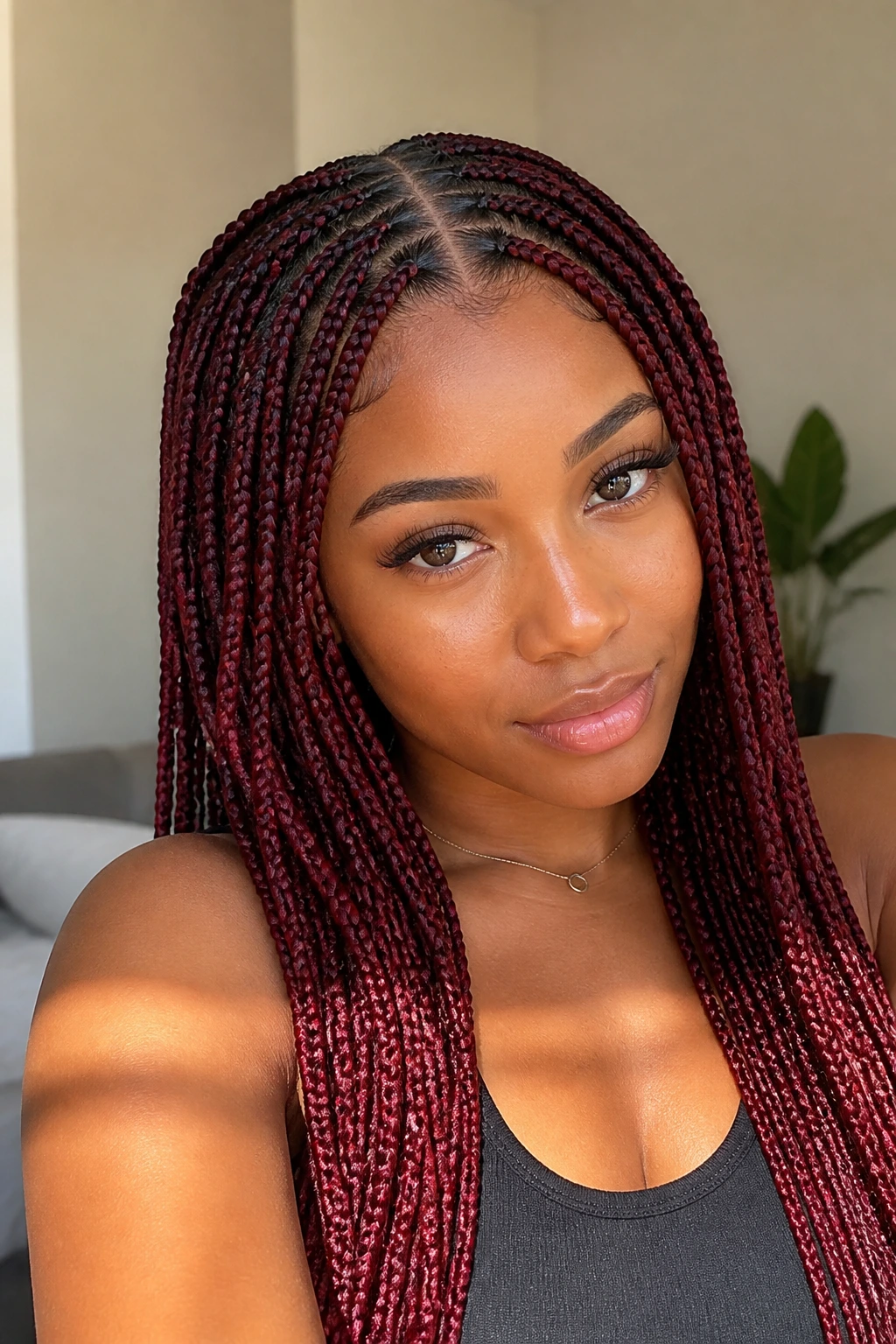
Presentation: Keep the front parting clean and the hairline calm. Burgundy looks richest when the roots are neat, not when they’re buried under a thick line of gel or a messy swoop. A middle part or a deep side part gives the color a shape to sit inside.
Accompaniments: Gold hoops, a satin scarf, matte makeup, and simple necklines all let the braids carry the outfit. Burgundy already has enough heat in it, so a busy print can fight with it unless you keep the rest of the look quiet.
Portions: If you want the style to feel lighter, choose shoulder to mid-back length and medium braids. If you want more movement, go smaller with the sections and keep the ends blunt or lightly curled. Bigger braids plus extra length can get heavy fast, and that weight shows up at the crown before it shows anywhere else.
Beverage Pairing: Cold drinks are the friendliest companion during install day or refresh day. Iced coffee, sparkling water, or hibiscus tea in a lidded cup keeps you from balancing a hot mug near fresh edges and new parts.
Small Upgrades That Make the Style Look Intentional
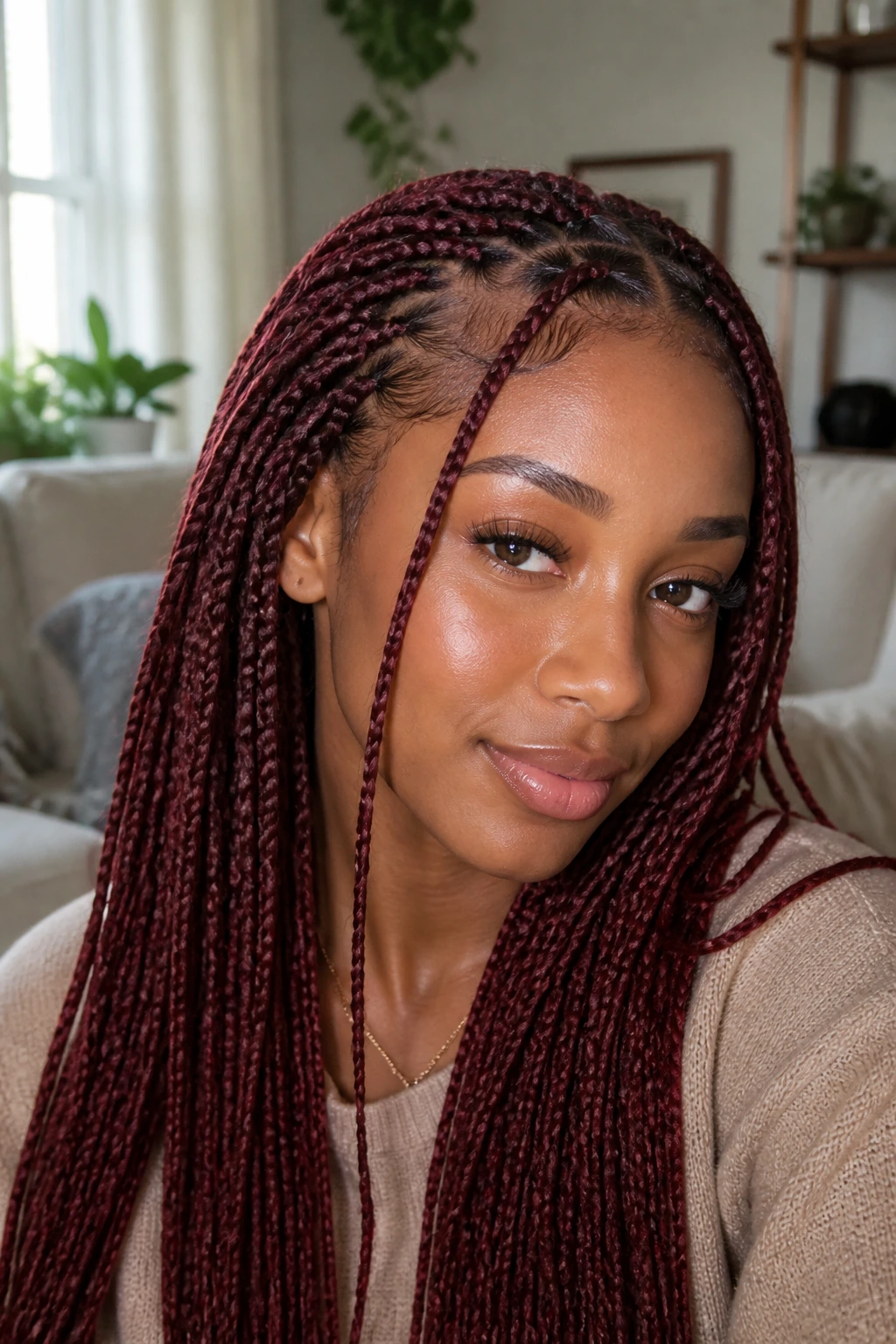
Color Enhancement: Choose a burgundy with plum notes if you wear cooler shades, or one with brown-red depth if your closet leans earthy. That tiny choice changes how the braids sit against your skin and clothes.
Customization: Add one of three things, not all three at once: curls at the ends, a few gold cuffs, or a side part with a face-framing braid. Burgundy already gives you a strong base, so the upgrade should feel like a whisper, not a second haircut.
Serving Suggestions: Light mousse over the lengths, a scarf for twenty minutes, then a gentle finger-separate once the hair is dry. That sequence keeps the braids smooth without making them stiff or crunchy.
Make-It-Yours: For work or school, keep the set mid-back and accessory-light. For weekends or events, move the braids into a high ponytail or low bun and let the color do the styling.
Keeping Burgundy Knotless Braids Fresh
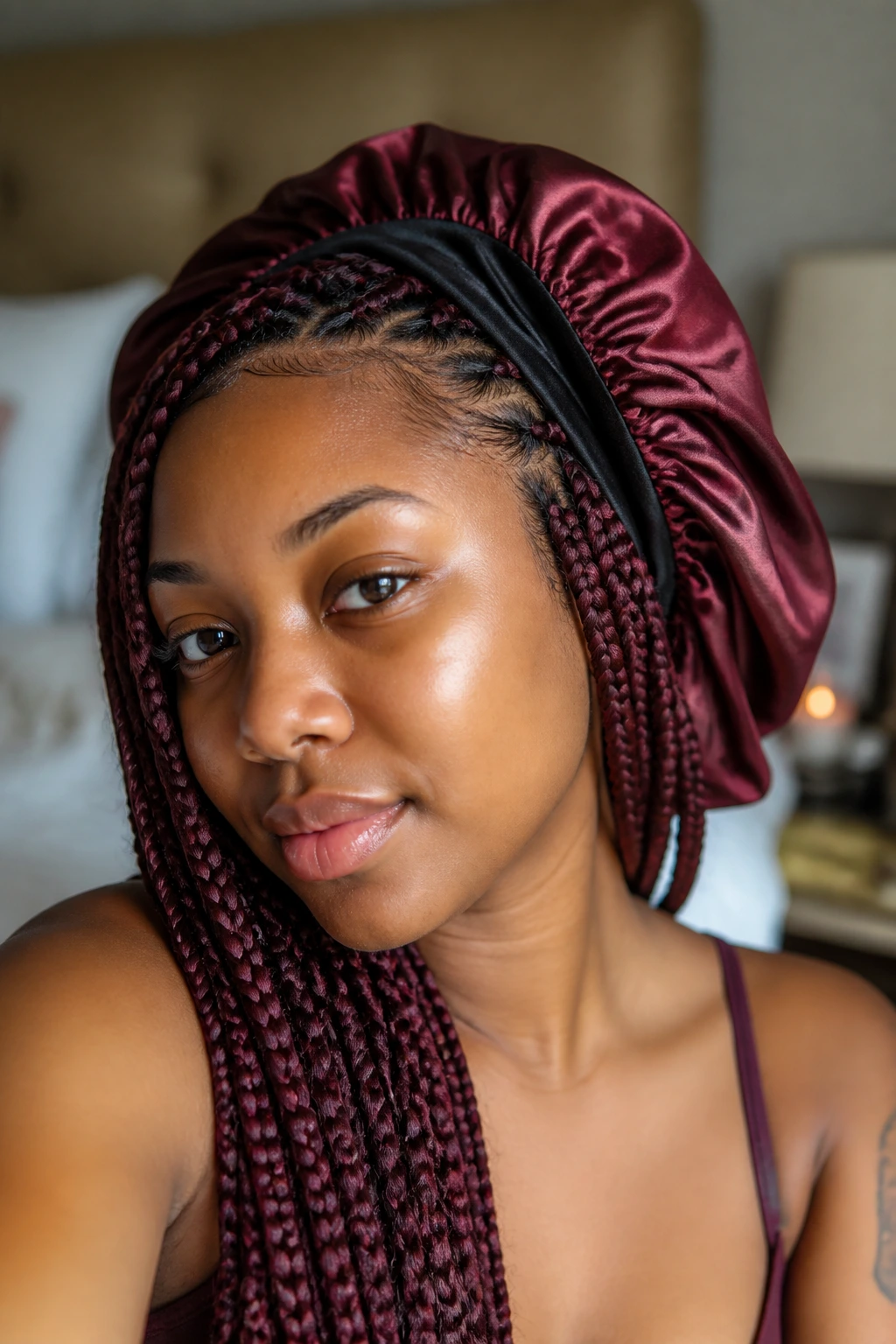
The fastest way to make burgundy braids look tired is to ignore them at night. Satin or silk matters here because the color shows fuzz sooner than black hair does. Wrap the style every night, or use a bonnet if your braids are long enough to need full coverage. If the ends are curly, tuck them in gently instead of stuffing them hard, or you’ll crush the shape.
For upkeep, a light mousse refresh every few days keeps flyaways under control, and a braid spray or diluted leave-in can help if your scalp feels dry. Use both lightly. Too much product makes the roots sticky, and sticky roots collect lint like nobody’s business. If you wash the braids, dry them fully. A damp braid set sitting against the scalp is where trouble starts.
Most medium to long knotless sets look best for about 4 to 6 weeks before the roots start changing the whole silhouette. Petite braids can stretch a little longer if your scalp is happy and the growth stays tidy. Once the base feels crowded or the roots start lifting in uneven little bumps, it’s time to take them out instead of trying to persuade them into another week.
Common Mistakes That Make the Style Slip
-
Choosing a burgundy that clashes with your skin or wardrobe: If the shade looks too bright or too muddy in daylight, it will bother you every time you pass a mirror. Fix it by checking the bundle against your face, not just against the floor of the beauty supply store.
-
Pulling the front too tight: Pain at the hairline, little bumps, or a headache by the end of the day are not signs of a good install. Ask for softer tension at the root, especially around the edges and temples.
-
Making every braid the same size when the length is heavy: Long, thick braids can make the head look blocky. Mixing a slightly smaller braid size at the front and a cleaner blunt finish at the ends gives the set more shape.
-
Using too much mousse, gel, or oil: Product buildup makes burgundy hair look dull and can leave white flakes on darker clothes. A light hand keeps the color looking fresh.
-
Skipping the nightly wrap: That’s how the roots fuzz out and the finish starts looking old before the style has had a chance to settle in.
-
Adding too many accessories at once: Beads, cuffs, thread, and charms all together can bury the braid pattern. Pick one main accent and let it breathe.
Variations and Alternative Directions
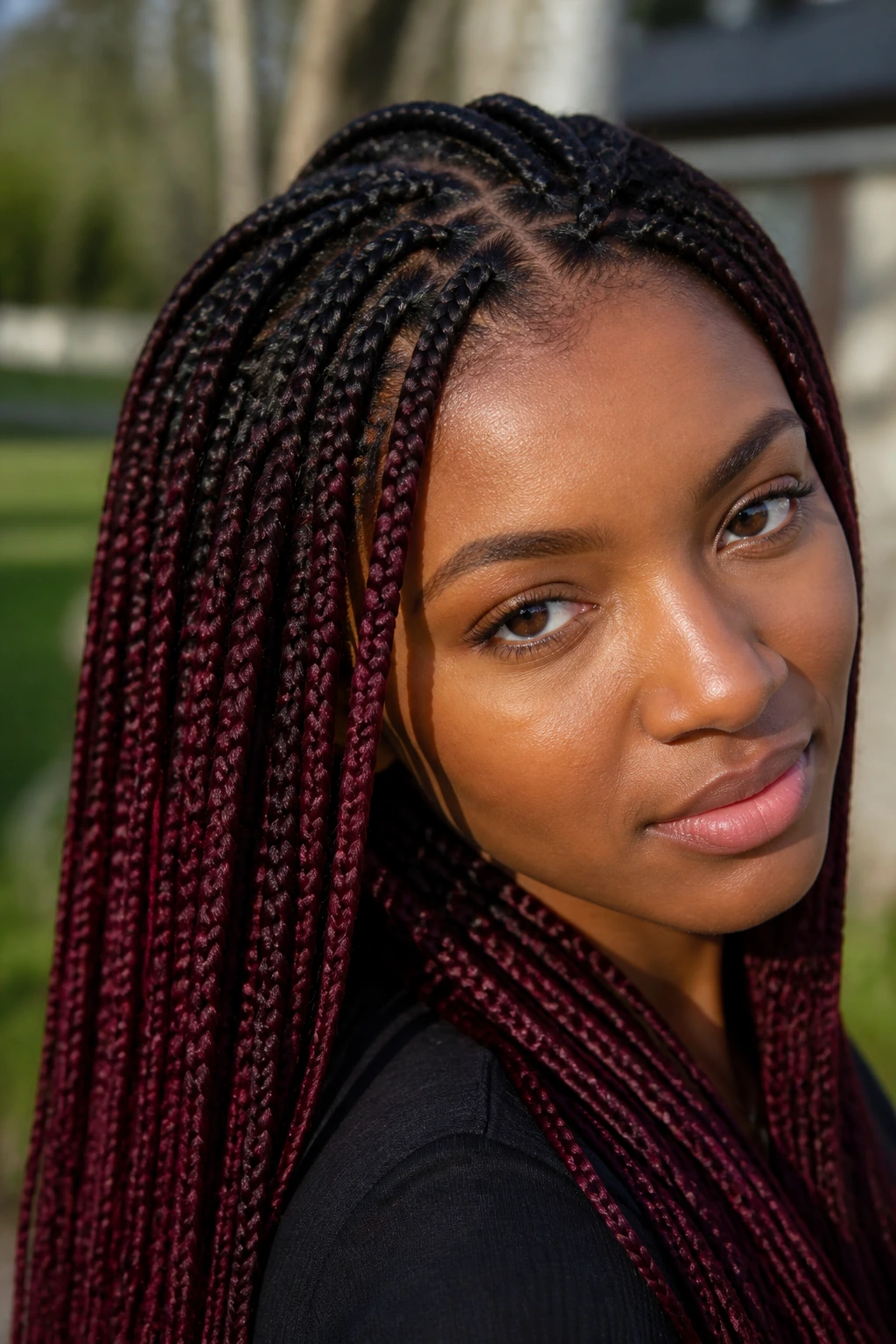
Wine-Root Fade: Start with dark roots and let the burgundy come forward through the mids and ends. This softens the grow-out and keeps the top of the head a little quieter, which helps if you wear neutral clothes most days.
Soft Boho Burgundy: Add curly pieces or loose wavy strands to a standard knotless install. This version is looser, softer around the face, and easier to dress up with a few hoops or a loose scarf tie.
Boardroom Bob: Keep the braids at chin or jaw length with a blunt finish and almost no accessories. It’s the cleanest version on the list, and it works when you want color without extra drama.
Festival Crown: Build a braided crown or front twist, then add cuffs or small beads near the temples. The shape keeps the style off the face, and the accessories make the burgundy feel richer in photos and in person.
Extra-Long Statement Set: Push the length all the way down and use smaller parts so the color has more surface to travel across. This is the loudest version, but it works if you want movement first and simplicity nowhere near the top of the list.
Frequently Asked Questions
How many packs of braiding hair do I need for burgundy knotless braids?
That depends on braid size and length. A medium mid-back set may use fewer packs than a petite waist-length install, while jumbo braids often need fewer bundles but more shaping time. Ask your stylist how many bundles they prefer for the exact length and part size, because the answer changes fast once you switch from bob to long braids.
Does burgundy work on every skin tone?
Yes, but the tone of burgundy matters. A red-violet shade can look cooler and richer, while a browner wine shade can feel softer against warm undertones. The wrong shade can look loud or muddy, so the bundle test in daylight is worth the extra minute.
Can I wash knotless braids?
You can, and sometimes you should. Use diluted shampoo on the scalp, rinse well, then dry the braids completely so moisture doesn’t sit at the root. If you have curly ends or boho pieces, be even more careful about drying them all the way through.
How long do burgundy knotless braids last?
Most people wear them about 4 to 6 weeks before the roots start changing the shape. Smaller sets can last longer if the scalp stays comfortable and you keep up with wrapping and light refreshes. Once the base starts getting bulky or sore, don’t push it.
Are knotless braids lighter than box braids?
Usually, yes. The feed-in start avoids the hard knot at the root, which makes the style feel flatter and easier on the scalp. That said, length and braid thickness still matter a lot, so a very long, very full set can still feel heavy.
What if my scalp hurts after installation?
A little snugness is one thing; pain is another. If the style throbs, pulls, or gives you bumps along the hairline, it was installed too tight. Loosen what you can safely loosen, avoid heavy ponytails for a few days, and speak up sooner next time.
Can I wear burgundy knotless braids in a ponytail or bun?
Yes, and both styles look good on this color. Use snag-free ties, keep the base secure but not harsh, and shift the placement around so you’re not stressing the same root area every day. High ponytails show off the length; low buns keep the look calmer.
Can I get this style on short natural hair?
Usually, yes, as long as your braider has enough length to feed in cleanly and the roots can hold the base. Shorter natural hair often benefits from smaller sections because the grip is better and the knotless start looks smoother. The exact cutoff depends on texture, shrinkage, and your stylist’s technique.
Why This Color Keeps Coming Back
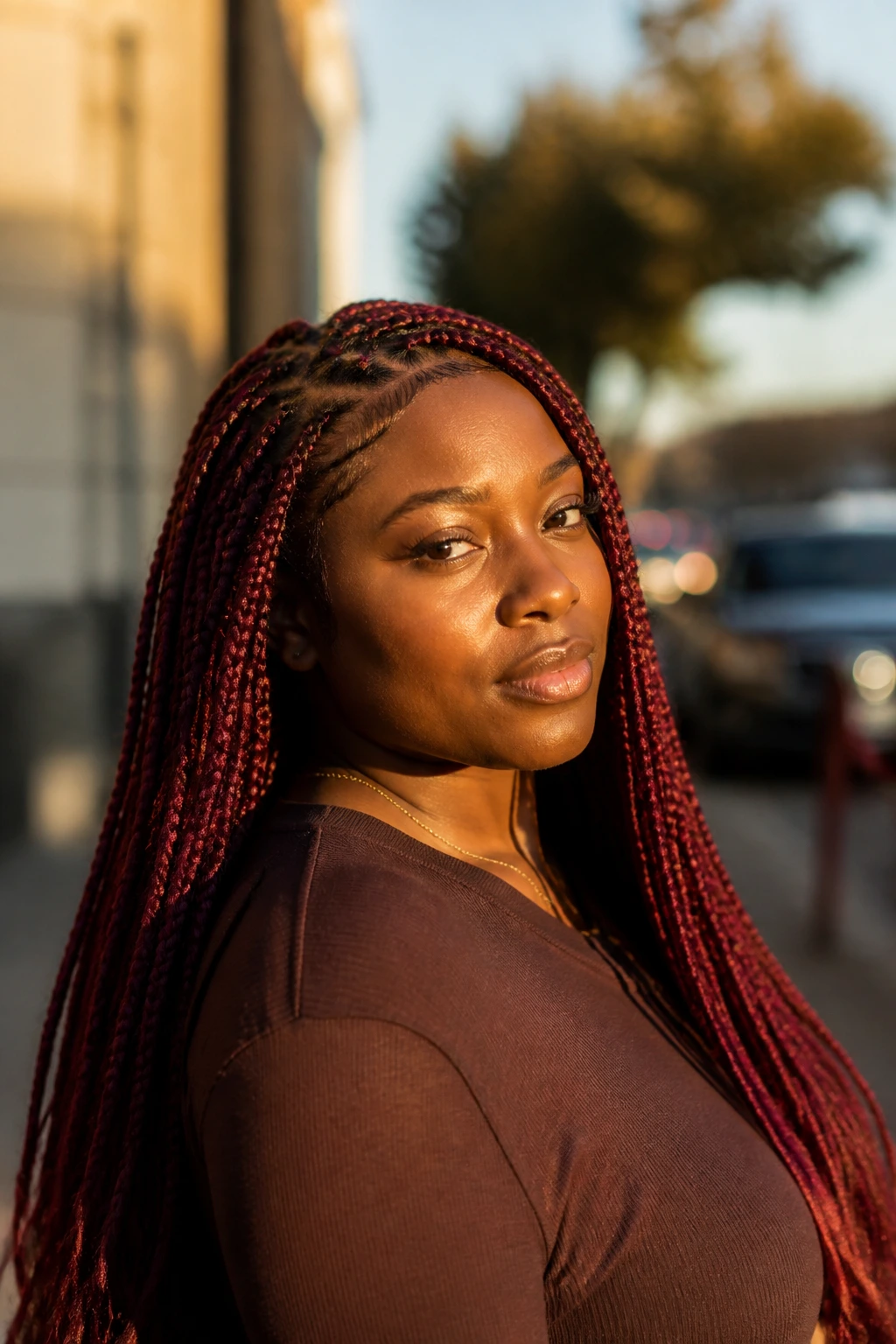
Burgundy knotless braids do something rare: they look polished without asking for a lot of decoration. The color gives depth, the knotless base keeps the crown from feeling bulky, and the shape can swing from blunt bob to waist-length drama without losing its identity. That’s why the style stays useful. It can be the whole look, or it can quietly hold the look together while you wear the earrings, the makeup, or the jacket you actually wanted to show off.
If you want the safest route, start with a mid-back set or a clean center part. If you want more personality, lean into curls, accessories, or a side-swept shape. Burgundy gives you room either way, and that’s the part I like most about it.
