



Bob haircuts can look almost plain on paper and startlingly different on a real head. The line lands a quarter-inch higher or lower, the part shifts an inch to one side, and suddenly the whole face reads softer, sharper, longer, or wider. That’s the part people miss when they scroll through haircut photos too fast.
The right bob doesn’t just shorten hair. It changes where the eye goes first. A chin-grazing shape can sharpen a soft jaw. A collarbone bob can lengthen a round face without making it look stretched. A blunt edge can make fine hair look denser, while a feathered finish can take the bulk out of thick hair that tends to puff out at the sides.
And the wrong bob? It usually misses by one of three things: length, weight, or texture. The ends sit right on the widest part of the cheek. The crown is too flat. Or the cut fights the hair’s natural bend, which means you spend every morning trying to bully it into behaving. The 22 bobs below cover the useful middle ground — the cuts that can be adjusted for oval, round, square, heart, diamond, and long face shapes without turning into a science project.
Why These Bob Haircuts Are Worth Your Attention

- Face-Shape Balance: The best bobs don’t chase one “perfect” face shape; they move the visual weight to the cheekbone, jaw, or collarbone where it helps most.
- Texture Flexibility: Straight, wavy, curly, and coily hair all need different bob geometry, and the cuts here make those differences the point instead of the problem.
- Low-Fuss Options: Some of these bobs air-dry cleanly with a little cream or spray, which matters when you do not want a 25-minute blowout every morning.
- Grow-Out Friendly Choices: A few of the cuts below hold their shape even after they start growing, so you are not trapped in a harsh six-week trim cycle.
- Stylist-Friendly Language: Each style is described in plain terms you can actually use at the salon — where the length lands, how much weight stays, and what gets softened.
1. Chin-Length Classic Bob
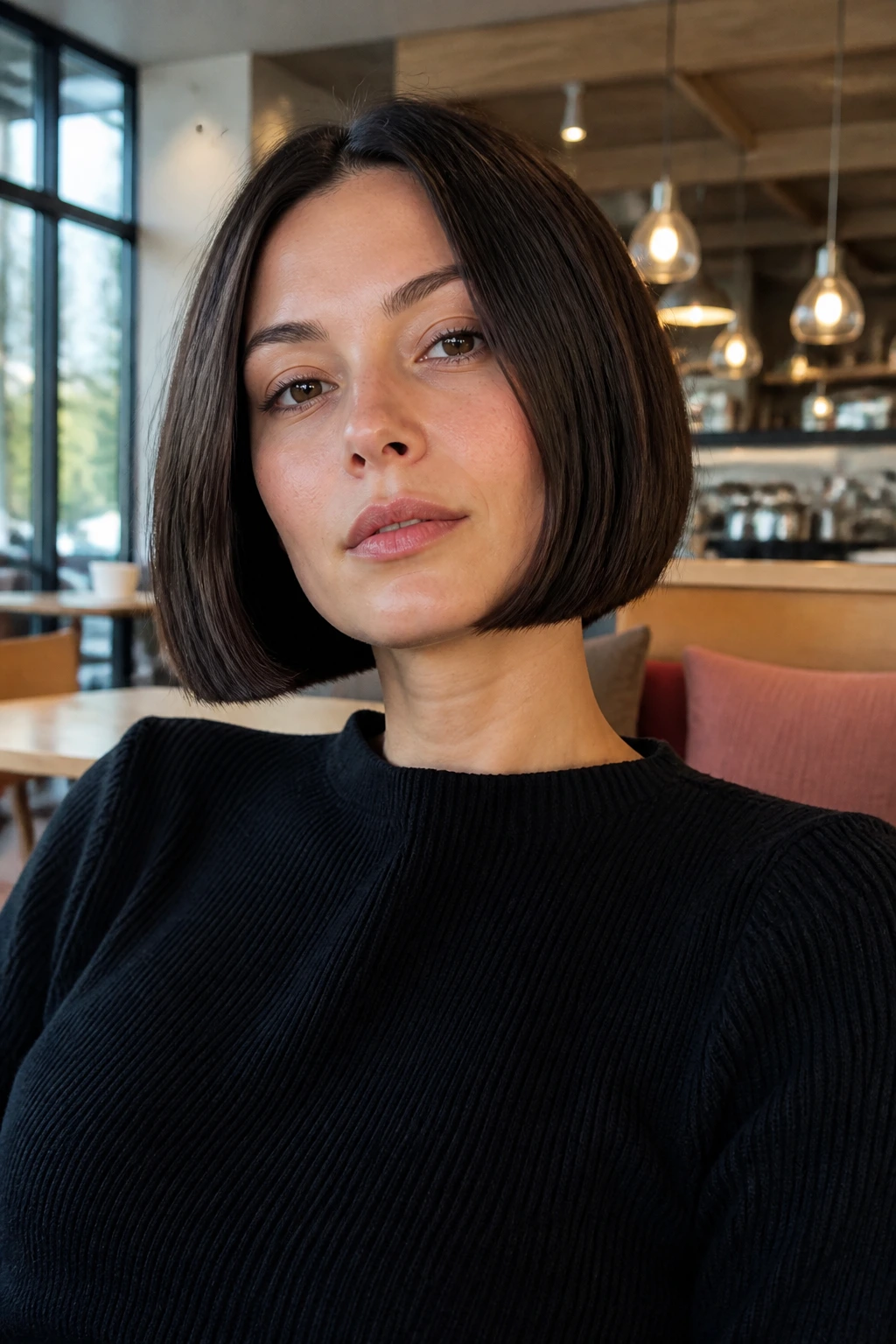
A chin-length classic bob is the cut that makes every other bob haircut make sense. It sits right at the jaw or a hair below it, and that single detail changes the entire face. The jawline looks cleaner. The neck looks a little longer. The cut has enough structure to feel deliberate, but not so much that it steals the whole show.
Why It Flatters
This shape is especially good when you want to show the jaw without hardening it. Round faces get a little more definition, heart-shaped faces get balance near the chin, and oval faces can wear it with almost no adjustment. If your hair is fine, the blunt edge helps it look fuller at the perimeter. If your hair is dense, the key is to keep the line crisp and the interior light.
- Best face shapes: oval, heart, square
- Best texture: straight to softly wavy
- Maintenance: trim every 6 to 8 weeks
- Salon note: ask for a clean perimeter with only minimal layering
Pro tip: Tuck one side behind the ear and leave the other loose. That tiny asymmetry keeps the cut from feeling too severe.
2. Blunt Jawline Bob
A blunt bob is the haircut version of a sharp white shirt. It looks simple, but it lands with purpose. The ends cut straight across, usually right at the jaw or just under it, and that hard edge gives fine hair a thicker look immediately. No fluff. No fray. Just line.
What makes this one so useful for face-shape work is the contrast. On a round face, a blunt edge slightly below the jaw keeps the widest part of the face from becoming the visual center. On a square face, the line can actually be softened with a center part and a little bend at the ends. On an oval face, it can read clean and polished without doing anything dramatic at all.
The trick is not to over-layer it. The minute you start shaving weight out of the bottom, the whole point of the cut disappears. Tell your stylist you want the line to stay strong, but you are open to a tiny bit of internal removal if your hair is thick and bulky.
3. Soft A-Line Bob

Need a bob that does some quiet face-shaping without looking precious? The soft A-line is one of my favorites. It’s shorter in the back and gradually longer toward the front, but the transition is gentle rather than dramatic. The front pieces skim the jaw and, if cut well, seem to pull the whole face forward in a good way.
Best Face-Shape Fixes
A long face benefits because the slightly longer front adds width near the cheek and jaw. A square face softens when those front pieces bend inward instead of sitting straight and stiff. Round faces can wear this cut too, especially if the front length falls below the jaw rather than right on top of it.
What To Ask For
- Keep the back tidy, not stacked to the sky.
- Let the front land somewhere between the jaw and the collarbone.
- Soften the ends a little so they do not flick out like a triangle.
- Add a side part if your face needs extra angle.
The A-line is one of those cuts that looks better when it moves. A quick bend with a round brush or a soft wave from a flat iron keeps the line from feeling too rigid.
4. French Bob with Micro Fringe

A French bob is short, cheeky, and slightly cheekbone-first. Add a micro fringe and the whole cut gets this blunt little spark that feels sharper than a standard bob but still soft around the edges. It’s usually shorter than a chin-length bob, often sitting between the cheekbone and jaw, and the fringe lands high enough to show brows.
That makes it useful for longer faces, bigger foreheads, and features that benefit from a little compression at the top. It also works on heart-shaped faces when you want to pull attention away from the forehead and toward the eyes. The cut has a lot of personality. It can look very polished, but it can also look a bit undone in the best way when the ends are tucked or air-dried.
The one catch: this is not the bob you pick if you hate upkeep. Micro fringe grows fast and starts changing the mood of the whole cut within a few weeks. Still, if you like a crisp frame around the eyes, it’s worth the trouble.
5. Long Bob with Loose Ends
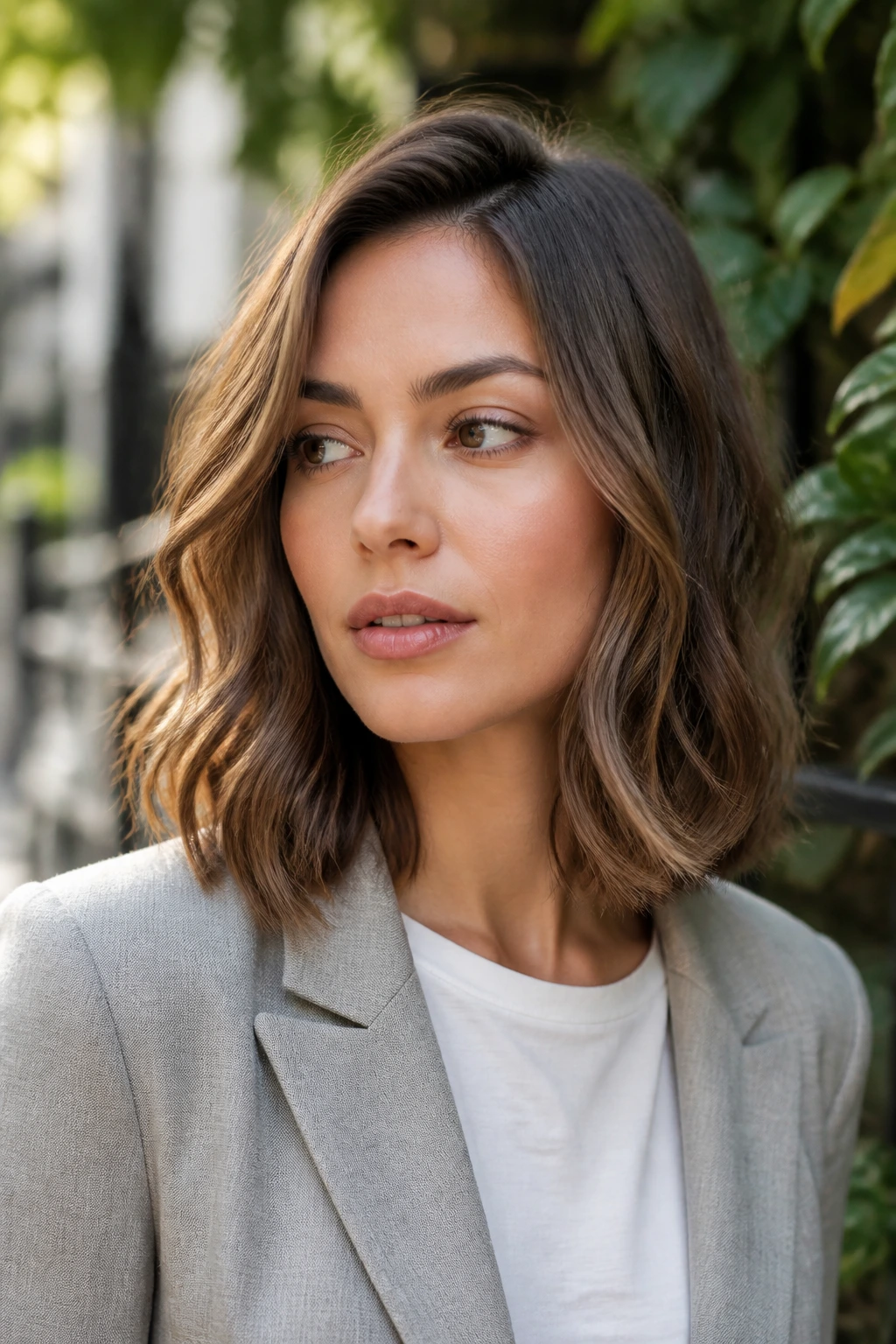
The long bob — the lob, if you want the shorthand — is the safe choice only if you use “safe” to mean smart. It sits anywhere from just above the shoulders to the collarbone, which gives it more movement options than a shorter bob and more face-shaping power than hair that hangs past the shoulders without intention.
It’s the easiest cut to adjust for face shape because the length gives you room to cheat. Round face? Keep the front slightly longer and add a side part. Square face? Soften the ends with a bend or a loose wave. Long face? Add a fringe or keep the fullness around the cheeks. It’s a very forgiving haircut, which is probably why people keep coming back to it after trying shorter bobs that felt too decisive.
This is also the bob I’d point to if someone wants a change without the “I cut all my hair off” panic. It still feels like a haircut. It just doesn’t shout.
6. Layered Bob for Movement

A layered bob is the answer when the hair feels too solid, too wide, or too heavy at the bottom. Instead of a single blunt shelf, you get subtle layers through the interior that let the hair bend and move instead of hanging like a block. That’s especially useful for thick hair, which can turn a standard bob into a helmet if nobody removes some weight.
Square faces often look better with this cut because the layers soften the sides without making the silhouette too wispy. Heart-shaped faces can use the extra movement around the jaw to build balance. And if your hair grows out in a puffy triangle, layers are often the difference between “full” and “why is this suddenly a triangle?”
Tell the stylist you want movement, not choppiness. Those are not the same thing. A good layered bob still has a visible outline; it just doesn’t sit there like a cardboard box.
7. Curly Bob with Shape
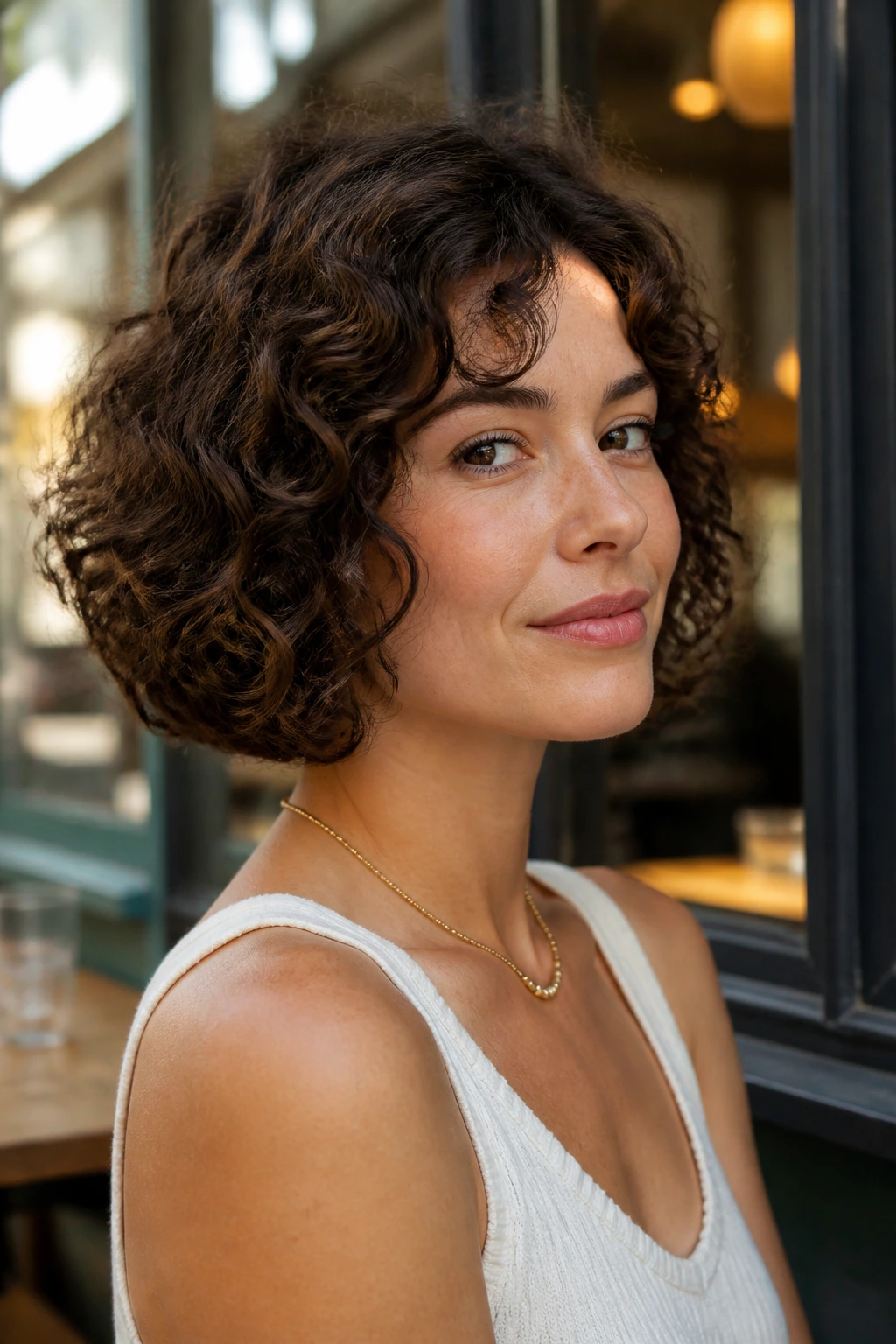
Why do so many curly bobs go wrong? Because people cut the curl as if it were straight hair and then act surprised when the shape shrinks unevenly. A real curly bob respects spring factor, which means the cut has to be made with the curl pattern in mind — usually dry or near-dry, and often section by section.
A shaped curly bob can flatter almost every face shape because the curl itself adds width where you need it. Round faces can wear it if the silhouette is kept a little longer and the crown isn’t packed with extra bulk. Long faces often benefit from curls that sit around the cheek and jaw. Square faces soften nicely when the perimeter isn’t too rigid.
How to Wear It
- Keep the outline rounder if your face is long.
- Leave a little extra length if your curls shrink a lot.
- Ask for face-framing pieces that start where your cheekbones sit.
- Avoid over-thinning the ends; curls need some weight to form clean clumps.
The best curly bob is shaped, not hacked. There’s a difference, and you can see it from across the room.
8. Wavy Textured Bob
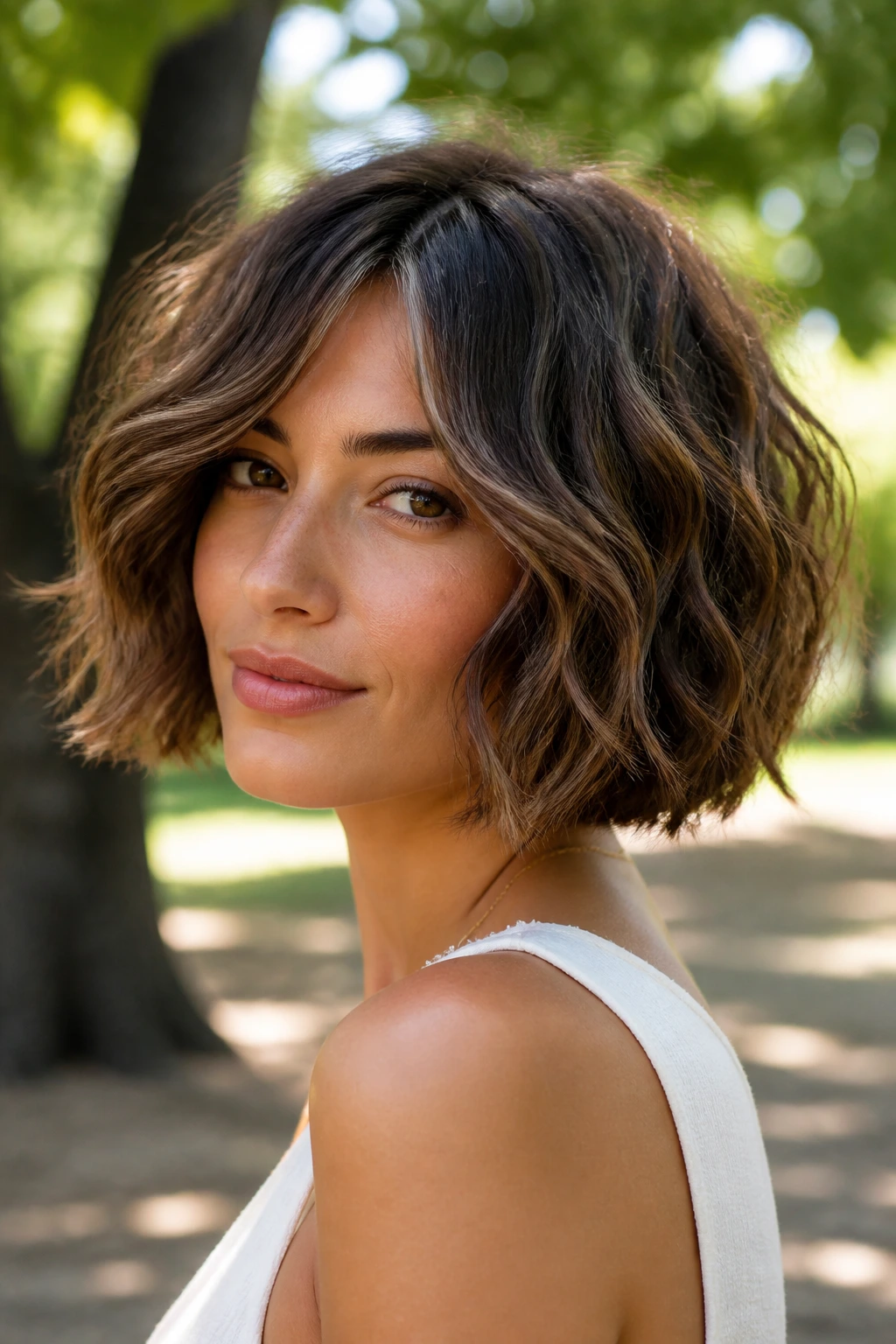
A wavy textured bob is the least fussy version of the cut, which is not the same thing as the least thought out. It leans into bend and separation, so the hair looks like it has air between the strands instead of a single heavy line. That matters when you want softness around the face without losing the bob shape entirely.
This cut flatters most face shapes because the wave blurs hard edges. Square faces look less boxed in. Round faces benefit when the longest pieces sit below the chin. Heart faces get a little width through the lower half of the cut, which helps balance a narrower chin. The shape does not need to be symmetrical to work.
A sea-salt spray, a little mousse, and a rough dry with the fingers are often enough. Don’t overthink it. The point is not polished perfection. It’s a bob that moves when you turn your head.
9. Side-Part Bob with Volume
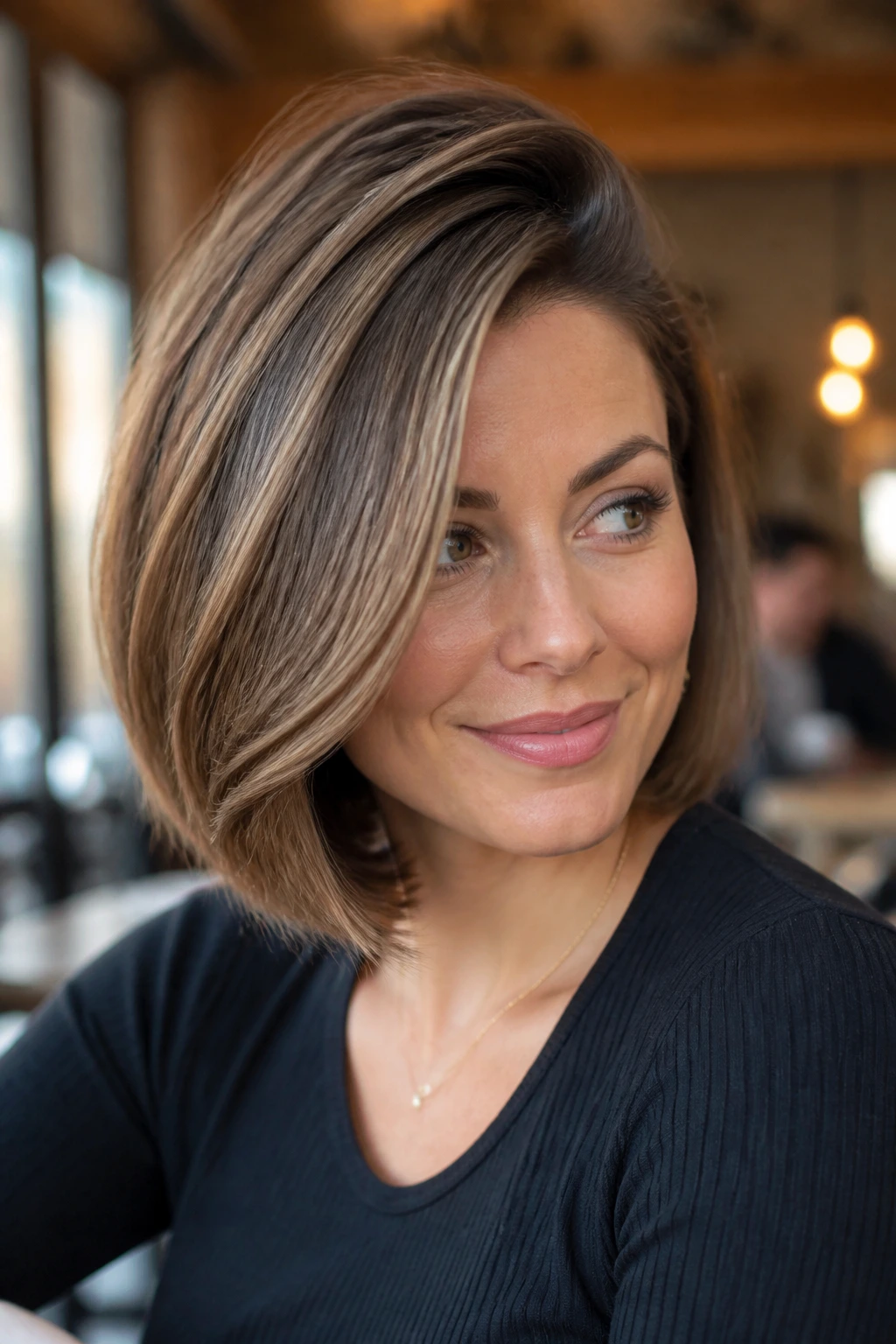
A deep side part can do what a lot of people try to fake with layers and still miss: it shifts the visual center of the face. That’s why a side-part bob is such a useful tool for round and heart-shaped faces. It breaks the symmetry, adds height at the crown, and lets one side fall with a little more drama than the other.
The haircut itself can be blunt, layered, or softly curved. The part is the main event. If your face feels wider through the cheeks, a side part pulls attention upward and off the widest point. If your forehead is broad, the diagonal line of hair softens that area without needing a heavy fringe.
This one also works well when your roots naturally lift on one side or your hairline has a stubborn cowlick. Instead of fighting it, you are using it. That’s good hairdressing. The whole thing looks more intentional that way.
10. Inverted Bob with Stack
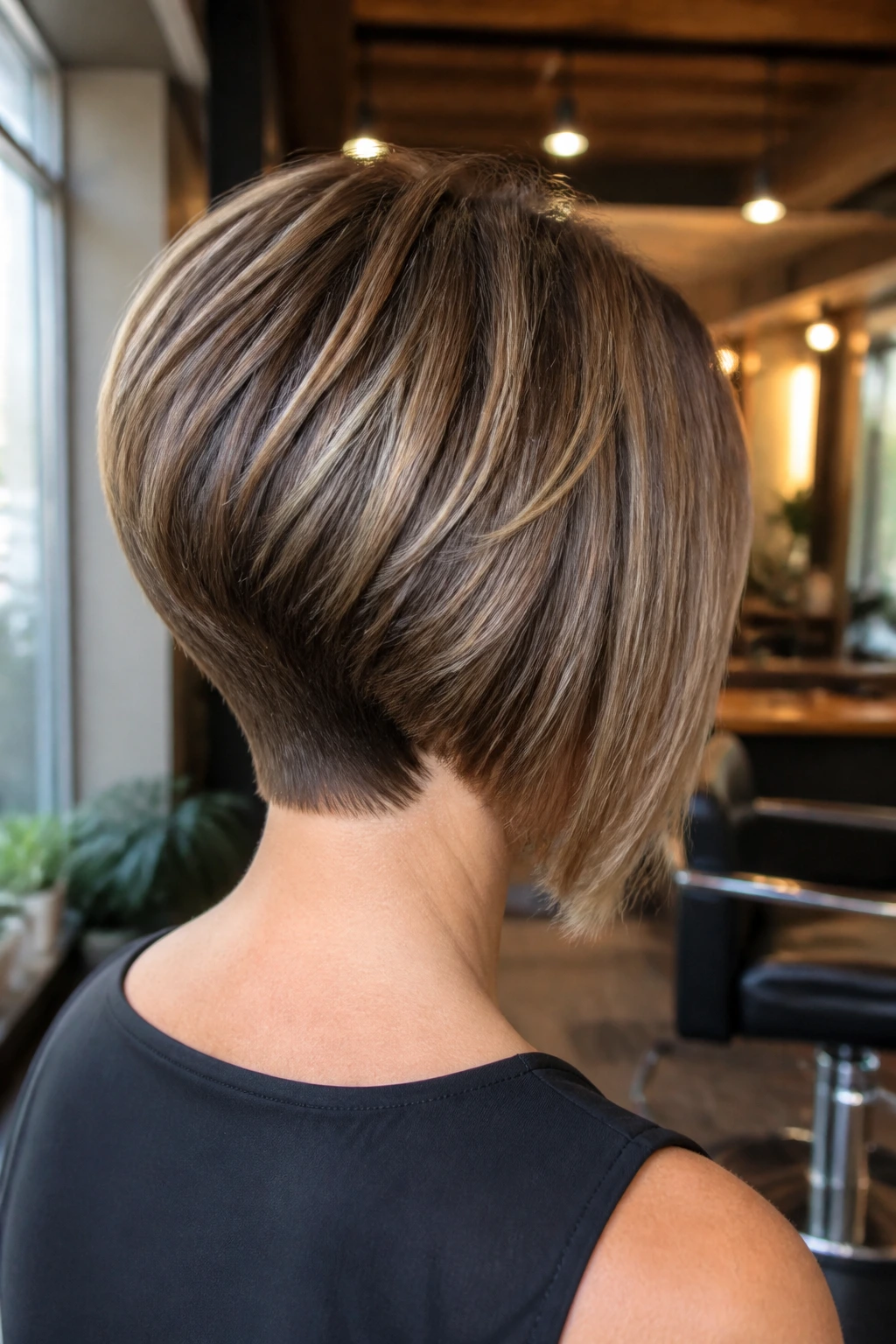
The inverted bob is short in the back, longer in the front, and built with enough graduation through the nape to create lift where straight hair usually lies flat. It has shape from the side and attitude from the back. If you like a haircut that looks crisp from every angle, this is one to keep on the short list.
It’s especially useful for fine hair because the stacking creates the illusion of density. It can also sharpen a round face by pulling the front angles downward while keeping the back neat and close to the head. Square faces often look good in it too, as long as the front is softened a little so the edges don’t feel too hard.
The danger is overdoing the stack. Too much graduation and the haircut starts looking dated and wedge-like. The fix is simple: keep the back clean, but let the front fall with a little softness. Think modern, not helmet.
11. Shaggy Bob

The shaggy bob is what happens when a bob decides it doesn’t want to be so polite. It has choppy movement, piecey ends, and enough internal texture to keep the shape from sitting stiff around the face. On thick or wavy hair, that can be a relief. On fine hair, it needs a careful hand so it doesn’t thin out into nothing.
What Makes It Different
A shaggy bob flatters square and heart-shaped faces because the broken-up edges soften the jaw and cheek area. Long faces can wear it too if the length stays near the chin or slightly below and the fringe has some width. The cut is especially good when you want a face-framing style that doesn’t rely on perfect blow-drying every morning.
Good Styling Moves
- Scrunch in mousse or curl cream while the hair is damp.
- Dry with a diffuser or let it air-dry halfway, then finish with fingers.
- Use a tiny amount of pomade on the ends if the pieces separate too much.
- Skip heavy oils at the root; they flatten the movement fast.
A shaggy bob looks best when it moves in real life, not just in photos.
12. Asymmetrical Bob
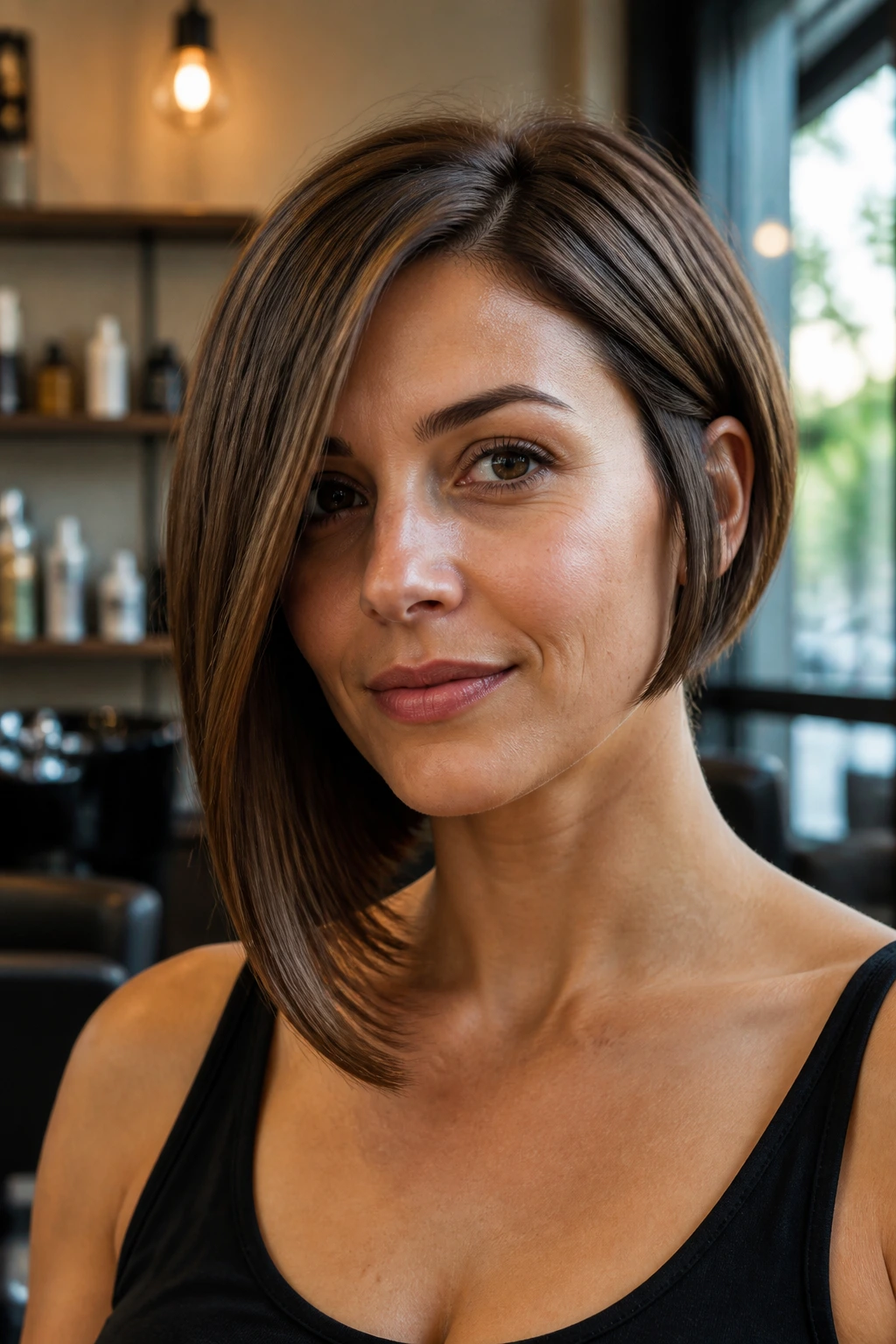
An asymmetrical bob gives you one side a little longer than the other, and that tiny unevenness changes the whole line of the face. It’s one of the most useful cuts for round faces because the diagonal edge draws the eye downward and out. It also works on square faces when you want to soften the symmetry without hiding the jaw completely.
The cut can be subtle or bold. A small asymmetry just reads as modern. A stronger one reads as graphic and deliberate. Either way, the longer side often lands near the collarbone while the shorter side sits around the jaw, which keeps the shape from feeling flat.
I like this cut on people who want a little edge but do not want to commit to a full dramatic haircut. It has personality without needing a lot of styling tricks. You can wear it sleek, tucked, or wavy, and the uneven hemline keeps it interesting.
13. Micro Bob

A micro bob is short enough to show off the neck and jaw in a very obvious way. Usually it sits above the chin or right at the lower cheek, which means it can feel clean, sharp, and a little daring all at once. If you want the hair to stop hiding the face and start framing it, this is the move.
It flatters strong features and smaller face shapes because it does not bury them under length. Oval faces can wear it almost effortlessly. Heart-shaped faces can use it to open up the jawline. Long faces can wear it too, but a fringe or a little side volume helps keep the proportions from getting too narrow.
Be honest with yourself about maintenance. A micro bob looks best when the perimeter stays precise. Once it grows out too far, the balance starts to slip. That does not make it a bad cut. It just means it asks for a little attention.
14. Box Bob

A box bob is the geometric one. The ends fall in a straighter line, the width sits fairly even from the sides, and the overall effect is more graphic than soft. It’s a strong shape, which is exactly why it’s so useful on narrow or long faces that need a little width through the lower half.
The box bob can also work on oval faces when you want the haircut to carry more of the visual weight. With straight hair, it looks polished and deliberate. With thick hair, it can look bold and architectural — assuming the stylist removes enough bulk inside so the perimeter doesn’t puff out.
Who It Suits Best
- Long faces that need width at the cheeks
- Narrow chins that disappear in longer layers
- Straight hair that holds a clean edge
- People who like a haircut with a crisp outline
If you’ve spent years wearing soft layers, a box bob may feel dramatic at first. Then you see the mirror and realize how much structure it gives the face.
15. Sleek Glass Bob
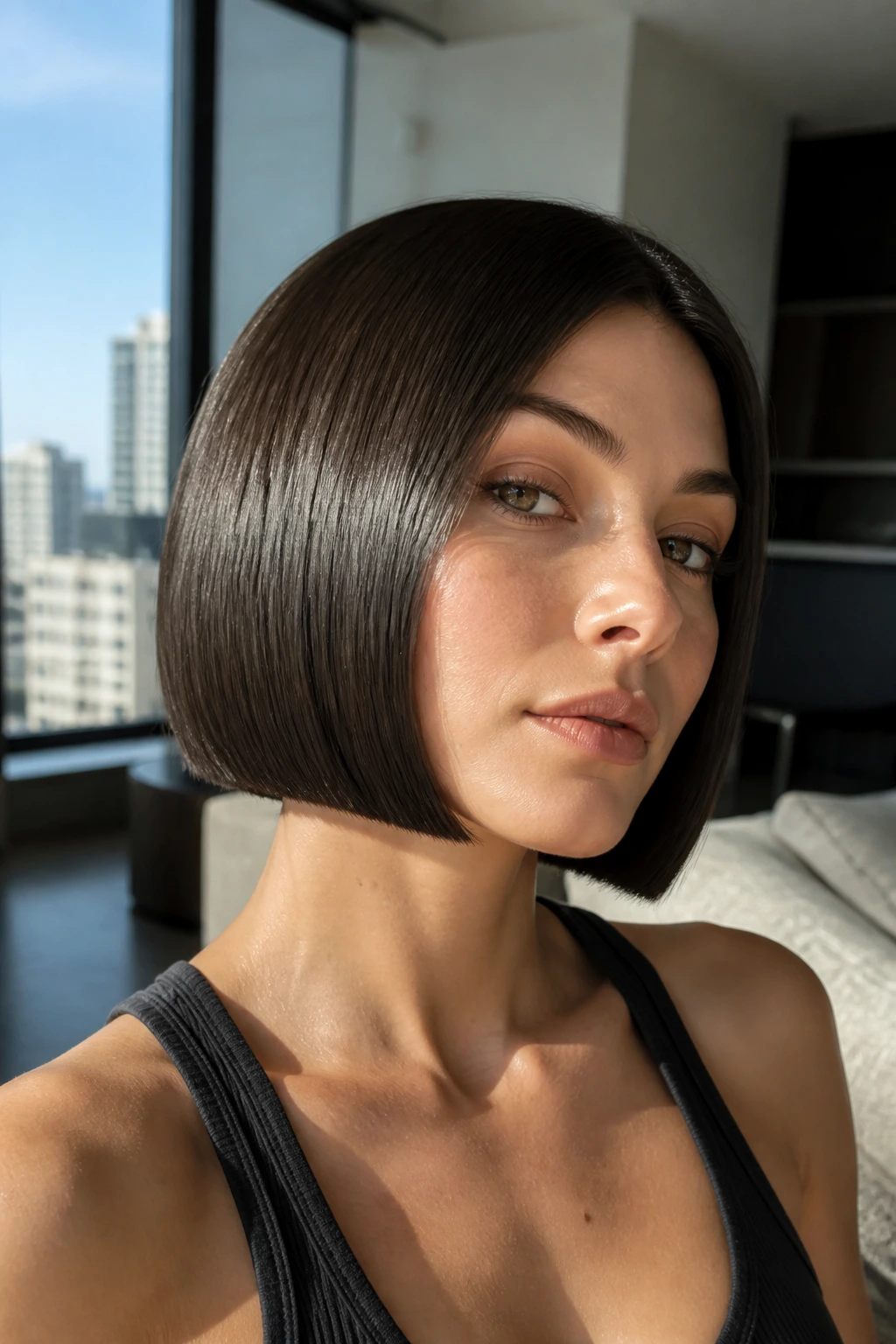
Can a bob look soft and severe at the same time? Absolutely. The sleek glass bob is all about that polished, reflective finish, with one clean line and enough shine to make the edge stand out. It’s especially good on straight or lightly wavy hair that can hold a smooth surface without a fight.
This shape flatters oval, heart, and long faces when the length is adjusted carefully. On a long face, a fringe or a slightly fuller front can keep the cut from stretching the face further. On a heart shape, the sleekness can balance a narrow chin if the ends land just under the jaw. Fine hair loves it because the line looks dense and tidy.
The whole cut depends on precision. Heat protectant matters. So does a nozzle on the dryer. And if the ends start flipping outward, the style loses half its point. A glass bob is not forgiving, but it is worth the effort when you want a clean, almost mirror-like finish.
16. Feathered Bob

A feathered bob has air in it. That’s the whole trick. The ends are softened and lightly texturized so the shape does not sit as one solid block around the face. It’s a smart cut for thick hair that needs movement and for square or round faces that benefit from a little softness at the perimeter.
The feathering should be subtle. Too much, and the haircut turns wispy and thin. Just enough, and the bob swings instead of sitting still. The movement around the cheekbones can make the face look narrower without making the haircut feel stripped.
If your hair tends to expand in humidity, this cut helps a bit because the shape is broken into smaller pieces. It won’t erase volume, but it does make the volume easier to live with. That matters more than people admit.
17. Rounded Bob
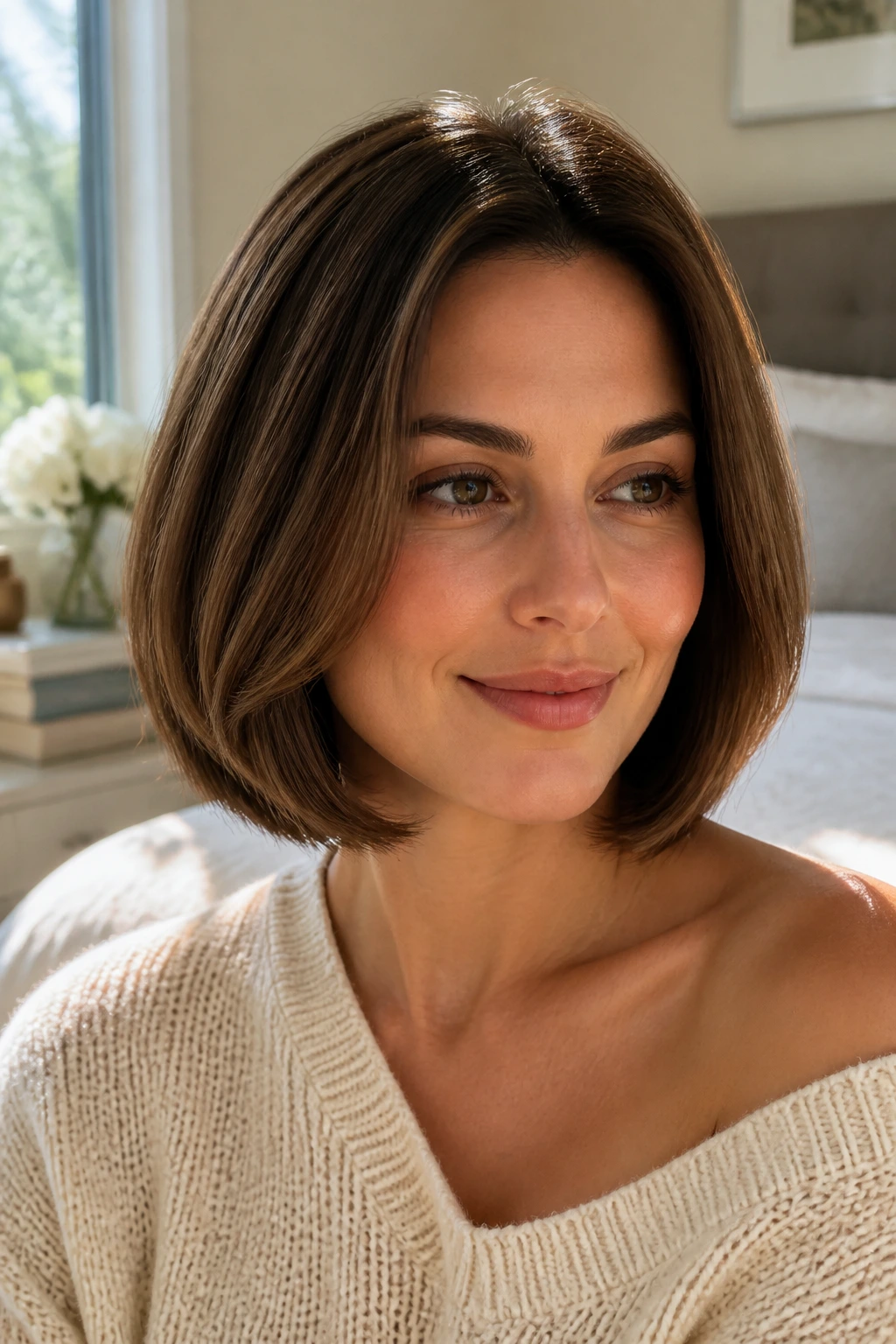
A rounded bob curves inward slightly at the ends, which means the silhouette follows the shape of the head instead of cutting straight across it. That gentle curve is useful when you want to soften a strong jaw or balance a long face. It gives the haircut a little cushion.
Square faces often look softer in this shape because the rounded perimeter takes the edge off a wider jawline. Long faces can use it to add width at the sides, especially if the cut sits near the chin. If you have very straight hair, the rounded finish may need a bit of brush work. If your hair already bends inward, the shape will settle on its own.
This is one of those cuts that looks modest at first glance and then proves itself in motion. It catches the light along the curve. It frames the face without making a speech about it. That’s a good bob.
18. Curtain Bang Bob

A bob with curtain bangs gets a lot of mileage out of one easy idea: split the fringe and let it fall away from the center of the face. That creates softness around the eyes and forehead while keeping the sides of the haircut free to shape the jaw and cheeks. It’s useful when you want movement near the front without a full blunt fringe.
Round faces often benefit because the center opening adds vertical space while the curtain pieces break up the width. Heart-shaped faces get balance near the temples and cheekbones. Long faces can wear it too, especially if the fringe sits a bit fuller and the bob itself stays near the jaw or upper neck.
The important part is the length of the shortest fringe piece. Too short and it feels like a mistake. Too long and it stops looking like a curtain bang and turns into regular face-framing layers. The sweet spot is where the fringe can split cleanly and still touch the top of the cheekbone.
19. Stacked Bob
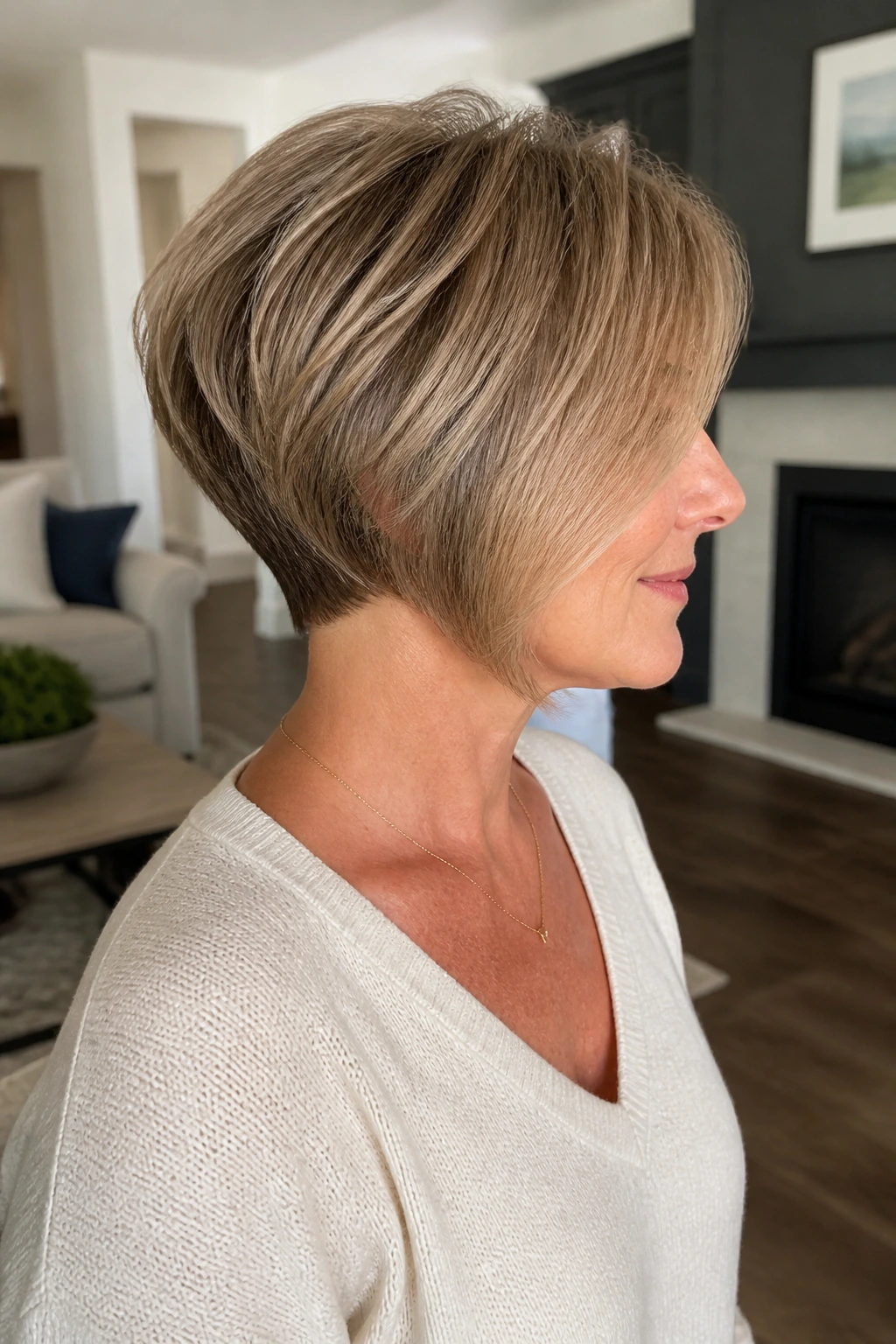
A stacked bob builds height at the back and a neat curve under the crown, which gives flat hair a much-needed lift. It’s a smart choice when the hair lies too close to the head and you want the haircut itself to provide volume. Fine hair especially benefits from this because the stacked shape can fake fullness without needing a ton of styling.
This cut works well on angular faces because the volume at the back softens the profile. It can also help square faces by rounding off some of the hard lines. The front can stay longer and softer so the silhouette does not feel too stiff.
Just don’t over-stack it. When the graduation is too steep, the cut starts to look old-fashioned fast. The modern version keeps the back lifted but smooth, with the front pieces carrying enough length to balance the shape.
20. Undercut Bob
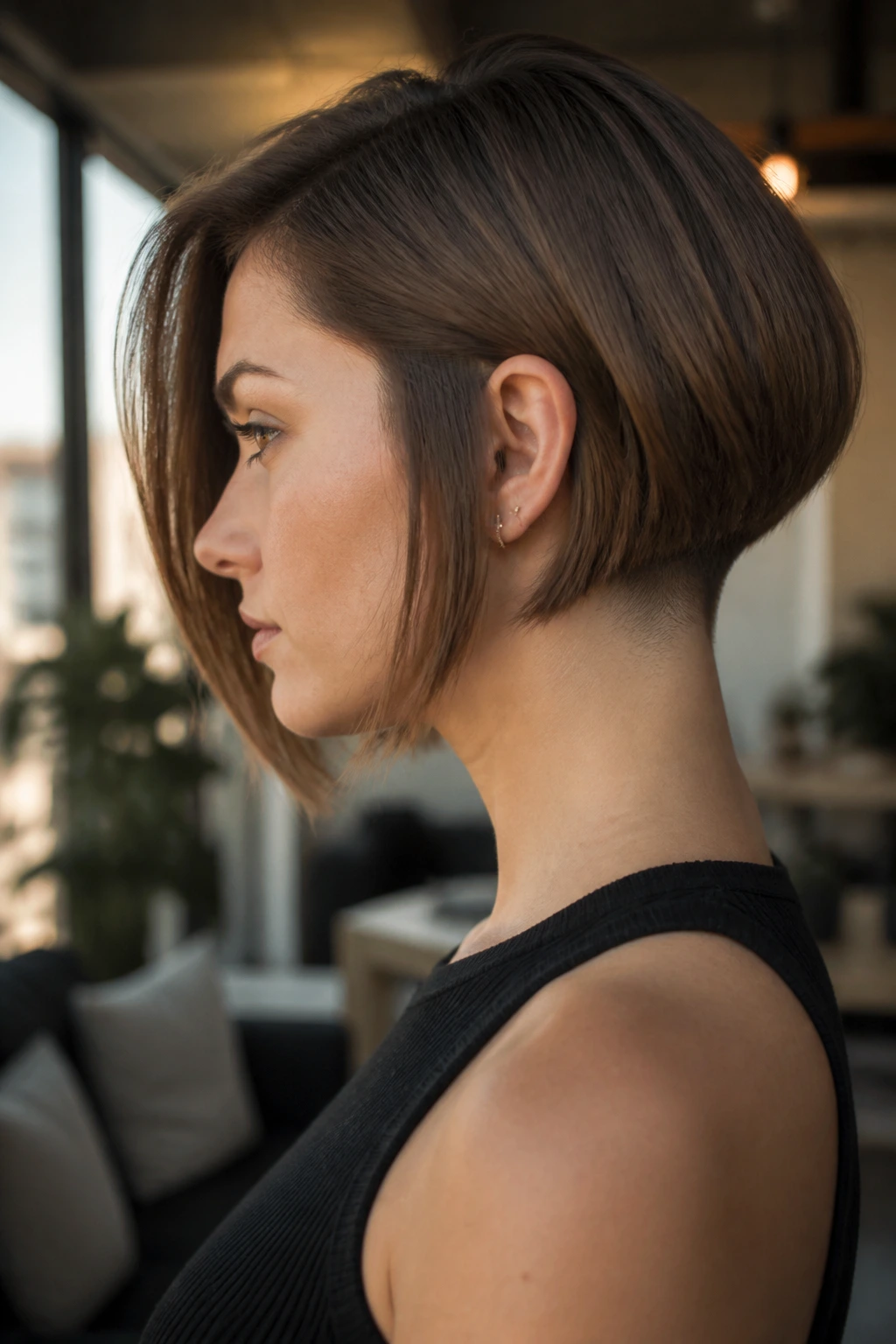
An undercut bob is the practical solution nobody talks about enough. When hair is too thick for a standard bob, the hidden undercut removes bulk from underneath so the top layer can fall neatly instead of puffing out like a triangle. You still get the bob silhouette from the outside, but the inside behaves.
It’s especially good for square and round faces when you want the perimeter to sit close without getting heavy. Thick, coarse, or very dense hair usually responds well. Humidity-friendly? Better than a lot of other bobs, because the cut has less internal weight to expand.
The undercut doesn’t have to be dramatic or visible. In plenty of cases, it lives quietly at the nape and under the back section, which means you get the shape without advertising the trick. That’s the part I like most.
21. Collarbone Bob

The collarbone bob is the most forgiving shape in the bunch. It lands where the neck and shoulders meet, which gives the haircut room to breathe and the face room to adjust. If you’re nervous about going short, this is the bob that lets you dip a toe in without losing the whole length story.
Round faces often like the way this length drops below the widest part of the cheek. Long faces can use it with waves or bangs to add width. Square faces look softer when the ends are bent inward or broken up a little. Oval faces? They can wear almost anything here, which is rude but useful.
This is the version I recommend when someone wants versatility above all else. You can tuck it, wave it, straighten it, clip it back, or let it hang loose. It behaves well on a workday and still looks intentional on a night out.
22. Razor-Cut Bob

A razor-cut bob has softer, sliced ends that move instead of sitting in one heavy line. It’s useful when you want a little edge without the bluntness of a classic straight bob. The finish can feel airy, especially on coarse or medium-thick hair that needs some release at the ends.
Long and square faces often benefit because the movement breaks up hard lines without widening the face too much. If your hair is very fine, though, this cut needs restraint. Too much razor work and the ends can look thin or frayed. The point is softness, not shredding.
I like this one for people who want shape but hate the feeling of a heavy perimeter. It looks good when it’s tucked behind an ear, tossed into a side part, or left to fall in pieces around the cheekbones. The texture does the talking.
What Makes Bob Haircuts Work on So Many Face Shapes

The reason bob haircuts keep coming back is simple: they’re built around the face, not around length for length’s sake. A bob gives you a clear perimeter, and that perimeter can be moved up, down, inward, or outward depending on the features you want to balance. That is the whole game.
Length Changes The Visual Weight
A cut that stops at the chin does one thing. A cut that falls just below the jaw does another. A collarbone bob opens the neckline and makes a round face feel a little longer, while a shorter bob can tighten the frame around the cheeks and eyes. None of those choices is accidental.
Texture Changes The Mood
Straight bobs read cleaner and sharper. Wavy or curly bobs soften the outline and hide a few of the face’s hard edges. Thick hair needs weight removed in a careful way. Fine hair often needs the opposite: a clean line that keeps the ends from disappearing.
Parting Changes The Balance
Center parts create symmetry. Side parts break it. A deep side part can lift the crown, hide a stronger forehead, and pull attention away from wider cheeks. A middle part can lengthen the face but also make it look more narrow, so it pays to look at the whole picture rather than one single feature.
The nice thing about bobs is that the cut can be adjusted without changing the whole concept. That’s why they work so well across face shapes. The bones of the haircut stay the same. The balance changes around them.
The Tools That Keep a Bob Looking Intentional
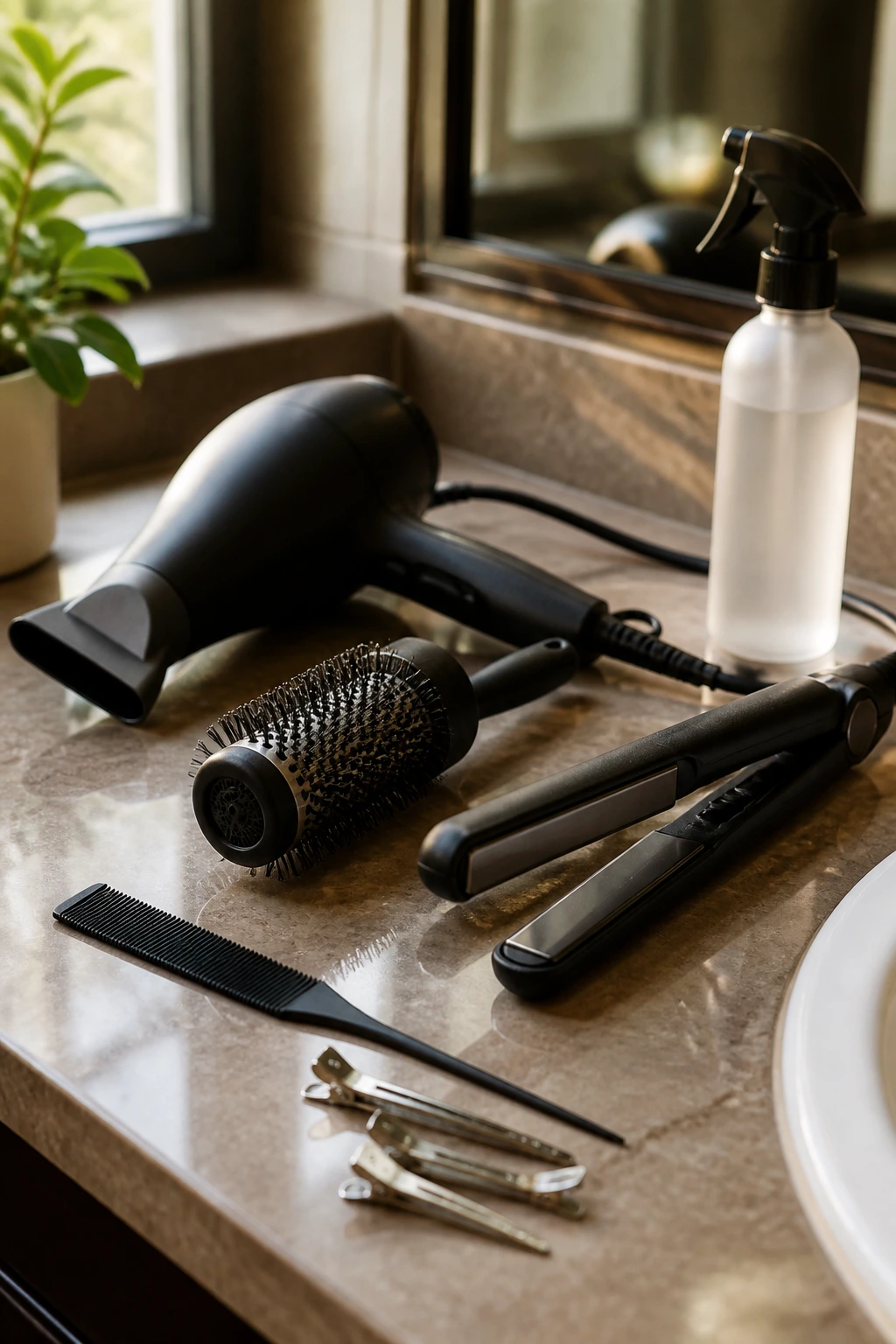
You do not need a bag full of gadgets, but a few specific tools make a bob behave much better.
- Blow dryer with a narrow nozzle: Gives you control at the roots and stops the ends from fraying while you dry.
- Round brush, medium size: Useful for curling the ends under on classic, rounded, and collarbone bobs.
- Flat iron with smooth plates: Best for sleek, glassy bobs and soft bends on blunt cuts.
- Tail comb: Helps you make a clean center or side part and section hair without guessing.
- Hair clips: Keep the top layer out of the way while you dry or iron the lower sections.
- Texturizing spray: Good for shaggy, wavy, and razor-cut bobs that need separation.
- Light mousse or volumizing cream: Gives body to fine hair without turning the bob stiff.
- Heat protectant: Non-negotiable if you use hot tools more than once a week.
If you want one extra item, make it a good mirror setup. A front mirror and a small hand mirror save you from over-flipping the back around blindly.
How to Choose the Right Bob Photo for Your Hair Type
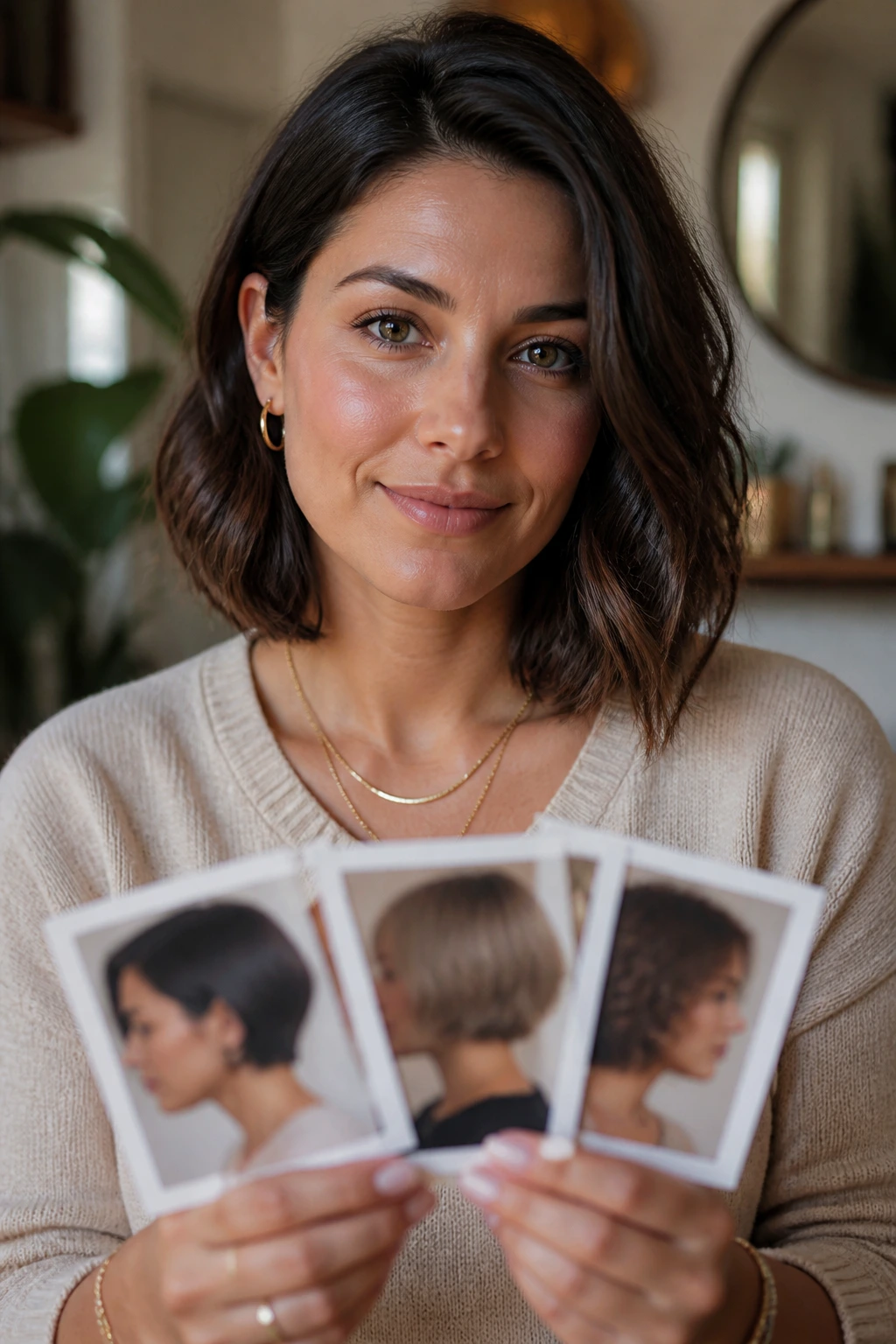
A good reference photo is useful only if it resembles your hair in the ways that matter. That means texture, density, and hairline count more than the model’s cheekbones. A chin-length bob on sleek, dense hair can behave nothing like the same cut on fine, wavy hair.
Bring two or three photos, not fifteen. One should show the silhouette you want. One should show the texture you want. If possible, pick a third that shows the kind of fringe or parting you’re considering. That gives your stylist something specific to work with instead of a vague “something like this.”
Look at where the ends fall in the photo. Are they hitting the jaw, the neck, or the collarbone? Are the layers hidden or obvious? Is the hair naturally full, or is it tucked and ironed flat? Those details matter more than the mood of the picture.
And do mention your hair’s habits out loud. Cowlicks at the crown. Puffiness in humidity. A part that refuses to stay where you put it. A stylist can work with all of that, but only if they know it exists before the scissors open.
How to Wear a Bob Without Fighting It
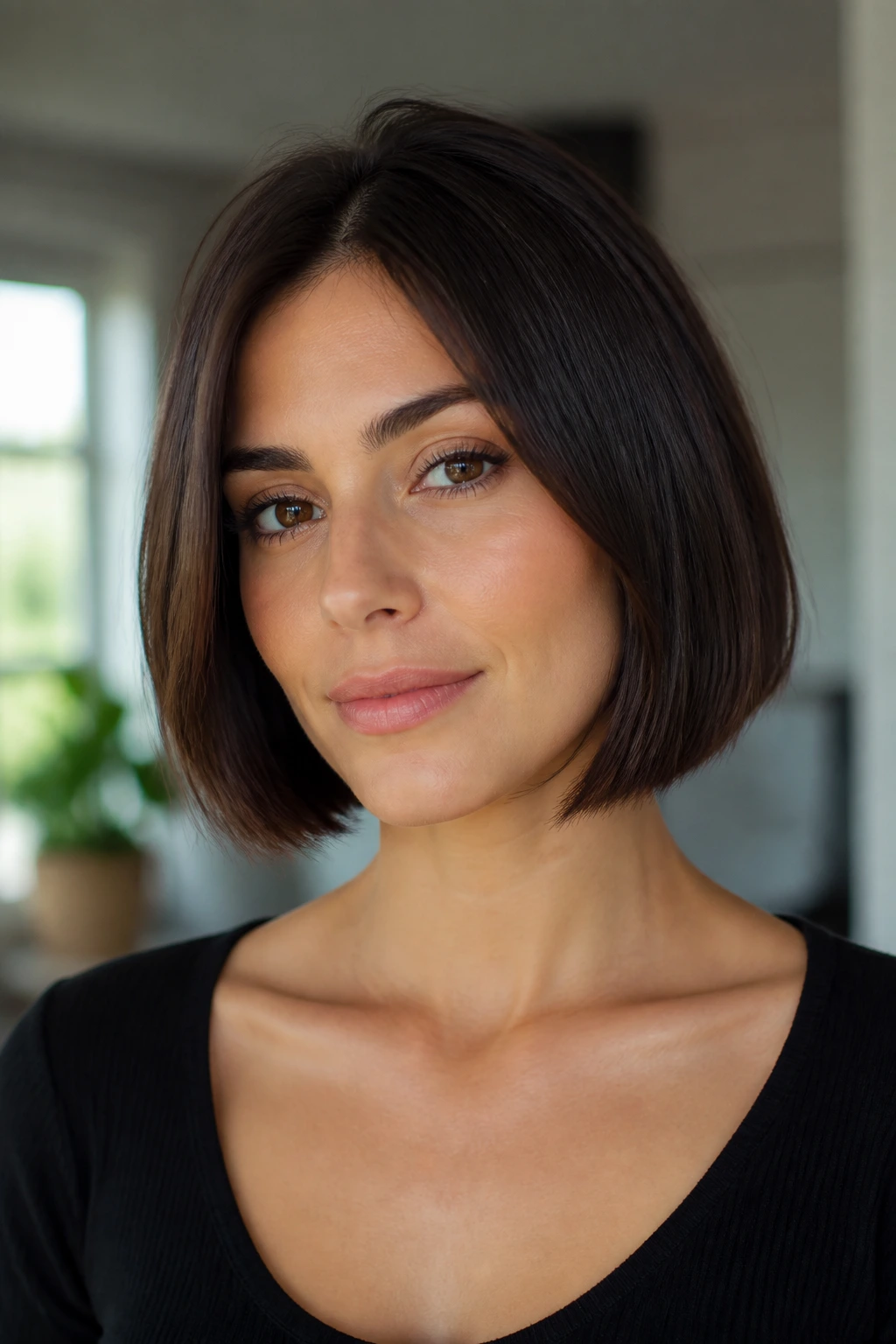
Presentation: A bob usually looks best when it has one clear idea. That can be sleek and tucked, loose and wavy, or blunt and glassy, but don’t make the haircut do three moods at once. Pick the version that suits your face and let the line stay readable.
Accessories: Hoops, slim headbands, strong collars, and barrettes all change how the bob sits around the face. Shorter cuts pair well with open necklines. Longer bobs look sharp with structured collars or a half-tuck behind one ear.
Proportion: If your face is round, leave a little length below the jaw. If it’s long, think about fringe or width at the sides. If it’s square, soften the corners with bend or texture. The haircut works harder when the proportion is chosen on purpose.
Finish: Shiny bobs feel more formal and precise. Matte or airy bobs feel relaxed and lived-in. Both are valid. The mistake is mixing them without a reason, because then the haircut reads indecisive.
Small Styling Tweaks That Change the Whole Cut
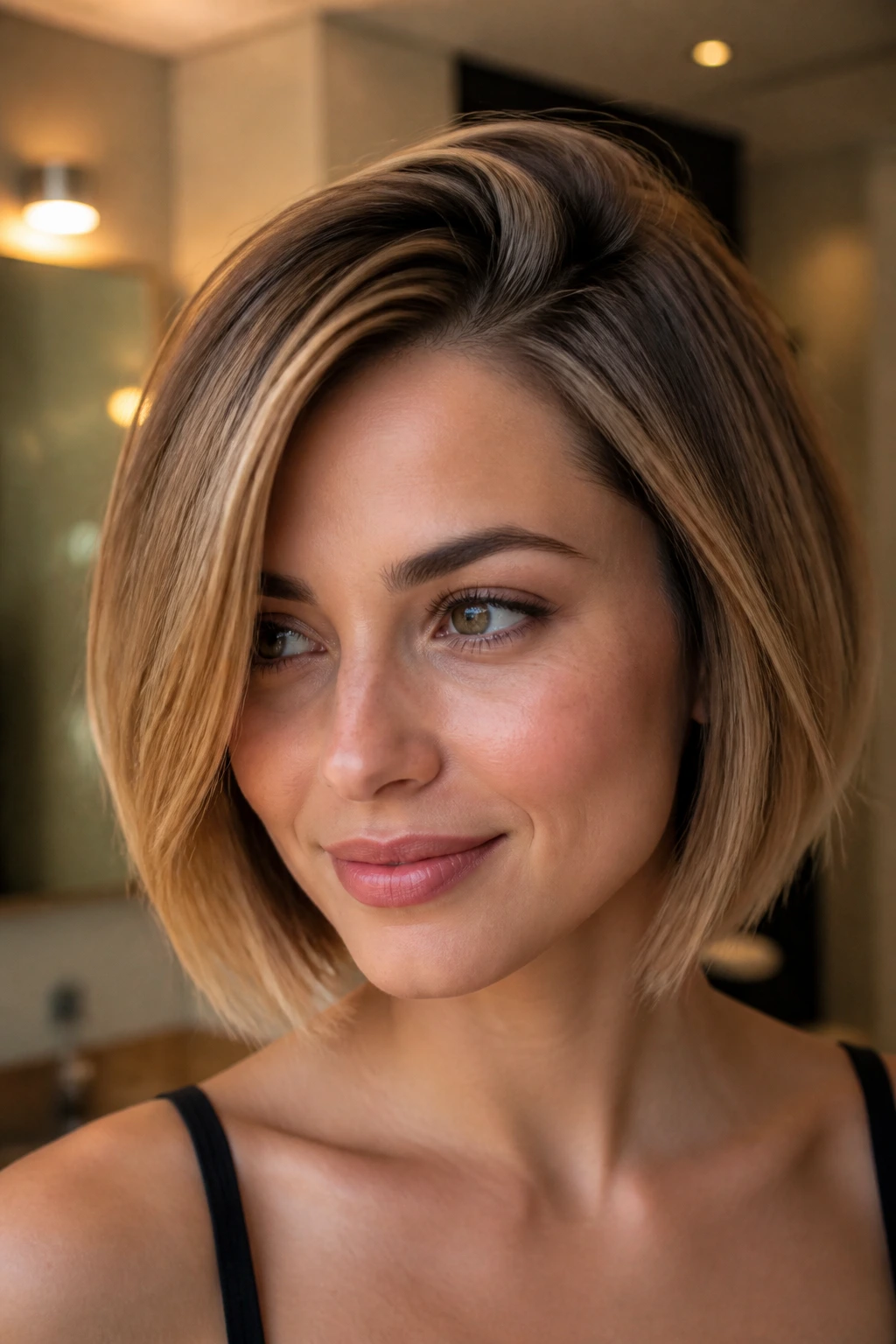
Texture Boost: A pea-sized amount of mousse at the roots and a light mist of texturizing spray at the ends can turn a flat bob into something that actually moves. Use less than you think you need. Too much product makes a bob collapse fast.
Face-Shape Tweak: If a bob feels too wide on your face, move the part a little off-center and keep the longest pieces in front. If it feels too narrow, add width at the sides with a soft wave or rounded finish.
Time-Saver: Dry the roots first, then the ends. That one habit keeps the shape from getting puffy at the bottom while the crown stays damp and flat.
Color Trick: Even a subtle highlight can help a bob by showing off the line of the cut. A few lighter pieces around the front make the shape read more clearly, especially on layered or textured bobs.
Make-It-Yours: Straight hair can wear a strong line. Wavy hair can lean into movement. Curly hair can let the perimeter stay a little longer so the shrinkage doesn’t steal the shape. The cut should fit the hair, not the other way around.
Keeping a Bob Sharp Between Salon Visits
Bobs need maintenance, but not every bob needs the same schedule. A blunt chin-length cut usually looks best with a trim every 6 to 8 weeks because the line loses its crispness once it grows out past the original angle. Longer lobs can stretch to 8 to 10 weeks, sometimes a little longer if the style is intentionally soft.
Curly and wavy bobs often buy you more time, especially if the outline is a little forgiving. A curly bob can stay wearable for 10 to 12 weeks if the shape is still sitting where you want it. The fringe is the thing that usually needs attention first, not the whole cut.
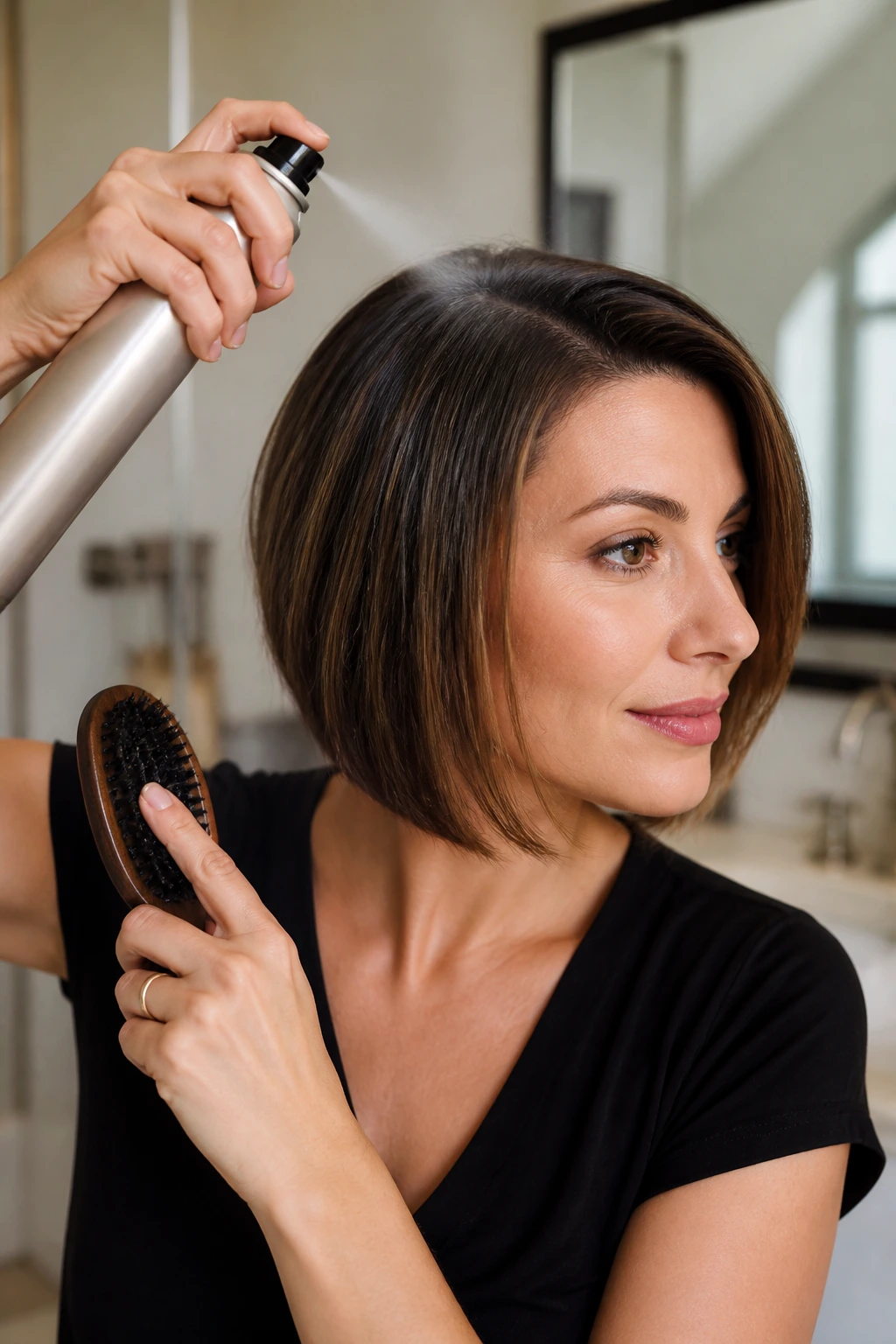
A quick at-home refresh helps in the middle. Mist the front with water, smooth the ends with a round brush or a flat iron, and add a touch of dry shampoo at the roots if the crown starts to collapse. A satin pillowcase also helps more than people expect. It cuts down on that morning bend that makes one side stick up like it lost an argument.
If the bob starts turning triangular, that usually means the ends are too old or too heavy. Don’t wait for the haircut to become a problem. Trim the perimeter before the shape escapes.
Ways to Bend These Bob Haircuts Without Losing the Shape

Add Curtain Bangs: This softens the forehead and works beautifully with chin-length, collarbone, and French bobs. The fringe should meet the face around the cheekbone, not stop awkwardly above it.
Shift the Part: A center part makes a bob look cleaner and longer. A side part adds lift and angle. If your haircut feels stuck, this is the first change I’d make.
Keep the Front Longer: If a bob makes your face feel too broad, a slightly longer front piece can bring the eye down and forward. It’s a small tweak with a big payoff.
Build Crown Lift: Fine hair usually looks better when the crown has a little lift, especially in stacked or inverted bobs. A root spray and a quick blow-dry at the top can change the whole mood.
Soften the Edge: On thick or square-jawed faces, a little internal texture keeps the perimeter from looking blunt in a bad way. You still want the shape. You just don’t want it to feel carved from a block.
Common Bob Cut Mistakes That Flatten the Face
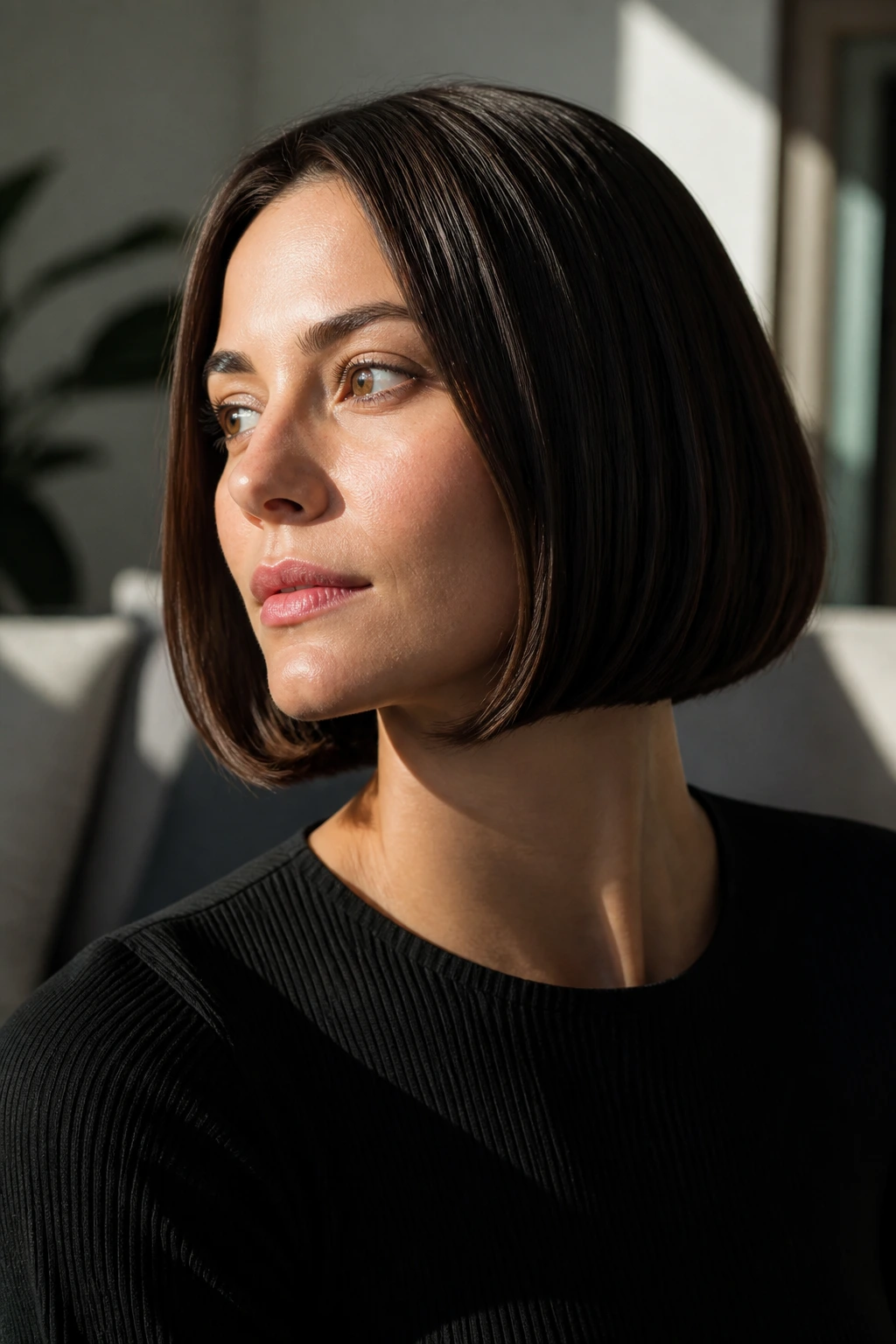
The most common mistake is cutting the bob to sit exactly at the widest point of the face. On a round or square face, that can make the haircut feel louder than the features. The fix is to move the line slightly above or below that point so the eye has somewhere else to go.
Another mistake is over-layering fine hair. The haircut starts out airy and ends up looking thin at the perimeter, which is the exact opposite of what a bob should do. Fine hair usually needs a clean line with light internal support, not a lot of slicing.
People also ignore natural parting and cowlicks. Then they spend every morning fighting a root bend that was there from day one. If your hair pushes itself left, don’t insist on a center part just because the photo had one. The cut should work with the hair’s behavior.
And then there’s maintenance denial. A sleek bob can look excellent for six weeks and then suddenly lose its shape in a week. That’s not failure. That’s a haircut asking to be trimmed on time.
Bob Haircut Questions People Ask All the Time
Which bob is best for a round face?
A bob that sits just below the jaw or hits the collarbone usually works well because it keeps the widest point of the face from lining up with the cut. Side parts, longer front pieces, and soft texture all help too.
Can fine hair wear a bob without looking flat?
Yes, but the shape matters. Blunt lines, subtle stacking, and a little root lift often help fine hair look denser. Too many layers usually make it worse.
What bob works best for thick hair?
Layered bobs, undercut bobs, feathered bobs, and soft A-lines all handle bulk well. Thick hair needs weight removed in a controlled way so the perimeter does not puff outward.
Do bobs work on curly hair?
They can, and the cut often looks best when it’s shaped with the curl pattern in mind. A dry or near-dry curl cut usually gives a cleaner silhouette than cutting curls as if they were straight.
Will a bob make a long face look longer?
It can, if the length is too narrow or too vertical. Add width at the sides, consider bangs, or keep the bob closer to the jaw so the face gets some horizontal balance.
How often should a bob be trimmed?
Shorter blunt bobs usually need attention every 6 to 8 weeks. Longer bobs can go 8 to 10 weeks, and curly or textured versions sometimes hold longer if the shape stays in place.
What if I hate it right away?
Give it a day or two of styling before you panic. A bob often looks off the first time because the hair is still settling into the new perimeter. If the length is wrong, though, a stylist can usually adjust the balance with a small trim rather than a total redo.
Is a bob low-maintenance?
Some are, some are not. A collarbone bob with soft texture is far easier to live with than a blunt micro bob or a slick glass cut. The shorter and cleaner the line, the more often it wants attention.
Finding the Bob That Fits

The nice thing about bob haircuts is that they do not belong to one face shape, one texture, or one mood. They belong to proportion. Once you understand where the line falls and how the weight is distributed, the whole category stops feeling intimidating and starts feeling useful.
That’s the real reason people keep coming back to bobs. Not because they are trendy, and not because they’re easy in some magical way. They are adjustable. A bob can be sharp, soft, polished, messy, short, long, stacked, or feathered — and if it’s cut with the face in mind, it tends to look like it belongs there.
Pick the shape that solves the thing your current hair is doing wrong. Then wear it enough times to see how it moves. That’s usually where the best haircut ideas show up.
