



An inverted bob haircut works because the shape does the heavy lifting. The back sits shorter and tighter at the nape, while the front stretches longer toward the jaw or collarbone, so the whole cut seems to tilt forward the second you turn your head. That diagonal line is the magic. It gives straight hair more posture, waves more direction, and thick hair a cleaner exit path.
I’ve always liked inverted bobs because they solve a real annoyance: hair that feels too blunt around the neck but too shapeless around the face. When the graduation is cut cleanly, the crown gets a little lift, the back lies flatter, and the front lands with a sharp edge that looks deliberate even when the styling is minimal. No mystery. Just smart geometry.
And the range is bigger than people think. Some inverted bob haircuts are polished enough to look almost architectural; others are messy, curly, feathered, or soft enough to tuck behind the ear without losing their line. The good ones don’t all behave the same way, which is exactly why this shape keeps showing up in salons. The trick is picking the version that fits your hair, your neck, and how much time you want to spend with a brush in your hand.
Why These 25 Inverted Bob Haircuts Keep Their Shape
- The back does the lifting: A shorter, stacked or graduated back gives the crown a small built-in push, so the cut doesn’t collapse by lunch.
- The front frames the face on purpose: Longer front pieces can hit the chin, jawline, or collarbone, which changes the whole mood without changing the basic haircut.
- The angle can be sharp or soft: A clean line reads polished; a textured one reads relaxed. Same silhouette, different attitude.
- It works across textures: Straight hair shows off the geometry, wavy hair gives it movement, and curls can make the shape look fuller instead of bulky.
- The grow-out is manageable: Unlike a blunt short bob, the inverted outline can grow into a lob without looking awkward for long.
- The styling range is bigger than it looks: Air-dried, blown smooth, bent under, flipped out, or tousled with spray — the same cut can handle all of it.
1. Classic Sharp Angled Inverted Bob
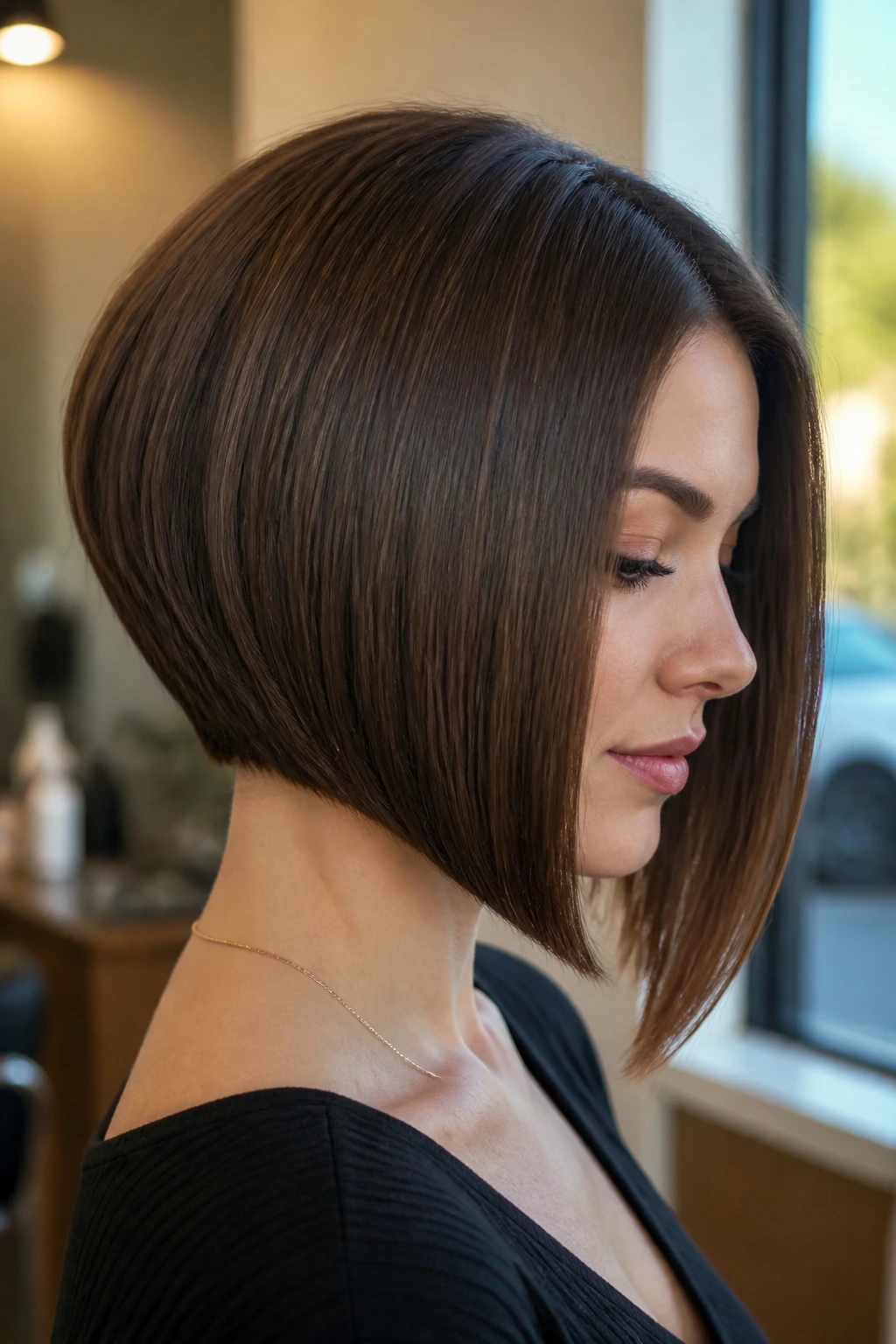
This is the version that made the inverted bob haircut famous in the first place: clean nape, crisp graduation, and front pieces that fall a couple of inches longer than the back. It looks sharp because there’s no fluff hiding the line. You see the angle immediately, and that’s the point.
Why It Reads So Cleanly
The shape works best when the back is cut snug at the nape and the front lands somewhere between the jawline and just below it. That difference in length creates the tilt that makes the cut feel modern without needing a lot of styling. On straight hair, it almost behaves like a built-in blowout.
If your hair tends to puff at the ends, this is one of the best places to start. The bluntness keeps the edges from fraying, and the angle stops the cut from feeling boxy. I’d keep the layers minimal here. Too much interior texturing can turn a strong line into a fuzzy one, and that’s a waste of a good shape.
Best for: straight to softly wavy hair, strong jawlines, and anyone who wants the haircut to look intentional even on a plain day.
Styling note: a round brush and a pass with a flat iron on the front corners is usually enough.
2. Stacked Nape Bob
A stacked nape bob leans into the rear view of the cut. The back is cut with more graduation, so the crown sits lifted and the nape feels tight and neat. From the front, it still reads as an inverted bob, but the volume lives higher and closer to the head.
That extra stacking helps if your hair goes flat right at the crown or if the back of your bob always falls limp by noon. The cut gives the back some architecture, and you can feel it when you run your hand over it — the hair rises in soft steps instead of hanging in one tired sheet.
What Makes It Worth the Effort
This version is a little more salon-specific. The stacking has to be blended well, or the back can look puffy instead of lifted. I like it on medium to thick hair because there’s enough density to support the shape without exposing every little ridge in the cut.
Ask for a crisp neckline and a smooth transition into the longer front. If the stylist overdoes the stacking, the bob can start looking round from the back, which is not the goal. You want lift, not a helmet.
3. Long Inverted Bob That Skims the Collarbone
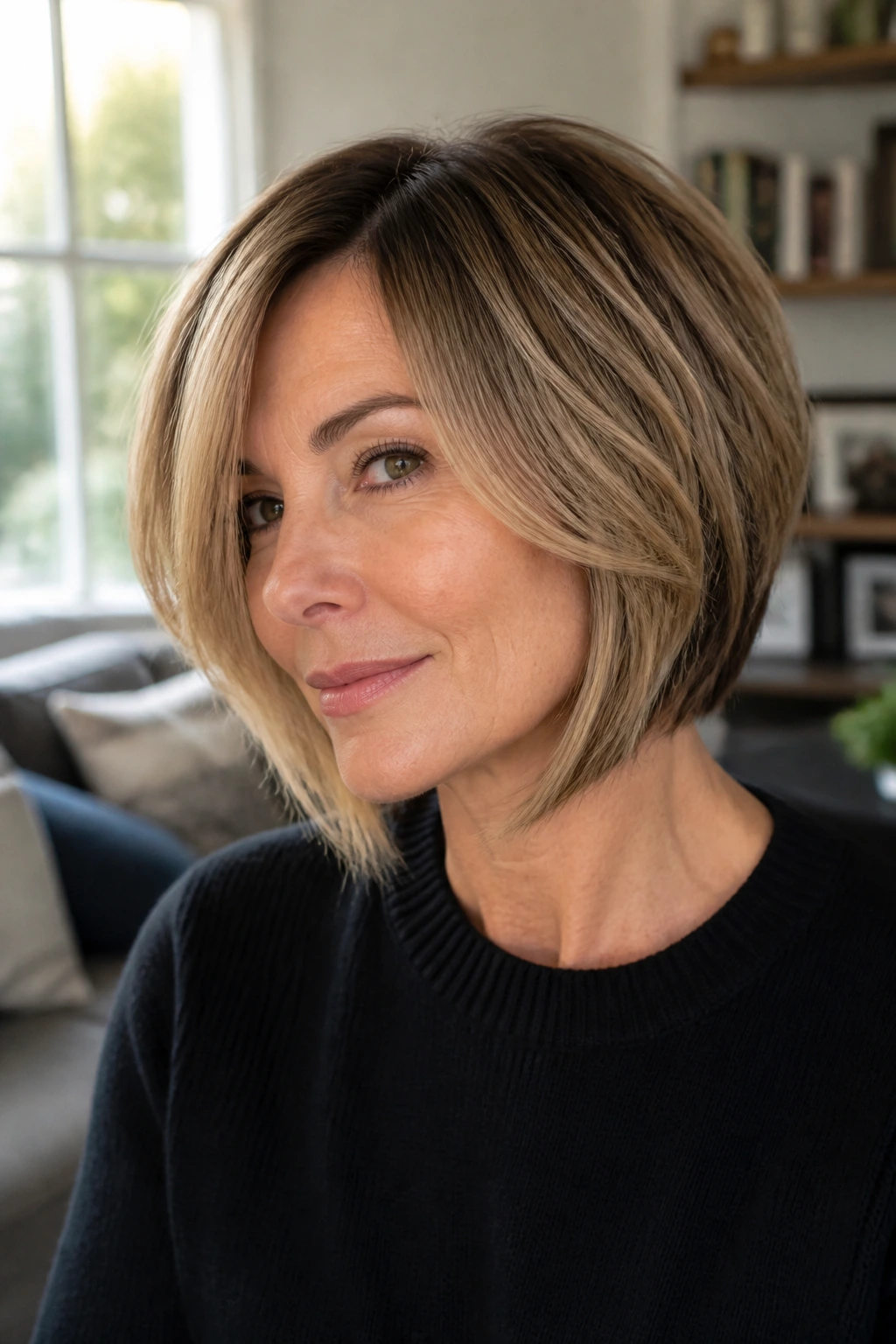
If you want the angle without going fully short, the long inverted bob is the move. The back still sits above the nape, but the front pieces sweep down toward the collarbone, which softens the whole effect and makes grow-out less dramatic.
This is the version for people who like to tuck their hair behind one ear, bend the ends under with a brush, and leave the rest alone. It has enough length to feel flexible, but the shorter back keeps it from turning into a plain lob. That little bit of lift at the back matters more than people think.
The long front pieces also make this cut easier to wear when your hair grows fast. You don’t hit the awkward in-between stage as quickly because the shape already has room to stretch. I think that’s one of the smartest things about it. You get the angled silhouette now and a softer transition later.
4. Wavy Tousled Inverted Bob
What happens when you let a strong cut loosen up a little? You get a wavy inverted bob that looks effortless without looking lazy. The angle is still there, but the texture softens the edges, so the haircut moves when you turn your head instead of sitting in one hard line.
Waves do something useful here: they break up the heaviness at the ends. If your hair tends to grow dense around the jaw, the movement keeps the front from feeling like a shelf. A salt spray or a light texture mist is usually enough. Too much product, though, and the waves clump into damp-looking ribbons. No thanks.
How to Keep the Wave From Collapsing
Dry the back first with the dryer angled downward, then scrunch a little mousse through the mid-lengths and ends. That order helps the shorter back lift while the longer front pieces keep their bend. If you use a curling wand, wrap away from the face on one side and toward it on the other so the shape doesn’t turn too symmetrical.
This version looks especially good when the ends are a little uneven on purpose. Not messy. Just lived-in. The goal is movement, not frizz.
5. Curly Inverted Bob with Round Layers
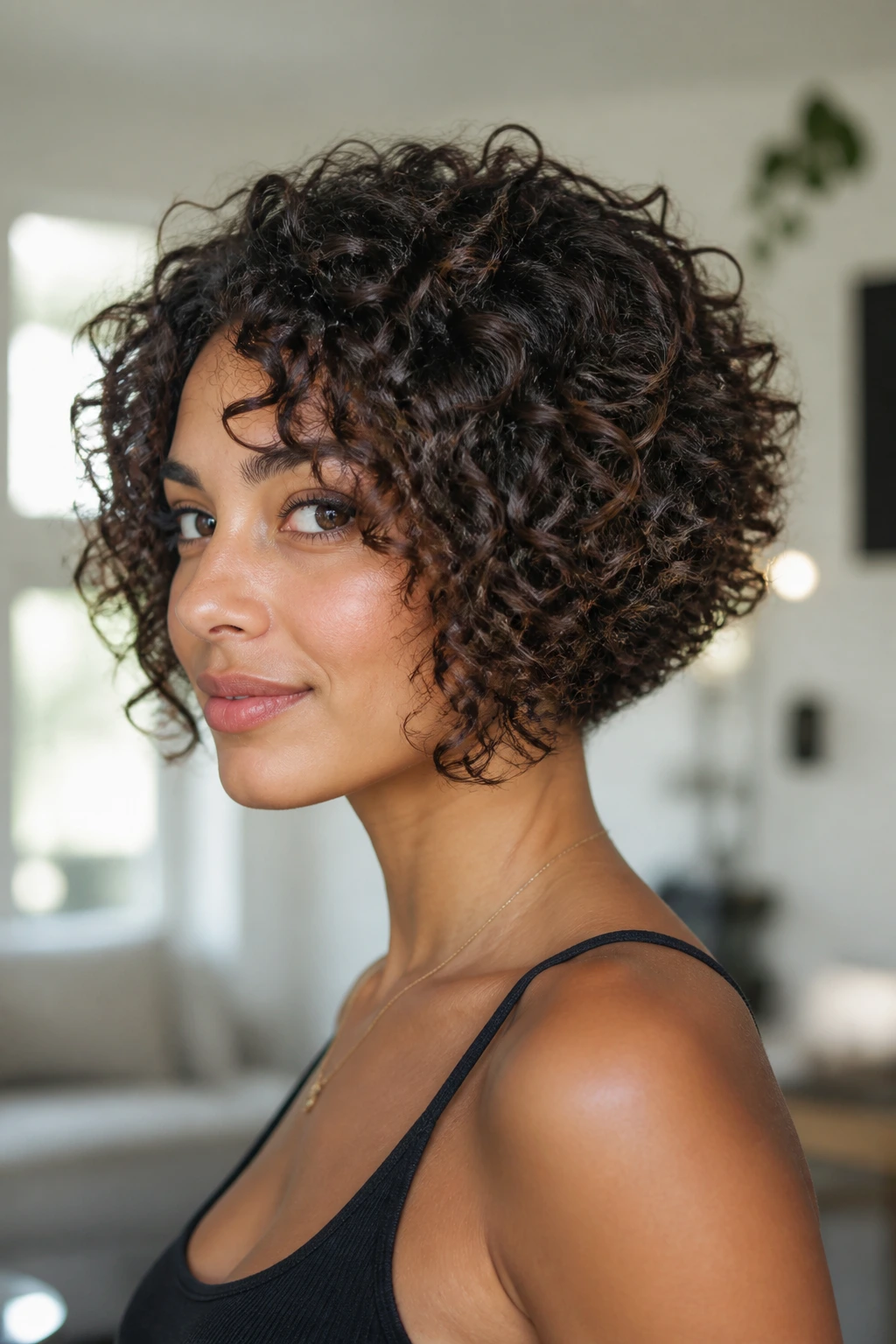
Curly hair and an inverted bob can get along beautifully when the cut respects shrinkage. The back has to be shorter than you think, because curls spring up once they dry. The front can still stretch toward the jaw, but the layers need to be rounded so the shape doesn’t puff out like a triangle.
I like this version when the curls have enough density to hold the silhouette. It gives the hair a lifted crown and a neat back, while the front frames the face in little arcs instead of one heavy block. On tighter curls, the line reads softer. On looser curls, it can look almost sculpted.
What to Tell Your Stylist
- Keep the nape tidy and shorter than the front by a clear margin.
- Cut curls in their natural state whenever possible.
- Avoid over-thinning the ends; that can make the shape stringy.
- Leave enough length in front for shrinkage.
If your curls are uneven from front to back, this cut can still work, but the stylist needs to watch the balance carefully. The wrong graduation will make one side look heavy and the other one float. That’s an easy fix in the chair. Much harder after the fact.
6. Blunt-Cut Inverted Bob
A blunt-cut inverted bob has a little more bite than a layered one. The ends are cut clean and heavy, with the angle doing most of the visual work. There’s no feathering to soften the edge, which is why this version feels so crisp.
The blunt line is excellent if your hair is fine and tends to fray at the ends. It gives the illusion of thickness right where you need it. On thicker hair, the blunt edge can get bulky fast, so the weight has to be removed carefully in the back without sanding down the perimeter too much.
This is one of those cuts that looks expensive when it’s freshly shaped and freshly styled. A flat brush, a little smoothing cream, and a careful bend under the front corners are enough. If the finish gets too fluffy, the whole effect disappears.
7. Soft Layered Inverted Bob
Not every inverted bob has to stare you down from the mirror. A soft layered version keeps the same shorter-back-longer-front silhouette, but the interior layers are sliced gently so the ends move instead of sitting in one hard wall.
This one is a nice middle ground for people who like shape but hate the feeling of a haircut that’s too severe. The layers give the hair a little swing, especially around the cheekbones and jaw. That means the style works even when you don’t blow it out perfectly.
I especially like this on medium-density hair that needs some relief but not a lot of removal. The cut still looks tidy at the nape, yet the front has enough softness to tuck behind the ear or flip forward without looking stiff. If your face shape leans angular, the softness helps balance it. If your face is rounder, the longer front pieces keep the line from opening up too much.
8. Asymmetrical Inverted Bob
The asymmetrical inverted bob is for the person who wants the shape to feel a little less obedient. One side is kept noticeably longer than the other, usually by an inch or two, which gives the haircut a slanted, fashion-forward edge. It’s still an inverted bob. It just doesn’t behave politely.
This cut works best when the asymmetry is intentional, not accidental. The longer side should still follow the diagonal line of the bob; it should not look like one side got ignored. If the angle is too dramatic, the front can overpower the face. If it’s too subtle, the whole point gets lost.
I like this version with straight hair because the difference in length is easy to read. On wavy hair, the asymmetry can feel softer and a little less obvious, which some people prefer. Either way, it’s a strong choice if you like movement with an edge.
9. Chin-Grazing Inverted Bob
A chin-grazing inverted bob lands in that sweet spot where the front pieces skim the jawline and give the face a clean frame. It’s shorter than a collarbone version, but not so short that it feels severe. The back is still stacked or graduated, so the cut keeps its tilt.
This is one of the most flattering lengths for people who want the haircut to show off the line of the jaw. The ends sit right where the face starts to turn inward, which makes the shape look deliberate even when the styling is loose. If your neck is on the shorter side, this length can keep everything from feeling too crowded.
A slight bend under the ends helps the cut feel neat. If you wear it stick straight, the angle reads sharper. Both work. The key is keeping the front from creeping too close to the cheek unless that’s the look you want.
10. Collarbone Inverted Bob
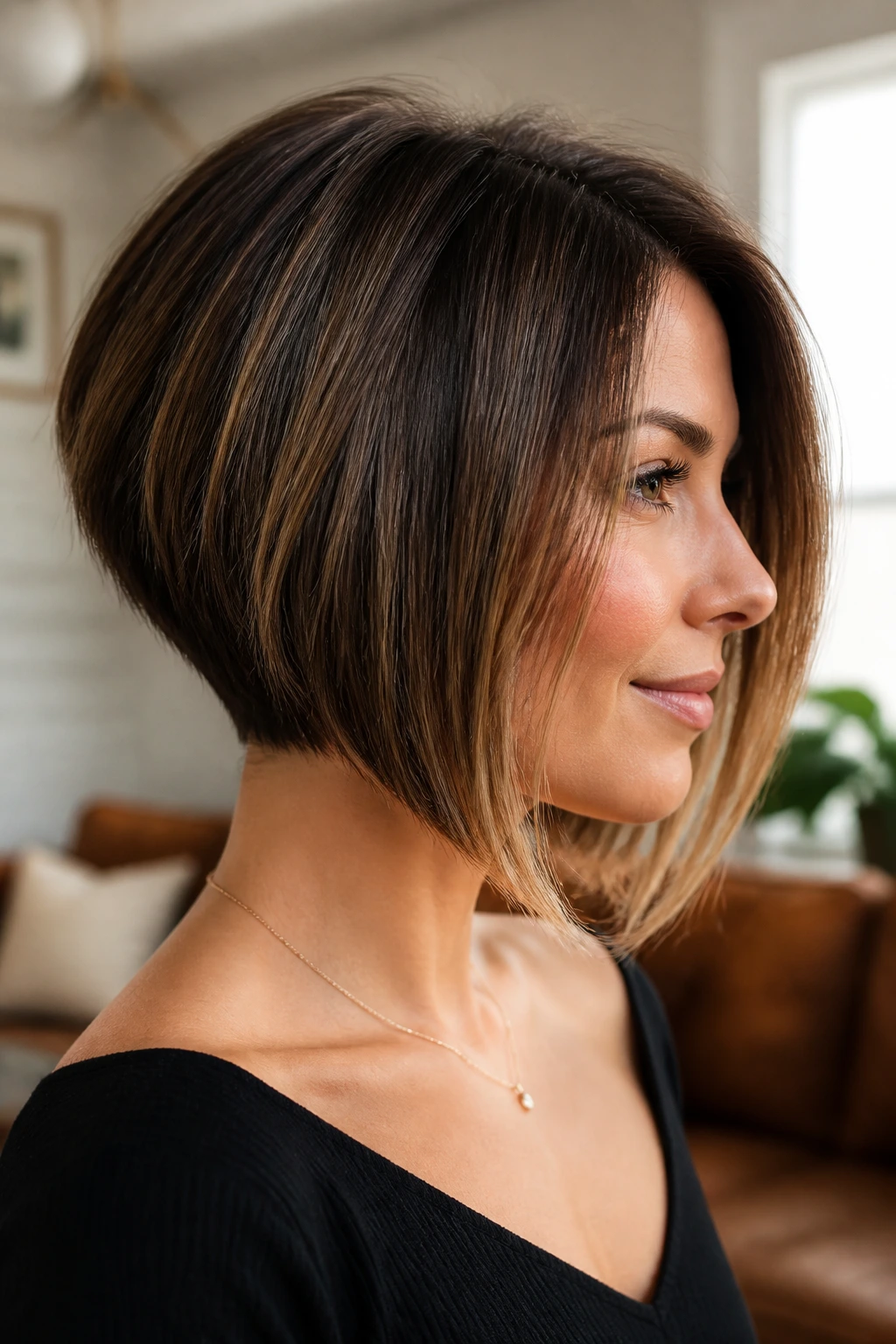
Why choose between short and long when you can have both moods at once? The collarbone inverted bob keeps enough front length to feel versatile, but the back stays lifted and shorter, which preserves the angled silhouette. It’s the least fussy version of the shape, and maybe the easiest to live with.
This haircut is handy if you like to clip your hair up occasionally or braid the front sections back. The longer pieces give you options without sacrificing the frame around the face. It’s also a forgiving grow-out cut. You can let it drift for a while before it starts looking like you forgot what day it was.
The important part is keeping the back clean. If the nape gets too long, the angle goes flat fast. That’s the trap with this cut. The front can stretch, but the back needs to stay disciplined.
11. Curtain Bang Inverted Bob
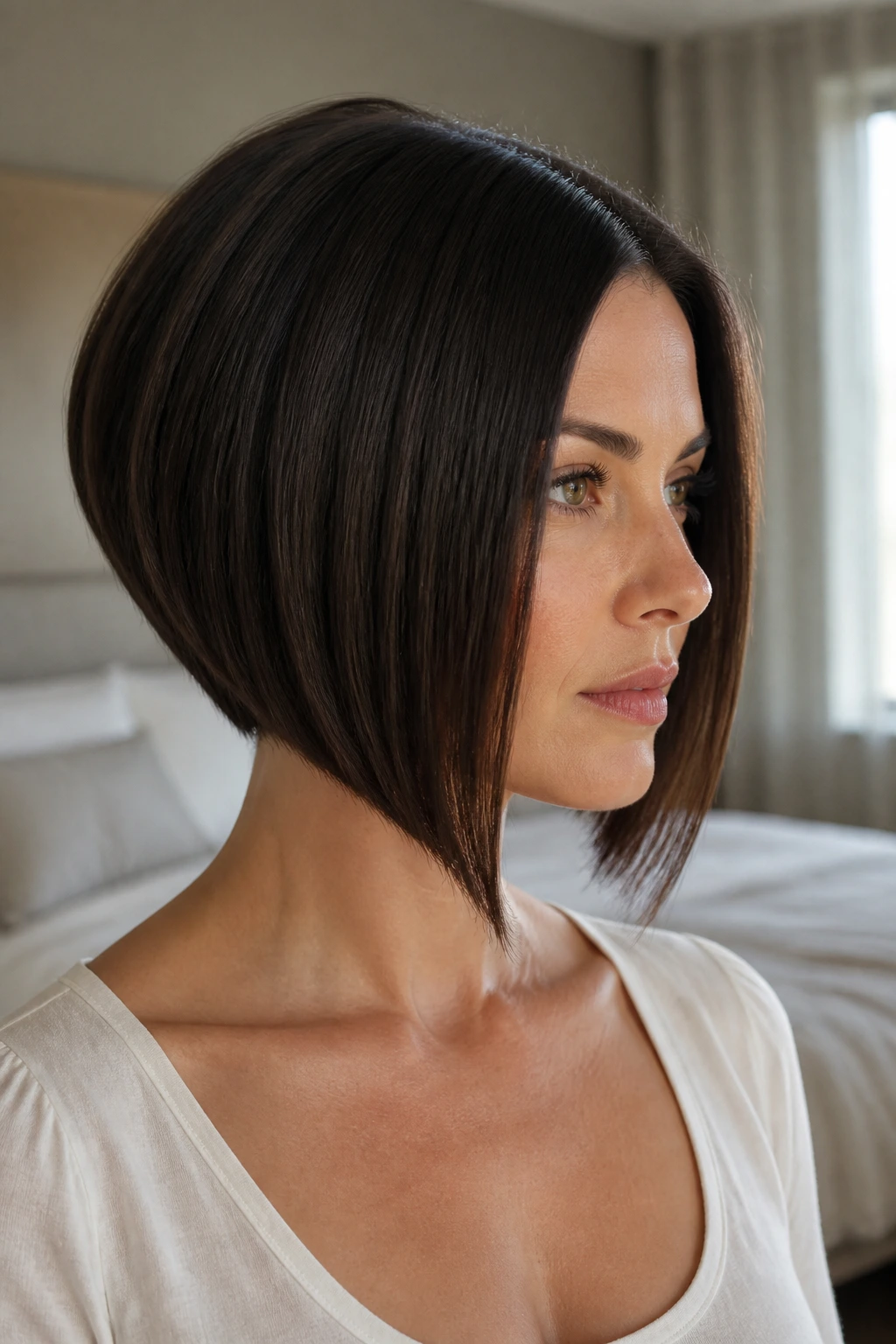
Curtain bangs change the whole conversation. Instead of a hard front edge, the fringe opens in the middle and falls softly to each side, which lets the inverted bob feel lighter around the forehead and cheekbones. The rest of the haircut still does the angled work in back.
This version is good when you want the bob to feel less stern. Curtain bangs soften the face and make the front of the haircut look more blended, especially if the front pieces hit just below the jaw. The trick is balance: too much bang and the top feels heavy; too little and the fringe disappears into the sides.
I like this cut on wavy hair, where the bangs can bend naturally and the angle doesn’t need to be ironed into place every morning. On straighter hair, the curtain pieces can be blown with a round brush and a soft lift at the root. Very old-school technique. Still works.
12. Side-Swept Bang Inverted Bob
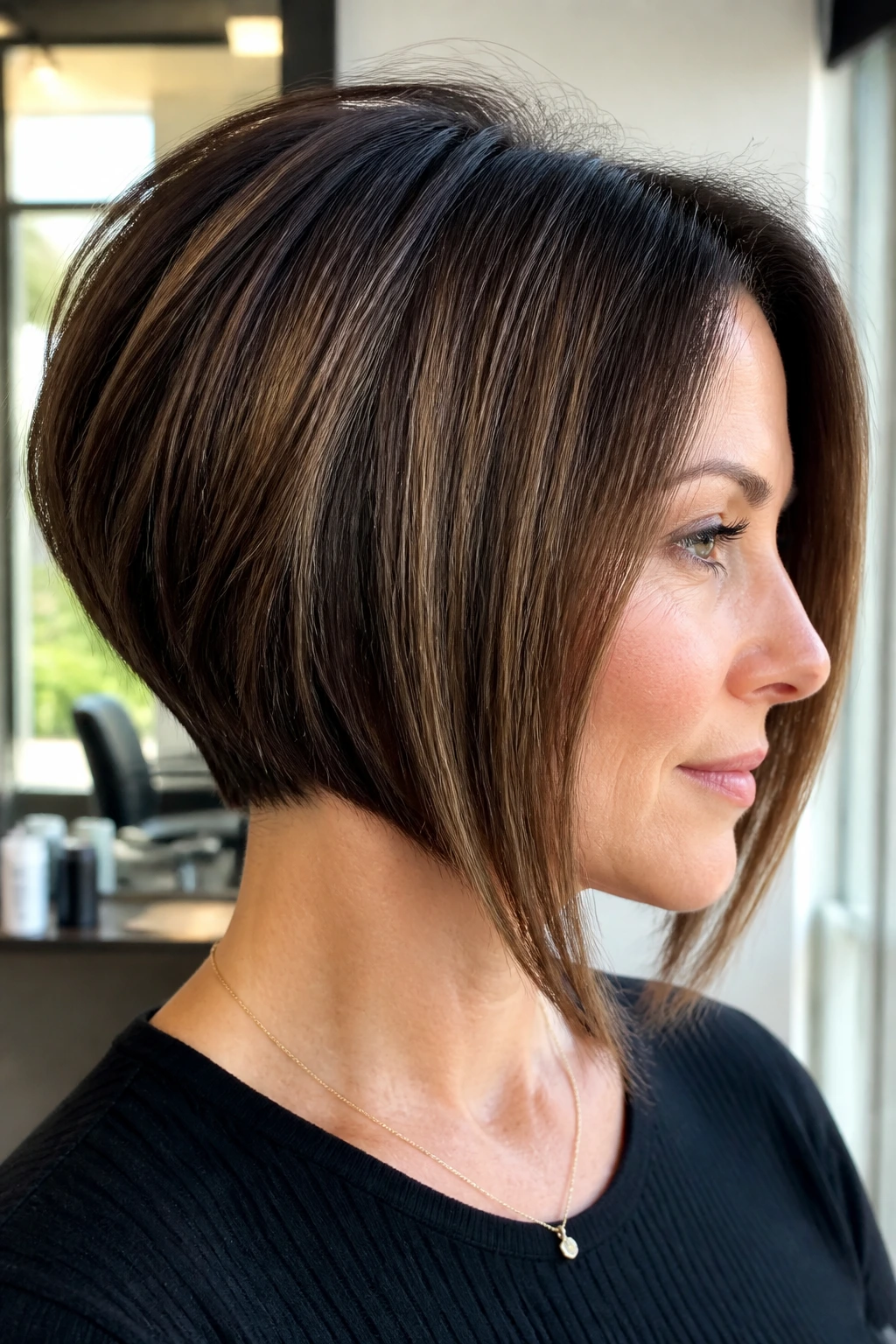
A side-swept bang gives the inverted bob a diagonal pull that feels natural, not forced. The fringe sweeps across the forehead and blends into the longer front pieces, which makes the whole cut look a little softer and easier to wear if you dislike a center part.
This is one of those styles that quietly solves a lot of hair problems. It can hide a cowlick near the front hairline, soften a strong forehead, and keep the bob from feeling too boxed in. The length should be long enough to tuck behind the ear without sticking out like a little flag. That detail matters more than people think.
When the side bang is cut too short, it fights the inverted line instead of supporting it. Keep it long, airy, and connected to the front corners. Then the haircut reads as one shape, not two competing ideas.
13. Micro-Bang Inverted Bob
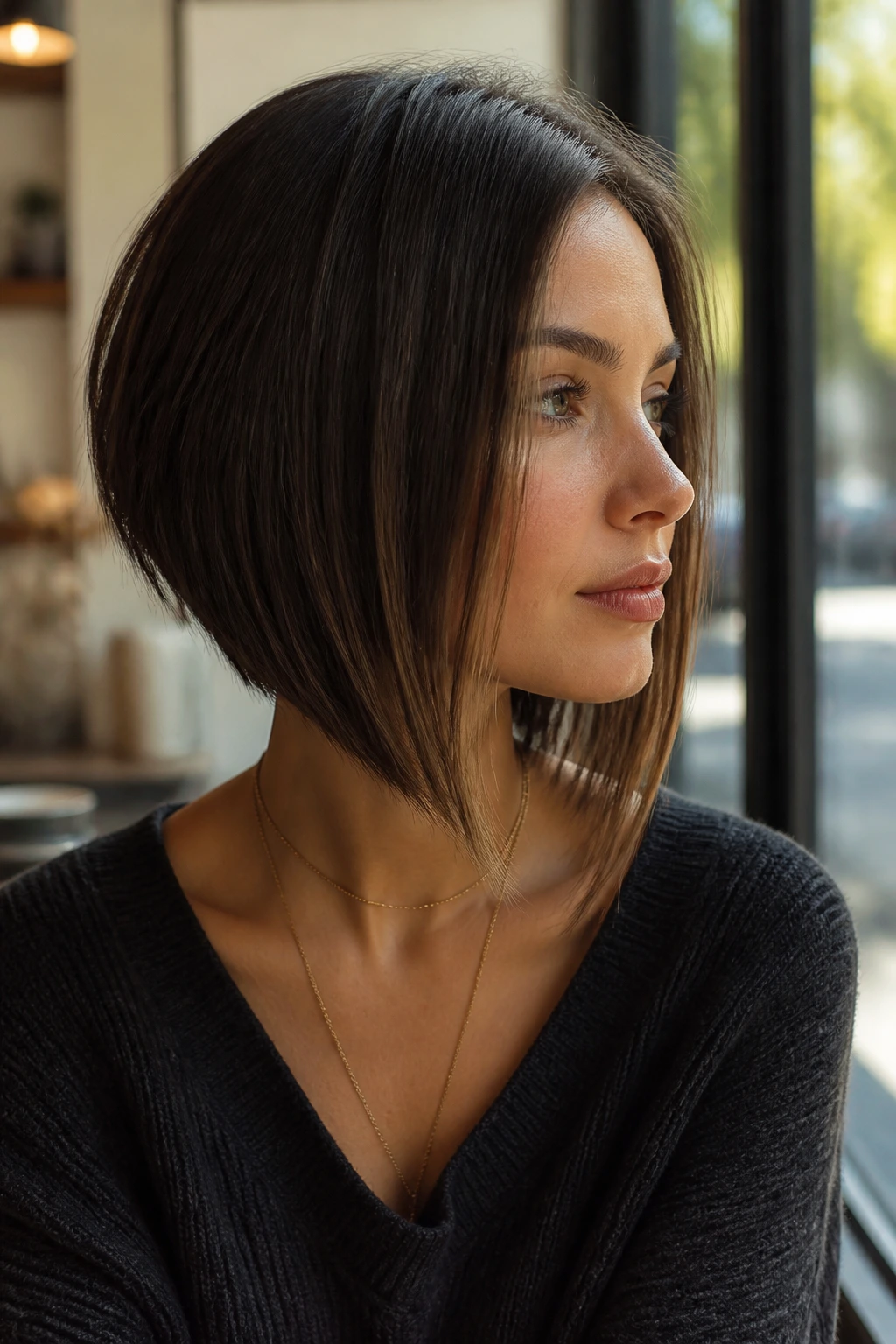
Micro bangs and an inverted bob are not for everyone. Good. Haircuts should have opinions. This version turns the spotlight onto the eyes and leaves the rest of the cut to do the structural work at the nape and jaw.
The contrast is what makes it interesting. The blunt, short fringe feels graphic, while the angled bob keeps the bottom half from looking too severe. If you like strong lines and a little fashion tension, this pairing is hard to beat. If you want something soft and easygoing, skip it. No harm done.
The biggest thing to watch is proportion. Micro bangs can make the front of the haircut look shorter than it really is, so the inverted angle needs enough length in the front corners to balance that visual weight. Otherwise the whole style can look top-heavy. And nobody wants top-heavy hair.
14. Choppy Textured Inverted Bob
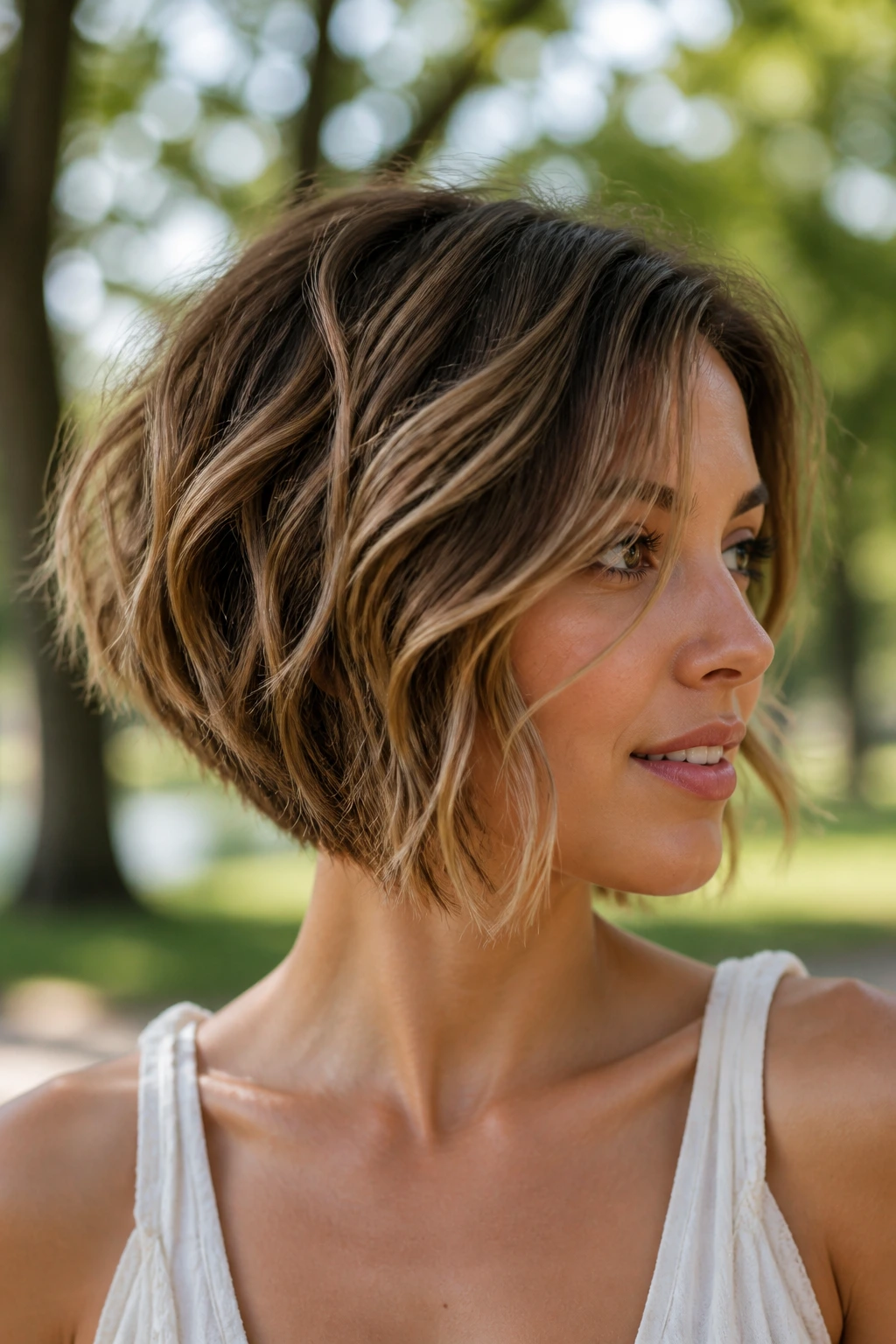
A choppy inverted bob is what happens when the angle gets rougher around the edges in a good way. The perimeter is still angled, but the ends are piecey, broken up, and full of separation. It feels casual, almost like the haircut was worn in a little before you got to the mirror.
This version is one of my favorites for hair that refuses to behave perfectly. A blunt angle can look too rigid on some textures. Choppier ends let the hair move. They also keep the front from forming a thick curtain that swings as one heavy block.
What Makes It Different
The cut depends on point-cutting or slicing through the ends, not hacking the whole shape apart. You want texture at the perimeter, not frayed ends everywhere. A little paste or dry texture spray finishes it well. Too much, and the pieceiness turns crunchy.
This one is especially good if your hair has a slight wave and you don’t want to iron it flat every day.
15. Feathered Inverted Bob
Feathering softens the whole silhouette, and that’s the appeal here. Instead of a blunt edge or chunky texture, the ends are lightly feathered so the haircut feels airy around the jaw and collarbone. The back still carries the inverted structure, but the finish is lighter.
This style has a bit of throwback energy, but not in a costume way. Feathering keeps the bob from looking too dense, especially on medium hair that falls into a block if it’s cut too square. The front layers glide rather than drop, which helps the whole haircut move when you turn your head.
If your hair is very fine, feathering can be a little risky because it can remove too much visual weight. In that case, ask for softer interior shaping rather than a full feathered finish. The goal is lift, not thinness.
16. Undercut Inverted Bob
An undercut inverted bob takes weight off the table, literally. The lower back or nape section is clipped shorter underneath, which lets the top layer sit cleaner and fall closer to the head. For thick hair, that can be the difference between a sharp angle and a swollen one.
This cut has a sharper personality than most of the others on the list. You feel it in the neck — lighter, cooler, less bulky — and you see it in the line of the back, which often falls smoother because there isn’t so much hair pushing outward underneath. It’s a good choice if you wear your hair up sometimes and don’t mind a little hidden structure.
The catch is upkeep. Undercuts grow back fast, and when they do, the back can start to kick out at the bottom. If you like this version, plan on regular trims. It’s not a cut you can ignore for months.
17. Sleek Glass-Hair Inverted Bob
A glass-hair inverted bob is all about shine and precision. The shape is the same angled silhouette, but the finish is smooth, reflective, and almost liquid-looking. Each section lies flat enough to catch light in one clean sheet, which makes the line read even sharper.
This haircut shines on naturally straight hair, though it can be smoothed on wavy hair if you’re patient with the dryer and flat iron. The front pieces usually sit near the jaw or a little below it, while the back hugs the neckline. That contrast gives the sleek finish somewhere to land.
I’d use a heat protectant, a round brush for the roots, and a flat iron only on the final polish. Repeated passes make the ends look scorched and ragged. One clean pass is enough if the cut itself is good. A lot of people try to style away a bad cut. Better to start with the right line.
18. Shag-Inspired Inverted Bob
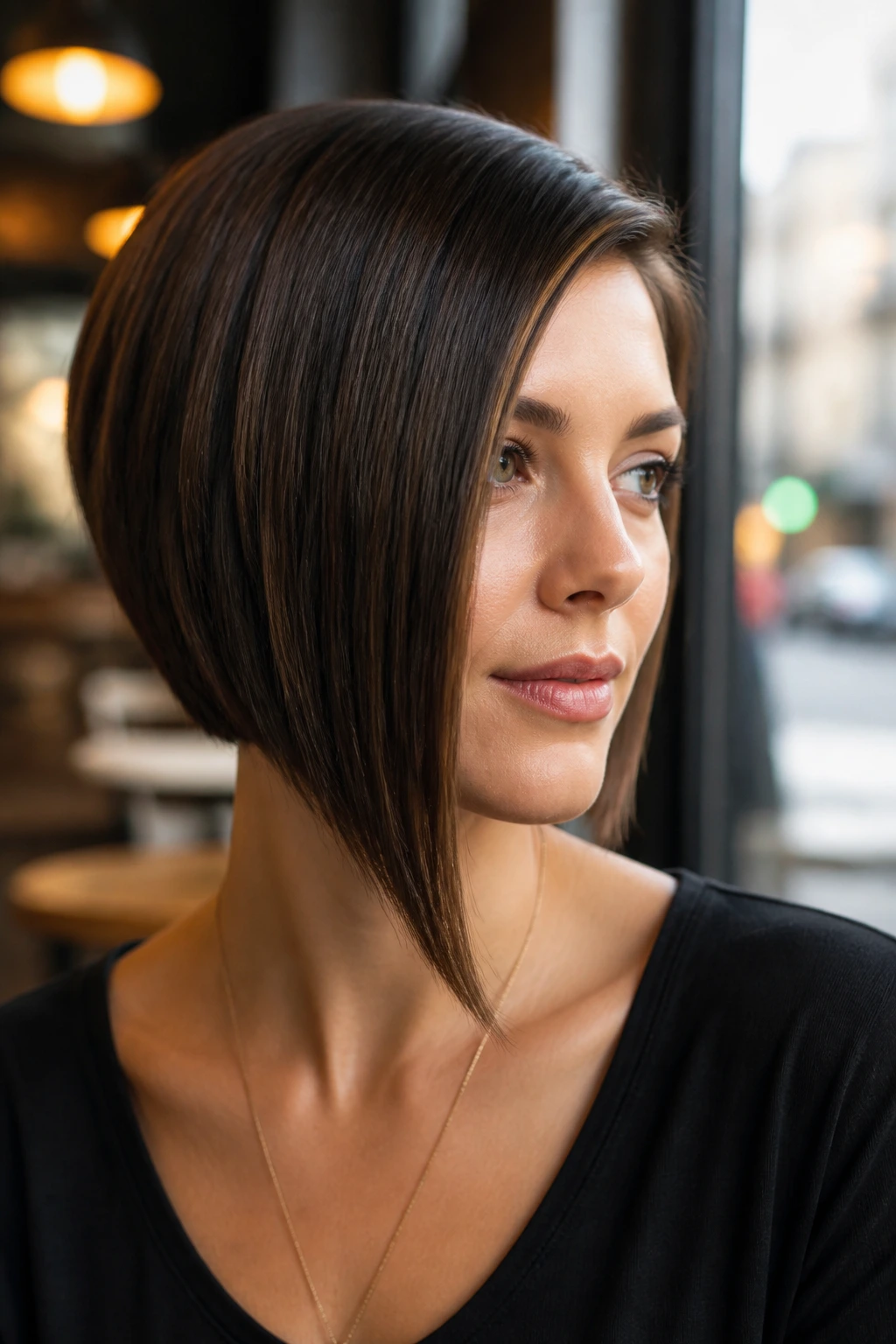
A shag-inspired inverted bob brings in more texture at the crown and around the face, so the haircut feels looser and more undone. The angle still exists, but it’s wrapped in layers that break the shape up a little and keep it from feeling too neat.
This one suits hair that likes to fall forward and rough itself up naturally. The shag influence helps the cut breathe. It also gives you a little more room if your hair is medium-thick and tends to look heavy in a traditional bob. The crown layers prevent that helmet effect that nobody asked for.
What I like here is the contrast: short, lifted back; longer front; choppy movement through the top. It’s the sort of haircut that looks better after you’ve run your fingers through it a few times. If you want polish, look elsewhere. If you want movement and a little attitude, this is a good lane.
19. Fine-Hair Volume Inverted Bob
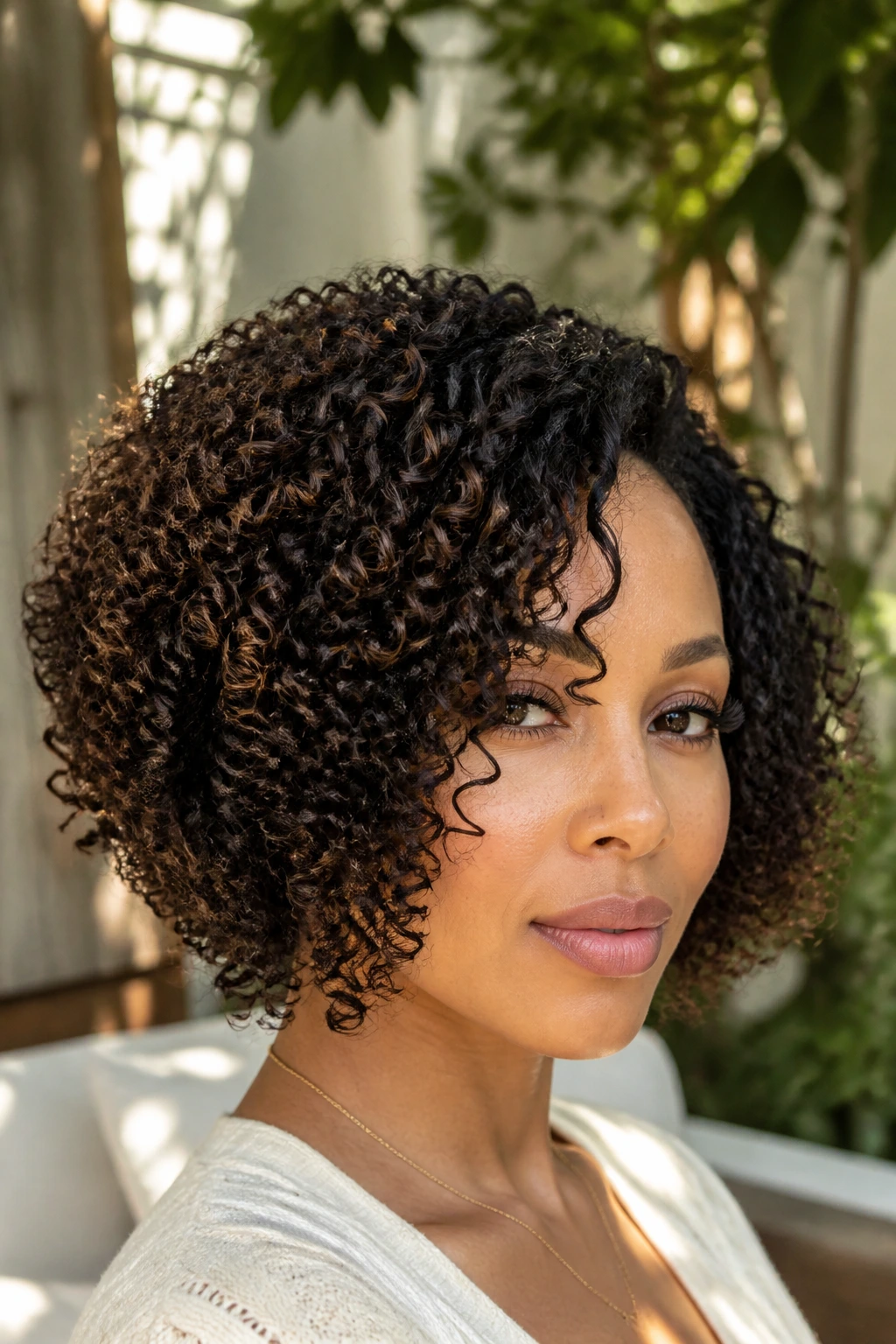
Fine hair benefits from an inverted bob when the weight is controlled correctly. The back needs enough stacking to lift the crown, but not so much that the ends look wispy. The front should be left clean and full, which helps the haircut look thicker than it really is.
This is one of those situations where the cut matters more than the product. A root-lifting mousse can help, sure, but the shape itself has to do the heavy lifting. Fine hair tends to go flat at the back and transparent at the ends, so the inverted line gives it a frame. That frame is doing a lot.
How to Keep It Full
- Ask for a dense perimeter and minimal thinning at the ends.
- Keep the back stacked enough to lift, but not chopped into tiny shelves.
- Blow-dry the roots in the opposite direction they fall.
- Finish with a lightweight spray, not a heavy cream.
If your hair is very soft, this version should be cut with a little more bluntness than softness. Too much layering can make the ends disappear.
20. Thick-Hair Weight-Removing Inverted Bob
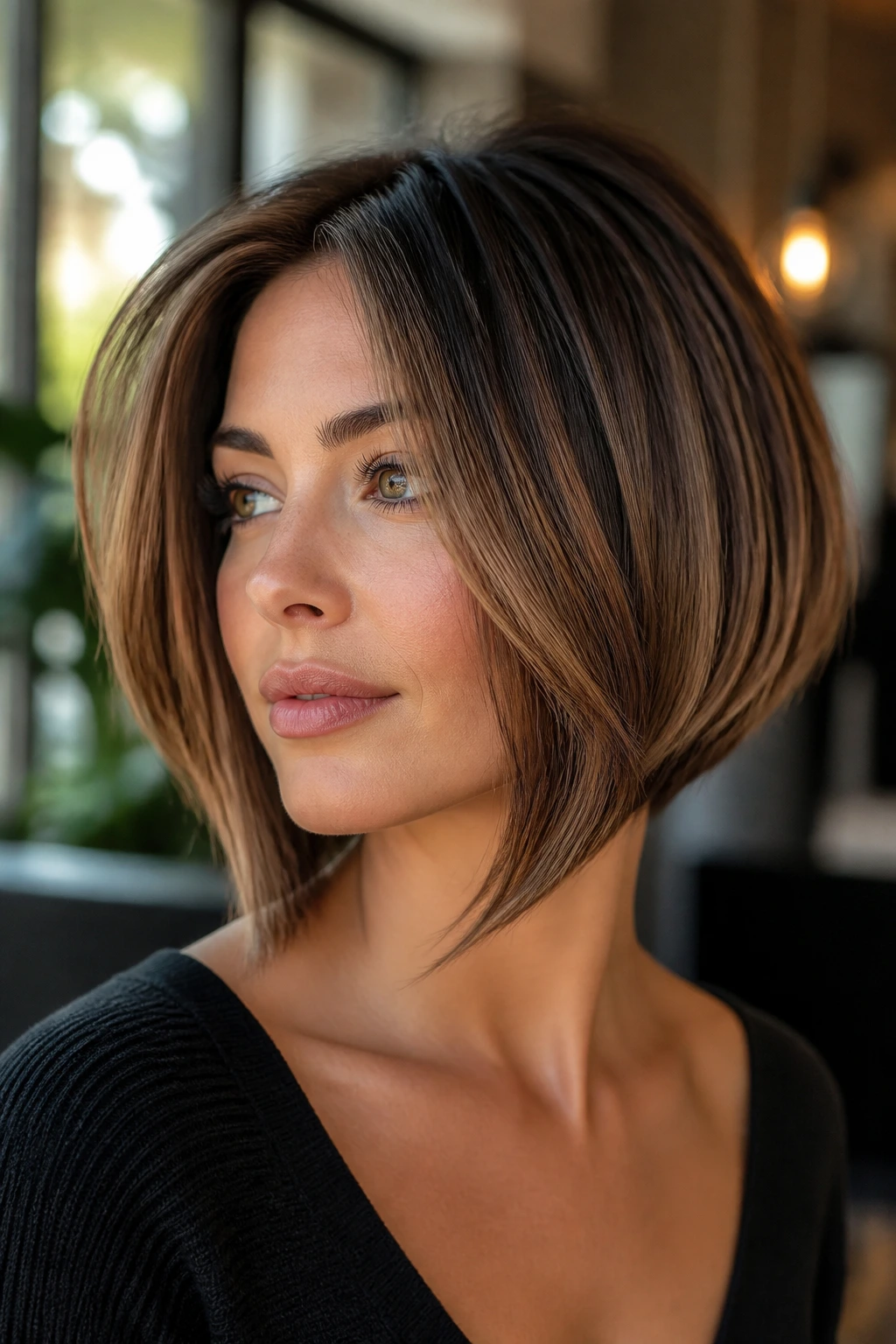
Thick hair can make an inverted bob look expensive or it can make it look like a triangular brick. The difference is weight removal in the right places. This version keeps the front length and angle, but takes bulk out of the interior and, sometimes, the underlayer at the nape.
That weight control is what lets the haircut swing instead of sit there like a block. You still want the perimeter to feel solid. Just not overloaded. Thick hair can handle structure, but it needs a little room to move or the whole shape gets puffy at the corners.
I’m picky about this cut because it’s easy to over-thin. Once the ends start looking shredded, the bob loses its clean outline and the style gets harder to smooth. Ask for debulking that preserves the line — channel cutting, internal layering, or careful point work instead of aggressive thinning shears everywhere.
21. Curly-Coil Inverted Bob
A curly-coil inverted bob is about respecting shrinkage and shape at the same time. The back is kept shorter so the coils lift off the neck, while the front is allowed enough length to frame the cheeks and jaw once it dries. On tighter curls, the silhouette becomes rounded and full; on looser coils, the angle shows a little more.
The cut works when the curl pattern is cut in its natural state or at least close to it. That’s the part people skip, then wonder why one side springs up and the other hangs back. Coils do not forgive guesswork. They need the shape cut where they live.
If your hair sits somewhere between coil and curl, this version can be gorgeous because the inverted line gives the front enough length to avoid that boxed-in look. A diffuser helps, but so does patience. Let the hair dry without touching it too much. The shape is doing enough already.
22. Face-Framing Layered Inverted Bob
Some inverted bobs make the face the main event. This is one of them. Face-framing layers start around the cheekbone or jaw and angle down toward the longer front, which draws attention to the eyes and softens the transition from short back to longer front.
The nice thing about this cut is that it flatters without shouting. The layers break up the front line just enough to keep it from feeling severe. They also help if your hair falls forward heavily and hides your neck. A few well-placed layers can open the whole shape.
I like this version on hair that needs movement around the face more than at the back. It’s a good balance if you want the inverted bob silhouette but don’t want the front to feel too dense. Just don’t over-layer the front corners. Once those pieces get too thin, the whole haircut starts looking hesitant.
23. Tucked-Under Paris Bob
The tucked-under Paris bob has a very particular mood: neat, compact, and a little polished without trying too hard. It’s an inverted bob with a softly tucked-under finish, usually worn with a center or slight off-center part and the front brushing the jaw.
The line is softer than the sharpest versions, but the back still sits shorter enough to create the angled profile. What makes this one feel special is the finish. The ends are often bent inward with a brush or flat iron so the haircut wraps around the face instead of flaring out. It’s tidy. Almost exacting.
This cut loves hair that behaves well under heat and doesn’t need a lot of fuss. If you like a neater look, this is one of the easiest inverted bobs to live with. If you like volume and texture, it may feel too controlled. That’s fine. Not every good haircut needs to look windswept.
24. Razor-Cut Edge Inverted Bob
A razor-cut inverted bob gives the line a softer, airier edge. Instead of a blunt perimeter, the ends are sliced with a razor or a very light slicing technique so the haircut looks a touch more broken up and less stiff. The angle stays, but the finish feels lighter.
This version can be lovely on straight to wavy hair that gets bulky at the ends. The razor work helps the hair fall with a little more separation. It also makes the front corners bend more naturally, which can be useful if your hair fights the brush.
The downside is obvious: on already fine or fragile hair, too much razor work can make the ends look frayed. So this is a cut that depends on restraint. A skilled hand can make it look feather-light. A heavy hand can make it look tired. Those are not the same thing at all.
25. Soft Rounded Inverted Bob
A soft rounded inverted bob is the gentlest version in the bunch. The back is still shorter, the front still longer, but the outline curves instead of cutting into a hard diagonal. It’s the bob for people who want shape without a lot of sharp angles.
This cut works beautifully when you want the neck to feel exposed but not stark. The rounded contour gives the haircut a smoother profile from side to side, which makes it easier to wear with softer features or more delicate hair textures. It can also help a strong jawline feel a little less boxed in.
I like this one because it ages well. As it grows, the roundness keeps the shape from turning clunky too quickly. You can go a little longer between trims, and the haircut still looks intentional. That matters more than people admit.
What Makes the Inverted Bob Shape Work So Well
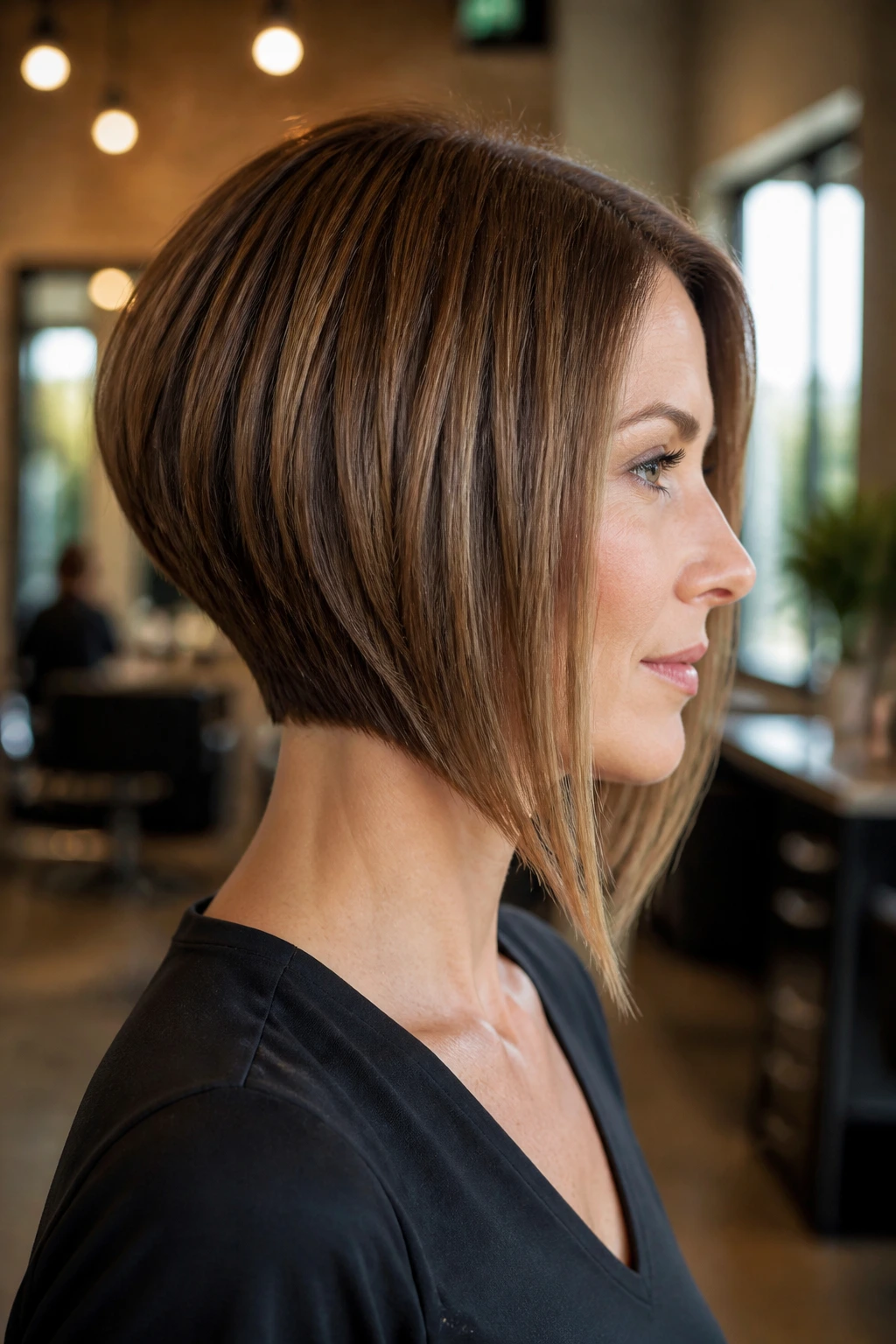
The inverted bob keeps winning because it solves a haircut problem with actual structure. Shorter in back, longer in front, clean at the neck, angled at the face. That setup gives hair a direction to follow, which is why it can look styled even when you’ve only run a brush through it twice and called it a day.
The shape also gives stylists room to adjust for hair density. Fine hair can get a lift from stacked graduation. Thick hair can lose bulk without losing the silhouette. Wavy and curly hair can keep movement in the front while the back stays neat enough not to balloon. That flexibility is a big reason the cut stays useful instead of fading into costume territory.
The whole thing depends on line control. A good inverted bob has a line you can see from across the room and feel when you tuck it behind your ear. If the angle is muddied by too many layers, the haircut loses its backbone. That’s the failure mode people notice first, even if they can’t name it.
Essential Tools for Styling and Maintenance
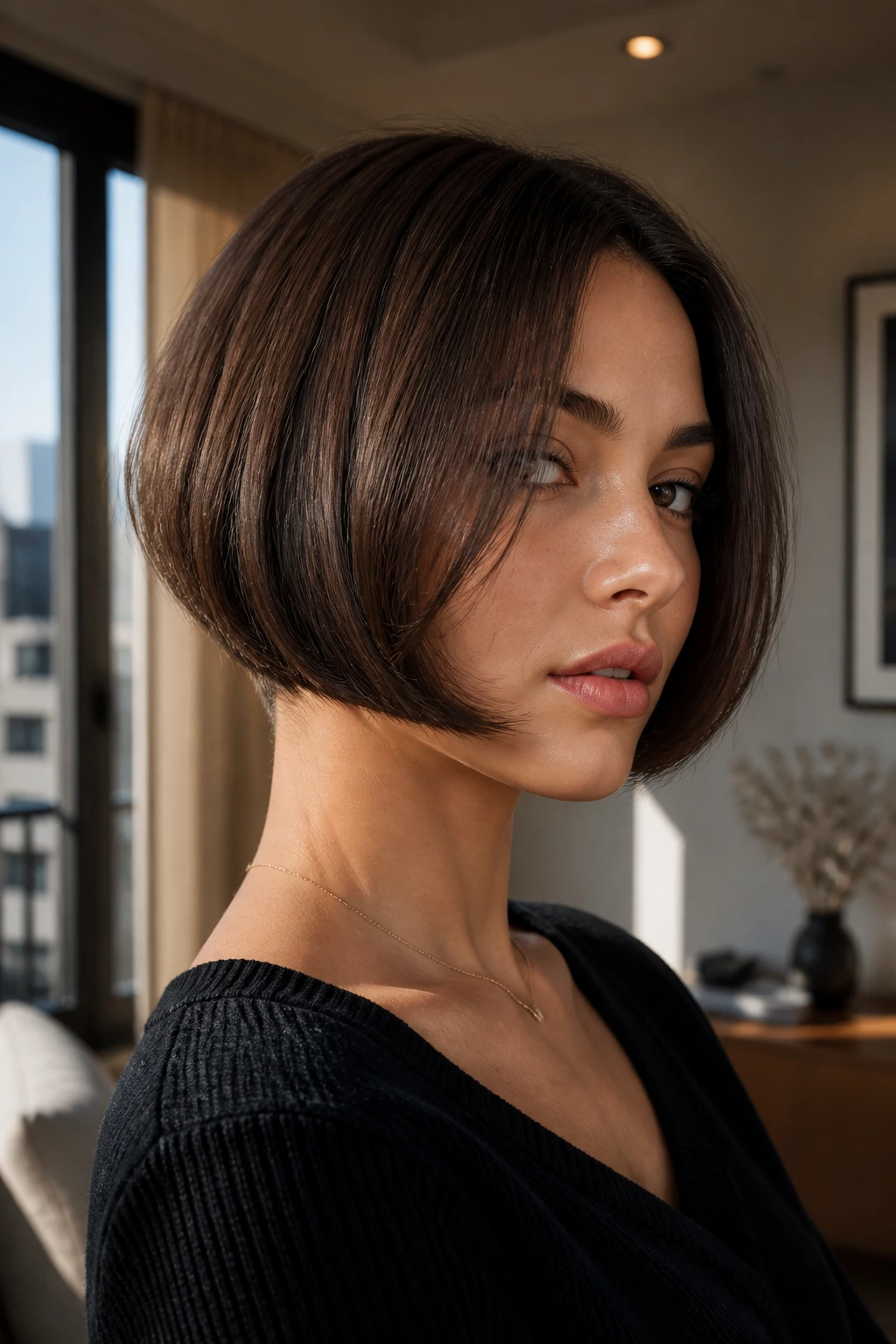
- Haircutting shears: Useful only for a trained hand or a very careful trim of a stray corner; kitchen scissors are a hard no.
- Sectioning clips: Keep the back, sides, and crown separate so the angled line stays clean while you style.
- Tail comb: Helps you part the hair precisely and control the nape area where the shape can go off fast.
- Blow dryer with concentrator nozzle: Sends air where you want it, which matters for smoothing the back and lifting the roots.
- Round brush, 1.5 to 2 inches: Ideal for bending the front ends under or giving them a soft curve.
- Flat iron: Best for a sleek finish or a tiny bend at the front corners; use it sparingly.
- Diffuser: Handy for curly and wavy versions when you want volume without blasting the shape apart.
- Heat protectant spray or cream: Non-negotiable if you’re using heat on the bob more than once a week.
- Light mousse or root lift spray: Gives the crown a little push without making the cut sticky.
- Texture spray or dry shampoo: Useful for lived-in versions and for keeping the back from looking too flat on day two.
How to Choose the Right Inverted Bob for Your Hair Texture
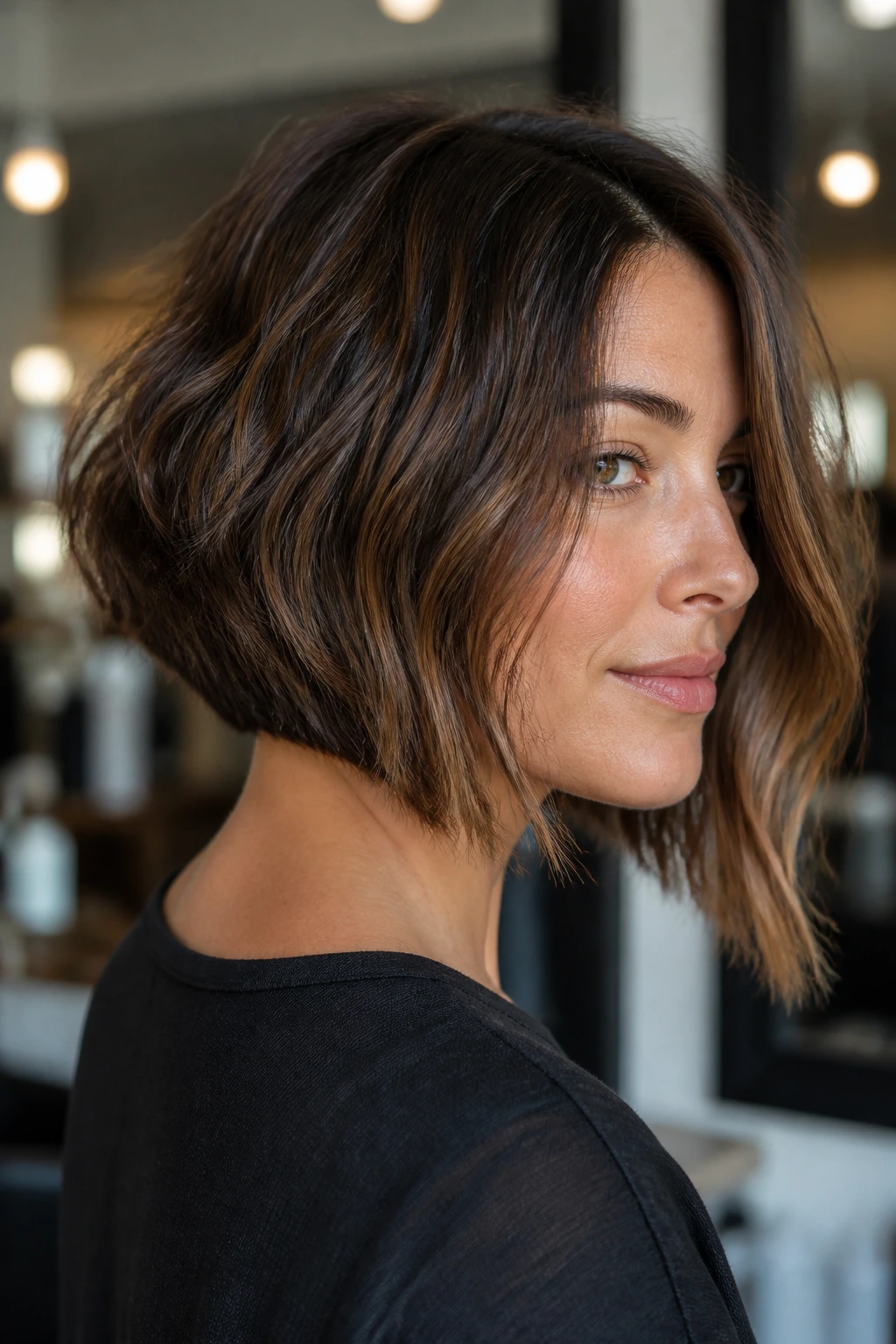
The smartest inverted bob choice starts with the way your hair falls when you do nothing to it. That’s the part many people ignore. If your hair naturally collapses at the crown, a stacked nape or fine-hair version will help. If it puffs at the ends, a blunt or softly layered version may give you a cleaner outline. If it already has movement, you can lean into a choppy or wavy finish without fighting the grain.
Tell your stylist how much length you want at the front in plain language. Say chin, jaw, collarbone, or shoulder. Those reference points matter more than vague words like “short but not too short.” The same goes for the back. If you want the nape exposed, say so. If you want it to graze the neck, say that too. That one choice changes the whole cut.
Bring two photos if you can: one showing the front and one showing the back. People forget that the inverted bob lives or dies on the rear view. A gorgeous front shot tells only half the story. The back is where the shape either earns its keep or falls apart.
How to Style an Inverted Bob Without Fighting It
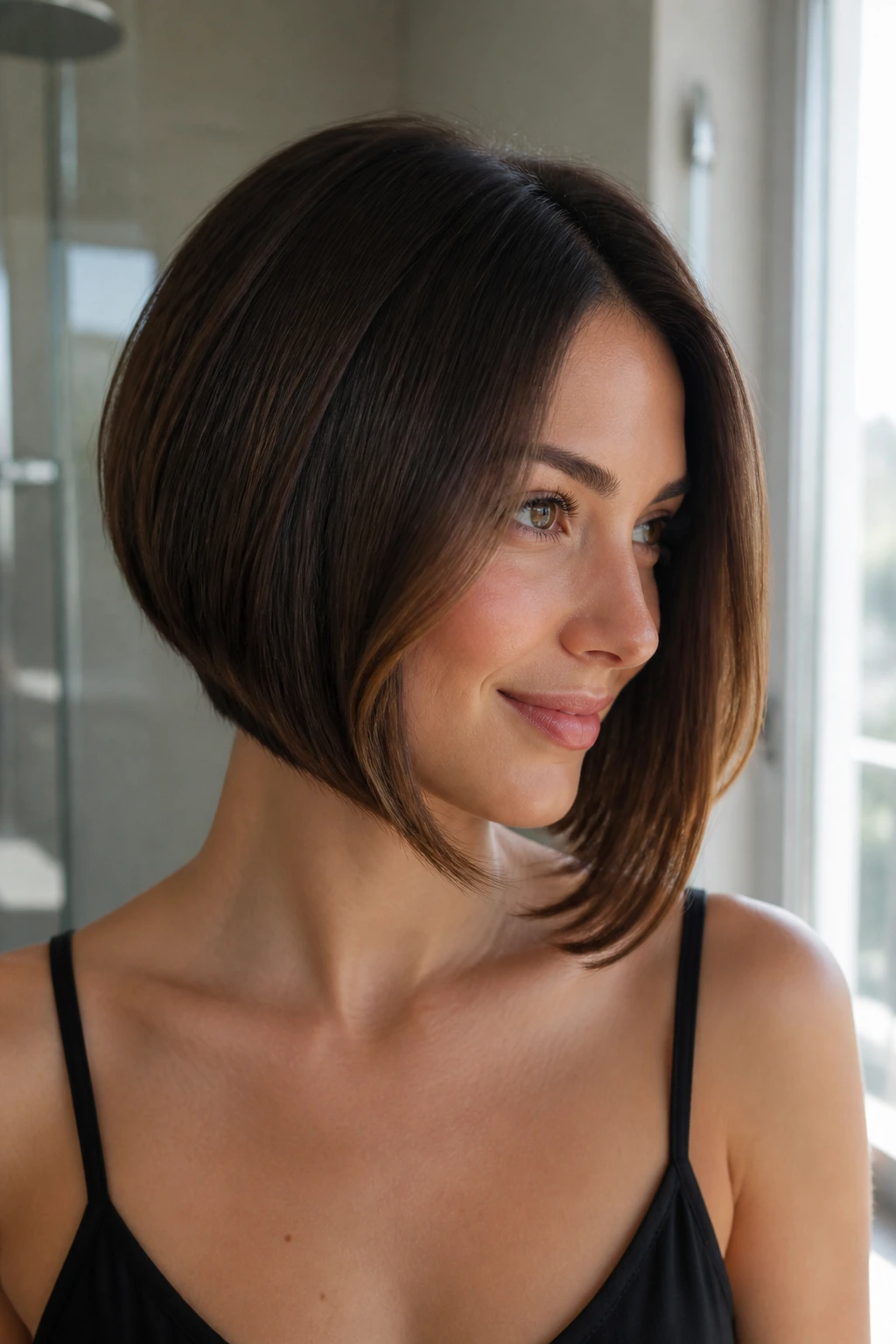
Start with the roots. Always. A lot of bob frustration comes from trying to smooth the ends before the crown has any lift. Blow-dry the back first, using the nozzle to direct air down the hair shaft at the nape, then move to the sides and finally the front corners. That order helps the cut keep its shape instead of puffing in random places.
For straight or sleek versions, use a round brush just enough to curve the ends under. You do not need to curl the whole bob into a loop. That’s how the cut gets too bouncy and loses the line. If the front pieces flip out, a flat iron can correct the last inch or so. Tiny bend. Not a full wave.
For textured or wavy versions, use a light mousse on damp hair and scrunch only after the roots are dry enough to hold shape. A texture spray at the mid-lengths can stop the front from falling into a flat curtain. If you use too much oil, the haircut sinks. If you use too much spray, it gets crunchy. There’s a middle path. Hair usually prefers it.
Common Mistakes That Flatten the Angle
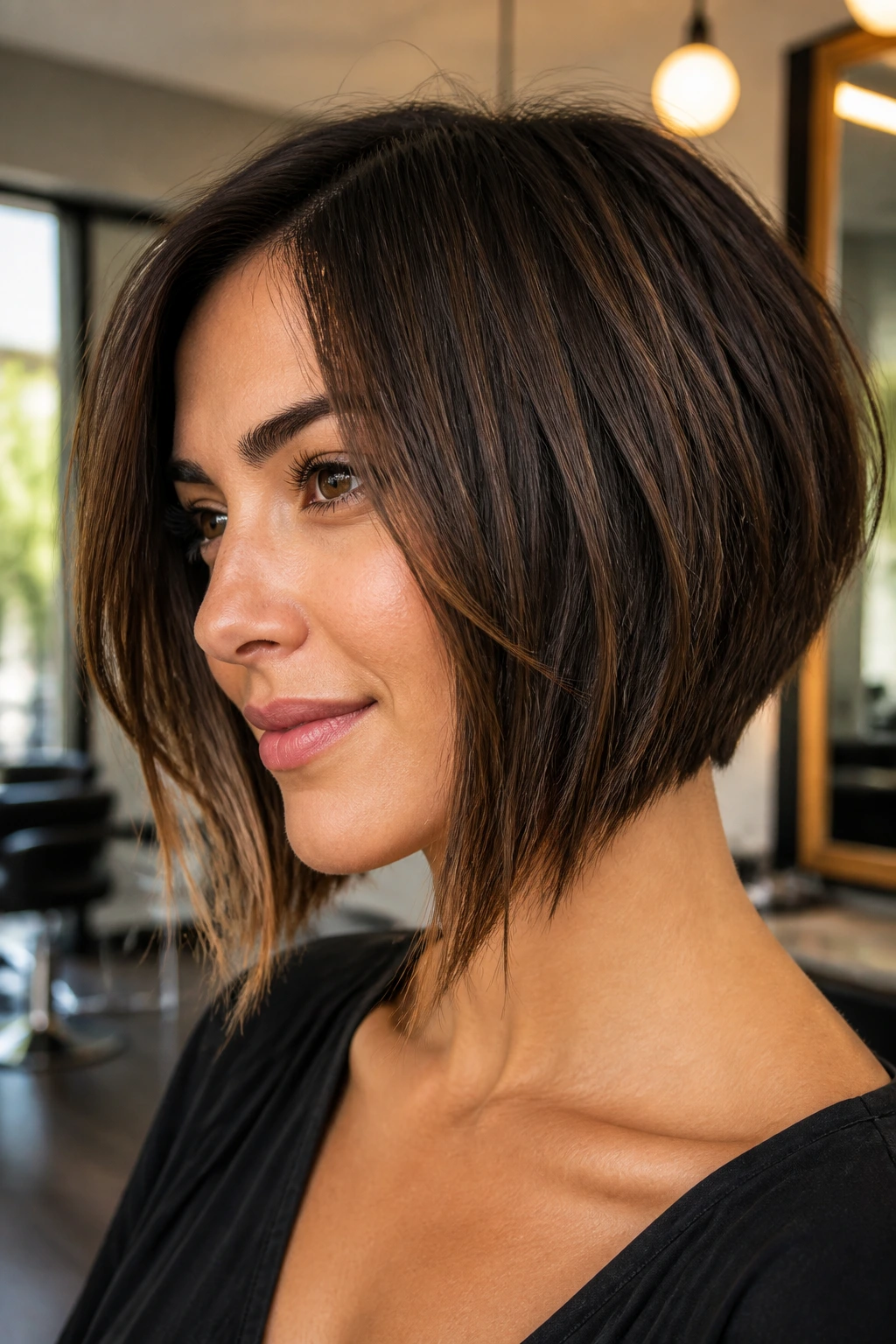
The first mistake is cutting the back too long. Once the nape creeps down, the whole inverted shape loses its point and starts reading like a regular bob with a vague opinion. The fix is simple: keep the back visibly shorter and have it trimmed before it starts brushing the collar.
The second mistake is over-thinning the ends. This happens a lot with thick hair. The haircut may feel lighter for a few days, but then the perimeter starts looking stringy and weak, especially around the front. Ask for weight removal inside the haircut, not so much at the edge that the line disappears.
Flat roots are another problem. If the crown collapses, the angled line looks shorter and the shape feels tired. A little mousse, a root-lift spray, or a quick blast in the opposite direction of your part can change that fast. Don’t spend twenty minutes perfecting the ends while the top sits limp.
Last, don’t let the haircut grow out for too long without touching the back. Inverted bobs are shape-dependent. A long gap between trims can make the back swell while the front hangs on, and then you’re paying to rescue the outline instead of maintaining it.
Variations and Adaptations to Try
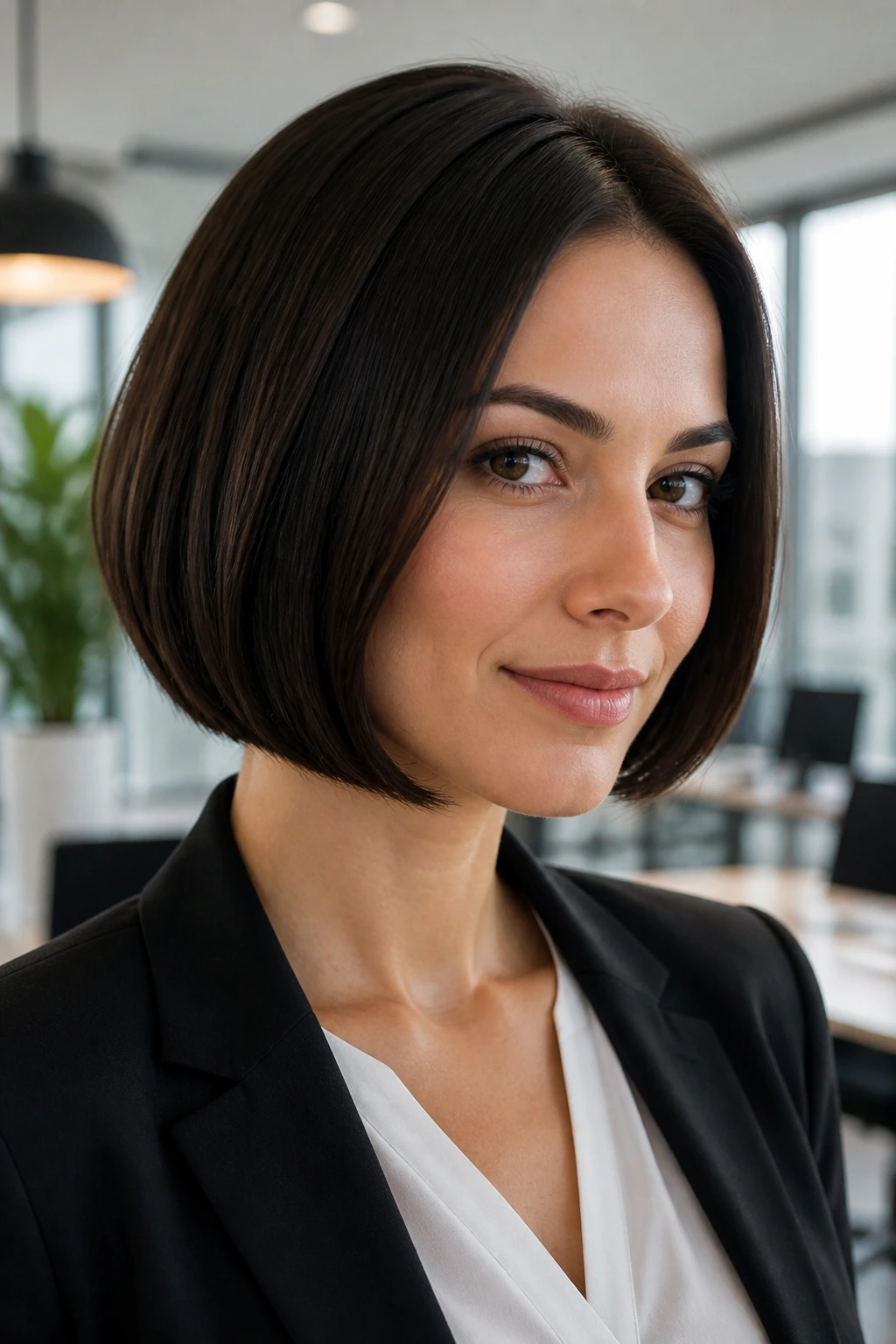
The Polished Office Angle keeps the line clean, the ends bent under, and the front around the jaw or collarbone. It’s the version I’d choose if you want the haircut to look sharp with minimal daily fuss. A side part or soft center part both work here.
The Air-Dried Wave swaps the sleek finish for loose bend and texture spray. Ask for softer layering through the front so the haircut doesn’t fight your natural movement. This one is good when you want structure without feeling overdone.
The Curl-Friendly Shape keeps the back shorter and the front longer, but it’s cut with shrinkage in mind. The layers should be rounded and the ends left full enough to avoid a triangular finish. Best for natural curls that need room to spring.
The Grow-Out Lob lengthens the front pieces to the collarbone and softens the stacking in back. It keeps the inverted silhouette without demanding frequent trims. If you’re nervous about commitment, this is the safest version.
The Bold Nape Detail adds an undercut or a tighter nape to remove bulk from thick hair. It gives the bob a cleaner underside and makes the angle read more sharply. Great if your hair expands at the back faster than you can dry it.
Maintenance, Trims, and Grow-Out
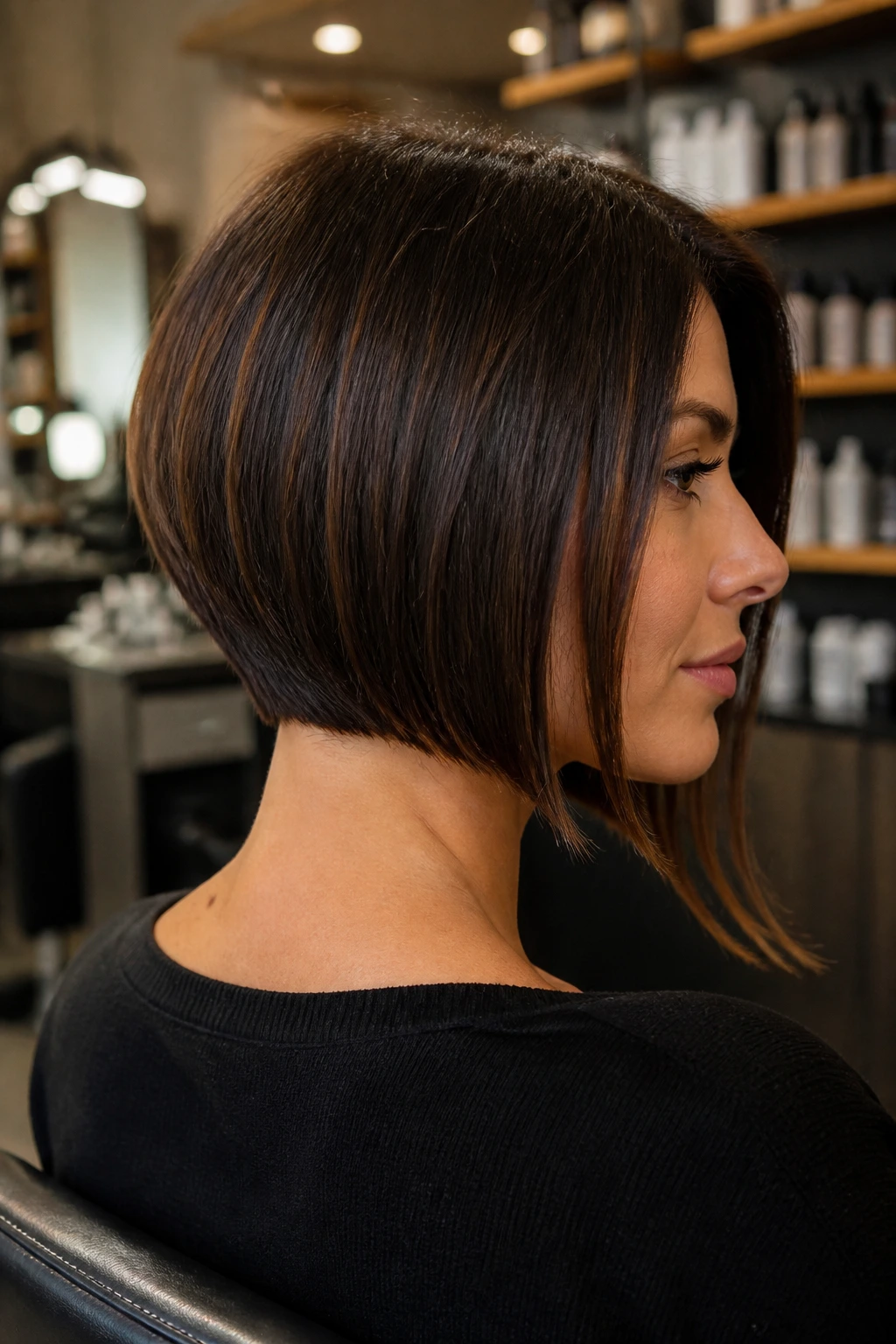
Most inverted bob haircuts hold their shape best with trims every 6 to 8 weeks. If the cut is very sharp or stacked, lean closer to 6. Softer, longer versions can stretch a little farther, especially if the front pieces are allowed to skim the collarbone. The back, though, is the part that gives the shape away first when it grows.
Between trims, keep an eye on the nape and the corners around the jaw. That’s where the line changes fastest. A little dry shampoo can help the roots stay lifted on day two or three, but it will not fix a grown-out back. Nothing will. That’s a scissors problem.
If you’re growing the cut out, ask your stylist to keep the front corners longer while softening the back instead of letting everything grow evenly. Uneven grow-out sounds wrong until you see it in the mirror. Then it makes sense. You keep a shape instead of a blob.
Sleeping on a silk pillowcase or clipping the front loosely before bed can help the bob keep its bend. The morning result is less frizz around the corners and fewer flyaways at the nape. Small thing. Big difference.
Frequently Asked Questions
Is an inverted bob the same as a stacked bob?
Not exactly. A stacked bob focuses on the layered graduation at the back, while an inverted bob emphasizes the longer front angle. Many haircuts blend both ideas, which is why the terms get used interchangeably, but the visual emphasis is slightly different.
Does an inverted bob work on fine hair?
Yes, as long as the cut keeps enough density in the ends and enough lift at the crown. A fine-hair version should avoid over-thinning and usually looks best with a clean perimeter and a little root support from mousse or spray.
Can curly hair wear an inverted bob without looking boxy?
It can, but the curl pattern has to be cut with shrinkage in mind. Rounded layers and a shorter nape help the shape sit correctly once the curls dry. A curly inverted bob looks best when the front is left long enough to frame the face after shrinkage.
How often do I need to trim it?
Every 6 to 8 weeks is the safe range for keeping the angle visible. If the cut is very short or sharply stacked, 5 to 6 weeks may feel better. Longer versions can stretch a little farther, but the back should still be checked regularly.
What if the back looks too bulky?
That usually means the graduation wasn’t cut cleanly or the interior weight is too heavy. A stylist can remove bulk from the inside without destroying the perimeter. At home, a round brush and proper blow-dry direction can help, but a shape fix needs a trim.
Can I grow an inverted bob into a lob?
Absolutely, and it’s one of the easiest bob shapes to grow out. Keep the front corners trimmed only lightly while letting the back catch up. That keeps the silhouette soft instead of awkward.
Will an inverted bob make my face look longer?
It can, especially if the front is kept just below the jaw and the crown has height. If you want a softer effect, add curtain bangs, side-swept fringe, or a rounded outline so the face isn’t framed by one hard diagonal line.
What should I ask for if I want the cut to look less severe?
Ask for a softer graduation in the back, longer face-framing pieces, and light internal layering instead of a blunt perimeter. That keeps the angle but removes the hard edge that makes some inverted bobs feel severe.
A Shape That Holds Its Line

The best inverted bob haircuts do something rare: they keep looking shaped even when life gets in the way of perfect styling. The back stays neat, the front does the framing, and the whole cut keeps its angle long enough to justify the trim schedule. That’s useful hair. No drama needed.
If you’re choosing one, start with your texture and your tolerance for upkeep. A sharp, stacked bob and a soft, collarbone version are both inverted bobs, but they live very different lives. Pick the one that matches your mornings, not the one that only looks good in a salon mirror.
