



A brown bob can look flat in one chair and expensive in another, and the difference usually comes down to warmth. Chestnut, mocha, cinnamon, walnut, caramel, copper-brown—those shades catch light at the bend of a jaw-length cut and keep the shape from disappearing into one solid block of color.
That matters because a bob lives on line, shine, and movement. A blunt edge needs a color that shows the edge off. A layered bob needs dimension that keeps the ends from looking muddy. Warm brunettes do both jobs at once, which is why brown bob haircuts can feel polished without acting fussy.
I keep coming back to them because they solve two problems in one pass: the cut gives structure, and the tone gives depth. Add a side part, a curtain fringe, or a few caramel ribbons around the face, and the whole mood changes fast. The strongest versions look intentional even when they’ve only had a quick blow-dry and a touch of serum.
Why Warm Brown Bobs Keep the Shape Looking Alive
Warmth changes the whole read of a bob. A chestnut or mocha base stops the cut from looking like a hard helmet and gives the ends a little glow, especially around the cheekbone and jaw.
The color does some of the shaping work. On a blunt bob, deeper roots and softer brown mids make the line look thicker; on a layered bob, caramel or cinnamon pieces show where the movement is.
They’re kinder in indoor light. Ashy brunettes can flatten out under fluorescent or low, yellow lighting. Warm brown tones keep a bob from disappearing into one dull shade.
They suit a lot of textures. Fine hair gets more visual body from a glossy chocolate or toasted almond finish. Thick or wavy hair gets less bulk and more control from walnut, mocha, or mahogany.
They grow out with less drama. A soft brunette root and warm mid-lengths usually blur the grow-out line better than high-contrast highlights, so the cut can hold its shape between trims.
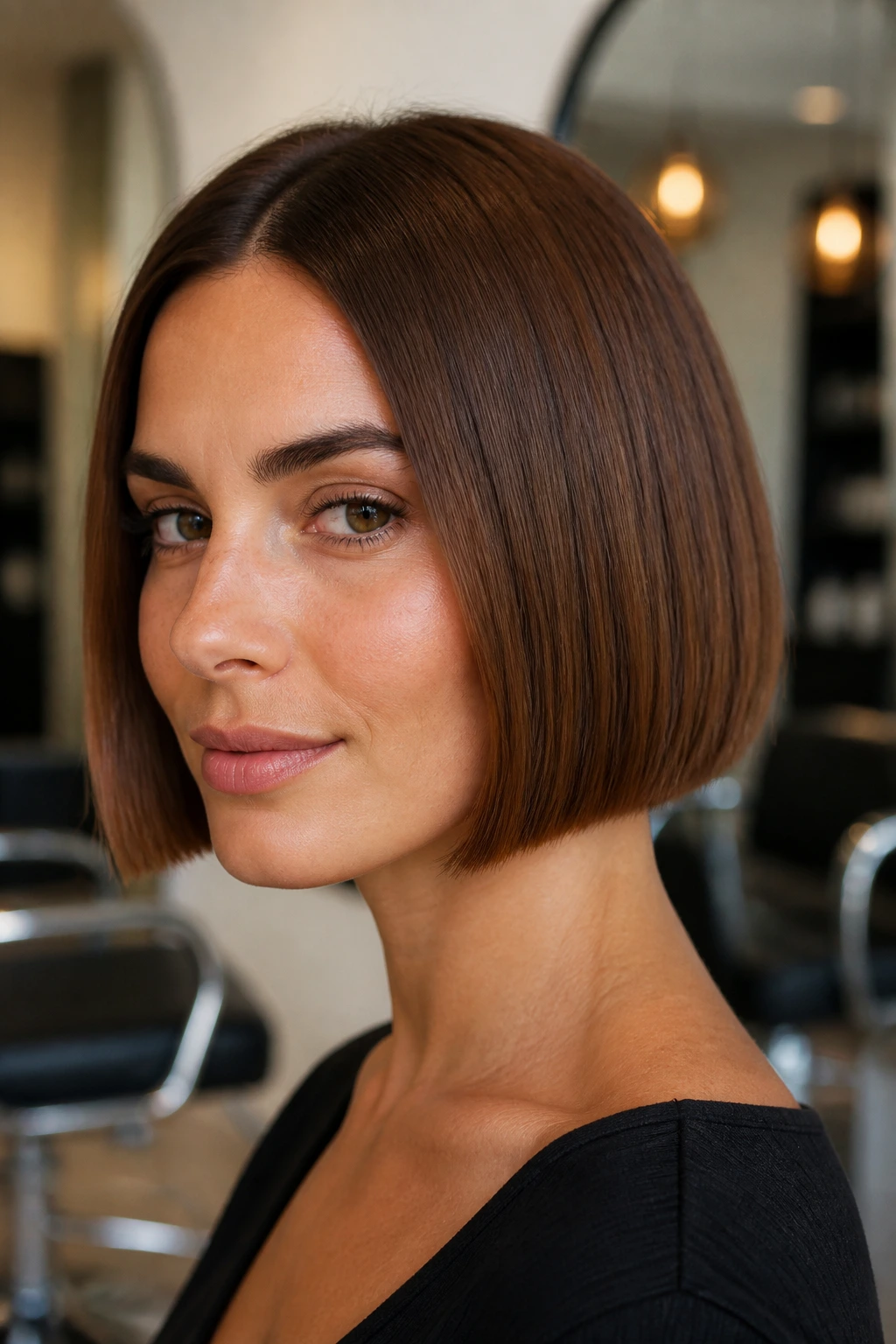
1. Chestnut Blunt Bob
Chestnut is the shade that makes a blunt bob feel dense in a good way. The color sits in that sweet spot between brown and red, so the straight line at the bottom reads crisp instead of severe. On chin length or just below, it gives the hair enough warmth to keep the edge from looking like a paper cut.
What I like here is the simplicity. No heavy layering. No chunky highlights. Just a clean line and a chestnut glaze that looks richer every time the hair swings across the jaw.
Why It Works
Chestnut catches light without shouting. That matters on a blunt cut, because the shape is already the star. If your hair is fine, ask for a one-length line with minimal internal thinning; too much texturizing takes away the density this look needs.
Ask For This
- One-length bob at the jaw or just under it
- Chestnut brown base with a soft warm gloss
- A clean center part or slightly off-center part
2. Mocha French Bob
Want a French bob that doesn’t read cold? Mocha fixes that. The shorter length gives it that easy Paris-at-the-corner-café attitude, but the brown tone keeps the whole thing from feeling stark against the skin.
This version looks especially good when the ends are air-dried with a slight bend. A tiny bit of movement at the cheek keeps it from turning into a block. The color does the rest.
What Makes It Different
Mocha is deeper and smoother than caramel, less red than chestnut, and calmer than auburn. On a short bob with micro-fringe or a soft eyebrow-grazing fringe, that keeps the cut looking plush.
Best For
- Straight to slightly wavy hair
- Smaller faces that can carry a short line
- People who want shape without a lot of styling time
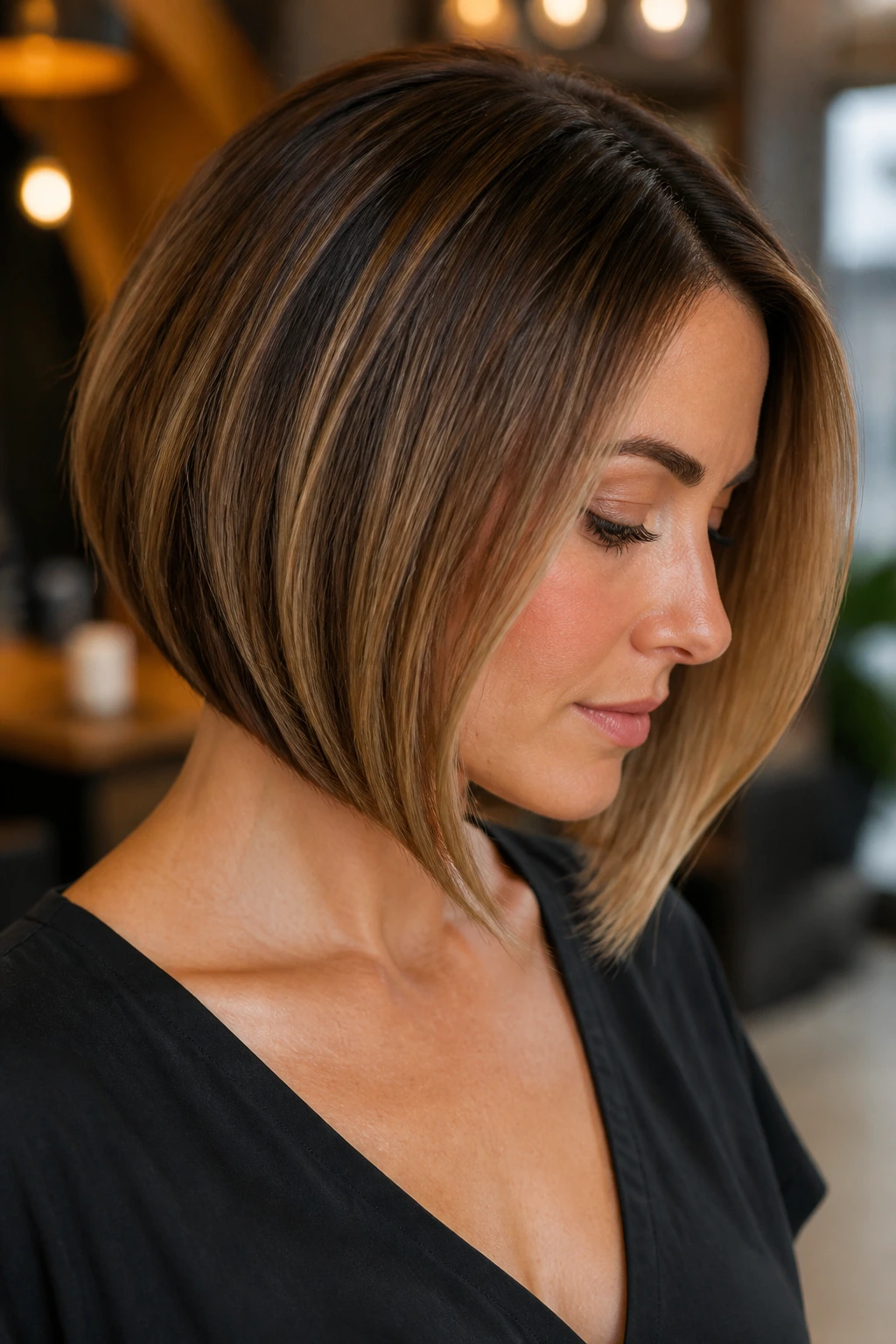
3. Caramel A-Line Bob
A-line bobs live or die by the angle. Caramel gives that angle some lift, especially when the front pieces sit just below the chin and the back hugs the nape. The color shifts a little lighter around the face, so the cut doesn’t feel heavy.
There’s a reason this one shows up so often in salons. It gives you the clean outline of a structured bob, but the caramel ribbons break up the mass and make the hair move when you turn your head.
How to Wear It
Keep the front pieces a touch longer than the back, and ask for fine caramel weaving rather than big stripes. If your hair is thick, this shape removes bulk without losing the strong outline.
Small tip: tuck one side behind the ear. The angle looks sharper.
4. Cocoa Textured Bob
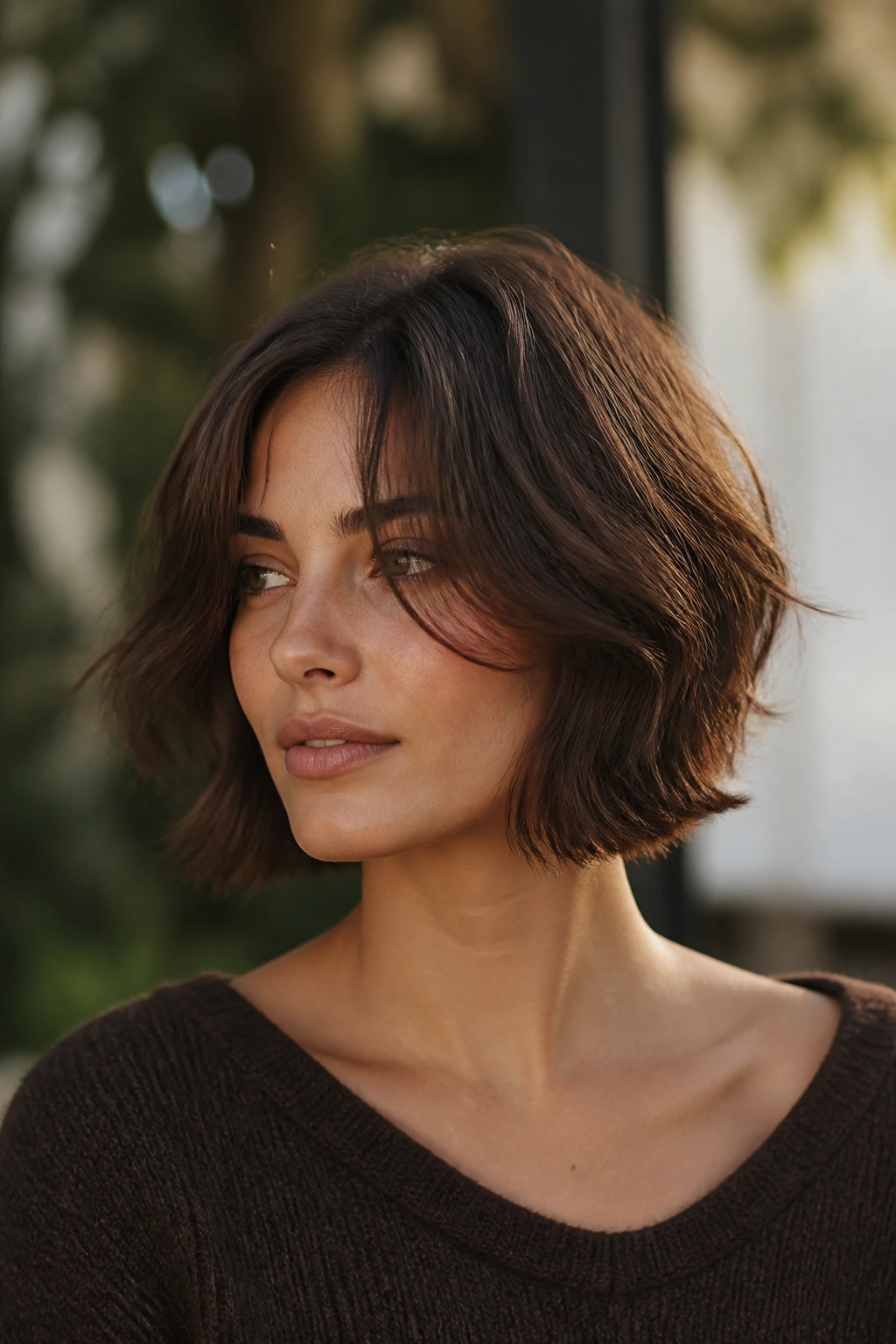
Cocoa brown is the fix for a bob that needs softness without losing depth. It’s a deeper, milkier brown than chestnut, and on a textured cut it keeps the layers from going fuzzy at the ends. The result looks relaxed, not unfinished.
This is the bob I’d point to for wavy hair that wants movement but hates too much layering. A few pieces around the crown, a slightly broken-up perimeter, and a cocoa base make the whole style feel lived-in in the best way.
The Best Part
Cocoa reads especially well on thick hair because it gives the eye somewhere to land. Instead of seeing bulk, you see shadow and shine.
5. Cinnamon Bob with Curtain Bangs
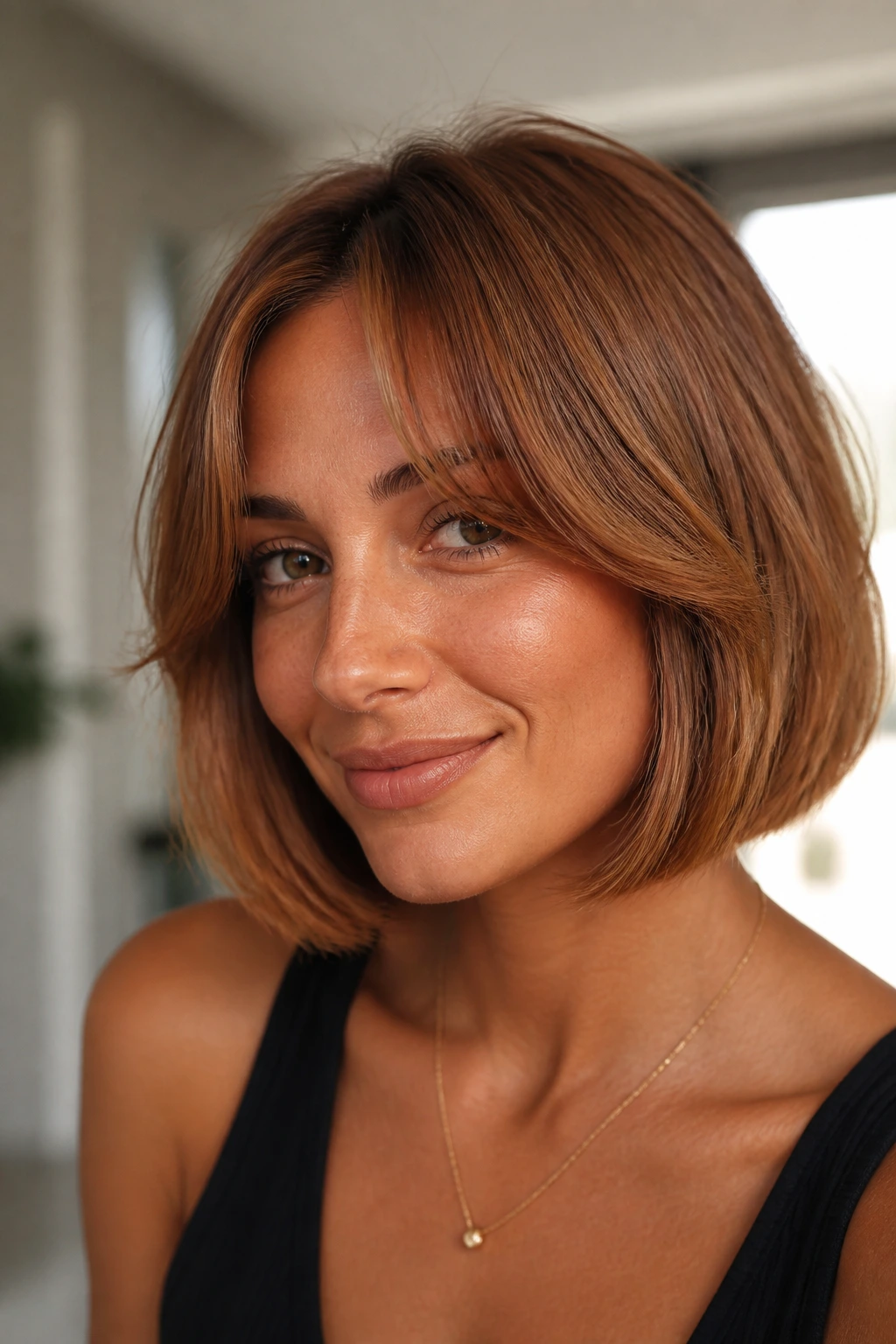
Cinnamon does the heavy lifting here. It brings a warm red-brown note that makes curtain bangs look deliberate instead of accidental, and the bob beneath them stays soft at the ends. This is one of those cuts that looks like it has personality even before you style it.
The curtain fringe matters because it opens the face, while the cinnamon tone adds that little spark around the eyes and cheekbones. On shoulder-grazing or chin-length bobs, the effect is especially good.
When It’s the Right Choice
If your hair falls flat around the front, cinnamon adds enough visual lift to keep the fringe from blending into the rest of the cut. It also flatters hazel and green eyes without needing bright highlights.
6. Walnut Jaw-Length Bob
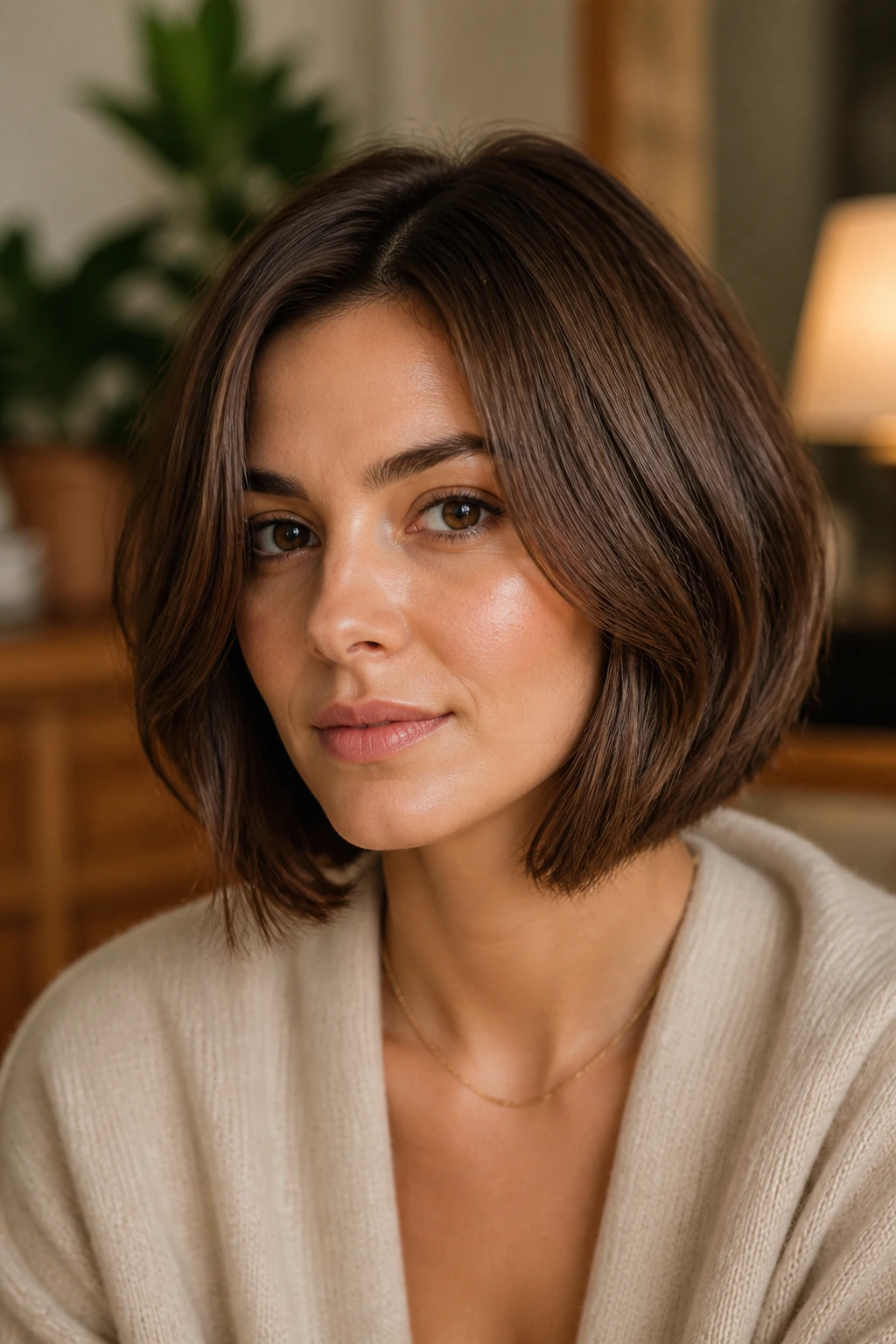
Walnut is the brown I reach for when I want something calm and polished. It’s cooler than chestnut but still warm enough to keep a bob from feeling muddy, and jaw length gives it a clean, face-framing edge.
This cut is a good match for people who don’t want obvious color work. No chunky ribbons. No dramatic contrast. Just a smooth brown that supports the line of the bob and makes the shape look naturally full.
Why It’s So Useful
A jaw-length walnut bob sits in a practical zone. It’s short enough to dry fast, long enough to tuck behind the ears, and neat enough to look put together on second-day hair.
7. Auburn-Brown Bob
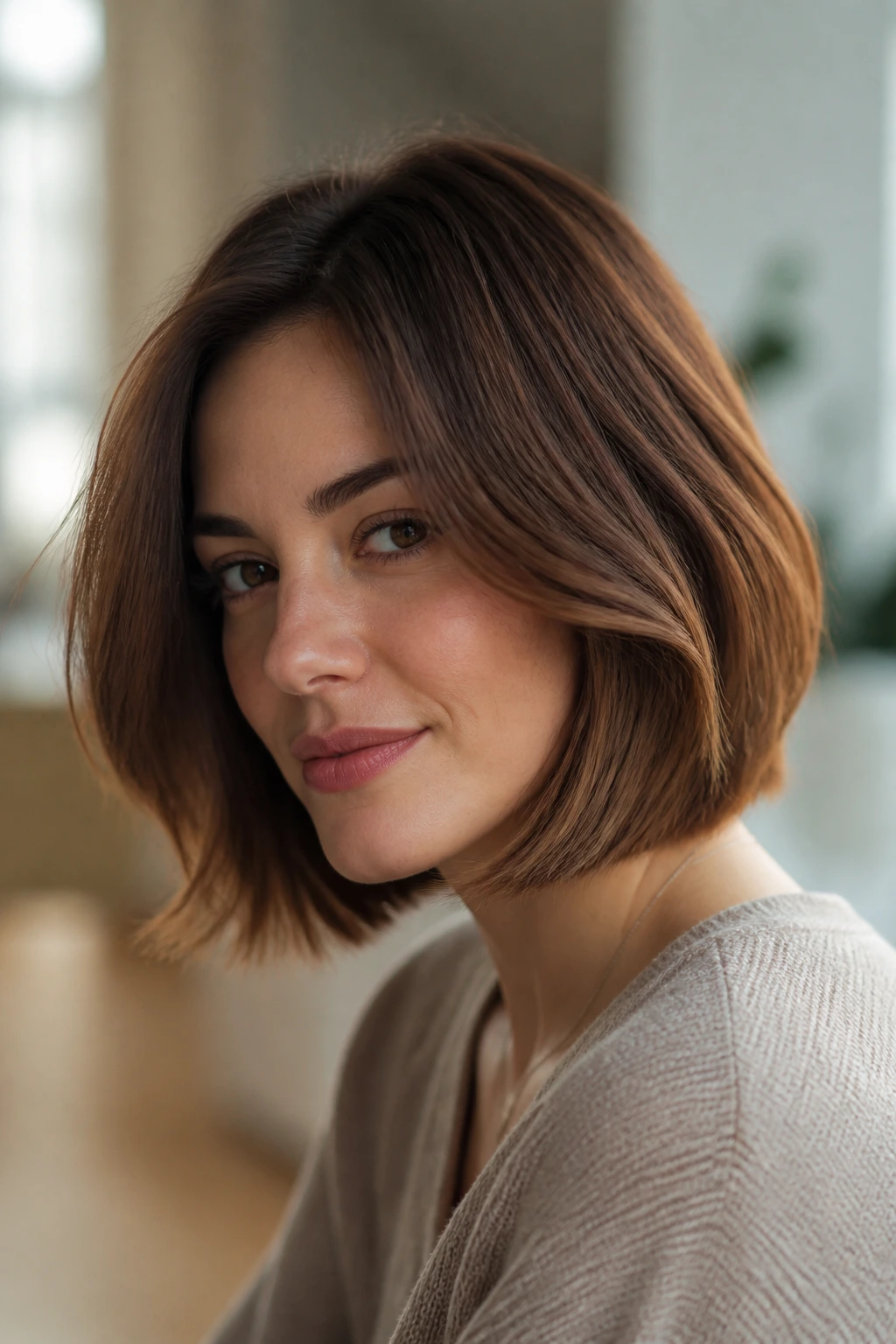
Auburn-brown adds just enough red to wake up a short cut. If chestnut feels too safe and copper feels too loud, auburn sits right in the middle. It gives the bob warmth that shows up most at the ends and around the face.
This is a strong move for anyone whose hair naturally pulls warm in the sun. Instead of fighting that note, the cut leans into it and makes the whole bob look richer.
What to Ask Your Stylist
Ask for a brown base with auburn reflection, not a bright red overlay. The goal is warmth you notice when the head moves, not a color that takes over the room.
8. Chocolate Bob with Soft Layers
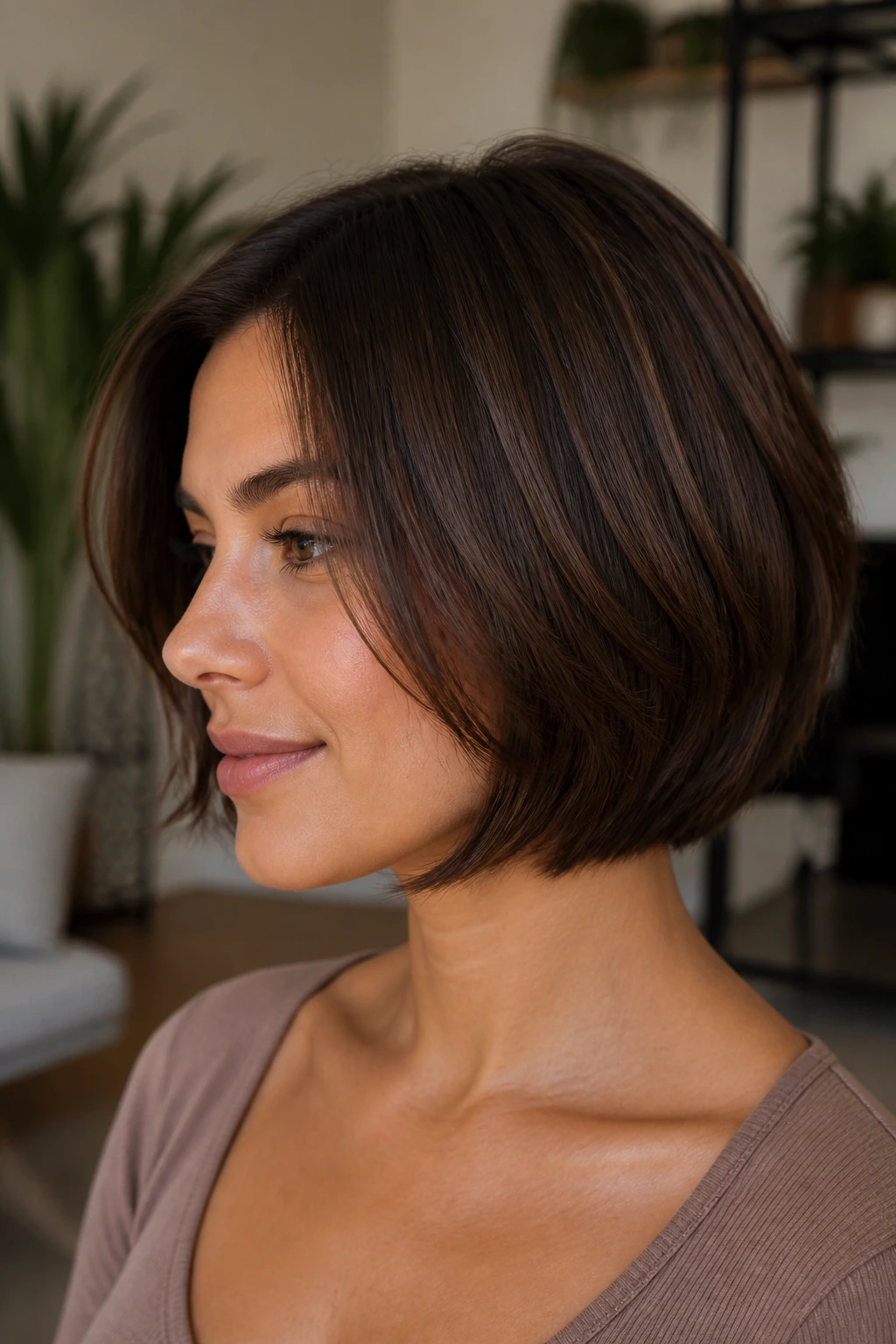
Chocolate brown with soft layers is the safe choice in the best sense. It gives a bob shine, depth, and a little movement without asking for much fuss. The layers should be barely there—enough to keep the ends from looking boxy, not enough to erase the shape.
This works especially well if you like a sleek blowout. Chocolate makes the cut look full even when the styling is minimal, which is why it keeps showing up on hair that needs a little polish but not a lot of drama.
If your hair is coarse, this is a smart way to make the outline feel smoother. If it’s fine, keep the layers long and subtle.
9. Toasted Almond Bob
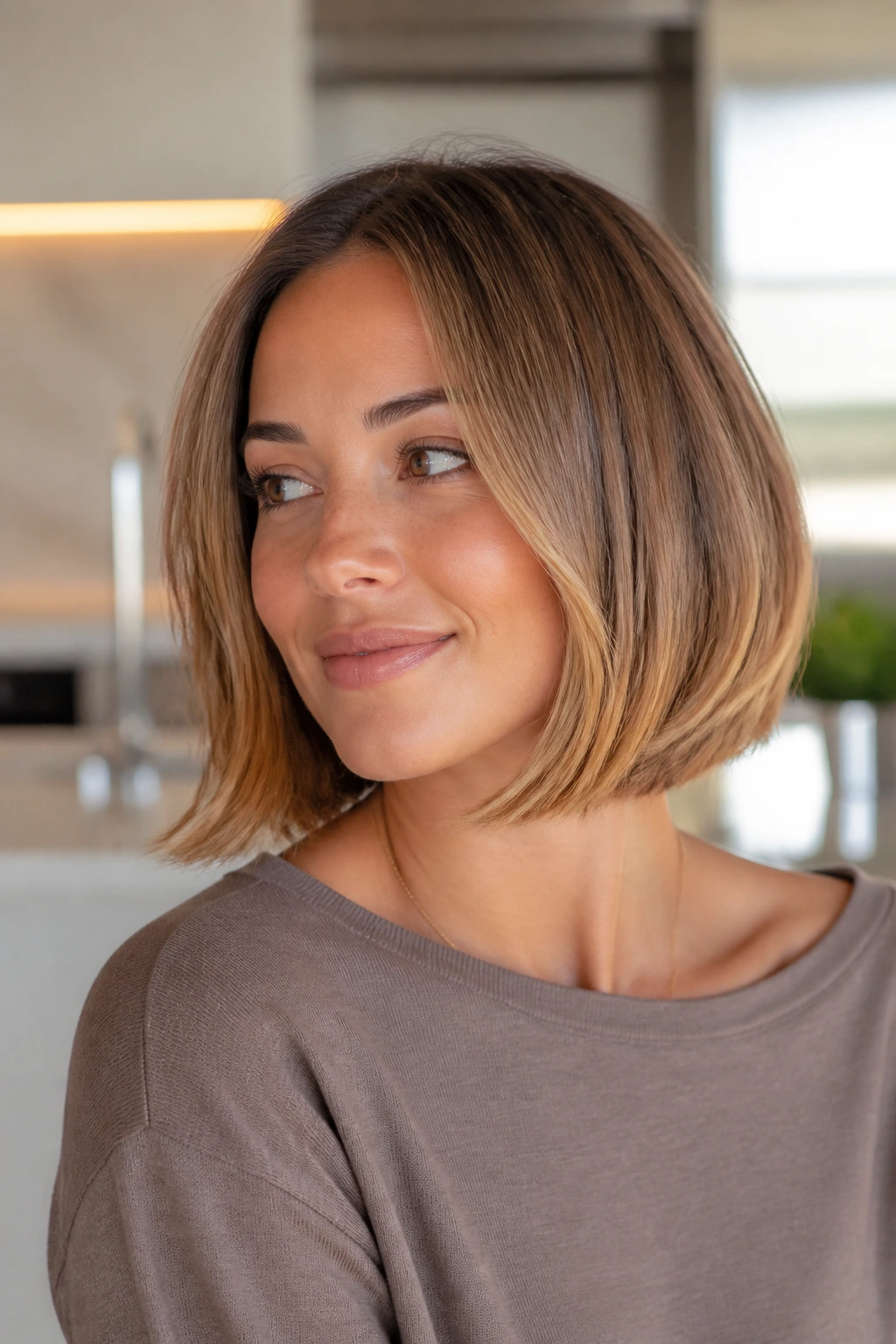
Toasted almond reads lighter, softer, and a touch creamier than deep chocolate. It’s the brown bob for someone who wants warmth but doesn’t want to go dark all over. A little gold in the tone keeps the ends from vanishing.
This shade is especially kind to bobs with a round brush finish. The lighter brown catches the curve at the bottom, so the shape looks airy instead of heavy.
Best For
- Medium to fine hair that needs visual lift
- People who want a brighter brunette without blonde pieces
- Straight or softly wavy textures that reflect shine well
10. Mahogany Sleek Bob
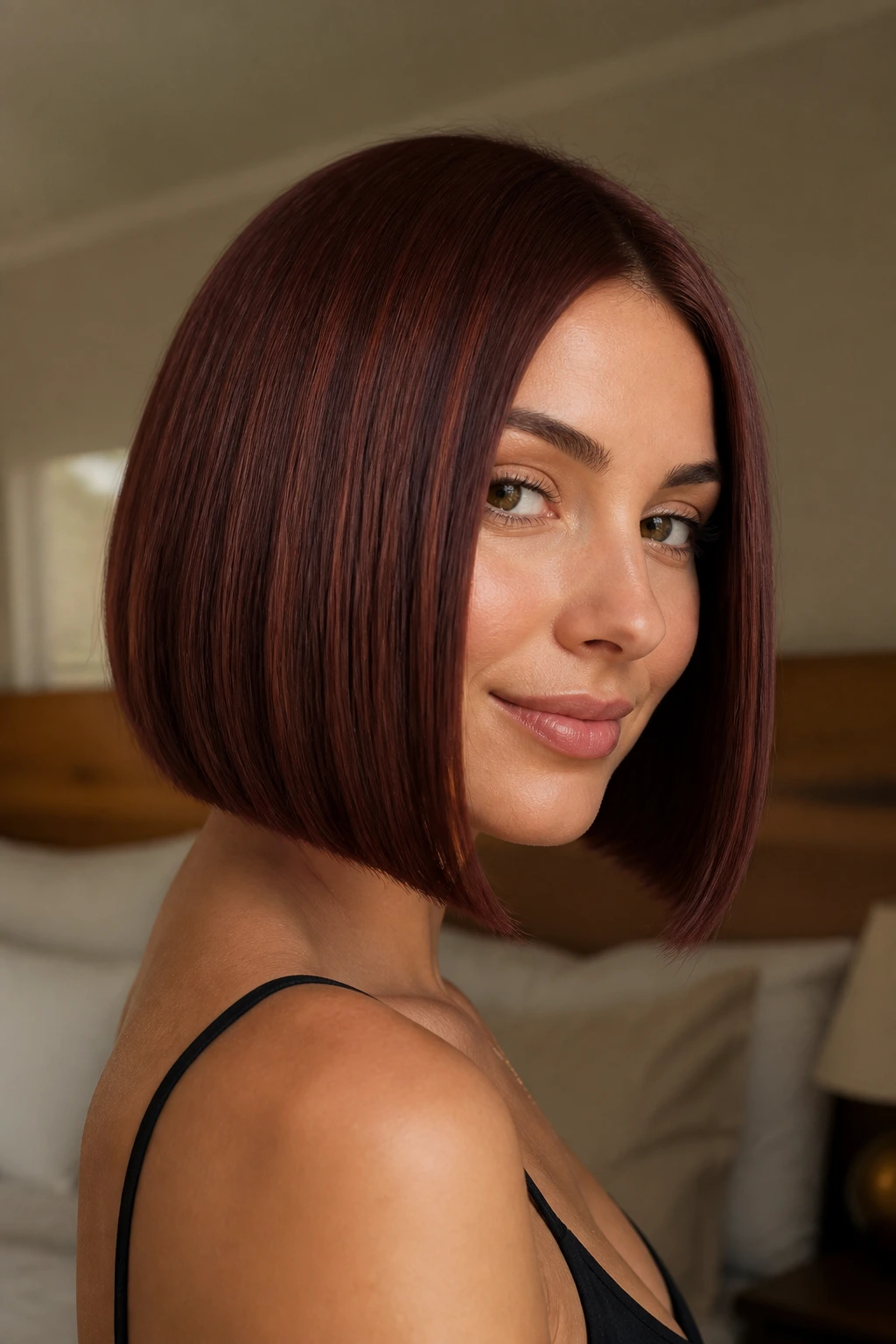
Mahogany gives a sleek bob a quiet edge. It carries a deeper red-brown cast that looks especially sharp on straight hair, where every line shows. If chocolate is soft-spoken, mahogany has a little more attitude.
The magic is in the finish. This cut needs a smooth blow-dry or flat-iron bend, because mahogany looks best when the light can move across it in a clean sheet. Rough texture can make the tone look darker than it is.
Use It When
You want the bob to feel a touch dramatic without going jet black. Mahogany does that neatly.
11. Hazelnut Side-Part Bob
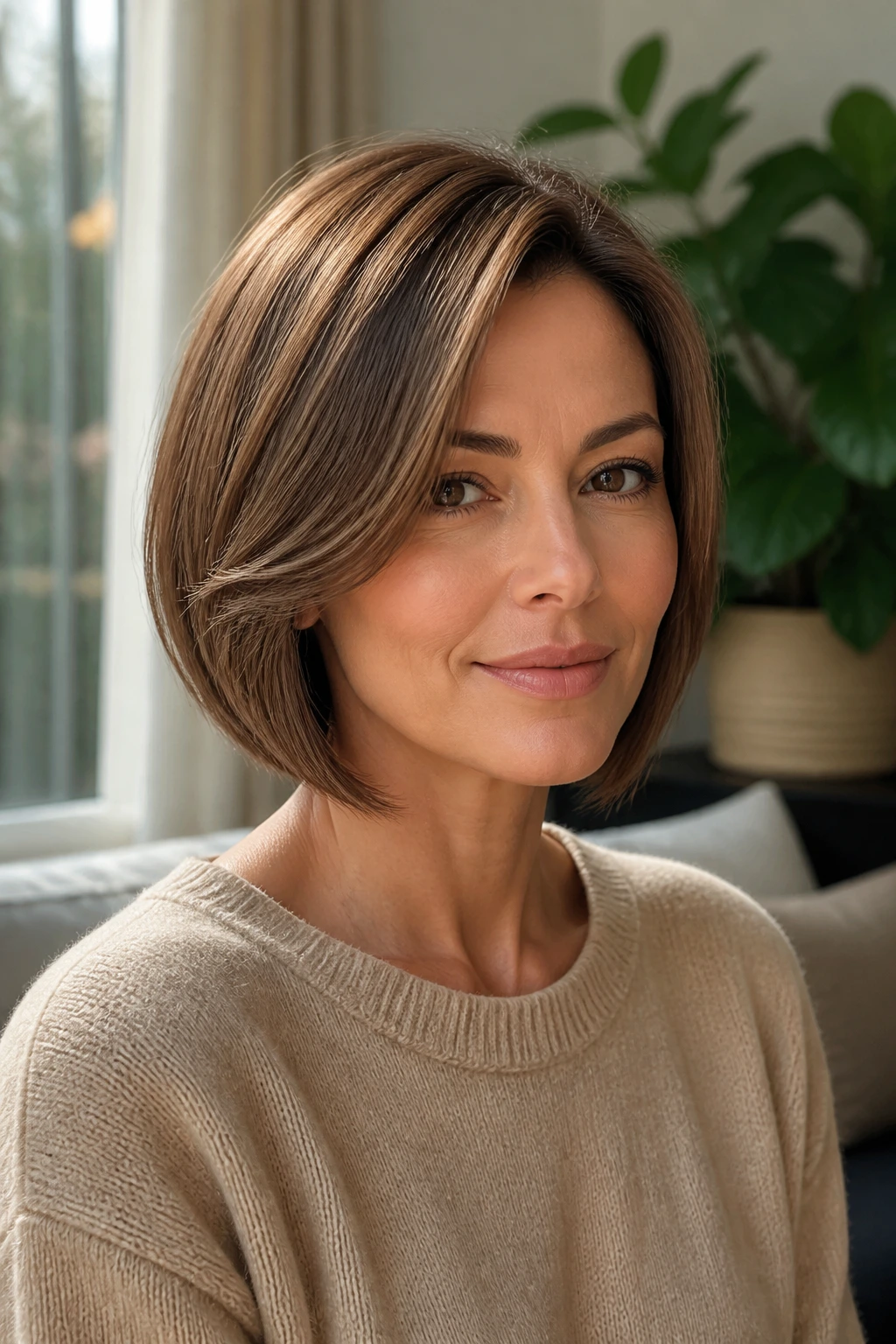
A side part changes the whole balance of a bob, and hazelnut keeps that balance gentle. The part adds lift at the crown, while the warm brown tone makes the side-swept front look soft instead of severe.
This is one of the better choices for anyone with finer hair around the hairline. The deeper side part helps with volume, and hazelnut gives the cut a little reflected light without forcing highlights into the mix.
Simple Styling Note
Blow-dry the front away from the face, then let the part fall naturally. Don’t overthink it. The less you fight the shape, the better this one sits.
12. Espresso Bob with Face-Framing Ribbons
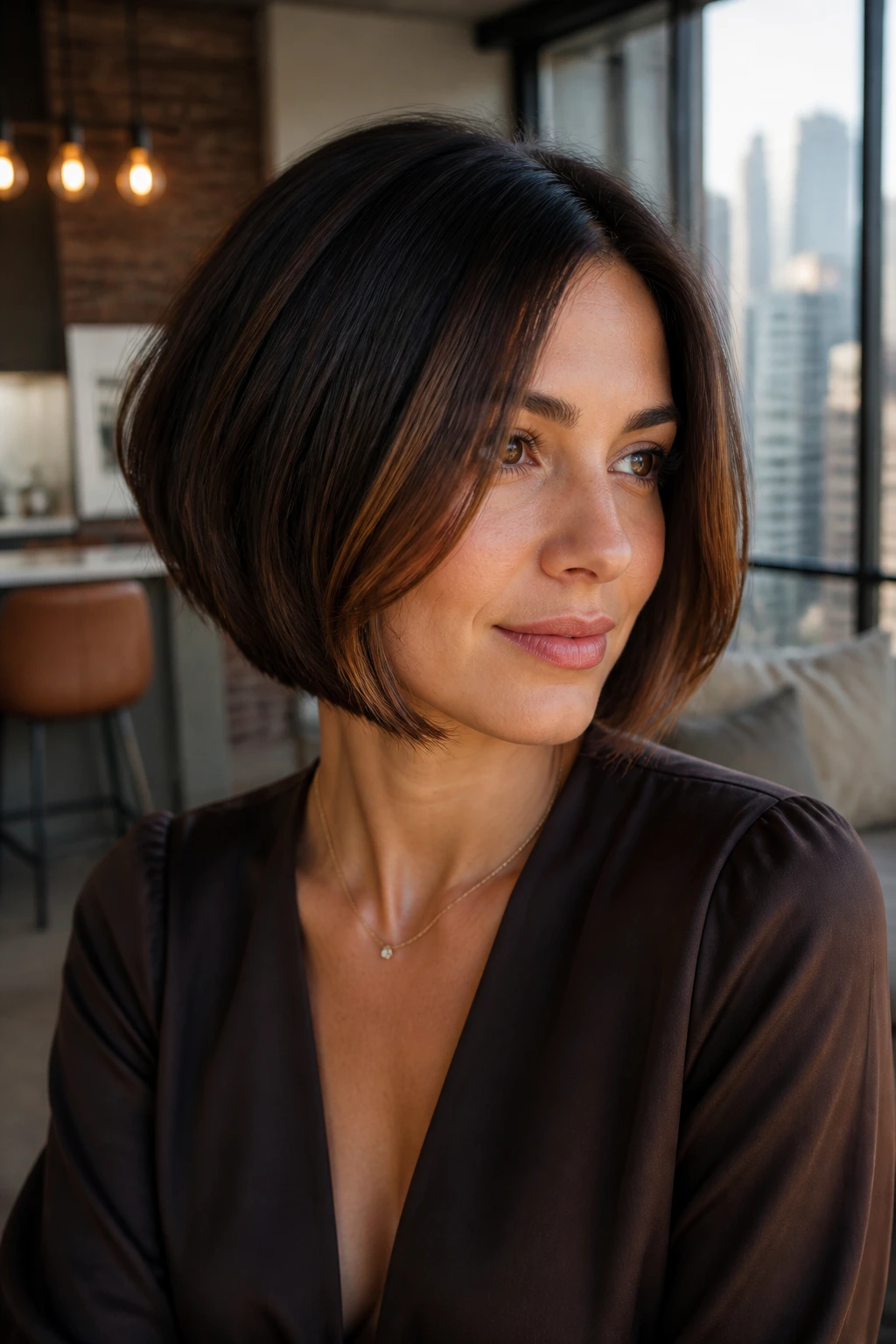
Espresso is the darker end of the brown family, and the face-framing ribbons are what stop it from going flat. A few warmer pieces around the front break up the depth and pull the eye up toward the cheekbones and eyes.
This is a good move if you like a polished bob but don’t want an all-over lighter look. The base stays rich and dark; the ribbons do the brightening. That contrast makes the haircut feel more expensive, which is a blunt way to say it, but there it is.
Why It Works
The darker base gives the bob weight. The warmer ribbons keep it from looking too dense. Together, they make the cut read dimensional even when the styling is simple.
13. Warm Brunette Shag Bob
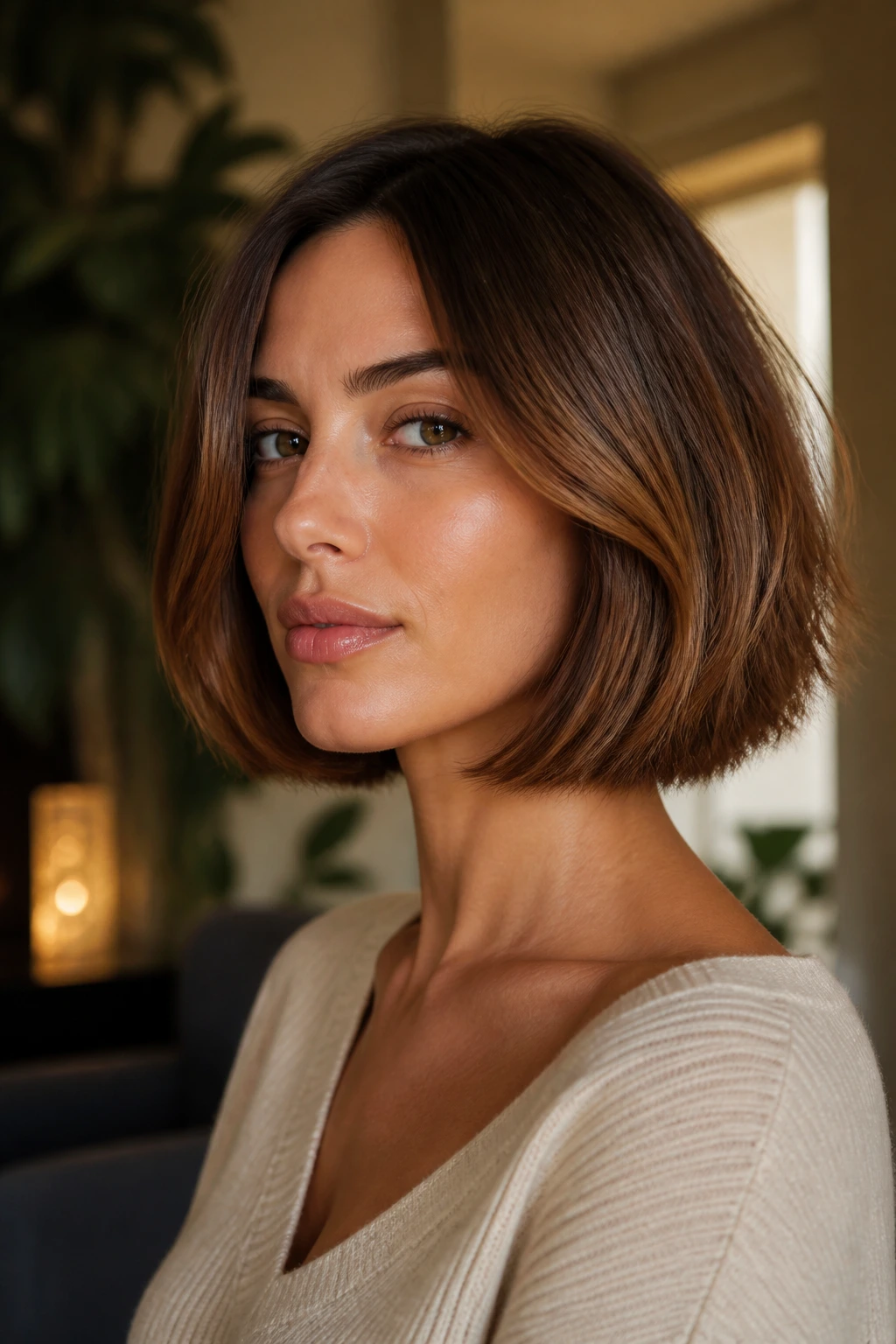
A shag bob needs a tone that can handle movement, and warm brunette does that better than a flat ash brown. The layers can get busy fast, so a mocha or cocoa base keeps the cut grounded while the ends still move.
This is a good choice if you want the bob to feel a little undone. Not messy. Just looser, with texture around the crown and a softer outline through the ends.
Where It Shines
Wavy hair loves this. So does thick hair that needs some shape taken out of the middle without losing length at the perimeter.
14. Honey-Brown Collarbone Bob
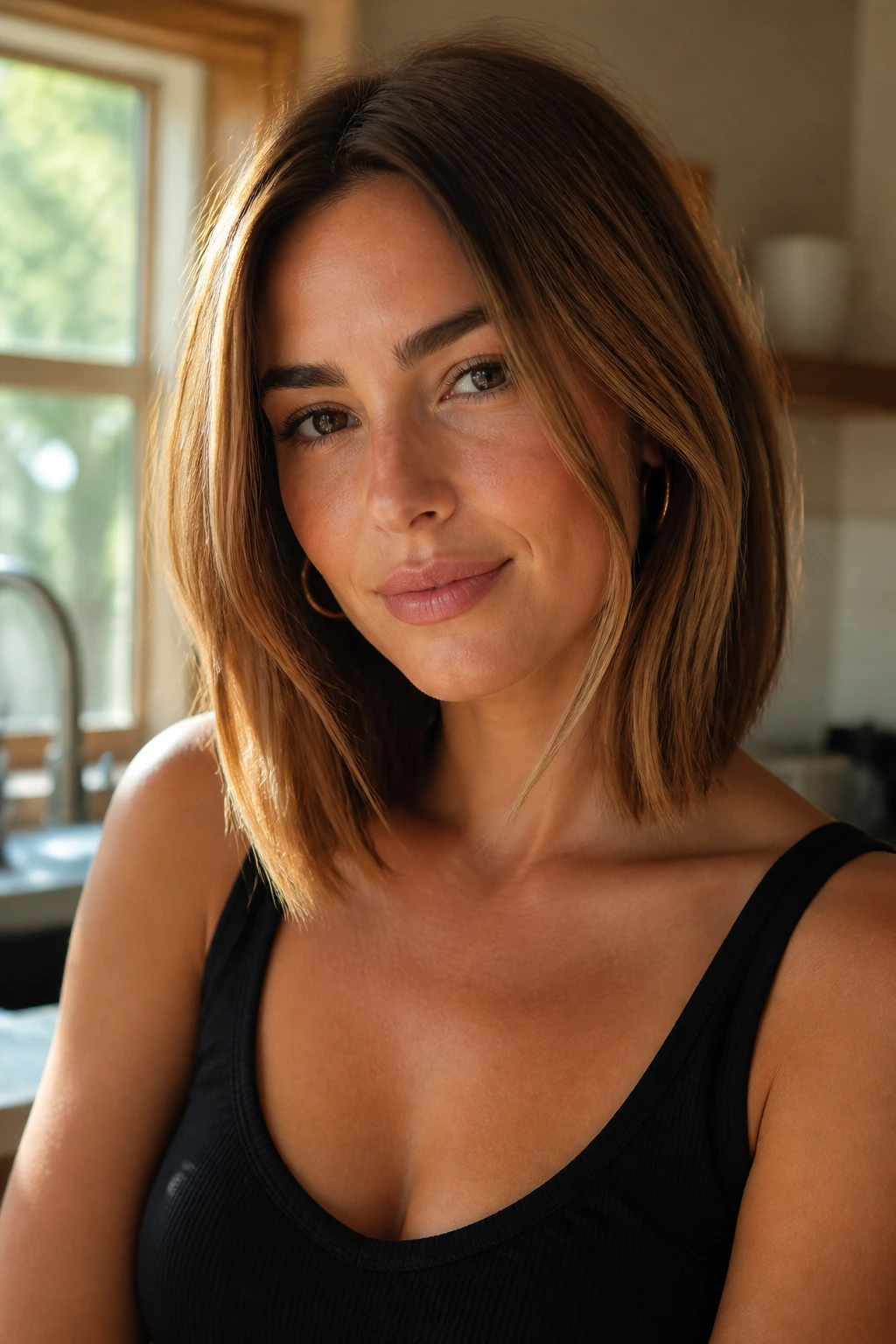
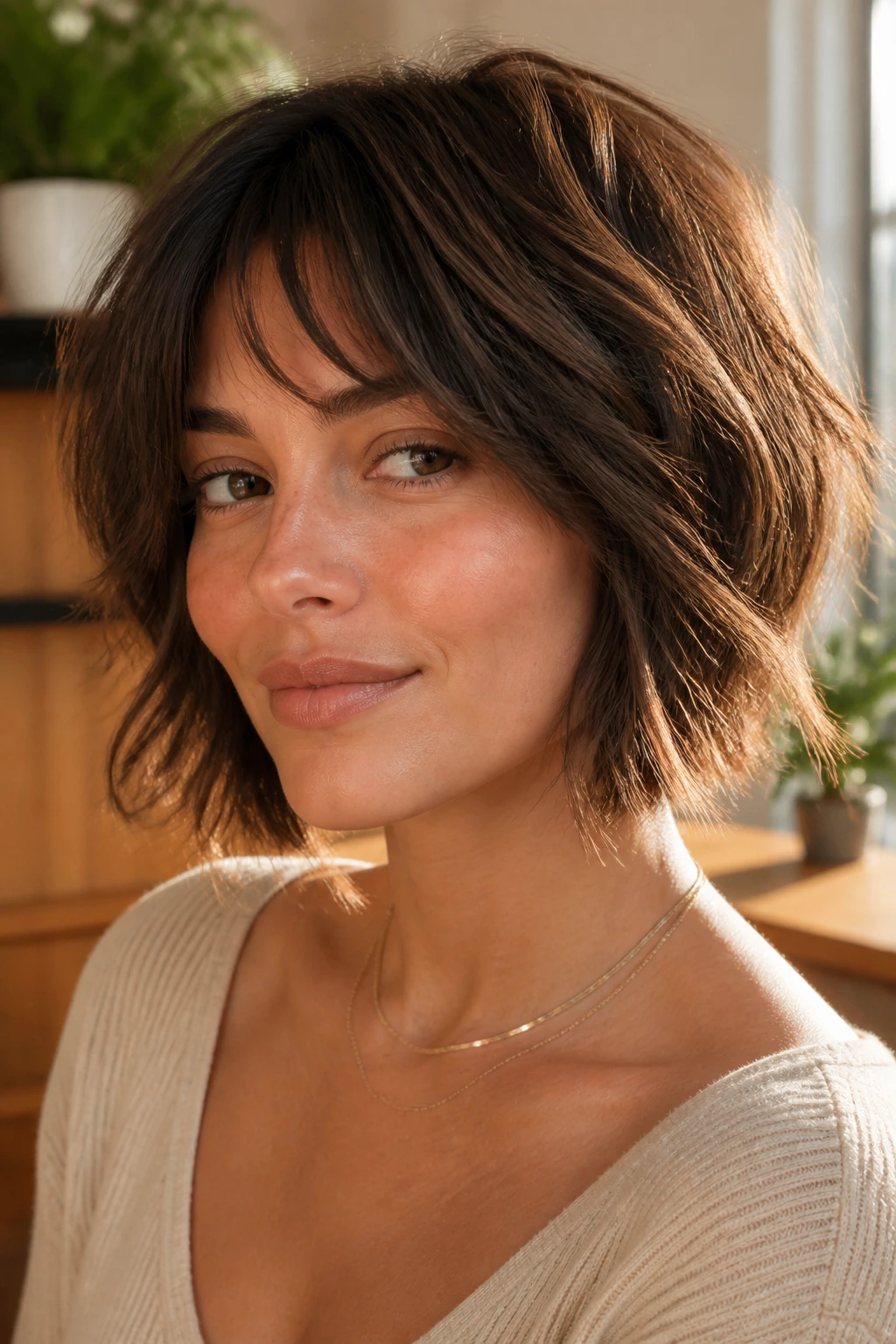
Honey brown is the brightness play in this group. On a collarbone bob, it gives enough length to show color shift without making the style feel heavy. The warm tone catches at the front pieces and around the ends, where the hair naturally moves.
The collarbone length is useful because it gives you more room to play with bends, waves, and tucked sides. If you like to wear your hair both up and down, this one is the easiest to live with.
A honey-brown bob can look a little plain if the cut is too straight. Add a soft bend, and it wakes up fast.
15. Copper-Brown Wavy Bob
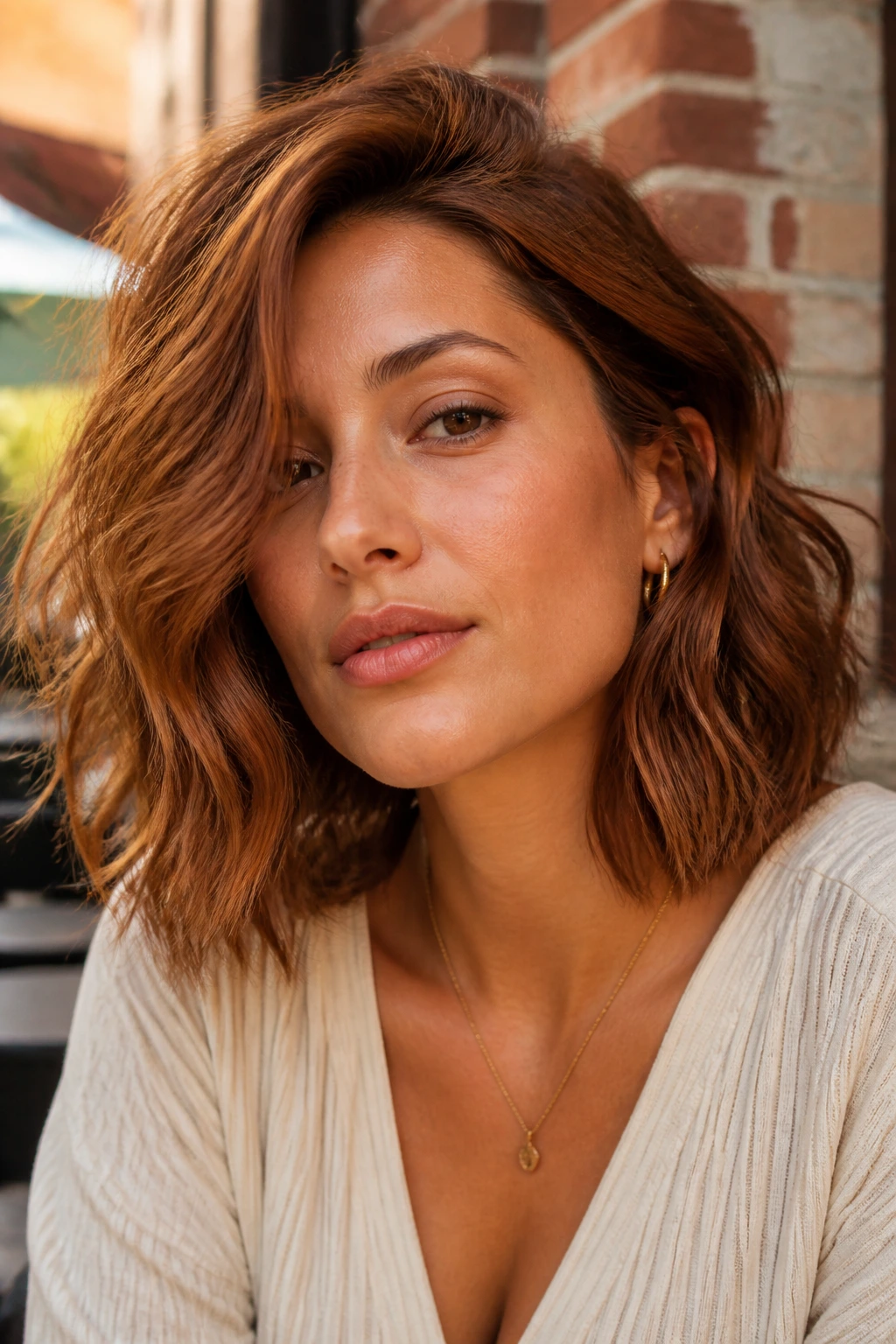
Copper-brown is for the person who wants warmth that doesn’t whisper. It has more red in the mix, and when the bob is waved, the tone turns lively without tipping into bright copper.
This version looks best with a loose bend from the mid-lengths down. The waves break up the color and keep it from sitting as one flat sheet. On shoulder-grazing length, it feels energetic and a little expensive at the same time.
A Good Rule
If your hair naturally takes curl well, this is a smart cut-and-color pair. The texture shows the red-brown tones instead of hiding them.
16. Toffee Angled Bob
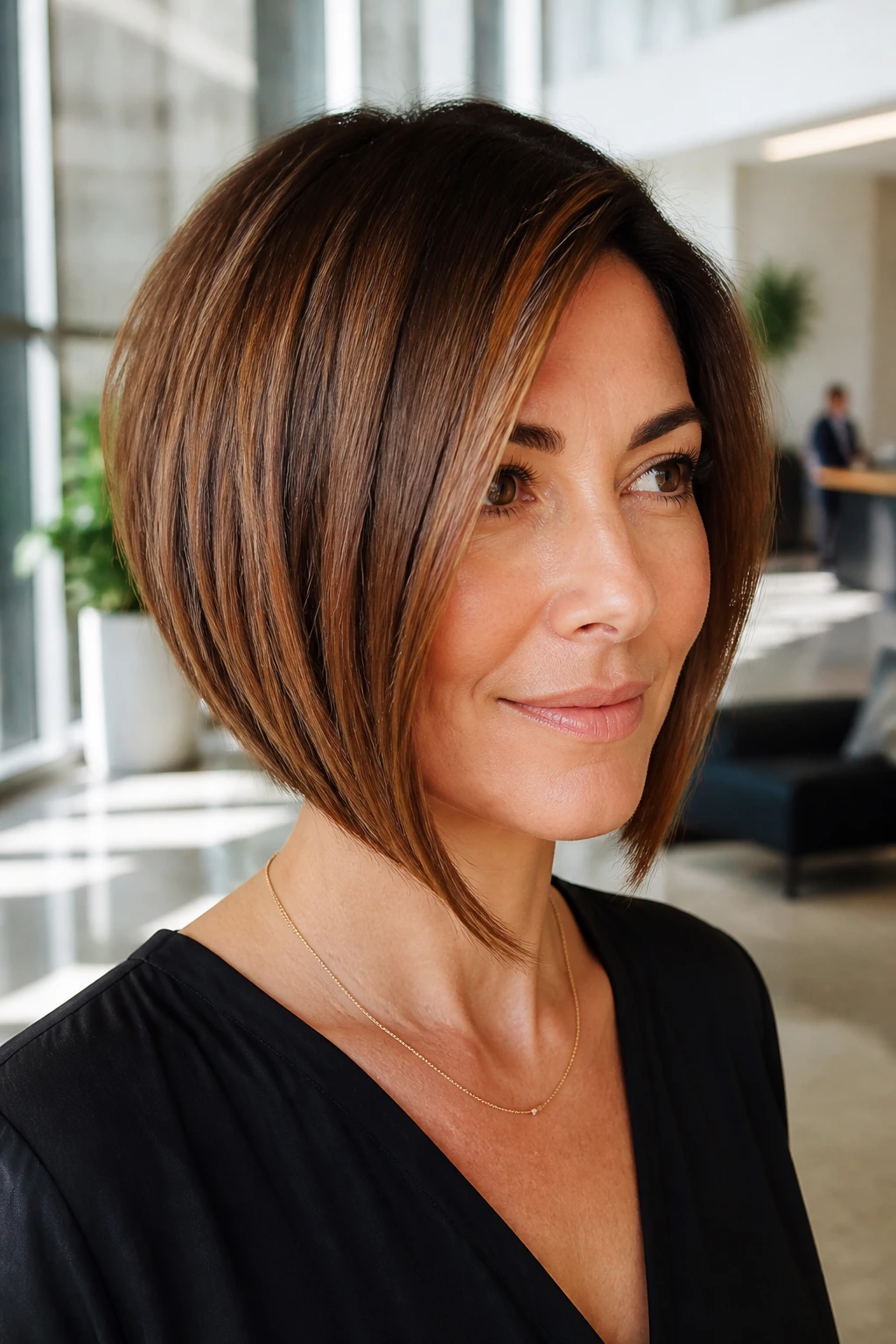
Toffee brown is sweeter and lighter than mocha, and the angled bob gives it a cleaner outline. Shorter in the back, longer in the front—simple shape, strong payoff. The color softens the angle so it doesn’t feel harsh.
I like this one on medium-density hair because the angle creates movement even when the rest of the style is straight. Toffee warms the front pieces and keeps the face-framing sections from looking too heavy.
Ask For
A smooth graduation at the nape and a longer front line that hits between the chin and collarbone. That range keeps the cut modern without making it fussy.
17. Cinnamon-Caramel Bob
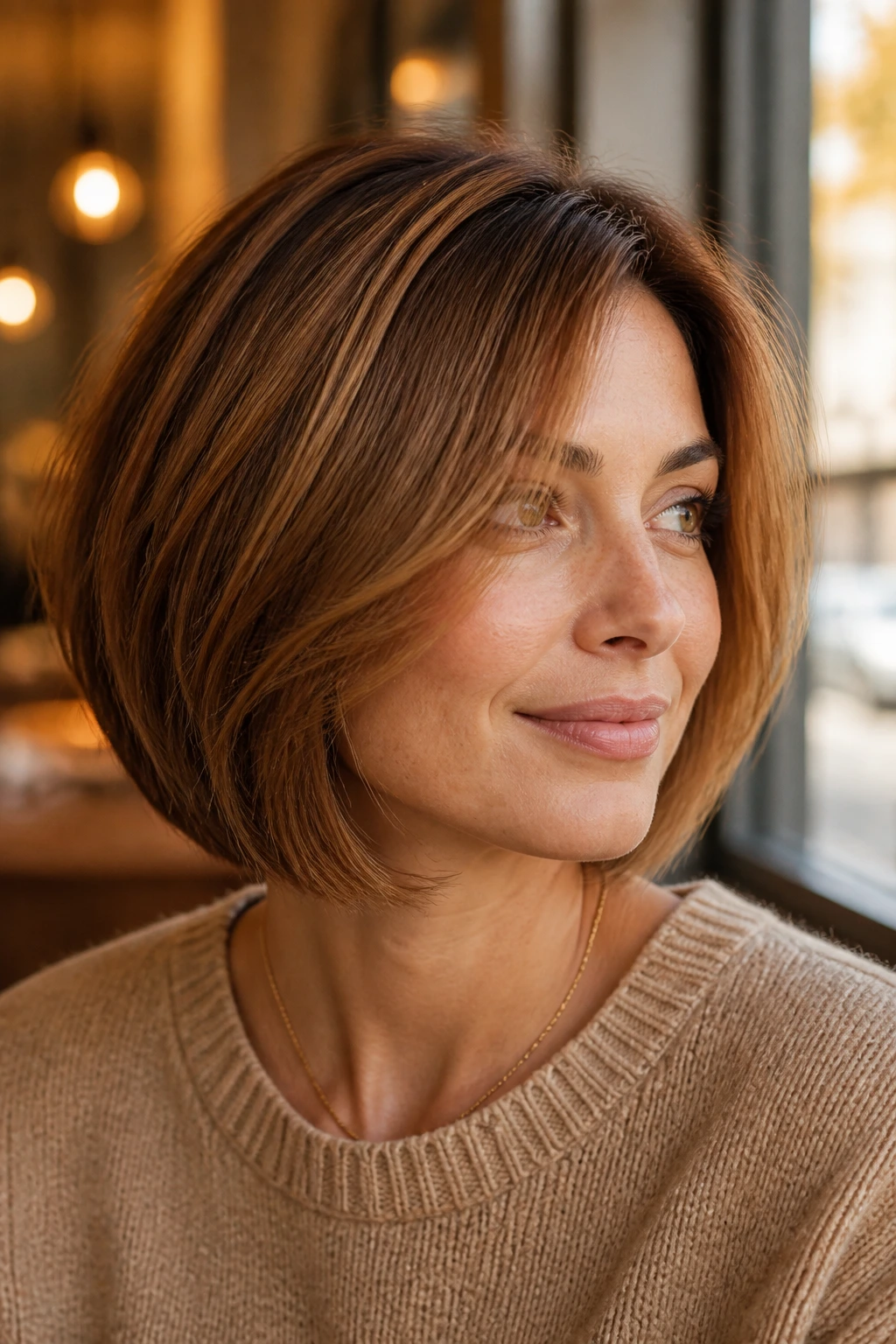
Cinnamon and caramel together are a good argument for dimension. Cinnamon gives red-brown warmth; caramel lifts the front and the ends. On a bob, that blend keeps the cut lively from root to tip.
This works best when the color placement is fine and deliberate. You want soft ribbons, not stripey panels. The cut itself can be blunt, layered, or slightly angled—the color does the work of keeping it all from feeling one-note.
Who It Suits
People who like warm hair but don’t want to commit to one flat brown. The mix makes the bob easier to wear across different outfits and lighting, which sounds small until you notice how much it matters.
18. Dark Chocolate Micro Bob
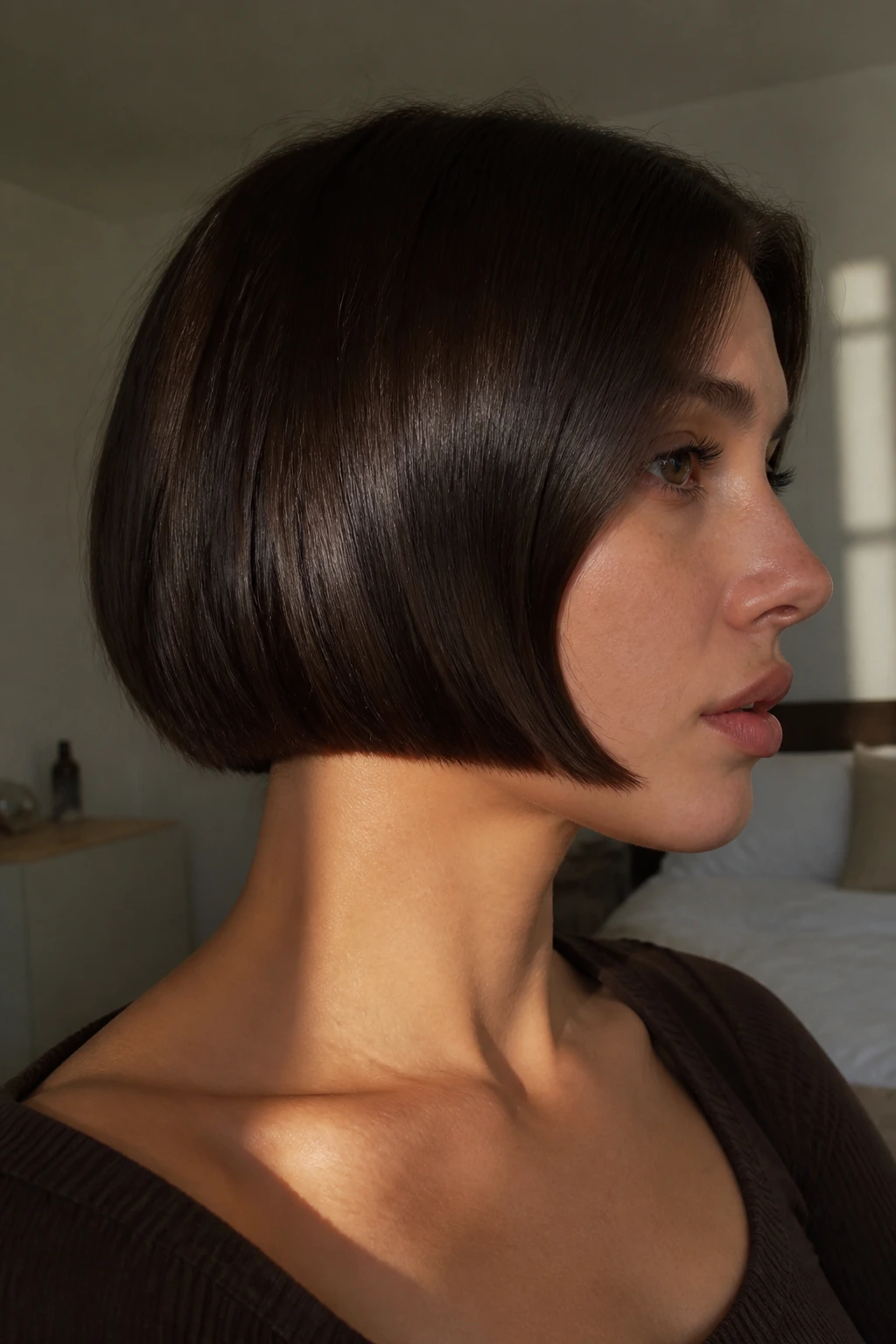
A micro bob asks for confidence. The line sits high, the neck is visible, and the color has to carry the shape. Dark chocolate does that better than a pale brown because it gives the small cut some visual weight.
The trick is shine. If the hair looks dry, the bob can feel severe. Add a gloss or smoothing cream, and the whole thing changes. The short length means there’s not much room for sloppiness, which is exactly why this cut is so sharp when it’s done well.
Best For
- Straight hair that can hold a clean line
- People who want low hair volume around the face
- Strong jawlines and cheekbones that can handle a short edge
19. Maple Brown Bob

Maple brown has a warm, syrupy tone that sits somewhere between honey and chestnut. It softens a bob without turning it brassy, and the color shows especially well when the ends are slightly feathered.
This is a nice middle ground if you want warmth but not obvious red or copper. The tone looks flattering on a lot of skin tones because it stays brown first, warm second.
A maple bob usually looks best with movement around the ends. Even a tiny inward curve keeps the shade from going static.
20. Bronze-Brown Bob
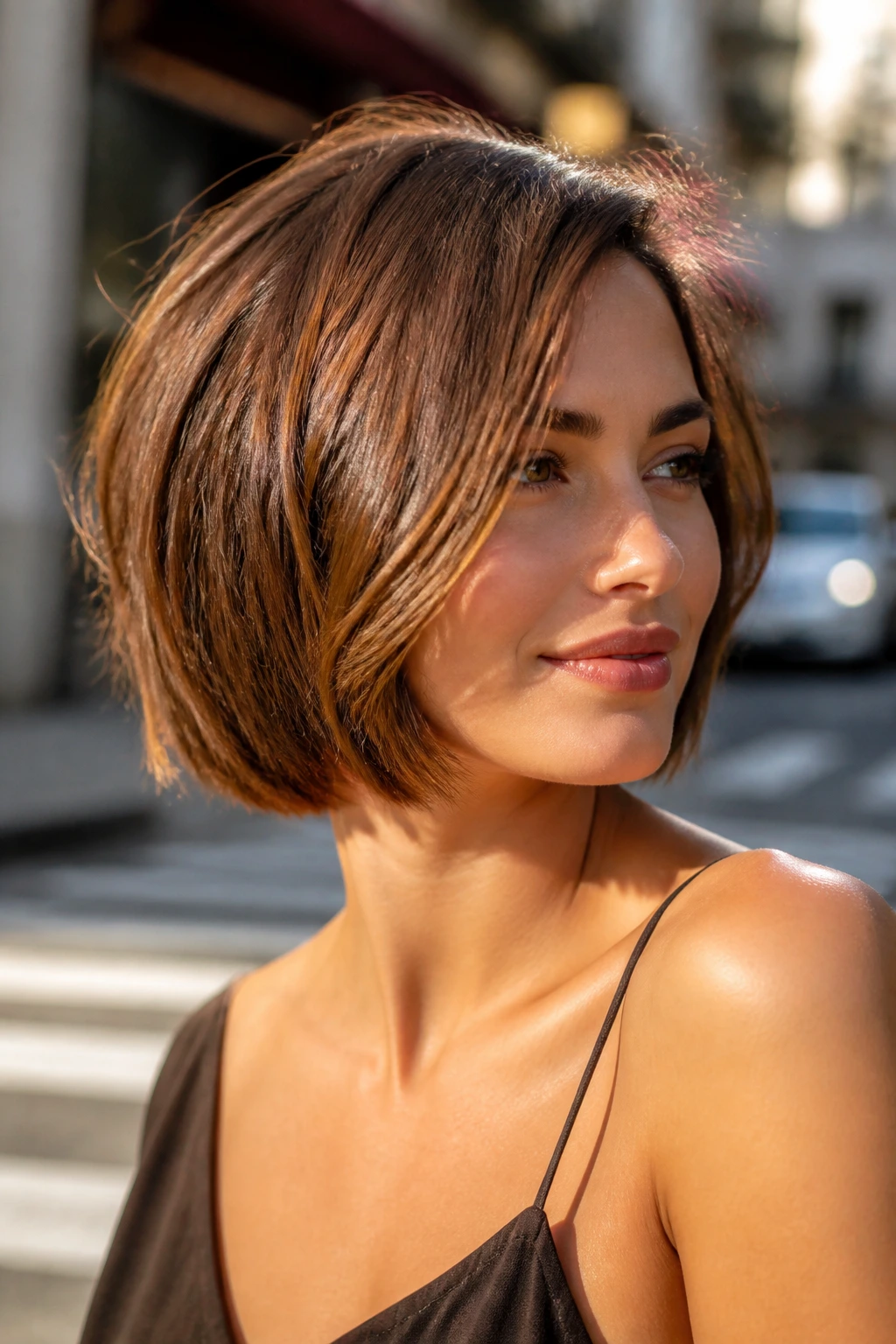
Bronze brown gives a bob a reflective, sun-warmed feel. It’s not blonde, not red, and not plain brunette either. The color sits in that metallic-brown lane that can make a blunt line look fuller and a wavy cut look shinier.
This is one of the more useful options for darker natural brunettes who want warmth without a huge shift. Bronze lifts the surface tone just enough to show texture. It’s subtle, but not quiet.
A Smart Detail
Keep the base rich. If the bronze pieces get too light, the whole cut loses its depth and starts to read like disconnected highlights.
21. Chestnut Shaggy Bob

Chestnut with shaggy ends is a softer, messier cousin of the blunt chestnut bob. The color gives you warmth and fullness; the shagging through the perimeter keeps the shape relaxed.
This one is good when you want movement without committing to a full shag haircut. The bob stays recognizably bob-shaped, but the texture around the ends stops it from feeling too neat.
Why It Lands
The chestnut tone gives the haircut enough richness to survive a tousled finish. That’s the whole trick here. If the color were cooler, the texture could look dry.
22. Roasted Chestnut Bob with Tucked Ends
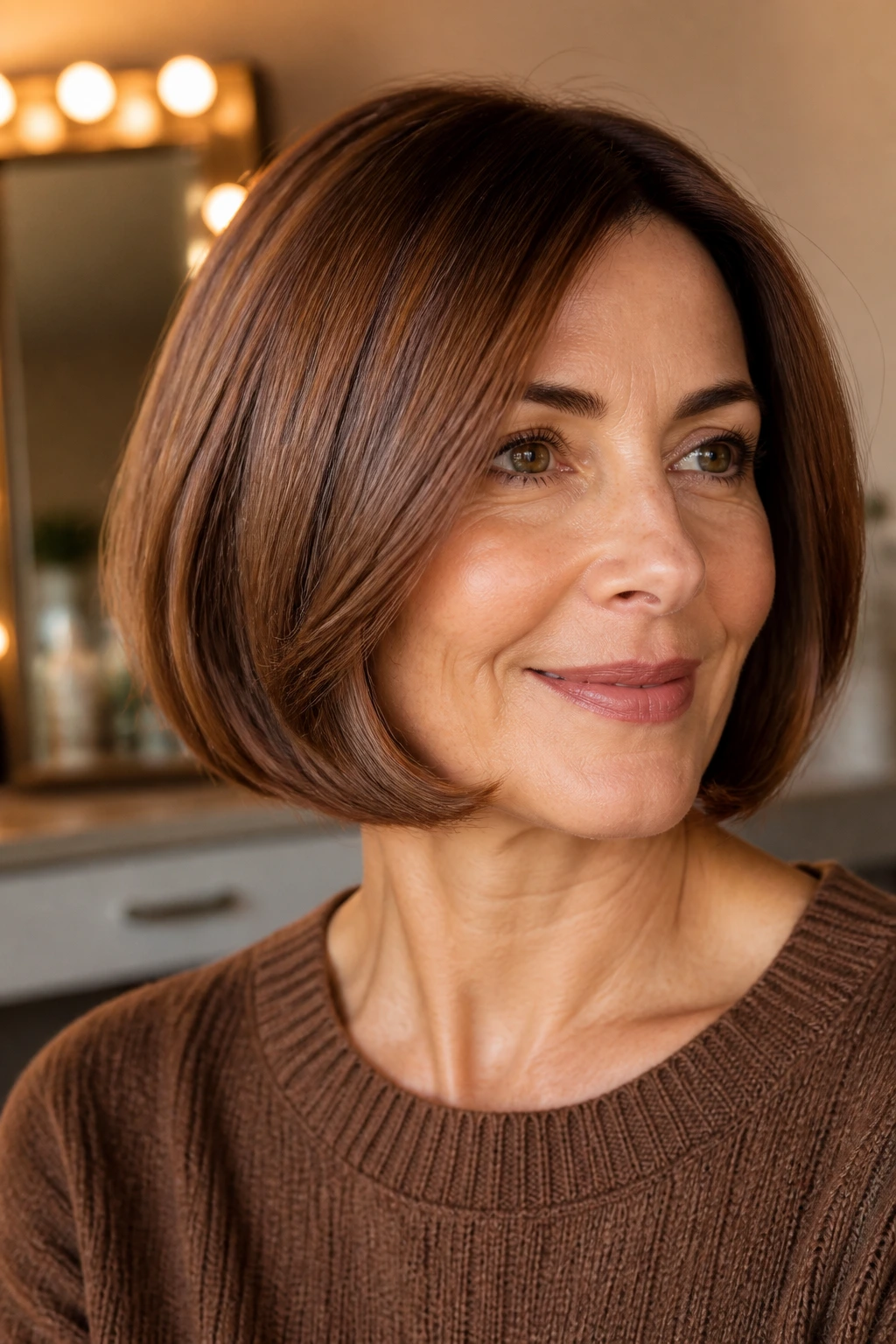
Roasted chestnut is a deeper, slightly smokier version of chestnut, and tucked-under ends make it feel tidy in a very specific, satisfying way. The curve at the bottom helps the color appear glossy and controlled.
This is the bob I’d pick for someone who likes a grown-up finish. It’s not stiff. It’s clean. The tucked ends do need a decent blow-dry, but the payoff is a shape that looks intentional from every angle.
Little Detail That Matters
Use a round brush or smoothing brush to bend the last inch under. That tiny curve is what gives this style its polish.
23. Sienna Brown Curly Bob
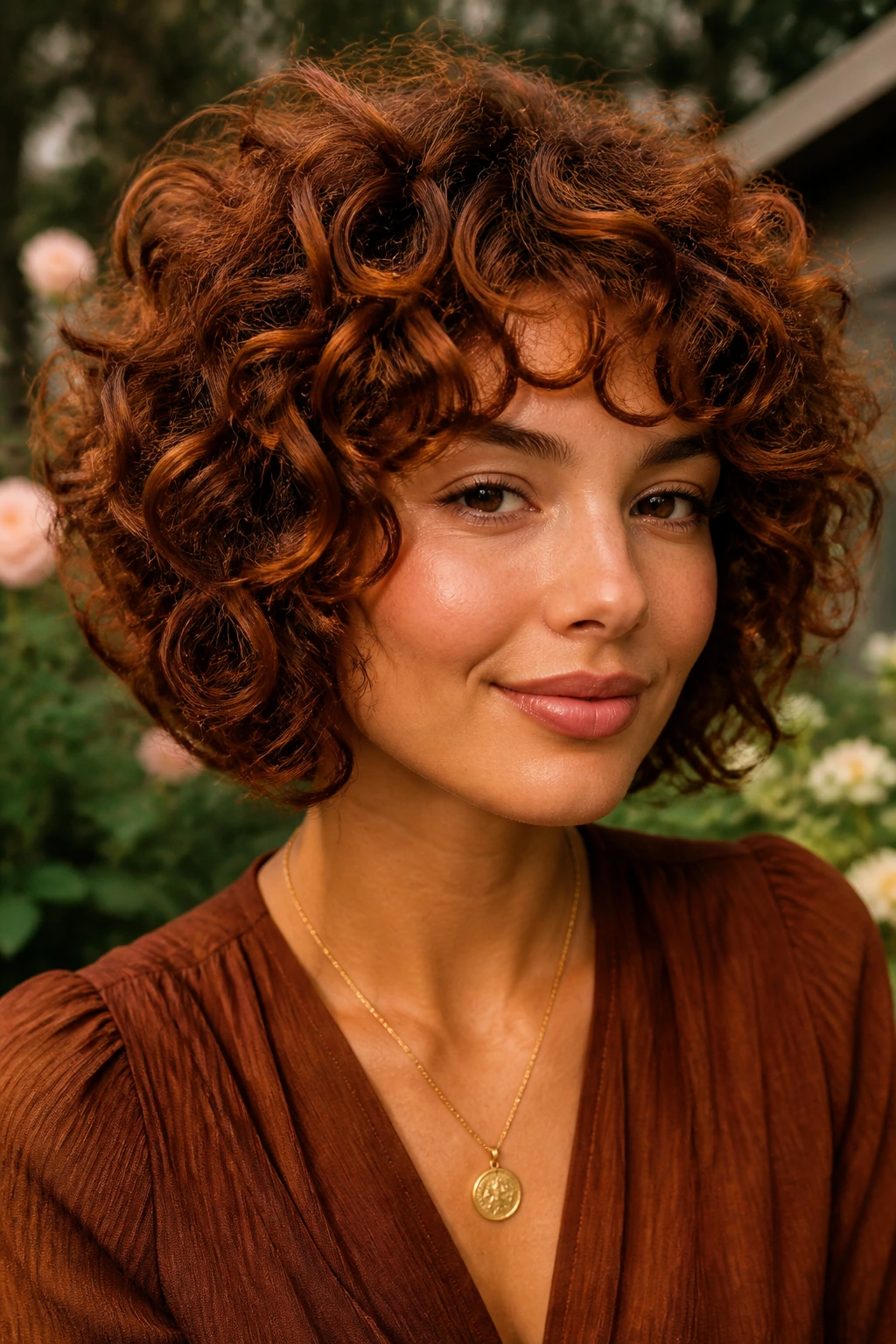
Curly bobs need room to breathe, and sienna brown gives the curls a warm outline so each coil or wave is easier to see. The red-brown cast makes the texture read richer, not frizzy.
If your hair has natural bend, this is a lovely way to keep the bob defined without forcing it straight. Ask for shape that respects the curl pattern, not a line cut like straight hair. That difference shows up fast once the curls dry.
Best For
Curly hair that wants definition at the ends and enough warmth to keep the shape from looking dark and heavy.
24. Burnished Brown Asymmetrical Bob
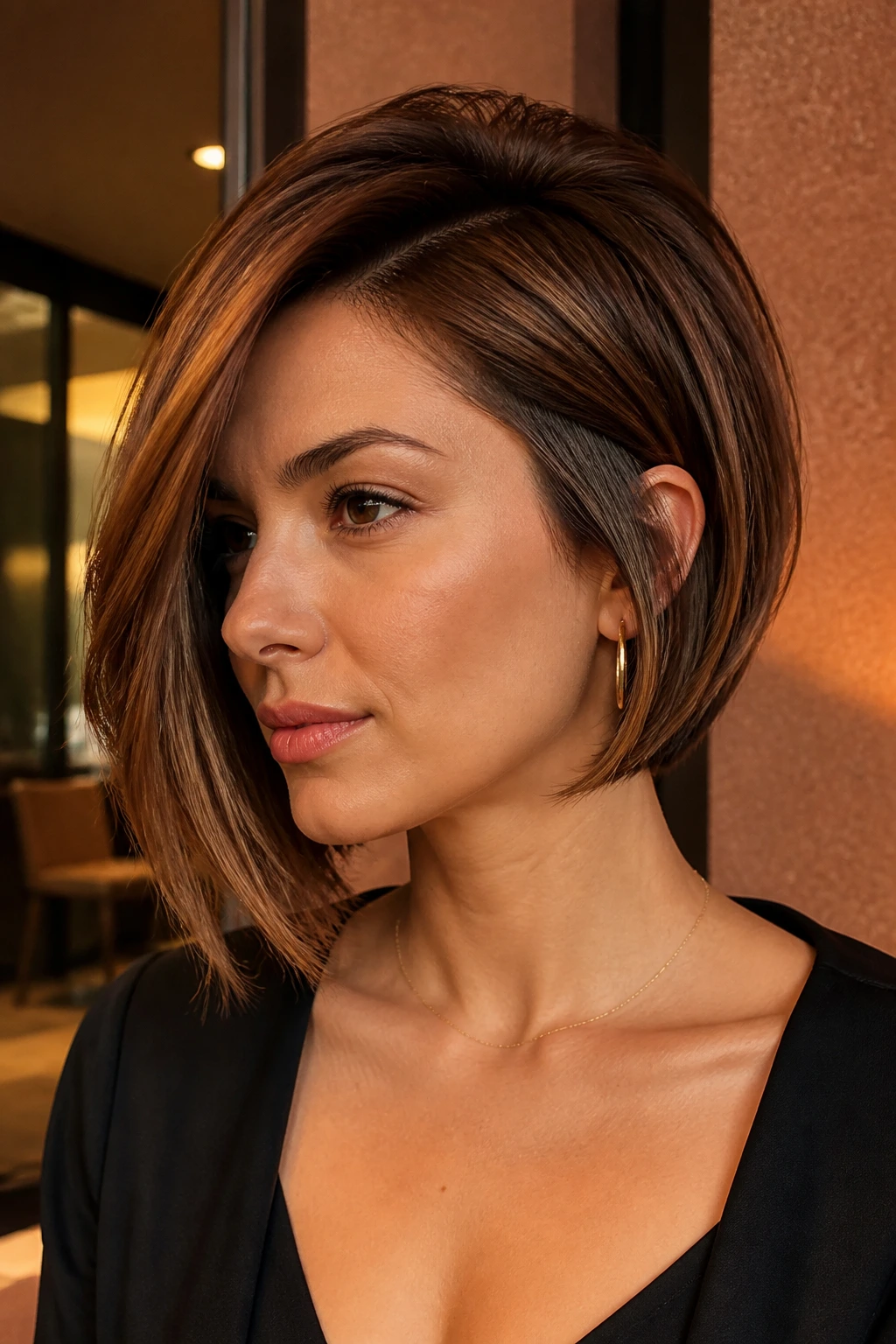
An asymmetrical bob needs a tone with some glow, or the uneven length can look accidental. Burnished brown solves that by giving the hair a polished, slightly golden sheen that makes the angle feel deliberate.
This is a stronger style choice than some of the softer looks here. One side sits longer, the line shifts, and the color has to support that movement. Burnished brown does. It keeps the cut sharp without turning it severe.
If you want a bob that feels a little more editorial but still wearable, this is one to keep.
25. Glossy Flip-End Brunette Bob
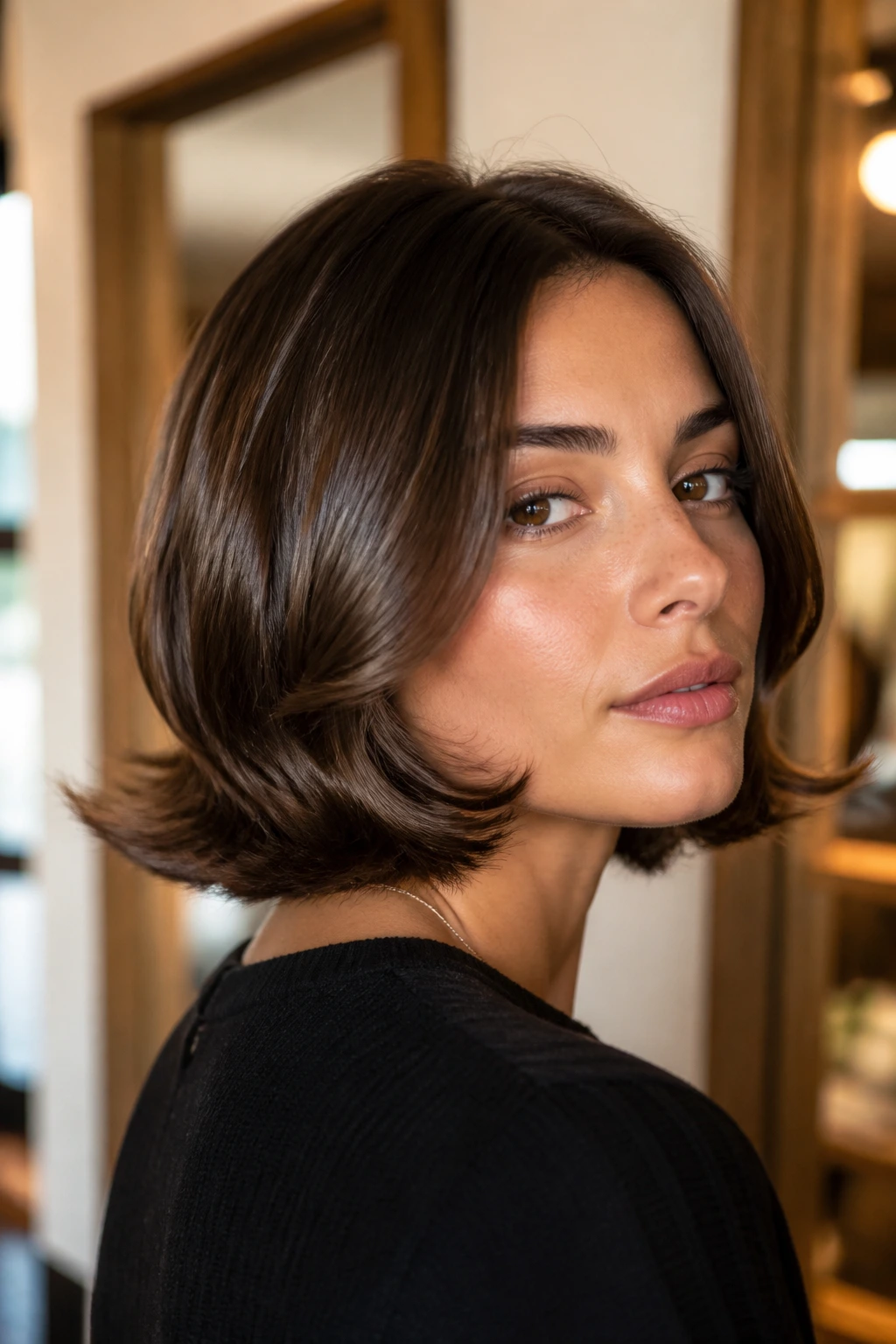
Flip-end bobs bring a little energy to the bottom line, and a glossy brunette base keeps that movement from feeling dated. The ends turn outward just enough to show the warm brown tone underneath, especially if the hair catches light along the curve.
This one has a bit of swing. Not a lot. Enough. It looks especially good when the color sits in the mocha-to-chocolate range, because the flip gives the eye a reason to notice the ends.
Final Note
If you like a bob that feels styled without needing a lot of product, this shape is a solid pick. The flip adds life, the brown tone adds depth, and the result doesn’t need much else.
How to Choose the Brown Tone That Flatters Your Face and Texture
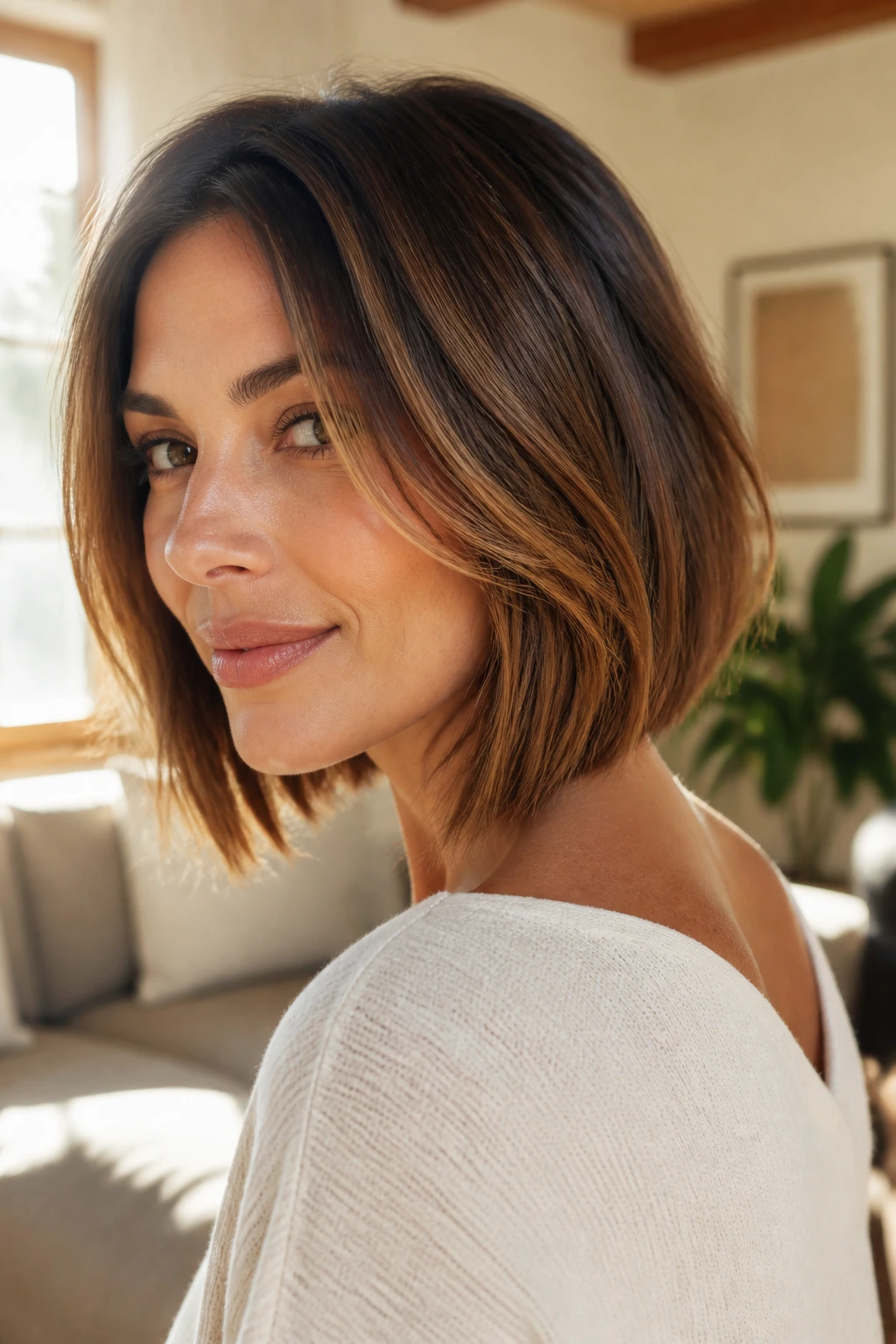
The smartest brown bob haircuts don’t start with a color chart. They start with texture, skin undertone, and how much shine your hair naturally gives back. Warm brown is a broad family, and the difference between chestnut, mocha, cinnamon, and caramel changes the whole mood of the cut.
Golden, Peachy, and Warm Undertones
If your skin runs golden or peachy, chestnut, honey-brown, caramel, and bronze usually sit nicely without turning orange. Those tones repeat the warmth already in your skin, so the bob looks balanced instead of fighting your face.
A blunt cut can handle a deeper chestnut. A softer cut, especially one with layers or curtain bangs, often looks better with a little caramel around the front. That front brightness keeps the shape from feeling too dense.
Olive Undertones
Olive skin tends to do well with mocha, walnut, espresso, and toasted almond because those shades stay warm without leaning too red. Too much copper can go a little loud against olive skin, which isn’t always the effect people want.
The safest move is a warm brown base with selective brightness near the face. That gives the bob dimension without making the tone look disconnected from the rest of you.
Cool Undertones That Still Want Warmth
You do not have to go ash to match cool skin. A neutral mocha or roasted chestnut can soften the face without washing it out. If you like warmth, keep it controlled: think ribbons, gloss, or a warm brown base with just a little golden reflection.
That tiny adjustment matters. A warm brunette bob can make cool skin look fresher if the color stays in the brown family and doesn’t drift into orange.
Fine Hair, Thick Hair, Straight Hair, Curly Hair
Fine hair usually benefits from lighter warm browns around the face because they create the illusion of density and movement. Thick hair often looks better with deeper mocha, chocolate, or walnut, since those shades help the cut feel organized.
Straight hair shows every line, so a clean chestnut or mahogany bob can look crisp fast. Curly and wavy hair need color that shows texture, which is why cinnamon, sienna, and copper-brown are so useful. They make the shape easier to read from across the room.
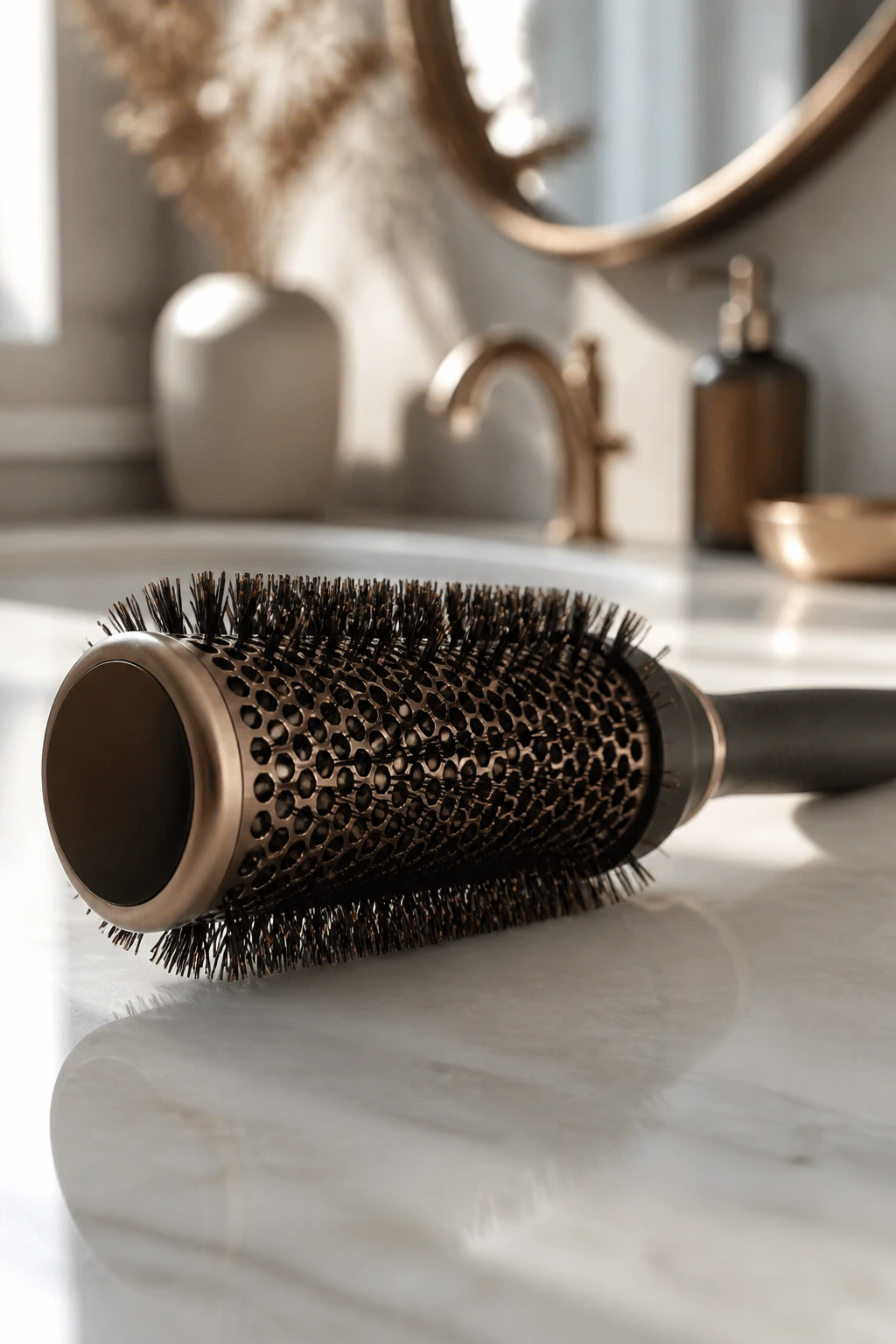
Essential Tools for Styling Brown Bob Haircuts
-
Blow dryer with a concentrator nozzle: This helps direct the air down the hair shaft so the bob stays smooth instead of puffing out at the ends.
-
Round brush, 1 to 1.5 inches: The smaller size gives you bend at the chin and tuck at the ends; the larger size gives a softer, looser curve.
-
Flat iron with rounded plates: Use this for subtle bends, not poker-straight stiffness. Rounded edges help shape a bob without leaving hard creases.
-
1-inch curling iron or wand: Handy for adding a quick S-wave or face-framing bend to textured brown bobs.
-
Heat protectant spray: Non-negotiable if you style with heat. A light spray keeps the surface smoother and helps warm tones reflect light better.
-
Tail comb: Useful for clean parts, sectioning, and lifting the crown before blow-drying.
-
Duckbill clips or sectioning clips: They keep the hair out of the way while you shape the back and sides.
-
Lightweight smoothing serum or oil: A pea-sized amount on the ends reduces frizz and makes chestnut, mocha, and chocolate tones look richer.
-
Root lift spray or mousse: Helpful for fine hair that needs a little body at the crown without making the bob sticky.
-
Diffuser attachment: Optional, but useful if you wear your bob wavy or curly and want the shape to dry with less frizz.
How to Keep Brown Bob Haircuts Glossy Between Salon Visits
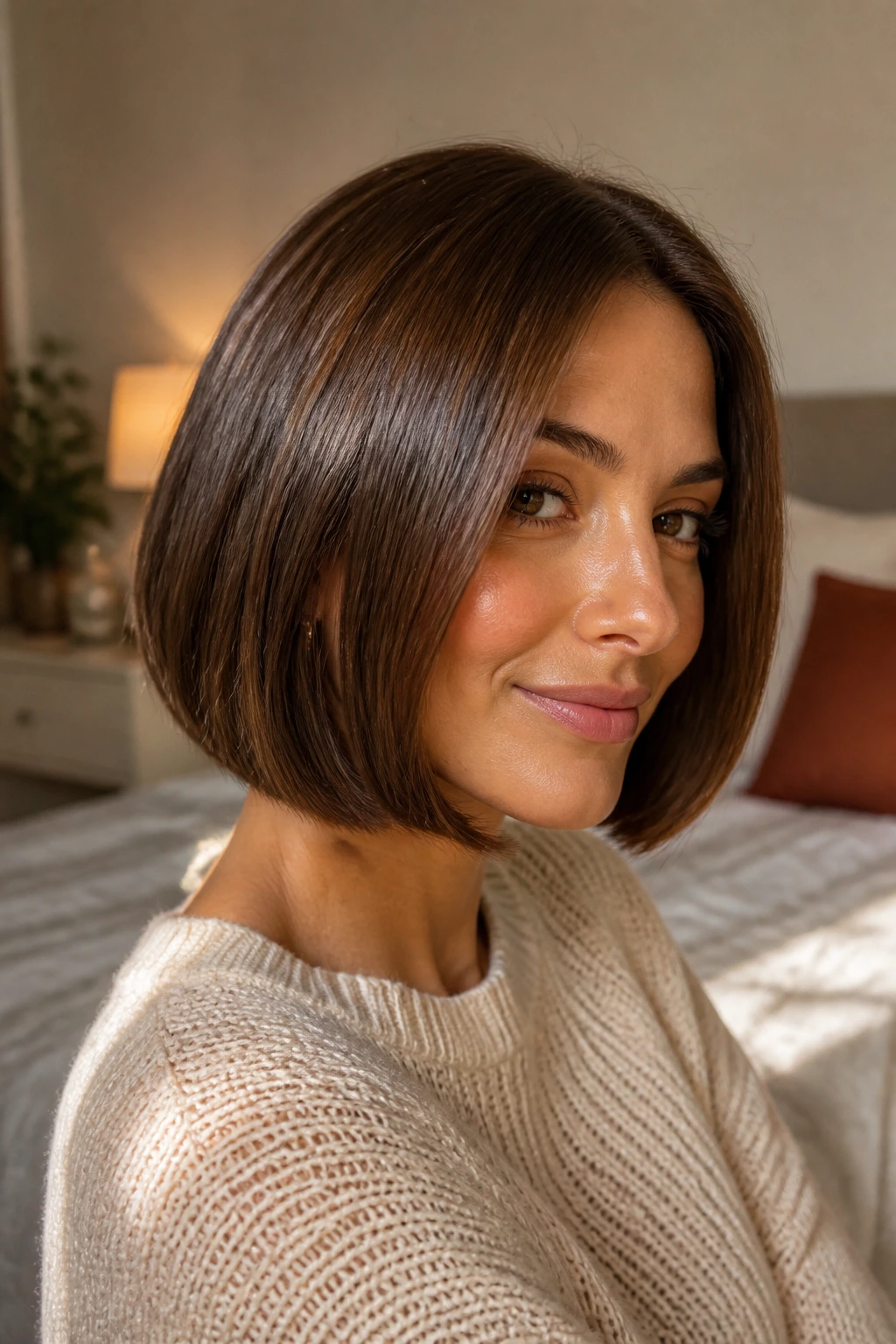
A bob shows everything. The trim line, the ends, the color fade. Nothing hides, which is part of the appeal and part of the headache. If you want warm brunettes to stay rich, the trick is keeping the surface smooth and the tone from drifting muddy.
Trim the cut every 6 to 8 weeks if you want a crisp edge. Softer shag bobs can stretch a little longer, but the moment the bottom line starts to flip out in weird places, the shape loses its point. A bob is one of those cuts where half an inch can matter more than people expect.
Color care is a separate job. A warm brunette usually looks best with a gloss refresh every 4 to 6 weeks, or at least whenever the mids start looking dull under indoor light. Use a color-safe shampoo, but don’t assume the bottle does all the work. Water temperature, heat styling, and how often you wash matter too.
If you use a flat iron, keep the heat moderate. Fine hair usually sits best around 300 to 325°F, while coarser hair can handle 350°F or a bit more. Higher than that, and the ends start to feel dry fast. A brown bob that looks shiny at the salon can turn tired within a week if the heat is too aggressive.
At night, a silk or satin pillowcase keeps the shape from getting roughed up. It sounds small. It isn’t. The less friction you create while sleeping, the less frizz shows up around the crown and ends the next morning.
Smart Styling Tips for Richer Warm Tones
Color Enhancement: Ask for warm ribbons that sit one to two levels lighter than your base, not heavy stripes. Fine weaving around the face gives brown bob haircuts depth without turning them into a highlight project.
Shape Control: Blow-dry the front pieces first. That little habit gives the bob its direction, and once the front falls right, the rest of the style tends to settle faster.
Texture Boost: If your hair is flat, mist a root-lift spray at the crown and rough-dry for 60 to 90 seconds before you pick up a brush. You’ll get a cleaner bend at the ends and a little lift where the bob usually collapses.
Gloss Move: A tiny amount of serum on dry hair—think a pea for fine hair, a dime for thick hair—keeps mocha, chocolate, and chestnut tones from looking chalky. Work it only through the mids and ends.
Make-It-Yours: If you wear glasses, a side part or a tucked side piece can keep the bob from crowding your frames. If you have strong natural wave, let some texture stay. Fighting it all the way straight usually makes the cut look less expensive, not more.
Common Mistakes That Make Brown Bobs Look Flat

Going too ash, too fast. Ash brown can be gorgeous, but on a bob it can also kill the warmth that keeps the cut lively. The symptom is hair that looks flatter in indoor light than it did in the salon. The fix is a warmer gloss, chestnut lowlights, or softer caramel near the front.
Making the highlights too chunky. Wide stripes can break up the shape in the wrong way and make a bob look streaky instead of dimensional. You want fine ribbons or babylights that move with the cut. Chunky color is loud on a bob, and not in a flattering way.
Letting the perimeter grow too far. Bobs depend on a clean line. Once the ends start hitting the shoulders and flipping out everywhere, the shape loses its point. If you like the length, keep the outline trimmed so the bob still behaves like a bob.
Skipping the finish. A brown bob without any smoothing or bend can look unfinished, especially if the hair is coarse or frizz-prone. Use a round brush, a light serum, or a quick pass with a flat iron to define the ends.
Choosing a cut that ignores your texture. Chin-length on a strong cowlick can turn into a daily battle. Heavy, thick hair without enough internal shaping can spread wide at the sides. The fix is simple: cut for the way your hair actually falls, not the way it looks pinned back.
Variations and Color Swaps to Try
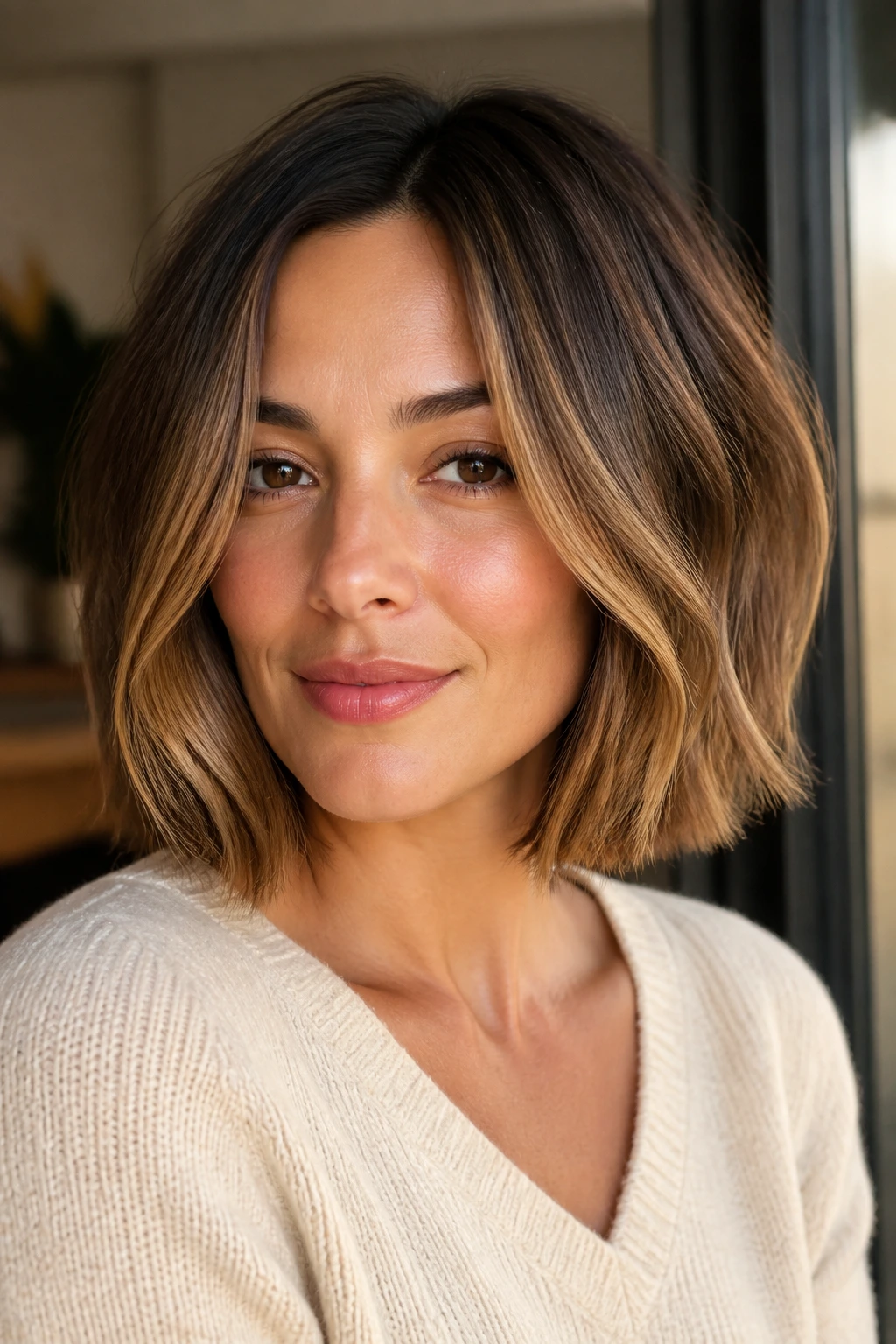
Soft Honey Brunette Bob
Keep the base warm brown and lift the face-framing pieces a shade lighter. This version works well if you want brightness without losing the brown identity.
Shadow-Root Chestnut Bob
Leave the roots slightly deeper than the mids and ends. The grow-out is cleaner, and the bob keeps some depth around the crown, which helps fine hair.
Copper-Washed Wavy Bob
Add a copper glaze over a brown base and wear the style with loose waves. It’s a good choice if you want warmth that shows up in motion.
Gloss-Only Chocolate Bob
Skip the highlights and ask for a clear or warm gloss over a chocolate base. This keeps the cut sleek and makes the ends look polished without changing the shade dramatically.
Curly Sienna Bob
For natural curls, keep the shape rounded and the tone warm red-brown. The color helps the curl pattern show up instead of hiding in shadow.
FAQ About Brown Bob Haircuts
What brown shade makes a bob look thicker?
Deeper warm browns like chestnut, mocha, and chocolate usually give the strongest sense of density. They keep the outline grounded, especially on straight or fine hair, and a little shine makes the cut look fuller than a lighter, flatter brown.
Do warm brown tones work better than ash brown on short hair?
Usually, yes, if the goal is depth and softness. Warm browns reflect indoor light in a way that keeps the bob from looking dull, while ash can flatten out faster unless the cut has a lot of texture and brightness around the face.
Can a bob work on curly or wavy hair?
Absolutely, but the cut has to respect the curl pattern. A dry cut or a curl-aware shaping method helps the bob fall in a clean outline, and warm tones like sienna, cinnamon, or copper-brown make the texture easier to see.
How often should I trim a brown bob?
Most bob shapes need a trim every 6 to 8 weeks to keep the line clean. If the cut is softer and more layered, you can sometimes stretch that a bit, but once the perimeter starts flipping and losing its edge, the style reads older fast.
Do I need highlights to keep a brown bob from looking flat?
No. A good gloss, warm lowlights, or a slightly varied brown base can do the job. Highlights help, but they’re not the only way to add life; sometimes a chestnut glaze or mocha shadow root gives a cleaner result.
How should I ask for this at the salon?
Bring 2 or 3 photos that show both the cut and the color, then say whether you want blunt, layered, angled, or textured. The exact words matter less than the shape you’re after—jaw length, chin length, collarbone length—and the kind of warmth you want: chestnut, caramel, mocha, auburn, or copper-brown.
Will a brown bob work if my hair is very fine?
Yes, but the cut should stay fairly clean and the color should stay dimensional. Too much layering can make fine hair collapse, while a blunt or softly angled bob with a warm brown gloss often gives the best illusion of fullness.
Can I wear a brown bob air-dried and still look polished?
You can, especially if the cut is designed for your texture. A little leave-in cream, a touch of serum on the ends, and a careful part make air-dried bobs look intentional; the trick is not to overload the hair and make it limp.
The Brown Bob That Keeps Its Warmth
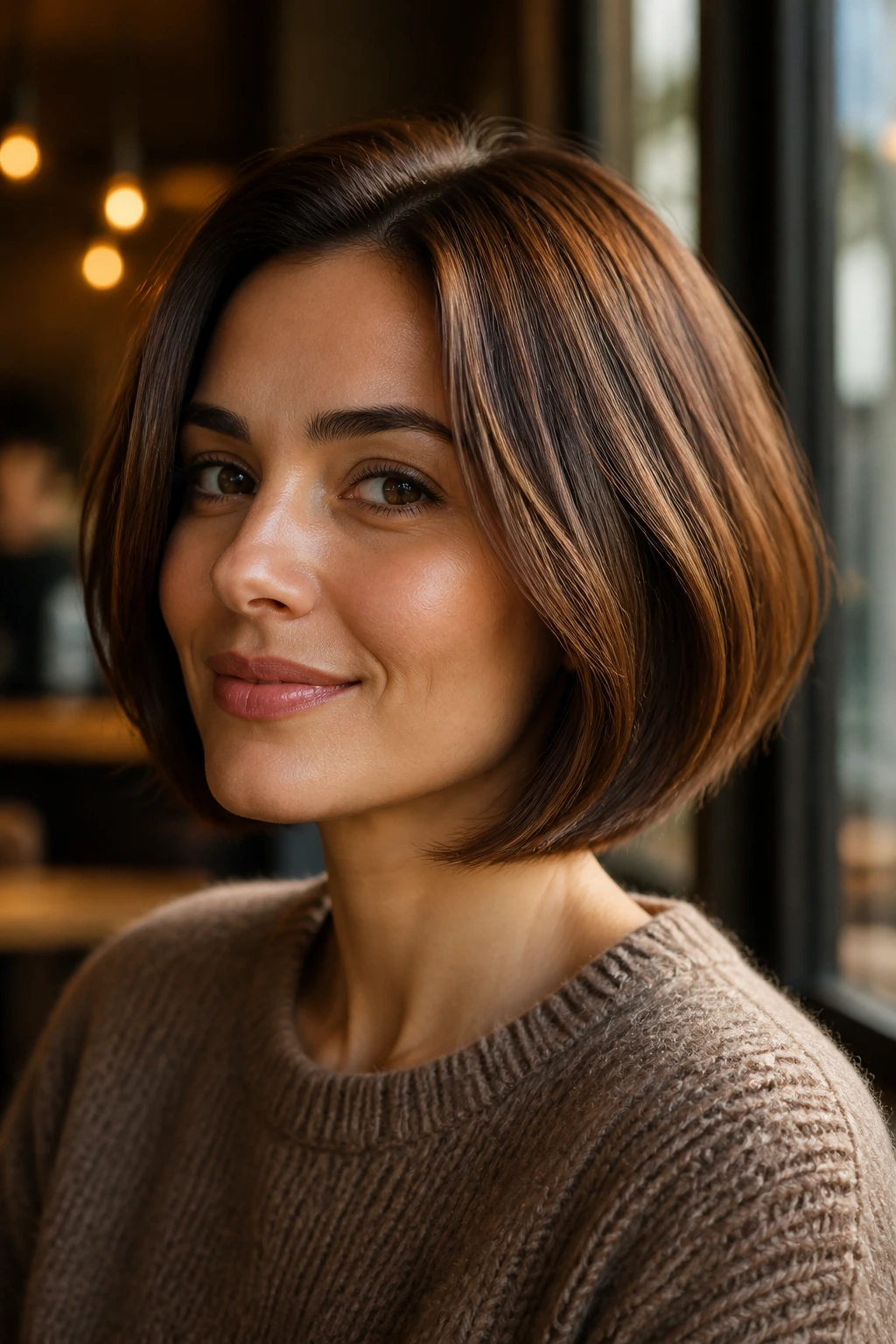
The best brown bob haircuts don’t rely on one trick. They use shape and shade together. A blunt chestnut bob, a mocha French bob, a cinnamon fringe, a caramel angle—each one changes how the haircut sits, how it moves, and how much life it keeps in ordinary light.
That’s the part I like most. Warm brown tones don’t need to shout to do their job. They keep the cut looking full, give the ends some glow, and make a bob feel finished even when styling takes ten minutes and a decent brush. If you want a short cut that still has depth on a cloudy morning or under office lighting, start with one of these and work from there.
