



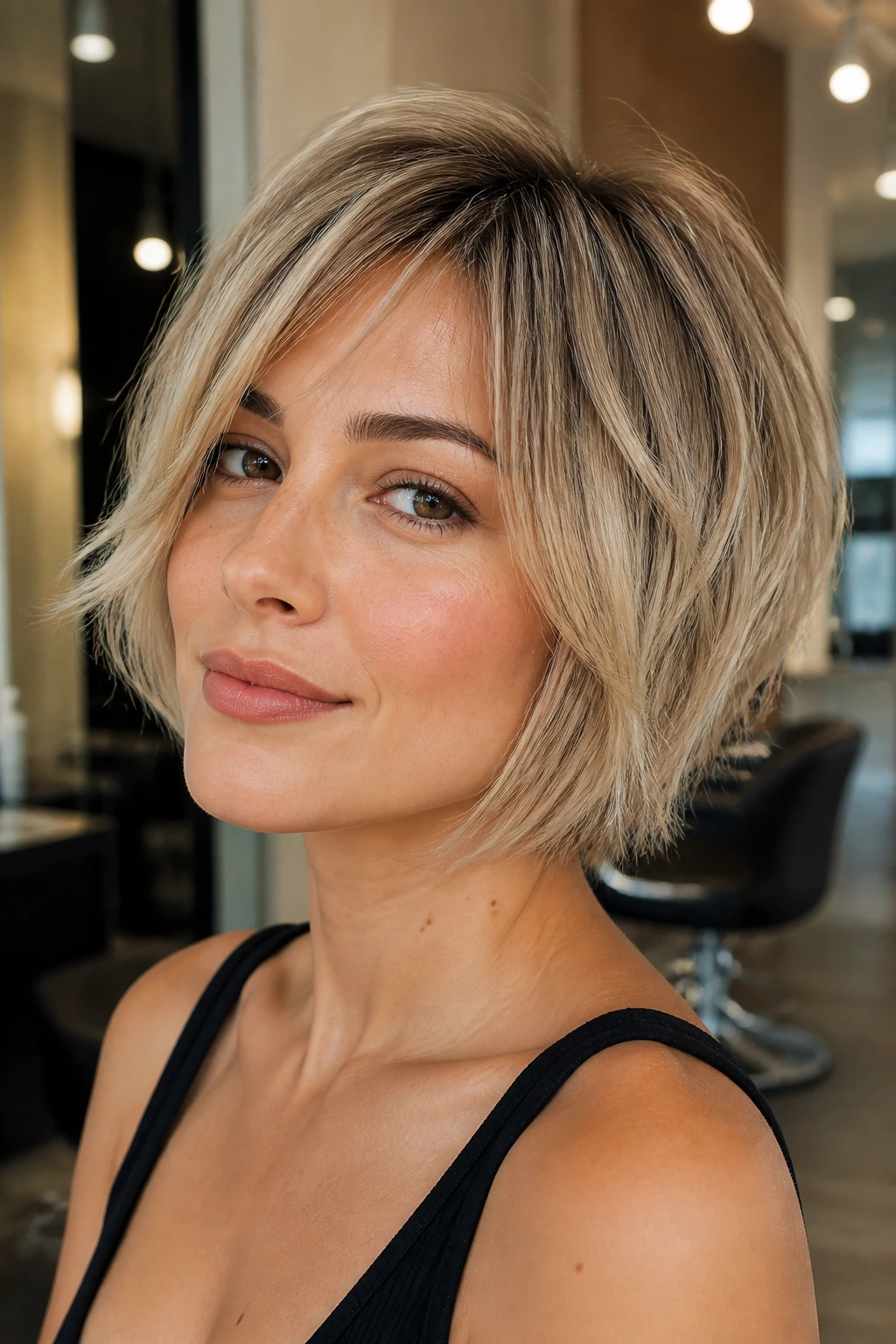
Short hair gets interesting the moment you stop treating it like one solid shape. A bob without layers can sit there and behave like a helmet; a layered one bends, lifts, and tucks in ways that make the whole cut feel more alive.
That’s why layered bobs for short hair keep showing up in salons and on real people with real hair that doesn’t always cooperate. A half-inch removed at the nape can change how the crown lifts. A few cheekbone-skimming pieces can soften a jaw that looked too severe in a blunt cut. Small changes. Big payoff.
And the best part? The good versions are not all fluffy, shaggy, or “messy on purpose.” Some are crisp and polished. Some are barely layered at all. Some lean curly, some straight, some airy, some sharp. The shape changes a lot, but the idea stays the same: make short hair move with intention instead of hanging there like it’s waiting for instructions.
Why Layered Bobs Change the Whole Feel of Short Hair
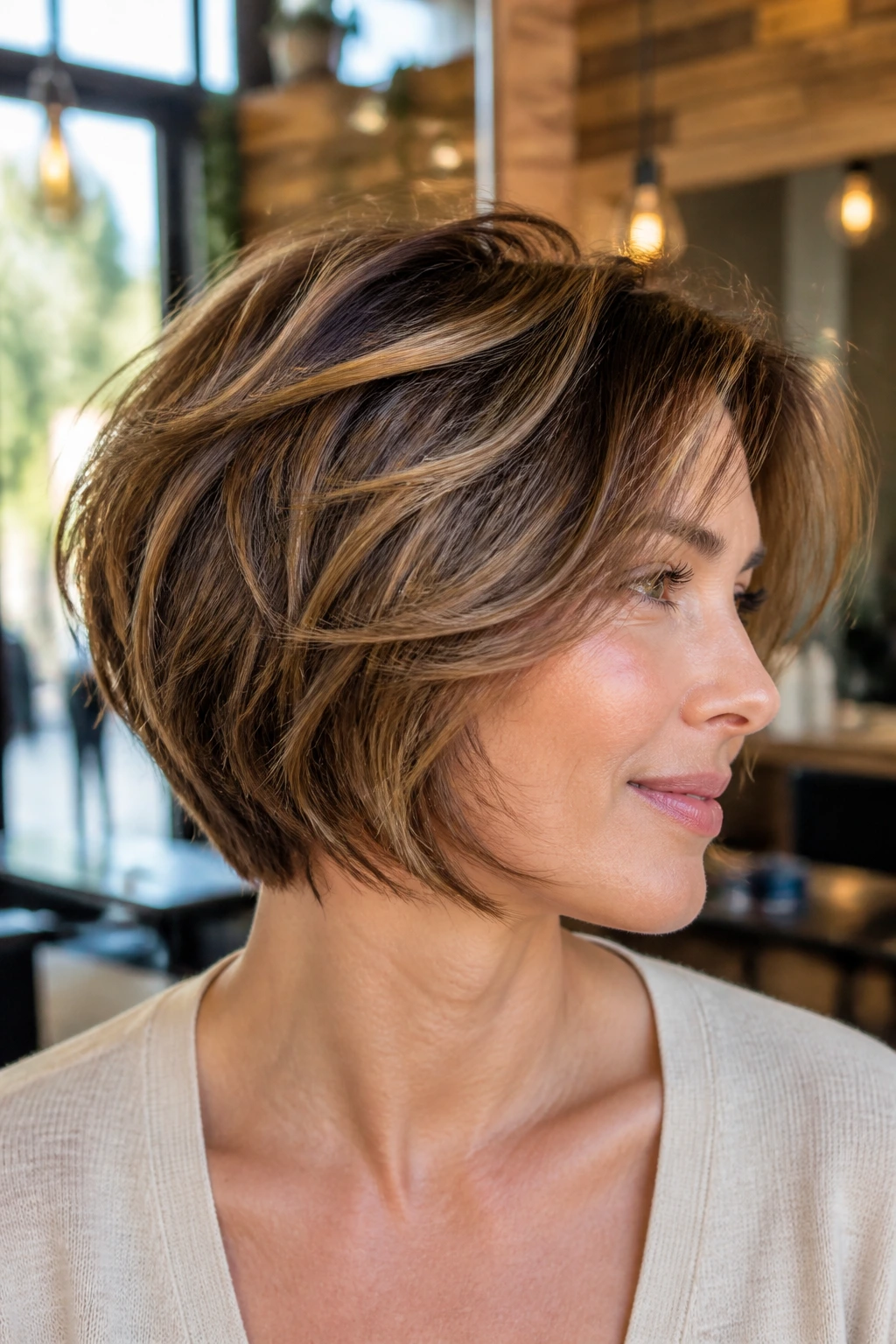
- Built-in movement: Layers keep short hair from collapsing into one flat shelf, especially around the crown and the ends.
- Better balance: A few smartly placed layers can make a bob look lighter at the jawline without losing its structure.
- More texture options: The same cut can air-dry loose, blow out smooth, or go piecey with a little spray and a flat iron bend.
- Less bulk in the wrong places: Thick hair benefits from internal removal; fine hair benefits from careful layering that doesn’t steal too much density.
- Easier salon communication: Each style here gives you a concrete thing to ask for — nape stacking, face-framing, curtain fringe, internal layers, or a sharper angle.
1. Feathered Chin-Length Bob with Lift at the Cheekbones
A feathered chin-length bob feels light in the hand and even lighter around the face. The edges don’t sit bluntly on the jaw; they flick outward just enough to soften everything below the cheekbones. It’s the kind of cut that looks like it has a breeze built into it.
Best for Hair That Collapses at the Crown
This shape is especially kind to fine or medium hair that goes limp by noon. The feathering takes weight out of the ends without turning the whole bob wispy, which is a real risk if the layers get too aggressive.
- Ask for point-cut ends instead of a heavy blunt line.
- Keep the shortest layers around the crown at just enough length to lift, not so short that they stick out.
- A 1.25-inch round brush gives the ends that soft bend.
- A pea-size puff of mousse at the roots is enough.
Pro tip: blow-dry the crown first, not last. If the top dries flat, you’ll spend twice as long trying to save it.
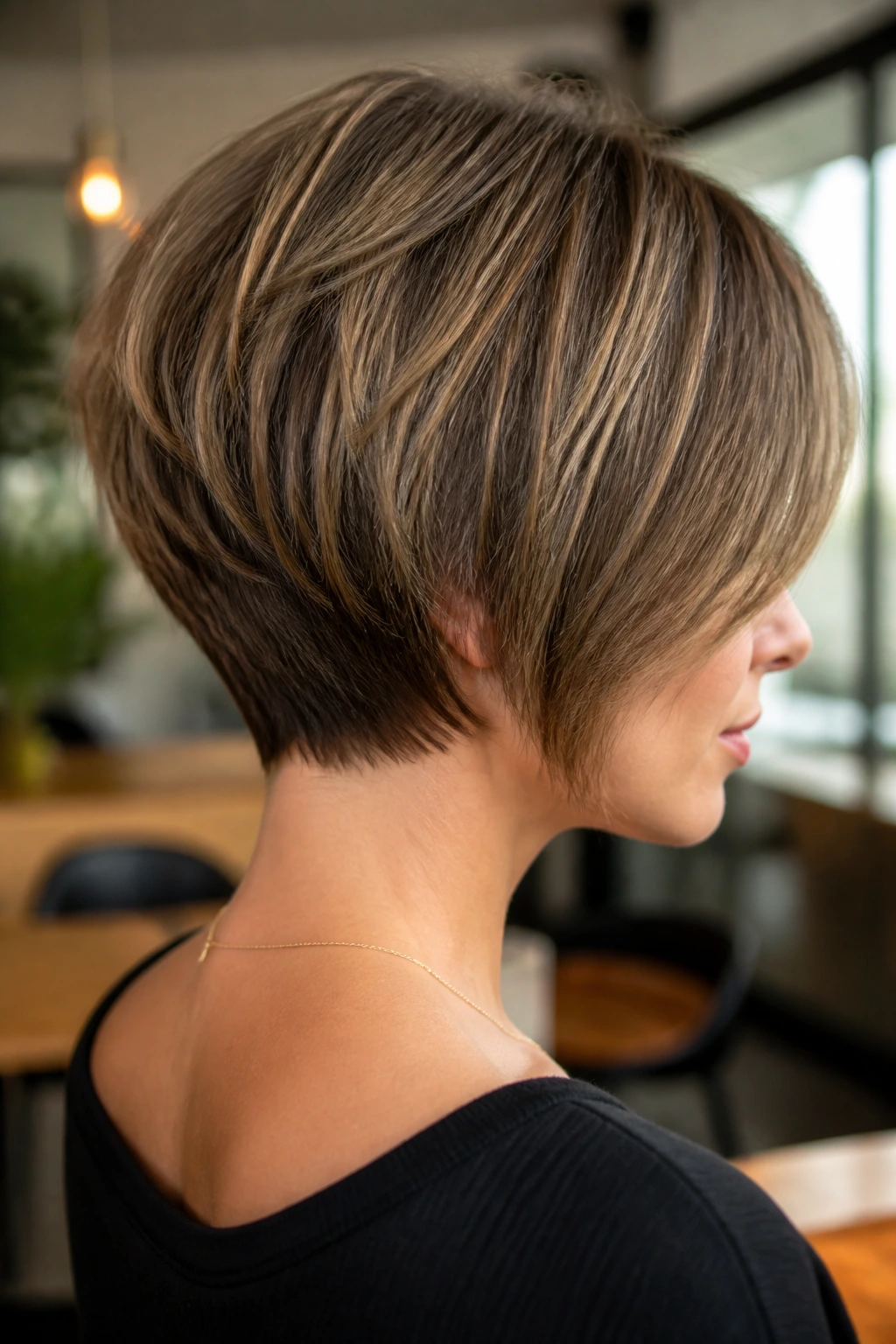
2. Stacked Bob with a Built-Up Nape
A stacked bob is the one that actually uses the back of the head to its advantage. Shorter layers at the nape create that lifted, curved profile, so the silhouette looks clean from the side instead of boxy.
The trick is control. Too much graduation and it starts to look bulky. Too little and the stack disappears entirely. You want the back to taper in a smooth line that hugs the head and then opens toward the front.
This cut is for people who like structure. It holds its shape well, especially on straight or slightly wavy hair, and it gives you that neat, tailored finish that doesn’t need a lot of styling drama. A quick round-brush blowout or a flat brush with root lift is usually enough.
If you like a bob that looks polished even when you haven’t done much to it, this is one of the strongest bets.
3. Choppy Shag Bob with Curtain Fringe
Why does this bob never look stiff? Because it’s built to break up the line on purpose. The layers are choppy, the fringe splits away from the center, and the whole thing has that lived-in movement that makes straight hair look less rigid and wavy hair look more deliberate.
How to Keep It From Turning into a Mullet
The difference is where the shortest pieces land. Ask for softness around the cheekbones and keep the back short enough to preserve the bob shape. If the layers drop too far past the jaw, the cut starts drifting into shag territory fast.
A little mousse or texture cream on damp hair is usually enough. Then rough-dry with your fingers and stop before everything feels too “done.” The point is separation, not helmet hair. You want pieces, not spikes.
This one shines on wavy hair that already has a bit of bend. Straight hair can wear it too, but it needs a product with grip and maybe a few bends added with a flat iron.
4. Invisible-Layer A-Line Bob
Picture a bob that still looks clean from across the room but moves better when you turn your head. That’s the appeal of invisible layers. The perimeter keeps its sharp line, while the interior gets a little relief so the shape doesn’t feel heavy or blocky.
This is the cut I’d pick for someone who wants polish first and texture second. The front usually sits a touch longer than the back, which gives the A-line its slight angle, but the layered work stays tucked inside the haircut where it doesn’t shout for attention.
- Great for thick hair that wants to puff out at the ends.
- Good if you like a neat outline but hate the stiff feeling of one-length hair.
- Usually styled with a paddle brush or a smooth blowout brush.
- Best when the layer points are cut softly instead of razor-thin.
It’s a quietly useful bob. No fuss. No drama. Just shape.
5. Jaw-Length Wavy Bob with Tousled Ends
This is the bob that looks best when the hair has a little swing to it. Not curls. Not pin-straight. Just that middle ground where waves form loose bends and the ends don’t all point the same way. The cut sits around the jaw, which gives the texture a frame instead of letting it float away.
There’s a small but important move here: don’t brush the wave out after it dries. That destroys the whole point. Scrunch a light mousse into damp hair, let it dry about 80 percent of the way, and then finish with a few twists around your fingers if the ends need help.
A diffuser can be nice, but it isn’t mandatory. The real win is the layered shape that keeps the wave from ballooning out at the sides. The bob looks airy, not puffy. That’s the difference.
6. Curly Rounded Bob with a Clean Outline
A curly bob can go wrong fast if the shape isn’t thought through. Too much layering and it frizzes outward. Too little and it forms a triangle. The rounded version sits in the sweet spot: enough internal shaping to let the curls stack naturally, enough perimeter to keep the outline clean.
This style usually works best when the stylist cuts with the curl pattern in mind, not against it. Dry cutting or cutting hair that’s close to dry helps account for shrinkage, which matters more than people think. A curl that sits at chin level when wet can bounce up a full inch or more.
The result is tidy but not stiff. That’s hard to get with curls, and it’s why this shape keeps its appeal. It lets the curls do the texture work while the cut keeps the outer line from exploding outward.
7. Razor-Cut Textured Bob
A razor-cut bob has a different kind of softness. The edges don’t look blunt; they look broken up, almost like the ends were kissed by air instead of chopped by scissors. That can be beautiful on the right hair — and it can be a disaster on brittle or very frizzy hair if the hand doing the cutting gets too enthusiastic.
What the Razor Actually Changes
A razor removes weight in a more diffuse way than a straight scissor cut. That’s why the ends can fall with a softer, more feathered finish. It’s also why you need a stylist who knows when to stop. Too much razor work and the shape loses its backbone.
This version works well if your hair is straight to slightly wavy and you like a piecey finish. It’s not the best choice if your hair already frays at the ends or if you need a heavy line to keep the shape strong.
A light texturizing spray and a quick pass with a flat iron can sharpen it up on styling days. Leave it rough and it reads artsy; smooth it and it feels cleaner. Same cut, different mood.
8. French Bob with Internal Movement
A French bob is short, cheeky, and a little romantic around the edges. It usually sits somewhere between the cheekbones and the jaw, sometimes with a small fringe, sometimes without. The magic is in the interior movement, which keeps the cut from feeling too severe.
The outline should stay neat. That part matters. If the ends get too frayed, the whole thing loses its charm and starts looking accidental. The French bob wants confidence in the line and softness inside the shape.
This style is especially good if you like a wash-and-go cut that still looks intentional. Add a bit of styling cream, tuck one side behind the ear, and let the shorter front pieces fall where they want. It has that easy, almost casual polish people spend way too much time trying to fake.
9. Asymmetrical Bob with a Longer Front Corner

Can a slight imbalance make a haircut look more flattering? Absolutely. A longer front corner changes how the eye reads the face. Instead of stopping at one neat point, the cut draws the line forward and downward, which can lengthen a rounder face or soften a strong jaw.
Where to Place the Longer Side
The longer side usually lands around the chin or just past it, while the shorter side stays nearer the jaw or nape. The difference does not need to be dramatic. Even an inch can change the whole shape if the angle is clean.
This bob looks especially good when it’s styled sleek. A soft bend at the ends is fine, but too much curl hides the asymmetry, and that’s the point of the cut. You want the diagonal to be visible.
It’s a nice choice if you’re bored with symmetrical shapes. A little edge goes a long way here. A lot goes too far.
10. Side-Swept Bob with Crown Volume

If the crown goes flat on you, a side-swept bob gives it a job to do. The side part shifts weight, the layers lift near the top, and the whole haircut gets a little movement that a center part would flatten out.
The styling part matters more than people admit. Root spray at the crown, a blow-dry directed against the part for a few seconds, and a medium round brush can change the whole silhouette. You’re not trying to make the hair tall. Just not flat.
This version is smart for straight hair that tends to cling to the scalp. It’s also good when you want the haircut to feel softer around the face without losing the short-bob shape. A deep side part can be dramatic; a slight side sweep is easier to live with day to day.
11. Angled Bob with a Sharp Front Line
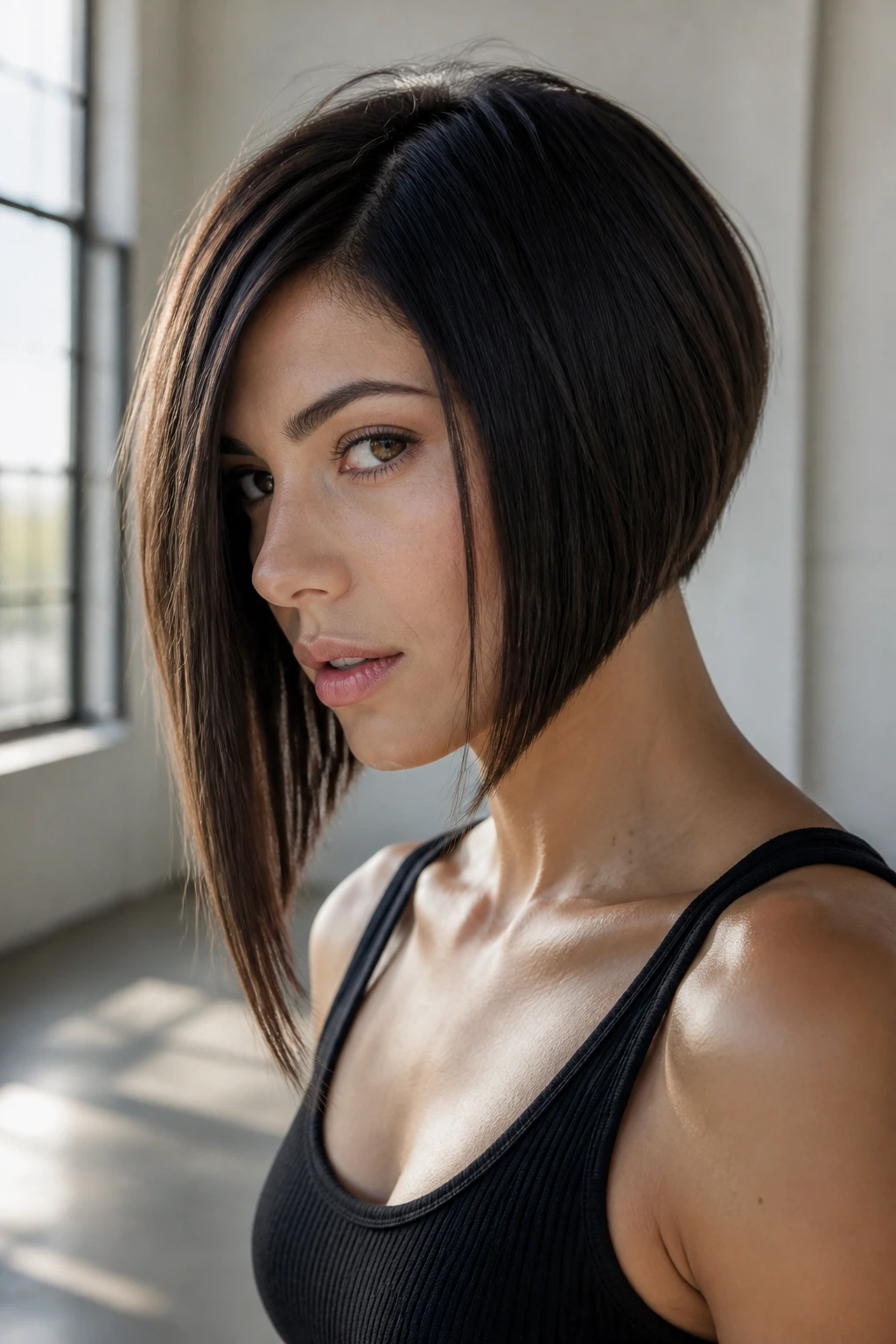
An angled bob is the one that makes the line itself the feature. Shorter in back, longer in front, and cut with a clear slope, it gives short hair a clean geometric look that feels decisive instead of fussy.
The best versions don’t look slashed. They look balanced. The back should rise gradually, not jump. The front should skim the jaw or just below it, depending on how much length you want to keep around the face.
Straight hair makes this cut sing. A fast pass with a flat iron and a slight bend at the ends keeps the line visible. If the hair is too fluffy or too curly, the angle can disappear under texture, which is a waste of a good shape.
This bob is for someone who likes order. The haircut has a backbone, and it wants you to let it show.
12. Micro Bob with a Tapered Nape
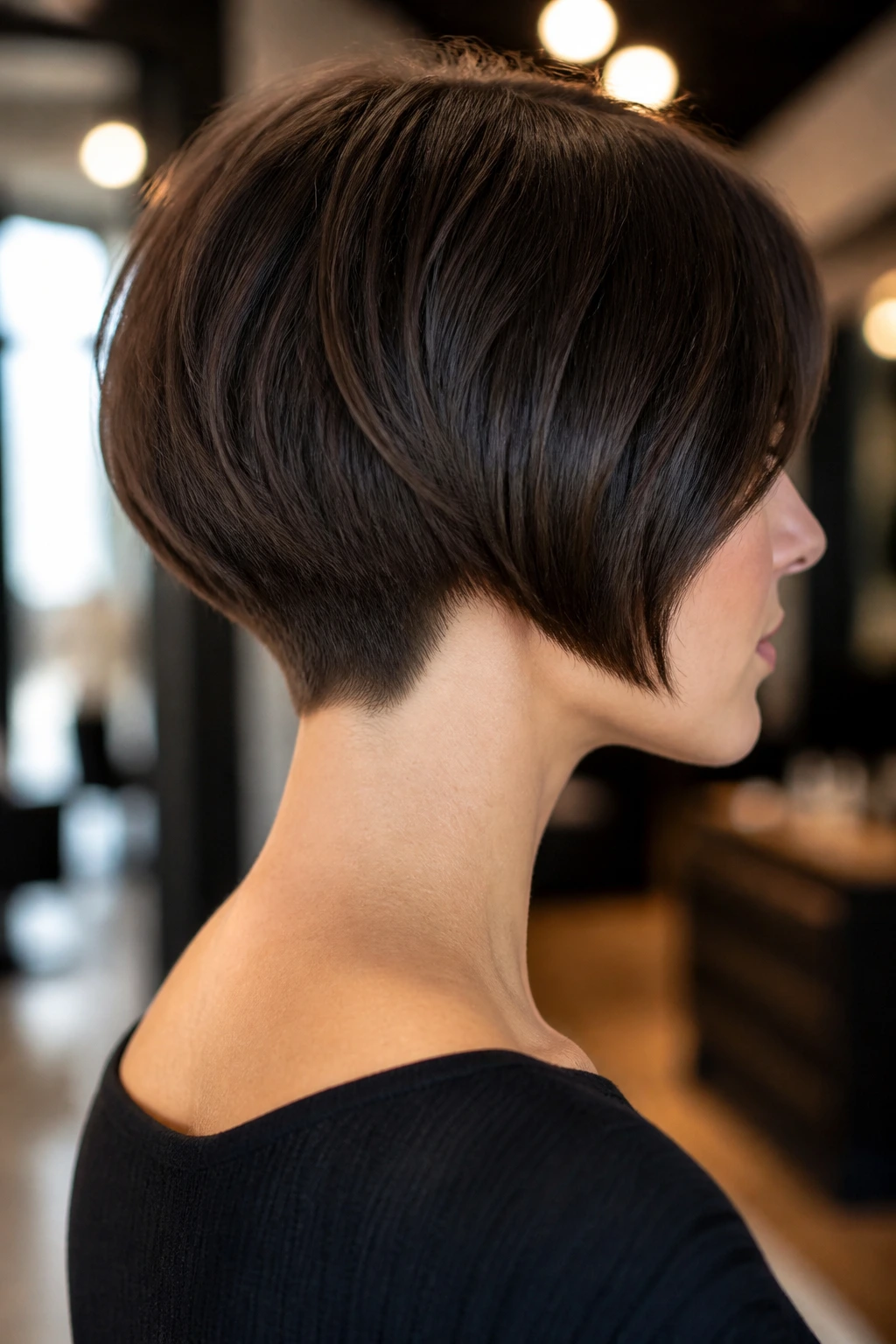
A micro bob is tiny in the best way. It sits high, grazes the jaw or even the earlobes, and keeps the nape tight so the back doesn’t puff out. The result feels crisp and a little bold, almost like a strong line drawing.
It’s not a casual cut, though. This one grows out fast, and the shape changes fast too. A trim every 4 to 6 weeks keeps the proportions intact, especially if the nape is heavily tapered.
The beauty of the micro bob is the neck exposure. It opens the whole look up, which makes earrings, collars, and cheekbones pop more than they would under a longer bob. If you like hair to stay off your shoulders and you do not mind regular maintenance, it’s a sharp little haircut.
13. Choppy Bob for Fine Hair

Fine hair needs a careful hand, not a pile of short layers. That’s the trap. Too many layers and the ends disappear. A choppy bob done well keeps enough density at the perimeter to make the hair look fuller, then uses a few broken pieces inside the shape to keep it from falling flat.
The Trick Is Restraint
Ask for texture where it matters — usually around the crown and through the mid-lengths — but keep the bottom line strong. That combination gives the illusion of thickness without turning the cut into a puffball.
A light volumizing mousse at the roots works better here than heavy cream. Fine hair gets weighed down fast, and once the root collapses, the whole cut loses its point.
This is one of those bobs that looks better when it’s slightly imperfect. A few piecey ends, a little lift at the top, and a slightly messy side part can make the hair look twice as full as it really is.
14. Weight-Removed Bob for Thick Hair
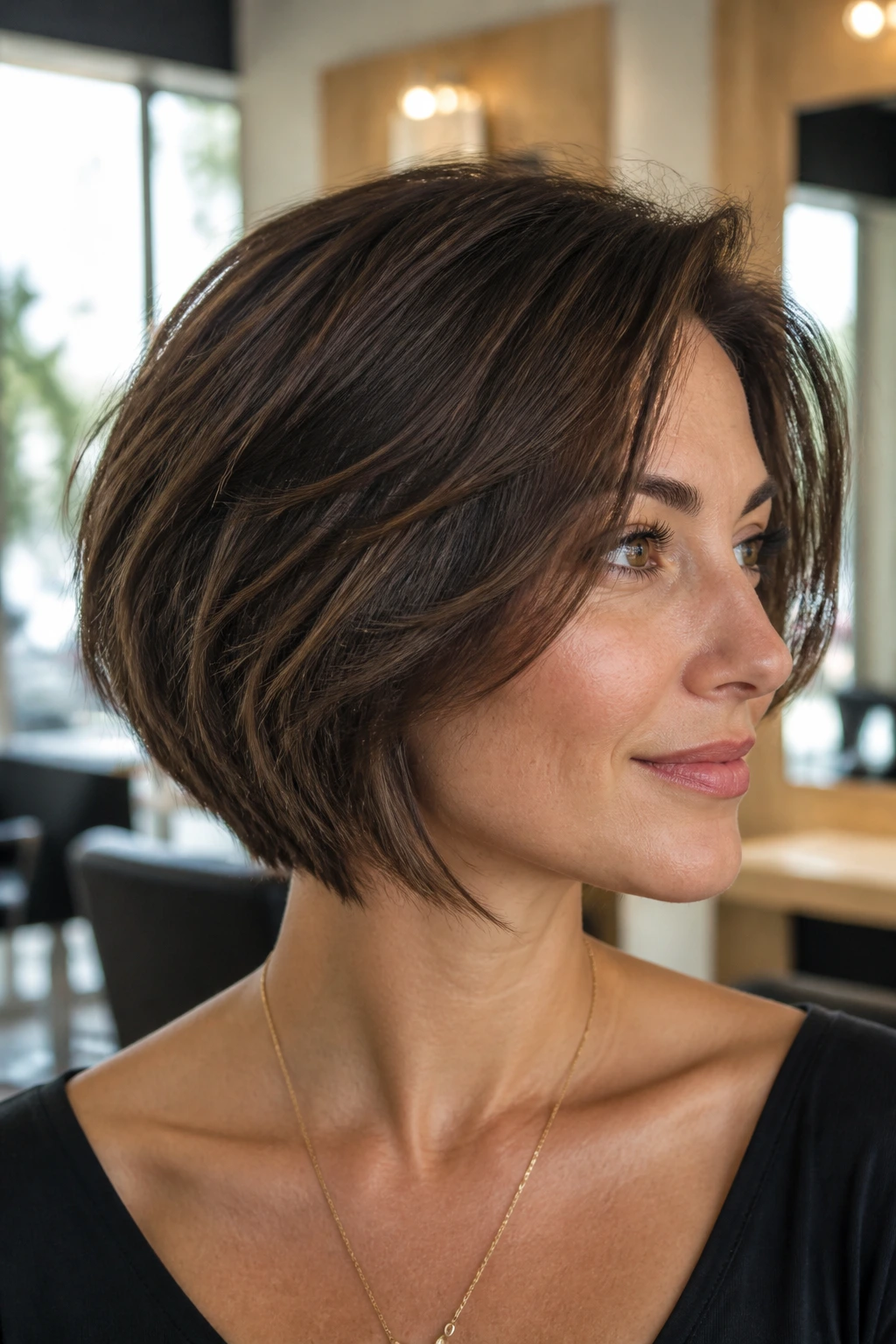
Thick hair needs relief in the right places, or it builds a shelf at the bottom and a helmet at the top. A weight-removed bob solves that by taking bulk out of the interior so the shape can sit closer to the head.
The important thing is how the weight comes out. Thinning shears alone are not the answer; they can leave fuzzy ends that frizz in the wrong weather. Better to use internal layering, careful slide cutting, or well-placed point cutting depending on the texture.
This cut feels cleaner as it grows, which is a nice change if your hair usually turns into a triangle before the next trim. It also dries faster than a dense one-length bob, which saves time whether you blow-dry or air-dry.
Heavy hair does not need to be beaten into submission. It needs room to move.
15. Bottleneck Bang Bob with Short Layers
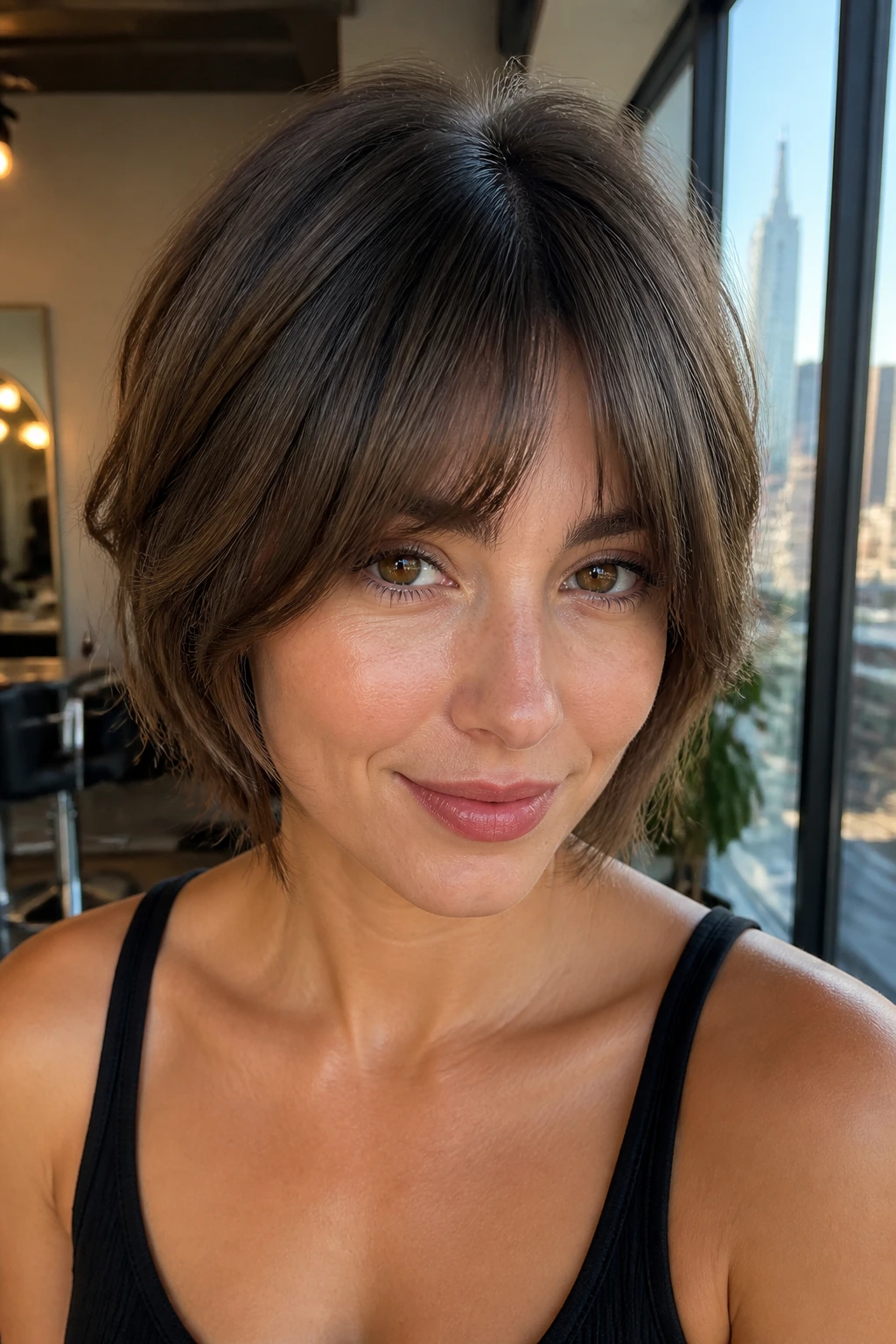
Why do bottleneck bangs work so well with a layered bob? Because they soften the front without swallowing the face. The fringe starts narrow between the brows, then opens slightly around the temples, which creates a gentler frame than a full blunt bang.
How the Fringe Changes the Whole Cut
The short layers around the front need to support the bangs so everything doesn’t collapse into one heavy curtain. A little lift at the crown helps, but the real work happens in the way the fringe blends into the sides.
This cut is useful if you want attention near the eyes and cheekbones without committing to straight-across bangs. It can look artsy, soft, and a little French without trying too hard.
Style it with a round brush if you want the fringe to bend inward. Or finger-dry it for a looser finish. Both work, but the line around the bangs should stay soft enough that it doesn’t look chopped into place.
16. Rounded Retro Bob with Soft Underlayers
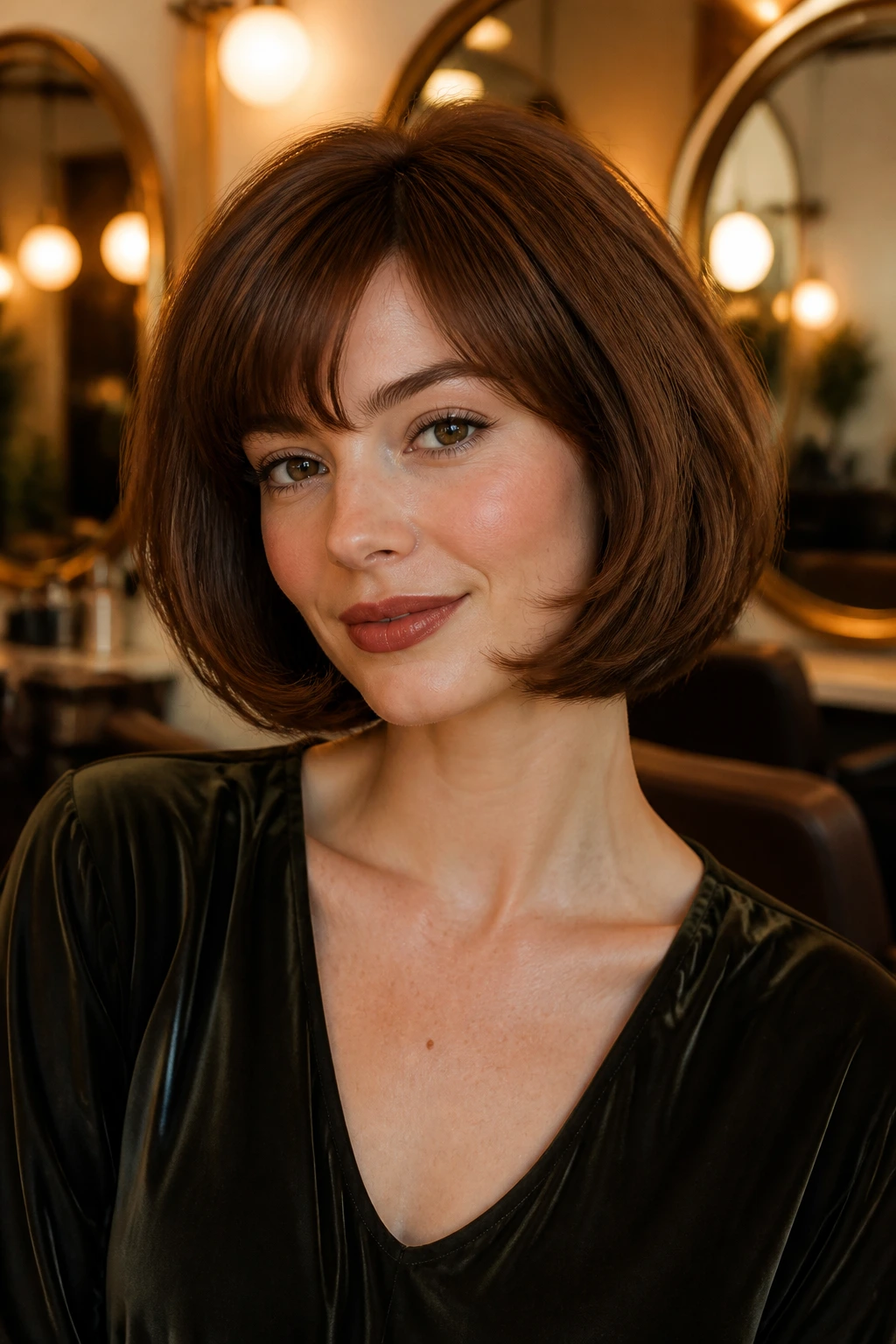
A rounded retro bob has that smooth, curved shape that feels almost polished enough for a dinner party and still practical enough for an ordinary workday. The underlayers help the hair wrap inward, which gives the whole cut a little body instead of a flat wall.
This is one of the friendlier styles for people who like blow-drying. A medium round brush, a concentrator nozzle, and a little patience around the roots can build a very neat shape. You’re aiming for bend, not bounce for the sake of bounce.
The outline should feel full but controlled. That’s the charm. It looks like the hair has been handled, but not overworked, which is a rare balance and one worth keeping.
17. Disconnected Bob with an Undercut Nape
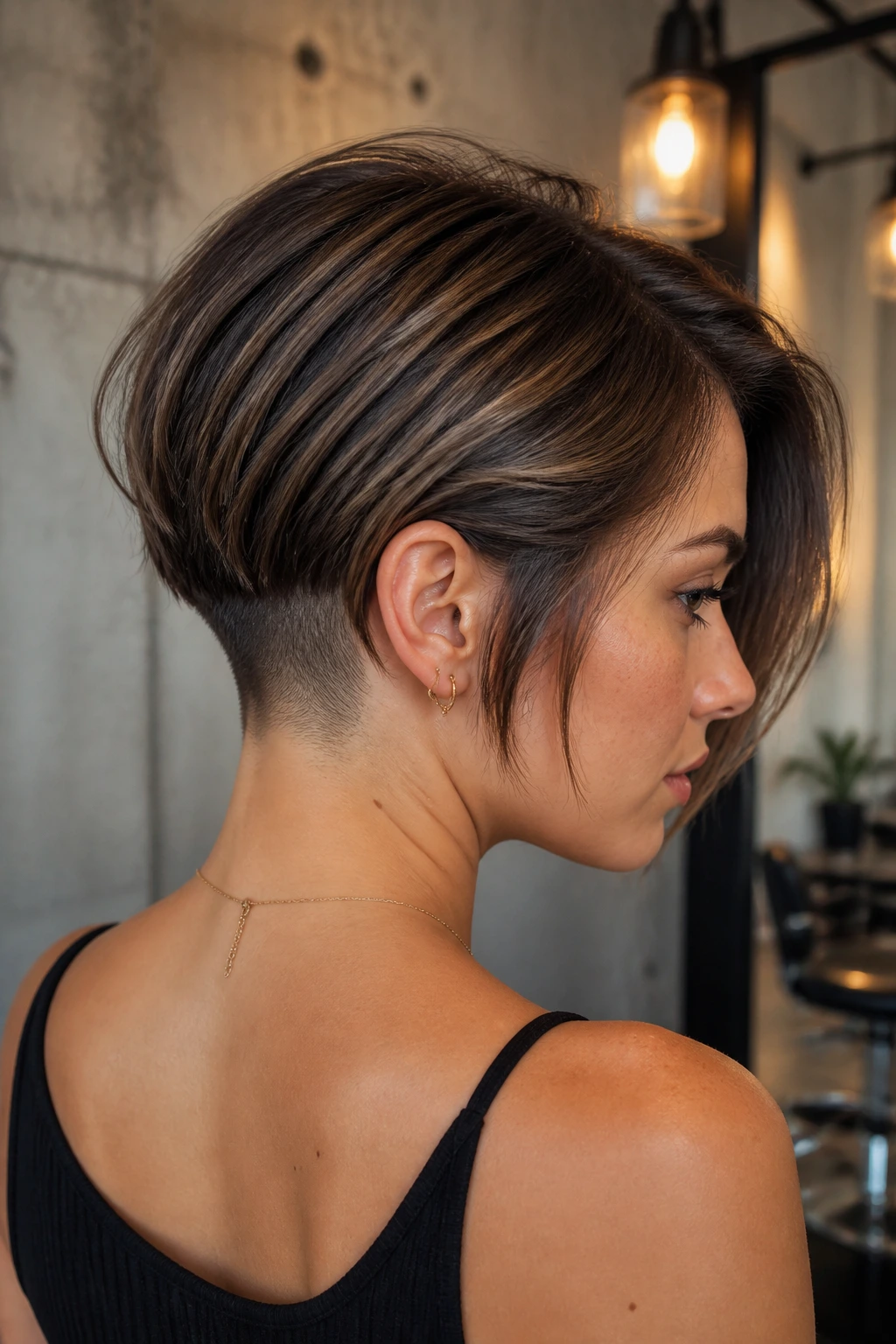
Some bobs live on blending. This one doesn’t. The disconnected bob uses contrast: a shorter undercut or closely cropped nape underneath, with a longer top layer sitting above it. It’s sharper, cooler, and far more practical than it looks if you have dense hair that loves to bulk up at the back.
The undercut is the whole point here. It clears out the heavy stuff so the top length can fall better. Without that hidden release, the shape can feel puffy and stubborn.
This cut grows out with a little attitude. That’s part of the appeal. It’s not trying to be soft. It’s trying to be clean and a bit unexpected, and if you like a bob that doesn’t blend into the background, this one has real personality.
18. Wet-Look Sleek Bob with Surface Layers
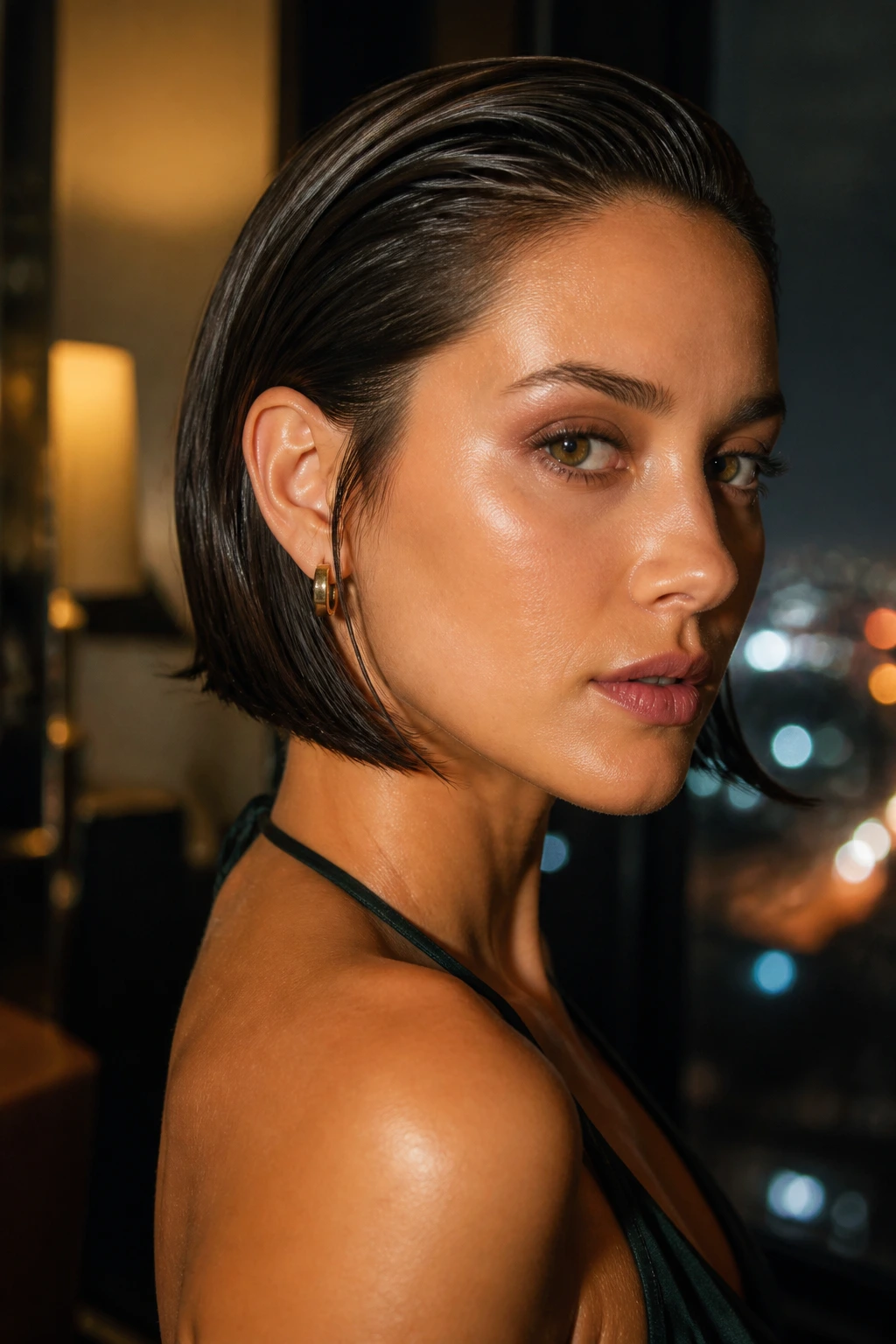
A wet-look bob is not subtle. It’s shiny, combed, and close to the head, with surface layers that keep the outline from looking like a block. The style works because it turns the haircut into a shape first and a texture second.
Why It Feels Different From a Blowout
A blowout uses movement to create softness. A wet look does the opposite. It removes fluff, flattens the silhouette, and lets the shine do the talking. That makes it a strong choice for evenings, events, or any day when you want the haircut to read deliberate from six feet away.
Use a strong-hold gel through damp hair, comb it into the desired part, and let it set without touching it too much. A gloss spray or lightweight serum at the end gives the surface that slick finish. Too much product turns greasy fast, so stay light-handed.
The nice part? The cut itself doesn’t have to be extreme. Even a simple bob gets a lot more edge when the finish is this clean.
19. Air-Dried Natural Bob with Bends
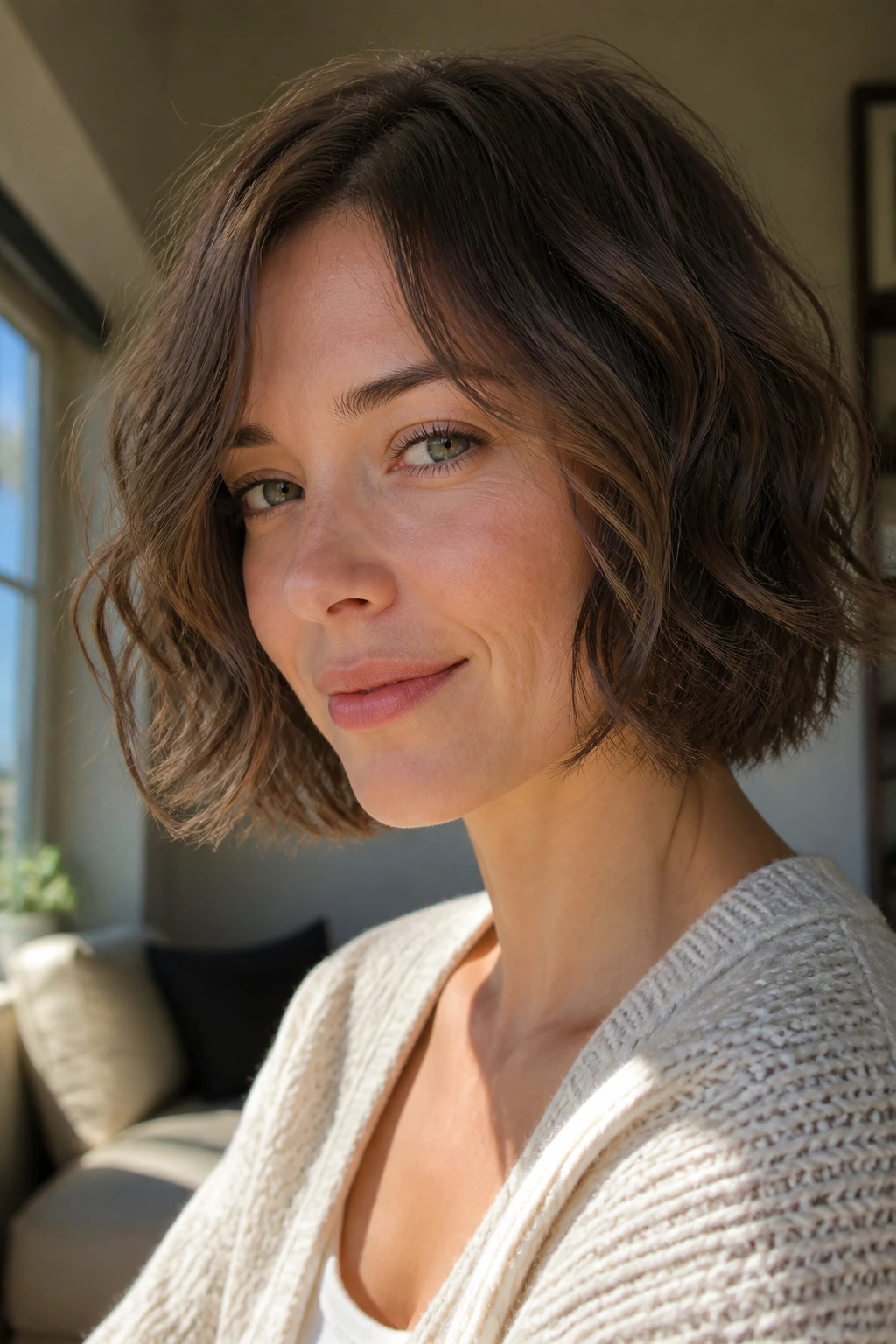
Can a short bob look finished without heat? Absolutely, if the cut is designed for it. The air-dried version depends on bends and soft layers that fall into place once the water leaves the hair. No big round brush. No flat iron. Just a shape that knows what it wants to do.
What to Ask for So It Air-Drys Well
- Keep the layers soft and distributed, not stacked into one short crown.
- Ask for a perimeter that sits slightly longer than your shortest bend point.
- Use a light mousse or curl cream, not a heavy butter.
- Let the hair dry with its natural part first, then shift it if needed.
The result is relaxed, but not lazy. That matters. Hair that air-dries well still needs structure from the cut, or it becomes a weird puff around the ears. This one keeps the shape readable while letting the texture do the rest.
20. Tucked Bob with Side Part and Soft Ends

A tucked bob is one of those cuts that changes character just by slipping one side behind the ear. The side part gives it a little asymmetry, the soft ends keep it from looking harsh, and the ear tuck opens up the face in a way a longer cut can’t quite match.
It’s a particularly nice option if you wear glasses or earrings. The haircut frames them instead of fighting them. That sounds small, but it changes how the whole look lands.
The shape should stay gentle at the perimeter. Too much stacking or too many short face pieces, and the tuck loses its ease. Keep the ends soft, and the style feels neat without turning formal. It’s one of those useful bobs that can look casual at lunch and sharper by dinner with no haircut change at all.
21. Piecey Center-Part Bob with Ribbon Layers

What happens when a bob gets a center part and a few narrow ribbons of movement? The face opens up, the layers fall in slim sections, and the whole shape feels a little cleaner and more modern than a fluffy, side-parted version.
How to Keep the Center Part Working
The two sides need enough balance to mirror each other, but not so much symmetry that the cut feels flat. That’s where the ribbon layers help. They give the hair some direction without breaking the center line completely.
This style works nicely on oval and heart-shaped faces, especially if you like the front pieces to frame the cheekbones instead of the jaw. A tiny bend with a flat iron or a round brush at the ends can keep the center part from looking too severe.
There’s a neatness to this one that I like. It doesn’t ask for a lot, and it rewards a little precision.
22. Flipped-End Bob with Soft Movement
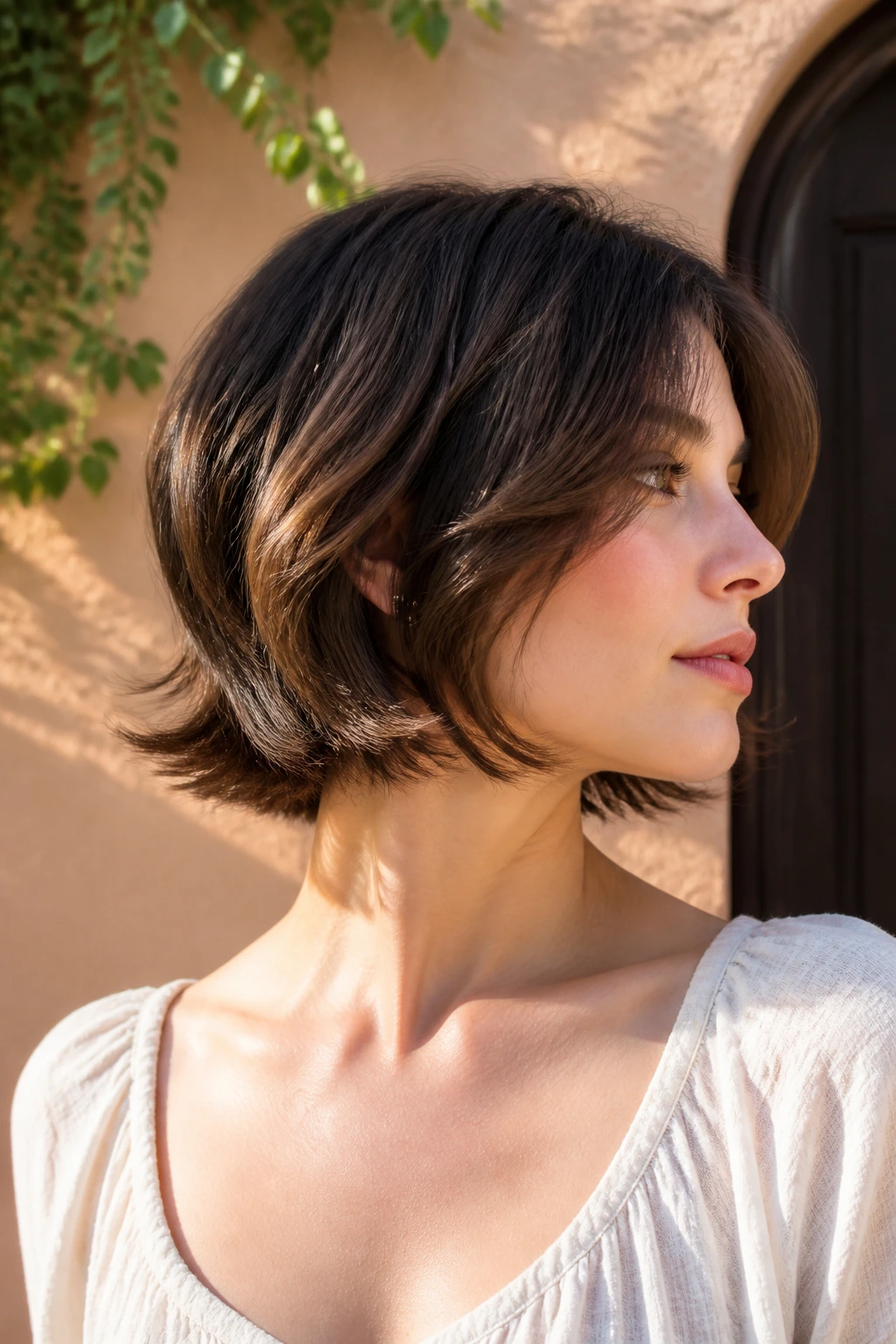
The flipped-end bob has a little wink to it. The ends turn outward just enough to lift the silhouette, which makes the cut feel playful without tipping into costume territory. Layering helps the flip show up instead of collapsing into the rest of the hair.
You can create the bend with a round brush or a flat iron, depending on how much time you have. The important part is the direction. You want the ends to flick away from the neck and jaw, not curl into a tight bend that fights the rest of the shape.
This one is a good antidote to hair that always falls inward and feels too serious. A small flip changes the mood fast. Not a huge change. Just enough to matter.
23. Cheekbone-Contouring Layered Bob
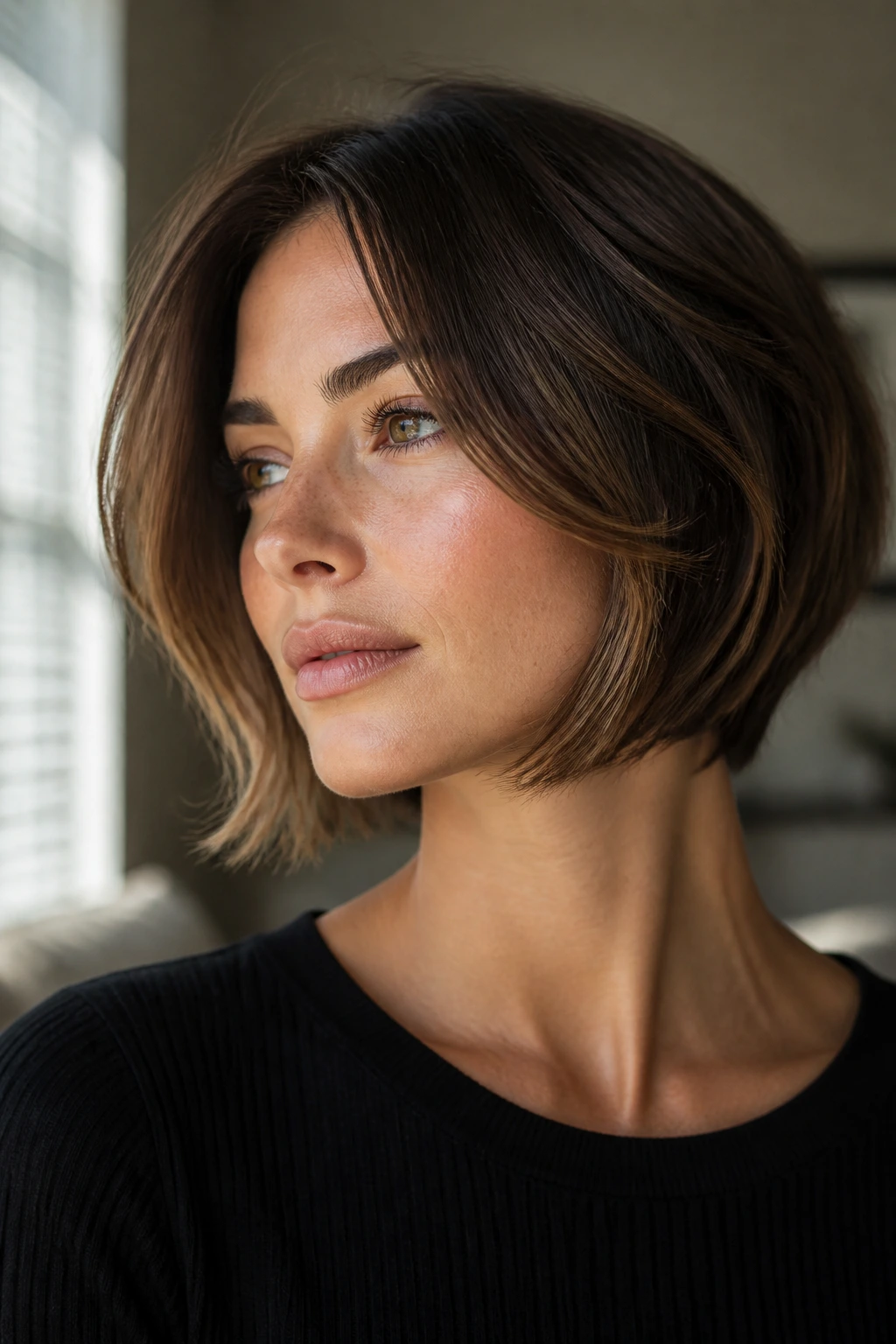
A cheekbone-contouring bob is built to put the focus where the face already has structure. The shortest face-framing pieces land around the cheekbones, which can soften a wide jaw, sharpen a round face, or simply make the middle of the face feel more defined.
The key is not to drag those pieces too low. Once they sit at the jaw, the effect changes. Cheekbone placement keeps the frame high and lets the layers work like a spotlight instead of a curtain.
This is the kind of cut that looks best when the stylist actually studies your face in the mirror, not just your hair. The layer length matters more than the label. Get that right, and the bob does half the styling for you.
24. Jaw-Softening Layered Bob
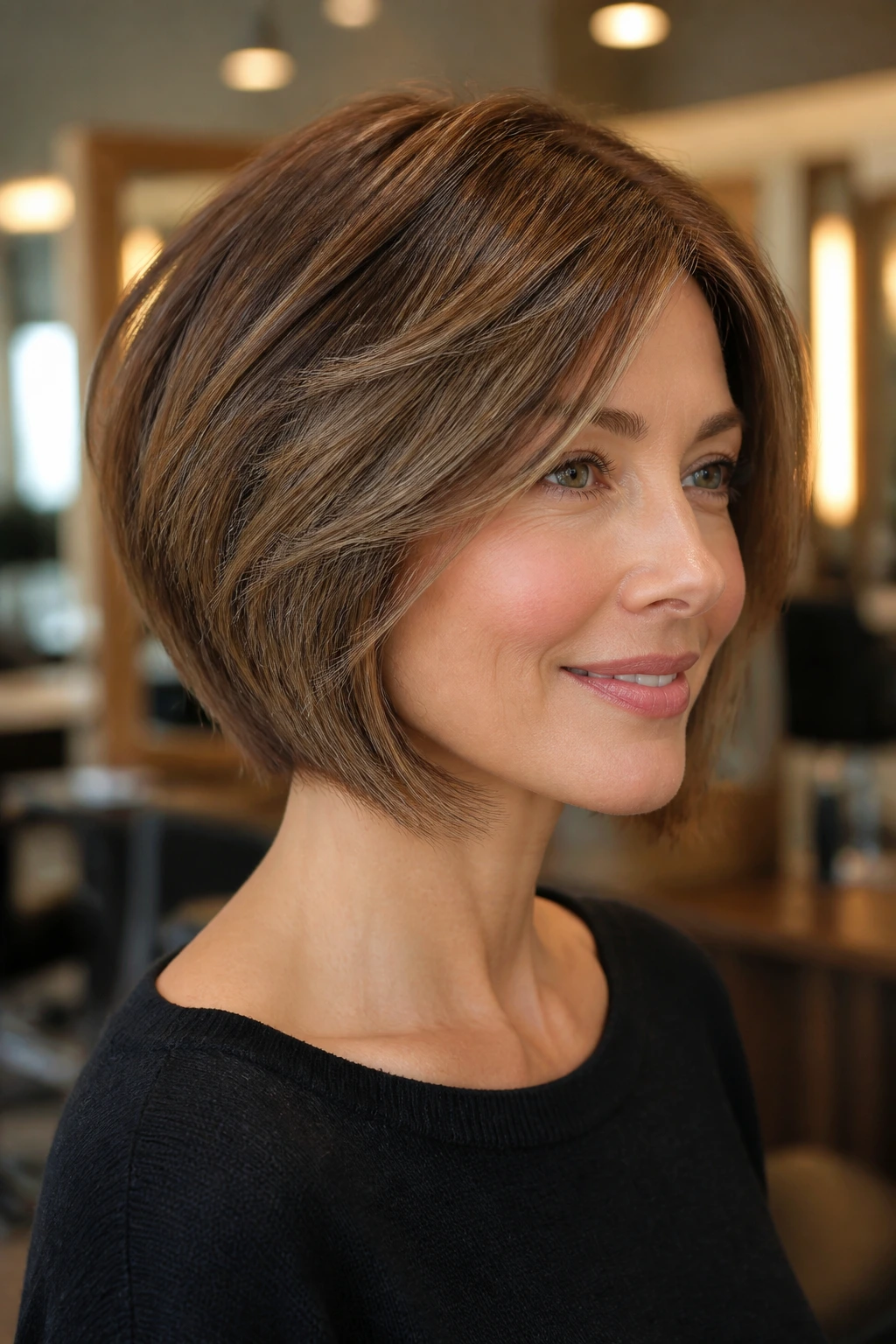
Not every bob should sit right on the jaw. Sometimes that’s the problem. A jaw-softening version keeps the longest pieces just below the angle of the jaw while the internal layers lift higher, which blurs the hard line that a blunt cut can exaggerate.
Why It’s Better Than a Straight Horizontal Line
A clean straight line can be chic, but on some faces it’s unforgiving. This cut keeps the structure while loosening the visual edge. That makes it a smart choice for square or round face shapes, especially if you don’t want the haircut to stop exactly where the face is widest.
The styling is usually simple: a little bend, a little polish, no need for extreme volume. If the ends turn inward too much, the jaw emphasis comes back. Keep the line soft and the shape does the work.
It’s a quiet fix, which is often the best kind.
25. Grow-Out-Friendly Layered Bob with Blended Ends
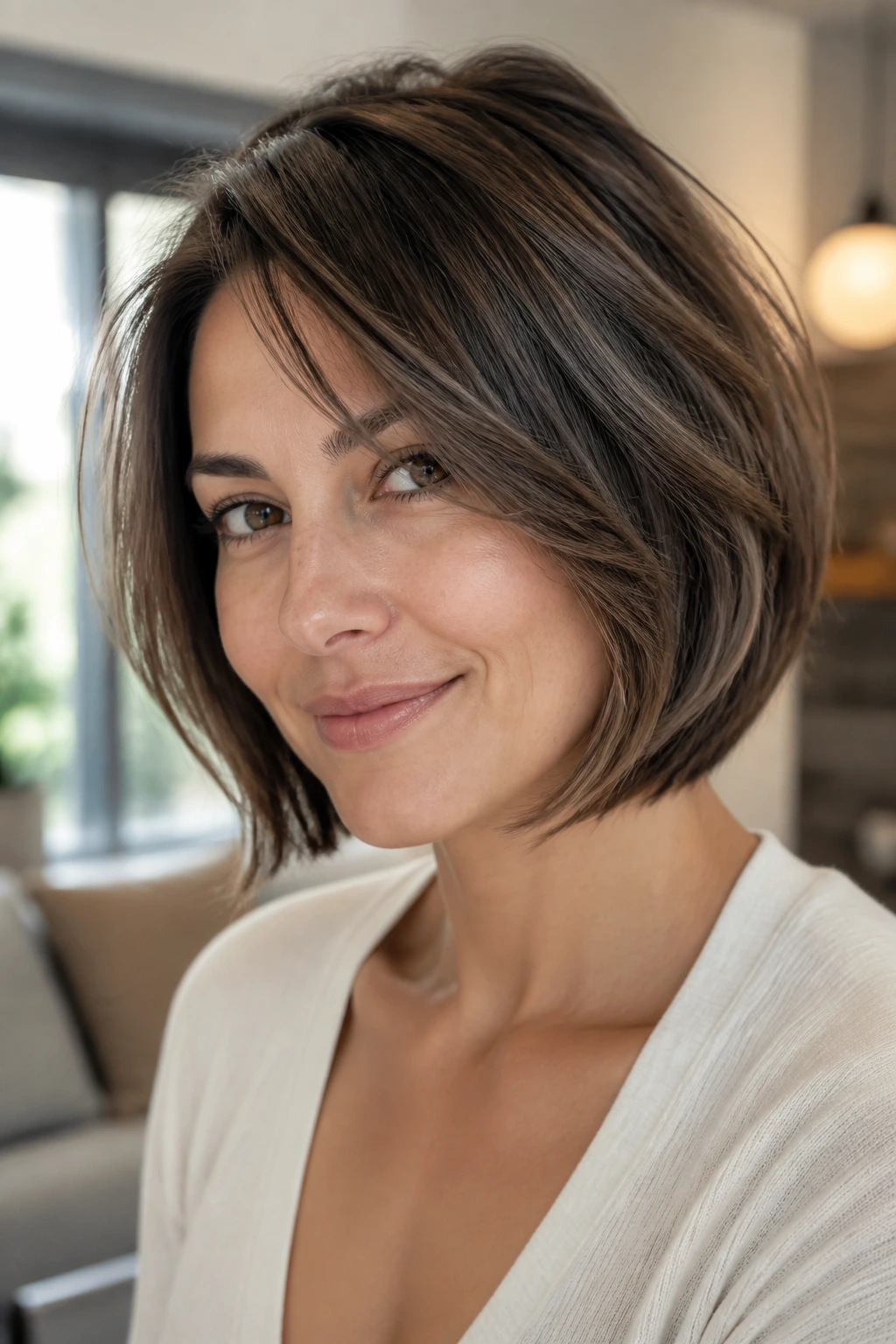
A grow-out-friendly bob is the one you don’t have to babysit. The layers are blended enough that the shape still makes sense six or eight weeks later, and the ends don’t break into obvious steps as the hair gets longer.
This is a smart finish if you hate harsh salon-to-home transitions. The cut should hold its silhouette without needing constant reshaping, which means softer graduation, fewer abrupt short pieces, and enough perimeter weight to keep everything grounded.
The Little Details That Buy You Time
- Keep the front slightly longer than the rest so the cut can stretch.
- Ask for blended internal layers instead of heavy disconnection.
- Avoid over-texturizing the ends, or the grow-out turns fuzzy fast.
- Style it with a light bend, not a strict curl pattern, so it still looks good two days later.
It’s not flashy. It is practical. And for a lot of people, that’s the haircut that ends up getting worn the most.
Why the Layer Placement Matters More Than the Number of Layers
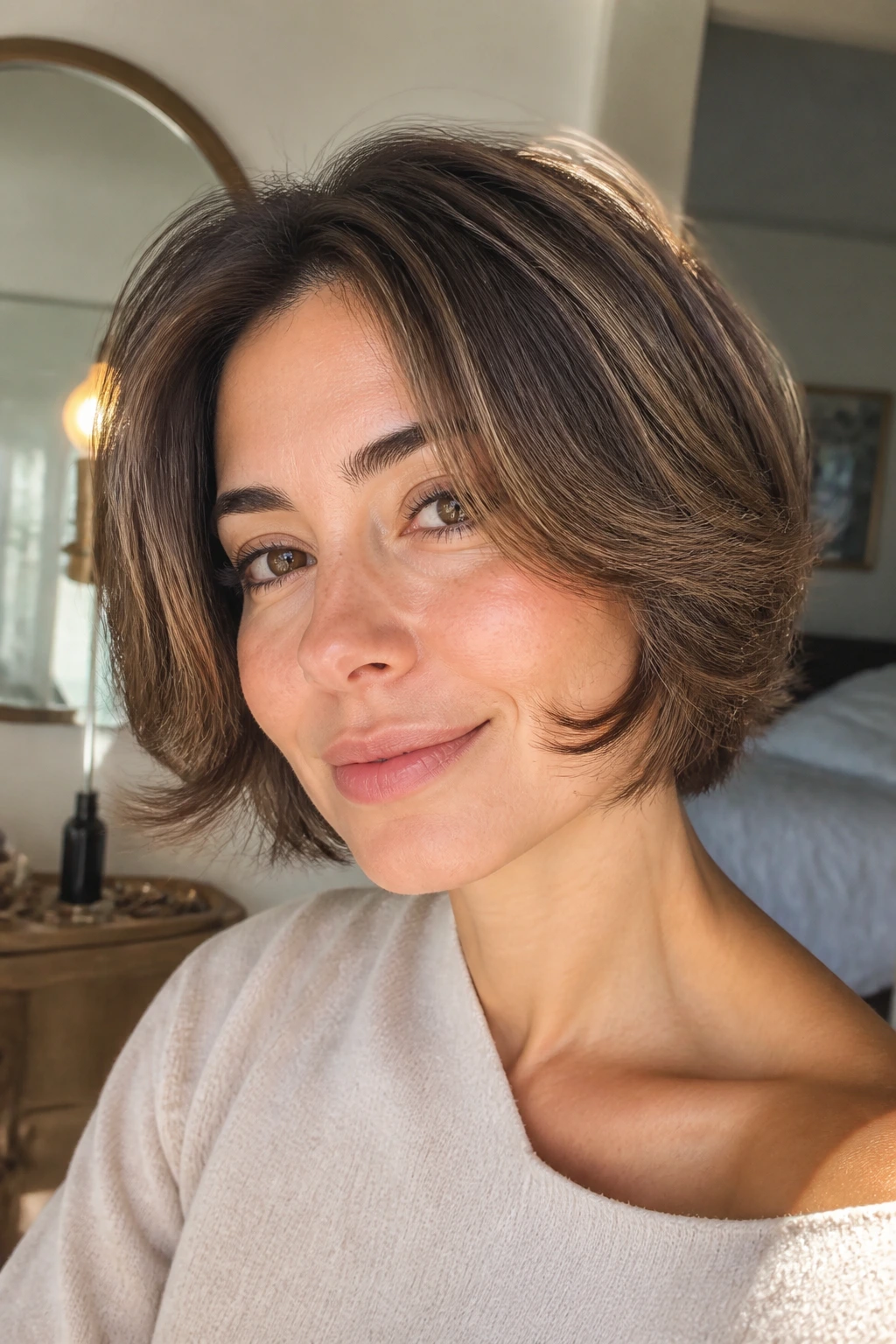
A layered bob can go wrong when the cut turns into a numbers game. More layers. More texture. More movement. That logic sounds sensible until the hair starts losing density and the shape turns fuzzy. What matters is where the layers sit and what job they’re doing.
At the crown, layers can add lift. Around the nape, they can remove bulk. At the front, they can shift how the face is framed. Those are different tasks, and they should not be treated like one giant haircut trick. A good stylist looks at your hairline, your growth pattern, and your texture before deciding where to open the shape up.
That’s why two bobs with the same length can behave very differently. One might sit close to the head and look sleek. Another might puff up and feel airy. The difference often comes down to internal layering, not how short the whole haircut is.
There’s also a line people skip over: the perimeter matters. If the ends are too thinned out, the bob loses its anchor. If they’re too heavy, the layers won’t show. The sweet spot is a solid outline with enough removal inside to let the hair bend. Not dramatic. Just smart.
Tools That Make Layered Bobs Easier to Live With
- Blow dryer with a concentrator nozzle: Directs airflow so you can smooth the cuticle instead of blasting hair everywhere.
- 1-inch and 1.25-inch round brushes: Smaller brushes create more bend; the larger one is better for softer movement and less flip.
- Vent brush: Good for fast drying on layered bobs that don’t need a full salon blowout.
- Flat iron with rounded plates: Helps create slight bends at the ends without leaving a hard crease.
- Heat protectant spray: Non-negotiable if you use hot tools, even on short hair.
- Light mousse: Adds root support without making the bob heavy.
- Texture spray or dry shampoo: Keeps piecey styles from looking too clean or too flat.
- Tail comb and clips: Useful for clean parts and sectioning around the nape.
- Diffuser: Handy for wavy or curly bobs that need shape without frizz.
- Light serum: One drop, maybe two, for the ends only. More than that gets greasy fast.
How to Ask for the Cut Without Waving Your Hands Around
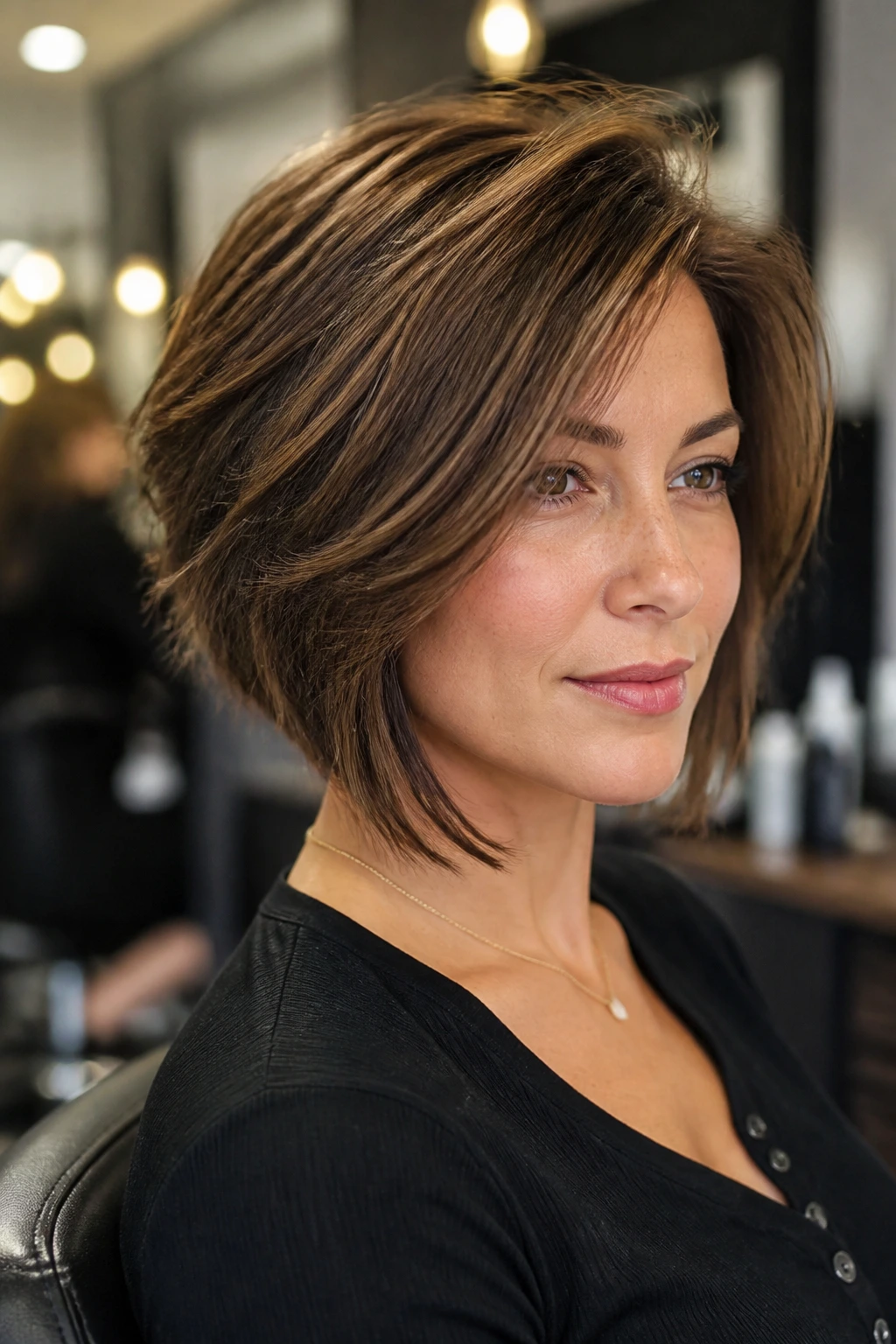
A good haircut conversation usually needs four details, and the length is only one of them. You need to know where the bob should sit, how much angle you want, what happens around the face, and how the back should behave. If you walk in with only “I want layers,” you’re giving the stylist a blank page and hoping for luck.
Bring a photo, but point to the exact part you like. Is it the nape? The fringe? The bend at the ends? The more specific you are, the less likely you are to get a cut that looks vaguely similar from the front and wrong from the side. That side view matters. A lot.
If your hair is curly or strongly wavy, ask whether the cut should be done dry or mostly dry. Curly bobs can shrink in strange ways, and a wet cut doesn’t always show the real shape. For thicker hair, ask where the bulk should be removed. For fine hair, ask where the length should stay solid so the ends don’t disappear.
One more thing: talk about your styling habits. If you air-dry 90 percent of the time, say so. A bob built for a round-brush blowout and a bob built for air-drying are not the same haircut, even when they look close in a photo.
How to Wear These Bobs Day to Day
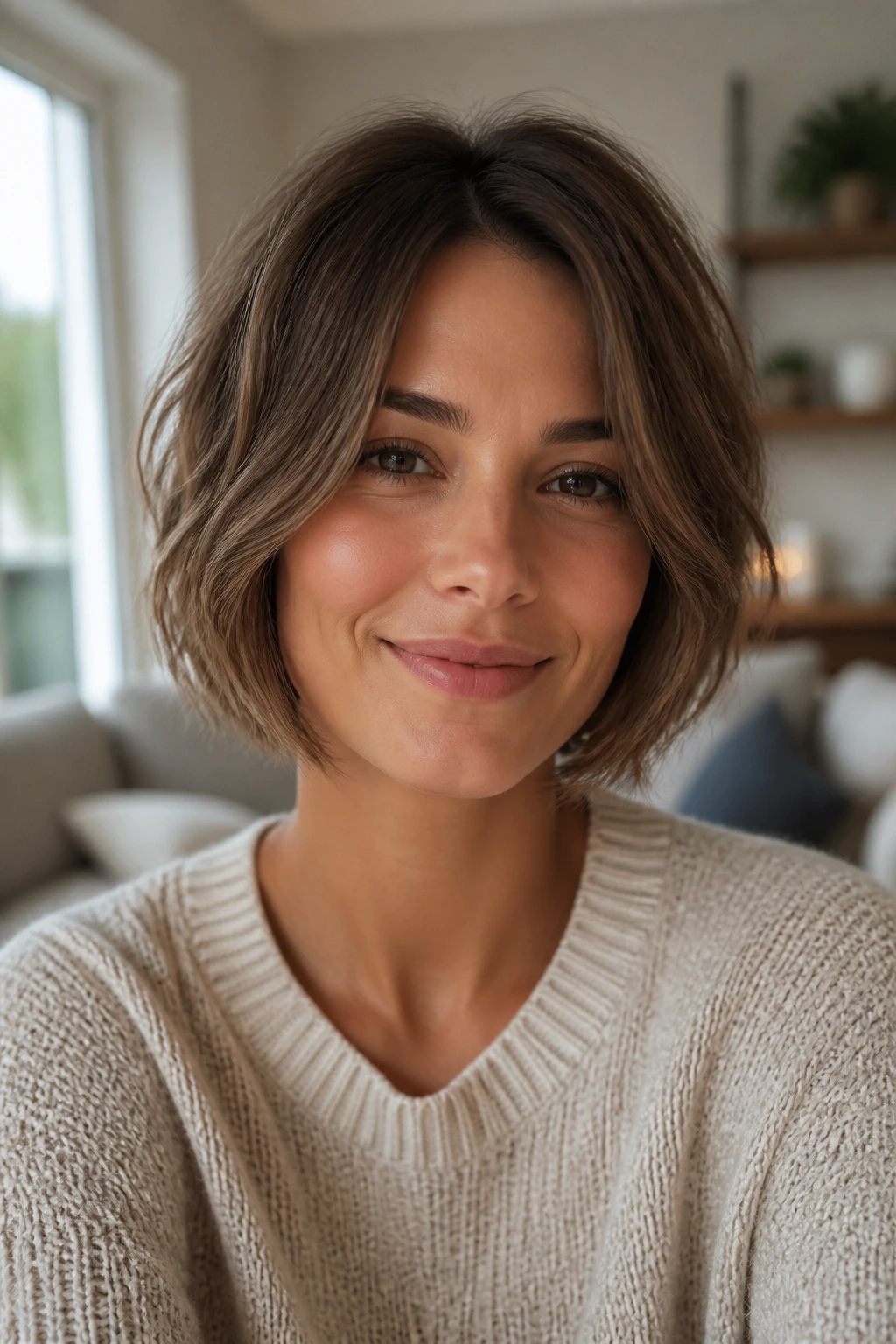
Smooth Finish: Blow-dry with a nozzle, brush the hair under or slightly away from the face, and seal the ends with a tiny amount of serum. This works best on stacked, angled, and A-line shapes that need a clean line.
Piecey Finish: Work a light texture spray or mousse through damp hair, scrunch or finger-twist a few sections, then let the layers separate on their own. Choppy, shaggy, and razor-cut bobs usually look best with this kind of grit.
Air-Dried Finish: Set the part while the hair is wet, add a small amount of cream or mousse, and leave the hair alone until it’s almost dry. Touching it too much early on is what makes the texture go fuzzy.
Curly Finish: Use a diffuser on low heat, lift the roots a little, and stop before the hair gets crunchy. Once it cools, break the cast with clean hands. That little step matters.
Second-Day Refresh: Mist the roots lightly, reactivate the ends with your palms, and add a touch of dry shampoo only where the hair starts to separate. Layered bobs can look better on day two than on wash day if the finish is done right.
Additional Tips and Texture Boosters

Lift at the Crown: Clip the top section up for five minutes while your hair cools after blow-drying. It’s a small trick, but it helps stacked and side-parted bobs hold shape longer.
Customization: If your bob keeps flipping out too much, ask for the perimeter to be softened at the very ends rather than thinned through the whole shape. If it goes too flat, ask for shorter internal layers near the crown instead.
Serving Suggestions: Tuck one side behind the ear, switch your part, or add a barrette near the temple. Layered bobs change character fast, and that tiny shift can make the haircut feel fresh without touching a pair of scissors.
For Fine Hair: Use light products only. A heavy cream can make the layers clump together and erase the lift you were trying to create.
For Thick Hair: Keep a metal tail comb around. It helps section the hair cleanly so your styling products hit the roots where they actually matter, not just the surface.
Common Mistakes to Avoid With Layered Bobs
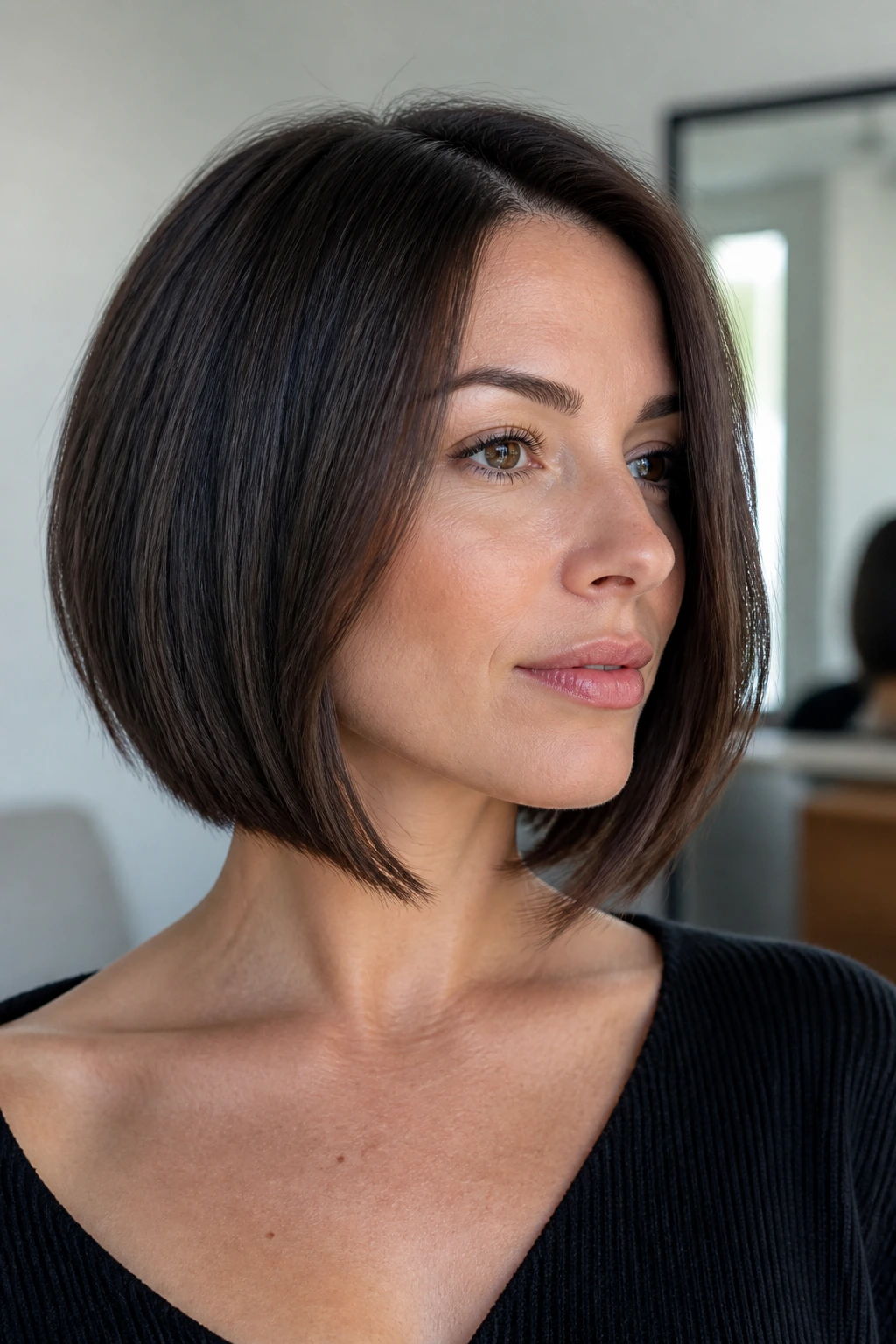
- Too many short layers at the crown: The top gets fluffy while the bottom looks thin. Ask for lift, not over-teasing cut into the shape.
- Overusing thinning shears on the ends: This can make straight hair fray and make curly hair puff. A softer scissor technique usually ages better.
- Ignoring the nape: If the back gets too bulky, the whole cut feels heavy. Clean up the nape line often, especially on stacked or angled bobs.
- Cutting curls too wet without checking shrinkage: Curls can jump up more than expected, leaving the bob too short around the face. Dry or damp cutting gives a truer read.
- Using heavy oil from roots to ends: The bob loses lift, the layers stick together, and the hair starts looking tired by lunchtime.
- Waiting too long for trims: A layered bob grows out in a shape-shifting way. Soft shapes can stretch a bit, but stacked and micro lengths need regular maintenance.
Variations and Adaptations to Try
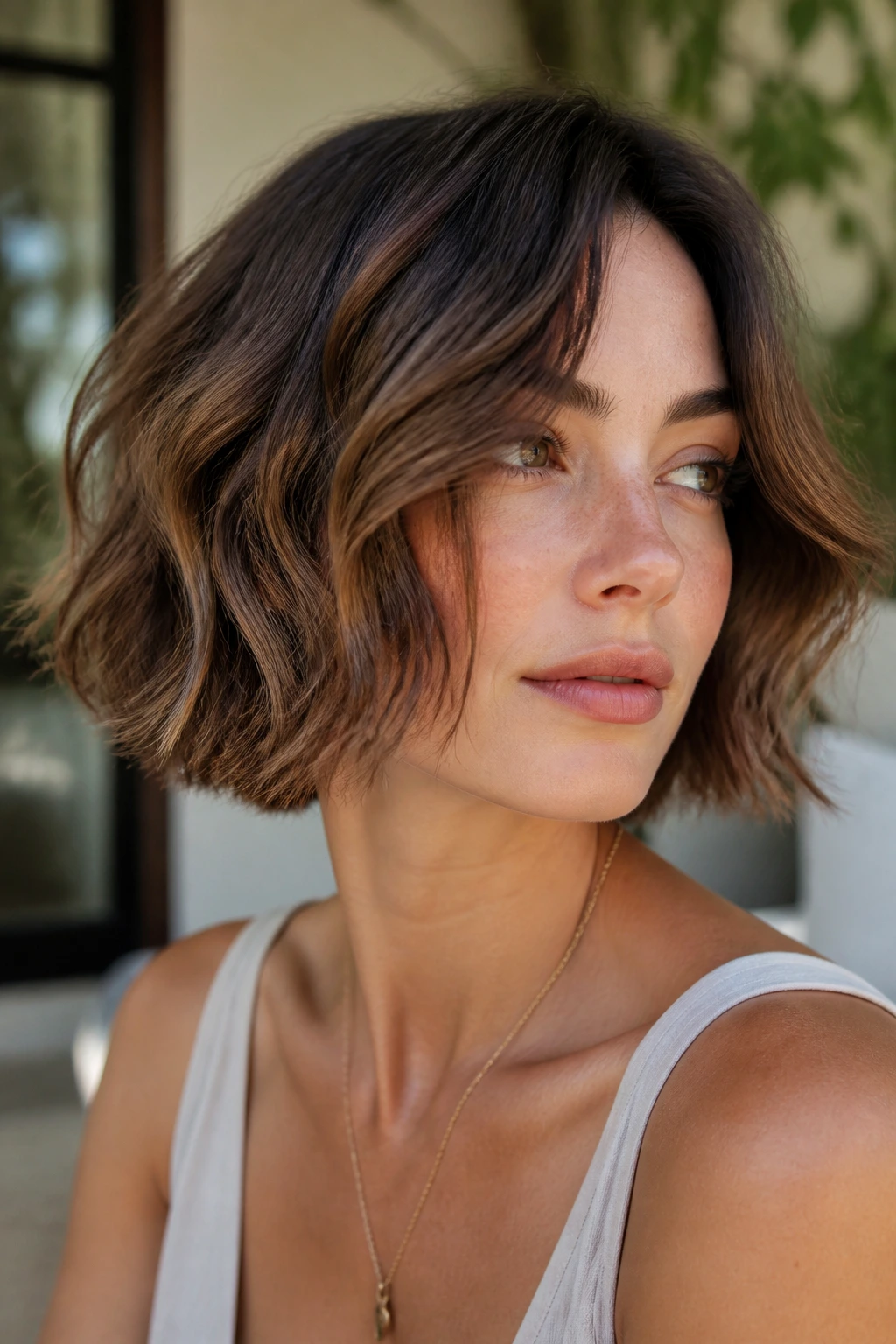
Fine-Hair Lift Plan: Keep the perimeter blunt and the layers minimal, with most of the movement concentrated at the crown and around the face. That gives the illusion of fullness without hollowing out the ends.
Thick-Hair Control Plan: Add internal layering, a slightly shorter nape, and a cleaner outline through the bottom. The goal is to take away bulk without turning the cut fuzzy.
Curly-First Shape: Let the curl pattern lead the haircut. A rounded silhouette and dry cutting help the bob follow the way the hair naturally springs instead of fighting it.
Low-Heat Air-Dry Version: Ask for soft, distributed layers and a perimeter that still holds weight. Then style with mousse or cream and leave heat out of the equation most days.
Bang-Added Version: Start with a layered bob first, then add curtain, bottleneck, or side-swept bangs once you know how much forehead you want to show. Bangs change the whole haircut more than people expect.
Grow-Out Version: Keep the front slightly longer and the layers softly blended so the bob can stretch past the first trim without looking chopped. This is the version for anyone who hates a strict appointment schedule.
Keeping the Shape Sharp Between Cuts
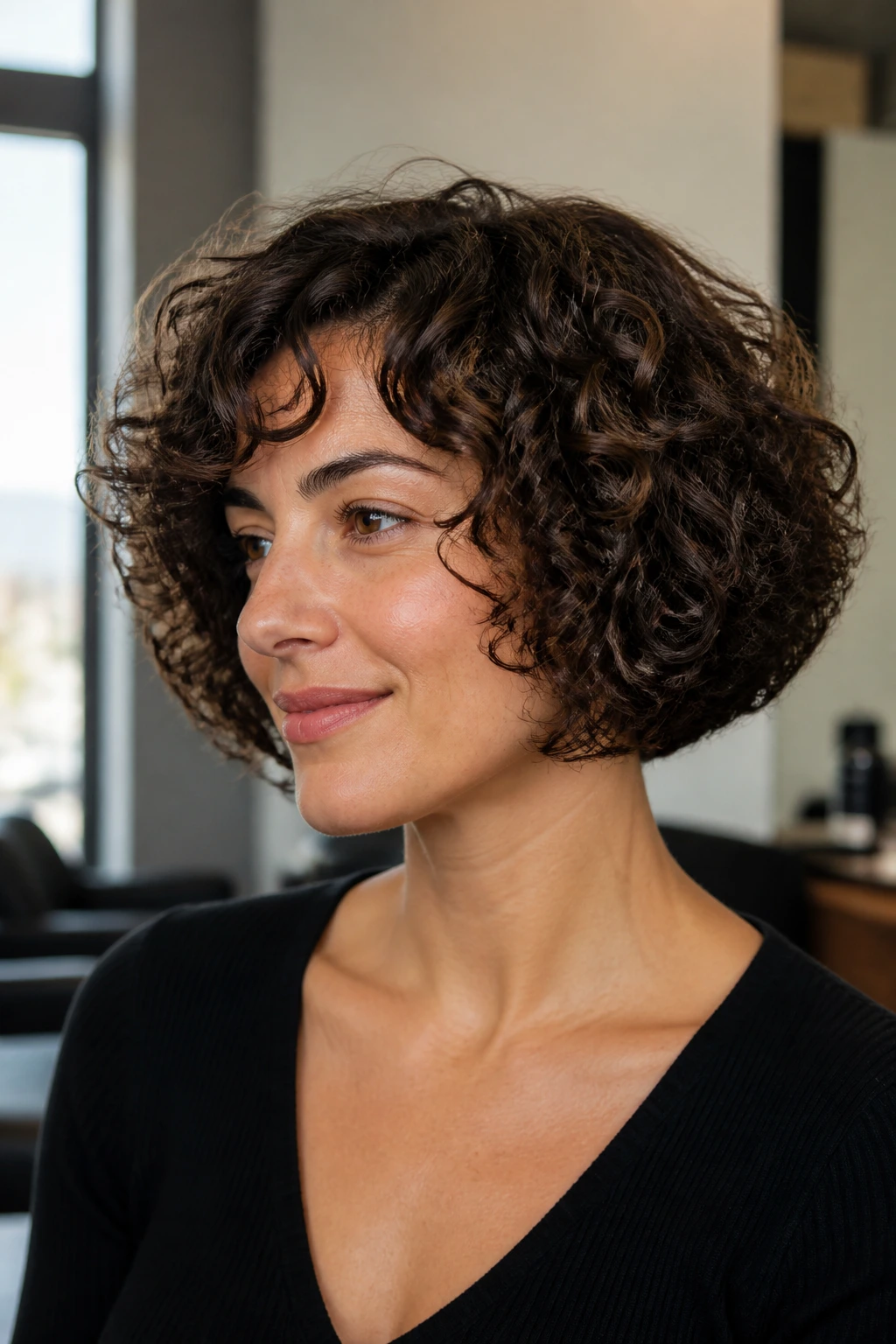
Layered bobs don’t need the kind of maintenance that long hair does, but they do need a little attention if you want the shape to stay clean. Most styles look best when they’re trimmed every 5 to 8 weeks, with shorter or more structured bobs needing the tighter end of that range. If you’re wearing a micro bob or a sharp angled shape, let it go much longer and the design starts to blur.
Wash frequency depends on texture. Fine hair often likes more frequent washing because oil weighs it down fast, while curly or dry hair can usually go longer between shampoos. Dry shampoo helps at the roots, but don’t pile it on until the hair feels dusty. A light mist on day two or three is usually enough.
Night care matters more than people think. If your bob kinks easily, use a satin pillowcase or clip the front pieces loosely back so they don’t bend in odd directions. That tiny habit can save you 10 minutes in the morning.
Product buildup is another quiet problem. If you’re using mousse, spray, or gel often, a clarifying shampoo every couple of weeks keeps the layers from feeling sticky. Hair that looks dull and heavy sometimes isn’t damaged. It’s just coated.
Frequently Asked Questions
What layered bob works best for fine hair?
A choppy bob with a blunt perimeter usually works better than a heavily thinned shape. Fine hair needs density at the ends so the haircut looks full instead of see-through.
Do layers make short hair look thinner?
They can, if the layers are too short or too aggressive. The trick is keeping enough weight in the outline while using internal layers to add movement.
How often should I trim a layered bob?
Most layered bobs need a trim every 5 to 8 weeks. Sharper styles like stacked, angled, or micro bobs need closer upkeep than softer, grow-out-friendly cuts.
Can curly hair wear a layered bob without turning into a triangle?
Yes, if the shape is rounded and the layers are placed with the curl pattern in mind. Dry cutting or cutting near-dry hair helps the stylist see where the curls land.
What should I tell my stylist if I want movement but not a shag?
Ask for internal layers, a clean perimeter, and soft face framing. That gives motion without the disconnected, piecey look that a shag carries.
Why does my bob flip out at the ends?
Usually the perimeter is too blunt for your texture, or the ends are drying without direction. A round-brush finish, softer edge cutting, or a light bend with a flat iron can calm that down.
Is an undercut too extreme for a layered bob?
Not if your hair is very dense and the bulk sits at the nape. The undercut stays hidden most of the time and can make the whole shape easier to wear.
Can I air-dry a layered bob and still have it look neat?
Yes, but the cut has to be built for it. Soft, distributed layers and the right product make a huge difference; a random salon cut usually won’t air-dry as cleanly.
What if my layered bob looks choppy instead of blended?
That usually means the layers were placed too abruptly or the ends were over-texturized. A small reshaping appointment can soften the transitions without losing the movement.
The Shape That Keeps Moving
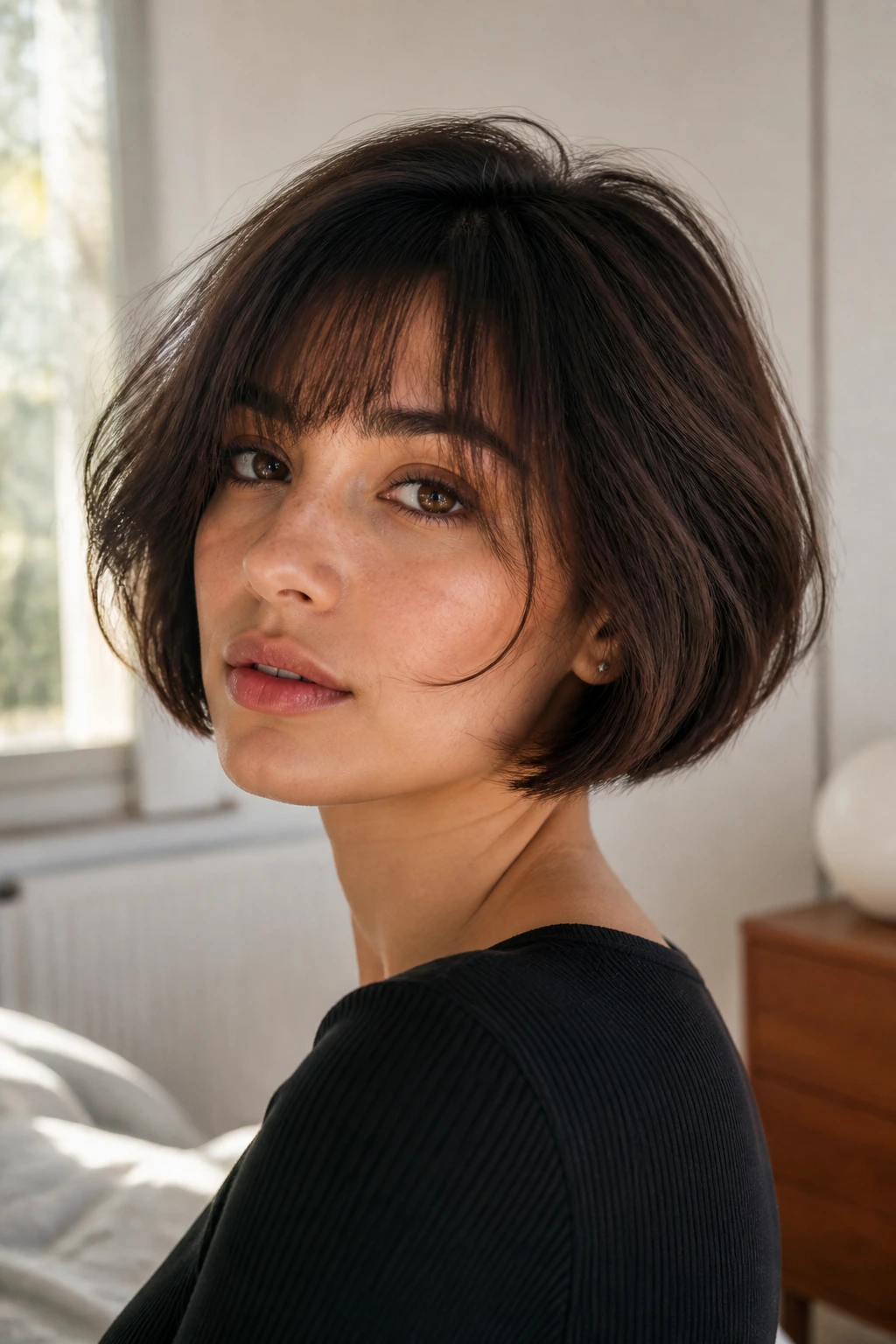
A layered bob earns its keep when it still looks like a haircut on the third day, not just on the salon chair. That’s the real test. The best versions hold a line, lift where they should, and leave enough room for the hair to move without collapsing into a flat shape.
What I like about this whole family of cuts is that it never asks for one universal answer. Fine hair needs something different from thick hair. Curls need a different hand than straight strands. A good layered bob respects that instead of pretending all short hair behaves the same way.
If you’re ready for a shorter shape that actually does something, start with the version that matches your texture and your patience level. Then keep the layers where they matter and the perimeter where it counts. That’s the move that makes the haircut last.
